

Submitted:
11 June 2026
Posted:
12 June 2026
You are already at the latest version
Abstract
Background: Aquaculture supplies over half of global fish consumption but faces challenges including disease outbreaks, oxidative stress, antimicrobial resistance, and reliance on finite fishmeal and fish oil resources. Methods: This review synthesizes research on freshwater and marine microalgae, focusing on their bioactive compounds and functional roles in aquaculture nutrition and health. Results: Microalgae provide proteins, carotenoids, vitamins, polyunsaturated fatty acids, and immunostimulants that act via immunomodulation, antioxidant defense, gut microbiota regulation, anti-inflammatory activity, growth promotion, and pigmentation enhancement. Applications include live feed in larval rearing, dried biomass in compound feeds, and microalgal oils as fish oil substitutes. Conclusions: Incorporating microalgal nutraceuticals into aquafeeds offers a sustainable strategy to improve aquaculture productivity, animal health, and product quality, supporting the transition toward resilient and ecologically sustainable systems within the One Health framework.
Keywords:
microalgae nutraceuticals
; aquaculture sustainability
; functional aquafeeds
; immunomodulation in aquaculture
; antioxidant defense mechanisms
1. Introduction
Aquaculture has become one of the fastest growing global food production sectors, supplying over 50% of fish consumed worldwide and supporting livelihoods in developing and developed economies [1,2]. It is an affordable source of high quality animal protein, which is becoming more and more important as wild catches are declining due to overfishing and degradation of ecosystems, trends accelerated by population growth and urbanization [3]. In Sub-Saharan Africa and other developing regions, aquaculture has been identified as a strategic subsector for creation of employment, income generation and improved food and nutrition security [1].
Despite this growth, sustainability challenges remain persistent and interconnected. The intensification of production systems has resulted in increased stocking density, compromised water quality, and increased disease susceptibility, with mortality from infectious disease accounting for the main source of economic losses [4]. Antibiotics and chemotherapeutics have historically been used as preventive and curative interventions. However, their excessive or uncontrolled use has contributed to antimicrobial resistance (AMR), environmental contamination and food safety concerns, undermining consumer confidence [5,6]. Climate change compounds these pressures by changing water temperature, dissolved oxygen levels and the dynamics of pathogen, increasing physiological stress on the growing fish [7]. At feed level, fishmeal and fish oil, which are the basic building blocks of aquafeed formulations, are finite resources whose supply is limited by environmental, economic, and regulatory pressures [8]. The resulting demand for complete, functionally active and sustainably produced aquafeed has stimulated the search for alternatives that can deliver both nutritional and health benefits [9].
Microalgae are single-celled photosynthetic organisms that include eukaryotic protists and prokaryotic cyanobacteria, with an estimated 200,000 to 300,000 species in the world, of which about 30,000 have been formally described [10]. They are typically rich in crude protein (up to 60–70 percent dry weight), essential polyunsaturated fatty acids (PUFA), carotenoids, B vitamins, chlorophylls and bioactive polysaccharides (BPA) in addition to functional bioactive substances [9]. They play an important role in aquaculture as a source of nutraceuticals and functional feed additives, which have recently emerged as key component of sustainable aquaculture and offer benefits that go beyond basic nutrition, including immunomodulation, antioxidant protection, regulation of gut microbes, and growth promotion [11,12]. In aquaculture, the nutraceutical role of microalgae is carried out on several levels: (1) as live feed in larval farming of fish, molluscs, and crustaceans; (2) as dried biomass in compound grow-out feeds; (3) as a source of carotenoid pigments for colouring flesh and skin in fish; (4) as a source of non-specific disease resistance; and (5) as a sustainable alternative to fish meal and fish oil.
The global market for microalgae is estimated at around USD 6.5 billion per year, and aquaculture accounts for an estimated USD 700 million of that amount [10].
This review synthesises the evidence for key freshwater species, namely Arthrospira platensis (Spirulina), Chlorella spp., Dunaliella salina, Haematococcus pluvialis and Aphanizymon flos-aquae and marine species of aquaculture importance, including Nannochloropsis spp., Isochrysis galbana and Schizochytrium sp. The review examines the nutritional profiles of the species, mechanisms of biological activity, the practical aspects and implications of their use for sustainable aquaculture within the One Health paradigm.
2. Methodology
This review used a systematic synthesis of the peer-reviewed literature on microalgae, nutraceuticals, bioactive compounds and functional feed additives in aquaculture. The relevant studies published between 2001 and May 2026 were sourced from Scopus, Web of Science, PubMed, ScienceDirect, Google Scholar, Semantic Scholar, ResearchGate and the expanded Science Citation Index. The authors were consulted for those articles that were not available electronically. The search focused on English-language, peer-reviewed publications on biochemical components of microalgae, fish nutrition and health, immunity and sustainable aquaculture in freshwater and marine ecosystems. A three-step approach was used: (i) identification of studies based on aquaculture production systems; (ii) thematic filtering of microalgae nutraceuticals, probiotics, prebiotics, phytogenic additives, gut microbiomes, oxidative stress and feed efficiency; and (iii) targeted incorpration of seminal contributions from the main authors from the research community. Representative keyword combinations searched included “microalgae in aquaculture”, “nutraceuticals and functional feeds”, “fish immunity”, and “aquafeed”. A total of 362 documents were initially identified and screened against the criteria set out for inclusion and exclusion. Studies that were directly relevant, scientifically rigorous, and published in peer-reviewed outlets were included for detailed analysis. One hundred and twenty-six documents were excluded because they were irrelevant, duplicated, unverifiable data or grey literature that had not been peer reviewed. Data for this study was drawn from primary analytical sources and cross-validated using multiple references on the same topic. Studies were synthesised to identify key themes, mechanisms, applications, and knowledge gaps.
3. Role of Microalgae in Aquaculture
3.1. Microalgae Diversity and Their Functional Roles
Microalgae are one of the most taxonomically diverse groups of photosynthetic organisms, with estimated number of species ranging from approximately 200,000 to several million worldwide, compared to about 250, 000 higher plant species [10]. Despite high biodiversity of microalgae, commercial aquaculture currently uses only a small number of species, mainly Nannochloropsis, Isochrysis, Chaetoceros, and Tetraselmis, which are said to meet the requirements for mass production, environmental stability, and biochemical consistency. The main taxonomic groups of commercial interest are Cyanophyceae (bluegreen algae or cyanobacteria), Chlorophyceae (green algae), Bacillariophyceae (diatoms) and Chrysophyceae (golden algae) [9]. In marine larval farming, species such as Isochrysis galbana, Chaetoceros spp., Nannochloropsis oculata, Tetraselmis spp., and Phaeodactylus tricornutum are used as a key source of long chain poly-unsaturated fatty acids (LC-PUFAS), in particular DHA and EPA, which are essential for larval neural development and survival in finfish and molluscs [13,14]. Moreover, their cultivation systems are scalable and relatively resistant to contamination.
Greenwater technology, which involves the storage of a diluted suspension of microalgae in larval tanks, offers a multifunctional advantage in terms of improving water quality by absorbing nutrients, stabilising microbial communities, increasing the visibility of prey and the efficiency of feeding and providing direct nutritional support.This is the standard approach for the cultivation of commercially important species such as seabream (Sparus aurata), deep-sea halibut (Dicentrarchus labrax), turbot (Scophthalmus maximus) and Pacific oysters (Crassostreas gigas) [15]. In addition to larval systems, microalgae are incorporated in adult feeds and functional diets as whole biomass or as a source of extracted bioactive compounds. The commercially dominant genera are Arthrospira (Spirulina), Chlorella, Haematococcus and Dunaliella, which provide compounds including phycocyanins, astaxanthins, carotenins and essential fatty acids that are associated with increased growth, pigmentation, immunological properties, antioxidant properties and tolerance to stress [9,16].
Open-air raceways remain the most widely used cultivation system because of their low capital and operational costs, but they are most suitable for warm regions with sustained temperatures in excess of 15 degrees Celsius [50]. However, closed photobioreactor systems, tubular, flat panel and airlift designs offer better control of light, temperature, CO2 supply and contamination risk, with up to 7 times more productivity gains compared to open systems under optimal conditions [17]. Commercial microalgae production for aquaculture must also comply with bio-safety and quality assurance requirements, including monitoring for cyanobacterial strains producing toxins, heavy metals and microbial contaminants, in order to ensure the safety of the feed and the protection of the consumer [47].
Microalgae serve three different functional roles in aquaculture nutrition: as feed ingredients providing proteins, lipids, vitamins and minerals; as functional feed ingredients providing a combination of nutritional and health-promoting effects; and as a source of concentrated bioactive compounds with a focus on health-promoting effects. Nutraceuticals are defined as bioactive substances derived from natural sources which provide health benefits in addition to the primary nutritional provision [9]. In aquaculture, their use is becoming increasingly important to address the challenges of intensification, pressure and antimicrobial resistance by increasing the immune response, improving tolerance to stress and reducing antibiotic dependence [5,12]. This integration is in line with the One Health paradigm, which recognises the interdependence between animal health, environmental sustainability and food safety for humans [48].
3.2. Microalgae as Sources of Bioactive Compounds
Microalgae are one of the most biochemically diverse groups of photosynthetic organisms, but aquaculture relies on a relatively limited selection of taxa which can be grown on a large scale and produce uniform, high-value metabolites. These metabolites, in particular long-chain polyunsaturated fatty acids (LC-PUFA), carotenoids, phycobiliproteins and functional polysaccharides, are central to the current aquaculture diet, which has evolved from basic growth optimisation to include health control, stress tolerance, product quality and environmental sustainability [12,18]. Microalgae bioactives are used in aquaculture in three primary nutritional modes: (i) live feeding systems, in particular in larvae farming; (ii) incorporation of dried biomass in compound feedingstuffs; and (iii) the use of extracted nutraceuticals as targeted functional additives. This integration reflects the wider shift towards precision aquaculture feeding, where diets are designed not only to meet the macronutrient requirements but also to control physiological processes such as immune function, oxidative balance, gut composition and metabolic efficiency [11,12].
4. Nutritional Profiles and Aquaculture Benefits of Microalgal Species
Four freshwater genera, Spirulina, Chlorella, Dunaliella and Haematococcus, together with Aphanizomenon and the key marine genera, have dominated the commercial production of microalgae-based medicines for more than two decades [46]. Comparative data on nutrient composition are presented in Table 1.
4.1. Arthrospira Platensis (Spirulina)
Arthrospira platensis, commonly known as Spirulina, is a filamentous prokaryotic cyanobacterium which has been commercially grown for over three decades for applications including aquafeed, food supplements, pigments and pharmaceuticals [44]. Its crude protein content (60-70 per dry weight) includes a wide range of essential amino acids, including leukine, isoleucine, valine and lysine [19], which makes it compositionally comparable to fishmeal in terms of protein content. A. platensis is also a source of beta-carotene, B vitamins (B1, B2, B3, B6), polyphenols (PUFAs) E, C, C-phycocyanin, chlorophyll, and the minerals of the phytochrome P450 system (Phytochrome P450). A. platensis contains pseudocobalamin, an analogue of B12 which is biologically inactive in vertebrate animals and should not be reported as a source of dietary B12 [20]. In aquaculture, supplementation with spirulina has been shown to improve growth performance, feed conversion ratios and haematological parameters in teleost species such as Nile tilapia (Oreochromis niloticus), common carp (Cyprinus carpio) and rainbow trout (Oncorhynchus mykiss) [12]. Its anti-inflammatory and antioxidant properties are attributed mainly to C-phycocyanin, which scavenges reactive oxygen species and modulates Nrf2 signalling [21] and thus helps to reduce oxidative stress in the production process under stress conditions. Spirulina also has immunostimulatory effects, favouring a non-specific immune response that increases resistance to bacterial and viral pathogens [12]. In ornamental and salmon farming, its carotenoid complement contributes to the increased colour of the skin and meat. The optimum growing conditions are pH 9 to 11 and 35 to 37 degrees Celsius, with open-air, raceway-type ponds as the standard commercial format.
4.2. Chlorella spp.
Chlorella is a spherical (2 to 10 nm) photoautotrophic green microalgae, which is capable of rapid growth under controlled conditions. Commercial cultivation takes place in photobioreactors, where biomass is extracted by centrifugation or autoflocculation, followed by drying by spray. The crude protein content ranges from 11 to 58 percent of the dry weight, depending on the species, strain and culture conditions, and has a basic amino acid profile that is generally similar to that of soya. Chlorella contains high levels of chlorophyil, beta-carotene, B vitamins and bioactive polysaccharides. In aquaculture, supplementation with Chlorella was associated with a reduction in plasma cholesterol and triglycerides, improved immune function and improved gut microbial profiles [15]. Chlorella growth factor (CGF), a water-soluble extract containing nucleotides, peptides, polysaccharides and vitamins, has been reported to promote growth and tissue repair in larvae and to recover from stress [9]. Cell wall disruption by bead crushing or enzymatic treatment is a critical processing consideration for the incorporation of aquafeed, since a recalcitrant cell wall reduces the bioavailability of nutrients and the digestibility of proteins. The apparent digestibility coefficients (ADCs) for raw protein vary between about 50 and 80 percent depending on the type of processing [22]. Chlorella is also widely used as a living alga in aquaculture systems for larval systems in freshwater.
4.3. Dunaliella Salina
Dunaliella salina is a halotolerant green algal species with beta-carotene content of up to 14 percent in high light and salinity conditions, together with lutein and lycopene and other carotenoids [23]. Unlike most microalgae, it does not have a rigid cell wall, which makes it easier to extract and digest. This species is grown primarily for large-scale commercial production of beta-carotene in Israel, China, the USA and Australia [24]. In aquaculture, the beta-carotene derived from Dunaliella serves as a potential source of antioxidants and pro-vitamin A. Its carotenoids act as free radical scavengers, reducing lipid peroxidation and restoring the activity of antioxidant enzymes under oxidative stress, conditions common in intensive aquaculture systems [25].
Hepatoprotective effects have been documented in experimental models [26]. D. salina may be grown in brackish, marine or saline ecosystems in accordance with the sustainable exploitation of marginal resources. The protein content reported in literature for this species ranges from 7 to 80 DW depending on whether the values reflect unprocessed whole cell biomass or residues from the post-extraction recovery of the beta-carotene [27]. This suggests that it is appropriate for the authors to provide a biomass context for the future reporting of the nutrient content of this species.
4.4. Haematococcus Pluvialis
The main commercial source of natural astaxanthin is Haematococcus pluvialis, which accumulates 2-5 percent of the dry weight of this ketocarotenoid under stress-induced conditions [28]. Astaxanthin is extensively incorporated in salmonid aquafeed formulations, producing a characteristic red-pigmentation of the salmonid flesh and the exoskeleton of crustaceans, which determines the market acceptance in premium product categories. The biochemical composition of H. pluvialis is significantly different between the green vegetative and red aplanospore stages, with the aplanospore phase producing the highest concentrations of astaxanthin, accounting for approximately 81 percent of the total carotenoid content [28]. In addition to pigmentation, natural astaxanthin from H. pluvialis has a strong antioxidant activity against lipolysis, which significantly exceeds that of vitamin E and synthetic carotenoids in comparable experimental conditions [28]. The claims of comparative antioxidant efficacy differ significantly between experimental models and conditions; the absolute differences reported in some reviews should be interpreted with caution and linked to specific test conditions. In Atlantic salmon and rainbow trout, supplementation with astaxanthin has been associated with improved growth and improved immune function, including activation of macrophages and modulation of cytokines [10,19].
4.5. Marine Species: Nannochloropsis, Isochrysis, and Schizochytrium
For larval and early post-larval farming, microalgae of the species Nannochloropsis oculata, Isochrysis galbana, Chaetoceros spp., and Tetraselmis spp. are essential for the feeding programmes of zooplankton (rotipids, arthropods, copepods) which are the prey for fish and shellfish larvae [31]. Their fatty acid profiles, especially DHA in Isochrysis and EPA in Nannochloropsis, are well adapted to the dietary requirements of the first-fattening sea-lilts. Nannochloropsis oculata is widely used as a live feed for marine fish and aquaculture systems, and is appreciated for its high biomass productivity, EPA content and compatibility with green farming methods.
Thraustochytrium microalgae such as Schizochytrium sp. produce DHA-rich oils which are direct functional analogues of fish oil and their use in the diet of salmon and finfish has been confirmed in several commercial trials [32]. Microalgae oils can be incorporated in certified aquafeeds in a sustainable way, thereby reducing dependence on wild fish stocks and contributing to addressing the structural challenges to feed sustainability identified in the introduction. Phaeodactylus tricornutum contains fuscoxanthin, a carotenoid of the xanthophyll group which has been shown in vitro to have antioxidant and antiproliferative activity [51]. Although fucoxanthin is being investigated for potential nutraceutical and feed applications, its specific bioactivity in algae is still under investigation and requires further validation before wide use.
As shown in Table 1, the reported protein values for Haematococcus (12-24 percent DW) usually indicate biomass remaining after stress induction of astaxanthin extraction, while the reported values for unpressurized vegetative cells may be as low as 35 percent DW; therefore, the reported values depend very much on the strain and the extraction stage. Similarly, the protein content of Dunaliella can range from 50 to 80 percent DW in whole cells, but decreases significantly under high light and salinity conditions used to induce accumulation of beta-carotene; therefore, the low literature values (approximately 7 percent) should be interpreted in this context. Spirulina, although rich in protein, contains pseudocobalamin which may even compete with the absorption of true cobalamin and therefore should not be considered as a reliable source of B12 from the diet. Nannochloropsis is notable for the production of eicosapentaenoic acid (EPA), but not docosahexaenoic acid (DHA), and therefore it is supplemented with external sources of DHA such as schizochytrium sp. is necessary to achieve full long-chain PUFA coverage in aquafeeds.
5. Mechanisms of action
Microalgal nutraceuticals are proposed to act through six physiological and molecular mechanisms
5.1. Antioxidant Defence and Redox Balance
Aquaculture organisms often suffer oxidative stress due to environmental changes, high stocking densities and intensive feeding practices [34]. The major antioxidants in microalgae, astaxanthin from H. pluvialis, carboxycarotene from Dunaliella salina, and C-phycocyanin and polyphenols from Spirulina and Chlorella, act via two complementary routes: direct scavenging of reactive oxygen species (ROS) and transcriptional activation by endogenous antioxidants (SOD, CAT, and by the antioxidant response element (ARE). Astaxanthin from H. pluvialis is one of the most potent bio-antioxidants with a lipid peroxidation protection significantly higher than that of vitamin E and synthetic carotenoids [28]. Similarly, carotenoids from Dunaliella restore the activity of antioxidant enzymes in oxidative stress and provide hepatoprotection [25]. These antioxidant mechanisms are directly supportive of growth and metabolic benefits.
5.2. Immunomodulation
Microalgae nutraceuticals enhance the innate immune response through two classes of compounds. The intrinsic receptor (PRR) of the beta-glucans in the cell walls of Chlorella and related species activate the innate immune pathway and stimulate macrophage activity and cytokine production in accordance with the immunostimulatory effects of the established beta-glucan and nucleotide complement [35]. Spirulina and Aphanizomenon C-phycocyanin also modulate cytokine production and activate lymphocyte populations, while H. pluvialis dietary astaxanthin upregulates immune gene expression and increases phagocytic activity, effects that are mechanistically related to anti-inflammatory pathways. The immunostimulatory effects of microalgal supplementation are particularly important in the context of AMR mitigation, as several studies have reported reduced antibiotic dependence and chemotherapics use in fish fed with microalgal supplementation [37].
5.3. Gut Microbiota Regulation
The gut microbiomes play a central role in digestion, absorption of nutrients and mucosal immunity. Algal polysaccharides and sulphated cell wall carbohydrates from Spirulina, Chlorella and Nannochloropsis selectively enrich the beneficial microbial population, including Lactobacillus and Bifidobacterium species, and improve the integrity of the intestinal epithelium, as well as stimulate the secretion of digestive enzymes, as well as the effects of established prebiotic compounds [38,39]. The regulation of the gut flora is a central mediating mechanism for the improvement of nutrient absorption, reduction of oxidative stress and immune function reported in several studies with microalgae [40] and identifies microalgae biomass as a naturally occurring substrate for a synbiotic feed, which is supported by the bioactive compounds that support immunomodulatory and anti-inflammatory effects. The incorporation of microalgae in aquafeeds has been shown to improve gut health, absorption of nutrients, digestibility [54], also to enhance mucosal immunity [55]. These functional advantages are complemented by the inhibition of pathogenic bacteria such as Vibrio and Aeromonas, resulting in a reduction in the burden of pathogens and an improvement in the overall health status of the cultured species [56].
5.4. Anti-Inflammatory Effects
Microalgae bioactives, especially carotenoids such as fucoxanthin, have been shown to modulate several inflammatory signalling pathways. Chronic inflammation, which is common in intensively farmed fish exposed to overcrowding, handling stress and pressure from pathogens, has a negative impact on growth and survival. Three classes of microgalactosides inhibit the inflammatory cytokine signalling pathway NF-κB and reduce circulating pro-inflammatory cytokines (TNF-alpha, IL-1b): astaxanthin from H. pluvialis; EPA (C20:5n-3) and DHA (C22:6n-3) from Nannochloropsis and Schizochytrium [41]; and C-phycocyanin from Spirulina [42].
Although EPA and DHA from microalgae act via the same biochemical pathways as omega-3 PUFA from fish oils, the lack of comparative nutrient performance data and life cycle assessment evidence for both microalgae and fish oils preclude the claims of functional equivalence and superior sustainability in the scope of this review.
Nannochloropsis is mainly produced as EPA but not as DHA, therefore its use in anti-inflammatory feed formulations requires a co-supplement with a source rich in DHA such as shizochytrium to achieve a complete PUFA coverage along the long chain. Experimental studies have shown that fucoxanthin inhibits the NFκB pathway, resulting in a decrease in transcription of pro-inflammatory cytokines such as TNF-alpha and IL-1-beta [60]. At the same time, fucoxanthin and other algal metabolites inhibit the MAPK signalling cascade, thereby reducing the phosphorylation events that drive the expression of inflammatory genes [61]
These compounds also contribute to the remodeling of eicosanoids and shift the lipid mediator profiles towards less proinflammatory prostaglandins and leukotrienes [61]. In addition, fuscoxanthin has been shown to modulate the inflammatory cytokine NLRP3, thereby reducing the oligomerisation of ASC and activation of caspase-1, which in turn reduces the maturation and secretion of IL-1β [60]. Together, these findings highlight the multifunctional anti-inflammatory potential of microalgae bioactivities and support their exploration as functional food additives and nutraceuticals.
Dietary supplementation with microalgae has been shown to reduce chronic inflammation in aquaculture species by reducing proinflammatory cytokines such as IL-1β and TNF-alpha, thereby reducing the disease burden of intensive farming [62]. In addition to regulating cytokines, microalgae bioactives also enhance antioxidant protection, protecting cell structures against oxidative damage and contributing to the improvement of the integrity of both the intestinal and muscle systems [62].
These protective effects extend to the production environment where the incorporation of microalgae is associated with a reduction of crowding-stress pathology and increased resilience. This is achieved by modulation of immune markers, the balance of pro- and anti-inflammatory responses and the enhancement of antioxidant capacity, which ultimately promotes the health of fish in intensive aquaculture practices [63]. These findings highlight the potential of microalgae as a functional feed additive that promotes tissue integrity, reduces inflammation and improves resistance to stress.
5.5. Growth and Metabolic Enhancement
Microalgae nutraceuticals enhance growth performance by four converging pathways: (i) essential amino acids, in particular lysine (first-limiting) and methionine (second-limiting) of Spirulina and Chlorella, promote membrane integrity and muscle synthesis; (ii) lipopolysaccharides (EPA, DHA) support intracellular signalling; and (iii) astaxanthin of H. pluvialis increases metabolic efficiency by protecting mitochondria. Functional diets containing microalgae components have been consistently associated with improved specific growth rates (SGR), feed conversion ratios (FCR) and survival in high density aquaculture systems as reviewed [33]. These results reflect the combined contribution of all six mechanisms. Optimised formulations of aquafeed improve growth performance by coordinated regulation of anabolic signals, digestive capacity, cellular energy and structural integrity. The supply of essential amino acids (EAAs) supports protein synthesis by serving as substrates for the uptake of tissues and as signalling molecules that regulate growth pathways [64]. EEAAs, in particular leukine and arginine, activate the metabolic target of rapamycin (mTOR), which in turn stimulates the translational machinery and the synthesis of proteins from muscle [65]. MTOR signalling is closely related to endocrine regulation of growth by modulation of the insulin-like growth factor-1 (IGF-1) axis, which controls somatic growth and nutrient allocation to anabolic processes [66]. These pathways are particularly important in fishmeal replacement systems where a precise amino acid balance is needed to maintain growth [64]. Improved digestive efficiency in aquaculture species is obtained by stimulation of endogenous digestive enzymes, such as proteases, lipases and amylases [20]. Functional additives such as probiotics, microalgae and bioactive compounds increase enzymatic excretion and intestinal morphology, resulting in increased digestibility and absorption of nutrients [33]. The increased activity of the digestive enzymes compensates for the decreased digestibility commonly associated with plant-based feed ingredients containing anti-nutritional factors [33]. This improvement in digestive function directly improves the efficiency of feed utilisation in intensive aquaculture systems [20].
Cellular and mitochondrial integrity is enhanced by modulation of oxidative balance and mitochondrial energy metabolism. Bioactive compounds such as long-chain polyunsaturated fatty acids (LC-PUFA), carotenoids and functional amino acids (FNA) reduce oxidative stress by reducing the accumulation of reactive oxygen species (ROS) [67]. These compounds support mitochondrial biogenesis and maintain mitochondrial function, thereby ensuring that ATP is produced in response to high metabolic demands [68]. Maintenance of mitochondrial integrity is essential for cellular homeostasis and tolerance to stress in highly-cultured fish [67].
Maintenance of cell membrane integrity is essential for physiological stability, nutrient transfer and the transmission of signals. Dietetic lipids, in particular phospholipids and LC-PUFAs, increase the fluidity and structural stability of the membrane while reducing lipid peroxidation [14]. Improved membrane integrity improves immune function, osmoregulation and resistance to environmental stresses such as crowding and changes in water quality [69]. These effects contribute to the overall physiological resilience of the aquaculture environment [14]. These mechanisms translate into increased protein synthesis and nutrient uptake increase the specific growth rate (SGR) of the fish in the culture [58], as well as improved digestibility and metabolic efficiency of the feed decrease the feed conversion ratio (FCR), which indicates more efficient use of the feed [70]. Optimised protein use increases the protein efficiency ratio (PER), which reflects a better conversion of dietary protein to biomass [58]. Enhanced physiological and immune functions increase survival rates, especially in high density farming conditions [71]. These combined results are particularly relevant for fishmeal substitution strategies and for intensive production systems where nutritional and environmental pressures are high [70].
5.6. Pigmentation for Product Quality Improvement
The metabolism of carotenoids is the central mechanistic axis by which microalgae-derived bioactives exert their functional effects on aquaculture species, in particular on pigmentation, reproduction and product quality. These processes start with intestinal uptake, proceed to biochemical transformation and systemic transport, and culminate in tissue-specific deposition and phenotypic expression. Carotenoid deposition is a mechanism distinct from antioxidant action. Dietetic carotenoids derived from mixed micelles from microalgae such as Haematococcus pluvialis, Dunaliella salina and Chlorella vulgaris are absorbed in the gut epithelium by lipid-dependent scavenger receptor systems, in particular SR-B and CD36 [72,73]. After absorption, carotenoids are incorporated into lipoprotein complexes for systemic distribution into peripheral tissues, where uptake is mediated by mechanisms mediated by receptors and lipid flux [74]. Carotenoids may undergo esterification after internalization, especially in species that accumulate astaxanthin and similar xanthophylls. By enhancing lipophilicity, this enzymatic change improves tissue retention, decreases oxidative degradation susceptibility, and boosts molecular stability [28,75]. After being esterified in intestinal tissues, β-carotene from Dunaliella salina is specifically deposited in the skin, muscle, and gonads of target species [52]. This metabolic reaction is especially crucial for maintaining long-term pigmentation in aquaculture species and enhancing deposition efficiency in agricultural settings. Depending on lipoprotein receptor expression, binding proteins, and species-specific lipid metabolism, systemically transported carotenoids are deposited selectively in target tissues like muscle, skin, liver, gonads, and exoskeletal structures. While carotenoids build up in the exoskeleton of crustaceans, where they directly affect coloration intensity and market value, deposition in salmonids is significantly oriented toward muscle pigmentation [76,77]. Exoskeletal coloration in crustacean production is driven by carotenoid deposition, which has a direct impact on market value [53]. At the cellular level, carotenoids are integrated into specific pigment cells (chromatophores), such as erythrophores and xanthophores, where they control coloration by absorbing and reflecting light. Intracellular signaling mechanisms that regulate pigment granule dispersion and aggregation, including as cAMP/PKA signaling and melanocortin receptor (MC1R)-mediated regulation, govern the distribution of pigment within these cells [78,79]. The molecular foundation for diet-induced pigmentation alterations in aquaculture species is provided by this chromatophore-based system. Because of its added antioxidant, immunomodulatory, and anti-inflammatory qualities, which have been shown to provide production benefits above those of synthetic counterparts, natural astaxanthin from H. pluvialis is becoming more and more preferred over synthetic canthaxanthin due to consumer demand [28]. Astaxanthin is added to salmonid diets at a rate of 40–80 mg/kg in order to meet the flesh coloring standards needed for premium market customer acceptability [43]. Functionally, these coordinated processes result in a number of results that are pertinent to aquaculture. Improved carotenoid deposition results in better exoskeletal coloration in crustaceans and flesh pigmentation in fish, characteristics that are highly correlated with premium pricing and customer choice. Beyond their aesthetic value, carotenoids boost egg quality, fertilization success, and embryonic protection because of their antioxidant qualities [33,80]. Carotenoids improve larval survival and developmental robustness in the early stages of life, mainly by supporting physiological resilience during ontogeny and protecting against oxidative stress. The strategic significance of microalgae as a functional feed resource in contemporary aquaculture systems is reinforced by these impacts, which collectively lead to greater overall product quality and increased market value [28,76]. The physiological and molecular processes of microalgae are summarized in Table 2.
6. Applications of Microalgal Nutraceuticals in Aquafeed Systems
6.1. Live Feed in Larval Rearing
Live microalgae are essential for nutrition throughout larval and early post-larval rearing. By keeping a diluted microalgal suspension in larval tanks, the greenwater approach simultaneously enhances water quality, directly supplements nutrition, and promotes early-stage survival in marine finfish. The LC-PUFA requirements of first-feeding larvae of commercially significant species, such as seabream (Sparus aurata), seabass (Dicentrarchus labrax), turbot (Scophthalmus maximus), and Pacific oyster (Crassostrea gigas), are directly satisfied by the EPA and DHA profiles of Nannochloropsis, Isochrysis, Chaetoceros, and Tetraselmis.
6.2. Dried Biomass in Compound Aquafeeds
Improved SGR and FCR, improved haematological indices and immune parameters, and improved gut microbiota composition in Nile tilapia, common carp, rainbow trout, and Litopenaeus vannamei shrimp have all been reported benefits of adding spirulina and chlorella to grow-out feeds at inclusion rates of 2–10% dietary dry matter. Consistent with the immunostimulatory effects described in section 6.2, a number of studies demonstrate decreased need on antibiotics after microalgal intake [37]. In line with the synbiotic concept, functional meals that combine probiotic supplementation with microalgal biomass show synergistic effects on immunological competence and gut health [38].
6.3. Microalgal Oils as Fish Oil Replacement
DHA oils produced from schizochytrium are added to certified sustainable aquafeeds as functional fish oil substitutes, which have been verified by commercial-scale feeding experiments in marine finfish and salmon. The limited supply of wild-caught fish for reduction to meal and oil is the most significant structural barrier to the expansion of aquaculture worldwide. This application tackles this issue. A combined Nannochloropsis + Schizochytrium formulation duplicates the entire LC-PUFA profile of fish oil while removing reliance on wild-capture fisheries because Nannochloropsis delivers EPA but not DHA. The technical and financial model for the concurrent development of EPA-rich oils from Nannochloropsis and kindred heterotrophic producers is established by the commercial success of Schizochytrium DHA oils.
7. Delivery and Production Strategies for Microalgal Nutraceuticals
7.1. Delivery Technologies and Bioavailability Optimization
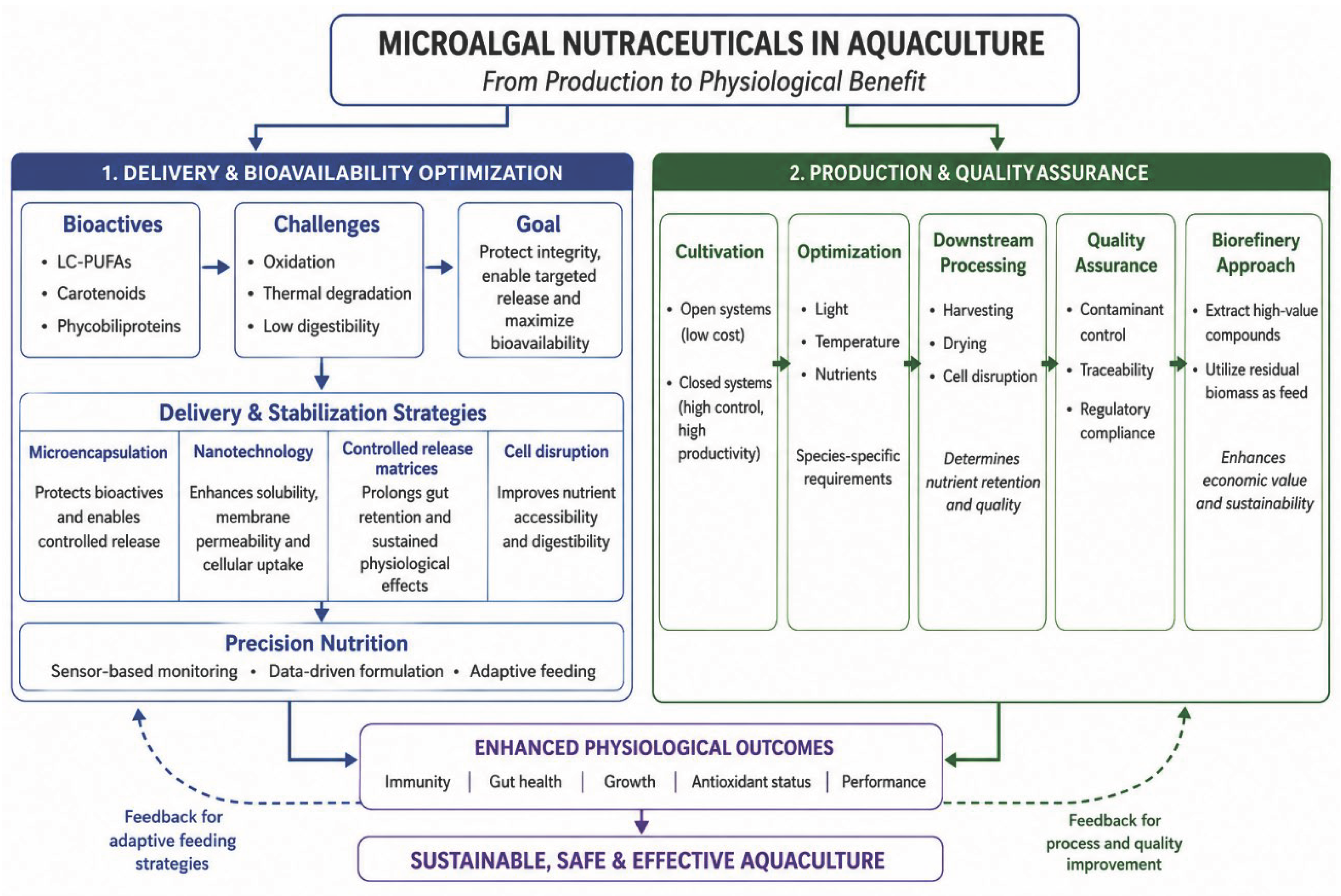
Delivery strategies that maintain biochemical integrity during feed processing and guarantee targeted bioavailability inside the gastrointestinal tract are critical to the functional usefulness of microalgal nutraceuticals in aquaculture systems. Advanced encapsulation and stabilization techniques are required due to the vulnerability of certain bioactives, including carotenoids, phycobiliproteins, and long-chain polyunsaturated fatty acids (LC-PUFAs), to oxidation and heat degradation [33]. A key technology, microencapsulation allows for controlled intestinal release while offering physicochemical protection against oxidation during extrusion, pelleting, and storage. When compared to their free equivalents, encapsulated versions of astaxanthin and docosahexaenoic acid (DHA) show noticeably better stability and bioavailability, according to empirical research [49]. Additionally, hydrophobic substances’ solubility, membrane permeability, and cellular uptake are improved by nanotechnology-based delivery methods; in fish feeding trials, nano-encapsulated formulations of curcumin and astaxanthin shown greater physiological efficacy [49]. Hydrogel systems and other controlled-release matrices increase the duration of bioactive retention in the gut, extending the effects of immunostimulation and antioxidants. The preparation of microalgal biomass to improve digestibility is equally important. In order to enhance nutrient release, species with resistant cell walls, such as Chlorella and Nannochloropsis, need to be disrupted mechanically (bead milling, high-pressure homogenization) or enzymatically. Nutrient retention is also affected by downstream drying techniques; spray-drying is still the most used approach in industry, but if process conditions are not optimal, it can break down thermolabile carotenoids. To maximize the incorporation rates of microalgal nutraceuticals, new precision nutrition frameworks combine sensor-based feeding systems, data-driven feed design, and real-time water quality monitoring. By enabling adaptive feeding tactics that are in line with the physiological and immunological status of cultured organisms, these methods maximize efficacy while reducing costs to the environment and economy.
7.2. Cultivation Systems, Production Optimization, and Quality Assurance
Microalgal production technologies enable the scalability and sustainability of nutraceutical uses in aquaculture. Cultivation can take place in open systems like raceway ponds and shallow lagoons, or in closed photobioreactors, with each offering trade-offs between cost, productivity, and contaminant management. Closed systems, such as tube and flat-panel photobioreactors, can reach biomass productivities several times greater than open systems due to better control over light, temperature, and contamination [17]. For successful aquaculture applications, ideal microalgal strains should have a high nutritional value, digestible cell walls, and be easily cultivated under regulated conditions. Cultivation tactics are determined by the ecological requirements of each species. Spirulina thrives in alkaline environments (pH 9-11) and high temperatures (35-37 °C), making it ideal for raceway pond systems, whereas Dunaliella species can withstand hypersaline conditions, allowing for production in non-arable, saline water environments [59].These qualities facilitate integration into marginal agricultural landscapes and water-scarce regions, which improves sustainability. Commercial-scale aquafeed manufacturing necessitates rigorous biosafety and quality assurance procedures. Contamination by toxin-producing cyanobacteria, heavy metals, or pathogenic microbes is unacceptable in food fish production systems. As a result, production chains must contain species-specific monitoring, water quality control, and traceability systems that comply with feed safety laws. Microalgae’s biochemical makeup is highly dependent on culture conditions, notably nutrient availability, which has a direct impact on mineral content and nutritional value. Downstream processing decisions, such as harvesting (centrifugation, filtering, autoflocculation), drying (spray-drying, freeze-drying), and cell disruption, influence the digestibility and functional quality of the final product. Biorefinery techniques are becoming more popular, in which high-value chemicals like astaxanthin or phycocyanin are removed before remaining biomass is used as feed. This cascading use technique increases economic feasibility and decreases waste, closing the cost gap compared to traditional feed ingredients.
Figure 1.
summarizes delivery and production strategies for microalgal nutraceuticals.
8. Constraints, Knowledge Gaps, and Future Research Trajectories
8.1. Challenges and Limitations
Despite strong data supporting the functional benefits of microalgae in aquaculture, a number of structural and scientific barriers prevent widespread implementation. The most significant of them is the high production cost of microalgal biomass in comparison to traditional protein sources such as fishmeal and soybean meal, which limits economically viable inclusion levels, particularly in low- and middle-income countries [45]. Regulatory heterogeneity complicates commercialization. Feed approval procedures and functional feed definitions vary among jurisdictions, creating trade hurdles and delaying market entrance for innovative products. Furthermore, species-specific diversity in digestive physiology, gut microbiota, and immune function necessitates individualized feeding trials, which limits the applicability of experimental findings across aquaculture systems [9]. Concerns about the external validity of existing research in commercial production environments are raised by the fact that a sizable number of them are short-term and carried out in controlled laboratory settings. There are still few long-term, multi-cycle studies conducted in a variety of environmental settings. Furthermore, there is still much to learn about the molecular mechanisms behind many of the benefits that have been seen, especially those that involve gene regulation, epigenetic modulation, and interactions with metabolic pathways [40]. A rigorous assessment of sustainability factors is also necessary. Microalgae production methods, particularly photobioreactors, can be energy-intensive, and procedures like spray-drying add to the overall carbon footprint, despite the fact that microalgae are frequently promoted as environmentally friendly. Under the One Health concept, integrative methods, such as combining microalgal cultivation with aquaculture effluent recycling (such as integrated multi-trophic aquaculture systems), provide strategies to improve fish welfare and environmental performance. [48].
8.2. Conclusion and Future Research Directions
A potential area for future research is integrated multi-trophic and circular production systems, which combine biomass generation and nutrient recycling to improve sustainability and cost-effectiveness. To lower obstacles to innovation and promote international trade, regional and worldwide regulatory harmonization is crucial. Aligning microalgal nutraceutical applications with new aquaculture certification frameworks will also require welfare-oriented research that focuses on stress physiology, behavioral markers, and overall fish well-being. Multidisciplinary innovation will propel future developments in microalgal nutraceuticals. It is anticipated that precision feeding techniques utilizing metabolomics, genomics, and machine learning would speed up strain selection and improve feed formulations, allowing for the prediction of species-specific reactions. Long-term commercial validation is still a top objective, especially to determine economic viability, impact on fish health and welfare, evaluate effects on mitigating antimicrobial resistance (AMR), and validate performance under actual farming settings.
Author Contributions
J.O.O.: Conceptualization, methodology, investigation, original draft preparation, writing, review and editing and visualization. P.S.O.: Methodology, supervision, writing, review and editing. K.N.: Validation, methodology, review and editing. M.P.O.: Investigation, data curation, review and editing. Z.G.: Supervision, Administration, review and editing. All authors have read and agreed to the published version of the manuscript.
Funding
This research received no external funding.
Institutional Review Board Statement
Not applicable.
Informed Consent Statement
Not applicable.
Conflicts of Interest
The writers declare that they have no personal or professional conflicts of interest relating the public of this manuscript.
Data availability statement
This study did not produce or analyze any new data. Since this article is a review, data sharing is not applicable.
Acknowledgments
The authors acknowledge the support of British Academy who provided academic writing mentorship to the corresponding author during the writing of the manuscript through the UK-LMIC international writing project. Authors wish to acknowledge the Department of Agriculture, Fisheries, Livestock Development, Cooperative Development, and Irrigation, County Government of Kisii, Kenya; the Kenya Marine and Fisheries Research Institute; and the Department of Environment, Natural Resources, and Aquatic Sciences, Kisii University for the institutional cooperation and support, which made it possible to complete this paper. Additionally, the authors would like to express their gratitude to their colleagues and collaborators who contributed important scientific insights while this publication was being prepared.
References
- Food and Agriculture Organization of the United Nations (FAO). The State of World Fisheries and Aquaculture 2024: Blue Transformation in Action; FAO: Rome, 2024. [Google Scholar] [CrossRef]
- Sandgruber, F.; Gielsdorf, A.; Baur, A.C.; Schenz, B.; Müller, S.M.; Schwerdtle, T.; Stangl, G.I.; Griehl, C.; Lorkowski, S.; Dawczynski, C. Variability in Macro- and Micronutrients of 15 Commercially Available Microalgae Powders. Mar. Drugs 2021, 19, 310. [Google Scholar] [CrossRef] [PubMed] [PubMed Central]
- Sui, Y.; Vlaeminck, S.E. Dunaliella Microalgae for Nutritional Protein: An Undervalued Asset. Trends Biotechnol. 2020, 38, 10–12. [Google Scholar] [CrossRef] [PubMed]
- Hulatt, C.J.; Wijffels, R.H.; Bolla, S.; Kiron, V. Production of Fatty Acids and Protein by Nannochloropsis in Flat-Plate Photobioreactors. PLoS ONE 2017, 12, e0170440. [Google Scholar] [CrossRef] [PubMed] [PubMed Central]
- Cabello, F. C. Heavy use of prophylactic antibiotics in aquaculture: A growing problem for human and animal health and for the environment. Environ. Microbiol. 2006, 8, 1137–1144. [Google Scholar] [CrossRef] [PubMed]
- Romero, J.; Feijoo, C. G.; Navarrete, P. Antibiotics in aquaculture—Use, abuse and alternatives. Health and Environment in Aquaculture 2012, 159–198. [Google Scholar] [CrossRef] [PubMed]
- U.S. Department of Agriculture; Agricultural Research Service; Beltsville Human Nutrition Research Center. FoodData Central. 27th 2026. Available online: https://fdc.nal.usda.gov/.
- Shahidi, F.; Ambigaipalan, P. Omega-3 polyunsaturated fatty acids and their health benefits. Annu. Rev. Food Sci. Technol. 2018, 9, 345–381. [Google Scholar] [CrossRef] [PubMed]
- Hemantkumar, J. N.; Rahimbhai, M. I. Microalgae and its use in nutraceuticals and food supplements. In Microalgae—From physiology to application. IntechOpen.; Vítová, M., Ed.; 2019. [Google Scholar] [CrossRef]
- Guiry, M. D. How many species of algae are there? J. Phycol. 2012, 48, 1057–1063. [Google Scholar] [CrossRef] [PubMed]
- Ma, K.; Bao, Q.; Wu, Y.; Chen, S.; Zhao, S.; Wu, H.; Fan, J. Evaluation of Microalgae as Immunostimulants and Recombinant Vaccines for Diseases Prevention and Control in Aquaculture. Front Bioeng. Biotechnol. 2020, 8, 590431. [Google Scholar] [CrossRef] [PubMed] [PubMed Central]
- Nayak, S. K. Probiotics and immunity: A fish perspective. Fish. Shellfish Immunol. 2010, 29, 2–14. [Google Scholar] [CrossRef] [PubMed]
- Daniel, M.; Argwings, O.; Omweno, J.O.; Outa, N.O.; Munguti, J.M. Current Fish Feed Status and Development of New Feeding Technologies for Aquaculture Growth and Development in Kenya: Rapid Review. J. Aquac. Fish. 2023, 7, 61. [Google Scholar] [CrossRef] [PubMed]
- Tocher, D. R. Fatty acid requirements in ontogeny of marine and freshwater fish. Aquac. Res. 2010, 41, 717–732. [Google Scholar] [CrossRef]
- Pratama, I.; Susanto, R.; Nopriyanto, R.; Nurhafid, M. Effectiveness of green water system as larval gourami (Osphronemus gouramy) cultivation technology—Efforts to increase larval productivity. Int. J. Agric. Biosci. 2024, 13, 469–473. [Google Scholar] [CrossRef] [PubMed]
- Eze, C.N.; Onyejiaka, C.K.; Ihim, S.A.; Ayoka, T.O.; Aduba, C.C.; Ndukwe, J.K.; Nwaiwu, O.; Onyeaka, H. Bioactive compounds by microalgae and potentials for the management of some human disease conditions. AIMS Microbiol. 2023, 9, 55–74. [Google Scholar] [CrossRef] [PubMed] [PubMed Central]
- Penloglou, G.; Pavlou, A.; Kiparissides, C. Recent advancements in photo-bioreactors for microalgae cultivation: A brief overview. Processes 2024, 12, 1104. [Google Scholar] [CrossRef]
- Reverter, M.; Bontemps, N.; Lecchini, D.; Banaigs, B.; Sasal, P. Use of plant extracts in fish aquaculture as an alternative to chemotherapy. Aquaculture 2014, 433, 50–61. [Google Scholar] [CrossRef]
- Belay, A. The potential application of Spirulina (Arthrospira) as a nutritional and therapeutic supplement in health management. J. Am. Nutraceutical Assoc. 2002, 5, 27–48. Available online: https://ci.nii.ac.jp/naid/10012910824/.
- Hachimi Alaoui, M.; Elmoujtahid, A.; Bamaarouf, M.; El Arroussi, H. Exploring the Potential of Microalgae as Feed Ingredients for Sustainable Aquaculture: A Review of Nutritional and Environmental Benefits. Aquac. Nutr. 2026, 2026, 5217142. [Google Scholar] [CrossRef] [PubMed] [PubMed Central]
- Kushak, R. I.; Drapeau, C.; Van Cott, E. M.; Winter, H. H. Favorable effects of blue-green algae Aphanizomenon flos-aquae on rat plasma lipids. J. Am. Nutraceutical Assoc. 2000, 2, 59–65. Available online: https://www.researchgate.net/publication/228499940_Favorable_effects_of_blue-green_algae_Aphanizomenon_flos-aquae_on_rat_plasma_lipids.
- Annamalai, S. N.; Das, P.; Thaher, M. I. A.; Quadir, M. A.; Khan, S.; Mahata, C.; Al Jabri, H. Nutrients and energy digestibility of microalgal biomass for fish feed applications. Sustainability 2021, 13, 13211. [Google Scholar] [CrossRef]
- Borowitzka, M.A.; Borowitzka, L.J. Commercial Production of β-Carotene by Dunaliella salina in Open Ponds. Bull. Mar. Sci. 1990, 47, 244–252. Available online: https://www.academia.edu/19023379/Commercial_Production_of_%CE%B2_Carotene_by_Dunaliella_Salina_in_Open_Ponds.
- FAO [Food and Agriculture Organization of the United Nations. Technical resource papers: Regional workshop on the culture and utilization of Dunaliella salina; FAO Fisheries Department, 1999; Available online: http://www.fao.org/docrep/field/003/AB728E/AB728E00.htm.
- Guedes, A. C.; Amaro, H. M.; Malcata, F. X. Microalgae as sources of carotenoids. Mar. Drugs 2011, 9, 625–644. [Google Scholar] [CrossRef] [PubMed]
- Barton, B. A. Stress in fishes: A diversity of responses with particular reference to changes in circulating corticosteroids. Integr. Comp. Biol. 2002, 42, 517–525. [Google Scholar] [CrossRef] [PubMed]
- Sui, Y.; Vlaeminck, S. E. Dunaliella microalgae for nutritional protein: An undervalued asset. Trends Biotechnol. 2019, 38, 163–177. [Google Scholar] [CrossRef] [PubMed]
- Ambati, R. R.; Phang, S. M.; Ravi, S.; Aswathanarayana, R. G. Astaxanthin: Sources, extraction, stability, biological activities and its commercial applications—A review. Mar. Drugs 2014, 12, 128–152. [Google Scholar] [CrossRef] [PubMed]
- National Research. Nutrient requirements of fish and shrimp; Council, Ed.; National Academies Press: Washington, DC, 2011. [Google Scholar] [CrossRef] [PubMed]
- Ahmad, A.; W Hassan, S.; Banat, F. An overview of microalgae biomass as a sustainable aquaculture feed ingredient: food security and circular economy. Bioengineered 2022, 13, 9521–9547. [Google Scholar] [CrossRef] [PubMed]
- Food and Agriculture Organization of the United Nations (FAO). Manual on the production and use of live food for aquaculture; FAO Fisheries Technical Paper No. 361; FAO: Rome, 1996; Available online: http://www.fao.org/docrep/003/w3732e/w3732e00.htm.
- Miller, M.R.; Nichols, P.D.; Carter, C.G. Replacement of fish oil with thraustochytrid Schizochytrium sp. L oil in Atlantic salmon parr (Salmo salar L) diets. Comp. Biochem Physiol. A Mol. Integr. Physiol. 2007, 148, 382–92. [Google Scholar] [CrossRef] [PubMed]
- Dawood, M.A.O.; Koshio, S.; Esteban, M.Á. Beneficial roles of feed additives as immunostimulants in aquaculture: a review. Rev. Aquac. 2018, 10, 950–974. [Google Scholar] [CrossRef]
- Lushchak, V. I. Environmentally induced oxidative stress in aquatic animals. Aquat. Toxicol. 2011, 101, 13–30. [Google Scholar] [CrossRef] [PubMed]
- Meena, D.K.; Das, P.; Kumar, S.; Mandal, S.C.; Prusty, A.K.; Singh, S.K.; Akhtar, M.S.; Behera, B.K.; Kumar, K.; Pal, A.K.; Mukherjee, S.C. Beta-glucan: an ideal immunostimulant in aquaculture (a review). Fish. Physiol. Biochem. 2013, 39, 431–457. [Google Scholar] [CrossRef] [PubMed]
- Vetvicka, V.; Vannucci, L.; Sima, P. The Effects of β—Glucan on Fish Immunity. N Am. J. Med. Sci. 2013, 5, 580–8. [Google Scholar] [CrossRef] [PubMed] [PubMed Central]
- Cabello, F. C.; Godfrey, H. P.; Buschmann, A. H.; Dölz, H. J. Aquaculture as yet another environmental gateway to the development and globalisation of antimicrobial resistance. Lancet Infect. Dis. 2016, 16, e127–e133. [Google Scholar] [CrossRef] [PubMed]
- Guerreiro, I.; Oliva-Teles, A.; Enes, P. Prebiotics as functional ingredients: focus on Mediterranean fish aquaculture. Rev. Aquac. 2018, 10, 800–832. [Google Scholar] [CrossRef]
- Ringø, E.; Olsen, R.E.; Gifstad, T.Ø.; Dalmo, R.A.; Amlund, H.; Hemre, G.I.; Bakke, A.M. Prebiotics in aquaculture: a review. Aquac. Nutr. 2010, 16, 117–136. [Google Scholar] [CrossRef]
- Butt, R.L.; Volkoff, H. Gut microbiota and energy homeostasis in fish. Front. Endocrinol. 2019, 10, 9. [Google Scholar] [CrossRef] [PubMed]
- Calder, P.C. Marine omega-3 fatty acids and inflammatory processes: effects, mechanisms and clinical relevance. Biochim. Et. Biophys. Acta — Mol. Cell Biol. Lipids 2015, 1851, 469–484. [Google Scholar] [CrossRef] [PubMed]
- Romay, Ch; González, R.; Ledón, N.; Remirez, D.; Rimbau, V. C-phycocyanin: a biliprotein with antioxidant, anti-inflammatory and neuroprotective effects. Curr. Protein Pept. Sci. 2003, 4, 207–16. [Google Scholar] [CrossRef] [PubMed]
- Shah, M. M. R.; Liang, Y.; Cheng, J. J.; Daroch, M. Astaxanthin-producing green microalga Haematococcus pluvialis: From single cell to high value commercial products. Front. Plant Sci. 2016, 7, 531. [Google Scholar] [CrossRef] [PubMed]
- Omweno, J. O.; Argwings, O.; Sieberi, B. M.; Angima, M.; Ondieki, P. M. Utilization of Aquatic Plants and Microalgae for Sustainable Aquaculture Production and Potential Biotechnological Applications. Trop. Environ. Biol. Technol. 2024, 2, 57–71. [Google Scholar] [CrossRef]
- Omweno, J.O.; Omondi, A. Recent Developments in Fish Nutrition and Culture Technologies in Kenya. Agricultural Sciences. IntechOpen. 2024. [Google Scholar] [CrossRef]
- Underwood, J. C.; Hall, N. C.; Mumford, A. C.; Harvey, R. W.; Bliznik, P. A. Relation between the relative abundance and collapse of Aphanizomenon flos-aquae and microbial antagonism in Upper Klamath Lake, Oregon. FEMS Microbiol. Ecol. 2024, 100, fiae043. [Google Scholar] [CrossRef] [PubMed]
- Becker, E. W. Micro-algae as a source of protein. Biotechnol. Adv. 2007, 25, 207–10. [Google Scholar] [CrossRef] [PubMed]
- Omweno, J. Fish Welfare Training Guide for Kenya; One Health Development Initiative (OHDI). 2025. Available online: https://afiwel.com/resources/fish-welfare-training-guide-kenya-2025/.
- Adeoye, A. A.; Yomla, R.; Jaramillo-Torres, A.; Rodiles, A.; Merrifield, D. L.; Davies, S. J. Combined effects of exogenous enzymes and probiotics on Nile tilapia (Oreochromis niloticus): Growth, intestinal morphology and microbiota. Aquaculture 2016, 463, 61–70. [Google Scholar] [CrossRef]
- Borowitzka, M. A. Commercial production of microalgae: Ponds, tanks, and fermenters. J. Biotechnol. 1999, 70(1–3), 313–321. [Google Scholar] [CrossRef]
- Neumann, U.; Derwenskus, F.; Flaiz Flister, V.; Schmid-Staiger, U.; Hirth, T.; Bischoff, S. C. Fucoxanthin, a carotenoid derived from Phaeodactylum tricornutum, exerts antiproliferative and antioxidant activities in vitro. Antioxidants 2019, 8, 183. [Google Scholar] [CrossRef] [PubMed]
- Tocher, D. R. Omega-3 long-chain polyunsaturated fatty acids and aquaculture in perspective. Aquaculture 2015, 449, 94–107. [Google Scholar] [CrossRef]
- Torrissen, O. J.; Christensen, R. Requirements for carotenoids in fish diets. Aquac. Nutr. 2012, 18, 161–174. [Google Scholar] [CrossRef]
- Pérez-Sánchez, J.; Gatlin, D. M. Nutritional effects of dietary microalgae in fish: A review. Aquaculture 2014, 431, 1–14. [Google Scholar] [CrossRef]
- Cerezuela, R.; Meseguer, J.; Esteban, M. Á. Current knowledge in symbiotic use of probiotics in aquaculture: A review. J. Aquac. Res. Dev. 2011, S1, 008. [Google Scholar] [CrossRef]
- Food and Agriculture Organization of the United Nations (FAO). The State of World Fisheries and Aquaculture 2016: Contributing to food security and nutrition for all; FAO: Rome, 2016; Available online: http://www.fao.org/3/i5555e/i5555e.pdf.
- Citarasu, T. Herbal biomedicines: a new opportunity for aquaculture industry. Aquacult. Int. 2010, 18, 403–414. [Google Scholar] [CrossRef]
- Gatlin, D. M.; Barrows, F. T.; Brown, P.; Dabrowski, K.; Gaylord, T. G.; Hardy, R. W.; Nelson, R. Expanding the utilization of sustainable plant products in aquafeeds: A review. Aquac. Res. 2007, 38, 551–579. [Google Scholar] [CrossRef]
- Matufi, F.; et al. Tendencies affecting the growth and cultivation of genus Spirulina: An investigative review on current trends. Plants 2022, 11, 3063. [Google Scholar] [CrossRef] [PubMed]
- Kim, K.N.; Heo, S.J.; Yoon, W.J.; Kang, S.M.; Ahn, G.; Yi, T.H.; Jeon, Y.J. Fucoxanthin inhibits the inflammatory response by suppressing the activation of NF-κB and MAPKs in lipopolysaccharide-induced RAW 264.7 macrophages. Eur. J. Pharmacol. 2010, 649(1–3), 369–375. [Google Scholar] [CrossRef] [PubMed]
- Nabil-Adam, A.; El-Sayed, A. M.; El-Sayed, A. E.; El-Sayed, A. E. Marine algal polyphenols attenuate MAPK signaling and remodel eicosanoid biosynthesis in inflammatory models. ACS Omega 2023, 8, 10456–10467. [Google Scholar] [CrossRef] [PubMed]
- Ibrahim, D.; Abd El-Hamid, M. I.; Al-Zaban, M. I.; ElHady, M.; El-Azzouny, M. M.; ElFeky, T. M.; Omar, A. E. Impacts of fortifying Nile tilapia (Oreochromis niloticus) diet with different strains of microalgae on performance, fillet quality, and disease resistance to Aeromonas hydrophila. Antioxidants 2022, 11, 2181. [Google Scholar] [CrossRef] [PubMed]
- Mishra, B.; Tiwari, A.; Mahmoud, A. E. Microalgal potential for sustainable aquaculture applications: Bioremediation, biocontrol, aquafeed. Clean. Technol. Environ. Policy 2021, 23, 1627–1640. [Google Scholar] [CrossRef]
- Li, P.; Mai, K.; Trushenski, J.; Wu, G. New developments in fish amino acid nutrition: Towards functional and environmentally oriented aquafeeds. Amino Acids 2009, 37, 43–53. [Google Scholar] [CrossRef] [PubMed]
- Seiliez, I.; Panserat, S.; Kaushik, S.; Bergot, P. Cloning, tissue distribution and nutritional regulation of TOR in rainbow trout. J. Exp. Biol. 2008, 211, 3586–3593. [Google Scholar] [CrossRef] [PubMed]
- Reindl, K. M.; Sheridan, M. A. Peripheral regulation of the growth hormone–insulin-like growth factor system in fish and other vertebrates. Comp. Biochem. Physiol. Part A 2012, 163(3–4), 231–245. [Google Scholar] [CrossRef]
- Wu, G. Functional amino acids in nutrition and health. Amino Acids 2013, 45, 407–411. [Google Scholar] [CrossRef] [PubMed]
- He, A.Y.; Ning, L.J.; Chen, L.Q.; Chen, Y.L.; Xing, Q.; Li, J.M.; Qiao, F.; Li, D.L.; Zhang, M.L.; Du, Z.Y. Systemic adaptation of lipid metabolism in response to low- and high-fat diet in Oreochromis niloticus. Physiol. Rep. 2015, 3. [Google Scholar] [CrossRef] [PubMed]
- Glencross, B. D. Exploring the nutritional demand for essential fatty acids by aquaculture species. Rev. Aquac. 2009, 1, 71–124. [Google Scholar] [CrossRef]
- Hua, K.; Cobcroft, J.M.; Cole, A.; Condon, K.; Jerry, D.R.; Mangott, A.; Praeger, C.; Vucko, M.J.; Zeng, C.; Zenger, K.; Strugnell, J.M. The future of aquatic protein: Implications for protein sources in aquaculture diets. One Earth 2019, 1, 316–329. [Google Scholar] [CrossRef]
- Naylor, R. L.; Hardy, R. W.; Bureau, D. P.; et al. Feeding aquaculture in an era of finite resources. Proc. Natl. Acad. Sci. 2009, 106, 15103–15110. [Google Scholar] [CrossRef] [PubMed]
- Reboul, E. Absorption of vitamin A and carotenoids by the enterocyte: Focus on transport proteins. Nutrients 2013, 5, 1547–1563. [Google Scholar]
- Rodríguez-Concepción, M.; Avalos, J.; Bonet, M. L.; Boronat, A.; Gómez-Gómez, L.; Hornero-Méndez, D.; Zhu, C. A global perspective on carotenoids: Metabolism, biotechnology, and benefits for nutrition and health. Prog. Lipid Res. 2018, 70, 62–93. [Google Scholar] [CrossRef] [PubMed]
- During, A.; Dawson, H.D.; Harrison, E.H. Carotenoid transport is decreased and expression of the lipid transporters SR-BI, NPC1L1, and ABCA1 is downregulated in Caco-2 cells treated with ezetimibe. J. Nutr. 2005, 135, 2305–2312. [Google Scholar] [CrossRef] [PubMed]
- Schiedt, K.; Vecchi, M.; Glinz, E. Absorption, retention and metabolic transformations of carotenoids in rainbow trout. Comp. Biochem. Physiol. Part B 1988, 89, 97–108. [Google Scholar]
- Li, M. H.; Robinson, E. H.; Hardy, R. W. Effects of carotenoid supplementation on growth and pigmentation of aquatic animals: A review. Aquac. Nutr. 2011, 17, 459–474. [Google Scholar] [CrossRef]
- Ahmad, R.; Sarker, M. S. K.; Rahman, M. M. Carotenoid metabolism and deposition in aquatic animals: A review. Aquac. Rep. 2020, 17, 100319. [Google Scholar] [CrossRef]
- Sugimoto, M. Morphological color changes in fish: Regulation of pigment cell density and morphology. Pigment Cell Res. 2002, 15, 310–319. [Google Scholar] [CrossRef] [PubMed]
- Price, A. C.; Weadick, C. J.; Shim, J.; Rodd, F. H. Pigments, patterns, and fish behavior. Trends Ecol. Evol. 2008, 23, 449–455. [Google Scholar] [CrossRef] [PubMed]
- Torrissen, O. J.; Christiansen, R. Requirements for carotenoids in fish diets. J. Appl. Ichthyol. 1995, 11(3–4), 225–230. [Google Scholar] [CrossRef]

Table 1.
Comparative nutritional composition of major Aquaculture-relevant microalgae values in g per 100 g dry weight (DW) unless stated · Fish meal (anchovy-grade) included as reference · Nannochloropsis added as EPA source comparator.
Table 1.
Comparative nutritional composition of major Aquaculture-relevant microalgae values in g per 100 g dry weight (DW) unless stated · Fish meal (anchovy-grade) included as reference · Nannochloropsis added as EPA source comparator.
| Component | Spirulina | Chlorella | Haematococcus | Dunaliella | Aphanizomenon | Nannochloropsis | Fish Meal | |
|---|---|---|---|---|---|---|---|---|
| Micronutrients | ||||||||
| Crude Protein | 55–70 [2,47] | 51–68 [2,47] | 12–24 [2] | 50–80 [3] | 40–60 [2] | 30–55 [4] | 60–72[29] | |
| Total Lipid (Fat) | 4–9 [2,47] | 5–15 [2,47] | 10–20 [2] | 5–9 [2] | 2–5 [2] | 12–30 [4] EPA-rich |
8–12[29] | |
| Total Carbohydrate | 13–25 [2,47] | 12–25[1,2] | 25–45 [2] | 25–35[2] | 20–25 [2] | 15–25 [4] | ~0 [29] | |
| Protein Digestibility (ADC, %) | 83–90 [30] no cell wall |
50–80 [30] cell wall | ~70 [30] | ~85 [3] no cell wall |
~75 [30] | ~75 [4] | 93–96 [29] | |
| Essential Amino Acids (g / 100 g DW) — Aquaculture- limiting | ||||||||
| Lysine | 2.9–3.2 [7,47] |
2.9–4.5 [7,47] |
~0.8 [7] | ~2.0 [3] | ~1.8 [2] | 1.5–2.5 [4] | 4.7–5.5 [29] | |
| Methionine | 1.0–1.5 [7,47] |
0.8–1.5 [7,47] |
~0.3 [7] | ~0.5 [3] | ~0.9 [2] | 0.7–1.2 [4] | 1.8–2.5 [29] | |
| Threonine | 2.9–3.2 [47] |
2.2–3.1 [47] | ~0.9 [l7] | ~1.4 [3] | ~1.5 [2] | 1.2–2.0 [4] | 2.6–3.2 [29] | |
| Lipid quality — omega-3 fatty acids (g / 100 g DW) | ||||||||
| EPA |
trace [2] | trace [2] | <0.1 [2] | trace [2] | ~0.3 [2] | 2.0–5.0 [4] Primary EPA source | ~0.7 [29] | |
| DHA |
absent [2] | absent [2] | absent [2] | absent [2] | trace [2] | absent–trace [4] no DHA | ~0.5 [29] | |
| Pigments and carotenoids (g / 100 g DW) | ||||||||
| Total chlorophyll | 0.8–1.5 [2] | 1.5–5.0 [2] | 0.3–1.1 [2] | 0.5–2.2 [2] | 1.0–2.0 [2] | 0.5–1.5 [4] | - | |
| β-Carotene Pro-vitamin A |
0.10–0.17 [2] | 0.05–0.12 [2] | 0.04–0.07 [2] not primary pigment | 1.0–4.0[2,8] primary producer |
0.2–0.5 [2] | 0.05–0.15 [4] | - | |
| Astaxanthin | absent [2] | absent [2] | 1.5–4.0 [2,8] Primary producer |
absent [2] | absent [2] | absent [4] | - | |
| Selected vitamins and minerals (g / 100 g DW) | ||||||||
| Vitamin B12 (cobalamin) | <0.00002 [2] pseudocob. |
<0.00002 [2] | <0.00002 [2] | <0.00002 [2] | variable [2] | trace [4] | - | |
| Magnesium | 0.19–0.40 [2] | 0.20–0.40 [2] | 0.40–1.5 [2] | 0.3–4.6 [2] high variability | 0.15–0.25 [2] | 0.15–0.30 [4] | - | |
Note: Spirulina (Arthrospira platensis); Chlorella (C. vulgaris); Haematococcus (H. pluvialis); Dunaliella (D. salina); Aphanizomenon (A. flos-aquae); Nannochloropsis sp.; FM = anchovy-grade fish meal (reference). Additionally, Crude protein is estimated by Kjeldahl: N × 4.78 for microalgae (corrected for non-protein nitrogen from pigments and nucleic acids); N × 6.25 for FM. Lysine and methionine are the first and second limiting essential amino acids in most aquafeeds, respectively. EPA = eicosapentaenoic acid (C20:5n-3); DHA = docosahexaenoic acid (C22:6n-3). Astaxanthin is a ketocarotenoid used as a flesh colourant in salmonid diets.
Table 2.
Mechanisms of action framework of microalgae-derived bioactives in aquaculture.
| Mechanisms | Primary microalgal sources | bioactive compounds | Molecular pathways / target | Aquaculture outcome | Inclusion range | Limitations | References |
|---|---|---|---|---|---|---|---|
| Antioxidant defence | H. pluvialis Dunaliella salina Spirulina Chlorella | Astaxanthin, β-carotene, phycocyanin, tocopherols | Nrf2/ARE activation; ROS scavenging; SOD, CAT & GPx upregulation | Reduced lipid peroxidation; improved stress tolerance; hepatoprotection | 25–100 mg/kg astaxanthin; 1–10% biomass | Few long-term trials; species-specific response unclear | [28,33,58] |
| Immunomodulation | Spirulina Aphanizomenon H. pluvialis Chlorella Porphyridium spp. |
β-glucans, C-phycocyanin, sulfated polysaccharides | PRR (TLR/Dectin) → NF-κB; cytokine modulation; macrophage activation | Increased lysozyme, phagocytosis; improved vaccine response; reduced mortality | 0.01–10% feed inclusion | Biphasic immune response; crustacean immune pathways not fully resolved | [57] [33] [39] |
| Gut microbiota regulation | Spirulina Chlorella Nannochloropsis | Algal & sulfated polysaccharides, cell-wall prebiotics, chlorophyll, SCFA precursors | SCFA production → GPR41/43; tight junction proteins (ZO-1, occludin) | Improved gut health, digestibility & nutrient utilization, Strengthened mucosal immunity & reduced pathogen load, Specific inhibition of harmful bacteria |
2–15% DM | Limited metagenomics; causality vs correlation unresolved | [54,55,56] |
| Anti-inflammatory | H. pluvialis Nannochloropsis Schizochytrium Spirulina Odontella |
Astaxanthin, EPA (C20:5n-3), DHA (C22:6n-3), C-phycocyanin fucoxanthin |
NF-κB/ MAPK pathway suppression Reduction of pro-inflammatory cytokines (TNF-α, IL-1β) Eicosanoid remodeling (COX/LOX) Inflammasome modulation (e.g., NLRP3 activity) |
Downregulation of pro-inflammatory cytokines (IL-1β, TNF-α); Reduction in chronic inflammation; Enhanced resilience to crowding stress & crowding-induced pathological effects | 40–200 mg/kg astaxanthin; 1–3% lipid EPA/DHA | Inflammasome pathways poorly characterized in fish/shrimp | [41,42,61,62,63] |
| Growth & metabolic enhancement | Spirulina Chlorella Nannochloropsis Schizochytrium | Essential amino acids (Lys, Met), LC-PUFAs (B-group vitamin, astaxanthin, betaine | Protein anabolism via EAA provision & activation of mTOR–IGF-1 axis Improved digestive efficiency Mitochondrial protection & biogenesis Maintenance of membrane |
Improved SGR, FCR, PER and survival; enhanced feed efficiency in intensive systems, fishmeal replacement | 3–25% inclusion | Anti-nutritional factors; endocrine pathways in invertebrates unclear | [14,64,67] |
|
Pigmentation & product quality Improvement |
H. pluvialis, D. salina, Scenedesmus, Coelastrella | Astaxanthin, β-caroten, lutein, canthaxanthin, zeaxanthin | Carotenoid uptake via membrane transporters (e.g., SR-BI/CD36), intestinal absorption & systemic distribution Biochemical modification Deposition and accumulation in skin, muscle & gonads Regulation of coloration through carotenoid incorporation |
Fish & crustacean exoskeleton pigmentation Reproductive performance, Increased larval survival & development Higher product quality, improved market value and consumer preference |
40–120 mg/kg astaxanthin; 1–5% biomass | Bioavailability differences (natural vs synthetic) unresolved | [28]; [76,77,78,79] |
Disclaimer/Publisher’s Note: The statements, opinions and data contained in all publications are solely those of the individual author(s) and contributor(s) and not of MDPI and/or the editor(s). MDPI and/or the editor(s) disclaim responsibility for any injury to people or property resulting from any ideas, methods, instructions or products referred to in the content. |
© 2026 by the authors. Licensee MDPI, Basel, Switzerland. This article is an open access article distributed under the terms and conditions of the Creative Commons Attribution (CC BY) license (http://creativecommons.org/licenses/by/4.0/).
Copyright: This open access article is published under a Creative Commons CC BY 4.0 license, which permit the free download, distribution, and reuse, provided that the author and preprint are cited in any reuse.


