

Submitted:
11 June 2026
Posted:
12 June 2026
You are already at the latest version
Abstract
Objectives: To design and validate an educational board game aimed at training nurses in the management of friction injuries. Methods: For the development of the game, the Contextualized Instructional Design model was adopted, encompassing the phases of analysis, planning, development, and implementation. Friction Care game content validation involved the participation of 50 expert nurses, through the application of the Delphi Technique. Data analysis was conducted using the Content Validity Coefficient (CVC), with the aim of ensuring the consistency and relevance of the proposed items. Results: In the first evaluation round, the judges rated the game’s content as ranging from “inadequate” to “fully adequate.” After corrections based on the suggestions received, the material was resubmitted for analysis and then considered between “adequate” and “fully adequate.” The CVC ranged from 0.94 to 1.0 in the first evaluation and from 0.99 to 1.0 in the second, demonstrating high agreement among experts regarding the quality of the content. Conclusions: Friction Care game development and validation demonstrated its suitability as an educational resource for training nurses in the management of friction injuries.
Keywords:
friction
; nursing assessment
; wounds and injuries
; nursing
; game
1. Introduction
The integumentary system, considered the largest organ of the human body, performs vital functions for the maintenance of homeostasis and organism protection. Its integrity may be compromised by several pathological factors, both intrinsic and extrinsic, including burns, traumatic ulcers, dermatitis, pressure injuries, and damage resulting from friction. These aggressions weaken the skin barrier, increasing the risk of infections, electrolyte imbalances, and alterations in thermal regulation [1,2].
Friction Injuries (FI) result from the action of mechanical forces on the skin, such as friction, shear, or trauma. The tension generated by impact or direct contact with rigid surfaces may cause partial-thickness wounds, characterized by separation between the epidermis and dermis, or full-thickness wounds, when there is complete detachment of the skin layers [3,4]. Studies indicate a higher prevalence of these injuries on elbows (42%), legs (22%), and hands (13%), highlighting areas of greater vulnerability and the need for specific preventive strategies [5,6].
The management of FI requires a multidisciplinary approach, involving physiological, anatomical, pharmacological, and educational measures aimed at prevention, healing, and reduction of recurrence [6,7]. However, research indicates that many health professionals, especially nurses, present knowledge gaps regarding the etiology, prevention, and treatment of these injuries, which may compromise the quality of care and patient safety.
In this context, educational technologies emerge as innovative tools to support clinical practice. Among them, educational games stand out for promoting active learning, stimulating decision-making, and reducing insecurity in performing procedures [2,8]. However, there is a scarcity of pedagogical resources specifically aimed at training nurses in the management of FI, which reinforces the need to develop educational strategies that address this demand.
Educational games constitute a technology capable of assisting health professionals in providing better clinical treatment to patients with skin injuries. These resources encompass patient assessment, selection of dressings or devices, preventive measures, treatments, and guidance for family members or caregivers [8]. Developed on a scientific basis, they can open new pathways for health promotion, functioning as support tools in moments of uncertainty and assisting in daily decision-making [2,8].
When directed toward healthcare professionals, educators, and students in health programs who work or complete clinical training in the care of patients at risk of skin injuries, these technologies serve as important tools to support the assessment, prevention, and treatment of these conditions.
In this scenario, the proposed educational game stands out as an innovative resource, designed using media-based elements and grounded in scientific evidence. Its use contributes to professional training by providing the necessary knowledge to overcome insecurity in performing procedures and to ensure patient safety in clinical practice.
Objective
To develop and validate an educational board game for health professionals training in the management of friction injuries.
2. Materials and Methods
This study is characterized as applied research in the field of technological production, based on software engineering.
The game’s design was based on the Contextualized Instructional Design approach, guided by constructivist principles. This strategy prioritizes the intentional planning of instructional situations, promoting educational actions integrated into the sociocognitive context of learners and encouraging meaningful knowledge construction [9]. To ensure the effectiveness of the proposal, methodological guidelines structured into the stages of Analysis, Design, Development, Implementation, and content validation were adopted, as detailed below.
Stage 1 – Analysis: The investigation was conducted through sequential procedural stages, beginning with theme delimitation and the formulation of the guiding question: “What scientific evidence is available regarding the evaluation, prevention, and treatment of friction injuries?”. Subsequently, inclusion and exclusion criteria for the studies were established, as well as the relevant data to be extracted and organized. The selected studies underwent critical appraisal, allowing interpretation of the findings and construction of a knowledge synthesis. To ensure transparency and scientific rigor, the integrative literature review was developed in accordance with the Preferred Reporting Items for Systematic Reviews and Meta-Analyses – PRISMA Statement [10].
The PICO framework was used to define the research question, as detailed below: Population (P): Patients with risk factors for friction injury or who have developed a friction injury; Intervention (I): Clinical assessment of patients at risk for friction injury, preventive measures, and treatment of friction injury; Comparison (C): Comparison between different interventions or with the absence of intervention; Outcome (O): Effectiveness of interventions in the assessment procedures of patients at risk for friction injury [11].
The integrative literature review was conducted in February 2025, including scientific publications from 2021 to 2025. To ensure comprehensiveness and methodological rigor, the following databases were used: PubMed/MEDLINE, Cochrane Library, and SciELO Virtual Library. The selection of studies followed previously established inclusion and exclusion criteria, prioritizing articles with high methodological quality and clinical relevance to the investigated topic. These criteria aimed to ensure that only articles with solid methodology and clinical relevance were considered. In other words, it was not sufficient for the study to be well conducted; it also needed to provide important information for healthcare practice, with a level of evidence higher than 4.
The descriptors used were: (“friction” OR “skin”) AND (“Nursing Assessment” OR “Wounds and Injuries”), and their corresponding terms in Portuguese, English, and Spanish. The search strategy was determined by combining the selected descriptors using the Boolean operators “AND” and “OR”. The inclusion criteria for selecting publications were: full-text articles available in peer-reviewed journals, published in Portuguese, English, or Spanish, and addressing the assessment of patients who present risk factors for developing or who have developed FI, preventive measures, and treatment of FI.
Although other documents may contain valuable information, they often do not undergo the same peer-review rigor as articles published in scientific journals. This may impact the quality and consistency of the data presented. In addition, their availability is frequently limited, hindering universal access and replication of findings. For the selection of articles identified during the literature review, titles, abstracts, and full texts were read independently by two authors to ensure that the texts addressed the study topic and met the established inclusion criteria. The search and selection of studies followed the Preferred Reporting Items for Systematic Reviews and Meta-Analyses (PRISMA) flowchart. During the literature review, PRISMA was used as a methodological guide to direct the process of searching, selecting, and excluding articles, supporting the development of the game.
To classify the level of evidence of the selected studies, the categories of the Agency for Healthcare Research and Quality were used, which comprise six levels: Level 1: evidence resulting from meta-analysis of multiple controlled and randomized clinical trials; Level 2: evidence obtained from individual studies with experimental design; Level 3: evidence from quasi-experimental studies; Level 4: evidence from descriptive (non-experimental) studies or qualitative approaches; Level 5: evidence from case reports or experience; Level 6: evidence based on expert opinion [12].
In addition to classification according to level of evidence, various relevant information was collected from the studies included in the review. Extracted data included: title of the publication, year of publication, country of origin, language of the article, research objectives, methodological design adopted, main findings, conclusions presented by the authors, and detailed description of the interventions analyzed. This systematization allowed a comparative analysis among the studies, contributing to the construction of a critical and well-founded synthesis on the investigated topic.
The information systematized from the selected studies was fundamental to support a critical and in-depth analysis of the available scientific evidence on the topic. This approach made it possible to identify knowledge gaps, recognize effective clinical practices, and point out promising directions for future investigations focused on the assessment, prevention, and treatment of FI.
Stage 2 – Design: This phase consisted of the development of the instructional materials used in the educational game Friction Care. The themes and topics to be addressed were defined based on the findings of the integrative literature review, which identified the main scientific evidence related to the assessment, prevention, and treatment of FI. Based on this evidence, explanatory texts were developed, priority content was selected, and supporting visual elements were created.
Furthermore, the most appropriate media formats were chosen, and the layout of the activities was designed to integrate the review findings with constructivist pedagogical strategies. The content was organized into sequential topics to facilitate assimilation, promote meaningful learning, and make the educational process more interactive and engaging.
Topic 1 – Clinical Assessment: In this initial stage, the educational game Friction Care presents tools for the detailed analysis of the patient’s skin conditions. Risk factors for the development of FI are considered, as well as characteristics such as edema, coloration, presence of ecchymosis, integrity of the skin flap, changes in tone (pallor, opacity, or darkening), bleeding, type of tissue, exudate, and lesion dimensions [7,13].
Topic 2 – Injury Classification: The Brazilian version of the Skin Tear Classification System (STAR) is used [14], which includes three categories of injury:
- Type I: No skin or flap loss, allowing repositioning during dressing.
- Type II: Partial flap loss, preventing coverage of the wound.
- Type III: Total absence of the flap, leaving the wound completely exposed.
Topic 3 – Preventive Care: Practices are established to prevent injuries from worsening, such as the use of hypoallergenic moisturizers, appropriate mobilization and transfer techniques, repositioning, care with adhesives, and hygiene with neutral soaps or those containing Aloe vera. The use of alkaline, antibacterial, or perfumed products is contraindicated [15,16].
Topic 4 – Therapeutic Management: The clinical management of the injury is described, including local skin care and the selection of the ideal dressing. This should facilitate healing, reduce pain, act as a barrier against bacterial infections, and allow atraumatic removal [17,18].
Third stage – Development: This stage comprised the selection of the tools that composed the phases and spaces of each stage of the Friction Care game, the definition of the navigation structure, and the planning of the environment configuration [15].
Stage 3 – Implementation: In this phase, the technical configurations of the tools and digital educational resources that compose the game were defined. A virtual environment was also developed to make the application available, allowing users to download it via the internet and install it on mobile devices. The application will be accessible on the main digital distribution platforms, such as the Play Store and the App Store, expanding the reach and usability of the educational proposal.
Stage 4 – Validation of the game content: Friction Care – After games’ development, validation was initiated with 50 nurse judges. For the sample calculation, the formula for an infinite population was used, where n = Z²1-α/2.P(1-P)/e2, in which Z1-α/2 refers to the adopted confidence level (95%); P represents the expected proportion of experts (80%), indicating the adequacy of each item; and “e” represents the acceptable difference in proportion in relation to what would be expected (15%), resulting in a minimum sample of 48 professionals.
The inclusion criteria for evaluators were: professionals holding a bachelor’s degree in Nursing, with at least two years of experience. The exclusion criteria were evaluators who agreed to participate in the research but did not respond and/or submit the evaluation questionnaire within 15 days.
Each evaluator received, by email, an invitation letter containing: institutional and personal presentation; contextualization of the research; Research Ethics Committee approval; clarification regarding the relevance of the specialists’ contribution; and detailed instructions for participation.
The invited participants were duly informed about the study’s objectives, procedures, and nature. Those who agreed to participate formalized their consent by signing the Free and Informed Consent Term (FICT), in accordance with current ethical guidelines. The deadline established for submitting responses was 15 days after receipt of the invitation.
The evaluation instrument was structured into two sections: the first addressed aspects of functionality, usability, and efficiency (14 items); the second focused on the analysis of the game’s pedagogical content (8 items). Responses were recorded using a five-point Likert scale with the following options: “not applicable”, “inadequate”, “partially adequate”, “adequate”, and “totally adequate”. For validation purposes, responses classified as adequate (3) or totally adequate (4) were considered valid. The remaining responses were analyzed qualitatively, and the specialists’ suggestions were incorporated into subsequent revisions.
In cases where items received lower classifications, the content was adjusted according to the evaluators’ recommendations and submitted to a new round of analysis. This process followed the principles of the Delphi Technique, recognized for promoting consensus among specialists in complex areas or those with limited evidence [19]. The methodology provides for multiple rounds of evaluation, with progressive adjustments until optimal agreement is reached among participants.
Statistical analysis was conducted using the Content Validity Coefficient (CVC), adopting a minimum acceptance criterion of 0.70. Items that did not reach this index were reformulated based on the suggestions received, ensuring greater rigor and reliability in the validation process.Parte superior do formulárioParte inferior do formulário
3. Results
During the integrative literature review process, 2,019 publications were initially identified. After the removal of 1,306 duplicate records, 713 studies remained for title screening. Of these, 467 were selected for abstract reading, resulting in 153 articles submitted to full-text review. At the end of the analysis, 22 studies met the established criteria and were used as the basis for the development of the educational game Friction Care.
Figure 1.
Mapping and selection stages of the studies used in the educational game development on Friction Injury.
Figure 1.
Mapping and selection stages of the studies used in the educational game development on Friction Injury.
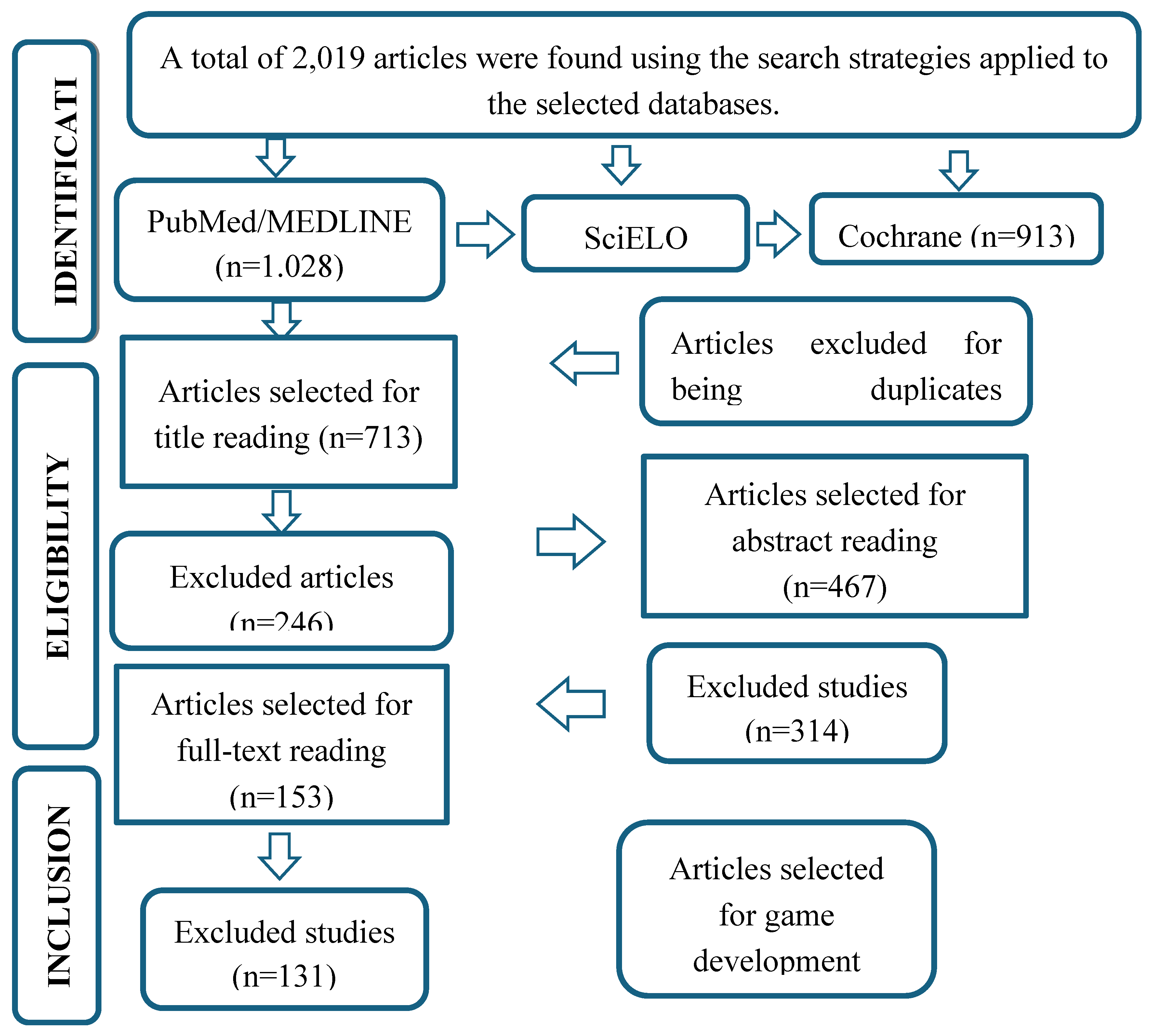
Chart 1 presents the suggestions made by the judges during the evaluation of the content of the Friction Care game and the changes implemented.

Chart 1.
Suggestions and Changes Made to the “Friction Care” Game Content.
| Judges’ Suggestions | Changes Implemented |
|---|---|
| Review: risk factors and clinical assessment | Clinical Assessment and Identification of Risk Factors for FI |
| Review: degree of FI | Category of friction injury type |
| Add: Porous Regenerating Membrane Membracel, Barrier Spray, acrylic foam |
Added |
| Include a link to return to the questions | Return to previous question |
| I forgot my password and was unable to recover it | The item “change password” was added. |
Figure 2 shows some screens of the game, which is publicly available through a shared link on Google Drive: https://drive.google.com/file/d/1D0eKghhwLzTVMPxGlGKo3HvJyBV3VHP2/view?usp=sharing.
Its development took place between March and May 2024, including the stages of planning, content development, and pedagogical validation.
Players must answer a series of 90 multiple-choice questions presented on cards distributed throughout the board. The board has a rectangular format, measuring 250 mm by 50 mm, divided into nine phases, each composed of 10 spaces, forming a path marked by the words start and finish.
At the beginning of the game, the user finds on the first screen the name of the game, the identification of the authors, and the university where it was developed. By swiping the screen to the right, the option to create a password appears. Then, by clicking on Play, the tutorial is displayed, consisting of five screens. After the tutorial, the board is presented on the main screen.
On the upper margin, there are two squares: the first displays the player’s score and the second, the total number of questions answered. By clicking on the side arrow, the card with the question to be answered appears. After reading and answering, the user must click on Next to view the following question.
The Friction Care game was registered with the National Institute of Industrial Property under number BR512024004801-4.
Table 1 presents the questions submitted for evaluation by the professionals, along with the respective CVC values. In the first round of evaluation, the indices ranged from 0.94 to 1.0; in the second round, they ranged from 0.99 to 1.0. These results indicate a high level of agreement among the evaluators, demonstrating the excellence of the content developed for the educational Friction Care game.
Table 2 details the main topics addressed by each item of the applied questionnaire, as well as the qualitative evaluation conducted by the specialists regarding the content of the Friction Care game, using the Delphi Technique. In the first round of analysis, the opinions ranged from inadequate to totally adequate. After a second round of evaluation, consensus was observed among the judges regarding the relevance and adequacy of the game.
4. Discussion
The development of educational technologies in Nursing constitutes an innovative strategy to qualify clinical practice and promote safe care grounded in scientific evidence. Applications, games, booklets, and digital platforms have been developed and validated by professionals in the field, becoming resources incorporated into daily clinical practice and the educational process [7,8,9,10,11,12,13,14,15,16,17,18,19,20,21,22,23,24,25,26,27,28,29,30,31,32,33,34,35,36].
In this study, the educational Friction Care game was developed, aimed at teaching care for patients who present risk factors for or have already developed Friction Injury (FI). The content was structured based on an integrative literature review, with classification of the articles according to their level of evidence and subsequent validation by experts in the field.
Validation followed the methodology of the Delphi Technique, which enabled critical analysis of the material by expert judges. After adjustments and recommendations, consensus was achieved regarding its adequacy and pedagogical relevance. This process provides scientific rigor to the final product and expands its applicability in professional education [7].
The results reinforce the relevance of innovative educational strategies for strengthening healthcare. The use of technological tools in Nursing education contributes to the training of professionals who are better prepared, critical, and aware of the need to prevent skin injuries in older adults.
The Friction Care is configured as a distinctive pedagogical tool by providing an active learning environment that stimulates essential competencies, such as clinical reasoning, decision-making, and teamwork. Its playful and interactive dynamics complement traditional teaching, promoting greater student engagement and consolidating knowledge through the simulation of clinical practices in a safe and controlled environment.
Game attractiveness lies in its unique characteristics: the scenarios were constructed based on real and updated situations from professional practice, allowing multiple narrative outcomes and response possibilities. This approach enriches critical thinking and fosters student autonomy. In addition, the accessible design and intuitive interface promote an immersive experience, even for those with limited familiarity with digital games, making the resource inclusive and versatile across diverse health education contexts.
The effectiveness of educational games in Nursing is already supported by evidence demonstrating greater student engagement, improved knowledge retention, and the development of practical competencies. In the case of the Friction Care, the distinguishing feature lies in the construction of realistic clinical scenarios with multiple possible outcomes, enhancing students’ autonomy and critical capacity in the face of the complexity of care [16,37].
Furthermore, educational technologies such as this are fundamental in bridging theory and practice by offering a safe simulated environment in which error is an integral part of the learning process. This characteristic contributes to better preparation of future professionals, reducing risks and promoting patient safety [7].
By integrating the Friction Care into the education of undergraduate Nursing students, the scope of health education is expanded, promoting not only technical knowledge but also proactive attitudes in situations of risk, such as FI. In this way, this educational technology not only innovates but also strengthens the quality of care provided, contributing to evidence-based and patient-centered practices.
This study included exclusively the game’s evaluation by nurses, the target audience for which the instrument was originally designed, due to their central role in the systematization of care and clinical decision-making. However, it is acknowledged that physicians and physiotherapists, when using the tool, might present different perceptions regarding its practical applicability and educational potential, especially in diverse clinical settings. Thus, although the adopted delimitation is aligned with this study’s objectives, it represents a limitation concerning the generalization of the results to other health professional profiles.
5. Conclusions
Friction Care is configured as an innovative proposal for continuing education in Nursing, integrating technical knowledge with playful elements. Its use as a pedagogical resource promotes professional engagement, increases motivation for learning, and enhances both retention and practical application of content, especially regarding the identification and prevention of FI.
By stimulating clinical reasoning interactively, the game contributes to the qualification of care provided, strengthening evidence-based practices aligned with patient safety. In this sense, Friction Care emerges as a strategic tool for improving Nursing care, with the potential to positively impact quality indicators in health services.
6. Patents
Software registration at the National Institute of Industrial Property (Brazil)
Author Contributions
For research articles with several authors, a short paragraph specifying their individual contributions must be provided. The following statements should be used “Formal analysis: GMS and EMJ; Conceptualization: GMS and EMJ; Data curation: GMS; Editing: GMS and EMJ; Funding: GMS and RHM; Resource management: GMS, RHM and EMJ; Research: GMS, RHM and EMJ; Methodology: GMS, RHM and EMJ; Review: GMS and EMJ; Software: GMS and RHM; Supervision: GMS and EMJ; Validation: GMS, RHM and EMJ; Visualization: GMS and EMJ”.
Funding
We thank the Minas Gerais State Research Support Foundation (FAPEMIG) and the University of Vale do Sapucaí (UNIVAS) for granting the undergraduate research scholarship, which was essential for the development of this work.
Institutional Review Board Statement
Approved by the Research Ethics Committee of the University of Vale do Sapucaí, opinion no. 78593424.6.0000.5102, Certificate of Presentation for Ethical Review 6.776.495.
Informed Consent Statement
This study complied with Resolution No. 466, of December 12, 2012, of the Ministry of Health, which deals with ethics in research involving human beings. Ethical aspects related to the total anonymity of the participants, their privacy, and autonomy in accepting or not participating in the study were respected. The study was approved by the Research Ethics Committee of the University of Vale do Sapucaí, opinion no. 78593424.6.0000.5102, Certificate of Presentation for Ethical Review 6.776.495.
Data Availability Statement
Not applicable.
Acknowledgments
We thank the Minas Gerais State Research Support Foundation (FAPEMIG) and the University of Vale do Sapucaí (UNIVAS) for granting the undergraduate research scholarship, which was essential for the development of this work.
Conflicts of Interest
The authors declare no conflicts of interest.
Abbreviations
The following abbreviations are used in this manuscript:
| CVC | Content Validity Coefficient |
| FI | Friction Injury |
| FICT | Free and Informed Consent Term |
References
- Lichterfeld-Kottner, A.; El Genedy, M.; Lahmann, N.; Blume-Peytavi, U.; Büscher, A.; Kottner, J. Maintaining skin integrity in the aged: A systematic review. Int. J. Nurs. Stud. 2020, 103, 103509. [Google Scholar] [CrossRef] [PubMed]
- Rayner, R.; Carville, K.; Leslie, G.; Dhaliwal, S.S. Models for predicting skin tears: A comparison. Int. Wound J. 2020, 17, 823–830. [Google Scholar] [CrossRef] [PubMed]
- Yildiz Karadeniz, E.; Kaplan Serin, E. Skin tears risk and prevalence associated to nursing interventions: A systematic review. Altern. Ther. Health Med. 2025, 31, 65–69. [Google Scholar] [CrossRef] [PubMed]
- Fan, S.; Jiang, H.; Shen, J.; Lin, H.; Yang, L.; Yu, D.; Zhang, M.; Zheng, N.; Chen, L. Prediction models for skin tears in the elderly: A systematic review and meta-analysis. Geriatr. Nurs. 2024, 59, 103–112. [Google Scholar] [CrossRef] [PubMed]
- Moura, A.S.; Ferreira, C.A.S.; Augusto, F.S.; Porangaba, V.M.; Martins, D.S.; Max, M.O.; Carneiro, I.A. Prevalência e incidência de lesão por fricção em pacientes críticos e pacientes em cuidados paliativos. REME Rev. Min. Enferm. 2025, 29, e1573. [Google Scholar] [CrossRef]
- Vieira, C.P.B.; Ferreira, P.C.; Araújo, T.M.E.; Junior Silva, F.J.G.; Galiza, F.T.; Rodrigues, A.S.O. Prevalência de lesões por fricção e fatores associados em idosos em terapia intensiva. Texto Contexto Enferm. 2020, 29, e20180515. [Google Scholar] [CrossRef] [PubMed]
- Pinheiro, R.V.; Salomé, G.M.; Miranda, F.D.; Alves, J.R.; Reis, F.A.; Mendonça, A.R. Algorithms for the prevention and treatment of friction injury. Acta Paul. Enferm. 2021, 34, eAPE03012. [Google Scholar] [CrossRef]
- Xu, J.; Xiong, Y.; Yan, H.; Zhou, Z.; Wen, J.; Wang, S. Prevalence and influencing factors of skin tears in older adults: A systematic review and meta-analysis. Geriatr. Nurs. 2025, 61, 491–498. [Google Scholar] [CrossRef] [PubMed]
- Filatro, A.C.; Piconez, S.C.B. Design instrucional contextualizado. In Proceedings of the 11th International Conference on Distance Education, São Paulo, Brazil, 6–10 September 2004. [Google Scholar]
- Page, M.J.; McKenzie, J.E.; Bossuyt, P.M.; Boutron, I.; Hoffmann, T.C.; Mulrow, C.D.; Shamseer, L.; Tetzlaff, J.M.; Akl, E.A.; Brennan, S.E.; Chou, R.; Glanville, J.; Grimshaw, J.M.; Hróbjartsson, A.; Lalu, M.M.; Li, T.; Loder, E.W.; Mayo-Wilson, E.; McDonald, S.; McGuinness, L.A.; Stewart, L.A.; Thomas, J.; Tricco, A.C.; Welch, V.A.; Whiting, P.; Moher, D. A declaração PRISMA 2020: Diretriz atualizada para relatar revisões sistemáticas. Rev. Panam. Salud Publica 2022, 46, e112. [Google Scholar] [CrossRef] [PubMed]
- Santos, C.M.C.; Pimenta, C.A.M.; Nobre, M.R.C. The PICO strategy for the research question construction and evidence search. Rev. Lat.-Am. Enferm. 2007, 15, 508–511. [Google Scholar] [CrossRef] [PubMed]
- Agency for Healthcare Research and Quality. National Guideline Clearinghouse. Available online: https://www.guideline.gov/ (accessed on 13 March 2024).
- Salomé, G.M. Desenvolvimento de um material educativo para a prevenção e o tratamento das lesões por fricção. ESTIMA 2020, 18, e3220. [Google Scholar] [CrossRef]
- Samuriwo, R.; Holloway, S.; Ousey, K.; LeBlanc, K. Critical analysis of the consensus document on current advances in risk assessment, prevention, and treatment of skin tears: A response from ISTAP. J. Wound Manag. 2024, 25, 77–80. [Google Scholar] [CrossRef]
- Silva, C.V.B.; Camanili, T.C.G.F.; Freitas, N.O.; LeBlanc, K.; Baranoski, S.; Santos, V.L.C.G. ISTAP classification for skin tears: Validation for Brazilian Portuguese. Int. Wound J. 2020, 17, 310–316. [Google Scholar] [CrossRef] [PubMed]
- Blackburn, J.; Ousey, K. Preventing and recognising skin tears using a standardised approach. Nurs. Stand. 2024, 39, 45–49. [Google Scholar] [CrossRef] [PubMed]
- Völzer, B.; El Genedy-Kalyoncu, M.; Fastner, A.; Tomova-Simitchieva, T.; Neumann, K.; Hillmann, K.; Blume-Peytavi, U.; Hahnel, E.; Sill, J.; Balzer, K.; Kottner, J. Enhancing skin health and safety in aged care (SKINCARE trial): A cluster-randomised pragmatic trial. Int. J. Nurs. Stud. 2024, 149, 104627. [Google Scholar] [CrossRef] [PubMed]
- Campos, H.H.; da Silva, C.V.B.; Takahashi, J.; de Almeida Cardoso, M.M.; Mazzachiodi, L.R.; Woo, K.; de Gouveia Santos, V.L.C. Educational interventions to improve knowledge among nurses in the prevention of skin tears in hospitalised adults and older adults: A scoping review. Int. Wound J. 2025, 22, e70240. [Google Scholar] [CrossRef] [PubMed]
- Yeşilyurt, M.; Yılmaz, D. Intensive care and operating room nurses’ knowledge regarding skin tears. Nurs. Crit. Care 2025, 30, e70191. [Google Scholar] [CrossRef] [PubMed]
- Tobase, L.; Santos, B.B.; Cruz, D.M.O.C.; Paula, J.G.; Almeida, D.G. Skin tears: Lesões por fricção em pessoa idosa e os diagnósticos de enfermagem. Arq. Ciênc. Saúde UNIPAR 2024, 28, 914–933. [Google Scholar] [CrossRef]
- Mornane, C.; Peck, B.; Terry, D.; Ryan, M. Twice-daily moisturizer application for skin tear prevention among older adults in acute care. Adv. Skin Wound Care 2021, 34, 1–4. [Google Scholar] [CrossRef] [PubMed]
- Lima, L.R.; Marques, R.T.B.; Souza, C.; Nascimento, K.F.; Souza, S.J.P.; Rabone Junior, J.M.; Lopes, J.C.M. Cuidados de enfermagem na prevenção de lesão por fricção em idoso. RGS 2024, 26, 428–440. [Google Scholar] [CrossRef]
- Hickey, T.; Ayres, J. Who should be the first responders for the management of skin tears? J. Wound Care 2021, 30, 332–336. [Google Scholar] [CrossRef] [PubMed]
- LeBlanc, K.; Woo, K. A pragmatic randomised controlled clinical study to evaluate the use of silicone dressings for the treatment of skin tears. Int. Wound J. 2022, 19, 125–134. [Google Scholar] [CrossRef] [PubMed]
- Al Khaleefa, N.; Moore, Z.; Avsar, P.; O’Connor, T.; Budri, A.; Nugent, L.; Patton, D. What is the impact of skincare bundles on the development of skin tears in older adults? A systematic review. Int. J. Older People Nurs. 2022, 17, e12455. [Google Scholar] [CrossRef] [PubMed]
- Freitas, M.S.; Santos, L.S.C.; Oliveira, A.M.L.; Mota. Identificação do perfil do paciente com skin tears em internação hospitalar – contribuições para o planejamento do cuidado. Res. Soc. Dev. 2022, 11, e54311932146. [Google Scholar] [CrossRef]
- Holloway, S.; LeBlanc, K. Reapproximating a skin tear flap. Adv. Skin Wound Care 2022, 35, 462–463. [Google Scholar] [CrossRef] [PubMed]
- Chou, S.-P.; Yen, Y.-H.; Tseng, Y.-T.; Chen, C.-P.; Ke, H.-H.; Lee, Y.-K.; Su, Y.-C.; Hsu, H. Multi-disciplinary management of type 1 and 2 skin tears using a silver-based hydrofiber dressing. Medicine 2023, 102, e35112. [Google Scholar] [CrossRef] [PubMed]
- Yuceler Kacmaz, H.; Kahraman, H.; Cinar, S.L.; Ozkan, F. Skin properties associated with skin tears in older adults: A case-control study. J. Tissue Viability 2023, 32, 585–589. [Google Scholar] [CrossRef] [PubMed]
- Fulbrook, R.N.P.; Miles, S.J.; Williams, D.M. Healing rate of hospital-acquired skin tears using adhesive silicone foam versus meshed silicone interface dressings: A prospective, randomized, non-inferiority pilot study. Int. J. Nurs. Pract. 2023, 30, e13229. [Google Scholar] [CrossRef] [PubMed]
- Ott, C.L.B.; Brinton, C.D.; Yogaparan, T.; Dayal, T.; Vecchio, A.; Berall, A. Skin tear management: A multidisciplinary education project. J. Wound Care 2022, 37, 48–55. [Google Scholar] [CrossRef]
- Girondi, J.B.R.; Evaristo, S.M.; Oliveira, R.A.; Locks, M.O.H.; Amante, L.N.; Soldera, D.; Souza, I.A.; Calegari, M.R. Lesão por fricção em idosos residentes na comunidade: Estudo transversal. Int. J. Dev. Res. 2022, 12, 53282–53286. [Google Scholar] [CrossRef]
- Souza, L.M.; Teixeira, G.S.; Silva, D.M.; Ruiz, L.S.; Coppola, I.D.S.; Silva Meirelles, L.C. Prevalence of skin tears in hospitalized adults and older adults. Rev. Esc. Enferm. USP 2021, 55, e03683. [Google Scholar] [CrossRef] [PubMed]
- El Genedy-Kalyoncu, M.; Völzer, B.; Kottner, J. Development of a multivariable prognostic prediction model for skin tears in older nursing home residents. Sci. Rep. 2025, 15, 11373. [Google Scholar] [CrossRef] [PubMed]
- Jiang, Q.; He, H.; Jing, K.; Wang, M.; He, X.; Hu, R.; Yang, Y.; He, F. Knowledge status of skin tear prevention and its demographic and occupational influencing factors: A national cross-sectional survey among nurses. J. Adv. Nurs. 2025, 81, 1412–1422. [Google Scholar] [CrossRef] [PubMed]
- Hu, R.; Zhong, X.; Li, X.; Ma, Y.; He, H.; Wang, C.; He, F. The skin tears knowledge among geriatric ward nurses and associated factors: A cross-sectional study. J. Tissue Viability 2024, 33, 1012–1016. [Google Scholar] [CrossRef] [PubMed]
- Kacmaz, H.Y.; Kahraman, H.; Hancer, A.T.; Uzgor, F.; Gur, S.; Kalkan, N.; Ceyhan, O.; Yilmaz, M.; Temel, S. Skin tears in older patients in intensive care units: A multicentre point prevalence study. Nurs. Crit. Care 2025, 30, e13131. [Google Scholar] [CrossRef] [PubMed]
Figure 2.
Board and some cards with questions from the Friction Care game.
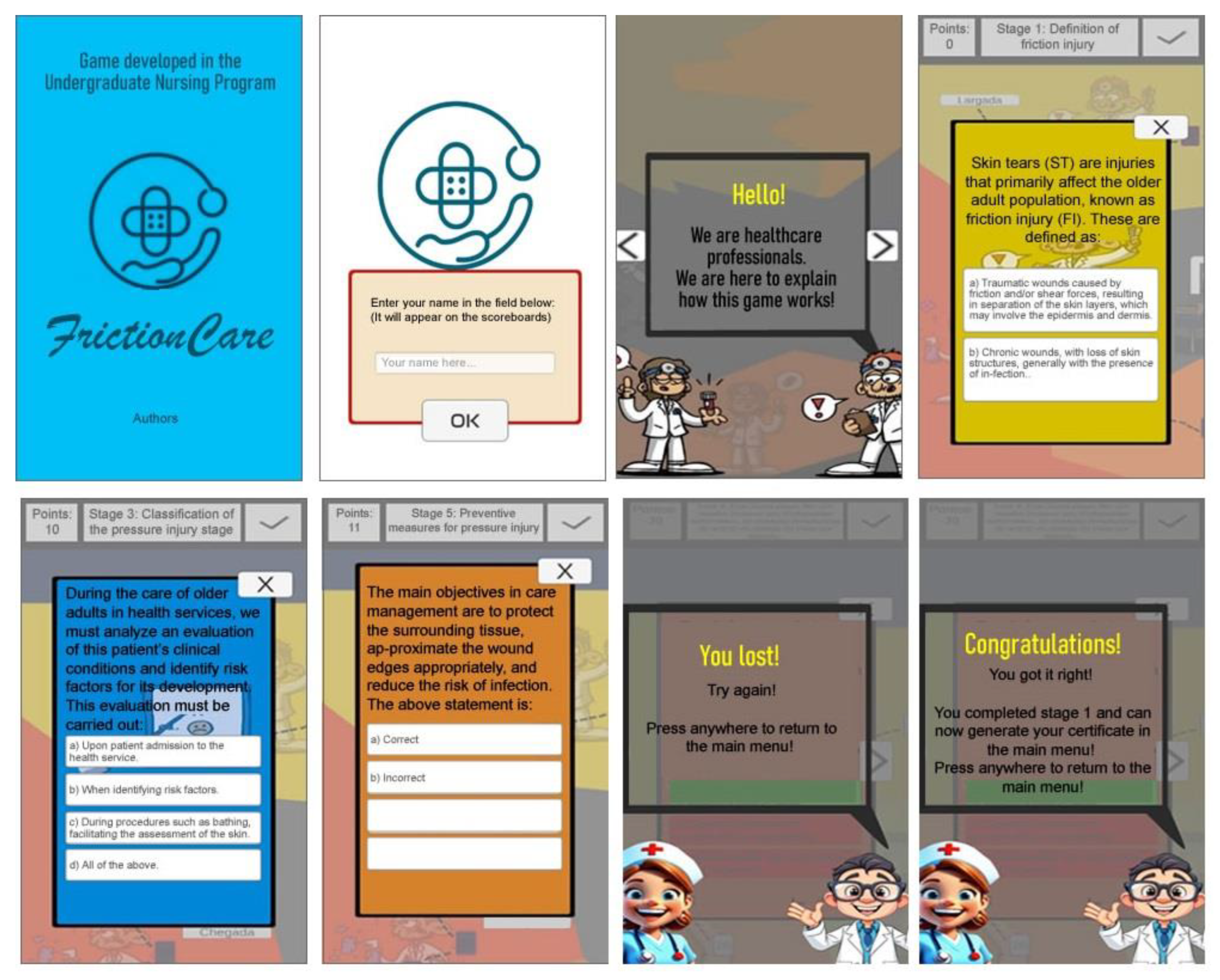
Table 1.
Results of the Content Validity Coefficient based on the analysis conducted by the specialists. Pouso Alegre (MG), Brazil. 2024.
Table 1.
Results of the Content Validity Coefficient based on the analysis conducted by the specialists. Pouso Alegre (MG), Brazil. 2024.
| Evaluated Questions | Content Validity Coefficient | |
|---|---|---|
| First Evaluation % | Second Evaluation % | |
| Friction Care game content evaluation | ||
| Definition of friction injury | 0.99 | 0.99 |
| Clinical Assessment and Identification of Risk Factors for Friction Injury in Patients | 0.94 | 1.0 |
| Cleaning of friction injury | 1.0 | 1.0 |
| Category I of friction injury | 0.95 | 1.0 |
| Category II of friction injury | 0.94 | 0.1 |
| Category III of friction injury | 0.94 | 1.0 |
| Preventive measures for friction injury | 0.97 | 1.0 |
| Description of treatment according to the classification of friction injury | 0.98 | 1.0 |
| Friction Care Game functionality evaluation | ||
| The Friction Care game accurately performs its functions. | 1.0 | 1.0 |
| Does the content present relevant information for the target audience? | 1.0 | 1.0 |
| The Friction Care game provides the necessary functions to assess, prevent, and treat friction injury. | 1.0 | 1.0 |
| The Friction Care game ensures secure access through password use. | 0.98 | 1.0 |
| Friction Care Game usability evaluation | ||
| It is easy to understand the instructions of the Friction Care game. | 1.0 | 1.0 |
| When playing Friction Care, does the content facilitate the teaching and learning process on the topic? | 1.0 | 1.0 |
| It is easy to learn how to use the Friction Care game. | 1.0 | 1.0 |
| Players have full control over actions and can easily undo errors. | 1.0 | 1.0 |
| The tutorial is clear and objective, helping to clarify doubts effectively. | 1.0 | 1.0 |
| Friction Care Game efficiency evaluation | ||
| Is the vocabulary accessible to the target audience? | 1.0 | 1,0 |
| The response time of the Friction Care game is adequate. | 1.0 | 1.0 |
| During the game, players remain motivated and wish to continue playing. | 1.0 | 1.0 |
| The stability, loading speed, and overall performance of the game are consistent. | 1.0 | 1.0 |
| The resources available in the Friction Care game are adequate. | 1.0 | 1.0 |
Table 2.
Judges’ evaluation of The Friction Care Game content using the Delphi Technique. Pouso Alegre (MG), Brazil. 2024.
Table 2.
Judges’ evaluation of The Friction Care Game content using the Delphi Technique. Pouso Alegre (MG), Brazil. 2024.
| Evaluated Topics | First Evaluation | Second Evaluation | ||||||
|---|---|---|---|---|---|---|---|---|
| IND | PAD | ADQ | TAD | IND | PAD | ADQ | TAD | |
| n(%) | n(%) | n(%) | n(%) | n(%) | n(%) | n(%) | n(%) | |
| Friction Care game content evaluation | ||||||||
| Definition of friction injury | 0(0) | 04(08) | 34(68) | 12(24) | 0(0) | 1(02) | 32(64) | 17(34) |
| Clinical Assessment and Identification of Risk Factors for Friction Injury in Patients | 01(02) | 02(04) | 34(68) | 13(26) | 0(0) | 0(0) | 35(70) | 15(30) |
| Cleaning of friction injury | 0(0) | 01(02) | 36(72) | 13(26) | 0(0) | 0(0) | 38(76) | 12(24) |
| Category I of friction injury | 01(02) | 01(02) | 34(68) | 14(28) | 0(0) | 0(0) | 36(72) | 14(28) |
| Category II of friction injury | 01(02) | 02(04) | 34(68) | 13(26) | 0(0) | 0(0) | 34(68) | 16(32) |
| Category III of friction injury | 0(0) | 01(02) | 35(70) | 14(28) | 0(0) | 0(0) | 33(66) | 17(34) |
| Preventive measures for friction injury | 0(0) | 03(06) | 39(78) | 08(16) | 0(0) | 0(0) | 34(68) | 16(32) |
| Treatment according to the classification of friction injury | 0(0) | 01(02) | 38(76) | 11(22) | 0(0) | 0(0) | 36(72) | 14(28) |
| Friction Care Game functionality evaluation | ||||||||
| The Friction Care game accurately performs its functions. | 0(0) | 01(02) | 33(66) | 16(32) | 0(0) | 0(0) | 40(80) | 10(20) |
| Does the content present relevant information for the target audience? | 0(0) | 0(0) | 35(70) | 15(30) | 0(0) | 0(0) | 41(82) | 09(18) |
| The Friction Care game provides the necessary functions to assess, prevent, and treat friction injury. | 0(0) | 0(0) | 35(70) | 15(30) | 0(0) | 0(0) | 38(76) | 12(24) |
| The Friction Care game ensures secure access through password use. | 0(0) | 1(02) | 36(72) | 13(26) | 0(0) | 0(0) | 37(74) | 13(26) |
| Friction Care Game usability evaluation | ||||||||
| It is easy to understand the instructions of the Friction Care game. | 0(0) | 0(0) | 41(82) | 09(18) | 0(0) | 0(0) | 39(78) | 11(22) |
| When playing Friction Care, does the content facilitate the teaching and learning process on the topic? | 0(0) | 0(0) | 38(76) | 12(24) | 0(0) | 0(0) | 38(68) | 12(32)_ |
| It is easy to learn how to use the Friction Care game. | 0(0) | 0(0) | 35(70) | 15(30) | 0(0) | 0(0) | 41(82) | 09(18) |
| Players have full control over actions and can easily undo errors. | 0(0) | 01(02) | 38(76) | 11(22) | 0(0) | 0(0) | 34(68) | 16(32) |
| The tutorial is clear and objective, helping to clarify doubts effectively. | 0(0) | 0(0) | 40(80) | 10(20) | 0(0) | 0(0) | 28(56) | 22(44) |
| Friction Care Game efficiency evaluation | ||||||||
| Is the vocabulary accessible to the target audience? | 0(0) | 0(0) | 37(74) | 13(26) | 0(0) | 0(0) | 34(68) | 16(32) |
| The response time of the Friction Care game is adequate. | 0(0) | 0(0) | 37(74) | 13(26 | 0(0) | 0(0) | 33(66) | 17(34) |
| During the game, players remain motivated and wish to continue playing. | 0(0) | 0(0) | 42(84) | 08(16) | 0(0) | 0(0) | 36(72) | 14(28) |
| The stability, loading speed, and overall performance of the game are consistent. | 0(0) | 0(0) | 36(72) | 14(28) | 0(0) | 0(0) | 38(76) | 12(24) |
| The resources available in the Friction Care game are adequate. | 0(0) | 01(02) | 36(72) | 13(265) | 0(0) | 0(0) | 39(78) | 11(22) |
IND - inadequate; PAD - partially adequate; ADQ - adequate; TAD - totally adequate.
Disclaimer/Publisher’s Note: The statements, opinions and data contained in all publications are solely those of the individual author(s) and contributor(s) and not of MDPI and/or the editor(s). MDPI and/or the editor(s) disclaim responsibility for any injury to people or property resulting from any ideas, methods, instructions or products referred to in the content. |
© 2026 by the authors. Licensee MDPI, Basel, Switzerland. This article is an open access article distributed under the terms and conditions of the Creative Commons Attribution (CC BY) license (http://creativecommons.org/licenses/by/4.0/).
Copyright: This open access article is published under a Creative Commons CC BY 4.0 license, which permit the free download, distribution, and reuse, provided that the author and preprint are cited in any reuse.


