

Submitted:
11 June 2026
Posted:
12 June 2026
You are already at the latest version
Abstract
Background: Poor appetite, a major contributor to malnutrition, is highly prevalent among older adults and associated with adverse clinical outcomes. Nevertheless, no effective appetite targeted treatments are currently part of clinical practice alongside nutritional interventions. Medical cannabis has been proposed as a potential appetite stimulant in older adults with poor appetite through modulation of appetite regulating hormones such as glucagon like peptide 1 (GLP 1) and ghrelin, but the evidence remains limited. Aims: To investigate the associations between a fixed dose of Sativex® (8.1 mg Δ9-tetrahydrocannabinol (THC) and 7.5 mg cannabidiol (CBD)) versus placebo and postprandial GLP 1, total ghrelin concentrations as well as subjective appetite in older adults with poor appetite, and the associations between THC and its metabolites on these outcomes. Methods: This protocolized secondary analysis included 17 participants (≥65 years) with poor appetite from a double blinded, randomized, placebo controlled crossover trial. Participants received Sativex® or placebo on two separate study days. GLP 1 and total ghrelin were measured following a standardized breakfast, and subjective appetite was assessed repeatedly using visual analogue scales. Associations were analyzed using linear mixed effects models. Results: Sativex® administration compared with placebo was associated with an estimated 2.38 pmol/L (95% confidence intervals (CI) -0.71−5.46; p = 0.137) reduction in mean GLP 1 concentration, time dependent changes in mean total ghrelin (p = 0.054), and overall estimates of reduced subjective appetite. Increased THC and metabolite concentrations were associated with reduced estimates of mean GLP-1 concentrations and subjective appetite, and an increased mean total ghrelin. However, no clinically relevant or statistically significant associations were observed, and estimates had wide CIs, warranting cautious interpretation. Conclusions: In conclusion, the administration of medical cannabis, formulated as Sativex®, did not differ from placebo with respect to postprandial GLP-1, total ghrelin as well as subjective appetite over time in older adults with poor appetite. The same was found for associations between THC and its metabolites, and GLP-1, total-ghrelin, and subjective appetite.
Keywords:
malnutrition
; poor appetite
; cannabis-based medicine
; Sativex®
; glucagon-like peptide-1
; ghrelin
; hospital
; older adults
1. Introduction
A global demographic shift toward a larger proportion of older (≥65 years) adults is expected in the coming decades, accompanied by a substantial rise in age related diseases and conditions [1]. Malnutrition is already highly prevalent among older adults, affecting 22–75% of community-dwelling older adults and 48–91% of hospitalized patients [2,3,4,5,6,7,8,9]. As population aging continues, the burden of malnutrition is expected to increase further. Malnutrition is associated with severe adverse consequences, including functional decline, prolonged hospital stays, reduced quality of life, and increased mortality [9,10,11,12]. Malnutrition is multifactorial in origin. However, poor appetite has been identified as one of the most important contributing factors [13,14,15,16,17,18,19,20]. Poor appetite affects approximately 20% of community-dwelling older adults and up to 65% of hospitalized individuals [13,21,22,23]. It may arise secondary to underlying disease or medication use, but it can also occur in the absence of an identifiable cause, often attributed to age-related physiological changes, and commonly referred to as anorexia of aging [24,25,26]. Nutritional intervention studies targeting malnutrition in older adults generally report modest improvements in dietary intake and body weight [27,28,29,30]. These limited effects may be exacerbated by low adherence to the intervention, and poor appetite likely plays a central role in this challenge, as affected individuals may struggle to meet nutritional requirements despite intervention efforts [31,32]. Despite its clinical importance, no effective treatments specifically targeting poor appetite are currently implemented alongside nutritional interventions, representing a critical gap in clinical practice [33,34,35]. Pharmacological appetite stimulants may offer a strategy to address this need, particularly in patients with low compliance to nutritional interventions due to poor appetite. However, evidence supporting the use of existing appetite-stimulating medications such as mirtazapine and megestrol acetate in older adults with poor appetite remains limited. While some studies have reported weight gain associated with megestrol acetate [24,35,36,37,38,39,40], these treatments may produce undesirable side effects, including counterproductive alterations in body composition, with weight gain primarily attributable to increased fat mass rather than lean mass [37,38,39,40]. Medical cannabis has emerged as a possible appetite-stimulating alternative, as the exogenous cannabinoid compound, Δ9-tetrahydrocannabinol (THC), may stimulate appetite via interaction with the endocannabinoid system (ECS) [41,42,43]. The ECS is a complex cellular signaling network involved in regulating several physiological processes, including appetite, digestion, and metabolism [41,44]. Age-related alterations in appetite-regulating hormones have been observed in older adults. Compared with younger individuals, older adults have been reported to have higher fasting and postprandial concentrations of the anorexigenic hormones cholecystokinin, leptin, and insulin, as well as peptide YY (PYY), alongside lower concentrations of the orexigenic hormone ghrelin [45,46,47]. Evidence from other populations indicates that cannabis exposure can modulate several of these hormones. Riggs et al. reported that smoked medical cannabis increased plasma concentrations of ghrelin and leptin and decreased PYY in men with HIV (mean age 43) [48], although food intake was not controlled. Similarly, Farokhnia et al. found that cannabis exposure (oral or smoked/vaporized) reduced plasma glucagon like peptide 1 (GLP 1) measured 2.5 h after meal intake compared with placebo in healthy adult cannabis users (mean age 28) [49]. Together, these findings suggest that cannabis, may influence hormonal pathways involved in appetite regulation. However, high-quality studies are still needed to clarify the extent and clinical relevance of these effects in older adults with poor appetite.
The aims of this study in older adults with poor appetite, were to investigate: 1) the associations between medical cannabis, formulated as a fixed dose of Sativex®, compared with placebo on circulating GLP-1 and total ghrelin concentrations, 2) the association between Sativex® compared with placebo on subjective appetite, and 3) the associations between concentrations of THC and its metabolites and circulating GLP-1 and total ghrelin concentrations, and 4) the association between concentrations of THC and its metabolites and subjective appetite.
2. Materials and Methods
2.1. Study Design and Setting
The present study is a protocolized secondary analysis from a double-blinded, randomized (1:1), placebo-controlled crossover trial evaluating the efficacy of Sativex® as an appetite stimulant in older adults with poor appetite. The trial is registered at ClinicalTrials.gov (Identifier: NCT05503147, registration: 13th of April 2022) and at the European Clinical Trials Database (EudraCT nr.: 2021-002318-15, registration: 15th of September 2021). The trial design and statistical analysis plan have been described in detail in the study protocol [50], and results on the primary outcome (caloric intake), safety parameters, and the pharmacokinetics of Sativex® have been reported elsewhere [51,52].
In short, 73 participants were included in the trial, and 17 completed the study (Figure S1). Participants were recruited from the Emergency Department (ED) at Copenhagen University Hospital, Hvidovre, Denmark, between February 2022 and December 2023. The inclusion criteria were ≥65 years of age, acutely admitted for a medical illness, reported poor appetite defined as a score of ≤14 on the Simplified Nutritional Appetite Questionnaire (SNAQ) [53], had a body mass index (BMI) ≤30 kg/m2, and were able to cooperate cognitively and physically. Patients were excluded if they, among other criteria, had regular cannabis use, terminal illness, stroke, acute myocardial infarction, or severe heart failure (New York Heart Association (NYHA) class III–IV) [51].
On weekdays, eligibility of newly admitted patients was assessed by a study physician. Eligible patients were approached in the ED by trained trial staff, and baseline data were collected immediately following written informed consent.
2.2. Study Days
After hospital discharge, each participant completed two identical study days in a randomized, crossover design. The study days were separated by a 14 day washout period. Participants received Sativex® on one study day and placebo on the other (Figure S2). The allocation sequence was computer generated and managed by uninvolved staff, and both investigators and participants were blinded to the assigned treatment. The first study day occurred at least 8 days post-discharge, allowing participants to return to their habitual state. If more than 14 days elapsed between baseline data collection and the first study day, an additional screening for poor appetite using SNAQ was performed.
Study days were conducted at the Zelo Phase 1 Unit at Copenhagen University Hospital Bispebjerg, Denmark. Participants were instructed to fast for 12 h prior to each study day, with water and prescribed medication permitted. Each study day lasted ~6.5 h. A morning urine sample was collected upon arrival to screen for residual THC, whereafter participants were settled in private rooms, and a peripheral venous catheter was inserted to allow for repeated blood sampling.
2.3. Test Meals
- Standardized breakfast
Participants consumed 125 mL of Nutridrink® Compact (available in mocha, chocolate, vanilla, or berries). Each serving provided 1263 kilojoules (kJ), comprising 11.6 g fat, 37 g carbohydrates, and 12 g protein. The same flavor was consumed on both study days, and participants were instructed to consume the meal within 15 min.
- Standardized homogeneous ad libitum lunch
Participants received a standardized 350 g serving of a homogeneous meal consisting of either beef stew or lentil curry, both with mashed potatoes. The macronutrient composition was similar between the two options, providing 2132 (kJ) for the beef stew and 2220 kJ for the lentil curry, including approximately 21 g of protein per serving. The same meal was provided on both study days, and participants were instructed to consume it within 25 min [50].
2.4. Study Drug
Sativex® is an oromucosal spray containing of 2.7 mg THC and 2.5 mg CBD per spray, along with other minor naturally occurring cannabinoids, flavonoids, terpenes, and sterols, derived from Cannabis sativa L., (folium cum flore) and manufactured by Jazz Pharmaceuticals plc.
THC—the primary appetite-stimulating component of Sativex®—is rapidly metabolized in the liver to the active metabolite 11-hydroxy-Δ9-tetrahydrocannabinol (11-OH-THC), and subsequently to the inactive metabolite 11-nor-9-carboxy-Δ9-tetrahydrocannabinol (THC-COOH), which reflects the extent of THC metabolism [54,55].
Placebo was prepared by the Capital Region Pharmacy of Denmark, consisting of an alcohol base with peppermint and quinine flavoring, developed to match Sativex® in appearance, viscosity, and taste.
2.5. Administration of the Sativex® or Placebo
Trained staff administered Sativex® or placebo. The bottles were shaken and sprayed onto three different areas of the oromucosal surface.
- First dose: Three sprays of Sativex® (total dose: 8.1 mg THC and 7.5 mg CBD) or placebo, followed by the standardized breakfast 25 min later.
- Second dose: Three sprays of Sativex® (total dose: 8.1 mg THC and 7.5 mg CBD) or placebo given 245 min after the first dose, followed 25 min later by the standardized homogeneous ad libitum lunch.
After each dose, participants were instructed not to talk, swallow, or move their tongue for 15 min to minimize swallowing of Sativex®/placebo.
2.6. Blood Sampling and Biochemical Analyses of GLP-1, Total Ghrelin, and THC
2.6.1. Blood Sampling
Baseline blood samples for GLP-1, total ghrelin, and THC were collected approximately 0–15 min before the first dose of Sativex® or placebo. Blood samples for GLP-1 and total-ghrelin were further collected at 15, 30, 45, 60, 90, 120, and 180 min after completion of the standardized breakfast, whereas blood samples for THC were collected at 15, 30, 75, 90, 150, 195, 240, 330, and 360 min after administration of Sativex® or placebo
2.6.2. Sample Processing and Storage
Blood samples for GLP-1 and total ghrelin were collected in EDTA tubes and kept on ice until processing. Samples were centrifuged at 4 °C and plasma was stored at −80 °C until analysis.
Blood samples for THC were kept at room temperature for ≥45 min to allow coagulation, then centrifuged for 10 min at 2200× g and separated. To enhance stability, 30 µL of ascorbic acid (1 mol L−1) per mL were added to serum and subsequently frozen at −80 °C.
2.6.3. GLP-1 Analysis
Samples were extracted in a final concentration of 70% ethanol before measurement of GLP-1. Plasma concentrations of total GLP-1 were measured by radioimmunoassay using antiserum no. 89390, which reacts equally with intact GLP-1 (7–36) amide and its primary metabolite GLP-1 (9–36) amide. The assay had a lower detection limit of 1 pmol/L. Intra-assay coefficients of variation were <10%. All samples were measured in duplicate [56].
2.6.4. Total Ghrelin Analysis
Total ghrelin concentrations were measured using a commercially available ELISA kit (cat. No. EZGRT-89K, Millipore, USA) according to the manufacturer’s instructions. The assay had a quantification range of 50–4000 pg/mL with intra- and inter-assay coefficients of variation ≤ 10%.
All GLP-1 and total ghrelin analyses were performed at the Department of Biomedical Sciences, Faculty of Health and Medical Sciences, University of Copenhagen.
2.6.5. THC Analysis
Samples were analyzed at the Department of Clinical Biochemistry, North Denmark Regional Hospital, Hjørring, Denmark, for THC, 11-OH-THC, and THC-COOH using a validated ultra-high performance liquid chromatography coupled with triple quadrupole tandem mass spectrometry assay. The lower limit of quantification was 0.25 ng/mL for all analytes, with a coefficient of variation ≤ 15%.
2.7. Subjective Appetite
Subjective appetite was assessed using a 100 mm visual analogue scale (VAS) (0 = minimum, 100 = maximum) [57,58,59,60,61]. VAS scores were collected at baseline, and an additional nine times each study day, during which both the breakfast and ad libitum lunch were consumed. Five appetite sensations were assessed: satiety, desire to eat, future food intake, fullness, and hunger. The combined appetite score was calculated as desire to eat + future food intake + hunger + (100 − satiety) + (100 − fullness) [57].
2.8. Descriptive Variables
Information extracted from the electronic health record included age, sex, C reactive protein (CRP), hemoglobin A1c (HbA1c), and estimated glomerular filtration rate (eGFR). Self-reported information included current smoking status, unintentional weight loss (>5% within 3 months), living condition, and alcohol consumption. Participants were additionally assessed with SNAQ with a cut-off of ≤14, indicating poor appetite [53], the Nutrition Risk Screening 2002 (NRS 2002), which assesses the presence or severity of malnutrition by summarizing score A and B on a scale from 0 to 7, with a score ≥ 3 indicating nutritional risk [62], and the Eating Symptom Questionnaire (ESQ), which evaluates nutrition impact symptoms such as eating difficulties, nausea, and taste disturbances [63]. ESQ symptoms are rated on a 5-point scale from 1 to 5, where 1 indicates no symptoms, and 5 indicates severe symptoms. At inclusion, trial staff measured weight and height to calculate BMI. Body composition, including appendicular muscle mass index (ASMI) and body fat mass, was assessed using multifrequency bioelectrical impedance analysis (BIA) performed with the InBody S10 device [64]. Prior to measurement, information on the timing of recent food intake, fluid intake, and urination or defecation were documented. Baseline information on disease burden, admission diagnosis, and concomitant medications are reported in Nielsen et al. 2025 [51].
2.9. Statistical Methods
All 17 participants were included in the analyses. For descriptive analyses, median and interquartile range (IQR) are reported for continuous variables and number with percentage for categorical variables.
Area under the curve (AUC) was calculated for GLP-1 and total ghrelin from administration of Sativex® or placebo at ≈−40 min to 180 min after ended breakfast.
The associations between Sativex® versus placebo and GLP-1, total ghrelin, and subjective appetite were analyzed using all available timepoints. This was done in separate models for each outcome using linear mixed effect models with fixed effects for timepoints and treatment (Sativex® vs. placebo). All models were initially fitted with an interaction between treatment (Sativex® vs. placebo) and timepoints to allow for a time-dependent estimate of Sativex® compared with placebo. These models were compared with models without the interaction using likelihood ratio test (LRT). If the LRT test was statistically significant, the interaction was kept (time-dependent), otherwise it was removed from the model (not time-dependent). Regardless of whether the model was time-dependent or not, timepoints were modelled using natural cubic splines with 3–5 knots distributed according to quantiles. The number of knots was determined by visual inspection of the residual plots as well as LRT comparing different number of knots.
The associations between THC, 11 OH THC, and THC COOH, and measures of GLP 1, total ghrelin, and subjective appetite used the same modeling approach as the treatment models (Sativex® vs. placebo), with treatment replaced by THC, 11 OH THC, or THC-COOH values in separate models. As timepoints for THC, and GLP-1 and total ghrelin were not the same, only timepoints for THC measurements that could be paired with GLP-1 and total ghrelin timepoints (≤10 min between the timepoints) were included. The same approach was applied for 11 OH THC and THC-COOH.
For not time-dependent models, results were presented as a single estimate, representing the average difference between Sativex® and placebo, or as the effect of a 1 µg/L increase in THC, 11 OH THC, or THC-COOH, independent of timepoints, with 95% confidence interval (CI) and Wald test p-value.
For time-dependent models, where no single estimate for the associations could be calculated, the estimated changes over the measurement period were visualized within the Sativex® and placebo group and for specific values of THC, 11 OH THC, or THC-COOH. Additionally estimated group differences between Sativex® and placebo over time were also visualized, with corresponding CIs. p-values for time-dependent associations were calculated by LRT comparing the model to an equivalent model where the exposure was removed. For the test of THC-COOH on desire to eat, the reduced model excluding THC-COOH did not converge, and a p-value could therefore not be calculated for this association. p-values were corrected for multiple testing by Bonferroni correction by multiplying the p-values by the number of tests performed within each composite hypothesis (two for GLP-1 and total ghrelin, and six for subjective appetite). Model assumptions regarding normal distribution were evaluated using histograms and Q-Q plots, and linearity by fitted vs. residuals plots.
No action was taken to handle missing data. However, values for one participant at one study day, at one timepoint were missing for one outcome (see note to Figure 3).
2.10. Ethics
The trial was approved by the Capital Region’s Committee on Health Research Ethics (H-21044231) and the Danish Medicines Agency (010921). Data storage and processing were authorized by the Danish Data Protection Agency under approval number P-2021-744 in October 2021. The trial was conducted between February 2022 and January 2024 and followed ICH E6 (R2) guidelines for Good Clinical Practice (GCP), monitored by an independent monitoring unit at the University of Copenhagen. This study is reported in accordance with the CONSORT guidelines [67].
3. Results
The 17 participants had a median age of 78 years (IQR: 71–85), a median BMI of 19.8 (IQR: 18.3–23.4), and the majority were female (76.5%) and living alone (70.6%). The median total SNAQ score was 11 (IQR: 8–12), and all participants reported eating <75% of their habitual dietary intake during the week prior to admission (Table 1). Characteristics were similar on Sativex® and placebo study days (Table 2). The AUC for GLP-1 and total ghrelin were comparable between Sativex® and placebo study days (Table 3). GLP-1, total-ghrelin, and subjective appetite time courses for Sativex® and placebo are presented in Figure 2 and Figure 3.
Descriptive plots of individual THC, 11-OH-THC, and THC-COOH concentrations, and GLP-1, total ghrelin, and subjective appetite over time for all participants are presented in the Supplementary Material in Figures S3–S26.
3.1. The Associations Between Sativex® and GLP-1 and Total Ghrelin Compared with Placebo
The estimate of Sativex® compared with placebo was not time-dependent for GLP-1 and had an average reduction in mean GLP-1 concentration of 2.38 pmol/L (95% CI −0.71–5.46; p = 0.137).
In contrast, estimates of Sativex® on mean total ghrelin were time-dependent (p = 0.016), and the estimated within-group changes over time are illustrated in Figure 4A and between-group differences with 95% CIs are illustrated in Figure 4B. Within each group, a negative mean change of total ghrelin concentrations was estimated for the majority of timepoints with the largest reduction estimated at ~110 and ~100 min for Sativex® and placebo, respectively. When evaluating the between-group difference for the change, a larger reduction was initially estimated for the Sativex® group until the ~65 min timepoint, and hereafter Sativex® had a smaller estimated reduction, compared with placebo. However, CIs at all timepoints were wide, and the difference over time for total ghrelin was not found to be statistically significant after Bonferroni correction (p = 0.054).
3.2. The Association Between Sativex® and Subjective Appetite Compared with Placebo
As group estimates were not time-dependent for any appetite sensations or the combined score (all p > 0.17), these are presented as not time-dependent group effects in Table 4. For Sativex®, this estimated a slightly higher mean VAS score change for satiety (0.9 mm) and slightly lower changes for the remaining appetite sensations (−2.8 to −0.7 mm). The estimate for the combined appetite score was 5.2 mm lower for Sativex® compared with placebo. However, CIs for all appetite sensations and the combined appetite score were wide and none of the differences were found to be statistically significant before and after Bonferroni correction (all p-values = 1.00).
3.3. The Associations Between THC and Its Metabolites and GLP-1, Total Ghrelin, and Subjective Appetite
Results from the association analysis between concentrations of THC and its metabolites (11-OH-THC and THC-COOH) and GLP-1, total ghrelin, and subjective appetite are presented in the Supplementary Material (Table S1). In short, for not time-dependent estimates, increasing concentrations of THC, 11-OH-THC, and THC-COOH estimated lower GLP-1 (−1.23 to −0.18 pmol/L) and higher total ghrelin (1.77 to 13.50 pg/mL) concentrations. Additionally, increasing THC concentrations estimated lower satiety, desire to eat, fullness, and combined appetite score (−4.50 to −0.70 mm), and higher hunger (0.67 mm). In contrast, higher concentrations of 11-OH-THC and THC-COOH estimated lower hunger (−0.12 to 0.04) and combined appetite score (−3.60 to −0.39). However, all estimates had wide CIs, and none were statistically significant. Only a limited number of the time-dependent effects reached statistical significance (all p ≤ 0.03) (Table S1), with no consistent overall pattern (Figure S27).
4. Discussion
To our knowledge, this study is the first to evaluate the associations between Sativex® versus placebo and postprandial GLP 1 and total ghrelin concentrations as well as subjective appetite in older adults with poor appetite. We found that the administration of medical cannabis, formulated as Sativex®, did not differ from placebo with respect to postprandial concentrations of GLP-1 and total ghrelin as well as subjective appetite over time in older adults with poor appetite. The same was found for associations between THC and its metabolites, and GLP-1, total-ghrelin, and subjective appetite. No estimates were found to be clinically relevant or statistically significant and all had wide CIs, warranting cautious interpretation.
4.1. Key Results Compared with Previous Literature
4.1.1. GLP-1 and Total Ghrelin
An estimated increase in GLP-1 concentration in both groups was seen, which is consistent with the expected postprandial response to the standardized breakfast meal. Also, a non-significant reduction in GLP-1 was observed in the Sativex® group compared with placebo, which aligns with the proposed pharmacological profile of Sativex® as a potential appetite stimulant, as lower GLP-1 concentrations are generally associated with increased appetite [68]. Moreover, a reduction in total ghrelin over time in both groups was observed and primarily driven by the expected postprandial response to the standardized breakfast. Estimated between-group differences over time were only consistent with a potential appetite-stimulating effect after approximately 65 min, however these estimates also had the largest uncertainty. Overall, these findings partially align with previous studies investigating the effects of medical cannabis on GLP-1 and total ghrelin concentrations [48,49]. The estimated reduction in GLP-1 is consistent with a study by Farokhnia et al. [49]. However, direct comparison is limited by methodological differences. Farokhnia et al. included young, regular cannabis users and used combined oral and inhaled/vaporized administration, whereas our study included older adults with poor appetite and a controlled oromucosal dose of Sativex®. Further, Farokhnia et al. did not report hormone concentration values, which limits quantitative comparisons of GLP-1 concentrations between the two studies.
Riggs et al. found significant increases in total ghrelin following smoked cannabis in men with HIV infection [48], whereas we observed non-significant variations in ghrelin over time. Differences in administration type, dosing intensity, and study duration likely contribute to these discrepancies. In their study, cannabis was administered repeatedly over five days with individualized dosing, potentially leading to higher cumulative exposure. In contrast, our study employed a single, fixed dose, which may have been insufficient to produce consistent effects on ghrelin. Pharmacokinetic findings from our study sample demonstrate substantial inter-individual variability, suggesting that personalized titration regimens are likely necessary to account for individual differences in response to drugs [52]. Additionally, dietary intake differed between studies and likely influenced ghrelin concentrations, as we measured hormones postprandially after a standardized meal, whereas Riggs et al. did not provide standardized meals and relied on insulin as a proxy for dietary intake [48,69].
In our analysis of THC and its metabolites, similar to the estimates for Sativex®, an estimated reduction of GLP-1 was observed. In contrast, estimated increases for total ghrelin were observed for increased THC, 11-OH-THC, and THC-COOH concentrations, whereas estimates for the Sativex® analyses were not consistent over time, possibly due to inter-individual variability in THC plasma concentrations [52], or the influence of other constituents in Sativex®, such as CBD, minor cannabinoids, or other phytochemicals [55]. However, higher peak THC concentrations following Sativex® administration were observed in our study sample compared with findings from another study in healthy males [52,70], which may indicate that the lack of consistent effects on GLP-1 and total ghrelin is unlikely to be explained by insufficient THC concentrations alone.
Several physiological factors may contribute to the modest and variable hormonal effects observed. Sativex® is intended to be absorbed from the oromucosal area, but a proportion of the dose may have been inadvertently swallowed and absorbed via the gastrointestinal tract [71,72,73], despite the participants being instructed not swallow or to touch the oromucosal area for 15 min after administration. This may have resulted in delayed (more than a naturally occurring delay) and variable systemic THC concentrations, as observed in our study sample [52,74], potentially creating a temporal mismatch between peak drug effects and peak postprandial hormone responses. Also, the co-administration of CBD and THC through Sativex® may influence the effects of THC via CYP-inhibition as well as cannabinoid receptor modulation [52,75], although the low CBD dose in the trial product suggests minimal effect. Age-related physiological changes, such as slower gastric emptying, may additionally influence GLP-1 and ghrelin responses [76]. Also, hormonal responses to the standardized breakfast predominate over effects of Sativex® on GLP-1 and ghrelin secretion, potentially masking treatment-related changes. Fasting conditions may therefore be required to better isolate the effects of Sativex® independent of meal-induced responses [60,77]. Another consideration is that we measured total rather than acylated ghrelin, the latter being the biologically active form [78]. Consequently, the use of total ghrelin may have obscured physiologically relevant changes, although total and active ghrelin levels generally follow each other and with total levels thought to more accurately reflect rate of secretion.
4.1.2. Subjective Appetite
The non-significant reduction and wide confidence interval in VAS appetite scores provided insufficient evidence to support Sativex® as an appetite stimulant. A similar pattern was seen across most individual appetite sensations and comparable findings were observed for THC and its metabolites (OH-THC and THC-COOH). This inconclusive effect is consistent with a lack of effect seen for caloric intake in the trial [51]. The minor differences observed in subjective appetite may indicate that VAS is not sufficiently sensitive to capture changes in subjective appetite among older adults with poor appetite. However, VAS has been shown to correlate with subsequent food intake in both older and healthy individuals [79], suggesting that VAS should be a useful method.
4.2. Strengths and Limitations
A key strength of this study is the randomized crossover design, which minimizes between-subject variability. The use of standardized fasting conditions and standardized test meals enhances internal validity, while repeated hormone measurements over ~3 h and subjective appetite assessments over ~6.5 h provide detailed insight into postprandial dynamics of appetite-related hormones and subjective appetite. Given the complexity of appetite regulation and the lack of a standard assessment method, a multidimensional approach may be preferable. A strength of this study is therefore the multimodal assessment of appetite using both appetite-related hormones, and subjective appetite scores.
However, several limitations should be acknowledged. First, the sample size was small and powered for the primary outcome of the trial, which may limit the statistical power of our analyses on secondary outcomes. This is also expressed in the wide CIs. Second, the study sample consisted predominantly of older women, which restricts generalizability. Third, appetite may be influenced by factors not fully controlled for in this study, including polypharmacy, anxiety, deterioration in sensory systems (taste, smell, and sight), and genetic predisposition [25]. Pharmacokinetic variability represents an additional limitation. The relative contribution of oromucosal versus gastrointestinal absorption of Sativex® is not fully predictable and varies between individuals [52]. Another limitation is the assessment of subjective appetite during a period with an ad libitum lunch meal, as variations in dietary intake between study days could affect appetite scores at later timepoints. Nevertheless, Nielsen et al. reported only minor differences in energy and protein intake between study days, indicating a limited influence on postprandial subjective appetite [51].
5. Conclusions
In conclusion, no differences were found between administration of medical cannabis, formulated as Sativex®, versus placebo on postprandial GLP-1 and total ghrelin concentrations as well as subjective appetite over time in older adults with poor appetite. This was also the case for the associations between THC and its metabolites, and GLP-1, total-ghrelin, and subjective appetite. Achieving meaningful effects on appetite with medical cannabis may require higher doses, repeated administration, or alternative dosing regimens such as personalized titration instead of fixed doses.
Supplementary Materials
The following supporting information can be downloaded at the website of this paper posted on Preprints.org. Table S1: The associations between a one-unit increase in THC-, 11-OH-THC-, and THC-COOH-concentrations and postprandial concentrations of GLP-1 and total ghrelin, and subjective appetite; Figure S1: Flow diagram of patient eligibility; Figure S2: Crossover trial design; Figure S3: Time courses of individual THC and postprandial GLP-1 concentrations across 17 participants following Sativex® administration; Figure S4. Time courses of individual THC and postprandial total ghrelin concentrations across 17 participants following Sativex® administration; Figure S5. Time courses of individual THC concentrations and desire to eat scores across 17 participants following Sativex® administration; Figure S6. Time courses of individual THC concentrations and future food intake scores across 17 participants following Sativex® administration; Figure S7. Time courses of individual THC concentrations and fullness scores across 17 participants following Sativex® administration; Figure S8. Time courses of individual THC concentrations and hunger scores across 17 participants following Sativex® administration; Figure S9. Time courses of individual THC concentrations and satiety scores across 17 participants following Sativex® administration; Figure S10. Time courses of individual THC concentrations and combined appetite scores across 17 participants following Sativex® administration; Figure S11. Time courses of individual 11-OH-THC and postprandial GLP-1 concentration across 17 participants following Sativex® administration; Figure S12. Time courses of individual 11-OH-THC and postprandial total ghrelin concentration across 17 participants following Sativex® administration; Figure S13. Time courses of individual 11-OH-THC concentrations and desire to eat scores across 17 participants following Sativex® administration; Figure S14. Time courses of individual 11-OH-THC concentrations and future food intake scores across 17 participants following Sativex® administration; Figure S15. Time courses of individual 11-OH-THC concentrations and fullness scores across 17 participants following Sativex® administration; Figure S16. Time courses of individual 11-OH-THC concentrations and hunger scores across 17 participants following Sativex® administration; Figure S17. Time courses of individual 11-OH-THC concentrations and satiety scores across 17 participants following Sativex® administration; Figure S18. Time courses of individual 11-OH-THC concentrations and combined appetite scores across 17 participants following Sativex® administration; Figure S19. Time courses of individual THC-COOH and postprandial GLP-1 concentrations across 17 participants following Sativex® administration; Figure S20. Time courses of individual THC-COOH and postprandial total ghrelin concentrations across 17 participants following Sativex® administration; Figure S21. Time courses of individual THC-COOH concentrations and desire to eat scores across 17 participants following Sativex® administration; Figure S22. Time courses of individual THC-COOH concentrations and future food intake scores across 17 participants following Sativex® administration; Figure S23. Time courses of individual THC-COOH concentrations and fullness scores across 17 participants following Sativex® administration; Figure S24. Time courses of individual THC-COOH concentrations and hunger scores across 17 participants following Sativex® administration; Figure S25. Time courses of individual THC-COOH concentrations and satiety scores across 17 participants following Sativex® administration; Figure S26. Time courses of individual THC-COOH concentrations and combined appetite scores across 17 participants following Sativex® administration; Figure S27. Time-dependent changes for THC, 11-OH-THC, and THC-COOH.
Author Contributions
For research articles with several authors, a short paragraph specifying their individual contributions must be provided. The following statements should be used Conceptualization, R.L.N., A.L.A. and M.B.H.; methodology, O.B., R.L.N., J.J.H., A.L.A., M.B.H. and M.M.P.; software, O.B. and T.K.; validation, T.K.; formal analysis, O.B. and T.K.; investigation, O.B., R.L.N., L.W.S.C., I.K.S., H.G.J.L., B.J., B.H., A.L.A. and M.B.H.; resources, O.A. and J.J.H.; data curation, O.B., I.K.S. and T.K.; writing—original draft preparation, O.B.; writing—review and editing, R.L.N., L.W.S.C., I.K.S., T.K., H.G.J.L., J.T., B.J., O.A., J.J.H., B.H., A.L.A., I.P., D.P.S., M.B.H. and M.M.P.; visualization, O.B. and T.K.; supervision, A.L.A., I.P., D.P.S. and M.M.P.; project administration, O.B. and R.L.N.; funding acquisition, R.L.N., A.L.A. and M.B.H. All authors have read and agreed to the published version of the manuscript.
Funding
The trial is financially supported by Danish Regions (DKK 1,521,386), the A.P. Møller Fund for the Advancement of Medical Science (DKK 60,000), and the Beckett Fund (DKK 200,000). The funding sources had no role in study design; data collection, analysis, or interpretation; manuscript preparation; or the decision to submit the article for publication.
Institutional Review Board Statement
The study was conducted in accordance with the Declaration of Helsinki, and approved by the Capital Region’s Committee on Health Research Ethics (H-21044231, 15 September 2021).
Informed Consent Statement
Informed consent was obtained from all subjects involved in the study.
Data Availability Statement
The data supporting the findings of this study are not publicly available due to ethical restrictions protecting participant confidentiality and privacy. Access to the data may be granted by the corresponding author upon reasonable request, subject to approval by the relevant ethics committee.
Acknowledgments
We sincerely thank all participants for their involvement in the trial. We are grateful to Troels Riis for his valuable assistance during study days and to Torben Breindahl for his expertise in cannabinoid measurements. We also acknowledge the Capital Region Pharmacy, Herlev, Denmark, for their support in providing the investigational medical product (IMP) and placebo.
Conflicts of Interest
All authors declare no competing interests.
Abbreviations
The following abbreviations are used in this manuscript:
| GLP-1 | Glucagon like peptide 1 |
| THC | Δ9-tetrahydrocannabinol |
| CBD | Cannabidiol |
| CI | Confidence interval |
| ECS | Endocannabinoid system |
| PYY | Peptide YY |
| ED | Emergency Department |
| SNAQ | Simplified Nutritional Appetite Questionnaire |
| BMI | Body mass index |
| NYHA | New York Heart Association |
| kJ | Kilojoule |
| 11-OH-THC | 11-hydroxy-Δ9-tetrahydrocannabinol |
| THC-COOH | 11-nor-9-carboxy-Δ9-tetrahydrocannabinol |
| VAS | Visual analogue scale |
| CRP | C reactive protein |
| HbA1c | Hemoglobin A1c |
| eGFR | Estimated glomerular filtration rate |
| NRS-2002 | Nutrition Risk Screening 2002 |
| ESQ | Eating Symptom Questionnaire |
| ASMI | Appendicular muscle mass index |
| BIA | Bioelectrical impedance analysis |
| IQR | Interquartile range |
| AUC | Area under the curve |
| LRT | Likelihood ratio test |
References
- Khan, H.T.A.; Addo, K.M.; Findlay, H. Public Health Challenges and Responses to the Growing Ageing Populations. Public Health Chall. 2024, 3, e213. [Google Scholar] [CrossRef]
- van Bokhorst-de van der Schueren, M.A.E.; Lonterman-Monasch, S.; de Vries, O.J.; Danner, S.A.; Kramer, M.H.H.; Muller, M. Prevalence and Determinants for Malnutrition in Geriatric Outpatients. Clin. Nutr. 2013, 32, 1007–1011. [Google Scholar] [CrossRef] [PubMed]
- O’Connell, M.L.; Coppinger, T.; Lacey, S.; Arsenic, T.; McCarthy, A.L. The Nutritional Status and Dietary Intake of Free-Living Seniors: A Cross-Sectional Study. Clin. Nutr. ESPEN 2021, 43, 478–486. [Google Scholar] [CrossRef]
- Vanderwee, K.; Clays, E.; Bocquaert, I.; Gobert, M.; Folens, B.; Defloor, T. Malnutrition and Associated Factors in Elderly Hospital Patients: A Belgian Cross-Sectional, Multi-Centre Study. Clin. Nutr. 2010, 29, 469–476. [Google Scholar] [CrossRef]
- Sieske, L.; Janssen, G.; Babel, N.; Westhoff, T.H.; Wirth, R.; Pourhassan, M. Inflammation, Appetite and Food Intake in Older Hospitalized Patients. Nutrients 2019, 11, 1986. [Google Scholar] [CrossRef]
- Andersen, A.L.; Nielsen, R.L.; Houlind, M.B.; Tavenier, J.; Rasmussen, L.J.H.; Jørgensen, L.M.; Treldal, C.; Beck, A.M.; Pedersen, M.M.; Andersen, O.; et al. Risk of Malnutrition upon Admission and after Discharge in Acutely Admitted Older Medical Patients: A Prospective Observational Study. Nutrients 2021, 13, 2757. [Google Scholar] [CrossRef]
- Lawson-Smith, L.; Petersen, J.; Jensen, P.S.; Sivertsen, D.M.; Pedersen, M.M.; Ellekilde, G.; Lindhardt, T.; Andersen, O. Nutritional Risk in Acutely Admitted Older Medical Patients. Am. J. Food Nutr. 6.
- Bolado Jiménez, C.; Fernádez Ovalle, H.; Muñoz Moreno, M.F.; Aller de la Fuente, R.; de Luis Román, D.A. Undernutrition Measured by the Mini Nutritional Assessment (MNA) Test and Related Risk Factors in Older Adults under Hospital Emergency Care. Nutr. Burbank Los Angel. Cty. Calif. 2019, 66, 142–146. [Google Scholar] [CrossRef] [PubMed]
- Mikkelsen, S.; Tobberup, R.; Skadhauge, L.B.; Rasmussen, H.H.; Holst, M. “More2Eat” in Patients at Nutritional Risk during Hospital Stay Lowers the Risk of Three-Month Mortality. Clin. Nutr. ESPEN 2023, 57, 29–38. [Google Scholar] [CrossRef]
- Isabel, T.D.; Correia, M. The Impact of Malnutrition on Morbidity, Mortality, Length of Hospital Stay and Costs Evaluated through a Multivariate Model Analysis. Clin. Nutr. 2003, 22, 235–239. [Google Scholar] [CrossRef] [PubMed]
- Salvi, F.; Giorgi, R.; Grilli, A.; Morichi, V.; Espinosa, E.; Spazzafumo, L.; Marinozzi, M.L.; Dessì-Fulgheri, P. Mini Nutritional Assessment (Short Form) and Functional Decline in Older Patients Admitted to an Acute Medical Ward. Aging Clin. Exp. Res. 2008, 20, 322–328. [Google Scholar] [CrossRef]
- Marshall, S.; Bauer, J.; Isenring, E. The Consequences of Malnutrition Following Discharge from Rehabilitation to the Community: A Systematic Review of Current Evidence in Older Adults. J. Hum. Nutr. Diet. 2014, 27, 133–141. [Google Scholar] [CrossRef]
- Fávaro-Moreira, N.C.; Krausch-Hofmann, S.; Matthys, C.; Vereecken, C.; Vanhauwaert, E.; Declercq, A.; Bekkering, G.E.; Duyck, J. Risk Factors for Malnutrition in Older Adults: A Systematic Review of the Literature Based on Longitudinal Data. Adv. Nutr. 2016, 7, 507–522. [Google Scholar] [CrossRef]
- Fielding, R.A.; Landi, F.; Smoyer, K.E.; Tarasenko, L.; Groarke, J. Association of Anorexia/Appetite Loss with Malnutrition and Mortality in Older Populations: A Systematic Literature Review. J. Cachexia Sarcopenia Muscle 2023, 14, 706–729. [Google Scholar] [CrossRef] [PubMed]
- Hansen, T.; Nielsen, R.L.; Houlind, M.B.; Tavenier, J.; Rasmussen, L.J.H.; Jørgensen, L.M.; Treldal, C.; Beck, A.M.; Pedersen, M.M.; Andersen, O.; et al. Dysphagia Prevalence, Time Course, and Association with Probable Sarcopenia, Inactivity, Malnutrition, and Disease Status in Older Patients Admitted to an Emergency Department: A Secondary Analysis of Cohort Study Data. Geriatrics 2021, 6, 46. [Google Scholar] [CrossRef]
- Kok, W.E.; Haverkort, E.B.; Algra, Y.A.; Mollema, J.; Hollaar, V.R.Y.; Naumann, E.; de van der Schueren, M.A.E.; Jerković-Ćosić, K. The Association between Polypharmacy and Malnutrition(Risk) in Older People: A Systematic Review. Clin. Nutr. ESPEN 2022, 49, 163–171. [Google Scholar] [CrossRef] [PubMed]
- Nielsen, R.L.; Bornæs, O.; Iversen, E.; Strejby Christensen, L.W.; Kallemose, T.; Jawad, B.; Rasmussen, H.H.; Munk, T.; Lund, T.M.; Andersen, O.; et al. Growth Differentiation Factor 15 (GDF15) Levels Are Associated with Malnutrition in Acutely Admitted Older Adults. Clin. Nutr. 2024, 43, 1685–1693. [Google Scholar] [CrossRef]
- van der Pols-Vijlbrief, R.; Wijnhoven, H.A.H.; Schaap, L.A.; Terwee, C.B.; Visser, M. Determinants of Protein–Energy Malnutrition in Community-Dwelling Older Adults: A Systematic Review of Observational Studies. Ageing Res. Rev. 2014, 18, 112–131. [Google Scholar] [CrossRef]
- Volkert, D.; Delzenne, N.; Demirkan, K.; Schneider, S.; Abbasoglu, O.; Bahat, G.; Barazzoni, R.; Bauer, J.; Cuerda, C.; De Van Der Schueren, M.; et al. Nutrition for the Older Adult—Current Concepts. Report from an ESPEN Symposium. Clin. Nutr. 2024, 43, 1815–1824. [Google Scholar] [CrossRef]
- Pfannkuch, S.; Wirth, R.; Trampisch, U.; Volkert, D.; Pourhassan, M. Potential Causes of Malnutrition in Older Adults in Primary Healthcare—A Cross-Sectional Study. J. Nutr. Health Aging 2025, 30, 100745. [Google Scholar] [CrossRef] [PubMed]
- Donini, L.M.; Poggiogalle, E.; Piredda, M.; Pinto, A.; Barbagallo, M.; Cucinotta, D.; Sergi, G. Anorexia and Eating Patterns in the Elderly. PLoS ONE 2013, 8, e63539. [Google Scholar] [CrossRef]
- van der Meij, B.S.; Wijnhoven, H.A.H.; Lee, J.S.; Houston, D.K.; Hue, T.; Harris, T.B.; Kritchevsky, S.B.; Newman, A.B.; Visser, M. Poor Appetite and Dietary Intake in Community-Dwelling Older Adults. J. Am. Geriatr. Soc. 2017, 65, 2190–2197. [Google Scholar] [CrossRef]
- Scheufele, P.; Rappl, A.; Visser, M.; Kiesswetter, E.; Volkert, D. Dietary Characteristics of Community-Dwelling Older Adults with Poor Appetite: A Cross-Sectional Analysis. Age Ageing 2024, 53, ii4–ii12. [Google Scholar] [CrossRef] [PubMed]
- Wysokiński, A.; Sobów, T.; Kłoszewska, I.; Kostka, T. Mechanisms of the Anorexia of Aging—A Review. Age 2015, 37, 81. [Google Scholar] [CrossRef] [PubMed]
- Dent, E.; Hoogendijk, E.O.; Wright, O.R.L. New Insights into the Anorexia of Ageing: From Prevention to Treatment. Curr. Opin. Clin. Nutr. Metab. Care 2019, 22, 44–51. [Google Scholar] [CrossRef]
- Morley, J.E.; Silver, A.J. Geriatric Research, Education and Clinical Center, Sepulveda VA Medical Center, Sepulveda, CA 91343 Department of Medicine, University of California, Los Angeles, CA 90024.
- Schuetz, P.; Fehr, R.; Baechli, V.; Geiser, M.; Deiss, M.; Gomes, F.; Kutz, A.; Tribolet, P.; Bregenzer, T.; Braun, N.; et al. Individualised Nutritional Support in Medical Inpatients at Nutritional Risk: A Randomised Clinical Trial. Lancet 2019, 393, 2312–2321. [Google Scholar] [CrossRef]
- Li, M.; Zhao, S.; Wu, S.; Yang, X.; Feng, H. Effectiveness of Oral Nutritional Supplements on Older People with Anorexia: A Systematic Review and Meta-Analysis of Randomized Controlled Trials. Nutrients 2021, 13, 835. [Google Scholar] [CrossRef]
- Reinders, I.; Volkert, D.; de Groot, L.C.P.G.M.; Beck, A.M.; Feldblum, I.; Jobse, I.; Neelemaat, F.; de van der Schueren, M.A.E.; Shahar, D.R.; Smeets, E.T.H.C.; et al. Effectiveness of Nutritional Interventions in Older Adults at Risk of Malnutrition across Different Health Care Settings: Pooled Analyses of Individual Participant Data from Nine Randomized Controlled Trials. Clin. Nutr. 2019, 38, 1797–1806. [Google Scholar] [CrossRef]
- Baldwin, C.; Weekes, C.E. Dietary Advice with or without Oral Nutritional Supplements for Disease-related Malnutrition in Adults. Cochrane Database Syst. Rev. 2011, 2011, CD002008. [Google Scholar] [CrossRef]
- Andersen, A.L.; Houlind, M.B.; Nielsen, R.L.; Jørgensen, L.M.; Bengaard, A.K.; Bornæs, O.; Juul-Larsen, H.G.; Hansen, N.M.; Brøchner, L.D.; Hansen, R.G.; et al. Effectiveness of a Multidisciplinary and Transitional Nutritional Intervention Compared with Standard Care on Health-Related Quality of Life among Acutely Admitted Medical Patients Aged ≥65 Years with Malnutrition or Risk of Malnutrition: A Randomized Controlled Trial. Clin. Nutr. ESPEN 2024, 61, 52–62. [Google Scholar] [CrossRef] [PubMed]
- Buhl, S.F.; Beck, A.M.; Christensen, B.; Kock, G.; Boyle, E.; Caserotti, P. Prevalence of Low Protein Intake in 80+-Year-Old Community-Dwelling Adults and Association with Dietary Patterns and Modifiable Risk Factors: A Cross-Sectional Study. Br. J. Nutr. 2022, 127, 266–277. [Google Scholar] [CrossRef] [PubMed]
- Landi, F.; Calvani, R.; Tosato, M.; Martone, A.; Ortolani, E.; Savera, G.; Sisto, A.; Marzetti, E. Anorexia of Aging: Risk Factors, Consequences, and Potential Treatments. Nutrients 2016, 8, 69. [Google Scholar] [CrossRef]
- Cox, N.J.; Ibrahim, K.; Sayer, A.A.; Robinson, S.M.; Roberts, H.C. Assessment and Treatment of the Anorexia of Aging: A Systematic Review. Nutrients 2019, 11, 144. [Google Scholar] [CrossRef]
- Cox, N.J.; Jones, L.; Lim, S.E.R. Focussing on Appetite Decline to Optimise Management of Undernutrition in Later Life: A Geriatric Medicine Perspective. Proc. Nutr. Soc. 2025, 1–6. [Google Scholar] [CrossRef] [PubMed]
- Steiner, L.; Brunetti, L.; Roberts, S.; Ziegler, J. A Review of the Efficacy of Appetite Stimulating Medications in Hospitalized Adults. Nutr. Clin. Pract. 2022, 38, 80–87. [Google Scholar] [CrossRef]
- Reuben, D.B.; Hirsch, S.H.; Zhou, K.; Greendale, G.A. The Effects of Megestrol Acetate Suspension for Elderly Patients with Reduced Appetite After Hospitalization: A Phase II Randomized Clinical Trial. J. Am. Geriatr. Soc. 2005, 53, 970–975. [Google Scholar] [CrossRef]
- Yeh, S.-S.; Wu, S.-Y.; Lee, T.-P.; Olson, J.S.; Stevens, M.R.; Dixon, T.; Schuster, M.W. Improvement in Quality-of-Life Measures and Stimulation of Weight Gain After Treatment with Megestrol Acetate Oral Suspension in Geriatric Cachexia: Results of a Double-Blind, Placebo-Controlled Study. J. Am. Geriatr. Soc. 2000, 48, 485–492. [Google Scholar] [CrossRef]
- Sullivan, D.H.; Roberson, P.K.; Smith, E.S.; Price, J.A.; Bopp, M.M. Effects of Muscle Strength Training and Megestrol Acetate on Strength, Muscle Mass, and Function in Frail Older People. J. Am. Geriatr. Soc. 2007, 55, 20–28. [Google Scholar] [CrossRef]
- Castle, S.; Nguyen, C.; Joaquin, A.; Coyne, B.; Heuston, C.; Chan, A.; Percy, L.; Ohmen, J. Megestrol Acetate Suspension Therapy in the Treatment of Geriatric Anorexia/Cachexia in Nursing Home Patients. J. Am. Geriatr. Soc. 1995, 43, 835–836. [Google Scholar] [CrossRef]
- Jager, G.; Witkamp, R.F. The Endocannabinoid System and Appetite: Relevance for Food Reward. Nutr. Res. Rev. 2014, 27, 172–185. [Google Scholar] [CrossRef] [PubMed]
- Shah, S.; Gupta, A.; Kumar, P. Emerging Role of Cannabinoids and Synthetic Cannabinoid Receptor 1/Cannabinoid Receptor 2 Receptor Agonists in Cancer Treatment and Chemotherapy-Associated Cancer Management. J. Cancer Res. Ther. 2021, 17, 1. [Google Scholar] [CrossRef]
- Louise Aronne The Endocannabinoid System as a Mechanism Regulating Appetite and Energy Balance: Bariatric Times.
- Dryburgh, L.M.; Bolan, N.S.; Grof, C.P.L.; Galettis, P.; Schneider, J.; Lucas, C.J.; Martin, J.H. Cannabis Contaminants: Sources, Distribution, Human Toxicity and Pharmacologic Effects. Br. J. Clin. Pharmacol. 2018, 84, 2468–2476. [Google Scholar] [CrossRef]
- Sturm, K.; MacIntosh, C.G.; Parker, B.A.; Wishart, J.; Horowitz, M.; Chapman, I.M. Appetite, Food Intake, and Plasma Concentrations of Cholecystokinin, Ghrelin, and Other Gastrointestinal Hormones in Undernourished Older Women and Well-Nourished Young and Older Women. J. Clin. Endocrinol. Metab. 2003, 88, 3747–3755. [Google Scholar] [CrossRef] [PubMed]
- Tai, K.; Feinle-Bisset, C.; Horowitz, M.; Wishart, J.M.; Chapman, I.M. Effects of Nutritional Supplementation on the Appetite and Energy Intake Responses to IV Cholecystokinin in Older Adults 2010.
- Johnson, K.O.; Shannon, O.M.; Matu, J.; Holliday, A.; Ispoglou, T.; Deighton, K. Differences in Circulating Appetite-Related Hormone Concentrations between Younger and Older Adults: A Systematic Review and Meta-Analysis. Aging Clin. Exp. Res. 2020, 32, 1233–1244. [Google Scholar] [CrossRef]
- Riggs, P.K.; Vaida, F.; Rossi, S.S.; Sorkin, L.S.; Gouaux, B.; Grant, I.; Ellis, R.J. A Pilot Study of the Effects of Cannabis on Appetite Hormones in HIV-Infected Adult Men. Brain Res. 2012, 1431, 46–52. [Google Scholar] [CrossRef]
- Farokhnia, M.; McDiarmid, G.R.; Newmeyer, M.N.; Munjal, V.; Abulseoud, O.A.; Huestis, M.A.; Leggio, L. Effects of Oral, Smoked, and Vaporized Cannabis on Endocrine Pathways Related to Appetite and Metabolism: A Randomized, Double-Blind, Placebo-Controlled, Human Laboratory Study. Transl. Psychiatry 2020, 10, 71. [Google Scholar] [CrossRef] [PubMed]
- Nielsen, R.L.; Bornæs, O.; Storgaard, I.K.; Kallemose, T.; Jørgensen, L.M.; Jawad, B.N.; Altintas, I.; Juul-Larsen, H.G.; Tavenier, J.; Durhuus, J.A.; et al. Appetite Stimulation with Cannabis-Based Medicine and Methods for Assessment of Glomerular Filtration in Older Patients with Medical Illness: A Study Protocol. Basic Clin. Pharmacol. Toxicol. 2023, 133, 237–253. [Google Scholar] [CrossRef]
- Nielsen, R.L.; Bornæs, O.; Christensen, L.W.S.; Juul-Larsen, H.G.; Storgaard, I.K.; Kallemose, T.; Jørgensen, L.M.; Jawad, B.N.; Altintas, I.; Lund, T.M.; et al. The Appetite Stimulating Effect and Safety of Delta-9-Tetrahydrocannabinol (THC) and Cannabidiol (CBD) in Older Patients with Poor Appetite: A Triple-Blinded, Randomized, Placebo-Controlled, Cross-over Trial. Clin. Nutr. 2025, 47, 248–257. [Google Scholar] [CrossRef]
- Storgaard, I.K.; Nielsen, R.L.; Houlind, M.B.; Bornæs, O.; Christensen, L.W.S.; Andersen, A.L.; Juul-Larsen, H.G.; Jørgensen, L.M.; Breindahl, T.; Jawad, B.N.; et al. Population Pharmacokinetic Modelling Revealed Large Variability in Oromucosal Absorption of Δ9-tetrahydrocannabinol in Older Patients with Poor Appetite. Br. J. Clin. Pharmacol. 2026, 92, 504–514. [Google Scholar] [CrossRef]
- Wilson, M.-M.G.; Thomas, D.R.; Rubenstein, L.Z.; Chibnall, J.T.; Anderson, S.; Baxi, A.; Diebold, M.R.; Morley, J.E. Appetite Assessment: Simple Appetite Questionnaire Predicts Weight Loss in Community-Dwelling Adults and Nursing Home Residents. Am. J. Clin. Nutr. 2005, 82, 1074–1081. [Google Scholar] [CrossRef]
- Sativex Oromucosal Spray—Summary of Product Characteristics (SmPC)—(Emc)|602. Available online: https://www.medicines.org.uk/emc/product/602/smpc (accessed on 10 March 2026).
- Danish Medicines Agency Produktresumé for Sativex, Mundhulespray, Opløsning.
- Ørskov, C.; Rabenhøj, L.; Wettergren, A.; Kofod, H.; Holst, J.J. Tissue and Plasma Concentrations of Amidated and Glycine-Extended Glucagon-Like Peptide I in Humans. Diabetes 1994, 43, 535–539. [Google Scholar] [CrossRef]
- Chaput, J.-P.; Gilbert, J.-A.; Gregersen, N.T.; Pedersen, S.D.; Sjödin, A.M. Comparison of 150-Mm versus 100-Mm Visual Analogue Scales in Free Living Adult Subjects. Appetite 2010, 54, 583–586. [Google Scholar] [CrossRef]
- Vuksan, V.; Panahi, S.; Lyon, M.; Rogovik, A.L.; Jenkins, A.L.; Leiter, L.A. Viscosity of Fiber Preloads Affects Food Intake in Adolescents. Nutr. Metab. Cardiovasc. Dis. 2009, 19, 498–503. [Google Scholar] [CrossRef]
- Sloth, B.; Holst, J.J.; Flint, A.; Gregersen, N.T.; Astrup, A. Effects of PYY 1–36 and PYY 3–36 on Appetite, Energy Intake, Energy Expenditure, Glucose and Fat Metabolism in Obese and Lean Subjects. Am. J. Physiol.-Endocrinol. Metab. 2007, 292, E1062–E1068. [Google Scholar] [CrossRef]
- Gonzalez-Izundegui, D.; Campos, A.; Calderon, G.; Ricardo-Silgado, M.L.; Cifuentes, L.; Decker, P.A.; Vargas, E.J.; Tran, L.; Burton, D.; Abu Dayyeh, B.; et al. Association of Gastric Emptying with Postprandial Appetite and Satiety Sensations in Obesity. Obesity 2021, 29, 1497–1507. [Google Scholar] [CrossRef]
- Blundell, J.; de Graaf, C.; Hulshof, T.; Jebb, S.; Livingstone, B.; Lluch, A.; Mela, D.; Salah, S.; Schuring, E.; van der Knaap, H.; et al. APPETITE CONTROL: METHODOLOGICAL ASPECTS OF THE EVALUATION OF FOODS. Obes. Rev. Off. J. Int. Assoc. Study Obes. 2010, 11, 251–270. [Google Scholar] [CrossRef] [PubMed]
- Kondrup, J. Nutritional Risk Screening (NRS 2002): A New Method Based on an Analysis of Controlled Clinical Trials. Clin. Nutr. 2003, 22, 321–336. [Google Scholar] [CrossRef] [PubMed]
- Nordén, J.; Grönberg, A.M.; Bosaeus, I.; Forslund, H.B.; Hulthén, L.; Rothenberg, E.; Karlsson, J.; Wallengren, O.; Slinde, F. Nutrition Impact Symptoms and Body Composition in Patients with COPD. Eur. J. Clin. Nutr. 2015, 69, 256–261. [Google Scholar] [CrossRef]
- InBody USA. Body Composition Analysis: Muscle, Fat & Water; 2026.
- Team, R.C. R: A Language and Environment for Statistical Computing; R Foundation for Statistical Computing: Vienna, Austria, 2021. [Google Scholar]
- Pinheiro, J.; Bates, D. R Core Team Nlme: Linear and Nonlinear Mixed Effects Models 2023.
- Schulz, K.F.; Altman, D.G.; Moher, D. for the CONSORT Group CONSORT 2010 Statement: Updated Guidelines for Reporting Parallel Group Randomised Trials. PLoS Med. 2010, 7, e1000251. [Google Scholar] [CrossRef]
- Holst, J.J. The Physiology of Glucagon-like Peptide 1. Physiol. Rev. 2007, 87, 1409–1439. [Google Scholar] [CrossRef] [PubMed]
- Coll, A.P.; Farooqi, I.S.; O’Rahilly, S. The Hormonal Control of Food Intake. Cell 2007, 129, 251–262. [Google Scholar] [CrossRef]
- Stott, C.G.; White, L.; Wright, S.; Wilbraham, D.; Guy, G.W. A Phase I Study to Assess the Effect of Food on the Single Dose Bioavailability of the THC/CBD Oromucosal Spray. Eur. J. Clin. Pharmacol. 2013, 69, 825–834. [Google Scholar] [CrossRef] [PubMed]
- Karschner, E.L.; Darwin, W.D.; Goodwin, R.S.; Wright, S.; Huestis, M.A. Plasma Cannabinoid Pharmacokinetics Following Controlled Oral Δ9-Tetrahydrocannabinol and Oromucosal Cannabis Extract Administration. Clin. Chem. 2011, 57, 66–75. [Google Scholar] [CrossRef] [PubMed]
- Tarlovski, S.; Bar Kadmon, A.; Goldberg, E.; Segal, D.; Gavish, D.; Stepensky, D. Comparative Pharmacokinetic Assessment of Innovative Sublingual, Rectal and Vaporizer Cannabis Products Versus Approved Cannabis Products in Healthy Volunteers. Cannabis Cannabinoid Res. 2025, 10, e289–e298. [Google Scholar] [CrossRef]
- Itin, C.; Domb, A.J.; Hoffman, A. A Meta-Opinion: Cannabinoids Delivered to Oral Mucosa by a Spray for Systemic Absorption Are Rather Ingested into Gastro-Intestinal Tract: The Influences of Fed / Fasting States. Expert Opin. Drug Deliv. 2019, 16, 1031–1035. [Google Scholar] [CrossRef]
- Strougo, A.; Zuurman, L.; Roy, C.; Pinquier, J.; van Gerven, J.; Cohen, A.; Schoemaker, R. Modelling of the Concentration—Effect Relationship of THC on Central Nervous System Parameters and Heart Rate—Insight into Its Mechanisms of Action and a Tool for Clinical Research and Development of Cannabinoids. Available online: https://journals-sagepub-com.kb-ku.idm.oclc.org/doi/epdf/10.1177/0269881108089870 (accessed on 8 May 2026).
- Grotenhermen, F. Pharmacokinetics and Pharmacodynamics of Cannabinoids. Clin. Pharmacokinet. 2003, 42, 327–360. [Google Scholar] [CrossRef]
- Chapman, I.M. The Anorexia of Ageing. In Pathy’s Principles and Practice of Geriatric Medicine; Sinclair, A.J., Morley, J.E., Vellas, B., Eds.; Wiley: Hoboken, NJ, USA, 2012; pp. 185–196. ISBN 978-0-470-68393-4. [Google Scholar]
- Garutti, M.; Sirico, M.; Noto, C.; Foffano, L.; Hopkins, M.; Puglisi, F. Hallmarks of Appetite: A Comprehensive Review of Hunger, Appetite, Satiation, and Satiety. Curr. Obes. Rep. 2025, 14, 12. [Google Scholar] [CrossRef]
- Urbach, K.-H.; Wunderle, C.; Tribolet, P.; Lutz, T.A.; Köster-Hegmann, C.; Stanga, Z.; Mueller, B.; Schuetz, P. Ghrelin’s Role in Regulating Food Intake among Inpatients at Nutritional Risk: A Secondary Analysis of the Randomized Clinical Trial EFFORT. Nutrition 2025, 140, 112910. [Google Scholar] [CrossRef]
- Parker, B.A.; Sturm, K.; MacIntosh, C.G.; Feinle, C.; Horowitz, M.; Chapman, I.M. Relation between Food Intake and Visual Analogue Scale Ratings of Appetite and Other Sensations in Healthy Older and Young Subjects. Eur. J. Clin. Nutr. 2004, 58, 212–218. [Google Scholar] [CrossRef]
Figure 2.
Median (IQR) GLP-1 and total ghrelin concentration time courses following Sativex® and placebo administration (N = 17). Note: The first timepoint is the baseline sample at ~ −40 min. Sativex®/placebo was administered at ~ −40–25 min and 0 min is the timepoint for ended breakfast. Abbreviations: GLP-1 = glucagon-like peptide-1.
Figure 2.
Median (IQR) GLP-1 and total ghrelin concentration time courses following Sativex® and placebo administration (N = 17). Note: The first timepoint is the baseline sample at ~ −40 min. Sativex®/placebo was administered at ~ −40–25 min and 0 min is the timepoint for ended breakfast. Abbreviations: GLP-1 = glucagon-like peptide-1.
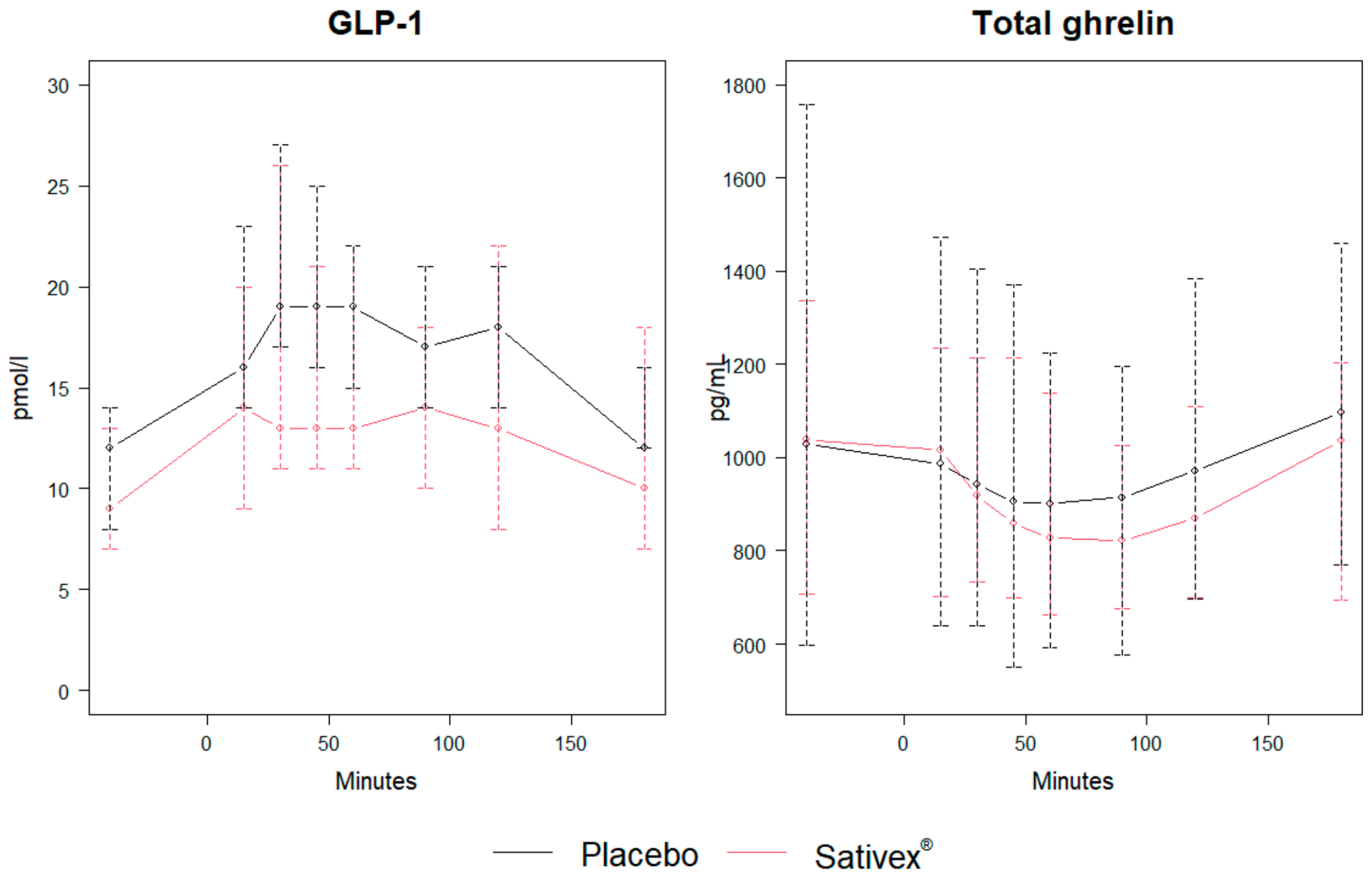
Figure 3.
Median (IQR) appetite sensation time courses following Sativex® and placebo administration (N = 17). Note: The first timepoint is the baseline sample at ~ −40 min. Sativex® and placebo was administered at ~ −25–40 min and 0 min is the timepoint for ended breakfast. Timepoints are collapsed to mean values at each timepoint. One participant had missing values for all VAS for the placebo study day at the timepoint at ≈90 min.
Figure 3.
Median (IQR) appetite sensation time courses following Sativex® and placebo administration (N = 17). Note: The first timepoint is the baseline sample at ~ −40 min. Sativex® and placebo was administered at ~ −25–40 min and 0 min is the timepoint for ended breakfast. Timepoints are collapsed to mean values at each timepoint. One participant had missing values for all VAS for the placebo study day at the timepoint at ≈90 min.
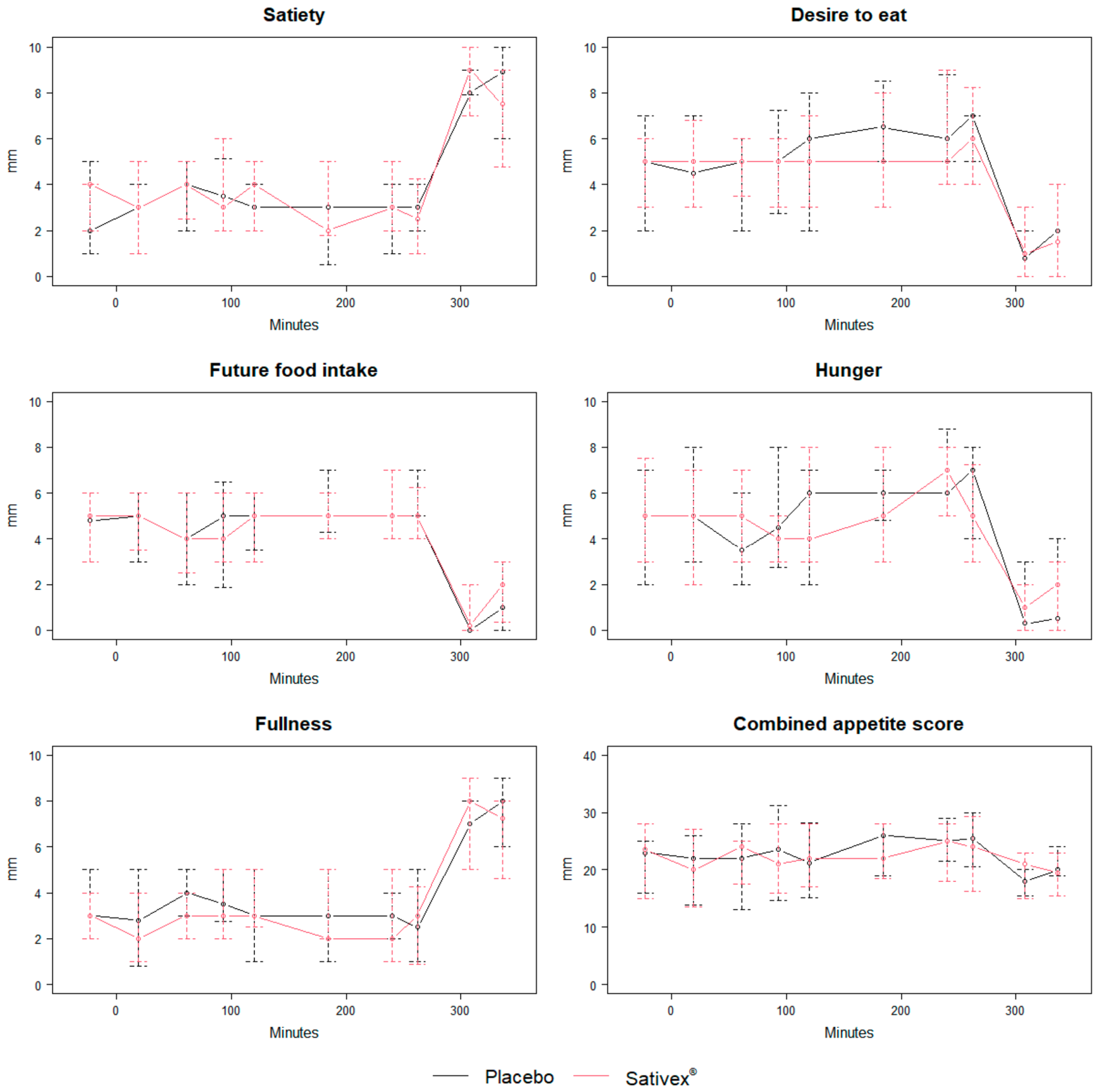
Figure 4.
(A): Time-dependent changes in mean total ghrelin concentrations within Sativex® and placebo groups; (B): Differences in time-dependent changes in mean total ghrelin concentrations between Sativex® and placebo groups. Note: 0 min is the timepoint for ended breakfast. For B: negative values indicate larger reduction for Sativex®, and positive values indicate larger reduction for placebo.
Figure 4.
(A): Time-dependent changes in mean total ghrelin concentrations within Sativex® and placebo groups; (B): Differences in time-dependent changes in mean total ghrelin concentrations between Sativex® and placebo groups. Note: 0 min is the timepoint for ended breakfast. For B: negative values indicate larger reduction for Sativex®, and positive values indicate larger reduction for placebo.
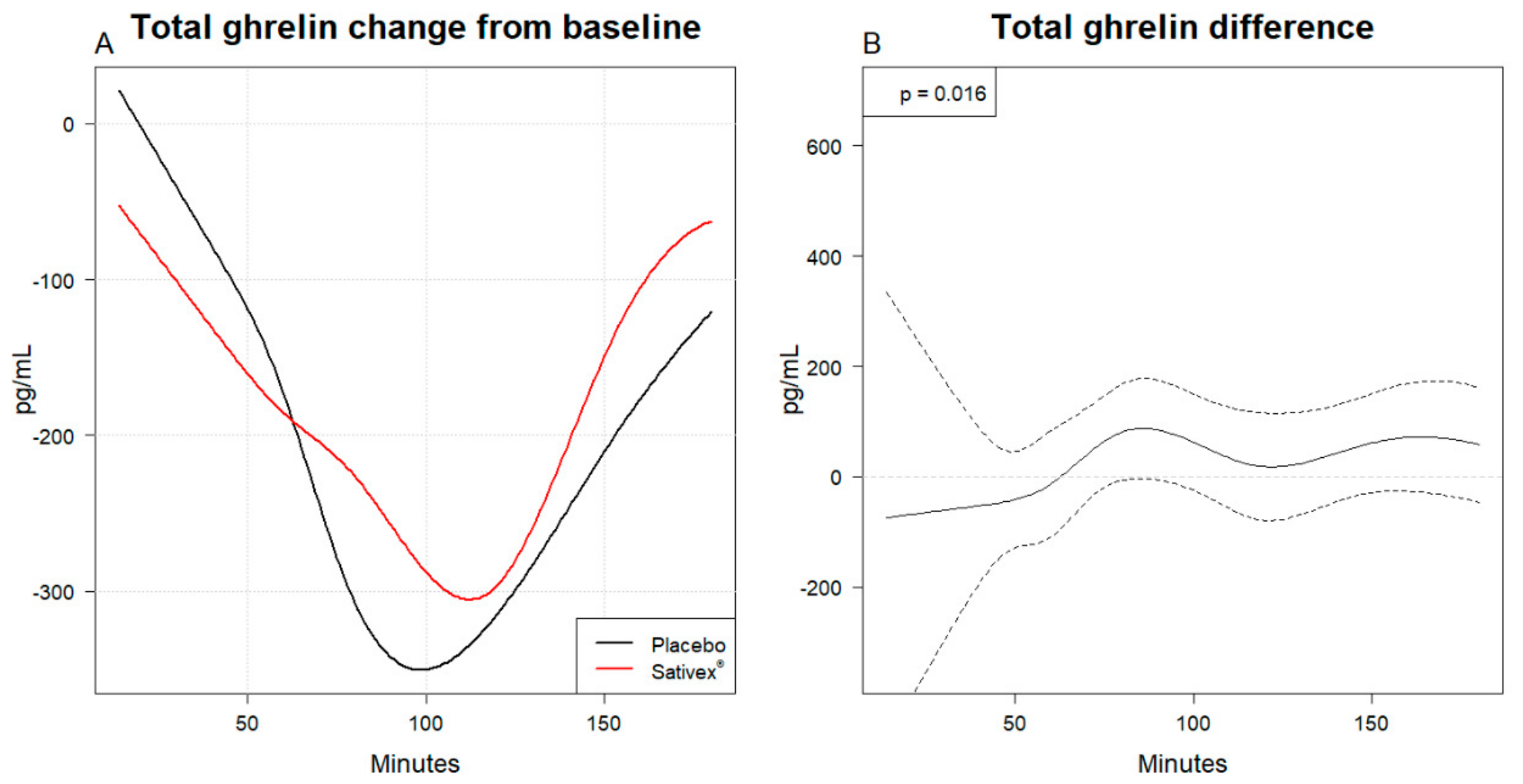

Table 1.
Baseline participant characteristics (N = 17).
| All Participants | |
|---|---|
| Demographics | |
| Age, years | 78 (71−85) |
| Sex, female | 13 (76.5%) |
| Living alone | 12 (70.6%) |
| Lifestyle | |
| Current smoker | 4 (23.5%) |
| Daily alcohol use | 5 (29.4%) |
| Anthropometry | |
| Unintentional weight loss | 6 (40.0%) |
| BMI, kg/m2 | 19.8 (18.3−23.4) |
| Appetite | |
| SNAQ (4–20) | 11 (8−12) |
| Nutritional status | |
| NRS-2002 score A | 2 (2−3) |
| NRS-2002 score B | 1 (1−1) |
| Dietary intake the past week | |
| 50–75% of habitual intake | 6 (50.0%) |
| 25–50% of habitual intake | 5 (41.7%) |
| 0–25% of habitual intake | 1 (8.3%) |
Note: Data are presented as median (IQR) or n (%). Abbreviations: BMI = body mass index; NRS-2002 = Nutrition Risk Screening 2002; SNAQ = Simplified Nutritional Appetite Questionnaire.
Table 2.
Sativex® and placebo study days characteristics before administration (N = 17).
| Sativex® | Placebo | |
|---|---|---|
| ESQ | ||
| Appetite | 1 (1−1) | 1 (1−1) |
| Eat | 1 (1−1) | 1 (1−1) |
| Nausea | 1 (1−1) | 1 (1−2) |
| Taste | 1 (1−1) | 1 (1−1) |
| Bioimpedance | ||
| AMMI, kg/m2 | 5.5 (4.9−7.3) | 5.6 (5.2−6.9) |
| Body fat mass, % | 28.6 (25.3−32.4) | 26.9 (25.1−31.4) |
| Biomarkers | ||
| CRP, mg/L | 3.0 (1.0−4.3) | 3.0 (2.0−7.5) |
| HbA1c, mmol/mol | 37.0 (33−39) | 38.0 (33−41) |
| eGFR, mL/min/1,73 m2 | 73.0 (42.8−84.5) | 67.5 (48.5−83.3) |
Note: Data are presented as median (IQR). eGFR is calculated with 2009 CKD-EPI equation based on creatinine. Abbreviations: AMMI = Appendicular muscle mass index; CRP = C-reactive protein; eGFR = estimated glomerular filtration rate; ESQ = Eating symptom questionnaire; HbA1c = Hemoglobin A1c.
Table 3.
The AUC for GLP-1 and total ghrelin (N = 17).
| Outcome | Sativex® AUC−40–180 | Placebo AUC−40–180 |
|---|---|---|
| GLP-1, pmol/L × min | 2677 (2880–3438) | 3150 (2725–3726) |
| Total ghrelin, pg/mL × min | 186407 (132699−258608) | 192490 (144916−241993) |
Note: Administration time ≈ −40; end of breakfast = 0. AUC−40–180: The time interval for AUCs was from administration time (−40 min) to 180 min after breakfast. Abbreviations: AUC = area under the curve; GLP-1 = glucagon-like peptide 1.
Table 4.
Between-treatment effects on not time-dependent subjective appetite.
| Outcome, mm | Estimate | Lower 95% CI | Upper 95% CI | p-Value | p-Value * |
|---|---|---|---|---|---|
| Satiety | 0.9 | −4.5 | 6.3 | 0.75 | 1.00 |
| Desire to eat | −0.7 | −6.9 | 5.4 | 0.81 | 1.00 |
| Future food intake | −2.8 | −8.5 | 2.8 | 0.33 | 1.00 |
| Hunger | −1.5 | −9.1 | 6.1 | 0.70 | 1.00 |
| Fullness | −1.2 | −7.5 | 5.1 | 0.72 | 1.00 |
| Combined appetite score | −5.2 | −24.4 | 4.0 | 0.60 | 1.00 |
Note: All estimates represent the difference between Sativex® and placebo. * corrected for multiple testing. If the corrected p-value resulted in a value of more than 1, a value of 1 is reported. Abbreviations: CI = confidence interval.
Disclaimer/Publisher’s Note: The statements, opinions and data contained in all publications are solely those of the individual author(s) and contributor(s) and not of MDPI and/or the editor(s). MDPI and/or the editor(s) disclaim responsibility for any injury to people or property resulting from any ideas, methods, instructions or products referred to in the content. |
© 2026 by the authors. Licensee MDPI, Basel, Switzerland. This article is an open access article distributed under the terms and conditions of the Creative Commons Attribution (CC BY) license (http://creativecommons.org/licenses/by/4.0/).
Copyright: This open access article is published under a Creative Commons CC BY 4.0 license, which permit the free download, distribution, and reuse, provided that the author and preprint are cited in any reuse.


