

Submitted:
11 June 2026
Posted:
12 June 2026
You are already at the latest version
Abstract
Proteinase-activated receptor 2 is a G protein-coupled receptor that regulates vascular tone and inflammatory signalling in the circulatory system. The roles of PAR2 appear complex and sometimes opposing. Studies using PAR2 deficient mice provide a framework to define these effects at the system level. This review examines cardiovascular phenotypes associated with PAR2 deficiency in basal conditions and in disease. PAR2 deficiency produces modest increases in arterial blood pressure and vascular stiffness while preserving endothelial vasodilator function. Cardiac function remains normal in young PAR2 deficient animals but changes with age. Older PAR2 deficient mice develop diastolic dysfunction and cardiac fibrosis. In disease models, PAR2 deficiency promotes fibrosis in cardiac and vascular tissues but reduces vascular inflammation in atherosclerosis. PAR2 deficiency limits plaque progression and promotes stable lesion structure. PAR2 deficiency also reduces myocardial injury and adverse remodelling after ischemia. The effects of PAR2 deficiency on inflammatory signalling vary with context and tissue. These findings show that PAR2 functions depend on physiological and pathological context. Future studies should define cell-specific mechanisms to guide therapeutic targetting of PAR2.
Keywords:
proteinase-activated receptor 2 (PAR2)
; cardiovascular regulation
; vascular inflammation
; cardiac fibrosis
; context-dependent signalling
1. Introduction
Proteinase-activated receptor 2 (PAR2) signalling plays a crucial role in blood vessel functions and affects the circulatory system in health and disease. PAR2 is a product of the Factor 2 (thrombin) receptor-like 1 gene, F2RL1 and f2rl1, in humans, and mice. Decades of studies using f2rl1 deficient (PAR2−/−) mice [1,2] have demonstrated cardiovascular phenotype differences in arterial blood pressures [3], cardiac function with ageing [4], and both cardiac and vascular tissue fibrosis [4,5,6]. PAR2−/− mice also exhibit differences in cardiovascular recovery from myocardial infarct [7,8,9] and cardiac ischemia-reperfusion injury [10], and altered responses to Coxsackievirus B3 virus-induced myocarditis [11], blood vessel inflammation, e.g., atherosclerosis [12,13,14], and trauma [15], vascular smooth muscle phenotype transition [16], acute and chronic kidney injuries [17,18,19], and retinal and hindlimb ischemia [20,21,22]. However, PAR2−/− mice have not only a decrease in PAR2 signalling, but also an increase in PAR1 [4,23,24], a correlation observed in heart failure patients with preserved ejection fraction [4]. The specific contributions of vascular endothelium, vascular smooth muscle, and cardiomyocytes, which express PAR2 in both mouse [25] and humans [26], to the PAR2−/− phenotype remain largely undetermined. The unique molecular mechanisms underlying the pathophysiological activations of PAR1 and PAR2 provide an experimental framework for discovering novel pharmacological modulators. This framework, aided by PAR2−/− mice, helps explore the function of PAR2 in the circulatory system. Furthermore, the tethered ligand activation mechanism suggests PAR-subtype specific pharmacological profiles and highlights the broad utility of PAR2 as a transducer of intercellular signalling.
PAR2 is a G protein-coupled receptor (GPCR) and one of four in the PAR family [27]. Extracellular proteases such as trypsin, trypsin-like serine proteases, and human mast cell β-tryptase activate PAR2 via a tethered ligand mechanism that is unique to the PAR family [28]. Proteolytic cleavages of the extracellular N-termini of PAR1 and PAR2 reveal tethered ligands that bind to the receptors to induce conformational changes leading to GPCR signalling [29,30]. The structure-activity relationships of the tethered ligands for each PAR and the protease-selectivity for recognition of the N-terminus as a substrate hold a long-standing interest in academic and pharmaceutical industry research but are beyond the scope of this review. Readers are directed to https://doi.org/10.2218/gtopdb/F59/2023.1 for a comprehensive, consolidated online pharmacological database on the PAR family [31]. Synthetic peptide agonists referred to as PAR2-activating peptides (PAR2-AP) mimic the tethered ligand sequence and directly activate PAR2 in the absence of proteolysis. PAR2-AP are key tools used to develop small molecule PAR2 modulating compounds, i.e., both agonists and antagonists. PAR2-AP such as the amidated forms of Ser-Leu-Ile-Gly-Arg-Leu (SLIGRL) and 2-furoyl-Leu-Ile-Gly-Arg-Leu-Orn (2fLIGRLO) were tested in studies with PAR2−/− mice to validate specificity [32,33]. The use of PAR2−/− mice has contributed to the rationale for pursuing PAR2 inhibitors and receptor antagonists, particularly in chronic inflammation [34]. Understanding PAR2 activation and signalling is foundational for investigating its diverse roles in the body and advancing discovery of PAR2 therapeutic agents.
The vascular endothelium is a target of constitutive PAR2 signal transduction within the circulatory system. PAR2 activation decreases vascular tone by endothelium-dependent mechanisms specific to vessel type [32,33]. PAR2-AP administered in vivo lowered blood pressure in rodents [2,23,35,36] and increased forearm [37,38] and cutaneous [39] blood flows in humans. However, treatment of human endothelial cells with PAR2 activators increased surface expression of P-selectin and neutrophil adhesion, induced expression of cyclooxygenases, and increased cytokine release [40,41]. Pro-inflammatory cytokines such as tumor necrosis factor-α (TNF-α) and interleukin-1α (IL-1α) induce PAR2 expression in human endothelial cells and blood vessels [42,43]. Thus, in endothelial cell systems, PAR2 activation can worsen inflammation by increasing permeability and adhesion molecules, or can preserve vasodilation/relaxation, depending on the mediator balance (nitric oxide vs. cytokines). Therefore, PAR2 can appear “protective” in some vascular beds, but deleterious in others, without contradiction. Where constitutive expression of PAR2 in other cardiovascular cell types, i.e., cardiomyocytes, myofibroblasts, and vascular smooth muscle is less evident than in vascular endothelial cells of adult mice [25], the functions of PAR2 have been examined mostly in the context of modifying disease, and recovery from injury.
The predominant perspective from most reviews has been that PAR2 primarily mediates pro-inflammatory pathways in diseases and tissue injury, as evidenced by studies showing its involvement in conditions like atherosclerosis and myocarditis. Initial in vivo studies with PAR2−/− mice found evidence of a protective effect of PAR2−/− against acute inflammation of lung airway epithelium [1]. Since then, research studies have evaluated PAR2−/− in chronic inflammation and related nociception pathways, which encompass many different organs, tissues and cell types. Nevertheless, countervailing evidence obtained using PAR2−/− mice has shown a role for PAR2 in anti-inflammatory activities and promotion of tissue repair mechanisms. The differences in these perspectives drawn from PAR2−/− appear to align with the nature of the inflammation and injury models, and individual responses of specific tissues and organs. Here the scope of our review covers the contributions from studies that used PAR2−/− mice to advance knowledge of intercellular signalling affecting the cardiovascular system, to highlight the context-dependent roles of PAR2.
2. PAR2 Deficient (PAR2−/−) Mice
2.1. Hemodynamics and Cardiac Performance
PAR2−/− mice exhibit slight differences in cardiovascular physiological characteristics, such as 4% (~5 mm Hg) higher systolic arterial blood pressures and pulse pressures compared to wild-type (WT) mice, i.e., genetic background control strain [3]. Earlier studies in anaesthetized animals reported no differences in the baseline mean arterial pressures between PAR2−/− and WT mice [23], which could be attributed to methodological differences in blood pressure measurements. Studies have examined whether the small changes in blood pressures may result from increased peripheral resistance caused by higher sympathetic driven basal tone or a loss of endothelium-derived mediators of vasodilation in PAR2−/−. Ex vivo assays using resistance arteries indicated a higher sensitivity to α1-adrenoceptor vasoconstrictor sensitivity in PAR2−/− compared to WT mice [44]. However, in blood vessels from PAR2−/−, no reductions of either endothelium-dependent or -independent relaxation mechanisms have been reported [24,32,44,45]. We have speculated that the reported small increases in arterial pulse pressure in PAR2−/− resulted from lower systemic vascular compliance, caused by stiffening of vasculature due to morphological or structural changes such as fibrosis to blood vessel walls, and an increase in cardiac stroke volume in PAR2−/−. Indeed, studies have found elevated pro-fibrotic pathway activity in systemic conductance arteries, i.e., thoracic aorta, and cardiac left ventricles of PAR2−/− [4,5,6]. Thus, in PAR2−/− mice a phenotype has emerged indicating small increases in blood pressure and a propensity for developing vascular and cardiac fibrosis.
Under conditions such as a normal diet and absence of stressors, PAR2−/− does not significantly impact the renal blood pressure regulation. In PAR2−/−, the blood pressure raising effects of a high salt diet, and chronic infusion with high angiotensin II did not differ from those in WT at the start and end of treatments [3]. Similarly, under basal, salt-loading or agonist-stimulated conditions, plasma renin activity did not differ between PAR2−/− and WT [46]. However, PAR2 deficiency modified renin responses in inflammatory states [46] as well as glomeruli inflammation and fibrosis pathways in both acute [17] and chronic [18,19] models of kidney disease. The effects of PAR2 deficiency on renal inflammation are still context-dependent given evidence that PAR2−/− did not differ from WT in a ureteric obstruction model of renal tubular injury [47]. Thus, at least in some kidney disease models with inflammation components, which included normal ageing, PAR2−/− may be expected to impact renal regulation of blood volume and pressure via changes to glomerular filtration, and natriuresis.
Studies show cardiac function changes in PAR2−/− mice over their lifespan. In young adults (12 weeks of age), cardiac stroke volumes, output, ejection fractions, and ventricular pressure rates did not differ from WT mice [4,11]. However, diastolic dysfunction and cardiac fibrosis were found in aged (1-year old) PAR2−/− mice [4]. Pressure-volume microcatheter measurements of these aged PAR2−/− mice indicated systolic cardiac performance and efficiency (ejection fraction; systolic ventricular pressure rate change, end-systolic pressure) did not differ from controls but diastolic functions (left ventricular relaxation rates and time-constants, end-diastolic pressures) in PAR2−/− differed from 1-year old WT mice. Further the study reported that the hearts of aged PAR2−/− mice exhibited higher PAR1 activity, which was linked to suppressed caveolin-1 regulation of PAR1 via vesicle trafficking and expression on the plasma membrane [4]. PAR1 upregulation has been a recurrent theme in experiments using PAR2−/− mice [23,24,32]. Friebel et al. [4] linked PAR2−/− cardiac myofibroblast expression of PAR1 to transforming growth factor-β (TGF-β) as a stimulus for collagen production, leading to cardiac fibrosis. Deposition of collagen in the myocardium is associated with stiffening of the left ventricle, which is assessed by the parameters of cardiac diastolic function. Direct investigation of the relationship between PAR2−/− blood pressure phenotype and cardiac diastolic dysfunction has not been made. Further the occurrence of diastolic dysfunction was associated with normal cardiac output in PAR2−/−. In animal models of metabolic syndrome, interactions between age and diminished PAR2 have been described with respect to loss of endothelium function (endothelium dysfunction) in blood vessels[48]. Thus, PAR2−/− may confer additional risks to circulatory dysfunction associated with ageing and metabolic diseases. These findings define a system-level cardiovascular phenotype associated with PAR2 deficiency (Figure 1).
2.2. Circulatory System Under Stress
Studies using PAR2−/− in models of cardiac and circulatory dysfunction provide evidence of a role for PAR2 in mechanisms of disease and injury, particularly linked to fibrosis. At 8-months of age, PAR2−/− mice were found to have higher endothelin-1 (ET-1) plasma levels than WT mice, and PAR2−/− mouse aortas ex vivo produced more contractile tension in response to ET-1 [5]. Elevated circulating levels of vasoconstrictor molecules such as endothelin-1 can lead to vascular fibrosis in mice. Interestingly, in tight-skin mice, a preclinical model of scleroderma-like syndrome characterized by blood vessel fibrosis and contractile dysfunction, the responses of aortas to PAR2 activation were enhanced [5]. In a model of angiotensin II-induced hypertension with cardiac myocardium remodelling, PAR2−/− associated with enhanced cardiac interstitial fibrosis that was interpreted as a direct anti-fibrotic role for PAR2 [6] . Whether the pro-fibrotic effects of PAR2−/− are related to upregulated PAR1 in these vascular models has not been determined yet.
Across independent hyperlipidemic mouse models, PAR2 deficiency consistently attenuates atherosclerotic lesion progression and instability by suppressing vascular and macrophage-derived inflammatory signalling and limiting monocyte recruitment, without altering systemic lipid levels. Further studies have presented a case for a protective effect of PAR2−/− linked to increased fibrosis, and stabilized plaques, that are associated with reduced inflammation in atherosclerotic blood vessels. Thus, in chronic vascular inflammation, e.g., atherosclerosis, PAR2 signalling is pathogenic. In experiments using PAR2−/− bred with atherosclerosis-prone mice strains, i.e., apolipoprotein E gene-deficient (apoE−/−) and low density lipoprotein receptor gene-deficient (ldlr−/−), plaque lesion area, and macrophage accumulation in mice fed a high fat diet for 8 weeks, were less in the double gene knockouts, i.e., apoE−/− / PAR2−/−, and ldlr−/− / PAR2−/− than in age-matched single gene knockouts [12,13,14]. Lower macrophage accumulation, higher α-smooth muscle actin (α-SMA) expression, thicker fibrous caps, and higher collagen content in plaques were interpreted as evidence that apoE−/− / PAR2−/−, ldlr−/−/ PAR2−/− exhibit a more stable plaque phenotype [12,14]. Pro-inflammatory mediators monocyte chemoattractant protein-1 (MCP-1), tumor necrosis factor-α (TNF-α), interleukin-6 (IL-6), matrix metalloproteinse-9 (MMP-9), and C-X-C motif chemokine ligand 1 (CXCL1) expressions were less in apoE−/− / PAR2−/− than apoE−/− [12,13,14]. Indeed inhibitor of nuclear factor-kappa B protein-alpha (IκBα), a tissue biomarker activity known to correlate with lower activation of the pro-inflammatory nuclear factor-kappa B (NF-κB) signalling pathway, was higher in apoE−/− / PAR2−/− than apoE−/− [14]. Importantly, across studies the PAR2−/− effects were attributed to local vascular pathology, not systemic lipid metabolism or blood pressures. Bone marrow transplantation experiments using the PAR2−/− provided evidence that monocyte PAR2 expression drove the vascular inflammation in these models [13,14]. Nevertheless, in vitro studies with the PAR2−/− cells suggest the potential for an autocrine signalling between macrophages and vascular smooth muscle that could modulate the net or temporal response [13]. Cultured VSMCs lacking PAR2 produced less MCP-1 and CXCL1, directly linking PAR2 to monocyte recruitment from a non-hematopoietic source. PAR2 acts as an inflammatory amplifier across multiple vascular compartments, not a single cell type. Thus, in the context of atherosclerosis the studies of PAR2−/− mice have positioned PAR2 as a therapeutic target for stabilizing plaques and reducing vascular inflammation.
PAR2 modulates injury-induced blood vessel remodelling and associated vascular disease progression. PAR2−/− decreased neointimal hyperplasia, inflammatory cell infiltration, and smooth muscle cell accumulation following vascular injury. Extending this work into true aneurysm pathology, PAR2−/− attenuated abdominal aortic aneurysm progression in mice by preserving contractile VSMC phenotype and limiting ERK-dependent proliferation and migration, implicating PAR2-mediated smooth muscle plasticity as a driver of aneurysmal remodelling [16]. Thus, from a clinical translation perspective, research with PAR2−/− has built a case for PAR2 as a therapeutic target for slowing abdominal aortic aneurysm progression, not necessarily preventing onset.
Circulatory collapse and multi-organ failure leading to death are the terminal consequences of clinical sepsis. There is broad agreement amongst studies that lipopolysaccharide (LPS) does not directly activate PAR2; however, PAR2 can act as a powerful context-dependent modulator of LPS/Toll-like receptor 4 (TLR4) signalling, capable of amplifying, shaping or in some settings, dampening [49] LPS-driven inflammatory responses. PAR2 does not transactivate TLR4, instead the signalling pathways of these receptors converge at NF-κB. Consensus amongst studies is that systemic metabolic responses to (LPS)-induced endotoxemia in PAR2−/− do not differ from those of WT mice [50,51,52]. However, studies have shown LPS-induced PAR2 expression in tissues, and affected PAR2 endothelial cell activities. Thus, PAR2 may be a bystander to regional or tissue specific pathologies in sepsis. Indeed, researchers have proposed PAR2 interactions with PAR1 may affect sepsis because they found PAR2−/− mice treated with thrombin inhibitor decreased proinflammatory cytokine IL-6 expression and reduced mortality [51]. However, disparate observations have been made using double PAR2 / PAR1 knockout mice (PAR2−/− / factor 2 (thrombin) receptor gene deficient (f2r−/−)), which did not affect survival from LPS endotoxemia [52]. Further to support this notion of a baseline protective phenotype, PAR2−/− mice did show lower lung content of myeloperoxidase under baseline conditions [50] prior to LPS, which subsequent studies demonstrated contributed to lung protection. On balance the studies with PAR2−/− have not led to PAR2 as a validated anti-sepsis or anti-endotoxemia target.
PAR2−/− have been used to study cardiac damage, and remodelling in animal models of myocardial infarction and heart failure. After permanent ligation of the left anterior descending coronary artery (LAD), cardiac damage and dysfunction were reduced in PAR2−/− compared to WT controls [8,9,53]. Similarly, PAR2−/− reduced cardiac injury and prevented post-infarction remodelling [10]. PAR2−/− mice showed smaller infarct size, less oxidative stress, lower mitogen-activated protein kinases (MAPK) phosphorylation, and pro-inflammatory gene expression compared to WT controls [10], consistent with a reduction in acute inflammatory signalling when PAR2 is absent. The same study reported that PAR2 deficiency protected mice from post-infarction cardiac remodelling and cardiac dysfunction, again consistent with the idea that PAR2 promotes injury after ischemia, and thus, potentially PAR2 targeted inhibitors as cardiac therapeutics.
3. Discussion
The impact from PAR2−/− in individual types of cells and specific tissues on cardiovascular phenotype has not been fully elucidated. Studies with transplanted bone marrow cells from PAR2−/− have shown macrophage PAR2 expression links to the cardiac inflammation that occurs post-reperfusion after acute myocardial infarction [8]. Similarly, vascular inflammation was reduced by PAR2−/− bone marrow-derived monocytes transplanted into apoE−/− with atherosclerosis [14]. Jones et al. [13] reported PAR2 on nonhematopoietic cells supported atherosclerosis in the ldlr−/− model by promoting macrophage infiltration. Future research with tissue-, and cell-specific PAR2 silencing in mice ought to interrogate the PAR2 specific expression in endothelial cells, VSMC, and cardiomyocytes. Indeed although PAR2 is expressed in vascular tissue and modulates VSMC function, direct in situ colocalization of PAR2 with smooth muscle markers in native mouse vessels has not been definitively demonstrated. The use of cell targeted PAR2 research models will help clarify functions and mechanisms within and beyond the cardiovascular system. Indeed tissue-specific modulation (e.g. vasculature vs cardiac vs lung vs kidney) and PAR2 bias signalling are more likely the near-term direction for PAR2 research. These observations can be integrated into cell-specific and signalling pathways that explain the divergence between preserved function and structural remodelling (Figure 2).
Our review focuses on studies that used PAR2−/− to explore vascular and cardiac roles in system level physiological functions. However, PAR2−/− have also been used to study regional, and tissue-specific circulatory responses. For example, PAR2−/− reduced ischemia-induced neovascularization of the retina [22], and collateral formation in the hind limb [21] and more recently, PAR2−/− prevented nitrovasodilator priming of migraine behaviours in a preclinical mouse model [54]. Furthermore, we recognize that metabolic [55,56,57] and embryonic [58] phenotype traits described in PAR2−/− may influence cardiovascular outcomes, particularly where vascular disease risk, or cardiac recovery from injury are concerned. Thus, we encourage researchers to consider regional and integrative physiological approaches to interpreting the mechanisms underlying subtle effects of PAR2−/− the cardiovascular phenotype.
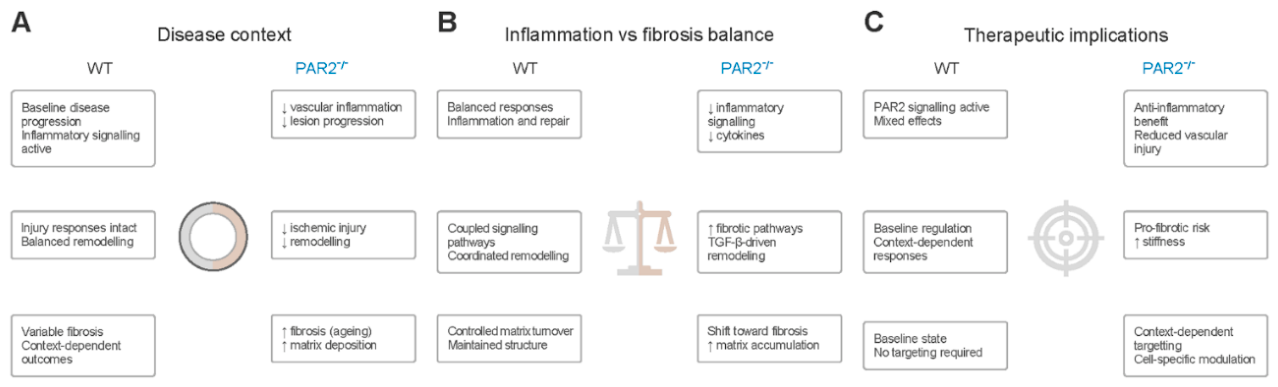
The effect of biological sex on PAR2−/− phenotype has been understudied. There has been no evidence provided yet of PAR2 specific interactions with biological sex and cardiovascular outcomes. However, all published studies reviewed here with a few exceptions [13,24], reported experiments in male PAR2−/− only. The proliferation phenotype of primitive colonic epithelial cells exhibits sexual dimorphism in PAR2−/− mice [59]. Given the interaction of sex hormones with cardiovascular health and disease in humans, future research should incorporate biological sex into experimental designs. The context-dependent effects of PAR2 deficiency across disease settings and their therapeutic implications are summarized in Figure 3.
4. Conclusions
PAR2 deficiency reveals a context-dependent role in cardiovascular regulation. Loss of PAR2 signalling preserves endothelial vasodilator function but shifts vascular responses toward increased vasoconstrictor sensitivity and structural remodelling.
Across models, PAR2−/− attenuates inflammatory signalling while promoting fibrosis in vascular and cardiac tissues, indicating a divergence between inflammatory and matrix remodelling pathways. These effects occur with modest changes in baseline hemodynamics but contribute to increased vascular stiffness and altered tissue structure.
In the heart, PAR2 deficiency maintains systolic function but impairs diastolic relaxation with age, consistent with increased fibrosis and reduced compliance.
Collectively, PAR2 functions as a regulator of the balance between inflammation and fibrosis in the circulatory system. Future studies should define cell-specific mechanisms to guide development of targeted PAR-based therapeutic strategies.
Author Contributions
Conceptualization, J.J.M., S.A.V..; Visualization, S.A.V., J.A., M.R., J.J.M.; writing—original draft preparation, S.A.V., S.S., Y.J., J.J.M.; writing—review and editing, all authors; supervision, J.J.M..; funding acquisition, J.J.M. All authors have read and agreed to the published version of the manuscript.
Funding
We acknowledge Project Grant (PJT 183964) funding from the Canadian Institutes of Health Research awarded to J.J.M (principal investigator) and co-investigators. S.A.V., S.S., and J.A. were recipients of Western Graduate Research Scholarships from the School of Graduate and Postdoctoral Studies at Western University.
Data Availability Statement
No new data were created, or analysed for this article.
Conflicts of Interest
The authors declare no conflicts of interest. The funders had no role in the design of the study; in the collection, analyses, or interpretation of data; in the writing of the manuscript; or in the decision to publish the results.
Abbreviations
apoE−/− Apolipoprotein E gene knockout /deficient mouse
CXCL1 C-X-C motif chemokine ligand 1
ET-1 Endothelin-1
ERK Extracellular signal-regulated kinase
F2rl1 Factor 2 (thrombin) receptor-like 1 (PAR2) human gene
f2rl1 Factor 2 (thrombin) receptor-like 1 (PAR2) mouse gene
f2rl1−/− PAR2 gene knockout/deficient mouse
GPCR G protein-coupled receptor
IκBα Inhibitor of nuclear factor-kappa B protein-alpha
IL-6 Interleukin-6
ldlr−/− Low density lipoprotein receptor gene knockout/deficient mouse
LPS Lipopolysaccharide
MMP-9 Matrix metalloproteinse-9
MCP-1 Monocyte chemoattractant protein-1
NF-κB Nuclear factor-kappa B
PAR2 Proteinase-activated receptor 2
PAR2-AP PAR2-activating peptide
WT wild-type genetic background (control) mice
PAR2−/− PAR2 deficient / knockout animals, tissues or cells
TNF-α Tumor necrosis factor-α
TLR4 Toll-like receptor 4
VSMC Vascular smooth muscle cell
References
- Schmidlin, F.; Amadesi, S.; Dabbagh, K.; Lewis, D.E.; Knott, P.; Bunnett, N.W.; Gater, P.R.; Geppetti, P.; Bertrand, C.; Stevens, M.E. Protease-Activated Receptor 2 Mediates Eosinophil Infiltration and Hyperreactivity in Allergic Inflammation of the Airway. J. Immunol. 2002, 169, 5315–5321. [Google Scholar] [CrossRef] [PubMed]
- Cheung, W.M.; Andrade-Gordon, P.; Derian, C.K.; Damiano, B.P. Receptor-Activating Peptides Distinguish Thrombin Receptor (PAR-1) and Protease Activated Receptor 2 (PAR-2) Mediated Hemodynamic Responses in Vivo. Can. J. Physiol. Pharmacol. 1998, 76, 16–25. [Google Scholar] [CrossRef]
- McGuire, J.J.; Van Vliet, B.N.; Halfyard, S.J. Blood Pressures, Heart Rate and Locomotor Activity during Salt Loading and Angiotensin II Infusion in Protease-Activated Receptor 2 (PAR2) Knockout Mice. BMC Physiol. 2008, 8. [Google Scholar] [CrossRef] [PubMed]
- Friebel, J.; Weithauser, A.; Witkowski, M.; Rauch, B.H.; Savvatis, K.; Dörner, A.; Tabaraie, T.; Kasner, M.; Moos, V.; Bösel, D.; et al. Protease-Activated Receptor 2 Deficiency Mediates Cardiac Fibrosis and Diastolic Dysfunction. Eur. Heart J. 2019, 40, 3318–3332. [Google Scholar] [CrossRef] [PubMed]
- Roviezzo, F.; Brancaleone, V.; Mattera Iacono, V.; Bertolino, A.; De Cunto, G.; Vellecco, V.; Lungarella, G.; Lucattelli, M.; Cirino, G. Proteinase Activated Receptor-2 Counterbalances the Vascular Effects of Endothelin-1 in Fibrotic Tight-Skin Mice. Br. J. Pharmacol. 2017, 174, 4032–4042. [Google Scholar] [CrossRef] [PubMed]
- zu Schwabedissen, A.M.; Vergarajauregui, S.; Bertog, M.; Amann, K.; Engel, F.B.; Daniel, C. Protease-Activated Receptor 2 Deficient Mice Develop Less Angiotensin II Induced Left Ventricular Hypertrophy but More Cardiac Fibrosis. PLoS ONE 2024, 19. [Google Scholar] [CrossRef] [PubMed]
- Garlapati, V.; Luo, Q.; Posma, J.; Aluia, M.; Nguyen, T.S.; Grunz, K.; Molitor, M.; Finger, S.; Harms, G.; Bopp, T.; et al. Macrophage-Expressed Coagulation Factor 7 Promotes Adverse Cardiac Remodeling. Circ. Res. 2024. [Google Scholar] [CrossRef]
- Zuo, P.; Zhu, Y.; Li, Y.; Zuo, Z.; Sheng, Z.; Yan, G.; Ma, G. Protease-Activated Receptor 2 Deficiency in Hematopoietic Lineage Protects against Myocardial Infarction through Attenuated Inflammatory Response and Fibrosis. Biochem. Biophys. Res. Commun. 2020, 526, 253–260. [Google Scholar] [CrossRef] [PubMed]
- Antoniak, S.; Sparkenbaugh, E.M.; Tencati, M.; Rojas, M.; Mackman, N.; Pawlinski, R. Protease Activated Receptor-2 Contributes to Heart Failure. PLoS ONE 2013, 8. [Google Scholar] [CrossRef] [PubMed]
- Antoniak, S.; Rojas, M.; Spring, D.; Bullard, T.A.; Verrier, E.D.; Blaxall, B.C.; MacKman, N.; Pawlinski, R. Protease-Activated Receptor 2 Deficiency Reduces Cardiac Ischemia/Reperfusion Injury. Arterioscler. Thromb. Vasc. Biol. 2010, 30, 2136–2142. [Google Scholar] [CrossRef] [PubMed]
- Weithauser, A.; Bobbert, P.; Antoniak, S.; Böhm, A.; Rauch, B.H.; Klingel, K.; Savvatis, K.; Kroemer, H.K.; Tschope, C.; Stroux, A.; et al. Protease-Activated Receptor-2 Regulates the Innate Immune Response to Viral Infection in a Coxsackievirus B3-Induced Myocarditis. J. Am. Coll. Cardiol. 2013, 62, 1737–1745. [Google Scholar] [CrossRef] [PubMed]
- Zuo, P.; Zuo, Z.; Zheng, Y.; Wang, X.; Zhou, Q.; Chen, L.; Ma, G. Protease-Activated Receptor-2 Deficiency Attenuates Atherosclerotic Lesion Progression and Instability in Apolipoprotein E-Deficient Mice. Front. Pharmacol. 2017, 8, 647. [Google Scholar] [CrossRef] [PubMed]
- Jones, S.M.; Mann, A.; Conrad, K.; Saum, K.; Hall, D.E.; McKinney, L.M.; Robbins, N.; Thompson, J.; Peairs, A.D.; Camerer, E.; et al. PAR2 (Protease-Activated Receptor 2) Deficiency Attenuates Atherosclerosis in Mice. Arterioscler. Thromb. Vasc. Biol. 2018, 38, 1271–1282. [Google Scholar] [CrossRef] [PubMed]
- Hara, T.; Phuong, P.T.; Fukuda, D.; Yamaguchi, K.; Murata, C.; Nishimoto, S.; Yagi, S.; Kusunose, K.; Yamada, H.; Soeki, T.; et al. Protease-Activated Receptor-2 Plays a Critical Role in Vascular Inflammation and Atherosclerosis in Apolipoprotein E-Deficient Mice. Circulation 2018, 138, CIRCULATIONAHA.118.033544. [Google Scholar] [CrossRef] [PubMed]
- Lindner, J.R.; Kahn, M.L.; Coughlin, S.R.; Sambrano, G.R.; Schauble, E.; Bernstein, D.; Foy, D.; Hafezi-Moghadam, A.; Ley, K. Delayed Onset of Inflammation in Protease-Activated Receptor-2-Deficient Mice. J. Immunol. 2000, 165, 6504–6510. [Google Scholar] [CrossRef] [PubMed]
- Wang, M.; Tang, Z.; Zeng, H.; Zhang, A.; Huang, S.; Ke, J.; Gao, L.; Zhang, T.; Wang, Y.; Chang, A.C.Y.; et al. Protease Activated Receptor 2 Deficiency Retards Progression of Abdominal Aortic Aneurysms by Modulating Phenotypic Transformation of Vascular Smooth Muscle Cells via ERK Signaling. Exp. Cell Res. 2024, 443, 114286. [Google Scholar] [CrossRef] [PubMed]
- Watanabe, M.; Oe, Y.; Sato, E.; Sekimoto, A.; Sato, H.; Ito, S.; Takahashi, N. Protease-Activated Receptor 2 Exacerbates Cisplatin-Induced Nephrotoxicity. Am. J. Physiol. Ren. Physiol. 2019, 316, F654–F659. [Google Scholar] [CrossRef] [PubMed]
- Ha, S.; Chung, K.W.; Lee, J.; Chung, H.Y.; Moon, H.R. Renal Tubular PAR2 Promotes Interstitial Fibrosis by Increasing Inflammatory Responses and EMT Process. Arch. Pharm. Res. 2022, 45, 159–173. [Google Scholar] [CrossRef] [PubMed]
- Ha, S.; Kim, H.W.; Kim, K.M.; Kim, B.M.; Kim, J.; Son, M.; Kim, D.; Kim, M.J.; Yoo, J.; Yu, H.S.; et al. PAR2-Mediated Cellular Senescence Promotes Inflammation and Fibrosis in Aging and Chronic Kidney Disease. Aging Cell 2024, 23. [Google Scholar] [CrossRef] [PubMed]
- Milia, A.F.; Salis, M.B.; Stacca, T.; Pinna, A.; Madeddu, P.; Trevisani, M.; Geppetti, P.; Emanueli, C. Protease-Activated Receptor-2 Stimulates Angiogenesis and Accelerates Hemodynamic Recovery in a Mouse Model of Hindlimb Ischemia. Circ. Res. 2002, 91, 346–352. [Google Scholar] [CrossRef] [PubMed]
- van den Hengel, L.G.; Hellingman, A.A.; Nossent, A.Y.; van Oeveren-Rietdijk, A.M.; de Vries, M.R.; Spek, C.A.; van Zonneveld, A.J.; Reitsma, P.H.; Hamming, J.F.; de Boer, H.C.; et al. Protease-Activated Receptor (PAR)2, but Not PAR1, Is Involved in Collateral Formation and Anti-Inflammatory Monocyte Polarization in a Mouse Hind Limb Ischemia Model. PLoS ONE 2013, 8. [Google Scholar] [CrossRef] [PubMed]
- Uusitalo-Jarvinen, H.; Kurokawa, T.; Mueller, B.M.; Andrade-Gordon, P.; Friedlander, M.; Ruf, W. Role of Protease Activated Receptor 1 and 2 Signaling in Hypoxia-Induced Angiogenesis. Arterioscler. Thromb. Vasc. Biol. 2007, 27, 1456–1462. [Google Scholar] [CrossRef] [PubMed]
- Damiano, B.P.; Cheung, W.M.; Santulli, R.J.; Fung-Leung, W.P.; Ngo, K.; Ye, R.D.; Darrow, A.L.; Derian, C.K.; de Garavilla, L.; Andrade-Gordon, P. Cardiovascular Responses Mediated by Protease-Activated Receptor-2 (PAR-2) and Thrombin Receptor (PAR-1) Are Distinguished in Mice Deficient in PAR-2 or PAR-1. J. Pharmacol. Exp. Ther. 1999, 288, 671–678. [Google Scholar] [CrossRef]
- Hennessey, J.C.; McGuire, J.J. Attenuated Vasodilator Effectiveness of Protease-Activated Receptor 2 Agonist in Heterozygous Par2 Knockout Mice. PLoS ONE 2013, 8. [Google Scholar] [CrossRef] [PubMed]
- Jenkins, A.L.; Chinni, C.; De Niese, M.R.; Blackhart, B.; Mackie, E.J. Expression of Protease-Activated Receptor-2 During Embryonic Development. Dev. Dyn. 2000, 218, 465–471. [Google Scholar] [CrossRef] [PubMed]
- D’Andrea, M.R.; Derian, C.K.; Leturcq, D.; Baker, S.M.; Brunmark, A.; Ling, P.; Darrow, A.L.; Santulli, R.J.; Brass, L.F.; Andrade-Gordon, P. Characterization of Protease-Activated Receptor-2 Immunoreactivity in Normal Human Tissues. J. Histochem. Cytochem. 1998, 46, 157–164. [Google Scholar] [CrossRef] [PubMed]
- Hollenberg, M.D.; Compton, S.J. International Union of Pharmacology. XXVIII. Proteinase-Activated Receptors. Pharmacol. Rev. 2002, 54, 203–217. [Google Scholar] [CrossRef] [PubMed]
- Chandrabalan, A.; Ramachandran, R. Molecular Mechanisms Regulating Proteinase-Activated Receptors (PARs). FEBS J. 2021, 288, 2697–2726. [Google Scholar] [CrossRef] [PubMed]
- Lyu, Z.; Lyu, X.; Malyutin, A.G.; Xia, G.; Carney, D.; Alves, V.M.; Falk, M.; Arora, N.; Zou, H.; McGrath, A.P.; et al. Structural Basis for the Activation of Proteinase-Activated Receptors PAR1 and PAR2. Nat. Commun. 2025 16:1 2025, 16, 3931. [Google Scholar] [CrossRef] [PubMed]
- Zhu, X.; Xia, R.; Zhang, A.; Guo, C.; Xu, Z.; He, Y. Structural Basis of Protease-Activated Receptor 2 Activation and Biased Agonism. Cell Discov. 2025, 11, 96. [Google Scholar] [CrossRef] [PubMed]
- Bunnett, N.D.K.H.J.H.M.R.R.T.J. Proteinase-Activated Receptors in GtoPdb v.2023.1. Available online: https://www.guidetopharmacology.org/GRAC/FamilyDisplayForward?familyId=59 (accessed on 9 December 2025).
- McGuire, J.J.; Hollenberg, M.D.; Andrade-Gordon, P.; Triggle, C.R. Multiple Mechanisms of Vascular Smooth Muscle Relaxation by the Activation of Proteinase-Activated Receptor 2 in Mouse Mesenteric Arterioles. Br. J. Pharmacol. 2002, 135, 155–169. [Google Scholar] [CrossRef] [PubMed]
- McGuire, J.J.; Saifeddine, M.; Triggle, C.R.; Sun, K.; Hollenberg, M.D. 2-Furoyl-LIGRLO-Amide: A Potent and Selective Proteinase-Activated Receptor 2 Agonist. J. Pharmacol. Exp. Ther. 2004, 309, 1124–1131. [Google Scholar] [CrossRef] [PubMed]
- Mcintosh, K.A.; Cunningham, M.R.; Bushell, T.; Plevin, R. The Development of Proteinase-Activated Receptor-2 Modulators and the Challenges Involved The Challenges of Targeting PARs. Biochem. Soc. Trans. 2020, 48, 2525–2537. [Google Scholar] [CrossRef] [PubMed]
- Hughes, K.H.; Wijekoon, E.P.; Valcour, J.E.; Chia, E.W.; McGuire, J.J. Effects of Chronic In-Vivo Treatments with Protease-Activated Receptor 2 Agonist on Endothelium Function and Blood Pressures in Mice. Can. J. Physiol. Pharmacol. 2013, 91, 295–305. [Google Scholar] [CrossRef] [PubMed]
- Wang, J.; Boerma, M.; Kulkarni, A.; Hollenberg, M.D.; Hauer-Jensen, M. Activation of Protease Activated Receptor 2 by Exogenous Agonist Exacerbates Early Radiation Injury in Rat Intestine. Int. J. Radiat. Oncol. Biol. Phys. 2010, 77, 1206–1212. [Google Scholar] [CrossRef] [PubMed]
- Robin, J.; Kharbanda, R.; Mclean, P.; Campbell, R.; Vallance, P. Protease-Activated Receptor 2-Mediated Vasodilatation in Humans in Vivo: Role of Nitric Oxide and Prostanoids. Circulation 2003, 107, 954–959. [Google Scholar] [CrossRef] [PubMed]
- Gudmundsdóttir, I.J.; Megson, I.L.; Kell, J.S.; Ludlam, C.A.; Fox, K.A.A.; Webb, D.J.; Newby, D.E. Direct Vascular Effects of Protease-Activated Receptor Type 1 Agonism In Vivo in Humans. Circulation 2006, 114, 1625–1632. [Google Scholar] [CrossRef] [PubMed]
- Fujii, N.; McNeely, B.D.; Zhang, S.Y.; Abdellaoui, Y.C.; Danquah, M.O.; Kenny, G.P. Activation of Protease-Activated Receptor 2 Mediates Cutaneous Vasodilatation but Not Sweating: Roles of Nitric Oxide Synthase and Cyclo-Oxygenase. Exp. Physiol. 2017, 102, 265–272. [Google Scholar] [CrossRef] [PubMed]
- Meyer, M.C.; Creer, M.H.; McHowat, J. Potential Role for Mast Cell Tryptase in Recruitment of Inflammatory Cells to Endothelium. Am. J. Physiol. Cell Physiol. 2005, 289, C1485–91. [Google Scholar] [CrossRef] [PubMed]
- Niu, Q.X.; Chen, H.Q.; Chen, Z.Y.; Fu, Y.L.; Lin, J.L.; He, S.H. Induction of Inflammatory Cytokine Release from Human Umbilical Vein Endothelial Cells by Agonists of Proteinase-Activated Receptor-2. Clin. Exp. Pharmacol. Physiol. 2008, 35, 89–96. [Google Scholar] [CrossRef] [PubMed]
- Nystedt, S.; Ramakrishnan, V.; Sundelin, J. The Proteinase-Activated Receptor 2 Is Induced by Inflammatory Mediators in Human Endothelial Cells. Comparison with the Thrombin Receptor. J. Biol. Chem. 1996, 271, 14910–14915. [Google Scholar] [CrossRef] [PubMed]
- Hamilton, J.R.; Frauman, A.G.; Cocks, T.M. Increased Expression of Protease-Activated Receptor-2 (PAR2) and PAR4 in Human Coronary Artery by Inflammatory Stimuli Unveils Endothelium-Dependent Relaxations to PAR2 and PAR4 Agonists. Circ. Res. 2001, 89, 92–98. [Google Scholar] [CrossRef] [PubMed]
- Chia, E.; Kagota, S.; Wijekoon, E.P.; McGuire, J.J. Protection of Protease-Activated Receptor 2 Mediated Vasodilatation against Angiotensin II-Induced Vascular Dysfunction in Mice. BMC Pharmacol. 2011, 11. [Google Scholar] [CrossRef] [PubMed]
- McGuire, J.J.; Dai, J.; Andrade-Gordon, P.; Triggle, C.R.; Hollenberg, M.D. Proteinase-Activated Receptor-2 (PAR2): Vascular Effects of a PAR2-Derived Activating Peptide via a Receptor Different than PAR2. J. Pharmacol. Exp. Ther. 2002, 303, 985–992. [Google Scholar] [CrossRef] [PubMed]
- Thurner, L.R.; Höcherl, K. Role of Protease-Activated Receptor 2 in Regulation of Renin Synthesis and Secretion in Mice. Naunyn-Schmiedeberg’s Arch. Pharmacol. 2019, 392:11 2019(392), 1401–1410. [Google Scholar] [CrossRef] [PubMed]
- Ma, F.Y.; Han, Y.; Ozols, E.; Chew, P.; Vesey, D.A.; Gobe, G.C.; Morais, C.; Lohman, R.J.; Suen, J.Y.; Johnson, D.W.; et al. Protease-Activated Receptor 2 Does Not Contribute to Renal Inflammation or Fibrosis in the Obstructed Kidney. Nephrology 2019, 24, 983–991. [Google Scholar] [CrossRef] [PubMed]
- Maruyama, K.; Kagota, S.; McGuire, J.J.; Wakuda, H.; Yoshikawa, N.; Nakamura, K.; Shinozuka, K. Age-Related Changes to Vascular Protease-Activated Receptor 2 in Metabolic Syndrome: A Relationship between Oxidative Stress, Receptor Expression, and Endothelium-Dependent Vasodilation. Can. J. Physiol. Pharmacol. 2017, 95, 356–364. [Google Scholar] [CrossRef] [PubMed]
- Nhu, Q.M.; Shirey, K.A.; Pennini, M.E.; Stiltz, J.; Vogel, S.N. Proteinase-Activated Receptor 2 Activation Promotes an Anti-Inflammatory and Alternatively Activated Phenotype in LPS-Stimulated Murine Macrophages. Innate Immun. 2012, 18, 193–203. [Google Scholar] [CrossRef] [PubMed]
- Kazerani, H.R.; Plevin, R.; Kawagoe, J.; Kanke, T.; Furman, B.L. Lack of Effect of Proteinase-Activated Receptor-2 (PAR-2) Deletion on the Pathophysiological Changes Produced by Lipopolysaccharide in the Mouse: Comparison with Dexamethasone. J. Pharm. Pharmacol. 2004, 56, 1015–1020. [Google Scholar] [CrossRef] [PubMed]
- Pawlinski, R.; Mackman, N. Tissue Factor, Coagulation Proteases, and Protease-Activated Receptors in Endotoxemia and Sepsis. Crit. Care Med. 2004, 32, S293–7. [Google Scholar] [CrossRef] [PubMed]
- Camerer, E.; Cornelissen, I.; Kataoka, H.; Duong, D.N.; Zheng, Y.-W.; Coughlin, S.R. Roles of Protease-Activated Receptors in a Mouse Model of Endotoxemia. Blood 2006, 107, 3912–3921. [Google Scholar] [CrossRef] [PubMed]
- Bode, M.F.; Auriemma, A.C.; Grover, S.P.; Hisada, Y.; Rennie, A.; Bode, W.D.; Vora, R.; Subramaniam, S.; Cooley, B.; Andrade-Gordon, P.; et al. The Factor Xa Inhibitor Rivaroxaban Reduces Cardiac Dysfunction in a Mouse Model of Myocardial Infarction. Thromb. Res. 2018, 167, 128–134. [Google Scholar] [CrossRef] [PubMed]
- Mason, B.N.; Hassler, S.N.; DeFea, K.; Boitano, S.; Vagner, J.; Price, T.J.; Dussor, G. PAR2 Activation in the Dura Causes Acute Behavioral Responses and Priming to Glyceryl Trinitrate in a Mouse Migraine Model. J. Headache Pain 2023, 24. [Google Scholar] [CrossRef] [PubMed]
- Huang, Y.; Chen, L.; Li, L.; Qi, Y.; Tong, H.; Wu, H.; Xu, J.; Leng, L.; Cheema, S.; Sun, G.; et al. Downregulation of Adipose LPL by PAR2 Contributes to the Development of Hypertriglyceridemia. JCI Insight 2024, 9. [Google Scholar] [CrossRef] [PubMed]
- Reynolds, T.H.; Ives, S.J. Life without Proteinase Activated Receptor 2 (PAR2) Alters Body Composition and Glucose Tolerance in Mice. Nutrients 2022, 14. [Google Scholar] [CrossRef] [PubMed]
- Badeanlou, L.; Furlan-Freguia, C.; Yang, G.; Ruf, W.; Samad, F. Tissue Factor-Protease-Activated Receptor 2 Signaling Promotes Diet-Induced Obesity and Adipose Inflammation. Nat. Med. 2011, 17, 1490–1497. [Google Scholar] [CrossRef] [PubMed]
- Saffarzadeh, M.; Grunz, K.; Son Nguyen, T.; Lee, Y.K.; Kitano, M.; Danckwardt, S.; Rodrigues, C.D.S.; Weiler, H.; Reyda, S.; Ruf, W. Macrophage Protease-Activated Receptor 2 Regulates Fetal Liver Erythropoiesis in Mice. Blood Adv. 2020, 4, 5810–5824. [Google Scholar] [CrossRef] [PubMed]
- Noguerol, J.; Roustan, P.J.; N’Taye, M.; Delcombel, L.; Rolland, C.; Guiraud, L.; Sagnat, D.; Edir, A.; Bonnart, C.; Denadai-Souza, A.; et al. Sexual Dimorphism in PAR2-Dependent Regulation of Primitive Colonic Cells. Biol. Sex. Differ. 2019, 10. [Google Scholar] [CrossRef] [PubMed]
Figure 1.
Hemodynamic, vascular, and cardiac phenotypes associated with PAR2 deficiency. (A) PAR2−/− is associated with modest increases in systolic blood pressure (SBP) and pulse pressure (PP), reduced vascular compliance, and increased peripheral resistance, consistent with increased vascular stiffness. (B) Vascular responses show preserved endothelium-dependent vasodilation alongside enhanced vasoconstrictor sensitivity and structural remodelling, including increased fibrosis and stiffness. (C) Cardiac function is maintained at the systolic level, while diastolic relaxation is impaired with age and accompanied by increased fibrosis and collagen deposition. Together, these findings indicate that PAR2 deficiency produces modest hemodynamic changes but promotes vascular stiffening and age-dependent cardiac dysfunction. Abbreviations: 1. adrenoceptor; CO, cardiac output; ET-1, endothelin-1; PAR2, proteinase-activated receptor-2; PP, pulse pressure; SBP, systolic blood pressure.
Figure 1.
Hemodynamic, vascular, and cardiac phenotypes associated with PAR2 deficiency. (A) PAR2−/− is associated with modest increases in systolic blood pressure (SBP) and pulse pressure (PP), reduced vascular compliance, and increased peripheral resistance, consistent with increased vascular stiffness. (B) Vascular responses show preserved endothelium-dependent vasodilation alongside enhanced vasoconstrictor sensitivity and structural remodelling, including increased fibrosis and stiffness. (C) Cardiac function is maintained at the systolic level, while diastolic relaxation is impaired with age and accompanied by increased fibrosis and collagen deposition. Together, these findings indicate that PAR2 deficiency produces modest hemodynamic changes but promotes vascular stiffening and age-dependent cardiac dysfunction. Abbreviations: 1. adrenoceptor; CO, cardiac output; ET-1, endothelin-1; PAR2, proteinase-activated receptor-2; PP, pulse pressure; SBP, systolic blood pressure.
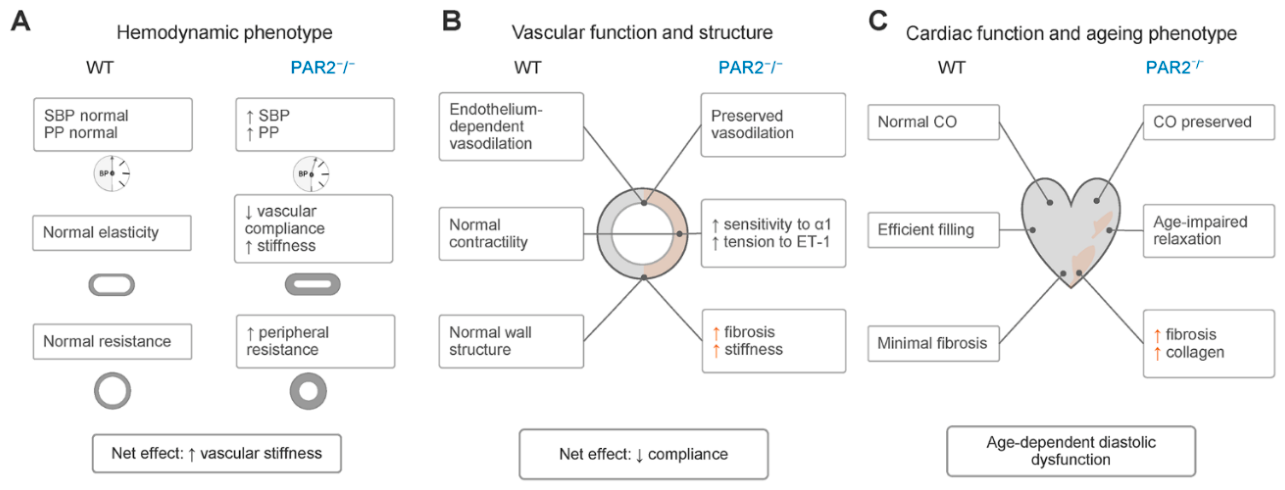
Figure 2.
Mechanistic pathways underlying cardiovascular effects of PAR2 deficiency. (A) In the endothelium, PAR2 signalling regulates vasodilation and inflammatory responses. PAR2−/− preserves vasodilator function but reduces PAR2-dependent signalling and downstream endothelial activation. (B) In vascular smooth muscle, loss of PAR2 enhances vasoconstrictor sensitivity and promotes pro-fibrotic signalling, contributing to reduced vessel compliance and increased stiffness. (C) In the heart, preserved systolic function with impaired diastolic relaxation reflects increased fibrosis and altered signalling, including PAR1 and TGF-β-associated pathways. These mechanisms explain the divergence between preserved vasodilation and enhanced structural remodelling. Abbreviations: α1, α1-adrenoceptor; Ca2+, intracellular calcium; COX, cyclooxygenases-1/2; EDH(F), endothelium-derived hyperpolarization/hyperpolarizing factor(s); ET-1, endothelin-1; MAPK, mitogen-activated protein kinase; NO●, nitric oxide; NFκB, nuclear factor kappa light chain-enhancer of activated B-cells; PAR1, proteinase-activated receptor 1; PAR2, proteinase-activated receptor 2; TGF-β, transforming growth factor-β.
Figure 2.
Mechanistic pathways underlying cardiovascular effects of PAR2 deficiency. (A) In the endothelium, PAR2 signalling regulates vasodilation and inflammatory responses. PAR2−/− preserves vasodilator function but reduces PAR2-dependent signalling and downstream endothelial activation. (B) In vascular smooth muscle, loss of PAR2 enhances vasoconstrictor sensitivity and promotes pro-fibrotic signalling, contributing to reduced vessel compliance and increased stiffness. (C) In the heart, preserved systolic function with impaired diastolic relaxation reflects increased fibrosis and altered signalling, including PAR1 and TGF-β-associated pathways. These mechanisms explain the divergence between preserved vasodilation and enhanced structural remodelling. Abbreviations: α1, α1-adrenoceptor; Ca2+, intracellular calcium; COX, cyclooxygenases-1/2; EDH(F), endothelium-derived hyperpolarization/hyperpolarizing factor(s); ET-1, endothelin-1; MAPK, mitogen-activated protein kinase; NO●, nitric oxide; NFκB, nuclear factor kappa light chain-enhancer of activated B-cells; PAR1, proteinase-activated receptor 1; PAR2, proteinase-activated receptor 2; TGF-β, transforming growth factor-β.
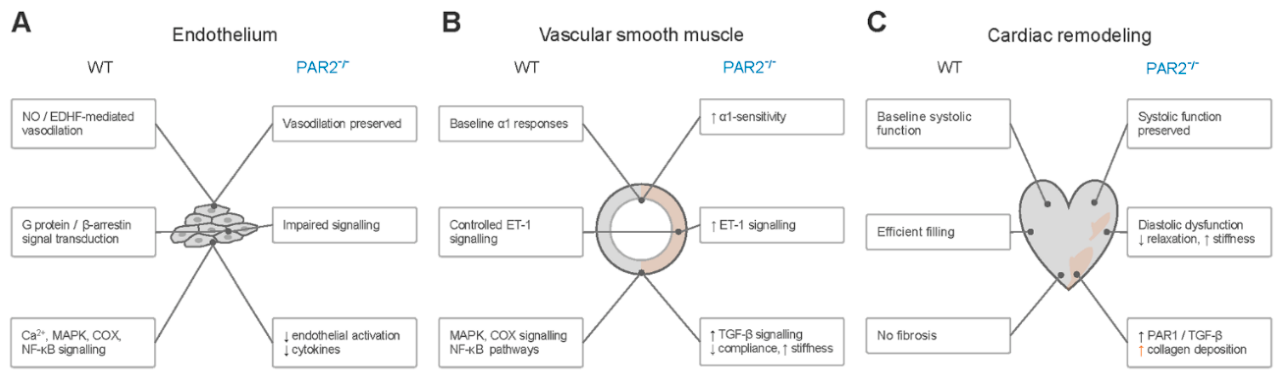
Figure 3.
Context-dependent effects and therapeutic implications of PAR2 deficiency. (A) The impact of PAR2 deficiency varies across disease contexts, with reduced vascular inflammation and injury in atherosclerosis and acute ischemic models but increased fibrosis and matrix deposition in chronic and ageing conditions. (B) PAR2 regulates the balance between inflammatory and fibrotic responses, where reduced inflammatory signalling in PAR2−/− is accompanied by a shift toward fibrosis and structural remodelling. (C) These context-dependent effects have therapeutic implications: PAR2 inhibition may provide anti-inflammatory benefit while increasing pro-fibrotic risk, highlighting the need for context-dependent and cell-specific targetting strategies. Abbreviations: PAR2, proteinase-activated receptor-2; TGF-β, Transforming growth factor-β.
Figure 3.
Context-dependent effects and therapeutic implications of PAR2 deficiency. (A) The impact of PAR2 deficiency varies across disease contexts, with reduced vascular inflammation and injury in atherosclerosis and acute ischemic models but increased fibrosis and matrix deposition in chronic and ageing conditions. (B) PAR2 regulates the balance between inflammatory and fibrotic responses, where reduced inflammatory signalling in PAR2−/− is accompanied by a shift toward fibrosis and structural remodelling. (C) These context-dependent effects have therapeutic implications: PAR2 inhibition may provide anti-inflammatory benefit while increasing pro-fibrotic risk, highlighting the need for context-dependent and cell-specific targetting strategies. Abbreviations: PAR2, proteinase-activated receptor-2; TGF-β, Transforming growth factor-β.
Disclaimer/Publisher’s Note: The statements, opinions and data contained in all publications are solely those of the individual author(s) and contributor(s) and not of MDPI and/or the editor(s). MDPI and/or the editor(s) disclaim responsibility for any injury to people or property resulting from any ideas, methods, instructions or products referred to in the content. |
© 2026 by the authors. Licensee MDPI, Basel, Switzerland. This article is an open access article distributed under the terms and conditions of the Creative Commons Attribution (CC BY) license (http://creativecommons.org/licenses/by/4.0/).
Copyright: This open access article is published under a Creative Commons CC BY 4.0 license, which permit the free download, distribution, and reuse, provided that the author and preprint are cited in any reuse.


