

Submitted:
11 June 2026
Posted:
12 June 2026
You are already at the latest version
Abstract
Metabolic diseases are characterized by a complex interplay between metabolic dysregulation and chronic low-grade inflammation. Fetuin-A (FetA), a liver-derived hepatokine, has emerged as a key mediator linking these processes through its pro-inflammatory and insulin resistance–promoting effects. Accumulating evidence indicates that FetA not only serves as a biomarker but also actively contributes to disease pathogenesis by modulating multiple signaling pathways. In this review, we present an overview of the molecular mechanisms underlying FetA-induced suppression of peroxisome proliferator-activated receptor (PPAR) signaling, a central regulator of metabolic homeostasis. Emerging evidence suggests that FetA may promote Toll-like receptor 4 (TLR4)–mediated inflammation, activate nuclear factor kappa B (NF-κB) signaling, suppress key energy regulators such as Sirtuin 1 (SIRT1) and AMP-activated protein kinase (AMPK), and inhibit PPAR activity through Wnt and extracellular signal-regulated kinase (ERK) pathways. These interconnected mechanisms may contribute to impaired lipid metabolism, increased insulin resistance, and metabolic inflammation. Furthermore, we highlight the role of FetA glycosylation, particularly fucosylation, as a regulatory layer influencing its biological activity. Fucosylated FetA may more effectively activate TLR4 signaling and suppress PPAR activity, suggesting functional heterogeneity among glycoforms. Overall, the FetA–PPAR interaction may represent a key mechanistic link between metabolic inflammation and disease progression.
Keywords:
Fetuin-A
; PPARs
; metabolic inflammation
; fucosylation
; NAFLD
1. Introduction
The metabolic and immune systems are two fundamental systems essential for maintaining human health and homeostasis. These regulatory pathways have evolved to operate in a highly coordinated and integrated manner. The coordinated interaction between these systems plays a critical role in maintaining physiological homeostasis. However, disruption of this balance can lead to various pathological processes and contribute to the development of chronic metabolic diseases, including obesity, type 2 diabetes, and cardiovascular diseases [1].
According to the classical definition, inflammation is an acute response to tissue injury characterized by prominent clinical signs such as swelling, redness, pain, and increased temperature. However, the inflammatory features observed in metabolic diseases differ substantially from this classical definition [2]. Inflammation associated with obesity and related metabolic disorders is typically low-grade, chronic, and systemic, and does not conform to the conventional definition of inflammation [1]. Therefore, in recent years, this distinct inflammatory state induced by caloric excess and metabolic stress has been termed “metabolic inflammation” or “metaflammation.” Although this process shares common signaling mechanisms with classical inflammatory pathways, it exhibits distinct pathophysiological characteristics in terms of its initiating factors and biological outcomes [1].
Metabolic diseases, particularly insulin resistance (IR), non-alcoholic fatty liver disease (NAFLD), and their advanced stages such as steatohepatitis and hepatocellular carcinoma (HCC), represent a serious threat to public health and impose a substantial burden on healthcare systems worldwide. In the pathogenesis of these conditions, in addition to classical metabolic disturbances, chronic low-grade inflammation has been recognized as a key contributing factor [1].
Proteins secreted from the liver, known as hepatokines, are defined as molecules that exert significant effects on systemic metabolic regulation [3]. Fetuin-A (α2-Heremans–Schmid glycoprotein) defined as a hepatokine, has attracted considerable attention due to its strong association with IR and lipid metabolism. Fetuin-A (FetA) has been reported to stimulate the production of inflammatory cytokines from adipocytes and macrophages, suggesting its potential role as a biomarker for the identification and monitoring of chronic inflammatory diseases [4,5,6]. Stefan et al. reported that increased serum FetA levels in humans are significantly associated with reduced insulin sensitivity and increased hepatic fat accumulation [7]. In the same study, FetA levels decreased following weight loss, further supporting its active role in metabolic regulation [7].
FetA has been shown to act as an endogenous ligand that initiates the inflammatory response via Toll-like receptor 4 (TLR4) through the formation of complexes with free fatty acids [8]. This mechanism indicates that FetA is not only a biomarker but also an active pathogenic factor.
On the other hand, peroxisome proliferator-activated receptors (PPARs) are ligand-activated transcription factors that belong to the nuclear receptor superfamily [9]. This term was first introduced in the early 1990s based on their ability to bind compounds that induce peroxisome proliferation [10]. In mammals, three principal PPAR isoforms have been identified: PPARα (NR1C1), PPARβ/δ (NR1C2), and PPARγ (NR1C3). These receptors form heterodimers with the retinoid X receptor (RXR) and bind to PPAR response elements (PPREs), thereby regulating the expression of genes involved in adipogenesis, lipid metabolism, inflammation, and metabolic homeostasis [11]. Notably, PPARγ has emerged as a key regulator of adipogenesis and insulin sensitivity, while also exerting significant anti-inflammatory effects [12].
Previous studies indicate that FetA and PPAR signaling pathways have largely been investigated independently, and studies examining their molecular interplay within an integrated framework remain limited.
Recent experimental studies have demonstrated that FetA may suppress PPARγ activity through multiple signaling pathways. Activation of the Wingless/Integrated (Wnt) signaling pathway by FetA, leading to reduced PPARγ expression [13], increased phosphorylation of PPARγ via the Rat sarcoma (Ras)–mitogen-activated protein kinase kinase (MEK)–extracellular signal-regulated kinase (ERK) signaling pathway [14], and inhibition of key energy sensors such as Sirtuin 1 (SIRT1) and AMP-activated protein kinase (AMPK) [15] collectively demonstrate that the relationship between FetA and PPARγ is multidimensional.
Taken together, these findings suggest that FetA may suppress PPAR signaling-particularly PPARγ-through inflammatory and metabolic pathways, thereby exerting its metabolic effects via this mechanism. This review aims to systematically examine how FetA modulates PPAR signaling through inflammatory and metabolic pathways and to discuss the potential pathological consequences of the FetA–PPAR interaction.
2. PPAR Signaling in Metabolic and Inflammatory Regulation
PPARs, as members of the nuclear receptor superfamily, play a central role in regulating the expression of numerous target genes involved in metabolic processes [16]. These target genes are involved in the regulation of lipid metabolism, glucose homeostasis, and inflammatory processes [9,11]. The tissue-specific expression patterns and diverse functional properties of PPAR isoforms establish them as key regulators of metabolic homeostasis [11,17].
PPAR-α: PPAR-α is primarily expressed in the liver, heart, skeletal muscle, and brown adipose tissue, and serves as a key regulator of fatty acid β-oxidation and lipid catabolism [9,11,17]. PPAR-α activation reduces lipotoxicity via increased fatty acid oxidation and protects against NAFLD by limiting hepatic lipid accumulation [18].
PPAR-α also suppresses inflammation by inhibiting pro-inflammatory gene expression [19]. Accordingly, PPAR-α is a key regulator of metabolic inflammation.
PPAR-γ: PPAR-γ is predominantly expressed in adipose tissue and serves as a central regulator of adipogenesis, lipid storage, and insulin sensitivity [9,20,21]. PPAR-γ has been shown to regulate adiponectin expression in adipose tissue and to modulate insulin sensitivity [22,23]. Furthermore, PPAR-γ exerts potent anti-inflammatory effects by promoting macrophage polarization toward the M2 phenotype, thereby contributing to the suppression of chronic inflammation [12]. Owing to these properties, PPAR-γ is regarded as a promising therapeutic target for the management of both metabolic disorders and inflammatory conditions.
PPAR-δ: PPAR-δ is ubiquitously expressed in multiple tissues and serves as a key regulator of energy expenditure, fatty acid oxidation, and cellular energy homeostasis [11,17]. Activation of PPAR-δ has been demonstrated to modulate metabolic processes, notably through the enhancement of fatty acid oxidation in skeletal muscle [11,24]. Furthermore, PPAR-δ has been shown to modulate inflammatory responses and to promote cellular adaptation to metabolic stress via macrophage activation [25].
PPARs are not only metabolic regulators but also transcriptional modulators that actively participate in the control of inflammation. In particular, PPAR-γ has been shown to suppress the activity of the pro-inflammatory transcription factor nuclear factor kappa B (NF-κB), thereby reducing the expression of inflammatory genes [26]. However, increased activation of inflammatory signaling pathways has also been reported to suppress PPAR expression and activity [19]. This bidirectional interaction plays a critical role in the regulation and maintenance of metabolic inflammation.
Given their central roles in metabolic and inflammatory processes, PPARs are highly susceptible to upstream regulatory signals. In particular, factors influencing inflammation and energy metabolism may suppress PPAR activity, thereby contributing to the development of metabolic diseases [9,11,17,27,28,29]. In this context, accumulating evidence suggests that FetA, as a hepatokine, may play a regulatory role in modulating PPAR activity through multiple signaling pathways.
3. Fetuin-A: A Key Hepatokine in Metabolic Inflammation
FetA is a ~63 kDa glycoprotein predominantly synthesized in the liver and secreted into the circulation. It has been increasingly recognized as a hepatokine with a significant role in the pathogenesis of metabolic diseases [3,6,8,30]. Although initially identified as an inhibitor of calcification, FetA is now widely recognized as an active regulator of energy metabolism and inflammation [8,31,32,33,34].
Clinical studies have consistently demonstrated a strong association between elevated serum FetA levels and IR [8,30]. Notably, measurements performed using the euglycemic–hyperinsulinemic clamp method have demonstrated that elevated FetA levels correlate with reduced insulin sensitivity [7].
Previous studies have also demonstrated a positive correlation between FetA levels and hepatic fat accumulation [6,7,35,36]. These findings support a significant role for FetA in the pathogenesis of NAFLD. Additionally, the decrease in FetA levels following weight loss suggests that this molecule is dynamically regulated in relation to metabolic status [7].
The metabolic effects of FetA are largely mediated through inflammatory signaling pathways. In this regard, Pal et al. demonstrated that FetA acts as an endogenous ligand for Toll-like receptor 4 (TLR4) by forming complexes with free fatty acids, thereby activating inflammatory signaling pathways [8]. In this process, TLR4 activation has been shown to activate NF-κB signaling pathway, thereby promoting the release of pro-inflammatory cytokines [8]. These findings suggest that FetA is not merely a biomarker but also an active mediator of inflammation. In agreement with this, our 2026 study revealed that the FetA/adiponectin ratio was significantly associated with adipose tissue inflammation in overweight individuals, along with adipokines such as progranulin and C1q/TNF-related protein-3 [37]. In addition, findings from our previous study indicate that serum FetA levels are associated with inflammatory status and arginine metabolism in obesity [38]. The inflammatory effects of FetA extend beyond the systemic level to the cellular level. Studies in pancreatic β-cells have demonstrated that FetA, in conjunction with palmitate, induces cellular damage and apoptosis through the activation of the TLR4–c-Jun N-terminal kinase (JNK)–NF-κB signaling pathway [39]. This process contributes to impaired insulin secretion by inducing β-cell apoptosis through JNK activation and NF-κB–mediated inflammatory signaling [39]. Taken together, these observations highlight a strong link between FetA and metabolic inflammation.
The metabolic effects of FetA involve key cellular regulators of energy homeostasis. FetA has been demonstrated to upregulate tumor necrosis factor alpha (TNF-α), which in turn promotes SIRT1 degradation and leads to a reduction in AMPK activity [15]. These alterations have been demonstrated to disrupt energy homeostasis and contribute to reduced insulin sensitivity [15].
When considered collectively, the effects of FetA on inflammation, IR and energy metabolism highlight its significant role in the regulation of metabolic inflammation. FetA promotes inflammation via TLR4, suppresses key energy sensors such as SIRT1 and AMPK, increases cellular damage, and exacerbates IR. These multifaceted effects position FetA as a potential upstream regulator in the pathogenesis of metabolic diseases.
The broad impact of FetA on inflammatory and metabolic pathways suggests that it does not act in isolation but rather interacts with other key regulatory systems. In this context, emerging evidence indicates that FetA may suppress PPAR activity through multiple signaling mechanisms, thereby amplifying metabolic inflammation.
4. Molecular Mechanisms of Fetuin-A Induced Suppression of PPAR Signaling
Recent studies have demonstrated that, beyond acting as an inflammatory mediator, FetA can suppress PPAR signaling -one of the key regulators of metabolic homeostasis- through multiple pathways. Although these mechanisms may appear distinct, they ultimately converge on a common regulatory outcome, as summarized below.
TLR4–NF-κB Interaction and Suppression of PPAR Signaling: In a study by Pal et al., FetA was demonstrated to interact with TLR4 through complex formation with free fatty acids, thereby activating inflammatory signaling pathways [8]. Activation of TLR4 has been shown to stimulate the NF-κB signaling pathway, resulting in increased secretion of TNF-α and other pro-inflammatory cytokines [8]. These findings provide a mechanistic basis for the indirect regulation of PPAR signaling by FetA. In inflammatory conditions, both the expression and activity of PPARγ are markedly suppressed, and this inhibition constitutes a key mechanism driving the persistence of metabolic inflammation [12]. Therefore, FetA may be considered a potential upstream regulator that indirectly suppresses PPAR activity through the pro-inflammatory microenvironment generated via TLR4 signaling.
Suppression of PPARγ via the Wnt Signaling Pathway: The effects of FetA on PPARγ are not confined to inflammatory mechanisms. In this context, Agarwal et al. reported that FetA activates the Wnt3a signaling pathway, thereby suppressing PPARγ expression and leading to a reduction in adiponectin levels [13]. These findings demonstrate that FetA exerts its metabolic effects through an alternative mechanism involving the direct targeting of PPARγ.
Ras–MEK–ERK Pathway and PPARγ Phosphorylation: One of the most prominent effects of FetA on PPARγ occurs at the post-translational level. In a study by Das et al., FetA was shown to stimulate TNF-α synthesis, thereby activating the Ras–MEK–ERK signaling pathway and inducing phosphorylation of PPARγ at the Ser273 residue [14]. This modification has been reported to reduce the transcriptional activity of PPARγ, decrease adiponectin expression, and promote insulin resistance [14]. This mechanism demonstrates that FetA suppresses PPARγ at both the expression and functional levels.
Indirect Suppression of PPAR via Energy Sensors: The metabolic effects of FetA involve key regulators of cellular energy homeostasis, particularly SIRT1 and AMPK. FetA has been demonstrated to downregulate SIRT1 protein levels through TNF-α, thereby leading to suppression of AMPK activity [15]. These alterations lead to reduced activity of peroxisome proliferator-activated receptor gamma coactivator 1-alpha (PGC-1α), impaired mitochondrial function, and attenuation of PPARγ signaling. Collectively, these findings demonstrate that FetA indirectly modulates PPAR activity through its effects on energy metabolism.
The effects of FetA are not confined to PPARγ. In caloric restriction models, reduced FetA levels have been shown to correlate with increased PPAR-α activity [40]. This relationship promotes increased fatty acid oxidation and attenuated inflammation, indicating that FetA serves as a regulator of hepatic metabolism [40].
Integration of Mechanisms: FetA–PPAR Interaction: Taken together, these findings demonstrate that FetA suppresses PPAR signaling through multiple, interconnected mechanisms:
• TLR4–NF-κB: inflammatory suppression,
• Wnt signaling: transcriptional repression,
• ERK activation: post-translational modification,
• Reduced SIRT1/AMPK activity: indirect regulation via energy sensors.
Collectively, these pathways converge to reduce PPAR activity and promote metabolic dysfunction. In this framework, FetA can be regarded as an upstream regulator integrating multiple signaling networks. By operating at the interface of inflammatory and metabolic pathways, FetA acts as a central modulator of PPAR activity through diverse mechanisms. A schematic summary is presented in Figure 1.
Abbreviations: PPAR, peroxisome proliferator-activated receptor; TLR4, Toll-like receptor 4; NF-κB, nuclear factor kappa B; TNF-α, tumor necrosis factor alpha; ERK, extracellular signal-regulated kinase; AMPK, AMP-activated protein kinase; SIRT1, sirtuin 1; PGC-1α, peroxisome proliferator-activated receptor gamma coactivator 1-alpha; NAFLD, non-alcoholic fatty liver disease; HCC, hepatocellular carcinoma; FFA, free fatty acids.
5. Fetuin-A Fucosylation/Glycosylation: A Novel Regulator of PPAR Signaling
FetA is a plasma glycoprotein with a highly complex glycosylation profile, and its functional properties are determined not only by its polypeptide backbone but also by the glycan moieties it carries [41]. FetA is characterized by two N-linked glycosylation sites (Asn138 and Asn158) and multiple O-linked glycan structures, and alterations in these glycans may profoundly influence its biological interactions and functional properties. [42]. Protein glycosylation is profoundly altered in cancer and chronic inflammatory diseases, and terminal modifications such as fucosylation and sialylation have been increasingly recognized as potential biomarkers in various malignancies [43,44,45,46,47]. Elevated fucosylation levels of serum proteins have been consistently reported in liver diseases and hepatocellular carcinoma, and these alterations have been shown to carry significant diagnostic value [48].
Protein glycosylation represents a fundamental post-translational modification that critically regulates ligand–receptor interactions, cell adhesion, and signal transduction processes, particularly through terminal modifications [49]. As a plasma glycoprotein characterized by complex N- and O-linked glycan structures, the functional properties of FetA are critically determined by its glycosylation status. [50,51]. Terminal glycan modifications, such as fucosylation, modulate cell surface receptor function and immune signaling pathways, including Toll-like receptor complexes, by altering signaling strength [49]. The glycosylation profile of FetA is influenced by genetic polymorphisms and disease states, with elevated fucosylation levels particularly observed under inflammatory conditions [41]. These findings demonstrate that the biological effects of FetA glycoforms are heterogeneous and that their functional outcomes are dependent on glycosylation status.
In this context, it can be proposed that distinct glycoforms of FetA differentially regulate its interaction with TLR4 and its capacity to activate inflammatory signaling pathways. However, studies directly investigating the receptor-level effects of specific glycosylation variants of FetA remain limited, and this relationship has yet to be systematically elucidated.
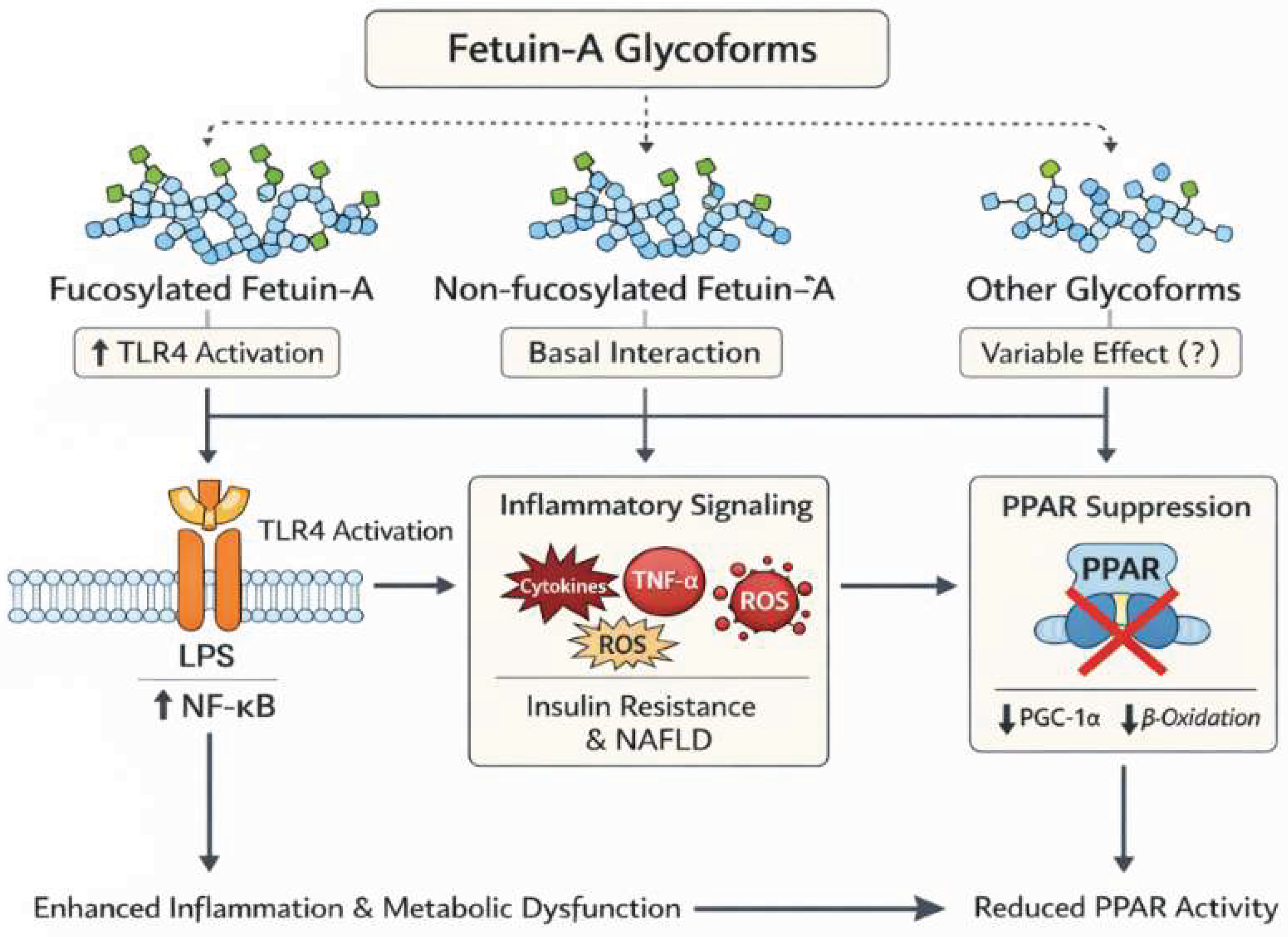
Current evidence suggests that both the total levels of FetA and its glycosylation status are critical determinants of its biological activity. In particular, fucosylated FetA may potentiate TLR4 activation, amplify inflammatory responses, and more effectively suppress PPAR signaling. This concept supports a model in which FetA exerts heterogeneous effects on PPAR, with distinct glycoforms driving differential biological outcomes. A schematic overview of this hypothesis is presented in Figure 2.
Abbreviations: PPAR, peroxisome proliferator-activated receptor; TLR4, Toll-like receptor 4; NF-κB, nuclear factor kappa B; TNF-α, tumor necrosis factor alpha; ROS, reactive oxygen species; PGC-1α, peroxisome proliferator-activated receptor gamma coactivator 1-alpha; NAFLD, non-alcoholic fatty liver disease; LPS, lipopolysaccharide.
6. From Metabolic Inflammation to NAFLD and Hepatocellular Carcinoma
The progression of metabolic diseases follows a multistep progression from lipid accumulation to chronic inflammation and ultimately malignant transformation. This process is critically governed by the interplay between metabolic and inflammatory signaling pathways.
NAFLD, characterized by triglyceride accumulation in hepatocytes and closely associated with IR, serves as a representative model of this paradigm. However, lipid accumulation alone does not fully account for disease progression, as inflammatory processes play a central role in its pathogenesis. [52,53]. Based on current concepts, NAFLD is conceptualized within the framework of the “multiple parallel hits” model, in which adipose tissue–derived signals, hepatokines, and inflammatory mediators collectively contribute to disease progression [54].
In this context, FetA emerges as a critical hepatokine contributing to NAFLD pathogenesis by promoting systemic inflammation and IR [8,55,56].
PPARs, particularly PPAR-α and PPAR-γ, play a central role in hepatic lipid metabolism. PPAR-α activation enhances fatty acid oxidation, whereas PPAR-γ regulates lipid storage and insulin sensitivity. [9,11,17,57]. FetA-mediated suppression of PPAR activity through multiple mechanisms may accelerate NAFLD progression by attenuating fatty acid oxidation, promoting lipid accumulation, and disrupting metabolic homeostasis [56,58].
Non-alcoholic steatohepatitis (NASH), the progressive stage of NAFLD, is characterized by hepatocellular injury, inflammation, and fibrosis, and is associated with pronounced activation of inflammatory signaling pathways [54]. In particular, TLR4-mediated signaling has been demonstrated to play a central role in the pathogenesis of hepatic inflammation and fibrosis [59]. FetA has been demonstrated to activate the TLR4 signaling pathway via complex formation with free fatty acids, thereby amplifying inflammatory responses [8]. Moreover, the detrimental effects of FetA on IR and energy metabolism suggest that this molecule contributes to the persistence of inflammation within the hepatic microenvironment [7]. This process may ultimately contribute to hepatocellular injury and the activation of fibrogenic pathways.
Chronic inflammation and metabolic dysfunction are critical determinants in HCC development. The majority of HCC cases arise in the context of chronic liver disease, with NASH emerging as one of the fastest-growing etiological contributors, particularly in association with metabolic syndrome [60]. These findings underscore the central role of metabolic inflammation in tumor biology. In this context, chronic inflammation, oxidative stress, and dysregulated proliferative signaling establish a microenvironment conducive to tumor development [61].
The combined pro-inflammatory effects of FetA and its inhibitory impact on PPAR signaling suggest that this molecule may play a role in establishing a tumor-promoting microenvironment. Given the anti-inflammatory and anti-proliferative properties of PPAR-γ, suppression of this pathway may enhance cellular proliferation, sustain inflammatory signaling, and drive tumor progression. In this context, the FetA–PPAR interaction may represent a critical mechanistic link between metabolic inflammation and malignant transformation. It is therefore plausible that FetA-mediated inflammation and PPAR suppression contribute to the progression from NAFLD to NASH and ultimately to HCC.
7. Translational and Therapeutic Implications
The FetA–PPAR interaction not only advances our understanding of disease pathogenesis but also provides novel opportunities for the diagnosis and treatment of metabolic diseases. Clinical studies have consistently demonstrated that serum FetA levels are associated with IR, hepatic fat accumulation, and metabolic disorders [5,8,58]. These findings suggest that FetA may serve as a potential biomarker for early diagnosis and risk stratification in metabolic diseases.
During the progression of liver diseases, particularly HCC, profound alterations in serum glycoprotein glycosylation patterns occur, with increased fucosylation representing a hallmark feature. Elevated levels of both core and outer-arm fucosylation have been strongly associated with HCC and demonstrated significant diagnostic value [48,62,63,64,65]. These findings demonstrate that fucosylated glycoproteins are not only indicative of disease-associated alterations but also represent potential biomarkers. Moreover, the glycosylation profile of FetA is influenced by genetic polymorphisms and disease states, with elevated fucosylation levels particularly observed under inflammatory conditions [41]. These observations demonstrate that the biological effects of FetA glycoforms are heterogeneous and highly dependent on glycosylation status. In this context, fucosylated FetA may represent a novel biomarker candidate with enhanced diagnostic specificity compared to total FetA. However, further investigation is required to elucidate the functional significance of these glycoforms, particularly in disease pathogenesis.
Lectin-based analytical approaches designed to assess protein glycosylation patterns provide a powerful framework for biomarker discovery. By integrating antibody-based capture with lectin-mediated detection, these methods enable the characterization of glycan modifications independently of total protein abundance [66]. Applying this approach to FetA may enable the quantitative assessment of fucosylated FetA, potentially offering a valuable tool for early diagnosis and monitoring of disease progression in metabolic disorders.
In this context, PPAR agonists, particularly PPAR-γ agonists such as thiazolidinediones, are widely used in the treatment of metabolic diseases due to their insulin-sensitizing and anti-inflammatory effects [12,67], through increasing adiponectin levels, activation of PPAR-γ contributes to the maintenance of metabolic homeostasis and suppression of inflammatory responses [68].
However, considering the pro-inflammatory and IR-promoting properties of FetA [7,8], it may be proposed that FetA indirectly suppresses PPAR-mediated metabolic responses. In this context, modulation of FetA levels or activity may represent a promising strategy to improve the efficacy of PPAR-targeted therapies.
Elucidating the FetA–PPAR interaction may facilitate the development of innovative combination therapeutic strategies. In this context, the concurrent use of PPAR activators, anti-inflammatory agents, and FetA-targeted interventions may enhance therapeutic efficacy, particularly in complex metabolic disorders such as NAFLD and NASH.
The feasibility of measuring circulating FetA levels supports its utility as a non-invasive biomarker. Assessment of FetA and its glycoforms in serum and potentially other biological fluids, including saliva, may broaden its clinical applicability. Furthermore, the integration of biomarker data with clinical and demographic variables may enable the development of artificial intelligence–based predictive models.
Taken together, the FetA–PPAR interaction constitutes a promising translational axis with significant implications for disease pathogenesis, biomarker discovery, and targeted therapeutic development.
8. Conclusions and Future Perspectives
Understanding the molecular mechanisms driving metabolic disease pathogenesis is critical for the development of novel diagnostic and therapeutic strategies. In this context, the evidence presented in this review indicates that FetA functions not only as a hepatokine or biomarker but also as a key integrative regulator of inflammatory and metabolic signaling networks.
Studies to date have shown that FetA activates TLR4-mediated inflammation, suppresses SIRT1/AMPK pathways, and inhibits PPAR activity via Wnt and ERK signaling pathways [8,13,14,15]. Collectively, these mechanisms converge on the suppression of PPAR signaling, resulting in disruption of metabolic homeostasis. In this context, the “FetA–PPAR interaction” proposed in this review provides an integrative conceptual framework for understanding metabolic inflammation by linking inflammation, energy metabolism, and lipid regulation, and by helping to reconcile fragmented findings in the literature.
Notably, the biological effects of FetA may be determined not only by its circulating levels but also by its glycosylation status. In particular, the hypothesis that fucosylated FetA exerts distinct regulatory effects on inflammatory signaling and PPAR activity represents a critical direction for future research. Further studies are warranted to characterize the functional properties of different FetA glycoforms, validate their effects on PPAR signaling at molecular and cellular levels, and assess the diagnostic and prognostic value of fucosylated FetA in clinical settings. Integration of systems-level approaches may further elucidate this complex regulatory network.
From a therapeutic perspective, targeting FetA-mediated suppression of PPAR signaling may offer novel opportunities for the treatment of metabolic diseases. Combination strategies incorporating PPAR agonists and FetA-targeted interventions may be particularly beneficial in complex disorders such as NAFLD and related conditions.
In conclusion, the FetA–PPAR interaction represents a novel regulatory mechanism at the core of metabolic inflammation, with significant implications for both mechanistic insight and translational applications.
Author Contributions
Y.Ö.İ. and H.K. contributed to the study design, data acquisition, and manuscript preparation. All authors have read and approved the final version of the manuscript.
Funding
This research received no external funding.
Institutional Review Board Statement
Not applicable.
Informed Consent Statement
Not applicable.
Data Availability Statement
No new data were created or analyzed in this study.
Acknowledgments
The authors used ChatGPT (OpenAI, GPT-5.3) for language editing, text refinement, and assistance in conceptualizing figure schematics based on author-provided descriptions. The authors have reviewed and edited the output and take full responsibility for the content of this publication.
Conflicts of Interest
The authors declare no conflicts of interest.
References
- Hotamisligil, G.S. Inflammation and metabolic disorders. Nature 2006, 444, 860–867. [Google Scholar] [CrossRef]
- Larsen, G.L.; Henson, P.M. Mediators of Inflammation. Annu. Rev. Immunol. 1983, 1, 335–359. [Google Scholar] [CrossRef]
- Ren, Y.; Zhao, H.; Yin, C.; Lan, X.; Wu, L.; Du, X.; Griffiths, H.R.; Gao, D. Adipokines, Hepatokines and Myokines: Focus on Their Role and Molecular Mechanisms in Adipose Tissue Inflammation. Front. Endocrinol. 2022, 13, 873699. [Google Scholar] [CrossRef]
- Mori, K.; Emoto, M.; Yokoyama, H.; Araki, T.; Teramura, M.; Koyama, H.; Shoji, T.; Inaba, M.; Nishizawa, Y. Association of Serum Fetuin-A With Insulin Resistance in Type 2 Diabetic and Nondiabetic Subjects. Diabetes Care 2006, 29, 468–468. [Google Scholar] [CrossRef]
- Stefan, N.; Fritsche, A.; Weikert, C.; Boeing, H.; Joost, H.-G.; HärIng, H.-U.; Schulze, M.B. Plasma Fetuin-A Levels and the Risk of Type 2 Diabetes. Diabetes 2008, 57, 2762–2767. [Google Scholar] [CrossRef] [PubMed]
- Ix, J.H.; Sharma, K. Mechanisms Linking Obesity, Chronic Kidney Disease, and Fatty Liver Disease. J. Am. Soc. Nephrol. 2010, 21, 406–412. [Google Scholar] [CrossRef]
- Stefan, N.; Hennige, A.M.; Staiger, H.; Machann, J.; Schick, F.; KröbEr, S.M.; Machicao, F.; Fritsche, A.; HärIng, H.-U. α2-Heremans-Schmid Glycoprotein/ Fetuin-A Is Associated With Insulin Resistance and Fat Accumulation in the Liver in Humans. Diabetes Care 2006, 29, 853–857. [Google Scholar] [CrossRef] [PubMed]
- Pal, D.; Dasgupta, S.; Kundu, R.; Maitra, S.; Das, G.; Mukhopadhyay, S.; Ray, S.; Majumdar, S.S.; Bhattacharya, S. Fetuin-A acts as an endogenous ligand of TLR4 to promote lipid-induced insulin resistance. Nat. Med. 2012, 18, 1279–1285. [Google Scholar] [CrossRef]
- Evans, R.M.; Barish, G.D.; Wang, Y.-X. PPARs and the complex journey to obesity. Nat. Med. 2004, 10, 355–361. [Google Scholar] [CrossRef] [PubMed]
- Issemann, I.; Green, S. Activation of a member of the steroid hormone receptor superfamily by peroxisome proliferators. Nature 1990, 347, 645–650. [Google Scholar] [CrossRef]
- Barish, G.D.; Narkar, V.A.; Evans, R.M. PPAR: a dagger in the heart of the metabolic syndrome. J. Clin. Investig. 2006, 116, 590–597. [Google Scholar] [CrossRef]
- Bouhlel, M.A.; Derudas, B.; Rigamonti, E.; Dièvart, R.; Brozek, J.; Haulon, S.; Zawadzki, C.; Jude, B.; Torpier, G.; Marx, N.; et al. PPARγ Activation Primes Human Monocytes into Alternative M2 Macrophages with Anti-inflammatory Properties. Cell Metab. 2007, 6, 137–143. [Google Scholar] [CrossRef]
- Agarwal, S.; Chattopadhyay, M.; Mukherjee, S.; Dasgupta, S.; Mukhopadhyay, S.; Bhattacharya, S. Fetuin-A downregulates adiponectin through Wnt-PPARγ pathway in lipid induced inflamed adipocyte. Biochim. Et. Biophys. Acta (BBA) -Mol. Basis Dis. 2017, 1863, 174–181. [Google Scholar] [CrossRef]
- Das, S.; Chattopadhyay, D.; Chatterjee, S.K.; Mondal, S.A.; Majumdar, S.S.; Mukhopadhyay, S.; Saha, N.; Velayutham, R.; Bhattacharya, S.; Mukherjee, S. Increase in PPARγ inhibitory phosphorylation by Fetuin—A through the activation of Ras-MEK-ERK pathway causes insulin resistance. Biochim. Et. Biophys. Acta (BBA) -Mol. Basis Dis. 2021, 1867, 166050. [Google Scholar] [CrossRef] [PubMed]
- Chattopadhyay, M.; Mukherjee, S.; Chatterjee, S.K.; Chattopadhyay, D.; Das, S.; Majumdar, S.S.; Mukhopadhyay, S.; Mukherjee, S.; Bhattarcharya, S. Impairment of energy sensors, SIRT1 and AMPK, in lipid induced inflamed adipocyte is regulated by Fetuin A. Cell. Signal. 2018, 42, 67–76. [Google Scholar] [CrossRef]
- Chawla, A.; Repa, J.J.; Evans, R.M.; Mangelsdorf, D.J. Nuclear Receptors and Lipid Physiology: Opening the X-Files. Science 2001, 294, 1866–1870. [Google Scholar] [CrossRef]
- Poulsen, L.l.C.; Siersbæk, M.; Mandrup, S. PPARs: Fatty acid sensors controlling metabolism. Semin. Cell Dev. Biol. 2012, 23, 631–639. [Google Scholar] [CrossRef]
- Reddy, J.K.; Rao, M.S. Lipid Metabolism and Liver Inflammation. II. Fatty liver disease and fatty acid oxidation. Am. J. Physiol. Liver Physiol. 2006, 290, G852–G858. [Google Scholar] [CrossRef] [PubMed]
- Delerive, P.; De Bosscher, K.; Besnard, S.; Berghe, W.V.; Peters, J.M.; Gonzalez, F.J.; Fruchart, J.-C.; Tedgui, A.; Haegeman, G.; Staels, B. Peroxisome Proliferator-activated Receptor α Negatively Regulates the Vascular Inflammatory Gene Response by Negative Cross-talk with Transcription Factors NF-κB and AP-1. J. Biol. Chem. 1999, 274, 32048–32054. [Google Scholar] [CrossRef]
- Rosen, E.D.; Walkey, C.J.; Puigserver, P.; Spiegelman, B.M. Transcriptional regulation of adipogenesis. Genes Dev. 2000, 14(11), 1293–307. [Google Scholar] [CrossRef] [PubMed]
- Savage, D.B.; Tan, G.D.; Acerini, C.L.; Jebb, S.A.; Agostini, M.; Gurnell, M.; Williams, R.L.; Umpleby, A.M.; Thomas, E.L.; Bell, J.D.; et al. Human Metabolic Syndrome Resulting From Dominant-Negative Mutations in the Nuclear Receptor Peroxisome Proliferator-Activated Receptor-γ. Diabetes 2003, 52, 910–917. [Google Scholar] [CrossRef] [PubMed]
- Iwaki, M.; Matsuda, M.; Maeda, N.; Funahashi, T.; Matsuzawa, Y.; Makishima, M.; Shimomura, I. Induction of Adiponectin, a Fat-Derived Antidiabetic and Antiatherogenic Factor, by Nuclear Receptors. Diabetes 2003, 52, 1655–1663. [Google Scholar] [CrossRef]
- Hofmann, C.; Lorenz, K.; Braithwaite, S.S.; Colca, J.R.; Palazuk, B.J.; Hotamisligil, G.S.; Spiegelman, B.M. Altered gene expression for tumor necrosis factor-alpha and its receptors during drug and dietary modulation of insulin resistance. Endocrinology 1994, 134, 264–270. [Google Scholar] [CrossRef] [PubMed]
- Wang, Y.-X.; Zhang, C.-L.; Yu, R.T.; Cho, H.K.; Nelson, M.C.; Bayuga-Ocampo, C.R.; Ham, J.; Kang, H.; Evans, R.M. Regulation of Muscle Fiber Type and Running Endurance by PPARδ. PLoS Biol. 2004, 2, e294. [Google Scholar] [CrossRef]
- Odegaard, J.I.; Ricardo-Gonzalez, R.R.; Goforth, M.H.; Morel, C.R.; Subramanian, V.; Mukundan, L.; Red Eagle, A.; Vats, D.; Brombacher, F.; Ferrante, A.W.; et al. Macrophage-specific PPARgamma; controls alternative activation and improves insulin resistance. Nature 2007, 447, 1116–1120. [Google Scholar] [CrossRef]
- Chinetti, G.; Fruchart, J.-C.; Staels, B. Peroxisome proliferator-activated receptors (PPARs): Nuclear receptors at the crossroads between lipid metabolism and inflammation. Inflamm. Res. 2000, 49, 497–505. [Google Scholar] [CrossRef]
- Forman, B.M.; Tontonoz, P.; Chen, J.; Brun, R.P.; Spiegelman, B.M.; Evans, R.M. 15-Deoxy-Δ12,14-Prostaglandin J2 is a ligand for the adipocyte determination factor PPARγ. Cell 1995, 83, 803–812. [Google Scholar] [CrossRef]
- Forman, B.M.; Chen, J.; Evans, R.M. The Peroxisome Proliferator-activated Receptors: Ligands and Activatorsa. Ann. N. Y. Acad. Sci. 1996, 804, 266–275. [Google Scholar] [CrossRef]
- Forman, B.M.; Chen, J.; Evans, R.M. Hypolipidemic drugs, polyunsaturated fatty acids, and eicosanoids are ligands for peroxisome proliferator-activated receptors and. Proc. Natl. Acad. Sci. USA 1997, 94, 4312–4317. [Google Scholar] [CrossRef]
- Stefan, N.; Häring, H.-U. Circulating fetuin-A and free fatty acids interact to predict insulin resistance in humans. Nat. Med. 2013, 19, 394–395. [Google Scholar] [CrossRef] [PubMed]
- Binkert, C.; Demetriou, M.; Sukhu, B.; Szweras, M.; Tenenbaum, H.C.; Dennis, J.W. Regulation of Osteogenesis by Fetuin. J. Biol. Chem. 1999, 274, 28514–28520. [Google Scholar] [CrossRef]
- Swallow, C.J.; Partridge, E.A.; Macmillan, J.C.; Tajirian, T.; DiGuglielmo, G.M.; Hay, K.; Szweras, M.; Jahnen-Dechent, W.; Wrana, J.L.; Redston, M.; et al. α2HS-glycoprotein, an Antagonist of Transforming Growth Factor β In vivo, Inhibits Intestinal Tumor Progression. Cancer Res. 2004, 64, 6402–6409. [Google Scholar] [CrossRef]
- Siegel-Axel, D.I.; Ullrich, S.; Stefan, N.; Rittig, K.; Gerst, F.; Klingler, C.; Schmidt, U.; Schreiner, B.; Randrianarisoa, E.; Schaller, H.-E.; et al. Fetuin-A influences vascular cell growth and production of proinflammatory and angiogenic proteins by human perivascular fat cells. Diabetologia 2014, 57, 1057–1066. [Google Scholar] [CrossRef] [PubMed]
- Sun, Q.; Cornelis, M.C.; Manson, J.E.; Hu, F.B. Plasma Levels of Fetuin-A and Hepatic Enzymes and Risk of Type 2 Diabetes in Women in the U.S. Diabetes 2012, 62, 49–55. [Google Scholar] [CrossRef]
- Mathews, S.T.; Singh, G.P.; Ranalletta, M.; Cintron, V.J.; Qiang, X.; Goustin, A.S.; Jen, K.-L.C.; Charron, M.J.; Jahnen-Dechent, W.; Grunberger, G. Improved Insulin Sensitivity and Resistance to Weight Gain in Mice Null for the Ahsg Gene. Diabetes 2002, 51, 2450–2458. [Google Scholar] [CrossRef]
- Reinehr, T.; Roth, C.L. Fetuin-A and Its Relation to Metabolic Syndrome and Fatty Liver Disease in Obese Children Before and After Weight Loss. J. Clin. Endocrinol. Metab. 2008, 93, 4479–4485. [Google Scholar] [CrossRef] [PubMed]
- Öner-İyIdoğan, Y.; Çınar-Şirin, N.; Arkaya, S.C.; Enç, P.K. Fetuin-A-to-adiponectin ratio, progranulin, and CTRP-3 in overweight individuals: links to adipose tissue inflammation. Turk. J. Biochem. 2025, 51, 44–52. [Google Scholar] [CrossRef]
- Tanrikulu-Küçük, S.; Koçak, H.; Öner-İyIdoğan, Y.; Seyithanoğlu, M.; Topparmak, E.; Kayan-Tapan, T. Serum fetuin-A and arginase-1 in human obesity model: Is there any interaction between inflammatory status and arginine metabolism? Scand. J. Clin. Lab. Investig. 2015, 75, 301–307. [Google Scholar] [CrossRef] [PubMed]
- Shen, X.; Yang, L.; Yan, S.; Zheng, H.; Liang, L.; Cai, X.; Liao, M. Fetuin A promotes lipotoxicity in β cells through the TLR4 signaling pathway and the role of pioglitazone in anti-lipotoxicity. Mol. Cell. Endocrinol. 2015, 412, 1–11. [Google Scholar] [CrossRef]
- Cohen, K.; Waldman, M.; Abraham, N.G.; Laniado-Schwartzman, M.; Gurfield, D.; Aravot, D.; Arad, M.; Hochhauser, E. Caloric restriction ameliorates cardiomyopathy in animal model of diabetes. Exp. Cell Res. 2017, 350, 147–153. [Google Scholar] [CrossRef]
- Lin, Y.-H.; Zhu, J.; Meijer, S.; Franc, V.; Heck, A.J.R. Glycoproteogenomics: A Frequent Gene Polymorphism Affects the Glycosylation Pattern of the Human Serum Fetuin/α-2-HS-Glycoprotein. Mol. Cell. Proteom. 2019, 18, 1479–1490. [Google Scholar] [CrossRef]
- Varki, A. Biological roles of oligosaccharides: all of the theories are correct. Glycobiology 1993, 3, 97–130. [Google Scholar] [CrossRef] [PubMed]
- Fujii, H.; Shinzaki, S.; Iijima, H.; Wakamatsu, K.; Iwamoto, C.; Sobajima, T.; Kuwahara, R.; Hiyama, S.; Hayashi, Y.; Takamatsu, S.; et al. Core Fucosylation on T Cells, Required for Activation of T-Cell Receptor Signaling and Induction of Colitis in Mice, Is Increased in Patients With Inflammatory Bowel Disease. Gastroenterology 2016, 150, 1620–1632. [Google Scholar] [CrossRef]
- Rydén, I.; PåhLsson, P.; Lindgren, S. Diagnostic Accuracy of α1-Acid Glycoprotein Fucosylation for Liver Cirrhosis in Patients Undergoing Hepatic Biopsy. Clin. Chem. 2002, 48, 2195–2201. [Google Scholar] [CrossRef] [PubMed]
- Chen, G.; Li, H.; Qiu, L.; Qin, X.; Liu, H.; Li, Z. Change of fucosylated IgG2 Fc-glycoforms in pancreatitis and pancreatic adenocarcinoma: a promising disease-classification model. Anal. Bioanal. Chem. 2013, 406, 267–273. [Google Scholar] [CrossRef]
- Aziz, F.; Khan, I.; Shukla, S.; Dey, D.K.; Yan, Q.; Chakraborty, A.; Yoshitomi, H.; Hwang, S.-K.; Sonwal, S.; Lee, H.; et al. Partners in crime: The Lewis Y antigen and fucosyltransferase IV in Helicobacter pylori-induced gastric cancer. Pharmacol. Ther. 2022, 232, 107994. [Google Scholar] [CrossRef]
- Jia, Y.; Liu, Y.; Wang, Y.; Li, J.; Li, G. Sialylation-induced stabilization of dynamic glycoprotein conformations unveiled by time-aligned parallel unfolding and glycan release mass spectrometry. Chem. Sci. 2024, 15, 14431–14439. [Google Scholar] [CrossRef] [PubMed]
- Comunale, M.A.; Wang, M.; Hafner, J.; Krakover, J.; Rodemich, L.; Kopenhaver, B.; Long, R.E.; Junaidi, O.; Di Bisceglie, A.M.; Block, T.M.; et al. Identification and Development of Fucosylated Glycoproteins as Biomarkers of Primary Hepatocellular Carcinoma. J. Proteome Res. 2008, 8, 595–602. [Google Scholar] [CrossRef]
- Duan, C.; Wu, J.; Wang, Z.; Hou, X.; Han, C. Fucosylation in digestive inflammatory diseases and cancers: From mechanical studies to clinical translation. Genes Dis. 2025, 12, 101570. [Google Scholar] [CrossRef]
- Gejyo, F.; Chang, J.L.; Bürgi, W.; Schmid, K.; Offner, G.D.; Troxler, R.F.; Van Halbeek, H.; Dorland, L.; Gerwig, G.J.; Vliegenthart, J.F. Characterization of the B-chain of human plasma alpha 2HS-glycoprotein. The complete amino acid sequence and primary structure of its heteroglycan. J. Biol. Chem. 1983, 258, 4966–4971. [Google Scholar] [CrossRef]
- Yoshioka, Y.; Gejyo, F.; Marti, T.; E Rickli, E.; Bürgi, W.; Offner, G.D.; Troxler, R.F.; Schmid, K. The complete amino acid sequence of the A-chain of human plasma alpha 2HS-glycoprotein. J. Biol. Chem. 1986, 261, 1665–1676. [Google Scholar] [CrossRef]
- Roden, M.; Shulman, G.I. The integrative biology of type 2 diabetes. Nature 2019, 576, 51–60. [Google Scholar] [CrossRef]
- Rosso, C.; Kazankov, K.; Younes, R.; Esmaili, S.; Marietti, M.; Sacco, M.; Carli, F.; Gaggini, M.; Salomone, F.; Møller, H.J.; et al. Crosstalk between adipose tissue insulin resistance and liver macrophages in non-alcoholic fatty liver disease. J. Hepatol. 2019, 71, 1012–1021. [Google Scholar] [CrossRef] [PubMed]
- Tilg, H.; Moschen, A.R. Evolution of inflammation in nonalcoholic fatty liver disease: The multiple parallel hits hypothesis. Hepatology 2010, 52, 1836–1846. [Google Scholar] [CrossRef]
- Chatterjee, P.; Seal, S.; Mukherjee, S.; Kundu, R.; Mukherjee, S.; Ray, S.; Mukhopadhyay, S.; Majumdar, S.S.; Bhattacharya, S. Adipocyte Fetuin-A Contributes to Macrophage Migration into Adipose Tissue and Polarization of Macrophages. J. Biol. Chem. 2013, 288, 28324–28330. [Google Scholar] [CrossRef]
- Sardana, O.; Goyal, R.; Bedi, O. Molecular and pathobiological involvement of fetuin-A in the pathogenesis of NAFLD. Inflammopharmacology 2021, 29, 1061–1074. [Google Scholar] [CrossRef]
- Tontonoz, P.; Spiegelman, B.M. Fat and Beyond: The Diverse Biology of PPARγ. Annu. Rev. Biochem. 2008, 77, 289–312. [Google Scholar] [CrossRef]
- Abebe, E.C.; Muche, Z.T.; T/Mariam, A.B.; Ayele, T.M.; Agidew, M.M.; Azezew, M.T.; Zewde, E.A.; Dejenie, T.A.; Mengstie, M.A. The structure, biosynthesis, and biological roles of fetuin-A: A review. Front. Cell Dev. Biol. 2022, 10, 945287. [Google Scholar] [CrossRef]
- Carpino, G.; Del Ben, M.; Pastori, D.; Carnevale, R.; Baratta, F.; Overi, D.; Francis, H.; Cardinale, V.; Onori, P.; Safarikia, S.; et al. Increased Liver Localization of Lipopolysaccharides in Human and Experimental NAFLD. Hepatology 2020, 72, 470–485. [Google Scholar] [CrossRef] [PubMed]
- Ringelhan, M.; Pfister, D.; O’connor, T.; Pikarsky, E.; Heikenwalder, M. The immunology of hepatocellular carcinoma. Nat. Immunol. 2018, 19, 222–232. [Google Scholar] [CrossRef] [PubMed]
- Tilg, H.; Adolph, T.E.; Moschen, A.R. Multiple Parallel Hits Hypothesis in NAFLD—Revisited after a Decade. Hepatology 2021, 73, 833–842. [Google Scholar] [CrossRef] [PubMed]
- Zhu, J.; Lin, Z.; Wu, J.; Yin, H.; Dai, J.; Feng, Z.; Marrero, J.; Lubman, D.M. Analysis of Serum Haptoglobin Fucosylation in Hepatocellular Carcinoma and Liver Cirrhosis of Different Etiologies. J. Proteome Res. 2014, 13, 2986–2997. [Google Scholar] [CrossRef] [PubMed]
- Zhang, Y.; Zhu, J.; Yin, H.; Marrero, J.; Zhang, X.-X.; Lubman, D.M. ESI–LC–MS Method for Haptoglobin Fucosylation Analysis in Hepatocellular Carcinoma and Liver Cirrhosis. J. Proteome Res. 2015, 14, 5388–5395. [Google Scholar] [CrossRef]
- Mondal, G.; Saroha, A.; Bose, P.P.; Chatterjee, B.P. Altered glycosylation, expression of serum haptoglobin and alpha-1-antitrypsin in chronic hepatitis C, hepatitis C induced liver cirrhosis and hepatocellular carcinoma patients. Glycoconj. J. 2016, 33, 209–218. [Google Scholar] [CrossRef] [PubMed]
- Shang, S.; Li, W.; Qin, X.; Zhang, S.; Liu, Y. Aided Diagnosis of Hepatocellular Carcinoma Using Serum Fucosylated Haptoglobin Ratios. J. Cancer 2017, 8, 887–893. [Google Scholar] [CrossRef]
- Li, C.; Simeone, D.M.; Brenner, D.E.; Anderson, M.A.; Shedden, K.A.; Ruffin, M.T.; Lubman, D.M. Pancreatic Cancer Serum Detection Using a Lectin/Glyco-Antibody Array Method. J. Proteome Res. 2008, 8, 483–492. [Google Scholar] [CrossRef]
- Willson, T.M.; Brown, P.J.; Sternbach, D.D.; Henke, B.R. The PPARs: From Orphan Receptors to Drug Discovery. J. Med. Chem. 2000, 43, 527–550. [Google Scholar] [CrossRef]
- Ahmadian, M.; Suh, J.M.; Hah, N.; Liddle, C.; Atkins, A.R.; Downes, M.; Evans, R.M. PPARγ signaling and metabolism: the good, the bad and the future. Nat. Med. 2013, 19, 557–566. [Google Scholar] [CrossRef]
Figure 1.
Fetuin-A–mediated suppression of PPAR signaling in metabolic disease. Fetuin-A suppresses PPAR activity through multiple pathways, including TLR4–NF-κB–mediated inflammation, Wnt-dependent transcriptional repression, ERK-mediated post-translational modification, and inhibition of the SIRT1–AMPK energy balance. These integrated mechanisms lead to reduced PPAR activity, contributing to insulin resistance, NAFLD, inflammation, and HCC. A hypothetical role for fucosylated fetuin-A in enhancing signaling is also illustrated.
Figure 1.
Fetuin-A–mediated suppression of PPAR signaling in metabolic disease. Fetuin-A suppresses PPAR activity through multiple pathways, including TLR4–NF-κB–mediated inflammation, Wnt-dependent transcriptional repression, ERK-mediated post-translational modification, and inhibition of the SIRT1–AMPK energy balance. These integrated mechanisms lead to reduced PPAR activity, contributing to insulin resistance, NAFLD, inflammation, and HCC. A hypothetical role for fucosylated fetuin-A in enhancing signaling is also illustrated.
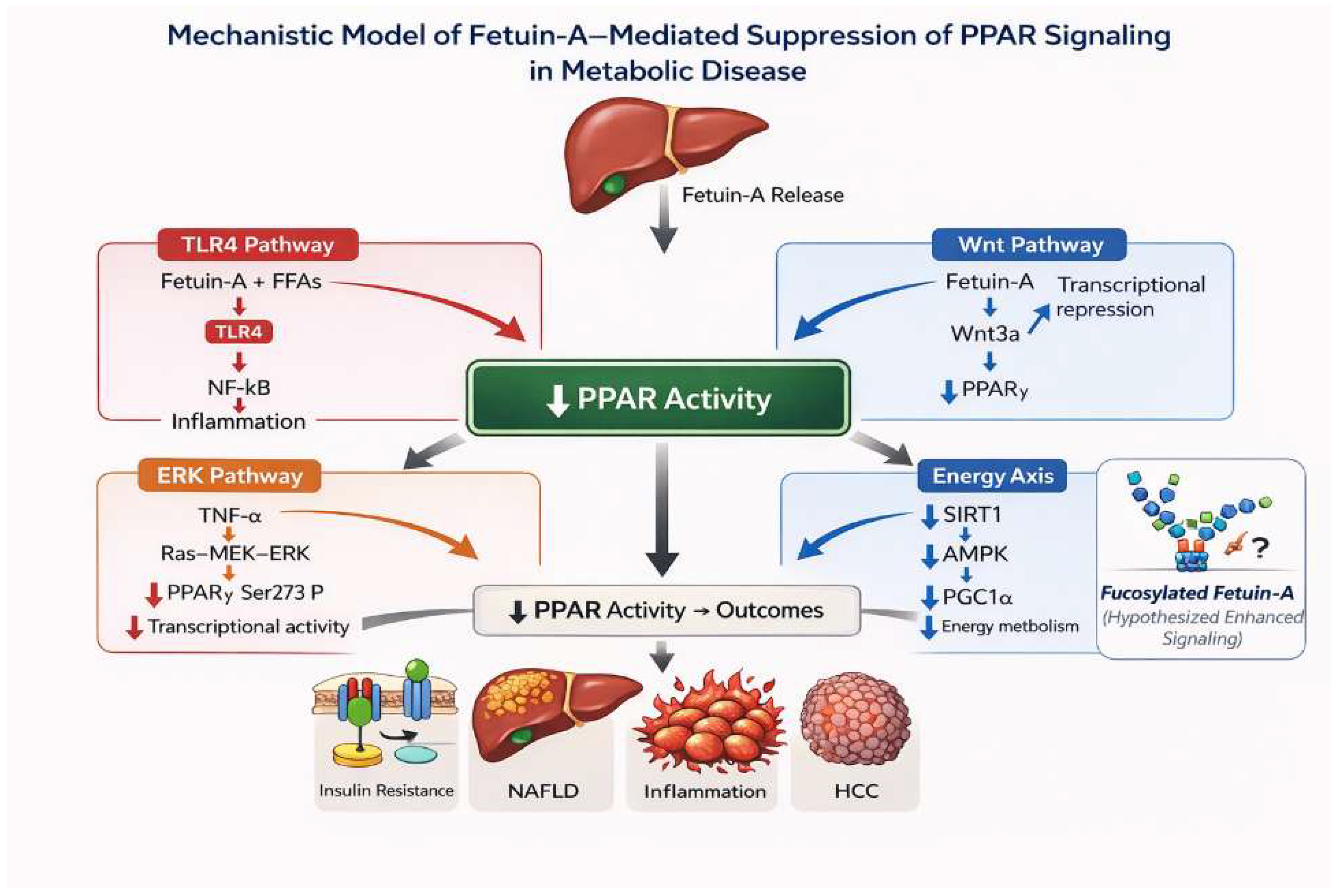
Figure 2.
Proposed role of FetA glycoforms in modulating TLR4-mediated inflammatory signaling and PPAR activity. Different glycoforms of FetA may exert distinct biological effects. Fucosylated FetA is proposed to enhance TLR4 activation, leading to increased NF-κB signaling, pro-inflammatory cytokine production, and oxidative stress. These events contribute to insulin resistance and NAFLD progression. In contrast, non-fucosylated and other glycoforms may exhibit weaker or variable effects on TLR4 signaling. The resulting inflammatory milieu ultimately suppresses PPAR signaling, reducing PGC-1α activity and fatty acid β-oxidation, thereby promoting metabolic dysfunction. LPS is illustrated as a canonical TLR4 ligand to provide a reference for classical TLR4 activation and to emphasize the potential of fucosylated FetA to mimic or potentiate TLR4-mediated inflammatory signaling. FetA is not a direct substitute for LPS but may function as an endogenous modulator of TLR4 signaling.
Figure 2.
Proposed role of FetA glycoforms in modulating TLR4-mediated inflammatory signaling and PPAR activity. Different glycoforms of FetA may exert distinct biological effects. Fucosylated FetA is proposed to enhance TLR4 activation, leading to increased NF-κB signaling, pro-inflammatory cytokine production, and oxidative stress. These events contribute to insulin resistance and NAFLD progression. In contrast, non-fucosylated and other glycoforms may exhibit weaker or variable effects on TLR4 signaling. The resulting inflammatory milieu ultimately suppresses PPAR signaling, reducing PGC-1α activity and fatty acid β-oxidation, thereby promoting metabolic dysfunction. LPS is illustrated as a canonical TLR4 ligand to provide a reference for classical TLR4 activation and to emphasize the potential of fucosylated FetA to mimic or potentiate TLR4-mediated inflammatory signaling. FetA is not a direct substitute for LPS but may function as an endogenous modulator of TLR4 signaling.
Disclaimer/Publisher’s Note: The statements, opinions and data contained in all publications are solely those of the individual author(s) and contributor(s) and not of MDPI and/or the editor(s). MDPI and/or the editor(s) disclaim responsibility for any injury to people or property resulting from any ideas, methods, instructions or products referred to in the content. |
© 2026 by the authors. Licensee MDPI, Basel, Switzerland. This article is an open access article distributed under the terms and conditions of the Creative Commons Attribution (CC BY) license (http://creativecommons.org/licenses/by/4.0/).
Copyright: This open access article is published under a Creative Commons CC BY 4.0 license, which permit the free download, distribution, and reuse, provided that the author and preprint are cited in any reuse.


