

Submitted:
11 June 2026
Posted:
11 June 2026
You are already at the latest version
Abstract
Background and Objectives: Suspected bacterial infection is one of the leading presentations to the Emergency Department (ED) and is still associated with considerable morbidity and mortality. There is increasing evidence that biological sex may influence host immune responses, disease manifestations, therapeutic requirements, and clinical outcomes in infectious diseases. However, sex-specific differences among patients who present to the ED with suspected infection remain incompletely defined. This study, therefore, aimed to assess demographic characteristics, clinical presentation, and clinical management as well as short-term outcomes related to sex among these patients. Materials and Methods: Our single-center retrospective observational study included consecutive adults patients (n= 213) presented with suspected acute bacterial infection to the Emergency Department between June 2025 and August 2025. Results: Female patients were significantly older than male patients (72.13 ± 15.26 vs. 64.25 ± 13.66 years, p < 0.001). Cardiovascular disease and urinary tract infections were more frequently observed among women, whereas men presented significantly higher diastolic blood pressure values at admission (p = 0.004). Vasopressor therapy was more commonly required in female patients compared to males (26.0% vs. 13.3%, p = 0.019). No significant sex-related differences were identified regarding ICU admission or in-hospital mortality. Conclusions: ED patients with suspected bacterial infection demonstrate sex-related differences in age, comorbidities, infection source, and treatment requirements. Female patients were older and more frequently required vasopressor therapy. On the other hand, male patients had higher diastolic blood pressure and presented more frequently with respiratory infections. Short-term outcomes, including ICU admission and in-hospital mortality, were similar for both sexes. These findings highlight the importance of considering sex-specific characteristics in the early assessment and management of suspected infection in the Emergency Department.
Keywords:
emergency department
; infection source
; sex
; biomarkers
; comorbidities
; inflammatory biomarkers
; suspected infection
1. Introduction
Suspected bacterial infection represents one of the most common causes of presentation to the Emergency Department (ED) and remains a major contributor to morbidity and mortality worldwide [1]. Early recognition and timely initiation of appropriate treatment are essential in preventing progression toward severe infection, sepsis, or septic shock. Because the clinical presentation of infection in the ED is often heterogeneous and non-specific, emergency physicians frequently rely on a combination of clinical assessment, vital signs, inflammatory biomarkers, and imaging studies to rapidly identify patients at risk of deterioration [2]. Delayed diagnosis and treatment have been associated with prolonged hospitalization, increased need for intensive care, and higher mortality rates [3,4,5]
In recent years, increasing attention has been directed toward understanding how biological sex may influence the host response to infection. Sex-related differences have been described in immune system activation, inflammatory response, hormonal regulation, and susceptibility to infectious diseases [6]. Experimental and clinical studies suggest that female patients may exhibit stronger innate and adaptive immune responses compared with males, potentially leading to differences in clinical presentation, severity, and outcomes during infectious processes [7,8,9].
Several studies have reported that male patients are more likely to develop respiratory infections and bacteremia, whereas urinary tract infections are more frequently encountered in female patients [10,11] or showed similar clinical characteristics and short- and medium-term mortality with female, despite a lower grade of organ dysfunction among women [12]. In addition, differences in comorbidities, cardiovascular status, inflammatory biomarkers, and patterns of organ dysfunction may contribute to variations in treatment requirements and prognosis between the sexes [8,9,13]. Despite these observations, the impact of sex on outcomes among ED patients with suspected infection remains incompletely understood, and existing literature has produced conflicting results regarding mortality, intensive care admission, and disease severity [13,14,15].
The Emergency Department represents a unique clinical environment in which rapid decision-making is required before microbiological confirmation becomes available [1]. Consequently, studying patients with suspected infection, rather than only those with confirmed sepsis, may provide a more realistic overview of the early stages of infection management in emergency care. Identifying sex-related differences in this population could contribute to improved risk stratification, individualized treatment approaches, and optimization of emergency department protocols.
Therefore, the aim of the present study was to evaluate sex-related differences in demographic characteristics, comorbidities, laboratory findings, infection sources, therapeutic interventions, and short-term outcomes among adult patients presenting to the Emergency Department with suspected infection.
2. Materials and Methods
2.1. Study Design and Patient Selection
This was a retrospective, single-center observational study conducted in the Emergency Department of the Municipal Clinical Hospital, Timișoara, Romania. It included all consecutive adult patients admitted with suspected bacterial infection between 1 June 2025 and 31 August 2025, after eligibility screening based on predefined inclusion and exclusion criteria.
Suspected bacterial infection was defined as a clinical syndrome presenting signs and symptoms compatible with an acute bacterial infection (e.g., fever, chills, altered general condition, or a clinically identifiable infectious focus), in addition to which there were raised inflammatory biomarkers and/or the initiation of empirical antibiotic therapy before microbiological confirmation was available, as per modern sepsis and emergency medicine literature [1,3,4,16].
Clinical severity was assessed at arrival in the Emergency Department using systolic blood pressure, peripheral oxygen saturation, the Glasgow Coma Scale (GCS) score, inflammatory biomarkers, and vasopressor requirement. Vasopressor use was taken as a sign of hemodynamic instability and increased severity of disease, in line with the Sepsis-3 criteria and current recommendations for the management of sepsis [3,4].
Patients with suspected bacterial infection followed a standardized clinical pathway in the Emergency Department (Figure 1). After triage, all patients underwent a full clinical assessment, laboratory investigations, inflammatory biomarker testing, and microbiological sampling when indicated. Clinical findings and laboratory results led to a diagnosis of suspected bacterial infection. Empirical treatment, which included antibiotic therapy and intravenous fluid resuscitation, was promptly initiated according to institutional protocols. Thereafter, patient management was handled by the multidisciplinary team, and disposition decisions were made based on clinical status, resulting in admission to a hospital ward or the intensive care unit (ICU) when required.
Inclusion criteria were: (1) patients aged 18 years or above; (2) presenting to the Emergency Department with suspected acute bacterial infection, having signs and symptoms compatible with laboratory test abnormalities indicative of infection; (3) complete evaluation in the Emergency Department with all relevant clinical and laboratory data available; and (4) initiation of empirical antibiotic therapy or a diagnosis consistent with bacterial infection made by the treating physician.
Exclusion criteria were: (1) no clinical or laboratory findings suggestive of bacterial infection or no diagnosis related to infection (n = 22); (2) incomplete or missing clinical data (n = 29); and (3) transfer from another healthcare facility with no baseline clinical information available (n = 18). The process by which patients were chosen is shown in Figure 2.
2.2. Clinical Assessment and Laboratory Measurements
Demographic features, comorbidities, clinical findings, and laboratory parameters, along with treatment interventions, infection source, and patient outcomes, were extracted from electronic medical records.
Venous blood samples were collected from all patients at admission to the Emergency Department under standardized conditions. Hemoglobin concentration, total leukocyte count, neutrophil count, and lymphocyte count were determined in samples of whole blood collected in 2 mL K3EDTA tubes using an automated hematology analyzer (Celltac G MEK-9100; Nihon Kohden, Tokyo, Japan).
For inflammatory biomarker assessment, blood samples were collected in serum separator tubes for C-reactive protein (CRP) and procalcitonin measurements and then centrifuged at 3000 rpm for 10 minutes. Serum concentrations were analyzed using the mini VIDAS automated immunoassay system. All these steps were carried out in accordance with the guidelines specified by the system’s manufacturer, bioMérieux, Marcy-l’Étoile, France.
The source of infection was categorized according to the presumed primary site of infection as respiratory, urinary, gastrointestinal, cutaneous/soft-tissue, or unknown, based on clinical assessment, laboratory and microbiological investigations, imaging findings, and the final Emergency Department diagnosis.
Treatment variables included administration of supplemental oxygen, vasopressor therapy, and broad-spectrum antibiotic treatment. Patient outcomes included hospital ward admission, ICU admission, and in-hospital mortality.
2.3. Statistical Analysis
Statistical analyses were performed using JASP version 0.18.3 (University of Amsterdam, Amsterdam, The Netherlands). The Shapiro–Wilk test was used to assess the normality of continuous variables; they are then presented as mean ± standard deviation (SD) or median and interquartile range (IQR), as appropriate. I expressed the frequencies and percentages of all categorical variables.
Comparisons between female and male patients were performed utilizing the Mann–Whitney U test for continuous variables and the Chi-square test or Fisher’s exact test for categorical variables, as appropriate. All statistical tests were two-sided. A p-value of <0.05 was considered statistically significant.
3. Results
3.1. Baseline Demographic and Clinical Characteristics
A total of 213 patients with clinically suspected bacterial infection who presented to the Emergency Department were included in the final analysis; 100 were female (46.9%), and 113 were male (53.1%). The females were significantly older than the males (72.13 ± 15.26 vs. 64.25 ± 13.66 years, p < 0.001). There were no significant sex-related differences in the systolic blood pressure, oxygen saturation on room air, body temperature, and Glasgow Coma Scale scores. The mean systolic blood pressure values were 123.32 ± 26.08 mmHg in females and 123.50 ± 27.05 mmHg in males. Oxygen saturation on room air was 94.56 ± 5.15% and 94.25 ± 4.56%, respectively. Body temperature was comparable between the groups (37.06 ± 0.92 °C vs. 37.06 ± 1.02 °C, respectively). The same was observed in the GCS scores between the two sexes (13.91 ± 2.26 vs. 13.84 ± 2.31). Saturation, body temperature, and Glasgow Coma Scale scores at presentation. The baseline demographic and clinical features of the study population are shown in Table 1.
Female patients were significantly older than male patients (72.13 ± 15.26 vs. 64.25 ± 13.66 years, respectively; p < 0.001). Male patients had significantly higher values of diastolic blood pressure at admission (72.27 ± 14.08 vs 67.20 ± 12.61 mmHg, p = 0.004). The distributions of age and diastolic blood pressure by sex are presented in Figure 3A and Figure 3B.
3.2. Comorbidity Profile
Table 2 depicts the distribution of comorbidities by sex. It was found that cardiovascular disease is the most prevalent comorbidity in our population. Female patients had a significantly higher prevalence of cardiovascular disease compared to male patients (72.0% vs. 52.2%, respectively; p = 0.003). Renal disease was also more common in females (54.0% vs. 40.7%), but the difference was not statistically significant (p = 0.052). Pulmonary disease was more common in males (38.1% vs. 27.0%), with no statistically significant difference between the groups (p = 0.087). The prevalence of diabetes mellitus, cerebral disease, liver disease, and malignant disease was similar in female and male patients with no statistically significant sex-related differences (all p > 0.05).
3.3. Emergency Department Treatment Interventions
Table 3 summarizes treatment interventions that were administered in the Emergency Department. The use of supplemental oxygen was comparable between female and male patients (28.0% vs. 28.3%, respectively; p = 0.959).
On the other hand, vasopressor therapy was significantly more required in females than in males (26.0% vs. 13.3%, p = 0.019, respectively). Similarly, broad-spectrum antibiotic therapy was given more often to female patients as compared to male patients (99.0% vs. 77.9%, p = 0.001, respectively).
3.4. Laboratory Parameters at Admission
Laboratory parameters at Emergency Department admission are presented in Table 4. Hemoglobin levels in male patients were higher than those in female patients (12.52 ± 3.46 vs. 11.36 ± 2.40 g/dL, respectively). There was no difference between the sexes regarding total leukocyte and neutrophil counts, although females had slightly higher leukocyte counts and males had slightly higher neutrophil counts. Mean lymphocyte counts were higher in female patients compared with male patients (4.54 ± 32.41 vs. 1.16 ± 0.80 × 10⁹/L, respectively). The Neutrophil-to-Lymphocyte Ratio (NLR) was elevated in both groups and was higher in males than in females (17.43 ± 19.91 vs. 15.11 ± 10.82, respectively). Inflammatory biomarkers were highly elevated in both males and females. The mean concentration of C-reactive protein (CRP) was higher in males, 197.19 ± 147.44 mg/L, compared to females, 169.22 ± 129.82 mg/L. Procalcitonin levels were higher in females (16.66 ± 41.97 ng/mL) than in males (12.35 ± 31.35 ng/mL).
3.5. Infection Source Distribution
The distribution of infection sources according to sex is presented in Table 5. Urinary tract infection was the most common source of infection in the study population and was significantly more frequent among female patients than male patients (51.0% vs. 34.5%, respectively; p = 0.015).
No significant difference was observed between the two genders in terms of respiratory infections, which were more common in males than in females (31.9% vs. 22.0%, p = 0.107). Cutaneous/soft-tissue infections were also more common in males than in females (9.7% vs. 5.0%, p = 0.532).
The prevalence of gastrointestinal infections was comparable between the two sexes (22.0% vs. 22.1%; p = 0.983). Likewise, cases with an unknown source of infection were distributed similarly between the females and the males (17.0% vs. 15.9%, respectively; p = 0.560).
3.6. Clinical Outcomes
Table 6 presents the clinical outcomes by sex. Although not statistically significant (p = 0.573), there was a numerical increase in ICU admission among female patients compared to male patients (16.0% vs 13.3%, respectively).
The hospital ward was the most common disposition for both groups, with 76.0% of female patients and 80.5% of male patients, showing no significant sex-related difference (p = 0.423). In-hospital mortality rates were low and comparable between the sexes (8.0% vs. 6.2%, p = 0.607).
In general, short-term clinical outcomes such as the need for ICU care, hospital ward admission, and in-hospital mortality did not differ significantly between the sexes.
4. Discussion
The present study investigated sex-related differences in demographic characteristics, comorbidities, infection source, laboratory findings, treatment requirements, and short-term outcomes among 213 Emergency Department patients presenting with suspected bacterial infections. Female patients were significantly older than male patients (72.13 ± 15.26 vs. 64.25 ± 13.66 years, p < 0.001) and had a higher prevalence of cardiovascular disease (72.0% vs. 52.2%, p = 0.003). Urinary tract infections were the most common source of infection and were significantly more frequent in women than in men (51.0% vs. 34.5%, p = 0.015). On the other hand, male patients presented with significantly higher diastolic blood pressure at presentation (72.27 ± 14.08 vs. 67.20 ± 12.61 mmHg, p = 0.004) and were more likely to present with respiratory infections (31.9% vs. 22.0%, p = 0.107). More female patients than male patients required vasopressor therapy (26.0% vs. 13.3%, p = 0.019). In spite of these differences in clinical presentation and management, there were no significant sex-related differences as regards ICU admission (16.0% vs. 13.3%; p = 0.573) or in-hospital mortality (8.0% vs. 6.2%; p = 0.607). These results therefore propose that biological sex does influence clinical characteristics and therapeutic requirements in patients presenting with suspected bacterial infections, while short-term outcomes stay mostly similar between the two sexes.
One of the most notable findings was the significantly higher age of female patients. Similar results have been described in other investigations of sex-related differences in sepsis and infection. Wanrooij et al. [13] found that females who presented to the emergency department with sepsis were generally older than males, while Mewes et al. noted a higher prevalence of advanced age among female patients with sepsis and septic shockn[9]. The finding may be a reflection of increasing life expectancy for women and the growing burden of age-related chronic diseases. Furthermore, aging is related to immunosenescence, which is the aging of the immune system, leading to impaired immune function, chronic low-grade inflammation, and increased susceptibility to infections. These factors may influence both the presentation of disease and the requirements of treatment [8,9].
Cardiovascular disease was the most common comorbidity in our cohort and was significantly more common among female patients (72.0% vs. 52.2%; p = 0.003). This is probably related to the fact that the women in our study were older; prevalence of cardiovascular disease increases with age. Similar findings were reported previously when it was observed that women presenting to the Emergency Department with sepsis were generally older and exhibited a distinct comorbidity profile compared with men, including a higher burden of chronic cardiovascular conditions [13]. Likewise, Hajji et al. demonstrated that older female patients with sepsis frequently presented with a greater prevalence of cardiovascular comorbidities, which influenced clinical presentation and management strategies [15].
In earlier sepsis cohorts, however, rates of cardiovascular disease between the sexes were either similar or showed a predominance of male patients, further underlining differences in study populations, age distributions, and inclusion criteria [8,9]. These discrepancies illustrate the intricate relationship between sex, age, and chronic disease burden in patients with infection. Of note, cardiovascular comorbidities may have a significant impact on the clinical course of infection by reducing cardiovascular reserve, impairing tissue perfusion, and limiting the physiological response to systemic inflammation [17]. Therefore, the higher prevalence of cardiovascular disease among women in our cohort may partially explain the greater need for vasopressor support observed during Emergency Department management.
The distribution of the sources of infections revealed important sex-related differences in our cohort. Urinary tract infections were the most common source of infection and were significantly more prevalent in female patients compared to male patients (51.0% vs. 34.5%, p = 0.015). This finding is in line with the known epidemiology of urinary tract infections and previous studies that have reported a marked female predominance in urinary tract infections. Foxman demonstrated that urinary tract infections represent one of the most common bacterial infections among women, with more than half of all women experiencing at least one episode during their lifetime due to anatomical and physiological factors favoring bacterial colonization and ascending infection [18]. Similarly, Dias et al. noted that women are disproportionately affected by urinary tract infections due to sex-specific anatomical, hormonal, and microbiological factors that influence the susceptibility to bacterial infection [10]. Furthermore, Wanrooij et al. Noted that female patients presenting to the Emergency Department with sepsis mostly had urinary tract infections as the primary source of infection, which supports the existence of sex-related differences in the distribution of infection sources [13].
The incidence of respiratory infections among male patients in our study was higher than among female patients (31.9% vs. 22.0%), although the difference was not statistically significant (p = 0.107). This finding is consistent with other studies in which men were reported to bear a higher burden of respiratory infections. For example, Falagas et al. showed that, compared with women, men have both higher incidence and severity of respiratory infections; this difference may be related to variations in smoking habits, pulmonary comorbidities, environmental exposures, and host immune responses between the two sexes [11]. Similar observations were reported by Wanrooij et al. and Pepe et al., both of whom found respiratory infections to be more common among male patients presenting with sepsis or suspected infection in Emergency Department settings [12,13]. Experimental evidence further suggests that sex hormones influence innate and adaptive immune responses, contributing to sex-specific susceptibility to respiratory pathogens and potentially explaining the higher prevalence of respiratory infections observed among men [19,20].
Interestingly, our findings differ slightly from those reported previously, in which respiratory tract infections were the predominant source of infection overall, whereas urinary tract infections were the leading source of infection in our cohort [13]. This discrepancy may reflect differences in patient demographics, particularly the significantly older age of female patients in our study, the higher prevalence of cardiovascular and renal comorbidities, and variations in local epidemiology and healthcare-seeking behavior. Despite these differences, both studies support the concept that biological sex significantly influences the distribution of infection sources among patients presenting with suspected bacterial infections.
In summary, our results are in line with current literature; that is, women are more likely to present with urinary tract infections, while men tend to present more frequently with respiratory infections [10,11,12,13,18]. These findings highlight the importance of considering sex-specific patterns of infection during the initial assessment and risk stratification of patients presenting to the Emergency Department with suspected bacterial infections.
An important finding of this study was the significantly higher use of vasopressors among female patients (26.0% vs. 13.3%, p = 0.019). Vasopressor use in clinical practice is generally considered a sign of hemodynamic instability and therefore greater severity of illness in patients with infection and sepsis [3,4]. Interestingly, even though female patients required vasopressor support more often, there were no significant differences in ICU admissions or in-hospital mortality. Mewes et al. also made similar observations in that they noted sex-related differences in organ dysfunction and therapeutic requirements among patients with sepsis and septic shock, but there was no consistent difference in mortality outcomes between women and men [9]. Likewise, Wanrooij et al. demonstrated that female patients presenting to the Emergency Department with sepsis often exhibited a different clinical phenotype and comorbidity profile, although mortality rates remained comparable between sexes [13].The increased vasopressor requirement among women in our cohort may reflect several mechanisms. Sex hormones have been reported to modulate vascular tone, endothelial function, catecholamine responsiveness, and inflammatory signaling pathways, and thus might influence cardiovascular adaptation during acute infections. Experimental and clinical evidence also supports this claim [6,8,13,21].
Female patients in the present study were also significantly older with a higher prevalence of cardiovascular disease. These are factors known to impair cardiovascular reserve and increase vulnerability to hemodynamic deterioration during systemic infection. Hajji et al. demonstrated similar findings: age and sex both interact to influence how patients with sepsis and septic shock present clinically and are managed [15]. Even though female patients in our study required vasopressor support more often (26.0% vs. 13.3%, p = 0.019), they did not have higher rates of ICU admission (16.0% vs. 13.3%, p = 0.573) or in-hospital mortality (8.0% vs. 6.2%, p = 0.607). This finding suggests that increased requirements of hemodynamic support do not necessarily translate into worse short-term outcomes.
Laboratory analyses showed marked inflammatory activation in both sexes. Male patients had higher mean CRP concentrations (197.19 vs. 169.22 mg/L) and NLR values (17.43 vs. 15.11), while female patients had slightly higher procalcitonin levels (16.66 vs. 12.35 ng/mL). Similar sex-related differences in inflammatory responses have been described in other studies. Rio et al. [6] and Araújo et al. [7] stated that biological sex has an influence on innate and adaptive immune responses through genetic and hormonal mechanisms, leading to cytokine production, leukocyte activation, and inflammatory signaling pathway differences during infection. In particular, estrogens have been associated with enhanced immune responsiveness and effective pathogen clearance, while testosterone has been predominantly immunosuppressive, possibly contributing to different inflammatory profiles between women and men. Our findings are also supported by the observations of Trebuian et al. [14], who demonstrated that inflammatory biomarkers play a critical role in assessing disease severity and prognosis in patients with septic conditions. Likewise, Hajji et al. [15] demonstrated that there are sex- and age-related differences in the inflammatory response of septic and septic shock patients and therefore assumed that biological sex could contribute to the variation in biomarker expression and immune activation. Though the differences in CRP, procalcitonin, and NLR observed in our cohort were not statistically significant, the overall pattern hints at the existence of sex-specific inflammatory responses among patients with suspected bacterial infections. Larger prospective studies are required to determine whether or not these differences have diagnostic or prognostic implications.
Interestingly, no differences were found in ICU admissions due to sex (16.0% vs. 13.3%, p = 0.573) or in-hospital mortality (8.0% vs. 6.2%, p = 0.607) between two groups, although there were substantial differences in age, comorbidity burden, infection source, and treatment requirement . Similar findings have been reported by Wanrooij et al. [13], who demonstrated that although women and men presenting to the Emergency Department although clinical characteristics and sources of infection differed between the two groups, mortality rates were similar after accounting for confounding factors. Likewise, Pepe et al. [12] reported that sex-related differences in clinical presentation did not translate into significant differences in short-term outcomes among patients with suspected sepsis. Our findings are also consistent with those of Hajji et al. [15], who observed that age and sex influenced disease presentation and management but had a limited impact on mortality after accounting for illness severity. In contrast, Mewes et al. [9] reported sex-related differences in organ dysfunction among patients with sepsis and septic shock, while Lakbar et al. [8], in their review of sex-specific aspects of sepsis, highlighted the inconsistent results reported across the literature regarding mortality differences between women and men. Some studies have suggested a survival advantage among female patients, potentially attributable to the immunomodulatory effects of estrogens, whereas others reported poorer outcomes among women, particularly in older populations and in patients with multiple comorbidities [8,9]. These discrepancies likely reflect differences in study design, patient populations, infection severity, healthcare systems, and adjustment for confounding variables.
Taken together, our findings support the increasingly accepted notion that biological sex more strongly influences clinical phenotype, source of infection distribution, and therapeutic requirements in suspected bacterial infection than in short-term ICU or mortality outcomes.
Study Limitations
The study has several limitations. First, its retrospective single-center design may limit the generalizability of the findings and the ability to determine causal relationships between sex and clinical outcomes. Second, the relatively small sample size might have limited statistical power to detect subtle sex-related differences, particularly for relatively rare outcomes such as ICU admission and in-hospital mortality. Third, patients were included based on clinical suspicion of bacterial infection, not on microbiologically confirmed infection. This reflects current practice in the Emergency Department and current guidelines that emphasize early recognition and treatment of infection, but it may have led to some degree of diagnostic misclassification (3, 4). Fourth, microbiological confirmation, distribution of pathogens, and profiles of antimicrobial resistance were not systematically available; thus, a more detailed assessment of potential sex-related differences in infectious etiology was not possible. Also, validated severity scores — like SOFA or qSOFA — were not available, which might have given more details about disease severity and risk stratification. Multivariable analyses adjusting for important confounding factors, including age, comorbidity burden, and infection source, were not performed. Hence, residual confounding cannot be ruled out.
Despite these limitations, the study provides valuable real-world evidence regarding sex-related differences in the presentation and management of suspected bacterial infections in the Emergency Department. The inclusion of consecutive patients and the comprehensive assessment of demographic, clinical, laboratory, treatment, and outcome variables strengthen the relevance of the findings and provide a foundation for future prospective investigations.
Future multicenter prospective studies are needed to define the role of biological sex in the clinical course of suspected bacterial infections better. These studies should include microbiological confirmation, comprehensive severity assessment, and long-term follow-up. They will also help in providing a deeper understanding of sex-specific differences in immune response, hemodynamic adaptation, and treatment requirements, contributing to more individualized approaches to infection management in the Emergency Department.
5. Conclusions
This study identified substantial sex-related differences among Emergency Department patients with suspected bacterial infections. Female patients were older, had a higher prevalence of cardiovascular disease and urinary tract infections, and needed vasopressor therapy more often than male patients. Male patients, in contrast, were found to have higher diastolic blood pressure values and tended to have a greater prevalence of respiratory infections.
Across demographic characteristics, comorbidity burden, infection source, and treatment requirements, there were no significant differences associated with ICU admission or hospital mortality. These findings suggest that biological sex affects the clinical presentation and management of suspected bacterial infections but may have limited impact on short-term outcomes.
Recognition of sex-specific patterns of infection may facilitate earlier risk stratification and more individualized management strategies in the Emergency Department. Further prospective multicenter studies are needed to clarify the mechanisms underlying these differences and their potential implications for clinical practice.
Author Contributions
Conceptualization: D.-I.P., F.B., L.B., D.F., C.W., R.I. and D.S.; methodology: D.-I.P., D.S., T.B., B.C., C.M.L., D.F., A.C., and L.B.; software: A.T., P.I., R.I., and T.B.; validation: F.B., A.T., B.C., A.C., C.W. and D.S.; investigation: D.-I.P., P.I., A.T., R.I., C.M.L., B.C., and O.A.M.; resources: L.B., F.B., R.I. and T.B.; writing—original draft preparation: D.-I.P., D.S., D.F., C.W., L.B., A.C., and F.B.; writing—review and editing: F.B., C.M.L. A.T., B.C., A.C., and O.A.M.; visualization: O.A.M., F.B., C.M.L., and P.I.; supervision: O.A.M. and F.B., All authors have read and agreed to the published version of the manuscript.
Funding
We want to acknowledge the Victor Babes University of Medicine and Pharmacy, Timisoara, for covering the publication costs for this research paper.
Institutional Review Board Statement
The study was conducted in accordance with the Declaration of Helsinki and was approved by the Ethics Committee of the Municipal Clinical Hospital (Approval No. E-2200/08.05/2026).
Informed Consent Statement
Informed consent was obtained from all subjects involved in the study.
Data Availability Statement
The datasets are not publicly available, but de-identified data may be provided upon request from Larysa Balulescu.
Conflicts of Interest
The authors declare no conflicts of interest.
References
- Lafon, T.; Weingart, M.; Vaidie, J.; Calfee, C. S.; Jacob, S. T.; Freund, Y.; Shapiro, N. I.; Barraud, O.; Monneret, G.; van der Poll, T.; Fromage, Y.; François, B., Challenges in early detection and prognostication of sepsis: new approaches from the emergency department and intensive care unit. EClinicalMedicine 2026, 94, 103864. [CrossRef]
- Guarino, M.; Perna, B.; Cesaro, A. E.; Maritati, M.; Spampinato, M. D.; Contini, C.; De Giorgio, R., 2023 Update on Sepsis and Septic Shock in Adult Patients: Management in the Emergency Department. Journal of Clinical Medicine 2023, 12 (9), 3188. [CrossRef]
- Singer, M.; Deutschman, C. S.; Seymour, C. W.; Shankar-Hari, M.; Annane, D.; Bauer, M.; Bellomo, R.; Bernard, G. R.; Chiche, J. D.; Coopersmith, C. M.; Hotchkiss, R. S.; Levy, M. M.; Marshall, J. C.; Martin, G. S.; Opal, S. M.; Rubenfeld, G. D.; van der Poll, T.; Vincent, J. L.; Angus, D. C., The Third International Consensus Definitions for Sepsis and Septic Shock (Sepsis-3). Jama 2016, 315 (8), 801-10. [CrossRef]
- Evans, L.; Rhodes, A.; Alhazzani, W.; Antonelli, M.; Coopersmith, C. M.; French, C.; Machado, F. R.; McIntyre, L.; Ostermann, M.; Prescott, H. C.; Schorr, C.; Simpson, S.; Wiersinga, W. J.; Alshamsi, F.; Angus, D. C.; Arabi, Y.; Azevedo, L.; Beale, R.; Beilman, G.; Belley-Cote, E.; Burry, L.; Cecconi, M.; Centofanti, J.; Coz Yataco, A.; De Waele, J.; Dellinger, R. P.; Doi, K.; Du, B.; Estenssoro, E.; Ferrer, R.; Gomersall, C.; Hodgson, C.; Møller, M. H.; Iwashyna, T.; Jacob, S.; Kleinpell, R.; Klompas, M.; Koh, Y.; Kumar, A.; Kwizera, A.; Lobo, S.; Masur, H.; McGloughlin, S.; Mehta, S.; Mehta, Y.; Mer, M.; Nunnally, M.; Oczkowski, S.; Osborn, T.; Papathanassoglou, E.; Perner, A.; Puskarich, M.; Roberts, J.; Schweickert, W.; Seckel, M.; Sevransky, J.; Sprung, C. L.; Welte, T.; Zimmerman, J.; Levy, M., Surviving sepsis campaign: international guidelines for management of sepsis and septic shock 2021. Intensive Care Med 2021, 47 (11), 1181-1247. [CrossRef]
- Trebuian, C. I.; Brici, O. M.; Sutoi, D.; Popa, D. I.; Chioibas, D. R.; Mederle, O. A., Lactate Levels and Clearance: Key Predictors of Prognosis for COVID-19 and Non-COVID-19 Septic Shock Patients in the Emergency Department. Clin Pract 2024, 14 (3), 834-845. [CrossRef]
- Rio, P.; Caldarelli, M.; Miccoli, E.; Guazzarotti, G.; Gasbarrini, A.; Gambassi, G.; Cianci, R., Sex Differences in Immune Responses to Infectious Diseases: The Role of Genetics, Hormones, and Aging. Diseases 2025, 13 (6). [CrossRef]
- Araújo, M.; Mendes-Frias, A.; Silvestre, R., Sex differences in immune modulation: implications for infection, inflammation, and nutritional supplementation. Biology of Sex Differences 2026, 17 (1), 61. [CrossRef]
- Lakbar, I.; Einav, S.; Lalevée, N.; Martin-Loeches, I.; Pastene, B.; Leone, M., Interactions between Gender and Sepsis-Implications for the Future. Microorganisms 2023, 11 (3). [CrossRef]
- Mewes, C.; Runzheimer, J.; Böhnke, C.; Büttner, B.; Hinz, J.; Quintel, M.; Mansur, A., Association of Sex Differences with Mortality and Organ Dysfunction in Patients with Sepsis and Septic Shock. J Pers Med 2023, 13 (5). [CrossRef]
- Dias, S. P.; Brouwer, M. C.; van de Beek, D., Sex and Gender Differences in Bacterial Infections. Infect Immun 2022, 90 (10), e0028322. [CrossRef]
- Falagas, M. E.; Mourtzoukou, E. G.; Vardakas, K. Z., Sex differences in the incidence and severity of respiratory tract infections. Respiratory Medicine 2007, 101 (9), 1845-1863. [CrossRef]
- Pepe, F.; Pinelli, M. A.; Giuliante, S.; Sabatino, F.; Sari, L.; Visintainer, S.; Fuciarelli, L.; Innocenti, F., Sepsis in the Emergency Department: Different Faces, Same Fate? A Sex-Based Prognostic Analysis. International Journal of Molecular Sciences 2026, 27 (9), 3753. [CrossRef]
- Wanrooij, V. H. M.; Cobussen, M.; Stoffers, J.; Buijs, J.; Bergmans, D.; Zelis, N.; Stassen, P. M., Sex differences in clinical presentation and mortality in emergency department patients with sepsis. Ann Med 2023, 55 (2), 2244873. [CrossRef]
- Trebuian, C. I.; Popa, D.; Buleu, F.; Sutoi, D.; Williams, C. G.; Crintea, I. N.; Chioibas, R. D.; Iancu, A.; Ciolac, L.; Mederle, O. A., COVID-19 Related Acute Respiratory Distress Syndrome versus Classical Acute Respiratory Distress Syndrome Patients: Inflammatory Biomarkers as Predictors of Mortality in Pulmonary Septic Shock. Int J Gen Med 2024, 17, 3337-3347. [CrossRef]
- Hajji, O.; Behnes, M.; Rusnak, J.; Jawhar, S.; Brück, L. M.; Dulatahu, F.; Hetjens, S.; Abumayyaleh, M.; Akin, I.; Schupp, T.; Weidner, K., Age- and Sex-Related Outcomes in Patients with Sepsis or Septic Shock: A Prospective Monocentric Cohort Study. Journal of Clinical Medicine 2026, 15 (11), 4203. [CrossRef]
- Seymour, C. W.; Liu, V. X.; Iwashyna, T. J.; Brunkhorst, F. M.; Rea, T. D.; Scherag, A.; Rubenfeld, G.; Kahn, J. M.; Shankar-Hari, M.; Singer, M.; Deutschman, C. S.; Escobar, G. J.; Angus, D. C., Assessment of Clinical Criteria for Sepsis: For the Third International Consensus Definitions for Sepsis and Septic Shock (Sepsis-3). Jama 2016, 315 (8), 762-74.
- Roy, A.; Krishnasamy, V.; Mitra, S.; Banerjee, S.; Dutta, T. K.; Kumar, N. S.; Roy, S., Impact of cardiovascular and metabolic comorbidities on severity and outcomes of hospital-acquired sepsis in intensive care patients: a case-control study. BMC Infect Dis 2026, 26 (1). [CrossRef]
- Foxman, B., Epidemiology of urinary tract infections: incidence, morbidity, and economic costs. Am J Med 2002, 113 Suppl 1A, 5s-13s.
- Vadakedath, S.; Kandi, V.; Mohapatra, R. K.; Pinnelli, V. B. K.; Yegurla, R. R.; Shahapur, P. R.; Godishala, V.; Natesan, S.; Vora, K. S.; Sharun, K.; Tiwari, R.; Bilal, M.; Dhama, K., Immunological aspects and gender bias during respiratory viral infections including novel Coronavirus disease-19 (COVID-19): A scoping review. J Med Virol 2021, 93 (9), 5295-5309. [CrossRef]
- Agrawal, S.; Salazar, J.; Tran, T. M.; Agrawal, A., Sex-Related Differences in Innate and Adaptive Immune Responses to SARS-CoV-2. Frontiers in Immunology 2021, Volume 12 - 2021. [CrossRef]
- McClements, L.; Kautzky-Willer, A.; Kararigas, G.; Ahmed, S. B.; Stallone, J. N., The role of sex differences in cardiovascular, metabolic, and immune functions in health and disease: a review for “Sex Differences in Health Awareness Day”. Biology of Sex Differences 2025, 16 (1), 33. [CrossRef]
Figure 1.
Clinical pathway for the management of patients presenting to the Emergency Department with suspected bacterial infection, from initial assessment and diagnostic work-up to definitive hospital disposition. Created using BioRender (BioRender, Toronto, ON, Canada) by Popa, D. (2026) https://BioRender.com/6r5bn82).
Figure 1.
Clinical pathway for the management of patients presenting to the Emergency Department with suspected bacterial infection, from initial assessment and diagnostic work-up to definitive hospital disposition. Created using BioRender (BioRender, Toronto, ON, Canada) by Popa, D. (2026) https://BioRender.com/6r5bn82).
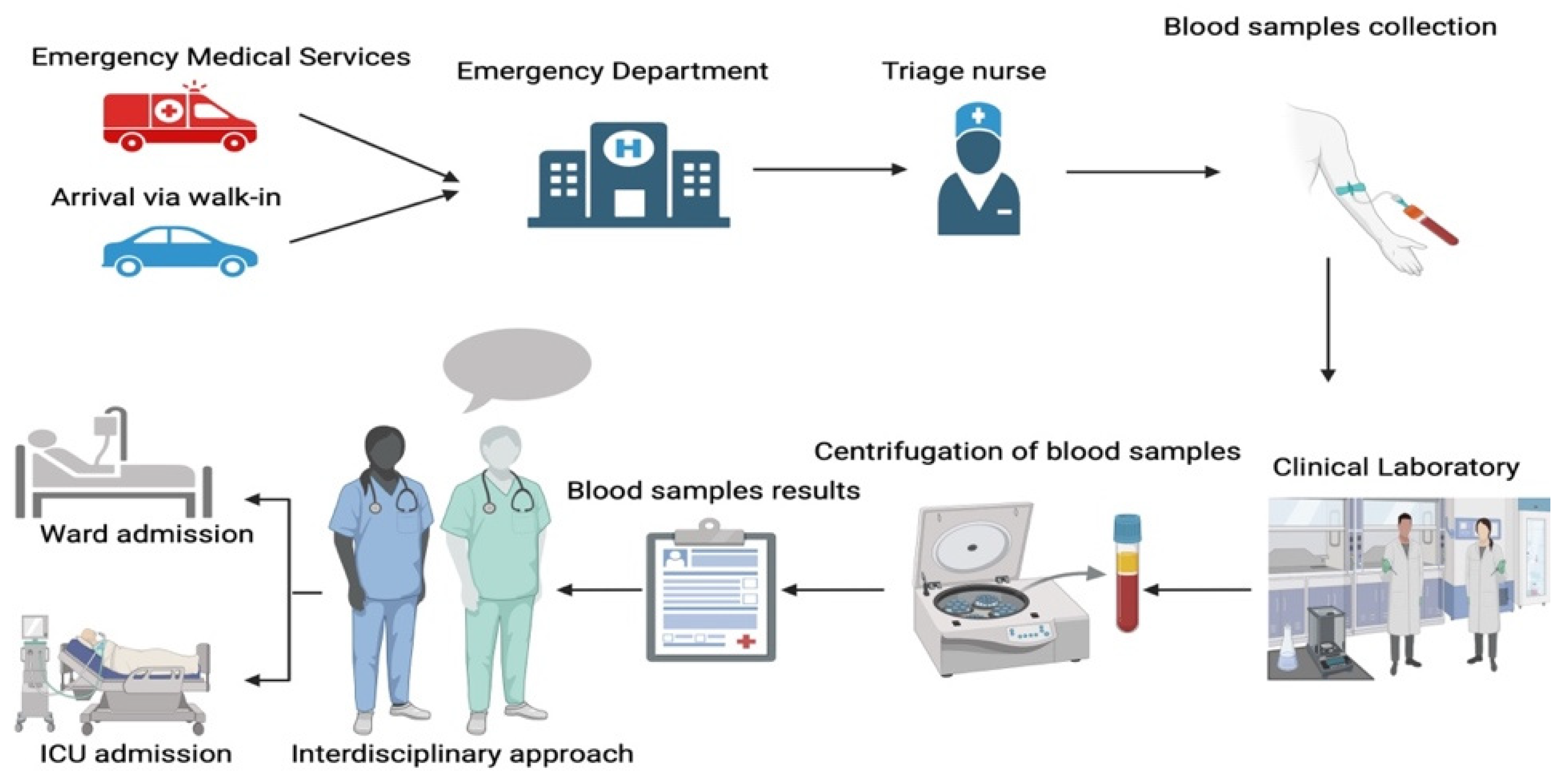
Figure 2.
Flowchart of patient selection and study enrollment.
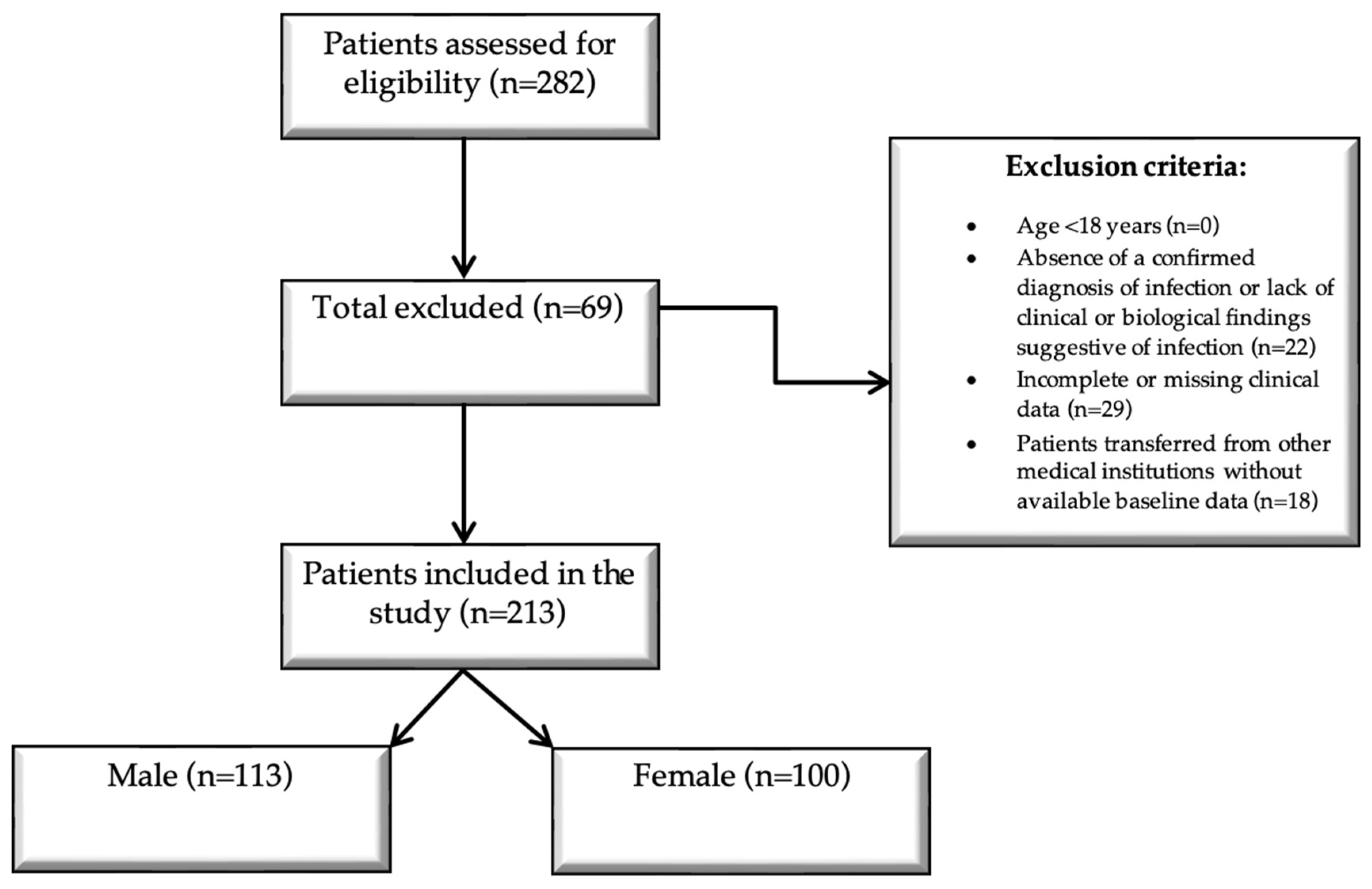
Figure 3.
Sex-related differences in baseline clinical characteristics among patients presenting to the Emergency Department with clinically suspected bacterial infection. (A) Distribution of age according to sex. Female patients were significantly older than male patients (p < 0.001). (B) Distribution of diastolic blood pressure according to sex. Male patients exhibited significantly higher diastolic blood pressure values than female patients (p = 0.004).
Figure 3.
Sex-related differences in baseline clinical characteristics among patients presenting to the Emergency Department with clinically suspected bacterial infection. (A) Distribution of age according to sex. Female patients were significantly older than male patients (p < 0.001). (B) Distribution of diastolic blood pressure according to sex. Male patients exhibited significantly higher diastolic blood pressure values than female patients (p = 0.004).
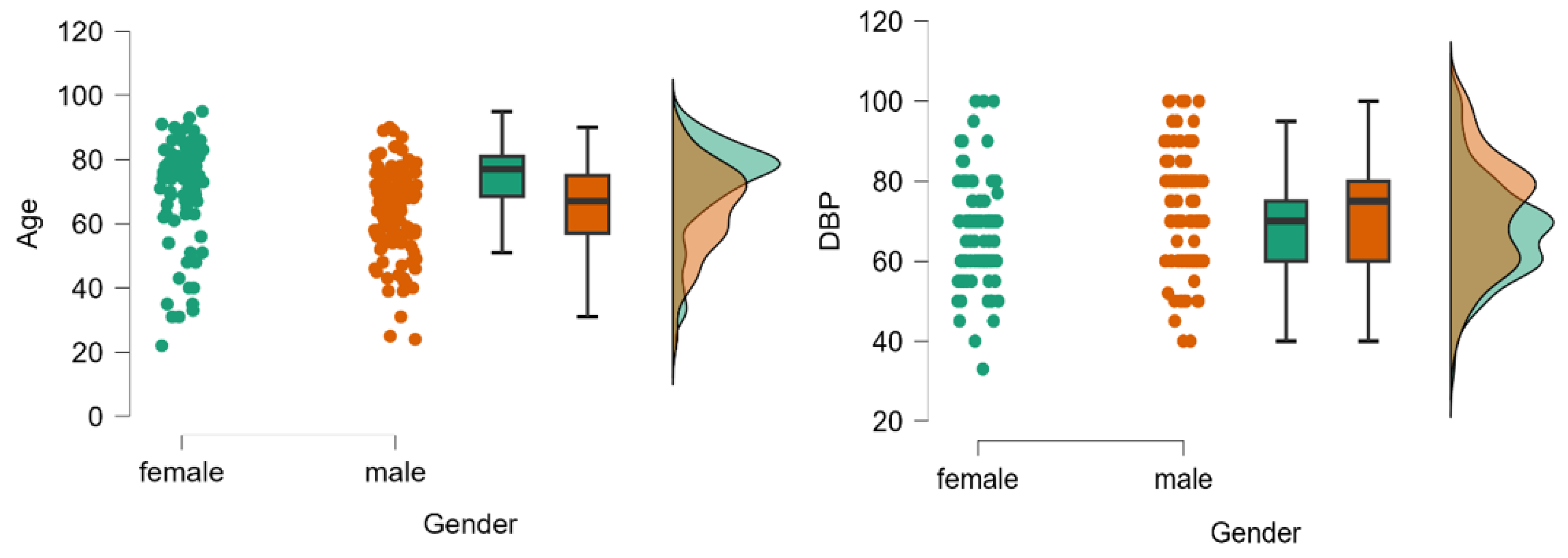

Table 1.
Baseline demographic and clinical characteristics of patients presenting to the Emergency Department with clinically suspected bacterial infection (n = 213).
Table 1.
Baseline demographic and clinical characteristics of patients presenting to the Emergency Department with clinically suspected bacterial infection (n = 213).
| Group | N | Mean | SD | SE | Coefficient of variation | Mean Rank | Sum Rank | |
| Age (years) | Female | 100 | 72.130 | 15.263 | 1.526 | 0.212 | 129.14 | 12,914 |
| Male | 113 | 64.248 | 13.664 | 1.285 | 0.213 | 87.41 | 9,877 | |
| SBP (mmHg) | Female | 100 | 123.320 | 26.081 | 2.608 | 0.211 | 106.00 | 10,600 |
| Male | 113 | 123.496 | 27.049 | 2.545 | 0.219 | 107.89 | 12,192 | |
| DBP (mmHg) | Female | 100 | 67.200 | 12.607 | 1.261 | 0.188 | 94.39 | 9,439 |
| Male | 113 | 72.274 | 14.083 | 1.325 | 0.195 | 118.16 | 13,352 | |
| Saturation on room air (%) | Female | 100 | 94.560 | 5.151 | 0.515 | 0.054 | 111.27 | 11,127 |
| Male | 113 | 94.248 | 4.556 | 0.429 | 0.048 | 103.23 | 11,665 | |
| Body Temperature (°C) | Female | 100 | 37.059 | 0.916 | 0.092 | 0.025 | 110.35 | 11,035 |
| Male | 113 | 37.055 | 1.015 | 0.095 | 0.027 | 104.04 | 11,756 | |
| GCS | Female | 100 | 13.910 | 2.257 | 0.226 | 0.162 | 107.04 | 10,704 |
| Male | 113 | 13.841 | 2.313 | 0.218 | 0.167 | 106.96 | 12,087 |
SBP, Systolic blood pressure; DBP, Diastolic blood pressure; GCS, Glasgow Coma Scale score. Data are presented as mean ± standard deviation (SD). Comparisons between groups were performed using the Mann–Whitney U test. Statistical significance was defined as p < 0.05.
Table 2.
Comorbidities according to sex among patients presenting to the Emergency Department with clinically suspected bacterial infection.
Table 2.
Comorbidities according to sex among patients presenting to the Emergency Department with clinically suspected bacterial infection.
| Sample | ||||
|---|---|---|---|---|
| Comorbidities | Female (n=100) | Male (n=113) | p value | |
| Cardiovascular disease, n (%) | 72 | 59 | 0.003* | |
| (72.00 %) | (52.21 %) | |||
| Pulmonary disease, n (%) | 27 | 43 | 0.087 | |
| (27.00 %) | (38.05 %) | |||
| Diabetes mellitus, n (%) | 22 | 29 | 0.532 | |
| (22.00 %) | (25.66 %) | |||
| Renal disease, n (%) | 54 | 46 | 0.052 | |
| (54.00 %) | (40.70 %) | |||
| Cerebral disease, n (%) | 26 | 24 | 0.413 | |
| (26.00 %) | (21.23 %) | |||
| Liver disease, n (%) | 21 | 24 | 0.966 | |
| (21.00 %) | (21.23 %) | |||
| Malignant disease, n (%) | 29 | 32 | 0.913 | |
| (29.00 %) | (28.31 %) | |||
Data are presented as n (%). Comparisons between groups were performed using the Chi-square test. Statistical significance was defined as p < 0.05.
Table 3.
Treatment interventions administered in the Emergency Department according to sex.
| Sample | ||||
|---|---|---|---|---|
| Treatment | Female (n=100) |
Male (n=113) |
p value | |
| Supplemental oxygen, n (%) | 28 | 32 | 0.959 | |
| (28.00 %) | (28.31 %) | |||
| Vasopressor therapy, n (%) | 26 | 15 | 0.019 | |
| (26.00 %) | (13.27 %) | |||
| Broad-spectrum antibiotics, n (%) | 99 | 88 | 0.001* | |
| (99.00 %) | (77.87 %) | |||
Data are presented as n (%). Comparisons between groups were performed using the Chi-square test. Statistical significance was defined as p < 0.05.
Table 4.
Laboratory parameters at Emergency Department admission according to sex.
| Group | N | Mean | SD | SE | Coefficient of variation | Mean Rank | Sum Rank | |
| Hemoglobin (g/dL) | Female | 100 | 11.358 | 2.397 | 0.240 | 0.211 | 94.19 | 9,419 |
| Male | 113 | 12.517 | 3.462 | 0.326 | 0.277 | 118.34 | 13,372 | |
| Leukocytes (×10⁹/L) | Female | 100 | 19.479 | 35.659 | 3.566 | 1.831 | 105.01 | 10,501 |
| male | 113 | 15.633 | 8.530 | 0.802 | 0.546 | 108.77 | 12,291 | |
| Neutrophils (×10⁹/L) | Female | 100 | 13.012 | 10.312 | 1.031 | 0.792 | 102.55 | 10,255 |
| Male | 113 | 13.973 | 10.790 | 1.015 | 0.772 | 110.94 | 12,536 | |
| Lymphocytes (×10⁹/L) | Female | 100 | 4.538 | 32.407 | 3.241 | 7.142 | 104.29 | 10,429 |
| Male | 113 | 1.163 | 0.802 | 0.075 | 0.689 | 109.40 | 12,363 | |
| NLR | Female | 100 | 15.110 | 10.823 | 1.082 | 0.716 | 106.80 | 10,680 |
| Male | 113 | 17.425 | 19.913 | 1.873 | 1.143 | 107.18 | 12,112 | |
| C-reactive protein (mg/L) | Female | 100 | 169.224 | 129.815 | 12.981 | 0.767 | 101.29 | 10,129 |
| Male | 113 | 197.188 | 147.439 | 13.870 | 0.748 | 112.06 | 12,663 | |
| Procalcitonin (ng/mL) | Female | 100 | 16.662 | 41.973 | 4.197 | 2.519 | 110.36 | 11,036 |
| Male | 113 | 12.346 | 31.347 | 2.949 | 2.539 | 104.03 | 11,756 |
Table 5.
Source of infection according to sex among patients presenting to the Emergency Department with clinically suspected bacterial infection.
Table 5.
Source of infection according to sex among patients presenting to the Emergency Department with clinically suspected bacterial infection.
| Sample | ||||
|---|---|---|---|---|
| Infection starting point | Female (n=100) | Male (n=113) | p value | |
| Respiratory, n (%) | 22 | 36 | 0.107 | |
| (22.00 %) | (31.85 %) | |||
| Digestive, n (%) | 22 | 25 | 0.983 | |
| (22.00 %) | (22.12 %) | |||
| Cutaneous/soft-tissue, n (%) | 5 | 11 | 0.532 | |
| (5.00 %) | (9.73 %) | |||
| Urinary, n (%) | 51 | 39 | 0.015* | |
| (51.00 %) | (34.51 %) | |||
| Unknown, n (%) | 17 | 18 | 0.56 | |
| (17.00 %) | (15.92 %) | |||
Data are presented as n (%). Comparisons between groups were performed using the Chi-square test. Statistical significance was defined as p < 0.05.
Table 6.
Clinical outcomes according to sex among patients presenting to the Emergency Department with clinically suspected bacterial infection.
Table 6.
Clinical outcomes according to sex among patients presenting to the Emergency Department with clinically suspected bacterial infection.
| Sample | ||||
|---|---|---|---|---|
| Outcome | Female (n=100) |
Male (n=113) |
p value | |
| ICU admission, n (%) | 16 | 15 | 0.573 | |
| (16.00 %) | (13.27 %) | |||
| Ward admission, n (%) | 76 | 91 | 0.423 | |
| (76.00 %) | (80.53 %) | |||
| In-hospital mortality, n (%) | 8 | 7 | 0.607 | |
| (8.00 %) | (6.20 %) | |||
Data are presented as n (%). Comparisons between groups were performed using the Chi-square test. Statistical significance was defined as p < 0.05.
Disclaimer/Publisher’s Note: The statements, opinions and data contained in all publications are solely those of the individual author(s) and contributor(s) and not of MDPI and/or the editor(s). MDPI and/or the editor(s) disclaim responsibility for any injury to people or property resulting from any ideas, methods, instructions or products referred to in the content. |
© 2026 by the authors. Licensee MDPI, Basel, Switzerland. This article is an open access article distributed under the terms and conditions of the Creative Commons Attribution (CC BY) license (http://creativecommons.org/licenses/by/4.0/).
Copyright: This open access article is published under a Creative Commons CC BY 4.0 license, which permit the free download, distribution, and reuse, provided that the author and preprint are cited in any reuse.