

Submitted:
11 June 2026
Posted:
11 June 2026
You are already at the latest version
Abstract
To optimize spat stocking rates for Pacific calico scallop (PCS, Argopecten ventricosus) during nursery culture, two consecutive 8-week trials were conducted to evaluate growth in land-based downweller and upweller systems. Four stocking rates (60%, 70%, 80%, and 90% of silo bottom coverage) were tested in the downweller system, whereas three stocking rates (50%, 70%, and 90% of silo bottom coverage) were evaluated in the upweller system. In the downweller system, spat stocked at 60% generally exhibited the best growth performance, with significantly higher relative growth rate (RGR, mm/day) in shell height compared with higher stocking rates. In the upweller system, spat stocked at 50% and 70% showed similar growth performance and both outperformed the 90% stocking rate treatment in shell height, dry weight, RGR, specific growth rate (SGR, %/day), and condition index (CI). These results suggest that moderate stocking rates, approximately 60% in downweller systems and 50–70% in upweller systems, provide favorable conditions for PCS spat growth under the present culture conditions. The present study demonstrates the feasibility of PCS spat nursery culture in land-based systems and provides practical information for hatchery production and nursery management of this emerging aquaculture species.
Keywords:
shellfish
; molluscan
; mariculture
; hatchery production
; southern California
1. Introduction
The Pacific calico scallop (PCS), Argopecten ventricosus (formerly A. circularis), is distributed along the eastern Pacific coast from southern California, USA (33.4°N), to northern Peru (5–6°S) [1,2]. This species reaches a maximum shell length of 10 cm and a height of 9 cm [2], and inhabits coastal embayments, demonstrating tolerance to variable environmental conditions, including temperatures up to 28 °C and salinities ranging from 27 to 47 [3,4]. PCS is one of the most commercially important scallop species in Mexico [5]. Although it was historically harvested in southern California, USA, the species has been protected since 1954 [6].
Commercial production of PCS has been primarily developed in Mexico, where fisheries began in the 1980s and early aquaculture relied on the collection of wild spat using simple collectors such as onion bags filled with mesh and natural materials [5]. Declines in natural populations, associated with environmental variability and anthropogenic pressures, including overfishing, prompted the development of aquaculture technologies. Hatchery production of PCS has since been successfully established, with spat production now largely under controlled conditions. Although research activity declined after 2000 [5], recent increases in market demand for high-value scallops have renewed interest in PCS aquaculture [7]. Recent studies have focused on broodstock conditioning [8,9], larval and spat production [9,10,11], genetics and selective breeding [12], and health management [7,13].
In contrast, research on PCS along the U.S. Pacific coast remains limited. Existing studies are largely restricted to a technical report describing its aquaculture potential in Agua Hedionda Lagoon, California [15], and a graduate thesis on larval feeding and settlement [16], with the few additional publications focusing primarily on ecological observations rather than aquaculture research. Given its high commercial value and broad environmental tolerance, PCS represents a promising candidate for aquaculture development in southern California, where it could contribute to diversification of local seafood production and expansion of the state's aquaculture sector.
Nursery culture is a critical phase in scallop hatchery production, during which post-larvae are reared to sizes suitable for grow-out. Previous studies on PCS nursery culture have primarily focused on environmental and nutritional factors. For example, Guerra et al. [17] cultured PCS spat in an indoor upweller system with a continuous flow of 5000 L/day to evaluate the effects of temperature and predator presence on spat performance. Similarly, Mazón-Suástegui et al. [8] examined the use of cornstarch as a dietary supplement for PCS spat in upweller-based nursery culture. For other scallop species, Tobi and Ward [18] investigated the effects of stocking rate on growth and survival of bay scallop Argopecten irradians in a field-based floating downweller system, while Magnesen and Christophersen [19] improved spat production of king scallop Pecten maximus using large-scale raceway nursery systems. However, to our knowledge, no studies have evaluated the effects of stocking rate on PCS spat performance in land-based downweller or upweller systems.
Therefore, the present study aimed to evaluate the effects of stocking rate on the growth of PCS spat in land-based downweller and upweller nursery systems. The results are intended to provide practical guidance for optimizing hatchery production and supporting the development of PCS aquaculture in southern California.
2. Materials and Methods
2.1. Experimental Animals
PCS spat were produced from wild-caught broodstock at Hubbs-SeaWorld Research Institute (HSWRI, San Diego, California, USA) and settled in indoor 400 L conical tanks. During the rearing period, spat were fed a mixed microalgal diet consisting of Chaetoceros calcitrans, Tisochrysis lutea, Rhodomonas sp., and Tetraselmis suecica at 1:1:1:2 until they reached the target shell height required for the experiment.
2.2. Nursery Culture Systems
2.2.1. Downweller System
The downweller system was designed as illustrated in Figure 1A,B. The system consisted of a raw seawater inlet pipe, a 1180-L fiberglass circular tank, six silos (25.33 L each), and a central standpipe. The bottom of each silo was fitted with a 500-µm nylon mesh. Two rectangular PVC pipe frames were used to suspend and stabilize the six silos within the tank. Raw seawater containing natural phytoplankton was directly pumped from Mission Bay (San Diego, California, USA) into the tank. An airlift tube continuously delivered seawater containing microalgae into each silo housing PCS spat, after which the seawater flowed into the tank through the 500-µm nylon mesh at the silo bottom. The seawater was then discharged back to the bay through the central standpipe (flow direction is indicated in Figure 1A).
2.2.2. Upweller System
The upweller system was constructed as illustrated in Figure 1C,D. The system used tanks and silos of the same dimensions as the downweller system, but consisted of eight side silos and one central collecting silo connected to a central standpipe and a seawater discharge pipe. Each side silo was suspended within the tank by a hook formed from tubing attached to the upper rim of the tank, while the opposite side was connected to the central collecting silo via a 7.62-cm PVC tube. One end of each connecting tube was inserted into the side silo and the other end into the central silo. A 3-inch standpipe was installed in the central collecting silo, with one end positioned at the bottom of the silo and the other extending vertically through the center of the tank. Raw seawater flowed upward into each side silo containing PCS spat through a 500-µm nylon mesh mounted at the silo bottom, and then flowed into the central collecting silo through meshed 3-inch connecting tubes. The seawater was subsequently discharged back to the bay (flow direction is indicated in Figure 1C).
2.3. Experiment Set Up
2.3.1. Phenotype Measurement
PCS spat used in this experiment were size-graded using mesh sieves to reduce variability among individuals. For each subsample, shell length, height, and width were measured using a digital caliper (Husky, China), following the definitions illustrated in Figure 2. Shell height (SH) was defined as the distance from the center of the hinge to the central ventral margin of the cupped right (bottom) valve. Shell length (SL) was defined as the maximum distance from the anterior to the posterior margin of the shell, perpendicular to shell height. Total wet weight of individual spat within each subsample was measured using an analytical balance with a precision of 0.01 mg (Mettler Toledo ME104T, Switzerland). Dry weight was estimated from wet weight using a regression relationship established in this study: Dry weight (mg) = 0.4465 × wet weight (mg) + 0.0012 (R² = 0.9989, n = 100). The regression was developed using spat with shell heights ranging from 2.54 to 20.53 mm.
2.3.2. Downweller System Trial
Four stocking rates of PCS spat were tested in silos at 60%, 70%, 80%, and 90% of silo bottom coverage. The total wet weight of spat (W, g WW) required for each stocking rate was calculated as:
where W is the total wet weight of spat required for a given stocking rate; Marea is the mesh screen area of each silo (840 cm²); Wspat is the mean wet weight of an individual spat; and Sarea is the mean shell area of spat.
W (g WW) = Marea (cm²) × Stocking rate (%) × Wspat (g WW) / Sarea (cm²),
Shell area was estimated by approximating the shell outline as an ellipse:
where SL and SH represent shell length and shell height, respectively.
Sarea = π × (SL/2) × (SH/2),
Each stocking rate was randomly assigned to silos in triplicate. Spat were fed twice daily (08:00 am and 1:00 pm) with a mixed microalgal diet consisting of Chaetoceros calcitrans, Tisochrysis lutea, Rhodomonas sp., and Tetraselmis suecica at 1:1:1:2 proportions, with a total daily volume of 3.33 L per silo and final cell concentration of 200-300 cells/μL in each silo.
During the feeding period (08:00–16:00), raw seawater flow was stopped, and a very low airlift-driven circulation was maintained. From 16:00 to 08:00 the following day, raw seawater was supplied at a flow rate of 15 L/min. Under these conditions, each tank received approximately 14,400 L of fresh, unfiltered seawater per day, corresponding to 14.4 complete water exchanges per day. The trial was conducted from August 15 to October 13, 2024.
2.3.3. Upweller System Trial
Three stocking rates of PCS spat were tested in silos at 50%, 70%, and 90% of silo bottom coverage. The total wet weight of spat required for each stocking rate was calculated using the same method described in Section 2.3.2. Each stocking rate was randomly assigned to silos in triplicate. The feeding strategy was the same as that used in the downweller system trial. During the daytime feeding period (08:00–16:00), the raw seawater supply was turned off, and the lower end of the standpipe in the central collecting silo was closed to prevent water from draining out of the system. A low airlift-driven circulation was then maintained using the same airlift tube design as in the downweller system. This circulation slowly delivered seawater from the tank into the central collecting silo, from which it gradually flowed into the side silos containing PCS spat. This setup was intended to maintain microalgae in suspension and promote a more even distribution of feed within the silos during the static feeding period. From 16:00 to 08:00 the following day, the standpipe was reopened and raw seawater flow was restored at 15 L/min. The trial lasted for 8 weeks, from October 14 to December 13, 2024.
In both trials, tanks were cleaned weekly to minimize organic buildup and reduce the risk of bacterial proliferation. During cleaning, tanks were drained and refilled with raw seawater after the walls and bottoms were thoroughly washed. All silos containing spat were removed daily and rinsed with running seawater to remove accumulated silt, detritus, feces, and pseudofeces from the silos and spat surfaces.
2.4. Environmental Factors Measurement
Water temperature and dissolved oxygen (DO) were measured daily in each tank using a Hach HQ40d handheld multimeter equipped with an OxyGuard TGP probe (Hach, Loveland, CO, USA; OxyGuard, Farum, Denmark). Salinity and pH were measured twice weekly. Salinity was measured to the nearest 0.1 using a PinPoint salinity meter (American Marine Inc., Ridgefield, CT, USA), and pH was measured to the nearest 0.01 using a Pinpoint pH meter (American Marine Inc., Ridgefield, CT, USA).
2.5. Growth Performance Determination
Growth performance of PCS spat was evaluated weekly using subsamples collected from each silo. Live spat within each subsample were measured for shell height, shell length, shell width, and wet weight using the methods described above.
Growth was assessed using relative growth rate in shell height (RGR, mm/day) and specific growth rate in body dry weight (SGR, %/day), calculated as follows:
where SHt and SHt−1 represent shell height at time t and t−1, respectively, and T is the number of days between sampling times.
where Wt and Wt−1 represent body dry weight at time t and t−1, respectively, and T is the number of days between sampling times.
RGR (mm/day) = (SHt − SHt−1) / T,
SGR (%/day) = 100 × [ln(Wt) − ln(Wt−1)] / T,
The condition index (CI) of spat was calculated as the ratio of total wet weight to shell height (Mauna et al., 2010). The daily increase in CI was calculated as:
where CIend and CIinitial represent the final and initial CI values, respectively, and T is the trial duration in days.
CI increase (%/day) = 100 × (CIend − CIinitial) /CIinitial / T,
2.6. Data Analysis
Data are presented as mean ± standard deviation (SD). Statistical analyses were performed using OriginPro software (Version 2021; OriginLab Corporation, Northampton, MA, USA). Homogeneity of variance was tested prior to analysis, and percentage data were arcsine-transformed when necessary to achieve normality. One-way analysis of variance (ANOVA) was used to evaluate differences among treatments. When significant differences were detected, Tukey’s honestly significant difference (HSD) test was applied for post hoc multiple comparisons. Differences were considered statistically significant at p < 0.05.
3. Results
3.1. Environmental Factors
During the experimental period encompassing both trials, seawater temperature gradually decreased from a maximum of 23.9 °C on September 8 to a minimum of 12.6 °C on December 11–12 (Figure 3). Dissolved oxygen (DO) concentrations showed an inverse trend relative to seawater temperature, with the lowest value of 5.44 mg L⁻¹ recorded on September 8 and gradually increasing to a maximum of 8.77 mg L⁻¹ on December 12 (Figure 3). pH values ranged from 8.00 to 8.12, while salinity averaged 34.4 ± 0.6 throughout the experimental period (data not shown).
3.2. Downweller System Trial
Growth performance of PCS spat in the downweller system generally declined with increasing stocking rate. After the 8-week trial, spat cultured at the 60% stocking rate reached the greatest shell height and body dry weight, while the lowest performance was observed at the 90% stocking density (Figure 4). Shell height of spat increased from 0.38 ± 0.019 cm to 0.84 ± 0.042 cm in the 60% stocking rate treatment, which was significantly higher than that of the 90% stocking rate treatment (p = 0.042), but did not differ significantly from the 70% and 80% treatments (p = 0.25 and 0.078, respectively). Similarly, dry weight increased from 0.0021 ± 0.00044 g to 0.057 ± 0.011 g at the 60% stocking rate and was significantly higher than that at the 90% stocking rate (p = 0.038), while no significant differences were detected compared with the 70% and 80% treatments (p = 0.21 and 0.067, respectively) (Figure 4).
Relative growth rate (RGR) in shell height was highest at the 60% stocking rate (0.078 ± 0.0039 mm/day), which was significantly higher than those of all other stocking rate treatments (p = 0.001–0.03) (Figure 5A). No significant differences in RGR were detected among the 70%, 80%, and 90% stocking rate treatments (p = 0.11–0.94). Specific growth rate (SGR) in body dry weight averaged 5.60 ± 0.23%/day at the 60% stocking rate and did not differ significantly from the 70% or 80% treatments (p = 0.35 and 0.42, respectively) (Figure 5A). Similarly, condition index (CI) at the 60% stocking rate was significantly higher than that at the 90% stocking rate (p = 0.040), but did not differ significantly from the 70% or 80% treatments. No significant differences in CI increase rate were detected among stocking rate treatments (p = 0.064) (Figure 5B).
3.3. Upweller System Trial
In the upweller system, spat cultured at the 50% and 70% stocking rates showed similar growth performance, whereas growth was reduced at the 90% stocking rate (Figure 6). After the 8-week trial, shell height increased from 0.56 ± 0.029 cm to 0.91 ± 0.036 cm in the 50% stocking rate treatment. Final shell height at the 50% stocking rate did not differ significantly from that at the 70% stocking rate (p = 0.50), whereas both treatments were significantly higher than the 90% stocking rate treatment (p = 0.0032 and 0.010, respectively) (Figure 6A). A similar trend was observed for body dry weight. Final dry weights at the 50% and 70% stocking rates were 0.093 ± 0.015 g and 0.080 ± 0.0097 g, respectively, and did not differ significantly (p = 0.085). However, both treatments showed significantly higher dry weight than the 90% stocking rate treatment (p < 0.001 and p = 0.003, respectively) (Figure 6B).
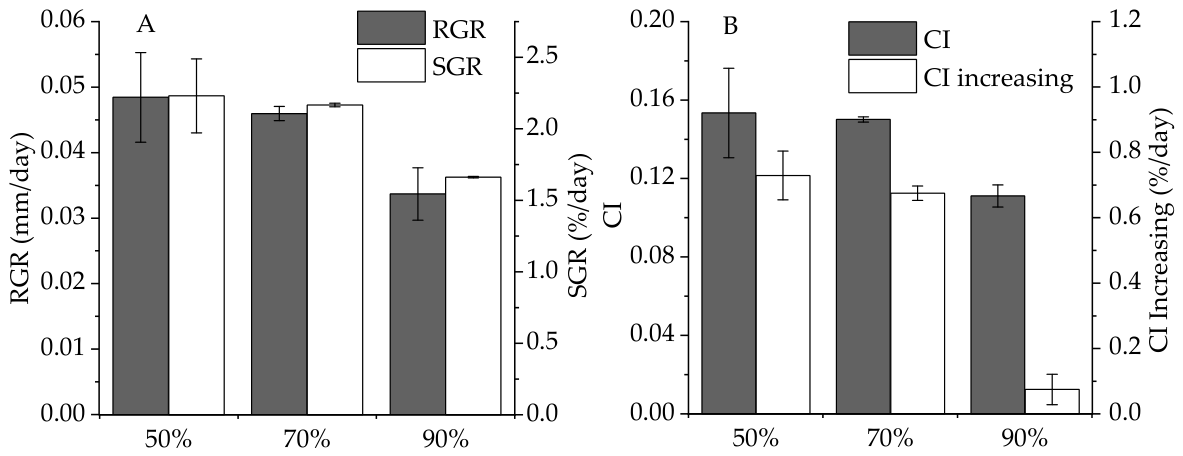
RGR in shell height averaged 0.048 ± 0.0068 mm/day and 0.046 ± 0.0011 mm/day at the 50% and 70% stocking rates, respectively, and both were significantly higher than that at the 90% stocking rate (p = 0.019 and 0.040, respectively) (Figure 7A). No significant difference in RGR was detected between the 50% and 70% stocking density treatments (p = 0.80). Similarly, SGR in body dry weight did not differ significantly between the 50% and 70% stocking rate treatments (p = 0.86), averaging 2.23 ± 0.26%/day and 2.17 ± 0.26%/day, respectively, but both were significantly higher than the 90% stocking rate treatment (p = 0.0083 and 0.015, respectively) (Figure 7A). The same trend was observed for CI and CI increase rate, with no significant differences between the 50% and 70% stocking rate treatments (p = 0.95), while both treatments showed significantly higher values than the 90% stocking rate treatment (p = 0.021–0.034) (Figure 7B).
4. Discussion
Field floating nursery systems are widely used in shellfish aquaculture [18,20]. However, the availability of these field-based nursery systems varies geographically, and access may be limited or economically impractical in some regions, highlighting the need for alternative nursery approaches. Consequently, land-based downweller, upweller, and raceway nursery systems have been developed for scallop spat production, including for bay scallop (Argopecten irradians), king scallop (Pecten maximus), and lion’s paw scallop (Nodipecten subnodosus) [21,22,23].
Compared with many other bivalves that can firmly attach to substrates, scallop post-larvae are relatively fragile during the nursery phase and can be easily detached by physical disturbance. In addition, settled scallop spat retain swimming ability and may physically interfere with one another through valve movement when stocked at excessive rates, which can reduce growth and survival [18,24]. Therefore, optimization of stocking rate in nursery silos is critical for maximizing scallop spat growth and improving nursery production efficiency in land-based nursery systems. Improved nursery performance may also help shorten the nursery period and reduce labor and operational costs associated with intensive hatchery production [19,22,25].
In the present study, PCS spat cultured at 60% stocking rate in the downweller system and 50–70% stocking rate in the upweller system achieved the best overall growth performance. Because environmental conditions, including temperature, DO, pH, and salinity, were consistent among stocking density treatments within each trial, differences in growth were likely associated primarily with food availability and crowding effects. PCS is known to tolerate relatively wide ranges of temperature and salinity [3,4], suggesting that the observed growth differences were not primarily driven by environmental stress.
Food availability was likely one of the major factors influencing spat growth in both nursery systems. In the present study, PCS spat received a mixed cultured microalgal diet supplemented by natural particulate food sources contained in raw seawater, including phytoplankton, ciliates, and suspended organic matter. Feeding strategies were maintained consistently among stocking rate treatments within each trial. The daily cultured microalgal final concentration supplied to each silo ranged from approximately 200–300 cells/μL, depending on microalgal culture density. Previous studies have demonstrated that increased food availability can substantially improve growth performance of PCS spat. Mazón-Suástegui et al. [8] continuously supplied a mixed microalgal diet at approximately 300 cells/μL to PCS spat in nursery chambers, resulting in rapid increases in spat biomass. Similarly, Lora-Vilchis and Doktor [26] reported high growth rates of PCS spat maintained under relatively low-density laboratory conditions with concentrated algal diets. In an independent trial conducted in our laboratory, PCS spat fed approximately 1000 cells/μL in 1-L containers achieved substantially higher RGR and SGR values than those observed in the present study (Huo et al., unpublished data). Although direct comparisons among studies are difficult because of differences in experimental conditions, feeding strategies, and culture scales, these observations collectively suggest that food availability in the present study may not have been sufficient to maximize spat growth. Raw seawater supplied overnight likely contributed additional natural food resources to the nursery systems. However, concentrations of natural suspended particles in the raw seawater were not quantified during the study, and therefore their contribution to total food availability remains unclear.
In addition to food limitation, crowding effects likely contributed to reduced growth performance at higher stocking rates. Under identical feeding conditions, lower stocking rate treatments provided relatively higher food availability per individual spat compared with higher stocking rate treatments. Furthermore, increased stocking rate likely intensified physical interactions among spat and competition for available space. Unlike many attached bivalves, scallop spat remain mobile after settlement and can physically interfere with one another through valve movement and swimming behavior, which may negatively affect growth and survival at excessive stocking rates [18,24].
Although survival was not quantified in the present study, higher stocking rates may increase the risk of mortality because of intensified physical interactions, crowding stress, and competition for space among spat. Lower stocking rates may therefore provide more favorable conditions for spat survival, although this relationship should be confirmed in future studies. Increasing food availability may improve spat growth under high-density conditions, but it may not fully eliminate the negative effects associated with overcrowding and physical interference. Similar density-dependent growth patterns have been reported in other scallop nursery systems. Heasman et al. [27] observed that growth of Pecten fumatus spat in tiered-screen upweller systems remained near maximal levels at stocking densities below approximately 70% screen coverage, but declined substantially at higher coverages because of crowding effects. The present study showed a comparable pattern for PCS spat, suggesting that moderate stocking rates may optimize growth performance in land-based nursery systems.
Temperature likely contributed to variation in growth performance observed during the present study, particularly in the upweller system trial. Sicard et al. [3] reported that optimal temperature for PCS spat growth ranged between 19 and 22 °C, whereas ingestion and clearance rates declined when temperature decreased to 16 °C. During the present upweller trial, seawater temperature decreased below 16 °C after November 8, which may have contributed to reduced growth performance during the later culture period. Salinity, pH, and DO remained relatively stable throughout the trials and were generally within ranges considered suitable for PCS spat culture. Collectively, the present results suggest that PCS nursery production in southern California may benefit from culture during warmer seasonal periods, particularly before late autumn temperature declines. Under favorable environmental conditions, moderate stocking rates (<70% screen coverage), and increased microalgal feeding levels, PCS spat may achieve substantially improved growth performance in land-based nursery systems.
The nursery systems used in the present study combined natural food resources and cultured microalgae, which was different from some land-based nursery systems that rely primarily on natural food resources, and others that depend heavily on cultured microalgae. This combined feeding strategy may help supplement potentially insufficient natural food availability while partially reducing the amount of cultured microalgae required, thereby potentially decreasing labor and operational costs associated with intensive microalgae production. But natural food concentrations in the raw seawater in the present study were not quantified during the trials, making it difficult to estimate the relative contribution of natural suspended particles to total food availability, which is an important topic for future research.
Previous studies demonstrated that tiered-screen nursery systems can substantially improve space utilization and nursery carrying capacity for scallop spat culture. Heasman et al. [27] applied tiered screens in upweller systems for P. fumatus spat culture, allowing seawater to flow vertically through multiple screen layers while maintaining high survival rates. Similarly, Tobi and Ward [18] used multi-tray floating downweller systems for bay scallop (Argopecten irradians) spat culture, enabling large numbers of spat to be produced within individual nursery silo. Similar tiered-screen designs may be adaptable for PCS nursery culture in land-based downweller and upweller systems to improve utilization of available culture space and potentially increase nursery production capacity. However, increasing vertical screen density may also alter hydrodynamic conditions, food distribution, and waste accumulation within nursery units. Future studies should therefore investigate the interaction among tiered-screen configuration, stocking rate, and feeding regimes on the growth and survival of PCS spat. Such studies may help further optimize nursery carrying capacity and improve hatchery production efficiency in commercial-scale PCS nursery systems.
Author Contributions
Y.H., J.P. and M.D. designed the experiment. J.P. and Y.H. conducted the experiment and data analysis. Y.H. drafted the manuscript. Y.H., J.P. and M.D. revised the manuscript. All authors have read and agreed to the published version of the manuscript.
Funding
This research was funded by Builders Vision (BIF Grant 2022-6439) and the From My Heart Charitable Foundation.
Institutional Review Board Statement
All experiments were conducted according to the Institutional Animal Care and Use Committee (IACUC) of HSWRI on the care and use of experimental animals. Animal research in this study gained approval from the IACUC (identification code: 2022-05).
Informed Consent Statement
Not applicable.
Data Availability Statement
Data are contained within the article. The data that support the findings of this study are available from the corresponding author upon reasonable request.
Acknowledgments
Many technicians supported the studies reported here; we are thankful for their contributions.
Conflicts of Interest
The authors declare no conflicts of interest.
References
- Mendo, J.; Wolff, M.; Mendo, T.; Ysla, L. Scallop fishery and culture in Peru. In Developments in aquaculture and fisheries science; Elsevier, 2016; Volume 40, pp. 1089–1109. [Google Scholar] [CrossRef]
- Coan, E.V.; Valentich-Scott, P. Bivalve seashells of tropical West America: Marine bivalve mollusks from Baja California to Northern Peru, Part 1 & 2; 2012. [Google Scholar]
- Sicard, M.; Maeda-Martínez, A.; Ormart, P.; Reynoso-Granados, T.; Carvalho, L. Optimum temperature for growth in the catarina scallop (Argopecten ventricosus-circularis, Sowerby II, 1842). J. Shellfish Res. 1999, 18(2), 385–382. [Google Scholar]
- Signoret-Brailovsky, G.; Maeda-Martínez, A. N.; Reynoso-Granados, T.; Soto-Galera, E.; Monsalvo-Spencer, P.; Valle-Meza, G. Salinity tolerance of the catarina scallop Argopecten ventricosus-circularis (Sowerby II, 1842). J. Shellfish Res. 1996, 15, 623–626. [Google Scholar]
- Ruiz-Verdugo, C.A.; Koch, V.; Félix-Pico, E.; Beltran-Lugo, A.I.; Cáceres-Martínez, C.; Mazon-Suastegui, J.M.; Robles-Mungaray, M.; Caceres-Martínez, J. Scallop fisheries and aquaculture in Mexico. In Developments in Aquaculture and Fisheries Science; Elsevier, 2016; Volume 40, pp. 1111–1125. [Google Scholar] [CrossRef]
- Bourne, N. Scallops of the west coast of North America. In Scallops: Biology, Ecology and Aquaculture. Developments in Aquaculture and Fisheries Science; Shumway, S.E., Ed.; Elsevier: Amsterdam, 1991; vol. 21, pp. 925–942. [Google Scholar]
- Mendoza-Maldonado, G.B.; Diarte-Plata, G.; Luna-González, A.; Escamilla-Montes, R.; Rodríguez-Jaramillo, C.; Ruiz-Verdugo, C.A.; Coronado, J.A.F.; Robles-Mungaray, M. Susceptibility and immune response of Catarina scallop (Argopecten ventricosus) against Vibrio parahaemolyticus, the causative agent of AHPND in shrimp. Aquaculture 2018, 482, 24–30. [Google Scholar] [CrossRef]
- Mazón-Suástegui, J.M.; Lodeiros, C.; Avilés-Quevedo, A.; Rodríguez-Jaramillo, C.; Ortiz-Cornejo, N.; Abasolo-Pacheco, F. Cornstarch as a dietary supplement in conditioning broodstock and spat at a nursery of the Pacific calico scallop, Argopecten ventricosus. Lat. Am. J. Aquat. Res. 2017, 45, 915–921. [Google Scholar] [CrossRef]
- Mazón-Suástegui, J.M.; López-Carvallo, J.A.; Rodríguez-Jaramillo, C.; García-Corona, J.L.; Arcos-Ortega, G.F.; Abasolo-Pacheco, F. Ultra-diluted bioactive compounds enhance energy storage and oocyte quality during gonad conditioning of Pacific calico scallop Argopecten ventricosus (Sowerby II, 1842). Aquac. Res. 2021, 52, 1490–1500. [Google Scholar] [CrossRef]
- Saucedo, P.E.; Morelos-Castro, R.M.; Hernández, R.; Cáceres-Martínez, C.J.; Mazón-Suástegui, J.M.; Cortés-Jacinto, E.; Campa-Córdova, Á.I. Reducing stress by improving performance of hatchery-reared Catarina scallop (Argopecten ventricosus) spat with different genera of beneficial microorganisms: a biochemical and molecular analysis. Aquac. Rep. 2020, 17, 100298. [Google Scholar] [CrossRef]
- Mazón-Suástegui, J.M.; Arcos-Ortega, G.F.; Lodeiros, C.; Tovar-Ramírez, D.; López-Carvallo, J.A. Stocking density evaluation on Catarina scallop (Argopecten ventricosus, Sowerby II, 1842) larvae to improve hatchery production. Aquac. Int. 2022, 30, 1741–1754. [Google Scholar] [CrossRef]
- Escamilla-Montes, R.; Diarte-Plata, G.; Mendoza-Maldonado, G.B.; Barraza, A.; Angulo, C.; Hoseinifar, S.H.; Fierro-Coronado, J.A.; Luna-González, A. De Novo assembly and annotation of the Pacific calico scallop (Argopecten ventricosus) transcriptome for immune-related gene discovery. Lat. Am. J. Aquat. Res. 2022, 50, 212–226. [Google Scholar] [CrossRef]
- Abasolo-Pacheco, F.; Campa-Córdova, Á.I.; Mazón-Suástegui, J.M.; Tovar-Ramírez, D.; Araya, R.; Saucedo, P.E. Enhancing growth and resistance to Vibrio alginolyticus disease in catarina scallop (Argopecten ventricosus) with Bacillus and Lactobacillus probiotic strains during early development. Aquac. Res. 2017, 48, 4597–4607. [Google Scholar] [CrossRef]
- López-Carvallo, J.A.; Arcos-Ortega, G.F.; Tovar-Ramírez, D.; Hernández-Oñate, M.Á.; Abasolo-Pacheco, F.; García-Corona, J.L.; Mazón-Suástegui, J.M. Effect of immunomodulatory medication over the general response of juvenile Catarina scallop (Argopecten ventricosus Sowerby II, 1842). Lat. Am. J. Aquat. Res. 2019, 47, 65–77. [Google Scholar] [CrossRef]
- Haaker, P.L.; Duffy, J.M.; Henderson, K.C.; Parker, D.O. The speckled scallop, Argopecten circularis; in Aqua Hedionda Lagoon, San Diego County, California, 1988. [Google Scholar]
- Lincicum, J.M. Effects of picoplankton and nanoplankton on growth and settlement of the Pacific calico scallop, Argopecten ventricosus; California State University: Long Beach, USA., 2009. [Google Scholar]
- Guerra, C.; Maeda-Martínez, A.N.; Hernandez-Llamas, A.; Sicard-González, M.T.; Koenigstein, S.; Abele, D.; Philipp, E.E. The influence of temperature and presence of predators on growth, survival and energy allocation for reproduction in the Catarina scallop Argopecten ventricosus. Aquac. Res. 2012, 43, 756–766. [Google Scholar] [CrossRef]
- Tobi, H.; Ward, D. Nursery and Grow-Out Strategy Optimization in Bay Scallop Argopecten irradians Aquaculture. North Am. J. Aquac. 2019, 81, 130–139. [Google Scholar] [CrossRef]
- Magnesen, T.; Christophersen, G. Large-scale raceway nursery for improved scallop (Pecten maximus) spat production. Aquac. Eng. 2007, 36, 149–158. [Google Scholar] [CrossRef]
- Meseck, S.L.; Li, Y.; Dixon, M.S.; Rivara, K.; Wikfors, G.H.; Luther, G., III. Effects of a commercial, suspended eastern oyster nursery upon nutrient and sediment chemistry in a temperate, coastal embayment. Aquac. Environ. Interact. 2012, 3, 65–79. [Google Scholar] [CrossRef]
- Surier, A.; Karney, R.; Leavitt, D. Hatchery Culture of the Bay Scallop. 2010. [Google Scholar]
- Milke, L.M.; Bricelj, V.M.; Parrish, C.C. Comparison of early life history stages of the bay scallop, Argopecten irradians: effects of microalgal diets on growth and biochemical composition. Aquaculture 2006, 260, 272–289. [Google Scholar] [CrossRef]
- Lodeiros, C.; Davidson, L.-A.; Dadswell, M.; Rupp, G.S.; Mazón-Suástegui, J.M. Scallop aquaculture. In Molluscan shellfish aquaculture: A practical guide; CABI GB, 2021; pp. 86–105. [Google Scholar] [CrossRef]
- Widman, J.C.; Rhodes, E.W. Nursery culture of the bay scallop, Argopecten irradians irradians, in suspended mesh nets. Aquaculture 1991, 99, 257–267. [Google Scholar] [CrossRef]
- Magnesen, T.; Erga, S.R.; Christophersen, G. Growth of scallop spat in a raceway nursery during autumn conditions in western Norwegian coastal waters. J. Shellfish Res. 2010, 29, 45–54. [Google Scholar] [CrossRef]
- Lora-Vilchis, M.C.; Doktor, N. Evaluation of seven algal diets for spat of the Pacific scallop Argopecten ventricosus. J. World Aquac. Soc. 2001, 32, 228–235. [Google Scholar] [CrossRef]
- Heasman, M.P.; O'Connor, W.A.; Frazer, A.W.; Languet, Y.; O'Connor, S.J. Alternative means of nursery culture for commercial scallop (Pecten fumatus Reeve) spat. Aquaculture 2002, 213, 323–338. [Google Scholar] [CrossRef]
Figure 1.
(A) Schematic diagram of the downweller nursery system, with arrows indicating seawater flow direction; (B) photograph of the downweller nursery system; (C) schematic diagram of the upweller nursery system, with arrows indicating seawater flow direction; (D) photograph of the upweller nursery system.
Figure 1.
(A) Schematic diagram of the downweller nursery system, with arrows indicating seawater flow direction; (B) photograph of the downweller nursery system; (C) schematic diagram of the upweller nursery system, with arrows indicating seawater flow direction; (D) photograph of the upweller nursery system.
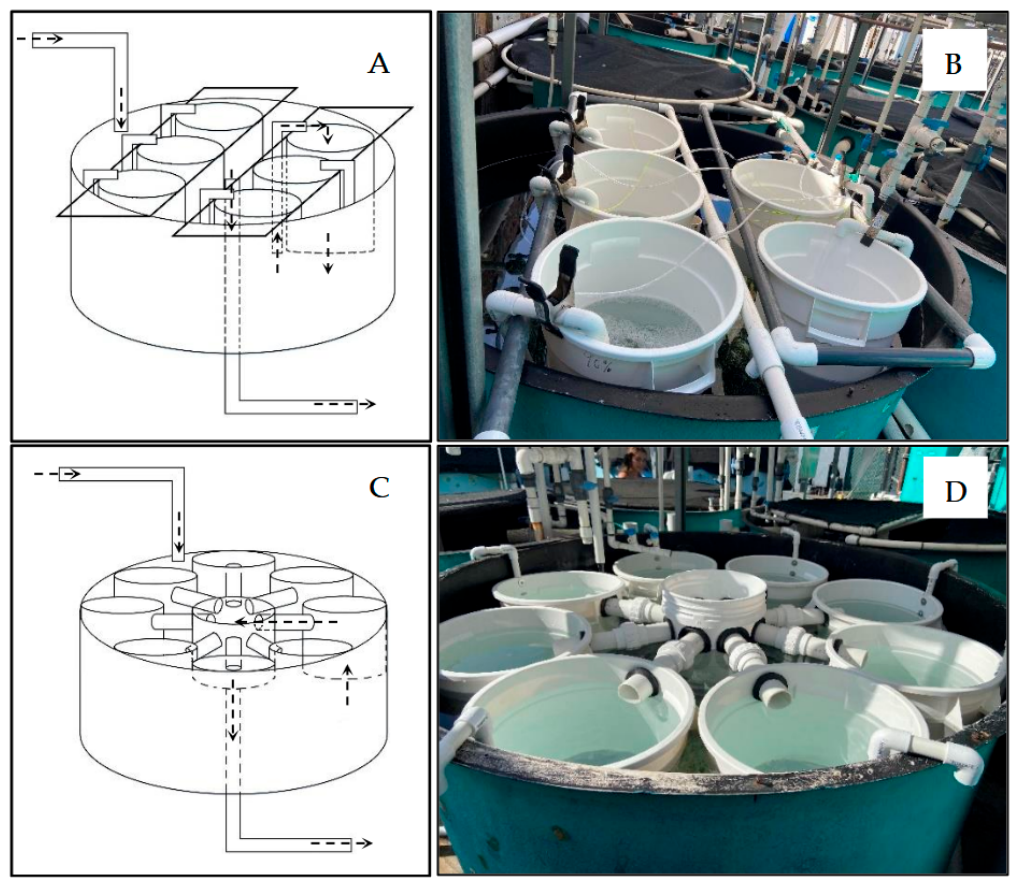
Figure 2.
Schematic illustration of shell length, shell height (A), and shell width (B) measurements for Pacific Calico Scallop (Argopecten ventricosus) juveniles.
Figure 2.
Schematic illustration of shell length, shell height (A), and shell width (B) measurements for Pacific Calico Scallop (Argopecten ventricosus) juveniles.
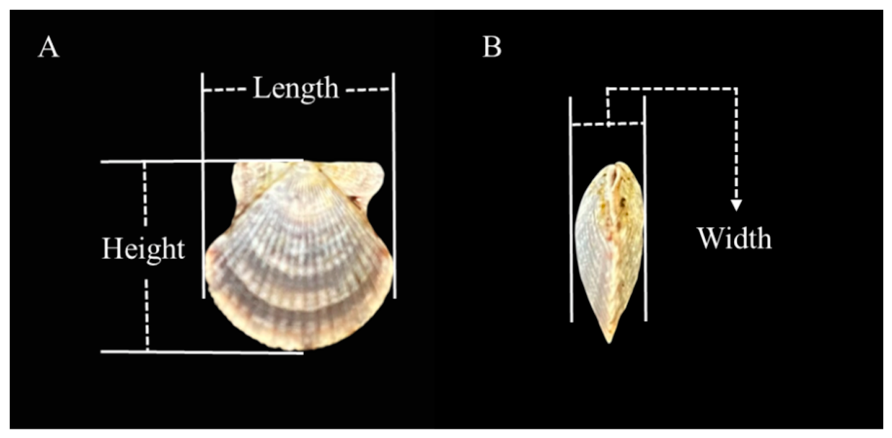
Figure 3.
Daily seawater temperature (red line) and dissolved oxygen concentration (DO; black line) measured in tanks culturing PCS spat during the experimental period from August 15 to December 13, 2024.
Figure 3.
Daily seawater temperature (red line) and dissolved oxygen concentration (DO; black line) measured in tanks culturing PCS spat during the experimental period from August 15 to December 13, 2024.
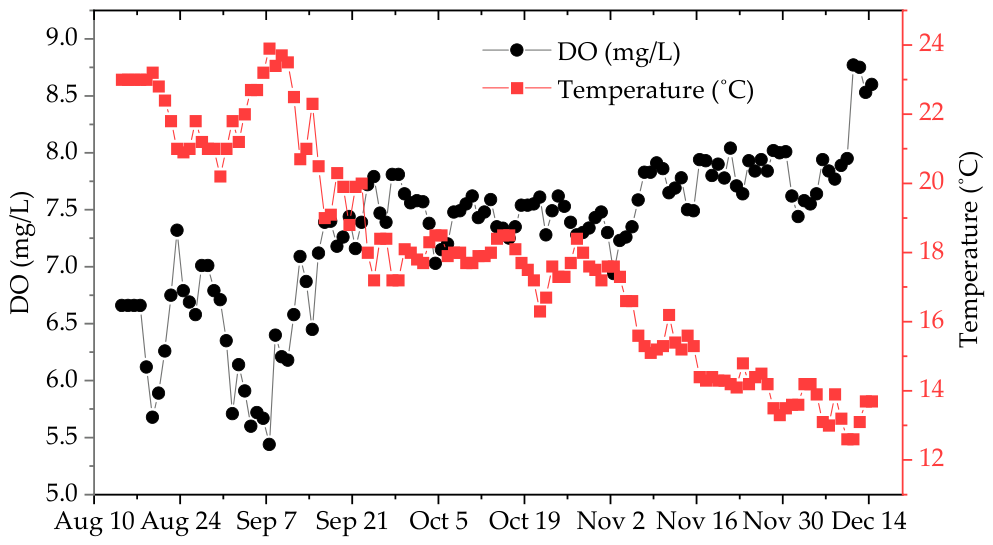
Figure 4.
Changes in shell height (A) and body dry weight (B) of Pacific calico scallop (Argopecten ventricosus) spat cultured at 60%, 70%, 80%, and 90% stocking densities during the 8-week trial in the land-based downweller nursery system.
Figure 4.
Changes in shell height (A) and body dry weight (B) of Pacific calico scallop (Argopecten ventricosus) spat cultured at 60%, 70%, 80%, and 90% stocking densities during the 8-week trial in the land-based downweller nursery system.
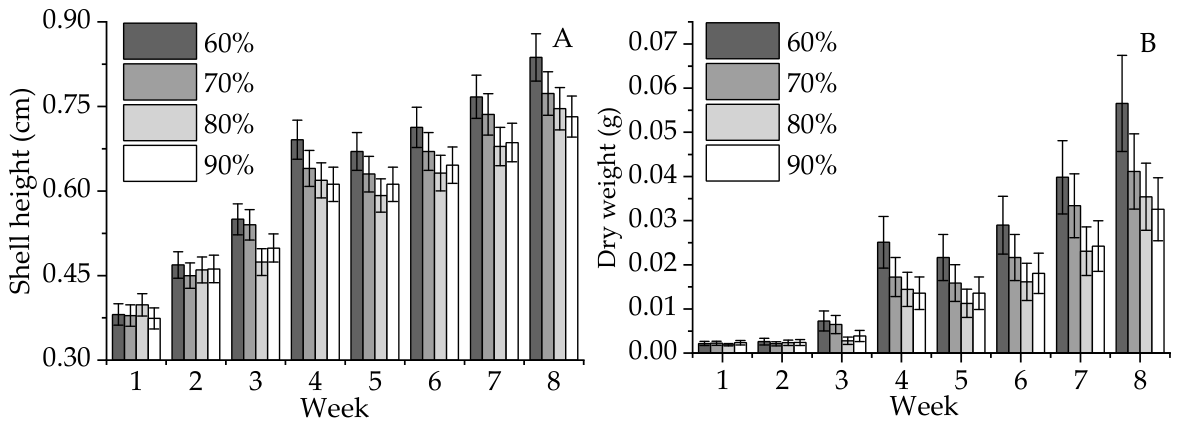
Figure 5.
Relative growth rate (RGR) in shell height and specific growth rate (SGR) in body dry weight of PCS spat (A), and condition index (CI) and CI increase rate (B), at different stocking rates in the land-based downweller nursery system.
Figure 5.
Relative growth rate (RGR) in shell height and specific growth rate (SGR) in body dry weight of PCS spat (A), and condition index (CI) and CI increase rate (B), at different stocking rates in the land-based downweller nursery system.
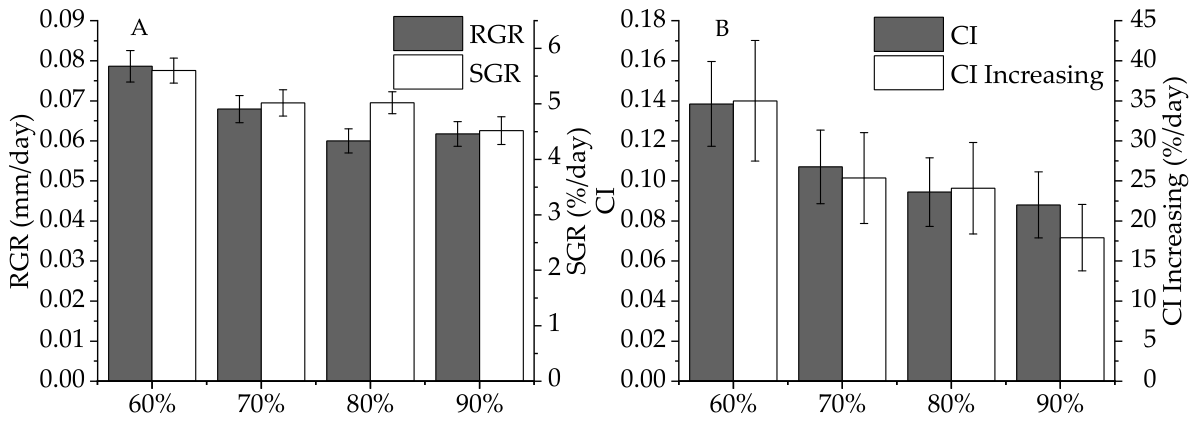
Figure 6.
Changes in shell height (A) and body dry weight (B) of Pacific calico scallop (Argopecten ventricosus) spat cultured at 50%, 70%, and 90% stocking rates during the 8-week trial in the land-based upweller nursery system.
Figure 6.
Changes in shell height (A) and body dry weight (B) of Pacific calico scallop (Argopecten ventricosus) spat cultured at 50%, 70%, and 90% stocking rates during the 8-week trial in the land-based upweller nursery system.
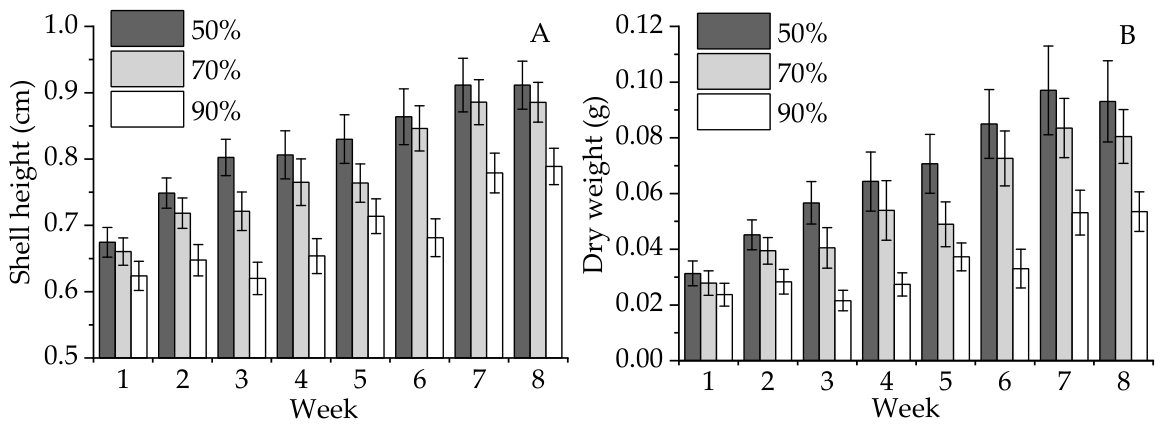
Figure 7.
Relative growth rate (RGR) in shell height and specific growth rate (SGR) in body dry weight of PCS spat (A), and condition index (CI) and CI increase rate (B), at different stocking bates in the land-based upweller nursery system.
Figure 7.
Relative growth rate (RGR) in shell height and specific growth rate (SGR) in body dry weight of PCS spat (A), and condition index (CI) and CI increase rate (B), at different stocking bates in the land-based upweller nursery system.
Disclaimer/Publisher’s Note: The statements, opinions and data contained in all publications are solely those of the individual author(s) and contributor(s) and not of MDPI and/or the editor(s). MDPI and/or the editor(s) disclaim responsibility for any injury to people or property resulting from any ideas, methods, instructions or products referred to in the content. |
© 2026 by the authors. Licensee MDPI, Basel, Switzerland. This article is an open access article distributed under the terms and conditions of the Creative Commons Attribution (CC BY) license (http://creativecommons.org/licenses/by/4.0/).
Copyright: This open access article is published under a Creative Commons CC BY 4.0 license, which permit the free download, distribution, and reuse, provided that the author and preprint are cited in any reuse.


