
Submitted:
11 June 2026
Posted:
11 June 2026
You are already at the latest version
Abstract
Background: Optical coherence tomography (OCT) and OCT angiography (OCTA) retinal imaging in inherited retinal dystrophies (IRD) has been limited to the posterior pole and central midperiphery (up to about 16.5x16.5 mm). Two novel commercially available swept-source (SS) OCT/-OCTA devices provide the possibility of wide-field (WF) evaluation of retinal and choroidal structures including the vasculature in a single examination. Methods: A limited series of 16 IRD patients could be examined with a BMizar (400kHz, 24x20 mm scan width) and a Dream OCT (200 kHz, 26x21 mm scan width) in addition to the normal clinical examination protocol. This series included patients with retinitis pigmentosa, cone-rod dystrophy, macular dystrophy and autosomal recessive bestrophinopathy. Results: WF-SS-OCT/-OCTA enabled the detection of retinal, choroidal and choriocapillaris alterations in the macular and midperiphery in a single examination session. Even small foveal lesions and a small silent macular neovascularization could be detected on WF screening. Regional alterations of choroidal and choriocapillaris flow patterns were identified. These were mostly in correspondence with areas that appeared clinically affected, but unexpected lesions were identified as well. Occlusion of peripheral retinal vessels was seen in retinitis pigmentosa, though flow could be detected in retinal vessel which were difficult to distinguish on fundus images. In one patient with nystagmus WF-SS-OCT/-OCTA could be performed, whereas standard OCT volume scan could not be obtained. Conclusions: Both WF-SS-OCT/-OCTA devices provide detailed insights in structural and vascular retinal and choroidal alterations in a single short examination. Larger series of IRD patients examined with WF-SS-OCT/-OCTA promise to provide novel insights into the pathology of IRDs and will help to understand differences in the development of IRDs between humans and research animals.
Keywords:
inherited retinal dystrophies
; widefield retinal imaging
; optical coherence tomography
; OCT angiography
; ultra widefield retinal imaging
1. Introduction
For technical reasons and due to the relevance of the macular area for visual function retinal imaging has predominantly focused on the posterior pole and mid-periphery with an image field of 30 to 55 degrees (up to 16.5 mm horizontal width). Ultra-wide-field (UWF) imaging including the far periphery first became available for fundus photography, fundus autofluorescence and fluorescein angiography. Without montage, optical coherence tomography (OCT) was confined to the posterior pole and mid-periphery (up to 16.5 mm horizontal width) and OCT angiography (OCTA) to even smaller areas (up to 12x12 mm). Recently, two novel swept-source devices (SS-OCT/OCTA) were introduced, extending the imaged area to 24x20 mm (BMizar) and 26x21 mm (Dream OCT) with one measurement providing an unprecedented non-invasive view on retinal and choroidal structures including the vasculature [1,2,3]. So far, these SS-OCTA devices have been mostly used to analyze more peripheral vascular alterations in chorioretinal vascular disorders like diabetic retinopathy, retinal vein occlusion or Vogt-Koyanagi-Harada disease [4,5,6,7,8,9].
Unfortunately, the terminology used by distributors as well as in the literature is misleading [3]. While 12x12 mm OCTA scans have been marketed as wide-field (WF), the novel devices have been frequently termed UWF. The difficulties of area definition have been discussed in detail previously [3]. In adherence with this definition, we use the term WF-SS-OCT/-OCTA. UWF-SS-OCT/-OCTA with visualization peripheral to the vortex veins can only be achieved by montage with both novel devices.
The importance of WF/UWF imaging in inherited retinal dystrophies (IRD) has been underlined several years ago [10], but only few studies have reported wider field OCT/-OCTA in IRDs. Mid-peripheral alterations of the choroidal vasculature in retinitis pigmentosa have been described using 12x12mm OCTA [11,12]. Using 24x20mm WF-SS-OCTA, choroidal and retinal vascular alterations have been reported in one series of retinitis pigmentosa patients [13]. Peripheral loss of retinal vasculature in retinitis pigmentosa has been recently reported based on UWF fundus photography evaluation [14]. In a patient with choroideremia choroidal vascular flow was reduced in 24x20mm WF-SS-OCTA, and preservation of choroidal vessels correlated with preserved areas of retinal pigment epithelium [15]. WF-SS-OCT/-OCTA has been used to examine peripheral retinoschisis in x-linked retinoschisis [16] as well as familial exudative vitreoretinopathy [17].
For the current study we used the opportunity to examine IRD-patients with both novel WF-SS-OCT/-OCTA devices in parallel to test the clinical usefulness of this imaging approach as well as to identify potential differences between both devices. To the best of our knowledge, this is the first comparison between both devices using the widest single scan imaging field, a previous comparison focused on 3x3 mm macular OCTAs [18].
2. Materials and Methods
For a short period of one week two commercially available WF-SS-OCT/OCTA devices could be directly compared in our clinic: TowardPI BMizar and Intalight Dream OCT. Both devices are available in more than one configuration, which differ in the angle of view as well as the measurement frequency. For testing a BMizar (A-scan rate 400 kHz, 1060 nm laser, maximal 24x20 mm scan width, axial resolution ≤ 6 µm, transverse resolution ≤ 10 µm) and a Dream OCT (A-scan rate 200 kHz, 1030-1070 nm laser, maximal 26x21 mm scan width, axial resolution ≤ 5.5 µm, transverse resolution ≤ 15 µm) were used [1,2].
Both devices allowed retinal images either as volume or single scan. WF-SS-OCT volume scans resulted in up to 1250 single horizontal scans, which can be better visualized in different retinal and choroidal layers in enface mode. WF-SS-OCTA images could be separated in several retinal and choroidal layers, for the present evaluation, choroidal vascular flow, choriocapillaris flow, avascular layer flow and superficial retinal vascular flow were selected. Both devices provide multiple features for detailed adjustments of the measurement and evaluation protocols. Due to the limited time, only the predefined imaging protocols were used.
IRD patients undergoing first or follow-up clinical evaluation were asked to consent to be examined with both devices. In total, 16 patients could be examined (macular dystrophies: 6, retinitis pigmentosa 6, cone-rod-dystrophy: 2, autosomal recessive bestrophinopathy: 1, congenital stationary night blindness: 1). All patients underwent the normal clinical protocol of refraction and visual acuity testing, visual field examination, biomicroscopy of the anterior segment and ophthalmoscopy as well as the normal imaging protocol of wide-angle fundus photography (133 degrees, about 19x19 mm; Clarus 700, Carl Zeiss, Jena, Germany), 30o (about 9x9 mm) and 55 o (about 16,5x16,5 mm) degree fundus and near-infrared autofluorescence (FAF and NIA, HRA, Heidelberg Engineering, Heidelberg, Germany), 30o and 55 o degree Spectral Domain OCT and 6x6 mm OCTA (Spectralis, Heidelberg Engineering, Heidelberg, Germany) [19]. In addition, 12 healthy volunteers agreed to be examined. All images were obtained by trained photographers. All examinations were performed following informed consent in accordance with the Declaration of Helsinki and in agreement with the use of CE-certified imaging devices for research as approved by the local ethics committee.
3. Results
3.1. Normal Retinal and Choroidal Vasulature
Image acquisition time to obtain WF-SS-OCT/-OCTA was short with both devices. Due to the difference in A-Scan rate between both devices we did not perform detailed measurements of examination times. With both devices examination time for a single combined WF-SS-OCT/-OCTA measurement was markedly shorter compared to standard subsequent measurements of wide-field OCT volume scan and posterior pole 6x6 mm OCTA. One patient with marked nystagmus could be examined. In this patient, only measurement with Dream OCT did obtain reliable images, while only single OCT scans were possible with BMizar and Spectralis OCT.
In normal probands wide field retinal and choroidal flow patterns could be defined with both devices (Figure 1). There was no marked difference between both devices. Choroidal vasculature flow was more focused with the Dream OCT, whereas choriocapillaris flow showed more details with the BMizar. Retinal vascular flow showed a more homogeneous background with BMizar, while more smaller vessels were visible at the posterior pole compared to the periphery with Dream OCT. Despite the high frequency of measurements horizontal lines with artefacts were visible on nearly all images in all probands and patients. In the IRD-patient with congenital stationary night blindness WF-SS-OCTA retinal and choroidal flow patterns were normal.
3.2. IRD Patients
3.2.1. Retinitis Pigmentosa
WF-SS-OCT provided structural information of foveal and peripheral retinal layers in eyes with retinitis pigmentosa. Small foveal alterations were detectable as well as peripheral loss of photoreceptors. In general, BMizar single scans were less granular and showed more details compared to Dream OCT (Figure 2 C&D).
WF-SS-OCTA showed multiple alterations in different layers (Figure 3 and Figure 4). Choroidal vasculature showed a reduced vessel density compared to normal eyes (Figure 1) or eyes with macular dystrophy (Figure 6). In the choriocapillaris midperipheral and peripheral patchy areas of reduced or absent flow were detectable. This was more severe in the midperiphery and better visualized by BMizar (Figure 3). On ophthalmoscopy, retinal vessels are attenuated in most patients with retinitis pigmentosa (Figure 2A and Figure 4). Peripheral loss of retinal flow could be demonstrated in both sectorial retinitis pigmentosa as well as circumferential retinitis pigmentosa. It is of interest, that retinal vascular flow could be demonstrated in small peripheral vessels that were difficult to see on ophthalmoscopy or fundus images.
3.2.2. Cone-Rod Dystrophy
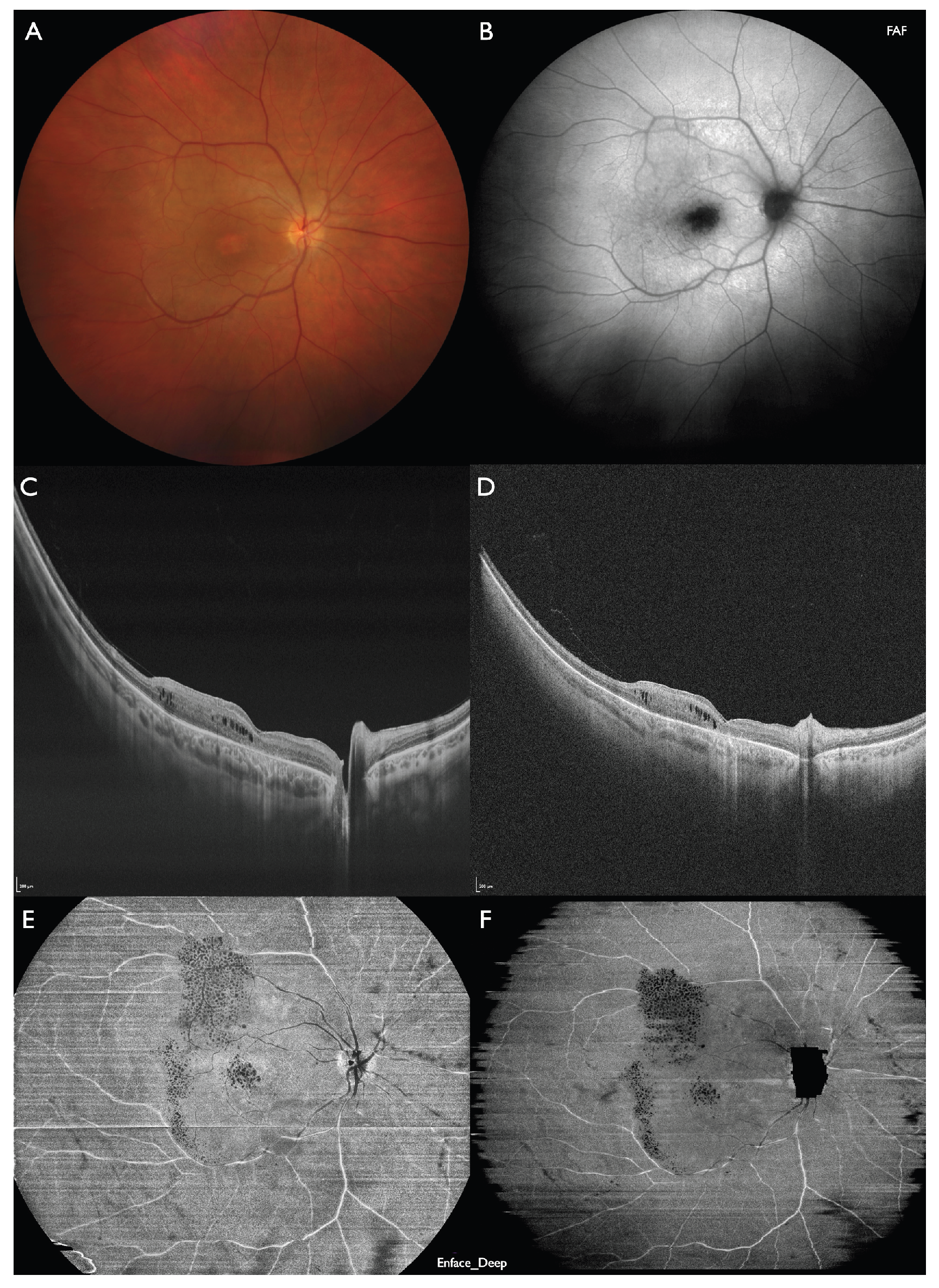
WF-SS-OCT provided structural information of foveal and peripheral retinal layers in eyes with cone-rod dystrophy (Figure 5). Foveal alterations including retinal pigment epithelial atrophy were detectable as well as pericentral cystoid intraretinal spaces in both vertical and enface images. In general, BMizar images were less granular and showed more details compared to Dream OCT (Figure 5 C&D).
WF-SS-OCTA showed multiple alterations in different layers (Figure 6). Choroidal vascular density was slightly reduced in the foveal area (Figure 6 A&B). In the choriocapillaris irregular subfoveal flow was better visualized with BMizar. The retinal vasculature appeared normal, however, in contrast to retinitis pigmentosa no eyes with markedly progressed phenotypes could be examined.
3.2.4. Macular Dystrophy
In patients with macular dystrophies WF-SS-OCT revealed structural abnormalities at the posterior pole similar to patients with cone -rod dystrophies. On WF-SS-OCTA subfoveal irregularities were seen (Figure 8F), whereas retinal vasculature appeared normal (Figure 8G). In one patient, bilateral midperipheral areas of absent flow were present in the choroidal vasculature. This area corresponded to a different coloration on fundus photography, but no signs of atrophy on fundus autofluorescence of staphyloma on WF-SS-OCT (Figure 8B-E).
3.2.3. Autosomal Recessive Bestrophinopathy (ARB)
WF-SS-OCT detected foveal and mid-peripheral alterations in the outer retinal layers in one ARB patient (Figure 7F). WF-SS-OCTA showed moderately reduced choroidal vasculature flow at the posterior pole and subfoveal irregularities in the choriocapillaris. A silent macular neovascularization could be detected in the avascular layer as increased flow with both BMizar (not shown) and Dream OCT (Figure 7C), but for details a smaller scan area was required (Figure 7D). Retinal vasculature appeared normal.
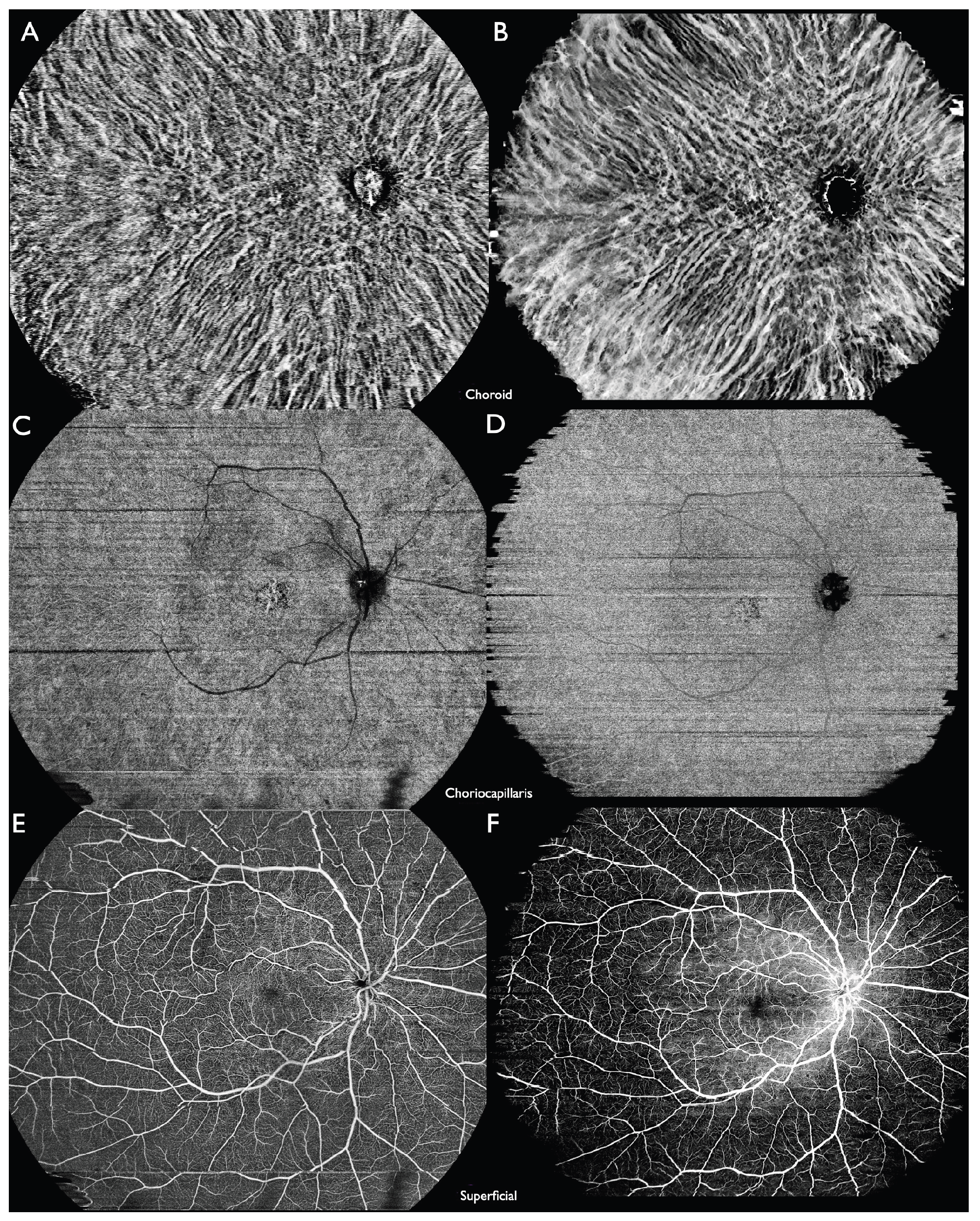
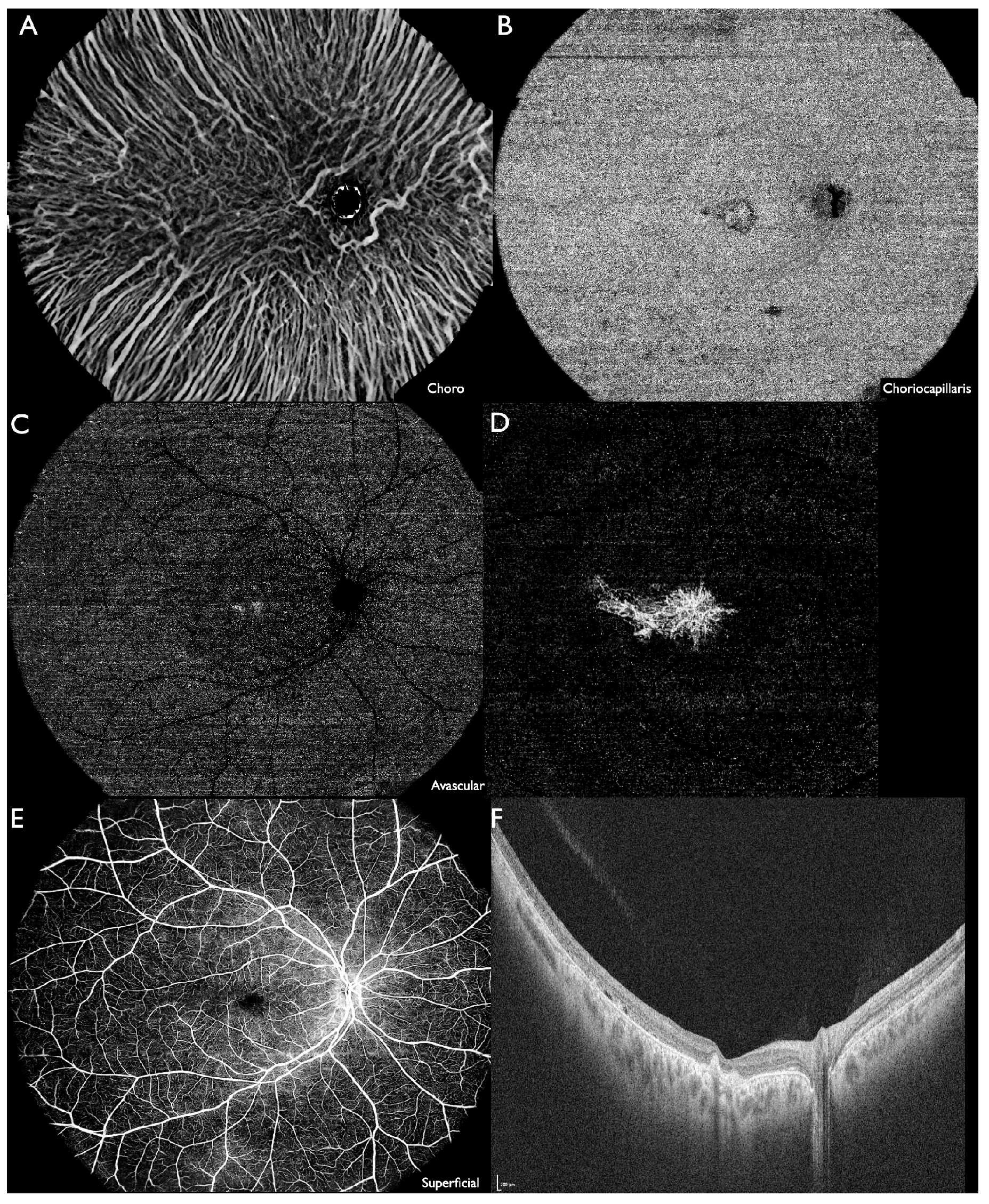
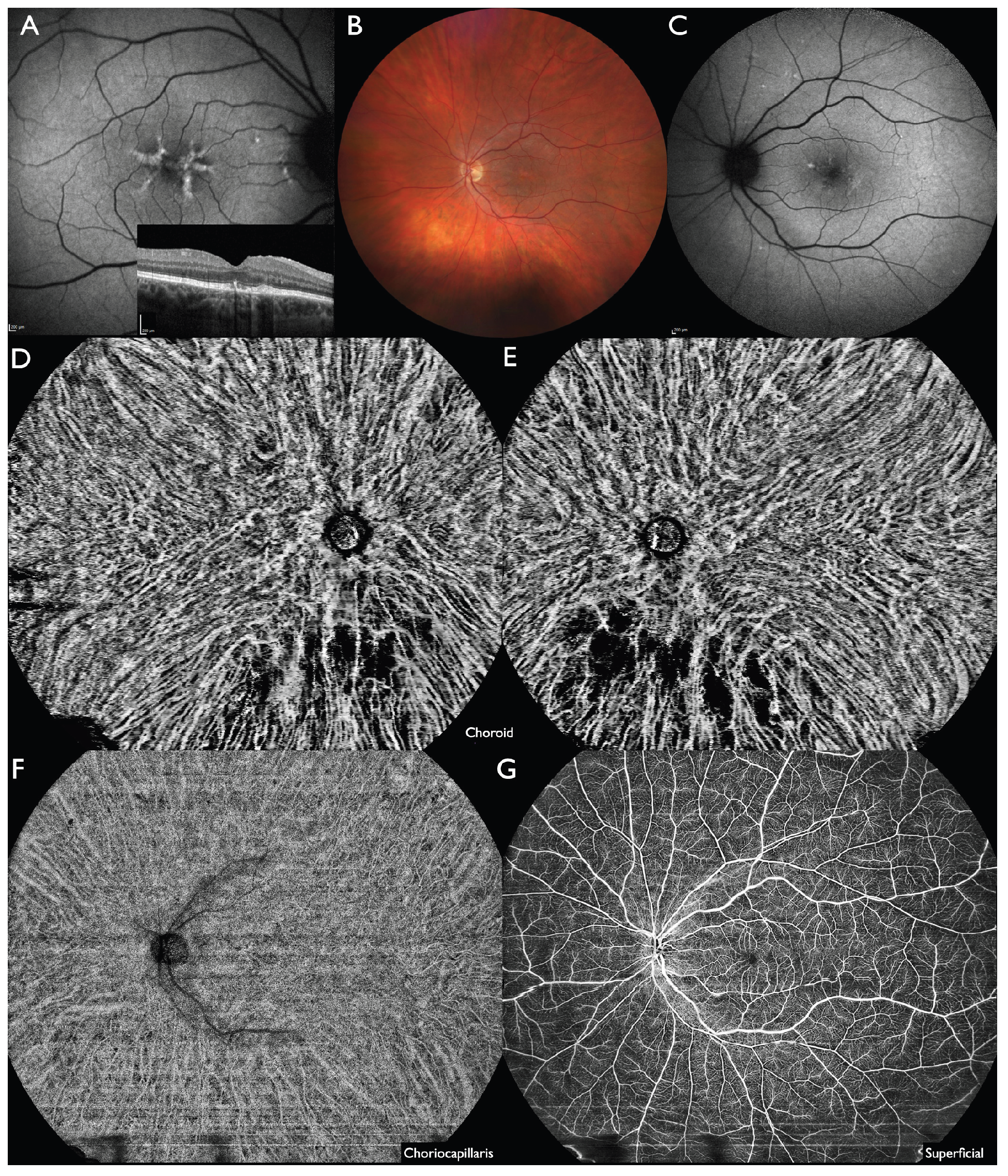
Figure 6.
Same eye as Figure 5: Vascular flow patterns in the choroid (A: BMizar 24x20 mm, B: Dream OCT 26x21 mm) showed potentially reduced density of vessels in the foveal area, while midperipheral and peripheral flow appeared normal. Central irregularities of choriocapillaris flow (C: BMizar, D: Dream OCT) was more detailed in BMizar (C). Midperipheral areas with reduced intensity correspond to areas with intraretinal cystoid spaces in this patient (Figure 5 C&D). Superficial retinal vessel flow appeared normal (E: BMizar, F: Dream OCT).
Figure 6.
Same eye as Figure 5: Vascular flow patterns in the choroid (A: BMizar 24x20 mm, B: Dream OCT 26x21 mm) showed potentially reduced density of vessels in the foveal area, while midperipheral and peripheral flow appeared normal. Central irregularities of choriocapillaris flow (C: BMizar, D: Dream OCT) was more detailed in BMizar (C). Midperipheral areas with reduced intensity correspond to areas with intraretinal cystoid spaces in this patient (Figure 5 C&D). Superficial retinal vessel flow appeared normal (E: BMizar, F: Dream OCT).
Figure 7.
In a 30-year-old female patient with BEST1 associated autosomal recessive bestrophinopathy (Dream OCT 26x21 mm) choroidal flow appeared moderately reduced at the posterior pole (A). Choriocapillaris flow was irregular at the posterior pole (B). A presence of flow within the avascular zone could be detected by wide field imaging (C), a smaller 6x6 mm central scan identified a silent macular neovascularization (MNV; D). Retinal vascular flow appeared normal (E). Structural OCT showed subfoveal material corresponding to the silent MNV and outer retinal layer irregularities temporal to the fovea as well as more mildly nasal of the optic disc.
Figure 7.
In a 30-year-old female patient with BEST1 associated autosomal recessive bestrophinopathy (Dream OCT 26x21 mm) choroidal flow appeared moderately reduced at the posterior pole (A). Choriocapillaris flow was irregular at the posterior pole (B). A presence of flow within the avascular zone could be detected by wide field imaging (C), a smaller 6x6 mm central scan identified a silent macular neovascularization (MNV; D). Retinal vascular flow appeared normal (E). Structural OCT showed subfoveal material corresponding to the silent MNV and outer retinal layer irregularities temporal to the fovea as well as more mildly nasal of the optic disc.
Figure 8.
In a 66-year-old male patient with macular dystrophy fundus autofluorescence (FAF) of the right eye showed pattern-like lines of increased FAF intensity (A: Spectralis, 9x9 mm), associated with subretinal material on OCT (inset). On the left eye, fundus photography showed foveal irregularities as well as mid-peripheral area of lighter appearance below the lower vascular arcade (B: Clarus 19x19 mm). FAF showed fleck-like increased or reduced FAF intensity at the posterior pole and few fleck-like lesions beyond the vascular arcades, but no alterations in the mid-peripheral area seen on fundus photography (C: Spectralis, 16.5x16.5 mm). WF-SS-OCTA (BMizar 24x20 mm) showed bilateral midperipheral regional absence of the choroidal flow on the right (D) and left eye (E), corresponding to the atrophic area seen in (B). In contrast, choriocapillaris (F) and retinal vessel flow (G) appeared normal.
Figure 8.
In a 66-year-old male patient with macular dystrophy fundus autofluorescence (FAF) of the right eye showed pattern-like lines of increased FAF intensity (A: Spectralis, 9x9 mm), associated with subretinal material on OCT (inset). On the left eye, fundus photography showed foveal irregularities as well as mid-peripheral area of lighter appearance below the lower vascular arcade (B: Clarus 19x19 mm). FAF showed fleck-like increased or reduced FAF intensity at the posterior pole and few fleck-like lesions beyond the vascular arcades, but no alterations in the mid-peripheral area seen on fundus photography (C: Spectralis, 16.5x16.5 mm). WF-SS-OCTA (BMizar 24x20 mm) showed bilateral midperipheral regional absence of the choroidal flow on the right (D) and left eye (E), corresponding to the atrophic area seen in (B). In contrast, choriocapillaris (F) and retinal vessel flow (G) appeared normal.
4. Discussion
This study presents the first series of IRD patients examined with two novel WF-SS-OCT/-OCTA devices demonstrating peripheral alterations of the retinal vasculature as well as alterations of the choriocapillaris and the choroidal vasculature in IRDs. It is also the first study comparing both devices in wide-field mode, in a previous comparative study only 3x3 mm scans were used [18].
Although the number of patients examined was small, this study underlines the importance of wide-field OCT and OCTA imagining when examining IRD patients. The examination time is short and provides WF-SS-OCT/-OCTA information with just one measurement, whereas more than one test would be needed with other devices. The relevance was shown in one patient with nystagmus, with a detailed examination possible only with Dream OCT. The WF-SS-OCT/-OCTA results can be displayed in multiple different enface layers, only few could be shown in this manuscript.
Multiple pathologies could be identified, some of them not identifiable with other devices. The present findings confirm previous reports of peripheral retinal vessel occlusion in retinitis pigmentosa [13,14]. Comparison of fundus images and WF-SS-OCTA indicate that retinal vascular flow can be detected in retinal vessels which are difficult to detect on fundus photography, therefore WF-SS-OCTA appears to be an easier and more reliable technique to evaluate peripheral retinal vessels in IRD. Some retinitis pigmentosa patients might show peripheral leakage on fluorescein angiography [20], which cannot be detected on OCTA. Clinical examination must guide the decision, whether UWF fluorescein angiography is indicated in addition to WF-SS-OCTA. Notably, occlusion of peripheral retinal vessels in retinitis pigmentosa can be seen in that publication as well, though it was not discussed by the authors [20].
In addition, WF-SS-OCTA showed regional differences in choriocapillaris and choroidal flow in various IRDs, nearly always corresponding with the retinal pathology especially in sectorial IRD phenotypes. In retinitis pigmentosa, similar choroidal and choriocapillaris vascular alterations have been previously reported at the posterior pole using 6x6 to 12x12 mm OCTA [11,12,21,22] and in the midperiphery using 24x20 mm WF-SS-OCTA [13]. In cone-rod and macular dystrophies subfoveal choriocapillaris flow was reduced, as has been observed in macular OCTA previously [23]. In one patient with macular pattern dystrophy and few fleck-like midperipheral lesions, bilateral sectorial mid-peripheral loss of choroidal vascular flow was detected (Figure 8). In a single case, this could be either coincidental or associated with the macular dystrophy. Larger series of IRD patients need to be examined with WF-SS-OCTA to define, whether more unexpected pathologic alterations are present than can be detected with standard field examinations.
It is of importance, that WF-SS-OCT provided detailed information on macular and foveal pathologies in one single examination (Figure 2 and Figure 7). WF-SS-OCT therefore is an ideal screening technique, that allows to focus on detected pathologies with subsequent scans of higher resolution. Similarly, WF-SS-OCTA detected bilateral silent macular neovascularization based on presence of flow in the avascular layer, a smaller higher resolution scan confirmed this finding in detail (Figure 7).
There were limited differences between both devices when used with the settings predefined by the distributors. While Dream OCT allowed the examination of a patient with severe nystagmus, for all other patients the examination results were comparable. Slight advantages of BMizar were more details of macular pathology in single line scans, slightly better enface differentiation, more details in the choriocapillaris vascular flow and a more homogeneous view of retinal vasculature flow. Slight advantages of Dream OCT were the more detailed separation of choroidal vascular flow and the better detection and differentiation of macular neovascularization. Due to the limited time period we were unable to test adjustments to the predefined settings, which might improve the image quality for both devices. In addition, further software upgrades have been announced and most likely will improve image quality. With both devices few horizontal lines of discrete misalignment were present in nearly all images, which did not interfere with the detection of pathologies.
In conclusion, both WF-SS-OCT/-OCTA devices are suitable for a fast examination of retinal and choroidal structure and vascularization in IRD patients, even in patients with limited cooperation. It can be expected that the examination of larger series of IRD patients will provide novel insights into choroidal and retinal pathology of different IRDs. In addition, comparison of retinal and choroidal vascular patterns using WF-SS-OCTA allows to understand differences between humans and mammalian species used in animal experiments for ophthalmic research [24]. It must be kept in mind, that these WF-SS-OCT/-OCTA scans do not examine the entire fundus and even more peripheral alterations might remain undetected [25].
Author Contributions
Conceptualization, U.K.; methodology, U.K.; software, U.K.; validation, G.F. and U.K.; formal analysis, U.K.; investigation, G.F. and U.K.; resources, U.K.; data curation, G.F. and U.K.; writing—original draft preparation, U.K.; writing—review and editing, G.F., and U.K.; visualization, G.F. and U.K.; supervision, U.K.; project administration, G.F.; funding acquisition, U.K. All authors have read and agreed to the published version of the manuscript.
Funding
This research received no external funding.
Institutional Review Board Statement
This study was conducted in accordance with the Declaration of Helsinki and approved by the respective ethics committees of the North Rhine (2008367 date of approval: 03 December 2008).
Informed Consent Statement
Informed consent was obtained from all subjects involved in the study.
Data Availability Statement
The data presented in this study are available on request from the corresponding author due to legal restrictions.
Conflicts of Interest
Authors G. Farmand and U. Kellner were employed by MVZ Augenärztliches Diagnostik- und Therapiecentrum Siegburg GmbH. U. Kellner: Honoraria for lectures: Abbvie GmbH, Germany; Apellis GmbH, Germany; Bayer Vital GmbH, Germany; Heidelberg Engineering GmbH, Germany; Novartis Germany. Monitoring/Advisory boards: Apellis GmbH, Germany; Astellas GmbH, Germany; Bayer Vital GmbH, Germany; Chiesi GmbH, Germany; Novartis GmbH Germany; Rhythm Pharmaceuticals Germany GmbH, Roche GmbH, Germany; Sandoz/Hexal AG, Germany. Board Member: Member of the Scientific Board of Pro Retina Germany e.V. The funders had no role in the design of the study; in the collection, analyses, or interpretation of data; in the writing of the manuscript; or in the decision to publish the results.
References
- Inc, I. Intalight DREAM OCT. Available online: https://intalight.com/dream-oct/.
- Ltd, T.B.M.T. TowardPI. Available online: https://en.towardpi.com/cn/sys-pd/1.html.
- Jia, Y.; Hormel, T.T.; Hwang, T.S.; Wu, A.L.; Liang, G.B.; Guo, Y.; Wei, X.; Ni, S.; Jian, Y.; Campbell, J.P.; et al. Widefield OCT angiography. Prog. Retin Eye Res. 2025, 107, 101378. [Google Scholar] [CrossRef]
- Gumustop, S.S.; Ding, X.; Zhang, Y.S.; Ploumi, I.; Zhu, Y.; Wang, L.; Romano, F.; Garg, I.; Chen, C.; Nodecker, K.N.; et al. Assessing Retinal Non-Perfusion With Ultra-Widefield OCT-A: Correlations With Diabetic Retinopathy Severity and Peripheral Lesions. Am. J. Ophthalmol. 2026, 288, 41–51. [Google Scholar] [CrossRef]
- Loh, T.Y.; Sia, J.; Seah, W.H.; Zhuang, L.; Song, W.; Qiu, Y.; Shen, X.; Yu, Z.; Tan, R.; Tang, N.; et al. Automated Nonperfusion Quantification in Diabetic Retinopathy on Ultra-Widefield Swept-Source OCT Angiography. Ophthalmol. Sci. 2026, 6, 101059. [Google Scholar] [CrossRef]
- Zheng, K.; Lu, P.; Huang, J.; Chen, R.; Chen, Y.; Chen, X.; Wang, Z.; Yang, D.; Zhang, L.; Cao, D. Non-invasive evaluation of diabetic retinal neovascularization using 24x20 mm ultra-widefield optical coherence tomography angiography. Retina 2026. [Google Scholar] [CrossRef]
- Zou, C.; Liu, W.; Chang, Q.; Xuan, Y.; Zhou, Y.; Tang, N.; Wang, M. Application of Ultrawide-Field Swept Source Optical Coherence Tomography Angiography in the Precise Diagnosis of Diabetic Retinopathy. Retina 2025, 45, 901–907. [Google Scholar] [CrossRef] [PubMed]
- Geng, J.; Liu, M.; Jin, S.; Xu, W.; Yang, P.; Liu, X. Ultrawidefield Optical Coherence Tomography Angiography in the Mid-Periphery and Macula of Vogt-Koyanagi-Harada Disease. Ocul. Immunol. Inflamm. 2025, 33, 1999–2005. [Google Scholar] [CrossRef] [PubMed]
- Saladino, A.; Arrigo, A.; Koutsidis, C.; Eduardo Stanga, S.F.; Reinstein, U.I.; Stanga, P.E. Value of Combining Ultra-widefield Fundus Fluorescein Angiography (UWF-FFA) with 130 degrees Single-scan Ultra-widefield Optical Coherence Tomography Angiography (UWF-OCTA) in Retinal Vasculopathies. Retina 2026. [Google Scholar] [CrossRef] [PubMed]
- Cicinelli, M.V.; Marchese, A.; Bordato, A.; Manitto, M.P.; Bandello, F.; Battaglia Parodi, M. Reviewing the Role of Ultra-Widefield Imaging in Inherited Retinal Dystrophies. Ophthalmol. Ther. 2020, 9, 249–263. [Google Scholar] [CrossRef]
- Shen, C.; Li, Y.; Wang, Q.; Chen, Y.N.; Li, W.; Wei, W.B. Choroidal vascular changes in retinitis pigmentosa patients detected by optical coherence tomography angiography. BMC Ophthalmol. 2020, 20, 384. [Google Scholar] [CrossRef]
- Miyata, M.; Oishi, A.; Hasegawa, T.; Oishi, M.; Numa, S.; Otsuka, Y.; Uji, A.; Kadomoto, S.; Hata, M.; Ikeda, H.O.; et al. Concentric Choriocapillaris Flow Deficits in Retinitis Pigmentosa Detected Using Wide-Angle Swept-Source Optical Coherence Tomography Angiography. Invest Ophthalmol. Vis. Sci. 2019, 60, 1044–1049. [Google Scholar] [CrossRef]
- Zhao, H.C.; Zhao, W.R.; Zhang, Y.J.; Shi, M.Y.; Yang, S.S.; Yang, H.; Li, X.R. Structural and vascular features of the retina and choroid with retinitis pigmentosa imaged using ultra-widefield swept-source optical coherence tomography angiography. Int. Ophthalmol. 2025, 46, 7. [Google Scholar] [CrossRef] [PubMed]
- Ameri, H.; Hong, A.T.; Chwa, J. Loss of Peripheral Retinal Vessels in Retinitis Pigmentosa. Ophthalmol. Sci. 2025, 5, 100767. [Google Scholar] [CrossRef]
- Chen, X.; Shi, D.; Feng, C.; Xu, H. Ultra-widefield Imaging of Choroidal Blood Flow in Choroideremia. Retina 2025, 45, e75–e76. [Google Scholar] [CrossRef] [PubMed]
- Zhang, L.; Li, S.; Sun, L.; Liu, X.; Cheng, Y.; Ke, S.; Li, J.; Ding, X. Bullous Peripheral Retinoschisis: Structural Biomarker for Complications in X-Linked Retinoschisis via Ultrawide-Field Swept Source Optical Coherence Tomography. Am. J. Ophthalmol. 2026, 285, 83–94. [Google Scholar] [CrossRef]
- Liu, J.; Zhang, Y.; Zhang, Z. The diagnostic value of ultra-widefield fundus imaging technology in early familial exudative vitreoretinopathy. Ophthalmic Genet 2025, 46, 426–434. [Google Scholar] [CrossRef]
- Hafner, M.; Deschler, D.J.P.; Kufner, A.; Katscher, L.M.; Priglinger, S.G.; Gerhardt, M.J. Quantitative Comparison of Two Novel Swept-Source Optical Coherence Tomography Angiography Devices. Diagnostics 2026, 16. [Google Scholar] [CrossRef]
- Kellner, S.; Weinitz, S.; Farmand, G.; Stohr, H.; Weber, B.H.F.; Kellner, U. Bilateral Sector Macular Dystrophy Associated with PRPH2 Variant c. J. Clin. Med. 2025, 14. [Google Scholar] [CrossRef]
- Park, E.A.; Huckfeldt, R.M.; Comander, J.I.; Sobrin, L. Peripheral Leakage on Ultra-Widefield Fluorescein Angiography in Patients With Inherited Retinal Degeneration. J. Vitreoretin Dis. 2021, 5, 147–156. [Google Scholar] [CrossRef]
- Corazza, P.; Cirafici, P.; Testa, V.; Orlans, H.O.; Berisso, M.; Traverso, C.E.; Vagge, A.; Nicolo, M. Vascular Density and Retinal Function in Patients with Retinitis Pigmentosa Evaluated by Swept-Source OCT Angiography and Microperimetry. Ophthalmologica 2021, 244, 27–33. [Google Scholar] [CrossRef] [PubMed]
- Duch Hurtado, M.; Vidal Oliver, L.; Marin Lambies, C.; Salom Alonso, D. Microvascular quantitative metrics in retinitis pigmentosa using optical coherence tomography angiography. Arch. Soc. Esp. Oftalmol. (Engl Ed) 2023, 98, 270–275. [Google Scholar] [CrossRef]
- Sabbaghi, H.; Daftarian, N.; Hassanpour, K.; Fekri, S.; Nourinia, R.; Suri, F.; Kheiri, B.; Yaseri, M.; Rajabpour, M.; Sheibani, K.; et al. Retinal Vascular Abnormalities in Different Types of Inherited Retinal Dystrophies Assessed by Optical Coherence Tomography Angiography. J. Curr. Ophthalmol. 2021, 33, 189–196. [Google Scholar] [CrossRef] [PubMed]
- Chen, C.; Zhan, J.; Wang, T.; Liu, Y.; Du, L.; He, Y.; Ho, M.; Brelen, M.E.; Lu, L.; Chen, S. Panoramic view of retinal and choroidal circulation and structures in vivo based on ultra-widefield OCT/OCTA: from animal to human. Exp. Eye Res. 2025, 261, 110641. [Google Scholar] [CrossRef] [PubMed]
- Guo, C.; Xiao, N.; Li, F.; Han, Y.; Chen, L.; Chen, H.; Shen, Y.; Ning, X.; Ling, R.; Wang, X.; et al. Comparison of widefield swept-source optical coherence tomography angiography and ultra-widefield fluorescein angiography in the detection of non-perfusion areas in diabetic retinopathy. Front Endocrinol. 2025, 16, 1521837. [Google Scholar] [CrossRef] [PubMed]
Figure 1.
Normal distribution of vascular flow patterns in the choroid (A: BMizar 24x20 mm, B: Dream OCT, 26x21 mm), choriocapillaris (C: BMizar, D: Dream OCT) and superficial retinal vessels (E: BMizar, F: Dream OCT) in a 46-year-old female volunteer. Large choroidal vessels are more clearly defined by Dream OCT (B), more details of the choriocapillaris are visible with BMizar (C). Contrast between retinal vessels and background is higher with Dream OCT (F), but more homogeneous with BMizar.
Figure 1.
Normal distribution of vascular flow patterns in the choroid (A: BMizar 24x20 mm, B: Dream OCT, 26x21 mm), choriocapillaris (C: BMizar, D: Dream OCT) and superficial retinal vessels (E: BMizar, F: Dream OCT) in a 46-year-old female volunteer. Large choroidal vessels are more clearly defined by Dream OCT (B), more details of the choriocapillaris are visible with BMizar (C). Contrast between retinal vessels and background is higher with Dream OCT (F), but more homogeneous with BMizar.
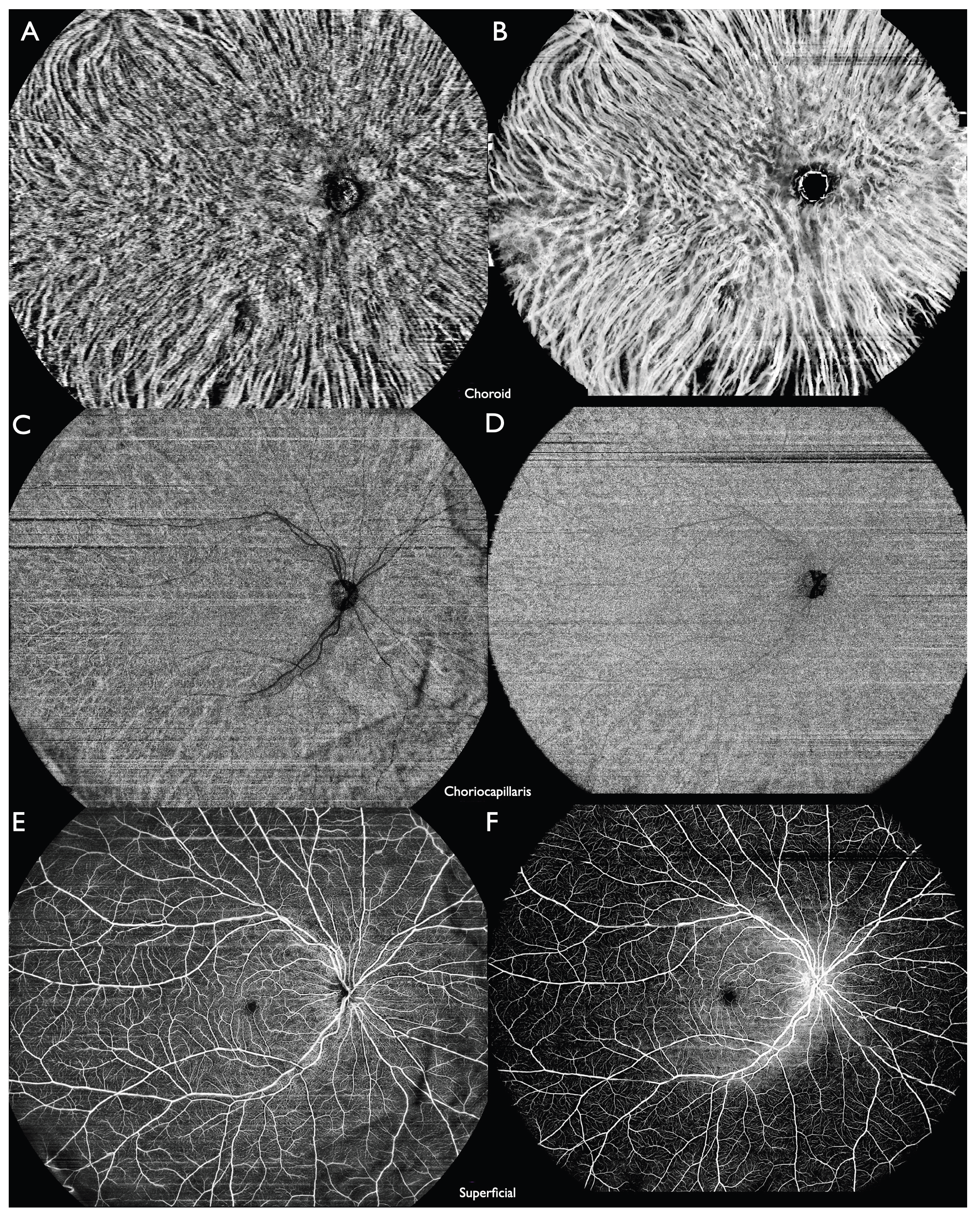
Figure 2.
In a 55-year-old male patient with PRPF31 associated autosomal dominant retinitis pigmentosa fundus photography (A: Clarus 19x19 mm) demonstrated attenuated vessels, midperipheral and peripheral retinal pigment epithelium atrophy as well was multiple pigmented flecks. Fundus autofluorescence (B: Clarus) showed midperipheral and peripheral markedly reduced FAF intensity and preserved intensity at the posterior pole with a pericentral ring of increased intensity. WF-SS-OCT (C: BMizar horizontal length 24 mm, D: Dream OCT horizontal length 26 mm) showed a small foveal defect in the ellipsoid zone and midperipheral and peripheral loss of photoreceptor-associated layers as well as a mild epiretinal membrane. More details are visible in the BMizar scan (C).
Figure 2.
In a 55-year-old male patient with PRPF31 associated autosomal dominant retinitis pigmentosa fundus photography (A: Clarus 19x19 mm) demonstrated attenuated vessels, midperipheral and peripheral retinal pigment epithelium atrophy as well was multiple pigmented flecks. Fundus autofluorescence (B: Clarus) showed midperipheral and peripheral markedly reduced FAF intensity and preserved intensity at the posterior pole with a pericentral ring of increased intensity. WF-SS-OCT (C: BMizar horizontal length 24 mm, D: Dream OCT horizontal length 26 mm) showed a small foveal defect in the ellipsoid zone and midperipheral and peripheral loss of photoreceptor-associated layers as well as a mild epiretinal membrane. More details are visible in the BMizar scan (C).
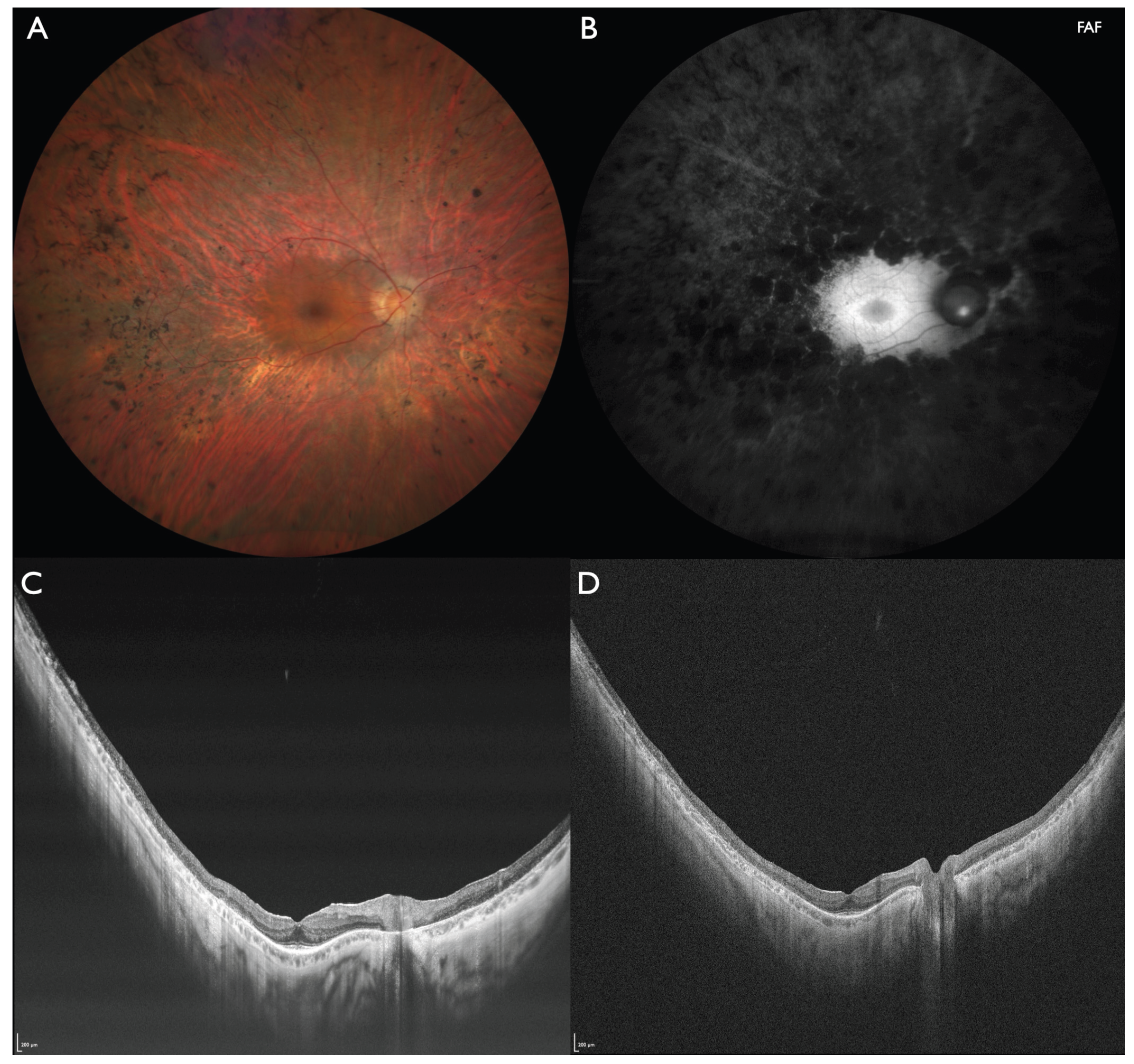
Figure 3.
Same eye as in Figure 2: Vascular flow patterns in the choroid (A: BMizar 24x20 mm, B: Dream OCT 26x21 mm) showed reduced density of vessels. Midperipheral and peripheral irregularities of choriocapillaris flow (C: BMizar, D: Dream OCT) was more detailed in BMizar (C). Peripheral absence of flow in superficial retinal vessels (E: BMizar, F: Dream OCT) was obvious in both techniques, while pericentral vessels could be better observed with BMizar (E) and peripheral vessel with Dream OCT (F). Flow was present in midperipheral and peripheral retinal vessels that were difficult to visualize on fundus photography (Figure 2A).
Figure 3.
Same eye as in Figure 2: Vascular flow patterns in the choroid (A: BMizar 24x20 mm, B: Dream OCT 26x21 mm) showed reduced density of vessels. Midperipheral and peripheral irregularities of choriocapillaris flow (C: BMizar, D: Dream OCT) was more detailed in BMizar (C). Peripheral absence of flow in superficial retinal vessels (E: BMizar, F: Dream OCT) was obvious in both techniques, while pericentral vessels could be better observed with BMizar (E) and peripheral vessel with Dream OCT (F). Flow was present in midperipheral and peripheral retinal vessels that were difficult to visualize on fundus photography (Figure 2A).
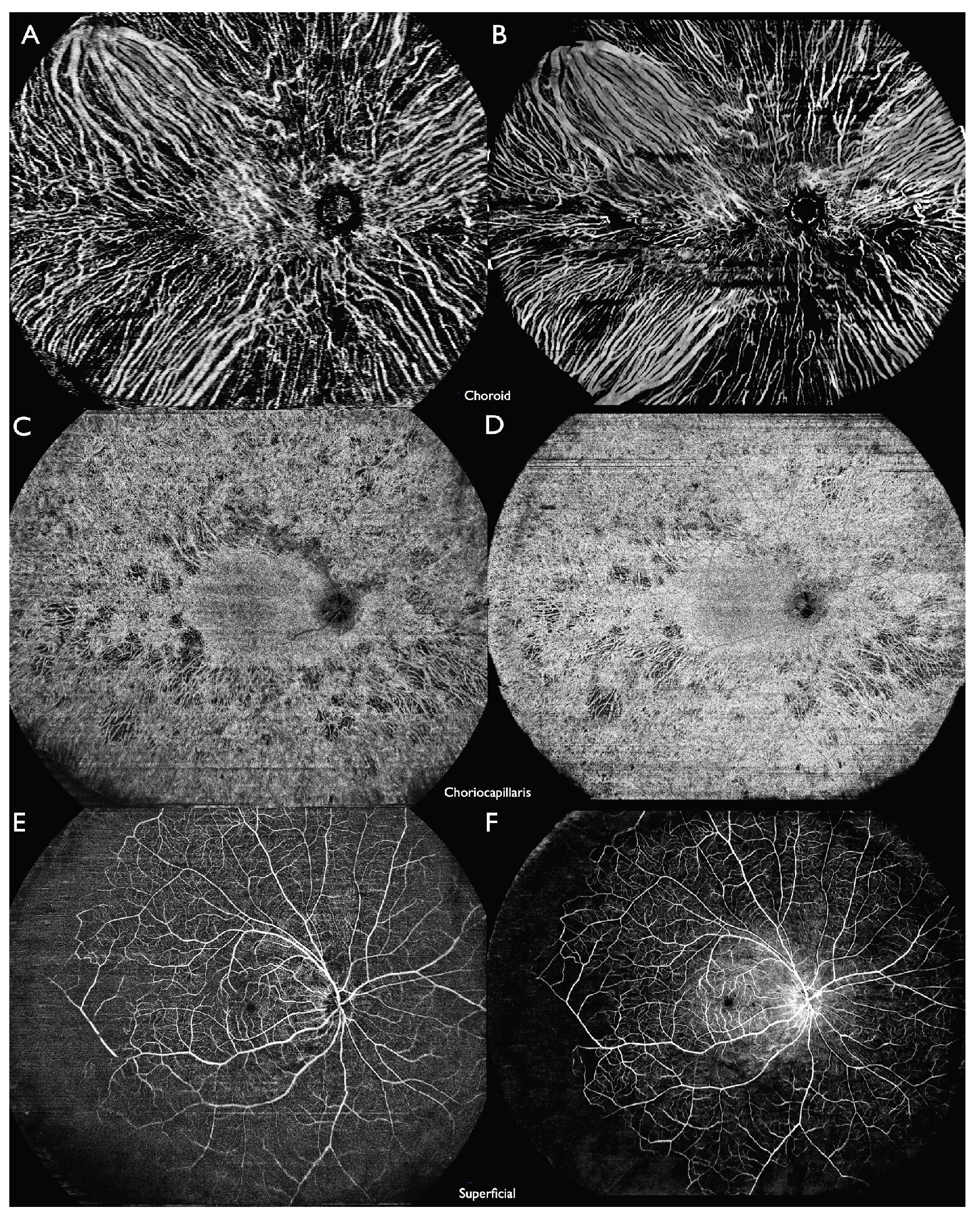
Figure 4.
Fundus photography (Clarus, 19x19 mm), retinal vessel and choroidal vessel flow obtained with Dream OCT (26x21 mm) in two patients with retinitis pigmentosa. A-C: A 29-year-old male patient with TTLL5 associated autosomal recessive sectorial retinitis pigmentosa. Retinal flow was markedly reduced below the lower temporal vascular arcade and slightly reduced in the rod-dominated region temporal of the fovea as well as superior to the upper temporal vascular arcade (arrows). Choroidal vessel flow was reduced in the same areas. D-F: A 66-year-old female patient with simplex retinitis pigmentosa and inconclusive molecular genetic findings. Retinal vascular flow was absent in the periphery, but more vessels were detectable compared to the fundus image. Choroidal vessels flow was predominantly reduced in the mid-periphery.
Figure 4.
Fundus photography (Clarus, 19x19 mm), retinal vessel and choroidal vessel flow obtained with Dream OCT (26x21 mm) in two patients with retinitis pigmentosa. A-C: A 29-year-old male patient with TTLL5 associated autosomal recessive sectorial retinitis pigmentosa. Retinal flow was markedly reduced below the lower temporal vascular arcade and slightly reduced in the rod-dominated region temporal of the fovea as well as superior to the upper temporal vascular arcade (arrows). Choroidal vessel flow was reduced in the same areas. D-F: A 66-year-old female patient with simplex retinitis pigmentosa and inconclusive molecular genetic findings. Retinal vascular flow was absent in the periphery, but more vessels were detectable compared to the fundus image. Choroidal vessels flow was predominantly reduced in the mid-periphery.
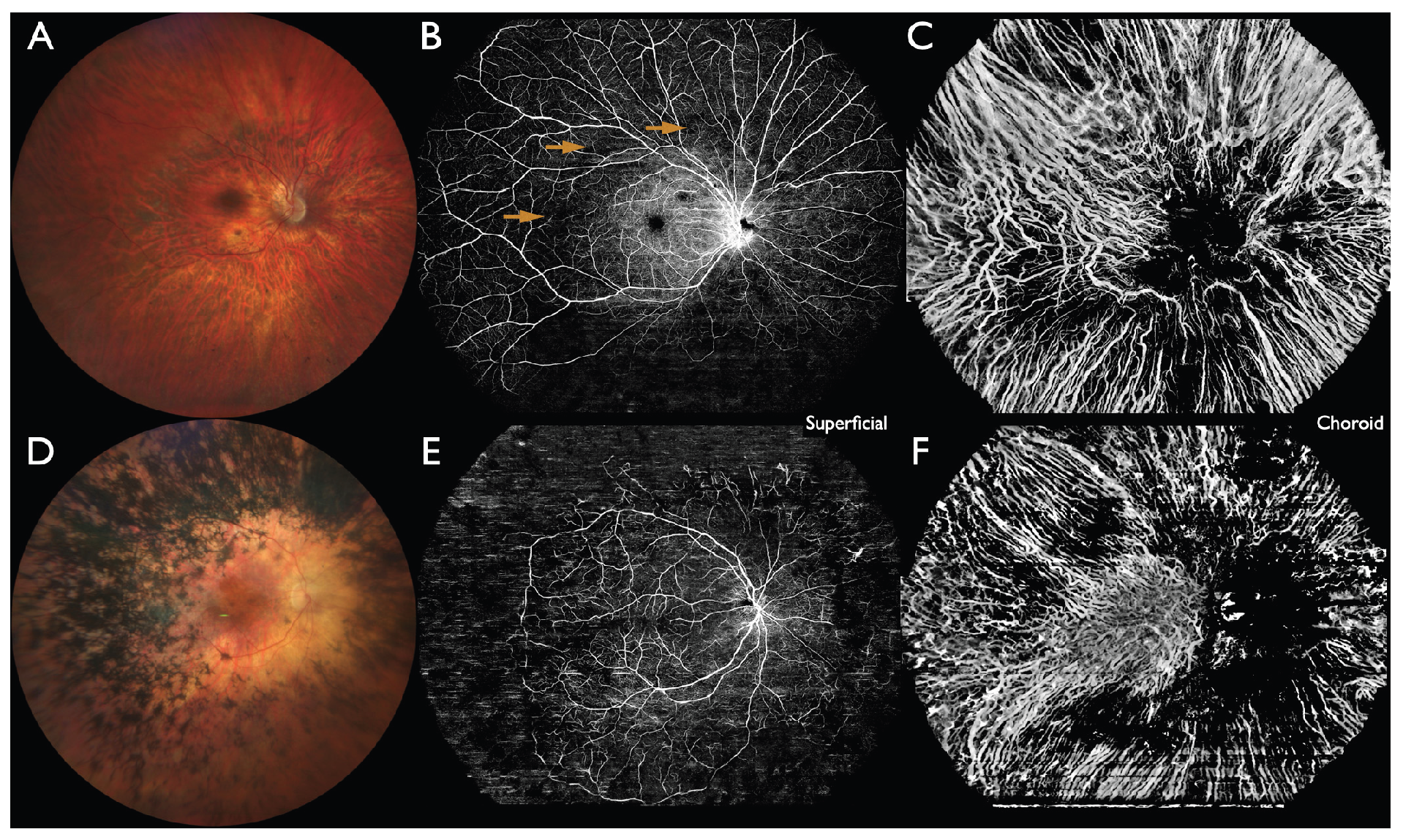
Figure 5.
In a 44-year-old female patient with autosomal dominant cone-rod dystrophy and inconclusive molecular genetic findings fundus photography (A: Clarus 19x19 mm) demonstrated a central atrophic lesion. Fundus autofluorescence (B: Clarus) showed central markedly reduced FAF intensity surrounded by an area of fleck-like reduced or increased FAF intensity extending beyond the temporal vascular arcades and nasal of the optic disc. WF-SS-OCT (C: BMizar, D: Dream OCT) showed irregular foveal retinal layers and retinal pigment epithelial atrophy, as well as pericentral intraretinal cystoid spaces. More details are visible in the BMizar scan (C). The enface images (E: BMizar 24x20 mm, F: Dream OCT 26x21 mm) demonstrate the distribution of central and midperipheral intraretinal cystoid lesions.
Figure 5.
In a 44-year-old female patient with autosomal dominant cone-rod dystrophy and inconclusive molecular genetic findings fundus photography (A: Clarus 19x19 mm) demonstrated a central atrophic lesion. Fundus autofluorescence (B: Clarus) showed central markedly reduced FAF intensity surrounded by an area of fleck-like reduced or increased FAF intensity extending beyond the temporal vascular arcades and nasal of the optic disc. WF-SS-OCT (C: BMizar, D: Dream OCT) showed irregular foveal retinal layers and retinal pigment epithelial atrophy, as well as pericentral intraretinal cystoid spaces. More details are visible in the BMizar scan (C). The enface images (E: BMizar 24x20 mm, F: Dream OCT 26x21 mm) demonstrate the distribution of central and midperipheral intraretinal cystoid lesions.
Disclaimer/Publisher’s Note: The statements, opinions and data contained in all publications are solely those of the individual author(s) and contributor(s) and not of MDPI and/or the editor(s). MDPI and/or the editor(s) disclaim responsibility for any injury to people or property resulting from any ideas, methods, instructions or products referred to in the content. |
© 2026 by the authors. Licensee MDPI, Basel, Switzerland. This article is an open access article distributed under the terms and conditions of the Creative Commons Attribution (CC BY) license (http://creativecommons.org/licenses/by/4.0/).
Copyright: This open access article is published under a Creative Commons CC BY 4.0 license, which permit the free download, distribution, and reuse, provided that the author and preprint are cited in any reuse.


