

Submitted:
09 June 2026
Posted:
10 June 2026
You are already at the latest version
Abstract
Quality of life (QoL) assessment in companion animals has received increasing attention in veterinary medicine; however, companion rabbits have been systematically excluded from validated instrument development despite being the third most common companion species in several countries. The objective of this study was to develop and preliminarily validate a QoL questionnaire specifically designed for domestic rabbits (Oryctolagus cuniculus). Twenty-eight items were generated across three theoretical domains (behavioral, physical, and nutritional) through literature review and expert panel evaluation, and administered online to 192 owners of rabbits considered healthy. Exploratory factor analysis (EFA) identified a three-factor solution partially congruent with the proposed domains. Confirmatory factor analysis of the full 28-item model showed insufficient fit (CFI = 0.613; RMSEA = 0.056). Behavioral block sub-analysis revealed that the reactivity-to-owner subfactor achieved acceptable internal consistency (α = 0.709), the only domain to surpass the conventional 0.70 threshold. Significant overestimation of QoL by owners was observed relative to structured questionnaire scores (global: +0.62 points, p < .001; physical health: +0.57 points, p < .001). These results establish a preliminary psychometric profile for the first QoL instrument developed for companion rabbits, identifying a clinically viable reactivity subscale and delineating the modifications required for future validation cycles.
Keywords:
quality of life
; rabbits
; questionnaire
; animal welfare
; psychometric validation
; companion animals
; observer-reported outcomes
; exploratory factor analysis
1. Introduction
Over the last two decades, quality of life (QoL) assessment in companion animals has acquired growing relevance in veterinary medicine and animal welfare science, promoting the need for validated, psychometrically sound measurement instruments [1,2]. Although this field has advanced considerably for dogs [3,4] and cats [5,6], companion rabbits (Oryctolagus cuniculus) have been systematically excluded from this development, despite being the third most common companion species in the United Kingdom and the United States [7,8].
Quality of life is a concept used in both colloquial and clinical veterinary contexts, yet its definition remains complex due to its multidimensional and inherently subjective nature [9]. Assessment should not be restricted to physical health parameters but must also encompass behavioral and affective dimensions that determine global animal welfare [10]. In human medicine, a methodological distinction is drawn between patient-reported outcomes (PRO) and observer-reported outcomes (ORO); the latter constitute the framework applicable in veterinary medicine, where the animal cannot self-report [11,12].
The development of QoL instruments for companion animals requires rigorous psychometric methodology, including evidence-based item generation, expert panel evaluation, factorial structure assessment via exploratory and confirmatory factor analysis, and estimation of reliability and validity [13,14]. For dogs, Wiseman-Orr and colleagues developed a questionnaire measuring the effects of chronic pain on QoL [11,12], and Reid and colleagues created VetMetrica with adequate psychometric properties [3]. For cats, Freeman and colleagues developed the Cat HEalth and Wellbeing (CHEW) questionnaire [6], and Noble and colleagues generated a web-based feline instrument [5].
In rabbits, available research has addressed welfare assessment in relation to housing [7,15], handling [16,17], pain indicators [18,19,20,21,22], and the human–rabbit relationship [23,24]. Owners frequently experience difficulty in identifying behavioral pain signs [22,25], and no validated instrument exists that integrates these dimensions into a global QoL assessment for companion rabbits. The present study addresses this gap by developing and preliminarily validating the Companion Rabbit Quality of Life Questionnaire (CRQLQ), a structured, observer-reported instrument encompassing physical, behavioral, and nutritional domains.
2. Materials and Methods
2.1. Step 1: Concept Identification and Item Generation
Questionnaire development followed the guidelines of Freeman et al. [6], based on the FDA (2009) framework for health-related QoL instrument development, adapted to the veterinary context. Through systematic literature review, behavioral changes and physical indicators in rabbits that signal pain, fear, discomfort, or compromised welfare were identified. Studies on pain assessment [18,19,21], welfare and housing [7,15,31], body condition [26,27], social behavior and personality [23,28,29], and the human–rabbit relationship [24,30] were reviewed.
Twenty-eight items were generated across three theoretical domains: behavioral (i1–i14), physical (i15–i17, i23–i28), and nutritional (i18–i22). Each item used a three-option ordinal scale (1 = negative welfare signal; 2 = neutral; 3 = positive welfare signal). Two direct 1-to-10 numerical scales were included as items 29 and 30, evaluating global health and global QoL respectively, for concurrent validity assessment.
The behavioral domain included items evaluating: eye and ear state at a distance and on approach (i1, i2, i7, i8, i13, i14), body posture (i3, i9), reaction to owner presence and attempted contact (i4–i6, i10), and enclosure exploration behavior (i11, i12). The physical domain assessed fecal consistency (i15), fecal frequency (i17), whisker state (i16), mobility when rising (i23), palpable body condition at the ribs (i24), hips (i25) and thighs (i26), activity level (i27), and coat condition (i28). The nutritional domain evaluated hay (i18), pellet (i19), and salad (i20) consumption, teeth grinding frequency (i21), and self-grooming frequency (i22).
2.2. Expert Panel Evaluation
The draft questionnaire was evaluated by three independent expert panels: (a) Wildlife Medicine specialists for clinical evaluation of pain indicators; (b) Clinical Ethology specialists for pertinence of behavioral items; and (c) Animal Welfare veterinarians for environmental items and response scale format. Panel feedback led to item reformulation before quantitative administration.
2.3. Step 2: Quantitative Online Validation
Rabbit owners were recruited through social media platforms (Facebook, Instagram) and the FMVZ-UNAM Veterinary Hospital. The inclusion criterion was owners who considered their rabbits healthy at the time of participation. After quality control for complete responses, the final sample was .
2.4. Statistical Analysis
All statistical analyses were conducted in R (version 4.4.1; R Core Team, 2024). The following packages were used: psych [41] for item-level descriptive statistics (mean, standard deviation, skewness) and exploratory factor analysis (EFA) with maximum likelihood extraction and oblique rotation (oblimin), and for Cronbach’s estimation; GPArotation [42] as the rotation engine supporting oblimin; lavaan [43] for confirmatory factor analysis (CFA) with maximum likelihood estimation; and stats (base R) for paired-samples t-tests used in concurrent validity assessment. Ceiling effects were operationally defined as skewness with mean . CFA fit was evaluated against the following thresholds: CFI and TLI ; RMSEA ; SRMR [13].
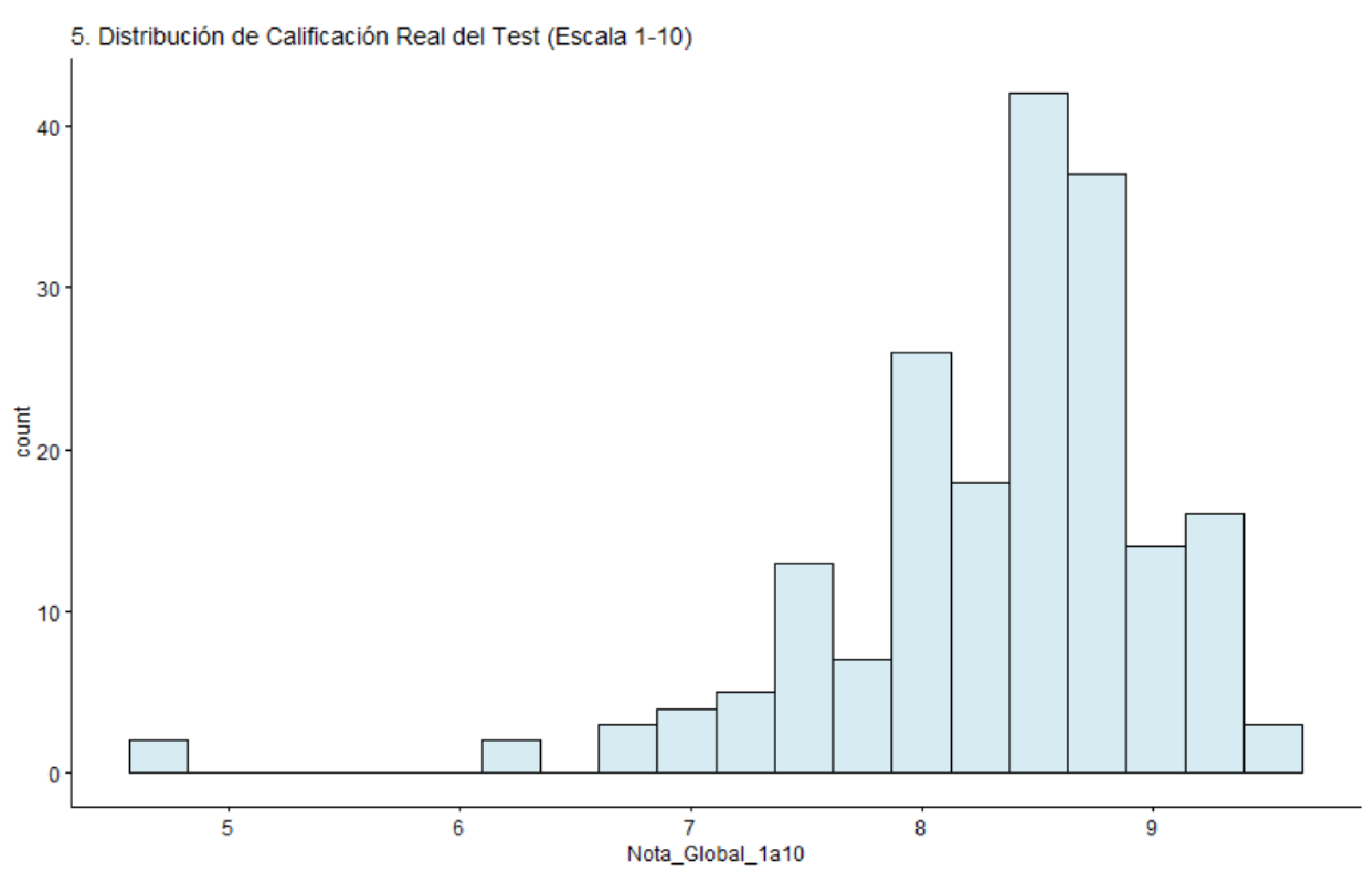
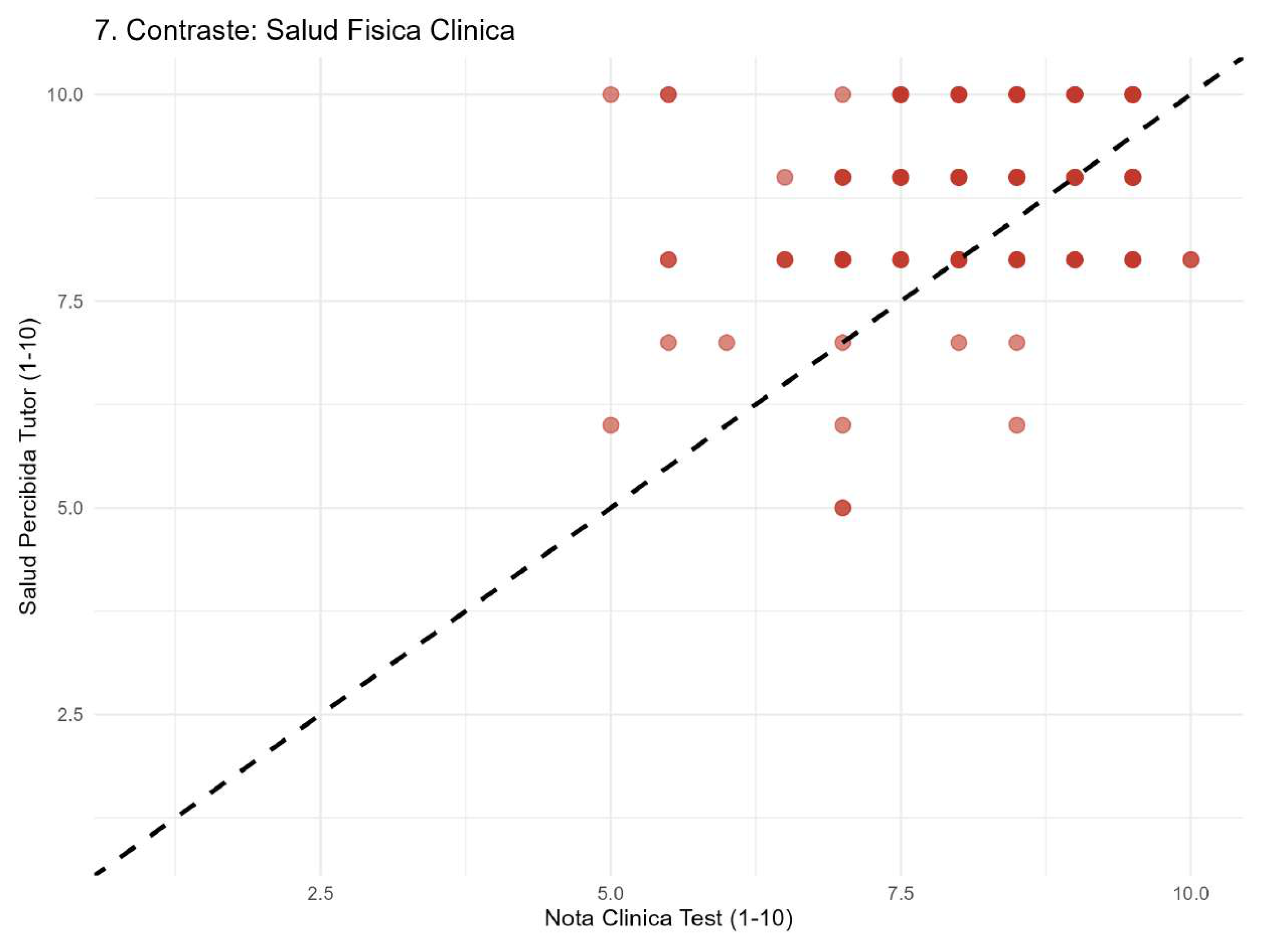
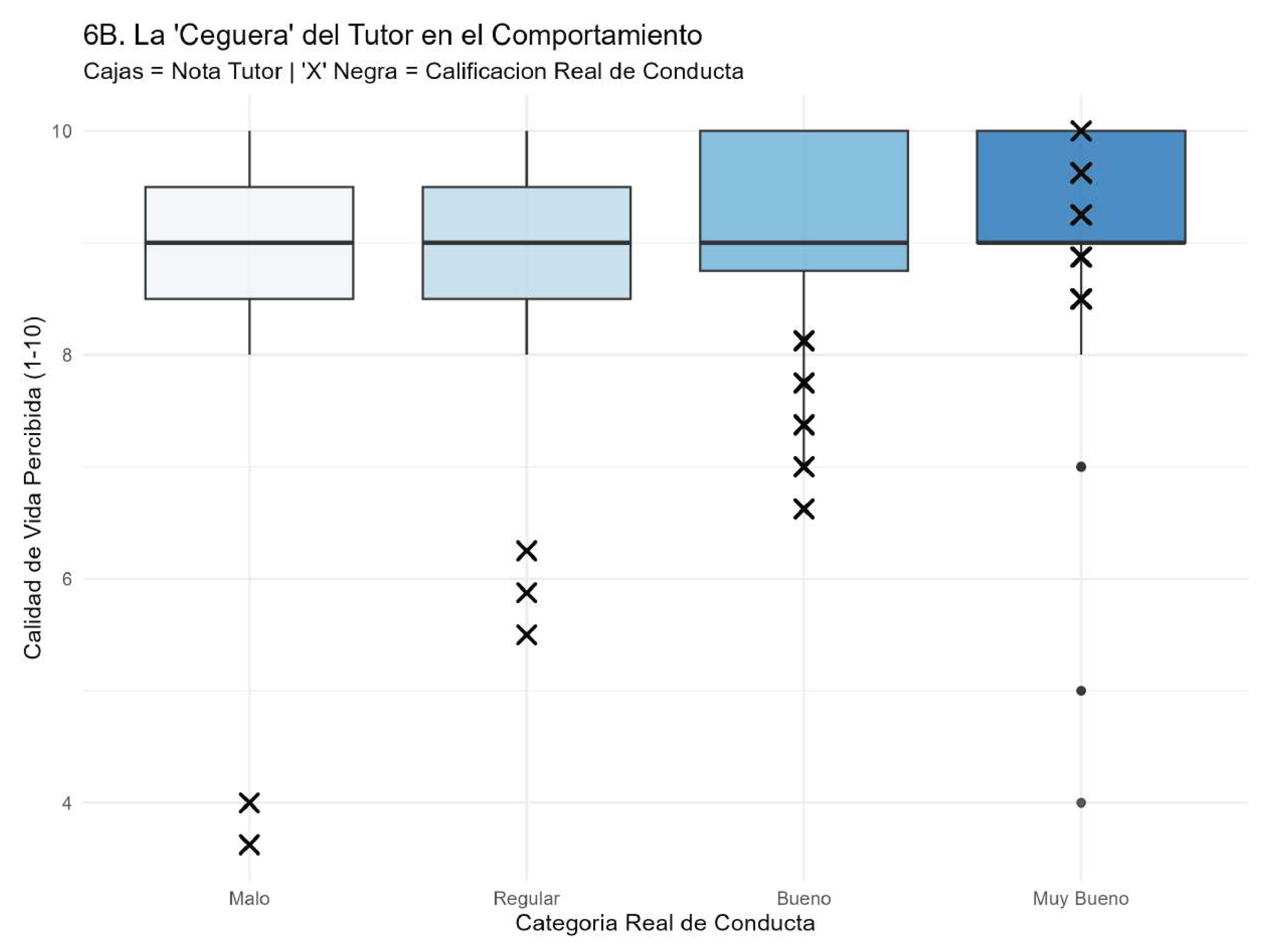
All figures were produced with ggplot2 [44]. The response distribution heatmap (Figure 1) was built with geom_tile after reshaping data with tidyr [46]. The EFA loading diagram (Figure 2) used geom_segment and geom_point. CFA loading bar charts (Figure 3) used geom_col with domain-level color coding. The Cronbach bar chart (Figure 4) used geom_bar with a reference line at via geom_hline. The score histogram (Figure 5) used geom_histogram with a mean reference line. Scatter plots (Figure 6, Figure 7 and Figure 8) were produced with geom_point and an identity diagonal via geom_abline. The “owner blindness” boxplot (Figure 9) used geom_boxplot combined with geom_point for actual test score means. Figure composition and theming relied on patchwork [47] and ggpubr [48]; color scales used viridis [49]. Data manipulation was performed with dplyr [45] and tidyr [46].
3. Results
3.1. Descriptive Statistics
Item means ranged from 1.92 (i27: activity level change) to 2.95 (i5: continuation of eating in owner’s presence). Table 1 presents descriptive statistics for the items with the most extreme distributions.
The items with the most pronounced ceiling effects were i5 (, , skewness ) and i6 (, , skewness ), both from the behavioral domain, followed by i22 (, , skewness ) and i17 (, , skewness ). Items i14 (, ), i11 (, , skewness ), i18 (, ), and i27 (, ) presented the most balanced distributions and greatest inter-individual variability.
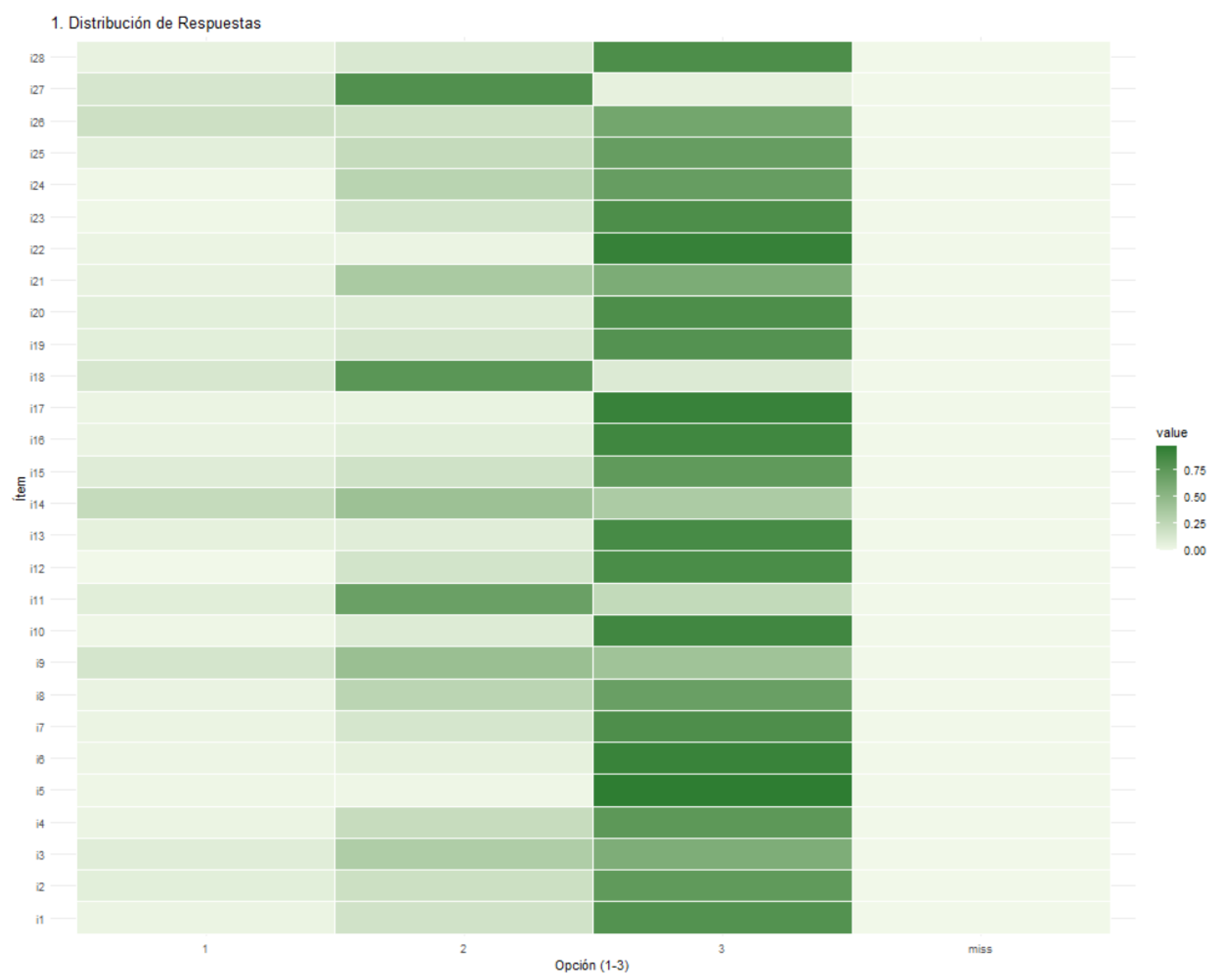
The response distribution heatmap (Figure 1) shows the distributional pattern across all 28 items. Items i5, i6, i22, and i17 appear saturated in the highest-option column, with more than 85% of respondents selecting option 3. The nutritional block (i18–i22) presents the most distributed color gradient, while item i27 is the only one in which option 1 accumulates a meaningful proportion of responses.
Figure 1.
Response distribution heatmap per item (i1–i28). Green intensity indicates the proportion of owners selecting each response option.
Figure 1.
Response distribution heatmap per item (i1–i28). Green intensity indicates the proportion of owners selecting each response option.
3.2. Exploratory Factor Analysis (EFA)
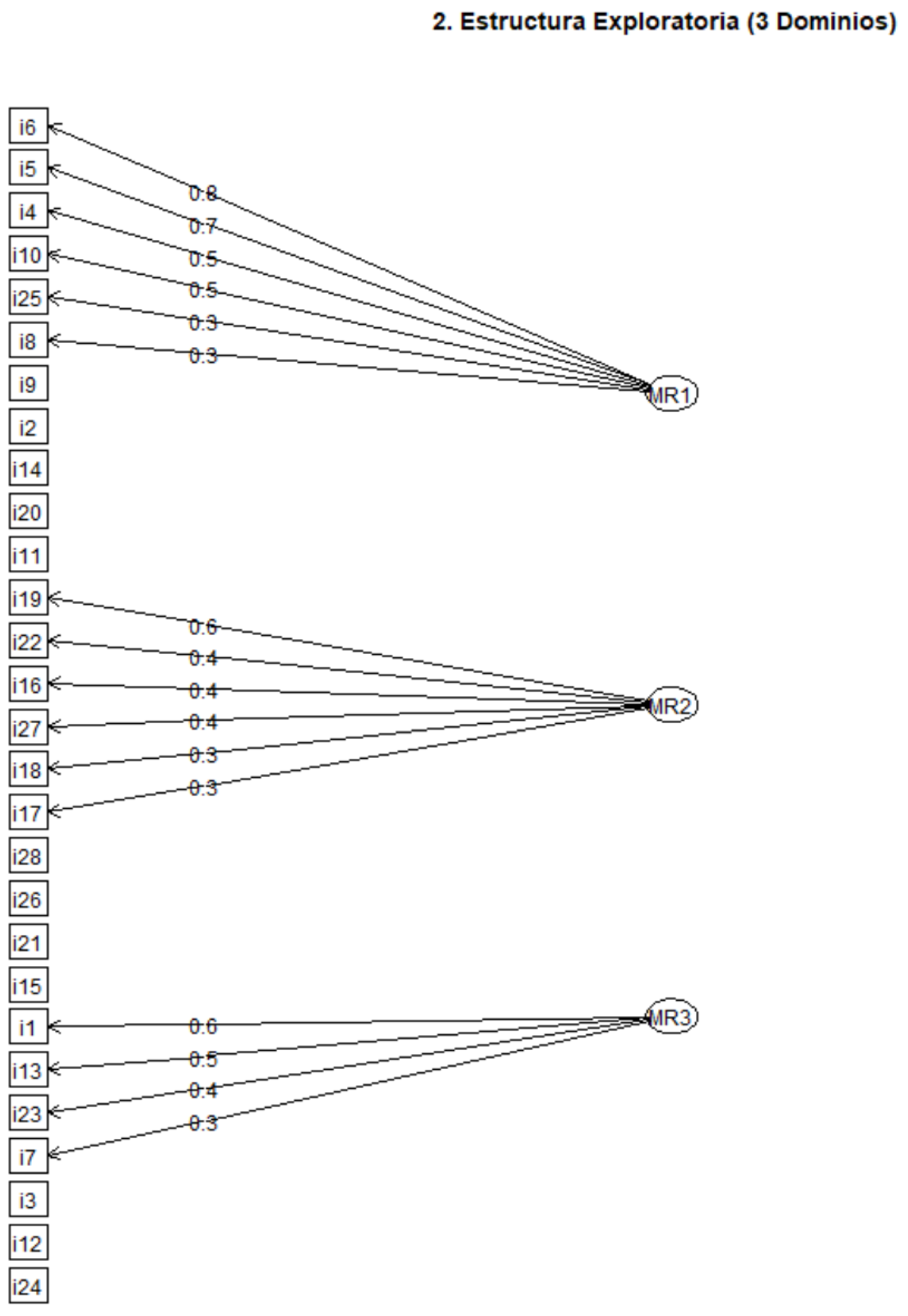
The EFA identified a three-factor solution. Factor loadings are presented in Table 2. Factor MR1 (Behavior towards owner proximity) was defined by i6 (), i5 (0.735), i4 (0.526), and i10 (0.510). Factor MR2 (Physical–nutritional state) integrated i19 (0.580), i22 (0.415), i16 (0.413), i27 (0.363), i18 (0.340), and i17 (0.333). Factor MR3 (Daytime behavioral signals) grouped i1 (0.586), i13 (0.463), and i23 (0.431). Items i2, i3, i11, i12, i14, i20, and i24 did not reach the 0.30 loading threshold in any factor.
Table 2 shows that MR1 concentrates four items with loadings between 0.51 and 0.82, MR2 shows six items distributed across a wider range (0.33–0.58), and MR3 shows three items above the 0.30 threshold. The EFA factor loading diagram (Figure 2) displays the dashed line at 0.30 that marks the minimum loading considered relevant for factor inclusion.
Figure 2.
EFA factor loading diagram for the three-factor solution. The dashed line indicates the 0.30 relevance threshold.
Figure 2.
EFA factor loading diagram for the three-factor solution. The dashed line indicates the 0.30 relevance threshold.
3.3. Confirmatory Factor Analysis (CFA)
CFA fit indices for the full 28-item three-domain model are presented in Table 3.
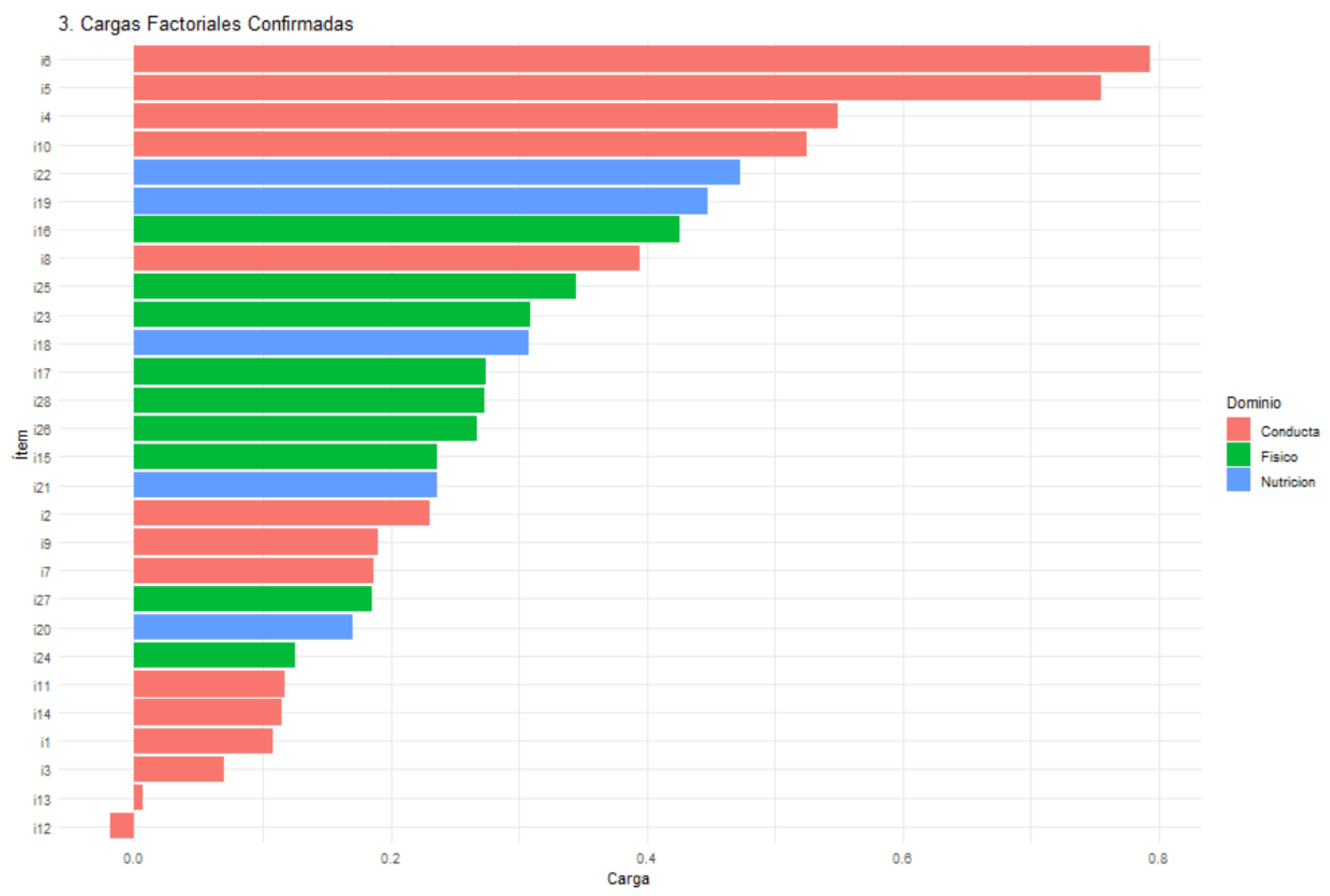
The full-model CFA produced , ; CFI ; TLI ; RMSEA (90% CI: 0.048–0.065); SRMR . CFI and TLI fell below the 0.90 threshold. RMSEA and SRMR were at the boundary of acceptable values ( and , respectively). Figure 3 presents the standardized CFA loadings ordered by magnitude and grouped by domain. In the behavioral domain (red), loadings range from approximately 0.05 to 0.70; in the physical domain (green) from near zero to 0.60; and in the nutritional domain (blue), only three items reach loadings above 0.30.
Figure 3.
CFA standardized factor loadings ordered by magnitude. Red bars = behavioral domain; green bars = physical domain; blue bars = nutritional domain. The dashed line indicates the 0.30 reference for minimum relevant loading.
Figure 3.
CFA standardized factor loadings ordered by magnitude. Red bars = behavioral domain; green bars = physical domain; blue bars = nutritional domain. The dashed line indicates the 0.30 reference for minimum relevant loading.
3.4. Reliability: Internal Consistency
Figure 4.
Cronbach’s by domain. The red dashed line indicates the conventional threshold for acceptable internal consistency.
Figure 4.
Cronbach’s by domain. The red dashed line indicates the conventional threshold for acceptable internal consistency.
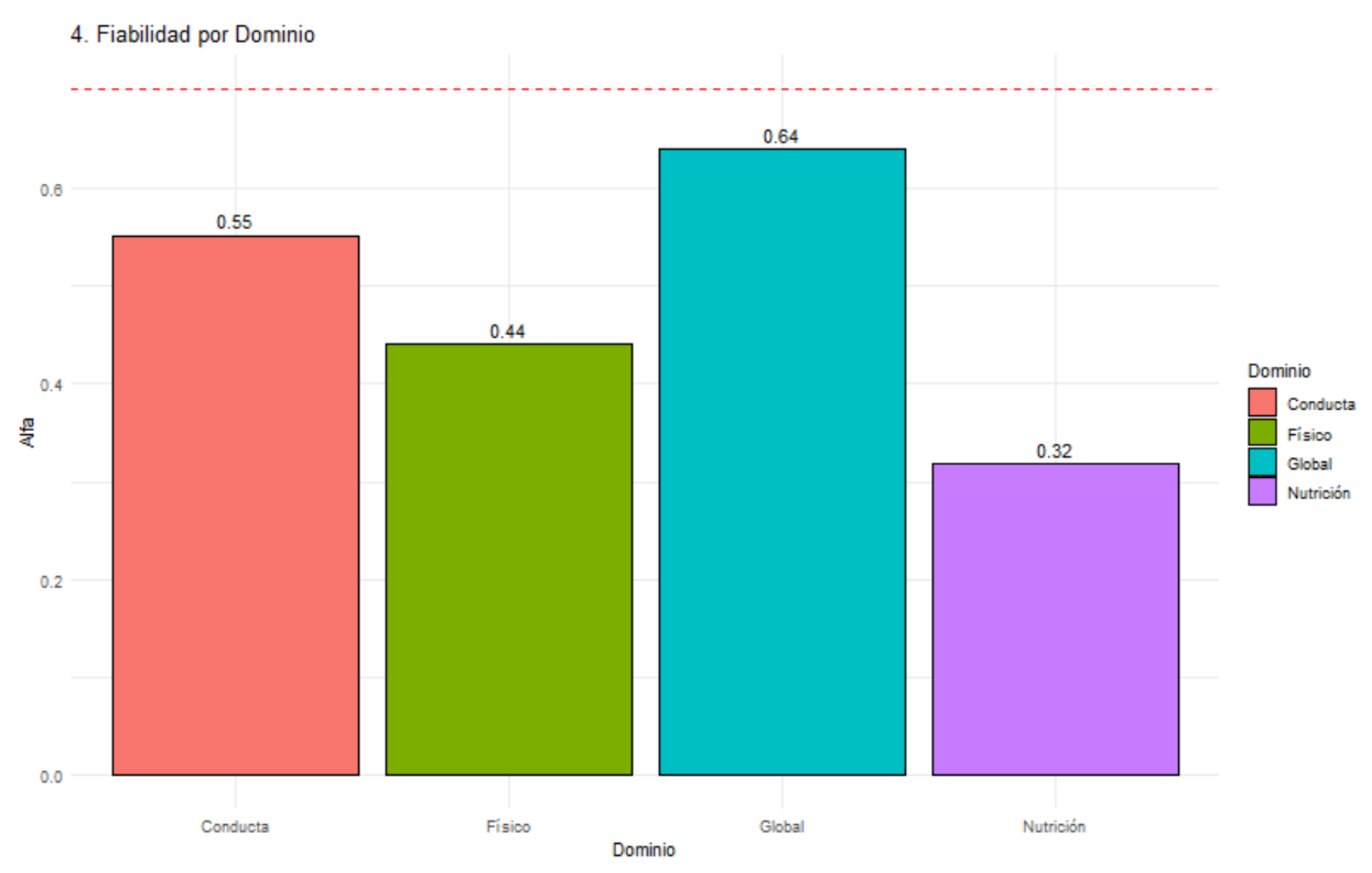
The global scale obtained . The behavioral domain obtained , the physical domain , and the nutritional domain . None of the four values reached the threshold indicated by the red dashed line.
3.5. Global Score Distribution
Table 5 presents the distribution of global scores on the 1–10 scale.
Figure 5 shows the distribution of global scores. Scores were concentrated between 8 and 9, with 130 rabbits (67.7%) in the “Very good” category and 58 (30.2%) in “Good”. Only 4 rabbits (2.1%) scored in the “Regular” range, and no cases were recorded below 5.0. The mean score was 8.34 (red dashed line), and the distribution presented marked negative skewness.
Figure 5.
Histogram of global score distribution (). The red dashed line indicates the sample mean (8.34).
Figure 5.
Histogram of global score distribution (). The red dashed line indicates the sample mean (8.34).
3.6. Contrast: Questionnaire Score vs. Owner Perception
Table 6 presents the results of the paired-samples t-test comparing questionnaire-derived scores (items 1–28) with owner-assigned ratings (items 29–30).
For global QoL, the mean test score was 8.34 versus an owner rating of 8.96, with a mean difference of +0.62 points (). For physical health, the mean test score was 8.36 versus 8.93, yielding a difference of +0.57 points (). In both contrasts, the owner’s direct rating exceeded the score derived from the structured questionnaire. Figure 6 and Figure 7 show scatter plots of test score vs. owner-perceived QoL and physical health, respectively. In both figures, the majority of points lie above the identity diagonal, indicating systematic overestimation.
Figure 6.
Test global score (x-axis) vs. owner-perceived quality of life (y-axis). Points above the diagonal indicate owner overestimation of welfare.
Figure 6.
Test global score (x-axis) vs. owner-perceived quality of life (y-axis). Points above the diagonal indicate owner overestimation of welfare.
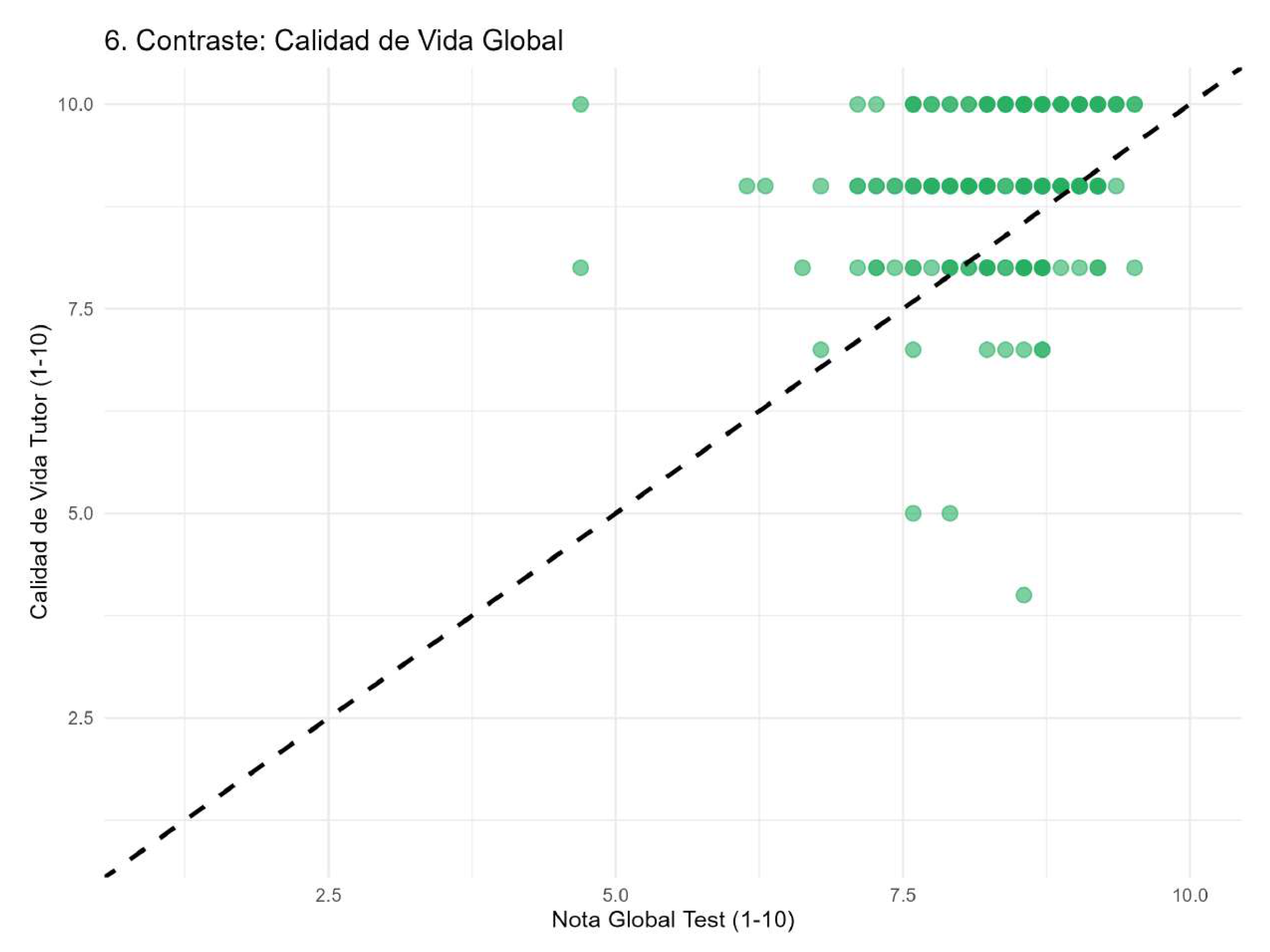
Figure 7.
Test clinical score (x-axis) vs. owner-perceived physical health (y-axis). The distribution of points replicates the overestimation pattern of Figure 6 with a mean difference of +0.57 points.
Figure 7.
Test clinical score (x-axis) vs. owner-perceived physical health (y-axis). The distribution of points replicates the overestimation pattern of Figure 6 with a mean difference of +0.57 points.
3.7. Behavioral Block Sub-Analysis (i1–i12)
The behavioral block EFA identified two subfactors. MR1 (Reactivity to owner): i6 (), i5 (0.699), i4 (0.554), i10 (0.499), i8 (0.468), i2 (0.309); and MR2 (Space and shelter use): i9 (0.634), i3 (0.605). Items i1, i7, i11, and i12 did not reach the 0.30 relevance threshold in either factor.
Among the 12 behavioral items, i9 (body posture when the owner approaches) showed the greatest variability (, , skewness ). Item i11 (shelter exit behavior) was the only item in the entire instrument with positive skewness (, , skewness ), indicating that a greater proportion of responses were distributed toward the lower options. Items i5 (, ) and i6 (, ) continued to show severe ceiling effects identical to those observed in the full instrument.
CFA fit indices for the two-subfactor behavioral block model are presented in Table 7.
Table 7 shows global fit indices , ; CFI = TLI ; RMSEA (90% CI: 0.000–0.085); SRMR . However, a Heywood case was detected: the error variance of item i11 was estimated at −234.01. This negative value renders the global fit indices partially spurious and invalidates the Enclosure subfactor (i11, i12). The Reactivity subfactor produced valid standardized loadings: i4 , i5 , i6 , i10 .
Internal consistency values for the behavioral block subfactors are shown in Table 8.
The Reactivity subfactor (i4, i5, i6, i8, i10; ) was the only domain across the entire instrument to surpass the 0.70 threshold. The Enclosure subfactor (i11, i12; ) showed insufficient internal consistency. The overall behavioral block obtained .
The behavioral block score distribution was: 131 rabbits (68.2%) in the “Very good” category, 56 (29.2%) in “Good”, 3 (1.6%) in “Regular”, and 2 (1.0%) in “Poor”. Owner overestimation in the behavioral block was +0.42 points (), smaller than the +0.62 observed with the full instrument. Figure 8 presents the scatter plot of behavioral test score vs. owner-perceived QoL; the majority of points lie above the identity line. Figure 9 (“owner blindness”) shows the distribution of owner-perceived QoL grouped by behavioral test category: even owners whose rabbits scored in the “Poor” category assigned direct QoL ratings between 8 and 10, and in all groups the median owner-perceived rating exceeded the corresponding test score.
Figure 8.
Behavioral test score (x-axis) vs. owner-perceived quality of life (y-axis). Points above the identity diagonal indicate owner overestimation. Mean overestimation: +0.42 points ().
Figure 8.
Behavioral test score (x-axis) vs. owner-perceived quality of life (y-axis). Points above the identity diagonal indicate owner overestimation. Mean overestimation: +0.42 points ().
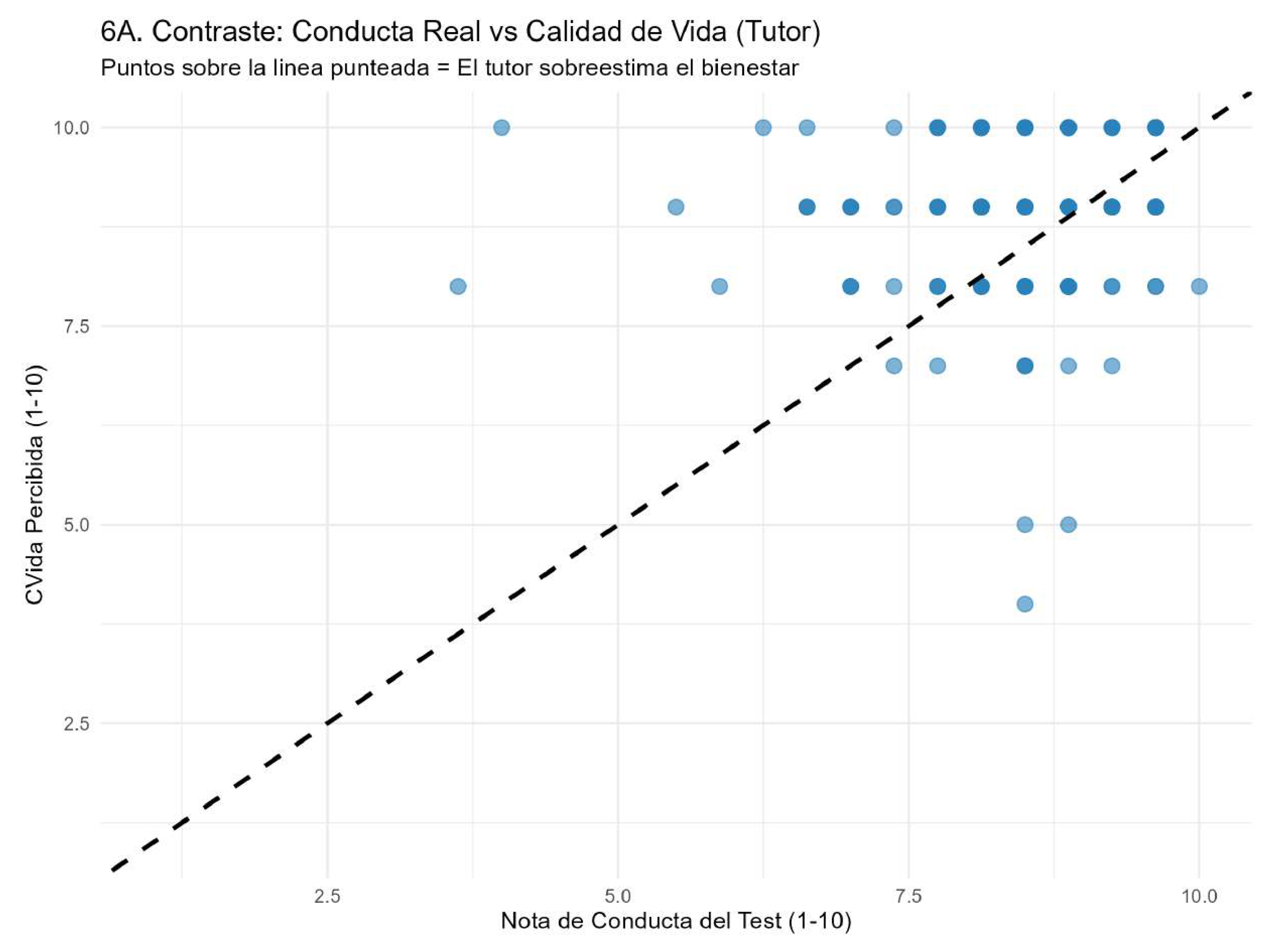
Figure 9.
“Owner blindness” figure: distribution of owner-perceived QoL (boxplots) grouped by behavioral test category (x-axis). The black X markers indicate the actual mean test score for each category. In all groups the median owner perception exceeded the structured test score.
Figure 9.
“Owner blindness” figure: distribution of owner-perceived QoL (boxplots) grouped by behavioral test category (x-axis). The black X markers indicate the actual mean test score for each category. In all groups the median owner perception exceeded the structured test score.
4. Discussion
This study presents the first quality of life questionnaire developed specifically for rabbits as companion animals. Over the last two decades, a considerable number of QoL instruments have been developed and validated for dogs and cats, ranging from generic health-related tools to disease-specific scales [1,2]. For example, in dogs, instruments such as VetMetrica [3] and the Lincoln P-QoL [35] have undergone thorough psychometric evaluation, while in cats, the CHEW [6] and Noble’s web-based feline instrument [5] represent well-established examples. Despite this progress in other companion species, no analogous effort had been undertaken for rabbits prior to the present study, despite the growing recognition of the welfare challenges faced by this species [7,15,33].
The item-level descriptive statistics (Table 1, Figure 1) revealed a general pattern of high means (range: 1.92–2.95) and negative skewness, with accumulation in the most favorable response option. This ceiling effect is explained by two converging factors. First, the sample was composed exclusively of rabbits considered healthy by their owners, which naturally restricts score variability. Second, the online recruitment strategy through social media likely attracted owners more engaged with their rabbits’ welfare, consistent with Welch et al. [32], who reported that companion-rabbit owners recruited online tend to be more knowledgeable about rabbit care. Skovlund et al. [33] further documented how the perception of rabbits as low-investment “starter pets” is associated with reduced welfare knowledge, suggesting that non-participating owners might have yielded lower scores. Nevertheless, items i11 (enclosure exit behavior; skewness ) and i27 (activity level; , ) demonstrated adequate variability even within this healthy population, making them the most promising items for differentiating welfare levels in future clinical applications.
The three-factor solution identified by the EFA (Table 2, Figure 2) was partially congruent with the theoretical domains proposed a priori, although not an exact replication. This outcome is expected in an exploratory phase. Freeman et al. [6], when developing the CHEW for cats, also found that the empirical factor structure diverged from the initial theoretical domains, requiring multiple iterations of item redistribution. The most clearly defined factor was MR1 (Behavior towards owner proximity), with high and coherent loadings for i6 (, continue drinking), i5 (, continue eating), i4 (, remain lying down), and i10 (, allow petting). This suggests that owner habituation constitutes a robust and measurable behavioral construct in domestic rabbits. Dobos et al. [23] documented the importance of amicable rabbit–caregiver interactions, while Příbylová et al. [24] found that a stronger human–rabbit bond is associated with better husbandry conditions. The finding that i6 (drinking) loaded higher than i5 (eating) is ethologically interpretable: drinking requires a fixed posture with the head lowered, exposing the animal to predation risk, making continuation of this activity in the owner’s presence a more stringent indicator of trust than continuing to eat, consistent with the behavioral vulnerability framework discussed by Leach et al. [19] in the context of pain assessment.
The confirmatory factor analysis of the full 28-item model yielded insufficient incremental fit indices (CFI ; TLI ; Table 3, Figure 3), although the absolute indices remained at the boundary of acceptability (RMSEA ; SRMR ). This result does not invalidate the instrument but indicates that the three-domain structure as currently defined requires refinement. The breadth of the behavioral domain (14 items spanning eye state, ear position, body posture, owner reactivity, and shelter use) likely introduces excessive within-domain heterogeneity. Similarly, the nutritional domain groups items reflecting distinct physiological and behavioral processes. Hall et al. [35] reported analogous difficulties in achieving optimal factorial fit in the Lincoln P-QoL for dogs when domains included heterogeneous items. Davies et al. [37] demonstrated that optimizing VetMetrica required several rounds of item restructuring. The RMSEA and SRMR values in our model suggest that the general direction is correct, but the 14 behavioral items should be subdivided into more specific subfactors—as the behavioral block sub-analysis subsequently confirmed—and the nutritional items require reformulation.
The low internal consistency of the Nutrition domain (; Table 4, Figure 4) represents the most concerning finding of the study. The five items composing this domain—hay consumption (i18), pellet consumption (i19), salad consumption (i20), teeth grinding (i21), and self-grooming frequency (i22)—reflect fundamentally different processes. Hay, pellet, and salad intake patterns depend on individual feeding practices and the rabbit’s dietary preferences [27,32]. Teeth grinding is primarily an indicator of pain or discomfort [18,21] rather than a nutritional parameter. Self-grooming (i22) is a maintenance behavior that can be altered by stress, dermatological conditions, or pain [27], making it conceptually closer to a behavioral or physical indicator. This internal heterogeneity explains why these items do not covary. Future versions should consider relocating teeth grinding to a pain/discomfort domain, integrating self-grooming into the behavioral domain, and using more detailed scales for consumption items. The global approaches the 0.70 threshold considered acceptable in exploratory instrument development [13,14,36].
The behavioral block sub-analysis produced the most encouraging psychometric results. The Reactivity-to-owner subfactor achieved an of 0.709 (Table 8), the only domain to surpass the conventional threshold. Its four core items evaluate a coherent construct: the continuation of basic activities (lying down, eating, drinking) and acceptance of physical contact in the owner’s presence. The CFA of the two-subfactor behavioral model yielded excellent fit indices (, ; CFI = TLI ; SRMR ; Table 7), although the Heywood case in the Enclosure subfactor (i11, i12; error variance ) renders those indices partially spurious. The Reactivity subfactor, however, was estimated without anomalies, with the highest standardized loading for i6 (0.855, continue drinking). This finding is consistent with the ethological principle that water intake represents a high-vulnerability activity for a prey animal, making its continuation in the presence of a potential threat a robust indicator of trust [19,23,24]. McMahon and Wigham [30] found that owner perceptions of their rabbit’s mental abilities influence the resources they provide, while Andersson et al. [28] demonstrated that boldness and anti-predator behavior constitute independent personality dimensions in domestic rabbits, supporting the notion that owner reactivity reflects a specific, measurable welfare dimension.
The systematic overestimation by owners—+0.62 points for overall QoL and +0.57 for physical health (Table 6, Figure 6Figure 7), both statistically significant ()—represents a finding with direct clinical implications. This discrepancy persisted, albeit at reduced magnitude (+0.42 points), in the behavioral block analysis. Figure 9 (“owner blindness”) is particularly revealing: even owners of rabbits classified as “Poor” or “Regular” by the structured test assigned perceived QoL scores of 8–10. This pattern aligns with multiple lines of evidence in the rabbit welfare literature. Forder et al. [22] demonstrated that UK rabbit owners frequently fail to identify pain signs accurately. Benato et al. [25] reported that even veterinary nurses experience difficulties in pain assessment in rabbits, partly because of the species’ tendency to mask symptoms as a prey animal. Skovlund et al. [33] documented how the “starter pet” perception leads to reduced welfare awareness, and Rooney et al. [7] similarly found that many English rabbit owners believed they provided adequate conditions when objective assessment suggested otherwise. These converging findings underscore the clinical need for structured, observer-reported instruments that complement and, when necessary, correct the subjective perception of the owner.
5. Limitations and Future Directions
The present study has several limitations that should be considered when interpreting the results. First, the sample () was composed exclusively of owners who considered their rabbits healthy, which limited score variability and contributed to the observed ceiling effects. This approach is, however, standard in the initial development phase of QoL instruments; both Freeman et al. [6] and Lavan [4] used healthy populations for initial validation. Second, recruitment through social media introduces a selection bias toward more welfare-committed owners [32], potentially explaining the strong negative skewness of the score distribution. Third, a test–retest subsample was not assessed, precluding evaluation of temporal stability, which is an essential psychometric property for an instrument intended for longitudinal clinical monitoring [11,12]. Fourth, discriminant validity with a clinical group (sick vs. healthy rabbits) was not evaluated, so sensitivity to clinical change remains to be established. Fifth, the Heywood case detected for item i11 (negative error variance ) renders the Enclosure subfactor statistically inadmissible, and the two items (i11, i12) are insufficient to constitute a stable subscale without additional items. Sixth, the instrument was administered exclusively in Spanish to Mexican rabbit owners, limiting its generalizability without cross-cultural adaptation studies [13].
Future research should apply the CRQLQ to rabbits with documented clinical conditions (chronic pain, obesity [27], dental disease) to evaluate sensitivity to change and discriminant validity. The domains should be restructured based on the EFA findings, particularly by subdividing the behavioral domain and reformulating the nutritional items. Inter-observer concordance (two owners evaluating the same rabbit) should be assessed to estimate inter-rater reliability. Additionally, the inclusion of items evaluating the social environment of the rabbit (conspecific companionship) could strengthen the instrument, as suggested by recent research on social behavior during pair introductions [38] and the effects of ear conformation on welfare-related behaviors [39]. Future validation cycles should increase sample size to , conduct test–retest administration at a two-week interval, and seek concurrent criterion validation against veterinary clinical assessments.
6. Conclusions
The Companion Rabbit Quality of Life Questionnaire (CRQLQ) is the first psychometrically evaluated instrument for QoL assessment in companion rabbits. The EFA yielded a theoretically interpretable three-factor structure, and the Reactivity-to-owner subfactor (; standardized CFA loadings: 0.507–0.855) constitutes the first component of a rabbit QoL instrument to meet the conventional psychometric threshold for preliminary clinical use. The full 28-item model showed insufficient CFA fit, consistent with the iterative development trajectory of analogous instruments for dogs and cats, and the ceiling effects and low domain reliability identify clear targets for the next revision cycle. The systematic owner overestimation (+0.62 points for global QoL; ) and the dissociation between structured and global welfare assessment documented in Figure 9 demonstrate that structured, item-anchored instruments provide clinically meaningful information beyond the owner’s subjective impression, providing empirical justification for the continued development of the CRQLQ. Companion rabbits represent the most underserved species in the validated QoL instrument literature, and this preliminary validation fills that gap while establishing a clear methodological roadmap for the subsequent development phases required before broad clinical application.
Author Contributions
Conceptualization, E.A.-V., A.S.-B. and E.S.-O.; methodology, E.A.-V.; software, E.A.-V.; validation, E.A.-V.; formal analysis, E.A.-V.; investigation, E.A.-V.; resources, E.A.-V.; data curation, E.A.-V.; writing—original draft preparation, E.A.-V.; writing—review and editing, E.A.-V., A.S.-B. and E.S.-O.; visualization, E.A.-V.; supervision, A.S.-B. and E.S.-O.; project administration, E.A.-V. All authors have read and agreed to the published version of the manuscript.
Funding
This research received no external funding.
Institutional Review Board Statement
The study protocol and the administration of the owner questionnaire were reviewed and approved by the Directorate of the Hospital Veterinario de Especialidades en Fauna Silvestre y Etología Clínica, FMVZ-UNAM. The online questionnaire included a privacy notice (aviso de privacidad) presented to all participants prior to data collection. As the study involved a voluntary, anonymous owner survey with no direct intervention on animals, formal ethics-committee review was not required.
Informed Consent Statement
Informed consent was obtained from all subjects involved in the study.
Data Availability Statement
The data supporting the reported results are available from the corresponding author upon reasonable request.
Acknowledgments
The authors thank the expert panels from the Hospital Veterinario de Especialidades en Fauna Silvestre y Etología Clínica, FMVZ-UNAM, for their contributions to item evaluation.
Conflicts of Interest
The authors declare no conflicts of interest.
Abbreviations
The following abbreviations are used in this manuscript:
| QoL | Quality of Life |
| CRQLQ | Companion Rabbit Quality of Life Questionnaire |
| EFA | Exploratory Factor Analysis |
| CFA | Confirmatory Factor Analysis |
| CFI | Comparative Fit Index |
| TLI | Tucker-Lewis Index |
| RMSEA | Root Mean Square Error of Approximation |
| SRMR | Standardized Root Mean Square Residual |
| ORO | Observer-Reported Outcome |
| PRO | Patient-Reported Outcome |
| CHEW | Cat HEalth and Wellbeing questionnaire |
| BRPS | Bristol Rabbit Pain Scale |
| FMVZ | Facultad de Medicina Veterinaria y Zootecnia |
| UNAM | Universidad Nacional Autónoma de México |
References
- Fulmer, A.E.; Laven, L.J.; Hill, K.E. Quality of Life Measurement in Dogs and Cats: A Scoping Review of Generic Tools. Animals 2022, 12, 400. [Google Scholar] [CrossRef]
- Belshaw, Z.; Asher, L.; Harvey, N.D.; Dean, R.S. Quality of life assessment in domestic dogs: An evidence-based rapid review. Vet. J. 2015, 206, 203–212. [Google Scholar] [CrossRef] [PubMed]
- Reid, J.; Wiseman-Orr, M.L.; Scott, E.M.; Nolan, A.M. Development, validation and reliability of a web-based questionnaire to measure health-related quality of life in dogs. J. Small Anim. Pract. 2013, 54, 227–233. [Google Scholar] [CrossRef]
- Lavan, R.P. Development and validation of a survey for quality of life assessment by owners of healthy dogs. Vet. J. 2013, 197, 578–582. [Google Scholar] [CrossRef] [PubMed]
- Noble, C.E.; Wiseman-Orr, M.L.; Scott, E.M.; Nolan, A.M.; Reid, J. Development, initial validation and reliability testing of a web-based, generic feline health-related quality-of-life instrument. J. Feline Med. Surg. 2019, 21, 84–94. [Google Scholar] [CrossRef]
- Freeman, L.M.; Rodenberg, C.; Narayanan, A.; Olding, J.; Gooding, M.A.; Koochaki, P.E. Development and initial validation of the Cat HEalth and Wellbeing (CHEW) Questionnaire. J. Feline Med. Surg. 2016, 18, 689–701. [Google Scholar] [CrossRef]
- Rooney, N.J.; Blackwell, E.J.; Mullan, S.M.; Saunders, R.; Baker, P.E.; Hill, J.M.; Zulch, H.E. The current state of welfare, housing and husbandry of the English pet rabbit population. BMC Res. Notes 2014, 7, 942. [Google Scholar] [CrossRef]
- Mayer, J.; Brown, S.; Mitchell, M.A. Survey to Investigate Owners’ Perceptions and Experiences of Pet Rabbit Husbandry and Health. J. Exot. Pet. Med. 2017, 26, 123–131. [Google Scholar] [CrossRef]
- Belshaw, Z.; Yeates, J. Assessment of quality of life and chronic pain in dogs. Vet. J. 2018, 239, 59–64. [Google Scholar] [CrossRef]
- Campbell-Ward, M. Quality-of-Life Assessments in Zoo Animals: Not Just for the Aged and Charismatic. Animals 2023, 13, 3394. [Google Scholar] [CrossRef]
- Wiseman-Orr, M.L.; Nolan, A.M.; Reid, J.; Scott, E.M. Development of a questionnaire to measure the effects of chronic pain on health-related quality of life in dogs. Am. J. Vet. Res. 2004, 65, 1077–1084. [Google Scholar] [CrossRef]
- Wiseman-Orr, M.L.; Scott, E.M.; Reid, J.; Nolan, A.M. Development of a discriminative questionnaire to assess nonphysical aspects of quality of life of dogs. Am. J. Vet. Res. 2005, 66, 1453–1460. [Google Scholar]
- Swan, K.; Speyer, R.; Scharitzer, M.; Farneti, D.; Brown, T.; Woisard, V.; Cordier, R. Measuring what matters in healthcare: a practical guide to psychometric principles and instrument development. Front. Psychol. 2023, 14, 1225850. [Google Scholar] [CrossRef]
- Brown, G.T.L. Principles and assumptions of psychometric measurement. Rev. Digit. Investig. Docencia Univ. 2023, 17, e2022. [Google Scholar] [CrossRef]
- Schepers, F.; Koene, P.; Beerda, B. Welfare assessment in pet rabbits. Anim. Welf. 2009, 18, 477–485. [Google Scholar] [CrossRef]
- Bradbury, A.G.; Dickens, G.J.E. Appropriate handling of pet rabbits: a literature review. J. Small Anim. Pract. 2016, 57, 503–509. [Google Scholar] [CrossRef] [PubMed]
- Oxley, J.A.; Ellis, C.F.; McBride, E.A.; McCormick, W.D. A Survey of Rabbit Handling Methods Within the United Kingdom and the Republic of Ireland. J. Appl. Anim. Welf. Sci. 2019, 22, 207–218. [Google Scholar] [CrossRef] [PubMed]
- Benato, L.; Murrell, J.; Knowles, T.G.; Rooney, N.J. Development of the Bristol Rabbit Pain Scale (BRPS): A multidimensional composite pain scale specific to rabbits (Oryctolagus cuniculus). PLoS ONE 2021, 16, e0252417. [Google Scholar] [CrossRef] [PubMed]
- Leach, M.C.; Coulter, C.A.; Richardson, C.A.; Flecknell, P.A. Are We Looking in the Wrong Place? Implications for Behavioural-Based Pain Assessment in Rabbits (Oryctolagus cuniculi) and Beyond. PLoS ONE 2011, 6, e13347. [Google Scholar] [CrossRef]
- Pinho, R.H.; Leach, M.C.; Minto, B.W.; Rocha, F.D.L.; Luna, S.P.L. Postoperative pain behaviours in rabbits following orthopaedic surgery and effect of observer presence. PLoS ONE 2020, 15, e0240605. [Google Scholar] [CrossRef]
- Lowe, R.J. Management of chronic pain in rabbits: Don’t pull your ‘hare’ out! Vet. Nurs. J. 2019, 34, 7–11. [Google Scholar] [CrossRef]
- Forder, L.; Murrell, J.; Knowles, T.G.; Rooney, N.J.; Benato, L. An investigation into how accurately UK rabbit owners identify pain in their pet rabbits. BMC Vet. Res. 2024, 20, 122. [Google Scholar] [CrossRef]
- Dobos, P.; Kulik, L.N.; Pongrácz, P. The amicable rabbit – interactions between pet rabbits and their caregivers based on a questionnaire survey. Appl. Anim. Behav. Sci. 2023, 260, 105869. [Google Scholar] [CrossRef]
- Příbylová, L.; Součková, M.; Kolářová, M.F.; Vostrá-Vydrová, H.; Chaloupková, H. Does a stronger bond with pet rabbits equate to better husbandry conditions for them? Appl. Anim. Behav. Sci. 2024, 270, 106143. [Google Scholar] [CrossRef]
- Benato, L.; Murrell, J.; Blackwell, E.; Saunders, R.; Rooney, N.J. Pain and analgesia in pet rabbits: a survey of the attitude of veterinary nurses. J. Small Anim. Pract. 2020, 61, 576–581. [Google Scholar] [CrossRef]
- Thompson, J.L.; Koh, P.; Meredith, A.L.; Brown, H. Preliminary investigations into the use of the five-point body condition scale (Size-O-Meter) and its use in pet owner education. J. Exot. Pet. Med. 2019, 31, 95–99. [Google Scholar] [CrossRef]
- Adji, A.V.; Pedersen, A.; Agyekum, A.K. Obesity in pet rabbits (Oryctolagus cuniculus): A narrative review. Prev. Vet. Med. 2024, 228, 106225. [Google Scholar] [CrossRef]
- Andersson, A.; Laikre, L.; Bergvall, U.A. Two shades of boldness: Novel object and anti-predator behavior reflect different personality dimensions in domestic rabbits. J. Ethol. 2014, 33, 123–136. [Google Scholar] [CrossRef]
- Suba-Bokodi, É.; Nagy, I.; Molnár, M. Changes in the Stress Tolerance of Dwarf Rabbits in Animal-Assisted Interventions. Appl. Sci. 2022, 12, 6979. [Google Scholar] [CrossRef]
- McMahon, S.A.; Wigham, E. All Ears’: A Questionnaire of 1516 Owner Perceptions of the Mental Abilities of Pet Rabbits, Subsequent Resource Provision, and the Effect on Welfare. Animals 2020, 10, 1730. [Google Scholar] [CrossRef]
- Xiccato, G.; Trocino, A. Animal welfare in reared rabbits: a review with emphasis on housing systems. World Rabbit Sci. 2006, 14, 77–93. [Google Scholar]
- Welch, T.; Coe, J.B.; Niel, L.; McCobb, E. A survey exploring factors associated with 2,890 companion-rabbit owners’ knowledge of rabbit care and the neuter status of their companion rabbit. Prev. Vet. Med. 2017, 137, 13–23. [Google Scholar] [CrossRef]
- Skovlund, C.R.; Forkman, B.; Lund, T.B.; Mistry, B.G.; Nielsen, S.S.; Sandøe, P. Perceptions of the rabbit as a low investment ‘starter pet’ lead to negative impacts on its welfare: Results of two Danish surveys. Anim. Welf. 2023, 32, e45. [Google Scholar] [CrossRef] [PubMed]
- Shapiro, H.G.; Coe, J.B.; Serpell, J.A.; Pearl, D.L.; Niel, L. Understanding rabbit owners’ willingness to engage in disease prevention behaviors. Prev. Vet. Med. 2023, 219, 106018. [Google Scholar] [CrossRef]
- Hall, S.S.; Brown, B.J.; Mills, D.S. Developing and Assessing the Validity of a Scale to Assess Pet Dog Quality of Life: Lincoln P-QoL. Front. Vet. Sci. 2019, 6, 326. [Google Scholar] [CrossRef] [PubMed]
- Ohiri, S.C.; Ihebom, C.N. Psychometric Properties of a Test: An Overview. Int. J. Res. Publ. Rev. 2024, 5, 2217–2224. [Google Scholar] [CrossRef]
- Davies, V.; Reid, J.; Wiseman-Orr, M.L.; Scott, E.M. Development of an Early Warning System for Owners Using a Validated Health-Related Quality of Life Tool for Dogs. Front. Vet. Sci. 2020, 7, 575795. [Google Scholar] [CrossRef]
- Flandre, L.; Peremans, K.; Spruyt, K.; Moons, C.P.H. Love at first hop: A pilot study on the social behavior of companion rabbits during the introduction period. Vlaams Diergeneeskd. Tijdschr. 2025, 94, 136–148. [Google Scholar] [CrossRef]
- Chivers, B.D.; Keeler, M.R.D.; Burn, C.C. Ear health and quality of life in pet rabbits of differing ear conformations. PLoS ONE 2023, e0286380. [Google Scholar] [CrossRef]
- R Core Team. R: A Language and Environment for Statistical Computing; R Foundation for Statistical Computing: Vienna, Austria, 2024; Available online: https://www.R-project.org/ (accessed on 26 May 2026).
- Revelle, W. psych: Procedures for Psychological, Psychometric, and Personality Research, version 2.4.3; Northwestern University: Evanston, IL, USA, 2024; Available online: https://CRAN.R-project.org/package=psych (accessed on 26 May 2026).
- Bernaards, C.A.; Jennrich, R.I. Gradient Projection Algorithms and Software for Arbitrary Rotation Criteria in Factor Analysis. Educ. Psychol. Meas. 2005, 65, 676–696. [Google Scholar] [CrossRef]
- Rosseel, Y. lavaan: An R Package for Structural Equation Modeling. J. Stat. Softw. 2012, 48, 1–36. [Google Scholar] [CrossRef]
- Wickham, H. ggplot2: Elegant Graphics for Data Analysis; Springer: New York, NY, USA, 2016; Available online: https://ggplot2.tidyverse.org (accessed on 26 May 2026).
- Wickham, H.; François, R.; Henry, L.; Müller, K.; Vaughan, D. dplyr: A Grammar of Data Manipulation. version 1.1.4. 2023. Available online: https://CRAN.R-project.org/package=dplyr (accessed on 26 May 2026).
- Wickham, H.; Vaughan, D.; Girlich, M. tidyr: Tidy Messy Data. version 1.3.1. 2024. Available online: https://CRAN.R-project.org/package=tidyr (accessed on 26 May 2026).
- Pedersen, T.L. patchwork: The Composer of Plots. version 1.2.0. 2024. Available online: https://CRAN.R-project.org/package=patchwork (accessed on 26 May 2026).
- Kassambara, A. ggpubr: ‘ggplot2’ Based Publication Ready Plots. version 0.6.0. 2023. Available online: https://CRAN.R-project.org/package=ggpubr (accessed on 26 May 2026).
- Garnier, S.; Ross, N.; Rudis, R.; Camargo, A.P.; Sciaini, M.; Scherer, C. viridis: Colorblind-Friendly Color Maps for R. version 0.6.5. 2024. Available online: https://CRAN.R-project.org/package=viridis (accessed on 26 May 2026).

Table 1.
Descriptive statistics of selected items ().
| Item | Domain | Mean | SD | Skewness | Observation |
|---|---|---|---|---|---|
| i5 | Behavior | 2.95 | 0.28 | −6.16 | Severe ceiling effect |
| i6 | Behavior | 2.90 | 0.36 | −3.86 | High ceiling effect |
| i22 | Nutrition | 2.91 | 0.39 | −4.19 | High ceiling effect |
| i17 | Physical | 2.90 | 0.40 | −3.90 | High ceiling effect |
| i14 | Behavior | 2.13 | 0.75 | −0.20 | Good variability |
| i11 | Behavior | 2.16 | 0.54 | +0.11 | Positive skewness |
| i18 | Nutrition | 1.97 | 0.48 | −0.07 | Best discrimination |
| i27 | Physical | 1.92 | 0.43 | −0.49 | Greatest variability |
SD = standard deviation. Items with the highest and lowest ceiling effects are shown. Negative skewness indicates accumulation in option 3.
Table 2.
EFA factor loadings for the three-factor solution (loadings shown).
| Item | Factor | Questionnaire content | |
|---|---|---|---|
| i6 | MR1 – Behavior | 0.815 | Continue drinking when owner approaches |
| i5 | MR1 – Behavior | 0.735 | Continue eating when owner approaches |
| i4 | MR1 – Behavior | 0.526 | Remain lying down when seeing owner |
| i10 | MR1 – Behavior | 0.510 | Response to attempted petting |
| i19 | MR2 – Phys./Nutr. | 0.580 | Pellet consumption frequency |
| i22 | MR2 – Phys./Nutr. | 0.415 | Self-grooming frequency |
| i16 | MR2 – Phys./Nutr. | 0.413 | Whisker state (tense/relaxed) |
| i27 | MR2 – Phys./Nutr. | 0.363 | Activity level change |
| i18 | MR2 – Phys./Nutr. | 0.340 | Hay consumption frequency |
| i17 | MR2 – Phys./Nutr. | 0.333 | Fecal frequency change |
| i1 | MR3 – Daytime | 0.586 | Eye appearance at distance |
| i13 | MR3 – Daytime | 0.463 | Daytime eye state |
| i23 | MR3 – Daytime | 0.431 | Ease of standing up |
Moderate loadings reflect indicator heterogeneity within MR2. Items not reaching the 0.30 threshold in any factor are not shown.
Table 3.
CFA fit indices for the full instrument (28 items, three factors).
| Index | Value | Threshold | Evaluation |
|---|---|---|---|
| (347) | 558.49, | Non-significant | Sensitive to N |
| CFI | 0.613 | Poor fit | |
| TLI | 0.578 | Poor fit | |
| RMSEA | 0.056 [0.048–0.065] | Borderline | |
| SRMR | 0.079 | Borderline |
CFI = Comparative Fit Index; TLI = Tucker-Lewis Index; RMSEA = Root Mean Square Error of Approximation (90% CI); SRMR = Standardized Root Mean Square Residual.
Table 4.
Cronbach’s by domain.
| Domain | Items | N items | Evaluation | |
|---|---|---|---|---|
| Behavior | i1–i14 | 14 | 0.55 | Moderate-low |
| Physical | i15–i17, i23–i28 | 9 | 0.44 | Low |
| Nutrition | i18–i22 | 5 | 0.32 | Insufficient |
| Global | i1–i28 | 28 | 0.64 | Moderate |
Table 5.
Global score distribution on the 1–10 scale.
| Category | Score range | n | % |
|---|---|---|---|
| Very poor | 1.0–2.9 | 0 | 0.0% |
| Poor | 3.0–4.9 | 0 | 0.0% |
| Regular | 5.0–6.9 | 4 | 2.1% |
| Good | 7.0–8.9 | 58 | 30.2% |
| Very good | 9.0–10.0 | 130 | 67.7% |
Table 6.
Contrast between questionnaire score and owner perception ().
| Contrast | Test score | Owner rating | Difference | p |
|---|---|---|---|---|
| Overall QoL | 8.34 | 8.96 | +0.62 | |
| Physical health | 8.36 | 8.93 | +0.57 |
Paired-samples Student’s t-test. Positive difference indicates owner overestimation relative to the structured test score.
Table 7.
Behavioral block CFA fit indices (two subfactors: Reactivity and Enclosure).
| Index | Value | Threshold | Evaluation |
|---|---|---|---|
| (8) | 7.99, | Non-significant | Excellent |
| CFI | 1.000 | Perfect (with caution) | |
| TLI | 1.000 | Perfect (with caution) | |
| RMSEA | 0.000 [0.000–0.085] | Excellent (with caution) | |
| SRMR | 0.036 | Good |
A Heywood case (negative error variance = −234.01) was detected for i11, invalidating the Enclosure subfactor. Perfect indices are partially spurious. Reactivity subfactor CFA loadings: i4 (0.515), i5 (0.745), i6 (0.855), i10 (0.507), all estimated without anomalies.
Table 8.
Behavioral block Cronbach’s by subfactor.
| Subfactor | Items | N items | Evaluation | |
|---|---|---|---|---|
| Reactivity | i4, i5, i6, i8, i10 | 5 | 0.709 | Acceptable |
| Enclosure | i11, i12 | 2 | 0.168 | Insufficient |
| Behav. global | i1–i12 | 12 | 0.556 | Moderate-low |
Disclaimer/Publisher’s Note: The statements, opinions and data contained in all publications are solely those of the individual author(s) and contributor(s) and not of MDPI and/or the editor(s). MDPI and/or the editor(s) disclaim responsibility for any injury to people or property resulting from any ideas, methods, instructions or products referred to in the content. |
© 2026 by the authors. Licensee MDPI, Basel, Switzerland. This article is an open access article distributed under the terms and conditions of the Creative Commons Attribution (CC BY) license (http://creativecommons.org/licenses/by/4.0/).
Copyright: This open access article is published under a Creative Commons CC BY 4.0 license, which permit the free download, distribution, and reuse, provided that the author and preprint are cited in any reuse.


