

Submitted:
08 June 2026
Posted:
10 June 2026
You are already at the latest version
Abstract
A scar is the fibrous tissue that replaces normal skin after the proliferative and remodeling phases of wound healing. When healing is dysregulated, the result is a pathological scar: hypertrophic scars, which remain within the original wound margins, and keloids, which invade adjacent unwounded skin and behave as benign dermal tumors. Both arise when injury reaches the reticular dermis and provokes sustained inflammation and mechanical tension that drive the differentiation of fibroblasts into contractile myofibroblasts and the disorganized over-deposition of collagen and elastin. These lesions cause pain, pruritus, contracture, disfigurement, and considerable psychological distress, and they account for a multibillion-dollar global treatment burden. This review synthesizes the structural, cellular, and molecular basis of cutaneous scarring, distinguishes hypertrophic, keloid, atrophic, and fine-line scars by their clinical and histological features, and organizes the therapeutic landscape into conservative, topical, minimally invasive, surgical, and emerging modalities. We emphasize the convergent signaling axes, TGF-β/Smad, mechanotransduction through integrins and Rho/ROCK, and TNF-α/NF-κB inflammation, that represent rational therapeutic targets, and we highlight why combination and stepwise regimens outperform monotherapy while recurrence remains the central unmet challenge. Finally, we evaluate the feasibility of delivering the anti-fibrotic statin atorvastatin from a calcium-enhanced keratin hydrogel fabricated from residual human hair, an approach developed by our group that couples sustainable biomaterial sourcing with localized, sustained release. We argue that biomaterial-mediated, mechanism-targeted local delivery is a promising direction for converting the broad pleiotropic anti-fibrotic activity of statins into a practical scar therapy.
Keywords:
keloid
; hypertrophic scar
; fibroblast and myofibroblast
; TGF-β/Smad signaling
; atorvastatin
; residual hair keratin biomaterial
; localized drug delivery
1. Introduction
A cutaneous scar is an area of skin that deviates from the normal, undamaged tissue in texture, composition, architecture, and biomechanical properties. It forms when skin trauma is followed by incomplete, irregular, or excessive wound healing, in which activated fibroblasts overproduce extracellular matrix (ECM).[1] Most wounds resolve as inconspicuous fine-line scars, but in predisposed individuals the response becomes fibroproliferative, producing hypertrophic scars and keloids. These persistent, raised lesions are considered pathological because of their detrimental effects on patients’ physical function and psychological well-being, including pain, pruritus, tightness, restricted mobility, reduced self-esteem, and self-consciousness.[1,2]
1.1. Epidemiology
Pathological scars are common: of the roughly 100 million people who acquire scars each year, a substantial fraction progress to hypertrophic scars or keloids, with keloids most often appearing between the ages of 11 and 30.[3] Reported prevalence varies widely by ancestry. Keloid formation is markedly more frequent in individuals of African and Hispanic (approximately 4.5–16%) than in those of European descent (below 1%), with similar rates between sexes within groups.[4] A genetic contribution is supported by familial clustering, twin concordance, and the observation that keloids tend to spare vitiligo-affected (depigmented) skin, implicating melanocyte-related pathways; nonetheless, no single causative locus has been established, and the difficulty of standardizing scar definitions has hampered epidemiological precision.[4,5]
1.2. Review Objectives and Scope
This review focuses on the characterization and treatment of hypertrophic scars and keloids, with comparative reference to atrophic and fine-line scars. Excessive scarring can cause pain, restricted mobility, irritation, disfigurement, and infection, with severity broadly correlated with final lesion size.[6] Because current options: topical agents, intralesional injectables, energy devices, and surgery, yield inconsistent and demographically variable results, understanding the mechanisms of scar formation is essential to rational therapy.[7] We therefore organize the pathogenesis, classification, and treatment of pathological scars, emphasize the signaling axes most amenable to intervention, and conclude by evaluating a biomaterial-based local delivery strategy from our laboratory as one route toward more durable, mechanism-targeted control of fibrosis.
2. Pathogenesis of Skin Scars
2.1. Skin Structure and the Substrate for Scarring
The integument comprises three layers: epidermis, dermis, and hypodermis, that together protect underlying structures while providing flexibility and strength (Figure 1A). The epidermis is a stratified, keratinocyte-rich barrier whose basal layer houses melanocytes and epidermal stem cells. Beneath it, the dermis is divided into a superficial, highly vascularized papillary layer and a deep, collagen-dense reticular layer. The latter is decisive for scarring because its dense collagen and elastic fibers and its vascular supply set the stage for inflammatory amplification. The hypodermis provides adipose cushioning, insulation, and the deep vascular and follicular structures.[8] A practical corollary follows from this anatomy. Injuries confined to the epidermis and papillary dermis heal as fine-line scars, whereas injuries that breach the reticular dermis can initiate pathological scarring.[2]
2.2. The Normal Wound-Healing Cascade
Wound healing proceeds through four overlapping phases: hemostasis, inflammation, proliferation, and remodeling (Figure 1B). Upon injury, platelets adhere and aggregate through a calcium- and collagen-dependent conformational change that activates the GpIIb/IIIa receptor, forming a fibrin clot and releasing platelet-derived growth factor (PDGF) and transforming growth factor-beta (TGF-β).[9,10] These mediators recruit neutrophils, macrophages, mast cells, and lymphocytes, which clear debris and amplify cytokine signaling. During proliferation, fibroblasts deposit a provisional collagen III–rich matrix, keratinocytes re-epithelialize the surface, and endothelial cells form new vessels. In remodeling, collagen III is gradually replaced by organized collagen I, but the repaired tissue regains at most about 80% of its original tensile strength.[11] Notably, murine studies in which neutrophils or macrophages are depleted still complete healing on a comparable timescale, indicating redundancy in the inflammatory program.[11]
2.3. Fibroblast-to-Myofibroblast Transition
Fibroblasts are the central effectors of repair. Quiescent under homeostasis, they proliferate and secrete ECM: collagen, elastin, laminin, fibronectin, and glycosaminoglycans after injury.[12,13,14] Under TGF-β signaling and reciprocal interactions with keratinocytes, fibroblasts differentiate into myofibroblasts that express α-smooth muscle actin (α-SMA) and acquire contractile, stress-fiber-rich phenotypes. Myofibroblasts can also derive from epithelial, endothelial, and mononuclear precursors and may migrate from distant sites during inflammation.[15,16,17,18] α-SMA increases fibroblast contractile activity in vitro and couples cells to the stiffening matrix.[19,20,21] Persistent or infection-driven inflammation sustains this activation, and the failure of myofibroblasts to undergo timely apoptosis underlies the unrelenting matrix accumulation characteristic of fibroproliferative disease (Figure 2).[19]
2.4. Convergent Molecular Drivers
2.4.1. TGF-β/Smad Signaling
The TGF-β/Smad axis is the canonical pro-fibrotic pathway. TGF-β binds the type II receptor, which recruits and phosphorylates the type I receptor (ALK5). Activated ALK5 phosphorylates Smad2/3, which complexes with Smad4 and translocates to the nucleus to transcribe ECM and contractility genes including collagen I, α-SMA, connective tissue growth factor (CTGF), and plasminogen activator inhibitor-1 (PAI-1) (Figure 2A).[22] PAI-1 further protects matrix from proteolytic turnover, biasing the wound toward accumulation.[23,24] Keloid and hypertrophic tissue overexpress TGF-β1, Smad2, and Smad3 relative to normal skin, and the pathway is being actively pursued as a therapeutic target.[22]
2.4.2. Mechanical Tension and Mechanotransduction
Mechanical force is a potent, often initiating, driver of pathological scarring. Increased tension activates integrins and inhibits the apoptotic clearance of excess matrix, permitting unchecked proliferation. As ECM stiffens and wound-margin elasticity falls, the resulting mechanical stress promotes further fibroblast-to-myofibroblast conversion, largely through TGF-β and Rho/Rho-associated kinase (ROCK) signaling (Figure 2B).[25,26,27] Experimentally, sustained tension suppresses apoptosis, which resumes once tension is released, although a residual population of permanently activated fibroblasts persists.[28,29] The anatomical predilection of keloids for high-tension sites such as the chest, shoulder, and deltoid reflects this mechanobiology.[2]
2.4.3. Chronic Inflammation and NF-κB
Keloids and hypertrophic scars can be viewed as disorders of chronic reticular-dermis inflammation.[2] Endothelial activation and angiogenesis increase the local delivery of inflammatory cells and growth factors. Conditions that raise vascular pressure or vasodilation: hypertension, adolescence, and pregnancy, are associated with more severe scarring.[30] The TNF-α/NF-κB axis amplifies pro-inflammatory and pro-fibrotic gene programs (Figure 2C), and its over-activity during healing favors excessive proliferation. In keloids, inflammation is most intense at the actively invading periphery.[6,30] These observations make NF-κB and its modulators attractive intervention points.
2.5. Abnormal Collagen Synthesis and Remodeling
The composition and organization of collagen distinguish the lesions (Figure 3). Hypertrophic scars are rich in collagen III arranged in parallel, orderly bundles, whereas keloids contain thick, haphazard keloidal collagen with elevated collagen I and III relative to normal skin.[8] Elastin is increased in keloids but decreased in hypertrophic scars, contributing to their differing mechanical behavior. Consistent with this mechanical role, our group has shown in a minipig implant model that the elastic-fiber content of fibrous tissue correlates directly with its compressive stiffness, such that lowering capsular elastin yields a softer, more compliant matrix.[31] In normal remodeling, collagen III is replaced by organized collagen I. In pathological scars this maturation is incomplete and the disordered, cross-linked matrix persists.[11]
2.6. Genetic Predisposition
Familial clustering and twin concordance indicate heritable susceptibility, and several loci have been implicated. Chromosome 7p11 harbors the epidermal growth factor receptor (EGFR), and elevated epidermal growth factor (EGF) signaling correlates with keloid growth. The 2q23 locus contains TNFAIP6, which modulates neutrophil migration and tissue remodeling and interacts with hyaluronic acid to upregulate keloid fibroblasts.[32,33,34,35,36] In northern European populations, HLA-DRB1*15 increases keloid risk despite the generally low incidence in this group. The inheritance pattern is heterogeneous, and identifying robust markers remains a prerequisite for genuinely personalized prevention.[32]
3. Classification of Pathological Scars
Cutaneous scars are most usefully classified by their surface profile, dermal architecture, and natural history (Figure 3). Accurate classification matters clinically because it dictates prognosis and therapy and because several benign and malignant entities can mimic scars.[7]
3.1. Fine-Line Scars and Contractures
Normal fine-line scars result from superficial trauma that spares the dermis. They are asymptomatic, lack excess ECM, and require no treatment.[37,38] Because sarcomas, fibromas, and certain fungal infections can mimic pathological scars, a changing or atypical lesion warrants biopsy, whereas a stable scar generally does not.[39]
3.2. Hypertrophic Scars
Hypertrophic scars are raised lesions confined to the original wound borders, typically appearing within 3-6 months of injury and often flattening over time. They are driven principally by mechanical tension during healing and commonly follow piercings, surgery, lacerations, and burns.[22]
3.3. Keloids
Keloids behave as benign dermal tumors: they extend beyond the original wound, rarely regress, and frequently recur after excision alone.[23,30] They may assume site-specific shapes, often described as crab-leg, butterfly, or dumbbell-shaped by local tension and growth patterns. Chest keloids tend to orient horizontally along pectoralis tension lines, whereas vaccination-site keloids on the upper arm may elongate vertically with limb growth.[2,40] The principal distinguishing features of keloids and hypertrophic scars are summarized in Figure 3B.
3.4. Atrophic Scars
Atrophic scars are depressions caused by loss of collagen and subcutaneous fat, classically following inflammatory acne, infection, or injury. They are subclassified as ice pick (most common), boxcar, and rolling scars, which frequently coexist and can be difficult to distinguish clinically.[41,42] Atrophic scarring, particularly facial acne scarring, carries a significant psychological burden, underscoring the need for holistic care.[43]
4. Current Treatment Approaches
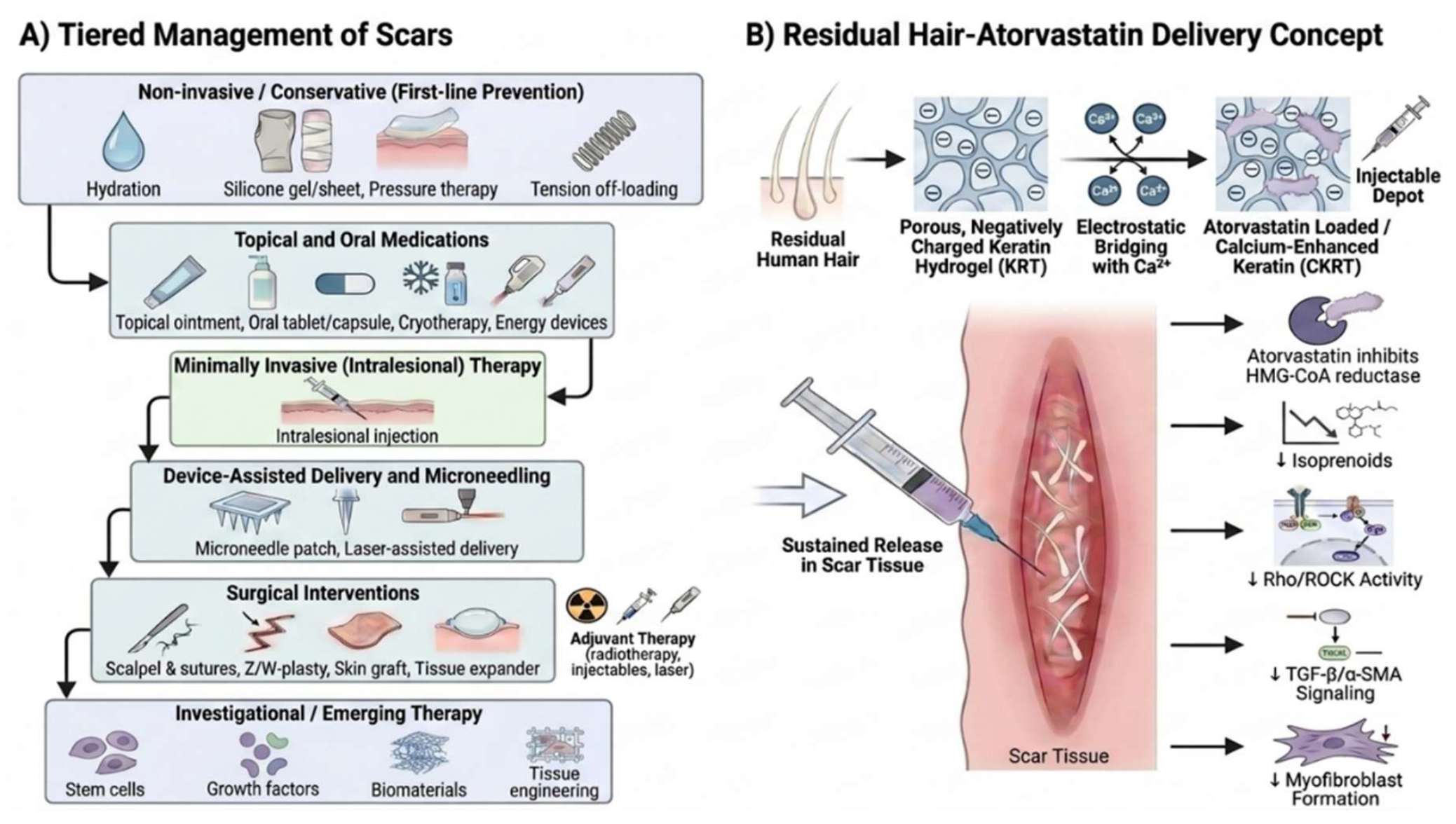
No single modality reliably cures pathological scars, and outcomes vary with phenotype, anatomic site, skin type, and time since injury. Consequently, more than forty interventions are in clinical use, and combination and stepwise regimens consistently outperform monotherapy.[7] Figure 4A organizes these options into a tiered framework from prevention to investigational therapy.
4.1. Non-Invasive and Conservative Therapy
Silicone gels and sheets are first-line for prevention and early treatment. By hydrating the stratum corneum and stabilizing mast cells, they reduce scar tightness and improve elasticity, and cohesive silicone gels may relieve symptoms somewhat better than adhesive sheets while remaining compatible with daily activities and cosmetics.[6,44] Pressure therapy stabilizes the wound and counteracts vasodilation. Garments delivering approximately 25 mmHg suppress inflammatory signaling, though prolonged use can cause itching, overheating, and discomfort.[30,45] Cryotherapy uses liquid nitrogen to induce a non-scarring inflammatory response and reported recovery rates near 76%, with cosmetic results comparable to laser but more side effects and longer follow-up.[2,46] Energy devices, including pulsed-dye and ablative lasers, target vasculature to reduce inflammation and remodel collagen, but recurrence remains common because the underlying drivers persist.[30,47]
4.2. Topical and Oral Medications
Topical agents generally lack strong stand-alone evidence and perform best as adjuncts, in part because penetration of dense scar tissue is poor. Nanoparticle and other permeation strategies have produced only modest gains and can alter a drug’s chemistry and toxicity.[48,49,50] Onion-extract gels are widely used but show limited cosmetic benefit versus controls, whereas topical verapamil, a calcium-channel antagonist, has reduced postsurgical scarring and is also given by injection.[48,51,52] Among oral agents, aspirin and other non-steroidal anti-inflammatory drugs modulate prostaglandin signaling and downstream TNF-α–induced NF-κB and JAK/STAT-3 activity relevant to fibroblast activity.
4.3. Minimally Invasive (Intralesional) Therapy
Intralesional corticosteroids remain the mainstay of management, producing vasoconstriction and direct anti-inflammatory effects that rapidly relieve itch and pain. Triamcinolone acetonide is widely used but can cause hypopigmentation, atrophy, telangiectasia, and systemic hormonal effects.[30,53] Combination injection regimens improve results: post-excision 5-fluorouracil (5-FU) limits angiogenesis and inflammation, and strontium-90 brachytherapy added to triamcinolone plus 5-FU reduced recurrence by approximately 41%.[54,55] Bleomycin suppresses TGF-β1 expression and collagen synthesis and can prevent new keloid formation for up to two years with minimal side effects, especially when paired with excision.[8,40] Other agents act on the NF-κB axis: lauromacrogol or polidocanol scleroses lesional vessels, paclitaxel inhibits NF-κB-driven proliferation, and the endogenous modulator TSG-6 (tumor necrosis factor-alpha–stimulated gene-6 protein) is reduced in keloids and limits keloid formation in mouse models.[6,56,57] Baicalein exerts anti-inflammatory effects by dose-dependently inhibiting NF-κB/Smad2/3 phosphorylation.[22] Intralesional verapamil depolymerizes fibroblast actin and activates pro-collagenase, reducing recurrence, particularly for earlobe keloids, at low cost and with high satisfaction.[58,59] Cryosurgery, including intralesional delivery of liquid nitrogen from the scar core, induces crystal formation, dehydration, and necrosis that shrink narrow-based lesions.[60,61,62]
4.4. Device-Assisted Delivery and Microneedling
Fractional CO₂ lasers (10600 nm) create microporous channels that transiently increase dermal permeability and enhance delivery of hydrophilic drugs such as 5-FU and verapamil hydrochloride. Effect duration is limited by re-epithelialization within about 24 hours, but laser-assisted delivery yields better cosmetic outcomes than topical therapy alone.[63,64] Microneedling improves scars by two complementary mechanisms: mechanically disrupting tension-bearing tissue and creating channels that bypass the stratum corneum for drug delivery. Dissolvable microneedles embedded with triamcinolone enable broad, sustained intralesional dosing with minimal pain and high satisfaction, supporting consistent at-home use that may reduce recurrence.[65,66,67] These device-based modalities also anchor the management of atrophic scars, which, unlike the raised fibroproliferative lesions that are this review’s focus, are treated by microneedling, chemical peels, laser resurfacing, tissue-augmenting fillers, and stem-cell-based approaches, individualized to the patient.[41,42]
4.5. Surgical Interventions and Combination Strategy
Surgery alone offers immediate but often temporary benefit, with high recurrence after isolated excision. Tension-releasing closures such as zig-zag, Z-plasty, and W-plasty reduce the mechanical stimulus for re-scarring.[68,69,70,71,72] Skin grafting replaces large or burn-related scars and improves range of motion and discoloration but does not fully prevent contracture because grafts stretch poorly.[70,73,74] Burn contractures that cross joints are especially debilitating and often require silicone therapy, grafting, or multiple reconstructive surgeries to restore function.[38] Flap techniques transfer adjacent or distant tissue to restore elasticity at high-tension or cosmetically sensitive sites, with a small risk of distal necrosis.[75,76,77,78] Tissue expansion gradually stretches adjacent skin to provide donor tissue for excision and closure, benefiting burn patients despite the discomfort of the implant period.[79,80] Across these approaches, adjuncts: postoperative radiotherapy, steroid or bleomycin injection, laser, and chemodenervation with botulinum toxin A to reduce tension and TGF-β synthesis, consistently improve outcomes and lower recurrence, reinforcing the principle that multimodal therapy is superior to any single intervention.[53,71,81,82,83]
5. Emerging Therapies and Future Directions
5.1. Novel Mechanistic and Regenerative Approaches
Two strategies illustrate the shift from symptom control toward scar-free repair. Laser-assisted drug delivery combines ablative fractionation with topical agents to surpass the absorption ceiling imposed by re-epithelialization and achieves higher cosmetic approval than monotherapy.[64,85] Genetic targeting of Engrailed-1–positive fibroblasts, through gene deletion or pharmacological inhibition of the Hippo/Yes-associated protein (YAP) axis has produced wound regeneration without scarring in preclinical models, pointing toward true regeneration rather than repair.[86]
5.2. Stem Cells, Cytokines, and Tissue Engineering
Mesenchymal, adipose-derived, hematopoietic, and pluripotent stem cells can accelerate angiogenesis, dampen inflammation, and promote organized healing, though the fibrotic microenvironment impairs their function, motivating co-delivery with supportive matrices and growth serums.[87,88,89,90,91] Adipose-derived stem cells and their exosomes, which can upregulate the anti-scarring isoform TGF-β3, are particularly accessible and are advancing in systematic preclinical evaluation. Anti-inflammatory cytokines such as interleukin-10 (IL-10) mitigate fibrosis, and heparin-binding EGF accelerates re-epithelialization.[92,93] Tissue engineering aims to reconstruct skin that restores function and appearance without scarring by tuning ECM composition: polypeptides, hyaluronan, glycosaminoglycans, fibronectin, collagen, chitosan, alginate, and polyester biomaterial hydrogels to guide host-cell integration and angiogenesis.[94,95,96,97,98,99] Personalized regimens that match modality to scar severity, site, skin type, and comorbidity remain the organizing clinical principle.
5.3. Atorvastatin Delivery from Residual Hair Biomaterials: Feasibility
A recurring theme of this review is that the most effective regimens combine mechanism-targeted drugs with delivery systems that sustain local concentrations while sparing surrounding tissue. Statins are attractive candidates for such a strategy. Beyond inhibiting 3-hydroxy-3-methylglutaryl coenzyme A (HMG-CoA) reductase, atorvastatin exerts pleiotropic anti-fibrotic effects: by depleting isoprenoid intermediates it suppresses Rho/ROCK signaling and, in turn, the TGF-β–driven fibroblast-to-myofibroblast transition (Figure 4B).[84,100] In a rabbit-ear model, HMG-CoA reductase inhibitors reduced hypertrophic scar formation and downregulated CTGF, and topical atorvastatin has accelerated healing in diabetic wounds, evidence that statins can favorably modulate cutaneous repair.[101,102] The principal obstacle to topical or intralesional statin therapy is the same one that limits other agents: poor, short-lived penetration of dense scar tissue and rapid clearance, which favor a controlled-release carrier. Recent work delivering atorvastatin from an electrospun membrane that enhanced mesenchymal stem-cell paracrine activity illustrates the promise of biomaterial-mediated statin delivery for the skin.[103]
Our research group has developed a carrier that addresses both sustainability and sustained release. Discarded, chemically treated human hair, an abundant waste stream, is processed by bleaching and thioglycolic acid reduction into an organized keratin-based residual hair biomaterial (KRT) that retains the crosslinked, disulfide-rich architecture of the hair cortex and therefore forms a mechanically robust hydrogel without added polymers.[84] KRT is highly porous (~89%), net-negatively charged (−15.4 µmol/g, isoelectric point ~5.5), thermally stable to 68 °C, and shear-thinning, making it injectable yet shape-retaining. Because both the matrix and atorvastatin are negatively charged, multivalent calcium ions are introduced as electrostatic linkers, producing calcium-enhanced keratin (CKRT) that binds the drug and slows its release. In characterization and finite-element analysis, calcium bridging reduced the effective drug diffusivity and slowed release roughly seventeen-fold relative to plain keratin gel. The gels were biocompatible by ISO 10993-5 (~101% viability), and the released atorvastatin retained dose-dependent inhibitory activity against fibroblasts (L-929 half-maximal effective concentration ~389 µM) and mesenchymal stem cells (~208 µM).[84]
These properties map directly onto the unmet needs identified above. An injectable, biocompatible depot could maintain anti-fibrotic atorvastatin concentrations within a keloid or hypertrophic scar over weeks from a single administration, reducing the repeated injections and the systemic exposure that limit current pharmacotherapy, while engaging the Rho/ROCK–TGF-β axis that drives myofibroblast activation. The allogeneic, low-DNA, biodegradable nature of residual hair keratin further supports translational use in wound healing, post-surgical scar prevention, and cosmetic dermatology, and the platform is intrinsically suited to co-loading complementary agents such as corticosteroids or growth factors. Important caveats temper this optimism: spanning the therapeutic window between fibroblasts and reparative progenitors, the gap between immortalized and primary cells, the mode of fibroblast inhibition, and the durability of release in vivo which we set out as specific open questions in Section 6.[84] Our group has already established the in vivo methodology this step requires: in a minipig model we quantified the foreign-body response to a subcutaneous implant and showed that a biologic extracellular-matrix envelope reduced fibrous-capsule elastin and compressive stiffness, demonstrating both that capsular fibrosis can be modulated by biomaterial design and that the response can be measured quantitatively.[31] Building on this groundwork, our research group is now evaluating subcutaneous implantation of the residual hair-atorvastatin biomaterial in a murine model, characterizing the local tissue response by macrophage immunohistochemistry and RNA sequencing of gene expression. This study is ongoing and will be reported separately.
6. Major Open Questions
Several questions must be resolved before mechanism-targeted local delivery can mature into clinical scar therapy, and each suggests a tractable line of investigation. First, can anti-fibrotic potency be separated from toxicity to reparative progenitors? Co-culture dose-finding that pairs primary keloid fibroblasts and myofibroblasts against stem and progenitor cells is needed to define a therapeutic window that suppresses matrix deposition while sparing healing. Second, does efficacy in immortalized lines translate to disease-relevant human cells? Validation should move to primary keloid- and hypertrophic-scar-derived cells, with protein-level readouts confirming engagement of the Rho/ROCK–TGF-β axis. Third, is fibroblast inhibition apoptotic or necrotic? The distinction matters because controlled apoptosis of myofibroblasts is desirable whereas necrosis may amplify inflammation. Fourth, does sustained release persist in vivo beyond the characterized seven-day window? Implantation studies in a tension-loaded model should track foreign-body response, local pharmacokinetics, and scar inhibition over weeks. Our group is now addressing this question directly through the ongoing mouse study noted above. Finally, can the field move from demographic association to actionable prediction? The absence of a validated causative locus and the marked ancestry-dependent variability in keloid risk argue for ancestry-inclusive genetic and biomarker studies to stratify patients and address the recurrence that combination regimens still fail to eliminate.
7. Conclusions and Perspectives
Pathological scarring is the visible outcome of a wound-healing program that fails to terminate. When injury reaches the reticular dermis, sustained inflammation and mechanical tension converge: through TGF-β/Smad, integrin–Rho/ROCK, and NF-κB signaling to drive fibroblast-to-myofibroblast differentiation, impaired apoptosis, and the disorganized over-deposition of matrix that defines keloids and hypertrophic scars. Keloids invade beyond the wound with increased elastin and thick keloidal collagen, whereas hypertrophic scars remain within the wound with parallel collagen III and reduced elastin, atrophic and fine-line scars complete the clinical spectrum. No current therapy is uniformly curative, but the consistent superiority of combination and stepwise regimens, and the recurrent problem of recurrence points clearly toward the same solution: deliver mechanism-targeted anti-fibrotic agents locally and durably. The atorvastatin-loaded calcium-keratin hydrogel derived from residual human hair evaluated here is one concrete, sustainable embodiment of that strategy. Rigorous in vivo and primary-cell studies will determine how far it can advance toward the ultimate goal of scar-free repair.
Author Contributions
C.M. Sams: conceptualization, investigation (literature analysis), writing – original draft. T.A. Limbana: investigation (literature analysis), writing – original draft. H. Consunji de Guzman: investigation (literature analysis), writing – review and editing. R.C. de Guzman: conceptualization, supervision, resources, investigation (literature analysis), writing – review and editing. All authors read and approved the final manuscript.
Funding
This review received no specific grant from any funding agency in the public, commercial, or not-for-profit sectors.
Institutional Review Board Statement
Not applicable.
Informed Consent Statement
Not applicable.
Data Availability Statement
Data sharing is not applicable to this article as no new data were created or analyzed in this review.
Acknowledgments
The authors thank the members of the Bioengineering Materials Laboratory of Dr. R.C. de Guzman, in particular Evan Carroll, for the in vitro work underpinning the keratin-atorvastatin delivery concept and for ongoing in vivo studies of residual-hair atorvastatin implantation.
Use of AI-Assisted Technologies
The schematic figures (Figure 1, Figure 2, Figure 3 and Figure 4) were generated using Figure Labs (figurelabs.ai) and were subsequently arranged and edited by the authors in Microsoft PowerPoint. These figures are conceptual illustrations prepared for this review and do not depict original experimental data. During manuscript preparation, the authors used Claude (Anthropic) to assist with language and editing. After using these tools, the authors reviewed and edited the content as needed and take full responsibility for the content of the published article.
Conflict of Interest
R.C. de Guzman is the founder of Hair Life Regeneration LLC (Copiague, NY, USA), which intends to develop products based on residual hair biomaterials, including the atorvastatin-loaded keratin hydrogel described in this review. H.C. de Guzman is affiliated with Hair Life Regeneration LLC. These relationships constitute a financial and commercial interest related to the subject matter of this work. The remaining authors declare no conflict of interest.
References
- In: Teot L, Mustoe TA, Middelkoop E, Gauglitz GG, eds. Textbook on Scar Management: State of the Art Management and Emerging Technologies. Cham (CH): Springer; 2020.
- Ogawa R. Keloid and hypertrophic scars are the result of chronic inflammation in the reticular dermis. Int J Mol Sci. 2017;18(3):606. [CrossRef]
- El Kinani M, Duteille F. Scar epidemiology and consequences. In: Teot L, Mustoe TA, Middelkoop E, Gauglitz GG, eds. Textbook on Scar Management: State of the Art Management and Emerging Technologies. Cham (CH): Springer; 2020:45–49.
- Kelly AP. Update on the management of keloids. Semin Cutan Med Surg. 2009;28(2):71–76. [CrossRef]
- Sadiq A, Khumalo NP, Bayat A. Genetics of keloid scarring. In: Teot L, Mustoe TA, Middelkoop E, Gauglitz GG, eds. Textbook on Scar Management: State of the Art Management and Emerging Technologies. Cham (CH): Springer; 2020:61–76.
- Wang ZC, Zhao WY, Cao Y. The roles of inflammation in keloid and hypertrophic scars. Front Immunol. 2020;11:603187. [CrossRef]
- Berman B, Maderal A, Raphael B. Keloids and hypertrophic scars: pathophysiology, classification, and treatment. Dermatologic surgery : official publication for American Society for Dermatologic Surgery [et al]. 2017;43(Suppl 1):S3–S18. [CrossRef]
- In: Brown TM, Krishnamurthy K. Histology, dermis. In: StatPearls. Treasure Island (FL): StatPearls Publishing; 2023.
- Sandulache VC, Parekh A, Li-Korotky H, Dohar JE, Hebda PA. Prostaglandin E2 inhibition of keloid fibroblast migration, contraction, and transforming growth factor (TGF)-beta1-induced collagen synthesis. Wound Repair Regen. 2007;15(1):122–133. [CrossRef]
- Periayah MH, Halim AS, Mat Saad AZ. Mechanism action of platelets and crucial blood coagulation pathways in hemostasis. Int J Hematol Oncol Stem Cell Res. 2017;11(4):319–327.
- Marshall CD, Hu MS, Leavitt T, Barnes LA, Lorenz HP, Longaker MT. Cutaneous scarring: basic science, current treatments, and future directions. Adv Wound Care (New Rochelle). 2018;7(2):29–45. [CrossRef]
- Kirk T, Ahmed A, Rognoni E. Fibroblast memory in development, homeostasis and disease. Cells. 2021;10(11):2840. [CrossRef]
- Kendall RT, Feghali-Bostwick CA. Fibroblasts in fibrosis: novel roles and mediators. Front Pharmacol. 2014;5:123. [CrossRef]
- In: Dick MK, Miao JH, Limaiem F. Histology, fibroblast. In: StatPearls. Treasure Island (FL): StatPearls Publishing; 2023.
- Watsky MA, Weber KT, Sun Y, Postlethwaite A. New insights into the mechanism of fibroblast to myofibroblast transformation and associated pathologies. Int Rev Cell Mol Biol. 2010;282:165–192.
- Werner S, Krieg T, Smola H. Keratinocyte-fibroblast interactions in wound healing. J Invest Dermatol. 2007;127(5):998–1008. [CrossRef]
- Darby IA, Laverdet B, Bonte F, Desmouliere A. Fibroblasts and myofibroblasts in wound healing. Clin Cosmet Investig Dermatol. 2014;7:301–311. [CrossRef]
- Tai Y, Woods EL, Dally J. Myofibroblasts: function, formation, and scope of molecular therapies for skin fibrosis. Biomolecules. 2021;11(8):1095. [CrossRef]
- Wynn TA. Common and unique mechanisms regulate fibrosis in various fibroproliferative diseases. J Clin Invest. 2007;117(3):524–529. [CrossRef]
- Hinz B, Gabbiani G. Cell-matrix and cell-cell contacts of myofibroblasts: role in connective tissue remodeling. Thromb Haemost. 2003;90(6):993–1002. [CrossRef]
- Hinz B, Celetta G, Tomasek JJ, Gabbiani G, Chaponnier C. Alpha-smooth muscle actin expression upregulates fibroblast contractile activity. Mol Biol Cell. 2001;12(9):2730–2741. [CrossRef]
- Zhang T, Wang XF, Wang ZC. Current potential therapeutic strategies targeting the TGF-beta/Smad signaling pathway to attenuate keloid and hypertrophic scar formation. Biomed Pharmacother. 2020;129:110287. [CrossRef]
- Sun Q, Guo S, Wang CC. Cross-talk between TGF-beta/Smad pathway and Wnt/beta-catenin pathway in pathological scar formation. Int J Clin Exp Pathol. 2015;8(6):7631–7639.
- Ghosh AK, Vaughan DE. PAI-1 in tissue fibrosis. J Cell Physiol. 2012;227(2):493–507. [CrossRef]
- Aarabi S, Bhatt KA, Shi Y. Mechanical load initiates hypertrophic scar formation through decreased cellular apoptosis. FASEB J. 2007;21(12):3250–3261. [CrossRef]
- Wynn TA, Ramalingam TR. Mechanisms of fibrosis: therapeutic translation for fibrotic disease. Nature medicine. 2012;18(7):1028–1040. [CrossRef]
- Hinz B. Tissue stiffness, latent TGF-beta1 activation, and mechanical signal transduction: implications for the pathogenesis and treatment of fibrosis. Curr Rheumatol Rep. 2009;11(2):120–126. [CrossRef]
- Grinnell F, Zhu M, Carlson MA, Abrams JM. Release of mechanical tension triggers apoptosis of human fibroblasts in a model of regressing granulation tissue. Experimental cell research. 1999;248(2):608–619. [CrossRef]
- Derderian CA, Bastidas N, Lerman OZ. Mechanical strain alters gene expression in an in vitro model of hypertrophic scarring. Ann Plast Surg. 2005;55(1):69–75. [CrossRef]
- Ogawa R, Akaishi S. Endothelial dysfunction may play a key role in keloid and hypertrophic scar pathogenesis - keloids and hypertrophic scars may be vascular disorders. Med Hypotheses. 2016;96:51–60. [CrossRef]
- de Guzman RC, Meer AS, Mathews AA, et al. Reduced fibrous capsule elastic fibers from biologic ECM-enveloped CIEDs in minipigs, supported with a novel compression mechanics model. Biomed Mater Eng. 2023;34(4):289–304. [CrossRef]
- Clark JA, Turner ML, Howard L, Stanescu H, Kleta R, Kopp JB. Description of familial keloids in five pedigrees: evidence for autosomal dominant inheritance and phenotypic heterogeneity. BMC Dermatol. 2009;9:8. [CrossRef]
- Shih B, Bayat A. Genetics of keloid scarring. Arch Dermatol Res. 2010;302(5):319–339. [CrossRef]
- Marneros AG, Norris JE, Watanabe S, Reichenberger E, Olsen BR. Genome scans provide evidence for keloid susceptibility loci on chromosomes 2q23 and 7p11. J Invest Dermatol. 2004;122(5):1126–1132. [CrossRef]
- Kikuchi K, Kadono T, Takehara K. Effects of various growth factors and histamine on cultured keloid fibroblasts. Dermatology. 1995;190(1):4–8. [CrossRef]
- Shih B, McGrouther DA, Bayat A. Profiling of tissue biopsies as opposed to cell cultures from keloid margin compared to its surrounding normal skin differentiates between novel keloid biomarkers. Dermatol Res Pract. 2010;2010:316829.
- Basson R, Bayat A. Skin scarring: latest update on objective assessment and optimal management. Front Med (Lausanne). 2022;9:942756. [CrossRef]
- Goel A, Shrivastava P. Post-burn scars and scar contractures. Indian J Plast Surg. 2010;43(Suppl):S63–S71. [CrossRef]
- In: Schmieder SJ, Ferrer-Bruker SJ. Hypertrophic scarring. In: StatPearls. Treasure Island (FL): StatPearls Publishing; 2023.
- Vanhooteghem O. Remarkable efficiency of surgical shave excision of keloids followed by intralesional injection of bleomycin: a retrospective study of 314 cases. Dermatol Ther. 2022;35(5):e15425. [CrossRef]
- Patel L, McGrouther D, Chakrabarty K. Evaluating evidence for atrophic scarring treatment modalities. JRSM Open. 2014;5(9):2054270414540139. [CrossRef]
- Gozali MV, Zhou B. Effective treatments of atrophic acne scars. J Clin Aesthet Dermatol. 2015;8(5):33–40.
- Niemeier V, Kupfer J, Gieler U. Acne vulgaris - psychosomatic aspects. J Dtsch Dermatol Ges. 2010;8(Suppl 1):S95–S104. [CrossRef]
- Moortgat P, Meirte J, Maertens K, Lafaire C, De Cuyper L, Anthonissen M. Can a cohesive silicone bandage outperform an adhesive silicone gel sheet in the treatment of scars? A randomized comparative trial. Plastic and reconstructive surgery. 2019;143(3):902–911. [CrossRef]
- Lu J, Xu T, Liu Y, Yang M, Jiang X. Pressure garment therapy for preventing hypertrophic and keloid scarring after a major burn injury. Cochrane database of systematic reviews. 2017(7):CD012744. [CrossRef]
- Meymandi SS, Moosazadeh M, Rezazadeh A. Comparing two methods of cryotherapy and intense pulsed light with triamcinolone injection in the treatment of keloid and hypertrophic scars: a clinical trial. Osong Public Health Res Perspect. 2016;7(5):313–319. [CrossRef]
- In: Zainib M, Amin NP. Radiation therapy in the treatment of keloids. In: StatPearls. Treasure Island (FL): StatPearls Publishing; 2023.
- Song T, Kim KH, Lee KW. Randomised comparison of silicone gel and onion extract gel for post-surgical scars. J Obstet Gynaecol. 2018;38(5):702–707. [CrossRef]
- Alegre-Sanchez A, Jimenez-Gomez N, Boixeda P. Laser-assisted drug delivery. Actas Dermosifiliogr (Engl Ed). 2018;109(10):858–867. [CrossRef]
- Ning X, Wiraja C, Chew WTS, Fan C, Xu C. Transdermal delivery of Chinese herbal medicine extract using dissolvable microneedles for hypertrophic scar treatment. Acta Pharm Sin B. 2021;11(9):2937–2944. [CrossRef]
- Jackson BA, Shelton AJ. Pilot study evaluating topical onion extract as treatment for postsurgical scars. Dermatologic surgery : official publication for American Society for Dermatologic Surgery [et al]. 1999;25(4):267–269. [CrossRef]
- Boggio RF, Boggio LF, Galvao BL, Machado-Santelli GM. Topical verapamil as a scar modulator. Aesthetic Plast Surg. 2014;38(5):968–975. [CrossRef]
- Morelli Coppola M, Salzillo R, Segreto F, Persichetti P. Triamcinolone acetonide intralesional injection for the treatment of keloid scars: patient selection and perspectives. Clin Cosmet Investig Dermatol. 2018;11:387–396. [CrossRef]
- Deng K, Xiao H, Liu X, Ogawa R, Xu X, Liu Y. Strontium-90 brachytherapy following intralesional triamcinolone and 5-fluorouracil injections for keloid treatment: a randomized controlled trial. PLoS One. 2021;16(3):e0248799. [CrossRef]
- Shah VV, Aldahan AS, Mlacker S, Alsaidan M, Samarkandy S, Nouri K. 5-Fluorouracil in the treatment of keloids and hypertrophic scars: a comprehensive review of the literature. Dermatol Ther (Heidelb). 2016;6(2):169–183. [CrossRef]
- Huang J, He P, Li D, Zhou J. Predictive factors analysis of cesarean scar pregnancy treated by local injection of lauromacrogol combined with curettage. Medicine (Baltimore). 2023;102(4):e32783. [CrossRef]
- Wang M, Chen L, Huang W. Improving the anti-keloid outcomes through liposomes loading paclitaxel-cholesterol complexes. Int J Nanomedicine. 2019;14:1385–1400. [CrossRef]
- Kang Y, Lee DA, Higginbotham EJ. In vitro evaluation of antiproliferative potential of calcium channel blockers in human Tenon's fibroblasts. Experimental eye research. 1997;64(6):913–925. [CrossRef]
- El-Kamel MF, Selim MK, Alghobary MF. Keloidectomy with core fillet flap and intralesional verapamil injection for recurrent earlobe keloids. Indian journal of dermatology, venereology and leprology. 2016;82(6):659–665. [CrossRef]
- Barara M, Mendiratta V, Chander R. Cryotherapy in treatment of keloids: evaluation of factors affecting treatment outcome. J Cutan Aesthet Surg. 2012;5(3):185–189. [CrossRef]
- Graham GF, Barham KL. Cryosurgery. Curr Probl Dermatol. 2003;15(6):229–250. [CrossRef]
- O'Boyle CP, Shayan-Arani H, Hamada MW. Intralesional cryotherapy for hypertrophic scars and keloids: a review. Scars Burn Heal. 2017;3:2059513117702162. [CrossRef]
- Zhang Z, Chen J, Huang J, Wo Y, Zhang Y, Chen X. Experimental study of 5-fluorouracil encapsulated ethosomes combined with CO2 fractional laser to treat hypertrophic scar. Nanoscale research letters. 2018;13(1):26. [CrossRef]
- Sabry HH, Abdel Rahman SH, Hussein MS, Sanad RR, Abd El Azez TA. The efficacy of combining fractional carbon dioxide laser with verapamil hydrochloride or 5-fluorouracil in the treatment of hypertrophic scars and keloids: a clinical and immunohistochemical study. Dermatologic surgery : official publication for American Society for Dermatologic Surgery [et al]. 2019;45(4):536–546. [CrossRef]
- Claytor RB, Sheck CG, Chopra V. Microneedling outcomes in early postsurgical scars. Plastic and reconstructive surgery. 2022;150(3):557e–561e. [CrossRef]
- Juhasz MLW, Cohen JL. Microneedling for the treatment of scars: an update for clinicians. Clin Cosmet Investig Dermatol. 2020;13:997–1003. [CrossRef]
- Tan CWX, Tan WD, Srivastava R, Yow AP, Wong DWK, Tey HL. Dissolving triamcinolone-embedded microneedles for the treatment of keloids: a single-blinded intra-individual controlled clinical trial. Dermatol Ther (Heidelb). 2019;9(3):601–611. [CrossRef]
- Burns S, Subramanian P. The 'double scalpel' scar excision technique. Ann R Coll Surg Engl. 2021;103(1):77. [CrossRef]
- Fuenmayor P, Quinonez H, Salas R, Pujadas Z. Outcomes of surgical excision and high-dose-rate brachytherapy for earlobe keloids. World J Plast Surg. 2021;10(1):78–84. [CrossRef]
- Ogawa R. Surgery for scar revision and reduction: from primary closure to flap surgery. Burns Trauma. 2019;7:7. [CrossRef]
- Ogawa R, Tosa M, Dohi T, Akaishi S, Kuribayashi S. Surgical excision and postoperative radiotherapy for keloids. Scars Burn Heal. 2019;5:2059513119891113. [CrossRef]
- Longacre JJ, Berry HK, Basom CR, Townsend SF. The effects of Z plasty on hypertrophic scars. Scand J Plast Reconstr Surg. 1976;10(2):113–128. [CrossRef]
- Ozhathil DK, Tay MW, Wolf SE, Branski LK. A narrative review of the history of skin grafting in burn care. Medicina. 2021;57(4):380. [CrossRef]
- Uyulmaz S, Sanchez Macedo N, Rezaeian F, Giovanoli P, Lindenblatt N. Nanofat grafting for scar treatment and skin quality improvement. Aesthet Surg J. 2018;38(4):421–428. [CrossRef]
- In: Saber AY, Hohman MH, Dreyer MA. Basic flap design. In: StatPearls. Treasure Island (FL): StatPearls Publishing; 2023.
- Reid I, Ferris S. Extensive abdominal surgery and scar does not absolutely contraindicate bilateral flap harvest from the abdomen: a case report. Int J Surg Case Rep. 2021;87:106421. [CrossRef]
- In: Zito PM, Jawad BA, Hohman MH, Mazzoni T. Z-plasty. In: StatPearls. Treasure Island (FL): StatPearls Publishing; 2023.
- Uzun C, Demir CI, Yasar EK. Effects of different scar types on flap viability in a skin flap model: an experimental study. Turk J Med Sci. 2022;52(4):1389–1399. [CrossRef]
- Sharobaro VI, Moroz VY, Starkov YG, Yudenich AA. Treatment of post-burn scar deformations using tissue expansion and endoscopy. Ann Burns Fire Disasters. 2008;21(1):31–37.
- Zhang M, Fang Y, Li H. Prognostic analysis of skin scar loosening and tissue-expansive autologous skin grafting in the treatment of skin postburn scars. J Craniofac Surg. 2023;34(5):e411–e415. [CrossRef]
- Kent RA, Shupp J, Fernandez S, Prindeze N, DeKlotz CMC. Effectiveness of early laser treatment in surgical scar minimization: a systematic review and meta-analysis. Dermatologic surgery : official publication for American Society for Dermatologic Surgery [et al]. 2020;46(3):402–410. [CrossRef]
- Ockendon M, Khan S, Gabbar OA, Hutchinson J, Nelson IW. Zig-zag incision for complex posterior spine procedures. Ann R Coll Surg Engl. 2007;89(2):187–188. [CrossRef]
- In: Prohaska J, Sequeira Campos M, Cook C. Rotation flaps. In: StatPearls. Treasure Island (FL): StatPearls Publishing; 2023.
- Carroll EA, Tarabokija AJ, Chaudhry H, Meer AS, de Guzman RC. Experimental and finite element analysis of a residual hair keratin-based hydrogel with calcium for atorvastatin sequestration, release, and in vitro activity. Macromol Biosci. 2026;26:e00541. [CrossRef]
- Lee J, Kim J. Emerging technologies in scar management: laser-assisted delivery of therapeutic agents. In: Teot L, Mustoe TA, Middelkoop E, Gauglitz GG, eds. Textbook on Scar Management: State of the Art Management and Emerging Technologies. Cham (CH): Springer; 2020:443–449.
- Mascharak S, desJardins-Park HE, Davitt MF. Preventing Engrailed-1 activation in fibroblasts yields wound regeneration without scarring. Science. 2021;372(6540):eaba2374. [CrossRef]
- Thomson JA, Itskovitz-Eldor J, Shapiro SS. Embryonic stem cell lines derived from human blastocysts. Science. 1998;282(5391):1145–1147. [CrossRef]
- Takahashi K, Tanabe K, Ohnuki M. Induction of pluripotent stem cells from adult human fibroblasts by defined factors. Cell. 2007;131(5):861–872. [CrossRef]
- Duscher D, Barrera J, Wong VW. Stem cells in wound healing: the future of regenerative medicine? A mini-review. Gerontology. 2016;62(2):216–225. [CrossRef]
- Hyun JS, Montoro DT, Lo DD. The seed and the soil: optimizing stem cells and their environment for tissue regeneration. Ann Plast Surg. 2013;70(2):235–239. [CrossRef]
- Jones RE, Foster DS, Hu MS, Longaker MT. Wound healing and fibrosis: current stem cell therapies. Transfusion. 2019;59(S1):884–892. [CrossRef]
- King A, Balaji S, Le LD, Crombleholme TM, Keswani SG. Regenerative wound healing: the role of interleukin-10. Adv Wound Care (New Rochelle). 2014;3(4):315–323. [CrossRef]
- Sziksz E, Pap D, Lippai R. Fibrosis related inflammatory mediators: role of the IL-10 cytokine family. Mediators Inflamm. 2015;2015:764641. [CrossRef]
- Metcalfe AD, Ferguson MW. Tissue engineering of replacement skin: the crossroads of biomaterials, wound healing, embryonic development, stem cells and regeneration. J R Soc Interface. 2007;4(14):413–437. [CrossRef]
- Whitby DJ, Ferguson MW. Immunohistochemical localization of growth factors in fetal wound healing. Dev Biol. 1991;147(1):207–215. [CrossRef]
- Lindblad WJ. Perspective article: collagen expression by novel cell populations in the dermal wound environment. Wound Repair Regen. 1998;6(3):186–193. [CrossRef]
- Vats A, Tolley NS, Polak JM, Gough JE. Scaffolds and biomaterials for tissue engineering: a review of clinical applications. Clin Otolaryngol Allied Sci. 2003;28(3):165–172. [CrossRef]
- Hudon V, Berthod F, Black AF, Damour O, Germain L, Auger FA. A tissue-engineered endothelialized dermis to study the modulation of angiogenic and angiostatic molecules on capillary-like tube formation in vitro. Br J Dermatol. 2003;148(6):1094–1104. [CrossRef]
- Kuntz RM, Saltzman WM. Neutrophil motility in extracellular matrix gels: mesh size and adhesion affect speed of migration. Biophys J. 1997;72(3):1472–1480. [CrossRef]
- Wei YH, Liao SL, Wang SH, Wang CC, Yang CH. Simvastatin and ROCK inhibitor Y-27632 inhibit myofibroblast differentiation of Graves' ophthalmopathy-derived orbital fibroblasts via RhoA-mediated ERK and p38 signaling pathways. Front Endocrinol (Lausanne). 2021;11:607968. [CrossRef]
- Ko JH, Kim PS, Zhao Y, Hong SJ, Mustoe TA. HMG-CoA reductase inhibitors (statins) reduce hypertrophic scar formation in a rabbit ear wounding model. Plastic and reconstructive surgery. 2012;129(2):252e–261e. [CrossRef]
- Toker S, Gulcan E, Cayci MK, Olgun EG, Erbilen E, Ozay Y. Topical atorvastatin in the treatment of diabetic wounds. Am J Med Sci. 2009;338(3):201–204. [CrossRef]
- Xiang J, Zhou L, Xie Y. Mesh-like electrospun membrane loaded with atorvastatin facilitates cutaneous wound healing by promoting the paracrine function of mesenchymal stem cells. Stem Cell Res Ther. 2022;13(1):190. [CrossRef]
Figure 1.
Human skin structure and its healing. A) Cross-section of the epidermis, papillary and reticular dermis, and hypodermis with follicular and vascular structures. Injuries breaching the reticular dermis predispose to pathological scarring. B) The four overlapping phases of repair: hemostasis, inflammation, proliferation, and remodeling, showing the transition from a provisional collagen III extracellular matrix to organized collagen I.
Figure 1.
Human skin structure and its healing. A) Cross-section of the epidermis, papillary and reticular dermis, and hypodermis with follicular and vascular structures. Injuries breaching the reticular dermis predispose to pathological scarring. B) The four overlapping phases of repair: hemostasis, inflammation, proliferation, and remodeling, showing the transition from a provisional collagen III extracellular matrix to organized collagen I.
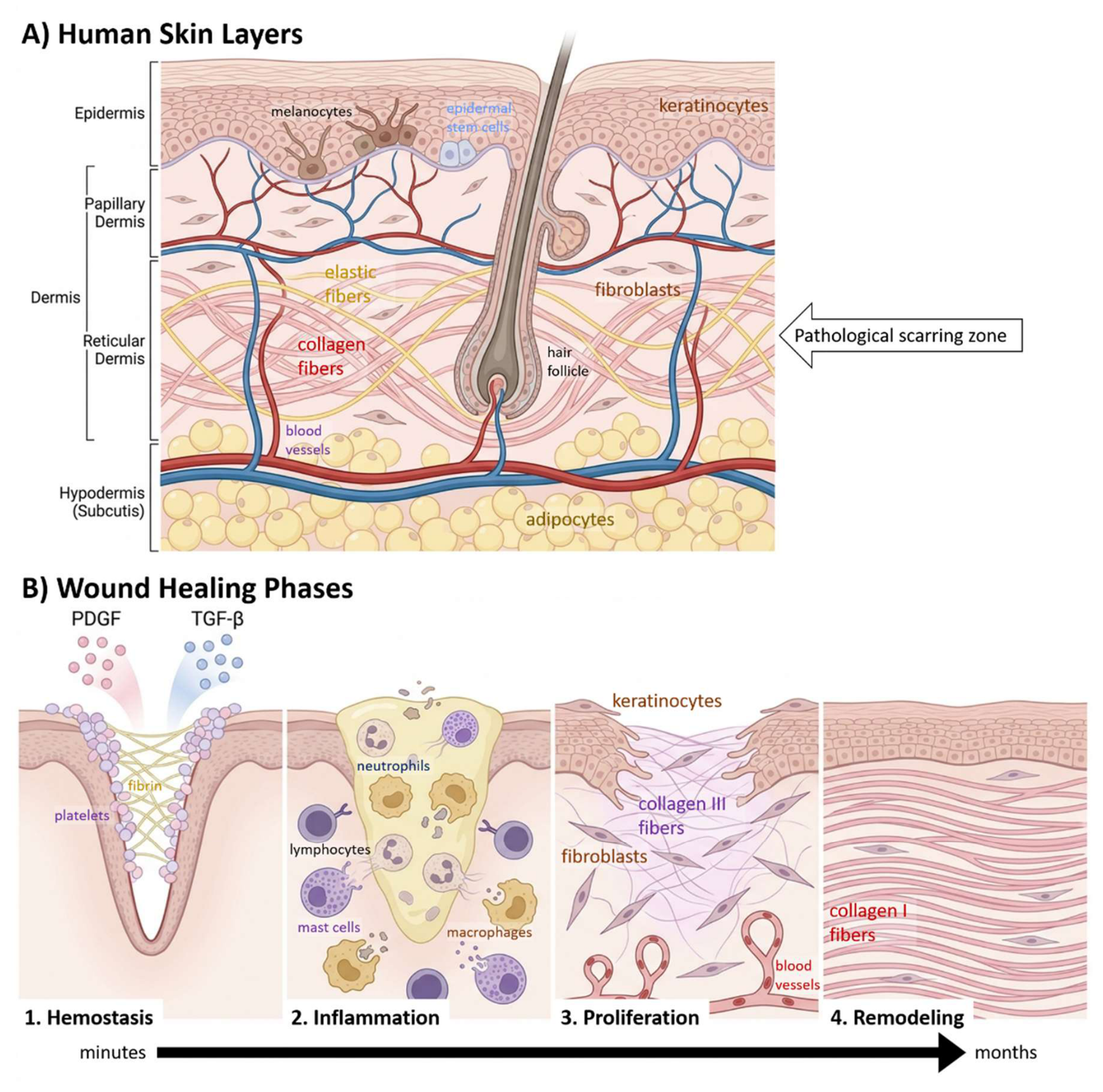
Figure 2.
Convergent signaling driving the fibroblast-to-myofibroblast transition. A) Canonical TGF-β/Smad signaling activates transcription of collagen I, α-SMA, CTGF, and PAI-1. B) Mechanical tension acts through integrins and Rho/ROCK to increase contractility and activate latent TGF-β. C) Tumor necrosis factor-α (TNF-α)/nuclear factor-κB (NF-κB) sustains a pro-fibrotic program. These pathways converge on myofibroblast activation and pathological matrix deposition and define the principal points of therapeutic interception.
Figure 2.
Convergent signaling driving the fibroblast-to-myofibroblast transition. A) Canonical TGF-β/Smad signaling activates transcription of collagen I, α-SMA, CTGF, and PAI-1. B) Mechanical tension acts through integrins and Rho/ROCK to increase contractility and activate latent TGF-β. C) Tumor necrosis factor-α (TNF-α)/nuclear factor-κB (NF-κB) sustains a pro-fibrotic program. These pathways converge on myofibroblast activation and pathological matrix deposition and define the principal points of therapeutic interception.
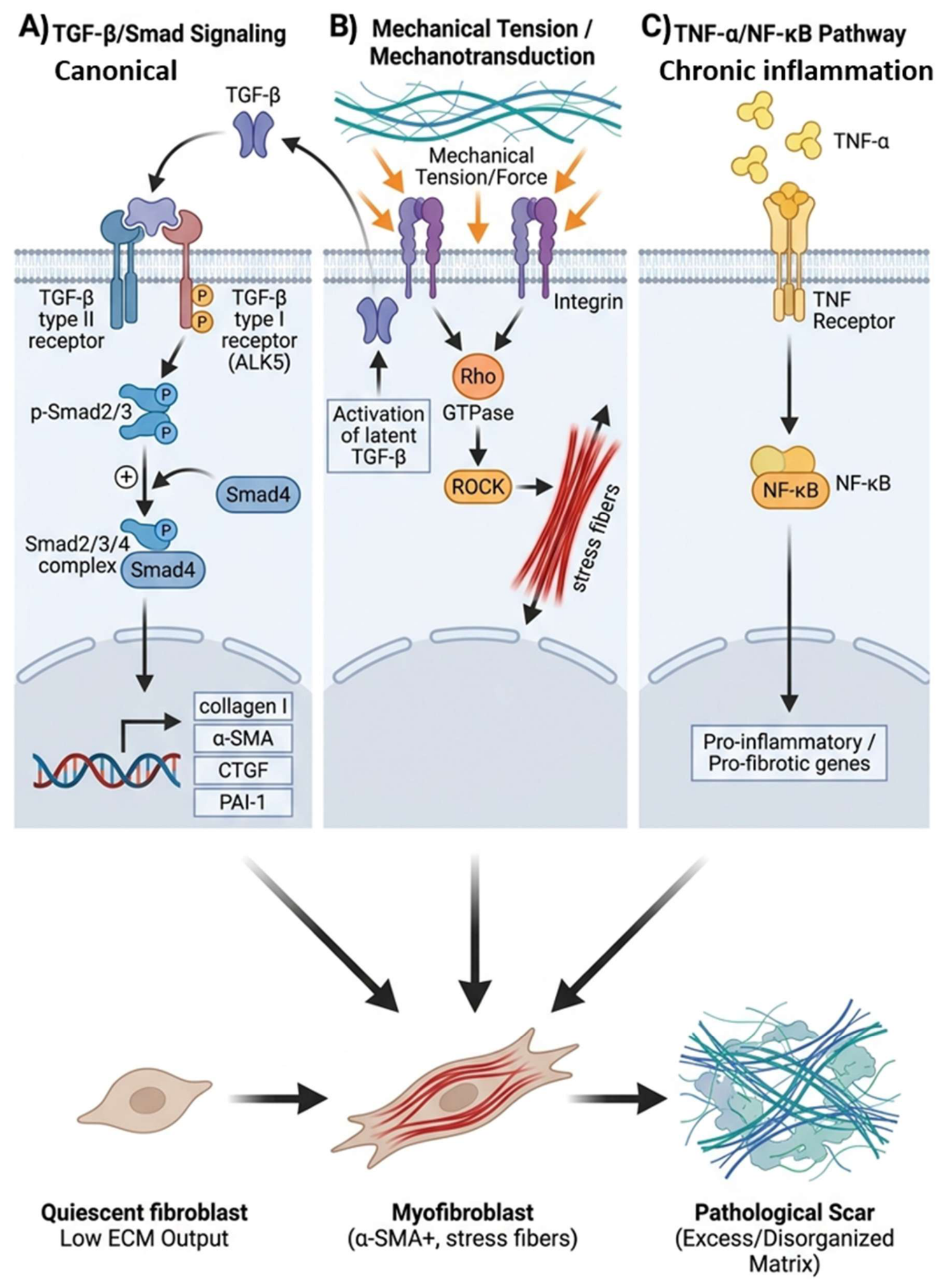
Figure 3.
Classification and distinguishing features of skin scars. A) Surface profile and dermal cross-section of fine-line/normal, hypertrophic, keloid, and atrophic scars, contrasting collagen organization, lesion elevation, and elastin content. B) Comparison of the clinical and histological features that separate hypertrophic scars from keloids.
Figure 3.
Classification and distinguishing features of skin scars. A) Surface profile and dermal cross-section of fine-line/normal, hypertrophic, keloid, and atrophic scars, contrasting collagen organization, lesion elevation, and elastin content. B) Comparison of the clinical and histological features that separate hypertrophic scars from keloids.
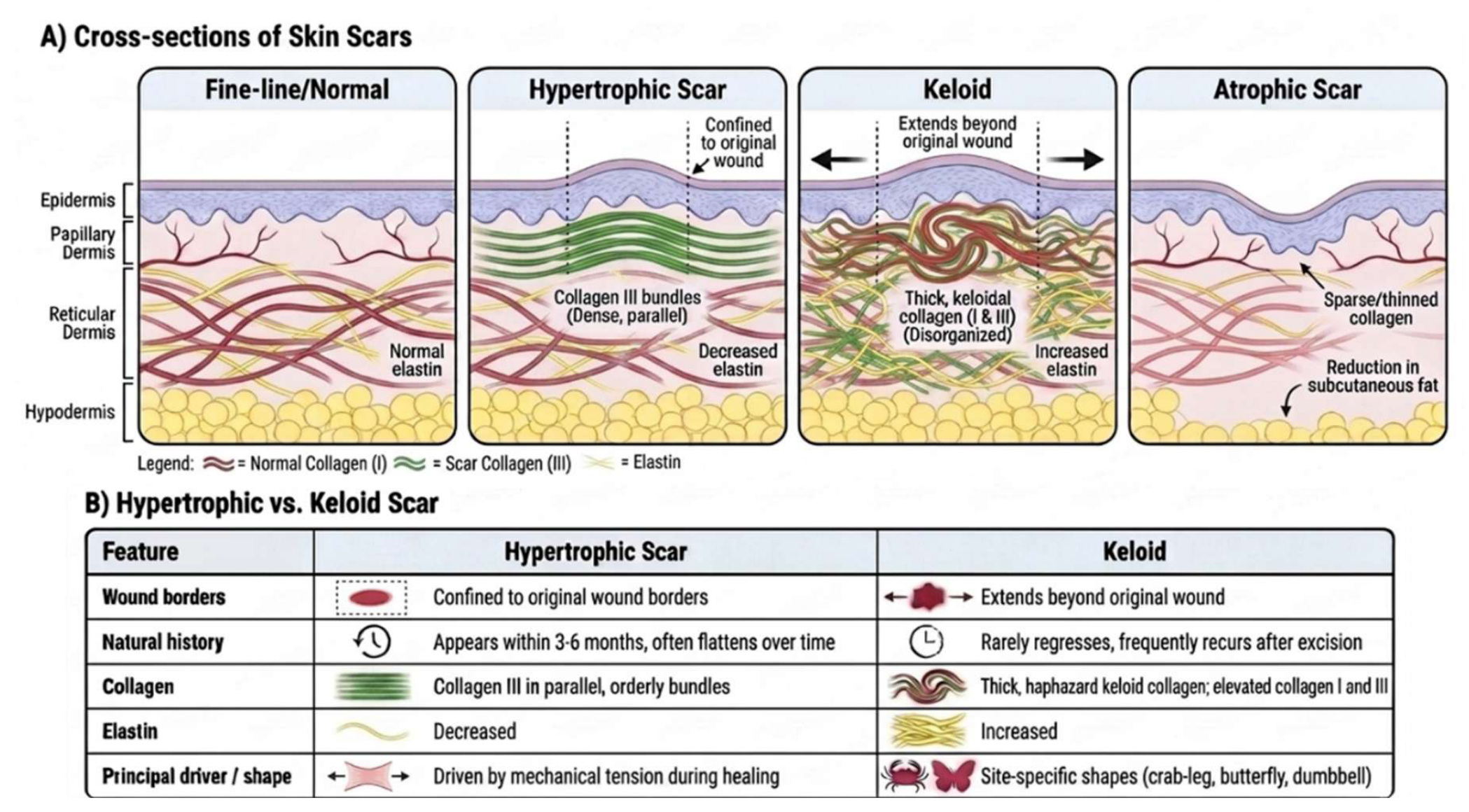
Figure 4.
Treatment landscape and a residual-hair keratin-atorvastatin delivery concept. A) Tiered management of pathological scars from prevention to investigational therapy. B) Proposed future direction: residual human hair is processed into a porous, negatively charged keratin hydrogel. Calcium ions bridge the matrix to negatively charged atorvastatin (CKRT), forming an injectable depot for sustained release. Released atorvastatin inhibits 3-hydroxy-3-methylglutaryl coenzyme A (HMG-CoA) reductase, lowering isoprenoids and Rho/ROCK activity and thereby TGF-β/α-SMA signaling and myofibroblast formation. Reported in vitro performance is summarized from Carroll et al. (2026).[84].
Figure 4.
Treatment landscape and a residual-hair keratin-atorvastatin delivery concept. A) Tiered management of pathological scars from prevention to investigational therapy. B) Proposed future direction: residual human hair is processed into a porous, negatively charged keratin hydrogel. Calcium ions bridge the matrix to negatively charged atorvastatin (CKRT), forming an injectable depot for sustained release. Released atorvastatin inhibits 3-hydroxy-3-methylglutaryl coenzyme A (HMG-CoA) reductase, lowering isoprenoids and Rho/ROCK activity and thereby TGF-β/α-SMA signaling and myofibroblast formation. Reported in vitro performance is summarized from Carroll et al. (2026).[84].
Disclaimer/Publisher’s Note: The statements, opinions and data contained in all publications are solely those of the individual author(s) and contributor(s) and not of MDPI and/or the editor(s). MDPI and/or the editor(s) disclaim responsibility for any injury to people or property resulting from any ideas, methods, instructions or products referred to in the content. |
© 2026 by the authors. Licensee MDPI, Basel, Switzerland. This article is an open access article distributed under the terms and conditions of the Creative Commons Attribution (CC BY) license (http://creativecommons.org/licenses/by/4.0/).
Copyright: This open access article is published under a Creative Commons CC BY 4.0 license, which permit the free download, distribution, and reuse, provided that the author and preprint are cited in any reuse.


