
Submitted:
09 June 2026
Posted:
10 June 2026
You are already at the latest version
Abstract
Background: The widespread success of antiretroviral therapy (ART) has transformed HIV into a chronic condition, shifting clinical attention toward aging-associated comorbidities, including autoimmune and rheumatologic diseases. However, the epidemiology, clinical spectrum, and treatment outcomes of these conditions in older people living with HIV (PLH) remain incompletely characterized. Objective: This scoping review aimed to map contemporary evidence on autoimmune and rheumatologic diseases in aging PLH in the ART era, with emphasis on epidemiology, clinical phenotypes, diagnostic challenges, and therapeutic outcomes. Methods: A systematic search of PubMed, Embase, and Scopus was conducted for studies published from January 1, 2021, onward. Eligible studies included adult PLH with autoimmune or rheumatologic conditions and were screened according to PRISMA-ScR methodology. Case reports, non-human studies, and studies published before 2021 were excluded. Data were extracted narratively from included studies. Results: The search yielded 438 records, of which 134 duplicates were removed. After title, abstract, and full-text screening, 8 studies were included. The evidence identified a heterogeneous spectrum of autoimmune and rheumatologic manifestations in PLH, including systemic lupus erythematosus, reactive arthritis, psoriatic arthritis, rheumatic heart disease, immune thrombocytopenia, renal immune-mediated pathology, and myasthenia gravis. Contemporary data suggest that biologic and targeted small-molecule therapies are generally effective and well tolerated in selected PLH, although opportunistic infections and transient viral load increases have been reported with some agents. Conclusion: Autoimmune and rheumatologic diseases in aging PLH represent an emerging ART-era challenge. Prospective studies and multidisciplinary guidelines are needed to optimize diagnosis and treatment.
Keywords:
HIV
; aging
; rheumatic diseases
; autoimmune diseases
; inflammaging
; biologic therapy
1. Introduction
The success of modern antiretroviral therapy (ART) has shifted the focus of care from opportunistic infections to the management of chronic, age-related conditions [1]. Today, older adults are an expanding demographic within the population of people living with HIV (PLH). With this comes a phenomenon known as "inflammaging", which is a state of chronic, low-grade inflammation with immune dysregulation and immunosenescence [2]. This state of altered immune activation predisposes to the development of autoimmune and rheumatologic conditions, many of which are already more prevalent in aging adult populations [2].
Despite the growing recognition of these overlapping pathophysiologies, the true epidemiology and clinical phenotypes of new-onset autoimmune diseases in older, virally suppressed individuals remain poorly defined. Historically, studies examining rheumatologic manifestations in HIV have been limited by heterogeneous study designs, small cohort sizes, and the frequent mixing of data from the pre-ART and modern ART eras, which obscures the current clinical reality. For instance, while certain reactive arthropathies have declined with widespread ART use, the incidence and expression of classic autoimmune diseases like rheumatoid arthritis are not fully understood in the context of long-term viral suppression (Hanberg et al., 2021).
Differentiating autoimmune pathology from chronic HIV-related mimics remains a diagnostic challenge. HIV can induce the production of autoantibodies, such as rheumatoid factor, and present with non-specific inflammatory arthritis that can mimic other rheumatologic diseases [3]. Furthermore, the management of autoimmune conditions in PLH has safety concerns, especially with the use of immunosuppressive therapies like disease-modifying antirheumatic drugs (DMARDs) and modern biologics in patients with uncontrolled HIV infection [3]. Thus the treatment dilemma is balancing the autoimmune control against the theoretical risks of worsening immunosuppression or drug toxicity.
The intersection of rheumatologic diseases with aging-related syndromes, such as multimorbidity and frailty, further complicates patient management [4]. Data focusing on these issues remain scarce, especially in PLH who are usually underrepresented within these cohorts [5]. Given the aging population of PLH and the clinical relevance of these issues to contemporary rheumatology and infectious disease practices, there is a need to systematically evaluate existing literature regarding rheumatologic conditions in PLH. While prior reviews have described HIV-associated rheumatic manifestations broadly or focused generally on aging with HIV, no synthesis, to our knowledge, specifically addresses autoimmune disease in the older, PLH cohort. This scoping review aims to map the current evidence regarding the epidemiology, clinical phenotypes, diagnostic challenges, and treatment outcomes of autoimmune and rheumatologic conditions in older PLH in the ART era, identifying key gaps to inform future research and clinical guidelines.
2. Materials and Methods
This scoping review followed the PRISMA-ScR (Preferred Reporting Items for Systematic Reviews and Meta-Analyses Extension for Scoping Reviews) guidelines (Figure 1) [6].
The PRISMA checklist is provided as supplementary material with this manuscript.
To capture contemporary clinical data reflecting the modern antiretroviral therapy (ART) era, we restricted our search to literature published from January 1, 2021, onward. Studies were eligible for inclusion if they met the following criteria: (1) involved adult human subjects, with "older adult" or "aging" defined according to the parameters established by each individual study; (2) included patients with confirmed HIV infection and an autoimmune or rheumatologic condition; and (3) were published in 2021 or later. We excluded non-human studies, literature published prior to 2021, and case reports.
We systematically searched three electronic databases: PubMed, Embase, and Scopus. The search strategy combined concepts related to HIV, aging, and rheumatologic or autoimmune conditions. The exact Boolean search strings utilized for each database were:
- Scopus: TITLE-ABS-KEY ( ( "HIV" OR "human immunodeficiency virus" OR "PLWH" ) AND ( "aging" OR "older adults" OR "elderly" OR "geriatric" ) AND ( "rheumatologic" OR "autoimmune" OR "arthritis" OR "connective tissue disease" OR "frailty" ) AND ( "antiretroviral therapy" OR "ART" OR "cART" ) ) AND PUBYEAR > 2020
- Embase: ('human immunodeficiency virus infection'/exp OR 'human immunodeficiency virus':ti,ab,kw OR 'hiv':ti,ab,kw) AND ('aging'/exp OR 'aged'/exp OR 'aging':ti,ab,kw OR 'older adult':ti,ab,kw OR 'elderly':ti,ab,kw) AND ('rheumatic disease'/exp OR 'autoimmune disease'/exp OR 'rheumatologic':ti,ab,kw OR 'autoimmune':ti,ab,kw OR 'arthritis':ti,ab,kw OR 'frailty':ti,ab,kw) AND ('antiretroviral therapy'/exp OR 'cart':ti,ab,kw OR 'art':ti,ab,kw) AND [2021-2026]/py
- PubMed: (("HIV"[Mesh] OR "HIV Infections"[Mesh] OR "HIV") AND ("Aged"[Mesh] OR "Aging"[Mesh] OR "older adults" OR "elderly" OR "geriatric") AND ("Rheumatic Diseases"[Mesh] OR "Autoimmune Diseases"[Mesh] OR "rheumatology" OR "autoimmunity" OR "arthritis" OR "frailty") AND ("Antiretroviral Therapy, Highly Active"[Mesh] OR "ART" OR "cART")) AND ("2021/01/01"[Date - Publication] : "3000/12/31"[Date - Publication])
The initial search yielded 438 total records (152 from Scopus, 237 from Embase, and 49 from PubMed). Citations were exported and then uploaded to Rayyan [7] for detection of duplicates and applying selection criteria.
Title and abstract screening was conducted by two independent, blinded reviewers. In instances where the two initial reviewers disagreed on an article's eligibility, the article was advanced to a full-text review by an independent third reviewer who resolved the conflict and determined eligibility after full-text assessment. All articles that met inclusion criteria then underwent full-text review for data extraction.
Data from the final included articles were extracted into a standardized charting table. Extracted variables included study design, patient demographics, HIV-specific parameters (e.g., CD4+ T-cell count, HIV RNA viral load, ART regimen), identified autoimmune conditions, and utilized immunomodulatory agents or biologics. Consistent with scoping review methodology, data were synthesized narratively to highlight patterns in autoimmune disease presentation and the use of targeted therapies, rather than calculating pooled incidence estimates.
Registration: This review protocol is registered in Open Science Framework under the title “Rheumatic Disease in the Aging Population Living with HIV: Autoimmunity, Inflammaging, and Treatment in the ART Era”.
3. Results
After importing to Rayyan, 134 duplicate records were removed, leaving 304 unique manuscripts for title and abstract screening.
After the initial title and abstract screening, 283 records were excluded. The reasons for exclusion included lack of autoimmune conditions (n=220), case reports (n= 44), and no HIV (n=19). Categories were not mutually exclusive.
This left 21 reports that qualified for full-text screening, of which 13 were excluded due to lack of autoimmune disease (n=8), no HIV (n= 3), and wrong study design (n=2) (figure 1).
A final set of 8 studies were included in this review. The final dataset provides a contemporary, heterogeneous snapshot of reported autoimmune and rheumatologic manifestations in PLH in the ART era, rather than a population-level estimate of disease incidence.
Findings:
PLH experience an imbalance in lymphocyte subtypes that provokes an early immune aging phenotype, which is associated with an increased frequency of autoimmune reactions [8]. Consequently, rheumatic diseases are seen in this population, with systemic lupus erythematosus (SLE) occurring in 6.25% of patients, reactive arthritis in 2.67%, and psoriatic arthritis in 1-3% [8]. Other conditions, such as rheumatoid arthritis (0.29%), systemic vasculitis (1%), and Sjögren's syndrome (0.03%), are present at lower frequencies, and sometimes different conditions develop simultaneously [8].
A comprehensive analysis of a Korean population of over 4.8 million individuals showed that the prevalence of autoimmune diseases in PLH/AIDS was 4.37% in male subjects and 2.38% in female subjects, compared to 3.46% and 5.93% in people not living with HIV respectively [9]. This study highlighted sex-driven disparities, as Behçet's disease, ulcerative colitis, and primary biliary cirrhosis were significantly higher in male patients, while dermatomyositis was significantly more prevalent in female PLH [9].
The intersection of HIV and rheumatic heart disease (RHD) poses a burden in areas with high disease prevalence [10]. A meta-analysis of cardiovascular disease cohorts in Southern Africa found that 17% of adult patients are PLH. The proportion of RHD diagnosed among PLH was 4% in adults and 2% in perinatally infected children [10].
The clinical presentation of autoimmune and inflammatory diseases in PLH spans multiple organs and can have atypical presentations [8].
- Cardiovascular: PLH with RHD are prone to other infections such as group A streptococci (GAS), tuberculosis (TB) and other viral and fungal infections due to poor immunological control, which may drive further inflammatory reactions and enhance cardiac complications [10].
- Renal: In a cohort study of 30 HIV patients undergoing kidney biopsies in Japan, atherosclerotic nephrosclerosis and IgA nephropathy were the most frequent histological diagnoses, observed in 7 patients each [11]. Other identified pathologies included membranous nephropathy and minor glomerular, as well as IgA vasculitis and non-IgA mesangial proliferative nephritis. HIV-associated nephropathy (HIVAN) and HIV-associated immune complex kidney disease (HIVICK) were rare [11].
- Neuromuscular: Severe autoimmune neuromuscular presentations can cause significant complications [13]. In a 20-year retrospective study of 34 patients admitted to an intensive care unit (ICU) for myasthenia gravis (MG) exacerbations, 4 patients (11.8%) were PLH. Despite 64.7% of the total cohort requiring intubation and mechanical ventilation, all four HIV-positive patients survived, contributing to a low overall ICU mortality rate of 5.9% [13].
The management of autoimmune conditions in PLH requires balancing the control of autoimmune pathology against the risks of immune reconstitution inflammatory syndrome (IRIS) and the reactivation of opportunistic infections during continuous antiretroviral therapy (ART) [8].
Literature suggests that the safety profile of targeted treatments in PLH is encouraging [14]. A systematic review of 112 studies encompassing 179 patients evaluated the use of biologic therapies in PLH with inflammatory diseases. Most classes of biologics had a good safety profile characterized by minimal or minor adverse events. However, treatments like anti-CD20 and TNF-alpha inhibitors were associated with opportunistic infections, and transient increases in HIV viral loads [14].
In the treatment of psoriasis and psoriatic arthritis in PLH, a review of 24 cases between 2018 and 2024 showed that modern biologics and small-molecule inhibitors, including apremilast, adalimumab, etanercept, ustekinumab, secukinumab, ixekizumab, brodalumab, guselkumab, and risankizumab, improved cutaneous symptoms in all cases [15]. Adverse events were rare and were managed without the interruption of treatment [15].
For hematologic autoimmune management, treatment outcomes are dependent on the disease phase [12]. In a cohort of 45 patients with HIV-associated ITP, treatment with ART with or without glucocorticoids yielded an overall response rate of 60%. Patients with newly diagnosed ITP achieved a significantly higher treatment response rate (80%) and a lower relapse rate (30%) compared to those with persistent ITP (28.57% response, 100% relapse) and chronic ITP (38.46% response, 80% relapse) [12]. Variables such as CD4+ T cell count, the duration of HIV infection, the specific ART regimen selected, and the type of glucocorticoids administered showed no statistically significant effect on platelet counts, overall treatment response, or relapse rates [12].
Table 1 shows the extracted results from the included articles.
4. Discussion
Beyond the findings of the included studies, broader mechanistic literature supports a biologically plausible link between HIV-associated immune activation, immunosenescence, microbial translocation, and autoimmune phenomena in aging PLH.
Taken together, the included studies and supporting mechanistic literature suggest that the clinical landscape of HIV in the ART era has shifted toward chronic inflammatory, autoimmune, and aging-associated comorbidities. As PLH age, persistent low-grade systemic inflammation and premature immunosenescence, termed inflammaging, drive an early immune aging phenotype [16]. Even with virologic suppression, PLH experience chronic adaptive and innate immune activation, marked by lymphopenia-induced homeostatic T-cell proliferation and TCR repertoire contraction [17].
A main driver is B-cell dysregulation, characterized by the expansion of atypical or exhausted CD21- B-cells. These atypical B cells upregulate costimulatory molecules, secrete pro-inflammatory cytokines such as TNF-alpha, and may contribute to autoantibody production [18]. In addition, persistent microbial translocation across the compromised gut barrier causes a continuous cycle of systemic inflammation, which can be augmented by cytomegalovirus (CMV) coinfection [19]. This complex molecular environment lowers the threshold for autoimmunity, which may manifest as elevated rates of autoimmune disease in aging PLH [19,20].
The clinical phenotypes identified across the eight reviewed studies are consistent with a broader ART-era transition from acute, reactive rheumatologic syndromes toward chronic, multi-system inflammatory and autoimmune pathologies:
- Sex and Demographics: Jung and Kim highlight sex-based immunological dimorphisms. While estrogen predisposes females to autoimmunity in the general population, male PLH had significantly higher rates of Behçet's disease and ulcerative colitis, whereas dermatomyositis remained female-dominant [21].
- Renal Pathology: The Japanese renal biopsy cohort provides an example of therapeutic success modifying pathology. HIV-associated nephropathy (HIVAN) was rare (3%) and restricted to untreated individuals. In contrast, patients under long-term ART had more age-related atherosclerotic nephrosclerosis (23%) and IgA nephropathy (23%) [22]. The high prevalence of IgA nephropathy reflects the impact of mucosal immune dysregulation and microbial translocation on IgA production [22].
- Cardiovascular and Hematologic: The Southern African cardiovascular disease cohorts demonstrate that RHD remains a burden among PLH, where poor immunological control predisposes patients to opportunistic infections that worsen cardiac outcomes. In hematology, HIV-associated ITP remains highly refractory [10]. Tan et al. demonstrated that although newly diagnosed ITP responds robustly to ART and glucocorticoids, chronic and persistent ITP have low response and high relapse rates, which are further compounded by HCV co-infection [12].
- Neuromuscular Exacerbations: Despite the severity of myasthenia gravis crises requiring intensive care unit (ICU) care, the favorable survival of PLH in the South African cohort shows that standard critical care and immunotherapy can yield excellent outcomes [23].
The management of moderate-to-severe rheumatic diseases in PLH historically posed a dilemma regarding safety. However, this review's evidence provides reassuring safety and efficacy data. The systematic review by Bang et al. established that nearly all classes of biologics possess a favorable safety profile in PLH [14]. While TNF-alpha and anti-CD20 inhibitors show minor risks of opportunistic infections or transient viral load spikes, they do not compromise long-term virologic control when paired with continuous ART.
Furthermore, in the management of recalcitrant psoriasis and psoriatic arthritis, modern biologics (including IL-17 and IL-23 inhibitors) and small-molecule PDE4 inhibitors like apremilast showed high efficacy in improving cutaneous and articular symptoms with virtually no severe adverse events or treatment interruptions [15].
It is important to note, however, that most phase III trials of newer biologics submitted to the FDA exclude PLH by design, limiting prospective safety data in this population. This makes retrospective safety data a more realistic way to assess their safety and tolerability in PLH [5,24].
Despite these insights, several critical research gaps remain, which can be acknowledged as limitations of this review. First, most available evidence consists of retrospective cohorts, case series, or systematic reviews derived from low-level evidence. Large-scale, prospective registries specifically tracking older, suppressed PLH are still needed. Second, the roles of microbial translocation, cellular senescence, and atypical B-cells in driving tissue-specific autoimmune reactions warrant deeper research [15,25]. In addition, there is a lack of standardized clinical guidelines detailing the optimal use of biologics and small molecules in PLH, leaving clinicians to make empirical decisions. Finally, the small number of articles included, while a limitation, highlights the data scarcity around this topic and thus the importance of this review.
Although the review focused on aging PLH, several included studies did not exclusively enroll older adults. Therefore, these findings should be interpreted as contemporary evidence relevant to aging PLH rather than evidence derived solely from geriatric HIV cohorts.
5. Conclusions
The management of rheumatic and autoimmune diseases in the aging PLH population has become a complex but manageable challenge. The success of ART has extended survival, shifting the focus from opportunistic infections to chronic comorbidities driven by inflammaging and immunosenescence. The clinical spectrum of disease has moved from reactive arthropathies to systemic autoimmune conditions, age-associated renal pathologies, and vascular diseases. Contemporary data suggest that modern biologics and targeted small-molecule therapies can be effective and generally well tolerated in selected, virally suppressed individuals. However, to optimize long-term outcomes, future research must prioritize prospective clinical trials, investigate therapies targeting upstream microbial translocation and cellular senescence, and establish multidisciplinary clinical guidelines combining rheumatology, geriatrics, and infectious disease care.
6. Patents
This section is not mandatory but may be added if there are patents resulting from the work reported in this manuscript.
Supplementary Materials
The following supporting information can be downloaded at the website of this paper posted on Preprints.org.
Author Contributions
All authors made a significant contribution to the work reported, whether that is in the conception, study design, execution, acquisition of data, analysis and interpretation, or in all these areas; took part in drafting, revising or critically reviewing the article; gave final approval of the version to be published; have agreed on the journal to which the article has been submitted; and agree to be accountable for all aspects of the work.
Institutional Review Board Statement
Not applicable.
Conflicts of Interest
Dima Dandachi received research support funding from Viiv and Gilead for different projects. The authors report no conflicts of interest in this work.Abbreviations.
References
- O’Shea JG, Cholli P, Heil EL, Buchacz K. Considerations for long-acting antiretroviral therapy in older persons with HIV. AIDS. 2023;37(15):2271. [CrossRef]
- Shive C, Pandiyan P. Inflammation, Immune Senescence, and Dysregulated Immune Regulation in the Elderly. Front Aging. 2022;3. [CrossRef]
- Hanberg JS, Hsieh E, Akgün KM, et al. Incident Rheumatoid Arthritis in HIV Infection: Epidemiology and Treatment. Arthritis Rheumatol. 2021;73(12):2189-2199. [CrossRef]
- Motta F, Sica A, Selmi C. Frailty in Rheumatic Diseases. Front Immunol. 2020;11. [CrossRef]
- Attallah MA, Jarrin Jara MD, Gautam AS, Peesapati VSR, Khan S. A Review of the Use of Biological Agents in Human Immunodeficiency Virus Positive Patients With Rheumatological Diseases. Cureus. 12(10):e10970. [CrossRef]
- PRISMA statement. PRISMA statement. Accessed November 10, 2025. https://www.prisma-statement.org.
- Rayyan: AI-Powered Systematic Review Management Platform. Accessed November 10, 2025. https://www.rayyan.ai/.
- Gridneva GI, Belov BS, Aronova ES. HIV-infection and rheumatic diseases: the current state of the problem. HIV Infect Immunosuppr Disord. 2025;17(1):7-18. [CrossRef]
- Jung J, Kim A. Prevalence of autoimmune diseases in patients with HIV/AIDS in Korea. Int J Rheum Dis. 2024;27(S3):e15345. [CrossRef]
- Prevalence and Impact of HIV Infections in Patients with Rheumatic Heart Disease: A Systematic Review and Meta-Analysis | Global Heart. Accessed June 5, 2026. https://globalheartjournal.com/articles/10.5334/gh.1265.
- Sakamoto E, Takeuchi K, Hideaki Kuno, et al. Renal Pathology in HIV-Patients: Insights from a Single-Center Study in Japan. Nephrology. 2025;30(S3):24-65. [CrossRef]
- Tan Y, Che L, Bi H, Fan S, Zhou Z, Min H. Clinical features and treatment effect of HIV-associated immune thrombocytopenia—single center Ten-Years data summary. Platelets. 2023;34(1):2200836. [CrossRef]
- Morar R, Seedat F, Richards GA. Clinical features and outcomes of patients with myasthenia gravis admitted to an intensive care unit: A 20-year retrospective study. South Afr J Crit Care. 2023;39(2):10.7196/SAJCC.2023.v39i2.561. [CrossRef]
- Bang AS, Hakimi M, Tahir P, Bhutani T, Leslie KS. Biologic Therapies in HIV/AIDS Patients with Inflammatory Diseases: A Systematic Review of the Literature. AIDS Patient Care STDs. 2023;37(5):215-242. [CrossRef]
- Shimon SV, Romanelli P. Systematic review of biologic use for psoriasis in HIV-positive individuals from 2018 to 2024. Arch Dermatol Res. 2024;317(1):14. [CrossRef]
- Perdaens O, van Pesch V. Molecular Mechanisms of Immunosenescene and Inflammaging: Relevance to the Immunopathogenesis and Treatment of Multiple Sclerosis. Front Neurol. 2022;12:811518. [CrossRef]
- Immunosenescence and aging in HIV. Accessed June 5, 2026. https://www.natap.org/2014/HIVAGE/061614_05.htm.
- Sutton HJ, Aye R, Idris AH, et al. Atypical B cells are part of an alternative lineage of B cells that participates in responses to vaccination and infection in humans. Cell Rep. 2021;34(6):108684. [CrossRef]
- Frontiers | Molecular Mechanisms of Immunosenescene and Inflammaging: Relevance to the Immunopathogenesis and Treatment of Multiple Sclerosis. Accessed June 5, 2026. https://www.frontiersin.org/journals/neurology/articles/10.3389/fneur.2021.811518/full.
- Gjertsson I, McGrath S, Grimstad K, et al. A close-up on the expanding landscape of CD21–/low B cells in humans. Clin Exp Immunol. 2022;210(3):217-229. [CrossRef]
- Kim YR, Jung Y, Kang I, Yeo EJ. Understanding Sex Differences in Autoimmune Diseases: Immunologic Mechanisms. Int J Mol Sci. 2025;26(15):7101. [CrossRef]
- 1215-Sakamoto-Emi.pdf. Published online July 30, 2025. doi:https://anzsnevents.com/wp-content/uploads/2025/09/1215-Sakamoto-Emi.pdf.
- Morar R, Seedat F, Richards GA. Clinical features and outcomes of patients with myasthenia gravis admitted to an intensive care unit: A 20-year retrospective study. South Afr J Crit Care. 2023;39(2):10.7196/SAJCC.2023.v39i2.561. [CrossRef]
- Incident Rheumatoid Arthritis in HIV Infection : Arthritis & Rheumatology. Ovid. [CrossRef]
- Rincón-Arévalo H, Rojas M, Vanegas-García A, et al. Atypical phenotype and response of B cells in patients with seropositive rheumatoid arthritis. Clin Exp Immunol. 2021;204(2):221-238. [CrossRef]
Figure 1.
PRISMA Flowchart.
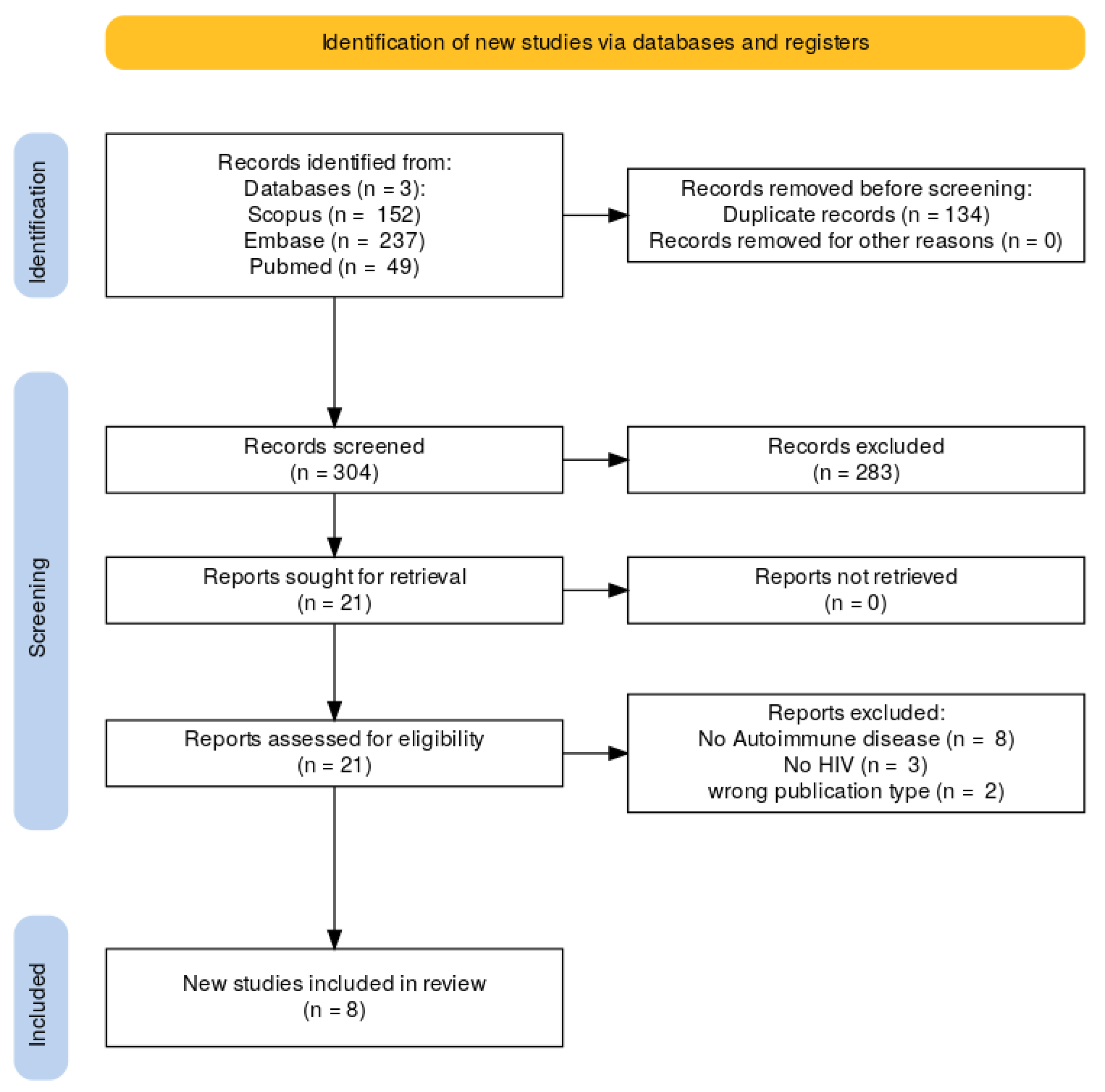

Table 1.
Extracted results from the included articles.
| Author (Year) | Study Design | Autoimmune / Rheumatic Focus | Key Findings & HIV Parameters |
| Bang et al. (2023) | Systematic Review | General Inflammatory Diseases | Biologics showed a favorable safety profile in PLH. Anti-CD20 and TNF-alpha inhibitors were associated with opportunistic infections and transient increases in HIV viral load. |
| Gridneva et al. (2025) | Review | Rheumatic Diseases | PLH had an early immune aging phenotype linked to autoimmune reactions. Reported incidences include systemic lupus erythematosus (6.25%), reactive arthritis (2.67%), and psoriatic arthritis (1-3%). |
| Jung & Kim (2024) | Retrospective Cohort | General Autoimmune Diseases | Autoimmune disease prevalence in Korean PLH was 4.37% in males and 2.38% in females. Behçet's disease, ulcerative colitis, and primary biliary cirrhosis were higher in males, while dermatomyositis was higher in females. |
| Lumngwena et al. (2023) | Systematic Review & Meta-Analysis | Rheumatic Heart Disease (RHD) | 17% of adults in cardiovascular cohorts in Southern Africa are PLH. The proportion of RHD diagnosed among adults living with HIV was 4%. |
| Shimon & Romanelli (2025) | Systematic Review | Psoriasis & Psoriatic Arthritis | Biologics and small-molecule targeted therapies improved cutaneous symptoms in PLH. Adverse events were rare and managed without interrupting biologic medications. |
| Tan et al. (2023) | Retrospective Cohort | Immune Thrombocytopenia (ITP) | 60% of HIV-associated ITP patients responded to ART with or without glucocorticoids. Newly diagnosed ITP had a significantly higher response rate (80.00%) and lower relapse rate compared to persistent or chronic ITP. |
| Sakamoto et al. (2025) | Retrospective Cohort | Renal Pathology | In a cohort of Japanese PLH undergoing kidney biopsies, atherosclerotic nephrosclerosis and IgA nephropathy were the most frequent histological diagnoses. |
| Morar et al. (2023) | Retrospective Cohort | Myasthenia Gravis (MG) | Four PLH on ART were admitted to the ICU for MG exacerbations. Despite the severity requiring intensive care, all 4 survived, reflecting a favorable prognosis when properly managed. |
Disclaimer/Publisher’s Note: The statements, opinions and data contained in all publications are solely those of the individual author(s) and contributor(s) and not of MDPI and/or the editor(s). MDPI and/or the editor(s) disclaim responsibility for any injury to people or property resulting from any ideas, methods, instructions or products referred to in the content. |
© 2026 by the authors. Licensee MDPI, Basel, Switzerland. This article is an open access article distributed under the terms and conditions of the Creative Commons Attribution (CC BY) license (http://creativecommons.org/licenses/by/4.0/).
Copyright: This open access article is published under a Creative Commons CC BY 4.0 license, which permit the free download, distribution, and reuse, provided that the author and preprint are cited in any reuse.