

Submitted:
07 June 2026
Posted:
09 June 2026
You are already at the latest version
Abstract
Contemporary ESG (Environmental, Social, and Governance) regulation creates costs and risks for businesses, which are associated with the stringency of requirements. This article demonstrates that the key source of these problems is the fragmentation of legal regulation, the inconsistency of reporting standards, and the methodological heterogeneity of ESG indices. Based on a comparative legal analysis of eight jurisdictions (the US, EU, China, India, Brazil, Russia, South Africa, and Kazakhstan), three models of ESG regulation are identified: prescriptive, market-oriented, and state-centralized. It is shown that extraterritorial pressure (CBAM, CSDDD) and internal regulatory conflicts (for example, in the US) greatly increase compliance costs, especially for developing economies. High divergence in corporate ESG ratings (up to 50–60%) has been empirically confirmed, making global indices of limited applicability for regulatory purposes. In response to these identified issues, a country-specific ESG index, integrated into a closed-loop feedback management system, has been proposed. A two-tier methodology has been developed: calculating a company index (taking into account regulatory burden, extraterritorial pressure, and adaptability) and aggregating it into a country index based on macrostatistics with the possibility of transitioning to Big Data aggregation, including the use of digital SaaS platforms for managing production and environmental data. The results can be used by national regulators to improve the comparability of ESG data and differentiate government support measures.
Keywords:
ESG regulation
; fragmentation
; compliance costs
; ESG indices
; extraterritoriality
; Kazakhstan
; closed-loop governance system
1. Introduction
In recent years, ESG regulation has become a key factor determining strategic business development. Growing requirements for non-financial disclosure, a tightening climate agenda, and pressure from investors and financial markets are all creating a new reality for corporations. However, as practice shows, the implementation of ESG principles is associated not only with expected benefits (reduced cost of capital, improved risk management, and enhanced reputation), but also with significant costs. These costs are particularly exacerbated in the context of global regulatory fragmentation, when companies are forced to simultaneously comply with incompatible requirements from various jurisdictions, adapt reporting to multiple standards, and interpret conflicting signals from ESG ratings.
The problem with this study is that modern national ESG regulation itself is becoming a source of regulatory and compliance risks for businesses. Inconsistency between legal regimes (e.g., the EU's prescriptive model and the US market-oriented model), the multiplicity of reporting standards (GRI, SASB, ISSB, ESRS), and the methodological heterogeneity of ESG indices (for example, discrepancies between MSCI, Sustainalytics, and S&PGlobal reach 50–60%) create a zone of permanent uncertainty for companies. At the national level, this problem is compounded by the imbalance of existing entrepreneurship support programs. For example, an analysis of Kazakhstan's "Business Roadmap 2025" [1] showed that 50% of indicators relate to the economic block, 31% to the managerial block (primarily access to financing), and environmental indicators are completely absent. This structure does not incentivize businesses to consider environmental factors and creates additional barriers to entry into markets with strict ESG requirements. The purpose of this study is to identify the key challenges that modern ESG regulation creates for business, analyze the legal and institutional factors that give rise to them, and assess the potential of ESG indices as feedback mechanisms capable of reducing the resulting regulatory uncertainty. The proposed applied task is the development of a country-specific ESG index adapted to the specifics of the economy.
The main hypothesis of the study is that the key challenges in implementing ESG principles for business stem not so much from the strictness or scope of requirements, but from the fragmentation of legal regulation, the inconsistency of ESG reporting standards, and the methodological heterogeneity of ESG indices. All of this leads to increased compliance costs, reduced data comparability, and increased risks of formal ESG compliance (greenwashing). Three sub-hypotheses are proposed within the main hypothesis:
- Sub-hypothesis 1 (regulatory). Fragmented ESG legislation forces companies operating in multiple jurisdictions to adapt their ESG reporting to incompatible requirements, increasing administrative and financial costs;
- Sub-hypothesis 2 (index). ESG indices and ratings used as tools for assessing business sustainability do not always reflect the true quality of companies' ESG practices due to differences in methodologies, indicator weights, and regulatory assumptions.
To test these hypotheses, the following research questions were formulated:
- RQ1. How do the specifics of ESG legislation in different jurisdictions shape the main challenges for businesses in implementing ESG principles?
- RQ2. Which elements of ESG legal regulation (mandatory nature, detail, control mechanisms, and accountability) have the greatest impact on ESG compliance costs for companies?
- RQ3. How does the inconsistency of ESG reporting standards reduce data comparability and complicate investment and management decision-making for businesses?
- RQ4. To what extent can ESG indices and ratings be considered as feedback tools between regulators, investors, and businesses, and what are the limitations of their practical application?
- RQ5. How can a country-specific ESG index be developed by adapting existing ESG indices to minimize regulatory and compliance risks for businesses when adopting international ESG standards?
The research's scientific novelty lies in its synthesis of legal, institutional, and methodological (index) analysis of ESG issues, linking macro-regulatory trends with micro-behavioral business responses. Unlike most studies, which focus either on comparing standards or on the financial consequences of ESG, this study demonstrates that fragmentation is an independent source of risk, not reducible to rigidity.
2. Materials and Methods
2.1. Methodological Approach
This interdisciplinary study integrates approaches from economics, law, and management to analyze the fragmentation of ESG regulation and its implications for business. To achieve the study's objectives and test the hypotheses, a combination of complementary methods was used.
1. Comparative legal analysis forms the core of the study, addressing research questions RQ1 and RQ2. This method allowed us to systematize and compare ESG legislation in eight jurisdictions: the US, EU, China, India, Brazil, Russia, South Africa, and Kazakhstan. The choice of jurisdictions was based on their combined economic weight (over 80% of global GDP), which allowed us to identify regulatory decisions that determine global compliance costs. The inclusion of BRICS countries ensured representativeness of emerging economies. The analysis focused on parameters such as mandatory requirements, the materiality principle, and sanctions mechanisms. The results of this analysis formed the basis for a typology of ESG regulation models and conclusions regarding the fragmentation of the legal framework [2,3].
2. Institutional analysis was used to interpret business behavior in the context of emerging ESG institutions. Drawing on neo-institutional economic theory, we consider regulatory requirements and reporting standards as formal institutions that create the "rules of the game" [4]. It was found that the fragmentation of these institutions generates high transaction costs associated with ESG compliance [5,6]. This approach was applied to explain business behavior (sub-hypothesis 3).
3. Content analysis and comparative analysis of standards (Content Analysis & Benchmarking) were applied to address RQ3 and RQ4. The method included a detailed structured comparison of key ESG disclosure standards (GRI, SASB/ISSB, TCFD, ESRS) and the methodologies of leading ESG ratings (MSCI, Sustainalytics, S&P Global CSA) [7,8]. This approach made it possible to objectively demonstrate the incomparability of data at the level of initial requirements and identify methodological gaps leading to discrepancies in the assessments of the same company by different agencies.
4. To answer RQ5, we propose an analytical calculation of a country-specific ESG index integrated into a closed-loop feedback control system. A two-tier methodology was developed: calculating a company index and aggregating it into a country index based on macrostatistics. This qualitative method enabled an in-depth study of the ESG agenda formation process in the context of catch-up development and the strong influence of external standards [9]. The analysis was based on the results of the previous fieldwork stage of the study, which included a survey of 99 SMEs [1], as well as a structural analysis of indicators of government entrepreneurship support programs [10]. This allowed us to identify the institutional unpreparedness of the national system for external pressure and justify the need to develop a national ESG index.
5. Descriptive Analysis was used to systematize and visually present secondary data, including companies' financial indicators, their ESG ratings, and data on their export structure. While establishing strict cause-and-effect relationships is not the goal of this study, identifying and visualizing key trends and divergences (for example, the asymmetry in ESG rating coverage) allowed us to build an evidence base for discussion.
The use of this pool of methods ensured methodological triangulation, allowing us to compare legal norms, reporting standards, market-based valuation tools, and actual corporate practices to enhance the validity and reliability of the study's findings.
2.2. Data sources and Regulatory Framework
The empirical and normative basis of the study consists of four interrelated sets of sources, selected to ensure the relevance, reliability, and comprehensiveness of the analysis for each of the jurisdictions under consideration.
1. Legal framework and regulatory documents.
Key legal acts and regulatory documents for the analyzed jurisdictions are systematized in Table 1. The selection was based on the following criteria: (a) legal significance (law, regulation, directive), (b) direct impact on ESG information disclosure or ESG risk management, and (c) applicability to public companies and/or financial institutions. This set of sources was used for comparative legal analysis and typology of ESG regulation models.
An analysis of these regulations allows us to assess the degree of mandatory regulation, the level of disclosure detail, the presence of sanctions mechanisms, and the level of harmonization of requirements. A comparison of these parameters serves as the empirical basis for testing Sub-Hypothesis 1 on regulatory fragmentation.
2. International and National Reporting Standards.
The second set of sources, presented in Table 2, includes framework standards for ESG information disclosure. Their analysis is necessary to answer RQ3, related to data comparability.
A comparative analysis of the standards was conducted based on the following criteria: coverage of thematic blocks (E, S, G), level of metric detail, verification requirements, and the concept of materiality. The identified differences confirm the methodological heterogeneity of reporting and explain the discrepancies in ESG ratings.
3. ESG ratings, indices, and corporate reporting.
The third set of sources (Table 3) provides an empirical test of subhypothesis 2 on the methodological divergence of ratings. The analysis includes data from MSCI ESG Ratings, Sustainalytics ESG Risk Ratings, and S&P Global CSA.
4. Academic and industry literature, statistical data.
The fourth block (Table 4) was used to form a theoretical and empirical basis for interpreting the identified institutional contradictions. It includes publications in journals indexed in Scopus and Web of Science, analytical reports from international organizations (UNEP FI, OECD, World Bank), as well as data from the Bureau of National Statistics of the Republic of Kazakhstan and the results of primary surveys published in [1].
Using such a pool of sources allowed for data triangulation, increasing the reliability of conclusions. For example, the company's stated ESG practices (reporting) were compared with the independent assessment of a rating agency and the regulatory requirements of its country of incorporation, as well as its main product markets.
2.3. Limitations of the Study
Despite the study's commitment to comprehensiveness, it has a number of methodological and practical limitations that must be considered when interpreting its findings.
1. Limitations Related to Data and Comparability.
The key issue analyzed in the study is also its limitation. The lack of a unified metric, differences in data collection and processing methods among rating providers, and the prevalence of qualitative, difficult-to-verify information in corporate reports create "noise" in the empirical analysis [7]. Furthermore, ESG reporting in developing countries (including Kazakhstan) is often published with a significant lag, limiting the ability to quickly assess regulatory effects. Analysis of corporate practices inevitably focuses on large public companies, while the problems of small and medium-sized businesses, which are subject to indirect regulatory pressure through supply chains, remain in the shadows [2].
2. Methodological Limitations.
The study largely establishes correlations and logical connections rather than strict cause-and-effect relationships. It is difficult to empirically separate the costs caused by regulatory fragmentation specifically from those associated with the general tightening of requirements [3]. The development of proposals for the country index (RQ5), although based on an analysis of best practices, inevitably contains an element of normative judgment and expert opinion. The selection of eight jurisdictions is representative, but does not exhaust the entire spectrum of regulatory models (for example, countries in Southeast Asia were left out of the analysis).
3. Dynamic Constraints.
The field of ESG regulation is evolving exponentially. New laws, standards, and court decisions are constantly emerging, so even at the time of publication, some specific conclusions regarding the legislation of individual countries may require updating. The study focuses on identifying persistent structural problems (fragmentation, inconsistency) that are expected to remain relevant, but specific examples may become outdated [11].
Recognizing these limitations provides a framework for the correct interpretation of the results and identifies directions for further research.
3. Results
3.1. ESG Legislation as a Source of Business Risks
The legislation of the selected jurisdictions (USA, EU, China, India, Brazil, Russia, South Africa, and Kazakhstan) was analyzed using six key criteria reflecting the nature of regulatory pressure on business:
1. mandatory requirements (from voluntary recommendations to mandatory regulations with sanctions);
2. materiality principle (financial, dual, or strategic materiality);
3. sanctions mechanism (administrative fines, litigation risks, market consequences);
4. extraterritoriality (extension of regulations to foreign companies and supply chains);
5. internal fragmentation (the presence of conflicting requirements within the country);
6. convergence with international standards.
This structured approach allows us not only to classify country-specific ESG regulation models (directive, market-oriented, and state-centralized), but also to empirically identify which specific legislative elements generate the greatest compliance costs and regulatory risks for businesses. Ultimately, this comparative analysis allows us to quantify the degree of fragmentation in the global ESG landscape, identify asymmetries of pressure on companies in developing economies (including Kazakhstan), and justify the need for feedback tools such as the proposed ESG index.
USA.
A key feature of ESG regulation in the US is the lack of a unified federal ESG law: regulatory pressure is generated through the interaction of multiple actors—the SEC, EPA, the judiciary, states, and market institutions—creating an "unprecedented compliance paradox" for businesses [12,13]. Experts estimate that "the current trajectory of state and national policy suggests protracted fragmentation and confusion, leaving companies to operate in an increasingly complex patchwork of state-level regulations" [12].
At the federal level, in March 2024, the SEC narrowly adopted rules to standardize the disclosure of climate risks and greenhouse gas emissions by public companies [14]. However, the rules were immediately challenged by a coalition of ten states, and on March 15, 2024, the Fifth Circuit Court of Appeals imposed an administrative stay. On April 4, 2024, the SEC voluntarily suspended the rules pending litigation, preventing the rules from ever taking effect [15]. On March 27, 2025, the SEC voted to drop its defense of the rules in court, and in July 2025, it filed a report declining to say whether it would enforce the rules if upheld by the court, citing the need for future commission deliberations. [16,17] The Eighth Circuit, which consolidated the lawsuits, stayed the case in April 2025, leaving the fate of federal regulation in the United States uncertain [15].
At the subnational level, California passed SB 253 (mandatory disclosure of Scope 1-3 emissions for companies with revenues >$1 billion) and SB 261 (disclosure of climate-related financial risks for companies with revenues >$500 million) in October 2023. Unlike SEC rules, these laws apply to both public and private companies [18]. On November 18, 2025, the Ninth Circuit Court of Appeals temporarily stayed enforcement of SB 261 but refused to stay SB 253 [19]. The appeal hearing took place on January 9, 2026, and SB 261 remains on hold, while SB 253 remains in effect [20]. The California Air Resources Board (CARB) proposed an initial reporting deadline for SB 253 of August 10, 2026 [21].
In parallel, a number of states (Texas, Florida) have passed anti-ESG laws. Texas's SB 13 (2021) required state pension funds and contractors to exclude companies that "boycott" fossil fuels. On February 5, 2026, a federal court found SB 13 unconstitutional under the First and Fourteenth Amendments, ruling that the law violated free speech and was unconstitutionally vague [22]. This decision marked the second time a federal court has struck down a state anti-ESG law [23].
Environmental regulation and extraterritorial pressure share a similar picture. The Environmental Protection Agency (EPA) administers the Greenhouse Gas Reporting Program (GHGRP, 40 CFRPart 98). However, in September 2025, it is already proposing to repeal the program for most source categories, which is estimated to jeopardize $77.5 billion in CCUS investments and $30 billion in tax revenues [24,25]. Although some senators have called on the EPA to withdraw the proposal, its fate remains uncertain [25]. Furthermore, businesses face extraterritorial pressure: the EU CSRD and CBAM mechanisms extend European standards to US companies operating in the EU [17]. At the same time, US federal authorities are exerting counter-pressure, including through legislative initiatives (e.g., the PROTECTUSAAct of 2025) aimed at protecting US companies from extraterritorial demands [17].
ESG enforcement. The SEC consistently holds companies accountable for greenwashing and unfair ESG practices. In November 2022, Goldman Sachs Asset Management paid a $4 million fine; in September 2023, DWS Investment Management Americas, Inc. — $19 million; in October 2024, Wisdom Tree Asset Management, Inc. — $4 million; and in November 2024, Invesco Advisors, Inc. — $17.5 million for overstating the share of ESG-integrated assets under management [26]. In August 2025, the SEC indicted the co-founder of Aspiration Partners for fraudulently defrauding environmental services revenues totaling over $300 million [27]. These measures create additional compliance risks for businesses related to the accuracy of disclosed information.
Thus, it can be argued that the American market-oriented model is characterized not only by a multiplicity of requirements, but also by their increasing inconsistency and potential conflict. This confirms subhypothesis 1 on fragmentation as a key source of compliance risks.
European Union.
The analysis shows that the European Union's ESG regulation is a directive (or rather, a directive-centralized) model, which in 2025–2026 underwent a significant transformation towards simplification and a reduction in the administrative burden. In response to criticism of excessive regulatory complexity, the European Commission unveiled the Omnibus I package on February 26, 2025, aimed at reducing administrative costs by a target of 25% for all companies and 35% for small and SMEs [28,29]. The expected annual savings from the CSRD reform are estimated at €4.4 billion, with total savings across all omnibus initiatives amounting to approximately €11.9 billion per year [28,30].
In the context of corporate reporting, the CSRD Directive (2022/2464) requires mandatory disclosure of non-financial information based on the dual materiality principle. Under the proposed Omnibus I amendments (Amending Directive (EU) 2026/470, published on 26 February 2026), the scope of the CSRD has been significantly narrowed [31]. Mandatory reporting is retained only for companies with more than 1,000 employees and an annual turnover exceeding €450 million, which removes from the scope of the directive approximately 80% of the companies previously covered by it [30,32]. Listed SMEs are completely excluded from the scope of the CSRD. CSRD reporting will apply for financial years beginning on 1 January 2027, and the deadline for transposition for Member States is set for 19 March 2027 [33]. Large public interest companies remaining within the scope of the directive are required to report for the 2025 and 2026 financial years [34]. The European Sustainability Reporting Standards (ESRS) were completely revised in 2025; ESRS 2.0, although not yet finalized, proposes a reduction in mandatory indicators by approximately 60–70%, the elimination of voluntary disclosures, and a simplification of the reporting process. Implementation of ESRS 2.0 for companies subject to the CSRD is scheduled for 1 January 2027, with the possibility of early application from 1 January 2026. EFRAG is developing a voluntary reporting standard for companies with fewer than 1,000 employees, which will also serve as a protective mechanism ("shield") limiting information requests from SMEs in supply chains [28,29].
Financial regulation is subject to the SFDR 2019/2088, which is undergoing reform. On 20 November 2025, the European Commission published the legislative proposal "SFDR 2.0" (COM/2025/841 final) [28]. Key changes include the abandonment of the "Article 8" and "Article 9" categories in favor of three mandatory financial product categories: "Transition," "ESGBasics," and "Sustainable," each with an investment threshold of 70% [30,35]. The proposal aims to simplify the regime, eliminate market confusion, and reduce the risks of greenwashing.
The Taxonomy Regulation 2020/852 establishes criteria for environmentally sustainable economic activity. From 1 January 2022, the requirements apply to large companies with more than 500 employees, and from 2025, to all companies falling under the CSRD [32]. Delegated Regulation (EU) 2026/73 of 4 July 2025 simplifies the reporting of information within the taxonomy [36]. Companies are exempt from disclosing activity-based data if they account for less than 10% of revenue, investments, or operating expenses. Taxonomy obligations remain limited to the largest companies (over 1,000 employees and €450 million in turnover), but other companies may report voluntarily [28].
The Due Diligence Directive (DDD) 2024/1760 entered into force on 25 July 2024. Omnibus I significantly relaxed its requirements [32]. The application thresholds have been raised from 1,000 employees and €450 million in turnover to 5,000 employees and €1.5 billion in turnover, and the due diligence obligation is now risk-based [31]. The obligation to develop transition plans for climate change mitigation and the harmonized civil liability regime at EU level have been completely removed from the directive [31,33]. The transposition deadline for Member States is set for 26 July 2028, and companies will be required to comply with the rules from July 2029 [33].
The cross-border carbon regulation mechanism entered the compliance phase on 1 January 2026, covering imports of cement, fertilizers, aluminum, hydrogen, iron, and steel [37]. Importers importing 50 or more tons of goods per year are required to declare their embedded emissions and submit the corresponding number of CBAM certificates [38]. The certificate price is linked to the price of EUETS allowances (~€70–100 per ton of CO₂). The first declaration and certificate submission must be made by September 30, 2027, for emissions during 2026 [38].
Thus, the European ESG regulation model, while retaining its prescriptive nature and the principle of dual materiality, has undergone significant simplification. For businesses, the key risk remains not so much the EU's internal requirements as the extraterritorial pressure—large companies.
China.
In 2025, China's ESG regulatory system made a qualitative transition from conceptual framework development to practical implementation, making sustainable development an element of mandatory corporate compliance. Unlike the market-oriented US model, the Chinese model represents a state-centralized model in which the ESG agenda is integrated into achieving the goals of carbon neutrality by 2060 and an "ecological civilization" [39].
A key event in the field of information disclosure in 2024–25 was the formation of a unified national system of sustainability disclosure standards (CSDS). In November 2024, the Ministry of Finance of the People's Republic of China, together with eight departments, issued the Core Corporate Sustainability Reporting Standards (Trial Version), which laid the foundation for the unification of ESG reporting requirements [40,41]. In September 2025, the Implementation Guide for these standards was issued, establishing specific requirements for value chain boundaries, data preparation, and internal control. Finally, on December 25, 2025, Disclosure Standard No. 1 – Climate was published, covering governance, strategy, risk and opportunity management, as well as metrics and targets (including Scope 1–3 emissions) [42]. The national standards are developed based on the ISSB framework, but represent an independent Chinese system, implying a phased implementation: from voluntary to mandatory, from qualitative to quantitative requirements, from large public companies to SMEs [40,43]. By 2030, a unified national system of sustainable disclosure standards is planned to be fully formed [41,44].
In parallel, the Shanghai, Shenzhen, and Beijing stock exchanges, under the leadership of the CSRC, have introduced mandatory reporting requirements. 2025 marked the first real reporting period, with companies preparing reports by the deadline of April 30, 2026 [45]. By 2025, the number of companies publishing sustainability reports reached 1,869, accounting for approximately 70% of the total market capitalization [46]. In March 2025, the CSRC adopted revised Disclosure Management Measures for Listed Companies, which took effect on July 1, 2025, and explicitly require the publication of sustainability reports [47,48].
An important feature of the Chinese approach is the implementation of the double materiality principle, which requires companies to disclose both the impact of ESG factors on their financial position (financial materiality) and the company's impact on the environment and society (impact materiality) [41]. Unlike the European CSRD, where compliance with one criterion is sufficient, the Chinese approach is closer to requiring both types of materiality simultaneously. Moreover, China, unlike the ISSB, which focuses exclusively on financial materiality, has opted for a broader approach [49]. National exchanges also require listed companies to use the dual materiality principle when identifying and disclosing sustainable themes [49].
On March 21, 2025, the Ministry of Ecology and Environment expanded the national emissions trading system (ETS) to the steel, cement, and aluminum industries, incorporating approximately 1,500 new enterprises and bringing its coverage to approximately 60% of the country's total greenhouse gas emissions [45]. Mandatory monthly reporting and data verification were introduced for new participants. Furthermore, in April 2025, the Standing Committee of the National People's Congress of China introduced a draft Environmental Code, which consolidates all environmental legislation into a single structured system, including mandatory ESG clauses in contracts and penalties of up to five times the damage [50]. On January 1, 2026, continuous digital emissions monitoring regulations came into effect, providing for legal liability for falsifying environmental data.
Chinese exporters face growing extraterritorial pressure. The EU's CBAM mechanism (since 2026) requires Chinese suppliers of steel, cement, and aluminum to disclose their carbon footprints. Simultaneously, the Uyghur Forced Labor Prevention Act (UFLPA) in the US resulted in the inclusion of 144 Chinese companies on the restriction list as of early 2026. China responded by ratifying two ILO conventions on forced labor in 2025. Domestic sanctions for environmental violations include administrative fines of up to five times the damages, daily penalties, suspension of operations, and criminal liability for executives [50]. The CSRC also set a maximum fine for disclosure violations of 100,000 yuan [47].
Thus, the Chinese ESG regulation model, while maintaining its state-centralized nature and strategic focus on carbon neutrality, has transitioned to mandatory compliance. The key risk for businesses is the need to simultaneously comply with rapidly tightening domestic requirements (CSDS, expanded ETS, Environmental Code) and extraterritorial pressure from the EU (CBAM) and the US (UFLPA). This confirms sub-hypothesis 1 on fragmentation: even with formal centralization of regulations within a country, businesses face conflicting requirements from different global regulators.
India.
The analysis shows that ESG regulation in India is a hybrid of a state-centralized and directive model, in which the Securities and Exchange Board of India (SEBI) plays a key role, consistently expanding mandatory requirements for non-financial information disclosure. The basic reporting format—Business Responsibility and Sustainability Reporting (BRSR)—is based on nine National Guidelines for Responsible Business Conduct (NGRBC) and is mandatory for the top 1,000 listed companies (by market capitalization) from 2022 [51]. BRSR includes approximately 140 indicators (mandatory Essential indicators and voluntary Leadership indicators) and is integrated into the company's annual report. In 2023, SEBI implemented BRSRCore, a standardized set of nine key performance indicators (KPIs) designed to improve the validity, comparability, and reliability of ESG data [52]. Under SEBI Circular No. SEBI/HO/CFD/CFD-PoD-1/P/CIR/2025/42 dated 28 March 2025, companies were given the option to choose between “assessment” (as per Industry Standards Forum) and “assurance” for BRSRCore and supply chain disclosures. The assurance implementation schedule remains phased: in 2026, for the top 500 listed companies, and by 2027, for all top 1000 listed companies [52]. For supply chain disclosures, SEBI has set a materiality threshold for supply chain partners of 2% or more of a company's purchases or sales, with the option to limit disclosures to 75% of total transaction volume [53]. Mandatory supply chain disclosures have been deferred by one year during the transition period: voluntary reporting for the top 250 companies from 2026, and voluntary assessment/assurance from 2027 [54]. For 2026, reporting for the previous year remains optional, while reporting for the current year is voluntary [55].
SEBI is actively working to update the BRSR standards to harmonize and align with global ESG norms. In February 2025, SEBI formed a study group with the Shakti Sustainable Energy Foundation and auctusESG to identify gaps in the current framework and propose necessary changes to comply with IFRSS1 and S2. This follows the endorsement of IFRS by the International Organization of Securities Commissions (IOSCO), which called on its 130 member jurisdictions to adopt IFRSS1 and S2 [56]. The update to the BRSR is planned to introduce more detailed disclosures on sustainability risks, climate impacts, and Scope 3 emissions, which are currently missing. A key recommendation is to adopt ISSB (IFRSS1/S2) as the baseline standard for financial materiality and GRI for impact materiality, which will enable the BRSR to achieve “deemed compliance” – a status where international standards are recognized as fulfilling domestic requirements [57]. SEBI has consistently held companies accountable for disclosure violations. In March 2026, SEBI imposed a fine of ₹3.8 million (approximately $45,600) on CoffeeDayEnterprises and related parties for financial misrepresentations and disclosure violations [58]. In January 2026, SEBI fined eight entities ₹8 crore (approximately $960,000) for failing to disclose information to exchanges on a timely basis. In March 2026, SEBI imposed its largest-ever fine of ₹85 crore (approximately $10.2 million) on DLF and related parties for fraud and unfair trading practices in an initial public offering [59]. While these sanctions do not yet relate directly to ESG reporting, they demonstrate SEBI's growing ability to impose significant financial penalties. As experts note, ESG distortions are already triggering shareholder lawsuits, SEBI enforcement actions, and promoter liability in India.
Thus, the Indian ESG regulation model, unlike the EU and somewhat similar to China, demonstrates a consistent strengthening of mandatory disclosure and data verification requirements while maintaining flexibility during the transition period. The key risk for companies is the need to comply with increasingly stringent domestic BRSRCore and supply chain requirements while simultaneously adapting to global harmonization with ISSB standards. This points less to fragmentation than to an ongoing process of regulatory convergence, which creates additional transition and compliance costs for businesses.
Brazil.
Brazil's ESG regulatory system is a hybrid model with a high degree of coordination between the Securities and Exchange Commission (CVM) and the Central Bank (BACEN), ensuring a low level of internal fragmentation. A key distinguishing feature is the phased implementation of mandatory sustainability financial disclosure requirements based on the ISSB standards, while simultaneously developing a national green taxonomy and a carbon market.
ESG disclosure and ISSB adoption have undergone significant changes since 2021. In December 2021, the CVM adopted Resolution No. 59, which entered into force in January 2023 and included disclosure of ESG practices, greenhouse gas emissions, and materiality assessment methods in the mandatory Information Form, while maintaining the "practice or explain" principle [60]. In October 2023, the CVM issued Resolution No. 193, making Brazil the first country in the world to formalize in national law the voluntary application of IFRS S1 and S2 standards developed by the International Sustainability Standards Board (ISSB), starting in fiscal year 2024. Following the completion of the translation and adaptation of the ISSB standards by the Brazilian Committee on Sustainability Standards (CBPS), in October 2024, the CVM adopted Resolutions No. 217, 218 and 219, which made the application of CBPS Technical Provisions No. 01 (IFRS S1) and No. 02 (IFRS S2) mandatory for all public companies, investment funds and securitization companies for fiscal years beginning on or after January 1, 2026. Companies could voluntarily apply the new standards starting as early as fiscal year 2025 [61]. For the first years of mandatory application, the possibility of providing reports with a reasonable level of confidence (reasonable assurance) according to ISSB standards was established. The CVM also introduced additional requirements: from January 1, 2025, public companies are obliged to apply the Technical Guide OCPC 10 (Opticial Técnico OCPC 10 - Créditos de Carbono) for accounting of carbon credits [62].
In September 2021, the National Monetary Council adopted Resolution No. 4.943 and amended the risk management rules for financial institutions, adding social, environmental, and climate risks to their governance structure and stress testing procedures.[62] The main requirements were to be implemented on December 1, 2022. Law No. 15.042 of December 11, 2024, established the Brazilian Greenhouse Gas Emissions Trading System (SBCE), which established requirements for the monitoring, reporting, and verification of Scope 1–3 emissions and laid the foundation for a regulated carbon market in the country [63].
As part of the green taxonomy and the fight against greenwashing, the Interministerial Committee of the Brazilian Sustainable Taxonomy (CITSB), chaired by the Ministry of Finance, was created in March 2024 by Decree No. 11.961. On August 25, 2025, the CITSB approved the final technical reports of the Brazilian Sustainability Taxonomy (TSB), covering eight economic sectors (including agriculture, extractive and manufacturing industries, energy, construction, and transportation). On October 31, 2025, in the lead-up to COP30, the federal government issued Decree No. 12.705, which formally established the TSB as an instrument of the federal executive power and a reference point for the direction of credit lines, guarantees, and investment monitoring [64]. The taxonomy is based on a three-tier system that verifies the contribution of an activity to environmental/social objectives, the absence of significant harm to other objectives, and compliance with minimum social and environmental safeguards. Regarding greenwashing, in December 2022, the CVM adopted Resolution No. 175, which established requirements for the nomenclature of investment funds using terms related to ESG, "green," "sustainable," and similar terms, requiring full compliance with methodological criteria and the disclosure of reports on ESG results [65]. ANBIMA also established additional rules for funds with the suffix "Sustainable Investment".
In terms of enforcement, the CVM and BACEN have powers to supervise compliance with ESG requirements. Violations may be subject to administrative fines, as well as lawsuits for false disclosure. In August 2025, the CVM updated its supervisory rules to provide for sanctions, including fines and other enforcement measures, and to assess the risks of misleading investors.
Thus, the Brazilian model demonstrates a systematic transition from soft "comply or explain" principles to mandatory ISSB-based disclosure from 2026. It is also notable for the early inclusion of ESG risks in financial sector regulation and the world's first official adoption of a sustainability taxonomy at the federal decree level. The main compliance risk for businesses is related to the need to adapt to rapidly changing requirements for verifiable reporting and the need to prepare for an ever-widening range of sustainability obligations, which generally confirms the hypothesis of the emergence of fragmentation costs—both domestically and globally.
Russia.
The Russian ESG regulation system is a state-centralized model, where the key drivers are national economic policy goals and industrial modernization. Unlike the market-oriented US model, the impetus for the development of the ESG agenda in Russia is driven by state institutions, and regulation is hybrid—a combination of directive strategic documents and voluntary non-financial reporting standards.
The fundamental act for climate regulation and carbon reporting is Federal Law No. 296-FZ "On Limiting Greenhouse Gas Emissions" (which entered into force in 2022), which establishes the obligation for regulated organizations to submit annual greenhouse gas emissions reports. Starting in 2025, the range of regulated organizations has been expanded: reporting is required not only for large enterprises with emissions exceeding 150,000 tonnes of CO₂ equivalent per year, but also for medium-sized enterprises with volumes of 50,000 tonnes or more. Emissions reports for 2025 must be submitted from January 1 to July 1, 2026 [66]. Amendments providing for the creation of an expert council under the authorized federal body will come into force on September 1, 2026.
In December 2025, the Bank of Russia published a draft regulation that requires issuers on the first and second quotation lists to disclose approximately 30 basic non-financial indicators in their annual reports, including greenhouse gas emissions, water, and energy consumption [67]. The data must be provided in machine-readable XBRL format. The new regulation will come into force on October 1, 2026 [68]. In August 2025, the Bank of Russia also approved the Code of Responsible Investment, which requires investors to disclose ESG reporting, although non-compliance does not yet entail fines [69].
In June 2025, Rosstandart approved the national standard GOST R72157-2025 "Sustainable Development of Organizations. Guidelines for Diagnostics of Organizations' Activities in Achieving Sustainable Development Goals" (Order No. 585-st of June 19, 2025), with an effective date of July 1, 2025 [70]. At the same time, the EPS rating (Ecology – Personnel – State) continues to develop; in 2025, it received the status of a national standard and was enshrined in regional legislation in 38 regions, covering 47 assessment criteria. Also in December 2025, the government approved the Business Public Capital Standard (BPS) – Resolution No. 2230 of December 30, 2025, defining voluntary principles and indicators for business contribution to national projects. According to preliminary data, more than 1,000 companies have submitted applications for BPS compliance assessment [71].
As part of the green taxonomy and financing, Government Resolution No. 1587 approves criteria for sustainable development projects (including "green"). In October 2025, the government updated the taxonomy, expanding and detailing the project classification and adding new areas. In 2025, the sustainable development financing market grew by 27%.
Russian exporters face the extraterritorial pressure mechanism of the CBAM (EU), which, starting in 2026, requires disclosure of the carbon footprint of steel, aluminum, cement, and fertilizer supplies. In May 2025, Russia formally requested consultations with the EU at the WTO regarding the CBAM. Meanwhile, most large Russian companies continue to use international GRI standards (88% of 1,005 companies), SASB, and TCFD, along with national recommendations. Thus, the Russian model also demonstrates a shift from voluntary principles to more stringent and structured regulation, while maintaining a hybrid nature. The main compliance risk for businesses is associated with the need to simultaneously comply with domestic requirements (including the new reporting standard, ECG rating, and the SOC) and adapt to extraterritorial pressure from the EU (CBAM), which confirms the hypothesis of additional costs of fragmentation.
South Africa.
The ESG regulatory system in South Africa is a hybrid model, combining government regulation with the strong influence of market institutions, primarily the Johannesburg Stock Exchange (JSE) and corporate governance standards. A key distinguishing feature is the institutionalization of sustainability principles through the King Code of Corporate Governance and the JSE listing requirements, complemented by mandatory climate legislation.
The new King V Code of Corporate Governance in South Africa, published on 31 October 2025, replaces King IV and applies to financial years beginning on 1 January 2026. King V retains the "apply-and-explain" principle but introduces a more standardized approach to disclosure using the mandatory Disclosure Framework [72]. The Code enshrines the principle of double materiality, requiring companies to disclose both the impact of ESG factors on their business and their impact on the environment and society [73]. Although King V is formally advisory in nature, its principles are embedded in the JSE listing rules, making them binding on listed companies.
In January 2025, the JSE updated its Sustainability Disclosure Guidance to align with IFRS S1 and S2 developed by the International Sustainability Standards Board (ISSB) [74]. The new guidance simplifies the reporting process, introduces a requirement to disclose financial materiality (financial risks and opportunities related to sustainability), and sets out a phased implementation schedule. From 2026, listed companies are required to disclose compliance with the ISSB standards or provide a full explanation for deviations. Regional asset managers are already considering this requirement as a key factor in investment screening.
The President of South Africa signed the Climate Change Act No. 22 of 2024 on 23 July 2024. The Act came into force on 17 March 2025, although a number of provisions (sections 12–30) will be implemented later as secondary legislation is developed [75]. The Act establishes South Africa's first legally binding greenhouse gas emissions reduction regime, introducing a national emissions pathway, sectoral targets, carbon budgets for large emitters and mitigation plans. The established sanctions include criminal liability (a fine of up to 5 million ZAR or imprisonment for up to 5 years for a first conviction, up to 10 million ZAR or up to 10 years for a second conviction), as well as personal liability of directors for failure to take reasonable steps to prevent violations ([76]. The law maintains the existing environmental regulations (National Environmental Management Act - NEMA, Greenhouse Gas Emissions Reporting Regulations) and supplements them with new enforcement mechanisms, including inspector orders and personal liability of officials.
South African exporters face extraterritorial pressure through the EU Cross-Border Carbon Management (CBAM), which from 2026 requires disclosure of the carbon footprint of steel, aluminum, cement, and fertiliser supplies [77].
Thus, the South African ESG regulation model combines voluntary corporate governance principles (King V) with mandatory JSE requirements (ISSB-compliant reporting) and strict climate legislation (Climate Change Act). The main compliance risk for businesses is related to the need to simultaneously comply with internal regulations and adapt to extraterritorial pressures. This confirms the hypothesis that fragmentation is a key source of costs.
Kazakhstan.
A historical analysis suggests that Kazakhstan's ESG regulation system is a hybrid model in its infancy, combining elements of a state-centralized model with market initiatives from the financial sector. A key feature is the centralized nature of regulation, the absence of uniform mandatory non-financial reporting standards for the non-financial sector, and the low level of engagement of small and medium-sized businesses in the ESG agenda [78,79].
The state's strategy for achieving carbon neutrality by 2060 and the 2013 Concept for the Transition to a "Green Economy" provide long-term guidelines for sustainable development [80]. The 2021 Environmental Code of the Republic of Kazakhstan established requirements for environmental monitoring, emissions reporting, and the implementation of best available technologies, strengthening the environmental component of ESG regulation [81]. The Code incorporates the "polluter pays and corrects" principle and provides for mandatory environmental reporting for Category I and II enterprises.
The Agency for Regulation and Development of the Financial Market (ARFMR) of Kazakhstan has developed three key documents: a Roadmap for the Implementation of ESG Principles, a Roadmap for Raising Awareness, and a Guide to Disclosing ESG Information for Banks and Other Financial Institutions [82]. Effective January 1, 2025, ESG information disclosure became mandatory for all financial institutions in Kazakhstan—second-tier banks, insurance companies, investment funds, and organizations engaged in certain types of banking operations. Financial institutions are required to develop a sustainable development policy, an environmental and social risk management policy, a procedure for disclosing information on sustainable development, and other internal documentation. ARFMR is also implementing requirements for the integration of ESG principles and reporting for the banking sector. For companies in the non-financial sector, the requirements remain primarily advisory, although methodological recommendations have been developed by the Ministry of Ecology and Natural Resources and the Atameken National Chamber of Entrepreneurs [1,78].
The AIFC, which operates under a separate legal framework, plays a key role in developing the sustainable finance market. The AIFC Green Finance Centre developed a green taxonomy in 2021, defining criteria for classifying environmentally sustainable projects. The taxonomy sets requirements for projects eligible for green financing and serves as the basis for issuing green bonds and other sustainable financial instruments. By 2025, the volume of green bonds issued and placed with the support of the AIFC exceeded $650 million [83]. Approximately 70% of all green bonds and loans issued in Kazakhstan were supported by the Green Finance Centre.
Kazakhstan is actively integrating into international ESG initiatives. In 2023, the Export Credit Agency of Kazakhstan became an affiliate member of the Zero Emissions Export Credit Alliance (NZECA), confirming its commitment to supporting carbon neutrality by 2050, with interim targets for 2030 [84]. The country also participates in the OECD Working Group on Export Credits, which facilitates the implementation of international best practices. Kazakhstan is transitioning to harmonized ESG reporting with IFRS S1 and S2 standards, as part of a strategy to increase transparency and competitiveness in global markets. With the support of the UNDP and the OECD, workshops are being held for Kazakh companies on the implementation of international standards for sustainable disclosure.
The European Union remains Kazakhstan's largest trading partner, accounting for 37% of the country's total exports in 2024. The aluminum, fertilizer, and iron industries are most sensitive to CBAM. At the same time, China has become the second largest export partner of Kazakhstan, with a share of 18.9% in 2024 [85]. Thus, Kazakhstani exporters face a dual system of external pressure: the European direction requires formalized carbon reporting and decarbonization, while the Chinese direction is strengthening its focus on supply security and price efficiency. To manage these challenges, Kazakhstan is consulting with the EU and preparing national systems for monitoring and verifying its carbon footprint. A structural analysis of the indicators of the "Business Roadmap 2025" and the "Concept for the Development of SMEs in the Republic of Kazakhstan until 2030" shows that they completely lack environmental indicators [10]. This configuration does not encourage businesses to take ESG factors into account, creating the risk of unpreparedness for foreign counterparties' requirements to disclose their carbon footprint. A survey of entrepreneurs revealed a negative correlation between willingness to invest in sustainable development and willingness to invest in business (r = –0.225), indicating that ESG factors are perceived as an additional burden rather than a stimulating one [1]. Thus, with formal centralization of regulation, businesses face fragmentation of signals between government expectations and global markets, confirming subhypothesis 1 regarding regulatory fragmentation as a key source of costs.
A summary of the ESG regulation models based on the criteria of the analytical framework is presented in Table 5.
Each of the US, EU, and Chinese models examined develops its own approach to ESG: the US through market mechanisms, the European through directive legislation, and the Chinese through state-centralized planning and national strategic priorities. However, for businesses operating in the global economy, these models are not alternatives: companies are forced to comply with all three (or a combination of them) simultaneously, entering a zone of conflicting obligations and incompatible requirements. It is this contradiction, revealed through a comparative legal analysis, that becomes a key source of regulatory, compliance, and strategic risks.
3.2. Key Types of ESG Risks for Business in the Context of Global Regulatory Fragmentation
Thus, the global fragmentation of ESG regulation generates four interrelated categories of risks for business. Regulatory risks arise from the divergence of requirements between jurisdictions. Companies are forced to monitor and adapt to the conflicting regulations of the EU, the US, and China. Exterritorial mechanisms – CBAM (from 2026), CSDDD (after Omnibus I—for companies with >5,000 employees and €1.5 billion in turnover, transposition until 2028), and California's SB 253/SB 261 laws (although partially suspended by the courts)—create asymmetric pressure on third-country suppliers. 57% of surveyed companies cited compliance complexity as a key challenge, and 83% expect further cost increases [86].
Compliance risks are associated with the multiplicity of reporting standards. Today, there are over 600 ESG data disclosure mechanisms in place worldwide [86]. Kazakhstani companies simultaneously use GRI, TCFD, and voluntary national standards, leading to multi-tasking and an increase in errors. The study [87] introduces the concept of "penalty zones": after exceeding a threshold of 2-3 standards, a company's market value begins to decline. Insufficient digitalization (only 8% of companies publish machine-readable databooks) exacerbates the risk of incomplete compliance.
Reputational risks are exacerbated by methodological divergence in ESG ratings. Discrepancies between MSCI, Sustainalytics, and S&P Global reach 50–60%, even for the largest issuers [7]. The inconsistency of assessments itself is becoming a source of mistrust: investors suspect data manipulation. At the same time, regulators are intensifying the fight against greenwashing. The risk of greenwashing is particularly high in countries without national verification standards.
Investment risks manifest themselves in the increased cost of capital for companies with inconsistent ESG ratings. Over 60% of institutional investors recognize the divergence of standards as a significant risk to corporate governance. Research confirms that differences in ESG ratings significantly impact access to capital, forcing investors to incorporate a premium for uncertainty [88].
As a systemic conclusion, it can be stated that all four risk categories are in a mutually reinforcing loop. Regulatory fragmentation increases compliance costs, distorting signals to investors and, when incidents occur, leading to disproportionately strong reputational reactions. Formally impeccable compliance can coexist with high reputational and investment risks if it is not accompanied by real changes in corporate practices. This justifies the need for national feedback instruments that can reduce uncertainty and improve data comparability.
3.3. ESG Indices and Ratings as a Feedback Mechanism in the Social Governance System
Modern ESG regulation represents a complex socio-economic system in which a multiplicity of regulators, standards, and jurisdictions generates effects similar to those studied in control theory (CAT) and system dynamics. Researchers are increasingly applying control theory to the analysis of sustainable development, climate policy, and corporate reporting, emphasizing that social systems share the same key characteristics of complex adaptive systems: nonlinear responses, multiple feedback loops, time lags, and high sensitivity to external disturbances [89,90].
Within this approach, we propose that ESG regulation can be decomposed as a classical control system, where:
The control object is the business whose sustainability practices and indicators are the subject of regulation;
The regulator is national governments, supranational bodies, and financial regulators that shape policy;
The governing mechanism is a set of legal norms, reporting standards, economic incentives, and sanctions;
Disturbing influences are exogenous factors: geopolitical shocks, climate crises, market conditions, and extraterritorial regulations of other jurisdictions [91].
The system's output is the actual level of ESG maturity of a business, economic resilience, and progress toward achieving climate goals.
According to control theory, two main modes of operation for such systems are distinguished: open-loop (disturbance control) and closed-loop (deviation control). An analysis of the global ESG architecture allows us to classify it as a system that operates predominantly in open mode (Figure 1).
The regulator reacts to external disturbances—international obligations, public pressure, or environmental disasters. In response, new laws and standards are adopted, and businesses adapt, often following the logic of minimizing compliance risks and formal conformity. However, a key characteristic of an open system is the lack of operational measurement of the resulting deviation—the regulator does not receive a standardized signal about the extent to which the actual state of the business (output Y) corresponds to the sustainability targets (setpoint R). Policy adjustments occur episodically, with a significant time lag, and are based on qualitative assessments rather than quantitative deviation data. Information asymmetry between business and the state, exacerbated by data fragmentation, critically reduces the adaptability of regulation and provokes strategies of symbolic conformity. Fundamentally, similar problems are also identified in works [92,93].
Yes, it could be said that ESG disclosures, ISSB, CSRD, TCFD, SASB, and MSCI/Refinitiv ratings are all attempting to create a standardized feedback signal. The problem, however, is not so much the complete absence of a signal, but rather the low comparability, time lag, manipulation, fragmentation, and weak verifiability of this data.
Unlike open-loop systems, closed-loop control systems using negative feedback possess fundamental advantages under uncertainty. They demonstrate robustness—the ability to maintain stability in the face of parametric deviations and incompleteness of the object's model; adaptability—automatic adjustment to changes in the external environment and the object's internal properties; and disturbance compensation – the ability to counteract the influence of uncontrollable factors without the need for their precise measurement.[94] In the context of ESG, these properties are critically important: the socio-economic system is characterized by high volatility, numerous uncontrollable factors, and behavioral adaptation by businesses. Deviation-based management can ensure self-correction of the course and prevent systemic failures [95]. Based on the principles of control theory, the structure of a closed-loop ESG control system should include two additional functional elements (Figure 2):
A measurement unit is a key element missing from the current model (see Figure 1). It should ensure the collection, verification, and aggregation of data on the actual ESG status of a business into a standardized and comparable signal.
The comparison element calculates the error signal (mismatch) e = R − Y, where R is the target state (setpoint), and Y is the actual, measured state.
Thus, a theoretical and management analysis suggests that the existing ESG regulation architecture operates primarily in an open-loop mode, lacking a stable feedback channel on the actual state of the entity. This leads to information asymmetries, increased transaction costs, and strategies of formal compliance. Closing the control loop through the implementation of a measurement module based, for example, on standardized ESG indices can improve the robustness, adaptability, and effectiveness of the regulatory system, which is particularly relevant in the context of global fragmentation and extraterritorial pressure.
The developed concept of a deviation-closed ESG governance system presupposes the existence of stable and methodologically valid feedback channels between the entity (business) and the regulator (government, supranational bodies). However, the development of such feedback loops faces a fundamental challenge: the impact of ESG regulation is multidimensional, nonlinear, and transboundary, and its results are expressed in hundreds and thousands of heterogeneous indicators—from carbon intensity and energy efficiency to social risks, corporate governance indicators, and supply chain requirements. Under these conditions, regulators face the task of compressing and aggregating information for management decision-making [2,7].
Unlike technical systems, where feedback measures one or a few strictly defined deviations, in a social system, the effects of regulation are distributed across several interconnected circuits. First, there is the micro level—the response of individual companies, changes in their costs, investment structure, and reporting strategies. Second, there is the meso level—industry shifts, the redistribution of market shares, and the emergence of new business models. Third, there is the macro level—the impact of ESG policies on GDP, employment, trade flows, and financial stability [96,97]. Finally, there is the transboundary level—the extraterritorial impact of regulations, shaping regulatory competition and the effects of carbon leakage [98]. Effective feedback should take into account not individual indicators, but their systemic interrelationships at all these levels. In the theory of complex systems management, the problem of processing multidimensional data is solved through the aggregation of indicators, dimensionality reduction, clustering, and the use of machine learning methods. In the field of ESG, similar approaches are also actively being researched. Empirical studies show that a large number of ESG metrics are correlated with each other and can be reduced to latent factors using factor analysis or principal component methods [7]. The use of neural networks allows us to identify implicit nonlinear relationships between ESG indicators and financial results, and clustering methods allow us to identify groups of companies or industries with similar ESG profiles, which facilitates regulatory targeting, including the use of digital SaaS platforms for managing industrial and environmental data [99,100].
However, for public administration systems, the interpretability of results is critical. Unlike technical systems, where the control device may use complex mathematical algorithms, in a social system, decisions are made by people, and the output signal must be understandable to market participants and regulators. In this context, ESG indices offer several advantages. They ensure integrity by aggregating multidimensional indicators into a single metric; comparability, enabling cross-industry and international comparisons; communicability, being understandable for businesses, investors, and society; and regulatory applicability, as they can be integrated into oversight and incentive mechanisms. From a control theory perspective, an index can act as a sensor of the integral deviation of the system's state from the target parameters of sustainable development, transforming an open system into a closed one based on deviation: a measurable output signal is generated, the possibility of corrective action becomes available, and regulatory adaptability is ensured.
Nevertheless, existing index systems also have serious limitations. They are primarily oriented toward investors, not regulators; Their methodological heterogeneity generates "noise" and reduces the reliability of the deviation signal [7,8]. Moreover, they weakly take into account the macroeconomic consequences of regulation and are practically inapplicable to small and medium-sized enterprises (SMEs). For SMEs, which form the backbone of developing countries' economies, collecting data on hundreds of indicators required by large rating agencies is associated with disproportionately high costs. As researchers rightly note, the adaptation of international standards should take into account the principle of proportionality, embedded, for example, in the European CSRD: for SMEs, a set of 20–25 key indicators is optimal, ensuring a balance between the comprehensiveness of the assessment and the administrative burden [10].
Figure 3 presents the proposed framework illustrating the process of aggregating multidimensional ESG data into an integrated feedback signal. The first stage involves collecting primary data (reports, emissions inventories, surveys). The second stage involves data normalization and verification. The third stage involves data compression using dimensionality reduction methods (factor analysis, PCA) and clustering companies into industry and size groups. The fourth stage involves the formation of an integrated index, which is fed into the comparison element of the management system. This pipeline allows for the transformation of a complex, multidimensional picture of a business's state into a signal suitable for regulatory decision-making.
Given the high dimensionality of data, the incomplete accounting of disturbing factors, the cross-border nature of regulation, and the need for human interpretation, ESG indices appear to be an optimal feedback mechanism, as they combine mathematical compression of information, aggregation of complex effects, transparency for the regulator, and the possibility of international harmonization. At the same time, to improve regulatory suitability, indices must be adapted to the national institutional environment, take into account the specifics of the economic structure, and include a module for assessing harmonization with key trading partners (which is especially important for developing countries). Only under these conditions can indices fulfill the function of an integrating element of a closed-loop ESG management system, ensuring the resilience and adaptability of the social system in the face of external uncertainty.
In accordance with the logic of a closed-loop control system, such an index is intended to serve as an integral indicator of the deviation of the socio-economic system from the target parameters of sustainable development (Figure 2). Unlike market ratings, which measure the attractiveness of companies to investors, a country ESG index should become an element of government regulation, allowing for the diagnosis of both the failure to achieve goals and the risks of overregulation.
The objectives of creating a country ESG index are determined by the specifics of the identified problems and the following characteristics.
First, to reduce regulatory uncertainty by standardizing requirements for the disclosure and assessment of ESG information. The lack of uniform mandatory standards leads to companies independently choosing reporting methodologies, and the regulator lacks the tools to verify and compare data. An index built on a transparent and regulatory methodology creates a unified "frame of reference" for all market participants.
Second, improving data comparability for businesses, investors, and the government. The asymmetry in coverage of global rankings and methodological divergence make it impossible to objectively compare companies even within the same industry. A country index using standardized indicators and aggregation methods bridges this gap.
Third, supporting businesses during the adaptation period by providing clear benchmarks for improvement, not just recording violations. A study [1] showed that 49.5% of entrepreneurs are willing to disclose non-financial information only under legislative regulation, indicating the need for formalized yet predictable rules.
Fourth, ensuring feedback within the governance system: the index should record deviations between the actual state of a business and sustainable development targets, allowing regulators to promptly adjust policies (tighten or soften requirements) and thereby offset both underregulation and the risk of overregulation [98].
The functions of a country ESG index stem from its stated objectives and can be structured as follows (Table 6):
The measurement function involves collecting, verifying, and aggregating multidimensional ESG data into an integrated indicator suitable for comparison over time and across entities.
The guidance function sets a "trajectory" for business development: by understanding the index structure and indicator weights, companies can prioritize investments and risk management.
The communication function ensures a common language for interaction between businesses, investors, the government, and society, reducing transaction costs associated with searching for and interpreting information.
The regulatory function involves integrating the index into government support and oversight mechanisms: differentiation of tax incentives, access to subsidies, and stock exchange listing requirements.
The adaptive function allows for tracking the impact of regulatory changes on business and macroeconomic dynamics, ensuring flexible policy adjustments without harsh “shock” transitions.
The place of a country's ESG index in a closed-loop governance system is determined by its inclusion in a feedback loop (Figure 2). In this system, the regulator sets sustainable development targets (R), and the entity (business), influenced by regulatory measures (U), shapes the actual state (Y). The index serves as a measuring unit, converting multidimensional data into a signal Ym. The comparison element calculates the deviation e = R − Ym and transmits it to the regulator. Based on the magnitude and dynamics of this deviation, the regulator adjusts policy—tightening or softening requirements, and redistributing incentives. Without such a measuring unit, the system remains disconnected, responding only to external disturbances (crises, international pressure) and lacking the ability to self-correct in a timely manner [2].
For Kazakhstan, where extraterritorial pressure creates a dual system of requirements (European formalized norms and Chinese supply security requirements), the index becomes a tool for harmonizing disparate external signals. It allows companies to see how their current practices align with both international standards and national priorities, while regulators can assess whether policies are creating excessive burdens that reduce competitiveness in alternative markets. Thus, the country ESG index is being implemented not as another rating, but as a functional element of public governance, ensuring the resilience and adaptability of the socioeconomic system in the face of global fragmentation.
3.4. Identification of Conceptual Requirements for the Index in the Logic of Control Theory
A country-specific ESG index, integrated into a closed-loop management system, serves as an integral indicator of the socioeconomic system's deviation from sustainable development targets. However, for government regulation purposes, it is crucial that this index reflect not only the degree of convergence with global benchmarks but also the risks associated with the disproportionate pace of regulatory tightening—both lagging (underregulation) and ahead (overregulation), which could reduce competitiveness and trigger capital outflow. Consequently, a country-specific ESG index should be constructed not as a "rating tool for image," but as an adaptive regulatory indicator of balanced development.
From the perspective of automatic control theory and system dynamics, such an index should possess six key properties. Detectability is the ability to detect significant changes in the behavior of the managed entity, including shifts in the emission structure, investment flows, and the level of compliance costs. Robustness is resistance to methodological distortions, noise in the source data and time fluctuations, which is especially important in conditions of imperfect primary reporting [7]. Comparability is ensuring cross-country and cross-sector comparability, allowing the regulator to position the national system relative to key trading partners and competitors [8]. Timeliness is minimizing the time lag between changes in real processes and their reflection in the index; otherwise, the feedback loses its responsiveness and does not allow for the prevention of the accumulation of deviations. Symmetry of assessment is taking into account both underregulation and overregulation; Most existing indices are constructed on the principle of “the higher the better,” while for the regulator, a U-shaped relationship is important: insufficient regulation leads to environmental and social risks, while excessive regulation leads to a decline in competitiveness and carbon leakage [98]. Interpretability for the regulator – the result must be understandable to decision-makers and suitable for incorporation into policy adjustment mechanisms (tax incentives, subsidies, reporting requirements).
Empirical studies in recent years confirm that most existing ESG ratings focus primarily on investment attractiveness rather than on the systemic sustainability of the economy, and demonstrate high divergence of assessments between providers, which reduces their regulatory suitability [7,8]. Moreover, they practically do not take into account the risk of regulatory preemption - a phenomenon in which excessive and premature tightening of ESG requirements increases business costs, reduces export competitiveness and can provoke the transfer of production to jurisdictions with a more lenient regime [98]. In the literature, this effect is described as carbon leakage and is considered an important counterintuitive result of strict climate policy. Therefore, the requirements for a country index must include a harmonization assessment block - the degree of compliance of national regulations with the regulatory regimes of key trading partners, as well as a macroeconomic block reflecting the impact of ESG policy on GDP dynamics, the cost of capital and investment activity [96,97].
Table 7 systematizes the conceptual requirements for a country ESG index as a gauge of integral deviation, indicating the empirical justification for each requirement and the implications for index design.
Therefore, a country-specific ESG index, aiming to be an element of a closed-loop governance system, must go beyond traditional sustainability ratings. It must not simply rank companies or countries, but rather generate a signal about the deviation of the actual development trajectory from the target, taking into account both environmental and social risks, as well as the risk of loss of competitiveness. Such an index becomes a tool for balancing sustainable development and economic efficiency, allowing regulators to make timely policy adjustments, avoiding both dangerous lags and excessive pressure on businesses.
In the context of building a closed-loop ESG regulatory management system, international index methods serve as a reference input—an external benchmark against which a country can evaluate its own position. However, the vast majority of such indices were developed for other purposes: comparing countries based on environmental performance, the degree of achievement of the Sustainable Development Goals (SDGs), or the stringency of climate policy. They are rarely focused on diagnosing the regulatory architecture and practically do not consider the risk of overregulation or macroeconomic consequences.
Among the most authoritative international methods is the Environmental Performance Index (EPI), developed by the Yale Center for Environmental Law & Policy, which aggregates more than 40 indicators across 11 categories (environmental health, ecosystem viability, and climate policy). The EPI captures the outcome—the actual state of the environment—but does not allow for an assessment of either the regulatory structure or the cost of achieving this outcome [30]. The SDG Index, created under the auspices of the UN, measures countries' progress toward the SDGs using over 100 indicators. However, it does not establish links between policy and outcome, and its regulatory framework (global targets) may not align with a country's priorities.
A different approach is implemented in the OECD's Environmental Policy Stringency Index (EPS), which assesses the stringency of environmental policies through price and non-price instruments (taxes, standards, and trading systems). This is one of the few indices that measures the intensity of regulation rather than outcome. However, it is limited to the environmental component, does not cover social and governance aspects, and does not consider macroeconomic impacts or harmonization with trading partners [96]. Climate Action Tracker (CAT) assesses the alignment of national policies with the goals of the Paris Agreement, assigning categorical ratings (from "critically insufficient" to "compatible with 1.5°C"). Despite its high relevance to the climate agenda, CAT has a narrow focus, does not provide a quantitative, integrated assessment, and does not capture the risk of excessive tightening. Finally, the World Bank's Worldwide Governance Indicators (WGI) measure institutional quality (voting rights, political stability, government effectiveness, etc.), but are not specialized in ESG and do not reflect the dynamics of regulatory changes in this area [101]. A systematization of these methods (Table 2) shows that international indices capture a country's position, set targets, and ensure international comparability, but do not measure the optimality of a country's ESG legislation, do not take into account the risk of anticipatory regulation, and do not integrate macroeconomic consequences. This is insufficient for public administration purposes. Comparative characteristics of international ESG regulation indices are presented in Table 8.
While international indices assess countries, corporate ESG ratings (MSCI, Sustainalytics, S&P Global CSA) are designed to assess the sustainability of individual companies. However, it is here that methodological heterogeneity is most evident. Studies have documented discrepancies between ratings for the same issuer that reach 50–60%. These discrepancies are due to differences in the set of indicators, weights, interpretation of materiality, data sources, and whether the company's environmental impact or only financial risks are considered.
An empirical illustration of these discrepancies using 10 global companies from various sectors (Table 9) confirms this thesis. For technology companies (Microsoft, Meta), the discrepancies between MSCI (AAA) and Sustainalytics (low risk) may be small, but for energy companies (BP) or tobacco companies (British American Tobacco), the range of ratings is significant. The case of Lloyds Banking Group is particularly illustrative: in 2024–2025, Sustainalytics records a sharp improvement (a risk reduction from 19.0 to 12.4), while S&P Global CSA shows a deterioration (a drop from 59 to 51), and MSCI maintains a stable "AA" rating. This divergent trend demonstrates that methodological differences lead to inconsistent conclusions about the company's actual progress.
The following conclusions can be drawn from the corporate ESG ratings assessment:
Consistency occurs, but is not the rule – only for companies with exceptionally high standards (Microsoft) do the ratings from the three agencies move in the same direction;
Different trends (Lloyds) demonstrate that agencies can simultaneously interpret the same corporate changes as both improvement (Sustainalytics) and deterioration (S&P Global);
Different amplitudes (NatWest) demonstrate that even with agreement on the trend direction, the scale of changes can vary significantly, which is critical for investor threshold filters;
Different sensitivity to progress (China Overseas) illustrates the problem of "blind spots": some agencies record improvements in governance, while others do not.
3.5. Methodological Principles for Adapting International Standards to the Specifics of the State
Developing an ESG index for a country requires not mechanically copying existing international systems (MSCI, Sustainalytics, S&P Global), but rather critically adapting them to the country's institutional, economic, and regulatory specifics. As demonstrated previously, global ESG ratings suffer from methodological divergence, asymmetric coverage, and inapplicability to small and medium-sized enterprises (SMEs). Meanwhile, European standards (ESRS) and the EU taxonomy, despite their high level of detail, are focused on large corporations and do not take into account the specifics of developing economies with a commodity-based focus. Therefore, the development of a country index should be based on a system of methodological principles that ensure a balance between international comparability and local applicability.
The principle of proportionality is the first and key one. It implies differentiating the requirements for the disclosure and assessment of ESG data depending on the company's size, industry affiliation, and available resources. The European Directive (CSRD)[102] enshrines the principle of proportionality, allowing for simplified reporting for SMEs.
The double materiality principle adopted in the European system requires the disclosure of both the impact of ESG factors on a company's financial position (financial materiality) and the company's impact on the environment and society (impact materiality).
The principle of relying on existing administrative data minimizes the additional burden on businesses and increases the verifiability of indicators.
The principle of harmonization with international standards ensures the comparability of companies in global capital markets and compliance with external regulators' requirements. Brazil and South Africa demonstrate successful examples of the gradual convergence of national systems with the ISSB. For Kazakhstan, this means that the index methodology must be compatible with IFRSS1 and S2, as well as with the TCFD recommendations, which are already used by large exporters. However, complete replication of standards is not required: it is sufficient to ensure the ability to transform data into the ISSB format for companies seeking to attract foreign capital.
The principle of openness and verification requires that the index methodology (the system of indicators, weights, and aggregation algorithms) be publicly available and subject to independent audit. The lack of transparency in commercial rating methodologies is one of the reasons for their low regulatory suitability. For a country index, regular data publication, the ability to replicate calculations by third-party experts, and an external audit of data quality are essential.
Thus, the proposed methodological principles form the basis for constructing a country-specific ESG index that does not replicate existing systems, but adapts their best elements to realities. The combination of proportionality, dual materiality, reliance on existing data, harmonization with international standards, and openness allows for the creation of a tool capable of acting as an integral deviation sensor in a closed-loop management system, ensuring both a reduction in regulatory uncertainty and an increase in the competitiveness of national businesses in global markets.
3.6. Development of an Algorithm for a Country ESG Index
In accordance with the formulated requirements and methodological principles, the country ESG index should be constructed as a two-tier system that simultaneously assesses the sustainability of individual companies (micro level) and the aggregate state of the economy (macro level). This architecture ensures the performance of measurement, guidance, and regulatory functions.
At the first level, the company index (Ic) is calculated, which represents an integrated assessment of the ESG maturity of a specific economic entity. This index is the primary measurement signal, generated based on corporate reporting, environmental data, and the results of independent verification.
At the second level, the integrated country development index (In) is formed by aggregating individual indices and macroeconomic indicators. This index acts as a sensor of the integrated Ym deviation in a closed-loop control system. This two-tier structure allows:
- to ensure comparability of companies within industries and across sectors;
- to identify systemic imbalances (e.g., the lag of SMEs or the raw materials sectors);
- monitor the dynamics of ESG maturity over time;
- differentiate regulatory measures (tax incentives, access to government support) based on individual company indices.
The company index should reflect not only traditional ESG components but also take into account factors identified during the study: regulatory asymmetry, compliance costs, extraterritorial pressure, and business adaptability to changing conditions. Unlike commercial ratings focused on investment attractiveness, the proposed index is constructed as a two-way instrument: an increase in most indicators improves the assessment, but an increase in regulatory burden, conversely, lowers the index, signaling the risk of overregulation and loss of competitiveness.
The integrated Ifirm index is presented as a weighted sum of standardized indicators grouped by functional blocks:
where:
Ifirm = wE⋅E+wS⋅S+wG⋅G−wR⋅R+wext⋅Eext+wA⋅AIfirm
E is the environmental block (indicators that improve the sustainability profile);
S is the social block;
G is the corporate governance and innovation block;
R is the regulatory burden block (included with a negative sign);
Eext is the exterritorial pressure block (reflects the company's ability to operate in foreign markets);
A is the adaptability block (dynamic transformation indicators).
The wk weights satisfy the condition ∑wk=1 and are determined expertly, taking into account national policy priorities, industry specifics, and business scale. For small and medium-sized businesses, the principle of proportionality is applied: the set of indicators is reduced, and the weights can be redistributed toward the social block and adaptability.
For each block, an expanded list of 15 potential indicators was compiled based on international standards (GRI, SASB, ISSB, TCFD, ESRS), national legislation, and the regulatory risks identified in the study. Each indicator was assessed according to three criteria:
- relevance to the industry (high – 3, medium – 2, low – 1);
- frequency of use in international standards (3 – present in all major standards, 2 – in some, 1 – rare);
- Impact on compliance risks and costs (3 – direct impact on permits, fines, and market access; 2 – indirect; 1 – minimal).
The total score determined the priority for inclusion in the final set. The ranking results for each block are presented below.
The expanded list and ranking of indicators for the environmental block (E) are presented in Table 10. The selection was conducted taking into account the specifics of GRIStandards (2021); TCFD (2017); ISSBIFRSS1/S2 (2023); ESRS (2023); OECD Environmental Performance Reviews (2022).
Based on the overall rating (8–9 points), indicators 1–5 and 6 (integrated permitting as a critical condition for legality) are included in the final set. Additionally, for large companies and exporters, the share of renewable energy (#9) and pollutant emissions (# 8) may be taken into account, but they are not included in the basic version of the index to avoid overloading the model.
An extended list of social indicators based on GRI (400 series), SASB (standards for the mining and metallurgical industries) is given in Table 11.
The final set includes the indicators with the highest scores: LTIFR (# 1), share of local content (# 3), as well as investment in human capital (# 2), and transparency of social policy (# 4). For large companies, the proportion of women in management (# 5) and human rights policy (# 10) may be added.
The management block (Table 12) includes traditional indicators of corporate governance, as well as an indicator of innovation activity, substantiated by empirical studies showing that formal investments in science do not always correlate with real innovations [103,104]. Therefore, it is proposed to use performance indicators (patents, new products, implemented technologies) as a key indicator of innovation.
The final set includes indicators 1, 2, 3, and 4 as those with the highest scores and the greatest impact on company sustainability. The innovation activity indicator (# 3) is introduced as a performance measure reflecting long-term competitiveness.
The regulatory burden (R) block reflects the costs associated with compliance with ESG requirements and is included in the index with a negative sign (Table 13). The indicators were selected based on an analysis of compliance costs in various jurisdictions [2,86].
For practical implementation, a single integrated indicator—the share of compliance costs in revenue (# 1)—is sufficient. This indicator encompasses the majority of costs and is easily measurable. Fines (# 4) can be included as a separate adjustment factor.
The extraterritorial pressure block (Eext) includes indicators reflecting the degree of integration of the company into markets with high ESG requirements (EU, USA) and its readiness to meet these requirements (Table 14) [98].
The final set includes the share of exports to the EU (No. 1) and the presence of certificates of conformity (No. 2) as the most significant.
The next block, the adaptability block (A), includes dynamic indicators reflecting the company's ability to transform in response to changes in the regulatory and market environment [98].

Table 15.
Ranking of adaptability indicators (A).
| # | Indicator | Relevance | Frequency in standards | Impact on risks | Sum |
| 1 | Rate of decline of carbon intensity (annual rate) | 3 | 2 | 3 | 8 |
| 2 | Investments in transformation (% of capital expenditures on modernization) | 3 | 2 | 2 | 7 |
| 3 | ESG Rating Dynamics (Year-on-Year) | 2 | 2 | 2 | 6 |
| 4 | The rate of implementation of new reporting standards | 2 | 1 | 2 | 5 |
| 5 | The share of employees who have undergone retraining in ESG competencies | 2 | 1 | 2 | 5 |
The final set includes the rate of carbon intensity reduction (No. 1) and transformation investments (# 2).
Based on the ranking, a final set of indicators was formed for calculating the company's index (Table 16). The indicators are normalized to the range [0,1], taking into account the direction of influence. Min-max normalization is used for quantitative indicators; for binary indicators, 0 or 1 is used.
Each quantitative indicator xij is normalized according to the formula:
or
xj′ = (xj−minj) / (maxj−minj) (direct direction),
xj′ = 1 - (xj−minj) / (maxj−minj) (reverse direction),
For binary indicators: 1 – presence of the indicator, 0 – absence.
For each block, an intermediate index is calculated as a weighted average of the normalized indicators (the weights within the block are expected to be determined expertly through statistical processing of the data from the selected companies in the next stage of the study).
For SMEs, we believe it is rational to use a reduced set of indicators (excluding those that are difficult to calculate).
For large companies and financial institutions, index calculation should be accompanied by mandatory external data verification (reporting audit). If significant discrepancies are identified, the index may be adjusted downwards using penalty coefficients. For SMEs, spot checks may be permitted.
The integrated country ESG index In should represent an aggregated feedback signal in a closed-loop sustainable development management system. Unlike the Ifirm corporate index, which assesses individual companies, the country index aggregates information on the state of the entire economy, its compliance with climate and social goals, and the degree of regulatory harmonization with key external markets. The INFindex should be based on macro-level data already collected by government agencies through statistical, tax, customs, and environmental reporting. This reduces the additional burden on businesses and improves the verifiability of indicators.
1. Country Index Structure and Data Sources
The country index In is constructed as a weighted combination of five functional blocks reflecting various aspects of the country’s sustainable development:
where:
In = ϕ1⋅Imacro+ϕ2⋅Icorp+ϕ3⋅Iharm+ϕ4⋅Icomp+ϕ5⋅Isoc,
Imacro – macroeconomic sustainability block (the impact of ESG policies on GDP, investment, and employment);
Icorp – aggregated corporate block (weighted average index of companies);
Iharm – harmonization block (compliance of national standards with the requirements of key partners);
Icomp – compliance costs block (the share of business expenditures on ESG compliance in GDP);
Isoc – social block (employment, inequality, local content).
In this case, only the Imacro block is used as the basis for the initial calculation; it can be initially used without considering the other four blocks.
The following data sources should be used for the calculation:
- statistical reports – GDP, fixed capital investment, export structure, employment, emissions;
- environmental reports – greenhouse gas emissions, environmental protection expenditures;
- tax reports – share of compliance costs, investments in "green" projects (if such codes are allocated);
customs statistics – export volumes to countries with high ESG requirements (EU, UK);
- registries and supervisory data (ARFMR, KASE) – number of companies disclosing non-financial reports, availability of verified ESG reports.
2. Calculation Algorithm
Step 1. Normalization of indicators. Each quantitative indicator xj is normalized to the range [0,1], taking into account the direction of influence. The minj and maxj values are determined by the reference period (e.g., 3–5 years) and can be revised every 2–3 years.
Step 2. Aggregation of blocks. Intermediate block indices are calculated as weighted averages of the normalized indicators:
Imacro = ∑wmacro,j⋅xj′, Icorp=∑wcorp,j⋅xj′, and so on.
Step 3. Formation of the country index. The final index In is calculated using the formula given in the section above.
The weights ϕk (sum = 1) are determined expertly and can be adjusted based on the results of the pilot calculation. At the initial stage, it is proposed to use equal weights (ϕk = 0.2), with subsequent refinement based on a correlation analysis with macroeconomic indicators (e.g., GDP growth rate, cost of capital).
Step 4. Visualization and interpretation. The In value in the range [0.1] allows tracking the dynamics of a country's ESG maturity. An increase in the index indicates progress in sustainable development, while a decrease indicates the accumulation of deviations. The regulator uses In as a signal for policy adjustments: if In<R (where R is the target level), a tightening of incentives may be necessary; if compliance costs increase excessively (negative contribution of the Icomp block), requirements may be relaxed or deferred.
3. Qualitative Assessment of Index Sensitivity
To test the index's performance and ability to reflect significant changes, a qualitative sensitivity assessment was conducted. Three scenarios were considered:
An increase in the share of exports to the EU by 10 percentage points (e.g., due to diversification). This increases Iharm, which, given fixed weights, increases In by 0.02–0.03. However, if compliance costs (Icomp) simultaneously increase, this effect may be offset. Sensitivity to this parameter is critical for export-oriented sectors.
The introduction of mandatory ESG reporting for SMEs leads to an increase in the share of companies disclosing data (Icorp), but may cause a temporary increase in compliance costs (Icomp). The resulting change in In depends on the ratio of weights. The proposed algorithm allows one to assess whether the positive effect of increased transparency outweighs the negative effect of increased costs. Stricter country emissions requirements reduce carbon intensity (improves Imacro), but may increase business costs (Icomp). The index will show positive dynamics only if the environmental benefits outweigh the increase in costs, which is consistent with the idea of balanced regulation.
Thus, the index is sensitive to key parameters and allows regulators to assess the tradeoffs between environmental efficiency and competitiveness.
4. Development based on Big Data technologies and accounting for data incompleteness.
The algorithm proposed above is based on macro-aggregated indicators that are already available today. However, to more accurately reflect the real state of business, it is advisable to move to a model in which the country index is formed by aggregating individual Ifirm company indices using big data processing technologies. This approach allows:
- to take into account industry and regional disparities;
- to ensure greater sensitivity to changes at the micro level;
- use machine learning methods to predict and detect anomalies.
BigData-based aggregation algorithm:
1. Data collection – automated collection of corporate reporting, tax authority data, environmental registries, and unstructured data (e.g., media mentions, audit results) using APIs and ETL systems.
2. Calculation of individual Ifirm indices for all companies for which data is available. For large and national companies – based on verified financial statements; for SMEs – based on a simplified set of indicators and, where necessary, statistical estimates.
3. Omission handling – for companies that have not submitted financial statements, the following methods are proposed:
- imputation (replacing omissions with industry averages or values for similar-sized companies);
- extrapolation based on tax data (for example, if a company does not disclose emissions but its activities fall into the high-carbon sector, an industry coefficient is used);
- benchmarking – using data from peer companies, taking into account adjustment factors.
4. Aggregation – calculation of the weighted average index
where
IcorpBD = ∑Ifirm,i⋅Vi / ∑Vi,
Vi is the revenue of company i. A company's weight is proportional to its economic significance.
5. Integration with macroeconomic blocks – IcorpBD is substituted into the national index formula in place of the aggregated corporate block.
The proposed architecture allows for data incompleteness to be taken into account at all stages, while maintaining the index's representativeness. Importantly, even if a significant portion of SMEs lack reporting, the index can be calculated based on available data using statistical methods, making it resilient to information gaps.
4. Discussion
The study aimed to identify the structural problems that modern ESG regulation creates for businesses and to develop mechanisms to mitigate them. The focus was on the underlying hypothesis that the key source of costs and risks is not so much the rigidity of requirements, but rather the fragmentation of legal regulation, the inconsistency of reporting standards, and the methodological heterogeneity of ESG indices. The results obtained generally support this hypothesis and allow for a number of theoretical and practical conclusions.
A comparative legal analysis of eight jurisdictions (the US, EU, China, India, Brazil, Russia, South Africa, and Kazakhstan) identified three stable models of ESG regulation: prescriptive, market-oriented, and state-centralized. As well as combinations of these. These models differ in their sources of initiative, the degree of mandatory requirements, materiality principles, and enforcement mechanisms. Subhypothesis 1 (regulatory), which holds that fragmented legislation forces companies operating in multiple jurisdictions to adapt their reporting to incompatible requirements, has received empirical support. The most striking example is the situation in the United States, where companies face conflicting federal SEC rules, strict California climate laws (SB 253, SB 261), and anti-ESG legislation in states such as Texas. Intra-country regulatory conflicts are exacerbated by the active role of the court system, which can suspend regulatory actions. The European Union, by contrast, exhibits low internal fragmentation but high regulatory intensity and extraterritorial pressure, which creates a different cost profile for businesses—related to detailed reporting, mandatory audits, and supply chain due diligence. Multinational companies, especially those from developing countries, are forced to simultaneously comply with several incompatible regimes, leading to exponentially higher compliance costs, as confirmed by both industry reports and our analysis.
An analysis of the extraterritorial impact of ESG standards revealed that the CBAM, CSDDD, EUDR, and other EU regulations are creating a "Brussels effect," extending European standards to global supply chains. For Kazakhstan, whose economy is 46.7% export-oriented to the EU, this creates dual pressures: the European direction demands formalized reporting and decarbonization, while the Chinese direction (with an export share of 18.3% in 2024) demands security of supply and price efficiency. This regulatory and strategic asymmetry complicates the development of a unified ESG strategy for national companies and justifies the need for a national index tool capable of accounting for multi-vector external pressures.
Subhypothesis 2 (index-based), stating that ESG indices and ratings do not always reflect the actual quality of ESG practices due to differences in methodologies, received convincing empirical support. An analysis of the discrepancies between MSCI, Sustainalytics, and S&PGlobal ratings for global companies revealed both divergent trends (e.g., for Lloyds Banking Group, Sustainalytics records improvement, while S&PGlobal records deterioration) and different amplitudes within a consistent trend, as well as different sensitivities to progress. These findings are consistent with studies showing high rating divergence and complement them with an analysis of the specifics of emerging markets.
In response to the identified problems, this paper proposes a conceptual and practical mechanism – a country-specific ESG index integrated into a closed-loop management system. Using the framework of automatic control theory, the need for a transition from an open-loop system (disturbance-based control) to a closed-loop system (deviation-based control) is substantiated, where the index functions as an integral feedback sensor. Based on this approach, methodological principles for adapting international standards to national specifics (proportionality, dual materiality, reliance on existing data, harmonization with the ISSB, openness, and verification) are formulated. A two-tier algorithm is developed: calculating the Ifirm company index (including non-traditional blocks of regulatory burden, extraterritorial pressure, and adaptability) and aggregating it into the national In index based on macrostatistical data, with the possibility of subsequently transitioning to BigData aggregation. Qualitative sensitivity scenarios and a step-by-step implementation roadmap are proposed.
The theoretical contribution of the study lies in the synthesis of legal, institutional, and systemic-management analysis of ESG regulation. Unlike most studies, which focus either on comparing standards or on the financial consequences of ESG, this study demonstrates that fragmentation is an independent source of risk, not reducible to the stringency or scope of requirements. The typology of three regulatory models and the identification of mechanisms of extraterritorial pressure complement the theory of transaction costs and institutional economics as applied to sustainable development. Applying principles of control theory to the social system of ESG regulation opens a new avenue for interdisciplinary research.
The practical significance lies in the fact that the proposed country ESG index methodology can be used by government agencies to develop sustainable development monitoring systems, improve the comparability of ESG data, and enhance government business support mechanisms. For companies, the study's results are of practical value in adapting to diverse international ESG reporting requirements, managing compliance costs, and mitigating greenwashing risks. For investors and financial institutions, the developed approaches can be used to assess the reliability of ESG ratings and comparatively analyze the sustainability of companies and national economies. Furthermore, the study's results can be used in the development of national non-financial reporting standards and digital ESG monitoring platforms.
The limitations of the study relate to the incompleteness of public ESG data for Kazakhstani companies, which limited the possibility of a comprehensive empirical verification of the index calculations using real data. Furthermore, a qualitative sensitivity assessment requires further quantitative verification using econometric models. Due to the highly dynamic regulatory environment (the constant emergence of new EU directives, legal challenges in the US), some of the findings may require updating. The study also emphasizes risks and costs, while the potential long-term benefits of standard harmonization (reduced cost of capital, increased investment attractiveness) were not the subject of a detailed analysis.
Further research areas include: (1) a quantitative assessment of compliance costs for Kazakhstani companies by sector; (2) econometric testing of the relationship between regulatory fragmentation and investment activity; (3) development of a digital platform for automated collection and aggregation of ESG data based on the proposed algorithm; (4) a comparative analysis of the effectiveness of national ESG indices in countries with similar institutional structures (e.g., in the EAEU or Latin America). The obtained results and the proposed index can serve as a basis for a pilot implementation in Kazakhstan and subsequent scaling to other developing economies.
5. Conclusions
This study aimed to identify the structural problems that modern ESG regulation creates for businesses and to develop mechanisms to mitigate them, using Kazakhstan as an example. The focus was on the main hypothesis that the key source of costs and risks is not so much the rigidity of requirements as the fragmentation of legal regulation, inconsistency in reporting standards, and the methodological heterogeneity of ESG indices. The results confirm this hypothesis and allow us to formulate the following key conclusions.
First, a comparative legal analysis of eight jurisdictions (USA, EU, China, India, Brazil, Russia, South Africa, and Kazakhstan) revealed three stable models of ESG regulation: prescriptive (mandatory), market-oriented (hybrid), and state-centralized (strategic). Each model generates a specific profile of compliance costs and strategic risks. The most severe regulatory fragmentation is observed in the United States, where companies are forced to simultaneously comply with conflicting federal regulations, state laws (such as California's climate laws), and anti-ESG legislation. The European Union, by contrast, is characterized by low internal fragmentation but high regulatory intensity and extraterritorial pressure, creating costs for businesses associated with detailed reporting and due diligence obligations in global supply chains. For multinational companies, especially those in developing countries, simultaneously complying with incompatible regimes leads to an exponential increase in compliance costs.
Secondly, the extraterritorial impact of ESG standards, primarily through the CBAM, CSDDD, and other EU regulations, creates a "Brussels effect," extending European standards to global markets. For Kazakhstan, whose economy is oriented toward exports to the EU (46.7% in 2024) and China (18.3%), a dual system of external pressures is emerging: the European direction demands formalized reporting and decarbonization, while the Chinese direction demands supply security and price efficiency. This regulatory and strategic asymmetry complicates the development of a unified ESG strategy for national companies and justifies the need for a national index instrument capable of accounting for the multi-vector nature of external demands.
Third, the methodological heterogeneity of ESG indices and ratings leads to divergence in ratings for the same company, reaching 50–60%. Examples of global companies (Lloyds Banking Group, NatWest, China Overseas Land & Investment) demonstrate multidirectional dynamics, varying amplitudes, and varying sensitivities to progress. This makes global ratings unsuitable for national regulation purposes and confirms the need to develop a national index method.
Fourth, strengthening formal ESG requirements without standardization encourages businesses to formally implement and strategically "greenwash" indicators.
Fifth, to overcome the identified problems, a country-specific ESG index integrated into a closed-loop management system is proposed. Using the framework of automatic control theory, the need to transition from an open-loop system (response to disturbances) to a closed-loop system (deviation control) is substantiated, where the index functions as an integral feedback sensor. A two-tier algorithm is proposed: calculating the IfirmIfirm company index (including non-traditional blocks of regulatory burden, extraterritorial pressure, and adaptability) and aggregating it into the national InIn index based on macrostatistics, with the possibility of subsequently transitioning to BigData aggregation. A qualitative sensitivity assessment confirmed the viability of the proposed approach.
Practical recommendations are addressed to three groups of stakeholders. For businesses, it is advisable to invest early in systems for collecting and verifying ESG data, especially for Scope 3 emissions, and prepare for parallel reporting across different jurisdictions. For Kazakhstan's regulators, it is necessary to adopt a national non-financial reporting standard based on the proposed index methodology, ensure its mandatory application for national and large companies and financial institutions, and integrate the index into government support mechanisms (differentiation of tax incentives and access to subsidies). For international standard-setters, it is essential to consider the asymmetry in coverage of emerging markets and the principle of proportionality in the further harmonization of global standards.
Future research areas include: quantitative assessment of compliance costs for Kazakhstani companies by sector; econometric testing of the relationship between regulatory fragmentation and investment activity; development of a digital platform for automated collection and aggregation of ESG data based on the proposed algorithm; and a comparative analysis of the effectiveness of national ESG indices in countries with similar institutional structures. The results obtained and the proposed index can serve as the basis for a pilot implementation in Kazakhstan and subsequent scaling to other developing economies.
Author Contributions
Conceptualization, Mikhail Zarubin and Venera Zarubina; methodology, Mikhail Zarubin and Venera Zarubina, formal analysis, Zhaukhar Yessenkulova, Zhаnar Dyussembekova, Olga Andreeva; investigation, Zhaukhar Yessenkulova, Olga Andreeva, Arthur Zarubin; resources, Zhaukhar Yessenkulova, Olga Andreeva, Arthur Zarubin; data curation, Zhаnar Dyussembekova, Arthur Zarubin; writing—original draft preparation, Mikhail Zarubin; writing—review and editing, Venera Zarubina; visualization, Mikhail Zarubin; supervision, Venera Zarubina; project administration, Mikhail Zarubin; funding acquisition, Venera Zarubina. All authors have read and agreed to the published version of the manuscript.
Funding
This research has been/was/is funded by the Science Committee of the Ministry of Science and Higher Education of the Republic of Kazakhstan (Grant No. AР26198391 «Sustainable development of small business in Kazakhstan»)».
Data Availability Statement
No new datasets were created for this study. The analysis was based on publicly available regulatory documents, ESG ratings and indices, official statistics, reports of international organizations, and published academic literature. All data sources used in the study are cited in the manuscript and are available from the respective public sources.
Conflicts of Interest
The authors declare no conflicts of interest.
Abbreviations
The following abbreviations are used in this manuscript:
| ESG | Environmental, Social, and Governance |
| CBAM | Carbon Border Adjustment Mechanism |
| CSDDD | Corporate Sustainability Due Diligence Directive |
| CSRD | Corporate Sustainability Reporting Directive |
| ESRS | European Sustainability Reporting Standards |
| SFDR | Sustainable Finance Disclosure Regulation |
| ISSB | International Sustainability Standards Board |
| IFRS | International Financial Reporting Standards |
| GRI | Global Reporting Initiative |
| SASB | Sustainability Accounting Standards Board |
| TCFD | Task Force on Climate-related Financial Disclosures |
| CDP | Carbon Disclosure Project |
| MSCI | Morgan Stanley Capital International |
| CSA | Corporate Sustainability Assessment |
| SEC | U.S. Securities and Exchange Commission |
| EPA | Environmental Protection Agency |
| GHGRP | Greenhouse Gas Reporting Program |
| DOL | U.S. Department of Labor |
| CARB | California Air Resources Board |
| CSRC | China Securities Regulatory Commission |
| CSDS | Chinese Sustainability Disclosure Standards |
| ETS | Emissions Trading System |
| UFLPA | Uyghur Forced Labor Prevention Act |
| SEBI | Securities and Exchange Board of India |
| BRSR | Business Responsibility and Sustainability Reporting |
| NGRBC | National Guidelines on Responsible Business Conduct |
| KPI | Key Performance Indicator |
| IOSCO | International Organization of Securities Commissions |
| CVM | Comissão de Valores Mobiliários (Brazilian Securities Commission) |
| BACEN | Central Bank of Brazil |
| CBPS | Brazilian Committee on Sustainability Standards |
| SBCE | Brazilian Emissions Trading System |
| CITSB | Interministerial Committee of the Brazilian Sustainable Taxonomy |
| TSB | Brazilian Sustainability Taxonomy |
| OECD | Organisation for Economic Co-operation and Development |
| UNEP FI | United Nations Environment Programme Finance Initiative |
| UN PRI | United Nations Principles for Responsible Investment |
| JSE | Johannesburg Stock Exchange |
| NEMA | National Environmental Management Act |
| ARDFM | Agency for Regulation and Development of the Financial Market (Kazakhstan) |
| AIFC | Astana International Financial Centre |
| KASE | Kazakhstan Stock Exchange |
| NZECA | Net-Zero Export Credit Agencies Alliance |
| SMEs | Small and Medium-Sized Enterprises |
| GDP | Gross Domestic Product |
| SaaS | Software as a Service |
| XBRL | eXtensible Business Reporting Language |
| GHG | Greenhouse Gas |
| CO₂ | Carbon Dioxide |
| WTO | World Trade Organization |
References
- Zarubina, V.; Zarubin, M.; Yessenkulova, Z.; Gumarova, T.; Daulbayeva, A.; Meimankulova, Z.; Kurmangalieva, A. Sustainable Development of Small Business in Kazakhstan. Economies 2024, 12, 247. [CrossRef]
- Christensen, D.M.; Serafeim, G.; Sikochi, A. Why Is Corporate Virtue in the Eye of the Beholder? The Case of ESG Ratings. The Accounting Review 2021. [CrossRef]
- Gillan, S.L.; Koch, A.; Starks, L.T. Firms and Social Responsibility: A Review of ESG and CSR Research in Corporate Finance. J. Corp. Financ. 2021, 66, 101889. [CrossRef]
- North, D.C.; Alt, J. Institutions, Institutional Change, and Economic Performance. 1990. Available online: https://ssrn.com/abstract=1496212 (accessed on 10 May 2026.).
- Bromley, P.; Powell, W.W. From Smoke and Mirrors to Walking the Talk: Decoupling in the Contemporary World. Acad. Manag. Ann. 2012, 6, 483–530. [CrossRef]
- DiMaggio, P.J.; Powell, W.W. The Iron Cage Revisited: Institutional Isomorphism and Collective Rationality in Organizational Fields. Am. Sociol. Rev. 1983, 48, 147–160. [CrossRef]
- Berg, F.; Kölbel, J.F.; Rigobon, R. Aggregate Confusion: The Divergence of ESG Ratings. Rev. Financ. 2022, 26, 1315–1344. [CrossRef]
- Gibson Brandon, R.; Krueger, P.; Steffen Schmidt, P. ESG Rating Disagreement and Stock Returns. Financ. Anal. J. 2021, 77, 104–127. [CrossRef]
- Yin, R.K. Case Study Research Design and Methods, 5th ed.; Sage: Thousand Oaks, CA, USA, 2014.
- Zarubina, V.R.; Bermukhametova, Z.Zh.; Zarubin, M.Yu. Development and Justification of a System of ESG Indicators for Sustainable Development of Kazakhstani SMEs Based on Harmonization with European Standards. Vestnik of Turan University 2026, 1, 347–364. [CrossRef]
- Business at OECD. ESG Reporting and Regulatory Fragmentation: Business Perspectives; Business at OECD: Paris, France, 2025. Available online: https://www.example.com (accessed on 10 May 2026).
- American Bar Association. Risks and Pitfalls from Increasing Balkanization of State-Level ESG Regulation. Class Actions and Derivative Suits Newsletter, 2026. Available online: https://www.americanbar.org (accessed on 10 May 2026).
- Revlin, K.; Cooper, F. U.S. ESG Trends: Fragmentation, Backlash and Energy Security. Sustainability Outlook 2026. A&O Shearman, 2026. Available online: https://www.aoshearman.com/en/insights/sustainability-outlook-2026/esg-trends-in-the-us-navigating-fragmentation-backlash-and-energy-security (accessed on 11 May 2026).
- SEC. The Enhancement and Standardization of Climate-Related Disclosures for Investors (Release Nos. 33-11275; 34-99678). 2024. Available online: https://www.sec.gov/rules/2024/03/enhancement-and-standardization-climate-related-disclosures-investors (accessed on 11 May 2026).
- Herbert Smith Freehills Kramer. The SEC Abandons Climate Disclosure Litigation — What Next? 2025. Available online: https://www.hsfkramer.com/pt_BR/insights/2025-06/the-sec-abandons-climate-disclosure-litigation-what-next (accessed on 11 May 2026).
- Pinedo, A.; Walsh, L.; Juarez, C. Regulatory Climate Shift: Updates on the SEC Climate-Related Disclosure Rules. Harvard Law School Forum on Corporate Governance. 2025. Available online: https://corpgov.law.harvard.edu/2025/09/30/regulatory-climate-shift-updates-on-the-sec-climate-related-disclosure-rules/ (accessed on 11 May 2026).
- Sidley Austin LLP. SEC Ends Defense of Climate-Related Disclosure Rules. 2025. Available online: https://www.sidley.com/en/insights/newsupdates/2025/04/sec-ends-defense-of-climate-related-disclosure-rules (accessed on 11 May 2026).
- Hunton Andrews Kurth LLP. Update on U.S. Climate Disclosure Requirements. 2025. Available online: https://hunton.com/insights/update-on-us-climate-disclosure-requirements (accessed on 11 May 2026).
- Jones Day. Ninth Circuit Enjoins SB 261's Climate-Related Risk Reporting Requirements, Declines to Enjoin SB 253. 2025. Available online: https://www.jonesday.com/en/insights/2025/11/ninth-circuit-enjoins-sb-261s-climaterelated-risk-reporting-requirements-declines-to-enjoin-sb-253 (accessed on 11 May 2026).
- Cooley LLP. California's SB 253 and SB 261: Developments and Litigation. 2026. Available online: https://www.cooley.com/insights/2026/california-sb-253-sb-261-developments-litigation (accessed on 11 May 2026).
- K&L Gates. California Climate Disclosure Regulations Update: CARB Provides Additional Clarifications on Implementation and Ninth Circuit Stay of SB 261 Enforcement. 2025. Available online: https://www.klgates.com/California-Climate-Disclosure-Regulations-Update-CARB-Provides-Additional-Clarifications-on-Implementation-and-Ninth-Circuit-Stay-of-SB-261-Enforcement-12-8-2025 (accessed on 11 May 2026).
- The National Law Review. Federal Court Strikes Down Texas Anti-ESG Investment Law. 2026. Available online: https://www.natlawreview.com/article/federal-court-strikes-down-texas-anti-esg-investment-law (accessed on 11 May 2026).
- Simpson Thacher & Bartlett LLP. Texas District Court Strikes Down Anti-ESG Law. 2026. Available online: https://www.stblaw.com/about-us/publications/view/2026/02/09/texas-district-court-strikes-down-anti-esg-law (accessed on 11 May 2026).
- A&O Shearman. U.S. ESG Trends: Fragmentation, Backlash and Energy Security. Sustainability Outlook 2026. 2026. Available online: https://www.aoshearman.com/en/insights/sustainability-outlook-2026/esg-trends-in-the-us-navigating-fragmentation-backlash-and-energy-security (accessed on 11 May 2026).
- U.S. Senate Committee on Environment and Public Works. Whitehouse, Cramer Urge EPA to Withdraw Proposed Cancelation of Greenhouse Gas Reporting Program. 2025. Available online: https://www.epw.senate.gov/public/index.cfm/press-releases-democratic?ID=366EBA6A-7AA7-4B92-9BDF-3D1170D8868A (accessed on 11 May 2026).
- Herbert Smith Freehills Kramer. Advisory Firm Pays $17.5M Civil Penalty to Settle SEC Charges for Making Misrepresentations Regarding ESG Considerations in Investment Decisions. 2024. Available online: https://www.hsfkramer.com/insights/advisory-firm-pays-175m-civil-penalty-to-settle-sec-charges (accessed on 11 May 2026).
- SEC. SEC Charges Co-Founder of Environmental Sustainability Company with Fake Revenue Scheme (Litigation Release No. 26382). August 21, 2025. Available online: https://www.sec.gov/enforcement-litigation/litigation-releases/lr-26382 (accessed on 11 May 2026).
- European Commission. Proposal for a Regulation Amending Regulation (EU) 2019/2088 on Sustainability-Related Disclosures in the Financial Services Sector (SFDR), Regulation (EU) No 1286/2014 on Key Information Documents for Packaged Retail and Insurance-Based Investment Products (PRIIPs) and Repealing Commission Delegated Regulation (EU) 2022/1288. COM(2025) 841 final. European Commission, 2025. Available online: https://eur-lex.europa.eu/legal-content/EN/TXT/?uri=CELEX:52025PC0841 (accessed on 12 May 2026).
- AccountancyEurope. Omnibus Explained: Key Changes to the CSRD and CSDDD. Accountancy Europe, 2026. Available online: https://accountancyeurope.eu/publications/omnibus-explained-key-changes-to-the-csrd-and-csddd/ (accessed on 12 May 2026).
- Paul Hastings LLP. The EU Omnibus I — But Where Has It Stopped? Paul Hastings LLP, 2026. Available online: https://www.paulhastings.com/en-GB/insights/client-alerts/the-eu-omnibus-i-but-where-has-it-stopped (accessed on 12 May 2026).
- Noerr. CSDDD – Amending Directive Published in the Official Journal of the European Union. Noerr, 2026. Available online: https://www.noerr.com/en/insights/csddd-amending-directive-published-in-the-official-journal-of-the-european-union (accessed on 12 May 2026).
- KPMG Law. First Omnibus Package Relaxes Obligations of the CSDDD and CSRD. KPMG Law, 2025. Available online: https://kpmg-law.de/en/first-omnibus-regulation-to-relax-the-obligations-of-the-csddd-csrd-and-eu-taxonomy/ (accessed on 12 May 2026).
- NatLawReview. Corporate Reporting and Due Diligence Entering a New Era in the EU. NatLawReview, 2026. Available online: https://natlawreview.com/article/corporate-reporting-and-due-diligence-entering-new-era-eu (accessed on 12 May 2026).
- Stibbe. EU ESG Wrap-Up: Concluding 2025 and Stepping into 2026. Stibbe, 2026. Available online: https://www.stibbe.com/publications-and-insights/eu-esg-wrap-up-concluding-2025-and-stepping-into-2026 (accessed on 12 May 2026).
- Chambers and Partners. European Commission Proposes Major Overhaul to Simplify Sustainable Finance Disclosures. Chambers and Partners, 2025. Available online: https://chambers.com/articles/european-commission-proposes-major-overhaul-to-simplify-sustainable-finance-disclosures (accessed on 12 May 2026).
- EU Law Live. Commission Delegated Regulation Simplifying Presentation of Information under the Taxonomy Framework, Published in OJ. EU Law Live, 2026. Available online: https://eulawlive.com/commission-delegated-regulation-simplifying-presentation-of-information-under-the-taxonomy-framework-published-in-oj/ (accessed on 12 May 2026).
- ECOPOLITIC. [EU Publishes Final Default Values for CBAM]. ECOPOLITIC, 2026. Available online: https://ecopolitic.com.ua/news/v-es-obnarodovali-okonchatelnye-bazovye-znacheniya-po-cbam/ (accessed on 12 May 2026).
- ICAP. EU CBAM Enters Compliance Phase and Outlines Path Ahead. ICAP, 2026. Available online: https://icapcarbonaction.com/en/news/eu-cbam-enters-compliance-phase-and-outlines-path-ahead (accessed on 12 May 2026).
- State Council Information Office. 2025. Carbon Peaking and Carbon Neutrality: China’s Plans and Solutions. Published November 8, 2025. Accessed May 12, 2026. https://english.www.gov.cn/archive/whitepaper/202511/08/content_WS1234567.html.
- Ministry of Finance (MOF). 2024. Corporate Sustainability Disclosure Standards — Basic Standards (Trial). Accessed May 12, 2026. http://kjs.mof.gov.cn/zhengcefabu/202412/P020241216565879245839.pdf.
- Baker Tilly. 2025. China‘s new CSDS standards: Far-reaching requirements in sustainability reporting. February 10, 2025. Accessed May 12, 2026. https://www.bakertilly.de/en/post/chinas-new-csds-standards-far-reaching-requirements-in-sustainability-reporting.
- HKGFA. 2026. PRC Launches New National Standard for Corporate Climate Disclosure. January 8, 2026. Accessed May 12, 2026. https://www.hkgreenfinance.org/prc-launches-new-national-standard-for-corporate-climate-disclosure/.
- SLR Consulting. 2026. China‘s First Climate Disclosure Standard Officially Released: Key Points Companies Must Know. March 25, 2026. Accessed May 12, 2026. https://www.slrconsulting.com/latam/insights/china-s-first-climate-disclosure-standard/.
- UNEP FI. 2025. China Embarks on a Journey of ESG Disclosure: 2024 Progress and Focus for 2025. January 6, 2025. Accessed May 12, 2026. https://www.unepfi.org/industries/banking/china-embarks-on-a-journey-of-esg-disclosure/.
- Infragreen. 2026. Китай перехoдит к oбязательнoму ESG-кoмплаенсу: итoги 2025 и планы на 2026 гoд [China Transitions to Mandatory ESG Compliance: 2025 Results and 2026 Plans]. January 8, 2026. Accessed May 12, 2026. https://infragreen.ru/publications/kitaj-perekhodit-k-obyazatelnomu-esg-komplaensu-itogi-2025-i-plany-na-2026-god/.
- China Daily. 2026. China Updates Sustainability Disclosure Rules to Support High-Quality, ESG-Aligned Growth. January 30, 2026. Accessed May 12, 2026. https://govt.chinadaily.com.cn/s/202602/02/WS69805c3d498e36855033a524/china-updates-sustainability-disclosure-rules-to-support-high-quality-esg-aligned-growth.html.
- Grandway Law Offices. 2025. CSRC Revises Information Disclosure Rules for Listed Companies. March 31, 2025. Accessed May 12, 2026. https://www.grandwaylaw.com/en/Legalupdate/4456.html.
- CSRC (China Securities Regulatory Commission). 2025. Measures for the Administration of Information Disclosure of Listed Companies (2025 Revision). Order No. 226. Effective July 1, 2025. Published March 28, 2025. Accessed May 12, 2026. http://www.csrc.gov.cn/csrc/c101954/c7552452/content.shtml.
- CCXGF (China Chengxin Green Finance). 2025. Comparison of Sustainability Report Disclosure Rules of the Shanghai-Shenzhen-Beijing and Hong Kong Stock Exchanges (Chinese-English). September 11, 2025. Accessed May 12, 2026. http://www.ccxgf.com.cn/article/472.html.
- Leaf Legal. (2025, June 4). Draft environmental code in China: What legal teams need to prepare for. Sustainability. https://www.leaf-legal.com.
- Zevero Earth. BRSR reporting in India: What it means for listed companies. Sustainability 2026. https://www.zevero.earth/blog/brsr-reporting-india.
- KPMG. Emerging trends in BRSR reporting by listed companies. Accounting and Auditing Update 2026. https://assets.kpmg.com/content/dam/kpmgsites/in/pdf/2026/02/chapter-1-emerging-trends-in-brsr-reporting-by-listed-companies.pdf.coredownload.pdf.
- Illuminem. Latest ESG reporting rules redefine key suppliers and customers of listed companies. Sustainability 2025. https://illuminem.com/illuminemvoices/latest-esg-reporting-rules-redefine-key-suppliers-and-customers-of-listed-companies.
- SEBI. Measures to facilitate ease of doing business with respect to framework for assurance or assessment, ESG disclosures for value chain, and introduction of voluntary disclosure on green credits (Circular No. SEBI/HO/CFD/CFD-PoD-1/P/CIR/2025/42). Sustainability 2025. https://www.sebi.gov.in/legal/circulars/mar-2025/measures-to-facilitate-ease-of-doing-business-with-respect-to-framework-for-assurance-or-assessment-esg-disclosures-for-value-chain-and-introduction-of-voluntary-disclosure-on-green-credits_93102.html.
- Corporate Professionals. SEBI amends ESG disclosure norms: Green credits, value chain reporting & assurance updates: Circular March 28, 2025. Sustainability 2025. https://www.corporateprofessionals.com/regulatoryupdate/sebi-amends-esg-disclosure-norms-green-credits-value-chain-reporting-assurance-updates-circular-march-28-2025/.
- CMIE. SEBI to update ESG reporting standards for India Inc. Economic Intelligence Service 2025. https://www.cmie.com/kommon/bin/sr.php?kall=warticle&dt=20250210152404&msec=736.
- ESG News. BRSR interoperability: India's path to global credibility. Sustainability 2026. https://www.esgnews.earth/latest-news/brsr-interoperability-indias-path-to-global-credibility.
- ET Now News. SEBI slaps Rs 38 lakh penalty on Coffee Day Enterprises over financial mis-statements. Sustainability 2026. https://www.etnownews.com/companies/sebi-slaps-rs-38-lakh-penalty-on-coffee-day-enterprises-over-financial-mis-statements-details-article-153735176.
- VCCircle. SEBI slaps $14M penalty on DLF and related parties in IPO disclosure lapse case. Sustainability 2026. https://www.vccircle.com/sebi-slaps-14m-penalty-dlf-and-related-parties-ipo-disclosure-lapse-case.
- CVM (Comissão de Valores Mobiliários). 2021. Resolution No. 59, of December 22, 2021. Amends CVM Instruction No. 480 of December 7, 2009, and CVM Instruction No. 481 of December 17, 2009. Republished in the DOU of May 13, 2022. Available online: https://conteudo.cvm.gov.br/legislacao/resolucoes/resol059.html (accessed on 14 May 2026).
- Meneses, V. (2025, June 26). Companies adopt ESG standards in financial reports. Valor International. https://valorinternational.globo.com/business/news/2025/06/26/companies-adopt-esg-standards-in-financial-reports.ghtml (accessed on 14 May 2026).
- Demarest Advogados. 2022. Updated notice of deadlines of new sustainability regulations of the Central Bank of Brazil. Available online: https://www.demarest.com.br/updated-notice-of-deadlines-of-new-sustainability-regulations-of-the-central-bank-of-brazil/ (accessed on 14 May 2026).
- Bingemer, C.F.L.; Mavignier, M. New Corporate Regulations for Climate Risk Management. BMA Advogados, October 14, 2025. Available online: https://www.bmalaw.com.br/en-US/conteudo/corporate-and-ma/new-corporate-regulations-for-climate-risk-management (accessed on 14 May 2026).
- Bezerra, L.G.; Gomes, G. Brazilian Sustainable Taxonomy is Approved. Mayer Brown, September 15, 2025. Available online: https://www.mayerbrown.com/en/insights/publications/2025/09/brazilian-sustainable-taxonomy-is-approved (accessed on 14 May 2026).
- Chambers and Partners. 2026. “BRAZIL: An Introduction to Environmental, Social & Governance (ESG) Law.” Accessed May 15, 2026. https://chambers.com.
- Journal.Ecostandard.ru. 2025. “Вступил в силу закoн «Об oграничении выбрoсoв парникoвых газoв».” PublishedAugust 18, 2025. AccessedMay 15, 2026. https://journal.ecostandard.ru.
- Кoммерсантъ. 2025. “ЦБ введет oбязательнoе раскрытие ESG-пoказателей для крупных эмитентoв.” Published December 23, 2025. AccessedMay 15, 2026. https://www.kommersant.ru/doc/8314893.
- AKM. 2026. “Non-financial reporting will become mandatory in Russia.” Published January 19, 2026. Accessed May 15, 2026. https://www.akm.ru/eng/news/non-financial-reporting-will-become-mandatory-in-russia/.
- CGCI. 2025. “The Bank of Russia Approved the Code of Responsible Investment.” Published August 27, 2025. Accessed May 15, 2026. https://cgci-ru.ru/cgi_russia_news/bank_rossii_utverdil_kodeks_otvetstvennogo_investirovaniya_investory_obyazany_stat_aktivnymi_akcionerami/.
- GOST R 72157-2025. 2025. Sustainable development of organizations. Guidelines for diagnosing the performance of organizations in the achievement of sustainable development goals. The excellence model approach. Moscow: Standartinform.Accessed May 15, 2026. https://files.stroyinf.ru/Data/851/85140.pdf.
- Government of the Russian Federation. 2025. “Resolution No. 2230 of December 30, 2025, ‘On the Standard of Public Capital of Business.’” Consultant Plus. Accessed May 16, 2026. https://www.consultant.ru/document/cons_doc_LAW_526133/.
- ENS. King V: Governance Updates for South African Organisations. Mondaq (2025, November 12). Available online: https://www.mondaq.com/ (accessed on 16 May 2026).
- Bowmans. South Africa: King V – what companies need to know. Bowmans Law (2025, October 30). Available online: https://bowmanslaw.com/insights/south-africa-king-v-what-companies-need-to-know/ (accessed on 16 May 2026).
- CGISA. From Talk to Action: How SA Companies Should Make Sustainability a Board-Level Strategy. Chartered Governance Institute of Southern Africa (2025, January). Available online: https://www.chartgov.co.za/ (accessed on 16 May 2026).
- DFFE. Minister George announces proclamation and implementation of the Climate Change Act, 2024 (Act No. 22 of 2024). Department of Forestry, Fisheries and the Environment (2025, March 17). Available online: https://www.dffe.gov.za/ (accessed on 16 May 2026).
- ENSafrica. South Africa’s climate change framework: a new operating reality for mining. ENSafrica (2026, February 10). Available online: https://www.ensafrica.com/ (accessed on 16 May 2026).
- Moore South Africa. Sustainability Reporting in South Africa: What Changed in 2025 and What Still Trips Companies Up. Moore South Africa (2025). Available online: https://www.moore-southafrica.com/ (accessed on 16 May 2026).
- Kuanova, L.A.; Sagiyeva, R.K.; Zaitenova, N.K. Analytical Review of Experience in the Development of Sustainable Finance and Prospects for Implementation in Kazakhstan. Economics: the strategy and practice 2024, 12(3), 90–108. [CrossRef]
- OECD. OECD Environmental Performance Reviews: Kazakhstan 2021; OECD Publishing: Paris, France, 2021.
- President of the Republic of Kazakhstan. Decree No. 121 of February 2, 2023 "On Approval of the Strategy for Achieving Carbon Neutrality of the Republic of Kazakhstan until 2060". Available online: https://adilet.zan.kz/rus/docs/U2300000121 (accessed on 16 May 2026).
- Environmental Code of the Republic of Kazakhstan. Code of the Republic of Kazakhstan No. 400-VI ZRK of January 2, 2021. Available online: https://adilet.zan.kz/rus/docs/K2100000400 (accessed on 16 May 2026).
- ARDFM. Methodological Guidelines on Environmental and Social Risk Management for Banks and Other Financial Organizations. Agency of the Republic of Kazakhstan for Regulation and Development of Financial Market: Nur-Sultan, Kazakhstan, 2024. Available online: https://www.adilet.zan.kz/rus/docs/D24YA000228 (accessed on 16 May 2026).
- AIFC Green Finance Centre. Legal Framework for Sustainable Finance and Green Taxonomy of Kazakhstan. Astana International Financial Centre: Nur-Sultan, Kazakhstan, 2021. Available online: https://aifc.kz/ru/legal-framework/ (accessed on 16 May 2026).
- The Astana Times. Export Credit Agency of Kazakhstan Earns ESG Rating from Sustainable Fitch. The Astana Times. June 4, 2025. Available online: https://astanatimes.com/2025/06/export-credit-agency-of-kazakhstan-earns-esg-rating-from-sustainable-fitch/ (accessed on 16 May 2026).
- Bureau of National Statistics of the Republic of Kazakhstan. Foreign Trade Turnover of the Republic of Kazakhstan (January–September 2025). Agency for Strategic Planning and Reforms of the Republic of Kazakhstan: Astana, Kazakhstan, 2025. Available online: https://stat.gov.kz/en/industries/economy/foreign-market/publications/462872/ (accessed on 16 May 2026).
- Business at OECD. Navigating Complexity: Business Priorities for Effective and Cost-Efficient Sustainability Reporting. Business at OECD (BIAC): Paris, France, 2025. Available online: https://www.businessatoecd.org/ (accessed on 16 May 2026).
- Darnall, N.; Iatridis, K.; Kesidou, E.; Snelson-Powell, A. Penalty Zones in International Sustainability Standards: Where Improved Sustainability Doesn’t Pay. Organization & Environment 2023, 36 (2), 215–245. [CrossRef]
- Lou, Z.; Li, S.; Tong, J.; Zhao, J. ESG Rating Disagreement and the Cost of Equity Capital. Global Finance Journal 2025, 66, 101123. [CrossRef]
- Forliano, M.; Canio, C.; De Bernardi, P.; Rozsa, Z.; Bertello, A. Systems Dynamics Research in Management and Organization Studies: Overview and Research Agenda. Journal of Innovation & Knowledge 2024, 9, 100512. [CrossRef]
- Moallemi, E.A.; de Haan, F.J.; Hadjikakou, M.; Khatami, S.; Malekpour, S.; Smajgl, A.; et al. Evaluating Participatory Modeling Methods for Co-Creating Pathways to Sustainability. Earth's Future 2021, 9, e2020EF001843. [CrossRef]
- Grewatsch, S.; Kennedy, S.; Bansal, P. Tackling Wicked Problems in Strategic Management with Systems Thinking. Strategic Organization 2021, 21, 14761270211038635. [CrossRef]
- Bilyay-Erdogan, S.; Danisman, G.; Demir, E. ESG Performance and Investment Efficiency: The Impact of Information Asymmetry. Journal of International Financial Markets, Institutions and Money 2023, 91, 101919. [CrossRef]
- Busch, T.; Bruce-Clark, P.; Derwall, J.; Eccles, R.; Hebb, T.; Hoepner, A.; Klein, C.; Krueger, P.; Paetzold, F.; Scholtens, B. Impact Investments: A Call for (Re)orientation. SN Business & Economics 2021, 1, 33. [CrossRef]
- Åström, K.J.; Murray, R.M. Feedback Systems: An Introduction for Scientists and Engineers; Princeton University Press, 2008.
- Levin, M.E.; Krafft, J.; Twohig, M.P. Examining Processes of Change in an Online Acceptance and Commitment Therapy Dismantling Trial with Distressed College Students. Journal of Contextual Behavioral Science 2020, 17, 10–16. [CrossRef]
- Krueger, P.; Sautner, Z.; Tang, D.Y.; Zhong, R. The Effects of Mandatory ESG Disclosure Around the World. J. Account. Res. Forthcoming (April 8, 2024). [CrossRef]
- Zhang, Y.; Chen, Y. How Does Digital Finance Affect the City Economy? An Empirical Examination in China. Technol. Forecast. Soc. Change 2022, 158, 120224. [CrossRef]
- Dechezleprêtre, A.; Fabre, A.; Kruse, T.; Planterose, B.; Sanchez Chico, A.; Stantcheva, S. Fighting Climate Change: International Attitudes toward Climate Policies. Am. Econ. Rev. 2025, 115 (4), 1258–1300. [CrossRef]
- Zarubin M., Zarubina V. Results of Using Neural Networks for Technological Processes Control of Iron Mill, Energy Procedia, Volume 95, 2016, Pages 512-516. [CrossRef]
- Zarubin, M.; Zarubina, V.; Fionin, E.; Salykov, B.; Salykova, O. Digital System of Quarry Management as a SAAS Solution: Mineral Deposit Module. Mining of Mineral Deposits, 2023, 13(2), 91–99. [CrossRef]
- Kaufmann, D.; Kraay, A.; Mastruzzi, M. The Worldwide Governance Indicators: Methodology and Analytical Issues. World Bank Policy Research Working Paper No. 5430. 2010. https://ssrn.com/abstract=1682130.
- European Parliament and Council of the European Union. 2022. Directive (EU) 2022/211 of the European Parliament and of the Council of 16 February 2022 Amending Council Framework Decision 2002/465/JHA, as Regards Its Alignment with Union Rules on the Protection of Personal Data. Official Journal of the European Union L 37: 1–4.
- Barge-Gil, Andres. 2010. Open, Semi-Open and Closed Innovators: Towards an Explanation of Degree of Openness. Industry and Innovation 17(6): 577–607. [CrossRef]
- Hall, B.; Helmers, C.; Rogers, M.; Sena, V. The Choice between Formal and Informal Intellectual Property: A Review. J. Econ. Lit. 2014, 52, 375–423. [CrossRef]
Figure 1.
State ESG regulation system as an open-loop adaptive control system.
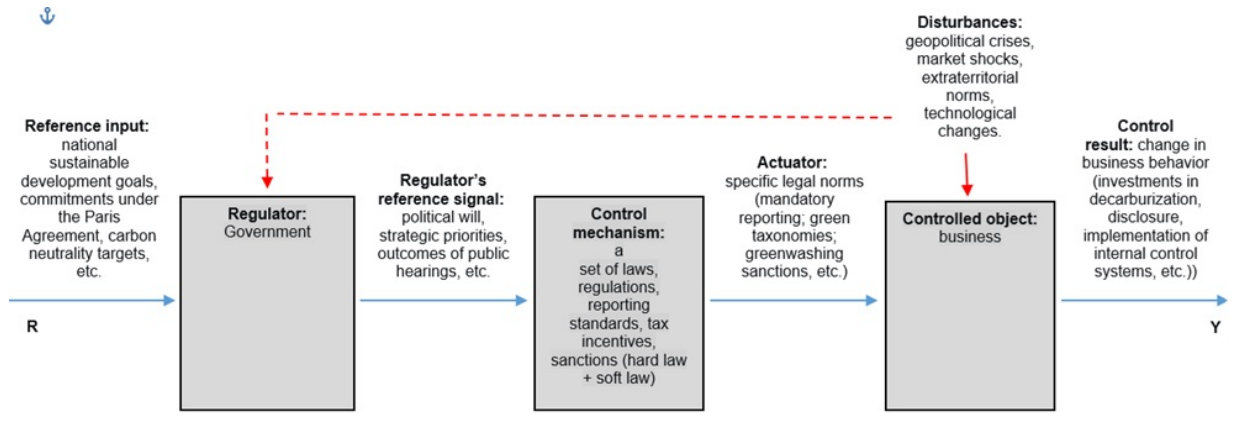
Figure 2.
Closed-loop ESG control system with deviation feedback
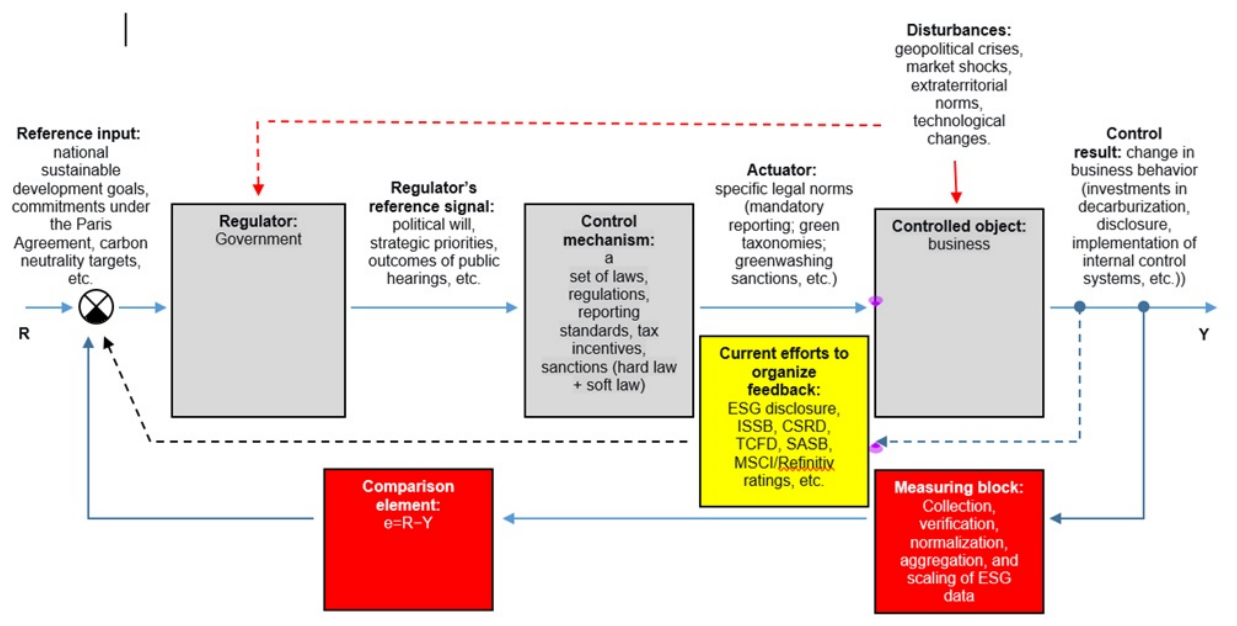
Figure 3.
Schematic diagram of aggregation of multidimensional ESG data into an integral feedback signal.
Figure 3.
Schematic diagram of aggregation of multidimensional ESG data into an integral feedback signal.
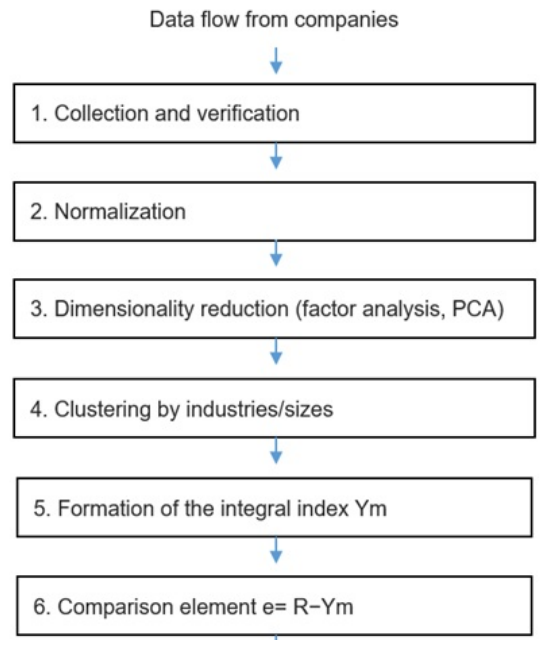
Table 1.
Key regulatory sources of ESG regulation.
| Country | Legislative and regulatory documents |
| USA | The U.S. Securities and Exchange Commission's Climate Disclosure Rule (SEC Climate Disclosure Rule, drafted 2022–2024); the Names Rule (2023); the Department of Labor's ESG regulation (DOL, 2022, revised 2025); California's SB 253 (GHG Disclosure) and SB 261 (Climate Risk Disclosure); the Environmental Protection Agency's GHGRP (methane rule); and initiatives by the NASDAQ and NYSE. |
| European Union | Corporate Sustainability Reporting Directive (CSRD); EU Taxonomy Regulation; Sustainable Finance Disclosure Regulation (SFDR); European Financial Reporting Standards (ESRS); EU Green Bonds Regulation (2023/2631). |
| China | ESG Disclosure Guidelines for Financial Institutions (2022); State Council Green Finance Directives of the People's Republic of China; Non-financial Disclosure Requirements of the China Securities Regulatory Commission (CSRC); National Green Taxonomy. |
| India | Companies Act 2013 (CSR obligations); Securities and Exchange Board of India (SEBI) requirements – Business Responsibility and Sustainability Report (BRSR); Bombay Stock Exchange (BSE) initiatives. |
| Brazil | Resolutions of the Commission for Valorous Mobility (CVM), including Resolution 59 (2021/2023); B3 exchange requirements; Central Bank regulations on environmental and social risk management. |
| Russia | National development goals up to 2030; Taxonomy of "green" and adaptation projects (RF Government Resolution No. 1587); Bank of Russia recommendations on disclosure of non-financial information; methodological recommendations of the Ministry of Economic Development on ESG reporting. |
| South Africa | Johannesburg Stock Exchange (JSE) integrated reporting requirements; King IV Code of Corporate Governance application practices; official recognition of ISSB standards. |
| Kazakhstan | The concept of transition to a "green economy"; the Environmental Code of the Republic of Kazakhstan (2021); draft national "green" taxonomy; requirements of the Agency for Regulation and Development of the Financial Market for the disclosure of ESG information by financial institutions; KASE initiatives on sustainable bonds. |
Table 2.
Use of International ESG Reporting Standards.
| Standard | Status and Application by Jurisdiction |
| Global Reporting Initiative (GRI Standards) | Integrated into the EU regulatory framework through the ESRS; in Russia and Kazakhstan, these are advisory guidelines; for the USA, India, Brazil, and South Africa, this is a market standard; for China, it is used in parallel with national standards. |
| International Sustainability Standards Board (ISSB – IFRS S1/S2) | Official recognition or implementation (South Africa, Brazil); strategic rapprochement (EU, USA); observation position (China, India); limited influence (Russia, Kazakhstan). |
| Task Force on Climate-related Financial Disclosures (TCFD) | Used as a basic climate framework in the US, EU, Brazil, and Japan; recommended by regulators in Russia and Kazakhstan; integrated into ISSB standards. |
| Carbon Disclosure Project(CDP) | Used by global corporations to disclose climate and water risks; used by investors as an additional source of data verification. |
Table 3.
Main sources of rating and index data.
| Category | Sources |
| Rating agencies | Moscow Exchange Sustainable Development Index (MSCI) ESG Research; Sustainalytics; S&P Global (CSA); FTSE Russell; Refinitiv ESG Scores. |
| International indices | Dow Jones Sustainability Index; MSCI ESG Leaders Indexes; FTSE4Good. |
| National indices | MESI; Kazakhstan Stock Exchange (KASE) "Responsibility and Sustainability"; Índice de Sustentabilidade Empresarial (B3 ISE). |
Table 4.
Academic and industry literature, statistical data.
| Type of source | Methodological role in the study |
| Academic articles (Scopus / WoS) | Analysis of the impact of ESG on company value, institutional features of regulation, and the risks of stranded assets |
| Kazakhstani and Russian national studies | Evaluation of national regulatory models and business adaptation strategies |
| International regulatory reports | Отчеты United Nations Environment Programme Finance Initiative (UNEP FI), Reports from the United Nations Environment Programme Finance Initiative (UNEP FI) reports, Principles for Responsible Investment (UN PRI), the Organization for Economic Cooperation and Development (OECD), and the World Bank were used to verify/confirm institutional changes and formalize disclosure requirements |
| Industry analytical reviews | Statistical data on the prevalence of ESG ratings, industry distributions, and rating dynamics |
| Official statistics | Data from national statistical services, central banks, and stock market regulators on the volume of green bonds, investment structure, etc. |
Table 5.
Summary characteristics of ESG regulation models according to the criteria of the analytical framework.
Table 5.
Summary characteristics of ESG regulation models according to the criteria of the analytical framework.
| Criterion | USA | EU | China | India | Brazil | Russia | South Africa | Kazakhstan |
| Regulatory model | Market-oriented | Directive | State-centralized | Hybrid (state-directive) |
Hybrid (state-market) |
State-centralized | Hybrid (state-market) |
Hybrid (state-market) |
| Mandatory nature of requirements | Mandatory for public companies (federal) + state laws | Mandatory for large companies (>1000 employees, >€450 million turnover) and the financial sector | Mandatory environmental reporting; ESG reporting – gradually (CSDS from 2025–2026) | Mandatory for top 1000 listed companies (BRSRCore) | Mandatory for public companies and the financial sector | Carbon reporting is mandatory; ESG reporting is voluntary (except for issuers from 2026) | Mandatory for listed companies (apply-or-explain) | Environmental reporting is mandatory; ESG reporting is mandatory for the financial sector from 2025 |
| The principle of materiality | Financial materiality | Dual materiality (financial + impact) | Dual Materiality (by CSDS) | Mixed (financial + impact) | Dual Materiality | Strategic (compliance with state policy) | Dual Materiality | Strategic (compliance with state policy) |
| Sanctions | SEC fines, lawsuits, regulatory suspensions | Fines up to 5% of global turnover (CSDDD), administrative sanctions | Fines up to 5 times the damage, criminal liability for management | SEBI fines, listing suspension, RoC sanctions | Administrative fines of the CVM and BCB | Environmental fines; no penalties for ESG reporting (except for issuers) | Penalties for NEMA violations, risk of delisting | Environmental fines (up to 500 MCI); sanctions for ESG reporting are formed |
| Extraterritoriality | High (CSDDD, CBAM, UFLPA) - indirect pressure through supply chains | Broad (CBAM, CSDDD, CARD, EUDR) - direct action on foreign companies | Limited direct; indirect pressure through exporter demands | Limited direct; indirect through supply chains | Limited (requirements for foreign subsidiaries) | Limited; indirect pressure via CBAM | Limited; indirect pressure via CBAM | Limited; indirect pressure via CBAM |
| Internal fragmentation | Critically high (conflict of federal regulations, state laws, court decisions) | Low (centralized system with harmonization through directives) | Low/moderate (coordination through the State Council, but departmental gaps) | Moderate (SEBI dominance but lack of coordination with RBI/MCA) | Low (coordination of CVM and BCB, unified taxonomy) | Moderate (three competing standards: SOKB, ECG, XBRL) | Low (centralized through the JSE and National Treasury) | Low (unitary state, centralized initiatives) |
| Convergence with ISSB | Partial (voluntary use, no official adoption) | High (ESRS is compatible with ISSB, but with dual materiality) | Partial (CSDS based on ISSB, but with dual materiality) | Partial (BRSR is ISSB compatible, formal adoption is in progress) | Full (first jurisdiction to officially adopt the ISSB since 2026) | Partial (use of GRI/TCFD, official adoption by ISSB is not planned) | Partial (JSE-Guidance is USB-compatible, gradual adaptation) | Partial (harmonization through AIFC and recommendations of the ARRFR) |
| The main compliance risk for business | Intra-country normative war (federation vs. states) | High costs of detailed reporting and due diligence | Rapid changes in government policy, dual reporting for exports | Gradual expansion of requirements without full harmonization | Integrating ESG risks into financial management | Dual reporting (domestic vs international), isolation | Compliance with global standards for capital raising | Lack of readiness for CBAM/CSDDD, zero environmental indicators in state programs |
Table 6.
Objectives and functions of the country ESG index.
| Target | Function | Instrumental embodiment | Target |
| Reducing regulatory uncertainty | Measuring | Unified methodology, normatively enshrined | Reducing regulatory uncertainty |
| Improving data comparability | Measuring, communicative | Unified indicators, standardized aggregation | Improving data comparability |
| Business support during the adaptation period | Orienting | Publishing the index structure, open data | Business support during the adaptation period |
| Providing feedback in management | Regulatory, adaptive | Integration into government support mechanisms, monitoring of deviations | Providing feedback in management |
Table 7.
Conceptual requirements for the country ESG index as a gauge of integral deviation.
| Requirement | Content | Empirical justification / source | Implications for index design |
| Detectability | Recording significant changes in emissions, investments, and compliance costs | Berg et al., 2022 | Using dynamic weights, taking into account threshold values |
| Robustness | Robustness to methodological biases and data noise | Berg et al., 2022; Gibson Brandon et al., 2021 | Application of dimensionality reduction methods (PCA), clustering |
| Comparability | Cross-country and cross-industry comparability | Gibson Brandon et al., 2021 | Harmonization with ISSB, use of common metrics (e.g. carbon intensity) |
| Timeliness | Minimum time lag between process changes and their reflection | Christensen et al., 2021 | Implementation of digital reporting, use of high-frequency data |
| Symmetry of assessment | Accounting for both underregulation and overregulation | Dechezleprêtre et al., 2022 | Introduction of the U-shaped scale, the regulatory load index |
| Interpretability | Clarity for decision makers | Pastor et al., 2021 | Simple structure, open methodology, visualization |
| Accounting for harmonization | Alignment with key trading partners' standards | Dechezleprêtre et al., 2022 | Comparison block with regulatory regimes of the EU, USA, China |
| Macroeconomic integration | Reflection of the impact of ESG policies on GDP, cost of capital, and investment | Krueger et al., 2021; Zhang et al., 2022 | Inclusion of macro indicators (capital expenditure, export dynamics) |
Table 8.
Comparative characteristics of international ESG regulation indices.
| Index | Measurement type | Direction of measurement | Accounting for regulatory intensity | Taking macro effects into account | Accounting for harmonization |
| EPI | Resultative | Ecological state | No | No | No |
| SDG Index | Resultative | Achieving the Sustainable Development Goals | Partially | Partially | No |
| OECD EPS | Political | The severity of environmental policy | Yes | Partially | No |
| Climate Action Tracker | Trajectory | Compliance with the Paris Agreement | Yes | No | Yes (climate) |
| WGI | Institutional | Quality of management | Indirectly | No | No |
Table 9.
Divergence of corporate ESG ratings: dynamics and types of discrepancies.
| Company | Sector | MSCI ESG (AAA–CCC) | Sustainalytics ESG Risk (0–100) | S&P Global CSA (0–100) | Nature of the discrepancy/key observation |
| Microsoft | Technologies | AAA (stable) | 2023: 14,6 (low) 2024: 13,9 2025: 13,2 |
2023: 82 2024: 84 2025: 85 |
Consistently high ratings; improvement across all three agencies |
| Lloyds Banking Group | Finance | 2023: AA 2024: AA 2025: AA |
2023: 24,9 (high) 2024: 19,0 (average) 2025: 12,4 (low) |
2023: 55 2024: 59 2025: 51 |
Mixed dynamics: Sustainalytics records a sharp improvement, S&P Global - a deterioration, MSCI is stable |
| NatWest Group | Finance | 2022: AA 2023: AA 2024: AA 2025: AA |
2022: 17,4 2023: 19,8 (worsening) 2024: 17,7 2025: 14,6 (improvement) |
2022: 61 2023: 51 (decline) 2024: 57 2025: 63 (height) |
Consistency of trends, different amplitude: both agencies show deterioration in 2023 and improvement by 2025, but the scale of fluctuations is higher for S&P |
| China Overseas Land & Investment | Real estate | 2021–22: BB 2022–23: BBB 2024–25: A |
2021–22: 16,0 2022–23: 16,1 2024: 13,7 2025: 13,9 |
S&PGlobal data appeared in 2024: inclusion in the Sustainabi-lityYearbook | Different sensitivity to progress: MSCI records a gradual improvement (BB→A), Sustainalytics consistently rates the company as low risk, S&P “noticed” the company only at a late stage |
| BP | Energy | 2022: BBB 2023: BBB 2024: BB 2025: BB |
2022: 28,3 (average) 2023: 29,1 2024: 30,5 (high) 2025: 31,2 |
2022: 65 2023: 63 2024: 60 2025: 58 |
Consensus trend (worsening), but varying levels: All three agencies show deterioration due to carbon loading, but absolute values and risk categories differ |
Table 10.
Ranking of indicators of the environmental block (E).
| # | Indicator | Relevance | Frequency in standards | Impact on risks | Sum |
| 1 | Carbon intensity (Scope 1+2) | 3 | 3 | 3 | 9 |
| 2 | Energy intensity of products | 3 | 3 | 3 | 9 |
| 3 | Dynamics of greenhouse gas emissions | 3 | 3 | 2 | 8 |
| 4 | Volume of discharged polluted water/treatment efficiency | 3 | 2 | 3 | 8 |
| 5 | Number of environmental violations/fines | 3 | 2 | 3 | 8 |
| 6 | Availability of an integrated environmental permit | 3 | 1 | 3 | 7 |
| 7 | Water use (volume of water withdrawal per unit of production) | 3 | 2 | 2 | 7 |
| 8 | Emissions of pollutants (SO₂, NOₓ, dust) per unit of production | 3 | 2 | 2 | 7 |
| 9 | The share of renewable energy in the energy balance | 2 | 2 | 2 | 6 |
| 10 | Investments in environmental protection (% of revenue) | 2 | 2 | 2 | 6 |
| 11 | Area of reclaimed land (for mining companies) | 3 | 1 | 2 | 6 |
| 12 | Waste generation (volume per unit of output) | 3 | 2 | 2 | 7 |
| 13 | Share of recycled waste/recycling rate | 2 | 2 | 1 | 5 |
| 14 | Costs of eliminating accumulated environmental damage | 2 | 1 | 2 | 5 |
| 15 | Availability of an environmental management system (ISO 14001) | 2 | 3 | 2 | 7 |
Table 11.
Ranking of social block indicators (S).
| # | Indicator | Relevance | Frequency in standards | Impact on risks | Sum |
| 1 | Lost Injury Frequency Rate (LTIFR) | 3 | 3 | 3 | 9 |
| 2 | Investments in personnel training and development (% of payroll) | 3 | 2 | 2 | 7 |
| 3 | Share of local content in procurement | 3 | 2 | 3 | 8 |
| 4 | Transparency of social policy (presence of policies, reporting) | 2 | 3 | 2 | 7 |
| 5 | The proportion of women on the board of directors and in top management | 2 | 3 | 2 | 7 |
| 6 | Investments in social infrastructure (education, healthcare) | 3 | 1 | 2 | 6 |
| 7 | Average salary relative to industry level | 2 | 2 | 2 | 6 |
| 8 | Share of employees covered by collective agreements | 2 | 2 | 1 | 5 |
| 9 | Staff turnover (%) | 3 | 2 | 2 | 7 |
| 10 | Having a human rights and due diligence policy in place in the supply chain | 2 | 3 | 2 | 7 |
| 11 | Percentage of employees who have completed occupational safety training | 3 | 2 | 2 | 7 |
| 12 | Gender Equality Index | 2 | 2 | 1 | 5 |
| 13 | Number of social conflicts/strikes | 2 | 1 | 3 | 6 |
| 14 | The share of vacancies filled by local residents (regional aspect) | 3 | 1 | 2 | 6 |
| 15 | Availability of programs to support indigenous peoples and local communities | 3 | 1 | 2 | 6 |
Table 12.
Ranking of management block indicators (G).
| # | Indicator | Relevance | Frequency in standards | Impact on risks | Sum |
| 1 | Proportion of independent directors on the board | 3 | 3 | 3 | 9 |
| 2 | Level of information disclosure (availability of ESG report, verification) | 3 | 3 | 3 | 9 |
| 3 | Innovative activity (patents, R&D results, new technologies) | 3 | 2 | 3 | 8 |
| 4 | The presence of an anti-corruption and compliance control policy | 3 | 3 | 3 | 9 |
| 5 | Separation of the roles of the chairman of the board and the CEO | 2 | 2 | 2 | 6 |
| 6 | The proportion of women on the board of directors | 2 | 2 | 1 | 5 |
| 7 | The presence of a code of corporate ethics | 2 | 3 | 2 | 7 |
| 8 | Supply Chain Disclosure (Scope 3) | 2 | 3 | 2 | 7 |
| 9 | The presence of a sustainable development committee under the council | 2 | 2 | 2 | 6 |
| 10 | Frequency of board meetings | 1 | 2 | 1 | 4 |
| 11 | Availability of internal audit and risk management | 2 | 3 | 2 | 7 |
| 12 | Transparency of the management remuneration system | 2 | 2 | 2 | 6 |
| 13 | Having an anti-money laundering (AML) policy | 2 | 2 | 2 | 6 |
| 14 | Implementation of digital ESG data management systems | 2 | 1 | 2 | 5 |
| 15 | Participation in international ESG initiatives (UNGC, TCFD) | 2 | 2 | 2 | 6 |
Source: https://www.oecd.org/content/dam/oecd/en/publications/reports/2023/09/g20-oecd-principles-of-corporate-governance-2023_60836fcb/ed750b30-en.pdf, https://www.globalreporting.org/media/zauil2g3/public-faqs-universal-standards.pdf, https://www.ifrs.org/, https://doi.org/10.1080/13662716.2010.530839, DOI: 10.1257/jel.52.2.375.
Table 13.
Ranking of regulatory burden indicators (R).
| # | Indicator | Relevance | Frequency in standards | Impact on risks | Sum |
| 1 | Share of ESG compliance costs in revenue | 3 | 2 | 3 | 8 |
| 2 | Number of mandatory reporting requirements (number of regulators) | 3 | 1 | 2 | 6 |
| 3 | Costs for external audit and verification of ESG data | 2 | 2 | 2 | 6 |
| 4 | Fines and penalties for violation of ESG requirements (annual) | 3 | 1 | 3 | 7 |
| 5 | Time spent on preparing reports (man-hours) | 2 | 1 | 1 | 4 |
| 6 | Number of requests from regulators | 2 | 1 | 1 | 4 |
Table 14.
Ranking of indicators of extraterritorial pressure (EextEext).
| # | Indicator | Relevance | Frequency in standards | Impact on risks | Sum |
| 1 | Share of exports to the EU/CBAM countries | 3 | 2 | 3 | 8 |
| 2 | Availability of ISSB/CSRD certificates of conformity | 2 | 3 | 3 | 8 |
| 3 | Share of exports to China | 3 | 1 | 2 | 6 |
| 4 | Participation in cross-border supply chains | 2 | 2 | 2 | 6 |
| 5 | Availability of a due diligence system for suppliers | 2 | 2 | 2 | 6 |
Table 16.
Final indicators for calculating the company index.
| Block | Indicator | Type | Direction | Data source |
| E | Carbon intensity (Scope 1+2) | Quantitative | reverse | Environmental reporting, emissions register |
| E | Energy intensity of products | Quantitative | reverse | Corporate reporting, statistics |
| E | Dynamics of GHG emissions (year-on-year) | Quantitative | straight | Environmental reporting |
| E | Volume of discharged polluted water/treatment efficiency | Quantitative | reverse | Environmental reporting |
| E | Number of environmental violations/fines | Quantitative | reverse | Reports, regulator data |
| E | Availability of an integrated environmental permit | Binary | straight | Environmental Code |
| S | Lost Injury Frequency Rate (LTIFR) | Quantitative | reverse | Occupational safety reporting |
| S | Share of local content in procurement | Quantitative | straight | Corporate reporting |
| S | Investments in personnel training and development (% of payroll) | Quantitative | straight | Corporate reporting |
| S | Transparency of social policy (presence of policies, reporting) | Binary | straight | Open data |
| G | Proportion of independent directors on the board | Quantitative | straight | Annual reporting |
| G | Level of disclosure (ESG report, verification) | Binary | straight | Open data |
| G | Innovative activity (patents, R&D results, new technologies) | Quantitative | straight | Corporate reporting |
| G | The presence of an anti-corruption and compliance control policy | Binary | straight | Corporate reporting |
| R | Share of ESG compliance costs in revenue | Quantitative | reverse (enters with the – sign) | Management reporting |
| Eext | Share of exports to the EU/CBAM countries | Quantitative | straight | Customs statistics |
| Eext | Availability of ISSB/CSRD certificates of conformity | Binary | straight | Corporate reporting |
| A | Rate of decline of carbon intensity (annual rate) | Quantitative | straight | Environmental reporting |
| A | Investments in transformation (% of capital expenditures on modernization) | Quantitative | straight | Corporate reporting |
Disclaimer/Publisher’s Note: The statements, opinions and data contained in all publications are solely those of the individual author(s) and contributor(s) and not of MDPI and/or the editor(s). MDPI and/or the editor(s) disclaim responsibility for any injury to people or property resulting from any ideas, methods, instructions or products referred to in the content. |
© 2026 by the authors. Licensee MDPI, Basel, Switzerland. This article is an open access article distributed under the terms and conditions of the Creative Commons Attribution (CC BY) license (http://creativecommons.org/licenses/by/4.0/).
Copyright: This open access article is published under a Creative Commons CC BY 4.0 license, which permit the free download, distribution, and reuse, provided that the author and preprint are cited in any reuse.


