

Submitted:
05 June 2026
Posted:
08 June 2026
You are already at the latest version
Abstract
Background: Infective endocarditis (IE) is a life-threatening cardiovascular infection with in-hospital mortality of 15–30% despite modern therapy. Contemporary IE demonstrates non-random valve involvement: aortic 40–60%, mitral 20–40%, tricuspid 5–10% (30–50% in intravenous drug users [IVDU]), and pulmonary < 1%. These patterns implicate valve-specific anatomy and hemodynamics as central determinants of susceptibility. Methods: Structured narrative review of English-language literature from PubMed/MEDLINE, Embase, Scopus, and Google Scholar (January 1990–March 2026). Search terms included “infective endocarditis,” “valve anatomy,” “hemodynamics,” “bicuspid aortic valve,” “prosthetic valve endocarditis,” and “TAVR endocarditis.” We included anatomical studies, clinical cohorts, surgical series, imaging research, and international guidelines. Evidence was synthesized narratively using Oxford CEBM levels. Results: IE susceptibility follows a biologically coherent gradient shaped by hemodynamic stress, endothelial injury, and structural substrate. The aortic valve (40–60% of native IE) is most vulnerable due to high shear stress, frequent congenital anomalies (bicuspid aortic valve [BAV]: 2% prevalence, 24% of aortic IE), and direct fibrous skeleton continuity—predisposing to periannular extension (30–40%). Mitral IE (20–40%) is largely conditional on structural disease (mitral valve prolapse [MVP]: 8-fold risk increase; embolic rates 30–50%). Tricuspid IE (5–10%; 30–50% in IVDU) reflects low-pressure hemodynamics with lower mortality (10–20%) but high recurrence (15–30%). Pulmonary IE (< 1%) is rare due to minimal hemodynamic stress. Prosthetic valves carry 0.3–6% annual IE risk; TAVR-specific risks include paravalvular regurgitation and residual native tissue. Conclusions: IE susceptibility is fundamentally determined by valve-specific anatomy interacting with hemodynamic forces and microbial virulence. This anatomy-informed framework guides risk stratification and identifies prevention targets.
Keywords:
infective endocarditis
; valve anatomy
; hemodynamics
; bicuspid aortic valve
; prosthetic valve endocarditis
; TAVR
; mitral valve prolapse
1. Introduction
Infective endocarditis (IE) remains among the most lethal cardiovascular infections, with in-hospital mortality 15–30% and 1-year mortality approaching 40% [1,2]. Annual incidence is 3–10 per 100,000 population, with rising trends driven by aging populations, prosthetic valve implantations, healthcare-associated infections, and IVDU [3,4].
Contemporary IE exhibits non-random valve involvement patterns consistent across decades: aortic 40–60%, mitral 20–40%, tricuspid 5–10% (30–50% in IVDU), pulmonary <1% [5,6]. These patterns persist despite shifts from rheumatic heart disease dominance to degenerative valve disease, prosthetic valves, and healthcare-associated risk factors [7,8]. This non-random distribution strongly implicates valve-specific anatomical features as fundamental determinants of IE susceptibility [9]. Yet existing reviews focus predominantly on clinical presentation, microbiology, or therapeutics, with anatomical considerations receiving limited attention [10,11]. Understanding why certain valves are preferentially affected and how anatomical variants dramatically increase IE risk could transform risk stratification, prophylaxis, and prevention [12,13].
This review systematically examines valve-specific anatomical determinants of IE susceptibility across all four cardiac valves, synthesizing evidence from anatomical studies, clinical cohorts, surgical series, and imaging research to construct a mechanistic, anatomy-informed framework. The overall distribution of native IE by valve is shown in Figure 1.
2. Pathogenesis: Anatomical Foundations
IE initiation requires three convergent events: endothelial injury, non-bacterial thrombotic endocarditis (NBTE) formation, and bacteremia [14]. Valve anatomy determines the probability and severity of each event. Hemodynamic shear stress is the primary driver of endothelial injury. High-velocity turbulent flow at cusp coaptation zones, regurgitant jet impact sites, and commissures induces endothelial denudation, exposing subendothelial matrix proteins (fibronectin, laminin, collagen) that serve as adhesion substrates [15,16]. The resulting NBTE platelet-fibrin thrombi on denuded endothelium provides the structural scaffold for vegetation formation. Bacterial adhesion is mediated by surface adhesins: Staphylococcus aureus fibronectin-binding proteins (FnBP-A/B) and clumping factors (ClfA/B); Streptococcus viridans FimA [17]. Biofilm formation confers antibiotic resistance and immune evasion [18]. The complete molecular pathogenesis cascade is illustrated in Figure 2.
3. Aortic Valve: The Most Vulnerable Site
The aortic valve represents the most common site of infective endocarditis (IE), accounting for approximately 40–60% of all native valve infections. Its heightened susceptibility reflects a unique convergence of anatomical, histological, and haemodynamic factors that collectively promote endothelial injury, microbial adherence, tissue destruction, and peri-annular extension. Unlike other cardiac valves, the aortic valve is exposed to the highest pressure gradients and flow velocities within the circulation, creating a haemodynamic environment that favours endothelial disruption and subsequent bacterial colonisation.
Anatomically, the normal aortic valve consists of three semilunar cusps the right coronary, left coronary, and non-coronary cusps each composed of three specialised histological layers: the fibrosa, spongiosa, and ventricularis [19]. During systole, the valve is subjected to peak transvalvular velocities of 1.0–1.7 m/s, pressure gradients of 5–10 mmHg, and shear stresses ranging from 10 to 70 dynes/cm², representing the highest haemodynamic burden among the cardiac valves [20]. Comparative hemodynamic parameters across all four valves are summarised in Table 1.
A defining anatomical feature of the aortic valve is its intimate continuity with the cardiac fibrous skeleton, including the membranous septum and the mitral-aortic intervalvular fibrosa (MAIVF) [21]. While this fibrous integration provides structural stability, it also creates direct pathways for infection to extend beyond the valve leaflets into surrounding tissues. Consequently, aortic valve IE exhibits the highest rate of peri-annular extension among all valve locations, occurring in approximately 30–40% of cases [29,30].
Underlying structural abnormalities further amplify susceptibility. Bicuspid aortic valve (BAV), affecting approximately 1–2% of the general population, is one of the strongest recognised anatomical risk factors for aortic valve IE and accounts for approximately 24% of aortic infections, conferring a three- to nine-fold increased risk compared with tricuspid aortic valves [22,23]. Similarly, calcific aortic stenosis (AS) significantly increases the risk of IE, affecting approximately 2–7% of adults older than 65 years with an estimated five-fold increase in infection risk [26]. Structural substrates and relative IE risk across valve types are summarised in Table 2.
Aortic regurgitation (AR) provides an additional mechanism of vulnerability. Chronic regurgitant flow produces high-velocity retrograde jets, typically ranging from 2–5 m/s, which repeatedly impact the ventricular aspect of the anterior mitral leaflet and adjacent endocardial surfaces [28].
The clinical consequences of aortic valve IE reflect its unique anatomical relationships. Peri-annular extension frequently results in abscess formation, occurring in approximately 20–40% of cases, most commonly involving the mitral-aortic intervalvular fibrosa [31]. Progressive extension into the membranous septum may disrupt the cardiac conduction system and lead to complete atrioventricular block, reported in 5–10% of patients [31]. Systemic embolisation remains a major complication, affecting 20–50% of patients, with cerebral embolisation accounting for approximately 65% of all embolic events [32].
4. Mitral Valve: Conditional Vulnerability
The mitral valve is the second most frequently affected site of infective endocarditis (IE), accounting for approximately 20–40% of cases. Unlike the aortic valve, whose susceptibility is largely driven by intrinsic haemodynamic stress, mitral valve infection is predominantly a disease of pre-existing structural vulnerability. In most patients, infection develops upon a substrate altered by degenerative, rheumatic, congenital, or functional abnormalities that disrupt normal endothelial integrity and facilitate microbial colonisation.
Anatomically, the mitral valve is a complex apparatus comprising anterior and posterior leaflets, the mitral annulus, chordae tendineae, and papillary muscles [33]. Compared with the aortic valve, the mitral valve is exposed to a lower haemodynamic burden, experiencing peak diastolic flow velocities of 0.6–1.3 m/s, transvalvular pressure gradients of 2–5 mmHg, and shear stresses ranging from 5 to 30 dynes/cm² [34].
Mitral valve prolapse (MVP) represents the most important degenerative substrate predisposing to mitral valve IE. Although MVP affects approximately 2–3% of the general population, it accounts for 20–30% of mitral valve infections and is associated with an estimated eight-fold increase in IE risk [35,36]. Histopathologically, myxomatous degeneration is characterised by proteoglycan accumulation, collagen disorganisation, and disruption of normal extracellular matrix architecture, resulting in irregular leaflet surfaces and endothelial dysfunction that facilitate vegetation formation [37].
Mitral regurgitation (MR) provides a complementary haemodynamic mechanism for disease initiation. High-velocity regurgitant jets, often reaching 3–6 m/s in severe MR, repeatedly impact adjacent valvular and endocardial surfaces, producing characteristic “jet lesions” that serve as preferential sites for platelet-fibrin deposition and bacterial adhesion [38].
In many low- and middle-income regions, rheumatic heart disease remains a major contributor to mitral valve IE, accounting for approximately 30–50% of cases [39]. Chronic rheumatic inflammation results in leaflet thickening, commissural fusion, fibrosis, and calcification, creating a structurally distorted valve that is highly susceptible to endothelial injury.
The anatomical consequences of mitral valve IE differ substantially from those observed in aortic valve disease. Mitral valve infection is associated with lower rates of peri-annular extension (approximately 10–20% of cases) but a markedly greater tendency toward systemic embolisation, with embolic events reported in 30–50% of patients and cerebral embolisation accounting for approximately 70% of all embolic complications [40,41]. Infection involving the subvalvular apparatus may result in chordal rupture in 10–20% of cases, leading to acute severe mitral regurgitation and urgent surgical intervention [42]. Characteristic echocardiographic features by valve are summarised in Table 4.
5. Tricuspid Valve: Low-Pressure Protection with Context-Dependent Risk
The tricuspid valve occupies a unique position within the spectrum of infective endocarditis (IE), demonstrating relatively low intrinsic susceptibility despite continuous exposure to venous circulation. In contrast to left-sided valves, the tricuspid valve functions within a low-pressure, low-shear haemodynamic environment that confers substantial protection against endothelial injury and vegetation formation. Consequently, tricuspid valve IE accounts for only 5–10% of all cases in the general population. However, this apparent resistance can be rapidly overcome when external factors such as intravenous drug use (IVDU), intracardiac devices, or congenital cardiac abnormalities disrupt the native anatomical and haemodynamic equilibrium.
Anatomically, the tricuspid valve consists of three leaflets the anterior, posterior, and septal leaflets and possesses the largest annular circumference among the cardiac valves, typically measuring 10–12 cm [43]. Haemodynamically, the tricuspid valve experiences peak transvalvular velocities of only 0.3–0.7 m/s, pressure gradients of 1–3 mmHg, and shear stresses ranging from 2 to 10 dynes/cm², representing the lowest mechanical burden among the four cardiac valves [44].
Intravenous drug use remains the predominant predisposing condition, accounting for approximately 70–90% of tricuspid valve IE cases [45]. Repeated injection of particulate-contaminated substances causes direct endothelial injury and introduces high concentrations of microorganisms into the venous circulation. The microbiological profile of IVDU-associated tricuspid IE differs markedly from that of left-sided disease, with Staphylococcus aureus accounting for 60–80% of infections, polymicrobial pathogens for 10–20%, and fungal organisms for 5–10% [46]. Microbiology by valve site is summarised in Table 3.
The increasing use of cardiovascular implantable electronic devices (CIEDs), including permanent pacemakers and implantable cardioverter-defibrillators, has introduced another important mechanism of tricuspid valve vulnerability. Device leads traverse the tricuspid valve apparatus and may cause repetitive endothelial trauma, local inflammation, and thrombus formation, increasing the risk of device-related endocarditis by approximately two- to five-fold [47,48].
Congenital heart disease represents an additional anatomical substrate for tricuspid valve infection. Structural abnormalities such as Ebstein anomaly and repaired tetralogy of Fallot are associated with a five- to ten-fold increase in IE risk [49]. The clinical behaviour of tricuspid valve IE differs substantially from that of left-sided disease. Septic pulmonary embolism represents the hallmark complication, occurring in approximately 65–100% of cases [52]. Overall mortality remains lower than that observed in left-sided IE, ranging from 10–20% compared with 25–40% for left-sided disease [50,51]. However, tricuspid valve IE is characterised by substantially higher recurrence rates, reported in 15–30% of patients [50,51].
6. Pulmonary Valve: The Protected Valve
The pulmonary valve represents the least frequently affected cardiac valve in infective endocarditis (IE), accounting for fewer than 1% of all native valve infections. This exceptional rarity reflects a unique combination of anatomical isolation, favourable haemodynamics, and reduced exposure to the mechanical stresses that typically initiate endothelial injury and vegetation formation.
Anatomically, the pulmonary valve consists of three semilunar cusps located at the junction between the right ventricular outflow tract (RVOT) and the pulmonary artery. It is exposed to the lowest transvalvular pressures and shear forces among all cardiac valves, experiencing peak flow velocities of only 0.6–0.9 m/s, pressure gradients of 2–5 mmHg, and shear stresses ranging from 1 to 5 dynes/cm² [53].
Unlike left-sided valves, pulmonary valve IE rarely occurs in structurally normal hearts. Instead, infection is almost exclusively associated with congenital or surgically modified cardiac anatomy [54,55]. Congenital heart diseases involving the right ventricular outflow tract, particularly tetralogy of Fallot, pulmonary stenosis, and RVOT conduit implantation, represent the principal anatomical substrates for pulmonary valve infection. Repaired tetralogy of Fallot is associated with a ten- to twenty-fold increase in IE risk compared with the general population [56]. RVOT conduits and prosthetic pulmonary valve replacements carry reported annual incidences of IE of 3%–6% [57].
The clinical manifestations of pulmonary valve IE are generally associated with lower mortality rates (5–15%), representing the most favourable survival profile among the cardiac valves [58]. Nevertheless, acute pulmonary regurgitation can precipitate right ventricular volume overload and right-sided heart failure, occurring in approximately 30–50% of affected patients [58].
Collectively, the pulmonary valve represents the most protected valve within the spectrum of infective endocarditis. Its exceptional resistance to infection highlights the fundamental role of haemodynamic forces and structural substrates in disease initiation.
7. Special Populations: When Patient Factors Override Anatomical Protection
Although valve-specific anatomy and haemodynamics are major determinants of infective endocarditis (IE) susceptibility, certain patient populations demonstrate how host factors, congenital abnormalities, and healthcare-related exposures can substantially modify or even override the intrinsic protective mechanisms of individual valves.
Congenital heart disease (CHD) represents one of the strongest predisposing conditions for IE, increasing the risk of infection by approximately 15 to 140 fold depending on lesion complexity [59]. The heightened susceptibility arises from a combination of abnormal cardiac anatomy, disturbed haemodynamics, residual shunts, turbulent flow, prosthetic material implantation, and previous surgical interventions.
Intravenous drug use (IVDU) is associated with one of the most dramatic increases in IE risk, estimated at 100- to 300-fold above that of the general population [60,61]. Consequently, tricuspid valve involvement occurs in approximately 60–70% of cases, making IVDU the prototypical example of context-dependent right-sided IE [60,61]. Recurrent episodes of bacteraemia and persistent substance use contribute to particularly high recurrence rates, reported in 15–30% of patients.
The epidemiology of IE has shifted substantially over recent decades, with adults older than 65 years now accounting for approximately 50–60% of contemporary cases [62,63]. The combination of frailty, multimorbidity, delayed diagnosis, and complex disease manifestations contributes to poorer outcomes, with mortality exceeding 40% among octogenarians [62,63]. IE risk across special populations is illustrated in Figure 3, and comparative risk profiles are summarised in Table 6.
8. Prosthetic Valves: Artificial Substrates and Altered Anatomical Risk
Prosthetic valve implantation fundamentally alters the anatomical and biological environment of the native valve, creating an artificial substrate that is uniquely susceptible to infective endocarditis (IE). Unlike native valve infection, where susceptibility is largely determined by intrinsic anatomy and haemodynamics, prosthetic valve endocarditis (PVE) arises from the interaction between foreign material, altered flow patterns, host immune responses, and microbial biofilm formation. The spectrum of prosthetic valve types and their IE risk profiles is illustrated in Figure 4 and summarised in Table 5.
Mechanical prosthetic valves are associated with an annual IE incidence of approximately 0.3–1.2% [64]. Early prosthetic valve endocarditis (within 60 days of implantation) is predominantly related to perioperative contamination, with Staphylococcus aureus and coagulase-negative staphylococci as the principal causative organisms [65]. Owing to the intimate relationship between the prosthesis, annulus, and surrounding cardiac structures, early PVE is characterised by aggressive local invasion, with peri-annular extension occurring in approximately 40–60% of cases and reported mortality rates of 20–40% [65].
Bioprosthetic valves are similarly vulnerable to infection, with annual IE incidences ranging from 0.5–1.5% [66]. Structural valve degeneration progressively increases susceptibility over time, typically becoming apparent after 7–10 years.
The emergence of transcatheter aortic valve replacement (TAVR) has introduced a distinct and increasingly important form of prosthetic valve infection. Reported incidences of TAVR-associated IE range from 0.3–3.1% per year [67,68]. Several device-specific anatomical factors have been implicated in susceptibility, including paravalvular regurgitation (present in approximately 30–50% of affected cases), residual calcified native valve tissue, and disruption of normal valvular architecture [69]. Enterococcus species account for approximately 25–35% of TAVR-related infections, and clinical outcomes remain poor, with mortality rates ranging from 40–60% [70].
9. Clinical Implications
The valve-specific anatomical framework proposed in this review has important implications for the prevention, diagnosis, imaging assessment, and management of infective endocarditis (IE). By recognising that susceptibility, disease progression, and complication profiles are fundamentally influenced by anatomical substrate and haemodynamic environment, clinicians can move beyond a uniform approach to IE and adopt more individualised strategies tailored to valve-specific risk.
From a preventive perspective, this framework supports refined risk stratification based on underlying anatomical vulnerability. Patients with high-risk substrates including bicuspid aortic valve (BAV), mitral valve prolapse (MVP), calcific aortic stenosis, congenital heart disease (CHD) with residual shunts or prosthetic material, and prosthetic valve replacements exhibit structural and haemodynamic characteristics that facilitate endothelial injury and microbial adherence [71,72].
The framework also provides a rationale for valve-specific diagnostic assessment. In particular, aortic valve IE warrants systematic evaluation of the mitral-aortic intervalvular fibrosa and membranous septum because of the high propensity for peri-annular extension, abscess formation, and conduction system involvement [73].
Echocardiography remains the cornerstone of anatomical assessment in IE. Transoesophageal echocardiography (TEE) continues to represent the reference imaging modality, with reported sensitivities of 87–100% and specificities of 90–100% [74]. Cardiac computed tomography (CT) provides superior delineation of peri-annular extension, abscess cavities, pseudoaneurysms, and fistulae [75]. 18F-fluorodeoxyglucose positron emission tomography/computed tomography (18F-FDG PET/CT) has emerged as a valuable adjunctive tool for identifying prosthetic valve infection [76]. An anatomy-informed clinical decision framework is presented in Figure 5.
Contemporary evidence supports early surgical intervention, particularly in patients presenting with heart failure, persistent infection despite appropriate antimicrobial therapy, or significant embolic risk. In selected high-risk patients, surgery performed within 48 hours has been associated with reductions in in-hospital mortality [77,78].
10. Conclusions
From a mechanistic perspective, the evidence reviewed demonstrates that susceptibility to infective endocarditis is not uniformly distributed across the cardiac valves but is fundamentally determined by the interaction between valve-specific anatomy, haemodynamic forces, structural substrates, and microbial characteristics. The predominance of aortic valve involvement reflects the convergence of high haemodynamic stress, frequent congenital and degenerative abnormalities, and direct continuity with the cardiac fibrous skeleton. Mitral valve infection largely depends upon the presence of underlying structural pathology, whereas tricuspid valve disease is primarily driven by external risk factors such as intravenous drug use and intracardiac devices. The exceptional rarity of pulmonary valve IE further reinforces the protective role of low-pressure haemodynamics. Prosthetic valves introduce novel anatomical and biological vulnerabilities through foreign material implantation, altered flow dynamics, and biofilm formation.
Looking forward, advances in high-resolution multimodality imaging, computational fluid dynamics, three-dimensional anatomical modelling, and molecular profiling of host–pathogen interactions offer unprecedented opportunities to refine this valve-specific paradigm. Ultimately, a deeper understanding of the anatomical and haemodynamic determinants of infective endocarditis has the potential to transform current management from a predominantly reactive approach towards a more predictive and precision-based model of care.
Acknowledgments
The authors thank the multidisciplinary teams at the National Heart Institute and Universiti Kebangsaan Malaysia. We acknowledge the patients whose clinical experiences inform this work.
Funding
No specific funding received.
Conflicts of Interest
None declared.
Author Contributions
NHAR: Conceptualization, literature search, drafting, figure design. ABM: Methodology, evidence synthesis, critical revision. ZMI: Epidemiological analysis, critical revision. SK: Clinical perspectives, critical revision. TAK: Anatomical expertise, drafting, critical revision. All authors approved the final manuscript.
References
- Cahill, T.J.; Baddour, L.M.; Habib, G.; Hoen, B.; Salaun, E.; Pettersson, G.B.; et al. Challenges in infective endocarditis. J. Am. Coll. Cardiol. 2017, 69, 325–344. [Google Scholar] [CrossRef]
- Murdoch, D.R.; Corey, G.R.; Hoen, B.; Miro, J.M.; Fowler, VGJr; Bayer, A.S.; et al. Clinical presentation, etiology, and outcome of infective endocarditis in the 21st century: the International Collaboration on Endocarditis-Prospective Cohort Study. Arch. Intern Med. 2009, 169, 463–473. [Google Scholar] [CrossRef]
- Tleyjeh, I.M.; Steckelberg, J.M.; Murad, H.S.; Anavekar, N.S.; Ghomrawi, H.M.; Mirzoyev, Z.; et al. Temporal trends in infective endocarditis: a population-based study in Olmsted County, Minnesota. JAMA 2005, 293, 3022–3028. [Google Scholar] [CrossRef]
- Pant, S.; Patel, N.J.; Deshmukh, A.; Golwala, H.; Patel, N.; Badheka, A.; et al. Trends in infective endocarditis incidence, microbiology, and valve replacement in the United States from 2000 to 2011. J. Am. Coll. Cardiol. 2015, 65, 2070–2076. [Google Scholar] [CrossRef] [PubMed]
- Hoen, B.; Alla, F.; Selton-Suty, C.; Beguinot, I.; Bouvet, A.; Briancon, S.; et al. Changing profile of infective endocarditis: results of a 1-year survey in France. JAMA 2002, 288, 75–81. [Google Scholar] [CrossRef] [PubMed]
- Nkomo, V.T.; Gardin, J.M.; Skelton, T.N.; Gottdiener, J.S.; Scott, C.G.; Enriquez-Sarano, M. Burden of valvular heart diseases: a population-based study. Lancet 2006, 368, 1005–1011. [Google Scholar] [CrossRef]
- Slipczuk, L.; Codolosa, J.N.; Davila, C.D.; Romero-Corral, A.; Yun, J.; Pressman, G.S.; et al. Infective endocarditis epidemiology over five decades: a systematic review. PLoS ONE 2013, 8, e82665. [Google Scholar] [CrossRef] [PubMed]
- Thornhill, M.H.; Jones, S.; Prendergast, B.; Baddour, L.M.; Chambers, J.B.; Lockhart, P.B.; et al. Quantifying infective endocarditis risk in patients with predisposing cardiac conditions. Eur. Heart J. 2018, 39, 586–595. [Google Scholar] [CrossRef]
- Cabell, C.H.; Jollis, J.G.; Peterson, G.E.; Corey, G.R.; Anderson, D.J.; Sexton, D.J.; et al. Changing patient characteristics and the effect on mortality in endocarditis. Arch. Intern Med. 2002, 162, 90–94. [Google Scholar] [CrossRef]
- Habib, G.; Lancellotti, P.; Antunes, M.J.; Bongiorni, M.G.; Casalta, J.P.; Del Zotti, F.; et al. 2015 ESC Guidelines for the management of infective endocarditis. Eur. Heart J. 2015, 36, 3075–3128. [Google Scholar] [CrossRef]
- Baddour, L.M.; Wilson, W.R.; Bayer, A.S.; Fowler, VGJr; Tleyjeh, I.M.; Rybak, M.J.; et al. Infective endocarditis in adults: diagnosis, antimicrobial therapy, and management of complications. Circulation 2015, 132, 1435–1486. [Google Scholar] [CrossRef]
- Dayer, M.J.; Jones, S.; Prendergast, B.; Baddour, L.M.; Lockhart, P.B.; Thornhill, M.H. Incidence of infective endocarditis in England, 2000–2013: a secular trend, interrupted time-series analysis. Lancet 2015, 385, 1219–1228. [Google Scholar] [CrossRef] [PubMed]
- Federspiel, J.J.; Stearns, S.C.; Peppercorn, A.F.; Chu, V.H.; Fowler, V.G., Jr. Increasing US rates of endocarditis with Staphylococcus aureus: 1999–2008. Arch. Intern Med. 2012, 172, 363–365. [Google Scholar] [CrossRef]
- Durack, D.T.; Beeson, P.B. Experimental bacterial endocarditis. I. Colonization of a sterile vegetation. Br. J. Exp. Pathol. 1972, 53, 44–49. [Google Scholar]
- Moreillon, P.; Que, Y.A. Infective endocarditis. Lancet 2004, 363, 139–149. [Google Scholar] [CrossRef]
- Prendergast, B.D. The changing face of infective endocarditis. Heart 2006, 92, 879–885. [Google Scholar] [CrossRef] [PubMed]
- Que, Y.A.; Moreillon, P. Infective endocarditis. Nat. Rev. Cardiol. 2011, 8, 322–336. [Google Scholar] [CrossRef] [PubMed]
- Donlan, R.M. Biofilms and device-associated infections. Emerg. Infect. Dis. 2001, 7, 277–281. [Google Scholar] [CrossRef]
- Schoen, F.J. Evolving concepts of cardiac valve dynamics: the continuum of development, functional structure, pathobiology, and tissue engineering. Circulation 2008, 118, 1864–1880. [Google Scholar] [CrossRef]
- Yap, C.H.; Saikrishnan, N.; Tamilselvan, G.; Yoganathan, A.P. Experimental measurement of dynamic fluid shear stress on the aortic surface of the aortic valve leaflet. Biomech. Model Mechanobiol. 2012, 11, 171–182. [Google Scholar] [CrossRef]
- Ho, S.Y. Structure and anatomy of the aortic root. Eur. J. Echocardiogr. 2009, 10, i3–i10. [Google Scholar] [CrossRef]
- Michelena, H.I.; Khanna, A.D.; Mahoney, D.; Margaryan, E.; Topilsky, Y.; Suri, R.M.; et al. Incidence of aortic complications in patients with bicuspid aortic valves. JAMA 2011, 306, 1104–1112. [Google Scholar] [CrossRef]
- Tribouilloy, C.; Rusinaru, D.; Sorel, C.; Thuny, F.; Casalta, J.P.; Riberi, A.; et al. Clinical characteristics and outcome of infective endocarditis in adults with bicuspid aortic valves: a multicentre observational study. Heart 2010, 96, 1723–1729. [Google Scholar] [CrossRef]
- Sabet, H.Y.; Edwards, W.D.; Tazelaar, H.D.; Daly, R.C. Congenitally bicuspid aortic valves: a surgical pathology study of 542 cases (1991 through 1996) and a literature review of 2,715 additional cases. Mayo Clin. Proc. 1999, 74, 14–26. [Google Scholar] [CrossRef]
- Roberts, W.C.; Ko, J.M. Frequency by decades of unicuspid, bicuspid, and tricuspid aortic valves in adults having isolated aortic valve replacement for aortic stenosis, with or without associated aortic regurgitation. Circulation 2005, 111, 920–925. [Google Scholar] [CrossRef]
- Prendergast, B.D.; Tornos, P. Surgery for infective endocarditis: who and when? Circulation 2010, 121, 1141–1152. [Google Scholar] [CrossRef] [PubMed]
- Baumgartner, H.; Falk, V.; Bax, J.J.; De Bonis, M.; Hamm, C.; Holm, P.J.; et al. 2017 ESC/EACTS Guidelines for the management of valvular heart disease. Eur. Heart J. 2017, 38, 2739–2791. [Google Scholar] [CrossRef] [PubMed]
- Lancellotti, P.; Tribouilloy, C.; Hagendorff, A.; Popescu, B.A.; Edvardsen, T.; Pierard, L.A.; et al. Recommendations for the echocardiographic assessment of native valvular regurgitation. Eur. J. Echocardiogr. 2013, 14, 611–644. [Google Scholar] [CrossRef]
- Anguera, I.; Miro, J.M.; Vilacosta, I.; Almirante, B.; Anguita, M.; Muñoz, P.; et al. Aorto-cavitary fistulous tract formation in infective endocarditis: clinical and echocardiographic features of 76 cases and risk factors for mortality. Eur. Heart J. 2005, 26, 288–297. [Google Scholar] [CrossRef]
- Rohmann, S.; Erbel, R.; Gorge, G.; Makowski, T.; Mohr-Kahaly, S.; Nixdorff, U.; et al. Clinical relevance of vegetation localization by transoesophageal echocardiography in infective endocarditis. Eur. Heart J. 1992, 13, 446–452. [Google Scholar] [CrossRef] [PubMed]
- Graupner, C.; Vilacosta, I.; SanRoman, J.; Ronderos, R.; Sarria, C.; Fernandez, C.; et al. Periannular extension of infective endocarditis. J. Am. Coll. Cardiol. 2002, 39, 1204–1211. [Google Scholar] [CrossRef]
- Thuny, F.; Avierinos, J.F.; Tribouilloy, C.; Giorgi, R.; Casalta, J.P.; Milandre, L.; et al. Impact of cerebrovascular complications on mortality and neurologic outcome during infective endocarditis: a prospective multicentre study. Eur. Heart J. 2007, 28, 1155–1161. [Google Scholar] [CrossRef] [PubMed]
- Levine, R.A.; Handschumacher, M.D.; Sanfilippo, A.J.; Hagege, A.A.; Harrigan, P.; Marshall, J.E.; et al. Three-dimensional echocardiographic reconstruction of the mitral valve, with implications for the diagnosis of mitral valve prolapse. Circulation 1989, 80, 589–598. [Google Scholar] [CrossRef] [PubMed]
- Butchart, E.G.; Gohlke-Barwolf, C.; Antunes, M.J.; Tornos, P.; De Caterina, R.; Cormier, B.; et al. Recommendations for the management of patients after heart valve surgery. Eur. Heart J. 2005, 26, 2463–2471. [Google Scholar] [CrossRef]
- Devereux, R.B.; Frary, C.J.; Kramer-Fox, R.; Roberts, R.B.; Ruchlin, H.S. Cost-effectiveness of infective endocarditis prophylaxis for mitral valve prolapse with or without a mitral regurgitant murmur. Am. J. Cardiol. 1994, 74, 1024–1029. [Google Scholar] [CrossRef]
- MacMahon, S.W.; Roberts, J.K.; Kramer-Fox, R.; Zucker, D.M.; Roberts, R.B.; Devereux, R.B. Mitral valve prolapse and infective endocarditis. Am. Heart J. 1987, 113, 1291–1298. [Google Scholar] [CrossRef] [PubMed]
- Barlow, J.B.; Pocock, W.A. The significance of late systolic murmurs and mid-late systolic clicks. MD State Med. J. 1963, 12, 76–77. [Google Scholar]
- Steckelberg, J.M.; Murphy, J.G.; Ballard, D.; Bailey, K.; Tajik, A.J.; Taliercio, C.P.; et al. Emboli in infective endocarditis: the prognostic value of echocardiography. Ann. Intern Med. 1991, 114, 635–640. [Google Scholar] [CrossRef]
- Carapetis, J.R.; Steer, A.C.; Mulholland, E.K.; Weber, M. The global burden of group A streptococcal diseases. Lancet Infect. Dis. 2005, 5, 685–694. [Google Scholar] [CrossRef]
- Vilacosta, I.; Graupner, C.; San Roman, J.A.; Sarria, C.; Ronderos, R.; Fernandez, C.; et al. Risk of embolization after institution of antibiotic therapy for infective endocarditis. J. Am. Coll. Cardiol. 2002, 39, 1489–1495. [Google Scholar] [CrossRef]
- Thuny, F.; Di Salvo, G.; Belliard, O.; Avierinos, J.F.; Pergola, V.; Rosenberg, V.; et al. Risk of embolism and death in infective endocarditis: prognostic value of echocardiography. Circulation 2005, 112, 69–75. [Google Scholar] [CrossRef]
- Iung, B.; Rousseau-Paziaud, J.; Cormier, B.; Garbarz, E.; Fondard, O.; Brochet, E.; et al. Contemporary results of mitral valve repair for infective endocarditis. J. Am. Coll. Cardiol. 2004, 43, 386–392. [Google Scholar] [CrossRef]
- Ho, S.Y.; Nihoyannopoulos, P. Anatomy, echocardiography, and normal right ventricular dimensions. Heart 2006, 92, i2–i13. [Google Scholar] [CrossRef] [PubMed]
- Dreyfus, J.; Flagiello, M.; Bazire, B.; Eggenspieler, F.; Bohbot, Y.; Vanoverschelde, J.L.; et al. Isolated tricuspid valve surgery: impact of aetiology and clinical presentation on outcomes. Eur. Heart J. 2020, 41, 4304–4317. [Google Scholar] [CrossRef]
- Miro, J.M.; del Rio, A.; Mestres, C.A. Infective endocarditis in intravenous drug abusers and HIV-1 infected patients. Infect. Dis. Clin. N. Am. 2002, 16, 273–295. [Google Scholar] [CrossRef] [PubMed]
- Chambers, H.F.; Morris, D.L.; Tauber, M.G.; Modin, G. Cocaine use and the risk for endocarditis in intravenous drug users. Ann. Intern Med. 1987, 106, 833–836. [Google Scholar] [CrossRef]
- Sohail, M.R.; Uslan, D.Z.; Khan, A.H.; Friedman, P.A.; Hayes, D.L.; Wilson, W.R.; et al. Management and outcome of permanent pacemaker and implantable cardioverter-defibrillator infections. J. Am. Coll. Cardiol. 2007, 49, 1851–1859. [Google Scholar] [CrossRef] [PubMed]
- Baddour, L.M.; Epstein, A.E.; Erickson, C.C.; Knight, B.P.; Levison, M.E.; Lockhart, P.B.; et al. Update on cardiovascular implantable electronic device infections and their management. Circulation 2010, 121, 458–477. [Google Scholar] [CrossRef]
- Attenhofer Jost, C.H.; Connolly, H.M.; Dearani, J.A.; Edwards, W.D.; Danielson, G.K. Ebstein’s anomaly. Circulation 2007, 115, 277–285. [Google Scholar] [CrossRef] [PubMed]
- Hecht, S.R.; Berger, M. Right-sided endocarditis in intravenous drug users: prognostic features in 102 episodes. Ann. Intern Med. 1992, 117, 560–566. [Google Scholar] [CrossRef]
- Frontera, J.A.; Gradon, J.D. Right-side endocarditis in injection drug users: review of proposed mechanisms of pathogenesis. Clin. Infect. Dis. 2000, 30, 374–379. [Google Scholar] [CrossRef]
- Torres-Tortosa, M.; Arrizabalaga, J.; Vilanova, M.; Galvez, J.; Flores, J.; Perez-Cecilia, E.; et al. Prognosis and clinical evaluation of infection caused by Pseudomonas aeruginosa in patients with HIV disease. Eur. J. Clin. Microbiol. Infect. Dis. 2005, 24, 111–118. [Google Scholar] [CrossRef]
- Baumgartner, H.; Hung, J.; Bermejo, J.; Chambers, J.B.; Evangelista, A.; Griffin, B.P.; et al. Echocardiographic assessment of valve stenosis: EAE/ASE recommendations for clinical practice. Eur. J. Echocardiogr. 2009, 10, 1–25. [Google Scholar] [CrossRef]
- Niwa, K.; Nakazawa, M.; Tateno, S.; Yoshinaga, M.; Terai, M. Infective endocarditis in congenital heart disease: Japanese national collaboration study. Heart 2005, 91, 795–800. [Google Scholar] [CrossRef]
- Gersony, W.M.; Hayes, C.J.; Driscoll, D.J.; Keane, J.F.; Kidd, L.; O’Fallon, W.M.; et al. Bacterial endocarditis in patients with aortic stenosis, pulmonary stenosis, or ventricular septal defect. Circulation 1993, 87, I121–I126. [Google Scholar]
- Warnes, C.A.; Williams, R.G.; Bashore, T.M.; Child, J.S.; Connolly, H.M.; Dearani, J.A.; et al. ACC/AHA 2008 guidelines for the management of adults with congenital heart disease. Circulation 2008, 118, e714–e833. [Google Scholar] [CrossRef]
- Dearani, J.A.; Danielson, G.K.; Puga, F.J.; Schaff, H.V.; Warnes, C.W.; Driscoll, D.J.; et al. Late follow-up of 1095 patients undergoing operation for complex congenital heart disease utilizing pulmonary ventricle to pulmonary artery conduits. Ann. Thorac. Surg. 2003, 75, 399–410. [Google Scholar] [CrossRef]
- Nishimura, R.A.; Otto, C.M.; Bonow, R.O.; Carabello, B.A.; Erwin JP3rd; Guyton, R.A.; et al. 2014 AHA/ACC guideline for the management of patients with valvular heart disease. Circulation 2014, 129, e521–e643. [Google Scholar] [CrossRef]
- Baumgartner, H.; De Backer, J.; Babu-Narayan, S.V.; Budts, W.; Chessa, M.; Diller, G.P.; et al. 2020 ESC Guidelines for the management of adult congenital heart disease. Eur. Heart J. 2021, 42, 563–645. [Google Scholar] [CrossRef]
- Wurcel, A.G.; Anderson, J.E.; Chui, K.K.; Skinner, S.; Knox, T.A.; Snydman, D.R.; et al. Increasing infectious endocarditis admissions among young people who inject drugs. Open Forum Infect. Dis. 2016, 3, ofw157. [Google Scholar] [CrossRef]
- Selton-Suty, C.; Celard, M.; Le Moing, V.; Doco-Lecompte, T.; Chirouze, C.; Iung, B.; et al. Preeminence of Staphylococcus aureus in infective endocarditis: a 1-year population-based survey. Clin. Infect. Dis. 2012, 54, 1230–1239. [Google Scholar] [CrossRef]
- Fowler, VGJr; Miro, J.M.; Hoen, B.; Cabell, C.H.; Abrutyn, E.; Rubinstein, E.; et al. Staphylococcus aureus endocarditis: a consequence of medical progress. JAMA 2005, 293, 3012–3021. [Google Scholar] [CrossRef]
- Hoen, B.; Duval, X. Clinical practice. Infective endocarditis. N Engl. J. Med. 2013, 368, 1425–1433. [Google Scholar] [CrossRef]
- Wang, A.; Athan, E.; Pappas, P.A.; Fowler, VGJr; Olaison, L.; Pare, C.; et al. Contemporary clinical profile and outcome of prosthetic valve endocarditis. JAMA 2007, 297, 1354–1361. [Google Scholar] [CrossRef]
- Lytle, B.W.; Priest, B.P.; Taylor, P.C.; Loop, F.D.; Smedira, N.N.; McCarthy, P.M.; et al. Surgical treatment of prosthetic valve endocarditis. J. Thorac. Cardiovasc Surg. 1996, 111, 198–210. [Google Scholar] [CrossRef]
- Hammermeister, K.; Sethi, G.K.; Henderson, W.G.; Grover, F.L.; Oprian, C.; Rahimtoola, S.H. Outcomes 15 years after valve replacement with a mechanical versus a bioprosthetic valve. J. Am. Coll. Cardiol. 2000, 36, 1152–1158. [Google Scholar] [CrossRef]
- Regueiro, A.; Linke, A.; Latib, A.; Ihlemann, N.; Urena, M.; Walther, T.; et al. Association between transcatheter aortic valve replacement and subsequent infective endocarditis and in-hospital death. JAMA 2016, 316, 1083–1092. [Google Scholar] [CrossRef]
- Amat-Santos, I.J.; Messika-Zeitoun, D.; Eltchaninoff, H.; Kapadia, S.; Lerakis, S.; Cheema, A.N.; et al. Infective endocarditis after transcatheter aortic valve implantation: results from a large multicenter registry. Circulation 2015, 131, 1566–1574. [Google Scholar] [CrossRef]
- Mangner, N.; Woitek, F.; Haussig, S.; Schlotter, F.; Stachel, G.; Land, J.; et al. Incidence, predictors, and outcome of patients developing infective endocarditis following transcatheter aortic valve replacement. J. Am. Coll. Cardiol. 2016, 67, 2907–2908. [Google Scholar] [CrossRef]
- Leitner-Bovar, C.; Lerakis, S.; Thourani, V.H.; Guyton, R.A.; Babaliaros, V.; Jilaihawi, H.; et al. Paravalvular aortic leak after transcatheter aortic valve replacement: current knowledge. Circulation 2013, 127, 397–407. [Google Scholar] [CrossRef]
- Wilson, W.; Taubert, K.A.; Gewitz, M.; Lockhart, P.B.; Baddour, L.M.; Levison, M.; et al. Prevention of infective endocarditis: guidelines from the American Heart Association. Circulation 2007, 116, 1736–1754. [Google Scholar] [CrossRef] [PubMed]
- Habib, G.; Hoen, B.; Tornos, P.; Thuny, F.; Prendergast, B.; Vilacosta, I.; et al. Guidelines on the prevention, diagnosis, and treatment of infective endocarditis (new version 2009). Eur. Heart J. 2009, 30, 2369–2413. [Google Scholar] [CrossRef] [PubMed]
- Habib, G.; Badano, L.; Tribouilloy, C.; Vilacosta, I.; Zamorano, J.L.; Galderisi, M.; et al. Recommendations for the practice of echocardiography in infective endocarditis. Eur. J. Echocardiogr. 2010, 11, 202–219. [Google Scholar] [CrossRef] [PubMed]
- Evangelista, A.; Gonzalez-Alujas, M.T. Echocardiography in infective endocarditis. Heart 2004, 90, 614–617. [Google Scholar] [CrossRef]
- Saby, L.; Laas, O.; Habib, G.; Cammilleri, S.; Mancini, J.; Tessonnier, L.; et al. Positron emission tomography/computed tomography for diagnosis of prosthetic valve endocarditis. J. Am. Coll. Cardiol. 2013, 61, 2374–2382. [Google Scholar] [CrossRef]
- Feuchtner, G.M.; Stolzmann, P.; Dichtl, W.; Schertler, T.; Bonatti, J.; Scheffel, H.; et al. Multislice computed tomography in infective endocarditis: comparison with transesophageal echocardiography and intraoperative findings. J. Am. Coll. Cardiol. 2009, 53, 436–444. [Google Scholar] [CrossRef]
- Pettersson, G.B.; Hussain, S.T. Current AATS guidelines on surgical treatment of infective endocarditis. Ann. Cardiothorac. Surg. 2019, 8, 630–644. [Google Scholar] [CrossRef]
- Kang, D.H.; Kim, Y.J.; Kim, S.H.; Sun, B.J.; Kim, D.H.; Yun, S.C.; et al. Early surgery versus conventional treatment for infective endocarditis. N Engl. J. Med. 2012, 366, 2466–2473. [Google Scholar] [CrossRef]
- Lancellotti, P.; Tribouilloy, C.; Hagendorff, A.; Popescu, B.A.; Edvardsen, T.; Pierard, L.A.; et al. Recommendations for the echocardiographic assessment of native valvular regurgitation. Eur. J. Echocardiogr. 2013, 14, 611–644. [Google Scholar] [CrossRef]
- Lalani, T.; Cabell, C.H.; Benjamin, D.K.; Lasca, O.; Naber, C.; et, al. Analysis of the impact of early surgery on in-hospital mortality of native valve endocarditis. Circulation 2010, 121, 1005–1013. [Google Scholar] [CrossRef]
Figure 1.
Valve distribution of native infective endocarditis (IE). (A) Bar chart showing IE frequency by valve: aortic 40–60%, mitral 20–40%, tricuspid 5–10% (30–50% in IVDU), pulmonary <1%. (B) Pie chart of overall distribution. (C) Risk heatmap by valve × condition. (D) Temporal trends 1990–2020. IVDU = intravenous drug users.
Figure 1.
Valve distribution of native infective endocarditis (IE). (A) Bar chart showing IE frequency by valve: aortic 40–60%, mitral 20–40%, tricuspid 5–10% (30–50% in IVDU), pulmonary <1%. (B) Pie chart of overall distribution. (C) Risk heatmap by valve × condition. (D) Temporal trends 1990–2020. IVDU = intravenous drug users.
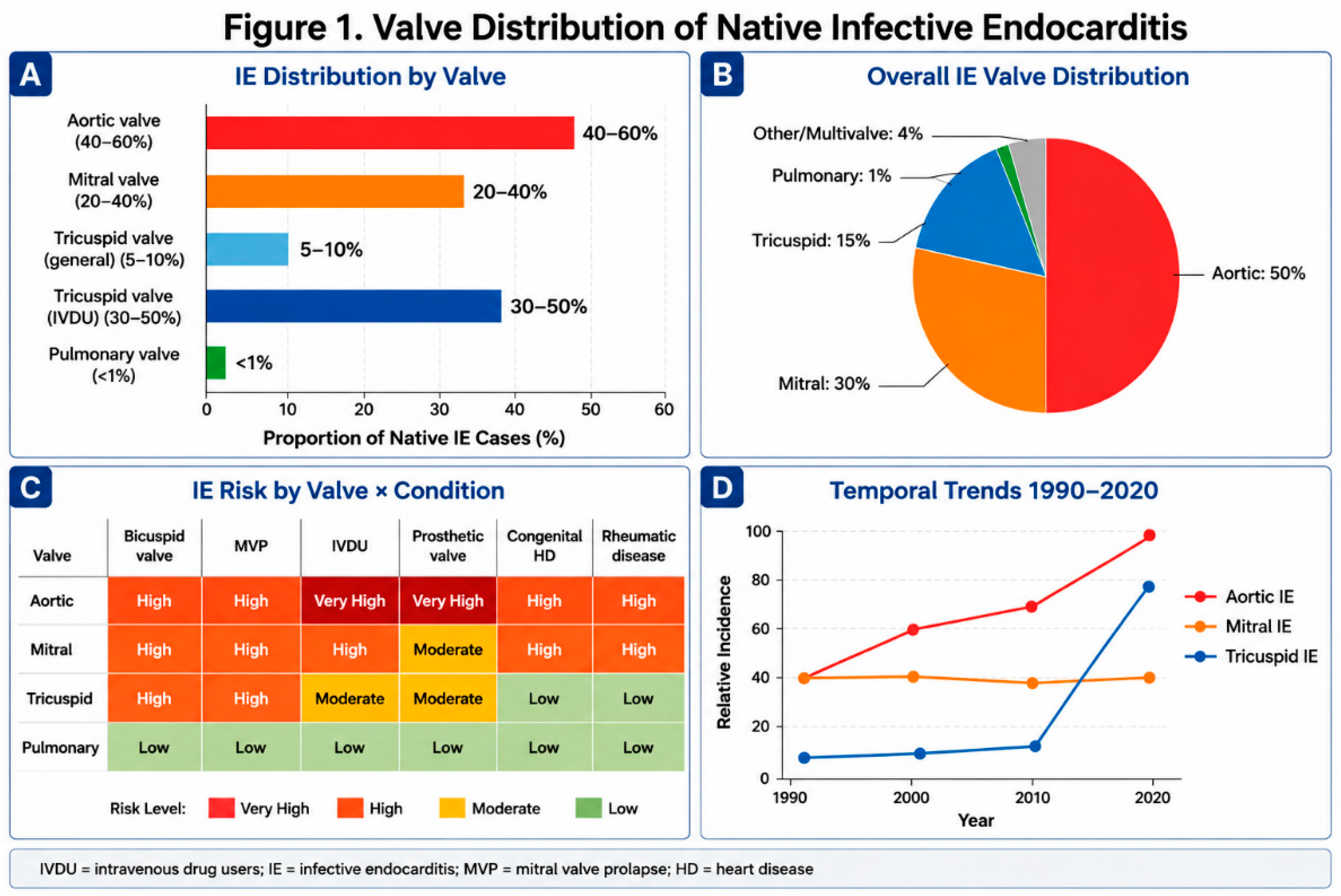
Figure 2.
Molecular pathogenesis and bacterial adhesion in IE. Left panel: Healthy endothelium with intact barrier. Centre panel: Endothelial injury with non-bacterial thrombotic endocarditis (NBTE) formation. Right panel: Bacterial adhesion via S. aureus fibronectin-binding proteins (FnBP-A/B) and S. viridans FimA. Bottom panel: Biofilm immune evasion mechanisms. NBTE = non-bacterial thrombotic endocarditis.
Figure 2.
Molecular pathogenesis and bacterial adhesion in IE. Left panel: Healthy endothelium with intact barrier. Centre panel: Endothelial injury with non-bacterial thrombotic endocarditis (NBTE) formation. Right panel: Bacterial adhesion via S. aureus fibronectin-binding proteins (FnBP-A/B) and S. viridans FimA. Bottom panel: Biofilm immune evasion mechanisms. NBTE = non-bacterial thrombotic endocarditis.
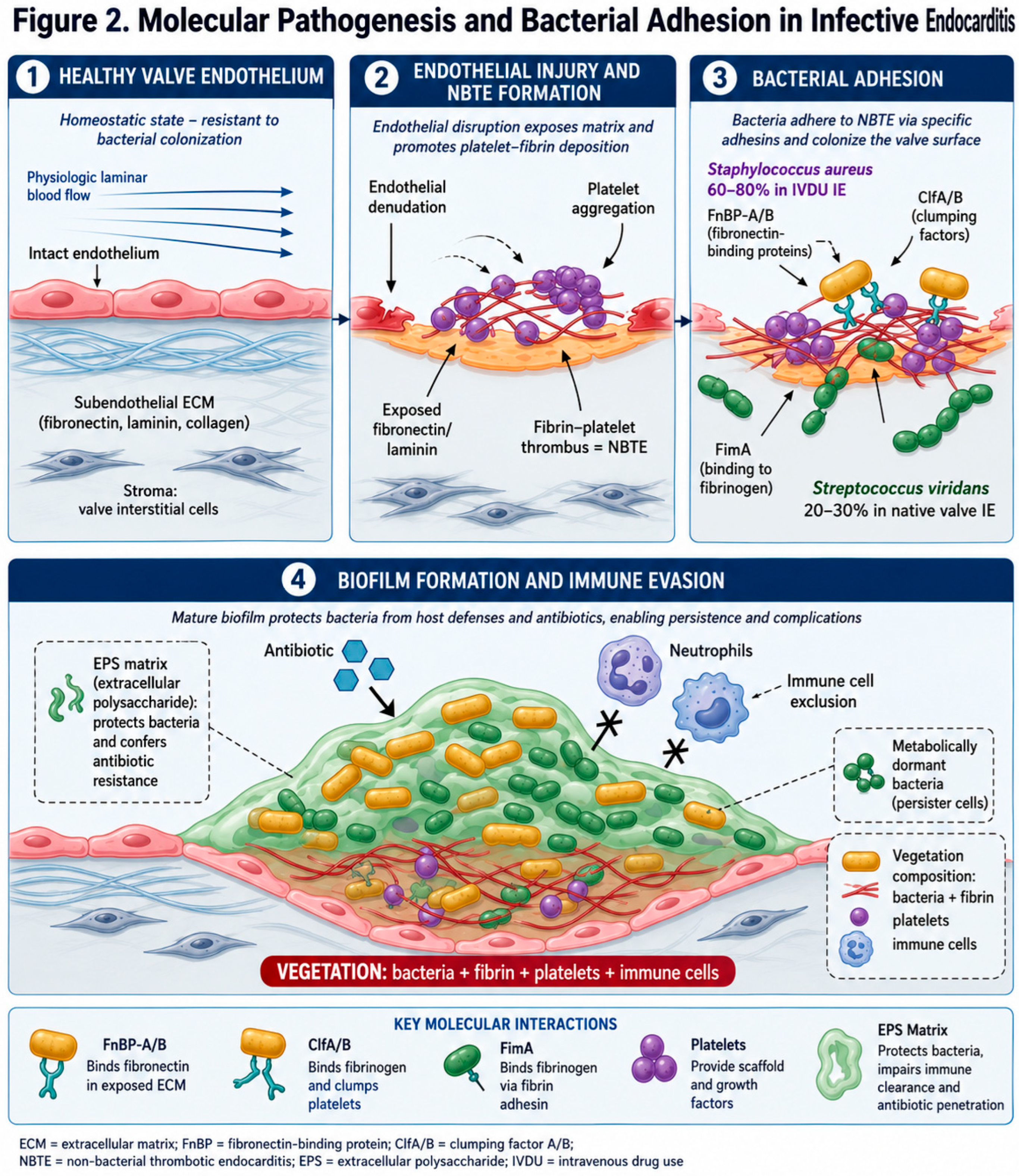
Figure 3.
Special populations IE risk matrix. Heatmap displaying IE risk (%) by valve type (rows) and patient population (columns). Highest-risk combinations: IVDU + tricuspid valve (25%), healthcare-associated + prosthetic valve (20%), elderly + prosthetic valve (18%). IVDU = intravenous drug users; CHD = congenital heart disease; TAVR = transcatheter aortic valve replacement.
Figure 3.
Special populations IE risk matrix. Heatmap displaying IE risk (%) by valve type (rows) and patient population (columns). Highest-risk combinations: IVDU + tricuspid valve (25%), healthcare-associated + prosthetic valve (20%), elderly + prosthetic valve (18%). IVDU = intravenous drug users; CHD = congenital heart disease; TAVR = transcatheter aortic valve replacement.
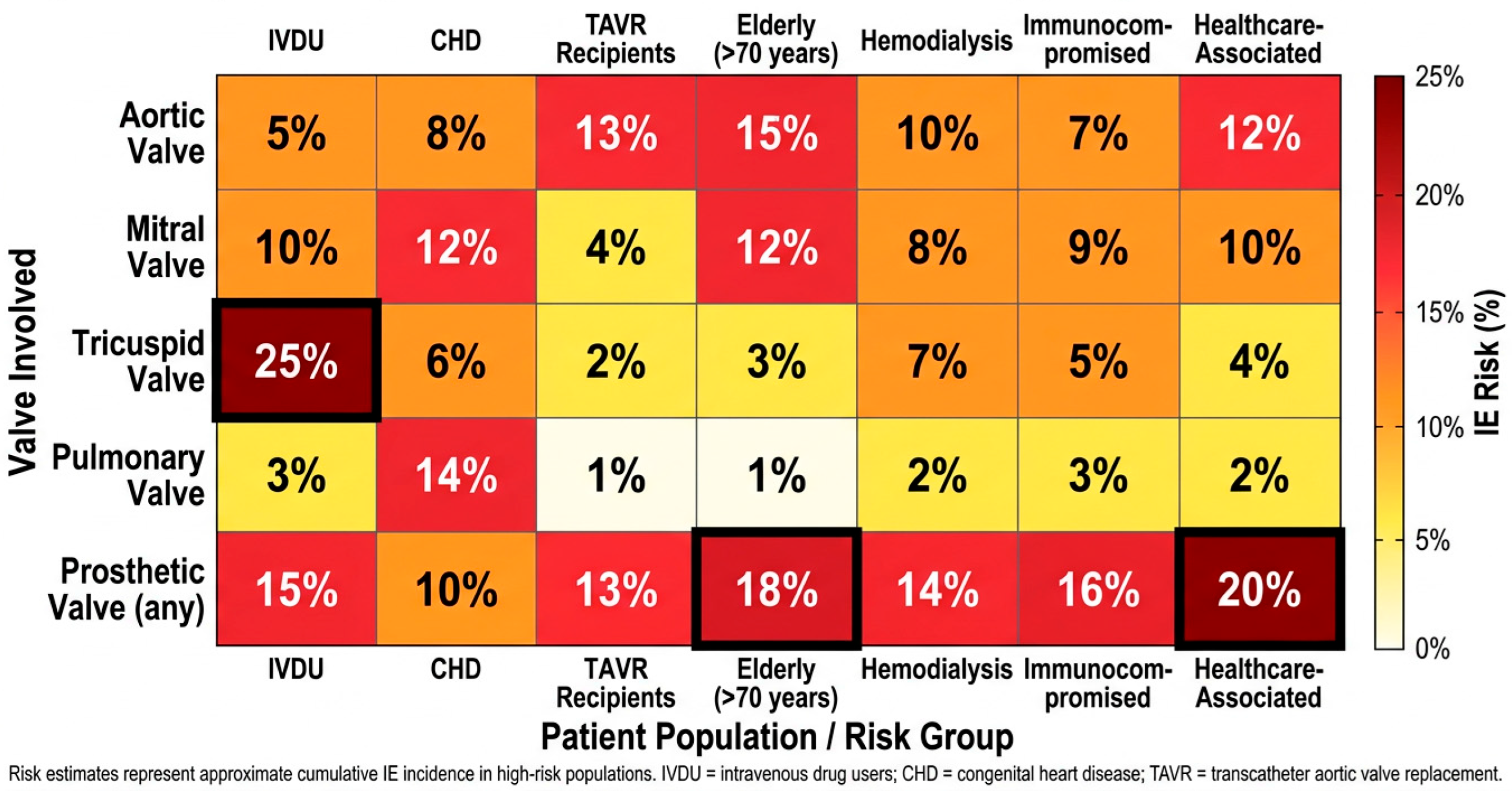
Figure 4.
Prosthetic valve IE mechanisms. (A) Mechanical valve biofilm formation at prosthesis–tissue interface. (B) Bioprosthetic valve degeneration with calcification. (C) TAVR paravalvular leak creating turbulent flow. (D) PVE timeline: early (S. aureus/CoNS, <60 days) vs. late (streptococci/enterococci, >60 days). CoNS = coagulase-negative staphylococci; TAVR = transcatheter aortic valve replacement; PVE = prosthetic valve endocarditis.
Figure 4.
Prosthetic valve IE mechanisms. (A) Mechanical valve biofilm formation at prosthesis–tissue interface. (B) Bioprosthetic valve degeneration with calcification. (C) TAVR paravalvular leak creating turbulent flow. (D) PVE timeline: early (S. aureus/CoNS, <60 days) vs. late (streptococci/enterococci, >60 days). CoNS = coagulase-negative staphylococci; TAVR = transcatheter aortic valve replacement; PVE = prosthetic valve endocarditis.
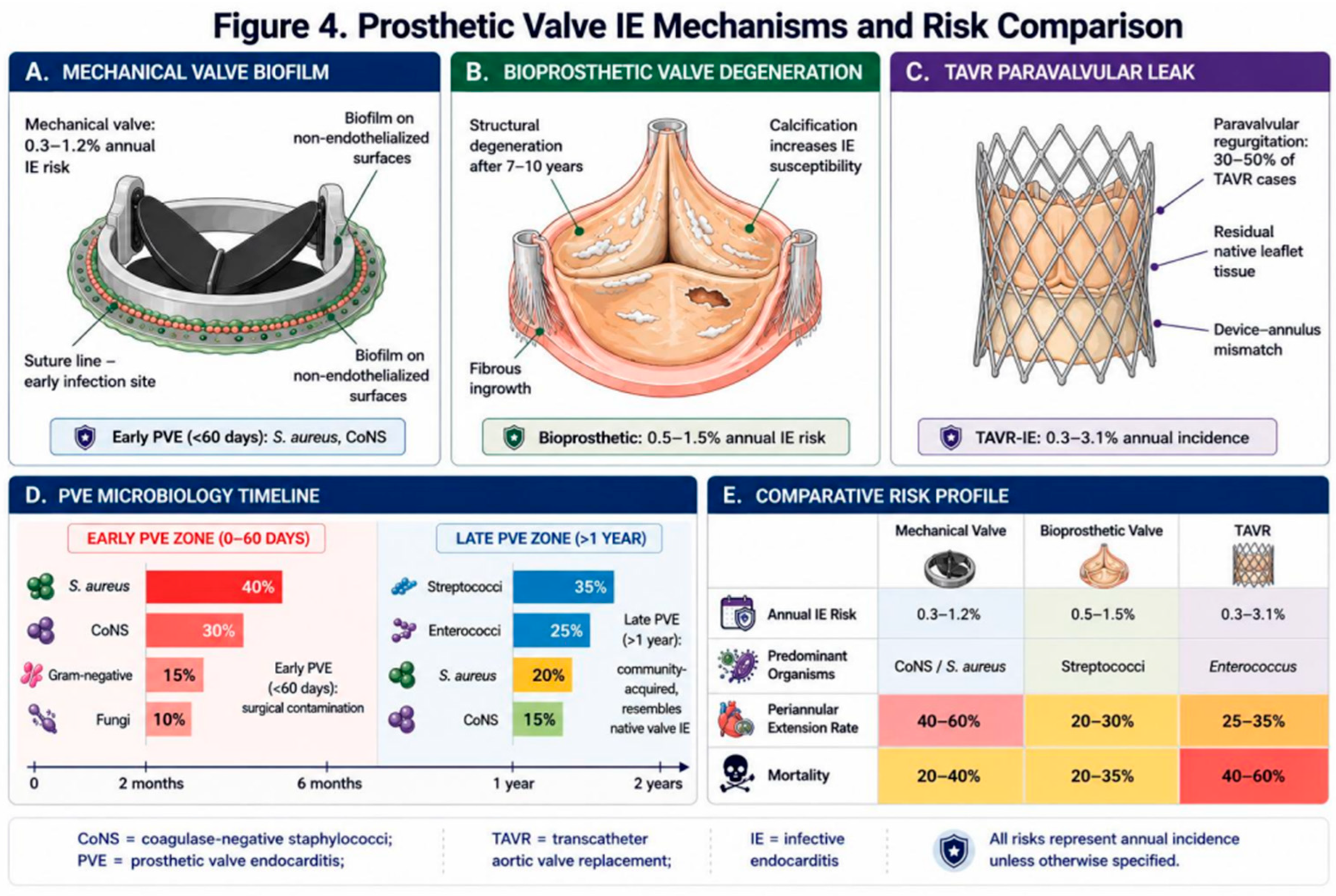
Figure 5.
Anatomy-informed clinical decision framework for infective endocarditis. Flowchart illustrating: clinical presentation → initial diagnostic workup → echocardiographic assessment → anatomical risk stratification → medical vs. surgical treatment decision → post-treatment follow-up. TEE = transesophageal echocardiography; TTE = transthoracic echocardiography.
Figure 5.
Anatomy-informed clinical decision framework for infective endocarditis. Flowchart illustrating: clinical presentation → initial diagnostic workup → echocardiographic assessment → anatomical risk stratification → medical vs. surgical treatment decision → post-treatment follow-up. TEE = transesophageal echocardiography; TTE = transthoracic echocardiography.
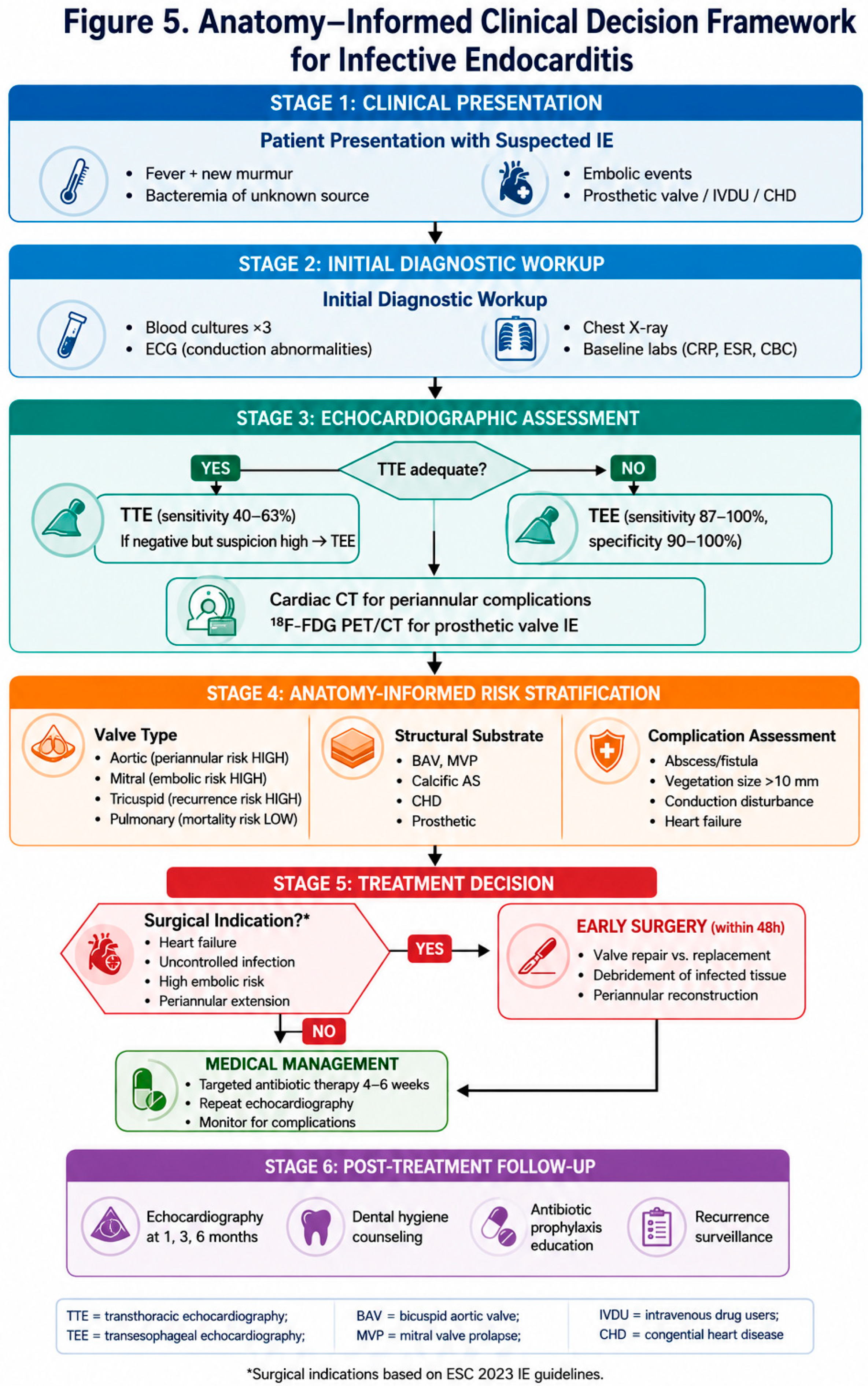

Table 1.
Valve-Specific Hemodynamic Parameters and IE Risk Correlation.
| Valve | Peak Velocity (m/s) | Pressure Gradient (mmHg) | Shear Stress (dynes/cm²) | Native IE Frequency | Relative IE Risk |
| Aortic | 1.0–1.7 | 5–10 | 10–70 | 40–60% | Highest |
| Mitral | 0.6–1.3 | 2–5 | 5–30 | 20–40% | High (with substrate) |
| Tricuspid | 0.3–0.7 | 1–3 | 2–10 | 5–10% (30–50% IVDU) | Low–High (context-dependent) |
| Pulmonary | 0.6–0.9 | 2–5 | 1–5 | <1% | Lowest |
IVDU = intravenous drug users. Risk estimates represent native valve IE in general population. Hemodynamic values represent normal physiological ranges.
Table 2.
Structural Substrates and Relative IE Risk by Valve Type.
| Structural Substrate | Valve Affected | Prevalence (%) | IE Risk Increase | Mechanism |
| Bicuspid aortic valve (BAV) | Aortic | 1–2 | 3–9× | Asymmetric flow, raphe endothelial disruption |
| Calcific aortic stenosis | Aortic | 2–7* | 5× | Surface irregularity, turbulent flow >4 m/s |
| Mitral valve prolapse (MVP) | Mitral | 2–3 | 8× | Myxomatous degeneration, jet lesions |
| Rheumatic heart disease | Mitral | Varies | 2–4× | Leaflet thickening, commissural fusion |
| Ebstein anomaly | Tricuspid | <1 | 5–10× | Abnormal leaflet morphology, turbulent flow |
| Repaired tetralogy of Fallot | Pulmonary | <1 | 10–20× | RVOT reconstruction, residual gradients |
| Prosthetic valve (mechanical) | Any | — | 0.3–1.2%/yr | Non-endothelialised surface, biofilm |
| Prosthetic valve (bioprosthetic) | Any | — | 0.5–1.5%/yr | Structural degeneration after 7–10 years |
| TAVR device | Aortic | — | 0.3–3.1%/yr | Paravalvular leak, residual native tissue |
* Prevalence in adults >65 years. RVOT = right ventricular outflow tract; TAVR = transcatheter aortic valve replacement.
Table 4.
Echocardiographic Features and Anatomical Complications by Valve.
| Feature / Complication | Aortic IE | Mitral IE | Tricuspid IE | Pulmonary IE | Prosthetic IE |
| Vegetation location | Ventricular surface, cusp tips | Atrial surface, leaflet edges | Atrial surface, leaflet tips | Pulmonary surface | Sewing ring, leaflet surface |
| Typical vegetation size | 5–15 mm | 8–20 mm (often large) | 10–30 mm (large) | 5–15 mm | Variable |
| Periannular extension | 30–40% | 10–20% | <5% | Rare | 40–60% (early PVE) |
| Abscess formation | 20–40% | 10–15% | <5% | Rare | 40–60% |
| Valvular perforation/tear | 10–20% | 10–20% | 5–10% | 5–10% | 15–25% |
| Fistula formation | 5–10% | 2–5% | <2% | Rare | 10–20% |
| Conduction disturbance | 5–10% (AVB) | 2–5% | <2% | Rare | 10–20% |
| Systemic embolism | 20–50% | 30–50% | Uncommon | Rare | 20–40% |
| Septic pulmonary emboli | Rare | Rare | 65–100% | Rare | Rare |
| TTE sensitivity | 40–63% | 40–63% | 50–70% | 40–60% | 20–40% |
| TEE sensitivity | 87–100% | 87–100% | 80–95% | 80–90% | 80–95% |
Table 3.
Microbiology of IE by Valve Site and Clinical Context.
| Pathogen | Aortic IE (%) | Mitral IE (%) | Tricuspid IE (%) | Prosthetic IE (%) | Key Clinical Context |
| Staphylococcus aureus | 25–35 | 20–30 | 60–80 | 20–30 (early) | IVDU, healthcare-associated, community |
| Coagulase-negative staphylococci | 10–15 | 10–15 | 5–10 | 30–40 (early) | Prosthetic valves, healthcare-associated |
| Streptococcus viridans group | 30–40 | 30–40 | 5–10 | 15–25 (late) | Dental procedures, community-acquired |
| Enterococcus spp. | 10–15 | 10–15 | 2–5 | 10–15; 25–35 (TAVR) | Elderly, GI/GU procedures, TAVR |
| Streptococcus bovis/gallolyticus | 5–10 | 5–10 | <2 | 5–10 (late) | Colorectal pathology, elderly |
| HACEK organisms | 2–5 | 2–5 | <2 | 2–5 | Subacute presentation, dental source |
| Fungi (Candida/Aspergillus) | 2–5 | 2–5 | 5–10 | 5–10 | IVDU, immunocompromised, prolonged ICU |
| Polymicrobial | 2–5 | 2–5 | 10–20 | 5–10 | IVDU, healthcare-associated |
| Culture-negative | 5–10 | 5–10 | 5–10 | 10–15 | Prior antibiotics, fastidious organisms |
IVDU = intravenous drug users; GI = gastrointestinal; GU = genitourinary; HACEK = Haemophilus, Aggregatibacter, Cardiobacterium, Eikenella, Kingella; ICU = intensive care unit; TAVR = transcatheter aortic valve replacement.
Table 6.
Special Population IE Risk: Valve Distribution, Microbiology, and Outcomes.
| Population | Predominant Valve(s) | IE Incidence / Risk Increase | Predominant Pathogens | Mortality | Key Feature |
| Intravenous drug users (IVDU) | Tricuspid (60–70%) | 100–300× general population | S. aureus (60–80%) | 10–20% (right-sided) | Septic pulmonary emboli; high recurrence (15–30%) |
| Congenital heart disease (CHD) | Pulmonary, right-sided | 15–140× (lesion-dependent) | Streptococci, S. aureus | 10–25% | RVOT conduits, residual shunts, prosthetic material |
| TAVR recipients | Aortic (prosthetic) | 0.3–3.1%/year | Enterococcus, S. aureus | 40–60% | Paravalvular leak; complex anatomy; high surgical risk |
| Elderly (>65 years) | Aortic, mitral | 50–60% of contemporary IE | S. aureus, Enterococcus | >40% (octogenarians) | Degenerative valves; healthcare-associated; multimorbidity |
| Haemodialysis patients | Aortic, tricuspid | ~50× general population | S. aureus (50–70%) | 25–40% | Vascular access infections; calcific valvulopathy |
| Immunocompromised | Any | 5–10× general population | Fungi, S. aureus, gram-negatives | 30–50% | Fungal IE; culture-negative; atypical presentation |
| Healthcare-associated IE | Aortic, prosthetic | Rising; 25–30% of IE | S. aureus, CoNS, Enterococcus | 25–35% | Intravascular devices; nosocomial bacteraemia |
Table 5.
Prosthetic Valve Types: Anatomical Characteristics and IE Risk Profiles.
| Characteristic | Mechanical Valve | Bioprosthetic Valve | TAVR Device |
| Annual IE incidence | 0.3–1.2% | 0.5–1.5% | 0.3–3.1% |
| Peak risk period | First 60 days (early PVE) | First 60 days + after 7–10 yrs | First year post-implant |
| Surface characteristics | Non-endothelialised metallic/pyrolytic carbon | Partial endothelialisation; degenerates over time | Residual native leaflets + stent frame |
| Predominant early pathogens | S. aureus, CoNS | S. aureus, CoNS | S. aureus, Enterococcus spp. |
| Predominant late pathogens | Streptococci, enterococci | Streptococci, enterococci | Enterococcus spp. (25–35%) |
| Periannular extension rate | 40–60% | 30–50% | 30–50% |
| Paravalvular regurgitation | Uncommon (<5%) | Uncommon (<5%) | 30–50% (mild–moderate) |
| Surgical re-intervention rate | High | Moderate | Very high (40–60% mortality) |
| Mortality (IE episode) | 20–40% | 20–40% | 40–60% |
| Key anatomical risk factor | Prosthesis–annulus interface | Leaflet calcification/degeneration | Paravalvular gap, native valve remnant |
TAVR = transcatheter aortic valve replacement; CoNS = coagulase-negative staphylococci; PVE = prosthetic valve endocarditis.
Disclaimer/Publisher’s Note: The statements, opinions and data contained in all publications are solely those of the individual author(s) and contributor(s) and not of MDPI and/or the editor(s). MDPI and/or the editor(s) disclaim responsibility for any injury to people or property resulting from any ideas, methods, instructions or products referred to in the content. |
© 2026 by the authors. Licensee MDPI, Basel, Switzerland. This article is an open access article distributed under the terms and conditions of the Creative Commons Attribution (CC BY) license (http://creativecommons.org/licenses/by/4.0/).
Copyright: This open access article is published under a Creative Commons CC BY 4.0 license, which permit the free download, distribution, and reuse, provided that the author and preprint are cited in any reuse.


