

Submitted:
03 June 2026
Posted:
05 June 2026
You are already at the latest version
Abstract
Pregnancy involves profound metabolic, hormonal, and immunological adaptations essential for fetal development; however, disturbances may lead to complications such as preeclampsia (PE), pre-gestational diabetes, and gestational diabetes mellitus (GDM). These conditions are closely linked to oxidative stress, inflammation, endothelial dysfunction, impaired placentation, and metabolic dysregulation. Consequently, dietary strategies capable of modulating these pathways are of increasing interest. Edible and medicinal mushrooms have emerged as functional foods rich in bioactive compounds with antioxidant, anti-inflammatory, immunomodulatory, and metabolic regulatory effects. This review summarizes the nutritional composition of mushrooms and highlights key bioactive constituents, such as ergothioneine, which may influence redox balance, immune responses, glucose metabolism, endothelial function, and placental development. Experimental evidence suggests that these compounds modulate pathways involved in PE and GDM pathogenesis. Mushroom consumption has additionally been associated with improved glycemic control, enhanced antioxidant defenses, and reduced risk of hypertensive and metabolic pregnancy complications. Although preclinical findings are promising, clinical evidence remains limited. Further well-designed prospective studies and randomized controlled trials are required to determine efficacy, safety, optimal intake, and active compounds responsible for these effects. Nevertheless, current evidence supports edible and medicinal mushrooms as potential dietary modulators of key mechanisms involved in PE and GDM, with relevance for improving maternal-fetal health outcomes.
Keywords:
edible mushrooms
; medicinal mushrooms
; ergothioneine
; antioxidants
; oxidative stress
; pregnancy
; preeclampsia
; gestational diabetes mellitus
; maternal health
; functional foods
1. Introduction
Preeclampsia (PE) and gestational diabetes mellitus (GDM) are among the most prevalent and severe complications of pregnancy, significantly contributing to maternal and perinatal morbidity and long-term metabolic consequences for both mother and offspring [1,2,3]. According to the World Health Organization (WHO), PE affects approximately 3 -8% of pregnancies worldwide and remains a leading cause of maternal and perinatal morbidity and mortality, accounting for nearly 16% of maternal deaths globally [4,5]. Major risk factors include nulliparity, obesity, multiple pregnancy, chronic hypertension, diabetes, and kidney disease. At the same time, diabetes has emerged as one of the fastest-growing global public health challenges, with the number of affected individuals increasing from approximately 200 million in 1990 to 830 million in 2022, while global adult prevalence doubled from 7% to 14% during the same period [6]. Reflecting these global trends, the prevalence of pre-gestational diabetes among pregnant women has increased substantially over the past decade in Belgrade, Serbia, and is projected to continue rising, potentially doubling by 2050 [7]. Although clinically distinct, PE and GDM share several pathophysiological mechanisms, including oxidative stress, chronic low-grade inflammation, endothelial dysfunction, impaired glucose homeostasis, and abnormal placental development, many of which originate during early pregnancy [2,3].
Early gestation represents a critical window during which disturbances in redox balance, immune adaptation, and metabolic regulation may predispose women to the later development of PE and GDM [8]. Over recent decades, socioeconomic development, urbanization, and globalization have profoundly altered traditional dietary patterns in many Western countries, promoting increased consumption of highly processed foods rich in refined sugars and saturated fats. Although balanced nutrition is widely recognized as a cornerstone of a healthy lifestyle, excessive intake of energy-dense foods remains common and contributes to metabolic dysregulation, oxidative stress, chronic low-grade inflammation, and cardiovascular dysfunction [9], all of which are established risk factors for pregnancy-related and other non-communicable diseases [10]. Nutrition is increasingly acknowledged as one of the most important environmental factors influencing immune system development and function [11]. Consequently, diets rich in fruits, vegetables, and other natural sources of bioactive compounds are considered particularly beneficial for maintaining health and reducing disease risk [12]. Among these compounds, naturally occurring antioxidants have attracted considerable attention as nutraceuticals due to their potential to provide physiological benefits beyond basic nutritional requirements. In line with this concept, nutritional interventions are increasingly being investigated as preventive strategies for PE and GDM [13,14,15]. However, while most studies have focused on conventional micronutrients and dietary patterns, biologically rich food sources such as edible and medicinal mushrooms remain largely overlooked despite their abundance of antioxidant, anti-inflammatory, immunomodulatory, and metabolically active compounds [16].
While the exact mechanisms that promote GDM are poorly understood, GDM is associated with inadequate functional β-cell mass expansion and with a systematic increase of oxidative stress. During late pregnancy, physiological insulin resistance increases to meet fetal glucose demands, requiring adaptive expansion of maternal pancreatic β-cell mass to maintain normal glucose levels [17]. Failure of this adaptive response can contribute to GDM, which is associated with reduced β-cell function and increased oxidative stress. Haidery et al. [18] demonstrates in preclinical study in mouse model that protein Nrf2 (Nuclear factor erythroid 2-related factor 2) is upregulated in β-cells during pregnancy and is essential for maintaining β-cell proliferation, survival, and redox balance. β-cell-specific deletion of Nrf2 leads to increased oxidative damage, impaired β-cell expansion, and disrupted glucose homeostasis in late gestation [19]. Furthermore, 17β-estradiol enhances Nrf2 signaling and protects β-cells against oxidative stress, suggesting a key hormone–redox interaction. Overall, Nrf2 plays a central role in β-cell adaptation during pregnancy and represents a potential therapeutic target for GDM.
Identifying these risks early opens the possibility for exploring natural Nrf2 activators, such as mushroom-derived polyphenols, as potential supportive strategies to mitigate oxidative stress-induced endothelial damage.
Mushrooms (fungi) represent a unique class of functional foods with a distinctive nutritional and metabolic profile, characterized by high levels of dietary fiber, essential micronutrients, and a wide spectrum of bioactive compounds, including β-glucans, ergothioneine, and various phenolic metabolites [20]. These compounds have been shown to exert antioxidant, anti-inflammatory, and immunomodulatory effects [16,20,21,22,23,24,25,26,27,28], which are mechanistically relevant to key processes implicated in the pathogenesis of PE and GDM, particularly oxidative stress, endothelial dysfunction, and chronic low-grade inflammation [1,2,3]. Despite this biological plausibility, the current body of evidence linking mushroom-derived metabolites with pregnancy-related metabolic and vascular outcomes remains fragmented and has not yet been systematically synthesized.
Edible and medicinal mushrooms represent a potent source of bioactive metabolites capable of modulating these pathological pathways. Their high antioxidant capacity is crucial for neutralizing reactive oxygen species (ROS) and stabilizing the redox environment in the placenta. Their well-proven antioxidant activity is largely attributed to their richness in phenolic compounds and polysaccharides [16,20,21,22,23,24,25,26,27,28], which activate endogenous defense systems such as the Nrf2/ARE signaling pathway [29,30], enhancing cellular resistance to oxidative stress. Emerging evidence further indicates that mushroom-derived secondary metabolites, particularly triterpenoids, may contribute to these effects by promoting Nrf2-mediated antioxidant responses and reducing ROS-induced cellular damage [31].Collectively, these findings support the potential of edible mushrooms as natural regulators of redox balance, which is frequently disrupted in both PE and GDM.
Clinical trials with antioxidant interventions in PE have not proved successful. Based on the current literature, enhancement of the endogenous protection system against oxidative stress by Nrf2 activation seems to be a promising alternative. Thus, supplementation with Nrf2 inducers in a therapeutic design could be an innovative target which deserves further intensive research in well-conducted studies [19].
Mushroom consumption within self-selected diets is generally associated with favorable cardiometabolic effects [32]. A recent narrative review concluded that whole mushroom consumption consistently reduces serum triglycerides, while exhibiting neutral effects on HDL, LDL, and C-reactive protein concentrations, with limited evidence also suggesting beneficial effects on blood pressure and immune function through increased salivary immunoglobulin A levels [33]. Furthermore, when incorporated into healthy dietary patterns, Agaricus bisporus and Pleurotus ostreatus have been shown to improve fasting serum glucose concentrations, indicating a potential role in supporting glucose homeostasis [34]. Although evidence for several cardiometabolic biomarkers remains limited or inconsistent, no adverse effects of mushroom consumption have been reported across intervention studies [8,13,14,15]. Given that impaired glycemic control, dyslipidemia, inflammation, and endothelial dysfunction are key features of GDM and PE, these findings support further investigation of edible mushrooms as dietary components for improving maternal cardiometabolic health.
Supporting these clinical observations, experimental study with Ganoderma species have demonstrated antioxidant activity, mitigation of diabetes-associated dyslipidemia, and potential hepato- and nephroprotective effects in diabetic animal models [35], suggesting that mushroom-derived bioactive compounds may contribute to the regulation of metabolic disturbances associated with hyperglycemia and oxidative stress.
This review therefore aims to critically evaluate and integrate the existing experimental and clinical evidence on mushroom consumption during pregnancy, with a particular focus on their mechanistic roles during early pregnancy and their potential implications for the prevention or modulation of PE and GDM. Special emphasis is placed on bridging data from in vivo and human studies, while also identifying key gaps in knowledge, methodological limitations, and challenges in translation toward clinical practice
2. Pathophysiology of Preeclampsia and Gestational Diabetes: Targets for Early Nutritional Intervention
PE and GDM are multifactorial pregnancy complications that share a common pathogenic framework characterized by impaired placentation, chronic low-grade inflammation, and severe metabolic imbalance (Figure 1). Both disorders originate in early gestation, often before clinical manifestations arise, underscoring the necessity for early preventive interventions.
PE represents a multisystem hypertensive disorder of pregnancy characterized by new-onset hypertension (≥140/90 mmHg) after 20 weeks of gestation, primarily driven by defective extravillous trophoblast invasion and inadequate remodeling of uterine spiral arteries. This leads to placental hypoxia-reoxygenation injury, which activates oxidative pathways (e.g., xanthine oxidase and mitochondrial dysfunction), resulting in excessive ROS generation and maternal endothelial distress [36]. Characterized by defective placentation and systemic endothelial dysfunction, PE remains a major contributor to adverse pregnancy outcomes worldwide. Utero-placental development in pregnancy depends on direct maternal-fetal interaction in the uterine wall decidua. Abnormal uterine vascular remodeling preceding placental oxidative stress and placental dysfunction are associated with PE and fetal growth restriction [37].
Effective management necessitates early risk identification; thus, 1st-trimester screening has emerged as a cornerstone of modern prenatal care. Current strategies emphasize a multimodal approach, combining maternal history with specific biomarkers to enhance risk prediction and clinical decision-making during this critical early window [38]. Nrf2 can be regulated by important cell modulators such as DJ-1, VEGF, oxLDL, LXA4, AOPPs, miR-133a-3p, CD151 and BRD4 favoring the cell response to oxidative stress, avoiding apoptosis and ferroptosis and promoting cell proliferation. Natural and synthetic compounds (e.g. melatonin, Resveratrol, Apocyanin), can act as potent antioxidants, activating the Nrf2/KEAP1 signaling pathway, reducing apoptosis and inflammation [39] and probably improving the clinical signs of PE
GDM is characterized by progressive insulin resistance and pancreatic β-cell failure. Maternal hyperglycemia promotes mitochondrial dysfunction and ferroptosis, an iron-dependent form of regulated cell death, within placental tissues, further impairing insulin signaling [40].
Pregestational diabetes, characterized by pre-existing insulin resistance or absolute insulin deficiency, creates a pro-inflammatory environment that exacerbates systemic oxidative stress and vascular complications during pregnancy [41]. Hence, mushroom-derived triterpenes and polyphenols, such as those found in Ganoderma lucidum, may mitigate these complications by activating the Nrf2 pathway (Figure S1), thereby enhancing the cellular antioxidant defense and protecting pancreatic beta-cells from oxidative damage [42,43]. In addition to β-glucans, ergothioneine, and phenolic compounds, several edible and medicinal mushrooms have been reported to contain melatonin, an indoleamine with potent antioxidant and anti-inflammatory properties [44]. Given the established role of oxidative stress in the pathogenesis of PE and GDM, mushroom-derived melatonin may represent an additional bioactive component contributing to the health-promoting effects of mushrooms, although its specific role in pregnancy outcomes remains largely unexplored.
GDM arises from an insufficient maternal pancreatic response to the physiological insulin resistance of pregnancy, often linked to placental-derived hormones and chronic low-grade inflammation [45]. Thus, bioactive polysaccharides, particularly beta-glucans like schizophyllan, have shown potential in modulating glucose metabolism and improving insulin sensitivity through Nrf2 signaling [46].
In general, both PE and diabetes share a common pathophysiological thread of endothelial dysfunction and systemic inflammation, where the Nrf2 pathway serves as a critical regulatory node. This is the core point where the inclusion of unique mushroom compounds, such as ergothioneine, into the maternal diet could represent a novel strategy for reducing ROS levels and improving vascular health in high-risk pregnancies complicated by glucose intolerance.
3. Mushrooms as Functional Foods: The Role of Antioxidants in Pregnancy
Edible mushrooms represent valuable dietary sources of essential nutrients and biologically active compounds that may contribute to maternal and fetal health during pregnancy. Due to their low fat content, favorable amino acid composition, and abundance of micronutrients and antioxidant molecules [20,21,22,23,47,48,49,50,51], mushrooms have attracted increasing attention as functional foods with potential roles in the prevention of metabolic and inflammatory pregnancy-related disorders [52]. This interest is particularly relevant in the context of pregnancy complications such as PE and GDM, conditions in which oxidative stress, chronic low-grade inflammation, endothelial dysfunction, and impaired metabolic homeostasis are recognized as major pathogenic mechanisms [2,3].
Edible and medicinal mushrooms are characterized by a balanced macronutrient composition, including high-quality proteins, dietary fibers, and low levels of lipids [51,53]. Mushroom proteins contain essential amino acids important for maternal nutrition and fetal development, while their low caloric value makes them suitable components of balanced pregnancy diets. Particular attention has been given to mushroom-derived polysaccharides and dietary fibers, especially β-glucans, due to their potential effects on glucose metabolism, satiety, immune modulation, and gut microbiota regulation [51,54,55]. These properties may be especially beneficial during early pregnancy, when metabolic adaptations influence maternal insulin sensitivity and may contribute to the development of GDM in susceptible individuals. Furthermore, emerging evidence suggests that gut microbiota dysbiosis and altered immune responses are involved in both GDM and PE pathogenesis, highlighting the potential value of mushroom-derived dietary fibers as modulators of maternal metabolic and inflammatory status [56,57].
Mushrooms are natural sources of several micronutrients important during pregnancy, including selenium, potassium, B-complex vitamins, and vitamin D₂ [58]. Selenium contributes to antioxidant defense systems [59] and may play a role in reducing oxidative stress associated with pregnancy complications. B vitamins participate in energy metabolism and fetal neural development, whereas potassium contributes to cardiovascular and electrolyte balance [60]. In addition, UV-exposed mushrooms can provide significant amounts of vitamin D₂ [61,62], which is increasingly recognized as important for maternal immune regulation and fetal skeletal development [60]. Vitamin D insufficiency has also been associated with an increased risk of both PE and GDM, suggesting that vitamin D₂-enriched mushrooms may represent a valuable dietary source of this nutrient during pregnancy. Moreover, selenium-dependent antioxidant enzymes, including glutathione peroxidases, may play important roles in protecting placental tissues from oxidative damage, a hallmark of PE development [59].
Beyond their nutritional value, edible and medicinal mushrooms contain numerous bioactive molecules with antioxidant, anti-inflammatory, immunomodulatory, and metabolic activities [16,63,64,65]. Among the most extensively studied compounds are β-glucans, ergothioneine, phenolic compounds, and terpenoids [66,67,68,69]. β-Glucans are known for their immunomodulatory and metabolic regulatory effects [70,71], while ergothioneine acts as a potent antioxidant and cytoprotective molecule [68,72,73]. Phenolic compounds contribute to the antioxidant capacity of mushrooms through free radical scavenging mechanisms [24,25,26,27], whereas terpenoids, particularly abundant in medicinal mushroom species, exhibit anti-inflammatory and bioactive properties [74,75] that may be relevant in the context of pregnancy-associated metabolic disorders.
The antioxidant properties of these compounds are of particular interest because excessive production of ROS and insufficient antioxidant defenses contribute significantly to placental dysfunction, endothelial injury, and insulin resistance during pregnancy. Ergothioneine, a unique sulfur-containing antioxidant accumulated in mammalian tissues through a specific transporter (OCTN1), has attracted growing attention due to its ability to protect cells against oxidative and inflammatory damage [76]. Likewise, mushroom-derived phenolic compounds and terpenoids may support redox homeostasis by scavenging free radicals, modulating antioxidant enzymes, and regulating signaling pathways associated with inflammation and oxidative stress.
Although direct clinical evidence regarding mushroom consumption during pregnancy remains limited, experimental and epidemiological studies support the hypothesis that regular intake of edible mushrooms and their bioactive constituents may contribute to the maintenance of metabolic and vascular health. Through their combined antioxidant, anti-inflammatory, immunomodulatory, and glucose-regulating activities, mushrooms may represent promising functional foods for reducing risk factors associated with PE and GDM. Consequently, understanding the biological activities of mushroom-derived compounds may provide valuable insights into the development of nutritional strategies aimed at improving maternal and fetal outcomes during early pregnancy.
A comparative overview of the principal nutrients and bioactive compounds identified in commonly consumed edible mushrooms relevant to pregnancy health is presented in Table 1.
4. Mushroom-Derived Bioactive Metabolites and Relevant Mechanisms
4.1. Antioxidant and Redox-Modulating Effects
Oxidative stress and inflammation are central contributors to the pathophysiology of both PE and GDM (Figure 2), particularly during early placental development [8]. Excessive production of ROS within the placenta disrupts redox homeostasis, impairs fetal growth, and alters immune regulation, thereby contributing to pregnancy complications such as PE and intrauterine growth restriction [100]. Given the critical role of redox balance in maintaining placental function, antioxidant systems are essential regulators of cellular signaling pathways involved in pregnancy adaptation [101]. In this context, mushroom-derived bioactive metabolites have gained attention due to their combined antioxidant, anti-inflammatory, and immunomodulatory properties.
Among these metabolites, ergothioneine, a sulfur-containing amino acid highly abundant in edible mushrooms [102], has emerged as a key compound of interest. Ergothioneine functions as a potent scavenger of ROS and nitrogen species and has been shown to protect cellular and mitochondrial integrity, while also exhibiting anti-inflammatory and cytoprotective effects [103]. Additional biological activities, including protection against UV-induced damage [104] and neuroprotection in models of neuronal injury [105,106], further support its broad redox-modulating capacity, although much of this evidence remains preclinical.
At the molecular level, L-ergothioneine exerts antioxidant effects through its thiol/thione tautomeric system, enabling efficient scavenging of reactive species and chelation of redox-active metal ions such as Cu²⁺ [107]. It has also been shown to activate the Nrf2/ARE pathway, thereby inducing endogenous cytoprotective antioxidant defenses. Importantly, its oxidized form can be readily recycled back to the reduced state by cellular thiols such as glutathione, ensuring sustained antioxidant capacity under physiological conditions [107,108].
From a physiological perspective, ergothioneine is efficiently absorbed in humans following dietary intake. Consumption of Agaricus bisporus mushrooms increases circulating ergothioneine levels, confirming its bioavailability [81]. Moreover, oral administration of pure ergothioneine leads to rapid systemic uptake, long-term retention, and minimal urinary excretion, indicating the presence of active transport and conservation mechanisms in humans [109]. This is supported by the existence of a specific transporter, SLC22A4 (OCTN1), which facilitates selective tissue accumulation, particularly in organs exposed to oxidative stress [110].
The relevance of ergothioneine to pregnancy complications becomes more evident in the context of placental redox imbalance and mitochondrial dysfunction. Both PE and GDM are characterized by excessive oxidative stress, endothelial dysfunction, and impaired mitochondrial function [1,2]. In PE, mitochondrial ROS production contributes to defective placentation and maternal vascular injury [111], while in GDM, mitochondrial dysfunction is increasingly recognized as a key driver of inflammatory activation within the placenta [40].
A direct mechanistic link between ergothioneine and GDM-associated placental inflammation has been demonstrated in human tissue. McElwain et al. [8] showed that placentas from women with GDM exhibit increased mitochondrial oxidative stress, enhanced activation of the NLRP3 inflammasome, and elevated IL-18 production. Importantly, treatment of placental explants with L-ergothioneine significantly reduced IL-18 levels, indicating suppression of mitochondria-driven inflammasome activation. These findings suggest that ergothioneine may modulate a central inflammatory axis linking mitochondrial dysfunction to placental immune activation in GDM.
In addition to this direct evidence in GDM, experimental and epidemiological findings support a broader role for mushroom-derived antioxidants in metabolic regulation during pregnancy (Figure 2). For example, dietary supplementation with Lentinus edodes has been shown to partially restore fetal insulin levels in experimental models of maternal diabetes, even in the absence of normalization of maternal glycemia [112]. Hyperglycemia-induced oxidative stress contributes to β-cell dysfunction, lipid peroxidation, and DNA damage, while also disrupting endogenous antioxidant defenses such as catalase and glutathione peroxidase [112,113,114]. Mushroom supplementation has been associated with improvements in antioxidant enzyme activity and reductions in lipid peroxidation markers, including TBARS, suggesting systemic redox stabilization [112]. These effects are consistent with findings from other medicinal mushrooms such as Agaricus blazei and Ganoderma lucidum, which also improve antioxidant defenses in diabetic models [115].
Supporting these mechanistic observations, epidemiological data indicate that dietary intake of white button mushrooms during early pregnancy is associated with reduced incidence of gestational hypertension and PE, alongside improvements in systemic antioxidant biomarkers [32,116]. Regular consumption has also been linked to increased circulating ergothioneine levels and decreased markers of oxidative stress and inflammation [32]. These findings suggest that dietary mushrooms may exert systemic protective effects that are at least partially mediated by ergothioneine accumulation and redox modulation.
Finally, ergothioneine is uniquely positioned at the intersection of oxidative stress regulation, mitochondrial protection, and immune modulation. Its preferential uptake via SLC22A4 (OCTN1) [110] allows targeted accumulation in tissues experiencing oxidative stress, enabling modulation of ROS-dependent signaling pathways relevant to both PE and GDM. In particular, its ability to attenuate mitochondrial dysfunction-driven NLRP3 inflammasome activation provides a mechanistic framework linking dietary mushroom intake to reduced placental inflammation and improved metabolic adaptation during pregnancy [117].
Collectively, these data support a biologically plausible model in which mushroom-derived ergothioneine contributes to the regulation of oxidative stress, mitochondrial function, and inflammatory signaling pathways implicated in PE and GDM. While human bioavailability and mechanistic studies provide strong supportive evidence, definitive clinical trials in pregnant populations remain lacking. Therefore, ergothioneine should currently be considered a promising mechanistic candidate rather than a confirmed preventive agent for pregnancy-related metabolic and hypertensive disorders.
4.2. Anti-Inflammatory and Immunomodulatory Effects
In addition to redox regulation, mushroom-derived bioactive compounds exert important anti-inflammatory and immunomodulatory effects that are highly relevant to the pathophysiology of GDM and hypertensive pregnancy disorders. Chronic low-grade inflammation is a hallmark of both PE and GDM, closely intertwined with oxidative stress and metabolic dysregulation, and contributes to impaired placental function and altered maternal-fetal immune tolerance.
A major group of immunomodulatory compounds in mushrooms such as polysaccharides, particularly β-D-glucans, influence both innate and adaptive immune responses. These molecules suppress NF-κB activation, reduce oxidative stress, and protect pancreatic β-cells from apoptosis and glucotoxicity, thereby supporting insulin secretion and improving glycemic control [118,119]. In parallel, β-glucans modulate insulin-related signaling pathways, including PI3K/AKT and GLUT4 translocation, contributing to improved insulin sensitivity and attenuation of inflammation-induced metabolic dysfunction [119,120].
Beyond polysaccharides, terpenoids and dietary fibers present in mushrooms further contribute to metabolic and immune regulation. Terpenoids inhibit α-glucosidase and α-amylase, thereby reducing postprandial glucose excursions that drive oxidative and inflammatory stress [121]. Dietary fiber delays glucose absorption and stabilizes glycemic variability, indirectly reducing inflammatory activation during pregnancy [119,121]. Mushrooms also represent a notable dietary source of vitamin D₂, which may contribute to immunomodulation by influencing macrophage polarization and T-cell responses, although its role in GDM remains incompletely defined [122,123].
At the level of innate immunity, mushroom-derived β-glucans interact with pattern-recognition receptors such as dectin-1, triggering controlled activation of immune signaling cascades. This leads to regulated cytokine and chemokine production, enhanced phagocytosis, and improved immune surveillance while preventing excessive inflammatory responses [124,125]. β-glucans also promote dendritic cell maturation and antigen presentation, thereby supporting adaptive immune responses and maintaining immune homeostasis during pregnancy. Fungal β-glucans have been shown to exert stronger immunostimulatory effects compared to those derived from plant sources, further emphasizing their biological relevance [125].
In the context of pregnancy complications, immune dysregulation plays a central role in placental dysfunction. Altered macrophage activation and cytokine imbalance contribute to impaired vascular remodeling and increased inflammatory burden in both PE and GDM. Experimental evidence supports the ability of mushroom-derived compounds to modulate these processes. For instance, medicinal mushrooms such as Agaricus brasiliensis and Ganoderma lucidum have been shown to normalize glycemic parameters, restore leukocyte homeostasis, regulate apoptosis-related pathways (p53/Bcl-2), and preserve erythrocyte membrane integrity in diabetic models, reflecting systemic anti-inflammatory and cytoprotective effects [126].
Additional support comes from studies on specific fungal metabolites. Cordycepin has been shown to reduce placental inflammation, modulate macrophage polarization, and improve vascular and fetal outcomes in experimental models of PE-like conditions [127]. These findings suggest that individual mushroom-derived compounds may act on distinct but interconnected inflammatory pathways involved in placental dysfunction.
Furthermore, experimental models of GDM indicate that mushroom supplementation can positively influence both maternal and fetal metabolic outcomes. Administration of L. edodes has been shown to partially restore fetal insulin levels in amniotic fluid, even in the absence of full normalization of maternal hyperglycemia, suggesting direct effects on fetal pancreatic function [112]. In diabetic pregnancy models, mushroom supplementation has been associated with increased catalase activity, improved glutathione peroxidase trends, and reduced lipid peroxidation, indicating systemic attenuation of oxidative-inflammatory stress [112]. Similar antioxidant and metabolic benefits have been reported for Agaricus blazei and G. lucidum in diabetic models [112,115].
Collectively, these findings support a multi-level immunometabolic model in which mushroom-derived compounds regulate immune cell activation, cytokine signaling, and metabolic stress responses. Through coordinated effects on innate immunity, inflammatory signaling pathways, and glucose metabolism, these bioactive molecules may contribute to the mitigation of pathological processes underlying GDM and hypertensive pregnancy disorders. However, despite strong mechanistic evidence from preclinical studies, well-controlled clinical trials in pregnant populations are still required to confirm these effects and define their clinical relevance.
5. Clinical Evidence of Mushroom Consumption during Early Pregnancy
Evidence supporting the role of edible mushrooms in pregnancy-related metabolic and hypertensive outcomes has emerged from both experimental and human studies; however, the overall body of literature remains limited and heterogeneous, particularly with respect to dosage, study design, and translational relevance.
5.1. Preclinical studies
Preclinical studies in animal models suggest that bioactive compounds derived from edible mushrooms, particularly β-glucans and phenolic fractions, may exert beneficial effects on glucose metabolism, inflammatory signaling, and oxidative stress regulation [112,128,129,130,131,132,133,134,135,136,137,138]. These mechanisms are highly relevant to the pathophysiology of GDM and hypertensive disorders of pregnancy, including PE.
Across preclinical studies conducted over the past decade, edible and medicinal mushrooms have predominantly been investigated as whole fruiting bodies (fresh, dried, or lyophilized powders), with fewer studies using standardized extracts or fermented preparations (Table 2). The main bioactive constituents consistently implicated include β-glucans, phenolic compounds, and other antioxidant-related fractions. Experimental work has been largely based on pregnant rodent models (Wistar, Sprague-Dawley, BALB/c, ICR, and C57BL/6J strains), allowing relatively comparable assessment of metabolic, reproductive, and developmental outcomes in conditions relevant to gestational complications such as GDM, oxidative stress-related PE models, nutritional imbalance, and toxicant exposure.
Gestational exposure windows vary from early pregnancy (GD1-19 or GD1-21), encompassing implantation and organogenesis, to targeted pre- and post-implantation interventions, as well as perinatal and transgenerational designs extending through lactation and early postnatal life. Reported doses generally range from 100 to 600 mg/kg/day for oral gavage administration, whereas dietary supplementation studies employ inclusion levels of 1-10% in feed, reflecting both pharmacological and functional food-oriented approaches (Table 2).
At the maternal level, the most consistent effects include improvements in lipid metabolism (reduced triglycerides and cholesterol fractions), enhanced glycemic regulation in GDM models, and attenuation of liver enzyme alterations and oxidative stress biomarkers. In toxicant exposure models (e.g., lead), mushrooms demonstrate partial detoxifying and cytoprotective effects, including improved hematological and biochemical profiles and reduced oxidative damage, whereas in nutritional and metabolic programming models they contribute to improved insulin sensitivity and energy metabolism regulation.
Fetal and offspring outcomes are generally neutral to beneficial at lower doses, with reports of improved fetal morphometry, reduced post-implantation loss, and better metabolic profiles in offspring. However, some dose-dependent adverse developmental effects have been observed at higher exposures (e.g., A. brasiliensis at 600 mg/kg/day), particularly affecting skeletal ossification, indicating a threshold beyond which developmental safety may be compromised [135]. Overall, the evidence suggests that mushrooms exert predominantly protective effects in gestational models, mediated mainly through antioxidant, anti-inflammatory, and metabolic regulatory mechanisms, while highlighting the importance of dose and exposure timing in determining safety and efficacy outcomes.
However, despite these promising findings, animal studies are generally limited by differences in metabolic rate, immune responses, and placental physiology compared to humans. In addition, dosing regimens are often supra-physiological and not directly comparable to dietary intake levels in humans, which limits direct extrapolation to clinical settings.
5.2. Human Studies
In human populations, evidence on the role of mushroom consumption during pregnancy is predominantly derived from observational cohort studies, with only a limited number of interventional or controlled clinical trials available. A large cohort study reported that daily consumption of approximately 100 g of white button mushrooms during pregnancy was associated with a significantly lower incidence of gestational hypertension, PE, excessive gestational weight gain, and gestational diabetes mellitus compared with non-consumers [116]. These findings support a potential protective association between maternal mushroom intake and key adverse pregnancy outcomes, particularly metabolic and hypertensive disorders such as GDM and PE.
Evidence from biomarker-based clinical cohort data suggests a potential mechanistic link between mushroom-derived bioactive compounds and reduced risk of PE Kenny et al. [140], within the Screening for Endpoints in Pregnancy (SCOPE) cohort, demonstrated that higher early-pregnancy plasma levels of ergothioneine, a dietary antioxidant predominantly obtained from mushrooms, were strongly associated with a markedly reduced incidence of PE. Using a threshold at the 90th percentile of the control distribution (≥462 ng/mL), only 1% of women above this level developed PE compared with 24.2% of those below the threshold, suggesting a potentially protective effect of elevated ergothioneine status against both pre-term and term PE. These findings, supported by prior experimental data in animal models of reduced uterine perfusion, indicate that ergothioneine may represent a biologically plausible mediator of the observed association between mushroom intake and reduced PE risk, although interventional confirmation in humans is still needed.
In addition, evidence from dietary pattern-based human studies further supports a potential beneficial role of mushroom-containing diets in maternal nutritional status. Nguyen et al. [141] reported that in pregnant women with pre-pregnancy overweightness or obesity, a dietary pattern characterized by mushrooms, roots, and dairy was positively associated with improved folate status (β = 0.052; 95% CI: 0.008–0.119; p < 0.05), suggesting a role of mushroom-containing dietary patterns in supporting micronutrient homeostasis during pregnancy. This was observed alongside broader associations between dietary patterns and serum iron, ferritin, and vitamin B12 levels, highlighting the relevance of mushrooms within nutritionally balanced dietary profiles in high-risk pregnant populations [141]. Complementary findings from another observational study further indicate that maternal diet during late pregnancy is associated with oxidative stress markers and stress-related endocrine parameters, including malondialdehyde (MDA) and cortisol levels in maternal and cord blood, suggesting that dietary quality, including nutrient-dense foods such as mushrooms, may influence maternal oxidative stress balance and fetal exposure to stress-related hormonal signals [142].
In a cohort of 449 pregnant women, factor analysis identified a “mushroom-vegetable-offal” dietary pattern among several distinct dietary profiles. Although not directly tested as a standalone protective factor, the overall dietary pattern analysis suggested that healthier dietary patterns, including those characterized by higher intake of mushrooms and plant-based foods, were associated with a reduced likelihood of developing gestational diabetes mellitus compared with a potato-cereal-based pattern (OR = 0.093, 95% CI: 0.025-0.342) [143].
Further evidence from a large cluster-based randomized controlled trial in 987 pregnant women in rural China identified five major dietary patterns (vegetable, meat, fruit, snack, and wheat staple patterns) and demonstrated that adherence to a vegetable dietary pattern was significantly associated with a reduced risk of PE (adjusted RR = 0.20, 95% CI: 0.04-0.98) and proteinuria (adjusted RR = 0.44, 95% CI: 0.24-0.80), suggesting a protective role of plant-rich dietary patterns in hypertensive pregnancy disorders (NCT02537392) [144]. Although mushrooms were not analyzed separately in this study, they are typically embedded within vegetable-rich dietary patterns, reinforcing their potential contribution to dietary profiles associated with lower PE risk.
In large population-based cohort studies, such as the Norwegian Mother and Child Cohort Study (MoBa), dietary patterns during pregnancy have been shown to influence the risk of PE, with overall food combinations appearing more important than single nutrients. In a cohort of over 23,000 nulliparous women, a dietary pattern characterized by high intake of vegetables, plant-based foods, and vegetable oils was associated with a significantly reduced risk of PE, whereas a pattern rich in processed foods, salty snacks, and sugary beverages was associated with increased risk. These findings are particularly relevant in the context of functional foods, including edible and medicinal mushrooms, which are typically classified within plant-based dietary patterns and are rich in bioactive compounds such as polysaccharides, dietary fiber, phenolics, and antioxidant molecules.. This supports the concept that the potential effects of mushrooms in pregnancy are likely mediated not only through isolated bioactive compounds, but also through their role within broader healthy dietary patterns [145].
In addition to studies primarily addressing metabolic pregnancy outcomes such as GDM and hypertensive disorders including PE, emerging clinical evidence suggests that maternal mushroom consumption may exert broader beneficial effects on pregnancy-related and offspring health outcomes. In a prebirth cohort study from Japan involving 1199 mother-child pairs, higher maternal mushroom intake during pregnancy was associated with a significantly lower risk of adverse behavioral outcomes in children, including reduced odds of peer problems and improved prosocial behavior at 5 years of age, suggesting potential long-term neurodevelopmental benefits of maternal dietary mushroom intake beyond metabolic regulation [146]. Complementary evidence from a cross-sectional study in pregnant women further indicates that dietary patterns containing mushrooms may play a role in maternal nutritional status, as “mushrooms, roots, and dairy”-based dietary patterns were found to mediate the relationship between serum vitamin D levels and iron status, highlighting a potential contribution of mushroom intake to erythropoiesis-related micronutrient balance during pregnancy [147]. Such findings are particularly relevant in the context of pregnancy-associated anemia and metabolic adaptation. Overall, although direct clinical evidence linking mushrooms to reduced risk of GDM or PE remains limited, these studies support a broader nutritional and functional role of mushrooms in pregnancy, spanning micronutrient homeostasis and child developmental outcomes [146,147].
Furthermore, clinical and epidemiological evidence on mushroom consumption during pregnancy indicates that socio-cultural factors may also significantly influence maternal dietary intake. A qualitative study conducted in the Acholi subregion of Northern Uganda highlighted the presence of multiple food taboos during pregnancy that may contribute to maternal undernutrition in rural settings [148]. Among the foods identified as culturally restricted were offals, meat products, fruits, legumes, honey, and notably mushrooms, which were explicitly considered taboo foods in some communities. These restrictions were primarily driven by cultural beliefs, societal norms, and traditional perceptions regarding pregnancy outcomes. The study emphasizes that such dietary prohibitions may limit food diversity and nutrient intake during pregnancy, potentially exacerbating the risk of maternal undernutrition and associated adverse pregnancy outcomes in already vulnerable populations [148].
6. Safety Considerations and Dietary Recommendations in Pregnancy
Edible mushrooms have long been recognized as safe and nutritious foods and are increasingly being investigated for their potential role in preventing pregnancy-related metabolic and hypertensive disorders [116,149]. Their favorable nutritional profile, characterized by low energy density, high fiber content, essential micronutrients, and a wide range of bioactive compounds, supports their inclusion in a balanced maternal diet. Nevertheless, several safety and regulatory considerations should be addressed before mushroom-based nutritional strategies can be widely recommended for pregnancy-specific health outcomes.
The safety profile of commonly consumed edible mushrooms is generally well established when they are obtained from reliable sources and adequately cooked before consumption . Proper thermal processing reduces microbial contamination and improves digestibility, while minimizing the risk associated with naturally occurring toxic compounds present in some species [150,151]. However, mushrooms are known bioaccumulators and may concentrate heavy metals, pesticides, and environmental pollutants depending on cultivation conditions and geographical origin. Consequently, product quality and source traceability remain important considerations, particularly during pregnancy, when maternal exposure to contaminants may affect fetal development [151].
In contrast to whole edible mushrooms, the safety of medicinal mushroom extracts and dietary supplements during pregnancy remains insufficiently characterized. Commercial preparations derived from species such as Reishi, Shiitake, Lion’s Mane, and Maitake are increasingly marketed for their antioxidant, immunomodulatory, and metabolic benefits. However, most available evidence originates from in vitro studies, animal models, or non-pregnant populations. Given the limited number of pregnancy-specific preclinical and clinical studies, the effects of concentrated mushroom extracts on maternal physiology, placental function, fetal development, and potential interactions with medications remain largely unknown. Therefore, routine use of medicinal mushroom supplements during pregnancy cannot currently be recommended without medical supervision and further clinical validation.
Considering the central role of oxidative stress, endothelial dysfunction, and chronic low-grade inflammation in the pathogenesis of both PE and GDM, ergothioneine may represent one of the key mechanistic links between mushroom consumption and improved pregnancy outcomes. Nevertheless, direct clinical evidence evaluating ergothioneine intake, circulating concentrations, and pregnancy-related endpoints remains scarce. Further prospective studies and randomized controlled trials are required to determine optimal intake levels and establish causality.
Based on the currently available evidence, the inclusion of edible mushrooms as part of a healthy and diversified diet appears to be a safe and potentially beneficial nutritional practice during pregnancy. However, specific dietary recommendations regarding mushroom intake for the prevention of PE or GDM cannot yet be established. Future research should focus on identifying the most effective mushroom species, characterizing their bioactive constituents, particularly ergothioneine, and determining dose–response relationships in well-designed human intervention studies. Such evidence will be essential for translating the promising biological properties of mushrooms into evidence-based nutritional recommendations for maternal and fetal health.
7. Limitations of Current Clinical Evidence
Mushrooms are increasingly consumed as foods and dietary supplements, and substantial experimental evidence highlights the antidiabetic and antioxidant potential of mushroom-derived polysaccharides, terpenoids, phenolic compounds, and ergothioneine [119]. Numerous preclinical studies have demonstrated beneficial effects of these bioactive metabolites on glucose homeostasis, insulin sensitivity, oxidative stress, inflammation, and endothelial function [121,132,133,134,136]. However, despite these promising findings, clinical evidence remains limited and occasionally inconsistent.
Current human studies are characterized by several important limitations. Most investigations rely on whole mushrooms or crude mushroom extracts rather than purified bioactive compounds and are conducted over relatively short intervention periods [152]. In addition, the available evidence is predominantly observational, limiting the ability to establish causal relationships between mushroom consumption and improved metabolic outcomes during pregnancy. Comparisons across studies are further complicated by considerable heterogeneity in mushroom species, cultivation conditions, processing methods, dietary patterns, baseline nutritional status, and potential lifestyle-related confounders.
Moreover, standardized information regarding timing of exposure during pregnancy, precise intake quantification, dose–response relationships, bioavailability, placental transfer, and the contribution of individual bioactive compounds remains insufficient. Although ergothioneine has emerged as a particularly promising mushroom-derived antioxidant, human evidence regarding its specific role in preventing or mitigating PE and GDM is still scarce. The lack of mechanistic clinical validation further limits the translation of epidemiological observations into evidence-based dietary recommendations.
Additional challenges arise from the limited number of studies conducted specifically in pregnant populations. As a result, much of the current understanding relies on extrapolation from experimental models or studies performed in non-pregnant individuals. Consequently, the efficacy, optimal dosage, long-term safety, and potential interactions of mushroom-derived bioactive compounds during pregnancy remain incompletely understood.
8. Future Perspectives and Research Directions
Current evidence suggests that edible and medicinal mushrooms may contribute to the prevention and management of pregnancy-related metabolic and hypertensive disorders, including GDM and PE. Nevertheless, substantial research gaps remain, warranting further investigation before definitive clinical recommendations can be established.
Future studies should focus on identifying the mushroom species and bioactive metabolites that exert the strongest protective effects during pregnancy. Particular attention should be directed toward ergothioneine, β-glucans, phenolic compounds, terpenoids, and other emerging metabolites due to their antioxidant, anti-inflammatory, immunomodulatory, and metabolic activities. Among these compounds, ergothioneine appears especially promising because of its potent redox-regulating properties, selective accumulation in tissues exposed to oxidative stress through the SLC22A4 (OCTN1) transporter, and its potential role in protecting placental and endothelial function.
Large prospective cohort studies and well-designed randomized controlled trials are needed to determine whether mushroom consumption or supplementation with specific mushroom-derived compounds can effectively reduce the incidence or severity of PE and GDM. Future clinical investigations should establish optimal intake levels, critical exposure windows during pregnancy, dose–response relationships, bioavailability, placental transfer, and long-term maternal and offspring outcomes.
Mechanistic studies should further explore the effects of mushroom-derived metabolites on trophoblast invasion, placental angiogenesis, endothelial dysfunction, mitochondrial homeostasis, oxidative stress signaling, immune tolerance, gut microbiota modulation, and glucose metabolism. Particular emphasis should be placed on pathways implicated in PE and GDM pathogenesis, including Nrf2/KEAP1 signaling, inflammatory cytokine networks, insulin signaling pathways, and vascular regulatory mechanisms.
Advances in metabolomics, nutrigenomics, microbiome research, and biomarker-based approaches may facilitate the identification of molecular signatures associated with beneficial responses to mushroom consumption. In addition, circulating ergothioneine concentrations may represent a promising biomarker for assessing antioxidant status and evaluating the efficacy of mushroom-based nutritional interventions during pregnancy.
Ultimately, the integration of nutritional, clinical, and mechanistic research may support the development of evidence-based dietary strategies utilizing edible and medicinal mushrooms as functional foods to improve maternal and fetal health outcomes during early pregnancy.
9. Literature search strategy
A comprehensive literature search was conducted using the electronic databases PubMed/MEDLINE, Scopus, Web of Science Core Collection, ScienceDirect, and Google Scholar. The search included studies published from January 2006 to March 2026, with particular emphasis on publications from the last decade due to the growing interest in mushroom-derived bioactive compounds and their potential implications for maternal health. Only articles published in English were considered. Additional relevant studies were identified through manual screening of the reference lists of selected publications. The search strategy combined controlled vocabulary and free-text terms related to edible and medicinal mushrooms, pregnancy, oxidative stress, inflammation, and metabolic disorders. Keywords included combinations of “edible mushrooms,” “medicinal mushrooms,” “functional mushrooms,” “ergothioneine,” “β-glucans,” “polysaccharides,” “phenolic compounds,” “terpenoids,” “pregnancy,” “maternal health,” “placenta,” “early pregnancy,” “preeclampsia,” “gestational diabetes mellitus,” “pre-gestational diabetes,” “oxidative stress,” “redox balance,” “antioxidant activity,” “inflammation,” “immune modulation,” and “endothelial dysfunction,” linked using Boolean operators (AND, OR).
Eligible publications included original research articles, clinical studies, animal experiments, systematic reviews, meta-analyses, and relevant narrative reviews examining edible or medicinal mushrooms, mushroom-derived extracts, or isolated bioactive compounds in context of nutritional intervenetion. Studies addressing mechanisms associated with PE, GDM, pre-gestational diabetes, placental dysfunction, endothelial injury, oxidative stress, inflammation, glucose homeostasis, and maternal–fetal health were prioritized. Publications not written in English, conference abstracts, editorials, letters, patents, unpublished data, duplicate records, and studies lacking sufficient methodological information or relevance to the topic were excluded.
The selection process involved an initial screening of titles and abstracts, followed by a full-text evaluation of potentially relevant articles. The final body of literature was synthesized narratively to provide a comprehensive overview of the current evidence regarding the potential role of edible and medicinal mushrooms in the prevention and management of PE and pre- and GDM outcomes.
10. Conclusions
PE and GDM remain among the most prevalent pregnancy-related complications, contributing substantially to maternal and fetal morbidity worldwide. Accumulating evidence indicates that oxidative stress, chronic inflammation, endothelial dysfunction, and metabolic disturbances play central roles in their pathogenesis, particularly during early placental development. In this context, edible and medicinal mushrooms have emerged as promising functional foods owing to their rich nutritional profile and diverse repertoire of bioactive metabolites.
Mushroom-derived compounds, including ergothioneine, β-glucans, phenolic compounds, terpenoids, dietary fibers, and vitamin D₂, exhibit antioxidant, anti-inflammatory, immunomodulatory, and metabolic regulatory activities that may target several pathways implicated in PE and GDM. Experimental studies suggest that these metabolites can improve redox homeostasis, support glucose metabolism, modulate immune responses, preserve endothelial function, and protect placental tissues from oxidative injury. Among them, ergothioneine has attracted particular interest due to its potent antioxidant properties, tissue-specific accumulation through the OCTN1 transporter, and potential role in protecting maternal vascular and placental health.
Although current clinical evidence remains limited, available epidemiological, preclinical, and mechanistic data collectively support the potential contribution of mushroom consumption to maternal metabolic and cardiovascular health. Future well-designed clinical studies are required to establish efficacy, safety, optimal intake levels, and the specific bioactive compounds most relevant to pregnancy outcomes. Nevertheless, the existing evidence highlights edible and medicinal mushrooms as promising nutritional tools that may complement current strategies aimed at reducing the burden of PE and pre- and gestational diabetes and improving maternal–fetal health during pregnancy.
Author Contributions
Conceptualization, J.M., M.B., M.K., and M.R.; methodology, D.S., M.B., M.K., M.R., and J.M.; software, J.M.; validation, D.S., M.B., M.K., M.R., and J.M.; formal analysis, D.S., M.B., M.K., M.R., and J.M.; investigation, D.S., M.B., M.K., M.R., and J.M.; resources, D.S., M.B., M.S., G.S.N., and M.I.; data curation, J.M.; writing—original draft preparation, D.S., M.B., M.K., M.R., and J.M.; writing—review and editing, D.S., M.B., M.S., G.S.N., M.I., M.K., M.R., and J.M.; visualization, J.M.; supervision, M.B.; project administration, D.S., M.B., M.S., G.S.N., and M.I.; funding acquisition, D.S., M.B., M.S., G.S.N., and M.I. All authors have read and agreed to the published version of the manuscript.
Funding
This research was funded by the Provincial Secretariat for Higher Education and Scientific Research Activity of AP Vojvodina within the project cycle 2025–2028. Grant number 003855586 2025 09418 003 000 000 001.
Institutional Review Board Statement
Not applicable.
Informed Consent Statement
Not applicable.
Data Availability Statement
No new datasets were generated or analyzed during the current review. All information presented in this manuscript is derived from previously published studies, which are cited accordingly.
Acknowledgments
The authors gratefully acknowledge Dr. Petar Davidović for providing access to BioRender software used in the preparation of the graphical illustrations.
Conflicts of Interest
The authors declare no conflicts of interest
Abbreviations
The following abbreviations are used in this manuscript:
| PE | Preeclampsia |
| GDM | Gestational diabetes mellitus |
| ROS | Reactive oxygen species |
| WHO | World health organization |
| Nrf2 | Nuclear factor erythroid 2-related factor 2 |
References
- Ornoy, A.; Becker, M.; Weinstein-Fudim, L.; Ergaz, Z. Diabetes during pregnancy: a maternal disease complicating the course of pregnancy with long-term deleterious effects on the offspring. A Clin. Rev. Int. J. Mol. Sci. 2021, 22, 2965. [Google Scholar] [CrossRef] [PubMed]
- Yang, Y.; Wu, N. Gestational diabetes mellitus and preeclampsia: correlation and influencing factors. Front. Cardiovasc. Med. 2022, 9, 831297. [Google Scholar] [CrossRef]
- Alum, E. U.; Ugwu, O. P.; Obeagu, E. I. Beyond pregnancy: understanding the long-term implications of gestational diabetes mellitus. INOSR Sci. Res. 2024, 11(1), 63–71. [Google Scholar] [CrossRef]
- World Health Organization (WHO). Preeclampsia. Fact Sheet. In WHO Preeclampsia Fact Sheet; Available at; WHO: Geneva, 2025. [Google Scholar]
- World Health Organization (WHO). Maternal Mortality. Fact Sheet. In WHO Maternal Mortality Fact Sheet; Available at; WHO: Geneva, 2025. [Google Scholar]
- World Health Organization (WHO). Diabetes. Fact Sheet. In WHO Diabetes Fact Sheet; Available at; WHO: Geneva, 2024. [Google Scholar]
- Dugalić, S.; Petronijevic, M.A.; Vasiljević, B.; Todorović, J.; Stanisavljević, D.; Jotić, A.; Lukić, L.; Miličić, T.; Lalic, N.M.; Lalić, K.; Stoiljković, M.; Terzić-Šupić, Z.; Stanisavljevic, T.; Stefanović, A.; Stefanovic, K.; Vrzic-Petronijevic, S.; Macura, M.; Pantić, I.; Piperac, P.; Jovanovic, M.C.; Cerovic, R.; Djurasevic, S.; Babic, S.; Perkovic-Kepeci, S.; Gojnić, M. Trends of the Prevalence of Pre-gestational Diabetes in 2030 and 2050 in Belgrade Cohort. IJERPH 2022, 19. [Google Scholar] [CrossRef] [PubMed]
- McElwain, C.J.; Musumeci, A.; Manna, S.; McCarthy, F.P.; McCarthy, C.M. L-ergothioneine reduces mitochondrial-driven NLRP3 activation in gestational diabetes mellitus. Reprod. Immunol. 2023, 161, 104171. [Google Scholar] [CrossRef]
- Kaushik, M.; Vanangamudi, M.; Sharma, S.; Guptha, P.M.; Surendran, V.; Abubakar, M.; Rai, S. N. From nutrients to health outcomes: integrating diet, disease risk, and lifelong wellness. 3 Biotech. 2026, 16(6), 206. [Google Scholar] [CrossRef]
- Parisi, F.; Milazzo, R.; Savasi, V.M.; Cetin, I. Maternal low-grade chronic inflammation and intrauterine programming of health and disease. Int. J. Mol. Sci. 2021, 22(4), 1732. [Google Scholar] [CrossRef]
- Munteanu, C.; Schwartz, B. The relationship between nutrition and the immune system. Front. Nutr. 2022, 9, 1082500. [Google Scholar] [CrossRef]
- Kovačević, D.B.; Brdar, D.; Fabečić, P.; Barba, F.J.; Lorenzo, J.M.; Putnik, P. Strategies to achieve a healthy and balanced diet: Fruits and vegetables as a natural source of bioactive compounds. In Agri-Food industry strategies for healthy diets and sustainability; Academic Press: Cambridge, Massachusetts, 2020; pp. 51–88. [Google Scholar]
- Dasinger, J.H.; Abais-Battad, J.M.; Mattson, D.L. Influences of environmental factors during preeclampsia. Am. J. Physiol. 2020, 319(1), R26–R32. [Google Scholar] [CrossRef]
- Mierzyński, R.; Poniedziałek-Czajkowska, E.; Sotowski, M.; Szydełko-Gorzkowicz, M. Nutrition as Prevention Factor of Gestational Diabetes Mellitus: A Narrative Review. Nutrients 2021, 13. [Google Scholar] [CrossRef]
- Perry, A.; Stephanou, A.; Rayman, M.P. Dietary factors that affect the risk of pre-eclampsia. BMJ Nutr. Prev. Health 2022, 5(1), 118. [Google Scholar] [CrossRef]
- Zhao, S.; Gao, Q.; Rong, C.; Wang, S.; Zhao, Z.; Liu, Y.; Xu, J. Immunomodulatory effects of edible and medicinal mushrooms and their bioactive immunoregulatory products. J. Fungi 2020, 6(4), 269. [Google Scholar] [CrossRef]
- Plows, J.F.; Stanley, J.L.; Baker, P.N.; Reynolds, C.M.; Vickers, M.H. The Pathophysiology of gestational diabetes mellitus. Int. J. Mol. Sci. 2018, 19. [Google Scholar] [CrossRef]
- Haidery, F.; Lambertini, L.; Tse, I.; Dodda, S.; Garcia-Ocaña, A.; Scott, D.K.; Baumel-Alterzon, S. NRF2 deficiency leads to inadequate beta cell adaptation during pregnancy and gestational diabetes. Redox Biol. 2025, 81, 103566. [Google Scholar] [CrossRef]
- Kweider, N.; Wruck, C.J.; Rath, W. New insights into the pathogenesis of preeclampsia - the role of Nrf2 activators and their potential therapeutic impact. GebFra 2013, 73(12), 1236–1240. [Google Scholar] [CrossRef]
- Venturella, G.; Ferraro, V.; Cirlincione, F.; Gargano, M.L. Medicinal Mushrooms: Bioactive Compounds, Use, and Clinical Trials. Int. J. Mol. Sci. 2021, 22, 634. [Google Scholar] [CrossRef] [PubMed]
- Karaman, M.; Jovin, E.; Malbaša, R.; Matavuly, M.; Popović, M. Medicinal and edible lignicolous fungi as natural sources of antioxidative and antibacterial agents. Phytother. Res. 2010, 24(10), 1473–1481. [Google Scholar] [CrossRef]
- Karaman, M.; Stahl, M.; Vulić, J.; Vesić, M.; Čanadanović-Brunet, J. Wild-growing lignicolous mushroom species as sources of novel agents with antioxidative and antibacterial potentials. Int. J. Food Sci. Nutr. 2014, 65(3), 311–319. [Google Scholar] [CrossRef]
- Karaman, M.; Atlagić, K.; Novaković, A.; Šibul, F.; Živić, M.; Stevanović, K.; Pejin, B. Fatty Acids Predominantly Affect Anti-Hydroxyl Radical Activity and FRAP Value: The Case Study of Two Edible Mushrooms. Antioxidants 2019, 8, 480. [Google Scholar] [CrossRef] [PubMed]
- Rašeta, M.; Mišković, J.; Berežni, S.; Kostić, S.; Kebert, M.; Matavulj, M.; Karaman, M. Antioxidant proficiency in Serbian mushrooms: a comparative study on Hydnum repandum L. 1753 from mycorrhizal and edible niches. NPR 2025, 39(12), 3525–3532. [Google Scholar] [CrossRef] [PubMed]
- Rašeta, M.; Mitrović, V.; Mišković, J.; Živanović, N.; Karaman, M.; Vukmirović, S.; Stilinović, N. Comparative Antioxidant Profiling of Medicinal Mushrooms Collected in Serbia: LC-MS/MS Characterization and In Vivo Oxidative Stress Model. N. Z. J. Bot. 2026, 64(1), e70056. [Google Scholar] [CrossRef]
- Rašeta, M.; Mišković, J.; Krsmanović, N.; Čapelja, E.; Berežni, S.; Pintać Šarac, D.; Karaman, M. Exploring the bioactivity potential of indigenous Ganoderma species from Northern Serbia: insights into antioxidant and anti-acetylcholinesterase properties. NPR 2026, 40(5), 1149–1160. [Google Scholar] [CrossRef] [PubMed]
- Mišković, J.; Rašeta, M.; Čapelja, E.; Krsmanović, N.; Novaković, A.; Janjusevic, L.; Karaman, M. Mushroom species Stereum hirsutum as natural source of phenolics and fatty acids as antioxidants and acetylcholinesterase inhibitors. Chem. Biodivers. 2021, 18(11), e2100409. [Google Scholar] [CrossRef]
- Mišković, J.; Karaman, M.; Rašeta, M.; Krsmanović, N.; Berežni, S.; Jakovljević, D.; Piattoni, F.; Zambonelli, A.; Gargano, M.L.; Venturella, G. Comparison of Two Schizophyllum commune Strains in Production of Acetylcholinesterase Inhibitors and Antioxidants from Submerged Cultivation. J. Fungi 2021, 7, 115. [Google Scholar] [CrossRef]
- Luo, J.; Li, J.; Shen, Z.; Lin, X.; Chen, A.; Wang, Y.; Gong, E.; Liu, D.; Zou, Q.; Wang, X. Advances in health-promoting effects of natural polysaccharides: Regulation on Nrf2 antioxidant pathway. Front. Nutr. 2023, 10, 1102146. [Google Scholar] [CrossRef] [PubMed]
- Kozarski, M.; Klaus, A.; Van Griensven, L.J.; Jakovljević, D.; Todorović, N.; Wan-Mohtar, W.A.; Vunduk, J. Mushroom β-glucan and polyphenol formulations as natural immunity boosters and balancers: nature of the application. Food Sci. Hum. Wellness 2023, 12(2), 378–396. [Google Scholar] [CrossRef]
- Kou, R.; Xia, B.; Han, R.; Li, Z.; Yang, J.; Yin, X.; Gao, Y.; Gao, J. Neuroprotective effects of a new triterpenoid from edible mushroom on oxidative stress and apoptosis through the BDNF/TrkB/ERK/CREB and Nrf2 signaling pathway in vitro and in vivo. Food Funct. 2022, 13(23), 12121–12134. [Google Scholar] [CrossRef]
- Calvo, M.S.; Mehrotra, A.; Beelman, R.B.; Nadkarni, G.; Wang, L.; Cai, W.; Goh, B.C.; Kalaras, M.D.; Uribarri, J. A Retrospective Study in Adults with Metabolic Syndrome: Diabetic Risk Factor Response to Daily Consumption of Agaricus bisporus (White Button Mushrooms). Plant Foods Hum. Nutr. 2016, 71, 245–251. [Google Scholar] [CrossRef]
- Comboni, L.M.; Uffelman, C.N.; Campbell, C.B.; Olson, M.R.; Campbell, W.W. Mushroom consumption impacts on biomarkers of cardiometabolic disease risk and immune function: a narrative review from a whole food perspective. Crit. Rev. Food Sci. Nutr. 2026, 66(14), 2735–2749. [Google Scholar] [CrossRef]
- Uffelman, C.N.; Schmok, J.N.; Campbell, R.E.; Hartman, A.S.; Olson, M.R.; Anderson, N.L.; Reisdorph, N.A.; Tang, M.; Krebs, N.F.; Campbell, W.W. Consuming mushrooms when adopting a healthy Mediterranean-style dietary pattern does not influence short-term changes of most cardiometabolic disease risk factors in healthy middle-aged and older adults. J. Nutr. 2024, 154, 574–582. [Google Scholar] [CrossRef]
- Rašeta, M.; Kebert, M.; Mišković, J.; Kostić, S.; Kaišarević, S.; Stilinović, N.; Vukmirović, S.; Karaman, M. Ganoderma pfeifferi Bres. and Ganoderma resinaceum Boud. as Potential Therapeutic Agents: A Comparative Study on Antiproliferative and Lipid-Lowering Properties. J. Fungi 2024, 10, 501. [Google Scholar] [CrossRef] [PubMed]
- Parapob, N.; Luewan, S.; Kamlungkuea, T.; Tongsong, T. Oxidative Stress in Pathogenesis of Preeclampsia: Mechanistic and Clinical Insights. Antioxidants 2026, 15, 387. [Google Scholar] [CrossRef] [PubMed]
- Mundal, S.B.; Rakner, J.J.; Silva, G.B.; Gierman, L.M.; Austdal, M.; Basnet, P.; Elschot, M.; Bakke, S.S.; Ostrop, J.; Thomsen, L.C.V.; et al. Divergent Regulation of Decidual Oxidative-Stress Response by NRF2 and KEAP1 in Preeclampsia with and without Fetal Growth Restriction. Int. J. Mol. Sci. 2022, 23, 1966. [Google Scholar] [CrossRef] [PubMed]
- Alipova, G.; Ablakimova, N.; Tussupkaliyeva, K.; Bermagambetova, S.; Kosmuratova, S.; Karimsakova, B.; Gaiday, A.; Gaiday, A.; Dinets, A.; Tussupkaliyev, A. Prevention of Pre-Eclampsia: Modern Strategies and the Role of Early Screening. J. Clin. Med. 2025, 14, 2970. [Google Scholar] [CrossRef]
- Tossetta, G.; Fantone, S.; Piani, F.; Crescimanno, C.; Ciavattini, A.; Giannubilo, S.R.; Marzioni, D. Modulation of NRF2/KEAP1 Signaling in Preeclampsia. Cells 2023, 12, 1545. [Google Scholar] [CrossRef]
- Zhou, X.; Zhang, H.; Wei, L.; Wang, Z.; Zhu, S.; Yu, J.; Wang, S.; Ding, W.; Feng, L.; Wu, J. Oxidative stress, mitochondrial dysfunction, and ferroptosis in the placenta of gestational diabetes mellitus. J. Mol. Med. 2025, 104. [Google Scholar] [CrossRef]
- Salazar-Petres, E.R.; Sferruzzi-Perri, A.N. Pregnancy-induced changes in β-cell function: What are the key players? J. Physiol. 2022, 600, 1089–1117. [Google Scholar] [CrossRef]
- Arunachalam, K.; Sreeja, P.S.; Yang, X. The antioxidant properties of mushroom polysaccharides can potentially mitigate oxidative stress, beta-cell dysfunction and insulin resistance. Front. Pharmacol. 2022, 13, 874474. [Google Scholar] [CrossRef]
- Kozarski, M.; Pantić, M.; Lazić, V.; Klaus, A.; van Griensven, L.; Nikšić, M. Mushroom polyphenols as immune system balancers: What's the mechanism behind it and possible interactions with dietary fibers? In Proceedings of the 11th International Medicinal Mushroom Conference (IMMC11), Belgrade, Serbia, 2022. [Google Scholar]
- Kała, K.; Pająk, W.; Sułkowska-Ziaja, K.; Krakowska, A.; Lazur, J.; Fidurski, M.; Marzec, K.; Zięba, P.; Fijałkowska, A.; Szewczyk, A.; et al. Hypsizygus marmoreus as a Source of Indole Compounds and Other Bioactive Substances with Health-Promoting Activities. Molecules 2022, 27, 8917. [Google Scholar] [CrossRef]
- Mittal, R.; Prasad, K.; Lemos, J.R.; Arevalo, G.; Hirani, K. Unveiling gestational diabetes: An overview of pathophysiology and management. Int. J. Mol. Sci. 2025, 26, 2320. [Google Scholar] [CrossRef]
- Cheng, W.; Yang, Y.; Zhang, J.; Di, F.; Li, L.; Wang, C.; Li, M.; Zhao, D.; Shi, X.Q.; Huo, T.; An, Q. Protective mechanisms of intra- and extracellular polysaccharides from Schizophyllum commune on H₂O₂-induced oxidative damage of human skin fibroblasts. Food Agric. Immunol. 2023, 34. [Google Scholar] [CrossRef]
- Karaman, M.; Mimica-Dukić, N.; Knežević, P.; Svirčev, Z.; Matavulj, M. Antibacterial properties of selected lignicolous mushrooms and fungi from Northern Serbia. Int. J. Med. Mushrooms 2009, 11, 269–279. [Google Scholar] [CrossRef]
- Karaman, M.; Kaišarević, S.; Somborski, J.; Kebert, M.; Matavulj, M. Biological activities of the lignicolous fungus Meripilus giganteus (Pers.:Pers.) Karst. Arch. Biol. Sci. 2009, 61, 853–861. [Google Scholar] [CrossRef]
- Kozarski, M.; Klaus, A.; Jakovljević, D.; Todorović, N.; Vunduk, J.; Petrović, P.; Nikšić, M.; Vrvic, M.M.; van Griensven, L. Antioxidants of edible mushrooms. Molecules 2015, 20, 19489–19525. [Google Scholar] [CrossRef] [PubMed]
- Rašeta, M.; Karaman, M.; Jakšić, M.; Šibul, F.; Kebert, M.; Novaković, A.; Popović, M. Mineral composition, antioxidant and cytotoxic biopotentials of wild-growing Ganoderma species (Serbia): G. lucidum (Curtis) P. Karst vs. G. applanatum (Pers.) Pat. Int. J. Food Sci. Technol. 2016, 51, 2583–2590. [Google Scholar] [CrossRef]
- Rašeta, M.J.; Rakić, M.S.; Čapelja, E.V.; Karaman, M.A. Update on research data on the nutrient composition of mushrooms and their potentials in future human diets. In Edible Fungi: Chemical Composition, Nutrition and Health Effects; Royal Society of Chemistry: Cambridge, UK, 2022; pp. 27–67. [Google Scholar] [CrossRef]
- Ilić, D.; Karaman, M.; Bogavac, M.; Mišković, J.; Rašeta, M. Bioactivity Profiling of Daedaleopsis confragosa (Bolton) J. Schröt. 1888: Implications for Its Possible Application in Enhancing Women’s Reproductive Health. Pharmaceuticals 2024, 17, 600. [Google Scholar] [CrossRef]
- Losoya-Sifuentes, C.; Cruz, M.; Rocha-Pizaña, M.del R.; Loredo-Treviño, A.; Belmares, R. Edible mushrooms: A nutrient-rich ingredient for healthier food products—a review. Curr. Nutr. Rep. 2025, 14, 9. [Google Scholar] [CrossRef]
- Ma, G.; Du, H.; Hu, Q.; Yang, W.; Pei, F.; Xiao, H. Health benefits of edible mushroom polysaccharides and associated gut microbiota regulation. Crit. Rev. Food Sci. Nutr. 2021, 62, 6646–6663. [Google Scholar] [CrossRef] [PubMed]
- Moniruzzaman, M.; Tuong, D.T.C.; Chin, S.; Anjana, S.; Karthikeyan, A.; Min, T.; Kim, I.J. A review on pharmacological insights of edible and medicinal mushroom based β-glucans. Appl. Biol. Chem. 2025, 68, 41. [Google Scholar] [CrossRef]
- Ionescu, R.F.; Enache, R.M.; Crețoiu, S.M.; Gaspar, B.S. Gut microbiome changes in gestational diabetes. Int. J. Mol. Sci. 2022, 23, 12839. [Google Scholar] [CrossRef]
- Zambella, E.; Peruffo, B.; Guarano, A.; Inversetti, A.; Di Simone, N. The hidden relationship between intestinal microbiota and immunological modifications in preeclampsia pathogenesis. Int. J. Mol. Sci. 2024, 25, 10099. [Google Scholar] [CrossRef]
- Singh, M. Mushrooms for nutrition and entrepreneurship. In Vegetables for Nutrition and Entrepreneurship; Springer Nature Singapore: Singapore, 2023; pp. 361–387. [Google Scholar]
- Bizerea, T.O.; Mărginan, O.; Stroescu, R.; Rogobete, A.; Ilie, C.; Dezsi, Ș.G.; Bizerea-Spiridon, O. The link between selenium, oxidative stress and pregnancy-induced hypertensive disorders. Clin. Lab. 2018, 64. [Google Scholar] [CrossRef]
- Adams, J.B.; Kirby, J.K.; Sorensen, J.C.; Pollard, E.L.; Audhya, T. Evidence-based recommendations for an optimal prenatal supplement for women in the US: vitamins and related nutrients. Matern. Health Neonatol. Perinatol. 2022, 8, 4. [Google Scholar] [CrossRef] [PubMed]
- Cardwell, G.; Bornman, J.F.; James, A.P.; Black, L.J. A review of mushrooms as a potential source of dietary vitamin D. Nutrients 2018, 10, 1498. [Google Scholar] [CrossRef] [PubMed]
- Bechraki, L.; van den Heuvel, E.G.; de Groot, L.C.P.G.M.; Groenendijk, I. The nutritional benefit of UV-exposed mushrooms for the Dutch population: Modeling the addition of UV-exposed mushrooms to the diet. Curr. Dev. Nutr. 2023, 7, 102039. [Google Scholar] [CrossRef]
- Gupta, S.; Summuna, B.; Gupta, M.; Annepu, S.K. Edible mushrooms: Cultivation, bioactive molecules, and health benefits. Bioact. Mol. Food 2018, 1, 1–33. [Google Scholar]
- Karaman, M.; Čapelja, E.; Rašeta, M.; Rakić, M. Diversity, chemistry, and environmental contamination of wild-growing medicinal mushroom species as sources of biologically active substances (antioxidants, anti-diabetics, and AChE inhibitors). In Biology, Cultivation and Applications of Mushrooms; Springer: Singapore, 2022; pp. 203–257. [Google Scholar]
- Łysakowska, P.; Sobota, A.; Wirkijowska, A. Medicinal mushrooms: Their bioactive components, nutritional value and application in functional food production—a review. Molecules 2023, 28, 5393. [Google Scholar] [CrossRef]
- Kumar, K.; Mehra, R.; Guiné, R.P.; Lima, M.J.; Kumar, N.; Kaushik, R.; Ahmed, N.; Yadav, A.; Kumar, H. Edible mushrooms: A comprehensive review on bioactive compounds with health benefits and processing aspects. Foods 2021, 10. [Google Scholar] [CrossRef]
- Zhou, Y.; Chu, M.; Ahmadi, F.; Agar, O.T.; Barrow, C.J.; Dunshea, F.R.; Suleria, H.A. A comprehensive review on phytochemical profiling in mushrooms: Occurrence, biological activities, applications and future perspectives. Food Rev. Int. 2024, 40, 924–951. [Google Scholar] [CrossRef]
- Harasym, J.; Tiupova, A.; Pejcz, E. Ergothioneine: An antioxidative, neuroprotective and anti-inflammatory compound from mushroom residuals. Molecules 2025, 30, 4621. [Google Scholar] [CrossRef]
- Itrat, N.; Israr, B.; Shabbir, J.; Elfalleh, W.; Majeed, M.R. Polysaccharides, polyphenols, and terpenoids: Key functional components in mushrooms. In Mushroom Bioactives: Bridging Food, Biotechnology, and Nanotechnology for Health and Innovation; Springer Nature Switzerland: Cham, 2025; pp. 25–44. [Google Scholar]
- Murphy, E.J.; Rezoagli, E.; Major, I.; Rowan, N.J.; Laffey, J.G. β-glucan metabolic and immunomodulatory properties and potential for clinical application. J. Fungi 2020, 6, 356. [Google Scholar] [CrossRef]
- Zhong, X.; Wang, G.; Li, F.; Fang, S.; Zhou, S.Q.; Ishiwata, A.; Tonevitsky, A.G.; Shkurnikov, M.U.; Cai, H.; Ding, F. Immunomodulatory effect and biological significance of β-glucans. Pharmaceutics 2023, 15. [Google Scholar] [CrossRef]
- Liu, H.M.; Tang, W.; Wang, X.Y.; Jiang, J.J.; Zhang, W.; Wang, W. Safe and effective antioxidant: The biological mechanism and potential pathways of ergothioneine in the skin. Molecules 2023, 28, 1648. [Google Scholar] [CrossRef]
- Lei, Z.; Wang, Z.; Zhang, H.; Jia, Y.; Zhang, D.; Shi, R.; Wang, C.; Chen, W. Ergothioneine as a promising natural antioxidant: Bioactivities, therapeutic potential, and industrial applications. Food Funct. 2025. [Google Scholar] [CrossRef]
- Elsayed, E.A.; El Enshasy, H.; Wadaan, M.A.; Aziz, R. Mushrooms: A potential natural source of anti-inflammatory compounds for medical applications. Mediat. Inflamm. 2014, 805841. [Google Scholar] [CrossRef]
- Amulothu, D.V.R.T.; Kumar, S.; Gupta, S.; Kumar, D. Terpenoids and their health benefits in edible fungi. Mushroom Magic 2024, 52–64. [Google Scholar]
- Fu, T.T.; Shen, L. Ergothioneine as a natural antioxidant against oxidative stress-related diseases. Front. Pharmacol. 2022, 13, 850813. [Google Scholar] [CrossRef] [PubMed]
- Alam, N.; Yoon, K.N.; Lee, K.R.; Shin, P.G.; Cheong, J.C.; Yoo, Y.B.; Shim, J.M.; Lee, M.W.; Lee, U.Y.; Lee, T.S. Antioxidant activities and tyrosinase inhibitory effects of different extracts from Pleurotus ostreatus fruiting bodies. Mycobiology 2010, 38, 295–301. [Google Scholar] [CrossRef] [PubMed]
- Zhang, Y.; Hu, T.; Zhou, H.; Zhang, Y.; Jin, G.; Yang, Y. Antidiabetic effect of polysaccharides from Pleurotus ostreatus in streptozotocin-induced diabetic rats. Int. J. Biol. Macromol. 2016, 83, 126–32. [Google Scholar] [CrossRef]
- Pang, L.; Wang, T.; Liao, Q.; Cheng, Y.; Wang, D.; Li, J.; Fu, C.; Zhang, C.; Zhang, J. Protective role of ergothioneine isolated from Pleurotus ostreatus against dextran sulfate sodium-induced ulcerative colitis in rat model. J. Food Sci. 2022, 87, 415–426. [Google Scholar] [CrossRef]
- Gafforov, Y.; Yamaç, M.; İnci, Ş.; Rapior, S.; Yarasheva, M.; Rašeta, M. Pleurotus eryngii (DC.) Quél.; Pleurotus ostreatus (Jacq.) P. Kumm.—Pleurotaceae. In Ethnobiology of Uzbekistan: Ethnomedicinal Knowledge of Mountain Communities; Springer International Publishing: Cham, 2023; pp. 1335–1388. [Google Scholar]
- Weigand-Heller, A.J.; Kris-Etherton, P.M.; Beelman, R.B. The bioavailability of ergothioneine from mushrooms (Agaricus bisporus) and the acute effects on antioxidant capacity and biomarkers of inflammation. Prev. Med. 2012, 54, S75–S78. [Google Scholar] [CrossRef]
- Maseko, T.; Dunshea, F.R.; Howell, K.; Cho, H.J.; Rivera, L.R.; Furness, J.B.; Ng, K. Selenium-enriched Agaricus bisporus mushroom protects against increase in gut permeability ex vivo and up-regulates glutathione peroxidase 1 and 2 in hyperthermally induced oxidative stress in rats. Nutrients 2014, 6, 2478–2492. [Google Scholar] [CrossRef]
- Zhai, F.; Chen, Y.; Zhang, Y.; Zhao, W.; Han, J. Phenolic compounds and antioxidant properties of wheat fermented with Agaricus brasiliensis and Agaricus bisporus. FEMS Microbiol. Lett. 2021, 368. [Google Scholar] [CrossRef]
- Kała, K.; Krakowska, A.; Szewczyk, A.; Ostachowicz, B.; Szczurek, K.; Fijałkowska, A.; Muszyńska, B. Determining the amount of potentially bioavailable phenolic compounds and bioelements in edible mushroom mycelia of Agaricus bisporus, Cantharellus cibarius, and Lentinula edodes. Food Chem. 2021, 352, 129456. [Google Scholar] [CrossRef] [PubMed]
- Chakraborty, S.; Beura, M.; Sharma, S.K.; Singh, A.; Dahuja, A.; Krishnan, V. Lentinan, β-glucan from shiitake (Lentinula edodes): A review on structure, conformational transition, and gastrointestinal interaction contributing towards its anti-diabetic potential. Trends Food Sci. Technol. 2023, 142, 104224. [Google Scholar] [CrossRef]
- Krupodorova, T.; Barshteyn, V.Y.; Gafforov, Y.; Rašeta, M.; Zaichenko, T.; Blume, Y. Comparative evaluation of free radical scavenging activity and total metabolite profiles among 30 macrofungi species. Bioresour. Bioprocess. 2025, 12, 13. [Google Scholar] [CrossRef]
- Sevindik, M.; Gürgen, A.; Khassanov, V.T.; et al. Artificial intelligence-assisted optimization of Lentinula edodes extracts for enhanced bioactive profile and therapeutic potential. Sci. Rep. 2026, 16, 11156. [Google Scholar] [CrossRef]
- Rašeta, M.; Milovanović, L.; Beara, I.N. Bioactive potential of commercial Ganoderma lucidum (Reishi) products: Comparative analysis of mycochemical composition, enzyme inhibition, and antioxidant activity. N. Z. J. Bot. 2026, 64, e70036. [Google Scholar] [CrossRef]
- Rašeta, M.J.; Vrbaški, S.N.; Bošković, E.V.; Popović, M.R.; Mimica-Dukić, N.M.; Karaman, M.A. Comparison of antioxidant capacities of two Ganoderma lucidum strains of different geographical origins. Matica Srp. J. Nat. Sci. 2017, 133, 209–219. [Google Scholar] [CrossRef]
- Pan, Z.; Lin, J.; Luo, G.; Cheng, W.; Li, Y.; Wu, C. Unveiling triterpenoid superiority in a newly developed Ganoderma lucidum variety through untargeted metabolomics approach. Front. Nutr. 2025, 12. [Google Scholar] [CrossRef]
- Chiu, C.H.; Chyau, C.C.; Chen, C.C.; Lee, L.Y.; Chen, W.P.; Liu, J.L.; Lin, W.H.; Mong, M.C. Erinacine A-enriched Hericium erinaceus mycelium produces antidepressant-like effects through modulating BDNF/PI3K/Akt/GSK-3β signaling in mice. Int. J. Mol. Sci. 2018, 19, 341. [Google Scholar] [CrossRef]
- Hou, C.; Liu, L.; Ren, J.; Huang, M.; Yuan, E. Structural characterization of two Hericium erinaceus polysaccharides and their protective effects on alcohol-induced gastric mucosal injury. Food Chem. 2022, 375, 131896. [Google Scholar] [CrossRef]
- Sevindik, M.; Gürgen, A.; Khassanov, V.T.; Bal, C. Biological activities of ethanol extracts of Hericium erinaceus obtained as a result of optimization analysis. Foods 2024, 13, 1560. [Google Scholar] [CrossRef]
- Liu, H.; Zhao, C.; Pang, S.; Shu, Y.; Chen, L.; Wang, J.; Bai, H. Ultrasound-assisted extraction of polyphenols from Hericium erinaceus: Optimization, bioactivities and LC-MS-based chemical profiling. Molecules 2026, 31, 1138. [Google Scholar] [CrossRef] [PubMed]
- Rašeta, M.; Mišković, J.; Živanović, N.; Čapelja, E.; Kostić, S.; Rakić, M.; Kebert, M. Emerging bioactive metabolites in wild edible fungi from Serbia: Novel insights into polyamines and phenolic profiles. Food Biosci. 2026, 79, 108764. [Google Scholar] [CrossRef]
- Liu, W.; Niu, J.; Han, F.; Zhong, K.; Li, R.; Sui, W.; Ma, C.; Wu, M. Steam explosion-assisted extraction of ergosterol and polysaccharides from Flammulina velutipes root waste. Foods 2024. [Google Scholar] [CrossRef]
- Jia, W.; Wang, H.; Feng, T.; Liu, X.; Liu, Z.; Li, Z.; Wang, W.; Zhang, J. Structural characterization of polysaccharide from Flammulina velutipes and its impact on hyperlipidemia through modulation of hepatic cholesterol metabolism and gut microbiota. Foods 2025, 14, 3452. [Google Scholar] [CrossRef] [PubMed]
- Krsmanović, N.; Rašeta, M.; Mišković, J.; Bekvalac, K.; Bogavac, M.; Karaman, M.; Isikhuemhen, O.S. Effects of UV Stress in Promoting Antioxidant Activities in Fungal Species Тrametes versicolor (L.) Lloyd and Flammulina velutipes (Curtis) Singer. Antioxidants 2023, 12, 302. [Google Scholar] [CrossRef] [PubMed]
- Nguyen, T.H.; Nagasaka, R.; Ohshima, T. Effects of extraction solvents, cooking procedures and storage conditions on ergothioneine and phenolic compounds in cultivated Flammulina velutipes. Int. J. Food Sci. Technol. 2012, 47, 1193–1205. [Google Scholar] [CrossRef]
- Wu, F.; Tian, F.J.; Lin, Y.; Xu, W.M. Oxidative stress: placenta function and dysfunction. Am. J. Reprod. Immunol. 2017, 76, 258–271. [Google Scholar] [CrossRef]
- He, L.; He, T.; Farrar, S.; Ji, L.; Liu, T.; Ma, X. Antioxidants maintain cellular redox homeostasis by elimination of reactive oxygen species. Cell Physiol. Biochem. 2017, 44, 532–553. [Google Scholar] [CrossRef]
- Borodina, I.; Kenny, L.C.; McCarthy, C.M.; Paramasivan, K.; Pretorius, E.; Roberts, T.J.; et al. The biology of ergothioneine, an antioxidant nutraceutical. Nutr. Res. Rev. 2020, 33, 190–217. [Google Scholar] [CrossRef]
- Laurenza, I.; Di Prato, S.; Benzi, L.; Colognato, R.; Migliore, L. Modulation of palmitic acid-induced cell death by ergothioneine: Evidence of an anti-inflammatory action. Biofactors 2008, 33, 237–247. [Google Scholar] [CrossRef]
- Botta, C.; Di Giorgio, C.; Sabatier, A.S.; De Méo, M. Genotoxicity of visible light (400–800 nm) and photoprotection assessment of ectoin, L-ergothioneine and mannitol and four sunscreens. J. Photochem. Photobiol. B 2008, 91, 24–34. [Google Scholar] [CrossRef] [PubMed]
- Song, T.Y.; Chen, C.L.; Liao, J.W.; Ou, H.C.; Tsai, M.S. Ergothioneine protects against neuronal injury induced by cisplatin both in vitro and in vivo. Food Chem. Toxicol. 2010, 48, 3492–3499. [Google Scholar] [CrossRef]
- Cheah, I.K.; Halliwell, B. Ergothioneine: Antioxidant potential, physiological function and role in disease. Biochim. Biophys. Acta Mol. Basis Dis. 2012, 1822, 784–793. [Google Scholar] [CrossRef]
- Nachimuthu, S.; Kandasamy, R.; Ponnusamy, R.; Deruiter, J.; Dhanasekaran, M.; Thilagar, S. L-ergothioneine: A potential bioactive compound from edible mushrooms. In Medicinal Mushrooms: Recent Progress in Research and Development; Springer: Singapore, 2019; pp. 391–407. [Google Scholar]
- Cumming, B.M.; Chinta, K.C.; Reddy, V.P.; et al. Role of ergothioneine in microbial physiology and pathogenesis. Antioxid. Redox Signal. 2018, 28, 431–444. [Google Scholar] [CrossRef] [PubMed]
- Cheah, I.K.; Tang, R.M.Y.; Yew, T.S.; Lim, K.H.; Halliwell, B. Administration of pure ergothioneine to healthy human subjects: Uptake, metabolism, and effects on biomarkers of oxidative damage and inflammation. Antioxid. Redox Signal. 2017, 26, 193–206. [Google Scholar] [CrossRef]
- Kerley, R.N.; McCarthy, C.; Kell, D.B.; Kenny, L.C. The potential therapeutic effects of ergothioneine in pre-eclampsia. Free Radic. Biol. Med. 2018, 117, 145–157. [Google Scholar] [CrossRef]
- Jahan, F.; Vasam, G.; Green, A.E.; Bainbridge, S.A.; Menzies, K.J. Placental mitochondrial function and dysfunction in preeclampsia. Int. J. Mol. Sci. 2023, 24, 4177. [Google Scholar] [CrossRef] [PubMed]
- Laurino, L.F.; Viroel, F.J.; Caetano, E.L.; et al. Lentinus edodes exposure before and after fetus implantation: Materno-fetal development in rats with gestational diabetes mellitus. Nutrients 2019, 11. [Google Scholar] [CrossRef]
- Matkovics, B.; Kotorman, M.; Varga, I.S.; Hai, D.Q.; Varga, C.S. Oxidative stress in experimental diabetes induced by streptozotocin. Acta Physiol. Hung. 1997, 85, 29–38. [Google Scholar]
- Damasceno, D.C.; Sinzato, Y.K.; Bueno, A.; et al. Mild diabetes models and their materno-fetal repercussions. J. Diabetes Res. 2013, 2013, 473575. [Google Scholar] [CrossRef]
- Yurkiv, B.; Wasser, S.P.; Nevo, E.; Sybirna, N.O. Antioxidant effects of medicinal mushrooms Agaricus brasiliensis and Ganoderma lucidum (higher Basidiomycetes): Evidence from animal studies. Int. J. Med. Mushrooms 2015, 17, 10. [Google Scholar] [CrossRef]
- Sun, L.; Niu, Z. A mushroom diet reduced the risk of pregnancy-induced hypertension and macrosomia: A randomized clinical trial. Food Nutr. Res. 2020, 64, 10–29219. [Google Scholar] [CrossRef] [PubMed]
- Imanpour, V.; Khoshhali, M.; Goodarzi-Khoigani, M.; Kelishadi, R. Systematic review and meta-analysis of nutritional interventions to prevent gestational hypertension or preeclampsia among healthy pregnant women. J. Res. Med. Sci. 2023, 28, 25. [Google Scholar] [CrossRef] [PubMed]
- Dubey, S.K.; Chaturvedi, V.K.; Mishra, D.; et al. Role of edible mushroom as a potent therapeutics for diabetes and obesity. 3 Biotech. 2019, 9, 450. [Google Scholar] [CrossRef]
- Aramabašić Jovanović, J.; Mihailović, M.; Uskoković, A.; Grdović, N.; Dinić, S.; Vidaković, M. Effects of major mushroom bioactive compounds on mechanisms that control blood glucose level. J. Fungi 2021, 7, 58. [Google Scholar] [CrossRef]
- Asrafuzzaman, M.; Rahman, M.M.; Mandal, M.; et al. Oyster mushroom functions as an antihyperglycaemic through phosphorylation of AMPK and increased expression of GLUT4 in type 2 diabetic model rats. J. Taibah Univ. Med. Sci. 2018, 13, 465–471. [Google Scholar] [PubMed]
- Shamim, M.; Mishra, A.K.; Kausar, T.; et al. Exploring edible mushrooms for diabetes: Unveiling their role in prevention and treatment. Molecules 2023, 28, 58. [Google Scholar] [CrossRef]
- Urbain, P.; Singler, F.; Ihorst, G.; Biesalski, H.K.; Bertz, H. Bioavailability of vitamin D2 from UV-B-irradiated button mushrooms in healthy adults deficient in serum 25-hydroxyvitamin D: A randomized controlled trial. Eur. J. Clin. Nutr. 2011, 65, 965–971. [Google Scholar] [CrossRef]
- Al-Shoumer, K.A.; Al-Essa, T.M. Is there a relationship between vitamin D with insulin resistance and diabetes mellitus? World J. Diabetes 2015, 6, 1057. [Google Scholar] [CrossRef]
- Masuda, Y.; Nakayama, Y.; Mukae, T.; Tanaka, A.; Naito, K.; Konishi, M. Maturation of dendritic cells by maitake α-glucan enhances anti-cancer effect of dendritic cell vaccination. Int. Immunopharmacol. 2019, 67, 408–416. [Google Scholar] [CrossRef]
- Edo, G.I.; Mafe, A.N.; Ali, A.B.; et al. Mechanistic insights into β-glucans and gut microbiota interactions for enhancing human health. Discov. Food 2025, 5. [Google Scholar] [CrossRef]
- Vitak, T.; Yurkiv, B.; Wasser, S.; Nevo, E.; Sybirna, N. Effect of medicinal mushrooms on blood cells under conditions of diabetes mellitus. World J. Diabetes 2017, 8, 187. [Google Scholar] [CrossRef]
- Jian, F.; Zhang, X. Cordycepin alleviates lipopolysaccharide-induced preeclampsia-like impairments in rats. Immunol. Investig. 2025, 54, 68–82. [Google Scholar] [CrossRef]
- Camargo, I.F.; Caetano, E.L.A.; Pickler, T.B.; Gerenutti, M.; Grotto, D. Shiitake culinary–medicinal mushroom, Lentinus edodes (Agaricomycetes): Absence of changes in maternal reproductive performance and embryofetal development in vivo. Int. J. Med. Mushrooms 2020, 22, 8. [Google Scholar] [CrossRef]
- Shahbazi, R.; Yasavoli-Sharahi, H.; Hebbo, M.J.; et al. Lentinula edodes cultured extract intake alleviates long-term immune deregulation induced by early-life gut microbiota dysbiosis. Sci. Rep. 2025. [Google Scholar] [CrossRef]
- Adachi, S.; Tougan, T.; Kimura, C.; et al. Protective effects of maternal administration of a standardized extract of cultured Lentinula edodes mycelia against radiation-induced fetal morphological abnormalities. Biol. Pharm. Bull. 2025, 48, 1810–1812. [Google Scholar] [CrossRef]
- Li, Z.; Zhang, W.; Yang, M.; et al. Fermented Lentinus edodes improves insulin sensitivity in dam and offspring mice via activation of hepatic PI3K/AKT signaling pathway. Br. J. Nutr. 2025, 134, 16–27. [Google Scholar] [CrossRef]
- Caetano, E.L.; Viroel, F.J.; Laurino, L.F.; et al. Royal sun culinary–medicinal mushroom Agaricus brasiliensis as a functional food in gestational diabetes mellitus before and after fetus implantation. Int. J. Med. Mushrooms 2021, 23, 9–15. [Google Scholar] [CrossRef]
- Caetano, E.L.; Frattes, C.; Segato, T.C.; et al. Protective effect of Agaricus bisporus mushroom against maternal and fetal damage induced by lead administration during pregnancy in rats. Birth Defects Res. 2023, 115, 1424–1437. [Google Scholar] [CrossRef]
- Caetano, E.L.; Pedron, T.; Freire, B.M.; et al. Influence of Agaricus bisporus mushroom on Pb toxicokinetics in pregnant rats. Int. J. Environ. Res. Public Health 2023. [Google Scholar] [CrossRef]
- Gerenutti, M.; Tribuiani, N.; Oliveira, B.R.; et al. Safety assessment of the royal sun mushroom, Agaricus brasiliensis, intake during rat pregnancy. Int. J. Med. Mushrooms 2014, 16, 519–528. [Google Scholar] [CrossRef]
- Viroel, F.J.; Laurino, L.F.; Caetano, E.L.; et al. Ganoderma lucidum modulates glucose, lipid peroxidation and hepatic metabolism in streptozotocin-induced diabetic pregnant rats. Antioxidants 2022, 11. [Google Scholar] [CrossRef]
- Maschio, B.H.; Gentil, B.C.; Caetano, E.L.; et al. Effects of the shiitake culinary–medicinal mushroom Lentinus edodes on severe gestational diabetes mellitus in rats. Int. J. Med. Mushrooms 2017, 19, 991–1000. [Google Scholar] [CrossRef]
- Yu, S.; Wu, X.; Ferguson, M.; et al. Diets containing shiitake mushroom reduce serum lipids and serum lipophilic antioxidant capacity in rats. J. Nutr. 2016, 146, 2491–2496. [Google Scholar] [CrossRef]
- Gutiérrez-Hernández, I.D.; Rodríguez-Antolín, J.; Cervantes-Rodríguez, M.; et al. Antihyperlipidemic effect of oyster culinary–medicinal mushroom Pleurotus ostreatus extract in rats with postnatal sucrose consumption whose mothers also consumed sucrose. Int. J. Med. Mushrooms 2025, 27(4). [Google Scholar] [CrossRef]
- Kenny, L.C.; Brown, L.W.; Ortea, P.M.; Tuytten, R.; Kell, D.B. Relationship between the concentration of ergothioneine in plasma and the likelihood of developing pre-eclampsia. Biosci. Rep. 2023, 43. [Google Scholar] [CrossRef]
- Nguyen, N.T.; Bai, C.; Chang, J.; et al. Association of nutrient intake and dietary patterns with serum folate and anemia-related biomarkers in pregnant women with pre-pregnancy overweightness or obesity. Int. J. Med. Sci. 2025, 22, 1630–1639. [Google Scholar] [CrossRef]
- Nguyen, M.Q.; Munakata, K.; Natsume, M.; et al. Influence of maternal diet in late pregnancy on malondialdehyde and cortisol levels in maternal and cord blood. Nutrients 2025, 17. [Google Scholar] [CrossRef] [PubMed]
- Ma, Y.; Zhao, X.; Zhu, Q.; et al. Association between dietary patterns during pregnancy and gestational diabetes mellitus. Chin. Prev. Med. J. 2023. [Google Scholar]
- Mi, B.; Wen, X.; Li, S.; et al. Vegetable dietary pattern associated with low risk of preeclampsia possibly through reducing proteinuria. Pregnancy Hypertens. 2019, 16, 131–138. [Google Scholar] [CrossRef]
- Brantsæter, A.L.; Haugen, M.; Samuelsen, S.O.; et al. Dietary pattern high in vegetables, fruits, and vegetable oils is associated with reduced risk of preeclampsia. J. Nutr. 2009, 139, 1162–1168. [Google Scholar] [CrossRef]
- Nguyen, M.Q.; Miyake, Y.; Tanaka, K.; et al. Maternal mushroom consumption during pregnancy is associated with decreased risk of peer problems and low prosocial behavior in children. J. Hum. Nutr. Diet. 2026, 39. [Google Scholar] [CrossRef]
- Nguyen, N.T.; Hsu, C.; Bai, C.; et al. Mediation of pre-pregnancy BMI and dietary patterns with vitamin D and erythropoiesis-related micronutrients in pregnant women. Int. J. Med. Sci. 2026, 23, 1865–1874. [Google Scholar] [CrossRef]
- Acire, P.V.; Bagonza, A.; Opiri, N. Misbeliefs and food taboos during pregnancy and early infancy: a pitfall to maternal and child nutrition outcomes. BMC Nutr. 2023, 9. [Google Scholar] [CrossRef]
- Rauf, A.; Joshi, P.B.; Ahmad, Z.; Hemeg, H.A.; Olatunde, A.; Naz, S.; Hafeez, N.; Simal-Gándara, J. Edible mushrooms Rauf Edible mushrooms as potential functional foods in amelioration of hypertension. In Phytother. Res.; Joshi, A., Ahmad, P.B.Z., Eds.; 2023; Volume 37, pp. 2644–2660. [Google Scholar]
- Niksic, M.; Klaus, A.; Argyropoulos, D. Safety of foods based on mushrooms. In Regulating Safety of Traditional and Ethnic Foods; Academic Press: Cambridge, 2016; pp. 421–439. [Google Scholar]
- Dawadi, E.; Magar, P.B.; Bhandari, S.; et al. Nutritional and post-harvest quality preservation of mushrooms: A review. Heliyon 2022, 8, e12345. [Google Scholar] [CrossRef] [PubMed]
- Yusefabad, H.H.; Hosseini, S.A.; Zakerkish, M.; et al. Effects of hot air-dried white button mushroom powder on glycemic indices, lipid profile, inflammatory biomarkers and antioxidant capacity in type 2 diabetes mellitus patients. J. Res. Med. Sci. 2022, 27, 49. [Google Scholar] [CrossRef]
Figure 1.
Common patophysiology of preeclampsia and gestational diabetes mellitus (Created in BioRender. Davidovic, P. (2026) hg4w67r https://BioRender.com).
Figure 1.
Common patophysiology of preeclampsia and gestational diabetes mellitus (Created in BioRender. Davidovic, P. (2026) hg4w67r https://BioRender.com).
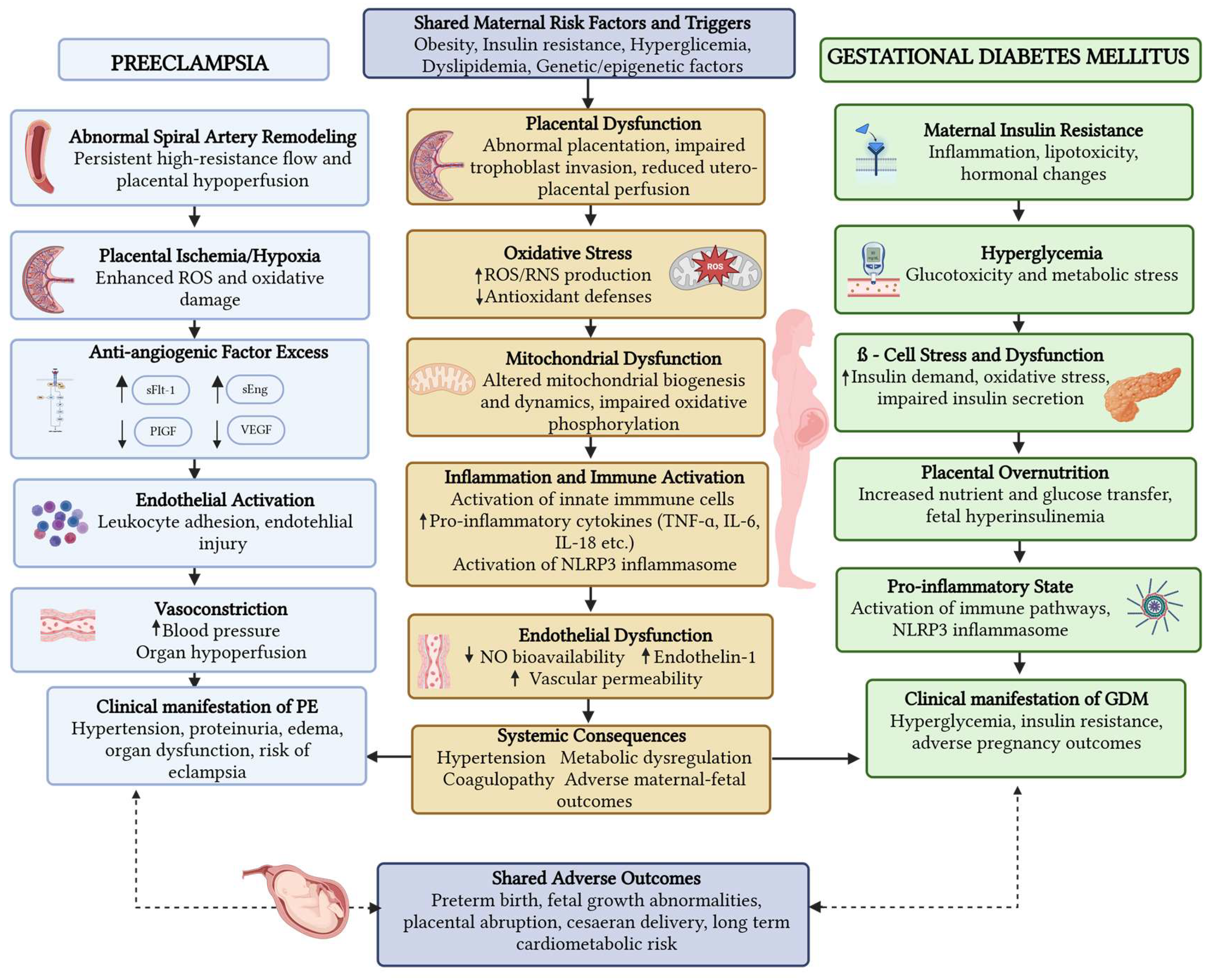
Figure 2.
Potential mechanisms in the prevention of preeclampsia and gestational diabetes mellitus (Created in BioRender. Davidovic, P. (2026) aw2jzaj https://BioRender.com/).
Figure 2.
Potential mechanisms in the prevention of preeclampsia and gestational diabetes mellitus (Created in BioRender. Davidovic, P. (2026) aw2jzaj https://BioRender.com/).
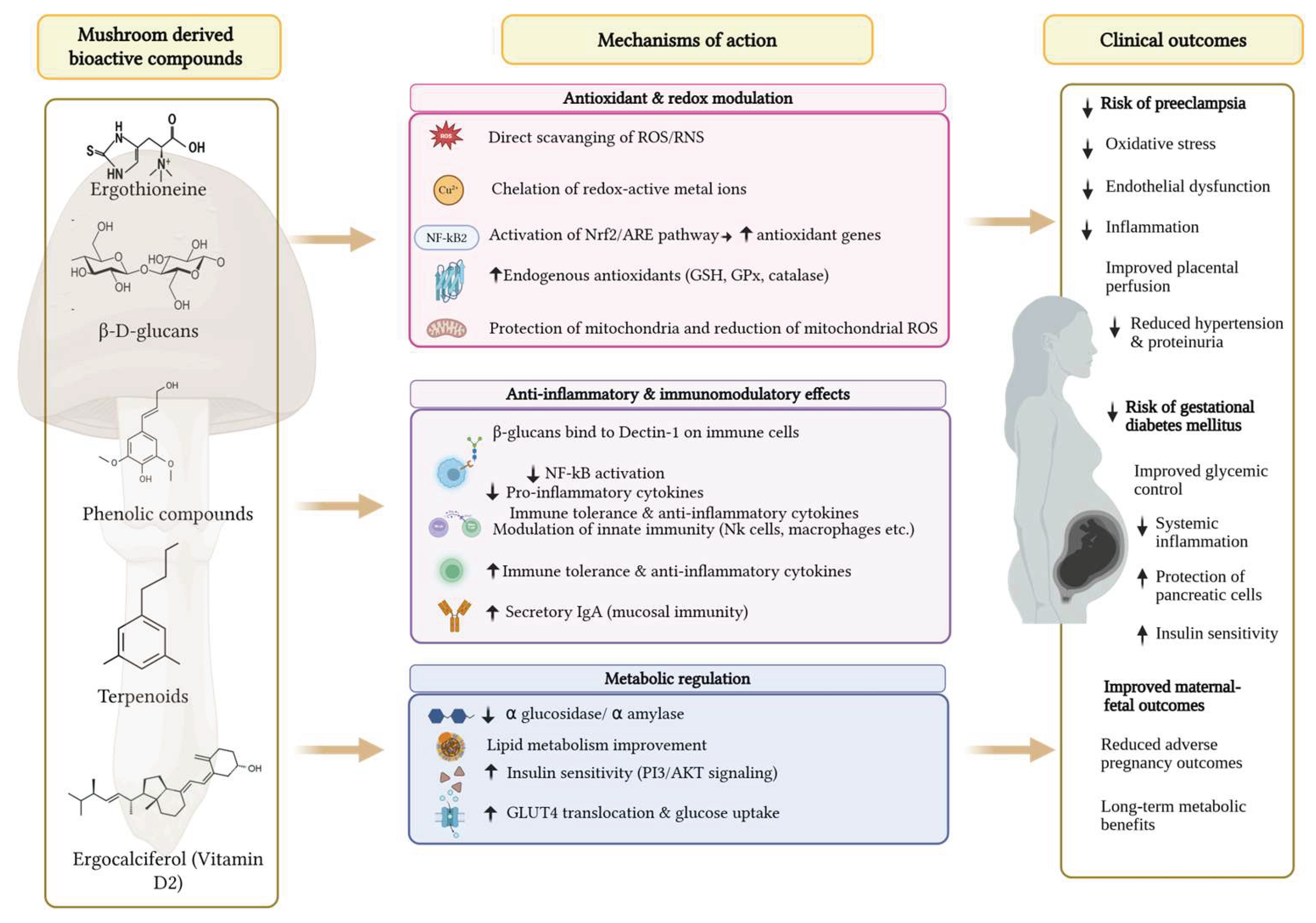

Table 1.
Selected edible and medicinal mushrooms, their major bioactive and antioxidant compounds, potential relevance to maternal health during pregnancy, and proposed mechanisms associated with oxidative stress, inflammation, and metabolic dysregulation.
Table 1.
Selected edible and medicinal mushrooms, their major bioactive and antioxidant compounds, potential relevance to maternal health during pregnancy, and proposed mechanisms associated with oxidative stress, inflammation, and metabolic dysregulation.
| Mushroom species | Major bioactive compounds | Major antioxidant compounds | Potential relevance to PE and GDM |
Proposed mechanism | References |
|---|---|---|---|---|---|
| Pleurotus ostreatus | β-Glucans, dietary fiber, ergothioneine, phenolic compounds | Ergothioneine, gallic acid, protocatechuic acid | Support of glucose metabolism; antioxidant protection | β-Glucan-mediated improvement of insulin sensitivity; ROS scavenging; modulation of inflammatory cytokines | [25,77,78,79,80] |
| Agaricus bisporus | Ergothioneine, selenium, phenolic compounds | Ergothioneine, phenolic acids | Reduction of oxidative stress; support of maternal micronutrient intake | Ergothioneine-mediated antioxidant activity; selenium-dependent antioxidant enzymes | [81,82,83,84] |
| Lentinula edodes | Lentinan, β-glucans, phenolic compounds | Lentinan, phenolic compounds | Immune modulation and anti-inflammatory potential | β-Glucan-induced immune regulation; suppression of pro-inflammatory mediators | [84,85,86,87] |
| Ganoderma lucidum | Triterpenoids, polysaccharides, ganoderic acids | Ganoderic acids, polysaccharides, polyphenolics | Anti-inflammatory and antioxidant activity | Triterpenoid-mediated inhibition of oxidative stress and inflammatory pathways | [22,26,50,86,88,89,90] |
| Hericium erinaceus | Erinacines, hericenones, polysaccharides, phenolics | Erinacines, hericenones, phenolics | Neuroprotective and antioxidant potential | Enhancement of antioxidant defense systems; modulation of neurotrophic factors | [86,91,92,93,94,95] |
| Flammulina velutipes | Ergothioneine, polysaccharides, phenolic compounds | Ergothioneine, phenolics | Support of antioxidant defense and metabolic balance | Ergothioneine- and phenolic-mediated free radical scavenging | [86,96,97,98,99] |
Table 2.
Overview of selected studies investigating the effects of mushroom species, mushroom-derived fractions, experimental models, gestational exposure windows, dosing and administration routes, and their reported maternal and fetal outcomes, including proposed mechanisms of action and safety assessments
Table 2.
Overview of selected studies investigating the effects of mushroom species, mushroom-derived fractions, experimental models, gestational exposure windows, dosing and administration routes, and their reported maternal and fetal outcomes, including proposed mechanisms of action and safety assessments
| L. edodes | Whole culinary mushroom | Pregnant rats | GD1-19 (pre-implantation exposure) and GD9-19 (post-implantation exposure) | Daily dietary consumption | Reduced serum triglyceride levels; no significant changes in maternal body weight, hematological or biochemical parameters, organ weights, or reproductive performance | No morphological alterations in fetal body measurements | Hypolipidemic and functional food-related effects | No maternal toxicity or adverse reproductive/fetal outcomes observed | [128] |
|---|---|---|---|---|---|---|---|---|---|
| L. edodes | Standardized extract of cultured L. edodes mycelia (prebiotic compound) | Pregnant Balb/c mice and offspring | GD14 to weaning (PND21); offspring exposed in utero and during early postnatal life | AHCC 4 g/kg BW/day and/or penicillin V 31 mg/kg BW/day via drinking water | AHCC prevented antibiotic-induced alterations in maternal gut microbiota, particularly increased Proteobacteria abundance | Improved offspring gut microbiota composition; preservation of SCFA-producing bacteria; reduced pro-inflammatory cytokines (IL-2, IL-6, IL-15, IL-21); attenuation of NF-κB activation; modulation of inflammation-associated miRNAs | Prebiotic, immunomodulatory, anti-inflammatory, and microbiota-mediated effects | No adverse developmental or maternal toxicity effects reported during perinatal exposure | [129] |
| L. edodes | Standardized extract of cultured L. edodes mycelia | | Pregnant ICR mice (multi-generational design) | GD3 and GD5 (pre-exposure), radiation on GD9; fetuses analyzed GD18 | AHCC 0.2 mg/g BW (2% solution) intraperitoneally prior to 1.4 Gy γ-irradiation | No effect on implantation rate, fetal survival, gestation length, or litter size across generations | Significant reduction in radiation-induced fetal malformations (tail malformations and diaphragmatic hernias); overall decreased abnormality rate (8.9% vs 29.5% in controls); no effect on other defect types | Maternal immune modulation and radioprotective effects during organogenesis | No adverse reproductive effects observed; long-term multi-generational administration did not impair fertility or gestational parameters | | [130] |
| L. edodes | Fermented L. edodes (FLE) incorporated into diet | Pregnant C57BL/6J mice under high-fat diet (overnutrition model) | Pregnancy and lactation period | Dietary supplementation of FLE at 1%, 3%, and 5% in high-fat diet | Reduced serum insulin levels and HOMA-IR; improved maternal insulin sensitivity; improved lipid metabolism and reduced fat deposition in dams; activation of hepatic PI3K/AKT signaling | Reduced offspring body fat percentage and visceral fat; improved metabolic profile at weaning (↓ glucose, ↓ insulin, ↓ HOMA-IR); increased weaning litter weight; activation of hepatic PI3K/AKT pathway and upregulation of lipolytic genes (ATGL, HSL, CPT1) | Modulation of PI3K/AKT signaling pathway; improved lipid oxidation and lipolysis; enhanced insulin signaling | No adverse maternal or developmental effects reported; improved metabolic outcomes in both dams and offspring | [131] |
| L. edodes | Lyophilized whole mushroom powder rich in β-glucans and phenolic compounds | Streptozotocin-induced GDM- in pregnant Wistar rats | Before implantation (GD1–19) and after implantation (GD9–19) | 100 mg/kg/day orally | Increased maternal insulin levels despite persistent hyperglycemia; reduced ALT, AST, triglycerides, and total cholesterol; reversal of STZ-induced hepatic damage; improved oxidative stress parameters | Reduced post-implantation losses and improved conceptus viability; no major fetal morphological toxicity reported | Antioxidant activity mediated by β-glucans and phenolic compounds; modulation of lipid metabolism and protection against oxidative and hepatic damage induced by GDM | No mushroom-related maternal or fetal toxicity observed at tested dose | [112] |
| L. edodes | Lyophilized and reconstituted whole mushroom; bioactive compounds not isolated (functional food preparation) | Streptozotocin-induced GDM in pregnant rats | GD1–19 (continuous gestational exposure; GDM induced GD4) | 100 or 200 mg/kg/day by oral administration (gavage) | Reduced plasma glucose, urea, triglycerides, and AST; modulation of antioxidant enzyme activity (↓catalase in plasma reported); partial improvement of metabolic and biochemical parameters | Reduced preimplantation loss compared with diabetic control; no full reversal of STZ-induced pregnancy damage throughout gestation | Antioxidant and metabolic modulation effects; partial protection against hyperglycemia-induced oxidative and metabolic stress | No clear toxicity reported at tested doses; partial protective effects without complete restoration of normal pregnancy parameters | [137] |
| L. edodes | Lyophilized mushroom powder (dietary whole-mushroom formulation; no isolated fraction) | Sprague–Dawley rats (pregnant dams and offspring; preclinical developmental nutrition model) | From gestation day 4 through postnatal day 126 (including gestation, lactation, and postnatal development) | Dietary incorporation (0%, 1%, 4%, 10% w/w in feed; ad libitum consumption) | Reduced serum total cholesterol, HDL, non-HDL cholesterol, and triglycerides; dose-dependent improvement in lipid profile; modulation of serum metabolic biomarkers | Reduced body weight in male offspring at higher doses (4% and 10%); improved serum lipid and metabolic parameters; sex-dependent effects on glucose/insulin regulation | Modulation of lipid metabolism; antioxidant-related activity (ORAC-based lipophilic/hydrophilic capacity); regulation of insulin and leptin signaling pathways | Generally well tolerated; no overt toxicity reported at tested doses, but high-dose exposure associated with reduced body weight and metabolic alterations in offspring | [138] |
| P.ostreatus | Aqueous extract of dehydrated fruiting bodies | Rat model with transgenerational metabolic programming (maternal sucrose intake; offspring postnatal sucrose exposure) | aternal exposure during gestation and lactation (sucrose consumption); offspring intervention in adulthood (post-weaning period) | Maternal: 5% sucrose solution in drinking water; Offspring: aqueous mushroom extract administered after 3 months of sucrose exposure (duration: 1 month) | No direct maternal metabolic outcomes reported in intervention phase; maternal sucrose exposure used to induce metabolic susceptibility in offspring | Offspring showed increased adiposity due to sucrose exposure despite unchanged body weight; mushroom extract reduced plasma cholesterol and triglycerides, decreased total adiposity, and reduced visceral adipocyte size | Antihyperlipidemic and anti-obesity effects via regulation of lipid metabolism and adipose tissue morphology | o toxicity reported for mushroom extract; improved metabolic parameters in offspring model | [139] |
| A. bisporus | Dried mushroom powder (“mushroom flour”); rich in β-glucans and antioxidant compounds | Pregnant Wistar rats exposed to lead (Pb) toxicity | GD1-19 | A. bisporus 100 mg/kg/day by oral gavage; Pb 100 mg/L in drinking water | Pb exposure significantly increased Pb accumulation in maternal blood, placenta, liver, kidney, and bone; co-administration with A. bisporus significantly reduced Pb levels in blood, placenta, and liver, partially reducing renal and bone Pb accumulation | Reduced fetal brain Pb accumulation in co-exposed group compared with Pb-only group, suggesting partial fetal protection against transplacental Pb transfer | Chelating activity mediated by β-glucans and antioxidant compounds; reduction of Pb absorption, distribution, and oxidative damage | No mushroom-associated toxicity reported during gestation; protective effects observed under toxic exposure conditions | [134] |
| A. bisporus | Powdered whole mushroom administered as aqueous suspension; nutritionally characterized for β-glucans, phenolics, and antioxidant compounds | Pregnant Wistar rats co-exposed to lead (Pb) toxicity | GD1-19 | A. bisporus 100 mg/kg/day by oral gavage; Pb 100 mg/L in drinking water | Pb exposure reduced maternal weight gain and impaired hematological, biochemical, and oxidative stress parameters; mushroom co-administration partially restored these alterations and improved redox balance | Partial recovery of fetal morphological and skeletal abnormalities induced by Pb exposure | Antioxidant, metal-chelating, and cytoprotective effects mediated by β-glucans and phenolic compounds; attenuation of oxidative stress | No mushroom-related toxicity observed; co-administration improved maternal and fetal outcomes under toxic exposure conditions | [133] |
| Agaricus brasiliensis | Whole mushroom with characterized bioactive components (β-glucans, phenolics; antioxidant-rich functional food) | Streptozotocin -induced GDM rat model | Perinatal exposure: before and after GDM induction (Abb and Aba protocols) | Daily oral intake of mushroom (dietary supplementation; experimental perinatal administration) | Improved glycemic control (reduced hyperglycemia prior to STZ and stabilization after induction); improved lipid profile (↓triglycerides, ↓cholesterol, ↑HDL); reduced liver enzyme markers (ALT, AST); improved oxidative stress status | Protection against STZ-induced embryofetal damage; reduced external abnormalities in conceptus; improved overall embryofetal development parameters | Antioxidant activity, reduction of oxidative stress, modulation of glucose and lipid metabolism, β-glucan–related metabolic effects | No reproductive toxicity observed; improved maternal and fetal metabolic and oxidative parameters under diabetic conditions | [132] |
| Agaricus brasiliensis | Powder-dehydrated reconstituted whole mushroom | Pregnant Wistar rats | Entire gestational period (GD1–21) | 300 or 600 mg/kg/day by oral gavage | Maternal fertility and body weight were monitored; no major maternal reproductive toxicity reported | Increased sternebrae agenesis at 600 mg/kg/day; incomplete sternebrae ossification observed at both 300 and 600 mg/kg/day; offspring evaluated for vitality, morphology, physical and neurobehavioral development | Possible developmental toxicity at high doses affecting fetal skeletal organogenesis | Low toxicity observed at 300 mg/kg/day, while 600 mg/kg/day produced adverse developmental effects | [135] |
| G. lucidum | Lyophilized whole mushroom powder standardized for phenolic compounds and β-glucans | Streptozotocin-induced GDM in pregnant Wistar rats | Before implantation (GD1–19) and after implantation (GD9–19) | 100 mg/kg/day by oral gavage | Improved glucose tolerance (reduced OGTT response); decreased AST and ALT; reduced lipid peroxidation; modulation of antioxidant enzymes (↑catalase, ↑glutathione peroxidase depending on timing); improved oxidative stress status | Improved fetal morphometry (increased head, thorax, craniocaudal and tail measurements); overall protective effects against GDM-associated growth impairment | Antioxidant and antihyperglycemic activity via β-glucans and phenolic compounds; reduction of oxidative stress and improvement of hepatic and metabolic function | No reported maternal toxicity at tested dose; improved biochemical and reproductive parameters | [136] |
| Mushroom Species | Mushroom Form / Bioactive Fraction | Experimental Model | Gestational Exposure Window | Dose & Route of Administration | Main Maternal Outcomes | Fetal / Offspring Outcomes | Proposed Mechanisms | Safety Assessment | Reference |
Disclaimer/Publisher’s Note: The statements, opinions and data contained in all publications are solely those of the individual author(s) and contributor(s) and not of MDPI and/or the editor(s). MDPI and/or the editor(s) disclaim responsibility for any injury to people or property resulting from any ideas, methods, instructions or products referred to in the content. |
© 2026 by the authors. Licensee MDPI, Basel, Switzerland. This article is an open access article distributed under the terms and conditions of the Creative Commons Attribution (CC BY) license (http://creativecommons.org/licenses/by/4.0/).
Copyright: This open access article is published under a Creative Commons CC BY 4.0 license, which permit the free download, distribution, and reuse, provided that the author and preprint are cited in any reuse.


