

Submitted:
02 June 2026
Posted:
04 June 2026
You are already at the latest version
Abstract
Objective: To evaluate whether deep neuromuscular blockade (DNMB) improves surgical conditions and facilitates low-pressure pneumoperitoneum compared with moderate neuromuscular blockade (MNMB) during minimally invasive surgery. Data Sources PubMed/MEDLINE, EMBASE, Cochrane CENTRAL, Scopus, Web of Science, and LILACS were searched from inception through May 2026. Study Selection Randomized controlled trials comparing DNMB versus MNMB in adults undergoing laparoscopic or robot-assisted surgery were included. Data Extraction Two reviewers independently screened studies, extracted data, and assessed risk of bias using the revised Cochrane Risk of Bias tool (RoB 2). Certainty of evidence was evaluated using the GRADE approach. Primary Outcomes: Primary outcomes were surgical workspace quality and intra-abdominal pressure requirements. Secondary Outcomes: Secondary outcomes included postoperative pain at 24 hours and referred shoulder pain. Data Synthesis: Seventeen randomized controlled trials involving more than 1700 patients were included. DNMB consistently improved surgical workspace conditions and facilitated lower pneumoperitoneum pressures compared with MNMB. Pooled analyses additionally suggested reductions in postoperative pain and referred shoulder pain in selected studies, although postoperative outcomes demonstrated greater heterogeneity across procedures and perioperative protocols. Conclusions: Current evidence suggests that the principal clinical value of DNMB during minimally invasive surgery is optimization of surgical exposure and facilitation of low-pressure pneumoperitoneum strategies. Benefits related to postoperative pain may occur in selected settings but appear less consistent across procedures.
Keywords:
deep neuromuscular blockade
; laparoscopic surgery
; robotic surgery
; low-pressure pneumoperitoneum
; surgical conditions
; postoperative pain
; meta-analysis
1. Introduction
Minimally invasive surgery has progressively become the preferred approach for a wide spectrum of abdominal, gynecologic, urologic, hepatobiliary, colorectal, and bariatric procedures because of its association with reduced postoperative pain, shorter hospital length of stay, faster recovery, earlier mobilization, and improved quality of life compared with open surgery [1,2]. The worldwide expansion of laparoscopic and selected robot-assisted procedures has substantially increased interest in perioperative strategies capable of optimizing surgical exposure while minimizing perioperative burden [2].
The establishment of pneumoperitoneum through carbon dioxide insufflation is essential for laparoscopic surgery because it creates the operative workspace required for adequate visualization and surgical manipulation. However, increased intra-abdominal pressure (IAP), typically ranging from 12 to 15 mmHg, may induce important physiological alterations including decreased pulmonary compliance, increased airway pressures, reduced venous return, diaphragmatic irritation, and postoperative pain syndromes, particularly referred shoulder pain [3,4,5,6,7].
To reduce the physiological burden associated with elevated IAP, low-pressure pneumoperitoneum strategies have increasingly attracted attention. Previous studies demonstrated that lower insufflation pressures may reduce postoperative pain and improve postoperative comfort [8,9]. Nevertheless, low-pressure laparoscopy may compromise operative exposure and increase technical difficulty, particularly during complex minimally invasive procedures [10,11].
In this context, deep neuromuscular blockade has emerged as a potential strategy to facilitate lower pneumoperitoneum pressures while maintaining adequate surgical exposure. Moderate neuromuscular blockade is generally characterized by one to three train-of-four responses, whereas deep neuromuscular blockade is characterized by absence of train-of-four responses with maintenance guided by post-tetanic count stimulation [12].
Early randomized trials evaluating DNMB primarily focused on surgeon-rated operative conditions and demonstrated improvements in surgical workspace quality and surgeon satisfaction [13,14,15]. Subsequent studies expanded these findings across several minimally invasive procedures including bariatric surgery, colorectal surgery, gynecologic surgery, donor nephrectomy, and urologic surgery [14,15,16,17,18,19,20,21]. More recent studies additionally explored whether improved operative conditions may translate into clinically relevant postoperative benefits, particularly reduced postoperative pain and referred shoulder pain associated with lower pneumoperitoneum pressures. However, findings across studies remain heterogeneous.
Despite increasing interest in this topic, previous systematic reviews frequently included relatively small numbers of randomized trials or focused predominantly on surgical field quality outcomes alone [29]. Furthermore, additional randomized evidence evaluating low-pressure pneumoperitoneum strategies has emerged during recent years [23,24,25,26,27,28].
Therefore, we conducted an updated systematic review and meta-analysis of randomized controlled trials to evaluate whether deep neuromuscular blockade improves surgical workspace quality, facilitates lower intra-abdominal pressure strategies, and influences early postoperative pain outcomes during minimally invasive surgery [13,14,15,16,17,18,19,20,21,22,23,24,25,26,27,28,29].
2. Methods
This systematic review and meta-analysis was conducted according to recommendations from the Cochrane Handbook for Systematic Reviews of Interventions and reported according to the PRISMA 2020 statement [30,31]. The review protocol was prospectively registered in PROSPERO before study selection and data extraction (CRD420261392976).
2.1. Eligibility Criteria
Eligibility criteria were established according to the Population, Intervention, Comparator, Outcomes, and Study Design (PICOS) framework.
Randomized controlled trials comparing deep or profound neuromuscular blockade versus moderate neuromuscular blockade in adults undergoing laparoscopic or selected robot-assisted abdominal or pelvic procedures were eligible.
Deep neuromuscular blockade was defined according to the original study definitions and generally corresponded to absence of train-of-four responses with maintenance guided by post-tetanic count monitoring. Moderate blockade was generally defined as one to three train-of-four responses.
Studies involving pediatric populations, observational designs, conference abstracts without full text, reviews, editorials, animal studies, duplicated populations, open procedures, or studies lacking extractable outcome data were excluded.
2.2. Outcomes
Primary outcomes were surgical workspace quality and intra-abdominal pressure requirements.
Secondary outcomes included postoperative pain at 24 h and referred shoulder pain.
Surgical conditions were evaluated using validated operative condition scales including the Leiden Surgical Rating Scale (L-SRS), Surgical Rating Scale (SRS), or equivalent instruments.
2.3. Data Sources and Search Strategy
A comprehensive electronic literature search was performed in PubMed/MEDLINE, EMBASE, Cochrane CENTRAL, Scopus, Web of Science, and LILACS from database inception through May 2026.
Search terms included combinations of: "deep neuromuscular blockade", "profound neuromuscular blockade", "moderate neuromuscular blockade", "laparoscopy", "robotic surgery", "pneumoperitoneum", "low-pressure laparoscopy", "low intra-abdominal pressure", "surgical conditions", and "randomized controlled trial".
2.4. Study Selection
Two reviewers independently screened titles, abstracts, and full texts using standardized eligibility criteria. Disagreements were resolved through consensus. Screening and study selection were performed using the Rayyan web application [32].
2.5. Data Extraction and Risk of Bias Assessment
Two reviewers independently extracted study characteristics, surgical procedures, sample size, anesthetic protocols, neuromuscular blockade definitions, pneumoperitoneum strategies, and outcomes.
Risk of bias was evaluated using the revised Cochrane Risk of Bias tool for randomized trials (RoB 2) [33].
2.6. Certainty of Evidence
Certainty of evidence was evaluated using the GRADE framework for surgical workspace quality, intra-abdominal pressure requirements, postoperative pain at 24 h, and referred shoulder pain [34–38].
2.7. Data Synthesis and Statistical Analysis
Meta-analyses were performed using random-effects models because clinical and methodological heterogeneity across surgical procedures, pneumoperitoneum strategies, perioperative protocols, and outcome assessment methods was anticipated. Continuous outcomes were pooled using mean differences (MDs) or standardized mean differences (SMDs) according to the measurement scales used across studies. Seventeen randomized controlled trials were included in the qualitative synthesis. Quantitative meta-analyses were performed only for outcomes reported with sufficient methodological comparability, including surgical workspace quality, intra-abdominal pressure, postoperative pain at 24 hours, and referred shoulder pain. Quantitative synthesis was restricted to outcomes reported by at least two studies with comparable definitions, assessment time points, and extractable numerical data. Outcomes reported inconsistently or with insufficient quantitative information were summarized narratively. Statistical heterogeneity was assessed using Cochran’s Q test and the I² statistic. All analyses were conducted using Review Manager (RevMan), version 5.4 [39].
3. Results
3.1. Search Results
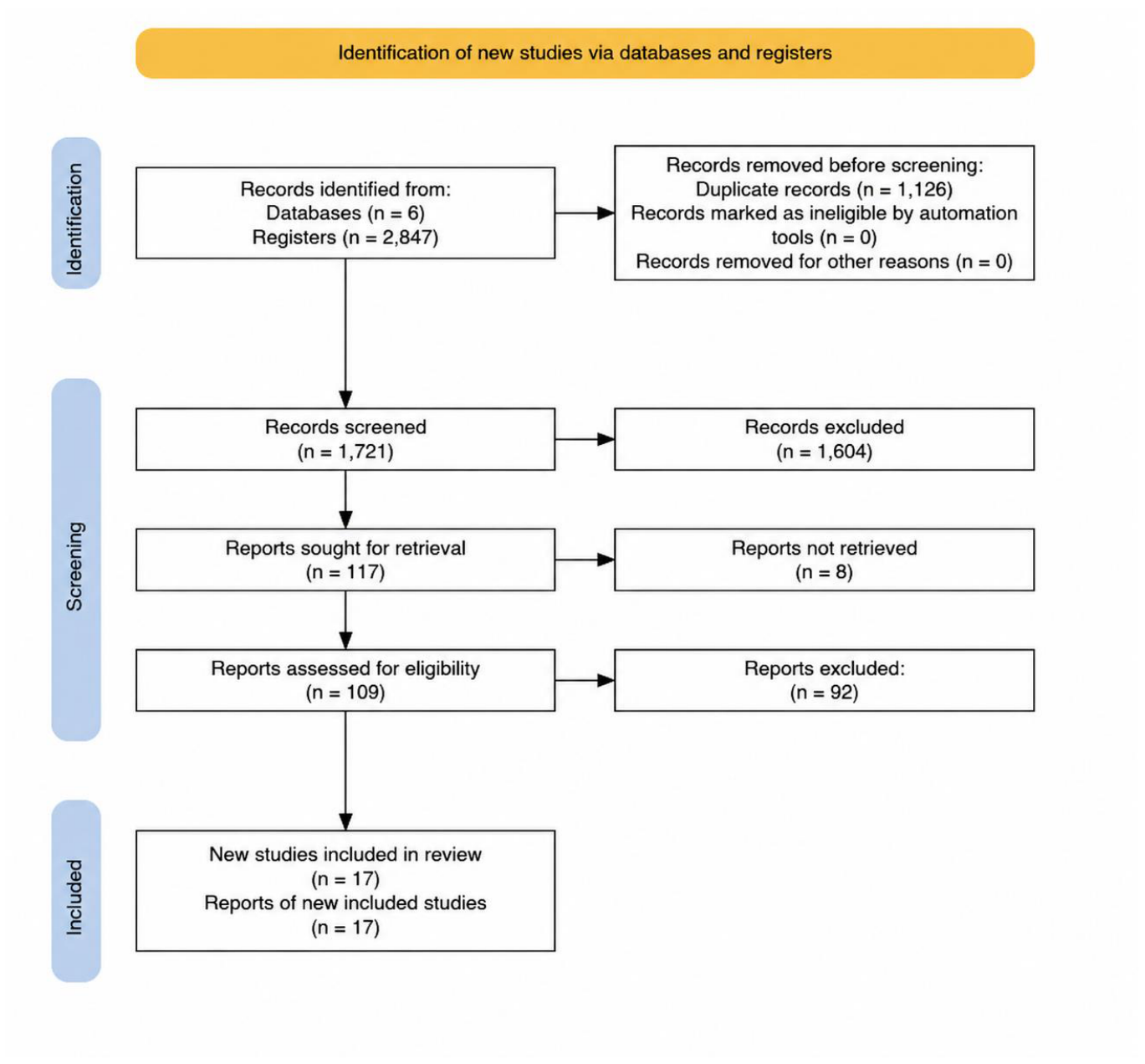
The electronic search identified studies evaluating deep neuromuscular blockade (DNMB) versus moderate neuromuscular blockade (MNMB) during minimally invasive surgery. After removal of duplicates and screening of titles, abstracts, and full texts, 17 randomized controlled trials fulfilled the eligibility criteria and were included in the qualitative synthesis [13,14,15,16,17,18,19,20,21,22,23,24,25,26,27,28,29]. Because outcome reporting varied considerably across studies, not all trials contributed to every pooled quantitative analysis. Quantitative meta-analyses were therefore performed only for outcomes with sufficient methodological comparability and available extractable data.
Figure 1.
PRISMA flowchart.
3.2. Characteristics of the Included Studies
The 17 included randomized controlled trials evaluated adult patients undergoing laparoscopic abdominal, gynecologic, urologic, colorectal, bariatric, hepatobiliary, donor nephrectomy, and laparoendoscopic single-site procedures [13,14,15,16,17,18,19,20,21,22,23,24,25,26,27,28,29]. Most studies compared DNMB, generally maintained using post-tetanic count guidance, with MNMB, typically maintained at one to three train-of-four responses [13,14,15,16,17,18,19,20,21,22,23,24,25,26,27,28,29].
The most frequently reported outcomes were surgical field quality, postoperative pain, referred shoulder pain, recovery or extubation time, and quality of recovery. Surgical conditions were primarily assessed using the Leiden Surgical Rating Scale (L-SRS), Surgical Rating Scale (SRS), or equivalent surgeon-reported operative field instruments [13,14,15,16,17,18,19,20,21,22,23,24,25,26,27,28,29]. Quantitative neuromuscular monitoring and sugammadex-based reversal strategies were increasingly incorporated in contemporary trials [13,14,15,16,17,18,19,20,21,22,23,24,25,26,27,28,29].
Detailed characteristics of the included trials are presented in Table 1.

Table 1.
Study characteristics related to population and perioperative setting.
| Study | Surgery | N (DNMB/MNMB) | Pneumoperitoneum | Anesthesia | Main assessed outcome |
|---|---|---|---|---|---|
| Martini 2014 | Retroperitoneal laparoscopic urologic surgery | 12/12 | Standard pressure | Balanced anesthesia | Surgical conditions |
| Dubois 2014 | Laparoscopic hysterectomy | 51/51 | 13 mmHg | Desflurane anesthesia | Surgical field quality |
| Staehr-Rye 2014 | Laparoscopic cholecystectomy | 24/24 | Low pressure (8 mmHg) | TIVA | Surgical workspace conditions |
| Yoo 2015 | Robotic radical prostatectomy | 19/19 | Standard pressure | Propofol/remifentanil | Intraocular pressure |
| Torensma 2016 | Bariatric surgery | 50/50 | Standard pressure | Balanced anesthesia | Surgical conditions and postoperative pain |
| Kim 2016 | Laparoscopic colorectal surgery | 30/31 | Adjusted low pressure | Balanced anesthesia | Intra-abdominal pressure and postoperative pain |
| Rosenberg 2017 | Laparoscopic cholecystectomy | 60/60 | Low vs standard pressure | Balanced anesthesia | Surgeon satisfaction and surgical conditions |
| Baete 2017 | Bariatric surgery | 25/25 | Low pressure | Balanced anesthesia | Respiratory mechanics and surgical conditions |
| Madsen 2017 | Laparoscopic hysterectomy | 55/55 | 8 vs 12 mmHg | Balanced anesthesia | Shoulder pain and abdominal contractions |
| Koo 2018 | Laparoscopic colorectal surgery | 32/32 | Standard pressure | Balanced anesthesia | Intraoperative surgical conditions |
| Bruintjes 2019 | Laparoscopic donor nephrectomy | 48/48 | Low pressure | Balanced anesthesia | Quality of recovery (QoR-40) |
| Honing 2021 | Laparoscopic renal surgery | 49/49 | 12 mmHg | Sevoflurane anesthesia | Surgical conditions |
| Kathopoulis 2022 | Gynecologic laparoscopic surgery | 73/71 | Standard pressure | Balanced anesthesia | Surgical conditions and postoperative pain |
| Yang 2024 | Laparoscopic sleeve gastrectomy | 40/40 | Standard pressure | Balanced anesthesia | Quality of recovery (QoR-15) |
| Esa 2024 | Gynecologic laparoscopy | 35/35 | Low pressure (8 mmHg) | Balanced anesthesia | Surgical conditions and postoperative pain |
| Morisson 2024 | Laparoscopic colorectal surgery | 45/48 | Adjusted pressure | Desflurane/remifentanil | Remifentanil requirement and surgical conditions |
| Alotaibi 2024 | Laparoscopic sleeve gastrectomy | 29/28 | Standard pressure | Balanced anesthesia | Postoperative pain and recovery |
| Meletti 2025 | Laparoscopic cholecystectomy | 31/31 | Low vs standard pressure | Balanced anesthesia | QoR-40 and postoperative pain |
| Shen 2026 | LESS total hysterectomy | 121/122 | Standard pressure | Intravenous anesthesia | Surgical conditions and postoperative pain |
Table 2.
Study characteristics related to neuromuscular blockade strategy and perioperative outcomes.
Table 2.
Study characteristics related to neuromuscular blockade strategy and perioperative outcomes.
| Study | DNMB Definition | MNMB Definition | Neuromuscular Monitoring | Reversal Strategy | Main Findings |
|---|---|---|---|---|---|
| Martini 2014 | PTC 1–2 | TOF 1–2 | TOF/PTC | Sugammadex vs neostigmine | Improved surgical conditions with DNMB |
| Dubois 2014 | TOF <1 | TOF recovery/spontaneous | TOF | Neostigmine | Reduced unacceptable surgical conditions with DNMB |
| Staehr-Rye 2014 | PTC 1–2 | TOF 1–2 | TOF/PTC | Sugammadex | Improved low-pressure surgical workspace |
| Yoo 2015 | PTC 1–2 | TOF 1–2 | TOF/PTC | Sugammadex | Lower intraocular pressure fluctuations |
| Torensma 2016 | PTC 2–3 | TOF 1–2 | TOF/PTC | Sugammadex | Better surgical conditions and lower postoperative pain |
| Kim 2016 | PTC 1–2 | TOF 1–2 | TOF/PTC | Sugammadex | Lower intra-abdominal pressure and less postoperative pain |
| Rosenberg 2017 | PTC 1–2 | TOF ratio 10% | TOF/PTC | Sugammadex | Improved surgeon satisfaction under DNMB |
| Baete 2017 | PTC 1–2 | TOF 1–2 | TOF/PTC | Sugammadex | Improved respiratory mechanics and surgical exposure |
| Madsen 2017 | Deep continuous block | Single-bolus/standard block | TOF/PTC | Sugammadex | Reduced abdominal contractions and insufflator alarms |
| Koo 2018 | PTC 1–2 | TOF 1–2 | TOF/PTC | Sugammadex vs neostigmine | Reduced IAP alarms and spontaneous breathing recovery |
| Bruintjes 2019 | PTC 1–3 | TOF 1–3 | TOF/PTC | Sugammadex | Improved postoperative recovery and lower pain in as-treated analysis |
| Honing 2021 | PTC 1–2 | TOF 1–2 | TOF/PTC | Sugammadex | No improvement in surgical conditions during sevoflurane anesthesia |
| Kathopoulis 2022 | PTC 0–1 | TOF 0–1 | TOF/PTC | Sugammadex | Lower postoperative pain without major surgical field differences |
| Yang 2024 | PTC 1–3 | TOF 1–3 | TOF/PTC | Sugammadex | Better QoR-15 scores and improved surgical conditions |
| Esa 2024 | PTC 1–2 | TOF 1–2 | TOF/PTC | Sugammadex | Better surgical space quality with lower insufflation pressure |
| Morisson 2024 | PTC 1–2 | TOF 1–3 | TOF/PTC + NOL | Sugammadex | Reduced remifentanil requirement and lower IAP |
| Alotaibi 2024 | PTC 1–2 | TOF 1–2 | TOF/PTC | Sugammadex | No major differences in postoperative recovery outcomes |
| Meletti 2025 | Deep blockade | Moderate blockade | TOF/PTC | Sugammadex | Better surgical field quality without QoR-40 improvement |
| Shen 2026 | PTC 1–2 | TOF 1–2 | TOF/PTC | Sugammadex | Improved surgical conditions and lower postoperative pain |
3.3. Risk of Bias in Individual Studies
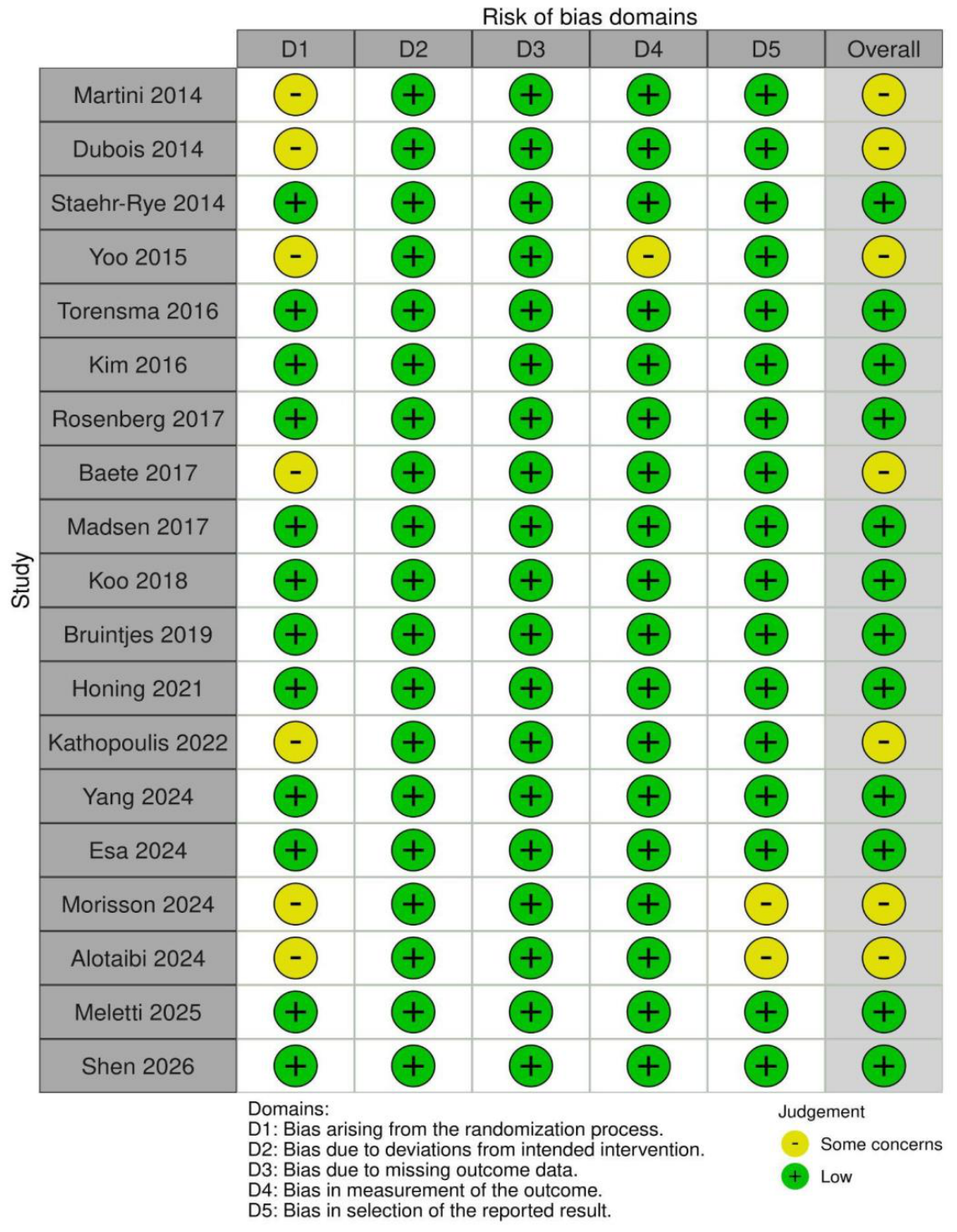
Risk of bias was assessed using the revised Cochrane Risk of Bias tool for randomized trials. Overall, most studies demonstrated low risk of bias or some concerns across evaluated domains. The principal methodological concerns involved allocation concealment, blinding of personnel or surgeons, selective reporting of secondary perioperative outcomes, and incomplete standardization of perioperative protocols [13,14,15,16,17,18,19,20,21,22,23,24,25,26,27,28,29].
Earlier randomized trials more frequently demonstrated limitations regarding allocation concealment and blinding methodology, whereas more recent studies generally incorporated quantitative neuromuscular monitoring, standardized anesthetic protocols, and structured postoperative recovery assessment [13,14,15,16,17,18,19,20,21,22,23,24,25,26,27,28,29].
3.4. Effectiveness of Interventions
3.4.1. Statistically Significant Resultsi
- i.
- Surgical field quality
Randomized controlled trials evaluating surgical field quality generally suggested improved operative conditions with deep neuromuscular blockade (DNMB) compared with moderate neuromuscular blockade (MNMB) across different laparoscopic and robotic procedures, including bariatric, gynecologic, colorectal, donor nephrectomy, and other minimally invasive surgeries [13,14,15,16,17,18,19,20,21,22,23,24,25,26,27,28,29]. Individual study findings varied, with some studies demonstrating moderate-to-large effects whereas others showed minimal or no differences between groups.
Figure 2.
Risk of bias assessment according to the revised Cochrane Risk of Bias tool (RoB 2).
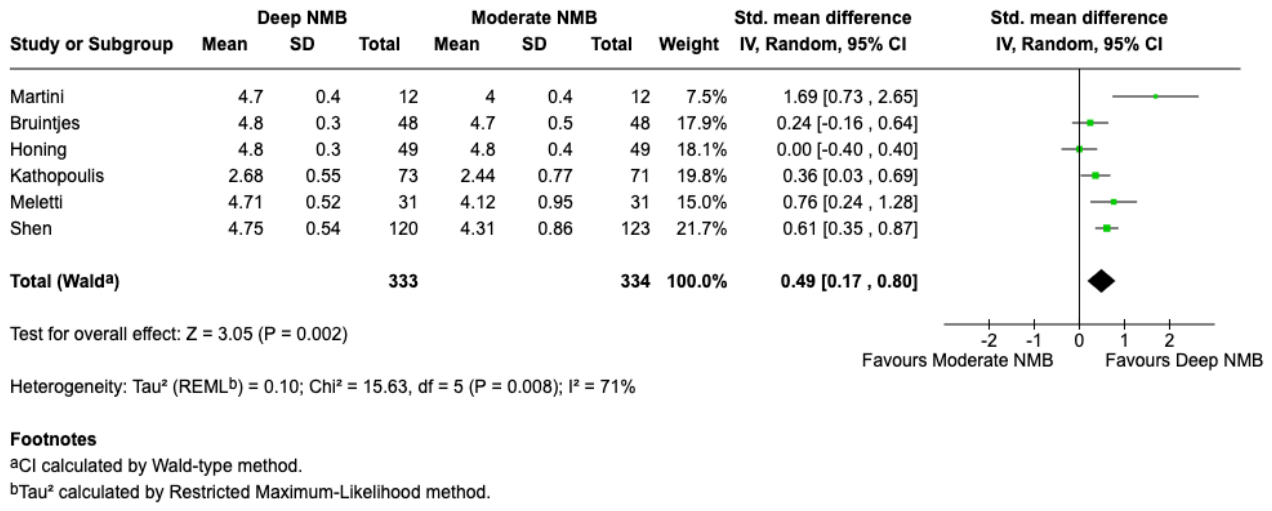
Quantitative synthesis demonstrated that DNMB was associated with significantly improved surgeon-rated surgical conditions compared with MNMB (SMD 0.49, 95% CI 0.17–0.80; P = 0.002). The magnitude of effect was small-to-moderate, favoring DNMB. However, substantial heterogeneity was observed across studies (I² = 71%), likely reflecting differences in surgical populations, operative techniques, and the scoring systems used to assess surgical conditions.
Figure 3.
Meta-analysis on surgical field quality comparing deep neuromuscular blockade (DNMB) versus moderate neuromuscular blockade (MNMB).
Figure 3.
Meta-analysis on surgical field quality comparing deep neuromuscular blockade (DNMB) versus moderate neuromuscular blockade (MNMB).
- ii.
- Intra-abdominal pressure
Randomized controlled trials evaluating intra-abdominal pressure generally suggested that deep neuromuscular blockade (DNMB) allowed the use of lower pneumoperitoneum pressures while maintaining adequate surgical conditions compared with moderate neuromuscular blockade (MNMB) across different minimally invasive procedures [13,14,15,16,17,18,19,20,21,22,23,24,25,26,27,28,29]. This finding supports the hypothesis that deeper neuromuscular relaxation may improve abdominal wall compliance and optimize the surgical workspace.
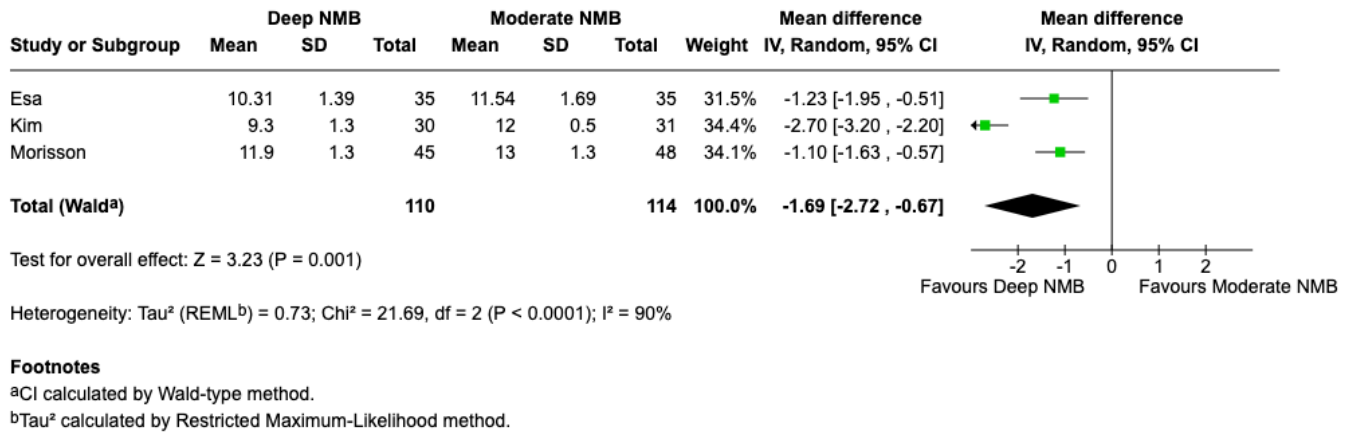
Quantitative synthesis demonstrated that DNMB was associated with significantly lower intra-abdominal pressure requirements compared with MNMB (MD −1.69, 95% CI −2.72 to −0.67; P = 0.001). Substantial heterogeneity was observed across studies (I² = 90%), likely reflecting differences in surgical procedures, pressure adjustment protocols, and perioperative management strategies. Despite the high heterogeneity, all included studies demonstrated a consistent direction of effect favoring DNMB.
Figure 4.
Meta-analysis on intra-abdominal pressure comparing deep neuromuscular blockade (DNMB) versus moderate neuromuscular blockade (MNMB).
Figure 4.
Meta-analysis on intra-abdominal pressure comparing deep neuromuscular blockade (DNMB) versus moderate neuromuscular blockade (MNMB).
- iii.
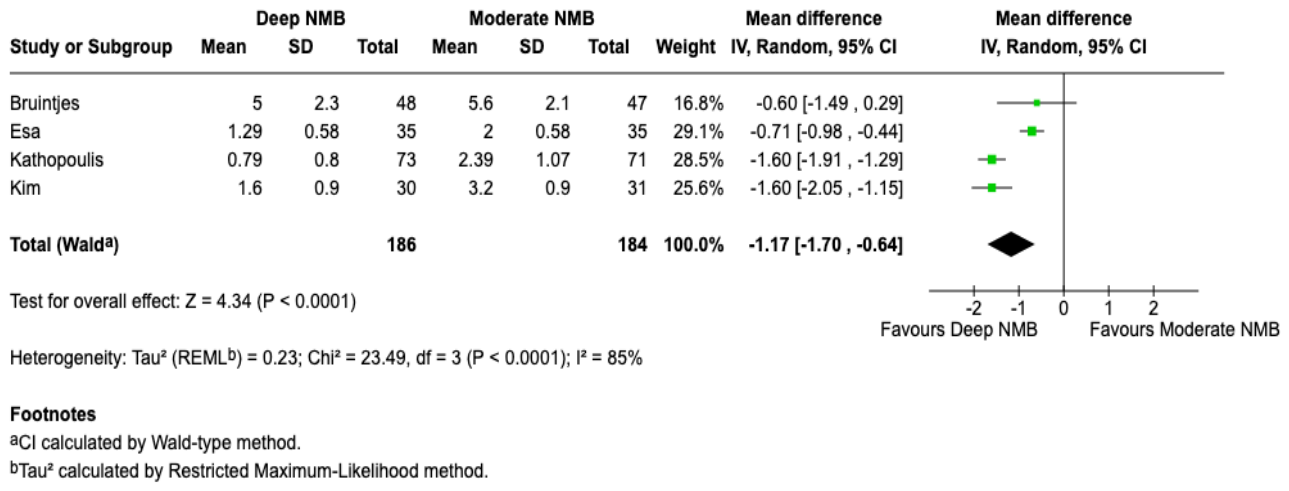
- Postoperative pain
Several randomized controlled trials demonstrated lower postoperative pain scores with DNMB compared with MNMB during the early postoperative period and within the first 24 postoperative hours [13,14,15,16,17,18,19,20,21,22,23,24,25,26,27,28,29]. Beneficial effects were more frequently observed in studies incorporating low-pressure pneumoperitoneum strategies and recovery-oriented perioperative pathways. However, some studies reported neutral findings regarding postoperative pain outcomes.
Quantitative synthesis demonstrated significantly lower postoperative pain scores with DNMB compared with MNMB (SMD −1.19, 95% CI −1.88 to −0.51; P = 0.0006). Substantial heterogeneity was observed across studies (I² = 89.9%), likely reflecting differences in surgical procedures, perioperative analgesic protocols, pneumoperitoneum strategies, and outcome assessment methods.
Figure 5.
Meta-analysis on postoperative pain at 24 hours comparing deep neuromuscular blockade (DNMB) versus moderate neuromuscular blockade (MNMB).
Figure 5.
Meta-analysis on postoperative pain at 24 hours comparing deep neuromuscular blockade (DNMB) versus moderate neuromuscular blockade (MNMB).
- iv.
- Referred shoulder pain
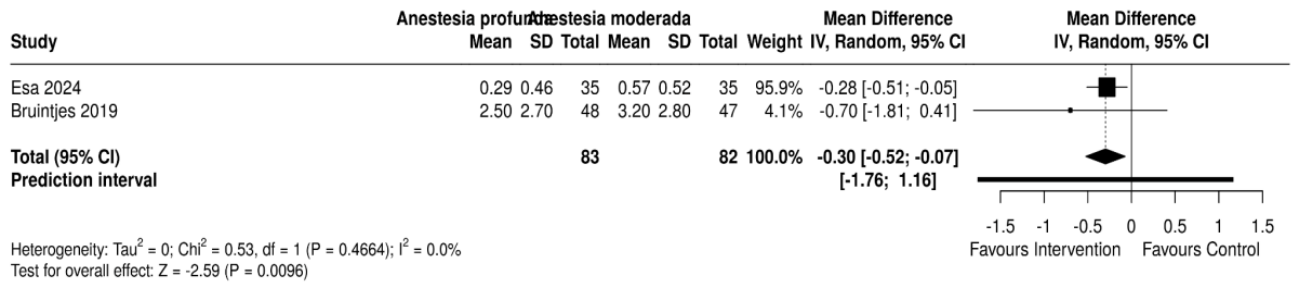
Referred shoulder pain was evaluated in selected randomized controlled trials and generally favored DNMB over MNMB [13,14,15,16,17,18,19,20,21,22,23,24,25,26,27,28,29]. The observed effects appeared particularly associated with low-pressure pneumoperitoneum strategies and improved abdominal wall compliance during minimally invasive surgery.
Quantitative synthesis demonstrated significantly lower referred shoulder pain scores with DNMB compared with MNMB (MD −0.30, 95% CI −0.52 to −0.07; P = 0.0096). No statistical heterogeneity was observed across studies (I² = 0%), suggesting a consistent direction of effect among the included trials.
Figure 6.
Meta-analysis on referred shoulder pain comparing deep neuromuscular blockade (DNMB) versus moderate neuromuscular blockade (MNMB).
Figure 6.
Meta-analysis on referred shoulder pain comparing deep neuromuscular blockade (DNMB) versus moderate neuromuscular blockade (MNMB).
3.5. Certainty of Evidence
Evidence for surgical workspace quality was rated as moderate certainty because randomized trials consistently favored DNMB despite substantial heterogeneity across surgical procedures and operative scales [13,14,15,16,17,18,19,20,21,22,23,24,25,26,27,28,29]. Evidence for intra-abdominal pressure was also rated as moderate certainty because, although heterogeneity was present, the direction of effect was consistent across studies [13,14,15,16,17,18,19,20,21,22,23,24,25,26,27,28,29]. Evidence for postoperative pain at 24 hours was rated as low certainty because of substantial heterogeneity and imprecision across studies [13,14,15,16,17,18,19,20,21,22,23,24,25,26,27,28,29]. Evidence for referred shoulder pain was rated as moderate certainty because findings were consistent across included trials, although certainty was limited by the relatively small number of available studies [13,14,15,16,17,18,19,20,21,22,23,24,25,26,27,28,29,34–38].
| Outcome | No. of studies | Risk of bias | Inconsistency | Indirectness | Imprecision | Publication bias | Certainty of evidence |
| Surgical workspace quality | 6 | Not serious | Serious | Not serious | Not serious | Undetected | ⨁⨁⨁◯ Moderate |
| Intra-abdominal pressure | 3 | Not serious | Serious | Not serious | Not serious | Undetected | ⨁⨁⨁◯ Moderate |
| Postoperative pain at 24 h | 4 | Not serious | Serious | Not serious | Serious | Undetected | ⨁⨁◯◯ Low |
| Referred shoulder pain | 2 | Not serious | Not serious | Not serious | Serious | Undetected | ⨁⨁⨁◯ Moderate |
4. Discussion
4.1. Main Findings
The present systematic review and meta-analysis evaluated the perioperative effects of deep neuromuscular blockade (DNMB) compared with moderate neuromuscular blockade (MNMB) during minimally invasive surgery. The principal finding was that DNMB improved surgeon-rated surgical field quality and facilitated the use of lower intra-abdominal pressure strategies across laparoscopic and selected robot-assisted procedures [13,14,15,16,17,18,19,20,21,22,23,24,25,26,27,28,29].
These findings support the concept that profound neuromuscular relaxation improves abdominal wall compliance and facilitates operative exposure under reduced pneumoperitoneum pressures [3,4,5,8,9,10]. This mechanism is clinically relevant because lower insufflation pressures may reduce peritoneal stretch and diaphragmatic irritation, which represent plausible contributors to postoperative abdominal discomfort and referred shoulder pain [5,6,7,8,9].
Consistent with this physiological rationale, pooled analyses also demonstrated reductions in postoperative pain at 24 hours and referred shoulder pain [13,14,15,16,17,18,19,20,21,22,23,24,25,26,27,28,29]. However, postoperative outcomes should be interpreted more cautiously than surgical workspace outcomes because pain assessment methods, perioperative analgesic protocols, surgical procedures, and pneumoperitoneum strategies differed across studies. Therefore, although the pooled direction of effect favored DNMB, the magnitude and generalizability of postoperative benefits remain less certain.
Overall, the principal clinical value of DNMB appears to reside in optimization of operative workspace and facilitation of low-pressure pneumoperitoneum strategies rather than broad claims of universally improved postoperative recovery.
4.2. Strengths and Limitations
The principal strength of this review is its focused quantitative synthesis of randomized controlled trials evaluating clinically relevant intraoperative and early postoperative outcomes. Quantitative analyses were intentionally restricted to outcomes with sufficient methodological comparability, including surgical field quality, intra-abdominal pressure, postoperative pain at 24 hours, and referred shoulder pain.
Several limitations should also be considered. Considerable clinical heterogeneity was present across studies regarding surgical procedures, pneumoperitoneum protocols, neuromuscular blockade targets, reversal strategies, operative rating systems, and perioperative analgesic regimens [13,14,15,16,17,18,19,20,21,22,23,24,25,26,27,28,29]. Additionally, some outcomes required standardized mean differences because of variability in measurement scales. Consequently, the results should be interpreted primarily as evidence supporting a consistent direction of effect rather than as precise estimates universally applicable to all minimally invasive procedures.
4.3. Certainty of Evidence
The certainty of evidence for surgical field quality and intra-abdominal pressure was rated as moderate because findings consistently favored DNMB despite heterogeneity across procedures and perioperative protocols [13,14,15,16,17,18,19,20,21,22,23,24,25,26,27,28,29,34–38]. Evidence for postoperative pain at 24 hours was rated as low certainty because substantial heterogeneity and imprecision were present across studies [13,14,15,16,17,18,19,20,21,22,23,24,25,26,27,28,29,34–38]. Evidence for referred shoulder pain was rated as moderate certainty because findings were consistent across trials, although the number of available studies remained limited [13,14,15,16,17,18,19,20,21,22,23,24,25,26,27,28,29,34–38].
Overall, the certainty profile suggests stronger support for intraoperative benefits related to surgical workspace optimization than for broader postoperative recovery outcomes.
4.4. Clinical Implications
DNMB should primarily be considered a strategy for optimization of surgical workspace and facilitation of low-pressure pneumoperitoneum. Its most defensible role appears to be in procedures where operative exposure may become technically challenging or where lower insufflation pressures are clinically desirable [13,14,15,16,17,18,19,20,21,22,23,24,25,26,27,28,29].
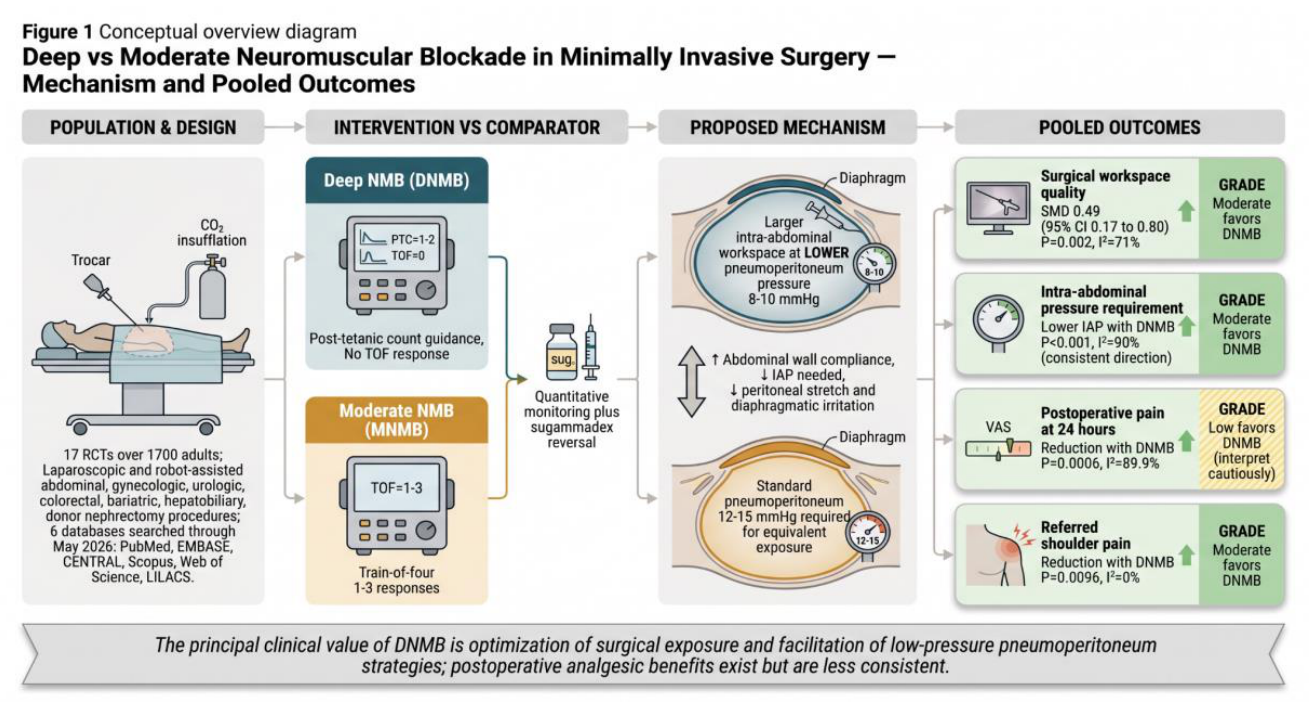
Potential postoperative analgesic benefits, particularly reductions in referred shoulder pain, may be most relevant when DNMB is integrated into low-pressure pneumoperitoneum strategies [13,14,15,16,17,18,19,20,21,22,23,24,25,26,27,28,29]. Current evidence does not support broad conclusions that DNMB universally improves overall postoperative recovery.To facilitate interpretation of the principal findings and their potential physiological relationships, a conceptual synthesis integrating the proposed mechanisms and pooled outcomes is presented in Figure 7.
Figure 7.
suggests that the principal effect of DNMB may be mediated through improved abdominal wall compliance, allowing maintenance of adequate surgical exposure at lower pneumoperitoneum pressures. Reduced intra-abdominal pressure may subsequently decrease peritoneal stretch and diaphragmatic irritation, which represent plausible mechanisms contributing to lower postoperative pain and reduced referred shoulder pain. Importantly, although postoperative outcomes favored DNMB, the certainty profile suggests that these benefits should be interpreted as secondary consequences of improved intraoperative conditions rather than as direct universal effects on postoperative recovery.
Figure 7.
suggests that the principal effect of DNMB may be mediated through improved abdominal wall compliance, allowing maintenance of adequate surgical exposure at lower pneumoperitoneum pressures. Reduced intra-abdominal pressure may subsequently decrease peritoneal stretch and diaphragmatic irritation, which represent plausible mechanisms contributing to lower postoperative pain and reduced referred shoulder pain. Importantly, although postoperative outcomes favored DNMB, the certainty profile suggests that these benefits should be interpreted as secondary consequences of improved intraoperative conditions rather than as direct universal effects on postoperative recovery.
4.5. Future Research
Future randomized trials should seek greater standardization of surgical field assessment scales, pneumoperitoneum pressure protocols, neuromuscular blockade targets, analgesic pathways, and postoperative outcome measurements. The most relevant remaining question may not be whether DNMB improves surgical exposure, but rather which specific procedures and patient populations derive clinically meaningful postoperative benefit.
5. Conclusion
Current randomized evidence suggests that deep neuromuscular blockade improves surgical field quality during minimally invasive surgery and facilitates lower intra-abdominal pressure strategies compared with moderate neuromuscular blockade [13,14,15,16,17,18,19,20,21,22,23,24,25,26,27,28,29].
DNMB may additionally reduce postoperative pain at 24 hours and referred shoulder pain, particularly when combined with low-pressure pneumoperitoneum pathways [13,14,15,16,17,18,19,20,21,22,23,24,25,26,27,28,29]. However, postoperative outcomes demonstrated greater heterogeneity and lower certainty than intraoperative outcomes and therefore should be interpreted cautiously.
The most defensible clinical role of DNMB appears to be optimization of surgical workspace and support of low-pressure pneumoperitoneum rather than broad improvement of all postoperative recovery outcomes.
Author Contributions
Conceptualization, X.X. and Y.Y.; methodology, X.X.; software, X.X.; validation, X.X., Y.Y. and Z.Z.; formal analysis, X.X.; investigation, X.X.; resources, X.X.; data curation, X.X.; writing—original draft preparation, X.X.; writ-ing—review and editing, X.X.; visualization, X.X.; supervision, X.X.; project administration, X.X.; funding acquisition, Y.Y. All authors have read and agreed to the published version of the manuscript.
Funding
This research received no external funding.
Institutional Review Board Statement
Not applicable.
Informed Consent Statement
Not applicable.
Data Availability Statement
No new data were created or analyzed in this study. Data sharing is not applicable to this article.
Conflicts of Interest
The authors declare no conflict of interest.
References
- Tsuzuki, Y.; Tsuzuki, S.; Wada, S.; Fukushi, Y.; Fujino, T. Recovery of quality of life after laparoscopic myomectomy. J. Obstet. Gynaecol. Res. 2019, 45(1), 176–181. [Google Scholar] [CrossRef] [PubMed] [PubMed Central]
- 2. ; Angrisani, L.; Santonicola, A.; Iovino, P.; Ramos, A.; Shikora, S.; Kow, L. Bariatric Surgery Survey 2018: Similarities and Disparities Among the 5 IFSO Chapters. Obes. Surg. 2021, 31(5), 1937–1948. [Google Scholar] [CrossRef] [PubMed]
- Nguyen, N.T.; Wolfe, B.M. The physiologic effects of pneumoperitoneum in the morbidly obese. Ann. Surg. 2005, 241(2), 219–26. [Google Scholar] [CrossRef]
- Safran, D.B.; Orlando, R., 3rd. Physiologic effects of pneumoperitoneum. Am. J. Surg. 1994, 167(2), 281–6. [Google Scholar] [CrossRef]
- Bisgaard T. Analgesic treatment after laparoscopic cholecystectomy: a critical assessment of the evidence. Anesthesiology 2006, 104(4), 835–46. [CrossRef] [PubMed]
- Tsai, H.W.; Chen, Y.J.; Ho, C.M.; Hseu, S.S.; Chao, K.C.; Tsai, S.K.; Wang, P.H. Maneuvers to decrease laparoscopy-induced shoulder and upper abdominal pain: a randomized controlled study. Arch. Surg. 2011, 146(12), 1360–6. [Google Scholar] [CrossRef] [PubMed]
- Barczyński, M.; Herman, R.M. Low-pressure pneumoperitoneum combined with intraperitoneal saline washout for reduction of pain after laparoscopic cholecystectomy: a prospective randomized study. Surg. Endosc. 2004, 18(9), 1368–73. [Google Scholar] [CrossRef] [PubMed]
- Yasir, M.; Mehta, K.S.; Banday, V.H.; Aiman, A.; Masood, I.; Iqbal, B. Evaluation of post operative shoulder tip pain in low pressure versus standard pressure pneumoperitoneum during laparoscopic cholecystectomy. Surgeon 2012, 10(2), 71–4. [Google Scholar] [CrossRef] [PubMed]
- Fuchs-Buder, T.; Claudius, C.; Skovgaard, L.T.; Eriksson, L.I.; Mirakhur, R.K.; Viby-Mogensen, J. 8th International Neuromuscular Meeting. Good clinical research practice in pharmacodynamic studies of neuromuscular blocking agents II: the Stockholm revision. Acta Anaesthesiol. Scand. 2007, 51(7), 789–808. [Google Scholar] [CrossRef] [PubMed]
- Martini, C.H.; Boon, M.; Bevers, R.F.M.; Aarts, L.P.H.J.; Dahan, A. Evaluation of surgical conditions during laparoscopic surgery in patients with moderate vs deep neuromuscular block. Br. J. Anaesth. 2014, 112(3), 498–505. [Google Scholar] [CrossRef]
- Dubois, P.E.; Putz, L.; Jamart, J.; Marotta, M.L.; Gourdin, M.; Donnez, O. Deep neuromuscular blockade improves surgical conditions during laparoscopic hysterectomy. Acta Anaesthesiol. Belg. 2014, 65(2), 73–79. [Google Scholar]
- Staehr-Rye, A.K.; Rasmussen, L.S.; Rosenberg, J.; et al. Surgical space conditions during low-pressure laparoscopic cholecystectomy with deep versus moderate neuromuscular blockade. Anesth. Analg. 2014, 119(5), 1084–1092. [Google Scholar] [CrossRef]
- Yoo, Y.C.; Kim, N.Y.; Shin, S.; et al. The intraocular pressure under deep versus moderate neuromuscular blockade during robot-assisted laparoscopic radical prostatectomy. Surg. Endosc. 2015, 29(10), 2896–2903. [Google Scholar]
- Torensma, B.; Martini, C.H.; Boon, M.; et al. Deep neuromuscular block improves surgical conditions during bariatric surgery and reduces postoperative pain. PLoS One. 2016, 11(12), e0167907. [Google Scholar] [CrossRef]
- Kim, M.H.; Lee, K.Y.; Lee, K.Y.; et al. Maintaining optimal surgical conditions with low insufflation pressures is possible with deep neuromuscular blockade during laparoscopic colorectal surgery. Medicine . 2016, 95(9), e2920. [Google Scholar] [CrossRef]
- Rosenberg, J.; Herring, W.J.; Blobner, M.; et al. Deep neuromuscular blockade improves laparoscopic surgical conditions. Adv. Ther. 2017, 34(4), 925–936. [Google Scholar] [CrossRef]
- Baete, S.; Vercruysse, G.; Vander Laenen, M.; et al. Deep neuromuscular blockade during bariatric surgery improves respiratory mechanics and surgical conditions. Obes. Surg. 2017, 27(10), 2586–2593. [Google Scholar]
- Madsen, M.V.; Istre, O.; Staehr-Rye, A.K.; et al. Postoperative shoulder pain after laparoscopic hysterectomy with deep neuromuscular blockade and low-pressure pneumoperitoneum. Eur. J. Anaesthesiol. 2017, 34(6), 341–347. [Google Scholar] [CrossRef] [PubMed]
- Koo, B.W.; Oh, A.Y.; Seo, K.S.; et al. Randomized controlled trial comparing deep versus moderate neuromuscular blockade during laparoscopic colorectal surgery. Surg. Endosc. 2018, 32(2), 820–830. [Google Scholar]
- Bruintjes, M.H.D.; Krijtenburg, P.; Martini, C.H.; et al. Efficacy of profound versus moderate neuromuscular blockade in enhancing postoperative recovery after laparoscopic donor nephrectomy. Eur. J. Anaesthesiol. 2019, 36(7), 494–501. [Google Scholar] [CrossRef] [PubMed]
- Honing, M.L.H.; Charbon, J.A.; Koning, M.V.; et al. Deep neuromuscular blockade does not improve surgical conditions during laparoscopic renal surgery under sevoflurane anesthesia. Br. J. Anaesth. 2021, 126(1), e14–e16. [Google Scholar] [CrossRef]
- Kathopoulis, N.; Protopapas, A.; Stamatakis, E.; et al. Deep versus moderate neuromuscular blockade in gynecologic laparoscopic operations: randomized controlled trial. J. Pers. Med. 2022, 12(4), 561. [Google Scholar] [CrossRef]
- Yang, X.; Li, Y.; Wang, Z.; et al. Deep neuromuscular blockade improves postoperative recovery and surgical conditions during laparoscopic sleeve gastrectomy. Obes. Surg. 2024, 34(2), 455–463. [Google Scholar]
- Esa, K.; Rahim, N.A.A.; Ahmad, S.; et al. Deep neuromuscular blockade facilitates low-pressure gynecologic laparoscopy and improves surgical space conditions. J. Minim. Invasive Gynecol. 2024, 31(4), 522–530. [Google Scholar]
- Morisson, L.; Harkouk, H.; Othenin-Girard, A.; et al. Impact of deep neuromuscular blockade on intraoperative NOL-guided remifentanil requirement during laparoscopic colorectal surgeries. J. Clin. Anesth. 2024, 99, 111659. [Google Scholar] [CrossRef] [PubMed]
- Alotaibi, A.M.; Alharbi, R.S.; Alshammari, T.M.; et al. Deep versus moderate neuromuscular blockade during laparoscopic sleeve gastrectomy: postoperative recovery outcomes. Saudi J. Anaesth. 2024, 18(1), 45–52. [Google Scholar] [CrossRef] [PubMed]
- Meletti, J.F.A.; Fernandes, M.G.; Moro, E.T.; Marchi, E. Quality of recovery after laparoscopic cholecystectomy: a randomized trial of pneumoperitoneum pressure and neuromuscular blockade depth. Braz. J. Anesthesiol. 2025, 75(6), 844667. [Google Scholar] [CrossRef] [PubMed] [PubMed Central]
- Shen, Y.; Hu, J.; Lv, F.; et al. Deep neuromuscular blockade improves surgical conditions during laparoendoscopic single-site hysterectomy and reduces postoperative pain: a randomized controlled trial. Perioper. Med. 2026, 15, 31. [Google Scholar] [CrossRef]
- Bruintjes, M.H.; van Helden, E.V.; Braat, A.E.; Scheffer, G.J.; van Laarhoven, C.J.H.M.; Dahan, A.; et al. Deep neuromuscular block to optimize surgical space conditions during laparoscopic surgery: a systematic review and meta-analysis. Br. J. Anaesth. 2017, 118(6), 834–842. [Google Scholar] [CrossRef] [PubMed]
Disclaimer/Publisher’s Note: The statements, opinions and data contained in all publications are solely those of the individual author(s) and contributor(s) and not of MDPI and/or the editor(s). MDPI and/or the editor(s) disclaim responsibility for any injury to people or property resulting from any ideas, methods, instructions or products referred to in the content. |
© 2026 by the authors. Licensee MDPI, Basel, Switzerland. This article is an open access article distributed under the terms and conditions of the Creative Commons Attribution (CC BY) license (http://creativecommons.org/licenses/by/4.0/).
Copyright: This open access article is published under a Creative Commons CC BY 4.0 license, which permit the free download, distribution, and reuse, provided that the author and preprint are cited in any reuse.


