

Submitted:
29 May 2026
Posted:
03 June 2026
You are already at the latest version
Abstract
Gopher tortoises (Gopherus polyphemus) are an environmentally threatened keystone species, whose burrows provide food and shelter for over 300 animal species. As part of an intensive field study of 11 wild gopher tortoise populations in Florida, we obtained clinical isolates (N=12) from the nares of tortoises. Based on 16S rRNA sequencing, one isolate was identified as Acholeplasma hippikon but the other 11 isolates grouped together and were distinct from other known Acholeplasma spp. The clinical isolates (N=11) from tortoises from 7 different geographical sites in north central Florida were characterized phenotypically and by 16S rRNA, whole genome sequence, and proteome phylogenies as a new species. Based on the isolation source history, phenotypic, and phylogenetic characteristics, we propose the name Acholeplasma testudinis sp. nov.; strain ORD1043 was chosen as the Type strain. To determine potential pathogenicity, tortoises were inoculated intranasally with either 108 CFU of A. testudinis ORD1043Ts (N=9, Infected) or sterile SP4 broth (N=7, Control). Tortoises were followed throughout the study for occurrence of clinical signs, necropsied at 91 days post infection, and histological lesions in the upper respiratory tract determined. Despite the high infectious dose used, mean clinical sign scores were very low and mild overall, and histopathological lesions were not consistently observed in the infected group. We therefore concluded that A. testudinis is not a significant pathogen but is a likely commensal that can colonize the tortoise but does not cause significant disease or tissue damage to the host.
Keywords:
Acholeplasma testudinis species novum
; experimental infection
; gopher tortoise
; Gopherus polyphemus
; reptile
; sequence analysis
; upper respiratory tract
1. Introduction
Gopher tortoises (Gopherus polyphemus) are found in the southeastern United States, with the majority of populations found in Florida. These reptiles are a critical keystone species as their burrows provide food and shelter for an estimated 60 vertebrates and 302 invertebrates, many of which are also considered threatened or endangered [1,2,3,4,5]. Primarily due to significant pressure from anthropogenic habitat loss, the gopher tortoise is listed internationally by the Convention on International Trade in Endangered Species of Wild Fauna and Flora (CITES; https://cites.org) as vulnerable by the International Union for Conservation of Nature (IUCN; https://www.iucnredlist.org), and regionally threatened by the U. S. Fish and Wildlife Service (https://www.govinfo.gov/content/pkg/FR-2022-10-12/pdf/2022-21659.pdf#page=1). The tortoise is designated as a threatened species in Florida, with varying levels of protection in Alabama, Georgia, Louisiana, Mississippi, and South Carolina. In addition to habitat loss, upper respiratory tract disease (URTD) has been implicated as a contributing factor in die-offs [6,7,8]. URTD refers to a clinical syndrome that occurs in tortoises and is characterized alone or in concert, by a nasal discharge, conjunctivitis, an ocular discharge and palpebral edema and also can alter biological behaviors that could contribute to increased risk of disease transmission and predation [9,10,11]. Isolation of Mycoplasma agassizii from clinically ill tortoises and subsequent transmission studies confirmed this bacterium as an etiological agent of URTD, with M. testudineum associated with milder clinical disease [12,13,14].
As part of an intensive field study of wild gopher tortoise populations in Florida [11], culture and PCR was performed on nasal lavages of tortoises to detect both M. agassizii and M. testudineum. We obtained clinical isolates (N=12) from the nares of tortoises from 7 study sites that, based on 16S rRNA sequence, more closely grouped with Acholeplasma spp. The class Mollicutes is characterized by the loss of a cell wall, significant genome reduction, and the ability to pass through 0.45 um filters [15]. Unlike others within the class Mollicutes, Acholeplasma do not require exogenous cholesterol or serum for growth and also preferentially use the classic UGG rather that UGA as a codon for tryptophan [16,17]. While Mycoplasma spp. are host-associated, cause disease in animals and humans, and do not persist in the environment, Acholeplasma spp. are found in the environment and have been identified in various plant, invertebrate, vertebrate and environmental samples [18,19,20,21,22,23]. The pathogenicity in plants and animals is limited and largely unproven, but in those cases where pathogenicity has been assessed, clinical disease is either absent or much less than for other Mollicutes [24].
Despite the relative ease of growth of Acholeplasma, only 17 species have been formally named and have accessible genomes (Figure 1). Only four new species, including Acholeplasma testudinis, have been described since 2000. Therefore, our primary objective was to validate A. testudinis isolated from the gopher tortoise as a new species. There have been suggested nomenclature changes in the Acholeplasmataceae ([25], with proposed new genera Alteracholeplasma (palmae, parvum), Haploplasma (axanthum, modicum), and Paracholeplasma (brassicae, manati, morum, vituli). However, the list of prokaryotic names with standing in nomenclature (LPSN) [26,27] lists the genus Acholeplasma as correct for all species and is therefore used.
Because of the widespread distribution of the Acholeplasma sp. on multiple sites across Florida and the observance of some tortoises with clinical signs, it was also important to determine if the organism was a pathogen or commensal. Here we provide the foundational support that Acholeplasma testudinis sp. nov. ORD1043Ts is a new species, isolated from the nasal passages of the environmentally threatened Florida gopher tortoise. Identification of A. testudinis as a new species was made using both classical and molecular methods [28,29,30,31]. The status as a new species was confirmed by 16S rRNA sequence, whole genome sequence, and proteome phylogenies [29,30,31]. Experimental infection studies found limited pathogenic potential for this microbe. A. testudinis is the first described Acholeplasma species isolated from a reptilian host.
2. Material and Methods
2.1. Study Sites
Clinical isolates of A. testudinis sp. nov. in this study were obtained from 7 study sites in northern and central Florida (Figure 2). Sites included Central Florida private land (CentFL), Flying Eagle (FE), Fort Cooper State Park (FC), Green Swamp West Wildlife Management Area (GSW), Ordway-Swisher Biological Station (ORD), Perry Oldenburg Wildlife Management Area (OLD) and Tenoroc Fish Management Area (TE). Habitat differed among the sites. FE is dominated by Bahia grass (Paspalum notatum); CentFL and TE are previously disturbed sites that are dominated by non-native, ruderal vegetation; ORD, FC, GSW, and OLD are sandhill habitats with varying degrees of management and quality.
2.2. Trapping, Sampling, and Initial Cultures
Gopher tortoises are fossorial reptiles and spend most of their time in underground. Therefore, tortoises were captured opportunistically as encountered or in pitfall traps set directly in front of burrow openings. Pitfall traps consisted of one to five gallon buckets sunk immediately in front of the burrow entrance with a shade cover to prevent heat stress. Traps were checked a minimum of once daily to minimize the time that tortoises were held. For all tortoises captured, comprehensive health assessments were performed, tortoises permanently marked for identification, photodocumented, and morphometric measurements taken, and biological samples collected [11].
Nasal flushes were performed on each captured tortoise after health assessments were completed. The head was first rinsed with water if needed, and then the nares were cleaned with an alcohol swab. A syringe attached to a soft plastic tube (22-25 gauge intravenous catheter with needle stylete removed) was used to flush 0.5-5 mL of sterile 0.9% NaCl solution into the nasal cavity. For adult tortoises, 5 mL was used per nares. During all nasal flushes, an assistant applied pressure to the soft tissue between the ventral mandibles in order to force the tongue into the choanae to prevent aspiration or swallowing of flush. The fluid was collected in a sterile plastic container and SP4 medium [32] was immediately added to the container at a volume of 10% of the flush volume.
Culture techniques on nasal flush samples were similar to methods previously described [33] except as follows. A 400 μL aliquot of the nasal flush sample was inoculated into 4 mL of SP4 broth. Two mL of this broth was filtered using a 0.45 µM filter to remove fungal contaminants. Twenty µL of each broth sample and the nasal lavage fluid was placed on SP4 agar and incubated at 30 °C and 5% CO2. Broth samples were incubated at 30 °C without CO2. If a color change occurred in the broth medium and/or colonies were observed on agar, cultures were deemed positive.
2.3. 16S rRNA Sequencing
Clinical isolates (N=12) from 7 different sites (Cent FL, OLD, ORD, FC, TE, GSW, FE) had PCR amplification of a portion of the 16S rRNA gene using generic conserved primers complementary to terminal sequence sense strand nucleotides (nt) 11-30 (5’-AGAGTTTGATCCTGGCTCAGGA-3’) and a mycoplasma genus-specific region anti-sense strand nt 1055 to 1031 (5’-TGCACCATCTGTCACTCTGTTAACCTC-3’) as previously described [34]. The mycoplasma specific primer also amplifies other Mollicutes, including Acholeplasma and Ureaplasma spp. Purified PCR products were submitted to Lonestar Labs (College Station, TX) for Sanger sequencing. Sequence data covered the majority of the conserved and variable regions of the gene, resulting in sequences for 1,000-1,400 nucleotides. A phylogenetic 16S rRNA tree for the 12 clinical isolates and known Acholeplasma spp. Type strains was constructed using Molecular Evolutionary Genetics Analysis (MEGA 12) [35,36]. The evolutionary history was inferred by using the Maximum Likelihood method and Tamura 3-parameter model [37].
2.4. Whole Genome Sequencing
Based on the results of the 16S rRNA phylogeny [29], A. testudinis ORD1043 was chosen as the Type strain and used for whole genome sequencing. The isolate was filter cloned three times and grown in SP4 medium without serum at 30˚C. For genomic DNA extraction, 50 mL of a mid-log phase culture was spun at >12,000 x g for 60 minutes. Pellets were washed in 1X phosphate buffered saline (PBS) three times. After resuspension in 2mL PBS, samples were aliquoted into sterile 1.5 mL tubes and an appropriate volume of TELT buffer (50 mM Tris pH 8.0, 62.5 mM EDTA pH 8.0, 2.4 M LiCl, 4% Triton X-100) was added until pellets were dissolved via gentle rocking. An equal volume of phenol-chloroform isoamyl was added, and the sample spun at >12,000 xg for 10 minutes. The aqueous phase was removed, and an equal volume of ice-cold isopropanol was added to precipitate total nucleic acid. The precipitate was pelleted as before and washed in 70% ethanol. Tubes were air dried for 3 minutes and total nucleic acid was resuspended in nuclease free water. All reagents and kits were obtained from Thermo Fisher Scientific, Waltham, MA. The DNA was quantified via QubitTM Broad Range Assay and submitted to SeqCenter (Pittsburgh, PA), who performed RNAse treatment, and performed Illumina sequencing. Quality control and adapter trimming was performed with bcl2fastq (https://support.illumina.com/sequencing/sequencing_software/bcl2fastq-conversion-software.html). Short read assembly was performed with Unicycler [38]. Assembly statistics were recorded with QUAST [39]. Bioinformatics provided included annotation with Prokka [40]; structural variant detection [41], Minimap analysis [42], and SAMtools [43]. The A. testudinis ORD1043 genome was annotated with the Prokaryotic Genome Annotation Pipeline (PGAP) prior to submission to GenBank [44,45,46].
2.5. Comparative Genomics and Proteomics
Whole genome sequences are available for 17 of the 18 named species within the Acholeplasmataceae. Because the 16S rRNA sequence of A. testudinisTs ORD1043 and 10 clinical isolates were 99.2 ± 0.13%, this met the minimum standards for genome speciation [29] and therefore only the Type strain was fully sequenced. The 16S rRNA sequence was used to find the nearest phylogenetic neighbors. The genome sequence of A. testudinis was compared to the genomes of A. equifetale, A. equirhinis, A. granularum, A. hippikon, A. laidlawii, A. manati, A. multilocale, A. oculi, and A. vituli. Genomes were compared for average nucleotide identity (ANI) using OrthoANI [47,48], predicted digital DNA:DNA hybridization (dDDH), and proteome comparison using the Type (Strain) Genome Server [49,50,51]. Websites for the programs used in these analyses are https://www.ezbiocloud.net/tools/orthoaniu and https://tygs.dsmz.de. Similar genome finder data was generated using the Bacterial and Viral Bioinformatics Resource Center, https://www.bv-brc.org [52].
Comparison of selected proteins (Der, ribosome biogenesis GTPase; Eno, phosphopyruvate hydratase; FtsY, signal recognition particle-docking protein; Gap, type I glyceraldehyde-3-phosphate dehydrogenase; MiaA, tRNA (adenosine(37)-N6)-dimethylallyltransferase; MutL, DNA mismatch repair endonuclease; MutM, DNA-formamidopyrimidine glycosylase; ParC, DNA topoisomerase IV subunit A; PolC, PolC-type DNA polymerase III; RecA, recombinase RecA; RpoB, DNA-directed RNA polymerase subunit beta; RsmD, 16S rRNA (guanine(966)-N(2))-methyltransferase; RsmG, 6S rRNA (guanine(527)-N(7))-methyltransferase; SecG, preprotein translocase subunit; SpeB, agmatinase; TpiA, Triose-phosphate isomerase; TruA, tRNA pseudouridine(38-40) synthase; Tuf, elongation factor Tu; UvrA, excinucleaseABC_subunit) to determine percent identify was performed using Clustal (v.1.2.4) [53].
2.6. Biochemical Testing
In addition to the genomic characterization of A. testudinis as a new species, we also incorporated recommended biochemical tests [28]. All clinical isolates had a classic fried egg appearance on solid medium. Absence of a cell wall was confirmed by resistance to penicillin for all clinical isolates and by electron microscopy for the Type strain. Prior to testing, all isolates were filtered through a 0.45 µM filter three times. All tests included A. laidlawii and M. mycoides capri (formerly large colony), which have similar growth rates to the clinical isolates, as controls. Lack of incorporation of cholesterol in the membrane was determined by insensitivity to digitonin lysis as well as by the ability to grow after three successive passages in serum-free medium. For biochemical characterization, the presence of enzymes associated with common metabolic processes were tested using the Becton Dickinson & Company Baltimore Biological Laboratories (BD BBL™) Crystal Bacterial Identification kit for Gram positive microbes. The tests were performed according to manufacturer’s protocol, and results were read at 24 hours and 48 hours. To determine temperature growth range, isolates were serially diluted in 96 well culture plates containing 180 L of SP4 medium without serum and incubated at 4, 25, 30, 35, 40, or 45˚ C. Plates were read at 12, 24, and 48 hrs and checked for color change indicative of growth. For electron microscopy, broth culture was dropped on a filter membrane (Cytiva Whateman Nuclepore Track-Etch membrane, 0.2 µM), air dried for 30 min, and fixed with 2.5% glutaraldehyde for 1 hr. The membrane was then rinsed with PBS and re-fixed with 1% OsO4 for 1 hr. After washing with PBS, the membrane was dehydrated by 30%, 50%, 70%, 80%, 90% and 100% ethanol. To take the SEM pictures, the membrane was sputter-coated for 1 min and image was captured using a Quanta FEG 650 scanning electron microscope.
2.7. Experimental Infection Studies
All study protocols for animal use were approved by the University of Florida Institutional Animal Care and Use Committee (IACUC) A753 and performed under FWC research permit # WX02160d. Nine tortoises were inoculated intranasally with 108 CFU of A. testudinis ORD1043; seven control tortoises were inoculated with sterile SP4 broth as previously described [12]. Animals were evaluated for clinical signs and changes in appetite or activity daily by trained animal care technicians during feeding. Tortoises were evaluated by a veterinarian (LDW) at a minimum of every other day for the first week post infection, and twice weekly thereafter. At each veterinary monitoring period, animals received a general physical examination and were evaluated for the following clinical signs of URTD: nasal and ocular discharge, palpebral edema, and conjunctivitis. A photographic record of each tortoise was made before inoculation and when clinical signs were observed. Clinical signs were graded individually on a scale of 0-3, respectively none, mild, moderate, or severe. Visual grading of signs was confirmed by independent observation of the photographic record as deemed necessary. Any other pertinent physical examination findings or behavioral changes (i.e., observed changes in appetite, activity level, basking, etc.) were noted. At 91 days post infection (PI), tortoises were euthanized by administration of ketamine intramuscularly at a dose of 60 to 80 mg/kg, followed by a concentrated barbiturate solution (pentobarbital) administered intravenously at a dose of 390 mg/kg. A complete necropsy was performed, including serology, cultures, PCR, and histopathology. Lesion scoring has been described in detail [12,54], and briefly is as follows: 0 = Normal; 1 = Mild lesions (mild leukocyte infiltration, mild edema and minimal changes in the mucosal epithelium); 2-3 = Moderate lesions (moderate leukocyte infiltration, moderate edema, and proliferative/dysplastic changes to the mucosal epithelium); and 4-5 = Severe lesions (diffuse infiltrate, marked edema, necrosis of the epithelium with erosions, and dysplastic and metaplastic changes in the olfactory epithelium).
2.8. Statistical Analysis
All statistics were conducted using Prism 11.0.2 (GraphPad Software, San Diego, CA). For clinical signs over time, data were analyzed by two-way ANOVA, with Geisser-Greenhouse’s epsilon correction factor. Days with clinical signs were analyzed by Fisher’s exact test. Lesion severity data was analyzed by the Wilcoxon test. A p-value < 0.05 was considered statistically significant.
2.9. Data Availability
The genome sequence for Acholeplasma testudinis sp. nov. Type strain ORD1043 is available as BioProject: PRJNA923665, BioSample: SAMN32730483, JAQLOJ000000000. Genome sequences used for A. equifetale (GCF_900660755.1), A. equirhinis (GCF_017052655.1), A. granularum (GCF_000526235.1), A. hippikon, A. laidlawii (GCF_000018785.1), A. manati (GCF_025742995.1), A. multilocale (GCF_000483165.1), A. oculi (GCF_900444665.1), A. vituli (GCF_025446935.1), and Acholeplasma sp. SMAG U10445 (DATGRG010000001-DATGRG010000107) are available from GenBank. A. testudinis sp. nov. Type strain ORD1043 is available from the authors (MBB) and will be deposited in ATCC.
3. Results
3.1. Acholeplasma Testudinis Is a New Species, with Strain ORD 1043 as the Type Strain
Twelve clinical isolates of Acholeplasma were isolated from the nares of wild gopher tortoises on 7 study sites in north central Florida (Figure 1). 16S phylogenetic analysis (Figure 3) confirmed that 11 isolates were predicted to be a new species, with A. equirhinis as the most closely known relative. Based on PCR amplification and sequencing of the 16S rRNA gene, 11 clinical isolates had a 99.2 ± 0.13% identity of 16S rRNA (Figure 3B) and were considered to be the same species [29]. A. testudinis ORD1043 was chosen as the Type strain. One clinical isolate (FE1018) did not cluster with the others and based on 16S homology, was considered to be A. hippikon. A. testudinis is only the fourth new formally named new species in the past two decades and only the eighteenth overall (Figure 1). A. testudinisTs ORD1043 and all clinical isolates exhibited colonies with a typical fried egg appearance (Figure 3C) and electron microscopy confirmed the absence of a cell wall (Figure 3D).
3.2. Biochemical Characteristics
Classical methods for minimum standards [15,19,28] for determination of a new species were performed on 11 clinical isolates. A. testudinisTs ORD1043 and 10 clinical isolates were filterable through a 0.45 m filter and did not require serum for growth. All isolates were resistant to penicillin, insensitive to digitonin lysis, and produced acid from glucose and trehalose. All isolates failed to hydrolyze urea or esculin. The tortoise pathogens M. agassizii and M. testudineum grow very slowly, requiring 4-6 weeks in culture, but the A. testudinis isolates grew within one week of primary isolation. All isolates grew well in SP4 medium at a growth range of 30-45 °C, with optimal growth at 35-3 °C.
3.3. Comparison of 16S rRNA Sequences
The evolutionary relationship (Figure 3A) showed that A. testudinis and 10 clinical isolates formed a distinct cluster, with an average nucleotide identity of >99% (Figure 3B). The most closely known relative for A. testudinis is A. equirhinis. Of note is that one clinical isolate (FE1018) had >99% identity with A. hippikon; both were 95 and 96% identical with A. testudinis and A. equirhinis, respectively. The full 16S rRNA nucleotide identities for all known Acholeplasma species and the clinical isolates is shown in Figure 3B.
3.4. Whole Genome Sequencing (WGS) of A. Testudinists ORD1043, GenBank PRJNA923665
Molecular methods for minimum standards [29,30,31] for determination of a new species were performed. Illumina WGS sequencing of A. testudinisTs ORD1043 resulted in 30 contigs, 12 of which were >50,000 bp. The largest contig was 231,374 bp. The genome size of 1,472,290 bp and 31.8% CG content is consistent with other Acholeplasma spp. A total of 1,373 genes were annotated, including 1,325 protein coding, 3 rRNA (5S, 16S, 23S), 35 tRNAs, and 3 ncRNA genes. Seven pseudogenes were annotated, 6 of which were incomplete and 1 of which contained an internal stop codon. Because the WGS is available for named members of Acholeplasmatacea, we were able to compare A. testudinisTs ORD1043 with other phylogenetically related Acholeplasma spp. (Figure 4). This rigorous molecular comparison [29,31,55] of A. testudinis with the closest type strain genomes [49,56] at the 16S (Figure 4A), WGS (Figure 4B), and proteome levels (Figure 4C) all confirmed that A. testudinisTs ORD1043 is a new species with A. equirhinis as the closest relative. The accepted species boundary for average nucleotide identity (ANI) and digital DNA:DNA hybridization (dDDH) values are 95-96% and 70%, respectively. The values obtained in comparison of A. testudinisTs ORD1043 with other Acholeplasma spp. (Table 1) clearly met and far exceeded the species boundaries.
3.5. Comparison of Selected Proteins
Because of the rapid expansion of metagenomic studies of noncultivated bacterial populations, we also used the similar genome finder to expand and identify other potential Acholeplasma spp. [52] The phylogenetic tree (Figure 5A) found a highly similar genome SMAG-U10445 from the metagenomic analysis of soil samples obtained in Utah [22]. Analysis of the genome sequence revealed that only partial 16S rRNA sequences were available and were insufficient to generate a match during BLAST searches among the known species. However, genes encoding 12 of the 19 proteins analyzed (Figure 5B) were present in SMAG-U10445; 9 of the encoded proteins shared 100% identity with A. testudinis. This provides strong support for our hypothesis that A. testudinis was likely acquired by gopher tortoises during burrowing activities and interaction with soils. The percentage identity heat map (Figure 5B) with other known Acholeplasma spp. provides additional support that A. testudinis is a new species.
3.6. A. TestudinisTs ORD1043 has Limited Pathogenic Potential
For the most part, Acholeplasma spp. are not associated with pathogenicity and are primarily considered as commensals or transient flora from environmental sources [24]. In an experimental infection, we confirm that A. testudinis has limited to no pathogenic potential. Because clinical signs may be intermittent, animals were monitored frequently during the 91 day infection period. The two most common clinical signs associated with URTD are nasal and ocular discharge. The clinical presentation in individual animals over time is shown in Figure 6. For both nasal and ocular discharge, the clinical signs were extremely mild and highly unlikely to be biologically significant (Figure 6). Although there was a minimal increase in severity of nasal discharge seen in experimentally infected tortoises, the effect of treatment was not statistically significant (P=0.09, Figure 6); similar findings occurred with nasal discharge (P=0.09, Figure 6). An interaction between time and treatment was seen with ocular discharge, with ocular discharge seen more commonly in the first few weeks post infection (P=0.008, Figure 6). For both nasal and ocular discharge, the greatest source of variation was the individual animal (P<0.0002). Two tortoises (Tortoise 6, infected group; Tortoise 9, control group) had more severe and frequent clinical signs. Although all animals had tested negative prior to the infection study, at necropsy these two tortoises were culture/PCR positive for M. agassizii, the etiologic agent of URTD. Because results from these tortoises were confounded by the presence of a known pathogen and were identified statistically as anomalies, they were excluded from other analyses but are presented in Figure 6 for completeness of the dataset.
The mean clinical signs for each individual tortoise, excluding the two M. agassizii positive animals are shown in Figure 7 A, B and demonstrate the individual animal variation. We next determined if, excluding the two M. agassizii positive animals, there was a difference in the total number of days when clinical signs, regardless of severity, was present (Table 2). There were 27 monitoring times for each tortoise over the 91 day infection study. Nasal discharge occurred more frequently (P<0.0001, Fisher’s exact test) in infected (11.11% of days) than in control (0.53% of days) animals. However, all animals in both groups experienced only mild clinical signs that were deemed not to be biologically significant. The number of total days with clinical signs of ocular discharge was not different between control (29.63% of days) and infected (29.17% of days) tortoises, P>0.9. However, moderate signs were seen on 6 of 63 (9.5%) clinical day events in infected animals whereas no control animals had moderate clinical signs reported.
3.7. Histological Changes Support Limited Pathogenicity (Figure 7C)
No animals developed detectable antibody levels to A. testudinis. In contrast, in a previous study [12], tortoises experimentally infected with a significantly lower infectious dose of M. agassizii seroconverted by 4 weeks post-infection. Although differences in lesion severity between treatment group did not achieve statistical significance, three animals that were infected with A. testudinis had histopathological upper respiratory tract lesions compatible with those seen in URTD (Figure 7C); the M. agassizii-positive tortoise #9 was excluded. For most infected tortoises, the lesions were mild, consisting of mild diffuse increases in lymphocytes and heterophils in the respiratory epithelium. No other consistent lesions were observed. However, three infected tortoises had more substantive changes to the respiratory and olfactory epithelium, including lymphocytic and heterophilic infiltrates, some loss of architecture, erosion, and perivascular cuffing. These animals also had moderate clinical signs at least once during the study period. All control tortoises had mild or no lesions.
4. Discussion
Within the Mollicutes, the monophyletic family Acholeplasmataceae contains the genus Acholeplasma and the provisional taxon “Candidatus Phytoplasma”. Species within both genera share similar characteristics of reduced genome size, loss of a cell wall, and loss of metabolic pathways [57,58,59]. A notable difference is that while acholeplasmas can be cultivated, to date phytoplasmas are refractory to culture from either their phloem-restricted plant hosts or their vector transmission hosts [60,61,62,63,64]. In spite of this limitation, there are currently genomes available for >70 Phytoplasma spp. while the A. testudinis genome reported here is one of only 14 genomes for Acholeplasma spp. Another striking difference is the virulence potential associated with the two genera. Ca. Phytoplasma spp. are major phytopathogens, causing significant worldwide disease in vegetable crops as well as in ornamental horticulture plants[60,61,62]. In direct contrast, Acholeplasma spp. are found in the environment and isolated or detected by molecular methods from soil, water, plants, invertebrates, and vertebrates, but they are rarely associated with clinical disease [24,65]. Acholeplasma spp. are, however, notorious as tissue culture contaminants and are included among microbial agents that must be monitored during industrial production [66,67,68,69,70,71].
Because our original isolation of A. testudinis was from the nares of a gopher tortoise with mild nasal discharge, we felt that it was important to confirm if this microbe had pathogenic potential. The 108 CFU infectious dose chosen for our study was purposefully high, as we reasoned that even limited pathogenicity could be detected at that infectious dose. We were guided by results from previous experimental infections with M. agassizii strain 723 in gopher tortoises [12] and M. agassizii strain PS6 in desert tortoises [13]. Intranasal inoculation with 108 CFU M. agassizii strain 723 produced both ocular and nasal discharge in 7 of 9 tortoises at 4 weeks and 8 of 9 tortoises at 8 weeks post infection (PI). Mean nasal and ocular discharge clinical scores in these tortoises were >1 from 4 weeks PI until the end of the observation period at 16 weeks PI [12]. In contrast, infection with A. testudinis in our current study did not result in significant clinical signs. Two animals (1 in control group and 1 in infected group) that tested positive for M. agassizii at necropsy were removed from the dataset as potential confounders but data from clinical signs in these animals is presented for completeness.
Ocular discharge was not different between control and infected animals, occurring in 29% of observational days in both groups. Interestingly, one of the M. agassizii-infected tortoises that was excluded from the study had an ocular discharge for 26 of the 27 (96%) observational days. While the majority of the ocular discharge was mild, moderate clinical signs were observed on 4 separate days in the tortoise known to be co-infected with both A. testudinis and M. agassizii. Moderate ocular discharge was also observed for 1 day (N=3 tortoises) and 3 days (N=1 tortoise) in the infected group. No moderate nasal discharge was seen in the control tortoises with the exception of the M. agassizii positive animals (N= 2 days). Nasal discharge was observed in 24 of the 216 observational days for infected and only 1 of 189 observational days for control animals. While statistically significant, this likely is not biologically significant as all clinical signs were mild. Additionally, with the exception of 1 tortoise that had clinical signs for 14 of the 27 observational days, all other tortoises had clinical signs at only 4 (N=2), 2 (N=1), 1 (N=1) or none (N=3) of the 27 observational days per tortoise. No nasal discharge was observed in 5 of 8 tortoises in the first 4 weeks of infection. For the overall study period, nasal discharge was observed at more than 15% of observational days for only one tortoise (48% of days with clinical signs) and the M. agassizii-infected tortoise (63%) that was excluded from the study. Control animals experienced nasal discharge for 0.5% of observational days. Therefore, we cannot rule out on that A. testudinis might impact limited clinical responses or exacerbate existing infections with other pathogens. However, none of the tortoises had a serological response to A. testudinis. In previous experimental infections with 101, 103, and 105 CFU M. agassizii strain 723, an antibody response was seen by week 6 PI, with linear increases thereafter [12]. Taken together, our data suggests that A. testudinis is not a significant pathogen and most likely a commensal.
Because gopher tortoises are fossorial and spend 90% of their time in burrows [72], the most likely source of A. testudinis is soil. As herbivores, plant materials are also a potential source. However, given the habitat differences on the multiple sites where A. testudinis was isolated from tortoises, we feel that this is a less likely source than soil. Even more compelling was the discovery of a noncultivated Acholeplasma sp. SMAG U10445 from a metagenomic study of soils in Utah that had 100% identity with 9 housekeeping proteins (Figure 5B) and clustered with A. testudinis in a similar genome phylogenetic analysis (Figure 5A).
Another potential implication of our study is the role that A. testudinis as well as other potential new species might have on development of pathogen discovery and diagnostics for wildlife diseases. With the increased use of molecular techniques, the field of pathogen discovery in wildlife is increasing dramatically [73,74,75,76]. It is not unlikely that, especially for viruses, future studies to isolate as well as to elucidate pathogenic potential may require development of specific new cell lines from relevant hosts. Because of the known potential for both Acholeplasma spp. and Mycoplasma spp. to both contaminate and induce cytopathic changes in cell lines, it is important that newly developed cell lines be rigorously screened for these agents [77,78,79,80].
5. Conclusions
A. testudinis is one of only 4 new species of Acholeplasma that has been formally describes in the past two decades and to our knowledge, the only species isolated from as reptile. Based on WGS analysis as well as conventional 16S rRNA sequencing and biochemical testing, A. testudinisTs ORD1043 clearly meets the standards for new species status. In a recent study [81],the ribosomal rescue system and conserved genome synteny was described in Acholeplasma. Similar to what was found in five Acholeplasma spp.[81], in A. testudinis smpB (PG914_04165) also is flanked by rnr (PG914_04160) upstream and immediately downstream by a patatin-like phospholipase family protein (PG914_04170) followed by a phosphatase PAP2 family protein (PG914_04180). We also found evidence of a downstream DDE-type integrase/transposase/recombinase (PG914_04200) and IS3 family transposase (PG914_04205). The species description follows.
Description of Acholeplasma testudinis sp. nov.
[tes.tu.di.nis. L. n. testudo tortoise; L. gen. n. testudinis of the tortoise]
Lineage: Bacteria; Terrabacteria group; Tenericutes; Mollicutes; Acholeplasmatales; Acholeplasmatacea; Acholeplasma
Cells lack a cell wall. Cells were filterable through a 0.45 μM filter. Isolates grew in SP4 broth containing no serum or added cholesterol. They grew between 30˚C and 45˚C, with optimal growth at 35-37 °C. Isolates fermented glucose, 16S rRNA and whole genome sequencing analysis showed these isolates 94% similar to reference Acholeplasma strains. Isolated from the nares of wild gopher tortoises (Gopherus polyphemus). Limited pathogenicity based on experimental infection study. The ribosomal rescue system and conserved genome synteny was present [81]. The 16S rRNA and whole genome sequence (PRJNA923665, BioSample: SAMN32730483) is distinct, and the Type strain is ORD1043.
Author Contributions
M.B.B. is the primary and corresponding author of the manuscript. The multi-year study of natural wild gopher tortoises was conceived and supervised by M.B.B.; L.D.W. coordinated and supervised the field work, cultural isolation, and initial 16S rRNA analyses. A.M.B. performed DNA extractions, culture, genomic sequencing, molecular and phylogenetic work, and executed analysis of data for the clinical isolates. K.M. performed the biochemical testing on the clinical isolates. L.X. provided the electron microscopy data. L.D.W. conceived and executed the experimental infection study and data analysis. All authors have read and agreed to the published version of the manuscript.
Funding
This work was supported by grants from the National Science Foundation, Ecology of Infectious Diseases program (DEB-0224953, to M.B.B.) and the National Institutes of Health (5K08AI57722, to L.D.W.).
Institutional Review Board Statement
All field work and use of gopher tortoises was performed under Florida Wildlife Commission (FWC) research permit # WX02160d. All study protocols for animal use were approved by the University of Florida Institutional Animal Care and Use Committee (IACUC) Protocol #A753.
Data Availability Statement
The data presented in this study are available in [GenBank] at [https://www.ncbi.nlm.nih.gov/bioproject/?term=PRJNA923665], reference number [BioProject: PRJNA923665].
Conflicts of Interest
The authors declare no conflict of interest.
References
- Eisenberg, J.F. The gopher tortoise as a keystone species. Fla. Field Nat. 1983, 22, 8–10. [Google Scholar]
- Lips, K.R. Vertebrates Associated with Tortoise (Gopherus polyphemus) Burrows in Four Habitats in South-Central Florida. J. Herpetol. 1991, 25, 477–481. [Google Scholar] [CrossRef]
- Witz, B.W.; Wilson, D.S.; Palmer, M.D. Distribution of Gopherus polyphemus and Its Vertebrate Symbionts in Three Burrow Categories. Am. Midl. Nat. 1991, 126, 152–158. [Google Scholar] [CrossRef]
- Alexy, K.J.; Brunjes, K.J.; Gassett, J.W.; Miller, K.V. Continuous Remote Monitoring of Gopher Tortoise Burrow Use. Wildl. Soc. Bull. (1973-2006) 2003, 31, 1240–1243. [Google Scholar]
- Dziadzio, M.C.; Sievers, E.R.; Burr, D. Investigation of a Large-Scale Gopher Tortoise ( Gopherus polyphemus) Mortality Event on a Public Conservation Land in Florida, USA. J. Wildl. Dis. 2018, 54, 809–813. [Google Scholar] [CrossRef]
- Berish, J.E.; Wendland, L.D.; Kiltie, R.A.; Garrison, E.P.; Gates, C.A. Effects of mycoplasmal upper respiratory tract disease on morbidity and mortality of gopher tortoises in northern and central Florida. J. Wildl. Dis. 2010, 46, 695–705. [Google Scholar] [CrossRef]
- Berish, J.E.D.; Leone, E.H. Follow-up demographic survey of a Florida gopher tortoise population. Southeast Nat. 2014, 13, 639–648. [Google Scholar] [CrossRef]
- Waddle, J.H.; Mazzotti, F.J.; Rice, K.G. Changes in abundance of gopher tortoise burrows at Cape Sable. Fla. Southeast Nat. 2006, 5, 277–284. [Google Scholar] [CrossRef]
- Germano, J.; Van Zerr, V.E.; Esque, T.C.; Nussear, K.E.; Lamberski, N. Impacts of upper respiratory tract disease on olfactory behavior of the Mojave desert tortoise. J. Wildl. Dis. 2014, 50, 354–358. [Google Scholar] [CrossRef]
- McGuire, J.L.; Smith, L.L.; Guyer, C.; Yabsley, M.J. Effects of mycoplasmal upper-respiratory-tract disease on movement and thermoregulatory behavior of gopher tortoises (Gopherus polyphemus) in Georgia, USA. J. Wildl. Dis. 2014, 50, 745–756. [Google Scholar] [CrossRef]
- Wendland, L.D.; Wooding, J.; White, C.L.; Demcovitz, D.; Littell, R.; Berish, J.D.; Ozgul, A.; Oli, M.K.; Klein, P.A.; Christman, M.C.; et al. Social behavior drives the dynamics of respiratory disease in threatened tortoises. Ecology 2010, 91, 1257–1262. [Google Scholar] [CrossRef]
- Brown, M.B.; McLaughlin, G.S.; Klein, P.A.; Crenshaw, B.C.; Schumacher, I.M.; Brown, D.R.; Jacobson, E.R. Upper respiratory tract disease in the gopher tortoise is caused by Mycoplasma agassizii. J. Clin. Microbiol. 1999, 37, 2262–2269. [Google Scholar] [CrossRef] [PubMed]
- Brown, M.B.; Schumacher, I.M.; Klein, P.A.; Harris, K.; Correll, T.; Jacobson, E.R. Mycoplasma agassizii causes upper respiratory tract disease in the desert tortoise. Infect. Immun. 1994, 62, 4580–4586. [Google Scholar] [CrossRef] [PubMed]
- Jacobson, E.R.; Brown, M.B.; Wendland, L.D.; Brown, D.R.; Klein, P.A.; Christopher, M.M.; Berry, K.H. Mycoplasmosis and upper respiratory tract disease of tortoises: a review and update. Vet. J. 2014, 201, 257–264. [Google Scholar] [CrossRef]
- Brown, D.R.; May, M.; Bradbury, J.M.; Johansson, K.-E. Mollicutes. Bergey’s Man. Syst. Archaea Bact. 2018, 1–11. [Google Scholar]
- Jukes, T.H.; Osawa, S.; Muto, A.; Lehman, N. Evolution of anticodons: variations in the genetic code. Cold Spring Harb. Symp. Quant. Biol. 1987, 52, 769–776. [Google Scholar] [CrossRef]
- Lim, P.O.; Sears, B.B. Evolutionary relationships of a plant-pathogenic mycoplasmalike organism and Acholeplasma laidlawii deduced from two ribosomal protein gene sequences. J. Bacteriol. 1992, 174, 2606–2611. [Google Scholar] [CrossRef]
- Brienza, M.; Sauvêtre, A.; Ait-Mouheb, N.; Bru-Adan, V.; Coviello, D.; Lequette, K.; Patureau, D.; Chiron, S.; Wéry, N. Reclaimed wastewater reuse in irrigation: Role of biofilms in the fate of antibiotics and spread of antimicrobial resistance. Water Res. 2022, 221, 118830. [Google Scholar] [CrossRef]
- Brown, D.R.; Bradbury, J.M.; Johansson, K.-E. Acholeplasma. Bergey’s Man. Syst. Archaea Bact. 2015, 1–13. [Google Scholar]
- Field, C.J.; Bowerman, K.L.; Hugenholtz, P. Multiple independent losses of sporulation and peptidoglycan in the Mycoplasmatales and related orders of the class Bacilli. Microb. Genom. 2024, 10. [Google Scholar] [CrossRef]
- Kumar, V.; Chandra, R. Metagenomics analysis of rhizospheric bacterial communities of Saccharum arundinaceum growing on organometallic sludge of sugarcane molasses-based distillery. 3 Biotech. 2020, 10, 316. [Google Scholar] [CrossRef]
- Ma, Y.; Shi, F.; Qian, S.; Ma, J. Variations in the dairy wastewater properties and bacterial diversity of each unit in membrane-enclosed anaerobic lagoon treatment process in Heilongjiang Province. J. Env. Manag. 2023, 347, 119035. [Google Scholar] [CrossRef] [PubMed]
- Oliva, A.; Onana, V.E.; Garner, R.E.; Kraemer, S.A.; Fradette, M.; Walsh, D.A.; Huot, Y. Geospatial analysis reveals a hotspot of fecal bacteria in Canadian prairie lakes linked to agricultural non-point sources. Water Res. 2023, 231, 119596. [Google Scholar] [CrossRef]
- Brown, D.R.; Bradbury, J.M.; Johansson, K.E. Family I. Acholeplasmataceae Order III. Acholeplasmatales. In Bergey’s Manual of Systematics of Archaea and Bacteria; 2015. [Google Scholar] [CrossRef]
- Watanabe, M.; Kojima, H.; Okano, K.; Fukui, M. Mariniplasma anaerobium gen. nov., sp. nov., a novel anaerobic marine mollicute, and proposal of three novel genera to reclassify members of Acholeplasma clusters II-IV. Int. J. Syst. Evol. Microbiol. 2021, 71. [Google Scholar] [CrossRef]
- Freese, H.M.; Meier-Kolthoff, J.P.; Sarda Carbasse, J.; Afolayan, A.O.; Goker, M. TYGS and LPSN in 2025: a Global Core Biodata Resource for genome-based classification and nomenclature of prokaryotes within DSMZ Digital Diversity. Nucleic Acids Res. 2026, 54, D884–D891. [Google Scholar] [CrossRef] [PubMed]
- Goker, M.; Christensen, H.; Fingerle, V.; Kostovski, M.; Margos, G.; Moore, E.R.B.; Oren, A.; Patrick, S.; Reischl, U.; Vazquez-Boland, J.A. List of Recommended Names for bacteria of medical importance: report of the Ad Hoc Committee on Mitigating Changes in Prokaryotic Nomenclature. Int. J. Syst. Evol. Microbiol. 2025, 75. [Google Scholar] [CrossRef]
- Brown, D.R.; Whitcomb, R.F.; Bradbury, J.M. Revised minimal standards for description of new species of the class Mollicutes (division Tenericutes). Int. J. Syst. Evol. Microbiol. 2007, 57, 2703–2719. [Google Scholar] [CrossRef]
- Chun, J.; Oren, A.; Ventosa, A.; Christensen, H.; Arahal, D.R.; da Costa, M.S.; Rooney, A.P.; Yi, H.; Xu, X.W.; De Meyer, S.; et al. Proposed minimal standards for the use of genome data for the taxonomy of prokaryotes. Int. J. Syst. Evol. Microbiol. 2018, 68, 461–466. [Google Scholar] [CrossRef] [PubMed]
- Hedlund, B.P.; Chuvochina, M.; Hugenholtz, P.; Konstantinidis, K.T.; Murray, A.E.; Palmer, M.; Parks, D.H.; Probst, A.J.; Reysenbach, A.L.; Rodriguez, R.L.; et al. SeqCode: a nomenclatural code for prokaryotes described from sequence data. Nat. Microbiol. 2022, 7, 1702–1708. [Google Scholar] [CrossRef]
- Riesco, R.; Trujillo, M.E. Update on the proposed minimal standards for the use of genome data for the taxonomy of prokaryotes. Int. J. Syst. Evol. Microbiol. 2024, 74. [Google Scholar] [CrossRef]
- Tully, J.G.; Rose, D.L.; Whitcomb, R.F.; Wenzel, R.P. Enhanced isolation of Mycoplasma pneumoniae from throat washings with a newly-modified culture medium. J. Infect. Dis. 1979, 139, 478–482. [Google Scholar] [CrossRef]
- Brown, M.B.; Brown, D.R.; Klein, P.A.; McLaughlin, G.S.; Schumacher, I.M.; Jacobson, E.R.; Adams, H.P.; Tully, J.G. Mycoplasma agassizii sp. nov., isolated from the upper respiratory tract of the desert tortoise (Gopherus agassizii) and the gopher tortoise (Gopherus polyphemus). Int. J. Syst. Evol. Microbiol. 2001, 51, 413–418. [Google Scholar] [CrossRef]
- Brown, D.R.; Crenshaw, B.C.; McLaughlin, G.S.; Schumacher, I.M.; McKenna, C.E.; Klein, P.A.; Jacobson, E.R.; Brown, M.B. Taxonomic analysis of the tortoise mycoplasmas Mycoplasma agassizii and Mycoplasma testudinis by 16S rRNA gene sequence comparison. Int. J. Syst. Bacteriol. 1995, 45, 348–350. [Google Scholar] [CrossRef]
- Kumar, S.; Stecher, G.; Suleski, M.; Sanderford, M.; Sharma, S.; Tamura, K. MEGA12: Molecular Evolutionary Genetic Analysis Version 12 for Adaptive and Green Computing. Mol. Biol. Evol. 2024, 41. [Google Scholar] [CrossRef] [PubMed]
- Stecher, G.; Tamura, K.; Kumar, S. Molecular Evolutionary Genetics Analysis (MEGA) for macOS. Mol. Biol. Evol. 2020, 37, 1237–1239. [Google Scholar] [CrossRef] [PubMed]
- Tamura, K.; Stecher, G.; Kumar, S. MEGA11: Molecular Evolutionary Genetics Analysis Version 11. Mol. Biol. Evol. 2021, 38, 3022–3027. [Google Scholar] [CrossRef] [PubMed]
- Wick, R.R.; Judd, L.M.; Gorrie, C.L.; Holt, K.E. Unicycler: Resolving bacterial genome assemblies from short and long sequencing reads. PLoS Comput Biol. 2017, 13, e1005595. [Google Scholar] [CrossRef]
- Gurevich, A.; Saveliev, V.; Vyahhi, N.; Tesler, G. QUAST: quality assessment tool for genome assemblies. Bioinformatics 2013, 29, 1072–1075. [Google Scholar] [CrossRef]
- Seemann, T. Prokka: rapid prokaryotic genome annotation. Bioinformatics 2014, 30, 2068–2069. [Google Scholar] [CrossRef]
- Heller, D.; Vingron, M. SVIM-asm: Structural variant detection from haploid and diploid genome assemblies. Bioinformatics 2020, 36, 5519–5521. [Google Scholar] [CrossRef]
- Li, H. Minimap2: pairwise alignment for nucleotide sequences. Bioinformatics 2018, 34, 3094–3100. [Google Scholar] [CrossRef]
- Li, H.; Handsaker, B.; Wysoker, A.; Fennell, T.; Ruan, J.; Homer, N.; Marth, G.; Abecasis, G.; Durbin, R.; Genome Project Data Processing, S. The Sequence Alignment/Map format and SAMtools. Bioinformatics 2009, 25, 2078–2079. [Google Scholar] [CrossRef]
- Haft, D.H.; DiCuccio, M.; Badretdin, A.; Brover, V.; Chetvernin, V.; O’Neill, K.; Li, W.; Chitsaz, F.; Derbyshire, M.K.; Gonzales, N.R.; et al. RefSeq: an update on prokaryotic genome annotation and curation. Nucleic Acids Res. 2018, 46, D851–D860. [Google Scholar] [CrossRef]
- Li, W.; O’Neill, K.R.; Haft, D.H.; DiCuccio, M.; Chetvernin, V.; Badretdin, A.; Coulouris, G.; Chitsaz, F.; Derbyshire, M.K.; Durkin, A.S.; et al. RefSeq: expanding the Prokaryotic Genome Annotation Pipeline reach with protein family model curation. Nucleic Acids Res. 2021, 49, D1020–D1028. [Google Scholar] [CrossRef]
- Tatusova, T.; DiCuccio, M.; Badretdin, A.; Chetvernin, V.; Nawrocki, E.P.; Zaslavsky, L.; Lomsadze, A.; Pruitt, K.D.; Borodovsky, M.; Ostell, J. NCBI prokaryotic genome annotation pipeline. Nucleic Acids Res. 2016, 44, 6614–6624. [Google Scholar] [CrossRef]
- Yoon, S.H.; Ha, S.M.; Kwon, S.; Lim, J.; Kim, Y.; Seo, H.; Chun, J. Introducing EzBioCloud: a taxonomically united database of 16S rRNA gene sequences and whole-genome assemblies. Int. J. Syst. Evol. Microbiol. 2017, 67, 1613–1617. [Google Scholar] [CrossRef] [PubMed]
- Lee, I.; Ouk Kim, Y.; Park, S.C.; Chun, J. OrthoANI: An improved algorithm and software for calculating average nucleotide identity. Int. J. Syst. Evol. Microbiol. 2016, 66, 1100–1103. [Google Scholar] [CrossRef] [PubMed]
- Meier-Kolthoff, J.P.; Carbasse, J.S.; Peinado-Olarte, R.L.; Goker, M. TYGS and LPSN: a database tandem for fast and reliable genome-based classification and nomenclature of prokaryotes. Nucleic Acids Res. 2022, 50, D801–D807. [Google Scholar] [CrossRef] [PubMed]
- Meier-Kolthoff, J.P.; Goker, M. TYGS is an automated high-throughput platform for state-of-the-art genome-based taxonomy. Nat. Commun. 2019, 10, 2182. [Google Scholar] [CrossRef]
- Meier-Kolthoff, J.P.; Klenk, H.P.; Goker, M. Taxonomic use of DNA G+C content and DNA-DNA hybridization in the genomic age. Int. J. Syst. Evol. Microbiol. 2014, 64, 352–356. [Google Scholar] [CrossRef]
- Olson, R.D.; Assaf, R.; Brettin, T.; Conrad, N.; Cucinell, C.; Davis, J.J.; Dempsey, D.M.; Dickerman, A.; Dietrich, E.M.; Kenyon, R.W.; et al. Introducing the Bacterial and Viral Bioinformatics Resource Center (BV-BRC): a resource combining PATRIC, IRD and ViPR. Nucleic Acids Res. 2023, 51, D678–d689. [Google Scholar] [CrossRef] [PubMed]
- Madeira, F.; Madhusoodanan, N.; Lee, J.; Eusebi, A.; Niewielska, A.; Tivey, A.R.N.; Lopez, R.; Butcher, S. The EMBL-EBI Job Dispatcher sequence analysis tools framework in 2024. Nucleic Acids Res. 2024, 52, W521–W525. [Google Scholar] [CrossRef] [PubMed]
- McLaughlin, G.S.; Jacobson, E.R.; Brown, D.R.; McKenna, C.E.; Schumacher, I.M.; Adams, H.P.; Brown, M.B.; Klein, P.A. Pathology of upper respiratory tract disease of gopher tortoises in Florida. J. Wildl. Dis. 2000, 36, 272–283. [Google Scholar] [CrossRef] [PubMed]
- Yan, X.H.; Pei, S.C.; Yen, H.C.; Blanchard, A.; Sirand-Pugnet, P.; Baby, V.; Gasparich, G.E.; Kuo, C.H. Delineating bacterial genera based on gene content analysis: a case study of the Mycoplasmatales-Entomoplasmatales clade within the class Mollicutes. Microb. Genom. 2024, 10. [Google Scholar] [CrossRef]
- Ondov, B.D.; Treangen, T.J.; Melsted, P.; Mallonee, A.B.; Bergman, N.H.; Koren, S.; Phillippy, A.M. Mash: fast genome and metagenome distance estimation using MinHash. Genome Biol. 2016, 17, 132. [Google Scholar] [CrossRef]
- Pollack, J.D.; Tryon, V.V.; Beaman, K.D. The metabolic pathways of Acholeplasma and Mycoplasma: an overview. Yale J. Biol. Med. 1983, 56, 709–716. [Google Scholar]
- Pollack, J.D.; Williams, M.V.; Banzon, J.; Jones, M.A.; Harvey, L.; Tully, J.G. Comparative metabolism of Mesoplasma, Entomoplasma, Mycoplasma, and Acholeplasma. Int. J. Syst. Bacteriol. 1996, 46, 885–890. [Google Scholar] [CrossRef]
- Vanyushkina, A.A.; Fisunov, G.Y.; Gorbachev, A.Y.; Kamashev, D.E.; Govorun, V.M. Metabolomic analysis of three Mollicute species. PLoS ONE 2014, 9, e89312. [Google Scholar] [CrossRef]
- Bendix, C.; Lewis, J.D. The enemy within: phloem-limited pathogens. Mol. Plant Pathol. 2018, 19, 238–254. [Google Scholar] [CrossRef]
- Bertaccini, A. Plants and Phytoplasmas: when bacteria modify plants. Plants 2022, 11, 1425. [Google Scholar] [CrossRef]
- Lewis, J.D.; Knoblauch, M.; Turgeon, R. The phloem as an arena for plant pathogens. Annu Rev. Phytopathol. 2022, 60, 77–96. [Google Scholar] [CrossRef] [PubMed]
- Sugio, A.; Hogenhout, S.A. The genome biology of Phytoplasma: modulators of plants and insects. Curr. Opin. Microbiol. 2012, 15, 247–254. [Google Scholar] [CrossRef] [PubMed]
- Weintraub, P.G.; Beanland, L. Insect vectors of phytoplasmas. Annu Rev. Entomol. 2006, 51, 91–111. [Google Scholar] [CrossRef]
- Volokhov, D.V.; Neverov, A.A.; George, J.; Kong, H.; Liu, S.X.; Anderson, C.; Davidson, M.K.; Chizhikov, V. Genetic analysis of housekeeping genes of members of the genus Acholeplasma: phylogeny and complementary molecular markers to the 16S rRNA gene. Mol. Phylogenet Evol. 2007, 44, 699–710. [Google Scholar] [CrossRef]
- Faison, T.; Wang, J.; Johnson, S.; Brown, M.; Chiang, M.J.; Dolan, S.; Breuning, C.; Velugula-Yellela, S.R.; Lute, S.; Fratz-Berilla, E.J.; et al. Bioprocess: robustness with respect to Mycoplasma species. PDA J. Pharm. Sci. Technol. 2020, 74, 201–212. [Google Scholar] [CrossRef]
- Folmsbee, M.; Lentine, K.R.; Wright, C.; Haake, G.; McBurnie, L.; Ashtekar, D.; Beck, B.; Hutchison, N.; Okhio-Seaman, L.; Potts, B.; et al. The development of a microbial challenge test with Acholeplasma laidlawii to rate Mycoplasma-retentive filters by filter manufacturers. PDA J. Pharm. Sci. Technol. 2014, 68, 281–296. [Google Scholar] [CrossRef]
- Lawson-Ferreira, R.; Santiago, M.A.; Chometon, T.Q.; Costa, V.A.; Silva, S.A.; Bertho, A.L.; de Filippis, I. Flow-cytometric method for viability analysis of Mycoplasma gallisepticum and other cell-culture-contaminant Mollicutes. Curr. Microbiol. 2021, 78, 67–77. [Google Scholar] [CrossRef]
- Nubling, C.M.; Baylis, S.A.; Hanschmann, K.M.; Montag-Lessing, T.; Chudy, M.; Kress, J.; Ulrych, U.; Czurda, S.; Rosengarten, R.; Mycoplasma Collaborative Study, G. World Health Organization International Standard to harmonize assays for detection of mycoplasma DNA. Appl. Env. Microbiol. 2015, 81, 5694–5702. [Google Scholar] [CrossRef]
- Totten, A.H.; Adams, A.J.; Halas, H.K.; Gebo, J.E.T.; East, A.D.; Lau, A.F. Comparison of five commercial molecular assays for mycoplasma testing of cellular therapy products. J. Clin. Microbiol. 2023, e0149822. [Google Scholar] [CrossRef]
- Wang, J.; Johnson, S.; Brown, M.; Lute, S.; Agarabi, C.; Dabrazhynetskaya, A.; Chizhikov, V.; Brorson, K. Mycoplasma Clearance and Risk Analysis in a Model Bioprocess. PDA J. Pharm. Sci. Technol. 2017, 71, 99–114. [Google Scholar] [CrossRef] [PubMed]
- Diemer, J.E. The ecology and management of the gopher tortoise in the southeastern United States. Herpetologica 1986, 42, 125–133. [Google Scholar]
- Albery, G.F.; Carlson, C.J.; Cohen, L.E.; Eskew, E.A.; Gibb, R.; Ryan, S.J.; Sweeny, A.R.; Becker, D.J. Urban-adapted mammal species have more known pathogens. Nat. Ecol. Evol. 2022, 6, 794–801. [Google Scholar] [CrossRef] [PubMed]
- Angelakis, E.; Raoult, D. Methods for the discovery of emerging pathogens. Microb. Pathog. 2014, 77, 114–118. [Google Scholar] [CrossRef]
- Levin, D.; Raab, N.; Pinto, Y.; Rothschild, D.; Zanir, G.; Godneva, A.; Mellul, N.; Futorian, D.; Gal, D.; Leviatan, S.; et al. Diversity and functional landscapes in the microbiota of animals in the wild. Science 2021, 372. [Google Scholar] [CrossRef]
- Lipkin, W.I. The changing face of pathogen discovery and surveillance. Nat. Rev. Microbiol. 2013, 11, 133–141. [Google Scholar] [CrossRef]
- Nikfarjam, L.; Farzaneh, P. Prevention and detection of Mycoplasma contamination in cell culture. Cell J. 2012, 13, 203–212. [Google Scholar]
- Nims, R.W.; Price, P.J. Best practices for detecting and mitigating the risk of cell culture contaminants. Vitr. Cell Dev. Biol. Anim. 2017, 53, 872–879. [Google Scholar] [CrossRef] [PubMed]
- Uphoff, C.C.; Drexler, H.G. Eradication of Mycoplasma contaminations from cell cultures. Curr. Protoc. Mol. Biol. 2014, 106, 28 25 21–28 25 12. [Google Scholar] [CrossRef] [PubMed]
- Volokhov, D.V.; Graham, L.J.; Brorson, K.A.; Chizhikov, V.E. Mycoplasma testing of cell substrates and biologics: Review of alternative non-microbiological techniques. Mol. Cell Probes 2011, 25, 69–77. [Google Scholar] [CrossRef]
- Zubert, C.; Ilic, A.M.; Duduk, B.; Kube, M. The Genome Reduction Excludes the Ribosomal Rescue System in Acholeplasmataceae. Microb. Physiol. 2022, 32, 45–56. [Google Scholar] [CrossRef]
- Tamura, K. Estimation of the number of nucleotide substitutions when there are strong transition-transversion and G+C-content biases. Mol. Biol. Evol. 1992, 9, 678–687. [Google Scholar] [CrossRef]
- Kumar, S.; Stecher, G.; Li, M.; Knyaz, C.; Tamura, K. MEGA X: Molecular Evolutionary Genetics Analysis across computing platforms. Mol. Biol. Evol. 2018, 35, 1547–1549. [Google Scholar] [CrossRef]
- Sievers, F.; Wilm, A.; Dineen, D.; Gibson, T.J.; Karplus, K.; Li, W.; Lopez, R.; McWilliam, H.; Remmert, M.; Soding, J.; et al. Fast, scalable generation of high-quality protein multiple sequence alignments using Clustal Omega. Mol. Syst. Biol. 2011, 7, 539. [Google Scholar] [CrossRef]
Figure 1.
Historical time frame for named Acholeplasma spp. The timeline for official description of Acholeplasmataceae spp. demonstrates that despite the relative ease of growth, A. testudinis is one of only 4 species described in the past two decades.
Figure 1.
Historical time frame for named Acholeplasma spp. The timeline for official description of Acholeplasmataceae spp. demonstrates that despite the relative ease of growth, A. testudinis is one of only 4 species described in the past two decades.
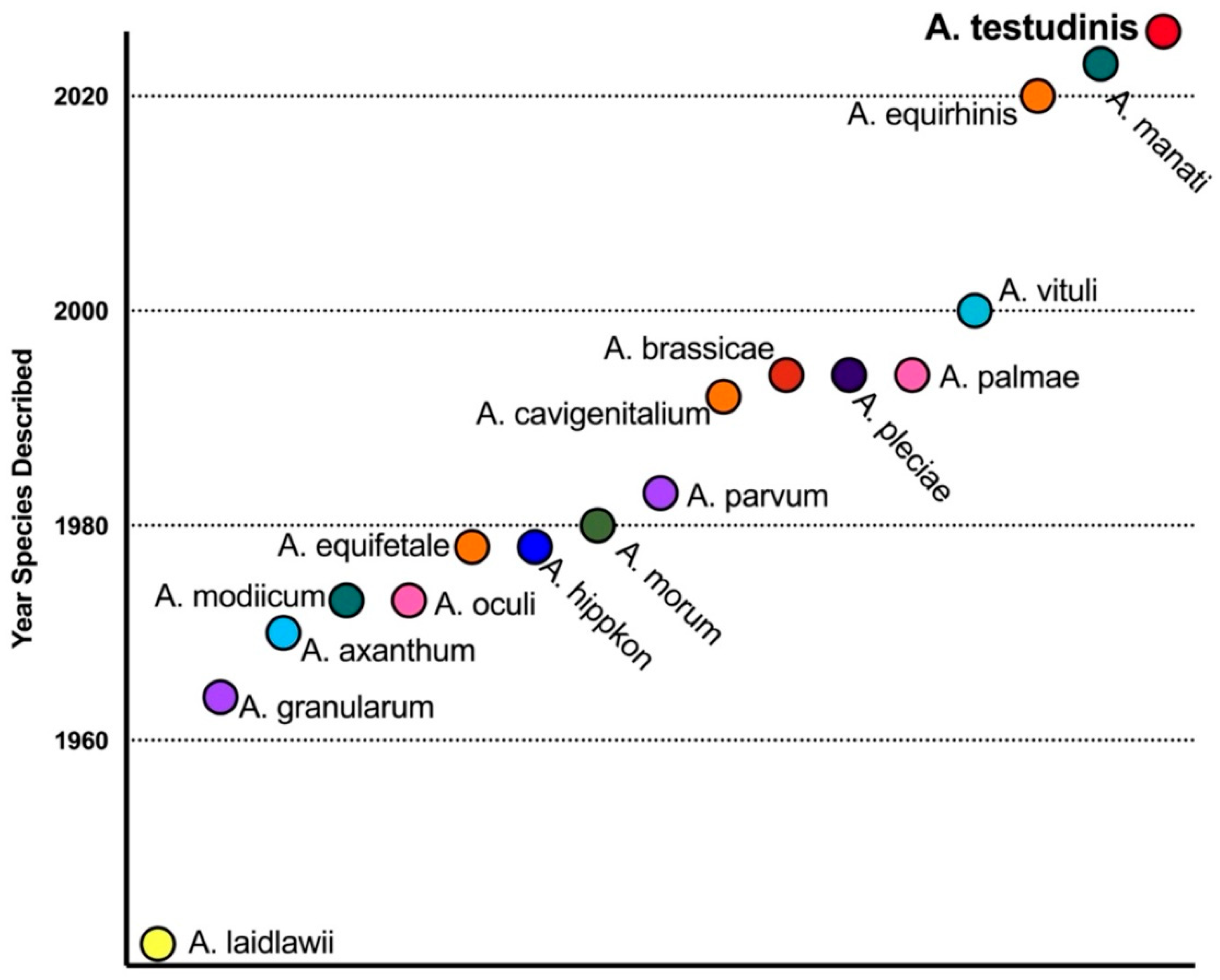
Figure 2.
The location of study sites in Florida where Acholeplasma testudinis was isolated. The red star indicates the site where the Type strain, ORD1043, was isolated; the inset picture shows gopher tortoise Ord1043.
Figure 2.
The location of study sites in Florida where Acholeplasma testudinis was isolated. The red star indicates the site where the Type strain, ORD1043, was isolated; the inset picture shows gopher tortoise Ord1043.
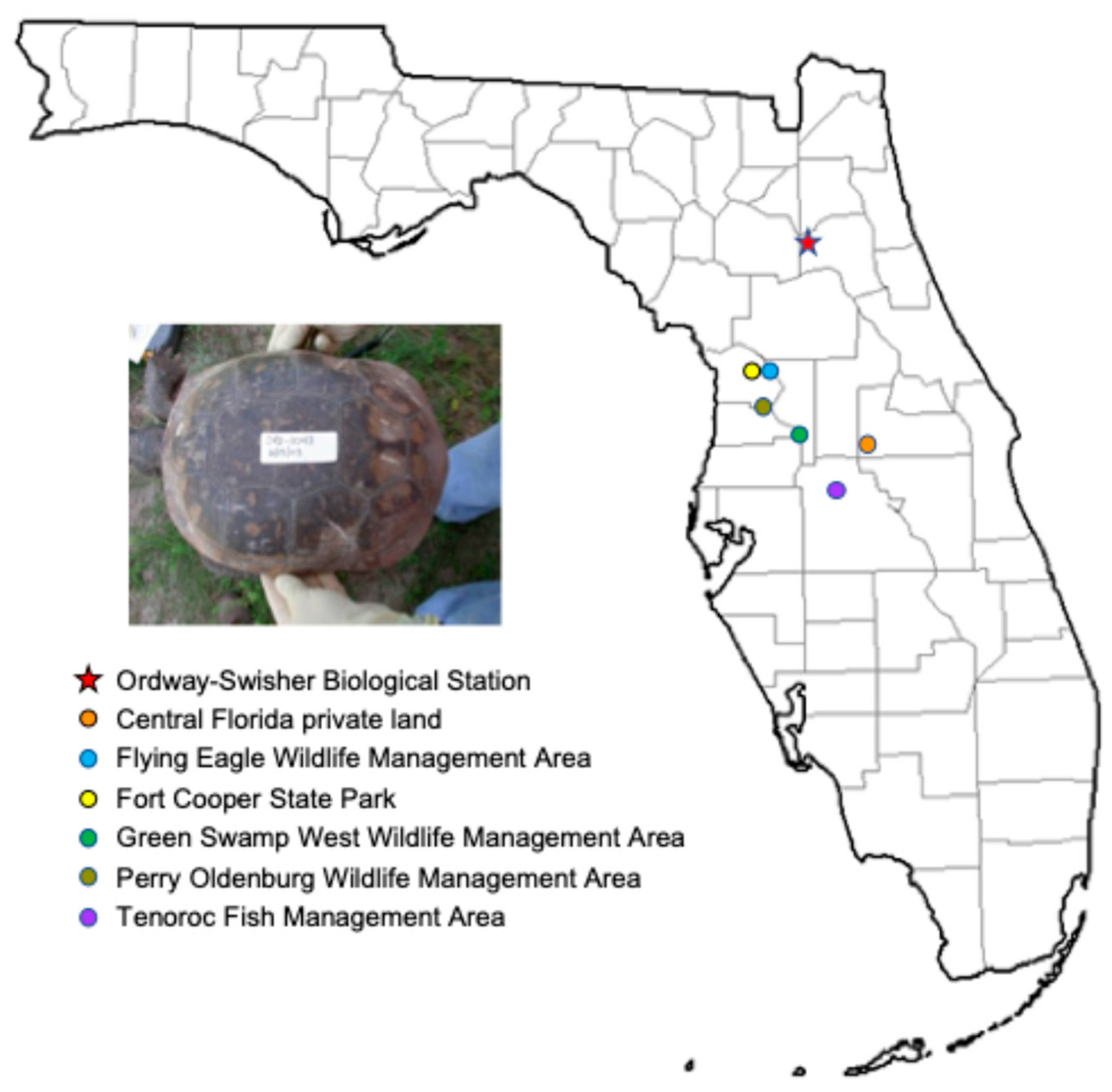
Figure 3.
Phylogenetic 16S rRNA tree for Acholeplasma clinical isolates, 16S rRNA percent identity, classical fried egg appearance on agar, and electron micrograph of A. testudinis. A. testudinisTs ORD1043, denoted by red star, and 10 clinical isolates with 99.2 ± 0.13% identity of 16S rRNA are shown in green, directly above the closest relative, A. equirhinis. One clinical isolate (FE1018) was identified as A. hippikon, shown in orange. A. The 16S rRNA phylogenetic tree of the12 clinical isolates and the closest Acholeplasma spp. The evolutionary history was inferred by using the Maximum Likelihood method and Tamura 3-parameter model [82]. The tree with the highest log likelihood (-8720.15) is shown. The percentage of trees in which the associated taxa clustered together is shown next to the branches. Initial tree(s) for the heuristic search were obtained automatically by applying Neighbor-Join and BioNJ algorithms to a matrix of pairwise distances estimated using the Tamura 3 parameter model and then selecting the topology with superior log likelihood value. The tree is drawn to scale, with branch lengths measured in the number of substitutions per site. This analysis involved 29 nucleotide sequences, but only the branch with the closest relationships to A. testudinis is shown. There were a total of 1697 positions in the final dataset. Evolutionary analyses were conducted in MEGA 12 [36,83]. B. The heat map shows the percent identity of the 16S rRNA sequence as determined by Clustal Omega [53,73,84]. C. A. testudinis has a classical fried egg appearance on agar. D. Scanning electron micrograph of. A. testudinis. Magnification 50,000X.
Figure 3.
Phylogenetic 16S rRNA tree for Acholeplasma clinical isolates, 16S rRNA percent identity, classical fried egg appearance on agar, and electron micrograph of A. testudinis. A. testudinisTs ORD1043, denoted by red star, and 10 clinical isolates with 99.2 ± 0.13% identity of 16S rRNA are shown in green, directly above the closest relative, A. equirhinis. One clinical isolate (FE1018) was identified as A. hippikon, shown in orange. A. The 16S rRNA phylogenetic tree of the12 clinical isolates and the closest Acholeplasma spp. The evolutionary history was inferred by using the Maximum Likelihood method and Tamura 3-parameter model [82]. The tree with the highest log likelihood (-8720.15) is shown. The percentage of trees in which the associated taxa clustered together is shown next to the branches. Initial tree(s) for the heuristic search were obtained automatically by applying Neighbor-Join and BioNJ algorithms to a matrix of pairwise distances estimated using the Tamura 3 parameter model and then selecting the topology with superior log likelihood value. The tree is drawn to scale, with branch lengths measured in the number of substitutions per site. This analysis involved 29 nucleotide sequences, but only the branch with the closest relationships to A. testudinis is shown. There were a total of 1697 positions in the final dataset. Evolutionary analyses were conducted in MEGA 12 [36,83]. B. The heat map shows the percent identity of the 16S rRNA sequence as determined by Clustal Omega [53,73,84]. C. A. testudinis has a classical fried egg appearance on agar. D. Scanning electron micrograph of. A. testudinis. Magnification 50,000X.
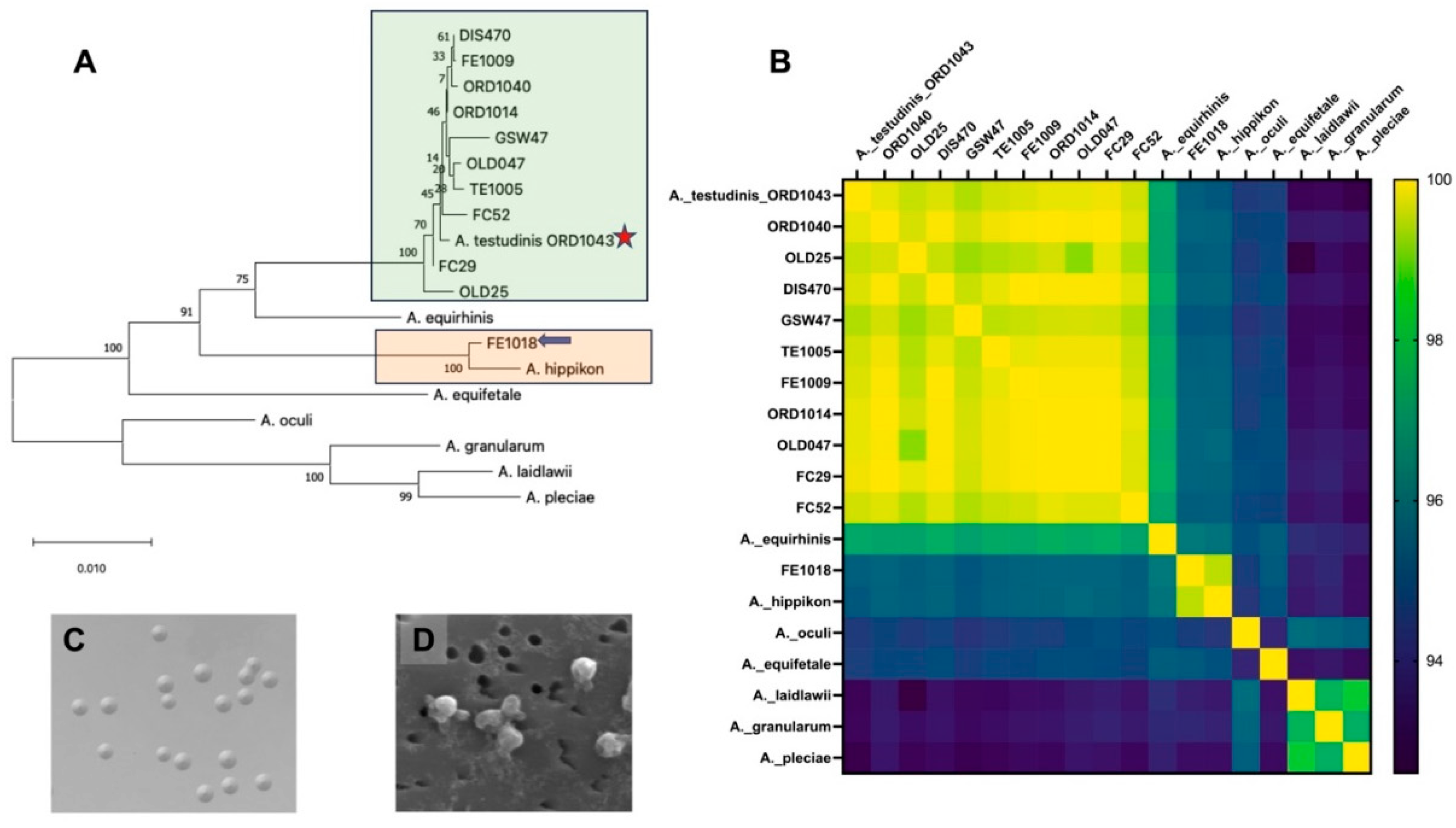
Figure 4.
Phylogenetic relatedness of A. testudinis ORD1043 and the most closely related Acholeplasma species. A. Phylogenetic tree is based on 16S rRNA. B. Phylogenetic tree is based on whole genome comparison using dDDH analysis. C. Phylogenetic tree is based on predicted proteome. The red star denotes the position of A. testudinis in each tree. All analyses and construction of trees were performed using the Type (Strain) Genome Server: https://tygs.dsmz.de [49,50,51]. All trees support that A. testudinis is a new species, with A. equirhinis as its nearest neighbor.
Figure 4.
Phylogenetic relatedness of A. testudinis ORD1043 and the most closely related Acholeplasma species. A. Phylogenetic tree is based on 16S rRNA. B. Phylogenetic tree is based on whole genome comparison using dDDH analysis. C. Phylogenetic tree is based on predicted proteome. The red star denotes the position of A. testudinis in each tree. All analyses and construction of trees were performed using the Type (Strain) Genome Server: https://tygs.dsmz.de [49,50,51]. All trees support that A. testudinis is a new species, with A. equirhinis as its nearest neighbor.
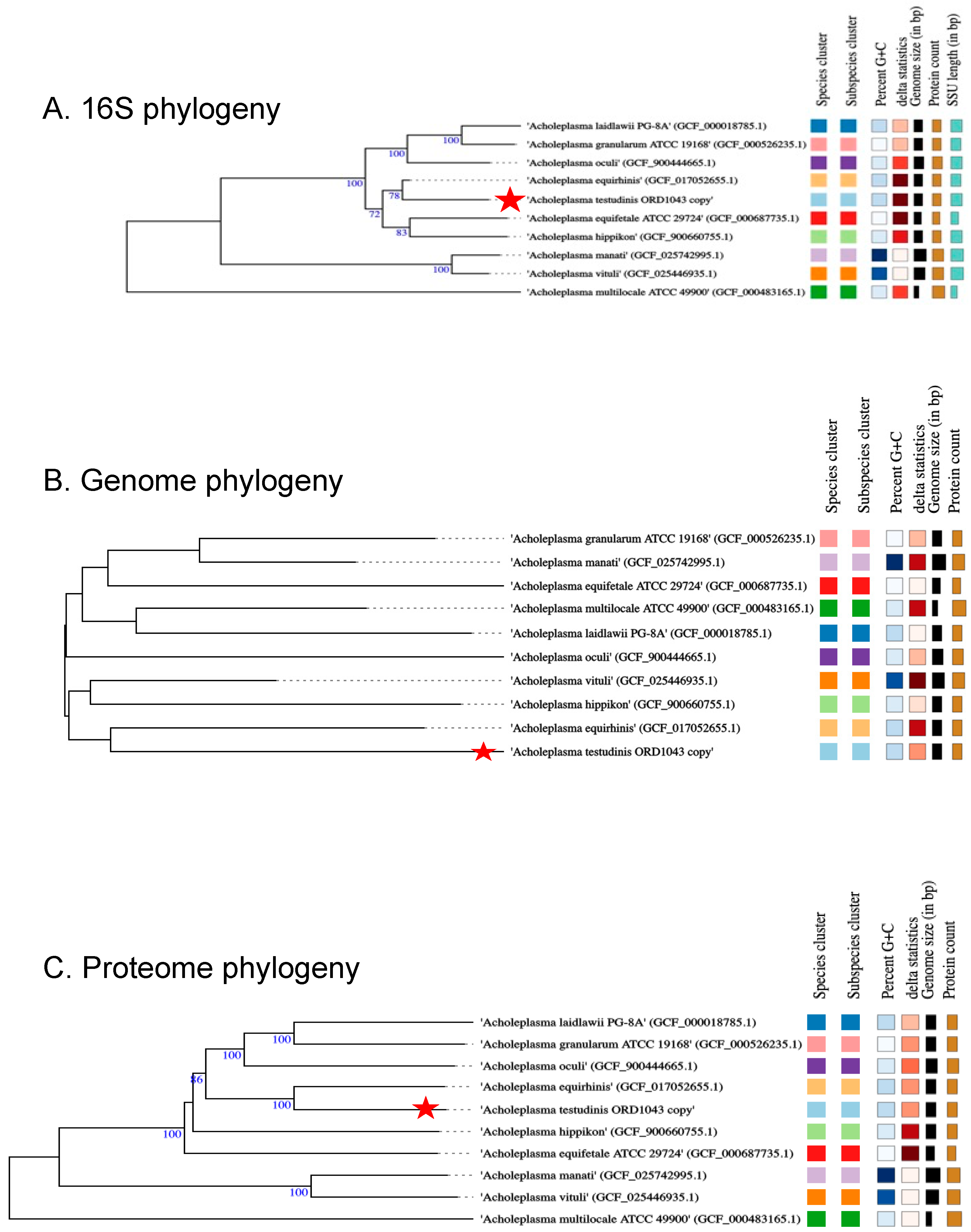
Figure 5.
Similar bacterial genome phylogenetic tree (A) and percent identity (B) of 19 proteins. A. The phylogenetic genome tree was generated using the similar genome finder→bacterial genome tree in BV-BRC [52]. The relationship (shown in green) between A. testudinis and the uncultivated Acholeplasma SMAG_U10445 [22] from a metagenome soil sample suggest A. testudinis is present in soils. B. The heat map shows the percent identity of A. testudinis (left column) with the uncultivated soil Acholeplasma SMAG_U10445 and the known Acholeplasma spp. with available genomes. Each row represents a different protein. White spaces indicate no sequence was available.
Figure 5.
Similar bacterial genome phylogenetic tree (A) and percent identity (B) of 19 proteins. A. The phylogenetic genome tree was generated using the similar genome finder→bacterial genome tree in BV-BRC [52]. The relationship (shown in green) between A. testudinis and the uncultivated Acholeplasma SMAG_U10445 [22] from a metagenome soil sample suggest A. testudinis is present in soils. B. The heat map shows the percent identity of A. testudinis (left column) with the uncultivated soil Acholeplasma SMAG_U10445 and the known Acholeplasma spp. with available genomes. Each row represents a different protein. White spaces indicate no sequence was available.
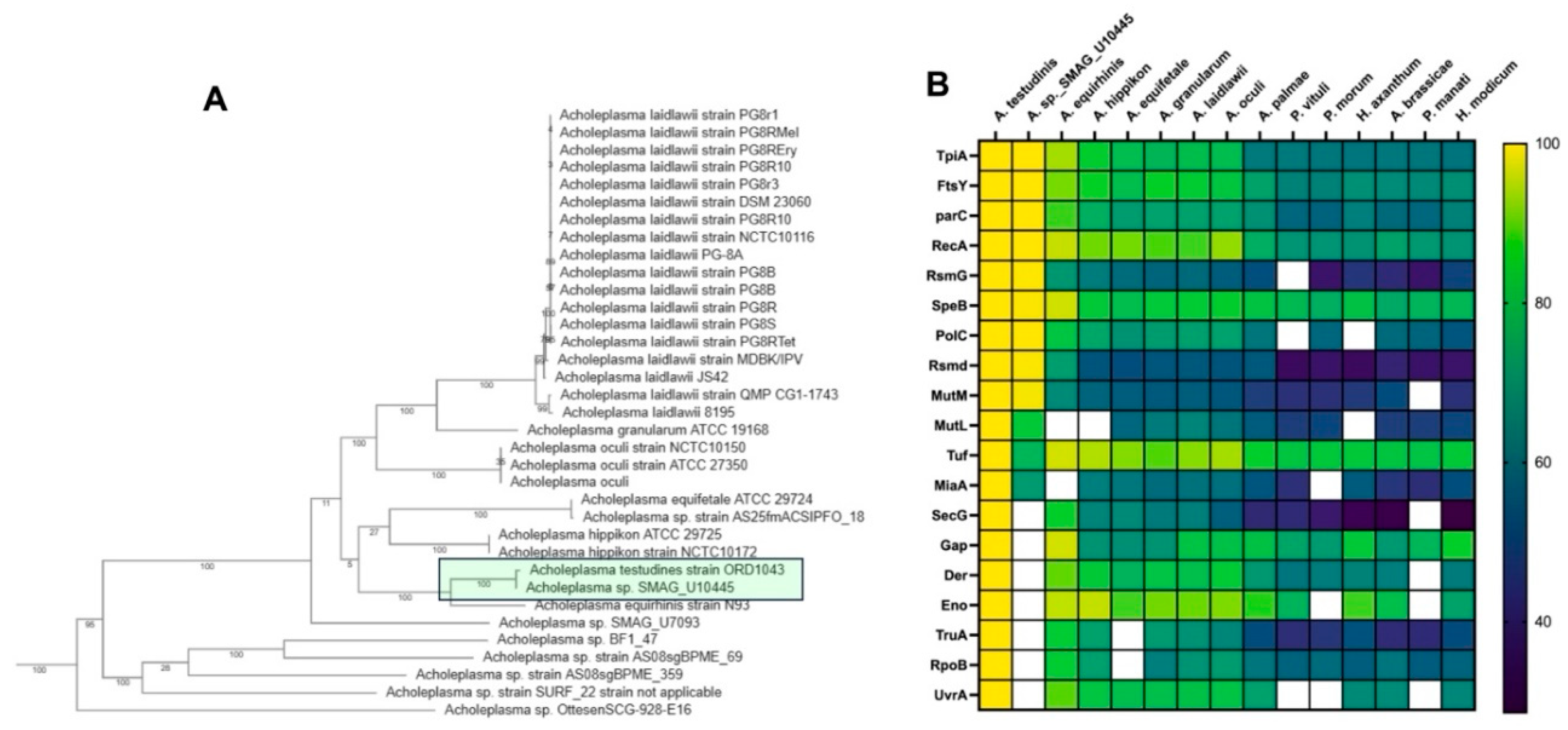
Figure 6.
Clinical signs in infected (N=9) and control (N=7) tortoises at each monitoring time throughout the 91 day study. The heat map shows clinical sign scores for nasal discharge (ND) and ocular discharge (OD) of each individual tortoise at the veterinary monitoring time points throughout the study. Two tortoises tested positive by culture and/or PCR for M. agassizii, a known etiological agent of URTD, at necropsy and are denoted by a star. Clinical sign scores were recorded as none (0), mild (1), or moderate (2); no severe (3) clinical signs were observed in any animals. There were no statistical differences or interactions observed with time or treatment group for nasal or ocular discharge. There was significant variation by animal (p<0.001) which was not present after removal of the two animals with M. agassizii at necropsy.
Figure 6.
Clinical signs in infected (N=9) and control (N=7) tortoises at each monitoring time throughout the 91 day study. The heat map shows clinical sign scores for nasal discharge (ND) and ocular discharge (OD) of each individual tortoise at the veterinary monitoring time points throughout the study. Two tortoises tested positive by culture and/or PCR for M. agassizii, a known etiological agent of URTD, at necropsy and are denoted by a star. Clinical sign scores were recorded as none (0), mild (1), or moderate (2); no severe (3) clinical signs were observed in any animals. There were no statistical differences or interactions observed with time or treatment group for nasal or ocular discharge. There was significant variation by animal (p<0.001) which was not present after removal of the two animals with M. agassizii at necropsy.
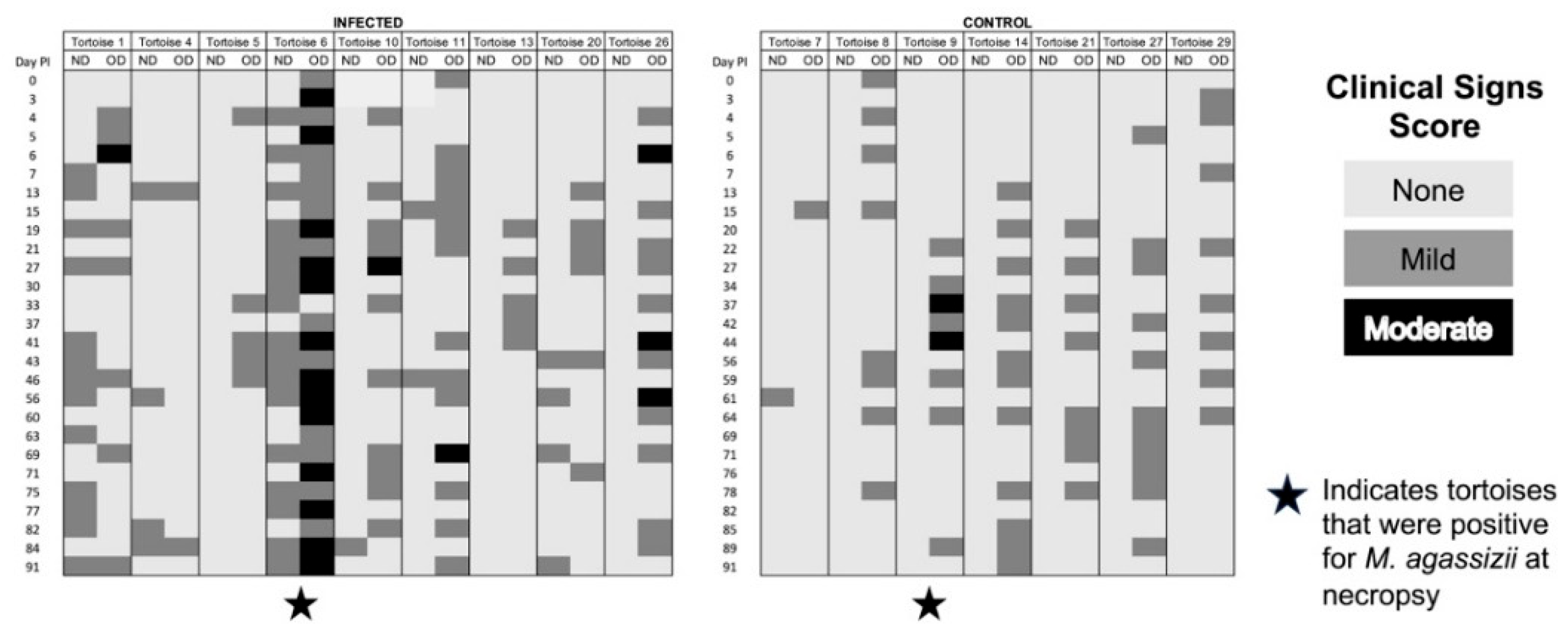
Figure 7.
Mean clinical signs and upper respiratory tract histological lesions for experimentally infected (N=8) and control (N=6) tortoises. Clinical sign scores were recorded as none (0), mild (1), or moderate (2); no severe (3) clinical signs were observed in any animals. No statistically significant differences were seen between infected and control tortoise for severity of either nasal (A) or ocular (B) discharge. C. Lesions were scored as 0 = Normal; 1 = Mild lesions (mild leukocyte infiltration, mild edema, and minimal changes in the mucosal epithelium); 2-3 = Moderate lesions (moderate leukocyte infiltration, moderate edema, and proliferative/dysplastic changes to the mucosal epithelium); and 4-5 = Severe lesions (diffuse infiltrate, marked edema, necrosis of the epithelium with erosions, and dysplastic and metaplastic changes in the olfactory epithelium). Although differences in lesion severity between treatment group did not achieve statistical significance, only animals that were infected had upper respiratory tract lesions >1. The one infected and one control tortoise that had M. agassizii, a known etiologic agent of URTD, detected by culture/PCR at necropsy were excluded due to documented data confoundment (refer to Figure 6).
Figure 7.
Mean clinical signs and upper respiratory tract histological lesions for experimentally infected (N=8) and control (N=6) tortoises. Clinical sign scores were recorded as none (0), mild (1), or moderate (2); no severe (3) clinical signs were observed in any animals. No statistically significant differences were seen between infected and control tortoise for severity of either nasal (A) or ocular (B) discharge. C. Lesions were scored as 0 = Normal; 1 = Mild lesions (mild leukocyte infiltration, mild edema, and minimal changes in the mucosal epithelium); 2-3 = Moderate lesions (moderate leukocyte infiltration, moderate edema, and proliferative/dysplastic changes to the mucosal epithelium); and 4-5 = Severe lesions (diffuse infiltrate, marked edema, necrosis of the epithelium with erosions, and dysplastic and metaplastic changes in the olfactory epithelium). Although differences in lesion severity between treatment group did not achieve statistical significance, only animals that were infected had upper respiratory tract lesions >1. The one infected and one control tortoise that had M. agassizii, a known etiologic agent of URTD, detected by culture/PCR at necropsy were excluded due to documented data confoundment (refer to Figure 6).
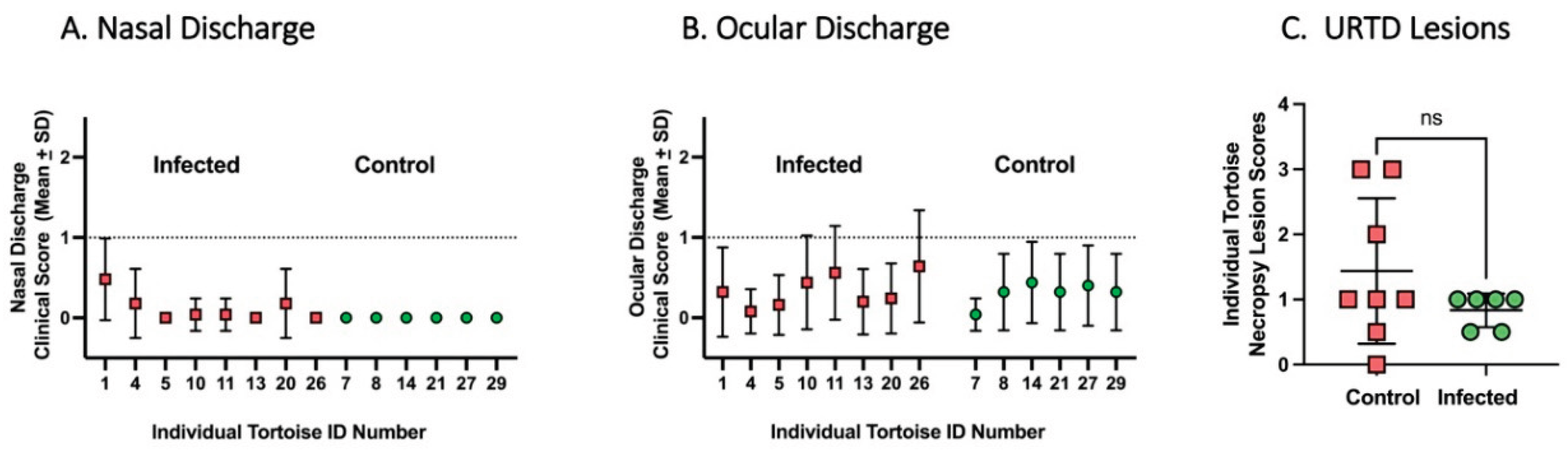

Table 1.
Whole genome comparison of A. testudinisTs ORD1043 with the 8 most closely related Acholeplasma spp. Based on 16S rRNA phylogeny (Figure 3A), average nucleotide identity (ANI), and digital DNA:DNA hybridization (dDDH) were determined for the 8 closest Acholeplasma species.
Table 1.
Whole genome comparison of A. testudinisTs ORD1043 with the 8 most closely related Acholeplasma spp. Based on 16S rRNA phylogeny (Figure 3A), average nucleotide identity (ANI), and digital DNA:DNA hybridization (dDDH) were determined for the 8 closest Acholeplasma species.
|
A. testudinis ORD1043 with: |
OrthoANI (%) | Avg. aligned length (bp) | % dDDH d0 [CI] |
% dDDH d4 [CI] |
% dDDH d6 [CI] |
|---|---|---|---|---|---|
| A. equifetale ATCC 29724 | 71.01 | 437,325 | 15.1 [12.2-18.6] | 17.5 [15.4-19.8] | 15.1 [12.6-18.0] |
| A. equirhinis N93 ATCC TSD-139 | 71.01 | 437,325 | 41.6 [38.3-45.1] | 20.2 [18.0-22.6] | 33.9 [31.0-37.0] |
| A. hippikon ATCC 29725 | 72.76 | 493,005 | 18.1 [15.0-21.6] | 17.6 [15.5-20.0] | 17.4 [14.8-20.4] |
| A. laidlawii PG-8A | 71.08 | 492,967 | 15.1 [12.2-18.5] | 17.2 [15.1-19.5] | 15.1 [12.6-17.9] |
| A. manati Oakley | 65.99 | 210,137 | 12.6 [10.0-15.9] | 20.4 [18.2-22.8] | 13 [10.7-15.8] |
| A. multilocale ATCC 49900 | 63.76 | 37,718 | 12.6 [9.9-15.8] | 16.6 [14.5-18.9] | 13 [10.7-15.7] |
| A. oculi ATCC 27350 | 72.32 | 510,293 | 17.2 [14.1-20.7] | 17.8 [15.7-20.1] | 16.8 [14.2-19.7] |
| A. vituli ATCC 700667 | 66.39 | 209,970 | 12.7 [10.0-15.9] | 20.6 [18.4-23.0] | 13.1 [10.7-15.8] |
Table 2.
Total days that clinical signs were present in control (N=6) and infected (N=8) tortoises. Observations were available for 27 days during the study. Data analyzed by Fisher’s exact test. Two tortoises that were culture/PCR positive for M. agassizii were excluded from analysis. Percentage of days with clinical signs of nasal discharge differed between infected and control animals (P<0.0001, Fisher’s exact test), but percentage of days with clinical signs of ocular discharge was not impacted by treatment group (P>0.9).
Table 2.
Total days that clinical signs were present in control (N=6) and infected (N=8) tortoises. Observations were available for 27 days during the study. Data analyzed by Fisher’s exact test. Two tortoises that were culture/PCR positive for M. agassizii were excluded from analysis. Percentage of days with clinical signs of nasal discharge differed between infected and control animals (P<0.0001, Fisher’s exact test), but percentage of days with clinical signs of ocular discharge was not impacted by treatment group (P>0.9).
| Clinical Signs | Treatment Groups | |
|---|---|---|
| Nasal Discharge (P<0.0001) | Infected (%) | Control (%) |
| Clinical signs present | 24 (11.11) | 1 (0.53) |
| Clinical signs absent | 192 (88.89) | 188 (99.47) |
| Total observation days | 216 | 189 |
| Ocular Discharge (P>0.9) | Infected (%) | Control (%) |
| Clinical signs present | 63 (29.17) | 48 (29.63) |
| Clinical signs absent | 153 (70.83) | 114 (70.37) |
| Total observation days | 216 | 162 |
Disclaimer/Publisher’s Note: The statements, opinions and data contained in all publications are solely those of the individual author(s) and contributor(s) and not of MDPI and/or the editor(s). MDPI and/or the editor(s) disclaim responsibility for any injury to people or property resulting from any ideas, methods, instructions or products referred to in the content. |
© 2026 by the authors. Licensee MDPI, Basel, Switzerland. This article is an open access article distributed under the terms and conditions of the Creative Commons Attribution (CC BY) license (http://creativecommons.org/licenses/by/4.0/).
Copyright: This open access article is published under a Creative Commons CC BY 4.0 license, which permit the free download, distribution, and reuse, provided that the author and preprint are cited in any reuse.


