

Submitted:
02 June 2026
Posted:
03 June 2026
You are already at the latest version
Abstract
Introduction: The coexistence, concentration, and adverse interaction of two or more diseases in populations with social inequalities is defined as syndemics. Since 2012, some research has focused on syndemic studies of the diabetes/depression dyad. Materials and Methods: A review was conducted using Scopus, WOS, PubMed, ScienceDirect, and Google Scholar databases up to February 3, 2026. Studies were eligible if explicitly adopted the syndemic theoretical framework, reported on the coexistence of diabetes and depression, and were available in full text, with no restrictions on language, date, or study design. Data were extracted regarding the social conditions analyzed and quantitative interaction models. Results: 35 publications were included from 2012 to 2026, 97.14% in English, with 54.28% being research articles (28.57% quantitative, 20.00% mixed-methods, and 5.71% qualitative). The syndemic clustering of diabetes and depression conducted over the past 15 years has included structural social aspects such as violence and poverty, while the mediators focused on material circumstances such as housing and access to health services. Conclusions: Structural violence, poverty, and migration were the predominant structural determinants, while access to health services, neighborhood conditions, and interpersonal abuse were the most frequent intermediary factors. Biosocial interaction was formally tested in a minority of studies, using additive or multiplicative statistical models.
Keywords:
syndemics
; diabetes mellitus
; depressive disorder
; social determinants of health
; comorbidity
; scoping review
Introduction
Based on his anthropological and epidemiological studies with populations who abuse injectable psychoactive substances and are exposed to HIV/AIDS, Singer defined “Syndemic” to refer to those illnesses or health conditions that cluster in individuals and/or populations, affecting the course and progression of diseases, increasing their burden, and whose synergy is due to the social conditions operating in specific contexts [1,2].
The principles of the syndemic theory proposed by Singer [3] and addressed by various authors [4,5,6] subsequently, support the importance of meeting criteria that underpin such grouping, such as the “Coexistence” of two or more diseases or conditions that share pathophysiological or behavioral aspects, risk or protective factors, causes, and/or treatments (biological–biological interface) [2,6]; The “concentration” of these diseases in a defined geographic area. Syndemics are not global phenomena [7,8] in such a way that it is the social conditions at the macro, meso, and micro levels, specific to the context, that promote this clustering and concentration; and “Interaction,” in which it is demonstrated how social factors such as poverty, structural violence, unemployment, abuse, stigma, racial segregation, pollution, etc., produce an adverse interaction that, in this case, amplifies the diabetes-depression dyad (biological-social interface) [1,9]; this modifies their course and progression [10,11] and increases the burden of morbidity and mortality in defined geographic areas. The presence of biological and biosocial interactions is the distinguishing feature of syndemics [1,2,3,12].
Since 2012, Mendenhall has published the results of research processes on the syndemic clustering of diabetes and depression, identifying that Mexican women, migrants, and even undocumented individuals in the United States who have been exposed to violence and socioeconomic limitations were often found to be burdened by both diseases, in a vicious and synergistic cycle. The syndemic known as VIDDA (structural violence + immigration + diabetes + depression + interpersonal abuse) [13] it has been studied in different population groups that have included men and women from countries such as India, China, and South Africa, in addition to the USA, who live in distinct socioeconomic and political contexts [4,12,14,15].
For the diabetes-depression dyad, related and shared biological mechanisms have been described, such as dysregulation of the HPA (Hypothalamic-Pituitary-Adrenal) axis, innate immunity, and low-grade chronic inflammation, all of which are involved in the etiology of both diabetes and depression [16,17,18,19,20]. In turn, diabetes and depression often coexist with social and individual factors such as obesity, anxiety, and increased social, emotional, and family stress, which are (re)produced by macrosocial structures that differ across contexts. These local factors are important because people experience diabetes and depression differently depending on their social environment, and this affects the way these conditions become syndemic [13,15,21,22,23].
According to the 2023 update of the Global Burden of Disease Study-GBD [24], diabetes and depressive disorders have become an increasing threat to global health, experiencing rapid growth among the leading causes of health loss adjusted for age and population size. The (standardized) prevalence rate of diabetes rose from 4,275.17 per 100,000 inhabitants in 1990 to 6,256.86 per 100,000 inhabitants in 2023; in terms of mortality, the standardized rate went from 18.03 per 100,000 inhabitants in 1990 to 22.11 per 100,000 inhabitants in 2023, and the standardized DALY (Disability-Adjusted Life Years) rate associated with diabetes was estimated at 744.19 in 1990 and 995.2 for 2023, for both sexes worldwide [25,26,27]. In addition, the (standardized) global prevalence rate for depressive disorders was calculated at 3,809.77 per 100,000 inhabitants for 2023, and the standardized DALY rate was estimated at 666.4 per 100,000 inhabitants, for both sexes worldwide [28].
In this way, it becomes evident how public health interventions to date have been insufficient to address the increasing exposure to risk factors of both events [29]. These should be addressed in a comprehensive and coordinated manner, especially in regions, groups, and communities where these conditions are compounded by social inequalities.
Several authors have proposed the integration and coordination of medical and social interventions in what has been defined as “syndemic thinking.” This approach seeks to go beyond the isolated, individual, purely biological and pathophysiological management of diseases by including actions targeting those social determinants of health that intensify the coexistence, concentration, and interaction of diseases. This comprehensive perspective on these phenomena calls for interdisciplinary and intersectoral interventions aimed at individuals and communities rendered vulnerable by their specific social contexts [15,30,31].
Based on the original VIDDA syndemic framework, an adaptation is made according to the WHO Social Determinants of Health (SDH) model [32]; this representation is shown in Figure 1.
Given that the syndemic field of study in the diabetes-depression dyad is methodologically heterogeneous, conceptually evolving, and lacks a previous review that systematically maps the application of the three theoretical principles proposed by Singer—coexistence, concentration, and interaction—a scoping review design was chosen. This design is appropriate for identifying, describing, and mapping the nature of the available evidence without the restriction of study designs inherent to systematic reviews with meta-analysis [33,34]. Unlike systematic reviews with meta-analysis, scoping reviews do not require homogeneity of designs and are not aimed at synthesizing effect sizes; instead, they map the breadth and nature of available evidence and identify gaps. This design is particularly suited when, as in the present case, the goal is to characterize which social factors have been studied and how the principle of biosocial interaction has been operationalized across methodologically diverse studies, rather than to quantify a summary estimate.
This review aimed to identify the social factors that have been associated with the diabetes-depression dyad. The research questions incorporate key elements of population, concept, and context, as proposed by the Joanna Briggs Institute (JBI), as follows: 1. What structural and intermediary aspects have been investigated in association with the diabetes and depression dyad? 2. How has the concept of interaction explored in syndemic research been applied to the diabetes and depression dyad?
2. Materials and Methods
An exploratory review was conducted with the aim of identifying the current evidence and describing possible future research avenues. The methodology used was that described by Arksey and O'Malley [33] considered adequate to answer the research questions posed. In addition, the guidelines of the Joanna Brigs Institute and the Extension for Scoping Reviews of the Preferred Reporting Items for Systematic Reviews and Meta-Analyses were taken into account (PRISMA) [35].
The research questions were structured based on the PCC (Population, Concept, and Context) conceptual framework of the Joanna Briggs Institute (JBI): (P) individuals with diabetes mellitus and/or depression, with no restriction by age, sex, or geographic origin; (C) syndemic clustering of the diabetes–depression dyad, including associated structural and intermediary social factors and the bio-social interaction models used to demonstrate this clustering; (Co) studies published worldwide that made explicit reference to the syndemic theoretical framework, with no restriction on design, language, or year of publication, available up to February 3, 2026. The protocol was registered a posteriori on the Open Science Framework platform (https://doi.org/10.17605/OSF.IO/24GNB)
The search was conducted following a comprehensive strategy designed in collaboration with a librarian specialized in health sciences. The conceptual framework of the VIDDA syndemic guided the search and allowed the findings to be contextualized (Figure 1). The search terms included structural and intermediate factors in various domains. The Scopus, PubMed, Science Direct, and Web of Science (WOS) databases were explored. In addition, the search was expanded in Google Scholar to include grey literature and pre-prints. Both MeSH terms and keywords were used in order to locate non-indexed articles. No restrictions were applied regarding study design, language, or publication date. All scientific publications addressing the syndemic clustering of diabetes and depression worldwide were considered.
The search strategy was designed in collaboration with a health sciences librarian. MeSH terms and free-text keywords were combined using Boolean operators. An example of the strategy applied in PubMed is as follows: ("Syndemics"[MeSH] OR "syndemic"[tiab] OR "syndemics"[tiab]) AND ("Diabetes Mellitus"[MeSH] OR "diabetes"[tiab] OR "type 2 diabetes"[tiab]) AND ("Depressive Disorder"[MeSH] OR "depression"[tiab] OR "depressive symptoms"[tiab]). Equivalent strategies adapted to each database's controlled vocabulary were applied in Scopus, WoS, and ScienceDirect (see Supplementary Material). EMBASE and PsycINFO were not searched; this is acknowledged as a potential limitation. No date, language, or study design restrictions were applied. The search strategies are presented in the supplementary material. Duplicate articles were removed and the remaining ones were reviewed in full text. Studies were included if met the following criteria: i) full-text availability, ii) explicit reference to the coexistence of diabetes and depression, iii) application of the syndemic framework, and iv) primary studies, books, and grey literature. Publications resulting from oral presentations and those that only presented abstracts, without access to the full texts, were excluded. Figure 2 shows the identification and selection scheme following the PRISMA 2020 framework for scoping reviews [35].
2.1. Selection, Extraction, and Synthesis of Data Process
Title and abstract screening were performed independently by two reviewers (D.P.L.B. and B.Y.H.S.). Full-text review was subsequently conducted by the same two reviewers, with disagreements resolved by consensus with a third reviewer (C.V.A.). A standardized data charting form was developed a priori and piloted on five studies before full application. The following variables were extracted: first author, year, country, study design, sample size, population, comorbidities, structural and intermediary social determinants analyzed, and statistical models used to assess biosocial interaction (Table 1; Table 3).
In relation to the social factors included by the authors—understood as structural and intermediary according to the WHO conceptual framework [32]. The aim was to identify how these were addressed and disaggregated, according to each level. As shown in Table 2; finally, those studies that used statistical models to determine the bio-social interaction were identified.

Table 2.
Social Determinants of Health (WHO) and social factors identified in the included studies.
| Social Determinants of Health (WHO) | Social indicators/factors investigated | % Appearance in publications |
Studies | |
|---|---|---|---|---|
| Structural Social Determinants |
Socioeconomic and political context Governance Macroeconomic policies Cultural norms and values |
* Political violence * Internal displacement * Migration * Political status/instability * HDI * Structural violence * Social inequality |
54.28 | [4,9,13,15,22,23,36,37,40,41,42,43,44,45,50,57,58,59,60] |
|
Symbolic violence/Intersectional stigma: * Homophobia/Transphobia * HIV-related stigma * Gender-based violence/Machismo |
54.28 | [4,9,13,15,23,30,31,36,43,44,45,46,48,51,52,54,56,57,60] | ||
|
Social position Poverty |
* Stratification * Poverty |
48.57 | [4,7,9,13,15,30,36,40,43,44,45,50,53,54,56,57,59] | |
| Education | * Educational level | 31.42 | [21,31,40,41,42,43,48,51,53,58,59] | |
| Occupation | * Underemployment/unemployment * Work-related stress |
20.00 | [9,13,15,40,43,45,50] | |
| Income | * Financial stress * Financial uncertainty/insecurity * Household income |
54.28 | [7,13,15,21,23,31,36,39,40,41,43,44,45,46,50,51,53,58,60] | |
| Sex | 25.71 | [7,15,40,41,42,43,48,53,59] | ||
| Race/Ethnicity | 11.42 | [15,43,45,56] | ||
| Intermediate Social Determinants | Material circumstances | * Material deprivation * Food desert/food insecurity |
31.42 | [13,15,21,36,38,39,43,45,50,56,57] |
|
Neighbourhood: * Insecurity/violence * Relationships with neighbours * Environmental health * Area: rural/urban |
40.00 | [7,13,15,21,36,39,40,43, 44,48,49,51,53,60] |
||
| Social cohesion | * Social/institutional support (networks) * Religion * Family/social conflicts Social isolation * Marital status |
37.14 | [7,13,15,22,31,40,41,43,44,45,50,56,57] | |
| Psychosocial factors |
Interpersonal abuse: * Physical/psychological/sexual abuse * Childhood traumatic history |
37.14 | [4,13,15,22,36,37,40,41, 43,44,51,56,57] |
|
|
Stress: * Coping mechanisms/self-efficacy * Illness-related distress * Sexual minority stress |
31.42 | [7,13,23,36,37,39,43,44,45,46,57] | ||
| Behavioural factors |
Habits: * Alcohol/tobacco/psychoactive substance use * Consumption of low-nutritional-value foods * Physical inactivity/sedentary lifestyle |
37.14 | [15,30,39,41,43,44,46,47,48,53,54,55,57] | |
| Biological factors | * Functional impairment/disability * Age/ageing |
22.85% | [40,41,43,45,48,53,56,57] | |
| Health systems | * Failures in healthcare * Medical check-ups/illness management |
42.85% | [4,7,9,13,15,21,36,43,45,46,48,49,50,53,57] | |
| Source:Authors' own elaboration | ||||
Table 3.
Application of the syndemic interaction principle in the included studies.
| Type of measure | |
|---|---|
| Awoke et al. 2025 [53] | Poisson regression with robust variance estimator |
| Byg et al. 2016 [46] | * Bivariate linear regression * Multivariate logistic regression |
| Dansero 2026[58] | * Latent class analysis * Cox proportional hazards models |
| Diderichsen et al. 2021 [42] | Generalized linear models with binomial distribution |
| Diderichsen y Andersen 2019 [41] | Generalized linear models with binomial distribution |
| Eshak et al. 2024 [48] | * Multivariate logistic regression * Multivariable linear binomial regression models * Logit link function |
| Gupta et al. 2022 [49] | Proportional hazards models |
| McCurley et al. 2019 [51] | Multinomial logistic regression |
| Mendenhall et al. 2021 [7] | Fully adjusted multivariable regression |
| Mendenhall et al. 2015 [21] | Logistic regression |
| Page-Reeves et al. 2019 [38] | Spearman correlation |
| Saxena., Mendenhall. 2022 [31] | Multivariate logistic regression |
| Source:Authors' own elaboration | |
2.2. Quality Assessment
In accordance with the JBI guidelines for scoping reviews [34], no formal assessment of the methodological quality of the included studies was performed. This type of assessment is not a requirement of the scoping review design, whose purpose is to map the available evidence regardless of the methodological rigor of the primary studies. Nonetheless, the methodological characteristics of the studies were recorded and reported in Table 1, allowing the reader to assess the heterogeneity and limitations of the studies analyzed.
3. Results
The literature search identified 193 documents, the majority (97.14%) in English, published from 2012 onwards. The first screening showed that 57 were duplicates. Of the remaining 136, 101 were excluded for not meeting the criteria outlined in the methodology. The database with the highest number of publications was WOS (n=63). Table 1 presents the publications included in the review, arranged by type of document and subsequently alphabetically by the first author’s last name and year of publication (starting with the most recent), summarizing their main characteristics.
This review shows how scientific production is concentrated in a few countries, with the United States standing out; in South America, a study in Brazil has been reported that resulted in the publication of two scientific articles.
The main reasons for which publications were excluded were limited to not meeting the inclusion criteria; most of the articles did not take a syndemic approach to the diabetes/depression dyad, a few were conference papers or oral presentations and/or were not available in full text.
Although scientific contributions regarding the diabetes–depression syndemic have been identified since 2012, an increase in publications was observed over the past 6 years (51.42% of total output). Initially, exploratory studies with a qualitative approach were conducted based on ethnographic data [13,23,36]; since 2014, studies with a mixed-methods approach have been developed [7,15,21,22,37,38,39] and by 2019, population-based research became established using databases from countries and even regions around the world [31,40,41,42]. Since 2017, narrative and scoping reviews have been identified, with the highest output since 2023 [4,9,43,44,45]. The description of the included studies is shown in Table 1.
For the total of 35 articles, 160 authors were identified; each publication had between 1 and 17 authors. Mendenhall topped the list, participating in 34.28% of the publications, followed by Kohrt and Tsai, each contributing to 8.57%. Meanwhile, Andersen, Bosire, Diderichsen, Lerman, Ndetei, and Norris appeared in 5.71% each; the remaining 151 authors participated in only one article.
3.1. Analyzed Comorbidities
The comorbidities studied and/or analyzed alongside diabetes and depression refer to what Singer [2] has defined it as a bio-bio interface and included HIV/AIDS (22.85%) [4,21,39,46,47,48,52,54]; overweight/obesity (11.42%) [40,50,55,60]; non-communicable diseases-NCD(11.42%) [31,39,45,54]; COVID-19 (8.57%) [30,45,55]; disability (8.57%) [31,42,53]; anxiety (5.71%) [45,49] and cognitive changes [55], mood disorders [49], musculoskeletal disorders [30], tuberculosis [4] and inflammatory markers [44], each with 2.85%. In addition, 40.00% of the publications focused on studying or presenting the diabetes-depression dyad [7,13,15,22,23,37,38,41,48,51,58] explicitly, including the 8.57% that also addressed syndemic suffering [21,36,59].
Few studies included in the present review emphasized the biological and/or pathophysiological pathways shared by the comorbidities studied, among them Arena et al. [55], Byg et al. [46], Gallo et al. [56], Perez et al. [44], Saquib et al. [45] and Zúñiga et al. [52]. However, the bio-bio interface between diabetes and depression has been widely studied and established in other research [16,61,62] which have served as the basis for the present work. Researchers have strived to demonstrate that health conditions such as Non-Communicable Diseases (NCDs)—including diabetes—and HIV, for example, created conditions for illnesses such as COVID-19 to worsen the burden of morbidity and mortality in mental health; however, information on how this occurs has not been expanded.
3.2. Social Factors Analyzed
Following Singer [2] and in relation to the bio-social interface, the manner in which the authors incorporated the analysis of social aspects in the studied syndemic clustering has been demonstrated. According to the approach proposed by WHO [32], all social-type factors known as structural determinants—which include the socioeconomic and political context, social position, education, occupation, income, sex, ethnicity, and race—and the intermediary determinants—which include material circumstances, social cohesion, psychosocial factors, behavioral factors, and biological factors—were included in the articles analyzed; however, there was heterogeneity in the way they were addressed and investigated, and for illustration purposes these are summarized in Table 2.
3.2.1. Structural Factors
Among the most analyzed structural social determinants were: i) structural and political violence, internal displacement, migration, and social inequality [4,9,13,15,22,23,36,37,40,41,42,43,44,45,50,57,58,59,60]; ii) symbolic violence and the intersectional stigma experienced by some ethnic and sexual minorities, including gender-based violence perpetuated by machismo [4,9,13,15,23,30,31,36,43,44,45,46,48,51,52,54,56,57,60]; and iii) income, uncertainty, and financial stress [7,13,15,21,23,31,36,39,40,41,43,44,45,46,50,51,53,58,60]. Other structural social aspects linked to the diabetes–depression syndemic were related to poverty and social stratification in 48.57% of the studies included [4,7,9,13,15,30,36,40,43,44,45,50,53,54,56,57,59]. Lastly, the structural aspects addressed in an incipient manner were occupation [9,13,15,40,43,45,50], and race or ethnicity [15,43,45,56].
3.2.2. Intermediate Factors
In relation to the intermediate factors, the most frequent were: i) health systems, including failures and barriers to care [4,7,9,13,15,21,36,43,45,46,48,49,50,53,57]; ii) insecurity, relationships with neighbors, and the environmental situation of the neighborhood [7,13,15,21,36,39,40,43,44,48,49,51,53,60]; iii) physical, psychological, and sexual interpersonal abuse and childhood traumatic history [4,13,15,22,36,37,40,41,43,44,51,56,57]; iv) family/social conflicts and the lack of support networks that exacerbated the unfavorable conditions of individuals and communities [7,13,15,22,31,40,41,43,44,45,50,56,57]; and v) habits including alcohol and tobacco use, physical inactivity, and consumption of foods with low nutritional value [15,30,39,41,43,44,46,47,48,53,54,55,57].
3.3. Applications of Syndemic Interaction
Based on the traditional principles of the syndemic theory proposed by Singer [2], the importance of analyzing and revealing interactions from the bio-bio and bio-social interface is emphasized; therefore, the aim was to determine how this principle and distinguishing feature of syndemics has been introduced in the studies included in this article. 63.15% (n=12) of the original articles with quantitative methodology included in this review mentioned in their methodology the use of statistical techniques, especially regressions, to demonstrate interaction between the studied variables or health conditions and social factors [7,21,31,38,41,42,46,48,49,51,53,58] , as shown in Table 3.
It is important to distinguish between studies that formally tested biosocial interaction [64] —using multiplicative or additive interaction terms as recommended by Tsai & Venkataramani (2016) [64] and Tsai et al (2017) [6] —and those that merely adjusted regression models for social covariates. Of the 12 studies listed in Table 3, only the studies by Diderichsen et al. applied generalized linear models specifically designed to test additive interaction between the clinical and social variables. The remaining studies included social determinants as covariates in association models, which, while informative, does not constitute formal demonstration of the syndemic interaction principle in its strict sense
Another way to apply the postulates of Singer's theory [2,3] used the identification of the enhancement of health outcomes, based on social conditions through qualitative techniques, especially ethnographic ones [13,15,22,23,36,50,60,63]. Across all studies, 62.85% of the analyzed documents (n=22) reported having verified the presence of syndemic clustering between the diabetes-depression dyad [7,13,15,21,22,23,31,36,40,41,42,46,47,48,49,50,51,55,58,59,60,63].
Discussion
In the present review, 35 publications were identified between 2012 and February 3, 2026, that have addressed the syndemic involving the diabetes/depression dyad, evidencing not only a scarcity of research but also a limitation of these studies to countries such as the United States, Mexico, and Brazil in the Americas, and a few others in Africa, Asia, and a limited number in Europe. Heterogeneity was found in the social determinants addressed, with a focus on structural factors such as structural violence, poverty, and social stratification. While the already established biological plausibility of the bio-bio interaction between diabetes and depression was acknowledged, some studies also reported bio-social interactions based on the application of statistical techniques that sought to quantify and measure the possible interaction between diabetes/depression and the social factors examined.
Singer et al. [9], among other authors [5,23,31,43,63] have demonstrated how syndemic theory has driven the recognition of social and biological components as equally important in the amplification of disease. Its methods require combined and interdisciplinary methodological work to identify, demonstrate, and address the clustering of harmful diseases in vulnerable populations and specific contexts. Emphasis is placed on the need to first observe the syndemic relationship, then measure it, and subsequently develop an approach for making specific bio-bio and bio-social interactions visible.
In this regard, Ricerri [57] identified as the main limitation of using the syndemic approach to study health, for example, in immigrant populations, the difficulty of moving from and between primarily qualitative anthropological approaches and epidemiological-quantitative ones.
Syndemics provide a critical alternative to comorbidity by recognizing how social realities shape individual experiences of illness and the distribution of diseases among populations; in a negative biosocial feedback loop in which social and economic inequalities are both a cause and a consequence of disease interactions, morbidities, and associated mortalities [36].
Although, Singer et al. [9], determined that many of the studies calling themselves “syndemic” fail to meet the basic theoretical requirements as defined in its most traditional concept: coexistence, concentration, and interaction (bio-bio, bio-social); this review makes it possible to recognize how heterogeneity in the conceptualization and inclusion of social-order factors—which cluster, create synergies, and amplify interaction—further complicates the syndemic approach to comorbidities or multimorbidities.
Another important aspect is how all the studies reviewed highlight social—structural and intermediate—aspects, although not all authors develop a methodology that demonstrates the interaction between the clustering of the diabetes-depression dyad and other comorbidities, with the social forces of the micro, meso, and macro context that must be studied.
In this regard, authors such as Tsai & Venkataramani (2016) [64] and Tsai et al (2017) [6] support the use of multiplicative statistical models to establish syndemic interactions, adherent to “classical syndemic theory”; however, and according to Lee et al (2024) [65] additive approaches can also provide information about the effects of syndemic problems, especially when it is not possible to use interaction effect approaches, as these can be difficult to specify and develop without empirical guidance. Of the 19 original quantitative and mixed-methods articles included, 63.15% (n=12) reported the use of statistical techniques aimed at exploring interactions between the clinical variables and the social factors analyzed (Table 3). However, it is worth noting that the application of statistical models to demonstrate biosocial interaction; in the technical sense defined by Tsai and Venkataramani (2016) [64] and Tsai et al. (2017) [6]; differs from the mere inclusion of social covariates in multivariate regressions. In most of these studies, the models used allow for the estimation of associations and do not formally demonstrate the principle of syndemic interaction, which is consistent with the critique by Singer et al. (2020) [9] carried out a large part of the empirical production in the field.
Authors such as Kohrt and Carruth [37], Mendenhall [13,22,36], Mendenhall et al. [23,31], Dansero [58], Fox [59] and Lerman [50,60] succeeded in transcending the analysis of the bio-bio interface, illustrating how the bio-social interface explains what Mendenhall termed syndemic suffering in her definition of the VIDDA syndemic [13]. These findings involved the use of qualitative or mixed methods [22,37,60].
Although it may be concluded that diabetes and depression will always be syndemic among the most disadvantaged, it is evident that personal experiences differ depending on particular contexts. Social factors that exacerbate or reinforce the clustering of these diseases differ between countries and within them, challenging the notion of a global syndemic. The magnitude of the effects varies from one population to another and syndemics emerge and interact differently across contexts and over time [31].
According to various authors, structural social factors and some intermediate ones persist throughout people’s lives and even across generations, causing stress and social distress manifested as diabetes and depression. For example, Saxena and Mendenhal [31] showed how “structural violence, symbolic violence, and gender roles are strictly imposed on women”; and in the various accounts of individuals, Mendenhall has revealed how stories about experiences of social isolation, loneliness, domestic violence, rape, interpersonal relationship dramas, physical, emotional, and financial abuse, influenced psychological distress and diabetes; and at the same time, internalized emotion, associated with past abuse and feelings of sorrow and longing, influenced the illness [13,31,36,63].
For Gallo et al. [56] the policies and processes that shape lives through discrimination, racism, poverty, and the limitation of opportunities are reflected in biological processes such as inflammation and cortisol, precursors of diabetes and depression. The intersectionality among these factors, other structural aspects such as occupation, race or ethnicity, and some intermediate ones, has been powerful in allowing us to show how influence the aforementioned “syndemic suffering” [13].
Low socioeconomic status affects health in a multifactorial manner through differences in access to healthy foods, screening and prevention services, safe neighborhoods and stable housing, as well as through lifestyle factors, physiological stress pathways, and psychosocial risk and protection. Poverty increases the risk of exposure to violence and trauma, while also being associated with poorer mental health, poorer nutrition, and worse access to medical care, and is considered one of the drivers of systemic vulnerability that leads to the syndemic of diabetes and depression [51].
This determinant becomes significant insofar as its satisfaction positively impacts the livelihoods of individuals and their families, ensuring decent housing, sufficient food to meet nutritional needs according to age, and access to basic public services. Prior to these studies, some authors [66,67] have extensively described how poverty and downward social mobility directly impact life expectancy, asserting that people in the most vulnerable situations—homeless individuals, children eligible for adoption, long-term psychiatric inpatients, and those deprived of liberty—tend to become ill and die prematurely.
In the publications analyzed, it was common to equate intermediate social determinants with factors at the micro or individual level, and were incorrectly used to define “context or place,” as determined by Gizamba et al. [43]. Within this category, psychosocial factors—illustrated especially by what Mendenhall termed “interpersonal abuse” when defining VIDDA—were studied in 37.14% of the documents included in this review, encompassing physical, psychological, and sexual violence as recounted in the life stories of women from various places, whose experiences converged in the effects of a lifetime of accumulated traumatic and stressful events, caused by a childhood marked by deprivation and an adulthood characterized by fear, anxiety, uncertainty, and profound emotional pain that became embodied and integrated into daily life. Since it has “layers,” it is clear that at first glance the comorbidity or multimorbidity within a syndemic was identified; however, by uncovering each layer, it was possible to determine those psychosocial factors that settled at the heart of the syndemic, producing suffering [13,21,36,59].
In response to PQ1, the accumulated evidence from 2012 to 2026 shows that structural violence, migration, poverty, and symbolic stigma are the social determinants most consistently associated with the diabetes–depression syndemic across diverse contexts. Intermediary factors such as barriers to health services, neighborhood insecurity, and interpersonal abuse emerge as proximal pathways through which structural inequalities become embodied in disease clustering. Notably, occupation and racial/ethnic identity remain underexplored as structural factors despite their theoretical centrality in the WHO-SDH framework. In response to PQ2, the application of the biosocial interaction principle in quantitative studies remains methodologically inconsistent: most studies estimate associations rather than formally test interaction, a limitation aligned with the critique by Singer et al. [9] Future epidemiological studies should explicitly design interaction analyses—whether additive or multiplicative—and complement them with qualitative methods to capture the lived experience of syndemic suffering.
From a public health perspective, these findings underscore the need for intersectoral interventions that simultaneously address structural conditions—housing, income security, anti-violence policies—and provide integrated mental health and diabetes care. Syndemic-informed approaches require moving beyond disease-specific programs toward community-level strategies tailored to local social contexts. Health systems in low- and middle-income countries, where the diabetes–depression burden is rising most rapidly, should prioritize the integration of social vulnerability screening within primary care settings.
Limitations
A notable methodological limitation is the heterogeneity in how structural and intermediate social determinants were conceptualized and operationalized across included studies, which constrains the identification of consistent syndemic patterns and limits cross-study comparability. Furthermore, the predominance of cross-sectional and retrospective designs in the included literature restricts causal inference regarding the directionality of interactions between diabetes and depression within adverse social contexts. These limitations highlight the imperative for longitudinal, integrative studies that combine quantitative and qualitative methodologies to rigorously capture both structural-level dynamics — political, economic, and cultural — and their proximal effects on individual and population health outcomes.
An additional methodological limitation is the potential for publication bias, as no search of trial registries or contact with authors for unpublished data was conducted. Furthermore, the use of only three core search terms ('syndemic', 'diabetes', 'depression') may have resulted in the exclusion of studies that conceptually align with syndemic theory but do not use the term explicitly, thus potentially underestimating the body of evidence. The absence of EMBASE and PsycINFO from the search strategy may have also limited the identification of psychiatry- and social medicine-focused literature.
Strengths
To our knowledge, this is one of the first scoping reviews to systematically map the social interaction dimension of the diabetes-depression syndemic, addressing a critical gap in the syndemic theory literature. By centering the analysis on how structural and social determinants generate negative biological and psychosocial synergies that amplify disease burden, this study provides a theoretically grounded contribution to the understanding of the mechanisms through which adverse social contexts potentiate the co-occurrence and mutual reinforcement of these two conditions. The breadth of the scoping review methodology, encompassing 35 studies across diverse geographic and sociocultural contexts, further strengthens the transferability and scope of these findings.
Conclusions
Over the past 15 years, a range of structural and intermediary social determinants has been examined in association with the diabetes/depression syndemic, although their coverage varies considerably across studies and geographic context. Structural violence and symbolic violence, migration, social stigma, and economic income stood out among the structural determinants. Access to and provision of health services, neighborhood or close environment, social cohesion, and interpersonal abuse were positioned as the most frequently addressed intermediate determinants in the documents analyzed. Social and economic interactions play a crucial role in the syndemic of diabetes and depression. It is highlighted how sociopolitical and economic organization amplifies individual and community vulnerability, exacerbating the disease burden. This perspective is central to the syndemic approach, underscoring how power structures, inequalities, and social dynamics create conditions conducive to the syndemic. Although syndemic studies involving the diabetes/depression dyad that applied biosocial interaction analysis are limited, most followed the approaches recommended in the literature, limiting the use of additive approaches. The shared biological factors and common pathophysiological pathways between diabetes and depression reinforce the understanding that these conditions do not operate in isolation, but interact within an adverse social fabric that potentiates their synergy. The mention of differences between countries and regions alludes to the importance of contextualized analysis, one of the fundamental principles of the syndemic approach.
Supplementary Materials
The following supporting information can be downloaded at the website of this paper posted on Preprints.org, Search strategy.
Author Contributions
Conceptualization D.P.L.B. and B.Y.H.S.; methodology D.P.L.B., B.Y.H.S and CVA; validation D.P.L.B., B.Y.H.S and CVA; formal analysis D.P.L.B., B.Y.H.S and CVA; investigation D.P.L.B., B.Y.H.S and CVA; resources D.P.L.B. and B.Y.H.S.; data curation D.P.L.B., B.Y.H.S and CVA; writing—original draft preparation D.P.L.B. and B.Y.H.S.; writing—review and editing D.P.L.B., B.Y.H.S and CVA. Visualization D.P.L.B. and B.Y.H.S.; supervision B.Y.H.S; project administration D.P.L.B. and B.Y.H.S. All authors have read and agreed to the published version of the manuscript.
Funding
This document was developed during doctoral training, funded by the Ministry of Science, Technology and Innovation "Minciencias" of Colombia.
Institutional Review Board Statement
Not applicable.
Informed Consent Statement
Not applicable.
Conflicts of Interest
The authors declare no conflicts of interest.
Abbreviations
The following abbreviations are used in this manuscript:
| HIV/ | Human immunodeficiency virus |
| AIDS | Acquired immunodeficiency syndrome |
| VIDDA | Structural violence, immigration, diabetes, depression, interpersonal abuse |
| HPA | Hypothalamic-Pituitary-Adrenal |
| GBD | Global Burden of Disease Study |
| DALY | Disability-Adjusted Life Years |
| SDH | Social Determinants of Health |
| WHO | World Health Organization |
| NCDs | Non-communicable diseases |
References
- Singer, M. Dose of Drugs, a Touch of Violence, a Case of AIDS: Conceptualizing the SAVA Syndemic | Office of Justice Programs [Internet]. 1996 [cited 2025 Jul 13]. pp. 99–110. Available online: https://www.ojp.gov/ncjrs/virtual-library/abstracts/dose-drugs-touch-violence-case-aids-conceptualizing-sava-syndemic.
- Singer, M.; Bulled, N.; Ostrach, B.; Mendenhall, E. Syndemics and the biosocial conception of health. Lancet;PubMed 2017, 389(10072), 941–50. [Google Scholar] [CrossRef] [PubMed]
- Singer, M. Introduction to Syndemics: A critical systems approach to public and community health; John Wiley & Sons, Inc.: San Francisco CA, 2009; pp. 1–274. [Google Scholar]
- Mendenhall, E.; Kohrt, B.A.; Norris, S.A.; Ndetei, D.; Prabhakaran, D. Non-communicable disease syndemics: poverty, depression, and diabetes among low-income populations. The Lancet;PubMed 2017, 389(10072), 951–63. [Google Scholar] [CrossRef] [PubMed]
- Tsai, A.C. Syndemics: A theory in search of data or data in search of a theory? Soc. Sci. Med.;PubMed 2018, 206, 117–22. [Google Scholar] [CrossRef] [PubMed]
- Tsai, A.C.; Mendenhall, E.; Trostle, J.A.; Kawachi, I. Co-occurring epidemics, syndemics, and population health. Lancet;PubMed 2017, 389(10072), 978. [Google Scholar] [CrossRef] [PubMed]
- Mendenhall, E.; Kim, A.W.; Panasci, A.; Cele, L.; Mpondo, F.; Bosire, E.N.; Norris, S.A.; Tsai, A.C. A mixed-methods, population-based study of a syndemic in Soweto, South Africa. Nat. Hum. Behav.;PubMed 2021, 6(1), 64–73. [Google Scholar] [CrossRef] [PubMed]
- Mendenhall, E.; Singer, M. The global syndemic of obesity, undernutrition, and climate change. The Lancet 2019, 393(10173), 741. [Google Scholar] [CrossRef] [PubMed]
- Singer, M.; Bulled, N.; Ostrach, B. Whither syndemics?: Trends in syndemics research, a review 2015-2019. Glob. Public Health 2020, 15(7), 943–55. [Google Scholar] [CrossRef] [PubMed]
- Liu, N.H.; Daumit, G.L.; Dua, T.; Aquila, R.; Charlson, F.; Cuijpers, P.; Druss, B.; Dudek, K.; Freeman, M.; Fujii, C.; Gaebel, W.; Hegerl, U.; Levav, I.; Munk Laursen, T.; Ma, H.; Maj, M.; Elena Medina-Mora, M.; Nordentoft, M.; Prabhakaran, D.; Pratt, K.; Prince, M.; Rangaswamy, T.; Shiers, D.; Susser, E.; Thornicroft, G.; Wahlbeck, K.; Fekadu Wassie, A.; Whiteford, H.; Saxena, S. Excess mortality in persons with severe mental disorders: a multilevel intervention framework and priorities for clinical practice, policy and research agendas. World Psychiatry 2017, 16(1), 30–40. [Google Scholar] [CrossRef]
- Scott, K.M.; Von Korff, M.; Alonso, J.; Angermeyer, M.C.; Bromet, E.; Fayyad, J.; De Girolamo, G.; Demyttenaere, K.; Gasquet, I.; Gureje, O.; Haro, J.M.; He, Y.; Kessler, R.C.; Levinson, D.; Mora, M.E.M.; Oakley Browne, M.; Ormel, J.; Posada-Villa, J.; Watanabe, M.; Williams, D. Mental–physical co-morbidity and its relationship with disability: results from the World Mental Health Surveys. Psychol. Med. 2009, 39(1), 33–43. [Google Scholar] [CrossRef] [PubMed]
- Mendenhall, E.; Norris, S.A.; Shidhaye, R.; Prabhakaran, D. Depression and type 2 diabetes in low- and middle-income countries: A systematic review. Diabetes Res. Clin. Pract. 2014, 103(2), 276–85. [Google Scholar] [CrossRef] [PubMed]
- Mendenhall, E. Syndemic suffering: social distress, depression, and diabetes among Mexican immigrant women; First. New York, 2012. [Google Scholar]
- Mendenhall, E.; Shivashankar, R.; Tandon, N.; Ali, M.K.; Venkat Narayan, K.M.; Prabhakaran, D. Stress and diabetes in socioeconomic context: a qualitative study of urban Indians. Soc. Sci. Med.;PubMed 2012, 75(12), 2522–9. [Google Scholar] [CrossRef] [PubMed]
- Mendenhall, E. Beyond Comorbidity: A Critical Perspective of Syndemic Depression and Diabetes in Cross-cultural Contexts. Med. Anthropol. Q. 2016, 30(4), 462–78. [Google Scholar] [CrossRef] [PubMed]
- Knol, J.M.; Twisk, J.W.R.; Beekman, A.T.F.; Heine, R.J.; Snoek, F.J.; Pouwer, F. Depression as a risk factor for the onset of type 2 diabetes mellitus. A meta-analysis. Diabetologia 2006, 49, 837–45. [Google Scholar] [CrossRef] [PubMed]
- Moulton, C.D.; Pickup, J.C.; Ismail, K. The link between depression and diabetes: the search for shared mechanisms. Lancet Diabetes Endocrinol.;PubMed 2015, 3(6), 461–71. [Google Scholar] [CrossRef] [PubMed]
- Joseph, J.J.; Golden, S.H. Cortisol dysregulation: the bidirectional link between stress, depression, and type 2 diabetes mellitus. Ann. N Y Acad. Sci. 2017, 1391(1), 20–34. [Google Scholar] [CrossRef] [PubMed]
- Mehdi, S.; Wani, S.U.D.; Krishna, K.L.; Kinattingal, N.; Roohi, T.F. A review on linking stress, depression, and insulin resistance via low-grade chronic inflammation. Biochem Biophys. Rep.;PubMed 2023, 36. [Google Scholar] [CrossRef] [PubMed]
- Suneson, K.; Grudet, C.; Ventorp, F.; Malm, J.; Asp, M.; Westrin, Å.; Lindqvist, D. An inflamed subtype of difficult-to-treat depression. Prog. Neuropsychopharmacol. Biol. Psychiatry;PubMed 2023, 125. [Google Scholar] [CrossRef] [PubMed]
- Mendenhall, E.; Omondi, G.B.; Bosire, E.; Isaiah, G.; Musau, A.; Ndetei, D.; Mutiso, V. Stress, diabetes, and infection: Syndemic suffering at an urban Kenyan hospital. Soc. Sci. Med. 2015, 146, 11–20. [Google Scholar] [CrossRef] [PubMed]
- Mendenhall, E. Syndemic Suffering in Soweto: Violence and Inequality at the Nexus of Health Transition in South Africa. Ann. Anthropol. Pract. 2014, 38(2), 300–16. [Google Scholar] [CrossRef]
- Weaver, L.J.; Mendenhall, E. Applying Syndemics and Chronicity: Interpretations from Studies of Poverty, Depression, and Diabetes. Med. Anthropol. 2014, 33(2), 92–108. [Google Scholar] [CrossRef] [PubMed]
- GBD 2021 Diseases and Injuries Collaborators. Global incidence, prevalence, years lived with disability (YLDs), disability-adjusted life-years (DALYs), and healthy life expectancy (HALE) for 371 diseases and injuries in 204 countries and territories and 811 subnational locations, 1990–2021: a systematic analysis for the Global Burden of Disease Study 2021. Lancet [Internet]. 2024 May 18 [cited 2026 Mar 29]. Available online: https://www.thelancet.com/journals/lancet/article/PIIS0140-6736(24)00757-8/fulltext#supplementary-material.
- GBD 2021 Diseases and Injuries Collaborators. Burden of 375 diseases and injuries, risk-attributable burden of 88 risk factors, and healthy life expectancy in 204 countries and territories, including 660 subnational locations, 1990–2023: a systematic analysis for the Global Burden of Disease Study 2023. Lancet 2025, 1873–922. [Google Scholar] [CrossRef]
- GBD 2021 Diseases and Injuries Collaborators. Global burden of 292 causes of death in 204 countries and territories and 660 subnational locations, 1990–2023: a systematic analysis for the Global Burden of Disease Study 2023. Lancet 2025, 1811–1872. [Google Scholar] [CrossRef]
- IHME Institute For Health Metrics and Evaluation University Of Washington. VizHub - GBD Results [Internet]. 2025. Available online: https://vizhub.healthdata.org/gbd-results/.
- VizHub - GBD Results [Internet]. 8 Oct 2024. Available online: https://vizhub.healthdata.org/gbd-results/.
- IHME Institute For Health Metrics and Evaluation University Of Washington. Global Burden of Disease 2021: Findings from the GBD 2021 Study [Internet]. Seattle; 2024 [cited 2025 Jul 13]. Seattle. Available online: https://www.healthdata.org/sites/default/files/2024-05/GBD_2021_Booklet_FINAL_2024.05.16.pdf.
- Mendenhall, E.; Kohrt, B.A.; Logie, C.H.; Tsai, A.C. Syndemics and clinical science. Nat. Med.;PubMed 2022, 28(7), 1359–62. [Google Scholar] [CrossRef] [PubMed]
- Saxena, A.; Mendenhall, E. Syndemic thinking in large-scale studies: Case studies of disability, hypertension, and diabetes across income groups in India and China. Soc. Sci. Med.;PubMed 2022, 295. [Google Scholar] [CrossRef] [PubMed]
- Organización Mundial de la Salud OMS; Comisión Sobre Determinantes Sociales de la Salud. Subsanar Las Desigualdades en Una Generación: Alcanzar La Equidad Sanitaria Actuando Sobre Los Determinantes Sociales de la Salud [Internet]. 2008. Available online: https://iris.who.int/bitstream/handle/10665/69830/WHO_IER_CSDH_08.1_spa.pdf?sequence=1.
- Arksey, H.; O’Malley, L. Scoping studies: towards a methodological framework. Int. J. Soc. Res. Methodol. 2005, 8(1), 19–32. [Google Scholar] [CrossRef]
- Peters, M.D.J.; Marnie, C.; Tricco, A.C.; Pollock, D.; Munn, Z.; Alexander, L.; McInerney, P.; Godfrey, C.M.; Khalil, H. Updated methodological guidance for the conduct of scoping reviews. JBI Evid. Synth. 2020, 18(10), 2119–26. [Google Scholar] [CrossRef] [PubMed]
- Page, M.J.; McKenzie, J.E.; Bossuyt, P.M.; Boutron, I.; Hoffmann, T.C.; Mulrow, C.D.; Shamseer, L.; Tetzlaff, J.M.; Akl, E.A.; Brennan, S.E.; Chou, R.; Glanville, J.; Grimshaw, J.M.; Hróbjartsson, A.; Lalu, M.M.; Li, T.; Loder, E.W.; Mayo-Wilson, E.; McDonald, S.; McGuinness, L.A.; Stewart, L.A.; Thomas, J.; Tricco, A.C.; Welch, V.A.; Whiting, P.; Moher, D. The PRISMA 2020 statement: An updated guideline for reporting systematic reviews. The BMJ 2021, 372. [Google Scholar] [CrossRef] [PubMed]
- Mendenhall Emily Rethinking Diabetes: Entanglements with trauma poverty; H.I.V. New York, 2019; pp. 1–215.
- Kohrt, B.A.; Carruth, L. Syndemic effects in complex humanitarian emergencies: A framework for understanding political violence and improving multi-morbidity health outcomes. Soc. Sci. Med.;PubMed 2022, 295. [Google Scholar] [CrossRef] [PubMed]
- Page-Reeves, J.; Shrum, S.; Rohan-Minjares, F.; Thiedeman, T.; Perez, J.; Murrietta, A.; Cordova, C.; Ronquillo, F. Addressing Syndemic Health Disparities Among Latin Immigrants Using Peer Support. J. Racial Ethn. Health Disparities.;PubMed 2019, 6(2), 380–92. [Google Scholar] [CrossRef] [PubMed]
- Mendenhall, E.; Norris, S.A. When HIV is ordinary and diabetes new: Remaking suffering in a South African Township. Glob. Public Health 2015, 10(4), 449. [Google Scholar] [CrossRef] [PubMed]
- Agudelo-Botero, M.; Giraldo-Rodríguez, L.; Dávila-Cervantes, C.A. Type 2 diabetes and depressive symptoms in the adult population in Mexico: a syndemic approach based on National Health and Nutrition Survey. BMC Public Health 2022, 22(1). [Google Scholar] [CrossRef]
- Diderichsen, F.; Andersen, I. The syndemics of diabetes and depression in Brazil – An epidemiological analysis. SSM Popul Health;PubMed 2019, 7, 100318. [Google Scholar] [CrossRef] [PubMed]
- Diderichsen, F.; Andersen, I.; Mathisen, J. Depression and diabetes: The role of syndemics in the social inequality of disability. J. Affect Disord. Rep. 2021, 6, 100211. [Google Scholar] [CrossRef]
- Gizamba, J.M.; Wilson, J.P.; Mendenhall, E.; Ferguson, L. A review of place-related contextual factors in syndemics research. Health Place;PubMed 2023, 83. [Google Scholar] [CrossRef] [PubMed]
- Perez, N.; He, N.; Wright, F.; Condon, E.; Weiser, S.; Aouizerat, B. Social determinants of inflammatory markers linking depression and type 2 diabetes among women: A scoping review. J. Psychosom. Res. 2024, 184. [Google Scholar] [CrossRef] [PubMed]
- Saqib, K.; Qureshi, A.S.; Butt, Z.A. COVID-19, Mental Health, and Chronic Illnesses: A Syndemic Perspective. Int. J. Env. Res. Public Health 2023, 20, 3262. [Google Scholar] [CrossRef]
- Byg, B.; Bazzi, A.R.; Funk, D.; James, B.; Potter, J. The Utility of a Syndemic Framework in Understanding Chronic Disease Management Among HIV-Infected and Type 2 Diabetic Men Who Have Sex with Men. J. Community Heal.;PubMed 2016, 41(6), 1204–11. [Google Scholar] [CrossRef] [PubMed]
- Chichetto, N.E.; Kundu, S.; Freiberg, M.S.; Butt, A.A.; Crystal, S.; So-Armah, K.A.; Cook, R.L.; Scott Braithwaite, R.; Fiellin, D.A.; Khan, M.R.; Bryant, K.J.; Gaither, J.R.; Barve, S.S.; Crothers, K.; Bedimo, R.J.; Warner, A.L.; Tindle, H.A. Association of Syndemic Unhealthy Alcohol Use, Cigarette Use, and Depression With All-Cause Mortality Among Adults Living With and Without HIV Infection: Veterans Aging Cohort Study. Open Forum Infect. Dis. 2019, 6(6). [Google Scholar] [CrossRef] [PubMed]
- Eshak, T.B.; Hobkirk, A.L.; Whitener, C.J.; Conyers, L.M.; Hwang, W.; Sznajder, K.K. Syndemic of Substance Abuse, Depression, and Type 2 Diabetes and Their Association with Retention in Care Among People Living with HIV. AIDS Behav.;PubMed 2024. [Google Scholar] [CrossRef] [PubMed]
- Gupta, N.; Crouse, D.L.; Foroughi, I. Neighbourhood characteristics related to mental health service use among adults with diabetes: a population-based cohort study in New Brunswick, Canada. BMC Res. Notes;PubMed 2022, 15(1). [Google Scholar] [CrossRef] [PubMed]
- Lerman Ginzburg, S. Sweetened syndemics: diabetes, obesity, and politics in Puerto Rico. J. Public Health 2022, 30(3), 701–9. [Google Scholar] [CrossRef]
- McCurley, J.L.; Gutierrez, A.P.; Bravin, J.I.; Schneiderman, N.; Reina, S.A.; Khambaty, T.; Castañeda, S.F.; Smoller, S.; Daviglus, M.L.; O’Brien, M.J.; Carnethon, M.R.; Isasi, C.R.; Perreira, K.M.; Talavera, G.A.; Yang, M.; Gallo, L.C. Association of Social Adversity with Comorbid Diabetes and Depression Symptoms in the Hispanic Community Health Study/Study of Latinos Sociocultural Ancillary Study: A Syndemic Framework. Ann. Behav. Med. 2019, 53(11), 975–87. [Google Scholar] [CrossRef] [PubMed]
- Zuñiga, J.A.; Sales, A.; Jang, D.E.; West Ohueri, C.; Burkholder, G.; Moore, R.; Davy-Méndez, T.; Christopoulos, K.; García, A.A. Self-Management Model fails to Predict Quality of Life for People Living with Dual Diagnosis of HIV and Diabetes. AIDS Behav.;PubMed 2022, 26(2), 488–95. [Google Scholar] [CrossRef] [PubMed]
- Awoke, W.; Alene, G.D.; Admasie, A.; Getahun, F.A. Syndemics of depression, sick role and activation status among newly diagnosed adults with diabetes mellitus in Bahir Dar, Ethiopia: a 6-month follow-up study protocol. BMJ Open;PubMed 2025, 15(9), e104693. [Google Scholar] [CrossRef] [PubMed]
- Friedman, M.R.; Badri, S.; Bowleg, L.; Haberlen, S.A.; Jones, D.L.; Kempf, M.C.; Konkle-Parker, D.; Kwait, J.; Martinson, J.; Mimiaga, M.J.; Plankey, M.W.; Stosor, V.; Tsai, A.C.; Turan, J.M.; Ware, D.; Wu, K. Intersectional stigma and the non-communicable disease syndemic in the context of HIV: protocol for a multisite, observational study in the USA. BMJ Open;PubMed 2024, 14(4). [Google Scholar] [CrossRef] [PubMed]
- Arena, R.; Hall, G.; Laddu, D.R.; Phillips, S.A.; Lavie, C.J. A tale of two pandemics revisited: Physical inactivity, sedentary behavior and poor COVID-19 outcomes reside in the same Syndemic City. Prog. Cardiovasc Dis.;PubMed 2022, 71, 69–71. [Google Scholar] [CrossRef] [PubMed]
- Gallo, J.J.; Joo, J.H.; Visvanathan, K.; McGinty, E.E.; Thrul, J.; Holingue, C. An Idea Whose Time Has Come: Promoting Health Equity by Preventing the Syndemic of Depression and Medical Comorbidity. Am. J. Geriatr. Psychiatry 2021, 29(1), 12–4. [Google Scholar] [CrossRef] [PubMed]
- Ricceri, F. Lo studio delle popolazioni migranti e immigrate dal punto di vista sindemico. Epidemiol. Prev.;PubMed 2024, 48(4–5), 21–4. [Google Scholar] [CrossRef] [PubMed]
- Dansero, L. Understanding health inequities in noncommunicable diseases: an epidemiological perspective using the syndemic framework [Internet]. 2026 [cited 2026 Feb 14]. Available online: https://tesidottorato.depositolegale.it/handle/20.500.14242/355952.
- Fox, P.L. Diabetes, Depression and Syndemic Suffering among African American Patients: The Intersectionality of Race, Gender and Class. Disertaciones sobre trabajo social [Internet], University of Texas at Arlington, Arlington, Texas, 2016. Available online: https://mavmatrix.uta.edu/socialwork_dissertations/154.
- Lerman, S. “Un Pueblo Tan Dulce”: Diabetes, Depression, and Obesity Syndemics in Puerto Rico [Internet]. 2015 [cited 2025 Jan 24]. Available online: https://opencommons.uconn.edu/gs_theses/749.
- Tabák, A.G.; Akbaraly, T.N.; Batty, G.D.; Kivimäki, M. Depression and type 2 diabetes: a causal association? Lancet Diabetes Endocrinol.;PubMed 2014, 2(3), 236–45. [Google Scholar] [CrossRef] [PubMed]
- Lindekilde, N.; Rutters, F.; Erik Henriksen, J.; Lasgaard, M.; Schram, M.T.; Rubin, K.H.; Kivimäki, M.; Nefs, G.; Pouwer, F. Psychiatric disorders as risk factors for type 2 diabetes: An umbrella review of systematic reviews with and without meta-analyses. Diabetes Res. Clin. Pract.;PubMed 2021, 176. [Google Scholar] [CrossRef] [PubMed]
- Mendenhall, E.; Norris, S.A. Diabetes care among urban women in Soweto, South Africa: a qualitative study. BMC Public Health;PubMed 2015, 15(1). [Google Scholar] [CrossRef] [PubMed]
- Tsai, A.C.; Venkataramani, A.S. Syndemics and health disparities: a methodological note. AIDS Behav.;PubMed 2016, 20(2), 423. [Google Scholar] [CrossRef] [PubMed]
- Lee, J.S.; Bainter, S.A.; Tsai, A.C.; Andersen, L.S.; Stanton, A.M.; Magidson, J.F.; Kagee, A.; May, J.; Joska, J.A.; O’Cleirigh, C.; Safren, S.A. A systematic comparison of additive and interaction approaches to modeling the effects of syndemic problems on HIV outcomes in South Africa. J. Behav. Med.;PubMed 2024, 47(6), 1028. [Google Scholar] [CrossRef] [PubMed]
- Wilkinson, R.; Marmot, M.; World Health Organization. Social determinants of health. The Solid Facts [Internet]. Second. Denmark; 2003 [cited 2025 Apr 25]. 1–33 p. Available online: https://iris.who.int/bitstream/handle/10665/326568/9789289013710-eng.pdf?sequence=1&isAllowed=y.
- Santos Padrón, H. Los determinantes sociales, las desigualdades en salud y las políticas, como temas de investigación. 2011 [cited 2025 Jan 7];136–44. Revista Cubana en Salud Pública [Internet]. Available online: https://www.redalyc.org/pdf/214/21418849007.pdf.
Figure 1.
Adaptation of the VIDDA syndemic model according to the social determinants of health, as proposed by WHO. Conceptual framework of the Syndemic model illustrating the bidirectional interactions between the central syndemic construct and its key components: comorbidities (including HIV/AIDS, COVID-19, non-communicable diseases, and others), diabetes, depression, and the structural and intermediate social determinants of health (SDH). Double-headed arrows indicate reciprocal and mutually reinforcing relationships among all components. SD, social determinants; NCDs, non-communicable diseases.
Figure 1.
Adaptation of the VIDDA syndemic model according to the social determinants of health, as proposed by WHO. Conceptual framework of the Syndemic model illustrating the bidirectional interactions between the central syndemic construct and its key components: comorbidities (including HIV/AIDS, COVID-19, non-communicable diseases, and others), diabetes, depression, and the structural and intermediate social determinants of health (SDH). Double-headed arrows indicate reciprocal and mutually reinforcing relationships among all components. SD, social determinants; NCDs, non-communicable diseases.
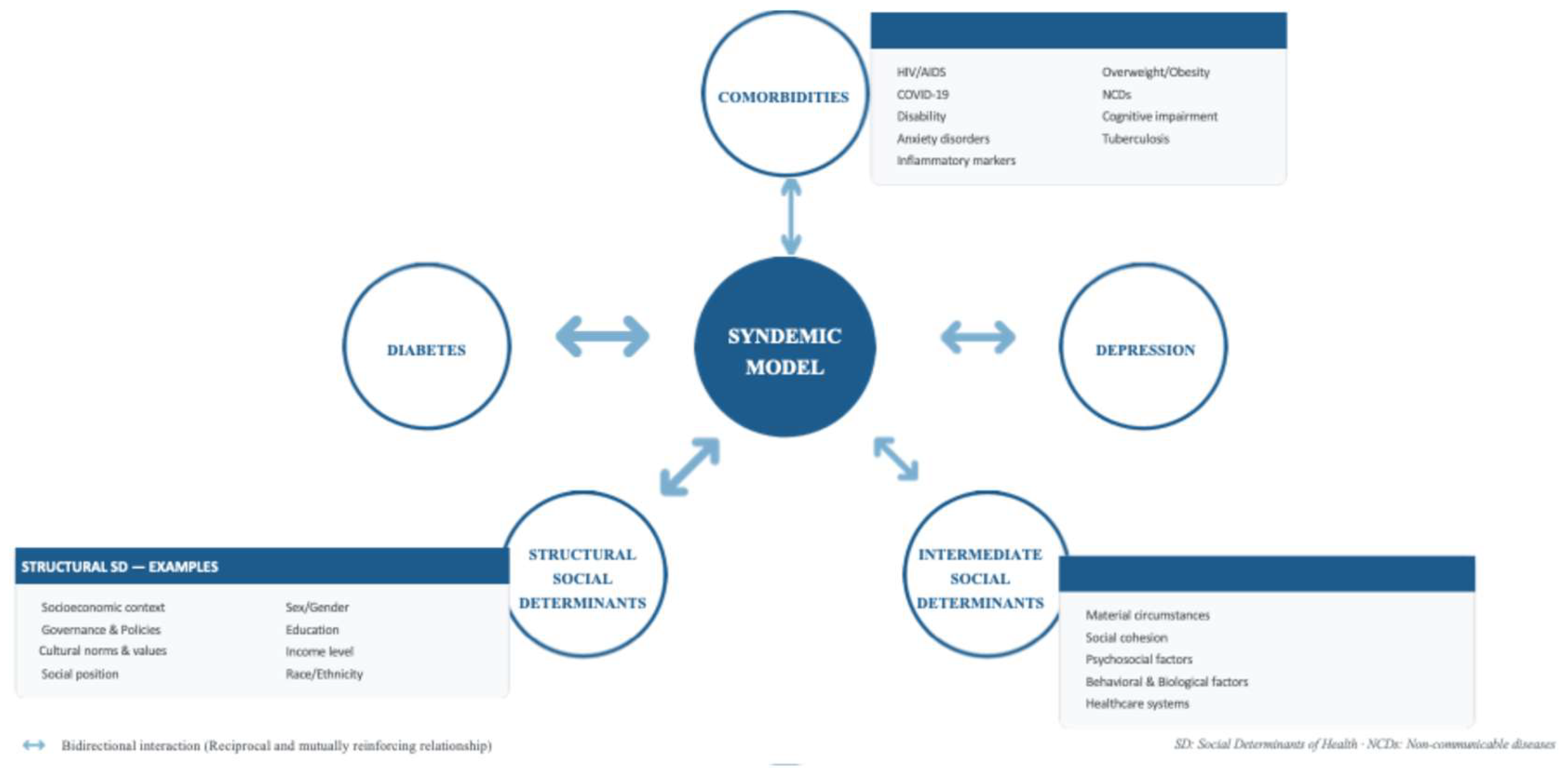
Figure 2.
PRISMA Model for Systematic Reviews*.
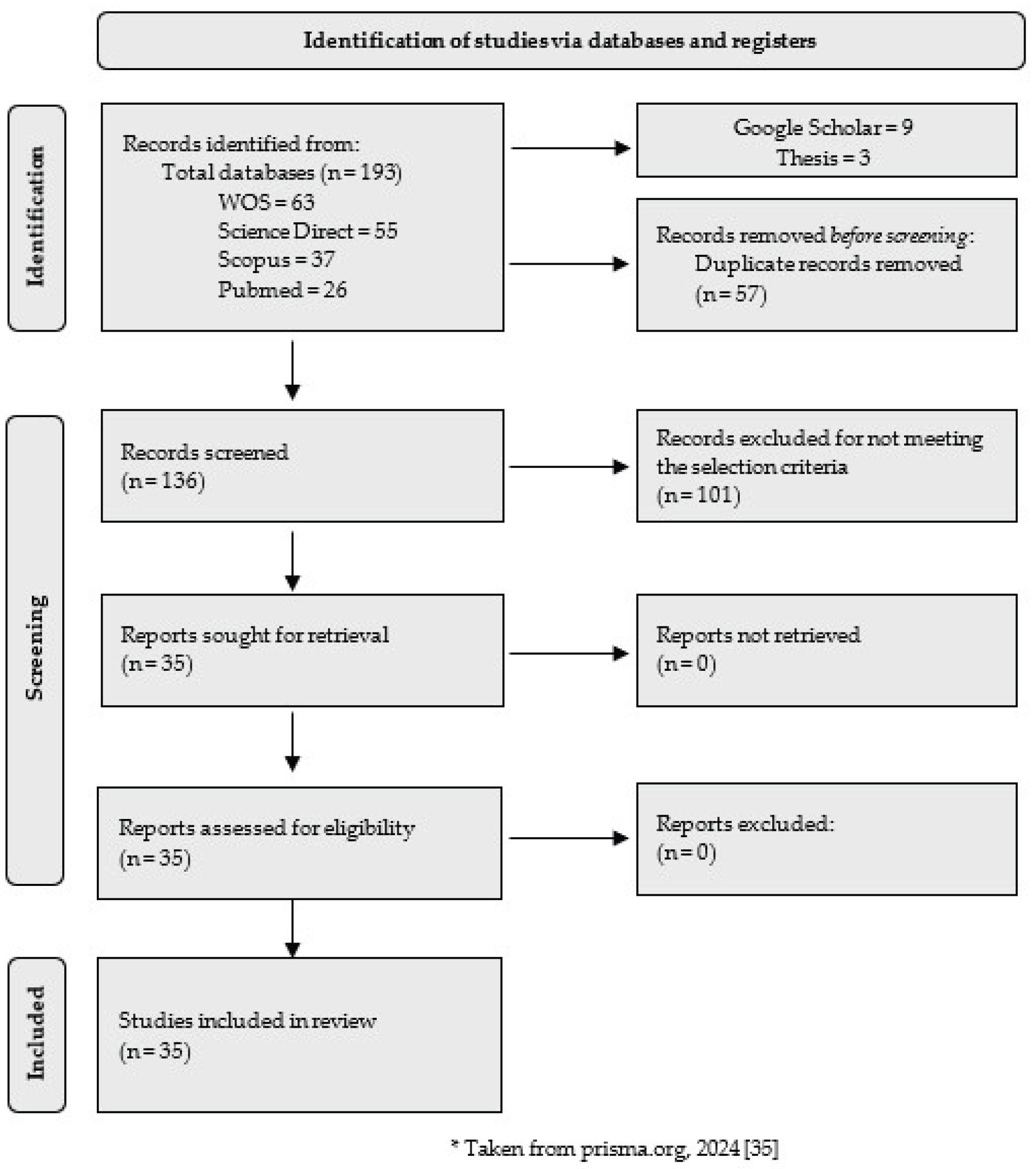
Table 1.
Characteristics of included studies.
| Review studies | |||
|---|---|---|---|
|
First author, Year [Reference] * Study period |
- Comorbidities explored * Methodology |
First author, Year [Reference] * Study period |
- Comorbidities explored * Methodology |
|
Gizamba et al. 2023 [43] * 2017 and 2022 |
- NA * Systematic review: MEDLINE and Embase |
Mendenhall et al. 2017 [4] * NA |
- Diabetes - HIV - Depression - Tuberculosis * Review |
|
Perez et al. 2024 [44] * 2006 and 2022 |
- Diabetes - Depression - Inflammatory markers * Scoping review: PubMed, CINAHL, PsycINFO, and WOS |
Saqib et al. 2023 [45] * November 2021 and March 2022 |
- COVID-19 - Anxiety - Depression - Diabetes - Hypertension - Asthma - COPD - Coronary heart disease * Narrative review: PsycINFO, PubMed, Google Scholar, and WOS |
|
Singer et al. 2020 [9] * 2015-2019 |
- NA * Systematic review: AnthroSource, CINAHL, Google Scholar, PubMed, and Scopus |
||
| Original articles | |||
|
First author, Year [Reference] * Study population + Country, Sample size "n" |
- Comorbidities explored * Methodology |
First author, Year [Reference] * Study population + Country, Sample size "n" |
- Comorbidities explored * Methodology |
|
Agudelo-Botero et al. 2022 [40] * Adults >20 years + Mexico, n=16,835 |
- Type 2 diabetes mellitus - Depression - Obesity * Observational based on ENSANUT |
Byg et al. 2016 [46] * MSM aged 18 years and older with diabetes and HIV + Boston, Massachusetts, n=88 |
- Diabetes and HIV in MSM * Retrospective from medical records |
|
Chichetto et al. 2019 [47] * Veterans living with HIV, matched with uninfected + USA, n=6,721 |
- Depression in people living with HIV * Cohort: Veterans Aging Cohort Study (VACS) |
Diderichsen et al. 2021 [42] * Adults 18 years and older + Brazil, n=81,357 households; 60,202 individuals |
- Disability - Diabetes - Depression * Data from Brazil National Health Survey 2013 |
|
Diderichsen and Andersen 2019 [41] * Adults 18 years and older + Brazil, n=81,357 households; 60,202 individuals |
- Diabetes - Depression * Data from Brazil National Health Survey 2013 |
Eshak TB et al. 2024 [48] * Adults 18 years and older with HIV + Pennsylvania (USA), n=621 |
- Depression - Diabetes - HIV - HIV treatment retention * Retrospective from medical records |
|
Gupta et al. 2022 [49] * Diabetic adults aged 19 years and older + New Brunswick (Canada), n=66,275 |
- Diabetes - Depression - Mood disorders - Anxiety * Observational cohort, 6-year follow-up |
Kohrt and Carruth, 2022 [37] * Nepal: female ex-soldiers; Ethiopia: diabetes patients + Nepal, n=148; Ethiopia, n=136 |
- Depression - Diabetes * Nepal: ethnographic; Ethiopia: mixed, semi-structured interviews |
|
First author, Year [Reference] * Study population + Country, Sample size "n" |
- Comorbidities explored * Methodology |
First author, Year [Reference] * Study population + Country, Sample size "n" |
- Comorbidities explored * Methodology |
|
Lerman Ginzburg, 2020 [50] * Men and women 18 years and older + Puerto Rico, n=75 |
- Obesity - Diabetes * Qualitative from semi-structured interviews |
McCurley et al. 2019 [51] * Latinos/Hispanics aged 18–74 years + USA, n=5,247 |
- Diabetes - Depression * Cohort: Hispanic Community Health Study/Study of Latinos (HCHS/SOL) |
|
Mendenhall, 2016 [15] * Chicago: immigrants; Delhi and Johannesburg: diabetics + Chicago, n=121; Delhi, n=59; Johannesburg, n=27 |
- Depression - Diabetes * Chicago, Delhi: mixed – life history narratives; Johannesburg: Birth to Twenty (Bt20) cohort and narratives |
Mendenhall E, 2014 [22] * Black diabetic women + Johannesburg (South Africa), n=27 |
- Diabetes - Depression * Mixed: Birth to Twenty (Bt20) cohort and in-depth narratives |
|
Mendenhall et al. 2021 [7] * Men and women + Johannesburg (South Africa), n=783 |
- Depression - Diabetes * Mixed: population-based surveys and in-depth interviews |
Mendenhall et al. 2015 [21] * Men and women + Nairobi (Kenya), n=100 |
- Syndemic suffering in diabetes - Depression - HIV * Mixed – life history narratives |
|
Mendenhall, Norris S.A. 2015 [39] * Black diabetic women + Johannesburg (South Africa), n=27 |
- Diabetes - Depression - HIV - NCDs * Mixed: Bt20 cohort and in-depth interviews |
Page-Reeves et al. 2019 [38] * Women aged 21–63 years + Albuquerque, New Mexico (USA), n=21 |
- Diabetes - Depression * Mixed with in-depth interviews and focus groups |
|
Saxena A., Mendenhall E. 2022 [31] * Adult population 50 years and older + India, n=6,090; China, n=11,789 |
- Hypertension - Type 2 diabetes - Functional disability * Based on WHO Study on Global Ageing and Adult Health (SAGE) |
Weaver and Mendenhall 2014 [23] * Chicago: migrants with diabetes; New Delhi: women + Chicago, n=121; New Delhi, n=280 |
- Depression - Diabetes * Case studies – medical anthropology |
|
Zuñiga et al. 2022 [52] * Adults 18 years and older + Alabama (USA), n=5,897 |
- HIV - Diabetes - Treatment adherence - CD4 levels * Predictive and longitudinal national cohort |
||
| Protocols | |||
|
First author, Year [Reference] * Study population + Country, Sample size "n" |
- Comorbidities explored * Methodology |
First author, Year [Reference] * Study population + Country, Sample size "n" |
- Comorbidities explored * Methodology |
|
Awoke et al. 2025 [53] * Recently diagnosed diabetic adults + Ethiopia, n=485 |
- Diabetes - Depression - Functional disability * Mixed, 6-month follow-up: questionnaires and phenomenological approach |
Friedman M et al. 2024 [54] * Adults with SSM aged 18 years and older + USA, n=1,800 |
- HIV/AIDS - NCDs - Depression * Protocol of a combined MACS/WIHS cohort study (MWCCS) |
| Editorials and/or Short articles | |||
|
First author, Year [Reference] * Study population + Country, Sample size "n" |
- Comorbidities explored * Methodology |
First author, Year [Reference] * Study population + Country, Sample size "n" |
- Comorbidities explored * Methodology |
|
Arena R et al. 2022 [55] * Children and young people with overweight and obesity + NA |
- COVID-19 - Depression - Overweight/Obesity - Diabetes * Editorial in "Progress in Cardiovascular Diseases" |
Gallo et al. 2021 [56] * NA + NA |
- Depression - Diabetes - Cognitive changes * Editorial in "The American Journal of Geriatric Psychiatry" |
|
Mendenhall et al. 2022 [30] * NA + NA |
- COVID-19 - Diabetes - Musculoskeletal condition * Original article |
Ricceri F. 2024 [57] * NA + NA |
- NA * Short original article |
| Books | |||
|
First author, Year [Reference] * Study population + Country, Sample size "n" |
- Comorbidities explored * Methodology |
First author, Year [Reference] * Study population + Country, Sample size "n" |
- Comorbidities explored * Methodology |
|
Mendenhall, 2019 [36] * Men and women in different parts of the world + NA |
- Syndemic suffering - Diabetes - Depression * Mixed – ethnography – medical anthropology |
Mendenhall E, 2012 [13] * Mexican women with diabetes + Chicago (USA), n=121 |
- Diabetes - Depression * Ethnography from life history narratives |
| Theses | |||
|
First author, Year [Reference] * Study population + Country, Sample size "n" |
- Comorbidities explored * Methodology |
First author, Year [Reference] * Study population + Country, Sample size "n" |
- Comorbidities explored * Methodology |
|
Dansero L, 2026 [58] * Men and women aged 45–75 years + Piedmont (Italy), n=1,778,845 |
- Diabetes - Depression * Cohort from Piedmont Longitudinal Study (PLS) |
Fox, 2016 [59] * African American men and women + Arlington, Texas (USA), n=6 |
- Diabetes - Depression - Syndemic suffering * Life history narratives and experiences |
|
Lerman Ginzburg, 2016 [60] * Men and women + Puerto Rico, n=72 (60 patients, 12 health staff) |
- Diabetes - Depression - Obesity * Mixed: field notes, participant observation, visual and ethnographic records, depression questionnaires |
||
|
*NA:Missing; not mentioned by the authors or not applicable according to the type of publication. Source:Author´s; own elaboration | |||
Disclaimer/Publisher’s Note: The statements, opinions and data contained in all publications are solely those of the individual author(s) and contributor(s) and not of MDPI and/or the editor(s). MDPI and/or the editor(s) disclaim responsibility for any injury to people or property resulting from any ideas, methods, instructions or products referred to in the content. |
© 2026 by the authors. Licensee MDPI, Basel, Switzerland. This article is an open access article distributed under the terms and conditions of the Creative Commons Attribution (CC BY) license (http://creativecommons.org/licenses/by/4.0/).
Copyright: This open access article is published under a Creative Commons CC BY 4.0 license, which permit the free download, distribution, and reuse, provided that the author and preprint are cited in any reuse.


