
Submitted:
29 May 2026
Posted:
04 June 2026
You are already at the latest version
Abstract
Eastern and Southern Africa (ESA) carries the world's heaviest combined burden of HIV and cervical cancer. People living with HIV (PLHIV) face higher HPV acquisition, reduced clearance, and accelerated progression to cervical cancer; WHO recommends a two- or three-dose HPV vaccination schedule for this group regardless of age or antiretroviral therapy (ART) status. Yet multi-dose HPV vaccine completion among PLHIV remains largely unmonitored in a region where a girl vaccinated at school is rarely visible to the HIV programme that may later care for her. This Review synthesises peer-reviewed evidence, mathematical modelling, and country implementation experience from high HIV-burden settings, anchored by primary data from a WHO Regional Office for Africa sub-regional workshop convened in Cape Town in November 2025 with immunisation and HIV programmes from five ESA countries (Eswatini, Malawi, South Africa, Tanzania, and Zimbabwe), modellers, youth advocates, and global partners. Regional HPV vaccination coverage more than doubled between 2019 and 2024, but only one of the five countries examined can currently monitor coverage by HIV status. Four cross-cutting barriers emerge: delivery platforms are misaligned with the population at risk; data systems are unable to follow individuals across services; confidentiality and stigma disrupt dose completion; and policies lack operational translation. An integration approach built around four axes (policy and eligibility, service platforms, data systems, and financing) can close the HPV vaccination gap without creating parallel infrastructure. While the evidence draws principally on ESA, the framework is transferable to other countries and regions where HPV vaccination for girls and women living with HIV is being implemented or considered. Closing the equity gap for PLHIV will depend on aligning existing programmes to operationalise integration to improve outcomes and prevent cervical cancer in this group.
Keywords:
human papillomavirus vaccination
; HIV
; people living with HIV
; cervical cancer elimination
; Eastern and Southern Africa
; health systems integration
; adolescent health
; multi-dose schedule
; immunisation programmes
1. Introduction
Eastern and Southern Africa (ESA) carries the world's highest combined burden of HIV and cervical cancer [1,2]. Cervical cancer is the second most common cancer among women in Africa, with age-standardised mortality two times the global average [3,4]. In nine southern African countries, more than 40% of women diagnosed with cervical cancer are women living with HIV (WLHIV) [5]. HPV infection is common and largely transient in immunocompetent women, with most infections clearing within one to two years. The biology of co-infection is well established: HIV increases susceptibility to human papillomavirus (HPV), reduces viral clearance, and accelerates progression from persistent infection to high-grade lesions and invasive cervical cancer [6,7,8]. As a result, WLHIV experience higher prevalence of persistent high-risk HPV and more frequent multiple-genotype infections; systematic reviews estimate high-risk HPV prevalence among women living with HIV in sub-Saharan Africa at around 70 to 80%, considerably higher than in HIV-negative women [9,10]. People living with HIV (PLHIV) therefore require stronger and more durable vaccine-induced protection, yet the systems intended to deliver that protection frequently fail to reach them (Figure 1).
HIV programmes have made considerable progress in expanding access to antiretroviral therapy (ART); by the end of 2024, an estimated 31.6 million people living with HIV were accessing treatment globally [12]. Major programme donors, including the Global Fund to Fight AIDS, Tuberculosis and Malaria and the President's Emergency Plan for AIDS Relief (PEPFAR), have supported cervical cancer screening and treatment for women and girls living with HIV at scale, with PEPFAR-supported programmes screening over seven million women between 2018 and 2022 across more than 20 countries [13]. HPV vaccination for women and girls living with HIV has nonetheless received comparatively less programmatic focus, in part because earlier guidance prioritised screening and treatment in cohorts likely to have been exposed to HPV before ART, and in part because vaccine supply constraints led to prioritisation of the routine early-adolescent cohort delivered through immunisation platforms.
HPV vaccination is most commonly delivered to girls aged 9 to 14 years through school-based programmes, typically before sexual debut and before most adolescent girls acquire HIV. In 2022, following a review of evidence showing that a single dose of HPV vaccine provides comparable immunogenicity and efficacy to two doses in immunocompetent populations, WHO's Strategic Advisory Group of Experts on Immunization (SAGE) endorsed a single-dose schedule for the general population [11]. A growing number of countries have since adopted this schedule. Importantly, SAGE retained the recommendation that immunocompromised individuals, including PLHIV, should receive two to three doses regardless of age or ART status to achieve durable protection. Antibody levels wane more rapidly in PLHIV, particularly with the quadrivalent vaccine, and lower CD4 cell counts and detectable HIV viral load correlate with lower antibody titres [14,15,16].
Across the region, HPV vaccination programmes have expanded, policies have evolved, and global momentum around cervical cancer elimination has grown [17,18]. HPV vaccination has now been introduced in 19 of 20 ESA countries, and the mean regional coverage in the African Region more than doubled from 18% in 2019 to 47% in 2024, driven substantially by Gavi support [17]. Rwanda has maintained more than 90% coverage since 2011 and is targeting cervical cancer elimination by 2027. Despite this progress, HPV vaccine uptake and multi-dose completion among PLHIV remain poorly measured and likely lower than in the general population [19,20]. An important distinction is warranted here: where HIV services and cervical cancer programmes have integrated, screening coverage among women living with HIV has in places exceeded that of the general population. Yang and colleagues, analysing population-based surveys from 28 sub-Saharan African countries between 2000 and 2020, estimated that 30% of women living with HIV aged 25 to 49 had ever been screened for cervical cancer in 2020 compared with 11% of women without HIV, with higher adjusted odds ratios in nearly every country examined [21]. The vaccination gap for PLHIV therefore reflects a specific failure of linkage between the childhood immunisation platform and the HIV service platform. It stems from the vertical structure of health systems developed for different programmatic objectives for HIV and immunisation, misalignment between adolescent health needs and programme design, and the distance between policy aspirations and operational realities.
This challenge has been recognised across high HIV-burden settings, where the historic, siloed architecture of childhood vaccination and HIV prevention, care, and treatment programmes is constrained by the way these systems are currently organised, financed, and governed. A WHO Regional Office for Africa (WHO AFRO) sub-regional workshop held in Cape Town from 17 to 19 November 2025 provided a recent opportunity for ESA countries to articulate these challenges in a shared regional dialogue, generating operational findings that complement the published evidence reviewed here [22].
This Review draws together three strands of evidence: the scientific and modelling literature on HPV vaccination in WLHIV; documented operational realities from countries implementing HPV vaccination in high HIV-burden settings; and practical approaches to integrating additional HPV vaccine doses for WLHIV into existing service architectures. While the empirical examples draw extensively on ESA experience, the lessons developed here are intended to be transferable to other regions facing similar challenges with integration of HIV and HPV immunisation programmes. The argument is straightforward: closing the protection gap requires more than adjusting dose schedules or reissuing guidance. It requires embedding HPV vaccination into the care pathways where adolescents and PLHIV seek services, supported by data systems and programme architectures capable of sustaining this alignment.
2. Methods
This narrative review synthesises evidence from published peer-reviewed and grey literature, supplemented by primary data from a regional workshop. Peer-reviewed literature on HPV vaccination, HIV co-infection, cost-effectiveness modelling, and health systems integration in high HIV-burden settings was identified through PubMed and grey literature searches through November 2025, with priority given to studies relevant to LMICs and to ESA. This was complemented by published mathematical modelling on HPV vaccination strategies in high HIV-burden settings, and by country-level HPV vaccination coverage data from the 2024 WHO/UNICEF Estimates of National Immunization Coverage (WUENIC) release, accessed from the WHO Immunization Data Portal in November 2025.
Operational findings were anchored by primary data from the WHO AFRO sub-regional workshop held in Cape Town from 17 to 19 November 2025 [22], which served as one important input into this synthesis. The workshop convened representatives from five ESA countries (Eswatini, Malawi, South Africa, the United Republic of Tanzania, and Zimbabwe); researchers and modellers working on HPV-HIV integration; youth advocates; and technical partners from WHO (country offices, Regional Office, and Headquarters), Gavi, UNICEF, Global Fund, Gates Foundation, Unitaid, Elizabeth Glaser Pediatric AIDS Foundation (EGPAF), VillageReach, and ICAP. Country participation included immunisation programme leads from the Expanded Programme on Immunization (EPI), HIV programme representatives, and WHO vaccine-preventable disease and HIV focal points. Workshop materials, including country presentations, draft road maps, and policy documents, contributed primary implementation data alongside the published literature.
The synthesis is narrative rather than systematic, prioritising integration of evidence streams across epidemiology, modelling, and implementation experience to derive transferable lessons for HPV delivery for WLHIV. We use the abbreviation WLHIV to include women, adolescent girls, and all gender-diverse people with a female reproductive system living with HIV who may benefit from prevention, screening, and treatment of cervical cancer.
3. What the Evidence and Modelling Show
Recent modelling and clinical evidence, reviewed in the published literature and reinforced by implementation experience, converge on four points of direct programme relevance.
Multi-dose schedules produce substantially greater long-term protection in PLHIV. A meta-analysis of HPV vaccine immunogenicity, safety, and efficacy in PLHIV confirmed that antibody responses decline more rapidly than in HIV-negative individuals, particularly after the quadrivalent vaccine, and that three-dose schedules are required for durability [14]. The HOPE II randomised controlled trial of a single-dose nonavalent HPV booster in 750 women living with HIV in South Africa, Botswana, and Rwanda is expected to report primary results in late 2027 and will provide important additional evidence on dose requirements [22]. Because PLHIV face higher HPV incidence and faster progression to precancerous lesions, incomplete protection at a population level translates into disproportionately larger impacts on future cervical cancer trajectories [15,23].
Targeted catch-up vaccination for older adolescents and young adults living with HIV is impactful and cost-effective. Modelling from high HIV-burden settings, including comparative analyses for South Africa and Kenya, a four-country analysis covering Mozambique and Tanzania, and an individual-based model for South Africa, indicates that extending vaccination to PLHIV up to their mid-twenties, and in some scenarios to age 45, meaningfully brings elimination timelines earlier and is cost-saving or highly cost-effective [22,24,25]. These strategies reduce future cervical cancer treatment costs, use routine HIV contact points efficiently, and compensate for cohorts who were not age eligible for early adolescent vaccination [26,27].
Delivery platform choice amplifies or blunts vaccine impact. Protection is greatest when vaccination is delivered through service platforms already used by PLHIV: ART clinics, teen clubs, youth-friendly services, community ART groups, and integrated adolescent health programmes [16,28]. UNICEF's HPV Plus programme, operating across 21 countries, has demonstrated that HPV vaccine delivery can serve as an entry point for a broader adolescent health package, including HIV testing, sexual and reproductive health counselling, mental health support, and micronutrient supplementation [22]. These platforms offer continuity of care that could minimise drop-out for multi-dose schedules.
Uncoordinated systems reduce the value of effective vaccines. Modelling repeatedly indicates that gains in one programme are blunted by weaknesses in another [24,29]. High coverage in school-based programmes does not automatically translate into adequate protection for WLHIV if HIV clinics cannot identify who requires subsequent doses or track completion reliably. Kenya offers a counter-example: a deliberately integrated adolescent health framework increased HPV second-dose completion from 16% to 51% between 2019 and 2024 [17]. Integration therefore emerges as an operational prerequisite for realising the full protective potential of HPV vaccination in WLHIV [30].
Across these domains, the evidence points to the same conclusion: meaningful protection for WLHIV requires sustained, multi-dose vaccination delivered through coherent, integrated service pathways. Without implementation of the SAGE recommendation for PLHIV, elimination goals remain out of reach even as more countries adopt HPV vaccination and refine their policies.
4. Realities on the Ground: Cross-Cutting Implementation Barriers
WHO guidance recommending additional HPV doses for immunocompromised populations was issued in 2022 [11]. Integration of vaccination into HIV service delivery is a substantial programmatic shift that cannot be completed quickly. A consistent set of system-level barriers has been documented across high HIV-burden settings, reinforced by recent regional dialogue including the WHO AFRO sub-regional workshop [22], and described with a clarity that reflects shared experience across countries (Figure 2).
4.1. Delivery Platforms Do Not Match the Population at Risk
Most HPV vaccination in the region is delivered through schools. This performs reasonably well for the general population of early adolescents aged 9 to 14 years, but it cannot identify WLHIV, who require additional doses. HIV status is rightly undisclosed in school settings; however, clinic referral depends on caregiver disclosure and follow-up, both of which are unreliable. HIV treatment and care clinics, meanwhile, are not currently configured as vaccination platforms. Staff are stretched, workflows are congested, and HPV vaccination has not yet been integrated into routine service delivery, although WHO consolidated guidelines on person-centred HIV strategic information recommend the inclusion of HPV vaccination, screening, and treatment for cervical cancer within HIV data systems [31]. Country experience illustrates the resulting structural mismatch: in South Africa, the large school-based programme captures the primary cohort but cannot identify girls living with HIV who require a second dose; in Tanzania, routine HPV vaccination for 14-year-olds has operated since 2018, and the country maintains a national HPV dose register, but this register does not interface with HIV systems [22]. Adolescents and young adults at elevated risk of HIV also access HIV prevention programmes, which offer an additional avenue for HPV vaccine delivery.
Implementation research is beginning to quantify what co-delivery looks like in practice. The Gavi-supported Assessing HIV Integrated Service Models for HPV Vaccination Among Adolescent Girls (AIM-HPV) study, implemented by EGPAF in Zimbabwe and Mozambique, is testing integration of HPV vaccination into HIV prevention, care, and treatment platforms. Early findings indicate that while both countries began with co-located service models, many facilities shifted toward referral systems because of staffing shortages and space constraints, and providers adapted by using improvised registers, ART-diary reminders, and active tracking of missed appointments [22]. VillageReach studies in Malawi and Mozambique, designed around community co-design with caregivers, adolescents, teachers, and health workers, found that integration of HPV vaccination into existing youth-friendly health and services platforms (such as Malawi's Youth-Friendly Health and Services Strategy 2022–2030) and ART/teen clubs increased referrals when accompanied by targeted health-worker training on HPV, cervical cancer, and adolescent communication. Nigeria's experience relied on mapping all adolescents living with HIV, integrating vaccination into ART clinic clubs, establishing referral pathways, and complementing national data tools with digital trackers linking immunisation and HIV records [22].
A further complication has emerged in recent years: four of the five ESA countries examined here (Eswatini, Malawi, South Africa, and Tanzania) have transitioned to single-dose schedules for the general population between 2023 and 2024, following the SAGE single-dose recommendation [11,22]. Zimbabwe remains on a two-dose schedule at the time of writing. While a single-dose schedule simplifies delivery for the general population and is expected to accelerate progress towards the 2030 elimination target, it changes the operational landscape for WLHIV in a way that deserves explicit attention. As national programmes shift to single-dose delivery for the general population, the routine second-dose touchpoint that once provided a natural follow-up moment is disappearing from the general programme. This transition creates a new equity risk for immunocompromised populations. Without routine follow-up contacts, WLHIV increasingly depend on separate service pathways to complete the additional doses required, and there is no standardised infrastructure or financing pathway for these additional-dose visits. In this context, integration of HPV vaccination into HIV service platforms is becoming the only available route to multi-dose completion for WLHIV.
4.2. Data Systems Built for Separate Purposes Need To Adapt
Established recording and reporting systems exist for both HPV vaccination and HIV services, but they reach different priority populations and rarely communicate. School-based childhood vaccination programmes monitor doses by age cohort, while few countries can monitor HPV vaccination by HIV status. Among the five ESA countries examined, Eswatini is currently the only country that captures HPV vaccination data for immunocompromised individuals through its national client management information system, though gaps in connectivity still affect completeness (Figure 2). In Tanzania, Malawi, Zimbabwe, and South Africa, routine Health Management Information System (HMIS) tools do not distinguish girls living with HIV within HPV dose data; Zimbabwe has adapted by using school-level HPV registers that are physically transported to clinics for consolidation [22]. HIV programmes, in turn, focus on reaching individuals post-diagnosis with care and treatment, or on prevention services for those at elevated risk. Although WHO strategic information guidance recommends capturing HPV vaccination status in HIV registers, including dose number and age at last dose received for PLHIV, in practice this is rarely done, and childhood vaccination records are seldom retrievable at the point of adolescent HIV care [22,31]. Denominators also differ across programmes, making assessment of two- or three-dose coverage among PLHIV particularly challenging. Without reliable data, programmes operate with partial visibility and cannot design targeted strategies for multi-dose completion.
These data limitations extend beyond whether HIV status is captured. Routine HPV coverage data reported to WHO through the Joint Reporting Form are subject to substantial year-to-year volatility driven by shifting denominator definitions, multi-age cohort corrections, and schedule transitions [22]. In Zimbabwe, for example, reported first-dose coverage moved from 87% in 2019 to zero in 2020, 63% in 2021, and 6% in 2022, reflecting reporting discontinuities rather than real programme performance [32]. Cross-country comparison of completion rates is correspondingly difficult. Where countries have explicitly monitored HPV vaccination among WLHIV, however, the scale of the completion challenge becomes visible. Argentina, which captures HPV vaccination among HIV-positive and immunocompromised individuals aged 11 to 26 within its routine information system, reported 1,041 first doses, 1,041 second doses, and 352 third doses administered to this group in a single year: a 66% drop-off between first and third dose [22]. Argentina's experience is the clearest available empirical evidence that multi-dose completion for PLHIV is a substantial challenge which requires deliberate monitoring.
4.3. Confidentiality, Consent, and Stigma Shape Dose-Completion Pathways
The need for additional doses intersects with concerns about HIV status disclosure. Adolescents living with HIV may avoid referral from schools to clinics, or may not return for subsequent doses. Schools and health facilities often apply divergent consent procedures, creating confusion for adolescents and caregivers and slowing referrals. Health workers report inconsistent understanding of eligibility criteria between immunisation and HIV programmes, and in some settings HIV clinics do not consider HPV vaccination part of their mandate [22]. These pragmatic decisions can accumulate into a structural barrier: systems designed to protect against stigma may inadvertently make dose completion harder for the group that most needs it.
4.4. Policies Exist on Paper But Lack Operational Translation
Many countries have guidance stating that WLHIV require multi-dose schedules, yet policies do not consistently specify upper age limits, pathways for adolescents who acquire HIV after an initial dose, or how to integrate HPV vaccination into differentiated service delivery for HIV.
A related operational gap concerns older adolescents and young women living with HIV who were never eligible for routine school-based vaccination or who acquired HIV after the standard vaccination age window. Although many remain in regular contact with HIV services, they are not consistently included in routine immunisation planning. Without clear catch-up eligibility and defined delivery pathways within HIV programmes, this cohort risks remaining unprotected despite sustained engagement with the health system.
The absence of standard operating procedures means providers must improvise. This has produced innovation in some sites, including vaccination in ART clinics, teen clubs, youth-friendly corners, and outreach through mentor-mothers, but has also produced uneven coverage, inefficiencies, and missed opportunities elsewhere. A pragmatic operational convention has emerged from country implementation experience: where prior HPV vaccination history for a WLHIV cannot be established, two doses should be administered. Country teams have also proposed formally extending catch-up eligibility for HIV-positive adolescents up to age 25 years and aligning consent procedures across platforms [22].
Taken together, these barriers form a consistent pattern: systems designed for the general population cannot reliably serve adolescents and young people living with HIV. The challenge is one of system design. Dissociation between programmes, platforms, datasets, and financing streams remains the defining constraint on multi-dose protection for WLHIV. Clarifying operational pathways, including eligibility, delivery mandates within HIV services, and defined catch-up strategies for older adolescents and young people living with HIV, is therefore essential to translate policy into consistent protection.
5. An Integration Approach: Aligning Evidence and Operational Realities
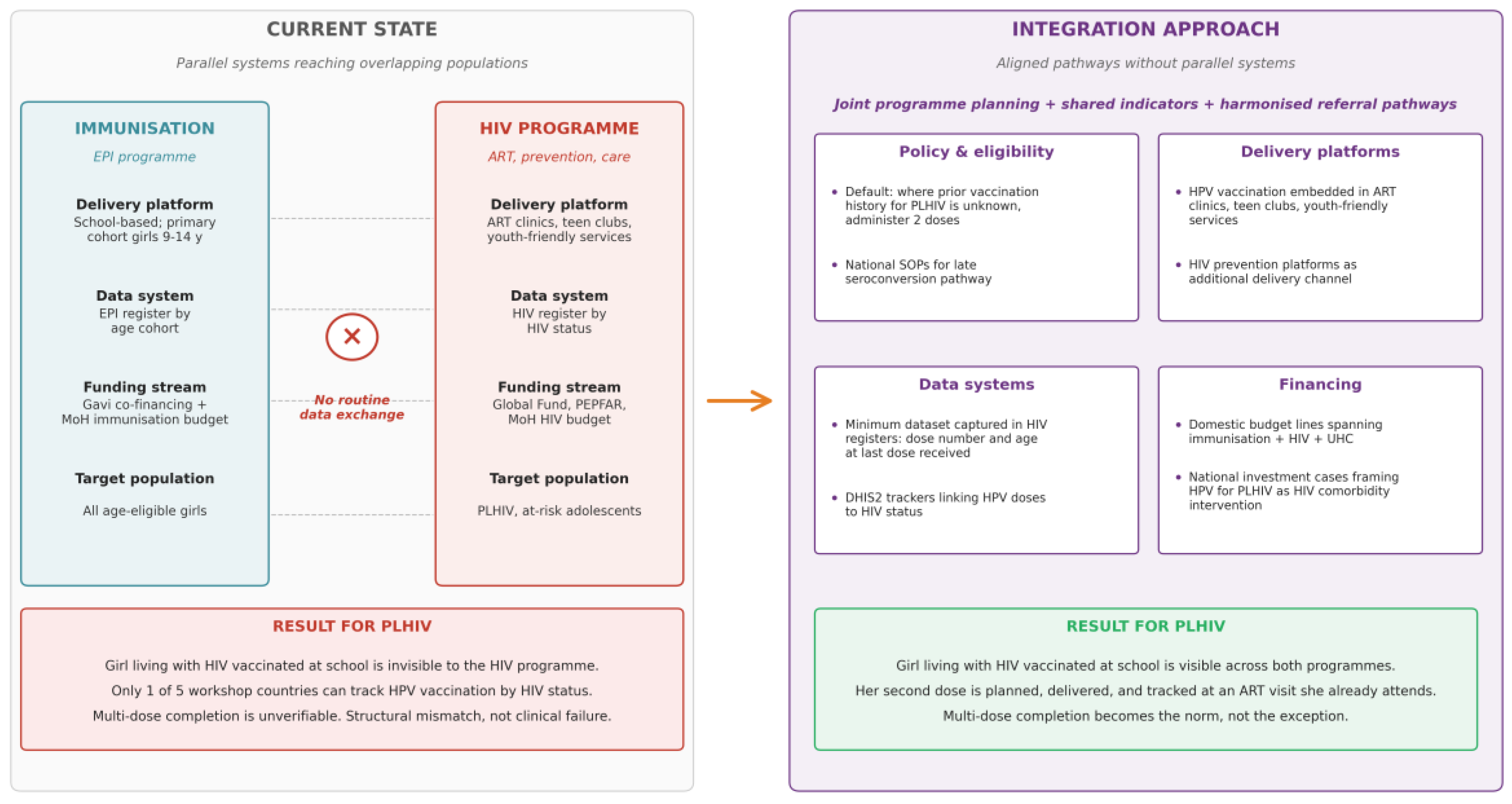
The evidence and country experience point to a set of practical adjustments, rather than large structural reforms, that can narrow the vaccine protection gap. These responses address the misalignment between two distinct public health service delivery platforms reaching overlapping sub-populations (Figure 3).
While the empirical examples that follow draw on ESA experience, the four-axis framework, comprising policy and eligibility, service platforms, data systems, and financing, is designed to be transferable to other settings intending to implement HPV vaccination for WLHIV. The specific configurations will differ by context, but the underlying alignment challenges are broadly shared across health systems where HPV vaccination and HIV services have evolved as parallel programmes.
5.1. Aligning Policy and Eligibility
Country adoption of HPV vaccination has expanded substantially across the African Region [17,32], yet policies governing the protection of PLHIV remain inconsistent. Some programmes extend multi-dose schedules only to early adolescents; others offer additional doses up to specific age thresholds; a few do not specify eligibility at all. In the absence of formal age-specific WHO guidance for PLHIV, the pragmatic convention emerging from country implementation experience, administering two doses when prior vaccination history is unavailable, offers a useful operational default [22]. Clarifying this at national level, together with pathways for adolescents who seroconvert after an initial dose and extension of catch-up eligibility up to age 25, would reduce the need for providers to improvise without requiring new international guidance.
5.2. Using the Service Platforms That Adolescents Already Trust
Studies show that increasing HPV vaccine coverage among WLHIV depends heavily on how the vaccine is delivered [20]. School-based vaccination works well for the general population but is insufficient to secure the additional doses needed by WLHIV. ART clinics, teen clubs, youth-friendly corners, and community ART groups offer predictability, privacy, and routine contact points that support multi-dose completion. Country experience demonstrates this in practice. In Malawi, a mixed delivery approach combines school outreach with targeted ART-clinic vaccination for immunocompromised girls needing three doses; a multi-age cohort campaign reached more than 90% of eligible girls. In October 2025, Malawi followed with a nationwide multi-age cohort campaign targeting girls aged 9 to 18 years, which reached 2.27 million girls (91% of the target cohort) in five days, including outreach to out-of-school adolescents at markets, bus stations, corridors of tertiary institutions, and remote island and mountain communities [22,33]. In Eswatini, integration has been extended through ART clinics, teenage clubs, non-communicable disease clinics, and personalised follow-up during treatment visits, with community health motivators increasingly involved in identifying and mobilising eligible girls. Zimbabwe's revitalisation strategy links HPV vaccination to ART clinics, PEPFAR DREAMS platforms, opportunistic infection clinics, and services for orphans and vulnerable children, with escorted referrals from HIV to immunisation services. South Africa is adapting protocols so that girls requiring additional doses can be identified and followed up through its broader cervical cancer elimination strategy and mother–daughter initiative [22]. These platforms can support HPV vaccination when staff are given the mandate, the tools, and the financing to do so.
5.3. Adapting Data Systems for Interoperability and Data Exchange
Data fragmentation is both a technical challenge and a structural barrier to equity. Without the ability to disaggregate HPV vaccination coverage by HIV status or follow doses across school, clinic, and community platforms, programmes cannot confirm whether WLHIV have received the adequate number of doses for protection against HPV-associated disease. WHO strategic information guidelines specify a minimum dataset for HIV programmes to monitor cervical cancer prevention and treatment, including HPV vaccine dose number and age at last dose received for WLHIV [31]. The digital transition has produced broad coverage of electronic health data systems for both immunisation and HIV programmes. Capturing this minimum dataset in HIV surveillance systems can make HPV dose tracking feasible. In the short term, data validation can be performed manually on an annual basis and national vaccination records updated accordingly. In the longer term, with built-in interoperability, data exchange could be facilitated in near real time while maintaining confidentiality. With a shared minimum dataset and practical interoperability between immunisation and HIV systems, countries can progressively achieve the visibility needed to track multi-dose completion and demonstrate equitable HPV vaccination for WLHIV. Multi-dose completion data captured in HIV programmes should also be reported back to national EPI programmes to be reflected in routine national and global immunisation reporting. This would enable the construction of HPV vaccine coverage statistics for WLHIV that currently do not exist at a population level and allow programmes to identify populations missed by geography or other factors and redirect services accordingly.
5.4. Financing Integration
Financing arrangements emerge as a decisive but often under-discussed constraint on integration. The feasibility of integrating HPV vaccination into HIV programmes depends as much on who pays for delivery, and through which budget line. In many countries, HPV vaccine procurement is supported through immunisation financing mechanisms, while service platforms for adolescents and PLHIV are funded through HIV, sexual and reproductive health and rights, or adolescent health budgets. This structural separation can create disincentives for integration when the programme that bears delivery cost does not receive direct performance credit for the intervention.
Three financing dynamics are relevant for integration [22]. First, declining development assistance for health is a defining feature of the current environment. Global development assistance for health fell from a peak of US$ 80.3 billion in 2021 to an estimated US$ 39.1 billion in 2025, a decline of more than 50% driven largely by reductions in United States bilateral aid; under current policies it is forecast to decline further to approximately US$ 36 billion by 2030 [34]. These cuts are pressing countries to prioritise interventions that demonstrate both health impact and system efficiency. Embedding HPV vaccination within existing ART clinics, teen clubs, or youth-friendly services can reduce duplication in outreach, microplanning, supervision, and data systems, lowering marginal delivery costs for multi-dose completion among PLHIV.
Second, Gavi's 2026–2030 strategic framework (Gavi 6.0) supports co-financed HPV vaccine doses for girls aged 9 to 14 years, covering both multi-age cohort preventive campaigns and the routine single-age cohort, with co-financing rates set by the Gavi Board. Within this age band, Gavi also supports a second dose for girls living with HIV [22]. Gavi 6.0 does not, however, finance additional HPV doses for women and girls living with HIV aged 15 years and above; for this group, doses can be procured at Gavi prices when supply allows but must be fully funded from domestic resources. The Global Fund recognises cervical cancer as an HIV-related comorbidity and supports screening and service integration, although it does not currently finance HPV vaccine procurement. The World Bank and the Global Financing Facility operate through country-driven models that flow resources based on official requests from ministries of finance, with opportunities identified around reproductive health and nutrition. Within this landscape, country-specific investment cases that frame HPV vaccination for WLHIV as a cost-saving HIV comorbidity intervention, by averting future cancer treatment costs, can help ministries justify dedicated budget allocations that complement donor support.
The fiscal space for this support is tightening. The 2025 Gavi replenishment raised US$ 9 billion against an US$ 11.9 billion target, a shortfall of approximately one quarter [17]. Combined with the projected decline in overall development assistance for health and the shift in donor priorities, this funding gap increases the urgency of domestic financing strategies and of efficiency gains through integration with existing HIV and adolescent health service platforms. Countries that can demonstrate that integrated delivery lowers the marginal cost of reaching WLHIV with additional HPV doses will be better positioned to secure the domestic budget allocations that sustained WLHIV protection now requires.
Third, country experience emphasises domestic financing and insurance mechanisms as the most sustainable pathway for WLHIV beyond the Gavi-supported 9 to 14 age band. None of the major external financing mechanisms currently covers the marginal cost of additional HPV doses for women and girls living with HIV aged 15 years and above. Ministries of health are therefore the principal funders of these additional doses, at a moment when domestic budgets are under pressure across most areas of health. Integration of HPV vaccination for WLHIV into essential universal health benefit packages and primary health care budgets is particularly relevant for reaching older adolescents and young adults living with HIV who fall outside school-based programmes. Framing HPV vaccination for WLHIV as part of adolescent and chronic HIV care, rather than as a stand-alone immunisation activity, may increase eligibility for domestic funding and reduce reliance on short-term external support.
Financing integration, then, requires adaptation of existing funding frameworks to include the extra doses required for WLHIV, alongside explicit donor commitments to extend their current scope to cover the additional doses where external financing remains essential. Building deliberate domestic financing plans that span immunisation, HIV, and adolescent health programmes would ensure that integration becomes an implementable strategy rather than a technical aspiration.
5.5. Creating the Conditions for Programmes to Plan Together
Perhaps the most striking feature of recent regional dialogue is how often one programme describes a challenge that another could solve, once communication is established. Immunisation teams have noted that they "do not know where the girls with HIV are"; HIV programmes have acknowledged that they do not systematically track vaccination; adolescent health teams have seen opportunities for linkage but lacked a mandate [22]. None of these gaps requires major structural reform. What they require is joint planning, clearer referral pathways, agreed programmatic data-sharing arrangements, and explicit roles for each programme. The five ESA countries examined here have committed to draft road maps with shared features: revising national policies and guidelines to operationalise multi-dose catch-up for PLHIV; institutionalising integrated service delivery in ART clinics, teen clubs, and youth-friendly HIV services; strengthening data systems through harmonised tools and interoperable digital trackers such as DHIS2; and developing credible investment cases and long-term domestic financing plans [22]. Normalising this type of collaboration can reduce the transaction costs that countries currently carry alone.
Youth engagement emerges as a cross-cutting enabler, particularly for out-of-school adolescents and those at elevated risk for or living with HIV. Multi-dose schedules rely on trust, timing, and the predictability of follow-up, and communication materials that reflect the realities of adolescents living with HIV rather than generic health promotion templates. Young people should be empowered as co-creators of the services they need, rather than consulted after the fact, to support long-term success [22].
Taken together, these responses do not form a prescriptive blueprint. They describe a way of organising services, information, and responsibilities so that HPV vaccination reaches those who need it most. Integration is not about linking programmes for their own sake; it is about aligning them around the lived realities of WLHIV. Where preventing cervical cancer depends on protecting this group effectively, such alignment is foundational, not optional.
6. Conclusions
The evidence, modelling, and country implementation experience converge on a single message: meaningful HPV vaccine protection for WLHIV will not be achieved unless immunisation, HIV, and adolescent health programmes work together. The binding constraint is the cumulative effect of small misalignments across delivery platforms, data systems, and financing architectures that were originally designed for rapid school-based scale-up in early adolescents rather than for sustained protection of immunocompromised populations. Policies do not specify how multi-dose schedules apply to older adolescents or those who seroconvert after an initial dose. Data systems cannot follow an individual from school to clinic or disaggregate by HIV status. Service platforms operate in parallel rather than in sequence. Financing arrangements split accountability across programme boundaries. Where countries have bridged these divides, modest operational adjustments have produced disproportionate gains, exemplified by Kenya's rise in HPV second-dose completion from 16% to 51% between 2019 and 2024 [17]. Making such practices the norm rather than the exception, supported by coherent national investment cases and practical interoperability between systems, is the most direct and achievable step countries can take toward cervical cancer elimination among those at highest risk.
Although this review draws principally on ESA experience, the integration challenges it identifies are not specific to one region or programme. The four-axis approach offers a transferable framework for any health system seeking to deliver durable HPV protection to immunocompromised populations. The WHO 90-70-90 cervical cancer elimination targets for 2030 require 90% of girls vaccinated against HPV by age 15, 70% of women screened with a high-performance test by age 35 and again by age 45, and 90% of women with cervical disease receiving appropriate treatment. Integrating HPV vaccination for WLHIV into existing HIV and adolescent health platforms could translate these targets into measurable gains at scale for populations at highest risk. Doing so would demonstrate that fragmented systems can, with intent and collaboration, deliver the kind of equitable, sustained protection that global commitments promise but seldom guarantee.
Funding
This research received no external funding.
Acknowledgments
The authors gratefully acknowledge the Member States of the WHO African Region represented at the November 2025 Cape Town workshop (Eswatini, Malawi, South Africa, the United Republic of Tanzania, and Zimbabwe), the immunisation and HIV programme leads and WHO country focal points whose presentations informed this Review, the modellers and implementation researchers whose work was discussed, and the youth advocates whose testimony grounded the workshop in lived experience. The authors thank Gavi, the Vaccine Alliance; UNICEF; the Global Fund to Fight AIDS, Tuberculosis and Malaria; the Gates Foundation; Unitaid; the Elizabeth Glaser Pediatric AIDS Foundation; VillageReach; and ICAP for their participation and technical contributions. The authors also acknowledge the strategic oversight and guidance of Dr Akpaka A. Kalu of the WHO Regional Office for Africa.
Conflicts of Interest
The authors declare no conflicts of interest.
References
- Parker, E.; Judge, M.A.; Macete, E.; Nhampossa, T.; Dorward, J.; Langa, D.C.; Schacht, C.; Couto, A.; Vaz, P.; Vitoria, M.; et al. HIV infection in Eastern and Southern Africa: Highest burden, largest challenges, greatest potential. South. Afr. J. HIV Med. 2021, 22, 1237. [Google Scholar] [CrossRef]
- Huang, Y.; Georges, D.; Rumgay, H.; Soerjomataram, I.; Clifford, G.M. Global burden of cancer attributable to HIV: a worldwide incidence analysis. Lancet Glob. Health 2025. [Google Scholar] [CrossRef]
- Ferlay, J.; Ervik, M.; Lam, F.; Laversanne, M.; Colombet, M.; Mery, L.; Piñeros, M.; Znaor, A.; Soerjomataram, I.; Bray, F. Global Cancer Observatory: Cancer Today; International Agency for Research on Cancer: Lyon, France, 2024. Available online: https://gco.iarc.who.int/today (accessed on 15 November 2025).
- Bruni, L.; Albero, G.; Serrano, B.; Mena, M.; Collado, J.J.; Gómez, D.; Muñoz, J.; Bosch, F.X.; de Sanjosé, S. ICO/IARC Information Centre on HPV and Cancer. Human Papillomavirus and Related Diseases in Africa. Summary Report 10 March 2023. Available online: https://hpvcentre.net (accessed on 15 November 2025).
- Stelzle, D.; Tanaka, L.F.; Lee, K.K.; Khalil, A.I.; Baussano, I.; Shah, A.S.V.; McAllister, D.A.; Gottlieb, S.L.; Klug, S.J.; Winkler, A.S.; et al. Estimates of the global burden of cervical cancer associated with HIV. Lancet Glob. Health 2021, 9, e161–e169. [Google Scholar] [CrossRef] [PubMed]
- Pavone, G.; Marino, A.; Fisicaro, V.; Motta, L.; Spata, A.; Martorana, F.; Spampinato, S.; Celesia, B.M.; Cacopardo, B.; Nunnari, G. Entangled Connections: HIV and HPV Interplay in Cervical Cancer—A Comprehensive Review. Int. J. Mol. Sci. 2024, 25, 10358. [Google Scholar] [CrossRef]
- Travill, D.I.; Machalek, D.A.; Rees, H.; Mbulawa, Z.; Chikandiwa, A.; Munthali, R.; Petoumenos, K.; Kaldor, J.M.; Delany-Moretlwe, S. High prevalence of human papillomavirus (HPV) in unvaccinated adolescent girls in South Africa, particularly those living with HIV. Vaccine 2024, 42, 126442. [Google Scholar] [CrossRef]
- Liu, G.; Sharma, M.; Tan, N.; Barnabas, R.V. HIV-positive women have higher risk of human papilloma virus infection, precancerous lesions, and cervical cancer. AIDS 2018, 32, 795–808. [Google Scholar] [CrossRef]
- Myers, K.O.; Ahmed, N.U. The role of HIV in the progression through the stages of the human papillomavirus to cervical cancer pathway. AIDS Rev. 2018, 20, 94–104. [Google Scholar] [CrossRef] [PubMed]
- Tchouaket, M.C.T.; Ka’e, A.C.; Semengue, E.N.J.; Sosso, S.M.; Simo, R.K.; Yagai, B.; Nka, A.D.; Chenwi, C.A.; Abba, A.; Fainguem, N.; Perno, C.-F.; Colizzi, V.; Fokam, J. Variability of High-Risk Human Papillomavirus and Associated Factors among Women in Sub-Saharan Africa: A Systematic Review and Meta-Analysis. Pathogens 2023, 12, 1032. [Google Scholar] [CrossRef] [PubMed]
- World Health Organization. Human papillomavirus vaccines: WHO position paper (2022 update). Wkly. Epidemiol. Rec. 2022, 97, 645–672. [Google Scholar]
- UNAIDS. Global AIDS Update 2025; Joint United Nations Programme on HIV/AIDS: Geneva, Switzerland, 2025. Available online: https://www.unaids.org/en/UNAIDS-global-AIDS-update-2025 (accessed on 22 May 2026).
- McCormick, L.J.; Gutreuter, S.; Adeoye, O.; Alger, S.X.; Amado, C.; Bay, Z.; et al. Cervical Cancer Screening Positivity Among Women Living With HIV in CDC-PEPFAR Programs 2018–2022. J. Acquir. Immune Defic. Syndr. 2023, 94, 301–307. [Google Scholar] [CrossRef]
- Staadegaard, L.; Rönn, M.M.; Soni, N.; Bellerose, M.E.; Bloem, P.; Brisson, M.; Maheu-Giroux, M.; Barnabas, R.V.; Drolet, M.; Mayaud, P.; et al. Immunogenicity, safety, and efficacy of the HPV vaccines among people living with HIV: A systematic review and meta-analysis. EClinicalMedicine 2022, 52, 101585. [Google Scholar] [CrossRef]
- Schuind, A.E.; Rees, H.; Schiller, J.; Mugo, N.; Dull, P.; Barnabas, R.; Clifford, G.M.; Liu, G.; Madhi, S.A.; Morse, R.B.; et al. State-of-the-Science of human papillomavirus vaccination in women with human immunodeficiency virus: Summary of a scientific workshop. Prev. Med. Rep. 2023, 35, 102331. [Google Scholar] [CrossRef] [PubMed]
- Jongen, V.W.; van Dongen, N.; Sohn, A.H. Human papillomavirus infection among adolescents living with HIV: a focus on prevention. Curr. Opin. HIV AIDS 2024, 19, 361–367. [Google Scholar] [CrossRef] [PubMed]
- Amani, A.; Bloem, P.; Kobayashi, E.; Atuhaire, B.; Wiysonge, C.S.; Impouma, B. Scaling HPV vaccination in Africa to eliminate cervical cancer by 2030. Lancet Glob. Health 2025, 13, e2006–e2008. [Google Scholar] [CrossRef]
- Branda, F.; Pavia, G.; Ciccozzi, A.; Quirino, A.; Marascio, N.; Gigliotti, S.; Matera, G.; Romano, C.; Locci, C.; Azzena, I.; et al. Human Papillomavirus (HPV) Vaccination: Progress, Challenges, and Future Directions in Global Immunization Strategies. Vaccines 2024, 12, 1293. [Google Scholar] [CrossRef]
- Uusküla, A.; Tisler, A.; DeHovitz, J.; Murenzi, G.; Castle, P.E.; Clifford, G. Prevention and control of HPV-related cancers in people living with HIV. Lancet HIV 2025, 12, e293–e302. [Google Scholar] [CrossRef]
- Kabarambi, A.; Kizito, S.; Hunleth, J.; Silver, M.I.; Niyonzima, N.; Ssewamala, F. HPV Vaccine Uptake and its Predictors among Adolescent Girls and Young Women Living with HIV in Central Uganda. AIDS Behav. 2025, 29, 1859–1865. [Google Scholar] [CrossRef]
- Yang, L.; Boily, M.-C.; Rönn, M.M.; Obiri-Yeboah, D.; Morhason-Bello, I.; Meda, N.; Lompo, O.; Mayaud, P.; Pickles, M.; Brisson, M.; et al. Regional and country-level trends in cervical cancer screening coverage in sub-Saharan Africa: A systematic analysis of population-based surveys (2000–2020). PLoS Med. 2023, 20, e1004143. [Google Scholar] [CrossRef]
- World Health Organization Regional Office for Africa. Report of the Subregional Workshop on Human Papillomavirus Vaccination for People Living with HIV: East and Southern Africa, Cape Town, South Africa, 17–19 November 2025; WHO AFRO: Brazzaville, Congo, 2025. 17–19 November.
- Song, Y.; Choi, W.; Shim, E. Cost-Effectiveness of Human Papillomavirus Vaccination in the UK: Two Versus Single-Dose of Nonavalent HPV Vaccination. Am. J. Prev. Med. 2024, 67, 231–240. [Google Scholar] [CrossRef]
- Bénard, E.; Drolet, M.; Gingras, G.; Laprise, J.-F.; Sabourin, A.A.; Bloem, P.; Akaba, H.; Brotherton, J.; Jit, M.; Brisson, M. Ranking the most efficient human papillomavirus vaccination strategies in low-income and lower-middle-income countries: a mathematical modelling analysis. Lancet Glob. Health 2025, 13, e2153–e2164. [Google Scholar] [CrossRef] [PubMed]
- Umutesi, G.; Hathaway, C.L.; Heitner, J.; Jackson, R.; Miano, C.W.; Mugambi, W.; Khalayi, L.; Mwenda, V.; Oluoch, L.; Nyangasi, M.; et al. The Potential Impact of a Single-Dose HPV Vaccination Schedule on Cervical Cancer Outcomes in Kenya: A Mathematical Modelling and Health Economic Analysis. Vaccines 2024, 12, 1248. [Google Scholar] [CrossRef]
- Crawford, E.; Tosin, A.; Ampeire, I.; Baganizi, M.; Chisema, M.; Griffith, B.; Kabunga, L.; Magagula, T.; Marowa, L.-R.; Mbogu, A.; et al. Policies and strategies for HPV vaccination schedule completion in immunocompromised girls, including girls living with HIV: Qualitative insights from Eswatini, Malawi, and Uganda. medRxiv 2025. [Google Scholar] [CrossRef]
- Borda, H.; Bloem, P.; Akaba, H.; Guillaume, D.; Willens, V.; Jurgensmeyer, M.; Muralidharan, K.; Limaye, R. Status of HPV disease and vaccination programmes in LMICs: Introduction to special issue. Vaccine 2024, 42 (Suppl. 2), S1–S8. [Google Scholar] [CrossRef] [PubMed]
- Galindo, T.; Edwards, J.; Song, G.; Soyer, S.; Todd, S.; Boyce, G.; Ashing, K.T.; Edwards, R.J. Implementing HPV Vaccination Services in People Living with HIV in Trinidad and Tobago: A Brief Report. Cancer Epidemiol. Biomark. Prev. 2025, 34, 1089–1092. [Google Scholar] [CrossRef]
- He, Y.; Ni, H.; Kuang, W.; Fu, L.; Yi, S.; Zha, W.; Lyu, Y. Advances in HPV-Associated Cervical Cancer Dynamic Modelling for Prevention and Control Evaluation. China CDC Wkly. 2025, 7, 225–229. [Google Scholar] [CrossRef] [PubMed]
- Narasimhan, M.; Pedersen, H.; Ogilvie, G.; Vermund, S.H. The case for integrated human papillomavirus vaccine and HIV prevention with broader sexual and reproductive health and rights services for adolescent girls and young women. Trans. R. Soc. Trop. Med. Hyg. 2017, 111, 141–143. [Google Scholar] [CrossRef]
- World Health Organization. Consolidated Guidelines on Person-Centred HIV Strategic Information: Strengthening Routine Data for Impact; World Health Organization: Geneva, Switzerland, 2022. Available online: https://www.who.int/publications/i/item/9789240055315 (accessed on 15 November 2025).
- World Health Organization. Immunization Data Portal: HPV Coverage Dashboard; WHO: Geneva, Switzerland, 2025. Available online: https://immunizationdata.who.int (WUENIC 2024 data release, accessed November 2025).
- Gavi, the Vaccine Alliance. Malawi's massive HPV campaign renews national fight against cervical cancer. VaccinesWork, 21 November 2025. Available online: https://www.gavi.org/vaccineswork/malawis-massive-hpv-campaign-renews-national-fight-against-cervical-cancer (accessed on 22 November 2025).
- Apeagyei, A.E.; Bisignano, C.; Elliott, H.; Nguyen, S.; Schneider, C.; Tsakalos, G.; Zhao, B.S.; Dieleman, J.L. Tracking development assistance for health, 1990–2030: historical trends, recent cuts, and outlook. Lancet 2025, 406, 293–308. [Google Scholar] [CrossRef] [PubMed]
Figure 1.
HIV accelerates every step of HPV-related cervical carcinogenesis. Panel A: biological pathway with quantitative overlays for PLHIV. Panel B: HIV attributable fraction of cervical cancer by region [5]. Panel C: WHO-recommended HPV vaccination schedules for the general population and for PLHIV regardless of age or ART status [11].
Figure 1.
HIV accelerates every step of HPV-related cervical carcinogenesis. Panel A: biological pathway with quantitative overlays for PLHIV. Panel B: HIV attributable fraction of cervical cancer by region [5]. Panel C: WHO-recommended HPV vaccination schedules for the general population and for PLHIV regardless of age or ART status [11].
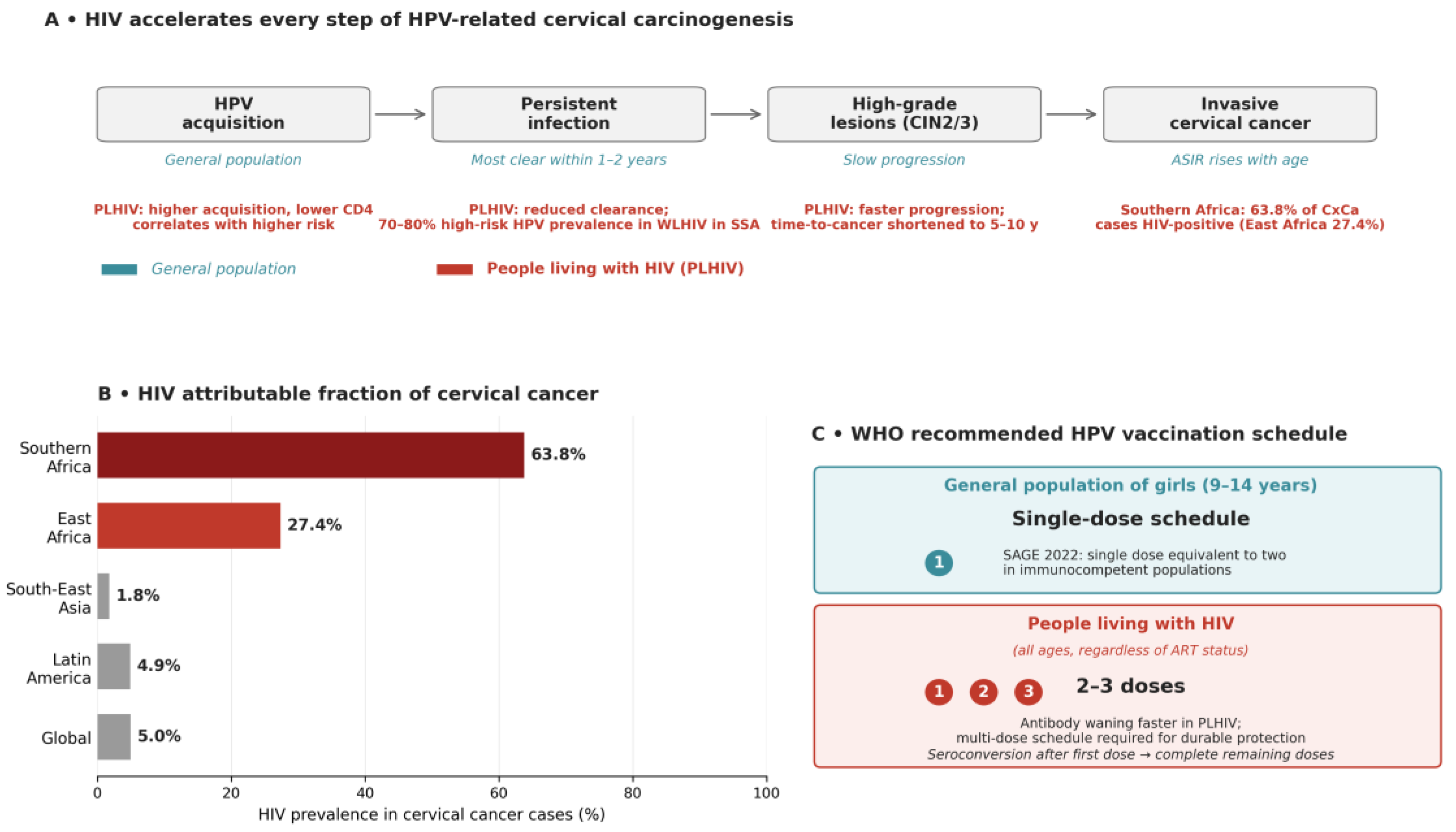
Figure 2.
HPV vaccination coverage in the African Region and the PLHIV visibility gap. Panel A: AFRO regional HPV coverage by age 15 (females), 2019–2024, showing a 29-percentage-point (pp) rise but a persistent 43-pp gap below the 2030 elimination target. Panel B: country-level HPV coverage by age 15 (females), HIV-status disaggregation, and current vaccination schedule for the five ESA workshop countries. Only Eswatini can routinely disaggregate HPV vaccination by HIV status. Four of the five countries have transitioned to single-dose schedules for the general population between 2023 and 2024. Malawi's first vaccinated cohorts have not yet reached age 15, so the by-age-15 indicator is not yet applicable. WUENIC HPV coverage data show substantial year-to-year volatility, reflecting denominator definitions, multi-age cohort corrections, and schedule transitions [22]; cross-country comparison should be interpreted with caution. Sources: Amani et al. (2025); WHO Immunization Data Portal (WUENIC 2024, accessed November 2025); WHO AFRO (2025).
Figure 2.
HPV vaccination coverage in the African Region and the PLHIV visibility gap. Panel A: AFRO regional HPV coverage by age 15 (females), 2019–2024, showing a 29-percentage-point (pp) rise but a persistent 43-pp gap below the 2030 elimination target. Panel B: country-level HPV coverage by age 15 (females), HIV-status disaggregation, and current vaccination schedule for the five ESA workshop countries. Only Eswatini can routinely disaggregate HPV vaccination by HIV status. Four of the five countries have transitioned to single-dose schedules for the general population between 2023 and 2024. Malawi's first vaccinated cohorts have not yet reached age 15, so the by-age-15 indicator is not yet applicable. WUENIC HPV coverage data show substantial year-to-year volatility, reflecting denominator definitions, multi-age cohort corrections, and schedule transitions [22]; cross-country comparison should be interpreted with caution. Sources: Amani et al. (2025); WHO Immunization Data Portal (WUENIC 2024, accessed November 2025); WHO AFRO (2025).
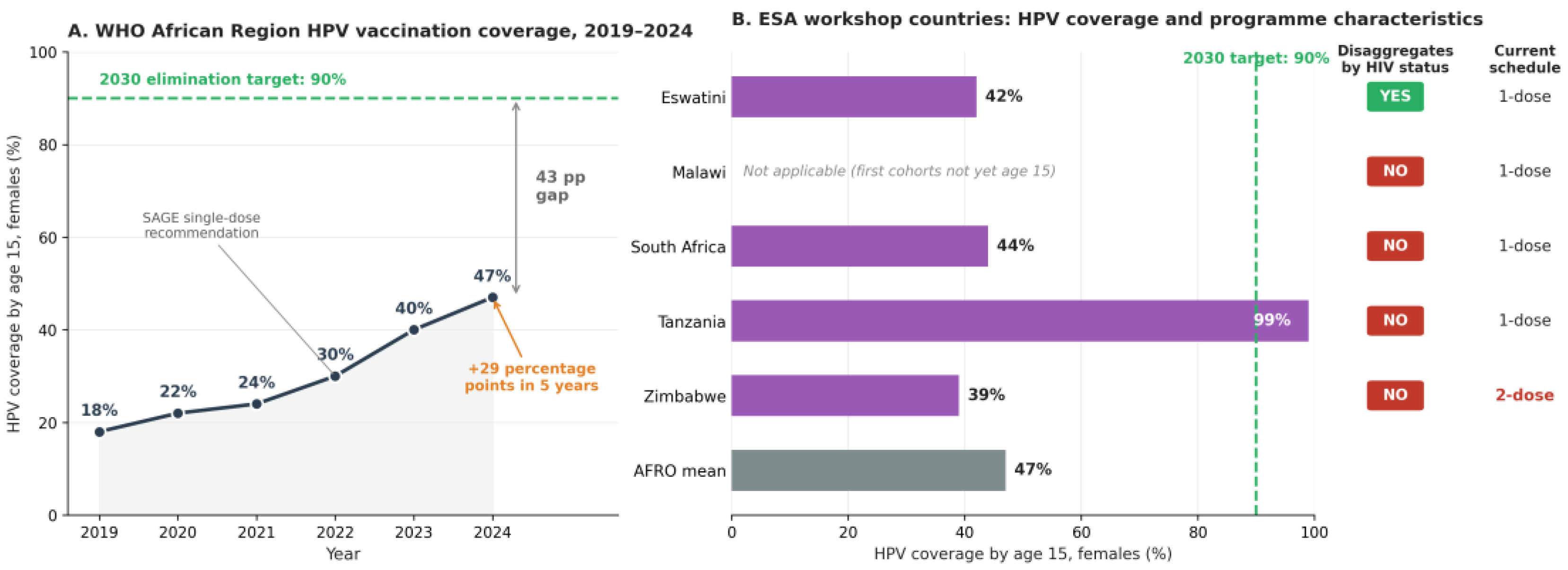
Figure 3.
From siloed to integrated service delivery for HPV vaccination in people living with HIV. The current state shows parallel immunisation and HIV programmes with limited data exchange; the integration approach works across four axes (policy and eligibility, delivery platforms, data systems, and financing) anchored by joint programme planning. Source: WHO AFRO sub-regional workshop, Cape Town, November 2025 [22].
Figure 3.
From siloed to integrated service delivery for HPV vaccination in people living with HIV. The current state shows parallel immunisation and HIV programmes with limited data exchange; the integration approach works across four axes (policy and eligibility, delivery platforms, data systems, and financing) anchored by joint programme planning. Source: WHO AFRO sub-regional workshop, Cape Town, November 2025 [22].
Disclaimer/Publisher’s Note: The statements, opinions and data contained in all publications are solely those of the individual author(s) and contributor(s) and not of MDPI and/or the editor(s). MDPI and/or the editor(s) disclaim responsibility for any injury to people or property resulting from any ideas, methods, instructions or products referred to in the content. |
© 2026 by the authors. Licensee MDPI, Basel, Switzerland. This article is an open access article distributed under the terms and conditions of the Creative Commons Attribution (CC BY) license (http://creativecommons.org/licenses/by/4.0/).
Copyright: This open access article is published under a Creative Commons CC BY 4.0 license, which permit the free download, distribution, and reuse, provided that the author and preprint are cited in any reuse.


