

Submitted:
02 June 2026
Posted:
04 June 2026
You are already at the latest version
Abstract
The mammalian respiratory system stands as a frontline barrier, constantly exposed to environmental insults, balancing defensive immunity with gas exchange. Historically considered sterile, the lung harbors a dynamic, low-biomass microbiome that evolves con-tinuously in response to pulmonary pathologies. Accumulating evidence underscores that respiratory health and structural recovery are not autonomous but are critically integrated with distal microbial systems, especially the intestinal tract, through the gut-lung axis (GLA). This review characterizes the GLA as a bidirectional communication highway fueled by immune pathways, microbial metabolites, and direct microbial translocations. During acute or chronic injuries, such as COVID-19, COPD, asthma, and idiopathic pul-monary fibrosis (IPF), the gut microbiota serves as a remote metabolic "rheostat". It delivers pivotal signaling molecules, such as short-chain fatty acids (SCFAs) and tryptophan me-tabolites (indoles), to determine whether the respiratory epithelium undergoes functional repair or maladaptive, fibrotic remodeling. Mechanistically, gut-derived butyrate enhances mitochondrial oxidative phosphorylation to supply the metabolic yield required for resi-dent progenitors, such as Alveolar Type 2 (AT2) cells, to transition from quiescence to pro-liferation. Conversely, critical lung illness disrupts this homeostasis via a "pathological circuit," where severe pulmonary inflammation drives gut permeability, fecal dysbiosis, and the subsequent translocation of pathogen-associated molecular patterns (PAMPs, such as LPS) or gut-associated bacteria back into the pulmonary circulation. This review highlights the systemic nature of lung regeneration, which depends heavily on intestinal health through the gut-lung axis. Ultimately, leveraging these remote microbial networks through precision postbiotics, dietary priming, or microbiota transplantation represents a crucial frontier in precision medicine to promote definitive alveolar repair.
Keywords:
gut-lung axis
; gut microbiome
; lung microbiome
; dysbiosis
; microbial crosstalk
; microbial metabolites
; lung injury
; progenitor cell regeneration
; alveolar epithelium
1. Introduction
The microbiome comprises all the microbes and their gene sequences, including homologous sequences, in a specific habitat at a specific time [1,2]. It includes all organisms, not just bacteria, but also archaea, fungi, and viruses. Various methods for obtaining DNA (metagenomics), RNA, metabolites, and proteins have been reported [3,4]. In the past, the oropharyngeal and gut microbiomes have been extensively studied, but the lungs have been considered sterile. However, this perception is changing thanks to advances in detection technologies, such as PCR, next-generation sequencing (NGS), and single-cell RNA/DNA sequencing [5,6]. Unlike the intestinal microbiome, the lung microbiome is mostly composed of bacteria, fungi, and viruses. But its composition and size change dynamically under the influence of different lung diseases, similar to the digestive tract [7,8]. For instance, pathogenic Proteobacteria, especially Haemophilus, were more prevalent in patients with asthma and COPD, whereas Candida albicans was more prevalent in patients with cystic fibrosis (CF) [9,10,11]. The lung microbiome has also been reported to influence lung development, as germ-free rodents show reduced lung parenchyma and less-developed alveoli [12]. Moreover, this lung microbiome is closely linked to the oropharyngeal and gut microbiomes because of their proximity, a relationship that has been extensively studied as the gut-lung axis (GLA). The gut-lung axis is a bidirectional interaction between gut and lung microbes that influences the progression of intestinal and lung diseases through immune-related pathways (such as immune cells, cytokines, and chemokines), microbial products, metabolic pathways, and direct microbial transport.
The lungs are among the few internal organs exposed to a wide range of environmental pollutants, including organic, inorganic, and biological agents from diverse natural and anthropogenic sources. They are constantly at risk of developing simple to complex disorders, including acute and chronic lung injuries [13]. These injuries not only have distinct but also complex molecular mechanisms, processes, and tissue damage, but also undergo markedly different repair and regeneration. This lung regeneration is not just about the proliferation and differentiation of various cell types with progenitor capacity, but also involves contributions from neighboring cells and microenvironmental factors (e.g., the microbiome) through various molecular pathways [14]. Signaling pathways such as Wnt/β-catenin [15,16,17], Notch [18,19], and Yes-associated protein/Transcriptional co-activator with PDZ-binding motif (YAP/TAZ) [20,21,22] have been shown to contribute to lung regeneration. Meanwhile, microbiome-related pathways could also contribute to lung regeneration through the GLA, such as gut-derived SCFAs (e.g., butyrate), which enhance mitochondrial oxidative phosphorylation in alveolar type 2 cells (AT2s) and provide the high energetic yield required for the transition from quiescence to proliferation [23].
Several recent reviews have examined aspects of the gut-lung axis in the context of pulmonary disease [24,25,26,27]. These contributions have advanced our understanding of dysbiosis, immune crosstalk, and metabolic signaling along the GLA. However, existing reviews share a common limitation: they frame the gut-lung relationship primarily as a modulator of pulmonary inflammation, without addressing whether and how gut-derived signals determine the outcome of lung tissue repair. The fate of the injured lung is not determined at the peak of inflammation, but at the moment progenitor cells commit to either regenerative proliferation or maladaptive senescence. As emerging evidence suggests, this decision is governed epigenetically and metabolically by gut microbial signals. Furthermore, prior reviews have largely treated the three communication conduits of the GLA (immune cell trafficking, postbiotic metabolite signaling, and direct microbial translocation via the mesenteric lymphatic route) as parallel phenomena rather than as an integrated circuit whose balance determines lung progenitor cell fitness. Here, we address this gap by adopting the AT2 cell niche as an organizing framework to synthesize current mechanistic evidence across five major lung diseases (COVID-19, COPD, asthma, IPF, and lung cancer) and to examine how GLA dysregulation compromises or supports the regenerative capacity of the lung epithelium. In this review, we aim to summarize our current knowledge of the role of the gut-lung microbial axis in lung damage caused by various diseases and in subsequent repair and regeneration.
2. Gut Microbiome
The microbiota colonizing our bodies is estimated to outnumber our body cells, with the number continuing to increase as more candidate microorganisms are identified [3,28]. While the gastrointestinal (GI) tract is the most colonized organ, with over 70% of all the microbes of the human body in the colon alone [29]. This microbial ecosystem is developed through microbial acquisition during aging and then serves as an “organ” that provides many vital functions to the host, but is influenced by host factors, environmental cues, and self-assembly rules exerted by microbes themselves [3]. However, these critical functions can be destroyed and cause significant consequences due to the absence/disordered of gut microbiota or antibiotic treatment-caused dysbiosis, such as improper development of immunity and colitis [30]. It is daunting to deconstruct the mechanisms underlying microbiome effects on the host and the disease process because of the enormous taxonomic, genetic, and metabolic diversity of gut microbiomes, and the interactions between host and this microbial community, or inside the microenvironment itself [31].
Therefore, it is no surprise that gut microbial dysbiosis, characterized by reduced and often unstable microbial diversity, is linked to numerous diseases, affecting not only the local organ but also systems beyond it. For example, the microbiota in the upper GI tract of ICU patients shifts from a sparse population to one dominated by a few species, including Escherichia coli (E. coli), Enterococcus spp., and Pseudomonas aeruginosa (Ps. aeruginosa). Moreover, these altered intestinal microbiomes can extend their influence beyond the intestine and impact systemic processes such as metabolism and brain functions through the gut-brain axis. Importantly, these effects can be two-way. Microbiome dysbiosis and inflammation in the gut have been linked to the development of Amyotrophic Lateral Sclerosis (ALS), while the progression of ALS can affect the gastrointestinal tract, as evidenced by the common complaint of constipation in ALS patients [32,33,34]. Similarly, there is no doubt that lung health can be affected by GI tract health and intestinal microbial homeostasis via the gut-lung axis.
3. Lung Microbiome
The lung had long been recognized as a sterile organ before the discovery of lung microbiota, which debunked this dogma [35]. Currently, the lung microbiome is drawing increasing attention and is being further clarified through the application of advanced detection technologies, such as polymerase chain reaction (PCR), next-generation sequencing (NGS), 16S rRNA genomic sequencing, and shotgun genomic sequencing [2,5]. Unlike the GI tract, which is colonized by approximately more than 100 trillion microorganisms of bacteria (overwhelming majority), fungi, viruses, including phages, archaea, protists, and helminths, the lung microbiome represents a much smaller community (around 10 to 100 microbes per 1000 human cells) composed of bacteria, fungi, and viruses [7,36]. These lung bacteria mainly include Prevotella, Veillonella, Streptococcus, and Fusobacterium species, due to the environmental differences between the GI tract and the alveolar space of the lung [27,37,38]. The respiratory tract can be structurally divided into the upper and lower airways. The upper airway comprises the nasal passages, which are enriched with microbial species such as Corynebacterium spp., Dolosigranulum spp., and Moraxella spp., and the pharynx, which is dominated by Streptococcus spp. [39,40,41]. Unlike the microbe-favoring conditions of the gut, oral cavity, and upper airways, the lower airway appears to provide an unfavorable environment (i.e., limited nutrients and high oxygen stress) for microbial survival and is colonized primarily by anaerobic species, such as Gram-negative Prevotella and Veillonella spp., and gram-positive Coprococcus and Dorea spp. [35,41,42]. This microbial profile in the lung is more similar to oral than to gut microbial populations, given its location, but is nevertheless influenced by both the mouth and the intestine. It is also worth noting that the composition and dominant community of the lung microbiome vary dynamically with lung health and pathogenetic conditions [2].
However, this environment will change during critical illness, leading to lung dysbiosis by altering local physicochemical and metabolic conditions within the alveoli, including oxygen concentration, pH, and nutrient availability [43,44]. For example, in acute respiratory distress syndrome (ARDS), the protein-rich fluid fills the previously empty alveolar airspaces, providing a gut-like, favorable energy milieu for microbial proliferation [27,45]. The enrichment of the lung microbiome with gut-associated microbes, such as Bacteroidetes and Enterobacteriaceae, has been observed in patients with ARDS [46,47]. These findings not only support the potential causal role of the lung microbiome in the pathogenesis of pulmonary diseases but also highlight the importance of the gut-lung axis in lung development, health, and disease progression. The gut-lung axis is bidirectional and influences the progression of intestinal and lung diseases through metabolism, immunity, microbial translocation, and other mechanisms by altering the composition and size of the microbiome.
4. Crosstalk Between the Gut and the Lung System
It is widely acknowledged that lung and gut microbiomes are crucial for the local development and maintenance of immune homeostasis. Changes in their structure, quantity, and diversity of these microbiomes, known as dysbiosis, can compromise the immune barrier, trigger abnormal inflammatory responses, and increase the host’s susceptibility to various pathogens. Furthermore, the crosstalk between the GI tract and the respiratory system, called the gut-lung axis (GLA), is a bidirectional communication system rooted in their shared embryonic origin from the endoderm. Lung epithelium develops from ventral anterior foregut endoderm and is shaped by mesenchymal signals such as Fibroblast Growth Factor (FGF), Bone Morphogenetic Protein (BMP), Wnt, Retinoic Acid (RA), Hedgehog, and Notch, which are also key regulators of intestinal development [48]. This structural and biological foundation allows these two organs and their microorganisms to communicate through a sophisticated network of immune, endocrine, and neuroimmune pathways [27,36] (Figure 1).
4.1. Immune-Related Interactions
4.1.1. Immune Cells
The common mucosal immune system provides a primary mechanism for cellular crosstalk, where immune cells activated in the gut-associated lymphoid tissue (GALT) migrate to the bronchus-associated lymphoid tissue (BALT) via the systemic circulation and mesenteric lymphatics [49,50]. The T and B lymphocytes activated in the gut express specific homing receptors, such as α4β7 integrin and CCR9, allowing them to migrate directly to the lung. This imprinting is critically dependent on retinoic acid derived from vitamin A in gut dendritic cells, which drives α4β7/CCR9 expression and gut-homing phenotypes [51,52,53]. Once in the respiratory mucosa, B cells differentiate into plasma cells that produce secretory immunoglobulin A (sIgA), which has been implicated in the pathogenesis and progression of various lung diseases, thereby establishing a coordinated mucosal defense [54,55]. Moreover, gut-derived regulatory T cells (Tregs) and Th17 cells are critical for maintaining pulmonary homeostasis [27,56]. For example, butyrate, one of the short-chain fatty acids (SCFAs), can promote Foxp3+ Treg differentiation to alleviate allergic airway inflammation [57].
These gut microbiomes not only influence adaptive immune cells but also “prime” lung-resident innate cells. It has been reported that intestinal-derived metabolites, such as propionate, can reprogram alveolar macrophages (AMs), altering their inflammatory responses and phagocytic capacity during lung injury [23]. Furthermore, recent studies have identified a novel subtype of gut-derived type II innate lymphoid cells (ml-ILC2s) that migrate to the lung and play a pivotal role in the pathophysiology of asthma [24,58]. There is growing evidence that antigen and microbial cues in the GALT influence the migration of T cells, ILCs, and B cells to the lung, which can either cause damaging inflammation or promote resolution and healing, depending on microbial health and the Treg/Th17 balance. Microbial imbalance in the gut can weaken barrier integrity, change SCFA production, and shift the Treg/Th17 balance toward a Th17-dominant, hyperinflammatory lung response, thereby worsening ALI/ARDS and sepsis-related respiratory failure [27,59,60,61]. These changes were also seen in neonatal primate models with antibiotic-induced dysbiosis and could be partially corrected with fecal microbial transplantation (FMT) [62]. These FMT benefits can also be achieved through microbiota-supportive strategies, such as dietary fiber/SCFAs and probiotics, which can enhance Tregs and improve lung outcomes in asthma, sepsis, and ARDS failure [27,59,60,61].
4.1.2. Immune Cytokines and Chemokines
In our immune system, cytokines and chemokines act as molecular messengers, converting microbial signals into widespread inflammatory or anti-inflammatory responses in the GLA. Intestinal dysbiosis or “leaky gut”, characterized by increased gut permeability, facilitates the translocation of lipopolysaccharides (LPS) and other pathogen-associated molecular patterns (PAMPs). These trigger TLR4-mediated signaling cascades, most notably the NF-kB pathway, leading to the production of proinflammatory cytokines such as IL-6, TNF-α, and IL-1β in the lung [23,61,63]. In severe asthma, gut-derived LPS has been shown to induce elevated oncostatin M (OSM) expression through the TLR4-MyD88 pathway, which drives mucus hypersecretion [26,64]. Conversely, beneficial metabolites (such as SCFAs) bind to G-protein-coupled receptors (GPCRs), including GPR41, GPR43, and GPR109A, on lung cells [65,66]. This interaction promotes the release of cytokines such as IL-10 and IL-18 and enhances IL-22 production by type 3 innate lymphoid cells (ILC3s), which is crucial for maintaining the integrity of the respiratory epithelial barrier [67,68,69].
As we mentioned earlier, the gut-lung axis is a bidirectional communication where intestinal hyperpermeability both results from and exacerbates lung inflammation, as discussed in reviews of sepsis, ARDS, COPD, COVID-19, and pulmonary fibrosis [25,27,60,70,71,72]. In ARDS and ventilator-induced lung injury, pulmonary cytokines (TNF-α, IL-1β, and IL-6) could reach the intestine via the circulation, which has been tightly linked to disruption of intestinal tight junctions (e.g., claudins, occludin, ZO-1), MLCK activation, and increased intestinal permeability [27,73,74].
4.2. Microbial Products and Metabolic Pathways
The metabolic output of the gut microbiota functions as a systemic signaling mechanism, connecting the intestinal lumen to the alveolar space. These small molecules, or “postbiotics,” enter the portal and systemic circulation, directly influencing the lung’s inflammatory state and its ability to repair epithelium. Among these, SCFAs, bile acid derivatives, tryptophan metabolites, and bacterial extracellular vesicles have received the most attention because they link intestinal microbial activity to immune regulation and tissue repair.
4.2.1. Short-Chain Fatty Acids (SCFAs)
Short-chain fatty acids (SCFAs), mainly acetate (C2), propionate (C3), and butyrate (C4), are primarily (90%) absorbed in the intestine and are present in the molar ratio of 60:25:15 in the colonic lumen. Smaller amounts of other SCFAs, such as formate, valerate, and caproate, are also produced. However, this SCFA ratio can vary depending on the composition of the intestinal microbiota, diet, fermentation site, and host genotype. The fermentation of dietary fibers mainly occurs in the proximal colon, which hosts a highly diverse and stable bacterial community with the greatest substrate availability (e.g., Bacteroides and Faecalibacterium prausnitzii) [66,75].
As noted earlier, SCFAs can bind to G-protein-coupled receptors (GPCRs), specifically GPR41 (FFAR3), GPR43 (FFAR2), and GPR109A (HCAR1), which are present on lung immune cells and alveolar epithelial cells [65,66,76]. Activating these receptors has been shown to inhibit LPS-induced inflammatory signaling and decrease TNF-α and edema in models of acute lung injury [74,76,77]. Additionally, supraphysiologic SCFA levels (10-25 mM) were reported to enhance TNF-α-induced IL-6 and CXCL8 in human lung fibroblasts and airway smooth muscle (ASM) via FFAR3-p38 MAPK signaling [78]. As a histone deacetylase (HDAC) inhibitor, butyrate has been found to promote a pro-regenerative gene expression profile in alveolar type II cells (AT2s) and to enhance the differentiation of Treg cells by increasing histone acetylation through the gut-lung axis, which could transmit LPS and SCFA to the lungs and create a primed lung immunometabolic tone [23]. Similarly, hematopoiesis of dendritic cell precursors in the bone marrow can be influenced by elevated circulating propionate levels, favoring a non-allergic immune phenotype in the lungs [79]. It is worth noting that AT2 regeneration requires intact fatty acid oxidation and acetyl-CoA, which can be restored with acetate supplementation, thereby further normalizing abnormal repair processes in AT2 cells [80]. This supports the idea that SCFAs can act as metabolic substrates shaping epigenetic and regenerative programs in lung progenitors.
SCFAs, mainly acetate, propionate, and butyrate, are among the best-characterized gut-derived metabolites with potential relevance to lung repair. Overall, the available data support SCFAs as metabolic and epigenetic regulators that may help determine whether injured lung epithelium undergoes effective regeneration or maladaptive remodeling.
4.2.2. Bile Acids and Tryptophan Metabolites
Primary bile acids (e.g., cholic acid (CA), chenodeoxycholic acid (CDCA)) are produced from cholesterol in the liver, then conjugated and released into the gut. A small amount reaches the colon, where bacteria, including Clostridium scindens and related Firmicutes, deconjugate and 7α-dehydroxylate them via bai operons, forming secondary bile acids (e.g., primarily deoxycholic acid (DCA), lithocholic acid (LCA)) [81]. These can interact with the FXR (Farnesoid X receptor) and TGR5 (Takeda G protein-coupled receptor 5), which have been shown to reduce inflammation, vascular remodeling, and fibrosis in experimental models of pulmonary hypertension and fibrosis using bile acid-derived agonists [82]. Conversely, exposure to high localized bile acids, including lithocholic acid (LCA), deoxycholic acid (DCA), and chenodeoxycholic acid (CDCA), in the lung (e.g., microaspiration) can be harmful, such as causing alveolar epithelial injury, epithelial-mesenchymal transition, and fibroblast activation via FXR-dependent and independent pathways in vitro and ex vivo IPF tissue [83].
On the other hand, gut bacteria such as Lactobacillus, Bifidobacterium, Peptostreptococcus, and Clostridium spp. metabolize dietary tryptophan into indole derivatives, many of which are Aryl Hydrocarbon Receptor (AhR) ligands [84,85]. These microbial Trp catabolite-induced AhR signals support barrier integrity, IL-22 production, and antimicrobial defense in the intestine, and these same pathways are involved in respiratory protection [84,85,86]. Indole-3-aldehyde from Lactobacillus activates the AhR/IL-22 axis, promoting epithelial protection and antifungal resistance at mucosal surfaces [87,88]. It is also being studied for lung diseases like cystic fibrosis [89,90]. Indole-3-aldehyde also directly reduces lung inflammation in COPD models by activating pulmonary AhR and inhibiting HDAC5/6 (histone deacetylase)-NF-κB-NLRP3 (Nod-like receptor pyrin domain 3) signaling, thereby lowering cytokine levels and tissue damage [91]. In a gut–lung model, dietary tryptophan or indole, along with Lactobacillus plantarum, reversed antibiotic-induced defects in lung defense, restored alveolar macrophage phagocytosis, and reduced the Pseudomonas aeruginosa burden through intestinal AhR–IKKβ-ROS signaling [86].
4.2.3. Bacterial Extracellular Vesicles
Bacterial extracellular vesicles (BEVs) are nanoscale vesicles released by both Gram-positive and Gram-negative bacteria that contain proteins, lipids, DNA/RNA, and pathogen-associated molecular patterns (PAMPs). These BEVs cross the intestinal epithelium via transcytosis or paracellular pathways and then enter the portal and systemic circulations, reaching tissues outside the intestine. They have been identified as a common mechanism for microbiota-organ communication and systemic disease regulation [92,93,94].
Gut-derived commensal/probiotic (e.g., Bifidobacterium) BEVs could alter cytokine and oncogenic pathways in lung tumors by increasing CD8 T-cell infiltration and enhancing the efficacy of anti-PD-1, suggesting remote gut-lung communication via BEVs [95]. Researchers also highlighted that commensal BEVs may help maintain a tolerogenic infection-resistant lung immune landscape [96,97]. When entering the bloodstream and reaching the lungs, Lipopolysaccharide (LPS), a component of Gram-negative bacterial walls, activates the TLR4/MyD88/NF-kB pathway and initiates a pro-inflammatory response that characterizes ARDS and severe COVID-19 [98,99,100].
Although there is no direct evidence that circulating gut microbial metabolites physiologically protect the lung, promote surfactant homeostasis, or drive alveolar fluid clearance, we strongly believe that these microbial products from the gut could exert pro-regenerative and edema-clearing effects in the lung, which have been reported in multiple tissues by modulating immune and inflammatory pathways.
4.3. Direct Microbial Transportation
As the richest and most complex microbial community in the human body, the gut microbiota comprises trillions of microorganisms, including bacteria, archaea, fungi, viruses, and protozoa [36]. Although the respiratory tract has a less abundant and diverse microbiota than the GI tract, it hosts multi-species microbial communities. These microbes can crosstalk directly by transporting between the gut and lungs via systemic dissemination, the mesenteric lymphatic system, and the oral-gut-lung continuum, especially under dysbiosis conditions with a disrupted epithelial barrier and mucosal immune system.
Oralome, or the oral microbiome, comprises over 700 microbial species in the oral cavity, making it the second-largest microbial community in humans after the gastrointestinal tract [41]. It is not surprising that these microbiomes play a vital role in maintaining pulmonary immune homeostasis via the oral-lung axis, considering the anatomical connection between the oral cavity and the respiratory tract. For instance, the oral cavity is an active site of infection and serves as a reservoir for pathogens involved in respiratory diseases [101]. Additionally, a small amount of SCFAs derived from the oralome has been shown to affect the host immune response in various lung diseases [102,103]. Furthermore, the oral cavity and upper airway function as a metaphorical “microbial gatekeeper” to safeguard respiratory health [104]. The oral, upper airway, and gut microbiota each establish and maintain a highly interactive microbial community with the lower airway microbiome, and highly dynamic microbial interactions likely occur in the oral cavity, airways, and gut. These bidirectional communications through microbial translocations have been highlighted in diseases such as colorectal cancer and COVID-19 [105,106]. In acute lung injury (ALI) and acute respiratory distress syndrome (ARDS), cytokines produced from pulmonary inflammation can circulate and disrupt intestinal epithelial integrity, leading to intestinal hyperpermeability. This causes gut microbes, such as Bacteroidetes and Enterobacteriaceae, to translocate across the intestinal mucosa and even enter the lung [46,47]. Conversely, in DSS-induced colitis models, the loss of intestinal tight-junction proteins and increased FITC-dextran permeability coincide with the translocation of GFP-labeled gut bacteria into the lungs, where they induce IL-17-driven neutrophilic inflammation and airway hyperresponsiveness [63].
The intestinal microbiome can be directly transferred to the lung via the mesenteric lymphatic network, one of the two parallel systems for intestinal outflow drainage, along with the portal venous circulation. Interstitial fluid from the gut enters lacteals, travels through the collecting mesenteric lymphatics, the cisterna chyli, and the thoracic duct, then empties into the left subclavian vein. This process allows gut-derived lymph to reach the right heart and pulmonary circulation before any hepatic filtration. This lymph flow bypasses Kupffer cells and first-pass metabolism, enabling harmful molecules or microbiota to reach the lung even when portal blood appears relatively free of bacteria and endotoxin [107,108,109]. Once delivered to the pulmonary microcirculation, mesenteric lymph-borne mediators prime and recruit neutrophils, increase endothelial permeability, and activate resident macrophages and epithelial cells [110,111,112,113,114,115]. In the colon ascendens stent peritonitis (CASP) models, septic mesenteric lymph was enriched with TNFα, IL-1β, IL-6, and phospholipase A2, which promote endothelial apoptosis and barrier disruption. Draining this lymph reduces cytokine expression, preserves pulmonary microvascular endothelium, and decreases edema [111]. Across sepsis and trauma models, the resulting ALI exhibits protein-rich edema, polymorphonuclear sequestration, and diffuse alveolar damage, creating an environment that is likely to hinder AT2s-mediated epithelial regeneration, even though direct AT2-specific data remain limited [107,108,109].
5. Contributions of the Microbial Gut-Lung Axis to Lung Damage and Regeneration
The primary role of the mammalian respiratory system is to exchange gases with the blood, which is then circulated throughout the body by the cardiovascular system. As the frontline barrier to inhaled particles, pathogens, and environmental toxic chemicals, the lung epithelium forms a multicellular, immune-primed epithelial barrier and is populated by a powerful immune system composed of hematopoietically derived myeloid and lymphoid cells [116]. This setup serves as a “first contact” for sensing and defending against microbial invasion and environmental pollutants. The respiratory system is divided into two primary functional parts: gas-conducting tubular airways and gas-exchanging alveolar sacs, with cell composition and function varying significantly along the proximal-to-distal axis of the respiratory tract [116,117,118]. The proximal airways start in the trachea and bronchi, then branch into smaller airways called bronchioles. The airway lining includes basal cells, which act as stem cells; goblet cells, which produce mucus; and ciliated cells, which move mucus and particles. Further along, secretory club cells are found [119,120]. The distal lung contains millions of alveoli that form a honeycomb-like structure, providing a vast surface area for gas exchange. Alveoli are lined with thin, flat, squamous alveolar type 1 (AT1) cells, which account for over 95% of the gas-exchange surface and are responsible for gas exchange [119,121]. They also contain cuboidal alveolar type 2 (AT2) cells, which make up only 2-5% of the alveolar surface but are nearly twice as numerous as AT1 cells. These AT2 cells perform multiple roles by secreting surfactant, maintaining fluid balance, and regulating immune responses, while also functioning as stem cells involved in lung homeostasis, repair, and regeneration [119,122].
Studies have shown that the mechanism of tissue repair varies considerably depending on the extent of damage (acute vs. chronic), the site of damage (airway vs. alveoli), and the type of damage-causing agent (pathogen, particle, or toxin) [117]. The importance of these regenerative capabilities has been underscored by the COVID-19 pandemic, which caused acute lung injury in millions worldwide, and by chronic obstructive pulmonary disease (COPD), the third leading cause of death globally [116,123]. These strategies for repairing and regenerating structures and lost cells are not limited to local lung tissues but extend beyond, including the GI tract through the gut-lung axis (Figure 2).
The lung, despite remaining generally quiet, has a remarkable ability to regenerate, with resident progenitor cell populations dividing and differentiating into various cell types in response to injury [124]. Lung regeneration is a systemic process where the gut microbiota functions as a distant metabolic “rheostat.” Beyond merely acting as a barrier, microbial signals determine whether the lung undergoes functional repair or maladaptive remodeling. As we mentioned earlier, gut-derived SCFAs (e.g., butyrate) enhanced mitochondrial oxidative phosphorylation in AT2s, providing the high energetic yield required for the transition from quiescence to proliferation [23]. Furthermore, microbial tryptophan metabolites (e.g., indoles) serve as ligands for the AhR on the alveolar surface. Activation of AhR is essential for maintaining the “stemness” of lung progenitor niches and safeguarding against damage caused by oxidative stress during acute injury [125].
Across disease states, the central question is not simply whether the microbiome is altered, but whether that alteration changes the regenerative trajectory of the injured lung. Therefore, each disease section below should be interpreted as a disease-specific test case for the broader concept that gut-lung microbial signaling influences progenitor-cell fitness, epithelial repair, and fibrotic remodeling.
5.1. COVID-19
Caused by the highly pathogenic severe acute respiratory syndrome coronavirus 2 (SARS-CoV-2), coronavirus disease 19 (COVID-19) has infected more than 770 million people and resulted in over 7 million deaths worldwide as of May 20, 2026, since the first case was reported in 2019 (https://data.who.int/dashboards/covid19/cases?n=c). This virus primarily targets respiratory tract cells, such as nasal epithelial cells and AT2 cells, because they express viral entry factors, including TMPRSS2 (Transmembrane protease, serine 2) and ACE2 (angiotensin-converting enzyme 2), which are regulated by the gut microbiota in the colon [106,126,127]. Under severe circumstances, it can cause pneumonia and acute respiratory distress syndrome (ARDS), which is characterized by noncardiogenic pulmonary edema, bilateral pulmonary infiltrates, and profound hypoxemia leading to respiratory failure [127]. The acute phase of ARDS results from endothelial injury and diffuse alveolar damage, while the late phase is characterized by impaired proliferation of AT2 cells and fibroblasts, followed by chronic inflammation and extensive alveolar fibrosis, leading to loss of normal lung architecture [128]. These alterations have been linked to the microbiomes of the lung and the digestive system. For instance, COVID-19 patients with an increased pulmonary microbial burden have a lower probability of recovery from invasive mechanical ventilation and a higher mortality rate [129,130]. The lung microbiome composition is associated with changes in TNF-α, and microbial factors may activate inflammasomes, leading to IL-1β release, which has been widely reported to play a critical role in AT2s proliferation and differentiation [131,132,133]. Similarly, intestinal dysbiosis in patients infected with SARS-CoV-2 has been associated with progression and severity of COVID-19 and is characterized by reduced numbers of anti-inflammatory bacteria, such as Bifidobacterium and Faecalibacterium, and reduced numbers of butyrate producers, including several genera from the Ruminococcaceae and Lachnospiraceae families [36].
Although SARS-CoV-2 has been shown to infect both AT1s and AT2s ex vivo, it primarily targets AT2s and ciliated airway cells [134,135,136]. However, reports have indicated the enrichment and significance of various progenitor cell types in regenerating damaged respiratory epithelium in COVID-19 patients, including AT2 cells, Krt5+ basal cells, and lung progenitor Tm4sf1+ and Krt5+ cells [137,138,139]. This suggests that different populations of proliferating progenitor cells are concentrated in areas of lung damage to help regenerate the trachea and alveoli after SARS-CoV-2 infection. This regeneration may also be influenced by intestinal health via the gut-lung axis, which is indirectly supported by the intestinal symptoms in COVID-19 patients (20-60%) and by the high expression of SARS-CoV-2 receptors (e.g., ACE2) in intestinal epithelial cells, as mentioned earlier [140]. These SARS-CoV-2-infected enterocytes could lead to severe intestinal dysbiosis and leaky gut, further impacting lung infection, damage, and regeneration. For instance, the potential link between gut-derived Trimethylamine N-oxide (TMAO) and lung regeneration may involve regulating vascular inflammation and endothelial damage [141]. Furthermore, the improvement observed in COVID-19 patients treated with probiotics highlights the crucial role of the gut microbiome in lung recovery, including cell regeneration and differentiation following damage, although the underlying mechanisms warrant further investigation [140,142].
5.2. Chronic Obstructive Pulmonary Disease (COPD)
Chronic obstructive pulmonary disease (COPD) affects over 400 to 600 million people and causes more than 3 million deaths each year, making it the third leading cause of death worldwide. It can be classified by five main risk factors: genetic predisposition, early-life events, infections, exposure to tobacco smoke, and air pollution [143,144]. Dyspnoea, chronic cough (often associated with phlegm), exercise intolerance, and episodic flare-ups of respiratory symptoms (also known as exacerbations) are common symptoms of COPD. This is due to its heterogeneous respiratory condition, characterized by injury and remodeling of the airways, lung parenchyma, and lung vasculature [144]. Although the resulting molecular endotypes may affect disease development, it is clear that the loss of lung structural integrity and regenerative capacity is a key driver of disease progression [143]. These capacities could also be influenced by the local microenvironment and by factors beyond it, including microbial composition and diversity. For instance, pulmonary pathogenic Proteobacteria, particularly Haemophilus, were more prevalent in COPD patients. In contrast, bacterial metabolites, such as adenosine, 5’-methylthioadenosine, sialic acid, tyrosine, and glutathione, are associated with a better prognosis in COPD [9,10,145]. Meanwhile, any association between COPD and the gut microbiome should be attributed to specific microbial taxa rather than to the microbiome as a whole. Increased abundances of genera such as Faecalicatena, Oscillibacter, Lawsonibacter, Flavonifractor, and Streptomyces, and reduced abundances of Lachnospira, Eubacterium, and Coprococcus, were associated with incident COPD [146].
Lung regeneration is the ability of the lung to repair itself after damage through the proliferation and differentiation of resident progenitor cells, along with many structural cell types, including mesenchymal, endothelial, and epithelial cells. Specifically, epithelial progenitor cells, such as bronchial epithelial cells and AT2s, regenerate different epithelial types throughout the respiratory tract and in the alveolar space when the lung is damaged by diseases such as COPD [143]. For example, a subpopulation of AT2 cells with transcriptional evidence of abnormal cellular metabolism and decreased stress tolerance was found to be crucial to COPD development [147]. Whether the gut microbiome directly influences the regeneration of lung damage caused by COPD remains largely unknown. However, skeletal muscle wasting (or sarcopenia), common among many COPD patients, has been reported to worsen due to gut dysbiosis. This condition could lead to a loss of muscle-derived myokines and create a systemic environment that promotes cellular aging in the lungs, along with gut-derived inflammatory cytokines (e.g., TNF-α and IL-17) [36,148,149]. Also, it has been proven that cigarette-smoking-induced COPD in mice can be affected through the gut-lung axis by modifying the composition of the intestinal microbiota using antibiotics or microbiome transplantation. Furthermore, treatment with vancomycin and ampicillin or a combination, unlike other antibiotics, was associated with reductions in IL-1β and TNF-α production by F4/80+CD11b+ macrophages and IL-17A in CD4+NKp46+ Th17 cells, along with an increase in IL-10 production by Th17 cells [150]. These cytokines, such as IL-1 and TNF-α, are widely reported to contribute to the alveolar regeneration [133,151]. Therefore, it is not surprising that the gut microbiome impacts lung progenitor cell regeneration during lung recovery from COPD through the gut-lung axis. For instance, it was reported that cigarette smoke depletes intestinal Bacteroidetes, which is an important source of acetate in the gut. While acetate, one of the SCFAs, has been highlighted for its critical role in the metabolic health of lung capillary endothelium [152,153].
5.3. Asthma
Asthma is a chronic respiratory disease associated with substantial illness and death, and has been diagnosed in more than 360 million people [154,155]. This disorder is prevalent worldwide, with much higher rates in high-income countries, despite its susceptibility in most individuals, and encompasses a wide spectrum of diseases characterized by shortness of breath, chest pain, wheezing, and coughing that vary in intensity over time [156,157,158]. These symptoms are primarily caused by airway inflammation, hyperresponsiveness, and airflow limitation, with a complex pathogenesis involving various genetic, environmental, and immunological factors [159,160]. It is the most common chronic inflammatory disease of the respiratory tract, characterized by leukocyte infiltration and tissue remodeling, with the latter typically referring to epithelial hyperplasia, collagen deposition, subepithelial basement membrane thickening, and fibrosis [160,161,162]. Dysbiosis of the microbiome in both the lung and the gut has been shown to underlie the pathogenesis of asthma, although most evidence is correlational rather than mechanistic. For example, an increase in pathogenic communities (e.g., Haemophilus, Staphylococcus, and Actinomyces) in the lung microbiota, along with a decrease in commensal bacteria (e.g., Prevotella and Veillonella) [2,163,164], and a reduced abundance of the intestinal Akkermansia, Bifidobacterium, and Faecalibacterium in early life has been associated with human asthma [59,165].
One of the central features of asthma is airway remodeling, including excessive proliferation of smooth muscle cells and subepithelial fibrosis, which is associated with enhanced differentiation of bronchial fibroblasts into myofibroblasts, primarily induced by transforming growth factor-β (TGF-β). These remodeling and later lung regeneration and recovery from asthma damage have been proposed to be driven by the gut-lung axis via the microbiome or microbial metabolites. High concentrations of Haemophilus, Fusobacterium, Neisseriaceae, Sphingomonas, and Porphyromonas in the trachea contribute to severe atopic asthma, whereas colonization of the intestinal tract by Lactobacilli and Bifidobacteria inversely contributes to the risk of allergy [166,167]. Moreover, 2 weeks of oral administration of Clostridium leptum increased the percentage and total number of Tregs in the spleens and mediastinal lymph nodes. They enhanced IL-10 and transforming growth factor-β1 (TGF-β1) production in the lungs, thereby negatively regulating asthma [168]. Interestingly, the Chinese herbal formula Tingli Dazao Xiefei Decoction (TD) was reported to ameliorate NO-CO metabolism in the lung and, indirectly, in the intestine, ultimately achieving co-regulation of lung and intestinal inflammation, immune imbalance, cellular barrier damage, oxidative stress, and intestinal bacterial disorders in asthma in vivo and in vitro [169]. Although there is no doubt that the lung and gut microbiomes contribute to cell proliferation, differentiation, regeneration, and recovery in asthma, the rationale behind this remains largely unknown and warrants further investigation. However, given the growing evidence for the role of the lung microbiome in the development, severity, and heterogeneity of asthma, it is reasonable to consider the microbiome a specific target for manipulation in asthma prevention and/or treatment. Current treatment modalities for asthma include bronchodilators, antibiotics, steroids, and, more recently, biologic therapy [170].
5.4. Idiopathic Pulmonary Fibrosis (IPF)
Idiopathic pulmonary fibrosis (IPF) affects over 3 million people and increases year by year, with the most prominent non-modifiable risk factors being male gender and age [171]. It is a chronic and progressive fibrotic lung disease characterized by scarring of the interstitium of the lungs, with high mortality and limited treatment options [171,172,173]. The complex pathophysiology of IPF, underpinned by alterations across many aspects of molecular and cellular physiology, including genetics, epigenetics, microRNAs, developmental reprogramming, cell-signaling pathways, apoptosis, metabolism, autophagy, and, more recently, the microbiome of the lung and gut, makes investigation more challenging and demands a systems-level approach to understanding its pathophysiology [171]. It is currently believed that pulmonary fibrosis results from repetitive injury to the lung epithelium, leading to fibroblast accumulation, myofibroblast activation, and matrix deposition. These injuries, together with innate and adaptive immune responses, dysregulated wound repair, and fibroblast dysfunction, drive recurrent tissue remodeling and self-perpetuating fibrosis. IPF is characterized by remodeling of the interstitium, distal airway, and alveolar spaces [172]. More recently, it has been established that the gut and lung microbiomes are involved in the etiology and progression of IPF via the gut-lung axis. For example, several studies have found significant alterations in microbial composition in the lungs or guts of IPF patients compared with healthy controls [174,175,176,177,178,179].
As mentioned earlier, in IPF, repetitive micro-injuries to alveolar epithelial cells trigger abnormal epithelial-fibroblast communication, which ultimately leads to abnormal extracellular matrix (ECM) accumulation and pathological lung remodeling [173]. More recent research has highlighted the important roles of stem cell (e.g., AT2) dysfunction and the extracellular matrix in mediating lung pathological remodeling and promoting fibrosis. These AT2 dysfunctions lead to failed regeneration, profibrotic epithelial-mesenchymal crosstalk, fibroblast activation, and ECM stiffening. For instance, knockout of the ubiquitin ligase Nedd4-2 in AT2 cells led to chronic lung disease that shared key features with IPF [180]. Conversely, intratracheal transplantation of AT2 cells or iPSC (induced pluripotent stem cell)-derived AT2 cells could reverse lung fibrosis [181,182]. Moreover, bidirectional communication between the gut and the lungs, or the gut-lung axis, mediated by interactions among microorganisms, immune functions, and metabolic products, has been proposed to play an important role in IPF. For example, changes in the gut microbiota could significantly alter the proportions of CD4+IL-6+ and CD4+IL-17A+ T cells in the lungs, thereby affecting pulmonary fibrosis by activating the IL-6/STAT3/IL-17A pathway [183]. In addition, intestinal microbial metabolites, such as amino acids, SCFAs, bile acids, and valproic acid, have also been found to be involved in IPF [184,185,186,187]. However, the specific mechanisms by which interactions within the gut-lung axis affect progenitor cell regeneration and differentiation, as well as damage and recovery from IPF-induced injury, remain unclear.
5.5. Lung Cancer
As one of the most aggressive and prevalent diseases worldwide, lung cancer accounted for 2.2 million new cases and 1.8 million deaths in 2020, more deaths than breast, colorectal, and prostate cancers combined [188,189]. It is broadly divided into two main histologic subtypes: small cell lung cancer (SCLC, 15% of cases) and non-small cell lung cancer (NSCLC, 85% of cases). NSCLC is further divided into adenocarcinoma, squamous cell carcinoma (SCC), and large cell carcinoma (LCC) [190]. Its tumor grows relatively slowly, with a later onset of invasion and metastasis compared to SCLC, which is a very aggressive malignancy with a poor prognosis and the worst pathological type of lung cancer. However, it is the least common lung cancer [190]. The process of lung cancer is quite complicated and heterogeneous, as a consequence of several genetic and epigenetic factors, particularly those associated with the activation of pathways involved in growth and inhibition [191]. These cell cycle regulation-related mutations lead to inhibited or accelerated cell proliferation and reduce the cells’ sensitivity to inhibitory signals, such as TP53, RB, and p16 [192]. Although genetics, gender, lifestyle, and environmental exposures, including biomass fuels, occupational exposures, and pollution, are risk factors for lung cancer, cigarette smoking is the most established and widely recognized risk factor, and incidence trends largely mirror regional smoking patterns [189]. More recently, symbiotic microbiota have emerged as important biomarkers and modulators of oncogenesis, including the lung and gastrointestinal tract microbiomes in the context of lung cancer. For example, lung cancer patients exhibit upregulated pulmonary Streptococcus and Staphylococcus and downregulated Streptomyces levels, which could lead to DNA damage, induce genomic instability, and alter host susceptibility to carcinogenic insults, thereby contributing to lung cancer development [2,193]. Similarly, in patients with lung cancer, upregulation of Bacillus and Akkermansia muciniphila, and downregulation of Bifidobacterium and Faecalibacterium in the gut microbiota were found to influence tumorigenesis by altering TNF-a- and LPS-induced inflammation [36,194,195].
Tumors have long been suspected of hijacking stem cell mechanisms that support tissue maintenance and repair. For instance, club cells in the airway, BASCs (bronchoalveolar stem cells), and AT2s in the alveoli have all been found to play a critical role in lung cancer tumorigenesis [196,197,198]. For example, KrasG12D-expressing mutant AT2 cells co-opt a regeneration program during tumorigenesis by affecting equivalent proliferative potential across heterogeneous mutant states, thereby driving oncogenic expansion through the Il1r1 and NF-kB program [196]. Moreover, these progenitor activities could also be affected by the microbiomes of both the local lung tissue and the intestinal tract. It was reported that intratumoral Roseburia, a well-known butyrate-producing bacterium, could promote lung cancer metastasis. That butyrate could directly promote lung cancer cell invasion by increasing H19 and MMP15 expression and inducing M2 macrophage polarization [199]. Meanwhile, gut microbiome alterations resulting from Lcn2 loss fostered the proliferation of proinflammatory bacteria of the genus Alistipes, triggering gut inflammation that propagated systemically, inducing immunosuppression within the tumor microenvironment, augmenting tumor growth through an IL6-dependent mechanism, and dampening the response to immunotherapy [200]. However, how these microbiota, directly and indirectly via their products, affect lung cancer tissue damage and regeneration, especially in progenitor cells, remains largely unknown and requires further investigation. Clarifying these mechanisms can help us better understand the importance of the gut-lung axis in lung cancer pathogenesis and improve current treatments and future therapies.
6. Conclusions and Future Directions
The paradigm of pulmonary medicine has undergone a transformative shift, recognizing that the lungs do not function in isolation. The gut-lung axis (GLA) serves as a vital physiological bridge linking distal microbial ecology with local respiratory homeostasis. As detailed in this review, the intestinal microbiota functions as a “bioreactor,” converting dietary inputs into a systemic pharmacopeia of metabolites, including SCFAs, indole derivatives, and secondary bile acids, that calibrate the threshold for inflammatory activation and the efficiency of lung regeneration. Moreover, the GLA operates as a double-edged sword. In a state of eubiosis, it provides the “basal tonicity” required for immune surveillance and the metabolic fuel necessary for progenitor cell fitness. However, in the context of critical illness, such as ARDS or severe COVID-19, the axis becomes a “pathological circuit.” The breakdown of the intestinal barrier transforms the gut into a source of toxic lymph and translocated PAMPs, which bypass the liver and directly assault the pulmonary microvasculature. This transition from a homeostatic partner to a driver of multi-organ failure underscores the gut’s role as the “motor” of critical illness. Here, a central theme of this review is that successful recovery from lung injury is not merely the absence of inflammation but the active completion of lung regeneration. We have highlighted that the AT2 cell niche is highly sensitive to gut-derived signals. Microbial metabolites act as epigenetic and metabolic switches that determine whether an AT2 cell differentiates to restore gas exchange or enters a senescent state that leads to fibrosis. Consequently, persistent pulmonary symptoms in chronic diseases like COPD and IPF may reflect a state of “metabolic starvation” in which the lung lacks the microbial cues necessary to complete its regenerative program.
Therefore, the gut-lung axis is a frontier in precision medicine. By shifting our focus from the lung as an autonomous organ to the lung as part of a systemic microbial-host network, we open new avenues for therapeutic interventions. Future strategies that target the “gut end” of the axis, such as precision probiotics, postbiotics, or fecal microbiota transplantation (FMT), could revolutionize how we treat refractory lung damage and promote robust lung regeneration in the face of increasingly complex global respiratory threats [201].
Looking ahead, the gut-lung axis is no longer best understood as a one-directional inflammatory link between the intestine and the airways. Instead, it should be viewed as a bidirectional regulatory network that integrates immune trafficking, microbial metabolites, epithelial barrier integrity, and direct microbial dissemination to shape lung homeostasis and repair. In this review, we have emphasized that the AT2 cell niche is particularly sensitive to gut-derived signals and may serve as a key determinant of whether injured lung tissue regenerates successfully or progresses toward persistent dysfunction and fibrosis. This framework also highlights several important gaps. Much of the current evidence remains associative, and future studies should prioritize causal designs, longitudinal human cohorts, spatial multi-omics, and AT2-focused experimental systems. Mechanistic work is needed to define which microbial signals are protective, which are harmful, and which act in a context-dependent manner across COVID-19, COPD, asthma, IPF, and lung cancer. Ultimately, precision microbiome-based strategies, including targeted probiotics, postbiotics, dietary modulation, and FMT, may serve as useful adjuncts to promote lung repair and restore epithelial resilience.
Author Contributions
writing—original draft preparation, A.L. and J.Z.; writing—review and editing, D.R. and Z.S.; supervision, J.Z.; All authors have read and agreed to the published version of the manuscript.
Institutional Review Board Statement
Not applicable.
Informed Consent Statement
Not applicable.
Data Availability Statement
No new data were created or analyzed in this study.
Conflicts of Interest
The authors declare no conflicts of interest.
References
- Charlson, E.S.; Chen, J.; Custers-Allen, R.; Bittinger, K.; Li, H.; Sinha, R.; Hwang, J.; Bushman, F.D.; Collman, R.G. Disordered microbial communities in the upper respiratory tract of cigarette smokers. PloS one 2010, 5, e15216. [CrossRef]
- Li, R.; Li, J.; Zhou, X. Lung microbiome: new insights into the pathogenesis of respiratory diseases. Signal Transduct Target Ther 2024, 9, 19. [CrossRef]
- Zhang, J.; Xia, Y.; Sun, J. Breast and gut microbiome in health and cancer. Genes & diseases 2020. [CrossRef]
- Hooper, L.V.; Wong, M.H.; Thelin, A.; Hansson, L.; Falk, P.G.; Gordon, J.I. Molecular analysis of commensal host-microbial relationships in the intestine. Science (New York, N.Y.) 2001, 291, 881-884. [CrossRef]
- Johnson, J.S.; Spakowicz, D.J.; Hong, B.Y.; Petersen, L.M.; Demkowicz, P.; Chen, L.; Leopold, S.R.; Hanson, B.M.; Agresta, H.O.; Gerstein, M.; et al. Evaluation of 16S rRNA gene sequencing for species and strain-level microbiome analysis. Nature communications 2019, 10, 5029. [CrossRef]
- Toma, I.; Siegel, M.O.; Keiser, J.; Yakovleva, A.; Kim, A.; Davenport, L.; Devaney, J.; Hoffman, E.P.; Alsubail, R.; Crandall, K.A.; et al. Single-molecule long-read 16S sequencing to characterize the lung microbiome from mechanically ventilated patients with suspected pneumonia. Journal of clinical microbiology 2014, 52, 3913-3921. [CrossRef]
- Dickson, R.P.; Erb-Downward, J.R.; Freeman, C.M.; McCloskey, L.; Beck, J.M.; Huffnagle, G.B.; Curtis, J.L. Spatial Variation in the Healthy Human Lung Microbiome and the Adapted Island Model of Lung Biogeography. Annals of the American Thoracic Society 2015, 12, 821-830. [CrossRef]
- Yu, G.; Gail, M.H.; Consonni, D.; Carugno, M.; Humphrys, M.; Pesatori, A.C.; Caporaso, N.E.; Goedert, J.J.; Ravel, J.; Landi, M.T. Characterizing human lung tissue microbiota and its relationship to epidemiological and clinical features. Genome Biol 2016, 17, 163. [CrossRef]
- Wang, Z.; Yang, Y.; Yan, Z.; Liu, H.; Chen, B.; Liang, Z.; Wang, F.; Miller, B.E.; Tal-Singer, R.; Yi, X.; et al. Multi-omic meta-analysis identifies functional signatures of airway microbiome in chronic obstructive pulmonary disease. Isme j 2020, 14, 2748-2765. [CrossRef]
- Wang, Z.; Locantore, N.; Haldar, K.; Ramsheh, M.Y.; Beech, A.S.; Ma, W.; Brown, J.R.; Tal-Singer, R.; Barer, M.R.; Bafadhel, M.; et al. Inflammatory Endotype-associated Airway Microbiome in Chronic Obstructive Pulmonary Disease Clinical Stability and Exacerbations: A Multicohort Longitudinal Analysis. American journal of respiratory and critical care medicine 2021, 203, 1488-1502. [CrossRef]
- Einarsson, G.G.; Comer, D.M.; McIlreavey, L.; Parkhill, J.; Ennis, M.; Tunney, M.M.; Elborn, J.S. Community dynamics and the lower airway microbiota in stable chronic obstructive pulmonary disease, smokers and healthy non-smokers. Thorax 2016, 71, 795-803. [CrossRef]
- Yun, Y.; Srinivas, G.; Kuenzel, S.; Linnenbrink, M.; Alnahas, S.; Bruce, K.D.; Steinhoff, U.; Baines, J.F.; Schaible, U.E. Environmentally determined differences in the murine lung microbiota and their relation to alveolar architecture. PloS one 2014, 9, e113466. [CrossRef]
- Bezerra, F.S.; Lanzetti, M.; Nesi, R.T.; Nagato, A.C.; Silva, C.P.E.; Kennedy-Feitosa, E.; Melo, A.C.; Cattani-Cavalieri, I.; Porto, L.C.; Valenca, S.S. Oxidative Stress and Inflammation in Acute and Chronic Lung Injuries. Antioxidants (Basel) 2023, 12. [CrossRef]
- Tripathy, A.; Gelincik, G.C.; Pardo-Saganta, A. Mechanisms of lung regeneration and repair. Curr Opin Genet Dev 2026, 98, 102463. [CrossRef]
- Abdelwahab, E.M.M.; Rapp, J.; Feller, D.; Csongei, V.; Pal, S.; Bartis, D.; Thickett, D.R.; Pongracz, J.E. Wnt signaling regulates trans-differentiation of stem cell like type 2 alveolar epithelial cells to type 1 epithelial cells. Respir Res 2019, 20, 204. [CrossRef]
- Brechbuhl, H.M.; Ghosh, M.; Smith, M.K.; Smith, R.W.; Li, B.; Hicks, D.A.; Cole, B.B.; Reynolds, P.R.; Reynolds, S.D. β-catenin dosage is a critical determinant of tracheal basal cell fate determination. The American journal of pathology 2011, 179, 367-379. [CrossRef]
- Hu, Y.; Ng-Blichfeldt, J.P.; Ota, C.; Ciminieri, C.; Ren, W.; Hiemstra, P.S.; Stolk, J.; Gosens, R.; Königshoff, M. Wnt/β-catenin signaling is critical for regenerative potential of distal lung epithelial progenitor cells in homeostasis and emphysema. Stem Cells 2020, 38, 1467-1478. [CrossRef]
- Choi, J.; Jang, Y.J.; Dabrowska, C.; Iich, E.; Evans, K.V.; Hall, H.; Janes, S.M.; Simons, B.D.; Koo, B.K.; Kim, J.; et al. Release of Notch activity coordinated by IL-1β signalling confers differentiation plasticity of airway progenitors via Fosl2 during alveolar regeneration. Nature cell biology 2021, 23, 953-966. [CrossRef]
- Finn, J.; Sottoriva, K.; Pajcini, K.V.; Kitajewski, J.K.; Chen, C.; Zhang, W.; Malik, A.B.; Liu, Y. Dlk1-Mediated Temporal Regulation of Notch Signaling Is Required for Differentiation of Alveolar Type II to Type I Cells during Repair. Cell reports 2019, 26, 2942-2954.e2945. [CrossRef]
- Hicks-Berthet, J.; Ning, B.; Federico, A.; Tilston-Lunel, A.; Matschulat, A.; Ai, X.; Lenburg, M.E.; Beane, J.; Monti, S.; Varelas, X. Yap/Taz inhibit goblet cell fate to maintain lung epithelial homeostasis. Cell reports 2021, 36, 109347. [CrossRef]
- Liu, Z.; Wu, H.; Jiang, K.; Wang, Y.; Zhang, W.; Chu, Q.; Li, J.; Huang, H.; Cai, T.; Ji, H.; et al. MAPK-Mediated YAP Activation Controls Mechanical-Tension-Induced Pulmonary Alveolar Regeneration. Cell reports 2016, 16, 1810-1819. [CrossRef]
- Chen, Q.; Rehman, J.; Chan, M.; Fu, P.; Dudek, S.M.; Natarajan, V.; Malik, A.B.; Liu, Y. Angiocrine Sphingosine-1-Phosphate Activation of S1PR2-YAP Signaling Axis in Alveolar Type II Cells Is Essential for Lung Repair. Cell reports 2020, 31, 107828. [CrossRef]
- Liu, Q.; Tian, X.; Maruyama, D.; Arjomandi, M.; Prakash, A. Lung immune tone via gut-lung axis: gut-derived LPS and short-chain fatty acids’ immunometabolic regulation of lung IL-1β, FFAR2, and FFAR3 expression. Am J Physiol Lung Cell Mol Physiol 2021, 321, L65-l78. [CrossRef]
- Dora, D.; Szőcs, E.; Soós, Á.; Halasy, V.; Somodi, C.; Mihucz, A.; Rostás, M.; Mógor, F.; Lohinai, Z.; Nagy, N. From bench to bedside: an interdisciplinary journey through the gut-lung axis with insights into lung cancer and immunotherapy. Frontiers in immunology 2024, 15, 1434804. [CrossRef]
- Wang, L.; Cai, Y.; Garssen, J.; Henricks, P.A.J.; Folkerts, G.; Braber, S. The Bidirectional Gut-Lung Axis in Chronic Obstructive Pulmonary Disease. American journal of respiratory and critical care medicine 2023, 207, 1145-1160. [CrossRef]
- Yang, Z.; Mao, W.; Wang, J.; Yin, L. The gut-lung axis in asthma: microbiota-driven mechanisms and therapeutic perspectives. Frontiers in microbiology 2025, 16, 1680521. [CrossRef]
- Ziaka, M.; Exadaktylos, A. Gut-derived immune cells and the gut-lung axis in ARDS. Crit Care 2024, 28, 220. [CrossRef]
- Almeida, A.; Mitchell, A.L.; Boland, M.; Forster, S.C.; Gloor, G.B.; Tarkowska, A.; Lawley, T.D.; Finn, R.D. A new genomic blueprint of the human gut microbiota. Nature 2019, 568, 499-504. [CrossRef]
- Sun, J.; Dudeja, P.K. Mechanisms Underlying Host-Microbiome Interactions in Pathophysiology of Human Diseases; Springer: 2018.
- Sun, J.; Chang, E.B. Exploring gut microbes in human health and disease: Pushing the envelope. Genes & diseases 2014, 1, 132-139. [CrossRef]
- Kuziel, G.A.; Rakoff-Nahoum, S. The gut microbiome. Current biology : CB 2022, 32, R257-r264. [CrossRef]
- Wu, S.; Yi, J.; Zhang, Y.G.; Zhou, J.; Sun, J. Leaky intestine and impaired microbiome in an amyotrophic lateral sclerosis mouse model. Physiological reports 2015, 3. [CrossRef]
- Herdewyn, S.; Cirillo, C.; Van Den Bosch, L.; Robberecht, W.; Vanden Berghe, P.; Van Damme, P. Prevention of intestinal obstruction reveals progressive neurodegeneration in mutant TDP-43 (A315T) mice. Molecular neurodegeneration 2014, 9, 24. [CrossRef]
- Rowin, J.; Xia, Y.; Jung, B.; Sun, J. Gut inflammation and dysbiosis in human motor neuron disease. Physiological reports 2017, 5. [CrossRef]
- Hilty, M.; Burke, C.; Pedro, H.; Cardenas, P.; Bush, A.; Bossley, C.; Davies, J.; Ervine, A.; Poulter, L.; Pachter, L.; et al. Disordered microbial communities in asthmatic airways. PloS one 2010, 5, e8578. [CrossRef]
- Druszczynska, M.; Sadowska, B.; Kulesza, J.; Gąsienica-Gliwa, N.; Kulesza, E.; Fol, M. The Intriguing Connection Between the Gut and Lung Microbiomes. Pathogens (Basel, Switzerland) 2024, 13. [CrossRef]
- Kelly, B.J.; Imai, I.; Bittinger, K.; Laughlin, A.; Fuchs, B.D.; Bushman, F.D.; Collman, R.G. Composition and dynamics of the respiratory tract microbiome in intubated patients. Microbiome 2016, 4, 7. [CrossRef]
- Yagi, K.; Huffnagle, G.B.; Lukacs, N.W.; Asai, N. The Lung Microbiome during Health and Disease. International journal of molecular sciences 2021, 22. [CrossRef]
- Bosch, A.; Levin, E.; van Houten, M.A.; Hasrat, R.; Kalkman, G.; Biesbroek, G.; de Steenhuijsen Piters, W.A.A.; de Groot, P.C.M.; Pernet, P.; Keijser, B.J.F.; et al. Development of Upper Respiratory Tract Microbiota in Infancy is Affected by Mode of Delivery. EBioMedicine 2016, 9, 336-345. [CrossRef]
- Stearns, J.C.; Davidson, C.J.; McKeon, S.; Whelan, F.J.; Fontes, M.E.; Schryvers, A.B.; Bowdish, D.M.; Kellner, J.D.; Surette, M.G. Culture and molecular-based profiles show shifts in bacterial communities of the upper respiratory tract that occur with age. Erratum in Isme j 2015, 9, 1268, doi.org/10.1038/ismej.2015.49.
- Zhao, L.; Luo, J.L.; Ali, M.K.; Spiekerkoetter, E.; Nicolls, M.R. The Human Respiratory Microbiome: Current Understandings and Future Directions. Am J Respir Cell Mol Biol 2023, 68, 245-255. [CrossRef]
- Tong, X.; Su, F.; Xu, X.; Xu, H.; Yang, T.; Xu, Q.; Dai, H.; Huang, K.; Zou, L.; Zhang, W.; et al. Alterations to the Lung Microbiome in Idiopathic Pulmonary Fibrosis Patients. Front Cell Infect Microbiol 2019, 9, 149. [CrossRef]
- Huffnagle, G.B.; Dickson, R.P.; Lukacs, N.W. The respiratory tract microbiome and lung inflammation: a two-way street. Mucosal immunology 2017, 10, 299-306. [CrossRef]
- Dickson, R.P.; Erb-Downward, J.R.; Huffnagle, G.B. The role of the bacterial microbiome in lung disease. Expert Rev Respir Med 2013, 7, 245-257. [CrossRef]
- Günther, A.; Siebert, C.; Schmidt, R.; Ziegler, S.; Grimminger, F.; Yabut, M.; Temmesfeld, B.; Walmrath, D.; Morr, H.; Seeger, W. Surfactant alterations in severe pneumonia, acute respiratory distress syndrome, and cardiogenic lung edema. American journal of respiratory and critical care medicine 1996, 153, 176-184. [CrossRef]
- Panzer, A.R.; Lynch, S.V.; Langelier, C.; Christie, J.D.; McCauley, K.; Nelson, M.; Cheung, C.K.; Benowitz, N.L.; Cohen, M.J.; Calfee, C.S. Lung Microbiota Is Related to Smoking Status and to Development of Acute Respiratory Distress Syndrome in Critically Ill Trauma Patients. American journal of respiratory and critical care medicine 2018, 197, 621-631. [CrossRef]
- Dickson, R.P.; Singer, B.H.; Newstead, M.W.; Falkowski, N.R.; Erb-Downward, J.R.; Standiford, T.J.; Huffnagle, G.B. Enrichment of the lung microbiome with gut bacteria in sepsis and the acute respiratory distress syndrome. Nature microbiology 2016, 1, 16113. [CrossRef]
- Morrisey, E.E.; Rustgi, A.K. The Lung and Esophagus: Developmental and Regenerative Overlap. Trends Cell Biol 2018, 28, 738-748. [CrossRef]
- Kiyono, H.; Kweon, M.N.; Hiroi, T.; Takahashi, I. The mucosal immune system: from specialized immune defense to inflammation and allergy. Acta Odontol Scand 2001, 59, 145-153. [CrossRef]
- Du, B.; Fu, Y.; Han, Y.; Sun, Q.; Xu, J.; Yang, Y.; Rong, R. The lung-gut crosstalk in respiratory and inflammatory bowel disease. Front Cell Infect Microbiol 2023, 13, 1218565. [CrossRef]
- Johansson-Lindbom, B.; Svensson, M.; Wurbel, M.A.; Malissen, B.; Márquez, G.; Agace, W. Selective generation of gut tropic T cells in gut-associated lymphoid tissue (GALT): requirement for GALT dendritic cells and adjuvant. The Journal of experimental medicine 2003, 198, 963-969. [CrossRef]
- Mora, J.R.; Bono, M.R.; Manjunath, N.; Weninger, W.; Cavanagh, L.L.; Rosemblatt, M.; Von Andrian, U.H. Selective imprinting of gut-homing T cells by Peyer’s patch dendritic cells. Nature 2003, 424, 88-93. [CrossRef]
- Mörbe, U.M.; Jørgensen, P.B.; Fenton, T.M.; von Burg, N.; Riis, L.B.; Spencer, J.; Agace, W.W. Human gut-associated lymphoid tissues (GALT); diversity, structure, and function. Mucosal immunology 2021, 14, 793-802. [CrossRef]
- Pietrzak, B.; Tomela, K.; Olejnik-Schmidt, A.; Mackiewicz, A.; Schmidt, M. Secretory IgA in Intestinal Mucosal Secretions as an Adaptive Barrier against Microbial Cells. International journal of molecular sciences 2020, 21. [CrossRef]
- Wang, X.; Zhang, J.; Wu, Y.; Xu, Y.; Zheng, J. SIgA in various pulmonary diseases. European journal of medical research 2023, 28, 299. [CrossRef]
- Liu, J.; Hong, W.; Sun, Z.; Zhang, S.; Xue, C.; Dong, N. The gut-lung axis: effects and mechanisms of gut microbiota on pulmonary diseases. Frontiers in immunology 2025, 16, 1693964. [CrossRef]
- Vieira, R.S.; Castoldi, A.; Basso, P.J.; Hiyane, M.I.; Câmara, N.O.S.; Almeida, R.R. Butyrate Attenuates Lung Inflammation by Negatively Modulating Th9 Cells. Frontiers in immunology 2019, 10, 67. [CrossRef]
- Klein Wolterink, R.G.; Kleinjan, A.; van Nimwegen, M.; Bergen, I.; de Bruijn, M.; Levani, Y.; Hendriks, R.W. Pulmonary innate lymphoid cells are major producers of IL-5 and IL-13 in murine models of allergic asthma. Eur J Immunol 2012, 42, 1106-1116. [CrossRef]
- Kim, Y.C.; Sohn, K.H.; Kang, H.R. Gut microbiota dysbiosis and its impact on asthma and other lung diseases: potential therapeutic approaches. Korean J Intern Med 2024, 39, 746-758. [CrossRef]
- Li, Q.; Song, X.C.; Li, K.; Wang, J. Gut-lung immunometabolic crosstalk in sepsis: from microbiota to respiratory failure. Front Med (Lausanne) 2025, 12, 1685044. [CrossRef]
- Tang, J.; Xu, L.; Zeng, Y.; Gong, F. Effect of gut microbiota on LPS-induced acute lung injury by regulating the TLR4/NF-kB signaling pathway. Int Immunopharmacol 2021, 91, 107272. [CrossRef]
- Stevens, J.; Steinmeyer, S.; Bonfield, M.; Peterson, L.; Wang, T.; Gray, J.; Lewkowich, I.; Xu, Y.; Du, Y.; Guo, M.; et al. The balance between protective and pathogenic immune responses to pneumonia in the neonatal lung is enforced by gut microbiota. Science translational medicine 2022, 14, eabl3981. [CrossRef]
- Eladham, M.W.; Sharif-Askari, N.S.; Sekar, P.; Mdkhana, B.; Selvakumar, B.; Al-Sheakly, B.K.S.; Sharif-Askari, F.S.; Hachim, I.; Halwani, R. The role of gut leakage and immune cell miss-homing on gut dysbiosis-induced lung inflammation in a DSS mice model. PloS one 2025, 20, e0324230. [CrossRef]
- Headland, S.E.; Dengler, H.S.; Xu, D.; Teng, G.; Everett, C.; Ratsimandresy, R.A.; Yan, D.; Kang, J.; Ganeshan, K.; Nazarova, E.V.; et al. Oncostatin M expression induced by bacterial triggers drives airway inflammatory and mucus secretion in severe asthma. Science translational medicine 2022, 14, eabf8188. [CrossRef]
- Park, J.; Kim, M.; Kang, S.G.; Jannasch, A.H.; Cooper, B.; Patterson, J.; Kim, C.H. Short-chain fatty acids induce both effector and regulatory T cells by suppression of histone deacetylases and regulation of the mTOR-S6K pathway. Mucosal immunology 2015, 8, 80-93. [CrossRef]
- Verma, A.; Bhagchandani, T.; Rai, A.; Nikita; Sardarni, U.K.; Bhavesh, N.S.; Gulati, S.; Malik, R.; Tandon, R. Short-Chain Fatty Acid (SCFA) as a Connecting Link between Microbiota and Gut-Lung Axis-A Potential Therapeutic Intervention to Improve Lung Health. ACS Omega 2024, 9, 14648-14671. [CrossRef]
- Hernández, P.P.; Mahlakoiv, T.; Yang, I.; Schwierzeck, V.; Nguyen, N.; Guendel, F.; Gronke, K.; Ryffel, B.; Hoelscher, C.; Dumoutier, L.; et al. Interferon-λ and interleukin 22 act synergistically for the induction of interferon-stimulated genes and control of rotavirus infection. Nature immunology 2015, 16, 698-707. [CrossRef]
- Muñoz, M.; Eidenschenk, C.; Ota, N.; Wong, K.; Lohmann, U.; Kühl, A.A.; Wang, X.; Manzanillo, P.; Li, Y.; Rutz, S.; et al. Interleukin-22 induces interleukin-18 expression from epithelial cells during intestinal infection. Immunity 2015, 42, 321-331. [CrossRef]
- Zhou, W.; Sonnenberg, G.F. Activation and Suppression of Group 3 Innate Lymphoid Cells in the Gut. Trends Immunol 2020, 41, 721-733. [CrossRef]
- Zhou, X.; Liao, Y. Gut-Lung Crosstalk in Sepsis-Induced Acute Lung Injury. Frontiers in microbiology 2021, 12, 779620. [CrossRef]
- Cardinale, V.; Capurso, G.; Ianiro, G.; Gasbarrini, A.; Arcidiacono, P.G.; Alvaro, D. Intestinal permeability changes with bacterial translocation as key events modulating systemic host immune response to SARS-CoV-2: A working hypothesis. Digestive and liver disease : official journal of the Italian Society of Gastroenterology and the Italian Association for the Study of the Liver 2020, 52, 1383-1389. [CrossRef]
- Dong, Y.; He, L.; Zhu, Z.; Yang, F.; Ma, Q.; Zhang, Y.; Zhang, X.; Liu, X. The mechanism of gut-lung axis in pulmonary fibrosis. Front Cell Infect Microbiol 2024, 14, 1258246. [CrossRef]
- Ding, N.; Xiao, H.; Zhen, L.; Li, H.; Zhang, Z.; Ge, J.; Jia, H. Systemic cytokines inhibition with Imp7 siRNA nanoparticle ameliorates gut injury in a mouse model of ventilator-induced lung injury. Biomed Pharmacother 2023, 165, 115237. [CrossRef]
- Richards, L.B.; Li, M.; Folkerts, G.; Henricks, P.A.J.; Garssen, J.; van Esch, B. Butyrate and Propionate Restore the Cytokine and House Dust Mite Compromised Barrier Function of Human Bronchial Airway Epithelial Cells. International journal of molecular sciences 2020, 22. [CrossRef]
- Topping, D.L.; Clifton, P.M. Short-chain fatty acids and human colonic function: roles of resistant starch and nonstarch polysaccharides. Physiological reviews 2001, 81, 1031-1064. [CrossRef]
- Sivaprakasam, S.; Prasad, P.D.; Singh, N. Benefits of short-chain fatty acids and their receptors in inflammation and carcinogenesis. Pharmacology & therapeutics 2016, 164, 144-151. [CrossRef]
- Xie, L.; Wang, L.; Liao, Y.; Yao, M.; Mai, T.; Fan, R.; Han, Y.; Zhou, G. Therapeutic potential of short-chain fatty acids for acute lung injury: a systematic review and meta-analysis of preclinical animal studies. Front Nutr 2024, 11, 1528200. [CrossRef]
- Rutting, S.; Xenaki, D.; Malouf, M.; Horvat, J.C.; Wood, L.G.; Hansbro, P.M.; Oliver, B.G. Short-chain fatty acids increase TNFα-induced inflammation in primary human lung mesenchymal cells through the activation of p38 MAPK. Am J Physiol Lung Cell Mol Physiol 2019, 316, L157-l174. [CrossRef]
- Trompette, A.; Gollwitzer, E.S.; Yadava, K.; Sichelstiel, A.K.; Sprenger, N.; Ngom-Bru, C.; Blanchard, C.; Junt, T.; Nicod, L.P.; Harris, N.L.; et al. Gut microbiota metabolism of dietary fiber influences allergic airway disease and hematopoiesis. Nature medicine 2014, 20, 159-166. [CrossRef]
- Angeles-Lopez, Q.D.; Rodriguez-Lopez, J.; Agudelo Garcia, P.; Calyeca, J.; Álvarez, D.; Bueno, M.; Tu, L.N.; Salazar-Terreros, M.; Vanegas-Avendaño, N.; Krull, J.E.; et al. Regulation of lung progenitor plasticity and repair by fatty acid oxidation. JCI insight 2025, 10. [CrossRef]
- Fleishman, J.S.; Kumar, S. Bile acid metabolism and signaling in health and disease: molecular mechanisms and therapeutic targets. Signal Transduct Target Ther 2024, 9, 97. [CrossRef]
- Comeglio, P.; Morelli, A.; Adorini, L.; Maggi, M.; Vignozzi, L. Beneficial effects of bile acid receptor agonists in pulmonary disease models. Expert Opin Investig Drugs 2017, 26, 1215-1228. [CrossRef]
- Chen, B.; Cai, H.R.; Xue, S.; You, W.J.; Liu, B.; Jiang, H.D. Bile acids induce activation of alveolar epithelial cells and lung fibroblasts through farnesoid X receptor-dependent and independent pathways. Respirology 2016, 21, 1075-1080. [CrossRef]
- Dong, F.; Perdew, G.H. The aryl hydrocarbon receptor as a mediator of host-microbiota interplay. Gut microbes 2020, 12, 1859812. [CrossRef]
- Vyhlídalová, B.; Krasulová, K.; Pečinková, P.; Marcalíková, A.; Vrzal, R.; Zemánková, L.; Vančo, J.; Trávníček, Z.; Vondráček, J.; Karasová, M.; et al. Gut Microbial Catabolites of Tryptophan Are Ligands and Agonists of the Aryl Hydrocarbon Receptor: A Detailed Characterization. International journal of molecular sciences 2020, 21. [CrossRef]
- Tsay, T.B.; Chen, P.H.; Chen, L.W. Aryl hydrocarbon receptor ligands enhance lung immunity through intestinal IKKβ pathways. Journal of translational medicine 2019, 17, 304. [CrossRef]
- Borghi, M.; Puccetti, M.; Pariano, M.; Renga, G.; Stincardini, C.; Ricci, M.; Giovagnoli, S.; Costantini, C.; Romani, L. Tryptophan as a Central Hub for Host/Microbial Symbiosis. Int J Tryptophan Res 2020, 13, 1178646920919755. [CrossRef]
- Zelante, T.; Iannitti, R.G.; Cunha, C.; De Luca, A.; Giovannini, G.; Pieraccini, G.; Zecchi, R.; D’Angelo, C.; Massi-Benedetti, C.; Fallarino, F.; et al. Tryptophan catabolites from microbiota engage aryl hydrocarbon receptor and balance mucosal reactivity via interleukin-22. Immunity 2013, 39, 372-385. [CrossRef]
- Hou, S.; Yue, Q.; Hou, X.; Wu, Q. Targeting the Aryl Hydrocarbon Receptor: The Potential of Indole Compounds in the Treatment of Cystic Fibrosis. International journal of molecular sciences 2025, 26. [CrossRef]
- Puccetti, M.; Pariano, M.; Renga, G.; Santarelli, I.; D’Onofrio, F.; Bellet, M.M.; Stincardini, C.; Bartoli, A.; Costantini, C.; Romani, L.; et al. Targeted Drug Delivery Technologies Potentiate the Overall Therapeutic Efficacy of an Indole Derivative in a Mouse Cystic Fibrosis Setting. Cells 2021, 10. [CrossRef]
- Wang, P.; Tao, W.; Li, Q.; Ma, W.; Jia, W.; Kang, Y. Indole-3-Aldehyde alleviates lung inflammation in COPD through activating Aryl Hydrocarbon Receptor to inhibit HDACs/NF-κB/NLRP3 signaling pathways. Journal of molecular medicine (Berlin, Germany) 2025, 103, 157-174. [CrossRef]
- Jain, H.; Kumar, A.; Almousa, S.; Mishra, S.; Langsten, K.L.; Kim, S.; Sharma, M.; Su, Y.; Singh, S.; Kerr, B.A.; et al. Characterisation of LPS+ bacterial extracellular vesicles along the gut-hepatic portal vein-liver axis. J Extracell Vesicles 2024, 13, e12474. [CrossRef]
- Wang, Y.; Luo, X.; Xiang, X.; Hao, C.; Ma, D. Roles of bacterial extracellular vesicles in systemic diseases. Frontiers in microbiology 2023, 14, 1258860. [CrossRef]
- Zhang, B.; Liu, M.; Jiang, L.; Chen, Z.; Tian, W.; Li, K.; Yu, B.; Zhang, W.; Li, S.; Zhou, Y.; et al. Bacterial Extracellular Vesicles: Emerging Regulators in the Gut-Organ Axis and Prospective Biomedical Applications. Current microbiology 2025, 82, 486. [CrossRef]
- Preet, R.; Islam, M.A.; Shim, J.; Rajendran, G.; Mitra, A.; Vishwakarma, V.; Kutz, C.; Choudhury, S.; Pathak, H.; Dai, Q.; et al. Gut commensal Bifidobacterium-derived extracellular vesicles modulate the therapeutic effects of anti-PD-1 in lung cancer. Nature communications 2025, 16, 3500. [CrossRef]
- Jang, J.Y.; Seo, J.H.; Choi, J.J.; Ryu, H.J.; Yun, H.; Ha, D.M.; Yang, J. Insight into microbial extracellular vesicles as key communication materials and their clinical implications for lung cancer (Review). Int J Mol Med 2025, 56. [CrossRef]
- Melo-Marques, I.; Cardoso, S.M.; Empadinhas, N. Bacterial extracellular vesicles at the interface of gut microbiota and immunity. Gut microbes 2024, 16, 2396494. [CrossRef]
- Domscheit, H.; Hegeman, M.A.; Carvalho, N.; Spieth, P.M. Molecular Dynamics of Lipopolysaccharide-Induced Lung Injury in Rodents. Frontiers in physiology 2020, 11, 36. [CrossRef]
- Liu, T.Y.; Zhao, L.L.; Chen, S.B.; Hou, B.C.; Huang, J.; Hong, X.; Qing, L.; Fang, Y.; Tao, Z. Polygonatum sibiricum polysaccharides prevent LPS-induced acute lung injury by inhibiting inflammation via the TLR4/Myd88/NF-κB pathway. Exp Ther Med 2020, 20, 3733-3739. [CrossRef]
- Notz, Q.; Schmalzing, M.; Wedekink, F.; Schlesinger, T.; Gernert, M.; Herrmann, J.; Sorger, L.; Weismann, D.; Schmid, B.; Sitter, M.; et al. Pro- and Anti-Inflammatory Responses in Severe COVID-19-Induced Acute Respiratory Distress Syndrome-An Observational Pilot Study. Frontiers in immunology 2020, 11, 581338. [CrossRef]
- Kumar, P.S. From focal sepsis to periodontal medicine: a century of exploring the role of the oral microbiome in systemic disease. J Physiol 2017, 595, 465-476. [CrossRef]
- Mammen, M.J.; Scannapieco, F.A.; Sethi, S. Oral-lung microbiome interactions in lung diseases. Periodontol 2000 2020, 83, 234-241. [CrossRef]
- Liu, X.; Shi, F.; Zeng, J.; Bi, J.; Mo, C.; Chai, Y.; Wu, B.; Xu, S. Oral microbiota and respiratory diseases: advances and perspectives. Clinical microbiology reviews 2025, 38, e0015024. [CrossRef]
- Man, W.H.; de Steenhuijsen Piters, W.A.; Bogaert, D. The microbiota of the respiratory tract: gatekeeper to respiratory health. Nature reviews. Microbiology 2017, 15, 259-270. [CrossRef]
- Zhao, L.; Cho, W.C.; Nicolls, M.R. Colorectal Cancer-Associated Microbiome Patterns and Signatures. Front Genet 2021, 12, 787176. [CrossRef]
- Zhang, J.; Garrett, S.; Sun, J. Gastrointestinal symptoms, pathophysiology, and treatment in COVID-19. Genes & diseases 2021, 8, 385-400. [CrossRef]
- Ma, Y.; Yang, X.; Chatterjee, V.; Wu, M.H.; Yuan, S.Y. The Gut-Lung Axis in Systemic Inflammation. Role of Mesenteric Lymph as a Conduit. Am J Respir Cell Mol Biol 2021, 64, 19-28. [CrossRef]
- Magnotti, L.J.; Upperman, J.S.; Xu, D.Z.; Lu, Q.; Deitch, E.A. Gut-derived mesenteric lymph but not portal blood increases endothelial cell permeability and promotes lung injury after hemorrhagic shock. Ann Surg 1998, 228, 518-527. [CrossRef]
- Russell, P.S.; Nachkebia, S.; Maldonado-Zimbron, V.E.; Chuklin, S.; Gimel’farb, G.; Hong, J.; Martin, N.D.; Itkin, M.; Phillips, A.R.; Windsor, J.A. Therapeutic thoracic duct drainage: A systematic review of the Eastern European experience and future potential. Lymphology 2022, 55, 86-109.
- Dayal, S.D.; Hauser, C.J.; Feketeova, E.; Fekete, Z.; Adams, J.M.; Lu, Q.; Xu, D.Z.; Zaets, S.; Deitch, E.A. Shock mesenteric lymph-induced rat polymorphonuclear neutrophil activation and endothelial cell injury is mediated by aqueous factors. J Trauma 2002, 52, 1048-1055; discussion 1055. [CrossRef]
- Liu, Y.; Chen, C.; Sun, Q.; Sun, H.; Liu, N.; Liu, Q.; Ma, J.; Wang, P.; Hu, C.; Wu, J.; et al. Mesenteric Lymph Duct Drainage Attenuates Lung Inflammatory Injury and Inhibits Endothelial Cell Apoptosis in Septic Rats. BioMed research international 2020, 2020, 3049302. [CrossRef]
- Lv, K.; Liang, Q. Macrophages in sepsis-induced acute lung injury: exosomal modulation and therapeutic potential. Frontiers in immunology 2024, 15, 1518008. [CrossRef]
- Reino, D.C.; Pisarenko, V.; Palange, D.; Doucet, D.; Bonitz, R.P.; Lu, Q.; Colorado, I.; Sheth, S.U.; Chandler, B.; Kannan, K.B.; et al. Trauma hemorrhagic shock-induced lung injury involves a gut-lymph-induced TLR4 pathway in mice. PloS one 2011, 6, e14829. [CrossRef]
- Tang, Y.; Kong, J.; Zhou, B.; Wang, X.; Liu, X.; Wang, Y.; Zhu, S. Mesenteric Lymph Duct Ligation Alleviates Acute Lung Injury Caused by Severe Acute Pancreatitis Through Inhibition of High Mobility Group Box 1-Induced Inflammation in Rats. Digestive diseases and sciences 2021, 66, 4344-4353. [CrossRef]
- Zhang, W.; Jin, C.; Zhang, S.; Wu, L.; Li, B.; Shi, M. Gut lymph purification alleviates acute lung injury induced by intestinal ischemia-reperfusion in rats by removing danger-associated molecular patterns from gut lymph. Heliyon 2024, 10, e25711. [CrossRef]
- Basil, M.C.; Alysandratos, K.D.; Kotton, D.N.; Morrisey, E.E. Lung repair and regeneration: Advanced models and insights into human disease. Cell Stem Cell 2024, 31, 439-454. [CrossRef]
- Konkimalla, A.; Tata, A.; Tata, P.R. Lung Regeneration: Cells, Models, and Mechanisms. Cold Spring Harb Perspect Biol 2022, 14. [CrossRef]
- Parekh, K.R.; Nawroth, J.; Pai, A.; Busch, S.M.; Senger, C.N.; Ryan, A.L. Stem cells and lung regeneration. Am J Physiol Cell Physiol 2020, 319, C675-c693. [CrossRef]
- Zhang, J.; Liu, Y. Epithelial stem cells and niches in lung alveolar regeneration and diseases. Chin Med J Pulm Crit Care Med 2024, 2, 17-26. [CrossRef]
- Sun, X.; Perl, A.K.; Li, R.; Bell, S.M.; Sajti, E.; Kalinichenko, V.V.; Kalin, T.V.; Misra, R.S.; Deshmukh, H.; Clair, G.; et al. A census of the lung: CellCards from LungMAP. Dev Cell 2022, 57, 112-145.e112. [CrossRef]
- Dobbs, L.G.; Johnson, M.D.; Vanderbilt, J.; Allen, L.; Gonzalez, R. The great big alveolar TI cell: evolving concepts and paradigms. Cell Physiol Biochem 2010, 25, 55-62. [CrossRef]
- Barkauskas, C.E.; Cronce, M.J.; Rackley, C.R.; Bowie, E.J.; Keene, D.R.; Stripp, B.R.; Randell, S.H.; Noble, P.W.; Hogan, B.L. Type 2 alveolar cells are stem cells in adult lung. The Journal of clinical investigation 2013, 123, 3025-3036. [CrossRef]
- Quaderi, S.A.; Hurst, J.R. The unmet global burden of COPD. Glob Health Epidemiol Genom 2018, 3, e4. [CrossRef]
- Kotton, D.N.; Morrisey, E.E. Lung regeneration: mechanisms, applications and emerging stem cell populations. Nature medicine 2014, 20, 822-832. [CrossRef]
- Holloman, B.L.; Cannon, A.; Wilson, K.; Nagarkatti, P.; Nagarkatti, M. Aryl Hydrocarbon Receptor Activation Ameliorates Acute Respiratory Distress Syndrome through Regulation of Th17 and Th22 Cells in the Lungs. mBio 2023, 14, e0313722. [CrossRef]
- Edwinson, A.; Yang, L.; Chen, J.; Grover, M. Colonic expression of Ace2, the SARS-CoV-2 entry receptor, is suppressed by commensal human microbiota. Gut microbes 2021, 13, 1984105. [CrossRef]
- Gupta, S.K.; Srivastava, M.; Minocha, R.; Akash, A.; Dangwal, S.; Dandekar, T. Alveolar Regeneration in COVID-19 Patients: A Network Perspective. International journal of molecular sciences 2021, 22. [CrossRef]
- Thompson, B.T.; Chambers, R.C.; Liu, K.D. Acute Respiratory Distress Syndrome. The New England journal of medicine 2017, 377, 562-572. [CrossRef]
- Kitsios, G.D.; Yang, H.; Yang, L.; Qin, S.; Fitch, A.; Wang, X.H.; Fair, K.; Evankovich, J.; Bain, W.; Shah, F.; et al. Respiratory Tract Dysbiosis Is Associated with Worse Outcomes in Mechanically Ventilated Patients. American journal of respiratory and critical care medicine 2020, 202, 1666-1677. [CrossRef]
- Kyo, M.; Nishioka, K.; Nakaya, T.; Kida, Y.; Tanabe, Y.; Ohshimo, S.; Shime, N. Unique patterns of lower respiratory tract microbiota are associated with inflammation and hospital mortality in acute respiratory distress syndrome. Respir Res 2019, 20, 246. [CrossRef]
- Peukert, K.; Fox, M.; Schulz, S.; Feuerborn, C.; Frede, S.; Putensen, C.; Wrigge, H.; Kümmerer, B.M.; David, S.; Seeliger, B.; et al. Inhibition of Caspase-1 with Tetracycline Ameliorates Acute Lung Injury. American journal of respiratory and critical care medicine 2021, 204, 53-63. [CrossRef]
- Ashley, S.L.; Sjoding, M.W.; Popova, A.P.; Cui, T.X.; Hoostal, M.J.; Schmidt, T.M.; Branton, W.R.; Dieterle, M.G.; Falkowski, N.R.; Baker, J.M.; et al. Lung and gut microbiota are altered by hyperoxia and contribute to oxygen-induced lung injury in mice. Science translational medicine 2020, 12. [CrossRef]
- Katsura, H.; Kobayashi, Y.; Tata, P.R.; Hogan, B.L.M. IL-1 and TNFα Contribute to the Inflammatory Niche to Enhance Alveolar Regeneration. Stem Cell Reports 2019, 12, 657-666. [CrossRef]
- Carcaterra, M.; Caruso, C. Alveolar epithelial cell type II as main target of SARS-CoV-2 virus and COVID-19 development via NF-Kb pathway deregulation: A physio-pathological theory. Medical hypotheses 2021, 146, 110412. [CrossRef]
- Chu, H.; Chan, J.F.; Wang, Y.; Yuen, T.T.; Chai, Y.; Hou, Y.; Shuai, H.; Yang, D.; Hu, B.; Huang, X.; et al. Comparative Replication and Immune Activation Profiles of SARS-CoV-2 and SARS-CoV in Human Lungs: An Ex Vivo Study With Implications for the Pathogenesis of COVID-19. Clin Infect Dis 2020, 71, 1400-1409. [CrossRef]
- Hou, Y.J.; Okuda, K.; Edwards, C.E.; Martinez, D.R.; Asakura, T.; Dinnon, K.H., 3rd; Kato, T.; Lee, R.E.; Yount, B.L.; Mascenik, T.M.; et al. SARS-CoV-2 Reverse Genetics Reveals a Variable Infection Gradient in the Respiratory Tract. Cell 2020, 182, 429-446.e414. [CrossRef]
- Chen, J.; Wu, H.; Yu, Y.; Tang, N. Pulmonary alveolar regeneration in adult COVID-19 patients. Cell Res 2020, 30, 708-710. [CrossRef]
- Fang, Y.; Liu, H.; Huang, H.; Li, H.; Saqi, A.; Qiang, L.; Que, J. Distinct stem/progenitor cells proliferate to regenerate the trachea, intrapulmonary airways and alveoli in COVID-19 patients. Cell Res 2020, 30, 705-707. [CrossRef]
- Zhao, Z.; Zhao, Y.; Zhou, Y.; Wang, X.; Zhang, T.; Zuo, W. Single-cell analysis identified lung progenitor cells in COVID-19 patients. Cell Prolif 2020, 53, e12931. [CrossRef]
- Yang, Y.; Huang, W.; Fan, Y.; Chen, G.Q. Gastrointestinal Microenvironment and the Gut-Lung Axis in the Immune Responses of Severe COVID-19. Front Mol Biosci 2021, 8, 647508. [CrossRef]
- Abadi, M.S.S.; Khodashahi, R.; Aliakbarian, M.; Beiraghdar, F.; Arjmand, M.-H. The association between the gut microbiome and covid-19 severity: the potential role of tmao produced by the gut microbiome. Archives of Clinical Infectious Diseases 2024, 18.
- d’Ettorre, G.; Ceccarelli, G.; Marazzato, M.; Campagna, G.; Pinacchio, C.; Alessandri, F.; Ruberto, F.; Rossi, G.; Celani, L.; Scagnolari, C.; et al. Challenges in the Management of SARS-CoV2 Infection: The Role of Oral Bacteriotherapy as Complementary Therapeutic Strategy to Avoid the Progression of COVID-19. Front Med (Lausanne) 2020, 7, 389. [CrossRef]
- Kapellos, T.S.; Conlon, T.M.; Yildirim, A.; Lehmann, M. The impact of the immune system on lung injury and regeneration in COPD. Eur Respir J 2023, 62. [CrossRef]
- Stolz, D.; Mkorombindo, T.; Schumann, D.M.; Agusti, A.; Ash, S.Y.; Bafadhel, M.; Bai, C.; Chalmers, J.D.; Criner, G.J.; Dharmage, S.C.; et al. Towards the elimination of chronic obstructive pulmonary disease: a Lancet Commission. Lancet (London, England) 2022, 400, 921-972. [CrossRef]
- Madapoosi, S.S.; Cruickshank-Quinn, C.; Opron, K.; Erb-Downward, J.R.; Begley, L.A.; Li, G.; Barjaktarevic, I.; Barr, R.G.; Comellas, A.P.; Couper, D.J.; et al. Lung Microbiota and Metabolites Collectively Associate with Clinical Outcomes in Milder Stage Chronic Obstructive Pulmonary Disease. American journal of respiratory and critical care medicine 2022, 206, 427-439. [CrossRef]
- Liu, Y.; Teo, S.M.; Méric, G.; Tang, H.H.F.; Zhu, Q.; Sanders, J.G.; Vázquez-Baeza, Y.; Verspoor, K.; Vartiainen, V.A.; Jousilahti, P.; et al. The gut microbiome is a significant risk factor for future chronic lung disease. The Journal of allergy and clinical immunology 2023, 151, 943-952. [CrossRef]
- Sauler, M.; McDonough, J.E.; Adams, T.S.; Kothapalli, N.; Barnthaler, T.; Werder, R.B.; Schupp, J.C.; Nouws, J.; Robertson, M.J.; Coarfa, C.; et al. Characterization of the COPD alveolar niche using single-cell RNA sequencing. Nature communications 2022, 13, 494. [CrossRef]
- Comini, L.; Pasini, E.; Porta, R.; Olivares, A.; Testa, C.; Scalvini, S.; Vitacca, M. Dysbiosis and leaky gut in hyper-inflated COPD patients: Have smoking and exercise training any role? Respir Med Res 2023, 83, 100995. [CrossRef]
- Matera, M.G.; Page, C.; Cazzola, M. Sarcopenia as a treatable trait in COPD: From mechanisms to management. Respiratory medicine 2025, 248, 108401. [CrossRef]
- Lai, H.C.; Lin, T.L.; Chen, T.W.; Kuo, Y.L.; Chang, C.J.; Wu, T.R.; Shu, C.C.; Tsai, Y.H.; Swift, S.; Lu, C.C. Gut microbiota modulates COPD pathogenesis: role of anti-inflammatory Parabacteroides goldsteinii lipopolysaccharide. Gut 2022, 71, 309-321. [CrossRef]
- Hao, D.; Liu, Y.; Li, L.; Stripp, B.R.; Chen, H. Immunological and regenerative properties of lung stem cells. Physiological reviews 2026, 106, 485-527. [CrossRef]
- Kalucka, J.; Bierhansl, L.; Conchinha, N.V.; Missiaen, R.; Elia, I.; Brüning, U.; Scheinok, S.; Treps, L.; Cantelmo, A.R.; Dubois, C.; et al. Quiescent Endothelial Cells Upregulate Fatty Acid β-Oxidation for Vasculoprotection via Redox Homeostasis. Cell Metab 2018, 28, 881-894.e813. [CrossRef]
- Sublette, M.G.; Cross, T.L.; Korcarz, C.E.; Hansen, K.M.; Murga-Garrido, S.M.; Hazen, S.L.; Wang, Z.; Oguss, M.K.; Rey, F.E.; Stein, J.H. Effects of Smoking and Smoking Cessation on the Intestinal Microbiota. J Clin Med 2020, 9. [CrossRef]
- Aegerter, H.; Lambrecht, B.N. The Pathology of Asthma: What Is Obstructing Our View? Annu Rev Pathol 2023, 18, 387-409. [CrossRef]
- Pavord, I.D.; Beasley, R.; Agusti, A.; Anderson, G.P.; Bel, E.; Brusselle, G.; Cullinan, P.; Custovic, A.; Ducharme, F.M.; Fahy, J.V.; et al. After asthma: redefining airways diseases. Lancet (London, England) 2018, 391, 350-400. [CrossRef]
- Manti, S.; Magri, P.; De Silvestri, A.; De Filippo, M.; Votto, M.; Marseglia, G.L.; Licari, A. Epidemiology of severe asthma in children: a systematic review and meta-analysis. Eur Respir Rev 2024, 33. [CrossRef]
- Pate, C.A.; Zahran, H.S. The Status of Asthma in the United States. Prev Chronic Dis 2024, 21, E53. [CrossRef]
- To, T.; Stanojevic, S.; Moores, G.; Gershon, A.S.; Bateman, E.D.; Cruz, A.A.; Boulet, L.P. Global asthma prevalence in adults: findings from the cross-sectional world health survey.Erratum in BMC Public Health 2021, 21, 1809, doi.org/10.1186/s12889-021-11859-6.
- Cha, J.; Choi, S. Gene-Smoking Interaction Analysis for the Identification of Novel Asthma-Associated Genetic Factors. International journal of molecular sciences 2023, 24. [CrossRef]
- Savin, I.A.; Zenkova, M.A.; Sen’kova, A.V. Bronchial Asthma, Airway Remodeling and Lung Fibrosis as Successive Steps of One Process. International journal of molecular sciences 2023, 24. [CrossRef]
- Alvarez, C.A.; Qian, E.; Glendenning, L.M.; Reynero, K.M.; Kukan, E.N.; Cobb, B.A. Acute and chronic lung inflammation drives changes in epithelial glycans. Frontiers in immunology 2023, 14, 1167908. [CrossRef]
- Wieczfinska, J.; Pawliczak, R. Anti-fibrotic effect of ciglitazone in HRV-induced airway remodelling cell model. J Cell Mol Med 2023, 27, 1867-1879. [CrossRef]
- Cardenas, P.A.; Cooper, P.J.; Cox, M.J.; Chico, M.; Arias, C.; Moffatt, M.F.; Cookson, W.O. Upper airways microbiota in antibiotic-naïve wheezing and healthy infants from the tropics of rural Ecuador. PloS one 2012, 7, e46803. [CrossRef]
- Huang, Y.J.; Marsland, B.J.; Bunyavanich, S.; O’Mahony, L.; Leung, D.Y.; Muraro, A.; Fleisher, T.A. The microbiome in allergic disease: Current understanding and future opportunities-2017 PRACTALL document of the American Academy of Allergy, Asthma & Immunology and the European Academy of Allergy and Clinical Immunology. The Journal of allergy and clinical immunology 2017, 139, 1099-1110. [CrossRef]
- Fujimura, K.E.; Sitarik, A.R.; Havstad, S.; Lin, D.L.; Levan, S.; Fadrosh, D.; Panzer, A.R.; LaMere, B.; Rackaityte, E.; Lukacs, N.W.; et al. Neonatal gut microbiota associates with childhood multisensitized atopy and T cell differentiation. Nature medicine 2016, 22, 1187-1191. [CrossRef]
- Johansson, M.A.; Sjögren, Y.M.; Persson, J.O.; Nilsson, C.; Sverremark-Ekström, E. Early colonization with a group of Lactobacilli decreases the risk for allergy at five years of age despite allergic heredity. PloS one 2011, 6, e23031. [CrossRef]
- Durack, J.; Lynch, S.V.; Nariya, S.; Bhakta, N.R.; Beigelman, A.; Castro, M.; Dyer, A.M.; Israel, E.; Kraft, M.; Martin, R.J.; et al. Features of the bronchial bacterial microbiome associated with atopy, asthma, and responsiveness to inhaled corticosteroid treatment. The Journal of allergy and clinical immunology 2017, 140, 63-75. [CrossRef]
- Li, Y.N.; Huang, F.; Liu, L.; Qiao, H.M.; Li, Y.; Cheng, H.J. Effect of oral feeding with Clostridium leptum on regulatory T-cell responses and allergic airway inflammation in mice. Ann Allergy Asthma Immunol 2012, 109, 201-207. [CrossRef]
- Ruan, Y.; Yuan, P.P.; Li, P.Y.; Chen, Y.; Fu, Y.; Gao, L.Y.; Wei, Y.X.; Zheng, Y.J.; Li, S.F.; Feng, W.S.; et al. Tingli Dazao Xiefei Decoction ameliorates asthma in vivo and in vitro from lung to intestine by modifying NO-CO metabolic disorder mediated inflammation, immune imbalance, cellular barrier damage, oxidative stress and intestinal bacterial disorders. J Ethnopharmacol 2023, 313, 116503. [CrossRef]
- Campbell, C.D.; Gleeson, M.; Sulaiman, I. The role of the respiratory microbiome in asthma. Front Allergy 2023, 4, 1120999. [CrossRef]
- Moss, B.J.; Ryter, S.W.; Rosas, I.O. Pathogenic Mechanisms Underlying Idiopathic Pulmonary Fibrosis. Annu Rev Pathol 2022, 17, 515-546. [CrossRef]
- Koudstaal, T.; Wijsenbeek, M.S. Idiopathic pulmonary fibrosis. Presse Med 2023, 52, 104166. [CrossRef]
- Mei, Q.; Liu, Z.; Zuo, H.; Yang, Z.; Qu, J. Idiopathic Pulmonary Fibrosis: An Update on Pathogenesis. Frontiers in pharmacology 2021, 12, 797292. [CrossRef]
- Shi, H.; Zhao, T.; Geng, R.; Sun, L.; Fan, H. The associations between gut microbiota and chronic respiratory diseases: a Mendelian randomization study. Frontiers in microbiology 2023, 14, 1200937. [CrossRef]
- Göktürk, K.; Tülek, B.; Kanat, F.; Maçin, S.; Arslan, U.; Shahbazova, M.; Göktürk, Ö. Gut microbiota profiles of patients with idiopathic pulmonary fibrosis. Exp Lung Res 2024, 50, 278-289. [CrossRef]
- Mercader-Barceló, J.; Truyols-Vives, J.; Río, C.; López-Safont, N.; Sala-Llinàs, E.; Chaplin, A. Insights into the Role of Bioactive Food Ingredients and the Microbiome in Idiopathic Pulmonary Fibrosis. International journal of molecular sciences 2020, 21. [CrossRef]
- Han, M.K.; Zhou, Y.; Murray, S.; Tayob, N.; Noth, I.; Lama, V.N.; Moore, B.B.; White, E.S.; Flaherty, K.R.; Huffnagle, G.B.; et al. Lung microbiome and disease progression in idiopathic pulmonary fibrosis: an analysis of the COMET study. Lancet Respir Med 2014, 2, 548-556. [CrossRef]
- O’Dwyer, D.N.; Ashley, S.L.; Gurczynski, S.J.; Xia, M.; Wilke, C.; Falkowski, N.R.; Norman, K.C.; Arnold, K.B.; Huffnagle, G.B.; Salisbury, M.L.; et al. Lung Microbiota Contribute to Pulmonary Inflammation and Disease Progression in Pulmonary Fibrosis. American journal of respiratory and critical care medicine 2019, 199, 1127-1138. [CrossRef]
- Molyneaux, P.L.; Cox, M.J.; Willis-Owen, S.A.; Mallia, P.; Russell, K.E.; Russell, A.M.; Murphy, E.; Johnston, S.L.; Schwartz, D.A.; Wells, A.U.; et al. The role of bacteria in the pathogenesis and progression of idiopathic pulmonary fibrosis. American journal of respiratory and critical care medicine 2014, 190, 906-913. [CrossRef]
- Duerr, J.; Leitz, D.H.W.; Szczygiel, M.; Dvornikov, D.; Fraumann, S.G.; Kreutz, C.; Zadora, P.K.; Seyhan Agircan, A.; Konietzke, P.; Engelmann, T.A.; et al. Conditional deletion of Nedd4-2 in lung epithelial cells causes progressive pulmonary fibrosis in adult mice. Nature communications 2020, 11, 2012. [CrossRef]
- Guillamat-Prats, R.; Gay-Jordi, G.; Xaubet, A.; Peinado, V.I.; Serrano-Mollar, A. Alveolar type II cell transplantation restores pulmonary surfactant protein levels in lung fibrosis. J Heart Lung Transplant 2014, 33, 758-765. [CrossRef]
- Alvarez-Palomo, B.; Sanchez-Lopez, L.I.; Moodley, Y.; Edel, M.J.; Serrano-Mollar, A. Induced pluripotent stem cell-derived lung alveolar epithelial type II cells reduce damage in bleomycin-induced lung fibrosis. Stem Cell Res Ther 2020, 11, 213. [CrossRef]
- Chioma, O.S.; Mallott, E.K.; Chapman, A.; Van Amburg, J.C.; Wu, H.; Shah-Gandhi, B.; Dey, N.; Kirkland, M.E.; Blanca Piazuelo, M.; Johnson, J.; et al. Gut microbiota modulates lung fibrosis severity following acute lung injury in mice. Commun Biol 2022, 5, 1401. [CrossRef]
- Bai, L.; Bernard, K.; Tang, X.; Hu, M.; Horowitz, J.C.; Thannickal, V.J.; Sanders, Y.Y. Glutaminolysis Epigenetically Regulates Antiapoptotic Gene Expression in Idiopathic Pulmonary Fibrosis Fibroblasts. Am J Respir Cell Mol Biol 2019, 60, 49-57. [CrossRef]
- Chen, B.; You, W.J.; Liu, X.Q.; Xue, S.; Qin, H.; Jiang, H.D. Chronic microaspiration of bile acids induces lung fibrosis through multiple mechanisms in rats. Clin Sci (Lond) 2017, 131, 951-963. [CrossRef]
- Fang, L.; Chen, H.; Kong, R.; Que, J. Endogenous tryptophan metabolite 5-Methoxytryptophan inhibits pulmonary fibrosis by downregulating the TGF-β/SMAD3 and PI3K/AKT signaling pathway. Life Sci 2020, 260, 118399. [CrossRef]
- Li, J.M.; Yang, D.C.; Oldham, J.; Linderholm, A.; Zhang, J.; Liu, J.; Kenyon, N.J.; Chen, C.H. Therapeutic targeting of argininosuccinate synthase 1 (ASS1)-deficient pulmonary fibrosis. Mol Ther 2021, 29, 1487-1500. [CrossRef]
- Kratzer, T.B.; Bandi, P.; Freedman, N.D.; Smith, R.A.; Travis, W.D.; Jemal, A.; Siegel, R.L. Lung cancer statistics, 2023. Cancer 2024, 130, 1330-1348. [CrossRef]
- Leiter, A.; Veluswamy, R.R.; Wisnivesky, J.P. The global burden of lung cancer: current status and future trends. Nat Rev Clin Oncol 2023, 20, 624-639. [CrossRef]
- Yin, X.; Li, Y.; Wang, H.; Jia, T.; Wang, E.; Luo, Y.; Wei, Y.; Qin, Z.; Ma, X. Small cell lung cancer transformation: From pathogenesis to treatment. Semin Cancer Biol 2022, 86, 595-606. [CrossRef]
- Smolarz, B.; Łukasiewicz, H.; Samulak, D.; Piekarska, E.; Kołaciński, R.; Romanowicz, H. Lung Cancer-Epidemiology, Pathogenesis, Treatment and Molecular Aspect (Review of Literature). International journal of molecular sciences 2025, 26. [CrossRef]
- Chen, T.; Ashwood, L.M.; Kondrashova, O.; Strasser, A.; Kelly, G.; Sutherland, K.D. Breathing new insights into the role of mutant p53 in lung cancer. Oncogene 2025, 44, 115-129. [CrossRef]
- Liu, H.X.; Tao, L.L.; Zhang, J.; Zhu, Y.G.; Zheng, Y.; Liu, D.; Zhou, M.; Ke, H.; Shi, M.M.; Qu, J.M. Difference of lower airway microbiome in bilateral protected specimen brush between lung cancer patients with unilateral lobar masses and control subjects. International journal of cancer 2018, 142, 769-778. [CrossRef]
- Boesten, R.J.; Schuren, F.H.; Willemsen, L.E.; Vriesema, A.; Knol, J.; De Vos, W.M. Bifidobacterium breve - HT-29 cell line interaction: modulation of TNF-α induced gene expression. Benef Microbes 2011, 2, 115-128. [CrossRef]
- Zheng, Y.; Fang, Z.; Xue, Y.; Zhang, J.; Zhu, J.; Gao, R.; Yao, S.; Ye, Y.; Wang, S.; Lin, C.; et al. Specific gut microbiome signature predicts the early-stage lung cancer. Gut microbes 2020, 11, 1030-1042. [CrossRef]
- England, F.J.; Bordeu, I.; Ng, M.E.; Bang, J.; Kim, B.; Choi, J.; Cardoso, E.C.; Koo, B.K.; Simons, B.D.; Lee, J.H. Sustained NF-κB activation allows mutant alveolar stem cells to co-opt a regeneration program for tumor initiation. Cell Stem Cell 2025, 32, 375-390.e379. [CrossRef]
- Chen, Y.; Toth, R.; Chocarro, S.; Weichenhan, D.; Hey, J.; Lutsik, P.; Sawall, S.; Stathopoulos, G.T.; Plass, C.; Sotillo, R. Club cells employ regeneration mechanisms during lung tumorigenesis. Nature communications 2022, 13, 4557. [CrossRef]
- Kim, C.F.; Jackson, E.L.; Woolfenden, A.E.; Lawrence, S.; Babar, I.; Vogel, S.; Crowley, D.; Bronson, R.T.; Jacks, T. Identification of bronchioalveolar stem cells in normal lung and lung cancer. Cell 2005, 121, 823-835. [CrossRef]
- Ma, Y.; Chen, H.; Li, H.; Zheng, M.; Zuo, X.; Wang, W.; Wang, S.; Lu, Y.; Wang, J.; Li, Y.; et al. Intratumor microbiome-derived butyrate promotes lung cancer metastasis. Cell Rep Med 2024, 5, 101488. [CrossRef]
- Rahal, Z.; Liu, Y.; Peng, F.; Yang, S.; Jamal, M.A.; Sharma, M.; Moreno, H.; Damania, A.V.; Wong, M.C.; Ross, M.C.; et al. Inflammation Mediated by Gut Microbiome Alterations Promotes Lung Cancer Development and an Immunosuppressed Tumor Microenvironment. Erratum in Cancer Immunol Res 2025, 13, 1687. [CrossRef]
- Sun, Q.; Gao, J.; Zhao, X.; Wang, T.; Pan, W.; Yu, J. The gut-lung axis in severe pneumonia-related lung injury: mechanisms and therapeutic strategies. Frontiers in immunology 2025, 16, 1700534. [CrossRef]
Figure 1.
Microbial crosstalk between the gut and lung occurs via the blood and lymphatic systems. This bidirectional communication involves the intestine and the lungs, as well as their microbial components, including immune pathways, metabolites, and the microbiota. These signals are critical to the initiation, progression, and recovery of lung diseases, which rely heavily on the regeneration of lung progenitor cells.
Figure 1.
Microbial crosstalk between the gut and lung occurs via the blood and lymphatic systems. This bidirectional communication involves the intestine and the lungs, as well as their microbial components, including immune pathways, metabolites, and the microbiota. These signals are critical to the initiation, progression, and recovery of lung diseases, which rely heavily on the regeneration of lung progenitor cells.
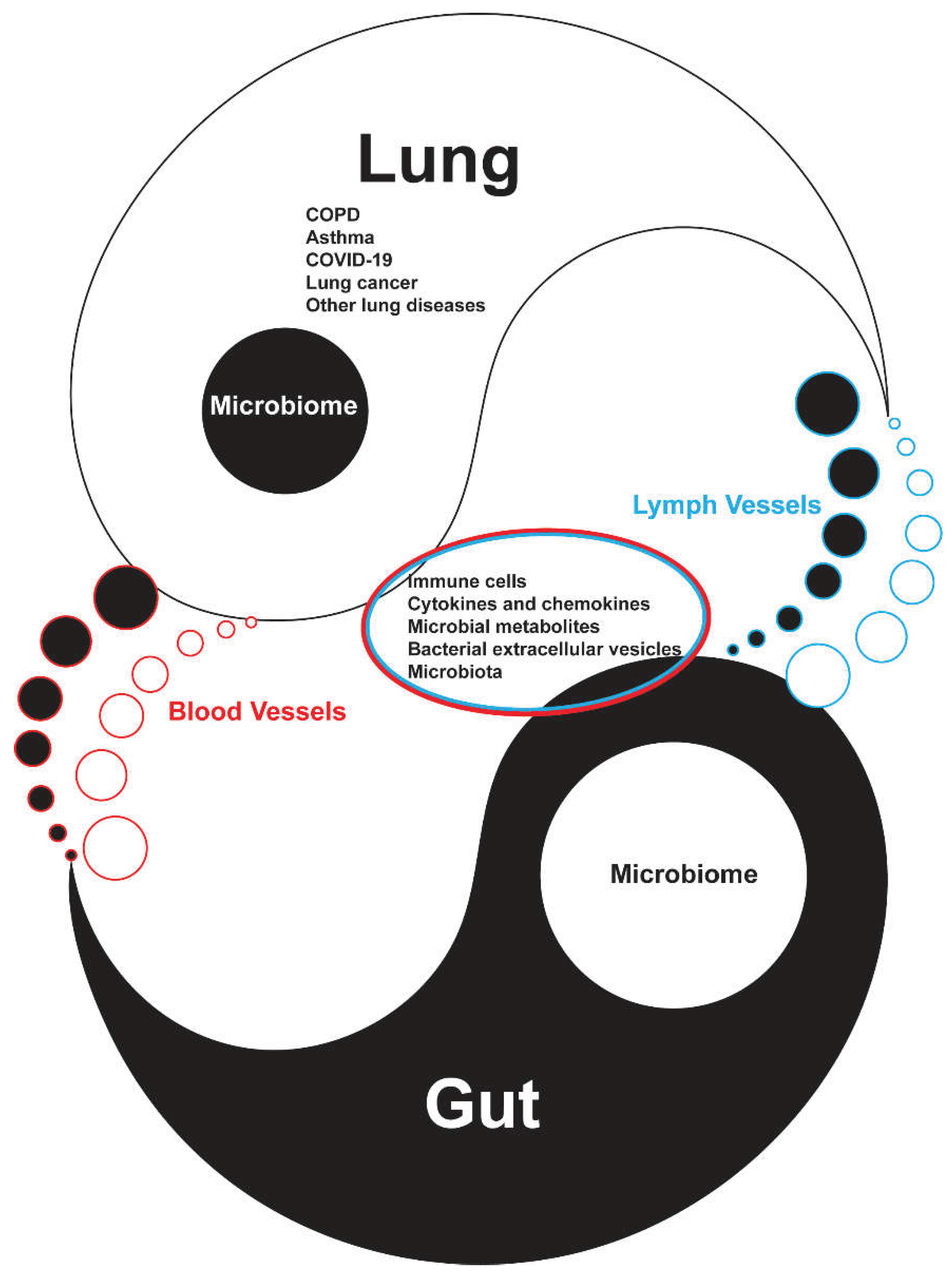
Figure 2.
Diagram of possible mechanistic pathways to influence the regeneration of lung progenitor cells through the gut-lung axis, which is closely related to the blood system and lymphatic system. The intestinal mucosal barrier, with a monolayer of gut epithelial cells connected by tight junctions, plays a pivotal role in separating luminal microbes from the intestinal immune system. Right above this epithelial layer is a coating of the gut microbial community that is resistant to foreign strains. Inside this community, the beneficial microbiota produces metabolites, such as SCFAs, tryptophan, and indoles, increasing the activation of natural lymphocytes (ILCs), T cells, and B cells. Meanwhile, during debilitating diseases, harmful bacteria produce toxins and other metabolites, causing injury to the intestinal walls and the mucous barrier. This leads to downregulation of tight junction protein levels and further increases the epithelium’s permeability to pathogens and their products, allowing them to enter the circulation. Upon encountering these dangerous pathogens, DCs become activated and migrate to lymph nodes, where they induce the activation and proliferation of Th1, Th2, Th17, Treg, and B cells, which produce cytokines and antibodies that are then transported via the blood and lymph circulation to the lungs. The increase in pro-inflammatory factors (IL-5, IL-17, etc.) leads to inflammation, while the increase in anti-inflammatory factors (IL-10) helps the host increase resistance to infection caused by pathogens. All these factors could reach the lungs and affect the severity of lung damage in ongoing diseases and, later on, regeneration.
Figure 2.
Diagram of possible mechanistic pathways to influence the regeneration of lung progenitor cells through the gut-lung axis, which is closely related to the blood system and lymphatic system. The intestinal mucosal barrier, with a monolayer of gut epithelial cells connected by tight junctions, plays a pivotal role in separating luminal microbes from the intestinal immune system. Right above this epithelial layer is a coating of the gut microbial community that is resistant to foreign strains. Inside this community, the beneficial microbiota produces metabolites, such as SCFAs, tryptophan, and indoles, increasing the activation of natural lymphocytes (ILCs), T cells, and B cells. Meanwhile, during debilitating diseases, harmful bacteria produce toxins and other metabolites, causing injury to the intestinal walls and the mucous barrier. This leads to downregulation of tight junction protein levels and further increases the epithelium’s permeability to pathogens and their products, allowing them to enter the circulation. Upon encountering these dangerous pathogens, DCs become activated and migrate to lymph nodes, where they induce the activation and proliferation of Th1, Th2, Th17, Treg, and B cells, which produce cytokines and antibodies that are then transported via the blood and lymph circulation to the lungs. The increase in pro-inflammatory factors (IL-5, IL-17, etc.) leads to inflammation, while the increase in anti-inflammatory factors (IL-10) helps the host increase resistance to infection caused by pathogens. All these factors could reach the lungs and affect the severity of lung damage in ongoing diseases and, later on, regeneration.
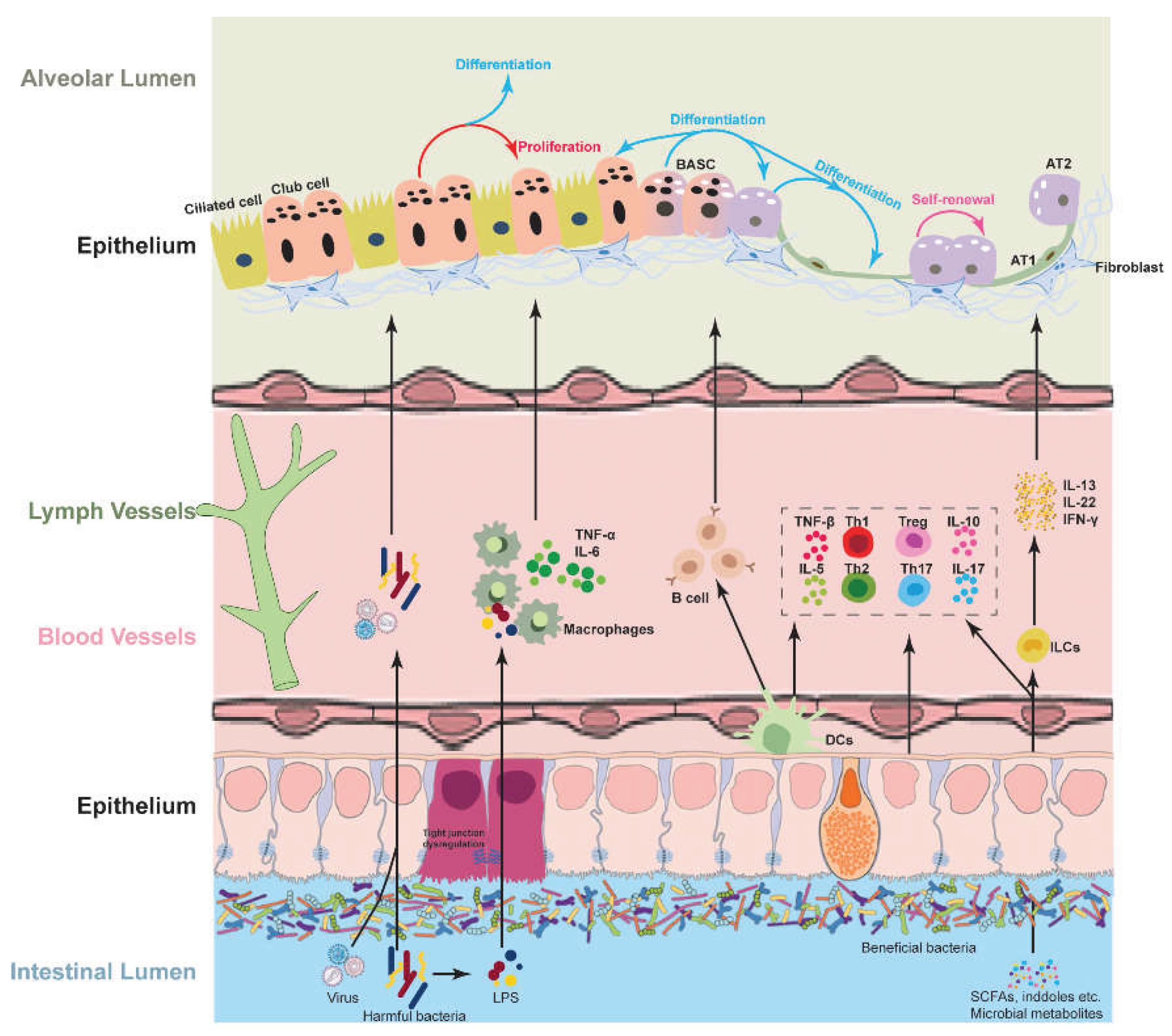
Disclaimer/Publisher’s Note: The statements, opinions and data contained in all publications are solely those of the individual author(s) and contributor(s) and not of MDPI and/or the editor(s). MDPI and/or the editor(s) disclaim responsibility for any injury to people or property resulting from any ideas, methods, instructions or products referred to in the content. |
© 2026 by the authors. Licensee MDPI, Basel, Switzerland. This article is an open access article distributed under the terms and conditions of the Creative Commons Attribution (CC BY) license (http://creativecommons.org/licenses/by/4.0/).
Copyright: This open access article is published under a Creative Commons CC BY 4.0 license, which permit the free download, distribution, and reuse, provided that the author and preprint are cited in any reuse.


