

Submitted:
02 June 2026
Posted:
03 June 2026
You are already at the latest version
Abstract
Background: Despite reducing hernia recurrence, synthetic meshes often trigger persistent foreign body responses (FBR). Mesh Enriched Therapies (MET), incorporating autologous cellular components (MSCs, PRP, SVF), can regeneratively reprogram the host-prosthetic interactome. Methods: Following PRISMA-ScR guidelines, a systematic search of PubMed, Embase, and Scopus (2000–2025) was conducted. We utilized the PCC (Population, Concept, Context) framework to map evidence across systemic inflammation, local FBR, and bio-augmentation strategies. Results: Sixty-five studies were synthesized into three pillars. Systemic Response (n=25): Established a predictable "foreign body signature" dominated by CRP and IL-6 spikes within 48h post-implantation. Local FBR (n=19): Human explant data (up to 180 months) revealed a perpetual immune-mediated state, characterized by MMP-2 driven matrix remodeling and "bridging fibrosis." MET Integration (n=21): Biological enrichment shifted the M1/M2 macrophage ratio toward a pro-regenerative (CD163+/CD206+) phenotype. While MET consistently enhanced VEGF-driven angiogenesis and improved the Collagen I/III ratio, a 22.2% discrepancy rate underscored the criticality of precise TGF-β1 dosage and release kinetics to avoid hyper-fibrosis. Conclusions: MET shifts hernia repair from passive mechanical reinforcement to active "biocamouflage" and integration. By modulating the Th1/Th2 rheostat, enriched therapies mitigate chronic inflammation and long-term complications. Standardized clinical trials are essential to optimize the therapeutic window for hybrid integration.
Keywords:
inguinal hernia
; mesh enriched therapies (MET)
; macrophage polarization
; foreign body response
; regenerative surgery
; prosthetic-host interactome
1. Introduction
Groin hernia repair remains one of the most frequent yet controversial procedures in general surgery. While current standards favor tension-free, mesh-based techniques, including open (Lichtenstein) and minimally invasive (TAPP/TEP) approaches, the goal of achieving recurrence rates below 1% and chronic pain under 3% remains elusive [1,2,3]. The clinical success of these repairs is often hampered by "mesh-associated pathology," characterized by chronic pain (10–30% of cases), infection, fibrosis, migration, and visceral erosion [4,5].
These complications are primarily driven by the Foreign Body Reaction (FBR), a complex immune sequence—ranging from blood-material interactions to chronic inflammation—that culminates in the fibrotic encapsulation of the device [6,7]. Because meshes are permanent and increasingly implanted in younger populations, the associated risks are lifelong. Notably, the 50th percentile for adverse events occurs at 3.75 years post-implantation, with risks persisting for over 15–17 years; consequently, short-term studies may underestimate complications by up to 50% [8,9]. Despite the mechanical evolution of prosthetics, biocompatibility remains the "thorny issue" of modern herniology. Mesh Enhanced Therapies (MET), involving the integration of autologous cellular components to "hide" the material from the innate immune system, represents a promising strategy to modulate this inflammatory response [10]. However, evidence remains fragmented across various cell lines and seeding techniques. This scoping review (registered in the OSF Registry, March 2026) aims to map the systemic and local inflammatory landscape of hernia repair and evaluate the capacity of cellular therapies to foster true biological integration.
2. Material and Methods
2.1. Study Design
This scoping review follows the PRISMA-ScR (Preferred Reporting Items for Systematic Reviews and Meta-Analyses extension for Scoping Reviews) guidelines to ensure rigorous and transparent reporting. The methodology was grounded in the framework established by Arksey and O’Malley [103]), a design specifically suited for mapping evidence on emerging and complex topics like Mesh Enhanced Therapies (MET). The selection process, from identification to final inclusion, is documented via the PRISMA 2020 flow diagram.
2.2. Search Strategy
A comprehensive search of the PubMed, Scopus, and Embase databases was performed to identify all relevant literature published between January 2000 and December 2025. The search string was constructed using a combination of MeSH (Medical Subject Headings) terms and free-text keywords, structured into three primary thematic blocks:
Block 1 (Pathology): ("Hernia, Inguinal"[MeSH] OR "Hernia, Femoral"[MeSH] OR "Groin
Hernia*"[Title/Abstract])
Block 2 (Device): ("Surgical Mesh"[MeSH] OR "Mesh*"[Title/Abstract] OR "Prosthesis"[Title/Abstract])
Block 3 (Therapy): ("Mesenchymal Stem Cells"[MeSH] OR "Cell- and Tissue-Based Therapy"[MeSH] OR "Stem Cell*"[Title/Abstract] OR "Stromal Vascular Fraction"[Title/Abstract] OR "Bio-synthetic"[Title/Abstract] OR "Cell-Enriched"[Title/Abstract] OR "MET"[Title/Abstract])
These blocks were combined using the Boolean operator AND to ensure all retrieved articles addressed the intersection of groin hernia repair, mesh technology, and biological enhancement. No language restrictions were applied, and the references of identified articles were manually screened for additional relevant studies.
2.3. Inclusion and Exclusion Criteria
To ensure relevance, the PCC (Population, Concept, and Context) was applied:
4.3.1. P (Population) In vivo (animal models) or clinical (human) studies involving prosthetic mesh implantation.
4.3.2. C (Concept): Utilization of Meshed Enriched Therapies (MET), specifically the addition of viable cells (MSCs, ADSCs, SVF) to synthetic or biologic scaffolds
4.3.3. C (Context) Any surgical repair (open or laparoscopic) evaluating local/systemic inflammation, tissue integration, or clinical outcomes.
Only original, full-text articles published in English were included. We excluded pediatric series, reviews, editorials, conference abstracts, and case reports. Additionally, studies focusing exclusively on hiatal hernias, or those lacking detailed methodological data were excluded. The reference of all included articles and “green zone” (thesis) were manually screened to ensure comprehensive coverage.
2.4. Data Selection and Synthesis
The screening process was conducted independently by two reviewers (F.F. and V.O), involving an initial title and abstract review followed by full-text eligibility assessment. Discrepancies were resolved through consensus or consultation with a third senior reviewer (MT).
Data were extracted using a standardized charting form capturing lead author, publication year, model (animal/human), type of biological enrichment (MET), and key inflammatory/integration outcomes. The synthesis focused on our four primary research questions, the findings of which are consolidated in Table 1.
3. Results
3.1. Study Selection and Characteristics
The initial search identified 1,458 records. Following duplicate removal and title/abstract screening of 982 items, 84 articles underwent full-text assessment. Ultimately, 65 studies met the inclusion criteria (Figure 1).
The included literature exhibited significant heterogeneity and was categorized into three primary focus areas: systemic inflammatory footprint (n=25), Foreign Body Reaction/human explants (n=19), and MET/biological integration (n=21).
3.2. The Systemic Immunological Footprint
The systemic inflammatory response was analyzed across 25 studies (n=1,222 patients), featuring a robust methodological core of 16 RCTs [11,12,13,14,15,16,17,18,19,20,21,22,23,24,25,26,27,28,29,30,31,32,33,34,35]. Surgical techniques ranged from tissue-based repairs to laparoscopic approaches. Notably, 23 of the 25 studies utilized Polypropylene (PP), establishing a consistent baseline for the "foreign body signature" in the circulatory system.
While 43 unique inflammatory markers were identified, a clear reporting trend emerged: C-reactive protein (CRP) and Interleukin-6 (IL-6) were the most sensitive and prevalent indicators (reported in 18 studies; 72%), followed by White Blood Cell (WBC) count (n=10) and TNF-α (n=6) (Table 2).
Collectively, these findings demonstrate that mesh implantation triggers a predictable, time-dependent systemic cascade, the magnitude of which is dictated by surgical access and the inherent biomaterial properties of the PP mesh.
3.3. Local Interface Dynamics and FBR
Were evaluated across 19 studies [36,37,38,39,40,41,42,43,44,45,46,47,48,49,50,51,52,53,54,55], utilizing three distinct models:
Human Explants (n=4 studies): Analysis of 743 recovered meshes (implanted 2 to 180 months) due to recurrence, pain, or infection.
Experimental Animal Models (n=13 studies): Observations in 674 animals (rats, rabbits, mice) over a timeline of 1 day to 26 weeks.
In Vitro/Ex Vivo (n=2 studies): Early-stage cellular response assays using human blood and rat fibroblasts.
Tissue integration was quantified via histological markers and Partial Volume (PV) parameters. Animal models demonstrated rapid formation of organized foreign body granulomas, with infiltration kinetics shifting from an acute neutrophilic phase (Days 1–7) to a chronic phase dominated by fibroblasts and T-lymphocytes—a persistence corroborated by long-term human data.
The molecular landscape of the host-mesh interface is governed by three pivotal axes:
Matrix Remodeling: Sustained inflammatory signaling (TNF-α) and elevated MMP-2 levels indicate a perpetual state of extracellular matrix (ECM) turnover driven by proteolysis.
Macrophage Polarization: A critical transition from M1 to pro-fibrotic M2 phenotypes, orchestrated via the TGF-β/Smad signaling pathway, dictates collagen deposition.
Metabolic Flux: Heightened cellular turnover—marked by Ki67 (proliferation) and TUNEL (apoptosis) peaks between days 7 and 21, reflecting the host's response to mechanical and chemical mesh’s properties.
While animal models suggest stabilized fibrosis by week 26, human explant data (extending over years) demonstrate that FBR is not a transient event but a lifelong biological process. Detailed findings are consolidated in Table 3
The main molecular mechanisms involved in FBR are detailed in Table 4.
3.4. Biological Augmentation Strategies: Mechanistic Synthesis
We identified 21 eligible studies [55,56,57,58,59,60,61,62,63,64,65,66,67,68,69,70,71,72,73,74,75], primarily comprising preclinical models (n=19; 514 subjects including rats, goats, rams, and dogs) and initial clinical translations (n=2; 116 patients, 34 receiving MET). The interventions were stratified into three categories: Hemoderivatives (n=12; PRP/PRF), Cell-Based Therapies (n=7; MSCs, ADSCs, SVF), and Protein-Based Scaffolds (n=2; Fibrin) (Table 5).
3.4.1. Molecular Signatures of Integration and Angiogenesis
Angiogenesis was consistently enhanced across all models. PRP enrichment specifically triggered a significant upregulation of VEGF, correlating with increased micro vessel density (CD31+/CD34+ IHC). Across preclinical subsets, mRNA normalization via GAPDH ensured analytical consistency in growth factor and collagen isoform expression across species.
3.4.2. ECM Remodeling and Biomechanical Integration
Biological augmentation accelerated the transition from granulation tissue to a stabilized matrix, characterized by an increased Collagen I/III ratio, a proxy for enhanced tensile strength. Concurrently, α-SMA upregulation reflected myofibroblast activation, orchestrating the development of a mature, organized cicatrix. Quantitative biomechanical analysis (Young’s Modulus) confirmed that MET significantly improves the elasticity and load-to-failure parameters of the repair, facilitating physiological strain distribution.
3.4.3. Immunomodulation and Macrophage Polarization
High-resolution cytokine profiling revealed a balanced IL-6/IL-10 axis, modulating the initial immune assault. A pivotal outcome of MSC and SVF enrichment was the direct polarization of macrophages toward an M2 (reparative) phenotype. This shift, quantified via the M1/M2 ratio, effectively mitigated fibrotic encapsulation. Adaptive immune profiling further indicated a Th2-dominant shift, promoting immune tolerance of the scaffold. The identity of therapeutic cells was validated through positive CD90/CD44 and negative CD45 expression.
3.4.4. Translational Correlation: From Bench to Bedside
A robust correlation was identified between TGF-β1 signaling in preclinical models and clinical efficacy in the 34 MET-treated patients. While animal data provided mechanistic resolution of neovascularization and collagen kinetics, clinical findings corroborated that these molecular improvements translate into superior functional recovery and long-term structural stability (Table 4 and Table 5).
4. Discussion
The temporal dynamics of molecular events following surgical mesh implantation follow a tightly regulated wound-healing cascade, transitioning from acute inflammation to tissue remodeling. The long-term fate of the implant—successful integration versus chronic degradation or encapsulation failure—depends entirely on the balance of cellular signaling molecules, extracellular matrix (ECM) deposition, and the host foreign body reaction (FBR).
Acute Phase (Minutes to Hours). (Protein Adsorption and Provisional Matrix): The host response begins the exact moment the biomaterial contacts blood and interstitial fluid Injury to local microvasculature triggering the coagulation cascade and the complement system. Hydrophobic and electrostatic interactions cause plasma proteins to coat the mesh fibers within seconds. Early-binding proteins like albumin are rapidly replaced by larger proteins like fibrinogen, fibronectin, vitronectin, and IgG. By platelet degradation, key growth factors are released(TGF-β, PDGF, bFGF) which provide a provisional matrix formation. This acts as a chemoattractant gradient, iniationg the recruitment of innate immune cells.
Early Inflammation (Days 1 to 3) (Neutrophil and Monocyte Recruitment). This early phase is characterized by massive cellular infiltration driven by chemokine gradients. Neutrophil influx is driven within hours by IL-8, Leukotriene B4, and complement fragments (C3a, C5a). They attempt phagocytosis, releasing Reactive Oxygen Species (ROS) and Matrix Metalloproteinases (MMPs), specificallyMMP-8 and MMP-9. Neutrophils apoptose within 24–48 hours, signaling monocytes to infiltrate the site via the CCL2 (MCP-1) pathway. Monocytes differentiate into uncommitted (M0) macrophages. Under the influence of local IFN-γ and TNF-α, they polarize into the pro-inflammatory M1 phenotype. This macrophages secrete high levels of IL-1β, IL-6, and TNF-α to sustain the inflammatory clearing environment.
Chronic Inflammation (Days 4 to 14). f the mesh cannot be degraded or cleared (the standard scenario for synthetic polymers like polypropylene or polyester), inflammation transitions from acute to chronic. Persistent activation causes M1 macrophages to attempt "frustrated phagocytosis." Up-regulated expression of surface integrins and adhesion molecules drives the fusion of macrophages into Foreign Body Giant Cells (FBGCs). Macrophages begin a critical transition from the pro-inflammatory (M1) state to the pro-healing/pro-fibrotic (M2) phenotype, driven by IL-4 and IL-13.The M2 phenotype, secrets TGF-β 1 and PDGF which in turn, recruit ocal adventitial fibroblasts and circulating fibrocytes. Fibroblasts differentiate into contractile myofibroblasts (characterized by the expression of α-SMA) and rapidly synthesize a disorganized ECM predominantly composed of type III Collagen, highly flexible but mechanically weak. After approximately one month, the molecular trajectory splits into two distinct long-term pathways based on the physical properties of the mesh (pore size, elasticity, filament type) and host biocompatibility: successful tissue integration (collagen maturation, type I/type III collagen ratio stabilization, and resolution of inflammation) or mesh failure with persistent M1 activation, uncontrolled fibrosis (capsule formation), and proteolytic imbalance.
4.1. The Perpetual Nature of the Host-Mesh Interface
The most striking finding of this scoping review is the perpetual nature of the foreign body response (FBR). While preclinical models (up to 26 weeks) suggest a stabilization of the inflammatory milieu, human explant data (extending up to 180 months) demonstrate that the host-mesh interface remains biochemically active for decades. The persistent sequestration of polypropylene fibers within organized granulomas, coupled with sustained T-lymphocyte infiltration, confirms that the host immune system maintains a state of chronic, low-grade immunosurveillance rather than achieving true biological inertness [76,77].
At a mechanistic level, this long-term non-biocompatibility is governed by a complex "prosthetic-host interactome" initiated immediately upon biomaterial exposure. Following the rapid, sequential adsorption of plasma proteins—a phenomenon known as the Vroman effect—the mesh surface becomes decorated with provisional matrix proteins, predominantly fibrinogen, fibronectin, and vitronectin. This proteinaceous physical coat serves as the primary molecular interface recognized by host immune cells. Specifically, myelomonocytic cells utilize integrin receptors, such as Mac-1 (αMβ2, CD11b/CD18) and αvβ3 to bind these adsorbed ligands. This integrin engagement triggers intracellular downstream cascades, notably the mitogen-activated protein kinase (MAPK) and nuclear factor kappa B (NF-kB) pathways, effectively shifting the local microenvironment toward a highly reactive state.
Our analysis underscores a critical systemic-local nexus: mesh implantation is not an isolated topographical event but a systemic trigger. The correlation between localized proteolysis and systemic inflammatory markers suggests that the biomaterial acts as a persistent stimulus, modulating the host’s immune rheostat on a long-term scale. The initial spike in C-reactive protein (CRP) and pro-inflammatory cytokines serves as the biochemical 'background noise' that dictates the severity of the local FBR [78,79]. This systemic-local crosstalk is mediated by IL-1β, TNF- α and IL-6 leakage from the implantation site into the systemic circulation, triggering a sustained acute-phase reaction [80].
This temporal dynamics of molecular events transitions from an acute inflammatory phase to a chronic, dysregulated remodeling process. In the acute phase (days to weeks), early damage-associated molecular patterns (DAMPs) and persistent mechanotransduction signals perpetuate the recruitment of unpolarized macrophages. Over time, continuous exposure to the synthetic polymer prevents the physiological transition from the pro-inflammatory M1 phenotype to the pro-healing M2 phenotype, or yields a hybrid, chronically activated macrophage population. Chronic macrophage activation and their subsequent fusion into Foreign Body Giant Cells (FBGCs) maintain a persistent pro-fibrotic environment [77,80].
In the absence of immunomodulatory intervention, this cascade culminates in a dense, avascular fibrotic capsule – the primary barrier to long-term graft success [77,81]. This sustained fibrotic trajectory is driven by the hyperactivation of the canonical TGF- β/Smad2/3 signaling pathway, alongside the non-canonical Wnt/β-catenin axis, which continuously drives the differentiation of local fibroblasts into contractile α- smooth muscle actin (α-SMA)-positive myofibroblasts. Beyond mere isolation, this dense fibrotic barrier restricts the angiogenesis essential for tissue integration, shifting the healing trajectory toward sustained fibrosis and increasing the risk of chronic clinical complications [81,82].
Emerging evidence suggests that this chronic cross-talk is also fine-tuned at the post-transcriptional level by specific non-coding RNAs. Epigenetic regulators, such as miR-21 (which amplifies TGF-β signaling by targeting SMAD7) and miR-155 (a key driver of M1 macrophage polarization and NF-kB activation), are critical molecular switches that sustain this perpetual loop, preventing proper tissue integration and shifting the balance toward biomaterial encapsulation or structural failure.
4.2. The Integration Pivot: Temporal Dynamics of Remodeling
Animal models elucidate a precise timeline for the biological response to mesh implantation, moving from acute influx to chronic remodeling. The early innate phase (Days 1–7) is dominated by a neutrophil and TNF-α surge [83,84], while the critical window between Days 21 and 90 serves as the integration pivot. During this transition, a significant shift in the M1/M2 macrophage ratio signals the onset of pro-fibrotic remodeling [75]). High Ki-67 (proliferation) and TUNEL (apoptosis) expression during this phase underscore an intense metabolic "tug-of-war" and active-matrix turnover [37,76]. Ultimately, the balance between cellular death and proliferation dictates the final elasticity and quality of the fibrotic capsule [85].
4.3. The Systemic "Foreign Body Signature"
While 43 inflammatory markers were identified, CRP and IL-6 emerged as the definitive biomarkers for quantifying the systemic "foreign body signature." Across 16 RCTs, a significant surge in these markers was consistently observed within 24–48 hours post-implantation [12,13,14,16,17,18,19,20,21,22,23,24,25,26,27,28]. At the molecular level, this acute phase response is initiated by the release of danger-associated molecular patterns (DAMPs) from damaged tissues, which bind to Toll-like receptors (TLRs) on local immune cells. This ligation activates the downstream nuclear factor kappa B pathway, leading to the rapid transcription and exocytosis of IL-6. Once in the systemic circulation, IL-6 binds to its hepatic receptors, triggering the JAK/STAT3 signaling pathway to upregulate the synthesis and systemic release of C-reactive protein (CRP).
Notably, this molecular response is modulated by surgical access: laparoscopic techniques (TAPP/TEP) exhibit a more attenuated inflammatory peak compared to open repairs [12,16,21,22,25,27,28,29,30,31,32]. This difference suggests that open approaches cause more extensive tissue disruption, multiplying the DAMPs signal and amplifying the initial NF-kB/IL-6 axis cascade. Although most markers normalize within 30 days, the "persistent low-grade inflammation" observed in a patient subset may serve as a precursor to chronic mesh-associated pathology. This subclinical chronicity is driven by an unresolved molecular loop, where continuous mechanotransduction or degraded material fragments fail to allow the down-regulation of pro-inflammatory cytokines, preventing the homeostatic resolution of the tissue-biomaterial interface.
Given that 23 out of 25 studies utilized polypropylene (PP), the data suggests that PP induces a predictable and reproducible cytokine release, largely independent of the fixation method [11,12,13,14,15,16,19,20,21,22,23,24,25,26,27,28,29,30,31,32,33,34,35]. This consistent biomaterial-driven response highlights a specific prosthetic-host interactome. Upon contact with host fluids, the hydrophobic surface of PP promotes a high-affinity adsorption of fibrinogen and complement proteins. This localized complement activation cascade (specifically C3a and C5a anaphylatoxins) continuously recruits and maintains a highly reactive macrophage population at the implant site, driving the downstream chronic secretion of IL-6 and sustaining the molecular foreign body signature over time.
4.4. Morphometric Drivers of Clinical Failure
The transition from histological reaction to clinical complication is best quantified through the Partial Volume (PV) of Inflammation and Connective Tissue. In human explants, a high PV of Inflammation directly correlates with chronic pain and mesh erosion [86]. Heavyweight polypropylene meshes frequently trigger an aggressive fibroplastic response, leading to "bridging fibrosis"—the coalescence of individual fiber granulomas into a rigid, continuous scar plate.
At the molecular level, this morphometric shift is driven by the sustained activation of the canonical TGF-$\beta$1/Smad3 signaling pathway. In heavyweight constructs, the higher density of polypropylene fibers maintains a persistent recruitment of M1 macrophages and foreign body giant cells (FBGCs), which continuously secrete TGF-β1 and PDGF. This high concentration of growth factors forces local fibroblasts to differentiate into highly contractile α-SMA-positive myofibroblasts. Concurrently, this chronic inflammatory microenvironment downregulates Matrix Metalloproteinases (such as MMP-1 and MMP-8) while upregulating Tissue Inhibitors of Metalloproteinases (TIMP-1). This molecular imbalance shifts the extracellular matrix (ECM) kinetics toward excessive, unregulated Collagen Type I deposition, preventing the physiological turnover of the scar tissue.
This "scar plate" effect in heavyweight constructs hinders physiological movement, providing a mechanistic explanation for the loss of elasticity and subsequent clinical failure [37,76,86]. In contrast, lightweight meshes maintain their porosity because their lower physical mass alters the mechanical stress sensed by the tissue. This lower mechanotransduction attenuates the YAP/TAZ mechanosensitive signaling pathway, resulting in a lower PV of Inflammation, a balanced Collagen Type I/III ratio, and the preservation of abdominal wall compliance.
4.5. Matrix Remodeling and the Translational Gap
Consistent MMP-2 expression in both animal models and long-term human explants indicates that the periprosthetic extracellular matrix (ECM) exists in a state of perpetual flux [87,88]. At the molecular scale, this persistent gelatinase activity reflects a chronic, macrophage-driven remodeling process. Macrophages and foreign body giant cells (FBGCs) at the interface maintain a continuous secretion of pro-inflammatory cytokines, which act via paracrine signaling to stimulate fibroblasts to produce MMP-2 (Gelatinase A). This chronic enzymatic upregulation leads to the progressive degradation of the provisional basement membrane and native Collagen Type IV, providing a distinct mechanistic explanation for late-stage mesh contraction, structural distortion, and migration occurring years post-implantation.
Furthermore, the persistent oxidative stress observed in 180-month human explants underscores the limitations of current polymers. The hydrophobic surface of long-standing polypropylene fibers acts as a chronic catalyst for the NADPH oxidase (NOX) complex in adherent myeloid cells, leading to the sustained generation of reactive oxygen species (ROS). This chronic oxidative microenvironment induces lipid peroxidation, damages adjacent cellular membranes, and locks the surrounding tissue into a perpetual loop of DNA damage and senescent cellular phenotypes, preventing resolution.
In this context, Mesh Enriched Therapies aiming at modulating the cell phenotype at the biomaterial interface—serves as a robust strategy to "hide" synthetic materials from innate immune surveillance (\( CD45^{-}\) interactions). By architecturally or chemically forcing macrophages into an elongated morphology, these advanced biomaterials downregulate the mechanosensitive RhoA/ROCK signaling pathway. This molecular switch suppresses the activation of downstream pro-inflammatory transcription factors, effectively preventing the fusion of macrophages into FBGCs.
Consequently, we propose that future clinical trials adopt standardized molecular mapping, focusing on the Th1/Th2 cytokine balance (e.g., IFN-γ/IL-4 ratios) and the Angiogenic/Myofibroblastic ratio (e.g., VEGF versus α-SMA expression), to ensure lifelong biological integration rather than encapsulation.
Crucially, our analysis reveals a significant translational gap: while animal studies often label the 90-day response as "stable," human data (up to 180 months) demonstrate that complications can manifest decades later. This suggests that short-term animal models, while effective for early biocompatibility assessment, may critically underestimate the long-term immunogenic potential of polypropylene. In small animals, the rapid metabolic rate and accelerated healing kinetics often lead to an artificial equilibrium. In contrast, the human system suffers from a multi-decade accumulation of low-grade NF-kB activation and persistent biomaterial degradation, making the 90-day animal endpoint an inadequate surrogate for human long-term outcomes.
4.6. Immune Polarization and the TGF-β Paradox
A critical finding of this scoping review is the functional transition of the immune infiltrate. While \(CD68+ (pan-macrophage) density is ubiquitous across explants, it serves as an unreliable indicator of integration quality unless coupled with specific regenerative markers. In a standard foreign body response (FBR), persistent \(CD68+ infiltration correlates with aggressive mesh isolation [12,13,14,15,16,17,18,19,20,21,22,23,24,25,26,27,28,29,30]. Conversely, Macrophage Elongation Technology (MET) (n=21 studies) acts as a polarizing catalyst, upregulating the expression of scavenger receptors CD163 and CD206, which are definitive hallmarks of the M2 phenotype. At the molecular level, this phenotypic shift toward a reparative state [55,56,57,58,59,60,61,62,63,64,65,66,67,68,69,70,71,72,73,74,75] effectively halts the inflammatory assault. This transition is mediated by the downregulation of pro-inflammatory microRNAs, such as miR-155, and the activation of the peroxisome proliferator-activated receptor-gamma (PPAR-γ) transcription factor, initiating a synergistic cascade of healthy collagen deposition and VEGF-driven angiogenesis via the HIF-1α signaling pathway.
Furthermore, TGF-β emerges as a "double-edged sword" with a narrow therapeutic window. At controlled levels, it drives fibroblast differentiation and Type I collagen synthesis, essential for tensile strength [89,90,91]. However, an uncontrolled TGF-β surge—often induced by supra-physiological platelet-rich plasma (PRP) concentrations—triggers pathological Epithelial-Mesenchymal Transition (EMT) and myofibroblast hyper-activation. Mechanistically, excess TGF- β hyperactivates the canonical Smad2/3 phosphorylation cascade and cross-talks with the non-canonical MAPK/ERK pathway, leading to the upregulation of Snail, Slug, and Twist transcription factors. This molecular shift leads to "bridging fibrosis," creating a rigid capsule that "strangles" the mesh. By modulating early immune kinetics and metabolic turnover—evidenced by the stabilization of glycolytic flux (GAPDH) and cellular proliferation (Ki67)—MET prevents this cellular stiffening, transforming the prosthesis from a rigid "plate" into a flexible, integrated neofascia [92].
A transformative finding of this review is the role of the Th1/Th2 cytokine balance in determining the clinical fate of the implant. Standard polypropylene repairs sustain a dominant Th1 environment (IFN-γ, IL-2, and TNF-α), which drives persistent M1 macrophage activity and the rigid encapsulation observed in human explants [93,94,95,96]. Conversely, MET functions as a biological "rheostat," shifting the microenvironment toward a Th2 pro-regenerative profile. By inducing the localized secretion of IL-4, IL-10, and IL-13, MET activates the STAT6 downstream pathway, lowering the Th1/Th2 ratio and allowing the mesh to integrate into vascularized tissue rather than an acellular, shrinking scar [92,97].
Long-term human data (15+ years) confirms that without biological modulation, the host maintains life-long, Th1-driven immune surveillance. This persistent inflammatory "footprint" explains why complications like erosion and chronic pain can manifest decades post-surgery. By providing an early "immunological pivot" toward Th2 dominance, enriched therapies transition the surgical outcome from simple mechanical reinforcement to true, lifelong biological integration [92].
4.7. Quality of Integration: "Brittle" Fibrosis vs. "Live" Neo-Tissue
The molecular mapping synthesized here reveals a fundamental divergence in tissue quality dictated by the early immune environment. Standard FBR, driven by persistent Th1 signaling, correlates with a suboptimal Collagen I/III ratio and suppressed VEGF, resulting in "brittle" fibrosis—a rigid, hypocellular scar that compromises abdominal wall compliance [98,99,100,101]. At the genomic level, this Th1-dominated microenvironment upregulates the transcription of the COL1A1 and COL1A2 genes while inhibiting angiogenesis via the downregulation of the VEGFR2 receptor on endothelial cells, locking the matrix into a poorly vascularized, rigid architectural state.
In contrast, the MET-induced Th2 shift promotes high VEGF expression, ensuring the mesh is incorporated into "live," vascularized, and flexible neo-tissue. Mechanistically, the transition to an M2 macrophage secretory profile activates the PI3K/Akt/mTOR signaling pathway in endothelial cells, which is the definitive upstream driver for sprout angiogenesis and endothelial cell survival. This M1-to-M2 switch serves as the definitive mechanism for biological integration [92], balanced tissue turnover, and the structural preservation of the abdominal wall matrix.
However, a critical therapeutic threshold must be noted: an unregulated Th2 response, potentially triggered by supra-physiological growth factor dosages, may lead to hyper-fibrosis, underscoring the need for precision in MET protocols. Excessively high concentrations of Th2 cytokines (such as IL-4 and IL-13) can cause an overactivation of the STAT6/SMAD3 cross-talk, which overrides the physiological feedback inhibition loops normally mediated by SMAD7 or SOCS1. This molecular escape pathway leads to the uncontrolled proliferation of myofibroblasts and excessive extracellular matrix accumulation, demonstrating that therapeutic immunomodulation at the host-prosthetic interface must operate within a tightly controlled molecular window to prevent clinical failure.
4.8. The Angiogenic-Myofibroblastic Balance: A Therapeutic Window
The clinical success of MET is dictated by a precise "dosage" sensitivity; maintaining the Th1/Th2 ratio and TGF-β levels within a narrow therapeutic window is critical. Over-stimulation can shift the trajectory from healthy remodeling to pathological scarring and mesh contraction. Consequently, the transcriptional regulation of angiogenic and myofibroblastic genes represents the decisive factor between functional integration and a non-compliant fibrotic mass.
A triad of angiogenic genes drives vascularized integration: VEGFA, FGF2, and ANG1. While standard repairs often result in a hypoxic, ischemic interface that triggers the localized degradation of the ECM, MET—particularly via adipose-derived stem cells (ADSCs) or platelet-rich plasma (PRP)—significantly upregulates VEGFA expression. Mechanistically, this upregulation activates the downstream phospholipase C-gamma/protein kinase C (PLCγ/PKC) signaling pathway within endothelial cells, fostering dense, functional capillary networks within the mesh pores [102]. Synergistic FGF2 expression stabilizes these nascent vessels by recruiting peri-endothelial mural cells, ensuring the prosthesis is incorporated into a vital, oxygenated matrix. This robust vascularization serves as a critical defense mechanism against mesh erosion and chronic infection by facilitating the continuous delivery of host immune surveillance cells.
Conversely, the myofibroblastic pathway, regulated by TGF-β and ACTA2 (encoding α-SMA), must be carefully balanced to prevent excessive wound contraction while ensuring the necessary collagen deposition for structural integrity. The control mechanisms inherent to MET prevent the hyper-phosphorylation of Smad2/3 and the nuclear translocation of the Serum Response Factor (SRF), which are the primary genetic triggers for myofibroblast over-activation. By maintaining this homeostasis, the host-biomaterial interface avoids the catastrophic shift toward an irreversible fibrotic landscape, locking the tissue-prosthesis unit into a state of stable bio-integration.
4.9. Myofibroblast Modulation and the Translational Path Forward
In standard FBR, persistent ACTA2 (encoding α-SMA) expression drives "bridging fibrosis" and pathological mesh shrinkage. A hallmark benefit of MET is the modulation of TGF-$\beta$1 signaling, which prevents myofibroblast over-activation and excessive mechanical contraction—the primary causes of chronic pain and migration. At the molecular level, this is achieved by shifting the downstream signaling balance away from the canonical Smad3/4 complex and towards the upregulation of SMAD7, an intracellular inhibitor that acts as a negative feedback regulator. The clinical viability of the implant is ultimately defined by the Angiogenic-to-Myofibroblastic ratio:
Integrated State (High VEGFA / Controlled ACTA2): This state depends on the co-activation of the PI3K/Akt axis and controlled mechanotransduction, resulting in a flexible, oxygen ated "neofascia" that maintains abdominal wall compliance.
Contracted State (Low VEGFA / High ACTA2): This state is driven by the hyperactivation of the YAP/TAZ transcription factors due to material rigidity. It leads to the "balling up" or stiffening of the material, a phe nomenon consistently observed in human explant data spanning 1 to 180 months.
The overwhelming predominance of preclinical evidence (n=19 studies) provides the essential "proof-of-concept" for these mechanisms. Animal models have consistently shown that biological enrichment effectively modulates the M1/M2 ratio, shifting the environment from chronic inflammation to integration. This robust preclinical foundation justifies the urgent expansion of MET into large-scale, randomized human clinical trials for complex groin hernia repair.
4.10. Cellular Anchoring and the Biocamouflage Effect
The molecular pivot of MET lies in the macrophage phenotypic shift toward CD163+ and CD206+ (M2) subtypes, contrasting with the persistent, pro-inflammatory CD68+ population found in standard repairs [11,12,13,14,15,16,17,18,19,20,21,22,23,24,25,26,27,28,29,30,31,32,33,34,35,52,53,54,55,56,57,58,59,60,61,62,63,64,65,66,67,68,69,70]. Critical to this success is the CD44 receptor (a primary hyaluronic acid receptor), which facilitates the mechanical anchoring and homing of therapeutic cells onto polypropylene filaments. This localized adherence is mediated by focal adhesion kinase (FAK) activation, ensuring that the biological enrichment remains stably tethered at the interface, exerting its reparative paracrine effects exactly where the foreign body response is most intense.
Crucially, the absence of CD45 (leukocyte common antigen) confirms that MET modulates the host response through an active immunomodulatory paracrine effect rather than a mere dilution of inflammatory cells by the graft matrix. The CD90+/CD44+ mesenchymal stem cell population acts as the primary driver for optimizing the VEGFA/ACTA2 ratio, downregulating myofibroblastic genes to prevent mesh contraction via the continuous secretion of prostaglandin E2 (PGE2) and IL-10.
Ultimately, this adherent, non-immunogenic cellular layer achieves a "biocamouflage" effect. By covering the hydrophobic polymer filaments with a self-derived cellular shroud, it sterically hinders the host’s innate immune system—specifically blocking complement C3 protein adsorption and subsequent macrophage integrin engagement. This biological mask prevents the synthetic mesh from being recognized as an aggressive foreign body, shifting the host response toward structural tolerance and stable bio-integration.
Molecular signature of mesh integration is depicted in Table 6.
To prevent chronic inflammation and dense, avascular fibrotic encapsulation, modern biomaterial engineering focuses on immunomodulatory coatings. These modifications actively guide uncommitted (M0) macrophages away from the pro-inflammatory (M1) phenotype and drive them toward the pro-healing, constructive remodeling M2 phenotype.
4.11. Clinical Recommendation
Based on long-term human explant data (up to 180 months) and experimental biological augmentation, we propose the following recommendations:
- Optimizing Mesh Selection ("Less is More"): To minimize chronic inflammation (PV Inflammation), surgeons should prioritize lightweight (LW), large-pore meshes. Data confirms that LW designs reduce the risk of "bridging fibrosis" and preserve long-term abdominal wall compliance compared to heavyweight options.
- Strategic Integration of MET: Clinical consideration should be given to biological augmentation (e.g., PRP, growth factor gels) to accelerate the M1-to-M2 macrophage phenotypic shift. This approach enhances local vascularization (VEGF expression), potentially preventing tissue ischemia and mesh erosion.
- Biomarker-Guided Monitoring: In high-risk cohorts (e.g., recurrent hernias, diabetes, heavy smoking), monitoring matrix remodeling indicators (MMP2, TNF-α) may provide early warning signs of pathological integration. While cost-intensive, standardized molecular screening could preempt chronic pain or mechanical failure.
- Calibrating the "Biological Window": To avoid TGF-β1-induced hyper- fibrosis, enrichment therapies must be standardized. We recommend precise concentrations (e.g., PRP 4x–5x baseline) to ensure tissue elasticity is not compromised by excessive scarring.
- Conservative Management of Late-Stage Complications: Clinicians must recognize the periprosthetic granuloma as a dynamic entity. In cases of minor erosion or chronic irritation, localized regenerative therapies (PRP infiltrations, CO2 laser) may serve as conservative alternatives to radical surgical explantation.
- Lifelong Surveillance and Registries: As the FBR persists for decades, clinical follow-up must extend beyond the standard 1–2 year window. Long-term registries are essential to evaluate lifelong polymer degradation and the true stability of the prosthetic-host interactome.
4.12. Study Limitations
Despite the comprehensive nature of this scoping review, several limitations must be acknowledged. A significant portion of the reviewed literature, particularly within the MET cohort (n=21), relies on small animal models (rats and rabbits). Due to their accelerated wound healing and distinct immune kinetics these models may not fully replicate the complex, long-term Foreign Body Reaction observed in human subjects. There is a notable lack of uniformity in the preparation and application of MET. Variations in PRP concentration, leukocyte content and cellular dosages across the 65 included studies make direct quantitative comparisons difficult and may explain observed discrepancies in outcomes. Many studies provide data limited to the early post-operative phase (7–30 days). Consequently, the long-term stability of the "biological bridge" and the potential for late-onset fibrotic complications remain under-reported. An inherent risk of publication bias, where studies showing positive synergy between MET and tissue integration are more likely to be published than those demonstrating neutral or negative results. The inclusion of various mesh materials (synthetic, biological, and composite) introduces confounding variables regarding the baseline local inflammatory milieu, complicating the isolation of the specific effect of the biological enrichment.
4.13. Rationale and Future Frontiers
Notwithstanding the inherent limitations, this scoping review establishes a comprehensive integrated mapping of the prosthetic-host interactome. We define this interaction through a tripartite framework: (1) the Systemic Inflammatory Baseline, (2) the Local Microenvironmental Flux (FBR), and (3) the Regenerative Potential of MET. This framework transitions the paradigm of hernia repair from a surgical event to a biologically guided therapeutic process.
The heterogeneity of the data—bridging early-stage animal models with late-stage human explants—specifically justifies the scoping review methodology. This approach is superior for mapping fragmented landscapes, identifying the "Translational Gap," and clarifying emerging concepts in non-standardized fields like MET.
Future research should prioritize four molecular frontiers:
- Precision Secretome Therapy: Utilizing exosomes and microRNA to target TGF-β/Smad pathways with temporal precision.
- Smart Biomaterials: Developing stimuli-responsive polymers that release growth factors in response to mechanical strain or pH changes.
- Immune-Niche Engineering: Modulating adaptive immune checkpoints to ensure long-term graft tolerance.
- Multi-Omics Validation: Large-scale transcriptomic profiling of human explants to identify predictive biomarkers for patient-specific risk.
5. Conclusion
This scoping review (n=65) underscores a fundamental shift in prosthetic surgery: the transition from managing a passive Foreign Body Reaction to orchestrating proactive Biological Integration. The emergence of Mesh Enriched Therapies (MET) provides a "biological bridge" that redirects the inflammatory cascade toward a regenerative M2 phenotype. Ultimately, the synergy between synthetic scaffolds and biological agents offers transformative potential to reduce chronic pain and recurrence. Future success will rely on smart, controlled release meshes that turn a foreign body encounter into a seamless integration with the human host.
Disclosures
None of the authors has any conflicts of interest to declare related to this research.
Ethical Statement
Not applicable. This study is a review of previously published literature and does not involve any direct intervention on human participants or animals. All data were extracted from peer-reviewed, published studies that had already obtained their respective ethical approvals.
Author Contributions
Conceptualization, Florentina Cristina Finascu, Valentin Constantin Oprea and Bogdan Andrei Suciu; methodology Florentina Cristina Finascu, Valentin Constantin Oprea and Bogdan Andrei Suciu; software Mihai Toma and Bianca Liana Grigorescu; validation Mihai Toma, Bogdan Andrei Finascu and Carmen Elena Bucuri, formal analysis Florentina Cristina Finascu, Valentin Constantin Oprea, Bogdan Andrei Suciu and Calin Molnar; investigation Florentina Cristina Finascu, Valentin Constantin Oprea, Bogdan Andrei Suciu, Mihai Toma, Bogdan Andrei Finascu, Carmen Elena Bucuri, Bianca Liana Grigorescu and Calin Molnar; resources Valentin Constantin Oprea, Carmen Elena Bucuri, Bianca Liana Grigorescu; data curation Florentina Cristina Finascu, Valentin Constantin Oprea and Bogdan Andrei Suciu; writing – original draft preparation Florentina Cristina Finascu, Valentin Constantin Oprea and Bogdan Andrei Suciu; writing – review and editing Florentina Cristina Finascu, Valentin Constantin Oprea, Bogdan Andrei Suciu, Mihai Toma, Carmen Elena Bucuri, Bogdan Andrei Finascu, Calin Molnar, Bianca Liana Grigorescu; visualization Bogdan Andrei Finascu; supervision Bogdan Andrei Suciu; project administration Bogdan Andrei Suciu; funding acquisition Florentina Cristina Finascu. All authors have read and agreed to the published version of the manuscript.
Funding
This research was funded by the project FOCUS: Training and Guidance for UMFST Researchers in Health, contract no. 100455/29.08.2025, project code SMIS 350717. The project is co-funded by the European Union under the Health Programme of the Ministry of Investments and European Projects and implemented through the Managing Authority for the Health Programme, PS/688/PS_P3/OP4/ESO4.7/PS_P3_ESO4.7_A6.
Institutional Review Board Statement
Not applicable.
Informed Consent Statement
Not applicable.
Data Availability Statement
No new data were created or analyzed in this study. Data sharing is not applicable to the to this article as it is a scoping review of existing literature.
Acknowledgments
This work was supported by the project FOCUS: Training and Guidance for UMFST Researchers in Health, contract no. 100455/29.08.2025, project code SMIS 350717. The project is co-funded by the European Union under the Health Programme of the Ministry of Investments and European Projects and implemented through the Managing Authority for the Health Programme, PS/688/PS_P3/OP4/ESO4.7/PS_P3_ESO4.7_A6.
Conflicts of Interest
The authors declare no conflicts of interest.
Abbreviations
| ADSCs | Adipose-Derived Stem Cells |
| ANG-1 | Angiopoietin-1 |
| CD | Cluster of differentiation |
| CO2 | Carbon dioxide |
| CRP | C-reactive protein |
| ECM | Extracellular matrix |
| EMT | Epithelial-Mesenchymal Transition |
| FBGCs | Foreign Body Giant Cells |
| FBR | Foreign Body Responses |
| FGF-2 | Fibroblast Growth Factor 2 |
| GAPDH | Glyceraldehyde 3-phosphate dehydrogenase |
| IFN-γ | Interferon gamma |
| IHC | Immunohistochemistry |
| IL | Interleukin |
| LW | Lightweight |
| M1 macrophage | Pro-inflammatory macrophage |
| M2 macrophage | Anti-inflammatory macrophage |
| MeSH | Medical Subject Headings |
| MET | Mesh-Enhanced Therapies |
| MMP-2 | Matrix metalloproteinase-2 |
| mRNA | Messenger Ribonucleic Acid |
| MSCs | Mesenchymal stem cells |
| OSF | Open Science Framework |
| PCC | Population, Concept, Context |
| PP | Polypropylene |
| PRF | Platelet-Rich Fibrin |
| PRISMA-ScR | Preferred Reporting Items for Systematic reviews and Meta-Analyses extension for Scoping Reviews |
| PRP | Platelet-rich plasma |
| PV | Partial Volume |
| RCT | Randomized Controlled Trial |
| SVF | Stromal vascular fraction |
| TAPP | Transabdominal Preperitoneal |
| TEP | Totally Extraperitoneal |
| TGF-β1 | Transforming Growth Factor beta 1 |
| Th | T helper |
| TNF-α | Tumor Necrosis Factor alpha |
| TUNEL | Terminal deoxynucleotidyl transferase dUTP Nick End Labeling |
| VEGF | Vascular Endothelial Growth Factor |
| WBC | White Blood Cell |
| α-SMA | Alpha-Smooth Muscle Actin |
References
- HerniaSurge Group. International guidelines for groin hernia management. Hernia 2018, 22, 1–165. [Google Scholar]
- Lichtenstein, I.L.; Shulman, A.G.; Amid, P.K.; Montllor, M.M. The tension-free hernioplasty. Am. J. Surg. 1989, 157, 188–93. [Google Scholar] [CrossRef]
- Köckerling, F.; Simons, M.P. Current concepts of inguinal hernia repair. Visc. Med. 2018, 34, 145–50. [Google Scholar] [CrossRef] [PubMed]
- Reichert, M.; Massambo, B.; Amati, A.L. Acute inflammation triggered by two lightweight hernia meshes: a comparative in vitro and retrospective cohort study. Hernia 2025, 29(1), 205. [Google Scholar] [CrossRef] [PubMed]
- Sanders, D.L.; Kingsnorth, A.N. The modern management of groin hernia. BMJ 2012, 345, e5599. [Google Scholar]
- Klinge, U.; Klosterhalfen, B.; Müller, M.; et al. Foreign body reaction to meshes used for the repair of abdominal wall hernias. Eur. J. Surg. 1999, 165(7), 665–73. [Google Scholar] [CrossRef]
- Klosterhalfen, B.; Klinge, U. Retrieval and morphological analysis of used mesh. Biomaterials 2013, 34, 4218–27. [Google Scholar]
- Petersen, K.; Morrison, J.; Oprea, V. Necessary duration of follow-up to assess complications of mesh in hernia surgery: a time-lapse study based on 460 explants. Hernia 2021, 25(5), 1239–1251. [Google Scholar] [CrossRef]
- Jain, T.; Isayeva, I.S.; Simon, D.D. Polypropylene Surgical Mesh Implants for Hernia and Pelvic Floor Disorders: A Materials Performance Perspective. J. Biomed. Mater. Res. Part A113 2025, no. 8, e37970. [Google Scholar] [CrossRef]
- Klinge, U.; Klosterhalfen, B. Modified meshes for hernia repair—is there a clinical need? Langenbecks Arch. Surg. 2005, 390, 232–37. [Google Scholar]
- Schachtrupp, A.; Klinge, U.; Junge, K. Individual inflammatory response of human blood monocytes to mesh biomaterials. Br. J. Surg. 2003, 90(1), 114–20. [Google Scholar] [CrossRef]
- Jess, P.; Schultz, K.; Bendtzen, K.; Nielsen, O.H. Systemic inflammatory responses during laparoscopic and open inguinal hernia repair: a randomised prospective study. Eur. J. Surg. 2000, 166(7), 540–4. [Google Scholar] [CrossRef]
- Li, L.; Cui, R.; Ma, W.; Yao, K. Effect of serum IL-6, CRP, and MMP-9 levels on the efficacy of modified preperitoneal Kugel repair in patients with inguinal hernia. Open Med. (Wars) 2025, 20(1), 20241066. [Google Scholar] [CrossRef] [PubMed]
- Di Vita, G.; Balistreri, C.R.; Arcoleo, F. Systemic inflammatory response in erderly patients following hernioplastical operation. Immun. Ageing 2006, 3, 3. [Google Scholar] [CrossRef] [PubMed]
- Tervaert, J.W.C. Autoinflammatory/autoimmunity syndrome induced by adjuvants (Shoenfeld’s syndrome) in patients after a polypropylene mesh implantation. Best Pract. Res. Clin. Rheumat 2018, 32(4), 511–520. [Google Scholar] [CrossRef]
- Quispe, M.R.F.; Salgado Júnior, W. Transabdominal preperitoneal (TAPP) versus open Lichtenstein hernia repair. Comparison of the systemic inflammatory response and the postoperative pain. Acta Cir. Bras. 2019, 34(2), e201900206. [Google Scholar] [CrossRef] [PubMed]
- Di Vita, G.; Milano, S.; Frazzetta, M.; et al. Tension-free hernia repair is associated with an increase in inflammatory response markers against the mesh. Am. J. Surg. 2000, 180(3), 203–7. [Google Scholar] [CrossRef]
- Di Vita, G.; Milano, S.; Patti, R.; et al. Cytokine modifications after tension-free hernioplasty or open conventional inguinal hernia repair. Am. J. Surg. 2001, 181(6), 487–91. [Google Scholar] [CrossRef]
- Di Vita, G.; Patti, R.; Barrera, T.; et al. Impact of heavy polypropylene mesh and composite light polypropylene and polyglactin 910 on the inflammatory response. Surg. Innov. 2010, 17(3), 229–35. [Google Scholar] [CrossRef]
- Di Vita, G.; Patti, R.; Sparacello, M.; et al. Impact of different texture of polypropylene mesh on the inflammatory response. Int. J. Immunopathol. Pharmacol. 2008, 21(1), 207–14. [Google Scholar] [CrossRef]
- Uzunköy, A.; Coskun, A.; Akinci, O.F.; Kocyigit, A. Systemic stress responses after laparoscopic or open hernia repair. Eur. J. Surg. 2000, 166(6), 467–71. [Google Scholar] [CrossRef] [PubMed]
- Saini, R.; Bains, L.; Hadke, N.S.; et al. Evaluation of oxidative stress response in endoscopic and Lichtenstein hernia repair. A randomized control study. Int. J. Abdom. Wall Hernia Surg. 2020, 3(4), 148–154. [Google Scholar] [CrossRef]
- Wongyingsinn, M.; Kohmongkoludom, P.; Trakarnsanga, A.; et al. Postoperative clinical outcomes and inflammatory markers after inguinal hernia repair using local, spinal, or general anesthesia: A randomized controlled trial. PLoS ONE 2020, 15(11), e0242925. [Google Scholar] [CrossRef]
- Donati, M.; Brancato, G.; Grosso, G.; et al. Immunological reaction and oxidative stress after light or heavy polypropylene mesh implantation in inguinal hernioplasty: A CONSORT-prospective, randomized, clinical trial. Medicine Erratum in: Medicine (Baltimore). 2016 Aug 07;95(31):e5074. doi: 10.1097/01.md.0000490009.39850.74. 2016, 95(24), e3791. [Google Scholar] [CrossRef] [PubMed]
- Rahr, H.B.; Bendix, J.; Ahlburg, P.; et al. Coagulation, inflammatory, and stress responses in a randomized comparison of open and laparoscopic repair of recurrent inguinal hernia. Surg. Endosc. 2006, 20(3), 468–72. [Google Scholar] [CrossRef]
- Di Vita, G.; D'Agostino, P.; Patti, R.; et al. Acute inflammatory response after inguinal and incisional hernia repair with implantation of polypropylene mesh of different size. Langenbecks Arch. Surg. 2005, 390(4), 306–11. [Google Scholar] [CrossRef] [PubMed]
- Suter, M.; Martinet, O.; Spertini, F. Reduced acute phase response after laparoscopic total extraperitoneal bilateral hernia repair compared to open repair with the Stoppa procedure. Surg. Endosc. 2002, 16, 1214–1219. [Google Scholar] [CrossRef]
- Bender, O.; Balcı, F.L.; Yüney, E.; et al. Systemic inflammatory response after Kugel versus laparoscopic groin hernia repair: a prospective randomized trial. Surg. Endosc. 2009, 23(12), 2657–61. [Google Scholar] [CrossRef]
- Dhankhar, D.S.; Sharma, N.; Mishra, T.; et al. Totally extraperitoneal repair under general anesthesia versus Lichtenstein repair under local anesthesia for unilateral inguinal hernia: a prospective randomized controlled trial. Surg. Endosc. 2014, 28(3), 996–1002. [Google Scholar] [CrossRef]
- Schwab, R.; Eissele, S.; Brückner, U.B.; et al. Systemic inflammatory response after endoscopic (TEP) vs Shouldice groin hernia repair. Hernia 2004, 8(3), 226–32. [Google Scholar] [CrossRef]
- Günal, O.; Ozer, S.; Gürleyik, E.; Bahçebaşi, T. Does the approach to the groin make a difference in hernia repair? Hernia 2007, 11(5), 429–34. [Google Scholar] [CrossRef]
- Vats, M.; Pandey, D.; Saha, S.; et al. Assessment of systemic inflammatory response after total extraperitoneal repair and Lichtenstein repair for inguinal hernia. Hernia 2017, 21(1), 65–71. [Google Scholar] [CrossRef]
- Bulbuller, N.; Kirkil, C.; Godekmerdan, A.; et al. The Comparison of Inflammatory Responses and Clinical Results After Groin Hernia Repair Using Polypropylene or Polyester Meshes. Indian J. Surg. 2015, 77 (Suppl 2), 283–7. [Google Scholar] [CrossRef]
- Singh, S.; Garg, N.; Singh, M.; et al. Comparison of Systemic Inflammatory Response After Total Extraperitoneal Repair and Lichtenstein Repair of Inguinal Hernia. Indian J. Surg. 2024, 86 (Suppl 2), 370–374. [Google Scholar] [CrossRef]
- Vatansev, C.; Belviranli, M.; Aksoy, F.; et al. The effects of different hernia repair methods on postoperative pain medication and CRP levels. Surg. Laparosc. Endosc. Percutan Tech. 2002, 12(4), 243–6. [Google Scholar] [CrossRef] [PubMed]
- Oprea, V.; Gavrilas, F.; Ghituica, A. Imunohistochemical considerations around local mesh induced inflammatory reaction. Chirurgia 2010, 105. [Google Scholar]
- Klosterhalfen, B.; Klinge, U. Retrieval study at 623 human mesh explants made of polypropylene--impact of mesh class and indication for mesh removal on tissue reaction. J. BioMed Mater. Res. B Appl. Biomater. 2013, 101(8), 1393–9. [Google Scholar] [CrossRef]
- Molina, C.P.; Giglio, R.; Gandhi, R.M.; et al. Comparison of the host macrophage response to synthetic and biologic surgical meshes used for ventral hernia repair. J. Immunol. Regen. Med. 2019, 3, 13–25. [Google Scholar] [CrossRef]
- Grigoryuk, A.A.; Belov, S.A.; Kotsyuba, A.E. Reaction of Mast Cells in the Zone of Polypropylene Mesh Implantation. Bull. Exp. Biol. Med. 2019, 167(5), 694–697. [Google Scholar] [CrossRef] [PubMed]
- Bellon, J.M.; Rodriguez, M.; Garcia-Honduvilla, N.; et al. Postimplant behavior of lightweight polypropylene meshes in an experimental model of abdominal hernia. J. Invest Surg. 2008, 21(5), 280–7. [Google Scholar] [CrossRef]
- Amato, G.; Romano, G.; Agrusa, A.; et al. Biologic response of inguinal hernia prosthetics: a comparative study of conventional static meshes versus 3D dynamic implants. Artif. Organs 2015, 39(1), E10-23. [Google Scholar] [CrossRef]
- Vaz, M.; Krebs, K.R.; Trindade, E.N.; Trindade, M.R.M. Fibroplasia after polypropylene mesh implantation for abdominal wall hernia in rats. Acta Chir. Bras. 2009, 24(1), 019–025. [Google Scholar] [CrossRef]
- Junge, K.; Binnebösel, M.; Rosch, R.; et al. Influence of mesh materials on the integrity of the vas deferens following Lichtenstein hernioplasty: an experimental model. Hernia 2008, 12(6), 621–6. [Google Scholar] [CrossRef]
- Klinge, U.; Klosterhalfen, B.; Birkenhauer, V.; et al. Impact of polymer pore size on the interface scar formation in a rat model. J. Surg. Res. 2002, 103(2), 208–14. [Google Scholar] [CrossRef]
- Klinge, U.; Junge, K.; Stumpf, M.; et al. Functional and morphological evaluation of a low-weight, monofilament polypropylene mesh for hernia repair. J. BioMed Mater. Res. 2002, 63(2), 129–36. [Google Scholar] [CrossRef]
- Klosterhalfen, B.; Junge, K.; Hermans, B.; Klinge, U. Influence of implantation interval on long-term biocompatibility of surgical mes. Br. J. Surg. 2002, 89, 1043–1048. [Google Scholar] [CrossRef]
- Laschke, M.; Häufel, J.M.; Scheuer, C. Angiogenic and inflammatory host response to surgical meshes of different mesh architecture and polymer composition. J. BioMed Mat. Res. Part B Appl. Biomater. 2009, 91B, 497–507. [Google Scholar] [CrossRef] [PubMed]
- Jansen, P.L.; Kever, M.; Rosch, R.; et al. Polymeric meshes induce zonal regulation of matrix metalloproteinase-2 gene expression by macrophages and fibroblasts. FASEB J. 2007, 21(4), 1047–57. [Google Scholar] [CrossRef] [PubMed]
- Huber, A.; Boruch, A.V.; Nieponice, A.; et al. Histopathologic host response to polypropylene-based surgical mesh materials in a rat abdominal wall defect model. J. BioMed Mater. Res. B Appl. Biomater. 2012, 100(3), 709–17. [Google Scholar] [CrossRef] [PubMed]
- Klosterhalfen, B.; Klinge, U.; Schumpelick, V.; et al. Polymers in hernia repair–common polyester vs. polypropylene surgical meshes. J. Mater. Sci. 2000, 35, 4769–4776. [Google Scholar] [CrossRef]
- Orenstein, S.B.; Saberski, E.R.; Kreutzer, D.L.; Novitsky, Y.W. Comparative analysis of histopathologic effects of synthetic meshes based on material, weight, and pore size in mice. J. Surg. Res. 2012, 176(2), 423–9. [Google Scholar] [CrossRef]
- Rosch, P.; Junge, K.; Schachtrupp, A. Mesh implants in hernia repair. Inflammatory cell response in a rat model. Eur. Surg. Res. 2003, 35, 161–166. [Google Scholar] [CrossRef]
- Weyhe, D.; Hoffmann, P.; Belyaev, O.; et al. The role of TGF-beta1 as a determinant of foreign body reaction to alloplastic materials in rat fibroblast cultures: comparison of different commercially available polypropylene meshes for hernia repair. Regul. Pept. 2007, 138(1), 10–4. [Google Scholar] [CrossRef]
- Binnebösel, M.; Klink, C.D.; Otto, J.; et al. Impact of mesh positioning on foreign body reaction and collagenous ingrowth in a rabbit model of open incisional hernia repair. Hernia 2010, 14(1), 71–7. [Google Scholar] [CrossRef]
- Majumder, A.; Gao, Y.; Sadava, E.E.; et al. Cell-coating affects tissue integration of synthetic and biologic meshes: comparative analysis of the onlay and underlay mesh positioning in rats. Surg. Endosc. 2016, 30(10), 4445–53. [Google Scholar] [CrossRef]
- Liu, H.; Chen, W.; Zhao, B.; et al. Autologous bionic tissue for inguinal hernia repair. J. BioMed Mater. Res. A 2020, 108(6), 1351–1368. [Google Scholar] [CrossRef]
- Drewa, T.; Galazka, P.; Prokurat, A.; et al. Abdominal wall repair using a biodegradable scaffold seeded with cells. J. Pediatr. Surg. 2005, 40(2), 317–21. [Google Scholar] [CrossRef]
- El-Husseiny, H.M.; El-Maghraby, H.M.; Alakraa, A.M. Platelet Rich Fibrin augmented versus non-Augmented Glycerolyzed bovine pericardium and plopypropylene mesh for repairing large abdominal wall defects. Eur. J. Med. Nat. Sci. 2019, 3(1), 33–47. [Google Scholar]
- Belebecha, V.; Casagrande, R.; Urbano, M.R.; et al. Effect of the platelet-rich plasma covering of polypropylene mesh on oxidative stress, inflammation, and adhesions. Int. Urogynecol J. 2020, 31(1), 139–147. [Google Scholar] [CrossRef]
- Van Eps, J.L.; Chaudhry, A.; Fernandez-Moure, J.S.; et al. Ultrasound shear wave elastography effectively predicts integrity of ventral hernia repair using acellular dermal matrix augmented with platelet-rich plasma (PRP). Surg. Endosc. 2019, 33(9), 2802–2811. [Google Scholar] [CrossRef]
- Heffner, J.J.; Holmes, J.W.; Ferrari, J.P.; et al. Bone marrow-derived mesenchymal stromal cells and platelet-rich plasma on a collagen matrix to improve fascial healing. Hernia 2012, 16(6), 677–87. [Google Scholar] [CrossRef]
- Mohsina, A.; Kumar, N.; Sharma, A.K.; et al. Polypropylene mesh seeded with fibroblasts: A new approach for the repair of abdominal wall defects in rats. Tissue Cell. 2017, 49(3), 383–392. [Google Scholar] [CrossRef]
- Wolf, M.T.; Carruthers, C.A.; Dearth, C.L.; et al. Polypropylene surgical mesh coated with extracellular matrix mitigates the host foreign body response. J. BioMed Mater. Res. A 2014, 102(1), 234–46. [Google Scholar] [CrossRef]
- Van Eps, J.; Fernandez-Moure, J.; Cabrera, F.; et al. Decreased hernia recurrence using autologous platelet-rich plasma (PRP) with Strattice™ mesh in a rodent ventral hernia model. Surg. Endosc. 2016, 30(8), 3239–49. [Google Scholar] [CrossRef]
- Atanasov, D. Use of Platelets Rich Plasma as a factor of the reduction of the risk of early postoperative complications in patients with postoperative ventral hernias. Med. Dent. 2019, 4, 15–24. [Google Scholar] [CrossRef]
- Ávila, O.R.; Parizzi, N.G.; Souza, A.P.; et al. Histological response to platelet-rich plasma added to polypropylene mesh implemented in rabbits. Int. Braz. J. Urol. 2016, 42(5), 993–998. [Google Scholar] [CrossRef]
- Popescu, V.; Patrascu, T.; Andras, D.; et al. Plasma derived products for polypropylene mesh integration in abdominal wall defects: procedure description and partial results. Chirurgia 221 116, 599–608. [CrossRef]
- Zhao, J.; Xu, J.J. Experimental study on application of polypropylene hernia of fat stem cells in rats. Eur. Rev. Med. Pharmacol. Sci. 2018, 22(18), 6156–6161. [Google Scholar] [CrossRef]
- Guillaume, O.; Pérez-Köhler, B.; Schädl, B.; et al. Stromal vascular fraction cells as biologic coating of mesh for hernia repair. Hernia 2020, 24(6), 1233–1243. [Google Scholar] [CrossRef]
- Hussain, I.A.Z. A comparative study between Aloe Vera gel and Platelet Rich Fibrin in hernioplasty of surgically induced abdominal hernias in rams. PH D Thesis, Accessed on. University of Mosul, 2024. (accessed on line February 2025). [Google Scholar]
- Fernandez-Moure, J.S.; Van Eps, J.L.; Menn, Z.K.; et al. Platelet rich plasma enhances tissue incorporation of biologic mesh. J. Surg. Res. 2015, 199(2), 412–9. [Google Scholar] [CrossRef]
- Fernandez-Moure, J.S.; Van Eps, J.L.; Scherba, J.C.; et al. Platelet-rich plasma enhances mechanical strength of strattice in rat model of ventral hernia repair. J. Tissue Eng. Regen. Med. 2021, 15(7), 634–647. [Google Scholar] [CrossRef]
- Araujo-Gutierrez, R.; Van Eps, J.L.; Scherba, J.C.; et al. Platelet rich plasma concentration improves biologic mesh incorporation and decreases multinucleated giant cells in a dose dependent fashion. J. Tissue Eng. Regen. Med. 2021, 15(11), 1037–1046. [Google Scholar] [CrossRef]
- Faulk, D.M.; Londono, R.; Wolf, M.T.; Ranallo, C.A.; Carruthers, C.A.; Wildemann, J.D.; Dearth, C.L.; Badylak, S.F. ECM hydrogel coating mitigates the chronic inflammatory response to polypropylene mesh. Biomaterials 2014, 35(30), 8585–95. [Google Scholar] [CrossRef]
- Blázquez, R.; Sánchez-Margallo, F.M.; Álvarez, V.; Usón, A.; Casado, J.G. Surgical meshes coated with mesenchymal stem cells provide an anti-inflammatory environment by a M2 macrophage polarization. Acta Biomater. 2016, 31, 221–230. [Google Scholar] [CrossRef]
- Klinge, U.; Klosterhalfen, B. Modified classification of surgical meshes for hernia repair based on the analyses of 1,000 explanted meshes. Hernia 2012, 16(3), 251–8. [Google Scholar] [CrossRef] [PubMed]
- Anderson, J.M.; Rodriguez, A.; Chang, D.T. Foreign body reaction to biomaterials. Semin Immunol. 2008, 20(2), 86–100. [Google Scholar] [CrossRef] [PubMed]
- Reichert, M.; Massambo, B.; Amati, A.L.; Grau, V.; Richter, K.; Hecker, A. Acute inflammation triggered by two lightweight hernia meshes: a comparative in vitro and retrospective cohort study. Hernia 2025, 29(1), 205. [Google Scholar] [CrossRef] [PubMed]
- Meseberg, T.; Kurz, S.; Spohn, J. Foreign body reaction: towards a macrophage-centered adverse outcome pathway for fibrotic encapsulation. Front Toxicol. 2026, 8, 1735871. [Google Scholar] [CrossRef]
- Noskovicova, N.; Hinz, B.; Pakshir, P. Implant Fibrosis and the Underappreciated Role of Myofibroblasts in the Foreign Body Reaction. Cells 2021, 10(7), 1794. [Google Scholar] [CrossRef]
- Dickenson, M.E.; Oakes, R.S.; Morris, A.H. Don't judge an implant by its cover: how the foreign body response and fibrotic capsule might be harnessed for good. npj BioMed Innov. 2026, 3(1), 3. [Google Scholar] [CrossRef]
- Capuani, S.; Malgir, G.; Chua, C.Y.X.; Grattoni, A. Advanced strategies to thwart foreign body response to implantable devices. Bioeng. Transl. Med. 2022, 7(3), e10300. [Google Scholar] [CrossRef]
- Badylak, S.F.; Valentin, J.E.; Ravindra, A.K.; et al. Macrophage phenotype as a determinant of biologic scaffold remodeling. Tissue Eng. Part A 2008, 14(11), 1835–42. [Google Scholar] [CrossRef]
- Franz, S.; Rammelt, S.; Scharnweber, D.; Simon, J.C. Immune responses to implants - a review of the implications for the design of immunomodulatory biomaterials. Biomaterials 2011, 32(28), 6692–709. [Google Scholar] [CrossRef] [PubMed]
- Dondossola, E.; Holzapfel, B.M.; Alexander, S.; 0et. Examination of the foreign body response to biomaterials by nonlinear intravital microscopy. Nat. BioMed Eng. 2016, 1, 0007. [Google Scholar] [CrossRef]
- Junge, K.; Klinge, U.; Prescher, A.; Giboni, P.; Niewiera, M.; Schumpelick, V. Elasticity of the anterior abdominal wall and impact for reparation of incisional hernias using mesh implants. Hernia 2001, 5(3), 113–8. [Google Scholar] [CrossRef]
- Cabral-Pacheco, G.A.; Garza-Veloz, I.; Castruita-De la Rosa, C. The Roles of Matrix Metalloproteinases and Their Inhibitors in Human Diseases. Int. J. Mol. Sci. 2020, 21(24), 9739. [Google Scholar] [CrossRef]
- Bracale, U.; Peltrini, R.; Iacone, B.; Bracale, U.M. A Systematic Review on the Role of Matrix Metalloproteinases in the Pathogenesis of Inguinal Hernias. Biomolecules 2023, 13, 1123. [Google Scholar] [CrossRef] [PubMed]
- Frangogiannis, N. Transforming growth factor-β in tissue fibrosis. J. Exp. Med. 2020, 217(3), e20190103. [Google Scholar] [CrossRef] [PubMed]
- Zheng, Y.; Lei, J.; Zhang, A.; et al. Regulatory mechanisms of transforming growth factor-β in senescence of fibroblast associated with refractory skin diseases. Exp. Gerontol. 2025, 211. [Google Scholar] [CrossRef]
- Chen, F.; Lyu, L.; Xing, C.; Chen, Y.; Hu, S.; Wang, M.; Ai, Z. The pivotal role of TGF-β/Smad pathway in fibrosis pathogenesis and treatment. Front. Oncol. 2025, 15, 1649179. [Google Scholar] [CrossRef]
- Anestiadou, E.; Kotidis, E.; Abba Deka, I. Platelet-Rich Therapies in Hernia Repair: A Comprehensive Review of the Impact of Platelet Concentrates on Mesh Integration in Hernia Management. Biomolecules 2024, 14(8), 921. [Google Scholar] [CrossRef]
- Yang, B.; Rutkowski, N.; Elisseeff, J. The foreign body response: emerging cell types and considerations for targeted therapeutics. Biomater. Sci. 2023, 11(24), 7730–7747. [Google Scholar] [CrossRef]
- Liang, N.E.; Parker, J.B.; Lu, J.M.; Januszyk, M.; Wan, D.C.; Griffin, M.; Longaker, M.T. Understanding the Foreign Body Response via Single-Cell Meta-Analysis. Biology 2024, 13, 540–551. [Google Scholar] [CrossRef]
- Ogle, M.E.; Segar, C.E.; Sridhar, S.; Botchwey, E.A. Monocytes and macrophages in tissue repair: Implications for immunoregenerative biomaterial design. Exp. Biol. Med. 2016, 241(10), 1084–97. [Google Scholar] [CrossRef]
- Skapenko, A.; Niedobitek, G.U.; Kalden, J.R.; Lipsky, P.E.; Schulze-Koops, H. The Th2 cytokines IL-4 and IL-10 are internal controllers of human Th1-biased immunity in vivo. Arthritis Res. Ther. 2003, 5 (Suppl 3), 88. [Google Scholar] [CrossRef]
- Espinosa Gonzalez, M.; Volk-Draper, L.; Bhattarai, N.; Wilber, A.; Ran, S. Th2 Cytokines IL-4, IL-13, and IL-10 Promote Differentiation of Pro-Lymphatic Progenitors Derived from Bone Marrow Myeloid Precursors. Stem Cells Dev. 2022, 31(11-12), 322–333. [Google Scholar] [CrossRef]
- Kanniyappan, H.; Chathurika Rathnayake, R.A.; Osamor, J.; Islam, M.; Wang, R.R. The role of collagen and collagen I/III ratio in pathological conditions: insights into molecular mechanisms and therapeutic approaches. Front Bioeng. Biotechnol. 2025, 13, 1679625. [Google Scholar] [CrossRef] [PubMed]
- Cooper, G.; Gumbs, J.A.; Alkharabsheh, S.; Lee, K.J.; Carter, A.; Coleman, H.; O'Heneghan-Yates, N.S.; Ijaz, R.; Beamish, E.; Menezes, L.A.; et al. Uncoupling TGFβ1 signalling from collagen protein synthesis in Dupuytren's disease. J. Pathol. 2026, 268(4), 383–397. [Google Scholar] [CrossRef] [PubMed]
- Chen, X.; Zhang, J.; Guo, L.; et al. Decoding organ fibrosis: mechanistic insights and emerging therapeutic strategies. Sig Transduct. Target Ther. 2026, 11, 82. [Google Scholar] [CrossRef]
- Hassani, M.S.; Salehi, M.; Ehterami, A.; et al. Evaluation of collagen type I and III, TGF – β1, and VEGF gene expression in rat skin wound healing treated by Alginate/Chitosan Hydrogel containing Crocetin. Bioch Eng. J. 2023, 195, 108895. [Google Scholar] [CrossRef]
- Dudley, A.C.; Griffioen, A.W. Pathological angiogenesis: mechanisms and therapeutic strategies. Angiogenesis 2023, 26(3), 313–347. [Google Scholar] [CrossRef]
- Arksey, H.; O’Malley, L. Scoping studies: towards a methodological framework. Int. J. Soc. Res. Methodol. 2005, 8(1), 19–32. [Google Scholar] [CrossRef]
Figure 1.
PRISMA flow chart of studies selection (included and excluded).
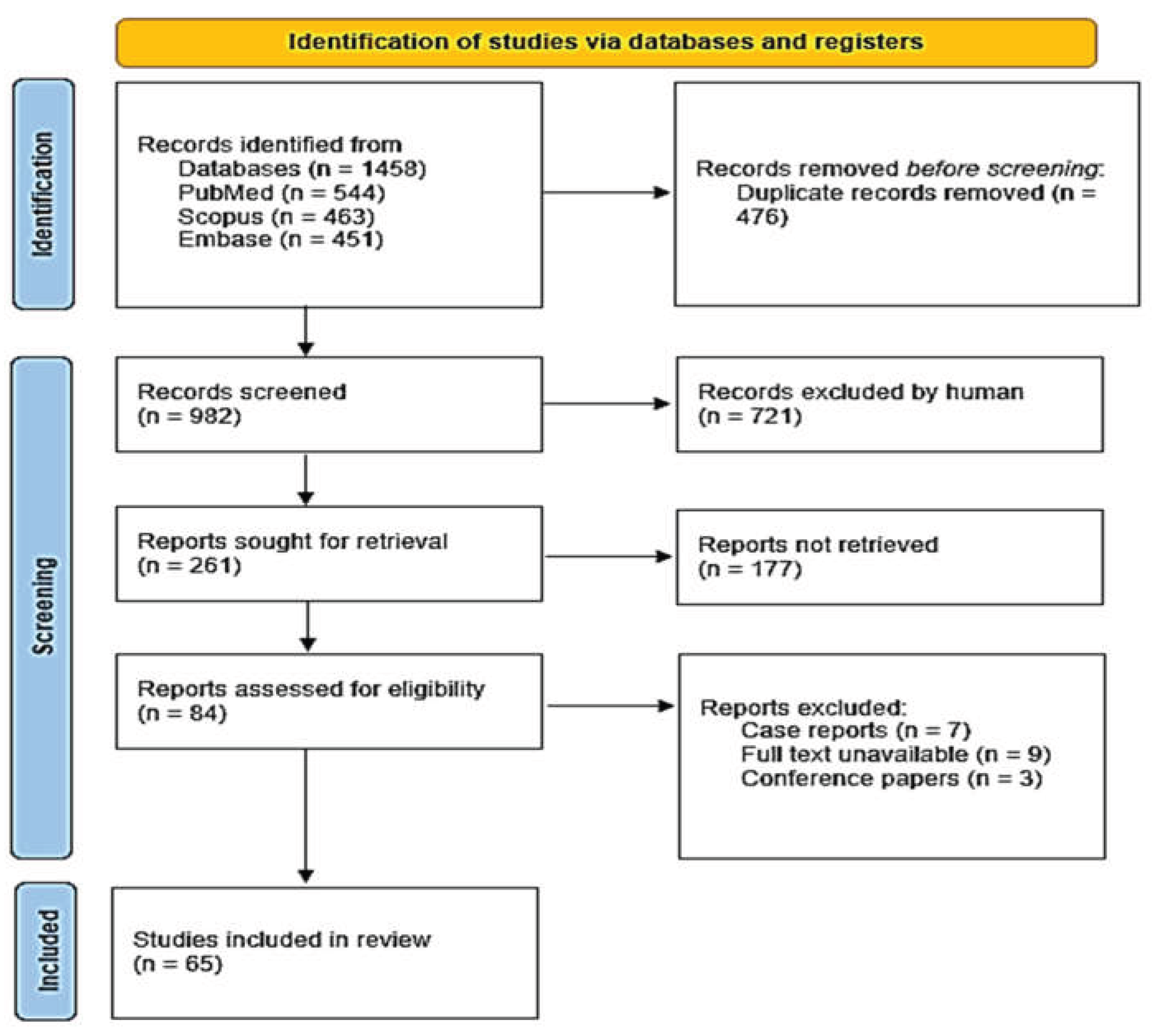

Table 1.
Extracted data for the review (IL-6 Interleukin 6; TNF- α Tumor Necrosis Factor; CRP – C – Reactiv Protein ).
Table 1.
Extracted data for the review (IL-6 Interleukin 6; TNF- α Tumor Necrosis Factor; CRP – C – Reactiv Protein ).
| Item | Data point to extract |
| Quantification of the inflammatory response Alleviation through cellular activity Cell types and seeding techniques Identification of complications |
Reported markers: IL-6, TNF-α, CRP, M1 /M2 macrophage ratio Histological scores for fibrosis, Collagen I/III ratio, capsule thickness Stem cell origin (Adipose, Bone Narrow, Blood, Umbilical cord, and seeding density Incidence of infection, mesh shrinkage, migration, recurrence, chronic groin pain, and regulatory economic barriers |
Table 2.
Summary of the Systemic Immunological Footprint in Mesh Repair.
| Category | Sub-Classification | Count (n=25) | Key Observations |
| Study Design | Randomized Controlled Trials (RCT) | 16 | High-level evidence; robust methodology. |
| Prospective Non-Randomized | 3 | Focused on longitudinal follow-up. | |
| Retrospective / Unspecified | 6 | Real-world clinical data. | |
| Patient Cohort | Total Patients | 1,222 | Significant sample size for systemic analysis. |
| Biomaterials | Polypropylene (PP) | 23 | Primary "foreign body signature" baseline. |
| Other / Not Specified | 2 | Comparison of mesh types. | |
| Surgical Approach | Heterogeneous | — | Includes Open (Mesh/Tissue) and Laparoscopic. |
| Primary Biomarkers | CRP (C-reactive protein) | 18 (72%) | Most frequently reported acute phase reactant. |
| IL-6 (Interleukin-6) | 18 (72%) | Key mediator of the systemic inflammatory cascade. | |
| WBC (White Blood Cell Count) | 10 (40%) | General indicator of systemic stress. | |
| TNF-α(Tumor Necrosis Factor) | 6 (24%) | Marker of early pro-inflammatory signaling. | |
| Total Unique Markers | Multi-marker arrays | 43 | Reflects the complexity of the systemic response. |
Table 3.
Summary of Included Studies on Mesh-Induced Inflammatory Response and Foreign Body Reaction. (FBR) (n = 19).
Table 3.
Summary of Included Studies on Mesh-Induced Inflammatory Response and Foreign Body Reaction. (FBR) (n = 19).
| Study Category | No. of Studies | Total Samples / Subjects | Observation Period | Key Evaluated Markers |
| Human Explants (Retrospective) | 4 | 743 meshes | 2 months – 180 months | PV of inflammation, PV of connective tissue, Foreign body granuloma, T-lymphocytes |
| Animal Models (In Vivo) | 13 | 674 animals (rats, rabbits, mice) | 1 day – 26 weeks (Peaks: 3, 7, 21, 90 days) | M1/M2 phenotype, TNF-α, MMP2, PV of vessels, Macrophages, Neutrophils, Granulocytes |
| Experimental Human Blood | 1 | Human blood samples | Acute / Early phase | Early leukocyte activation, inflammatory cytokines |
| Experimental In Vitro | 1 | Rat kidney fibroblasts | Cell culture duration | Fibroblast proliferation (Ki67), Apoptosis (TUNEL), Collagen deposition |
| Biological Marker |
Measure ment Unit |
Statistical Significance Trend (p<0.05) | Key Findings |
| PV of Inflammation | Percentage (%) | Highly Significant in early animal stages (3–7 days); Correlated with time in human explants (for long-term decrease). | Higher in heavyweight (HW) vs. lightweight (LW) meshes. Decreases significantly over 28 days in animal models. |
| M1/M2 Phenotype | Cell count / Ratio | Significant shift observed between day 7 and day 21 in animal models. | M1 (pro-inflammatory) dominates early; M2 (pro-fibrotic) dominates late (year) in human explants. |
| TNF- | pg/mL or mRNA | Significant elevation in acute phase (7 days) compared to controls. | Directly correlates with high macrophage infiltration and early FBR. |
| MMP2 | Activity Level | Significant correlation with connective tissue (PV CT) remodeling. | Over 50% of macrophages in chronic human explants co-express MMP2. |
| Ki67 / TUNEL | Proliferation index | Significant peak at day 12 post-implantation in mice. | High metabolic turnover (cell birth/death) stabilizes after 90 days but remains above baseline. |
| PV Connective Tissue | Percentage (%) | Significant increase from 7 to 28 days in animal models (p<0.01). | Larger pore meshes (Class 1) show significantly less bridging fibrosis than small pore meshes. |
| T-lymphocytes | Cells per |
Significant correlation found between CD68 (macrophages) and CD3 (T-cells) (r=0.341, p=0.001)
|
Evidence of a persistent adaptive immune response even in very late-term explants. |
Table 5.
Summary of Evidence by Enrichment Type (n = 21).
| Enrichment Category | Key Studies (n = 21) | Primary Species | Core Biomarkers Measured | Main Biological Effect |
| Blood-Derived (PRP/PRF) | 12 (9 PRP, 3 PRF) | Rats, Pigs, Dogs, Humans | VEGF, TGF-β1, COl1/COl3, GAPDH, Tensile Strength | Angiogenesis & Integration: Accelerated neovascularization (VEGF) and significantly improved mesh-to-tissue tensile strength. PRF showed faster surface coverage than PRP. |
| Cell-Based (MSC/SVF/Fat) | 5 (4 MSC, 1 SVF/Fat) | Rats, Rabbits | CD90, CD44, CD45, M1/M2 Ratio, IL-10, IL-6 | Immunomodulation: Shifted the environment from pro-inflammatory (M1/IL-6) to pro-healing (M2/IL-10). Used CD markers primarily for stem cell validation. |
| Tissue-Specific (Fibroblast) | 3 | Rats | SMA, Col1a1, Col3a1, TGF-$\beta$1 | Remodeling: Focused on "myofibroblast" recruitment (SMA) to reduce mesh shrinkage and improve early structural stability. |
| Hybrid (Combination) | 1 | Humans (Clinical) | Clinical Outcomes, Integration | Feasibility: Demonstrated safe application of combined PRP/MSC on biological meshes in complex hernia cases. |
Table 6.
Molecular Signature of Mesh Integration: Standard FBR vs. Mesh Enriched Therapies (MET).
| Level of Analysis | Molecular Marker | Standard Response (n=44) | MET Effect (n=27) | Biological Significance |
| Systemic | CRP / IL-6 | ↑↑ (Persistent) | ↓ (Rapid recovery) | Reduction of global immune stress. |
| Local (FBR) | TNF-α / IL-1β | ↑↑ (Chronic) | ↓ (Transient) | Mitigation of the inflammatory attack phase. |
| Local (MET) | IL-10 | ↓ (Low) | ↑↑ (Increased) | Activation of anti-inflammatory pathways. |
| Macrophages | M1 / M2 Ratio | M1 Dominant | M2 Dominant | Shift from fibrosis to tissue regeneration. |
| Vascularization | VEGF | ↓ (Poor) | ↑↑ (Angiogenesis) | Vital integration, not just "burial" in scar tissue. |
| Remodeling | Collagen I / III | Ratio ↓ (Brittle) | Ratio ↑ (Flexible) | Formation of resilient and elastic tissue. |
Disclaimer/Publisher’s Note: The statements, opinions and data contained in all publications are solely those of the individual author(s) and contributor(s) and not of MDPI and/or the editor(s). MDPI and/or the editor(s) disclaim responsibility for any injury to people or property resulting from any ideas, methods, instructions or products referred to in the content. |
© 2026 by the authors. Licensee MDPI, Basel, Switzerland. This article is an open access article distributed under the terms and conditions of the Creative Commons Attribution (CC BY) license.
Copyright: This open access article is published under a Creative Commons CC BY 4.0 license, which permit the free download, distribution, and reuse, provided that the author and preprint are cited in any reuse.


