
Submitted:
01 June 2026
Posted:
03 June 2026
You are already at the latest version
Abstract
Background/Objectives: Thermal injury during implant osteotomy is a recognized complication of guided surgery, where closed guide architectures and metallic sleeves restrict coolant access to the drill-bone interface, reducing the effectiveness of conventional external irrigation. The objective of this study was to design, fabricate, and evaluate the clinical feasibility of a 3D-printed surgical guide system with integrated internal irrigation channels (the Liquid Guide System), capable of delivering saline directly to the osteotomy site within standard guided surgery workflows. Methods: The system was developed by integrating CBCT and IOS data in BlueSky Bio planning software; irrigation channel pathways were generated by CAD subtraction. Guides were fabricated by digital light processing (DLP) using biocompatible Asiga DentaGuide photopolymer resin, with metal 3D-printed auxiliary structures where required. Channel patency was confirmed by visual inspection after printing and after autoclave sterilization. The design was evaluated for compatibility with the BioHorizons Pro Surgical Guide Kit and the Ticare Fidelis Kit. Clinical feasibility was assessed in two cases: maxillary All-on-6 rehabilitation in a medically complex patient and an immediate implant placement in the esthetic zone. Results: Both guides were fabricated with confirmed patent irrigation channels. Seating accuracy was verified through occlusal fenestrations, and fixation was achieved with metal pins. Irrigation flow was unobstructed throughout all osteotomy steps and no intraoperative complications related to the guide or irrigation system were recorded. The system integrated into standard drilling protocols without modification for either platform. Conclusions: This proof-of-concept demonstrates technical feasibility across two implant systems and distinct clinical scenarios. Controlled in-vitro thermal studies and prospective clinical series required to establish efficacy.
Keywords:
dental implants
; guided surgery
; osteonecrosis
; internal irrigation
; dental implantology
; digital
1. Introduction
Thermal injury to bone during implant osteotomy remains a persistent concern in oral and maxillofacial surgery, particularly in guided implant procedures where guide structures can restrict irrigation access to the drill–bone interface. Excessive heat generation may lead to osteonecrosis, impaired osseointegration, and compromised primary implant stability. Intraosseous temperature rise is influenced by multiple factors, including drilling speed, axial force, bur geometry, cortical bone density, and the efficiency of coolant delivery. Therefore, maintaining effective irrigation is essential to prevent thermally induced tissue damage [1].
In conventional static-guided surgery, irrigation is delivered externally, yet guide sleeves frequently obstruct coolant flow to the osteotomy, reducing thermal control. Rivara et al. reported that limited coolant diffusion within closed guide designs can exacerbate heat accumulation, especially in flapless procedures, where mucosal thickness and sleeve height increase the distance between coolant entry and the bone surface [9]. This has driven several engineering adaptations. Internal-irrigation drills deliver coolants through the bur, whereas modified guide architectures attempt to direct fluid beneath the sleeve barrier.
Delivering coolant internally, either through the drill body or from proximal outlets, has been reported to improve thermal control [2]. In controlled testing on porcine femoral cortical bone, Tuce et al. [3] demonstrated that guides incorporating an internal irrigation channel produced the lowest mean temperature rise during drilling, with all measurements remaining below the accepted thresholds for thermal injury. Their design also showed the narrowest temperature distribution, indicating more consistent thermal behavior than conventional cylindrical or open-sleeve guides.
Other studies, however, have found no significant differences between internal and external cooling under certain experimental conditions [6]. These conflicting results reflect variations in study design, including differences in bur sharpness, debris accumulation, and flushing protocols.
Alternative guide geometries such as sleeveless or “windowed” designs have also been explored to improve coolant access when closed sleeves block irrigation. Although these configurations can increase fluid contact with the cutting flutes, they may reduce mechanical stability and positional accuracy due to material deformation [1]. This points to the strong influence of guide design on irrigation performance and highlights the need for careful operative technique, and continuous intraoperative verification [7]. Parvizi et al. showed that incorporating inlet and outlet channels into the guide structure enables continuous coolant circulation, improving debris evacuation and reducing heat accumulation [2]. Their in-vitro results showed that such channel-based systems outperform traditional external irrigation, particularly in dense bone where heat dissipation is most challenged.
The aim of this study was to present the digital design workflow, additive manufacturing process, and preliminary clinical feasibility of the Liquid Guide System, a 3D-printed surgical guide integrating internal irrigation channels for direct coolant delivery to the drill-bone interface, evaluated across two implant systems and distinct clinical scenarios.
2. Methods
This study was conducted in accordance with the principles of the Declaration of Helsinki and approved by the Ethics Committee of Iuliu Hațieganu University of Medicine and Pharmacy (approval number AVZ117/04.06.2024). Written informed consent was obtained.
2.1. Design of the Liquid Guide System
The design of the Liquid Guide System was based on standard digital workflows used for conventional static surgical guides.
Data Acquisition and Digital Planning: The diagnostic and planning phase began with a Cone Beam Computed Tomography (CBCT) scan using the Carestream CS 8200 3D system (Carestream Dental, Atlanta, GA, USA), configured at 90kV, 2.5mA, 15 seconds exposure time, and a voxel size of 150 µm. Concurrently, the working arch and the antagonist were taken using addition silicone, followed by an occlusal registration. The resulting study models were mounted on an articulator and digitized using the inEos X5 laboratory scanner (Dentsply Sirona, Bensheim, Germany). The CBCT datasets and surface scans were imported and superimposed within the BlueSky Bio planning software to determine the ideal three-dimensional position of the implants.
Guide Design and Fabrication: Following implant planning, the digital wax-up of the surgical guide was generated within the same software. A defining feature of the Liquid Guide system is the design of the internal irrigation pathways; using the software's subtract function, hollow channel lumens were created within the guide body to conduct saline solution directly to the osteotomy site (Figure 1, Figure 2 and Figure 3).

Table 1.
Irrigation channel geometry and intraoperative flow parameters of the Liquid Guide System.
| Internal channel diameter | 0.8 mm |
| Inlet/outlet port diameter | 0.8 mm/ 0.2 mm |
| Channel pathway length | 31 mm |
| Channel wall thickness | 0.9 mm |
| Outlet position relative to sleeve | directed apically toward drill-bone interface |
Guide stability and complete seating were verified through occlusal viewing fenestrations. Upon position confirmation, it was rigidly secured using metal fixation pins. The guide's irrigation port was connected directly to the surgical micromotor's saline source (physio dispenser) via a standard catheter, ensuring continuous flow through the guide. The drilling sequence adhered strictly to the protocol recommended by the implant system manufacturer.
To ensure clinical compatibility, the Liquid Guide System was engineered to integrate with two widely used guided-surgery platforms: the BioHorizons (Birmingham, AL, USA) implant system with its Pro Surgical Guide Kit and the Ticare (Valladolid, Spain) system with the Fidelis kit.
2.2. 3D Printing and Material Selection
Guides were printed via 3D DLP technology using an Asiga MAX UV printer (Asiga, Sydney, Australia) and biocompatible Asiga DentaGuide photopolymer resin. Biocompatible photopolymer resins were selected for their surgical suitability, mechanical resilience to autoclaving, and low thermal conductivity. Based on previously reported fabrication thresholds [2], channels as small as 0.8 mm could be printed without collapse, balancing unobstructed flow with structural stability. This ensured functional internal channels and tight tolerances for implant placement accuracy. Auxiliary metal structures were fabricated separately using an SLM/LMF MYSINT 100 3D printer (Sisma S.p.A., Piovene Rocchette, Italy) with Mediloy metal powder. In the post-processing phase, the guide was manually finished using abrasive instruments to remove printing excess.
2.3. Irrigation Integration and Sterilization
After printing, guides underwent steam autoclave sterilization according to standard protocols. Before sterilization, internal irrigation channels were visually inspected under adequate lighting to confirm lumen patency and the absence of obstruction or deformation. The same inspection was repeated following sterilization. Tubing was connected to the external entry point of the guide and routed through a saline pump. The irrigation tube from the surgical micromotor pump was directly connected to the surgical guide (Figure 4).
2.4. Clinical Application and Workflow Integration
To evaluate preliminary clinical feasibility, the Liquid Guide System was applied in two surgical cases representing distinct clinical scenarios (Figure 5, Figure 6, Figure 7 and Figure 8). Both cases were planned and executed following the same digital workflow described above. The Liquid Guide System was designed without anatomical zone restrictions, allowing application across different implant positions and arch regions within standard guided surgery workflows.
3. Results
Surgical guides were successfully fabricated with internal irrigation channels confirmed patent by visual inspection immediately after printing and following autoclave sterilization. No lumen collapse, resin debris, or dimensional deformation was observed in either guide. The minimum channel diameter of 0.8 mm was maintained throughout both designs, consistent with the fabrication tolerances of the DLP printing process.
Case 1: Maxillary "All-on-6" Implant-Prosthetic Rehabilitation
A 54-year-old female patient presented for complex oral rehabilitation. Her general medical history revealed the presence of hepatitis and hypercholesterolemia, managed with specific medication (Sortis, Lipantil), alongside a known allergy to Chloramphenicol. Clinical and radiographic diagnosis highlighted a maxillary Kennedy Class II subclass 1 edentulism (partially restored anteriorly) and generalized periodontitis, Stage III, Grade B. The treatment plan involved the extraction of the compromised remaining teeth and fixed implant-prosthetic rehabilitation of the maxilla utilizing the "All-on-6" concept. Employing the Liquid Guide system for optimized thermal control during osteotomy, six Ticare® Inhex Quattro implants (Mozo-Grau S.A., Valladolid, Spain) were placed using a fully guided approach. Implant dimensions were adapted to the local bone availability as follows: in positions 1.6 (3.75/15mm), 1.4 (3.75/13mm), 1.2 (3.75/13mm), 2.1 (3.75/13mm), 2.3 (3.75/15mm), and 2.6 (3.75/15mm).
Guide seating was confirmed through occlusal fenestrations and secured with fixation pins. Saline irrigation flow was unobstructed throughout all six osteotomies. No intraoperative complications related to the guide or irrigation system were recorded. The 1-year follow-up panoramic radiograph demonstrates stable clinical results, with no radiographic evidence of pathological peri-implant bone loss (Figure 7).
Case 2: Extraction and Immediate Implant Placement in the Esthetic Zone
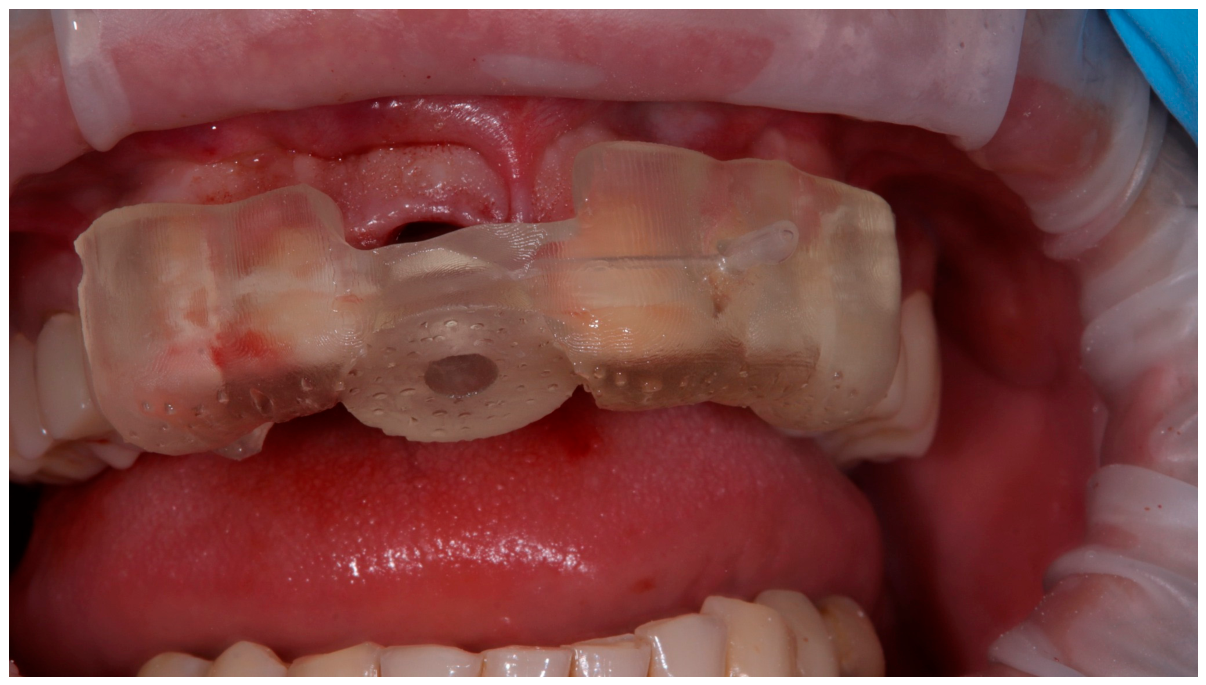
A 36-year-old, clinically healthy male patient presented complaining of mobility in the right maxillary central incisor (tooth 1.1). Clinical examination revealed a maxillary Kennedy Class III subclass 4 edentulism (restored), and grade 2 mobility was recorded at tooth 1.1 (previously endodontically treated). CBCT radiographic evaluation confirmed the complete resorption of the buccal cortical bone plate along the entire root length of tooth 1.1. The treatment plan involved the atraumatic extraction of the affected tooth and immediate dental implant placement. The intervention was performed using a Liquid Guide series surgical guide, placing a Tapered Internal Laser-Lok implant (BioHorizons, Birmingham, AL, USA) measuring 3.8/15mm.
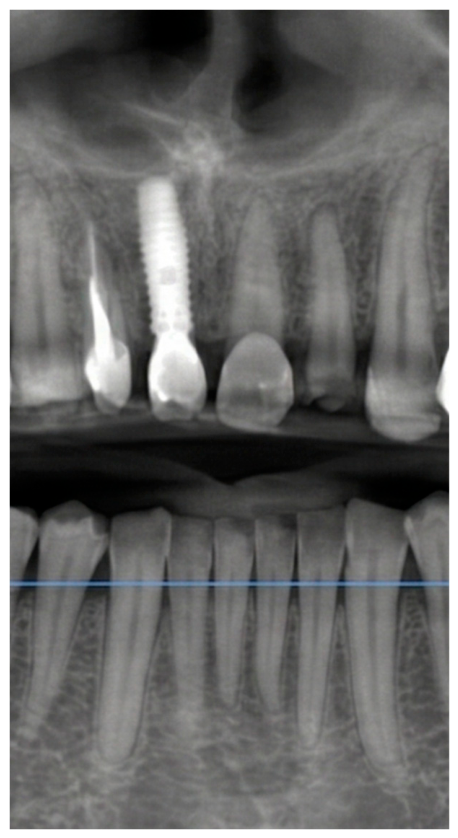
Similar favorable outcomes were observed in the second clinical case. At the 12-month post-operative mark, clinical and radiographic evaluations confirmed excellent stability of the fixtures. A careful assessment of the 1-year follow-up panoramic radiograph demonstrates that the crestal bone levels have been well-maintained. Furthermore, there is a complete absence of any pathological marginal bone resorption or peri-implant radiolucency (Figure 10), indicating successful and sustained osseointegration.
Figure 9.
1-year follow-up panoramic radiograph (Case 2).
4. Discussion
This study describes the design workflow and feasibility of a 3D-printed surgical guide incorporating internal irrigation channels for direct coolant delivery during implant osteotomy. The Liquid Guide System routes saline through the guide body itself, addressing the limitation of conventional external irrigation in closed-sleeved guided surgery.
Effective irrigation during implant osteotomy is essential to prevent friction-induced temperature rise above the 47 °C threshold, beyond which collagen integrity, vascularization, and osteoblast viability are compromised [8,14]. In guided surgery, metallic sleeves partially enclose the drill–bone interface and can obstruct coolant flow, making external irrigation alone insufficient to maintain safe thermal conditions.
Early static surgical guides, typically built with metallic sleeves, improved drill trajectory accuracy but restricted irrigation. Attempts to introduce sleeveless or partially constrained designs enhanced coolant access but compromised stability and showed inconsistent thermal outcomes. Advances in additive manufacturing shifted this landscape by enabling high-resolution 3D-print guides with embedded internal channels capable of directing coolants precisely where external irrigation cannot reach [6]. Building on these advances, the Liquid Guide System applies the same principle within a fully digital CAD-based workflow, designed to integrate internal coolant delivery into standard guided surgery platforms without requiring proprietary drill systems or guide modifications. It delivers coolant directly to the drill flutes and disperses it adjacent to the apical contact zone, where heat generation is greatest and effective thermal control is most critical.
Internal or targeted irrigation systems offer more effective coolant delivery by directing fluid toward the cutting flutes, although their performance may be limited by debris-related outlet blockage or constraints imposed by guide geometry [17]. Studies by Haider and Plenk [13] highlight that compact cortical bone exhibits low tolerance to surface heating, making uniform coolant contact critical. They observed better performance with combined internal and external cooling systems compared with either method alone. Internal delivery through the drill body offers more direct fluid placement at the cutting edge but remains susceptible to outlet blockage by debris if channel designs are suboptimal. These observations motivate the development of guide systems with integrated irrigation pathways capable of consistently delivering coolant to thermally vulnerable regions during osteotomy.
The present study incorporates two established systems: the Biohorizons implant system with its Pro Surgical Guide Kit and the Ticare implant system utilizing the Fidelis kit for guided surgery. These platforms were chosen due to their high adoption rate in clinical practice and their compatibility with customized 3D-printed guides incorporating internal irrigation functionality. Ensuring seamless integration between proprietary sleeve geometries and custom cooling channels requires precise CAD modeling followed by iterative prototyping in biocompatible photopolymer resins capable of resisting deformation under autoclave conditions.
In clinical practice, workflow begins in the diagnostic phase with CBCT imaging coupled to digital intraoral scanning to capture both hard and soft tissue topography. Incorporation of texture data from intraoral scanners can enhance accuracy in guide seating [14]. Merging these examinations within implant planning software allows prosthetically driven positioning of implants. Biocompatible resins selected for guide fabrication withstand autoclave cycles without channel deformation [2], but pre-operative verification of lumen patency is advisable [3]. Cooling is most sensitive within 0.5mm of osteotomy margins, where external spray rarely reaches effectively under closed sleeve constraints [3]. The combination of accurate guidance and controlled cooling supports both mechanical precision and soft-tissue preservation, particularly in the aesthetic zone [13].
Drill-channel alignment proved critical; any offset between exit orifices and flute spirals reduced cooling efficiency disproportionately. Even minor misalignments can accumulate over sequential osteotomies, stressing the importance of verifying positional conformity intraoperatively [7].
4.1. Procedural Features
The hands-free irrigation design does not obstruct the surgical field or require manual coolant application, which may reduce operative interruptions. Based on published evidence linking directed irrigation to reduced drill-site temperatures [2,3], the system is designed to minimize thermal injury risk. Saline temperature between 10–20 °C is recommended to maximize cooling efficacy.
4.2. Future Directions
From a multidisciplinary standpoint, static polymeric guides with integrated irrigation channels, may also benefit oro-maxillofacial reconstructions beyond implant placement [10]. In procedures such as resection-guided fibula free-flap shaping, maintaining cooled osteotomies could reduce marginal thermal injury and support more predictable graft integration. Future iterations of the Liquid Guide could incorporate temperature-monitoring sensors, to provide real-time intraoperative data.
These broader applications position the Liquid Guide as adaptable to a range of guided surgical workflows beyond implant placement [4,5,11,18]. Practical considerations, however, including sterilization procedures, additive-manufacturing tolerances, and system compatibility, remain essential for translating this technology into clinical use. Photopolymer resins must maintain dimensional stability and channel patency after sterilization, as repeated autoclave or plasma cycles can alter material properties [12]. Consistency in CAD-to-print manufacturing is equally important, since small deviations may influence fit or coolant flow. Finally, incorporating patient identifiers onto guides, for traceability, would align with medical device standards and support clinical adoption [17].
As a preliminary clinical report, this study is limited by the small case series and the absence of intraoperative temperature measurement. Controlled in-vitro thermal studies and prospective multicenter series are required before clinical recommendations can be made.
6. Conclusion
Advances in guided implant surgery continue to underscore the difficulty of maintaining adequate cooling during osteotomy, particularly when conventional sleeve designs restrict irrigation. Our 3D-printed guide incorporates internal irrigation channels to improve coolant access and support more stable thermal conditions during drilling. Integration of CAD-based planning with standard intraoperative verification steps ensured workflow compatibility and clinical feasibility. While early results are encouraging, broader studies are needed to assess performance across varied clinical scenarios, patient groups, and implant systems.
References
- Ali, et al. Cooling Efficiency of Sleeveless 3D-Printed Surgical Guides with Different Cylinder Designs. Med. 60, 239. [CrossRef] [PubMed]
- Parvizi, Somayeh; et al. A Novel Irrigation System to Reduce Heat Generation during Guided Implantology: An In Vitro Study. J. Clin. Med. 12, 3944. [CrossRef] [PubMed]
- Tuce, Robert-Angelo; et al. The 3D Printing and Evaluation of Surgical Guides with an Incorporated Irrigation Channel for Dental Implant Placement. Bioengineering 2023, 10, 1168. [Google Scholar] [CrossRef] [PubMed]
- Mai, Hang-Nga; Lee, Dewey Du-Hyeong. Accuracy of augmented reality-assisted navigation in dental implant surgery: A systematic review and meta-analysis (Preprint). Journal of Medical Internet Research 2022. Available online: https://www.researchgate.net/. [CrossRef]
- Pisla, D.; et al. A Vision-Guided Robotic System for Safe Dental Implant Surgery. J. Clin. Med. 2024, 13, 6326. [Google Scholar] [CrossRef]
- Kopzon, Vadim; et al. In-vitro study of the implant bed cooling during guided implantation using an additively manufactured drilling template with an integrated cooling system. Int. J. Implant Dent. 2025, 11, 22. [Google Scholar] [CrossRef]
- Tatakis, Dimitris N.; Chien, Hua-Hong; Parashis, Andreas O. Guided implant surgery risks and their prevention. Periodontology 2000 2019, 81, 194–208. [Google Scholar] [CrossRef] [PubMed]
- Chen, Yung-Chuan; et al. Assessment of Thermal Osteonecrosis during Bone Drilling Using a Three-Dimensional Finite Element Model. Bioengineering 2024, 11, 592. [Google Scholar] [CrossRef] [PubMed]
- Rivara, Federico; et al. Closed- vs. Open-Frame Surgical Guides: An Ex-Vivo Analysis of the Effects of Guide Design on Bone Heating. Prosthesis 2025. [Google Scholar] [CrossRef]
- Pupulina, Francesca; et al. On the thermal impact during drilling operations in guided dental surgery: An experimental and numerical investigation. J. Mech. Behav. Biomed. Mater. 2024, 150, 106327. [Google Scholar] [CrossRef] [PubMed]
- de Carvalho Formiga, Márcio; et al. Full-Arch Rehabilitation Using Implant-Guided Surgery and Ozone Therapy to Prevent Complications in a Systemically Compromised Patient. Cureus 2024. [Google Scholar] [CrossRef]
- Duarte, Marvin Gonçalves; et al. GUIDED SURGERY IN IMPLANTOLOGY: A HISTORICAL RETROSPECTIVE. Braz. J. Implantol. Health Sci. 2025, 7, 2666–2678. [Google Scholar] [CrossRef]
- BASSAM, Gharam; et al. Guided vs. Non-Guided Implant Surgery: A CBCT In Vitro Comparison. 2025, 1/22. [Google Scholar] [CrossRef] [PubMed]
- Palmer, Richard M. Dental implants: Basic implant surgery. Br. Dent. J. Off. J. Br. Dent. Assoc. BDJ Online 1999, 4800294. [Google Scholar] [CrossRef]
- Palmer, Richard M; Floyd, Phil. Dental implants: Basic implant surgery. British dental journal official journal of the British Dental Association 1999. Available online: https://www.researchgate.net/publication/232788613. [CrossRef]
- Khaohoen, Angkoon; et al. Accuracy of implant placement with computer-aided static, dynamic, and robot-assisted surgery: a systematic review and meta-analysis of clinical trials. BMC Oral Health 2024, 359. [Google Scholar] [CrossRef] [PubMed]
Figure 1.
Digital irrigation channel concept—side-by-side parallel outlet prototype views.
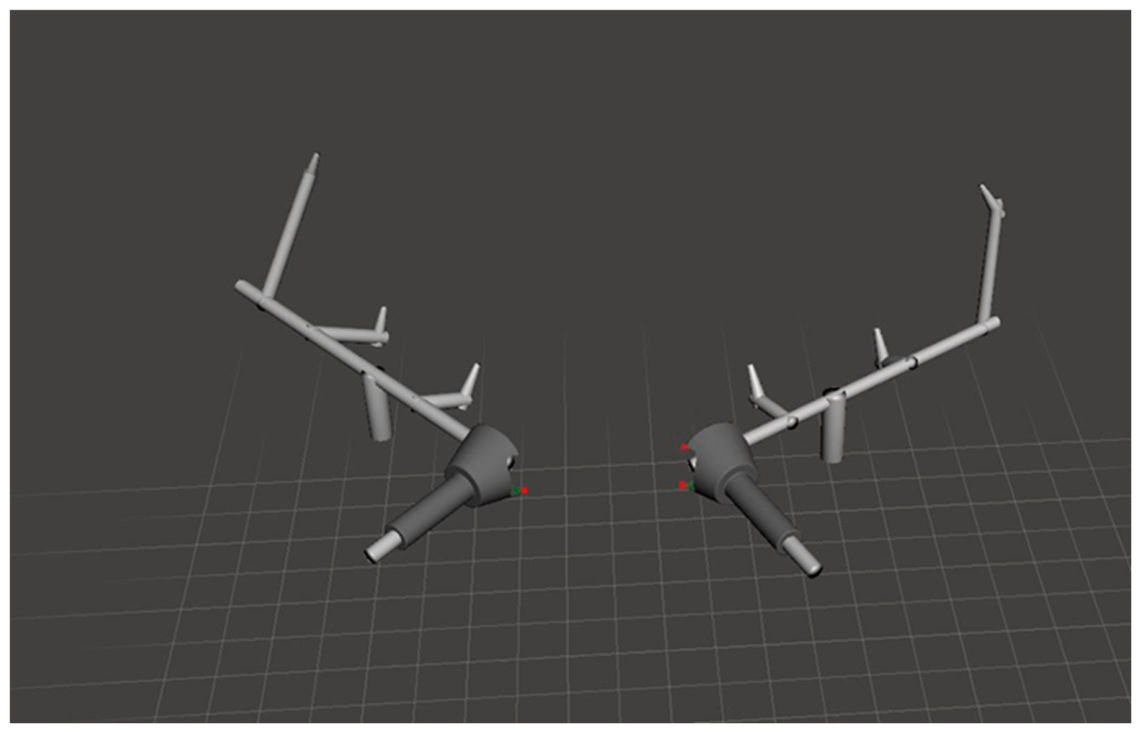
Figure 2.
Complete CAD view of the finalized model used in full-arch guide fabrication.
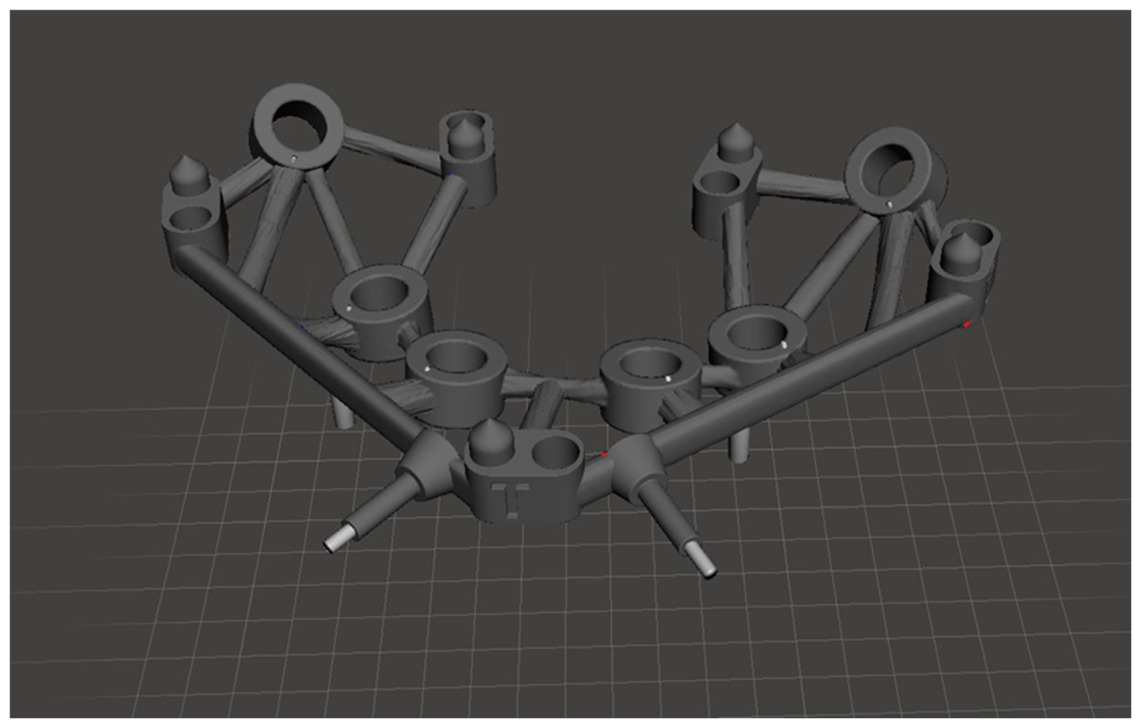
Figure 3.
Highlighted internal microchannels visible within the model architecture.
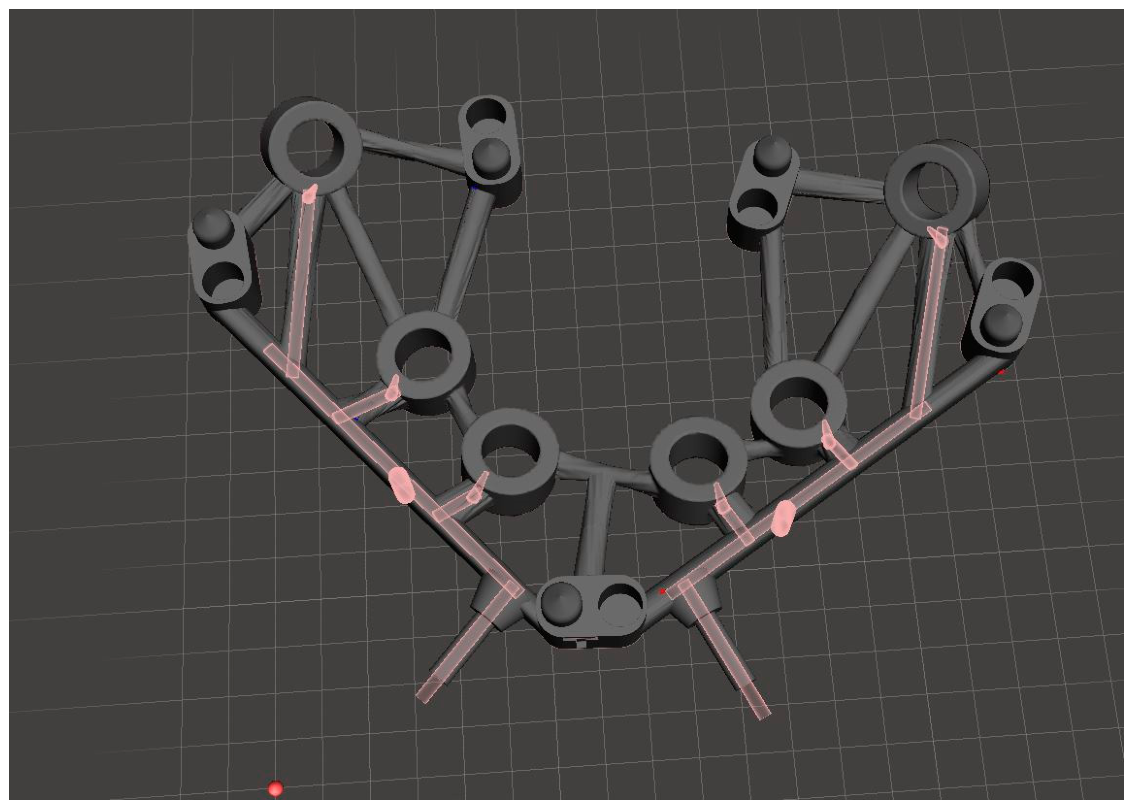
Figure 4.
Direction of the irrigation flow through the guide on the cutting interface of the drill.
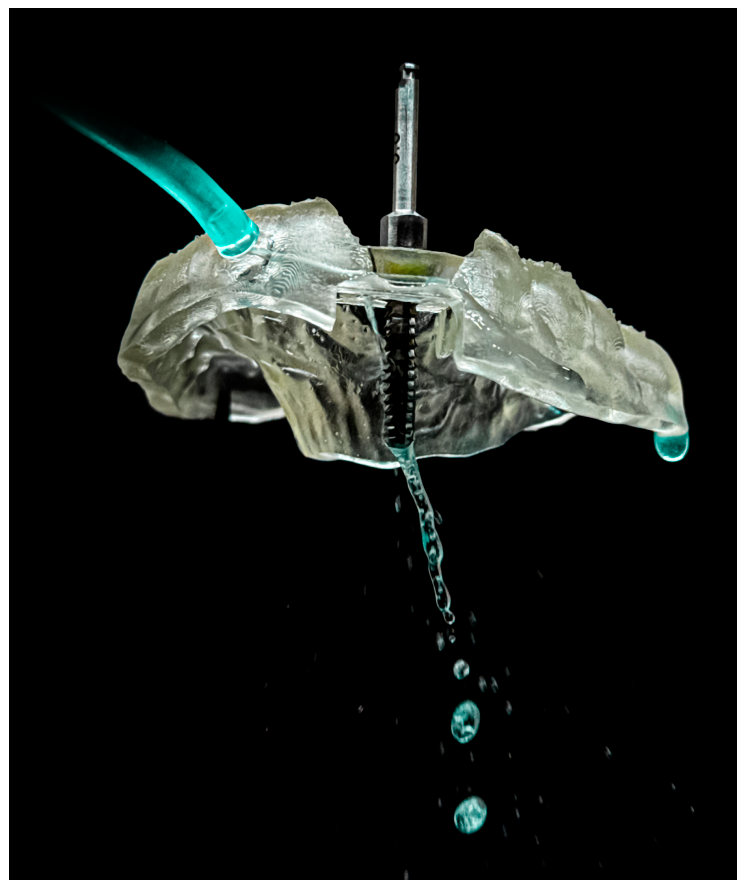
Figure 5.
Metal 3D-printed guide with connected irrigation tubing during clinical placement (Case 1-"All-on-6" Implant-Prosthetic Rehabilitation).
Figure 5.
Metal 3D-printed guide with connected irrigation tubing during clinical placement (Case 1-"All-on-6" Implant-Prosthetic Rehabilitation).
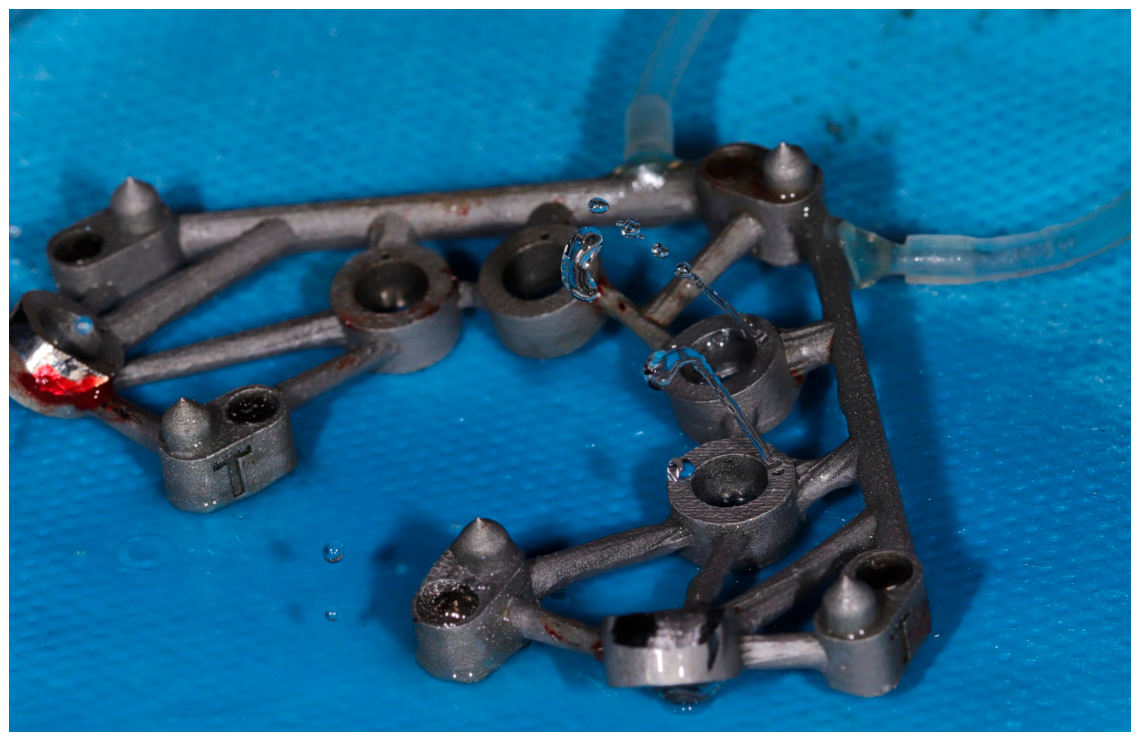
Figure 6.
Functional irrigation shown on a printed guide with water flow visible (Case 1-"All-on-6" Implant-Prosthetic Rehabilitation).
Figure 6.
Functional irrigation shown on a printed guide with water flow visible (Case 1-"All-on-6" Implant-Prosthetic Rehabilitation).
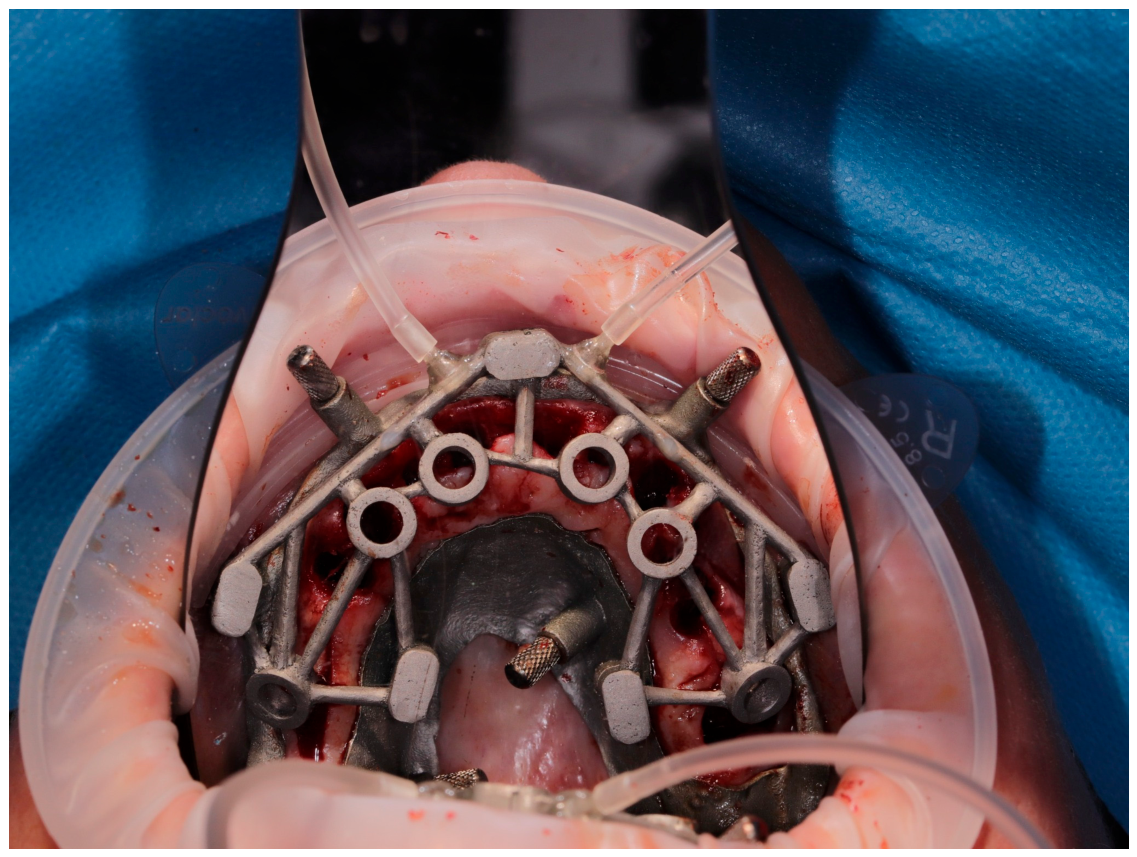
Figure 7.
1-year follow-up panoramic radiograph (Case 1).
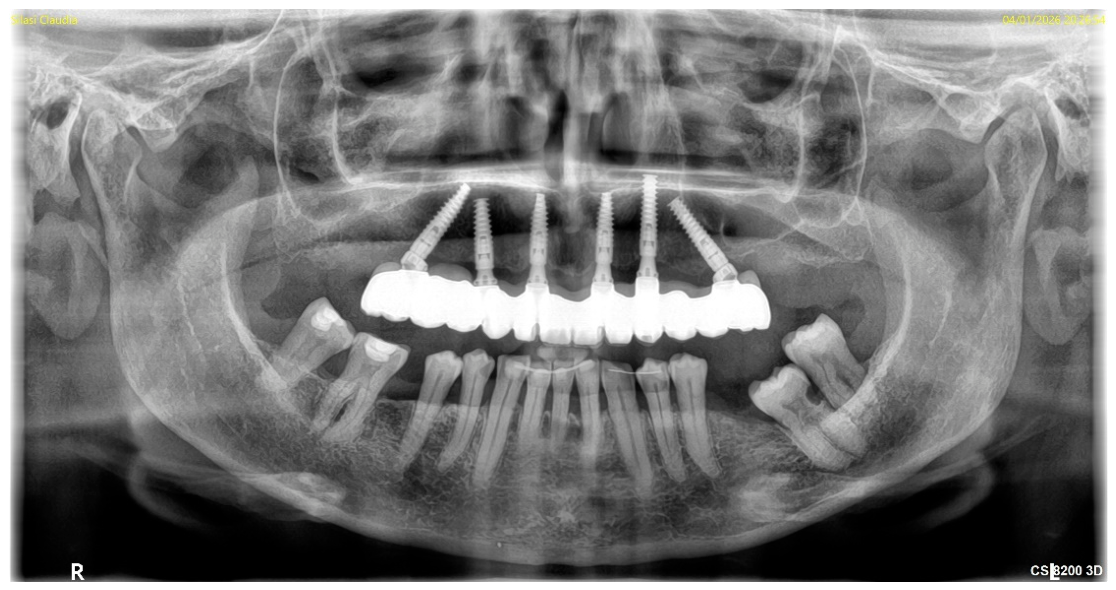
Figure 8.
Surgical guide in clinical use showing the internal irrigation channel in place (Case 2-Immediate loading).
Figure 8.
Surgical guide in clinical use showing the internal irrigation channel in place (Case 2-Immediate loading).
Disclaimer/Publisher’s Note: The statements, opinions and data contained in all publications are solely those of the individual author(s) and contributor(s) and not of MDPI and/or the editor(s). MDPI and/or the editor(s) disclaim responsibility for any injury to people or property resulting from any ideas, methods, instructions or products referred to in the content. |
© 2026 by the authors. Licensee MDPI, Basel, Switzerland. This article is an open access article distributed under the terms and conditions of the Creative Commons Attribution (CC BY) license (http://creativecommons.org/licenses/by/4.0/).
Copyright: This open access article is published under a Creative Commons CC BY 4.0 license, which permit the free download, distribution, and reuse, provided that the author and preprint are cited in any reuse.


