

Submitted:
01 June 2026
Posted:
03 June 2026
You are already at the latest version
Abstract
Transforming Growth Factor-beta (TGF-β) promotes lens epithelial-mesenchymal transition (EMT) and fibrosis, contributing to anterior subcapsular cataract (ASC) formation. Transgenic mice overexpressing TGF-β1 in lens have been studied for over three decades, and yet the impact of active TGF-β1-overexpression on the lens epithelial transcriptome is undefined. We have addressed this knowledge gap by examining the gene expression landscape of these unique lens epithelia. High-throughput RNA-sequencing was performed on isolated lens epithelia from three-week-old TGF-β1-overexpression transgenic mice from two independent lines, OVE853 and OVE918, and wild-type mice. Downstream analyses included comparisons with lens datasets (e.g., cataract-surgery model) and investigations using various resources/tools (e.g., Gene Ontology, CompBio, iSyTE). Compared to wild-type murine lens epithelia, 384 differentially expressed genes (DEGs) were commonly identified in lens of both transgenic lines. Candidates involved in EMT, inflammatory response, extracellular matrix organization, and mechano-sensation were elevated, while those involved in lipid metabolism, Wnt-suppression, Bmp- and Notch-activation were reduced. Comparative analyses with temporal transcriptomes on a mouse cataract-surgery model identified overlapping pathological pathways, and some elevated genes, for example endoplasmic reticulum stress genes, were in agreement with human ASC data. A major discovery was the identification of several novel TGF-β1-targets. All our data is made user-friendly accessible through iSyTE.
Keywords:
TGF-β1
; cataract
; lens
; transcriptome
; epithelium
; epithelial-mesenchymal transition (EMT)
; endoplasmic reticulum (ER) stress
1. Introduction
Human anterior subcapsular cataract (ASC) presents as a focal lens opacity characterized as a central fibrotic plaque beneath the anterior lens capsule. It can result from ocular trauma, ocular surgery, inflammation, long-term medications, and is also linked to atopic dermatitis[1]. ASC is derived through a distinct transformation of lens epithelial cells that undergo an epithelial-to-mesenchymal transition (EMT), where the epithelial cell monolayer is destabilized to lose their epithelial traits as cells transform into myofibroblasts[2]. These transformed cells secrete excessive amounts of extracellular matrix (ECM) and acquire migratory and contractile properties through the accumulation of alpha-smooth muscle actin and tropomyosin[3], allowing them to modify the overlying lens capsule with this fibrotic plaque, which is commonly associated with capsular ‘wrinkling’.
Transforming Growth Factor-beta (TGF-β) is a well-documented driver of ASC[4], along with inflammatory cytokines and enzymes, such as matrix metalloproteinases (MMPs)[5], that contribute to lens capsule remodelling and facilitate the migration of the transformed cells. Research by multiple laboratories over the years has focused on understanding the formation of fibrotic cataracts, particularly the inherent EMT process, using a variety of in vitro and in situ models. The findings that ASC shares common mechanisms with another form of cataract, posterior capsule opacification (PCO, also referred to as secondary cataract) resulting from post-cataract surgical complications, has seen a large impetus in exploring the underlying molecular and cellular properties of EMT[6].
Researchers have adopted different models to emulate the EMT associated with the complex pathophysiology of human ASC and PCO, from immortalized lens epithelial cell lines, lens epithelial explants and ex vivo cultured whole lens, to in situ lens wounding models (including a cataract surgery mouse model), as well as more complex transgenic mouse models that result in fibrotic plaque formation, as utilised in the current study.
In vitro studies using cultured lens cells have provided many important insights to cataract formation, from the initial identification of TGF-β as the primary inducer of EMT[7], to understanding the cellular and molecular changes involved in this process, including its regulation by characterizing the multiple integrated signalling pathways[8]. While ‘native’ human lens epithelial explants are more clinically relevant for studies, their fewer numbers and finite lifespan is a limiting factor, as is the case for immortalized human lens epithelial cells lines, and three-dimensional (3D) lens organoids. In contrast, in vivo animal models, albeit more expensive, allow the study of the onset and long-term maturation of cataracts in their native ocular environment (e.g., bathed by aqueous). In situ models, compromising the blood-aqueous barrier, including injury-induced EMT to the murine lens that emulate traumatic cataract, similar to ASC, and mock-cataract surgery leading to EMT associated with PCO, are dependent on technical consistency and have also provided many key molecular targets for intervention.
Mice engineered to overexpress a self-activating form of human TGF-β1, specifically in the lens, under the influence of a modified alpha-crystallin promoter, are considered the ‘gold standard’ in situ model for mechanistic studies into fibrotic cataract formation[9,10]. These transgenic mouse lines allow researchers to follow the onset and development of anterior subcapsular plaques that are histologically identical to human ASC [4]. While comparative proteomic studies on human ASC with rodents mimic the ‘core’ fibrotic program, the more acute injury-based and transgenic rodent studies differ in protein-modifications (e.g., deamidation of crystallins) and metabolic signatures (e.g., oxidative damage) that may take many years in humans. Despite these limitations, and the fact that the transgenic lines have already been well-characterised at the cellular and molecular level, there is a knowledge-gap regarding the transcriptomic alterations associated with this in situ ASC pathology in both human and animal models.
Here, we present the first detailed high-resolution transcriptome analyses of the mature TGF-β1-induced pathological changes that form in two independent TGF-β1-overexpression transgenic mouse lines (OVE853, OVE918)[9]. Our findings identify the gene expression changes linked to EMT, inflammatory response, and ECM remodelling, which are hallmarks of human ASC. Moreover, our study also uncovers a role for dysregulation of lipid metabolism and endoplasmic reticulum (ER)-stress in TGF-β1-induced pathology, like that observed in human ASC, suggesting the utility of these mouse transgenic models for human ASC studies. Furthermore, these data identify other pathways and genes that are associated with loss of epithelial character (e.g., reduced BMP-signaling, reduced specific epithelial gene expression, reduced lipid metabolism, etc.) as well as new high-priority downstream targets of the TGF-β1 pathways, which may represent candidates for future investigations and therapeutic interventions.
2. Materials and Methods
Mouse Studies
All experimental procedures conformed to the Association for Research in Vision and Ophthalmology (ARVO) statement for the use of animals in ophthalmic and vision research and were approved by the University of Sydney animal ethics committee. Transgenic mice at three weeks of age, from families OVE853 and OVE918 on an FVB/N background (initially described by Srinivasan and coworkers[9]) were used for the present study and were compared to wild type (WT) mice of the same background. The transgenic lines express a secreted, constitutively active form of human TGF-β1, under the control of the lens-specific murine αA-crystallin promoter. These lines develop ASC and as mentioned, have been extensively characterised[4,8,9,10].
For OVE853 mice, we collected 3 samples for RNA extraction and sequencing, with each sample containing up to 18 freshly isolated lens epithelial explants from 9 mice containing an anterior subcapsular plaque. Similarly, for OVE918 mice we collected 4 samples, with each sample containing up to 14 freshly isolated lens epithelial explants from 7 mice containing an anterior subcapsular plaque. For comparison, we collected 3 samples of lens epithelia for RNA extraction and sequencing from up to 9 WT mice per sample. All tissues for each sample were immediately pooled in cold 500 µL Trizol reagent and stored at -80˚C for subsequent RNA extraction. RNA extraction from lens epithelial explants was performed according to the manufacturers’ instructions. Total RNA (2.5 µg) was DNase-treated using TURBO DNA-free Kit (Invitrogen) as per the manufacturers’ protocol. RNA quantity and quality were determined using the RNA 6000 Nano kit on a Bioanalyzer (Agilent Technologies). All RNA samples with a RIN value of >7.0 were sent for mRNA sequencing (150 bp paired end, Illumina) at the Australian Genome Research Facility.
RNA-Seq Data Processing, Visualization, and Differential Expression Analysis
RNA-seq data was processed similar to previous analysis[11]. Briefly, paired-end RNA sequencing libraries (150 bp read length) were processed using a standardized computational workflow. Raw reads were trimmed to remove sequencing adapters and low-quality bases using Cutadapt (v5.2). Trimmed reads were aligned to the mouse reference genome (GRCm39) using STAR (v2.7.11b)[12]. Aligned reads were quantified at the gene level using featureCounts (v2.0.8)[13]. Gene expression values were calculated as fragments per kilobase of transcript per million mapped reads (FPKM) by normalizing raw counts to both gene length and library size. Gene lengths were determined from the NCBI RefSeq genome annotation (mm39.ncbiRefSeq.gtf) by the sum of the exonic sequences and matched to the count matrix by gene identifiers. Genes with expression ≥ 2 FPKM in at least half of all samples were retained and subjected to downstream differential expression analysis. Normalization of count data across samples was performed using the trimmed mean of M-values (TMM) method implemented in the edgeR via the calcNormFactors function. Differential gene expression analysis was conducted using edgeR (v4.6.3)[14] in R (4.5.0) and genes with an absolute log2 fold change ≥ 1.0 and a false discovery rate (FDR) ≤ 0.05 were designated as significantly differentially expressed. To assess global transcriptomic variation and sample relationships, principal component analysis (PCA) and multidimensional scaling (MDS) plots were generated using normalized expression data. Top candidates were analyzed by using the iSyTE lens expression database as previously described[15,16,17,18,19,20] to examine their expression in the normal lens at different ages spanning embryonic through aging.
Gene Ontology (GO) Term Enrichment and Pathway Analysis
Gene Ontology (GO) enrichment analysis was performed using the clusterProfiler (v4.16.0)[21] package in R. This was comprised of independent analysis of GO Biological Process (BP), GO Molecular Function (MF), and GO Cellular Component (CC) to identify functional categories enriched among the differentially expressed genes (DEGs). Pathway-level analysis was also performed using curated gene sets from the Hallmark collection obtained from the msigdbr package (v25.1.1)[22,23] to identify coordinated biological pathways associated with the DEGs. For the comparison of DEGs in the TGF-β1 overexpression and the post-cataract surgery (PCS) models, GO terms were identified using “GOTERM_BP_DIRECT” annotation category using the bioinformatics tool DAVID[24,25]. For the 6 hr PCS comparison, a p-value cut-off of < 0.05 was used, while for the other stages, an FDR cut-off of < 0.05 was used.
Comprehensive Multi-Omics Platform for Biological InterpretatiOn (CompBio) Analysis
Enriched biological themes associated with the elevated and the reduced DEGs were identified using the Comprehensive Multi-omics Platform for Biological InterpretatiOn (CompBio), a web-based analytical tool developed at Washington University School of Medicine (GTAC@MGI, https://gtac-compbio-ex.wustl.edu)[26]. CompBio analyzes gene lists to identify literature-derived biological concepts and groups the frequently co-occurring concepts into themes. Theme enrichment was evaluated using the normalized enrichment score (NEScore), and themes with an NEScore ≥ 1.3 and an associated p-value < 0.1 were considered significant. The identified significant themes were annotated to highlight key pathways and CompBio’s automated annotations were adopted where appropriate. An overview of the workflow for downstream data analysis is summarized in Figure 1.
3. Results
3.1. RNA-Seq Analysis of Isolated Lens Epithelia from the TGF-β1 Lens-Overexpressing Transgenic Mice
To gain insights into the transcriptomic changes induced by active TGF-β1 overexpression in the mouse lens, we performed RNA-seq on lens epithelia isolated from the transgenic mouse lines OVE853 and OVE918 and wild-type (WT) controls at three weeks of age. Paired-end libraries (150 base pairs in length) were sequenced, and an average of 40.9 million reads were obtained per sample. The reads were aligned using the software (STAR, v2.7.11b)[12] and on an average, 77.3% were mapped to the Mus musculus reference genome (GRCm39). First, we examined the data by performing principal component analysis (PCA) and multi-dimensional scaling (MDS). Both PCA and MDS showed that the datasets clustered largely based on sample-type (Figure 2A, B). The RNA-seq analysis identified 10,566 genes to be expressed at ≥2.0 FPKM in at least six samples across the two transgenic lines and WT mice (Supplementary Tables S1, S2). We applied stringent criteria to identify differentially expressed genes (DEGs) in comparisons between each of the transgenic lines and the control. The volcano plots for OVE853 vs. WT and OVE918 vs. WT highlight the DEGs that passed stringent criteria (log2 fold change ≥ 1.0, FDR < 0.05, ≥ 2.0 FPKM) (Figure 2C, D). Importantly, TGF-β1 was robustly elevated in both transgenic lines (Figure 2E, F). A total of 517 DEGs (280 elevated, 237 reduced) were identified in OVE853, while 627 DEGs (286 elevated, 341 reduced) were identified in OVE918 (Figure 2C, D; Supplementary Table S3, S4). Heat-map representations show the top 100 DEGs in the OVE853 vs. WT and the OVE918 vs. WT comparisons (Figure 2G, H). A total of 384 DEGs were commonly identified in both transgenic lines (Figure 2J, I, Supplementary Table S5). Among these candidates, 383 of the 384 DEGs shared the same trend in the context of differential expression (Figure 2I). Indeed, of the 384 DEGs, 200 were commonly elevated, while 183 were commonly reduced in both transgenic lines (Figure 2J). The magnitude of change in expression (in log2 fold change) of majority of the genes correlated across both transgenic lines (r = 0.97) (Figure 2I), suggesting the robust nature of the commonly identified DEGs across OVE853 and OVE918. The top 20 commonly elevated genes and reduced genes in OVE853 and OVE918 are listed (Table 1).
3.2. Gene Ontology and Pathway Analysis of Common DEGs.
Pathway analysis and gene ontology (GO) analysis was next performed to gain insights into the common DEGs. Analysis of the 384 genes using the hallmark gene sets in the Molecular Signatures Database (MSigDB)[22,23] identified “Epithelial Mesenchymal Transition” among the top significantly enriched terms (Figure 3A) among other terms. Analysis of the 200 commonly elevated candidates identified “Inflammatory Response” in addition to “Epithelial Mesenchymal Transition” and other terms. Analysis of the 183 commonly reduced candidates identified only a single term “Estrogen Response Early”. Next, ClusterProfiler-based analysis of the 384 common DEGs identified the GO terms “Extracellular Matrix” (Cellular Component, CC), “Inflammatory Response” (Biological Process, BP), and “Signaling Receptor Activity” (Molecular Function, MF), among others (Figure 3B, Supplementary Table S6). Analysis of the 200 commonly elevated candidates identified “Extracellular Matrix” (CC), “Inflammatory Response”, “Response to Mechanical Stimulus” and “Response to Fibroblast Growth Factor” (BP), and “Signaling Receptor Activity”, and “Cell Adhesion Molecule Binding” (MF) (Figure 3C, Supplementary Table S7). Analysis of the 183 reduced candidates identified “Neuronal Cell Body”, “Extracellular Matrix” (CC), “Synaptic Signaling”, “Organic Acid Transport” (BP) and Transporter Activity-related terms (MF) (Figure 3D, Supplementary Table S8). Together, these findings provide novel insights into the nature of the cell defects upon overexpression of active TGF-β1 in the mouse lens epithelium.
3.3. TGF-β1 Overexpression Elevates EMT-Associated Genes in the Lens
Because pathway analysis pointed to elevation of EMT genes upon TGF-β1 overexpression, we focused on candidates associated with EMT. The majority of 12 candidate genes (Cdh2, Col1a1, Fn1, Itga5, Itgb1, Lama5, Mmp2, Postn, Sdc1, Tagln, Tgfbi, Tmc) associated with EMT – as per the literature – were found to be elevated in both transgenic lines (Figure 4A, B). Further, Cdh1, which is known to be downregulated with progressing EMT, was found to be reduced in both lines. Interestingly, Acta2, which encodes α-smooth muscle actin and is known to be elevated with EMT, was found to be elevated in OVE918 but not OVE853, as was S100A4.
3.4. TGF-β1 Overexpression Elevates a Subset of Inflammatory Response Genes in the Lens.
Pathway analysis showed that genes associated with the inflammatory response were elevated upon TGF-β1 overexpression. To examine this in more detail, we focused on 9 candidates (Axl, Ccl2, Ccl7, Hpn, Icam1, Lcn2, Nampt, Osmr, Timp1) associated with the inflammatory response as per the literature and found them to be elevated in both OVE853 and OVE918 (Figure 5A).
3.5. TGF-β1 Overexpression Dysregulates Extracellular Matrix Gene Expression in the Lens
Extracellular matrix (ECM) was identified as an enriched GO term by pathway analysis in both elevated and reduced DEGs. Among elevated DEGs, 19 genes (Aebp1, Adamts4, Adamtsl1, Bcl3, Col1a1, Col27a1, Col5a3, Ctss, Ero1a, Fn1, Gfap, Hpn, Ltbp4, Mmp2, Phldb2, Postn, Scara3, Tgfb1, Tgfbi) were identified (Figure 5B). Among the reduced DEGs, 17 genes (Alpl, Apoe, Col18a1, Col23a1, Col9a3, Fbln7, Fmod, Lama3, Lrig1, Lrrn1, Ntn4, Optc, Rarres2, Sod3, Sparcl1, Spon2, Tnxb) were identified (Figure 5C). It should be noted that a majority of the candidates with reduced expression and GO-enriched ECM terms are known to be involved in ECM organization and are not associated with fibrosis (e.g., Col18a1, Lama3), unlike those identified as elevated and GO enriched ECM. These findings suggest that TGF-β1 overexpression may result in a complex interplay of mis-expressed genes associated with ECM remodeling in the lens.
3.6. TGF-β1 Overexpression in the Lens Elevates Several Genes Linked to Mechano-Sensation, FGF Signaling and Cell Adhesion
TGF-β1 overexpression leads to elevated expression of several genes that are associated with the GO term for response to mechanical stimulus. These include Ccl2, Col1a1, Hpn, Itga2, Mmp2, Piezo2, Postn, Stra6, Tacr1, Tgfb1, Tnc, Tnfrsf11a and Whrn (Figure 5D). Several genes that are linked to the GO for Fibroblast Growth Factor (FGF) signaling are found to be elevated upon TGF-β1 overexpression in the lens. These are Apln, Axl, Col1a1, Gpc1, Ngfr, Postn, Ror2, Spry1, Tek, and Tnc (Figure 5E). Genes linked to the GO term for cell adhesion that were elevated in TGF-β1 overexpression lines were Dab2, Fn1, Fxyd5, Gfap, Glycam1, Gpnmb, Icam1, Itga2, Itga7, Mcam, Postn, Spp1, Tgfbi, Tnc and Vcam1 (Figure 5F).
3.7. TGF-β1 Overexpression in the Lens Reduces Genes Associated with Synaptic Signaling and Transporter Activity
Overexpression of TGF-β1 led to a reduction of a cohort of genes linked to GO terms of synaptic signaling and transporter activity. Interestingly, most of these genes were also found to be elevated in the normal lens epithelium. Genes associated with synaptic signaling that were reduced upon TGF-β1 overexpression in the lens were Abat, Apoe, Cacng4, Calb2, Crhbp, Fam107a, P2rx6, Pdyn, Penk, Sv2a, etc., while those linked to transporter activity were Atp1a2, Kcnk1, Slc1a3, Slc6a6, Slc6a9, Slc6a13, Slc6a15, Slc13a4, and Slc24a3 (Figure 5G, H). The reduced expression of these genes may likely contribute to the lens defects observed in the transgenic mouse lines OVE853 and OVE918.
3.8. CompBio Analysis of Genes Differentially Expressed Upon TGF-β1 Overexpression
Next, we sought to apply an ontology-independent strategy – distinct from the above GO/pathway analyses – to examine the TGF-β1 overexpression common DEGs in OVE853 and OVE918 mouse lens epithelia. Therefore, we used CompBio (Comprehensive Multi-omics Platform for Biological InterpretatiOn)[26] that analyzes de novo a given list of genes (e.g., elevated or reduced or differentially expressed) using publicly available literature resources encompassing >30 million Pubmed abstracts and >3 million full-text articles to build biologically relevant themes. Distinct themes were identified when elevated genes and reduced genes were analyzed separately by CompBio.
Analysis of the significantly elevated genes by CompBio uncovered “TGFβ signaling, EMT, Fibrosis” as the topmost enriched theme (Figure 6A). While this is not surprising, it shows the efficacy of CompBio. Other top themes identified include “TIMP (tissue inhibitor of metalloproteinases)-associated ECM remodeling”, “Epithelial cell communication”, and “Axon guidance, Cell migration and Matrix remodeling”. In CompBio-based analysis of the significantly reduced genes, the themes identified include “Notch signaling, BMP signaling”, “Wnt signaling suppression, Notch signaling”, “Growth factor signaling”, “Lipid metabolism”, “Neuronal ion homeotasis” and “Neuronal synaptic signaling” (Figure 6B). Thus, CompBio analysis provides additional biological insights into the pathways that are altered upon TGF-β1 overexpression in OVE853 and OVE918 lens epithelia.
3.9. Comparison Temporal Transcriptomes of TGF-β1 Overexpression DEGs with a Mouse Cataract-Surgery Model
TGF-β1 upregulation is associated with posterior capsule opacification (PCO). Previous studies have generated transcriptome data on an established mouse cataract-surgery model for PCO [34]. To gain insights into the shared pathways, we performed a comparative analysis with transcriptome data collected on different stages post-cataract surgery in the mouse cataract-surgery model. Comparison of our TGF-β1 overexpression DEGs (n=384) with those in the 6 hr post cataract-surgery (PCS) model identified 45 common DEGs (Figure 7A, Supplementary Table S9). At 24 hr, 48 hr, 72 hr and 120 hr post cataract-surgery, 177, 166, 172 and 177 DEGs, were commonly identified, respectively, between the cataract-surgery model and the TGF-β1 overexpression lens epithelia. For 6 hr, 36 were commonly elevated (and 4 commonly reduced), for 24 hr, 77 were commonly elevated (and 78 commonly reduced), for 48 hr, 79 were commonly elevated (and 67 commonly reduced), for 72 hr, 79 were commonly elevated (and 71 commonly reduced), and for 120 hr, 86 were commonly elevated (and 71 commonly reduced) (Figure 7A, Supplementary Table S9). Next, we performed GO Biological Process term enrichment analysis in DEGs shared between TGF-β1 overexpression and the PCS model at 6 hr (Figure 7B), 24 hr (Figure 7C), 48 hr (Figure 7D), 72 hr (Figure 7E) and 120 hr (Figure 7F). At 6 hr PCS, “Response to cytokine” and “Cell adhesion” were identified among the enriched terms. For the later stages, “Positive regulation of cell migration”, “Extracellular matrix organization”, “Cell adhesion”, “Response to mechanical stimulus”, and “TGFβR signaling pathway” were identified among the enriched terms.
3.10. Identification of ASC-Associated ER Stress Genes and Novel Candidates in TGF-β1 Overexpression Transcriptome Data
TGF-β1 overexpression transcriptome data analysis offers an opportunity to identify new directions downstream of the pathway with relevance to ASC. Toward this goal, we first compared the TGF-β1 overexpression common DEGs to genes that showed altered expression in a recent study of human ASC[27]. This analysis identified ER stress genes to be elevated in both TGF-β1 transgenic lens epithelia datasets (Figure 8). To investigate this in more detail, we examined other ER stress genes beyond the ones that were identified in the human dataset and identified a cohort of significantly elevated genes in the TGF-β1 overexpression mouse models. The ER stress genes elevated are: Calr, Canx, Ero1a, Hsp90b1, Hspa5, Pdia3, Pdia4, Pdia6, Ptpn1, Ptpn2, Wfs1, and Xbp1 (Figure 8A). Next, we focused on identifying genes other than those related to ER stress but have not been previously linked to TGF-β1. Examination of our data prioritized several novel genes that are significantly elevated upon TGF-β1 overexpression. These are: Bcl3, Cfi, Cpxm2, Gal, Gjb3, Osmr, and Spp1 (Figure 8B). These genes exhibit low expression in normal lens epithelium in iSyTE and are found to be elevated upon TGF-β1 overexpression.
3.11. Accessing the TGF-β1 Overexpression Transcriptome Data in iSyTE
We sought to make the TGF-β1 overexpression lens epithelia transcriptome data freely accessible. For this, we developed a new user-friendly web portal on the iSyTE database[16,15] that can be navigated at http://research.bioinformatics.udel.edu/iSyTE. This allows effective visualization of the transcriptome data including genes that are expressed in the TGF-β1 overexpressing lens epithelia. Expression of one (or more) candidates can be visualized through these new features at iSyTE. The database resource is built such that one can navigate to the iSyTE webpage, select “Gene Expression”, “Gene Perturbation”, select “TGFB1 Over-Exp”, select dataset “Average (FPKM) TGFB1, Control” (e.g., for average FPKM values for individual genes detected in transgenic lines OVE853, OVE918 and control). For example, elevated Tgfb1 expression in the transgenic lines compared to control can be visualized (Figure 9A). Other features can also be selected for selective visualization. For example, select dataset “All samples (FPKM)” for visualization of individual genes in each of the replicate of OVE853, OVE918 and control, or “TGFB1 vs Control Fold Change” or “TGFB1 vs Control log2 Fold Change”, for fold change or log2 fold change differential gene expression. Examples are shown for differentially expressed genes with elevated or reduced expression in the transgenic lines compared to the control (Figure 9B-D). Together, these data demonstrate that the new web-portal-enabled data visualization of the RNA-seq data in iSyTE allows effective examination of differential gene expression in normal and TGF-β1 overexpression lens epithelia.
4. Discussion
Here, we performed a high-throughput RNA-seq analysis of isolated lens epithelia from well-established transgenic mouse lines OVE853 and OVE918 overexpressing human self-activating TGF-β1; models for human ASC. Although independently derived, both transgenic lines exhibited 384 common differentially expressed genes suggesting a high-level of overlap in their transcriptomes. Importantly, these data show TGF-β1 is indeed robustly overexpressed in both lines, as are many of their downstream targets. Furthermore, analysis of the 384 common dysregulated genes confirm many of the pathways and genes that are expected to be perturbed in these lines, based on their biochemical, cellular and phenotypic characterization from previous studies. Indeed, genes aberrantly expressed in both lines include those associated with EMT and ECM remodeling, typical of ASC and fibrotic forms of cataract.
These new transcriptome analyses give novel insights into the impact of active TGF-β1 in the lens epithelium. For example, TGF-β1 overexpression led to reduction of genes linked to the lens epithelium such as the E-cadherin gene Cdh1, the connexin gene Gja1 and the glutathione peroxidase gene Gpx3. Notably, GJA1 mutations are associated with human syndromic cataract[28,29]. Further, TGF-β1 overexpression impacted multiple signaling pathways in the lens epithelia. For example, Bmp4 and Bmp7, which exhibit elevated expression in the normal lens epithelium compared to normal fibers[20], were found to be significantly reduced in TGF-β1 overexpression transgenic lines, suggesting perturbation of Bmp signaling. Interestingly, Bmp4 downstream targets, Id4, and the homeodomain transcription factor Msx1 (which also exhibits elevated expression in normal lens epithelium compared to fibers), were also reduced. These transcriptome changes, along with the normally epithelium-elevated genes discussed above, are consistent with the expected loss of lens epithelial character upon TGF-β1 overexpression. Further, BMP4 and BMP7 have been shown to inhibit EMT in lens explants[30,31] and in an ASC model by reducing components of the Notch pathway[32]. Interestingly, in the present study, overexpression of TGF-β1 had an opposite effect on the two different Notch pathway ligands, Jag1 and Dll1; the former elevated while the latter was reduced. Moreover, the Notch downstream targets, Hes1 and Hes5, were found to be reduced, as were the Notch pathway modulators Dtx1 (Notch negative regulator) and Dtx4 (Notch positive regulator), suggesting that TGF-β1 overexpression led to dysregulation of multiple components associated with the Notch pathway, but in a complex manner.
Previous studies have reported a significant increase in ER stress-associated gene expression in human ASC lenses[27]. Consistent with these observations, our analysis detected elevated expression of ER stress-associated genes in TGF-β1-overexpressing mouse lens epithelia. This finding suggests that TGF-β1 signaling may contribute to ASC pathogenesis through the activation of ER stress pathway genes and additionally demonstrates the utility of these transgenic mouse lines for modeling human ASC. Together, these data uncover key themes associated with elevated or reduced genes upon TGF-β1 overexpression in OVE853 and OVE918 mouse lens.
TGF-β signaling has been implicated in the pathogenesis of PCO, a secondary cataract that arises following lens surgery and is characterized by EMT and fibrotic remodeling of lens epithelial cells and capsule[33]. Importantly, ASC, as observed in the TGF-β1 overexpression transgenic models, shares key pathological features with PCO, including aberrant ECM deposition, enhanced cell migration, and fibrotic plaque formation. Given these shared fibrotic characteristics and the central role of TGFβ signaling in both contexts, we highlighted the extent to which regulatory programs induced by TGF-β1 overexpression in the mouse lens epithelia overlap with those activated in the mouse cataract surgery (lens injury) model developed for studying PCO[34]. When we compared our TGF-β1 overexpression RNA-seq data with the previously generated RNA-seq data on different time-points post-cataract surgery, at early stages PCS, there was a ~12% overlap between the DEGs, including candidate genes enriched for acute inflammatory processes such as response to cytokine and cell adhesion. At later PCS stages the degree of overlap between the two models increased, and remained relatively stable (~43-46% overlap, consistently enriched for pathways associated with cellular activation and tissue remodeling, including response to cytokine, cell adhesion, positive regulation of cell migration, ECM organization, regulation of cell shape, response to mechanical stimulus and angiogenesis-related processes. It should be noted that we identify the inflammatory response in the enriched terms with significant p-values in comparative analysis on these later stages. In the PCS model, the initial early events (6 hr PCS) include elevation of genes associated with the inflammatory response with TGF-β1 levels similar to that at 0 hr PCS but get progressively elevated at later stages. In the TGF-β1 overexpression transgenic lines as well, we find cytokine-response pathway to be elevated with significant FDR. These comparative data analyses suggest that TGF-β1 overexpression is sufficient to induce a subset of inflammatory pathway genes, independent of physical injury associated with PCS, by participating in a feedback mechanism, in the context of PCO, to elicit the fibrotic response.
Further, this data identifies high-priority targets of TGF-β1 that have not previously been examined in the context of lens pathology. For example, we find the TGF-β1 downstream gene, Tgfbi (transforming growth factor beta induced), which encodes a collagen-binding RGD-domain protein, is highly elevated in TGF-β1 overexpression lens epithelia. Tgfbi, previously linked with corneal dystrophy[35], has been implicated in cell adhesion remodeling and fibrosis[36], and therefore is a promising candidate for further examination in ASC.
Our examination using two independent pathway analysis tools, GO representation and CompBio, reveal an enrichment of biological themes related to inflammation in the elevated DEGs. This offers support to a model in which TGF-β1 overexpression in lens epithelia contributes to an inflammatory response that, in a feedback loop, contributes to fibrosis. Additionally, both analyses independently identify “Mechanosensory signaling” (CompBio) and “Response to mechanical stimulus” (GO) among the elevated DEGs. There are four common genes – Piezo2, Tacr1, Tnc, Whrn – that contribute to the enrichment of these themes in both approaches. Piezo2 is a mechanically activated ion channel that converts mechanical stimulus into electrical signals to provide physical sensory stimulation[37]. Tacr1 encodes a G-protein coupled receptor (tachykinin receptor 1)[38], Tnc encodes an ECM protein with EGF-like and fibronectin type-III domains (tenascin C)[39], and Whrn encodes a PDZ-domain protein (whirlin)[40] – all being implicated in various roles in mechano-sensing. Interestingly, examination of another gene implicated in mechano-sensing and lens pathology, Piezo1, in the LIRTS Viewer, a web-based resource for PCS RNA-seq data visualization[41], indicates that it remains elevated PCS from 6 hr. In contrast, the LIRTS server shows that Piezo2 is robustly elevated at 72 hr and 120 hr PCS in the mouse model, after the elevation of active TGF-β1 at 48 hr[42]. It is plausible that Piezo2 elevates after a threshold of active TGF-β1 levels are achieved. This agrees with our data that shows Piezo2 to be significantly elevated upon overexpression of active TGF-β1. Thus, our work identifies Piezo2 to be a downstream target of TGF-β1, suggesting TGF-β1’s role in response to mechanical stimuli. The mechanical stimuli may reflect changes in ECM and cellular properties arising from TGF-β1 overexpression. The enrichment of these biological themes in response to TGF-β1 overexpression in lens epithelia suggests an overlap with the post-cataract surgery response program in the mouse model.
Among the reduced DEGs, both GO and CompBio analysis also identified terms related to lipid metabolism. TGF-β1 overexpression in lens epithelia reduces expression of Acsl3 (acyl-CoA synthetase long chain family member 3), Apoe (apolipoprotein E), Hmgcs2 (3-hydroxy-3-methylglutaryl-CoA synthase 2), Insig1 (insulin induced gene 1), Mgll (monoglyceride lipase), Pxmp2 (peroxisomal membrane protein 2), and Scd1 (stearoyl-Coenzyme A desaturase 1). These genes are involved in different aspects of lipid metabolism, including regulation of fatty acid activation, transport, storage, and biosynthesis and several candidates (e.g., Acsl3, Apoe, Scd1) have been implicated in other conditions, e.g., tumor progression and neurodegenerative disorders. Consistent with our findings, previous lipidomics studies have shown that TGF-β signaling broadly reduces lipid metabolites (~100 out of 130 metabolites reduced) in lens epithelial cells[27], supported by recent lipidomic profiling of transcriptomic datasets in lens EMT[43]. Our data along with these studies offers support to the hypothesis that TGF-β1 overexpression disrupts lipid homeostasis in the lens epithelia which may contribute, perhaps via ER stress, to the pathological changes in the lens.
This transcriptome analysis also identifies many new high-priority downstream targets of the TGF-β1 pathway, which may represent candidates for future investigations. Indeed, several new targets (e.g., Bcl3, Cfi, Cpxm2, Gal, Gjb3, Osmr, Spp1) downstream of TGF-β1 were identified. For example, Bcl3 (BCL3 transcription coactivator; encodes an ankyrin repeat containing protein functioning as transcriptional co-activator with NF-kappa), Cfi (complement factor I; encodes a serine protease involved in complement cascade), Cpxm2 (carboxypeptidase X, M14 family member 2; encodes a predicted extracellular protein with proteolytic activity), Gal (galanin and GMAP prepropeptide; encodes a precursor for peptides with diverse functions including osmotic regulation and potentially linked to innate immunity), Gjb3 (gap junction protein beta 3; encodes a connexin/gap junction protein intercellular channel), Osmr (oncostatin M receptor; encodes a type I cytokine receptor, heterodimerizes with interleukin 6 signal transducer and interleukin 31 receptor A to form their respective receptors) and Spp1 (secreted phosphoprotein 1; encodes a secreted protein that binds hydroxyapatite and can function as a cytokine that upregulates interferon-gamma and interleukin-12): all were found to be elevated upon TGF-β1-overexpression. Further, a recent transcriptome study on TGF-β2 treated primary lens epithelial cells[44] identified ECM, positive regulation of cell migration, cytokine activity, cell-cell junction, etc. among the GO categories for the DEGs, similar to the GOs identified in the DEGs in our analysis.
It should be noted that TGF-β1 overexpression in the transgenic mouse lens, similar to that found in humans, primarily leads to ASC plaque development in the central lens epithelia. In our lines, within one week postnatally we see disruption of the lens epithelial sheet, progressively maturing into fibrotic plaques over three weeks [4]. Thus, although this analysis was performed on the complete epithelium, it was not performed on the isolated regions of ASC plaques, which has the following implications. The differential gene expression measurements in the present study, especially those related to ASC, may be effectively “diluted” by “normal” or “non-ASC” cells of the epithelium to some extent. This implies that the fold-changes observed for the DEGs in the TGF-β1 overexpression lens epithelia may be an underestimate of the extent of gene mis-expression specific to the ASC plaque region. In future studies, this can be addressed by performing laser capture microdissection (LCM) of the ASC plaque epithelial region and comparing its transcriptome with the non-ASC epithelial region[15,45]. This can also be addressed by performing single cell or single nucleus RNA-seq or multiomics (combined RNA-seq and ATAC-seq), which would allow cell-population specific analysis[46,47]. A spatial transcriptomics approach could also be applied to address these limitations. Notably, while the transgenic mouse models overexpress active TGF-β1 in lens cells from embryonic stages, disruption of the central lens epithelia leading to formation of ASC plaques commences postnatally. Because these plaques are isolated, it seems that TGF-β1 overexpression does not drive the lens epithelium en masse into an ASC fate but does so in a localized manner. The properties that make the central epithelial cells more susceptible to TGF-β1-induced ASC in situ, compared to others, is a subject for future investigation.
5. Conclusions
In summary, this work presents the first detailed transcriptome analyses of the impact of overexpression of active TGF-β1 in the lens epithelium. Based on this data, our model demonstrates that distinct pathways associated with ER stress and lipid metabolism are mis-expressed by active TGF-β1 (Figure 10). Along with mis-regulation of other pathways, such as inflammatory response and signaling pathways (Bmp, Notch, Wnt), this likely feeds into ECM remodeling, mechanosensory response and EMT, culminating into anterior subcapsular cataract. Our work aligns with previous findings that link with ER stress and lipid metabolism mis-regulation with human anterior subcapsular cataract. This work also uncovers the genes and the pathways shared by TGF-β1 overexpression and post-cataract surgery response of lens cells, also identifying several new promising targets of TGF-β1 in epithelial cell biology for future analyses. Taken together, these data provide novel molecular insights into the manifestation of the defects leading to anterior subcapsular cataract.
Supplementary Materials
The following supporting information can be downloaded at the website of this paper posted on Preprints.org, Table S1: List of all genes expressed in OVE853; Table S2: List of all genes expressed in OVE918; Table S3: List of significantly differentially expressed genes in OVE853; Table S4: List of significantly differentially expressed genes in OVE918; Table S5: List of common 384 DEGs and their expression in FPKM across all samples; Table S6: Gene ontology (GO) analysis for all 384 common DEGs; Table S7: Gene ontology (GO) analysis for 200 common elevated DEGs; Table S8: Gene ontology (GO) analysis for 183 common reduced genes; Table S9: Overlapping genes between Post-cataract surgery DEGs and TGFB1 common DEGs and their expression.
Author Contributions
S.C., C.P., C.B., S.L. and F.L. contributed to the analysis and interpretation of the data. M.F., C.M. and F.L. generated the data. S.C. and S.L. contributed to displaying the data on iSyTE. S.C., S.L. contributed to CompBio analysis. S.C., S.L. and F.L. wrote the manuscript and all authors contributed to editing the manuscript.
Funding
This research was supported by the Save Sight Institute, The University of Sydney, as well as a transformative gift from a private family foundation who wishes to remain anonymous. S.C. was supported by a Graduate Bridge Funding Award from the University of Delaware, USA.
Institutional Review Board Statement
The animal study protocol was approved by the University of Sydney Animal Ethics Committee (2021/AE002018; January, 2021-December 2025).
Informed Consent Statement
Not applicable.
Data Availability Statement
supporting information can be downloaded at: https://www.mdpi.com/article/doi/s1.
Acknowledgments
FJL would like to personally acknowledge the contributions and support of Dr Paul Overbeek, where the lines adopted for this study were first generated, amongst many others. He was instrumental in fostering independence and championing early-career researchers, many of whom are now embedded as leaders at the forefront of our field.
Conflicts of Interest
The authors declare no conflicts of interest. The funders had no role in the design of the study; in the collection, analyses, or interpretation of data; in the writing of the manuscript; or in the decision to publish the results.
Abbreviations
The following abbreviations are used in this manuscript:
| TGF-β | Transforming Growth Factor-beta |
| EMT | Epithelial-Mesenchymal Transition |
| ASC | Anterior Subcapsular Cataract |
| DEGs | Differentially Expressed Genes |
References
- Shu, D.Y.; Ong, K.; Lovicu, F.J. Histopathology of Subcapsular Cataract in a Patient with Atopic Dermatitis. Optom. Vis. Sci. 2017, 94, 270–276. [Google Scholar] [CrossRef]
- Shu, D.Y.; Lovicu, F.J. Enhanced EGF Receptor-Signaling Potentiates TGFβ-Induced Lens Epithelial-Mesenchymal Transition. Exp. Eye Res. 2019, 185, 107693. [Google Scholar] [CrossRef] [PubMed]
- Kubo, E.; Shibata, T.; Singh, D.P.; Sasaki, H. Roles of TGF β and FGF Signals in the Lens: Tropomyosin Regulation for Posterior Capsule Opacity. Int. J. Mol. Sci. 2018, 19, 3093. [Google Scholar] [CrossRef]
- Lovicu, F.J.; Schulz, M.W.; Hales, A.M.; Vincent, L.N.; Overbeek, P.A.; Chamberlain, C.G.; McAvoy, J.W. TGFβ Induces Morphological and Molecular Changes Similar to Human Anterior Subcapsular Cataract. Br. J. Ophthalmol. 2002, 86, 220–226. [Google Scholar] [CrossRef]
- Dwivedi, D.J.; Pino, G.; Banh, A.; Nathu, Z.; Howchin, D.; Margetts, P.; Sivak, J.G.; West-Mays, J.A. Matrix Metalloproteinase Inhibitors Suppress Transforming Growth Factor-β-Induced Subcapsular Cataract Formation. Am. J. Pathol. 2006, 168, 69–79. [Google Scholar] [CrossRef]
- Wang, Y.; Cao, K.; Li, M.; Wan, X.-H. Posterior Capsular Opacification: Pathogenesis, Challenges, and Innovative Therapeutic Strategies. Exp. Eye Res. 2025, 259, 110585. [Google Scholar] [CrossRef]
- de Iongh, R.U.; Wederell, E.; Lovicu, F.J.; McAvoy, J.W. Transforming Growth Factor-β-Induced Epithelial-Mesenchymal Transition in the Lens: A Model for Cataract Formation. Cells Tissues Organs 2005, 179, 43–55. [Google Scholar] [CrossRef]
- Lovicu, F.J.; Steven, P.; Saika, S.; McAvoy, J.W. Aberrant Lens Fiber Differentiation in Anterior Subcapsular Cataract Formation: A Process Dependent on Reduced Levels of Pax6. Invest Ophthalmol. Vis. Sci. 2004, 45, 1946–1953. [Google Scholar] [CrossRef]
- Srinivasan, Y.; Lovicu, F.J.; Overbeek, P.A. Lens-Specific Expression of Transforming Growth Factor Beta1 in Transgenic Mice Causes Anterior Subcapsular Cataracts. J. Clin. Invest 1998, 101, 625–634. [Google Scholar] [CrossRef] [PubMed]
- Lovicu, F.J.; Ang, S.; Chorazyczewska, M.; McAvoy, J.W. Deregulation of Lens Epithelial Cell Proliferation and Differentiation during the Development of TGFβ-Induced Anterior Subcapsular Cataract. Dev. Neurosci. 2005, 26, 446–455. [Google Scholar] [CrossRef] [PubMed]
- Siddam, A.D.; Duot, M.; Coomson, S.Y.; Anand, D.; Aryal, S.; Weatherbee, B.A.T.; Audic, Y.; Paillard, L.; Lachke, S.A. High-Throughput Transcriptomics of Celf1 Conditional Knockout Lens Identifies Downstream Networks Linked to Cataract Pathology. Cells 2023, 12, 1070. [Google Scholar] [CrossRef] [PubMed]
- Dobin, A.; Davis, C.A.; Schlesinger, F.; Drenkow, J.; Zaleski, C.; Jha, S.; Batut, P.; Chaisson, M.; Gingeras, T.R. STAR: Ultrafast Universal RNA-Seq Aligner. Bioinformatics 2013, 29, 15–21. [Google Scholar] [CrossRef] [PubMed]
- Liao, Y.; Smyth, G.K.; Shi, W. featureCounts: An Efficient General Purpose Program for Assigning Sequence Reads to Genomic Features. Bioinformatics 2014, 30, 923–930. [Google Scholar] [CrossRef] [PubMed]
- Chen, Y.; Lun, A.T.L.; Smyth, G.K. From Reads to Genes to Pathways: Differential Expression Analysis of RNA-Seq Experiments Using Rsubread and the edgeR Quasi-Likelihood Pipeline. F1000Res 2016, 5, 1438. [Google Scholar] [CrossRef]
- Lachke, S.A.; Ho, J.W.K.; Kryukov, G.V.; O’Connell, D.J.; Aboukhalil, A.; Bulyk, M.L.; Park, P.J.; Maas, R.L. iSyTE: Integrated Systems Tool for Eye Gene Discovery. Invest. Ophthalmol. Vis. Sci. 2012, 53, 1617–1627. [Google Scholar] [CrossRef]
- Kakrana, A.; Yang, A.; Anand, D.; Djordjevic, D.; Ramachandruni, D.; Singh, A.; Huang, H.; Ho, J.W.K.; Lachke, S.A. iSyTE 2.0: A Database for Expression-Based Gene Discovery in the Eye. Nucleic Acids Res. 2018, 46, D875–D885. [Google Scholar] [CrossRef]
- Anand, D.; Kakrana, A.; Siddam, A.D.; Huang, H.; Saadi, I.; Lachke, S.A. RNA Sequencing-Based Transcriptomic Profiles of Embryonic Lens Development for Cataract Gene Discovery. Hum. Genet. 2018, 137, 941–954. [Google Scholar] [CrossRef]
- Aryal, S.; Anand, D.; Hernandez, F.G.; Weatherbee, B.A.T.; Huang, H.; Reddy, A.P.; Wilmarth, P.A.; David, L.L.; Lachke, S.A. MS/MS in Silico Subtraction-Based Proteomic Profiling as an Approach to Facilitate Disease Gene Discovery: Application to Lens Development and Cataract. Hum. Genet. 2020, 139, 151–184. [Google Scholar] [CrossRef]
- Aryal, S.; Anand, D.; Huang, H.; Reddy, A.P.; Wilmarth, P.A.; David, L.L.; Lachke, S.A. Proteomic Profiling of Retina and Retinal Pigment Epithelium Combined Embryonic Tissue to Facilitate Ocular Disease Gene Discovery. Hum. Genet 2023, 142, 927–947. [Google Scholar] [CrossRef]
- Duot, M.; Coomson, S.Y.; Shrestha, S.K.; Nagulla, M.V.M.K.; Audic, Y.; Barve, R.A.; Huang, H.; Gautier-Courteille, C.; Paillard, L.; Lachke, S.A. Transcriptome Meta-Analysis Uncovers Cell-Specific Regulatory Relationships in Embryonic, Juvenile, Adult, and Aged Mouse Lens Epithelium and Fibers. Invest Ophthalmol. Vis. Sci. 2025, 66, 42. [Google Scholar] [CrossRef]
- Yu, G.; Wang, L.-G.; Han, Y.; He, Q.-Y. clusterProfiler: An R Package for Comparing Biological Themes among Gene Clusters. OMICS 2012, 16, 284–287. [Google Scholar] [CrossRef]
- Liberzon, A.; Birger, C.; Thorvaldsdóttir, H.; Ghandi, M.; Mesirov, J.P.; Tamayo, P. The Molecular Signatures Database (MSigDB) Hallmark Gene Set Collection. Cell Syst. 2015, 1, 417–425. [Google Scholar] [CrossRef]
- Castanza, A.S.; Recla, J.M.; Eby, D.; Thorvaldsdóttir, H.; Bult, C.J.; Mesirov, J.P. Extending Support for Mouse Data in the Molecular Signatures Database (MSigDB). Nat. Methods 2023, 20, 1619–1620. [Google Scholar] [CrossRef]
- Huang, D.W.; Sherman, B.T.; Lempicki, R.A. Systematic and Integrative Analysis of Large Gene Lists Using DAVID Bioinformatics Resources. Nat. Protoc. 2009, 4, 44–57. [Google Scholar] [CrossRef]
- Sherman, B.T.; Hao, M.; Qiu, J.; Jiao, X.; Baseler, M.W.; Lane, H.C.; Imamichi, T.; Chang, W. DAVID: A Web Server for Functional Enrichment Analysis and Functional Annotation of Gene Lists (2021 Update). Nucleic Acids Res. 2022, 50, W216–W221. [Google Scholar] [CrossRef]
- Barve, R.A.; Storer, C.E.; Hoxsie, W.D.; Marcum, C.; McMichael, J.F.; Lalmansingh, J.M.; Smith, B.K.; Johnson, M.R.; Kuster, D.J.; Head, R.D. CompBio and MIRaS – A Multi-Omic Analysis Platform Built on a Memory-Based Intelligence Engine 2025, 2025.12.11.693741.
- Wang, X.; Chen, B.; Chen, J.; Huang, M.; Huang, S. PERK Regulates Epithelial-Mesenchymal Transition Through Autophagy and Lipid Metabolism in Lens Epithelial Cells. Invest Ophthalmol. Vis. Sci. 2025, 66, 35. [Google Scholar] [CrossRef] [PubMed]
- Paznekas, W.A.; Boyadjiev, S.A.; Shapiro, R.E.; Daniels, O.; Wollnik, B.; Keegan, C.E.; Innis, J.W.; Dinulos, M.B.; Christian, C.; Hannibal, M.C.; et al. Connexin 43 (GJA1) Mutations Cause the Pleiotropic Phenotype of Oculodentodigital Dysplasia. Am. J. Hum. Genet 2003, 72, 408–418. [Google Scholar] [CrossRef] [PubMed]
- Li, X.; Xiao, X.; Li, S.; Ouyang, J.; Sun, W.; Liu, X.; Zhang, Q. Heterozygous GJA1 Variants with Ocular Phenotype: Missense in Domain but Truncation out of Domain. Mol. Vis. 2021, 27, 309–322. [Google Scholar] [PubMed]
- Shu, D.Y.; Wojciechowski, M.C.; Lovicu, F.J. Bone Morphogenetic Protein-7 Suppresses TGFβ2-Induced Epithelial-Mesenchymal Transition in the Lens: Implications for Cataract Prevention. Invest Ophthalmol. Vis. Sci. 2017, 58, 781–796. [Google Scholar] [CrossRef]
- Shu, D.Y.; Ng, K.; Wishart, T.F.L.; Chui, J.; Lundmark, M.; Flokis, M.; Lovicu, F.J. Contrasting Roles for BMP-4 and Ventromorphins (BMP Agonists) in TGFβ-Induced Lens EMT. Exp. Eye Res. 2021, 206, 108546. [Google Scholar] [CrossRef]
- Jiang, F.; Qin, Y.; Yang, Y.; Li, Z.; Cui, B.; Ju, R.; Wu, M. BMP-4 and BMP-7 Inhibit EMT in a Model of Anterior Subcapsular Cataract in Part by Regulating the Notch Signaling Pathway. Invest Ophthalmol. Vis. Sci. 2023, 64, 12. [Google Scholar] [CrossRef]
- Rakib-Uz-Zaman, S.M.; Werner, L.; Duncan, M.K. Unanswered Questions Regarding the Pathogenesis of Late Onset Posterior Capsular Opacification. Front Ophthalmol. 2025, 5, 1680042. [Google Scholar] [CrossRef]
- O’Neill, L.M.; Wang, Y.; Duncan, M.K. Modeling Cataract Surgery in Mice. J. Vis. Exp. 2023. [Google Scholar] [CrossRef]
- Lakshminarayanan, R.; Chaurasia, S.S.; Anandalakshmi, V.; Chai, S.-M.; Murugan, E.; Vithana, E.N.; Beuerman, R.W.; Mehta, J.S. Clinical and Genetic Aspects of the TGFBI-Associated Corneal Dystrophies. Ocul. Surf. 2014, 12, 234–251. [Google Scholar] [CrossRef]
- Wu, H.; Yan, X.; Kuang, L.; Zhang, Y.; Ye, S.; Huang, R.; Zhang, Y.; Ouyang, G.; Wu, T.; Liu, F.; et al. TGFBI Promotes Liver Fibrosis through Remodeling the Profibrotic Microenvironment by a Positive Feedback Regulatory Loop. Commun. Biol. 2026, 9, 355. [Google Scholar] [CrossRef]
- Cheng, Z.; Wu, Z.; Wu, M.; Xie, L.; Chen, Q. Piezo2 in Mechanosensory Biology: From Physiological Homeostasis to Disease-Promoting Mechanisms. Cell Prolif. 2026, 59, e70112. [Google Scholar] [CrossRef] [PubMed]
- Follansbee, T.; Domocos, D.; Nguyen, E.; Nguyen, A.; Bountouvas, A.; Velasquez, L.; Iodi Carstens, M.; Takanami, K.; Ross, S.E.; Carstens, E. Inhibition of Itch by Neurokinin 1 Receptor (Tacr1) -Expressing ON Cells in the Rostral Ventromedial Medulla in Mice. eLife 11, e69626. [CrossRef]
- Imanaka-Yoshida, K.; Aoki, H. Tenascin-C and Mechanotransduction in the Development and Diseases of Cardiovascular System. Front Physiol. 2014, 5, 283. [Google Scholar] [CrossRef] [PubMed]
- de Nooij, J.C.; Simon, C.M.; Simon, A.; Doobar, S.; Steel, K.P.; Banks, R.W.; Mentis, G.Z.; Bewick, G.S.; Jessell, T.M. The PDZ-Domain Protein Whirlin Facilitates Mechanosensory Signaling in Mammalian Proprioceptors. J. Neurosci. 2015, 35, 3073–3084. [Google Scholar] [CrossRef]
- Gorai, S.; Faranda, A.P.; Shihan, M.H.; Wang, Y.; Duncan, M.K. LIRTS Viewer: A Web-Based Resource to View the Transcriptional Response of Lens Epithelial Cells to Injury. Invest Ophthalmol. Vis. Sci. 2025, 66, 53. [Google Scholar] [CrossRef] [PubMed]
- Mamuya, F.A.; Wang, Y.; Roop, V.H.; Scheiblin, D.A.; Zajac, J.C.; Duncan, M.K. The Roles of αV Integrins in Lens EMT and Posterior Capsular Opacification. J. Cell Mol. Med. 2014, 18, 656–670. [Google Scholar] [CrossRef]
- Wang, X.; Wang, C.; Cui, Z.; Jiang, Y.; Zheng, Z.; Liu, Y.; Wang, Z. ITGA11 Regulates Lens Epithelial-Mesenchymal Transition by Modulating PTGS2-Mediated Lipid Metabolism. Exp. Eye Res. 2026, 268, 111042. [Google Scholar] [CrossRef] [PubMed]
- Fan, C.; Wang, C.; Wang, Y.; Jiang, J. Transcriptome Exploration of Ferroptosis-Related Genes in TGFβ- Induced Lens Epithelial to Mesenchymal Transition during Posterior Capsular Opacification Development. BMC Genom. 2024, 25, 352. [Google Scholar] [CrossRef]
- Wolf, L.; Harrison, W.; Huang, J.; Xie, Q.; Xiao, N.; Sun, J.; Kong, L.; Lachke, S.A.; Kuracha, M.R.; Govindarajan, V.; et al. Histone Posttranslational Modifications and Cell Fate Determination: Lens Induction Requires the Lysine Acetyltransferases CBP and P300. Nucleic Acids Res. 2013, 41, 10199–10214. [Google Scholar] [CrossRef]
- Giannone, A.A.; Sellitto, C.; Rosati, B.; McKinnon, D.; White, T.W. Single-Cell RNA Sequencing Analysis of the Early Postnatal Mouse Lens Epithelium. Invest Ophthalmol. Vis. Sci. 2023, 64, 37. [Google Scholar] [CrossRef] [PubMed]
- Tangeman, J.A.; Rebull, S.M.; Grajales-Esquivel, E.; Weaver, J.M.; Bendezu-Sayas, S.; Robinson, M.L.; Lachke, S.A.; Del Rio-Tsonis, K. Integrated Single-Cell Multiomics Uncovers Foundational Regulatory Mechanisms of Lens Development and Pathology. Development 2024, 151, dev202249. [Google Scholar] [CrossRef] [PubMed]
Figure 1.
Overview of RNA-seq data processing and differential expression analysis pipeline for TGF-β1-overexpressing lens epithelium and control. Workflow illustrating the computational pipeline used for RNA-sequencing analysis to determine differentially expressed genes between WT and TGF-β1 overexpressed lens epithelia and the downstream analysis.
Figure 1.
Overview of RNA-seq data processing and differential expression analysis pipeline for TGF-β1-overexpressing lens epithelium and control. Workflow illustrating the computational pipeline used for RNA-sequencing analysis to determine differentially expressed genes between WT and TGF-β1 overexpressed lens epithelia and the downstream analysis.
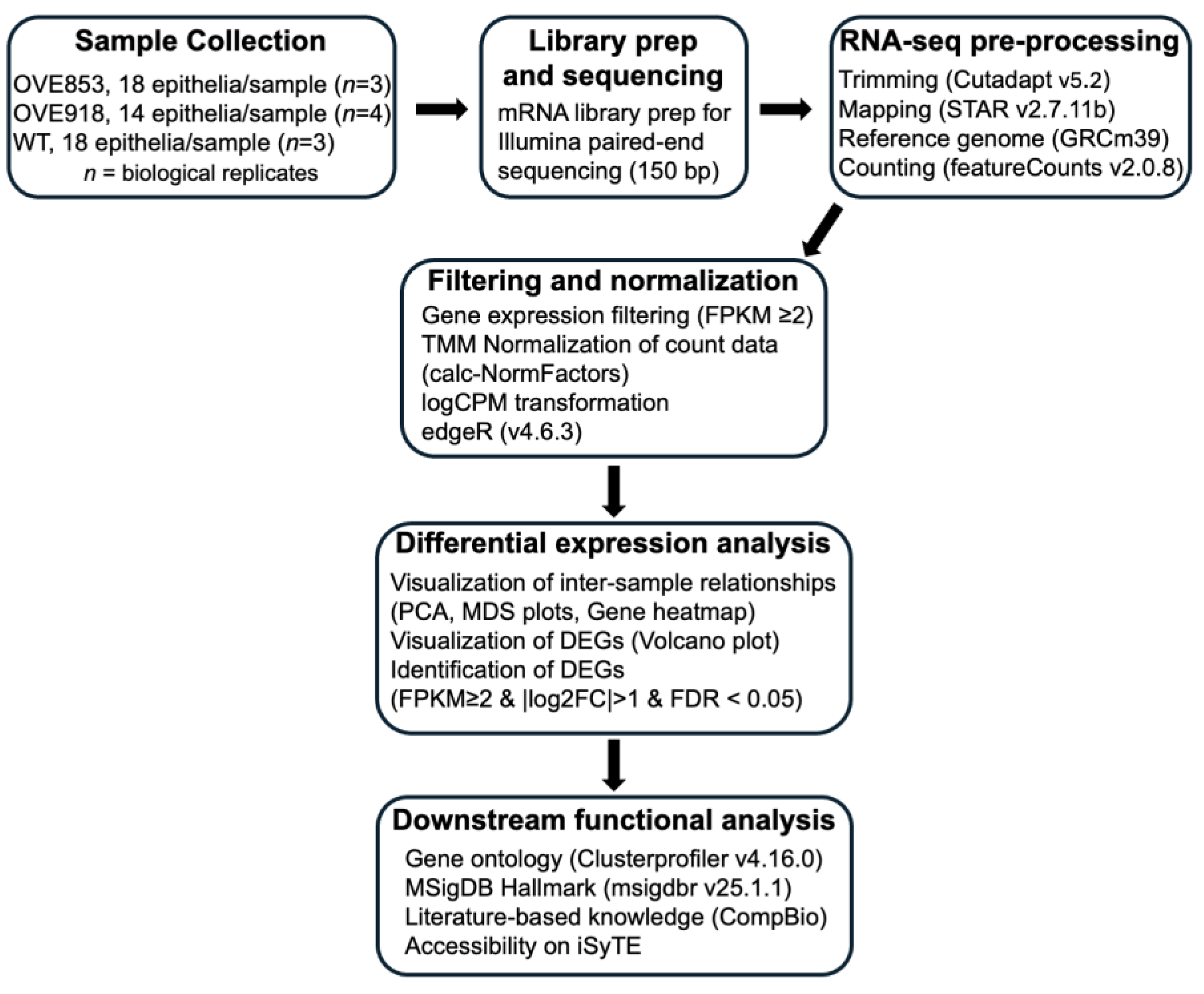
Figure 2.
Transcriptomic profiling and differential expression analysis of TGF-β1-overexpressing lens epithelium and control. (A) Principal component analysis (PCA) of normalized gene expression data (logCPM) showing separation of control (WT) and TGF-β1-overexpressing samples. The two independent transgenic lines (OVE853 and OVE918) cluster distinctly from WT and from each other. (B) Multidimensional scaling (MDS) plot based on leading log-fold change distances demonstrate separation of samples by experimental group. (C, D) Volcano plots showing differential gene expression between (C) OVE853 versus WT and (D) OVE918 versus WT. Differentially expressed genes (DEGs) were defined using thresholds of false discovery rate (FDR) ≤ 0.05 and |log2 fold change| ≥ 1. Genes included in the analysis were filtered for expression ≥ 2 FPKM in at least half of all samples across WT and both transgenic lines. (E) Expression levels of Tgfb1 (FPKM) across WT, OVE853, and OVE918 samples. Individual biological replicates are shown, with group means indicated. (F) Fold change in Tgfb1 expression in OVE853 and OVE918 relative to WT. Note: Tgfb1 expression in (E) and (F) reflects both mouse and human. (G, H) Heatmaps of the top significant 100 DEGs identified from comparisons of (G) OVE853 versus WT and (H) OVE918 versus WT. In each heatmap, expression patterns of the alternate transgenic line are also shown to enable cross-comparison. (I) Scatter plot comparing log2 fold changes of all shared genes between OVE853 and OVE918, demonstrating a strong positive correlation (r = 0.97). (J) Venn diagrams illustrating overlap of DEGs between OVE853 and OVE918, including total DEGs, elevated genes, and reduced genes.
Figure 2.
Transcriptomic profiling and differential expression analysis of TGF-β1-overexpressing lens epithelium and control. (A) Principal component analysis (PCA) of normalized gene expression data (logCPM) showing separation of control (WT) and TGF-β1-overexpressing samples. The two independent transgenic lines (OVE853 and OVE918) cluster distinctly from WT and from each other. (B) Multidimensional scaling (MDS) plot based on leading log-fold change distances demonstrate separation of samples by experimental group. (C, D) Volcano plots showing differential gene expression between (C) OVE853 versus WT and (D) OVE918 versus WT. Differentially expressed genes (DEGs) were defined using thresholds of false discovery rate (FDR) ≤ 0.05 and |log2 fold change| ≥ 1. Genes included in the analysis were filtered for expression ≥ 2 FPKM in at least half of all samples across WT and both transgenic lines. (E) Expression levels of Tgfb1 (FPKM) across WT, OVE853, and OVE918 samples. Individual biological replicates are shown, with group means indicated. (F) Fold change in Tgfb1 expression in OVE853 and OVE918 relative to WT. Note: Tgfb1 expression in (E) and (F) reflects both mouse and human. (G, H) Heatmaps of the top significant 100 DEGs identified from comparisons of (G) OVE853 versus WT and (H) OVE918 versus WT. In each heatmap, expression patterns of the alternate transgenic line are also shown to enable cross-comparison. (I) Scatter plot comparing log2 fold changes of all shared genes between OVE853 and OVE918, demonstrating a strong positive correlation (r = 0.97). (J) Venn diagrams illustrating overlap of DEGs between OVE853 and OVE918, including total DEGs, elevated genes, and reduced genes.
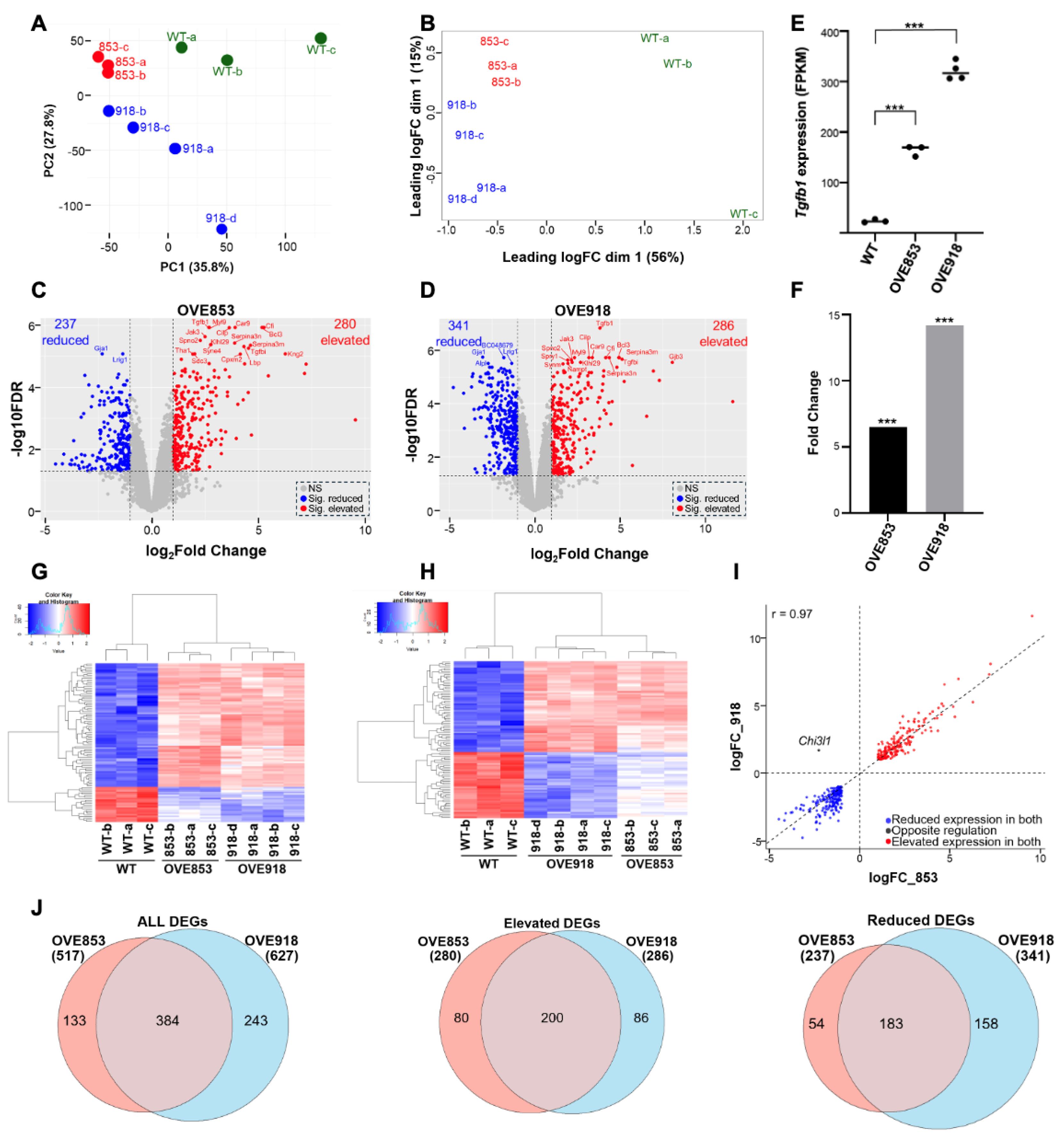
Figure 3.
Pathway analysis of common differentially expressed genes in TGF-β1-overexpressing transgenic lens epithelia. (A) Hallmark gene set enrichment analysis using MSigDB (via msigdbr) performed on all 384 common differentially expressed genes (DEGs), as well as on the 200 commonly elevated and 183 commonly reduced DEGs shared between OVE853 and OVE918. (B–D) Gene Ontology (GO) enrichment analysis of common DEGs across Cellular Component (CC), Biological Process (BP), and Molecular Function (MF) categories. (B) Enrichment results for all 384 common DEGs. (C) Enrichment results for the 200 commonly elevated DEGs. (D) Enrichment results for the 183 commonly reduced DEGs.
Figure 3.
Pathway analysis of common differentially expressed genes in TGF-β1-overexpressing transgenic lens epithelia. (A) Hallmark gene set enrichment analysis using MSigDB (via msigdbr) performed on all 384 common differentially expressed genes (DEGs), as well as on the 200 commonly elevated and 183 commonly reduced DEGs shared between OVE853 and OVE918. (B–D) Gene Ontology (GO) enrichment analysis of common DEGs across Cellular Component (CC), Biological Process (BP), and Molecular Function (MF) categories. (B) Enrichment results for all 384 common DEGs. (C) Enrichment results for the 200 commonly elevated DEGs. (D) Enrichment results for the 183 commonly reduced DEGs.
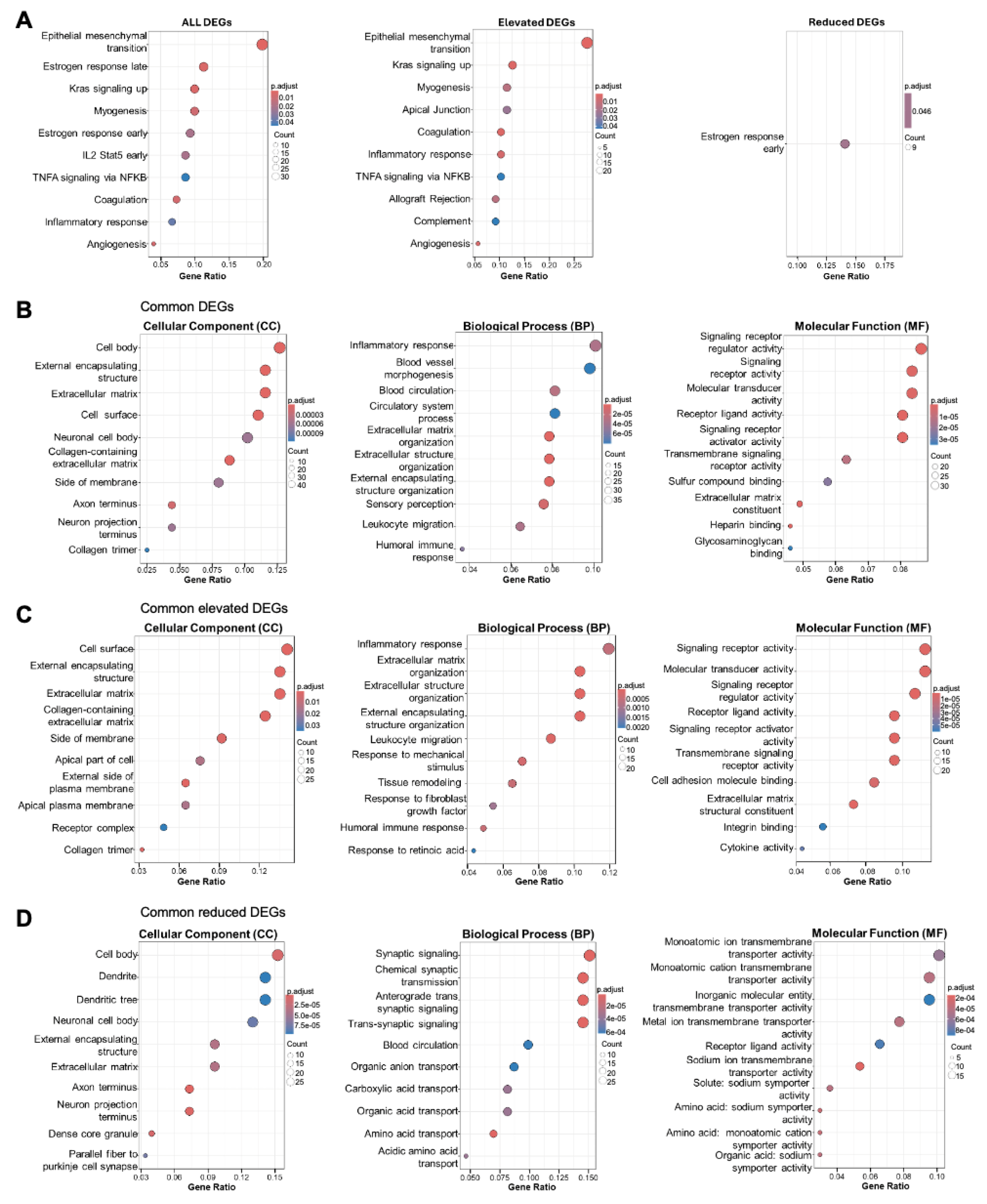
Figure 4.
Expression patterns of epithelial-to-mesenchymal transition (EMT)-associated genes in TGF-β1-overexpressing transgenic lens epithelia. (A) Heatmap showing expression of EMT-associated genes across WT, OVE853, and OVE918 samples. Gene expression values (logCPM) were Z-score normalized across samples for each gene and visualized using a symmetric blue-white-red color scale centered at zero, where blue indicates relatively reduced expression and red indicates relatively elevated expression. (B) Dot plot of the same EMT-associated genes comparing OVE853 and OVE918. Dot size reflects statistical significance, and color indicates the direction and magnitude of differential expression (log2 fold change).
Figure 4.
Expression patterns of epithelial-to-mesenchymal transition (EMT)-associated genes in TGF-β1-overexpressing transgenic lens epithelia. (A) Heatmap showing expression of EMT-associated genes across WT, OVE853, and OVE918 samples. Gene expression values (logCPM) were Z-score normalized across samples for each gene and visualized using a symmetric blue-white-red color scale centered at zero, where blue indicates relatively reduced expression and red indicates relatively elevated expression. (B) Dot plot of the same EMT-associated genes comparing OVE853 and OVE918. Dot size reflects statistical significance, and color indicates the direction and magnitude of differential expression (log2 fold change).
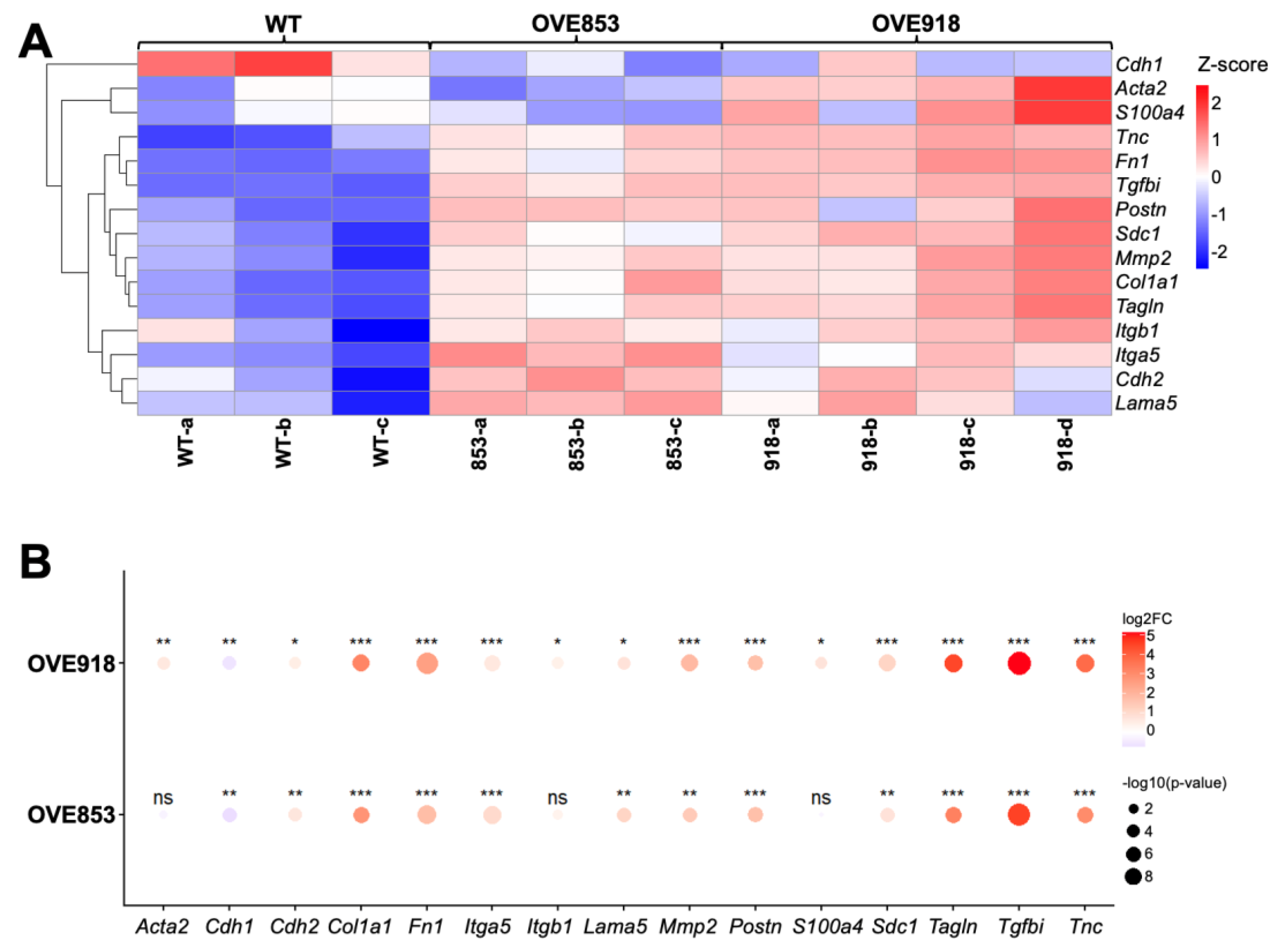
Figure 5.
Functionally enriched categories among differentially expressed genes in TGF-β1-overexpressing transgenic lens epithelia. (A) Heatmap showing expression of inflammatory response genes across WT, OVE853, and OVE918 samples. (B, C) Heatmaps showing expression of extracellular matrix–associated genes derived from the enriched Gene Ontology (GO) term “extracellular matrix” among (B) commonly elevated and (C) commonly reduced differentially expressed genes (DEGs). (D-F) Heatmaps showing expression of genes associated with enriched GO terms among commonly elevated DEGs, including (D) response to mechanical stimulus, (E) response to fibroblast growth factor, and (F) cell adhesion molecule binding. (G, H) Heatmaps showing expression of genes associated with enriched GO terms among commonly reduced DEGs, including (G) synaptic signaling and (H) transporter activity. For all panels, gene expression values (logCPM) were Z-score normalized across samples for each gene.
Figure 5.
Functionally enriched categories among differentially expressed genes in TGF-β1-overexpressing transgenic lens epithelia. (A) Heatmap showing expression of inflammatory response genes across WT, OVE853, and OVE918 samples. (B, C) Heatmaps showing expression of extracellular matrix–associated genes derived from the enriched Gene Ontology (GO) term “extracellular matrix” among (B) commonly elevated and (C) commonly reduced differentially expressed genes (DEGs). (D-F) Heatmaps showing expression of genes associated with enriched GO terms among commonly elevated DEGs, including (D) response to mechanical stimulus, (E) response to fibroblast growth factor, and (F) cell adhesion molecule binding. (G, H) Heatmaps showing expression of genes associated with enriched GO terms among commonly reduced DEGs, including (G) synaptic signaling and (H) transporter activity. For all panels, gene expression values (logCPM) were Z-score normalized across samples for each gene.
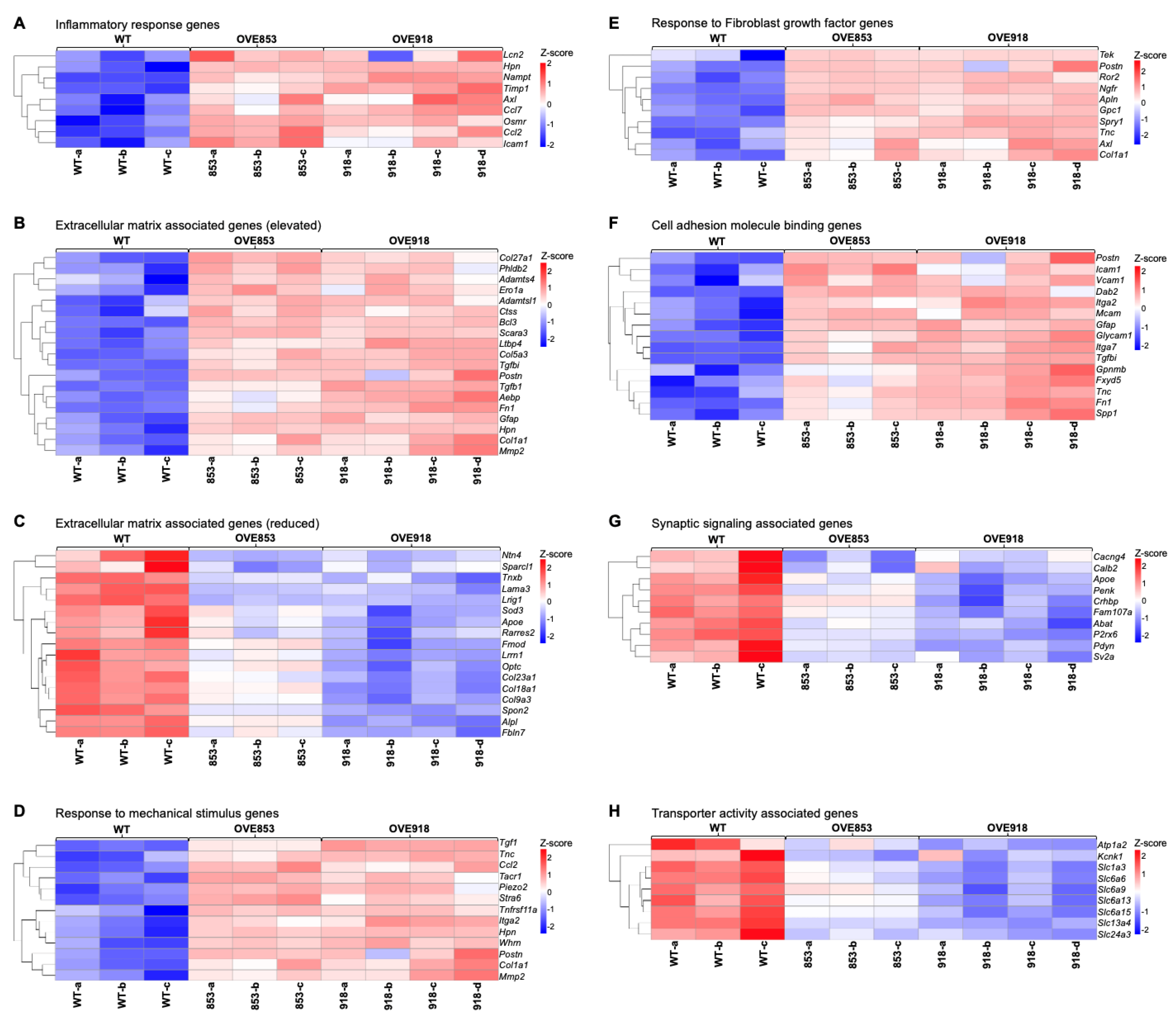
Figure 6.
CompBio analysis identifies enriched biological themes among common differentially expressed genes in TGF-β1-overexpressing transgenic lens epithelia. (A, B) CompBio-based analysis of biological themes enriched among (A) commonly elevated and (B) commonly reduced genes shared between TGF-β1-overexpressing lines. Significantly enriched themes were defined by p-value ≤ 0.1 and normalized enrichment score (NEScore) ≥ 1.3.
Figure 6.
CompBio analysis identifies enriched biological themes among common differentially expressed genes in TGF-β1-overexpressing transgenic lens epithelia. (A, B) CompBio-based analysis of biological themes enriched among (A) commonly elevated and (B) commonly reduced genes shared between TGF-β1-overexpressing lines. Significantly enriched themes were defined by p-value ≤ 0.1 and normalized enrichment score (NEScore) ≥ 1.3.
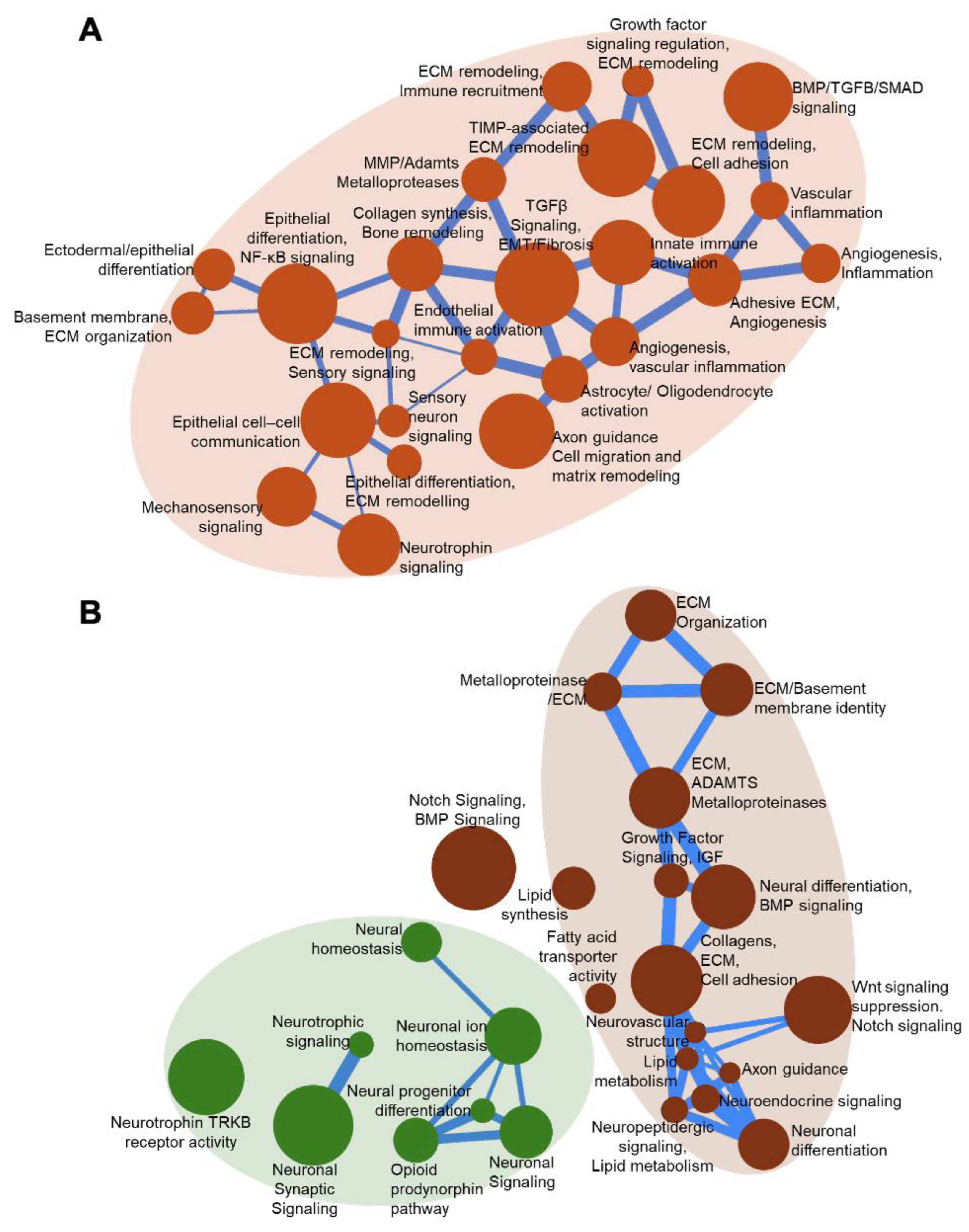
Figure 7.
Comparison of TGF-β1-overexpression-associated differentially expressed genes with gene expression changes across different stages in a mouse post-cataract surgery model. (A) Graph shows the number of differentially expressed genes (DEGs) shared between TGF-β1 overexpression (n = 384 common DEGs) and a published post-cataract surgery model across multiple time points. A total of 45 DEGs were shared at 6 hr, and 177, 166, 172, and 177 DEGs were shared at 24, 48, 72, and 120 hr, respectively. Shared DEGs were further categorized as commonly elevated or reduced at each time point. Gene ontology (GO) Biological Process term enrichment in common elevated DEGs between TGF-β1 overexpression and the post-cataract surgery (PCS) model at (B) 6 hr PCS, (C) 24 hr PCS, (D) 48 hr PCS, (E) 72 hr PCS and (F) 120 hr PCS. Log2FDR and Gene count are given for each time-point.
Figure 7.
Comparison of TGF-β1-overexpression-associated differentially expressed genes with gene expression changes across different stages in a mouse post-cataract surgery model. (A) Graph shows the number of differentially expressed genes (DEGs) shared between TGF-β1 overexpression (n = 384 common DEGs) and a published post-cataract surgery model across multiple time points. A total of 45 DEGs were shared at 6 hr, and 177, 166, 172, and 177 DEGs were shared at 24, 48, 72, and 120 hr, respectively. Shared DEGs were further categorized as commonly elevated or reduced at each time point. Gene ontology (GO) Biological Process term enrichment in common elevated DEGs between TGF-β1 overexpression and the post-cataract surgery (PCS) model at (B) 6 hr PCS, (C) 24 hr PCS, (D) 48 hr PCS, (E) 72 hr PCS and (F) 120 hr PCS. Log2FDR and Gene count are given for each time-point.
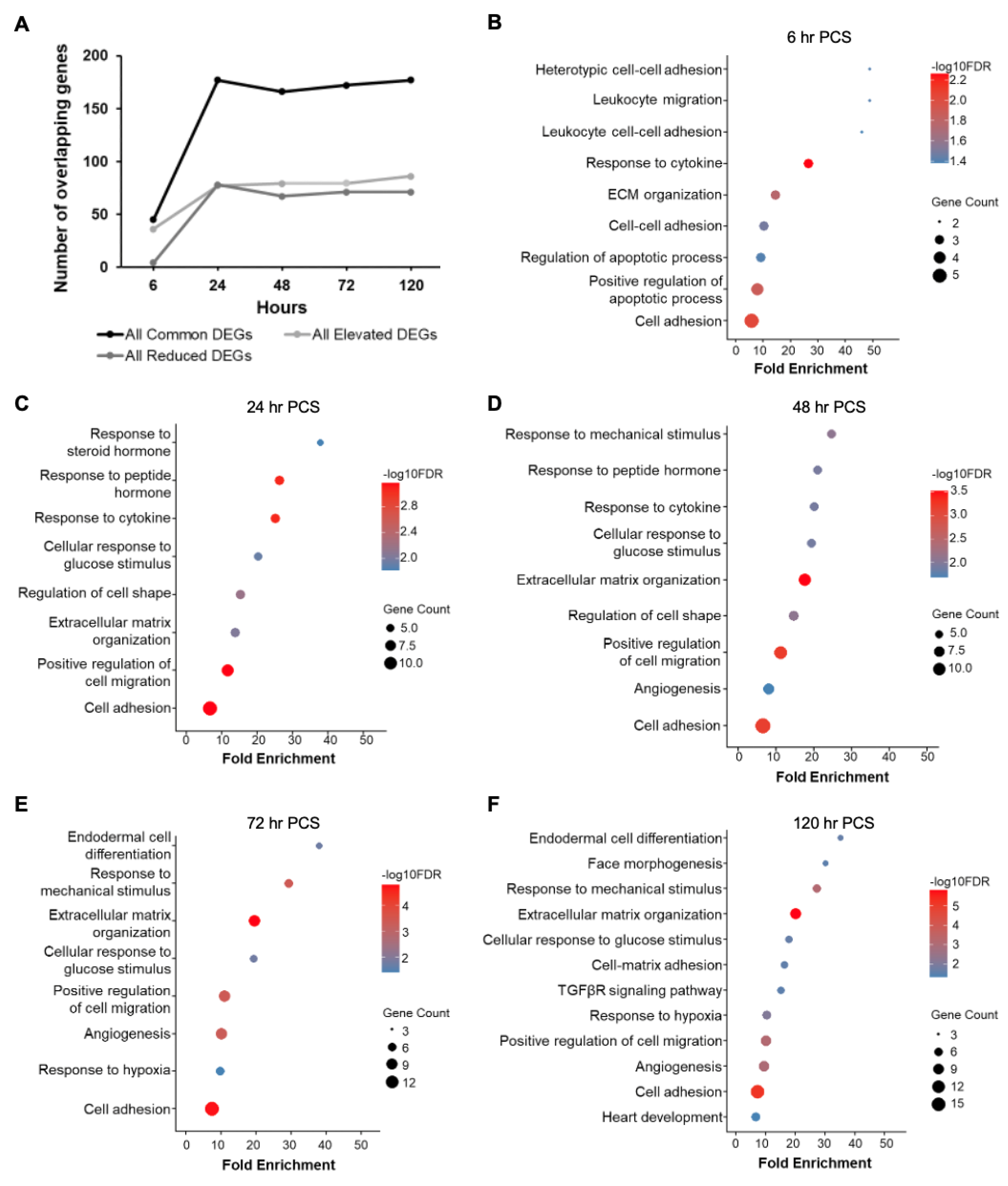
Figure 8.
Expression of endoplasmic reticulum (ER) stress-associated genes in TGF-β1-overexpressing transgenic lens epithelia. (A) Heatmap showing expression of ER stress-associated genes, derived from pathways reported to be altered in human lenses with anterior subcapsular cataract (ASC), across WT, OVE853, and OVE918 samples. (B) Heatmap showing expression of promising candidate genes elevated in TGF-β1-overexpressing transgenic lens epithelia across WT, OVE853 and OVE918 samples. Gene expression values (log2CPM) were Z-score normalized across samples for each gene.
Figure 8.
Expression of endoplasmic reticulum (ER) stress-associated genes in TGF-β1-overexpressing transgenic lens epithelia. (A) Heatmap showing expression of ER stress-associated genes, derived from pathways reported to be altered in human lenses with anterior subcapsular cataract (ASC), across WT, OVE853, and OVE918 samples. (B) Heatmap showing expression of promising candidate genes elevated in TGF-β1-overexpressing transgenic lens epithelia across WT, OVE853 and OVE918 samples. Gene expression values (log2CPM) were Z-score normalized across samples for each gene.
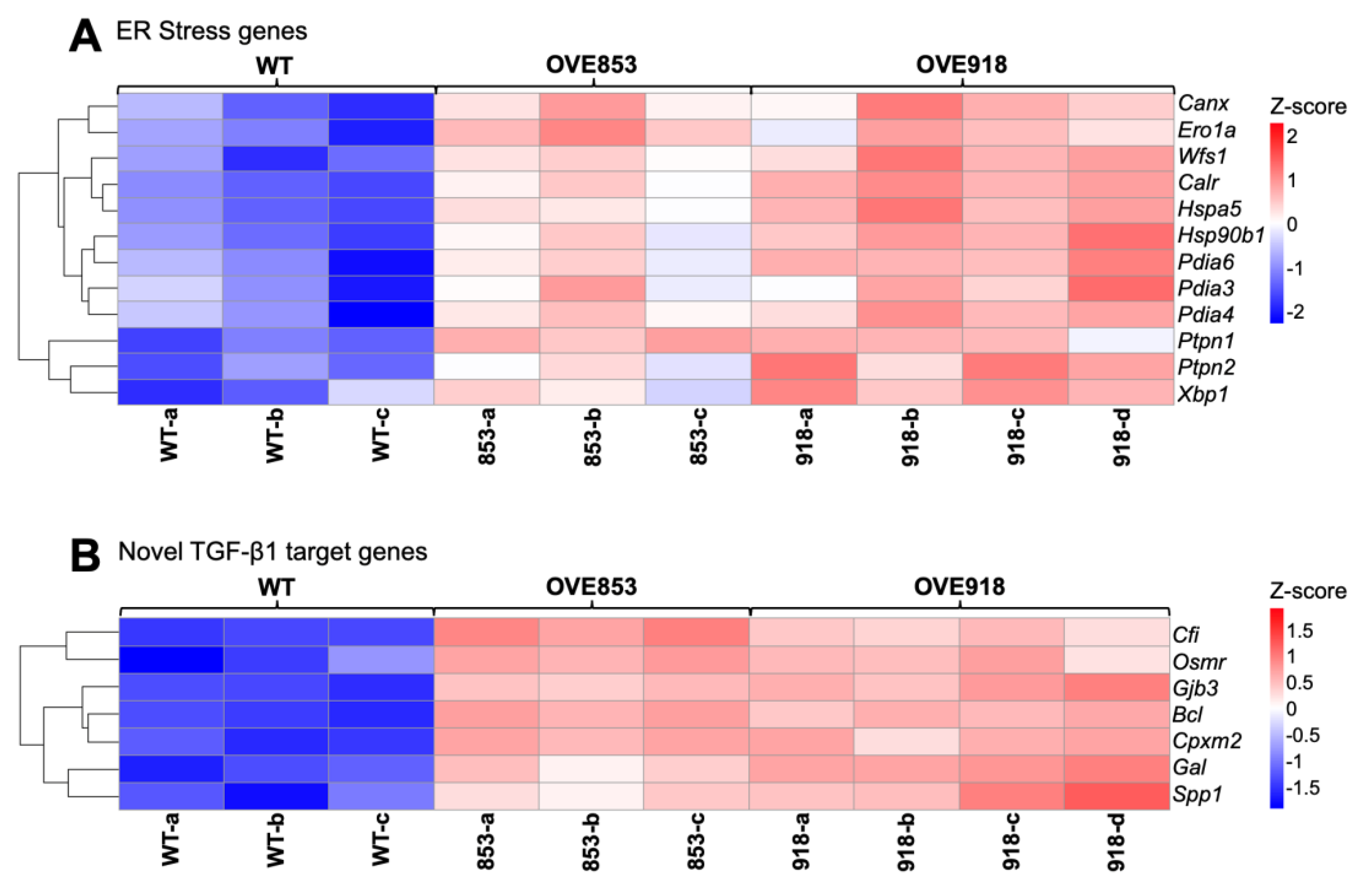
Figure 9.
Access and user-friendly visualization of TGF-β1 overexpression and control lens epithelium transcriptome data in iSyTE. (A) The TGF-β1 overexpression lens epithelium transcriptome data is made freely accessible in a new user-friendly web portal on the iSyTE webpage at http://research.bioinformatics.udel.edu/iSyTE. This provides effective visualization of one or more genes in the lens epithelium of the two TGF-β1 overexpression transgenic lines OVE853 and OVE918 by following Steps 1 through 4. The example given is of Tgfb1 that shows average high expression in fragments per kilobase of transcript per million mapped reads (FPKM) in both OVE853 and OVE918 compared to wild-type (WT) lens epithelium. (B) Selection of dataset “All samples (FPKM)”, (C) or “TGFB1 vs Control Fold Change”, (D) or “TGFB1 vs Control log2 Fold Change”, shows visualization of candidate genes in each of the replicate of OVE853, OVE918 and control, or for fold change or log2 fold change differential gene expression.
Figure 9.
Access and user-friendly visualization of TGF-β1 overexpression and control lens epithelium transcriptome data in iSyTE. (A) The TGF-β1 overexpression lens epithelium transcriptome data is made freely accessible in a new user-friendly web portal on the iSyTE webpage at http://research.bioinformatics.udel.edu/iSyTE. This provides effective visualization of one or more genes in the lens epithelium of the two TGF-β1 overexpression transgenic lines OVE853 and OVE918 by following Steps 1 through 4. The example given is of Tgfb1 that shows average high expression in fragments per kilobase of transcript per million mapped reads (FPKM) in both OVE853 and OVE918 compared to wild-type (WT) lens epithelium. (B) Selection of dataset “All samples (FPKM)”, (C) or “TGFB1 vs Control Fold Change”, (D) or “TGFB1 vs Control log2 Fold Change”, shows visualization of candidate genes in each of the replicate of OVE853, OVE918 and control, or for fold change or log2 fold change differential gene expression.
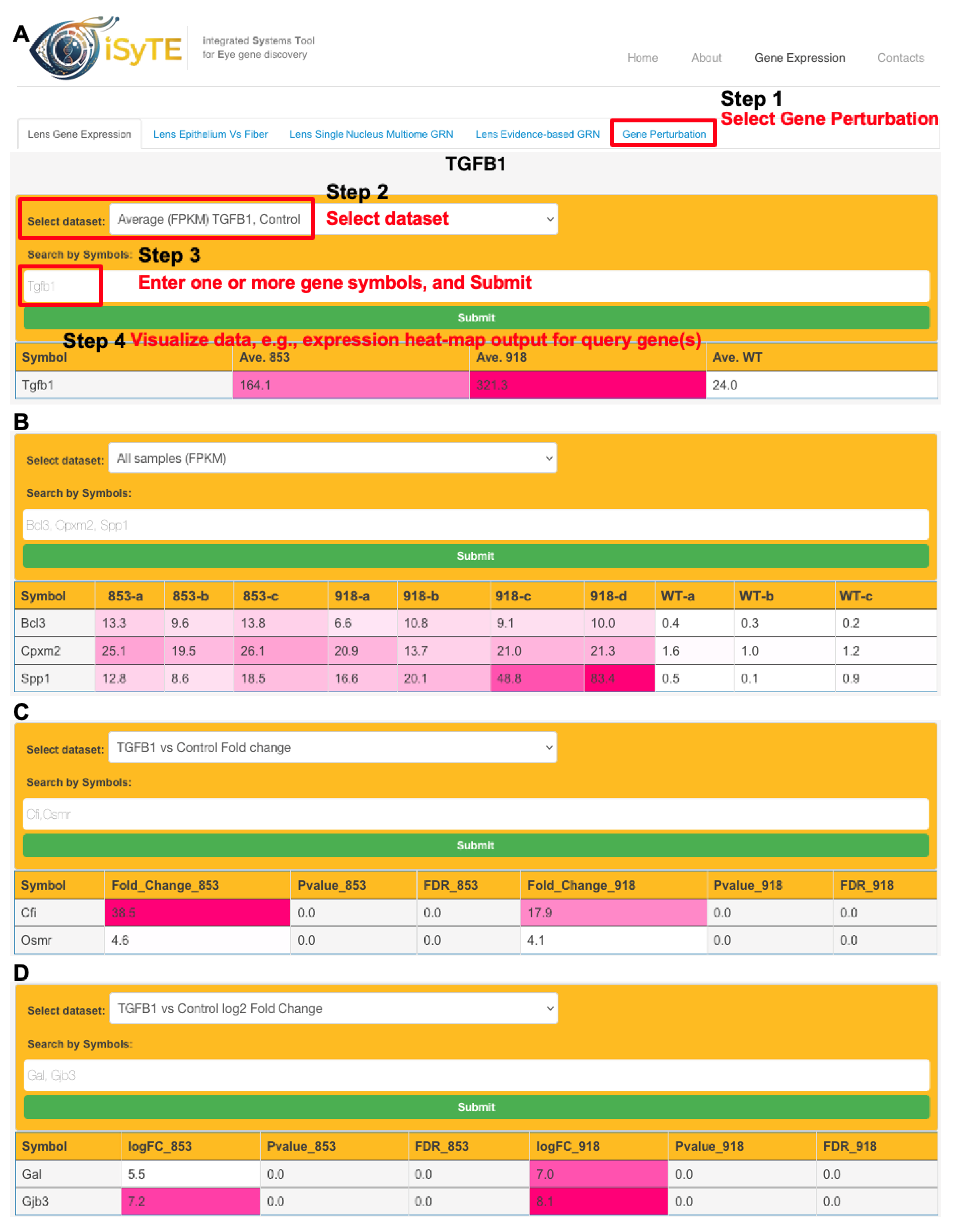
Figure 10.
Model for TGF-β1 overexpression-induced lens pathology in anterior subcapsular cataract (ASC). Active TGF-β1 overexpression in the mouse lens epithelium leads to aberrant expression of genes in different cellular pathways including endoplasmic reticulum (ER) stress response, lipid metabolism, inflammatory response, Bmp, Notch and Wnt signaling, extracellular matrix remodeling, mechanosensory response, and epithelial-to-mesenchymal transition. Mis-regulation of these pathways contribute to the development of anterior subcapsular cataract (ASC) plaques at age 3 weeks in these transgenic models. Note that these transgenic models phenotype features of human ASC, e.g., dysregulation of genes in reticulum (ER) stress response, and lipid metabolism.
Figure 10.
Model for TGF-β1 overexpression-induced lens pathology in anterior subcapsular cataract (ASC). Active TGF-β1 overexpression in the mouse lens epithelium leads to aberrant expression of genes in different cellular pathways including endoplasmic reticulum (ER) stress response, lipid metabolism, inflammatory response, Bmp, Notch and Wnt signaling, extracellular matrix remodeling, mechanosensory response, and epithelial-to-mesenchymal transition. Mis-regulation of these pathways contribute to the development of anterior subcapsular cataract (ASC) plaques at age 3 weeks in these transgenic models. Note that these transgenic models phenotype features of human ASC, e.g., dysregulation of genes in reticulum (ER) stress response, and lipid metabolism.
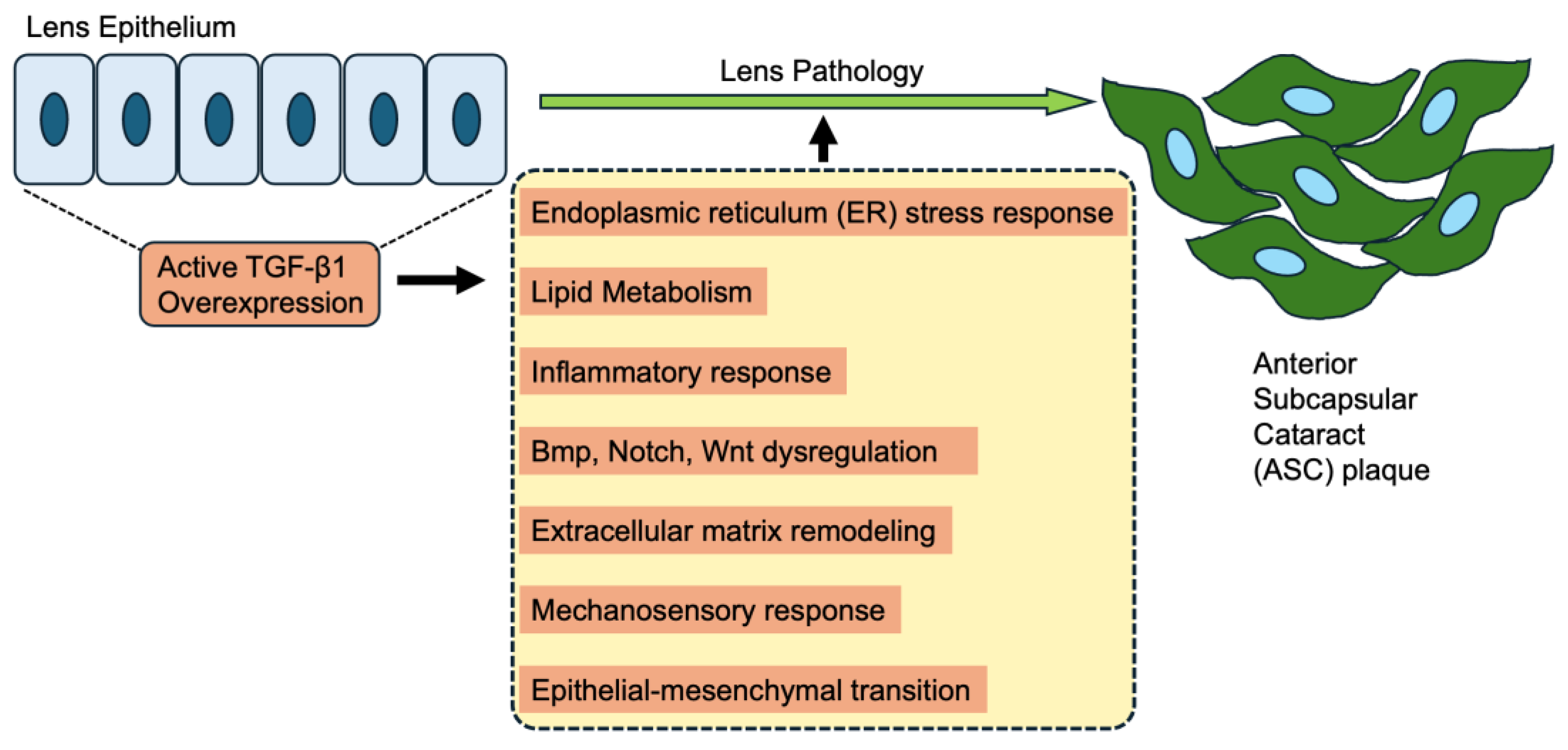

Table 1.
Top 20 common elevated DEGs and 20 common reduced DEGs between OVE853 and OVE918 lens samples with their associated log2FC (fold change) values in both lines.
Table 1.
Top 20 common elevated DEGs and 20 common reduced DEGs between OVE853 and OVE918 lens samples with their associated log2FC (fold change) values in both lines.
| Gene | Log2FC_853 | Log2FC_918 | Gene | Log2FC_853 | Log2FC_918 | |
|---|---|---|---|---|---|---|
| Opalin | 9.55 | 11.61 | Slc6a13 | -3.17 | -4.77 | |
| Gjb3 | 7.24 | 8.07 | Calb2 | -4.49 | -3.39 | |
| Zim1 | 7.17 | 7.3 | Aldh3a1 | -3.64 | -4.11 | |
| Gal | 5.47 | 6.95 | Sncg | -4.18 | -3.48 | |
| Kng2 | 6.26 | 5.25 | Cartpt | -4.10 | -2.94 | |
| Spp1 | 4.68 | 6.55 | Stmn3 | -3.82 | -2.91 | |
| Bcl3 | 5.17 | 4.92 | Gng13 | -3.74 | -2.88 | |
| Tgfbi | 4.55 | 5.12 | Best2 | -2.39 | -4.16 | |
| Serpina3m | 4.63 | 4.96 | Cplx3 | -3.52 | -2.58 | |
| Cfi | 5.27 | 4.16 | Atp1a2 | -2.43 | -3.66 | |
| Gjb2 | 4.36 | 4.81 | Wfdc1 | -2.41 | -3.62 | |
| H19 | 4.53 | 4.34 | Penk | -2.40 | -3.56 | |
| Gm40376 | 4.04 | 4.54 | Mt1 | -3.29 | -2.66 | |
| Gm266 | 4.3 | 4.07 | Rlbp1 | -3.29 | -2.65 | |
| Serpina3n | 3.89 | 4.37 | Fam107a | -2.23 | -3.70 | |
| Cpxm2 | 4.15 | 4.05 | Sgk1 | -3.12 | -2.74 | |
| Tagln | 3.25 | 4.46 | Fat4 | -2.42 | -3.23 | |
| Serpina3g | 3.65 | 4.03 | Scg2 | -3.24 | -2.36 | |
| Col5a3 | 3.56 | 3.96 | Lama3 | -2.76 | -2.83 | |
| Lbp | 4.33 | 3.14 | Thrsp | -2.83 | -2.72 |
Disclaimer/Publisher’s Note: The statements, opinions and data contained in all publications are solely those of the individual author(s) and contributor(s) and not of MDPI and/or the editor(s). MDPI and/or the editor(s) disclaim responsibility for any injury to people or property resulting from any ideas, methods, instructions or products referred to in the content. |
© 2026 by the authors. Licensee MDPI, Basel, Switzerland. This article is an open access article distributed under the terms and conditions of the Creative Commons Attribution (CC BY) license (http://creativecommons.org/licenses/by/4.0/).
Copyright: This open access article is published under a Creative Commons CC BY 4.0 license, which permit the free download, distribution, and reuse, provided that the author and preprint are cited in any reuse.


