Preprint
Case Report

This version is not peer-reviewed.

From Array-CGH to Whole-Genome Sequencing: A 29-Year Diagnostic Journey Culminating in the Identification of a De Novo ABCC9 Variant Consistent with Cantú Syndrome

Submitted:

01 June 2026

Posted:

02 June 2026

You are already at the latest version

Abstract

Background: Cantú syndrome (OMIM #239850) is a rare autosomal dominant disorder caused by gain-of-function variants in ABCC9 or KCNJ8, which encode subunits of the ATP-sensitive potassium (K_ATP) channel. Its characteristic features—generalized hypertrichosis, coarse facial appearance, skeletal abnormalities, and cardiovascular involvement—may be overlooked when other major comorbidities dominate the clinical picture. Case Presentation: A 29-year-old Taiwanese woman, born prematurely and complicated by neonatal hydrocephalus with subdural hemorrhage requiring ventriculoperitoneal shunt placement, had been followed since infancy under a working diagnosis of cerebral palsy with left hemiparesis and borderline-to-mild intellectual disability. Over the ensuing years, additional features gradually emerged, including generalized hypertrichosis with thick scalp and body hair, coarse facial features, bilateral hallux valgus, mild thoracic scoliosis, polycystic ovaries, mild aortic regurgitation, recurrent hemoptysis associated with abnormal pulmonary vasculature, and iron-deficiency anemia. Earlier genetic investigations—including chromosome analysis (46,XX), array comparative genomic hybridization (array-CGH; 2013), and a trio-based next-generation sequencing study performed under a national rare disease research initiative (2019)—were unrevealing. Diagnostic Workup: Whole-genome sequencing performed in December 2025 identified a heterozygous ABCC9 variant (NM_020297.4:c.4174A>G, p.(Ile1392Val)), initially classified as a variant of uncertain significance. Parental Sanger sequencing confirmed the variant to be de novo, and reclassification according to ACMG/AMP criteria supported a likely pathogenic interpretation. Re-evaluation of the patient’s phenotype demonstrated findings consistent with Cantú syndrome. Conclusions: This case illustrates how Cantú syndrome may remain unrecognized for years when a prominent neurological comorbidity—perinatally acquired hydrocephalus and presumed cerebral palsy—dominates the clinical narrative. We report a previously undescribed de novo ABCC9 missense variant (c.4174A>G, p.(Ile1392Val)), thereby expanding the mutational spectrum associated with Cantú syndrome. This case also highlights the practical value of resequencing and periodic reanalysis using updated next-generation sequencing platforms in patients with long-standing undiagnosed disease, even after prior negative genetic testing.

Keywords: 
;  ;  ;  ;  ;  ;  ;  

1. Introduction

Cantú syndrome (CS; OMIM #239850) was first described in 1982, when Cantú and colleagues reported a Mexican family with congenital generalized hypertrichosis, coarse facial features, cardiomegaly, and distinctive osteochondrodysplasia [1]. Over the subsequent four decades, approximately 150 cases have been reported worldwide [2,3], and the recognized phenotype has expanded considerably beyond the original triad. The largest molecularly confirmed cohort to date, comprising 74 patients, found hypertrichosis and coarse facial features to be nearly universal. Cardiomegaly was present in 64% of patients, patent ductus arteriosus in 58%, and pericardial effusion in 25%. Additional manifestations included macrosomia, macrocephaly, peripheral lymphedema, pulmonary hypertension, vascular tortuosity, and mild intellectual impairment in a subset of patients [3,4]. More recently, the cardiovascular phenotype has been reinterpreted as high-output cardiac hypertrophy driven by genetically determined low systemic vascular resistance, thereby unifying previously disparate cardiac, vascular, and hemodynamic findings [4].
The molecular basis of the syndrome remained unknown for nearly three decades. In 2012, two independent groups identified heterozygous gain-of-function (GoF) missense variants in ABCC9 as the major cause of CS [5,6]. ABCC9 encodes the regulatory sulfonylurea receptor 2 (SUR2) subunit of ATP-sensitive potassium (K_ATP) channels. A smaller proportion of patients harbor analogous GoF variants in KCNJ8, which encodes the pore-forming K_ir6.1 subunit [7]. The shared functional consequence is reduced ATP-mediated inhibition of channel gating, often accompanied by enhanced Mg-nucleotide–dependent activation, resulting in abnormally increased K_ATP channel opening in tissues expressing SUR2-containing channels, including vascular smooth muscle, cardiac and skeletal muscle, and hair follicles [8,9]. Reported variants are not uniformly distributed throughout the protein but instead cluster within or near the transmembrane domains (TMDs) and the two intracellular nucleotide-binding domains (NBDs). Electrophysiological studies have demonstrated that variants in different regions produce GoF effects through distinct mechanisms [8,10]. More recently, biallelic loss-of-function variants in the same gene were shown to cause a contrasting phenotype termed ABCC9-related intellectual disability and myopathy syndrome (AIMS; OMIM #619719) [11,12].
Despite advances in molecular understanding, clinical recognition of CS remains challenging. No formal diagnostic criteria have been established [3]. The cardinal manifestations overlap substantially with those of Zimmermann–Laband syndrome [13] and Coffin–Siris syndrome, while additional differential diagnoses include mucopolysaccharidoses and acromegaloid facial appearance syndrome [3]. Even hypertrichosis, often the most recognizable feature, is nonspecific and may be attributed to constitutional or ethnic variation, endocrine disorders, or medication exposure such as minoxidil [3]. Diagnostic difficulty is further compounded when unrelated major comorbidities dominate the clinical presentation from infancy. In such cases, the manifestations of CS may gradually accumulate over time and become incorporated into the primary diagnosis rather than recognized as features of a separate syndrome.
For such patients, periodic genomic reanalysis or resequencing using updated platforms has emerged as a valuable diagnostic strategy. Reanalysis of clinical exome sequencing data in a large diagnostic cohort yielded additional molecular diagnoses in approximately 10% of previously undiagnosed patients [14]. More recent large-scale automated reanalysis programs achieved new diagnoses in 5–6% of previously unsolved cases, largely owing to newly established gene–disease associations and improved bioinformatic approaches [15]. In pediatric rare disease cohorts, whole-genome sequencing provides an additional diagnostic yield of approximately 7% beyond that of exome sequencing alone [16].
The present patient illustrates both aspects of this diagnostic challenge. She is a 29-year-old Taiwanese woman born prematurely and complicated by neonatal hydrocephalus with subdural hemorrhage requiring ventriculoperitoneal shunt placement. Since infancy, she had been followed under a working diagnosis of cerebral palsy with left hemiparesis and borderline-to-mild intellectual disability. Over the following decades, multiple features highly suggestive of CS gradually became apparent, including pronounced generalized hypertrichosis, coarse facial appearance, bilateral hallux valgus, thoracic scoliosis, polycystic ovaries, mild aortic regurgitation, and recurrent hemoptysis associated with abnormal pulmonary vasculature. However, these findings were never integrated into a unified syndromic diagnosis. Earlier genetic investigations, including chromosome analysis, array comparative genomic hybridization, and trio-based next-generation sequencing performed in 2019 under a national rare disease research initiative, were unrevealing. Whole-genome sequencing performed in late 2025 identified a heterozygous ABCC9 variant (NM_020297.4:c.4174A>G, p.(Ile1392Val)). Parental Sanger sequencing confirmed the variant to be de novo, and ACMG/AMP classification supported a likely pathogenic interpretation. This variant has not previously been reported in ClinVar, HGMD, or the published literature. The affected residue is located within the second nucleotide-binding domain (NBD2) of SUR2, a region in which relatively few disease-associated variants have been reported.

2. Case Presentation

2.1. Patient and Clinical History

The proband is a 29-year-old Taiwanese woman and the only child of healthy, nonconsanguineous parents. The family history was unremarkable for hypertrichosis, congenital heart disease, syndromic intellectual disability, or other conditions overlapping with Cantú syndrome.
She was born preterm at approximately 32 weeks of gestation after an uncomplicated pregnancy, with a birth weight of approximately 2,800 g, which was large for gestational age. Her neonatal course was complicated by hydrocephalus with subdural hemorrhage. A ventriculoperitoneal (VP) shunt was placed during early infancy. In October 2006, partial resection of the distal shunt tubing was performed because of shunt-related complications, and an Ommaya reservoir was subsequently placed in the right parieto-occipital region, where it has remained in situ.
From childhood, she was followed under a working diagnosis of cerebral palsy with left-sided spastic hemiparesis, left claw-hand deformity, and joint contractures involving all major joints on the left side, together with borderline-to-mild intellectual disability. She completed a special education program through high school in 2013 and, since 2022, has participated in a sheltered workshop program. Additional medical history included a mid-shaft fracture of the left humerus treated with internal fixation, which remained visible on chest radiography, and a methicillin-resistant Staphylococcus aureus (MRSA)-positive open wound infection over the back in 2014.
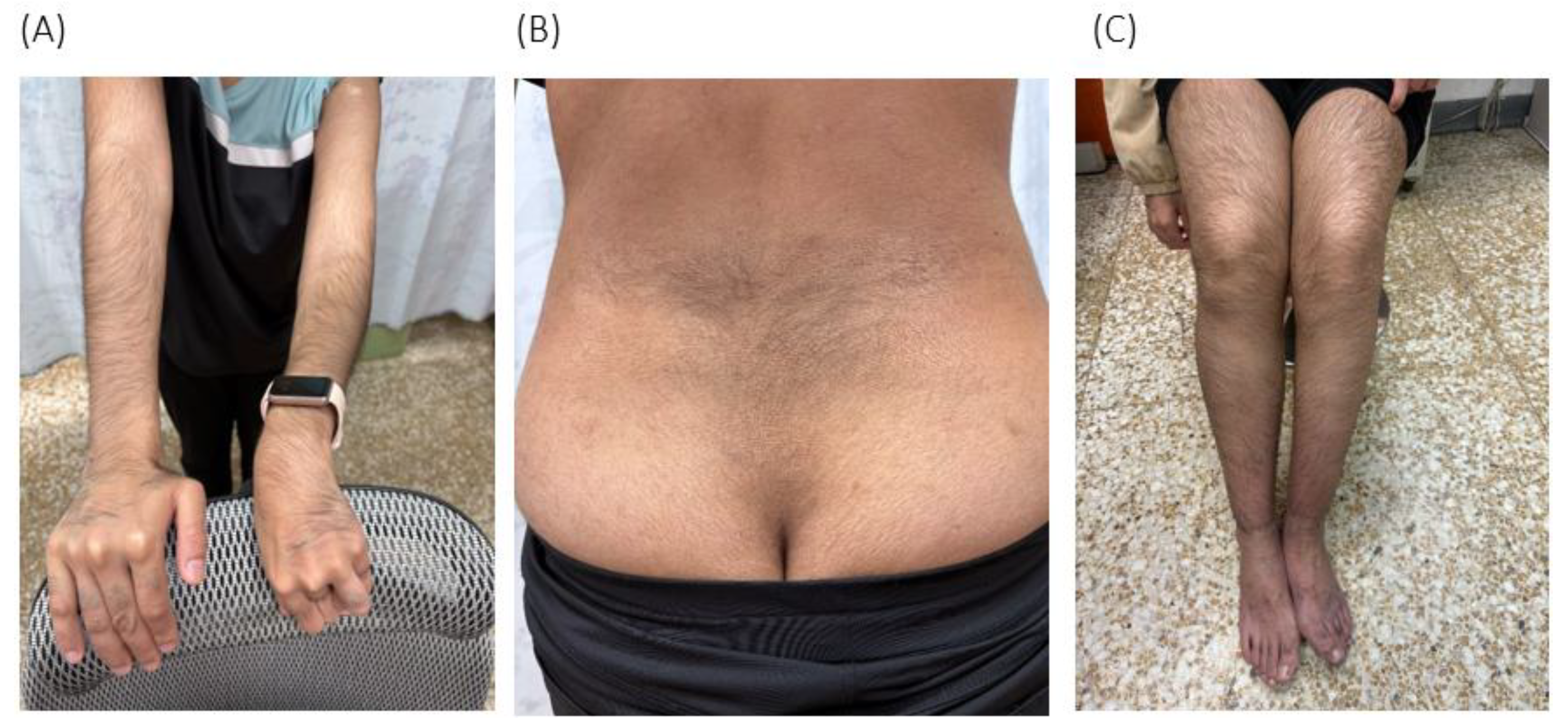
Over time, multiple features suggestive of an underlying syndromic diagnosis gradually accumulated but were not recognized collectively at the time. These included progressive generalized hypertrichosis with thick and abundant scalp and body hair (Figure 1 and Figure 2), coarse facial features, bilateral hallux valgus (more severe on the left side), mild thoracic scoliosis with a positive Adam’s forward bend test, and polycystic-appearing ovaries on transabdominal ultrasonography (right ovary, 1.75 × 2.5 cm; left ovary, 1.86 × 2.59 cm, with multiple follicle-like structures). She also had oligomenorrhea, with menstrual cycles occurring approximately every 5–6 weeks, and previously heavy menstrual flow that had recently decreased to light bleeding lasting 1–2 days. Additional findings included iron-deficiency anemia requiring intermittent supplementation, mild aortic regurgitation on serial echocardiography, intermittent peripheral edema with bruise-like discoloration over the left ankle, and a notable episode of recurrent moderate-to-massive hemoptysis in 2012. Imaging at that time suggested abnormal pulmonary vasculature with multiple sites of extravasation.

2.2. Phenotypic Features at the Most Recent Assessment

At the most recent clinic visit in May 2026, the patient’s height was 160.1 cm and weight was 57.7 kg (body mass index, 22.5 kg/m2). She appeared pink and well oxygenated while breathing room air. Examination findings are summarized below by organ system.

2.2.1. Skin, Hair, and Adnexa

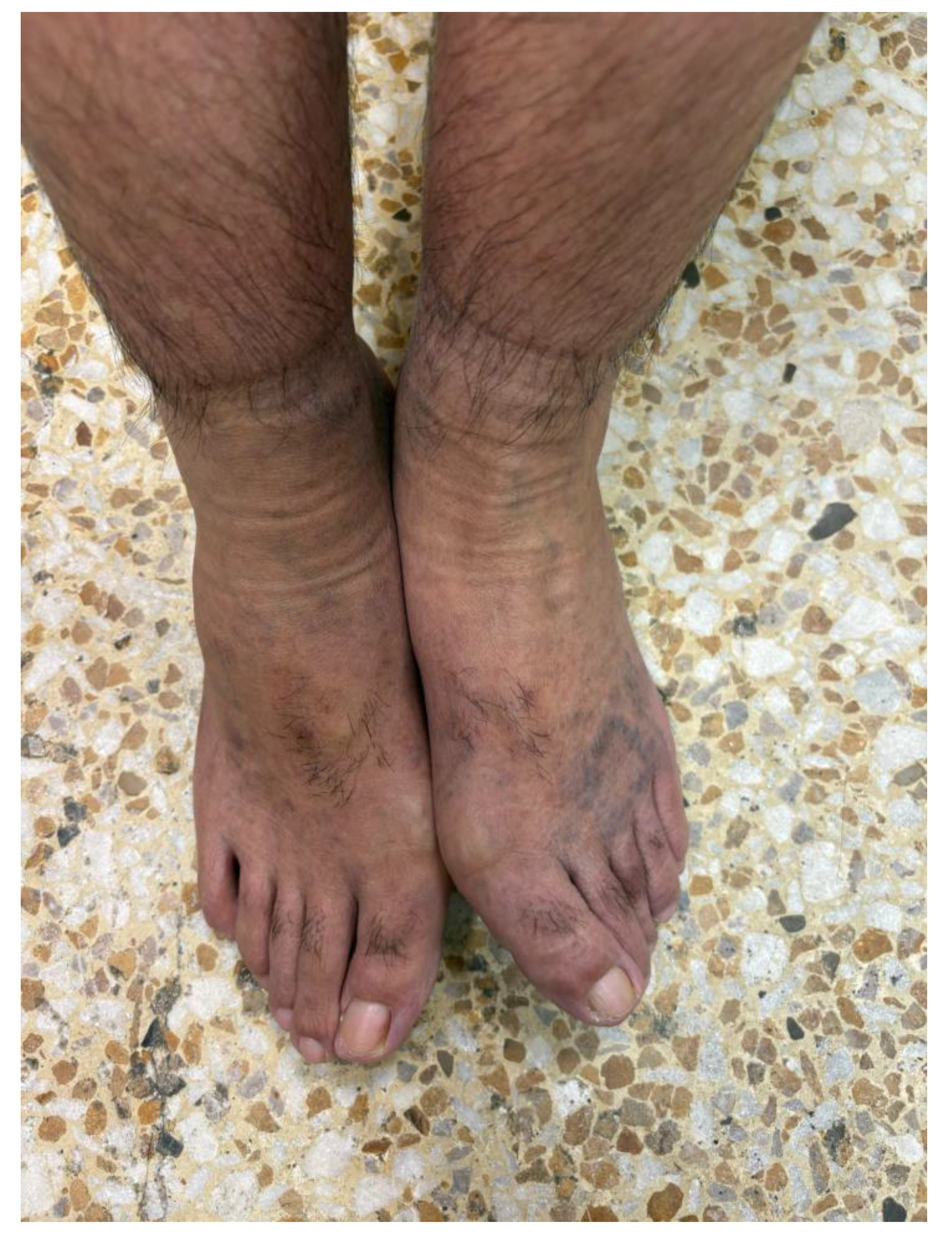
Generalized hypertrichosis was the most prominent physical finding. Thick, abundant scalp hair extended onto the forehead, resulting in a low frontal hairline. Fine-to-coarse facial hair was present over the cheeks, accompanied by a mild mustache. Dense terminal hair covered the arms and the dorsum of the hands (Figure 2A) and formed a midline whorl-like distribution over the lower back and sacral region (Figure 2B). The thighs and lower legs were also covered with dense, dark terminal hair extending onto the dorsum of the feet and toes (Figure 2C and 3).
Several small acquired nevi were observed over the abdominal wall and extremities, and a 0.45-cm pigmented raised nevus was noted on the right earlobe. The face demonstrated acneiform eruptions with mild rosacea and periorificial folliculitis. A small, soft, mobile subcutaneous nodule was palpable over the right ankle. The left ankle showed freckle-like pigmentation with diffuse bruise-like discoloration (Figure 3), findings consistent with the lymphatic and vascular involvement described in Cantú syndrome.

2.2.2. Craniofacial

Coarse facial features were evident, including a broad nasal bridge, full vermilion, mild macroglossia, and a high-arched palate. Mild pharyngeal injection without exudate was noted. Bilateral cerumen impaction was present. The occipital contour was irregular, with a palpable Ommaya reservoir in the right parieto-occipital region and a VP shunt tube traceable subcutaneously along the right side of the neck. A small, soft mass was palpable over the occipital region. No acute facial nerve palsy was observed, although mild dysarthria related to prior central nervous system injury persisted.

2.2.3. Cardiopulmonary

A grade 1/6 soft systolic murmur was audible at the left lower sternal border. Cardiac rhythm was regular at 82 beats/min. Blood pressure had historically been labile, with intermittent borderline elevation documented during outpatient follow-up, but was well controlled at the most recent visit without antihypertensive therapy. The most recent transthoracic echocardiogram (August 2024) demonstrated trivial aortic regurgitation with preserved left ventricular systolic function; left ventricular outflow tract velocity was within normal limits.
Lung fields were clear on auscultation, and no dyspnea was present. Chest radiography obtained in October 2024 demonstrated clear costophrenic angles, an unremarkable mediastinal and cardiac silhouette, mild thoracic scoliosis, and postoperative internal fixation changes involving the left humerus.

2.2.4. Musculoskeletal and Neurological

Hypoplasia and spasticity of the left-sided limbs were present, accompanied by joint contractures involving all major joints on the left side and a left claw-hand deformity. Muscle strength was Medical Research Council grade 4–5/5 in the left upper and lower extremities and 5/5 on the right side. Bilateral hallux valgus was observed and was more pronounced on the left (Figure 3). Adam’s forward bend test was positive, consistent with mild thoracic scoliosis confirmed radiographically. Cognitive function remained within the borderline-to-mild intellectual disability range, accompanied by slurred speech.

2.2.5. Abdominal and Genitourinary

The abdomen was soft and nondistended, without organomegaly or umbilical hernia. Pubic hair distribution was normal. Renal ultrasonography performed in July 2024 demonstrated bilaterally increased renal echogenicity with reduced corticomedullary differentiation, as well as two small subcapsular cysts in the right kidney, the largest measuring 3.4 × 5.5 mm. Concurrent biochemical and urinalysis findings were within normal limits.
Abdominal ultrasonography performed in January 2026 confirmed bilateral ovarian cystic lesions consistent with polycystic-appearing ovaries (right ovary, 1.75 × 2.5 cm; left ovary, 1.86 × 2.59 cm), most likely representing follicles.

2.2.6. Selected Laboratory Findings

Recent complete blood count results showed a hemoglobin level of 13.7 g/dL with normocytic indices (mean corpuscular volume [MCV], 88.4 fL; mean corpuscular hemoglobin concentration [MCHC], 32.8 g/dL). Ferritin was 18.12 ng/mL. A previous episode of microcytic iron-deficiency anemia in January 2025 (hemoglobin, 10.3 g/dL; MCV, 78.7 fL; serum iron, 13 µg/dL; total iron-binding capacity [TIBC], 391 µg/dL; ferritin, 3.09 ng/mL) improved after oral iron supplementation.
A reproductive hormone panel obtained in January 2025 showed follicle-stimulating hormone (FSH) 6.48 mIU/mL, estradiol 28.27 pg/mL, progesterone 0.1 ng/mL, testosterone 0.29 ng/mL, androstenedione 0.80 ng/mL, and dehydroepiandrosterone sulfate (DHEA-S) 92.36 µg/dL, all within reference ranges for reproductive-age women. Anti-HBs antibody titer was protective at 64.09 mIU/mL.

2.3. Past Genetic Workup

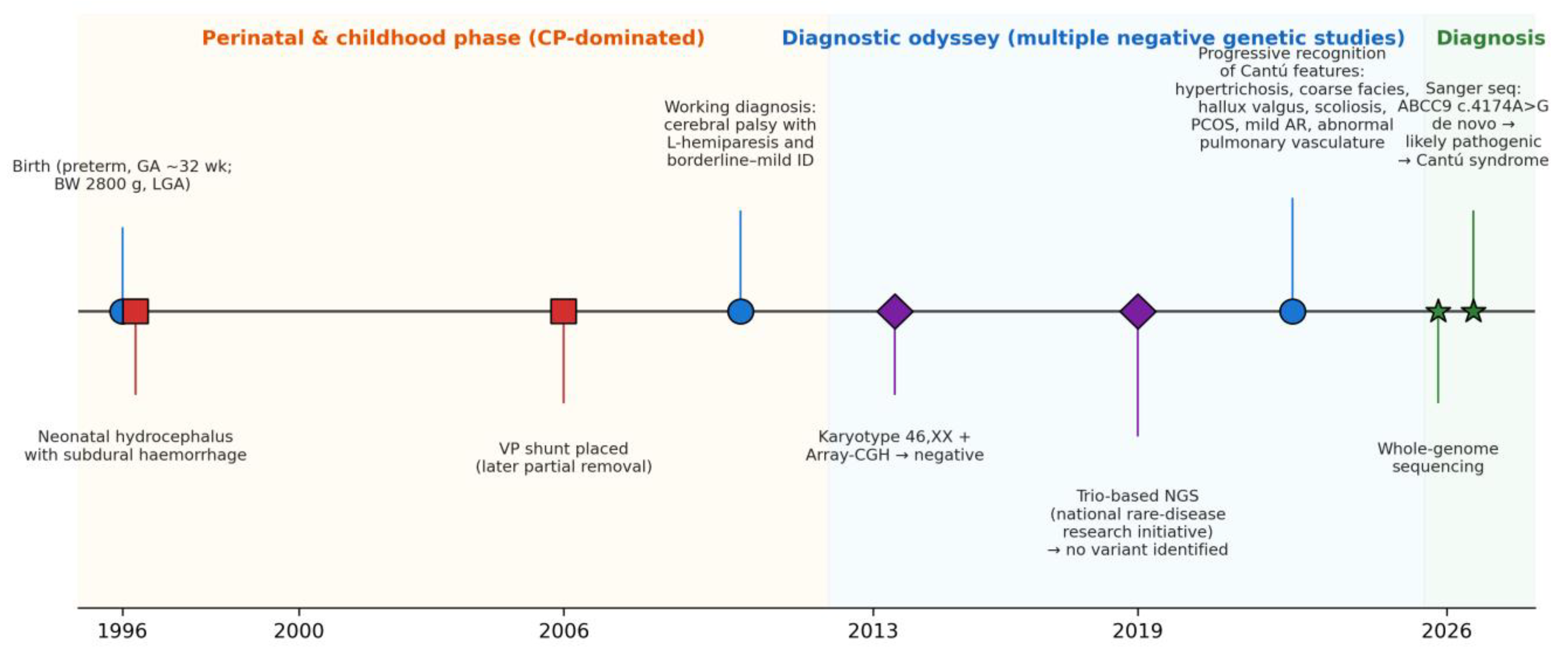
Three rounds of genetic testing were performed before the current diagnosis was established (Figure 7). Conventional karyotyping performed in December 2006 demonstrated a normal female karyotype (46,XX) without detectable chromosomal abnormalities. Array comparative genomic hybridization performed in November 2013 revealed no clinically significant copy number variants. Subsequently, a trio-based next-generation sequencing study performed in June 2019 under a national rare disease research initiative, using a research-grade panel targeting genes associated with intellectual disability and multiple congenital anomalies known at that time, identified no pathogenic or likely pathogenic variants.
Neither ABCC9 nor Cantú syndrome had been specifically considered during these earlier evaluations. During this period, the clinical picture remained dominated by cerebral palsy and shunt-related neurological sequelae, whereas the syndromic features that later proved diagnostically informative accumulated only gradually over time.

2.4. Whole-Genome Sequencing and Confirmation

In December 2025, following continued accumulation of clinical findings and renewed multidisciplinary evaluation, the patient was enrolled in a clinical whole-genome sequencing program. WGS was performed using peripheral blood genomic DNA obtained from the proband at Kim Forest Laboratory (New Taipei City, Taiwan). Sequencing was conducted using Illumina DNA PCR-Free Prep with Tagmentation on the Illumina NovaSeq X Plus platform with paired-end 2 × 151-bp reads. Mean sequencing depth was 35×, with ≥10× coverage achieved across 93.55% of the genome. Reads were aligned to the GRCh38 reference genome, and variants were called using DRAGEN version 4.2.6. Variant annotation incorporated OMIM (2024-12), ClinVar (2024-12), gnomAD-exomes v2.1.1, gnomAD-mitochondrial v2.1.1, and dbSNP build 1405. Variant interpretation followed the American College of Medical Genetics and Genomics/Association for Molecular Pathology (ACMG/AMP) guidelines. Parental Sanger sequencing for de novo confirmation was subsequently performed as a separate analysis.
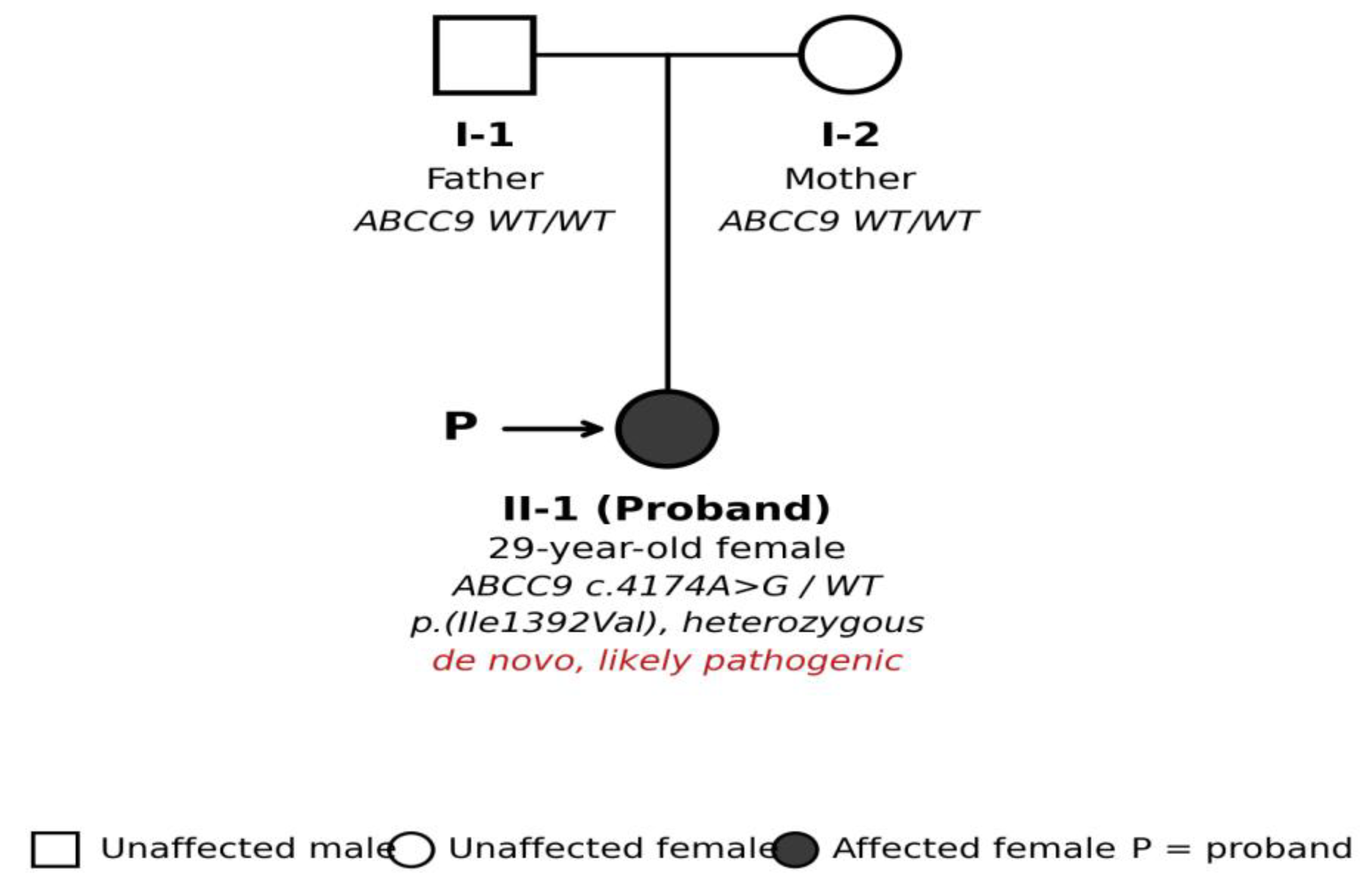
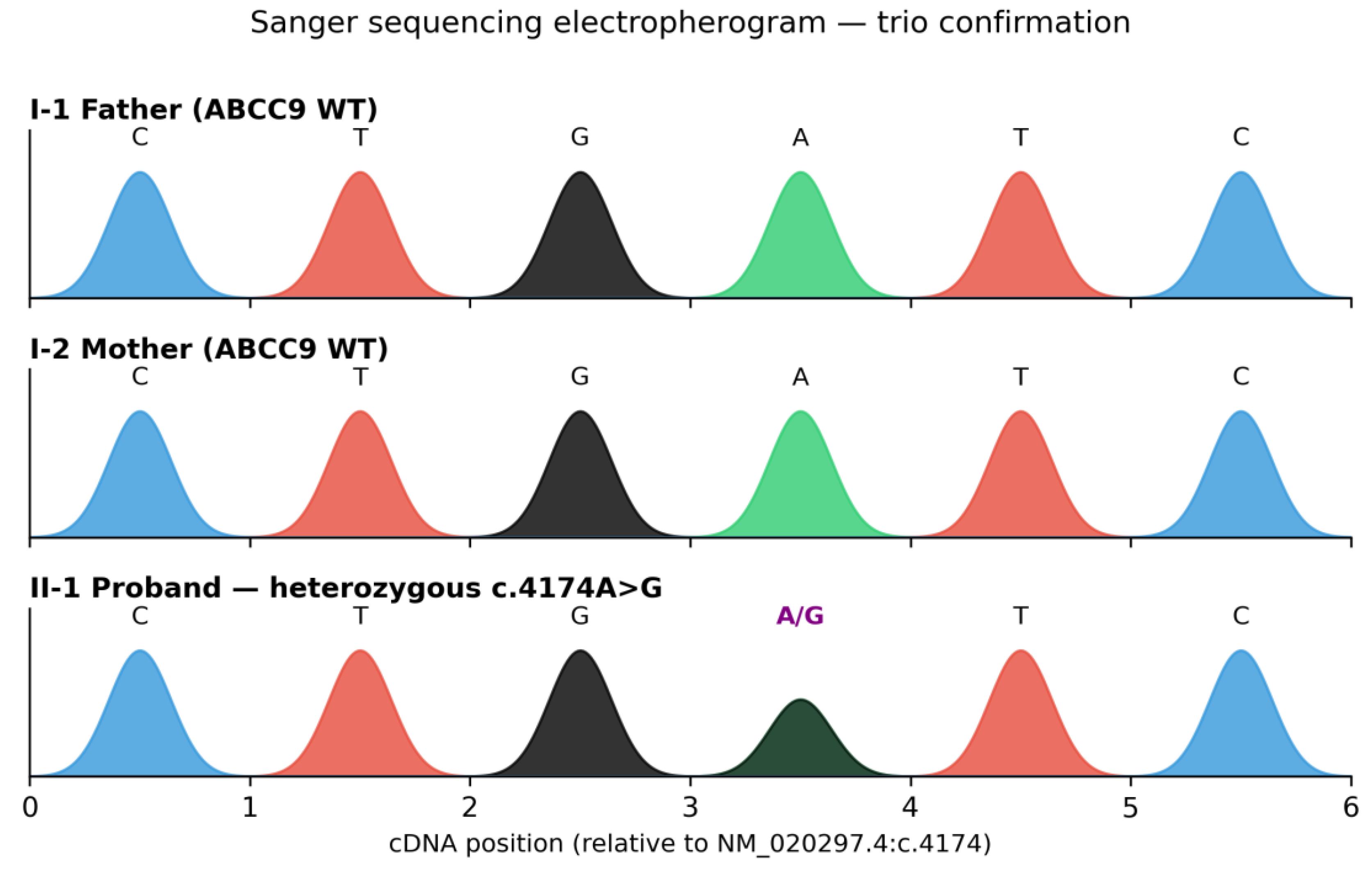
A heterozygous ABCC9 variant (NM_020297.4:c.4174A>G; NC_000012.12:g.21812086T>C, GRCh38) was identified in the proband and was absent in both parents (Figure 4 and Figure 5). The variant is predicted to result in a missense substitution, p.(Ile1392Val), affecting the SUR2B isoform of the sulfonylurea receptor 2 protein. Targeted Sanger sequencing performed on parental and proband DNA in March 2026 confirmed the variant to be de novo, with maternity and paternity formally established.
The variant has not been reported in ClinVar, the Human Gene Mutation Database, or the Leiden Open Variation Database for ABCC9, and was absent from gnomAD-exomes v2.1.1, which was used in the diagnostic pipeline. Independent interrogation of gnomAD v4.1.1 (~807,000 individuals across exome and genome datasets) confirmed continued absence of the variant despite adequate sequence coverage (29.9× in exomes and 30.9× in genomes). The variant was also absent from Taiwan BioBank and dbSNP.
In silico prediction results were mixed but overall favored a deleterious effect. REVEL yielded a score of 0.684, falling within the moderate threshold range (0.644–0.772) proposed by the ClinGen Sequence Variant Interpretation Working Group for PP3 application. Additional prediction scores included a CADD PHRED score of 25.4 (top 0.3% of all possible variants), PrimateAI-3D score of 0.84 (above the ABCC9-specific threshold of 0.59), EVE score of 0.6284, and AlphaMissense score of 0.4798, classified as uncertain. SIFT classified the variant as damaging (maximum SIFT score, 0.006), whereas PROVEAN predicted a neutral effect. A BLOSUM100 substitution score of 4 reflected the chemically conservative nature of the isoleucine-to-valine substitution. The affected residue demonstrated strong evolutionary conservation (phyloP100 = 7.597). SpliceAI predicted no significant effect on splicing (maximum Δ score, 0.02).
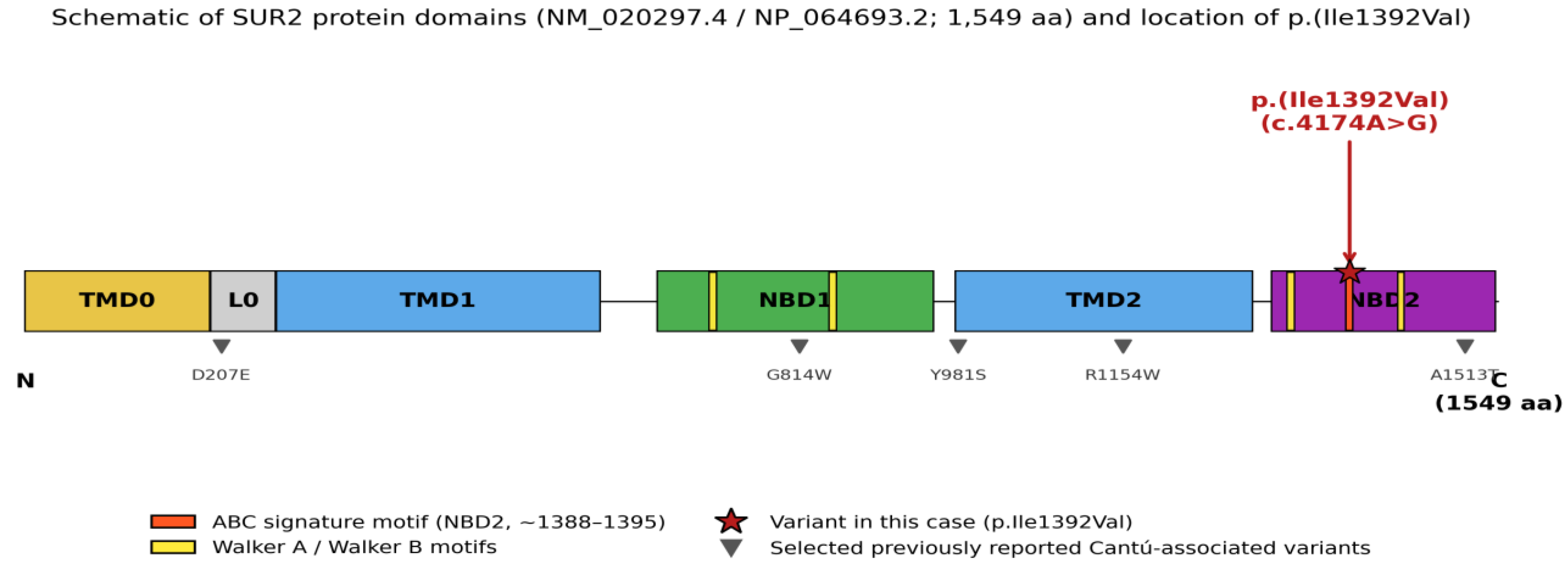
The affected residue, Ile1392, is located within the second nucleotide-binding domain (NBD2) of SUR2, adjacent to the conserved ABC signature motif (LSGGQ-like consensus sequence spanning residues approximately 1388–1395), a region critical for ATP binding and channel gating in ATP-binding cassette transporter proteins (Figure 6).
The laboratory initially classified the variant as a variant of uncertain significance because of its absence from population databases at the time of reporting and the limited range of in silico tools included in the diagnostic pipeline. Following confirmation of de novo occurrence by parental Sanger sequencing, independent interrogation of additional meta-predictors recommended by the ClinGen Sequence Variant Interpretation Working Group, and phenotype correlation demonstrating features highly specific for Cantú syndrome, the variant was reclassified according to the ACMG/AMP 2015 guidelines.
The following criteria were fulfilled: PS2 (confirmed de novo occurrence with documented maternity and paternity); PM2_supporting (absence from gnomAD-exomes v2.1.1 used in the original diagnostic pipeline and independent confirmation of absence from gnomAD v4.1.1 [~807,000 individuals], Taiwan BioBank, and dbSNP); PP3_moderate (REVEL score of 0.684 within the ClinGen SVI moderate threshold range, supported by a CADD PHRED score of 25.4 and PrimateAI-3D score of 0.84 above the gene-specific threshold, together with strong evolutionary conservation indicated by phyloP100 = 7.597). SIFT predicted the variant to be damaging, whereas EVE yielded a borderline pathogenicity score; however, PROVEAN and the BLOSUM100 score reflected the conservative nature of the isoleucine-to-valine substitution. In addition, PP4 was satisfied because of the highly specific clinical phenotype consistent with Cantú syndrome. Collectively, these findings supported classification of the variant as likely pathogenic.

2.5. Diagnosis

Overall, the patient’s clinical phenotype—including generalized hypertrichosis, coarse facial appearance, bilateral hallux valgus, mild thoracic scoliosis, polycystic-appearing ovaries, mild aortic regurgitation, abnormal pulmonary vasculature, and lower-extremity hyperpigmentation with intermittent peripheral edema—together with identification of a de novo heterozygous ABCC9 p.(Ile1392Val) variant, supported a diagnosis of Cantú syndrome (OMIM #239850; ABCC9-related hypertrichotic osteochondrodysplasia). Figure 7 summarizes the complete diagnostic trajectory from preterm birth in 1996 to molecular confirmation in 2026.
The patient and her family received post-test genetic counseling. The recurrence risk for future siblings was considered very low (<1%), accounting for the possibility of unrecognized parental germline mosaicism. The patient was also counseled regarding the 50% risk of transmission to future offspring, consistent with the autosomal dominant inheritance pattern of Cantú syndrome.
Multidisciplinary follow-up was arranged in accordance with current GeneReviews recommendations for Cantú syndrome and included cardiology for serial echocardiographic surveillance of valvular function and ventricular geometry; pulmonology and vascular imaging surveillance because of the previous episode of hemoptysis and known vascular involvement; ophthalmology; endocrinology/gynecology for management of polycystic ovaries and menstrual irregularities; orthopedics; and dermatology.

3. Discussion

The present case illustrates a form of diagnostic delay that is likely more common in clinical genetics than reflected in the literature: a patient with a major perinatal neurological event whose early clinical course becomes centered on management of that event, while manifestations of an underlying genetic syndrome gradually accumulate over subsequent decades. In this patient, hydrocephalus and the shunt-dependent neurological course appeared to provide a sufficient explanation for her developmental trajectory. Hypertrichosis, coarse facial features, hallux valgus, mild aortic regurgitation, polycystic ovaries, and the episode of hemoptysis in 2012 each had plausible isolated explanations at the time. Individually, none of these findings was sufficiently distinctive to trigger reconsideration of the underlying diagnosis. Only after the 2025 whole-genome sequencing result were these findings integrated into a coherent syndromic framework consistent with Cantú syndrome.
An important question is why the trio-based next-generation sequencing study performed in 2019 failed to identify the ABCC9 variant, whereas whole-genome sequencing in 2025 detected it readily. Several factors likely contributed. First, the 2019 panel was designed primarily to target genes associated with intellectual disability and multiple congenital anomalies known at that time; ABCC9 was not prioritized because Cantú syndrome was not strongly suspected clinically. The variant may therefore have been present in the raw sequencing data but excluded during filtering before clinical review. Second, the period between 2019 and 2025 saw substantial advances in variant prioritization pipelines, expansion of population reference databases (including progression from gnomAD v2 to v4), and the introduction of improved computational missense prediction tools such as AlphaMissense, which were not routinely available in clinical practice in 2019.
The diagnostic gains reported from systematic reanalysis of clinical exome and genome sequencing data—approximately 10% in previously undiagnosed Mendelian disorders [14], with an additional 5–6% attributable to automated reanalysis strategies [15], and a further incremental yield of approximately 7% when transitioning from exome to genome sequencing [16]—are consistent with the present case. This case therefore highlights the practical value of repeat sequencing and periodic reanalysis in patients with long-standing undiagnosed disorders, particularly when the clinical picture is dominated by an alternative non-genetic working diagnosis.
The location of the identified variant within the SUR2 protein is also noteworthy. ABCC9 encodes the regulatory SUR2 subunit of K_ATP channels, which assemble with Kir6.1 or Kir6.2 pore-forming subunits in a 4:4 stoichiometry. SUR2 contains two cytoplasmic nucleotide-binding domains that dimerize during channel activation to form composite ATP-binding sites essential for channel gating [9,17]. Most previously reported Cantú syndrome–associated ABCC9 variants cluster within the TMDs or NBD1 [8,10]. The p.(Ile1392Val) variant identified in this patient is located within NBD2, immediately adjacent to the ABC signature motif spanning residues approximately 1388–1395. This motif forms one component of the composite nucleotide-binding site together with the Walker A and Walker B motifs of NBD1.
Variants affecting this region would be predicted to alter Mg-nucleotide–dependent activation rather than ATP inhibition directly. Functional studies of the analogous p.(Gly814Trp) variant affecting the NBD1 signature motif demonstrated that even modest reductions in ATP-binding affinity at the composite binding site can produce clinically significant GoF effects [10]. Although electrophysiological studies of p.(Ile1392Val) have not yet been performed, the location of the variant strongly supports biological plausibility.
Cantú syndrome has been reported predominantly in individuals of European or Latin American ancestry. The International Cantú Syndrome Registry, which currently provides the most comprehensive phenotypic dataset for the condition, included 74 patients but no East Asian individuals [18]. Published Asian cases remain limited, including three Korean children with de novo ABCC9 variants [19], a Japanese family with autosomal dominant ABCC9-associated disease in which one affected adult developed an aortic aneurysm [20], and three Vietnamese children also with de novo ABCC9 variants [21]. To our knowledge, the present patient represents the first molecularly confirmed Taiwanese case of Cantú syndrome. Although this constitutes only a single additional data point, it raises the possibility that the condition may be underrecognized in East Asian populations. Clinicians in Taiwan and neighboring regions should therefore consider Cantú syndrome in patients presenting with hypertrichosis, coarse facial features, and unexplained cardiovascular abnormalities, even when another dominant diagnosis appears to explain the clinical course.
The therapeutic landscape for Cantú syndrome has also evolved in recent years. Because the underlying molecular mechanism involves GoF activation of K_ATP channels, the sulfonylurea glibenclamide has long been considered a rational candidate for therapeutic repurposing. Preclinical studies demonstrated near-complete reversal of cardiovascular abnormalities in mouse and zebrafish models harboring GoF Abcc9 or Kcnj8 variants [22]. The first human case report, involving a neonate carrying p.(Arg1116His), described improvement in pulmonary hemodynamics following low-dose glibenclamide therapy, although treatment escalation was limited by hypoglycemia [23].
More recently, the first formal open-label clinical trial in adults, reported by Kleinendorst et al. in 2025, produced less favorable results. Although low-dose glibenclamide was generally tolerated, treatment effects across eight participants were variable, with modest improvement in hypertrichosis but no significant changes in cardiac phenotype or peripheral edema. Hypoglycemia also limited dose escalation [24]. Whether more selective K_ATP channel inhibitors or variant-specific therapeutic approaches will prove beneficial remains uncertain.
For the present patient, who is now entering her fourth decade with relatively mild but established cardiovascular and reproductive manifestations, the immediate priority remains structured multidisciplinary surveillance rather than systemic pharmacologic intervention. Nevertheless, the case illustrates why obtaining a molecular diagnosis remains clinically important even in adulthood, as it informs surveillance strategies and may determine eligibility for future therapeutic trials.
Several limitations of this report should be acknowledged. First, this is a single-case report, and functional characterization of the identified variant has not yet been performed. The classification of likely pathogenicity is therefore based on de novo occurrence, absence from population databases, supportive in silico evidence, and a highly specific clinical phenotype consistent with Cantú syndrome (ACMG/AMP criteria PS2, PM2_supporting, PP3, and PP4), rather than direct electrophysiological evidence. Second, because of the patient’s substantial perinatal central nervous system injury, it is difficult to determine the extent to which her cognitive impairment and left hemiparesis are attributable to Cantú syndrome itself, although intellectual disability has been reported in a subset of patients with CS [3,18]. Third, the 2012 hemoptysis episode and associated pulmonary vascular abnormalities were reviewed retrospectively from historical medical records, and the original angiographic images were unavailable for reinterpretation. Finally, the functional consequences of variants affecting the NBD2 ABC signature motif remain theoretical in this case and should ideally be investigated using heterologous expression systems.
Despite these limitations, this case provides two important practical messages. First, Cantú syndrome may remain unrecognized into adulthood even in individuals with relatively classic phenotypic findings when systemic manifestations are mild or overshadowed by other major diagnoses. Second, periodic resequencing and reanalysis—particularly the transition from targeted research panels to clinical whole-genome sequencing using contemporary variant interpretation frameworks—can provide substantial diagnostic value in patients with long-standing undiagnosed disorders despite multiple previously negative genetic evaluations.

4. Conclusions

This case adds a single Taiwanese patient to a sparse East Asian Cantú syndrome literature and, more practically, demonstrates that periodic resequencing on contemporary platforms remains a high-yield step in the workup of long-standing undiagnosed disease, even after multiple earlier rounds of negative testing. The novel p.(Ile1392Val) variant within the SUR2 NBD2, immediately adjacent to the ABC signature motif, expands the mutational spectrum of ABCC9 into a region where pathogenic variants remain comparatively sparse and where functional characterization may help clarify the underlying gating defect. For the patient herself, molecular confirmation has shifted the management plan from undirected neurological follow-up to structured multidisciplinary surveillance appropriate for her actual underlying condition; it has also opened the door to potential future participation in trials of targeted K_ATP channel modulation, should more selective or variant-tailored agents become available.

Author Contributions

Conceptualization, C.-L.L., S.-P.L. and H.-Y.L.; methodology, C.-L.L. and H.-Y.L.; investigation, C.-L.L., C.-K.C., Y.-R.T., H.-C.C. and Y.-H.C.; molecular analysis and variant interpretation, C.-K.C., Y.-R.T., J.-Y.W. and Y.-T.L.; patient care and long-term follow-up, C.-L.L., S.-P.L. and H.-Y.L.; data curation, C.-L.L., J.-Y.W. and Y.-T.L.; formal analysis, C.-L.L.; writing—original draft preparation, C.-L.L.; writing—review and editing, all authors; supervision, S.-P.L. and H.-Y.L. All authors have read and agreed to the published version of the manuscript.

Funding

This research was funded by MacKay Memorial Hospital, grant numbers MMH-E-112-13, MMH-MM-112-14, MMH-E-113-13, MMH-MM-113-13, MMH-E-114-13, and MMH-E-115-13, and by the National Science and Technology Council, Taiwan, grant numbers NSTC-112-2314-B-195-003, NSTC-112-2314-B-195-014-MY3, NSTC-112-2811-B-195-001, NSTC-113-2314-B-195-003, NSTC-113-2314-B-195-004, NSTC-113-2314-B-195-021, NSTC-113-2314-B-715-002, NSTC-113-2811-B-195-001, NSTC-114-2314-B-195-001, NSTC-114-2314-B-195-002, NSTC-114-2314-B-715-001,and NSTC-114-2811-B-195-002. The funders had no role in the design of the study; in the collection, analyses, or interpretation of data; in the writing of the manuscript; or in the decision to publish the results.

Institutional Review Board Statement

The study was conducted in accordance with the Declaration of Helsinki and approved by the Institutional Review Board of MacKay Memorial Hospital (protocol code 21MMHIS109e; approved on October 1, 2021), under a research protocol on the evaluation of genotype, phenotype, natural history, and cardiac function in patients with rare genetic disorders, including longitudinal follow-up and genetic testing of individuals with suspected hereditary neuromuscular, metabolic, and other Mendelian conditions.

Data Availability Statement

The datasets generated and analyzed during the current study are not publicly available due to patient privacy considerations and restrictions imposed by the Institutional Review Board of MacKay Memorial Hospital. De-identified data supporting the findings of this study may be made available by the corresponding author on reasonable request, subject to approval by the Institutional Review Board.

Acknowledgments

We thank the patient and her family for their participation in this study. We also acknowledge the nursing team of the International Rare Disease Center and the technical staff of the Division of Genetics and Metabolism at MacKay Memorial Hospital for their support in patient care, sample handling, and molecular testing workflows. During the preparation of this manuscript, the authors used Anthropic's Claude (Claude.ai; Anthropic, San Francisco, CA, USA), a large language model, to assist with drafting English and Chinese text, generating figures from the authors' raw clinical and molecular data, formatting references in MDPI style, and editing for grammar and clarity. All scientific content, clinical interpretations, reference selections, and final manuscript decisions were made by the human authors, who take full responsibility for the integrity and accuracy of the work.

Conflicts of Interest

The authors declare no conflicts of interest.

References

  1. Cantú, J.M.; García-Cruz, D.; Sánchez-Corona, J.; Hernández, A.; Nazará, Z. A distinct osteochondrodysplasia with hypertrichosis—Individualization of a probable autosomal recessive entity. Hum. Genet. 1982, 60, 36–41. [Google Scholar] [CrossRef]
  2. Daas, F.; Gupta, P.; Kiblawi, F. Multiple vascular anomalies and refractory pericardial effusion in a young patient with Cantu syndrome: A case report and review of the literature. BMC Pediatr. 2023, 23, 644. [Google Scholar] [CrossRef]
  3. Grange, D.K.; Nichols, C.G.; Singh, G.K. Cantú Syndrome. In GeneReviews®; Adam, M.P., Bick, S., Mirzaa, G.M., Eds.; University of Washington: Seattle, WA, USA, 2014; updated 29 January 2026. Available online: https://www.ncbi.nlm.nih.gov/books/NBK246980/ (accessed on 20 May 2026).
  4. Singh, G.K.; McClenaghan, C.; Aggarwal, M.; Gu, H.; Remedi, M.S.; Grange, D.K.; Nichols, C.G. A unique high-output cardiac hypertrophy phenotype arising from low systemic vascular resistance in Cantu syndrome. J. Am. Heart Assoc. 2022, 11, e027363. [Google Scholar] [CrossRef]
  5. Harakalova, M.; van Harssel, J.J.; Terhal, P.A.; van Lieshout, S.; Duran, K.; Renkens, I.; Amor, D.J.; Wilson, L.C.; Kirk, E.P.; Turner, C.L.; et al. Dominant missense mutations in ABCC9 cause Cantú syndrome. Nat. Genet. 2012, 44, 793–796. [Google Scholar] [CrossRef]
  6. van Bon, B.W.; Gilissen, C.; Grange, D.K.; Hennekam, R.C.; Kayserili, H.; Engels, H.; Reutter, H.; Ostergaard, J.R.; Morava, E.; Tsiakas, K.; et al. Cantú syndrome is caused by mutations in ABCC9. Am. J. Hum. Genet. 2012, 90, 1094–1101. [Google Scholar] [CrossRef] [PubMed]
  7. Brownstein, C.A.; Towne, M.C.; Luquette, L.J.; Harris, D.J.; Marinakis, N.S.; Meinecke, P.; Kutsche, K.; Campeau, P.M.; Yu, T.W.; Margulies, D.M.; et al. Mutation of KCNJ8 in a patient with Cantú syndrome with unique vascular abnormalities—support for the role of K(ATP) channels in this condition. Eur. J. Med. Genet. 2013, 56, 678–682. [Google Scholar] [CrossRef] [PubMed]
  8. McClenaghan, C.; Hanson, A.; Sala-Rabanal, M.; Roessler, H.I.; Josifova, D.; Grange, D.K.; van Haaften, G.; Nichols, C.G. Cantu syndrome-associated SUR2 (ABCC9) mutations in distinct structural domains result in KATP channel gain-of-function by differential mechanisms. J. Biol. Chem. 2018, 293, 2041–2052. [Google Scholar] [CrossRef]
  9. Nichols, C.G. Personalized therapeutics for KATP-dependent pathologies. Annu. Rev. Pharmacol. Toxicol. 2023, 63, 541–563. [Google Scholar] [CrossRef] [PubMed]
  10. Gao, J.; Ververi, A.; Thompson, E.; Tryon, R.; Sotiriadis, A.; Rouvalis, F.; Grange, D.K.; Giannios, C.; Nichols, C.G. A novel ABCC9 variant in a Greek family with Cantu syndrome affecting multiple generations highlights the functional role of the SUR2B NBD1. Am. J. Med. Genet. A 2024, 194, e63815. [Google Scholar] [CrossRef]
  11. Smeland, M.F.; McClenaghan, C.; Roessler, H.I.; Savelberg, S.; Hansen, G.Å.M.; Hjellnes, H.; Arntzen, K.A.; Müller, K.I.; Dybesland, A.R.; Harter, T.; et al. ABCC9-related intellectual disability myopathy syndrome is a KATP channelopathy with loss-of-function mutations in ABCC9. Nat. Commun. 2019, 10, 4457. [Google Scholar] [CrossRef]
  12. Efthymiou, S.; Scala, M.; Nagaraj, V.; Ochenkowska, K.; Komdeur, F.L.; Liang, R.A.; Abdel-Hamid, M.S.; Sultan, T.; Barøy, T.; Van Ghelue, M.; et al. Novel loss-of-function variants expand ABCC9-related intellectual disability and myopathy syndrome. Brain 2024, 147, 1822–1836. [Google Scholar] [CrossRef]
  13. Kortüm, F.; Niceta, M.; Magliozzi, M.; Dumic Kubat, K.; Robertson, S.P.; Moresco, A.; Dentici, M.L.; Baban, A.; Leoni, C.; Onesimo, R.; et al. Cantú syndrome versus Zimmermann-Laband syndrome: Report of nine individuals with ABCC9 variants. Eur. J. Med. Genet. 2020, 63, 103996. [Google Scholar] [CrossRef] [PubMed]
  14. Liu, P.; Meng, L.; Normand, E.A.; Xia, F.; Song, X.; Ghazi, A.; Rosenfeld, J.; Magoulas, P.L.; Braxton, A.; Ward, P.; et al. Reanalysis of clinical exome sequencing data. N. Engl. J. Med. 2019, 380, 2478–2480. [Google Scholar] [CrossRef] [PubMed]
  15. Welland, M.J.; Ahlquist, K.D.; De Fazio, P.; Austin-Tse, C.; Pais, L.; Wedd, L.; Bryen, S.; Rius, R.; Franklin, M.; Morrison, C.; et al. Scalable automated reanalysis of genomic data in research and clinical rare disease cohorts. medRxiv Preprint. 2025, 2025.05.19.25327921. [Google Scholar] [CrossRef]
  16. Albuquerque, A.L.B.; Dos Santos, G.G.; Sadok, S.H.; Antonello, B.B.; de Jesus, L.M.; de Carvalho, M.E.A.; Mutarelli, A.; Ribeiro, P.V.Z. Diagnostic yield of genome sequencing versus exome sequencing in pediatric patients with rare phenotypes: A systematic review and meta-analysis. Am. J. Med. Genet. A 2025, 197, e64146. [Google Scholar] [CrossRef]
  17. Sung, M.W.; Yang, Z.; Driggers, C.M.; Patton, B.L.; Mostofian, B.; Russo, J.D.; Zuckerman, D.M.; Shyng, S.L. Vascular K_ATP channel structural dynamics reveal regulatory mechanism by Mg-nucleotides. Proc. Natl. Acad. Sci. USA 2021, 118, e2109441118. [Google Scholar] [CrossRef] [PubMed]
  18. Grange, D.K.; Roessler, H.I.; McClenaghan, C.; Duran, K.; Shields, K.; Remedi, M.S.; Knoers, N.V.A.M.; Lee, J.M.; Kingma, P.S.; Mecham, R.P.; et al. Cantú syndrome: Findings from 74 patients in the International Cantú Syndrome Registry. Am. J. Med. Genet. C Semin. Med. Genet. 2019, 181, 658–681. [Google Scholar] [CrossRef]
  19. Jang, J.H.; Ko, J.M.; Yang, S.W.; Chae, J.H.; Bae, E.J. Three Korean patients with Cantú syndrome caused by mutations in ABCC9 and their clinical manifestations. J. Genet. Med. 2016, 13, 99–104. [Google Scholar] [CrossRef]
  20. Hiraki, Y.; Miyatake, S.; Hayashidani, M.; Nishimura, Y.; Matsuura, H.; Kamada, M.; Kawagoe, T.; Yunoki, K.; Okamoto, N.; Yofune, H.; et al. Aortic aneurysm and craniosynostosis in a family with Cantu syndrome. Am. J. Med. Genet. A 2014, 164A, 231–236. [Google Scholar] [CrossRef]
  21. Tran, T.N.A.; Phan, H.N.; Vu, H.A.; Nguyen, H.T. Diverse clinical manifestations of Cantú syndrome: The first case series in Vietnam. Am. J. Med. Genet. A 2022, 188, 377–381. [Google Scholar] [CrossRef]
  22. McClenaghan, C.; Huang, Y.; Yan, Z.; Harter, T.M.; Halabi, C.M.; Chalk, R.; Kovacs, A.; van Haaften, G.; Remedi, M.S.; Nichols, C.G. Glibenclamide reverses cardiovascular abnormalities of Cantu syndrome driven by KATP channel overactivity. J. Clin. Investig. 2020, 130, 1116–1121. [Google Scholar] [CrossRef]
  23. Ma, A.; Gurnasinghani, S.; Kirk, E.P.; McClenaghan, C.; Singh, G.K.; Grange, D.K.; Pandit, C.; Zhu, Y.; Roscioli, T.; Elakis, G.; et al. Glibenclamide treatment in a Cantú syndrome patient with a pathogenic ABCC9 gain-of-function variant: Initial experience. Am. J. Med. Genet. A 2019, 179, 1585–1590. [Google Scholar] [CrossRef]
  24. Kleinendorst, L.; Siegelaar, S.E.; Roessler, H.I.; de Bruin-Bon, R.H.A.C.M.; van Duinen, K.F.; Planken, R.N.; Jaspars, E.H.; Kemperman, P.M.J.H.; Bouma, B.J.; Nichols, C.G.; et al. Treatment of overactive K_ATP channels with glibenclamide in a zebrafish model and a clinical trial in humans with Cantú syndrome. Sci. Rep. 2025, 15, 17704. [Google Scholar] [CrossRef]
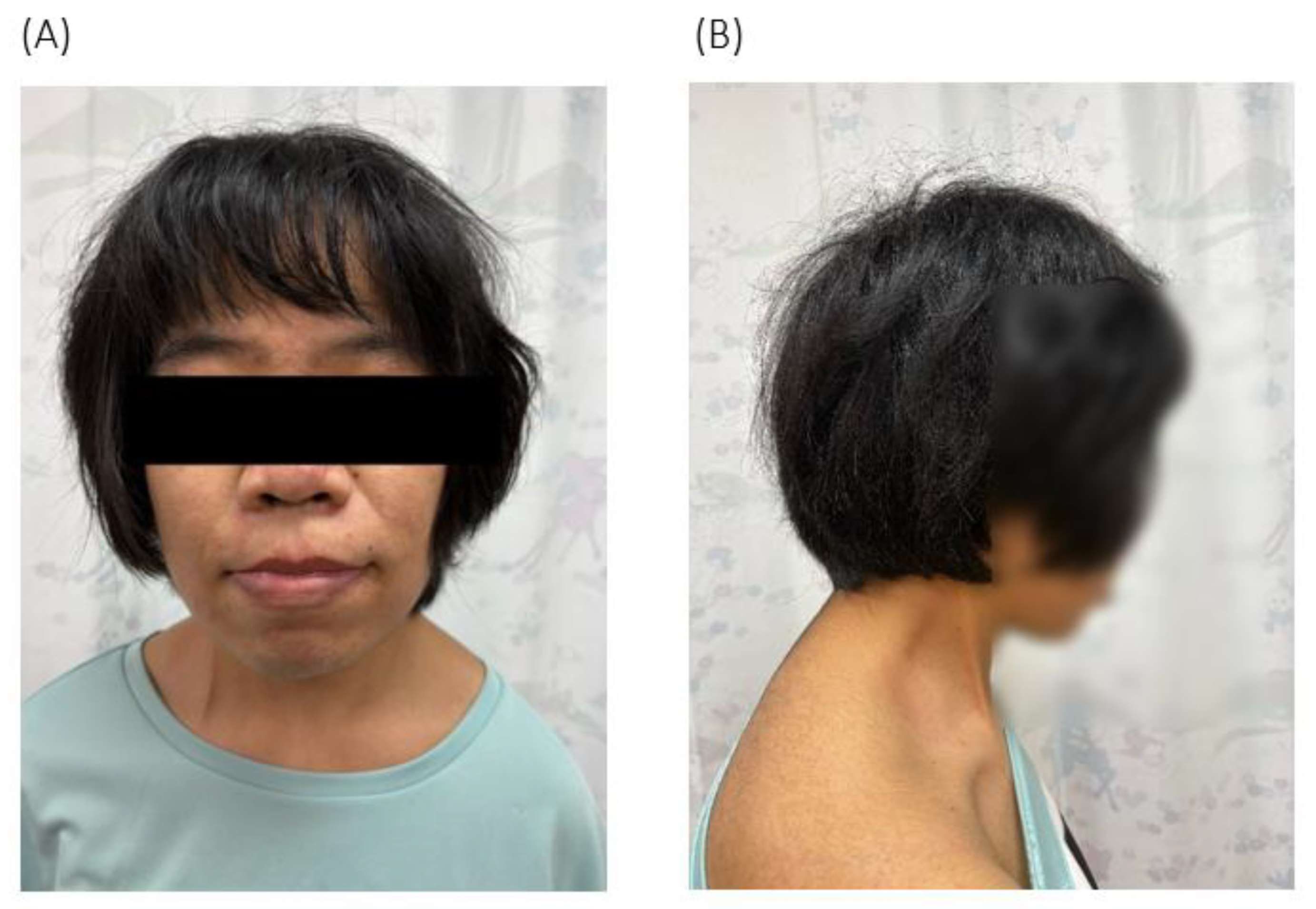
Figure 1. Craniofacial features of the proband. (A) Frontal view showing coarse facial appearance with a broad nasal bridge, full lips, fine facial hypertrichosis over the cheeks with a faint mustache, and mild rosacea-like erythema with periorificial folliculitis over the nasal and perinasal regions. (B) Right lateral view demonstrating abundant scalp hair extending onto the neck and shoulders, a low posterior hairline, and irregularity of the posterior occipital contour related to the previously placed ventriculoperitoneal shunt. The eyes were masked and identifying facial features blurred to preserve patient anonymity.
Preprints 216453 g001
Figure 2. Composite documentation of generalized hypertrichosis. (A) Bilateral forearms and dorsum of the hands showing dense, dark terminal hair extending distally to the proximal phalanges. (B) Lower back and sacral region demonstrating a midline whorl-like pattern of hypertrichosis. (C) Lower extremities showing thick, abundant dark terminal hair covering both thighs and lower legs, with extension onto the ankles and dorsum of the feet.
Preprints 216453 g002
Figure 3. Feet of the proband demonstrating multiple manifestations of Cantú syndrome. These findings include: (i) hypertrichosis extending onto the dorsum of both feet and toes; (ii) bilateral hallux valgus, more severe on the left side; and (iii) diffuse hyperpigmentation and bruise-like discoloration over the left ankle and dorsal foot, with freckle-like pigmentation, consistent with the lymphatic and vascular involvement described in Cantú syndrome.
Preprints 216453 g003
Figure 4. Pedigree of the proband and her parents. Both parents (I-1 and I-2) carry wild-type ABCC9 alleles. The proband (II-1; arrow) is heterozygous for the ABCC9 c.4174A>G [p.(Ile1392Val)] variant, which was confirmed to have arisen de novo.
Preprints 216453 g004
Figure 5. Sanger sequencing electropherograms confirming the de novo status of the ABCC9 c.4174A>G variant. Both parents (top and middle panels) demonstrate homozygous wild-type peaks (A, green) at the variant position. The proband (bottom panel) shows overlapping A and G peaks at the same position, consistent with heterozygosity. The original chromatogram is provided in the Supplementary Material.
Preprints 216453 g005
Figure 6. Schematic representation of the SUR2 protein (NM_020297.4 / NP_064693.2; 1,549 amino acids) showing the domain architecture, including TMD0, the L0 linker, TMD1, NBD1, TMD2, and NBD2. Walker A and Walker B motifs within each nucleotide-binding domain (NBD) are highlighted in yellow. The ABC signature motif within NBD2 (LSGGQ-like consensus sequence; residues approximately 1388–1395) is highlighted in orange. The variant identified in this case, p.(Ile1392Val), is indicated by a red star at residue 1392 and is located within or immediately adjacent to the NBD2 signature motif. Gray triangles indicate the approximate positions of selected previously reported ABCC9 variants associated with Cantú syndrome for comparison (D207E in TMD1; G814W within the NBD1 signature motif; Y981S and R1154W within the NBD1–TMD2 linker/TMD2 region; and A1513T in NBD2).
Preprints 216453 g006
Figure 7. Diagnostic timeline of the proband from preterm birth in 1996 to molecular confirmation of Cantú syndrome in 2026. The orange-shaded section represents the perinatal and childhood period, during which the clinical course was dominated by hydrocephalus, ventriculoperitoneal shunt placement, and a working diagnosis of cerebral palsy. The blue-shaded section represents the prolonged diagnostic odyssey, during which the patient remained without a syndromic diagnosis despite undergoing three rounds of genetic testing, including karyotyping, array comparative genomic hybridization (array-CGH), and trio-based next-generation sequencing performed under a national rare disease research initiative. The green-shaded section represents the final diagnostic phase, during which whole-genome sequencing followed by Sanger confirmation identified a de novo likely pathogenic ABCC9 variant consistent with Cantú syndrome.
Preprints 216453 g007
Disclaimer/Publisher’s Note: The statements, opinions and data contained in all publications are solely those of the individual author(s) and contributor(s) and not of MDPI and/or the editor(s). MDPI and/or the editor(s) disclaim responsibility for any injury to people or property resulting from any ideas, methods, instructions or products referred to in the content.
Copyright: This open access article is published under a Creative Commons CC BY 4.0 license, which permit the free download, distribution, and reuse, provided that the author and preprint are cited in any reuse.
Prerpints.org logo

Preprints.org is a free preprint server supported by MDPI in Basel, Switzerland.

Subscribe

Disclaimer

Terms of Use

Privacy Policy

Privacy Settings

© 2026 MDPI (Basel, Switzerland) unless otherwise stated