

Submitted:
29 May 2026
Posted:
01 June 2026
You are already at the latest version
Abstract
Background: Post-Traumatic Stress Disorder (PTSD) is a trauma- and stressor-related disorder associated with intrusion symptoms that stem from exposure to a traumatic environmental event. Complex psychiatric disorders such as PTSD have a variety of causal triggers, including, but not limited to, environmental factors, genetic predisposition, and epigenetic modification events. PTSD is commonly treated with talk therapy and antidepressant medication to help reduce symptom severity. Cannabis is a potential treatment, or adjunct treatment option, in mitigating symptomatology of intrusions. Methods: Literature analysis was conducted using PubMed and Google Scholar to investigate epidemiological and genetic data pertaining to PTSD and cannabis use. All articles referenced are primary source peer-reviewed research articles and were not limited to the United States. Results: Lower-income demographics and military veterans demonstrated a significantly higher prevalence of PTSD, while higher-income demographics demonstrated a higher prevalence of cannabis use. Cannabis was effective in the short-term reduction of self-reported baseline symptoms associated with PTSD. However, long-term baselines remained seemingly unaffected. Small subsets of populations of individuals reported worsening symptom severity when taking cannabis, so the idea of this as a universal treatment is not supported. PTSD is a common certifying condition for medical marijuana in many states, including Pennsylvania, where it ranked third (54,858), only behind anxiety disorders (309,443) and chronic pain (162,561) in 2025. Psychiatric disorders tend to be comorbid with other mental disorders due to genotypic factors as well, and PTSD generally has comorbidity with Major Depressive Disorder (MDD). The intersection between diagnosis and treatment can be complicated when managing multiple closely related disorders, so having a short-term mitigation option with minimal therapeutic lag could prove to be considerably valuable. Conclusion: As one of the most commonly diagnosed psychiatric conditions, PTSD and its treatment options remain appreciably complex. There has been no magic bullet treatment to eliminate the onset or symptoms entirely. Cannabis has demonstrated considerable prospects in short-term symptom reduction in those suffering from intrusion symptoms without altering long-term baselines negatively. As it stands now, cannabis therapy would serve best as a form of adjunct therapy to aid in symptom severity mitigation. However, substantial research is still needed to further assess variations in dosage and mode of administration.
Keywords:
adjunctive
; genomics
; epidemiology
; cannabinoids
; cognitive behavioral therapy (CBT)
Introduction
Post-traumatic stress disorder (PTSD) is labeled as a “trauma- and stressor-related disorder” following exposure to dangerous or traumatic events and is characterized by the presence of specific criteria that last for more than one month, as per the criteria noted in the latest version of the Diagnostic and Statistical Manual of Mental Disorders (DSM) (1). The DSM-5-TR is the diagnostic guide for healthcare professionals in the United States (US) in recognizing and diagnosing mental disorders (2). The most recent version, the DSM-5-TR, lists numerous criteria based on symptomatology for diagnosing individuals with PTSD (3). An individual aged six years or older must meet all of the following criteria for PTSD: exposure to a traumatic event; intrusion symptoms directly connected to the traumatic event; avoidance of stimuli associated with the trauma; adverse developments in cognition and mood; shifts in both arousal and reactivity; and persistence of symptoms lasting longer than one month (4). The severity of the symptoms and their impact on social, occupational, and other aspects of functioning must be sufficient to rule out the possibility that they are caused by exogenous drugs or other medical problems (5-6). Intrusion symptoms commonly include unwanted or disturbing memories, flashbacks, nightmares, emotional or physical distress, and reactivity after exposure to triggers. Diagnosing PTSD can be complex because individuals may be hesitant to disclose the traumatic event, may not understand the link between the trauma and symptoms, or may be hindered by comorbidities, substance use, or depression (1,7). With mental health disorders, diagnosis is based on signs and behavioral correlations rather than biological metrics (8). Notable overlap exists between symptoms of various psychiatric disorders and a high likelihood of comorbidity (9). With this, accurate diagnosis becomes increasingly difficult. Modern pharmaceutical intervention methods, which include selective serotonin reuptake inhibitors (SSRI) and selective norepinephrine reuptake inhibitors (SNRI), are considerably inefficient and demonstrate a therapeutic lag (10). This inefficiency has pushed cannabis to become increasingly popular as a treatment for various disorders and ailments, including psychiatric disorders (11,12). Historically, cannabis has been used predominantly for its psychoactive effects on those ingesting it (13). Tetrahydrocannabinol (THC) is the primary psychoactive cannabinoid typically extracted from the cannabis plant (14). With an extensive history behind its use, cannabis and THC have been popular debate topics regarding their potential medicinal value (12). Currently, there are FDA-approved synthetic THC derivatives, dronabinol and nabilone, that are pharmaceutically available. Both drugs are approved explicitly for chemotherapy-induced nausea (14-15). When consumed, THC will bind to receptors within the endocannabinoid system. CB1 and CB2 receptors are extensively distributed in the nervous system, with CB1 receptors being more prevalent in the brain and CB2 receptors being more associated in the periphery and other organs. The CB1 receptors regulate cognitive, bodily, and sensory perception, which opens the conversation to the possibility of treating mental disorders (16-17). Another exciting component in cannabis is cannabidiol (CBD). This non-psychoactive cannabinoid has shown promise in animal model studies treating neurological, psychiatric, and drug-use disorders (18). The mechanism of CBD is currently being investigated, but has been determined to be a prominent antidepressant, anxiolytic, antipsychotic, and neuroprotective agent in psychiatric medicine (19). Although there have been prior reviews, there is still a need for updated information about psychosocial impacts and health conditions related to exposure (12). Therefore, the literature on PTSD and its association with cannabis-based treatment regimens was analyzed. Numerous sources were examined to distinguish patterns in epidemiological causes and demographic data.
Methods
Literature on PTSD and its association with cannabis-based treatment regimens was analyzed. Numerous sources were analyzed to distinguish patterns in epidemiological causes and demographic data. All source information was gathered from PubMed, Science Direct, and Google Scholar. Keywords entered into the search engines included PTSD, cannabis, prevalence, incidence, sex, cannabinoids, and endocannabinoid system. Journals needed to be peer-reviewed with an impact factor of ≥ 2 to ensure articles were of sufficient quality.
Discussion
PTSD
The onset of PTSD is widely understood to be directly associated with exposure to a traumatic event. While no distinct demographic or geographic region can be directly linked to PTSD, it remains among the most commonly diagnosed mental disorders among both civilians and military service members (3, 20). Although the genetic inheritance of PTSD has not yet been confirmed, research has drawn correlations between epigenetic modifications and the risk of developing PTSD within one’s lifetime, suggesting a potential pattern of inheritance that may influence the prevalence of PTSD (16). Environmental exposures are correlated to manifestation of symptoms. Trauma exposures are the most discussed environmental contributors, which involve paralleled psychiatric diagnoses in higher prevalence of comorbid conditions. While these comorbidities exist alongside PTSD, conditions differ in biologic symptom profile and corresponding treatment options, further emphasizing the need for personalized approaches to treatment (21). Although cannabinoids have been utilized to treat various medical conditions, progress in our knowledge of both beneficial and harmful effects within therapeutic settings has been slow (22). Understanding the possible risks associated with long-term cannabis usage is still limited, requiring additional studies analyzing potential onset of mental illness as a result of excessive consumption (23-24).
Epidemiology. An estimated one-third of the population may experience a life-altering trauma at some point. Since 10% to 20% of those exposed to traumatic events may develop PTSD, it is estimated that 3-6% of the general population has PTSD (25). Several US-based studies have supported this estimate, but international research has noted slightly lower estimates of 5.6% lifetime prevalence among those that were trauma exposed (26, 27, 28-31). The likelihood of developing PTSD depends on several variables, including the kind and severity of the incident and the person’s traits (25, 27). Higher risks of developing PTSD have been associated with exposure to traumatic events such as parental separation, childhood abuse, sexual assault, and divorce in early life (21). Socioeconomic adversity may predispose individuals to acquiring PTSD, suggesting that socioeconomic status is one of several potential indicators (6).
The onset of PTSD is widely understood to be directly associated with exposure to a traumatic event. There is an explicit relationship between environmental exposures and the onset of symptomatology, constituting the acknowledgment of epidemiological risk (32). The high rate of comorbidity between PTSD and other mental illnesses may be attributed to the fact that exposure to traumatic events can trigger the onset of many disorders at once (33). While conditions overlap extensively, clinical studies have shown varying differences in biological manifestation, genetic patterns, and treatment regimens between PTSD, psychotic disorders, and control groups (4,34). Although veterans and first responders are thought of more frequently in terms of developing PTSD, within the general population, about 7-8% of people will develop PTSD in their lifetime, with women being at a higher risk than men, possibly due to genetics (27). Development of PTSD does not mean someone is weak physically or mentally, although people who lack coping mechanisms, are introverted, and do not reach out for support are more likely to be affected by traumatic experiences as opposed to someone who works through the trauma, learns to respond in healthy ways, and leans on others for support otherwise known as resilience factors (35). Out of the various mental disorders, PTSD is the only one in which the cause is clear. Events causing PTSD can range from disasters, terror attacks, incidences in live combat, with the leading cause being sexual abuse (29). Additional risk factors for causing such responses to stressors may be previous exposure to trauma, especially during childhood, or an occurrence after the primary trauma, such as financial issues, loss of a job, or family member (21,32). PTSD can develop at any age but has a 9.7% prevalence rate in American adults ages 45-49 (28, 32). The overall prevalence varies across regions, but correlates to the exposure levels of traumatic or stressful events citizens are exposed to (28,36).
Genomic Risk Factors and Patterns. Many psychiatric conditions exist at the point of intersection between nature and nurture. PTSD is no exception to that rule, with current investigations suggesting the presence of a heritable genetic component that would increase the risk of developing symptoms in the presence of environmental stimuli (20). There is extensive research indicating the genetic component of various psychiatric disorders, such as personality disorders and major depressive disorder (MDD) (8, 13, 16, 34-39). In one study, the high prevalence of comorbidity between PTSD and MDD was genotypically analyzed and found to have a high genetic correlation. Causal variants coding for depressive phenotypes in PTSD participants were compared to those with varying depressive phenotypes. Causal variants indicative of PTSD were entirely covered by causal variants of each MDD phenotype being investigated (40). With the knowledge of a known mechanism of heritability for depressive disorders, formulating a correlation may validate the assumption that there is also a mechanism for individuals to inherit a predisposition to PTSD. Whether or not that mechanism is independent of others has yet to be determined. Ultimately, these findings raise questions as to why standard methods of treatment and pharmaceutical interventions for depressive disorders remain considerably inefficient in treating PTSD, further emphasizing the need for personalized precision medicine interventions and adjuvant therapeutics to mitigate the therapeutic lag demonstrated by current pharmacotherapeutics and talk therapy.
Twin studies have been performed to tease apart genetic and environmental factors that contribute to the expression of symptoms. Heritable factors were responsible for 46% of inconsistencies seen in PTSD (40,41). In another study performed on genetic components of PTSD, childhood adversity was associated with the development of psychiatric struggles, specifically anxiety, depression, and behavioral problems (42). Children with parents suffering from PTSD were at a much higher risk of developing psychiatric disorders later in life. There was a positive correlation between the severity of parental PTSD symptoms and negative psychological impact, as well as biological modifications, in offspring (4,41). These studies support a genetic component that is at least partially responsible for PTSD.
Epigenetic Modification. With any partially heritable condition, there is an unspecified degree of environmental influence required to modify genes to an expressive state. Epigenetic modifications are not structural changes of the DNA that would change the code, but rather, alterations that directly modify DNA regulation without disrupting the primary sequence. Epigenetics are the implications of both genetic and environmental influences by altering gene expression, contributing to potentially chronic and transgenerational phenotypes (4,41). Whether or not environmental stimuli cause epigenetic modifications that can be inherited transgenerationally is yet to be determined definitively. According to numerous studies, there are a handful of epigenetic mechanisms that have been extensively investigated (41, 42). These mechanisms include histone modification, DNA methylation, histone deacetylation, etc. It is hypothesized that through unspecified epigenetic modifications of the DNA, predispositions to stress disorders, such as PTSD, can be passed down intergenerationally from parent to offspring (4,41,42).
Histone Modification. DNA strands are organized around histone proteins in a bead-like fashion into structural units referred to as nucleosomes. The wrapping of DNA around histones aids in the compacting of DNA into condensed chromatin, which exists as strands of DNA-wound histones linked together in a strand. Epigenetic alterations or modifications of histone proteins directly impact how tightly the DNA strand is wound and further affect the structure of the chromatin (4,37,43). Acetylation and deacetylation modifications are responsible for coiling or uncoiling the said strand, which alters the regulation of genes expressed by chromatin (37,44). Histone modification can be associated with memory regulation, traumatic memory encoding, and fear extinction, all of which are hindered in those afflicted with PTSD (37,43-47).
Histone acetylation occurs when histone acetyltransferase enzymes add an acetyl group to the lysine residues of the histone proteins. This process will cause the uncoiling of the DNA strand wrapped around the protein, decondensing the chromatin structure so that the primary strand can be transcribed (37). Deacetylation is when histone deacetylase removes the acetyl groups that have been added by the HAT enzymes, contributing to the recoiling of the formerly unwound DNA strand around histone proteins (17). In other words, acetylation enhances gene expression, while deacetylation represses expression. Furthermore, histone modification, in general, acts as an on-off switch for gene expression by making DNA regions either reachable or unreachable by the replication machinery (4).
DNA Methylation. Epigenetic modification in the form of methylation is one of the most widely studied processes in PTSD research. There are a plethora of known DNA modifications, but two specifically occur in neurons associated with PTSD processes. Increased or decreased methylation alterations within a gene typically result from stress responses to traumatic exposures (4, 37). One finding in DNA methylation research states how children of individuals who lived through genocide demonstrated higher amounts of methylation biomarkers than those born to parents who lived abroad at the time of the traumatic event (41). DNA demethylation of glucocorticoid receptor binding sites (GREs) within the FKBP5 gene, which is responsible for regulating the HPA cortisol response, was directly associated with childhood abuse (4). Studies proposing the concept of hereditary epigenetic markers continue to be relatively premature in indicating a causative genomic contribution.
Current Standard Of Care
As previously mentioned, the current method of treatment of PTSD remains relatively inefficient in overall symptom reduction. When treating any psychiatric disorder, there is a degree of uncertainty in attaining accurate data, being that diagnosis relies solely on self-reporting symptoms. Furthermore, common treatments involve a combination of pharmaceutical and non-pharmaceutical interventions (48). The first-line treatment approach for PTSD patients is predominantly a form of manualized trauma-focused therapy where the healthcare professional uses a guided manual to make sure every aspect of the trauma is addressed during talk therapy sessions. This has become the gold standard over pharmacologic approaches, being that typical pharmaceutical medications have been noted to be subpar in reducing symptoms of PTSD (4).
Pharmacological agents used in treating PTSD are generally SSRIs and SNRIs. The medication of choice can be switched by a healthcare provider based on the patient’s response and tolerance to what is prescribed (8). Some of the drugs that have been best studied are fluoxetine, paroxetine, sertraline, and venlafaxine. SSRI and SNRI medications are typically used in treating depression and anxiety disorders, so administration of any one of these would aid in the reduction of symptoms mirroring those specifically (10).
Cannabis Use
Propagation of the Cannabis sativa plant, as well as the medicinal properties of its extract, have been documented as early as 1843 in Western society and about 12,000 years ago in Central Asia (22-24). It was used medicinally for physical pain relief, sedation, and sometimes even depression (22, 49). Cannabis contains two substances of particular interest–CBD and THC, which is the most psychoactive component of the plant. CBD was isolated for the first time in 1940, but THC was not isolated from cannabis until 1964 (22, 49-51). After marijuana was categorized as having a high potential for abuse while lacking any medicinal implications, it earned a title as a Schedule I drug in 1970, which halted any further human research into the effects of cannabis (22, 50). Although investigations on the impacts of cannabis on the human body had come to a halt, scientists continued to examine the substances they isolated and were able to identify the first cannabinoid receptor, CB1, in rat brain samples (22, 49). When consumed, THC will bind to receptors within the endocannabinoid system. The CB1 and CB2 receptors are dispersed throughout the nervous system, with CB1 receptors localized throughout the central nervous system, whereas CB2 receptors are typically found in the periphery and organs (8,12, 22, 49-50). The CB1 receptors are responsible for the regulation of cognitive, somatic, and sensory perception, which opens the conversation to the possibility of treating mental disorders (8,12, 22). Because of the psychoactive properties of THC, cannabis use moved away from solely medicinal purposes to recreational purposes. Cannabis also exhibits a strong dose-response relationship in that the effects will change based on the amount of cannabis ingested, whether that is through smoking, vaping, tinctures, or eating baked goods containing cannabis (52). Even though it was federally illegal for most of the second half of the twentieth century, marijuana consumption in the US has persisted (53). With maturity and increasing age, rates of recreational use typically fall (54). The presence of medical cannabis programs further drives interest in assessing the potential long-term effects of cannabis use. Prospective health advantages and the lack of well-substantiated adverse effects promote expanding marijuana usage and legislation for legalization (24). Despite its popularity, challenges arise from the plethora of varying strains, administration methods, and regulatory frameworks (55).
Two-thirds (66.7%) of states in the US with a medical cannabis program included PTSD as a qualifying condition in 2017 and this increased to almost four-fifths (78.8%) in 2024 (56). Figure 1 shows the pronounced gains in PTSD certifications for medical marijuana in Pennsylvania relative to another common psychiatric disorder (autism), addiction (opioid use disorder) and a neurological condition (multiple sclerosis). Certifications for PTSD in 2025 (54,858) were five-fold greater than OUD (10,695) as well as over seventeen-fold that of autism (3,180) or multiple sclerosis (3,064).
Epidemiology of Cannabis Use. In regard to prevalence, an estimated 192 million individuals were reported to have used cannabis in the United Nations within the 2017-2018 year. In the same finding, the prevalence of estimated use in North America for 2018 was 12.4% (57). Cannabis use was reported predominantly among more affluent regions, while lower-income regions have demonstrated an increase in use over the past decade. With this, the overall number of individuals who reported using cannabis either daily or near-daily has increased in the same timeframe (53,57). Finding the true prevalence of cannabis use and dependence has been made difficult due to its quasi-legal status across states of North America. However, around 10% of all individuals who try cannabis become daily users, and 20-30% use it weekly (58). There was no reported increase in the prevalence of adolescent cannabis use, while the national surveys conducted in the US between 2017 and 2019 propose an increase in both daily usage and vaping of cannabis among this demographic (53,57). Although the legality of cannabis varies from state-to-state with Idaho being the last state in the US lacking a THC or CBD program, changes in state-level legalization and taxation policies have demonstrated drastic fluctuations in pricing and sales of legal cannabis products, many of which contain high-potency levels of THC which is defined as >70% THC concentration in any one product (57-60). With a higher price tag resulting from increased taxation, legal purchase of cannabis becomes less accessible to lower-income demographics, such as adolescents and those who are economically disadvantaged (60,61). Economic factors could be contributing to the historically low levels of lifetime marijuana use among high-school seniors (Figure 1). According to self-reported data collected in 2018, the overall prevalence of cannabis use for medicinal purposes was 27%, with the highest prevalence being in US recreationally legal states at 34%. Even in US states where cannabis is still illegal, there was an average prevalence of 23%, the highest being in the adolescent age group (60). Due to this, further research is required to assess and better understand the safety and effectiveness of medicinal cannabis use in treating numerous disorders, especially in special populations.
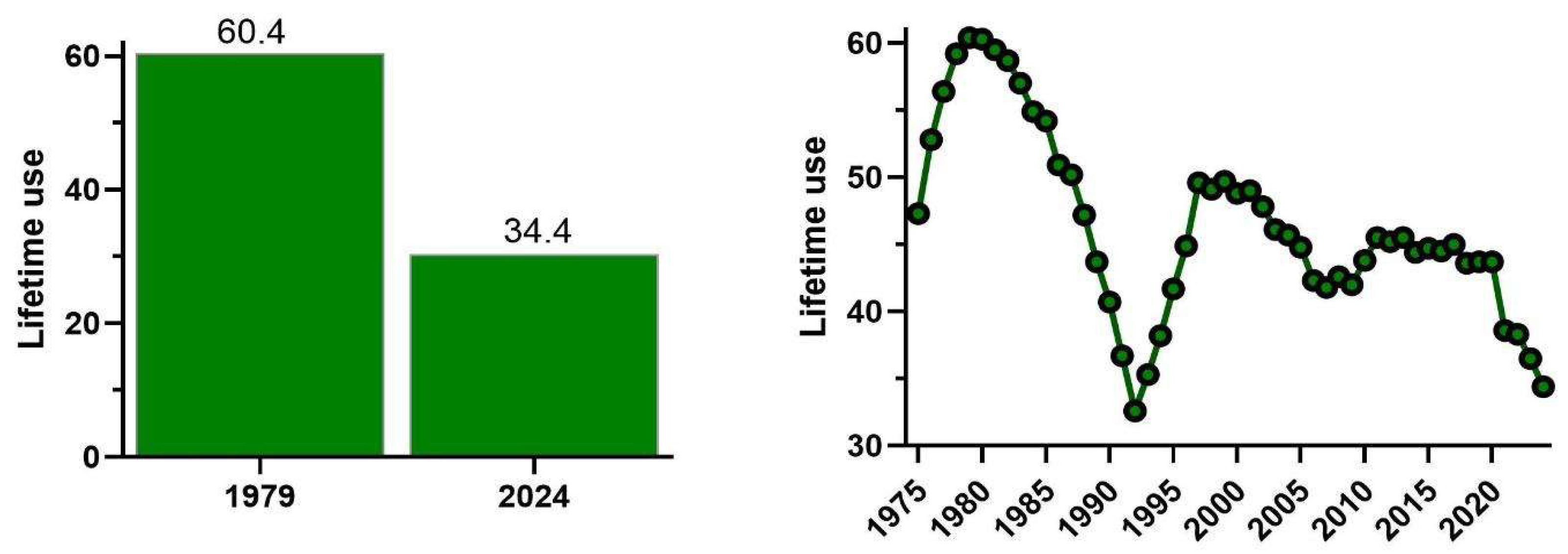
The regular use of marijuana has undergone tremendous changes over the past-four-decades. According to a nationally representative survey of high-school seniors, lifetime use peaked in 1979, plummeted in the early 1990s, and is currently at record low levels (Figure 2). With over a quarter of the US population reporting the use of cannabis, the prevalence of use by sex was noted to be similar (60). In a parallel study assessing cannabis use among high school students, approximately 54% of the surveyed individuals self-identified as female and 46% as male (63). Similar ratios can be seen in the international arena as well, with most of the Canadian provinces following a similar male-to-female user ratio in user-reported data (64). No causative evidence explaining the difference in the user-sex ratio was found; however, it is assumed to be the product of social constructs and parameters that extend beyond the scope of this research (64-67). The impacts of cannabis usage and legalization and the information necessary for effective policy and treatment need more exploration and analysis of interconnections between components of sex and gender in cannabis research (68).
Cannabis and PTSD Symptomatology. Cannabis has emerged as a prospective treatment for various psychiatric disorders. This alternative approach particularly appeals to specific demographics, such as veterans and trauma survivors seeking relief from intrusion symptoms associated with PTSD (12). The availability of medical cannabis programs further drives interest, while compositional differences among strains, modes of administration, and regulatory challenges pose slight difficulties in efficacy and targeted treatment for some patients (55). Hyperarousal and anxiety are common in people with PTSD, manifesting in symptoms including intrusive thoughts, nightmares, and heightened startle reactions. Due to cannabinoids like THC promoting relaxation and reduced anxiety, some people with PTSD have reported using cannabis to relieve these symptoms temporarily (15, 69). While some people may benefit from THC, others may find it worsens their anxiety (70). Most of THC’s euphoric effects and possible medical advantages come from binding to CB1 receptors in the brain and central nervous system. THC’s impact on the brain’s reward and emotional processing pathways may also have a short-term calming effect, making it helpful in dealing with stress and anxiety (70). Cannabis has been studied and debated for its possible advantages in treating several medical problems, including some of the symptoms of PTSD. In a 32-month-long randomized experiment, participating individuals were asked to self-identify which PTSD symptoms they were experiencing while also self-reporting changes in symptom severity before and after inhalation of medical marijuana (33,70). In attempts to establish long-term effects on baseline symptomatology, there were no found effects on long-term baseline symptoms, indicating no pronounced long-term effects of treatment (70). There was over 90% reduction of symptoms across the board in the short-term analysis, but over time, the original baseline remained unchanged (42). The complicated and ever-changing issue of cannabis’ effect on PTSD symptoms has attracted much attention from academics and therapists. Therefore, the correlation between cannabis and PTSD symptomatology is complex and not entirely understood, despite certain studies showing that marijuana may have therapeutic benefits on some PTSD symptoms (71). With a >90% reduction in all symptoms being significant, there was an unreported, yet comparably small, percentage of individuals who experienced worsened symptoms, demonstrating that cannabis is not a universal treatment option for every patient suffering from PTSD (23,70,72). A balanced assessment of benefits and risks and continued scientific investigation is essential for responsibly integrating cannabis into PTSD treatment regimens.
Demographics. Cannabis has garnered attention as a potential remedy for PTSD, especially within specific demographics (73). Military veterans and individuals with trauma backgrounds appear more prone to cannabis-derived approaches due to their perceived effectiveness in easing PTSD symptoms (74). This pattern is heightened in three-quarters of the 37 total U.S. population areas in which medical cannabis programs exist legally (56). Preferences for cannabis strains, administration methods, and dosage specific to each demographic bring about intricacies in scrutinizing usage patterns. Understanding these demographics and their inclinations is pivotal for honing treatment strategies and customizing interventions (75). Thorough research into the interplay between demographics, effects of cannabis, and management of PTSD symptoms is indispensable for responsibly harnessing the potential of cannabis-based therapies.
Future Dictations and Treatments
The realm of PTSD treatment is shifting toward innovative approaches involving marijuana. Research endeavors are crucial to unlocking the complete potential of cannabis-centered therapies. Investigating the entourage impact, which exploits the harmonious action of marijuana compounds, shows potential for enhancing treatment outcomes (4). Progressions in delivery methods, like vaporization and transdermal patches, provide chances for accurate dosing and decreased harm. Substantial clinical trials, long-term studies, and analyses of real-world evidence are essential to establish the safety and effectiveness of marijuana for PTSD treatment (11). Ethical considerations and collaborations among various disciplines will shape the responsible incorporation of marijuana therapies, enhancing PTSD treatment choices.
Improvements in Research and Treatment. The study of cannabis’ therapeutic potential in treating PTSD is a dynamic and intricate area of study. While findings have been encouraging across several studies, further work is needed to overcome many limitations (15, 17). The National Academy of Medicine rates the quality of evidence of cannabis as a PTSD therapeutic as only moderate/limited (12). Much of the research on cannabis and PTSD depends solely on self-reporting and observational data, both of which have inherent limitations in their degree of reliability (65). Well-designed, double-masked, placebo-controlled clinical trials should be prioritized in future research to produce more reliable data. Cannabinoids in cannabis, such as THC and CBD, have varying effects based on their concentrations and other factors, such as dosage and strain (67). More research is needed to determine the most effective doses and strains, or formulations, for treating overall PTSD symptomatology.
Expanding on Current Research. There are several effective methods for advancing and expanding upon studies on PTSD therapy. Researchers should broaden their focus to include people of a wide range of ages, sexes, races, and sexual orientations, as well as those who have experienced varying degrees of trauma. This will help guarantee that a broad variety of people will benefit from therapies. Longitudinal studies of PTSD therapies’ effectiveness and safety are needed for this purpose. Researchers may monitor patients over time to learn about recurrence and the onset of new symptoms. Evaluating the relative efficacy of various treatments for PTSD is the goal of comparative effectiveness research (68,76). This information may be used to create individualized treatment strategies based on examining biomarkers or other potential determinants of therapy response to tailor individual care. Individuals may then be matched with the most effective therapies based on their genetic, neurological, or psychological characteristics (12,68). To improve and build upon cannabis research, it is necessary to gain financial support from public health, private companies, universities, philanthropic organizations, and more in order to develop a complete understanding and evidence base of the health effects of cannabis use (12).
Statistical Proof of Effect. Strict scientific research and well-designed clinical studies are needed to provide statistical evidence of cannabis’ usefulness for certain medical diseases, such as its potential advantages for symptoms linked to PTSD. While preliminary research postulated that cannabis may have medicinal applications, it is crucial to note that further study is needed and that results may vary (70,72). Ultimately, the scientific community will look to the accumulated data from high-quality research to determine whether or not cannabis is an effective therapy. To further understand the possible advantages and limits of cannabis for people with PTSD, additional trials, systematic reviews, and meta-analyses are necessary.
Limitations
Many challenges are faced when performing research with cannabis or cannabinoids, which limits the studies being performed (77). Those wishing to conduct research must fill out various applications to the U.S. Food and Drug Administration (FDA), National Institute on Drug Abuse (NIDA), and U.S. Drug Enforcement Administration (DEA), and depending on state regulations, additional approval may be required from a state board of medical examiners in order for the study to take place (77). In addition to a rather in-depth application process, obtaining the supply of cannabis must be done strictly through NIDA when being used for research. NIDA has a contract with the University of Mississippi as their only cannabis grower and supplier for research purposes. The University of Mississippi provides various levels of potency for NIDA, but it is difficult for this single facility to produce in such abundance and replicate potency for dispensaries (77). Furthermore, issues with funding place considerable limitations on cannabis research because of the negative light it is often shown in and the restrictions still placed by many state governments (77). We are cautiously optimistic that having two presidential administrations remove marijuana from Schedule I will be a key development.
Conclusion
The investigation into marijuana as a magic bullet treatment for PTSD represents a noteworthy progression in the treatment of psychiatric disorders. The constraints of current pharmaceutical interventions highlight the necessity for innovative approaches. Marijuana presents a promising pathway that can address genetic, epigenetic, and symptom-related facets of PTSD while mitigating the therapeutic lag demonstrated by traditional therapeutic options. Nonetheless, further exploration is vital to define optimal dosages, varieties, and enduring effects. Ethical contemplations, regulatory structures, and rigorous scientific examinations are indispensable as therapies involving marijuana advance. Despite persistent challenges, the evolving comprehension of marijuana and well-crafted studies harbor the potential to transform PTSD treatment and enhance the well-being of those impacted by this incapacitating disorder. More study is required to determine which people could benefit most from cannabis-based therapy and how exactly cannabinoids alter PTSD symptoms. Although cannabis has shown promise as an adjunct therapy for certain people with PTSD, its usage should be treated carefully due to the lack of knowledge about its effects and associated hazards. Besides, it is plausible and perhaps sensible to assume that as legislation swings toward legalizing marijuana, its usage will grow, and, by implication, the number of people who will experience adverse health effects may increase.
Institutional Review Board Statement
Not applicable.
Informed Consent Statement
Not applicable.
Disclosures
BJP’s research has been generously supported by the Geisinger Academic Clinical Research Center (01, 03, 05). The other authors have no relevant disclosures.
References
- American Psychiatric Association. Posttraumatic Stress Disorder. In Diagnostic And Statistical Manual Of Mental Disorders. 5th Edition, Text Revision (DSM-5-TR).; American Psychiatric Association Publishing: Washington, 2022; pp. 455–470. [Google Scholar]
- First, M.B.; Clarke, D.E.; Yousif, L.; Eng, A.M.; Gogtay, N.; Appelbaum, P.S. DSM-5-TR: Rationale, process, and overview of changes. Psychiatr. Serv. 2023, 74(8), 869–875. [Google Scholar] [CrossRef]
- Hoge, C.; Riviere, L.; Wilk, J.; Bliese, P.; Thomas, J. The prevalence of post-traumatic stress disorder (PTSD) in US combat soldiers: a head-to-head comparison of DSM-5 versus DSM-IV-TR symptom criteria with the PTSD checklist. Lancet Psychiatry 2014, 1(4), 269–77. [Google Scholar] [CrossRef]
- Howie, H.; Rijal, C.M.; Ressler, K.J. A review of epigenetic contributions to post-traumatic stress disorder. Dialogues Clin. Neurosci. 2019, 21(4), 417–28. [Google Scholar] [CrossRef]
- Rice, L.J.; Cannon, L.; Dadlani, N.; Cheung, M.M.; Einfeld, S.L.; Efron, D.; et al. Efficacy of cannabinoids in neurodevelopmental and neuropsychiatric disorders among children and adolescents: A systematic review. In Eur Child AdolesPsychiatry; 2023. [Google Scholar] [CrossRef]
- Davis, L.L.; Schein, J.; Cloutier, M.; Gagnon-Sanschagrin, P.; Maitland, J.; Urganus, A.; et al. The economic burden of posttraumatic stress disorder in the United States from a societal perspective. J. Clin. Psychiatry 2022, 83(3), 21m14116. [Google Scholar] [CrossRef] [PubMed]
- Schrader, C.; Ross, A. A review of PTSD and current treatment strategies. Mo. Med. 2021, 118(6), 546–551. [Google Scholar] [PubMed]
- Stein, D.J.; Shoptaw, S.J.; Vigo, D.V.; Lund, C.; Cuijpers, P.; Bantjes, J.; et al. Psychiatric diagnosis and treatment in the 21st century: Paradigm shifts versus incremental integration. World Psychiatry 2022, 21(3), 393–414. [Google Scholar] [CrossRef]
- Daré, L.O.; Bruand, P.-E.; Gérard, D.; Marin, B.; Lameyre, V.; Boumédiène, F.; et al. Co-morbidities of mental disorders and chronic physical diseases in developing and emerging countries: A meta-analysis. BMC Public Health 2019, 19(1). [Google Scholar] [CrossRef] [PubMed]
- Edinoff, A.N.; Akuly, H.A.; Hanna, T.A.; Ochoa, C.O.; Patti, S.J.; Ghaffar, Y.A.; et al. Selective serotonin reuptake inhibitors and adverse effects: A narrative review. Neurol. Int. 2021, 13(3), 387–401. [Google Scholar] [CrossRef]
- Lowe, D.J.; Sasiadek, J.D.; Coles, A.S.; George, T.P. Cannabis and mental illness: A review. Eur. Arch. Psychiatry Clin. Neurosci. 2019, 269(1), 107–120. [Google Scholar] [CrossRef]
- National Academies of Sciences; Engineering; and Medicine. The Health Effects of Cannabis and Cannabinoids: The Current State of Evidence and Recommendations for Research; The National Academies Press: Washington, DC, 2017. [Google Scholar] [CrossRef]
- Chayasirisobhon, S. Mechanisms of action and pharmacokinetics of cannabis. Perm. J. 2021, 25(1), 1–3. [Google Scholar] [CrossRef]
- Papaseit, E.; Pérez-Mañá, C.; Pérez-Acevedo, A.P.; Hladun, O.; Torres-Moreno, M.C.; Muga, R.; et al. Cannabinoids: From pot to lab. Int. J. Med. Sci. 2018, 15(12), 1286–1295. [Google Scholar] [CrossRef]
- Orsolini, L.; Chiappini, S.; Volpe, U.; De Berardis, D.; Latini, R.; Duccio Papanti, G.; et al. Use of medicinal cannabis and synthetic cannabinoids in post-traumatic stress disorder (PTSD): A systematic review. Medicina 2019, 55(9), 525. [Google Scholar] [CrossRef] [PubMed]
- García-Gutiérrez, M.S.; Navarrete, F.; Gasparyan, A.; Austrich-Olivares, A.; Sala, F.; Manzanares, J. Cannabidiol: A potential new alternative for the treatment of anxiety, depression, and psychotic disorders. Biomolecules 2020, 10(11), 1575. [Google Scholar] [CrossRef]
- O’Neil, M.E.; Nugent, S.M.; Morasco, B.J.; Freeman, M.; Low, A.; Kondo, K.; et al. Benefits and harms of plant-based cannabis for posttraumatic stress disorder. Ann. Intern Med. 2017, 167(5), 332–340. [Google Scholar] [CrossRef]
- Devinsky, O.; Cilio, M.R.; Cross, H.; Fernandez-Ruiz, J.; French, J.; Hill, C.; et al. Cannabidiol: Pharmacology and potential therapeutic role in epilepsy and other neuropsychiatric disorders. Epilepsia 2014, 55(6), 791–802. [Google Scholar] [CrossRef]
- Botsford, S.L.; Yang, S.; George, T.P. Cannabis and cannabinoids in mood and anxiety disorders: Impact on illness onset and course, and assessment of therapeutic potential. Am. J. Addict 2020, 29(1), 9–26. [Google Scholar] [CrossRef]
- Chitrala, K.N.; Nagarkatti, P.; Nagarkatti, M. Computational analysis of deleterious single nucleotide polymorphisms in catechol O-methyltransferase conferring risk to post-traumatic stress disorder. J. Psychiatr. Res. 2021, 138, 207–18. [Google Scholar] [CrossRef]
- Compean, E.; Hamner, M. Posttraumatic stress disorder with secondary psychotic features (PTSD-SP): Diagnostic and treatment challenges. Prog. Neuropsychopharmacol. Biol. Psychiatry 2019, 88, 265–275. [Google Scholar] [CrossRef]
- Parker, L.A. Cannabinoids and the brain; The MIT Press: Massachusetts, 2018. [Google Scholar]
- Lovelace, J.W.; Corches, A.; Vieira, P.A.; Hiroto, A.S.; Mackie, K.; Korzus, E. An animal model of female adolescent cannabinoid exposure elicits a long-lasting deficit in presynaptic long-term plasticity. Neuropharmacology 2015, 99, 242–255. [Google Scholar] [CrossRef] [PubMed]
- Hill, M. Perspective: Be clear about the real risks. Nature 2015, 525(7570), S14. [Google Scholar] [CrossRef] [PubMed]
- Zohar, J.; Amital, D.; Cropp, H.D.; Cohen-Rappaport, G.; Zinger, Y.; Sasson, Y. Update on the epidemiology, diagnosis, and treatment of posttraumatic stress disorder. Dialogues Clin. Neurosci. 2022, 2(1), 37–43. [Google Scholar] [CrossRef]
- Andrade, C. Internal, external, and ecological validity in research design, conduct, and evaluation. Indian J. Psychol. Med. 2018, 40(5), 498–499. [Google Scholar] [CrossRef]
- Atwoli, L.; Stein, D.J.; Koenen, K.C.; McLaughlin, K.A. Epidemiology of posttraumatic stress disorder: Prevalence, correlates and consequences. Curr. Opin. Psychiatry 2015, 28(4), 307–11. [Google Scholar] [CrossRef]
- Koenen, K.C.; Ratanatharathorn, A.; Ng, L.; McLaughlin, K.A.; Bromet, E.J.; Stein, D.J.; Karam, E.G.; Meron Ruscio, A.; Benjet, C.; Scott, K.; Atwoli, L.; Petukhova, M.; Lim, C.C.W.; Aguilar-Gaxiola, S.; Al-Hamzawi, A.; Alonso, J.; Bunting, B.; Ciutan, M.; de Girolamo, G.; Degenhardt, L.; Gureje, O.; Haro, J.M.; Huang, Y.; Kawakami, N.; Lee, S.; Navarro-Mateu, F.; Pennell, B.E.; Piazza, M.; Sampson, N.; Ten Have, M.; Torres, Y.; Viana, M.C.; Williams, D.; Xavier, M.; Kessler, R.C. Posttraumatic stress disorder in the World Mental Health Surveys. Psychol. Med. 2017, 47(13), 2260–2274. [Google Scholar] [CrossRef] [PubMed]
- Breslau, N.; Kessler, R.C.; Chilcoat, H.D.; Schultz, L.R.; Davis, G.C.; Andreski, P. Trauma and posttraumatic stress disorder in the community: the 1996 Detroit Area Survey of Trauma. Arch. Gen. Psychiatry. 1998, 55, 626–632. [Google Scholar] [CrossRef] [PubMed]
- Kessler, R.C.; Sonnega, A.; Bromet, E.; Hughes, M.; Nelson, C.B. Post-traumatic stress disorder in the National Comorbidity Survey. Arch. Gen. Psychiatry. 1995, 52, 1048–1060. [Google Scholar] [CrossRef]
- Andersen, H.S. The epidemiology of post-traumatic stress disorders. Ugeskr. Laeger. 1998, 160, 7408–7413. [Google Scholar]
- Sareen, J. Posttraumatic stress disorder in adults: Impact, comorbidity, risk factors, and treatment. Can. J. Psychiatry 2014, 59(9), 460–467. [Google Scholar] [CrossRef]
- Bonn-Miller, M.O.; Sisley, S.; Riggs, P.; Yazar-Klonsinski, B.; Wang, J.B.; Loflin, M.J.E.; et al. The short-term impact of 3 smoked cannabis preparations versus placebo on PTSD symptoms: A randomized cross-over clinical trial. PLoS ONE 2021, 16(3), e0246990. [Google Scholar] [CrossRef] [PubMed]
- Lohoff, F.W. Overview of the genetics of major depressive disorder. Curr. Psychiatry Rep. 2010, 12(6), 539–546. [Google Scholar] [CrossRef]
- United States Air Force. PTSD Risk Factors. Available online: https://www.airforcemedicine.af.mil/Resources/Post-Traumatic-Stress-Disorder/PTSD-Risk-Factors/.
- Mureșanu, I.A.; Grad, D.A.; Mureșanu, D.F.; Dobran, S.-A.; Hapca, E.; Strilciuc, S.; et al. Evaluation of post-traumatic stress disorder (PTSD) and related comorbidities in clinical studies. J. Med. Life 2022, 15(4), 436–442. [Google Scholar] [CrossRef] [PubMed]
- Bonomi, R.E.; Girgenti, M.; Krystal, J.H.; Cosgrove, K.P. A role for histone deacetylases in the biology and treatment of post-traumatic stress disorder: What do we know and where do we go from here? Complex Psychiatry 2022, 8(1-2), 13–27. [Google Scholar] [CrossRef]
- Ozbay, F.; Johnson, D.C.; Dimoulas, E.; Morgan, C.A.; Charney, D.; Southwick, S. Social Support and resilience to stress: From neurobiology to clinical practice. Psychiatry (Edgmont) 2007, 4(5), 35–40. [Google Scholar] [PubMed]
- Montoya, I.D.; Weiss, S.R.B. Cannabis use disorders; Springer: Cham, Switzerland, 2019. [Google Scholar]
- Sartor, C.E.; Grant, J.D.; Lynskey, M.T.; et al. Common heritable contributions to low-risk trauma, high-risk trauma, Posttraumatic Stress Disorder, and Major Depression. Arch. Gen. Psychiatry. 2012, 69(3), 293–299. [Google Scholar] [CrossRef]
- Youssef, N.A. Potential societal and cultural implications of transgenerational epigenetic methylation of trauma and PTSD: Pathology or resilience? Yale J. Biol. Med. 2022, 95(1), 171–174. [Google Scholar]
- Karanikas, E.; Daskalakis, N.P.; Agorastos, A. Oxidative dysregulation in early life stress and Posttraumatic Stress Disorder: A comprehensive review. Brain Sci. 2021, 11(6), 723. [Google Scholar] [CrossRef]
- Vecsey, C.G.; Hawk, J.D.; Lattal, K.M.; Stein, J.M.; Fabian, S.A.; Attner, M.A.; Cabrera, S.M.; McDonough, C.B.; Brindle, P.K.; Abel, T.; Wood, M.A. Histone deacetylase inhibitors enhance memory and synaptic plasticity via CREB:CBP-dependent transcriptional activation. J. Neurosci. 2007, 27(23), 6128–40. [Google Scholar] [CrossRef]
- Koppel, I.; Timmusk, T. Differential regulation of Bdnf expression in cortical neurons by class-selective histone deacetylase inhibitors. Neuropharmacology 2013, 75, 106–15. [Google Scholar] [CrossRef]
- Morris, M.J.; Mahgoub, M.; Na, E.S.; Pranav, H.; Monteggia, L.M. Loss of histone deacetylase 2 improves working memory and accelerates extinction learning. J. Neurosci. 2013, 33(15), 6401–11. [Google Scholar] [CrossRef] [PubMed]
- Erburu, M.; Muñoz-Cobo, I.; Domínguez-Andrés, J.; Beltran, E.; Suzuki, T.; Mai, A.; Valente, S.; Puerta, E.; Tordera, R.M. Chronic stress and antidepressant induced changes in Hdac5 and Sirt2 affect synaptic plasticity. Eur. Neuropsychopharmacol. 2015, 25(11), 2036–48. [Google Scholar] [CrossRef]
- Lisieski, M.J.; Eagle, A.L.; Conti, A.C.; Liberzon, I.; Perrine, S.A. Single-prolonged stress: A review of two decades of progress in a rodent model of Post-traumatic Stress Disorder. Front Psychiatry 2018, 9, 196. [Google Scholar] [CrossRef]
- McKee, K.A.; Hmidan, A.; Crocker, C.E.; Lam, R.W.; Meyer, J.H.; Crockford, D.; et al. Potential therapeutic benefits of cannabinoid products in adult psychiatric disorders: A systematic review and meta-analysis of randomized controlled trials. J. Psychiatr. Res. 2021, 140, 267–81. [Google Scholar] [CrossRef] [PubMed]
- Crocq, M.A. History of cannabis and the endocannabinoid system. Dialogues Clin. Neurosci. 2020, 22(3), 223–228. [Google Scholar] [CrossRef]
- Hussain, T.; Jeena, G.; Pitakbut, T.; Vasilev, N.; Kayser, O. Cannabis sativa research trends, challenges, and new-age perspectives. iScience 2021, 24(12), 103391. [Google Scholar] [CrossRef]
- Atakan, Z. Cannabis, a complex plant: Different compounds and different effects on individuals. Ther. Adv. Psychopharmacol. 2012, 2(6), 241–254. [Google Scholar] [CrossRef]
- De Briyne, N.; Holmes, D.; Sandler, I.; Stiles, E.; Szymanski, D.; Moody, S.; et al. Cannabis, cannabidiol oils and tetrahydrocannabinol- What do veterinarians need to know? Animals 2021, 11(3), 892. [Google Scholar] [CrossRef] [PubMed]
- Hasin, D. The epidemiology of cannabis use and cannabis use disorder. Marijuana Madness 2023, 31–42. [Google Scholar] [CrossRef]
- Keethakumar, A.; Mehra, V.M.; Khanlou, N.; Tamim, H. Cannabis use and patterns among middle and older aged Canadians prior to legalization: A sex-specific analysis of the Canadian Tobacco, Alcohol and Drugs Survey. BMC Public Health 2021, 21(1), 26. [Google Scholar] [CrossRef]
- Bostwick, J.M. Blurred boundaries: The therapeutics and politics of medical marijuana. Mayo Clin. Proc. 2012, 87(2), 172–186. [Google Scholar] [CrossRef]
- Stains, E.L.; Kennalley, A.L.; Tian, M.; Boehnke, K.F.; Kraus, C.K.; Piper, B.J. Medical Cannabis in the United States: Comparing 2017 and 2024 State Qualifying Conditions to the 2017 National Academies of Sciences Report. Mayo Clin. Proc. Innov. Qual. Outcomes 2025, 9(2), 100590. [Google Scholar] [CrossRef] [PubMed]
- Connor, J.P.; Stjepanović, D.; Le Foll, B.; Hoch, E.; Budney, A.J.; Hall, W.D. Cannabis use and cannabis use disorder. Nat. Rev. Dis. Prim. 2021, 7(1), 16. [Google Scholar] [CrossRef]
- Rothbaum, B. NIMH-funded researcher Dr. Barbara Rothbaum discusses post-traumatic stress disorder. U.S. Department of Health and Human Services. U.S. Department of Health and Human Services, 2021. Available online: https://www.nimh.nih.gov/news/media/2021/nimh-funded-researcher-dr-barbara-rothbaum-discusses-post-traumatic-stress-disorder.
- Hall, W.; Degenhardt, L. Adverse health effects of non-medical cannabis use. Lancet 2009, 374(9698), 1383–91. [Google Scholar] [CrossRef] [PubMed]
- Leung, J.; Chan, G.; Stjepanović, D.; Chung, J.Y.C.; Hall, W.; Hammond, D. Prevalence and self-reported reasons of cannabis use for medical purposes in USA and Canada. Psychopharmacology (Berl) 2022, 239(5), 1509–1519. [Google Scholar] [CrossRef]
- Piper, B.J.; Beals, M.L.; Abess, A.T.; Nichols, S.D.; Martin, M.W.; Cobb, C.M.; DeKeuster, R.M. Chronic pain patients’ perspectives of medical cannabis. Pain 2017, 158(7), 1373–1379. [Google Scholar] [CrossRef] [PubMed]
- Miech, R. A.; Johnston, L. D.; Patrick, M. E.; O’Malley, P. M. Monitoring the Future national survey results on drug use, 1975–2024: Overview and detailed results for secondary school students. In Monitoring the Future Monograph Series; Institute for Social Research, University of Michigan: Ann Arbor, MI, 2025. [Google Scholar]
- Peters, E.N.; Bae, D.; Barrington-Trimis, J.L.; Jarvis, B.P.; Leventhal, A.M. Prevalence and sociodemographic correlates of adolescent use and polyuse of combustible, vaporized, and edible cannabis products. JAMA Netw. Open. 2018, 1(5), e182765. [Google Scholar] [CrossRef] [PubMed]
- Wisco, B.E.; Marx, B.P.; Wolf, E.J.; Miller, M.W.; Southwick, S.M.; Pietrzak, R.H. Posttraumatic stress disorder in the US veteran population: Results from the National Health and Resilience in Veterans study. J. Clin. Psychiatry 2014, 75(12), 1338–13346. [Google Scholar] [CrossRef] [PubMed]
- Watkins, L.E.; Sprang, K.R.; Rothbaum, B.O. Treating PTSD: A review of evidence-based psychotherapy interventions. Front Behav. Neurosci. 2018, 12, 258. [Google Scholar] [CrossRef]
- Haney, M. Cannabis use and the endocannabinoid system: A clinical perspective. Am. J. Psychiatry 2022, 179(1), 21–25. [Google Scholar] [CrossRef]
- ElSohly, M.A.; Gul, W.; Walker, L.A. Pharmacokinetics and tolerability of Δ9-THC-hemisuccinate in a suppository formulation as an alternative to capsules for the systemic delivery of Δ9-THC. Med. Cannabis Cannabinoids 2018, 1(1), 44–53. [Google Scholar] [CrossRef]
- Groce, E. The health effects of cannabis and cannabinoids: The current state of evidence and recommendations for research. J. Med. Regul. 2018, 104(4), 32–32. [Google Scholar] [CrossRef]
- LaFrance, E.M.; Glodosky, N.C.; Bonn-Miller, M.; Cuttler, C. Short and long-term effects of cannabis on symptoms of post-traumatic stress disorder. J. Affect Disord. 2020, 274, 298–304. [Google Scholar] [CrossRef]
- Clary, K.; Habbal, M.; Smith, D.; Fratila, I. The green sheep: Exploring the perceived risks and benefits of cannabis among young military members and veterans. Cannabis 2021, 4(2), 31–46. [Google Scholar] [CrossRef]
- Abizaid, A.; Merali, Z.; Anisman, H. Cannabis: A potential efficacious intervention for PTSD or simply snake oil? J. Psychiatry Neurosci. 2019, 44(2), 75–78. [Google Scholar] [CrossRef]
- Greaves, L.; Hemsing, N. Sex and gender interactions on the use and impact of recreational cannabis. Int. J. Env. Res. Public Health 2020, 17(2), 509. [Google Scholar] [CrossRef]
- Becker, J.B.; McClellan, M.L.; Reed, B.G. Sex differences, gender and addiction. J. Neurosci. Res. 2017, 95(1–2), 136–147. [Google Scholar] [CrossRef]
- Sharpe, L.; Sinclair, J.; Kramer, A.; de Manincor, M.; Sarris, J. Cannabis, a cause for anxiety? A critical appraisal of the anxiogenic and anxiolytic properties. J. Transl. Med. 2020, 18(1), 374. [Google Scholar] [CrossRef]
- Bedard-Gilligan, M.; Lehinger, E.; Cornell-Maier, S.; Holloway, A.; Zoellner, L. Effects of Cannabis on PTSD recovery: Review of the literature and clinical insights. Curr. Addict Rep. 2022, 9(3), 203–216. [Google Scholar] [CrossRef]
- Cahill, S.P.; Lunn, S.E.; Diaz, P.; Page, J.E. Evaluation of patient reported safety and efficacy of cannabis from a survey of medical cannabis patients in Canada. Front Public Health 2021, 9, 626853. [Google Scholar] [CrossRef]
- Division, H. a. M., Practice, B. o. P. H. a. P. H., Agenda, C. o. t. H. E. o. M. A. E. R. a. R. (2017). The Health Effects of Cannabis and Cannabinoids: The Current State of Evidence and Recommendations for Research. United States: National Academies Press.
Figure 1.
Annual number of medical marijuana certifications in Pennsylvania (PA) from 2017 to 2025 for Post Traumatic Stress Disorder (PTSD), Opioid Use Disorder (OUD), Autism, and Multiple Sclerosis (MS) as reported by the Pennsylvania Department of Health.
Figure 1.
Annual number of medical marijuana certifications in Pennsylvania (PA) from 2017 to 2025 for Post Traumatic Stress Disorder (PTSD), Opioid Use Disorder (OUD), Autism, and Multiple Sclerosis (MS) as reported by the Pennsylvania Department of Health.
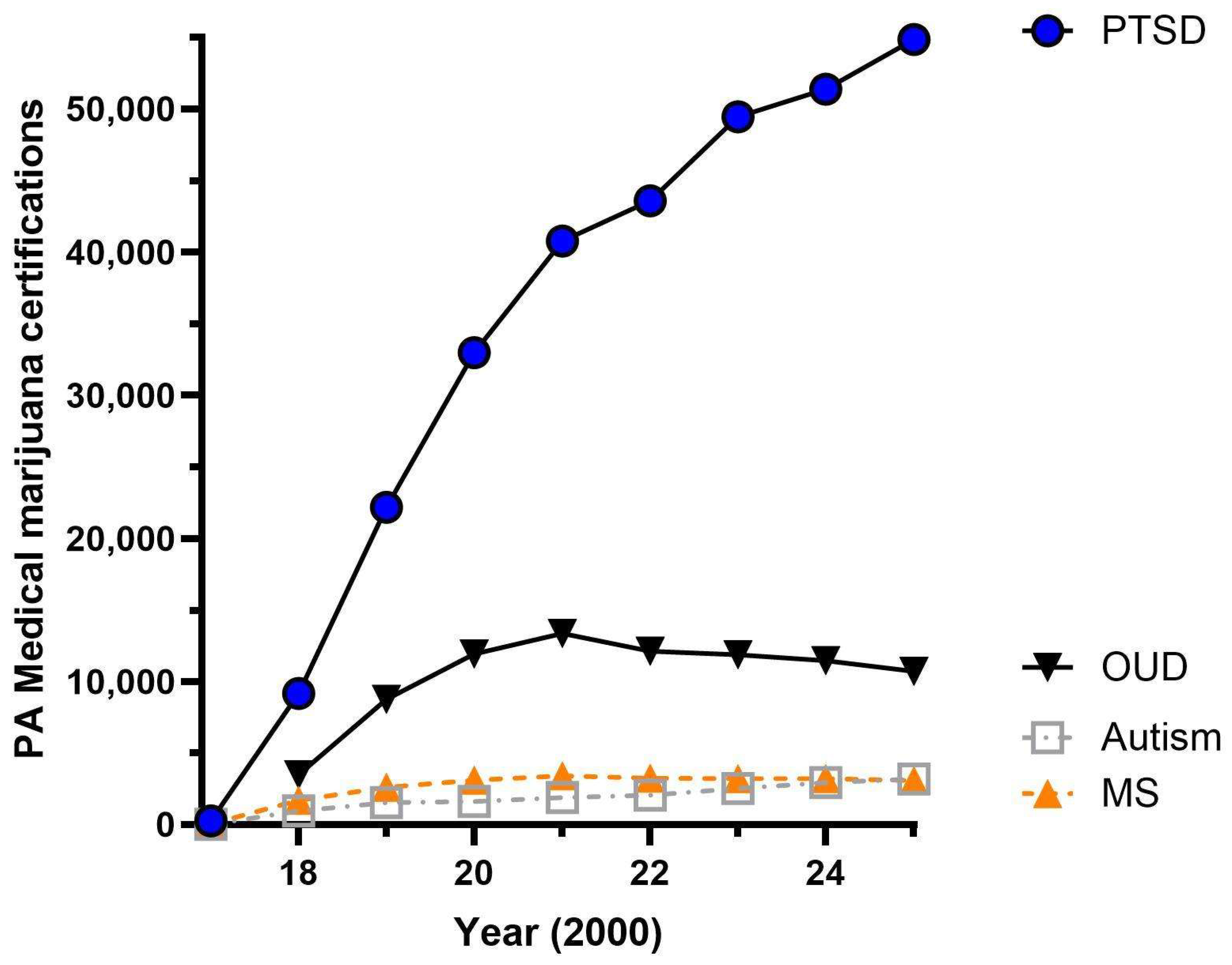
Figure 2.
Lifetime prevalence of marijuana use among high-school seniors according to the annual Monitoring the Future survey conducted by the Institute of Social Research. Lifetime use was at the second lowest levels in four-decades.
Figure 2.
Lifetime prevalence of marijuana use among high-school seniors according to the annual Monitoring the Future survey conducted by the Institute of Social Research. Lifetime use was at the second lowest levels in four-decades.
Disclaimer/Publisher’s Note: The statements, opinions and data contained in all publications are solely those of the individual author(s) and contributor(s) and not of MDPI and/or the editor(s). MDPI and/or the editor(s) disclaim responsibility for any injury to people or property resulting from any ideas, methods, instructions or products referred to in the content. |
© 2026 by the authors. Licensee MDPI, Basel, Switzerland. This article is an open access article distributed under the terms and conditions of the Creative Commons Attribution (CC BY) license (http://creativecommons.org/licenses/by/4.0/).
Copyright: This open access article is published under a Creative Commons CC BY 4.0 license, which permit the free download, distribution, and reuse, provided that the author and preprint are cited in any reuse.


