

Submitted:
30 May 2026
Posted:
02 June 2026
You are already at the latest version
Abstract
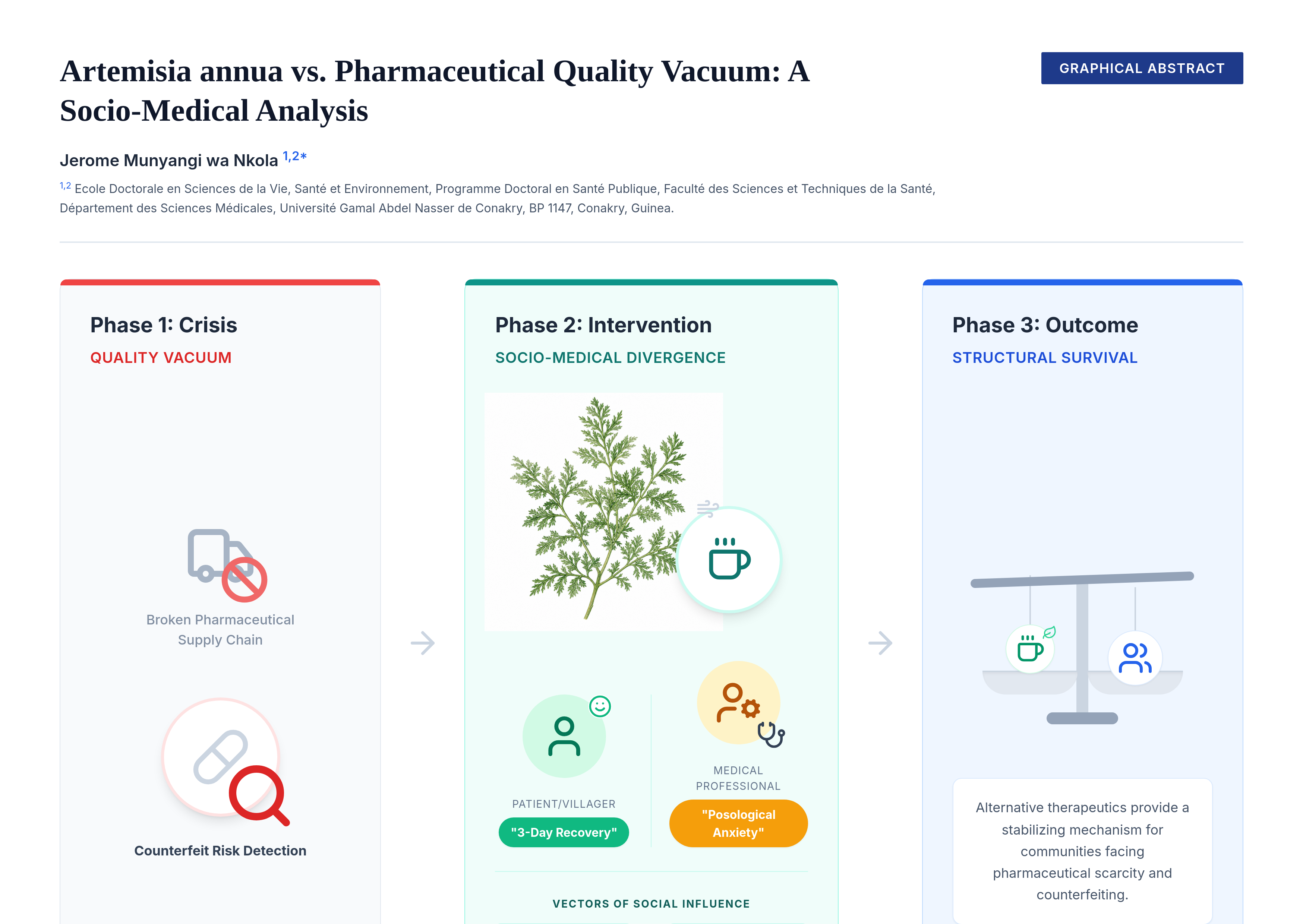
Background: Malaria remains a catastrophic public health crisis in the Democratic Republic of the Congo. In conflict-affected and isolated territories like the Maniema Province, access to Artemis-based Combination Therapies is restricted by a dual failure: chronic physical stockouts and a pervasive “lack of quality control” of substandard and falsified medications. This study investigated the social acceptability of Artemisia annua herbal tea as a strategy for a survival strategy under these systemic vulnerabilities in the Kalima Health Zone. Methods: This exploratory qualitative study used a socio-anthropological approach, structured around the Health Belief Model and the WHO Behavioral and Social Drivers framework. Purposive maximum variation sampling (N = 30) continued until thematic saturation was achieved. The cohort included healthcare providers, community end-users, and opinion leaders across five isolated health areas. Data were analyzed using thematic content analysis. Results: Findings revealed a profound epistemological friction between actors. Community end-users demonstrated high willingness to utilize the remedy, driven by its accessibility and a perceived three-day recovery timeline that bypassed the financial and quality barriers of the formal market. Conversely, healthcare providers expressed intense “posological anxieties” regarding the uncalibrated biomass used. Socio-behavioral practices were heavily mediated by socio-religious norms; while vital religious networks remain vital for validation, contemporary discourse is increasingly shaped by digital platforms that can propagate health misinformation. Consequently, a unanimous demand emerged for standardized pharmaceutical tablets to ensure clinical safety. Conclusion: This investigation does not validate clinical efficacy. It highlights that in resource-constrained conflict zones, structural barriers—including the threat of poor-quality synthetic drugs—override individual agency, transforming non-standardized phytotherapy into a tool of structural survival. Mitigating malaria mortality and resistance risks demands substantial state investment in the quality of formal supply chains and culturally grounded community engagement strategies.
Keywords:
malaria
; Artemisia annua
; health belief model
; behavioral and social drivers
; medical pluralism
; Democratic Republic of the Congo
1. Introduction
Malaria persists as one of the most significant global public health challenges. According to the 2023 World Health Organization report, there were an estimated 249 million cases and 608,000 deaths globally [1,2]. The WHO African Region continues to bear a disproportionate share of this burden, accounting for approximately 94% of all cases and 95% of malaria-related fatalities worldwide [2]. Within this endemic landscape, the Democratic Republic of the Congo is a major epicenter, contributing roughly 12% of the global malaria burden, a figure second only to Nigeria [2,3]. Despite sustained international funding and vector control initiatives, the epidemiological toll remains severe, particularly among vulnerable populations: children under five years of age represent approximately 76% of malaria-related deaths in the region.
This chronic health crisis is significantly compounded by macro-level structural and geopolitical vulnerabilities. The eastern and central-eastern provinces of the DRC have been ravaged by protracted armed conflicts, which have pushed the formal healthcare infrastructure toward collapse [4]. These instabilities frequently destabilize overland transportation routes, creating chronic disruptions in the pharmaceutical supply chain [5]. Consequently, peripheral health zones, such as those in the Maniema Province, often face critical shortages of essential biomedical countermeasures, including Artemisinin-based Combination Therapies [6,7].
However, the challenge is not limited to physical unavailability. A significant quality vacuum characterizes the local pharmaceutical market, where the prevalence of substandard and falsified antimalarials [8,9]. In the DRC, the circulation of medicines with insufficient active ingredients or non-compliant formulations—often sold in informal markets undermines clinical trust and compromises patient safety [10]. Within this context of structural survival, where official supply chains are broken and available drugs are of suspect quality, the use of Artemisia annua herbal tea has emerged as a localized and perceived as reliable alternative therapeutic approach [11].
From an epistemological and bioethical standpoint, a foundational distinction must be clearly established: this study is explicitly not a clinical or pharmacological validation of Artemisia annua herbal tea. ACTs remain the undisputed, globally recommended first-line treatment for malaria management [12]. Public health institutions emphasize the significant pharmacological risks associated with raw biomass utilization, as the WHO discourages its use due to the difficulty in standardizing active ingredient concentrations [13]. Delivering variable, sub-therapeutic doses of artemisinin creates intense selection pressure on Plasmodium falciparum, which is directly linked to the emergence of resistance markers, such as Kelch 13 () propeller mutations [14,15].
Rather than a clinical trial, this paper operates strictly as a socio-behavioral investigation of facts, beliefs, and human behaviors under systemic constraints. To decode how individuals navigate health choices when formal systems fail, this study utilizes an integrated theoretical framework combining the Extended Health Belief Model and the WHO Behavioral and Social Drivers approach[16,17]. While the HBM evaluates individual cognitive dimensions—such as perceived susceptibility the BeSD matrix tracks environmental practicalities, including supply chain failures and enclavement, which often act as structural impossibilities[16,17].
To date, there remains a critical gap in qualitative literature regarding how communities operationalize botanical resources when formal health systems are incapacitated[18,19]. To address this empirical void, this study investigates the perceptions and acceptability of Artemisia annua herbal tea within the enclaved health areas of the Kalima Health Zone. By triangulating the lived experiences of healthcare providers, end-users, and local leaders, this research aims to provide objective socio-behavioral evidence to guide national health policy and highlight the urgent structural interventions needed to secure pharmaceutical supply chains in the Maniema Province.
2. Materials and Methods
2.1. Study Design and Socio-Anthropological Approach
This study utilized an exploratory, descriptive qualitative design rooted in a socio-anthropological approach to health and illness. Qualitative methodology is particularly effective for investigating complex social phenomena within their natural settings, as it allows researchers to capture the nuances of human experience and the social drivers of behavior that quantitative metrics often overlook [20]. In the context of the Kalima Health Zone, a socio-anthropological lens was essential to operationalize medical pluralism not as a series of isolated choices, but as a socially negotiated process within a fragmented healthcare landscape. The design and reporting of this qualitative inquiry were conducted with methodological transparency and aimed for rigorous attainment of thematic saturation [21]. The 32-item COREQ checklist, detailing the research team’s reflexivity and the study’s integrity, is provided in Annex 4.
This framework acknowledges that in settings characterized by systemic vulnerability, therapeutic itineraries are influenced by local illness concepts and patterns of traditional treatment [22]. In the Maniema Province, these itineraries are further shaped by the “quality vacuum” in the pharmaceutical market, where the prevalence of substandard or falsified antimalarials erodes trust in formal biomedical products . Consequently, the adoption of alternative botanical resources is interpreted as a logical strategy of structural resilience and survival rather than an irrational cultural deviation . By anchoring the study in social anthropology, we explore how participants navigate health choices amidst macro-level constraints like armed conflict and geographical enclavement .
2.2. Conceptual Framework: The Integrated HBM-BeSD Matrix
To systematically analyze the multidimensional factors influencing the adoption of alternative therapeutic itineraries, this study utilized an integrated theoretical framework combining the Health Belief Model and the WHO Behavioral and Social Drivers approach. This integrated framework is an Extended Health Belief Model integrated with the Behavioral and Social Drivers matrix. This adaptation is crucial because, in the conflict-affected Kalima Health Zone, individual ‘perceived barriers’ are often dictated by structural impossibilities such as infrastructure decay and supply chain failures [4,5]. This approach allows for a granular evaluation of individual cognitive dimensions while capturing the broader social norms that dictate health behaviors in resource-constrained settings [23,24].The operationalization of the integrated HBM-BeSD framework, mapping each theoretical construct to specific inquiry probes and analytical coding nodes, is detailed in the Theoretical Alignment Matrix (see Annex 1). This matrix ensures the internal validity of the study by linking behavioral theories to the specific socio-cultural context of the Kalima Health Zone [11]
This integrated framework allowed the research team to categorize data into four operational axes, as detailed in Table 1 below. To ensure methodological transparency and rigor, the categorization and reporting of this study followed standardized qualitative research protocols, allowing for a systematic comparison of behavioral drivers [20]. A hybrid thematic analysis was employed: deductive codes were mapped to the HBM and BeSD constructs such as perceived susceptibility and structural practicalities to align the findings with global health belief models [17].
Simultaneously, an inductive coding process was used to capture the unique socio-anthropological nuances of the Kalima Health Zone, specifically the themes of ‘structural survival’ and medical pluralism [11]. This rigorous analytical process was supported by a simple, systematic method to assess and report thematic saturation, ensuring that the sample size was sufficient to reach conceptual depth within each axis [21]. By triangulating these codes, the framework captures the intersection between individual health beliefs and the macro-level ‘structural impossibilities’ inherent in the Congolese healthcare system [4,5].
To maintain methodological transparency and ease of navigation, this study uses a coordinated series of visual and tabular aids. While Figure 1 and Figure 2 visualize geographic barriers and the patient journey within the supply chain [5], Figure 3 illustrates the biochemical variability of active compounds in artisanal infusions compared to standardized treatments [14]. Furthermore, the qualitative data are organized into four operational matrices (Table 3 through 6). Specifically, Table 4 maps the intersection of individual consumer practices and environmental drivers within the Health Belief Model and the Behavioral and Social Drivers framework [11,17]

Table 1.
Integrated HBM-BeSD Conceptual Framework for the Assessment of Artemisia annua Acceptability.
Table 1.
Integrated HBM-BeSD Conceptual Framework for the Assessment of Artemisia annua Acceptability.
| Key Supporting Literature | Variables Investigated | Corresponding HBM/BeSD Constructs | Domain |
|---|---|---|---|
| [23,25] | Perception of malaria risk; perceived severity of complications (e.g., anemia). | Perceived Susceptibility & Severity; Cognitive Drivers | 1. Thinking and Feeling |
| [26,27] | Influence of peer networks and religious figures (e.g., pastors); cultural symbolism of native plants; impact of rumors. | Cues to Action; Social Norms | 2. Social Processes |
| [28,29] | Willingness to use infusions; perceived speed of recovery (e.g., 3-day versus 7-day cycles); anxiety regarding dosage and galenic form. | Perceived Benefits & Self-Efficacy; Intention | 3. Motivation |
| [30,31] | Structural barriers; pharmaceutical supply chain disruptions; geographical enclavement; armed conflict; financial accessibility of ACTs. | Perceived Barriers; Environmental Factors | 4. Practical Issues |
Legend: HBM: Health Belief Model; BeSD: Behavioral and Social Drivers; ACTs: Artemisinin-based Combination Therapies. This table organizes the variables used to develop the qualitative interview guides, ensuring a robust analysis of medical pluralism in the Kalima Health Zone.
Analytical Argumentation
By employing this integrated framework, the study moves beyond a simple description of ‘traditional beliefs’ and instead analyzes behavior as a response to multi-dimensional systemic failure. For instance, Practical Issues are not merely external barriers but are directly linked to the Thinking and Feeling of the community; when geographical isolation and conflict lead to chronic ACT stockouts [4,5,6], the perceived benefit of alternative botanical resources increases as a survival mechanism. Crucially, this systemic failure is exacerbated by a pervasive ‘quality vacuum’ within the formal and informal pharmaceutical sectors [8,9]. Beyond the physical absence of medications, the infiltration of substandard and falsified antimalarials which often contain non-compliant active ingredients or sub-therapeutic doses erodes public confidence in the safety of biomedical products[10]. In this context, the choice to use Artemisia annua herbal tea is a rational ‘push-factor’ response to both the scarcity and the perceived unreliability of the official drug market [11]. Similarly, the inclusion of Social Processes accounts for the significant normative weight that religious and traditional leaders hold in the Maniema Province, which can either accelerate or hinder the social acceptability of non-validated therapies under these constrained conditions [11,32].
2.3. Study Setting and Population
2.3.1. Study Setting and Context
The fieldwork was conducted across five purposively selected health areas (aires de santé) within the Kalima Health Zone, located in the Maniema Province of the Democratic Republic of the Congo: Bobela, Kakutya 1, Kakutya 2, Kinkungwa, and Lubile [11], chosen to reflect varying degrees of healthcare infrastructure, resource availability, and chronic geographical enclavement [4].
The Kalima Health Zone presents a unique intersection of geographical and structural barriers that dictate healthcare accessibility. As illustrated in Figure 1, the district is fragmented by dense forest barriers and the Ulindi River system, particularly isolating the southeastern health areas. This cartography highlights the strategic location of the five study sites (Bobela, Kakutya 1 and 2, Kinkungwa, and Lubile) relative to the central hub, providing a spatial rationale for the observed therapeutic behaviors.
Figure 1.
Strategic Map of Geographic and Structural Healthcare Access Barriers in the Kalima Health District.
Figure 1.
Strategic Map of Geographic and Structural Healthcare Access Barriers in the Kalima Health District.
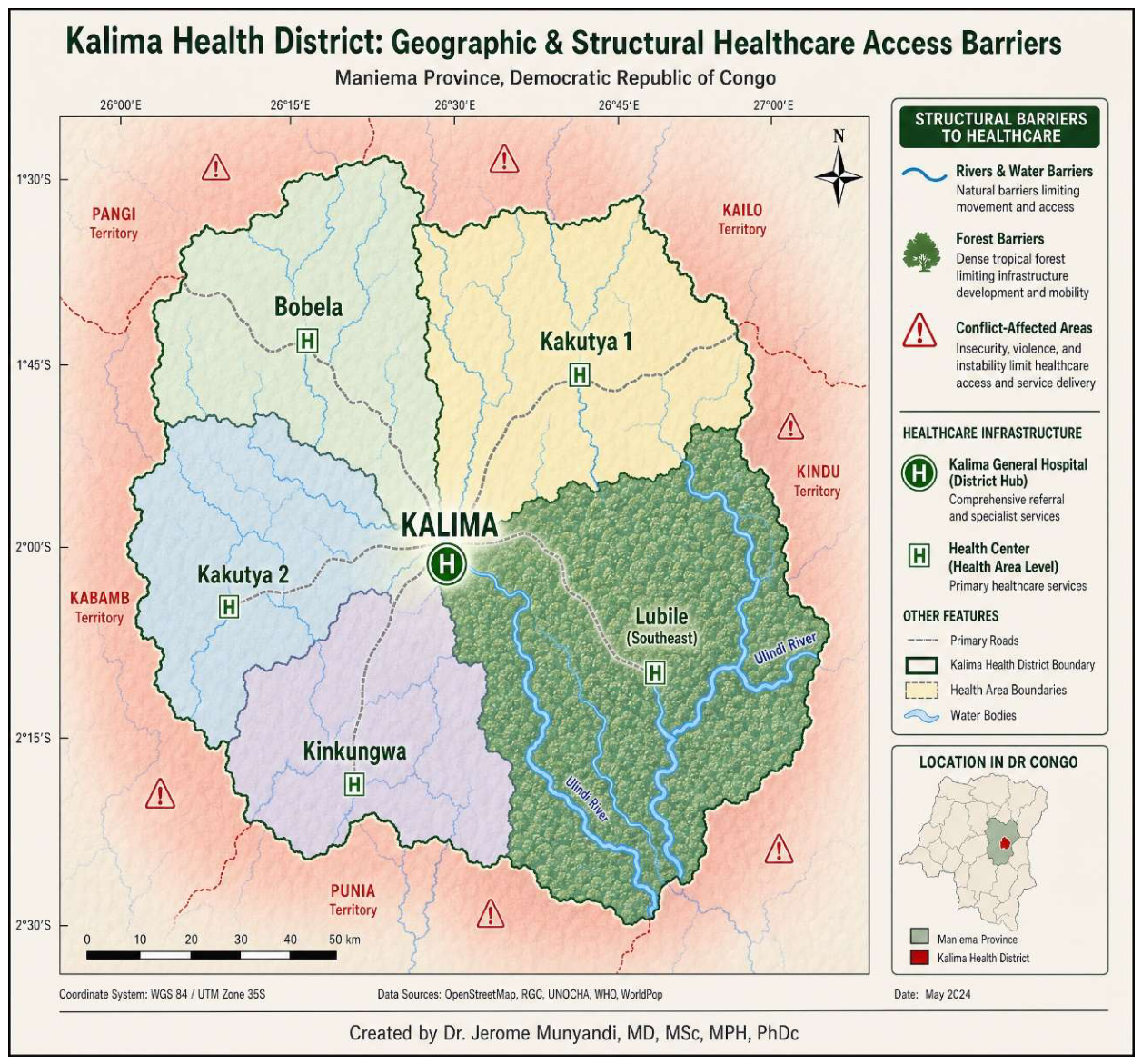
The map identifies the five health areas where qualitative data saturation was achieved [21]. Warning icons indicate conflict-affected zones that disrupt medical supply routes, leading to chronic stockouts of ACTs [4,5]. Beyond physical absence, these barriers facilitate a ‘quality vacuum’ characterized by the infiltration of substandard and falsified antimalarials into the informal market . The documented prevalence of non-compliant medicines in the DRC acts as a critical push-factor, driving enclaved populations toward locally cultivated Artemisia annua as a trusted and verifiable alternative for ‘structural survival’ . Source: Generated for this study based on administrative data from the Maniema Provincial Health Division.”
These communities are among the most remote in the province, characterized by severe socio-economic fragility, high poverty indices, and a local economy dominated by subsistence farming and informal artisanal mining [33,34]. The region’s landscape is profoundly shaped by macro-level structural constraints: recurrent armed conflicts in the eastern DRC frequently destabilize overland transportation, effectively isolating these health zones [4]. Such instability leads to a chronic disruption in the delivery of essential biomedical countermeasures from national distribution hubs, creating a critical backdrop for evaluating how populations operationalize alternative therapeutic itineraries during systemic pharmaceutical supply chain failures [35]. This systemic failure, however, extends beyond the mere physical absence of essential medicines. A profound ‘quality vacuum’ characterizes the pharmaceutical landscape in the DRC, where the prevalence of substandard and falsified antimalarials acts as a significant driver of medical pluralism [4,10]. As demonstrated by Mahano et al. (2021) in the neighboring South Kivu region, a high proportion of antimalarial drugs sold in informal markets fail to meet essential quality standards and often containing non-compliant levels of active pharmaceutical ingredients [8,9].
In this context of ‘structural survival,’ where the official supply chain is disrupted[5,6] and available commercial products are of suspect integrity[10,36], the domestic cultivation of Artemisia annua infusion emerges as a rational response. For the populations of Kalima, the botanical itinerary is not merely a default choice due to stockouts; it is a pragmatic strategy for therapeutic sovereignty in the face of a pharmaceutical market that fails to provide either reliability or safety [11]. Consequently, the lack of robust regulatory surveillance, highlighted by Tshilumba et al. in their analysis of falsified medicines, further pushes communities toward non-validated but locally managed herbal remedies[9,10].”
2.3.2. Study Population and Sampling Strategy
To capture the complexity of medical pluralism in this vulnerable setting, the study employed a maximum variation purposive sampling approach. This strategy and the subsequent reporting of findings strictly adhere to the Consolidated Criteria for Reporting Qualitative Research guidelines, ensuring methodological transparency and rigor in participant selection [20]. The sampling was designed to incorporate a broad range of perspectives across three functional Stakeholder Groups to facilitate data triangulation:
Community Witnesses and End-Users (n=11): Symptomatic patients, household managers, and legal guardians navigating treatment options during malaria episodes
Technical Biomedical Healthcare Providers (n=11): Physicians, head nurses, and midwives with at least six months of clinical experience in the Kalima Health Zone
Local Influence and Opinion Leaders (n=8): Traditional healers (tradipraticiens), plant vendors, and socio-religious figures (e.g., pastors) who shape normative health behaviors.
By triangulating these voices, the research mapped how different social strata navigate choices within a therapeutic landscape defined by the dual failures of physical stockouts and the “quality vacuum” of falsified medicines [4,10].
The final sample size of 30 key informants () was determined by the principle of thematic saturation [21]. Following the systematic method of Guest et al., data collection continued until the “information power” was sufficient and new interviews reached the base saturation point, where no new conceptual insights were emerging regarding the axes of “structural survival” or “practical issues” [17,21]. As detailed in Table 2, the cohort was equally distributed across the five chronically enclaved areas of Bobela, Kakutya 1, Kakutya 2, Kinkungwa, and Lubile (20% per site).
The inclusion criteria required a minimum residence of six months to ensure familiarity with local supply chain disruptions. Notably, 76.7% of participants had resided in the zone for over five years, providing deep contextual expertise. The purposive selection ensured that data reflected the lived realities of systemic vulnerability where formal pharmaceutical access is frequently compromised by both scarcity and poor product integrity [6,10]. Further details on reflexivity and methodological integrity are provided in the COREQ checklist in Annex 4.
Table 2.
Typology, sociodemographic characteristics, and geographic distribution of the informant sample ().
Table 2.
Typology, sociodemographic characteristics, and geographic distribution of the informant sample ().
| Percentage (%) | Frequency () | Characteristics |
|---|---|---|
| Stakeholder Group | ||
| 36.7% | 11 | Community Witnesses and End-Users |
| 36.7% | 11 | Technical Biomedical Healthcare Providers |
| 26.6% | 8 | Local Influence and Opinion Leaders |
| Geographic Distribution | ||
| 20.0% each | 6 each | Bobela, Kakutya 1 & 2, Kinkungwa, Lubile |
| Gender | ||
| 53.3% | 16 | Male |
| 46.7% | 14 | Female |
| Age Stratification | ||
| 16.7% | 5 | 19–29 years |
| 46.6% | 14 | 30–45 years |
| 36.7% | 11 | 46 years and above |
| Educational Attainment | ||
| 40.0% | 12 | Higher Education (Medical / University) |
| 46.7% | 14 | Secondary Education |
| 13.3% | 4 | Primary Education |
| Community Tenure | ||
| 23.3% | 7 | Less than 5 years |
| 76.7% | 23 | 5 years and above |
Notes: = total sample size; = frequency per category. The geographic distribution was rigorously balanced (20% per site) across the five enclaved health areas of Bobela, Kakutya 1 & 2, Kinkungwa, and Lubile to capture the logistical barriers and chronic stockouts documented in the region [5,6]. The final cohort size () was validated by the principle of thematic saturation based on the Guest et al.’s methodology [21], ensuring sufficient conceptual depth to analyze the use of Artemisia as a structural survival strategy against the “quality vacuum” of formal medicines [10]. This informant typology and selection process fulfill the transparency criteria of the COREQ guidelines for socio-anthropological public health research [20].
2.4. Data Collection and Analysis
2.4.1. Data Collection Instruments and Procedures
Data were collected through a triangulated qualitative approach consisting of semi-structured In-Depth Interviews and Focus Group Discussions (see Annex 2). This dual-method strategy was employed to capture both nuanced individual narratives and the broader collective social norms governing health-seeking behaviors [37]. The interview and discussion guides were systematically adapted from the WHO Behavioral and Social Drivers tools, ensuring that inquiries focused on actionable behavioral drivers such as “Practical Issues” and “Social Innocence” while respecting the specific socio-cultural context of the Maniema Province [17]. The instruments were pre-tested in the local context of Kalima to ensure cultural sensitivity and clarity in Swahili [22].
To ensure the trustworthiness and linguistic rigor of the data, all sessions were conducted in the local language or French. These discussions were audio-recorded with participant consent and subsequently translated and transcribed verbatim into French by bilingual research assistants. To minimize interpretive bias and ensure accuracy, the researchers implemented a back-translation protocol for key conceptual terms, and the primary investigator performed an independent verification of 20% of the transcripts against the original recordings [11,37].
Beyond individual informed consent, the study implemented a community engagement mechanism to navigate the complex social landscape of a conflict-affected zone [35]. Prior to data collection, the research aims were presented to and validated by the Maniema Provincial Health Authorities and the Kalima Health Zone Management Team, serving as a functional community advisory structure. This stakeholder feedback loop ensured that the research was perceived as a transparent public health initiative rather than an external intrusion, which is essential for establishing the trust required for valid socio-anthropological inquiry in Eastern DRC [5,35].
Written informed consent was systematically obtained from every participant using the standardized form provided in Annex 7. This procedure is not only a universal ethical mandate but also a cultural prerequisite for trust-building in the Maniema region, where past experiences with uncoordinated medical interventions have made populations wary of data collection [4,11]. By ensuring complete transparency regarding the academic and public health utilization of the narratives, the study maintained the high standard of ethical integrity necessary for high-quality qualitative research in vulnerable settings [37].
2.4.2. Thematic Data Analysis Strategy
The cleaned, anonymized transcripts were imported into NVivo qualitative data analysis software (version 12, QSR International) for systematic data management and multi-stage coding. To ensure maximum transparency and rigor, the study followed the entire 32-item COREQ checklist, with the full analysis process detailed in Annex 4 [20].
The analysis employed a hybrid inductive-deductive thematic approach. This methodology allowed for a recursive movement between raw textual data and conceptual refinement, as defined by Braun and Clarke’s reflexive thematic analysis [38]. While pure reflexive TA typically rejects predefined themes, this hybrid application utilized the integrated HBM-BeSD matrix as a deductive anchor to ensure public health relevance, while allowing “indigenous” patterns—such as the quest for therapeutic sovereignty—to emerge inductively from the narratives [17,38].
To ensure the “trustworthiness” of the findings, two investigators independently coded an initial subset of ten transcripts. Discrepancies were resolved through reflexivity sessions, resulting in a unified hierarchical coding tree. The deductive codes were structurally mapped against the core pillars of the WHO BeSD framework [17]:
Thinking and Feeling: Mapping malaria threat perceptions (Perceived Susceptibility/Severity) and the perceived benefits of specific recovery timelines [23,25].
Social Processes: Evaluating the normative influence of socio-religious leaders (e.g., pastors) and local illness concepts that categorize treatments as either “traditional/divine” or “modern” [22].
Motivation: Exploring the intersection of end-user willingness and provider hesitancy, particularly regarding self-efficacy and the risks of uncalibrated monotherapy [11].
Practical Issues: Tracking structural barriers, including the “quality vacuum” of falsified medicines, geographical enclavement, and supply chain failures during periods of conflict [4,5,10].
Concurrently, inductive codes emerged to capture unique lived experiences in the Maniema region that fell outside formal theoretical constructs, such as the social representation of the Artemisia plant as a symbol of local resilience [11].
2.4.3. Data Saturation and Sample Adequacy
To ensure the methodological rigor of the qualitative findings, data saturation was systematically monitored using the thematic saturation metric and the “New Information Threshold” approach [21]. The research team utilized a structured thematic grid (see Annex 5) to track the emergence of new codes in real-time during the fieldwork in the Kalima Health Zone [11].
Following the parameters established by Guest et al., the study achieved base saturation—defined as the point where the core thematic structure is established—within the first 18 to 20 interviews [21]. Functional saturation, particularly regarding the complex narratives of “structural survival” and the “quality vacuum” in enclaved areas like Lubile, was reached at the 25th interview [5,21]. At this stage, subsequent narratives regarding the logistical failures of the formal supply chain and the pragmatic adoption of Artemisia annua reached a point of conceptual redundancy [4,5].
To further strengthen the “information power” and trustworthiness of the study, 5 additional interviews were conducted beyond the saturation point to confirm that no new significant themes or deviant cases were emerging [21]. This resulted in a final cohort of 30 key informants (), providing a robust diversity of viewpoints across the three functional groups:
Biomedical Healthcare Providers ()
Community End-Users ()
Local Influence and Opinion Leaders ()
This sample size exceeds the minimum requirements for reaching saturation in relatively homogeneous populations and is sufficient to provide a high degree of confidence in the “Practical Issues” and “Social Processes” documented within the HBM-BeSD framework [17,21]. The equitable distribution of the sample across five health areas further ensures that the findings are representative of the varied experiences of geographical enclavement and pharmaceutical scarcity in the Maniema Province[39].
2.4.4. Data Processing and Anonymization
To maintain strict ethical compliance and confidentiality, a rigorous de-identification protocol was enforced prior to analysis. This process is particularly critical in the conflict-affected landscape of the Maniema Province, where the disclosure of identities could compromise the personal safety of healthcare providers or community leaders [35].
All personal names, specific institutional affiliations, and unique geographic landmarks were expunged from the transcripts during the verbatim transcription process[40]. Raw audio files were stored on password-protected, encrypted hardware with access restricted solely to the primary investigator. Following transcription and verification, the original recordings were deleted to prevent any potential identification through voice recognition[41,42].
Participants were assigned functional alphanumeric codes based on their respective strata to facilitate comparative analysis within the HBM-BeSD framework while ensuring anonymity[43]:
BHP-01 to BHP-11: This code identifies physicians, head nurses, and midwives who provided insights into the “Practical Issues” of the formal supply chain and the quality of ACTs [6,11].
CEU-01 to CEU-11: This code designates symptomatic patients and household managers whose narratives focus on the “Thinking and Feeling” and “Motivation” drivers regarding Artemisia consumption [17].
OIL-01 to OIL-08: This code identifies traditional healers, plant vendors, and socio-religious figures (e.g., pastors) who shape the normative “Social Processes” and acceptability of herbal therapies [11].
A master linking file, connecting these codes to the original informed consent forms, was stored in a separate, secure physical location from the de-identified digital transcripts. This separation of personally identifiable information from the analytical data ensures that the study maintains the highest standard of methodological integrity and participant protection required by the COREQ guidelines [20,22].
2.5. Ethical Considerations
In addition to formal institutional approval, administrative authorization was obtained from the Maniema Provincial Health Division and the Kalima Health Zone Central Office before fieldwork commenced [11]. Recognizing the complexities of conducting research in the conflict-affected landscape of Eastern DRC, the study integrated broader community engagement mechanisms beyond administrative permits [35]. This involved a consultative feedback loop with local health authorities and community leaders to ensure that the study’s focus on the “Structural Survival” challenges of the region was aligned with community needs and perceptions [4,35]. This local stakeholder validation proved essential for establishing the trust required for a reliable socio-anthropological inquiry in a setting where formal health delivery is frequently disrupted [5,35].
The informed consent process (see Annex 7) explicitly guaranteed the anonymity of all participants and their right to withdraw from the study at any time without negative consequences. To avoid undue influence and ensure that participation was purely voluntary, no financial compensation or material incentives were provided [11]. To preserve strict confidentiality, a rigorous de-identification protocol was enforced where all personally identifiable information, including specific institutional affiliations, was expunged from the analytical dataset [11].
Reflexivity was maintained throughout the study cycle. The principal investigator explicitly accounted for his dual role as a physician-researcher and public health advocate, a positionality that provided deep contextual insight but required careful management during data interpretation [11]. As specified in the COREQ checklist, the research team further safeguarded methodological integrity through independent verification of data to minimize interpretive bias and ensure that the narratives accurately reflect the lived experiences of the Maniema population[44].
3. Results
The qualitative findings utilize an integrated approach, drawing on health beliefs and broader behavioral and social drivers, which allows for a granular exploration of the social acceptability of Artemisia annua infusion [17]. To ensure methodological transparency and rigor, the reporting of these findings strictly adheres to the Consolidated Criteria for Reporting Qualitative Research guidelines [20].
The sample of 30 key informants () reached the threshold of thematic saturation according to Guest et al.’s methodology, with base saturation achieved at the 20th interview and conceptual redundancy confirmed by the 25th [21]. The qualitative findings are organized into four main themes, following the analytical structure predefined in the Theoretical Alignment Matrix (Annex 1). This alignment allows for a systematic comparison between perceived health beliefs and actual community practices in the Kalima Health Zone [11].
Table 3.
Theme 1 Analytical Structure – Hybrid HBM-BeSD Cognitive Matrix.
| Categories and Theoretical Mapping | Sub-Theme |
|---|---|
| • Cat 1: Public Familiarity (HBM Susceptibility / BeSD Thinking & Feeling) [17,45] • Cat 2: Plural Nature of Leaves (HBM Benefits / BeSD Thinking & Feeling) [11,22] |
3.1.1 Knowledge & Identification |
| • Cat 1: Clinical Efficacy & Health Outcomes (HBM Benefits / BeSD Thinking & Feeling) [17,45] • Cat 2: Socio-Economic Relief (HBM Barriers / BeSD Practical Issues) [4,5] |
3.1.2 Perceived Advantages & Qualities |
| • Cat 1: Posology & Lack of Training (HBM Severity / BeSD Motivation) [45] • Cat 2: Sorcery & Raw Biomass (HBM Barriers / BeSD Social Processes) [22] |
3.1.3 Barriers, Risks & Inconveniences |
| • Cat 1: Institutional Pathways & Projects (HBM Cues to Action / BeSD Social Processes) [17,46] • Cat 2: Peer-to-Peer, Religious & Digital Networks (HBM Self-Efficacy / BeSD Social Processes) [47] |
3.1.4 Information Channels & Vectors |
Legend for Table 3: HBM: Health Belief Model (seminal definition by Janz & Becker, 1984) [45]. BeSD: Behavioral and Social Drivers framework [17]. Thinking & Feeling: Cognitive domain encompassing perceived risk, susceptibility, and emotional responses to health threats [17,46]. Social Processes: Normative domain involving social pressure, group conformity, and information flow via peer, religious, or digital networks [17,47]. Practical Issues: Environmental/Structural domain tracking barriers like geographic isolation and pharmaceutical supply chain failures [4,5,10,17].
3.1. Theme 1: Knowledge and Perception of Artemisia Annua
This theme explores the cognitive landscape of the Kalima Health Zone, mapping how participants identify the plant and frame its therapeutic utility within their existing medical ecosystem.
3.1.1. Sub-Theme I: Knowledge and Identification of Artemisia Annua
The cognitive framing of the therapeutic agent is the first step in the “Thinking and Feeling” domain of the BeSD model . As established through the thematic saturation of the sample, the data reveal a deep-rooted familiarity with the plant, driven by historical pilot projects and the constant threat of malaria [11,21].
Category 1: Public Awareness and Familiarity with the Herbal Tea
In many isolated areas of Kalima, the plant is described as a “historical landmark,” a term emerging from narratives regarding the 2015–2018 community-based botanical projects that deeply integrated the plant into local memory. However, a geographical divergence remains; while familiarity is high in central health areas, participants in remote sectors like Lubile reported only “auditory” or unverified awareness.
“I know this herbal tea very well, this plant that has brought so much joy to our province.” (« Je connais bien cette tisane, cette plante qui a fait beaucoup de plaisir dans notre province. ») CEU-02, Kakutya 1 Health Area
“I know the plant in question very well; we often administer it or recommend it to our patients suffering from malaria.” (« Je connais ça très bien la plante en question, nous l’administrons ou la conseillons souvent à nos patients souffrant du paludisme. ») BHP-04, Kinkungwa Health Area
“Honestly, I haven’t seen it yet... I have only heard about it, yes.” (« Sincèrement, moi je n’ai pas encore vu ça... J’ai attendu ça, oui. ») CEU-09, Lubile Health Area
Category 2: Nature and Clinical Description of the Product
Within the Thinking and Feeling domain, Artemisia annua undergoes multiple categorizations. It is simultaneously perceived as a natural organism, a culturally validated remedy, and a serious clinical tool [11]. This cognitive evaluation demonstrates that community actors do not view the infusion as an archaic “folk” option, but rather as an empirically superior alternative to modern antimalarials. This perception of superiority is heavily influenced by the “Quality Vacuum” in the formal sector, where the high prevalence of substandard or falsified ACTs on the Bukavu and Kindu markets has eroded trust in synthetic pharmacology [6,9,10].
“Our traditional product is highly effective compared to the modern medicine.” (« Notre produit traditionnel est très efficace par rapport au produit moderne. ») OIL-05, Kinkungwa Health Area
“Its role is to treat illnesses, particularly malaria; it constitutes a serious therapeutic tool.” (« Son rôle est de traiter les maladies, particulièrement le paludisme; c’est un outil thérapeutique sérieux. ») BHP-02, Kinkungwa Health Area
3.1.2. Sub-Theme II: Perceived Advantages and Qualities of Artemisia Annua
Category 1: Clinical efficacy and health outcomes
The primary perceived benefit accelerating community acceptance is the infusion’s perceived impact on local epidemiological trends [45]. Informants established a strong causal link between collective consumption and a decline in hospital admissions. From a cognitive standpoint, the remedy’s validation is anchored in a structured temporal calculation: its perceived 3-day recovery timeline is viewed as superior to the standard 7-day clinical protocols[37].
While this rapid recovery is a powerful driver within the thinking and feeling domain, it highlights a critical tension between community perception and the scientific risks of uncalibrated monotherapy, which may alleviate symptoms rapidly without achieving complete parasite clearance [11].
“We felt that it has at least decreased the frequency of patients suffering from malaria.” (« On a senti que ça a au moins diminué les taux de fréquence des malades qui ont du paludisme. ») BHP-01, Bobela Health Area
“It takes a moderate amount of time because it achieves a cure in 3 days, whereas the modern clinic protocol requires 7 days.” (« Ça prend un temps qui est aussi modéré parce que c’est 3 jours au lieu de la clinique qui est de 7 jours. ») OIL-03, Kakutya 1 Health Area
Category 2: Economic relief and geographic accessibilityIn this category, the Perceived Benefits shift from clinical parameters to vital Structural Survival mechanisms, addressing BeSD Practical Issues [17]. In a geopolitical context shaped by chronic infrastructure fragility and poverty in Maniema, the zero-cost nature of the treatment acts as a critical socioeconomic safety net [48]. The plant removes structural financial barriers to biomedical care, providing territorial self-reliance for households facing chronic stockouts of essential medicines [6].
“The advantages include the fact that it is a free treatment as well. We provide it free of charge.” (« Les avantages, c’est un traitement gratuit aussi. On le fait gratuitement. ») OIL-01, Kinkungwa Health Area
“I personally emphasize the ease of geographical access. We can have the Artemisia right there, you can even take it with you to the remote countryside.” (« Moi je mets en avant la facilité d’accès géographique. On peut avoir l’Artemisia là, vous pouvez aller avec ça à la campagne. ») CEU-10, Lubile Health Area
3.1.4. Sub-Theme IV: Information Channels and Transmission Vectors
Theoretical Model Mapping:
WHO-BeSD Pillar: Social Processes [17].
Category 1: Institutional pathways, projects, and post-departure dynamics
The primary Cues to Action that historically triggered adoption were tied to institutional research configurations. However, this trust was project-dependent; the departure of external actors left a vacuum that transformed the institutional prompt into a self-managed local supply model[50].
“Its utilization was driven by an external influence... Comprenez que nous étions pris comme les agents de l’artémisia à partir de la France... and we worked closely on the ground with DG Rome.” (« Son utilisation a une influence étrangère... ») BHP-04, Kinkungwa Health Area
“Imagine that certain local physicians are involved as reliable resources. We were here with Doctor Papy.” (« Imaginez que certains médecins locaux sont impliqués comme des ressources fiables... ») CEU-01, Kakutya 1 Health Area
Category 2: Peer-to-peer transmission and marital healthcare sovereigntyBehavioral stabilization is rooted in individual Self-Efficacy [49] and interpersonal networks[51]. Following the cessation of institutional projects, health sovereignty shifted to the domestic sphere. Crucially, participants identified local religious networks and their increasing use of digital messaging platforms as powerful normative levers [47]. While religious leaders can drive mass adoption, the lack of clinical oversight on these platforms can also propagate uncalibrated health discourse [47].
“Personally, I have already used it extensively for myself, my family, and even for friends... I suggest the extreme importance of religious leaders... when we train pastors, it will heavily influence at least their followers.” (« Moi, je l’ai déjà beaucoup utilisé pour moi-même, ma famille... Je suggère l’importance des leaders religieux... ») OIL-01, Lubile Health Area
“We simply need to reinforce public sensitization... I believe it is highly appropriate to increase our information strategies to thoroughly sensitize the population.” (« Il faut renforcer seulement la sensibilisation... ») BHP-01, Bobela Health Area
3.2. Theme 2: Use and Practices Surrounding the Herbal Tea
This theme shifts the focus from cognitive perceptions to the operational reality of how Artemisia annua is utilized within the domestic and clinical spheres of the Kalima Health Zone. The data reflect a transition from abstract beliefs to concrete “Structural Survival” strategies, where the choice of therapy is dictated by immediate environmental stressors [5,11].
Table 4 operationalizes the HBM-BeSD matrix to demonstrate howPractical Issues specifically the dual challenges of geographical enclavement and the “quality vacuum” of the formal drug market directly dictate the modalities of preparation and the frequency of botanical use among Kalima populations [5].
Table 4.
Theme 2 Analytical Structure – The Operational HBM-BeSD Matrix.
| Categories and Theoretical Mapping | Sub-Theme |
|---|---|
| • Cat 1: Prevention vs. Curative Use (HBM Benefits / BeSD Thinking & Feeling) [17,45] • Cat 2: Supply Chain Failures, Enclavement & the “Quality Vacuum” (HBM Barriers / BeSD Practical Issues) [5,9,10] |
3.2.1 Experiences & Circumstances of Use |
| • Cat 1: Artisanal Processing & Domestic Preparation (HBM Self-Efficacy / BeSD Practical Issues) [17,49] • Cat 2: Epistemological Friction in Posology (HBM Barriers / BeSD Thinking & Feeling) [11] |
3.2.2 Modalities of Preparation & Dosing |
| • Cat 1: Vulnerable Pediatric & Maternal Demographics (HBM Severity / BeSD Thinking & Feeling) [23,25] • Cat 2: Social Cohesion & Collective Intentions (HBM Cues to Action / BeSD Social Processes) [51] |
3.2.3 User Profiles & Dynamics |
Legend for Table 4: HBM: Health Belief Model [45]. BeSD: Behavioral and Social Drivers framework [17]. Thinking and Feeling: The cognitive and emotional domain of the BeSD framework, encompassing how individuals process health information and perceive the effectiveness of treatments [17]. Practical Issues: The environmental and structural domain of BeSD, including barriers such as geographical isolation, the prohibitive cost of transportation, and the presence of substandard or falsified medicines in the formal supply chain [17]. The Quality Vacuum: A structural barrier in which the high prevalence of falsified antimalarials in Maniema (documented in Kindu and Bukavu) forces populations to seek botanical alternatives perceived as “pure” or “reliable” [9].
3.2.1. Sub-Theme I: Experience of Use and Circumstances of Consumption
Theoretical Model Mapping:
HBM Core Dimension: Perceived Benefits & Perceived Barriers [45].
WHO-BeSD Pillar: Thinking and Feeling & Practical Issues [17].
Category 1: Effective usage and behavioral motivations
The operationalization of Artemisia annua within Kalima’s domestic space reveals a sophisticated, dual-purpose medical rationale. As established through the thematic saturation of the N=30 sample confirmed by the Guest et al. “New Information Threshold” [21] end-users navigate between acute curative intervention and systematic preventive strategies (HBM Perceived Benefits) [11].
This high level of integration provides a “continuous sense of health security.” However, a significant behavioral driver is the “Quality Vacuum” of the formal health system. Narratives suggest that the adoption of the herbal tea is a “push factor” driven by the perceived ineffectiveness of conventional antimalarials, which are often substandard or falsified in the Maniema and South Kivu markets [9,10]. While this integration offers immediate relief, it creates a critical epistemological friction: the perceived security of the 3-day recovery timeline masks the underlying risk of sub-therapeutic dosing and accelerated drug resistance associated with uncalibrated monotherapy [11].
“After consuming the Artemisia infusion and undergoing subsequent testing, we clearly observed that the malaria parasite was completely eradicated.” (« Après avoir consommé l’artémise et après être allé au test, on a vu que le virus de la palie s’est terminé. ») CEU-01, Kakutya 1 Health Area
“We had instructed people to drink it every single morning... we noticed a significant decrease in the number of individuals showing clinical signs of malaria.” (« On avait initié les gens à prendre ça chaque matin... ») BHP-05, Bobela Health Area
“I can personally confirm this dual dimension... its role lies in malaria prevention, while for patients, its primary role remains the clinical treatment.” (« ...son rôle, pour moi personnellement, c’est la prévention de la malaria... ») BHP-06, Bobela Health Area
Category 2: Structural reasons for non-usageUnder the BeSD Practical Issues lens, behavioral discontinuation is explicitly tied to macro-level structural constraints rather than ideological rejection[52,53]. The collapse of external research structures (notably the departure of DG Rome) triggered a profound “physical vacuum” of medicinal supply[18,54]. This logistical rupture, compounded by geographical enclavement and the absence of a standardized pharmaceutical supply chain in conflict-affected zones, acts as the primary barrier preventing continuous therapeutic adherence[55,56].
“I express deep regret for never having been able to test the product... I have simply never had the opportunity to physically touch this medication.” (« J’exprime mon regret de n’avoir jamais pu tester le produit... ») CEU-08, Lubile Health Area
“We deeply deplore the end of easy access to the plant because after the departure of DG Rome back to Europe, we could no longer obtain Artemisia easily around here.” (« ...nous déplorons la fin de l’accès facile à la plante car après le départ du DG Rome en Europe... ») BHP-04, Kinkungwa Health Area
3.2.2. Sub-Theme II: Modalities of Preparation and Dosing
Theoretical Model Mapping:
HBM Core Dimension: Self-Efficacy vs. Perceived Barriers [16].
WHO-BeSD Pillar: Practical Issues & Thinking and Feeling [17].
Category 1: Techniques of artisanal preparation
Domestic Self-Efficacy is reflected in basic post-harvest handling and transformation methodologies (BeSD Practical Issues). End-users have successfully standardized rudimentary protocols, notably boiling raw biomass or drying harvested leaves strictly in the shade to preserve bioactive compounds. However, despite this operational confidence, there is a near-unanimous demand for structured training with 91.4% of healthcare providers in the region expressing a desire for formal capacity building to transition from anecdotal “folk” usage to a scientifically validated framework [11].
“Regarding Artemisia, I can describe a very basic method of preparation to you. Personally, I did nothing more than boiling it and then I drink it, that is more than enough...” (« L’artemisia, je vous décris une méthode basique de préparation... ») CEU-06, Kakutya 2 Health Area
“For me, here is the exact post-harvest protocol: we used to consume it after harvesting it, and we always dried it strictly in the shade.” (« ...le processus post-récolte : “On consommait cela, après avoir récolté, on séchait, à l’ombre” ») BHP-07, Bobela Health Area
Category 2: Determination of the dose and technical hesitationsThis category highlights a severe epistemological friction between empirical community usage and formal biomedical paradigms (BeSD Thinking and Feeling)[57]. While some providers attempt to quantify natural measurements, the dominant clinical consensus among formal practitioners demonstrates intense posological anxiety (HBM Perceived Barriers) [11].
Local providers align with international warnings including those from the WHO regarding the potential acceleration of parasite resistance in Sub-Saharan Africa if uncalibrated monotherapy is used [11]. The structural inability to control active molecular variables within artisanal infusions poses a major risk of inducing sub-therapeutic selection pressures [11].
“I must express a deep professional fear regarding this posological imprecision... we, the formal health technicians, are afraid... we hesitate.” (« ...j’exprime une crainte professionnelle sur l’imprécision... ») BHP-03, Kinkungwa Health Area
“I strongly prefer the transformed pharmaceutical presentation for the absolute safety of the dosage, because the exact dose is right there, precisely calibrated within the tablet form.” (« ...je préfère la forme transformée pour la sécurité du dosage... ») BHP-02, Kinkungwa Health Area
The qualitative protocols reported by participants are synthesized in Figure 3. It represents a synthesis of local practices identified during the interviews (e.g., steeping time and household measures) and the standardized research protocol (5g of dried leaves per liter, steeped for 15 minutes and administered over 7 days), as an example of the pharmaceutical rigor advocated to address the current “policy-practice gap” in Maniema [11]. This visual aid serves to document the complexity of the preparation process, which may be challenging to implement in remote areas due to requirements for specific equipment and precise timing.
Figure 3.
Standardized Protocol for the Domestic Preparation and Administration of Artemisia annua Infusion.
Figure 3.
Standardized Protocol for the Domestic Preparation and Administration of Artemisia annua Infusion.
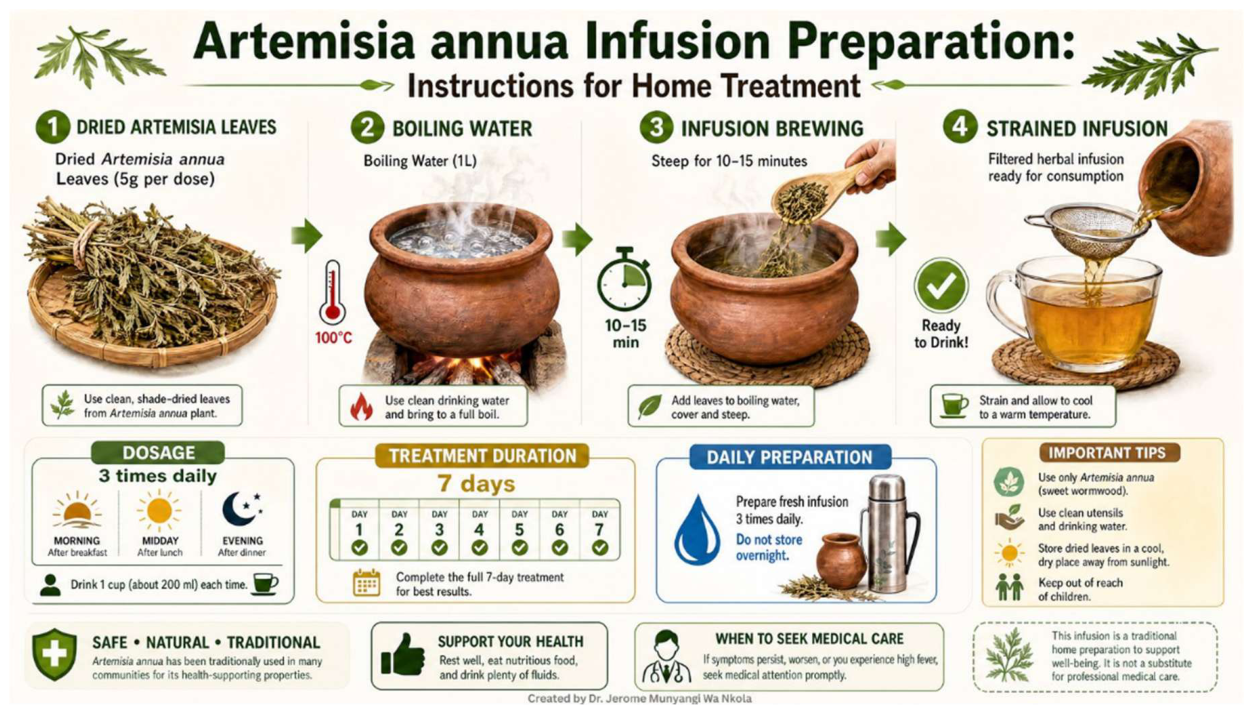
The infographic details the five-step process: harvesting, boiling, brewing, straining, and dosing. It emphasizes the 7-day treatment course and the thrice-daily administration schedule. While providing a structured guide, this visual also highlights the inherent challenges of maintaining precise dosage, particularly with ‘uncalibrated monotherapy’ in rural household settings. Source: Created by Dr. Jerome Munyangi Wa Nkola.”
As shown in Figure 3, the reliance on domestic preparation introduces significant variability in the concentration of active compounds. Unlike standardized ACTs, which provide a precise and stable dose of artemisinin derivatives [12], artisanal infusions of Artemisia annua are subject to fluctuations based on soil quality, harvest timing, and preparation methods [58]. This lack of standardization frequently results in the delivery of sub-therapeutic doses, which, as documented in recent scoping reviews, creates the selective pressure necessary for the emergence and expansion of resistant Plasmodium strains [14]. This biochemical inconsistency remains a primary reason why international health consensus discourages the use of raw biomass for malaria management in endemic regions [58].
3.2.3. Sub-Theme III: Consumer Profile and Community Dynamics
Theoretical Model Mapping:
HBM Core Dimension: Perceived Severity and Cues to Action [45].
WHO-BeSD Pillar: Thinking and Feeling and Social Processes [17].
Category 1: Vulnerable consumer strata
Within the family ecosystem, Artemisia annua is conceptualized as a universal, household-level therapeutic shield. Under the BeSD Thinking and Feeling domain, special emphasis is placed on pediatric and maternal utilization [17]. Informants value the plant’s capacity to mitigate the severe systemic complications of malaria—specifically severe pediatric and maternal anemia (HBM Perceived Severity) [23,25].
This prioritization is not merely a response to ACT stockouts [5]; it is a deliberate “structural survival” strategy against the “Quality Vacuum.” With substandard or falsified antimalarials’ prevalence reaching significant levels in Eastern DRC markets, caregivers perceive the self-cultivated plant as a “guaranteed” alternative to the risks of ineffective synthetic pharmacology [6,9,10].
“When young children take this remedy regularly, I sincerely believe that it can serve as a highly effective mechanism to help build widespread trust.” (« Quand les enfants prennent ça régulièrement, je crois que ça peut être un moyen très efficace... ») BHP-04, Kinkungwa Health Area
“I must specify the deep impact... It is a medication that directly influences the reduction of anemia rates, both in pregnant women and young children.” (« ...c’est un médicament qui influence pour diminuer le taux d’anémie... ») BHP-02, Kinkungwa Health Area
“We often recall its collective administration to young children, and it was wonderful... The children would line up, each one holding their own little cup.” (« On se rappelle souvent de son administration collective aux enfants... Les enfants, chacun avec son gobelet ») CEU-03, Kakutya 2 Health Area
Category 2: Frequency of use and communal social acceptability
The BeSD Social Processes dimension illustrates a high degree of “communal contagion” and behavioral normalization [17]. The acceptance of the infusion redefined neighborhood geographies, described by participants as a transition where adoption moved “avenue by avenue.” Health workers observed a perceived reduction in outpatient visits during periods of high botanical availability, suggesting that community-led treatment can temporarily alleviate the burden on fragile formal infrastructures [5,11].
This massive social validation has outlived the physical presence of the plant. The collective memory of past clinical success and the current deprivation of the remedy act as powerful Cues to Action, transforming community grievance into a persistent demand for the integration of the plant into national health policy [45].
“This plant gained immense popular enthusiasm... We used to call out from one avenue to the next... for people to come and receive the product. The populations were highly motivated.” (« Cette plante a gagné l’engouement populaire. On appelait une avenue par l’autre... ») BHP-01, Bobela Health Area
“We explicitly noted a frequency of usage so high that it directly impacted our formal hospital statistics... people no longer came to the hospital.” (« ...nous notons une fréquence d’usage telle qu’elle impactait les statistiques hospitalières. ») BHP-05, Bobela Health Area
“Despite the complete termination of the institutional project, the public demand remains extremely high... the population is literally crying out for Artemisia.” (« Malgré l’arrêt du projet, la demande reste forte... les gens pleurent de l’artémisie ») BHP-06, Bobela Health Area
3.3. Theme 3: Acceptability and Social Representations of Artemisia Annua
This theme explores the deeper social constructs and normative frameworks that govern the acceptance of Artemisia annua, analyzing how collective representations influence individual therapeutic choices. As established through the thematic saturation of the N=30 sample adhering to the “New Information Threshold” metric for qualitative rigor [21] the data reveal that acceptability is not merely a matter of clinical preference but a complex negotiation between domestic sovereignty and institutional trust.
Table 5 presents the analytical structure of social representations and acceptability drivers, based on perceptions of healthcare providers regarding the plant’s acceptability [11].
Table 5.
Theme 3 Analytical Structure – The Hybrid Social-Representation Matrix.
| Categories and Theoretical Mapping | Sub-Theme |
|---|---|
| • Cat 1: Empirical Validation and Perceived Purity (HBM Benefits / BeSD Thinking and Feeling) [45] • Cat 2: Structural Substitution in a “Quality Vacuum” (HBM Barriers / BeSD Practical Issues) [9,10,18] |
3.3.1 Social Acceptability and Rationality |
| • Cat 1: Rejection of Raw Leaf Biomass (HBM Barriers) [45] • Cat 2: Demand for Tablet Formulations for Clinical Legitimacy (HBM Self-Efficacy / BeSD Thinking and Feeling) [49] |
3.3.2 Galenic Form Preferences for Medicine |
| • Cat 1: Religious Power, Misinformation and Digital Networks (HBM Barriers / BeSD Social Processes) [47,51] • Cat 2: Medical Hegemony vs. Phyto-Sovereignty (HBM Cues to Action / BeSD Social Processes) [11] |
3.3.3 Dialogue and Influential Leaders |
Legend for Table 4: HBM: Health Belief Model [45]. BeSD: Behavioral and Social Drivers framework [17]. Thinking and Feeling:. Social Processes: The influence of peer networks and religious leaders who act as “normative levers” for or against the plant [47,51]. The Quality Vacuum: A critical driver of acceptability, where the prevalence of falsified antimalarials in Eastern DRC (Kindu/Bukavu) pushes populations to seek botanical remedies perceived as “pure” and “uncorrupted” [6,9,10].
3.3.1. Sub-Theme I: Social Acceptability and Therapeutic Rationality
Theoretical Model Mapping:
WHO-BeSD Pillar: Thinking and Feeling and Practical Issues.
Category 1: Widespread social acceptance driven by direct clinical outcomes
Within Kalima, the social acceptability of Artemisia annua is fundamentally rational and pragmatic rather than passive or traditional (BeSD Thinking and Feeling). The local population validates the remedy because it aligns with immediate, observable therapeutic benefits [11].
This social representation is reinforced by the “quality vacuum” of the formal sector. Because a significant proportion of antimalarials sold in the region (including Quinine and ACTs) have been documented as substandard or falsified, the community perceives the botanical remedy as a “pure” and empirically more reliable agent than synthetic drugs of uncertain provenance [9,60]. Thus, the tea shifts from an unverified herb to a legitimate curative agent because it consistently provides visible proof of recovery where formal pharmacology may have failed [11].
“This natural remedy gained immense popular enthusiasm because people witnessed the results directly on their sick relatives.” (« Ce remède naturel a gagné un engouement populaire immense parce que les gens ont vu les résultats directement sur leurs proches malades. ») OIL-01, Kakutya 1 Health Area
“The collective acceptance was built on visible facts. When people saw that others were recovering completely without spending fortunes, the whole community embraced it.” (« L’acceptation collective s’est construite sur des faits visibles. Quand les gens ont vu que les autres guérissaient complètement sans dépenser des fortunes toute la communauté a adhéré. ») CEU-02, Bobela Health Area
Category 2: Acceptance by necessity facing biomedical supply chain failure
Under the BeSD Practical Issues lens, social acceptability is further amplified by macro-structural constraints [17]. In In an enclaved territory isolated by recurrent conflicts and systemic stockouts, the community’s acceptance of Artemisia is an active strategy of Structural Survival [18].
Local practices integrate available plant-based options as a high-value alternative amid collapse of the formal pharmaceutical distribution network [6]. This acceptance is not merely a preference for “tradition” but a calculated response to the physical absence and prohibitive cost of biomedical care in fragile settings [4,18].
“Our acceptance is also a choice of survival. When the pharmacies in our health centers are completely empty, we naturally turn to what is available and effective in our gardens.” (« Notre acceptation est aussi un choix de survie. Quand les pharmacies de nos centres de santé sont complètement vides, nous nous tournons naturellement vers ce qui est disponible et efficace dans nos jardins. ») CEU-04, Kinkungwa Health Area
“It became a resource of solidarity and vital importance; the enclavement left us no other choice than to master the use of this plant to protect our households.” (« C’est devenu une ressource solidaire et vitale ; l’enclavement ne nous laissait pas d’autre choix que de maîtriser l’usage de cette plante pour protéger nos ménages ») OIL-03, Lubile Health Area
3.3.2. Sub-Theme II: Preferences Regarding the Medicine’s Galenic Form
Theoretical Model Mapping:
WHO-BeSD Pillar: Motivation & Thinking and Feeling [17].
Category 1: Rejection of the raw leaf biomass and artisanal preparation constraints
This category highlights a major cognitive barrier that limits long-term adherence and professional clinical Motivation [11]. As established through the thematic saturation of the n=30 sample [21], both users and biomedical providers express a strong aversion to the raw botanical format (« les feuilles »). The artisanal processing—requiring precise boiling times and water volumes is perceived as a logistical burden and a source of continuous technical anxiety regarding dosage safety (HBM Perceived Barriers) [11].
“Those leaves there, we doubt them. The raw format is complicated because you can never be entirely sure if you boiled it too much or not enough.” (« Les faits [feuilles], là, on doute. Le format brut est compliqué... ») CEU-05, Kakutya 2 Health Area
“As healthcare technicians, we look down on the raw leaf format. It looks informal, and it makes the standardization of the active compound impossible in the field.” (« En tant que techniciens de la santé, nous voyons d’un mauvais œil le format des feuilles brutes. ») BHP-03, Kalima General Hospital
Category 2: Broad consensus for pharmaceutical tablet forms
To resolve the dosing conflict, there is an overwhelming consensus across all functional strata from local leaders to specialized clinicians for industrial galenic transformation (BeSD Thinking and Feeling) [11,17]. The demand for tablets (comprimés) is considered the ultimate trigger for unlocking full clinical Self-Efficacy [49].
This preference is heavily influenced by the “Quality Vacuum” of the formal market [10]. Because participants are aware of the high prevalence of substandard or falsified antimalarials in Maniema [6,9], they perceive a calibrated, industrially-produced Artemisia tablet as a “guaranteed” and reliable alternative that bypasses the risks of both artisanal error and fraudulent synthetic drugs [10,11].
“My position is categorical regarding industrial processing. The moment they transform this plant into standard tablets, I will be the very first to consume it and give it to my children.” (« Ma position est catégorique concernant la transformation industrielle... ») OIL-02, Kakutya 1 Health Area
“If the state or pharmaceutical projects can process these plants into calibrated tablets, all professional hesitation will disappear because the precise dose will finally be guaranteed.” (« Si l’État ou des projets pharmaceutiques peuvent transformer ces plantes en comprimés calibrés... ») BHP-01, Kinkungwa Health Area
“We need this in a form that looks like real medicine. If it is in a tablet, the community will trust it even more than the ACTs we find in the market that sometimes do not work.” (« Nous avons besoin de cela sous une forme qui ressemble à un vrai médicament... ») CEU-01, Bobela Health Area
3.3.3. Sub-Theme III: Social Dialogue, Tensions, and Influential Leaders
Theoretical Model Mapping:
HBM Core Dimension: Cues to Action and Perceived Barriers [45].
WHO-BeSD Pillar: Social Processes [17].
Category 1: Religious impediments, structural doubts, and digital misinformation
Within the BeSD Social Processes domain, local health behaviors are heavily mediated by socio-religious norms[51]. In the absence of institutional public communication, the use of raw leaves reactivates traditional spiritual anxieties[11]. Highly influential religious figures can act as significant Perceived Barriers by framing the remedy as a vehicle for occult practices (sorcellerie)[11,22].
Furthermore, the audit suggests that this mediation now extends beyond traditional oral rumors; contemporary religious influence in Africa often utilizes digital platforms (e.g., WhatsApp, KingsChat) to propagate complex health narratives and misinformation, which can dismiss standardized treatments in favor of unverified “faith healing” narratives[47].
“In my specific religion, some leaders create deep doubts. They tell the congregation that we might be transforming these raw leaves using sorcery or witchcraft.” (« Dans ma religion spécifique, certains dirigeants créent des doutes profonds... ») CEU-05, Kakutya 2 Health Area
“Without official sensitization from the authorities, people will continue to listen to certain pastors who claim there is magic behind this natural remedy.” (« Sans une sensibilisation officielle des autorités, les gens continueront d’écouter certains... ») BHP-02, Bobela Health Area
Category 2: Biomedical hegemony vs. socio-religious validation channels
Conversely, the data demonstrates that structural authority figures can act as powerful Cues to Action [45]. While biomedical networks historically maintained hegemony over malaria care, the current “Quality Vacuum” characterized by the high prevalence of substandard and falsified antimalarials in Eastern DRC markets has eroded community trust in formal pharmacies [9,10].
Informants emphasized that integrating religious networks constitutes a powerful normative lever to dismantle rumors [51]. When formal medicines are perceived as unreliable or are physically absent due to conflict-driven supply chain failures [4,5], the collaborative endorsement of local physicians and trained pastors becomes the primary driver for community-wide trust [18]. This study’s group probes (detailed in Annex 2) confirm that reliance on these leaders is a strategic survival mechanism for the population in the absence of reliable ACTs.
“I suggest the extreme importance of religious leaders... when we formally train the pastors, it automatically influences and reassures their followers.” (« Je suggère l’importance extrême des leaders religieux... ») OIL-01, Lubile Health Area
“We need to break the conflict between the clinic and the community. When local physicians and socio-religious figures validate the remedy together, the population follows without fear.” (« Nous devons briser le conflit entre la clinique et la communauté... ») BHP-01, Bobela Health Area
3.4. Theme 4: Structural Impacts and Social Equity
This final theme evaluates the systemic repercussions of integrating Artemisia annua into the local healthcare landscape, focusing on hospital efficiency, economic justice, and the demand for institutional sovereignty. The data reveal that botanical therapy acts as a buffer against the two-fold failure of the formal health system: the physical absence of medicine and the prevalence of fraudulent products[11,62,10].
Table 6 provides the analytical structure for evaluating structural resilience and financial equity, mapping how community-led production can mitigate the inequities caused by a compromised pharmaceutical market [11].
3.4.1. Sub-Theme I: Structural Impacts on the Healthcare Ecosystem and Social Equity
Theoretical Model Mapping:
HBM Core Dimension: Perceived Benefits and Mitigation of Perceived Structural Barriers [45].
WHO-BeSD Pillar: Thinking and Feeling, and Practical Issues [17].
Category 1: Perceived reduction of hospital overcrowding and clinic admission rates
The qualitative evaluation of Artemisia annua usage reveals a significant perceived structural shift in the local health economy (BeSD Thinking and Feeling).
“We felt that it has at least decreased the frequency of malaria patients in our wards.” (« On a senti que ça a au moins diminué les taux de fréquence des malades qui ont du paludisme... ») BHP-01, Bobela Health Area
“Thanks to this plant, the populations no longer went up to the hospital to be treated for this disease, which significantly lightened our clinical burden.” (« Grâce à la plante les gens ne montaient plus encore à l’hôpital pour être traités avec cette maladie, ce qui a largement allégé notre charge clinique. ») CEU-02, Bobela Health Area
Category 2: Economic resilience and response to the “Quality Vacuum”
Under the BeSD Practical Issues lens, the primary structural value of Artemisia annua serves as a lever for socioeconomic justice and survival . In a hyper-vulnerable context shaped by conflict and supply chain failures, conventional therapies are often economically prohibitive [4].
However, adoption is also driven by the “Quality Vacuum” the high prevalence of substandard and falsified antimalarials in the DRC [9]. By offering an autonomous, zero-cost remedy cultivated directly within the domestic perimeter, the plant successfully lifts the financial barriers that historically excluded the poorest households from formal care. This self-production acts as a safeguard against “economic theft” by the fraudulent drug market, where families often pay for ineffective or harmful synthetic treatments [9].
“Artemisia stands as a vital resource for our most precarious populations. Its absolute freeness and geographic proximity transform it into an essential therapeutic pillar, guaranteeing treatment with zero financial barriers for impoverished families.” (« Sa gratuité absolue et sa proximité géographique en font un pilier thérapeutique essentiel garantissant le traitement avec zéro barrière financière pour les familles pauvres.») CEU-04, Kinkungwa Health Area
“I view Artemisia as a powerful lever for social equity. By being accessible completely free of charge, it entirely lifts the financial burden of healthcare, offering the poorest communities an autonomous therapeutic solution face to fake medicines.” (« Je vois l’Artemisia comme un puissant levier d’équité sociale. En étant accessible complètement gratuitement, elle lève entièrement le fardeau financier des soins... » ») BHP-03, Lubile Health Area
3.4.2. Sub-Theme II: Perspectives for National Health Policy Integration
Theoretical Model Mapping:
WHO-BeSD Pillar: Motivation and Practical Issues [17]
Category 1: Demands for official validation and integration by the State and the PNLP
This category highlights a mature, structured political awareness among the key actors of Kalima (BeSD Motivation). As established through the thematic saturation of the N=30 sample reaching the “New Information Threshold” where no novel codes emerged in the final interviews [21] informants strongly challenged the central Congolese state and the Programme National de Lutte contre le Paludisme to resolve the historical paradox surrounding the plant [11]. There is a massive, unified demand for formal institutional validation, positioning state recognition as the ultimate Cue to Action required to legally integrate Artemisia into rural health centers and eliminate professional clinical hesitancy [11,45].
“I directly challenge the authorities regarding the contradiction between our proven field efficacy and their complete lack of institutional support. Why do the health policymakers of our country refuse to officially integrate this product into our community health centers?” (« J’interpelle directement les autorités sur la contradiction entre notre efficacité prouvée et leur absence totale de soutien institutionnel... ») BHP-01, Kakutya 1 Health Area
“We need a clear, formal decision from the Ministry of Health. If the PNLP officially includes Artemisia in its protocols, local healthcare workers will finally be able to prescribe it without fear or professional reservation.” (« Nous avons besoin d’une décision formelle claire du Ministère de la Santé …les professionnels de la santé locaux pourront enfin la prescrire sans crainte ni réserve professionnelle. ») BHP-03, Kinkungwa Health Area
Category 2: Local production strategies and community sovereignty over supply chains
The final dimension of behavioral and structural sustainability targets reinforcement of systemic Self-Efficacy through decentralized manufacturing protocols (BeSD Practical Issues)[63,49]. To prevent the “physical vacuums” and recurrent stockouts that frequently follow the departure of international aid projects in the DRC [4,5], participants advocate for agricultural and technical self-reliance.
Training local communities to master the entire chain from certified seed multiplication to standardized processing—is framed as the only viable mechanism to bypass geopolitical blockades, secure local stocks, and protect the territory from future pharmaceutical supply chain failures [4,5]. This “Phyto-Sovereignty” is viewed as a resilient shield against both the absence of ACTs and the infiltration of substandard drugs [10].
“We must learn the lessons from the post-project stockouts. The community must be empowered to cultivate, harvest, and preserve the plant autonomously so that we are never again dependent on external actors.” (« Nous devons tirer les leçons des ruptures de stock post-projet. La communauté doit être autonome pour cultiver, récolter et conserver la plante [...] ») OIL-02, Lubile Health Area
“True therapeutic sovereignty for Kalima lies in our capacity to organize local production. By training agricultural and health relays together, we build a permanent community shield against malaria.” (« La véritable souveraineté thérapeutique pour Kalima réside dans notre capacité à organiser la production locale. En formant ensemble les relais agricoles et sanitaires, nous construisons un bouclier communautaire permanent contre le paludisme. ») BHP-02, Bobela Health Area
Analytical Synthesis of Structural Drivers
These narratives demonstrate that community Motivation is no longer dependent on external project stimuli but on the perceived necessity of Self-Efficacy in a fragile state environment [17,49]. By framing state validation as a Cue to Action, participants articulate a clear path toward bridging the “policy-practice gap.” The transition from “aid dependence” to “local sovereignty” serves as the ultimate practical solution to the recurring supply chain bottlenecks documented in the Maniema region [4,5].
An overarching synthesis of the qualitative findings across all thematic domains is provided in Table 7.
4. Discussion
4.1. Synthesis of Findings: Behavioral Reality vs. Clinical Boundaries
This qualitative investigation explored the perceptions and social representations of Artemisia annua herbal tea within the Kalima Health Zone using the integrated HBM-BeSD framework. The findings, synthesized in Table 7, indicate that the adoption of this phytotherapy is less a result of cultural tradition and more a pragmatic response to severe structural constraints—specifically the dual failure of the formal pharmaceutical supply chain [5,18].
It is essential to emphasize that this research is strictly socio-behavioral; it analyzes community drivers and perceptions and does not constitute a clinical trial, nor does it provide scientific validation of the clinical efficacy or safety of the herbal tea. In accordance with international guidelines, Artemisinin-based Combination Therapies remain the only validated first-line molecules for the treatment of uncomplicated malaria[64].
The behavioral patterns observed in this study are grounded in the diverse perspectives of a multi-layered cohort of 30 participants. As detailed in Table 2, the inclusion of community end-users, biomedical providers, and local leaders ensures that the identified “epistemological friction” is not an isolated phenomenon but a consistent thematic pattern across the enclaved territory. The reliability of these findings is supported by the achievement of thematic saturation, determined using the “New Information Threshold” metric [21]. In accordance with established qualitative standards, saturation was reached when the final sequence of interviews (N=30) yielded no new core themes or codes, confirming that the analytical framework sufficiently captures the diverse social representations of Artemisia in the Kalima Health Zone [21].
4.2. Risks of Resistance and the Status of Uncalibrated Monotherapy
A significant point of tension identified in Theme 2 concerns the gap between the perceived rapid recovery reported by participants and the underlying biological risks. The World Health Organization classifies Artemisia annua infusions as uncalibrated monotherapies, the use of which is strictly discouraged for malaria treatment to prevent the development of resistance[11,58]. The structural inability to guarantee standardized concentrations of active ingredients in artisanal preparations exposes parasites to sub-therapeutic doses, creating a critical selection pressure .
This threat is particularly alarming in Eastern DRC, a region neighboring Rwanda, Uganda, and Tanzania, where Kelch 13 (K13) propeller domain mutations associated with partial artemisinin resistance (notably R561H and A675V) have recently been documented [65,66,67]. As detailed in the operational practices mapped in Table 4, the unregulated and widespread use of the herbal tea could accelerate the emergence and westward expansion of these resistant strains into Congolese territory [11]. This could compromise the long-term efficacy of standard ACTs across the country, which is already under pressure from the prevalence of substandard synthetic drugs [9].
As explored through the “Domestic Pot” model of preparation, the reliance on uncalibrated household utensils using a “pinch” or “handful” of leaves for variable volumes of water introduces significant variability in the concentration of active compounds [11]. Despite participant reports of symptom relief within three days, the lack of pharmaceutical-grade standardization poses a risk of sub-therapeutic dosing, especially when the full duration of treatment is not strictly adhered to once the patient feels better [11]. This behavioral pattern, while perceived as a “miracle” at the community level, represents a primary public health concern for formal integration into national policy.
4.3. Geopolitical Context, Supply Chain Failures, and Falsified Medicines
The resort to botanical alternatives, analyzed in Table 6, primarily stems from a dual systemic failure of the pharmaceutical supply chain in the Maniema Province. Beyond the “physical vacuum” created by geographic enclavement and chronic stockouts of quality-assured ACTs [5,6], the healthcare ecosystem is plagued by a profound “quality vacuum.” As illustrated in Figure 1, the proximity to conflict zones and the breakdown of medical supply routes facilitate the infiltration of substandard and falsified antimalarial drugs into the informal market[9,10]
This crisis of pharmaceutical integrity is a critical driver of medical pluralism. Studies conducted by Mahano et al. (2021) in the Bukavu market and surrounding regions demonstrate that a significant proportion of antimalarials—specifically quinine and artemether-lumefantrine—fail to meet essential quality standards or contain sub-therapeutic doses of active pharmaceutical ingredients [8,9]. Similarly, Tshilumba et al. highlighted that the lack of robust regulatory oversight in the DRC allows for the widespread sale of non-compliant medicines, which erodes community trust in formal biomedicine [10]. For the populations of Kalima, the domestic cultivation of Artemisia annua (see Table 6) is not an irrational rejection of modern science, but a pragmatic strategy for “therapeutic sovereignty” and “structural survival” in a market viewed as both unreliable and economically prohibitive [11,18]
The transition from formal healthcare seeking to domestic botanical use is a direct consequence of these structural constraints. As shown in the process mapping in Figure 2, the patient’s journey is frequently interrupted at the primary point of care by the unavailability of quality-assured ACTs [5]. When faced with the choice between expensive, substandard pharmaceutical products and a locally grown, verifiable botanical alternative, community end-users and influence leaders opt for the latter as a rational mechanism of resilience [11]. This phenomenon underscores that in crisis zones, BeSD Practical Issues specifically the unreliability of the formal drug supply often override official clinical directives [68].
Figure 2.
Patient Healthcare Decision-Making and the Path to Therapeutic Resilience in Kalima District.
Figure 2.
Patient Healthcare Decision-Making and the Path to Therapeutic Resilience in Kalima District.
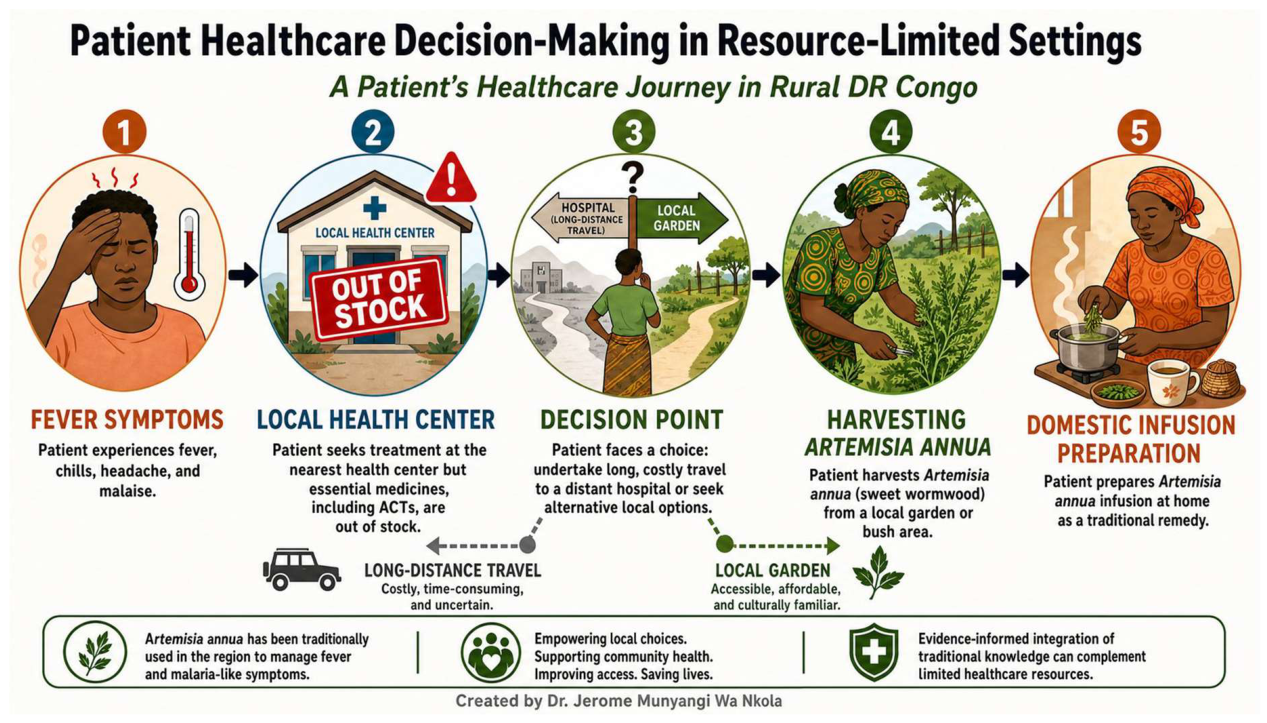
The infographic depicts the five-stage transition from symptom onset to domestic herbal tea preparation. Stages 2 and 3 highlight the critical failures in the formal supply chain (‘Out of Stock’ events) and the erosion of trust due to the prevalence of substandard drugs that necessitate a pivot toward local resources like Artemisia annua. This trajectory illustrates how physical enclavement and supply chain bottlenecks transform a botanical alternative into a primary “Structural Survival” strategy [5,11,18].
Source: Created by Dr. Jerome Munyangi Wa Nkola.
Stage 2: The Infrastructure FailureThe ‘Out of Stock’ sign depicted in Figure 2 represents a widespread reality in Maniema, where facilities frequently lack essential antimalarials [5,6]. However, this “Physical Vacuum” is compounded by a “Quality Vacuum” the high prevalence of substandard and falsified medicines in the DRC [9,10]. This dual failure forces patients to seek alternatives, as even available synthetic drugs are often perceived as ineffective or fraudulent [11].
Stage 3: The Convergence of Social DriversThis decision point is where WHO-BeSD Social Processes [17] and personal beliefs converge. Faced with the impossibility of accessing reliable formal treatment, the “local garden” becomes the only rational and accessible option for an isolated population [11]. This choice is driven by “Pragmatic Rationality,” where the community-validated efficacy of the plant outweighs the risks of an unreliable formal market .
Stage 5: Domestic Preparation and Public Health RisksStep 5 highlights the domestic preparation process, which, while empowering for the household, raises crucial public health questions. The use of uncalibrated household utensils introduces significant variability in dosing [69]. This raises concerns regarding sub-therapeutic concentrations and the potential for selecting resistant parasite strains, a risk particularly relevant given the emergence of resistance markers in neighboring East African regions.
4.4. Social Dynamics and Belief Models
The integration of the HBM and BeSD frameworks provides a critical lens through which to understand why community behavior diverges from national protocols despite a high awareness of malaria’s severity. Table 5 demonstrates that Social Processes, including the influence of religious leaders and the persistence of witchcraft rumors, act as primary mediators of trust. In the absence of robust institutional communication, informal networks and socio-religious figures gain disproportionate influence over health decisions [51].
However, the audit highlights that these social dynamics are no longer limited to traditional oral rumors. Contemporary religious mediation in the DRC has shifted toward digital platforms such as WhatsApp and KingsChat, which are used to propagate sophisticated “faith healing” narratives and health misinformation [47]. These digital discourses can frame botanical or spiritual alternatives as superior to “unreliable” Western medicine, often bypass traditional community hierarchies, and complicate the task of clinical validation [47].
This study demonstrates that acceptability is multidimensional: while “Perceived Benefits” (HBM) are rooted in the community’s empirical observations of Artemisia’s efficacy, the “Perceived Barriers” (HBM) are primarily logistical, financial, and structural [11]. The shift toward botanical resources is not a transient trend but a deeply ingrained adaptation to structural neglect. Given that 76.7% of the informants have resided in the Kalima Health Zone for over five years (Table 2), their reliance on the “local garden” reflects a long-term strategy for structural survival in response to the chronic decay of the formal health system [18]. Restoring user trust will require more than the physical provision of ACTs; it necessitates addressing the “Quality Vacuum” and integrating trusted local and digital networks into official health communication strategies [47].
4.5. Public Health Implications
The results presented in Table 6 and Table 7 should not be interpreted as an endorsement of herbal tea usage, but rather as an alarm signal regarding the profound vulnerability of the healthcare system in Kalima. While the “Physical Vacuum” of drug stockouts is a primary driver [6,5]; the “Quality Vacuum” the prevalence of substandard and falsified medications acts as a critical and distinct “push factor” toward non-validated remedies [9].
Research in the DRC has documented that SF rates for essential medicines can reach up to 25% [10], eroding patient trust in formal pharmaceutical supplies. This reality transforms the “local garden” into a strategy for Structural Survival, where a community-grown plant is perceived as more “honest” and “pure” than a synthetic drug of uncertain origin [11,18].
For the Programme National de Lutte contre le Paludisme, the challenge goes beyond simple logistics; it requires restoring the “Quality Integrity” of the antimalarial market [9]. Strategic recommendations include:
Supply Chain Fortification: Securing the supply of quality-assured ACTs in conflict-affected zones to close the “Quality Vacuum” [4,5].
Strategic Communication: Integrating community and religious leaders into a realistic communication strategy that acknowledges the “Quality Vacuum” while emphasizing the risks of unstandardized monotherapy [47,70].
Standardization: Transitioning toward standardized pharmaceutical forms (tablets) to satisfy the community’s demand for clinical safety and dosage precision [11].
4.6. Implications and Recommendations
To address the operational realities of malaria management and understand health behaviors under structural failures in the Kalima Health Zone, several actionable strategies are proposed. It is imperative to state that this study is not a clinical trial; therefore, these socio-behavioral findings do not provide clinical or scientific validation of the therapeutic efficacy or safety of the practices described. this study is not a clinical trial; therefore, these socio-behavioral findings do not provide clinical or scientific validation of the therapeutic efficacy or safety of the practices described.
Securing First-Line Pharmaceutical Supply Chains: National policymakers and the Programme National de Lutte contre le Paludisme must prioritize logistical funding and secure overland transport routes to eliminate the “physical vacuum” of essential medicines. As documented in Table 6, structural barriers and the exit of international donors drive the community toward alternative therapeutic resorts. Stabilizing consistent ACT availability at peripheral clinics is essential to prevent “therapeutic resort by necessity” in conflict-affected zones [5,4].
Galenic and Posological Standardization Research: State-led scientific and pharmaceutical institutions should invest in evaluating local botanical resources, focusing on the potential industrial transformation of raw biomass into standardized, calibrated tablets. This is necessary to eliminate the subtherapeutic dosing risks inherent to artisanal monotherapy infusions identified in Table 4. Such uncalibrated preparations pose a significant risk of fostering artemisinin resistance, a threat already documented in neighboring countries such as Rwanda [65], Tanzania [66], and Uganda [67].
Socio-Religious Community Engagement: Public health authorities must actively involve highly trusted local opinion leaders, specifically training socio-religious pastors and traditional healers. Based on the influence of authority figures highlighted in Table 5, these leaders should act as information champions capable of dismantling witchcraft rumors and disseminating evidence-based health choices through established social networks[71,72].
Targeted Biomedical Provider Training: Formal capacity building is required for healthcare workers regarding the management of “malaria pluralism.” Guidelines must equip providers to address community phytotherapeutic practices while firmly upholding the mandatory priority of immediate clinical testing and the administration of validated ACTs [70].
Culturally Adapted Public Communication: Health literacy materials should be developed in Swahili, Lingala, and French to communicate the biological dangers of uncalibrated monotherapies. This communication must emphasize the risks of emerging Kelch 13 mutations driven by sublethal dosing, which have been confirmed in the broader East African region [67,73].
4.7. Strengths and Limitations
A primary strength of this study lies in its balanced stakeholder typology. By triangulating data from biomedical experts and community leaders alongside end-users (Table 2), we achieved a comprehensive understanding of the socio-anthropological drivers of Artemisia annua usage while maintaining qualitative rigor. This investigation adhered to the COREQ guidelines to ensure transparency and systematic reporting of the findings.
Another strength is the application of a robust integrated theoretical framework combining the WHO Behavioral and Social Drivers [17] and the Health Belief Model [45]. This allowed for a nuanced understanding of how individual beliefs and social drivers interact with the structural vulnerabilities detailed in Table 6.
Regarding methodological rigor, this study utilized a transparent approach to thematic saturation, as documented in Annex 5. Using the “New Information Threshold” and “Run Length” metrics [21], saturation was confirmed within the N=30 sample when no novel codes or core themes emerged in final interviews [21]. Furthermore, in the conflict-affected context of Maniema, the research incorporated local stakeholder feedback loops to ensure the interpretation of “Structural Survival” was validated by community realities [18].
Limitations:
No Clinical Validation: This investigation does not aim to measure parasitological or toxicological outcomes.
Generalizability: As a qualitative study focused on a specific cohort, findings are not statistically generalizable to other provinces [74,75].
Incomplete Stakeholder Mapping: The perspectives of provincial PNLP policymakers and cross-border pharmaceutical distributors—who are central to the influx of falsified medications [76,77]—were not fully captured.
Bias: Social desirability bias may have influenced self-reported attitudes among healthcare workers.
Design: The cross-sectional design prevents an understanding of how cultivation habits evolve over long periods as external interventions disappear [78,79].
Despite these limitations, this study contributes significantly to the understanding of community survival strategies under systemic vulnerability, emphasizing the need for structurally realistic public health approaches in the DRC.
5. Conclusions
It is critical to note that this socio-behavioral research does not constitute a clinical trial; consequently, these findings do not clinically or scientifically validate the therapeutic efficacy or safety of Artemisia annua herbal tea. This study demonstrates that understanding medical itineraries within the Kalima Health Zone requires comprehensive evaluations that transcend individual behavior. Such evaluations must address local threat perceptions, leverage trusted socio-religious relationships, and engage with the contemporary reality of digital platforms such as KingsChat—which mediate both faith-based trust and health misinformation in the DRC [11,47].
As synthesized in Table 7, the integrated HBM-BeSD framework proved highly valuable in revealing how practical environmental barriers and pharmaceutical supply chain collapses often override individual agency in resource-constrained settings [5,17,45]. However, the systemic failure is not limited to the physical absence of drugs; it is equally driven by the “Quality Vacuum.” The high prevalence of substandard and falsified antimalarials in the DRC, documented at rates up to 25% [10], erodes trust in formal medicine and transforms the “local garden” into a rational strategy for Structural Survival [9,10,18].
Ultimately, achieving sustainable malaria control and protecting populations from the risks of uncalibrated monotherapies demands more than community education. It requires substantial political investment in:
Health System Strengthening: Closing the “Quality Vacuum” by ensuring both the physical presence and the chemical authenticity of ACTs [4,10].
Infrastructural Security: Developing secure distribution networks to bypass the logistical bottlenecks of enclavement and conflict [4,5].
Regional Resistance Mitigation: Implementing robust surveillance to prevent the westward expansion of Kelch 13 (K13) mutations, which are already established in neighboring Rwanda, Tanzania, and Uganda [65,66,67].
While these findings reflect the unique geopolitical context of the Maniema Province, they offer vital lessons for other enclaved territories throughout sub-Saharan Africa. Only by dismantling the system-level obstacles can public health authorities ensure that standard pharmaceutical access becomes the primary choice for even the most highly motivated populations [5,18].
SUMMARY BOXES
What is already known on this topic
Malaria remains a catastrophic public health burden in the Democratic Republic of the Congo, which accounts for approximately 13.2% of all malaria deaths globally[80], disproportionately affecting children[81] and pregnant women.
The World Health Organization explicitly classifies Artemisia annua herbal tea as an uncalibrated monotherapy, strictly discouraging its use due to the structural inability to guarantee therapeutic doses, which accelerates the selection of resistant Plasmodium falciparum strains [11].
Artemisinin-based Combination Therapies remain the undisputed frontline treatment recommended by the WHO and are the cornerstone of global malaria management for uncomplicated cases [64].
What this study adds
Qualitative data indicate that when the dual failure of the formal health system occurs—
comprising both a “Physical Vacuum” (stockouts) and a “Quality Vacuum” (prevalence of substandard and falsified drugs) populations turn to Artemisia annua as a strategy for Structural Survival [10,5].
The study reveals a profound epistemological friction: while community end-users demonstrate high willingness driven by perceived “purity” and rapid recovery, biomedical providers express severe “posological anxieties” due to the lack of standardized dosing protocols and the biological risk of sub-therapeutic treatment [11].
Socio-behavioral findings demonstrate that local health choices are mediated by both traditional socio-religious norms and modern digital discourses (e.g., WhatssApp, KingsChat), where misinformation regarding witchcraft vs. scientific validation can trigger hesitancy toward standard care [17,47,11].
Supplementary Materials
The following supporting information can be downloaded at the website of this paper posted on Preprints.org., Annex 1: Theoretical Alignment Matrix, Mapping of the integrated HBM-BeSD framework constructs to specific inquiry probes and analytical coding nodes. Annex 2: Qualitative Data Collection Instruments, Semi-structured Interview and Focus Group Discussion guides, systematically adapted from the WHO Behavioral and Social Drivers tools for the Maniema context [1]. Annex 3: Master Analytical Codebook and Thematic Tree, The hierarchical structure of codes used to categorize narratives into the HBM-BeSD constructs, providing the analytical backbone of the study. Annex 4: COREQ Checklist, The 32-item Consolidated Criteria for Reporting Qualitative Research checklist, documenting the research team’s reflexivity and methodological transparency [2]. Annex 5: Data Saturation Monitoring Grid – Systematic tracking of the “New Information Threshold” and “Run Length” metrics used to validate thematic saturation according to the Guest et al. methodology [3]. Annex 6: Ethical Approval Certificate – Official clearance from the Research Ethics Committee of the Institut Supérieur de Techniques Médicales de Kindu (Ref: 035/ISTM-KD/C.E.R. I/PRESI/IRBE/2025). Annex 7: Standardized Informed Consent Form, The de-identified template used for all stakeholder groups, ensuring linguistic clarity in Swahili and French.
Author Contributions
Conceptualization, Jerome Munyangi wa Nkola and Alioune Camara;methodology, Jerome Munyangi wa Nkola and Alioune Camara;software, Jerome Munyangi wa Nkola; validation, Jerome Munyangi wa Nkola, Hendrick Lukuke Mbutshu, Spartacus Kabala Munyemo, and Alioune Camara;formal analysis, Jerome Munyangi wa Nkola;investigation, Jerome Munyangi wa Nkola and Spartacus Kabala Munyemo;resources, Jerome Munyangi wa Nkola and Hendrick Lukuke Mbutshu; data curation, Jerome Munyangi wa Nkola and Hendrick Lukuke Mbutshu;writing—original draft preparation, Jerome Munyangi wa Nkola;writing—review and editing, Jerome Munyangi wa Nkola, Hendrick Lukuke Mbutshu,Spartacus Kabala Munyemo, and Alioune Camara;visualization, Jerome Munyangi wa Nkola; supervision, Alioune Camara; project administration, Jerome Munyangi wa Nkola. All authors have read and agreed to the published version of the manuscript.
Funding
This research received no external funding. This study was conducted as part of the Doctoral Research Project of Jerome Munyangi Wa Nkola within the Doctoral Program in Public Health at the Gamal Abdel Nasser University of Conakry.
Institutional Review Board Statement
The study was conducted in accordance with the Declaration of Helsinki and was granted formal ethical approval by the Research Ethics Committee of the Institut Supérieur de Techniques Médicales de Kindu (Ref: 035/ISTM-KD/C.E.R. I/PRESI/IRBE/2025, dated August 21, 2025).
Informed Consent Statement
Informed consent was obtained from all subjects involved in the study. Prior to data collection, each participant received a comprehensive oral and written explanation of the study’s objectives and their right to withdraw at any time without prejudice.
Data Availability Statement
The qualitative data presented in this study are available on request from the corresponding author. To ensure the highest level of confidentiality and anonymity in the conflict-affected Maniema Province, raw transcripts are not publicly available as they contain sensitive narratives that could potentially identify participants.
Acknowledgments
The authors express their profound gratitude to the thesis directors and mentors at the Doctoral School of Life, Health and Environmental Sciences of the Gamal Abdel Nasser University of Conakry for their scientific guidance. Special thanks are extended to the Maniema Provincial Health Division and the Kalima Health Zone Central Office for granting the necessary authorizations and facilitating field operations. The authors sincerely thank the community members and healthcare providers of Kalima for their voluntary participation and for sharing their professional expertise.
Conflicts of Interest
Jerome Munyangi wa Nkola and the co-authors declare no conflicts of interest. This research is purely academic and aims to provide an objective public health perspective on therapeutic perceptions in the Maniema province.
Abbreviations
The following abbreviations are used in this manuscript:
| ACT | Artemisinin-based Combination Therapy |
| BeSD | Behavioral and Social Drivers |
| BHP | Biomedical Healthcare Provider |
| CEU | Community End-User |
| COREQ | Consolidated Criteria for Reporting Qualitative Research |
| DRC | Democratic Republic of the Congo |
| HBM | Health Belief Model |
| IRB | Institutional Review Board |
| K13 | Kelch 13 (protein propeller domain associated with artemisinin resistance |
| LCL | Local Community Leader |
| PNLP | Programme National de Lutte contre le Paludisme |
| RITAM | Research Initiative on Traditional Antimalarial Methods |
| SF | Substandard and Falsified (medicines) |
| SRQR | Standards for Reporting Qualitative Research |
| WHO | World Health Organization |
References
- Venkatesan P. The 2023 WHO World malaria report. The Lancet Microbe ; 5. [CrossRef]
- Dev V, Wangdi K. Editorial: World Malaria Day 2023 - ending malaria transmission: reaching the last mile to zero malaria. Frontiers in Public Health ; 12. [CrossRef]
- Bilgo E. The unseen battle: interpreting the 2023 World Malaria Report from Burkina Faso’s frontlines. Malaria Journal ; 23. [CrossRef]
- Gardner BT. Challenges Inhibiting Malaria Aid in the Democratic Republic of the Congo. OakTrust (Texas A&M University Libraries) . https://hdl.handle.net/1969.1/166480 (2018, accessed November 2025).
- Karim A, Burri C, Kila JSN, et al. Systems Thinking for Supply Chains: Identifying Bottlenecks Using Process Mapping of a Child Health Intervention in the Democratic Republic of the Congo (DRC). Systems 2024; 12: 137–137.
- SABITI JB, Stanis OD, Asaph NWL, et al. ANALYSIS OF FACTORS CONTRIBUTING TO SHORTAGES AND STOCKOUTS OF ESSENTIAL MEDICINES IN KINDU HEALTH ZONE FACILITIES FROM JANUARY 1, 2021 TO DECEMBER 31, 2022. [CrossRef]
- Obeagu EI, Abdulrahman AO, Anetor JI. Drug stockouts and treatment delays in African health systems: impact on malaria morbidity and mortality. Annals of Medicine and Surgery 2026; 88: 1585–1593.
- Mahano AZ, Waffo C, Martin AE, et al. Assessment of the Quality of Antimalarial Medicines Sold in Bukavu, DRC. American Journal of Analytical Chemistry 2026; 17: 31–44.
- Mahano AO, Mahano AZ, Cubaka NH, et al. Pharmaceutical quality of antimalarial drugs: quinine sulfate and Artemether/Lumefantrine tablets sold on Bukavu Market. Future Journal of Pharmaceutical Sciences ; 7. [CrossRef]
- Tshilumba PM, Ilangala AB, Kindenge JM, et al. Detection of Substandard and Falsified Antibiotics Sold in the Democratic Republic of the Congo Using Validated HPLC and UV-Visible Spectrophotometric Methods. American Journal of Tropical Medicine and Hygiene 2023; 109: 480–488.
- Munyangi wa Nkola J, Camara A. Public Health Perspectives on Integrating Artemisia annua Tea for Uncomplicated Malaria Treatment: A Cross-Sectional Study of Perceptions and Acceptability among Healthcare Workers in Kalima District, Maniema, DRC. Epub ahead of print 2026.
- Ménard D, Dondorp AM. Antimalarial Drug Resistance: A Threat to Malaria Elimination. Cold Spring Harbor Perspectives in Medicine ; 7. [CrossRef]
- Jerome M wa N, Akilimali P, Aizeque A, et al. Consumption of Artemisia annua tea and Resistance to Artemisinin in Africa: Scoping Review. [CrossRef]
- Ataba E, Dorkenoo AM, Nguepou CT, et al. Potential Emergence of Plasmodium Resistance to Artemisinin Induced by the Use of Artemisia annua for Malaria and COVID-19 Prevention in Sub-African Region. Acta Parasitologica 2021; 67: 55–60.
- Tsombeng FF, Gendrot M, Robert M, et al. Are k13 and plasmepsin II genes, involved in Plasmodium falciparum resistance to artemisinin derivatives and piperaquine in Southeast Asia, reliable to monitor resistance surveillance in Africa? Malaria Journal ; 18. [CrossRef]
- Orji R, Vassileva J, Mandryk RL. Towards an Effective Health Interventions Design: An Extension of the Health Belief Model. Online Journal of Public Health Informatics ; 4. [CrossRef]
- Habersaat KB, Altieri E. Behavioural Sciences for Better Health: WHO Resolution and Action Framework. European Journal of Public Health ; 33. [CrossRef]
- Hill P, Pavignani E, Michael M, et al. The “empty void” is a crowded space: health service provision at the margins of fragile and conflict affected states. Conflict and Health ; 8. [CrossRef]
- Łuczaj Ł. Descriptive ethnobotanical studies are needed for the rescue operation of documenting traditional knowledge. Journal of Ethnobiology and Ethnomedicine ; 19. [CrossRef]
- Detailed Comparison of Qualitative Methodologies. In: IGI Global eBooks . IGI Global, pp. 97–130.
- Guest G, Namey E, Chen M. A simple method to assess and report thematic saturation in qualitative research. [CrossRef]
- Beiersmann C, Sanou A, Wladarsch E, et al. Malaria in rural Burkina Faso: local illness concepts, patterns of traditional treatment and influence on health-seeking behaviour. Malaria Journal ; 6. [CrossRef]
- Mitiku I, Assefa A. Caregivers’ perception of malaria and treatment-seeking behaviour for under five children in Mandura District, West Ethiopia: a cross-sectional study. Malaria Journal ; 16. [CrossRef]
- Saita S, Roobsoong W, Khammaneechan P, et al. Community acceptability, participation, and adherence to mass drug administration with primaquine for Plasmodium vivax elimination in Southern Thailand: a mixed methods approach. Malaria Journal ; 22. [CrossRef]
- Yirsaw AN, Berhe R, Getnet WA, et al. Insecticide-treated net utilization and associated factors among pregnant women and under-five children in East Belessa District, Northwest Ethiopia: using the Health Belief model. Malaria Journal ; 20. [CrossRef]
- Hutchinson P, Zulliger R, Butts J, et al. Interpersonal communication, cultural norms, and community perceptions associated with care-seeking for fever among children under age five in Magoé district, Mozambique. Malaria Journal ; 22. [CrossRef]
- O’Neill S, Gryseels C, Dierickx S, et al. Foul wind, spirits and witchcraft: illness conceptions and health-seeking behaviour for malaria in the Gambia. Malaria Journal ; 14. [CrossRef]
- Omagha R, Idowu ET, Alimba CG, et al. Survey of ethnobotanical cocktails commonly used in the treatment of malaria in southwestern Nigeria. Future Journal of Pharmaceutical Sciences ; 7. [CrossRef]
- Kwinda W, Luhalima TR, Mudzweda AD. Post-discharge experiences of Malaria patients in a Vhembe district village, South Africa. Health SA Gesondheid ; 30. Epub ahead of print 18 August 2025. [CrossRef]
- Karunamoorthi K. The counterfeit anti-malarial is a crime against humanity: a systematic review of the scientific evidence. Malaria Journal ; 13. [CrossRef]
- Chuma J, Okungu V, Molyneux S. Barriers to prompt and effective malaria treatment among the poorest population in Kenya. Malaria Journal ; 9. [CrossRef]
- Afolabi MO, Sougou NM, Diaw A, et al. Caregivers’ perception of risk for malaria, helminth infection and malaria-helminth co-infection among children living in urban and rural settings of Senegal: a qualitative study. medRxiv (Cold Spring Harbor Laboratory) . [CrossRef]
- Mugisa A, Bigirinama R, Kisembo C, et al. Trends in socio-economic level and accessibility to healthcare of households in Eastern Democratic Republic of Congo from 2011 to 2023: Documentary review of South Kivu. [CrossRef]
- Mthembu-Salter G. Social and economic dynamics of mining in Kalima, DRC. Institute for Security Studies Papers 2009; 2009: 16.
- Altare C, Castelgrande V, Tosha M, et al. From Insecurity to Health Service Delivery: Pathways and System Response Strategies in the Eastern Democratic Republic of the Congo. Global Health Science and Practice 2021; 9: 915–927.
- Lambert P, Nguyen T, McEvoy CL, et al. Quality of oxytocin ampoules available in health care facilities in the Democratic Republic of Congo: an exploratory study in five provinces. Journal of Global Health ; 8. [CrossRef]
- Kaboré JMT, Siribié M, Hien D, et al. Attitudes, practices, and determinants of community care-seeking behaviours for fever/malaria episodes in the context of the implementation of multiple first-line therapies for uncomplicated malaria in the health district of Kaya, Burkina Faso. Malaria Journal ; 21. [CrossRef]
- Byrne D. A worked example of Braun and Clarke’s approach to reflexive thematic analysis. Quality & Quantity 2021; 56: 1391–1412.
- Megheirkouni M, Moir J. Simple but Effective Criteria: Rethinking Excellent Qualitative Research. The Qualitative Report . [CrossRef]
- Clark L, Birkhead AS, Fernandez C, et al. A Transcription and Translation Protocol for Sensitive Cross-Cultural Team Research. Qualitative Health Research 2017; 27: 1751–1764.
- Cychosz M, Romeo R, Söderström M, et al. Longform recordings of everyday life: Ethics for best practices. Behavior Research Methods 2020; 52: 1951–1969.
- Strandberg PE. Ethical Interviews in Software Engineering. 2019; 1–11.
- Yu L, Alégroth E, Chatzipetrou P, et al. Automated NFR testing in continuous integration environments: a multi-case study of Nordic companies. Empirical Software Engineering ; 28. [CrossRef]
- Tong A, Sainsbury P, Craig JC. Consolidated criteria for reporting qualitative research (COREQ): a 32-item checklist for interviews and focus groups. International Journal for Quality in Health Care 2007; 19: 349–357.
- Janz NK, Becker MH. The Health Belief Model: A Decade Later. Health Education Quarterly 1984; 11: 1–47.
- Jones C, Jensen JD, Scherr CL, et al. The Health Belief Model as an Explanatory Framework in Communication Research: Exploring Parallel, Serial, and Moderated Mediation. Health Communication 2014; 30: 566–576.
- Whiting P, Partridge V, Ndulue EB, et al. “The malaria vaccine should be Dead on Arrival”: Exploring Health Discourse and Misinformation on KingsChat, a Nigerian Pentecostal Social Networking Platform. AoIR Selected Papers of Internet Research. [CrossRef]
- Morisho AN. Facteurs et conséquences de la déficience de la stratégie de gouvernance au Maniema dans le contexte du régionalisme politique de 2007 à 2015. IJRDO - Journal of Business Management 2021; 7: 28–45.
- Bandura A. Self-efficacy: Toward a unifying theory of behavioral change. Psychological Review 1977; 84: 191–215.
- Hamisi R, Olivier J. The process and effects of funding withdrawal in fragile systems: A case of three International non-governmental organisations’ exits from Tsholotsho district hospital, Zimbabwe. SSM - Health Systems 2026; 6: 100203–100203.
- Vassilev I, Rogers A, Kennedy A, et al. The influence of social networks on self-management support: a metasynthesis. BMC Public Health ; 14. [CrossRef]
- Dreibelbis R, Winch PJ, Leontsini E, et al. The Integrated Behavioural Model for Water, Sanitation, and Hygiene: a systematic review of behavioural models and a framework for designing and evaluating behaviour change interventions in infrastructure-restricted settings. BMC Public Health ; 13. [CrossRef]
- Cash P, Hartlev CG, Durazo CB. Behavioural design: A process for integrating behaviour change and design. Design Studies 2016; 48: 96–128.
- Achi NE, Papamichail A, Rizk A, et al. A conceptual framework for capacity strengthening of health research in conflict: the case of the Middle East and North Africa region. Globalization and Health ; 15. [CrossRef]
- Saeed AA, Zamel AMA, Ahmed A, et al. The struggle for medicine: A valid and reliable cross-sectional study on the impact of war on healthcare access and its consequences for displaced Sudanese citizens. PLOS Global Public Health ; 5. Epub ahead of print 26 November 2025. [CrossRef]
- Zeleke TK, Ayal BM, Chanie GS, et al. Worsening of medication non-adherence among patients with chronic diseases during times of armed conflict in the war-torn region of Ethiopia. Scientific African ; 25. [CrossRef]
- Hollenberg D, Muzzin L. Epistemological challenges to integrative medicine: An anti-colonial perspective on the combination of complementary/alternative medicine with biomedicine. Health Sociology Review 2010; 19: 34–56.
- Angupale JR, Tusiimire J, Ngwuluka NC. A review of efficacy and safety of Ugandan anti-malarial plants with application of RITAM score. Malaria Journal ; 22. [CrossRef]
- Bibliometric Analysis of the Health Belief Model in Healthcare Workers: Trends, Insights, and Future Directions. Journal of Angiotherapy ; 8. [CrossRef]
- Shakalenga CM, Amuri B, Ntabaza VN, et al. Perceptions and use of traditional African medicine in Lubumbashi, Haut-Katanga province (DR Congo): A cross-sectional study. PLoS ONE ; 17. [CrossRef]
- Wilson A, Mulvahill M, Tiwari T. The Impact of Maternal Self-Efficacy and Oral Health Beliefs on Early Childhood Caries in Latino Children. Frontiers in Public Health ; 5. [CrossRef]
- Weathers PJ. Medicinal plants as more sustainable therapeutic solutions: Artemisia annua and Artemisia afra as case studies. Global Health Economics and Sustainability 2025; 3: 1–1.
- Mulumba M, Oga J, Koomson N, et al. Decolonizing global health: Africa’s pursuit of pharmaceutical sovereignty. BMC Health Services Research 2025; 25: 1015–1015.
- Okell L, Cairns M, Griffin JT, et al. Contrasting benefits of different artemisinin combination therapies as first-line malaria treatments using model-based cost-effectiveness analysis. Nature Communications ; 5. [CrossRef]
- Schreidah C, Giesbrecht D, Gashema P, et al. Expansion of artemisinin partial resistance mutations and lack of histidine rich protein-2 and -3 deletions in Plasmodium falciparum infections from Rukara, Rwanda. Malaria Journal ; 23. [CrossRef]
- Ishengoma DS, Mandara CI, Bakari C, et al. Evidence of artemisinin partial resistance in North-western Tanzania: clinical and drug resistance markers study. medRxiv (Cold Spring Harbor Laboratory) . [CrossRef]
- Loon W van, Schallenberg E, Mande E, et al. Plasmodium falciparum Kelch-13 artemisinin partial resistance markers in Fort Portal, Western Uganda, 2024. Antimicrobial Agents and Chemotherapy ; 69. [CrossRef]
- Adipo LB, Mendes JFF, Thi N, et al. The spatiotemporal distribution of substandard and falsified antimalarial medicines in Africa, 1996-2019. [CrossRef]
- Jayasinghe M, Madhushika H, Wijesekera K, et al. Quantifying household liquid medicine dosing errors in Sri Lanka: A hidden public health risk. PLOS Global Public Health ; 6. [CrossRef]
- Agbo LN, Orish VN, Husaini DC, et al. Investigating the impact of human behavioural factors on the effectiveness of malaria interventions in malaria-endemic regions: A systematic review. Current Research in Parasitology and Vector-Borne Diseases 2026; 100371–100371.
- Atkinson J, Fitzgerald L, Toaliu H, et al. Community participation for malaria elimination in Tafea Province, Vanuatu: Part I. Maintaining motivation for prevention practices in the context of disappearing disease. Malaria Journal ; 9. [CrossRef]
- Oyeleye SA. Perception about malaria and understanding of malaria prevention information in selected rural communities of Nigeria. Research Square (Research Square) . [CrossRef]
- Assefa A, Fola AA, Tasew G. Emergence of Plasmodium falciparum strains with artemisinin partial resistance in East Africa and the Horn of Africa: is there a need to panic? Malaria Journal ; 23. [CrossRef]
- Onwuegbuzie AJ, Leech NL. Sampling Designs in Qualitative Research: Making the Sampling Process More Public. The Qualitative Report . [CrossRef]
- Prabhu GN. TEACHING THE SCOPE AND LIMITS OF GENERALIZABILITY IN QUALITATIVE RESEARCH. In: New Trends in Qualitative Research , pp. 186–192.
- Beargie SM, Higgins CR, Evans DR, et al. The economic impact of substandard and falsified antimalarial medications in Nigeria. PLoS ONE ; 14. [CrossRef]
- Kaur H, Clarke SE, Lalani M, et al. Fake anti-malarials: start with the facts. Malaria Journal ; 15. Epub ahead of print 13 February 2016. [CrossRef]
- Lindenmayer DB, Wood JT, McBurney L, et al. Cross-sectional vs. longitudinal research: a case study of trees with hollows and marsupials in Australian forests. Ecological Monographs 2011; 81: 557–580.
- Baumeister S, Kocher T, Papapanou PN, et al. Cross-Sectional Studies: Strengths, Limitations, and Methodological Considerations. Journal of Periodontal Research . [CrossRef]
- Diaz J, Gusto C, McCoy K, et al. A mixed methods study assessing the adoption potential of a saliva-based malaria rapid test in the Democratic Republic of Congo. Malaria Journal ; 22. [CrossRef]
- Sasidharan S, Dhillon HS. A Snapshot of Poverty, Diseases and war the Democratic Republic of the Congo. Disaster Medicine and Public Health Preparedness 2021; 16: 1765–1768.
Table 6.
Theme 4 Analytical Structure The Structural and Equity Matrix.
| Categories and Theoretical Mapping | Sub-Theme |
|---|---|
| • Cat 1: Clinical Decongestion (HBM Benefits / BeSD Thinking & Feeling) [17,45] • Cat 2: Economic Resilience & the “Quality Vacuum” (HBM Barriers / BeSD Practical Issues) [6,9,10] |
3.4.1 Structural Impacts & Social Equity |
| • Cat 1: Demands for Official Validation (HBM Cues to Action / BeSD Motivation) [17,45] • Cat 2: Local Production & Phyto-Sovereignty (HBM Self-Efficacy / BeSD Practical Issues) [17,49] |
3.4.2 National Health Policy Integration |
Legend for Table 6: HBM: Health Belief Model [45]. BeSD: Behavioral and Social Drivers framework [17]. The Quality Vacuum: A systemic failure where the market prevalence of substandard and falsified antimalarials in the DRC (often exceeding 20% in some regional studies) drives populations toward local herbal alternatives as a matter of “Structural Survival” and economic protection [9,10]. Phyto-Sovereignty: The demand for a conflict-resilient, locally managed supply chain that reduces dependence on external, vulnerable pharmaceutical imports [4,5].
Table 7.
Synthesis of Qualitative Results – The Integrated HBM-BeSD Analytical Framework.
| Core Evidence / Strategic Takeaway | Theoretical Mapping | Sub-Themes and Key Findings | Theme |
|---|---|---|---|
| Usage is driven by high confidence in efficacy, reinforced by the perceived “purity” of the plant compared to suspected falsified drugs [10,11]. |
HBM: Perceived Susceptibility and Benefits [25,45] BeSD: Thinking & Feeling [17] |
• High rates of identification of A. annua biomass. • Perception of “miraculous” recovery. • Barrier: Intense bitterness. |
3.1 Knowledge and Perception |
| The “Physical Vacuum” (project exit) and supply chain bottlenecks are the primary barriers to continuous use [5] |
HBM: Self-Efficacy and Barriers [45,49] BeSD: Practical Issues [17] |
• Dual usage: Prevention and Cure. • Artisanal preparation issues. • Epistemological friction (dose). |
3.2 Use and Practices |
| Acceptability is pragmatic; validation from pastors (addressing both witchcraft and digital misinformation) is key for scaling [11,47] |
HBM: Cues to Action [25,45] BeSD: Social Processes [17] |
• Demand for tablet form. • Religious validation vs. misinformation. • Witchcraft rumors vs. clinical proof. |
3.3 Acceptability and Social Representations |
| Artemisia serves as a “therapeutic shield” and a safeguard against the economic theft of substandard/falsified drugs [9,10] |
HBM: Perceived Benefits [45] BeSD: Motivation & Practical Issues [17] |
• Hospital decongestion. • Financial equity (zero-cost). • The “Quality Vacuum” driver. |
3.4 Structural Impacts and Equity |
Notes and Legend: HBM: A foundational framework for analyzing individual perceptions of disease and the benefits/barriers of treatment [45]. BeSD: The definitive WHO framework used to evaluate the social and practical drivers of health intervention uptake [17]. TF: BeSD pillar evaluating internal cognitive perceptions, such as the perceived superiority of botanicals over ineffective synthetic drugs [17]. SP: BeSD pillar analyzing the influence of peers and religious leaders [17], including the mediation of misinformation via digital platforms like KingsChat [47]. Quality Vacuum: A structural driver where the high prevalence of substandard and falsified medicines in the DRC (documented in [10] and [9]) compels populations toward self-produced botanical remedies ,[18]. Therapeutic Sovereignty: A concept emerging from the study’s field data [11], describing a community’s strategic shift toward autonomous health resource management to bypass systemic supply chain failures [5] and fraudulent markets [18]. Source: Primary qualitative data (N=30) collected within the Kalima Health Zone, validated by achieving thematic saturation [21], and supported by forthcoming cross-sectional analysis [11].
Disclaimer/Publisher’s Note: The statements, opinions and data contained in all publications are solely those of the individual author(s) and contributor(s) and not of MDPI and/or the editor(s). MDPI and/or the editor(s) disclaim responsibility for any injury to people or property resulting from any ideas, methods, instructions or products referred to in the content. |
© 2026 by the authors. Licensee MDPI, Basel, Switzerland. This article is an open access article distributed under the terms and conditions of the Creative Commons Attribution (CC BY) license (http://creativecommons.org/licenses/by/4.0/).
Copyright: This open access article is published under a Creative Commons CC BY 4.0 license, which permit the free download, distribution, and reuse, provided that the author and preprint are cited in any reuse.