

Submitted:
30 May 2026
Posted:
01 June 2026
You are already at the latest version
Abstract
Abstract Background: Food hypersensitivity is frequently associated with gastrointestinal and systemic manifestations. This study aimed to evaluate the clinical, nutritional, biochemical, lifestyle characteristics and stress levels of Lebanese adults with food hypersensitivity (cases) compared with controls (absence of food hypersensitivity). Methods: A case–control study was conducted among 775 Lebanese adults, including participants with self-reported food allergy and/or food intolerance and controls. Sociodemographic, clinical, and lifestyle data were collected. Dietary intake was assessed using validated dietary assessment tools. Biochemical parameters, stool analyses, and fecal calprotectin were evaluated when available Results: Overall, 379 participants (48.9%) were classified as having food hypersensitivity. Dermatological, nasal, respiratory, and gastro-intestinal symptoms were significantly more frequent among cases than controls (p< 0.05). Autoimmune diseases were more prevalent among cases. Daily energy and nutrient intake differed significantly between groups, with cases generally reporting lower intakes than controls. Cases exhibited substantially lower serum vitamin D, vitamin B12, and hematocrit levels. In binary logistic regression, fecal calprotectin positivity (OR = 3.385; 95% CI: 1.869–6.132), were independently associated with increased odds of food hypersensitivity, whereas higher serum levels of vitamin D intake (OR = 0.855; 95% CI: 0.740–0.989) was associated with lower odds. Conclusions: Biochemical differences were observed despite generally adequate dietary intake. Fecal calprotectin positivity, and lower vitamin D intake were the main predictors of food hypersensitivity, highlighting the role of intestinal inflammation, dietary exposures, and immune modulation. This underscores the im-portance of regular biochemical monitoring, and tailored nutritional interventions rather than relying solely on dietary elimination.
Keywords:
food hypersensitivity
; food allergy
; food intolerance
; IBS
1. Introduction
Food hypersensitivities, encompassing both immunologically mediated food allergies and non-immunological food intolerances, represent an important and growing public health concern worldwide (1). The prevalence of food allergies is estimated to range between 2–10% of the population. Food intolerances are thought to affect an even greater proportion, although precise figures are often underreported due to diagnostic challenges (2). These conditions may lead to a wide spectrum of clinical manifestations, from mild gastrointestinal discomfort to life-threatening anaphylaxis (3). Beyond the immediate medical implications, food hypersensitivities have profound impacts on patients’ health, daily functioning, and dietary behaviors (3).
Strict avoidance of offending foods is effective in preventing adverse reactions but can alter dietary patterns and predispose individuals to nutritional inadequacies, including deficiencies in calcium, vitamin D, vitamin B12, iron, zinc, and high-quality protein (3,4). Evidence from Europe, North America, and parts of Asia supports these concerns, showing lower intakes of key micronutrients, deviations from recommended dietary patterns, and greater reliance on restricted or selective diets among affected individuals compared with healthy controls (5, 6, 7). Common allergenic foods such as cow’s milk, eggs, wheat, soy, nuts, and seafood are major contributors of essential macronutrients and micronutrients, and exclusion of these foods may further compromise nutritional status (4,8). In children, these deficiencies can impair growth and development, while in adults they may exacerbate chronic disease risks and reduce overall nutritional health (3,5). Furthermore, individuals often compensate for food avoidance by increasing intake of processed alternatives, which may be higher in sugars, fats, or additives, thus altering overall diet quality (8).
The Lebanese food system poses unique challenges: limited allergen labeling regulations, restricted access to specialized allergen-free products, and variability in healthcare guidance (9, 10). Together, these factors may increase the risk of nutritional imbalances when foods are eliminated from the diet, either through medical advice or self-imposed restrictions.
Despite rising recognition of food hypersensitivities in Lebanon and the MENA region, there is a striking scarcity of research on the dietary intake and nutritional profile of affected individuals. Most available studies have focused on prevalence and clinical characteristics, with little attention given to how food hypersensitivities influence nutrient adequacy or adherence to dietary recommendations. This knowledge gap limits healthcare providers’ ability to deliver evidence-based dietary counseling and hinders the development of national guidelines tailored to the local population.
Accordingly, this study aimed to examine the nutritional profiles, stress levels and lifestyle characteristics of the cases compared with controls. We hypothesized that individuals with food hypersensitivities would demonstrate lower nutrient intakes and different lifestyle characteristics than controls, leading to macronutrient and micronutrient inadequacies and clinical problems. The ultimate goal of the study is to provide evidence to support clinical dietary counseling and inform public health strategies in Lebanon.
2. Materials and Methods
2.1. Study Design and Population
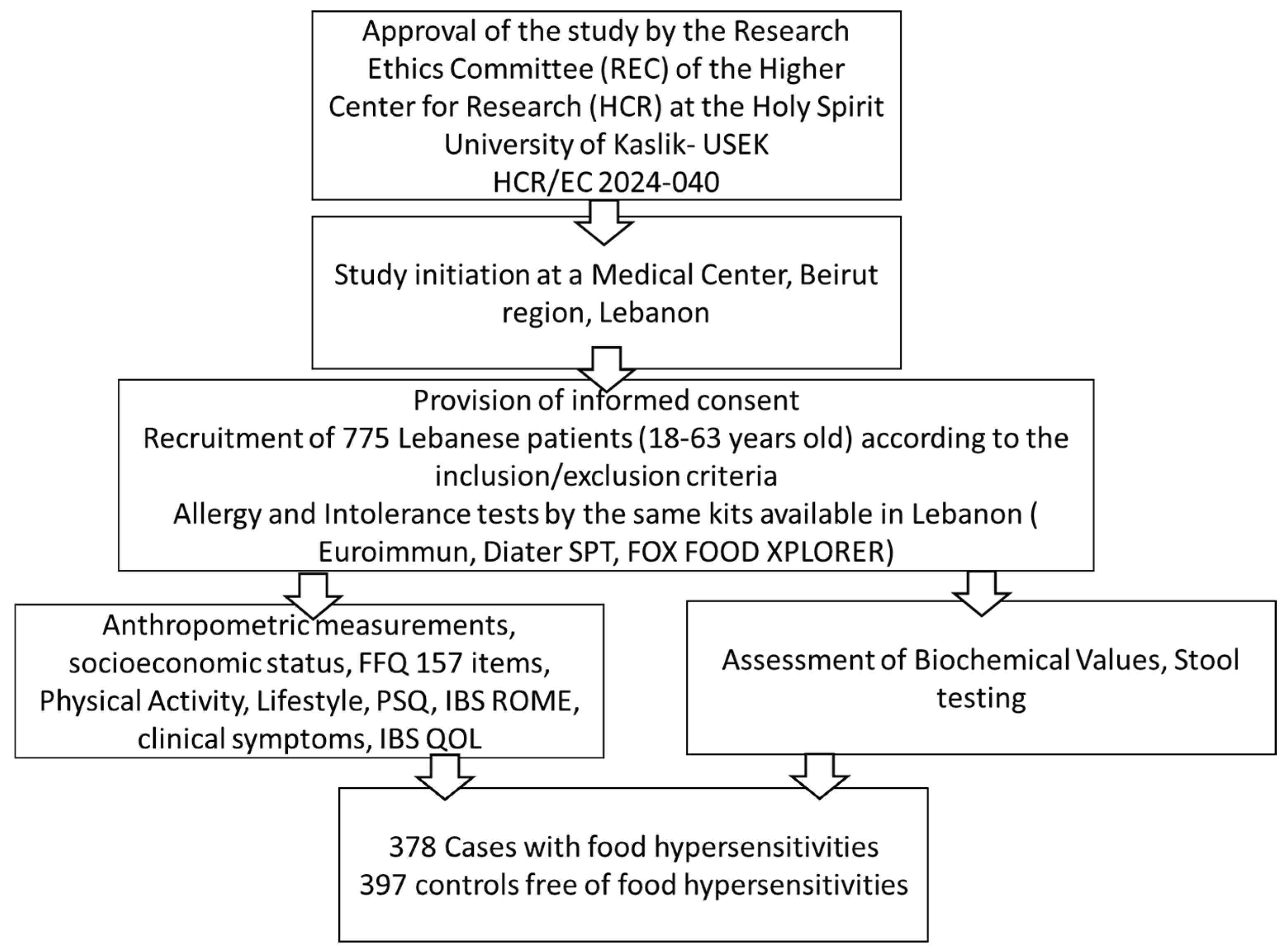
This case–control study included 775 Lebanese adults, comprising 378 individuals with food hypersensitivity (cases) and 397 controls without known food hypersensitivity. Participants were recruited consecutively from July 2024 to June 2025 among patients attending an outpatient clinic at a Medical Center in the Beirut region for routine health check-ups. All eligible patients seen during the study period were invited to participate, and written informed consent was obtained at enrollment. Participants were drawn from all Lebanese governorates to ensure broad geographic representation.
2.2. Eligible Population
The study sample included consecutive visits of patients coming from all the Lebanese governorates to this outpatient clinic. The convenient method of recruitment was used. Eligible cases for this study were Lebanese men and women aged between 18 and 63 years old. Patients were included in the study if they were recognized as physician-diagnosed with food allergy or intolerance, while controls were individuals without known food hypersensitivities. Additional inclusion criteria included non-pregnancy among women and completeness of survey and clinical data. Participants were excluded if they had chronic gastrointestinal malignancies or were using medications that could influence gastrointestinal function or nutritional status, including probiotics or prebiotics. Controls were selected using the same inclusion and exclusion criteria.
2.3. Ethical Considerations
The study protocol was approved by the Research Ethics Committee (REC) of the Higher Center for Research (HCR) at the Holy Spirit University of Kaslik- USEK (HCR/EC 2024-040). All participants provided written informed consent before enrollment. Confidentiality of personal and medical information was strictly maintained throughout the study.
Figure 1.
Flowchart for selection and enrollment of study subjects (cases and controls).
2.4. Sociodemographic and Lifestyle Assessment
Participants completed a structured questionnaire to gather sociodemographic information, including age, sex, governorate of residence, educational attainment, employment status, and marital status. Lifestyle characteristics were also recorded, notably smoking behavior and type of tobacco use (cigarettes, argileh, or e-cigarettes per day. Physical activity levels were also studied using the IPAC questionnaire (11). Perceived stress was evaluated with a validated Questionnaire (PSQ), which classifies stress into low, moderate, and high categories(12).
2.5. Clinical Assessment
Medical history included hypertension, type 2 diabetes, dyslipidemia, cardiovascular, renal, hepatic, and pulmonary diseases, cancer, immunodeficiency, and autoimmune disorders. Participants were further stratified according to the presence of gastrointestinal symptoms, allergies, and food intolerances. Physical examinations were conducted to obtain anthropometric measurements, including height (m), weight (kg), and body mass index (BMI)(kg/m2). All physical measurements were performed by the same investigator and measured three times consecutively. The average of the three measurements was recorded. Height and weight were measured with participants standing barefoot and wearing light clothing, using a wall-mounted stadiometer and a mechanical scale, respectively. Weight was recorded to the nearest 0.5 kg and height to the nearest 0.5 cm.
2.6. Food Hypersensitivity Assessment
Laboratory assessment of food hypersensitivity included the following tests. The measurement of total IgE and food-specific IgE used EUROIMMUN kits (Medizinische Labordiagnostika AG, Lübeck, Germany, 2024). The skin prick testing used Diater reagents (Diater Laboratorio de Diagnóstico y Aplicaciones Terapéuticas S.A., Madrid, Spain, 2024). The IgG-based food intolerance testing used the FOX Food Xplorer microarray (Macro Array Diagnostics [MADx], Vienna, Austria, 2024). The screening for celiac disease was performed by measuring IgA anti-tissue transglutaminase (tTG-IgA) and/or anti-endomysium antibodies using CE-marked ELISA and indirect immunofluorescence kits (Immundiagnostik AG and EUROIMMUN, Germany). Lactose intolerance was assessed using a hydrogen breath test (HBT) system (Sleuth Hydrogen Breath Test System, Breathe E-Z Systems, Inc., Leawood, KS, USA, 2024).
2.7. Biochemical and Stool Analyses
Biochemical analyses were performed using automated laboratory analyzers and commercially available diagnostic kits distributed in Lebanon. Hematological parameters including hemoglobin and hematocrit were measured using an automated hematology analyzer (Sysmex XN-1000, Sysmex Corporation, Kobe, Japan, 2024). Serum ferritin levels were determined using a Ferritin ELISA kit (DRG Instruments GmbH, Marburg, Germany, 2024). Serum vitamin B12 concentrations were measured using a Vitamin B12 ELISA kit (EUROIMMUN Medizinische Labordiagnostika AG, Lübeck, Germany, 2024). Serum folic acid concentrations were determined using a Folate ELISA kit (DRG Instruments GmbH, Marburg, Germany, 2024). Serum 25-hydroxyvitamin D levels were quantified using a 25-OH Vitamin D ELISA kit (EUROIMMUN Medizinische Labordiagnostika AG, Lübeck, Germany, 2024).
Stool analyses included coproculture (stool culture) for bacterial, fungal, and parasitic infections using standard microbiological culture methods. Fecal calprotectin levels were measured using a Calprotectin ELISA kit (Immundiagnostik AG, Bensheim, Germany, 2024).
2.8. Gastrointestinal Assessment and IBS Diagnosis
IBS diagnosis was determined using the Rome III criteria via a structured questionnaire (13).
2.9. Dietary Assessment and Nutritional Status
Dietary intake was assessed using a validated Food Frequency Questionnaire (FFQ) to estimate macronutrient and micronutrient intake (14). FFQ data were analyzed using NutriLog software (version 3.20; Nutrilog SAS, La Calale, 2 rue du Grand Both, 17230 Marans, France) to calculate total energy intake/day, macronutrients/day; (protein (g), carbohydrates (g), and fat (g), and micronutrients (vitamins and minerals)/day. Supplement consumption was additionally considered when estimating the daily intake of the selected items. To minimize reporting bias, dietary interviews were conducted before the diagnosis of food hypersensitivity. Biochemical nutritional status was evaluated through serum measurements of hematocrit (%), hemoglobin (g/dL), ferritin (ng/ml), folic acid (ng/ml), vitamin B12 (pg/ml), and vitamin D (ng/ml)(specific tests for all these parameters).
2.10. Microbiological and Inflammatory Assessments
Stool samples were collected for analysis to detect bacterial, fungal, and parasitic infections (stool culture, parasite, and calprotectin). Intestinal inflammation was assessed using fecal calprotectin testing, with positive results indicating underlying inflammation or dysbiosis.
2.11. Statistical Analysis
Descriptive statistics were computed using frequencies and percentages for categorical variables and means ± standard deviations (SD) for continuous variables. Geometric means (log₁₀-transformed quantitative variables) were used when the data did not follow a normal distribution. Case–control comparisons were conducted using Chi-square tests for categorical variables and independent-samples t-tests for continuous variables. Binary regression analyses were additionally performed to evaluate associations between food hypersensitivity and selected clinical, biochemical, and nutritional variables. A p-value < 0.05 was considered statistically significant. All analyses were conducted using SPSS software version 23 (IBM Corp., Armonk, NY, USA).
3. Results
3.1. Study Population and Classification of Food Hypersensitivity
A total of 775 participants were included in the study. Among them, 378 individuals (48.8%) were classified as cases, while 397 participants (51.2%) served as controls. Within the case group, 178 participants (47.1%) reported food allergy, 82 (21.7%) reported food intolerance, and 13 (3.4%) reported both food allergy and intolerance. In addition, 105 participants presented with irritable bowel syndrome (IBS) either alone or in combination with food allergy or intolerance, whereas only four participants reported isolated IBS without associated food hypersensitivity. The distribution of participants according to food hypersensitivity classification is presented in Table 1.
3.2. Sociodemographic Characteristics
Sociodemographic characteristics of cases and controls were summarized in Table 2. The distribution of sex was comparable between groups, with no statistically significant differences observed. Mean age (years) did not differ significantly between cases and controls. Participants were recruited from all Lebanese governorates, with Mount Lebanon and Beirut representing the largest proportions in both groups. Educational level, marital status, employment status, and household income were similar between cases and controls.
3.3. Anthropometric, Clinical, and Lifestyle Characteristics
Anthropometric measurements, including body mass index (BMI), did not differ significantly between cases and controls. The prevalence of chronic diseases such as hypertension, type 2 diabetes, dyslipidemia, cardiovascular disease, renal disease, liver disease, pulmonary disease, cancer, and immunodeficiency was comparable between groups. In contrast, autoimmune diseases were significantly higher among cases compared with controls.
The prevalence of Smoking was significantly higher among cases than controls. No significant differences were observed between groups regarding physical activity. Detailed anthropometric, clinical, and lifestyle characteristics were presented in Table 3.
3.4. Biochemical and Microbiological Findings
Biochemical analyses showed significantly lower levels of hematocrit, hemoglobin, vitamin B12, and vitamin D among cases compared with controls (p < 0.05). Sex-stratified analyses indicated that the difference in hematocrit was significant among women but not men, while hemoglobin levels were significantly lower among men but not women. No statistically significant differences were observed for folic acid or ferritin levels between the two groups.
Microbiological stool examinations revealed significant differences between groups. Positive bacterial infections were more frequently detected among controls (17.2%) compared with cases (4.23%) (p = 0.001). In contrast, fungal infections (17.1% vs. 13.9%, p = 0.001) and parasitic infections (17.5% vs. 8.1%, p = 0.016) were significantly more prevalent among cases. Additionally, positive fecal calprotectin results were significantly more common in cases than controls (23.0% vs. 8.1%, p < 0.001)
3.5. Dietary Intake and Nutrient Adequacy
Daily energy and macronutrient intake differed significantly between cases and controls, with significant variations in protein and total calorie consumption. Differences were also observed in other nutrients, including selected vitamins and minerals. Detailed dietary intake data are presented in Table 4.
3.6. Distribution of Clinical Symptoms
Cases reported significantly higher frequencies of dermatological, nasal, respiratory, and gastrointestinal symptoms compared with controls. Dermatological manifestations, including itching, redness, dryness, swelling, and bumpy skin texture, were markedly more prevalent among cases. Nasal symptoms such as sneezing, nasal congestion, an itchy nose, and watery eyes were also significantly more frequent among cases.
Respiratory symptoms, including cough, chest tightness, wheezing, and shortness of breath, were reported more frequently by cases. Gastrointestinal symptoms, including diarrhea, constipation, vomiting, heartburn, bloating, and nausea, were significantly more prevalent among cases, whereas reflux and flatulence did not differ significantly between groups. The distribution of reported symptoms is presented in Table 5
3.7. Stress Levels
Assessment using the Perceived Stress Questionnaire indicated that all participants experienced either moderate or high stress levels. Seventy-seven percent of the patients in both groups were classified as having moderate stress, while approximately twenty-two percent of the participants reported high stress levels. No significant differences in the stress category distribution were observed between cases and controls (Table 6).
3.8. Association of Clinical, Biochemical, and Dietary Factors with Food Hypersensitivity
In Model 1, adjusted for governorate of residence (all Lebanese governorates vs. South), smoking status, hematocrit serum level, and vitamin B12 serum level, calprotectin positivity was significantly associated with higher odds of food hypersensitivity (OR = 2.802; 95% CI: 1.646–4.772). Serum vitamin D level showed an inverse association with food hypersensitivity (OR = 0.992; 95% CI: 0.984–0.998).
In Model 2, further adjusted for dietary intake variables that were significant in the bivariate analyses, calprotectin positivity remained independently associated with increased odds of food hypersensitivity (OR = 3.385; 95% CI: 1.869–6.132). Higher serum vitamin D levels were significantly associated with lower odds of food hypersensitivity (OR = 0.855; 95% CI: 0.740–0.989).
Additionally, higher sugar intake (g/day) was independently associated with increased odds among controls (OR = 1.110; 95% CI: 1.032–1.194).

Table 7.
Multivariable binary analyses cases vs control N (775).
| Variables (model 1) | OR | 95% CI |
| Calprotectin (positive vs. negative) | 2.802 | 1.646–4.772 |
| Vitamin D serum level (µg/day) | 0.992 | 0.984–0.998 |
| Variables (model 2) | ||
| Calprotectin (positive vs. negative) | 3.385 | 1.869–6.132 |
| Vitamin D (µg/day) | 0.855 | 0.740–0.989 |
| Sugar (g/day) | 1.110 | 1.032–1.194 |
The Model 1 was adjusted for the governorate of residence (all Lebanese governorates compared to South), smoking status (Yes =1, No = 2), hematocrit serum level, vitamin B12 serum level, and categorical variables were coded as follows: Calprotectin (positive = 1, negative = 2).
The Model 2 was adjusted for the governorate of residence (all Lebanese governorates compared to South), smoking status (Yes =1, No = 2), and Calprotectin (positive = 1, negative = 2). hematocrit serum level, vitamin B12 serum level and all dietary intake variables, which showed significance during bivariate analysis.
4. Discussion
In the present study, nearly half of the recruited Lebanese adults were classified as having food hypersensitivity, with food allergy being more prevalent than food intolerance and a substantial overlap with IBS (Table 1). This high proportion is consistent with growing global evidence suggesting that food-related disorders are increasingly reported in adult populations, particularly when both immune-mediated allergy and non-immune intolerance are considered together rather than as isolated entities (1, 2). The coexistence of food hypersensitivity with IBS observed in a considerable proportion of cases supports previous findings indicating that food-related immune reactions frequently overlap with functional gastrointestinal disorders, reflecting shared pathophysiological mechanisms such as altered gut permeability, immune activation, and visceral hypersensitivity (16, 17, 18). The relatively small number of individuals with isolated IBS in the absence of food hypersensitivity further reinforces the close relationship between these conditions in clinical settings.
Sociodemographic variables, including age, sex distribution, education level, employment status, and marital status, were comparable between cases and controls, suggesting that food hypersensitivity in this population is not primarily driven by socioeconomic or demographic disparities. These findings align with previous studies from Europe and North America, which report that adult food hypersensitivity affects individuals across diverse social and educational backgrounds (6, 16). The geographic distribution across Lebanese governorates further supports the nationwide relevance of food hypersensitivity and suggests that regional dietary habits alone may not fully explain susceptibility, emphasizing the role of individual immune and gastrointestinal factors.
Anthropometric measures, including BMI, did not differ significantly between groups, indicating that food hypersensitivity was not associated with overt differences in body composition, a finding consistent with earlier adult studies reporting normal or comparable BMI in food-allergic and food-intolerant populations (6, 19). In contrast, autoimmune diseases were significantly more prevalent among cases, including rheumatoid arthritis, Hashimoto’s thyroiditis, inflammatory bowel disease (Crohn’s disease and Ulcerative colitis), and psoriasis. This observation supports accumulating evidence of shared immune dysregulation between food hypersensitivity and autoimmune conditions, potentially mediated by impaired oral tolerance, chronic antigen exposure, and sustained gut inflammation (3, 17, 18). Smoking was also more prevalent among cases, which may contribute to mucosal barrier dysfunction and immune activation, as tobacco use has been associated with increased intestinal permeability and altered gut microbiota composition (20).
Despite similar anthropometric profiles, individuals with food hypersensitivity showed significantly lower serum levels of vitamin D (although within the normal range), vitamin B12, hemoglobin, and hematocrit compared with controls. These findings are in line with previous reports indicating that biochemical deficiencies may occur in food-allergic and IBS populations even when dietary intake appears adequate, suggesting roles for malabsorption, chronic low-grade inflammation, or altered intestinal transport mechanisms (3,5, 19). Additionally, the higher prevalence of positive fecal calprotectin among cases indicates intestinal inflammation. Similar patterns have been described in non–IgE-mediated food hypersensitivity and IBS, where low-grade inflammation and microbial imbalance contribute to persistent gastrointestinal and systemic symptoms (21, 22, 23).
Dietary analysis demonstrated significant differences in daily energy and nutrient intake between cases and controls, with controls consistently reporting higher consumption of total calories, protein, carbohydrates, fat, and most micronutrients. Although both groups generally met or exceeded the recommended dietary allowances (RDAs) for most of the macronutrients and micronutrients, cases exhibited lower intakes compared to controls, particularly for protein, fiber, calcium, iron, potassium, magnesium, zinc, and several vitamins. Notably, fiber intake among cases did not reach the recommended level, which may have implications for gut health and intestinal function. Despite this overall apparent adequacy of dietary intake, individuals with food hypersensitivity presented significant biochemical variations, including lower serum levels of vitamin D, vitamin B12, hemoglobin, and hematocrit. This discrepancy suggests that nutritional impairment in this population may not be solely attributable to insufficient intake, but rather to altered digestion, intestinal inflammation, or impaired nutrient absorption. Similar findings have been reported in both adult and pediatric food-allergic populations, where restrictive dietary patterns and chronic mucosal inflammation contribute to functional malnutrition despite adequate or near-adequate reported intake (3, 5, 19). Collectively, these results highlight the limitations of dietary assessment alone and underscore the importance of incorporating biochemical markers when evaluating nutritional status in individuals with food hypersensitivity.
Cases reported significantly higher frequencies of dermatological, nasal, respiratory, and gastrointestinal symptoms compared with controls, confirming the multisystemic nature of food hypersensitivity. Cutaneous manifestations, including itching, swelling, and dryness, are well-documented features of both IgE- and non–IgE-mediated reactions, which are driven by mast cell activation and inflammatory mediators (24, 18). The high prevalence of nasal and respiratory symptoms supports the concept of a shared mucosal immune system linking the gut, skin, and airways, as previously described in allergic disease models (16, 22). Gastrointestinal symptoms, ranging from diarrhea and vomiting to constipation and bloating, further reflect the heterogeneity of food hypersensitivity presentations and are consistent with reports emphasizing immune–neural and inflammatory mechanisms rather than direct food toxicity alone (18).
Moderate to high perceived stress levels were observed across both groups, highlighting the substantial psychosocial burden within the study population. Chronic stress has been shown to exacerbate gut–brain axis dysfunction, increase intestinal permeability, and modulate immune responses, thereby amplifying symptom severity in food hypersensitivity and IBS (22, 24). Although stress levels did not differ significantly between cases and controls, their overall high prevalence underscores the importance of addressing psychological factors in the comprehensive management of food-related disorders.
In this binary logistic regression analysis, fecal calprotectin positivity, and vitamin D intake, emerged as independent factors associated with food hypersensitivity among Lebanese adults. These findings underscore the complex interaction between intestinal inflammatory status, and dietary patterns in shaping hypersensitivity risk.
A principal finding was the strong positive association between fecal calprotectin positivity and food hypersensitivity. Fecal calprotectin is a sensitive biomarker of neutrophil-driven intestinal inflammation and is widely used to distinguish organic inflammatory gastrointestinal disorders from functional conditions (25). Elevated fecal calprotectin reflects mucosal immune activation and disruption of epithelial barrier integrity (26). This increased intestinal permeability has been implicated in the pathogenesis of food allergy and other immune-mediated gastrointestinal disorders (27, 28). Therefore, the association observed in this study supports the hypothesis that food hypersensitivity may, at least in part, be mediated by barrier dysfunction and low-grade intestinal inflammation.
Vitamin D intake was independently and inversely associated with food hypersensitivity. Vitamin D plays a central immunomodulatory role, influencing innate and adaptive immunity, promoting regulatory T-cell development, and suppressing excessive inflammatory responses (29, 30). Epidemiological studies have further linked inadequate vitamin D status to increased risk of allergic diseases and food allergy (31, 32, 33). The inverse association observed in this study is therefore biologically plausible and may reflect the role of adequate vitamin D exposure in supporting mucosal barrier stability and immune tolerance.
The association between sugar intake and food hypersensitivity observed in this study contrasts with findings reported in previous research (34, 35, 36). In our results, mean sugar intake was significantly higher among controls than among cases, with an odds ratio of 1.11 (P < 0.05). This relationship may be explained by a reduction in overall food consumption among individuals with food hypersensitivity following the onset of symptoms. As these patients tend to limit their dietary intake, their consumption of sugar- commonly found in foods such as pastries, chocolate, fruits, and sweets- may consequently be lower compared to controls.
Several limitations should be considered when interpreting the present findings. First, dietary intake was assessed using a food frequency questionnaire, which is subject to recall bias, reporting errors, and inaccuracies in portion-size estimation and in the type or dosage of supplementation. In addition, selection bias may have occurred, as participants were recruited from a single clinic and within a restricted age range (18–63 years), which may limit the generalizability of the findings to broader populations and other healthcare settings. Finally, clinic-based recruitment may have resulted in a sample with more pronounced symptoms or health-seeking behaviors compared with the general population.
5. Conclusions
This case–control study provides insight into the systemic nature of food hypersensitivity among Lebanese adults.
Elevated fecal calprotectin and lower vitamin D intake were associated with food hypersensitivity, highlighting the potential roles of intestinal inflammation, dysbiosis, and impaired immune regulation in its pathophysiology.
Future longitudinal and interventional studies are warranted to clarify causal relationships, further explore the mechanisms linking food hypersensitivity with immune and gastrointestinal dysfunction, and evaluate the effectiveness of integrated nutritional and medical interventions. Such efforts are essential to optimize clinical management and to inform evidence-based guidelines tailored to Middle Eastern populations.
Author Contributions
G.H., as the principal investigator, developed the idea, performed the literature review, and wrote and edited the manuscript. G.H., Y.S., M.H., and N.F.-S. contributed also to the literature review, wrote and edited the manuscript, and acted as lead reviewers. All authors have read and agreed to the published version of the manuscript.
Funding
This research received no external funding.
Acknowledgments
This work was supported by the Higher Center for Research (HCR) at the Holy Spirit University of Kaslik (USEK), Lebanon.
Conflicts of Interest
The authors declare no conflicts of interest.
References
- Hage G, Sacre Y, Haddad J, Hajj M, Sayegh LN, Fakhoury-Sayegh N. Food Hypersensitivity: Distinguishing Allergy from Intolerance, Main Characteristics, and Symptoms—A Narrative Review. Nutrients (2025) 17:1359. [CrossRef]
- Loh W, Tang MLK. The Epidemiology of Food Allergy in the Global Context. International Journal of Environmental Research and Public Health (2018) 15:2043. [CrossRef]
- Vassilopoulou E, Venter C, Roth-Walter F. Malnutrition and Allergies: Tipping the Immune Balance towards Health. J Clin Med (2024) 13:4713. [CrossRef]
- Meyer R, De Koker C, Skrapac A-K, Godwin H, Reeve K, Chebar-Lozinsky A, Shah N. A practical approach to vitamin and mineral supplementation in food allergic children - Meyer - 2015 - Clinical and Translational Allergy - Wiley Online Library. (2015). [CrossRef]
- Sova C, Feuling MB, Baumler M, Gleason L, Tam JS, Zafra H, Goday PS. Systematic review of nutrient intake and growth in children with multiple IgE-mediated food allergies. Nutr Clin Pract (2013) 28:669–675. [CrossRef]
- Skypala IJ, Taylor CF, Pallister A, Scadding GW. A Pilot Study to Evaluate the Dietary Intake of Adults Attending a Food Allergy Clinic, and Compare the Results Against the Final Diagnostic Outcome. Front Allergy (2021) 2:. [CrossRef]
- Kaganov B, Caroli M, Mazur A, Singhal A, Vania A. Suboptimal Micronutrient Intake among Children in Europe. Nutrients (2015) 7:3524–3535. [CrossRef]
- Kotchetkoff EC de A, de Oliveira LCL, Sarni ROS. Elimination diet in food allergy: friend or foe? J Pediatr (Rio J) (2024) 100:S65–S73. [CrossRef]
- Jomaa L, Hwalla N, Itani L, Chamieh MC, Mehio-Sibai A, Naja F. A Lebanese dietary pattern promotes better diet quality among older adults: findings from a national cross-sectional study | BMC Geriatrics. (2016). [CrossRef]
- Chafei H, El Harake MD, Toufeili I, Kharroubi SA. Knowledge, Attitudes, and Practices of Consumers on Food Allergy and Food Allergen Labeling: A Case of Lebanon. Foods (2023) 12:933. [CrossRef]
- Craig CL, Marshall AL, Sjöström M, Bauman AE, Booth ML, Ainsworth BE, Pratt M, Ekelund U, Yngve A, Sallis JF, et al. International Physical Activity Questionnaire: 12-Country Reliability and Validity. Medicine & Science in Sports & Exercise (2003) 35:1381. [CrossRef]
- Levenstein S, Prantera C, Varvo V, Scribano ML, Berto E, Luzi C, Andreoli A. Development of the perceived stress questionnaire: A new tool for psychosomatic research. Journal of Psychosomatic Research (1993) 37:19–32. [CrossRef]
- Drossman DA, Dumitrascu DL. Rome III: New Standard for Functional Gastrointestinal Disorders. Journal of Gastrointestinal and Liver Diseases (2006) 15:237–241.
- Aoun C, Bou Daher R, El Osta N, Papazian T, Khabbaz LR. Reproducibility and relative validity of a food frequency questionnaire to assess dietary intake of adults living in a Mediterranean country. PLoS One (2019) 14:e0218541. [CrossRef]
- U.S. Department of Agriculture & U.S. Department of Health and Human ServiceDietary Guidelines for Americans, 2020-2025. (9th ed) USDA/HHS (2020) https://www.dietaryguidelines.gov/.
- Tedner SG, Asarnoj A, Thulin H, Westman M, Konradsen JR, Nilsson C. Food allergy and hypersensitivity reactions in children and adults—A review. Journal of Internal Medicine (2022) 291:283–302. [CrossRef]
- Muraro A, Halken S, Arshad SH, Beyer K, Dubois AEJ, Du Toit G, Eigenmann PA, Grimshaw KEC, Hoest A, Lack G, et al. EAACI Food Allergy and Anaphylaxis Guidelines. Primary prevention of food allergy. Allergy (2014) 69:590–601. [CrossRef]
- Connors L, O’Keefe A, Rosenfield L, Kim H. Non-IgE-mediated food hypersensitivity. Allergy, Asthma & Clinical Immunology (2018) 14:56. [CrossRef]
- D’Auria E, Pendezza E, Leone A, Riccaboni F, Bosetti A, Borsani B, Zuccotti G, Bertoli S. Nutrient intake in school-aged children with food allergies: a case-control study. Int J Food Sci Nutr (2022) 73:349–356. [CrossRef]
- Conlon MA, Bird AR. The Impact of Diet and Lifestyle on Gut Microbiota and Human Health. Nutrients (2014) 7:17–44. [CrossRef]
- Halmos EP, Power VA, Shepherd SJ, Gibson PR, Muir JG. A diet low in FODMAPs reduces symptoms of irritable bowel syndrome. Gastroenterology (2014) 146:67-75.e5. [CrossRef]
- Zingone F, Bertin L, Maniero D, Palo M, Lorenzon G, Barberio B, Ciacci C, Savarino EV. Myths and Facts about Food Intolerance: A Narrative Review. Nutrients (2023) 15:4969. [CrossRef]
- Pinto-Sanchez MI, Nardelli A, Borojevic R, De Palma G, Calo NC, McCarville J, Caminero A, Basra D, Mordhorst A, Ignatova E, et al. Gluten-Free Diet Reduces Symptoms, Particularly Diarrhea, in Patients With Irritable Bowel Syndrome and Antigliadin IgG. Clin Gastroenterol Hepatol (2021) 19:2343-2352.e8. [CrossRef]
- Vassilopoulou E, Feketea G, Konstantinou GN, Zekakos Xypolias D, Valianatou M, Petrodimopoulou M, Vourga V, Tasios I, Papadopoulos NG. Food Protein-Induced Allergic Proctocolitis: The Effect of Maternal Diet During Pregnancy and Breastfeeding in a Mediterranean Population. Front Nutr (2022) 9:. [CrossRef]
- Bjarnason I, Sherwood R. Fecal calprotectin: a significant step in the noninvasive assessment of intestinal inflammation. J Pediatr Gastroenterol Nutr (2001) 33:11–13. [CrossRef]
- Bischoff SC, Barbara G, Buurman W, Ockhuizen T, Schulzke J-D, Serino M, Tilg H, Watson A, Wells JM. Intestinal permeability--a new target for disease prevention and therapy. BMC Gastroenterol (2014) 14:189. [CrossRef]
- Fasano A. Zonulin and its regulation of intestinal barrier function: the biological door to inflammation, autoimmunity, and cancer. Physiol Rev (2011) 91:151–175. [CrossRef]
- Bischoff SC. “Gut health”: a new objective in medicine? BMC Med (2011) 9:24. [CrossRef]
- Aranow C. Vitamin D and the immune system. J Investig Med (2011) 59:881–886. [CrossRef]
- Prietl B, Treiber G, Pieber TR, Amrein K. Vitamin D and immune function. Nutrients (2013) 5:2502–2521. [CrossRef]
- Allen KJ, Koplin JJ, Ponsonby A-L, Gurrin LC, Wake M, Vuillermin P, Martin P, Matheson M, Lowe A, Robinson M, et al. Vitamin D insufficiency is associated with challenge-proven food allergy in infants. J Allergy Clin Immunol (2013) 131:1109–1116, 1116.e1–6. [CrossRef]
- Vassallo MF, Camargo CA. Potential mechanisms for the hypothesized link between sunshine, vitamin D, and food allergy in children. J Allergy Clin Immunol (2010) 126:217–222. [CrossRef]
- Zinöcker MK, Lindseth IA. The Western Diet–Microbiome-Host Interaction and Its Role in Metabolic Disease. Nutrients (2018) 10:. [CrossRef]
- Do MH, Lee E, Oh M-J, Kim Y, Park H-Y. High-Glucose or -Fructose Diet Cause Changes of the Gut Microbiota and Metabolic Disorders in Mice without Body Weight Change. Nutrients (2018) 10:761. [CrossRef]
- Thorburn AN, Macia L, Mackay CR. Diet, metabolites, and “western-lifestyle” inflammatory diseases. Immunity (2014) 40:833–842. [CrossRef]
- Barcik W, Boutin RCT, Sokolowska M, Finlay BB. The Role of Lung and Gut Microbiota in the Pathology of Asthma. Immunity (2020) 52:241–255. [CrossRef]
Table 1.
Classification of food hypersensitivity among cases N (378).
| Classification | Participants frequency (n%) |
|---|---|
| Cases | 378 (48.8) |
| Allergy | 178 (47.1) |
| Intolerance | 82 (21.7) |
| Allergy, and intolerance | 13 (3.4) |
| Allergy and IBS | 63 (16.7) |
| Intolerance, and IBS | 35 (9.6) |
| IBS | 4(1.1) |
| Allergy, intolerance, and IBS | 3 (0.8) |
Categorical variables were presented as frequencies and percentages n (%),.
Table 2.
Descriptive statistics of the patient’s sociodemographic data (n=775).
| Characteristics | Case (n=378) N(%) |
Control (n=397) N (%) |
p-Value | Total (n=775) N (%) |
|
|---|---|---|---|---|---|
| Gender | |||||
| Male | 185 (48.4) | 197 (51.6) | 0.850 | 382 (49.3) | |
| Female | 193 (49.1) | 200 (50.9) | 393 (50.7) | ||
| Age (years), mean ± SD | 38.8±0.16 | 38.9±0.15 | 0.902 | 775 (100) | |
| Crowding index*, mean ± SD | 1.48±0.17 | 1.53±0.17 | 0.259 | 775 (100) | |
| Governorate of residence | |||||
| Akkar | 15 (4) | 24 (6) | 0.03 | 39 (5) | |
| Baalbek-Hermel | 21(5.6) | 34 (8.7) | 55 (7.1) | ||
| Beirut | 139(36.8) | 101 (25.4) | 240 (31) | ||
| Bekaa | 16(4.2) | 24 (6) | 40 (5.1) | ||
| Mount Lebanon | 128 (34) | 135 (34) | 263 (34) | ||
| Nabatieh | 15 (4) | 21 (5.3) | 36 (4.6) | ||
| North Lebanon | 21 (5.6) | 26 (6.6) | 47 (6.1) | ||
| South Lebanon | 23 (5.8) | 32 (8) | 55 (7.1) | ||
| Level of education | |||||
| Elementary School | 27 (7.1) | 35 (8.8) | 0.160 | 62 (8) | |
| Middle School | 46 (12.2) | 61 (15.4) | 107 (13.8) | ||
| High School | 46 (12.2) | 60 (15.1) | 106 (13.7) | ||
| University/Higher Education | 259 (68.5) | 241 (60.7) | 500 (64.5) | ||
| Employment status | |||||
| Student | 24 (6.3) | 28 (7.1) | 0.181 | 52 (6.7) | |
| Not working | 155 (41) | 130 (32.7) | 285 (36.8) | ||
| Employed | 80(23.8) | 100 (25.2) | 180 (23.2) | ||
| Self Employed | 80 (21.2) | 104 (26.2) | 184 (23.7) | ||
| Retired | 29 (7.7) | 35 (8.8) | 64 (8.2) | ||
| Marital status | |||||
| Single | 227 (60.1) | 208 (52.4) | 0.133 | 435 (56.1) | |
| Married | 144 (38.1) | 177 (44.6) | 321 (41.4) | ||
| Divorced | 6 (1.6) | 8 (2) | 14 (1.8) | ||
| Separated | 1 (0.3) | 1 (0.3) | 2 (0.3) | ||
| Widowed | 0 (0) | 3 (0.8) | 3 (0.4) | ||
Categorical variables were presented as frequencies and percentages n (%), and continuous variables as mean ± SD. Log10 transformation was used for quantitative variables when they did not follow a normal distribution. Comparisons between case and control groups were performed using the Chi-square test (categorical variables) and the Independent Samples t-test (age). A 95% confidence level was applied, and statistical significance was defined as p < 0.05. * Crowding index: defined as the number of household members divided by the number of rooms in the household (excluding kitchens and bathrooms); A value ≥1 was considered indicative of overcrowding.
Table 3.
Clinical, Lifestyle, and Biochemical Characteristics of Cases and Controls.
| Characteristics | Case (n=378) N(%) | Control (n=397) N(%) | p-Value | Total (n=775) N (%) |
|---|---|---|---|---|
| Diseases | ||||
| Hypertention | 51 (13.5) | 66 (16.6) | 0.223 | 117 (15.1) |
| Type 2 diabetes | 23 (6.1) | 25 (6.3) | 0.902 | 48 (6.2) |
| Dyslipidemia | 33 (8.7) | 38 (9.6) | 0.685 | 71 (9.2) |
| Cardiovascular diseases | 17 (4.5) | 18 (4.5) | 0.980 | 35 (4.5) |
| Renal Diseases | 23 (6.1) | 26 (6.5) | 0.791 | 49 (6.3) |
| Liver Diseases | 9 (2.4) | 12 (3) | 0.582 | 21 (2.7) |
| Cancer | 7 (1.9) | 9 (2.3) | 0.685 | 16 (2.1) |
| Immunodeficiency | 12 (3.2) | 16 (4) | 0.523 | 28 (3.6) |
| Pulmonary diseases | 9 (2.4) | 12 (3) | 0.582 | 21 (2.7) |
| Autoimmune diseases | 66 (17.5) | 6 (1.5) | 0.000 | 72 (9.2) |
| Rheumatoid arthritis | 17 (4.5) | 2 (0.5) | 0.000 | 19 (2.5) |
| Hashimoto | 15 (4) | 2 (0.5) | 0.001 | 17 (2.2) |
| Lupus | 1 (0.3) | 0 (0) | 0.488 | 1 (0.12) |
| Crohn’s disease | 15 (4) | 0 (0) | 0.000 | 15 (1.93) |
| Ulcerative colitis | 1 (0.3) | 0 (0) | 0.488 | 1 (0.12) |
| Multiple sclerosis | 1 (0.3) | 0 (0) | 0.488 | 1 (0.12) |
| Type 1 diabetes | 1 (0.3) | 0 (0) | 0.972 | 1 (0.12) |
| Psoriasis | 10 (2.6) | 1 (0.3) | 0.005 | 11 (1.41) |
| Grave’s disease | 1 (0.3) | 0 (0) | 0.488 | 1 (0.1) |
| Celiac disease | 4 (1.1) | 0 (0) | 0.056 | 4 (0.5) |
| Smoking status (yes) | 140 (37) | 120 (30.2) | 0.000 | 260 (33.5) |
| Type of smoking | ||||
| Argileh (yes) | 42 (11.1) | 36 (9.1) | 0.816 | 78 (10.06) |
| Cigarette (yes) | 61 (16.1) | 50 (12.6) | 111 (14.3) | |
| E-Cigarette (yes) | 71 (18.8) | 48 (19.6) | 119 (15.35) | |
| Physical activity (yes) | ||||
| Vigorous | 28 (7.4) | 38 (9.6) | 0.993 | 66 (8.5) |
| Moderate | 35 (9.3) | 55 (13.8) | 0.845 | 90 (11.6) |
| BMI (Kg/m2) mean ± SD | 29.13 ± 0.1 | 28.57±0.1 | 0.426 | 775 (100) |
| Biochemical testing | ||||
| Hematocrit (%) | ||||
| Men | 45.1 ± 0.04 | 45.2 ± 0.04 | 0.851 | |
| Women | 40.7 ± 0.05 | 41.71 ± 0.03 | 0.006 | |
| Hemoglobin (g/dl) | ||||
| Men | 14.54 ± 0.04 | 14.98 ± 0.03 | 0.001 | |
| Women | 13.51 ± 0.05 | 13.73 ± 0.03 | 0.082 | |
| Folic Acid (ng/ml) | 9.18± 0.21 | 9.70±0.20 | 0.106 | |
| VitB12 (pg/ml) | 478.3 ±0.24 | 516.7±0.21 | 0.04 | |
| VitD (ng/ml) | 52.2±0.29 | 60.30±0.24 | 0.001 | |
| Ferritin (ng/ml) | ||||
| Men | 55.81 ± 0.35 | 56.08 ± 0.36 | 0.954 | |
| Women | 55.79 ± 0.35 | 59.56 ± 0.33 | 0.415 | |
| Coproculture | 16 (4.23) |
42 (17.2) |
0.001 |
58 (7.48) |
| Positive bacterial infection | ||||
| Positive fungal infection | 65 (17.1) | 55 (13.9) | 0.001 | 120 (15.48) |
| Positive parasitic infection | 66 (17.5) | 32 (8.1) | 0.016 | 98 (12.64) |
| Positive Calprotectin | 87 (23) | 32 (8.1) | 0.000 | 119 (15.35) |
Categorical variables were presented as frequencies and percentages n (%). Continuous variables are mean ± SD. Log10 transformation was used for quantitative variables when they did not follow a normal distribution. Comparisons between case and control groups were performed using the Chi-square test (categorical variables) and the Independent Samples t-test. The Fisher test was used for cells containing fewer than 5 participants. A 95% confidence level was applied, and statistical significance was defined as p < 0.05. Reference values: Hemoglobin (men 13–17 g/dL; women 12–16 g/dL); Hematocrit (men 40–52%; women 37–47%); ferritin (men 28–397 ng/mL; women 5–148 ng/mL); vitamin B12 (193–982 pg/mL); folate (4–20 ng/mL); vitamin D (27-120) ng/mL.
Table 4.
Comparison of Daily Energy and Nutrient Intake Between Cases, Controls, and the RDA.
| Characteristic | Cases (n = 378) Mean ± SD | Controls (n = 397) Mean ± SD |
RDA | p-value (Case vs Control) | p-value (Case vs RDA) | p-value (Control vs RDA) | Total (n=775) N (%) |
|
|---|---|---|---|---|---|---|---|---|
| Energy (kcal/day) Male Female |
2339 ± 0.2 2359±0.2 2320±0.2 |
2535 ± 0.2 | 2500 (M), 2000 (F) | 0.003 <0.001 0.810 |
<0.001 | <0.001 |
775 (100) |
|
| Protein (g/day) | 53 ± 0.2 | 58 ± 0.2 | 50 | <0.001 | <0.001 | <0.001 | ||
| Carbohydrates (g/day) | 285 ± 0.2 | 314 ± 0.2 | 275 | <0.001 | <0.001 | <0.001 | ||
| Fat (g/day) | 81 ± 0.1 | 89 ± 0.2 | 70–78 | <0.001 | <0.001 | <0.001 | ||
| Calcium (mg/day) | 1043 ± 0.2 | 1139 ± 0.04 | 1000 | 0.001 | <0.001 | <0.001 | ||
| Iron (mg/day) | 12.6 ± 0.2 | 13.7 ± 0.2 | 12 | 0.023 | <0.001 | <0.001 | ||
| Potassium (mg/day) | 3094 ± 0.2 | 3358 ± 0.2 | 3000 | 0.002 | <0.001 | <0.001 | ||
| Sodium (mg/day) | 1549 ± 0.02 | 1552 ± 0.02 | 1500 | 0.644 | <0.001 | <0.001 | ||
| Vitamin A (µg/day) | 797 ± 0.04 | 799 ± 0.04 | 800 | 0.714 | 0.984 | 0.467 | ||
| Vitamin C (mg/day) | 86 ± 0.2 | 94 ± 0.2 | 82 | <0.001 | <0.001 | <0.001 | ||
| Vitamin D (µg/day) | 16 ± 0.1 | 17 ± 0.2 | 15 | 0.001 | <0.001 | <0.001 | ||
| Vitamin E (mg/day) | 16 ± 0.2 | 17 ± 0.2 | 15 | 0.001 | <0.001 | <0.001 | ||
| Vitamin K (µg/day) | 109 ± 0.2 | 118 ± 0.2 | 105 | 0.002 | <0.001 | <0.001 | ||
| Folate (µg/day) | 419 ± 0.2 | 452 ± 0.2 | 400 | 0.003 | <0.001 | <0.001 | ||
| Vitamin B12 (µg/day) | 2.5 ± 0.2 | 2.8 ± 0.2 | 2.4 | <0.001 | <0.001 | <0.001 | ||
| Magnesium (mg/day) | 367 ± 0.2 | 400 ± 0.2 | 350 | 0.001 | <0.001 | <0.001 | ||
| Zinc (mg/day) | 9.7 ± 0.2 | 10.7 ± 0.2 | 9.5 | 0.001 | <0.001 | <0.001 | ||
| Lactose (g/day) | 12.4 ± 0.2 | 13.6 ± 0.2 | 12 | <0.001 | <0.001 | <0.001 | ||
| Sugar (g/day) | 32 ± 0.2 | 34 ± 0.2 | 25–36 | 0.007 | <0.001 | <0.001 | ||
| Fiber (g/day) | 29 ± 0.2 | 31 ± 0.2 | 30 | 0.005 | 0.212 | <0.001 |
Continuous variables were presented as mean ± SD. Log10 of continuous variables was used when they didn’t follow a normal distribution, and comparisons between cases and controls were performed using independent samples tests. Comparison of daily nutrients intake with the Recommended Dietary Allowances (RDA) (15) was performed using a one-sample t-test. Categorical variables were presented as n (%), with comparisons performed using Chi-square tests. p < 0.05 was considered statistically significant.
Table 5.
Prevalence of Skin, Nasal, Respiratory, Life-Threatening, and Gastrointestinal Symptoms Among Case and Control Groups.
Table 5.
Prevalence of Skin, Nasal, Respiratory, Life-Threatening, and Gastrointestinal Symptoms Among Case and Control Groups.
| Characteristics | Case (n=378) N (%) |
Control (n=397) N (%) | p-Value | Total (n=775) N (%) |
|---|---|---|---|---|
| Skin symptoms | ||||
| Itching | 130 (34.4) | 59 (14.9) | 0.000 | 189 (24.4) |
| Redness | 145 (38.4) | 45 (11.3) | 0.000 | 190 (24.5) |
| Bumpy texture | 170 (45) | 59 (14.9) | 0.000 | 229 (29.5) |
| Dryness | 169 (44.7) | 59 (14.9) | 0.000 | 228 (29.4) |
| Swelling | 161 (42.6) | 61 (15.4) | 0.000 | 222 (28.6) |
| Nasal symptoms | ||||
| Nasal congestion, or rub | 181 (39.7) | 31 (7.8) | 0.000 | 181 (23.4) |
| Bad breath | 165 (43.7) | 73 (18.4) | 0.000 | 238 (30.7) |
| Headaches | 254 (67.2) | 243 (61.2) | 0.085 | 497 (64.1) |
| Fatigue/irritability | 168 (44.4) | 156 (39.3) | 0.166 | 324 (41.8) |
| Red eyes | 169 (44.7) | 15 (3.8) | 0.000 | 184 (23.7) |
| Snoring | 151 (39.9) | 15 (3.8) | 0.000 | 166 (21.4) |
| Itchy eyes | 170 (45) | 31 (7.8) | 0.000 | 201 (25.9) |
| Mouth breathing, or sneezing | 179 (47.4) | 46 (11.6) | 0.000 | 225 (29) |
| Runny nose | 171 (45.2) | 32 (8.1) | 0.000 | 203 (26.2) |
| Sinus infection | 174 (46) | 76 (19.1) | 0.000 | 250 (32.3) |
| Discolored Drainage | 169 (44.7) | 122 (30.7 | 0.000 | 291 (37.5) |
| Loss of taste and smell | 164 (43.4) | 106 (26.7) | 0.000 | 270 (34.8) |
| Respiratory symptoms | ||||
| Cough | 174 (46) | 29 (7.3) | 0.000 | 203 (26.2) |
| Cough from postnasal drip | 142 (37.6) | 16 (4) | 0.000 | 158 (20.4) |
| Tightness | 92 (35.7) | 16 (4) | 0.000 | 151 (19.5) |
| Quincke oedema | 38 (10.1) | 15 (3.8) | 0.001 | 53 (6.8) |
| Gastric symptoms | ||||
| Diarrhea | 76 (20.1) | 31 (7.8) | 0.000 | 107 (13.8) |
| Constipation | 91 (24.1) | 62 (15.6) | 0.004 | 153 (19.7) |
| Vomiting | 52 (13.7) | 16 (4) | 0.000 | 68 (8.8) |
| Heartburn | 85 (22.5) | 45 (11.3) | 0.000 | 130 (16.8) |
| Reflux | 107 (28.3) | 122 (30.7) | 0.479 | 229 (29.5) |
| Bloating | 157 (41.5) | 123 (31) | 0.003 | 280 (36.1) |
| Flatulence | 116 (30.6) | 124 (31.2) | 0.877 | 240 (31) |
| Nausea | 96 (25.4) | 32 (8.1) | 0.000 | 128 (16.5) |
Categorical variables were presented as frequencies and percentages n (%).. Comparisons between case and control groups were performed using the Chi-square test (categorical variables) and the Independent Samples t-test (age). A 95% confidence level was applied, and statistical significance was defined as p < 0.05.
Table 6.
Categorized stress level PSQ.
| Characteristics | Case (n=378) N (%) |
Control (n=397) N (%) |
p-Value | Participants frequency n (%) |
|---|---|---|---|---|
| 0.831 | ||||
| Low and Moderate | 293 (77.5) | 309 (77.7) | 602 (77.7) | |
| High | 85 (22.4) | 88 (22.1) | 173 (22.3) | |
Categorical variables were presented as frequencies and percentages n (%),. Comparisons between case and control groups were performed using the Chi-square test (categorical variables). A 95% confidence level was applied, and statistical significance was defined as p < 0.05.
Disclaimer/Publisher’s Note: The statements, opinions and data contained in all publications are solely those of the individual author(s) and contributor(s) and not of MDPI and/or the editor(s). MDPI and/or the editor(s) disclaim responsibility for any injury to people or property resulting from any ideas, methods, instructions or products referred to in the content. |
© 2026 by the authors. Licensee MDPI, Basel, Switzerland. This article is an open access article distributed under the terms and conditions of the Creative Commons Attribution (CC BY) license (http://creativecommons.org/licenses/by/4.0/).
Copyright: This open access article is published under a Creative Commons CC BY 4.0 license, which permit the free download, distribution, and reuse, provided that the author and preprint are cited in any reuse.


