

Submitted:
29 May 2026
Posted:
01 June 2026
You are already at the latest version
Abstract
Urban lighting systems are a key component of urban infrastructure, influencing energy consumption, environmental quality, and the functioning of public spaces. Despite growing interest in artificial light at night (ALAN) and the widespread adoption of LED technologies, existing studies often analyze environmental and energy-related aspects separately, limiting the possibility of comprehensive assessment.
This article aims to develop and preliminarily assess the Sustainable Lighting System Index (SLSI), enabling an integrated assessment of street lighting systems from environmental and energy perspectives. The index consists of two components: environmental (En) and energy (Ee), capturing both technical parameters of lighting infrastructure and its impact on ecosystems and public space users.
The empirical analysis was conducted in two Polish cities, Rzgów and Zgierz, using field inventories, photographic documentation, and data obtained from municipal offices. The collected data were used to assign sub-index values and calculate the SLSI.
The results indicate a similar sustainability level in both cities (SLSI = 2.69 for Rzgów and 2.67 for Zgierz), corresponding to a low or moderate level. However, significant differences were identified in the structure of the index components. The findings suggest that improving energy efficiency alone is insufficient to achieve sustainable urban lighting systems. The SLSI may support integrated local decision-making and lighting assessment processes.
Keywords:
sustainable urban lighting
; light pollution
; energy efficiency
; sustainable lighting system index
; street lighting
1. Introduction
In recent years, street lighting systems have undergone rapid transformation, driven primarily by efforts to improve energy efficiency and the widespread adoption of LED technology [1,2]. Although these changes have helped reduce energy consumption, a growing body of research suggests that focusing solely on energy efficiency fails to capture the broader environmental and social consequences associated with artificial nighttime lighting [3,4]. The transformation of lighting systems, based on LED technology and modern lighting management solutions, contributes to improving access to clean and safe energy. Replacing outdated, energy-intensive fixtures with new, more energy-efficient devices helps reduce electricity consumption and operating costs, which is particularly important for local governments with limited operating budgets. Such initiatives support the development of a sustainable energy system and address the need to promote clean technologies in public spaces.
The modernization of street lighting also contributes to improving the quality of life in cities, particularly in terms of pedestrian safety, the visibility of urban spaces at night, and the elimination of so-called dark spots. The rational placement of luminaires, their adaptation to the function of the space, and the control of light intensity translate into better functioning of urban infrastructure, making it more user-friendly and accessible to all users, including the elderly, children, and people with disabilities. This approach aligns with the principles of building inclusive, safe, and sustainable cities, where the development of technical infrastructure goes hand in hand with a commitment to the quality of life of local communities.
The environmental aspect is also significant. The use of modern luminaires with reduced upward light emission and the control of color parameters help reduce light pollution, which disrupts the circadian rhythms of living organisms and negatively impacts urban nocturnal ecosystems. The protection of biodiversity, especially in urban environments, is a key element of responsible spatial and environmental management. Conscious street lighting planning can therefore be an important component of local efforts to protect nature and mitigate the effects of urbanization.
In response to these challenges, many municipalities are implementing LED technologies that reduce power consumption, improve the lifespan of luminaires, and limit upward light emission. However, the literature indicates that technology alone does not guarantee success; design considerations such as color temperature, layout, beam angles, and intensity control are equally important [5,6]. Properly designed lighting systems can not only reduce energy consumption but also mitigate the effects of light pollution and enhance the visual comfort of users of urban spaces.
The aim of this article is to develop and preliminarily assess the Sustainable Lighting System Index (SLSI), which enables an integrated assessment of street lighting systems from environmental and energy perspectives. This model was applied to analyze two cities in Poland (Rzgów and Zgierz), which allowed for a comparison of the structure of problems related to the operation of lighting infrastructure in small and medium-sized urban centers. Based on a field survey and data obtained from municipal offices, an assessment of lighting quality was conducted, taking into account factors such as the type of light sources, their power, their arrangement, and their impact on the environment and users of the space. The use of the SLSI index enabled not only a comprehensive assessment of the sustainability of lighting systems but also the identification of key areas requiring intervention. Accordingly, the following research questions were formulated:
- To what extent do street lighting systems in the cities analyzed meet the criteria for sustainable development in terms of the environment and energy?
- Is it possible to identify differences in the performance of lighting systems using the integrated SLSI indicator?
- What are the main problem areas requiring intervention in the analyzed lighting systems?
An additional objective of the study was to identify practical barriers and opportunities for implementing sustainable lighting solutions in the absence of consistent regulations at the national level. The analysis was designed to capture the potential of actions taken at the local level as part of the transformation of infrastructure systems, particularly in small and medium-sized cities. This article is part of the research on sustainable urban lighting, focusing on its implementation at the local level using the SLSI index as an analytical tool. The presented results can serve as a reference point for local governments planning to modernize their lighting infrastructure, highlighting both key problem areas and directions for action in combining energy efficiency with reducing environmental impact and improving the quality of public spaces.
This study has an exploratory and conceptual character. The proposed Sustainable Lighting System Index (SLSI) is intended as a preliminary framework for the integrated assessment of urban lighting systems, combining environmental and energy-related dimensions. The article aims to contribute to the development of analytical tools supporting sustainable lighting planning, while future research should further validate and expand the model using broader datasets and quantitative measurements.
2. Conceptual Framework and Literature Review
2.1. Background and Motivation
In contemporary urban planning, artificial lighting plays a dual role. On the one hand, it ensures the safety and functionality of public spaces; on the other, it becomes a source of negative environmental impacts, such as light pollution, increased energy consumption, and disruptions to the biological rhythms of humans and animals. This phenomenon, which is intensifying alongside urbanization and the expansion of urban areas, now requires a multidimensional analysis, not only technological, but also ecological, social, and economic. Although the topic of sustainable urban lighting is increasingly addressed in the literature, most research focuses on large metropolitan areas and solutions based on advanced information and communication technologies and smart city projects [7]. Meanwhile, smaller urban centers, which have limited resources yet face similar infrastructure and environmental challenges, remain underrepresented in scientific analyses. Yet it is precisely small and medium-sized cities that constitute a significant part of the settlement landscape in Poland and other countries of Central and Eastern Europe, playing a significant role in the energy transition and adaptation to climate change.
In this context, artificial nighttime lighting should be viewed not only as an element of technical infrastructure, but as a key component of a city’s sustainable development management system. For decades, electric light was equated exclusively with civilizational progress, improved safety, and extended social activity after dark. Today, however, its ambivalent nature as a public good, one that simultaneously generates environmental and health costs, is increasingly recognized. Thus, street lighting has become an example of infrastructure that requires rethinking in the spirit of a transition toward more sustainable models of urban space management.
The motivation for this study was to find an answer to the question of how small local government units, operating in the absence of consistent national regulations on light pollution, environmental lighting design standards, and strategies supporting local upgrades, can independently implement solutions based on the principles of sustainable development. In this context, the legal gap refers to the absence of clear statutory regulations or ordinances imposing an obligation to limit upward light emissions, adjust the color and intensity of lighting to the function of the space, or assess the environmental impact of lighting. The institutional gap, in turn, stems from the lack of dedicated support programs, central guidelines, and technical advisory systems that could assist smaller municipalities in the planning and implementation of modernization efforts. Under such conditions, it is precisely local initiatives, based on spatial knowledge, inventory data, and an analysis of user needs, that can serve a compensatory function, setting the direction for responsible public lighting management at the local level [8].
At the same time, light is increasingly viewed not only as an element of infrastructure, but also as a factor that profoundly influences the relationship between people and their environment. The quality of lighting affects how public spaces are perceived, as well as feelings of safety, psychological comfort, and the ability to navigate after dark. However, a growing body of research indicates that inadequate lighting system design, particularly in terms of color, directionality, and excessive illumination, leads to light pollution, which is recognized as one of the growing environmental threats on a global scale. This pollution is not limited to the unwanted illumination of the night sky, but also includes permanent disruptions to the biological rhythms of humans and animals, loss of biodiversity, disturbances in bird migration, as well as problems with sleep, concentration, and the mental health of residents [9]. This problem is particularly pronounced in urban areas, where the density of infrastructure and the lack of policies to limit upward light pollution lead to the permanent degradation of the so-called night environment [10]. In the absence of regulations and standards regarding dark sky protection, responsible urban lighting planning becomes not only an engineering challenge but also an ethical and environmental one.
In the case of small and medium-sized cities, this problem takes on an additional institutional dimension. These municipalities typically have limited expert resources, smaller investment budgets, and a limited capacity to conduct advanced technical or environmental analyses. Decisions regarding the modernization of lighting infrastructure are often made in response to the availability of external funding sources, rather than based on long-term environmental strategies [11]. As a result, the quality and direction of the transformation of lighting systems depend largely on local institutional capacity to integrate energy, environmental, and social objectives.
From the perspective of sustainable development, the key question is therefore whether the process of modernizing street lighting, most often associated with the implementation of LED technology, actually leads to a reduction in environmental impact, or whether it is limited to improving energy efficiency metrics. This distinction is of fundamental importance for assessing the actual contribution of lighting infrastructure modernization to the achievement of sustainable development goals, especially in the absence of consistent national regulations and given the limited planning capacity of small towns.
2.2. Legal regulations governing street lighting in Poland
In Poland, issues related to street lighting are not regulated by a single, comprehensive legal act. The current regulations are scattered and address various aspects of the operation of lighting infrastructure, such as energy efficiency, ownership of equipment, financing rules, and general technical standards. Although road and urban lighting is of significant importance for safety, the aesthetics of public spaces, and residents’ quality of life, there is a lack of legal provisions addressing its environmental impact, including the issue of light pollution. The Energy Law provides the basic regulatory framework [12], which stipulates that municipalities are responsible for energy supply within their territory, including the organization of lighting for streets, squares, and municipal roads. However, the Act does not specify the technical or environmental parameters that lighting systems must meet. These tasks are carried out within the scope of local government authority, resulting in a wide variety of local approaches and a lack of uniform standards. Issues of infrastructure ownership and financing are partially regulated by the Public Roads Act, which assigns to the road administrator the obligation to maintain the road along with traffic-related equipment, including lighting. However, in this case as well, there are no provisions regarding the design of installations in an environmentally sustainable manner, nor are there any provisions relating to the limitation of artificial light emissions.
Technical standards for lighting design, in particular:
- – PN-EN 13201 (road lighting), which specifies minimum requirements for luminance, uniformity, glare control, and the efficiency of lighting systems,
- – PN-EN 12464-2, concerning outdoor workplace lighting,
however, these are non-binding, and their application depends on the decisions of designers, clients, and local formal and financial conditions. Importantly, none of these standards directly addresses ecological aspects, meaning they do not account for the impact of light on flora and fauna, the color of light as a factor disrupting biological rhythms, or restrictions on upward light emission.
In practice, this means that public lighting planning in Poland takes place in a legal vacuum. Among other things, the following are missing:
- – a statutory definition of light pollution and its effects,
- – requirements for environmental assessment of lighting projects (except for large-scale linear projects),
- – restrictions regarding light color, power, or the directionality of emitted luminance.
This situation results in significant autonomy for local governments, which may or may not take environmental considerations into account when modernizing or designing lighting systems. As a result, it is grassroots initiatives and local best practices, rather than regulatory frameworks, that are driving change in the area of sustainable lighting. However, in this context, it is worth noting several additional regulations that may indirectly influence how the modernization of lighting systems in cities is planned and implemented, in line with sustainable development goals. One such framework is the Energy Efficiency Act [13], which requires public sector entities to take measures to promote energy savings. Under this law, public administration bodies, including local government entities, are required to implement so-called energy efficiency improvement projects. These provisions could, at least in theory, serve as a legal basis for modernizing public lighting systems, e.g., by replacing outdated sodium-vapor fixtures with modern LED fixtures that consume less power and offer higher luminous efficacy. In practice, however, the application of the aforementioned provisions in the context of urban lighting faces a number of limitations. First, the Act focuses exclusively on energy consumption indicators, without taking into account other dimensions of lighting quality, such as luminance, light color, or upward light emission. As a result, the assessment of a system’s efficiency is reduced to simple calculations of electricity savings, without analyzing the environmental and social impacts of implementing a given technology. Additionally, the law does not provide any incentive mechanisms for municipalities that take actions going beyond the minimum requirements, such as implementing dynamic lighting systems, reducing upward light emission, or using light colors less harmful to wildlife. There are also no provisions rewarding long-term ecological benefits, such as reducing light pollution or protecting biodiversity, which means that a simple energy-economic calculation remains the dominant strategy.
Another important legal framework is the Public Procurement Law [14], which allows for the inclusion of green criteria in tender procedures. These regulations allow contracting authorities to evaluate bids not only on the basis of price, but also based on the environmental characteristics of the products and services. In practice, this means that municipalities may, though are not required to, consider aspects such as the durability of luminaires, their energy efficiency, upward light emission, or light color; however, the lack of clear guidelines or incentives means that this approach remains marginal.
The issue of nature conservation, which could serve as a natural basis for regulations on limiting light pollution, is also not currently reflected in the existing regulations. focuses primarily on the protection of habitats, species, and landscapes; however, it does not directly address the impact of artificial light on nocturnal fauna, biodiversity, or biological rhythms. Although restrictions may be applied in the context of habitat protection for Nature 2000 sites, this does not translate into systemic requirements for lighting projects implemented in other parts of the country.
Certain guidelines regarding lighting quality are included in national-level strategic documents, such as the National Urban Policy 2030 and Poland’s Energy Policy until 2040. These documents mention the need to modernize urban infrastructure in line with sustainable development and promote energy-efficient technological solutions. However, they are not prescriptive in nature and do not impose specific obligations on local governments regarding the reduction of light pollution, which means that their implementation depends largely on local initiative and available resources. As a result, the legal system in Poland currently does not provide an integrated approach to the issue of light pollution, nor does it actively support local governments in the process of designing and implementing modern, environmentally friendly lighting systems. Efforts to reduce the negative impact of light on the natural and urban nightscape are therefore primarily local and grassroots in nature. In the absence of an institutional framework and insufficient expert support, the responsibility for implementing sustainable lighting principles rests largely with local governments themselves. However, these entities sometimes lack the necessary financial and informational resources to create public spaces that are fully safe, legible, economically efficient, and at the same time socially appropriate. The result is often an inconsistent lighting infrastructure system, which, in addition to exacerbating negative environmental phenomena such as glare or light pollution, is also characterized by a lack of adaptation of lighting fixtures to the specific locations where they are installed.
2.3. Research gap and index conceptualization
Artificial light at night (ALAN) poses a growing environmental and health challenge. This phenomenon, commonly referred to as light pollution, involves unwanted or excessive light emissions that disrupt the natural circadian rhythms of organisms and negatively impact the functioning of ecosystems, as well as human well-being [15]. Its adverse effects primarily involve disrupting the physiological processes of living organisms [16], such as sleep cycles, migration, reproductive activity, and interspecies interactions, which can lead to changes in the structure of entire ecosystems [2]. It should be noted that sources of light pollution include vehicles, advertisements, industrial lighting, sports facilities, and street lighting [17]. The rapid rise in the significance of this type of pollution began in the 1980s and was initially associated with industrial growth. Although light pollution was initially associated primarily with large urban areas, the phenomenon has increasingly begun to spread to small towns and rural areas as well. Light pollution has a wide range of definitions, but all focus primarily on the emission of light into the sky, thereby making the sky unnaturally bright [18]. Some sources also point out that this type of pollution involves both glare and the waste of electricity. In addition to the improper direction of light toward the sky, another undesirable phenomenon associated with this type of pollution is glare. This phenomenon is closely related to high luminance levels and excessive light unevenness within the field of view. Glare is primarily a subjective sensation that can cause discomfort or a loss of the ability to recognize details. There are two basic types of glare, distinguished by the degree of discomfort felt by the observer: unpleasant glare and disturbing glare. The phenomenon of glare is primarily caused by unshielded light sources (such as streetlights without shades) or light reflection from the roadway. The glare effect is most noticeable among drivers and can lead to disorientation or a temporary loss of visibility.
It is also worth considering the potential factors that contribute to the spread of this undesirable phenomenon. One such factor is the outdoor lighting fixture itself. Currently, there are many fixtures available on the market that differ in appearance, specifications, and light distribution, whether directed upward or downward. From the perspective of environmental science, the most desirable luminaire models are those that limit the light beam solely to the lower half-space, as such fixtures do not emit light toward the sky. This factor is particularly important in the context of designing streets with heavy traffic and parks. The greatest threat to the natural environment is posed by street luminaires whose bodies lack a special canopy. It is precisely these models that are responsible for the highest absorption of light flux emissions toward the sky [19]. It should also be noted that light pollution is not caused solely by light beams emitted into the upper half-space. Studies have shown that lighting fixtures that emit light only downward also pose a threat to the environment, due to the reflection of an excessively intense light flux off the ground. It is therefore necessary to design road lighting whose luminous flux is not entirely unidirectional, and whose light beam also disperses to the sides of the photometric body (rather than only downward). The appropriate optics for this can be achieved by using suitable poles with a contoured angle of inclination, as well as by installing the appropriate luminaire with the correct optical system and height [20]. Numerous studies have shown that the greatest light pollution is generated by spherical light fixtures lacking an appropriate top-mounted shield. This type of fixture was quite popular at the turn of the 20th and 21st centuries. It was strongly associated with postmodernism in architecture and, more broadly, in the design of public spaces. Although this model was a fairly effective, simple form, its optical design resulted in significant losses of luminous flux. Most of the emitted light was directed upward, while only a small portion reached the ground. This process, in addition to adverse environmental effects, also led to wasted electricity. Although awareness of the impact of artificial light on flora and fauna has grown over the past dozen or so years, light pollution remains a significant issue in large cities as well as in rural areas.
Almost since the inception of electric light sources, the main goal has been to minimize electricity costs, increase luminous efficacy and lifespan, while striving to achieve a light color similar to natural light (Ra index). Currently, a wide variety of light sources can still be found on the market and in urban areas. However, they are gradually being replaced by LED modules, which are now considered the most advantageous technical solution. Although the diode itself was invented as early as the 1970s, LEDs in their current form became widespread around the second decade of this century. The acronym refers to a light-emitting diode (LED). LED modules address all the shortcomings of previous (conventional) light sources. They are characterized by long-term durability, as they can operate for up to 100,000 hours, and excellent, continuously improving luminous efficacy, while simultaneously reducing the power (W) required to achieve it. This means improved brightness and overall visibility, with lower energy consumption. The introduction of these modules to the market has led to the gradual replacement of discharge lamps (mercury and sodium lamps) on city streets. LED streetlights offer many economic benefits (fast startup time, lower energy consumption, long service life without the need for maintenance) [21], as well as environmental benefits. Compared to traditional discharge lamps, LEDs are made of safer materials in terms of chemical composition. They do not contain harmful substances such as mercury and lead. Additionally, LED lighting produces a slightly more directional light than conventional technical solutions. In practice, this means that the light emitted from LED fixtures reaches the windows of neighboring apartments to a lesser extent, as it does not spread to the sides of the photometric body. At the same time, this fact means that the light beam emitted by LEDs slightly reduces the phenomenon of light pollution. The reduction in light pollution may also be enhanced by the fact that LEDs now offer a wide range of color temperatures [22]. Although the most common type is 4000K, which emits neutral white light, studies have shown that warm white light can also help reduce light pollution in the surrounding area [23].
Despite growing interest in the issue of sustainable urban lighting, existing research has primarily focused on selected aspects of this topic, particularly the energy efficiency of lighting systems and the environmental impact of artificial nighttime light (ALAN). Attempts to integrate these dimensions within a single analytical tool, enabling a comprehensive assessment of street lighting systems, are less common, especially in the context of small and medium-sized cities.
A review of the literature indicates that lighting retrofits, most commonly associated with the implementation of LED technology, do not always lead to a reduction in environmental impact [3]. At the same time, the importance of design parameters such as light emission directionality, intensity, and color temperature is emphasized [2]. In practice, however, there is a lack of tools that would allow for the simultaneous assessment of these elements in a structured and comparable manner.
Additionally, the link between urban lighting systems and the achievement of the Sustainable Development Goals is increasingly emphasized, particularly SDG 7 (affordable and clean energy), SDG 11 (sustainable cities and communities), and SDG 13 (climate action). In the context of street lighting, these goals relate to both energy efficiency and the quality of the urban environment, as well as the impact of infrastructure on health and the functioning of ecosystems. This points to the need for a more integrated approach to evaluating lighting systems, one that would allow for the simultaneous consideration of energy, environmental, and social aspects. To address this gap, the Sustainable Lighting System Index (SLSI) has been proposed, which integrates these dimensions into a single analytical tool.
The adopted index structure is directly based on findings from the relevant literature, which highlights the need to balance energy efficiency with the mitigation of light’s negative impact on the environment and on the users of the space.
3. Methods and results
3.1. Data collection
The primary research method used in this study was a field survey, which enabled the identification of key characteristics of outdoor lighting systems. The study included an analysis of the types of light sources, luminaire types, construction materials, installed power, and the arrangement of light points. The uniformity of the lighting and its impact on the surroundings were also evaluated.
The survey was conducted based on field observations and photographic documentation taken during both daytime and nighttime hours. The data was supplemented with information obtained from municipal offices. Due to the nature of the study, no measuring instruments (e.g., lux meters) were used, which means that some of the assessments are qualitative in nature. The analysis covered key areas of both cities, including major thoroughfares, squares, and green spaces of significant social and functional importance.
3.2. Study areas and sampling
The study was conducted in two cities located in central Poland, namely Rzgów and Zgierz. The selection of case studies was purposeful and based on functional similarities (small and medium-sized urban centers), while also accounting for differences in the structure of lighting systems and the extent of their modernization. The analysis focused on selected spaces of key importance to the functioning of the cities, including main thoroughfares, squares, and green spaces serving significant social and environmental functions. The selection of locations aimed to capture the diversity of lighting conditions and identify typical problems related to the operation of the lighting infrastructure.
In Rzgów, the analysis covered selected sections of the following streets: Łódzka, Rudzka, Tuszyńska, Ogrodowa, Długa, Wąwozowa, and Kusocińskiego, as well as 500-lecia Square and Adam Mickiewicz Park. In Zgierz, the analysis covered, among others, Łódzka, Piotra Skargi, Chełmska, and Kuropatwińska Streets, as well as Armii Krajowej Avenue and Jana Pawła II Square. Based on the field inventory and qualitative analysis of the lighting systems in both cities, they were evaluated using the Sustainable Lighting System Index (SLSI). The inventory results served as the basis for assigning values to the model’s sub-indicators, in accordance with the procedure described in the methodology section.
3.3. Characteristics of lighting systems
The results of the field survey indicate that lighting systems in the cities analyzed vary significantly, both in terms of technology and the technical condition of the infrastructure. A detailed summary of lighting parameters for selected locations is presented in Table 1 and Table 2.
In Rzgów, the dominant light source consists of 70–150 W sodium lamps, with LED technology accounting for a relatively small share (approximately 25% across the municipality). The lighting system is largely based on infrastructure built in the early decades of the 21st century, utilizing older poles and power lines. In some of the analyzed locations, issues related to uneven lighting were identified, resulting from a mismatch between the luminaires’ power and their placement. A particularly significant issue was the alternating shutdown of luminaires on selected street sections (including Tuszyńska and Rudzka), leading to the formation of underlit zones. The phenomenon of alternating luminaire shutdowns leads to the formation of underlit areas, as shown in Figure 1.
The intensity of the lighting and its spectral characteristics (approx. 4000K) indicate a potential impact of the system on the natural environment, including the activity of nocturnal organisms. Despite the modernization of the light sources, the solutions implemented do not eliminate the problem of excessive light pollution.
This phenomenon is illustrated in Figure 2.
In Zgierz, the lighting system also relies primarily on sodium lamps, with LED technology accounting for a very limited share (approx. 9%). A significant problem is the technical condition of the infrastructure, including the deterioration of lampshades and their partial absence, which leads to reduced luminous efficacy. As a result, some of the electricity does not translate into actual illumination of the space, indicating the infrastructure’s low technical efficiency. This phenomenon is illustrated in Figure 3.
In many locations, uneven lighting and insufficient illumination of pedestrian and vehicular areas have been observed, resulting from technical parameters that are not suited to the function of the space. These issues are particularly evident along major thoroughfares.
Based on the collected data, an assessment of the lighting systems was conducted using the SLSI index. Sub-index values were assigned to individual locations and then aggregated at the city level in accordance with the procedure described in the methodology section.
3.4. Sustainable Lighting System Index (SLSI)
In response to this research gap and based on field studies conducted in Rzgów and Zgierz, the Sustainable Lighting System Index (SLSI) was developed, which enables a comprehensive assessment of street lighting systems, taking into account their multidimensional nature. This index enables a comprehensive assessment of lighting quality in the context of its environmental impact and energy efficiency. In this framework, street lighting is treated as a multidimensional element of public infrastructure that simultaneously affects the safety of space users, energy consumption, and the state of the natural environment. Accordingly, the proposed index integrates two basic components: 1) environmental (En), assessing the impact of lighting on the environment and users, 2) energy (Ee), assessing the technical efficiency of the system. Each component comprises three sub-indicators:
Environmental component:
- – En1 – light pollution and upward light emission,
- – En2 – impact on the ecosystem,
- – En3 – the comfort of the space’s users.
Energy component:
- – Ee1 – type of light source,
- – Ee2 – installed power and its adaptation to the space’s function,
- – Ee3 – the system’s level of sophistication (smart lighting features).
Each indicator is rated on a scale of 1 to 5, presented in Table 3
The scoring system is based on uniform qualitative criteria applied consistently across all analysed locations.
An indicator designed in this way makes it possible to capture both the direct technical parameters of a lighting system and its broader impact on the functioning of urban spaces, which constitutes its fundamental value in the context of sustainable development analysis.
The evaluation of the lighting system was conducted in two stages:
Stage 1
For each street analyzed, values for indicators En1–En3 and Ee1–Ee3 were assigned based on:
- – field observations,
- – photographic documentation,
- – technical data on lighting.
Stage 2
The results were aggregated in a two-step process:
- The average value of each indicator was calculated for the streets analyzed.
- Based on this, the values of the En and Ee components were determined as arithmetic means:
The final value of the SLSI index is calculated as a weighted average of the environmental and energy components:
where:
- the value of the environmental component,
- the value of the energy component,
- the weights of the components.
In this study, equal weights were assigned:
The assignment of equal weights to the components is based on the assumption that they are of equal importance in the context of sustainable development, a view supported by the literature on the construction of composite indicators and multi-criteria methods. The equal-weighting approach is used in situations where there are no clear empirical or normative grounds for differentiating the importance of individual components [23,24]. The choice of weights is one of the key and most sensitive elements of the model, and the use of equal weights is often regarded as a transparent and methodologically neutral solution [25]. At the same time, it should be emphasized that the proposed structure of the index is exploratory in nature and may be subject to further validation, including through the use of quantitative methods and a broader set of case studies.
The final value of the SLSI index ranges from 1 to 5. The following interpretation of the index values has been adopted:
- – 1.0–2.0 – low sustainability of the lighting system,
- – 2.1–3.0 – low to moderate sustainability of the lighting system,
- – 3.1–4.0 – moderate sustainability of the lighting system,
- – 4.1–5.0 – high sustainability of the lighting system.
3.5. SLSI-based evaluation results
Based on the assessment, values were assigned to the sub-indicators for the analyzed locations and then aggregated at the city level. The average values of the environmental and energy indicators are presented in Table 4.
The results indicate that the sustainability level of the lighting systems in both cities is similar and falls within the low-to-moderate range. The SLSI values are 2.69 for Rzgów and 2.67 for Zgierz, respectively. Despite similar final values, the structure of the components differs. In the case of Rzgów, lower values were recorded in the environmental component (En = 2.96), indicating a greater intensity of problems related to the impact of lighting on the environment and the comfort of space users. At the same time, the energy component achieved a higher value (Ee = 2.42), which may indicate a partial modernization of the system.
In Zgierz, the situation is the opposite, a higher value for the environmental component (En = 3.46) indicates relatively better conditions in this regard, while the lower value of the energy component (Ee = 1.88) reflects the system’s limited technical efficiency, including the prevalence of outdated technologies and the lack of solutions to optimize energy consumption. These results indicate that a similar level of sustainability in lighting systems may result from different conditions and problem structures, which underscores the importance of analyzing subcomponents in the assessment process.
At the same time, the limitations of this study should be emphasized. The analysis is largely based on a qualitative assessment derived from field observations and photographic documentation. The lack of direct luminance measurements and the limited number of indicators may affect the precision of the results. Furthermore, some components of the model, particularly those related to smart lighting solutions, exhibit low variability in the analyzed cases, which limits their ability to differentiate between systems. Despite these limitations, the results indicate the potential for further development of the model by expanding it to include quantitative data and applying it to a broader set of cases.
3.6. Preliminary validation and robustness analysis of the SLSI
Given the exploratory character of the proposed Sustainable Lighting System Index (SLSI), the validation procedure focused on methodological transparency and robustness rather than full statistical generalization. In line with recommendations from the composite indicator literature, particular attention was paid to the transparency of the scoring procedure and the sensitivity of the final results to alternative weighting schemes [24,26,27].
To reduce the arbitrariness of the assessment process, all sub-indicators were evaluated using a standardized five-point scale based on predefined qualitative criteria related to lighting performance, environmental impact, and technical characteristics of the infrastructure. The same assessment framework was applied consistently across all analysed locations in order to improve comparability and reduce assessment arbitrariness. Since the weighting of components represents one of the most sensitive elements in composite indicator construction, a sensitivity analysis was conducted using alternative weighting schemes for the environmental (En) and energy (Ee) dimensions. In addition to the baseline equal-weighting scenario (0.5/0.5), four additional scenarios were tested in order to assess the robustness of the results.

Table 5.
Alternative weighting scenarios used in the sensitivity analysis of the SLSI.
| Scenario | En weight | Ee weight |
| Baseline | 0.50 | 0.50 |
| S2 | 0.60 | 0.40 |
| S3 | 0.70 | 0.30 |
| S4 | 0.40 | 0.60 |
| S5 | 0.30 | 0.70 |
Table 6.
Sensitivity analysis results for alternative SLSI weighting scenarios.
| Scenario | Rzgów | Zgierz |
| Baseline | 2.69 | 2.67 |
| S2 | 2.74 | 2.83 |
| S3 | 2.80 | 2.99 |
| S4 | 2.64 | 2.51 |
| S5 | 2.58 | 2.35 |
The sensitivity analysis indicates that the final SLSI values vary depending on the adopted weighting scheme, particularly because the analysed cities differ in the structure of their environmental and energy components. Increasing the weight assigned to the environmental dimension improves the relative position of Zgierz, whereas increasing the importance of the energy component favors Rzgów. Nevertheless, in all analysed scenarios both cities remain within the low-to-moderate sustainability category, which suggests that the overall diagnostic conclusions of the study remain relatively stable despite changes in weighting assumptions.
The conducted robustness analysis does not eliminate all limitations associated with the proposed index, particularly those related to the qualitative nature of part of the assessment procedure and the limited number of case studies. However, it increases the transparency of the methodological assumptions and provides a preliminary verification of the stability of the obtained results. Future studies should further develop the index using larger datasets, quantitative lighting measurements, and broader comparative analyses.
4. Conclusions and discussion
The analysis showed that the sustainability levels of street lighting systems in the cities analyzed are similar and fall within the low-to-moderate range. The SLSI values are 2.69 for Rzgów and 2.67 for Zgierz, respectively, indicating the need for modernization measures in both cases. The results also indicate that the relationship between energy efficiency and the environmental impact of lighting systems is not linear. In the analyzed cases, infrastructure modernization understood primarily as the implementation of LED technology does not automatically lead to a reduction in the negative impact of artificial nighttime lighting. Improvements in energy performance may coexist with the persistence or even intensification of phenomena such as uneven lighting or excessive light emission.
The study’s findings also indicate that the nature of problems related to the operation of street lighting varies depending on local conditions. In the case of Rzgów, environmental issues predominate, whereas in Zgierz, technical limitations and the degree of infrastructure wear and tear are of greater significance. This suggests that approaches based solely on standard modernization schemes may be insufficient, and that effective measures require consideration of the specific characteristics of the local lighting system. More broadly, these results indicate that in the case of small and medium-sized cities, the relationship between energy efficiency and environmental impact may differ from that in large urban centers, a phenomenon that remains relatively under-recognized in existing research. This underscores the need to develop analytical tools that enable a more nuanced and context-specific assessment of lighting systems.
The key finding is that similar final index values can result from different local conditions. In Rzgów, challenges related to the environmental impact of lighting predominate, whereas in Zgierz, technical and energy-related limitations of the system are of greater significance. This means that corrective measures should be designed on a case-by-case basis, taking local conditions into account.
The results obtained are consistent with findings in the literature indicating that, in practice, the development of urban lighting is strongly dominated by energy efficiency criteria, often at the expense of environmental considerations. Research on artificial nighttime light (ALAN) emphasizes that reducing energy consumption through the implementation of LED technology does not always lead to a reduction in the negative environmental impact of lighting [3,28,29]. The results of this study confirm this relationship. In the cases analyzed, the partial modernization of lighting systems did not result in improved environmental parameters, a fact that is particularly evident in the case of Rzgów. The impact of artificial light on living organisms remains a significant, yet often insufficiently considered, aspect of urban lighting planning [30,31].
The technical issues identified in Zgierz, meanwhile, are part of broader observations regarding the aging of the lighting infrastructure and its impact on the system’s efficiency [32,33]. In this context, the results obtained point to the need for a more comprehensive approach that integrates both technical and environmental aspects.
The proposed index should be interpreted as an exploratory analytical framework rather than a fully standardized measurement tool. Due to the qualitative character of part of the assessment procedure and the limited number of analysed cities, the obtained results are not intended for statistical generalization. Nevertheless, the index provides a transparent and adaptable structure for integrated lighting-system assessment and may serve as a basis for further methodological refinement and broader comparative studies.
In future research, it would be advisable to expand the index to include quantitative measurements and apply it to a larger number of cities, which would enhance its versatility and the comparability of the results. Given the exploratory character of the proposed index, the study does not aim to establish a universally applicable measurement framework, but rather to develop and preliminarily test an integrated assessment tool. Future studies should validate the index using larger samples, quantitative measurements, and statistical validation methods.
5. Policy Implications
The results indicate that the design and modernization of street lighting systems require an integrated approach that takes into account both energy efficiency and environmental impact. In the analyzed cases, similar SLSI values despite differences in the structure of components confirm that modernization efforts should not rely on uniform solutions but should be tailored to local conditions. In practice, this means moving away from the dominant approach focused on reducing energy consumption by replacing light sources with LEDs. As indicated by both the results of this study and the relevant literature, such measures do not guarantee a reduction in the negative environmental impact of lighting, including the phenomenon of light pollution. Consequently, urban policies should also take into account qualitative lighting parameters, such as the directionality of light emission, its intensity, and spectral characteristics. An important conclusion for local management is the need to use diagnostic tools that enable a comprehensive assessment of lighting systems. The use of the SLSI indicator demonstrates that it is possible to simultaneously capture environmental and technical aspects, which can support decision-making processes regarding investment planning and the prioritization of modernization efforts.
The results of the study also indicate the need to differentiate intervention directions. In the case of lighting systems with relatively better technical parameters but greater environmental impact (as in Rzgów), actions should focus on reducing light emissions and improving light distribution. In contrast, in systems characterized by lower technical efficiency (as in Zgierz), the priority should be the modernization of infrastructure and the improvement of its operational parameters.
Moreover, the results indicate a limited presence of smart lighting solutions in the analysed cities, which may result from financial and institutional barriers. Therefore, it seems justified to support the implementation of systems enabling adaptive lighting control, including through financial instruments and support programmes at the national and regional levels.
Finally, the obtained results suggest the need to strengthen regulatory frameworks for street lighting design. The lack of clear standards incorporating environmental aspects leads to situations in which investment decisions are made primarily on the basis of cost-related criteria. The introduction of more comprehensive guidelines could contribute to improving the quality of lighting systems and reducing their negative impacts.
References
- Christopher C. M. Kyba et al., Artificially lit surface of Earth at night increasing in radiance and extent.Sci. Adv.3,e1701528(2017).DOI:10.1126/sciadv.1701528.
- Gaston, K.J., Davies, T.W., Bennie, J. and Hopkins, J. (2012), REVIEW: Reducing the ecological consequences of night-time light pollution: options and developments. J Appl Ecol, 49: 1256-1266. [CrossRef]
- Falchi F., Cinzano P., Kyba C., Elvidge C., Baugh K., Portnov B., Rybnikova N., Furgoni R., The new world atlas of artificial night sky brightness, Science Advances, 2,e1600377(2016), DOI:10.1126/sciadv.16003.
- Cho Y, Ryu SH, Lee BR, Kim KH, Lee E, Choi J. Effects of artificial light at night on human health: A literature review of observational and experimental studies applied to exposure assessment. Chronobiol Int. 2015;32(9):1294-310. doi: 10.3109/07420528.2015.1073158.
- Fryc I.; Listowski M.; Martinsons C.; Fan J.; Czyżewski D., A Paradox of LED Road Lighting: Reducing Light Pollution Is Not Always Linked to Energy Savings. Energies 2024, 17, 5727. [CrossRef]
- Iwanicki G.; Ściężor T.; Tabaka P.; Kotarba A.Z.; Kunz M.; Daab D.; Kołton A.; Kołomański S.; Dłużewska A.; Skorb K., Integrating Sustainable Lighting into Urban Green Space Management: A Case Study of Light Pollution in Polish Urban Parks. Sustainability 2025, 17, 7833. [CrossRef]
- Gagliardi, G., Lupia, M., Cario, G., Tedesco, F., Cicchello Gaccio, F., Lo Scudo, F., & Casavola, A. (2020). Advanced adaptive street lighting systems for smart cities. Smart Cities, 3(4), 1495-1512.
- World Bank (2018). Lighting Brazilian Cities, https://documents1.worldbank.org/curated/en/679281521548635917/pdf/ESM-P150942-PUBLIC-LightingBrazilianCitiesReportENGLISHFINAL.pdf (accessed: 27.02.2026).
- Peña-García A., Hurtado A., Aguilar-Luzón M.C. (2015). Impact of public lighting on pedestrians’ perception of safety and well-being,Safety Science, Volume 78, pp. 142-148, . [CrossRef]
- Portnov BA., Saad R., Trop T., Kliger D., Svechkina A. (2020). Linking nighttime outdoor lighting attributes to pedestrians’ feeling of safety: An interactive survey approach, PLoS ONE, 15(11), e0242172, . [CrossRef]
- Interreg CENTRAL EUROPE (Dynamic Light) (2018). Financing models for energy-efficient urban street lighting, https://programme2014-20.interreg-central.eu/Content.Node/Dynamic-Light/MODULE-2-Financing-models-for-energy-efficient-urban-street-.pdf (accessed: 27.02.2026).
- Ustawa z dnia 10 kwietnia 1997 r. Prawo energetyczne (Act of 10 April 1997 – Energy Law), Dz. U. z 2024 r. poz. 266, 834, 859.
- Ustawa z dnia 20 maja 2016 r. o efektywności energetycznej (Act of 20 May 2016 on Energy Efficiency), Dz.U z 2025, poz. 711.
- Ustawa z dnia 11 wrzesnia 2019 r. Prawo zamówień publicznych (Act of 11 September 2019 – Public Procurement Law), Dz. U. z 2024, poz. 1320.
- Mostafavi, A.; Cruz-Garza, J.; Kalantari, S. Enhancing Lighting Design through the Investigation of Illuminance and Correlated Color Temperature’s Effects on Brain Activity: An EEG-VR Approach. J. Build. Eng. 2023, 75, 106776. [CrossRef]
- Haynes, K. J., & Robertson, B. A. A transdisciplinary research agenda for understanding insect responses to ecological light pollution informed by evolutionary trap theory. Current Opinion in Insect Science 2021, 45, 91-96 . [CrossRef]
- Rodrigo-Comino, J., Seeling, S., Seeger, M. K., Ries, J. B. (2021). Light pollution: A review of the scientific literature. The Anthropocene Review, 10(2), 367-392. [CrossRef]
- Varela Perez, A. M. The increasing effects of light pollution on professional and amateur astronomy. Science 2023, 380(6650), 1136-1140 DOI: 10.1126/science.adg0269.
- Li, X., Duarte, F., & Ratti, C. Analyzing the obstruction effects of obstacles on light pollution caused by street lighting system in Cambridge, Massachusetts. Environment and Planning B: Urban Analytics and City Science 2021, 48(2), 216-230. [CrossRef]
- Chen, S., Zhang, B., Zeng, X., Lin, Y., & Zhao, H. Methods to Reduce Flicker and Light Pollution of Low-Mounting-Height Luminaires in Urban Road Lighting. Sustainability 2023, 15(10), 8185 . [CrossRef]
- Demaniuk T., Audit and Modernisation of Lighting in Gdynia – Energy Efficiency and Environmental Impact. Acta Energetica 2020.
- Dong, L. L., Lou, Q., Liu, P., & Xu, W. H. (2021). The impact of LED colour rendering on reaction time of human eyes in tunnel interior zone. Advances in Civil Engineering, 2021(1), 6987673 . [CrossRef]
- Garcia-Bernabeu, A., Hilario-Caballero, A., Pla-Santamaria, D., & Salas-Molina, F. (2020). A Process Oriented MCDM Approach to Construct a Circular Economy Composite Index. Sustainability, 12(2), 618. [CrossRef]
- Saltelli, A. Composite Indicators between Analysis and Advocacy. Soc Indic Res 81, 65–77 (2007). [CrossRef]
- OECD, Handbook on Constructing Composite Indicators: Methodology and User Guide, OECD Statistics Working Papers 2005/03, https://www.oecd.org/content/dam/oecd/en/publications/reports/2005/08/handbook-on-constructing-composite-indicators_g17a16e3/533411815016.pdf?utm_source=chatgpt.com.
- M. Saisana, A. Saltelli, S. Tarantola, Uncertainty and Sensitivity Analysis Techniques as Tools for the Quality Assessment of Composite Indicators, Journal of the Royal Statistical Society Series A: Statistics in Society, Volume 168, Issue 2, March 2005, Pages 307–323, . [CrossRef]
- OECD & Joint Research Centre (JRC). (2008). Handbook on Constructing Composite Indicators: Methodology and User Guide. Paris: OECD Publishing, . [CrossRef]
- Hölker F., Moss T., Griefahn B., Kloas W., Voigt C. C., Henckel D., Hänel A., Kappeler P. M., Völker S., Schwope A., Franke S., Uhrlandt D., Fischer J., Klenke R., Wolter C., Tockner K.., 2010., The dark side of light: a transdisciplinary research agenda for light pollution policy. Ecology and Society 15(4): 13. URL: http://www.ecologyandsociety.org/vol15/iss4/art13/.
- Stone, E.L., Jones, G. and Harris, S. (2012), Conserving energy at a cost to biodiversity? Impacts of LED lighting on bats. Glob Change Biol, 18: 2458-2465. [CrossRef]
- Kevin J. Gaston, Marcel E. Visser, Franz Hölker; The biological impacts of artificial light at night: the research challenge. Philos Trans R Soc Lond B Biol Sci 5 May 2015; 370 (1667): 20140133. [CrossRef]
- Sanders, D., Frago, E., Kehoe, R. et al. A meta-analysis of biological impacts of artificial light at night. Nat Ecol Evol 5, 74–81 (2021). [CrossRef]
- Sharafeldin, M.; Albatayneh, O.; Farid, A.; Ksaibati, K. A Bayesian Approach to Examine the Impact of Pavement Friction on Intersection Safety. Sustainability 2022, 14, 12495. [CrossRef]
- Duan, J.; van Kooten, G.C.; Islam, A.T.M.H. Calibration of Grid Models for Analyzing Energy Policies. Energies 2023, 16, 1234. [CrossRef]
Figure 1.
Alternating shutdown of luminaires on Tuszyńska Street in Rzgów (source: own elaboration).
Figure 1.
Alternating shutdown of luminaires on Tuszyńska Street in Rzgów (source: own elaboration).
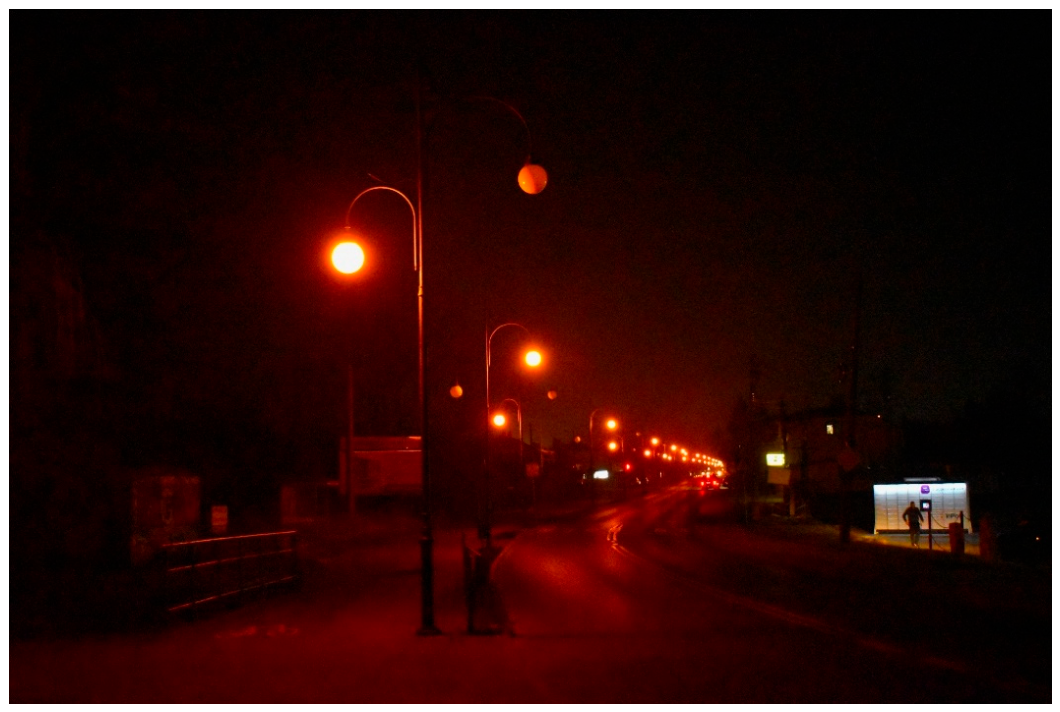
Figure 2.
Lighting conditions in Mickiewicz Park in Rzgów (source: own elaboration).
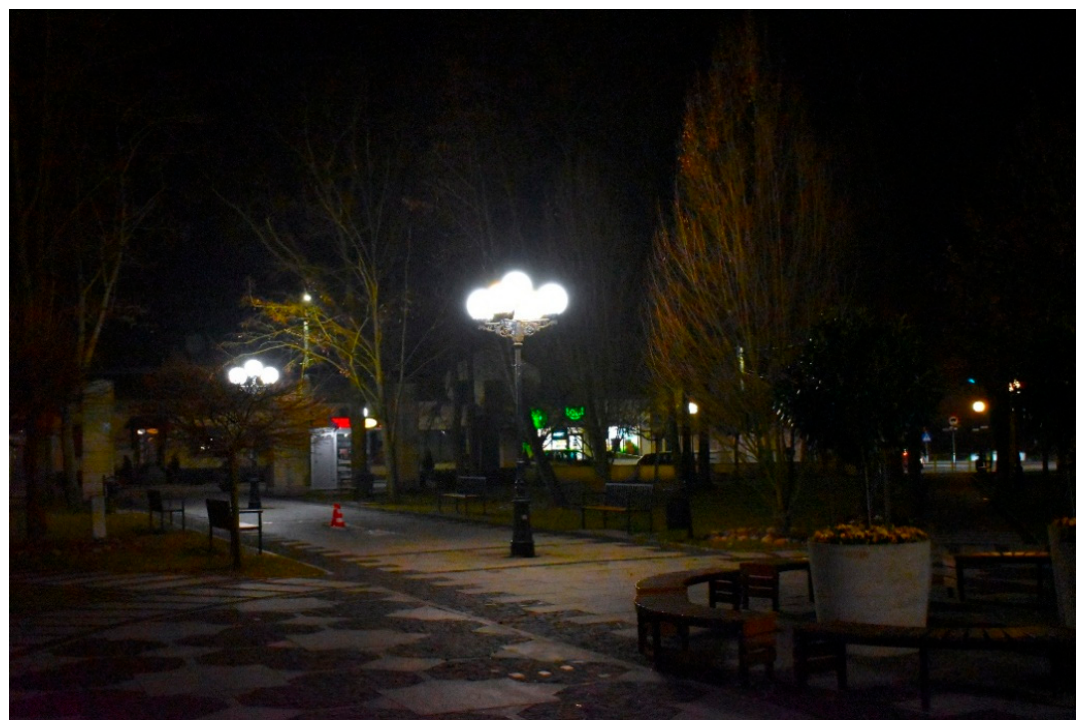
Figure 3.
Degradation of luminaire covers in Zgierz (source: own elaboration).
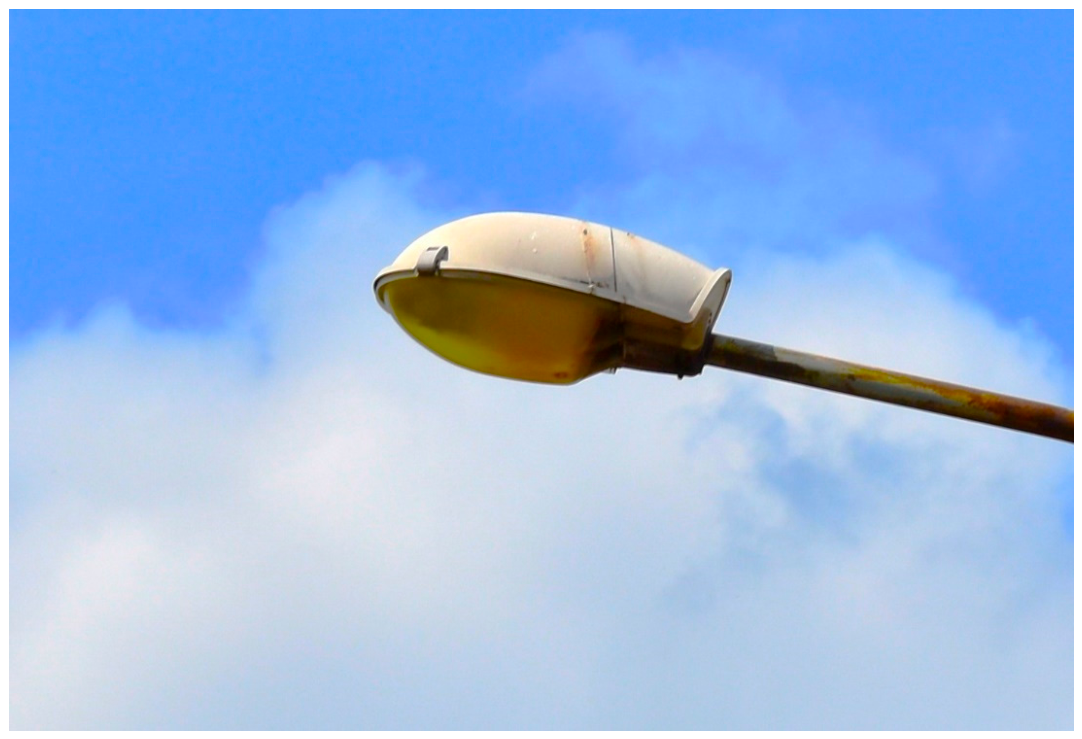
Table 1.
Characteristics of Street Lighting Infrastructure in Rzgów.
| Street | Type of lighting | Type of fixture | Power | Material used for the fixtures | Deployment system | Additional notes |
| Ogrodowa | sodium | Philips SRP 222 | 70W | Aluminum body, polycarbonate shade | one-sided | light fixtures on every other pole, spaced 60 meters apart |
| Tuszyńska (Długa- nr 30) | sodium | Philips SGP340 | 150W | Aluminum body, polycarbonate shade | one-sided | poorly lit crosswalks and sidewalks |
| Tuszyńska (nr 30-Katowicka) | sodium | ES SYSTEM OCP | 70W | Acrylic (PMMA) | one-sided | every other light is turned off |
| Wąwozowa | sodium | Philips SRP 222 + ES SYSTEM BOYEN | 70W | Aluminum body, polycarbonate shade | one-sided | none |
| Długa | sodium | Elgo OUSd 70, SRP 222 | 70W | OUSd: Body made of stamped aluminum sheet, shade made of polymethyl methacrylate; SRP222: aluminum and polycarbonate | one-sided | none |
| Park im. Mickiewicza | substitute & LED 4000k | Art Metal K2 Wenus | 35W | Acrylic (PMMA) | n/a | light pollution, birds chirping at night around 9:00 p.m. |
| Kusocińksiego | sodium | Philips SRP 222 | 70W | Aluminum body, polycarbonate shade | one-sided | distance between poles 100 m |
| Rudzka (Katowicka-Łódzka) | sodium | Mesko OZP | 70W | Polypropylene | one-sided | every other light is turned off |
| Park im. Mickiewicza | substitute & LED 4000k | Art Metal K2 Wenus | 35W | Acrylic (PMMA) | n/a | light fixtures on every other pole, spaced 60 meters apart |
Table 2.
Characteristics of Street Lighting Infrastructure in Zgierz.
| Street | Type of lighting | Type of fixture | Power | Material used for the fixtures | Deployment system | Additional notes |
| Łódzka (Chełmska-Powstańców Śląskich) | sodium | Elgo OUS 400 + OUSa 250 | 400W + 250W | Elgo OUS: die-cast aluminum body, PMMA diffuser. OUS luminaires: glass-fiber-reinforced polypropylene body, polycarbonate diffuser | one-sided | glare from OUS 400 luminaires; degradation of the polycarbonate lenses on OUS luminaires, blocking the light beam |
| Łódzka (Powstańców Śląskich-Krótka) | sodium | Philips SGS 102 | 250W | Body made of glass-fiber-reinforced polypropylene, polycarbonate shade | opposite | faded polycarbonate shades blocking the light beam, or the absence of shades causing degradation of the reflector |
| Piotra Skargi (pl. Jana Pawła II -Łęczycka) | sodium | Elgo OUSa i OUSb | 250W i 150W | Body made of glass-fiber-reinforced polypropylene, polycarbonate shade | one-sided | deteriorated shades blocking the light beam, an unlit curve in the road |
| Piotrka Skargi (Łęczycka-Targowa) | sodium | Elgo OUSd 70 | 70W | Body: stamped aluminum sheet; shade: polymethyl methacrylate | one-sided | none |
| al. Armii Krajowej | sodium | Philips SGS 102 | 250W | Body made of glass-fiber-reinforced polypropylene, polycarbonate shade | one-sided & centered | unlit crosswalks, sidewalks, and intersections |
| Chełmska | sodium | Elgo OUSb 150 | 150W | Body made of glass-fiber-reinforced polypropylene, polycarbonate shade | one-sided | unlit walkways |
| Kuropatwińskiej | sodium | Elgo OUSb 150 | 150W | Body made of glass-fiber-reinforced polypropylene, polycarbonate shade | one-sided | none |
| pl. Jana Pawła II | sodium | Art Metal VERA | 70W | Aluminum body, glass shade | opposite | inappropriate lighting fixture power for the space being illuminated; lack of light shields, resulting in the light beam reaching the windows of nearby homes |
Table 3.
Qualitative scoring criteria applied in the SLSI assessment.
| Indicator | Score 1 | Score 2 | Score 3 | Score 4 | Score 5 |
| En1 – light pollution and upward light emission | strong glare and visible upward light emission; unshielded luminaires | high level of glare or partial upward emission | moderate limitation of light spill and glare | low glare and limited upward emission | fully shielded luminaires and minimal light spill |
| En2 – impact on the ecosystem | visible disturbance of green areas or nocturnal fauna; excessive illumination | noticeable environmental impact | moderate environmental impact | limited environmental disturbance | lighting adapted to environmental conditions with minimal ecological impact |
| En3 – user comfort | uneven lighting, dark zones, poorly illuminated crossings or sidewalks | significant deficiencies in lighting quality | acceptable lighting conditions with some deficiencies | generally uniform lighting and good visibility | high lighting uniformity and visual comfort |
| Ee1 – type of light source | outdated low-efficiency lighting systems | predominantly conventional lighting systems | mixed lighting technologies | mostly energy-efficient lighting | predominantly LED-based energy-efficient lighting |
| Ee2 – installed power and adaptation to space function | excessive or poorly adapted power levels | partially mismatched lighting parameters | moderate adaptation to space function | generally appropriate power and distribution | lighting parameters fully adapted to street/public-space function |
| Ee3 – system sophistication | no smart or adaptive lighting solutions | minimal modernization | limited automation features | partial implementation of smart-control systems | advanced adaptive or smart lighting-management system |
Table 4.
Aggregated SLSI indicators for Rzgów and Zgierz (source: own elaboration).
| City | En | Ee | SLSI |
| Rzgów | 2,96 | 2,42 | 2,69 |
| Zgierz | 3,46 | 1,88 | 2,67 |
Disclaimer/Publisher’s Note: The statements, opinions and data contained in all publications are solely those of the individual author(s) and contributor(s) and not of MDPI and/or the editor(s). MDPI and/or the editor(s) disclaim responsibility for any injury to people or property resulting from any ideas, methods, instructions or products referred to in the content. |
© 2026 by the authors. Licensee MDPI, Basel, Switzerland. This article is an open access article distributed under the terms and conditions of the Creative Commons Attribution (CC BY) license (http://creativecommons.org/licenses/by/4.0/).
Copyright: This open access article is published under a Creative Commons CC BY 4.0 license, which permit the free download, distribution, and reuse, provided that the author and preprint are cited in any reuse.


