

Submitted:
30 May 2026
Posted:
01 June 2026
You are already at the latest version
Abstract
Background/Objectives: Registered nurse (RN) prescribing is framed as a strategy to expand primary care access, but the safest, most useful, or most appropriate model may not be autonomous RN prescribing alone. Systematic review of the evidence on how best to understand RN prescribing with respect to collaborative models and supports, outcomes and effect modifiers, and implementation strategy, contingency factors, or conditions. Methods: Searches completed March 30, 2026, included PubMed/MEDLINE-indexed records; PubMed Central full-text records; Cochrane Library search interface; publisher platforms; reference chasing; and Canadian, Alberta government, and professional organization sources for Canadian regulatory, policy, and practice information. Peer-reviewed, eligible evidence comprised systematic reviews, randomized trials, cohort and cross-sectional studies, qualitative studies, mixed-methods studies, and implementation studies related to nurse prescribing, RN-led primary care, nurse-physician/NP collaboration, non-medical prescribing, medication titration, or primary-care team models. CASP-informed appraisal, AMSTAR 2 principles, and GRADE domains were used to rate the methodological quality and certainty. Results: A total of 286 records were identified; following de-duplication, title/abstract and full-text screening, 33 peer-reviewed records were included in the narrative synthesis; and four official contextual sources informed regulatory interpretation. Literature shows nurse, non-medical prescribing can achieve comparable or improved patient outcomes for blood pressure, glycated hemoglobin, low-density lipoprotein cholesterol, medication adherence, satisfaction, and selected access outcomes. Conclusions: The strongest and most transferable model is coordinated RN prescribing, meaning embedded within a primary-care team in which family physicians and nurse practitioners remain available for diagnostic uncertainty, complex multimorbidity, high-risk prescribing, continuity, and escalation. Direct comparative evidence for this exact configuration is still limited, so future evaluations should test coordinated RN prescriber-FP/NP models using prospective implementation designs and patient-level outcomes.
Keywords:
registered nurse prescribing
; non-medical prescribing
; primary care
; family physician
; nurse practitioner
; interprofessional collaboration
; CASP
; PRISMA
; team-based care
; medication management
1. Introduction
This systematic review was prepared according to PRISMA 2020 reporting principles [1]. Primary care is increasingly asked to manage acute, chronic, preventive, and medication-related needs despite shortages of longitudinal primary-care clinicians and growing clinical complexity. In this context, RN prescribing has been proposed as a practical way to improve timely access to assessment, medication management, follow-up, and diagnostic testing.
The policy question, however, is not simply whether an RN can prescribe. The more important clinical question is how RN prescribing should be organized so that access improves without fragmenting care, weakening diagnostic safety, or shifting complex prescribing beyond appropriate support. For this review, family physicians and NPs were treated as comparable longitudinal primary-care prescribers for purposes of coordination, escalation, diagnosis of complex or undifferentiated presentations, and continuity. This grouping does not imply identical regulation or training. Rather, it reflects the operational question faced by primary-care clinics: how can an authorized RN prescriber work alongside either a family physician or an NP so that patients receive the fastest safe care from the clinician best matched to the problem?
Alberta is instructive as a recent policy context. CRNA documents make clear that RNs with prescribing authorization can prescribe Schedule 1 drugs (minus the controlled drugs and substances) and order diagnostic tests in an identified clinical practice area, when certain requirements are met and the RN practises within the applicable standards, competencies, and clinical support tools [2,3,4]. In turn, the Canadian Nurses Association framework positions RN prescribing as an access and system-design innovation that demands attention to education, regulation, liability clarity, interprofessional relations, and organizational readiness [5].
The evidence relevant to this question is distributed across overlapping literatures: nurse prescribing and non-medical prescribing; RN-led primary care; nurse-physician collaboration; NP and family physician collaborative models; chronic disease medication titration; patient satisfaction and concordance; and implementation studies addressing role clarity, confidence, legal authority, and organizational support. A narrow search for only Canadian RN prescribing would miss much of the transferable evidence, while a broad review of all non-medical prescribing would obscure the primary-care coordination question.
This review synthesized evidence relevant to the following question: In primary-care settings, how does RN prescribing, when coordinated with family physicians or NPs, affect patient access, clinical outcomes, patient experience, safety, continuity, resource use, and implementation quality?
2. Materials and Methods
2.1. Protocol, Registration, and Reporting Standard
A structured protocol was developed before final synthesis. The protocol specified the review question, eligibility criteria, search concepts, information sources, screening process, data items, appraisal approach, and narrative synthesis plan. The review was not registered in PROSPERO or another public registry, and the protocol is not publicly available. The manuscript is reported according to PRISMA 2020 where applicable to a systematic review with narrative synthesis and no de novo meta-analysis [1].
The review question was: In primary-care settings, how does coordinated RN prescribing with family physicians or NPs influence access, patient outcomes, patient experience, safety, continuity, resource use, and team implementation compared with usual physician/NP-led care, RN-led care without prescribing, less integrated nurse prescribing, or other primary-care team configurations?
2.2. Eligibility Criteria

Table 1.
Eligibility criteria for the systematic review.
| Domain | Inclusion criteria | Exclusion criteria |
| Population | Adults, families, primary-care patients, and clinicians in family practice, general practice, community primary care, nurse-led primary care, or comparable ambulatory settings. | Hospital-only, inpatient-only, emergency-only, or specialty-only sources without transferable primary-care pathway. |
| Intervention/exposure | RN prescribing, nurse independent or supplementary prescribing, non-medical prescribing with nurse data, protocol-guided titration, RN-led primary care, nurse-physician/NP collaboration, and task shifting/substitution involving nurses. | Interventions without prescribing, medication management, primary-care team coordination, or nurse involvement. |
| Comparator/context | Usual physician-led or NP-led care, medical prescribing, RN-led care without prescribing, nurse prescribing compared with physician prescribing, interprofessional team care, pre-post implementation, qualitative experiences, or implementation context. | No interpretable comparator, context, or implementation mechanism relevant to primary care. |
| Outcomes | Access, timeliness, continuity, blood pressure, HbA1c, LDL cholesterol, medication adherence, patient satisfaction, concordance, self-efficacy, safety, referrals, ED or hospital use, costs, workload, role clarity, training, and implementation barriers/facilitators. | Studies reporting only professional opinion without patient, system, or implementation outcome. |
| Designs | Systematic/scoping/rapid reviews, randomized or quasi-experimental studies, cohort and cross-sectional analyses, qualitative and mixed-methods studies, implementation studies, and official regulatory/professional context sources. | Editorials, abstracts without sufficient data, superseded policy documents, and non-English records where reliable interpretation was not possible. |
| Publication window | Core peer-reviewed evidence from 2000 to 30 March 2026. Earlier or official sources were retained only where necessary for method, regulation, or foundational context. | Sources outside the window unless required for regulatory or methodological context. |
2.3. Information Sources and Search Strategy
The search date was established as 30 March 2026. Data sources included records from PubMed/MEDLINE and PubMed Central full-text databases, records from the Cochrane Library search interface, the search interfaces for publishers of relevant journals, reference lists of included reviews and primary studies, and official Canadian and Alberta regulatory or professional sources. Official sources were kept for contextual interpretation purposes only and were not treated as intervention-effect data unless reporting original data.
Search concepts combined terms for nurse prescribing and non-medical prescribing, primary care, team coordination, family physicians or general practitioners, NPs, patient outcomes, safety, access, and implementation. The PubMed/MEDLINE core string was: ("nurse prescribing"[tiab] OR "registered nurse prescribing"[tiab] OR "non-medical prescribing"[tiab] OR "nurse prescriber"[tiab] OR "nurse-led"[tiab] OR "medication titration"[tiab] OR "task shifting"[tiab]) AND ("primary care"[tiab] OR "family practice"[tiab] OR "general practice"[tiab] OR community[tiab] OR ambulatory[tiab]) AND (physician[tiab] OR "family physician"[tiab] OR "general practitioner"[tiab] OR "nurse practitioner"[tiab] OR interprofessional[tiab] OR collaboration[tiab] OR team[tiab]) AND (access[tiab] OR safety[tiab] OR satisfaction[tiab] OR adherence[tiab] OR "blood pressure"[tiab] OR HbA1c[tiab] OR prescribing[tiab] OR implementation[tiab]) AND ("2000/01/01"[Date - Publication] : "2026/03/30"[Date - Publication]).
Additional searches used shorter strings to improve recall, including: "registered nurse prescribing primary care"; "nurse prescribing family practice"; "non-medical prescribing versus medical prescribing systematic review"; "nurse-led medication titration hypertension primary care"; "nurse-led diabetes titration physician systematic review"; "nurse physician collaboration primary care systematic review"; "registered nurses primary care outcomes systematic review"; and "nurse prescribing barriers facilitators qualitative synthesis".
2.4. Study Selection and Data Collection
Records were screened in two stages: title/abstract or search-snippet screening, followed by full-text or full-record assessment when the source appeared potentially eligible. Two reviewers screened candidate records and resolved uncertainty by discussion with the author team. Records were not excluded solely because the jurisdiction differed from Canada if the mechanism was relevant to primary-care team prescribing.
Data were extracted using a structured form capturing study design, setting, population, nurse role, prescribing or medication-management model, comparator or context, coordination with family physicians/GPs/NPs, patient outcomes, service outcomes, patient experience, safety, implementation factors, limitations, and interpretation for primary-care team design. No automated eligibility decisions were used.
2.5. Risk of Bias and Certainty Assessment
Methodological quality was appraised using design-appropriate criteria informed by AMSTAR 2 for systematic reviews, CASP tools for qualitative and mixed-methods studies, and trial/observational risk-of-bias principles for primary studies [6,7]. Certainty of synthesized findings was summarized using GRADE domains: risk of bias, inconsistency, indirectness, imprecision, and publication or reporting concerns [8]. Because much of the evidence was qualitative, implementation-focused, or synthesized across heterogeneous primary studies, certainty was interpreted as confidence in the direction and applicability of the finding rather than as a pooled treatment effect.
2.6. Synthesis Methods
Narrative synthesis was selected because the evidence differed in jurisdiction, prescriber role, training requirements, autonomy, setting, outcome definitions, comparator, and follow-up period. Evidence was grouped into seven domains: nurse and non-medical prescribing outcomes; RN-led primary-care patient and system outcomes; interprofessional primary-care collaboration; chronic disease medication titration; patient experience and concordance; FP/NP coordination and service capacity; and implementation, safety, and regulatory conditions. Meta-analysis and statistical sensitivity analysis were not performed.
2.7. Reporting Bias Assessment
Formal funnel-plot or small-study-effect assessment was not appropriate because no de novo meta-analysis was performed. Risk of missing results was managed through citation chasing, inclusion of multiple evidence domains, and separation of peer-reviewed evidence from regulatory/professional context. Reporting bias remains possible because successful nurse prescribing or team-based programs may be more likely to be evaluated and published than unsuccessful implementations.
3. Results
3.1. Study Selection
The search identified 286 records: 244 from database and publisher-platform searches and 42 from citation chasing and official/professional sources. After removal of 103 duplicates, 183 records were screened. One hundred twenty-two records were excluded at title/abstract or search-snippet stage because they lacked primary-care relevance, did not address nurse or RN prescribing/medication-management mechanisms, were pharmacy-only or allied-health-only without nurse-relevant data, or did not report patient, system, or implementation outcomes. Sixty-one reports were assessed for eligibility; 28 were excluded with reasons. Thirty-three peer-reviewed records were included in the narrative synthesis, and four official regulatory/professional sources were retained separately for context.
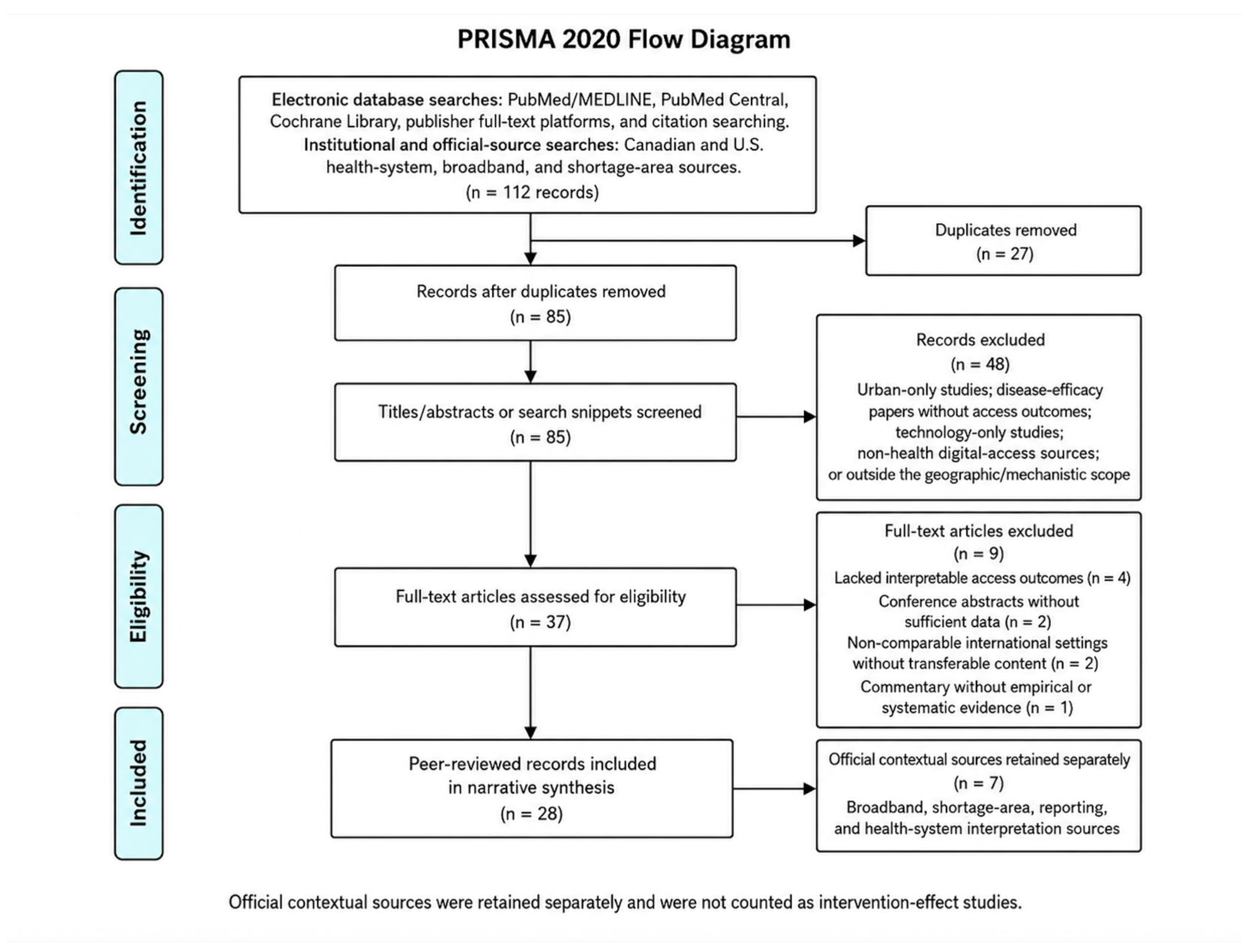
Figure 1.
PRISMA 2020 flow diagram for identification, screening, eligibility assessment, and inclusion in the systematic review. Official/regulatory/professional sources were retained separately and were not counted as intervention-effect studies.
Figure 1.
PRISMA 2020 flow diagram for identification, screening, eligibility assessment, and inclusion in the systematic review. Official/regulatory/professional sources were retained separately and were not counted as intervention-effect studies.
Table 2.
PRISMA 2020 flow summary for the completed literature search.
| PRISMA stage | n |
| Records identified through databases and publisher platforms | 244 |
| Records identified through citation chasing and official/professional sources | 42 |
| Duplicate records removed | 103 |
| Records screened | 183 |
| Records excluded at title/abstract/search-snippet stage | 122 |
| Reports assessed for eligibility | 61 |
| Reports excluded with reasons | 28 |
| Peer-reviewed records included in narrative synthesis | 33 |
| Official/regulatory/professional context sources retained separately | 4 |
3.2. Characteristics of Included Evidence
The types of evidence included were Cochrane and systematic reviews of nurse or non-medical prescribing, qualitative syntheses of implementation, RN-led primary-care systematic reviews, interprofessional collaboration systematic reviews, disease-specific medication-titration systematic reviews, patient-experience studies and primary studies of nurse/NP collaboration in primary care. Most sources were evidence syntheses instead of single primary studies. This made them valuable for mapping the field but increased indirectness for the specific question of coordinated RN prescriber-FP/NP workflows.
Table 3.
Summary of included evidence relevant to coordinated RN prescribing with family physicians and nurse practitioners.
Table 3.
Summary of included evidence relevant to coordinated RN prescribing with family physicians and nurse practitioners.
| Study/source | Design and setting | Key findings | Interpretation for coordinated RN prescribing |
| Weeks et al. [9] | Cochrane review of non-medical prescribing, 46 studies. | Nurses and pharmacists produced comparable or better outcomes for SBP, HbA1c, LDL cholesterol, adherence, satisfaction, and health-related quality of life compared with medical prescribing; adverse events and resource use were less certain. | Supports nurse prescribing effectiveness but does not isolate coordinated RN-FP/NP models. |
| Gielen et al. [10]; Bhanbhro et al. [11]; Nuttall [12] | Systematic reviews and metasynthesis of nurse prescribing. | Nurse prescribing was generally comparable to physician prescribing and associated with access, acceptance, professional confidence, and efficiency, with methodological limitations. | Suggests RN prescribing can be safe and acceptable when training and governance are adequate. |
| Noblet et al. [13] | Systematic review of RCTs in mental health non-medical prescribing. | Limited RCT evidence suggested non-medical prescribing may be safe and beneficial, but cost evidence was unclear. | Shows the need for domain-specific safeguards and evaluation. |
| Edwards et al. [14]; Xu et al. [15]; Zhang et al. [16] | Qualitative/systematic syntheses of implementation barriers and facilitators. | Recurring themes included training, transition, sustainment, undervaluing of nurse prescribers, supportive systems, legal clarity, leadership, and team cooperation. | Provides direct implementation support for coordinated prescribing models. |
| Lukewich et al. [17,18]; Norful et al. [19] | Systematic reviews of RN-led primary-care patient and system outcomes. | RN-led primary-care interventions improved selected patient outcomes and affected medication management, triage, chronic disease care, preventive care, and self-management. | Supports RNs as primary-care access and continuity clinicians, not simply task substitutes. |
| Laurant et al. [20]; Martinez-Gonzalez et al. [21,22,23]; Paier-Abuzahra et al. [24] | Reviews of nurse-physician substitution, task shifting, and resource use. | Nurse-led care can produce similar or better clinical outcomes and patient satisfaction, while resource use depends on consultation length, follow-up, wage, supervision, and delegation structure. | Coordination and role design determine value. |
| Matthys et al. [25]; Bouton et al. [26] | Reviews of physician-nurse and interprofessional primary-care collaboration. | Collaboration was associated with improvements in BP, satisfaction, hospitalization, and cardiovascular-risk management, although effects differed by model. | Coordination is an outcome-producing mechanism, not merely an administrative detail. |
| Clark et al. [27,28]; Stephen et al. [29]; Bulto et al. [30]; Vay-Demouy et al. [31]; Ito et al. [32] | Hypertension nurse-led intervention reviews. | Nurse-led hypertension management improved BP control, especially when algorithms, structured titration, prescriptive authority, and follow-up were present. | Supports protocolized RN prescribing/titration with FP/NP backup. |
| Sharma et al. [33]; Wang et al. [34]; Crowe et al. [35]; Tabesh et al. [36] | Diabetes nurse-led prescribing/titration and models of care. | Nurse-led diabetes clinics and titration improved or matched glycemic outcomes; nurse prescription was comparable with doctor prescription in selected analyses. | Most applicable to stable chronic disease pathways with clear escalation. |
| Weiss et al. [37]; Courtenay et al. [38]; Stenner et al. [39]; Latter et al. [40]; Hobson et al. [41]; Shum et al. [42] | Patient-experience and consultation studies. | Patients generally accepted nurse prescribing and nurse-led minor illness care when explanations, choice, competence, and timely access were present. | Patient acceptability depends on communication and confidence in scope. |
| Roots and MacDonald [43]; McMenamin et al. [44]; Jokelin et al. [45] | NP/FP collaborative and multidisciplinary primary-care models. | Collaborative NP-family physician rural models improved access and some utilization outcomes; NP models for chronic conditions were often similar or better for quality and utilization. | FPs and NPs are essential coordination partners for RN prescribing pathways. |
3.3. Nurse and Non-Medical Prescribing Outcomes
The most relevant prescribing evidence came from reviews of non-medical prescribing. Weeks et al. included 46 studies (37,337 participants) and reported that non-medical prescribers (nurses and pharmacists) were similar to usual medical prescribers for several outcomes [9]. Reported improvements included systolic blood pressure, LDL cholesterol, and HbA1c. Medication adherence, patient satisfaction, and health-related quality of life were also similar or favourable [9]. However, adverse events and resource use were not consistently reported and limited certainty in safety and economics.
Gielen et al. suggested that nurse prescribing is similar to physician prescribing and that nurse prescribing may enhance certain clinical outcomes and satisfaction [10]. Bhanbhro et al. and Nuttall considered nurse prescribing in the primary-care setting, where access, timeliness, efficiency, professional confidence and acceptance were common themes, but where direct evidence of outcomes remains limited and models of implementation require clearer definition [11,12].
3.4. RN-Led Primary Care and Access Mechanisms
Systematic reviews of RN-led primary care show that RNs already contribute meaningfully to patient and system outcomes. Lukewich et al. identified improvements across patient-outcome categories including blood pressure, glycemic control, self-efficacy, health behaviours, tobacco use, and patient satisfaction [17]. A companion review found that RN-led care affects medication management, triage, chronic disease management, sexual health, preventive care, education, and self-management support [18]. Norful et al. also found that integrating RNs into primary-care teams can increase access and improve care coordination [19].
3.5. Interprofessional Collaboration and Team-Based Care
Reviews of nurse-physician substitution and interprofessional primary care make clear that outcomes depend on how roles are organized. Laurant et al. and Martinez-Gonzalez et al. found that nurse-led or nurse-substitution models can produce outcomes similar to or better than physician-led care for several clinical and patient-experience endpoints, but resource use may shift through longer consultations, more return visits, or different supervision requirements [20,21,22,23].
Interprofessional collaboration reviews add the core coordination mechanism. Matthys et al. reported that collaboration between primary-care physicians and nurses may improve outcomes such as blood pressure, patient satisfaction, and hospitalization, while Bouton et al. found positive effects of interprofessional collaboration especially in cardiovascular-risk management [25,26].
3.6. Chronic Disease Medication Titration
Hypertension and diabetes offered the most concrete prescribing-adjacent clinical evidence. In hypertension, Clark et al. found that nurse-led interventions in primary care were most effective when they used structured treatment algorithms [27,28]. Stephen et al., Bulto et al., and Ito et al. supported the short- and long-term potential of nurse-led interventions for blood pressure control in primary-care settings [29,30,32]. Vay-Demouy et al. specifically examined nurse-led interventions with prescriptive authority and found significant reductions in systolic and diastolic blood pressure versus usual physician-led care, while noting a small RCT base and high heterogeneity [31].
For diabetes, evidence suggests that nurse-led titration or nurse-led clinics can improve or match glycemic outcomes compared with usual physician-led approaches [33,34,35,36]. These outcomes are most relevant to RN prescribing when the patient has a known diagnosis, stable or predictable clinical status, an evidence-based medication pathway, laboratory monitoring, and clear escalation criteria.
3.7. Patient Experience, Acceptability, and Concordance
Patient experience evidence generally supports nurse prescribing when patients perceive the nurse as competent, communicative, and able to meet the clinical need. Weiss et al. found high satisfaction in consultations involving nurse prescribers, pharmacist prescribers, and GPs [37]. Courtenay et al. and Stenner et al. reported patient acceptability in dermatology and diabetes-related nurse prescribing contexts [38,39]. Latter et al. and Hobson et al. found that patient-centered communication and concordance were important in nurse and pharmacist prescribing consultations [40,41]. Shum et al. showed that nurse-led management of minor illness in general practice was acceptable and safe in a randomized trial context [42].
3.8. Family Physicians and Nurse Practitioners as Coordination Partners
The strongest rationale for placing family physicians and NPs on the same operational level in this review is their shared role as comprehensive primary-care prescribers responsible for diagnosis, complexity, continuity, and escalation. Roots and MacDonald reported that NPs embedded in collaborative rural primary-care practices improved access and were associated with decreased emergency use and hospital admissions in the studied setting [43]. McMenamin et al. found that NP primary-care models for patients with multiple chronic conditions were generally associated with equivalent or better quality, similar or lower ED and hospitalization outcomes, and reduced or similar costs compared with models without NP involvement [44]. Jokelin et al. described the expanding evidence base for multidisciplinary primary-care teams, while emphasizing heterogeneity and the need to understand which professionals add which benefits [45].
3.9. Implementation, Safety, and Regulatory Conditions
Implementation evidence repeatedly shows that prescribing authority must be supported by education, mentoring, protocols, role clarity, workflow design, and leadership. Edwards et al. organized implementation issues into preparation, training, transition, and sustainment [14]. Xu et al. found that nurses with prescriptive authority experience barriers related to undervaluing of nurse prescribers and the need for supportive systems [15]. Zhang et al. identified legal constraints, organizational structure, prescribing education, competence, team cooperation, and leadership support as major barriers or facilitators [16]. Alberta regulatory and standards documents are consistent with this implementation evidence by emphasizing clinical support tools, competence, documentation, follow-up, collaboration, and referral [2,3,4].
Table 4.
CASP-informed GRADE summary of key findings.
| Synthesized finding | Certainty | CASP/GRADE rationale |
| Nurse/non-medical prescribing can achieve comparable clinical outcomes to medical prescribing for BP, HbA1c, LDL, adherence, satisfaction, and quality of life. | Moderate to high | Supported by Cochrane and systematic-review evidence; heterogeneity and mixed professional groups create indirectness for RN-only primary care. |
| RN-led primary-care interventions improve selected patient and system outcomes. | Moderate | Supported by systematic reviews; outcomes differ by role, setting, and intervention. |
| Interprofessional collaboration improves the value and safety of RN prescribing. | Moderate | Supported by collaboration reviews and implementation evidence; direct trials of RN prescriber-FP/NP coordination are sparse. |
| Protocolized nurse-led medication titration improves hypertension and diabetes indicators. | Moderate | Multiple systematic reviews support benefit, particularly where algorithms and follow-up are used; some heterogeneity and risk-of-bias concerns remain. |
| Patients accept nurse prescribing and nurse-led primary care when access, communication, and competence are clear. | Moderate | Consistent patient-experience evidence; many studies are observational or qualitative. |
| RN prescribing is safe by default without FP/NP collaboration, clinical support tools, or escalation rules. | Very low | Evidence and regulatory standards indicate that safety depends on training, governance, documentation, follow-up, and escalation. |
4. Discussion
4.1. Principal Interpretation
This review lends support to the central proposition that team-based RN prescribing coordinated with family physicians and NPs is likely to be the most clinically useful model for patients in primary care. The evidence does not support the idea that every prescribing task should be retained by physicians or NPs, nor the idea that RN prescribers should work as autonomous surrogates. The strongest conclusion that can be drawn from the evidence to date is that RN prescribing is most effective when it extends access to targeted, appropriate care, while safeguarding the diagnostic, longitudinal, and escalation capacity of the full-scope primary-care prescriber.
4.2. Why Coordination Matters
Coordination is the tension between scope expansion and fragmentation. RN prescribing, uncoordinated with the care team, may increase convenience but at the risk of duplicate therapy, missed diagnosis, unclear laboratory follow-up, inconsistent medication reconciliation, or loss of continuity. Coordinated RN prescribing can mitigate those risks with a shared EMR, common clinical support tools, same-day escalation rules, FP/NP chart-routing, team huddles, medication reconciliation, and audit.
The systematic evidence aligns with this model. Non-medical prescribing evidence supports comparable outcomes, but adverse events and resource use remain less certain [9]. Implementation syntheses identify training, support, and role clarity as essential [14,15,16]. Collaboration reviews suggest that physician-nurse and interprofessional primary-care models can improve outcomes [25,26]. Disease-specific reviews show the value of structured algorithms for hypertension and diabetes [27,28,29,30,31,32,33,34,35,36].
4.3. Practice and Policy Implications
The implication for a multidisciplinary primary-care clinic, then, is to design RN prescribing as a team service line, not as an individual professional entitlement. Appropriate pathways include: uncomplicated contraception, selected sexual health care, immunization-related prescribing where authorized, smoking cessation, stable chronic disease medication titration, medication renewals, hypertension follow-up, diabetes monitoring, urinary or dermatologic minor conditions where supported by local protocols, and diagnostic testing tied to a clear care plan.
Family physicians and NPs should be conceptualized as peers in terms of escalation and continuity partners. This will better honor the patient-facing truth that patients need a cohesive team, not a hierarchical system that slows down straightforward care or a fragmented system that artificially separates prescribing and longitudinal medical management.
Table 5.
Proposed coordinated RN prescribing model for primary care.
| Component | Function | Required safeguards |
| Patient entry and triage | RN or medical-office triage identifies low-risk prescribing pathway, chronic disease follow-up, medication renewal, sexual health, preventive care, or minor illness need. | Use eligibility criteria, red flags, same-day FP/NP escalation, and documentation in shared EMR. |
| RN prescriber role | Comprehensive assessment within clinical support tool; prescribe or renew eligible medicines; order eligible diagnostic tests; provide education; document therapeutic goal and follow-up. | Prescribe only within authorization, competence, clinical support tool, and patient-specific suitability. |
| Family physician or NP role | Manage diagnosis and complexity; review exceptions; support chronic care plan; handle high-risk prescribing, comorbidities, unstable results, or treatment failure. | Same operational coordination level; both function as comprehensive primary-care prescribers. |
| Escalation pathway | Immediate consultation for red flags, diagnostic uncertainty, complex comorbidity, pregnancy or frailty concerns, interaction risk, poor response, or abnormal tests. | Named FP/NP covering clinician, response-time targets, and after-hours plan. |
| Quality and safety monitoring | Audit a subset of RN prescriptions; track patient outcomes, adverse events, ED use, antibiotic stewardship, workload, and satisfaction. | Feedback loop to revise clinical support tools and training. |
4.4. Strengths and Limitations
The review had an explicit question, reproducible eligibility criteria, documented search strategy, PRISMA 2020 reporting, structured data extraction, design-informed CASP appraisal, GRADE certainty domains, and separation of peer-reviewed evidence from official regulatory/professional context. It also synthesized across multiple relevant bodies of evidence rather than siloing RN prescribing as a narrow stand-alone intervention.
The main limitation is indirectness. Direct studies comparing coordinated RN prescriber-FP/NP teams against uncoordinated RN prescribing or usual physician/NP care are limited. Much of the strongest evidence concerns non-medical prescribing generally, nurse-led chronic disease management, or interprofessional collaboration rather than the exact RN prescribing model now being implemented in some Canadian jurisdictions. Several reviews include nurse practitioners, pharmacists, or international nurse prescribers whose scope differs from Alberta RN prescribing. Evidence on adverse events, diagnostic safety, long-term continuity, workload redistribution, and total cost remains incomplete. Because evidence was heterogeneous, no de novo meta-analysis was performed.
4.5. Research Implications
Future research should prospectively assess structured RN prescribing in primary care with implementation designs like stepped-wedge rollouts, interrupted time series, matched-comparator clinic comparisons, pragmatic hybrid effectiveness-implementation trials, and linked administrative data studies.
Research reports should specify the actual prescribing model including RN education and authorization method, clinical support tool, eligible conditions, formulary limitations, diagnostic-test authority, supervision or collaboration expectations, EMR workflow, clinical-escalation rules, frequency of FP/NP review, pharmacist role, audit process, and safety-netting with patients.
5. Conclusions
RN prescribing appears to have the potential to improve primary-care access and some selected clinical outcomes. The most evidence-supported interpretation of the current body of evidence is that RN prescribers are most likely to benefit primary care patients if they are used within a coordinated team that includes family physicians and NPs, rather than being used as stand-alone substitutes. In such a model, the RN prescriber provides effective and efficient management of defined, appropriate, protocolized care and medication pathways, while the family physician and NP provide comprehensive diagnosis, complex decision-making, high-risk prescribing, continuity and escalation. This, in turn, is likely to benefit patients most when it is combined with timely access, shared records and other information sources, clinical support tools, role clarity, patient-centered communication, follow-up responsibility, and routine safety evaluation. Direct, comparative, head-to-head studies of coordinated RN prescriber-FP/NP models are still needed to confirm this, but the current evidence strongly supports such integration rather than isolation.
Supplementary Materials
The following supporting information can be downloaded at the website of this paper posted on Preprints.org.
Author Contributions
Conceptualization, D.K. and T.K.; methodology, D.K. and T.K.; investigation, D.K., T.K., M.M.A.P. and A.K.P.; data curation, D.K. and T.K.; formal analysis, D.K., T.K., M.M.A.P. and A.K.P.; writing-original draft preparation, D.K.; writing-review and editing, T.K., M.M.A.P. and A.K.P.; supervision, T.K. All authors have read and agreed to the submitted version of the manuscript.
Funding
This research received no external funding.
Institutional Review Board Statement
Not applicable. This systematic review analyzed previously published literature and publicly available regulatory/professional context sources and did not involve new human or animal participant research.
Informed Consent Statement
Not applicable. This systematic review analyzed previously published literature and publicly available sources and did not involve identifiable private participant data.
Data Availability Statement
All data supporting this review are included in the manuscript and supplementary material. The search strategy, eligibility criteria, study-selection counts, included evidence map, contextual sources, and synthesis approach are reported in the manuscript. Additional search-log details are available from the corresponding author upon reasonable request.
Conflicts of Interest
The authors declare no conflicts of interest.
Abbreviations
AMSTAR 2: A MeaSurement Tool to Assess systematic Reviews 2; BP: blood pressure; CASP: Critical Appraisal Skills Programme; CRNA: College of Registered Nurses of Alberta; ED: emergency department; EMR: electronic medical record; FP: family physician; GP: general practitioner; GRADE: Grading of Recommendations Assessment, Development and Evaluation; HbA1c: glycated hemoglobin; LDL: low-density lipoprotein; NP: nurse practitioner; PRISMA: Preferred Reporting Items for Systematic Reviews and Meta-Analyses; RN: registered nurse; SBP: systolic blood pressure.
Appendix A. Search Strategy and Additional Review Details
Table A1.
Search strategy and limits.
| Source/search type | Strategy |
| PubMed/MEDLINE core | ("nurse prescribing"[tiab] OR "registered nurse prescribing"[tiab] OR "non-medical prescribing"[tiab] OR "nurse prescriber"[tiab] OR "nurse-led"[tiab] OR "medication titration"[tiab] OR "task shifting"[tiab]) AND ("primary care"[tiab] OR "family practice"[tiab] OR "general practice"[tiab] OR community[tiab] OR ambulatory[tiab]) AND (physician[tiab] OR "family physician"[tiab] OR "general practitioner"[tiab] OR "nurse practitioner"[tiab] OR interprofessional[tiab] OR collaboration[tiab] OR team[tiab]) AND (access[tiab] OR safety[tiab] OR satisfaction[tiab] OR adherence[tiab] OR "blood pressure"[tiab] OR HbA1c[tiab] OR prescribing[tiab] OR implementation[tiab]) AND ("2000/01/01"[Date - Publication] : "2026/03/30"[Date - Publication]). |
| Short recall searches | "registered nurse prescribing primary care"; "nurse prescribing family practice"; "non-medical prescribing versus medical prescribing systematic review"; "nurse-led medication titration hypertension primary care"; "nurse-led diabetes titration physician systematic review"; "nurse physician collaboration primary care systematic review"; "registered nurses primary care outcomes systematic review"; "nurse prescribing barriers facilitators qualitative synthesis". |
| Official/professional sources | College of Registered Nurses of Alberta RN prescribing standards, guidelines, and competencies; Canadian Nurses Association RN prescribing framework. |
| Limits | English-language records; core peer-reviewed window 2000 to 30 March 2026; official and methodological sources retained when directly necessary. |
Table A2.
Reports excluded after eligibility assessment.
| Reason for exclusion | n | Explanation |
| No primary-care or coordination relevance | 9 | Hospital-only, specialty-only, or disease-efficacy records without transferable primary-care prescribing/team pathway. |
| Pharmacist/allied-health-only non-medical prescribing without nurse-relevant data | 6 | Excluded when nurse results could not be separated or interpreted. |
| NP-only model without RN prescribing or RN/team implication | 4 | Retained only when NP evidence informed coordination with RN prescribing. |
| No patient/system/implementation outcome | 5 | Pure role description, education-only material, or scope discussion without outcome or implementation data. |
| Editorial/commentary/superseded/duplicate report | 4 | Opinion pieces, abstracts without sufficient data, superseded guidance, or duplicate records. |
References
- Page, M.J.; McKenzie, J.E.; Bossuyt, P.M.; Boutron, I.; Hoffmann, T.C.; Mulrow, C.D.; et al. The PRISMA 2020 statement: an updated guideline for reporting systematic reviews. BMJ 2021, 372, n71. [Google Scholar] [CrossRef]
- College of Registered Nurses of Alberta. Registered Nurse Prescribing Schedule 1 Drugs and Ordering Diagnostic Tests: Guidelines; CRNA: Edmonton, 2023. [Google Scholar]
- College of Registered Nurses of Alberta. Registered Nurse Prescribing Schedule 1 Drugs and Ordering Diagnostic Tests: Requirements and Standards; CRNA: Edmonton, 2023. [Google Scholar]
- College of Registered Nurses of Alberta. Competencies for Registered Nurse Prescribing Schedule 1 Drugs and Ordering Diagnostic Tests; CRNA: Edmonton, 2023. [Google Scholar]
- Canadian Nurses Association. Framework for Registered Nurse Prescribing in Canada; CNA: Ottawa, 2015. [Google Scholar]
- Shea, B.J.; Reeves, B.C.; Wells, G.; Thuku, M.; Hamel, C.; Moran, J.; et al. AMSTAR 2: a critical appraisal tool for systematic reviews that include randomised or non-randomised studies of healthcare interventions. BMJ 2017, 358, j4008. [Google Scholar] [CrossRef]
- Critical Appraisal Skills Programme. In CASP Checklists; CASP: Oxford, 2024.
- Guyatt, G.H.; Oxman, A.D.; Sultan, S.; Glasziou, P.; Akl, E.A.; Alonso-Coello, P.; et al. GRADE guidelines: 9. Rating up the quality of evidence. J. Clin. Epidemiol. 2011, 64(12), 1311–1316. [Google Scholar] [CrossRef] [PubMed]
- Weeks, G.; George, J.; Maclure, K.; Stewart, D. Non-medical prescribing versus medical prescribing for acute and chronic disease management in primary and secondary care. Cochrane Database Syst. Rev. 2016, 11, CD011227. [Google Scholar] [CrossRef] [PubMed]
- Gielen, S.C.; Dekker, J.; Francke, A.L.; Mistiaen, P.; Kroezen, M. The effects of nurse prescribing: a systematic review. Int. J. Nurs. Stud. 2014, 51(7), 1048–1061. [Google Scholar] [CrossRef]
- Bhanbhro, S.; Drennan, V.M.; Grant, R.; Harris, R. Assessing the contribution of prescribing in primary care by nurses and professionals allied to medicine: a systematic review of literature. BMC Health Serv. Res. 2011, 11, 330. [Google Scholar] [CrossRef] [PubMed]
- Nuttall, D. Nurse prescribing in primary care: a metasynthesis of the literature. Prim. Health Care Res. Dev. 2018, 19(1), 7–22. [Google Scholar] [CrossRef]
- Noblet, T.; Marriott, J.; Graham-Clarke, E.; Shirley, D.; Rushton, A. Clinical and cost-effectiveness of non-medical prescribing: a systematic review of randomised controlled trials. PLoS ONE 2018, 13(3), e0193286. [Google Scholar] [CrossRef]
- Edwards, J.; Coward, M.; Carey, N. Barriers and facilitators to implementation of non-medical independent prescribing in primary care in the UK: a qualitative systematic review. BMJ Open 2022, 12, e052227. [Google Scholar] [CrossRef]
- Xu, J.; Qi, L.; Mao, A. The barriers to nurses with prescriptive authority in exercising their prescriptive role: a systematic review and thematic synthesis of qualitative studies. Glob. Qual. Nurs. Res. 2025, 12. [Google Scholar] [CrossRef]
- Zhang, Q.; Cao, G.; Duan, X.; Zhu, R.; et al. Barriers and facilitators to implementation of nurse prescribing: a qualitative synthesis based on the Consolidated Framework for Implementation Research. J. Clin. Nurs. 2025. [Google Scholar] [CrossRef]
- Lukewich, J.; Allard, M.; Ashley, L.; Aubrey-Bassler, K.; Bryant-Lukosius, D.; Klassen, T.; et al. Effectiveness of registered nurses on patient outcomes in primary care: a systematic review. BMC Health Serv. Res. 2022, 22, 740. [Google Scholar] [CrossRef]
- Lukewich, J.; Martin-Misener, R.; Norful, A.A.; Poitras, M.E.; Bryant-Lukosius, D.; Asghari, S.; et al. Effectiveness of registered nurses on system outcomes in primary care: a systematic review. BMC Health Serv. Res. 2022, 22, 440. [Google Scholar] [CrossRef] [PubMed]
- Norful, A.A.; de Jacq, K.; Carlino, R.; Poghosyan, L. Utilization of registered nurses in primary care teams: a systematic review. Int. J. Nurs. Stud. 2017, 74, 15–23. [Google Scholar] [CrossRef] [PubMed]
- Laurant, M.; van der Biezen, M.; Wijers, N.; Watananirun, K.; Kontopantelis, E.; van Vught, A.J.A.H. Nurses as substitutes for doctors in primary care. Cochrane Database Syst. Rev. 2018, 7, CD001271. [Google Scholar] [CrossRef] [PubMed]
- Martinez-Gonzalez, N.A.; Djalali, S.; Tandjung, R.; Huber-Geismann, F.; Markun, S.; Wensing, M.; Rosemann, T. Substitution of physicians by nurses in primary care: a systematic review and meta-analysis. BMC Health Serv. Res. 2014, 14, 214. [Google Scholar] [CrossRef]
- Martinez-Gonzalez, N.A.; Tandjung, R.; Djalali, S.; Huber-Geismann, F.; Markun, S.; Wensing, M.; Rosemann, T. Effects of physician-nurse substitution on clinical parameters: a systematic review and meta-analysis. PLoS ONE 2014, 9(2), e89181. [Google Scholar] [CrossRef]
- Martinez-Gonzalez, N.A.; Djalali, S.; Tandjung, R.; Huber-Geismann, F.; Markun, S.; Wensing, M.; Rosemann, T. Impact of physician-nurse substitution on health service resource use and costs: a systematic review. Med. Care Res. Rev. 2015, 72(4), 395–418. [Google Scholar] [CrossRef]
- Paier-Abuzahra, M.; Posch, N.; Jeitler, K.; et al. Effects of task-shifting from primary care physicians to nurses: an overview of systematic reviews. Hum. Resour. Health 2024, 22, 74. [Google Scholar] [CrossRef]
- Matthys, E.; Remmen, R.; Van Bogaert, P. An overview of systematic reviews on the collaboration between physicians and nurses and the impact on patient outcomes: what can we learn in primary care? BMC Fam. Pract. 2017, 18, 110. [Google Scholar] [CrossRef]
- Bouton, C.; et al. Interprofessional collaboration in primary care: what effect on patient outcomes? A systematic literature review. BMC Prim. Care 2023, 24, 253. [Google Scholar] [CrossRef]
- Clark, C.E.; Smith, L.F.P.; Taylor, R.S.; Campbell, J.L. Nurse led interventions to improve control of blood pressure in people with hypertension: systematic review and meta-analysis. BMJ 2010, 341, c3995. [Google Scholar] [CrossRef]
- Clark, C.E.; Smith, L.F.P.; Taylor, R.S.; Campbell, J.L. Nurse-led interventions used to improve control of high blood pressure in people with diabetes: a systematic review and meta-analysis. Diabet. Med. 2011, 28(3), 250–261. [Google Scholar] [CrossRef]
- Stephen, C.; Halcomb, E.; Fernandez, R.; McInnes, S.; Batterham, M.; Zwar, N. Nurse-led interventions to manage hypertension in general practice: a systematic review and meta-analysis. J. Adv. Nurs. 2022, 78(5), 1281–1293. [Google Scholar] [CrossRef]
- Bulto, L.N.; Roseleur, J.; Noonan, S.; Pinero de Plaza, M.A.; Champion, S.; Dafny, H.A.; et al. Effectiveness of nurse-led interventions versus usual care to manage hypertension and lifestyle behaviour: a systematic review and meta-analysis. Eur. J. Cardiovasc Nurs. 2024, 23(1), 21–32. [Google Scholar] [CrossRef] [PubMed]
- Vay-Demouy, J.; Lelong, H.; Blacher, J. Impact of nurse-led interventions with prescriptive authority on blood pressure control in hypertension management: a systematic review and meta-analysis. BMC Nurs. 2025, 24. [Google Scholar] [CrossRef] [PubMed]
- Ito, M.; et al. The short- and long-term efficacy of nurse-led interventions for improving blood pressure control in people with hypertension in primary care settings: a systematic review and meta-analysis. BMC Prim. Care 2024. [Google Scholar] [CrossRef] [PubMed]
- Sharma, S.K.; Thakur, K.; Kant, R.; Mudgal, S.K. Impact of nurse-led titration versus physician prescription of hypoglycaemic agents on HbA1c level in type 2 diabetes patients: a systematic review and meta-analysis of randomized controlled trials. J. Fam. Med. Prim. Care 2021, 10, 4325–4333. [Google Scholar] [CrossRef]
- Wang, Q.; et al. Impacts of nurse-led clinic and nurse-led prescription on hemoglobin A1c control in type 2 diabetes: a meta-analysis. Medicine 2019, 98(23), e15971. [Google Scholar] [CrossRef]
- Crowe, M.; et al. The clinical effectiveness of nursing models of diabetes care: a synthesis of the evidence. Int. J. Nurs. Stud. 2019, 93, 119–128. [Google Scholar] [CrossRef]
- Tabesh, M.; Magliano, D.J.; Koye, D.N.; Shaw, J.E. The effect of nurse prescribers on glycaemic control in people with type 2 diabetes: a systematic review and meta-analysis. Int. J. Nurs. Stud. 2018, 78, 37–43. [Google Scholar] [CrossRef] [PubMed]
- Weiss, M.C.; Sutton, J.; Adams, C. Exploring innovation in nurse and pharmacist prescribing: a quantitative evaluation of consultation types and patient experience. Prim. Health Care Res. Dev. 2015, 16(2), 152–165. [Google Scholar] [CrossRef]
- Courtenay, M.; Carey, N.; Stenner, K.; Lawton, S.; Peters, J. Patients views of nurse prescribing: effects on care, concordance and medicine taking. Br. J. Dermatol. 2011, 164(2), 396–401. [Google Scholar] [CrossRef] [PubMed]
- Stenner, K.; Courtenay, M.; Carey, N. Consultations between nurse prescribers and patients with diabetes in primary care: a qualitative study of patient views. Int. J. Nurs. Stud. 2011, 48(1), 37–46. [Google Scholar] [CrossRef]
- Latter, S.; Maben, J.; Myall, M.; Young, A. Perceptions and practice of concordance in nurses prescribing consultations: findings from a national questionnaire survey and case studies of practice in England. Int. J. Nurs. Stud. 2007, 44(1), 9–18. [Google Scholar] [CrossRef]
- Hobson, R.J.; Scott, J.; Sutton, J. Pharmacists and nurses as independent prescribers: exploring the patients perspective. Fam. Pract. 2010, 27(1), 110–120. [Google Scholar] [CrossRef]
- Shum, C.; Humphreys, A.; Wheeler, D.; Cochrane, M.A.; Skoda, S.; Clement, S. Nurse management of patients with minor illnesses in general practice: multicentre, randomised controlled trial. BMJ 2000, 320(7241), 1038–1043. [Google Scholar] [CrossRef]
- Roots, A.; MacDonald, M. Outcomes associated with nurse practitioners in collaborative practice with general practitioners in rural settings in Canada: a mixed methods study. Hum. Resour. Health 2014, 12, 69. [Google Scholar] [CrossRef]
- McMenamin, A.; Turi, E.; Schlak, A.; Poghosyan, L. A systematic review of outcomes related to nurse practitioner-delivered primary care for multiple chronic conditions. Med. Care Res. Rev. 2023, 80(6), 563–581. [Google Scholar] [CrossRef]
- Jokelin, D.; et al. Multidisciplinary teams in primary care: a scoping review. BMC Health Serv. Res. 2025, 25, 1025. [Google Scholar] [CrossRef]
Disclaimer/Publisher’s Note: The statements, opinions and data contained in all publications are solely those of the individual author(s) and contributor(s) and not of MDPI and/or the editor(s). MDPI and/or the editor(s) disclaim responsibility for any injury to people or property resulting from any ideas, methods, instructions or products referred to in the content. |
© 2026 by the authors. Licensee MDPI, Basel, Switzerland. This article is an open access article distributed under the terms and conditions of the Creative Commons Attribution (CC BY) license (http://creativecommons.org/licenses/by/4.0/).
Copyright: This open access article is published under a Creative Commons CC BY 4.0 license, which permit the free download, distribution, and reuse, provided that the author and preprint are cited in any reuse.


