

Submitted:
28 May 2026
Posted:
29 May 2026
You are already at the latest version
Preprints on COVID-19 and SARS-CoV-2
Abstract
Background: Timely estimates are needed to assess the effectiveness of updated COVID-19 vaccines. The study estimated vaccine effectiveness (VE) of LP.8.1-formulated mRNA-1283 and mRNA-1273 during the 2025–2026 season.Methods: We conducted two retrospective matched cohort studies using a target trial emulation framework with Optum’s de-identified Clinformatics® Data Mart. Adults aged ≥18 years who received mRNA-1283 or mRNA-1273 between August 28 and December 31, 2025, were matched 1:1 to referent individuals who had not yet received an updated 2025–2026 COVID-19 vaccine. Stabilized inverse probability of treatment weighting was used to adjust for baseline confounding. Outcomes were COVID-19–associated hospitalization and medically attended COVID-19. VE was estimated using Cox proportional hazards models.Results: The analytic cohorts included 354,753 mRNA-1283 recipients and 354,753 matched referents, and 252,200 mRNA-1273 recipients and 252,200 matched referents. Median follow-up was approximately 57 days for mRNA-1283 and 61 days for mRNA-1273 analyses. Among adults aged ≥18 years, adjusted VE for mRNA-1283 was 54.9% (95% CI: 36.1–68.2) against COVID-19–associated hospitalization and 31.0% (95% CI: 24.0–37.4) against medically attended COVID-19. VE estimates increased numerically with older age, reaching 58.4% (95% CI: 38.1–72.0) against COVID-19–associated hospitalization and 34.6% (95% CI: 25.9–42.3) against medically attended COVID-19 among adults aged ≥75 years. For mRNA-1273, adjusted VE among adults aged ≥18 years was 44.8% (95% CI: 18.2–62.7) against hospitalization and 27.4% (95% CI: 18.7–35.3) against medically attended COVID-19.Conclusions: Both mRNA-1283 and mRNA-1273 provided significant protection against COVID-19–associated hospitalization and medically attended COVID-19 among U.S. adults. These findings support continued uptake of updated COVID-19 vaccines.
Keywords:
SARS-CoV-2
; vaccine effectiveness
; COVID-19 hospitalization
; medically attended COVID-19
; target trial emulation
1. Introduction
COVID-19 remains a major public health challenge in the United States (US) despite high levels of population immunity from prior infection and vaccination. The US Centers for Disease Control and Prevention (CDC) estimated that COVID-19 caused 3.8 to 12.3 million illnesses, 760,000 to 2.3 million outpatient visits, 120,000 to 250,000 hospitalizations, and 12,000 to 41,000 deaths from October 2025 through May 2026 [1]. The considerable public health burden is disproportionately higher among older adults aged ≥65 years and individuals with underlying medical conditions, who consistently experience the highest rates of COVID-19–associated hospitalization and severe outcomes [2,3].
mRNA vaccines encoding the SARS-CoV-2 Spike (S) protein, including mRNA-1273, have demonstrated substantial effectiveness in reducing medically attended COVID-19, hospitalization, and severe disease across multiple settings [4,5,6]. Building on this platform, mRNA-1283 is an innovative mRNA COVID-19 vaccine that encodes only the immunodominant regions of the S protein. This targeted design enables a lower total mRNA dose that is one-fifth of the dose of Spikevax. On May 2025, the US Food and Drug Administration (FDA) authorized mRNA-1283 for use in individuals aged ≥12 years [7]. ACIP currently recommends, that all people age 6 months and older in the United States may receive one or more doses of an age-appropriate 2025–2026 COVID-19 vaccination based on individual-based decision-making [8].
Clinical trial data have shown that mRNA-1283 elicits robust and durable immune responses, with favorable relative vaccine efficacy compared with mRNA-1273, particularly among older adults [9]. While these findings provide important evidence of vaccine performance, clinical trials are often limited in their ability to generate evidence on key policy-relevant severe COVID-19 outcomes such as hospitalization because of limited event accrual and selected study populations. Real-world studies conducted in larger and more diverse populations are therefore needed to evaluate effectiveness in routine clinical settings and assess protection against less frequent but clinically important severe outcomes, including COVID-19–associated hospitalization, under evolving variant landscape [10,11]. Such studies also enable assessment across clinically relevant subgroups, including older adults and individuals with chronic conditions, and can inform public health policy and clinical decision-making in an evolving SARS-CoV-2 landscape [11,12]. Because timely vaccine effectiveness data are important for informing vaccination policy and public health recommendations before the next respiratory virus season, we conducted a planned interim analysis once sufficient sample size and outcome accrual had been reached.
In this study, we estimated the absolute effectiveness of the mRNA-1283 and mRNA-1273 vaccines against COVID-19–associated hospitalization and medically attended COVID-19 among adults aged ≥18 years in the United States during the 2025–2026 respiratory season (LP.8.1 formulation) using a large administrative claims database.
2. Methods
2.1. Study Design and Population
We conducted two retrospective matched cohorts using a target trial emulation framework to estimate vaccine effectiveness (VE) separately for mRNA-1283 and mRNA-1273. Both analyses were conducted using Optum’s de-identified Clinformatics® Data Mart, (Optum® CDM or Optum Clinformatics®), which is derived from a database of administrative health claims for members of large commercial and Medicare Advantage health plans in the United States. The population is geographically diverse, spanning all 50 states and is statistically de-identified under the HIPAA Privacy Rule’s Expert Determination method and managed according to Optum® customer data use agreements. The vaccine intake period began on August 28, 2025, one day after FDA authorization of the season-specific formulation, and continued through December 31, 2025.
In each analysis, eligible individuals were adults aged ≥18 years with continuous medical and pharmacy enrollment for at least 12 months prior to cohort entry and evidence of healthcare utilization during the baseline period. Individuals were excluded if they had missing key demographic information, were aged ≥65 years and not enrolled in Medicare Advantage, had evidence of COVID-19 diagnosis, COVID-19 treatment, or non-study COVID-19 vaccination from 90 days before through the index date, or had no eligible matched referent. Additional exclusion criteria followed prespecified protocol definitions to ensure appropriate cohort eligibility and comparability within each vaccine-specific study, as described in Supplementary document and Supplementary Figure S1.
For each vaccine cohort, vaccinated individuals were matched 1:1 to referent individuals who had not yet received any updated COVID-19 vaccine on the vaccinated individual’s index date. Matching was performed on calendar date, age category, sex, geographic region, insurance type, presence of any high-risk condition, prior-season COVID-19 vaccination, and baseline healthcare utilization ( Supplementary Table S1). The index date was the vaccination date for vaccinated individuals and the matched calendar date for unexposed referent individuals. Individuals could contribute person-time as referents and later enter the vaccinated cohort if they subsequently received mRNA-1283 or mRNA-1273 and met eligibility criteria, allowing referent-to-vaccinated crossover. The same referent individuals could contribute to both the mRNA-1283 and mRNA-1273 unexposed comparator cohorts.
2.2. Exposure, Follow-Up, and Outcomes
The exposures were receipt of LP.8.1-formulated mRNA-1283 or mRNA-1273 COVID-19 vaccines, identified using National Drug Code (NDC), Healthcare Common Procedure Coding System (HCPCS), and Current Procedural Terminology (CPT) codes. Product-specific cohorts were constructed separately for mRNA-1283 and mRNA-1273.
Follow-up began on the index date and continued until the earliest occurrence of outcome, disenrollment, death, 180 days after index date, end of study period, or censoring. Patients were censored upon receiving any COVID-19 vaccine during follow-up, or early COVID-19 infection (any medically attended COVID-19 during first 7 days of follow-up) ( Supplementary Figure S1).
The primary outcome was COVID-19–associated hospitalization, defined as an inpatient admission with ICD-10-CM code U07.1 in any diagnosis position. The secondary outcome was medically attended COVID-19, defined as any inpatient or outpatient encounter with ICD-10-CM code U07.1 in any diagnosis position.
2.3. Statistical Analysis
Analyses were conducted separately for each vaccine product. A target trial emulation framework was used to align eligibility criteria, treatment assignment, index date, follow-up, outcomes, and censoring with a hypothetical randomized trial comparing vaccination with no updated COVID-19 vaccination. After matching, stabilized inverse probability of treatment weighting (sIPTW) was used to further adjust for measured baseline confounding. Propensity scores were estimated using baseline demographic characteristics, prior COVID-19 vaccination and infection history, comorbidities, high-risk conditions, and healthcare utilization ( Supplementary Table S2). Descriptive statistics were used to summarize baseline characteristics before and after weighting each group.
Covariate balance between vaccinated and referent groups was assessed using absolute standardized differences (ASD), with ASD <0.10 considered acceptable. Covariates with residual imbalance after weighting, defined as absolute standardized differences >0.10, were included in the final regression models for further adjustment.
For each group, the number of individuals, number of events, and cumulative incidence of COVID-19–associated hospitalization with corresponding 95% confidence intervals were reported after matching and before weighting. Vaccine effectiveness (VE) was estimated using Cox proportional hazards models. The proportional hazards assumption was assessed by visual inspection of log-minus-log Kaplan–Meier survival curves and Schoenfeld residual plots. Unadjusted models included vaccination status as the only predictor; adjusted models were weighted with the sIPTW and included covariates that remained imbalanced after weighting. Vaccine effectiveness was calculated as (1–HR)×100% with 95% confidence intervals (CI).
All analyses were conducted using R version 4.3.3 or later or SAS version 9.4 or later, with cell counts <11 suppressed for privacy.
3. Results
3.1. Study Population and Baseline Characteristics
Prior to matching, we identified 356,868 recipients of mRNA-1283 LP.8.1 vaccine, and over 10 million potential referent individuals, aged ≥18 years between August 28, 2025, and December 31, 2025. After 1:1 matching and applying index-date eligibility criteria, the final mRNA-1283 analytic cohort included 354,753 vaccine recipients and 354,753 matched unexposed referents. Similarly, for mRNA-1273 analysis, the final matched cohorts consisted of 252,200 mRNA-1273 recipients and 252,200 matched referents. Cohort attrition is shown in Supplementary Figure S2.
In both the matched, unweighted mRNA-1283 and mRNA-1273 cohorts, baseline characteristics were generally similar between vaccine recipients and unexposed referents (Table 1). In the mRNA-1283 analysis, median age was 75 years in both groups (Table 1); 93% of individuals were aged ≥65 years and 52% were aged ≥75 years (Supplementary Table S3). Most individuals had received a prior-season COVID-19 vaccine (85%) and had at least one high-risk condition associated with severe COVID-19 (79%). Immunocompromising conditions were present in 26% of mRNA-1283 recipients and 25% of unexposed referents (Table 1). In the mRNA-1273 analysis, the median age was 72 years in both groups (Table 1); 68.2% were aged ≥65 years and 39% were aged ≥75 years (Supplementary Table S3). Most individuals had received a prior-season COVID-19 vaccine (80%) and had at least one high-risk condition associated with severe COVID-19 (77%) (Table 1). Immunocompromising conditions were present in 23% of both mRNA-1273 recipients and unexposed referents (Table 1). Before weighting, the main imbalances in both the mRNA-1283 and mRNA-1273 analyses were in time since last COVID-19 vaccination and prior-season influenza vaccination (Table 1). Unexposed referents had a shorter time since last COVID-19 vaccination compared with mRNA-1273 recipients, while prior-season influenza vaccination was more common among mRNA-1273 recipients than unexposed referents (83% vs 77%) (Supplementary Table S3). After weighting, baseline covariates were well balanced, with absolute standardized differences <0.01 (Table 1); therefore, no additional covariate adjustment was required in the regression models.
3.2. Effectiveness of mRNA-1283
mRNA-1283 VE estimates were consistent across age groups and increased numerically with older age for both COVID-19–associated hospitalization and medically attended COVID-19.
Among adults aged ≥18 years, the cumulative incidence of COVID-19–associated hospitalization was 0.013% (95% CI: 0.009–0.016) among mRNA-1283 recipients and 0.033% (95% CI: 0.027–0.039) among unexposed referents (Figure 1). Median follow-up was 57 days (Q1, Q3: 27, 84) in both groups. The adjusted VE against hospitalization was 54.9% (95% CI: 36.1–68.2) (Figure 2). In subgroup analyses, adjusted VE was 56.0% (95% CI: 37.3–69.2) among adults aged ≥65 years and 58.4% (95% CI: 38.1–72.0) among adults aged ≥75 years (Figure 2).
For medically attended COVID-19, cumulative incidence among adults aged ≥18 years was 0.198% (95% CI: 0.184–0.213) among mRNA-1283 recipients and 0.292% (95% CI: 0.275–0.310) among unexposed referents (Figure 1), with a median follow-up of 57 days (Q1, Q3: 27, 84) in both groups, corresponding to an adjusted VE of 31.0% (95% CI: 24.0–37.4) (Figure 2). Adjusted VE was numerically higher among older adults, with estimates of 32.8% (95% CI: 25.7–39.2) among adults aged ≥65 years and 34.6% (95% CI: 25.9–42.3) among adults aged ≥75 years (Figure 2).
3.3. Effectiveness of mRNA-1273
mRNA-1273 VE estimates were generally consistent across age groups for both COVID-19–associated hospitalization and medically attended COVID-19, although point estimates were lower than those observed for mRNA-1283.
Among adults aged ≥18 years, the cumulative incidence of COVID-19–associated hospitalization was 0.016% (95% CI: 0.011–0.021) among mRNA-1273 recipients and 0.028% (95% CI: 0.021–0.034) among unexposed referents (Figure 1), with a median follow-up of 57 days (Q1, Q3: 27, 84) in both groups, corresponding to an adjusted VE of 44.8% (95% CI: 18.2–62.7) (Figure 2). VE against hospitalization was 43.5% (95% CI: 14.8–62.5) among adults aged ≥65 years and 48.9% (95% CI: 17.9–68.1) among adults aged ≥75 years (Figure 2).
For medically attended COVID-19, cumulative incidence among adults aged ≥18 years was 0.211% (95% CI: 0.193–0.229) among mRNA-1273 recipients and 0.278% (95% CI: 0.257–0.298) among unexposed referents (Figure 1), with a median follow-up of 57 days (Q1, Q3: 27, 84) in both groups, corresponding to an adjusted VE of 27.4% (95% CI: 18.7–35.3) (Figure 2). VE was generally consistent across age groups, with estimates of 27.4% (95% CI: 17.3–36.3) among adults aged ≥65 years and 28.8% (95% CI: 16.6–39.3) among adults aged ≥75 years (Figure 2).
4. Discussion
In this interim real-world analysis conducted during a period when XFG, a descendant lineage within the JN.1 family, was the predominant circulating SARS-CoV-2 strain in the United States, both mRNA-1283 and mRNA-1273 LP.8.1 COVID-19 vaccines provided meaningful and significant protection against COVID-19–associated hospitalization and medically attended COVID-19 among adults aged ≥18 years in the United States. For mRNA-1283, adjusted VE was 54.9% against COVID-19–associated hospitalization and 31.0% against medically attended COVID-19 among adults aged ≥18 years. Protection was consistent across age groups and increased numerically with older age, with VE against hospitalization of 56.0% among adults aged ≥65 years and 58.4% among adults aged ≥75 years. Similar patterns were observed for medically attended COVID-19. Similarly, mRNA-1273 also demonstrated meaningful protection with VE estimates that were generally consistent across age groups. Together, these findings support the incremental added benefit of annual mRNA COVID-19 vaccination, particularly among older adults, who remain at highest risk for severe COVID-19 outcomes.
Our findings are generally consistent with emerging estimates of 2025–2026 LP.8.1 vaccine effectiveness from other settings [13,14,15]. A recent U.S. study using linked Veradigm electronic health record and Komodo administrative claims data reported mRNA-1283 VE estimates of 59.3% against COVID-19–related hospitalization and 42.0% against medically attended COVID-19 among adults aged ≥65 years, with numerically higher estimates among adults aged ≥75 years (66.9% and 50.2%, respectively)[13]. Similarly, the Canadian Sentinel Practitioner Surveillance Network reported interim LP.8.1 VE of 48% against medically attended community-based COVID-19 at a median of 9 weeks after vaccination, with estimates of 44% among individuals aged 12–64 years and 53% among those aged ≥65 years [14]. Differences in VE estimates across studies may reflect difference in study design, evaluation of different vaccine products or pooled analyses combining multiple vaccines, and differences in follow-up duration, with shorter follow-up generally expected to yield higher VE estimates. Other factors include differences in data sources, population characteristics, eligibility criteria, and outcome definitions; and, for hospitalization outcomes, differences in diagnostic coding practices, availability of diagnosis field position, laboratory confirmation, and hospitalization attribution [13,14,15].
The numerically higher VE for mRNA-1283 compared with mRNA-1273 is biologically and clinically plausible given the design of mRNA-1283. mRNA-1283 encodes only the receptor-binding domain (RBD) and N-Terminal domain (NTD), the two key immunodominant regions of the SARS-CoV-2 spike protein [16,17,18]. Clinical studies have shown that mRNA-1283 elicits robust immune responses across age groups, including older adults, and phase 3 data from the NextCOVE trial showed higher efficacy point estimates for mRNA-1283 compared with mRNA-1273 among individuals at increased risk of severe COVID-19, including older adults aged ≥65 years (13.5%; 95% CI: −7.7 to 30.6) [9]. The numerically higher real-world VE estimates observed for mRNA-1283 in this analysis are therefore consistent with prior clinical trial findings, while providing complementary evidence of vaccine performance under routine clinical conditions.
The VE for mRNA-1273 and mRNA-1283 presented in this study should be interpreted in the context of increased population immunity from prior infection and repeated vaccination as over 80% of the participants had received the prior year’s COVID-19 vaccine. The COVID-19 VE estimates observed in this study are clinically meaningful. Compared with unexposed referents, mRNA-1283 vaccination was associated with approximately 20 fewer COVID-19–associated hospitalizations per 100,000 adults aged ≥18 years and 22 fewer hospitalizations per 100,000 adults aged ≥65 years over a median follow-up of approximately 2 months. Together, these findings support the incremental value of annual vaccination strategies for seasonally evolving respiratory viruses such as COVID-19 in populations at elevated risk of severe disease.
The public health impact of updated COVID-19 vaccination may be substantial when applied at the population level. In a recent modeling analysis, annual vaccination with mRNA-1283 was estimated to avert approximately 2.2 million symptomatic COVID-19 infections, 137,000 hospitalizations, and 18,000 deaths compared with no vaccination, with additional reductions projected relative to mRNA-1273 based on phase 3 relative VE estimates [19]. These findings highlight how even moderate VE estimates can translate into meaningful reductions in severe outcomes and healthcare burden in populations at elevated risk for COVID-19 complications.
This study has several strengths. The analysis used a large U.S. administrative claims database with longitudinal medical and pharmacy claims, enabling timely assessment of vaccine performance in routine practice and inclusion of older adults and individuals with chronic or immunocompromising conditions. The matched cohort design aligned vaccinated and unexposed referents on calendar time and key baseline characteristics, helping to control for temporal trends in SARS-CoV-2 circulation, vaccine availability, and healthcare-seeking behavior. Application of the target trial emulation framework further reduced the potential for bias due to study design choices and the use of inverse probability of treatment weighting improved balance across measured baseline covariates. Finally, evaluation of both hospitalization and medically attended COVID-19 provided complementary evidence across clinically relevant outcomes. Importantly, allowing referent-to-vaccinated crossover reduces bias from informative censoring.
The study also has limitations. Although VE point estimates for mRNA-1283 were numerically higher than those observed for mRNA-1273, confidence intervals overlapped, and the study was not designed for direct comparative inference between products. As with all observational studies using claims data, residual confounding from unmeasured or incompletely captured factors may remain, including differences in health-seeking behavior, frailty, prior infection history, home testing, risk perception, and vaccination motivation. However, the large number of potential confounders captured and adjusted for in these analyses reduces this potential. Vaccination status, COVID-19 diagnoses, treatments, and comorbidities may be misclassified if not captured in claims, although if not differentially related to vaccination status, is expected to bias the results toward the null. Medically attended COVID-19 reflects healthcare encounters with coded diagnoses and may miss infections managed at home or through testing not submitted to insurance claims, therefore the burden of COVID-19 is likely higher than reported in this study. COVID-19–associated hospitalization was defined using diagnosis codes and may include hospitalizations with COVID-19 rather than hospitalizations primarily caused by COVID-19. The interim nature of the analysis resulted in relatively short follow-up and limited event counts, particularly for hospitalization and subgroup analyses. Outside of the study itself, results from commercially insured and Medicare Advantage enrollees may not be fully generalizable to uninsured populations, Medicare fee-for-service beneficiaries, or populations outside the specific database.
In this interim analysis of 2025–2026 mRNA COVID-19 vaccine effectiveness, both mRNA-1283 and mRNA-1273 demonstrated significant protection against COVID-19–associated hospitalization and moderate protection against medically attended COVID-19 among adults aged ≥18 years in the United States. Among mRNA-1283 recipients, VE estimates were numerically higher across age groups and were highest among older adults, who remain at greatest risk for severe COVID-19 outcomes. These findings provide early real-world evidence of mRNA-1283 effectiveness in US adults, and support continued uptake of updated COVID-19 vaccines.
Supplementary Materials
The following supporting information can be downloaded at: Preprints.org.
References
- Preliminary Estimates of COVID-19 Burden | Covid | CDC 2026. Available online: https://www.cdc.gov/covid/php/surveillance/burden-estimates.html (accessed on 13 March 2026).
- CDC. COVID-NET interactive dashboard 2025. Available online: https://www.cdc.gov/covid/php/covid-net/index.html (accessed on 18 August 2025).
- Underlying Conditions and the Higher Risk for Severe COVID-19 | COVID-19 | CDC 2025. Available online: https://www.cdc.gov/covid/hcp/clinical-care/underlying-conditions.html (accessed on 30 September 2025).
- Zheng, Z.; Yousefi, M.; MacCormac, D.; Radin, J.M.; Sun, T.; Wilson, A.; et al. Effectiveness of 2023-2024 Mrna-1273 Xbb.1.5 Vaccine Against Covid-19 Associated Hospitalizations and Medically Attended Covid-19 in the United States 2025. [CrossRef]
- Wilson, A.; Rahai, N.; Beck, E.; Beebe, E.; Conroy, B.; Esposito, D.; et al. Evaluating the Effectiveness of mRNA-1273.815 Against COVID-19 Hospitalization Among Adults Aged ≥ 18 Years in the United States. Infect. Dis. Ther. 2025, 14, 199–216. [Google Scholar] [CrossRef] [PubMed]
- Jayawardena, I.; Dean, N.E.; Witrick, B.; Litwin, A.H.; Rennert, L. 2024-2025 COVID-19 mRNA Vaccine Effectiveness against Severe Disease. J. Infect. Dis. 2026, jiag137. [Google Scholar] [CrossRef] [PubMed]
- Kaslow, D.C. Approval Letter to Moderna TX, Inc. for BLA STN BL 125835/0 – COVID-19 Vaccine, mRNA (MNEXSPIKE)U.S. Food & Drug Administration n.d. Available online: https://www.fda.gov/media/186740/download?attachment (accessed on 13 March 2026).
- CDC. Staying Up to Date with COVID-19 Vaccines 2025. Available online: https://www.cdc.gov/covid/vaccines/stay-up-to-date.html (accessed on 21 May 2026).
- Chalkias, S.; Dennis, P.; Petersen, D.; Radhakrishnan, K.; Vaughan, L.; Handforth, R.; et al. Efficacy, immunogenicity, and safety of a next-generation mRNA-1283 COVID-19 vaccine compared with the mRNA-1273 vaccine (NextCOVE): results from a phase 3, randomised, observer-blind, active-controlled trial. Lancet Infect. Dis. 2025, 25, 1230–42. [Google Scholar] [CrossRef] [PubMed]
- Patel, M.K.; Bergeri, I.; Bresee, J.S.; Cowling, B.J.; Crowcroft, N.S.; Fahmy, K.; et al. Evaluation of post-introduction COVID-19 vaccine effectiveness: Summary of interim guidance of the World Health Organization. Vaccine 2021, 39, 4013–24. [Google Scholar] [CrossRef] [PubMed]
- Kirsebom, F.C.M.; Hall, V.; Stowe, J. How do large-scale population studies inform vaccine evaluations in England? Clin. Exp. Immunol. 2025, 219, uxaf006. [Google Scholar] [CrossRef] [PubMed]
- Ma, K.C.; Surie, D.; Lauring, A.S.; Martin, E.T.; Leis, A.M.; Papalambros, L.; et al. Effectiveness of Updated 2023–2024 (Monovalent XBB.1.5) COVID-19 Vaccination Against SARS-CoV-2 Omicron XBB and BA.2.86/JN.1 Lineage Hospitalization and a Comparison of Clinical Severity—IVY Network, 26 Hospitals, 18 October 2023–9 March 2024. Clin. Infect. Dis. 2024, ciae405. [Google Scholar] [CrossRef]
- Vicic, N.; Bogdanov, A.; Hensler, H.; Ryan, T.; Zeng, N.; Beck, E.; et al. Effectiveness of 2025-2026 mRNA-1283 and BNT162b2 COVID-19 Vaccines Against COVID-19 Related Hospitalizations and Medically-Attended COVID-19 Among Adults Aged ≥ 65 years in the United States. medRxiv 2026, 2026.04.13.26350772. [Google Scholar] [CrossRef]
- Skowronski, D.M.; Zhan, Y.; Kaweski, S.E.; Cox, M.B.; Separovic, L.; Carazo, S.; et al. Interim 2025/26 LP.8.1 vaccine effectiveness estimates against COVID-19 from the Canadian Sentinel Practitioner Surveillance Network (SPSN): insights into possible impact of influenza and other respiratory virus co-circulation. Eurosurveillance 2026, 31. [Google Scholar] [CrossRef] [PubMed]
- Appaneal, H.J.; Lopes, V.V.; Nguyen, J.L.; Volkman, H.R.; Zasowski, E.J.; Caffrey, A.R. Early effectiveness of the BNT162b2 LP.8.1 vaccine against COVID-19 emergency department, urgent care, and outpatient visits in the US Veterans Affairs Healthcare System. medRxiv 2026, 2026.01.22.26344618. [Google Scholar] [CrossRef]
- Cerutti, G.; Guo, Y.; Zhou, T.; Gorman, J.; Lee, M.; Rapp, M.; et al. Potent SARS-CoV-2 neutralizing antibodies directed against spike N-terminal domain target a single supersite. Cell Host Microbe 2021, 29, 819–833.e7. [Google Scholar] [CrossRef] [PubMed]
- Dejnirattisai, W.; Zhou, D.; Ginn, H.M.; Duyvesteyn, H.M.E.; Supasa, P.; Case, J.B.; et al. The antigenic anatomy of SARS-CoV-2 receptor binding domain. Cell 2021, 184, 2183–2200.e22. [Google Scholar] [CrossRef] [PubMed]
- Piccoli, L.; Park, Y.-J.; Tortorici, M.A.; Czudnochowski, N.; Walls, A.C.; Beltramello, M.; et al. Mapping Neutralizing and Immunodominant Sites on the SARS-CoV-2 Spike Receptor-Binding Domain by Structure-Guided High-Resolution Serology. Cell 2020, 183, 1024–1042.e21. [Google Scholar] [CrossRef] [PubMed]
- Fust, K.; Kohli, M.; Joshi, K.; Cartier, S.; Lee, A.; Velde, N.V.; de; et al. Modeling the cost-effectiveness of the next-generation COVID-19 mRNA-1283 vaccine in the United States. J. Méd. Econ. 2026, 29, 574–93. [Google Scholar] [CrossRef] [PubMed]
Figure 1.
Cumulative Incidence of COVID-19–Associated Hospitalization and Medically Attended COVID-19 Following mRNA-1283 and mRNA-1273 Vaccination Versus Referent Groups Not Yet Receiving an Updated 2025–2026 COVID-19 Vaccine in Adults 18 years and older.
Figure 1.
Cumulative Incidence of COVID-19–Associated Hospitalization and Medically Attended COVID-19 Following mRNA-1283 and mRNA-1273 Vaccination Versus Referent Groups Not Yet Receiving an Updated 2025–2026 COVID-19 Vaccine in Adults 18 years and older.
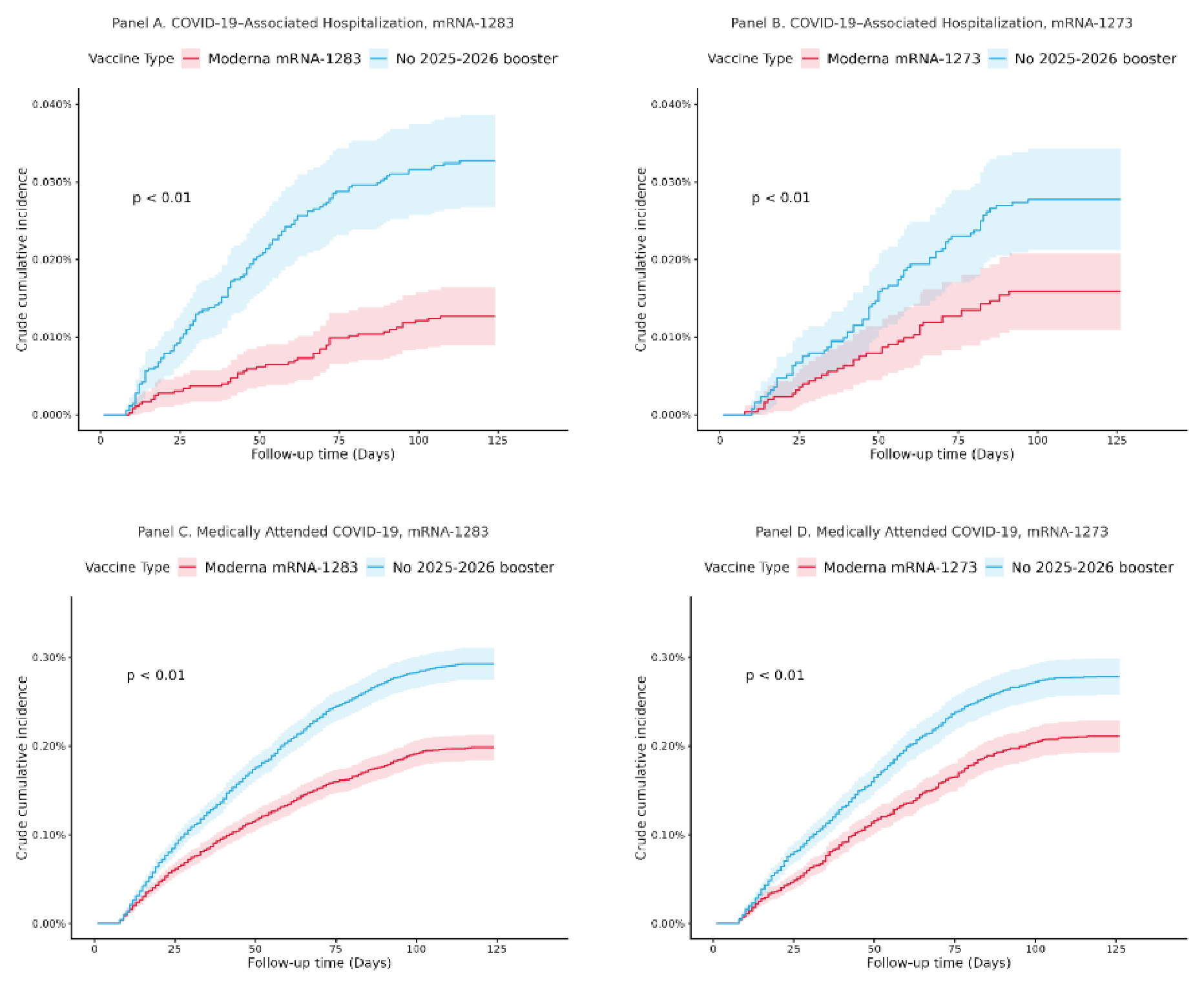
Figure 2.
Vaccine Effectiveness of mRNA-1283 and mRNA-1273 Against COVID-19–Associated Hospitalization and Medically Attended COVID-19, by Age Group.
Figure 2.
Vaccine Effectiveness of mRNA-1283 and mRNA-1273 Against COVID-19–Associated Hospitalization and Medically Attended COVID-19, by Age Group.
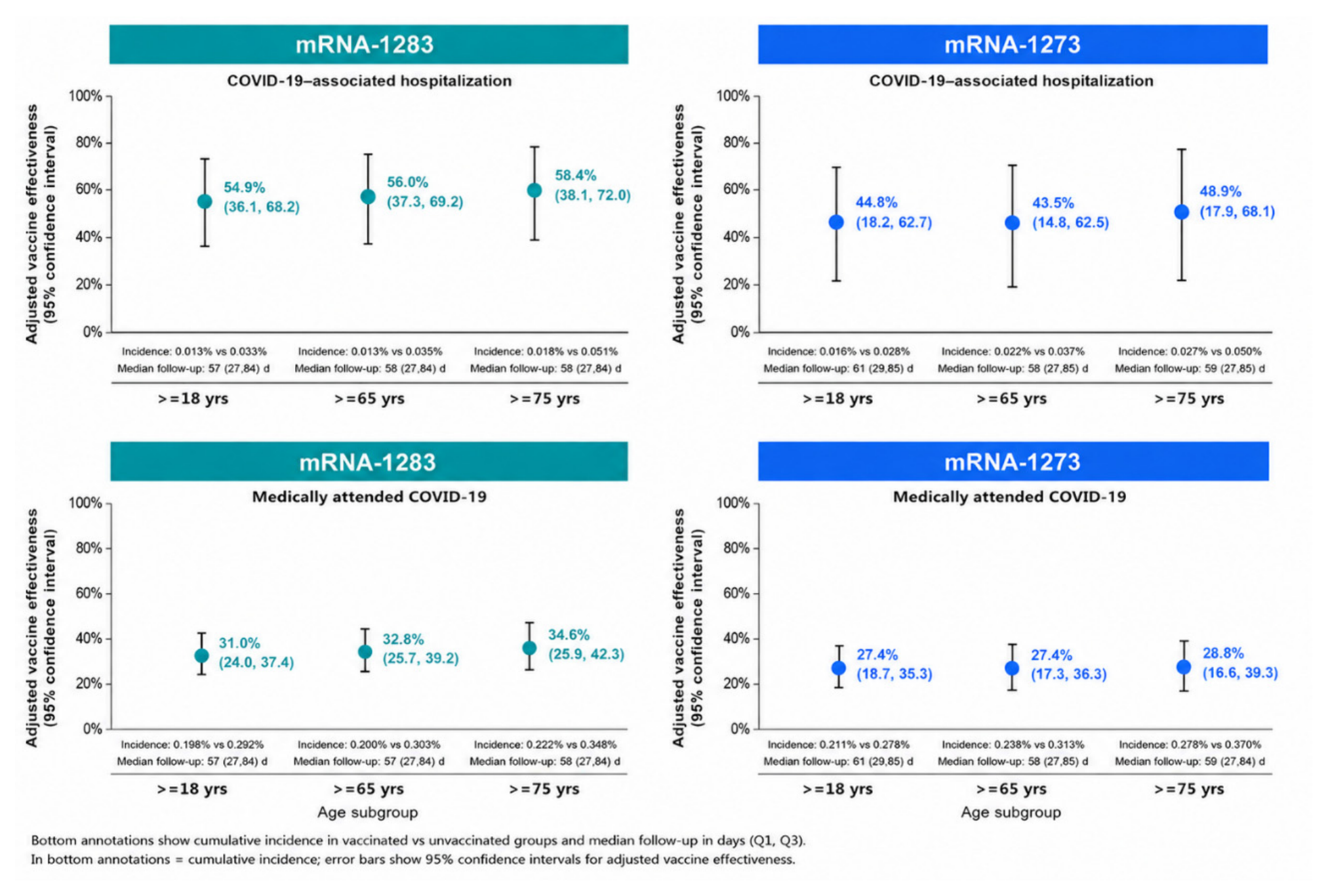

Table 1.
Selected Baseline Characteristics of the Matched mRNA-1273 and mRNA-1283 Vaccine-Specific Cohorts Among Adults Aged ≥18 Years, 2025–2026 Season.
Table 1.
Selected Baseline Characteristics of the Matched mRNA-1273 and mRNA-1283 Vaccine-Specific Cohorts Among Adults Aged ≥18 Years, 2025–2026 Season.
| Baseline Covariates | mRNA-1273 | Unexposed | ASD (prior to weighting) |
ASD (post weighting) |
mRNA-1283 | Unexposed | ASD (prior to weighting) |
ASD (post weighting) |
|---|---|---|---|---|---|---|---|---|
| N total | 252,200 | 252,200 | 354,753 | 354,753 | ||||
| Age (years) | 0.006 | 0.000 | 0.005 | 0.000 | ||||
| Median [Q1-Q3] | 72.00 [59.00-78.00] | 72.00 [59.00-78.00] | 75.00 [70.00-80.00] | 75.00 [70.00-81.00] | ||||
| Sex | 0.000 | 0.000 | 0.000 | 0.000 | ||||
| Female | 143,238 (57%) | 143,238 (57%) | 199,252 (56%) | 199,252 (56%) | ||||
| Male | 108,962 (43%) | 108,962 (43%) | 155,501 (44%) | 155,501 (44%) | ||||
| Region | ||||||||
| Midwest | 78,393 (31%) | 78,393 (31%) | 0.000 | 0.001 | 84,583 (24%) | 84,583 (24%) | 0.000 | 0.000 |
| Northeast | 37,638 (15%) | 37,638 (15%) | 0.000 | 0.000 | 58,566 (17%) | 58,566 (17%) | 0.000 | 0.000 |
| South | 72,391 (29%) | 72,391 (29%) | 0.000 | 0.001 | 102,464 (29%) | 102,464 (29%) | 0.000 | 0.000 |
| West | 63,778 (25%) | 63,778 (25%) | 0.000 | 0.000 | 109,140 (31%) | 109,140 (31%) | 0.000 | 0.000 |
| Receipt of seasonal COVID vaccine during prior season | 200,599 (80%) | 200,599 (80%) | 0.000 | 0.001 | 301,137 (85%) | 301,137 (85%) | 0.000 | 0.000 |
| Total number of medical claims | ||||||||
| 0–6 | 39,601 (16%) | 39,601 (16%) | 0.000 | 0.000 | 55,988 (16%) | 55,988 (16%) | 0.000 | 0.000 |
| 7–15 | 56,481 (22%) | 56,481 (22%) | 0.000 | 0.000 | 76,405 (22%) | 76,405 (22%) | 0.000 | 0.000 |
| 16–31 | 70,423 (28%) | 70,423 (28%) | 0.000 | 0.000 | 101,920 (29%) | 101,920 (29%) | 0.000 | 0.000 |
| ≥ 32 | 85,695 (34%) | 85,695 (34%) | 0.000 | 0.000 | 120,440 (34%) | 120,440 (34%) | 0.000 | 0.000 |
| Number of generic name prescriptions | 0.013 | 0.000 | 0.008 | 0.000 | ||||
| Mean (SD) | 8.41 (6.66) | 8.50 (6.72) | 9.05 (6.27) | 9.10 (6.59) | ||||
| Median [Q1-Q3] | 7.00 [3.00-12.00] | 7.00 [3.00-12.00] | 8.00 [4.00-13.00] | 8.00 [4.00-13.00] | ||||
| Baseline hospitalizations | 22,278 (8.8%) | 24,703 (9.8%) | 0.033 | 0.000 | 28,962 (8.2%) | 37,002 (10%) | 0.078 | 0.000 |
| Baseline Emergence room visits | 63,023 (25%) | 67,718 (27%) | 0.042 | 0.000 | 81,847 (23%) | 93,515 (26%) | 0.076 | 0.000 |
| Number of outpatient visits | 0.030 | 0.001 | 0.009 | 0.000 | ||||
| Mean (SD) | 20.68 (22.87) | 19.99 (22.41) | 19.92 (20.77) | 20.11 (22.19) | ||||
| Median [Q1-Q3] | 14.00 [6.00-27.00] | 13.00 [6.00-26.00] | 14.00 [6.00-27.00] | 14.00 [6.00-27.00] | ||||
| Receipt of seasonal influenza vaccine during prior season | 209,044 (83%) | 194,090 (77%) | 0.148 | 0.001 | 309,189 (87%) | 287,455 (81%) | 0.168 | 0.002 |
|
Charlson Quan Comorbidity Index |
||||||||
| 0 | 133,640 (53%) | 132,034 (52%) | 0.013 | 0.000 | 175,842 (50%) | 166,547 (47%) | 0.052 | 0.000 |
| 1 | 38,654 (15%) | 38,441 (15%) | 0.002 | 0.000 | 59,062 (17%) | 57,605 (16%) | 0.011 | 0.000 |
| 2 | 35,279 (14%) | 34,990 (14%) | 0.003 | 0.000 | 55,736 (16%) | 55,704 (16%) | 0.000 | 0.000 |
| 3 | 17,489 (6.9%) | 18,108 (7.2%) | 0.010 | 0.000 | 26,768 (7.5%) | 29,106 (8.2%) | 0.024 | 0.000 |
| ≥ 4 | 27,138 (11%) | 28,627 (11%) | 0.019 | 0.000 | 37,345 (11%) | 45,791 (13%) | 0.074 | 0.000 |
| High Risk Conditions | 193,459 (77%) | 193,459 (77%) | 0.000 | 0.000 | 279,217 (79%) | 279,217 (79%) | 0.000 | 0.000 |
| Asthma | 20,943 (8.3%) | 19,951 (7.9%) | 0.014 | 0.000 | 27,093 (7.6%) | 25,804 (7.3%) | 0.014 | 0.000 |
| Cerebrovascular disease | 21,643 (8.6%) | 23,114 (9.2%) | 0.021 | 0.000 | 34,515 (9.7%) | 38,448 (11%) | 0.037 | 0.000 |
| Chronic kidney disease | 40,637 (16%) | 42,641 (17%) | 0.021 | 0.000 | 63,555 (18%) | 71,730 (20%) | 0.059 | 0.000 |
| Chronic liver diseases | 10,174 (4.0%) | 11,157 (4.4%) | 0.019 | 0.000 | 13,832 (3.9%) | 15,221 (4.3%) | 0.020 | 0.000 |
| Chronic lung diseases | 34,057 (14%) | 35,849 (14%) | 0.021 | 0.000 | 51,177 (14%) | 57,583 (16%) | 0.050 | 0.000 |
| Cystic fibrosis | 74 (<0.1%) | 51 (<0.1%) | 0.006 | 0.000 | 47 (<0.1%) | 55 (<0.1%) | 0.002 | 0.000 |
| Diabetes | 59,717 (24%) | 62,649 (25%) | 0.027 | 0.000 | 88,037 (25%) | 98,670 (28%) | 0.068 | 0.000 |
| Disability | 42,178 (17%) | 39,587 (16%) | 0.028 | 0.000 | 56,792 (16%) | 53,732 (15%) | 0.024 | 0.000 |
| Gestational diabetes | 359 (0.1%) | 403 (0.2%) | 0.004 | 0.000 | 94 (<0.1%) | 118 (<0.1%) | 0.004 | 0.000 |
| Heart disease | 81,650 (32%) | 83,768 (33%) | 0.018 | 0.000 | 133,469 (38%) | 137,629 (39%) | 0.024 | 0.000 |
| Mental health disorder | 50,907 (20%) | 48,461 (19%) | 0.024 | 0.000 | 55,368 (16%) | 60,122 (17%) | 0.036 | 0.000 |
| Neurological conditions limited to dementia and Parkinson | 18,987 (7.5%) | 17,459 (6.9%) | 0.023 | 0.000 | 23,999 (6.8%) | 29,953 (8.4%) | 0.063 | 0.001 |
| Obesity | 58,853 (23%) | 62,253 (25%) | 0.032 | 0.000 | 75,067 (21%) | 80,285 (23%) | 0.036 | 0.000 |
| Physical inactivity | 263 (0.1%) | 284 (0.1%) | 0.003 | 0.000 | 351 (<0.1%) | 435 (0.1%) | 0.007 | 0.000 |
| Pregnancy | 1,744 (0.7%) | 1,999 (0.8%) | 0.012 | 0.000 | 349 (<0.1%) | 420 (0.1%) | 0.006 | 0.000 |
| Respiratory tuberculosis | 64 (<0.1%) | 67 (<0.1%) | 0.001 | 0.000 | 70 (<0.1%) | 119 (<0.1%) | 0.008 | 0.000 |
| Smoking, current and former | 41,273 (16%) | 43,578 (17%) | 0.024 | 0.000 | 60,444 (17%) | 66,672 (19%) | 0.046 | 0.000 |
| Immunocompromised conditions | 57,624 (23%) | 58,591 (23%) | 0.009 | 0.000 | 91,407 (26%) | 89,823 (25%) | 0.010 | 0.000 |
| Cancer | 27,112 (11%) | 28,145 (11%) | 0.013 | 0.000 | 46,529 (13%) | 45,810 (13%) | 0.006 | 0.000 |
| HIV | 1,304 (0.5%) | 911 (0.4%) | 0.024 | 0.000 | 1,048 (0.3%) | 1,020 (0.3%) | 0.001 | 0.000 |
| Immunosuppressant medication | 33,738 (13%) | 34,573 (14%) | 0.010 | 0.000 | 51,640 (15%) | 50,733 (14%) | 0.007 | 0.000 |
| Primary Immunodeficiencies | 4,214 (1.7%) | 4,338 (1.7%) | 0.004 | 0.000 | 5,886 (1.7%) | 6,321 (1.8%) | 0.009 | 0.000 |
| Solid organ transplant/stem cell transplant | 1,940 (0.8%) | 1,822 (0.7%) | 0.005 | 0.000 | 2,535 (0.7%) | 2,544 (0.7%) | 0.000 | 0.000 |
Abbreviations: ASD, absolute standardized difference; COVID-19, coronavirus disease 2019; Q1, first quartile; Q3, third quartile; SD, standard deviation. Data are presented as n (%) unless otherwise indicated. Percentages may not sum to 100% because of rounding. ASDs were calculated to assess covariate balance between vaccinated and unexposed individuals before and after weighting. Baseline covariates were assessed during the 12-month period before the index date unless otherwise specified. “Not observed in baseline” indicates that the corresponding prior COVID-19 vaccination or diagnosis claim was not observed during the relevant baseline assessment period.
Disclaimer/Publisher’s Note: The statements, opinions and data contained in all publications are solely those of the individual author(s) and contributor(s) and not of MDPI and/or the editor(s). MDPI and/or the editor(s) disclaim responsibility for any injury to people or property resulting from any ideas, methods, instructions or products referred to in the content. |
© 2026 by the authors. Licensee MDPI, Basel, Switzerland. This article is an open access article distributed under the terms and conditions of the Creative Commons Attribution (CC BY) license.
Copyright: This open access article is published under a Creative Commons CC BY 4.0 license, which permit the free download, distribution, and reuse, provided that the author and preprint are cited in any reuse.


