

Submitted:
28 May 2026
Posted:
29 May 2026
You are already at the latest version
Abstract
Quinoa (Chenopodium quinoa Willd.) is a nutrient-dense pseudocereal with a favorable macronutrient profile that may support glycemic control and satiety. This acute randomized crossover study evaluated the effects of cooked quinoa consumed at two available carbohydrate doses (25 g and 35 g) on postprandial blood glucose and subjective appetite responses in healthy young adults, using white bread as a reference food. Four test meals were administered on separate occasions: quinoa providing 25 g (Q1) or 35 g (Q2) available carbohydrate, and white bread matched to the same carbohydrate loads (Brd1 and Brd2). Capillary blood glucose concentrations and subjective appetite ratings were measured over 120 min. Data were analysed using repeated-measures ANOVA with Tukey’s post hoc tests, with significance set at p < 0.05. Quinoa consumption resulted in significantly lower postprandial blood glucose concentrations and reduced incremental area under the curve (iAUC) compared with white bread at both carbohydrate levels. Subjective appetite responses were also favorably affected following quinoa intake, with the greatest satiety observed after Q2. Blood glucose iAUC was positively correlated with appetite net area under the curve (nAUC) (r = 0.57, p < 0.001). No significant differences in palatability or gastrointestinal discomfort were observed between treatments. These findings suggest that cooked quinoa elicits more favorable postprandial glycemic and satiety responses than white bread and may represent a functional carbohydrate alternative for improving metabolic health.
Keywords:
dietary carbohydrates
; functional foods
; postprandial glycemia
; quinoa
; satiety
1. Introduction
Dietary patterns dominated by refined carbohydrates are strongly associated with postprandial hyperglycemia, impaired satiety, increased risk of obesity and type 2 diabetes mellitus (T2DM). These concerns are particularly relevant in Kuwait, where the prevalence of overweight and obesity exceeds 75% of the adult population, and diabetes rates remain among the highest globally [1,2,3,4]. Nutrition transition in the region, characterized by increased intake of refined grains and reduced dietary fiber consumption, has been identified as a major contributor to this public health burden [5,6]. Consequently, identifying culturally acceptable carbohydrate alternatives that attenuate postprandial glycemic excursions while enhancing satiety has become a priority.
Quinoa (Chenopodium quinoa Willd.) is a pseudocereal traditionally consumed in South America and increasingly recognized for its high nutritional and functional value [7,8]. Unlike refined cereal grains, quinoa is characterized by a favorable macronutrient profile, including high-quality protein, substantial dietary fiber, and relatively low starch content, alongside a wide range of bioactive compounds such as phenolics and saponins [9,10,11]. Compared with staple cereals such as rice, wheat, and maize, quinoa provides higher levels of essential amino acids, micronutrients, and unsaturated fatty acids [10,12],
The nutritional composition of quinoa suggests potential benefits for glycemic regulation and appetite control. Its higher fiber content and lower glycemic carbohydrate fraction may slow carbohydrate digestion and glucose absorption, thereby reducing glycemic response [13]. In addition, quinoa’s high protein content and balanced amino acid profile may enhance satiety signalling and prolong postprandial fullness [14]. Animal studies have consistently demonstrated reductions in food intake, body weight gain, and blood glucose levels following quinoa supplementation [15,16,17]. However, evidence from human studies remains limited and inconsistent.
The few clinical studies that are published on quinoa intervention have shown conflicting results. Consuming biscuits supplemented with 15 g quinoa flour daily for four weeks, healthy adult volunteers did not show any change in glycemic response compared to the control [18]. Similarly, no effect was reported on blood glucose response among healthy adults consuming quinoa containing two cereal bars daily providing 19.5 g quinoa for 30 days [19], or 25 g quinoa flakes for 4 weeks in postmenopausal women [20]. In a study, hypertriglyceridemia but not hyperglycemia was attenuated by the consumption of 50g quinoa and not by the 25g quinoa dose, when consumed at the two doses for 12 weeks by overweight adults [21]. However, insulin resistance was improved in overweight subjects by consumption of 50g quinoa for 12 weeks when combined with a diet with reduction of 500 Kcal daily [22], or consuming even a larger dose of 100g for a longer period of one year by those with impaired glucose tolerance [23]. Furthermore, few studies have simultaneously examined postprandial glycemia and subjective appetite responses, and data on dose-dependent effects of quinoa consumption are scarce.
To our knowledge, no study has evaluated the acute effects of quinoa consumption on postprandial glycemia and subjective appetite responses in a Kuwaiti population. Therefore, for generating a baseline data, the present acute, randomized crossover study aimed to evaluate the effects of cooked quinoa consumed at two levels of available carbohydrate (25 g and 35 g) on postprandial blood glucose and subjective appetite responses in healthy young adults, using white bread as a reference food. We hypothesized that quinoa would elicit a lower glycemic response and greater satiety compared with white bread, and that these effects would be dose dependent in young female college student volunteers.
2. Methods
2.1. Study Design and Participants
This acute, randomized, crossover study was conducted in the Human Nutrition Laboratories, Department of Food Science and Nutrition, Kuwait University. Both healthy male and female students (aged 18–30 years; BMI 20–25 kg/m²) were invited to participate in the study via flyers and word of mouth. Only female students (n=18) responded and were recruited. Exclusion criteria applied included elevated fasting blood glucose, use of medication affecting glucose metabolism or appetite, restrained eating behavior (score ≥11 on the Eating Habits Questionnaire), or habitual breakfast skipping [24].
The study protocol was approved by the Human Subjects’ Review Committee, Ethics Review Office, Kuwait University, and written informed consent was obtained from all participants. Sample size estimation was based on previous acute glycemic response studies with an α of 0.05 and power of 0.80 [25,26].
2.2. Test Foods
Test foods included cooked quinoa (Bob’s Red Mill, Natural Foods, Milwaukie, OR, USA) and white wheat bread (Kuwait Flour Mills & Bakeries Co.). Portions of quinoa and white bread were matched to provide either 25 g or 35 g available carbohydrate (total carbohydrate minus dietary fiber). The four treatments were quinoa providing 25 g (Q1) or 35 g (Q2) available carbohydrate and white bread providing equivalent carbohydrate amounts (Brd1 and Brd2).
The weighed amount of 36 g and 50 g dry uncooked quinoa seeds was calculated to provide 25 and 35g available carbohydrate, respectively based on nutrition facts available on the nutrition facts on the product labels. Quinoa was prepared by adding the pre-weight amount in 250 ml to 325 ml boiling water with a pinch of salt. It was cooked under standardized conditions to achieve consistent texture across sessions. After cooking, the quinoa was added 10g of butter, purchased as a packet of 10g from the local market. The participant had a choice to season additionally with black pepper provided at the serving time.
The control treatment, white bread, matched for the available carbohydrate was about 2–3 slices. The exact amount of toast slices was pre-weighed and stored as individual servings in the freezer. Immediately before serving, bread was toasted directly in the toaster at a predetermined time, temperature and crispness to avoid any discrepancy between the sessions. Toasted bread also was served with 10 g of butter and the same option of seasoning as of the quinoa treatment. The participants were required to finish all their test food and water, 500 ml of bottled water (Aquafina) within 8-10 minutes.
2.3. Study Protocol
A within-subject repeated measures design was used. Participants came for all the sessions, one week apart, at their convenient time between 8.30 to10.30 am (two hours after waking up) after an overnight fast of 10-12 hours. Water was permitted up to 1 hour before the scheduled start time. They completed a questionnaire to describe their sleep, stress and activity levels in the past 24 hours. Treatment order was randomized. Female participants were scheduled outside their menstrual phase to minimize hormonal effects on glycemia [27] or feeling of appetite [28].
Capillary blood glucose was measured at baseline and at 15, 30, 45, 60, 90, and 120 min postprandially using a portable glucometer (One Touch Ultra, Life Scan Inc. and Johnson & Johnson Company, USA). Subjective appetite information was collected at the same point as finger prick blood collection using visual analogue scales (VAS) as given elsewhere [29]. Briefly, each VAS consists of a 10 cm line anchored at each end with opposing statements for each of the 4 questions: 1) How strong is your desire to eat? (very weak to very strong), 2) How hungry do you feel? (not hungry at all to as hungry as I’ve ever felt), 3) How full do you feel? (not full at all to very full), and 4) How much food do you think you could eat? (nothing at all to a large amount). The subjects marked an “X” on the line to indicate their feelings at that given moment. The magnitude of these feelings was determined by measuring the distance (cm) between the ‘X’ and the left end starting point on the line. Subjective appetite was the average score for each time point using the formula:
Average appetite = [desire to eat + hunger + (100 − fullness) + prospective consumption]/4
Palatability of the test foods was similarly assessed by a VAS questionnaire for three parameters, texture, aroma and taste on the same scale as the appetite questionnaire. Physical comfort / gastrointestinal discomfort was assessed by VAS questionnaire after consumption of the test foods using the question, “How well do you feel?” with options such as “not well at all” or “very well” given at the opposite ends of the line.
2.4. Statistical Analysis
Statistical analyses were performed using SPSS. Two-way repeated-measures ANOVA was used to assess the effects of treatment, time, and their interaction on blood glucose and appetite responses. The effect of treatment on area under the curve (AUC) for blood glucose and subjective appetite was determined using one-way repeated measures analysis of variance (ANOVA). Incremental area under the curve (iAUC) for blood glucose and net area under the curve (nAUC) for change in appetite were calculated using the trapezoid rule for 0 to 120 minutes. Post hoc comparisons were conducted using Tukey’s test. Pearson correlation coefficients were used to assess associations between glycemic and appetite responses. Statistical significance was set at p ≤ 0.05.
3. Results
3.1. Postprandial Blood Glucose Response
Postprandial blood glucose concentrations were significantly affected by treatment (p < 0.001), time (p < 0.01), and treatment × time interaction (p = 0.021). All test foods produced a rise in blood glucose from baseline; however, the magnitude and temporal pattern of responses differed markedly between quinoa and white bread.
Despite equivalent available carbohydrate content, quinoa elicited lower and less sustained glycemic responses than white bread. Postprandial glucose concentrations peaked earlier and declined faster following quinoa consumption than after white bread. Following the peak, glucose concentrations dropped to the baseline level after both quinoa treatments, whereas elevated glucose levels persisted throughout the 120 min period after bread consumption, particularly following Brd2 (Figure 1).
Incremental area under the curve (iAUC) analysis confirmed these observations. Blood glucose iAUC over 120 min was significantly lower after Q1 and Q2 compared with Brd1 and Brd2 ((F=4.736, p=0.006; η2= 0.244, 95% CI=0.26, 0.400), with no significant difference between the two quinoa doses (Figure 2). Increasing the carbohydrate load from 25 g to 35 g resulted in a marked increase in glycemic exposure for bread but not for quinoa.
3.2. Subjective Appetite Responses
Subjective appetite scores decreased immediately following consumption of all test foods, reaching a nadir at 15 min, followed by a gradual increase over time. However, appetite recovery differed significantly among treatments.
Subjective appetite responses over 120 minutes following consumption of the test foods were evaluated through visual analogue scales (VAS) using the four assessment questions including, desire to eat, hunger, prospective food consumption and fullness (Table 1).
All treatments showed a reduction in desire to eat immediately after consumption, followed by a gradual increase over time. However, significant differences among treatments emerged at 60, 90, and 120 minutes (p = 0.05, 0.04, and 0.05, respectively). The Q2 treatment consistently produced the lowest desire-to-eat scores at these later time points. At 120 minutes, participants consuming Q2 reported markedly lower desire to eat than those consuming Brd1.
Hunger ratings decreased after meal consumption in all treatments and progressively increased thereafter. Although no statistically significant differences were observed at most time points, a borderline significant difference was observed at 120 minutes (p = 0.06). Q2 tended to maintain lower hunger ratings throughout the postprandial period compared with the bread treatments.
Participants’ perception of how much food they could eat decreased after consumption of all treatments and gradually increased over time. Significant differences were observed at 120 minutes (p = 0.05). The Q2 treatment resulted in the lowest ratings at the final time point, indicating reduced perceived capacity for further food intake and suggesting greater satiety compared with Brd1 and Brd2.
Fullness scores increased markedly after meal consumption in all treatments and gradually declined over the 120-minute period. Significant differences were observed at 120 minutes (p = 0.03). Q2 produced the highest fullness ratings at the end of the study period, while Brd1 showed the lowest fullness response.
From the scores of the four subjective appetite questions, average appetite responses over 120 minutes were calculated following consumption of the bread and quinoa treatments. All treatments initially reduced appetite sensations after intake; however, the magnitude and duration of these effects differed among treatments.
The Q2 treatment demonstrated a stronger appetite-suppressing effect, characterized by lower desire-to-eat and hunger ratings and higher fullness ratings during the later postprandial period. Significant differences among treatments were particularly evident at 120 minutes, where Q2 maintained greater satiety compared with Brd1. In contrast, Brd1 showed a more rapid return of appetite sensations, indicating weaker satiety effects (p < 0.05). (Figure 3)
The net incremental area under the curve (nAUC) for subjective appetite responses over 120 minutes (Figure 4) shows that Q2 produced the most negative nAUC value followed by Q1 and Brd2, while Brd1 showed the least negative response. More negative nAUC values indicate a greater overall suppression of appetite (p < 0.05).
3.3. Relationship between Glycemic and Appetite Responses
Blood glucose iAUC was positively correlated with appetite nAUC (r = 0.57, p < 0.001). This relationship remained significant after controlling for treatment effects, suggesting a physiological link between glycemic excursions and appetite regulation.
3.4. Palatability and Gastrointestinal Tolerance
There were no significant differences among treatments in sensory attributes, including aroma, taste, and texture. Gastrointestinal discomfort scores were low and did not differ between quinoa and bread at either dose level (Table 2), indicating good tolerability and acceptability of quinoa consumption.
4. Discussion
The present study demonstrates that acute consumption of cooked quinoa elicits significantly lower postprandial glycemic excursion and improved subjective appetite control compared with white bread when matched for available carbohydrate in healthy young female volunteers. These findings support the hypothesis that quinoa represents a favorable carbohydrate source with potential benefits for glycemic regulation and satiety.
Despite equivalent available carbohydrate loads, quinoa and white bread produced distinct postprandial glucose profiles. Quinoa consumption resulted in earlier but lower glycemic peaks, followed by an early return toward baseline, whereas white bread produced more sustained elevations in blood glucose over the 120 min postprandial period. Consequently, both quinoa treatments produced significantly lower incremental area under the curve (iAUC) values compared with bread. These findings suggest that quinoa may attenuate postprandial glycemic excursions even when consumed at relatively high carbohydrate loads.
The current findings differ from several previous intervention studies conducted using lower quinoa doses or higher doses in combination with exercise or caloric restriction. Consumption of 15 g quinoa incorporated into biscuits for four weeks [18] or cereal bars containing 19.5 g quinoa seeds [19] did not significantly alter glycemic responses despite improvements in lipid profile. Similarly, daily consumption of bread containing 20 g quinoa flour for three months did not significantly improve fasting blood glucose or glycated hemoglobin concentrations in healthy adults [30]. However, studies using larger quinoa doses or longer intervention periods have demonstrated beneficial metabolic effects. For example consumption of 25 g cooked quinoa combined with exercise for eight weeks significantly reduced fasting blood glucose and appetite ratings in adults with type 2 diabetes [31]. Likewise, approximately 50 g quinoa intake combined with caloric restriction improved insulin sensitivity in overweight adults [22], while long-term consumption of 100 g/day quinoa improved glycemic control and insulin resistance in individuals with impaired glucose tolerance [23].
Collectively, these studies suggest that quinoa’s metabolic effects may be dose dependent and potentially enhanced by longer intervention duration or lifestyle modification. In the present acute dose-response study, both quinoa treatments providing more than 20 g available carbohydrate produced lower and less sustained glycemic responses than white bread, suggesting slower glucose absorption and more efficient postprandial glucose handling.
The favorable glycemic response observed after quinoa consumption is likely attributable to its unique carbohydrate structure and nutrient composition. Compared to high glycemic staple cereals such as rice and wheat [32], quinoa contains lower proportions of rapidly digestible carbohydrates and a higher content of non-starch polysaccharides and slowly digestible carbohydrate fractions [13]. These characteristics may contribute to delayed carbohydrate digestion and slower glucose release into the circulation, thereby reducing postprandial glycemic peaks.
In addition to its carbohydrate profile, quinoa contains several bioactive compounds that may contribute to glycemic regulation. Polyphenols, flavonoids, saponins, and antioxidant vitamins present in quinoa have been associated with improved glucose metabolism and reduced carbohydrate digestion [33]. Zhou et al. [34] reported that peptides generated during quinoa hydrolysis may inhibit α-amylase activity through intermolecular interactions, thereby reducing starch digestion. Similarly, phenolic compounds isolated from quinoa have demonstrated inhibitory effects on α-amylase and α-glucosidase activities, mechanisms that may delay intestinal glucose absorption and contribute to the lower glycemic response observed in the present study. [35,36,37,38].
The higher fiber and protein content of quinoa may also contribute to both glycemic regulation and appetite suppression. Dietary fiber has been consistently associated with delayed gastric emptying, reduced glucose absorption, and improved insulin sensitivity [23,39]. Previous studies have suggested that the insoluble fiber components of quinoa, including galactose, galacturonic acid, and xylose, may increase gastrointestinal viscosity and prolong gastric transit time, thereby enhancing satiety and attenuating postprandial hyperglycemia [13,40,41]. In addition, quinoa provides approximately 14–16% high-quality protein, which may further promote satiety through modulation of appetite-regulating hormones and delayed gastric emptying [42].
In parallel with improved glycemic control, quinoa consumption, particularly at the higher dose providing 35 g available carbohydrate, resulted in greater suppression of subjective appetite compared with white bread. The more negative net area under the curve (nAUC) values observed following quinoa intake indicate enhanced appetite suppression and prolonged satiety. Furthermore, blood glucose iAUC was positively correlated with appetite nAUC, suggesting that attenuation of postprandial glycemia may contribute to improved appetite regulation. These findings are consistent with previous animal studies demonstrating that quinoa consumption modulates appetite-related hormones including ghrelin, leptin, and cholecystokinin [43].
Importantly, quinoa was well accepted and tolerated at both dose levels, with no differences in palatability or gastrointestinal discomfort compared with white bread. This observation supports the practical applicability of quinoa as a functional carbohydrate alternative, since sensory acceptability and gastrointestinal tolerance are important determinants of long-term dietary adherence.
5. Limitations and Strengths
Several limitations should be acknowledged. The study sample was relatively small and limited to healthy young adults, which may restrict generalizability to older populations or individuals with metabolic disorders. Additionally, only subjective appetite measures were assessed; future studies incorporating objective biomarkers such as insulin, incretin hormones, and gastric emptying rates would provide further mechanistic insight. Nonetheless, the crossover design and controlled carbohydrate matching strengthen the validity of the observed effects.
Overall, the findings of this study suggest that quinoa, even when consumed acutely, produces more favorable postprandial glycemic and satiety responses than white bread. These properties highlight quinoa’s potential role as a functional carbohydrate alternative that may contribute to improved metabolic health and appetite regulation. Further long-term intervention studies are warranted to confirm these benefits in populations at risk of obesity and type 2 diabetes. Additionally, the safety and efficacy of long-term quinoa consumption at higher doses need evaluation through well-designed clinical trials.
6. Conclusion
This acute crossover study demonstrates that cooked quinoa elicits significantly lower postprandial glucose exposure and improved subjective satiety compared with white bread when matched for available carbohydrate in healthy young adults. Quinoa consumption resulted in reduced glycemic exposure and greater appetite suppression, particularly at the higher carbohydrate dose, without compromising palatability or gastrointestinal tolerance.
These findings suggest that quinoa may serve as a nutritionally advantageous carbohydrate alternative with potential benefits for glycemic regulation and appetite control. Given the rising prevalence of obesity and type 2 diabetes in populations consuming refined carbohydrate–based diets, incorporation of quinoa into habitual meals may contribute to improved postprandial metabolic responses. Further studies incorporating insulin and incretin hormone measurements and longer-term interventions in metabolically at-risk populations are warranted to confirm these effects and elucidate underlying mechanisms.
Author Contributions
T.A.Z: conceptualization, methodology, execution, data entry, statistical analysis, results interpretation, and writing the manuscript.
Funding
This research was funded by Research sector of Kuwait University by the Project # FF01/19.
Institutional Review Board Statement
The study was approved by ‘Ethics Review Committee’ of Health Science Center, Kuwait University, Kuwait, Reference # HSC 1345, dated 7 /11/ 2023.
Informed Consent Statement
All the participants signed the consent form on the first session of the study.
Data Availability Statement
The original data already presented in the article. Further inquiries, if any may be addressed by the corresponding author.
Acknowledgments
The author is grateful to the volunteer research students, M.A, S.A, H.B and M.O for their help in collecting data. Thanks are extended to all the volunteers who participated in the study.
Conflicts of Interest
The author declares no conflicts of interest.
References
- World Obesity Federation. Kuwait. Available online: https://data.worldobesity.org/country/kuwait-115/ (accessed on 26 January 2026).
- Saeedi, P.; Salpea, P.; Karuranga, S.; Petersohn, I.; Malanda, B.; Gregg, E.W.; Unwin, N.; Wild, S.H.; Williams, R. Mortality attributable to diabetes in 20–79-year-old adults, 2019 estimates: Results from the International Diabetes Federation Diabetes Atlas. Diabetes Res. Clin. Pract. 2020, 162, 108086. [Google Scholar] [CrossRef] [PubMed]
- Food and Nutrition Administration. Annual Report 2024—Kuwait Nutrition Surveillance System; Ministry of Health: Kuwait, 2025; Available online: https://www.moh.gov.kw/en/FoodNutrition/Pages/FND.aspx (accessed on 26 January 2026).
- Alarouj, M.; Bennakhi, A.; Alnesef, Y.; Sharifi, M.; Elkum, N. Diabetes and associated cardiovascular risk factors in the State of Kuwait: The first national survey. Int. J. Clin. Pract. 2012, 67, 89–96. [Google Scholar] [CrossRef] [PubMed]
- Zaghloul, S.; Hooti, S.N.; Al-Hamad, N.; Al-Zenki, S.; Alomirah, H.; Alayan, I.; Al-Attar, H.; Al-Othman, A.; Al-Shami, E.; Al-Somaie, M.; Jackson, R.T. Evidence for nutrition transition in Kuwait: Overconsumption of macronutrients and obesity. Public Health Nutr. 2013, 16, 596–607. [Google Scholar] [CrossRef]
- Al Hasan, M.; Buloushi, A.A.; Haidar, M.; Farhan, F. Cardiovascular disease risk in the obese population in Kuwait: A systematic review and meta-analysis. Cureus 2024, 16, e71515. [Google Scholar] [CrossRef]
- Tabatabaei, I.; Alseekh, S.; Shahid, M.; Leniak, E.; Wagner, M.; Mahmoudi, H.; Thushar, S.; Fernie, A.R.; Murphy, K.M.; Schmöckel, S.M. The diversity of quinoa morphological traits and seed metabolic composition. Sci. Data 2022, 9, 323. [Google Scholar] [CrossRef]
- Mu, H.; Xue, S.; Sun, Q.; Shi, J.; Zhang, D.; Wang, D.; Wei, J. Research progress of quinoa seeds (Chenopodium quinoa Willd.): Nutritional components, technological treatment, and application. Foods 2023, 12, 2087. [Google Scholar] [CrossRef]
- Cherrada, N.; Chemsa, A.E.; Gheraissa, N.; Zaater, A.; Benamor, B.; Ghania, A.; Yassine, B.; Kaddour, A.; Afzaal, M.; Asghar, A.; Saeed, F.; Asres, D.T. Antidiabetic medicinal plants from the Chenopodiaceae family: A comprehensive overview. Int. J. Food Prop. 2024, 27, 194–213. [Google Scholar] [CrossRef]
- Ali, A.A.; Ali, A.H.; Nassar, M.A.; Elgeilany, S.M.; Ezzat, S.M. Quinoa as a functional crop with emphasis on distribution, nutritional composition, and biological effects. Discov. Food 2025, 5, 1. [Google Scholar] [CrossRef]
- Casalvara, R.F.A.; Ferreira, B.M.R.; Gonçalves, J.E.; Yamaguchi, N.U.; Bracht, A.; Bracht, L.; Comar, J.F.; de Sá-Nakanishi, A.B.; de Souza, C.G.M.; Castoldi, R.; et al. Biotechnological, nutritional, and therapeutic applications of quinoa (Chenopodium quinoa Willd.) and its by-products: A review of the past five-year findings. Nutrients 2024, 16, 840. [Google Scholar] [CrossRef]
- Ren, G.; Teng, C.; Fan, X.; Guo, S.; Zhao, G.; Zhang, L.; et al. Nutrient composition, functional activity and industrial applications of quinoa (Chenopodium quinoa Willd.). Food Chem. 2023, 410, 135290. [Google Scholar] [CrossRef] [PubMed]
- Berti, C.; Riso, P.; Brusamolino, A.; Porrini, M. Effect on appetite control of minor cereal and pseudocereal products. Br. J. Nutr. 2005, 94, 850–858. [Google Scholar] [CrossRef]
- Agarwal, A.; Rizwana; Tripathi, A.D.; Kumar, T.; Sharma, K.P.; Patel, S.K.S. Nutritional and functional new perspectives and potential health benefits of quinoa and chia seeds. Antioxidants 2023, 12, 1413. [Google Scholar] [CrossRef]
- Kizelsztein, P.; Govorko, D.; Komarnytsky, S.; Evans, A.; Wang, Z.; Cefalu, W.T.; Raskin, I. 20-Hydroxyecdysone decreases weight and hyperglycemia in a diet-induced obesity mice model. Am. J. Physiol. Endocrinol. Metab. 2009, 296, E433–E439. [Google Scholar] [CrossRef]
- Graf, B.L.; Poulev, A.; Kuhn, P.; Grace, M.H.; Lila, M.A.; Raskin, I. Quinoa seeds leach phytoecdysteroids and other compounds with anti-diabetic properties. Food Chem. 2014, 163, 178–185. [Google Scholar] [CrossRef]
- Lopes, C.O.; Barcelos, M.F.P.; Vieira, C.N.G.; de Abreu, W.C.; Ferreira, E.B.; Pereira, R.C.; de Angelis-Pereira, M.C. Effects of sprouted and fermented quinoa (Chenopodium quinoa) on glycemic index of diet and biochemical parameters of blood of Wistar rats fed high-carbohydrate diet. J. Food Sci. Technol. 2019, 56, 40–48. [Google Scholar] [CrossRef] [PubMed]
- Pourshahidi, L.K.; Caballero, E.; Osses, A.; Hyland, B.W.; Ternan, N.G.; Gill, C.I.R. Modest improvement in CVD risk markers in older adults following quinoa (Chenopodium quinoa Willd.) consumption: A randomized-controlled crossover study with a novel food product. Eur. J. Nutr. 2020, 59, 3313–3323. [Google Scholar] [CrossRef]
- Farinazzi-Machado, F.M.V.; Barbalho, S.M.; Oshiiwa, M.; Goulart, R.; Pessan, J.O. Use of cereal bars with quinoa (Chenopodium quinoa W.) to reduce risk factors related to cardiovascular diseases. Food Sci. Technol. 2012, 32, 239–244. [Google Scholar] [CrossRef]
- De Carvalho, F.G.; Ovidio, P.P.; Padovan, G.J.; Jordao Junior, A.A.; Marchini, J.S.; Navarro, A.M. Metabolic parameters of postmenopausal women after quinoa or corn flakes intake: A prospective and double-blind study. Int. J. Food Sci. Nutr. 2014, 65, 380–385. [Google Scholar] [CrossRef] [PubMed]
- Navarro-Perez, D.; Radcliffe, J.; Tierney, A.; Jois, M. Quinoa seed lowers serum triglycerides in overweight and obese subjects: A dose-response randomized controlled clinical trial. Curr. Dev. Nutr. 2017, 1, e001321. [Google Scholar] [CrossRef]
- Gholamrezayi, A.; Hosseinpour-Niazi, S.; Mirmiran, P.; Hekmatdoost, A. The effect of replacing grains with quinoa on cardiometabolic risk factors and liver function in patients with non-alcoholic fatty liver: A randomized-controlled clinical trial. Front. Nutr. 2025, 12, 1505183. [Google Scholar] [CrossRef]
- Zeng, H.; Cai, X.; Qiu, Z.; Liang, Y.; Huang, L. Glucolipid metabolism improvement in impaired glucose tolerance subjects consuming a quinoa-based diet: A randomized parallel clinical trial. Front. Physiol. 2023, 14, 1179587. [Google Scholar] [CrossRef]
- Herman, C.P. Restrained eating. Psychiatr. Clin. North Am. 1978, 1, 593–607. [Google Scholar] [CrossRef]
- Zafar, T.A. High amylose cornstarch preloads stabilized postprandial blood glucose but failed to reduce appetite or food intake in healthy women. Appetite 2018, 131, 1–6. [Google Scholar] [CrossRef] [PubMed]
- Zafar, T.A.; Kabir, Y. Chickpeas suppress postprandial blood glucose concentration, appetite and reduce energy intake at the next meal. J. Food Sci. Technol. 2017, 54, 987–999. [Google Scholar] [CrossRef] [PubMed]
- Escalante, P.J.M.; Alpizar, S.M. Changes in insulin sensitivity, secretion and glucose effectiveness during menstrual cycle. Arch. Med. Res. 1999, 30, 19–22. [Google Scholar]
- Asarian, L.; Geary, N. Sex differences in the physiology of eating. Am. J. Physiol. Regul. Integr. Comp. Physiol. 2013, 305, R1215–R1267. [Google Scholar] [CrossRef]
- Flint, A.; Raben, A.; Blundell, J.E.; Astrup, A. Reproducibility, power and validity of visual analogue scales in assessment of appetite sensations in single test meal studies. Int. J. Obes. 2000, 24, 38–48. [Google Scholar] [CrossRef]
- Marak, N.R.; Das, P.; Das Purkayastha, M.; Baruah, L.D. Effect of quinoa (Chenopodium quinoa W.) flour supplementation in breads on the lipid profile and glycemic index: An in vivo study. Front. Nutr. 2024, 11, 1341539. [Google Scholar] [CrossRef]
- Moradi, N.; Azizi, M.; Niromand, E.; Tahmasebi, W. The effect of 8 weeks combined training (aerobic-resistance) at home with quinoa seed supplementation on FBS, appetite and quality of life in women with type 2 diabetes. Payavard Salamat 2022, 16, 183–195. [Google Scholar]
- Atkinson, F.S.; Foster-Powell, K.; Brand-Miller, J.C. International tables of glycemic index and glycemic load values: 2008. Diabetes Care 2008, 31, 2281–2283. [Google Scholar] [CrossRef]
- Atefi, M.; Heidari, Z.; Shojaei, M.; Askari, G.; Kesharwani, P.; Bagherniya, M.; et al. Does quinoa (Chenopodium quinoa) consumption improve blood glucose, body weight and body mass index? A systematic review and dose-response meta-analysis of clinical trials. Curr. Med. Chem. 2024, 31, 502–513. [Google Scholar] [CrossRef] [PubMed]
- Zhou, H.; Cao, J.; Zhang, J.; Di, Z.; He, L.; Xinqi, L.; et al. Separation and mechanism of α-amylase inhibiting active peptide from quinoa. Abstracts of the 18th Annual Meeting of CIFST, 2022; pp. 166–167. [Google Scholar]
- Hemalatha, P.; Bomzan, D.P.; Sathyendra Rao, B.V.; Sreerama, Y.N. Distribution of phenolic antioxidants in whole and milled fractions of quinoa and their inhibitory effects on α-amylase and α-glucosidase activities. Food Chem. 2016, 199, 330–338. [Google Scholar] [CrossRef]
- Han, Y.; Chi, J.; Zhang, M.; Zhang, R.; Fan, S.; Huang, F.; et al. Characterization of saponins and phenolic compounds: Antioxidant activity and inhibitory effects on α-glucosidase in different varieties of colored quinoa (Chenopodium quinoa Willd.). Biosci. Biotechnol. Biochem. 2019, 83, 2128–2139. [Google Scholar] [CrossRef]
- Tang, Y.; Zhang, B.; Li, X.; Chen, P.X.; Zhang, H.; Liu, R.; et al. Bound phenolics of quinoa seeds released by acid, alkaline and enzymatic treatments and their antioxidant and α-glucosidase and pancreatic lipase inhibitory effects. J. Agric. Food Chem. 2016, 64, 1712–1719. [Google Scholar] [CrossRef]
- Herrera, T.; Navarro del Hierro, J.; Fornari, T.; Reglero, G.; Martin, D. Inhibitory effect of quinoa and fenugreek extracts on pancreatic lipase and α-amylase under in vitro traditional conditions or intestinal simulated conditions. Food Chem. 2019, 270, 509–517. [Google Scholar] [CrossRef]
- Machalias, A.; Ferguson, J.J.A.; Guy, T.; Beck, E.J. Cereal fibers and satiety: A systematic review. Nutr. Rev. 2026, 84, 47–68. [Google Scholar] [CrossRef]
- Yao, B.; Fang, H.; Xu, W.; Yan, Y.; Xu, H.; Liu, Y.; et al. Dietary fiber intake and risk of type 2 diabetes: A dose-response analysis of prospective studies. Eur. J. Epidemiol. 2014, 29, 79–88. [Google Scholar] [CrossRef]
- Russo, A.; Stevens, J.E.; Wilson, T.; Wells, F.; Tonkin, A.; Horowitz, M.; et al. Guar attenuates fall in postprandial blood pressure and slows gastric emptying of oral glucose in type 2 diabetes. Dig. Dis. Sci. 2003, 48, 1221–1229. [Google Scholar] [CrossRef]
- Wang, Y.; Yang, X.; Cao, J.; Changfeng, Q.; Liping, Z.; Jinlai, M.; et al. Research progress of dietary fiber regulating blood glucose in type 2 diabetes mellitus. Food Mach. 2020, 36, 6–11. [Google Scholar] [CrossRef]
- Graf, B.; Rojas-Silva, P.; Rojo, L.; Delatorre-Herrera, J.; Baldeón, M.; Raskin, I. Innovations in health value and functional food development of quinoa (Chenopodium quinoa Willd.). Compr. Rev. Food Sci. Food Saf. 2015, 14, 431–445. [Google Scholar] [CrossRef] [PubMed]
- Mithila, M.; Khanum, F. Effectual comparison of quinoa and amaranth supplemented diets in controlling appetite: A biochemical study in rats. J. Food Sci. Technol. 2015, 52, 6735–6741. [Google Scholar] [CrossRef] [PubMed]
Figure 1.
Effect of quinoa and bread treatment on blood glucose response over 120 minutes. The data is presented as mean ± SD. Different superscript letters show significant differences among the treatments at the same time point. Statistical significance was set at p ≤ 0.05. Key: Brd=bread, Q=quinoa.
Figure 1.
Effect of quinoa and bread treatment on blood glucose response over 120 minutes. The data is presented as mean ± SD. Different superscript letters show significant differences among the treatments at the same time point. Statistical significance was set at p ≤ 0.05. Key: Brd=bread, Q=quinoa.
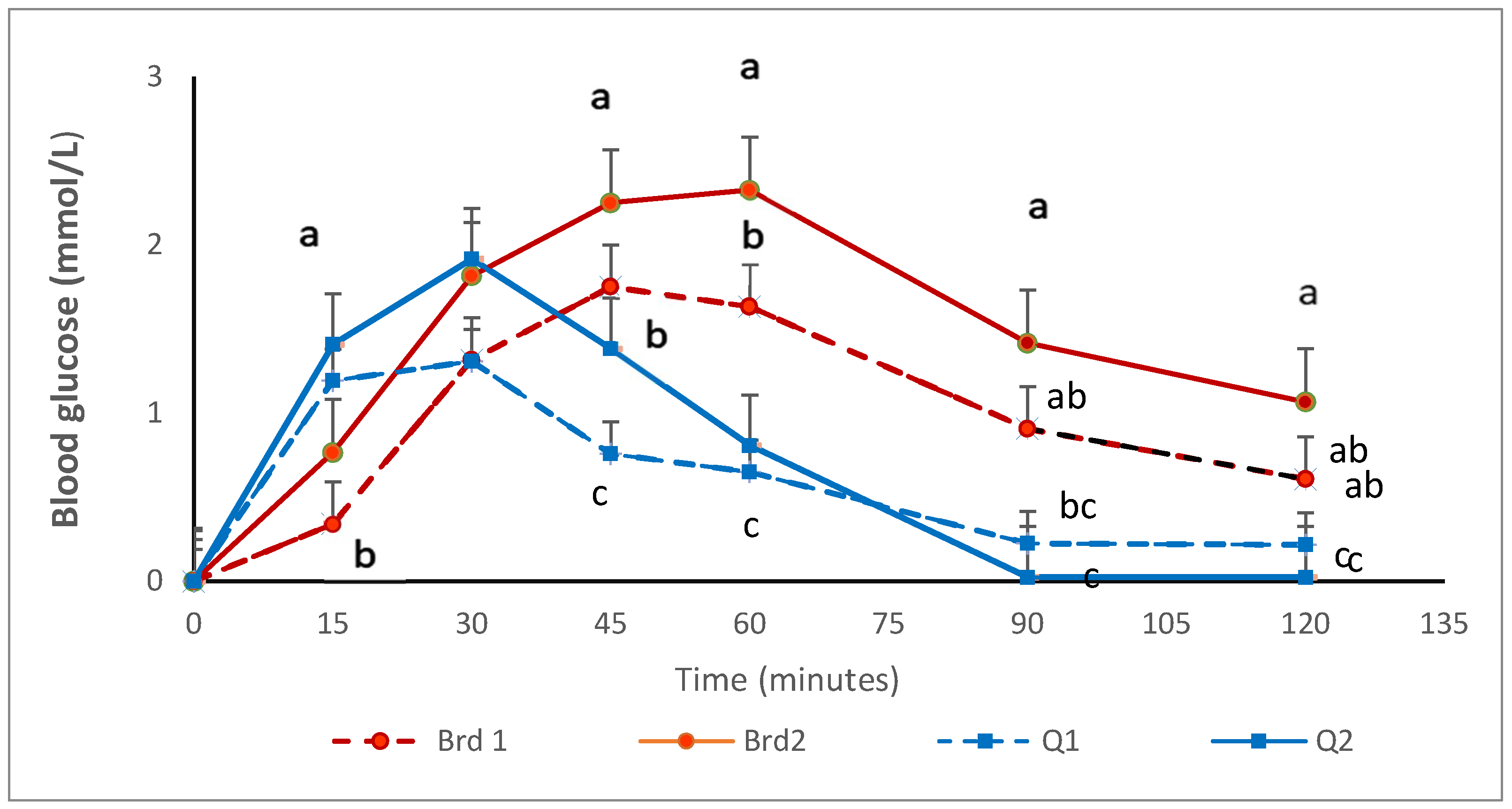
Figure 2.
Effect of quinoa and bread treatment on blood glucose iAUC over 120 minutes. The data is presented as mean ± SD. Different superscript letters show significant differences among the treatments. Statistical significance was set at p ≤ 0.05. Key: Brd=bread, Q=quinoa.
Figure 2.
Effect of quinoa and bread treatment on blood glucose iAUC over 120 minutes. The data is presented as mean ± SD. Different superscript letters show significant differences among the treatments. Statistical significance was set at p ≤ 0.05. Key: Brd=bread, Q=quinoa.
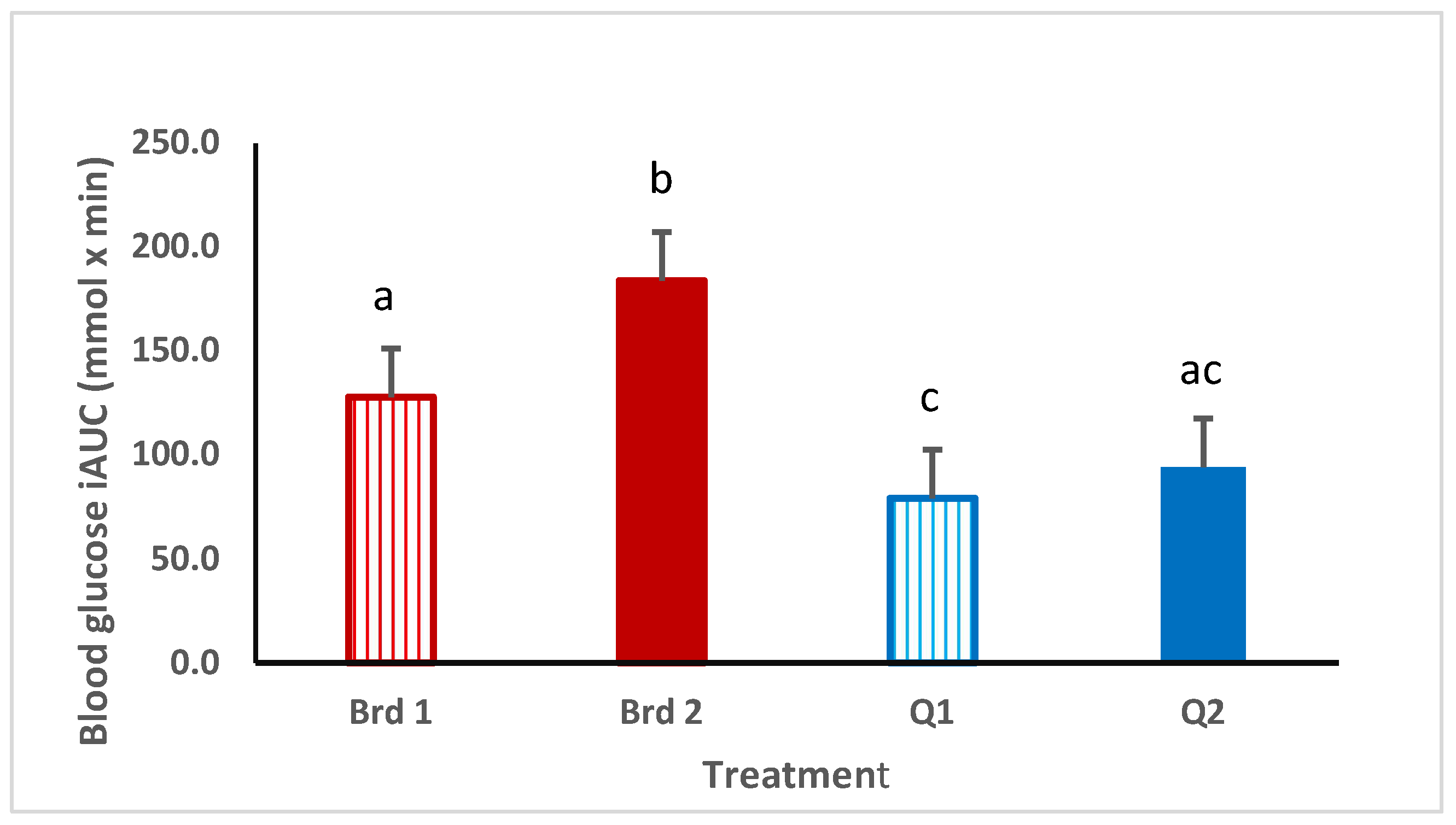
Figure 3.
Effect of quinoa and bread treatment on subjective appetite response over 120 minutes. The data is presented as mean ± SD. Different superscript letters show significant differences among the treatments at the same time point. Statistical significance was set at p ≤ 0.05. Key: Brd=bread, Q=quinoa.
Figure 3.
Effect of quinoa and bread treatment on subjective appetite response over 120 minutes. The data is presented as mean ± SD. Different superscript letters show significant differences among the treatments at the same time point. Statistical significance was set at p ≤ 0.05. Key: Brd=bread, Q=quinoa.
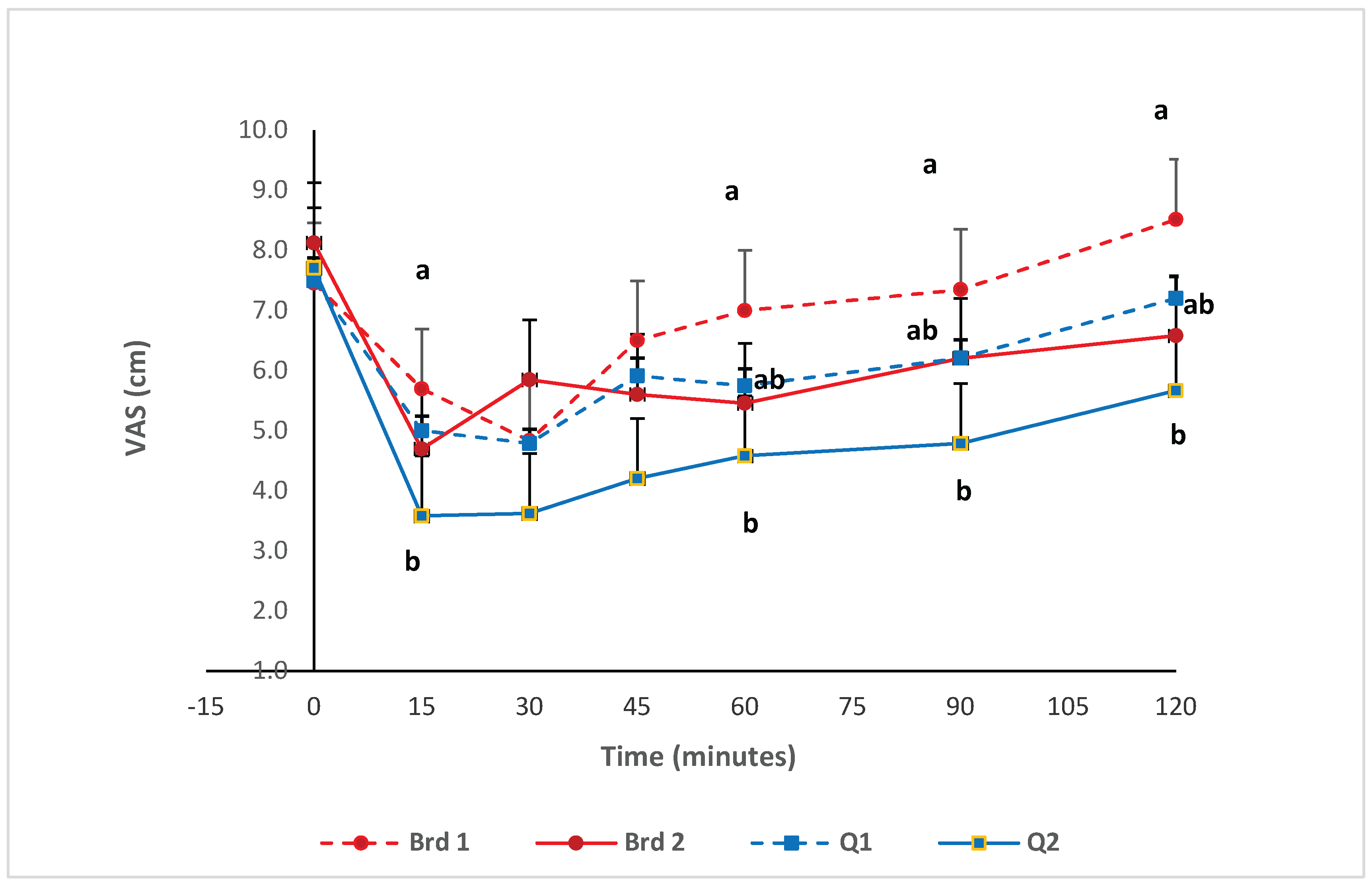
Figure 4.
Effect of quinoa and bread treatment on subjective appetite nAUC over 120 minutes The data is presented as mean ± SD. Different superscript letters show significant differences among the treatments. Statistical significance was set at p ≤ 0.05. Key: Brd=bread, Q=quinoa.
Figure 4.
Effect of quinoa and bread treatment on subjective appetite nAUC over 120 minutes The data is presented as mean ± SD. Different superscript letters show significant differences among the treatments. Statistical significance was set at p ≤ 0.05. Key: Brd=bread, Q=quinoa.
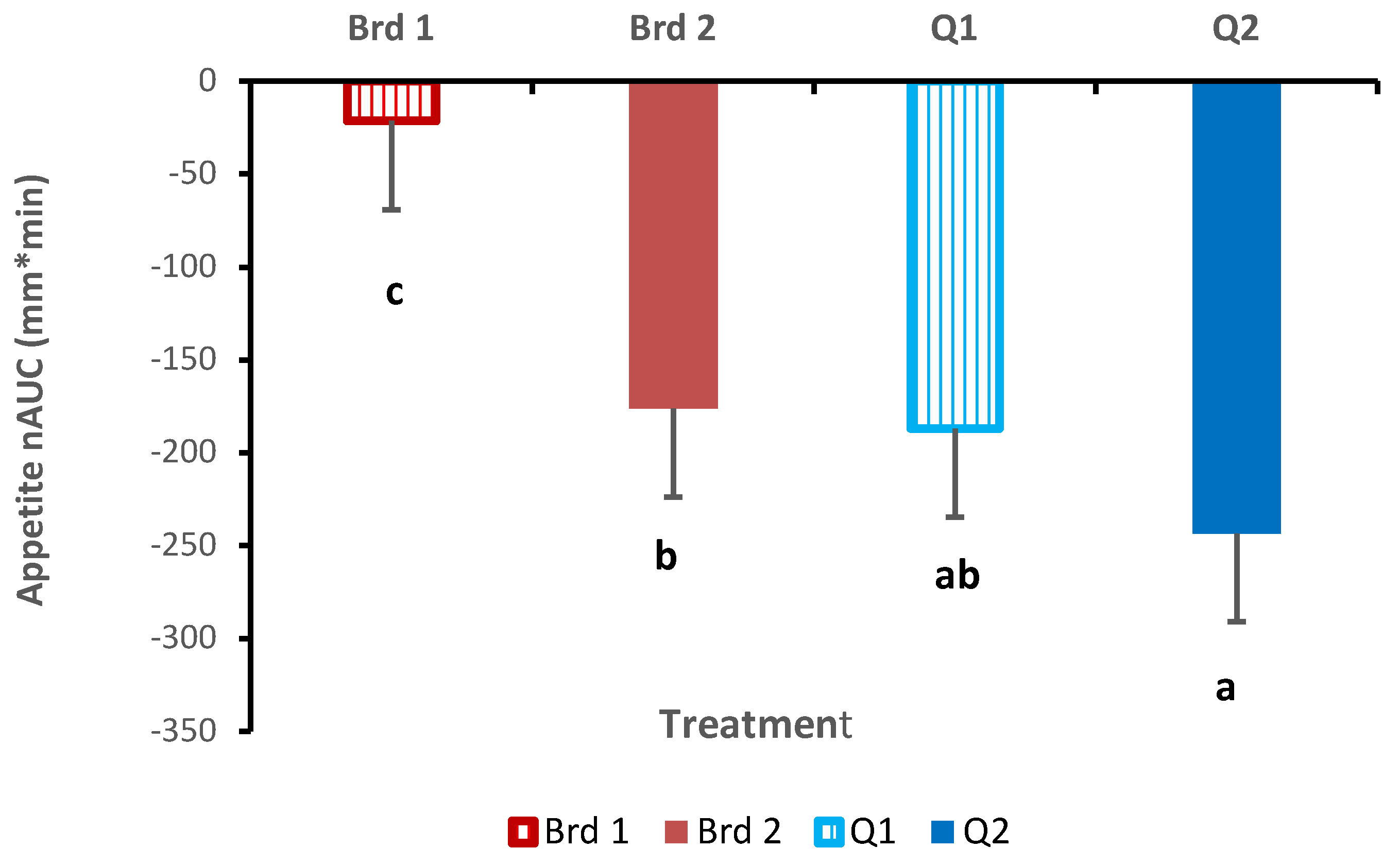

Table 1.
Participants’ responses for the four subjective appetite questions (Mean±SD).
| Q1: How Much is your Desire to Eat (Cm) | |||||||
| Time (min) | 0 | 15 | 30 | 45 | 60 | 90 | 120 |
| Brd 1 | 7.5±1.5 | 3.7±2.7 | 4.8±2.2 | 6.6±1.8 a | 7.0±1.7 a | 7.4±1.7 a | 8.5±0.9a |
| Brd 2 | 7.9±1.8 | 5.3±1.2 | 5.9±1.3 | 5.7±1.3 ab | 5.6±1.7 b | 6.3±1.9 ab | 6.7±1.9ab |
| Q1 | 7.5±1.7 | 5.3±2.4 | 4.8±2.2 | 5.9 ±1.8ab | 5.8±1.0 b | 6.2±1.5 ab | 7.2±1.5ab |
| Q 2 | 7.7±1.9 | 3.6±2.3 | 3.6±2.1 | 4.2±1.8 b | 4.2±1.9 c | 4.3±2.0 b | 5.11.5±b |
| p-value | 0.79 | 0.33 | 0.75 | 0.08 | 0.05 | 0.04 | 0.05 |
| Q2: How Hunger Do You Feel (Cm) | |||||||
| Brd 1 | 7.3±2.0 | 4.1±2.8 | 5.1±2.3 | 5.7±1.9 | 6.1±2.1 | 6.5±1.5 | 7.2 ±1.5 |
| Brd 2 | 7.4±1.4 | 4.9±2.3 | 4.8±2.4 | 5.9±1.4 | 5.6±2.1 | 6.6±1.3 | 7.7 ±1.4 |
| Q1 | 7.5±2.0 | 5.3±1.4 | 5.1±2.3 | 6.2±1.5 | 6.0±1.9 | 6.8±2.6 | 7.4 ±2.0 |
| Q 2 | 7.3±3.1 | 5.4±2.9 | 5.5±2.4 | 5.5±1.8 | 5.8±2.0 | 6.1±2.0 | 6.2±1.6 |
| p-value | 0.95 | 0.41 | 0.56 | 0.56 | 0.37 | 0.81 | 0.06 |
| Q3: How Much Food You Think You Can Eat (Cm) | |||||||
| Brd 1 | 6.5±1.9 | 4.1±2.2 | 4.7±2.2 | 5.5±2.0 | 6.4±1.1 | 6.5±1.5 | 7.3 ±1.7a |
| Brd 2 | 6.8±2.0 | 3.9±2.2 | 4.8±1.2 | 5.1±1.2 | 5.5±1.1 | 6.5±1.4 | 7.1±1.6 a |
| Q1 | 6.5±2.1 | 4.8±1.9 | 4.5±2.1 | 5.4±2.0 | 5.5±1.8 | 5.9±1.4 | 6.1±1.1 ab |
| Q 2 | 7.3±2.5 | 5.4±2.5 | 5.6±1.7 | 5.6±1.5 | 5.7±1.7 | 5.6±1.5 | 5.5±1.1b |
| p-value | 0.55 | 0.51 | 0.32 | 0.62 | 0.28 | 0.21 | 0.05 |
| Q4: How Full You Feel (Cm) | |||||||
| Brd 1 | 2.2±1.6 | 5.0±2.9 | 3.8±2.9 | 4.4±2.1 | 4.5±1.7 | 3.8±2.0 | 2.3±0.9 a |
| Brd 2 | 1.8±1.3 | 5.8±2.5 | 5.8±2.5 | 5.1±1.8 | 4.8±1.7 | 4.5±1.8 | 4.2±1.9 b |
| Q1 | 2.0±1.6 | 5.4±1.5 | 4.9±2.4 | 4.7±2.4 | 4.3±2.7 | 4.3±2.2 | 4.3±1.2b |
| Q 2 | 1.8±1.4 | 7.1±1.6 | 6.9±2.7 | 5.4±2.4 | 5.2±1.8 | 5.0±1.8 | 5.0±1.8bc |
| p-value | 0.68 | 0.18 | 0.18 | 0.51 | 0.82 | 0.51 | 0.03 |
The data is presented as mean ± SD. Different superscript letters show significant differences among the treatments within the columns. Statistical significance was set at p ≤ 0.05. Key: Brd=bread, Q=quinoa.
Table 2.
Participants’ sensory and gastrointestinal responses to the test foods (Means±SD).
| Variables | Aroma | Taste | Texture | Stomach discomfort |
| Bread 1 | 7.47±0.4 | 8.11±0.7 | 7.92±2.2 | 1.13±2.1 |
| Bread 2 | 7.37±0.7 | 8.12±1.2 | 7.11±1.5 | 2.21±1.9 |
| Quinoa 1 | 7.62±0.8 | 8.22±0.9 | 7.14±1.6 | 2.11±1.4 |
| Quinoa 2 | 8.19±0.9 | 7.99±1.2 | 7.45±1.3 | 2.21±1.3 |
Disclaimer/Publisher’s Note: The statements, opinions and data contained in all publications are solely those of the individual author(s) and contributor(s) and not of MDPI and/or the editor(s). MDPI and/or the editor(s) disclaim responsibility for any injury to people or property resulting from any ideas, methods, instructions or products referred to in the content. |
© 2026 by the authors. Licensee MDPI, Basel, Switzerland. This article is an open access article distributed under the terms and conditions of the Creative Commons Attribution (CC BY) license (http://creativecommons.org/licenses/by/4.0/).
Copyright: This open access article is published under a Creative Commons CC BY 4.0 license, which permit the free download, distribution, and reuse, provided that the author and preprint are cited in any reuse.


