

Submitted:
28 May 2026
Posted:
29 May 2026
You are already at the latest version
Abstract
Breast implant illness (BII) is an emerging clinical disorder characterized by systemic symptoms, such as fatigue, cognitive dysfunction, musculoskeletal pain, and autoimmune-like complications. Despite increasing patient awareness and improved clinical care, BII remains controversial due to the absence of standardized diagnostic criteria and accurate biomarkers. In this review, we address the current clinical and research gaps in symptoms, diagnosis, and treatment outcomes of BII by focusing on the underlying immunological mechanisms, aiming to identify potential biomarkers for improving these areas in the clinical care of BII. Through comprehensive literature analysis, it has been found that patient-reported data consistently indicate a high prevalence of systemic symptoms, with up to one-third of women reporting BII-related complaints. Outcomes following explantation are remarkably positive, with 57–96% of patients experiencing partial or complete symptom relief. Among many etiological factors, immunological mechanisms are identified to be more relevant to BII, including silicone-related autoimmune/inflammatory syndrome induced by adjuvants (ASIA), chronic inflammation induced by bacterial biofilms, immune responses to connective tissue remodeling, and genetic predisposition associated with different HLA alleles. Potential endocrine or neuroimmune responses to degraded silicone products also contribute to the development of BII symptoms. Immunological mechanisms related to BII clinical symptoms and their utility in the development of diagnostic and therapeutic strategies are also discussed.
Keywords:
breast implant illness (BII)
; immunological response
; silicone adjuvant
; implant-related symptoms
; explantation
1. Introduction
Breast implant illness (BII) is an evolving clinical disorder that is characterized by a collection of systemic symptoms reported by individuals with breast implants. Clinically, BII is not formally recognized as a medical diagnosis according to ICD-11, DSM-5, or WHO classification system, rather, it is considered a chronic and multisystem syndrome that is attributed to the presence of breast implants [1]. These symptoms include but are not limited to fatigue, cognitive dysfunction, arthralgia, myalgia, and autoimmune-like complications [1,2,3,4]. Meta-analyses and systematic reviews show that these symptoms are more frequent in women with breast implants compared to controls, with relative risks for fatigue, myalgia, and cognitive dysfunction ranging from 2.9 to 3.2 [1,2,5]. Studies also suggest that up to 31-42% of women with breast implants report BII-related symptoms, among whom only a subset experiences severe or persistent symptoms [4,6,7]. The medical community is divided regarding the recognition of the constellation of these symptoms, partly due to the absence of standardized diagnostic criteria, reliable biomarkers, or pathognomonic features [3,8]. Thus, BII remains a gray area in terms of patient awareness, diagnosis, and clinical care.
Prevalence estimates for BII are inconsistent, largely due to the use of survey data that combine self-reported symptoms with insufficient interpretation and documentation [4,6,9]. While epidemiological evidence remains limited, analyses of the FDA’s (U.S. Food and Drug Administration) Manufacturer and User Facility Device Experience (MAUDE) demonstrate a marked increase in reported adverse events linked to breast implantation over the past decade, particularly those involving silicone-based devices [1,10,11,12]. Both silicone and saline-filled implants, regardless of their surface texture, have been implicated in BII, although silicone implants have been more frequently associated with systemic complaints [2]. Textured implants have also received additional scrutiny due to their established connection with breast-implant associated anaplastic large cell lymphoma (BIA-ALCL), which further complicates patient-reported symptoms and clinical assessment [13,14,15].
In response to rising patient reports and safety concerns, the FDA issued a black-box warning for all breast implants in 2021, advising patients that implants may be associated with systemic symptoms [16]. The FDA has also mandated patient decision checklists and updated labels to support informed consent. Meanwhile, patient advocacy has increased on social media to raise awareness, empower patients to seek explantation, and demand transparency from both manufacturers and clinicians [17,18,19]. This shift has led to a significant rise in the rates of explantation procedures in the United States and around the World, with the number of women choosing explantation without replacement rising by 47% in 2021 compared to 2020, implying growing concerns about the health risks of implants [20,21].
Given the gaps in BII diagnosis and in the understanding of symptom severity and variation influenced by implant types and other factors, this review seeks to synthesize the current research status regarding symptomatology and treatments, mainly explantation, in relation to immunologic and pathophysiological mechanisms. By integrating the findings from published case reports, registry data, and mechanistic studies, we expect to elucidate if any immunological and pathological pathways or factors can be developed into biomarkers for more accurate diagnosis and effective treatments for BII.
The literature search was conducted according to the process of PRISM, although this paper is not a meta-analysis or qualitative systematic review. The search procedure and strategy are depicted in Figure 1. These papers are focused, but other relevant biomedical research papers are also included in this review for more integrative analysis.
2. Symptomatology and Clinical Outcomes After Explantation
Breast implantation (typically saline or silicone) for reconstruction or augmentation is an in-demand plastic surgery, ranking as the second most common plastic surgery in the US after liposuction as of 2022 [22]. A total of 3.5 million women are estimated to currently have breast implants [4]. The increasing prevalence of breast implant use within the status quo poses a pressing need to investigate BII and patient-reported outcomes.
Types of implant materials make a big difference in BII development [2]. Among 751 women reporting BII in the MAUDE database, 60.6% of cases are attributed to silicone implants compared to 39.4% for saline [10]. Although BII symptoms are very diverse [23], categorization of these symptoms defines three major groups: 1) nervous/muscular/ endocrine, 2) oral/digestive/ respiratory, and 3) skin/nail [9]. In terms of age, younger patients notably showed more severe BII symptoms, which could be partially due to more robust immune responses [24]; conversely, older women, especially postmenopausal, showed milder symptoms, probably due to lower levels of estradiol and decreased immune responses [25].
The duration from initial implantation to the primary onset of symptoms varies, with a reported average of 13.4 ± 2.92 years [26]. With BII symptoms tending to be diverse and chronic, the overall health of patients is largely affected. One study with 182 women receiving breast implants revealed that 97% of them experienced negative effects, and 95% of them were specifically related to the implantation [4] . It is also difficult to define symptoms specific to BII, as they are challenged by significant overlap with other chronic and systemic conditions, such as autoimmune disorders, fibromyalgia, and hypothyroidism [27]. One study with 467 women with BII identified that 23% of them were ANA (antinuclear antibodies) positive [28], suggesting an association with autoimmune pathology. Conversely, an alternative hypothesis attributes BII and its symptoms to a form of somatic symptom disorder, supported by a study demonstrating a strong association between breast implants and mental health conditions, such as anxiety and depression [27]. Another study with 240 women receiving elective breast surgery found that 88% of them reporting BII symptoms had pre-existing diagnoses of anxiety and/or depression, suggesting that psychological factors could also contribute to BII symptomatology. Approximately 70.2% of women with concurrent BII symptoms and anxiety meet the criteria for somatic symptom disorder, compared to 21.7% without anxiety [12], suggesting that psychological comorbidity may influence symptom reporting in some BII patients.
Explantation is the major treatment for BII; the post-explantation outcomes are generally encouraging with 57% of women reporting overall symptom improvement, and approximately 10% achieving complete symptom resolution [26,28,29]. In a study with a large cohort of 200 patients, 96% of them reported improved or resolved symptoms within five months post-explantation [30]. Another study found that 83.5% of patients improved after explantation [26]. Thus, these lines of evidence have generated consistent results, underscoring the benefits of explantation for BII treatment. Among all reported symptoms, the most consistently improved symptoms include fatigue, brain fog, musculoskeletal pain, headaches, sleep disturbances, and cognitive difficulties [21,28,29,31]. Interestingly, improvement occurs regardless of implant type or explant techniques. Data from a prospective study by the Aesthetic Surgery Education and Research Foundation (ASERF) demonstrated that 88% of patients reported sustained improvement over the course of a year, irrespective of whether they underwent en bloc capsulectomy, partial capsulectomy, or implant removal alone [26,32].
The necessity of total capsulectomy remains debated, as symptom improvement appears irrespective of capsule removal technique; complication and reoperation rates are also relatively low (3.8% and 7.3%, respectively), and quality of life has been significantly improved across all measurable domains [33,34,35]. Patient-reported experiences have also suggested that gradual improvement can be achieved, with some reporting continuous symptom improvement over 12-18 months. Psychosocial outcomes are also favorable, with several studies reporting significant improvements (in 90% of cases) in patient physical and emotional well-being, measured by validated quality-of-life instruments, such as SF-36 and BREAST-Q [4,36]. Decision regret has been rarely reported; a qualitative study suggests that explantation contributes substantially to both patient symptom relief and emotional well-being [37]. Collectively, these data demonstrate the broad benefits of explantation as the mainstay for BII therapy (Table 1).
3. Immunologic and Pathophysiologic Mechanisms Underlying BII Pre- and Post-Explantation
While the pathogenesis of BII currently remains poorly understood, several possible immunological and pathophysiologic mechanisms have been considered to explain the constellation of symptoms commonly experienced by affected patients [39,40]. The following hypotheses, derived from immunologic, microbiologic, genetic, and neuroendocrine perspectives, have been supported by mechanistic and clinical evidence, which include silicone-associated Autoimmune/Inflammatory Syndrome Induced by Adjuvants (ASIA), chronic inflammation from bacterial biofilms, immune responses to connective tissue remodeling, genetic susceptibility linked to HLA alleles, and potential neuroimmunological effects of silicone degradation products.
3.1. Silicone as an Adjuvant: the ASIA Hypothesis
One of the most prominent BII pathogenic mechanisms involves the role of silicone in initiating systemic disease such as ASIA, first described by Shoenfeld and Agmon-Levin in 2011 and subsequently studied by many others [41,42,43,44]. ASIA posits that certain environmental triggers, such as silicone, can act as immunologic adjuvants that nonspecifically activate the immune system of genetically susceptible individuals. Chronic immune stimulation, polyclonal B-cell activation, and dysregulation of immune tolerance have been demonstrated in animal models and in vitro studies, with genetic predisposition associated with HLA-DRB1*01 and HLA-DRB4 alleles [42,44,45].
Although silicone (primarily polydimethylsiloxane, PDMS) is considered chemically inert, its immunogenicity is thought to be adjuvant-like rather than haptenic. PDMS is a hydrophobic polymer with repeating (CH₃)₂SiO units and high molecular weight, and its size and chemical structure make it unlikely to function as a hapten, as it does not readily form covalent bonds with host proteins to create a novel antigen. Instead, current findings propose that silicone particulates, gel-bleed components, or degraded low–molecular-weight siloxanes may act as nonspecific immune adjuvants, thereby enhancing innate immune activation or sustaining chronic inflammation in genetically susceptible individuals [41]. Intact implants are known to exhibit a ‘gel bleed’, a low-level silicone leakage through an intact elastomer shell. These nanoparticles may be phagocytosed by macrophages, resulting in intracellular accumulation and immune cell activation [46,47,48]. This framework aligns with the ASIA mechanism, in which chemicals do not serve as an antigen itself but instead potentiate immune activation through persistent stimulation of macrophages, dendritic cells, and lymphocytes. Macrophage activation can skew the immune response towards a Th1 or Th17 phenotype to promote pro-inflammatory cytokine production, such as IL-17 and IFN-γ, thereby sustaining systemic immune activation [49,50,51].
A set of proposed diagnostic features for ASIA includes exposure to an adjuvant, the development of systemic manifestations related to fatigue, arthralgia, or cognitive dysfunction, and improvement following removal of the triggering agents [39,52]. Other features include the presence of specific autoantibodies and medical history of autoimmune diseases. Several case series and registry reports have documented symptom improvement in BII following explantation, providing indirect evidence for this proposed mechanism. However, ASIA remains a controversial topic within the rheumatologic community, largely due to the absence of definitive biomarkers and controlled longitudinal studies that can provide definitive evidence [43,53]. This uncertainty is directly relevant to BII as many proposed mechanisms for BII draw on the same adjuvant-based framework (Figure 2). Thus, the debate on ASIA affects the ongoing skepticism about whether silicone exposure is strongly associated with the systemic symptoms of BII.
3.2. Chronic Immune Activation
Growing evidence from research has suggests that bacterial biofilms present on the implant surface or fibrous capsule may play a role in sustaining low-grade and chronic activation of immune responses. Biofilms function as structured microbial communities that are encased in a protective matrix capable of resisting host immunity and antibiotic therapy. Implants, particularly textured devices, are susceptible to biofilm colonization, with species such as Staphylococcus epidermidis [54,55,56,57]. These biofilms may be responsible for perpetuating a chronic inflammatory state that not only contributes to systemic symptoms, but also to capsular contracture, a well-documented complication of breast implantation [58]. Recent studies have identified biofilm-derived metabolites (oxylipin 10-HOME) that polarize immune cells toward a Th1 response, mirroring the immune profile seen in BII patients and animal models [54,55]. Oxylipins constitute a broad class of oxygenated fatty acids, including prostaglandins and leukotrienes, and they play diverse roles in regulating inflammation, leukocyte recruitment, and cytokine signaling [54,55]. The identification of 10-HOME suggests that bacterial biofilms may generate a wider array of lipid mediators capable of modulating host immune responses. These biofilm-derived metabolites may act in concert to sustain low-grade inflammation, drive macrophage activation, and enhance T-cell priming, providing a plausible mechanistic link between localized biofilm activity and the systemic symptoms reported in BII [54,55]. The resultant systemic effects are possibly due to localized capsule inflammation that is synergistic with the systemic response, including both innate and adaptive immune responses. Histopathologic analyses have demonstrated perivascular lymphocytic infiltration and increased cytokine expression in affected capsules, suggesting an immune response to microbial components or degraded silicone particles. This mechanism may also act synergistically with ASIA in perpetuating systemic symptoms.
3.3. Genetic Susceptibility
Host genetics may modulate the risk of developing immune responses to implants. Recent studies have identified an association between certain human leukocyte antigen (HLA) genotypes, particularly HLA-DRB1 and HLA-DQB1 alleles, and an increased likelihood of systemic autoimmune reactions in individuals with silicone implants [1]. These HLA variants are known to present certain self-peptides with higher affinity, which can enhance CD4⁺ T-cell activation, reduce peripheral tolerance, and promote proinflammatory Th1/Th17 immune responses, which may enhance susceptibility to immune dysregulation in the presence of silicone particles or biofilm-derived antigens. Furthermore, these genotypes can predispose individuals to diseases such as systemic lupus erythematosus and rheumatoid arthritis, supporting the biologic plausibility to their roles in BII [59,60]. In addition to HLA correlations, some patients demonstrate aberrant autoantibody profiles, including anti-nuclear antibodies (ANA), anti-Ro/SSA, and anti-dsDNA, although the clinical significance of these associations remains unclear [61,62]. Silicone and other adjuvants may promote autoantibody production by activating innate immune pathways, enhancing antigen presentation, and inducing bystander activation of autoreactive B and T cells. Additionally, particulate silicone can be phagocytosed by macrophages, leading to cytokine release and epitope spreading, thus exposing self-antigens to facilitate autoantibody production [61]. Although autoantibodies could theoretically serve as potential biomarkers, current evidence is inconsistent, and no autoantibody pattern has demonstrated adequate sensitivity or specificity to support its diagnostic value in BII [43]. It is currently unknown whether these autoantibodies reflect a true autoimmune response, a transient response to immune stimulation, or an epiphenomenon resulting from chronic inflammation.
3.4. Neuroimmunology Effects
Emerging evidence suggests that silicone nanoparticles (NPs) and degradation products can migrate beyond the implant site and accumulate in the central nervous system (CNS). Preclinical studies have demonstrated that macrophages can phagocytose silicone particles, which may then traffic via lymphatic or hematogenous routes to regional lymph nodes and, in some cases, to the brain [63,64,65,66]. Imaging studies in animal models indicate that such migration can contribute to microglial activation and localized neuroinflammation [66], providing a mechanistic link to neurological symptoms reported in BII, including cognitive dysfunction, paresthesia, and fatigue.
A potential mediator of CNS effects is prostaglandin signaling. Biofilm-derived lipid mediators, including prostaglandin E2 (PGE2) and related oxylipins, can amplify neuroimmune communication by promoting microglial activation and modulating cytokine production within the CNS [67]. Chronic exposure to such mediators may sustain low-grade neuroinflammation and contribute to symptom persistence, even when systemic immune activation is reduced. These findings support a model in which silicone-induced neuroimmune effects arise from both nanoparticle migration and prostaglandin-mediated signaling, linking local implant effects to CNS manifestations.
Although confirmatory mechanistic data in humans remain limited, current studies support the plausibility of silicone-associated neuroinflammation as a contributor to BII symptomatology [68,69]. Focused studies assessing CNS biomarkers, imaging correlates, and prostaglandin signaling are warranted to clarify the role of neuroimmune pathways in mediating cognitive and neurologic symptoms
3.5. Immunologic Changes After Explantation
Emerging longitudinal data suggest that explantation may modulate certain inflammatory or immunologic markers in a subset of BII patients. A recent proteomic study evaluating 43 symptomatic women demonstrated alterations in several inflammatory proteins following implant removal, including significant post-explant increases in fibroblast growth factor-19 (FGF-19) and reductions in chemokines such as MCP-1 and CCL11 [38]. These changes may reflect partial restoration of metabolic and inflammatory homeostasis after removal of the presumed stimuli. In a complementary imaging-based investigation, somatostatin receptor scintigraphy performed before and after explantation showed resolution of focal inflammatory uptake at the implant capsule, although some patients exhibited persistent systemic uptake, which is consistent with continued immune activation despite implant removal [70]. Autoantibody positivity, particularly antinuclear antibodies, was also observed in a notable proportion of these patients. Meta-analysis data further indicate that approximately one-quarter of symptomatic women exhibit ANA positivity and explantation is associated with symptom improvement in roughly 80% of cases, although pre- versus post-explantation ANA titers have not been reported [17]. Collectively, these findings suggest that silicone-associated immune activation may be at least partially reversible, and that explantation can influence both local and systemic inflammatory pathways. However, the heterogeneity of results and the absence of consistent or validated biomarkers underscore the need for larger controlled studies to determine whether cytokines, autoantibodies, or other immune mediators can serve as reliable diagnostic or prognostic biomarkers for BII [40]. Additionally, proposed mechanisms such as chronic antigenic stimulation and adjuvant-like effects of silicone implicate their potential roles in sustained immune dysregulation beyond the presence of the implant itself. These lines of evidence thus far (Figure 3) warrant further studies to identify reliable biomarkers for BII from an immunological perspective.
4. Discussion
Although the research and clinical care of BII have advanced, BII is still considered a symptom-based syndrome rather than a formally recognized disease with a single diagnostic test [37,71]. It is inadequately defined with a cluster of systemic symptoms linked to breast implants. In particular, we still lack commonly accepted diagnostic criteria, which is further related to our limited understanding of the pathogenesis and biomarkers underlying BII. With the constitutional symptoms of chronic fatigue (the most commonly reported), malaise, and fever-like sensations, and other symptoms affecting many systems with autoimmune and inflammatory features such as brain fog and lymph node swelling, we hypothesize that immune response is a major mechanism for BII, either in causal relationship or as concomitant effects. Specifically, immune dysregulation can be considered a major mediator of BII symptoms. Our idea is also supported by the fact that breast implantation is a wound healing process that requires homeostatic immune response, but if it goes wrong, especially for individuals with susceptible HLA alleles, harmful immunological consequences will occur. Although no consensus has been reached regarding exact immunological mechanisms of BII, the current understanding recognizes the importance of the following pathways in BII pathogenesis, including immune activation initiated by silicone as an adjuvant (similar to the ASIA mechanism), cytokine-driven systemic inflammation through chronic innate immune stimulation and the activation of Th1 and Th17 cells, loss of immune tolerance leading to the generation of autoantibodies, biofilm-initiated antigenic stimulation, and host susceptibility synergized with environmental triggers (Figure 2 and Figure 3).
However, among these immune responses, there is a crucial issue that remains elusive: why do some individuals develop BII, but others do not? Physiologically, breast implantation is similar to organ transplantation; a controlled immune response is required to generate tolerance to foreign body, thus establishing stable capsulation [11]. During healthy immune responses, innate immunity is transiently activated with M1 macrophages and cytokine (mainly IL-1β, TNF-α, IL-6) burst-mediated inflammation to clear debris, but it quickly transitions to immune suppressive environment, wherein activation of M2 macrophages and Treg cells driven by IL-10 and TGF-β attenuates innate immunity, Th1/Th17 activation, and autoantibody responses, thereby promoting tissue remodeling and fibrosis to reach the immune containment stage. However, if any of these processes is out of control, the normal immunity threshold will be surpassed, and chronic inflammation and autoimmune-like symptoms will develop [1]. The mechanisms for the failure of terminating normal immune responses are likely to include: a) persistent stimulation from breast implant adjuvant effect and/or biofilm, b) pre-existing autoimmune conditions, and c) susceptible MHC alleles (e.g., HLA-DRB1, HLA-DQB1, HLA-B27, HLA-DRB111, DRB101) mediated dysregulation of adaptive immunity, including skewing T cell differentiation toward Th1/Th17 cells, downregulating Treg cells, promoting autoreactive T cells, and favoring the production of autoantibodies. Other genetic mechanisms similar to MHC alleles might also exist to disturb normal immune processes, such as the switch from M1 to M2 macrophage. With these immunological mechanisms analyzed, we would envision that key cytokines, immune cells, and genetic factors (e.g., HLA alleles) could become actionable biomarkers to advance BII diagnosis and therapy.
5. Conclusion and Future Perspectives
Based on the in-depth analysis of immunological mechanisms in this paper, we propose that cytokine profiling and genetic testing are most likely to be developed into new biomarkers for diagnosing BII or predicting its progression. Cytokine profiling may be focused on the levels and dynamics of IL-1β, IL-6, TNF-α, IFN-γ, IL-8, IL-17, IL-10, TGFβ, and IL-1 RA (receptor antagonist), and the ratio between pro-inflammatory and anti-inflammatory cytokines. Genetic testing should focus on susceptible HLA alleles; testing of other factors, such as TLR2/4 and FOXP3, would be practically challenging. Autoantibody tests, such as ANA, Anti-Ro/SSA, Anti-La/SSB, are less reliable since their relationship with BII development is not well established. On the therapeutic side, the regulators that tip the balance between healthy immunity and the BII-bound state could be potentially targeted, for instance, the inhibition of IL-1β signaling through canakinumab [72] and a strategy of promoting Treg differentiation while inhibiting Th17 differentiation using retinoic acid [73]. Nevertheless, our perspective here still requires further intensive research to elucidate the causal relationship between these immune responses and BII development. The confirmative diagnosis and targeted therapy for BII are further challenged by the status quo in this field, such as the high heterogeneity of BII, immune dysregulation without clear causal relationships, and the lack of validated biomarkers. Thus, defining the disease, integrating immunological and genomic research, and conducting prospective clinical studies are pressingly needed to advance the precision medicine of BII.
References
- Suh, L.J.; Khan, I.; Kelley-Patteson, C.; Mohan, G.; Hassanein, A.H.; Sinha, M. Breast Implant-Associated Immunological Disorders. J. Immunol. Res. 2022, 2022, 8536149. [Google Scholar] [CrossRef]
- Bouhadana, G.; Boucher, C.; Saleh, E.; Gornitsky, J.; Borsuk, D.E. Defining Breast Implant Illness: A Systematic Review and Meta-analysis of Patient-reported Symptoms. Plast. Reconstr. Surg. Glob. Open 2025, 13(5), e6773. [Google Scholar] [CrossRef]
- de Vries, C.E.E.; Kaur, M.N.; Klassen, A.F.; Sommers, K.; Hume, K.M.; Pusic, A.L. Understanding Breast Implant-Associated Illness: A Delphi Survey Defining Most Frequently Associated Symptoms. Plast. Reconstr. Surg. 2022, 149(6), 1056e–61e. [Google Scholar] [CrossRef]
- Magno-Padron, D.A.; Luo, J.; Jessop, T.C.; Garlick, J.W.; Manum, J.S.; Carter, G.C.; et al. A population-based study of breast implant illness. Arch. Plast. Surg. 2021, 48(4), 353–60. [Google Scholar] [CrossRef] [PubMed]
- Cohen Tervaert, J.W.; Mohazab, N.; Redmond, D.; van Eeden, C.; Osman, M. Breast implant illness: scientific evidence of its existence. Expert Rev. Clin. Immunol. 2022, 18(1), 15–29. [Google Scholar] [CrossRef] [PubMed]
- Kabir, R.; Stanton, E.; Sorenson, T.J.; Hemal, K.; Boyd, C.J.; Karp, N.S.; et al. Breast implant illness as a clinical entity: A systematic review of the literature. Aesthet. Surg. J. 2024, 44(9), NP629–36. [Google Scholar] [CrossRef]
- Josephine, Maartje; Colaris, Lambertina. Breast implant illness in silicone breast implant patients. 2022.
- Magnusson, M.R.; Cooter, R.D.; Rakhorst, H.; McGuire, P.A.; Adams, W.P.; Deva, A.K. Breast implant illness: A way forward. Plast. Reconstr. Surg. 2019, 143(3S A Review of Breast Implant-Associated Anaplastic Large Cell Lymphoma), 74S–81S. [Google Scholar] [CrossRef]
- Luvisa, B.K.; Demirjian, M.; Kwan, L.; DeLong, M.R. 15. breast implant illness: making sense of the symptoms. Plast. Reconstr. Surg.-Glob. Open 2024, 12(S5), 12–3. [Google Scholar] [CrossRef]
- Taskindoust, M.; Bowman, T.; Thomas, S.M.; Levites, H.; Wickenheisser, V.; Hollenbeck, S.T. The Patient Narrative for Breast Implant Illness: A 10-Year Review of the U.S. Food and Drug Administration’s MAUDE Database. Plast. Reconstr. Surg. 2022, 150(6), 1181–7. [Google Scholar] [CrossRef]
- Lee, M.; Ponraja, G.; McLeod, K.; Chong, S. Breast implant illness: A biofilm hypothesis. Plast. Reconstr. Surg. Glob. Open 2020, 8(4), e2755. [Google Scholar] [CrossRef]
- Bresnick, S.D. Self-Reported Breast Implant Illness: The Contribution of Systemic Illnesses and Other Factors to Patient Symptoms. Aesthet. Surg. J. Open Forum 2023, 5, ojad030. [Google Scholar] [CrossRef]
- Marra, A.; Viale, G.; Pileri, S.A.; Pravettoni, G.; Viale, G.; De Lorenzi, F.; et al. Breast implant-associated anaplastic large cell lymphoma: A comprehensive review. Cancer Treat. Rev. 2020, 84, 101963. [Google Scholar] [CrossRef]
- Swanson, E. Textured Implant-Associated Anaplastic Large-Cell Lymphoma: Updating the Name. Ann. Plast. Surg. 2023, 91(3), 321–3. [Google Scholar] [CrossRef]
- Lee, J.-H. Breast implant-associated anaplastic large-cell lymphoma (BIA-ALCL). Yeungnam Univ. J. Med. 2021, 38(3), 175–82. [Google Scholar] [CrossRef]
- Maor, M.; Shoenfeld, Y. Conflicting interpretations and FDA reputation: the case of post-market surveillance of breast implants. Front Med. 2024, 11, 1475992. [Google Scholar] [CrossRef] [PubMed]
- Ferreira, S.; Barros, A.S.; Marques, M. Breast Implant Illness: Symptoms, Outcomes with Explantation and Potential Etiologies—A Systematic Review and Meta-analysis. Aesthetic Plast. Surg. 2025. [Google Scholar] [CrossRef] [PubMed]
- Azahaf, S.; Spit, K.A.; de Blok, C.J.M.; Willging, L.; Rolfs, H.; Nanayakkara, P.W.B. Breast implant iatrogenics: challenging the safety narrative. Front Glob. Womens Health 2024, 5, 1359106. [Google Scholar] [CrossRef]
- Dey, V.; Krasniak, P.; Nguyen, M.; Lee, C.; Ning, X. A pipeline to understand emerging illness via social media data analysis: case study on breast implant illness. JMIR Med. Inf. 2021, 9(11), e29768. [Google Scholar] [CrossRef]
- Ioppolo, L.; Amenta, A.; Alessandri-Bonetti, M.; Borelli, F.; Calapai, M.; Veronesi, P.; et al. One-step Glandular Reconstruction after Breast Implant Removal: Technical Refinements and Grafting of the Inferior Dermoglandular Flap. Plast. Reconstr. Surg. Glob. Open 2023, 11(9), e5247. [Google Scholar] [CrossRef]
- Wee, C.E.; Younis, J.; Isbester, K.; Smith, A.; Wangler, B.; Sarode, A.L.; et al. Understanding Breast Implant Illness, Before and After Explantation: A Patient-Reported Outcomes Study. Ann. Plast. Surg. 2020, 85 (S1 Suppl 1), S82–6. [Google Scholar] [CrossRef] [PubMed]
- Joks, M.M.; Czernikiewicz, K.; Mazurkiewicz, Ł.; Joks, M.; Balcerzak, A.; Kroll-Balcerzak, R.; et al. Breast Implant-Associated Anaplastic Large Cell Lymphoma: Where Hematology and Plastic Surgery Meet. Clin. Lymphoma Myeloma Leuk. 2024, 24(9), e293–300. [Google Scholar] [CrossRef]
- Smith, J.E.; Taritsa, I.C.; Stigliano, M.; Foppiani, J.; Lee, D.; Raska, O.; et al. Heavy metals in breast implants and implications for breast implant illness: A systematic review of the literature. Aesthetic Plast. Surg. 2025, 49(19), 5472–9. [Google Scholar] [CrossRef]
- Lieffering, A.S.; Hommes, J.E.; Ramerman, L.; Rakhorst, H.A.; Mureau, M.A.M.; Verheij, R.A.; et al. Prevalence of local postoperative complications and breast implant illness in women with breast implants. JAMA Netw. Open 2022, 5(10), e2236519. [Google Scholar] [CrossRef]
- Giefing-Kröll, C.; Berger, P.; Lepperdinger, G.; Grubeck-Loebenstein, B. How sex and age affect immune responses, susceptibility to infections, and response to vaccination. Aging Cell 2015, 14(3), 309–21. [Google Scholar] [CrossRef]
- Hemal, K.; Kabir, R.; Stanton, E.; Sorenson, T.; Boyd, C.; Karp, N.; et al. Breast implant illness (BII) as a clinical entity: A systematic review of the literature. Aesthetic Surg. J. Open Forum 2024, 6 (Supplement_1). [Google Scholar] [CrossRef]
- Bresnick, Stephen D. Self-Reported Breast Implant Illness: The Contribution of Systemic Illnesses and Other Factors to Patient Symptoms. Aesthetic Surg. J. Open Forum 2023, 5. [Google Scholar] [CrossRef] [PubMed]
- Spit, K.A.; Scharff, M.; de Blok, C.J.; Niessen, F.B.; Bachour, Y.; Nanayakkara, P.W. Patient-reported systemic symptoms in women with silicone breast implants: a descriptive cohort study. BMJ Open 2022, 12(6), e057159. [Google Scholar] [CrossRef] [PubMed]
- Miseré, R.M.L.; van der Hulst, R.R.W.J. Self-Reported Health Complaints in Women Undergoing Explantation of Breast Implants. Aesthet. Surg. J. 2022, 42(2), 171–80. [Google Scholar] [CrossRef]
- Metzinger, S.E.; Homsy, C.; Chun, M.J.; Metzinger, R.C. Breast implant illness: treatment using total capsulectomy and implant removal. Eplasty 2022, 22, e5. [Google Scholar] [PubMed]
- Miranda, B.H.; Banwell, P.E.; Sterne, G.D.; Floyd, D.C. Breast implant illness: A United Kingdom patient-centred approach. J. Plast. Reconstr. Aesthet. Surg. 2024, 98, 201–10. [Google Scholar] [CrossRef]
- Glicksman, C.; McGuire, P.; Kadin, M.; Lawrence, M.; Haws, M.; Newby, J.; et al. Impact of Capsulectomy Type on Post-Explantation Systemic Symptom Improvement: Findings From the ASERF Systemic Symptoms in Women-Biospecimen Analysis Study: Part 1. Aesthet. Surg. J. 2022, 42(7), 809–19. [Google Scholar] [CrossRef]
- Brown, M.; Hontscharuk, R. Commentary on: breast explantation with simultaneous mastopexy and volume restoration: an analysis of clinical outcomes and prospective quality of life. Aesthetic Surg. J. 2023, 43(8), 853–5. [Google Scholar] [CrossRef]
- Messa, C.A.; Messa, C.A. Breast explantation with simultaneous mastopexy and volume restoration: an analysis of clinical outcomes and prospective quality of life. Aesthet. Surg. J. 2023, 43(8), 840–52. [Google Scholar] [CrossRef]
- Calobrace, M.B.; Mays, C. An algorithm for the management of explantation surgery. Clin. Plast. Surg. 2021, 48(1), 1–16. [Google Scholar] [CrossRef]
- Bascone, C.M.; McGraw, J.R.; Couto, J.A.; Sulkar, R.S.; Broach, R.B.; Butler, P.D.; et al. Exploring Factors Associated with Implant Removal Satisfaction in Breast Implant Illness Patients: A PRO BREAST-Q Study. Plast. Reconstr. Surg. Glob. Open 2023, 11(9), e5273. [Google Scholar] [CrossRef]
- Tang, S.; Anderson, N.E.; Faasse, K.; Adams, W.P.; Newby, J.M. A qualitative study on the experiences of women with breast implant illness. Aesthet. Surg. J. 2022, 42(4), 381–93. [Google Scholar] [CrossRef]
- Azahaf, S.; Spit, K.A.; de Blok, C.J.M.; Nanayakkara, P.W.B. Increased FGF-19 levels following explantation in women with breast implant illness. Sci. Rep. 2025, 15(1), 3652. [Google Scholar] [CrossRef] [PubMed]
- Tervaert, J.W.C.; Shoenfeld, Y.; Cruciani, C.; Scarpa, C.; Bassetto, F. Breast implant illness: Is it causally related to breast implants? Autoimmun. Rev. 2024, 23(1), 103448. [Google Scholar] [CrossRef] [PubMed]
- Varela-Chinchilla, C.D.; Salinas-McQuary, G.; Segura-Azuara, N.; de los, Á.; Trinidad-Calderón, P.A. Breast implant illness: surgical, autoimmune, and breast reconstruction associations. Surgeries 2022, 3(2), 111–25. [Google Scholar] [CrossRef]
- Shoenfeld, Y.; Agmon-Levin, N. “ASIA” - autoimmune/inflammatory syndrome induced by adjuvants. J. Autoimmun. 2011, 36(1), 4–8. [Google Scholar] [CrossRef]
- Perricone, C.; Colafrancesco, S.; Mazor, R.D.; Soriano, A.; Agmon-Levin, N.; Shoenfeld, Y. Autoimmune/inflammatory syndrome induced by adjuvants (ASIA) 2013: Unveiling the pathogenic, clinical and diagnostic aspects. J. Autoimmun. 2013, 47, 1–16. [Google Scholar] [CrossRef]
- Cohen Tervaert, J.W.; Martinez-Lavin, M.; Jara, L.J.; Halpert, G.; Watad, A.; Amital, H.; et al. Autoimmune/inflammatory syndrome induced by adjuvants (ASIA) in 2023. Autoimmun. Rev. 2023, 22(5), 103287. [Google Scholar] [CrossRef]
- Watad, A.; Quaresma, M.; Brown, S.; Cohen Tervaert, J.W.; Rodríguez-Pint, I.; Cervera, R.; et al. Autoimmune/inflammatory syndrome induced by adjuvants (Shoenfeld’s syndrome) - An update. Lupus 2017, 26(7), 675–81. [Google Scholar] [CrossRef] [PubMed]
- Watad, A.; David, P.; Brown, S.; Shoenfeld, Y. Autoimmune/inflammatory syndrome induced by adjuvants and thyroid autoimmunity. Front Endocrinol. 2016, 7, 150. [Google Scholar] [CrossRef]
- Taritsa, I.C.; Jagasia, P.M.; Boctor, M.; Kim, J.Y.S.; Fracol, M. Breast Implant Silicones and B Cell-Mediated Immune Responses: A Systematic Review of Literature. JPRAS Open 2024, 41, 353–67. [Google Scholar] [CrossRef]
- Mustafá, J.C.R.; Fleury E de, F.C.; Dijkman, H.B.P.M. Case report: evidence of migratory silicone particles arising from cohesive silicone breast implants. Front Glob. Womens Health 2022, 3, 730276. [Google Scholar] [CrossRef] [PubMed]
- de Faria Castro; Fleury, E. Breast silicone implants’ pericapsular impairment: current underdiagnosed status. Front Surg. 2023, 10, 1249078. [Google Scholar] [CrossRef]
- Schoberleitner, I.; Faserl, K.; Tripp, C.H.; Pechriggl, E.J.; Sigl, S.; Brunner, A.; et al. Silicone implant surface microtopography modulates inflammation and tissue repair in capsular fibrosis. Front Immunol. 2024, 15, 1342895. [Google Scholar] [CrossRef] [PubMed]
- Colaris, M.J.L.; Ruhl, T.; Beier, J.P. Effects of silicone breast implants on human cell types in vitro: A closer look on host and implant. Aesthetic Plast. Surg. 2022, 46(5), 2208–17. [Google Scholar] [CrossRef]
- Jagasia, P.; Taritsa, I.; Bagdady, K.; Shah, S.; Fracol, M. Silicone breast implant-associated pathologies and T cell-mediated responses. Inflamm. Res. 2025, 74(1), 33. [Google Scholar] [CrossRef]
- Yousfi, J.; Oumlil, S.; Essaadouni, L. Autoimmune/inflammatory syndrome induced by adjuvants (ASIA) after silicone breast implants. EJCRIM 2025. [Google Scholar] [CrossRef]
- Levy, Y.; Baytner-Zamir, R. Silicone and autoimmune/inflammatory syndrome induced by adjuvants (ASIA). In Vaccines and Autoimmunity; Shoenfeld, Y., Agmon-Levin, N., Tomljenovic, L., Eds.; Wiley, 2015; pp. 79–86. [Google Scholar]
- Khan, I.; Minto, R.E.; Kelley-Patteson, C.; Singh, K.; Timsina, L.; Suh, L.J.; et al. Biofilm-derived oxylipin 10-HOME-mediated immune response in women with breast implants. J. Clin. Invest. 2023, 134(3). [Google Scholar] [CrossRef]
- Khan, I.; Minto, R.E.; Kelley-Patteson, C.; Van Natta, B.; Mohan, G.; Suh, L.; et al. QS9: host biofilm interaction in breast implant illness. Plast. Reconstr. Surg.-Glob. Open 2021, 9(7S), 48–9. [Google Scholar] [CrossRef]
- James, G.A.; Boegli, L.; Hancock, J.; Bowersock, L.; Parker, A.; Kinney, B.M. Bacterial adhesion and biofilm formation on textured breast implant shell materials. Aesthetic Plast. Surg. 2019, 43(2), 490–7. [Google Scholar] [CrossRef]
- Rezende-Pereira, G.; Albuquerque, J.P.; Souza, M.C.; Nogueira, B.A.; Silva, M.G.; Hirata, R.; et al. Biofilm Formation on Breast Implant Surfaces by Major Gram-Positive Bacterial Pathogens. Aesthet. Surg. J. 2021, 41(10), 1144–51. [Google Scholar] [CrossRef] [PubMed]
- Hu, H.; Jacombs, A.; Vickery, K.; Merten, S.L.; Pennington, D.G.; Deva, A.K. Chronic biofilm infection in breast implants is associated with an increased T-cell lymphocytic infiltrate: implications for breast implant-associated lymphoma. Plast. Reconstr. Surg. 2015, 135(2), 319–29. [Google Scholar] [CrossRef] [PubMed]
- K Groth, A.; Graf, R. Breast Implant-Associated Anaplastic Large Cell Lymphoma (BIA-ALCL) and the Textured Breast Implant Crisis. Aesthetic Plast. Surg. 2020, 44(1), 1–12. [Google Scholar] [CrossRef]
- Rondón-Lagos, M.; Rangel, N.; Camargo-Villalba, G.; Forero-Castro, M. Biological and genetic landscape of breast implant-associated anaplastic large cell lymphoma (BIA-ALCL). Eur. J. Surg. Oncol. 2021, 47(5), 942–51. [Google Scholar] [CrossRef]
- Bar-Meir, E.; Teuber, S.S.; Lin, H.C.; Alosacie, I.; Goddard, G.; Terybery, J.; et al. Multiple autoantibodies in patients with silicone breast implants. J. Autoimmun. 1995, 8(2), 267–77. [Google Scholar] [CrossRef]
- A comparison of autoantibody production in asymptomatic and symptomatic women with silicone breast implants. - Abstract - Europe PMC [Internet]. 1999. Available online: https://europepmc.org/article/MED/9918243.
- Klettner, A.; Harms, A.; Waetzig, V.; Tode, J.; Purtskhvanidze, K.; Roider, J. Emulsified silicone oil is taken up by and induces pro-inflammatory response in primary retinal microglia. Graefes Arch. Clin. Exp. Ophthalmol. 2020, 258(9), 1965–74. [Google Scholar] [CrossRef]
- Yoon, H.M.; Lee, C.Y.; Song, W.J. Axillary silicone lymphadenopathy caused by gel bleeding with intact silicone breast implants: a case report. Arch. Aesthetic Plast. Surg. 2023, 29(4), 213–6. [Google Scholar] [CrossRef]
- Cohen Tervaert, J.W.; Colaris, M.J.; van der Hulst, R.R. Silicone breast implants and autoimmune rheumatic diseases: myth or reality. Curr. Opin. Rheumatol. 2017, 29(4), 348–54. [Google Scholar] [CrossRef]
- Pluvy, I.; Randrianaridera, E.; Tahmaz, I.; Melin, M.; Gindraux, F.; Keime, C.; et al. Breast implant silicone exposure induces immunogenic response and autoimmune markers in human periprosthetic tissue. Biomaterials 2025, 317, 123025. [Google Scholar] [CrossRef]
- Ribeiro, P.D.C.; Sato, E.I. Autoimmune/autoinflammatory syndrome induced by adjuvants: a focus on silicone. Clin. Rheumatol. 2022, 41(11), 3275–83. [Google Scholar] [CrossRef]
- Smalley, D.L.; Shanklin, D.R.; Hall, M.F.; Stevens, M.V.; Hanissian, A. Immunologic stimulation of T lymphocytes by silica after use of silicone mammary implants. FASEB J. 1995, 9(5), 424–7. [Google Scholar] [CrossRef]
- Yoshida, S.H.; Teuber, S.S.; German, J.B.; Gershwin, M.E. Immunotoxicity of silicone: Implications of oxidant balance towards adjuvant activity. Food Chem. Toxicol. 1994, 32(11), 1089–100. [Google Scholar] [CrossRef]
- Anzola, L.K.; Ramirez, S.; Moreno, S.; Vargas, C.; Rojas, S.; Rivera, J.N. Somatostatin Receptor Scintigraphy in Autoimmune Syndrome Induced by Silicone Breast Implants: Pre- and Postexplantation Findings. J. Clin. Med. 2025, 14(12). [Google Scholar] [CrossRef] [PubMed]
- Newby, J.M.; Tang, S.; Faasse, K.; Sharrock, M.J.; Adams, W.P. Commentary on: understanding breast implant illness. Aesthet. Surg. J. 2021, 41(12), 1367–79. [Google Scholar] [CrossRef] [PubMed]
- Ridker, P.M.; Everett, B.M.; Thuren, T.; MacFadyen, J.G.; Chang, W.H.; Ballantyne, C.; et al. Antiinflammatory Therapy with Canakinumab for Atherosclerotic Disease. N Engl. J. Med. 2017, 377(12), 1119–31. [Google Scholar] [CrossRef] [PubMed]
- Xiao, S.; Jin, H.; Korn, T.; Liu, S.M.; Oukka, M.; Lim, B.; et al. Retinoic acid increases Foxp3+ regulatory T cells and inhibits development of Th17 cells by enhancing TGF-beta-driven Smad3 signaling and inhibiting IL-6 and IL-23 receptor expression. J. Immunol. 2008, 181(4), 2277–84. [Google Scholar] [CrossRef]
Figure 1.
The PRISMA outline for literature search with inclusion and exclusion criteria. Search Strategy follows: Databases: PubMed, EMBASE, Cochrane, Scopus; Keywords: "breast implant illness", "explantation", "silicone adjuvant", "autoimmune syndrome induced by adjuvants (ASIA)", "implant-related symptoms"; Inclusion: case series, cohort studies, narrative/systematic reviews, mechanistic studies; Exclusion: non-English, animal-only studies unless mechanistically novel; Key domains: symptom prevalence, duration, resolution post-explantation, immune biomarkers, explant technique, implant type.
Figure 1.
The PRISMA outline for literature search with inclusion and exclusion criteria. Search Strategy follows: Databases: PubMed, EMBASE, Cochrane, Scopus; Keywords: "breast implant illness", "explantation", "silicone adjuvant", "autoimmune syndrome induced by adjuvants (ASIA)", "implant-related symptoms"; Inclusion: case series, cohort studies, narrative/systematic reviews, mechanistic studies; Exclusion: non-English, animal-only studies unless mechanistically novel; Key domains: symptom prevalence, duration, resolution post-explantation, immune biomarkers, explant technique, implant type.
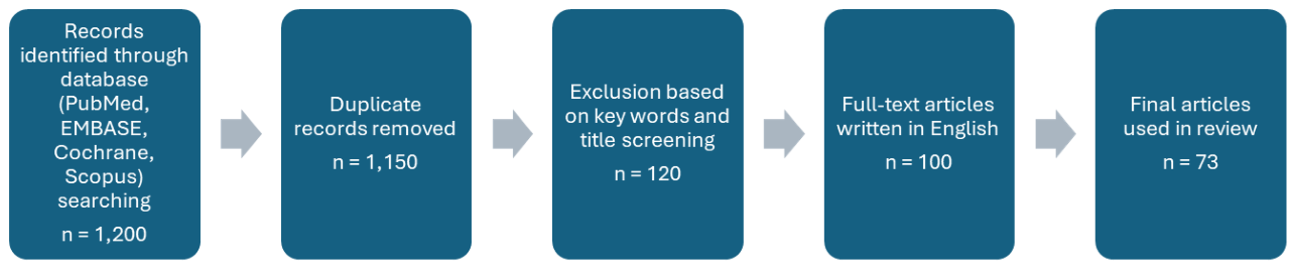
Figure 2.
Proposed Mechanisms of Adjuvant-Induced Immune Activation in Breast Implant Illness (ASIA framework).
Figure 2.
Proposed Mechanisms of Adjuvant-Induced Immune Activation in Breast Implant Illness (ASIA framework).
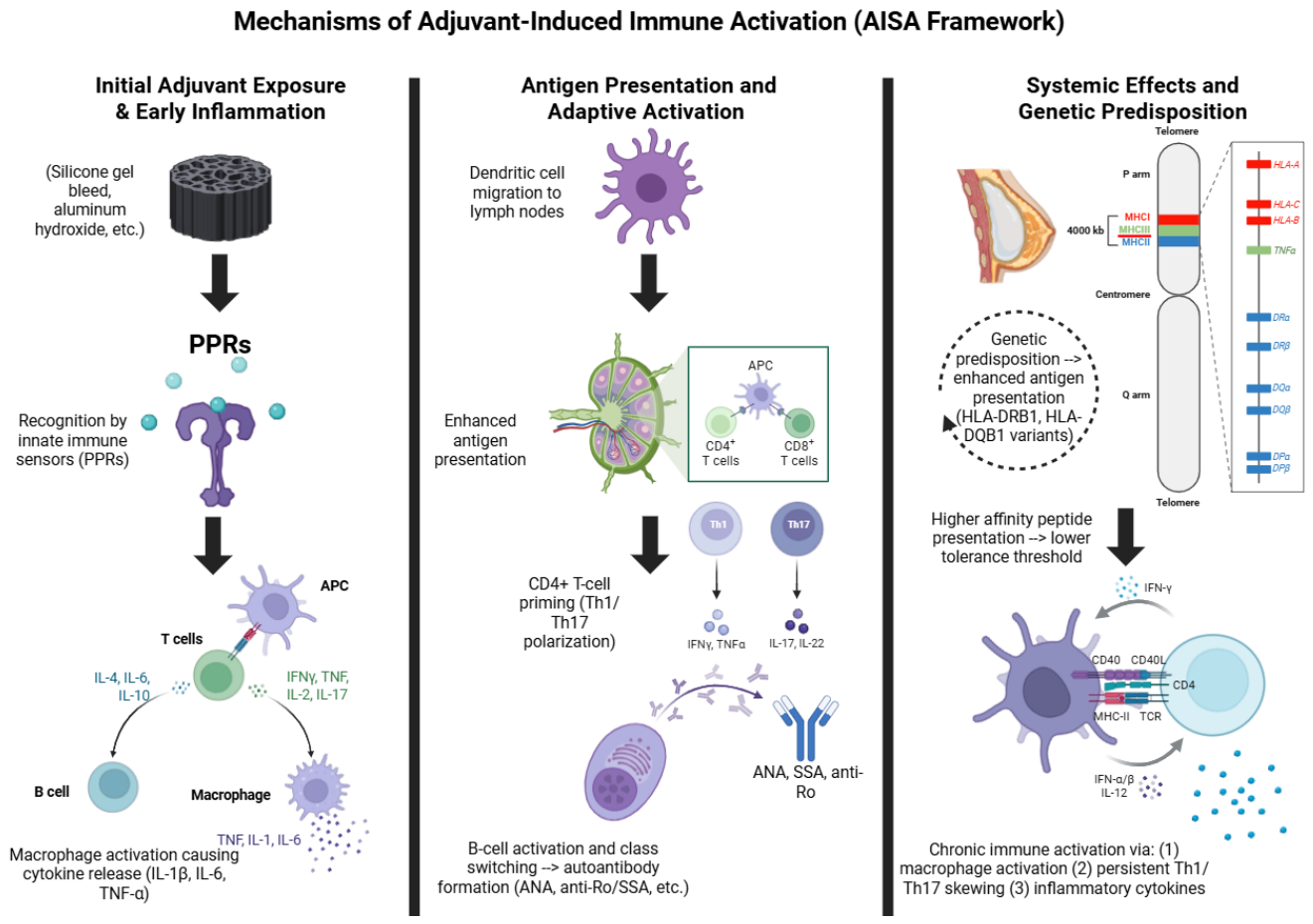
Figure 3.
Integrated Model of immunological and pathological mechanisms underlying the development of symptoms in Breast Implant Illness (BII). All the research evidence analyzed above is summarized here as a conceptual model.
Figure 3.
Integrated Model of immunological and pathological mechanisms underlying the development of symptoms in Breast Implant Illness (BII). All the research evidence analyzed above is summarized here as a conceptual model.
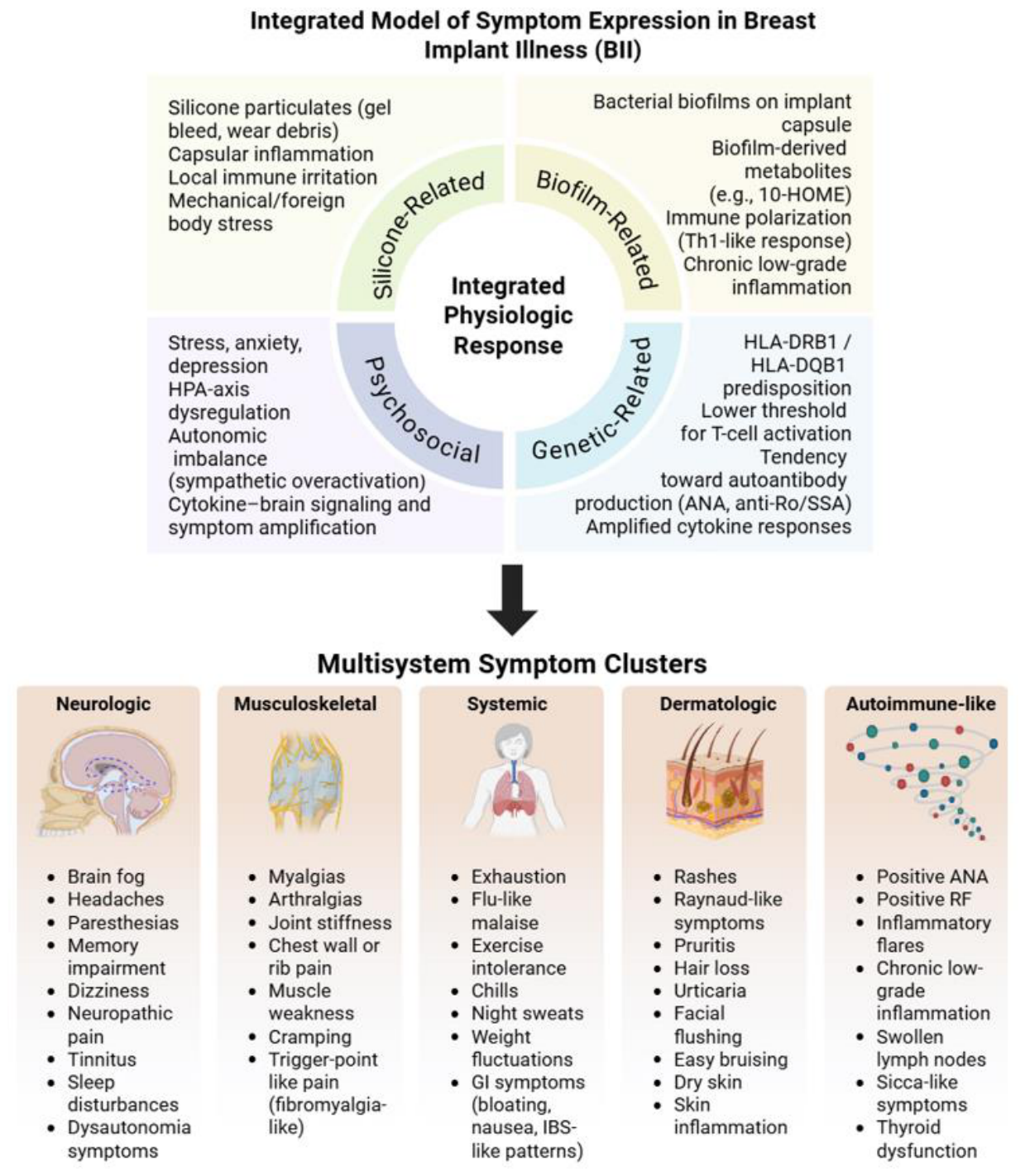

Table 1.
Patient- Reported Breast Implant Illness (BII) Symptoms and the Improvement following Explantation. Key features of BII symptoms and the efficacy of explantation are summarized in this table. Data are derived from observational studies and systematic reviews cited in this paper. Improvement is considered as ranges or qualitative descriptors consistent with the original studies.
Table 1.
Patient- Reported Breast Implant Illness (BII) Symptoms and the Improvement following Explantation. Key features of BII symptoms and the efficacy of explantation are summarized in this table. Data are derived from observational studies and systematic reviews cited in this paper. Improvement is considered as ranges or qualitative descriptors consistent with the original studies.
| Domain | Common Symptoms | Reported Prevalence | Improvement After Explantation | References Cited |
|---|---|---|---|---|
| Constitutional | Fatigue, malaise | High | 57–96% | [21,26,28,30] |
| Neurocognitive | Brain fog, cognitive issues, headaches | Moderate–high | Improved in majority | [21,28,31] |
| Musculoskeletal | Joint pain, muscle pain, stiffness, paresthesia | High | Most improved | [4,26] |
| Psychological | Anxiety, depression, sleep issues | Frequently co-reported | Frequently improved | [33,37] |
| Dermatologic / Vascular | Rash, pruritus, Raynaud-like symptoms | Variable | Often improved | [17,26] |
| Immune-related | Lymphadenopathy, ANA positivity | Variable | Symptom improvement common | [28,38] |
| Autonomic / GI | Bloating, nausea, temperature dysregulation | Variable | Improved in many patients | [4,31] |
| Quality of Life | Overall health impact, wellbeing | High burden reported | Improved after explantation in most patients | [4,32,36] |
Disclaimer/Publisher’s Note: The statements, opinions and data contained in all publications are solely those of the individual author(s) and contributor(s) and not of MDPI and/or the editor(s). MDPI and/or the editor(s) disclaim responsibility for any injury to people or property resulting from any ideas, methods, instructions or products referred to in the content. |
© 2026 by the authors. Licensee MDPI, Basel, Switzerland. This article is an open access article distributed under the terms and conditions of the Creative Commons Attribution (CC BY) license (http://creativecommons.org/licenses/by/4.0/).
Copyright: This open access article is published under a Creative Commons CC BY 4.0 license, which permit the free download, distribution, and reuse, provided that the author and preprint are cited in any reuse.


