

Submitted:
27 May 2026
Posted:
28 May 2026
You are already at the latest version
Abstract
Background: This study aimed to evaluate the association between the uptake on F-18 florastamin PET/CT targeting the prostate-specific membrane antigen expression, and the histopathological grade of the primary tumor in newly diagnosed prostate cancer patients. Methods: From the prospectively collected data set from a larger phase III multicenter trial of East Asian men with florastamin PET/CT performed under suspicion of prostate cancer based on elevated prostate-specific antigen (PSA) levels, this subset analysis reviewed data from a single institution of pathologically confirmed prostate cancer cases. The maximum standardized uptake value (SUVmax) was measured from the primary tumor on florastamin PET/CT images of 110 participants. The International Society of Urological Pathology (ISUP) grade following surgery or biopsy was classified as low-risk (ISUP 1), intermediate-risk (ISUP 2–3), or high-risk (ISUP 4–5). Correlation was between the SUVmax and the ISUP was tested. PSA level and Prostate Imaging Reporting and Data system (PIRADS) from MRI were also assessed for association with the ISUP grade. Results: A significant positive correlation was found between the SUVmax of the primary tumor in the prostate and the ISUP group (ρ = 0.541, p<0.001). A significant correlation was found between the PSA level and the ISUP grade group (ρ = 0.328, p=0.001), and between the SUVmax and PIRADS (ρ = 0.516, p<0.001). There was also a positive correlation between the PSA level and SUVmax as well (ρ = 0.379, p < 0.001). Conclusions: Our study demonstrated that the uptake values of the prostate tumor are associated with the ISUP grade groups in East Asian men with prostate cancer, and suggest SUVmax could be an imaging biomarker of tumor aggressiveness.
Keywords:
prostate cancer
; florastamin
; East Asian
; PET/CT
1. Introduction
Prostate cancer is one of the most commonly diagnosed malignancies among men worldwide. Its incidence and prevalence have been steadily increasing in both Western countries and Asian populations, including Korea, coinciding with population aging and the broader implementation of prostate-specific antigen (PSA)-based screening programs [1,2,3,4].
In contemporary clinical practice, therapeutic decision-making for localized prostate cancer—ranging from active surveillance to radical prostatectomy, radiotherapy, and systemic treatment—is primarily guided by risk stratification schemes. These schemes integrate tumor grade, typically assessed by the Gleason score and the International Society of Urological Pathology (ISUP) grade group system, as well as PSA level and clinical stage [5,6,7].
Gleason-based grading and the ISUP grade group system are fundamental for prognostication and treatment selection in localized prostate cancer. However, these histopathologic classifications are inherently limited by biopsy sampling errors and intra-tumoral heterogeneity. This often results in discrepancies between biopsy findings and final radical prostatectomy specimens, especially in patients with intermediate-risk disease [8]. Traditional clinical risk assessment tools that incorporate prostate-specific antigen (PSA) levels and multiparametric magnetic resonance imaging (mpMRI) using the Prostate Imaging Reporting and Data System (PIRADS) scoring have significantly enhanced the prediction of local stage and tumor grade [9]. However, they still underestimate or overestimate clinically significant prostate cancer in a substantial number of men and fail to provide a truly quantitative measure of the intraprostatic tumor burden or biological aggressiveness.
In recent years, prostate-specific membrane antigen (PSMA) Positron Emission Tomography/Computed Tomography (PET/CT) has emerged as a groundbreaking imaging method for identifying tumor recurrence and for initial diagnosis. Among F-18 labeled tracers, F-18 PSMA-1007, flotufolastat, fluorocholine, and fluciclovine have demonstrated high detection rates for clinically significant intraprostatic lesions. Additionally, these tracers have shown significant associations between tracer uptake and established markers of disease aggressiveness, including the Gleason score (GS)/ISUP grade group, PSA level, and risk categories such as the d’Amico classification [10,11,12,13].
F-18 florastamin, one of the F-18 labeled agents, is a novel F-18 labeled small-molecule ligand with high affinity for PSMA, enabling high-contrast PET/CT imaging of PSMA-expressing primary and metastatic prostate cancer lesions with favorable biodistribution and safety profiles [14,15]; however, studies specifically addressing the association between florastamin uptake and histopathological parameters, such as tumor grade, in treatment-naïve primary disease are limited especially in the Asian population. Therefore, this study aimed to evaluate the correlation between florastamin accumulation and histopathological grade in patients with primary prostate cancer.
2. Materials and Methods
2.1. Patients
We prospectively and consecutively enrolled Korean adult male patients with suspected prostate cancer who visited the urology department of Seoul St. Mary’s Hospital from January 2020 to November 2024. All participants had no prior history of prostate-related treatment and agreed to undergo florastamin PET/CT. Exclusion criteria included severe medical conditions that impaired participation in the clinical trial, the inability to undergo a PET/CT scan (e.g., due to claustrophobia), and concurrent enrollment in another interventional clinical trial. Additionally, benign conditions such as prostatic intraepithelial neoplasia, chronic prostatitis, or nodular hyperplasia were excluded. Written informed consent was obtained from all patients in compliance with the Health Insurance Portability and Accountability Act (HIPAA). Our hospital’s Institutional Review Board approved this study as a retrospective subset analysis of that trial cohort, and the requirement for additional informed consent for this analysis was waived due to the retrospective design.
2.2. Florastamin PET/CT Acquisition
Florastamin was prepared as previously described [16]. After administering a mean dose of 379.62±9.25 MBq (10.2±0.25 mCi), scan images were acquired 90 min later using a combined PET/CT system (Discovery 710D, GE Healthcare, Waukesha, WI, USA). The acquisition time for each bed position was 3 minutes. All patients were positioned supine during the PET/CT scans. Non-enhanced low-dose CT began at the orbitomeatal line and extended to the proximal thigh, following a standard protocol of 120 kVp, variable mAs adjusted by topographic imaging, and a slice thickness of 2.5 mm. PET scans of the same body region were performed immediately after the CT. CT data were utilized for attenuation correction, and images were reconstructed using a standard ordered-subset expectation-maximization algorithm. If necessary, additional delayed images of the pelvis were acquired 120 min post-injection. The tumor SUVmax value was recorded based on the 90 minutes images.
2.3. MRI Acquisition
Standard prebiopsy MRI examinations were conducted using 3-T MRI systems (Magnetom Verio, Siemens, Erlangen, Germany, and Ingenia, Philips, Best, The Netherlands) equipped with a pelvic-based array coil. Multiparametric MRI included sagittal, coronal, and axial T2-weighted imaging, axial T1-weighted imaging, axial diffusion-weighted imaging, and dynamic contrast-enhanced sequences.
2.4. Image Analysis
PET/CT images were reviewed using a Mirada workstation (LPGL v2.0; XD General Oncology Review, Boston, MA, USA). Regions of interest (ROIs) were manually outlined around the prostate to exclude bladder activity, thereby accurately determining the maximum standardized uptake value (SUVmax). The highest SUVmax observed across the prostate was recorded, representing the area with the highest PSMA expression, and this value was used for further analysis. If activity from the prostatic urethra was suspected in the mid-portion of the prostate, it was excluded from the tumor uptake assessment.
Data from the screening MRI prostate images were recorded according to the PIRADS classification by an experienced radiologist. Grouping by PIRADS was conducted for 109 patients, except for one patient who declined to participate. If no lesions were found on the MRI, it was recorded as PIRADS group 1; if the MRI was performed after a confirmed diagnosis of prostate cancer, it was classified as PIRADS 5. Cases with multifocal findings for PIRADS 4 and 5 were classified as PIRADS 5.
2.5. Histopathology Analysis
All patients underwent MRI, PET/CT, and biopsy procedures within a one-month interval. For patients with visible lesions on either PET/CT or MRI, targeted biopsies were performed on those focal lesions. In contrast, other areas of the prostate gland were biopsied using either ultrasound-guided techniques or a 12-core biopsy approach. Each biopsy sample was labeled separately and reviewed by a board-certified surgical pathologist specializing in urologic pathology, particularly prostate pathology, who was blinded to the imaging results.
2.6. Statistical Analysis
All results are presented as mean ± standard deviation (SD) and median, with range (minimum-maximum). Spearman’s rank correlation test was used to evaluate correlations between tumor SUVmax and ISUP grades. One-way ANOVA was employed to compare SUVmax among the low-, intermediate-, and high-risk groups. The receiver operating characteristic (ROC) curve was generated to distinguish between intermediate/high-risk and low-risk prostate cancer. Statistical analyses and graphs were created using the Statistical Package for Social Sciences (SPSS Statistics 24) and GraphPad Prism 10 (Version 10.6.1). All statistical tests for significance were two-sided, and a p-value of less than 0.05 was considered significant.
3. Results
Between January 2020 and November 2024, a single-center prospective cohort study recruited consecutive patients suspected of having prostate cancer. Following imaging and histopathological evaluations, patients whose final pathology revealed prostatic intraepithelial neoplasia, chronic prostatitis, or nodular hyperplasia were excluded. This process resulted in a final study population with histologically confirmed primary prostate cancer, encompassing ISUP grade groups 1–5. All participants underwent florastamin PET/CT in combination with transrectal ultrasound-guided biopsy and/or robot-assisted radical prostatectomy for definitive histopathological confirmation. Tumors were classified according to the 2019 ISUP Consensus as follows: grade group 1 (GS ≤ 6), grade group 2 (GS 3 + 4 = 7), grade group 3 (GS 4 + 3 = 7), grade group 4 (GS 4 + 4 = 8, GS 3 + 5 = 8, GS 5 + 3 = 8), and grade group 5 (GS 9–10) [17].
3.1. Patient Characteristics
Among the participants, 59 patients underwent robot-assisted radical prostatectomy (RARP), and their postoperative pathology results were referenced. The pathology for the remaining 51 patients was based on the results of ultrasound-guided biopsies. For those who had surgery, the final pathology was determined from the surgical specimens (Figure 1). The mean patient age was 67.5 ± 8.6 years (range: 40–85), and the mean PSA level was 70.7 ± 45.7 ng/mL, with a median of 8.6 ng/mL (range: 0.7–5000.0). Patients were stratified into low-risk (ISUP 1, n = 28), intermediate-risk (ISUP 2–3, n = 67), and high-risk (ISUP 4–5, n = 15) groups based on ISUP grade. Overall, 51 patients underwent biopsy alone, while 59 underwent both biopsy and radical prostatectomy. In 7 of the 59 patients (11.8%), the Gleason score from the prostatectomy was higher than that from the biopsy results (Table 1).
3.2. Correlation of Florastamin Uptake with ISUP Grade and PSA Level
In the final cohort of 110 patients, tumor SUVmax values exhibited a stepwise increase across pathological risk strata and PIRADS scores (Table 2). The low-risk group (ISUP 1, n = 28) displayed the lowest uptake, with a mean SUVmax of 4.3 ± 2.8 and a median of 3.8. In contrast, the intermediate-risk group (ISUP 2–3, n = 67) had a higher mean SUVmax of 10.3 ± 9.5 (median, 7.5), while the high-risk group (ISUP 4–5, n = 15) showed the highest uptake, with a mean SUVmax of 12.8 ± 7.3 (median, 13.7). The relationship between ISUP grade and tumor SUVmax was assessed using Spearman’s rank correlation, yielding a correlation coefficient of 0.541 (p < 0.0001). This indicates a statistically significant positive relationship between higher histologic grades and increased tracer uptake. A significant positive correlation is found between the PSA level and the ISUP grade group (ρ = 0.328, p = 0.001) (Figure 2). There was also a positive correlation between the PSA level and SUVmax as well (ρ = 0.379, p < 0.001).
3.3. Correlation of Tumor SUVmax with PIRADS Categories
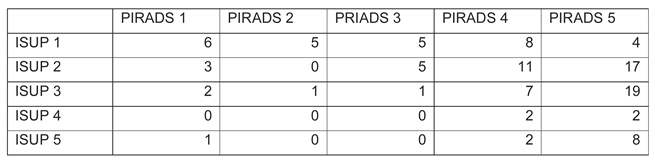
SUVmax also increased progressively with higher PIRADS categories in the overall cohort. The SUVmax and the PIRADS were also positively correlated (ρ = 0.516, p < 0.001). Lesions classified as PIRADS 1 exhibited relatively low uptake, with a mean SUVmax of 4.8 ± 1.1 and a median of 3.6. PIRADS 2 and 3 lesions showed slightly higher but still modest uptake (mean SUVmax of 2.8 ± 0.3 and 5.5 ± 1.4; medians of 2.6 and 4.5, respectively), while PIRADS 4 lesions demonstrated intermediate uptake, with a mean SUVmax of 7.8 ± 1.1 and a median of 5.4. The highest tracer accumulation was observed in PIRADS 5 lesions, with a mean SUVmax of 12.3 ± 1.5 and a median of 10.4 (Figure 3). Notably, in 96.4% (27/28) of patients with an SUVmax exceeding 12, corresponding to a PRIMARY score of 5, the pathology results indicated clinically significant prostate cancer (Gleason score of 7-9), regardless of the PIRADS score. Higher PIRADS categories correlated with a greater proportion of higher ISUP grade groups. Remarkably, even within the PIRADS 1 category, 25% of individuals were classified as ISUP 4 and 5. Similarly, in the PIRADS 2 category, 17% of patients were identified as ISUP 4 (Figure 4).
When applying a combined threshold of SUVmax ≥10 and PSA ≥10 ng/mL on florastamin PET/CT to detect intermediate- to high-risk prostate cancer, 82 of the 110 patients had intermediate/high-risk disease and 28 had low-risk disease. Under this imaging and PSA criterion, the specificity for identifying intermediate/high-risk disease were approximately 96.4%, with a positive predictive value of about 95.7%.
Figure 5.
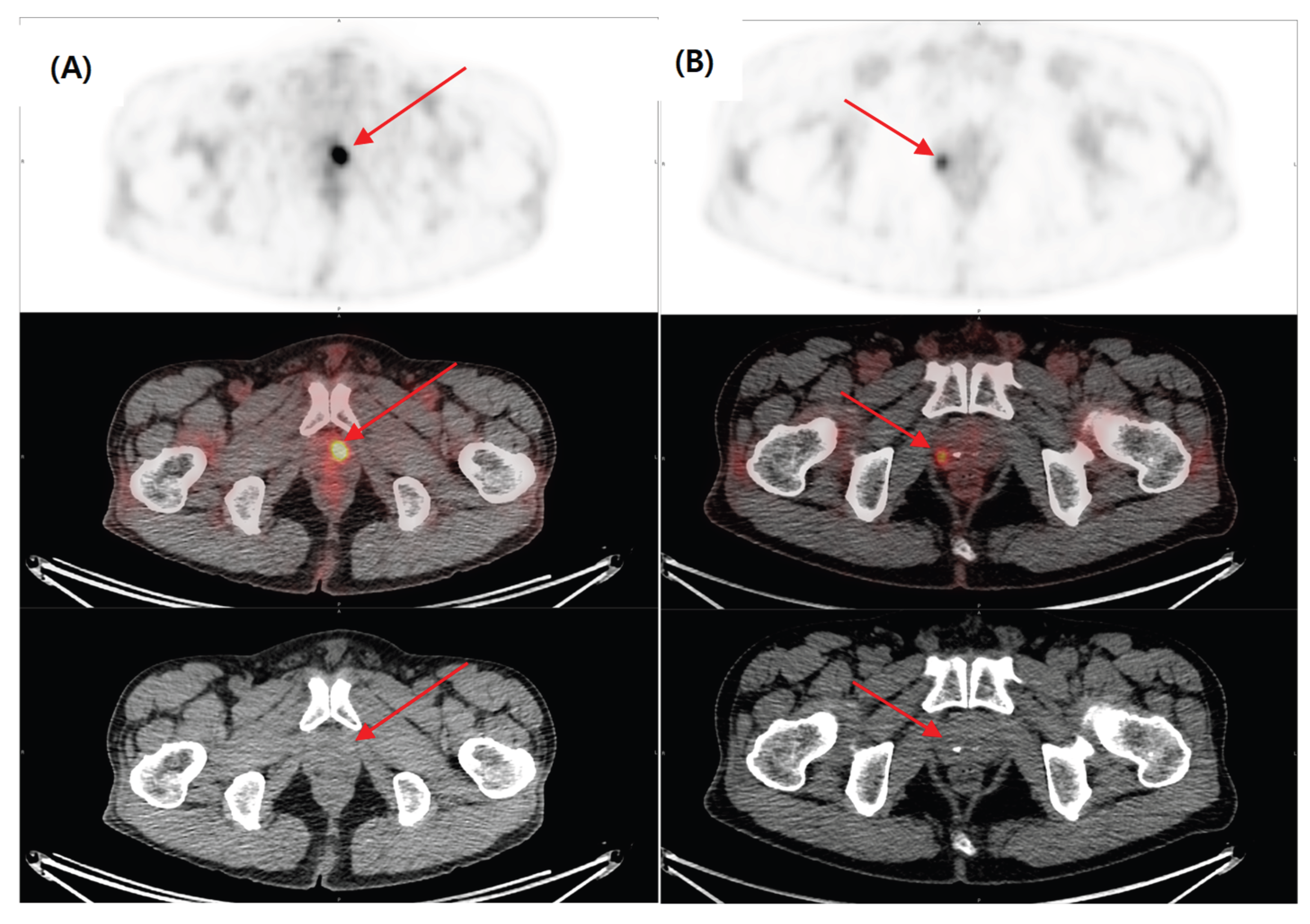
Two examples illustrate that increased florastamin uptake is associated with a high Gleason score, whereas reduced florastamin uptake corresponds to a low Gleason score. (A) A 73-year-old man with a PSA level of 45.3 ng/ml and an SUVmax of 30.6 presented with a 1.5 cm PIRADS 5 lesion in the left transition zone at the apical level. He underwent radical prostatectomy, and final pathology showed a Gleason score of 8 (4+4). (B) A 72-year-old man with a PSA level of 7.07 ng/ml and an SUVmax of 3.8 had an approximately 1.8 cm T2 low-signal mass in the bilateral anterior transition zone, more prominent on the right, classified as PIRADS 5 (cT2N0). He also underwent radical prostatectomy, and final pathology showed a Gleason score of 6 (3+3).
Figure 5.
Two examples illustrate that increased florastamin uptake is associated with a high Gleason score, whereas reduced florastamin uptake corresponds to a low Gleason score. (A) A 73-year-old man with a PSA level of 45.3 ng/ml and an SUVmax of 30.6 presented with a 1.5 cm PIRADS 5 lesion in the left transition zone at the apical level. He underwent radical prostatectomy, and final pathology showed a Gleason score of 8 (4+4). (B) A 72-year-old man with a PSA level of 7.07 ng/ml and an SUVmax of 3.8 had an approximately 1.8 cm T2 low-signal mass in the bilateral anterior transition zone, more prominent on the right, classified as PIRADS 5 (cT2N0). He also underwent radical prostatectomy, and final pathology showed a Gleason score of 6 (3+3).
4. Discussion
Our study demonstrated a statistically significant overall positive correlation between intraprostatic florastamin uptake and histopathological grade in primary prostate cancer, with higher SUVmax values observed in tumors with more advanced ISUP grades. These findings align with previous reports on other PSMA-targeted PET tracers, such as F-18 PSMA-1007 and related agents, which have shown that increased intraprostatic PSMA uptake is associated with higher Gleason scores/ISUP grades, elevated PSA levels, and greater clinical risk categories [10,12,13,19]. The present data extend this concept to florastamin by showing that its uptake correlates with ISUP grade in treatment-naïve primary tumors in East Asian population who frequently present with advanced stage with distict genomic profiles [18].
Currently, ISUP 1 is generally managed as a low-risk disease, most often with active surveillance or observation, and curative treatment is reserved for selected patients. Patients with ISUP 2–3 usually receive definitive local therapy (surgery or radiotherapy, sometimes with short-term androgen deprivation therapy; ADT), while patients with ISUP 4–5 are treated as high- or very-high-risk with aggressive multimodal approaches, including extended surgery or dose-escalated radiotherapy plus long-term ADT [19]. Accurately identifying high-risk prostate tumors is crucial for managing patients with prostate cancer at the initial diagnosis, as treatment options depend on the tumor’s aggressiveness.
Previous studies have demonstrated the usefulness of PSMA PET-targeted biopsy [20,21]. In this study, florastamin PET/CT and MRI played complementary roles in localizing intraprostatic tumors in patients with clinically significant prostate cancer. Prostate MRI PIRADS scores generally aligned with ISUP grading; however, a few cases with low PIRADS scores displayed aggressive tumor features, highlighting the discordance between imaging categories and histological grades. Additionally, discrepancies between preoperative biopsy pathology and postoperative surgical pathology were noted in three cases, underscoring the limitations of biopsy-based staging due to grade shifting. Therefore, the uptake of florastamin and the PIRADS score should be interpreted as complementary markers for accurately evaluating preoperative biopsy sites and overall disease status.
Uprimny et al. demonstrated in their study that the intensity of tumor-related tracer uptake on Ga-68 PSMA PET/CT correlates with PSA concentration and Gleason score in newly diagnosed prostate cancer [22]. When Gleason scores (GS) were considered alongside tumor-related tracer uptake, a similar incremental trend in SUVmax was observed; higher values corresponded to increased GS/ISUP grades, a pattern evident in our cohort. Ulas et al. investigated the combined use of PSMA-PET imaging and conventional staging criteria, suggesting that integrating PSMA-derived imaging parameters into established clinical models may enhance prognostic accuracy in prostate cancer [23]. This observation demonstrates the value of PSMA-PET in risk stratification and aligns with the findings of the present study, which specifically focused on SUVmax as the primary quantitative measure in PET.
PSMA PET/CT demonstrates high sensitivity for detecting prostate cancer; however, several studies have indicated that it may not identify a subset of high-grade tumors, particularly those with Gleason scores of 9–10 [24]. Tumor heterogeneity can result in variable PSMA expression, with some biologically aggressive cancers showing low or absent PSMA uptake. There is also a previous report that East Asian tumors show lower rates of ERG fusions and TP53/PTEN mutations, and higher frequencies of FOXA1 and SPOP alterations compared with Western or South Asian populations [25]. These genomic alterations in the East Asian populations, which may affect androgen receptor signaling, could also influence PSMA expression on PET imaging. Our study found also had cases with high Gleason scores but relatively low PSMA uptake, confirming that poor differentiation does not always correlate with high PSMA expression. While florastamin PET/CT typically shows a positive association with higher Gleason scores, poorly differentiated tumors may exhibit altered PSMA expression due to changes in tumor biology or the surrounding microenvironment. A shift toward a neuroendocrine phenotype, which is known to be accompanied by concurrent TP53 and RB1 loss, is associated with markedly decreased or heterogeneous PSMA expression [26]. This can lead to lower SUVmax values, as observed in our cohort. Additionally, variations in tumor vascularization, cellular density, or predominant metabolic pathways may influence PSMA uptake, further contributing to reduced tracer accumulation in some high-grade lesions.
Therefore, caution is warranted when interpreting PSMA PET, especially in patients with high-risk disease. In these cases, incorporating additional metabolic imaging methods, such as fluorodeoxyglucose (FDG) PET/CT, may help characterize PSMA-negative but FDG-positive diseases, which could represent a distinct and clinically significant disease entity [27,28]. Assessing the discordant patterns observed in this study may provide deeper insights into the biological spectrum of advanced prostate cancer and enhance imaging-based risk stratification in future research.
Our study has several limitations. First, it was a retrospective analysis conducted at a single tertiary center, focusing on a subset of a phase III clinical trial. Second, we measured SUVmax as a single voxel parameter, which may not fully capture intra-tumoral heterogeneity or the tumor burden across the entire gland. While volumetric PSMA metrics, such as PSMA-positive tumor volume or total lesion PSMA uptake, could offer additional insights, they were not evaluated in our study due to lack of clearly established method of measuring the volume. Third, our SUV measurements are subject to partial volume effects, particularly in small or ill-defined lesions, which may lead to underestimation of true tracer uptake. We did not conduct a segmental analysis of tracer-avid regions in pathology specimens or florastamin PET/CT. Instead, we focused on a single SUVmax value averaged across the entire prostatic lesion and compared this across individual grade groups. However, this approach may only reflect the single most intense uptake focus and may not represent the overall metabolic activity of the tumor, which constitutes a potential limitation. Although SUVmean, which measures average uptake within a lesion, could provide a more comprehensive assessment of tumor burden and intra-tumoral heterogeneity, reliably distinguishing malignant tissue from prostate urethral activity on imaging remains challenging. Consequently, we prioritized a more intuitive and practical metric for comparison with histopathological findings.
Despite these limitations, our study provides initial evidence that florastamin uptake, a PSMA imaging biomarker, is associated with ISUP grade in East Asian men. Future multicenter studies with larger cohorts, incorporating advanced quantitative PET metrics and radiomic features, are necessary to validate these findings and determine whether florastamin-based PET parameters can enhance existing risk models, guide biopsy targeting, or refine the selection between active surveillance and definitive treatment.
5. Conclusions
Our study demonstrated that the uptake values of the prostate tumor on florastamin PET/CT are associated with the ISUP grade groups in newly diagnosed East Asian men with prostate cancer, and suggest SUVmax could be an imaging biomarker of tumor aggressiveness.
Supplementary Materials
The following supporting information can be downloaded at the website of this paper posted on Preprints.org, Table S1: ISUP grades according to each PIRADS scores.
Author Contributions
Conceptualization, Y.L. and J.H.O.; methodology, Y.L.; validation, Y.L., S.H., D.S., H.W.M. and J.H.O.; formal analysis, Y.L.; investigation, Y.L.; resources, C.P.; data curation, Y.L.; writing—original draft preparation, Y.L.; writing—review and editing, Y.L. and J.H.O; visualization, Y.L.; supervision, J.H.O. and J.Y.L. All authors have read and agreed to the published version of the manuscript.
Funding
Please add: This research received no external funding.
Institutional Review Board Statement
The study was conducted in accordance with the Declaration of Helsinki, and approved by the Institutional Review Board of Seoul St. Mary hospital (KC26RISI0094, 24 Feb, 2026).
Informed Consent Statement
Written informed consent was obtained from all patients in compliance with the Health Insurance Portability and Accountability Act (HIPAA). Our hospital’s Institutional Review Board approved this study as a retrospective subset analysis of that trial cohort, and the requirement for additional informed consent for this analysis was waived due to the retrospective design.
Data Availability Statement
The data from this study are available from the corresponding author upon reasonable request.
Acknowledgments
The authors have reviewed and edited the output and take full responsibility for the content of this publication.
Conflicts of Interest
The authors declare no conflicts of interest.
Abbreviations
The following abbreviations are used in this manuscript:
| PET/CT | positron emission tomography/computed tomography |
| PSA | prostate-specific antigen |
| ISUP | International Society of Urological Pathology |
| MRI | magnetic resonance imaging |
| PIRADS | Prostate Imaging Reporting and Data system |
Appendix A
Supplementary Table A1. ISUP grades according to each PIRADS scores.
References
- Sung, H.; Ferlay, J.; Siegel, R.L.; Laversanne, M.; Soerjomataram, I.; Jemal, A.; Bray, F. Global Cancer Statistics 2020: GLOBOCAN Estimates of Incidence and Mortality Worldwide for 36 Cancers in 185 Countries. CA Cancer J. Clin. 2021, 71, 209–249. [Google Scholar] [CrossRef]
- Rawla, P. Epidemiology of Prostate Cancer. World J. Oncol. 2019, 10, 63–89. [Google Scholar] [CrossRef]
- Center, M.M.; Jemal, A.; Lortet-Tieulent, J.; Ward, E.; Ferlay, J.; Brawley, O.; Bray, F. International variation in prostate cancer incidence and mortality rates. Eur. Urol. 2012, 61, 1079–1092. [Google Scholar] [CrossRef]
- Pyun, J.H.; Ko, Y.H.; Kim, S.W.; Son, N.H. The Short- and Long-Term Anticipation of Prostate Cancer Incidence in Korea: Based on Social Aging Trends and Prostate-Specific Antigen Testing Rate during the Last Decade. Cancers 2024, 16. [Google Scholar] [CrossRef]
- Mohler, J.L.; Antonarakis, E.S.; Armstrong, A.J.; D’Amico, A.V.; Davis, B.J.; Dorff, T.; Eastham, J.A.; Enke, C.A.; Farrington, T.A.; Higano, C.S.; et al. Prostate Cancer, Version 2.2019, NCCN Clinical Practice Guidelines in Oncology. J. Natl. Compr. Canc Netw. 2019, 17, 479–505. [Google Scholar] [CrossRef] [PubMed]
- Mottet, N.; van den Bergh, R.C.N.; Briers, E.; Van den Broeck, T.; Cumberbatch, M.G.; De Santis, M.; Fanti, S.; Fossati, N.; Gandaglia, G.; Gillessen, S.; et al. EAU-EANM-ESTRO-ESUR-SIOG Guidelines on Prostate Cancer-2020 Update. Part 1: Screening, Diagnosis, and Local Treatment with Curative Intent. Eur. Urol. 2021, 79, 243–262. [Google Scholar] [CrossRef] [PubMed]
- Epstein, J.I.; Egevad, L.; Amin, M.B.; Delahunt, B.; Srigley, J.R.; Humphrey, P.A. The 2014 International Society of Urological Pathology (ISUP) Consensus Conference on Gleason Grading of Prostatic Carcinoma: Definition of Grading Patterns and Proposal for a New Grading System. Am. J. Surg. Pathol. 2016, 40, 244–252. [Google Scholar] [CrossRef]
- Epstein, J.I.; Feng, Z.; Trock, B.J.; Pierorazio, P.M. Upgrading and downgrading of prostate cancer from biopsy to radical prostatectomy: incidence and predictive factors using the modified Gleason grading system and factoring in tertiary grades. Eur. Urol. 2012, 61, 1019–1024. [Google Scholar] [CrossRef]
- Courtney O’Toole, C.; Boakye, N.F.; Hannigan, A.; Jalali, A. Clinical impact of MRI-based risk calculators for prostate cancer diagnosis: a systematic review and meta-analysis. In Prostate Cancer and Prostatic Diseases; 2025. [Google Scholar]
- Hoekstra, R.J.; Peeters, L.; Beulens, A.; Roef, M.J.; Brouwer, C.; Nederend, J.; Küsters-Vandevelde, H.V.N.; Beerlage, H.P.; Baas, D.J.H.; Somford, D.M.; et al. Prospective Histopathologic Comparison Between [(18)F]PSMA-1007 PET/CT and [(18)F]Fluciclovine PET/CT of Intraprostatic Tumor Detection: The TRACER Study. J. Nucl. Med. 2026, 67, 79–84. [Google Scholar] [CrossRef] [PubMed]
- Mena, E.; Lindenberg, L.; Choyke, P.L. Update on PSMA-based Prostate Cancer Imaging. Semin Nucl. Med. 2024, 54, 941–950. [Google Scholar] [CrossRef]
- Vali, R.; Loidl, W.; Pirich, C.; Langesteger, W.; Beheshti, M. Imaging of prostate cancer with PET/CT using (18)F-Fluorocholine. Am. J. Nucl. Med. Mol. Imaging 2015, 5, 96–108. [Google Scholar]
- Yi, N.; Wang, Y.; Zang, S.; Yang, L.; Liu, H.; Sun, H.; Wang, L.; Wang, F. Ability of (68) Ga-PSMA PET/CT SUVmax to differentiate ISUP GG2 from GG3 in intermediate-risk prostate cancer: A single-center retrospective study of 147 patients. Cancer Med. 2023, 12, 7140–7148. [Google Scholar] [CrossRef]
- Sonya, Y.P.; Hyong Woo, M.; Chansoo, P.; Dae Yoon, C.; Ie Ryung, Y.; Ji Yeol, L. 18F-florastamin positron emission tomography/computed tomography in men with clinical suspicion of prostate cancer: A phase I prospective study. Prostate Int. 2025, 13, 239–245. [Google Scholar]
- Sheikhbahaei, S.; Bello Martinez, R.; Markowski, M.C.; Eisenberger, M.A.; Pienta, K.J.; Reyes, D.; Brosnan, M.K.; Spiro, E.; AbdAllah, R.; Holt, D.P.; et al. Multi-timepoint imaging with PSMA-targeted [(18)F]F-Florastamin PET/CT: lesion detection and comparison to conventional imaging. Ann. Nucl. Med. 2023, 37, 246–254. [Google Scholar] [CrossRef] [PubMed]
- Lee, I.; Lim, I.; Byun, B.H.; Kim, B.I.; Choi, C.W.; Woo, S.-K.; Lee, K.C.; Kang, J.H.; Kil, H.S.; Park, C.; et al. A microdose clinical trial to evaluate [18F]Florastamin as a positron emission tomography imaging agent in patients with prostate cancer. Eur. J. Nucl. Med. Mol. Imaging 2021, 48, 95–102. [Google Scholar] [CrossRef] [PubMed]
- van Leenders, G.; van der Kwast, T.H.; Grignon, D.J.; Evans, A.J.; Kristiansen, G.; Kweldam, C.F.; Litjens, G.; McKenney, J.K.; Melamed, J.; Mottet, N.; et al. The 2019 International Society of Urological Pathology (ISUP) Consensus Conference on Grading of Prostatic Carcinoma. Am. J. Surg. Pathol. 2020, 44, e87–e99. [Google Scholar] [CrossRef]
- Suh, M.; O, J.H. Bridging the Gap: PSMA Radioligand Therapy for Asian Men with Prostate Cancer. Nucl. Med. Mol. Imaging 2025, 59, 342–350. [Google Scholar] [CrossRef]
- Cornford, P.; van den Bergh, R.C.N.; Briers, E.; Van den Broeck, T.; Brunckhorst, O.; Darraugh, J.; Eberli, D.; De Meerleer, G.; De Santis, M.; Farolfi, A.; et al. EAU-EANM-ESTRO-ESUR-ISUP-SIOG Guidelines on Prostate Cancer-2024 Update. Part I: Screening, Diagnosis, and Local Treatment with Curative Intent. Eur. Urol. 2024, 86, 148–163. [Google Scholar] [CrossRef]
- Checcucci, E.; Bauckneht, M.; Cisero, E.; Volpi, G.; Rizzo, A.; Zattoni, F.; Bianchi, L.; De Angelis, M.; Cangemi, D.; Heetman, J.; et al. PSMA PET-targeted Biopsy for Prostate Cancer Diagnosis: Initial Experience From a Multicenter Cohort. Urology 2025, 196, 178–185. [Google Scholar] [CrossRef]
- Zhang, L.-L.; Li, W.-C.; Xu, Z.; Jiang, N.; Zang, S.-M.; Xu, L.-W.; Huang, W.-B.; Wang, F.; Sun, H.-B. 68Ga-PSMA PET/CT targeted biopsy for the diagnosis of clinically significant prostate cancer compared with transrectal ultrasound guided biopsy: a prospective randomized single-centre study. Eur. J. Nucl. Med. Mol. Imaging 2021, 48, 483–492. [Google Scholar] [CrossRef]
- Uprimny, C.; Kroiss, A.S.; Decristoforo, C.; Fritz, J.; von Guggenberg, E.; Kendler, D.; Scarpa, L.; di Santo, G.; Roig, L.G.; Maffey-Steffan, J.; et al. (68)Ga-PSMA-11 PET/CT in primary staging of prostate cancer: PSA and Gleason score predict the intensity of tracer accumulation in the primary tumour. Eur. J. Nucl. Med. Mol. Imaging 2017, 44, 941–949. [Google Scholar] [CrossRef] [PubMed]
- Ulas Babacan, O.; Hasbek, Z.; Seker, K. The Relationship between D’Amico and ISUP Risk Classifications and (68)Ga-PSMA PET/CT SUVmax Values in Newly Diagnosed Prostate Cancers. Curr. Oncol. 2024, 31, 5307–5317. [Google Scholar] [CrossRef] [PubMed]
- Otani, T.; Nakamoto, R.; Umeoka, S.; Nakamoto, Y. PSMA PET/CT imaging and its application to prostate cancer treatment. Jpn. J. Radiol. 2025, 43, 1–12. [Google Scholar] [CrossRef]
- Zhu, Y.; Mo, M.; Wei, Y.; Wu, J.; Pan, J.; Freedland, S.J.; Zheng, Y.; Ye, D. Epidemiology and genomics of prostate cancer in Asian men. Nat. Rev. Urol. 2021, 18, 282–301. [Google Scholar] [CrossRef] [PubMed]
- Slootbeek, P.H.J.; Luna-Velez, M.V.; Privé, B.M.; van der Doelen, M.J.; Kloots, I.S.H.; Pamidimarri Naga, S.; Onstenk, H.E.; Nagarajah, J.; Westdorp, H.; van Oort, I.M.; et al. Impact of TP53 loss-of-function alterations on the response to PSMA radioligand therapy in metastatic castration-resistant prostate cancer patients. Theranostics 2024, 14, 4555–4569. [Google Scholar] [CrossRef]
- Xu, L.; Chen, R.; Yu, X.; Liu, J.; Wang, Y. (18)F-FDG PET Is Not Inferior to (68)Ga-PSMA PET for Detecting Biochemical Recurrent Prostate Cancer with a High Gleason Score: A Head-to-Head Comparison Study. Diagnostics 2023, 14. [Google Scholar] [CrossRef]
- Chen, R.; Wang, Y.; Chen, Q.; Dong, L.; Huang, G.; Liu, J. Dual-tracer PET/CT identifies an aggressive PSMA-negative/FDG-positive phenotype predicting early failure of radical prostatectomy in treatment-naive prostate cancer. Eur. J. Nucl. Med. Mol. Imaging 2025. [Google Scholar] [CrossRef]
Figure 1.
Flow chart of patient recruitment and grouping by ISUP grades.
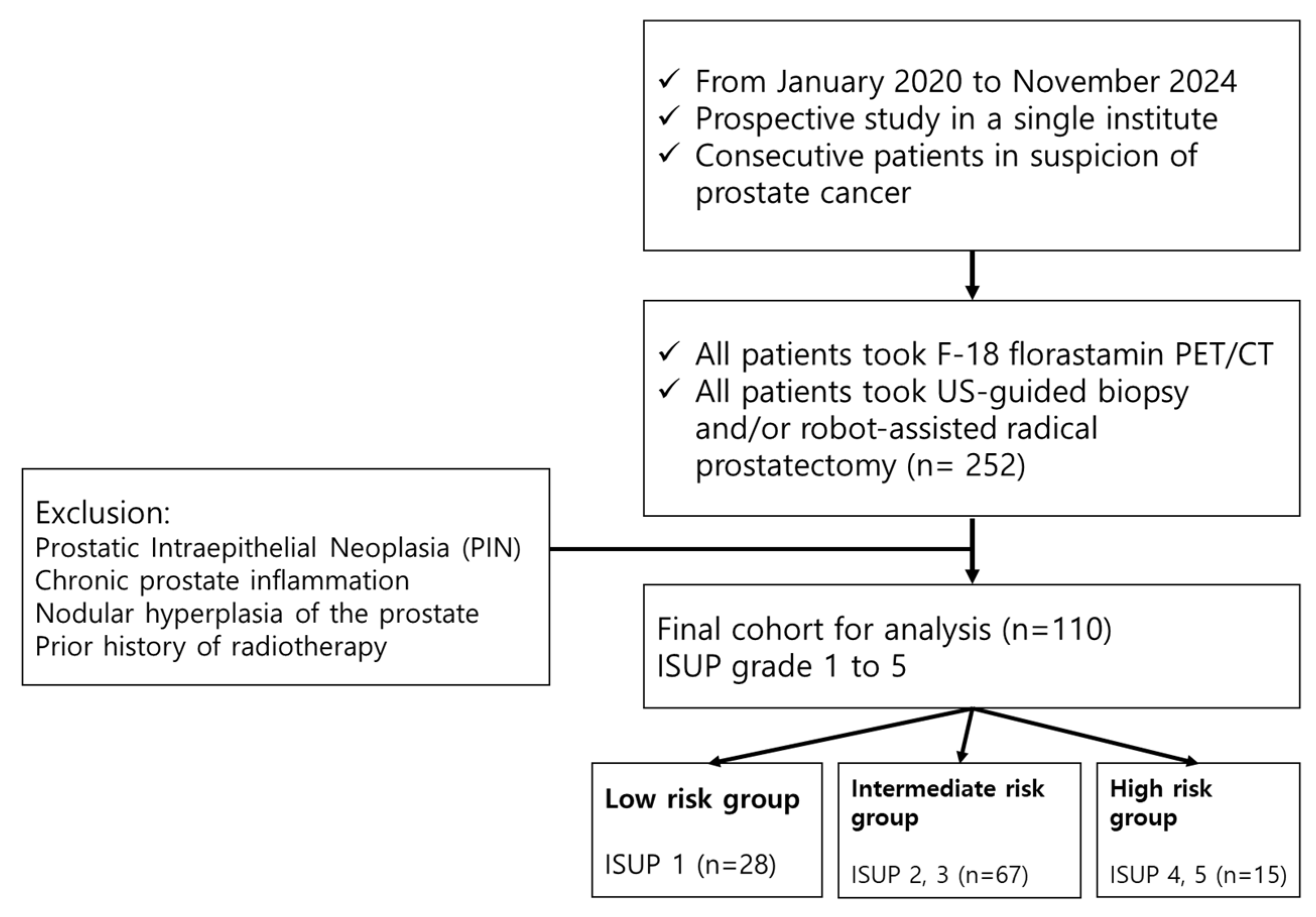
Figure 2.
Tumor SUVmax, and PSA values (log scale), according to ISUP-Based Risk Groups. (A) Box-and-whisker plots demonstrate positive correlation between ISUP grade groups and tumor SUVmax (ρ = 0.541, p<0.001). (B) A significant positive correlation is found between the PSA level and the ISUP grade group (ρ = 0.328, p = 0.001).
Figure 2.
Tumor SUVmax, and PSA values (log scale), according to ISUP-Based Risk Groups. (A) Box-and-whisker plots demonstrate positive correlation between ISUP grade groups and tumor SUVmax (ρ = 0.541, p<0.001). (B) A significant positive correlation is found between the PSA level and the ISUP grade group (ρ = 0.328, p = 0.001).
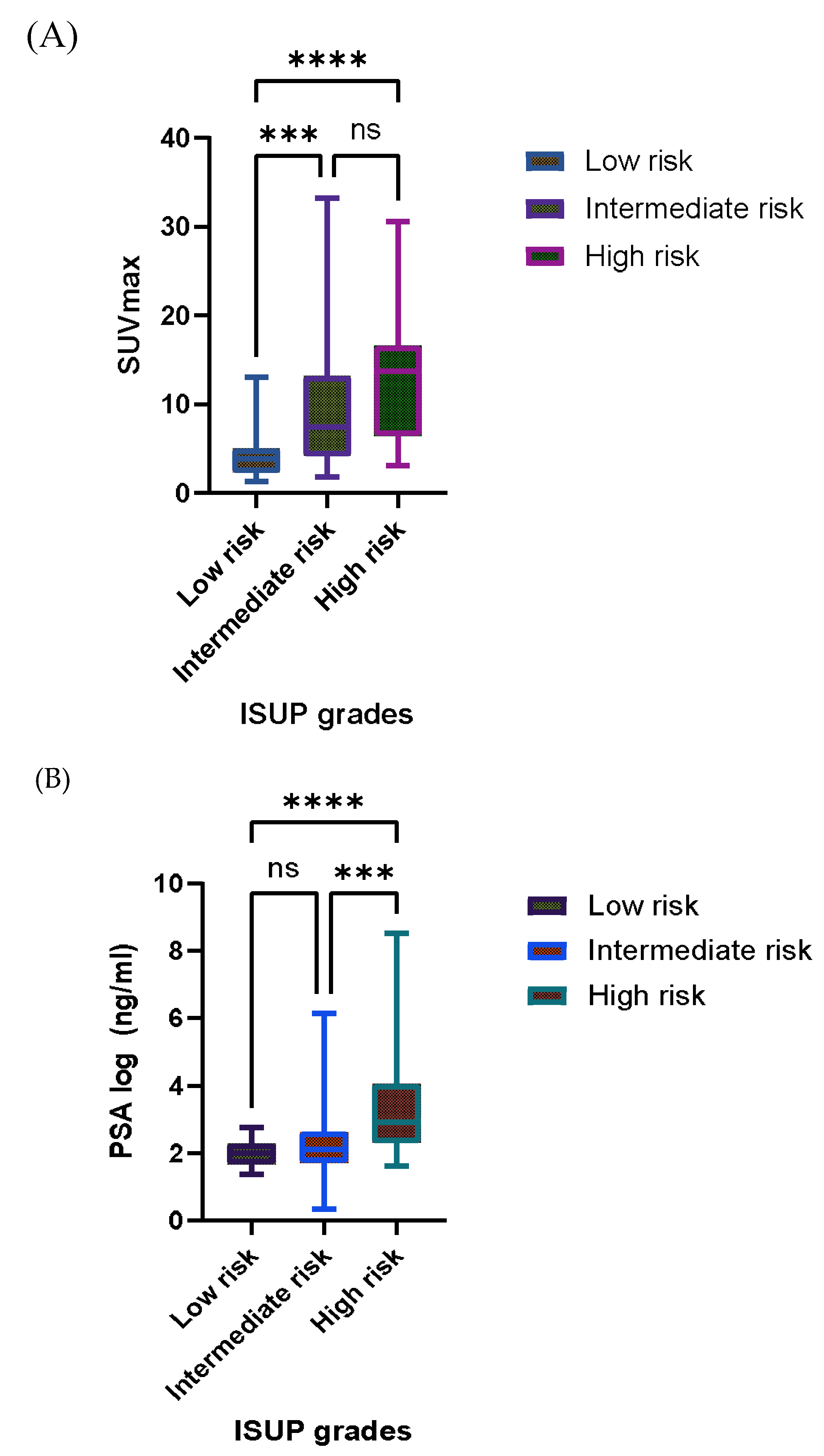
Figure 3.
Tumor SUVmax according to PI-RADS score. Box-and-whisker plots show an overall increase in tumor SUVmax corresponding to higher PIRADS scores (ρ = 0.516, p < 0.001).
Figure 3.
Tumor SUVmax according to PI-RADS score. Box-and-whisker plots show an overall increase in tumor SUVmax corresponding to higher PIRADS scores (ρ = 0.516, p < 0.001).
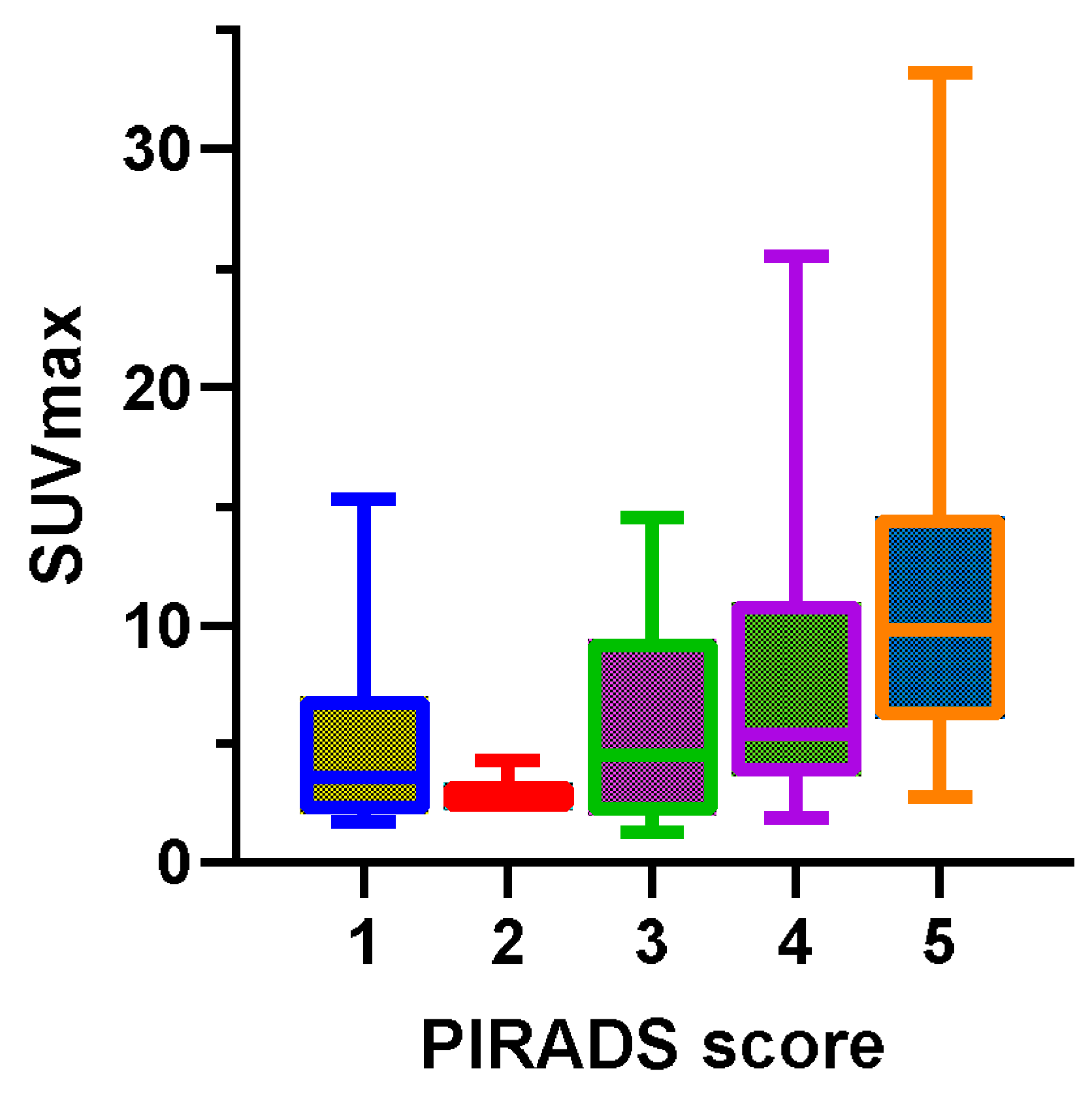
Figure 4.
A 100% stacked bar chart illustrating the distribution of ISUP grade groups (1–5) among lesions classified as PIRADS 1–5. Higher PIRADS categories exhibited a greater proportion of higher ISUP grade groups. Notably, even within the PIRADS 1 category, 25% of individuals were classified as ISUP 4 or 5. Similarly, in the PIRADS 2 category, 17% of patients were identified as having ISUP 4.
Figure 4.
A 100% stacked bar chart illustrating the distribution of ISUP grade groups (1–5) among lesions classified as PIRADS 1–5. Higher PIRADS categories exhibited a greater proportion of higher ISUP grade groups. Notably, even within the PIRADS 1 category, 25% of individuals were classified as ISUP 4 or 5. Similarly, in the PIRADS 2 category, 17% of patients were identified as having ISUP 4.
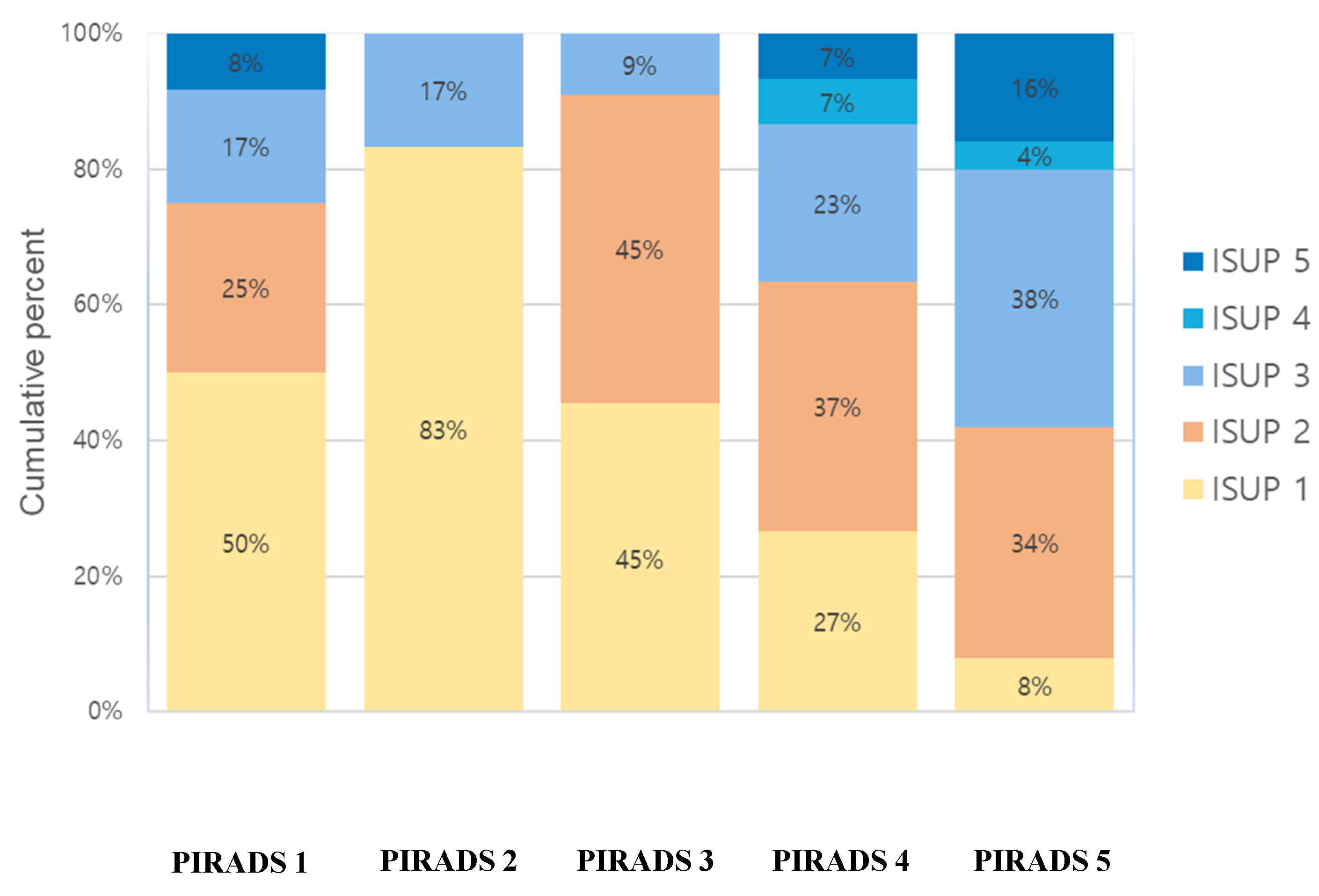

Table 1.
Patient characteristics (n=110).
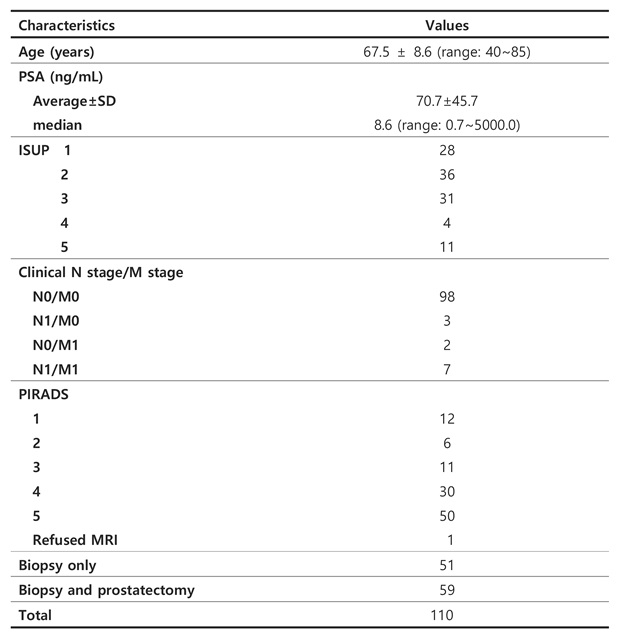 |
Table 2.
Tumor SUVmax values according to risk groups and PIRADS score.
| ISUP | Patients |
SUVmax Average±SD |
SUVmax median (range) |
|
Low risk group (ISUP 1) |
28 | 4.3±2.8 | 3.8 (3.2-5.4) |
|
Intermediate risk (ISUP 2 and 3) |
67 | 10.3±9.5 | 7.5 (7.9-12.6) |
| high-risk group (ISUP 4 and 5) | 15 | 12.8±7.3 | 13.7 (8.8-16.8) |
| PIRADS 1 | 12 | 4.8±1.1 | 3.6 (1.7-15.3) |
| 2 | 6 | 2.8±0.3 | 2.6 (2.2-4.3) |
| 3 | 11 | 5.5±1.4 | 4.5 (1.3-14.5) |
| 4 | 30 | 7.8±1.1 | 5.4 (1.9-25.5) |
| 5 | 50 | 12.3±1.5 | 10.4 (2.8-65.6) |
| N/A | 1 | (-) | (-) |
| Total | 110 | 9.1±0.8 | 6.6 (1.3-65.6) |
Disclaimer/Publisher’s Note: The statements, opinions and data contained in all publications are solely those of the individual author(s) and contributor(s) and not of MDPI and/or the editor(s). MDPI and/or the editor(s) disclaim responsibility for any injury to people or property resulting from any ideas, methods, instructions or products referred to in the content. |
© 2026 by the authors. Licensee MDPI, Basel, Switzerland. This article is an open access article distributed under the terms and conditions of the Creative Commons Attribution (CC BY) license (http://creativecommons.org/licenses/by/4.0/).
Copyright: This open access article is published under a Creative Commons CC BY 4.0 license, which permit the free download, distribution, and reuse, provided that the author and preprint are cited in any reuse.


