

Submitted:
07 September 2026
Posted:
08 September 2026
You are already at the latest version
Abstract
Background/Objectives: Minzasolmin is a weakly basic drug developed as a potential therapy in Parkinson’s. Amongst the strategies that have been developed to enhance API solubility, pH modification is an effective and patient-centric one that improves solubility by creating a microenvironmental pH around the drug. The objective of this study was to evaluate different formulation approaches to develop an immediate-release tablet or capsule containing fumaric acid as pH-modifier. Methods: Ten formulations were developed varying the degree of contact between the API and pH-modifier. These formulations were then tested in three Biorelevant dissolution conditions to estimate their robustness towards variations in gastric pH. Results: In vitro data showed the best dissolution rate with the over-encapsulated tablet prototype, even in highly buffered achlorhydric conditions and was therefore the most robust formulation toward elevated gastric pH. However, in low buffered achlorhydric conditions the monolayer tablet with acid exhibited similar dissolution rate and prototypes with less close contact between the API and the organic acid also demonstrated improved dissolution rates. Conclusions: These results suggested that the acidic microenvironment may not require such a high degree of contact between the API and the pH-modifier. Selected prototypes will be evaluated in vivo in a future study to evaluate the bio-relevance of the approach.
Keywords:
formulation
; solubility enhancement
; microenvironmental pH
; dissolution
; bioavailability
; patient-centricity
1. Introduction
Minzasolmin is a small-molecule inhibitor of α-synuclein misfolding, developed as a potential disease-modifying therapy in Parkinson’s [1]. It has been estimated that almost 27% of Parkinson’s patients suffer from acid reflux [2]. As a consequence, about 25% of patients are treated with acid-reducing agents [3] hence increasing gastric pH. However, in the BCS (Biopharmaceutical Classification System)[4], minzasolmin is classified as a BCS class II active pharmaceutical ingredient (API) due to its low solubility. It is indeed a weak basic compound with pH-dependant solubility (i.e., thermodynamic solubility ≥ 100mg/mL at pH 1.6 and about 0.01 mg/mL at pH 7.0). Gastric pH variability is also well described in literature as being influenced by several physiological factors such as food effect [5,6,7], specific patient populations due to reduced acid secretion [8], disease [9,10], ethnicity [11] or age [12]. These populations may experience elevated gastric pH, also referred to as hypo- or achlorhydria (i.e. too low or no gastric acid secretion). Considering the high number of factors leading to gastric pH variability, it was therefore decided to evaluate formulation approaches to ensure suitable solubilization of the API in the gastro-intestinal tractus.
Strategies to mitigate the effect of high gastric pH on bio-performance include: co-administration with acidic beverages, pre-treatment with organic acid, development of solid dosage formulations containing organic acid and the development of enabling formulations [13]. The two first strategies are considered less patient-centric as they require an additional action from the patient and were discarded [14,15]. Enabling formulation approaches include chemical approaches (e.g. co-solvents, solubilizing agents), crystal engineering (e.g. salt or cocrystal formation) or physical approaches (e.g. amorphous solid dispersion, cyclodextrins complexation, lipid-based formulation, particle size reduction) [16]. Such development can greatly increase the development timelines. pH modification is an effective and patient-centric strategy to improve solubility by creating a microenvironmental pH around the drug [17,18]. The microenvironmental pH can be described as the pH of the saturated solution in the immediate vicinity surrounding the drug particle [19]. With decreasing microenvironmental pH, drug solubility increases and drug release is enhanced.
A few studies reported the use of organic acids added to a formulation to overcome elevated gastric pH. Onoue et al. described the use of fumaric acid inside granule formulation to improve the bioavailability of dipyridamole under hypochlorhydria [20]. Badawy et al. evaluated 11 formulations containing tartaric acid (intra- and extra-granular), citric acid, succinic acid or cyclodextrins [21]. Based on their study, the bioavailability of BMS-56389 could be improved by using tartaric acid in the extra-granular phase. Pu et al. also performed the screening of organic acids and surfactants to reduce the pharmacokinetics variability of a weakly basic drug compound, showing reduced variability with citric acid and sodium lauryl sulfate [22]. Similarly, Mitra et al. compared the bioavailability of capsules formulations with and without citric acid added either in the extra-granular phase or co-melt with compound A [23]. In their study, the highest performance was obtained by the citric acid co-melted with the API. The authors attributed this result to the intimate contact between the API and pH-modifier. Taniguchi et al. evaluated ten organic acids in granule formulations containing dipyridamole considering manufacturability, product stability and bio-performance [24]. This study concluded that p-toluene sulfonic acid monohydrate met the three criteria. This study nonetheless highlighted that organic acid, and the weak base are likely to interact, thus limiting product stability. These studies exemplify the difficulty of developing a manufacturable, stable and yet performant formulation using organic acids. Tanigushi et al. especially highlighted that the level of microenvironmental pH and its duration in vivo can be key factors for improving drug dissolution [25]. Advances formulation strategies were therefore developed to avoid that the pH-modifier would leach out of the formulation such as film coated pellets containing organic acids [26,27]. To conclude, the way to incorporate a pH-modifier in a formulation is expected to affect the drug product performance.
This study reports the formulation development of an immediate release oral solid dosage form (tablet or capsule) to enhance the bioavailability of minzasolmin, a weakly basic API. A granules-in-capsule (GiC) formulation containing fumaric acid in the extra-granular phase was evaluated in a previous pharmacokinetic study in pre-treated dogs as proof of concept. A 2.4-fold increase in the Cmax was achieved compared to the GiC formulation without fumaric acid [28]. Based on this proof of concept, Biorelevant dissolution tests were developed and different formulation strategies for incorporating a pH-modifier in the formulation were evaluated. The goal was to maximize the solubilization of the drug in Biorelevant media the drug with acceptable amounts of pH-modifier to ensure manufacturability, product stability and reduced capsule / tablet size for improved patient experience.
2. Materials and Methods
2.1. Materials
Minzasolmin was characterized as a weakly basic BCS class II molecule with a pH dependent solubility profile. Lactose monohydrate (Pharmatose 200, DFE pharma, Netherlands) and microcrystalline cellulose (MCC, Avicel PH102, Dupont, Ireland) were used as fillers. Sodium croscarmellose (Ac-Di-Sol, Dupont, Ireland) was used as disintegrant. Colloidal silicon dioxide (Aerosil 200, Evonik, Germany) was used as glidant. Hydroxy-propyl cellulose (HPC, Klucel EF, Ashland, USA) was used as binder. Magnesium stearate (Ligamed MF 2V, Peter Greven, Netherlands) was used as lubricant. Following tests with several organic acids, fumaric acid (Merck, Germany) was selected as pH-modifier as showing a good manufacturability and maximizing the bio-performance. Hypromellose capsules (VCaps, Capsugel, France) of various sizes were used for encapsulated prototypes.
2.2. Prototypes Design
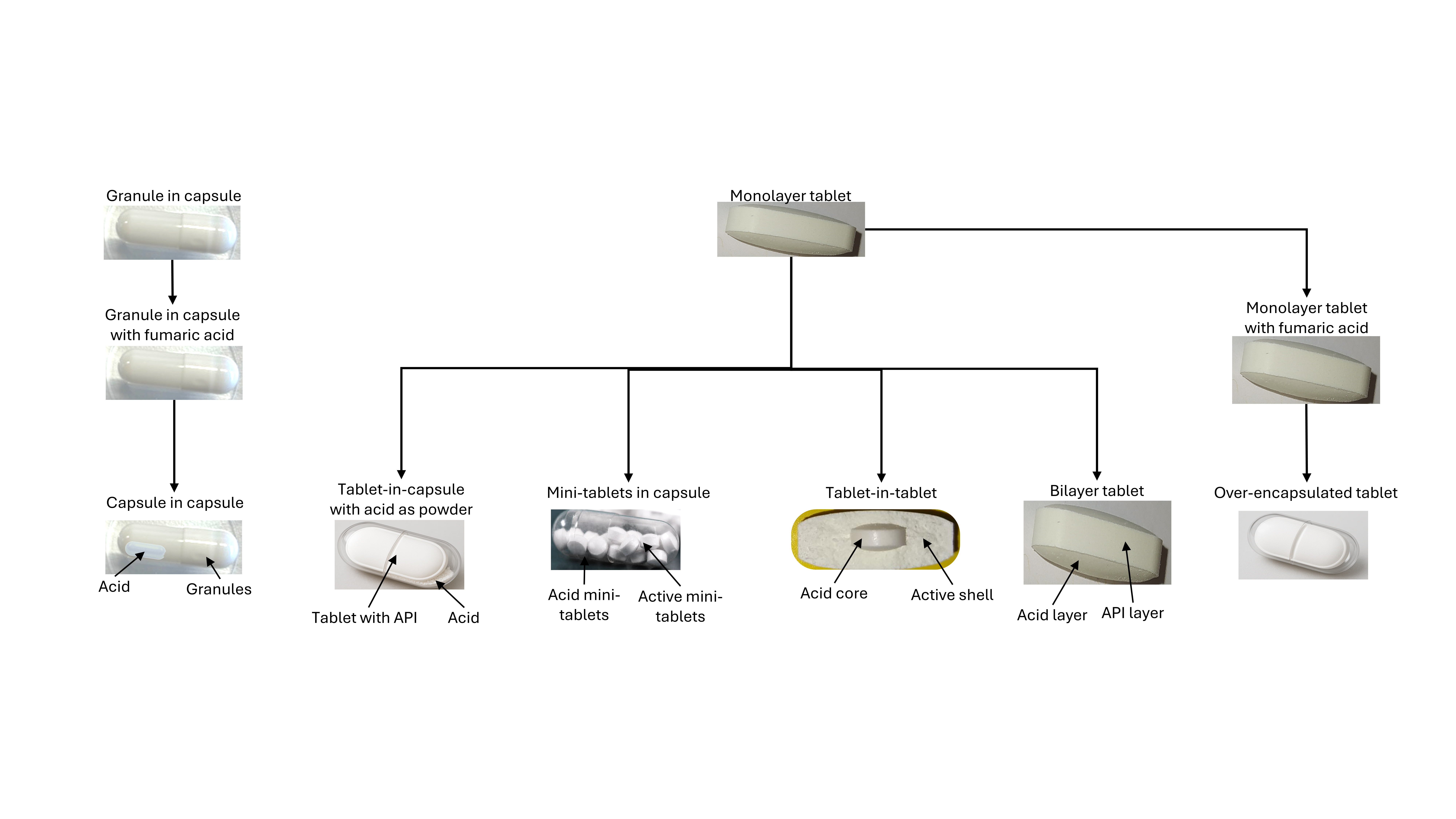
Ten prototypes were developed to evaluate the impact of the degree of contact between fumaric acid and the API on the bio-performance. Indeed, a high degree of contact is expected to improve bio-performance, but also to negatively affect the stability of the drug product. All prototypes were individually optimized to ensure manufacturability while limiting formulation variations that could interfere with comparability. Therefore, all formulations containing fumaric acid targeted an acid/API ratio of 0.22, which was considered as the optimal ratio regarding bio-performance during pre-tests. As all prototypes were based on granules, the same batch of granules was used for all. Whenever possible critical physical attributes (such as tablet porosity for instance) were kept identical between prototypes. Table 1 provides a summary of the developed formulations.
2.2.1. Granules Manufacturing
The drug product process was based on wet granulation, followed by final blending and either capsule filling or tableting. Based on pre-tests, it was decided to add the fumaric acid in the extra-granular phase. The granule composition was therefore the same for all tested formulations and was composed of 40.00% API, 44.92% of lactose monohydrate, 6.36% of MCC, 2.22% of sodium croscarmellose, 0.50% of colloidal silicon dioxide and 6.00% of HPC. The same batch of granules was used in all formulations.
Raw materials were first manually sieved on a 2 mm screen and poured to a 30 L bin (Servolift GmbH, Offenburg, Germany). Materials were then blended for 15 min at 15 rpm. Obtained pre-blend was then granulated using twin-screw granulation (Consigma-1, GEA, Wommelgem, Belgium). Granulation parameters were optimized to ensure that suitable granules attributes were achieved. The granulator was mounted with a 2x6-SCE screw (i.e. two kneading zones of six kneading elements with a stagger angle of 60° and an additional zone with size control elements to reduce fines). The feeder was set to 16 kg/h, the screw speed to 650 rpm, the liquid-to-solid ratio to 40% and the barrel temperature to 25 °C. Wet granules were then dried using GPCG2 fluid-bed dryer (Glatt, Binzen, Germany). The inlet air temperature was set to 70 °C. The air flow rate was initially set to 100 m³/h and adapted based on fluidization during the drying. The drying was stopped when the residual moisture content of the granules was below 1.5%. Dried granules were finally milled using SLS U5 conical mill (Quadro, Waterloo, Canada) mounted with a square 0.813 mm screen and mill speed set at 1750 rpm.
2.2.2. Granules-In-Capsule Manufacturing (Prototypes 1 and 2)
Prototypes 1 and 2 were granules-in-capsule prototypes without and with fumaric acid, respectively. Both prototypes were used as a references regarding bio-performance, as it had previously been tested during a pharmacokinetic study in pre-treated dogs [28]. Prototype 1 (i.e. GiC without acid) was used as baseline for Biorelevant dissolution tests as known to underexpose subjects with achlorhydria. Prototype 2 (i.e. GiC with acid) was used as a target for Biorelevant dissolution tests as known to improve exposure of subjects with achlorhydria.
Prototypes contained 225.0 mg of granules and 1.1 mg of magnesium stearate. Prototype 2 also contained 20 mg of fumaric acid. For both prototypes, excipient(s) were first manually sieved on a 1 mm screen. Granules and sieved excipient(s) were then poured into a T2G Turbula blender (WAB group, Nidderau, Germany). Blending was performed for 3 min at 22 rpm. Blends were manually filled into size 1 capsules. It has to be noted that only half of the daily dose (i.e. 90 mg) could be fitted in a single size 1 capsule. These prototypes would therefore require two capsules to be administered to reach the target dose and/or larger capsule sizes which may not be well accepted by patients.
2.2.3. Capsule-In-Capsule Manufacturing (Prototype 3)
Prototype 3 was a capsule-in-capsule (CiC) formulation. It was assessed to physically separate the fumaric acid from the API, still considering a capsule formulation. For this prototype, 20 mg of fumaric acid were inserted into a size 4 capsule. This capsule was inserted into a size 00 capsule, also containing the active blend. The active blend was composed of 225.0 mg of granules, 25.3 mg of MCC and 2.5 mg of magnesium stearate was prepared. The manufacturing process was similar to prototypes 1 and 2 (i.e. Turbula blending and manual encapsulation). As for prototypes 1 and 2, only half of the daily dose (i.e. 90 mg) could be fitted in a single size 1 capsule, hence the size 00 capsule was selected for testing though it is not realistic in terms of patients’ acceptability.
2.2.4. Tablet Manufacturing (Prototypes 4 and 5)
Prototypes 4 and 5 were monolayer tablet prototypes without and with fumaric acid, respectively. They were developed to compare with corresponding GiC prototypes (i.e. prototypes 1 and 2). Prototype 4 was composed of 450.0 mg of granules, 64.3 mg of MCC, 10.7 mg of sodium croscarmellose, 2.7 mg of silicon dioxide and 5.3 mg of magnesium stearate. The composition of prototype 5 was similar as 40 mg of the MCC was replaced by 40 mg of fumaric acid.
For both prototypes, extra-granular phase excipients were manually sieved on a 1 mm screen. Granules and all excipients except magnesium stearate were blended using a T2G Turbula blender for 5 min at 22 rpm. Magnesium stearate was then added to the blend and blending was extended for 3 min at 22 rpm. Tablets were produced using Styl’one Evolution compaction simulator (Medelpharm, Beynost, France). 16x7.37 mm punches were used, allowing to fit the intended dose of 180 mg of API in a single tablet of acceptable dimensions for swallowability. A pre-compression height of 6.5 mm and a compression height of 3.8 mm were applied, resulting in a tablet hardness of about 120 N and a tablet thickness of about 6.8 mm for both prototypes. It has to be noticed that tablets were also produced at 250 N to ensure that dissolution results in Biorelevant media were not sensitive to tablet hardness, hence ensuring comparability of the different prototypes.
2.2.5. Over-Encapsulated Tablet Manufacturing (Prototype 6)
Prototype 6 was an over-encapsulated tablet. For this prototype, it was hypothesized that dissolution or gastric liquid would enter the capsule shell before its disintegration and pre-dissolve the components of the tablet, hence creating a microenvironment saturated in acidifier inside the capsule shell.
For this prototype, the monolayer tablet with acid (prototype 5) was manually inserted into a size 0 capsule. Though the target dose could not fit into a single size 1 capsule, formulation optimization and punch design was expected to be sufficient to achieve this goal. As this study aimed at screening different approaches to include the acidifier in the formulation, such optimization was not performed to ease prototypes comparison.
2.2.6. Bilayer Tablet Manufacturing (Prototype 7)
Prototype 7 was a bilayer tablet containing the API in one layer and the acid in the other layer. It was designed to physically separate the API from the acid while keeping a relatively close contact to enable the acidic microenvironment. This bilayer tablet was composed of an active layer containing 450.0 mg of granules blended with 122.5 mg of MCC, 2.4 mg of colloidal silicon dioxide and 5.1 mg magnesium stearate; and an acidic layer composed of 40 mg of fumaric acid, 42.8 mg of MCC, 0.8 mg of sodium croscarmellose and 1.4 mg of magnesium stearate.
Excipients were manually sieved on a 1 mm screen. Both the active blend and the acidic blend were produced by blending all ingredients except the magnesium stearate for 5 min at 22 rpm using T2G Turbula blender. Magnesium stearate was then added, and the blending was extended for 3 min at 22 rpm. Bi-layer tablets were produced using Styl’one Evolution compaction simulator mounted with 14.48x8.13 mm punches. The compression started with the active layer, which was pre-compressed at 80 daN to achieve a layer hardness of 60 N. The acidic layer was fed on top of the active layer and compressed to reach a tablet hardness of 230 N, hardness required to maintain tablet integrity during friability test. As for previous tablets prototypes, the target dose of 180 mg of API could be achieved in a single tablet of acceptable dimensions for swallowability.
2.2.7. Tablet-In-Tablet Manufacturing (Prototype 8)
Prototype 8 was a tablet-in-tablet (TiT) formulation containing the acid in the inner tablet (acid core) and the API in the external tablet (active shell). It was developed as alternative to the bilayer tablet to keep the separation between the acid and the API while changing the kinetics of the microenvironment creation during the dissolution.
The acid core was composed of 40 mg of fumaric acid, 41.0 mg of MCC, 0.8 mg of sodium croscarmellose and 0.4 mg of magnesium stearate. This acid core tablet was compressed into an active tablet shell composed of 450.0 mg of granules, 40.6 mg of MCC and 5.1 mg of magnesium stearate.
The active and acidic blends were manufactured similarly to prototype 7 (i.e. bilayer tablet). The TiT prototypes were manufactured using Styl’one Evolution compaction simulator. Acid cores were first produced with 5.5 mm round punches targeting a hardness of 80 N. To insert the acid core inside the active shell, a first layer of active blend was pre-compressed at 80 daN using 16x7.37 mm punches. One acid core was then centred on top of this first layer, and the matrix was filled with more active blend to reach the target weight. The powder was then compressed to reach a hardness of 165 N, hardness required to maintain tablet integrity during friability test. As for previous tablets prototypes, the target dose of 180 mg of API could be achieved in a single tablet of acceptable dimensions for swallowability.
2.2.8. Mini-Tablets in Capsule Manufacturing (Prototype 9)
Prototype 9 was a mini-tablets in capsule formulation. It consisted in active mini-tablets containing the API, and acid mini-tablets containing the fumaric acid inserted into a capsule. This prototype was developed to obtain a physical barrier between the API and the acid, while enabling the acidic microenvironment inside the capsule shell.
The active mini-tablets were composed of 450.0 of granules, 78.0 mg of MCC and 4.7 mg of magnesium stearate. The acid mini-tablets were composed of 40.0 mg fumaric acid, 13.6 mg MCC, 0.8 mg sodium croscarmellose and 0.8 mg magnesium stearate. 505.62 mg of active mini-tablets and 88.35 mg of acid mini-tablets were encapsulated in a size 00 capsule.
The active and acidic blends were manufactured similarly to prototypes 7 and 8 (i.e. bilayer tablet and TiT). The mini-tablets were manufactured using Styl’one Evolution compaction simulator mounted with 2.5 mm multi-tips punches targeting a 2.5 mm thickness. Acid and active mini-tablets were then manually filled into capsules. As for previous prototypes in capsule, the target dose could not fit into a single size 1 capsule, hence the size 00 capsule was selected for testing though it is not realistic in terms of patients’ acceptability.
2.2.9. Tablet-In-Capsule Manufacturing (Prototype 10)
Prototype 10 was a tablet-in-capsule (TiC) formulation with fumaric acid as powder. It was developed to obtain a physical separation between the API and the acid, while trying to enable the acidic microenvironment inside the capsule shell. For this prototype, various acid/API ratios were evaluated during pre-tests, concluding that a higher acid/API ratio of 0.94 was needed to obtain an effect of the fumaric acid on dissolution. This was likely due to the reduced level of contact between the fumaric acid and the API. The monolayer tablet without acid (prototype 4) was manually inserted into a size 00 capsule with 169 mg of fumaric acid added as a powder. As for previous prototypes in capsule, the target dose could not fit into a single size 1 capsule, hence the size 00 capsule was selected for testing though it is not realistic in terms of patients’ acceptability.
2.3. Prototypes Evaluation
Prototypes bio-performance was estimated via Biorelevant dissolution tests in various media. The different prototypes were analysed in Biorelevant dissolution tests for 2 h in USP II at 37 °C with the paddle speed set at 50 rpm using peak vessel. A two-stage dissolution test was used, where the drug is first exposed to gastric medium, then the transfer to the small intestine is simulated by adding a hybrid intestinal concentrate (buffer of FaSSIF-V1 and bile slat composition of FaSSIF-V2) at equal volume. As the target dose of 180 mg of API could not be achieved in a single unit for prototypes 1, 2 and 3, two capsules containing 90 mg of API were put in the dissolution bath to ensure comparability.
Biorelevant dissolution conditions were selected based on the in vitro study in dogs to evaluate the GiC with and without acid. Three gastric media were used in this study: a standard healthy gastric medium (FaSSGF), a low buffered capacity achlorhydric medium and a highly buffered achlorhydric medium (10 times buffer capacity). The compositions of the gastric media was inspired by previous studies [29,30]. The standard healthy gastric medium (FaSSGF) was composed of 300 mL pH 1.6 NaCl solution, with Biorelevant surfactants. The low buffered capacity achlorhydric medium was composed of 300 mL of acetate/phosphate buffer 1 mM pH 7.0 with Biorelevant surfactants, which was expected to be physiologically relevant for the target patient population. The highly buffered achlorhydric medium was composed of 300 ml of acetate/phosphate buffer 10 mM pH 7.0 with Biorelevant surfactants and was selected for its high discriminative power. The starting intestinal medium was composed of 300 mL of FaSSIF double concentrate pH 6.36 for achlorhydric conditions and pH 7.5 for the healthy condition.
Samples were taken at 0 – 5 – 10 – 20 – 29 min (gastric medium) and 35 – 40 – 50 – 60 – 90 – 120 – 150 – 180 min (intestinal medium). Samples were analysed using in-house UPLC method. Results were expressed as percentage of the dissolved dose of label claim. The pH of the dissolution media was measured at the end of the gastric phase and at the end of the intestinal phase. The dissolution profiles were performed on six replicates, with the results displayed as mean and standard deviation.
3. Results
The GiC prototypes with and without fumaric acid had been tested during a previous pharmacokinetic study in beagle dogs, demonstrating that the GiC containing fumaric acid allowed a 2.4-fold increase in the Cmax compared to the GiC formulation without fumaric acid [28]. Based on this proof of concept, different formulation strategies for incorporating a pH-modifier in the formulation were evaluated in three Biorelevant dissolution conditions to estimate their bioavailability.
3.1. Dissolution Behaviour in Highly Buffered Achlorhydric Media
The first screening was performed in highly buffered achlorhydric media (10 mM) to maximize the discrimination between prototypes. Dissolution results are shown in Figure 1.
The dissolution behavior of the GiC (◊) and tablet (○) without acid was limited in this media, while the GiC with acid (♦) presented a higher dissolution in the intestinal compartment (> 30 min) as observed during the pharmacokinetic dog study. The bilayer tablet (▲) and mini-tablets in capsule (■) presented similar dissolution rates as the prototypes without acid, suggesting that the degree of contact between the API and acid was not sufficient to create the acidic microenvironment in such highly buffered condition. The CiC and TiT prototypes (dissolution results not shown) showed even worst performances as the inner capsule with acid did not disintegrate before the granule with API was completely dissolved and the core tablet with acid did not disintegrate before the active shell was fully dispersed. These formulations could have been optimized to improve disintegration, which was not considered following positive results of other prototypes (see below). The monolayer tablet with acid (◍) allowed a higher initial dissolution of the API in the gastric compartment (> 30 min). This was due to the faster disintegration of the tablet compared to the capsule. The rapid dissolution of the API in the gastric compartment was followed by precipitation, resulting in a dissolved dose similar to prototypes without acid in the intestinal compartment. The TiC prototype with acid as powder (▬) led to slightly higher drug dissolution in the intestinal compartment. However, the amount of fumaric acid had to be drastically increased (acid/API ratio 0.94) to achieve such a limited improvement. Finally, the over-encapsulated tablet (●) allowed achieving a much higher dissolution in the intestinal compartment. Interestingly, a parachute effect was also observed. As the API and fumaric acid are in close contact inside the tablet, it was hypothesized that this close contact synergized with the capsule shell to create the acidic microenvironment inside the capsule for the API to dissolve. The over-encapsulated tablet therefore seemed to be the best candidate to maximize in vivo exposure, potentially achieving an even better performance than the GiC with acid formulation.
The pH of the dissolution media was measured at the end of the gastric phase and at the end of the intestinal phase (Figure 2) to evaluate the ability of the prototypes to acidify the dissolution media. Only minor variations were observed, suggesting that the enhanced dissolution rate of the GiC with acid and of the over-encapsulated tablet was due to the creation of an acidic microenvironment inside the capsule shell and not to the acidification of the whole dissolution medium, especially as any bulk pH shift is counteracted by the well stirred, high buffer capacity medium.
3.2. Dissolution Behaviour in Low Buffered Capacity Achlorhydric Media
Following the tests performed in highly buffered achlorhydric media, a second screening was performed in low buffered capacity achlorhydric media (1 mM). This media has been reported to be more representative to simulate intragastric environment under hypochlorhydric conditions [29,30]. Dissolution results are shown in Figure 3.
In low buffered conditions, the GiC without acid (◊) and tablet without acid (○) still present reduced dissolution rates. However, the bilayer tablet (▲) showed similar performance to the GiC with acid (♦). The monolayer tablet with acid (◍) and over-encapsulated tablet with acid (●) performed similarly and slightly better than the GiC with acid. The TiC with acid as powder (▬) showed the highest dissolution rate in these dissolution conditions.
When comparing the dissolution results with pH measurements taken at the end of the gastric and intestinal phases (Figure 4), a clear link was observed between the dissolution rate, the extent of pH reduction in the gastric phase and the acid/API ratio. Specifically, the TiC with acid as powder prototype, which contained a higher amount of acid, resulted in a more pronounced decrease in gastric pH. This result emphasized that, in low buffered capacity achlorhydric medium, the dissolution rate is driven by the acidification of the dissolution media, which was not possible in highly buffered dissolution media. As a result, in low buffered capacity media, increased dissolution rates are observed for all prototypes containing fumaric acid, regardless of the degree of contact between the API and the fumaric acid.
It has to be noted that, in both achlorhydria media (i.e. low buffered and highly buffered), the dissolution media is maintained under agitation. Hence, the hydrodynamics in the dissolution vessel is not representative of the gastro-intestinal tract. In patients’ stomach, small amounts of fumaric acid may shift the pH around disintegrating tablet or capsule without changing the bulk gastric pH, whereas in vitro stirring ensures that fumaric acid is distributed throughout the medium, thus influencing the bulk pH. It can be assumed that the low buffered capacity media reflects the microenvironmental pH around the tablet or capsule in the stomach. The bio-performance of the different prototypes is therefore likely to be between the two tested achlorhydric media.
3.3. Dissolution Behaviour in Healthy Conditions
Based on dissolution tests in achlorhydric media, the GiC with and without acid, the tablet with and without acid and the over-encapsulated tablet prototypes were evaluated in Biorelevant two-stage dissolution media mimicking healthy volunteers (Figure 5).
The tablet with (◍) and without acid (○) presented a higher dissolution in gastric media compared to the encapsulated prototypes, which was due to the relatively slow disintegration of the capsule shell. The over-encapsulated tablet (●) showed an even slower dissolution in the gastric phase as the tablet could not fully disintegrate inside the capsule shell. Despite the observed differences in the gastric phase, all prototypes reached a similar asymptote in the intestinal media.
As expected, the pH measurements at the end of the gastric and intestinal phase did not present any significant variation between prototypes (Figure 6). Selected prototypes therefore seemed suitable for patients without achlorhydria.
4. Discussion
Ten formulation prototypes have been evaluated in Biorelevant dissolution conditions to identify the best strategy for incorporating a pH-modifier inside the formulation. As for all in vitro tests, assumptions were made on the representativity of the tests. In particular, and as previously highlighted, hydrodynamics in dissolution vessels and in patients’ stomach differ dramatically. Though in vivo tests would avoid making such hypothesis, in vitro testing allowed to reduce animal use for such a large screening of formulation prototypes. By comparing the dissolution results in three dissolution conditions, it was possible to rank prototypes for future in vivo testing with a reduced uncertainty.
To explain the improved dissolution rate observed in highly buffered media for the over-encapsulated tablet, it was assumed that the dissolution media first entered the capsule shell, hence creating an acidic microenvironment inside the capsule for the API to dissolve, which effect is maintained after capsule disintegration. This is only a hypothesis and understanding the role of the capsule shell, and especially differences in behaviour in vivo compared to in vitro would help strengthening the prototypes selection.
Similarly, the differences observed between highly and low buffered conditions were explained by the acidification of the dissolution media. While fumaric acid would disperse rapidly in the dissolution bath due to media agitation, it is expected to stay around the tablet or capsule in the stomach. As the stomach presents a low buffered capacity, the creation of the acidic microenvironment is expected to take place in vivo even without the capsule to maintain the API and fumaric acid together for dissolution enhancement. In this study, the bulk pH of the dissolution media was hypothesized to be representative of the microenvironmental pH occurring in the stomach. Being able to monitor microenvironmental pH during in vivo studies and designing representative Biorelevant tests specifically to support formulations strategies based on pH-modification would help to assess prototypes.
Finally, formulation selection should not only consider bio-performance, but also drug product stability, manufacturability and patient-centricity. Regarding drug product stability, preventing the direct contact between the API and the pH-modifier would solve potential physico-chemical incompatibility. However, as instability induced by organic acid is based on moisture adsorption, protective packaging may also be considered to improve product stability without impairing manufacturability and bio-performance. In terms of manufacturability, all prototypes could be produced successfully at laboratory scale. It has nonetheless to be noted that a successful prototype would then have to be industrialized. While the GiC and monolayer tablets would be easily scalable, the bilayer tablet, TiT and minitablets in capsule require specific tooling and potentially reduced manufacturing speed. The over-encapsulated tablet and TiC with acid as powder require an additional process step with specific equipment as well. In terms of patient-centricity, the target dose could not fit into a single size 1 capsule for prototypes in capsule (i.e. GiC, CiC, over-encapsulated tablet, minitablets in capsule and TiC with acid as powder). This may negatively impact patient adherence by increasing pill burden. Prototypes developed in this study were however not optimized in terms of shape and dimensions. While the GiC, CiC and minitablets in capsule prototypes required either two size 1 capsules or one size 00 capsule to fit the target dose, the over-encapsulated tablet and the TiC with acid as powder could however be optimized to fit into a size 1 capsule.
5. Conclusions
In this study, ten formulation strategies were evaluated in Biorelevant dissolution media to select the right approach for incorporating a pH-modifier into an oral solid dosage form. The goal was to maximize the solubilization of the drug in Biorelevant conditions with acceptable amounts of pH-modifier to ensure manufacturability and reduced capsule / tablet size for improved patient experience.
In vitro data showed that the over-encapsulated tablet prototype led to improved dissolution rate even in highly buffered achlorhydric conditions and was likely the most robust formulation toward elevated gastric pH. However, in low buffered achlorhydric conditions the monolayer tablet with acid exhibited similar dissolution rate and prototypes with less close contact between the API and the organic acid also demonstrated improved dissolution rates. These results suggested that the acidic microenvironment may not require such a high degree of contact between the API and the pH-modifier. The outcomes of this study, and consequently the bio-relevance of tested media, will be further evaluated in vivo.
Author Contributions
Conceptualization, F. Stauffer; methodology, F. Stauffer, A. Bouquelle, S. Le Meur, C. Huygens, G. Pilcer; formal analysis, F. Stauffer; investigation, F. Stauffer, A. Bouquelle; resources, S. Le Meur, F. Laredj, C. Ates; writing—original draft preparation, F. Stauffer; writing—review and editing, , A. Bouquelle, S. Le Meur, D. Segregur, F. Laredj, C. Huygens, G. Pilcer; visualization, F. Stauffer; supervision, S. Le Meur, G. Pilcer; project administration, C. Ates. All authors have read and agreed to the published version of the manuscript.
Funding
This study was funded by UCB.
Data Availability Statement
Raw data available upon request.
Acknowledgments
The authors would like to thank the manufacturing, biopharmaceutics and analytical teams for their outstanding work during the formulation development. Special thanks to the project team who deployed incredible agility to develop and evaluate all prototypes in a very short period of time.
Conflicts of Interest
The authors declare no conflicts of interest.
Abbreviations
The following abbreviations are used in this manuscript:
| API | Active Pharmaceutical Ingredient |
| BCS | Biopharmaceutical Classification System |
| CiC | Capsule-in-Capsule |
| GiC | Granules-in-Capsule |
| HPC | Hydroxy-Propyl Cellulose |
| MCC | Microcrystalline Cellulose |
| TiC | Tablet-in-Capsule |
| TiT | Tablet-in-Tablet |
References
- Price, D.L.; Khan, A.; Angers, R.; Cardenas, A.; Prato, M.K.; Bani, M.; Bonhaus, D.W.; Citron, M.; Biere, A.-L. In vivo effects of the alpha-synuclein misfolding inhibitor minzasolmin supports clinical development in Parkinson’s disease. npj Park. Dis. 2023, 9, 114. [Google Scholar] [CrossRef] [PubMed]
- Maeda, T.; Nagata, K.; Satoh, Y.; Yamazaki, T.; Takano, D. High prevalence of gastroesophageal reflux disease in Parkinson’s disease: a questionnaire-based study. Park. Dis. 2013, 2013, 742128. [Google Scholar] [CrossRef] [PubMed]
- Lai, S.-W.; Liao, K.-F.; Lin, C.-L.; Lin, C.-H. Association between Parkinson’s disease and proton pump inhibitors therapy in older people. BioMedicine 2020, 10, 1–4. [Google Scholar] [CrossRef] [PubMed]
- Amidon, G.L.; Lennernäs, H.; Shah, V.P.; Crison, J.R. A theoretical basis for a biopharmaceutic drug classification: the correlation of in vitro drug product dissolution and in vivo bioavailability. Pharm. Res. 1995, 12, 413–420. [Google Scholar] [CrossRef] [PubMed]
- Abuhelwa, A.Y.; Foster, D.J.R.; Upton, R.N. A Quantitative Review and Meta-Models of the Variability and Factors Affecting Oral Drug Absorption—Part I: Gastrointestinal pH. AAPS J. 2016, 18, 1309–1321. [Google Scholar] [CrossRef] [PubMed]
- Singh, B.N. Effects of Food on Clinical Pharmacokinetics. Clin. Pharmacokinet. 1999, 37, 213–255. [Google Scholar] [CrossRef] [PubMed]
- Abuhelwa, A.Y.; Williams, D.B.; Upton, R.N.; Foster, D.J.R. Food, gastrointestinal pH, and models of oral drug absorption. Eur. J. Pharm. Biopharm. 2017, 112, 234–248. [Google Scholar] [CrossRef] [PubMed]
- Lahner, E.; Annibale, B.; Delle Fave, G. Systematic review: impaired drug absorption related to the co-administration of antisecretory therapy. Aliment. Pharmacol. Ther. 2009, 29, 1219–1229. [Google Scholar] [CrossRef] [PubMed]
- Lahner, E.; Annibale, B.; Delle Fave, G. Systematic review: Heliocobacter pylori infection and impaired drug absorption. Aliment. Pharmacol. Ther. 2009, 29, 379–386. [Google Scholar] [CrossRef] [PubMed]
- McColl, K.E.L.; El-Omar, E.; Gillen, D. Interactions between H. pylori infection, gastric acid secretion and anti-secretory therapy. Br. Med. Bull. 1998, 54, 121–138. [Google Scholar] [CrossRef] [PubMed]
- Morihara, M.; Aoyagi, N.; Kaniwa, N.; Kojima, S.; Ogata, H. Assessment of Gastric Acidity of Japanese Subjects over the Last 15 Years. Biol. Pharm. Bull. 2001, 24, 313–315. [Google Scholar] [CrossRef] [PubMed]
- Russell, T.L.; Berardi, R.R.; Barnett, J.L.; Dermentzoglou, L.C.; Jarvenpaa, K.M.; Schmaltz, S.P.; Dressman, J.B. Upper Gastrointestinal pH in Seventy-Nine Healthy, Elderly, North American Men and Women. Pharm. Res. 1993, 10, 187–196. [Google Scholar] [CrossRef] [PubMed]
- Mitra, F. Kesisoglou, Impaired Drug Absorption Due to High Stomach pH: A Review of Strategies for Mitigation of Such Effect To Enable Pharmaceutical Product Development. Mol. Pharm. 2013, 10, 3970–3979. [Google Scholar] [CrossRef] [PubMed]
- Stegemann, S.; Ternik, R.L.; Onder, G.; Khan, M.A.; van Riet-Nales, D.A. Defining Patient Centric Pharmaceutical Drug Product Design. AAPS J. 2016, 18, 1047–1055. [Google Scholar] [CrossRef] [PubMed]
- Timpe, C.; Stegemann, S.; Barrett, A.; Mujumdar, S. Challenges and opportunities to include patient-centric product design in industrial medicines development to improve therapeutic goals. Br. J. Clin. Pharmacol. 2020, 86, 2020–2027. [Google Scholar] [CrossRef] [PubMed]
- Nyamba; Sombié, C.B.; Yabré, M.; Zimé-Diawara, H.; Yaméogo, J.; Ouédraogo, S.; Lechanteur, A.; Semdé, R.; Evrard, B. Pharmaceutical approaches for enhancing solubility and oral bioavailability of poorly soluble drugs. Eur. J. Pharm. Biopharm. 2024, 204, 114513. [Google Scholar] [CrossRef] [PubMed]
- Salehi, N.; Kuminek, G.; Al-Gousous, J.; Sperry; Greenwood, D.E.; Waltz, N.M.; Amidon, G.L.; Ziff, R.M.; Amidon, G.E. Improving Dissolution Behavior and Oral Absorption of Drugs with pH-Dependent Solubility Using pH Modifiers: A Physiologically Realistic Mass Transport Analysis. Mol. Pharm. 2021, 18, 3326–3341. [Google Scholar] [CrossRef] [PubMed]
- Kawabata, Y.; Wada, K.; Nakatani, M.; Yamada, S.; Onoue, S. Formulation design for poorly water-soluble drugs based on biopharmaceutics classification system: Basic approaches and practical applications. Int. J. Pharm. 2011, 420, 1–10. [Google Scholar] [CrossRef] [PubMed]
- Ploen, J.; Andersch, J.; Heschel, M.; Leopold, C.S. Citric acid as a pH-modifying additive in an extended release pellet formulation containing a weakly basic drug. Drug Dev. Ind. Pharm. 2009, 35, 1210–1218. [Google Scholar] [CrossRef] [PubMed]
- Onoue, S.; Inoue, R.; Taniguchi, C.; Kawabata, Y.; Yamashita, K.; Wada, K.; Yamauchi, Y.; Yamada, S. Improved dissolution and pharmacokinetic behavior of dipyridamole formulation with microenvironmental pH-modifier under hypochlorhydria. Int. J. Pharm. 2012, 426, 61–66. [Google Scholar] [CrossRef] [PubMed]
- Badawy, S.I.F.; Gray, D.B.; Zhao, F.; Sun, D.; Schuster, A.E.; Hussain, M.A. Formulation of Solid Dosage Forms to Overcome Gastric pH Interaction of the Factor Xa Inhibitor, BMS-561389. Pharm. Res. 2006, 23, 989–996. [Google Scholar] [CrossRef] [PubMed]
- Pu, Y.E.; Menger, R.; Tong, Z.; Gaebele, T. Development of an enhanced formulation to minimize pharmacokinetic variabilities of a weakly basic drug compound. Pharm. Dev. Technol. 2022, 27, 406–413. [Google Scholar] [CrossRef] [PubMed]
- Mitra; Kesisoglou, F.; Beauchamp, M.; Zhu, W.; Chiti, F.; Wu, Y. Using Absorption Simulation and Gastric pH Modulated Dog Model for Formulation Development To Overcome Achlorhydria Effect | Molecular Pharmaceutics. Mol. Pharm. 2011, 8, 2216–2223. [Google Scholar] [CrossRef] [PubMed]
- Taniguchi; Inoue, R.; Kawabata, Y.; Yamashita, K.; Wada, K.; Yamauchi, Y.; Yamada, S.; Onoue, S. Novel formulations of dipyridamole with microenvironmental pH-modifiers for improved dissolution and bioavailability under hypochlorhydria. Int. J. Pharm. 2012, 434, 148–154. [Google Scholar] [CrossRef] [PubMed]
- Taniguchi; Kawabata, Y.; Wada, K.; Yamada, S.; Onoue, S. Microenvironmental pH-modification to improve dissolution behavior and oral absorption for drugs with pH-dependent solubility. Expert Opin. Drug Deliv. 2014, 11, 505–516. [Google Scholar] [CrossRef] [PubMed]
- Vlahovic, K.; Lengyel, M.; Fleck, C.; Kállai-Szabó, N.; Balogh, E.; Laki, A.J.; Antal, I. Microenvironmental pH-Modulated Dissolution of Albendazole Layered on Tartaric Acid Starter Pellet Cores. Pharmaceutics 2025, 17, 1133. [Google Scholar] [CrossRef] [PubMed]
- Munday, D.L. Film coated pellets containing verapamil hydrochloride: enhanced dissolution into neutral medium. Drug Dev. Ind. Pharm. 2003, 29, 575–583. [Google Scholar] [CrossRef] [PubMed]
- Moens, F.; Larsson, A.; De Blaiser, A.; Vandevijver, G.; Spreafico, F.; Nicolas, J.-M.; Lacombe, L.; Segregur, D.; Flanagan, T.; Berben, P. Contribution of the Dynamic Intestinal Absorption Model (Diamod) to the Development of a Patient-Centric Drug Formulation. Mol. Pharm. 2023, 20, 6197–6212. [Google Scholar] [CrossRef] [PubMed]
- Segregur, D.; Flanagan, T.; Mann, J.; Moir, A.; Karlsson, E.M.; Hoch, M.; Carlile, D.; Sayah-Jeanne, S.; Dressman, J. Impact of Acid-Reducing Agents on Gastrointestinal Physiology and Design of Biorelevant Dissolution Tests to Reflect These Changes. J. Pharm. Sci. 2019, 108, 3461–3477. [Google Scholar] [CrossRef] [PubMed]
- Litou, C.; Vertzoni, M.; Xu, W.; Kesisoglou, F.; Reppas, C. The impact of reduced gastric acid secretion on dissolution of salts of weak bases in the fasted upper gastrointestinal lumen: Data in biorelevant media and in human aspirates. Eur. J. Pharm. Biopharm. 2017, 115, 94–101. [Google Scholar] [CrossRef] [PubMed]
Figure 1.
Two-stage dissolution results in highly buffered achlorhydria media.
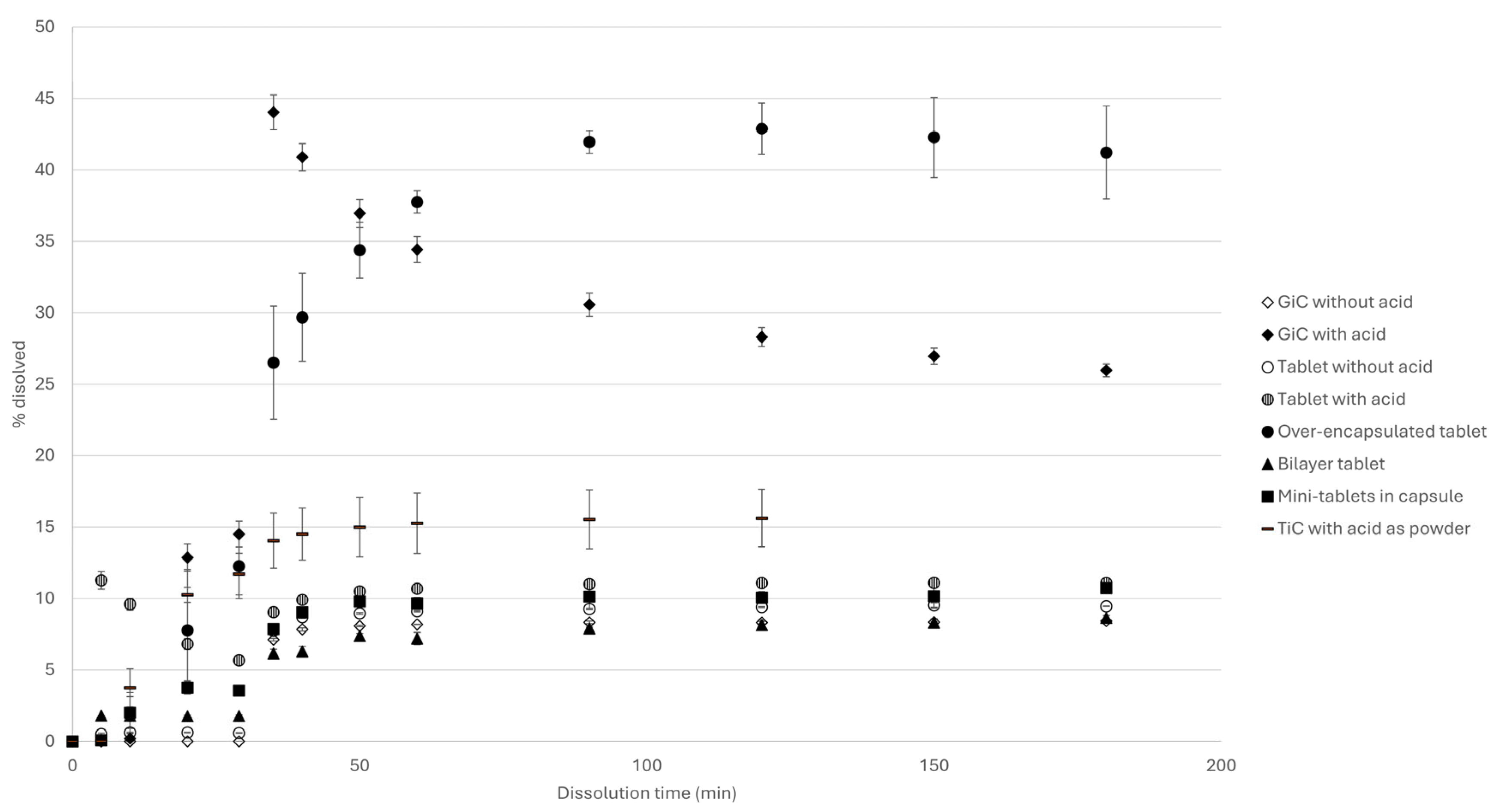
Figure 2.
pH measurements at the end of the gastric and intestinal phase in highly buffered achlorhydria media.
Figure 2.
pH measurements at the end of the gastric and intestinal phase in highly buffered achlorhydria media.
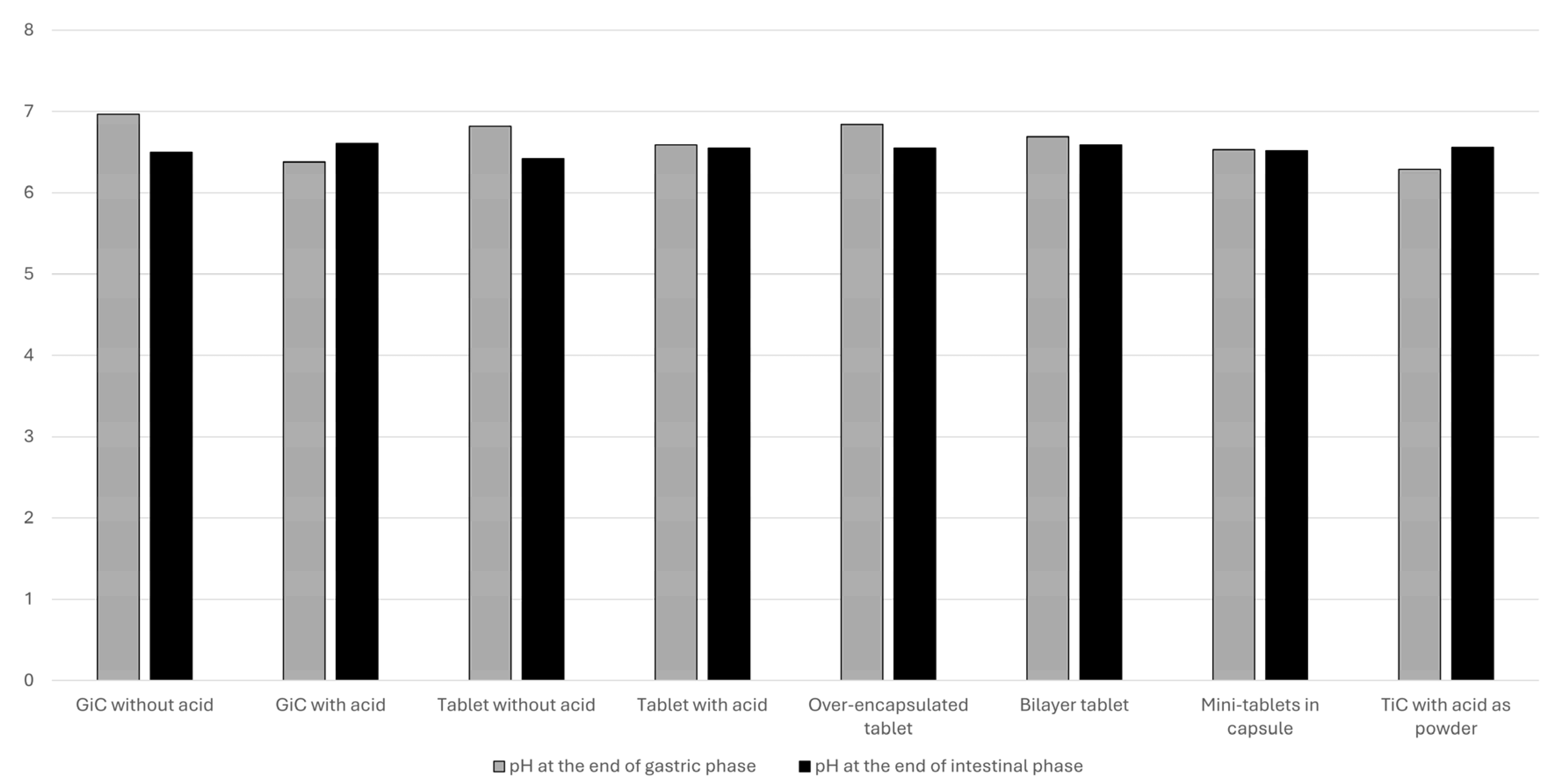
Figure 3.
Two-stage dissolution results in low buffered capacity achlorhydria media.
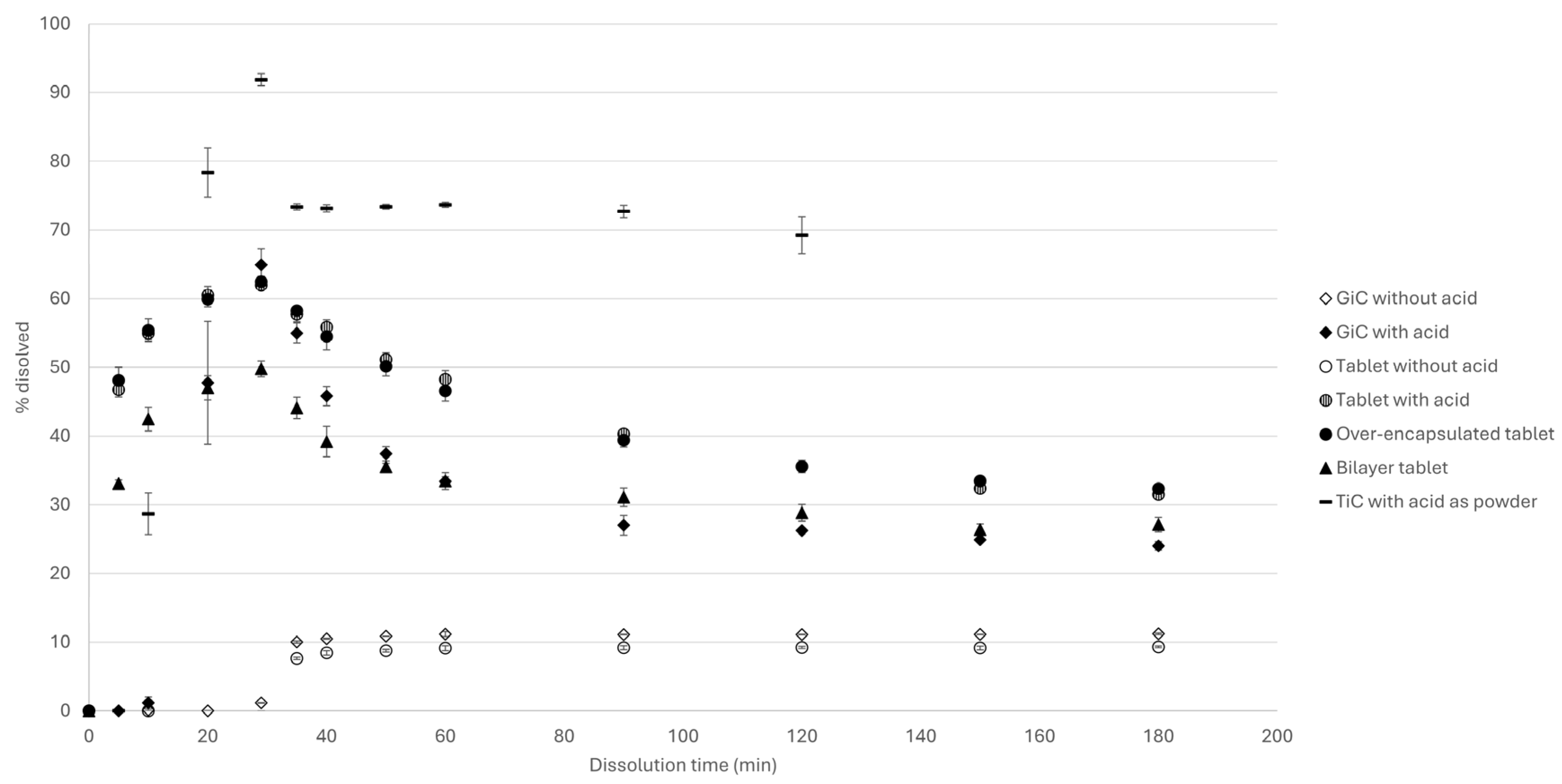
Figure 4.
pH measurements at the end of the gastric and intestinal phase in low buffered capacity achlorhydria media.
Figure 4.
pH measurements at the end of the gastric and intestinal phase in low buffered capacity achlorhydria media.
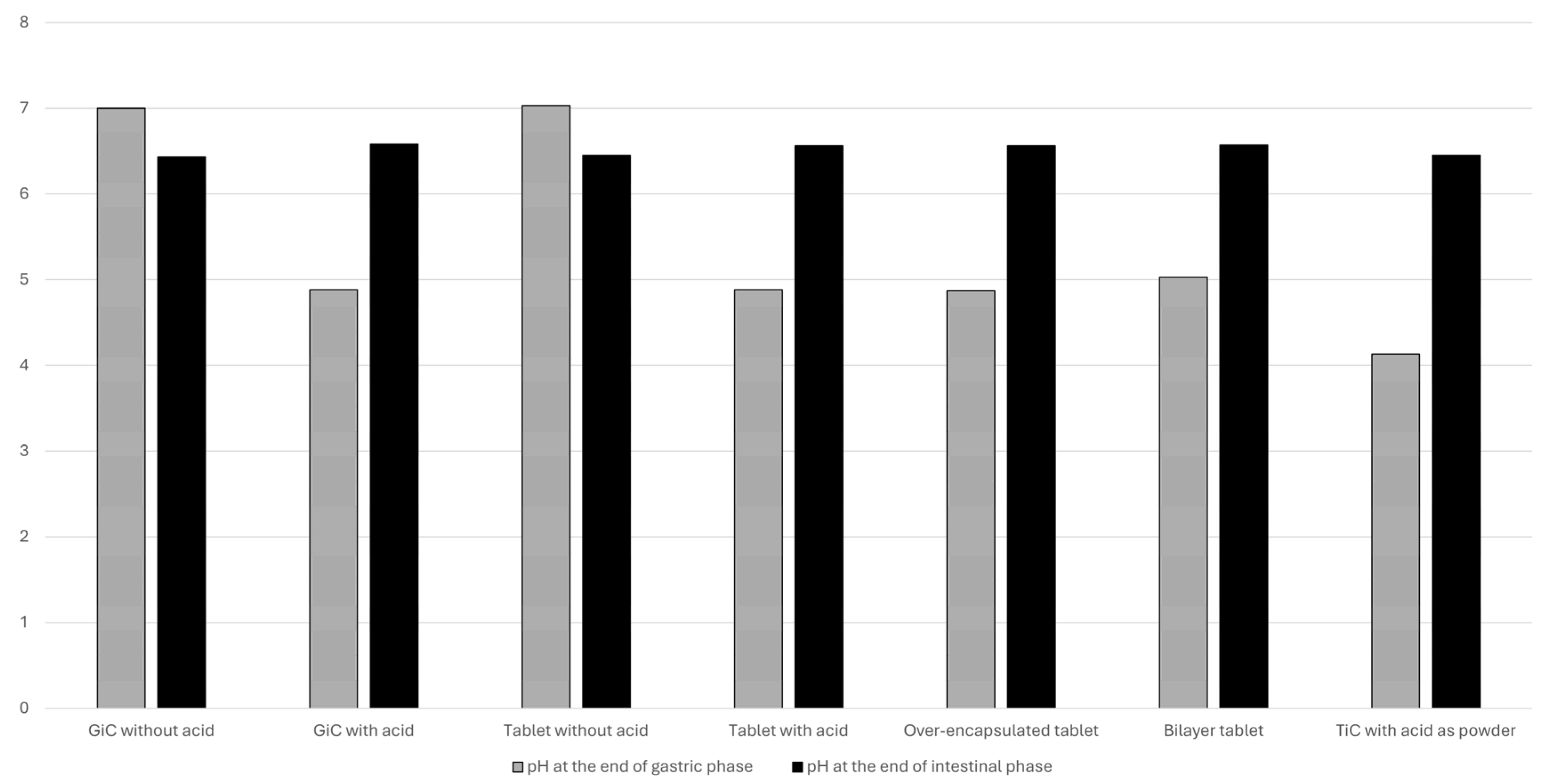
Figure 5.
Two-stage dissolution results in healthy conditions.
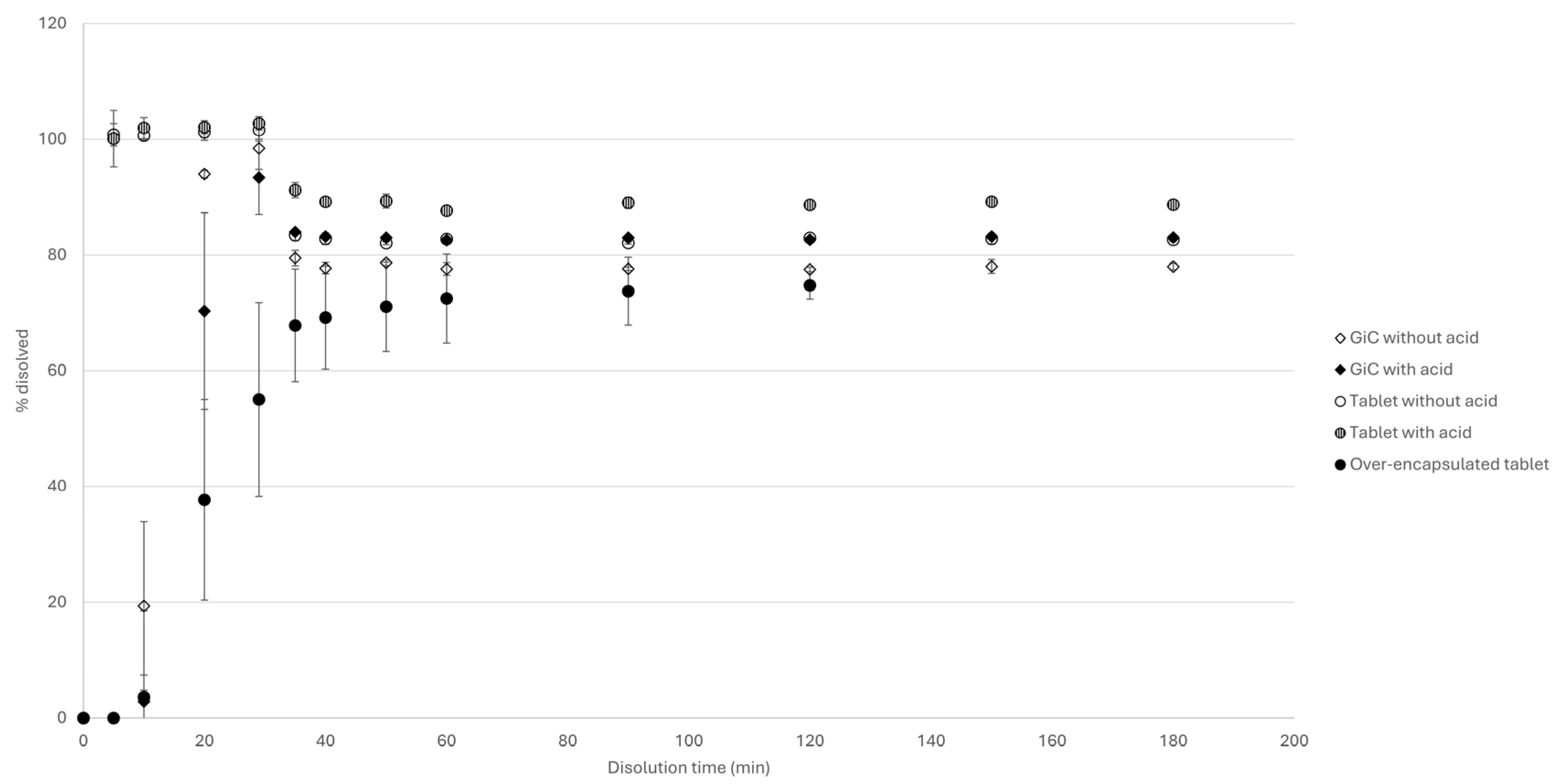
Figure 6.
pH measurements at the end of the gastric and intestinal phase in healthy conditions.
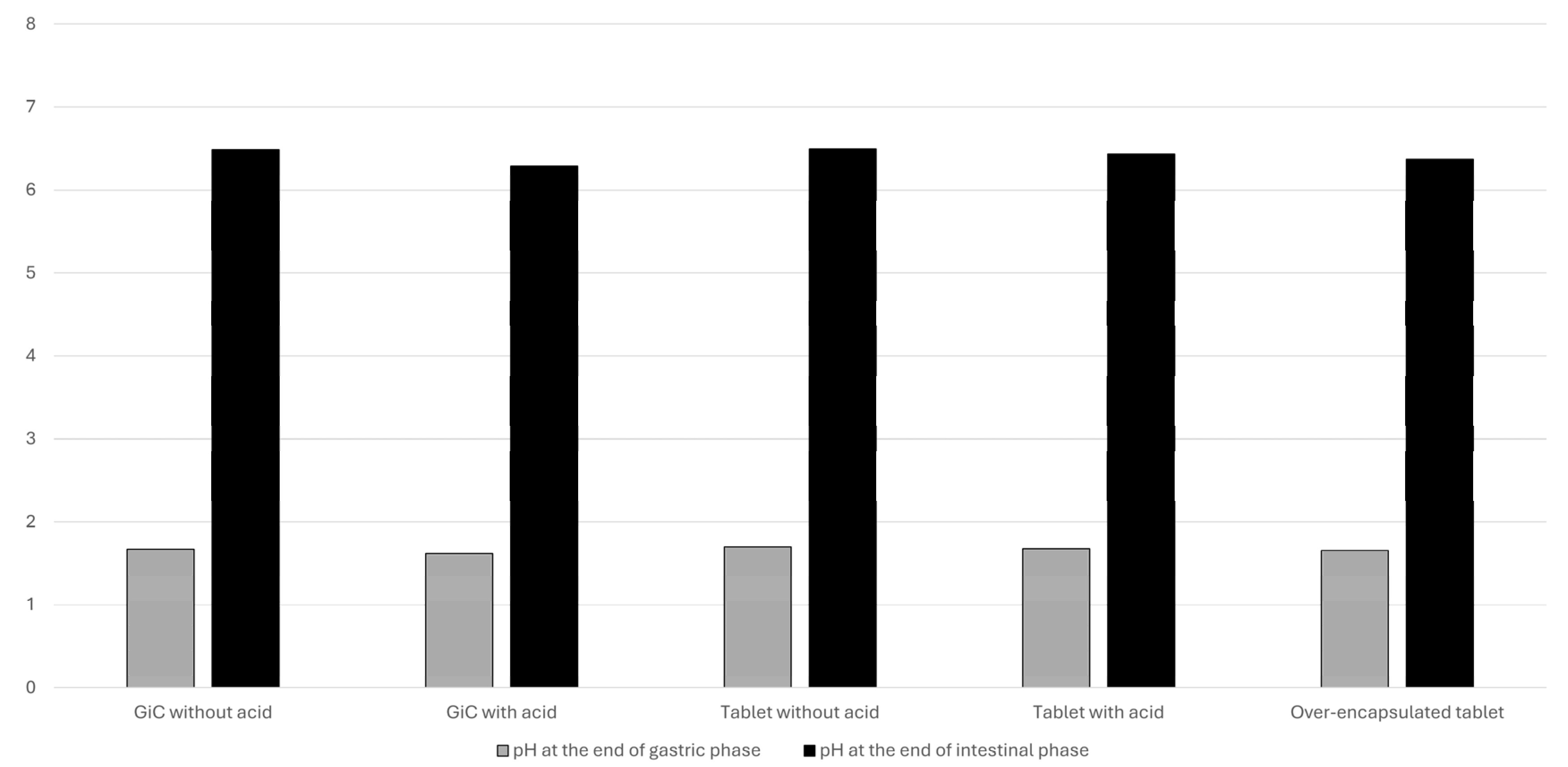

Table 1.
Summary of developed formulations.
| # | Prototype name | Description | Picture |
|---|---|---|---|
| 1 | GiC without acid | Granules-in-Capsule (GiC) without acid |  |
| 2 | GiC with acid | GiC with acid in the extra-granular phase |  |
| 3 | CiC | Capsule-in-Capsule (CiC) with acid in the inner capsule and API in the outer capsule |  |
| 4 | Tablet without acid | Monolayer tablet without acid |  |
| 5 | Tablet with acid | Monolayer tablet with acid in the extra-granular phase |  |
| 6 | Over-encapsulated tablet | Over-encapsulated tablet with acid in the extra-granular phase |  |
| 7 | Bilayer tablet | Bilayer tablet with an active layer and a layer with acid |  |
| 8 | TiT | Tablet-in-Tablet (TiT) with an acid core tablet and an active shell | 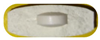 |
| 9 | Mini-tablets in capsule | Mini-tablets in capsule with acid and active mini-tablets | 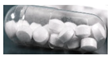 |
| 10 | TiC with acid as powder | Tablet (without acid) and acid as powder in capsule |  |
Disclaimer/Publisher’s Note: The statements, opinions and data contained in all publications are solely those of the individual author(s) and contributor(s) and not of MDPI and/or the editor(s). MDPI and/or the editor(s) disclaim responsibility for any injury to people or property resulting from any ideas, methods, instructions or products referred to in the content. |
© 2026 by the authors. Licensee MDPI, Basel, Switzerland. This article is an open access article distributed under the terms and conditions of the Creative Commons Attribution (CC BY) license (http://creativecommons.org/licenses/by/4.0/).
Copyright: This open access article is published under a Creative Commons CC BY 4.0 license, which permit the free download, distribution, and reuse, provided that the author and preprint are cited in any reuse.