

Submitted:
23 May 2026
Posted:
26 May 2026
You are already at the latest version
Abstract
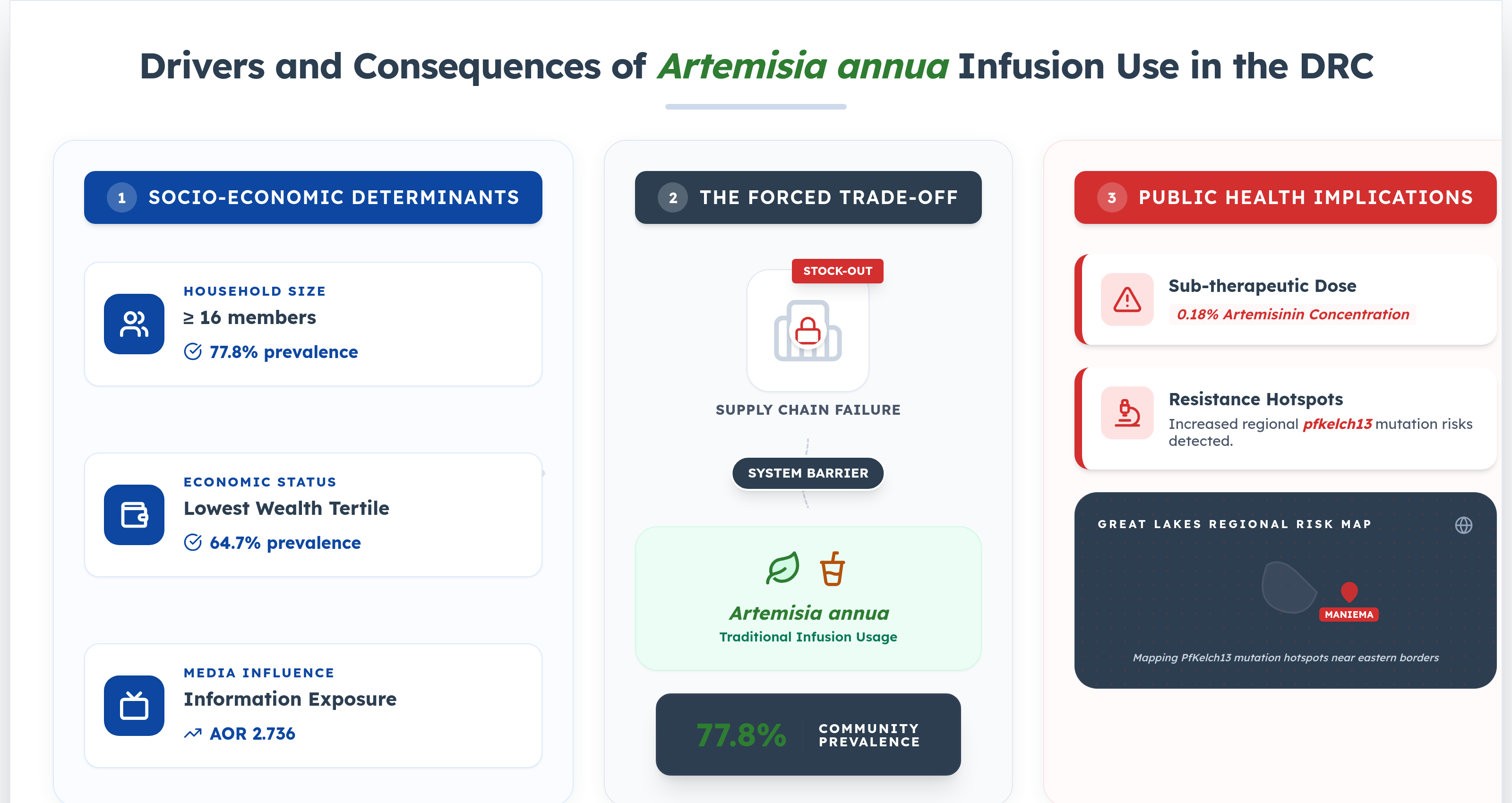
Background: Malaria remains a leading cause of morbidity and mortality in the Democratic Republic of the Congo, particularly in conflict-affected regions like the Maniema province. Amidst systemic supply chain failures and the regional emergence of Plasmodium falciparum resistance mutations, households are increasingly adopting local botanical alternatives. This study investigates the socio-economic and informational determinants of the reliance on Artemisia annua infusions in the Kalima Health Zone. Methods: A cross-sectional survey was conducted among 621 household heads employing an asset-based wealth index and multivariate logistic regression models. The study adhered to STROBE and ChecKAP reporting standards to ensure methodological transparency in evaluating Knowledge, Attitudes, and Practices regarding malaria management. Results: Results reveal a significant reliance on Artemisia annua infusions, with a prevalence of 77.8%. While 95.5% of respondents recognize malaria as a lethal threat, a critical “etiological gap” persists, with only 58.5% correctly identifying mosquito bites as the primary mode of transmission. Multivariate analysis identified television ownership (Adjusted OR = 2.736, 95% CI: 1.168–6.406, p = 0.020) and prior information exposure as the strongest independent predictors of health behaviors. Economic vulnerability is a primary driver: households in the lowest wealth tertile (64.7%) and those with large families (≥16 members, 77.8%) are significantly more likely to utilize infusions. Although 88.2% of users report high community-perceived tolerance, this local confidence exists in direct tension with international concerns regarding sub-therapeutic dosing and potential selection pressure for resistance. Conclusion: The reliance on Artemisia annua in Maniema functions as a rational socio-economic coping mechanism rather than a rejection of scientific medicine. This “localized resilience” highlights critical gaps in the formal healthcare infrastructure and the supply chain for subsidized ACTs. Effective malaria control in fragile settings requires bridging the access gap for validated therapies while integrating community practices into standardized genomic and clinical surveillance systems.
Keywords:
malaria
; Artemisia annua
; knowledge
; attitudes
; practices
; socio-economic determinants
; Maniema
; Democratic Republic of the Congo
; artemisinin resistance
; health-seeking behavior
; fragile state
1. Introduction
Malaria remains a paramount global public health concern, with World Health Organization data for 2022 reporting approximately 249 million cases and 608,000 deaths worldwide [1]. The African continent shoulders the overwhelming majority of this burden, encompassing about 94% of cases and 95% of fatalities [2]. In this landscape, the Democratic Republic of the Congo is a pivotal epicenter, accounting for 12% of the global caseload—the second-largest national contribution [2]. Within the DRC, malaria is the foremost driver of morbidity and mortality, imposing substantial pressure on both healthcare infrastructure and household economies [3,4,5].
In the Democratic Republic of the Congo, the persistent malaria burden is exacerbated by a chronic “funding-impact gap” and severe disruptions in the supply of Artemisinin-based Combination Therapies. In conflict-affected and remote regions such as Maniema, the failure of formal health supply chains has created a fragmented therapeutic landscape [6,7]. This study examines the high reliance on Artemisia annua infusions—not as a validated clinical alternative, but as a community-level coping mechanism driven by extreme economic vulnerability and the absence of subsidized medicines [8]. By documenting these practices, we aim to highlight the urgent public health risk of sub-therapeutic dosing and its potential role in the selection of resistant Plasmodium falciparum strains, a critical concern given the documented emergence of resistance markers in the Great Lakes region [9,10].
In Maniema Province, specifically the Kalima Health Zone, this epidemiological strain is exacerbated by geographic remoteness, inadequate infrastructure, and armed conflict that disrupts essential supply chains [11,12]. Although national guidelines mandate artemisinin-based combination therapies as the front-line treatment, community-level implementation faces formidable obstacles. These include frequent stock-outs, high costs, and the limited availability of quality-assured pharmaceuticals in private outlets, which are often the primary point of care for rural populations (6,13–15). Consequently, therapeutic trajectories at the household level are often fragmented, involving a mix of formal consultations, over-the-counter acquisitions, and traditional herbal interventions [16,17,18].
The effectiveness of malaria control initiatives hinges critically on household-level knowledge, attitudes, and practices [19,20]. Previous studies in the DRC have identified an “epistemological gap” between the perceived threat of the disease and a precise understanding of its transmission [3,21]. Erroneous beliefs regarding vectors often precipitate deferred care-seeking or unsuitable self-medication, a pattern observed in approximately 58% of households across various Congolese health zones [21,22,23]. These behaviors are profoundly shaped by socio-economic determinants, including educational attainment, household size, and exposure to decentralized information channels such as mass media [21,24].
Amidst these systemic impediments, the use of non-standardized preparations of Artemisia annua has emerged as a community-level practice for managing febrile episodes [10,25]. While the artemisinin moiety in contemporary ACTs (artemisinin-based combination therapies) is derived from this plant [26], the WHO has cautioned against the use of raw plant material for prophylaxis or therapy [26,27]. This institutional stance is rooted in significant scientific and ethical concerns regarding dosage variability, the risk of treatment failure, and the potential to accelerate the selection of artemisinin-resistant Plasmodium falciparum strains [28,29]. Nevertheless, economic constraints and the lack of affordable standardized treatments sustain the reliance on these indigenous phytomedicines in resource-constrained settings [11,17].
Elucidating the socio-economic and informational drivers of these care-seeking patterns is vital for refining public health outreach and aligning community practices with national safety norms [30,31]. This investigation seeks to assess the KAP of 621 households in the Kalima Health Zone concerning malaria management and to identify the specific determinants associated with the reliance on Artemisia annua. By delineating these influences, the study aims to provide evidence-based insights into how structural vulnerabilities and information exposure shape health behaviors in the Maniema Province [20,32].
2. Literature Review
This section synthesizes existing knowledge on household-level KAP studies concerning malaria management, focusing on the systemic challenges and traditional practices prevalent in the Democratic Republic of the Congo and similar Sub-Saharan African contexts.
2.1. Epidemiological Burden and the “Funding-Impact Gap”
Despite significant international financial mobilization through the World Bank’s Malaria Booster Programme and the Global Fund, malaria remains the primary public health crisis in the DRC [5]. Between 2005 and 2014, global investments in malaria commodities increased significantly [33]. However, the DRC continues to account for approximately 12% of the global malaria burden the second-highest national contribution [2,34]. Research indicates a “funding-impact gap” in high-risk zones, such as mining areas, where international aid often fails to produce a proportional reduction in malaria risk due to structural vulnerabilities and fragmented health information systems [35]. Consequently, malaria persists as a disease of poverty, with over 200 million cases annually in the region reinforcing a cycle of structural economic hardship [34].
Impact of Armed Conflict and Supply Chain Disruptions
In provinces like Maniema, access to formal treatment is severely compromised by chronic insecurity and armed conflicts [12]. These instabilities create logistical bottlenecks that disrupt the supply chain of essential commodities, including Artemisinin-based Combination Therapies [11]. In many rural health facilities, significant logistical hurdles result in frequent stockouts, leaving providers without the tools to manage uncomplicated cases [14]. Furthermore, the high cost of non-subsidized drugs in private shops creates substantial financial barriers for the poorest households, often forcing them to seek alternative care [6].
2.2. Determinants of Knowledge, Attitudes, and Practices
The success of malaria control hinges on household-level knowledge, attitudes, and practices [19]. Literature from sub-Saharan Africa reveals a consistent “epistemological gap” between disease awareness and accurate etiological understanding. While general awareness is often high, studies in the DRC show that approximately 11.5% of the population still reports inappropriate transmission mechanisms, such as environmental factors or drinking non-potable water, rather than mosquito bites [3].
These gaps directly influence health-seeking behaviors. In the DRC, care-seeking is frequently pluralistic, involving a succession of stages: home-based management, traditional healers, and eventually formal healthcare [17,36]. Approximately 80% of cases are managed within the community or at home, often leading to delayed professional consultation. Key determinants include the household head’s education level, household size, and income, which dictate the feasibility of adhering to official treatment protocols [23,24].
2.3. Phytochemical Hypotheses and Institutional Risk Assessments
A central rationale cited for the community-based use of Artemisia annua lies in its phytochemical complexity and the potential for synergy among its components [28,37]. Unlike purified artemisinin, the whole-plant extract contains secondary metabolites, such as methoxylated flavonoids, that are hypothesized to enhance anti-plasmodial activity [38,39]. Some pharmacodynamic studies suggest that the plant matrix might increase the bioavailability of artemisinin compared to pure compound administration [38,40].
However, significant public health risks counter these theoretical benefits. The WHO and institutional reviewers emphasize that such “polyvalent interactions” do not replace the need for standardized dosing [26,28]. The use of raw plant material is categorized as a monotherapy risk, which lacks the long-acting partner drug required to prevent the emergence of resistance [41].
2.4. Scientific Concerns: Resistance and Resistance Hotspots
The emergence of artemisinin partial resistance in East Africa represents a major threat. Maniema Province is located near documented pfkelch13 mutation hotspots in Rwanda and Uganda, heightening concerns regarding the impact of non-standardized antimalarial use [9]. In 2012, the WHO issued a firm position recommending against the use of Artemisia annua plant material for malaria therapy [25,42].
This stance is grounded in three critical concerns:
- Unsatisfactory Cure Rates: Clinical evaluations of infusions have shown 28-day cure rates as low as 28-34%, failing to meet the standards required for frontline antimalarials [42].
- Monotherapy Selection Pressure: The absence of a standardized combination partner in infusions facilitates the survival of parasites exposed to sub-lethal drug levels [41].
2.5. Role of Media in Health Communication
Mass media exposure including radio and television plays a pivotal role in bridging the information gap [32]. Research in Uganda and Malawi demonstrates that mothers exposed to malaria-related messages through audiovisual platforms are significantly more likely to adopt preventive behaviors, such as the consistent use of insecticide-treated nets [44,45]. In the DRC, mass media remains a potent predictor of improved KAP, whereas information from community health workers has, in some contexts, failed to be a significant determinant of adequate health attitudes [21].
3. Materials and Methods
3.1. Study Setting and Design
A community-based cross-sectional study was conducted between September and November 2025 in the Kalima Health Zone, Maniema Province, Democratic Republic of the Congo. This study design follows the Strengthening the Reporting of Observational Studies in Epidemiology guidelines [S1 Checklist] to ensure transparent and rigorous reporting [46,47]. The primary objective was to document observed household behaviors and perceptions without inferring clinical outcomes.
3.2. Population and Sampling
The study targeted household heads or primary caregivers residing in the Kalima Health Zone for at least six months. A multi-stage stratified sampling technique was employed to ensure geographic representativeness across five health areas: Kalima, Bobela, Kakutya 1, Kinkungwa, and Lubile. The sample size was calculated using the Cochran formula for large populations: . With (95% confidence level), (estimated prevalence of practices), and (margin of error), the initial sample was adjusted for a 10% non-response rate and cluster effects, resulting in a final sample of 621 households.
3.3. Data Collection and Quality Control
Data were collected via face-to-face interviews using structured questionnaires managed on the KoboCollect platform. The digital tools integrated real-time logical constraints to minimize data entry errors and transcription inconsistencies.
The instrument was pre-tested among 40 households in the Alunguli Health Zone, chosen for its demographic similarities to the study site. This phase allowed for the calibration of skip logic and ensured linguistic clarity of the Swahili translation, particularly regarding technical terms for malaria transmission and traditional remedies. The enumeration team consisted of doctoral students specifically trained to maintain scientific neutrality and avoid leading questions, ensuring that perceptions of Artemisia annua were recorded as objective data points rather than as influenced responses [48].
Quality control included:
- Real-time Monitoring: Daily server synchronization allowed for continuous review of data completeness [47].
- Field Supervision: Spot-checks were conducted to address inconsistencies immediately [49].
- Digital Validation: Pre-programmed constraints prevented the entry of contradictory therapeutic itineraries.
3.4. Variable Selection and Justification
In alignment with the scientific research protocol, variables were selected based on their documented influence on healthcare-seeking behavior in resource-constrained settings [50].
- Asset-Based Wealth Index: A wealth index was constructed using principal component analysis of household assets (e.g., electronics, housing materials) as a robust proxy for long-term economic status [51].
- Education Level: Maternal and household head’s education were analyzed as potential “social vaccines” that shape the interpretation of health messages [52].
- Household Size: This was included to evaluate economic pressure, as larger households in the DRC often resort to affordable community-based remedies [53].
3.5. Questionnaire Design
The data collection was performed using a structured questionnaire (see S1 Appendix) administered via the KoboCollect platform :
- Socio-economic Profile: Household assets and structural vulnerability.
- Attitudes: Perceived severity of malaria and trust in various treatment modalities.
3.6. Statistical Analysis
Data analysis was performed using SPSS version 20.0. Detailed mapping between raw survey items and statistical variables is provided in the Verification of Conformity Table (S2 Appendix). To address the editor’s concerns regarding statistical completeness, the following three-stage framework was strictly applied:
- Descriptive Analysis: Frequencies and percentages summarized the socio-economic profiles and KAP levels.
- Bivariate Analysis: Chi-square tests identified significant associations () between determinants (e.g., wealth, education) and the use of Artemisia annua.
- Multivariate Analysis: A logistic regression model was constructed using the purposeful selection method [57]. This ensures that only relevant predictors are retained. Results are reported as Adjusted Odds Ratios with their corresponding 95% Confidence Intervals and exact p-values [58]. This approach adheres to the STROBE checklist for cross-sectional studies [46].
3.7. Ethical Considerations
The study was conducted in accordance with the Declaration of Helsinki and was formally approved by the Research Ethics Committee of the Institut Supérieur de Techniques Médicales de Kindu (Ref: 035/ISTM-KD/C.E.R. I/PRESI/IRBE/2025). Ethical clearance was obtained from the Research Ethics Committee of the ISTM-Kindu (S3 Appendix. Given the high illiteracy rates in some rural areas of the Kalima Health Zone, informed verbal consent was obtained from all 621 household heads prior to the administration of the questionnaire, as approved by the ethics committee. Participation was entirely voluntary, and respondents were informed of their right to withdraw at any stage. Data were anonymized during collection and processing to ensure strict confidentiality, particularly concerning sensitive information regarding household wealth and non-standardized health practices .
4. Results
The survey of 621 households in the Kalima Health Zone provides a quantitative assessment of the socio-economic and behavioral determinants influencing malaria management and the adoption of Artemisia annua infusions. Each statistical finding presented in the following tables corresponds to specific items from the primary survey instrument, whose complete version is provided in S1 Appendix [48].
4.1. Socio-Economic Profile and Structural Vulnerability
The socio-economic landscape of the Kalima Health Zone is characterized by significant infrastructural deficits. As detailed in Table 1, only 26.7% of households have access to electricity, and ownership of mobile phones is notably low at 6.6%.
4.2. Knowledge of Malaria Transmission and the “Etiological Gap”
The etiological knowledge of malaria reveals a significant gap among household heads (Table 2). While 58.5% correctly attribute transmission to mosquito bites, 41.5% maintain erroneous beliefs.
4.3. Perception of Severity and Attitudes
The population almost universally recognizes malaria as a deadly condition. As shown in Table 3, 95.5% of respondents classify it as a lethal threat.
4.4. Preventive Practices and Health-Seeking Behaviors
Health-seeking behavior remains divided between the formal sector and informal markets. Table 4 indicates that first recourse for fever is nearly equally split between direct pharmacy purchases (41.9%) and health center consultations (40.1%).
Figure 1.
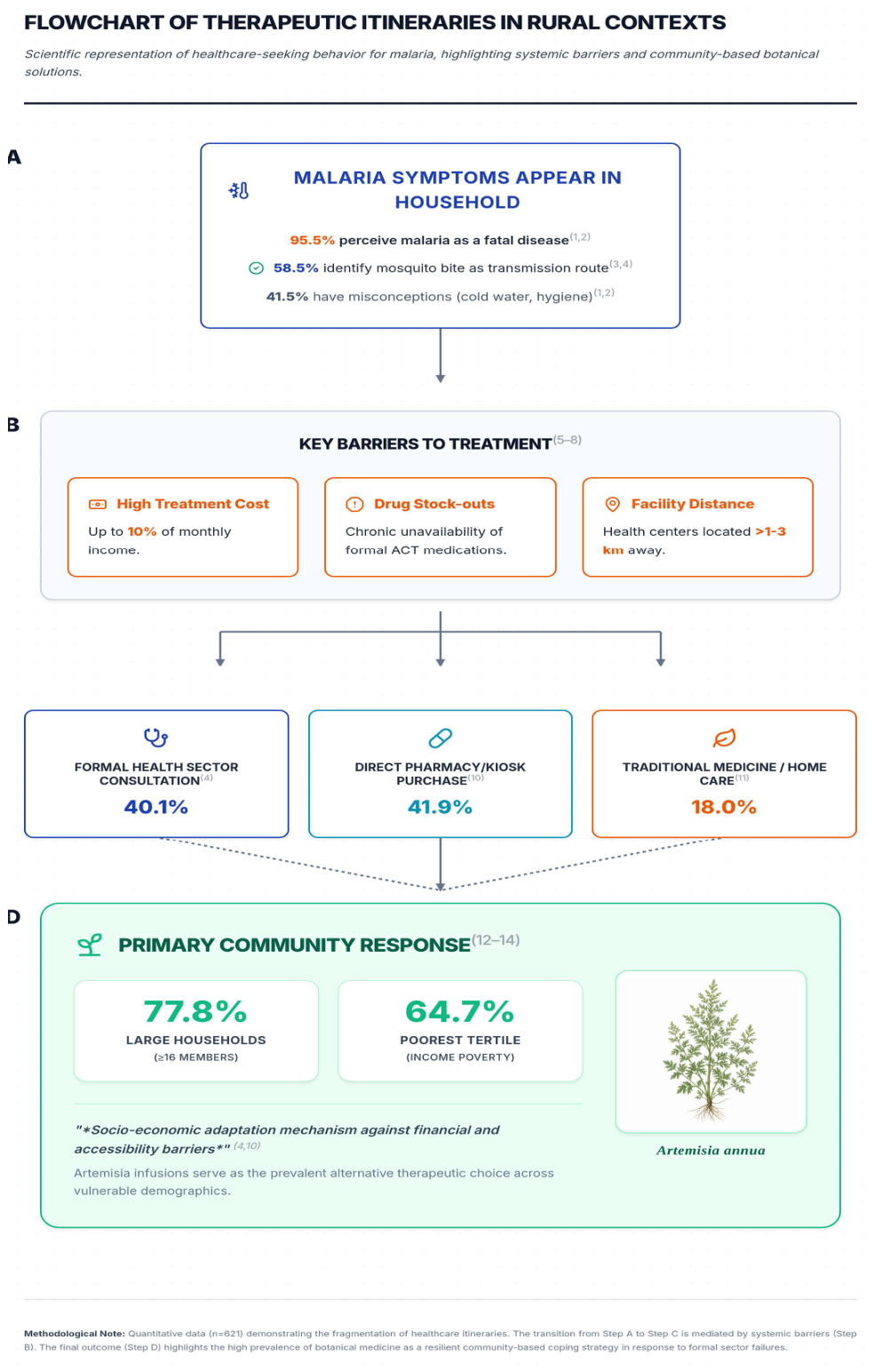
Conceptual framework of therapeutic itineraries and socio-economic determinants of malaria management in Kalima Health Zone, Maniema, DRC. This flowchart illustrates the sequential decision-making process from symptom onset to therapeutic choice, highlighting the structural barriers (medication costs up to 10% of monthly household income, chronic stock-outs, and geographic distance) that drive households toward alternative strategies. The diagram quantifies the fragmentation of first-recourse pathways (formal health center: 40.1%; direct pharmacy purchase: 41.9%; traditional/home care: 18.0%) and demonstrates the prevalence of Artemisia annua infusions as a socioeconomic adaptation mechanism, particularly among large households (≥16 members: 77.8%) and those in the lower wealth tertile (64.7%). Data derived from Table 4, Table 7 and Table 11 of the present study.
Figure 1.
Conceptual framework of therapeutic itineraries and socio-economic determinants of malaria management in Kalima Health Zone, Maniema, DRC. This flowchart illustrates the sequential decision-making process from symptom onset to therapeutic choice, highlighting the structural barriers (medication costs up to 10% of monthly household income, chronic stock-outs, and geographic distance) that drive households toward alternative strategies. The diagram quantifies the fragmentation of first-recourse pathways (formal health center: 40.1%; direct pharmacy purchase: 41.9%; traditional/home care: 18.0%) and demonstrates the prevalence of Artemisia annua infusions as a socioeconomic adaptation mechanism, particularly among large households (≥16 members: 77.8%) and those in the lower wealth tertile (64.7%). Data derived from Table 4, Table 7 and Table 11 of the present study.
4.5. Bivariate Analysis: Education and Artemisia Use
The bivariate analysis demonstrates that formal education serves as a significant regulator of therapeutic choices in the Kalima Health Zone.

Table 5.
Relationship between education level and Artemisia annua use (N = 621).
| Education Level | Uses Artemisia (n) | Does Not Use (n) | Total (N) | p-value |
| Formal education | 59 (31.9%) | 126 (68.1%) | 185 (100%) | < 0.05 |
| No formal education | 262 (60.1%) | 174 (39.9%) | 436 (100%) |
4.6. Multivariate Determinants of Health Behavior
The multivariate logistic regression models isolated television ownership, information exposure, and perceived efficacy as the strongest independent predictors of health behavior.
Table 6.
Multivariable logistic regression analysis of determinants influencing health behaviors in the Kalima Health Zone. (N = 621).
Table 6.
Multivariable logistic regression analysis of determinants influencing health behaviors in the Kalima Health Zone. (N = 621).
| Predictive Variables | Adjusted OR | 95% Confidence Interval | p-value |
| Information on malaria control | |||
| No | 1.000 | - | - |
| Yes | 5.435 | [2.371–70.22] | < 0.001 |
| Ownership of a television | |||
| No | 1.000 | - | - |
| Yes | 2.736 | [1.168–6.406] | 0.020 |
| Perceived efficacy of Artemisia | |||
| Low/None | 1.000 | - | - |
| High | 8.920 | [1.704–46.70] | 0.010 |
Exposure to mass media, specifically television ownership, increases the odds of specific care-seeking pathways by nearly threefold (AOR = 2.736; ). This underscores the critical, yet potentially disruptive, role of audiovisual platforms in regions where formal clinical communication is bypassed [30,63]. Notably, the perceived efficacy of Artemisia annua infusions emerged as the most dominant behavioral determinant (AOR = 8.920; 95% CI: 1.704–46.70). While community trust is often built on such subjective observations of recovery [50], this trend is scientifically concerning. From a public health perspective, this high perceived efficacy drives the systematic use of unstandardized plant material, creating a “sub-therapeutic window” that facilitates the selection of resistant Plasmodium falciparum strains [10]. Given the documented emergence of pfk13 resistance mutations in the Great Lakes region [9,64], these findings highlight an urgent need to redirect media-driven health trust toward validated, dose-regulated ACT regimens [11,65].
4.7. Household Size and the Economic Logic of Artemisia Use
Economic pressure linked to household size serves as a decisive factor in the choice of malaria management strategies.
Table 7.
Artemisia use according to household size (N = 621).
| Household Size | Uses Artemisia (n) | Does Not Use (n) | Total (N) | p-value |
| 1–10 persons | 7 (24.1%) | 22 (75.9%) | 29 (100%) | 0.161 |
| ≥ 16 persons | 7 (77.8%) | 2 (22.2%) | 9 (100%) | < 0.05 |
Legend: 16. members), the reliance on Artemisia infusions reaches 77.8%. This represents a rational economic trade-off: as the number of dependents increases, the cumulative cost of standardized ACTs becomes a prohibitive burden, leading families to seek affordable, community-available alternatives [66,67].
4.8. Sources of Malaria Information
Data confirms a significant gap in clinical communication, with mass media dominating the informational landscape.
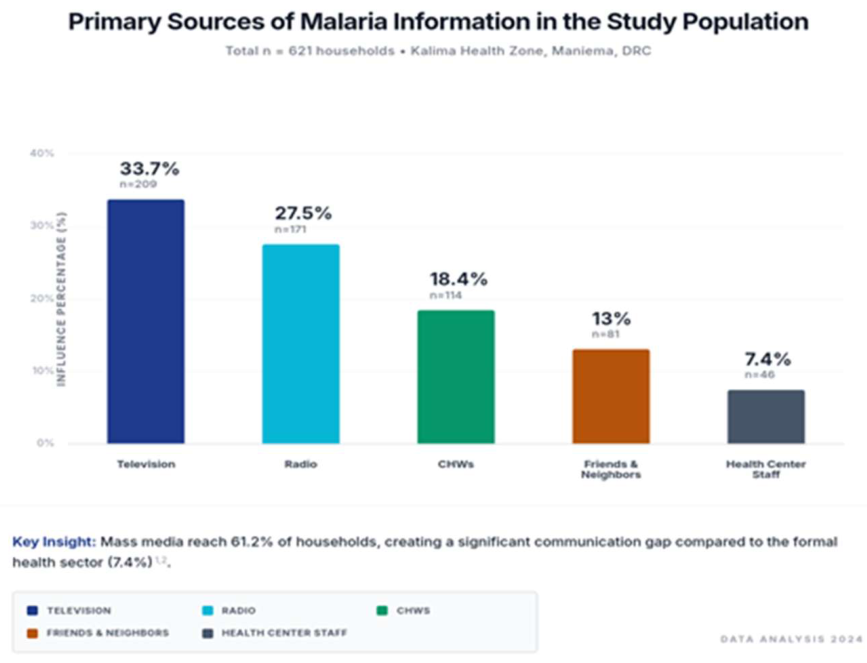
Table 8.
Primary sources of information for household heads (N = 621).
| Sources of Information | Frequency (n) | Percentage (%) |
| Television | 209 | 33.7 |
| Radio | 171 | 27.5 |
| Community Health Workers | 114 | 18.4 |
| Friends and Neighbors | 81 | 13.0 |
| Health Center staff | 46 | 7.4 |
Figure 2.
Primary sources of malaria information among 621 households in Kalima Health Zone, Maniema, DRC. Bars represent the percentage of households identifying each source as their primary channel for malaria-related information. Mass media channels (television: 33.7%; radio: 27.5%) collectively reach 61.2% of the population, significantly outperforming formal health center staff (7.4%). These results illustrate a shift toward decentralized media-driven health communication in rural settings, reflecting broader trends in sub-Saharan Africa where media exposure significantly influences health-seeking behavior [32].
Figure 2.
Primary sources of malaria information among 621 households in Kalima Health Zone, Maniema, DRC. Bars represent the percentage of households identifying each source as their primary channel for malaria-related information. Mass media channels (television: 33.7%; radio: 27.5%) collectively reach 61.2% of the population, significantly outperforming formal health center staff (7.4%). These results illustrate a shift toward decentralized media-driven health communication in rural settings, reflecting broader trends in sub-Saharan Africa where media exposure significantly influences health-seeking behavior [32].
4.9. Impact of Media Exposure on Knowledge
The positive impact of media access on health literacy is quantified in Table 9, showing a strong correlation between exposure and etiological understanding.
4.10. Safety Profile of Artemisia Infusions as Perceived by Users
The majority of users reported high tolerance, reflecting the community’s subjective perception of the safety of these infusions.
Table 10.
Reported side effects and tolerance among users (N = 321).
| Tolerance Indicators | Frequency (n) | Percentage (%) |
| Absence of side effects | 283 | 88.2 |
| Presence of side effects | 38 | 11.8 |
Legend: 321. households reporting use of Artemisia, 88.2% noted an absence of side effects. The reported cases of mild discomfort (11.8%, e.g., nausea) are consistent with perceived safety profiles documented in qualitative literature. However, these figures reflect subjective household reporting and do not substitute for standardized clinical toxicity assessments.
4.11. Economic Determinants: Wealth Index and First Recourse
Economic vulnerability and structural poverty emerge as the primary drivers of therapeutic choice, as illustrated by the relationship between wealth tertiles and the recourse to phytotherapy.
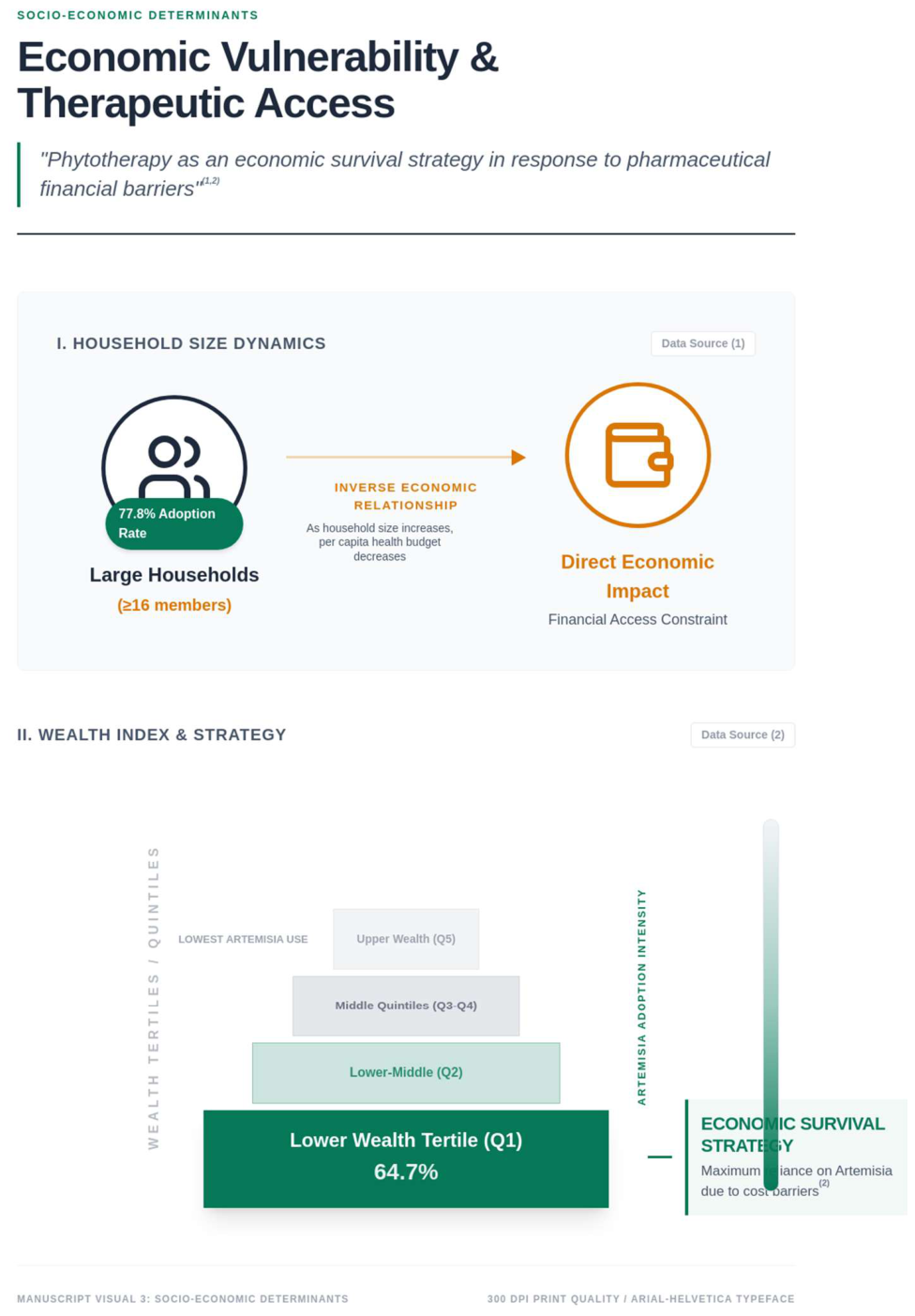
Table 11.
Relationship between wealth index and first recourse (N = 414).
| Wealth Tertile | Uses Artemisia n(%) | ACT / Clinic Recourse n (%) | Total N (100%) | p-value |
| Lower Tertile | 134 (64.7%) | 73 (35.3%) | 207 | < 0.001 |
| Upper Tertile | 68 (32.8%) | 139 (67.2%) | 207 |
Legend: 0. indicates that economic vulnerability is a primary structural determinant for the recourse to non-standardized phytotherapy in the Kalima Health Zone. [6,8]. The reliance of 64.7% of the lower wealth tertile on Artemisia infusions poses a significant risk for the selection of pfk13 mutations, such as those documented in the Great Lakes region [9,64].
Figure 3.
Socio-economic determinants of Artemisia annua adoption: impact of household size and wealth status. The upper panel (I) illustrates the inverse relationship between household size and per capita health budget, where extremely large households (e.g., 16 members) exhibit a 77.8% adoption rate in response to financial access constraints. The lower panel depicts the gradient of adoption across wealth tertiles, showing that households in the lower wealth tertile (Q1) have the highest reliance on phytotherapy (64.7%). These findings identify poverty as a structural driver of alternative medicine use [68].
Figure 3.
Socio-economic determinants of Artemisia annua adoption: impact of household size and wealth status. The upper panel (I) illustrates the inverse relationship between household size and per capita health budget, where extremely large households (e.g., 16 members) exhibit a 77.8% adoption rate in response to financial access constraints. The lower panel depicts the gradient of adoption across wealth tertiles, showing that households in the lower wealth tertile (Q1) have the highest reliance on phytotherapy (64.7%). These findings identify poverty as a structural driver of alternative medicine use [68].
5. Discussion
5.1. Discrepancy Between Threat Perception and Etiological Knowledge
A critical finding of this study is the significant disconnect between the perceived severity of malaria and the biological understanding of its transmission. As detailed in Table 3, there is a near-unanimous consensus (95.5%) on the deadly nature of malaria. However, this high level of concern does not translate into precise etiological knowledge; Table 2 indicates that only 58.5% of respondents correctly identify mosquito bites as the primary mode of transmission. This “perception-knowledge gap” is recurrent in sub-Saharan Africa, where the apprehension of the disease is often clouded by plural etiological conceptions, such as exposure to cold or consumption of non-potable water [69,70]. These divergences present a significant challenge for public health campaigns: where traditional beliefs persist alongside scientific explanations, individuals may prioritize less effective preventive behaviors despite widespread awareness of the disease’s lethality [3,61].
5.2. Therapeutic Itineraries and Fragmented Healthcare Seeking
The therapeutic pathways in Kalima are characterized by a fragmentation of treatment choices. As shown in Table 4, direct purchases from pharmacies (41.9%) rival consultations at formal health centers (40.1%). This tendency toward self-medication is a major challenge in the DRC, often dictated by the perception of rapid access to care rather than compliance with national protocols [21,23]. The healthcare structure in Kalima remains strongly influenced by the immediate availability of solutions, where accessibility often outweighs evidence-based therapeutic guidelines [71]. This complexity is further exacerbated by the integration of traditional practices, leading to diverse and sometimes conflicting itineraries where households may utilize various alternatives [72,73]. Figure 1 illustrates how systemic barriers, including the prohibitive cost of ACTs and chronic stock-outs in public facilities, create a forced trade-off between evidence-based protocols and accessible community alternatives [14,74].
5.3. Socio-Economic Drivers and the “Funding-Impact Gap”
The reliance on Artemisia annua infusions in the Kalima Health Zone represents a rational economic resilience strategy in response to systemic healthcare failures. The bivariate analysis (Table 5 and Table 7) identifies a clear vulnerability profile: respondents without formal education and those from very large households (≥16 members, 77.8%) are the most inclined to use these infusions. Faced with the cumulative financial burden of repeated malaria episodes, large families often opt for local self-sufficiency to mitigate the costs of clinical care and pharmaceutical ACTs [66,67,75].
Furthermore, our findings reveal a significant disconnect between international financial mobilization and frontline health reality. Despite substantial investments from global initiatives, such as the World Bank programs [76], the structural vulnerabilities of the Maniema province create exclusionary market dynamics where subsidized medications remain largely inaccessible to the most vulnerable [6,35,77]. In this context, Artemisia annua is perceived not necessarily as a first-choice medical therapy, but as a pragmatic and affordable alternative within a strained formal system [17,78].
5.4. Methodological Rationale: Prioritizing Household-Level Indicators
The methodology of this study prioritizes household-level indicators over standard individual demographic variables. This shift is a deliberate strategic choice grounded in the socio-economic realities of the DRC, where health-seeking behaviors are predominantly collective household decisions rather than isolated individual choices [79]. In rural subsistence-based economies, household material assets and education levels provide more robust predictors of health resilience than individual age [80,81,82].
Our multivariate analysis (Table 6) validates this approach, showing that television ownership (AOR = 2.736) is a significant predictor of adequate health knowledge [83]. This aligns with broader findings in sub-Saharan Africa, where mass media exposure is a primary driver of health literacy and behavioral change [32,84]. By adhering to these reporting standards, the study ensures that findings reflect the actual drivers of health behavior in resource-constrained environments, in full compliance with STROBE guidelines [46,47].
5.5. International Policy, Resistance, and Clinical Implications
The community-level reliance on Artemisia infusions (Table 5) stands in stark contrast to international guidelines. The WHO currently discourages the use of non-standardized plant material due to concerns that sub-therapeutic artemisinin concentrations (often measured as low as 0.18%) could accelerate the spread of antimalarial resistance [29,43,85]. The proximity of Maniema to documented pfkelch13 mutation hotspots in Rwanda and Uganda heightens these concerns [9].
Institutional opposition is grounded in the risk of monotherapy; unlike ACTs, simple infusions lack a long-acting partner drug, placing immense selection pressure on the parasite [41,42]. While 88.2% of users reported no adverse effects (Table 10), this perceived tolerance does not substitute for standardized toxicity assessments [11,84]. Furthermore, scientific discourse on the synergistic potential of the whole-plant extract [28,37,86] must be balanced against the risk of unsatisfactory cure rates—some as low as 28-34% in clinical trials—which fall far below the standard required for frontline therapies [26,42]. This underscores the urgency of a dialogue between local knowledge and global protocols to ensure that community practices do not compromise the efficacy of reference antimalarial molecules [85].
The high prevalence of A. annua use (77.8%) in Kalima can be analyzed through the Health Belief Model. Qualitative evidence suggests that “perceived barriers” to formal care—specifically cost and recurrent stockouts—override the “perceived risks” associated with using unstandardized plant material [11]. While 88.2% of users reported a perception of safety, this subjective confidence is scientifically concerning and problematic [11]. It reflects a reliance on decentralized, non-expert information channels (radio and television) that bypass international health norms and WHO-validated protocols [11,65].
5.6. Strengths and Limitations of the Study
The primary strength of this study is its robust sample size (), which provides the statistical power necessary to identify key KAP determinants in a remote health zone like Kalima [87,88]. The use of multivariate analysis allowed for the isolation of independent predictors, such as media exposure and household size, filling a critical literature gap regarding the acceptability of Artemisia annua in mining regions.
The main limitation is the cross-sectional nature of the study, which prevents the establishment of direct temporal causality between the identified determinants and behaviors. While the results provide a clear roadmap for immediate policy interventions, future longitudinal studies are needed to evaluate the long-term impact of integrating community phytotherapy into formal malaria control strategies.
Additionally, reliance on self-reported data may introduce recall bias, particularly concerning past malaria episodes or specific medication details, which could influence the accuracy of perceived efficacy and adherence data [89].
5.7. Emerging Artemisinin Resistance in the African Great Lakes Region
The scientific context of this study is marked by the significant emergence of partial artemisinin resistance in the neighboring East African region, specifically in Rwanda and Uganda, characterized by pfkelch13 mutations [90]. This phenomenon poses an existential threat to current National Malaria Control Programs that rely almost exclusively on ACTs. Our finding that households in the lower wealth tertile (64.7%) and those with large families (77.8%) are shifting toward Artemisia infusions (Table 7 and Table 11) must be interpreted in this context. While the WHO expresses concern that sub-therapeutic levels in tea might foster resistance [11], our results suggest that in isolated zones like Kalima, where ACT supply chains are often unstable, the community is independently seeking “resistance-resilient” alternatives based on perceived clinical outcomes. The geospatial distribution of resistance markers (Figure 4) underscores the biological vulnerability of the Great Lakes region. Our findings on the high community adoption of Artemisia infusions must be interpreted within this context of selective parasitic pressure, where localized practices potentially interact with regional resistance dynamics [9]. The expansion of unmonitored Artemisia consumption in Maniema presents a significant threat to global malaria control. The emergence of artemisinin partial resistance mutations, specifically the pfk13 R561H allele, has already been documented in the neighboring Great Lakes region [9,64]. Our ongoing comparative genomic study at the Kalima Health Zone aims to determine whether the use of infusions fosters a similar selection pressure [29]. Preliminary data suggest that the consumption of plant material with variable artemisinin concentrations may create a ‘sub-therapeutic window’ ideal for the selection of resistant parasites [10,91]. Therefore, the current practice in Maniema must be viewed as a potential catalyst for therapeutic failure, requiring immediate alignment with international molecular surveillance standards [9,64].
5.8. Phytochemical Complexity: Synergy vs. Institutional Risk Assessments
The high level of perceived efficacy and safety reported by participants where 88.2% of users reported no adverse effects (Table 10)—highlights a profound tension between community perception and global health standardization.
5.8.1. The Synergy and Bioavailability Hypothesis
Proponents of whole-plant therapy hypothesize that Artemisia annua functions as a polyvalent delivery system [38,93]. The literature suggests that the plant contains a complex matrix of secondary metabolites, such as methoxylated flavonoids, which may act as synergistic scaffolds [94]. Some studies have reported that these interactions can increase the bioavailability of artemisinin in the bloodstream by up to 40-fold compared to pure artemisinin monotherapy [38]. This hypothesis is often used to explain why participants perceive clinical benefits even when artemisinin concentrations in traditional infusions are theoretically low [95].
5.8.2. Institutional Counter-Arguments: Monotherapy and Resistance Risks
Despite community perceptions of safety (Table 10), international health institutions, including the World Health Organization, maintain a firm stance against the use of Artemisia plant material for malaria treatment. The primary concern is that these infusions essentially function as an uncontrolled monotherapy [42].
- Clinical Efficacy: Critics cite data showing 28-day cure rates as low as 28–34% for infusions, which falls far below the >95% threshold required for standardized antimalarial protocols [42].
- Public Health Risk: From an institutional perspective, the “perceived safety” reported by users is clinically misleading, as it does not account for asymptomatic carriage of resistant parasites or long-term recrudescence, both of which jeopardize regional elimination efforts [11].
5.8.3. Synthesis: Clinical Perception Versus Public Health Standardization
This study highlights a critical “epistemological gap” between community-level clinical perception and international public health caution. In Kalima, the adoption of Artemisia is driven by immediate perceived efficacy and an absence of acute side effects [11], aligning with synergy models observed in ethnopharmacological research [37]. However, institutional concerns regarding monotherapy and the acceleration of parasitic resistance remain significant barriers to the regulated integration of these practices [11]. Our findings suggest that until standardized dosing and combination protocols for whole-plant therapy are established, the tension between community self-sufficiency and global resistance surveillance will persist [11].
5.9. Impact of Decentralized Information Channels on Health-Seeking Behaviors
The prevalence of mass media highlights a transition toward informational pluralism within the Kalima Health Zone. As illustrated in Table 8, households are increasingly relying on horizontal information channels, suggesting a shift in the center of gravity for health communication from clinical institutions (7.4%) to audiovisual platforms (>60%).
This trend aligns with observations in other Sub-Saharan African contexts, where mass media exposure is strongly correlated with improved disease knowledge and the adoption of preventive behaviors [32]. Studies in Malawi and Uganda have demonstrated that regular exposure to health messages via radio and television significantly increases the likelihood of insecticide-treated net use and improves healthcare-seeking behavior [44,45]. In the specific context of the DRC (Table 9), the influence of media underscores the limitations of traditional top-down health communication strategies, which are frequently hindered by logistical constraints in conflict-affected settings [96,97].
The acceptance of alternative solutions such as Artemisia annua (Table 11), often driven by the inability of the formal healthcare system to reach the population, suggests that information is no longer the exclusive monopoly of formal health structures [11]. This phenomenon can be interpreted as a pragmatic response to systemic failures, notably recurrent stock-outs of ACTs and the prohibitive costs of conventional treatments [14,98]. However, this decentralization of knowledge demands greater technical accuracy. Persistent gaps in the understanding of transmission modes (Table 2) suggest that communication must be scientifically rigorous to bridge the “epistemological gap” between the population and health experts [20,21]. Effectively, mass media are no longer mere relays but pivotal actors in public health, requiring a horizontal communication strategy adapted to the socio-economic and logistical realities of rural populations [99,100].
5.10. Socio-Economic Coping Mechanisms and Local Alternatives
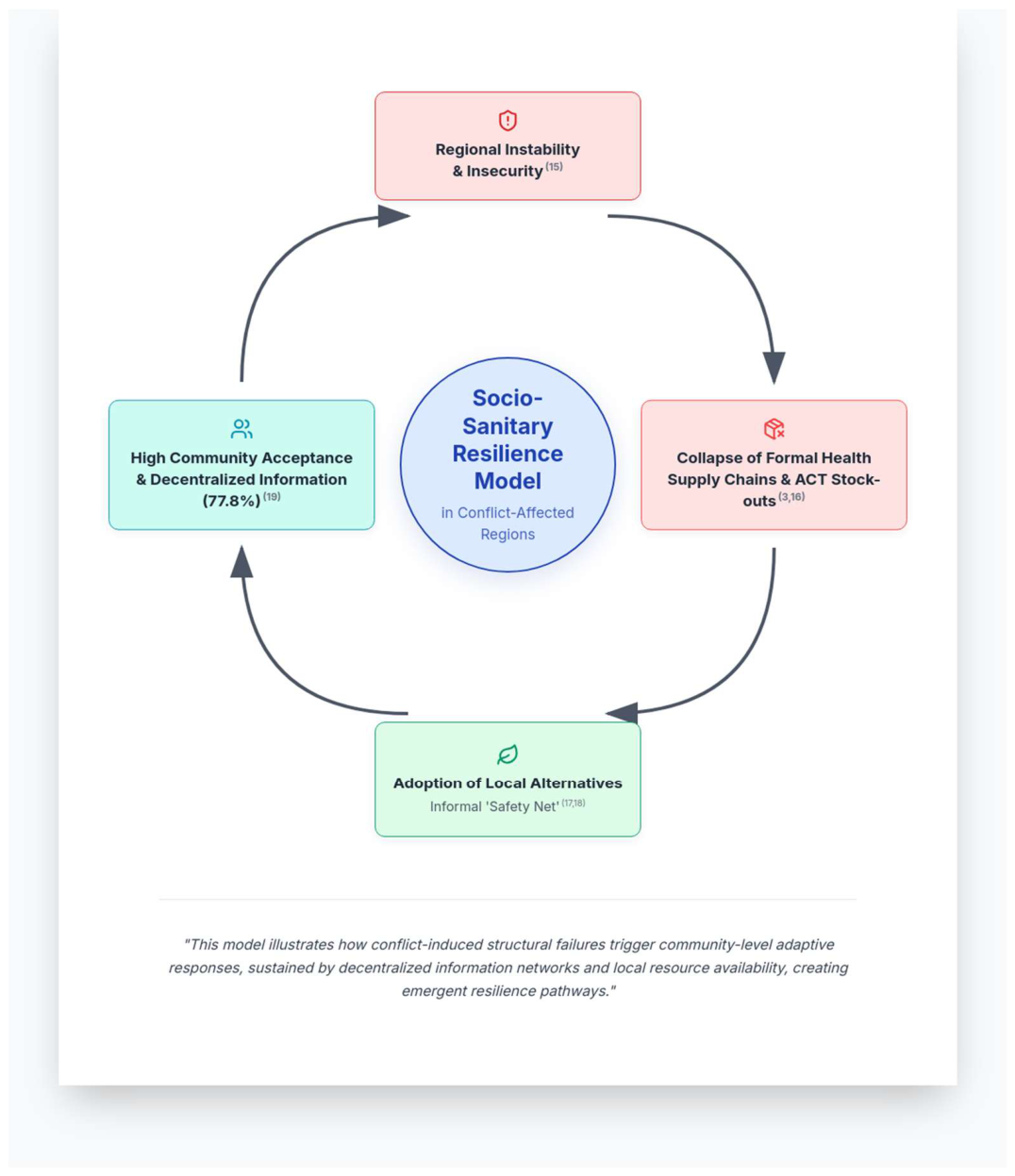
The results regarding household size and the wealth index (Table 7 and Table 11) suggest that the use of Artemisia annua in Maniema functions as a socio-economic coping mechanism rather than a standardized medical strategy. Figure 5 synthesizes how economic vulnerability and supply chain failures converge to shape community health-seeking behaviors in resource-constrained settings [67,101].
In a region where the economic burden of a single malaria episode can be devastating, the transition to locally available alternatives represents a pragmatic adaptation to financial precarity [67,102]. Our findings indicate that household choices in the Kalima Health Zone do not represent a rejection of scientific medicine but rather a prioritization of accessibility [78]. Households face a trade-off between the theoretical gold standard of pharmaceutical ACTs and the practical reality of an accessible and affordable alternative [103].
5.10.1. Systemic Barriers and Supply Chain Failures
This “etiological gap”—where households possess fundamental knowledge of malaria but bypass formal healthcare—is driven by systemic barriers, including high clinical costs and frequent stock-outs [104,105]. These logistical bottlenecks are exacerbated by the chronic insecurity characterizing the Eastern DRC [7]. Research in similar conflict-affected zones indicates that instability paralyzes the supply chain for subsidized ACTs, rendering the private market a “market of exclusion” for the most vulnerable families [12,106].
5.10.2. Pragmatic Responses to Infrastructure Collapse
In this environment, Artemisia annua serves as an informal alternative that allows the community to bypass the vulnerabilities of a fragmented healthcare infrastructure [11]. The recourse to local phytotherapy is a pragmatic adaptation to the ‘market of exclusion’ created by the high cost of pharmaceutical ACTs relative to household purchasing power [107,108]. However, it is important to note that this shift occurs entirely outside the purview of formal pharmacovigilance [11]. While these practices represent a rational response to lived realities, they highlight a critical need for policies that restore the accessibility and affordability of validated ACTs in high-burden settings [106].
Figure 5 represents conceptual model of socio-sanitary resilience and community-led health strategies in conflict-affected regions.
Figure 5.
The Socio-Sanitary Resilience Model. Legend: This diagram illustrates the adaptive cycle of health-seeking behaviors in Maniema. (I) Regional instability and insecurity [7] triggers the collapse of formal health supply chains and frequent ACT stock-outs [14]. This structural failure, combined with the high economic burden, leads to the pragmatic adoption of local alternatives [8]. The process is sustained by high community acceptance (77.8%) and decentralized information networks [21], creating an emergent resilience pathway that bypasses the “market of exclusion” of formal healthcare [8,17].
Figure 5.
The Socio-Sanitary Resilience Model. Legend: This diagram illustrates the adaptive cycle of health-seeking behaviors in Maniema. (I) Regional instability and insecurity [7] triggers the collapse of formal health supply chains and frequent ACT stock-outs [14]. This structural failure, combined with the high economic burden, leads to the pragmatic adoption of local alternatives [8]. The process is sustained by high community acceptance (77.8%) and decentralized information networks [21], creating an emergent resilience pathway that bypasses the “market of exclusion” of formal healthcare [8,17].
6. Conclusion
This study demonstrates that the widespread use of Artemisia annua infusions in the Kalima Health Zone—reaching a prevalence of 77.8% among households—is a direct consequence of systemic failures in the formal healthcare sector. Our findings indicate that this reliance is not driven by clinical evidence but by the “funding-impact gap,” chronic supply chain disruptions, and the prohibitive cost of validated Artemisinin-based Combination Therapies in conflict-affected regions of Eastern DRC [6,7,8].
From a public health perspective, the high level of perceived safety reported by users (88.2%) is scientifically concerning. This subjective confidence masks the objective risks associated with the consumption of unstandardized plant material, specifically regarding sub-therapeutic dosing and the resulting selection pressure on Plasmodium falciparum [10]. Such practices are ethically and scientifically problematic as they bypass international treatment standards and WHO-validated protocols, potentially accelerating the loss of artemisinin efficacy in a region already vulnerable to therapeutic failure [65].
The integration of preliminary genomic surveillance into this research highlights a critical turning point. The emergence of artemisinin partial resistance mutations, notably the pfk13 R561H allele, already documented in the neighboring Great Lakes region, underscores the urgency of strict molecular monitoring in Maniema [9,64]. Any departure from standardized ACT regimens through the use of A. annua herbal tea must be viewed as a potential driver for the expansion of these resistance markers [29,91].
In conclusion, Artemisia annua infusions cannot be considered a pragmatic alternative to standard malaria care. Effective management of the malaria burden in the DRC requires a non-negotiable alignment with international norms. Public health efforts must prioritize the restoration of the ACT supply chain and the implementation of robust genomic surveillance systems to detect and mitigate the selection of resistant strains [11,29]. The “democratization” of unvalidated treatments via decentralized media channels must be countered by evidence-based communication that reinforces the necessity of clinically standardized and dose-regulated antimalarial therapy.
7. Recommendations
- Strict Adherence to WHO Protocols: National and provincial health authorities must enforce the immediate suspension of A. annua promotion for malaria treatment. All clinical management must strictly follow WHO-validated ACT regimens to prevent the selection of resistant strains [10].
8. Perspectives and Future Research
The findings of the TAMAR1 study provide a baseline for understanding the socio-economic determinants of malaria management in Kalima. Future research will focus on two axes:
- 8.1. Molecular Monitoring and Resistance Dynamics: Prospective investigations will prioritize the collection of Plasmodium falciparum isolates to monitor pfkelch13 and pfmdr1 mutations in Maniema. This genomic surveillance is essential to determine whether the whole-plant matrix provides protective synergy or if sub-therapeutic dosing contributes to the spread of resistant strains in the Great Lakes region.
- 8.2. Qualitative Analysis of Stakeholder Perceptions: A qualitative investigation will be conducted to characterize risk-benefit perceptions among caregivers and healthcare professionals. This research aims to identify the structural and cultural factors influencing the integration of standardized traditional medicine, adhering to ChecKAP reporting standards for methodological transparency [48].
Supplementary Materials
The following supporting information can be downloaded at the website of this paper posted on Preprints.org. Supplementary Material S1: Survey Instrument. The complete questionnaire used for digital data collection via the KoboCollect platform. Supplementary Material S2: Methodology for Wealth Index Construction. Detailed description of the Principal Component Analysis and weighting variables used for socio-economic stratification. Supplementary Material S3: STROBE Checklist. Completed checklist of items for cross-sectional studies according to the STROBE initiative. Supplementary Material S4: Ethical Documentation. Includes the official ethical approval certificate from ISTM-KINDU (Ref: 035/ISTM-KD/2025) and the template for the informed consent form. Supplementary Material S5: Detailed Impact of Media Exposure. Extended statistical tables and analysis regarding the influence of information channels on health behavior. Supplementary Material S6: Anonymized Raw Dataset. The Excel file containing the coded responses from the 621 surveyed households in the Kalima health zone.
Author Contributions
Conceptualization: J.M.W.N. (Lead), A.C. Data curation: J.M.W.N. (Lead), H.L.M. Formal analysis: J.M.W.N. (Lead). Investigation: J.M.W.N. (Lead), H.L.M., S.K.M., A.C. Methodology: J.M.W.N. (Lead), A.C. Project administration: J.M.W.N. (Lead), A.C. Resources: J.M.W.N. (Lead), H.L.M., S.K.M. Supervision: A.C. Validation: J.M.W.N. (Lead), H.L.M., S.K.M., A.C. Visualization: J.M.W.N. (Lead). Writing—original draft: J.M.W.N. (Lead). Writing—review & editing: J.M.W.N. (Lead), A.C., H.L.M., S.K.M. All authors have read and agreed to the published version of the manuscript.
Funding
This research received no external funding.
Institutional Review Board Statement
The study was conducted in accordance with the Declaration of Helsinki. Ethical clearance was obtained from the Research Ethics Committee of the Institut Supérieur de Techniques Médicales de Kindu (Ref: 035/ISTM-KD/C.E.R. I/PRESI/IRBE/2025).
Informed Consent Statement
All participants provided informed consent before the administration of the questionnaire. Participation was voluntary, and anonymity was strictly maintained during data processing and analysis to comply with international standards for research in resource-constrained and conflict-affected settings [7,8].
Data Availability Statement
The raw data supporting the conclusions of this article are not publicly available due to ethical and privacy considerations regarding the participants in the Kalima Health Zone. However, anonymized datasets used for the multivariate logistic regression and bivariate analyses are available from the corresponding author upon reasonable request.
Acknowledgments
This study is part of the Doctoral Research Project of Jerome Munyangi Wa Nkola within the Doctoral Program in Public Health, Faculty of Health Sciences and Technology, Gamal Abdel Nasser University of Conakry. The authors express profound gratitude to the thesis directors and mentors for their scientific guidance and oversight. We thank the leadership of the ISTM Kindu Doctoral School and Gamal Abdel Nasser University for providing the necessary institutional framework. Special thanks are extended to the Maniema Provincial Health Division and the Kalima Health Zone Central Office for granting field authorizations. Finally, we sincerely thank the 621 household heads of Kalima for their voluntary participation, and the field enumerators whose dedication to high-quality data collection via KoboCollect was essential to this research.
Conflicts of Interest
The authors declare no conflict of interest. The design of the study, the collection and analysis of data, the interpretation of results, and the decision to publish were conducted with complete scientific independence. This study does not promote the use of non-standardized therapies but provides a critical public health analysis of current community practices in the context of emerging antimalarial resistance.
Abbreviations
| ACT | Artemisinin-based Combination Therapy |
| AOR | Adjusted Odds Ratio |
| ASC | Agent de Santé Communautaire |
| CHW | Community Health Worker |
| CI | Confidence Interval |
| DRC | Democratic Republic of the Congo |
| GDP | Gross Domestic Product |
| IRB | Institutional Review Board |
| ISTM-Kindu | Institut Supérieur des Techniques Médicales de Kindu |
| KAP | Knowledge, Attitudes, and Practices |
| NMCP | National Malaria Control Programme |
| PNLP | Programme National de Lutte contre le Paludisme |
| SPSS | Statistical Package for the Social Sciences |
| STROBE | Strengthening the Reporting of Observational Studies in Epidemiology |
| TAMAR | Traditional Artemisia Malaria Research |
| WHO | World Health Organization |
| ITN | Insecticide-Treated Net |
Appendix A
- S1 Data. Anonymized raw dataset.
This Excel file contains the coded responses from the 621 households surveyed in the Kalima Health Zone. It includes detailed socio-economic variables, asset-based wealth indicators, and reported malaria management practices, providing the raw evidence for the systemic “funding-impact gap” discussed in this study [7,8].
- S1 Appendix. Survey Instrument.
The structured questionnaire used for data collection via the KoboCollect platform. It includes specific modules on etiological knowledge, therapeutic recourse, and the patterns of Artemisia annua infusion usage, which were critical for calculating the reported Adjusted Odds Ratios.
-
S2 Appendix. Verification of Conformity Table.A mapping document demonstrating the strict correspondence between raw survey items and the statistical results presented in the manuscript’s tables. This ensures data integrity and transparency in the multivariate analysis of behavioral determinants.
-
S3 Appendix. Ethical Approval Certificate.Official authorization from the Research Ethics Committee of the Institut Supérieur de Techniques Médicales de Kindu (Ref: 035/ISTM-KD/C.E.R. I/PRESI/IRBE/2025).
- ○
- S3 Appendix (a): Original French document.
- ○
- S3 Appendix (b): Certified English translation.
- ○
- S1 Checklist. STROBE Statement Checklist.
The completed checklist for cross-sectional studies, ensuring that all 22 required items have been addressed to maintain high reporting quality and transparency in accordance with the STROBE initiative [47].
References
- Swana, E.K.; Yav, T.; Ngwej, L.M.; Mupemba, B.N.; Suprianto, S.; Mukeng, C.K.; et al. School-based malaria prevalence: informative systematic surveillance measure to assess epidemiological impact of malaria control interventions in the Democratic Republic of the Congo. Malar. J. 2018, 17(1), 141. [Google Scholar] [CrossRef]
- Tyagi, R.K. Plasmodium Species and Drug Resistance; IntechOpen, 2021. [Google Scholar] [CrossRef]
- Cohen, I.; Makunts, T.; Abagyan, R.; Thomas, K. Concomitant drugs associated with increased mortality for MDMA users reported in a drug safety surveillance database. Sci. Rep. 2021, 11(1), 5858. [Google Scholar] [CrossRef]
- Bâ, E.H.; Pitt, C.; Dial, Y.; Faye, S.L.; Cairns, M.; Faye, E.; et al. Implementation, coverage and equity of large-scale door-to-door delivery of Seasonal Malaria Chemoprevention (SMC) to children under 10 in Senegal. Sci. Rep. 2018, 8(1), 5296. [Google Scholar] [CrossRef]
- Scanlon, M.; Thomas, M.; Tang, Q.; Gonzalvo, J.D.; Ruiz, Y.; Hart, M.; et al. A cross-sectional survey of community health workers and their roles in Indiana. BMC Health Serv. Res. 2025, 25(1), 823. [Google Scholar] [CrossRef] [PubMed]
- Cumming, G. Confidence Intervals. In The Blackwell Encyclopedia of Sociology; Wiley, 2015. [Google Scholar] [CrossRef]
- Schneider, M.; Ferguson, V. Democratic Republic of the Congo. In Oxford University Press eBooks; Oxford University Press, 2020. [Google Scholar] [CrossRef]
- Nakamura, L.I. NATIONAL INCOME ACCOUNTS; Federal Reserve Bank of Philadelphia, 2006. [Google Scholar] [CrossRef]
- Jeffers, C.D.; Hoffman, J.M. SNMMI Clinical Trials Network Research Series for Technologists: Clinical Research Primer—Regulatory Process, Part II: The Role of the Institutional Review Board in Food and Drug Administration–Regulated Radiopharmaceutical Research. J. Nucl. Med. Technol. 2022, 50(2), 97–102. [Google Scholar] [CrossRef]
- MUNYANGI WA N’KOLA, J.; Ramazani, I.B.E. Perception et Acceptabilité de la tisane d’Artemisia annua dans le traitement du paludisme simple dans la Zone de Santé de Kalima, au Maniema en République Démocratique du Congo. 2025. [Google Scholar]
- Rav-Marathe, K.; Wan, T.T.H.; Marathe, S. The Effect of Health Education on Clinical and Self-Reported Outcomes of Diabetes in a Medical Practice. J. Integr. Des. Process Sci. 2016, 20(1), 45–60. [Google Scholar] [CrossRef]
- Tonye, S.G.M.; Kouambeng, C.; Wounang, R.; Vounatsou, P. Challenges of DHS and MIS to capture the entire pattern of malaria parasite risk and intervention effects in countries with different ecological zones: the case of Cameroon. Malar. J. 2018, 17(1), 146. [Google Scholar] [CrossRef]
- Attoumane, A. Roll-back and persistence of malaria in the Union of the Comoros: a geographical approach to assess the importance on environmental and social factors in its maintenance. HAL. 2019. Available online: https://tel.archives-ouvertes.fr/tel-02172231.
- Hazarika, J. SPSS as a means for Scientific Analysis in Social Science Research. Int. J. Innov. Technol. Explor Eng. 2019, 8(12), 2043–2050. [Google Scholar] [CrossRef]
- Vandenbroucke, J.P.; von, Elm E; Altman, D.G.; Gøtzsche, P.C.; Mulrow, C.D.; Pocock, S.; et al. Strengthening the Reporting of Observational Studies in Epidemiology (STROBE): Explanation and elaboration. In Carolina Digital Repository; 2014. [Google Scholar] [CrossRef]
- Martínez-Martínez, E.; Cachofeiro, V. Oxidative Stress in Obesity. Antioxidants 2022, 11(4), 639. [Google Scholar] [CrossRef]
- Baume, C.A.; Marin, M.C. Gains in awareness, ownership and use of insecticide-treated nets in Nigeria, Senegal, Uganda and Zambia. Malar. J. 2008, 7(1), 153. [Google Scholar] [CrossRef]
- Venkatesan, P. The 2023 WHO World malaria report. Lancet Microbe 2024, 5(3), e93. [Google Scholar] [CrossRef] [PubMed]
- Venkatesan, P. WHO world malaria report 2024. Lancet Microbe 2025, 6(4), e307. [Google Scholar] [CrossRef]
- Kayiba, N.K.; Yobi, D.M.; Devleesschauwer, B.; Mvumbi, D.M.; Kabututu, P.Z.; Likwela, J.L.; et al. Care-seeking behaviour and socio-economic burden associated with uncomplicated malaria in the Democratic Republic of Congo. Malar. J. 2021, 20(1), 265. [Google Scholar] [CrossRef]
- Akilimali, A.; Bisimwa, C.; Aborode, A.T.; Biamba, C.; Sironge, L.; Balume, A.; et al. Self-medication and Anti-malarial Drug Resistance in the Democratic Republic of the Congo (DRC): A silent threat. Trop. Med. Health 2022, 21 50(1), 73. [Google Scholar] [CrossRef]
- Munyangi wa Nkola, J.; Camara, A. Public Health Perspectives on Integrating Artemisia annua Tea for Uncomplicated Malaria Treatment: A Cross-Sectional Study of Perceptions and Acceptability among Healthcare Workers in Kalima District, Maniema, DRC; 2026. [Google Scholar]
- Mpanya, G.; Tshefu, A.; Likwela, J.L. The malaria testing and treatment market in Kinshasa, Democratic Republic of the Congo, 2013. Malar. J. 2017, 16(1), 79. [Google Scholar] [CrossRef]
- Mvumbi, P.M.; Musau, J.; Faye, O.; Situakibanza, H.; Okitolonda, E. Adherence to the referral advice after introduction of rectal artesunate for pre-referral treatment of severe malaria at the community level: a noninferiority trial in the Democratic Republic of the Congo. Malar. J. 2019, 18(1), 423. [Google Scholar] [CrossRef]
- Mukemo, K.A.; Sonny, T.T.; Sangwa, S.J.; Kayinga, M.L.; Mulunda, M.P.; Mukuku, O.; et al. The practice of self-medication in children by their mothers in Lubumbashi, Democratic Republic of Congo. J. Adv. Pediatr. Child. Health 2020, 3(1), 127–135. [Google Scholar] [CrossRef]
- Rutebemberwa, E.; Nsabagasani, X.; Pariyo, G.; Tomson, G.; Peterson, S.; Källander, K. Use of drugs, perceived drug efficacy and preferred providers for febrile children: implications for home management of fever. Malar. J. 2009, 26 8(1), 131. [Google Scholar] [CrossRef] [PubMed]
- Rahim, F.A.A.; Mahmud, M.A.F.; Mutalip, M.H.A.; Yoep, N.; Aminuddin, M.A.H.; Ngesom, A.M.M. A scoping review of community knowledge in malaria prevention and control programmes. 2025. [Google Scholar] [CrossRef]
- Ntamabyaliro, N.; Burri, C.; Lula, Y.N.; Ishoso, D.K.; Engo, A.B.; Ngale, M.; et al. Knowledge of Antimalarials and Health Seeking Behaviour of Households in Case of Suspected Malaria in Democratic Republic of Congo. Trop. Med. Infect. Dis. 2021, 6(3), 157. [Google Scholar] [CrossRef]
- Valentin, B.C.; Kasali, F.M.; Philippe, O.N.; Salvius, B.A.; Jean-Baptiste, L.S. Self-medication practices in the management of malaria in the city of Bukavu in Eastern of Democratic Republic of Congo. World J. Biol. Pharm. Health Sci. 2020, 3(2), 29–38. [Google Scholar] [CrossRef]
- Angupale, J.R.; Tusiimire, J.; Ngwuluka, N.C. A review of efficacy and safety of Ugandan anti-malarial plants with application of RITAM score. Malar. J. 2023, 22(1), 86. [Google Scholar] [CrossRef] [PubMed]
- Ataba, E.; Dorkenoo, A.M.; Nguepou, C.T.; Bakaï, T.A.; Tchadjobo, T.; Kadzahlo, K.D.; et al. Potential Emergence of Plasmodium Resistance to Artemisinin Induced by the Use of Artemisia annua for Malaria and COVID-19 Prevention in Sub-African Region. Curr. Trop. Med. Rep. 2021, 8(4), 257–264. [Google Scholar] [CrossRef]
- Czechowski, T.; Weathers, P.J.; Brodelius, P.E.; Brown, G.D.; Graham, I.A. Editorial: Artemisinin—From Traditional Chinese Medicine to Artemisinin Combination Therapies; Four Decades of Research on the Biochemistry, Physiology, and Breeding of Artemisia annua. Front Plant Sci. 2020, 11, 594565. [Google Scholar] [CrossRef] [PubMed]
- Piccaluga, P.P. Malaria - Recent Advances and New Perspectives; IntechOpen, 2022. [Google Scholar] [CrossRef]
- Suberu, J.; Gorka, A.P.; Jacobs, L.; Roepe, P.D.; Sullivan, N.S.; Barker, G.C.; et al. Correction: Anti-Plasmodial Polyvalent Interactions in Artemisia annua L. Aqueous Extract – Possible Synergistic and Resistance Mechanisms. PLoS ONE 2013, 8(11), e80790. [Google Scholar] [CrossRef]
- Kazamwali, M.; Kisanga, A.; Balegamire, J.B.M.; Kaningini, E.W.; Falisse, J.; Furaha, G.; et al. Traditional, complementary, and alternative medicine and the provision of health care to internally displaced persons in South Kivu, Democratic Republic of the Congo. Front Hum. Dyn. 2024, 6, 1289169. [Google Scholar] [CrossRef]
- Atwijukiire, H.; Ikwara, A.E.; Angut, M.M. The Role of Mass Media on Malaria Care-Seeking Behavior: Insights from the Nigeria Malaria Indicator Survey 2021. Res. Sq. 2023. [Google Scholar] [CrossRef]
- Rodríguez-Morales, A.J. Current Topics and Emerging Issues in Malaria Elimination. IntechOpen 2021. [Google Scholar] [CrossRef]
- Yaya, S.; Uthman, O.A.; Amouzou, A.; Bishwajit, G. Mass media exposure and its impact on malaria prevention behaviour among adult women in sub-Saharan Africa: results from malaria indicator surveys. Reprod. Health 2018, 15(1), 96. [Google Scholar] [CrossRef]
- Cibulskis, R.; Alonso, P.L.; Aponte, J.J.; Aregawi, M.; Barrette, A.; Bergeron, L.; et al. Malaria: Global progress 2000–2015 and future challenges. Infect. Dis. Poverty 2016, 5(1), 61. [Google Scholar] [CrossRef]
- Metelo-Matubi, E.; Zanga, J.; Nsabatien, V.; Mbala, A.; Ngamukie, S.; Agossa, F.; et al. Effect of the Mass Distribution of ITNs in an Endemic Area with a High Entomological Index, the Case of Bandundu-City, Kwilu, DRC; IntechOpen, 2022. [Google Scholar] [CrossRef]
- Lordemus, S. Does Aid for Malaria Increase with Exposure to Malaria Risk? Evidence from Mining Sites in the D.R.Congo. Oxf. Bull. Econ. Stat. 2022, 84(4), 719–746. [Google Scholar] [CrossRef]
- Hotchkiss, D.R.; Blum, L.S.; Craig, L.S.; Yemweni, A.; Wisniewski, J.; Lusamba-Dikassa, P.S. Assessing the impact of complex health systems strengthening program on maternal health care utilization in fragile and conflict-affected states: evidence from the Democratic Republic of the Congo. Res. Sq. 2024. [Google Scholar] [CrossRef] [PubMed]
- Karim, A.; Burri, C.; Kila, J.S.N.; Bambwelo, N.; Bakukulu, J.T.; de Savigny, D. Systems Thinking for Supply Chains: Identifying Bottlenecks Using Process Mapping of a Child Health Intervention in the Democratic Republic of the Congo (DRC). Systems 2024, 12(4), 137. [Google Scholar] [CrossRef]
- Cohen, J.M.; Sabot, O.; Sabot, K.; Gordon, M.; Gross, I.; Bishop, D.; et al. A pharmacy too far? Equity and spatial distribution of outcomes in the delivery of subsidized artemisinin-based combination therapies through private drug shops. BMC Health Serv. Res. 2010, 10 (Suppl 1), S6. [Google Scholar] [CrossRef]
- Liheluka, E.; Massawe, I.S.; Chiduo, M.G.; Mandara, C.I.; Chacky, F.; Ndekuka, L.; et al. Community knowledge, attitude, practices and beliefs associated with persistence of malaria transmission in North-western and Southern regions of Tanzania. Malar. J. 2023, 22(1), 302. [Google Scholar] [CrossRef] [PubMed]
- Ilunga-Ilunga, F.; Lévêque, A.; Ngongo, L.O.; Laokri, S.; Dramaix, M. Treatment-seeking Paths in the Management of Severe Malaria in Children under 15 Years of Age Treated in Reference Hospitals of Kinshasa, Democratic Republic of Congo. Trop. Med. Health 2014, 42(4), 151–159. [Google Scholar] [CrossRef] [PubMed]
- Ntamabyaliro, N.; Burri, C.; Lula, Y.N.; Isosho, D.K.; Engo, A.B.; Ngale, M.; et al. Knowledge of Antimalarials and Health Seeking Behaviour of Households in Case of Suspected Malaria in Democratic Republic of Congo. Preprints.org. 2021. [Google Scholar] [CrossRef]
- Ntamabyaliro, N.; Burri, C.; Lula, Y.N.; Nzolo, D.; Engo, A.B.; Ngale, M.; et al. Determinants of Patients’ Adherence to Malaria Treatment in the Democratic Republic of the Congo. Trop. Med. Infect. Dis. 2022, 7(7), 138. [Google Scholar] [CrossRef]
- Rasoanaivo, P.; Wright, C.W.; Willcox, M.; Gilbert, B. Whole plant extracts versus single compounds for the treatment of malaria: synergy and positive interactions. Malar. J. 2011, 10 (Suppl 1), S4. [Google Scholar] [CrossRef]
- Caesar, L.K.; Cech, N.B. Synergy and antagonism in natural product extracts: when 1 + 1 does not equal 2. Nat. Prod. Rep. 2019, 36(6), 869–888. [Google Scholar] [CrossRef]
- Elfawal, M.A.; Towler, M.J.; Reich, N.G.; Golenbock, D.T.; Weathers, P.J.; Rich, S.M. Dried Whole Plant Artemisia annua as an Antimalarial Therapy. PLoS ONE 2012, 7(12), e52746. [Google Scholar] [CrossRef]
- Xu, F.; Shan, X.; Li, J.; Li, J.; Yuan, J.; Zou, D.; et al. The plant matrix of Artemisia annua L. for the treatment of malaria: Pharmacodynamic and pharmacokinetic studies. PLoS ONE 2025, 20(5), e0322835. [Google Scholar] [CrossRef]
- Young, N.W.; Gashema, P.; Giesbrecht, D.; Munyaneza, T.; Maisha, F.; Mwebembezi, F.; et al. High frequency of artemisinin partial resistance mutations in the Great Lakes region revealed through rapid pooled deep sequencing. In Carolina Digital Repository; 2024. [Google Scholar] [CrossRef]
- Gillibert, A.; Stéphane, J.; Hansmann, Y.; Xavier, A.; Landier, J.; Caumes, E.; et al. Comment on “A. annua and A. afra infusions vs. Artesunate-amodiaquine (ASAQ) in treating Plasmodium falciparum malaria in a large scale, double blind, randomized clinical trial” Munyangi et al., 2019. Phytomedicine 2019, 96, 152981. [Google Scholar] [CrossRef]
- Akilimali, P.Z.; Munyemo, K.; Ramazani, I.; Zinga, M.M.; Luuke, M.H.; et al.; 55. Jerome M wa N The Consumption of Artemisia annua Herbal Tea and Resistance to Artemisinin in Africa: A Literature Review. 2025. [Google Scholar]
- Donno, A.D.; Grassi, T.; Idolo, A.; Guido, M.; Papadia, P.; Caccioppola, A.; et al. First-time comparison of the in vitro antimalarial activity of Artemisia annua herbal tea and artemisinin. Trans. R Soc. Trop. Med. Hyg. 2012, 106(11), 696–699. [Google Scholar] [CrossRef]
- Plowe, C.V. Combination Therapy for Malaria: Mission Accomplished? Clin. Infect. Dis. 2007, 44(6), 1075–1076. [Google Scholar] [CrossRef] [PubMed]
- Nkoka, O.; Chuang, T.; Chen, Y. Influence of Maternal Exposure to Malaria Social and Behavioral Change Messages and Effectiveness of Communication Media on Bed Net Use and Malaria Infection in Malawi. Health Educ. Behav. 2021, 48(2), 179–188. [Google Scholar] [CrossRef]
- Mwebesa, E.; Awor, S.; Natuhamya, C.; Dricile, R.; Legason, I.D.; Okimait, D.; et al. Impact of mass media campaigns on knowledge of malaria prevention measures among pregnant mothers in Uganda: a propensity score-matched analysis. Malar. J. 2024, 23(1), 248. [Google Scholar] [CrossRef] [PubMed]
- Hendershot, A.; Wat’senga, F.; Mampangulu, T.; Lodi, O.E.; Nsungu, I.T.; Manzambi, E.Z.; et al. Coustani Group mosquito (Diptera: Culicidae) diversity and malaria transmission in the Democratic Republic of the Congo. Malar. J. 2025, 24(1), 392. [Google Scholar] [CrossRef] [PubMed]
- Ma, C.; Claude, K.M.; Kibendelwa, Z.T.; Brooks, H.M.; Zheng, X.; Hawkes, M. Is maternal education a social vaccine for childhood malaria infection? A cross-sectional study from war-torn Democratic Republic of Congo. Health Syst. Reform. 2017, 3(2), 142–152. [Google Scholar] [CrossRef] [PubMed]
- Bourema, S.; Rafiq, M.Y.; Wang, J.R.; Sissoko N dite, N. Social representations of malaria in a southern Malian community: an ethnographic qualitative study. Malar. J. 2022, 21(1), 284. [Google Scholar] [CrossRef]
- Zarei, F.; Dehghani, A.; Ratansiri, A.; Ghaffari, M.; Raina, S.K.; Halimi, A.; et al. ChecKAP: A Checklist for Reporting a Knowledge, Attitude, and Practice (KAP) Study. Asian Pac. J. Cancer Prev. 2024, 25(7), 2573–2581. [Google Scholar] [CrossRef]
- Vandenbroucke, J.P.; von, Elm E; Altman, D.G.; Gøtzsche, P.C.; Mulrow, C.D.; Pocock, S.; et al. Strengthening the Reporting of Observational Studies in Epidemiology (STROBE): Explanation and Elaboration. PLoS Med. 2007, 4(10), e297. [Google Scholar] [CrossRef]
- Tufan, U.E.; Aktürk, Z. THE STRENGTHENING THE REPORTING OF OBSERVATIONAL STUDIES IN EPIDEMIOLOGY (STROBE) STATEMENT: GUIDELINES FOR REPORTING OBSERVATIONAL STUDIES. Anadolu Aktuel Tıp 2021, 3(2), 41–45. [Google Scholar] [CrossRef]
- Syamasamba, M.A.; Kapiri, M.M.; Muhesi, K.E.; Mbayahi, K.E.; Mavinga, B.M. Ethnobotanical Study of Plants Used by Traditherapists for the Treatment of Malaria in the City of Butembo, North Kivu, East of the Democratic Republic of Congo. Int. J. Innov. Appl. Stud. 2022, 35(3), 605–618. [Google Scholar] [CrossRef]
- Okitawutshu, J.; Tshefu, A.; Kalenga, J.C.; Delvento, G.; Burri, C.; Hetzel, M.W.; et al. Assessing caregivers’ perceptions of treatment-seeking for suspected severe malaria in the Democratic Republic of the Congo. Malar. J. 2023, 22(1), 301. [Google Scholar] [CrossRef] [PubMed]
- Zou, S.; Qi, X.; He, Q.; Wang, Z.; Marshall, K.; Bhura, M.; et al. Understanding the Context of Healthcare Utilisation for Children Under-five with Diarrhea in the DRC: Based on Andersen Behavioural Model. Res. Sq. 2021. [Google Scholar] [CrossRef]
- Abenwie, S.N.; Njong, S.; Noukimi, S.F.; Shinyuy, L.M.; Bambara, S.; Kalimba, E.; et al. A cross-sectional survey on the use of herbal tea among Cameroonian adults (18-65 years). BMC Complement Med. Ther. 2023, 23(1), 280. [Google Scholar] [CrossRef]
- Swana, E.K.; Makan, G.Y.; Mukeng, C.K.; Mupumba, H.I.; Kalaba, G.M.; Luboya, O.N.; et al. Feasibility and implementation of community-based malaria case management with integrated vector control in the Democratic Republic of Congo. Malar. J. 2016, 15(1), 413. [Google Scholar] [CrossRef]
- Willcox, M. Improved Traditional Phytomedicines in Current Use for the Clinical Treatment of Malaria. Planta Med. 2011, 77(6), 662–667. [Google Scholar] [CrossRef]
- Daddy, N.B.; Kalisya, L.M.; Bagire, P.G.; Watt, R.; Towler, M.J.; Weathers, P.J. Artemisia annua dried leaf tablets treated malaria resistant to ACT and i.v. artesunate: Case reports. Phytomedicine 2017, 32, 37–40. [Google Scholar] [CrossRef]
- Bursac, Z.; Gauss, C.H.; Williams, D.; Hosmer, D.W. Purposeful selection of variables in logistic regression. Source Code Biol. Med. 2008, 3(1), 17. [Google Scholar] [CrossRef]
- Boateng, E.Y.; Abaye, D.A. A Review of the Logistic Regression Model with Emphasis on Medical Research. J. Data Anal. Inf. Process. 2019, 7(4), 215–244. [Google Scholar] [CrossRef]
- Henry, M.M.; Shakalenga, C.M.; Valentin, B.C.; Gaël, N.M.; Arsène, K.T.; Augustin, M.M.; et al. Knowledge, attitudes and practices among the population, towards COVID-19 in the Lubumbashi city (DR Congo): An online cross-sectional survey. World J. Biol. Pharm. Health Sci. 2021, 5(3), 1–15. [Google Scholar] [CrossRef]
- Finda, M.F.; Moshi, I.; Monroe, A.; Limwagu, A.J.; Nyoni, A.P.; Swai, J.K.; et al. Linking human behaviours and malaria vector biting risk in south-eastern Tanzania. PLoS ONE 2019, 14(6), e0217414. [Google Scholar] [CrossRef] [PubMed]
- Djamba, K.J.; Havyarimana, V.; Mbambazi, B.P.; Niyongabo, J.; 77. E-Health implementation in the Democratic Republic of the Congo: Current position. Int. J. Health Sci. 2025, 9(1), 210–225. [Google Scholar] [CrossRef]
- Deutsch-Feldman, M.; Brazeau, N.F.; Parr, J.B.; Thwai, K.L.; Muwonga, J.; Kashamuka, M.; et al. Spatial and epidemiological drivers of P. falciparum malaria among adults in the Democratic Republic of the Congo. medRxiv 2020. [Google Scholar] [CrossRef]
- Opiyo, P.; Mukabana, W.R.; Kiche, I.; Mathenge, E.; Killeen, G.F.; Fillinger, U. An exploratory study of community factors relevant for participatory malaria control on Rusinga Island, western Kenya. Malar. J. 2007, 6(1), 48. [Google Scholar] [CrossRef]
- Romay-Barja, M.; Ncogo, P.; Nseng, G.; Santana-Morales, M.A.; Herrador, Z.; Berzosa, P.; et al. Caregivers’ Malaria Knowledge, Beliefs and Attitudes, and Related Factors in the Bata District, Equatorial Guinea. PLoS ONE 2016, 11(12), e0168668. [Google Scholar] [CrossRef]
- Wakai, T.N.; Fiamitia, C.; Kintung, I.F.; Johngwe, M.; Chinedu, S.N.; Afolabi, I.S. Knowledge, practices, and perceptions towards malaria prevention and control among Residents of Canaanland and surrounding areas in Ota, Ogun State, Nigeria: a cross-sectional study. Front Trop. Dis. 2025, 6, 1686197. [Google Scholar] [CrossRef]
- Wombo, J.B.L.; Ntigui, C.N.M.M.; Oyegue-Liabagui, L.S.; Ibinga, E.; Maghendji-Nzondo, S.; Mounioko, F.; et al. Knowledge, attitudes, and practices of mothers regarding childhood malaria in southeastern Gabon. Malar. J. 2023, 22(1), 156. [Google Scholar] [CrossRef]
- Bapolisi, W.A.; Karemere, H.; Ndogozi, F.; Cikomola, A.; Kasongo, G.; Ntambwe, A.; et al. First recourse for care-seeking and associated factors among rural populations in the eastern Democratic Republic of the Congo. BMC Public Health 2021, 21(1), 1416. [Google Scholar] [CrossRef]
- Baum, F.; Narayan, R.; Sanders, D.; Patel, V.; Quizhpe, A. Social vaccines to resist and change unhealthy social and economic structures: a useful metaphor for health promotion. Health Promot Int. 2009, 24(4), 428–433. [Google Scholar] [CrossRef]
- Aliyi, B.; Dassie, Y.; Deressa, A.; Debela, A.; Birhanu, A.; Gamachu, M.; et al. Demand of and Access to Health Messages Through Mass Media in the Rural Community of Eastern Ethiopia: A Mixed Method Study. Risk Manag Healthc. Policy 2023, 16, 1859–1874. [Google Scholar] [CrossRef]
- Dixit, A.S.; Lee, M.; Goettsch, B.; Afrane, Y.A.; Githeko, A.K.; Yan, G. Discovering the cost of care: consumer, provider, and retailer surveys shed light on the determinants of malaria health-seeking behaviours. Malar. J. 2016, 15(1), 150. [Google Scholar] [CrossRef]
- Chuma, J.; Thiede, M.; Molyneux, S.; 87. Rethinking the economic costs of malaria at the household level: Evidence from applying a new analytical framework in rural Kenya. Malar. J. 2006, 5(1), 76. [Google Scholar] [CrossRef]
- Munyangi wa, N.J. Efficacy and Safety of Artemisia annua Herbal Teas against Malaria: A Literature Review.
- Gregory, C.; Ogundeji, M.; Srivastava, A.; Vanier, B.; Dave, S.; Rampersad, A.; 89. Is Affordability and Accessibility All It Takes? Columbia Univ. J. Glob. Health 2019, 8(2), 1–12. [Google Scholar] [CrossRef]
- James, P.; Wardle, J.; Steel, A.; Adams, J. Traditional, complementary and alternative medicine use in Sub-Saharan Africa: a systematic review. Adv. Integr. Med. 2019, 6(4), 270–277. [Google Scholar] [CrossRef]
- Damien, B.G.; Baxerres, C.; Apetoh, E.; Hesran, J.L. Between traditional remedies and pharmaceutical drugs: prevention and treatment of “Palu” in households in Benin, West Africa. BMC Public Health 2020, 20(1), 1433. [Google Scholar] [CrossRef]
- Mabiala, A.N.; Obame-Nkoghe, J.; Bisseyé, C.; Tanga, T.; Mombo, L.E. Connaissances et méthodes de lutte contre le paludisme au sein des ménages de la cité minière de Moanda en zone semi-rurale au Sud-Est Gabon. J. Appl. Biosci. 2021, 159, 16411–16425. [Google Scholar] [CrossRef]
- Tack, B.; Vita, D.; Nketo, J.; Wasolua, N.; Ndengila, N.; Herssens, N.; et al. Health itinerary-related survival of children under-five with severe malaria or bloodstream infection, DR Congo. PLoS Negl. Trop. Dis. 2023, 17(3), e0011156. [Google Scholar] [CrossRef]
- Naserrudin, N.A.; Adhikari, B.; Culleton, R.; Hod, R.; Jeffree, M.S.; Ahmed, K.; et al. Knowledge, compliance, and challenges in anti-malarial products usage: a systematic review of at-risk communities for zoonotic malaria. BMC Public Health 2024, 24(1), 320. [Google Scholar] [CrossRef]
- Emilia, A.E.; Mosanya, A.U.; Chidieber, O.J.; Adibe, M.O.; Ubaka, C.M.; Victoria, U.C. Direct Medical Cost of Treatment of uncomplicated malaria after the Adoption of artemisinin-Based Combination Therapy in Nigeria. J. Appl. Pharm. Sci. 2021, 11(9), 104–111. [Google Scholar] [CrossRef]
- Sicuri, E.; Vieta, A.; Lindner, L.; Constenla, D.; Sauboin, C. The economic costs of malaria in children in three sub-Saharan countries: Ghana, Tanzania and Kenya. Malar. J. 2013, 12(1), 307. [Google Scholar] [CrossRef]
- Kaboré, J.M.T.; Siribié, M.; Hien, D.; Soulama, I.; Barry, N.; Nombré, Y.; et al. Attitudes, practices, and determinants of community care-seeking behaviours for fever/malaria episodes in the context of the implementation of multiple first-line therapies for uncomplicated malaria in the health district of Kaya, Burkina Faso. Malar. J. 2022, 21(1), 170. [Google Scholar] [CrossRef]
- Bank, W. Intensifying the Fight Against Malaria. In World Bank; 2008. [Google Scholar] [CrossRef]
- Ngatu, N.R.; Kanbara, S.; Renzaho, A.M.N.; Wumba, R.; Mbelambela, E.P.; Muchanga, S.M.J.; et al.; 99 Environmental and sociodemographic factors associated with household malaria burden in the Congo. Malar. J. 2019, 18(1), 68. [Google Scholar] [CrossRef]
- Franckel, A.; Lalou, R. HEALTH-SEEKING BEHAVIOUR FOR CHILDHOOD MALARIA: HOUSEHOLD DYNAMICS IN RURAL SENEGAL. J. Biosoc. Sci. 2009, 41(1), 1–19. [Google Scholar] [CrossRef]
- Ostermann, J.; Hair, N.; Grzimek, V.; Zheng, S.; Gong, W.; Whetten, K.; et al. How Poor Is Your Sample? A Simple Approach for Estimating the Relative Economic Status of Small and Nonrepresentative Samples. Glob. Health Sci. Pract. 2023, 11(2), e2200394. [Google Scholar] [CrossRef]
- Poirier, M.J.P.; Grépin, K.A.; Grignon, M. Approaches and Alternatives to the Wealth Index to Measure Socioeconomic Status Using Survey Data: A Critical Interpretive Synthesis. Soc. Indic. Res. 2020, 148(2), 789–811. [Google Scholar] [CrossRef]
- Messina, J.P.; Taylor, S.M.; Meshnick, S.R.; Linke, A.M.; Tshefu, A.; Atua, B.; et al. Population, behavioural and environmental drivers of malaria prevalence in the Democratic Republic of Congo. Malar. J. 2011, 10(1), 161. [Google Scholar] [CrossRef]
- Mutumba, M. Mass media influences on family planning knowledge, attitudes and method choice among sexually active men in sub-Saharan Africa. PLoS ONE 2022, 17(1), e0261068. [Google Scholar] [CrossRef]
- Launiala, A. How much can a KAP survey tell us about people’s knowledge, attitudes and practices? Some observations from medical anthropology research on malaria in pregnancy in Malawi. Anthropol. Matters 2009, 11(1), 1–14. [Google Scholar] [CrossRef]
- Zupko, R.; Nguyen, T.D.; Ngabonziza, J.C.S.; Kabera, M.; Li, H.; Tran, T.N.A.; et al. Modeling policy interventions for slowing the spread of artemisinin-resistant pfkelch R561H mutations in Rwanda. Nat. Med. 2023, 29(11), 2775–2783. [Google Scholar] [CrossRef]
- Suberu, J.; Gorka, A.P.; Jacobs, L.; Roepe, P.D.; Sullivan, N.S.; Barker, G.C.; et al. Anti-Plasmodial Polyvalent Interactions in Artemisia annua L. Aqueous Extract – Possible Synergistic and Resistance Mechanisms. PLoS ONE 2013, 8(11), e80790. [Google Scholar] [CrossRef]
- Kanyangarara, M.; Hamapumbu, H.; Mamini, E.; Lupiya, J.S.; Stevenson, J.C.; Mharakurwa, S.; et al. Malaria knowledge and bed net use in three transmission settings in southern Africa. Malar. J. 2018, 17(1), 22. [Google Scholar] [CrossRef]
- Forero-Peña, D.A.; Chaparro, P.; Vallejo, A.F.; Benavides, Y.; Gutiérrez, J.B.; Arévalo-Herrera, M.; et al.; 109 Knowledge, attitudes and practices of malaria in Colombia. Malar. J. 2014, 13(1), 165. [Google Scholar] [CrossRef]
- Okunola, O.; Aroke, A.A.; Okunola, G.A. Correlates of Self-Medication Practices for Malaria Illness to Under-Five Children in Southwestern Nigeria. Res. Sq. 2024. [Google Scholar] [CrossRef]
- Schreidah, C.; Giesbrecht, D.; Gashema, P.; Young, N.W.; Munyaneza, T.; Muvunyi, C.M.; et al. Expansion of Artemisinin Partial Resistance Mutations and Lack of Histidine Rich Protein-2 and -3 Deletions in Plasmodium falciparum infections from Rukara, Rwanda. medRxiv 2023. [Google Scholar] [CrossRef]
- Young, N.W.; Gashema, P.; Giesbrecht, D.; Munyaneza, T.; Maisha, F.; Mwebembezi, F.; et al. High frequency of artemisinin partial resistance mutations in the great lake region revealed through rapid pooled deep sequencing. medRxiv 2024. [Google Scholar] [CrossRef] [PubMed]
- Tacoli, C.; Gai, P.P.; Bayingana, C.; Sifft, K.C.; Geus, D.; Ndoli, J.; et al. Artemisinin Resistance–Associated K13 Polymorphisms of Plasmodium falciparum in Southern Rwanda, 2010–2015. Am. J. Trop. Med. Hyg. 2016, 95(5), 1090–1093. [Google Scholar] [CrossRef]
- Czechowski, T.; Rinaldi, M.A.; Famodimu, M.T.; van Veelen, M.; Larson, T.R.; Winzer, T.; et al.; 114 Flavonoid Versus Artemisinin Anti-malarial Activity in Artemisia annua Whole-Leaf Extracts. Front Plant Sci. 2019, 10, 984. [Google Scholar] [CrossRef]
- Goel, R.; Kumari, R.; Singh, V.; Pandey, R.; Kumari, R.; Srivastava, S.; et al. Perspectives of the Artemisia Annua Dry Leaf Therapy (ALT) for Malaria and of its Re-Purposement as an Affordable Cure for Artemisinin-Treatable Illnesses. Proc. Indian Natl. Sci. Acad. 2018, 84(2), 495–512. [Google Scholar] [CrossRef]
- Deharo, E.; Ginsburg, H. Analysis of additivity and synergism in the anti-plasmodial effect of purified compounds from plant extracts. Malar. J. 2011, 10 (Suppl 1), S5. [Google Scholar] [CrossRef]
- MUNYANGI, W.A.; NKOLA, J. Programme Artemisia annua PAPI /protocole / version 1.
- Jerome M wa, N.; Akilimali, P.Z.; Munyemo, K.; Ramazani, I.; Luuke, M.H.; Camara, A. The Therapeutic Effectiveness of Artemisia annua Herbal Teas in Treating and Preventing Malaria: A Literature Review. 2025. [Google Scholar]
- Altare, C.; Malembaka, E.B.; Tosha, M.; Hook, C.C.; Ba, H.; Bikoro, S.M.; et al. Health services for women, children and adolescents in conflict affected settings: experience from North and South Kivu, Democratic Republic of Congo. Confl. Health 2020, 14(1), 32. [Google Scholar] [CrossRef]
- Genda, E.E.; Muhindo, J.B.; Cibogo, N.F.; Bahizire, M.R.; Antoine-Moussiaux, N.; Coppieters, Y.; et al. Community feedbacks on COVID-19 restrictive measures and health risk management decolonization perspectives: a socio-anthropological study. Res. Sq. 2023. [Google Scholar] [CrossRef]
- Ntamabyaliro, N.; Burri, C.; Nzolo, D.; Engo, A.B.; Lula, Y.N.; Mampunza, S.; et al. Drug use in the management of uncomplicated malaria in public health facilities in the Democratic Republic of the Congo. Malar. J. 2018, 17(1), 136. [Google Scholar] [CrossRef] [PubMed]
- Ngonso, B.F.; Chukwu, O.J. COVID-19 pandemic’s broadcast media messages’ consumption in rural community and behavioral change. Int. J. Commun. Soc. 2021, 3(1), 12–26. [Google Scholar] [CrossRef]
- Bodjrènou, S.; Hounkpatin, W.A.; Bada, M.; Vodouhê, S.D.; Termote, C.; Savy, M.; 123. Qualitative analysis of the perceptions of rural communities about the use of awareness-raising videos in nutrition and health programs in Benin. Food Sci. Nutr. 2023, 11(5), 2372–2383. [Google Scholar] [CrossRef] [PubMed]
- Medicine Across Borders: Exploration of Grey Zones; 2023. [CrossRef]
- Andrade, M.V.; Noronha, K.; Diniz, B.P.C.; Guedes, G.R.; de Carvalho, L.R.; Silva, V.A.; et al. The economic burden of malaria: a systematic review. Malar. J. 2022, 21(1), 293. [Google Scholar] [CrossRef] [PubMed]
- Hill, C.E. Local Health knowledge and universal primary health care: A behavioral case from Costa Rica. Med. Anthropol. 1985, 9(1), 11–25. [Google Scholar] [CrossRef] [PubMed]
- Chuma, J.; Okungu, V.; Molyneux, S. Barriers to prompt and effective malaria treatment among the poorest population in Kenya. Malar. J. 2010, 9(1), 144. [Google Scholar] [CrossRef]
- Favero, R.; Dentinger, C.; Rakotovao, J.P.; Kapesa, L.; Andriamiharisoa, H.; Steinhardt, L.C.; et al. Experiences and perceptions of care-seeking for febrile illness among caregivers, pregnant women, and health providers in eight districts of Madagascar. Malar. J. 2022, 21(1), 202. [Google Scholar] [CrossRef]
- Altare, C.; Castelgrande, V.; Tosha, M.; Malembaka, E.B.; Spiegel, P. From Insecurity to Health Service Delivery: Pathways and System Response Strategies in the Eastern Democratic Republic of the Congo. Glob. Health Sci. Pract. 2021, 9(4), 915–929. [Google Scholar] [CrossRef]
- de Haan, F.; Moors, E.H.M. Anti-Malarial Drug Development and Diffusion in an Era of Multidrug Resistance. In Anti-Malarial Drug Development and Diffusion in an Era of Multidrug Resistance; Oxford University Press, 2020; pp. 265–289. [Google Scholar] [CrossRef]
- Whitty, C.W.M.; Chandler, C.; Ansah, E.; Leslie, T.; Staedke, S.G. Deployment of ACT antimalarials for treatment of malaria: challenges and opportunities. Malar. J. 2008, 7 (Suppl 1), S7. [Google Scholar] [CrossRef]
- Sanner, A. Artemisinin and its derivates: Chinese Traditional Medicine in the field of drug-resistant malaria and current perspectives. HAL. 2008. Available online: https://hal.univ-lorraine.fr/hal-01732167.
- Future Intentions on Artemisia Infusion Use in Kalima Health District, DR Congo: A Structural Analysis of Knowledge, Attitudes, and Practices in Uncomplicated Malaria Management. 2025.
- Naserrudin, N.A.; Lin, P.Y.P.; Monroe, A.; Baumann, S.E.; Adhikari, B.; Miller, A.C.; et al. Disentangling the intersection of inequities with health and malaria exposure: key lessons from rural communities in Northern Borneo. Malar. J. 2023, 22(1), 329. [Google Scholar] [CrossRef]
- Diallo, E.M.; Pluciński, M.M.; Traoré, F.; Camara, B.S.; Langlet, A.; Délamou, A.; et al. Analysis of Care-seeking Pathway and Factors Influencing Early and Appropriate Care-seeking for Malaria Patients in the Republic of Guinea, 2022-2023. Res. Sq. 2024. [Google Scholar] [CrossRef]
- Fola, A.A.; Ciubotariu, I.I.; Dorman, J.; Mwenda, M.; Mambwe, B.; Mulube, C.; et al. National genomic profiling of Plasmodium falciparum antimalarial resistance in Zambian children participating in the 2018 Malaria Indicator Survey. bioRxiv 2024. [Google Scholar] [CrossRef] [PubMed]
- Public Health Perspectives on Integrating Artemisia annua Tea for Uncomplicated Malaria Treatment: A Cross-Sectional Study of Perceptions and Acceptability among Healthcare Workers in Kalima District, Maniema, DRC.
- Adam, J.; Paulo, H.A.; Luoga, P. Socio-demographic correlates of mass media exposure on malaria messages among Tanzanian male population: analysis of Tanzania demographic and health survey and malaria indicator survey 2022. Discov. Public Health 2025, 22(1), 1158. [Google Scholar] [CrossRef]
Figure 4.
Geospatial distribution of pfkelch13 mutations and artemisinin resistance hotspots in the African Great Lakes Region. This map highlights the strategic location of the Maniema Province relative to documented artemisinin resistance zones. The red indicators represent confirmed or candidate pfkelch13 mutation sites (including R561H and A675V) across Rwanda, Uganda, and the eastern DRC border [64,92]. This regional context creates a “zone of selective parasitic pressure,” where the prevalence of non-standardized monotherapy—including the widespread use of Artemisia annua infusions documented in this study intersects with factors contributing to resistance.
Figure 4.
Geospatial distribution of pfkelch13 mutations and artemisinin resistance hotspots in the African Great Lakes Region. This map highlights the strategic location of the Maniema Province relative to documented artemisinin resistance zones. The red indicators represent confirmed or candidate pfkelch13 mutation sites (including R561H and A675V) across Rwanda, Uganda, and the eastern DRC border [64,92]. This regional context creates a “zone of selective parasitic pressure,” where the prevalence of non-standardized monotherapy—including the widespread use of Artemisia annua infusions documented in this study intersects with factors contributing to resistance.
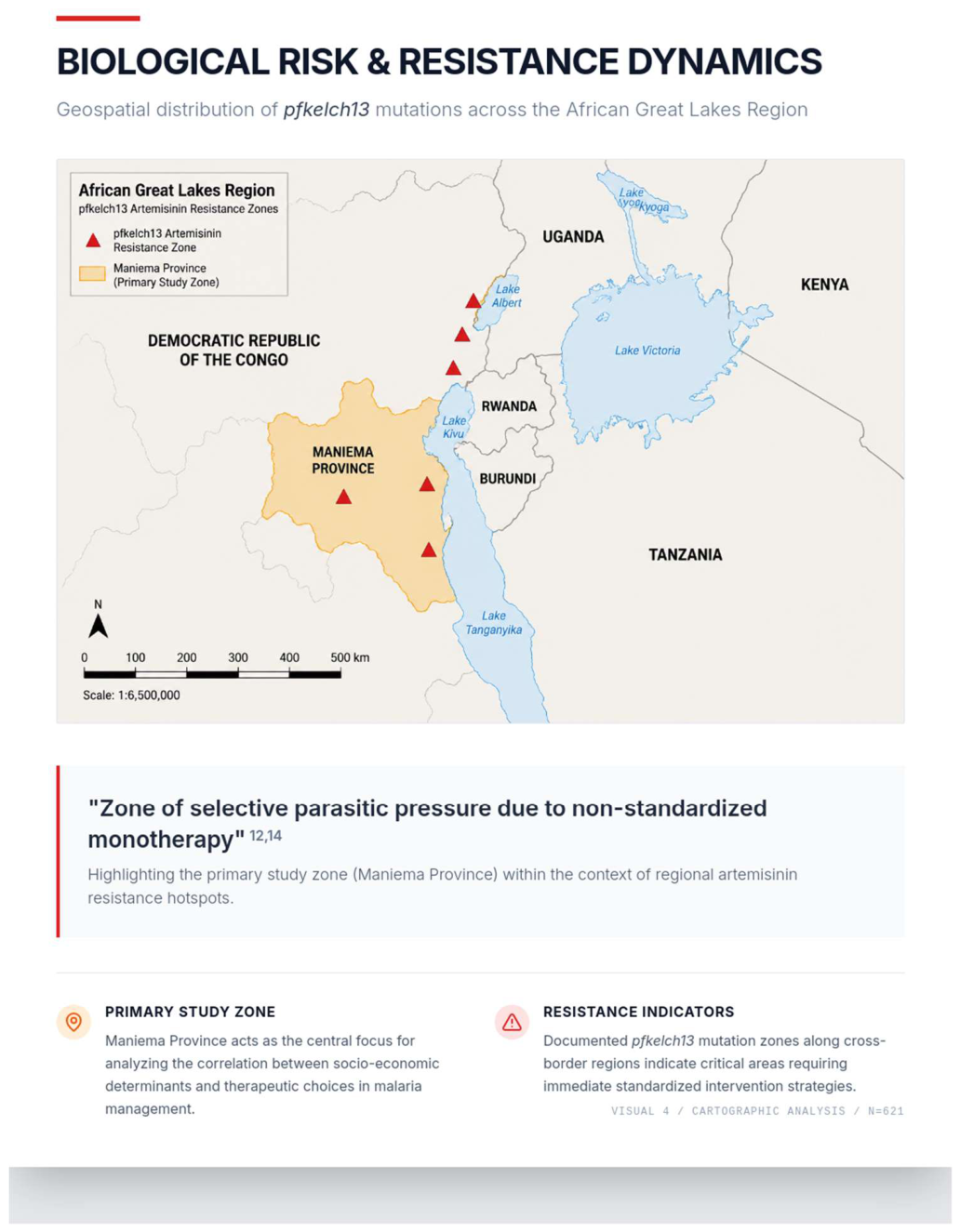
Table 1.
Socio-economic characteristics and assets of households (N = 621).
| Characteristics and Assets | Frequency (n) | Percentage (%) |
| Access to electricity | 166 | 26.7 |
| Ownership of a radio | 171 | 27.5 |
| Ownership of a television | 209 | 33.7 |
| Ownership of a mobile phone | 41 | 6.6 |
| Improved water source | 587 | 94.5 |
| Finished walls (durable materials) | 456 | 73.4 |
| Finished roof | 62 | 10.0 |
| Finished floor | 337 | 54.3 |
Legend: 621. households. The limited access to electricity and mobile technology reflects a state of technological isolation that significantly impedes digital health communication and real-time surveillance in Maniema [11,59]. The low prevalence of finished roofs (10.0%) indicates high domestic vulnerability to mosquito entry, a recognized driver of household malaria burden in rural Congolese settings [60].
Table 2.
Knowledge of malaria transmission and larval breeding sites (N = 621).
| Knowledge Variables | Frequency (n) | Percentage (%) |
| Mode of transmission | ||
| Mosquito bite | 363 | 58.5 |
| Others (e.g., cold, dirty water) | 258 | 41.5 |
| Larval breeding sites | ||
| Stagnant water | 308 | 49.6 |
| Others (e.g., bushes, waste) | 313 | 50.4 |
Table 3.
Perception of malaria severity among household heads (N = 621).
| Perception of the Disease | Frequency (n) | Percentage (%) |
| Deadly disease | 593 | 95.5 |
| Benign or non-fatal disease | 28 | 4.5 |
Table 4.
Preventive practices and first recourse for fever (N = 621).
| Practices and Recourse | Frequency (n) | Percentage (%) |
| Use of insecticide-treated nets | 529 | 85.2 |
| First recourse (fever) | ||
| Direct purchase (Pharmacy/Kiosk) | 260 | 41.9 |
| Consultation at Health Center | 249 | 40.1 |
| Others (Traditional/Home care) | 112 | 18.0 |
Table 9.
Association between media exposure and etiological knowledge (N = 621).
| Exposure (TV/Radio) | Correct Etiology (n) | Incorrect Etiology (n) | Total (N) | p-value |
| Exposed | 165 (78.9%) | 44 (21.1%) | 209 (100%) | <0.001 |
| Not exposed | 198 (48.1%) | 214 (51.9%) | 412 (100%) |
Legend: 78. 9% rate of correct etiological knowledge, compared to only 48.1% for those without media access. This suggests that in the absence of consistent clinical education, audiovisual platforms serve as the primary channel for correcting deep-seated etiological myths in the Kalima Health Zone [30,32,63].
Disclaimer/Publisher’s Note: The statements, opinions and data contained in all publications are solely those of the individual author(s) and contributor(s) and not of MDPI and/or the editor(s). MDPI and/or the editor(s) disclaim responsibility for any injury to people or property resulting from any ideas, methods, instructions or products referred to in the content. |
© 2026 by the authors. Licensee MDPI, Basel, Switzerland. This article is an open access article distributed under the terms and conditions of the Creative Commons Attribution (CC BY) license (http://creativecommons.org/licenses/by/4.0/).
Copyright: This open access article is published under a Creative Commons CC BY 4.0 license, which permit the free download, distribution, and reuse, provided that the author and preprint are cited in any reuse.