

Submitted:
22 May 2026
Posted:
25 May 2026
You are already at the latest version
Abstract
Embryo implantation is a highly regulated, multistep process requiring precise synchronization between a developmentally competent blastocyst and a receptive endometrium. This article outlines the fundamental stages of implantation (apposition, adhesion, and invasion) and highlights the molecular, cellular, and immunological mechanisms underlying successful embryo–endometrial interaction. Uterine receptivity, occurring during the temporally restricted window of implantation, is governed by hormonal regulation and coordinated gene expression, and its disruption represents a key factor in infertility and recurrent implantation failure (RIF).
The article further examines the multifactorial etiology of implantation failure, including genetic abnormalities, maternal age, lifestyle influences, immunological imbalance, uterine pathology, and chronic endometrial conditions. Current and emerging therapeutic strategies in assisted reproductive technology (ART) are critically reviewed, with emphasis on their efficacy and limitations.
In addition, the paper explores innovative technologies aimed at improving implantation outcomes, including time-lapse imaging, artificial intelligence-based embryo selection, and transcriptomic tools such as endometrial receptivity analysis. Advanced experimental models, particularly microfluidic “womb-on-a-chip” systems and three-dimensional in vitro embryo–endometrial platforms, are highlighted as transformative tools for studying implantation dynamics and enabling personalized therapeutic approaches. Collectively, these advances offer promising avenues for improving reproductive outcomes, although further research and standardization are required to translate these innovations into routine clinical practice.
Keywords:
embryo implantation
; uterine receptivity
; recurrent implantation failure (RIF)
; assisted reproductive technology (ART)
; artificial intelligence
; time‐lapse imaging
; endometrial receptivity analysis (ERA)
; microfluidic models
; womb‐on‐a‐chip
; personalized reproductive medicine
Implantation: Basic Mechanisms and Stages
Implantation is a complex, highly coordinated process that establishes both physical and functional communication between the blastocyst and the maternal endometrium. In humans, implantation occurs approximately six to seven days after fertilization and can be divided into three sequential stages: apposition, adhesion, and invasion.
Stage 1: Apposition
During apposition, the free-floating blastocyst loosely interacts with the luminal epithelium, often at sites wherein pinopodes are present and wherein mucin expression (notably MUC1) is locally reduced. This stage is mediated by a complex interplay of cytokines, growth factors, and adhesion molecules. Leukemia inhibitory factor (LIF) and interleukin-1 (IL-1) are particularly important for initiating the embryo-endometrial crosstalk [1].
Stage 2: Adhesion
In the adhesion phase, integrins such as αvβ3 and α4β1, expressed on both the trophoblast and endometrial epithelial cells, stabilize embryo attachment. Osteopontin and other extracellular matrix proteins serve as bridging ligands between integrins on opposing surfaces, thereby consolidating the embryo-endometrial interface.
Stage 3: Invasion
The invasion phase is characterized by the differentiation of the trophoblast into cytotrophoblast and syncytiotrophoblast. The syncytiotrophoblast, for its part, penetrates the luminal epithelium and the underlying stroma through regulated proteolysis involving matrix metalloproteinases (MMP-2 and MMP-9). Decidualization of the stromal fibroblasts, driven primarily by progesterone and cAMP signalling, supports controlled trophoblast invasion and modulates immune tolerance [2]. Uterine natural killer (uNK) cells and macrophages further contribute to vascular remodelling and immune adaptation, thereby ensuring successful placentation and early pregnancy maintenance [3].
Uterine Receptivity: Basic Concepts
Uterine receptivity refers to the transient state during which the endometrium is optimally prepared to accept and support blastocyst implantation. In humans, this period, known as the “window of implantation” (WOI), typically occurs between days 19 and 23 of a regular 28-day menstrual cycle and is primarily regulated by progesterone following adequate estrogen priming.
The principal role of progesterone is to induce morphological and molecular changes in the endometrium, including stromal decidualization, modulation of epithelial polarity, and altered expression of adhesion molecules and cytokines [4]. Morphologically, the receptive endometrium exhibits pinopodes, stromal oedema, and increased glandular secretion.
At the molecular level, receptivity is characterized by the upregulation of markers such as LIF, homeobox A10 (HOXA10), integrin αvβ3, and glycodelin, along with downregulation of anti-adhesive molecules such as MUC1 at implantation sites. Transcriptional profiling has demonstrated that receptivity involves the coordinated expression of genes regulating immune modulation, angiogenesis, extracellular matrix remodelling, and cellular adhesion. Aberrant receptivity has been implicated in infertility, recurrent implantation failure (RIF), and certain cases of recurrent pregnancy loss. Clinical assessment methods, including histological dating, integrin evaluation, and transcriptomic tools such as the Endometrial Receptivity Array (ERA), aim to identify the optimal implantation window, although their routine clinical utility remains debated [5,6].
Proper synchronization between embryo development and endometrial maturation is critical; even a subtle temporal displacement can impair implantation success.
Implantation Failure: Causes
Etiology and Pathophysiology
Age and Genetic Factors
Maternal age exerts a significant influence on pregnancy rates and on embryo quality in IVF. A study by Franasiak et al. [7] demonstrated that aneuploidy rates in blastocysts can reach 58% in women aged 40 years and 83% in women aged 43 years. Chromosomal abnormalities, including aneuploidy and structural rearrangements, are well-established contributors to early pregnancy failure, recurrent pregnancy loss, and RIF [8]. Aneuploid blastocysts demonstrate markedly reduced developmental capacity during the preimplantation stage and negligible implantation potential. Furthermore, chromosomal abnormalities including translocations, mosaicism, inversions, and deletions are more prevalent in RIF patients than in the general population [9].
Lifestyle and Environmental Factors
Certain lifestyle behaviours (including cigarette smoking, alcohol consumption, and obesity) have been associated with reduced ART success rates [10]. Elevated body mass index (BMI >30 kg/m2) is likely associated with lower implantation rates compared with women of normal BMI (18.5–24.9 kg/m2) [11]. Smoking has been shown to significantly increase the risk of miscarriage; in women undergoing IVF, smoking has been associated with lower estradiol concentrations during ovarian stimulation [12]. Further evidence indicates that compounds present in tobacco smoke may interfere with corpus luteum formation and embryo implantation [13].
Haematological Factors
Both inherited and acquired thrombophilia have been postulated to play an important role in implantation failure [14]. The proposed mechanism linking thrombophilia to RIF involves impairment of early embryonic vascularization due to disturbed blood flow to decidual or chorionic vessels [15]. Common inherited thrombophilias include factor V Leiden (FVL) mutation, prothrombin gene mutation, and deficiencies in natural anticoagulants such as antithrombin III and proteins C and S.
The evidence in this area remains contradictory. Qublan et al., Coulam et al., and Azem et al. reported a higher prevalence of inherited thrombophilia in women with a history of RIF [16,17,18], whereas other studies found no significant difference in prevalence compared with controls (Vaquero et al., Simur et al.) [19,20]. A recent review examining the prevalence of antiphospholipid antibodies in women with RIF similarly reported conflicting findings; however, according to ESHRE Guidelines, assessment for antiphospholipid syndrome (APS) is recommended in RIF women with additional risk factors for thrombophilia and may be considered in those without such risk factors.
Chronic Endometritis
Chronic endometritis (CE), resulting from bacterial colonization of the endometrium, is frequently identified in women with a history of RIF, often in the absence of overt clinical signs of infection [21]. CE may be diagnosed by histological examination following hysteroscopic visualization or by endometrial bacterial culture [22]. In CE endometrial samples, an increased proportion of CD68+ macrophages has been observed relative to non-CE endometrium. Recent studies report a prevalence of CE of approximately 14% in patients with RIF following IVF thereby suggesting that CE may adversely affect endometrial receptivity [23].
Uterine Structural Factors
Uterine fibroids represent the most common gynaecological pathology in women, and their prevalence is higher among women with infertility [24]. Fibroids have been proposed to impair implantation through several mechanisms, including venous congestion, diminished vascular supply, increased glycodelin levels, and reduced expression of HOXA10 and IL-10 [25,26]. Endometrial polyps may similarly contribute to RIF, although further studies are needed to clarify whether polypectomy improves implantation rates [27].
Endometriosis is considered the second most common benign condition of the female genital tract after uterine myoma [28]. Pro-inflammatory cytokines, including interleukin IL-6, IL-1β, interferon (IFN)-α, and tumour necrosis factor (TNF)-α, are elevated in women with endometriosis and may disrupt the implantation process [29]. Women with endometriosis demonstrate reduced oocyte and embryo quality and quantity, lower implantation and pregnancy rates, and increased rates of spontaneous abortion [30].
Immunological Factors
An endometrial immune profile has been proposed to identify immune dysregulation associated with RIF [31]. Successful embryo invasion requires specific immune activation. Downregulation of Th1-type immune responses is an essential requirement for clinically normal pregnancies, while Th2-mediated responses tend to predominate during healthy gestation [32]. Compared with normal pregnancy, recurrent miscarriage and RIF are associated with significantly elevated levels of Th1 cytokines (such as interferon-gamma) and reduced serum levels of Th2 cytokines, including IL-6 and IL-10 [33].
Embryo invasion and placentation are also regulated by interactions between maternal killer immunoglobulin-like receptors (KIRs) expressed by uNK cells and fetal HLA-C molecules expressed by extravillous trophoblast (EVT). Women carrying the KIR AA genotype (two KIR A haplotypes) are at increased risk of pregnancy disorders, as the KIR AA combination generates predominantly inhibitory signals targeted at uNK cells, thereby impairing trophoblast invasion [34].
Contemporary Therapies and Interventions Used in Recurrent Implantation Failure
Current attempts to manage RIF include interventions and therapies applied both prior and during the following ART cycle.
Some attempts, such as endometrial injury or using LMWH (low molecular weight heparin) in absence of thrombophilia do not show significant improvement in ART success, and thus, are not recommended.
Blastocyst-stage embryo transplant compared to cleavage-state ET increases probability of implantation and is one of the possible options to be considered in RIF management. Other potentially beneficial methods include assisted hatching or preimplantation genetic testing for aneuploidies.
Based on meta-analysis from 16 studies intrauterine autologous peripheral blood mononuclear cells (PBMC) or platelet-rich plasma (PRP) infusion are the most effective among immunomodulatory therapies and consequently are the most promising measures [35]. Certain other immunomodulatory therapies, including granulocyte colony-stimulating factor (G-CSF) administration, intravenous intralipid or IgG infusion report notable increase in clinical pregnancy rate and live birth rate, nevertheless can entail serious side effects.
However, due to conflicting efficacy, potential side effects and insufficient evidence, most practices still cannot be recommended within the guidelines [9]. There is still a significant need for more research to be conducted to evaluate existing treatment approaches.
Novel Tools to Improve Implantation Outcomes
Time-Lapse Imaging for Embryo Development Monitoring
Time-lapse imaging (TLI) is a technology applied across numerous fields and has been adopted in assisted reproduction (AR) primarily for monitoring embryos during early stages of development, though it can also be used to observe and assess sperm and oocytes [36,37,38,39,40].
Various systems exist for monitoring embryo development with respect to morphology and morphokinetics, each requiring a digital inverted microscope connected to a camera that captures images or videos at defined intervals. These systems may be integrated with an incubator, thereby maintaining embryos within a controlled environment without removal (e.g., EmbryoScope, EmbryoScope+, Geri/Geri+, Miri), or used independently (e.g., Primo Vision VO+, Eeva). Integrated systems maintain constant temperature, pH, gas composition (CO2 and N2), and, in some cases, humidity, creating near-ideal developmental conditions. The light source is also an important parameter: bright-field technology (Primo Vision VO+, EmbryoScope, EmbryoScope+, Geri/Geri+, Miri) permits assessment of both morphology and morphokinetics, whereas dark-field technology (Eeva) is restricted to kinetic parameters and provides limited morphological information. Embryos may be cultured individually in certain systems to allow personalised developmental environments [36,39,40].
Morphological and morphokinetic monitoring tracks embryo development from the zygote stage through to the blastocyst at defined time intervals. Assessed parameters include the presence of a second polar body and pronuclei, timing of cleavage, blastomere number, embryo morphology at various developmental stages, morula compaction, initiation of blastulation, and blastocyst morphology (inner cell mass, trophectoderm, and blastocoel cavity). Developmental abnormalities, including fragmentation, degeneration, vacuolization, lysis, and irregular zona pellucida, may also be identified. A comprehensive catalogue of morphological and morphokinetic parameters is provided in dedicated publications [39,40].
These parameters are monitored and analysed by TLI software in two-dimensional (2D) formats, either as time-lapse sequences or as static images. Data analysis may be performed manually (CCM-iBIS, Primo Vision VO+), semi-automatically (Miri), in a mixed manner (EmbryoScope, EmbryoScope+, Geri/Geri+, Miri), or in a fully automated fashion (Eeva) [36,39,40].
It should be noted that TLI is inherently a 2D imaging technique and does not capture the three-dimensional (3D) structure of the embryo, a limitation that is particularly relevant at the blastocyst stage. Consequently, research is ongoing into artificial intelligence (AI) algorithms capable of reconstructing 3D embryo morphology from 2D time-lapse images [41].
In addition to morphological and morphokinetic monitoring, TLI systems can support prediction of an embryo’s developmental competence [35,38,39]. It should be acknowledged that embryo assessment, selection, and prediction based solely on embryologist experience are inherently subjective and imprecise; the integration of AI as a supporting analytical tool is therefore well justified. Some studies have raised concerns regarding the clinical utility of TLI and its predictive value, highlighting the need for continued evaluation [42,43].
Artificial Intelligence for Embryo Selection
The application of artificial intelligence (AI) to embryo assessment and selection in assisted reproduction (AR) has been the subject of extensive review [44,45,46,47,48,49,50,51,52,53]. The general pipeline for AI-based embryo analysis encompasses data collection and preprocessing, exploratory data analysis, model selection and training, performance evaluation, model tuning, and clinical deployment.
Input data for AI models typically consists of images or videos obtained via TLI or other imaging techniques, and may be supplemented with additional clinical information such as sperm and oocyte quality parameters, or implantation-associated variables with prognostic value [39,40,44]. These data are analysed using either simplified machine learning (ML) approaches or more advanced deep learning (DL) architectures, the latter now being preferred. Numerous DL models have been developed for embryo assessment and selection, and several have been integrated into regularly updated clinical applications [44,54].
Among a range of available models, selected examples illustrate the breadth of the field. For day 3 embryo evaluation, the Xception architecture has achieved accuracy rates of up to 98% [54]. For blastocyst grading, multiple architectures were benchmarked (including Xception, Inception V3, ResNet-50, Inception-ResNet V2, NASNetLarge, ResNeXt-101, and ResNeXt-50) with Xception demonstrating the best discriminatory performance based on morphological quality [56]. KIDScore™ and iDAScore® were proposed as decision-support tools for blastocyst selection prior to transfer [57,58]. The MAIA platform represents another notable embryo selection application [59].
A growing subset of models has been developed not only to assess and select embryos, but also to predict biochemical pregnancy, clinical pregnancy, and live birth outcomes. These include iDAScore®, KIDScore™ D5, the NEQsi score, and DeepEmbryo [60,61,62,63]. Notably, AI tools have demonstrated greater accuracy than embryologists in selecting embryos for implantation [52,60,64]. AI-based classification tools for oocytes and sperm have also been developed for use in IVF [65,66], as have models supporting preimplantation genetic testing (PGT) for both monogenic and polygenic conditions [44,67]. A range of additional AI applications supports IVF across endocrinological and other clinical domains [44,51].
Nevertheless, concerns remain regarding the reliability and reproducibility of certain models, as well as their ambiguous predictive value in some contexts [53,57], potential risks in the absence of demonstrated clear clinical benefit [68], and broader ethical considerations [69]. Despite these limitations, the accuracy of current AI models for embryo assessment and selection exceeds that of experienced embryologists [52]. Although current AI tools do not yet fully meet expectations across all aspects of the IVF workflow, continued development of robust and validated models remains an important goal. At present, AI serves best as a decision-support tool to assist embryologists, clinicians, and patients in making informed, collaborative choices.
Gene Profiling: Endometrial Receptivity Analysis (Era)
Endometrial receptivity is a temporally restricted state in which the endometrium permits embryo adhesion and invasion during the window of implantation (WOI). In natural cycles, the WOI typically occurs six to ten days after the luteinizing hormone (LH) surge; in hormone replacement therapy (HRT) cycles, it corresponds to five full days of progesterone exposure [70,71]. At the molecular level, this state is characterized by coordinated changes in the expression of genes involved in cell adhesion, immune modulation, cytokine signalling, steroid hormone response, extracellular matrix remodelling, and angiogenesis. High-throughput transcriptomic profiling has enabled the identification of gene expression signatures that discriminate between pre-receptive, receptive, and post-receptive endometrial phases, providing the basis for personalized embryo transfer strategies [72,73].
The Endometrial Receptivity Analysis (ERA) is a commercially available diagnostic test that evaluates the expression of a defined gene panel associated with endometrial receptivity using a mid-luteal endometrial biopsy. The original ERA platform was developed through microarray analysis of 238 genes differentially expressed between receptive and non-receptive endometrium, followed by computational modelling to classify endometrial samples [72]. The test is performed at the point in the cycle when the uterine lining is expected to be receptive to embryo implantation. In an HRT cycle this is 5 days after progesterone is commenced (progesterone+5) or day 7 after the LH surge is detected (LH+7) in natural cycles. The difference in timing reflects the fact that the LH surge preceeds ovulation by aproximately 2 days, whereas progesterone is introduced around the time ovulation would occur. If the result is non-receptive, this indicates that the patient’s WOI is displaced, either earlier (prereceptive) or later (postreceptive) than expected. In such a case, a personalized embryo transfer (pET) can be scheduled accordingly [73].
Clinical use of ERA has been evaluated predominantly in women with recurrent implantation failure (RIF). Early prospective investigations demonstrated that a substantial proportion of RIF patients exhibit a displaced WOI. In the original cohort reported by Ruiz-Alonso et al. [73], approximately 25.9% of RIF patients were classified as non-receptive at the expected biopsy timing, consistent with WOI displacement. Importantly, when embryo transfer was adjusted to the individualized receptive window identified by ERA, implantation and pregnancy rates in previously non-receptive patients were comparable to those observed in women with standard-timing receptivity. These findings supported the biological plausibility that altered endometrial timing may contribute to implantation failure in a subset of patients. Subsequent clinical studies and observational analyses have reported similar rates of WOI displacement in RIF populations and suggested that molecularly guided timing adjustment may improve reproductive outcomes in selected cases [73,74].
More recent randomized controlled trials have yielded mixed results regarding the routine use of ERA in unselected IVF populations. One multicentre randomized controlled trial found that pET guided by ERA was associated with significantly higher cumulative pregnancy and live birth rates as compared with standard-timing frozen or fresh embryo transfer. Although live birth rate at first embryo transfer did not reach statistical significance on intention-to-treat analysis, cumulative outcomes over 12 months favoured the pET group, supporting a potential benefit of individualized timing in selected populations [75]. These findings have prompted ongoing debate regarding the cost-effectiveness and clinical utility of ERA outside of defined patient subgroups. Systematic reviews and meta-analyses indicate that while ERA may identify a displaced WOI in a minority of patients, robust evidence to support universal application remains insufficient [75,76].
From a methodological perspective, transcriptomic endometrial profiling represents a significant advance over histological dating, which has demonstrated limited reproducibility and poor correlation with fertility outcomes [77]. Molecular dating approaches, including ERA and other RNA sequencing-based platforms, offer objective, reproducible classification grounded in gene expression patterns rather than subjective morphological criteria. Nevertheless, variability related to progesterone administration route, precision of biopsy timing, intercycle reproducibility, and embryo quality must be carefully considered when interpreting ERA results [77].
In summary, ERA represents an important integration of transcriptomics into reproductive medicine, offering a personalized approach to embryo transfer timing by molecularly characterizing the WOI. While biologically plausible and potentially beneficial in selected patients (particularly those with RIF), its routine use in all IVF patients remains controversial. Further high-quality randomized trials and standardized definitions of implantation failure are required to clarify the optimal clinical indications and long-term reproductive outcomes associated with gene expression-based endometrial receptivity testing.
Microfluidic “Womb-on-a-Chip” Models
Microfluidic womb-on-a-chip systems represent an innovative class of organ-on-a-chip technologies that replicate key features of the human uterine microenvironment with high physiological fidelity in vitro, enabling the study of embryo implantation and its failure. These platforms integrate microfluidic channels, three-dimensional (3D) architecture, and multicellular constructs, thereby facilitating controlled fluid flow, biochemical gradients, and tissue-level interactions that are difficult to achieve in traditional static culture systems. This enhanced microenvironment allows researchers to capture dynamic cellular behaviours critical to implantation success and to model reproductive disorders such as RIF with considerable precision [78,79,80].
A recent high-impact development in this field is a 3D in-chip implantation model constructed by combining bioengineered human endometrial tissue with human blastocysts or stem cell-derived blastoids on a microfluidic chip. This system successfully recapitulates the principal stages of human embryo implantation (apposition, attachment, and invasion) followed by early post-implantation development, overcoming major limitations of 2D culture systems and ethical constraints associated with in vivo studies [78,80]. Importantly, chips constructed using cells from patients with RIF exhibited reduced blastoid implantation capacity compared with models derived from fertile individuals, demonstrating the platform’s ability to faithfully mirror clinical infertility phenotypes [78,80].
Beyond mechanistic investigation, these models are proving valuable for therapeutic discovery. In one 3D microfluidic system, screening of over 1,000 FDA-approved drugs identified compounds that improved implantation outcomes, thereby highlighting the potential of womb-on-a-chip technologies to inform personalised treatment strategies for patients with implantation disorders [78,80]. This approach represents a shift from empirical ART practices towards evidence-based, patient-specific optimization.
Further advances include the creation of endometrial epithelial monolayers on microfluidic chips using patient-derived organoids. These engineered layers maintain physiological histological features, hormonal responsiveness, and barrier integrity, providing platforms for longitudinal study of endometrial receptivity and host–embryo interactions [79]. Such models enable investigation of how stromal and immune components contribute to implantation success and may help identify molecular drivers of receptivity or resistance to trophoblast invasion.
Enhanced microfluidic platforms can also evaluate endometrial receptivity and trophoblast invasion processes in detail, enabling analysis of the maternal–foetal interface and identification of signalling pathways critical for implantation [80]. These engineered systems thus provide not only mechanistic insight but also a dynamic platform for assessing candidate interventions (such as growth factors, cytokines, or small molecules) that may improve the likelihood of successful embryo attachment and pregnancy.
Recent advances in microfluidic womb-on-a-chip platforms have enabled the reconstruction of the human implantation microenvironment, integrating epithelial, stromal, trophoblast, and vascular compartments under dynamic hormonal flow (Figure 1). These systems closely recapitulate the stages of implantation and provide powerful tools for investigating RIF and for developing personalised therapeutic strategies [78,81].
Microfluidic womb-on-a-chip models are reshaping our understanding of human embryo implantation by offering physiologically relevant, ethically permissible, and highly controllable experimental platforms. They bridge the gap between in vitro culture and in vivo complexity, providing powerful tools to investigate implantation failure, screen therapeutics, and advance personalised reproductive medicine.
Microengineering: Real-Time Recording of Human Embryo Implantation
Failure of uterine implantation is one of the principal causes of infertility, accounting for approximately 60% of spontaneous abortions. Until recently, it had not been possible to observe this process in humans in real time. What limited information was available had been derived from static images captured at discrete time points.
A landmark advance in the study of embryo implantation was achieved in August 2025, when scientists from the Institute of Bioengineering of Catalonia (IBEC) and Dexeus University Hospital reported the first successful real-time, three-dimensional recording of the human implantation process [82]. Using a novel ex vivo implantation platform compatible with high-resolution microscopy, the researchers employed traction force microscopy of live mammalian embryos (both mouse and human) to investigate the role of mechanical forces and mechanosensitivity in the implantation process. Their platform enabled continuous tracking of embryonic development for up to six days following implantation, which in humans typically occurs approximately five days after fertilization.
This experiment revealed a key milestone in early human development: the precise moment at which the newly formed embryo attaches to the uterine lining [82]. The findings significantly advance our understanding of the mechanisms governing embryo implantation and have important implications for improving fertility rates and optimizing ART procedures.
Notably, it was demonstrated that human embryos exert traction forces on their surrounding environment, inducing tissue remodelling at the implantation site. Comparative analysis of human and mouse embryo implantation revealed a fundamental species-specific difference: whereas the mouse embryo adheres to the surface of the uterine epithelium, the human embryo penetrates the uterine tissue entirely before proliferating from within. Additionally, the human embryo secretes enzymes that degrade surrounding tissue during the invasion process.
Of particular clinical relevance was the comparison of implantation dynamics in embryos from younger and older mothers. Embryos from older mothers displayed increased contractility in their outer trophoblast tissue, which was associated with defective implantation. This finding identifies a potentially novel pathway for improving ART success rates in older women. Future research by Godeau and colleagues aims to elucidate how additional parameters (including extracellular matrix stiffness and embryo invasion depth) influence the mechanics of implantation.
Novel In Vitro Models of Implantation
Faithful in vitro models are essential for advancing our understanding of implantation and early post-implantation embryo development.
Embryo Models
Access to human embryos for experimental purposes is severely constrained by ethical and legal frameworks. Although animal embryos are more readily available, significant interspecies discrepancies in implantation strategies among mammalian species limit their translational utility.
The development of blastoids (blastocyst-like, self-organized structures derived from human pluripotent stem cells) has created new opportunities to investigate implantation and early pregnancy processes, with the potential to address fundamental research questions prior to testing on true embryos [83]. Blastoids are not yet a perfect replica of native embryos; they lack the earlier developmental stages from fertilization through cleavage, during which genomic imprinting and critical cell fate decisions occur. Nevertheless, these organoids closely resemble preimplantation blastocysts and can be induced to develop structures analogous to the gastrulating embryo, thereby forming both embryonic and extra-embryonic germ layers.
Endometrial Models
The endometrium comprises a luminal layer of polarized epithelial cells supported by an underlying stromal-vascular compartment, undergoing cyclical changes orchestrated by ovarian steroid hormones. Endometrial cells may be obtained by endometrial biopsy or from cells isolated from menstrual effluent.
Two-dimensional (2D) models have demonstrated that interaction with endometrial stromal cell monolayers prevents apoptotic activity in blastoid cells [84], providing early mechanistic insights into embryo–endometrial cross-talk. More recently, a substantial transition from 2D to three-dimensional (3D) biological models has been observed (Table 1). Early endometrial organoids (EOs) were limited by the inward-facing orientation of the apical surface within the organoid lumen. Advances in culture methodology have enabled the generation of polarity-reversed endometrial epithelial organoids that more closely reflect native tissue architecture [85,86]. These models have confirmed the role of endometrial stromal cells in promoting trophoblast growth and invasion, and have demonstrated that the luminal epithelium directs the orientation of blastoids during implantation [87].
Optimized matrix support and culture media conditions are required for the continued development of 3D in vitro endometrial assembloids that more comprehensively represent the tissue complexity of the superficial endometrial layers. The extracellular matrix (ECM), composed of protein fibres and fibrils within a hydrated glycosaminoglycan network and containing numerous cytokines, growth factors, and regulatory proteins, exerts significant influence over cellular behaviour [88]. Biomaterials that mimic the endometrial ECM may be of animal origin (collagen, gelatin, Matrigel), plant origin (alginate, agar), or synthetic composition (polyethylene glycol). Hybrid or composite formulations combining two or more biomaterials may be employed to enhance mechanical properties and biocompatibility. Proteins extracted from decellularized endometrial tissue improve biochemical similarity to native tissue composition [89].
To enable in vitro observation of all stages of implantation and early post-implantation development of human embryos and blastoids, a cell-engineered receptive endometrial scaffold technology (CREST) was developed. This scaffold models both the epithelial and stromal compartments of the superficial layer of the receptive human endometrium [90].
Traditional static culture systems have increasingly been supplemented or replaced by microfluidic on-a-chip devices, which create microphysiological systems capable of modelling inter-organ communication. A particularly significant advance in this technology is an in vitro implantation model that combines human blastoids or blastocysts with 3D bioengineered human endometrial tissue (integrating luminal and glandular epithelial cells and stromal cells within hydrogel and Matrigel matrices) within microfluidic chip devices [91]. This platform has enabled detailed transcriptomic profiling of blastoid–endometroid interactions and the identification of several ligand–receptor pairs implicated in early implantation events. Additionally, differences in implantation dynamics between blastoids in RIF-derived and control-derived endometrioids were characterized. Future research employing this model will enable testing of candidate compounds with potential to improve implantation outcomes.
Future Perspectives
Development continues in search of physiologically relevant embryo–endometrial models that provide insights into human implantation and early pregnancy. Optimization and standardization of these models are essential to prevent misleading or erroneous interpretation of results. As with blastoid models, standardization will need to encompass not only specific cell lineages, but also extracellular matrix composition and culture media components that may influence differentiation and implantation responses. From an endometrial perspective, the development of more comprehensive models incorporating immune and vascular cell types to generate more physiologically representative systems remains a priority [92].
The progressive development of relevant embryo–endometrial models holds considerable promise for more refined investigation of implantation dynamics, and for the establishment of scalable platforms for drug screening as well as the development of personalised therapeutic interventions.
Conclusions
Implantation of the human embryo into the endometrium is the crucial event for the establishment of a healthy pregnancy. The process of implantation during which blastocyst attach the decidualizing endometrium is a multi-stage and highly coordinated procedure with sequential stages of apposition, adhesion and invasion. Human reproduction is defined by high failure rate, and despite all the conducted research there is still limited knowledge about the earliest stages of the embryo- maternal endometrium interaction. The multiple genetical, immunological, hormonal, structural and haematological factors affecting implantation may contribute to the occurrence of unexplained infertility, recurrent implantation failure, early pregnancy loss, intrauterine growth restriction or pregnancy induced hypertension. Therefore, new techniques enabling time-lapse imagining, application of artificial intelligence to embryo assessment and selection and genetic profiling are currently used in the hope of improving implantation rates. Moreover, new advanced embryo–endometrial models that provide insights into crosstalk between the trophoblast and the endometrial compartments hold considerable promise for a deeper understanding of the process, and for the establishment of platforms for drug screening and for the development of personalised therapeutic interventions.
References
- Norwitz, E.R.; Schust, D.J.; Fisher, S.J. Implantation and the survival of early pregnancy. N Engl. J. Med. 2001, 345, 1400–1408. [Google Scholar] [CrossRef] [PubMed]
- Dey, S.K.; et al. Molecular cues to implantation. Endocr. Rev. 2004, 25, 341–373. [Google Scholar] [CrossRef]
- Lessey, B.A. Assessment of endometrial receptivity. Fertil. Steril. 2011, 96, 522–529. [Google Scholar] [CrossRef]
- Lessey, B.A.; Young, S.L. What exactly is endometrial receptivity? Fertil. Steril. 2019, 111, 611–617. [Google Scholar] [CrossRef]
- Díaz-Gimeno, P.; et al. A genomic diagnostic tool for human endometrial receptivity. Fertil. Steril. 2011, 95, 50–60. [Google Scholar] [CrossRef]
- Gellersen, B.; Brosens, J.J. Cyclic decidualization of the human endometrium. Endocr. Rev. 2014, 35, 851–905. [Google Scholar] [CrossRef]
- Franasiak, J.M.; Forman, E.J.; Hong, K.H.; Werner, M.D.; Upham, Km; Treff, N.R.; et al. The nature of aneuploidy with increasing age of the female partner: a review of 15 169 consecutive trophectoderm biopsies evaluated with comprehensive chromosomal screening. Fertil. Steril. 2014, 101, 625–663. [Google Scholar] [CrossRef]
- Franasiak, J.M.; Alecsandru, D.; Forman, E.J.; Gemell, L.C.; Goldberg, J.M.; Llarena, N.; Margolis, Ch; Laven, J.; et al. A review of the pathophysiology of recurrent implantation failure. Fertil. Steril. 2021, 116, 1436–1448. [Google Scholar] [CrossRef]
- Cimadomo, D.; Santos, M.J.; Griesinger, G.; Lainas, G.; Le Clef, N.; Mc Lernon, D.J.; Montjean, D.; Toth, B.; Vermeuon, N.; Macklon, N. ESHRE good practice recommendations on recurrent implantation failure. Hum. Reprod. 2023, 3, 1–29. [Google Scholar]
- Cimadomo, D.; Craciunas, L.; Vermeulen, N.; Vomstein, K.; Toth, B. Definition, diagnostic and therapeutic options in recurrent implantation failure: an international survey of clinicians and embryologists. Hum. Reprod. 2021, 36, 305–317. [Google Scholar] [CrossRef]
- Moragiannini, V.A.; Jones, S.M.; Ryley, D.A. The effect of body mass index on the outcomes of first assisted reproductive technology cycles. Fertil. Steril. 2012, 98, 102–108. [Google Scholar] [CrossRef] [PubMed]
- Waylen, A.L.; Metwally, M.; Jones, G.L.; et al. Effects of cigarette smoking upon clinical outcomes of assisted reproduction: a meta-analysis. Hum. Reprod. Update 2009, 15(1), 31–44. [Google Scholar] [CrossRef]
- Horstein, M.D. Lifestyle and IVF outcomes. Reprod. Sci. 2016, 23, 1626–1629. [Google Scholar] [CrossRef]
- Simon, A.; Laufer, N. Assessment and treatment of repeated implantation failure (RIF). J. Assist Reprod. Genet 2012, 29, 1227–1239. [Google Scholar] [CrossRef]
- Tan, X.; Yu, Z.; Sao, J.; Chen, L.; Shen, Y.; Ding, J.; et al. Association between in vitro fertilization outcomes and inherited thrombophilias: a meta-analysis. J. Assist Reprod. Genet 2016, 33, 1093–1098. [Google Scholar] [CrossRef]
- Qublan, H.S.; Eid, S.S.; Ababneh, H.A.; Amarin, Z.O.; Smadi, A.Z.; Al-Khafaji, F.F.; Khader, Y.S. Acquired and inherited thrombophilia: implication in recurrent IVF and embryo transfer failure. Hum. Reprod. 2006, 21, 2694–2698. [Google Scholar] [CrossRef]
- Coulam, C.B.; Jeyendran, R.S.; Fishel, L.A.; Roussev, R. Multiple thrombophilic gene mutations are risk factors for implantation failure. Reprod. BioMed Online 2006, 12, 322–327. [Google Scholar] [CrossRef]
- Azem, F.; Many, A.; Ben Ami, I.; Yovel, I.; Amit, A.; Lessing, J.B.; Kupferminc, M.J. Increased rates of thrombophilia in women with repeated IVF failures. Hum. Repord 2004, 19, 368–370. [Google Scholar] [CrossRef] [PubMed]
- Vaquero, E.; Lazzarini, N.; Caserta, D.; Valensine, H.; Baldi, M.; Moscarini, M.; Arduini, D. Diagnostic evaluation of women experiencing repeated in vitro fertilization failure. Eur. J. Obstet. Gynecol. Reprod. Biol. 2006, 125, 79–84. [Google Scholar] [CrossRef] [PubMed]
- Simur, A.; Ozdemir, S.; Acar, H.; Colakoglu, M.C.; Gӧrkemli, H.; Balci, O.; Nergis, S. Repeated in vitro fertilization failure and its relation with thrombophilia. Gynecol. Obstet. Invest 2009, 67, 109–112. [Google Scholar] [CrossRef]
- Cicinelli, E.; Metteo, M.; Tinelli, R.; et al. Prevelance of chronic endometritis in repeated unexplained implantation failure and the IVF success rate after antibiotic therapy. Hum. Reprod. 2015, 30(2), 323–330. [Google Scholar] [CrossRef]
- Bouet, P.E.; Hachem, H.; Monceau, E.; et al. Chronic endometritis in women with recurrent pregnancy loss and recurrent implantation failure: and role of office hysteroscopy and immunohistochemistry in diagnosis. Fertil. Steril. 2016, 105(1), 106–110. [Google Scholar] [CrossRef]
- Li, Y.; Yu, S.; Huang, C.; Lian, R.; Chen, C.; Liu, S.; et al. Evaluation of peripheral and uterine immune status of chronic endometritis in patients with recurrent reproductive failure. Fertil. Steril. 2020, 21, 108–129. [Google Scholar] [CrossRef] [PubMed]
- Taylor, E.; Gomel, V. The uterus and the fertility. Fertil. Steril. 2008, 89(1), 1–16. [Google Scholar] [CrossRef]
- Brady, P.C.; Stanic, A.K.; Styer, A.K. Uterine fibroids and subfertility: an update on the role of myomectomy. Curr. Opin. Obstet. Gynecol. 2013, 25, 255–259. [Google Scholar] [CrossRef] [PubMed]
- Rackow, B.W.; Taylor, H.S. Submucosal uterine leiomyomas have a global effect on molecular determinants on endometrial receptivity. Fertil. Steril. 2010, 93, 2027–2034. [Google Scholar] [CrossRef]
- Fatemi, H.M.; Kasius, J.C.; Timmermans, A.; van Disseldorp, J.; Fauser, B.C.; Devroey, P.; et al. Prevalence of unsuspected uterine cavity abnormalities diagnosed by office hysteroscopy prior to in vitro fertilization. Hum. Reprod. 2010, 25, 1959–1965. [Google Scholar] [CrossRef] [PubMed]
- Alkatout, I.; Mettler, L.; Beteta, C.; et al. Combined surgical and hormone therapy for endometriosis is the most effective treatment: prospective, randomized, controlled trial. J. Minim. Invasive Gynecol. 2013, 20(3), 473–481. [Google Scholar] [CrossRef]
- Horton, J.; Sterrenburg, M.; Lane, S.; Maheshwari, A.; Li, T.C.; Cheong, Y. Reproductive, obstetric, and perinatal outcomes of women with adenomyosis and endometriosis: a systematic review and meta-analysis. Hum. Reprod. Update 2019, 25, 592–623. [Google Scholar] [CrossRef]
- Mate, G.; Bernstein, L.R.; Torok, A.L. Endometriosis is a cause of infertility. Does reactive oxygen damage to gametes and embryos play a key role in the pathogenesis of infertility caused by endometriosis? Front Endocrinol. 2018, 9, 725. [Google Scholar] [CrossRef]
- Ledee, N.; Petitbarat, M.; Prat-Ellenberg, L.; Dray, G.; Cassuto, G.N.; Chevrier, L.; et al. Endometrial immune profiling: a method to design personalized care in assisted reproductive medicine. Front Immunol. 2020, 11, 1032. [Google Scholar] [CrossRef]
- Ghaebi, M.; Abdolmohammadi -Vahid, S.; Ahamdi, M.; et al. T cell subsets in peripheral blood of women with recurrent implantation failure. J. Reprod. Immunol. 2019, 131, 21–29. [Google Scholar] [CrossRef]
- Ng, S.C.; Gilman- Sachs, A.; Thacker, P.; Beaman, K.D.; Beer, A.E.; Kwak-Kim, J. Expression of intracellular Th1 and Th2 cytokines in women with recurrent implantation failure. J. Reprod. Immunol. 2002, 48(2), 77–86. [Google Scholar] [CrossRef]
- Diaz-Hernandez, I.; Alecsandru, D.; Garcia-Velasco, J.A.; Pirtea, P.; Franasiak, J.M. Uterine natural killer cells: from foe to friend in reproduction. Hum. Reprod. Update 2021, 27, 720–746. [Google Scholar] [CrossRef] [PubMed]
- Liu, Mengqi; Yuan, Yuan; Qiao, Yan; Tang, Yuzhu; Sui, Xi; Yin, Ping; Yang, Dongzi. The effectiveness of immunomodulatory therapies for patients with repeated implantation failure: a systematic review and network meta-analysis. Sci. Rep. 2022, 12. [Google Scholar] [CrossRef]
- Giménez, C.; Conversa, L.; Murria, L.; Meseguer, M. Time-lapse imaging: Morphokinetic analysis of in vitro fertilization outcomes. Fertil. Steril. 2023, 120(2), 218–227. [Google Scholar] [CrossRef] [PubMed]
- Kirkegaard, K.; Freour, T. Time-Lapse Technology: Theoretical and Practical Aspects. In: Lundin K, Ahlström A, eds. Manual of Embryo Culture in Human Assisted Reproduction. Cambridge University Press; 2021:75-83.
- Mio, Y.; Yumoto, K.; Sugishima, M.; Nakaoka, M.; Shimura, T.; Tsounapi, P. Morphokinetic features in human embryos: Analysis by our original high-resolution time-lapse cinematography-Summary of the past two decades. Reprod. Med. Biol. 2024, 23(1), e12578. [Google Scholar] [CrossRef] [PubMed]
- Mrugacz, G.; Bołkun, I.; Magoń, T.; Korowaj, I.; Golka, B.; Pluta, T.; Fedak, O.; Cieśla, P.; Zowczak, J.; Skórka, E. Time-Lapse Imaging in IVF: Bridging the Gap Between Promises and Clinical Realities. Int. J. Mol. Sci. 2025, 26(19), 9609. [Google Scholar] [CrossRef]
- Sciorio, R.; Tramontano, L.; Gullo, G. Use of time-lapse technology and artificial intelligence in the embryology laboratory: an updated review. JBRA Assist Reprod. 2025, 29(2), 338–350. [Google Scholar] [CrossRef]
- Huang, B.; Si, K.; Guo, Y.; Wang, X.; Zhou, W.; Ma, B.; Ren, X.; Wu, L.; Yue, J.; Wang, J.; Shi, Z.; Jin, L. Timelapse-based 3D reconstruction of blastocysts reveals 3D morphologies of human blastocysts. npj Digit Med. 2025, 8(1), 671. [Google Scholar] [CrossRef] [PubMed]
- Campbell, A.; Ben-Yosef, D.; Escrivá, M.M.; Freour, T. Evaluating time-lapse imaging systems for embryo incubation and selection in ART: a critical review of a randomized controlled trial. Reprod. BioMed Online 2025, 50(6), 104937. [Google Scholar] [CrossRef] [PubMed]
- Wang, J.; Guo, Y.; Zhang, N.; Li, T. Research progress of time-lapse imaging technology and embryonic development potential: A review. Medicine 2023, 102(38), e35203. [Google Scholar] [CrossRef] [PubMed]
- Moysis, L.; Iliadis, L.A.; Vergos, G.; Sotiroudis, S.P.; Boursianis, A.D.; Papatheodorou, A.; Kokkinidis, K.-I.D.; Abdul Matin, M.; Sarigiannidis, P.; Siniosoglou, I.; et al. Artificial Intelligence-Empowered Embryo Selection for IVF Applications: A Methodological Review. Mach. Learn. Knowl. Extr. 2025, 7(2), 56. [Google Scholar] [CrossRef]
- Berman, A.; Anteby, R.; Efros, O.; Klang, E.; Soffer, S. Deep learning for embryo evaluation using time-lapse: a systematic review of diagnostic test accuracy. Am. J. Obstet. Gynecol. 2023, 229(5), 490–501. [Google Scholar] [CrossRef]
- Gardner, D.K.; Sakkas, D. Making and selecting the best embryo in the laboratory. Fertil. Steril. 2023, 120, 457–466. [Google Scholar] [CrossRef]
- Jiang, V.S.; Bormann, C.L. Artificial intelligence in the in vitro fertilization laboratory: a review of advancements over the last decade. Fertil. Steril. 2023, 120(1), 17–23. [Google Scholar] [CrossRef]
- Lee, T.; Natalwala, J.; Chapple, V.; Liu, Y. A brief history of artificial intelligence embryo selection: from black-box to glass-box. Hum. Reprod. 2024, 39(2), 285–292. [Google Scholar] [CrossRef]
- Luong, T.M.; Le, N.Q.K. Artificial intelligence in time-lapse system: advances, applications, and future perspectives in reproductive medicine. J. Assist Reprod. Genet. 2024, 41(2), 239–252. [Google Scholar] [CrossRef]
- Miloski, B. Opportunities for artificial intelligence in healthcare and in vitro fertilization. Fertil. Steril. 2023, 120(1), 3–7. [Google Scholar] [CrossRef]
- Olawade, D.B.; Teke, J.; Adeleye, K.K.; Weerasinghe, K.; Maidoki, M.; Clement David-Olawade, A. Artificial intelligence in in-vitro fertilization (IVF): A new era of precision and personalization in fertility treatments. J. Gynecol. Obstet. Hum. Reprod. 2025, 54(3), 102903. [Google Scholar] [CrossRef]
- Salih, M.; Austin, C.; Warty, R.R.; Tiktin, C.; Rolnik, D.L.; Momeni, M.; Rezatofighi, H.; Reddy, S.; Smith, V.; Vollenhoven, B.; Horta, F. Embryo selection through artificial intelligence versus embryologists: a systematic review. Hum. Reprod. Open 2023, 2023(3), hoad031. [Google Scholar] [CrossRef]
- Thirumalaraju, P.; Kanakasabapathy, M.K.; Kandula, H.; Kandula, T.; Reddy Katkuri, A.V.; Cipriano, C.; Malmsten, J.E.; Zaninovic, N.; Bormann, C.L.; Shafiee, H. Stability and reliability of artificial intelligence models in embryo selection for in vitro fertilization. Fertil. Steril. 2026, 125(2), 277–286. [Google Scholar] [CrossRef]
- Rodriguez; Bori, L.; Murria, L.; Piluso, C.; Remohí, J.; Meseguer, M. P-204 Automated embryo assessment: a simple web application correlates scores with embryo morphology, developmental velocity, ploidy, and clinical outcomes. Hum. Reprod. 2024, 39. [Google Scholar] [CrossRef]
- Alkindy, F.K.; Yusof, U.K.; Zain, M.M. An Automated Day 3 Embryo Grading Based On Morphological Characteristics Using CNN with Transfer Learning Techniques. In Proceedings of the 2023 IEEE 13th International Conference on Control System, Computing and Engineering (ICCSCE), Penang, Malaysia, 25–26 August 2023; IEEE: New York, NY, USA, 2023; pp. 214–219. [Google Scholar]
- Thirumalaraju, P.; Kanakasabapathy, M.K.; Bormann, C.L.; Gupta, R.; Pooniwala, R.; Kandula, H.; Souter, I.; Dimitriadis, I.; Shafiee, H. Evaluation of deep convolutional neural networks in classifying human embryo images based on their morphological quality. Heliyon 2021, 7(2), e06298. [Google Scholar] [CrossRef]
- Illingworth, P.J.; Venetis, C.; Gardner, D.K.; Nelson, S.M.; Berntsen, J.; Larman, M.G.; Agresta, F.; Ahitan, S.; Ahlström, A.; Cattrall, F.; Cooke, S.; Demmers, K.; Gabrielsen, A.; Hindkjær, J.; Kelley, R.L.; Knight, C.; Lee, L.; Lahoud, R.; Mangat, M.; Park, H.; Price, A.; Trew, G.; Troest, B.; Vincent, A.; Wennerström, S.; Zujovic, L.; Hardarson, T. Deep learning versus manual morphology-based embryo selection in IVF: a randomized, double-blind noninferiority trial. Nat. Med. 2024, 30(11), 3114–3120. [Google Scholar] [CrossRef]
- Reignier; Chaillot, M.; Lammers, J.; Aubineau, A.; Loubersac, S.; Freour, T. P-123 Comparison of the performance of 3 models (iDAScore v1.0, KIDScore D5 v3, and NEQsi score) for predicting pregnancy after single blastocyst transfer. Hum. Reprod. 2024, 39. [Google Scholar] [CrossRef]
- Nicolielo, M.; Jacobs, C.K.; Lourenço, B.; Maffeis, M.C.; Chéles, D.S.; Duarte, M.B.; Mendes, B.A.; Moraes, V.C.; Chehin, M.B.; Alegretti, J.R.; da Motta, E.L.A.; Lorenzon, A.R.; Nogueira, M.F.G.; Rocha, J.C. MAIA platform for routine clinical testing: an artificial intelligence embryo selection tool developed to assist embryologists. Sci. Rep. 2025, 15(1), 32273. [Google Scholar] [CrossRef]
- Borna, M.R.; Sepehri, M.M.; Maleki, B. An artificial intelligence algorithm to select most viable embryos considering current process in IVF labs. Front Artif. Intell. 2024, 7, 1375474. [Google Scholar] [CrossRef]
- Bohlin, T.; Kurkkio, E.; Adolfsson, E.; Berntsen, J.; Johansen, M. N.; Apter, S.; Caisander, G.; Kristensen, K.; Schmidt, J. K. Comparison of the deep learning tool iDAScore® and the current annotation model, KIDScoreTM D5, for finding the embryo with best chance of pregnancy after elective single blastocyst transfer—a randomized multi-centre prospective pilot study. Reprod. Biomed. Online 2024, 48, 104025. [Google Scholar] [CrossRef]
- Boucret, L.; Chabrun, F.; Boguenet, M.; Reynier, P.; Bouet, P.E.; May-Panloup, P. Deep-learning model for embryo selection using time-lapse imaging of matched high-quality embryos. Sci. Rep. 2025, 15(1), 28068. [Google Scholar] [CrossRef] [PubMed]
- Papamentzelopoulou, M.S.; Prifti, I.N.; Mavrogianni, D.; Tseva, T.; Soyhan, N.; Athanasiou, A.; Athanasiou, A.; Athanasiou, A.; Vogiatzi, P.; Konomos, G.; Loutradis, D.; Sakellariou, M. Assessment of artificial intelligence model and manual morphokinetic annotation system as embryo grading methods for successful live birth prediction: a retrospective monocentric study. Reprod. Biol. Endocrinol. 2024, 22(1), 27. [Google Scholar] [CrossRef]
- Wygocki; Pawlik, P.; Siennicki, M.; Kuśmierczyk-Kubiak, J.; Sankowska, U.; Chmielowska, A.; Milewski, R.; Kuczyński, W.; Sankowski, P. P-155 Boosting embryologist expertise: AI in embryo selection. Hum. Reprod. Vol. 40 2025, Issue Supplement_1, deaf097.464. [Google Scholar] [CrossRef]
- Si, K.; Huang, B.; Jin, L. Application of artificial intelligence in gametes and embryos selection. Hum. Fertil. (Camb) 2023, 26(4), 757–777. [Google Scholar] [CrossRef]
- Kakkar, P.; Gupta, S.; Paschopoulou, K.I.; Paschopoulos, I.; Paschopoulos, I.; Siafaka, V.; Tsonis, O. The integration of artificial intelligence in assisted reproduction: a comprehensive review. Front Reprod. Health 2025, 7, 1520919. [Google Scholar] [CrossRef] [PubMed]
- Maekawa, R.; Kiritani, T.; Abe, T.; Nakatsui, M.; Asai, Y.; Sugino, N. AI prediction models based on time-lapse imaging for good embryos with implantation potential and euploidy. Sci. Rep. 2026. [Google Scholar] [CrossRef] [PubMed]
- Aufieri, R.; Mastrocola, F. Balancing Technology, Ethics, and Society: A Review of Artificial Intelligence in Embryo Selection. Information 2025, 16(1), 18. [Google Scholar] [CrossRef]
- Halsband, A. Embryo selection, AI and reproductive choice. AI Ethics 2025, 5, 3115–3127. [Google Scholar] [CrossRef]
- Lacconi, V.; Massimiani, M.; Carriero, I.; et al. When the Embryo Meets the Endometrium: Identifying the Features Required for Successful Embryo Implantation. Int. J. Mol. Sci. 2024, 25(5). [Google Scholar] [CrossRef]
- Mumusoglu, S.; Polat, M.; Ozbek, I.Y.; et al. Preparation of the Endometrium for Frozen Embryo Transfer: A Systematic Review. Front Endocrinol. 2021, 12, 688237. [Google Scholar] [CrossRef]
- Díaz-Gimeno, P.; Horcajadas, J.A.; Martínez-Conejero, J.A.; et al. A genomic diagnostic tool for human endometrial receptivity based on the transcriptomic signature. Fertil. Steril. 2011, 95(1), 50-60, 60.e1-15. [Google Scholar] [CrossRef] [PubMed]
- Ruiz-Alonso, M.; Blesa, D.; Díaz-Gimeno, P.; et al. The endometrial receptivity array for diagnosis and personalized embryo transfer as a treatment for patients with repeated implantation failure. Fertil. Steril. 2013, 100(3), 818–824. [Google Scholar] [CrossRef]
- Mahajan, N. Endometrial receptivity array: Clinical application. J. Hum. Reprod. Sci. 2015, 8(3), 121–129. [Google Scholar] [CrossRef]
- Simón, C.; Gómez, C.; Cabanillas, S.; et al. A 5-year multicentre randomized controlled trial comparing personalized, frozen and fresh blastocyst transfer in IVF. Reprod. BioMed Online 2020, 41(3), 402–415. [Google Scholar] [CrossRef]
- Cozzolino, M.; Diáz-Gimeno, P.; Pellicer, A.; Garrido, N. Use of the endometrial receptivity array to guide personalized embryo transfer after a failed transfer attempt was associated with a lower cumulative and per transfer live birth rate during donor and autologous cycles. Fertil. Steril. 2022, 118(4), 724–736. [Google Scholar] [CrossRef] [PubMed]
- Coutifaris, C.; Myers, E.R.; Guzick, D.S.; et al. Histological dating of timed endometrial biopsy tissue is not related to fertility status. Fertil. Steril. 2004, 82(5), 1264–1272. [Google Scholar] [CrossRef]
- Li, R.; et al. A 3D microfluidic in-chip human implantation model identifies therapeutic targets for recurrent implantation failure. Cell 2026. [Google Scholar]
- Shin, Y.; et al. Microfluidic culture of hormonally responsive human endometrial epithelial monolayers derived from organoids. In Lab on a Chip; 2026. [Google Scholar]
- Womb-on-a-chip technology enables personalized fertility treatment strategies. Indian Pract. 2025.
- Abbas, Y.; et al. Patient-derived endometrium-on-a-chip reveals maternal–fetal interface dynamics. Nat. Commun. 2025. [Google Scholar]
- Godeau, A.L.; Seriola, A.; Tchaicheeyan, O.; Casals, M.; Denkova, D.; Aroca, E.; Massafret, O.; Parra, A.; Demestre, M.; Ferrer-Vaquer, A.; Goren, S.; Veiga, A.; Solé, M.; Boada, M.; Comelles, J.; Martínez, E.; Colombelli, J.; Lesman, A.; Ojosnegros, S. Traction force and mechanosensitivity mediate species-specific implantation patterns in human and mouse embryos. Sci. Adv. 2025, 11, eadr5199. [Google Scholar] [CrossRef] [PubMed]
- Yu, L.; Wei, Y.; Duan, J.; Schmitz, D.A.; Sakurai, M.; Wang, L.; Wang, K.; Zhao, S.; Hon, G.C.; Wu, J. Blastocyst-like structures gener ated from human pluripotent stem cells. Nature 2021, 591, 620–626. [Google Scholar] [CrossRef]
- Yu, L.; Logsdon, D.; Pinzon-Arteaga, C.A.; Duan, J.; Ezashi, T.; Wei, Y.; Ribeiro Orsi, A.E.; Oura, S.; Liu, L.; Wang, L.; et al. Large-scale production of hu man blastoids amenable to modeling blastocyst development and maternal-fetal cross talk. Cell Stem Cell 2023, 30, 1246–1261.e1249. [Google Scholar] [CrossRef]
- Tian, J.; Yang, J.; Chen, T.; Yin, Y.; Li, N.; Li, Y.; Luo, X.; Dong, E.; Tan, H.; Ma, Y.; et al. Generation of human endometrial assembloids with a luminal epithelium using air-liquid interface culture methods. Adv. Sci. (Weinh) 2023, 10, e2301868. [Google Scholar] [CrossRef] [PubMed]
- Ahmad, V.; Yeddula, S.G.R.; Telugu, B.; Spencer, T.E.; Keller, A.M. Development of polarity-reversed endometrial epithelial organo ids. Reproduction 2024, 167, e230478. [Google Scholar] [CrossRef]
- Shibata, S.; Endo, S.; Nagai, L.A.E.; H Kobayashi, E.; Oike, A.; Kobayashi, N.; Kitamura, A.; Hori, T.; Nashimoto, Y.; Nakato, R.; et al. Modeling embryo-endometrial interface recapitulating human embryo im plantation. Sci. Adv. 2024, 10, eadi4819. [Google Scholar] [CrossRef] [PubMed]
- Zambuto, S.G.; Scott, A.K.; Oyen, M.L. Beyond 2D: Novel biomaterial approaches for modeling the placenta. Placenta 2024, 157, 55–66. [Google Scholar] [CrossRef] [PubMed] [PubMed Central]
- Gomes-Alvarez, M.; Bueno-Fernandez, C.; Rodriguez-Eugen, A.; Frances-Herrero, E.; Agustina-Hernandez, M.; Faus, A.; Gisbert Roca, F.; Martinez-Ramos, C.; Galan, A.; Pellicer, A.; et al. Hybrid endometrial-derived hydrogels: human organoid culture models and in vivo perspectives. Adv. Healthc. Mater. 2024, 13, e2303838. [Google Scholar] [CrossRef]
- Molè, Matteo A.; et al. Modeling human embryo implantation in vitro. Cell 2026, Volume 189(Issue 1), 87–105.e28. [Google Scholar] [CrossRef] [PubMed]
- Li, Qian; et al. A 3D in vitro model for studying human implantation and implantation failure. Cell 2026, Volume 189(Issue 1), 70–86.e20. [Google Scholar] [CrossRef]
- Rawlings, T. M.; Guttridge, S. A.; Lucas, E. S. New models of implantation: towards a whole better than the sum of parts. Hum. Reprod. 2026, 41, 140–147. [Google Scholar] [CrossRef]
Figure 1.
Schematic representation of a microfluidic “Womb-on-a-Chip” model, illustrating the layered compartmental architecture from hormone and media inlet through to the waste/effluent outlet. Sequential layers include the microfluidic channel (delivering estrogen and progesterone), the endometrial epithelium layer (luminal epithelial cells), the endometrial stromal compartment (decidualized stromal cells, immune cells, and extracellular matrix scaffold), the trophoblast/blastoid zone (site of attachment and invasion), and an endothelial layer representing the maternal vasculature.
Figure 1.
Schematic representation of a microfluidic “Womb-on-a-Chip” model, illustrating the layered compartmental architecture from hormone and media inlet through to the waste/effluent outlet. Sequential layers include the microfluidic channel (delivering estrogen and progesterone), the endometrial epithelium layer (luminal epithelial cells), the endometrial stromal compartment (decidualized stromal cells, immune cells, and extracellular matrix scaffold), the trophoblast/blastoid zone (site of attachment and invasion), and an endothelial layer representing the maternal vasculature.
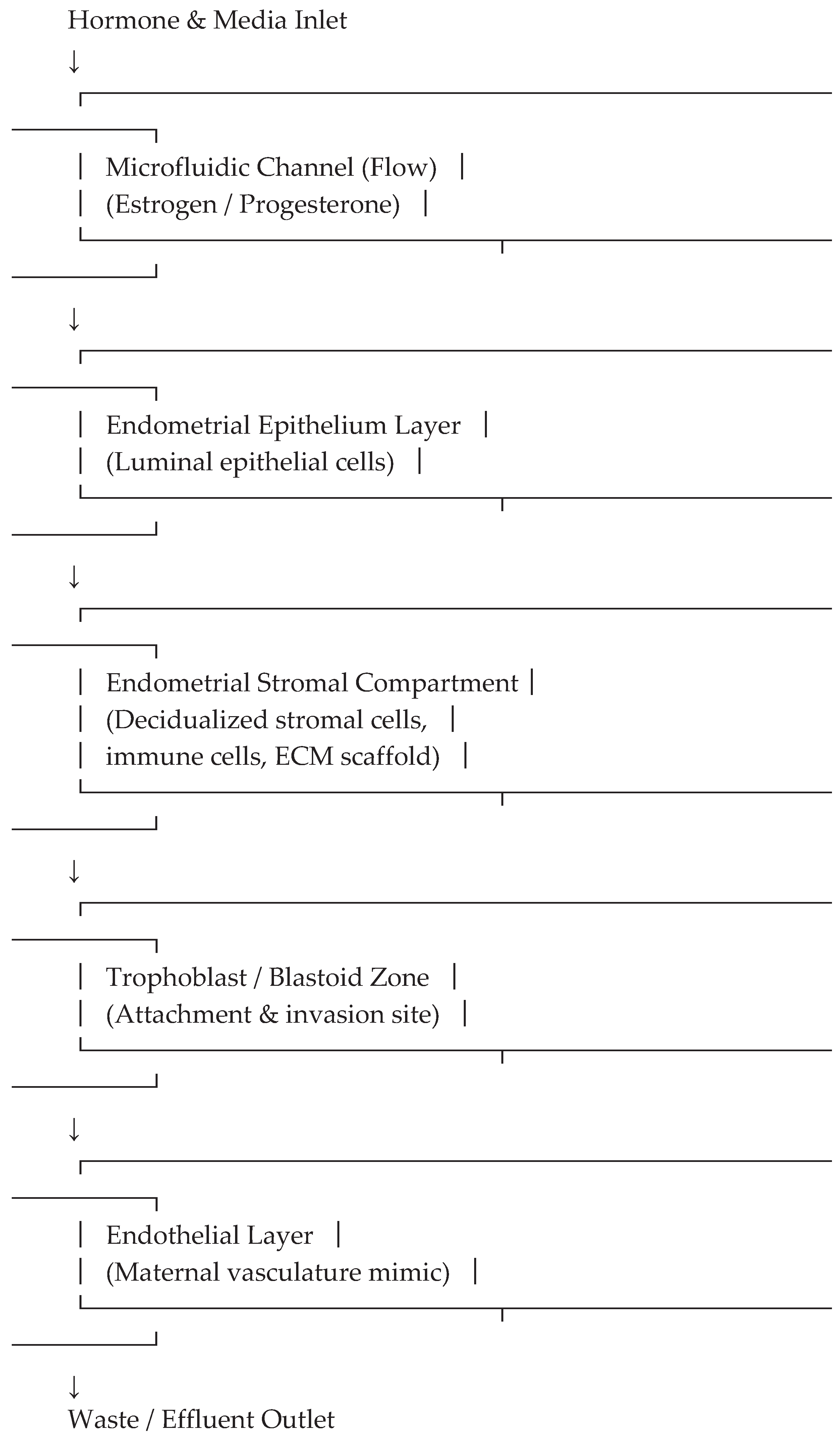

Table 1.
Embryo–endometrium interaction models.
| Embryo–Endometrial Model | Construction | Key Findings |
|---|---|---|
| 2D model | Blastoid/blastocyst interacting with endometrial stromal cell monolayer | Endometrial stromal cell monolayers prevented apoptotic activity in blastoid cells |
| 3D organoid/organoid model | Blastocyst/blastoid interacting with spherical endometrial organoid | Demonstrated the role of the luminal epithelium in directing blastoid orientation during implantation |
| 3D organoid/endometrial assembloid in static culture | Blastocyst/blastoid interacting with assembloids representing superficial endometrial layers, including epithelial and stromal cells and extracellular matrix | In vitro observation of all stages of implantation and early post-implantation development |
| 3D microfluidic on-a-chip devices | Blastocyst/blastoid interaction with assembloids of superficial endometrial layers (epithelial and stromal cells, extracellular matrix) within microfluidic on-chip devices | Transcriptomic profiling of blastoid–endometroid interactions; identification of ligand–receptor pairs in early implantation; characterization of implantation dynamics in RIF vs. control-derived endometrial assembloids |
| Future perspectives | -Standardization of blastoid formation. -Standardization of extracellular matrix and culture media components. -Incorporation of vascular and immune cell components into endometrial assembloid models. |
Potential for more refined studies of implantation dynamics; Scalable platform for drug screening and personalized therapeutic interventions |
Disclaimer/Publisher’s Note: The statements, opinions and data contained in all publications are solely those of the individual author(s) and contributor(s) and not of MDPI and/or the editor(s). MDPI and/or the editor(s) disclaim responsibility for any injury to people or property resulting from any ideas, methods, instructions or products referred to in the content. |
© 2026 by the authors. Licensee MDPI, Basel, Switzerland. This article is an open access article distributed under the terms and conditions of the Creative Commons Attribution (CC BY) license.
Copyright: This open access article is published under a Creative Commons CC BY 4.0 license, which permit the free download, distribution, and reuse, provided that the author and preprint are cited in any reuse.


