

Submitted:
21 May 2026
Posted:
25 May 2026
You are already at the latest version
Abstract
Erectile dysfunction (ED) affects one in five men, with moderate to severe forms disproportionately prevalent among men with type 2 diabetes mellitus (T2DM). First-line phosphodiesterase 5 inhibitors (PDE5i) fail in 30-35% of men, and no single non-invasive treatment reliably restores penetrative function in this refractory population. This retrospective case series reports a multimodal protocol in 71 hypogonadal men (38 euglycemic, 33 T2DM) with moderate to severe ED (Erection Hardness Score [EHS] ≤2) refractory to maximum-dose PDE5i. All men received shockwave therapy, class IV laser, therapeutic ultrasound, therapeutic exercise, daily tadalafil, testosterone cypionate, and counseling addressing psychological contributors to ED. Men with T2DM also received tirzepatide (Mounjaro, 2.5-7.5 mg weekly) over the 3-4 month treatment period. Every man improved from an EHS ≤2 to ≥3, restoring penetrative intercourse, with 68% of euglycemic men and 58% of men with T2DM reaching EHS 4. Arizona Sexual Experience Scale scores improved by a median of 6 points in both groups, and PROMIS-10 scores improved, with baseline between-group differences eliminated after treatment. Despite greater baseline severity, men with T2DM achieved equivalent post-treatment sexual function. In this group, hemoglobin A1c fell from 9.2% to 6.2%, with 58% transitioning from the diabetic to the prediabetic range. Both groups lost fat while gaining skeletal muscle and grip strength, with larger changes in men with T2DM, indicating that concurrent testosterone and resistance exercise counteracted the muscle loss typically associated with incretin therapy. These findings suggest that refractory ED, particularly with diabetes and hypogonadism, may require simultaneous intervention across multiple pathophysiologic domains rather than sequential escalation of single-modality treatments. Prospective controlled trials are needed to confirm these findings and determine the contribution of each component.
Keywords:
erectile dysfunction
; type 2 diabetes mellitus
; hypogonadism
; multimodal rehabilitation
; testosterone therapy
; tirzepatide
; tadalafil
1. Introduction
Erectile dysfunction (ED) is estimated to affect nearly one in ten adult men, with rates increasing disproportionally with age [1]. Among men with ED, those with moderate to severe disease, defined by erections insufficient for penetrative intercourse, represent the subgroup with the greatest functional impairment and the fewest therapeutic options [2]. The combined prevalence of moderate to severe ED was 22% in men aged 40-49 and rose to 49% in men aged 70–79 [3]. The burden of ED falls disproportionately on men with type 2 diabetes mellitus (T2DM), in whom overall ED prevalence reaches 66% and the odds of ED are approximately 3.5 times those of non-diabetic controls [1,4]. Among diabetic men with ED, more than half have moderate to severe disease [4,5].
ED is a multifactorial systemic condition, with hormonal, metabolic, neuromuscular, and neurovascular, and psychological components [6,7]. Despite this multidimensional biology, most treatment protocols target only one or two contributing factors. The lack of a comprehensive approach may explain the failure to achieve satisfactory restoration of erectile function in men with moderate to severe ED. To address this gap, we developed an integrated approach that combines physical and pharmacologic treatments to target the major contributors to ED in parallel. We focused on hypogonadal men, with and without T2DM, because these patients are profoundly affected by ED and often respond incompletely to oral pharmacotherapy. Shockwave therapy promotes angiogenesis, restores nitric oxide synthase activity, and supports cavernous nerve regeneration [8], and produces limited improvements in erectile function [7]. Class IV laser therapy and therapeutic ultrasound act through related regenerative pathways, increasing nitric oxide availability, neovascularization, and smooth muscle content while reducing cavernosal fibrosis in diabetic models [9,10]. Structured neuromuscular exercise targeting the lumbopelvic complex can strengthen the muscles responsible for penile rigidity, support the spinal reflex pathways that coordinate erection and ejaculation, and address the musculoskeletal deconditioning common in men with ED [11,12]. Testosterone supports erectile function by upregulating neuronal and endothelial nitric oxide synthase (nNOS/eNOS), maintaining trabecular smooth muscle integrity, enhancing penile blood flow through endothelium-dependent and endothelium-independent vascular mechanisms, and modulating central sexual desire pathways [13,14]. Tadalafil is a phosphodiesterase type 5 inhibitor (PDE5i) that improves erectile function by prolonging nitric oxide-mediated smooth muscle relaxation, increasing penile blood flow, and improving underlying endothelial dysfunction [4,6]. Men with T2DM additionally received tirzepatide to address the metabolic drivers of their disease, because glycemic control and GLP-1-based therapy are associated with improved erectile function in diabetes [15]. Psychological factors, including avoidance, performance anxiety, partner withdrawal, and intimacy hesitancy, can also contribute to ED [6,16], and our program included counseling targeting these factors. In this case series, we report the outcomes of 71 hypogonadal men with moderate to severe ED refractory to oral PDE5is treated with this protocol. We evaluated erectile function, sexual quality of life, body composition, grip strength, and metabolic and inflammatory markers before and after approximately 3-4 months of outpatient care, comparing euglycemic and diabetic men.
2. Materials and Methods
2.1. Participants, Procedures, and Outcome Measures
Seventy-one men evaluated and treated for erectile dysfunction at a single outpatient clinic comprised this retrospective case series. The study followed the principles of the Declaration of Helsinki. Because the case series used de-identified data generated during routine clinical care, formal IRB approval was not obtained. Observations occurred over a period of 3 to 4 months beginning at treatment initiation. Men were included if they had moderate to severe erectile dysfunction of at least twelve months duration defined as an Erection Hardness Scale (EHS) ≤ 2 [17], were refractory to maximum dose oral PDE5i medications, had a positive Androgen Deficiency in the Aging Male (ADAM) screening questionnaire [18], and had biochemical hypogonadism, defined as a morning serum total testosterone < 400 ng/dL measured by immunoassay. This threshold reflects the symptom-driven approach to testosterone deficiency endorsed by the International Consultations on Sexual Medicine, which recognizes a typical ceiling of 350 ng/dL for starting testosterone therapy, but also a gray zone between 200 and 400 ng/dL within which the effect of testosterone on sexual function may not be maximal and treatment may be considered based on clinical presentation [19,20]. In this case series, the positive ADAM screening questionnaire and moderate to severe ED provided the clinical rationale for testosterone therapy in the gray zone. We stratified the cohort by glycemic status using hemoglobin A1c (HbA1c), with euglycemia defined as HbA1c <5.7% and T2DM defined as HbA1c ≥6.5%. Body composition was determined using an InBody 270 system (InBody, Cerritos, CA). Grip strength was measured in the dominant hand using a Jamar digital dynamometer (Patterson Medical, Warrenville, IL), with the best value of three trials used in the analysis.
Men were excluded if they were currently taking medication to treat T2DM or had a history of penile or pelvic trauma, prostate-specific antigen (PSA) ≥4.0 ng/mL, polycythemia, active infection, malignancy, Peyronie’s disease, or neurologic disease affecting pelvic or sexual function. We also excluded men with uncontrolled endocrine disease other than T2DM, cardiovascular disease, or psychiatric disease independently capable of producing sexual dysfunction, as well as those with incomplete baseline or follow-up data or inability to complete the treatment course.
Patient-reported outcomes were collected at treatment initiation and completion. The PROMIS Global Health 10 was used to assess general physical and mental health outcomes [21]. The Arizona Sexual Experience Scale (ASEX) was used to quantify sex drive, arousal, ability to obtain and maintain an erection, ability to orgasm, and satisfaction with orgasm [22].
2.2. Treatment Interventions
Patients underwent treatment sessions of four synergistic modalities, including radial pressure wave shockwave therapy (RPW), class IV (CIV) laser therapy, therapeutic ultrasound, and therapeutic exercises, modified from previous studies [12,23,24,25]. Oral tadalafil 5 mg daily was also prescribed to support pelvic and penile vascular function [26]. Testosterone cypionate was delivered intramuscularly at a starting dose of 100mg weekly, with dose adjustment during the treatment period based on symptoms. Follow-up labs were performed approximately 12 weeks after the start of treatment, and 3-4 days after the last testosterone injection. Men with T2DM were prescribed tirzepatide (Mounjaro) at 2.5 mg weekly for the first four weeks, 5 mg weekly for the next four weeks, and either 5 mg or 7.5 mg weekly thereafter based on tolerance. Treatment sessions occurred one to two times per week. Patients were generally encouraged to continue treatment until they were satisfied with overall erectile function, typically defined by return of the ability to engage in penetrative intercourse and a plateau in symptom improvement.
RPW (Intelect RPW 2, Enovis, Wilmington, DE) delivered 2000-3000 pulses at a frequency of 12-14 Hz, with intensity adjusted to just below the maximum tolerated comfort level. Class IV laser therapy (REMY Medical Laser, Cherry Hill, NJ) applied 700-800 J to tissue at 810 nm and 980 nm wavelengths. Therapeutic ultrasound (CX2, Richmar, Clayton, MO) was delivered at a frequency of 3Mhz with energy output of 1.0-1.2 W/cm2 and a 100% duty cycle for 5-8 minutes. These modalities were delivered to the dorsal and lateral aspects of the penis to target the corpora cavernosa. Therapeutic exercises were based on individual patient assessment, followed standard neuromuscular and progressive overload principles, and targeted abdominal, lumbopelvic, and proximal limb musculature. Exercises included bicycle crunches, body blade rotations, Bulgarian split-squats, cat-cow, Copenhagen plank, dead bugs, double leg raise, glute bridge, isometric adduction, leg press, Pallof press, pelvic floor muscle isometrics, pelvic tilts, quadruped rocking, reverse deadlifts, reverse lunges, Russian twists, side-lying abduction, single leg bridge, squats, step-downs, supine march, and Swiss ball routines. A Neubie direct current stimulator (NeuFit, Austin, TX) was used to facilitate muscle contractions in patients with neuromuscular inhibition. Proprioceptive neuromuscular facilitation stretching was applied to patients with limited range of motion. Manual therapy and dry needling (SERIN, Boston, MA) were applied as needed to treat comorbid musculoskeletal disorders. Patients were instructed to perform prescribed exercises and stretching at home 2-3 times weekly.
Counseling was provided to address psychological contributors to erectile dysfunction, set expectations during the rehabilitation period, and manage performance-related anxiety during the initial return to sexual activity [27]. Goals included reducing avoidance-driven deconditioning, limiting catastrophizing, supporting relationship health, and restoring satisfying sexual function. Men were encouraged to participate in a six-stage protocol to progressively prepare for penetrative intercourse based on EHS stage (Table 1) [27,28,29,30]. Single patients received additional coaching on dating hesitancy, normalization of performance anxiety after dysfunction, graded exposure to dating situations, partner communication, expectation setting, and management of performance-related anxiety [31].
2.3. Statistics
Differences in age were tested using two-tailed Welch unpaired t-tests (α=0.05), and differences in symptom duration and total treatment sessions were tested using two-tailed Mann-Whitney U tests (α=0.05). Treatment effects on body composition, hand grip strength, PROMIS-10 scores, HS-CRP, serum testosterone, and hemoglobin A1c were tested using two-way mixed-design ANOVAs (α=0.05), with diabetes status as the between-subjects factor and time as the within-subjects factor. These analyses were followed by paired t-tests and Welch unpaired t-tests for within-subject and between-group pairwise contrasts, respectively. Treatment effects on EHS and ASEX were tested using two-tailed Wilcoxon signed-rank tests (α=0.05) for within-subject contrasts and two-tailed Mann-Whitney U tests (α=0.05) for between-group contrasts. A Sidak correction for multiple comparisons was applied across the six pairwise contrasts within each outcome. Spearman ρ analysis was performed to evaluate associations between baseline EHS, post-treatment EHS, and total treatment sessions. Analyses were performed using Python 3.12 (Python Software Foundation, Wilmington, DE). Values in the text are median (IQR).
3. Results
Seventy-one men met the inclusion criteria, including 38 euglycemic and 33 with T2DM (Table 2). The groups were similar in age. Men with T2DM had lived with erectile dysfunction for a median of 12 months longer than euglycemic men before presenting and required 42% more treatment sessions to reach satisfactory penile function.
Men with T2DM had higher hs-CRP than euglycemic men by a median of 1.25 mg/L (Figure 1A), lower serum testosterone by 66 ng/dL (Figure 1B), and higher hemoglobin A1c by 3.7 percentage points (Figure 1C). All men with T2DM began in the diabetic range, and all euglycemic men began in the normal range. After treatment, these differences narrowed or disappeared. hs-CRP fell by a median of 2.2 mg/L in men with T2DM and 0.7 mg/L in euglycemic men, a three-fold steeper decline that eliminated the baseline difference between groups (Figure 1A). Serum testosterone, drawn 3 to 4 days after the weekly injection, rose to the upper-normal range in both groups, and the groups no longer differed (Figure 1B). Hemoglobin A1c was unchanged in euglycemic men but fell by 2.8 percentage points in men with T2DM, from 9.2% to 6.2%, narrowing the between-group gap from 3.7 to 0.8 points (Figure 1C). Of the 33 men with T2DM, 19 (58%) moved from the diabetic to the prediabetic range, and the remaining 14 ended at a lower hemoglobin A1c than they began (Figure 1C).
Both groups lost fat and gained strength, with larger changes in men with T2DM (Figure 2). At baseline, men with T2DM had a median 7.5 kg greater body fat mass and 4.5 kg lower grip strength than euglycemic men. After treatment, BMI decreased approximately twice as much in men with T2DM as in euglycemic men (Figure 2A), and body fat mass fell by a median of 5.4 kg, more than double the 2.3 kg lost by euglycemic men (Figure 2B). Skeletal muscle mass increased by a median of 2.7 kg in men with T2DM and 1.8 kg in euglycemic men (Figure 2C). Grip strength increased by a median of 6.4 kg in men with T2DM and 2.3 kg in euglycemic men, and the two groups no longer differed after treatment (Figure 2D).
Self-reported health and sexual function improved in both groups (Figure 3). Men with T2DM again had worse baseline values, with PROMIS-10 Physical Health scores a median of 5.4 points lower and Mental Health scores 7.3 points lower than euglycemic men. After treatment, both PROMIS-10 subscales improved, and the euglycemic and diabetic groups no longer differed (Figure 3A). ASEX scores improved by a median of 6 points in both groups, and the groups no longer differed after treatment (Figure 3B). Before treatment, no man scored above an EHS of 2, the threshold below which erections are insufficient for penetration, and men with T2DM began a median of one point lower than euglycemic men (Figure 3C). After treatment, every man scored 3 or 4, a median increase of 2 points in each group, with treatment restoring the ability to engage in penetrative intercourse. Among euglycemic men, 26 of 38 (68%) reached EHS 4 and the remaining 12 (32%) reached EHS 3. Among men with T2DM, 19 of 33 (58%) reached EHS 4 and the remaining 14 (42%) reached EHS 3 (Figure 3C). Total treatment sessions were unrelated to post-treatment EHS in either group (ρ=0.00, P=1.00 in euglycemic men; ρ=0.10, P=0.59 in men with T2DM). Instead, sessions were inversely correlated with baseline EHS (ρ = -0.46 in euglycemic men, ρ = -0.76 in men with T2DM, both P<0.05), indicating that men who began with more severe ED received more sessions and that all men were able to return to penetrative intercourse regardless of the number of sessions required.
4. Discussion
This retrospective case series demonstrates that a multimodal treatment protocol combining physical therapies, daily tadalafil, testosterone replacement, and tirzepatide for men with T2DM, restored the ability to engage in penetrative intercourse in all 71 men with PDE5i-refractory ED over a 3-4 month treatment period. Every man improved from an EHS ≤2 to an EHS ≥3, with 68% of euglycemic men and 58% of men with T2DM reaching the maximum score of 4. The odds of successful sexual intercourse at EHS 3 are 41.9 times those at EHS 2 [32], and a 1-point change on the EHS is considered the minimally clinically important difference [7]. Although not every man achieved a fully rigid erection (EHS 4), restoration of penetrative function after inability to penetrate represents a clinically meaningful outcome. These results are also notable because each individual component of the protocol, when studied in isolation, has produced only modest and often clinically insufficient improvements in this population [4,6,7,10,12,13,14] .
The magnitude of erectile function improvement observed here exceeds what has been reported for any single modality in PDE5i-refractory men. The most recent Cochrane review of low-intensity shockwave therapy found only a small improvement in erectile function with low-certainty evidence, and a subsequent meta-analysis concluded that most trials failed to achieve the minimally clinically important difference on the IIEF [7,33]. Testosterone replacement produces a standardized mean difference of 0.16-0.32 on erectile function scores, with the effect further attenuated in men with diabetes and obesity [34,35]. A meta-analysis of 44 studies found that combination therapy with PDE5i plus a second pharmacologic or physical agent modestly improved erectile function compared with monotherapy, with larger effects in monotherapy-resistant ED [36]. However, these combination approaches did not approach universal restoration of penetrative function. The present protocol differs from prior combination strategies by layering distinct modalities and interventions that target complementary tissue-level mechanisms, including neovascularization, corporal smooth muscle remodeling, and neuromuscular facilitation, while also optimizing the hormonal, vascular, metabolic, and psychological environment required for successful erectile function.
The rationale for each physical modality rests on distinct but convergent biological mechanisms. Shockwave therapy induces neovascularization through cavitation-mediated shear stress on endothelial membranes, upregulating VEGF, eNOS, and progenitor cell recruitment [37,38]. The 12-14 Hz radial pressure wave protocol used in this study exceeds the 2-8 Hz repetition rates reported in prior ED shockwave literature [7,33]. This higher frequency was intended to generate sustained calcium-calmodulin-dependent eNOS activation rather than discrete, isolated calcium transients at lower frequencies, while also creating a denser cavitation field with more uniformly distributed microshear forces across the cavernosal endothelium. Therapeutic ultrasound has been used to promote favorable cavernosal remodeling in Peyronie’s disease, and translational models have demonstrated improved vascular function, cavernosal healing, and nerve regeneration [10,25]. Laser photobiomodulation at near-infrared wavelengths activates mitochondrial cytochrome c oxidase, increasing ATP production and nitric oxide release, while preclinical models of diabetic ED demonstrate that combined red and near-infrared light restores intracavernosal pressure to 90% of normal levels through enhanced neurovascular regeneration [9,39]. Structured neuromuscular exercise targeting the lumbopelvic complex addresses musculoskeletal contributors to erectile dysfunction that are frequently underemphasized in urologic care. The ischiocavernosus muscles generate suprasystolic intracavernosal pressures that convert an erect penis to a rigid one, and ischiocavernosus atrophy has been directly linked to reduced penile rigidity [40,41,42]. Pelvic floor muscle training strengthens these muscles and has been shown to increase intracavernosal pressure, improve erectile function scores, and restore normal function in approximately 40% of men with ED [11,41]. Beyond the pelvic floor itself, erection and ejaculation are coordinated by spinal reflex circuits spanning the thoracolumbar (T11-L2) and sacral (S2-S4) segments, with supraspinal modulation from the hypothalamus and brainstem [41,43]. The broader lumbopelvic exercise program used in this protocol, targeting abdominal, hip, and proximal limb musculature in addition to the pelvic floor, was designed to optimize the neuromuscular environment supporting these spinal reflex pathways while addressing the deconditioning and musculoskeletal dysfunction commonly present in this population [44,45]. Daily tadalafil 5 mg provides tonic cGMP-mediated smooth muscle relaxation and has been shown to improve endothelial function as measured by brachial artery flow-mediated dilation, with potential disease-modifying effects beyond acute symptom relief [6,46]. Testosterone replacement in hypogonadal men modulates nearly every component involved in erectile function, from pelvic ganglia to cavernosal smooth muscle and endothelium, while also restoring orgasmic function through enhancement of the bulbospongiosus reflex arc that coordinates the rhythmic perineal contractions producing orgasm [13,47] . Androgen deficiency promotes apoptosis of cavernosal endothelial and smooth muscle cells and downregulates PDE5 expression, which may explain why PDE5i monotherapy fails in untreated hypogonadism and why restoring physiologic testosterone levels can rescue both erectile and orgasmic responsiveness [48]. The counseling approach used in this case series is supported by evidence that psychosocial interventions, particularly those incorporating performance anxiety reduction, cognitive restructuring, and graded sexual exposure, improve erectile function outcomes and reduce treatment dropout when combined with medical therapy [16]. By combining these modalities, the protocol simultaneously addresses vascular, neural, structural, muscular, and psychological deficits that contribute to refractory ED.
Men with T2DM presented with more severe disease at baseline, including lower EHS, longer symptom duration, higher hs-CRP, lower testosterone, and greater adiposity, and required 42% more treatment sessions to reach satisfactory function. Despite this greater disease burden, the T2DM group achieved comparable post-treatment erectile function, with between-group differences in EHS, ASEX, and PROMIS-10 scores eliminated after treatment. The addition of tirzepatide in the T2DM group produced a 2.8 percentage-point reduction in HbA1c, from 9.2% to 6.2%, with 58% of men transitioning from the diabetic to the prediabetic range. This glycemic improvement is consistent with previous studies in which tirzepatide reduced HbA1c by 1.87-2.07 percentage points at the 5 mg dose and achieved normoglycemia in 31-52% of participants [49]. The three-fold steeper decline in hs-CRP observed in the T2DM group (2.2 vs. 0.7 mg/L) aligns with a meta-analysis demonstrating that tirzepatide reduces hs-CRP by approximately 33% relative to placebo, with rapid onset within 4 weeks suggesting a direct anti-inflammatory effect independent of weight loss [15,50]. The magnitude of hs-CRP reduction was likely greater in this study than in previous reports because of the synergistic contributions of testosterone therapy, resistance exercise, and tadalafil, all of which have been shown to decrease systemic inflammation in isolation [51,52,53]. Because systemic inflammation impairs nitric oxide bioavailability and accelerates corporal fibrosis, key pathogenic mechanisms in diabetic ED, the reduction in inflammatory burden may have been a critical enabler of the erectile function gains observed in the T2DM group [54,55].
A notable finding was that men with T2DM gained skeletal muscle mass (median 2.7 kg) and grip strength (median 6.4 kg) despite concurrent weight loss, a pattern that runs counter to the expected trajectory with incretin-based therapy alone. Tirzepatide is associated with reductions in muscle volume that are broadly proportional to total weight loss, and 25% to 39% of total weight lost with GLP-1 receptor agonists is estimated to be fat-free mass [56,57]. The concurrent use of testosterone replacement and progressive resistance exercise in this protocol appears to have prevented the expected muscle loss and reversed it, producing net muscle gain alongside fat loss. This finding is consistent with evidence that resistance training can reduce lean mass loss by 50-95% during caloric restriction and with the known anabolic effects of testosterone on skeletal muscle protein synthesis [58,59]. The combination of tirzepatide for metabolic optimization, testosterone for anabolic support in appropriate patients, and structured exercise for mechanical loading may represent a practical strategy to address the muscle mass concern that has emerged as a central limitation of incretin-based weight loss therapies [56,60].
Several limitations of this study should be considered. As a retrospective case series without a control group, causal inference is not possible, and the observed improvements cannot be attributed to any individual component of the multimodal protocol. The absence of randomization and blinding introduces the possibility of placebo effect, selection bias, and regression to the mean. The treatment protocol was individualized in terms of session frequency and exercise prescription, which limits reproducibility. The EHS, while validated, clinically meaningful, and easily administered in the clinical setting, is a single-item ordinal measure that provides less granularity than other erectile function outcomes. The T2DM group received tirzepatide in addition to the other interventions, confounding the comparison between groups and preventing isolation of the contribution of tirzepatide to erectile function outcomes specifically. Testosterone levels were measured 3-4 days after injection, which captures mid-cycle values for weekly injections but does not reflect peak concentrations.
5. Conclusions
This case series suggests that a multimodal treatment approach combining therapies designed to address the multiple causes of ED, including hormonal, metabolic, neuromuscular, and neurovascular, and psychological components, restored penetrative erectile function in euglycemic and diabetic patients (Figure 4). Men with T2DM, despite presenting with greater disease severity, achieved equivalent post-treatment sexual function while simultaneously experiencing clinically meaningful improvements in glycemic control, systemic inflammation, body composition, and grip strength. The concurrent use of testosterone therapy and progressive resistance exercise appeared to counteract the muscle mass loss typically associated with incretin-based therapy, producing net gains in skeletal muscle mass and strength. These findings support the concept that refractory ED, particularly in the setting of diabetes and hypogonadism, may require simultaneous intervention across multiple pathophysiologic domains rather than sequential escalation of single modality treatments. In addition, testosterone therapy and resistance exercise in appropriately selected patients receiving incretin-based therapy may help preserve or increase skeletal muscle mass. Prospective controlled trials are needed to confirm these observations, identify the relative contribution of each treatment component, and determine the long-term durability of these outcomes.
Author Contributions
Conceptualization, CLM and TMA; formal analysis, CLM; resources, CLM and TMA; data curation, CLM and TMA.; writing—original draft preparation, CLM; writing—review and editing, CLM and TMA. All authors have read and agreed to the published version of the manuscript.
Funding
This research received no external funding.
Institutional Review Board Statement
Not applicable.
Informed Consent Statement
Not applicable.
Data Availability Statement
Not applicable.
Acknowledgments
Not applicable.
Conflicts of Interest
Tariq Awan receives compensation from Arthrex for activities unrelated to this work.
Abbreviations
The following abbreviations are used in this manuscript:
| ADAM | Androgen Deficiency in the Aging Male |
| ASEX | Arizona Sexual Experience Scale |
| ATP | Adenosine triphosphate |
| BMI | Body mass index |
| CIV | Class IV |
| ED | Erectile dysfunction |
| EHS | Erection Hardness Score |
| eNOS | Endothelial nitric oxide synthase |
| GLP-1 | Glucagon-like peptide-1 |
| HbA1c | Hemoglobin A1c |
| hs-CRP | High-sensitivity C-reactive protein |
| IIEF | International Index of Erectile Function |
| IQR | Interquartile range |
| IRB | Institutional review board |
| nNOS | Neuronal nitric oxide synthase |
| PDE5i | Phosphodiesterase type 5 inhibitor |
| PROMIS-10 | Patient-Reported Outcomes Measurement Information System Global Health 10 |
| PSA | Prostate-specific antigen |
| RPW | Radial pressure wave |
| T2DM | Type 2 diabetes mellitus |
| VEGF | Vascular endothelial growth factor |
References
- Kitaw TA, Abate BB, Tilahun BD, Yilak G, Rede MB, Getie A, et al. The global burden of erectile dysfunction and its associated risk factors in diabetic patients: an umbrella reviews. BMC Public Heal 2024;24:2816. [CrossRef]
- McVary KT. Erectile Dysfunction. N Engl J Med 2007;357:2472–81. [CrossRef]
- Feldman HA, Goldstein I, Hatzichristou DG, Krane RJ, McKinlay JB. Impotence and Its Medical and Psychosocial Correlates: Results of the Massachusetts Male Aging Study. J Urol 1994;151:54–61. [CrossRef]
- Defeudis G, Mazzilli R, Tenuta M, Rossini G, Zamponi V, Olana S, et al. Erectile dysfunction and diabetes: A melting pot of circumstances and treatments. DiabetesMetab Res Rev 2022;38:e3494. [CrossRef]
- Nutalapati S, Ghagane SC, Nerli RB, Jali MV, Dixit NS. Association of erectile dysfunction and type II diabetes mellitus at a tertiary care centre of south India. Diabetes Metab Syndr: Clin Res Rev 2020;14:649–53. [CrossRef]
- Shamloul R, Ghanem H. Erectile dysfunction. Lancet 2013;381:153–65. [CrossRef]
- Ergun O, Kim K, Kim MH, Hwang EC, Blair Y, Gudeloglu A, et al. Low-intensity shockwave therapy for erectile dysfunction. Cochrane Database Syst Rev 2025;2025:CD013166. [CrossRef]
- Asker H, Yilmaz-Oral D, Oztekin CV, Gur S. An update on the current status and future prospects of erectile dysfunction following radical prostatectomy. Prostate 2022;82:1135–61. [CrossRef]
- Anita L, Choi M-J, Yin GN, Ock J, Kwon M-H, Hong S-S, et al. Photobiomodulation therapy for diabetic erectile dysfunction targeting neuroinflammation and neurovascular regeneration. Sci Rep 2025;15:20513. [CrossRef]
- Wu M-L-Y, Xu W-C, Wang T, Liu J-H, Li H. The therapeutic effect and mechanism of low-intensity pulsed ultrasound for erectile dysfunction. Asian J Androl 2026. [CrossRef]
- Dorey G, Speakman M, Feneley R, Swinkels A, Dunn C, Ewings P. Randomised controlled trial of pelvic floor muscle exercises and manometric biofeedback for erectile dysfunction. Br J Gen Pr : J R Coll Gen Pr 2004;54:819–25.
- Sahin E, Brand A, Cetindag EN, Messelink B, Yosmaoglu HB. Pelvic physical therapy for male sexual disorders: a narrative review. Int J Impot Res 2025;37:941–9. [CrossRef]
- Bhasin S, Snyder PJ. Testosterone Treatment in Middle-Aged and Older Men with Hypogonadism. N Engl J Med 2025;393:581–91. [CrossRef]
- Traish AM, Goldstein I, Kim NN. Testosterone and Erectile Function: From Basic Research to a New Clinical Paradigm for Managing Men with Androgen Insufficiency and Erectile Dysfunction. Eur Urol 2007;52:54–70. [CrossRef]
- Wilson JM, Lin Y, Luo MJ, Considine G, Cox AL, Bowsman LM, et al. The dual glucose-dependent insulinotropic polypeptide and glucagon-like peptide-1 receptor agonist tirzepatide improves cardiovascular risk biomarkers in patients with type 2 diabetes: A post hoc analysis. Diabetes, Obes Metab 2022;24:148–53. [CrossRef]
- Melnik T, Soares B, Nasello AG. Psychosocial interventions for erectile dysfunction. Cochrane Database Syst Rev 2007;2010:CD004825. [CrossRef]
- Mulhall JP, Goldstein I, Bushmakin AG, Cappelleri JC, Hvidsten K. Validation of the Erection Hardness Score. J Sex Med 2007;4:1626–34. [CrossRef]
- Morley JE, Charlton E, Patrick P, Kaiser FE, Cadeau P, McCready D, et al. Validation of a screening questionnaire for androgen deficiency in aging males. Metabolis 2000;49:1239–42. [CrossRef]
- Khera M, Torres LO, Grober ED, Morgentaler A, Miner M, Jones TH, et al. Male hypogonadism: recommendations from the Fifth International Consultation on Sexual Medicine (ICSM 2024). Sex Med Rev 2025;13:548–73. [CrossRef]
- Khera M, Adaikan G, Buvat J, Carrier S, El-Meliegy A, Hatzimouratidis K, et al. Diagnosis and Treatment of Testosterone Deficiency: Recommendations From the Fourth International Consultation for Sexual Medicine (ICSM 2015). J Sex Med 2016;13:1787–804. [CrossRef]
- Terwee CB, Peipert JD, Chapman R, Lai J-S, Terluin B, Cella D, et al. Minimal important change (MIC): a conceptual clarification and systematic review of MIC estimates of PROMIS measures. Qual Life Res 2021;30:2729–54. [CrossRef]
- McGahuey CA, Gelenberg AJ, Laukes CA, Moreno FA, Delgado PL, McKnight KM, et al. The Arizona Sexual Experience Scale (ASEX): Reliability and Validity. J Sex Marital Ther 2000;26:25–40. [CrossRef]
- Mendias CL, Awan TM. Multimodal Rehabilitation Improves Erectile Function and Quality of Life in Men with Hard Flaccid Syndrome 2026. [CrossRef]
- Mendias CL, Awan TM. Rapid and sustained resolution of scrotal content pain through multimodal integrative neuromuscular interventions. medRxiv 2025:2025.10.20.25338413. [CrossRef]
- Milios JE, Ackland TR, Green DJ. Peyronie’s disease and the role of therapeutic ultrasound: A randomized controlled trial. Journal of Rehabilitation Therapy 2025;2:32–9.
- Fukumoto K, Nagai A, Hara R, Fujii T, Miyaji Y. Tadalafil for male lower urinary tract symptoms improves endothelial function. Int J Urol 2017;24:206–10. [CrossRef]
- Lynn M, Iftekhar N, Adams W, Mumby P. Multidisciplinary approach to the treatment of sexual dysfunction in couples using a biopsychosocial model. J Sex Med 2023;20:991–7. [CrossRef]
- Rowland DL, Hamilton BD, Bacys KR, Hevesi K. Sexual Response Differs During Partnered Sex and Masturbation in Men with and Without Sexual Dysfunction: Implications for Treatment. J Sex Med 2021;18:1835–42. [CrossRef]
- Miranda EP, Taniguchi H, Cao DL, Hald GM, Jannini EA, Mulhall JP. Application of Sex Aids in Men with Sexual Dysfunction: A Review. J Sex Med 2019;16:767–80. [CrossRef]
- Walker LM, King N, Kwasny Z, Robinson JW. Intimacy after prostate cancer: A brief couples’ workshop is associated with improvements in relationship satisfaction. PsychoOncol 2017;26:1336–46. [CrossRef]
- Craske MG, Treanor M, Zbozinek TD, Vervliet B. Optimizing exposure therapy with an inhibitory retrieval approach and the OptEx Nexus. Behav Res Ther 2022;152:104069. [CrossRef]
- Goldstein I, Mulhall JP, Bushmakin AG, Cappelleri JC, Hvidsten K, Symonds T. The Erection Hardness Score and Its Relationship to Successful Sexual Intercourse. J Sex Med 2008;5:2374–80. [CrossRef]
- You C-H, Kang Y-N, Wen Y-C, Lee L-M, Lin K-H, Hsiao C-H, et al. A close look at the evidence on low-intensity shockwave therapy in erectile dysfunction—a systematic review and meta-analysis of randomized controlled trials. J Sex Med 2026;23:qdag070. [CrossRef]
- Lee H, Hwang EC, Oh CK, Lee S, Yu HS, Lim JS, et al. Testosterone replacement in men with sexual dysfunction. Cochrane Database Syst Rev 2024;2024:CD013071. [CrossRef]
- Corona G, Rastrelli G, Morgentaler A, Sforza A, Mannucci E, Maggi M. Meta-analysis of Results of Testosterone Therapy on Sexual Function Based on International Index of Erectile Function Scores. Eur Urol 2017;72:1000–11. [CrossRef]
- Mykoniatis I, Pyrgidis N, Sokolakis I, Ouranidis A, Sountoulides P, Haidich A-B, et al. Assessment of Combination Therapies vs Monotherapy for Erectile Dysfunction. JAMA Netw Open 2021;4:e2036337. [CrossRef]
- Liu T, Shindel AW, Lin G, Lue TF. Cellular signaling pathways modulated by low-intensity extracorporeal shock wave therapy. Int J Impot Res 2019;31:170–6. [CrossRef]
- Sokolakis I, Dimitriadis F, Teo P, Hatzichristodoulou G, Hatzichristou D, Giuliano F. The Basic Science Behind Low-Intensity Extracorporeal Shockwave Therapy for Erectile Dysfunction: A Systematic Scoping Review of Pre-Clinical Studies. J Sex Med 2019;16:168–94. [CrossRef]
- Freitas LF de, Hamblin MR. Proposed Mechanisms of Photobiomodulation or Low-Level Light Therapy. IEEE J Sel Top Quantum Electron 2016;22:348–64. [CrossRef]
- Schmidt MH, Schmidt HS. The Ischiocavernosus and Bulbospongiosus Muscles in Mammalian Penile Rigidity. Sleep 1993;16:171–83. [CrossRef]
- Lavoisier P, Roy P, Dantony E, Watrelot A, Ruggeri J, Dumoulin S. Pelvic-Floor Muscle Rehabilitation in Erectile Dysfunction and Premature Ejaculation. Phys Ther 2014;94:1731–43. [CrossRef]
- Shafik A. Response of the urethral and intracorporeal pressures to cavernosus muscle stimulation: Role of the muscles in erection and ejaculation. Urology 1995;46:85–8. [CrossRef]
- Courtois F, Carrier S, Charvier K, Guertin P, Journel N. The Control of Male Sexual Responses. Curr Pharm Des 2013;19:4341–56. [CrossRef]
- Ahmad AM, Abosteit EH, Kadah AS, Draz RS. Low-intensity shockwave therapy and pelvic floor muscle training each mitigate erectile dysfunction in men with diabetes: a randomised controlled trial. J Physiother 2026;72:122–7. [CrossRef]
- Myers C, Smith M. Pelvic floor muscle training improves erectile dysfunction and premature ejaculation: a systematic review. Physiotherapy 2019;105:235–43. [CrossRef]
- Konstantinovsky A, Kuchersky N, Kridin K, Blum A. Improvement in Endothelial Function in Men Taking Phosphodiesterase Type 5 Inhibitors for Erectile Dysfunction. Am J Med 2023;136:1041–3. [CrossRef]
- Isidori AM, Buvat J, Corona G, Goldstein I, Jannini EA, Lenzi A, et al. A Critical Analysis of the Role of Testosterone in Erectile Function: From Pathophysiology to Treatment—A Systematic Review. Eur Urol 2014;65:99–112. [CrossRef]
- Aversa A, Duca Y, Condorelli RA, Calogero AE, Vignera SL. Androgen Deficiency and Phosphodiesterase Type 5 Expression Changes in Aging Male: Therapeutic Implications. Front Endocrinol 2019;10:225. [CrossRef]
- Rosenstock J, Wysham C, Frías JP, Kaneko S, Lee CJ, Landó LF, et al. Efficacy and safety of a novel dual GIP and GLP-1 receptor agonist tirzepatide in patients with type 2 diabetes (SURPASS-1): a double-blind, randomised, phase 3 trial. Lancet 2021;398:143–55. [CrossRef]
- Masson W, Lobo M, Nogueira JP, Barbagelata L, Touzas P, Frías JP. Anti-inflammatory effects of tirzepatide: a systematic review and meta-analysis. Rev Endocr Metab Disord 2026;27:5–15. [CrossRef]
- Pofi R, Giannetta E, Feola T, Galea N, Barbagallo F, Campolo F, et al. Sex-specific effects of daily tadalafil on diabetic heart kinetics in RECOGITO, a randomized, double-blind, placebo-controlled trial. Sci Transl Med 2022;14:eabl8503. [CrossRef]
- Andersson K, Groat WC de, McVary KT, Lue TF, Maggi M, Roehrborn CG, et al. Tadalafil for the treatment of lower urinary tract symptoms secondary to benign prostatic hyperplasia: Pathophysiology and mechanism(s) of action. Neurourol Urodyn 2011;30:292–301. [CrossRef]
- Dhindsa S, Ghanim H, Batra M, Kuhadiya ND, Abuaysheh S, Sandhu S, et al. Insulin Resistance and Inflammation in Hypogonadotropic Hypogonadism and Their Reduction After Testosterone Replacement in Men With Type 2 Diabetes. Diabetes Care 2015;39:82–91. [CrossRef]
- Kamenov Z. A Comprehensive Review of Erectile Dysfunction in Men with Diabetes. Exp Clin Endocrinol Diabetes (Barth) 2014;123:141–58. [CrossRef]
- Kaya-Sezginer E, Gur S. The Inflammation Network in the Pathogenesis of Erectile Dysfunction: Attractive Potential Therapeutic Targets. Curr Pharm Des 2020;26:3955–72. [CrossRef]
- Lieberman DE, Aslan DH, Heymsfield SB. The Conundrum of Exercise for Weight Management in the GLP-1 Receptor Agonist Era. JAMA 2026;335. [CrossRef]
- Sattar N, Neeland IJ, Leinhard OD, Landó LF, Bray R, Linge J, et al. Tirzepatide and muscle composition changes in people with type 2 diabetes (SURPASS-3 MRI): a post-hoc analysis of a randomised, open-label, parallel-group, phase 3 trial. Lancet Diabetes Endocrinol 2025;13:482–93. [CrossRef]
- Bhasin S, Brito JP, Cunningham GR, Hayes FJ, Hodis HN, Matsumoto AM, et al. Testosterone Therapy in Men With Hypogonadism: An Endocrine Society* Clinical Practice Guideline. J Clin Endocrinol Metab 2018;103:1715–44. [CrossRef]
- Mehrtash F, Dushay J, Manson JE. Integrating Diet and Physical Activity When Prescribing GLP-1s—Lifestyle Factors Remain Crucial. JAMA Intern Med 2025;185:1151–2. [CrossRef]
- Chavez AM, Barria RC, León-Sanz M. Nutrition support whilst on glucagon-like peptide-1 based therapy. Is it necessary? Curr Opin Clin Nutr Metab Care 2025;28:351–7. [CrossRef]
Figure 1.
Inflammatory, hormonal, and glycemic outcomes. Tukey box plots demonstrating (A) high-sensitivity C-reactive protein (hs-CRP) and (B) serum testosterone. (C) Hemoglobin A1c for individual patients, with background shading denoting euglycemic (green), prediabetic (yellow), and diabetic (red) ranges; inset shows median±IQR. Differences were tested using a two-way ANOVA with a Sidak correction across the six pairwise contrasts. Post-hoc comparisons: a, significantly different (P < 0.05) from Euglycemic Pre-Treatment; b, significantly different (P < 0.05) from T2DM Pre-Treatment; c, significantly different (P < 0.05) from Euglycemic Post-Treatment. N=38 for euglycemic and N=33 for T2DM groups.
Figure 1.
Inflammatory, hormonal, and glycemic outcomes. Tukey box plots demonstrating (A) high-sensitivity C-reactive protein (hs-CRP) and (B) serum testosterone. (C) Hemoglobin A1c for individual patients, with background shading denoting euglycemic (green), prediabetic (yellow), and diabetic (red) ranges; inset shows median±IQR. Differences were tested using a two-way ANOVA with a Sidak correction across the six pairwise contrasts. Post-hoc comparisons: a, significantly different (P < 0.05) from Euglycemic Pre-Treatment; b, significantly different (P < 0.05) from T2DM Pre-Treatment; c, significantly different (P < 0.05) from Euglycemic Post-Treatment. N=38 for euglycemic and N=33 for T2DM groups.
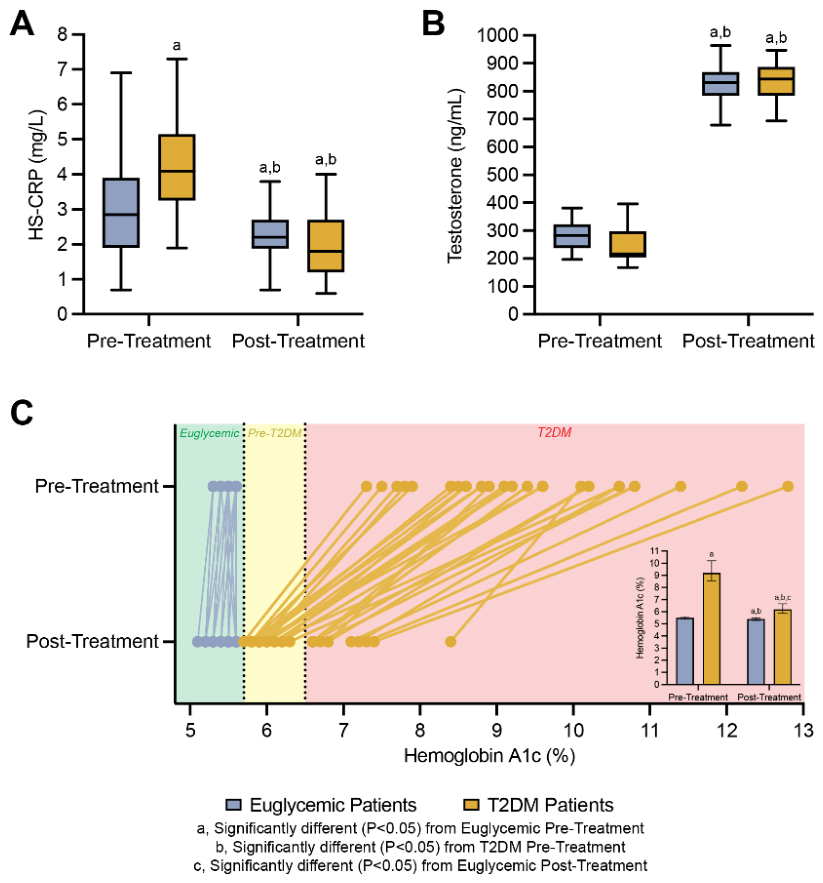
Figure 2.
Body composition and grip strength outcomes. Tukey box plots demonstrating (A) BMI, (B) body fat mass, (C) skeletal muscle mass, and (D) grip strength. Differences were tested using a two-way ANOVA with a Sidak correction across the six pairwise contrasts. Post-hoc comparisons: a, significantly different (P < 0.05) from Euglycemic Pre-Treatment; b, significantly different (P < 0.05) from T2DM Pre-Treatment; c, significantly different (P < 0.05) from Euglycemic Post-Treatment. N=38 for Euglycemic and N=33 for T2DM groups.
Figure 2.
Body composition and grip strength outcomes. Tukey box plots demonstrating (A) BMI, (B) body fat mass, (C) skeletal muscle mass, and (D) grip strength. Differences were tested using a two-way ANOVA with a Sidak correction across the six pairwise contrasts. Post-hoc comparisons: a, significantly different (P < 0.05) from Euglycemic Pre-Treatment; b, significantly different (P < 0.05) from T2DM Pre-Treatment; c, significantly different (P < 0.05) from Euglycemic Post-Treatment. N=38 for Euglycemic and N=33 for T2DM groups.
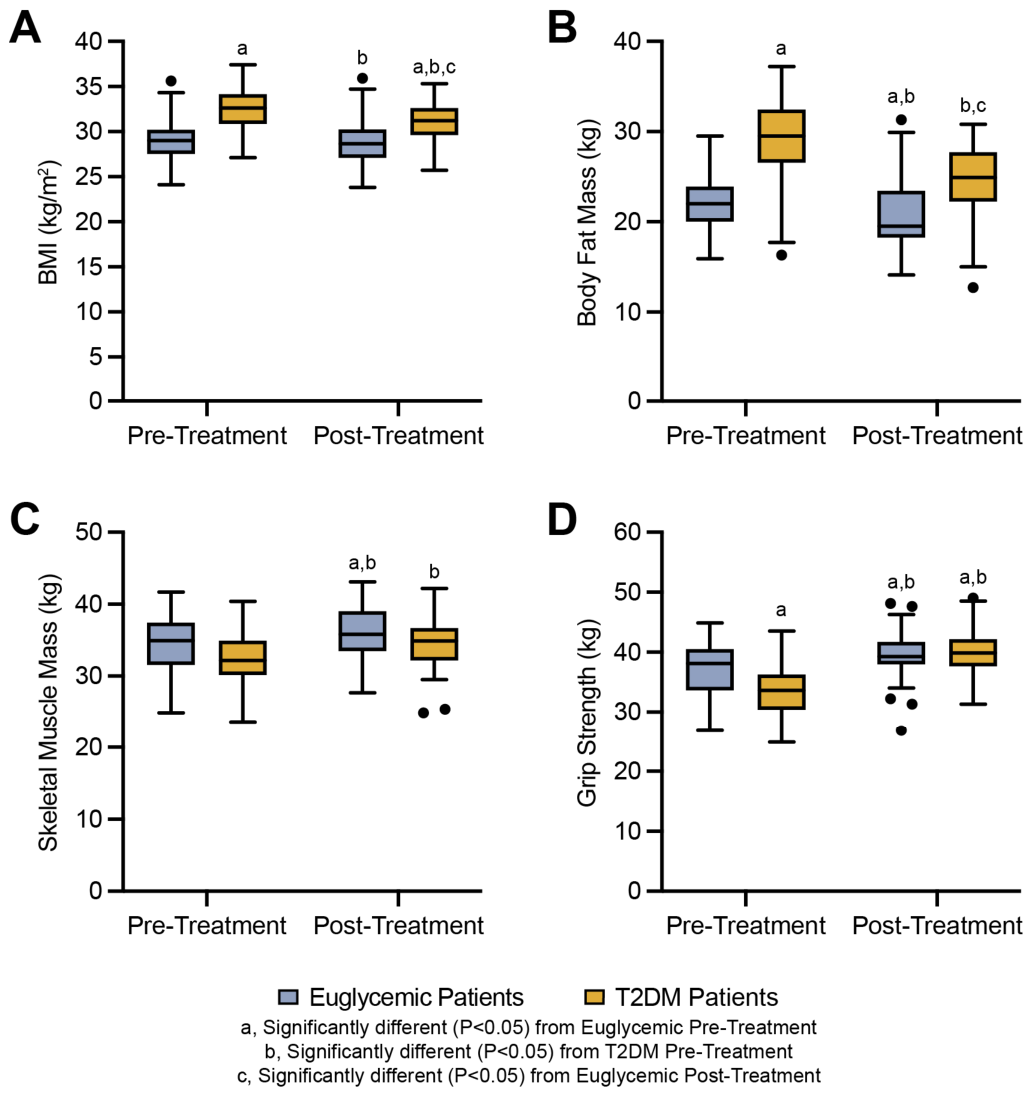
Figure 3.
Patient-reported and sexual function outcomes. Tukey box plots demonstrating (A) PROMIS-10 Physical Health and Mental Health scores and (B) Arizona Sexual Experience Scale (ASEX) scores. (C) Erection Hardness Score (EHS) distributions before and after treatment, with ribbon width proportional to the number of patients in each category. Greater PROMIS-10 and EHS scores correspond to clinical improvement, whereas lower ASEX scores correspond to improved outcomes. PROMIS-10 scores were tested using a two-way ANOVA, and ASEX and EHS were tested using Wilcoxon signed-rank and Mann-Whitney U tests, with Sidak corrections. Post-hoc comparisons: a, significantly different (P < 0.05) from Euglycemic Pre-Treatment; b, significantly different (P < 0.05) from T2DM Pre-Treatment; c, significantly different (P < 0.05) from Euglycemic Post-Treatment. N = 38 for Euglycemic and N = 33 for T2DM groups.
Figure 3.
Patient-reported and sexual function outcomes. Tukey box plots demonstrating (A) PROMIS-10 Physical Health and Mental Health scores and (B) Arizona Sexual Experience Scale (ASEX) scores. (C) Erection Hardness Score (EHS) distributions before and after treatment, with ribbon width proportional to the number of patients in each category. Greater PROMIS-10 and EHS scores correspond to clinical improvement, whereas lower ASEX scores correspond to improved outcomes. PROMIS-10 scores were tested using a two-way ANOVA, and ASEX and EHS were tested using Wilcoxon signed-rank and Mann-Whitney U tests, with Sidak corrections. Post-hoc comparisons: a, significantly different (P < 0.05) from Euglycemic Pre-Treatment; b, significantly different (P < 0.05) from T2DM Pre-Treatment; c, significantly different (P < 0.05) from Euglycemic Post-Treatment. N = 38 for Euglycemic and N = 33 for T2DM groups.
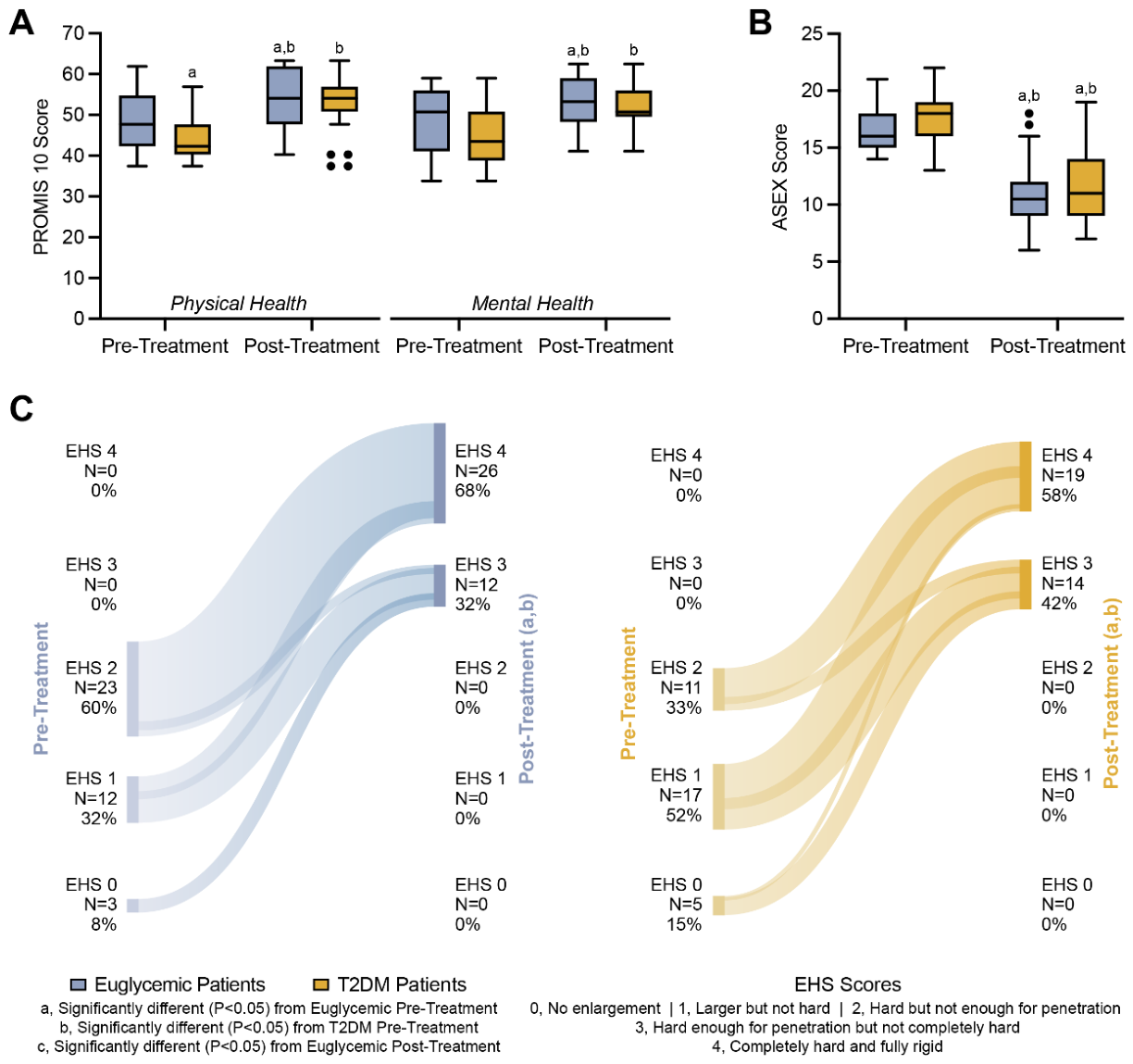
Figure 4.
The multidimensional pathophysiology of erectile dysfunction. Erectile dysfunction arises from the convergence of five interrelated domains: neurovascular, neuromuscular, psychological, hormonal, and metabolic. Representative contributors within each domain are listed. .
Figure 4.
The multidimensional pathophysiology of erectile dysfunction. Erectile dysfunction arises from the convergence of five interrelated domains: neurovascular, neuromuscular, psychological, hormonal, and metabolic. Representative contributors within each domain are listed. .
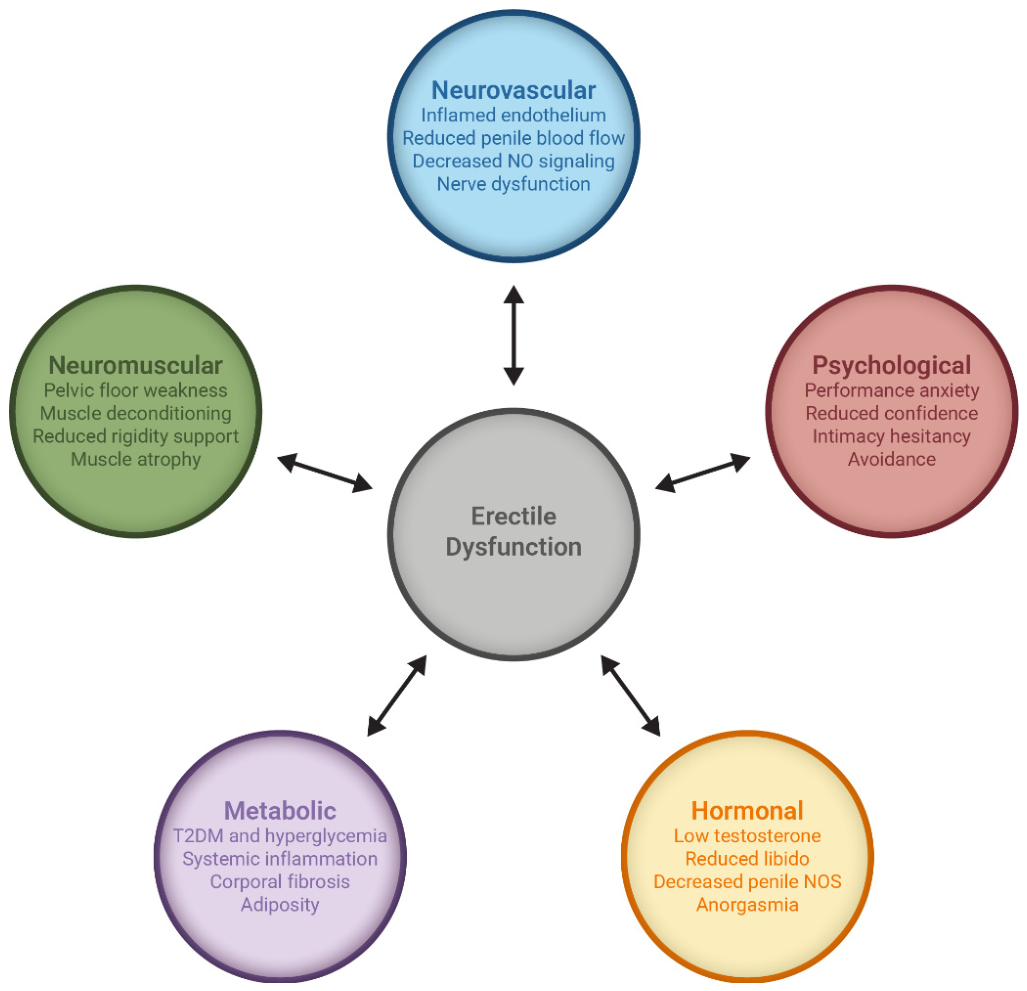

Table 1.
Staged return-to-intercourse protocol by Erection Hardness Score. Self-directed and couple activities are paired across Erection Hardness Score (EHS) stages from 0 to 4, progressing from non-genital sensate focus at lower stages to unassisted penetrative intercourse at higher stages. Patients advanced based on their current EHS.
Table 1.
Staged return-to-intercourse protocol by Erection Hardness Score. Self-directed and couple activities are paired across Erection Hardness Score (EHS) stages from 0 to 4, progressing from non-genital sensate focus at lower stages to unassisted penetrative intercourse at higher stages. Patients advanced based on their current EHS.
| EHS Stage | Self-Directed Activities | Couple Activities |
|---|---|---|
| 0 | Mindfulness and body awareness exercises; pelvic floor awareness training; journaling about sexual identity and goals beyond penetration | Non-genital sensate focus (structured touching, massage, caressing with no genital contact or performance expectation); communication exercises; emotional intimacy building (shared vulnerability, affection) |
| 0 to 1 | Guided self-touch of genitals without erection goal; exploration of erogenous zones; introduction of vibrator for arousal awareness | Genital sensate focus (mutual genital touching/exploration with no penetration goal); shared use of vibrators for mutual stimulation; continued communication work |
| 1 to 2 | Masturbation with focus on pleasure rather than erection quality (2-3 times/week); use of penile vibratory stimulation to enhance arousal; EHS self-monitoring during masturbation as a screening/confidence tool; penile sleeves to improve proprioceptive and sensory awareness | Continued pleasure-focused (not performance-focused) partnered activity; partner applying penile sleeves |
| 2 to 3 | Masturbation with early focus on ejaculation even if not fully erect (3-5 times/week); continued use of penile sleeves | First attempts at unassisted penetrative intercourse; explore positions where penetration is easiest; devices available to reduce performance anxiety; focus on mutual pleasure rather than pass/fail penetration |
| 3 to 4 | Continued masturbation, with transition to partnered ejaculation if a partner is available; transition from penile sleeves to penetration simulation devices | Full unassisted intercourse, focusing on one to two positions where probability of maintaining an erection is greatest and most mechanically advantageous |
| 4 | Masturbation with ejaculation encouraged on days when penetrative intercourse not planned | Full unassisted intercourse focusing on a variety of positions; broadening focus to relationship satisfaction, variety, and long-term intimacy maintenance |
Table 2.
Baseline characteristics. Values are median (IQR). Differences between groups were tested using Welch (Age) or Mann-Whiteney U (symptom duration and total treatment sessions) tests. a, significantly different (P<0.05) from euglycemic patients. N=38 euglycemic patients, N=33 T2DM patients.
Table 2.
Baseline characteristics. Values are median (IQR). Differences between groups were tested using Welch (Age) or Mann-Whiteney U (symptom duration and total treatment sessions) tests. a, significantly different (P<0.05) from euglycemic patients. N=38 euglycemic patients, N=33 T2DM patients.
| Euglycemic | T2DM | |
|---|---|---|
| Age (y) | 50.7 (45.8-54.6) | 53.8 (46.1-57.9) |
| Erectile dysfunction symptom duration (mo) | 36 (24-45) | 48 (36-60)a |
| Total treatment sessions | 12 (11-14) | 17 (16-19)a |
Disclaimer/Publisher’s Note: The statements, opinions and data contained in all publications are solely those of the individual author(s) and contributor(s) and not of MDPI and/or the editor(s). MDPI and/or the editor(s) disclaim responsibility for any injury to people or property resulting from any ideas, methods, instructions or products referred to in the content. |
© 2026 by the authors. Licensee MDPI, Basel, Switzerland. This article is an open access article distributed under the terms and conditions of the Creative Commons Attribution (CC BY) license (http://creativecommons.org/licenses/by/4.0/).
Copyright: This open access article is published under a Creative Commons CC BY 4.0 license, which permit the free download, distribution, and reuse, provided that the author and preprint are cited in any reuse.