

Submitted:
20 May 2026
Posted:
21 May 2026
You are already at the latest version
Abstract
The Earth’s environment is deteriorating, and biodiversity is declining. The use of plant-based cellulose nanofibers (CNFs) as structural materials can reduce environ-mental impact, and further technological development is anticipated. This review introduces cellulose types derived from wood, weeds, bamboo, and fruits, and examines the technological applications of CNFs.
It is suggested that maintaining appropriate levels of Mn, Ca, and O, including Ca inter actions within carbon-based structures, may contribute to plant soundness, whereas the exclusion of elements such as V, Cd, and Sn may support cellular activity. Calcium deposition may influence wood growth depending on elemental composition in the bark, and a hypothesis is proposed regarding pH adjustment for sprout formation.
In addition, fabrication methods of CNFs and their mechanical properties, particularly evaluation methods, are summarized. This review focuses on nanostructures that yield heterogeneous functional and mechanical properties, with potential benefits in reducing the environmental impact of processes such as three-dimensional printing and layering. CNFs derived from fruit peels can produce lightweight and durable materials.
Furthermore, the roles of proteins and fruit-derived components in neutralizing acidic environments and reducing oxides are discussed. A concept is proposed combining fruit peel–based material processing with environmental applications such as forest restoration and anti-desertification. It is hypothesized that cytoplasmic activity and cell wall strengthening may be enhanced through chlorophyll-related processes and water transport mechanisms.
Optimization of PH conditions may promote sprout formation in plants such as conifers. Sustainable greening may be achieved through the use of cellulose-based materials combined with water-retentive components such as bam-boo-derived resources. The interaction between CNFs, plant bark, and water-associated proteins may contribute to forest recovery and the mitigation of slash-and-burn practices. Overall, this approach may contribute to environ-mental restoration, reduced environmental load, and urban greening in degraded regions.
Keywords:
sustainability
; cellulose film
; mechanical properties
; greening
; fruits based cellulose
; land repair
1. Introduction
Human economic activities related to engineering involve industrial production, research, and merchandizing. Enhancing sustainability is crucial to ensuring human prosperity during environmental pollution, resource scarcity, and population growth. Recent studies have highlighted the growing demand for environmentally friendly engineering products (Pereira, 1999; Janakiraman et al., 2021; Iwasaki, 2023; Catalano, 1993; Patnaikuni, 2009; Ghinaya et al., 2021; Su et al., 2023). Owing to rapid population growth and increasing environmental load, conventional engineering products, such as fossil fuel–based plastics, are no longer viable for extensive use (Ceballos-Santos et al., 2024; Fayshal et al., 2024; Kibria et al., 2023; James et al., 2024; Valavanidis et al., 2024; Singh et al., 2024; Napper et al., 2023). Although plastic products are widely used, their environmental load is greater than that of other materials, as petroleum-based plastics decompose very slowly (Ghorbannezhad 2024; Kabeyi et al., 2023, Kaser et al., 2020). Plastic waste pollutes air and soil. Natural materials, such as wood and weeds, are biodegradable and environmentally friendly (Environmental Center | University of Colorado Boulder, Richland Center, Wisconsin, USA). Cellulose nanofibers (CNFs) derived from wood, weeds, bamboo, and fruits (banana peel) are strong and environmentally friendly (Durad et al., 2024; Manafi-Dastjerdi et al., 2022; Tudor Environment, Rayns et al., 2022; Khoaele et al., 2023).
Wood-based cellulose materials, fabricated by crushing and layering wood-containing solutions, exhibit high strength, modulus, and storage properties (Isogai, 2020; Samir et al., 2022; Guan et al., 2022; Meftahi et al., 2022; Yan et al., 2023; Horikawa 2022; Shi et al., 2022; Moreira et al., 2020; Zhang et al., 2022; Ogunjobi et al., 2023; Nigam et al., 2021; Hancock et al., 2023; Manamoongmongkol et al., 2021; Cao et al., 2022; Youssefian et al., 2025; Brahma et al., 2024). Weeds derived from grass plants can be used as a renewable resource (Ogunjobi et al., 2023; Nigam et al., 2021; Hancock et al., 2023). Bamboo is a highly sustainable natural material with hierarchical structures and high compressive strength and tensile ductility (Manamoongmongkol et al., 2021; Cao et al., 2022; Youssefian et al., 2025). Fruit peels, such as those from peaches and bananas, are biodegradable and can be processed into structural components by removing their surface proteins (Rahman et al., 2024; Siddiqui et al., 2024; Mishram et al., 2023; Bigi et al., 2023; Kumbhar et al., 2015; Três et al., 2024). However, among the natural products, cellulose nanofilms and bulk products have limitations in achieving excellent mechanical or functional properties (Zhang et al., 2025; Samadam et al., 2022; Sridhara et al., 2020; Baghaei et al., 2020; Ray et al., 2021; Whitney et al., 1999).
This review examines the fabrication methods for cellulose materials derived from natural materials, including wood, weeds, fruits, and seeds. The mechanical strengths of individual CNFs (CNFs) (Saito et al., 2013; Li et al., 2021; Hang et al., 2011) and scaled-up cellulose films (CFs) (Koga et al., 2022; Oesef et al., 2024) are reviewed.
The tensile properties of CFs are analyzed based on their chemical structure and material engineering (Golovin et al., 2022; Ma et al., 2023; Abualnaja et al., 2024; Subbotina et al., 2022). The cellulose extracted from wood or fruit is an ideal candidate for structural applications in casings, pump propellers, and aerospace application components, including astronaut suits made from fruit-peel textiles (Sachidhanandham, 2020; Srivastava et al., 2018; MaterialDistrict; Good & Fugly). Similar applications in structural engineering include automobile components (e.g., interior parts), bicycle components (e.g., axial structures and electric-assist battery casings), and house frameworks (Tu et al., 2024; Rahman et al., 2023; Nordin, 2023). Cellulose-based gels can be used in electronic components, serving as sensors and contributing to network formation for enhanced structural integrity (Jonoobi et al., 2010; Pan et al., 2016; Qua et al., 2011; Omrani et al., 2008).
The structural design of cellulose materials, particularly the stress balance between CNFs in the build-up method, is a critical consideration (Qua et al., 2011; Omrani et al., 2008). A recent study on the tensile properties of phosphate–ester CFs demonstrated a constant stress region in the tensile stress–strain relationship, indicating that ductility is driven by the interactions between the amorphous material and rounded crystals in unprocessed pulps (Ogawa, 2025). These pulps are composed of soft matter comprising carbon and hydrogen and exhibit high elongation (Alvarado–Ávila et al., 2023; Wood pulp, Atiqah et al., 2019). Cellulose produced from fruits such as bananas, peaches, and pineapples is used in lightweight, durable jackets and luggage. This review introduces the types of CNF films used and summarizes their fabrication methods, focusing on mechanical agitation and thermal treatments. The mechanical properties of these films are evaluated with respect to the film strength and tensile testing of individual CNFs. The fabrication methods of fruit-based CNF films are introduced, and their mechanical and physical properties are summarized. The molecular design of CNF films at the nanoscale is discussed (Pakharenko et al., 2021; Ye et al., 2019; Ye, 2019; Kondo, 2023; Yang et al., 2024; Jing et al., 2024; Mushtaq et al., 2023) along with their application in mechanical components, architectural structures, bioengineering, and environmental remediation.
This review explores the engineering application of CNFs and their potential for environmental protection (Zhang et al., 2024). Fabrication and property improvement methods are proposed to widen the application of CNF in safeguarding the environment, forests, and global ecological systems (Figure 1:Photofigure of the earth from wikipedia, right panel: Image of conifer that is main origin of oxygen in Africa). Sustainability balances social, environmental, and economic factors. Developing an economic framework compatible with environmental goals is essential. This involves replacing plastic products with natural, recyclable materials and establishing systems to restore degraded landscapes. The creation of urban environments that integrate natural green spaces is critical for sustainable human living.
Moreover, it is important to take the balance of decaying and revival of plant based on the elemental in-out yielding the growth of sprout. This is the key to effective use of wood resources and to accelerate making the sprout on the cut wood and the reuse of decayed woods to fabricate the house and factory with higher weather resistance. The authors insist that the structure of wood: pulps, cellulose, and vascular cells can be transformed into the sprout and the shape of leaves that assist the natural greening of forests and cut woods (regeneration of green earth planet).
Key sentences for balance in water and oil in barks generating sprout on the deceased wood
In the end of introduction, we present key phrases for achievement of greening using cellulose, based on conifer and/or fruit peel such as peach with the aid of circulation of chlorophyll associated with cytoplasm containing water molecules.
- Part of cellulose can be transformed to chlorophyll.
- Protein in cytoplasm can be mixed with water.
- The sprout can be grown on decayed sprout-killed in soils (carbon-hydrogen).
- H and B can be attached with D+ in water poured in cytoplasm.
- The chemical average of upper side such as leaf generates the chlorophyll generation due to the decomposition of proteins.
In the authors’ opinion, it is essential to maintain the ratio of proteins in inclined bark element, water, and cellulose on the peripheral of cells containing chlorophyll.
2. Introduction of Cellulose to Protect the Environment
The ongoing destruction of the Earth’s environment threatens biodiversity. Excessive resource consumption in developed countries contributes to environmental degradation in developing countries, where uncontrolled wildfires in forests accelerate desertification, rainforests face significant destruction, and valuable species risk extinction. To protect the environment, reducing reliance on petroleum-based plastics and minimizing plastic waste are essential. Using natural materials, such as those derived from weeds and woods, can reduce the environmental impact of invasive species. Cellulose extracted from wood, weeds, and fruit is an ideal candidate for structural components, food packaging, and beverage bottles. To preserve forests (such as hardwood and conifer), sustainable management practices are critical. Indiscriminate logging, such as the removal of more than two–thirds of forest stems, causes environmental devastation and the loss of indigenous tree species. It is important to keep the seeds on the sprout with the aid of chlorophyll circulation in the cytoplasm.
Oil-based plastics pollute soil and threaten the extinction of indigenous plants. Soil pollution damages crops and devastates plants and forests in developing countries. To promote a circular ecosystem, reforestation efforts should follow deforestation by converting wood pellets into ash and vapor through burning, facilitating carbon exchange that encourages undergrowth and accelerates forest regrowth. Using cut wood for products, such as pencils or pellets for burning, supports the regeneration of indigenous plants and rainforests. However, this approach is insufficient for fully converting cut wood into organic matter. Forest regeneration using cellulose, particularly from fruit or bamboo with moisturizing properties, is essential for sustainable reforestation (the moisturizing role will be discussed later). The burning of cut wood generates carbon dioxide; however, appropriate treatments could involve the exchange of hydrogen vapor around the burned carbon, which can optimize resource use.
Plant proteins (cell bodies) contribute to the formation of structural materials. The composition of the wood is discussed below. Figure 2 shows that wood comprises a cellular structure, with fibril structures rich in cellulose molecules. These cellulose structures support tissue engineering, wound dressings, and drug delivery (Seddiqi et al., 2021).
Cellulose-based porous structures can be infiltrated with cellulose or polymer melts to create robust structural members. Zheng et al. (2020) fabricated cellulose nanocrystal (CNC)-filled composites via infiltration, reporting their mechanical properties and proposing strategies for further enhancement. Biopolymers can infiltrate the porous structures of bamboo, and banana petals can be converted into molten polymers through acid immersion (e.g., hydrochloric acid or acetic acid) and subsequent burning. Investigating the mechanical properties of biopolymer composites produced via pressure-free infiltration versus pressure infiltration is essential because the crystalline structure may affect mechanical properties (such as bending and tensile properties).
Unlike synthetic polymers, cellulose features a fibril structure and is biodegradable through soil burial, heat treatment, or acid immersion. These materials are renewable and recyclable, enabling their repeated use. The topics of reproductivity and recyclability will be further explored.
3. Literature-Cellulose Fabrication Method
This section summarizes the types of cellulose and their fabrication methods. Figure 3 shows the typical structure of cellulose materials. Cellulose, an organic material comprising carbon, oxygen, and hydrogen atoms, forms nanosized fibrils that can be processed into thin films. These films have applications in automobiles, machine parts, gardening, and forest restoration.
Figure 4 shows the types of cellulose materials used in various treatments. Six treatment methods are highlighted, with esterification, grafting modification, ethertification, and acid treatment being particularly significant. Esterification enhances cellulose strength, and grafting modification improves both strength and elongation (although it may reduce strength in favor of higher ductility in some cases). Mechanical pretreatments raise mechanical strength; however, the ductility is lowered. Biological treatments improve ductility, however, the durability is deteriorated.
The refinement of cellulose fibrils occurs after dispersion and/or collision (Figure 5). https://doi.org/10.1007/s42452-025-07558-1.
Nanocellulose can be isolated through chemical pre-treament and adjusting PH to maintain distance of CNFs, followed by interaction leading to networks, assembly of bulk materials: it yields the future application supported by redispersion using static-forces. It is important to achieve good interaction of CNFs without agglomeration leading to power generation and high stability without deterioration (with acid immersion, decomposition proceeds).
Compositing after molecular organization, such as chemical chain formation and bonding, effectively enhances access to structural components. Figure 6 does show the self-assembled fabrication of the CNF-based bulk materials. The wood-resembling materials yielding bulk materials are achieved by adjusting the amount of water supported by hydronated carbons; the oxygen dispersion, and C-C-OH linking lead to the superior properties.
4. Mechanical Properties of CNFs and Films
In this section, the mechanical properties of CNFs are evaluated. Figure 7 shows the tensile properties of the phosphate-ester-treated CNF films. These data are based on a recently published study (Ogawa, 2025).
Figure 8 shows the interaction of pulps and amorphous phase; the interlock raises the tensile strength and extension yields the ductility. The surface roughness indicates the ductility of the films (omitted here), whereas Figure 9 shows the formation of cellulose structures through CNF stacking. Figure 10 shows the chemical structure of phosphate ester-cellulose; the P-rich region improves the softness and ductility.
Hang et al. proposed a testing method for individual CNFs by combining atomic force microscopy (AFM) and SEM. Testing fixture can be incorporated into SEM chamber and testing of individual CNF nanofiber can be achieved. Scale up of strength from individual CNFs into wood nanofibers containing pulps is possible yielding the estimation of strength of wood pieces.
Figure 10 indicates that the glycol chitosan can be oxidized to the gels containing hydroxyl groups that yield the self-repair properties. It indicates that the gels can be used to repair fish injuries (Figure 11). Minimal strain for structural destruction yields the repair characteristic. Mol ratio per minute raises the average functional recovery (vital trajectory).
Figure 12 exhibits the effect of average basal OCR (mol rate) on the functional recovery in vivo affecting injury recovery of animals. In the analogy of animals and plants, the chlorophyll can be inserted into plant cells and that can be utilized to the prosperity of green of plants that indicates the PH of cytoplasm governs the activity of sprout and/or leaves. It indicates that the insertion of chlorophyll into the cell wall and making earthen wall consisting of compatible fruit peel yields the growth of undergrowth. The making patches using grounded vascular lines and adverse circulation of waters inside the stem yields the growth of sprout around the soil boundary.
Chlorophyll has an influence of accelerating the cell division inside the sprout; it is important to keep the moisture homogeneous to maintain the activity. Keeping the PH around the barks alkaline yields the generation of bunch on the boundary of stems. Grounding the seed of similar species, implanting the cellulose fibers into the cell wall leads to the greening of undergrowth (with the aid of calcium). Protein in cytoplasm can be decomposed to generate the whisker sprout. The burying the cellulose made from conifer and fruit peel with the accelerator such as potassium chloride causes the internal circulation of plant oil and water.Extracting water elements from the tree bark and adding chlorophyll to boundary of cytoplasm generates the prosperous wild of greens. Ash ratio control and soil purification using adding the decayed cellulose accelerates the photosynthesis of conifers and bushes with the aid of an appropriate drying duration. Incorporation of C, H, Mn, Ca, and Ge into the leaf and/or sprout revive dead plants. V and Cd need to be removed by precipitation. It depends on the species and the amount of oil in barks.
It is important to think the cellulose by building up from the nanofibers. CNFs were affixed to the substrate using epoxy glue, and an AFM cantilever was utilized for tensile testing. Tensile properties were analyzed using Weibull statistics (Saito et al., 2013). The build-up method enables the tailored design of the mechanical properties of CFs.
Kafy et al. fabricated a fiber structure from CNFs and performed tensile testing. Stretching enhances tensile strength but decreases failure strain. The alignment improvement yields the high tensile strength. As the strain rate increases, the tensile strength and modulus coincide under the stretching effect. It is estimated that the CNF nanofiber does not break during stretching, however, the strain misfit under the tensile strain within the cellulose aggregate lowers failure strain. CNF nanofiber orientation improvements and occupation of outside of yarns by pulps will raise the balance between tensile strength and failure strain.
Figure 13 shows the ideal proposed cellulose structure. The phosphate ester treated cellulose structure is simplified, emphasizing the amount of hydrogen on CNF (and other than the framework of pulps). It is estimated that the covalent oxygen strengthens the double bond of carbon atoms. It is important to maintain the distance of carbon atoms unless the concentration leading to the crack source.
The authors performed simple pre-calculation regarding the elemental arrangement of C, H, and O atoms and how to raise the strength and/or failure strain (Figure 14). The inner strain connecting fragmented C atoms is maximized owing to the oxide attachment to the H atoms (Pulp framework-dominant deformation). The chemical bonding strength of carbon atoms under straining is raised by insertion of H atom into C-C bond (and followed by C-C-H transformation); whereas the tensile strength is improved by the attachment of O atoms. Insertion of C atoms and connecting via H atom simultaneously raise tensile strength and failure strain. At most, it is only the estimation after pre-calculation. The following is the elemental flow map of structure of cellulose nanofilms. The detachment of oxygen raises the flexibility, simultaneously H atom insertion raises ductility. C atoms concentration dominates the atomic in and out of resources, that yields drying and extension of structures. The C atom alignment variation leads to the wrinkle distribution and ductility improvement.
The interaction of COO, C-C-H, and P-SOH generates the island of carbons and hydrogen induced waterization. In other words, in the plant, potassium, thallium and calcium precipitate; in particular, thallium is attached to leaves; potassium oxide has the role of making sprout and adjusting the PH of leaves to the alkaline vegetation environment.
Potassium chloride has a role to make the soil acidic and neutralize the alkaline atomosphere. It is important for H atoms not to discharge from the C=O cores. In general, the hexagons in the cellulose structure represent CH bonds. The attached chemical groups are carboxyl, CO, and hydroxyl groups. The hydroxyl groups act as interleafs between chemical species with different properties. The periodic structure formed by the stacking (Figure 10) generates high-strength, durable CFs with enhanced ductility.
The tensile properties of esterified CFs presented by Peng et al. are introduced. Figure 15 shows that mixing hydrated NMMO with H2O followed by drying produced films with moderate strength and high ductility (Figure 15). Figure 15 shows the superior tensile properties, demonstrating a balance between strength and modulus. Chemical bond formation results in tensile stress‒strain curves that exhibit superior ductility. The ductility can be tuned by adjusting the interaction between tension and internal Poisson’s contraction, where strain influences the extent of tensile–shear contraction zone.
It is important to balance inner and outer strain to obtain the stability in mechanical properties. Finally, the balance of lignin and greening of devastated plant is presented. Figure 16 displays that the kind of cellulose species with different decomposition properties.
In the upper left panel, Cell5 and IF2 interact; decomposition proceeds inside CSR that is protein outside pulp peripheral. In the upper right panel, the interaction of various functional groups decomposes the framework of cellulose indicating the discretization of carbon framework yields the natural decomposition and generation of sprouts in soils with the aid of calcium and potassium chloride and/or phosphate chloride that achieve greening through reconstruction of devastated forest. It is based on the concentration of CNF and cytoplasm containing chlorophyll. Water circulation and discharge from sprout assist the growth of differentiated bunches.
Numerous studies on the stress–strain relationship (banana map) of cellulose have reported a maximum strength of approximately 450 MPa. To achieve further improvements, enhancements such as layer detachment and dislocation (regeneration of chemical bonds) are necessary. Raising tensile strength is important; however, simultaneously giving decomposition characteristics is important. This point will be discussed later.
5. Passion Fruit-Based Cellulose Structures
Fruit and marine plants are ideal sources of raw cellulose. Fruits, such as passion fruit, mango, or pomegranate, can be processed to yield high-strength cellulose, particularly when mixed with seeds. Figure 17 shows that banana peels can be converted into oils, extracted fibers, and eco-friendly waste water.
Phirom-on et al. (2022) extracted green products used as fibers in eco-friendly wastewater treatment. Fruits can be used as cellulose sources for batteries and astronaut suits. The following section discusses the difference between wood and fruit cellulose. It is important to focus on the structural difference between the scaffold and secondary branches of trees that support fruit growth. The differentiation of secondary branches into stages promotes successful fruiting.
Fruit properties, including bunch strength and structural integrity, are enhanced through treatments such as acid and/or heat processing. It is estimated that the PH of mixed juice governs the amount of oils in the peels and it is important to enhance the vegetation of the deceased plant and revival of dried sprout into the waterization. Note that the water cannot be polluted using the fruit to fabricate oils in the situation of fulfilling the proteins outside the core of peels. It yields the making cellulose sponge as the pond of devastated plant bunches. It accelerates the generation of sprout on the decayed vascular line cells. It indicates that the vascular lines can be transformed to the leaves that is bunch sprout and/or protein-fulfilled sprouts. Protein and lipids coexist in fruits such as apples and pomegranates, contributing to the water retention characteristics of their peels after burning. These properties can be utilized for forest antidesertification efforts, which will be discussed later.
Marine plants are also ideal raw materials for cellulose production. Cellulose can be made after the decomposition of seaweed surfaces (Lampugnani et al., 2019). The binding of Korrigan to synthase provides a foundation for structural components. It is based on the edge emphasis of cell wall containing chlorophyll.
5.1. Structural Application and Functional Properties
Figure 18 shows that coconut fruit surfaces can be converted into natural fibrils. Coconut fiber is generated by breaking down the surface of the fruit, followed by wet-drawing and drying. Automotive parts can be manufactured from coconut via polymer infiltration into fiber fabrics.
Coconut CNFs can be used to manufacture bonnets and roof components. Bamboo fibers can be combined with fruit fibrils to form laminated structures. Integrating empty fruit into bamboo press strips produces durable components for automobiles, ships, and electronic circuits. Bamboo has vascular lines filled with water, when pressed into chips or sawdust and combined with fruit fibers, yield flexible and durable structural materials. This approach may support desert greening through innovative strategies.
A lot of automobile components can be manufactured from cellulose derived from bamboo, coconut, and pomegranate. The composite front panel carpet and air bag can be made from coconut and pomegranate fibers, respectively. Door panels can be constructed using a combination of bamboo and fruit fibers. The selection of raw materials for CNFs is driven by their crash energy adsorption and anticipated durability.
6. Molecular Design of Nanoscale Structures for Environmental Pollution Prevention and Desertification Protection
This section discusses the molecular design of the nanoscale structure. This topic is important for addressing population growth, environmental pollution, and desertification. Applications are proposed based on the molecular structure.
Uto et al. (2020) conducted a molecular dynamics simulation of cellulose, developing a crystal model to investigate the effect of hydrogen bonds using the AMBER force field parameters. The simulation revealed that hydroxyl groups in cellulose chains adopt stable, staggered conformations, with O3−H−O5 intramolecular hydrogen bonds slightly strengthened, indicating reduced interaction between the cellulose chain and adjacent ethylenediamine (EDA) molecules.
Therefore, investigating the effect of hydrogen atom positioning on the tensile properties of cellulose samples is essential.
6.1. Molecular Dynamics Simulation of Cellulose I−EDA Complex Crystal Models
Pang et al. fabricated urea/cellulose laminates used in semicrystalline hydrogels for actuators. Laminating urea and cellulose leads to the equilibrium of tension and bending force subjected to the cross section. The hydrogen-bonded network junctions govern the stress‒strain relationship. Yang et al. fabricated self-healing cellulose-based hydrogels for electronic devices, bioapplications, and mechanochemical actuators [98].
Yang et al. fabricated cellulose/Ti electronic materials. The chemical processes, demonstrating that cellulose hydrolysis, accelerated by interaction with Ti atoms enhance responsiveness under boundary forces [99].
Numata et al. (2024) conducted a molecular dynamics simulation of cellulose chain rotation under dynamic forces (Figure 19). Their findings revealed that the carbon chain cross-linking parameter dominates the mechanical properties.
Imai et al. (2021) analyzed the structure of cellulose synthase and proposed a model for cellulose synthesis in living cells. They presented the basic structure of cellulose synthase, which is applicable to thermophysical devices, mechanical systems, recycling, and bioapplications with the aid of shells distributed in cellulose.
Shao et al. fabricated CNF-based nanocomposite films by sequential immersion in a photopolymer, ZnSO4, and Triton X-100, demonstrating electromagnetic interference shielding and fire-resistant properties. The layered films exhibited exceptional shielding performance.
Figure 20 shows lightweight, tough, and sustainable CNF-derived bulk structural materials with low thermal expansion coefficients (Guan et al., 2020).
Combining cellulose biosynthesis with layering and compression techniques produces superior mechanical parts with low thermal expansion coefficients. Figure 21 shows the cellulose-based engine components developed by YAMAHA. Three-dimensional-printed cellulose materials are ideal candidates for creating durable and recyclable structural components.
Mechanical parts were replaced with cellulose materials. Wood, weeds, and pineapple shells can be used to fabricate column, pipes, and shells.
Li produced lightweight materials by combining gels and cellulose, that contain H2O; these materials are flexible and ultralight.
By folding and extending the CNF sheet; slicing leads to thin sheet that can be used as antenna materials (Figure 22).
We propose using cellulose materials as key structural components in automobiles. Nissan RB crankshaft keyway can be replaced with cellulose-based materials. These materials are sourced from ancient forests and promote sustainable and environmentally friendly automotive production. To support these, the development of chemical fasteners is essential. Combining fruit shells and seeds with chemical treatment such as acid can produce robust machinery components.
Figure 23 shows that fibril extraction from perm tree and kenaf tree yields cellulose, which can be used to produce architectural materials from pellets and scrap wood. Efforts to advance recycling and sustainable scrapping have addressed challenges in adopting these practices across Africa, Europe, Asia, and North America. That can be used for not only packaging but also mechanical components. By adding saw dust of bamboo or banana tree, it can be used for greening of decayed wood.
Transforming manufacturing processes is critical for achieving sustainability. Conventional chemical processes must be modified to incorporate the synthesis of accelerators for the growth of cells-based objects containing cellulose. Polymerization combined with chemical modification with acid produces materials with superior mechanical and physical properties (Ray et al., 2021).
7. Green Biomass-Based Protein for Sustainable Feed and Food Supply: Current and Future Prospects
Deforestation, driven by environmental destruction and slash-and-burn agriculture, must be addressed through sustainable systems. Figure 24 highlights proposals for generating food from wood, weeds, and pulp-derived cellulose. Starch-based foods, such as maize, rice, and wheat, can be produced from roadside weeds. Proper treatment of human waste can further support the development of sustainable, virtuous cycles.
Bacterial CF can be used to heal human pain after injury such as fire injury. After the attachment of bio-cellulose film to the pain, the burn volume can improve within 2 weeks (Zhong et al., 2020). Protein can be transformed into fiber whiskers that can be partly used for development of bunches in trees; however, it depends on the amount, it is important to get the balance of barks and inner cytoplasm.
In the following, we mention the hypothesis that burying cellulose in the soil promotes shrub recovery; however, conventional methods are ineffective because of insufficient moisture, leading to soil degradation. Incorporating plant or seed fragments into CFs or attaching CFs to chlorophyll-containing bundles of cells promotes natural plant growth.
In desert environments, where high temperatures cause ordinary planting to fail due to decaying, layering plants or chlorophyll bundles with cellulose and encasing them in a pond-like package in surface barks (surface burning prevents decaying). Combining fruit-derived and bamboo-derived celluloses, followed by burning and adding water, is effective. The gel-making method also supports self-plant block growth.
Finally, desert greening using cellulose-based fruit pods and bamboo knobs is proposed. Desertification in Africa, Asia, and the Americas results from insufficient ash and proteins in the roots of wood, weeds (partially starch-based), and fruit-bearing plants, which lack essential binding components. To address this, the layering of seedlings with CFs and the addition of carbon-based proteins (CH–O proteins) were proposed. Cellulose was decomposed from fruit peels (partial bodies) and bamboo knobs (after fine crushing) by adding alkaline salts. Combining gel and hydrocellulose production with seedling growth and decayed epidermis repair enhances forest regeneration.
Figure 25 shows how DNA repairs damaged cells (Wang et al., 2022). Similarly, repairing protein structures without destroying DNA or adding reactive oxygen species is critical for regenerating forests and woodlands. This approach enhances environmental circulation and resilience while mitigating human-induced destruction (Wang et al., 2022).
The dissolution method for pineapple cell walls and/or generation of sprout based on decayed peel. Plant cells comprise proteins and water, sugar, and cellulose. This supports the potential revival of dead plants via RNA incorporation, combined with ash from burned peels (or bamboos) and the integration of waste adipose tissue. The dissolution of cell walls and filtration using the pulp filter yields the generation of clear pure water.
Figure 26 shows the reuse and regeneration of green biomass into products that support forest restoration. Combining techniques such as scratching, mixing, and protein recovery with ash from larger pulps activates nearly dead plants. The brown juice made from twin-screw process and vacuum filtration has the role to clean the cytoplasm of decayed plants.
Figure 27 proposes an antidesertification method utilizing cellulose. The desertification rate was determined based on a survey conducted by the World Health Organization. The antidesertification strategy incorporates DNA into cellulose derived from fruit peels, which is enhanced by burning and drying the peels. Porously bound plants are essential, and sawdust (RHO) is used to transfer internal water to partially decayed plant fragments. Water proteins: A mixture of moisture gels and green buds, combined with undergrowth protection, revitalizes plants. In addition, lime can be utilized to enhance undergrowth and support layered green structures, as detailed in the lower frame.
Various cellulose materials—wood, weed, fruit, and bamboo—offer diverse applications in addition to bioengineering and environmental remediation of large-scale destruction. A key strategy involves using burned and dried fruit peels and porous bonds to construct layered structures that promote greening. The integration of sawdust (RHO), which contains natural amino acids and proteins from bamboo knobs, along with water retention and controlled bacterial growth to protect undergrowth, supports desert greening and rainforest preservation. Keeping soil clean and rich in nutrition helps revive the decayed forest and make the deceased fruit tree regenerate the nut. Achieving sustainability and balance between humanity and the natural world is challenging due to the extensive development of industrial plants and waste products. However, adopting recycling systems and fostering green initiatives can cultivate a symbiotic relationship between humans and nature.
The ground element can affect the composition of biomass; it means that the inhomogeneity in the soil nutrition yields the twig-growth in decayed trees and/or plants. The interaction of biomass and hemicellulose governs the strain that yields the growth of sprout on the bunch and/or depart islands. It is essential to add proteins containing the soy and/or saw dust containing the acidic water.
It is important to add proteins to cell wall boundaries (a pin hole between cellular); simultaneously removing the protein from the surface of barks. Plant cell can be united by combining the cell wall via thermal and light induction by neutron heating that leads to the renewal of cytoplasm (Figure 28). The oil can be combined and water could be readjusted to alkaline (in the case of conifer).
Yang et al. proposed that alkaline stress enhances plant growth by the support of tentative cell wall destruction (Figure 29). The fall out of cytoplasm and recovery owing to the aid of outer-cell protein helps the growth of new sprout in the vicinity of the damaged barks. It is important to fulfill the outer cells with water and/or vocuole.
It is important to take balance of generation and decomposition of proteins and cytoplasm (conifer) with the aid of rotation of chlorophyl. The cytoplasm drying and waterization of barks yield the growth of sprout in the forest of decayed plants. It is essential to keep the cytoplasm partly acidic for the compensation of alkaline products in the leaves and new sprout in the neighborhood of old leaf. It is important to take the balance between pH of cytoplasm, soil, and chlorophyll. The revival of deceased plant with aid of shell around the protein in the barks with the support of cellulose from fruits such as peach or decayed bananas. It is effective to develop the cores of the protein mixed with water.
PH can be increased by the Thallium and chlorophyll concentrations within and near the soil (Gonzales-Alvarado 2024). The activity can be optimized. Chlorophyll A corresponds to the content of leaf, while chlorophyll B means the content in the sprout mixed with water. The soil PH made acidic by CLB (viscosity of cytoplasm: chlorophyll B combined with ash) assists the generation of sprouts on bunches. Figure 30 exhibits the mechanism for energy production in leaves assisted by water and inversely water can be extracted by energy decomposition and delivery. It relies on the leaf surface area and the transformation of leaf vein into chlorophyll.
Figure 31 shows the flow of water gotten from soils that has been changed to water that evaporates through energy production. It is achieved by the balance of evaporation and water mixed in protein (oil) interacted with sugar through photosynthesis. It can be strengthened ash addition (bamboo saw dust) and hiding adipose from surface barks. This does yield growing of splat on the decayed bunches.
Figure 32 shows the chlorophyll content in CF (leaves), SAF (sprout in water soil), and their combination. The Chlorophyll A in leaves has negative effect on the generation of chlorophyll in soil sprout. Chlorophyll B governs discretization of cells generating more chlorophyll. Decaying of fruit and conifer old barks can be avoided by adding chlorophyll with the support of small amount of oils. It can be estimated that ROS (the amount of water) and electric reduction yields stability against decaying attributed to aging. The decaying of fruit such as banana and/or peach, and pomegranate can be avoided by filling chlorophyll and maintaining it fresh with aid of water and CAT (sugar in peel associated with ash in bunch barks).
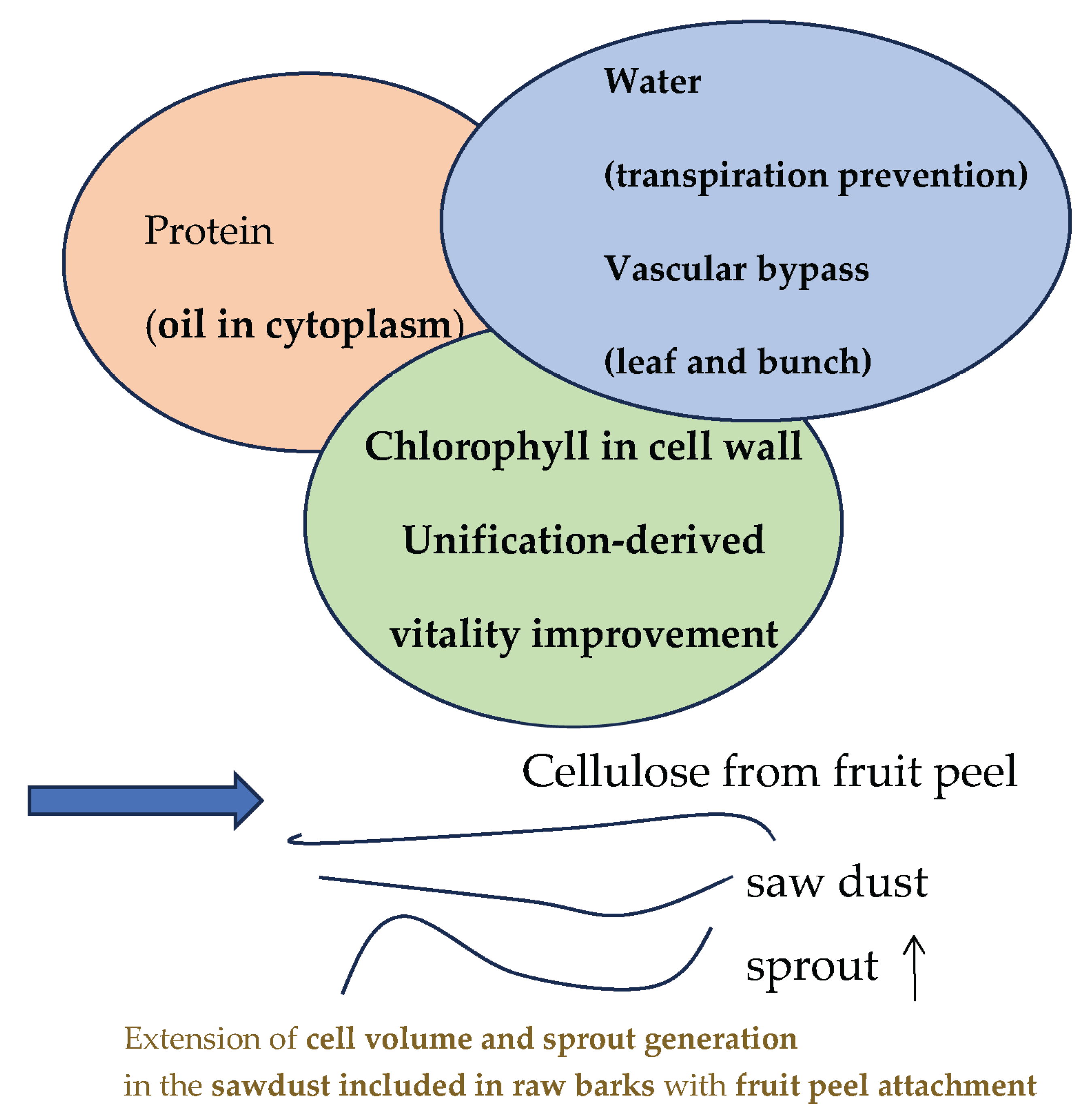
Finally, we propose the strategy for generating sprout on decayed barks and/or ruined soils. Adding good quality protein that is maintained as oil in cytoplasm, that is mixed with water, interacted with chlorophyll in cell wall give rise to generation of sprout on deceased woods (Figure 34).
Figure 33.
Decaying prevention mechanism of banana peels and tree-plants. (Yan, 2026).
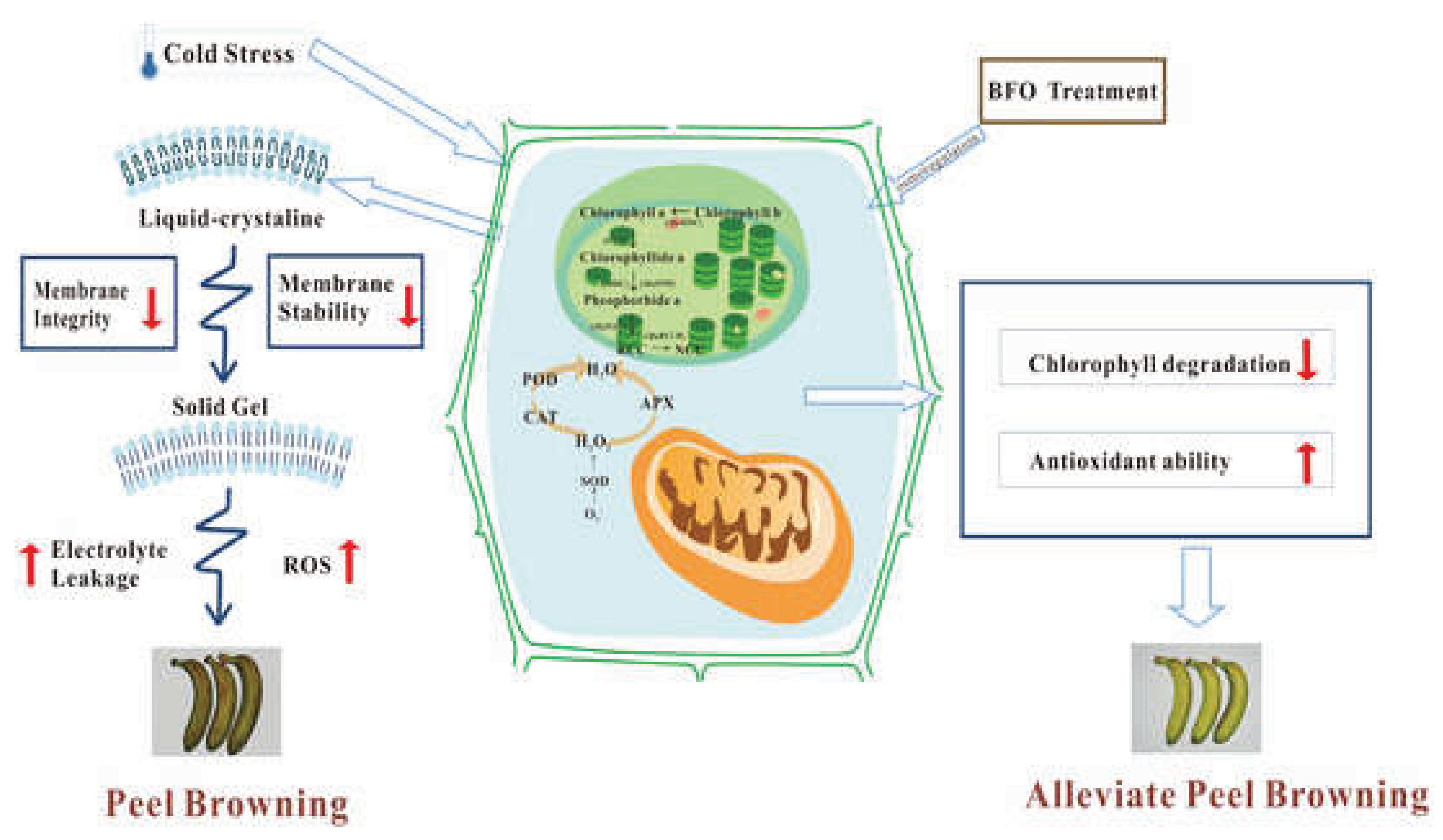
Figure 34.
Proposal of mechanism for sprout generation and greening on the de ceased wood and plant-tree.
Figure 34.
Proposal of mechanism for sprout generation and greening on the de ceased wood and plant-tree.
It leads to the regeneration of sprout and/or undergrowth on the dead (deceased) regions (Figure 35). The revival of ecosystem generates the circulation of resources including food of wild animals, food of carnivore, and pellet from the cut woods.
In our idea, the generation of sprout is achieved by extension of cell volume at the middle stage that is surrounded by sawdust included in raw barks when fruit peel is added. It is important to maintain water new; in the case of raw bark, the support by vascular bypass is essential to eliminate the poison inhibiting the sprout generation in soils. We go back to Figure 31 before concluding the strategy for revival of woods. Chlorophyll A and B indicate the amount of chlorophyll inside leaf and sprout; the appropriate amount of water improves the generation of sprout inside soils. It can be adopted for the revival and generation of green bunches on barks. For the sake, ash ratio control is needed. The higher the amount of chlorophyll, the deeper the color of squeezed juice, that means the vascular does increase by the amount of bunch proteins. It is essential to connect leaf with D+ (detached isolated H ion) in cytoplasm to make prosperity in the vegetation of bunches and undergrowth. It suggests the effectiveness of the saw dust in increasing the sprout on the bunches near the surface of the ground. It is effective to supply appropriate amount of water and to replace the excessive wood barks. The attachment of patch consisting of fruit cellulose and appropriate covering of bark surface with some chlorophyll addition will lead to the diameter growth and sprout generation. The support via water addition is essential for the revival of decayed surface and discretized sprout regeneration. The greening we propose is based on the increase in greens associated with prosperity of green products with the aid of chlorophyll-aided oil filling and water circulation in decayed bunches.
Forest recovery and greening can be achieved by promoting natural bud growth and wa ter retention while incorporating ash fillers, such as bamboo sawdust and sugars derived from fruit is effective, to hide adipose tissue. The water circulation and evaporation of a vaporized mixture of protein and ash elements facilitate the revival of decayed wood trunks. Maintaining a balanced ratio of water, protein, ash, sugar, and concealed adipose tissue is critical. It is partly achieved by setting vascular lines between leaf and bunches. This approach can subtly change the mass transportation of wood, reduce forest cutting, and promote the coexistence between large cities with many humans and woodlands (regeneration of conifer forest). This may yield eliminating poverty.
8. Conclusions
This review covers the types of cellulose materials, their fabrication methods, and mechanical property evaluation techniques, focusing on fruit- and seaweed-based cellulose production. Applications in automobiles, aerospace, electrophysical devices, and biomedical applications are discussed. Cellulose-based automotive components are also highlighted, emphasizing the importance of preserving the original plant structure while enhancing functionality. Flexible and reusable cellulose-based gels and hydrogels are introduced along with the application of cellulose in automobile shafts and starch production to address food security challenges. Cellulose-based burn repair is shown to promote tissue regeneration in the human body. Finally, the use of finely fruit-derived and crushed bamboo cellulose for greening of deceased forest is proposed. Maintaining water balance without destroying DNA enhances the vitality of indigenous plants, with or without bacterial growth, depending on the region. Protein maintained water circulation yields the revival of decayed bunches. The saw dust of bamboo and/or pine pose the effect of heart (sprout) generation on the decayed bear barks with the support of fruit cellulose attached. Sustainability can be achieved by rethinking industrial processes, recovering waste to restore devastated or polluted regions, and fostering coexistence between human activities and natural ecosystems.
Author Contributions
Conceptualization, F.O. and T.H.; methodology, F.O.; formal analysis, F.O.; writing—original draft preparation, F.O.; writing—review and editing, T.H.; visualization, F.O.; supervision, T.H.; All authors have read and agreed to the published version of the manuscript.
Funding
This research received no external funding.
Informed Consent Statement
This study does not contain human biological research.
Data Availability Statement
The data that support the findings of this study are available on request from the corresponding author Fumio Ogawa.
Acknowledgments
Part of this work was carried out with the support of NICHe research grant from Tohoku University.
Conflicts of Interest
The authors declare no conflicts of interest.
References
- A fruitful idea: fabric made from orange peel by Orange Fiber – MaterialDistrict.
- Abualnaja, M.M.; Almotairy, A.R.Z.; Alorabi, A.Q.; Alaysuy, O.; Almahri, A.; Alkhamis, K.; Alrefaee, S.H.; El-Metwaly, N.M. Optimizing cellulose nanofiber composite for Co2+ ions recovery from lithium-ion battery wastes and removal from wastewater: A green environmental solution. J. Water. Process. Eng. 2024, 57, 104621. [CrossRef]
- Alvarado-Ávila, M.I.; De Luca, S.; Edlund, U.; Ye, F.; Dutta, J. Cellulose as sacrificial agents for enhanced photoactivated hydrogen production. Sustain. Energ. Fuels. 2023, 7, 1981–1991. [CrossRef]
- Apple Peel Clothes? Welcome To Food Waste as Fashion – Good & Fugly.
- Atiqah, M.S.N.; Gopakumar, D.A.; F. A. T., O.; Pottathara, Y.B.; Rizal, S.; Aprilia, N.A.S.; Hermawan, D.; Paridah, M.T.; Thomas, S.; Abdul Khalil, H. P. S. Extraction of cellulose nanofibers via eco-friendly supercritical carbon dioxide treatment followed by mild acid hydrolysis and the fabrication of cellulose nanopapers. Polymers 2019, 11, 1813. [CrossRef]
- Baghaei, B.; Compiet, S.; Skrifvars, M. Mechanical properties of all-cellulose composites from end-of-life textiles. J. Polym. Res. 2020, 27, 260. [CrossRef]
- Benselfelt T.; Kummer N.; M. Nordenström, A. B. Fall, G. Nyström, L. Wågberg, The Colloidal Properties of Nanocellulose. Chem. Sus. Chem., 2023, 16, 8. [CrossRef]
- Bigi, F.; Maurizzi, E.; Haghighi, H.; Siesler, H.W.; Licciardello, F.; Pulvirenti, A. Waste orange peels as a source of cellulose nanocrystals and their use for the development of nanocomposite films. Foods 2023, 12, 1902. [CrossRef]
- Biodegradable weed mats, Tudor environmental.
- Brahma, R.; Ray, S. Optimization of extraction conditions for cellulose from jackfruit peel using RSM, its characterization and comparative studies to commercial cellulose. Meas. Food 2024, 13, 100130. [CrossRef]
- Cao, X.; Li, F.; Zheng, T.; Li, G.; Wang, W.; Li, Y.; Chen, S.; Li, X.; Lu, Y. Cellulose-based functional hydrogels derived from bamboo for product design. Front. Plant Sci. 2022, 13, 958066. [CrossRef]
- Catalano, G.D. Developing an environmentally friendly engineering ethic: A course for undergraduate engineering students. J. Eng. Edu. 1993, 82, 27–33. [CrossRef]
- Ceballos-Santos, S.; de Sousa, D.B.; García, P.G.; Laso, J.; Margallo, M.; Aldaco, R. Exploring the environmental impacts of plastic packaging: A comprehensive life cycle analysis for seafood distribution crates. Sci. Total Environ. 2024, 951, 175452. [CrossRef]
- Chen B.; Zhu W.; Huang X., Huang H., Shi S.; Tang Z.; Wu Y. et al., Flexible regenerated cellulose films with nanofiber-oriented structure as green dielectrics for dielectric energy storage. Ind. Cro. Prod. 2025, 223, 120055. [CrossRef]
- Cheng K-C.; Huang C-F.; Wei Y.; Hsu S-h. Novel chitosan–cellulose nanofiber self-healing hydrogels to correlate self-healing properties of hydrogels with neural regeneration effects, NPG Asia Mater., 2019, 11.
- Domokos-Szabolcsy, É.; Yavuz, S.R.; Picoli, E.; Fári, M.G.; Kovács, Z.; Tóth, C.; Kaszás, L.; Alshaal, T.; Elhawat, N. Green biomass-based protein for sustainable feed and food supply: An overview of current and future prospective. Life 2023, 13, 307. [CrossRef]
- Durado, A.; Bajwa, D.S.; Gramig, G.; Weyers, S.; DeVetter, L.W.; Formiga, A.; Galinato, S. Biodegradable composite hydromulches for sustainable organic horticulture. Ind. Crops. Prod. 2024, 221, 119349. [CrossRef]
- eBook ISBN9781003358084.
- Fayshal, M.A. Current practices of plastic waste management, environmental impacts, and potential alternatives for reducing pollution and improving management. Heliyon 2024, 10, e40838. [CrossRef]
- François, M.; de Aguiar, T.R.; Mielke, M.S.; Rousseau, A.N.; Faria, D.; Mariano-Neto, E. Interactions between forest cover and watershed hydrology: A conceptual meta-analysis. Water 2024, 16, 3350. [CrossRef]
- Fricke, W. Night-Time Transpiration – Favouring Growth?, Trends in Plant Science, 2019, 24, 4, 311-317. [CrossRef]
- Ghinaya, Z.; Masek. A. Eco-friendly concrete innovation in civil engineering. J. Sci. Eng. 2021, 1, 191–198. [CrossRef]
- Golovin, Y.I.; Gusev, A.A.; Golovin, D.Y.; Matveev, S.M.; Vasyukova, I.A. Multiscale mechanical performance of wood: From nano- to macro-scale across structure hierarchy and size effects. Nanomaterials 2022, 12, 1139. [CrossRef]
- Guan, Q.-F.; Yang, H.-B.; Han, Z.-M.; Ling, Z.-C.; Yang, K.-P.; Yin, C.-H.; Yu, S.-H. Plant cellulose nanofiber-derived structural material with high-density reversible interaction networks for plastic substitute, plant cellulose nanofiber-derived structural material with high-density reversible interaction networks for plastic substitute. Nano Lett. 2021, 21, 8999–9004.
- Guan, Q.-F.; Yang, H.-B.; Han, Z.-M.; Zhou, L.-C.; Zhu, Y.-B.; Ling, Z.-C.; Jiang, H.-B.; Wang, P.-F.; Ma, T.; Wu, H.-A. Lightweight, tough, and sustainable cellulose nanofiber-derived bulk structural materials with low thermal expansion coefficient. Sci. Adv. 2020, 6. [CrossRef]
- Hai, L.V.; Kim, H.C.; Kafy, A.; Zhai, L.; Kim, J.W.; Kim, J. Green all-cellulose nanocomposites made with cellulose nanofibers reinforced in dissolved cellulose matrix without heat treatment. Cellulose 2017, 24, 3301–3311.
- Hancock, J.; Osei-Bonsu, R.; Hoque, M.; Samuels, L.; Foster, E.J. Valorization of cannabis green waste to cellulose nanomaterials via phosphoric acid hydrolysis. Ind. Crops. Prod. 2023, 201, 116888. [CrossRef]
- Hang, F.; Lu, D.; Bailey, R.J.; Jimenez-Palomar, I.; Stachewicz, U.; Cortes-Ballesteros, B.; Davies, M.; Zech, M.; Bödefeld, C.; Barber, A.H. In situ tensile testing of nanofibers by combining atomic force microscopy and scanning electron microscopy. Nanotechnology 2011, 22, 365708. [CrossRef]
- Hang, F.; Lu, D.; Bailey, R.J.; Jimenez-Palomar, I.; Stachewicz, U.; Cortes-Ballesteros, B.; Davies, M.; Zech, M.; Bödefeld, C.; Barber, A.H. In situ tensile testing of nanofibers by combining atomic force microscopy and scanning electron microscopy. Nanotechnology 2011, 22, 365708. [CrossRef]
- Horikawa, Y. Structural diversity of natural cellulose and related applications using delignified wood. J. Wood. Sci. 2022, 68, 54. [CrossRef]
- Imai, T. Cellulose synthase: A molecule machinery for structural control. J. Environ. 2021, 17, 20. [CrossRef]
- Isogai, A. Cellulose nanofibers: Recent progress and future prospects. J. Fiber Technol. 2020, 76, 310–326. [CrossRef]
- Iwasaki, T. Environmentally friendly green synthesis of fine particles by dry mechanical processes Toward SDGs: A review. KONA Powder Part. J. 2023, 40, 186–196. [CrossRef]
- James, B.D.; Ward, C.P.; Hahn, M.E.; Thorpe, S.J.; Reddy, C.M. Minimizing the environmental impacts of plastic pollution through ecodesign of products with low environmental persistence. ACS Sustain. Chem. Eng. 2024, 12, 1185–1194. [CrossRef]
- Janakiraman, S.; Watson, S.L.; Watson, W.R.; Cheng, Z. Creating environmentally conscious engineering professionals through attitudinal instruction: A mixed methods study. J. Clean. Prod. 2021, 291, 125957. [CrossRef]
- Jing, L.; Shi, T.; Chang, Y.; Meng, X.; He, S.; Xu, H.; Yang, S.; Liu, J. Cellulose-based materials in environmental protection: A scientometric and visual analysis review. Total Environ. 2024, 929, 172576. [CrossRef]
- Jonoobi, M.; Harun, J.; Mathew, A.P.; Hussein, M.Z.B.; Oksman, K. Preparation of cellulose nanofibers with hydrophobic surface characteristics. Cellulose 2010, 17, 299–307. [CrossRef]
- Kabeyi, M.J.B.; Olanrewaju, O.A. Review and design overview of plastic waste-to-pyrolysis oil conversion with implications on the energy transition. J. Energ. 2023, 2023, 1–25. [CrossRef]
- Kafy, A.; Kim, H.C.; Zhai, L.; Kim, J.W.; Hai, L.V.; Kang, T.J.; kim, J. Cellulose long fibers fabricated from cellulose nanofibers and its strong and tough characteristics. Sci. Rep. 2017, 7, 17683. [CrossRef]
- Kasar, P.; Sharma, D.K.; Ahmaruzzaman, M. Thermal and catalytic decomposition of waste plastics and its co-processing with petroleum residue through pyrolysis process. J. Clean. Prod. 2020, 265, 121639. [CrossRef]
- Khoaele, K.K.; Gbadeyan, O.J.; Chunilall, V.; Sithole, B. The devastation of waste plastic on the environment and remediation processes: A critical review. Sustainability 2023, 15, 5233. [CrossRef]
- Kibria, M.G.; Masuk, N.I.; Safayet, R.; Nguyen, H.Q.; Mourshed, M. Plastic waste: Challenges and opportunities to mitigate pollution and effective management. Int. J. Environ. Res. 2023, 17. [CrossRef]
- Ghorbannezhad, P.; Seyfeli, C.; Uzyol, K.S.; Ceylan, S.; Tahir, M.H.; Ali, I. Kinetics of thermal decomposition of crude oils: Insights from principal component analysis and products characterization, Fuel2024 359, 130520.
- Gonzales-Alvarado, A.C.; Cardoso, J.C. Development, Chlorophyll Content, and Nutrient Accumulation in In Vitro Shoots of Melaleuca alternifolia under Light Wavelengths and 6-BAP. Plants 2024, 13, 2842. [CrossRef]
- Koga, H.; Nagashima, K.; Suematsu, K.; Takahashi, T.; Zhu, L.; Fukushima, D.; Huang, Y.; Nakagawa, R.; Liu, J.; Uetani, K. Nanocellulose paper semiconductor with a 3D network structure and its nano–micro–macro trans-scale design. ACS Nano 2022, 16, 8630–8640. [CrossRef]
- Kondo, T. Cellulose nanofibrils pulverized from biomass resources: Past, present, and future perspectives. KONA 2023, 40, 109–123. [CrossRef]
- Kumbhar, J.V.; Rajwade, J.M.; Paknikar, K.M. Fruit peels support higher yield and superior quality bacterial cellulose production. Appl. Microbiol. Biotechnol. 2015, 99, 6677–6691. [CrossRef]
- Kurniawan, N.S.H; Kirana I.A.P., Abidin, A.S.; Jupri, A.; Widyastuti, S; Hernawan, A; Nikmatullah, A; Sunarpi, H; Prasedya, E.S., IOP Conf. Ser.: Earth Environ. Sci. 2021, 913. 012025.
- Lampugnani, E.R.; Flores-Sandoval, E.; Tan, Q.W.; Mutwil, M.; Bowman, J.L.; Persson, S. Cellulose synthesis – central components and their evolutionary relationships. Trends Plant Sci. 2019, 24, 402–412. [CrossRef]
- Li, F.; Xia, X.; Li, L.; Song, L.; Ye, Y.; Jiang, Y.; Liu, H. Elucidation of pineapple softening based on cell wall polysaccharides degradation during storage. Front. Plant Sci. 2024, 15, 1492575. [CrossRef]
- Li, K.; Clarkson, C.M.; Wang, L.; Liu, Y.; Lamm, M.; Pang, Z.; Zhou, Y.; Qian, J.; Tajvidi, M.; Gardner, D.J. Alignment of cellulose nanofibers: Harnessing nanoscale properties to macroscale benefits. ACS Nano 2021, 15, 3646–3673. [CrossRef]
- Li, Z.-L.; Chen, K.; Li, F.; Shi, Z.-J.; Sun, Q.-L.; Li, P.-Q.; Peng, Y.-G.; Huang, L.-X.; Yang, G.; Zheng, H. Decorated bacteria-cellulose ultrasonic metasurface. Nature Commun. 2023, 14, 5319,.
- Ma, M.; Tao, W.; Liao, X.; Chen, S.; Shi, Y.; He, H.; Wang, X. Cellulose nanofiber/MXene/FeCo composites with gradient structure for highly absorbed electromagnetic interference shielding. Chem. Eng. J. 2023, 452, 139471. [CrossRef]
- Magalhães, S.; Fernandes, C.; Pedrosa, J.F.S.; Alves, L.; Medronho, B.; Ferreira, P.J.T.; Rasteiro, M. da G. Eco-friendly methods for extraction and modification of cellulose: An overview. Polymers 2023, 15, 3138. [CrossRef]
- Manafi-Dastjerdi, M.; Ebrahimi-Nik, M.; Rohani, A.; Lawson, S. Production of biodegradable pots from cattle manure and wood waste: Effects of natural binders on mechanical performances and biodegradability. Environ. Sci. Pollut. Res. 2022, 29, 20265–20278. [CrossRef]
- Manamoongmongkol, K.; Suwapanich, R.; Phumjan, L.; Narkrugsam, W.; Spiprom, P. Production of cellulose from bamboo shoot shell using hydrothermal technique. J. Jpn. Inst. Energy 2021, 100, 307–312.
- Meftahi, A.; Heravi, M.; Barhoum, A.; Najarzadeh, H.; Alibakhshi, S. Cellulose nanofibers synthesis, unique properties, and emerging applications. Handb. Nanocelluloses. 2022, 16, 233–262.
- Mishra, S.; Prabhakar, B.; Kharkar, P.S.; Pethe, A.M. Banana peel waste: An emerging cellulosic material to extract nanocrystalline cellulose. ACS Omega 2023, 8, 1140–1145. [CrossRef]
- Pereira Oliveira Moreira, R.L.; Simão, J.A.; Gouveia, R.F.; Strauss, M. Exploring the hierarchical structure and alignment of wood cellulose fibers for bioinspired anisotropic polymeric composites. ACS Appl. Bio. Mater. 2020, 3, 2193–2200. [CrossRef]
- Musa, A.A.; Onwualu, A.P. Potential of lignocellulosic fiber reinforced polymer composites for automobile parts production: Current knowledge, research needs, and future direction. Heliyon 2024, 10, e24683. [CrossRef]
- Mushtaq, S.; Jamil, F.; Hussain, M.; Inayat, A.; Akhter, P.; Majeed, K.; Khurram, M.S.; Aslam, M.; Lee, J.; Park, Y.-K. Unearthing the potential sustainability of cellulose and exploring its source, fate, and recovery. Environ. Eng. Res. 2023, 28, 230054. [CrossRef]
- Napper, I.E.; Thompson, R.C. Plastics and the environment. Annu. Rev. Environ. Resour. 2023, 48, 55–79. [CrossRef]
- Nigam, S.; Das, A.K.; Patidar, M.K. Valorization of parthenium hysterophorus weed for cellulose extraction and its application for bioplastic preparation. J. Environ. Chem. Eng. 2021, 9, 105424. [CrossRef]
- Nordin, N.A. Natural fiber composites for automotive applications. In Cellulose, 1st ed.; CRC Press: FL, 2023; P. 12.
- Numata, Y.; Kumagai, H.; Kono, H.; Erata, T.; Takai, M. Structural analysis of cellulose triacetate i by molecular dynamics simulation. Sen-i Gakkaishi 2024, 60, 75–80. [CrossRef]
- Oesef, K.; Cranston, E.D.; Abdin, Y. Current advances in processing and modification of cellulose nanofibrils for high-performance composite applications. Mater. Des. 2024, 247, 113417. [CrossRef]
- Ogawa, F. Unusual stress-strain relationship in the tensile response of cellulose nanofiber films and their relationship with microstructures, strengthening mechanisms. Ind. Crops. Prod. 2025, 225, 120396. [CrossRef]
- Ogunjobi, J.K.; Adewale, A.I.; Adeyemi, S.A. Cellulose nanocrystals from siam weed: Synthesis and physicochemical characterization. Heliyon 2023, 9, e13104. [CrossRef]
- Omrani, A.; Simon, L.C.; Rostami, A.A. Influences of cellulose nanofiber on the epoxy network formation. Mat. Sci. Eng. A 2008, 490, 131–137. [CrossRef]
- Pakharenko, V.; Sameni, J.; Konar, S.; Pervaiz, M.; Yang, W.; Tjong, J.; Oksman, K.; Sain, M. Cellulose nanofiber thin-films as transparent and durable flexible substrates for electronic devices. Mater. Des. 2021, 197, 109274. [CrossRef]
- Pan, Z.-Z.; Nishihara, H.; Iwamura, S.; Sekiguchi, T.; Sato, A.; Isogai, A.; Kang, F.; Kyotani, T. Cellulose nanofiber as a distinct structure-directing agent for xylem-like microhoneycomb monoliths by unidirectional freeze-drying. ACS Nano 2016, 10, 3. [CrossRef]
- Pang, B.; Jiang, G.; Zhou, J.; Zhu, Y.; Cheng, W.; Zhao, D.; Wang, K.; Xu, G.; Yu, H. Molecular-scale design of cellulose-based functional materials for flexible electronic devices. Adv. Electron. Mater. 2021, 7, 2000944. [CrossRef]
- Patnaikuni, I. Environmentally friendly sustainable housing construction. J. Civ. Eng. Res. Pract. 2009, 6. [CrossRef]
- Pedersen G.B., Blashek L.; Fransen K.E.H.; Noack L.C; Persson S. Cellulose synthesis in land plants. Mol. Plant, 2023, 16, 1, 206-231.
- Peng, J.; Li, Y.; Liu, X.; Ke, G.; Song, D.; Wu, S.; Xu, W.; Zhu, K. Cellulose film with air barrier and moisture-conducting character fabricated by NMMO. J. Mater. Sci. 2021, 56, 18313–18326. [CrossRef]
- Pereira, C.J. Environmentally friendly processes. Chem. Eng. Sci. 1999, 54, 1959–1973. [CrossRef]
- Phirom-on, K.; Apiraksakorn, J. Eco-friendly extraction of banana peel cellulose using a wood charcoal ash solution and application of process wastewater as a naturally-derived product. Bioresour. Technol. Rep. 2022, 19, 101174. [CrossRef]
- Imai, T. Cellulose synthase: A molecule machinery for structural control of polymers in aqueous solvents at ambient temperature and pressure. Glycoforum, 24, A4.
- Qua, E.H.; Hornsby, P.R.; Sharma, H.S.S.; Lyons, G. Preparation and characterisation of cellulose nanofibres. J. Mater. Sci. 2011, 46, 6029–6045. [CrossRef]
- Radha, R.; Terro T.; Khodja A; Al-Sayah M.H. Cellulose-based materials for antimicrobial water treatment: functionalization strategies and applications. Discov. App. Sci., 2025, 7, 889. [CrossRef]
- Rahman, A.; Nipu, S.; Alam, M.S.; Alam, S.S.; Ahmed, M.T.; Shantona, A.A.; Moon, M. Extraction of cellulosic compound from jackfruit peel waste and characterization of PVA cellulose composite as biodegradable film. J. Eng. 2024, 2024, 5052750. [CrossRef]
- Rahman, M.Z.; Rahman, M.; Mahbub, T.; Ashiquzzaman, M.; Sagadevan, S.; Hoque, M.E. Advanced biopolymers for automobile and aviation engineering applications. J. Polym. Res. 2023, 30, 106. [CrossRef]
- Ray, U.; Zhu, S.; Pang, Z.; Li, T. Mechanics design in cellulose-enabled high-performance functional materials. Adv. Mater. 2021, 33, 2002504. [CrossRef]
- Rayns, F.; Conroy, J.; Geiger, A.G.; Schmutz, U. Evaluating alternatives to fossil fuel-derived plastic mulches for weed control in an organic field vegetable system. In Proceedings of the Organic World Congress 2021, Science Forum: 6th ISOFAR Conference co-organized with INRA, FiBL, Agroecology Europe; Rennes, France, September 2021; pp. 8–10.
- Richland Center Wisconsin (.gov). How long does it take garbage to decompose? Available online:https://www.richlandcenterwi.gov/sites/default/files/fileattachments/parks_amp_recreation/page/2534/howlonggarbagedecomposes.pdf.
- Sachidhanandham, A. Textiles from orange peel waste. Tech. Dev. J. 2020, 23, 508–516. [CrossRef]
- Saito, T.; Kuramae, R.; Wohlert, J.; Berglund, L.A.; Isogai, A. An ultrastrong nanofibrillar biomaterial: The strength of single cellulose nanofibrils revealed via sonication-induced fragmentation. Biomacromolecules 2013, 14, 248–253. [CrossRef]
- Samadam, A.; Vallepalli, R.; Neeraj Kumar, K.; Sreekanth, M.; Raman Goud, R. Mechanical properties evaluation and behaviour of cellulose-hdpe composite. Mater. Today Proc. 2022, 62, 3405–3410. [CrossRef]
- Samir, A.; Ashour, F.H.; Hakim, A.A.A.; Bassyouni, M. Recent advances in biodegradable polymers for sustainable applications. Npj. Mater. Degrad. 2022, 6, 68. [CrossRef]
- Seddiqi, H.; Oliaei, E.; Honarkar, H.; Jin, J.; Geonzon, L.C.; Bacabac, R.G.; Klein-Nulend, J. Cellulose and its derivatives: Towards biomedical applications. Cellulose 2021, 28, 1893–1931. [CrossRef]
- Shao, W.; Zhang, X.; Liang, X.; Tao, W.; Ma, M.; Chen, S.; Shi, Y.; He, H.; Zhu, Y.; Wang, X. Cellulose Nanofiber-based nanocomposite films with efficient electromagnetic interference shielding and fire-resistant performance. ACS Appl. Mater. Interfaces 2024, 16, 42674–42686. [CrossRef]
- Shi, J.; Liu, X.; Xia, C.; Leng, W.; Li, W. Visualization of wood cell structure during cellulose purification via high resolution X-Ray CT and spectroscopy. Ind. Crops. Prod. 2022, 189, 115869. [CrossRef]
- Siddiqui, V.U.; Almehjani, T.M.; Sapuan, S.M.; Jamal, T.; Ilyas, R.A.; Eldin, S.M.; Khan, A.; Jameel, Y. Isolation and characterization of cellulose from pomegranate ( punica Granatum ) peel. J. Nat. Fibers 2024, 21, 2299943. [CrossRef]
- Singh, N.; Walker, T.R. Plastic recycling: A panacea or environmental pollution problem, plastic recycling: A panacea or environmental pollution problem. Mater. Sustain 2024, 2, 17.
- Sridhara, P.K.; Vilaseca, F. Assessment of fiber orientation on the mechanical properties of PA6/Cellulose composite. Appl. Sci. 2020, 10, 5565. [CrossRef]
- Srivastava, A.; Parmar, P.; Parmar, M.S. Eco-friendly dyeing of natural fabrics using discarded litchi fruit peel. Available online:www.fiber2fashion.com.
- Su, Y.; Yang, J.; Rao, H.; Zhong, Y.; Sheng, W.; Tan, L.; Chen, Y. Environmentally friendly anti-solvent engineering for high-efficiency tin-based perovskite solar cells. Energy Environ. Sci. 2023, 16, 2177–2186. [CrossRef]
- Subbotina, E.; Montanari, C.; Olsén, P.; Berglund, L.A. Fully bio-based cellulose nanofiber/epoxy composites with both sustainable production and selective matrix deconstruction towards infinite fiber recycling systems. J. Mater. Chem. A 2022, 10, 570–576. [CrossRef]
- Suhaily, S.S.; Abdul Khalil. H.P.S.; Nadirah, W.O.; Jawaid, M. Bamboo based biocomposites material, design and applications. In Materials Science – Advanced Topics, Y., Mastai Ed.; Intech Publication: Uk, 2013; pp. 489–517.
- Sulis, D.B.; Lavoine, N;, Sederoff, H. et al. Advances in lignocellulosic feedstocks for bioenergy and bioproducts. Nat. Commun. 2025, 16, 1244. [CrossRef]
- Tang, R.; Xu, S.; Hu, Y.; Wang, J.; Lu, C.; Wang, L.; Zhou, Z.; Liao, D.; Zhang, H.; Tong, Z. Multifunctional nano-cellulose aerogel for efficient oil–water separation: Vital roles of magnetic exfoliated bentonite and polyethyleneimine. Sep. Purif. Technol. 2023, 314, 123557. [CrossRef]
- The impact of plastic on climate change. Environmental Center; University of Colorado Boulder. Available online: https://www.colorado.edu/ecenter/2023/12/15/impact-plastic-climate-change.
- Três, M.; Pagno, C.H.; Crizel, T.M.; Rios, A.O.; Flôres, S.H. Production of cellulose nanofibers from pineapple peel (ananas Comosus) and application in biodegradable films. Packaging Technol. Sci. Int. Journal 2024, 38, 117–129. [CrossRef]
- Tu, W.; Wang, S.; Deng, Q.; Li, D.; Zhang, Y.; Wang, Q.; Jiang, H. Review on nanocellulose composites and Cnfs assembled microfiber toward automotive applications. Nanotechnol. Rev. 2024, 13, 20240006. [CrossRef]
- Uto, T.; Minamizaki, M.; Yui, T. Molecular dynamics simulation of cellulose I–ethylenediamine complex crystal models. J. Phys. Chem. B 2020, 124, 134–143. [CrossRef]
- Valavanidis, A. Plastic pollution, Unsustainable environmental problem? Industry and academic research must co-operate to short out the pervasive global problem of plastic waste. Sci. Rev 2024, 1-42.
- Vilela, A.; Gonçalves, B.; Gonçalves, C.; Cosme, F.; Pinto, T. Novel Applications of Starch and Starch Derivatives in the Food and Alcoholic Beverages Industry: A Review. Foods 2026, 15, 277.
- Wang, B.; Ye, T.; Li, C.; Li, X.; Chen, L.; Wang, G. Cell damage repair mechanism in a desert green algae chlorella Sp. against UV-B radiation. Ecotoxicol. Environ. Saf. 2022, 242, 113916. [CrossRef]
- Whitney, S.E.C.; Gothard, M.G.E.; Mitchell, J.T.; Gidley, M.J. Roles of cellulose and xyloglucan in determining the mechanical properties of primary plant cell walls. Plant. Physiol. 1999, 121, 657–664. [CrossRef]
- Wohlert, M.; Benselfelt, T.; Wågberg, L.; Furó, I.; Berglund, L.A.; Wohlert, J. Cellulose and the role of hydrogen bonds: Not in charge of everything. Cellulose 2022, 29, 1–23. [CrossRef]
- New Atlas. Wood pulp extract stronger than carbon fiber or kevlar. Available online: https://newatlas.com/cellulose-nanocrystals-stronger-carbon-fiber-kevlar/23959/.
- Xi, P.; Quan, F.; Sun, Y.; Jiang, Y. Cellulose nanofibers reinforced nanocomposites with high strength and toughness by tunable wet-drawing and ionic cross-linking method. Compos. B Eng. 2018, 242, 110078. [CrossRef]
- Yahya E.B.; Elarbash, S.S.; Bairwan, R.D.; Mohamed, M.M.I.; Khan, N.B.; Harlina P.W.; Abdul Khalil, H.P.S. The Role of Microorganisms in the Isolation of Nanocellulose from Plant Biomass. Forests. 2023; 14(7):1457. [CrossRef]
- Yan, J.; Zhao, H.; Sun, Y.; Gao, W.; Xu, Z.; Li, J.; Guo, F.; Jiao, W. Burdock Fructooligosaccharide Improves Peel Browning in Green Banana Through Its Regulation of Antioxidant and Chlorophyll Metabolism. Horticulturae 2026, 12, 316. [CrossRef]
- Yan, W.; Liu, J.; Zheng, X.; Zhang, J.; Tang, K. Wood-derived high-performance cellulose structural materials. e-polymers, 2023, 23, 20230010. [CrossRef]
- Yang, H.; Yue, X.; Liu, Z.; Guan, Q.; Yu, S. Emerging sustainable structural materials by assembling cellulose nanofibers. Adv. Mater. 2024, 37, 2413564. [CrossRef]
- Yang, L.; Wang, H.; Yang, Y.; Li, Y. Self-healing cellulose-based hydrogels: From molecular design to multifarious applications. Carbohydr. Polym. 2025, 347, 122738. [CrossRef]
- Yang, S; Xu, Y; Tang Z; Jin, S; Yang, S. The Impact of Alkaline Stress on Plant Growth and Its Alkaline Resistance Mechanisms. Int J Mol Sci. 2024 Dec 23;25(24):13719. [CrossRef] [PubMed] [PubMed Central]
- Ye, D.; Lei, X.; Li, T.; Cheng, Q.; Chang, C.; Hu, L.; Zhang, L. Ultrahigh tough, super clear, and highly anisotropic nanofiber-structured regenerated cellulose films. ACS Nano 2019, 13, 4843–4853. [CrossRef]
- You, C.; Zhang, Y. Quality living through chemurgy and green chemistry. green chemistry and sustainable technology, Springer: Berlin, Heidelberg, 2016.
- Youssefian, S.; Rahbar, N. Molecular origin of strength and stiffness in bamboo fibrils. Sci. Rep. 2015, 5, 11116. [CrossRef]
- Zhai, L.; Kim, H.C.; Kim, J.W.; Kang, J.; Kim, J. Elastic moduli of cellulose nanofibers isolated from various cellulose resources by using aqueous counter collision. Cellulose 2018, 25, 4261–4268. [CrossRef]
- Zhang, H.; Lee, Y.; Zhang, T.; Šutka, A.; Zhang, Y.; Jeong, C.K. Mechanical sensing by cellulose-aided composites: A critical overview. Compos. B Eng. 2025, 294, 112145. [CrossRef]
- Zhang, X.; Heděnec, P.; Yue, K.; Ni, X.; Wei, X.; Chen, Z.; Yang, J.; Wu, F. Global forest gaps reduce litterfall but increase litter carbon and phosphorus release. Commun. Earth. Environ. 2024, 5, 288. [CrossRef]
- Zhang, X.; Li, L.; Xu, F. Chemical characteristics of wood cell wall with an emphasis on ultrastructure: A mini-review. Forests 2022, 13, 439. [CrossRef]
- Zheng, T.; Pilla, S. Melt processing of cellulose nanocrystal-filled composites: Toward reinforcement and foam nucleation. Ind. Eng. Chem. Res. 2020, 59, 8511–8531. [CrossRef]
- Zhong, C. Industrial-scale production and applications of bacterial cellulose. Front. Bioeng. Biotechnol. 2020, 8, 605374. [CrossRef]
Figure 1.
Sustainability for the environmental protection of the Earth and human prosperity: Wikipedia, and an photoimage of conifer.
Figure 1.
Sustainability for the environmental protection of the Earth and human prosperity: Wikipedia, and an photoimage of conifer.
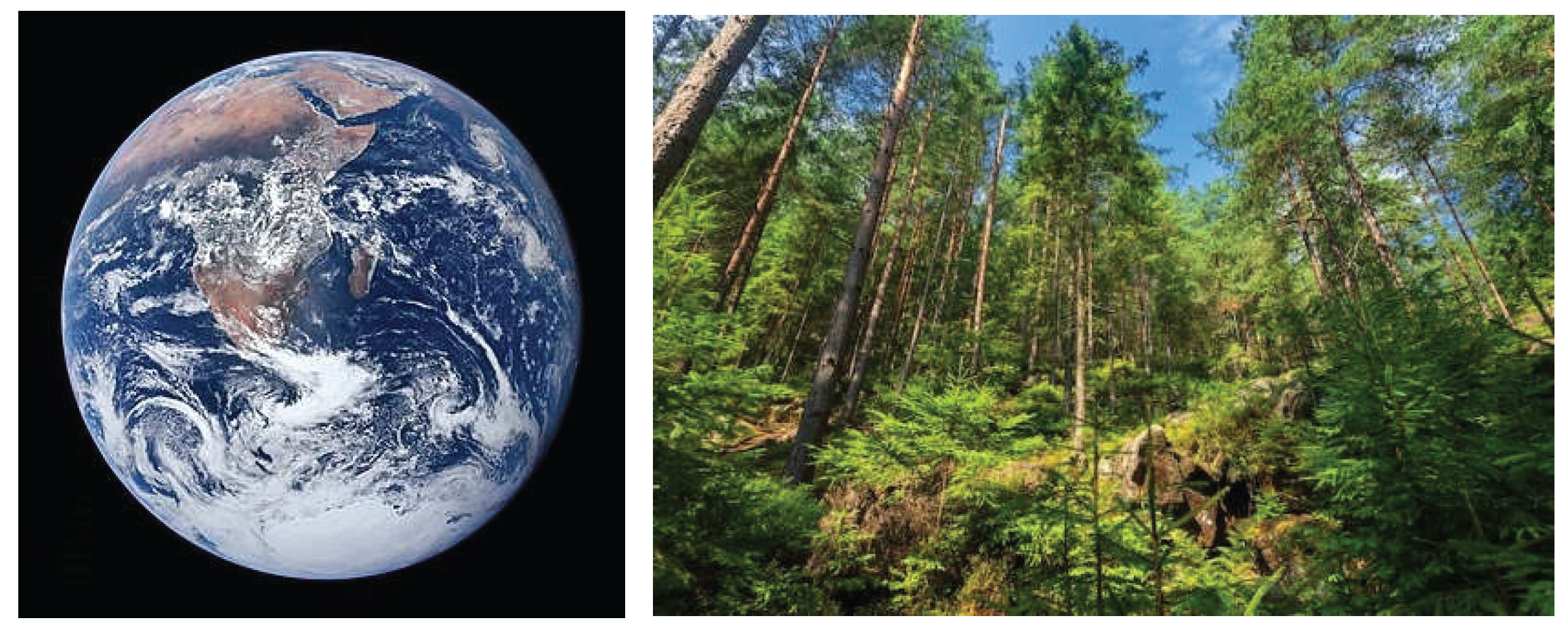
Figure 2.
Wood-based cellulose materials and their use in bioengineering and pharmaceuticals (Siddiqui et al., 2024). Reusable owing to open access.
Figure 2.
Wood-based cellulose materials and their use in bioengineering and pharmaceuticals (Siddiqui et al., 2024). Reusable owing to open access.
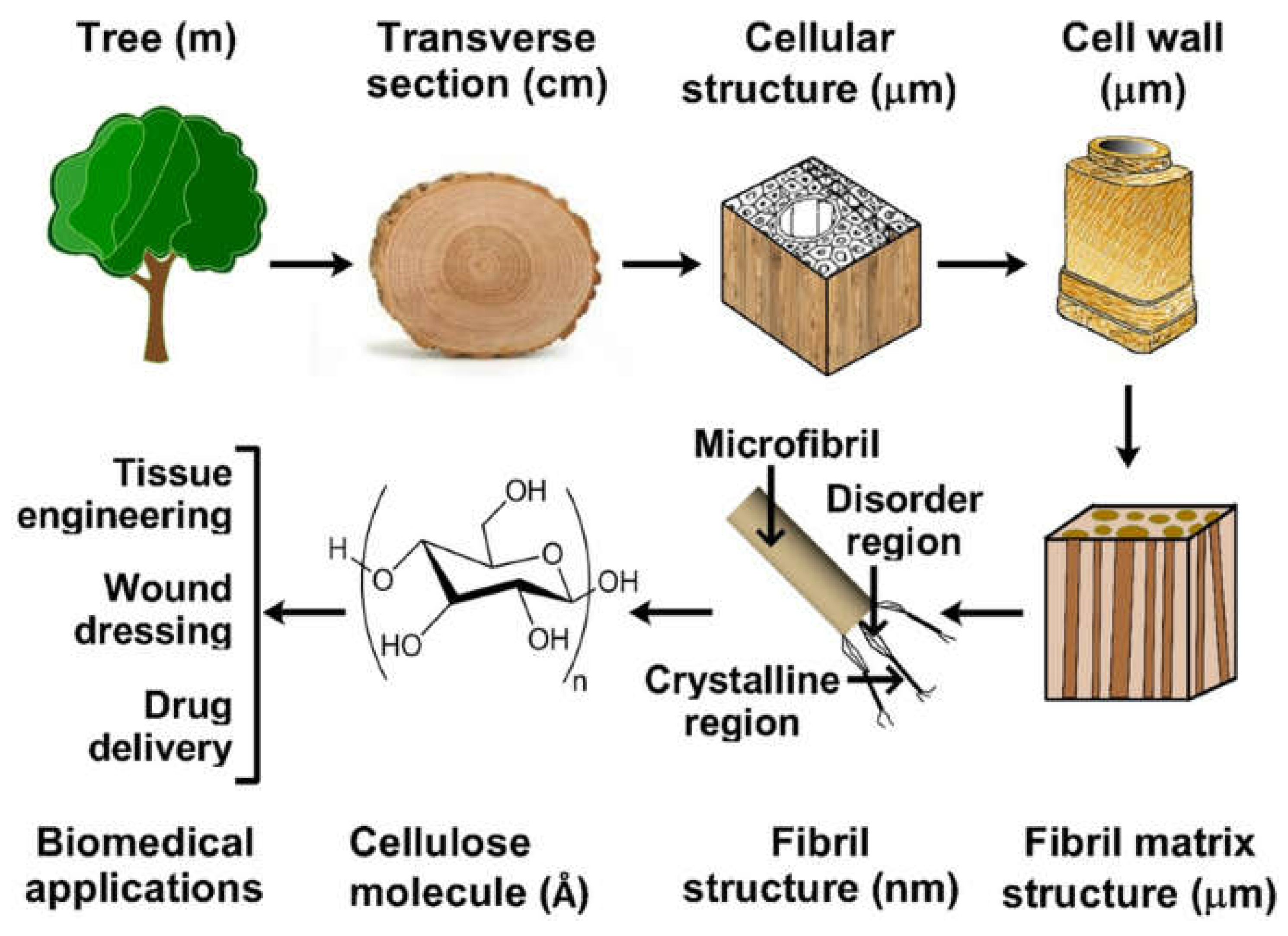
Figure 3.
CNF structure (Wholert et al., 2021). Reusable owing to open access.
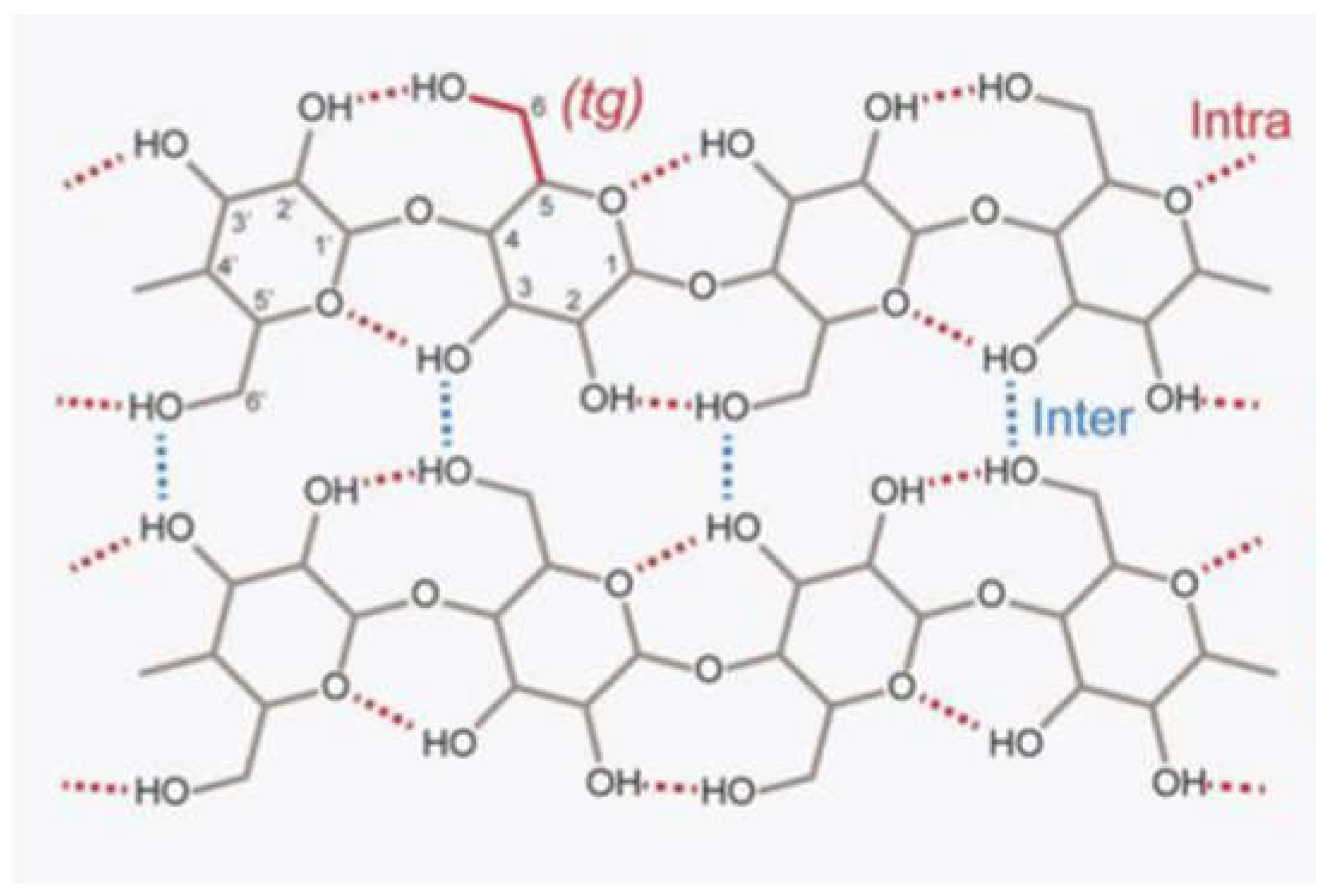
Figure 4.
Different cellulose species (Radha et al., 2025).
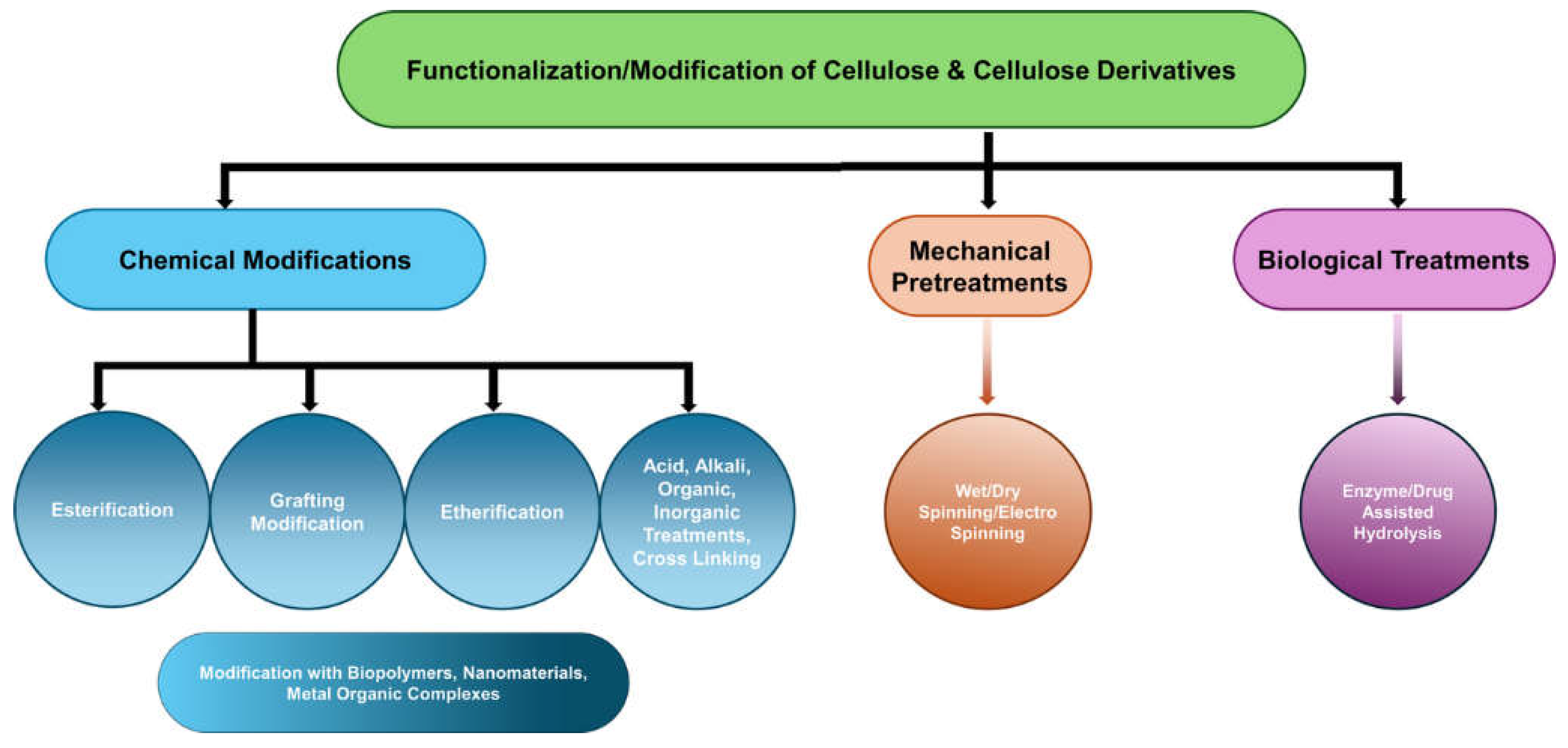
Figure 5.
Nanocellulose dispersion, interaction, formation of networks, assembly, redispersion yields the generation of applications used in the future. (Benselfelt et al., 2023).
Figure 5.
Nanocellulose dispersion, interaction, formation of networks, assembly, redispersion yields the generation of applications used in the future. (Benselfelt et al., 2023).
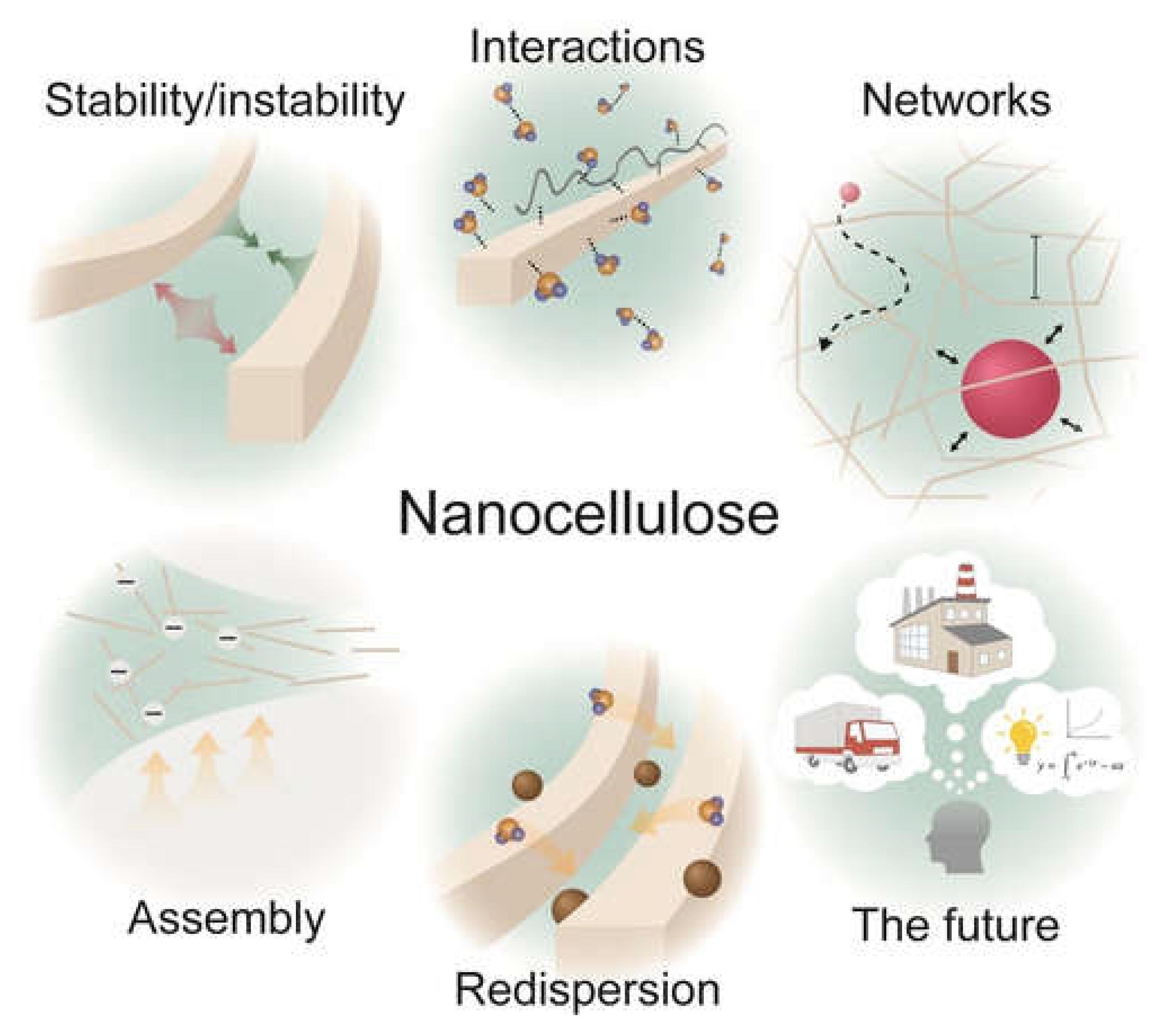
Figure 6.
Flexible cellulose films fabricated by chemical reaction through hydro oxidation (Chen et al., 2025). https://doi.org/10.1016/j.indcrop.2024.120055.
Figure 6.
Flexible cellulose films fabricated by chemical reaction through hydro oxidation (Chen et al., 2025). https://doi.org/10.1016/j.indcrop.2024.120055.
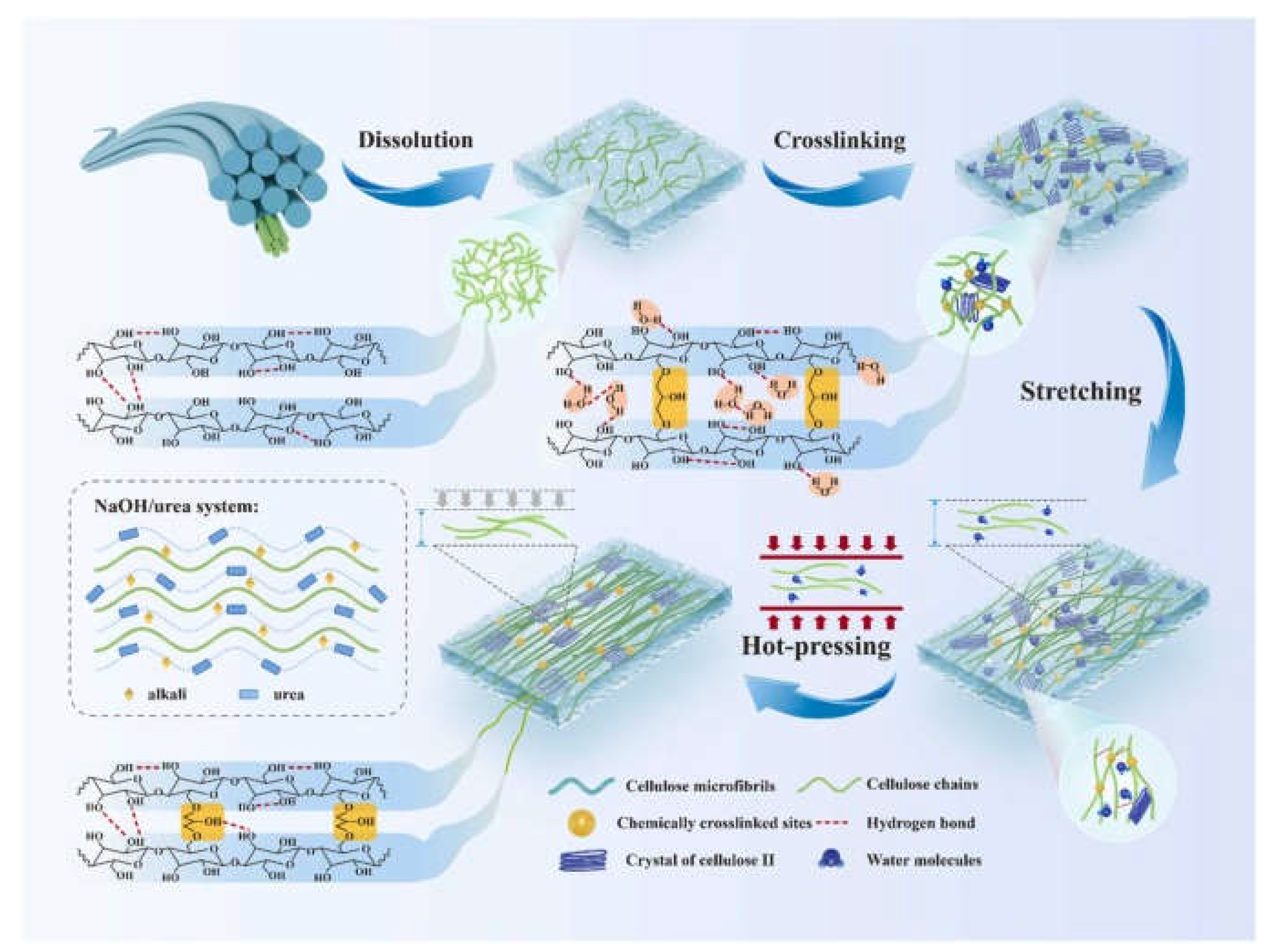
Figure 7.
Tensile stress‒strain curves for phosphate-ester-treated CNF films (Ogawa, 2025). Open access.
Figure 7.
Tensile stress‒strain curves for phosphate-ester-treated CNF films (Ogawa, 2025). Open access.
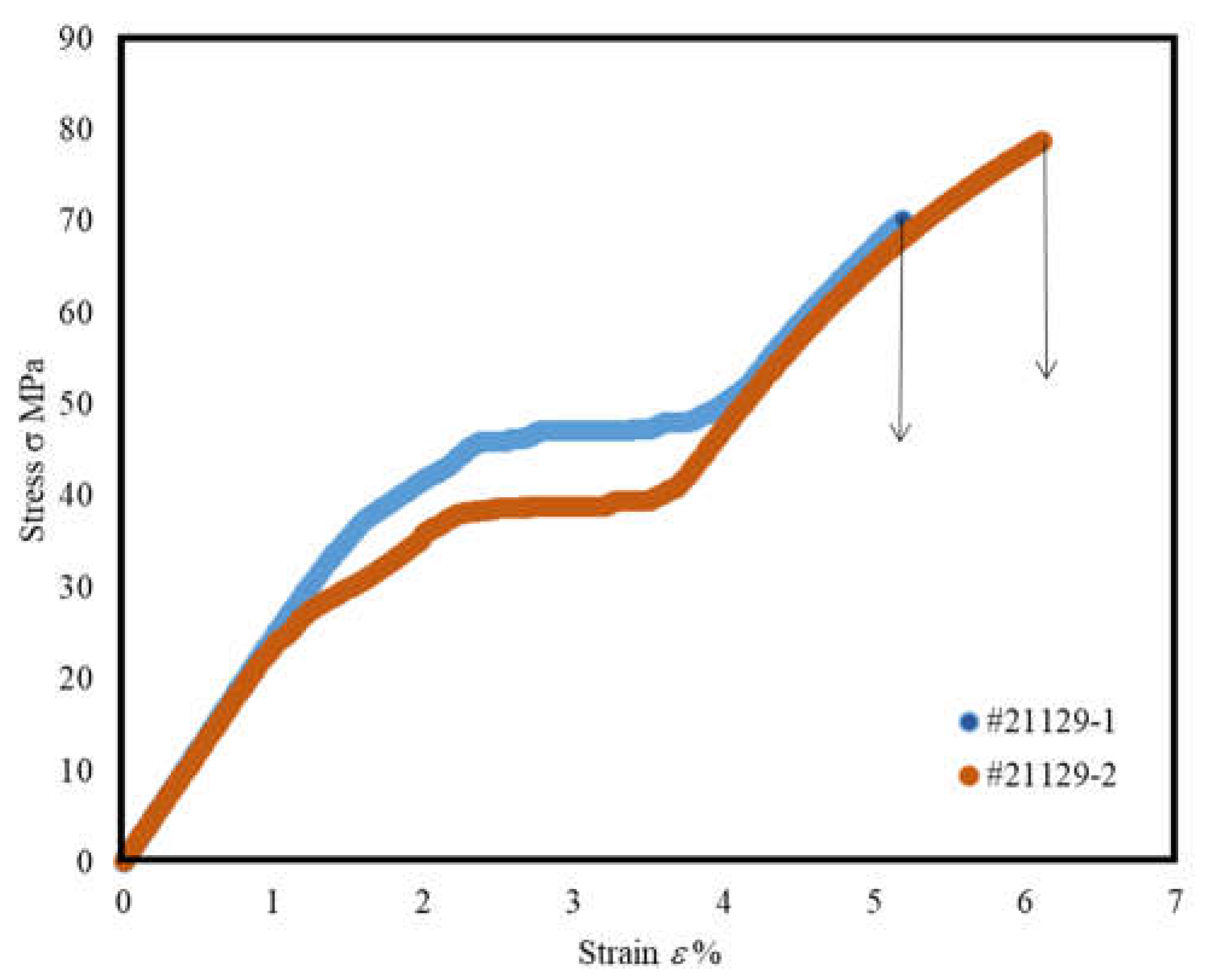
Figure 8.
SEM image of CNF films (Ogawa, 2025). Open access.
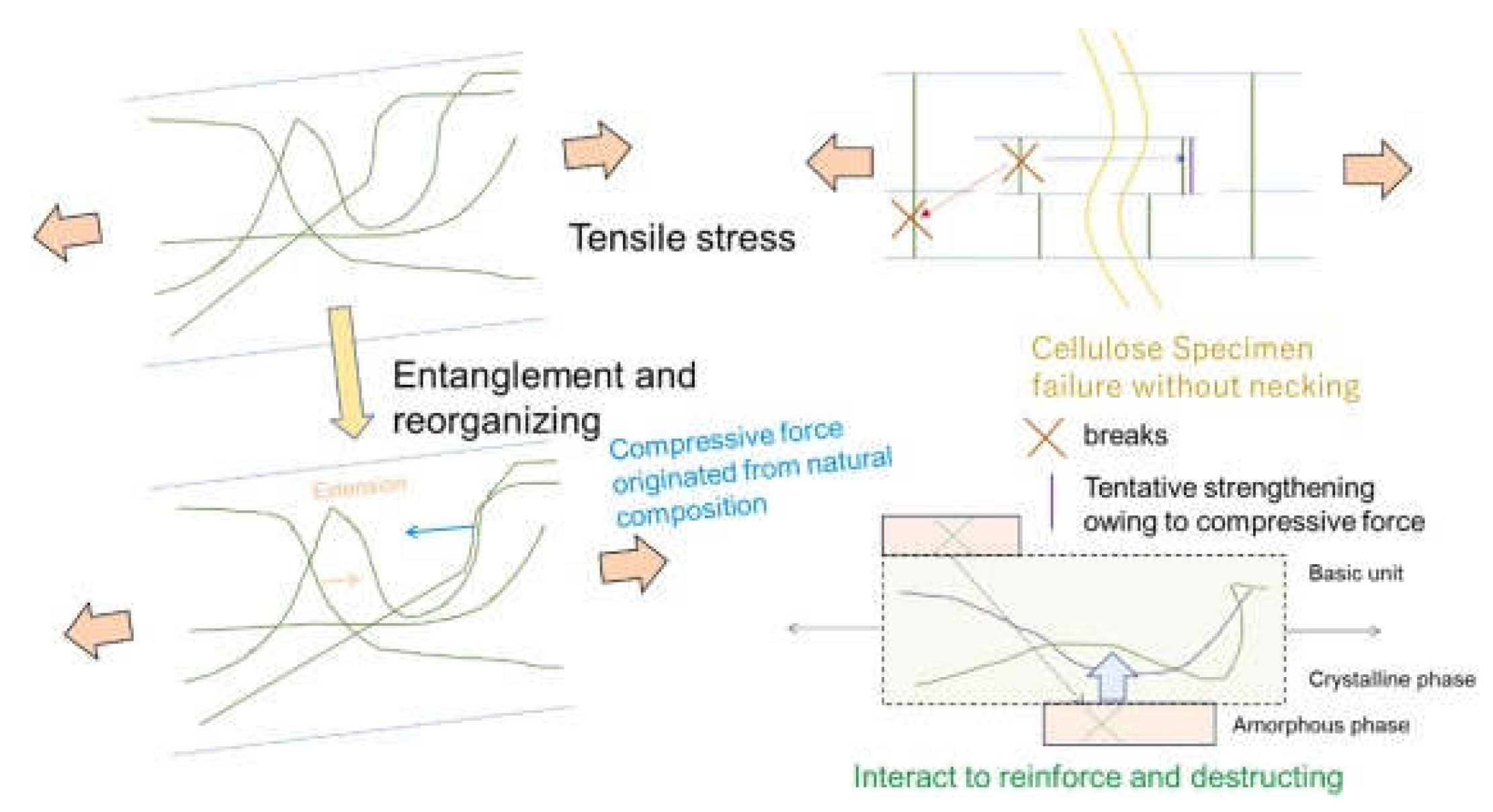
Figure 9.
SEM image of CNF films (Ogawa, 2025). open access.
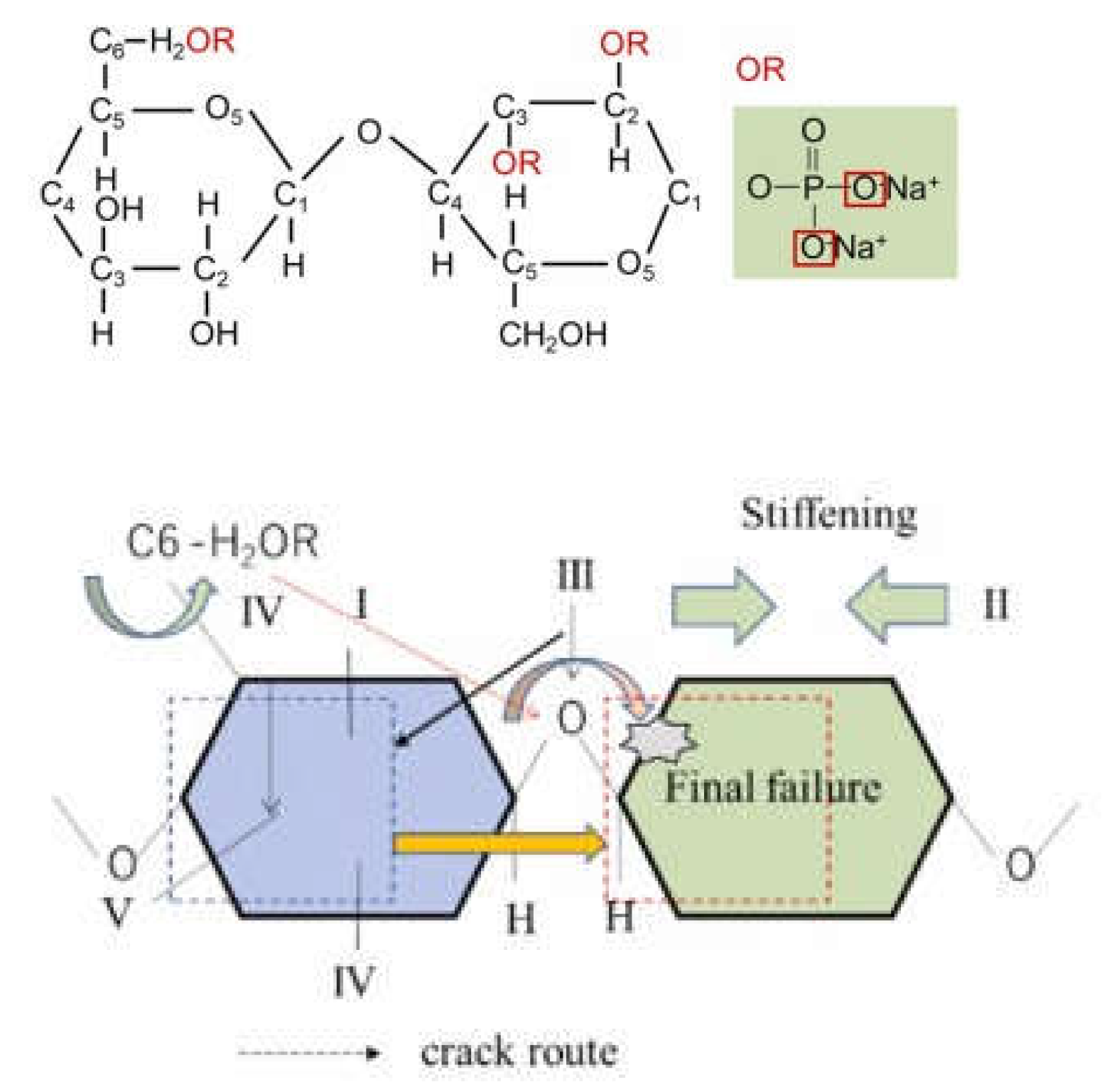
Figure 10.
Glycol chitosan yielding the gels containing hydroxyl groups that generate self-repair properties.
Figure 10.
Glycol chitosan yielding the gels containing hydroxyl groups that generate self-repair properties.
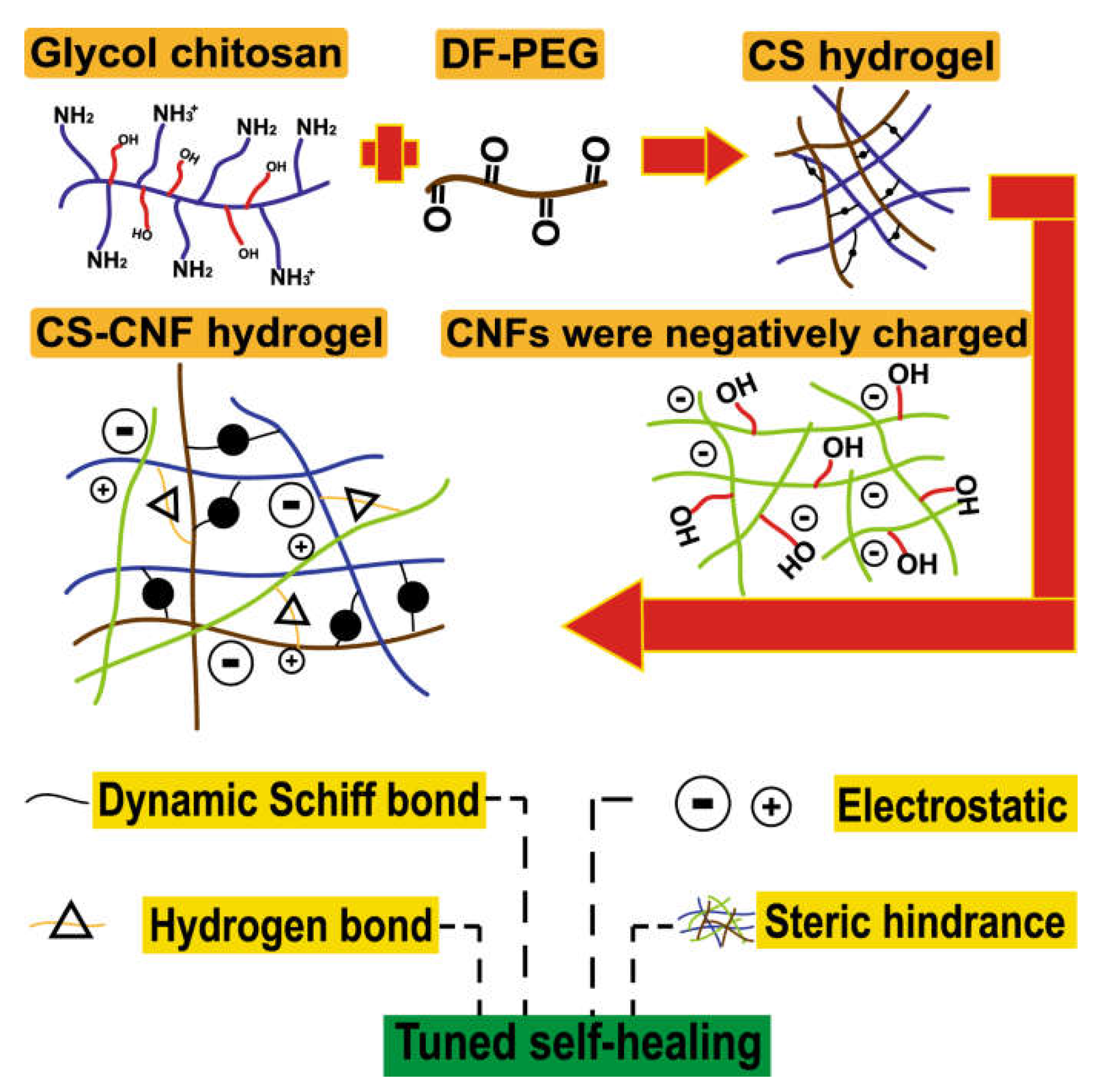
Figure 11.
Biological performance based on strain for structure destruction.
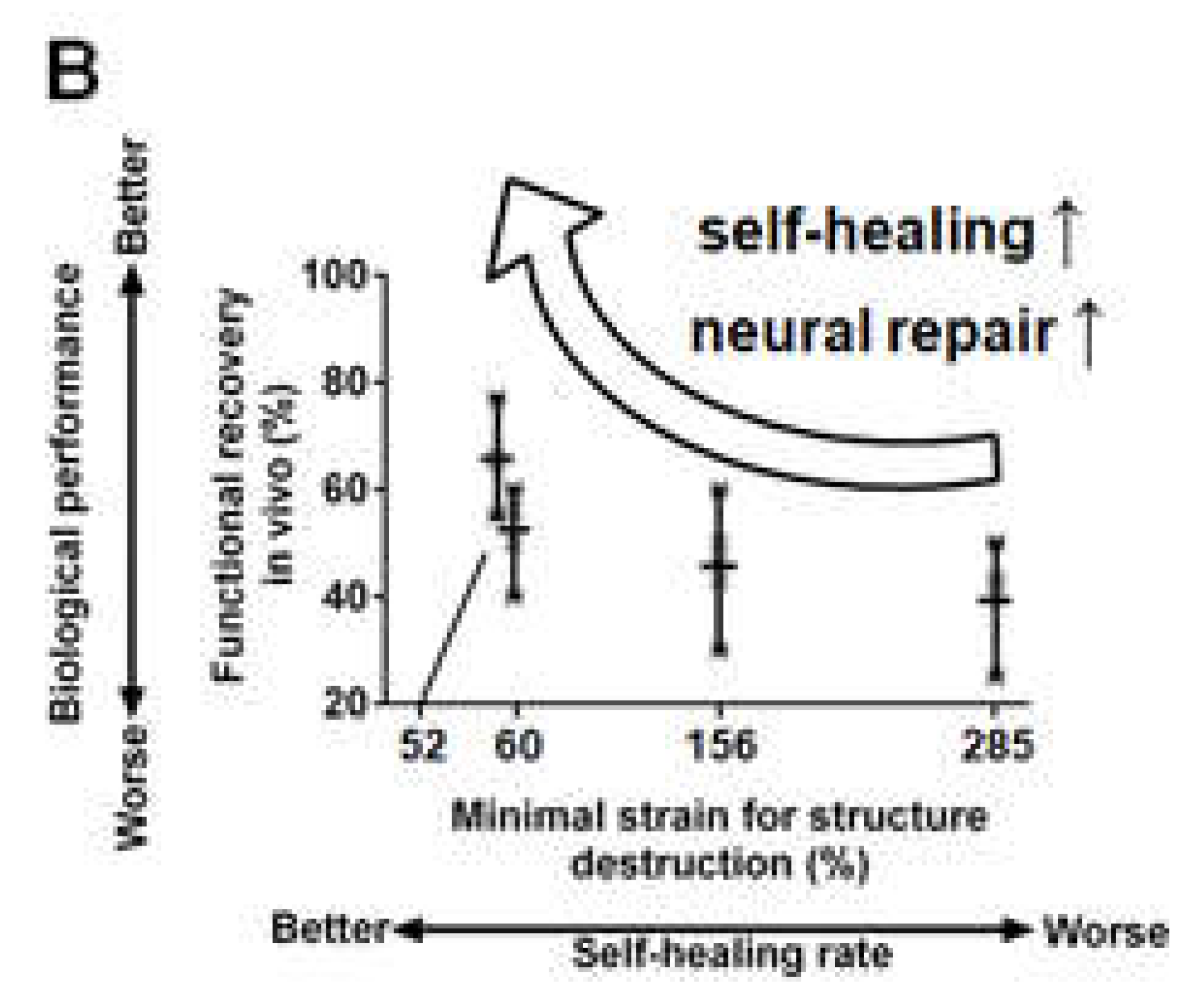
Figure 12.
Functional recovery in vivo depending on average basal OCR. Reusable owing to open access.
Figure 12.
Functional recovery in vivo depending on average basal OCR. Reusable owing to open access.
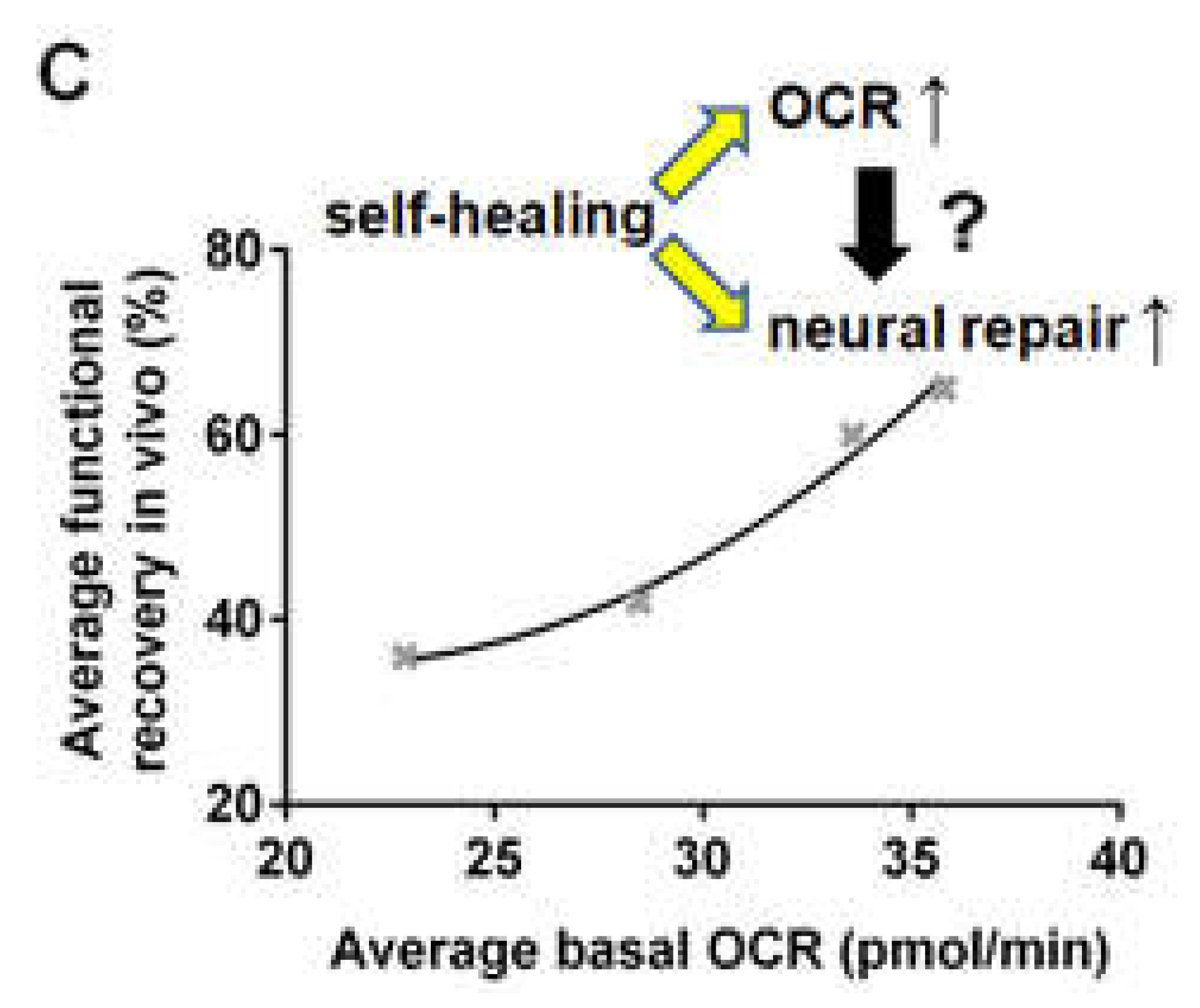
Figure 13.
Ideal cellulose structure the authors propose.
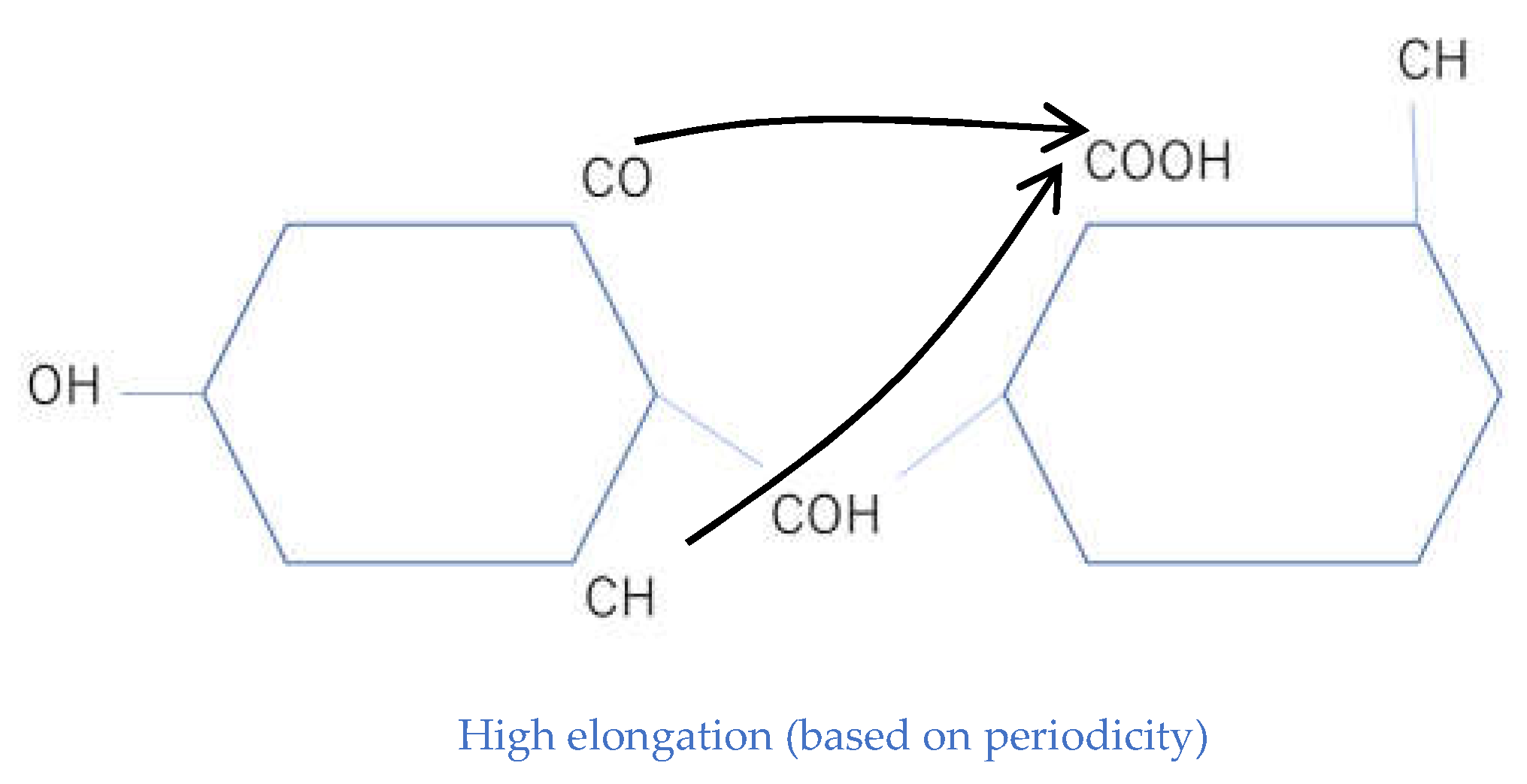
Figure 14.
Elemental flow map of cellulose nanofilm extension.
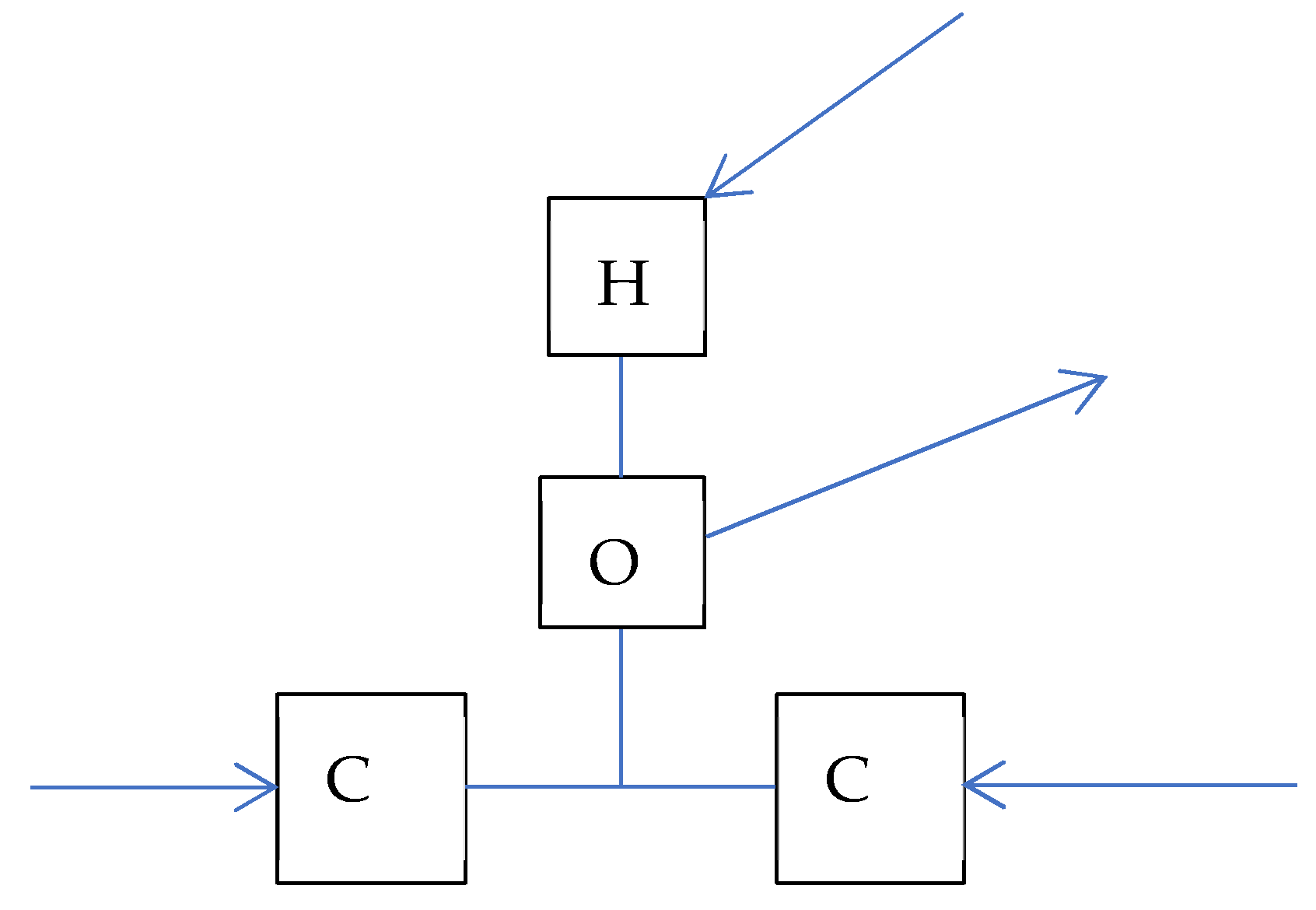
Figure 15.
Mixing of hydrated NMMO and H2O followed by drying produced the films (Peng et al., 2021 cited from paper on Researchgate).
Figure 15.
Mixing of hydrated NMMO and H2O followed by drying produced the films (Peng et al., 2021 cited from paper on Researchgate).
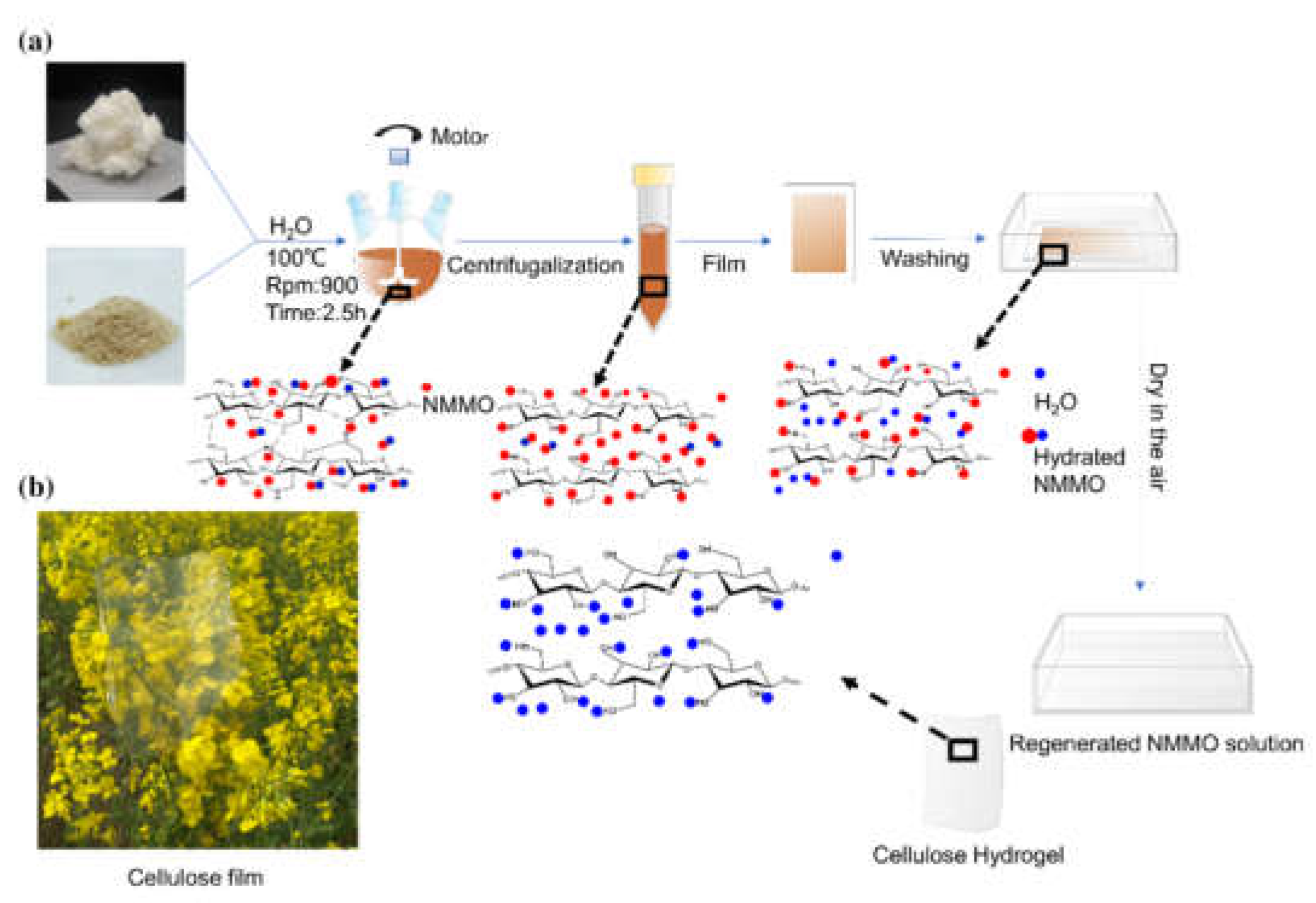
Figure 16.
Cellulose structure made with the support of CSR (mirror protein).
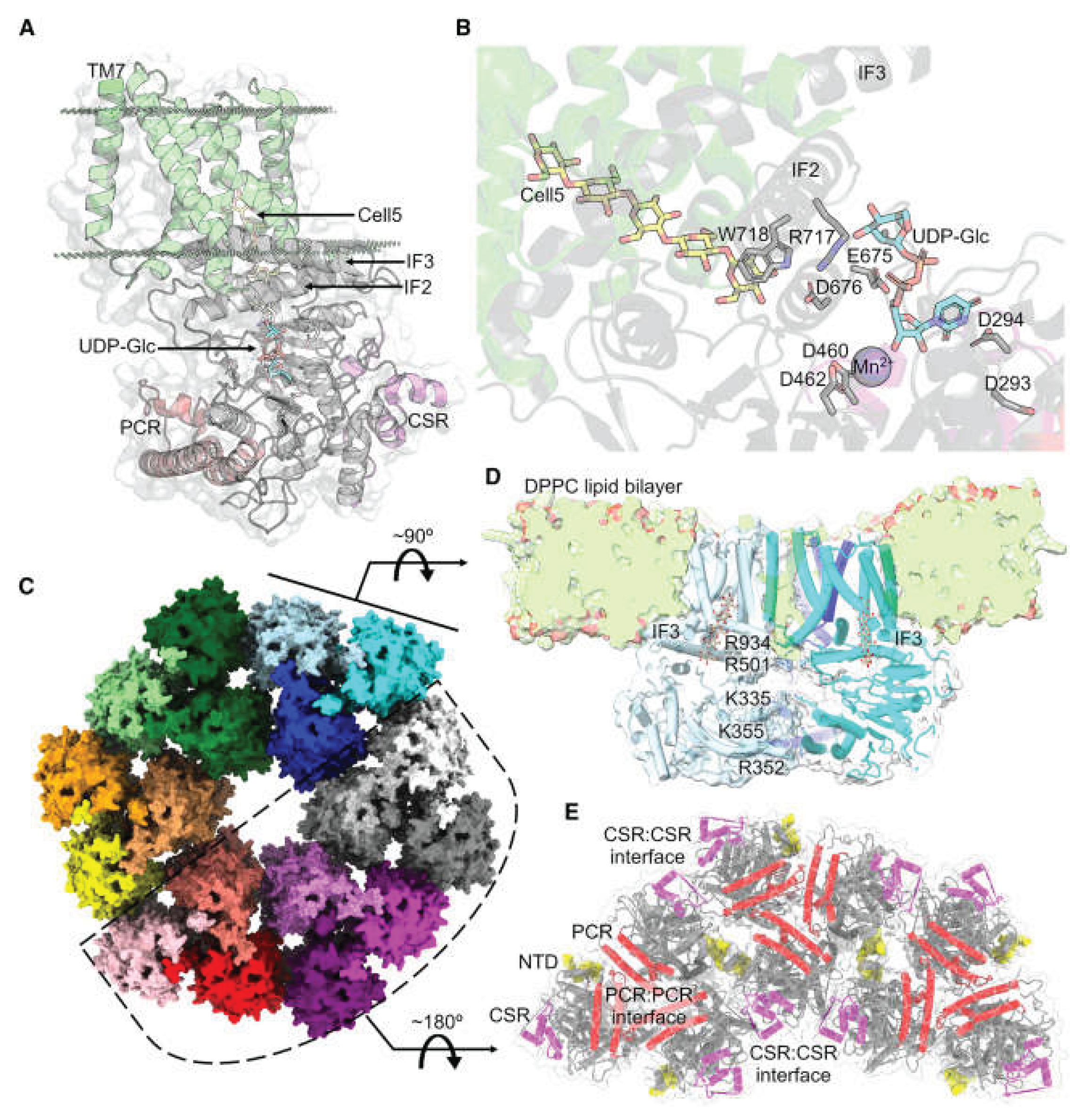
Figure 17.
Production of green extracts from banana fruits (Phirom-on et al., 2022) cited from Elsevier (Fulltext access, also confirmed on Researchgate).
Figure 17.
Production of green extracts from banana fruits (Phirom-on et al., 2022) cited from Elsevier (Fulltext access, also confirmed on Researchgate).
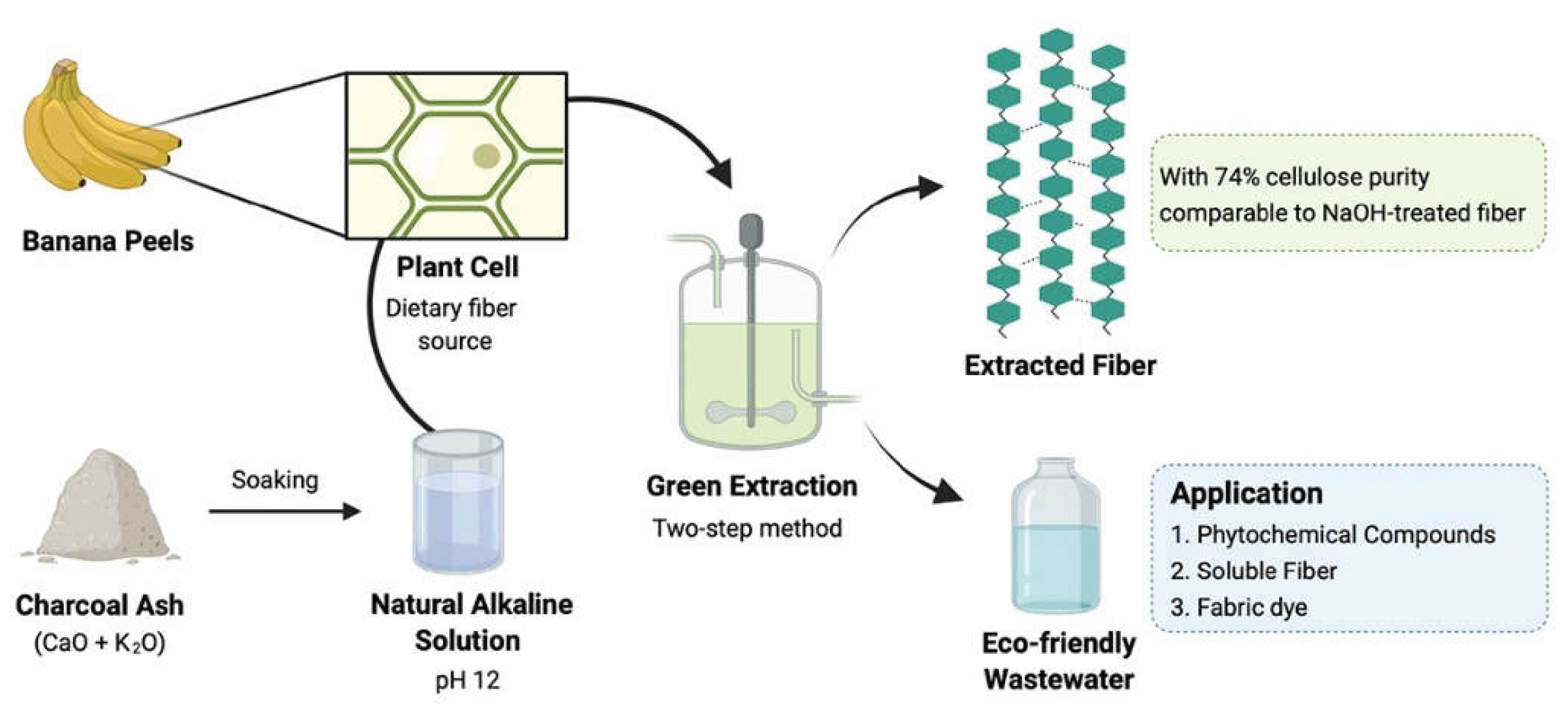
Figure 18.
a. Coconut fibers (from Alibaba) b. automobile parts made of coconut fibers https://phys.org/news/2014-07-company-coconut-husk-fibers-materials.html.
Figure 18.
a. Coconut fibers (from Alibaba) b. automobile parts made of coconut fibers https://phys.org/news/2014-07-company-coconut-husk-fibers-materials.html.
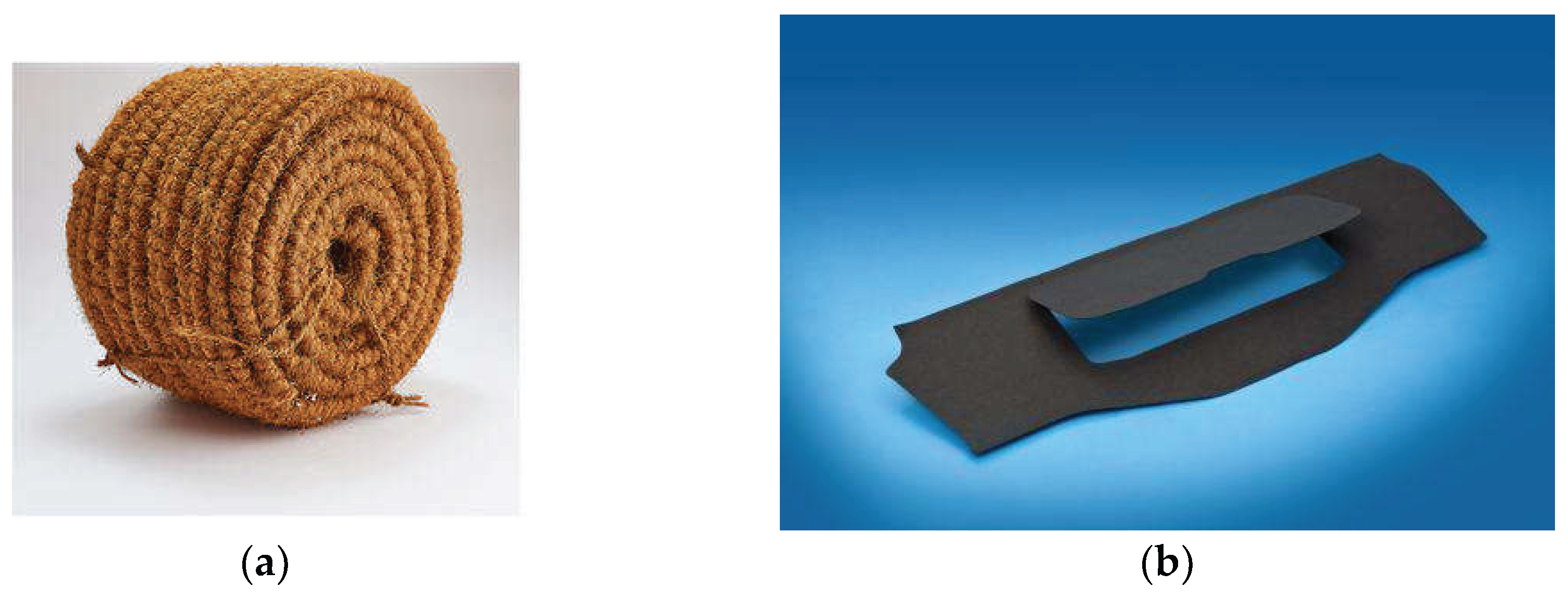
Figure 19.
Molecular dynamics simulation model of cellulose chain rotation under dynamic forces (Numata et al., 2024). Cited from paper on Researchgate.
Figure 19.
Molecular dynamics simulation model of cellulose chain rotation under dynamic forces (Numata et al., 2024). Cited from paper on Researchgate.
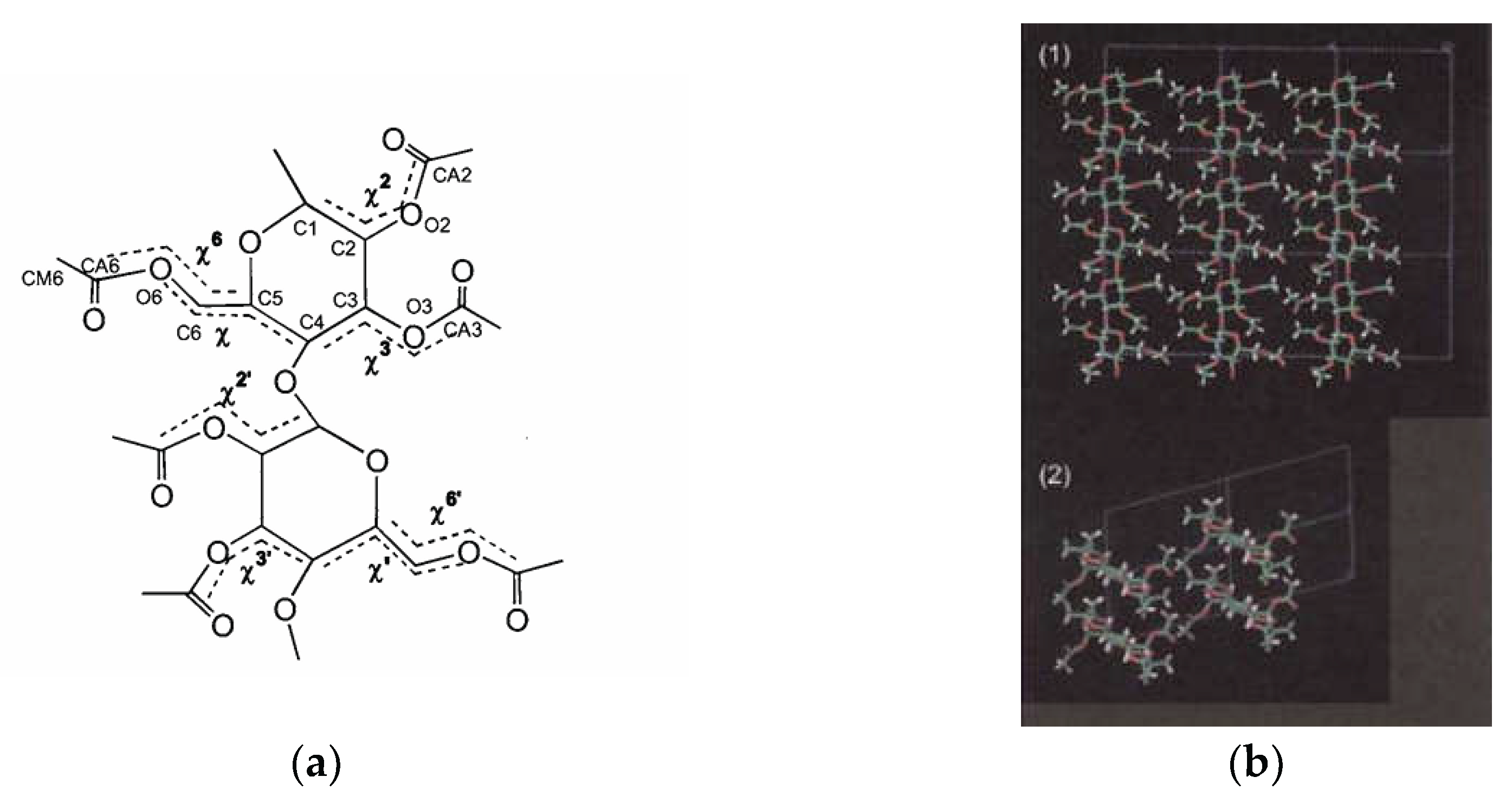
Figure 20.
Lightweight, tough, and sustainable CNF-derived bulk structural materials with low thermal expansion coefficients (Guan et al., 2020). Reusable owing to open access.
Figure 20.
Lightweight, tough, and sustainable CNF-derived bulk structural materials with low thermal expansion coefficients (Guan et al., 2020). Reusable owing to open access.
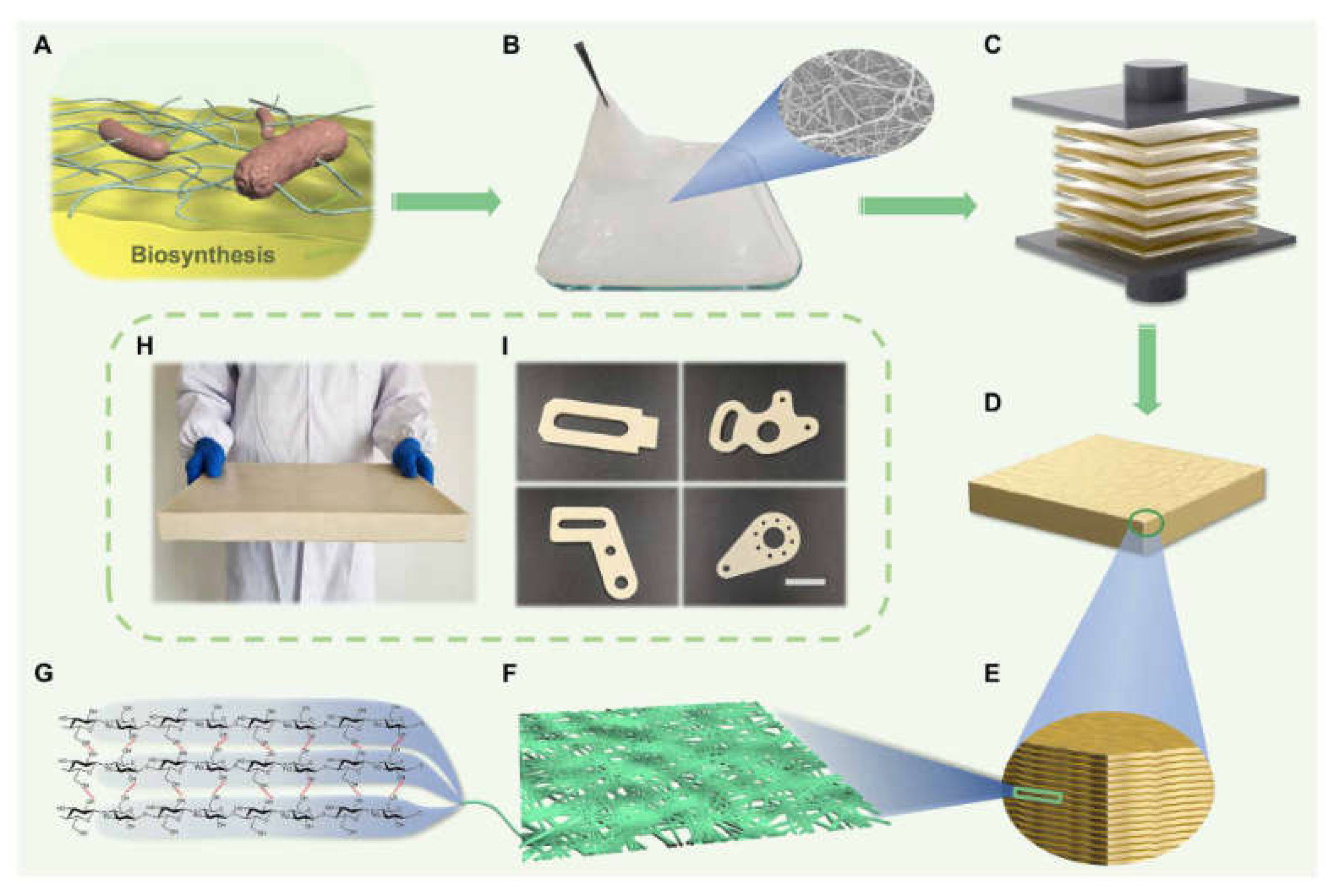
Figure 21.
Cellulose-based engine parts (engine covers) developed by YAMAHA, a Japanese manufacturer. The metallic engine parts are being replaced with cellulose materials.
Figure 21.
Cellulose-based engine parts (engine covers) developed by YAMAHA, a Japanese manufacturer. The metallic engine parts are being replaced with cellulose materials.
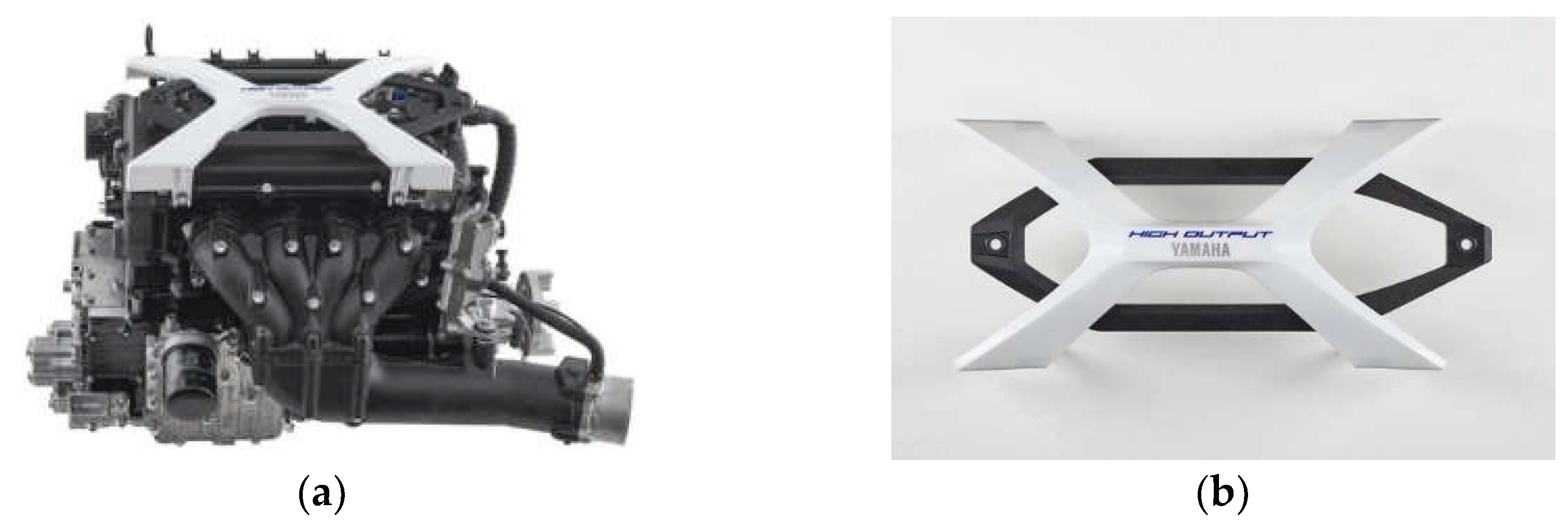
Figure 22.
presents the cellulose cells extending and folding, yielding the durable and flexible films achieving high strength-weight ratio.
Figure 22.
presents the cellulose cells extending and folding, yielding the durable and flexible films achieving high strength-weight ratio.
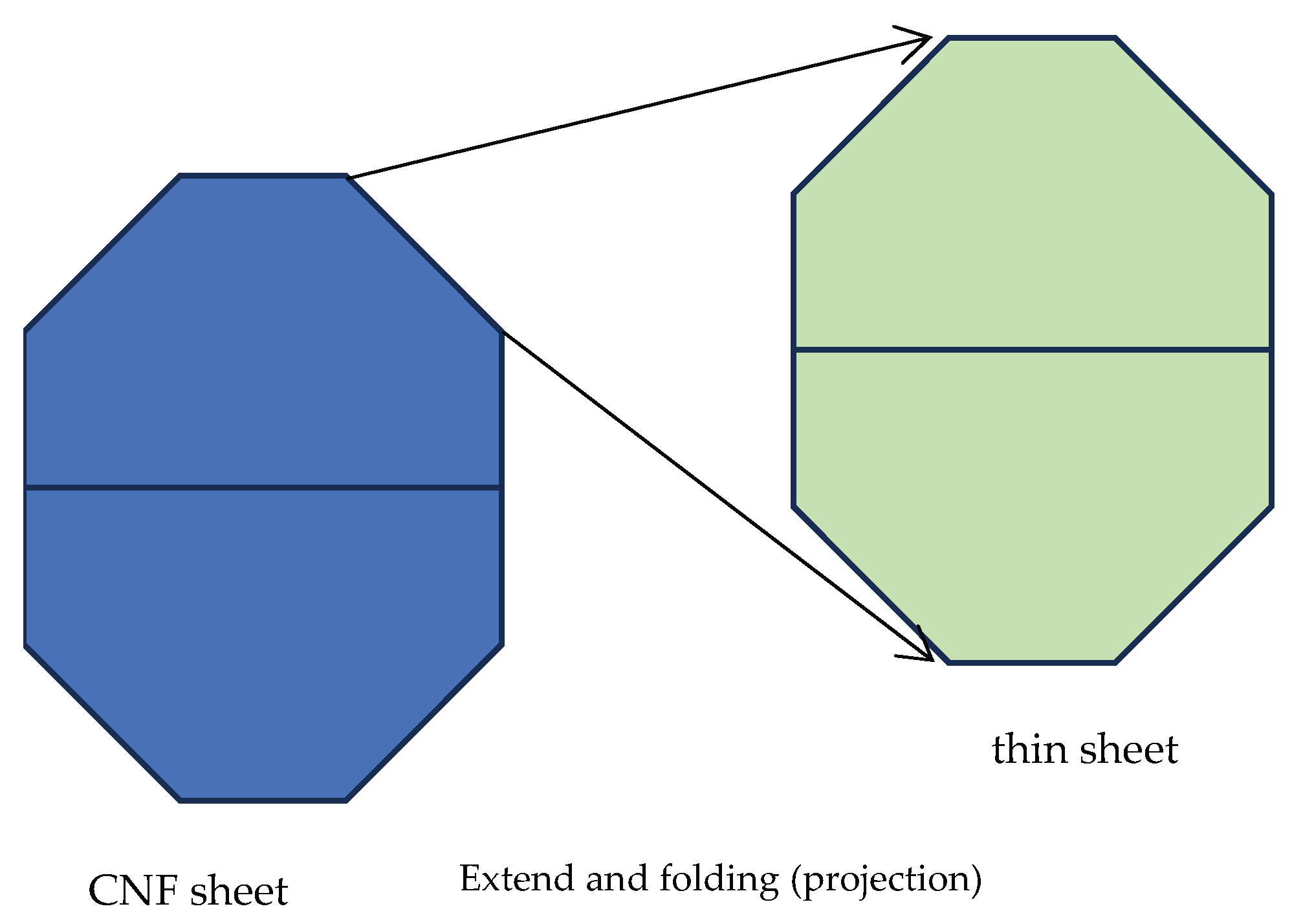
Figure 23.
Pulp attached with CNFs which have excellent extension properties. (Yahya et al. 2023).
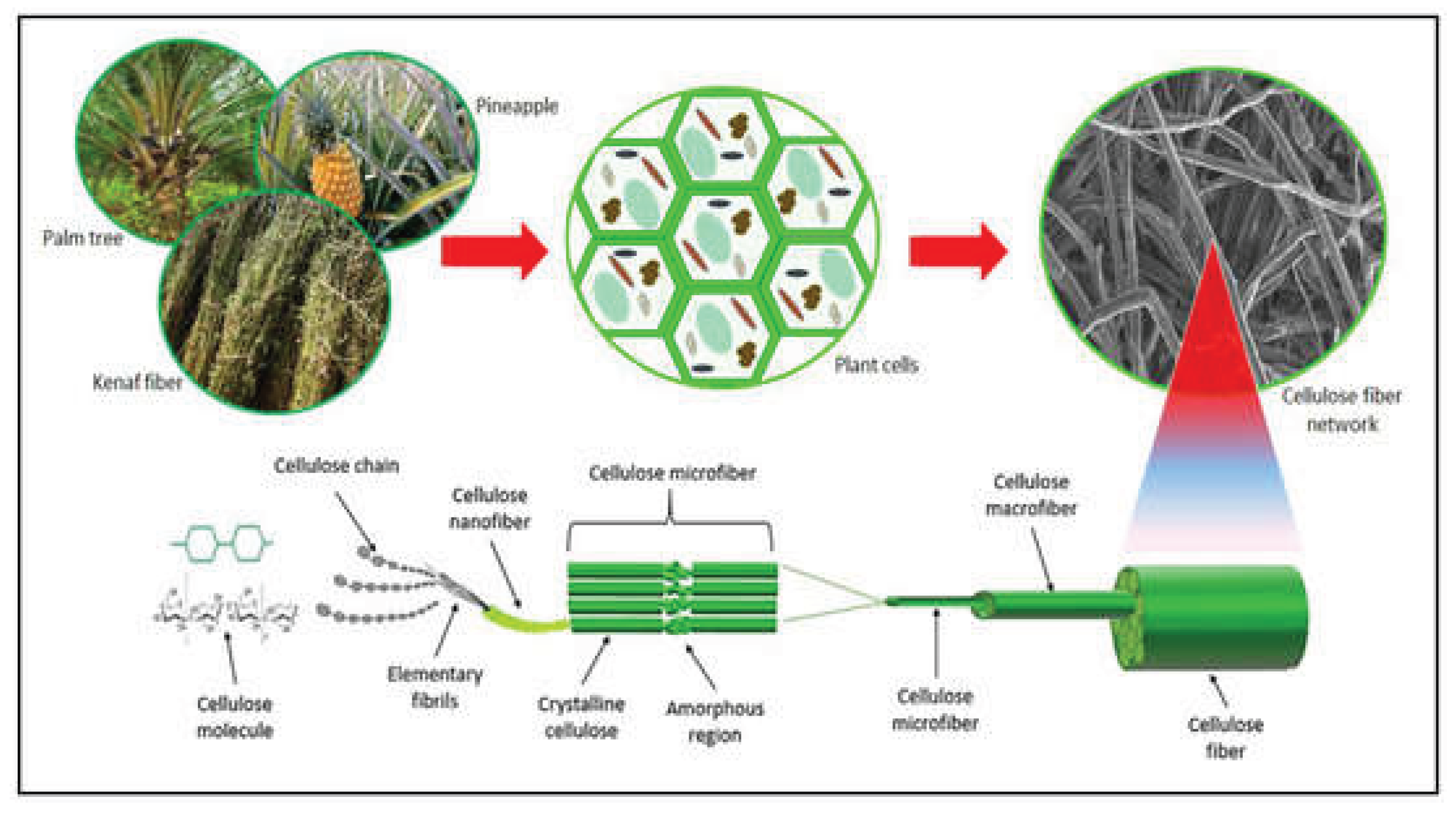
Figure 24.
Starch foods (e.g., maize, bean, and wheat) can be generated from grained, seeds, and legumes. (Vilela et al., 2026).
Figure 24.
Starch foods (e.g., maize, bean, and wheat) can be generated from grained, seeds, and legumes. (Vilela et al., 2026).
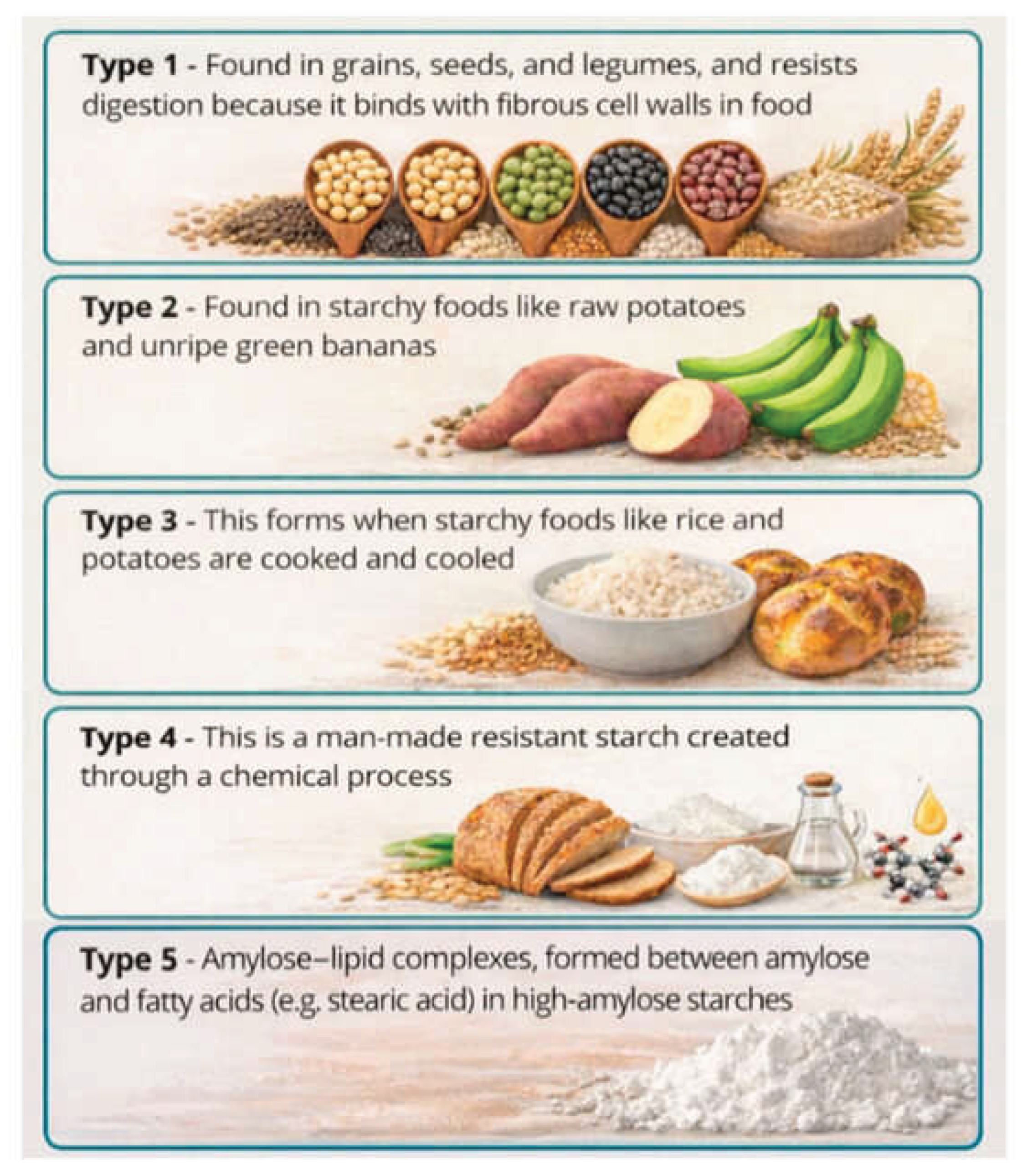
Figure 25.
DNA repair and cell damage, as proposed by Wang et al. (2022).
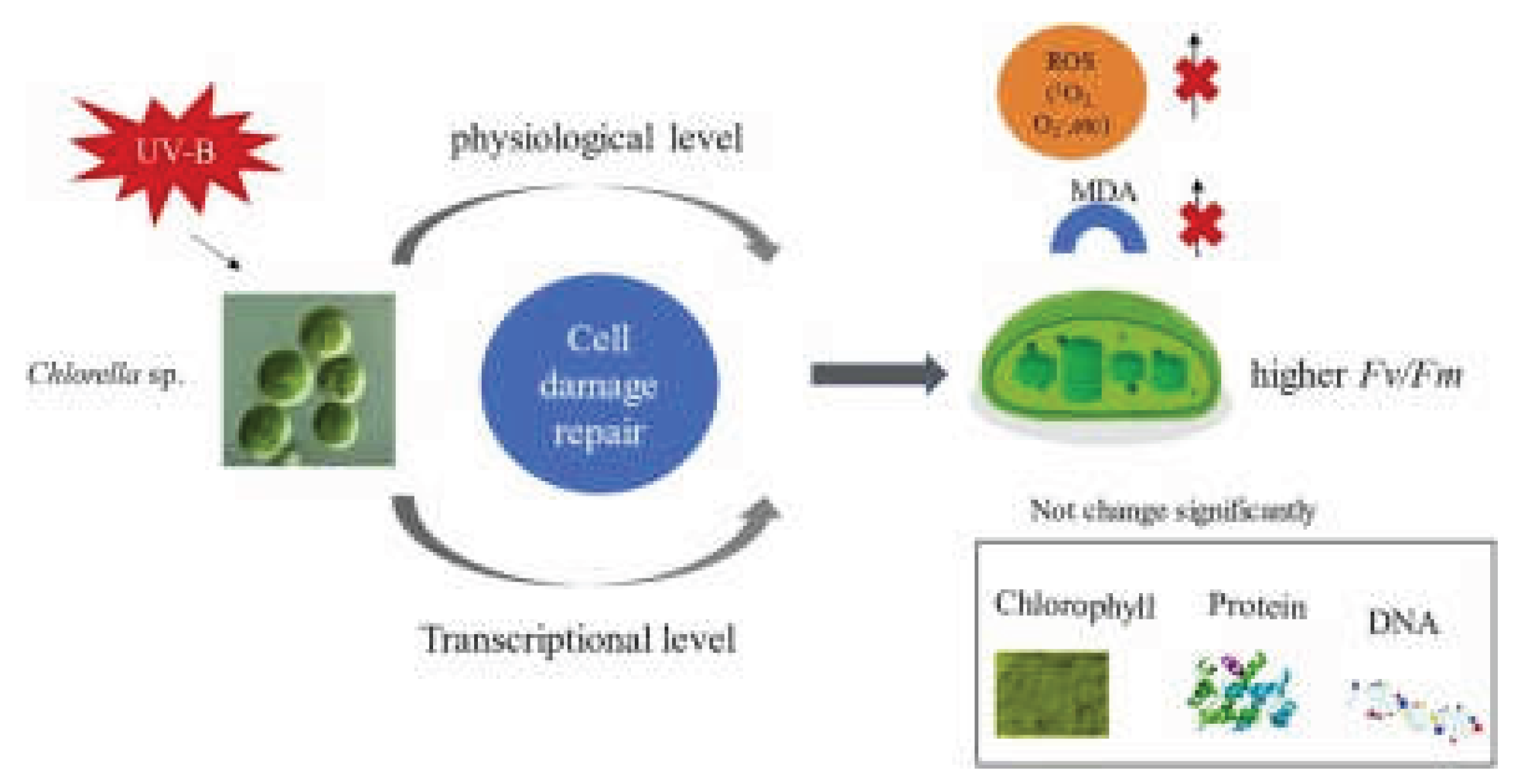
Figure 26.
Crude protein/bioactive components fabricated by crushing and making pulps. Reusable owing to open access.
Figure 26.
Crude protein/bioactive components fabricated by crushing and making pulps. Reusable owing to open access.
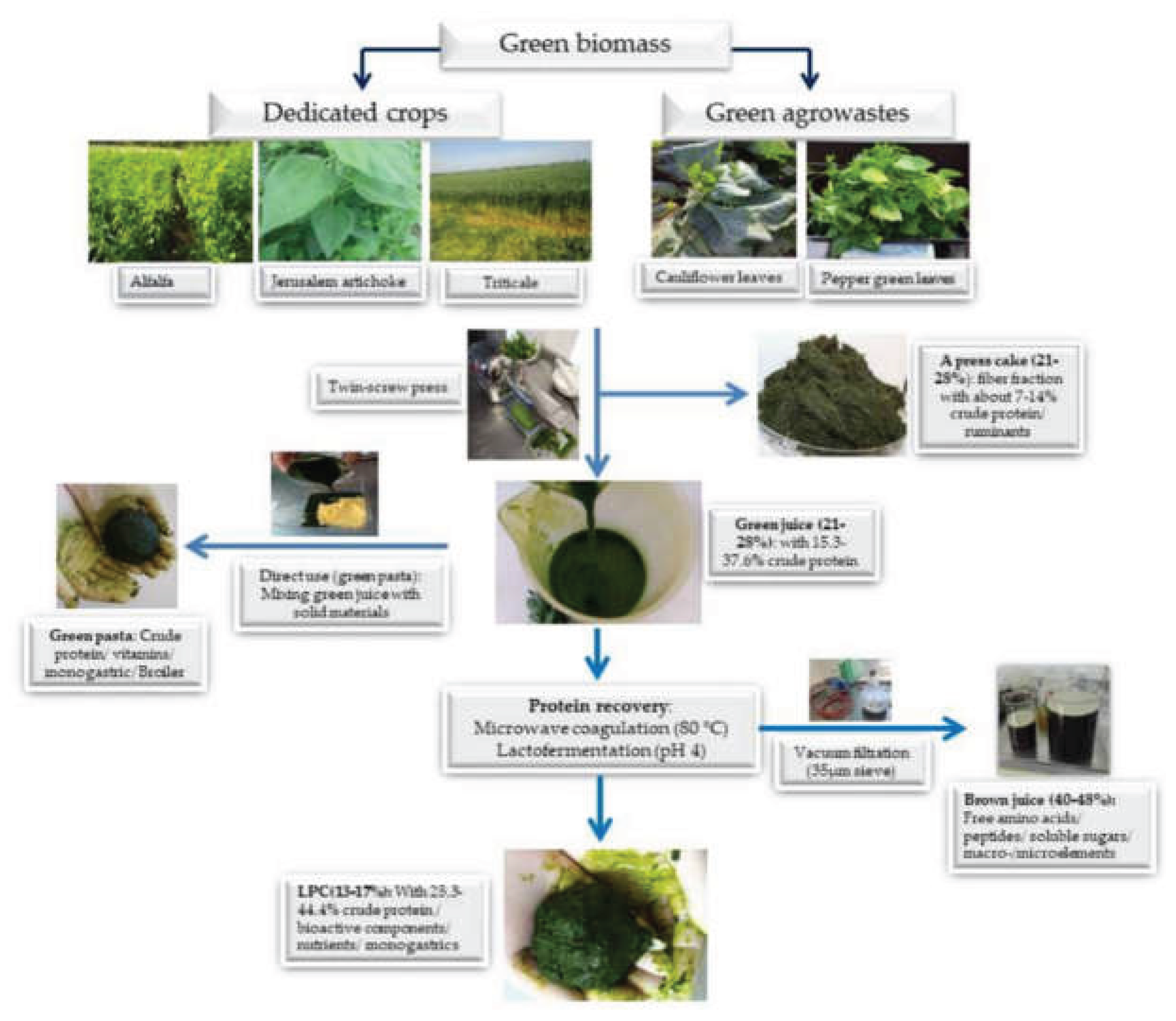
Figure 27.
Decayed wood revival with the aid of RHO and ash in barks with the aid of water.
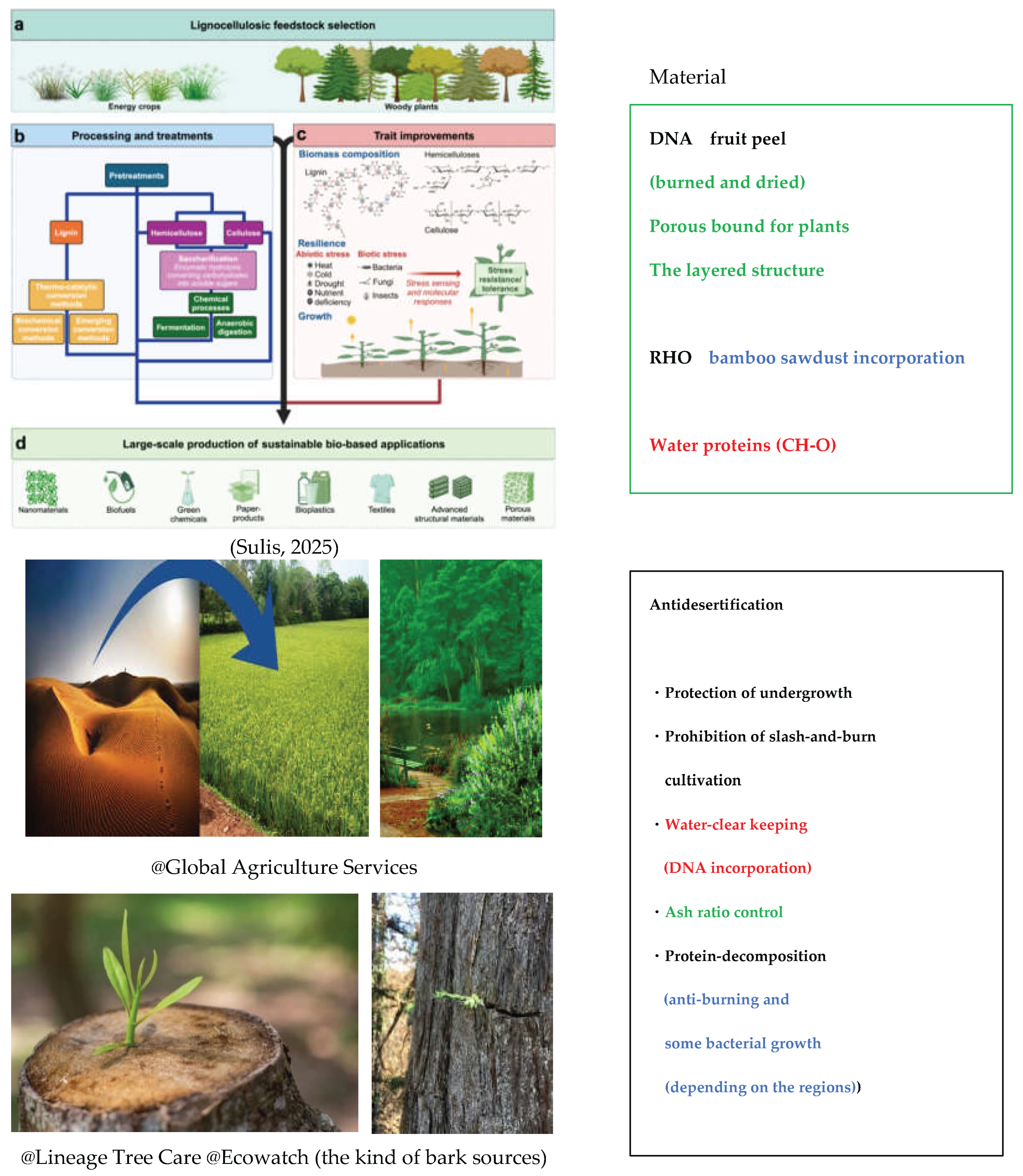
Figure 28.
Renewal of plant cells with the aid of increase in chlorophyll.
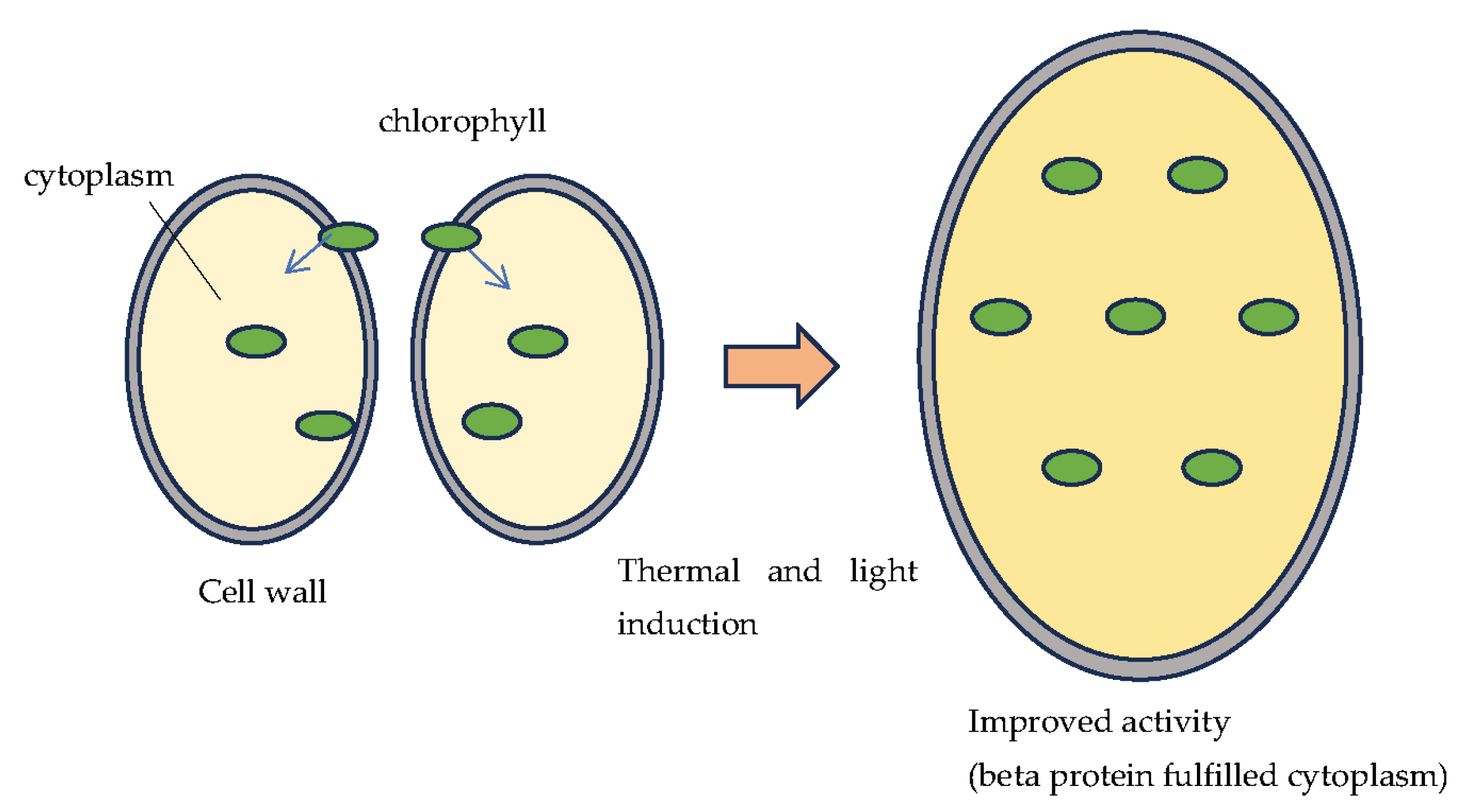
Figure 29.
The plant growth mechanism based on destruction of cells with aid of PH control and revival (Yang, 2024).
Figure 29.
The plant growth mechanism based on destruction of cells with aid of PH control and revival (Yang, 2024).
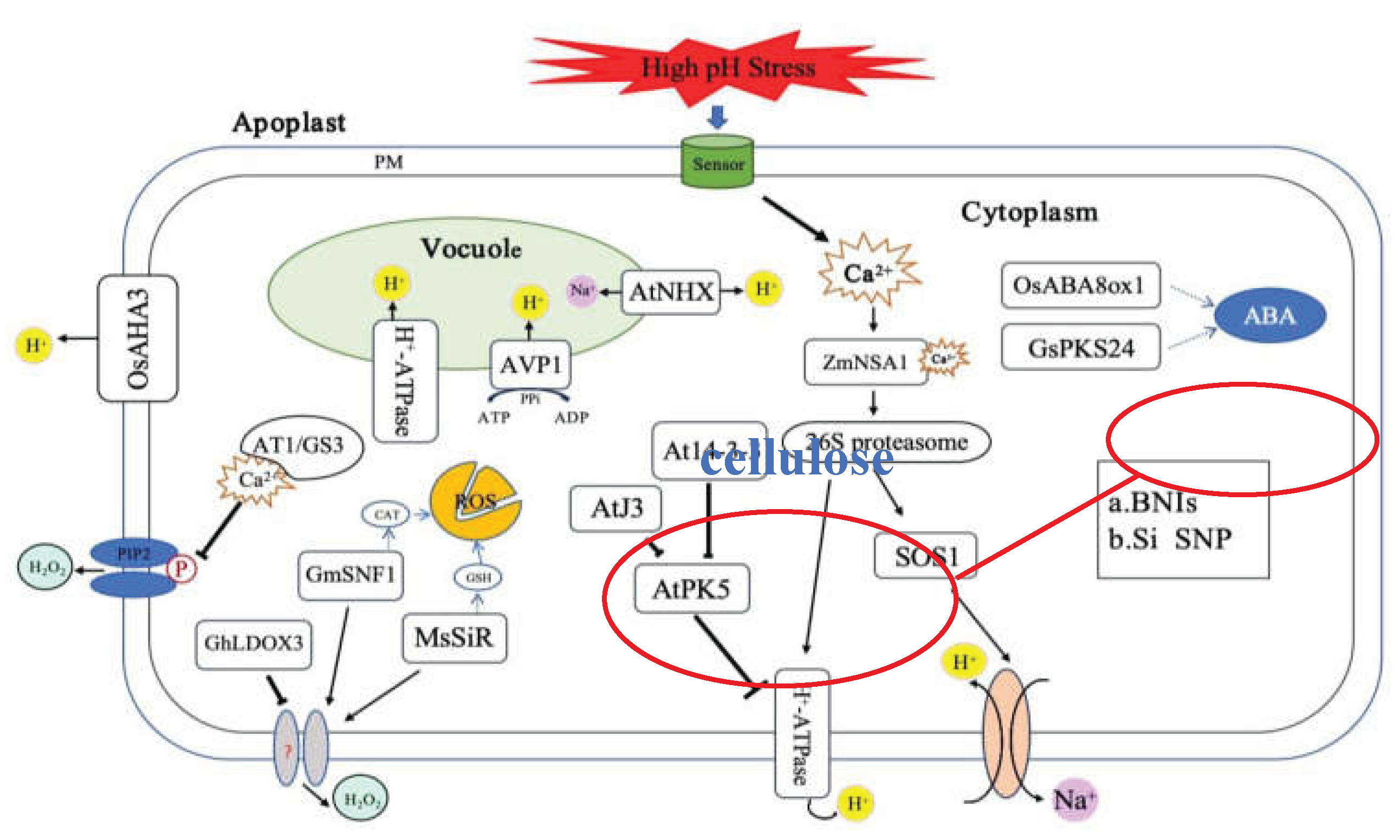
Figure 30.
Leaf vein transformation into chlorophyll yields the greening and energy production. Cited from Elsevier (Fulltext access with over 70 citation). https://doi.org/10.1016/j.tplants.2019.01.007.
Figure 30.
Leaf vein transformation into chlorophyll yields the greening and energy production. Cited from Elsevier (Fulltext access with over 70 citation). https://doi.org/10.1016/j.tplants.2019.01.007.
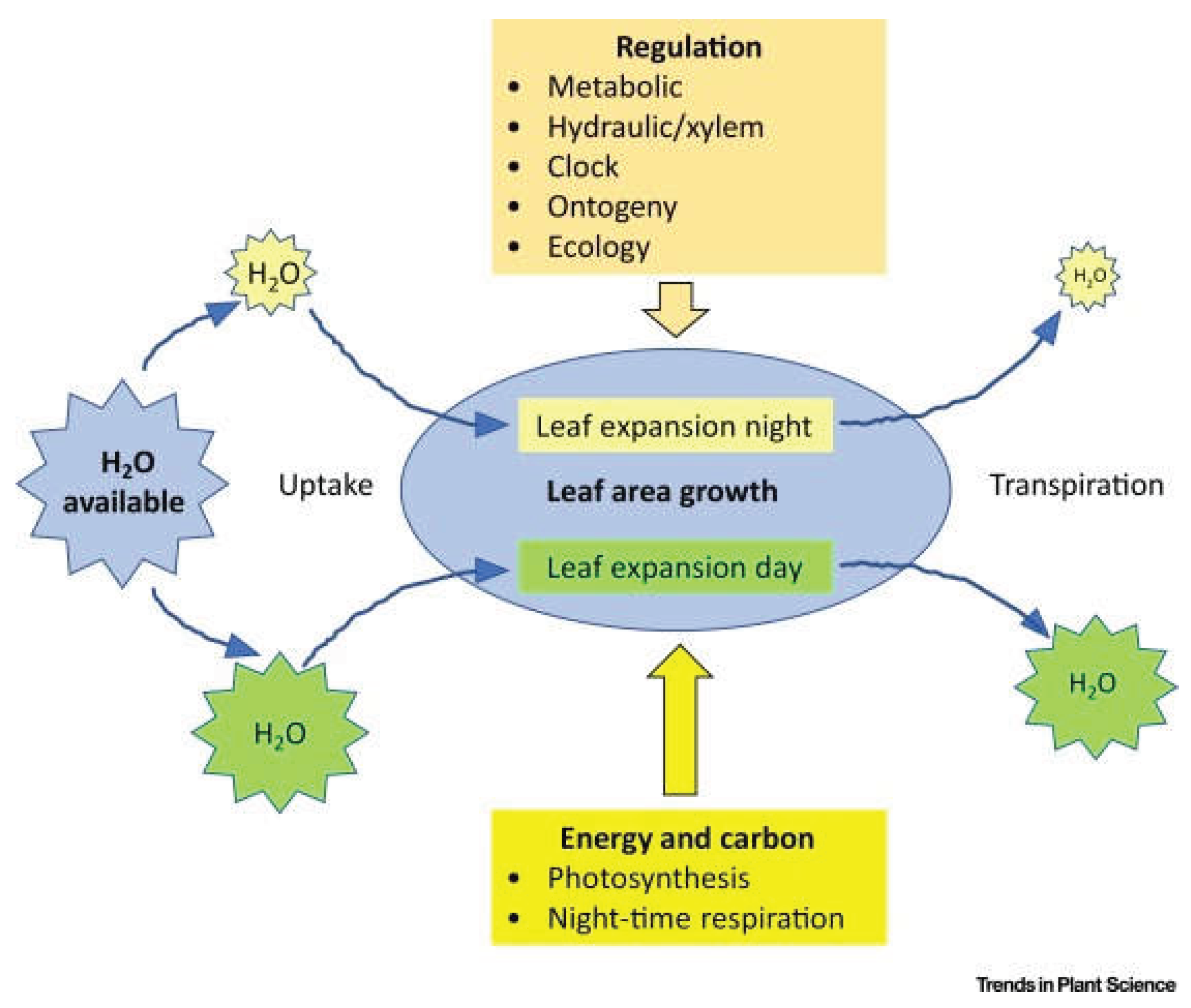
Figure 31.
Desertification degree on Earth and the greening of deserts. Fruit fiber annealing and DNA incorporation via bamboo sawdust contribute to greening.
Figure 31.
Desertification degree on Earth and the greening of deserts. Fruit fiber annealing and DNA incorporation via bamboo sawdust contribute to greening.
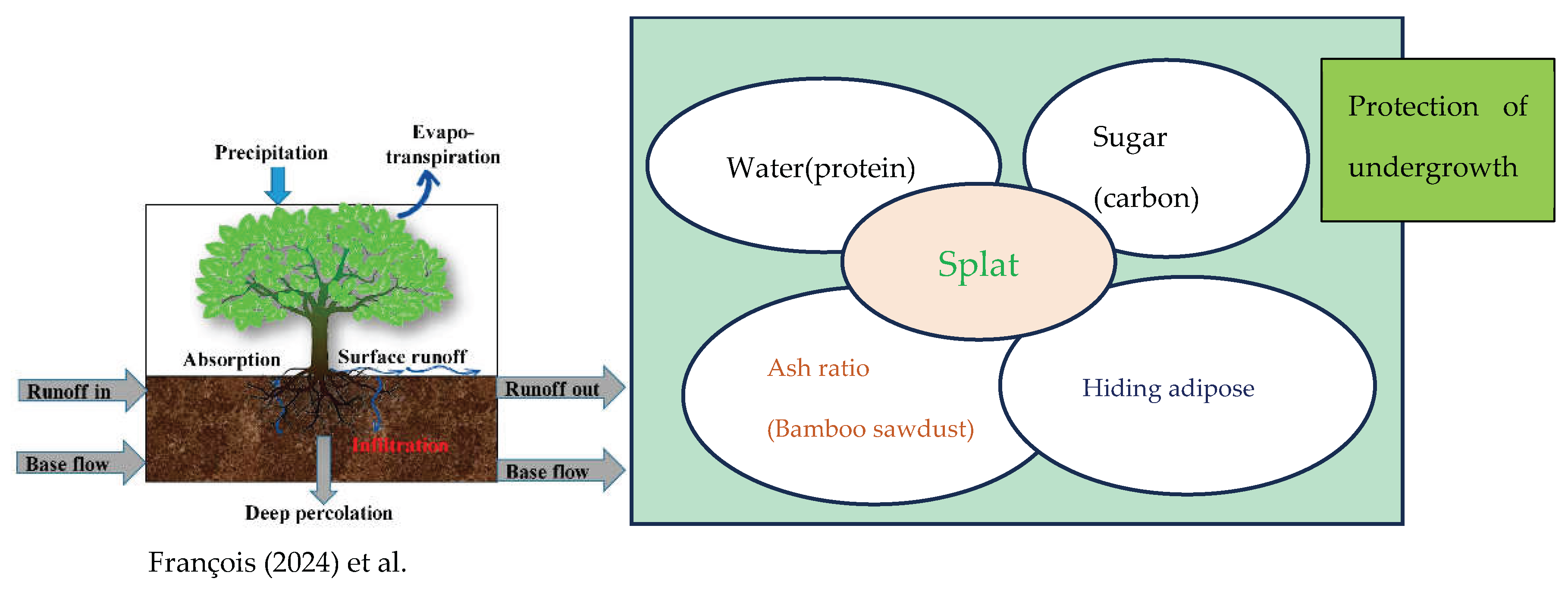
Figure 32.
Vitality map in leaf plant (Kurniawan, 2021).
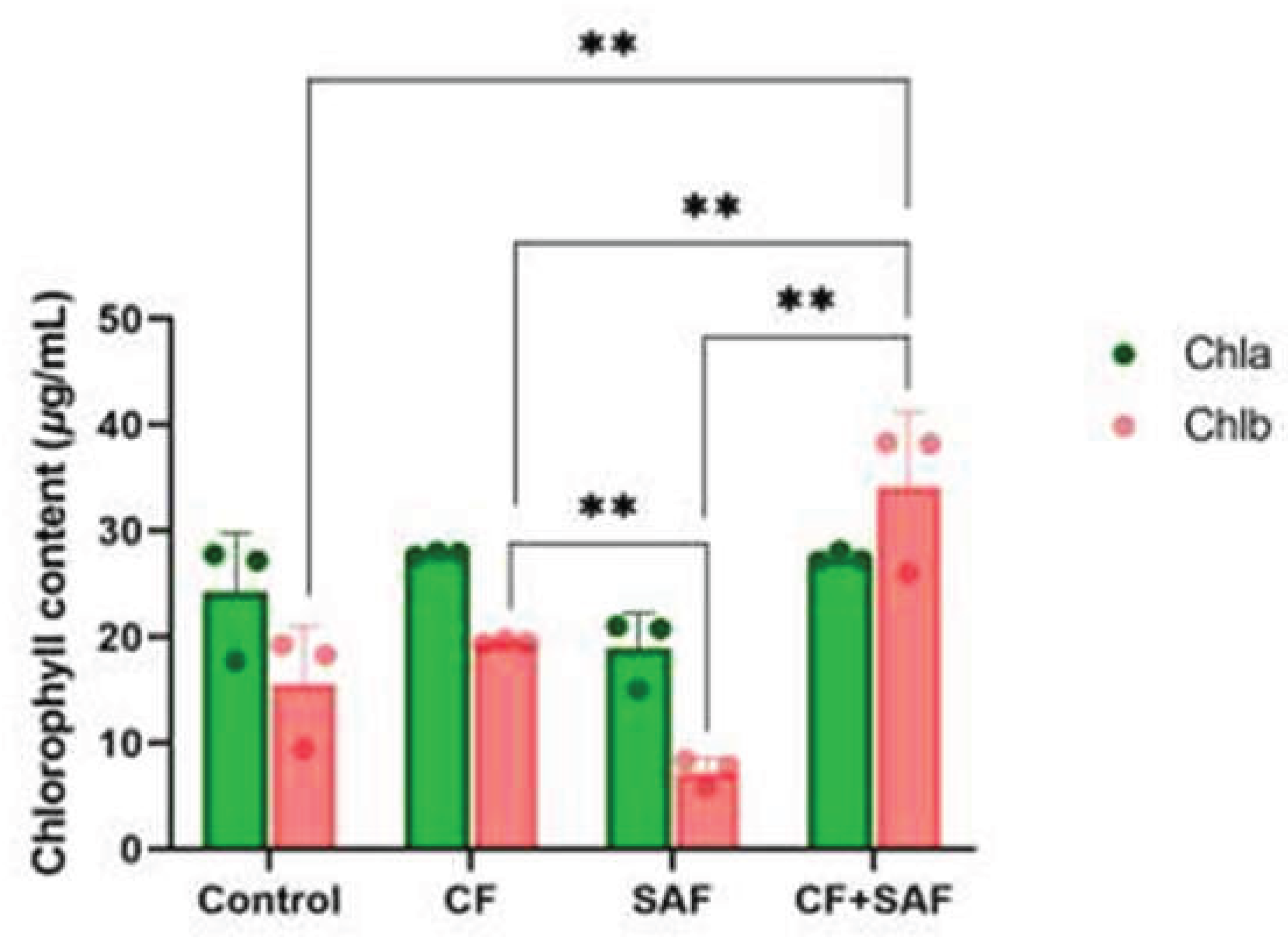
Figure 35.
Regeneration of sprout and undergrowth yielding the revival of deceased natural land (Sameiro Patrício and Nunes 2025) https://doi.org/10.1007/s11056-025-10123-8.
Figure 35.
Regeneration of sprout and undergrowth yielding the revival of deceased natural land (Sameiro Patrício and Nunes 2025) https://doi.org/10.1007/s11056-025-10123-8.
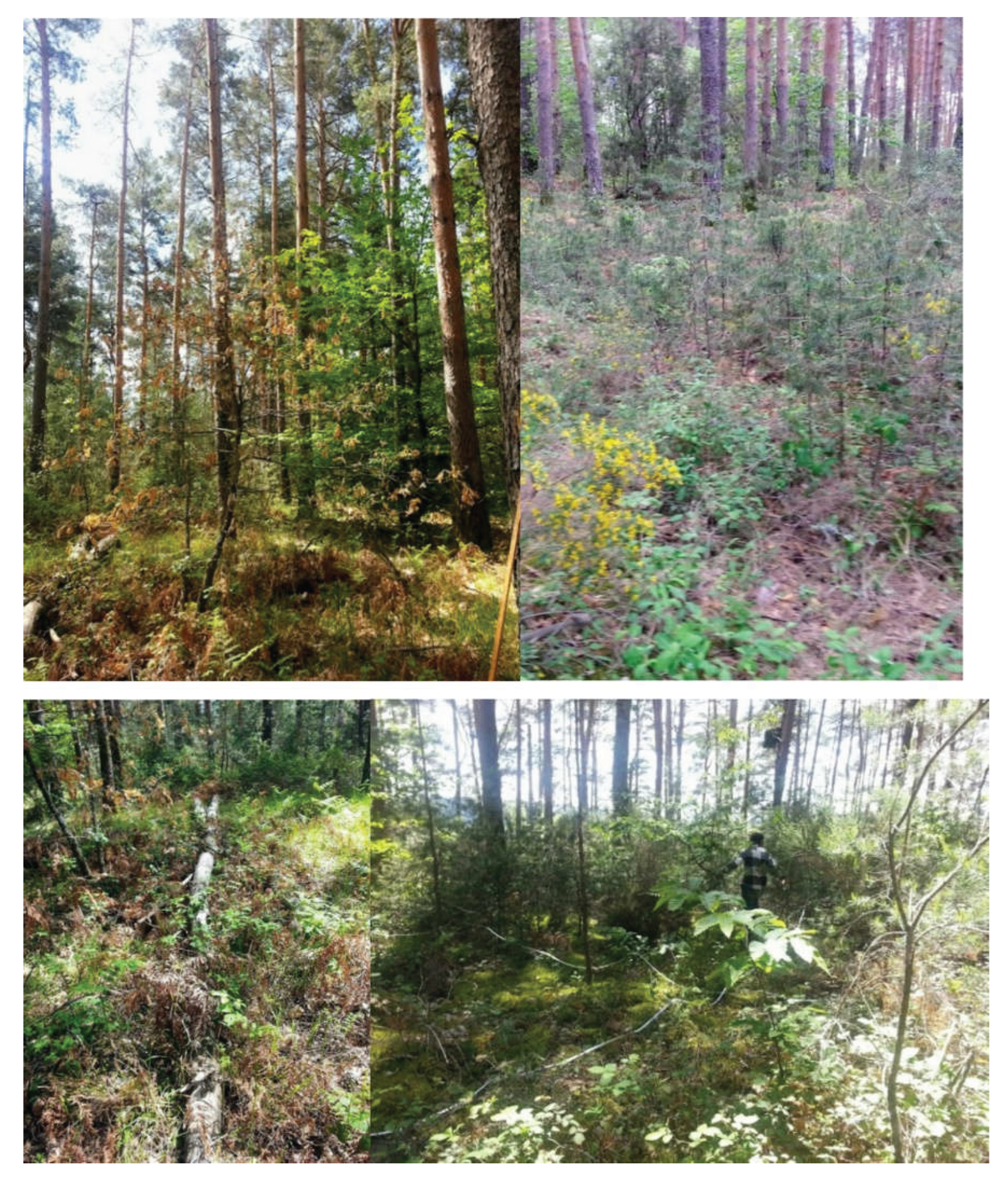
Disclaimer/Publisher’s Note: The statements, opinions and data contained in all publications are solely those of the individual author(s) and contributor(s) and not of MDPI and/or the editor(s). MDPI and/or the editor(s) disclaim responsibility for any injury to people or property resulting from any ideas, methods, instructions or products referred to in the content. |
© 2026 by the authors. Licensee MDPI, Basel, Switzerland. This article is an open access article distributed under the terms and conditions of the Creative Commons Attribution (CC BY) license (http://creativecommons.org/licenses/by/4.0/).
Copyright: This open access article is published under a Creative Commons CC BY 4.0 license, which permit the free download, distribution, and reuse, provided that the author and preprint are cited in any reuse.