

Submitted:
19 May 2026
Posted:
21 May 2026
You are already at the latest version
Abstract
This review proposes a systems-level model in which glucocorticoid receptor alpha (GRα) regulates immune effectiveness and phase-specific homeostatic correction during infection and physiological stress. Rather than functioning solely as an anti-inflammatory suppressor, GRα influences pathogen recognition, inflammatory transcriptional programs, mitochondrial metabolism, antimicrobial defense, chromatin accessibility, cytokine responses, tissue adaptation, and resolution processes according to the evolving demands of illness. Within this systems-level model, immune responses exist along a continuum ranging from effective pathogen clearance to maladaptive pathogen-permissive inflammatory states. The review examines the role of GRα signaling in pattern-recognition receptor activation, NF-κB/AP-1 regulation, immunometabolic adaptation, antimicrobial effector function, and immune reprogramming across the Priming, Modulatory, and Restorative phases of homeostatic correction. This systems-level perspective expands current concepts of host defense by emphasizing that immune effectiveness depends not simply on inflammatory activation, but on the coordinated integration of antimicrobial competence, mitochondrial bioenergetics, inflammatory regulation, immune-cell trafficking, vascular and tissue integrity, and reparative adaptation required to maintain systemic stability during severe illness. Improved understanding of GRα-mediated regulation of these adaptive processes may provide a foundation for the development of more mechanism-based therapeutic strategies aimed at restoring immune effectiveness and homeostatic balance during critical illness and severe infection.
Keywords:
glucocorticoid receptor alpha (GRα)
; immune effectiveness
; homeostatic correction
; critical illness
; immunometabolism
; host defense
Classical Framework and Its Limitations
Immunity is widely described as the body’s defense against harmful microbes, mediated by two tightly linked systems: innate immunity, which provides rapid and broadly directed responses, and adaptive immunity, which develops more slowly but generates highly specific responses and immunological memory. Together, these systems detect, contain, eliminate, or expel pathogens while preserving host integrity and physiological homeostasis. Although foundational, this framework does not fully explain why excessive inflammatory activation may fail to achieve effective pathogen clearance and may instead coexist with impaired host defense, pathogen persistence, and organ dysfunction during illness. [1,2,3,4,5,6]
This apparent paradox suggests that effective immunity depends not simply on the intensity of inflammatory activation, but on coordinated integration of inflammatory signaling, antimicrobial competence, metabolic adaptation, mitochondrial support, and tissue-preserving responses required for effective pathogen clearance and restoration of homeostasis.[7,8,9,10]Failure of this coordinated integration may promote maladaptive inflammatory states in which excessive immune activation becomes functionally uncoupled from effective antimicrobial defense and tissue recovery.
Within this systems-level framework, immune responses exist along a functional continuum ranging from adaptive pathogen-clearing states to maladaptive pathogen-permissive states characterized by persistent inflammation, impaired antimicrobial defense, tissue injury, and defective recovery.
Expanding Concepts in Host Defense
Immune effectiveness depends not only on activation but also on the precise regulation of magnitude, timing, and functional integration with cellular bioenergetics and tissue integrity. Immune cells undergo metabolic reprogramming that links energy utilization to effector function, with glycolysis (rapid ATP generation from glucose for immediate effector activity) coordinating rapid inflammatory responses and oxidative metabolism (mitochondria-dependent energy production supporting sustained function, repair, and memory formation) supporting resolution and memory states. Failure to maintain this metabolic coordination may impair antimicrobial competence, promote persistent inflammatory activation, and compromise tissue recovery.
In addition, immune responses are shaped by temporal signaling thresholds (time- and intensity-dependent limits controlling response strength and duration), redox balance (the regulated balance between reactive oxygen/nitrogen species and antioxidant defenses that preserves signaling and prevents cellular damage), and adaptive network reconfiguration (selective adjustment of signaling and gene expression in response to evolving cues). Together, these processes help determine whether immune activation progresses toward effective host defense or toward chronic or maladaptive inflammation [9,11,12].
Immune function is tightly integrated with tissue-specific microenvironments, where mechanical properties, extracellular matrix organization, microenvironmental stiffness, epithelial and endothelial barrier integrity, local metabolic conditions, and repair processes collectively regulate immune-cell activation thresholds, cytokine production, trafficking, metabolic adaptation, and tissue outcome, thereby influencing whether immune responses progress toward effective resolution or toward persistent inflammation and fibrosis [10,13,14,15] across immunity depends on the coordinated integration of inflammatory signaling with antimicrobial defense, metabolic adaptation, and tissue preservation. Effective host defense therefore requires a tightly regulated, energy-supported, and tissue-integrated response that undergoes phase-dependent adaptation during homeostatic correction to balance microbial control with the preservation of organ function.
Consistent with this integrative framework, mitochondrial function emerges as a critical determinant of immune effectiveness, providing ATP, metabolic intermediates, and redox signals that support immune activation, antimicrobial defense, and resolution. Through these functions, mitochondrial activity links cellular energy status to antimicrobial activity, inflammatory regulation, and tissue repair.[16,17,18,19] Through these coordinated bioenergetic and signaling functions, mitochondrial activity links cellular energy status to antimicrobial competence and adaptive immune regulation.
These mitochondrial processes are closely coordinated by regulatory signaling systems, among which the glucocorticoid receptor alpha (GRα) plays a central role in integrating metabolic, inflammatory, and stress-response pathways. Conversely, dysregulated inflammatory signaling can impair antimicrobial mechanisms,[20] disrupt mitochondrial function, and compromise clearance of intracellular pathogens, thereby contributing to disease progression and organ dysfunction.[21,22,23]
Beyond the classical innate–adaptive framework, emerging concepts—including trained immunity (immunological memory), disease tolerance (tissue-protective responses during infection), and adaptive immune reprogramming (time-dependent adaptation of immune function)— demonstrate that the quality, timing, and integration of immune responses are more critical for effective host defense than the magnitude of the inflammatory response alone.[24,25,26,27]
These observations highlight a fundamental limitation in prevailing immunologic paradigms: immune responses are often interpreted primarily in terms of pro- and anti-inflammatory balance, without sufficient consideration of the regulatory systems that determine whether inflammatory activation progresses toward coordinated host defense and resolution or toward persistent tissue injury, impaired microbial clearance, and organ dysfunction. This distinction is particularly relevant in critical illness, where hyperinflammatory states may coexist with defective antimicrobial competence and poor clinical outcomes. In this framework, critical illness is an acute systemic stress state characterized by large-scale disruption of homeostatic regulation and rapidly progressive multi-organ involvement. Because the phases of homeostatic correction evolve in an accelerated and overlapping manner during critical illness, this condition provides a uniquely informative model for examining the integrated molecular, metabolic, immune, vascular, neuroendocrine, and reparative mechanisms operating within each phase of organism-wide adaptation, failed homeostatic correction, and recovery.
Not surprisingly, glucocorticoid receptor alpha (GRα) emerged during vertebrate evolution as a central regulator of survival and adaptive homeostasis. As organisms evolved increasing physiological complexity, adaptive survival required the integration of immune defense, metabolic adaptation, vascular regulation, neuroendocrine coordination, tissue repair, and inter-organ communication into a unified regulatory system capable of responding dynamically to infection, injury, and environmental stress. Within this evolutionary framework, GRα was positioned as a master regulator of homeostatic correction, coordinating organism-wide adaptation by integrating immune, metabolic, vascular, mitochondrial, and reparative pathways.[21,28]
The central role of GRα in regulating immunity is therefore biologically coherent and evolutionarily expected. Host defense represents one of the most energy-demanding and survival-critical functions in multicellular organisms, requiring precise coordination between pathogen recognition, inflammatory signaling, antimicrobial defense, metabolic reprogramming, tissue preservation, and resolution mechanisms. GRα is uniquely positioned to coordinate these functions because it regulates nearly every major system involved in adaptive survival, including immune-cell trafficking, endothelial and epithelial barrier integrity, mitochondrial bioenergetics, cardiovascular adaptation, circadian regulation, stress signaling, and inter-organ communication networks. [21,28,29]
Importantly, GRα belongs to a small group of receptors essential for postnatal survival. Experimental models demonstrate that disruption of glucocorticoid receptor signaling leads to profound defects in metabolic regulation, cardiovascular adaptation, lung maturation, immune coordination, and stress responsiveness, all of which are incompatible with survival after birth. This essentiality reflects the fundamental role of GRα as an integrative regulatory hub that continuously calibrates inflammatory activation, energy allocation, vascular stability, tissue adaptation, and recovery across changing physiological conditions.[28,30,31]
Within this broader integrative framework, immunity is increasingly recognized as an adaptive process involving coordinated interactions among inflammatory, metabolic, vascular, reparative, and inter-organ regulatory networks. Immune effectiveness therefore emerges from coordinated communication between tissues, organs, circulating immune cells, metabolic systems, vascular networks, neuroendocrine pathways, and mitochondrial regulatory programs. Within these interconnected networks, GRα occupies a uniquely central regulatory position, dynamically integrating local and systemic responses to maintain or restore organism-wide homeostasis during stress, infection, and illness.[21,28]
GRα as a Central Integrator of Immune Function
The glucocorticoid receptor alpha (GRα) is a central component of this regulatory system. As a ligand-activated transcription factor expressed in nearly all nucleated cells,[28] GRα integrates neuroendocrine stress signals with immune, metabolic, and vascular pathways (coordinating gene expression programs that link inflammation, cellular energy use, and tissue adaptation).[29,30] Through phase-dependent and tissue-specific actions, GRα modulates inflammatory signaling networks (fine-tuning NF-κB– and AP-1–dependent transcription rather than simply suppressing it), coordinates cellular energy utilization (supporting mitochondrial function and metabolic flexibility required for immune activity),[32] and preserves key antimicrobial functions, including phagolysosomal activity and intracellular pathogen killing.[33,34]
GRα functions as an adaptive regulator that coordinates antimicrobial defense, inflammatory adaptation, metabolic regulation, and resolution programs across the phases of homeostatic correction. Adequate GRα signaling supports effective pathogen clearance and coordinated inflammatory resolution, whereas impaired GRα activity may permit excessive cytokine amplification, mitochondrial dysfunction, pathogen persistence, and progression toward non-resolving inflammatory states. Through these integrated actions, GRα may help determine whether immune responses progress toward effective resolution or toward maladaptive, pathogen-permissive inflammatory injury.[21,35]
Collectively, these observations indicate that immunity is best understood as an adaptively regulated, systems-level process that requires the coordinated integration of immune sensing, inflammatory signaling, metabolism, and tissue adaptation. Despite major advances in immunology and immunometabolism, a unifying regulatory framework integrating these processes remains lacking. In this framework, GRα is proposed as a central integrator of immune function, coordinating immune sensing, antimicrobial defense, inflammatory signaling, metabolic adaptation, tissue repair, and resolution according to the phase of homeostatic correction and local tissue requirements.
This review proposes a conceptual framework in which immunity is understood as a regulated, systems-level process rather than a simple balance between activation and suppression. From this perspective, GRα is positioned as a central integrator of immune sensing, signaling, and functional outcomes. To systematically examine the role of GRα in pathogen recognition and host defense, a structured, hypothesis-driven framework using AI-assisted literature interrogation was developed (Table 1, Structured, Hypothesis-Driven AI-Assisted Query Framework for Evaluating GRα Regulation of Immune Sensing, Immune Effectiveness, and Host Defense Outcomes), designed to evaluate GRα regulation across key domains of immune function. These domains are subsequently organized into major functional categories of immune response relevant to GRα regulation (Table 2, Major Functional Domains of Immune Responses Relevant to GRα Regulation). The principal GRα-mediated functions involved in phase-specific homeostatic correction are summarized in Table 3 [28]. The table integrates the molecular, metabolic, immune, vascular, antioxidant, barrier-protective, and reparative processes operating across the Priming, Modulatory, and Restorative phases of critical illness.
The mechanisms by which GRα modulates pathogen recognition, innate and adaptive immunity, and the transition from inflammation to resolution are then examined, with particular emphasis on immune effectiveness and clinical outcomes. Figure 1 provides a conceptual overview of the three adaptive and partially overlapping phases of GRα-mediated homeostatic correction during severe physiological stress, while Table 3 summarizes the principal GRα-mediated molecular, metabolic, immune, vascular, barrier-protective, antioxidant, and reparative functions associated with each phase.
The central role of GRα in immune regulation is further supported by evolutionary evidence demonstrating that glucocorticoid receptor signaling emerged early in vertebrate evolution in parallel with key innate immune pathways, including nuclear factor kappa B (NF-κB).[28] This co-evolution reflects the fundamental biological requirement to coordinate antimicrobial defense with protection against excessive inflammation, establishing GRα as an evolutionarily conserved regulatory system that links environmental stress responses with immune function.[21,29,31,36]
The major forms of immune response relevant to glucocorticoid receptor alpha (GRα) regulation can be conceptually organized into interconnected functional domains spanning the full trajectory of host defense and recovery. These include barrier immunity; pathogen recognition and sensing; innate immunity; inflammasome-mediated immunity; complement activation; humoral and cell-mediated adaptive immunity; tissue-resident and systemic immune responses; and the coordinated processes of resolution, repair, and immune memory, which collectively support adaptation and homeostasis. These domains are summarized in Table 2.
Rather than functioning as isolated or strictly opposing systems, these domains operate as an integrated adaptive network in which GRα signaling helps coordinate the transition from pathogen detection to antimicrobial defense and ultimately to resolution, tissue repair, and restoration of immune and physiological homeostasis. From this systems-level perspective, immune function may be conceptualized as a multiscale adaptive regulatory network that integrates sensing, signaling, metabolic adaptation, tissue repair, and memory formation across molecular, cellular, tissue, and systemic levels.[9,37,38]
GRα is proposed to function as a central regulatory node within this network, coordinating immune sensing, inflammatory signaling, metabolic adaptation, mitochondrial function, redox balance, and tissue-preserving responses across temporal phases and tissue environments. Through these coordinated actions, GRα may influence whether immune responses remain pathogen-clearing or transition toward dysregulated, pathogen-permissive states that impair host defense and recovery.[9,11,14,39]
Systems-Level Organization of Immune Responses
Immunity is traditionally defined as the host’s capacity to detect and eliminate pathogens through coordinated innate and adaptive responses. While this framework has been foundational, it does not fully capture the dynamic, integrated, and continuously regulated nature of immune function in complex organisms, particularly during severe physiological stress and illness. Effective immunity depends not only on activation of defense mechanisms but also on the precise regulation of their magnitude, duration, metabolic coordination, and tissue-specific functional outcomes across evolving phases of the host response.
From a systems perspective, immune responses can be conceptualized as interconnected functional networks spanning the full trajectory of host defense and recovery. These include barrier immunity; pathogen recognition and sensing; innate immune activation; inflammasome and cytokine-mediated amplification; complement-mediated immunity; adaptive immunity; coordination of tissue-resident and systemic immune responses; and resolution, repair, and immune memory. Rather than functioning as isolated components, these domains operate as an integrated and highly adaptive network that must be continuously calibrated to maintain antimicrobial effectiveness, preserve tissue integrity, and support adaptation and homeostasis
These regulatory processes are further integrated with neuroendocrine signaling networks, including autonomic and hypothalamic–pituitary–adrenal (HPA) axis pathways, which dynamically coordinate immune activity, metabolism, vascular function, and stress adaptation across tissues and organ systems.[42,43,44]
Communication between innate and adaptive immune systems is bidirectional and tightly coordinated, with antigen-presenting cells orchestrating adaptive responses while adaptive immune cells reciprocally influence innate-cell activation, inflammatory amplification, and tissue-specific immune memory.[45,46,47]
In this systems-level context, pathogen recognition is mediated by pattern-recognition receptors (PRRs) that detect conserved microbial and danger signals and activate intracellular signaling pathways that initiate key transcriptional programs. These pathways involve transcription factors such as NF-κB, activator protein-1 (AP-1), and interferon regulatory factors, which coordinate early innate immune responses.[33,48,49] The effectiveness of these responses depends on coordinated regulation of their magnitude, duration, metabolic integration, and tissue-specific adaptation. Excessive or dysregulated signaling can impair antimicrobial function, disrupt cellular bioenergetics, and promote tissue injury, thereby compromising effective host defense.
The glucocorticoid receptor alpha (GRα) plays a central role in this regulatory process. Although GRα does not directly participate in pathogen recognition, it serves as a critical integrator of immune signaling pathways. Through tissue-specific and phase-dependent actions, GRα modulates PRR-driven signaling, regulates cytokine production, and coordinates downstream effector mechanisms that determine the magnitude, duration, and outcome of immune activation.[33,34,50]
A key implication of this regulatory framework is that immune responses exist along a functional continuum ranging from pathogen-clearing to pathogen-permissive states. Adequate GRα signaling supports effective antimicrobial defense by preserving mitochondrial function, maintaining phagolysosomal integrity, enabling efficient intracellular pathogen clearance, and constraining excessive inflammatory injury. In contrast, insufficient or dysregulated GRα activity permits uncontrolled cytokine amplification that does not enhance—and may impair—antimicrobial function, thereby promoting pathogen persistence and tissue injury.[22,35,51]
Accordingly, immune function should be understood not merely as the capacity to generate inflammation, but as the ability to integrate inflammatory signaling with antimicrobial competence, metabolic adaptation, and tissue preservation across the evolving phases of the host response. This perspective provides a unifying systems-level framework for interpreting immune responses across physiological and pathological conditions and positions GRα as a central regulator of immune homeostasis, host defense effectiveness, and tissue adaptation.
The structured, AI-assisted query framework used to interrogate GRα regulation across immune domains is presented in Table 1, followed by a conceptual organization of immune responses in Table 2. Collectively, these structured queries and phase-specific homeostatic frameworks (Table 1, Table 2 and Table 3) provide the conceptual and mechanistic basis for evaluating how GRα regulates immune sensing, antimicrobial effectiveness, metabolic adaptation, tissue repair, and host defense outcomes across the phases of homeostatic correction. This review builds on prior conceptual work describing GRα as a master regulator of homeostatic corrections by examining how GRα coordinates immune sensing, inflammatory signaling, antimicrobial activity, metabolic adaptation, and host defense outcomes across the phases of critical illness.[21,52] Although many of the regulatory principles discussed in this review likely extend to antiviral immunity, including interferon signaling, NK-cell regulation, adaptive immune coordination, and tissue-tolerance mechanisms, the present framework primarily emphasizes bacterial host defense and critical illness because these conditions provide the clearest translational and mechanistic evidence linking GRα signaling to antimicrobial competence, inflammatory regulation, mitochondrial adaptation, and phase-specific homeostatic responses.
The following mechanistic questions guide the structured evaluation of GRα regulation across the major domains of immune sensing, antimicrobial defense, metabolic adaptation, and host defense outcomes:
1. Does GRα signaling modulate the activation thresholds, expression, and downstream signaling of pattern-recognition receptors, including Toll-like receptors and inflammasomes?
2. How does GRα regulate NF-κB– and AP-1–dependent transcriptional programs during immune activation and homeostatic correction?
3. Does GRα preserve and coordinate antimicrobial effector functions, such as phagocytosis and intracellular pathogen killing, during early immune activation?
4. How does GRα regulate mitochondrial function, metabolic reprogramming, and bioenergetic capacity in immune cells during pathogen recognition and host defense?
5. Does GRα regulate the magnitude, duration, coordination, and phase-specific transition of cytokine responses to microbial stimuli?
6. Can dysregulated GRα signaling uncouple inflammatory activation from effective antimicrobial defense, leading to pathogen-permissive states?
7. Does GRα influence whether immune responses progress toward effective pathogen clearance and resolution or toward pathogen persistence, tissue injury, and non-resolving inflammation?
8. How does GRα regulate immune reprogramming, resolution pathways, and restoration of immune homeostasis following pathogen clearance?
9. What are the clinical and conceptual implications of GRα-regulated immune effectiveness for understanding host defense, critical illness, and therapeutic responses?
1. Does GRα Signaling Modulate the Activation Thresholds, Expression, and Downstream Signaling of Pattern-Recognition Receptors, Including Toll-like Receptors and Inflammasomes
Pathogen recognition is the initiating step of the host immune response and is mediated by pattern-recognition receptors (PRRs), including Toll-like receptors, nucleotide-binding leucine-rich repeat (NLR)–like receptors, and RIG-I–like receptors. These receptors detect microbial and danger signals and activate transcriptional programs driven by nuclear factor kappa B (NF-κB), activator protein-1 (AP-1), and related pathways.[2,53,54]
While these systems are essential for initiating host defense, their activation alone does not determine immune effectiveness. Here, immune effectiveness refers to the host’s ability to translate immune activation into coordinated antimicrobial responses that achieve pathogen clearance while preserving tissue integrity and supporting inflammatory resolution. The magnitude, timing, and coordination of PRR-driven signaling must be tightly regulated to ensure that inflammatory activation remains functionally coupled to microbial clearance rather than progressing toward dysregulated, tissue-damaging responses.[55,56]
In this context, glucocorticoid receptor alpha (GRα) serves as a key regulator of pathogen-sensing pathways and downstream immune-signaling pathways. Here, immune sensing is defined as the process by which detection of microbial and danger signals is translated into coordinated signaling programs that regulate the magnitude, timing, and functional outcome of the immune response. Although it does not directly mediate pathogen recognition, GRα modulates the amplitude, duration, and functional integration of PRR-driven responses through multiple mechanisms, including transcriptional repression of NF-κB and AP-1, chromatin remodeling, and regulation of cytokine production. GRα-dependent regulation also involves epigenetic and chromatin-based mechanisms that shape long-term immune responsiveness, cellular differentiation, and tissue-specific inflammatory programs.[14,49,57] Together, these integrated actions position GRα as an important determinant of whether early immune activation progresses toward coordinated antimicrobial defense and resolution or toward dysregulated, pathogen-permissive inflammatory states.[30,58,59]
GRα engages in bidirectional crosstalk with innate immune signaling pathways. Activation of PRRs can influence GRα function through post-translational modifications, altered nuclear translocation, and competition for shared coactivators, while GRα activation can recalibrate PRR signaling thresholds and downstream transcriptional outputs. This interaction enables context-dependent tuning of immune responses, aligning inflammatory signaling with broader physiological demands during early host defense.[51,60] These regulatory interactions are additionally influenced by circadian glucocorticoid oscillations, which dynamically modulate immune-cell trafficking, cytokine responsiveness, and tissue-specific antimicrobial activity across circadian and stress-dependent physiological states.[29,40,61]
At the mechanistic level, PRR- and stress-activated signaling pathways, including p38 MAPK, induce GRα phosphorylation and other post-translational modifications that regulate its nuclear trafficking, promoter selection, and cofactor interactions, thereby altering transcriptional outcomes.[33,62] In parallel, GRα and pro-inflammatory transcription factors such as NF-κB and AP-1 compete for limiting coactivators (e.g., CREBBP/EP300) and can form cooperative or antagonistic complexes that reshape gene expression programs.[49,63] These interactions enable both repression of pro-inflammatory genes and selective maintenance or induction of regulatory pathways, ensuring that inflammatory activation remains controlled rather than globally suppressed.[50] Rather than functioning as strictly opposing systems, GRα and pro-inflammatory transcription factors such as NF-κB and AP-1 engage in dynamic, context-dependent co-regulatory interactions that coordinate inflammatory activation, antimicrobial defense, and subsequent resolution across the temporal phases of host responses to stress and infection.[63,64,65]
In addition, GRα directly influences components of innate immune sensing systems, including the regulation of Toll-like receptors and inflammasome pathways (e.g., NLRP3), and induces feedback regulators such as IκBα, DUSP1, and TNFAIP3 that fine-tune NF-κB–dependent signaling.[33,51,66] Through these feedback and feedforward mechanisms, GRα integrates immune signaling with metabolic, mitochondrial, and vascular adaptation, thereby helping align inflammatory activation with effective antimicrobial defense and subsequent resolution.[21,28]
2. How Does GRα Regulate NF-κB– and AP-1–Dependent Transcriptional Programs During Immune Activation and Homeostatic Correction?
The interaction between glucocorticoid receptor alpha (GRα) and pro-inflammatory transcription factors such as nuclear factor kappa B (NF-κB) and activator protein-1 (AP-1) is central to the regulation of immune and stress responses. Traditionally, GRα and pro-inflammatory transcription factors have been conceptualized as functionally antagonistic pathways, with GRα acting primarily by suppressing inflammatory gene expression. However, current evidence supports a dynamic model in which GRα and NF-κB/AP-1 pathways cooperate in a context- and phase-dependent manner to coordinate host responses to infection and physiological stress.[64]
GRα and these transcriptional regulators engage in integrated, context-dependent co-regulatory interactions that coordinate inflammatory activation, antimicrobial defense, metabolic adaptation, and tissue repair, depending on the cellular context, chromatin landscape, and phase of disease progression (corresponding to the priming, modulatory, and restorative phases of homeostatic correction [28]). These interactions involve complex mechanisms of transcriptional regulation, including chromatin remodeling, enhancer accessibility, cofactor competition, and cooperative induction of feedback and repair pathways.[63,65,67,68]
Chromatin remodeling refers to context-dependent changes in DNA accessibility that determine which genes can be activated or suppressed within a specific cellular context. GRα reshapes chromatin structure through interactions with DNA regulatory regions, chromatin-remodeling complexes, and cooperating transcription factors such as NF-κB and AP-1.[63,64,65,68] However, current genomic and epigenetic evidence suggests that GRα primarily “reads,” rather than independently “writes,” the chromatin landscape. Its transcriptional activity appears to be strongly shaped by pre-existing chromatin accessibility, inflammatory signaling, metabolic state, tissue-specific transcriptional programs, and pioneer transcription factors such as AP-1.[49,65,69] Through these context-dependent interactions, GRα coordinates inflammatory activation, antimicrobial defense, metabolic adaptation, and tissue repair across the phases of homeostatic correction. These chromatin-dependent mechanisms may also help explain why glucocorticoid responsiveness varies across phases of illness and inflammatory states.[63,64,65,68] Alterations in chromatin accessibility, inflammatory signaling, and cofactor availability may also contribute to the development of acquired glucocorticoid resistance during prolonged inflammatory states and critical illness. These alterations may impair integrated transcriptional regulation across the phases of homeostatic correction, thereby promoting persistent inflammatory activation, mitochondrial dysfunction, impaired reparative adaptation, and prolonged organ dysfunction.
The relationship between GRα and pro-inflammatory transcription factors such as NF-κB and AP-1 is not static but evolves across the phases of homeostatic correction. Across these phases, GRα initially functions in a permissive and coordinative manner to support NF-κB/AP-1–driven host defense responses, subsequently constrains excessive inflammatory amplification while preserving antimicrobial competence, and ultimately promotes transcriptional reprogramming toward resolution, tissue repair, and restoration of immune homeostasis.
During the Priming Phase, GRα interacts with NF-κB/AP-1 in a predominantly cooperative, permissive manner, supporting strong innate immune activation, leukocyte trafficking, and inflammasome induction, all of which are required for early pathogen control. As responses transition into the Modulatory Phase, GRα increasingly assumes a predominantly repressive yet selectively cooperative role, constraining excessive cytokine amplification while inducing anti-inflammatory and regulatory gene programs. During the Restorative Phase, GRα promotes pro-resolving transcriptional reprogramming that supports efferocytosis, tissue repair, restoration of immune homeostasis, and transition toward adaptive immune responses.[21,28,33,50,70,71,72]
Mechanistically, GRα regulates NF-κB/AP-1 activity through multiple pathways, including cofactor competition, chromatin remodeling, and induction of inhibitory regulators such as A20/TNFAIP3, DUSP1, GILZ, and ZFP36, as well as direct binding to cryptic glucocorticoid-response elements embedded within NF-κB and AP-1 regulatory regions.[50,73,74,75,76] Together, these interconnected mechanisms help recalibrate inflammatory transcriptional programs while preserving effective antimicrobial and regulatory immune functions. Failure of this phase-specific transcriptional regulation may contribute to persistent NF-κB/AP-1 activation, mitochondrial dysfunction, impaired reparative adaptation, and progression toward maladaptive pathogen-permissive inflammatory states.[28,64,71]
Beyond its role in regulating inflammatory transcriptional programs, GRα also contributes directly to preserving antimicrobial effector mechanisms required for effective host defense.
3. Does GRα Preserve and Coordinate Antimicrobial Effector Functions, Including Phagocytosis and Intracellular Pathogen Killing During Early Immune Activation?
Effective antimicrobial defense depends not solely on the magnitude of inflammatory activation or cytokine amplification, but on the integrated coordination of pathogen recognition, phagocytosis, intracellular killing, mitochondrial bioenergetics, and tissue-preserving regulatory mechanisms required for effective microbial clearance and preservation of organ function.[1,7,16]
In this context, glucocorticoid receptor alpha (GRα) is increasingly recognized not merely as an anti-inflammatory regulator, but as a critical coordinator of antimicrobial effector functions during the early phases of host defense.[22,28,29] Endogenous glucocorticoid–GRα signaling is required for effective macrophage activation, integrated inflammatory priming, intracellular pathogen killing, and maintenance of antimicrobial competence during infection.[22,77,78]
Macrophage activation and antimicrobial effectiveness are tightly linked to GRα-dependent regulation of cellular metabolism, mitochondrial function,[32] and transcriptional adaptation. During the Priming Phase of homeostatic correction, GRα signaling functions in a permissive and coordinative manner, facilitating innate immune activation while preserving mitochondrial bioenergetics, phagolysosomal integrity, and intracellular pathogen-clearing capacity.[21,28] These observations challenge the traditional view that glucocorticoid signaling uniformly impairs host defense and instead supports a model in which GRα finely calibrates antimicrobial effectiveness according to the metabolic and inflammatory demands of infection.
In macrophage models of mycobacterial infection, glucocorticoid receptor activation reduces intracellular mycobacterial burden through mechanisms that enhance antimicrobial gene programs and preserve macrophage functional competence.[77,78] Conversely, disruption of endogenous GR signaling impairs macrophage activation and compromises antibacterial host defense responses during Helicobacter pylori infection, demonstrating that physiological glucocorticoid signaling is required for effective innate immune function.[22]
GRα regulation of antimicrobial defense appears to involve context-dependent balancing of inflammatory activation and pathogen-killing efficiency. Experimental studies indicate that GRα signaling may restrain excessive phagocytic activation while simultaneously enhancing intracellular bacterial killing and integrated apoptotic clearance mechanisms, thereby limiting inflammatory injury while preserving antimicrobial effectiveness.[79] These observations suggest that GRα does not simply amplify or suppress innate immunity, but instead calibrates antimicrobial responses to optimize pathogen clearance while minimizing collateral tissue damage.
Mechanistically, GRα coordinates antimicrobial effector functions through integrated regulation of inflammatory signaling, mitochondrial metabolism, redox balance, and phagolysosomal activity, while simultaneously shaping transcriptional programs that govern macrophage activation and intracellular pathogen killing.[49,50,80] Through these integrated actions, GRα helps maintain the functional coupling between inflammatory activation and effective pathogen elimination during early immune responses.
Conversely, inadequate or dysregulated GRα signaling may uncouple inflammatory activation from effective antimicrobial defense, resulting in excessive cytokine amplification, impaired intracellular pathogen clearance, mitochondrial dysfunction, and progression toward pathogen-permissive inflammatory states associated with tissue injury and poor clinical outcomes.[1,20,22]
Because effective antimicrobial defense is highly energy dependent, preservation of mitochondrial function and metabolic flexibility becomes essential for sustaining effective immune responses during infection and critical illness.
4. How Does GRα Regulate Mitochondrial Function, Metabolic Reprogramming, and Bioenergetic Capacity in Immune Cells During Pathogen Recognition and Host Defense?
Effective pathogen recognition and antimicrobial defense require rapid metabolic adaptation. Immune cells must generate sufficient ATP, biosynthetic intermediates, and redox signals to sustain cytokine production, phagocytosis, intracellular killing, and tissue repair while avoiding excessive oxidative injury. Mitochondria are therefore not only energy-producing organelles, but also critical regulators of innate immune signaling, inflammasome activity, redox balance, and immune-cell fate.[18,81,82]
In this context, glucocorticoid receptor alpha (GRα) functions as a metabolic integrator that links stress-hormone signaling to immune-cell bioenergetics. GRα directly and indirectly regulates mitochondrial function through nuclear transcriptional programs and mitochondrial signaling pathways, maintaining oxidative phosphorylation, antioxidant defenses, mitochondrial integrity, and cellular energy supply during stress and infection.[21,28,32] Experimental and mitochondrial genomic studies further indicate that activated GRα translocates into mitochondria, where mitochondrial glucocorticoid-response elements (GREs) and mitochondrial GR signaling regulate mitochondrial DNA transcription, oxidative phosphorylation–related genes, antioxidant defenses, and cellular redox balance.[21,32]
During pathogen recognition, innate immune cells commonly shift toward glycolytic metabolism to support rapid inflammatory activation and cytokine production. However, sustained immune effectiveness requires metabolic flexibility (the ability to shift between glycolytic and oxidative metabolic programs according to immune and bioenergetic demands), including preservation of mitochondrial respiration, tricarboxylic acid cycle activity, fatty-acid oxidation, and redox homeostasis.[81,83,84] Recent studies suggest that glucocorticoid–GRα signaling helps recalibrate this metabolic response by limiting excessive glycolysis, enhancing mitochondrial metabolism, maintaining TCA-cycle flux, and preserving ATP-dependent regulatory functions in activated macrophages.[80,85]
This metabolic regulation is highly relevant to immune effectiveness. In macrophages, GR-dependent metabolic rewiring promotes anti-inflammatory and regulatory programs while preserving the bioenergetic capacity required for antimicrobial function and resolution. Glucocorticoid signaling can promote mitochondrial-dependent metabolic pathways, including itaconate-associated anti-inflammatory programs, thereby dampening excessive cytokine production without abolishing immune function.[80,85]
GRα-mediated mitochondrial regulation also extends to immune-cell populations involved in inflammatory control. In myeloid-derived suppressor cells, GR signaling enhances mitochondrial gene transcription, oxidative phosphorylation, and fatty-acid oxidation, while suppressing HIF-1α–dependent glycolysis, thereby promoting anti-inflammatory and regulatory immune functions.[86,87] These findings reinforce the broader principle that GRα calibrates immune-cell metabolism according to functional demands rather than functioning as a uniform suppressor of immunity. Accordingly, immune effectiveness depends not only on the intensity of inflammatory signaling, but also on the ability of GRα-dependent metabolic programs to preserve mitochondrial integrity, sustain ATP generation, maintain redox balance, and preserve effective antimicrobial function during stress and infection.
Across the phases of homeostatic correction, GRα-dependent bioenergetic regulation serves distinct immune needs. During the Priming Phase, metabolic adaptation supports early inflammatory activation, pathogen recognition, and antimicrobial effector functions. During the Modulatory Phase, GRα helps restrain excessive glycolytic inflammatory amplification while preserving mitochondrial ATP production, redox balance, and phagolysosomal competence. During the Restorative Phase, GRα-dependent mitochondrial support promotes resolution, tissue repair, antioxidant recovery, and restoration of immune homeostasis.[21,28,32]
Conversely, failure of GRα-mediated mitochondrial adaptation may contribute to immune dysfunction, impaired pathogen clearance, persistent cytokine activation, oxidative stress, and progression toward pathogen-permissive inflammatory states. Thus, GRα regulation of mitochondrial function and immunometabolic reprogramming provides a mechanistic link between immune sensing, antimicrobial competence, inflammatory control, and recovery from illness.
5. Does GRα Regulate the Magnitude, Duration, Coordination, and Phase-Specific Transition of Cytokine and Chemokine Responses to Microbial Stimuli?
Cytokine and chemokine responses are essential for coordinating antimicrobial defense, immune-cell communication, vascular adaptation, and tissue repair during infection. However, effective host defense depends not simply on the magnitude of cytokine production, but on the precise temporal coordination, tissue-specific integration, and phase-dependent regulation of cytokine networks. In addition to coordinating innate immune responses, cytokine and chemokine networks regulate adaptive immune activation, including lymphocyte trafficking, T-cell differentiation, germinal-center organization, and antibody production, all of which are required for durable immune protection and immunological memory.[88,89,90,91]
From this systems-level perspective, GRα functions as a coordinator of inflammatory cytokine responses, antimicrobial competence, and phase-specific homeostatic correction, calibrating inflammatory activation while preserving mitochondrial bioenergetics, endothelial integrity, immune resolution, and tissue repair. Mechanistically, GRα modulates inflammatory signaling through coordinated interactions with nuclear factor kappa B (NF-κB), activator protein-1 (AP-1), mitogen-activated protein kinase (MAPK), and interferon-regulatory pathways, while inducing feedback regulators such as dual-specificity phosphatase-1 (DUSP1), tumor necrosis factor alpha-induced protein 3 (TNFAIP3/A20), and zinc finger protein 36 (ZFP36) that constrain excessive cytokine amplification and facilitate the transition toward resolution and repair.[50,74,76,78,92]
GRα finely calibrates cytokine responses to support early antimicrobial defense while limiting excessive or persistent cytokine amplification that may impair mitochondrial function, disrupt tissue integrity, and compromise host defense.[21,28,29,50]
GRα-mediated regulation of cytokine responses is highly cell-, tissue-, and signaling-environment dependent and involves coordinated interactions with NF-κB, AP-1, MAPK, and chromatin-remodeling pathways that shape both early and late inflammatory transcriptional programs.[49,63,64,65,72] Through these mechanisms, GRα helps maintain functional coupling between inflammatory signaling, antimicrobial competence, metabolic adaptation, and tissue repair, thereby influencing whether immune responses progress toward effective pathogen clearance and resolution or toward persistent, non-resolving inflammatory states.[21,28,33,52]
The effects of GRα on cytokine and chemokine regulation evolve across the temporal phases of homeostatic correction. During the Priming Phase, GRα functions in a permissive and coordinative manner, promoting early innate immune activation, leukocyte recruitment, and antimicrobial defense while preserving mitochondrial bioenergetic capacity and preventing uncontrolled inflammatory amplification.[21,28,29,35] This phase is characterized by coordinated induction of pro-inflammatory cytokines and chemokines required for pathogen containment, including TNF-α, IL-1β, IL-6, CXCL8, and related inflammatory mediators that regulate immune-cell trafficking, vascular permeability, and antimicrobial activation.[2,3,55]
As immune responses transition into the Modulatory Phase, GRα increasingly restrains excessive NF-κB– and MAPK-driven cytokine amplification while preserving antimicrobial competence and tissue-protective functions.[49,50,72] By inducing inhibitory regulators such as inhibitor of NF-κB alpha (IκBα), DUSP1, glucocorticoid-induced leucine zipper (GILZ), and TNFAIP3, GRα limits excessive inflammatory injury, preserves endothelial and epithelial barrier integrity, and maintains metabolic adaptation and redox control required for sustained host defense.[32,66,73]
In addition to regulating innate inflammatory programs, GRα also modulates adaptive immune responses by influencing T-cell activation, differentiation, trafficking, and cytokine polarization in a context-dependent manner. GRα signaling helps regulate the balance between effector and regulatory immune responses, shaping Th1, Th2, and Th17 programs while preserving T-cell homeostasis, survival, and redistribution through IL-7R and CXCR4 signaling.[29,40,61,93] GRα also modulates B-cell activation and differentiation, influencing antibody responses and the proportionality of the adaptive immune response during infection and recovery.[94] Collectively, these adaptive immune effects help maintain functional coupling between inflammatory control, antimicrobial defense, immune resolution, and restoration of systemic homeostasis.[21,28,29,41]
GRα regulation of cytokine and chemokine networks is highly cell-, tissue-, and context-dependent rather than uniformly suppressive. GRα influences chemokine expression, leukocyte trafficking, and tissue-specific immune-cell recruitment through modulation of CXC chemokine ligand (CXCL), CC chemokine ligand (CCL), chemokine receptor (CXCR), and checkpoint-signaling pathways.[35,95,96,97] These mechanisms influence immune-cell redistribution, endothelial transmigration, tissue infiltration, and local inflammatory activation across diverse tissue environments.[41,61,94] In addition to regulating chemokine networks, GRα signaling also influences neutrophil mobilization, endothelial adhesion, and leukocyte trafficking during physiological stress and infection. Experimental studies demonstrate that endogenous glucocorticoids regulate neutrophil maturation, bone marrow retention, and mobilization through GR-dependent mechanisms that involve CXCL12/CXCR4 signaling, adhesion molecules, and endothelial interactions. GRα signaling modulates endothelial expression of adhesion molecules, including ICAM-1, VCAM-1, and E-selectin, thereby regulating leukocyte rolling, endothelial adhesion, transendothelial migration, and tissue recruitment. Through these coordinated vascular–immune interactions, GRα helps align leukocyte deployment with the temporal and metabolic demands of host defense while limiting excessive inflammatory tissue infiltration.[98,99,100,101] GRα-dependent regulation of chemokine networks is further shaped by chromatin state, MAPK signaling, and tissue-specific transcriptional programs, thereby enabling precise coordination of immune-cell recruitment to meet the phase-specific and metabolic-specific demands of infection and recovery.[49,62,102] These coordinated trafficking programs help integrate local tissue defense with systemic immune homeostasis across the evolving phases of infection and recovery.
During the Restorative Phase, GRα promotes transcriptional and metabolic reprogramming that shifts immune responses from inflammatory amplification toward resolution, tissue repair, and restoration of immune homeostasis.[21,28,29,33,52] This transition involves coordinated suppression of persistent cytokine and chemokine signaling together with induction of pro-resolving and tissue-repair programs that promote macrophage reprogramming, efferocytosis, apoptotic-cell clearance, endothelial recovery, and restoration of barrier integrity.[32,49,57,72] Mechanistically, GRα-dependent resolution involves chromatin remodeling, induction of inhibitory and repair-associated mediators such as GILZ, DUSP1, TNFAIP3, and Annexin A1, and metabolic reprogramming pathways linked to AMP-activated protein kinase–forkhead box O3 (AMPK-FOXO3) signaling, collectively promoting the restoration of tissue function while preserving immune competence.[21,49,57,73,74,80] Rather than simply terminating inflammation, these coordinated GRα-dependent programs actively orchestrate the transition from pathogen control to structural and functional recovery across tissues and organ systems.[21,28,29,52]
These observations support a model in which GRα functions not simply as an inhibitor of inflammation, but as a phase-specific coordinator of immune effectiveness and homeostatic correction, integrating inflammatory, metabolic, vascular, and reparative responses to align antimicrobial defense with tissue preservation across the evolving stages of infection and recovery.
6. Can Dysregulated GRα Signaling Uncouple Inflammatory Activation from Effective Antimicrobial Defense, Thereby Promoting Pathogen-Permissive States?
The concept that dysregulated inflammation may impair rather than improve host defense has its roots in earlier clinical and translational observations in acute respiratory distress syndrome (ARDS). Persistent systemic and pulmonary inflammation has been reported to predict poor outcomes in ARDS,[103,104] and subsequent work has proposed that inflammation-associated glucocorticoid resistance contributes to failure of inflammatory resolution and ongoing organ dysfunction through persistent nuclear factor kappa B (NF-κB), activator protein-1 (AP-1), and mitogen-activated protein kinase (MAPK) signaling despite elevated endogenous cortisol concentrations.[20,105,106,107,108,109]
In parallel, experimental and clinical analyses suggested that inflammatory cytokines can exert bidirectional effects on bacterial growth, with excessive or persistent cytokine activity potentially favoring pathogen persistence and nosocomial pathogen growth rather than enhancing microbial clearance.[20] The relationship between inflammation and antimicrobial defense appears to be bidirectional, phase-dependent, and concentration-dependent rather than uniformly protective.[20,52,107] Reduction of inflammatory cytokine levels alone does not necessarily restore antimicrobial competence, indicating that effective immune recovery requires coordinated reestablishment of GRα-dependent metabolic, mitochondrial, phagolysosomal, and transcriptional regulation.[20,22,52,107,108] Persistent inflammatory signaling, oxidative stress, and mitogen-activated protein kinase (MAPK) pathway activation may impair GRα signaling and promote acquired glucocorticoid resistance, thereby amplifying maladaptive inflammation and disrupting coordinated host defense responses.[108,109,110] Mitochondrial dysfunction further contributes to this uncoupling by impairing ATP-dependent antimicrobial functions, redox balance, phagolysosomal activity, and immune-cell metabolic adaptation despite ongoing inflammatory activation.[22,52]
Coordinated host defense therefore requires more than inflammatory activation; it requires functional integration of cytokine signaling, antimicrobial competence, mitochondrial bioenergetics, phagolysosomal activity, vascular integrity, and tissue-preserving regulatory programs. Dysregulated or insufficient GRα signaling may shift an initially pathogen-clearing immune response toward a pathogen-permissive state, in which cytokine amplification persists despite impaired intracellular pathogen killing and ineffective microbial clearance.[22,28,52] Impaired antimicrobial competence may occur despite preserved leukocyte recruitment and phagocytosis, indicating that dysregulated inflammatory activation does not necessarily translate into effective intracellular pathogen killing or microbial clearance.[22] Dysregulated GRα signaling may uncouple inflammatory activation from effective antimicrobial and homeostatic responses, thereby promoting pathogen persistence, mitochondrial dysfunction, endothelial and barrier injury, and progression toward non-resolving critical illness.[22,52,108,109,110] Persistent disruption of these coordinated GRα-dependent programs may ultimately promote chronic inflammation, immunometabolic dysfunction, tissue injury, and prolonged organ failure despite ongoing inflammatory activation. Within the framework of homeostatic correction, pathogen-permissive inflammation may therefore reflect failure to transition successfully from the Priming and Modulatory phases toward coordinated resolution and restorative immune reprogramming.
These observations collectively suggest that immune effectiveness is governed not by isolated inflammatory pathways, but by coordinated transcriptional, metabolic, and chromatin-dependent regulatory programs.
7. Does GRα Influence Whether Immune Responses Progress Toward Effective Pathogen Clearance and Resolution or Toward Pathogen Persistence, Tissue Injury, and Non-Resolving Inflammation?
While many individual mechanisms underlying GRα–NF-κB/AP-1 crosstalk, chromatin remodeling, and context-dependent transcriptional regulation have been independently described, the integration of these findings into a unified phase-specific framework of homeostatic correction represents a conceptual synthesis developed across recent reviews by the author.[21,28,52]
This framework proposes that GRα signaling dynamically transitions from permissive coordination of early innate immune activation toward progressive regulation of inflammatory resolution, tissue repair, metabolic adaptation, and restoration of homeostasis. Rather than functioning solely as an anti-inflammatory repressor, GRα appears to engage in context-dependent co-regulatory interactions with pro-inflammatory transcription factors such as nuclear factor kappa B (NF-κB) and activator protein-1 (AP-1), thereby coordinating phase-specific transcriptional programs according to the temporal and metabolic demands of infection, inflammation, and tissue recovery.[49,63,64,65,74]
These GRα-dependent transcriptional programs are strongly shaped by chromatin accessibility, pioneer transcription factors, enhancer selection, mitochondrial metabolic state, and tissue-specific signaling environments, thereby influencing whether inflammatory responses progress toward coordinated pathogen clearance and homeostatic restoration or toward persistent maladaptive inflammation.[65,69,72,75,76]
Traditionally, GRα and pro-inflammatory transcription factors were viewed as functionally antagonistic systems, with glucocorticoid signaling primarily suppressing NF-κB– and AP-1–dependent inflammatory gene expression through transrepression mechanisms.[58,59] However, genomic, epigenetic, and transcriptional evidence support a dynamic model in which GRα and inflammatory transcription factors cooperate in a context- and phase-dependent manner to regulate immune activation, antimicrobial defense, and inflammatory resolution across the phases of homeostatic correction.[49,50,64]
In the early Priming Phase, GRα signaling appears to exert permissive and coordinating effects that promote early innate immune activation, pathogen recognition, cytokine induction, leukocyte recruitment, and antimicrobial defense.[21,28,29,33] Experimental studies demonstrate that glucocorticoid signaling may cooperate with inflammatory pathways to regulate Toll-like receptor expression, inflammasome activation, cytokine production, and antimicrobial transcriptional programs required for effective early host defense.[51,66,67,71] During this phase, GRα calibrates inflammatory activation to preserve antimicrobial competence while limiting uncontrolled inflammatory amplification and tissue injury.[30,50]
A major mechanistic advance underlying this revised framework is the recognition that chromatin accessibility strongly influences GRα transcriptional activity. Genomic and epigenetic studies indicate that inflammatory transcription factors, particularly AP-1, function as pioneer factors that establish permissive chromatin landscapes, thereby enabling subsequent GRα recruitment to regulatory genomic regions.[65,69] In this model, early inflammatory activation helps preconfigure transcriptional architecture, enabling GRα to regulate phase-specific inflammatory, metabolic, and reparative gene programs.[63,68,72] These findings support a dynamic model in which inflammatory signaling itself helps generate the chromatin environment required for coordinated GRα-dependent resolution, tissue repair, and restoration of homeostasis.
Mechanistically, GRα regulates inflammatory transcriptional programs through multiple complementary pathways, including direct DNA binding, chromatin remodeling, cofactor competition, enhancer selection, and cooperative regulation of negative-feedback pathways.[74,75,76] GRα additionally induces inhibitory and repair-associated mediators such as glucocorticoid-induced leucine zipper (GILZ), dual-specificity phosphatase-1 (DUSP1), tumor necrosis factor alpha-induced protein 3 (TNFAIP3/A20), and zinc finger protein 36 (ZFP36), which collectively restrain excessive cytokine amplification while preserving antimicrobial and tissue-protective functions.[50,73,74] Cooperative induction of these feedback regulators by both GRα and NF-κB may represent a central mechanism through which inflammatory activation is progressively redirected toward controlled resolution rather than persistent inflammatory amplification.[50,68]
As homeostatic correction progresses into the Modulatory and Restorative phases, GRα-dependent transcriptional programs increasingly favor inflammatory restraint, mitochondrial recovery, antioxidant regulation, tissue repair, endothelial stabilization, and restoration of immune homeostasis.[21,52,57,80] These later-phase programs involve coordinated transcriptional and metabolic reprogramming linked to oxidative phosphorylation, AMP-activated protein kinase (AMPK) signaling, macrophage reparative polarization, apoptotic-cell clearance, and restoration of epithelial and endothelial barrier integrity.[57,80,85]
Thus, GRα-dependent regulation appears to evolve from permissive coordination of inflammatory activation toward progressive orchestration of resolution and reparative adaptation. Disruption of these transcriptional transitions may contribute to persistent NF-κB/AP-1 activation, mitochondrial dysfunction, impaired antimicrobial competence, unresolved inflammation, defective tissue repair, and progression toward pathogen-permissive inflammatory states.[20,52,64,108] From this perspective, acquired glucocorticoid resistance may reflect disruption of chromatin-dependent, metabolically integrated regulatory mechanisms required for successful transition from early inflammatory activation toward coordinated resolution and restorative immune reprogramming.
8. How Does GRα Regulate Immune Reprogramming, Resolution Pathways, and Restoration of Immune Homeostasis Following Pathogen Clearance?
GRα signaling plays a central role in coordinating the transition from inflammatory activation toward immune resolution, tissue repair, metabolic recovery, and restoration of physiological homeostasis. These restorative programs involve macrophage reprogramming, efferocytosis, chromatin remodeling, mitochondrial recovery, barrier repair, and adaptive immune recalibration.[21,28,52] Because these mechanisms have been extensively reviewed in recent phase-specific analyses of GRα-mediated homeostatic correction,[21,28,52] the present review focuses primarily on their relevance to immune effectiveness and host defense outcomes.
9. What Are the Clinical and Conceptual Implications of GRα-Regulated Immune Effectiveness for Understanding Host Defense, Illness, and Therapeutic Response?
Collectively, the evidence reviewed in this manuscript supports a revised understanding of immune function and host defense. Effective immunity depends not only on the magnitude of inflammatory activation but also on the coordinated integration of pathogen recognition, antimicrobial defense, metabolic adaptation, vascular integrity, and tissue repair required for pathogen clearance while preserving organ function and restoring homeostasis. From this systems-level perspective, glucocorticoid receptor alpha (GRα) emerges as a central regulator of immune effectiveness and phase-specific homeostatic correction.[21,28,52]
This framework challenges the traditional assumption that greater inflammatory activation necessarily reflects stronger host defense. Excessive or persistent inflammation may coexist with impaired antimicrobial competence, mitochondrial dysfunction, defective tissue repair, and pathogen persistence, particularly when dysregulated glucocorticoid receptor alpha (GRα) signaling disrupts coordinated homeostatic responses.[1,4,20] Accordingly, immune effectiveness depends not simply on inflammatory intensity, but on maintaining coordinated integration between inflammatory signaling, antimicrobial function, metabolic resilience, and tissue-protective mechanisms.
Within this integrated framework, GRα signaling regulates multiple interconnected components of host defense, including pathogen-recognition pathways, inflammatory transcriptional programs, mitochondrial bioenergetics, antimicrobial competence, endothelial integrity, and immune-resolution pathways.[30,49,50,52] Through these coordinated actions, GRα appears to dynamically calibrate immune responses according to the phase of homeostatic correction and the metabolic demands of the host.
This framework also carries significant translational implications for illness and severe infection. Effective therapeutic strategies likely require coordinated support of antimicrobial competence, mitochondrial function, vascular integrity, tissue repair, and GRα-mediated homeostatic regulation. Conversely, mechanism-based approaches that support GRα-regulated homeostatic correction may help restore coordinated immune effectiveness while limiting maladaptive inflammation.[21,52]
Accordingly, GRα-regulated immune effectiveness may represent a unifying systems-level principle linking pathogen recognition, antimicrobial defense, metabolic adaptation, tissue preservation, and recovery across the evolving phases of critical illness. Collectively, these concepts support a unified systems-level theory of immune effectiveness in which successful host defense depends on the dynamic integration of pathogen recognition, inflammatory regulation, antimicrobial competence, mitochondrial adaptation, vascular integrity, tissue repair, and phase-specific homeostatic correction coordinated through GRα-dependent regulatory networks.
Figure 1 and Figure 2 and Table 3 collectively summarize the proposed phase-specific model through which GRα coordinates immune, metabolic, vascular, and reparative processes during homeostatic correction.
Figure 2.
GRα-Dependent Transcriptional, Metabolic, and Immune Reprogramming Across Successful and Failed Homeostatic Correction. Legend: This figure illustrates the proposed mechanistic framework by which glucocorticoid receptor alpha (GRα) dynamically coordinates inflammatory signaling, metabolic adaptation, chromatin remodeling, immune regulation, and tissue repair across the temporal phases of homeostatic correction. The three left panels depict successful adaptive progression through the Priming, Modulatory, and Restorative phases, whereas the right panel illustrates failed transition states associated with dysregulated GRα signaling, glucocorticoid resistance, persistent inflammatory activation, metabolic dysfunction, impaired reparative programming, and pathogen-permissive inflammation. During the Priming Phase, GRα functions in a permissive and coordinative manner that promotes pathogen recognition, leukocyte recruitment, inflammatory activation, mitochondrial adaptation, glycolytic energy mobilization, chromatin accessibility, and antimicrobial competence required for early host defense. During the Modulatory Phase, GRα increasingly calibrates inflammatory amplification by coordinating the regulation of NF-κB/AP-1 signaling, chromatin remodeling, endothelial stabilization, mitochondrial preservation, metabolic flexibility, and the induction of negative-feedback and tissue-protective pathways. As homeostatic correction progresses into the Restorative Phase, GRα promotes reparative transcriptional reprogramming, oxidative metabolism, mitochondrial recovery, efferocytosis, tissue repair, extracellular matrix remodeling, and restoration of immune and physiological homeostasis. Abbreviations: AP-1, activator protein-1; ATP, adenosine triphosphate; DAMPs, damage-associated molecular patterns; GC, glucocorticoid; GRα, glucocorticoid receptor alpha; IL, interleukin; NF-κB, nuclear factor kappa B; OXPHOS, oxidative phosphorylation; PAMPs, pathogen-associated molecular patterns; PPP, pentose phosphate pathway; PRRs, pattern-recognition receptors; ROS, reactive oxygen species; TF, transcription factor; TNF, tumor necrosis factor. The failed-transition pathway illustrates how impaired or dysregulated GRα signaling may disrupt the coordinated progression toward resolution, resulting in persistent NF-κB/AP-1 activation, inflammasome amplification, mitochondrial dysfunction, defective chromatin remodeling, impaired reparative responses, tissue injury, and chronic pathogen-permissive inflammatory states. Together, Figure 1 and Figure 2 summarize the proposed systems-level and mechanistic framework through which GRα coordinates adaptive immune effectiveness, metabolic resilience, tissue protection, and the restoration of homeostasis during severe physiological stress and critical illness. This figure was conceptually designed by the author with AI-assisted support used for graphical formatting, visual organization, and figure refinement.
Figure 2.
GRα-Dependent Transcriptional, Metabolic, and Immune Reprogramming Across Successful and Failed Homeostatic Correction. Legend: This figure illustrates the proposed mechanistic framework by which glucocorticoid receptor alpha (GRα) dynamically coordinates inflammatory signaling, metabolic adaptation, chromatin remodeling, immune regulation, and tissue repair across the temporal phases of homeostatic correction. The three left panels depict successful adaptive progression through the Priming, Modulatory, and Restorative phases, whereas the right panel illustrates failed transition states associated with dysregulated GRα signaling, glucocorticoid resistance, persistent inflammatory activation, metabolic dysfunction, impaired reparative programming, and pathogen-permissive inflammation. During the Priming Phase, GRα functions in a permissive and coordinative manner that promotes pathogen recognition, leukocyte recruitment, inflammatory activation, mitochondrial adaptation, glycolytic energy mobilization, chromatin accessibility, and antimicrobial competence required for early host defense. During the Modulatory Phase, GRα increasingly calibrates inflammatory amplification by coordinating the regulation of NF-κB/AP-1 signaling, chromatin remodeling, endothelial stabilization, mitochondrial preservation, metabolic flexibility, and the induction of negative-feedback and tissue-protective pathways. As homeostatic correction progresses into the Restorative Phase, GRα promotes reparative transcriptional reprogramming, oxidative metabolism, mitochondrial recovery, efferocytosis, tissue repair, extracellular matrix remodeling, and restoration of immune and physiological homeostasis. Abbreviations: AP-1, activator protein-1; ATP, adenosine triphosphate; DAMPs, damage-associated molecular patterns; GC, glucocorticoid; GRα, glucocorticoid receptor alpha; IL, interleukin; NF-κB, nuclear factor kappa B; OXPHOS, oxidative phosphorylation; PAMPs, pathogen-associated molecular patterns; PPP, pentose phosphate pathway; PRRs, pattern-recognition receptors; ROS, reactive oxygen species; TF, transcription factor; TNF, tumor necrosis factor. The failed-transition pathway illustrates how impaired or dysregulated GRα signaling may disrupt the coordinated progression toward resolution, resulting in persistent NF-κB/AP-1 activation, inflammasome amplification, mitochondrial dysfunction, defective chromatin remodeling, impaired reparative responses, tissue injury, and chronic pathogen-permissive inflammatory states. Together, Figure 1 and Figure 2 summarize the proposed systems-level and mechanistic framework through which GRα coordinates adaptive immune effectiveness, metabolic resilience, tissue protection, and the restoration of homeostasis during severe physiological stress and critical illness. This figure was conceptually designed by the author with AI-assisted support used for graphical formatting, visual organization, and figure refinement.
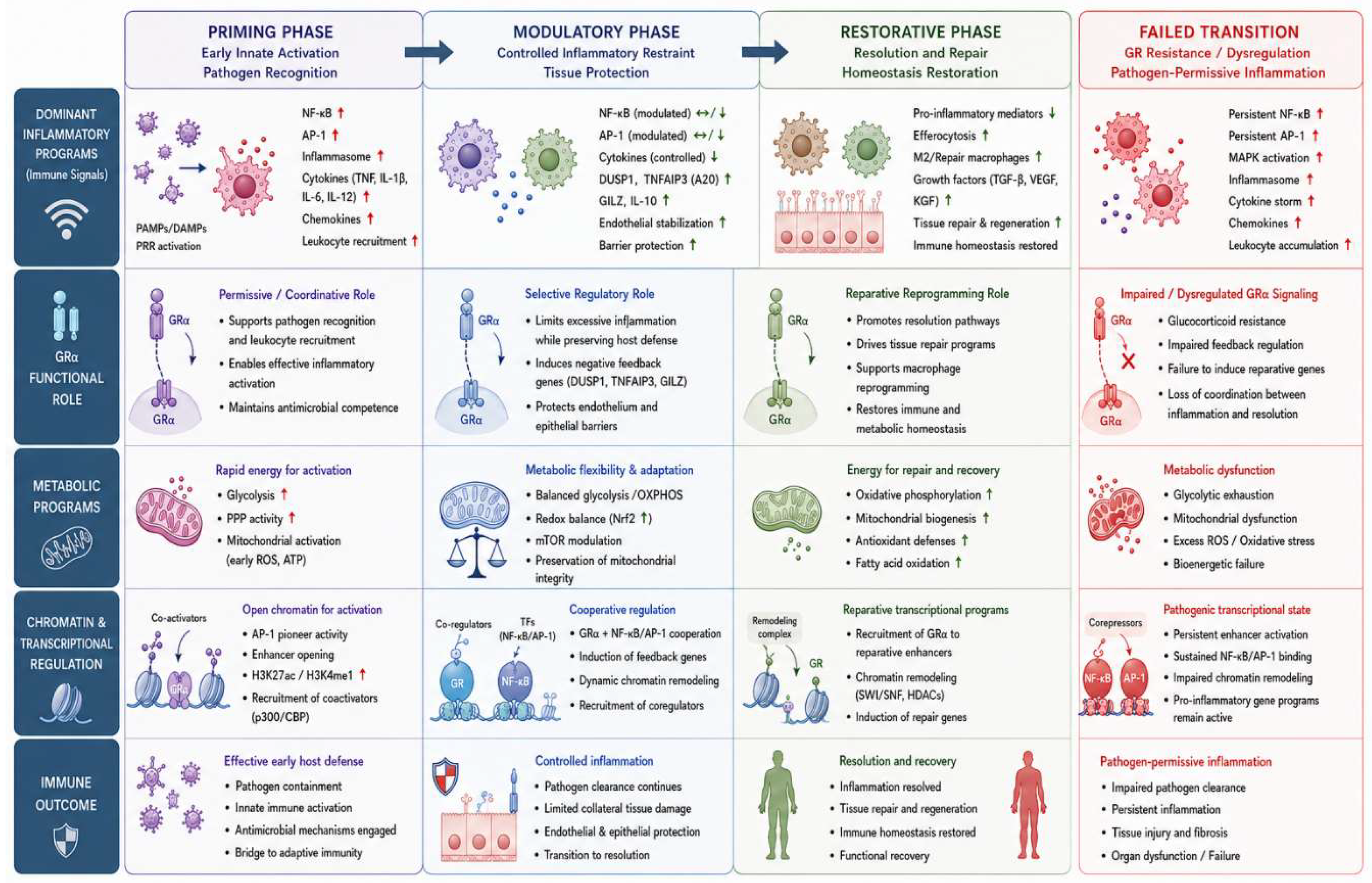
Figure 3.
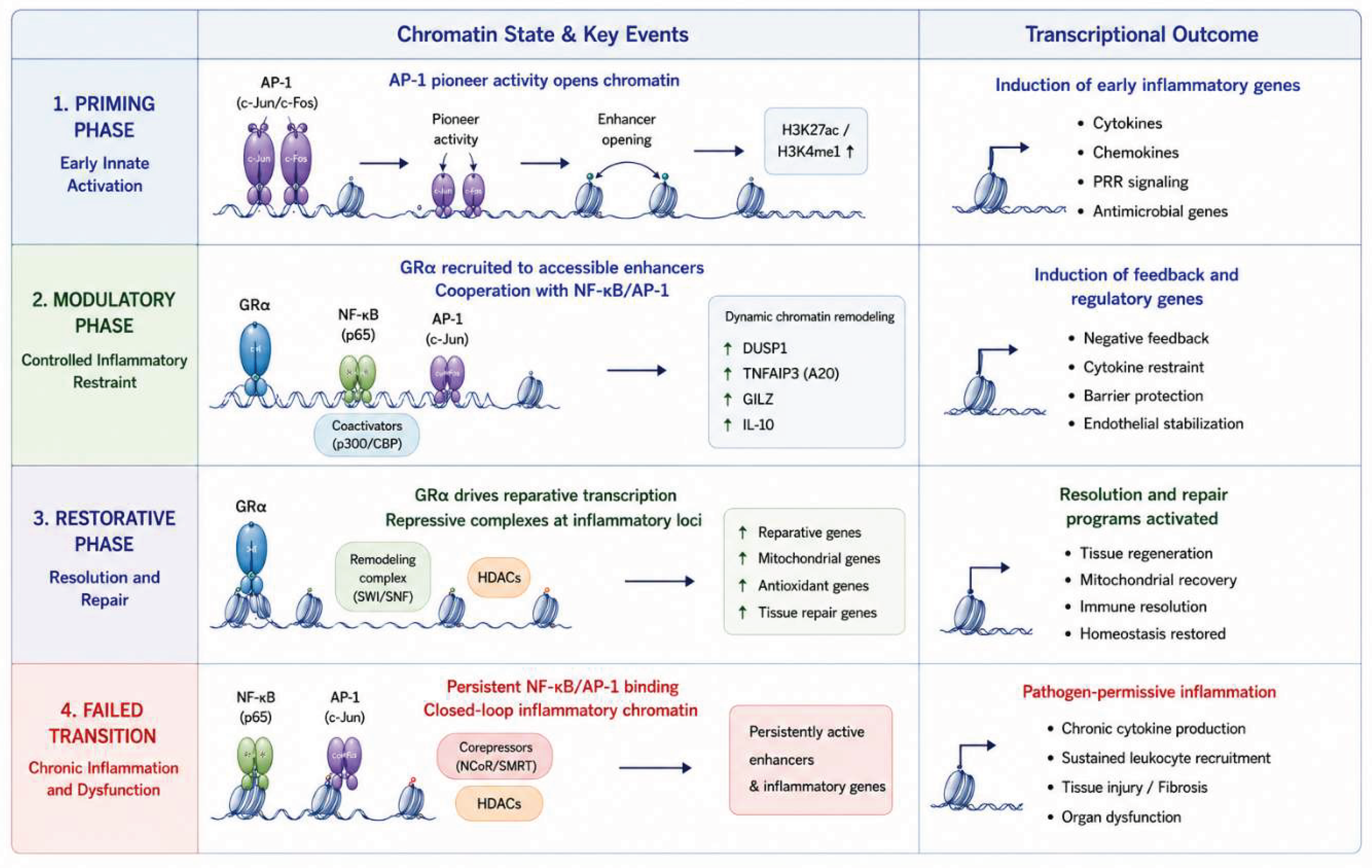
Chromatin-Based Model of GRα–NF-κB/AP-1 Co-regulation During Homeostatic Correction. Abbreviations: AP-1, activator protein-1; GC, glucocorticoid; GRα, glucocorticoid receptor alpha; IRF, interferon regulatory factor; MAPK, mitogen-activated protein kinase; NF-κB, nuclear factor kappa B; TNF, tumor necrosis factor. This figure summarizes the phase-specific interactions between GRα and major pro-inflammatory transcription factors, including NF-κB and AP-1, during homeostatic correction. During the Priming Phase, GRα may cooperate with inflammatory transcriptional programs to promote pathogen recognition, cytokine signaling, immune cell recruitment, and metabolic readiness. As inflammatory responses transition into the Modulatory Phase, GRα increasingly restrains excessive NF-κB/AP-1 activity through transrepression, chromatin remodeling, cofactor redistribution, and induction of anti-inflammatory mediators. During the Restorative Phase, GRα promotes the transition from inflammatory signaling toward resolution, tissue repair, immune homeostasis, and restoration of organ integrity. The figure highlights that GRα–NF-κB/AP-1 crosstalk is phase-dependent and finely regulated to balance effective host defense with protection against persistent inflammatory injury. The figure was conceptually designed by the author with AI-assisted support used for graphical organization and visual refinement. Figure prompts were based on phase-specific homeostatic correction, GRα-mediated immune regulation, immunometabolic adaptation, inflammatory resolution, tissue repair, and inter-organ communication networks.
Figure 3.
Chromatin-Based Model of GRα–NF-κB/AP-1 Co-regulation During Homeostatic Correction. Abbreviations: AP-1, activator protein-1; GC, glucocorticoid; GRα, glucocorticoid receptor alpha; IRF, interferon regulatory factor; MAPK, mitogen-activated protein kinase; NF-κB, nuclear factor kappa B; TNF, tumor necrosis factor. This figure summarizes the phase-specific interactions between GRα and major pro-inflammatory transcription factors, including NF-κB and AP-1, during homeostatic correction. During the Priming Phase, GRα may cooperate with inflammatory transcriptional programs to promote pathogen recognition, cytokine signaling, immune cell recruitment, and metabolic readiness. As inflammatory responses transition into the Modulatory Phase, GRα increasingly restrains excessive NF-κB/AP-1 activity through transrepression, chromatin remodeling, cofactor redistribution, and induction of anti-inflammatory mediators. During the Restorative Phase, GRα promotes the transition from inflammatory signaling toward resolution, tissue repair, immune homeostasis, and restoration of organ integrity. The figure highlights that GRα–NF-κB/AP-1 crosstalk is phase-dependent and finely regulated to balance effective host defense with protection against persistent inflammatory injury. The figure was conceptually designed by the author with AI-assisted support used for graphical organization and visual refinement. Figure prompts were based on phase-specific homeostatic correction, GRα-mediated immune regulation, immunometabolic adaptation, inflammatory resolution, tissue repair, and inter-organ communication networks.
Funding
This research received no external funding.
Data Availability Statement
No new data were created or analyzed in this study.
Acknowledgments
During the preparation of this manuscript, the author used the Consensus platform (Consensus AI) to assist with literature identification and organization of relevant biomedical publications. The author also used ChatGPT (OpenAI, GPT-5 series) for limited assistance with language refinement, structural organization, and graphical formatting. All scientific content, interpretations, conceptual frameworks, conclusions, and final editorial decisions were developed, reviewed, verified, and approved exclusively by the author, who takes full responsibility for the content of this publication. AI-assisted outputs were critically reviewed and manually verified against primary biomedical literature when applicable. Figures were conceptually designed by the author, with AI-assisted support limited to graphical organization and visual refinement based on author-generated prompts related to glucocorticoid receptor alpha (GRα), immune regulation, homeostatic correction, inflammatory signaling, immunometabolism, tissue repair, and inter-organ communication networks. Additional details regarding AI-assisted support used during manuscript preparation are provided in the Acknowledgments section.
Conflicts of Interest
The authors declare no conflict of interest.
References
- Meduri, G.U. A paradigm shift: The bidirectional effect of inflammation on bacterial growth. In Sepsis and Organ Dysfunction: The Challenge Continues; Baue, A.E., Berlot, G., Gullo, A., Vincent, J.-L., Eds.; Springer-Verlag, 1999; pp. 145–154. [Google Scholar]
- Medzhitov, R. Recognition of microorganisms and activation of the immune response. Nature 2007, 449(7164), 819–26. [Google Scholar] [CrossRef]
- Iwasaki, A.; Medzhitov, R. Regulation of adaptive immunity by the innate immune system. Science 2010, 327(5963), 291–5. [Google Scholar] [CrossRef]
- Hotchkiss, R.S.; Monneret, G.; Payen, D. Sepsis-induced immunosuppression: from cellular dysfunctions to immunotherapy. Nat. Rev. Immunol. 2013, 13(12), 862–74. [Google Scholar] [CrossRef]
- Meduri, G.U.; Kanangat, S.; Stefan, J.; Tolley, E.; Schaberg, D. Cytokines IL-1beta, IL-6, and TNF-alpha enhance in vitro growth of bacteria. Am. J. Respir. Crit. Care Med. 1999, 160(3), 961–7. [Google Scholar] [CrossRef] [PubMed]
- Kanangat, S.; Meduri, G.U.; Tolley, E.A.; et al. Effects of cytokines and endotoxin on the intracellular growth of bacteria. Infect. Immun. 1999, 67(6), 2834–40. [Google Scholar] [CrossRef]
- Ganeshan, K.; Chawla, A. Metabolic regulation of immune responses. Annu Rev. Immunol. 2014, 32, 609–34. [Google Scholar] [CrossRef] [PubMed]
- Sun, L.; Yang, X.; Yuan, Z.; Wang, H. Metabolic Reprogramming in Immune Response and Tissue Inflammation. Arterioscler. Thromb. Vasc. Biol. 2020, 40(9), 1990–2001. [Google Scholar] [CrossRef] [PubMed]
- Grossman, Z.; Meyerhans, A.; Bocharov, G. An integrative systems biology view of host-pathogen interactions: The regulation of immunity and homeostasis is concomitant, flexible, and smart. Front Immunol. 2022, 13, 1061290. [Google Scholar] [CrossRef]
- Du, H.; Bartleson, J.M.; Butenko, S.; et al. Tuning immunity through tissue mechanotransduction. Nat. Rev. Immunol. 2023, 23(3), 174–188. [Google Scholar] [CrossRef]
- Morris, G.; Gevezova, M.; Sarafian, V.; Maes, M. Redox regulation of the immune response. Cell Mol. Immunol. 2022, 19(10), 1079–1101. [Google Scholar] [CrossRef]
- Chi, H.; Pepper, M.; Thomas, P.G. Principles and therapeutic applications of adaptive immunity. Cell 2024, 187(9), 2052–2078. [Google Scholar] [CrossRef]
- Ten Brink, T.; Damanik, F.; Rotmans, J.I.; Moroni, L. Unraveling and Harnessing the Immune Response at the Cell-Biomaterial Interface for Tissue Engineering Purposes. Adv. Healthc. Mater. 2024, 13(17), e2301939. [Google Scholar] [CrossRef] [PubMed]
- Chen, Z.; Xiao, F.; Zhu, X.; et al. Metabolic regulation of tissue-resident immune cells: Molecular mechanisms and therapeutic implications. Metabolism 2025, 171, 156349. [Google Scholar] [CrossRef]
- Zhang, B.; Su, Y.; Zhou, J.; Zheng, Y.; Zhu, D. Toward a Better Regeneration through Implant-Mediated Immunomodulation: Harnessing the Immune Responses. Adv. Sci. (Weinh) 2021, 8(16), e2100446. [Google Scholar] [CrossRef] [PubMed]
- Wang, Y.; Li, N.; Zhang, X.; Horng, T. Mitochondrial metabolism regulates macrophage biology. J. Biol. Chem. 2021, 297(1), 100904. [Google Scholar] [CrossRef]
- Faas, M.M.; de Vos, P. Mitochondrial function in immune cells in health and disease. Biochim Biophys. Acta Mol. Basis Dis. 2020, 1866(10), 165845. [Google Scholar] [CrossRef]
- Chen, S.; Liao, Z.; Xu, P. Mitochondrial control of innate immune responses. Front Immunol. 2023, 14, 1166214. [Google Scholar] [CrossRef]
- Tiku, V.; Tan, M.W.; Dikic, I. Mitochondrial Functions in Infection and Immunity. Trends Cell Biol. 2020, 30(4), 263–275. [Google Scholar] [CrossRef]
- Meduri, G.U. Clinical review: a paradigm shift: the bidirectional effect of inflammation on bacterial growth. Clinical implications for patients with acute respiratory distress syndrome. Crit. Care 2002, 6(1), 24–9. [Google Scholar] [CrossRef]
- Meduri, G.U.; Chrousos, G.P. General Adaptation in Critical Illness: Glucocorticoid Receptor-alpha Master Regulator of Homeostatic Corrections. Review. Front Endocrinol. 2020-April-22 2020, 11(161), 161. [Google Scholar] [CrossRef] [PubMed]
- Khadka, S.; Dziadowicz, S.A.; Xu, X.; et al. Endogenous glucocorticoids are required for normal macrophage activation and gastric Helicobacter pylori immunity. Am. J. Physiol. Gastrointest. Liver Physiol. 2024, 327(4), G531–g544. [Google Scholar] [CrossRef]
- Meduri, G.U.; Kanangat, S.; Bronze, M.; et al. Effects of methylprednisolone on intracellular bacterial growth. Clin. Diagn. Lab Immunol. 2001, 8(6), 1156–63. [Google Scholar] [CrossRef]
- Netea, M.G.; Quintin, J.; van der Meer, J.W. Trained immunity: a memory for innate host defense. Cell Host Microbe 2011, 9(5), 355–61. [Google Scholar] [CrossRef] [PubMed]
- Netea, M.G.; Schlitzer, A.; Placek, K.; Joosten, L.A.B.; Schultze, J.L. Innate and Adaptive Immune Memory: an Evolutionary Continuum in the Host’s Response to Pathogens. Cell Host Microbe 2019, 25(1), 13–26. [Google Scholar] [CrossRef] [PubMed]
- Medzhitov, R.; Schneider, D.S.; Soares, M.P. Disease tolerance as a defense strategy. Science 2012, 335(6071), 936–41. [Google Scholar] [CrossRef] [PubMed]
- Soares, M.P.; Teixeira, L.; Moita, L.F. Disease tolerance and immunity in host protection against infection. Nat. Rev. Immunol. 2017, 17(2), 83–96. [Google Scholar] [CrossRef]
- Meduri, G. Glucocorticoid receptor alpha: origins and functions of the master regulator of homeostatic corrections in health and critical illness. Rev. Explor Endocr. Metab. Dis. 2025, 2, 101426. [Google Scholar] [CrossRef]
- Shimba, A.; Ikuta, K. Control of immunity by glucocorticoids in health and disease. Semin Immunopathol. 2020, 42(6), 669–680. [Google Scholar] [CrossRef]
- Cain, D.W.; Cidlowski, J.A. Immune regulation by glucocorticoids. Nat. Rev. Immunol. 2017, 17(4), 233–247. [Google Scholar] [CrossRef]
- Baker, M.E. Steroid receptors and vertebrate evolution. Mol. Cell Endocrinol. 2019, 496, 110526. [Google Scholar] [CrossRef]
- Meduri, G.U.; Psarra, Anna-Maria G. The Glucocorticoid System: A Multifaceted Regulator of Mitochondrial Function, Endothelial Homeostasis, and Intestinal Barrier Integrity. Review. Semin. Respir. Crit. Care Med.;Corticosteroids Crit. Ill. Patients 2026, 47, 32–46. [Google Scholar] [CrossRef] [PubMed]
- Xavier, A.M.; Anunciato, A.K.; Rosenstock, T.R.; Glezer, I. Gene Expression Control by Glucocorticoid Receptors during Innate Immune Responses. Front Endocrinol. 2016, 7, 31. [Google Scholar] [CrossRef]
- Strehl, C.; Ehlers, L.; Gaber, T.; Buttgereit, F. Glucocorticoids-All-Rounders Tackling the Versatile Players of the Immune System. Front Immunol. 2019, 10, 1744. [Google Scholar] [CrossRef] [PubMed]
- Quatrini, L.; Wieduwild, E.; Escaliere, B.; et al. Endogenous glucocorticoids control host resistance to viral infection through the tissue-specific regulation of PD-1 expression on NK cells. Nat. Immunol. 2018, 19(9), 954–962. [Google Scholar] [CrossRef]
- Stolte, E.H.; van Kemenade, B.M.; Savelkoul, H.F.; Flik, G. Evolution of glucocorticoid receptors with different glucocorticoid sensitivity. J. Endocrinol. 2006, 190(1), 17–28. [Google Scholar] [CrossRef] [PubMed]
- Navarro Quiroz, R.; Villarreal Camacho, J.; Zarate Peñata, E.; et al. Multiscale information processing in the immune system. Front Immunol. 2025, 16, 1563992. [Google Scholar] [CrossRef]
- Hao, S.; Yan, K.K.; Ding, L.; Qian, C.; Chi, H.; Yu, J. Network Approaches for Dissecting the Immune System. iScience 2020, 23(8), 101354. [Google Scholar] [CrossRef]
- Hu, T.; Liu, C.H.; Lei, M.; et al. Metabolic regulation of the immune system in health and diseases: mechanisms and interventions. Signal Transduct. Target Ther. 2024, 9(1), 268. [Google Scholar] [CrossRef]
- Taves, M.D.; Ashwell, J.D. Glucocorticoids in T cell development, differentiation and function. Nat. Rev. Immunol. 2021, 21(4), 233–243. [Google Scholar] [CrossRef]
- Rocamora-Reverte, L.; Villunger, A.; Wiegers, G.J. Cell-Specific Immune Regulation by Glucocorticoids in Murine Models of Infection and Inflammation. Cells 2022, 11(14). [Google Scholar] [CrossRef]
- Chan, K.L.; Poller, W.C.; Swirski, F.K.; Russo, S.J. Central regulation of stress-evoked peripheral immune responses. Nat. Rev. Neurosci. 2023, 24(10), 591–604. [Google Scholar] [CrossRef] [PubMed]
- Haykin, H.; Rolls, A. The neuroimmune response during stress: A physiological perspective. Immunity 2021, 54(9), 1933–1947. [Google Scholar] [CrossRef]
- Udit, S.; Blake, K.; Chiu, I.M. Somatosensory and autonomic neuronal regulation of the immune response. Nat. Rev. Neurosci. 2022, 23(3), 157–171. [Google Scholar] [CrossRef] [PubMed]
- Wang, R.; Lan, C.; Benlagha, K.; et al. The interaction of innate immune and adaptive immune system. MedComm (2020) 2024, 5(10), e714. [Google Scholar] [CrossRef] [PubMed]
- Warrick, K.A.; Vallez, C.N.; Meibers, H.E.; Pasare, C. Bidirectional Communication Between the Innate and Adaptive Immune Systems. Annu Rev. Immunol. 2025, 43(1), 489–514. [Google Scholar] [CrossRef]
- Sun, L.; Wang, X.; Saredy, J.; Yuan, Z.; Yang, X.; Wang, H. Innate-adaptive immunity interplay and redox regulation in immune response. Redox Biol. 2020, 37, 101759. [Google Scholar] [CrossRef]
- Chinenov, Y.; Rogatsky, I. Glucocorticoids and the innate immune system: crosstalk with the toll-like receptor signaling network. Mol. Cell Endocrinol. 2007, 275(1-2), 30–42. [Google Scholar] [CrossRef]
- Escoter-Torres, L.; Caratti, G.; Mechtidou, A.; Tuckermann, J.; Uhlenhaut, N.H.; Vettorazzi, S. Fighting the Fire: Mechanisms of Inflammatory Gene Regulation by the Glucocorticoid Receptor. Front Immunol. 2019, 10, 1859. [Google Scholar] [CrossRef]
- Newton, R.; Shah, S.; Altonsy, M.O.; Gerber, A.N. Glucocorticoid and cytokine crosstalk: Feedback, feedforward, and co-regulatory interactions determine repression or resistance. J. Biol. Chem. 2017, 292(17), 7163–7172. [Google Scholar] [CrossRef]
- Busillo, J.M.; Azzam, K.M.; Cidlowski, J.A. Glucocorticoids Sensitize the Innate Immune System through Regulation of the NLRP3 Inflammasome. J. Biol. Chem. 2011, 286(44), 38703–38713. [Google Scholar] [CrossRef]
- Meduri, G.U. Glucocorticoids and GRα Signaling in Critical Illness: Phase-Specific Homeostatic Corrections Across Systems. Semin Respir. Crit. Care Med. 2026, 47(1), 3–31. [Google Scholar] [CrossRef]
- Kawai, T.; Akira, S. The role of pattern-recognition receptors in innate immunity: update on Toll-like receptors. Nat. Immunol. 2010, 11(5), 373–84. [Google Scholar] [CrossRef]
- Fitzgerald, K.A.; Kagan, J.C. Toll-like Receptors and the Control of Immunity. Cell 2020, 180(6), 1044–1066. [Google Scholar] [CrossRef]
- Takeuchi, O.; Akira, S. Pattern recognition receptors and inflammation. Cell 2010, 140(6), 805–20. [Google Scholar] [CrossRef]
- O’Neill, L.A.; Golenbock, D.; Bowie, A.G. The history of Toll-like receptors - redefining innate immunity. Nat. Rev. Immunol. 2013, 13(6), 453–60. [Google Scholar] [CrossRef]
- Fadel, L.; Dacic, M.; Fonda, V.; et al. Modulating glucocorticoid receptor actions in physiology and pathology: Insights from coregulators. Pharmacol. Ther. 2023, 251, 108531. [Google Scholar] [CrossRef]
- Barnes, P.J. How corticosteroids control inflammation: quintiles prize lecture 2005. Br. J. Pharmacol. 2006, 148(3), 245–254. [Google Scholar] [CrossRef] [PubMed]
- Rhen, T.; Cidlowski, J.A. Antiinflammatory action of glucocorticoids--new mechanisms for old drugs. N Engl. J. Med. 2005, 353(16), 1711–23. [Google Scholar] [CrossRef] [PubMed]
- Smoak, K.A.; Cidlowski, J.A. Mechanisms of glucocorticoid receptor signaling during inflammation. Mech. Ageing Dev. 2004, 125(10-11), 697–706. [Google Scholar] [CrossRef] [PubMed]
- Shimba, A.; Cui, G.; Tani-Ichi, S.; et al. Glucocorticoids drive diurnal oscillations in T cell distribution and responses by inducing interleukin-7 receptor and CXCR4. Immunity 2018, 48(2), 286–298. e6. [Google Scholar] [CrossRef]
- Zeyen, L.; Seternes, O.M.; Mikkola, I. Crosstalk between p38 MAPK and GR Signaling. Int. J. Mol. Sci. 2022, 23(6). [Google Scholar] [CrossRef]
- Rao, N.A.; McCalman, M.T.; Moulos, P.; et al. Coactivation of GR and NFKB alters the repertoire of their binding sites and target genes. Genome Res. 2011, 21(9), 1404–1416. [Google Scholar] [CrossRef]
- Ratman, D.; Berghe, W.V.; Dejager, L.; et al. How glucocorticoid receptors modulate the activity of other transcription factors: a scope beyond tethering. Mol. Cell Endocrinol. 2013, 380(1-2), 41–54. [Google Scholar] [CrossRef]
- Biddie, S.C.; John, S.; Sabo, P.J.; et al. Transcription factor AP1 potentiates chromatin accessibility and glucocorticoid receptor binding. Mol. Cell. 2011, 43(1), 145–155. [Google Scholar] [CrossRef]
- Hermoso, M.A.; Matsuguchi, T.; Smoak, K.; Cidlowski, J.A. Glucocorticoids and tumor necrosis factor alpha cooperatively regulate toll-like receptor 2 gene expression. Mol. Cell. Biol. 2004, 24(11), 4743–56. [Google Scholar] [CrossRef] [PubMed]
- Lannan, E.A.; Galliher-Beckley, A.J.; Scoltock, A.B.; Cidlowski, J.A. Proinflammatory actions of glucocorticoids: glucocorticoids and TNFα coregulate gene expression in vitro and in vivo. Endocrinology 2012, 153(8), 3701–3712. [Google Scholar] [CrossRef] [PubMed]
- Kadiyala, V.; Sasse, S.K.; Altonsy, M.O.; et al. Cistrome-based cooperation between airway epithelial glucocorticoid receptor and NF-κB orchestrates anti-inflammatory effects. J. Biol. Chem. 2016, 291(24), 12673–12687. [Google Scholar] [CrossRef] [PubMed]
- John, S.; Sabo, P.J.; Thurman, R.E.; et al. Chromatin accessibility pre-determines glucocorticoid receptor binding patterns. Nat. Genet. 2011, 43(3), 264–268. [Google Scholar] [CrossRef]
- Bougarne, N.; Paumelle, R.; Caron, S.; et al. PPARalpha blocks glucocorticoid receptor alpha-mediated transactivation but cooperates with the activated glucocorticoid receptor alpha for transrepression on NF-kappaB. Research Support, Non-U.S. Gov’t. Proceedings of the National Academy of Sciences of the United States of America 2009, 106(18), 7397–402. [Google Scholar] [CrossRef]
- Bansal, A.; Mostafa, M.M.; Kooi, C.; et al. Interplay between nuclear factor-κB, p38 MAPK, and glucocorticoid receptor signaling synergistically induces functional TLR2 in lung epithelial cells. J. Biol. Chem. 2022, 298(4), 101747. [Google Scholar] [CrossRef]
- Sasse, S.K.; Gruca, M.; Allen, M.A.; et al. Nascent transcript analysis of glucocorticoid crosstalk with TNF defines primary and cooperative inflammatory repression. Genome Res. 2019, 29(11), 1753–1765. [Google Scholar] [CrossRef] [PubMed]
- Oh, K.S.; Patel, H.; Gottschalk, R.A.; et al. Anti-Inflammatory Chromatinscape Suggests Alternative Mechanisms of Glucocorticoid Receptor Action. Immunity 2017, 47(2), 298–309.e5. [Google Scholar] [CrossRef] [PubMed]
- Gerber, A.N.; Newton, R.; Sasse, S.K. Repression of transcription by the glucocorticoid receptor: A parsimonious model for the genomics era. J. Biol. Chem. 2021, 296. [Google Scholar] [CrossRef] [PubMed]
- Weikum, E.R.; Knuesel, M.T.; Ortlund, E.A.; Yamamoto, K.R. Glucocorticoid receptor control of transcription: precision and plasticity via allostery. Nat. Rev. Mol. Cell Biol. 2017, 18(3), 159–174. [Google Scholar] [CrossRef]
- Hudson, W.H.; de Vera, I.M.S.; Nwachukwu, J.C.; et al. Cryptic glucocorticoid receptor-binding sites pervade genomic NF-κB response elements. Nat. Commun. 2018, 9(1), 1–13. [Google Scholar] [CrossRef]
- Bai, X.; Bai, A.; Tomasicchio, M.; et al. α1-Antitrypsin Binds to the Glucocorticoid Receptor with Anti-Inflammatory and Antimycobacterial Significance in Macrophages. J. Immunol. 2022, 209(9), 1746–1759. [Google Scholar] [CrossRef]
- Bai, X.; Gao, J.; Guan, X.; et al. Analysis of alpha-1-antitrypsin (AAT)-regulated, glucocorticoid receptor-dependent genes in macrophages reveals a novel host defense function of AAT. Physiol. Rep. 2024, 12(14), e16124. [Google Scholar] [CrossRef]
- Ning, Y.J.; Chen, S.Y.; Lu, X.J.; Lu, J.F.; Chen, J. Glucocorticoid receptor in ayu (Plecoglossus altivelis): Genomic and non-genomic effects on monocytes/macrophages function. Fish. Shellfish Immunol. 2019, 86, 1151–1161. [Google Scholar] [CrossRef]
- Stifel, U.; Wolfschmitt, E.M.; Vogt, J.; et al. Glucocorticoids coordinate macrophage metabolism through the regulation of the tricarboxylic acid cycle. Mol. Metab. 2022, 57, 101424. [Google Scholar] [CrossRef]
- Weinberg, S.E.; Sena, L.A.; Chandel, N.S. Mitochondria in the regulation of innate and adaptive immunity. Immunity 2015, 42(3), 406–17. [Google Scholar] [CrossRef]
- Sancho, D.; Enamorado, M.; Garaude, J. Innate Immune Function of Mitochondrial Metabolism. Front Immunol. 2017, 8, 527. [Google Scholar] [CrossRef]
- Garaude, J.; Acín-Pérez, R.; Martínez-Cano, S.; et al. Mitochondrial respiratory-chain adaptations in macrophages contribute to antibacterial host defense. Nat. Immunol. 2016, 17(9), 1037–1045. [Google Scholar] [CrossRef]
- Garaude, J. Reprogramming of mitochondrial metabolism by innate immunity. Curr. Opin. Immunol. 2019, 56, 17–23. [Google Scholar] [CrossRef]
- Auger, J.P.; Zimmermann, M.; Faas, M.; et al. Metabolic rewiring promotes anti-inflammatory effects of glucocorticoids. Nature 2024, 629(8010), 184–192. [Google Scholar] [CrossRef]
- Hou, Y.; Xie, J.; Wang, S.; et al. Glucocorticoid receptor modulates myeloid-derived suppressor cell function via mitochondrial metabolism in immune thrombocytopenia. Cell Mol. Immunol. 2022, 19(7), 764–776. [Google Scholar] [CrossRef]
- Lu, Y.; Liu, H.; Bi, Y.; et al. Glucocorticoid receptor promotes the function of myeloid-derived suppressor cells by suppressing HIF1α-dependent glycolysis. Cell Mol. Immunol. 2018, 15(6), 618–629. [Google Scholar] [CrossRef]
- Hughes, C.E.; Nibbs, R.J.B. A guide to chemokines and their receptors. Febs J. 2018, 285(16), 2944–2971. [Google Scholar] [CrossRef]
- Griffith, J.W.; Sokol, C.L.; Luster, A.D. Chemokines and chemokine receptors: positioning cells for host defense and immunity. Annu Rev. Immunol. 2014, 32, 659–702. [Google Scholar] [CrossRef]
- Schluns, K.S.; Lefrançois, L. Cytokine control of memory T-cell development and survival. Nat. Rev. Immunol. 2003, 3(4), 269–79. [Google Scholar] [CrossRef]
- Vazquez, M.I.; Catalan-Dibene, J.; Zlotnik, A. B cells responses and cytokine production are regulated by their immune microenvironment. Cytokine 2015, 74(2), 318–26. [Google Scholar] [CrossRef]
- Bougarne, N.; Mylka, V.; Ratman, D.; et al. Mechanisms Underlying the Functional Cooperation Between PPARα and GRα to Attenuate Inflammatory Responses. Front Immunol. 2019, 10, 1769. [Google Scholar] [CrossRef]
- Liberman, A.C.; Budziñski, M.L.; Sokn, C.; Gobbini, R.P.; Steininger, A.; Arzt, E. Regulatory and mechanistic actions of glucocorticoids on T and inflammatory cells. Front Endocrinol. 2018, 9, 235. [Google Scholar] [CrossRef]
- Quatrini, L.; Ugolini, S. New insights into the cell- and tissue-specificity of glucocorticoid actions. Cell Mol. Immunol. 2021/02/01 2021, 18(2), 269–278. [Google Scholar] [CrossRef]
- Winkler, R.; Lu, H. Cell-Specific Regulation of Inflammatory Cytokines and Acute-Phase Proteins by the Glucocorticoid Receptor. Mediat. Inflamm. 2023, 2023, 4399998. [Google Scholar] [CrossRef]
- Koenen, M.; Culemann, S.; Vettorazzi, S.; et al. Glucocorticoid receptor in stromal cells is essential for glucocorticoid-mediated suppression of inflammation in arthritis. Ann. Rheum. Dis. 2018, 77(11), 1610–1618. [Google Scholar] [CrossRef]
- Ansari, S.A.; Dantoft, W.; Ruiz-Orera, J.; et al. Integrative analysis of macrophage ribo-Seq and RNA-Seq data define glucocorticoid receptor regulated inflammatory response genes into distinct regulatory classes. Comput Struct. Biotechnol. J. 2022, 20, 5622–5638. [Google Scholar] [CrossRef]
- Cavalcanti, D.M.; Lotufo, C.M.; Borelli, P.; Ferreira, Z.S.; Markus, R.P.; Farsky, S.H. Endogenous glucocorticoids control neutrophil mobilization from bone marrow to blood and tissues in non-inflammatory conditions. Br. J. Pharmacol. 2007, 152(8), 1291–300. [Google Scholar] [CrossRef]
- Cronstein, B.N.; Kimmel, S.C.; Levin, R.I.; Martiniuk, F.; Weissmann, G. A mechanism for the antiinflammatory effects of corticosteroids: the glucocorticoid receptor regulates leukocyte adhesion to endothelial cells and expression of endothelial-leukocyte adhesion molecule 1 and intercellular adhesion molecule 1. Proc. Natl. Acad. Sci. U S A 1992, 89(21), 9991–5. [Google Scholar] [CrossRef]
- Ince, L.M.; Weber, J.; Scheiermann, C. Control of Leukocyte Trafficking by Stress-Associated Hormones. Front Immunol. 2018, 9, 3143. [Google Scholar] [CrossRef]
- Zielinska, K.; Van Moortel, L.; Opdenakker, G.; De Bosscher, K.; Van Den Steen, P. Endothelial Response to Glucocorticoids in Inflammatory Diseases. Front Immunol. 2016-12-14 2016, 7doi. [Google Scholar] [CrossRef]
- Greulich, F.; Wierer, M.; Mechtidou, A.; Gonzalez-Garcia, O.; Uhlenhaut, N.H. The glucocorticoid receptor recruits the COMPASS complex to regulate inflammatory transcription at macrophage enhancers. Cell Rep. 2021, 34(6), 108742. [Google Scholar] [CrossRef]
- Meduri, G.U.; Headley, S.; Kohler, G.; et al. Persistent elevation of inflammatory cytokines predicts a poor outcome in ARDS. Plasma IL-1 beta and IL-6 levels are consistent and efficient predictors of outcome over time. Chest 1995, 107(4), 1062–73. [Google Scholar] [CrossRef]
- Meduri, G.U.; Kohler, G.; Headley, S.; Tolley, E.; Stentz, F.; Postlethwaite, A. Inflammatory cytokines in the BAL of patients with ARDS. Persistent elevation over time predicts poor outcome. Chest 1995, 108(5), 1303–14. [Google Scholar] [CrossRef]
- Meduri, G.U. The role of the host defence response in the progression and outcome of ARDS: pathophysiological correlations and response to glucocorticoid treatment. Eur. Respir. J. 1996, 9(12), 2650–70. [Google Scholar] [CrossRef]
- Meduri, G.U.; Yates, C.R. Systemic inflammation-associated glucocorticoid resistance and outcome of ARDS. Ann. N Y Acad. Sci. 2004, 1024, 24–53. [Google Scholar] [CrossRef]
- Meduri, G.U.; Annane, D.; Chrousos, G.P.; Marik, P.E.; Sinclair, S.E. Activation and regulation of systemic inflammation in ARDS: Rationale for prolonged glucocorticoid therapy. Chest 2009, 136, 1631–1643. [Google Scholar] [CrossRef]
- Sevilla, L.M.; Jiménez-Panizo, A.; Alegre-Martí, A.; Estébanez-Perpiñá, E.; Caelles, C.; Pérez, P. Glucocorticoid Resistance: Interference between the Glucocorticoid Receptor and the MAPK Signalling Pathways. Int. J. Mol. Sci. 2021, 22(18), 10049. [Google Scholar] [CrossRef]
- Silverman, M.N.; Sternberg, E.M. Glucocorticoid regulation of inflammation and its functional correlates: from HPA axis to glucocorticoid receptor dysfunction. Ann. New York Acad. Sci. 2012, 1261(1), 55–63. [Google Scholar] [CrossRef]
- Ramos-Ramírez, P.; Tliba, O. Glucocorticoid receptor β (GRβ): beyond its dominant-negative function. Int. J. Mol. Sci. 2021, 22(7), 3649. [Google Scholar] [CrossRef]
Figure 1.
The Three Phases of GRα-Mediated Homeostatic Correction During Severe Physiological Stress. Legend: This schematic illustrates the proposed framework for glucocorticoid receptor alpha (GRα)-mediated homeostatic correction during severe physiological stress and critical illness. The adaptive response unfolds in three dynamic, partially overlapping phases: the Priming Phase, the Modulatory Phase, and the Restorative Phase. A detailed summary of the principal GRα-mediated molecular, metabolic, immune, vascular, barrier-protective, antioxidant, and reparative functions for each phase is provided in Table 3. The Priming Phase initiates early host-defense and adaptive-readiness responses, including immune activation, immunometabolic adaptation, mitochondrial activation, barrier defense, cardiovascular adaptation, antioxidant responses, and neuroendocrine stress signaling. The Modulatory Phase calibrates inflammatory amplification and preserves systemic stability by coordinating regulation of inflammatory signaling, endothelial and barrier integrity, vascular homeostasis, redox balance, and integrated immune–metabolic adaptation. The Restorative Phase promotes resolution of inflammation, tissue repair, extracellular matrix remodeling, adaptive immune recalibration, metabolic recovery, and restoration of organ function and physiological resilience. Across all phases, GRα functions as a systems-level integrator coordinating immune, metabolic, vascular, neuroendocrine, barrier, and reparative responses during homeostatic correction. The figure was conceptually designed by the author with AI-assisted support used for graphical organization and visual refinement. Figure prompts were based on phase-specific homeostatic correction, GRα-mediated immune regulation, immunometabolic adaptation, inflammatory resolution, tissue repair, and inter-organ communication networks.
Figure 1.
The Three Phases of GRα-Mediated Homeostatic Correction During Severe Physiological Stress. Legend: This schematic illustrates the proposed framework for glucocorticoid receptor alpha (GRα)-mediated homeostatic correction during severe physiological stress and critical illness. The adaptive response unfolds in three dynamic, partially overlapping phases: the Priming Phase, the Modulatory Phase, and the Restorative Phase. A detailed summary of the principal GRα-mediated molecular, metabolic, immune, vascular, barrier-protective, antioxidant, and reparative functions for each phase is provided in Table 3. The Priming Phase initiates early host-defense and adaptive-readiness responses, including immune activation, immunometabolic adaptation, mitochondrial activation, barrier defense, cardiovascular adaptation, antioxidant responses, and neuroendocrine stress signaling. The Modulatory Phase calibrates inflammatory amplification and preserves systemic stability by coordinating regulation of inflammatory signaling, endothelial and barrier integrity, vascular homeostasis, redox balance, and integrated immune–metabolic adaptation. The Restorative Phase promotes resolution of inflammation, tissue repair, extracellular matrix remodeling, adaptive immune recalibration, metabolic recovery, and restoration of organ function and physiological resilience. Across all phases, GRα functions as a systems-level integrator coordinating immune, metabolic, vascular, neuroendocrine, barrier, and reparative responses during homeostatic correction. The figure was conceptually designed by the author with AI-assisted support used for graphical organization and visual refinement. Figure prompts were based on phase-specific homeostatic correction, GRα-mediated immune regulation, immunometabolic adaptation, inflammatory resolution, tissue repair, and inter-organ communication networks.
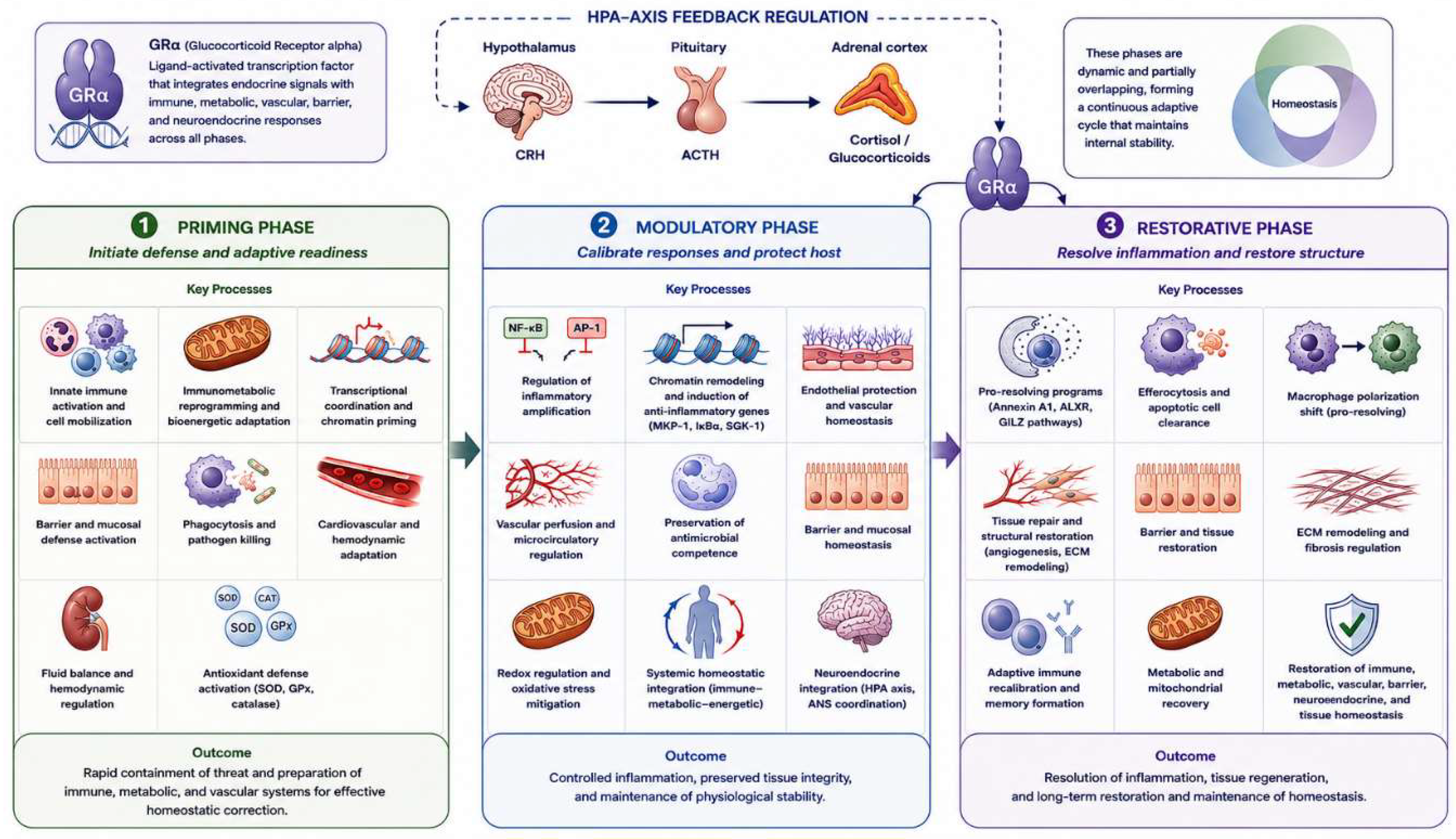

Table 1.
Structured, Hypothesis-Driven AI-Assisted Query Framework for Evaluating GRα Regulation of Immune Sensing, Antimicrobial Defense, and Immune Effectiveness.
Table 1.
Structured, Hypothesis-Driven AI-Assisted Query Framework for Evaluating GRα Regulation of Immune Sensing, Antimicrobial Defense, and Immune Effectiveness.
| Immune Functional domain | Evidence domain | Representative Consensus query |
Purpose of query | Phase of Homeostatic Correction |
|---|---|---|---|---|
| Pathogen recognition | PRR signaling (TLR, NLR, inflammasome) | Does glucocorticoid receptor alpha (GRα) signaling modulate Toll-like receptor and inflammasome activation, signaling thresholds, and coordinated host-defense responses during infection? | Assess the role of GRα in coordinating pathogen-recognition signaling thresholds, integrated host-defense adaptation, and immune-effectiveness responses |
Priming Phase |
|
Innate immunity |
Inflammatory signaling |
How does GRα coordinate NF-κB– and AP-1–dependent inflammatory and transcriptional programs during host defense and phase-specific homeostatic correction? | Assess GRα coordination of inflammatory signaling magnitude, timing, proportionality, and preservation of antimicrobial host-defense competence | Priming Phase |
| Innate immunity | Antimicrobial function | Does GRα signaling coordinate macrophage antimicrobial competence, phagocytic activity, and intracellular pathogen clearance during host defense? | Assess the role of GRα in preserving antimicrobial competence, intracellular pathogen clearance, and coordinated host-defense responses | Priming Phase |
|
Innate immunity |
Immunometabolism | Does GRα signaling coordinate mitochondrial function, immunometabolic adaptation, and bioenergetic regulation during host defense responses? | Assess the role of GRα in immunometabolic adaptation, mitochondrial regulation, and bioenergetic coordination during immune responses | Priming → Modulatory Phase |
| Inflammation regulation | Cytokine and chemokine regulation | Does GRα regulate the magnitude, duration, coordination, and phase-specific transition of cytokine and chemokine networks during host defense and homeostatic correction? | Assess how GRα coordinates cytokine networks, antimicrobial competence, and phase-specific homeostatic correction during host defense | Modulatory Phase |
|
Host defense outcome |
Pathogen clearance vs persistence | Does GRα help coordinate the transition between pathogen-clearing and pathogen-permissive immune states during infection and homeostatic correction? | Define the role of GRα in immune effectiveness, pathogen clearance, and transitions between recovery-oriented and pathogen-permissive states | Modulatory → Organ Functional Recovery: Restorative Phase |
| Resolution and repair | Immune reprogramming and resolution | How does GRα regulate immune reprogramming, resolution pathways, and restoration of immune homeostasis following pathogen clearance? | Assess the role of GRα in coordinated inflammatory resolution, immune reprogramming, tissue repair, and restoration of physiological homeostasis | Restorative Phase |
Legend: This table presents a structured, hypothesis-driven query framework developed to systematically evaluate the role of glucocorticoid receptor alpha (GRα) in immune sensing, host defense, and immune effectiveness. The framework was constructed using AI-assisted literature interrogation (Consensus platform) to generate targeted, domain-specific questions that probe the interaction between GRα signaling and key components of immune function. Additional details regarding AI-assisted support used during manuscript preparation are provided in the Acknowledgments section. Abbreviations: GRα, glucocorticoid receptor alpha; PRR, pattern-recognition receptor; TLR, Toll-like receptor; NLR, nucleotide-binding oligomerization domain–like receptor; NF-κB, nuclear factor kappa B; AP-1, activator protein-1. Queries are organized across major immune domains, including pathogen recognition, innate immune activation, antimicrobial function, immunometabolism, inflammatory regulation, host defense outcomes, and resolution and repair. These domains are mapped onto the phases of homeostatic correction (Priming, Modulatory, and Restorative), reflecting the temporal evolution and functional organization of immune responses during host defense. Each query is designed to test a specific aspect of GRα-mediated regulation, linking molecular signaling pathways (e.g., PRR activation, NF-κB/AP-1 signaling, mitochondrial function) with functional outcomes such as pathogen clearance, immune effectiveness, and restoration of homeostasis.This structured approach enables systematic interrogation of whether GRα functions as a central integrator of immune sensing, signaling, and coordinated immune responses across different phases of host defense, rather than as a purely anti-inflammatory or immunosuppressive mediator. By integrating temporal phase dynamics with receptor-level signaling, transcriptional control, metabolic regulation, and effector outcomes, the framework provides a basis for evaluating how GRα signaling helps coordinate the transition between pathogen-clearing and pathogen-permissive states.
Table 2.
Major Functional Domains of Immune Responses Relevant to GRα Regulation.
| Immune Response Domain |
Principal Components | Primary Function | Relevance to the GRα Conceptual Framework |
|---|---|---|---|
|
Barrier immunity |
Skin, airway, gut epithelium, mucus, antimicrobial peptides, microbiome | Maintains host–environment barrier integrity, regulates microbial interactions, and preserves tissue-integrated host defense | Highlights epithelial and mucosal interfaces as dynamic regulators of microbiome–immune–GRα interactions and host–environment homeostasis |
|
Pathogen recognition and sensing |
Pattern-recognition receptors (TLRs, NLRs, RLRs), inflammasomes | Detects microbial and danger signals and initiates coordinated innate immune signaling and host-defense responses | Highlights the role of GRα in coordinating pathogen-sensing and integrated host-defense signaling programs that shape immune effectiveness and adaptive response outcomes |
|
Innate immunity |
Macrophages, neutrophils, dendritic cells, NK cells |
Integrates early antimicrobial defense, innate immune signaling, immunometabolic adaptation, and tissue-protective host-defense responses | Defines the role of GRα in coordinating inflammatory signaling, antimicrobial competence, immunometabolic adaptation, and tissue-protective innate host-defense responses across homeostatic phases, antimicrobial competence, immunometabolic adaptation, and phase-specific innate immune responses |
|
Inflammasome-mediated immunity |
NLRP3 inflammasome, caspase-1, IL-1β, IL-18 | Regulates inflammasome-dependent signaling and innate host-defense responses during tissue stress and infection | Highlights the phase-dependent role of GRα in coordinating inflammasome priming, activation, and resolution across host defense and homeostatic correction responses |
|
Complement-mediated immunity |
Complement proteins, opsonins, membrane attack complex | Supports complement-mediated opsonization, antimicrobial signaling, and inflammatory responses during innate immune defense | Highlights GRα-regulated integration of complement-mediated host defense with inflammatory coordination, tissue protection, and repair responses |
|
Humoral immunity |
B cells, plasma cells, antibodies |
Supports antibody-mediated host defense and long-term immune adaptation following microbial exposure | Highlights the role of GRα in regulating B-cell function, antibody responses, and adaptive immune recalibration during host defense and recovery |
| Cell-mediated immunity | CD4 T cells, CD8 T cells, NK cells | Regulates adaptive cellular host-defense responses, immune recalibration, and tissue-specific regulation during infection and recovery | Highlights the role of GRα in adaptive host-defense regulation, immune recalibration, and tissue-specific immune responses during infection and recovery |
| Tissue-resident immunity | Tissue-resident macrophages, memory T cells, local immune cells | Supports tissue-specific immune adaptation, local host-defense responses, and microenvironmental homeostasis within organ systems | Highlights tissue-specific and microenvironment-dependent GRα regulation of local immune adaptation, repair responses, and organ-system homeostasis |
|
Systemic immunity |
Circulating leukocytes, antibodies, cytokines, lymphoid organs | Supports systemic immune signaling, host-defense responses, and inter-organ immune integration during physiological stress and recovery | Highlights GRα-mediated integration of immune, endocrine, vascular, metabolic, and circadian regulatory networks involved in systemic host defense and adaptive homeostatic coordination |
| Resolution and repair immunity | Macrophages (M2-like), regulatory T cells, stromal and epithelial cells, pro-resolving mediators | Promotes coordinated inflammatory resolution, tissue repair, and restoration of physiological homeostasis | Directly aligns with GRα-mediated restorative mechanisms involved in inflammation resolution, tissue repair, and return to homeostasis |
| Immune memory | Memory T cells, memory B cells, long-lived plasma cells | Supports adaptive immune recalibration, long-term host-defense readiness, and maintenance of physiological homeostasis following microbial exposure | Highlights the role of GRα in long-term immune adaptation, coordinated physiological recalibration, and maintenance of systemic homeostasis and resilience following infection |
Legend: This table summarizes the major functional domains of immune responses and their relevance to glucocorticoid receptor alpha (GRα)-mediated regulation within the framework of homeostatic correction. Immune responses are organized according to their roles in pathogen detection, innate and adaptive defense, resolution and repair, and long-term adaptation and maintenance of homeostasis. Abbreviations: PRR, pattern-recognition receptor; TLR, Toll-like receptor; NLR, nucleotide-binding oligomerization domain–like receptor; RLR, RIG-I–like receptor; PAMP, pathogen-associated molecular pattern; DAMP, damage-associated molecular pattern; NF-κB, nuclear factor kappa B; AP-1, activator protein-1; IRF, interferon regulatory factor; GRα, glucocorticoid receptor alpha. Pathogen recognition is mediated by pattern-recognition receptors (PRRs), including Toll-like receptors (TLRs), nucleotide-binding oligomerization domain–like receptors (NLRs), and RIG-I–like receptors (RLRs), which detect pathogen-associated molecular patterns (PAMPs) and damage-associated molecular patterns (DAMPs) and activate downstream signaling pathways involving nuclear factor kappa B (NF-κB), activator protein-1 (AP-1), and interferon regulatory factors (IRFs). Within this integrated system, GRα does not directly mediate pathogen recognition but functions as a central regulator of immune coordination and response integration. GRα dynamically modulates PRR-driven signaling, cytokine amplification, and downstream effector pathways in a tissue- and phase-specific manner, thereby coordinating immune sensing with functional outcomes across tissues and over time. Importantly, GRα signaling helps determine whether inflammatory responses remain pathogen-clearing or transition into pathogen-permissive states. Adequate GRα activity supports coordinated antimicrobial defense by preserving mitochondrial function, phagolysosomal integrity, and intracellular pathogen killing while constraining excessive NF-κB– and AP-1–driven cytokine amplification. In contrast, impaired GRα signaling permits dysregulated inflammatory amplification that may promote pathogen persistence, tissue injury, and impaired host defense. Accordingly, effective immune regulation requires coordinated GRα-mediated integration of inflammatory regulation with preservation of antimicrobial competence, adaptive immune reprogramming, and tissue repair, emphasizing that reduction of cytokine levels alone does not equate to restoration of immune function.
Table 3.
GRα-Mediated Functions During Homeostatic Correction.
| Phase | Key Processes | Functions |
|---|---|---|
| Priming Phase | HPA Axis Activation and Early GRα-Inducible Transcriptional Response |
a. HPA Axis Activation: Initial ACTH-driven cortisol surge ensures metabolic and immune readiness. b. GILZ: Inhibits NF-κB and AP-1 activity, promotes macrophage activation and neutrophil clearance, facilitating early immune homeostasis. c. DUSP1: Deactivates MAPKs (ERK, JNK, p38), reducing cytokine production and limiting systemic inflammation; essential for GC anti-inflammatory action in multiple models. |
| Priming Phase | Activating Innate Immunity, Immunometabolic Adaptation, and Cardiovascular Response |
a. Immune-Cell Mobilization: GRα supports activation, trafficking, and tissue-directed recruitment of innate and adaptive immune cells involved in early antimicrobial defense and homeostatic adaptation. b. Immunometabolic Reprogramming and Bioenergetic Adaptation: Coordinated mitochondrial biogenesis, glucose utilization, glycolytic activation, and fatty-acid oxidation support host-defense responses, antimicrobial competence, and bioenergetic resilience during early infection. c. Innate Immune Coordination and Immune Sensing: GRα supports acute-phase responses and immune-sensing pathways that regulate antimicrobial defense and inflammatory balance during early infection. d. Early Barrier and Mucosal Defense Activation: GC-GRα supports epithelial defense mechanisms, mucosal immunity, and early containment of microbial invasion. e. Transcriptional Coordination and Chromatin Priming: GRα engages in context-dependent interactions with NF-κB, AP-1, and inflammatory signaling pathways to coordinate chromatin accessibility and adaptive early host-defense responses during homeostatic correction. f. Phagocytosis and Pathogen Killing: GRα-dependent coordination of macrophage activation and intracellular pathogen killing supports early antimicrobial defense. g. Cardiovascular and Hemodynamic Adaptation: GRα coordinates adrenergic responsiveness, vascular regulation, and microcirculatory adaptation to preserve tissue perfusion, oxygen delivery, and systemic homeostasis during physiological stress. h. Fluid Balance and Hemodynamic Regulation: GC-GRα interacts with mineralocorticoid receptor signaling to support sodium balance, plasma-volume maintenance, and circulatory stability during physiological stress. i. Antioxidant Defense Activation: Upregulation of SOD, GPx, and catalase to limit oxidative injury during early inflammatory activation. |
| Modulatory Phase | Repressing Inflammation, Mitigating Oxidative Stress, and Restoring Vascular Integrity |
a. Regulation of Inflammatory Amplification: GRα calibrates NF-κB, AP-1, and MAPK signaling to preserve proportional antimicrobial, tissue-protective, and homeostatically adaptive host-defense responses. b. Chromatin Remodeling: GC-GRα increases accessibility to anti-inflammatory genes (MKP-1, IκBα, SGK-1). c. Endothelial Protection and Vascular Homeostasis: GRα coordinates endothelial responses that preserve glycocalyx integrity, microcirculatory stability, tissue-fluid balance, and vascular homeostasis during inflammatory stress. d. Vascular Homeostasis and Perfusion Regulation: GRα coordinates endothelial and vascular adaptive responses that preserve microcirculatory perfusion, tissue oxygen delivery, and integrated cardiovascular homeostasis during physiological stress. e. Preservation of Antimicrobial Competence: GRα supports mucosal immunity, neutrophil functional integrity, and host defense mechanisms that help prevent secondary and pathogen-permissive infections. f. Barrier and Mucosal Homeostasis: GRα supports epithelial and mucosal integrity, coordinates host–environment barrier defenses, and limits microbial translocation and inflammatory tissue injury. g. Redox Regulation and Oxidative Stress Mitigation: GRα coordinates antioxidant and mitochondrial responses that preserve redox balance and limit oxidative tissue injury during inflammatory stress. h. Systemic Homeostatic Integration: GRα coordinates immune activation, metabolic adaptation, and adaptive bioenergetic regulation to preserve physiological resilience during systemic stress. i. Neuroendocrine Integration: GRα coordinates HPA-axis and autonomic nervous system signaling to integrate stress adaptation, immune–metabolic communication, and maintenance of physiological homeostasis during systemic stress. |
| Restorative Phase | Resolving Inflammation, Facilitating Tissue Repair, Restoring Normal Structure, and Activating Adaptive Immunity |
a. Coordinated Resolution of Inflammation: GRα-dependent pro-resolving programs, including Annexin A1, ALXR signaling, and GILZ pathways, support immune recalibration, reparative adaptation, and restoration of tissue homeostasis. b. Efferocytosis and Apoptotic Cell Clearance: Pro-resolving macrophage programs coordinate apoptotic-cell clearance and reparative adaptation, supporting inflammatory resolution, tissue recovery, and restoration of immune homeostasis. c. Macrophage Polarization Shift: Transition toward pro-resolving and tissue-reparative macrophage phenotypes that support inflammation resolution and tissue recovery. d. Tissue Repair and Structural Restoration: GRα-dependent reparative programs support angiogenesis, extracellular matrix remodeling, tissue structural recovery, and restoration of functional integrity during physiological homeostatic recovery. e. Barrier and Tissue Restoration: GC-GRα supports epithelial repair, restoration of tissue barrier integrity, and recovery of mucosal homeostasis. f. Extracellular Matrix Remodeling and Fibrosis Regulation: GRα coordinates reparative remodeling pathways that support tissue restoration while limiting maladaptive fibrotic responses. g. Adaptive Immune Recalibration and Memory Formation: Restoration of adaptive immune coordination supports long-term host-defense readiness, immune memory, and maintenance of physiological homeostasis following recovery. h. Neutrophil Clearance: GILZ expression promotes neutrophil apoptosis, preventing excessive inflammation. i. Cellular Homeostasis and Metabolic Recovery: Restoration of mitochondrial function, redox balance, oxygen utilization, and bioenergetic capacity supports tissue repair and physiological recovery. j. Muscle Preservation and Functional Recovery: GRα coordinates protein metabolic adaptation, muscle integrity, and reparative recovery processes that support physiological resilience and functional reintegration during critical illness. k. Organ Functional Recovery: Restoration of tissue architecture, inter-organ communication, and physiological homeostasis supports organ recovery and long-term resilience following critical illness |
Legend: This table presents a synthesized framework of the principal glucocorticoid receptor alpha (GRα)-mediated homeostatic functions operating across the Priming, Modulatory, and Restorative phases of critical illness, integrating evidence from molecular, physiological, translational, and clinical studies discussed throughout the manuscript.[28] Each phase represents a coordinated set of GRα-mediated responses tailored to the host’s evolving physiological demands. The Priming Phase initiates immune activation, metabolic adaptation, antioxidant defense, and cardiovascular responsiveness. The Modulatory Phase focuses on suppressing excessive inflammation, mitigating oxidative stress, restoring vascular integrity, and preserving systemic homeostasis. The Restorative Phase supports the resolution of inflammation, tissue repair, adaptive immune recovery, and the restoration of normal organ structure and function. This integrated progression enables dynamic, proportionate responses to severe physiological stress, promoting the recovery of systemic homeostasis. Abbreviations: ACTH (adrenocorticotropic hormone), AP-1 (activator protein-1), CRH (corticotropin-releasing hormone), DUSP1 (dual specificity phosphatase 1), ERK (extracellular signal-regulated kinase), 5), GC (glucocorticoid), GILZ (glucocorticoid-induced leucine zipper), GR (glucocorticoid receptor), GRα (glucocorticoid receptor alpha isoform), HPA axis (hypothalamic-pituitary-adrenal axis), JNK (c-Jun N-terminal kinase), MAPK(mitogen-activated protein kinase), NF-κB (nuclear factor kappa-light-chain-enhancer of activated B cells).
Disclaimer/Publisher’s Note: The statements, opinions and data contained in all publications are solely those of the individual author(s) and contributor(s) and not of MDPI and/or the editor(s). MDPI and/or the editor(s) disclaim responsibility for any injury to people or property resulting from any ideas, methods, instructions or products referred to in the content. |
© 2026 by the authors. Licensee MDPI, Basel, Switzerland. This article is an open access article distributed under the terms and conditions of the Creative Commons Attribution (CC BY) license (http://creativecommons.org/licenses/by/4.0/).
Copyright: This open access article is published under a Creative Commons CC BY 4.0 license, which permit the free download, distribution, and reuse, provided that the author and preprint are cited in any reuse.


