

Submitted:
19 May 2026
Posted:
21 May 2026
Read the latest preprint version here
Abstract
Background/Objectives: Antibiotic resistance in pediatric infections presents a worsening global public-health challenge, with antimicrobial resistance (AMR) accounting for more than one million deaths annually and disproportionately affecting children under five. Neonates and critically ill children face heightened risk owing to immature immunity, frequent healthcare exposures, and limited therapeutic options. This review synthesizes evidence on the epidemiology, mechanisms of resistance, clinical outcomes, and management of AMR across the full pediatric age range.
Methods: PubMed/MEDLINE and Google Scholar were searched for literature from 2014 to 2026 using terms covering antibiotic resistance, pediatric populations, and key pathogens. Approximately 1,840 records were screened; 64 sources met all inclusion criteria. A narrative synthesis approach was used, given heterogeneity across study designs and outcomes.
Results: Extended-spectrum β-lactamase (ESBL)-producing Enterobacterales, carbapenem-resistant pathogens, and methicillin-resistant Staphylococcus aureus drive substantial morbidity and mortality in children. Approximately one in five pediatric Gram-negative bloodstream isolates resist third-generation cephalosporins, an association independently associated with a roughly three-fold increase in adjusted mortality. Carbapenem-resistant Klebsiella pneumoniae bacteremia carries a 30-day mortality approaching 40%, and isolates in low- and middle-income countries (LMICs) frequently harbor multiple resistance genes. Pneumococcal conjugate vaccine implementation produced absolute reductions of 7–11% in pediatric pneumococcal resistance, and global AMR mortality in children under five fell by more than 50% between 1990 and 2021.
Conclusions: Pediatric AMR reflects intersecting microbiological, clinical, and health-system challenges. Priority actions include scaling antimicrobial stewardship programs, expanding access to rapid molecular diagnostics, integrating whole-genome sequencing into surveillance, conducting pediatric-inclusive randomized trials, and deploying vaccines as primary prevention tools, with particular emphasis on LMICs where the burden is greatest.
Keywords:
antimicrobial stewardship
; antibiotic resistance
; carbapenem resistance
; ESBL
; multidrug-resistant organisms
; MRSA
; pediatric infections
; pneumococcal conjugate vaccine
1. Introduction
1.1. The Global Burden of Antibiotic Resistance
The Global Burden of Disease (GBD) study group's first comprehensive AMR estimate, encompassing 23 pathogens, 88 pathogen–drug combinations, 204 countries, and 471 million individual records or isolates, calculated that bacterial AMR was associated with an estimated 4.95 million deaths in 2019, of which 1.27 million were directly attributable to resistance [1]. The follow-up GBD analysis covering 1990–2021 estimated 4.71 million deaths associated with AMR and 1.14 million directly attributable to it in 2021, and forecast that, under business-as-usual assumptions, attributable AMR deaths could reach 1.91 million annually by 2050 [2]. Encouragingly, that same analysis observed that AMR mortality decreased by more than 50% in children younger than five years between 1990 and 2021, an improvement driven largely by infant immunization, infection prevention, and improved access to care, evidence that pediatric AMR is responsive to public health investment [2].
Despite this progress, children remain a uniquely vulnerable population. The World Health Organization has identified AMR as a top global health threat, and pediatric-specific data and interventions remain less developed than in adult medicine [3]. National Australian surveillance demonstrated that children are not simply "little adults" in the AMR era: resistance rates, clinical phenotypes, and mortality patterns differ meaningfully across age groups, and extended-spectrum β-lactamase (ESBL)-producing organisms are associated with disproportionately higher mortality in pediatric than in adult bacteremia [4].
1.2. Pediatric Antibiotic Use as a Driver of Resistance
Pediatric antibiotic use, both in volume and in agent selection, is a principal driver of resistance. The first Antibiotic Resistance and Prescribing in European Children (ARPEC) point-prevalence survey covering 73 hospitals worldwide found that, on the survey day, 35.4% of pediatric and 21.8% of neonatal European hospital inpatients were receiving an antibiotic, rising to 43.8% and 39.4%, respectively, in non-European hospitals. Antibiotic use was highest in pediatric hematology-oncology wards (61.3%) and pediatric intensive care units (55.8%) [5]. A subsequent multinational point-prevalence analysis of 23,572 pediatric and neonatal inpatients across 56 countries demonstrated very wide variation in the proportion of WHO Access-class antibiotics prescribed, from 7.8% in China to 61.2% in Slovenia in children, and similarly large variation in Watch-class prescribing [6]. Such variation, far in excess of what differences in case-mix can explain, is a powerful indication that prescribing remains a major target for stewardship.
In the outpatient setting, a national U.S. analysis estimated that of every 1,000 outpatient antibiotic prescriptions, only about 70% were appropriate; sinusitis, suppurative otitis media, and pharyngitis, conditions with overlapping bacterial and viral aetiologies in children, accounted for the largest contributions to inappropriate use [7]. Even short courses of common pediatric antibiotics measurably alter the resistome: in a study of 40 children, 100% harbored amoxicillin-resistant oral bacteria, with the median proportion rising from 2.4% in untreated children to 10.9% in those who had received amoxicillin in the prior three months [8].
1.3. Healthcare-Associated and Geographic Risk Factors
Healthcare-associated factors, including invasive devices, prolonged hospitalization, and intensive care exposure, create niches for resistant Gram-negative bacilli. In the Australian pediatric Gram-negative bloodstream infection (GNBSI) cohort, 60% of episodes occurred in children with a central venous catheter, and 71% occurred in children with comorbidities [9]. In a single-center pediatric cohort of 102 children with Gram-negative bloodstream infection in Türkiye, urinary catheterization was an independent predictor of mortality (odds ratio 5.68; 95% CI 1.14–28.25) and central venous catheterization an independent predictor of sepsis (odds ratio 2.46; 95% CI 1.10–5.53) [10]. In a single-center Saudi Arabian cohort of pediatric cultures, MDR organisms were detected in 42% of patients and were associated with eight-fold higher mortality (32.4% vs. 3.9%) compared with non-MDR infections [11].
Marked geographic and socioeconomic disparities exist. The Asia-Pacific region, home to roughly 600 million children, faces a disproportionate AMR burden with limited microbiological infrastructure and inequitable vaccine coverage [12]. A systematic review of pediatric Gram-negative sepsis in LMICs demonstrated very high regional resistance rates. For example, neonatal K. pneumoniae resistance to ampicillin reached a median of 94% in Asia and 100% in Africa, and to cephalosporins 84% in Asia and 50% in Africa [13]. The BARNARDS study, a prospective network covering seven LMICs in Africa and South Asia, recovered isolates from 2,483 culture-confirmed neonatal sepsis cases out of 36,285 enrolled neonates and showed that K. pneumoniae was the leading pathogen, with isolates harboring multiple cephalosporin and carbapenem resistance determinants [14]. In Sub-Saharan Africa, 50% of Salmonella Typhi isolates from febrile children in Nairobi were multidrug-resistant, with quinolone-resistance-determining region mutations in 67.6% [15]; and in Damascus, Syria, retrospective pediatric data showed widespread resistance to third-generation cephalosporins and a 16% case-fatality rate [16].
Several recent narrative and systematic reviews have addressed pediatric antimicrobial resistance from focused angles [3], examining emerging pathogens and AMR in pediatric and neonatal sepsis. Mahony and colleagues [17] reviewed multidrug-resistant uropathogens in children. Huong and colleagues (2025) provided a regional perspective limited to the Asia-Pacific. Le Doare and colleagues [13] synthesized the literature on Gram-negative resistance in pediatric sepsis in resource-limited settings. Stocker and colleagues [18] issued a national guideline focused on neonatal early-onset sepsis, and Winteler and colleagues [19] systematically reviewed perinatal antibiotic stewardship from 2000 to 2022. The WHO global research agenda for AMR in human health, published by Bertagnolio and colleagues [20], set 40 priorities to be addressed by 2030, but did not provide an integrated synthesis of pediatric epidemiology, mechanisms, outcomes, vaccination, and stewardship. The present review differs from the previous ones. First, it integrates surveillance and outcome data published as recently as 2024–2026 across the full pediatric age range rather than within a single sub-population. This review explicitly couples epidemiology with intervention evidence, antimicrobial stewardship, vaccination, and rapid molecular diagnostics, and frames the trajectory of pediatric AMR as a system responsive to public health investment.
2. Results
2.1. Epidemiology of Resistance in Key Pediatric Pathogens
Pathogen-specific findings from the studies cited above are summarized in Table 1. We have summarized the findings for Gram-negative multidrug-resistant organisms, such as ESBL-producing Enterobacterales and Carbapenem-resistant Enterobacterales (CRE), and Gram-positive resistant pathogens, such as methicillin-resistant Staphylococcus aureus (MRSA).
2.1.1. Gram-Negative Multidrug-Resistant Organisms
ESBL-producing Enterobacterales, principally Escherichia coli (E. coli) and K. pneumoniae, are the dominant Gram-negative resistance phenotype in children. National U.S. surveillance using the Surveillance Network database analyzed 368,398 pediatric Enterobacterales isolates and showed that the prevalence of third-generation-cephalosporin-resistant (3GCR) phenotypes rose from 1.39% in 1999–2001 to 3.0% in 2010–2011, while ESBL phenotypes rose from 0.28% to 0.92% over the same period, significant increases across all demographic groups, including outpatients [21]. The Australian pediatric GNBSI prospective study (931 episodes in 818 children, 2019–2021) showed that 22% of Enterobacterales isolates were resistant to third-generation cephalosporins, with blaCTX-M-15 identified in 36% of sequenced ESBL isolates [9]. In a 5-year retrospective cohort in Taiwan, ESBL-producing pediatric uropathogens accounted for 14.1% of culture-positive UTIs, with recent antibiotic exposure and a preterm gestational history identified as significant risk factors for ESBL acquisition [22].
Similar findings have recently been reported in Latin America. In a multicenter retrospective cohort study involving 1,250 pediatric patients hospitalized with bloodstream or urinary tract infections across three referral hospitals in Peru, the prevalence of ESBL-producing Enterobacteriaceae reached 32.9% [29]. Prior antibiotic exposure (aOR 5.82) and the presence of a central venous catheter (aOR 2.10) were identified as major independent risk factors for ESBL infection. Importantly, hospitals with more mature antimicrobial stewardship programs demonstrated a lower likelihood of ESBL-producing infections (aOR 0.85), highlighting the direct relationship between stewardship infrastructure and resistance outcomes in pediatric populations.
Carbapenem-resistant Enterobacterales (CRE) represent an emerging and severe threat. In a Chinese single-center cohort of 70 children with carbapenem-resistant K. pneumoniae bacteremia, 30-day mortality reached 39.4% in neonates and 43.2% in older children [24]. In a multinational pediatric oncology and hematopoietic stem-cell transplant cohort, 9% of Gram-negative bloodstream isolates were meropenem-resistant, and prior carbapenem exposure was significantly associated with subsequent resistant infection [25]. The BARNARDS neonatal sepsis network across seven LMICs documented that Enterobacterales isolates, including K. pneumoniae, E. coli, and Enterobacter cloacae complex, harbored multiple cephalosporin and carbapenem resistance genes and that all isolated pathogens were resistant to multiple antibiotic classes, including those used to treat neonatal sepsis [14].
Outside the inpatient setting, a systematic review and meta-analysis of community-acquired pediatric UTIs caused by E. coli pooled data from 58 observational studies and 77,783 isolates and demonstrated marked Organization for Economic Co-operation and Development (OECD) versus non-OECD disparities [23]. These findings are summarized graphically in Figure 1.
2.1.2. Gram-Positive Resistant Pathogens
MRSA remains a major pediatric concern. U.S. population-based surveillance documented 876 invasive MRSA infections in pediatric patients during 2005-2010, with 39% occurring in infants and 42% community-associated. The estimated invasive MRSA incidence in 2010 was 43.9 per 100,000 in infants younger than 90 days, roughly 22-fold higher than in older infants and children (2.0 per 100,000), and was disproportionately higher in Black children (6.7 per 100,000) than in other racial groups (1.6 per 100,000); community-associated MRSA incidence rose 10.2% per year over the surveillance period [26]. In multinational pediatric oncology and hematopoietic stem-cell transplant cohorts, methicillin resistance accounted for 17% of S. aureus isolates and vancomycin resistance for 40% of Enterococcus faecium isolates [25].
In the Australian Pediatric AMR Surveillance Program [4], pediatric S. aureus, enterococcal, and Gram-negative bloodstream infections were tracked across 34 hospitals during 2013–2016. In a Turkish single-center pediatric enterococcal-bacteremia cohort, E. faecium demonstrated significant ampicillin resistance and an emerging vancomycin-resistant enterococcus (VRE) profile [30].
2.2. Mechanisms of Resistance Relevant to Pediatric Practice
β-lactamase production remains the dominant resistance mechanism among Gram-negative pathogens in children. CTX-M-type ESBLs are globally dominant; in the Australian pediatric Gram-negative bloodstream cohort, blaCTX-M-15 was identified in 36% of sequenced ESBL isolates and blaSHV-12 in 11% ([9]). Carbapenemases (KPC, NDM, OXA-48-like) extend the resistance spectrum to virtually all β-lactam antibiotics and pose particularly severe therapeutic challenges in pediatric care due to the limited number of approved alternative agents [31,32].
Among Gram-positive pathogens, methicillin resistance in S. aureus (mediated by mecA-encoded penicillin-binding protein PBP2a), penicillin-binding-protein mutations in Streptococcus pneumoniae, erm-mediated ribosomal methylation conferring macrolide resistance, and vanA/vanB-mediated vancomycin resistance in enterococci remain leading clinical concerns ([33,34,35,36]. Horizontal gene transfer, mediated principally by conjugative plasmids and integrons [37,38,39], accelerates the inter-species spread of these resistance determinants and underlies many of the regional clonal expansions. The major mechanisms are summarized schematically in Figure 2.
Figure 2 illustrates the key mechanisms of antibiotic resistance observed in pediatric pathogens. The four principal classes of mechanism are: (i) enzymatic inactivation of antibiotics, dominated by β-lactamases (ESBL, KPC, NDM, and OXA-48-like enzymes); (ii) modification of the antibiotic target site (altered penicillin-binding proteins, gyrA mutations, and ribosomal RNA methylation); (iii) active efflux of antibiotic from the cell (AcrAB-TolC, MexAB-OprM, and mef-encoded systems); and (iv) reduced antibiotic uptake through porin loss (e.g., OmpK35/36) or lipopolysaccharide modification (e.g., mcr genes). Resistance determinants encoding these mechanisms are widely disseminated by horizontal gene transfer via plasmids, integrons, and transposons, which underlie the rapid inter-species spread of resistance documented in pediatric Gram-negative surveillance [31,32,39,40,41,42,43,44].
Figure 3 provides an integrated view of how molecular resistance mechanisms operate alongside hospital-level risk factors to drive the burden of resistant infections in children. On the left, the Figure recapitulates the key enzymatic, target-modification, efflux, and permeability mechanisms described above. On the right, it illustrates the hospital risk factors documented in the studies cited in this review: prior antibiotic use, which creates selection pressure favoring resistant organisms [22,25]; invasive medical devices such as central venous and urinary catheters, which serve as both infection entry points and independent predictors of mortality in pediatric Gram-negative bloodstream infections [9,10], patient-to-patient and healthcare-worker-to-patient transmission; and environmental contamination, all of which facilitate the horizontal spread of resistance determinants within and across units. The convergence of molecular mechanisms with healthcare-associated risk factors underscores the need for effective pediatric AMR control, which requires simultaneous intervention across multiple levels: stewardship, infection prevention, and diagnostic innovation.
2.3. Clinical Outcomes Associated with Resistant Infections
Antibiotic resistance is consistently associated with worse clinical outcomes in children. Reported pediatric mortality outcomes from the validated studies in this review are shown in Figure 4.
Beyond mortality, resistant infections are associated with prolonged hospitalization, more frequent intensive care admission, and higher healthcare resource utilization. Pediatric patients with ESBL-producing UTIs experienced significantly longer total length of stay (β = 2.85 days; 95% CI 1.14–4.56), and longer ICU stays (β = 5.86 days; 95% CI 1.59–10.12) compared with non-ESBL UTIs [22]. At a population level, the GBD 2021 AMR analysis estimated that without intervention, AMR could be associated with up to 8.22 million deaths globally per year by 2050; a "better care" scenario incorporating improved infection control and access to appropriate antibiotics could avert 92.0 million cumulative deaths between 2025 and 2050 [2].
2.4. Vaccination as a Pillar of Antimicrobial Resistance Prevention
Vaccines reduce antibiotic use by preventing the infections that prompt prescribing, and they reduce circulating resistance directly when they target serotypes enriched for resistant strains. A meta-regression of 559 studies and 312,783 pediatric pneumococcal isolates demonstrated that, after pneumococcal conjugate vaccines (PCV) implementation, the proportion of pneumococci showing penicillin non-susceptibility fell by an absolute 11.5% (95% CI 8.6–14.4), penicillin resistance by 7.3% (95% CI 5.3–9.4), and sulfamethoxazole–trimethoprim non-susceptibility by 9.7% (95% CI 4.3–15.2) [45]. These pooled absolute reductions are shown in Figure 5. The clinical implication is that PCV programs serve as both infection-prevention and stewardship tools.
2.5. Antimicrobial Stewardship in Pediatric Practice
Antimicrobial stewardship is the most consistently effective institutional response to pediatric AMR. A 30-month prospective audit with feedback ASP at a U.S. children's hospital reviewed 10,460 broad-spectrum or selected antibiotic courses, with clinicians complying with stewardship recommendations in 92% of cases [46].
Compared with a control group of 25 similar children's hospitals, the intervention was associated with a 7% monthly decline in days-of-therapy and an 8% decline in length-of-therapy per 1,000 patient-days, with even larger declines (17% and 18%, respectively) for the broad-spectrum agents specifically targeted by the program [46]. More recent multicenter evidence from Peru strengthens the evidence base for pediatric antimicrobial stewardship implementation in resource-limited settings. In a cohort of 1,250 hospitalized children with bloodstream or urinary tract infections, greater maturity of the antimicrobial stewardship program was independently associated with lower rates of ESBL-producing Enterobacteriaceae infections. Direct antimicrobial stewardship intervention for pediatric bloodstream and urinary tract infections was associated with a median reduction of three hospital days, shorter time to appropriate therapy, and a 4.2% reduction in 30-day mortality after propensity-score matching analysis [29]. Programmatic recommendations and quality metrics for pediatric ASPs are summarized in Table 2.
2.6. Novel Therapeutics for Pediatric Multidrug-Resistant Infections
Several β-lactam/β-lactamase-inhibitor combinations and novel agents have been developed for MDR Gram-negative infections; however, pediatric data remain limited. A recent narrative review [32] summarized the available pediatric pharmacological and clinical evidence for ceftolozane-tazobactam, ceftazidime-avibactam, meropenem-vaborbactam, imipenem-cilastatin-relebactam, and the siderophore cephalosporin cefiderocol, noting that several of these agents lack pediatric indications approved by the U.S. Food and Drug Administration and the European Medicines Agency, leading to uncertain pediatric-specific dosing strategies. None of these agents reliably covers metallo-β-lactamase (MBL)-producing organisms, an important therapeutic gap in regions with high NDM prevalence [31,32]. For metallo-β-lactamase-producing organisms, aztreonam combined with avibactam is in clinical development. Selected agents and their pediatric status are summarized in Table 3.
3. Discussion
The synthesis of validated evidence reveals a complex and rapidly evolving pediatric AMR landscape. Several observations emerge consistently across the studies surveyed in this review. The findings reviewed also suggest that AMR should be viewed as an ecological problem rather than solely an infectious disease issue.
First, resistant Gram-negative infections, especially those caused by ESBL-producing and carbapenem-resistant Enterobacterales, are independently associated with substantially worse outcomes in children, including higher mortality, prolonged hospitalization, and more frequent intensive care admissions [9,11,22,24]. The dominance of CTX-M-type ESBLs, particularly blaCTX-M-15, across continents reflects the global dissemination of high-risk clones [9].
Second, prior antibiotic exposure is a dominant patient-level driver of subsequent resistance, both in invasive infections and in the commensal microbiome [8,22,25]. National outpatient prescribing data show that as much as one-third of pediatric outpatient antibiotic prescribing is unnecessary [7], and meta-analytic data link recent antibiotic prescriptions to a 13-fold increase in pediatric urinary E. coli resistance for up to 6 months [23]. Pediatric resistance patterns are incredibly influenced by being exposed to antibiotics that are outside the realm of their infection, and further, this repeated antibiotic administration during infancy to childhood leads to alteration of the intestinal microbiome during a critical development period [8,23] of their lives, allowing for reduced microbial diversity and natural selection amongst bacteria with antibiotic resistance mechanisms.
Third, the global distribution of resistance is highly inequitable. The heaviest burden falls on LMICs whose surveillance and stewardship infrastructure is least developed [12,13,14]. The OECD–non-OECD disparity in pediatric E. coli UTI resistance shown in Figure 1 is striking, but it likely understates the total clinical impact because diagnostic capacity in LMICs is also limited.
Fourth, mechanistic and clinical heterogeneity argue against one-size-fits-all empiric strategies. The geographic dominance of different carbapenemase types (KPC, NDM, OXA-48-like) means that newer β-lactam/β-lactamase-inhibitor combinations vary in their utility across regions [31,32]. Empiric protocols, therefore, need to be calibrated to local resistance epidemiology and updated as surveillance data mature. The Australian experience demonstrates that comprehensive, prospectively coordinated pediatric surveillance can yield actionable, age-stratified estimates that inform such protocols [4,9].
Fifth, the GBD 2021 AMR analysis showed that AMR mortality in children younger than five years has fallen by more than 50% globally over three decades, evidence that infection prevention, vaccination, and improved access to care can move the needle [2]. The pediatric pneumococcal experience reinforces this point: PCV introduction was associated with absolute reductions in penicillin and sulfamethoxazole-trimethoprim resistance of 7% or more and up to 16%, respectively, over a decade [45]. Vaccines should therefore be regarded as front-line AMR prevention, not as adjuncts to it.
Sixth, there is an increasing convergence between community-associated and healthcare-associated resistance. Previously, MDR pathogens were confined to hospital settings such as the ICU or PICU, but these studies have demonstrated that resistant organisms have become established in community settings over time [17,21,23]. In turn, clinicians are no longer able to rule out that community-acquired infections are solely susceptible to narrow-spectrum first-line agents [23]. Instead, many feel more comfortable prescribing empiric regimens rather than “missing” coverage of the bug, especially in younger patients who have not had a chance to build up their immune systems. In turn, this continues to push the one-size-fits-all empirical regimen narrative and, over time, increases antibiotic resistance.
Finally, antimicrobial stewardship is the most consistently effective institutional response, but its impact depends on integration with diagnostic stewardship, infection prevention and control, and vaccination. Rapid molecular diagnostics shorten the empiric-therapy window during which broad-spectrum antibiotics drive resistance [47], while infection prevention, especially careful management of central venous and urinary catheters, directly addresses the device-related risk demonstrated in single-center pediatric Gram-negative cohorts [9,10].
4. Critical Analysis and Research Gaps
4.1. Lack of Pediatric-Specific Clinical Trials
A persistent limitation is the scarcity of randomized controlled trials specifically designed for children with multidrug-resistant infections. Most data on novel antibiotics derive from adult populations, leading to off-label use, age-extrapolated dosing, and uncertain pediatric safety profiles [3,32]. Pediatric pharmacokinetic and pharmacodynamic data are particularly limited for critically ill children, neonates, and obese children, the very populations most likely to receive novel agents.
Additionally, another limitation is that the pediatric population is often grouped into broad age categories despite profound physiological differences [3,62]. Categorizing neonates, infants, children, and adolescents aged 0 to 18 years together may reduce the precision of dose recommendations, obscuring age-specific toxicity profiles for other antimicrobial agents and increasing the risk of reinfection or resistance. Furthermore, this lack of pediatric-specific clinical trials limits the understanding of optimal treatment durations for resistant infections in children, as current recommendations are adapted from adult guidelines [32] and practice, even though prolonged antimicrobial exposure can have various developmental and microbiome-related consequences during childhood.
Another major issue that warrants greater discussion is the developmental specificity of antimicrobial resistance in the pediatric population. Children’s physiologic makeup alters both their infection susceptibility and their antibiotic pharmacokinetics, and their physiologic makeup cannot be compared to that of an “adult body”. To delve deeper, neonates, particularly preterm infants, have immature innate and adaptive immune responses [62] due to limited or absent exposure to the environment and pathogens. Along with their reduced neutrophil function, altered complement activity, and highly permeable mucosal barriers, all factors that increase their vulnerability to invasive organisms, renal clearance and hepatic metabolism change rapidly across infancy and childhood [18]. This complicates antibiotic dosing, as there is a larger margin for under- or overexposure, and providers are forced to extrapolate from adult studies [3,32] to create a proper regimen for pediatric patients, even though the physiologic differences between pediatric and adult patients differ. These developmental variables create a narrow therapeutic window in which empiric therapy can fall short, leading to inadequate antibiotic coverage whilst also leaving room for antibiotic resistance.
Resistant infections open the door for neurodevelopment disruption through prolonged hospitalization during critical developmental periods, repeated healthcare exposure throughout childhood, and increased emotional disturbances and stress that lead to diminished quality of life.
4.2. Geographic and Methodological Imbalances
Despite extensive surveillance in some high-income settings, longitudinal pediatric resistance data from Sub-Saharan Africa, the Middle East, and parts of Asia remain limited [12,13,15,16]. Many published estimates are derived from single-center retrospective studies, which limit the generalizability of regional resistance estimates [10,11]. The BARNARDS network demonstrated what is possible with prospective multi-country surveillance in LMICs [14], but such infrastructure remains the exception rather than the norm. Methodological differences across studies also complicate comparisons between regions, as variability in resistance definitions, laboratory susceptibility standards, and inclusion criteria and outcome measures limit the ability to synthesize pediatric antimicrobial resistance data globally. Future surveillance efforts would also benefit from standardized pediatric AMR reporting frameworks that are inclusive across various settings, such as community, outpatient, and rural hospitals, rather than being limited to inpatient settings.
4.3. Microbiome and Long-Term Ecological Consequences
Although it is well established that early antibiotic exposure [8,23] shapes the developing microbiome and the resistome, the long-term clinical consequences in children, including the persistence of resistance genes, effects on later infection susceptibility, and broader immunological outcomes, remain incompletely characterized. Longitudinal pediatric cohort studies linking microbiome composition with infection outcomes are needed. An important unresolved question is how long antibiotic-induced microbiome disruption persists following an exposure during early childhood. Evidence suggests that resistant organisms and genes may remain detectable months after treatment [23], but this duration remains uncertain in pediatric data. Furthermore, this relationship between microbiome disruption and later noninfectious disease warrants further investigation. Early-life antibiotic exposure has been linked to increased risk of hypersensitivity, obesity, and metabolic dysregulation [63,64], suggesting that antimicrobial stewardship could have benefits extending beyond resistance prevention. All in all, these topics warrant thorough research and analysis to provide a comprehensive overview of the long-term consequences of acquiring antibiotic resistance at a young age.
4.4. Diagnostic Implementation Gaps
While the analytical performance of rapid molecular diagnostics is increasingly well documented, evidence on how to scale and integrate these tools into routine pediatric care, particularly in resource-constrained settings, is limited [47]. Moreover, although rapid molecular diagnostics also shorten time to pathogen identification, implementation barriers remain substantial in many pediatric healthcare systems. The cost of equipment, limited staffing, and inadequate staff training continue to restrict the use of these diagnostics, particularly in LMICs. Another challenge is that most current studies tend to focus on diagnostics from a metrics standpoint rather than a patient-centered perspective that considers mortality rates, hospital length of stay, antibiotic exposure duration, etc. Thus, studies linking diagnostic intervention to changes in pediatric prescribing and outcomes should be a research priority.
4.5. Stewardship Outside Tertiary Centers
A major evidence gap is that most published pediatric ASP evidence comes from tertiary children's hospitals [46]. However, pediatric outpatient settings account for a substantial proportion of antibiotic exposure, including respiratory tract infections, otitis media, and other viral infections, all of which can drive unnecessary antibiotic overprescribing. Another underexplored area is the role of behavioral and communication interventions in reducing pediatric overprescribing. Patient education, approaches to delayed administration, and adherence may substantially influence antibiotic use outside hospital settings. Research is also limited regarding antibiotic stewardship implementation in rural or underdeveloped healthcare systems, and overall, comparative-effectiveness research on stewardship in community pediatric settings, primary care, and resource-limited environments is relatively sparse, leaving important gaps in generalizable implementation guidance [6].
5. Future Directions
Addressing pediatric AMR will require coordinated, multilevel action. Specific priorities include the following:
5.1. Scale Pediatric-Focused Antimicrobial Stewardship
Mature ASPs combining prospective audit with feedback, AWaRe-based prescribing metrics, and outpatient stewardship should be a priority for pediatric services globally, with explicit attention to neonatal intensive-care units, oncology services, and other high-risk settings [6,25,46]. Stewardship programs should also consider incorporating age-specific prescribing guidelines, as antimicrobial selection, dosing, and toxicity risks differ across pediatric populations. Embedding stewardship principles into routine pediatric training curricula may also help improve long-term tendencies toward overprescribing among future healthcare providers and reduce the habit of prescribing unnecessarily broad empiric therapies.
5.2. Expand Rapid Molecular Diagnostics, Especially in LMICs
Allowing greater access to rapid diagnostics may play a significant role in neonatal and pediatric intensive care settings, where delays in effective therapy are strongly associated with worse outcomes. Investment in laboratory capacity and the deployment of point-of-care molecular tests can accelerate the transition from broad-spectrum empiric therapy to targeted treatment [12,47]. With this diagnostic expansion, physician/clinician training and stewardship integration must also be considered to help ensure that these rapid molecular diagnostic results truly translate into practice.
5.3. Integrate Whole-Genome Sequencing into Surveillance
Genomic surveillance, as exemplified by the Australian pediatric Gram-negative bloodstream program and the BARNARDS LMIC neonatal sepsis network, can identify clonal spread, emerging resistance determinants, and high-risk lineages, supporting targeted public health responses [9,14]. This integration of genomic data with clinical and epidemiological surveillance may help improve understanding of how resistance determinants spread between community and healthcare settings. International genomic data-sharing networks could further help detect emerging high-risk pediatric patients early and support global public health responses. Despite the various benefits of integrating whole- genome sequencing into surveillance, its routine use remains limited by cost, limited expertise, and accessibility.
5.4. Conduct Pediatric-Inclusive Clinical Trials
Future pediatric antimicrobial trials should prioritize the inclusion of pediatric populations, particularly neonates, immunocompromised children, and critically ill patients, who are often excluded from studies, to obtain comprehensive data on antibiotic resistance across all pediatric patients. Children should be included in early-phase trials of novel antimicrobials wherever ethically and pharmacologically feasible, and comparative-effectiveness studies for MDR infections in children are urgently needed [3,32]. Moreover, long-term follow-up studies should be done to evaluate the developmental and toxicological consequences of exposure to antibiotics in childhood, such as five to even ten years after treatment.
5.5. Strengthen Infection Prevention and Control
Careful management of invasive devices, particularly central venous and urinary catheters, remains a cornerstone of preventing healthcare-associated transmission of resistant pathogens [9,10]. Strict hand hygiene, environmental cleaning, and contact precautions remain essential for reducing the transmission of resistant organisms within and across hospital units. Further, routine surveillance for asymptomatic colonization with multidrug-resistant organisms may help identify high-risk patients and prevent hospital outbreaks. Efforts such as these can strengthen preventive measures against infection, thereby reducing the need for antibiotics and, consequently, antibiotic resistance.
5.6. Use Vaccines as Primary AMR Prevention
Vaccinations not only help prevent infections but also reduce overall antibiotic exposure. Maintaining childhood vaccination and continuing vaccination throughout adulthood is especially important in areas with limited antimicrobial stewardship, where prevention may be more feasible than altering prescribing practices. PCV introduction has produced measurable absolute reductions in pediatric pneumococcal antibiotic resistance globally [45]; expanding access to existing vaccines and developing vaccines against other priority MDR pathogens (e.g., ESBL E. coli, K. pneumoniae) is a key long-term strategy [2]. Thus, indirect herd protection through vaccination strategies reduces the transmission of these resistant organisms within unvaccinated or vulnerable populations.
5.7. Address Health-System Inequities
To reduce pediatric antimicrobial resistance, disparities in the structural determinants of health must also be addressed. Sustained progress in LMICs will require investment in microbiology infrastructure, vaccine access, and workforce training, complemented by international cooperation. The 'better care' modeling scenario in the GBD 2021 AMR analysis suggests that approximately 92 million cumulative deaths could be averted globally between 2025 and 2050 with improved infection control and access to appropriate antibiotics [2]. International partnerships and funding can help to support a sustainable workplace, training, and ensure equitable access to the highest quality of care. Without these measures, advances in healthcare and other diagnostics remain disproportionate, creating an even larger and disproportionate gap between the quality of patient care and patient education.
6. Materials and Methods
6.1. Literature Search Strategy
A comprehensive literature review was conducted using PubMed/MEDLINE and Google Scholar, supplemented by targeted searches of indexed peer-reviewed journals. Search terms combined Medical Subject Headings (MeSH) and free-text keywords, including "antibiotic resistance," "antimicrobial resistance," "pediatric," "children," "neonatal," "multidrug-resistant," "ESBL," "carbapenem resistance," "MRSA," "stewardship," "AWaRe," "pneumococcal conjugate vaccine," and pathogen-specific terms.
6.2. Inclusion and Exclusion Criteria
Studies were eligible for inclusion if they met all of the following criteria: (1) reported original data or systematic synthesis on antibiotic resistance, mechanisms, clinical outcomes, or interventions in pediatric populations (defined as 0–18 years, including neonates); (2) appeared in a peer-reviewed journal indexed in PubMed/MEDLINE’ Google Scholar, or in a formally indexed surveillance report; (3) were published between January 2014 and February 2026, with foundational older primary studies (≤2014) retained when they provided primary data not superseded by newer work; and (4) were available in English, or had a translated abstract sufficient to verify primary findings.
Studies were excluded if they (1) reported only adult data with no pediatric stratification; (2) were preprints not subsequently published in peer-reviewed form; (3) were narrative commentaries, editorials, or opinion pieces without primary or systematically reviewed data; (4) reported on viral, fungal, parasitic, or mycobacterial resistance unless directly relevant to bacterial AMR co-management; or (5) had a citation that could not be independently verified against PubMed metadata or the publisher record.
6.3. Study Identification and Selection
The initial PubMed/MEDLINE and Google Scholar search returned approximately 1,840 candidate records. After removal of duplicates and screening of titles and abstracts against the inclusion and exclusion criteria, 187 full-text articles were assessed for eligibility. Following full-text review, 64 unique sources met all inclusion criteria and are cited in this manuscript. The remaining records were excluded for the following reasons: adult-only or non-pediatric stratification, insufficient methodological detail, unverifiable citation or non-indexed source, preprints without subsequent peer-reviewed publication, or content superseded by a more recent or higher-quality source.
6.4. Data Synthesis
Given the heterogeneity in study designs, populations, geographic settings, and outcome measures, a narrative synthesis approach was used. Quantitative findings (resistance prevalence, mortality, length of stay) are reported as published, with explicit attribution to the specific source study. No new pooled estimates or meta-analytic summaries were generated. Figures and Tables in this manuscript display only data values from the cited primary or systematic review sources.
7. Conclusions
Pediatric antimicrobial resistance stands at the intersection of microbiology, clinical medicine, and global health equity. This review has documented a landscape in which multidrug-resistant Gram-negative and Gram-positive pathogens impose a measurable and disproportionate mortality burden on children, particularly neonates and those in LMICs, while the diagnostic, therapeutic, and stewardship tools available to clinicians lag substantially behind those developed for adults. At the same time, the evidence affirms that this trajectory is not fixed: pneumococcal conjugate vaccines have produced demonstrable reductions in pediatric antibiotic resistance, and global AMR mortality in children under five has fallen by more than 50% since 1990, illustrating that coordinated public-health investment can alter the course of resistance. Sustaining and accelerating that progress will require expanding pediatric stewardship programs, integrating genomic surveillance into clinical and public-health practice, urgently addressing geographic and demographic gaps in clinical trial enrollment, and strengthening infection prevention infrastructure across all settings. Ultimately, protecting children from the harms of antimicrobial resistance is not solely a scientific challenge, but it is a matter of equity, demanding that the same rigor and resources applied to adult infectious disease be extended, without delay, to the most vulnerable patients.
Author Contributions
Conceptualization, K.P. and C.D.; methodology, K.P. and C.D.; investigation, C.D. and K.P.; writing original draft, C.D. and K.P.; writing—review and editing, K.P, C.D.; visualization, C.D. and K.P.; supervision, K.P.; project administration, K.P. All authors have read and agreed to the published version of the manuscript.
Funding
The authors acknowledge the funding support from NIH grant no. 1R15CA301437-01 to K. Parang.
Institutional Review Board Statement
Not applicable.
Informed Consent Statement
Not applicable.
Data Availability Statement
No new data were created or analyzed in this study. Data sharing is not applicable to this article.
Acknowledgments
The authors used Claude to assist with manuscript editing and formatting to the journal style. All content was reviewed, edited, and approved by the authors, who take full responsibility for the final manuscript.
Conflicts of Interest
The authors declare no conflicts of interest.
Abbreviations
The following abbreviations are used in this manuscript:
| 3GCR | Third-Generation Cephalosporin-Resistant |
| AMR | Antimicrobial Resistance |
| aOR | Adjusted Odds Ratio |
| ARPEC | Antibiotic Resistance and Prescribing in European Children |
| ASP | Antimicrobial Stewardship Program |
| AWaRe | Access, Watch, Reserve (WHO antibiotic classification) |
| BARNARDS | Burden of Antibiotic Resistance in Neonates from Developing Societies |
| BSI | Bloodstream Infection |
| CA-MRSA | Community-Associated Methicillin-Resistant Staphylococcus aureus |
| CI | Confidence Interval |
| cIAI | Complicated Intra-Abdominal Infection |
| CRE | Carbapenem-Resistant Enterobacterales |
| cUTI | Complicated Urinary Tract Infection |
| EMA | European Medicines Agency |
| ESBL | Extended-Spectrum β-Lactamase |
| FDA | U.S. Food and Drug Administration |
| GBD | Global Burden of Disease |
| GNBSI | Gram-Negative Bloodstream Infection |
| HAP | Hospital-Acquired Pneumonia |
| HSCT | Hematopoietic Stem-Cell Transplant |
| ICU | Intensive Care Unit |
| IQR | Interquartile Range |
| KPC | Klebsiella pneumoniae Carbapenemase |
| LMIC | Low- and Middle-Income Countries |
| MBL | Metallo-β-Lactamase |
| MDR | Multidrug-Resistant |
| MDRO | Multidrug-Resistant Organism |
| MeSH | Medical Subject Headings |
| MRSA | Methicillin-Resistant Staphylococcus aureus |
| NAMCS | National Ambulatory Medical Care Survey |
| NDM | New Delhi Metallo-β-lactamase |
| NHAMCS | National Hospital Ambulatory Medical Care Survey |
| OECD | Organisation for Economic Co-operation and Development |
| OR | Odds Ratio |
| OXA-48 | Oxacillinase-48-type Carbapenemase |
| PCV | Pneumococcal Conjugate Vaccine |
| PICU | Pediatric Intensive Care Unit |
| PK | Pharmacokinetics |
| PPS | Point-Prevalence Survey |
| QRDR | Quinolone Resistance-Determining Region |
| UTI | Urinary Tract Infection |
| VAP | Ventilator-Associated Pneumonia |
| VRE | Vancomycin-Resistant Enterococcus |
| WGS | Whole-Genome Sequencing |
| WHO | World Health Organization |
| WMD | Weighted Mean Difference |
References
- Murray, C.J.L.; Ikuta, K.S.; Sharara, F.; Swetschinski, L.; Robles Aguilar, G.; Gray, A.; Han, C.; Bisignano, C.; Rao, P.; Wool, E.; et al. Global Burden of Bacterial Antimicrobial Resistance in 2019: A Systematic Analysis. Lancet 2022, 399, 629–655. [CrossRef]
- GBD 2021 Antimicrobial Resistance Collaborators. Global Burden of Bacterial Antimicrobial Resistance 1990–2021: A Systematic Analysis with Forecasts to 2050. Lancet 2024, 404, 1199–1226. [CrossRef]
- Folgori, L.; Bielicki, J. Future Challenges in Pediatric and Neonatal Sepsis: Emerging Pathogens and Antimicrobial Resistance. J. Pediatr. Intensive Care 2019, 8, 17–24. [CrossRef]
- Campbell, A.J.; Daley, D.A.; Bell, J.M.; Pang, S.; Coombs, G.W.; Carapetis, J.R.; Bowen, A.C.; Blyth, C.C. Progress towards a Coordinated, National Paediatric Antimicrobial Resistance Surveillance Programme. J. Antimicrob. Chemother. 2020, 75, 1639–1644. [CrossRef]
- Versporten, A.; Sharland, M.; Bielicki, J.; Drapier, N.; Vankerckhoven, V.; Goossens, H.; ARPEC Project Group. The Antibiotic Resistance and Prescribing in European Children Project. Pediatr. Infect. Dis. J. 2013, 32, e242–e253. [CrossRef]
- Hsia, Y.; Lee, B.R.; Versporten, A.; Yang, Y.; Bielicki, J.; Jackson, C.; Newland, J.; Goossens, H.; Magrini, N.; Sharland, M. Use of the WHO Access, Watch, and Reserve Classification to Define Patterns of Hospital Antibiotic Use (AWaRe). Lancet Glob. Health 2019, 7, e861–e871. [CrossRef]
- Fleming-Dutra, K.E.; Hersh, A.L.; Shapiro, D.J.; Bartoces, M.; Enns, E.A.; File, T.M.; Finkelstein, J.A.; Gerber, J.S.; Hyun, D.Y.; Linder, J.A.; et al. Prevalence of Inappropriate Antibiotic Prescriptions Among US Ambulatory Care Visits, 2010–2011. JAMA 2016, 315, 1864–1873. [CrossRef]
- Ready, D.; Lancaster, H.; Qureshi, F.; Bedi, R.; Mullany, P.; Wilson, M. Effect of Amoxicillin Use on Oral Microbiota in Young Children. Antimicrob. Agents Chemother. 2004, 48, 2883–2887. [CrossRef]
- Wen, S.C.H.; Harris, P.N.A.; Forde, B.; Permana, B.; Chatfield, M.D.; Lau, C.L.; Spurling, G.; Bauer, M.J.; Balch, R.; Chambers, H.; et al. Characterization of Gram-Negative Bloodstream Infections in Hospitalized Australian Children and Their Clinical Outcomes. Clin. Infect. Dis. 2024, 79, 734–743. [CrossRef]
- Yilmaz, S.; Akkoc, G.; Aslan Tuncay, S.; Parlak, B.; Canizli Erdemli, P.; Dizi Isik, A.; Ergenc, Z.; Ilki, A.; Ulger Toprak, N.; Ergan, B.; et al. Pediatric Gram-Negative Bloodstream Infections: Epidemiology, Antibiotic Resistance, Clinical Outcomes and Factors Affecting Mortality. J. Infect. Dev. Ctries. 2025, 19, 238–247. [CrossRef]
- Saeedi, F.A.; Hegazi, M.A.; Alsaedi, H.; Alganmi, A.H.; Mokhtar, J.A.; Metwalli, E.M.; Hamadallah, H.; Siam, G.S.; Alaqla, A.; Alsharabi, A.; et al. Multidrug-Resistant Bacterial Infections in Pediatric Patients. Children 2024, 11, 444. [CrossRef]
- Huong, N.X.; Harrison, M.; Kasahara, E.; Marais, B.; Putri, N.D.; Williams, P.C.M. The Challenge of Antimicrobial Resistance in the Asia-Pacific: A Pediatric Perspective. Curr. Opin. Pediatr. 2025, 37, 116–123. [CrossRef]
- Le Doare, K.; Bielicki, J.; Heath, P.T.; Sharland, M. Systematic Review of Antibiotic Resistance Rates Among Gram-Negative Bacteria in Children with Sepsis in Resource-Limited Countries. J. Pediatr. Infect. Dis. Soc. 2015, 4, 11–20. [CrossRef]
- Sands, K.; Carvalho, M.J.; Portal, E.; Thomson, K.; Dyer, C.; Akpulu, C.; Andrews, R.; Ferreira, A.; Gillespie, D.; Hender, T.; et al. Characterization of Antimicrobial-Resistant Gram-Negative Bacteria That Cause Neonatal Sepsis in Seven Low- and Middle-Income Countries. Nat. Microbiol. 2021, 6, 512–523. [CrossRef]
- Kavai, S.M.; Mbae, C.; Mugo, M.; Njoroge, P.; Chepchirchir, J.; Wambui, N.; Anyona, S.; Imoli, D.; Ng’etich, R.; Kibet, E.; et al. High Prevalence of Multi-Drug Resistant H58 Salmonella Typhi Among Febrile Children in Nairobi County, Kenya. BMC Infect. Dis. 2025, 26, 63. [CrossRef]
- Kahal, F.; Helwani, A.; Torbey, A.; Alsaadi, A.; Mohsen, F.; Al Bani, M. Antimicrobial Resistance Patterns in Paediatric Infections at Damascus Hospital, Syria. Ann. Med. Surg. 2023, 85, 418–423. [CrossRef]
- Mahony, M.; McMullan, B.; Brown, J.; Kennedy, S.E. Multidrug-Resistant Organisms in Urinary Tract Infections in Children. Pediatr. Nephrol. 2020, 35, 1563–1573. [CrossRef]
- Stocker, M.; Rosa-Mangeret, F.; Agyeman, P.K.A.; McDougall, J.; Berger, C.; Giannoni, E. Management of Neonates at Risk of Early Onset Sepsis. Eur. J. Pediatr. 2024, 183, 5517–5529. [CrossRef]
- Winteler, C.; Ardabili, S.; Hodel, M.; Stocker, M. A Systematic Review of Perinatal Antibiotic Stewardship. J. Perinatol. 2025, 45, 1411–1422. [CrossRef]
- Bertagnolio, S.; Dobreva, Z.; Centner, C.M.; Olaru, I.D.; Donà, D.; Burzo, S.; Huttner, B.D.; Chaillon, A.; Gebreselassie, N.; Wi, T.; et al. WHO Global Research Priorities for Antimicrobial Resistance in Human Health. Lancet Microbe 2024, 5, 100902. [CrossRef]
- Logan, L.K.; Braykov, N.P.; Weinstein, R.A.; Laxminarayan, R. Extended-Spectrum β-Lactamase-Producing and Third-Generation Cephalosporin-Resistant Enterobacteriaceae in Children: Trends in the United States, 1999–2011. J. Pediatr. Infect. Dis. Soc. 2014, 3, 320–328. [CrossRef]
- He, X.-T.; Chang, C.-N.; Yu, C.-H.; Wang, C.-C. Risk Factors, Antimicrobial Resistance Patterns, and Outcomes Associated with ESBL-Producing Pathogens in Pediatric UTI. Pediatr. Neonatol. 2023, 65, 242–248. [CrossRef]
- Bryce, A.; Hay, A.D.; Lane, I.F.; Thornton, H.V.; Wootton, M.; Costelloe, C. Global Prevalence of Antibiotic Resistance in Paediatric UTIs Caused by Escherichia coli. BMJ 2016, 352, i939. [CrossRef]
- Meng, H.; Yang, J.; Niu, M.; Zhu, H.; Zhou, Y.; Lu, J. Risk Factors and Clinical Outcomes of Carbapenem-Resistant Klebsiella pneumoniae Bacteraemia in Children. Int. J. Antimicrob. Agents 2023, 62, 106933. [CrossRef]
- Castagnola, E.; Bagnasco, F.; Mesini, A.; Agyeman, P.K.A.; Ammann, R.A.; Carlesse, F.; Santolaya de Pablo, M.E.; Groll, A.H.; Haeusler, G.M.; Lehrnbecher, T.; et al. Antibiotic Resistant Bloodstream Infections in Pediatric Patients Receiving Chemotherapy or HSCT. Antibiotics 2021, 10, 266. [CrossRef]
- Iwamoto, M.; Mu, Y.; Lynfield, R.; Bulens, S.N.; Nadle, J.; Aragon, D.; Petit, S.; Ray, S.M.; Harrison, L.H.; Dumyati, G.; et al. Trends in Invasive Methicillin-Resistant Staphylococcus aureus Infections. Pediatrics 2013, 132, e817–e824. [CrossRef]
- Bolormaa, E.; Park, J.Y.; Choe, Y.J.; Kang, C.R.; Choe, S.A.; Mylonakis, E. Treatment of Macrolide-Resistant Mycoplasma pneumoniae Pneumonia in Children: A Meta-Analysis. Pediatr. Infect. Dis. J. 2025, 44, 200–206. [CrossRef]
- Prajescu, B.; Gavriliu, L.; Iesanu, M.I.; Ioan, A.; Boboc, A.A.; Boboc, C.; Galos, F. Bacterial Species and Antibiotic Resistance—A Retrospective Analysis in a Pediatric Hospital. Antibiotics 2023, 12, 966. [CrossRef]
- Gallosa Palacios, M.E.; Barreto, I.B. Impact of Antimicrobial Stewardship Maturity on Resistance and Pediatric Clinical Outcomes. Acta Microbiol. Immunol. Hung. 2026, 73, 78–85. [CrossRef]
- Guzin, C. Paediatric Enterococcal Bacteremia: Clinical Impact with Emphasis on Antibiotic Resistance. J. Paediatr. Child Health 2025, advance online.
- Narayanan, N.; Johnson, L.; MacDougall, C. Beyond Susceptible and Resistant, Part III: Treatment of Infections Due to Gram-Negative Organisms Producing Carbapenemases. J. Pediatr. Pharmacol. Ther. 2016, 21, 110–119. [CrossRef]
- Venuti, F.; Romani, L.; De Luca, M.; Tripiciano, C.; Palma, P.; Chiriaco, M.; Finocchi, A.; Lancella, L. Novel Beta Lactam Antibiotics for MDR Gram-Negative Infections in Children: A Narrative Review. Microorganisms 2023, 11, 1798. [CrossRef]
- Rozgonyi, F.; Ostorházi, E.; Maródi, C.L.; Ghidán, A. Resistance to Beta-Lactams and Glycopeptides in Staphylococci and Streptococci. Acta Microbiol. Immunol. Hung. 2001, 48, 359–391. [CrossRef]
- Tabassum, F.; Munir, A.; Shakeel, F.; Zia, T.; Khan, M.U.Z.; Tahir, Z. Methicillin Resistance in Staphylococcus aureus: A Review of the mecA Gene. Indus J. Biosci. Res. 2025, 3. [CrossRef]
- Brakstad, O.G.; Maeland, J.A. Mechanisms of Methicillin Resistance in Staphylococci. APMIS 1997, 105, 264–276. [CrossRef]
- Rosado, P.C.; Marques, M.M.; Justino, G.C. Targeting MRSA Penicillin-Binding Protein 2a: Structural Insights and Adjuvant Inhibitors. Biochem. Pharmacol. 2025, 239, 117048. [CrossRef]
- Leungtongkam, U.; Thummeepak, R.; Tasanapak, K.; Sitthisak, S. Acquisition and Transfer of Antibiotic Resistance Genes in Acinetobacter baumannii. PLoS ONE 2018, 13, e0208468. [CrossRef]
- Leverstein-van Hall, M.A.; Box, A.T.; Blok, H.E.; Paauw, A.; Fluit, A.C.; Verhoef, J. Evidence of Extensive Interspecies Transfer of Integron-Mediated Antimicrobial Resistance Genes. J. Infect. Dis. 2002, 186, 49–56. [CrossRef]
- Che, Y.; Yang, Y.; Xu, X.; Břinda, K.; Polz, M.F.; Hanage, W.P.; Zhang, T. Conjugative Plasmids Interact with Insertion Sequences to Shape Horizontal Transfer of AMR Genes. Proc. Natl. Acad. Sci. USA 2021, 118, e2008731118. [CrossRef]
- Tooke, C.L.; Hinchliffe, P.; Krajnc, A.; Mulholland, A.J.; Brem, J.; Schofield, C.J.; Spencer, J. Cyclic Boronates as Versatile Scaffolds for KPC-2 β-Lactamase Inhibition. RSC Med. Chem. 2020, 11, 491–496. [CrossRef]
- Shi, J.; Zhu, H.; Liu, C.; Xie, H.; Li, C.; Cao, X.; Shen, H. Epidemiological and Genomic Characteristics of Global mcr-Positive Escherichia coli Isolates. Front. Microbiol. 2023, 13, 1105401. [CrossRef]
- Pantosti, A.; Sanchini, A.; Monaco, M. Mechanisms of Antibiotic Resistance in Staphylococcus aureus. Future Microbiol. 2007, 2, 323–334. [CrossRef]
- Du, D.; Wang-Kan, X.; Neuberger, A.; van Veen, H.W.; Pos, K.M.; Piddock, L.J.V.; Luisi, B.F. Multidrug Efflux Pumps: Structure, Function and Regulation. Nat. Rev. Microbiol. 2018, 16, 523–539. [CrossRef]
- Aurilio, C.; Sansone, P.; Barbarisi, M.; Pota, V.; Giaccari, L.G.; Coppolino, F.; Barbarisi, A.; Passavanti, M.B.; Pace, M.C. Mechanisms of Action of Carbapenem Resistance. Antibiotics 2022, 11, 421. [CrossRef]
- Andrejko, K.; Ratnasiri, B.; Hausdorff, W.P.; Laxminarayan, R.; Lewnard, J.A. Antimicrobial Resistance in Paediatric Streptococcus pneumoniae Isolates amid Global PCV Implementation. Lancet Microbe 2021, 2, e450–e460. [CrossRef]
- Newland, J.G.; Stach, L.M.; De Lurgio, S.A.; Hedican, E.; Yu, D.; Herigon, J.C.; Prasad, P.A.; Jackson, M.A.; Myers, A.L.; Zaoutis, T.E. Impact of a Prospective-Audit-with-Feedback Antimicrobial Stewardship Program at a Children’s Hospital. J. Pediatr. Infect. Dis. Soc. 2012, 1, 179–186. [CrossRef]
- Zou, Z.; Tang, F.; Qiao, L.; Wang, S.; Zhang, H. Integrating Sequencing Methods with Machine Learning for Antimicrobial Susceptibility Testing in Pediatric Infections. Front. Microbiol. 2025, 16, 1528696. [CrossRef]
- Bradley, J.S.; Armstrong, J.; Arrieta, A.; Bishai, R.; Das, S.; Delair, S.; Edeki, T.; Holmes, W.C.; Li, J.; Moffett, K.S.; et al. Phase I Study of Ceftazidime-Avibactam PK, Safety, and Tolerability in Hospitalized Pediatric Patients. Antimicrob. Agents Chemother. 2016, 60, 6252–6259. [CrossRef]
- Franzese, R.; Riccobene, T.; Carrothers, T.; Vourvahis, M.; Winter, E.; Lovern, M.; McFadyen, L. Population PK Modeling for Ceftazidime-Avibactam Renal Dose Adjustments in Pediatric Patients. Clin. Pharmacol. Ther. 2023, 113, 182–195. [CrossRef]
- Bradley, J.; Roilides, E.; Tawadrous, M.; Yan, J.L.; Soto, E.; Stone, G.G.; Kamat, S.; Irani, P.; England, R. PK and Safety of Ceftazidime-Avibactam in Neonates and Young Infants. J. Pediatr. Infect. Dis. Soc. 2025, 14, piaf028. [CrossRef]
- Bradley, J.S.; Roilides, E.; Broadhurst, H.; Cheng, K.; Huang, L.M.; MasCasullo, V.; Newell, P.; Stone, G.G.; Tawadrous, M.; Wajsbrot, D.; et al. Safety and Efficacy of Ceftazidime-Avibactam in Children ≥3 Months to . [CrossRef]
- Bradley, J.S.; Ang, J.Y.; Arrieta, A.C.; Larson, K.B.; Rizk, M.L.; Caro, L.; Yang, S.; Yu, B.; Johnson, M.G.; Rhee, E.G. PK and Safety of Ceftolozane/Tazobactam in Children. Pediatr. Infect. Dis. J. 2018, 37, 1130–1136. [CrossRef]
- Larson, K.B.; Patel, Y.T.; Willavize, S.; Bradley, J.S.; Rhee, E.G.; Caro, L.; Rizk, M.L. Ceftolozane-Tazobactam Population PK and Dose Selection for Pediatric Patients. Antimicrob. Agents Chemother. 2019, 63, e02578-18. [CrossRef]
- Jackson, C.A.; Newland, J.; Dementieva, N.; Lonchar, J.; Su, F.H.; Huntington, J.A.; Bensaci, M.; Popejoy, M.W.; Johnson, M.G.; De Anda, C.; et al. Safety and Efficacy of Ceftolozane/Tazobactam Plus Metronidazole vs. Meropenem in Pediatric cIAI. Pediatr. Infect. Dis. J. 2023, 42, 557–563. [CrossRef]
- Bokesch, P.M.; Arrieta, A.C.; Bradley, J.S.; Hoover, R.K.; McCurdy, S. PK, Safety and Tolerability of Meropenem-Vaborbactam in Pediatric Patients. Open Forum Infect. Dis. 2023, 10, ofad500.1509. [CrossRef]
- Fornari, C.; Arrieta, A.; Bradley, J.S.; Tout, M.; Magalhaes, P.; Auriol, F.K.; Borella, E.; Piana, C.; Della Pasqua, O.; Vallespir, B.P.; et al. Dose Rationale for Meropenem/Vaborbactam in Paediatric Patients. Br. J. Clin. Pharmacol. 2024, 90, 2597–2610. [CrossRef]
- Sano, U.; Meyers, R.; Hasan, U.; Smoke, S. Meropenem/Vaborbactam in Pediatrics: 2 Cases of CRE Intraabdominal Infection. J. Pediatr. Pharmacol. Ther. 2025, 30, 263–267. [CrossRef]
- Roberts, J.A.; Nicolau, D.P.; Martin-Loeches, I.; Deryke, C.A.; Losada, M.C.; Du, J.; Patel, M.; Rizk, M.L.; Paschke, A.; Chen, L.F. Imipenem/Cilastatin/Relebactam Efficacy and Safety in HAP/VAP. JAC-Antimicrob. Resist. 2023, 5, dlad011. [CrossRef]
- Bradley, J.S.; Orchiston, E.; Portsmouth, S.; Ariyasu, M.; Baba, T.; Katsube, T.; Makinde, O. PK, Safety and Tolerability of Cefiderocol in Hospitalized Pediatric Patients (PEDI-CEFI Phase 2). Pediatr. Infect. Dis. J. 2025, 44, 136–142. [CrossRef]
- Schmid, H.; Brown, L.K.; Indrakumar, B.; McGarrity, O.; Hatcher, J.; Bamford, A. Use of Cefiderocol in the Management of Children with MDR Gram-Negative Bacteria. Pediatr. Infect. Dis. J. 2024, 43, 772–776. [CrossRef]
- Mantsiou, C.; Ftergioti, A.; Böncüoğlu, E.; Kiymet, E.; Sfetsiori, A.E.; Syggelou, A.; Filippatos, F.; Doganis, D.; Tsolia, M.; Michos, A.; et al. Real-World Use of Cefiderocol in Neonatal and Pediatric Populations. Pediatr. Infect. Dis. J. 2026, advance online. [CrossRef]
- Saso, A.; Kampmann, B. Vaccine Responses in Newborns. Semin. Immunopathol. 2017, 39, 627–642. [CrossRef]
- Miller, S.A.; Wu, R.K.S.; Oremus, M. The Association between Antibiotic Use in Infancy and Childhood Overweight or Obesity: A Systematic Review and Meta-Analysis. Obes. Rev. 2018, 19, 1463–1475. [CrossRef]
- Rasmussen, S.H.; Shrestha, S.; Bjerregaard, L.G.; Ängquist, L.H.; Baker, J.L.; Jess, T.; Allin, K.H. Antibiotic Exposure in Early Life and Childhood Overweight and Obesity. Diabetes Obes. Metab. 2018, 20, 1508–1514. [CrossRef]
Figure 1.
Pooled prevalence of antibiotic resistance in community-acquired pediatric urinary tract infections caused by E. coli, comparing OECD and non-OECD countries [23]. Trimethoprim was not separately reported as a pooled estimate for non-OECD countries in the source meta-analysis.
Figure 1.
Pooled prevalence of antibiotic resistance in community-acquired pediatric urinary tract infections caused by E. coli, comparing OECD and non-OECD countries [23]. Trimethoprim was not separately reported as a pooled estimate for non-OECD countries in the source meta-analysis.
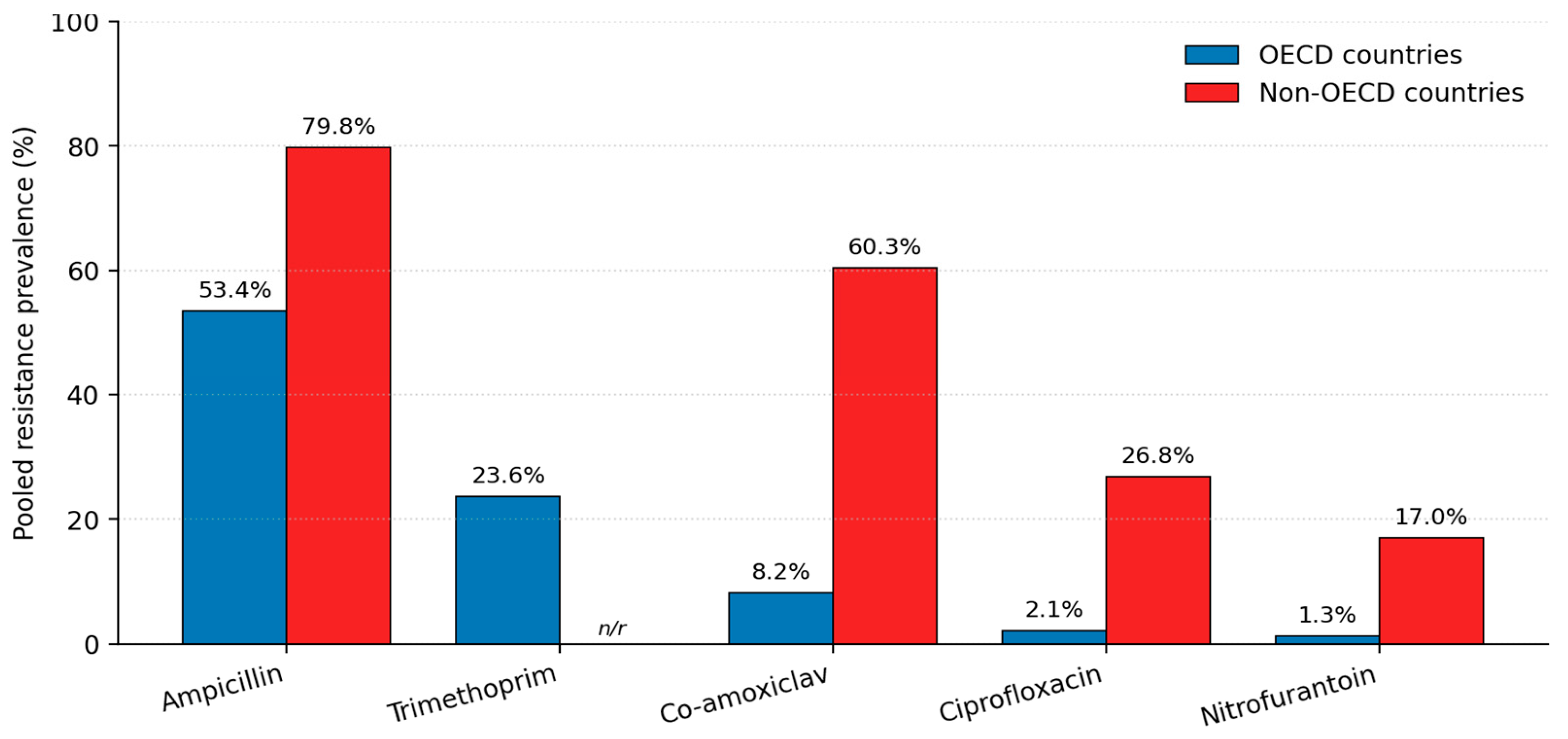
Figure 2.
Conceptual schematic of the major mechanisms of antibiotic resistance encountered in pediatric pathogens [31,32,39,40,41,42,43,44]. LPS = lipopolysaccharide; PBP = penicillin-binding protein.
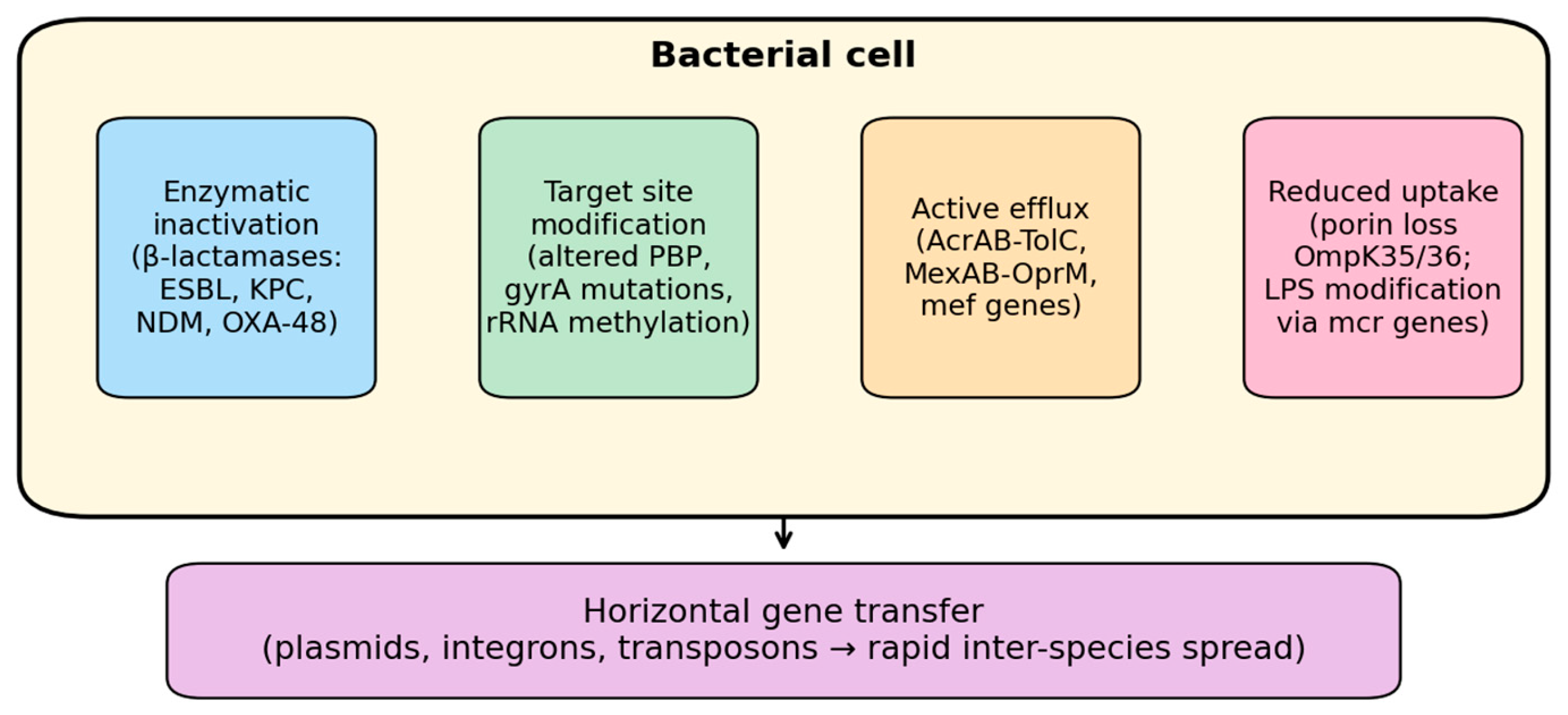
Figure 3.
Antibiotic resistance in pediatric infections: mechanisms and hospital risk factors.
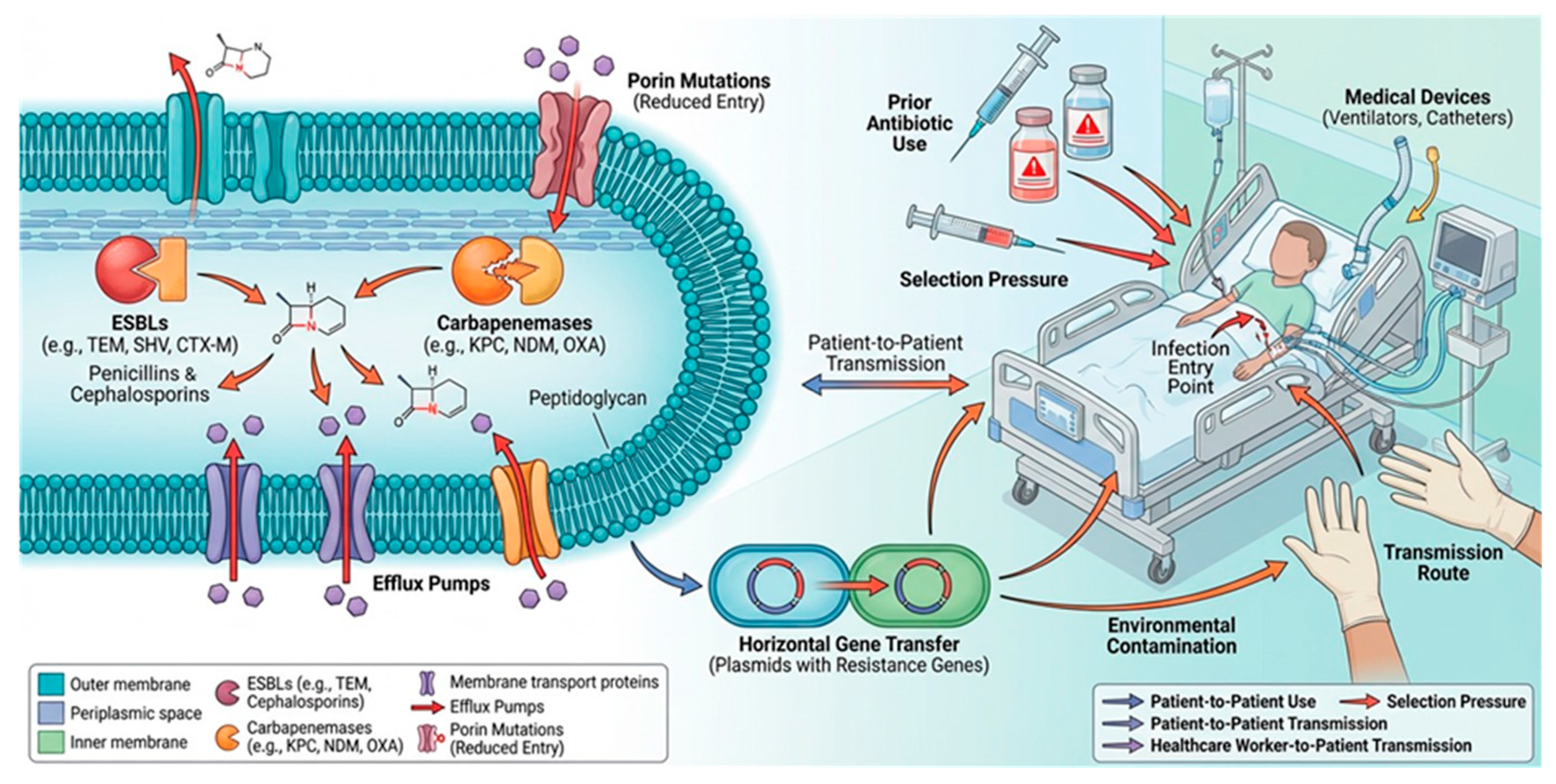
Figure 4.
Reported mortality outcomes in pediatric infections by resistance phenotype. Values are presented exactly as reported in the source studies. aOR = adjusted odds ratio; BSI = bloodstream infection; CR = carbapenem-resistant; GN = Gram-negative; MDR = multidrug-resistant; MDRO = multidrug-resistant organism; 3GCR = third-generation cephalosporin resistant [9,10,11,24].
Figure 4.
Reported mortality outcomes in pediatric infections by resistance phenotype. Values are presented exactly as reported in the source studies. aOR = adjusted odds ratio; BSI = bloodstream infection; CR = carbapenem-resistant; GN = Gram-negative; MDR = multidrug-resistant; MDRO = multidrug-resistant organism; 3GCR = third-generation cephalosporin resistant [9,10,11,24].
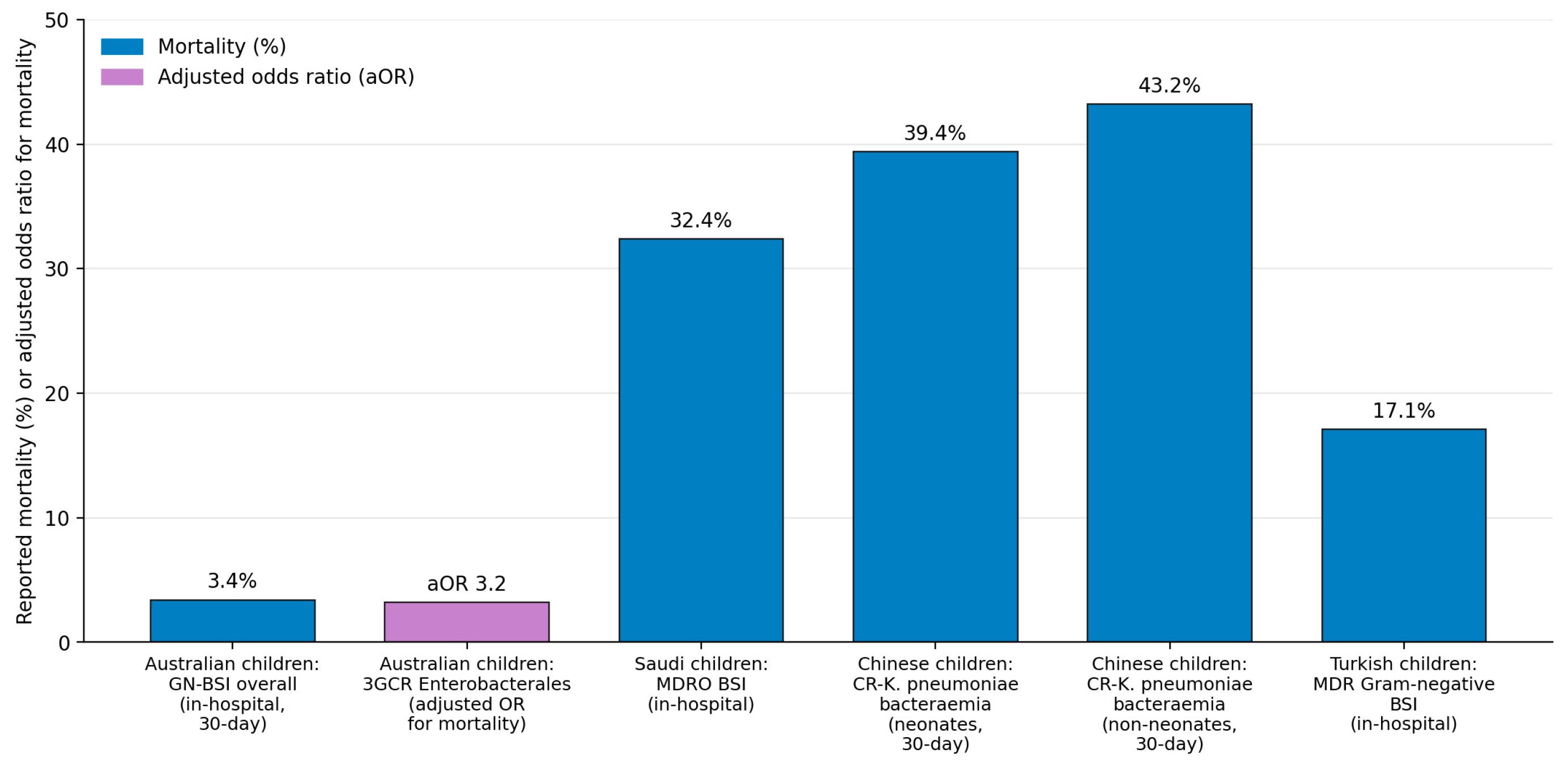
Figure 5.
Impact of pneumococcal conjugate vaccines on antimicrobial non-susceptibility and resistance in pediatric pneumococcal isolates: pooled absolute reductions over 10 years post-implementation. Bars represent pooled point estimates, and whiskers represent 95% confidence intervals. Adapted from [45].
Figure 5.
Impact of pneumococcal conjugate vaccines on antimicrobial non-susceptibility and resistance in pediatric pneumococcal isolates: pooled absolute reductions over 10 years post-implementation. Bars represent pooled point estimates, and whiskers represent 95% confidence intervals. Adapted from [45].
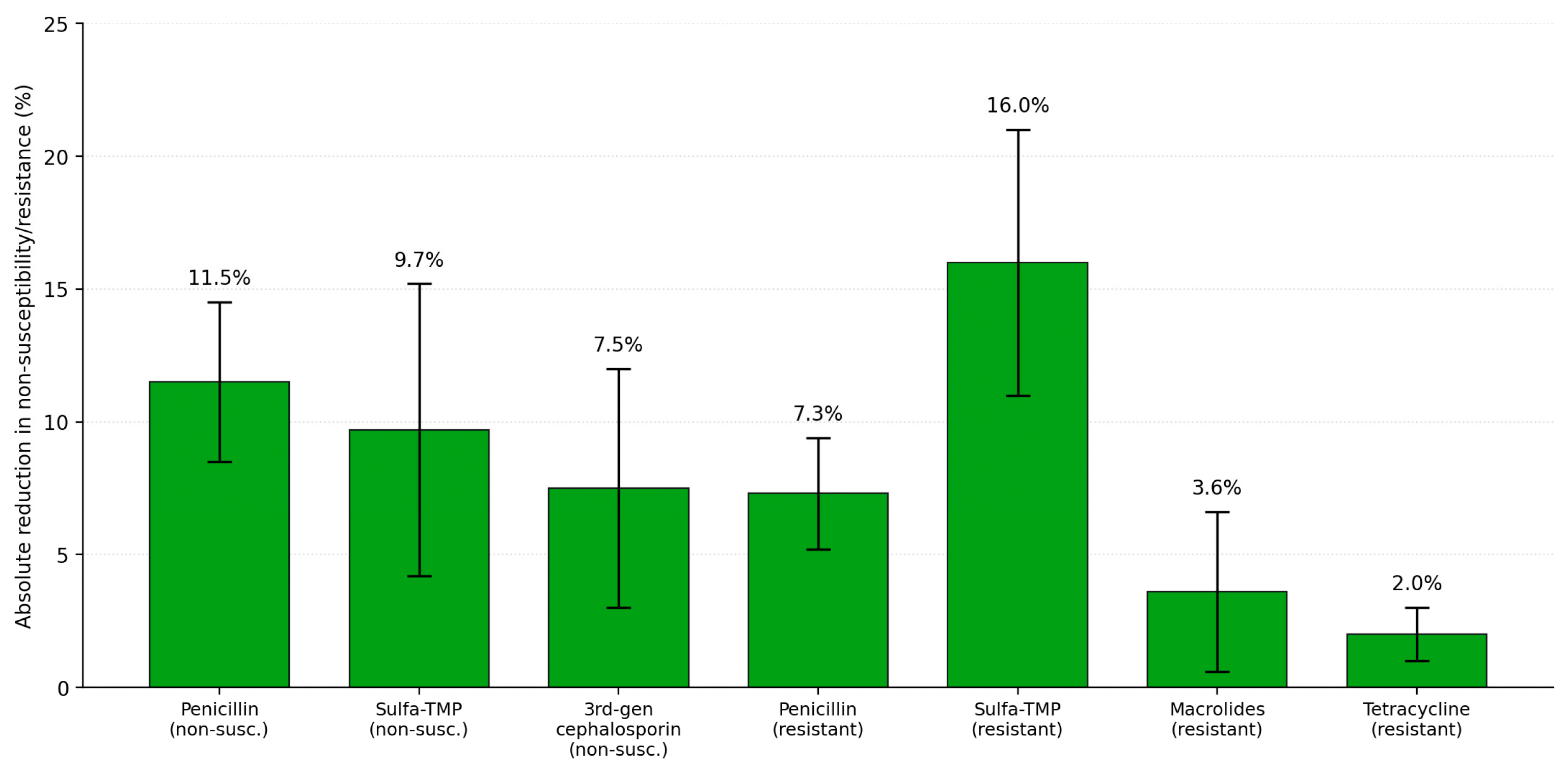

Table 1.
Pathogen-specific resistance findings in pediatric populations from the studies cited in this review. Values are reproduced as published in the original sources.
Table 1.
Pathogen-specific resistance findings in pediatric populations from the studies cited in this review. Values are reproduced as published in the original sources.
| Pathogen / Phenotype | Setting / Population | Reported Finding | Reference |
|---|---|---|---|
| 3GCR Enterobacterales (Gram-negative BSI) | 5 Australian children's hospitals (2019-2021); 931 episodes, 818 children | 22% (138/630) of Enterobacterales isolates resistant to 3GC; bla(CTX-M-15) is the most common ESBL gene (36%); aOR 3.2 (95% CI 1.6–6.4) for mortality with 3GCR | [9] |
| 3GCR & ESBL Enterobacterales (national surveillance) | U.S. national surveillance, 1999-2011; 368,398 pediatric isolates | 3GCR prevalence rose from 1.39% (1999-2001) to 3.0% (2010-2011); ESBL phenotype from 0.28% to 0.92%; 74% of ESBL isolates were resistant to ≥3 antibiotic classes | [21] |
| ESBL-producing E. coli/K. pneumoniae (UTI) | Tertiary center, Taiwan (2017–2021); 327 hospitalized children | ESBL prevalence 14.1%; recent antibiotic exposure within 6 months and preterm gestational history were independent risk factors; longer length of stay (β 2.85 days) and ICU stay (β 5.86 days) | [22] |
| E. coli pediatric UTI (community-acquired) | Systematic review/meta-analysis, 58 studies, 77,783 isolates | OECD vs non-OECD pooled resistance: ampicillin 53.4% vs 79.8%; co-amoxiclav 8.2% vs 60.3%; ciprofloxacin 2.1% vs 26.8%; nitrofurantoin 1.3% vs 17.0% | [23] |
| Carbapenem-resistant K. pneumoniae | Single-center, China (2018-2021); 70 children | 30-day mortality 39.4% in neonates, 43.2% in older children; appropriate targeted therapy associated with reduced mortality | [24] |
| MRSA/Carbapenem-resistant GNB / VRE | Multinational pediatric oncology / HSCT cohort (2015-2017); 1,031 patients, 1,291 BSI episodes | 17% methicillin resistance in S. aureus; 9% meropenem resistance in Gram-negatives; 40% vancomycin resistance in E. faecium; prior carbapenem exposure associated with resistant Gram-negative BSI | [25] |
| Multi-drug resistant Gram-negatives in neonatal sepsis | BARNARDS network, 7 LMICs, 36,285 neonates enrolled, 916 isolates sequenced | K. pneumoniae leading sepsis pathogen; isolates harbored multiple cephalosporin and carbapenem resistance genes; all isolated pathogens were resistant to multiple antibiotic classes, including those used in neonatal sepsis | [14] |
| Pediatric Gram-negative sepsis in LMICs | Systematic review, 30 studies, 71,326 children (Asia & Africa) | Neonatal K. pneumoniae median resistance: ampicillin 94% (Asia) / 100% (Africa); cephalosporins 84% (Asia) / 50% (Africa); MDR Salmonella spp. median 30% (IQR 0–59.6) Asia, 75% (IQR 30–85.4) Africa | [13] |
| MDR organisms (overall) | Tertiary hospital, Saudi Arabia (2021–2022); pediatric cultures | MDROs in 42% of patients with positive cultures; K. pneumoniae most common (39.5% of MDR cultures); 32.4% mortality with MDROs vs 3.9% without | [11] |
| MDR Gram-negative BSI | Single-center, Türkiye (2022); 102 children, 123 cultures | 28.5% MDR among isolates; 17.1% mortality in resistant cases vs 10.5% overall; urinary catheter independent predictor of mortality (OR 5.68) | [10] |
| MDR Salmonella Typhi (H58) | Febrile children, Nairobi County, Kenya; 120 isolates | 50% MDR; 65.6% ampicillin resistance; 67.6% with QRDR mutations conferring reduced ciprofloxacin susceptibility | [15] |
| Invasive MRSA in children | U.S. population-based surveillance, 2005-2010; 876 cases | Estimated invasive MRSA incidence 43.9/100,000 in infants <90 days vs 2.0/100,000 in older children; CA-MRSA incidence rose 10.2% per year (95% CI 2.7-18.2) | [26] |
| Macrolide-resistant Mycoplasma pneumoniae pneumonia | Meta-analysis, 11 studies, 1,143 children (East Asia) | Tetracyclines superior to macrolides for fever duration (WMD 1.64 days), hospital stay (WMD 1.22 days), and therapeutic efficacy (OR 0.33 for macrolide vs tetracycline) | [27] |
| Amoxicillin-resistant oral bacteria | Children aged 4–5 years (community); 40 children, 224 isolates | 100% carriage; median resistant proportion 2.4% without recent amoxicillin vs 10.9% after recent use (P<0.01); 65% of resistant isolates were also resistant to at least one of three antibiotics: penicillin/erythromycin/tetracycline | [8] |
| Pediatric AMR (general) | Tertiary pediatric hospital, Romania, 1-year retrospective; 1,445 isolates | Range of resistance phenotypes, including ESBL-producing Gram-negatives and MRSA in pediatric inpatient isolates | [28] |
| Pediatric AMR in a conflict setting | Damascus Hospital, Syria; 116 children, 177 cultures | Most prevalent organisms: S. aureus (33%), Enterobacter (21%); highest resistance to 3GC and ceftriaxone (70% use); 51% nosocomial infections; 16% mortality | [16] |
3GCR = third-generation cephalosporin resistant; aOR = adjusted odds ratio; BSI = bloodstream infection; CA-MRSA = community-associated methicillin-resistant Staphylococcus aureus; HSCT = hematopoietic stem-cell transplant; LMIC = low- and middle-income country; MDR = multidrug-resistant; MDRO = multidrug-resistant organism; MRSA = methicillin-resistant Staphylococcus aureus; OR = odds ration; QRDR = quinolone resistance-determining region; UTI = urinary tract infection; VRE = vancomycin-resistant enterococcus; WMD = weighted mean difference.
Table 2.
Pediatric antimicrobial-stewardship strategies and their supporting evidence from validated peer-reviewed sources.
Table 2.
Pediatric antimicrobial-stewardship strategies and their supporting evidence from validated peer-reviewed sources.
| Stewardship strategy | Evidence (validated source) | Implementation note |
|---|---|---|
| Prospective audit with feedback | 30-month quasi-experimental study at a U.S. children's hospital reviewing 10,460 antibiotic courses; 92% compliance with recommendations; 17-18% decline in days-of-therapy and length-of-therapy per 1,000 patient-days for selected antibiotics [46]. | Requires dedicated ID pharmacist and physician time; sustainable in tertiary children's hospitals. |
| AWaRe-classification monitoring | 1-day point-prevalence surveys in 56 countries (23,572 patients) demonstrated wide global variation in Access vs Watch vs Reserve antibiotic use in hospitalized children [6]; ARPEC global PPS in 73 hospitals showed pediatric and neonatal antibiotic-use rates significantly higher in non-European hospitals than European hospitals [5]. | Useful as a simple traffic-light metric for tracking appropriateness over time and benchmarking institutions. |
| Outpatient diagnostic and prescribing stewardship | U.S. national analysis (NAMCS/NHAMCS 2010–2011) estimated that of 506 outpatient antibiotic prescriptions per 1,000 population, only 353 were appropriate; respiratory tract infections accounted for the largest share of inappropriate prescribing [7]. Routine antibiotic prescribing in primary care increases the odds of subsequent resistance by up to 13.2-fold for up to six months [23]. | Targets respiratory infections, otitis media, pharyngitis; can leverage parent-facing communication training and clinical decision support. |
| ASP impact in resource-limited pediatric settings | Asia-Pacific narrative review [12] documents successful local ASP and infection-prevention initiatives that reduced antibiotic overuse in specific settings, while emphasizing infrastructure barriers in many LMICs. | Implementation must be tailored to local microbiology capacity and antibiotic supply chains. |
| ASP impact in resource-limited pediatric settings | The Peruvian multicenter study [29] suggests that institutional stewardship maturity can significantly influence both resistance prevalence and patient outcomes. | Investments in stewardship infrastructure may yield measurable reductions in ESBL burden, mortality, and hospital resource utilization. |
| Diagnostic stewardship and rapid molecular testing | A recent narrative review of metagenomic next-generation sequencing and machine-learning–assisted susceptibility prediction in pediatric infections highlights the potential to shorten time to targeted therapy, while noting genotype–phenotype discordance and implementation barriers [47]. | Most useful when paired with a prospective audit so genotype-driven recommendations reach clinicians in real time. |
ASP = antimicrobial stewardship program; AWaRe = WHO Access, Watch, Reserve classification; ID = infectious diseases; LMIC = low- and middle-income country; NAMCS = National Ambulatory Medical Care Survey; NHAMCS = National Hospital Ambulatory Medical Care Survey; PPS = point-prevalence survey.
Table 3.
Selected novel β-lactam and β-lactam/β-lactamase-inhibitor combinations reviewed for pediatric multidrug-resistant Gram-negative infections.
Table 3.
Selected novel β-lactam and β-lactam/β-lactamase-inhibitor combinations reviewed for pediatric multidrug-resistant Gram-negative infections.
| Agent | Class / mechanism | Spectrum (per cited reviews) | Pediatric status (per cited reviews) |
|---|---|---|---|
| Ceftazidime-avibactam | 3rd-gen cephalosporin + non-β-lactam β-lactamase inhibitor | ESBL-, AmpC-, KPC- and OXA-48-like-producing Enterobacterales; not active vs MBLs | Pediatric pharmacokinetic data and use [32,48,49,50,51] |
| Ceftolozane-tazobactam | Antipseudomonal cephalosporin + β-lactamase inhibitor | MDR Pseudomonas aeruginosa, ESBL Enterobacterales | Pediatric PK data [32,52,53,54] |
| Meropenem-vaborbactam | Carbapenem + boronate β-lactamase inhibitor | KPC-producing Enterobacterales; not active vs MBLs | Pediatric data [32,55,56,57] |
| Imipenem-cilastatin-relebactam | Carbapenem + diazabicyclooctane β-lactamase inhibitor | KPC-producing Enterobacterales, MDR P. aeruginosa | Pediatric data limited; [32,58] |
| Cefiderocol | Siderophore cephalosporin | CRE including MBLs, MDR P. aeruginosa, Acinetobacter baumannii | Pediatric data limited [32,59,60,61] |
Spectrum and pediatric-status descriptors are summarized from the cited literature. Specific FDA/EMA approvals and approved age ranges may have been updated since publication of those reviews; clinicians should consult current product labeling. CRE = carbapenem-resistant Enterobacterales; MBL = metallo-β-lactamase; MDR = multidrug-resistant; PK = pharmacokinetic.
Disclaimer/Publisher’s Note: The statements, opinions and data contained in all publications are solely those of the individual author(s) and contributor(s) and not of MDPI and/or the editor(s). MDPI and/or the editor(s) disclaim responsibility for any injury to people or property resulting from any ideas, methods, instructions or products referred to in the content. |
© 2026 by the authors. Licensee MDPI, Basel, Switzerland. This article is an open access article distributed under the terms and conditions of the Creative Commons Attribution (CC BY) license (http://creativecommons.org/licenses/by/4.0/).
Copyright: This open access article is published under a Creative Commons CC BY 4.0 license, which permit the free download, distribution, and reuse, provided that the author and preprint are cited in any reuse.