
Submitted:
18 May 2026
Posted:
19 May 2026
You are already at the latest version
Abstract
This study assessed the current status of irrigation systems and water management practices in Rwanda’s irrigated agricultural zones focusing on Nasho Government Funded Irrigation (GFI) scheme in Kirehe District and Kagitumba Irrigation Scheme in Nyagatare District. A mixed descriptive approach was applied combining field observation with structured questionnaires administered through Kobo Toolbox to 224 respondents in Nasho and 188 respondents in Kagitumba. Field observations were used to evaluate the physical condition and functionality of irrigation infrastructure while questionnaires captured stakeholder perceptions, water management practices, institutional arrangements and operational challenges. Results show that both irrigation schemes are operational but function below optimal efficiency due to multiple constraints. In Nasho, irrigation performance is mainly affected by sedimentation in canals and reservoirs, pump inefficiencies and inadequate maintenance practices leading to unreliable water delivery. In Kagitumba, despite the use of modern center pivot systems performance is constrained by pipeline corrosion, pressure losses, sediment-laden water and uneven water distribution. Across both schemes, more than 80% of respondents reported frequent system failures while over 95% indicated the absence of formal irrigation scheduling practices. Water management remains largely reactive with limited preventive maintenance and weak technical capacity among users and institutions. The study concludes that improving irrigation efficiency in Rwanda requires integrated interventions combining infrastructure rehabilitation, strengthened maintenance systems, improved water governance and farmer capacity development to enhance sustainable water use and agricultural productivity.
Keywords:
irrigation systems
; water management practices
; water use efficiency
; Rwanda
; field observation
; Kobo Toolbox surveys
1. Introduction
Agriculture is the foundation of Rwanda’s economy which contributes meaningfully to food security, employment and rural development. The agriculture sector employs more than 70% of the country’s population and accounts for approximately one-third of the national Gross Domestic Product [1]
Even if agriculture play that important role in Rwanda but it is still predominantly rain-fed and highly relianton erratic and unpredictable rainfall patterns. This dependence exposes farmers to recurrent droughts, prolonged dry spells and unpredictable rainy seasons which cause low productivity, crop losses and income instability. The country’s hilly topography further complicates agricultural production by making water control and efficient management crucial for sustainable growth [2].
The government of Rwanda has made irrigation development a cornerstone of its agricultural transformation strategy in order to address those challenges. Through the Rwanda Irrigation Master Plan ,2010 and the Strategic Plan for the Transformation of Agriculture (PSTA 4, 2018–2024), the government goals are to increase the area under irrigation, improve water use efficiency, and improve climate resilience in agricultural systems. According to the RIMP (2010), Rwanda has an estimated potential irrigable area of 589,711 hectares of which about 63,000 hectares had been developed by 2020 under different irrigation schemes, including surface, sprinkler, drip, and center pivot systems [3].
At present, Rwanda has established approximately 148 irrigation schemes that are found on hillsides and marshlands. Many of these well-established irrigation schemes have been plagued by poor performance with low water use efficiency and low production levels that translate into low farmer incomes and productivity. Dams and field networks are among the constructed irrigation infrastructures that are not well-operated and maintained, unusable, or underutilized [4].
However, despite notable investments and institutional reforms, irrigation system performance and water management efficiency remain below potential. Studies and national evaluations highlight challenges such as poor infrastructure maintenance, sedimentation in canals, limited farmer capacity, high energy costs, and inadequate technical supervision. Moreover, fragmented land holdings, weak water user associations (WUAs) [5].
The National Water Resources Master Plan (RWB, 2017) emphasizes that agriculture consumes over 70% of Rwanda’s available water resources, making efficient water allocation and management critical for long-term water security [6]. Yet, climate variability and increasing water demand across domestic and industrial sectors have placed additional pressure on already limited water resources. The Rwanda Water Resources Board Strategic Plan (2022) calls for integrated water resource management and improved irrigation governance to ensure equitable distribution, accountability and sustainability [7].
Recognizing these challenges, the Assessment of Farmer-Led Irrigation Development in Rwanda revealed that while irrigation infrastructure coverage is increasing, operational performance and governance frameworks are still weak [8]. Many schemes operate below design capacity due to technical inefficiencies, poor drainage management and limited cost recovery mechanisms [8]. Therefore, there is an urgent need to assess the current status of irrigation systems and water management practices to identify strengths, weaknesses, and opportunities for improvement
Although several studies have examined irrigation development and water management challenges in Rwanda and across Sub-Saharan Africa, most have focused on either technical infrastructure performance or socio-institutional aspects in isolation. There is a limited integrated, field-based assessment that simultaneously evaluates the physical condition and hydraulic performance of irrigation infrastructure, on-farm water management practices and stakeholder perceptions and institutional arrangements within operational irrigation schemes. Furthermore, comparative analyses between schemes employing different irrigation technologies under real management conditions remain scarce, particularly in the Rwandan context. This lack of integrated analysis constrains the ability to identify system-wide inefficiencies and develop targeted interventions for improving irrigation performance.
Therefore, this study aims to assess the current status of irrigation systems and water management practices in Rwanda’s irrigated agricultural zones using two representative schemes: Nasho Government Funded Irrigation Scheme and Kagitumba Irrigation Scheme. Specifically, the study evaluates infrastructure condition, system performance, sedimentation impacts, irrigation practices, and stakeholder perceptions to provide a comprehensive understanding of the factors influencing irrigation efficiency. By linking technical, managerial, and institutional dimensions, this study contributes to bridging the existing knowledge gap and provides evidence-based recommendations for improving irrigation system performance, enhancing water use efficiency, and promoting sustainable irrigated agriculture in Rwanda.
2. Materials and Methods
2.1. Study Area
This study was conducted in the Eastern Province of Rwanda. this region is categorized by low rainfall, high evapotranspiration rates and regular water stress which is making it one of the country’s priority areas for irrigation development. The province is central to Rwanda’s agricultural transformation due to its extensive arable land, relatively flat topography, and major government-led investments in irrigation schemes. This research was carried out across two representative irrigation schemes, each reflecting different scales and management models of irrigated agriculture: NashoGFI irrigation scheme (Mpanga) and Kagitumba irrigation project
2.1.1. The Nasho Irrigation Scheme (Mpanga) (Kirehe District)
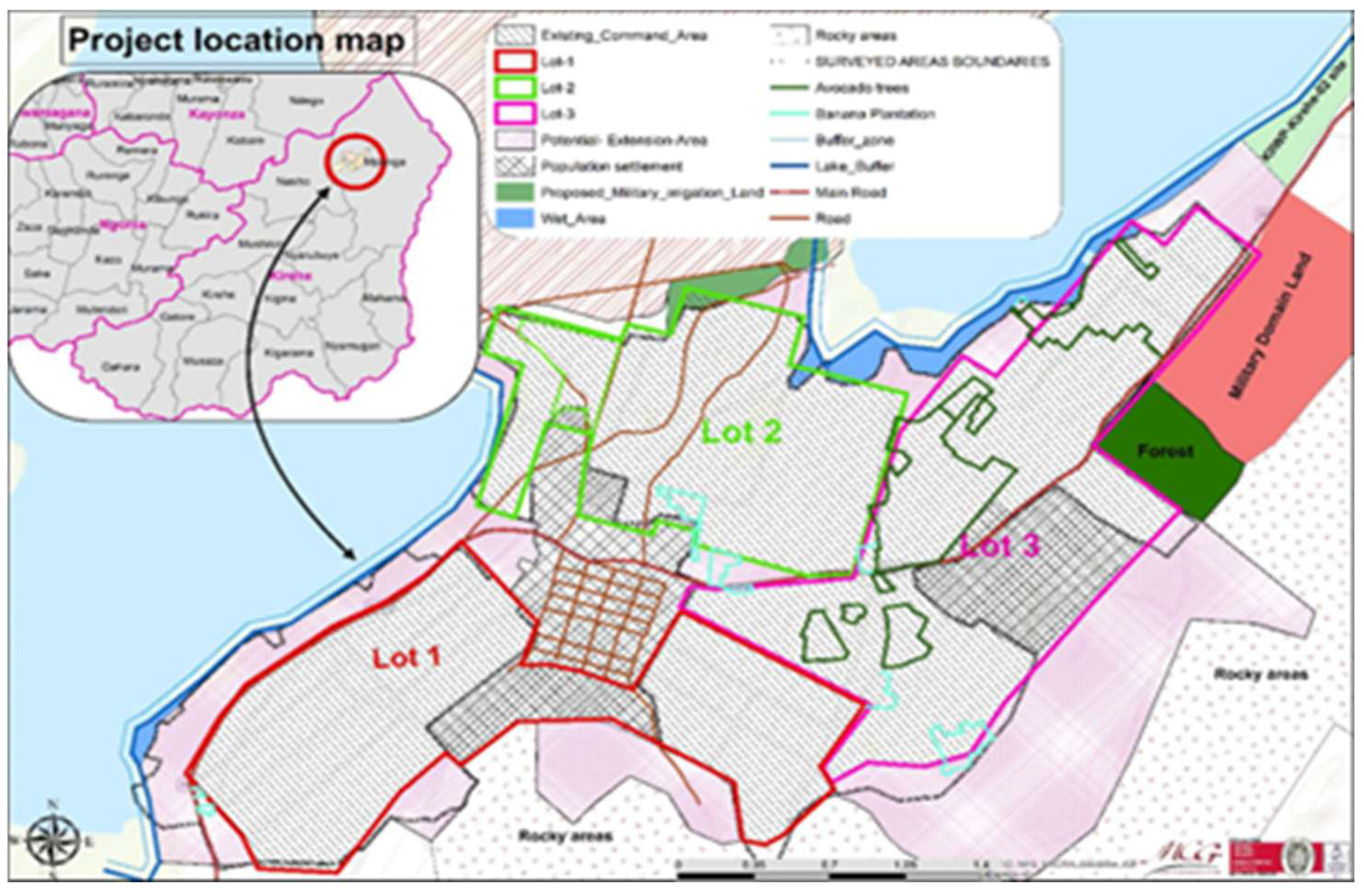
The Nasho Government Funded Irrigation scheme project is located in Kirehe District, Eastern Rwanda and spans two cells: Mpanga and Mushongi, located in Mpanga Sector, Kirehe District, Eastern Province. Geographically, the proposed command area extends from 253295.22 m E, 9770461.54 m S, northern limit of the project; 253612.15 m E 9767629.99 m S southern limit of the project; 255580.27 m E 9769291.28 m S western limit of the project; 251095.44 m E, 9768141.02 m S eastern limit of the project UTM zone 36M readings. The Project zone encompasses Mpanga and Mushongi Cells, comprising six villages (Imidugudu) in Mpanga Cell and four villages in Mushongi Cell, which are directly accommodated by the irrigation scheme.
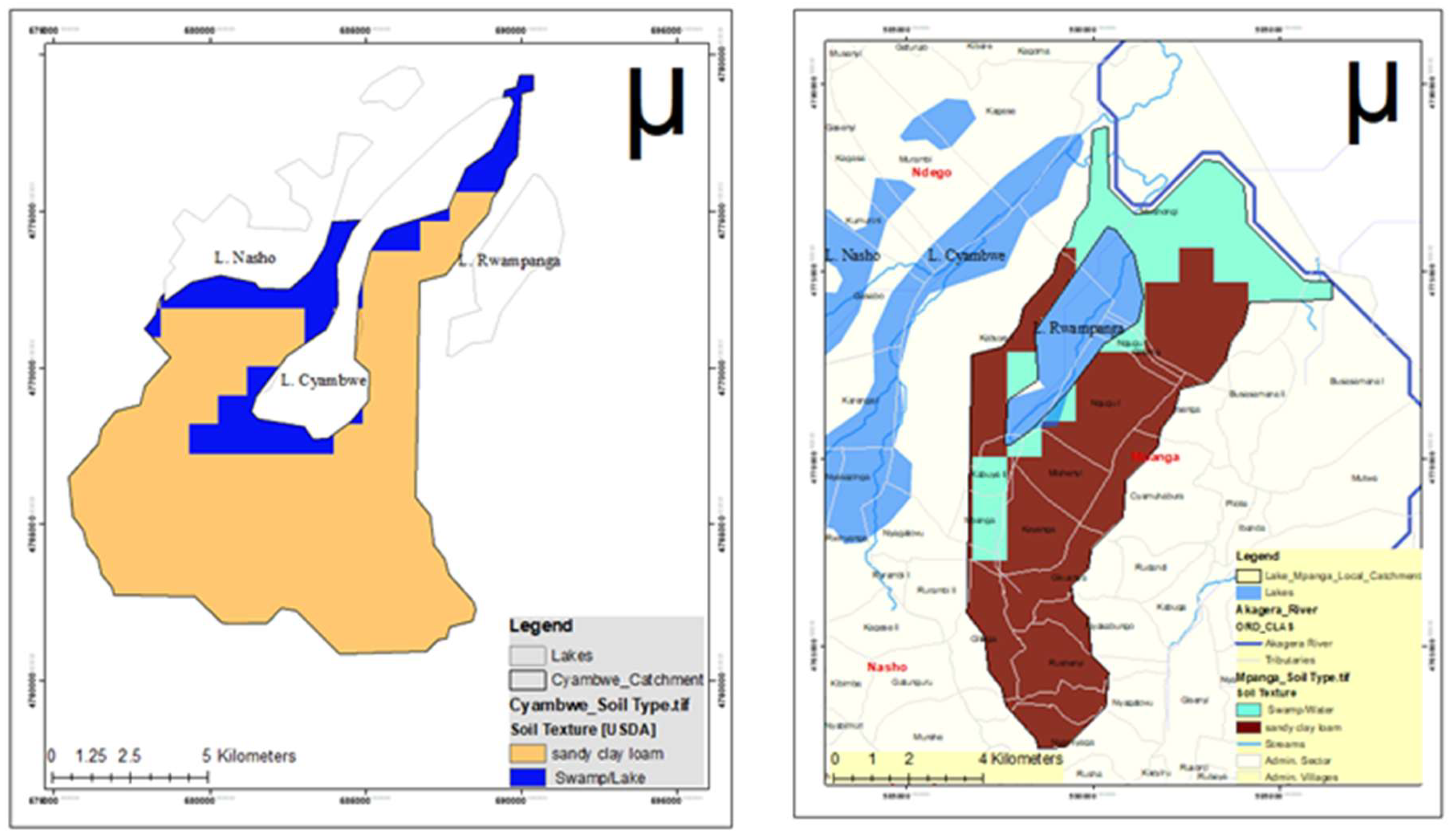
Nasho Irrigation Scheme (Mpanga) is one of the largest irrigation schemes in Rwanda which covers the area of 1,200 ha. The scheme has three lots (Lot 1, Lot 2, and Lot 3) to help in the management and irrigation operations. Lake Cyambwe is the primary water source for Lot 1 and Lot 2 where the source of water for Lot 3 is Lake Rwampanga.
This scheme is farmer-managed with farmers organized into cooperatives to supervise daily operations, preserve irrigation infrastructure and manage crop production activities. The primary crops cultivated in this scheme include maize, beans and a variety of horticultural crops involving to both household food security and commercial production.
Irrigation within the scheme is done by using traditional surface irrigation complemented by sprinkler irrigation systems by allowing for efficient water distribution in the different lots and supporting seasonal crop production. Those irrigation practices have been adopted to optimize water use efficiency, improve crop productivity and decrease the risks caused by rain insufficiency.
Figure 1.
Nasho GFI map.
2.1.2. Kagitumba Irrigation Scheme (Nyagatare District)
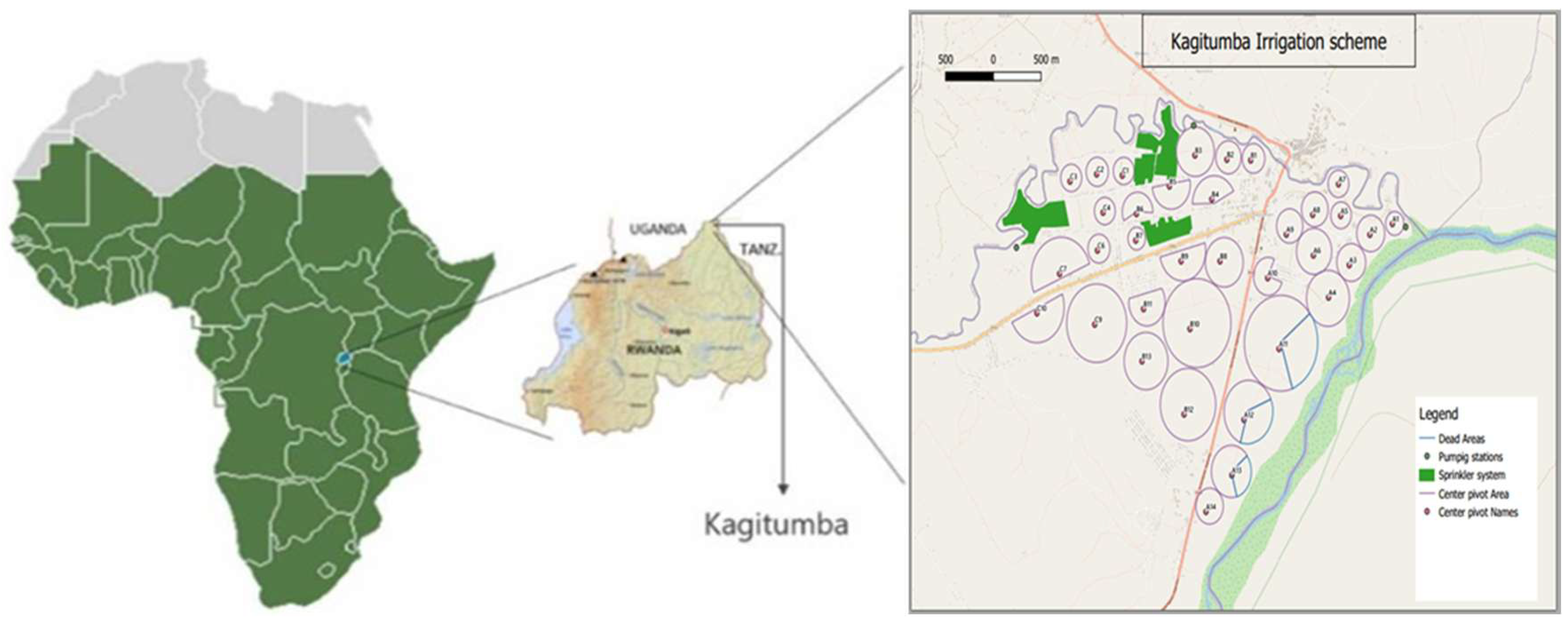
Kagitumba irrigation scheme is found in Eastern province (1.0584° S, 30.4574° E) of Rwanda. It lies within Nyagatare district of Matimba sector and Kagitumba cell. The annual rainfall in Kagitumba varies between 700mm to 900mm per year. Kagitumba Irrigation Project spans over an area of 500ha. Maize, soybean, beans and chili are the main crops irrigated under the project. Farmers use this water source for household food security and production of commercial crops.
Akagera River is the source of water for Kagitumba irrigation scheme. The irrigation water is distributed through 39 center pivot systems. Sprinkler irrigation methods are also used complementing the scheme for year-round production. The project has 352 farmers who are organized into farmer cooperatives. Local authorities of Rwanda Agriculture and Animal Resources Development Board provide technical support in this scheme. This collaboration in management of this scheme encourages farmer participation, reinforces farming practices and ensures the sustainable water resources use. Modern irrigation technologies with participatory management approaches Kagitumba Irrigation Project are improving agricultural productivity, enhances livelihoods and contributes to climate-resilient agriculture.
Figure 2.
Kagitumba irrigation scheme map.
2.2. Research Design
This study adopted a descriptive research design supported by a mixed qualitative and quantitative approach. The design was based on field observation and structured questionnaires to assess irrigation systems and water management practices in Rwanda’s irrigated agricultural zones.
Field observation was used to directly examine the physical condition and operational status of irrigation infrastructure, including canals, pipelines, pumps, reservoirs, intake structures, and irrigation application systems in the selected schemes (Nasho GFI and Kagitumba Irrigation Scheme). This allowed the researcher to capture real-time system performance, maintenance status, and water distribution practices under actual field conditions. Structured questionnaires were administered to farmers, irrigation scheme managers, and members of Water User Associations (WUAs) to collect quantitative and qualitative data on irrigation practices, water allocation methods, irrigation scheduling, system reliability, and operational challenges. The questionnaires also captured stakeholder perceptions on irrigation efficiency, water availability, and institutional arrangements. The combination of field observation and questionnaires provided complementary information, enabling triangulation of findings to ensure reliability and validity of the results.
Assess the Current Status of Irrigation Systems and Water Management Practices
Desk Review and Site Selection Approach
The data collection procedure began with an extensive desk review of existing reports, scheme designs, operational manuals, maps and satellite imagery. This review allowed me to establish an understanding of the historical development of the schemes, the types of irrigation technologies installed, cropping patterns, water sources and the spatial distribution of irrigated areas. Based on the information found during the desk study stratified sampling was employed to find representative segments of each irrigation scheme. Each scheme was divided into different strata according to irrigation technology type, topographic position (valley bottom, mid-slope, high slope) and management unit. Representative plots, fields and water distribution structures were then selected from each stratum to confirm that observations showed the diversity of practices within the scheme.
Field Surveys, Direct Observations, and Photographic Documentation
After site selection phase comprehensive field investigation were conducted to physically assess the condition and operational status of the irrigation systems. These investigations involved walking through the schemes while carrying out meticulous inspections of the main infrastructure components which include main canals, secondary and tertiary canals, pumps, pipelines, gates, flow control units, infield distribution systems and drainage structures. During each evaluation the structural conditions and operational functionality of these components were observed and assessed.
The systematic photographic documentations were taken throughout the data collection process. Photographs were used to show the physical condition of infrastructures, instances of wear and tear, maintenance challenges, water application methods, cropping patterns and field practice of farmers. This visual evidence provided a consistent reference for validating field assessments and for illustrating key results in subsequent chapters of the thesis. Global Positioning System devices were used to record the precise location of each investigated infrastructure component and surveyed plot by allowing for accurate spatial mapping and examination using GIS software.
To analyze stakeholder perceptions, practices, challenges, and institutional arrangements influencing irrigation and water management in Rwanda’s irrigated agricultural zones.
Farmer Questionnaires and Individual Interviews
The structured questionnaires were addressed to farmers and scheme managers operating within the selected irrigation schemes. The questionnaires were planned to gather detailed information on the demographic characteristics of respondent, farming experience, plot size, irrigation methods used, water allocation procedures, scheduling practices, crop types and the challenges related with accessing and using irrigation water. This method enabled the researcher to know the perceptions, experiences and day-to-day management activities of the farmers and scheme managers who directly interact with the irrigation systems.
The individual interviews were done with key informants from the selected irrigation schemes including scheme managers, farmers, members of Water User Association. These respondents provided better insights into the operational management of the schemes, institutional arrangements, conflict resolution mechanisms, maintenance responsibilities, water distribution procedures and governance structures. The interviews involved in identifying systemic challenges and present opportunities for enhancing irrigation efficiency and water management within the selected schemes.
Data Types Collected and Tools Used
The data collected for this study involved detailed inventories of irrigation infrastructure, Condition assessments of canals, gates, pumps, pipelines, and control structures, GPS coordinates of surveyed fields and infrastructure components, Photographs documenting physical conditions and field practices, Questionnaire responses describing farmer practices, water management approaches, and perceived challenges, Key informant interview notes on institutional and operational management and Observational notes recorded during field surveys and inspections
Tools and materials used during the data collection process included handheld GPS devices for location mapping, digital cameras for photographic documentation, structured questionnaires for farmer surveys, notebooks for manual field notes, tablets and laptops for electronic data entry and backup and GIS software (ArcGIS) for spatial analysis and visualization.
Sample Size Determination (Yamane Formula)
To compute the number of farmers to contribute in the questionnaire survey Yamane’s (1967) simplified formula for sample size calculation was used. This formula is commonly employed in socio-economic and field-based agricultural studies because it gives a statistically acceptable sample using a manageable number of respondents.
The formula of sample size calculation used is:
where:
- n = Sample size
- N = Total number of farmers in the irrigation scheme
- e = Level of precision or sampling error usually is equal to 0.05 (5%) or 0.1 (10%) but 0.05 was used in this study
This formula provides number of representative sample while maintaining the balance between accuracy and logistical feasibility. After calculating the sample size using the known farmer population for each scheme proportional sampling was used to allocate the number of respondents per irrigation block.
3. Results
3.1. Assess the Current Status of Irrigation Systems and Water Management Practices
3.1.1. Nasho GFI Irrigation Scheme
The Nasho Government Funded Irrigation (Kirehe irrigation scheme) was developed in 2012 and has been working for the last 13 years. Currently, this irrigation scheme has a gross command area of approximately 600 ha, it is divided into three sections: LOT-1, LOT-2, and LOT-3. Each LOT has its own pumping station and is further subdivided into irrigation blocks of 5 hectares. The lake Cyambwe is the source of water for LOT-1 and LOT-2. LOT-3 gets its water from Lake Rwampanga. Lakes Rwampanga and Cyambwe are hydraulically connected to Akagera River. There are four centrifugal pumps at each pumping station. Three pumps will operate at a time to give the designed discharge. The fourth pump is for standby purposes.
While it has played a crucial role in supporting local farmers and improving food security, the Nasho GFI scheme currently faces significant challenges that hinder its full potential. The irrigation application is challenged by many technical issues, including but not limited to the fluctuation of water levels in the lakes of Cyambwe and Rwampanga, leading to flooding and drought conditions at the pumping stations, which disrupt pump operations, causing water shortages during irrigation periods.
Pumping equipment are also not functioning well, there is significant damage, and inadequacy of irrigation infrastructures in the field, resulting in leakage and water pressure loss, high operational cost, yield reduction, soil erosion, etc.
All these problems issues show how there is the urgent need for rehabilitation and system improvement to ensure efficient and reliable irrigation system operations, thus enhancing farm profitability.
water storage reservoirs
Currently, the irrigation system has two water-balancing reservoirs that will be rehabilitated by the CDAT Project. In addition to the existing water-balancing reservoir-1 serving Lot-1 and reservoir-3 serving Lot-3, a new balancing reservoir-2 with a storage capacity of 2,500 m³

Table 1.
Pumping station capacity.
| LOT Name | Pumping capacity (m3/h) | Number Pumps | Pump flow rate (m3/h) | TMH (m) |
| LOT-1 | 648,5 | 3+1 | 216 | 97 |
| LOT-2 | 588,7 | 3+1 | 196 | 104 |
| LOT-3 | 987,5 | 3+1 | 329 | 92 |
Water quantity
Lake Cyambwe and Rwampanga are one of the Lower Akagera flood plain Lakes. Although the Lakes are mainly created by the overflow of Akagera River during peak flows with a natural connection, it has wet season streams flowing into the lake from a catchment of about 114.7 km2 with an annual flow of about 11.6 million cubic meters. The lake's total storage capacity was estimated as 65MMC, and around 21% of the annual storage is supplied by the local catchment
Table 2.
Summary table of water levels in Lake Cyambwe and Lake Rwampanga.
| S/N | Lakes | |||||||
| Lake Cyambwe | Lake Rwampanga | |||||||
| Minimum Level (m ASL) | Maximum Level (m ASL) | Minimum Level (m ASL) | Maximum Level (m ASL) | |||||
| 0 | Continuous | 50-year | 100- year |
Continuous | 50-year | 100-year | ||
| 1 | 1272.16 | 1274.16 | 1278.36 | 1278.52 | 1272.20 | 1274.2 | 1278.45 | 1278. 63 |
Existing cropping patterns
The existing cropping pattern in Nasho Government Funded Irrigation Kirehe irrigation scheme is as follows:
- Seasonal crops: Cropping is done on rotation basis of maize, soya and beans in the three lots. Maize being the predominant crop (proposed target share: 50% maize, 30% soya and 20% beans) however it varies with market and water availability.
- Vegetables: Produced mostly in season C, tomato production starts in season B.
- Chillies: An important export crop which is produced all the three seasons under contract farming.
- Fruits: Avocado grown mostly in Lots 2 and 3 with some fruits in small scale scheme wide.
- Banana: Found in all three lots
- Others: Cassava and sweet potato in small scale in non- irrigated area.
Condition of the Irrigation System Components at Nasho GFI irrigation scheme
Condition of Water Conveyance Canals
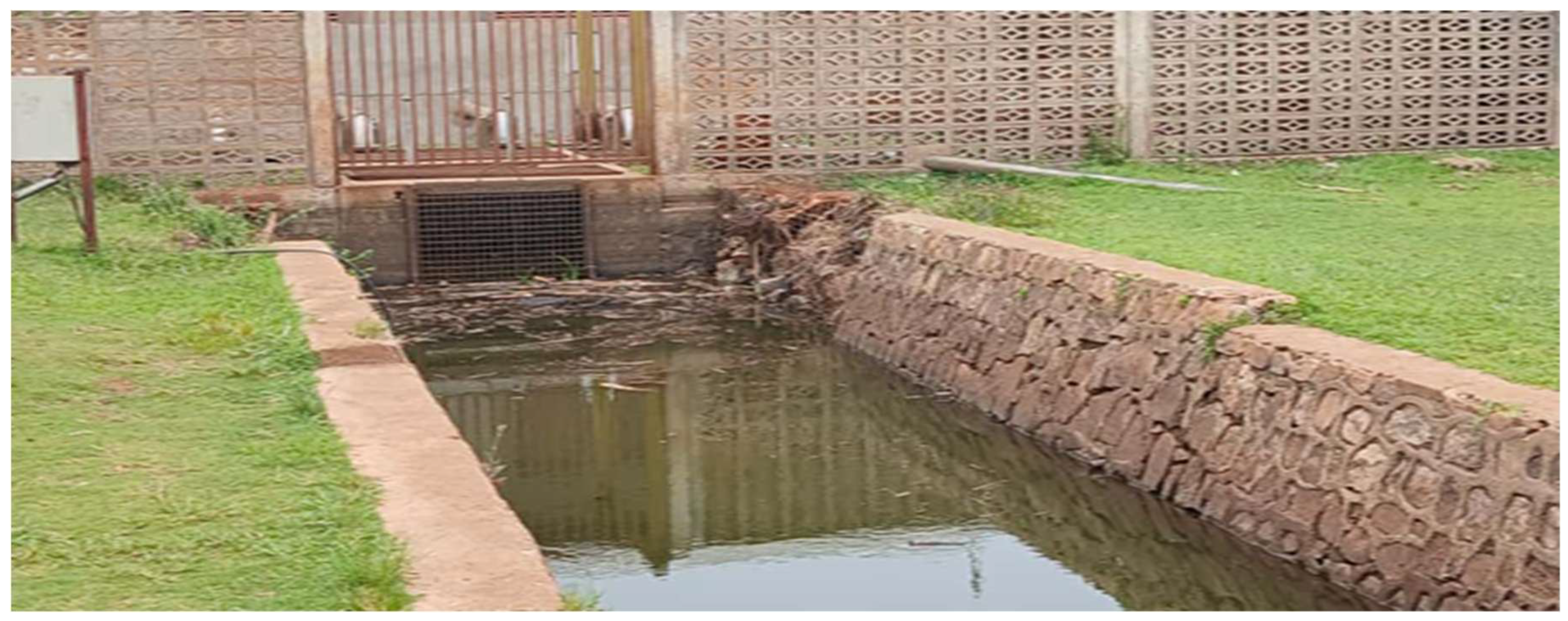
Existing lined concrete conveyance canal are there but with excessive sedimentation, silt deposits and encroachment of weeds along the side slope of canal. Field staff excavate sediments at the bottom of canal manually. Canal lining is generally good condition however flow efficiency is limited due to lack of proper operation and maintenance.
This condition of conveyance canals has distinct disadvantages including sedimentation, siltation and weed growth. Sedimentation deposition reduces conveyance capacity since canal flow is obstructed causing conveyance inefficiency. This means that water is not reliably available to farmers when needed. Weed growth and sedimentation also increase the frequency of clearing needed, which increases labor and operating costs. Also, weed growth creates additional resistance to flow and causes more sedimentation deposition.
Figure 3.
Conveyance canal at Nasho GFI scheme.
Condition of Storage Reservoirs
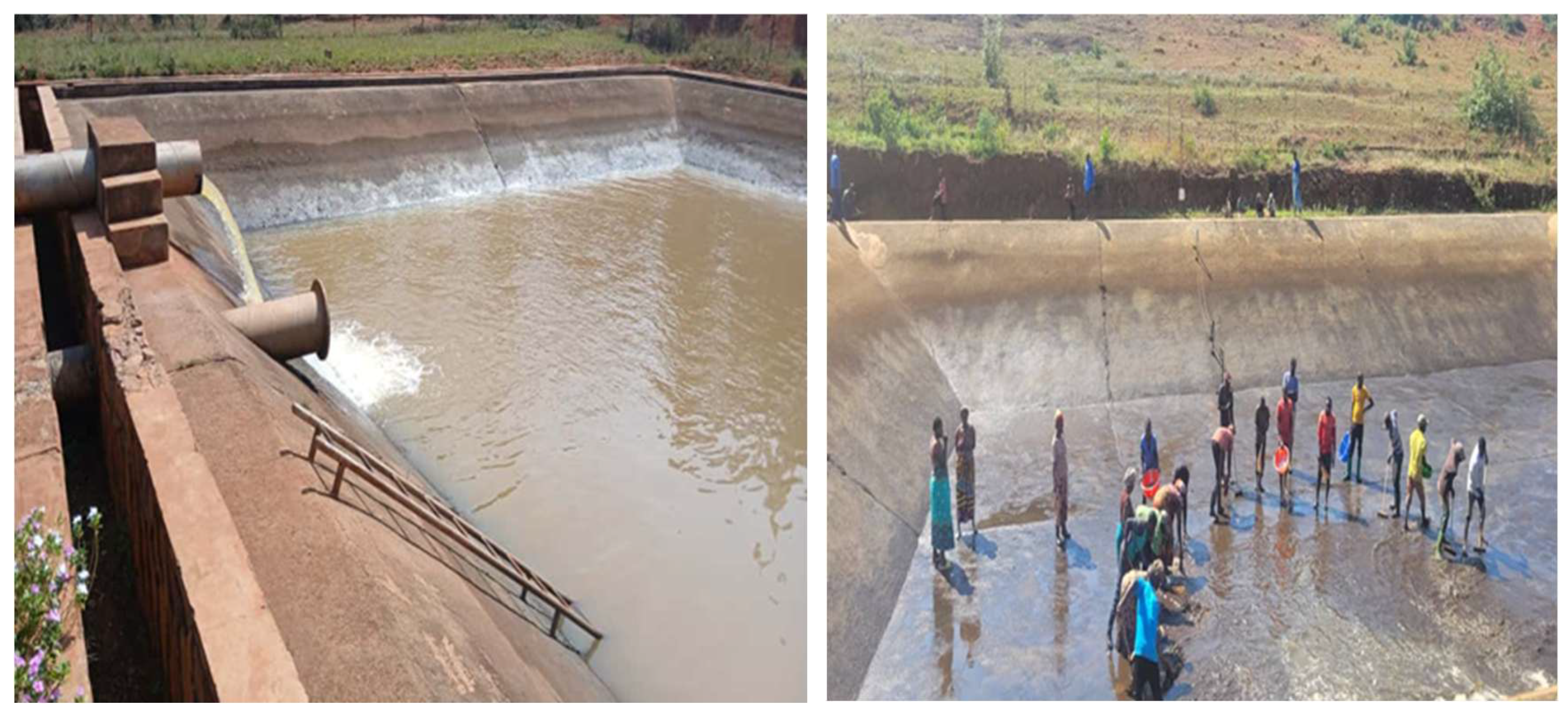
The storage reservoirs at Nasho GFI scheme show the presence of turbid water, silt deposits at the bottom, and signs of erosion around inlets. During the cleaning operations, some reservoirs were partially emptied, while muddy water in some reservoirs reduced the effective depth. This shows inadequate filtration upstream and an irregular cleaning schedule.
Higher water turbidity, more silt in reservoirs, and erosion at the inlets of the reservoirs observed during the cleaning operations not only decrease the quality of the water, but also the storage efficiency of the reservoirs. The bottom silt buildup decreases the active storage and effective storage capacity of the reservoirs. This means that the available water for irrigation decreases, and the water quality decreases making the water more unsuitable for agricultural purposes. Around the inlet, the situation is worsened by erosion, which increases the amount of sediment entering the reservoir and accelerates the siltation process. This increases the need for frequent cleaning. Irregularly cleaning the silt has shown to decrease reservoir depth and increased operational inefficiency.
Figure 4.
Storage reservoir at Nasho GFI scheme.
Condition 5. Intake structures at Nasho GFI scheme
Condition of Irrigation Application Systems
a) Semi-Portable Sprinkler System
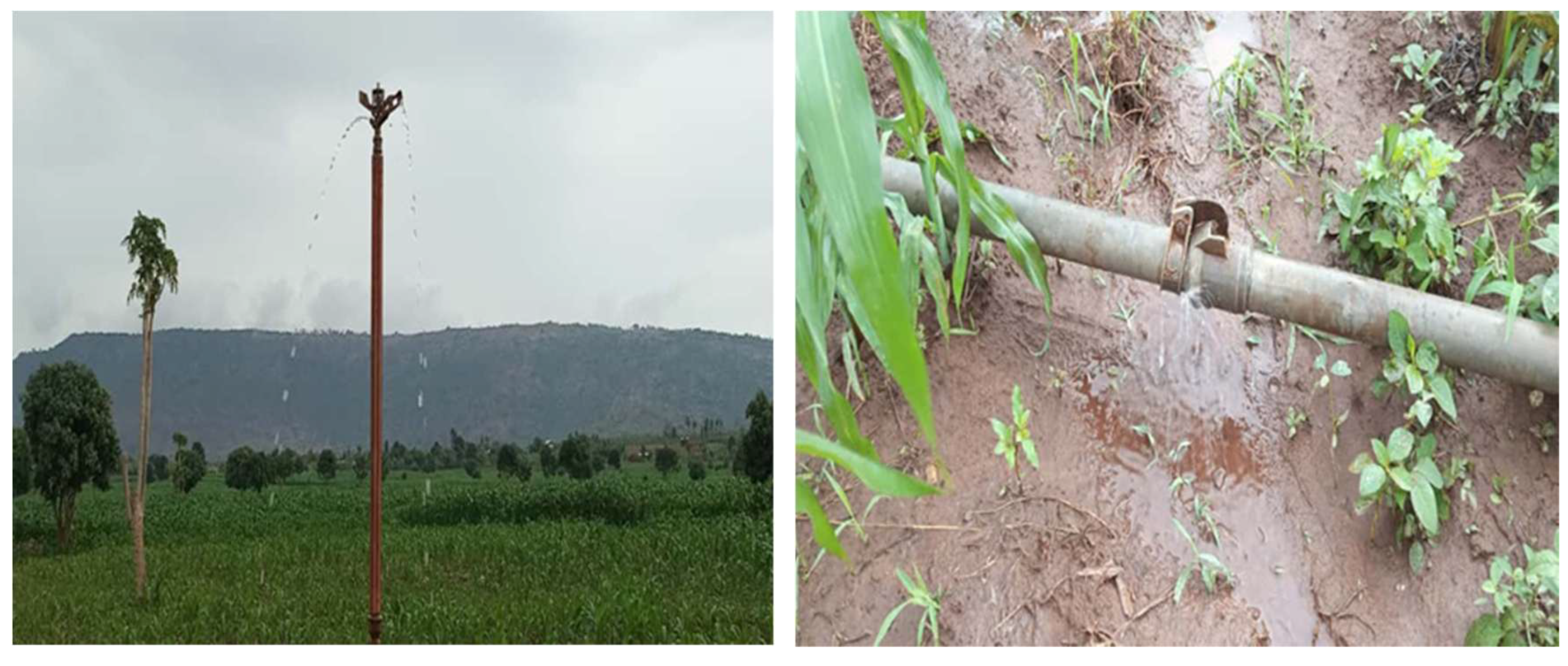
Nasho Government Funded irrigation scheme have been using semi-portable sprinkler systems. Visible sprinkler risers show signs of rust. The operating sprinkler in field had poor spray pattern, indicating pressure fluctuations or nozzle wear. Some sprinklers heads looked outdated replacement heads may be needed.
b) Hoseline Irrigation System
Water distribution is also done through Hoseline irrigation. Water logging near the outlets of hoseline indicates localised runoff and weed growth. The Hoseline condition is fair but may have some leakage or uneven pressure distribution.
System is operational but there are observable deficiencies in performance due to pressure variation, sprinkler wear and poor water delivery from Hoseline.
Evaluation of system performance of these irrigation application systems indicates that while they appear to work adequately, they are performing below expectations based on mechanical deterioration, improper pressure, and poor water management. Distribution uniformity issues in the semi-portable sprinkler would cause various amounts of water to be applied throughout the system causing excess water in certain areas and water shortages in others which would influence crop yields. Some issues detected with the hoseline system also pointed towards problems with water application including waterlogging and runoff.
Figure 6.
Semi portable sprinklers at Nasho GFI scheme.
Maintenance and Operational Practices
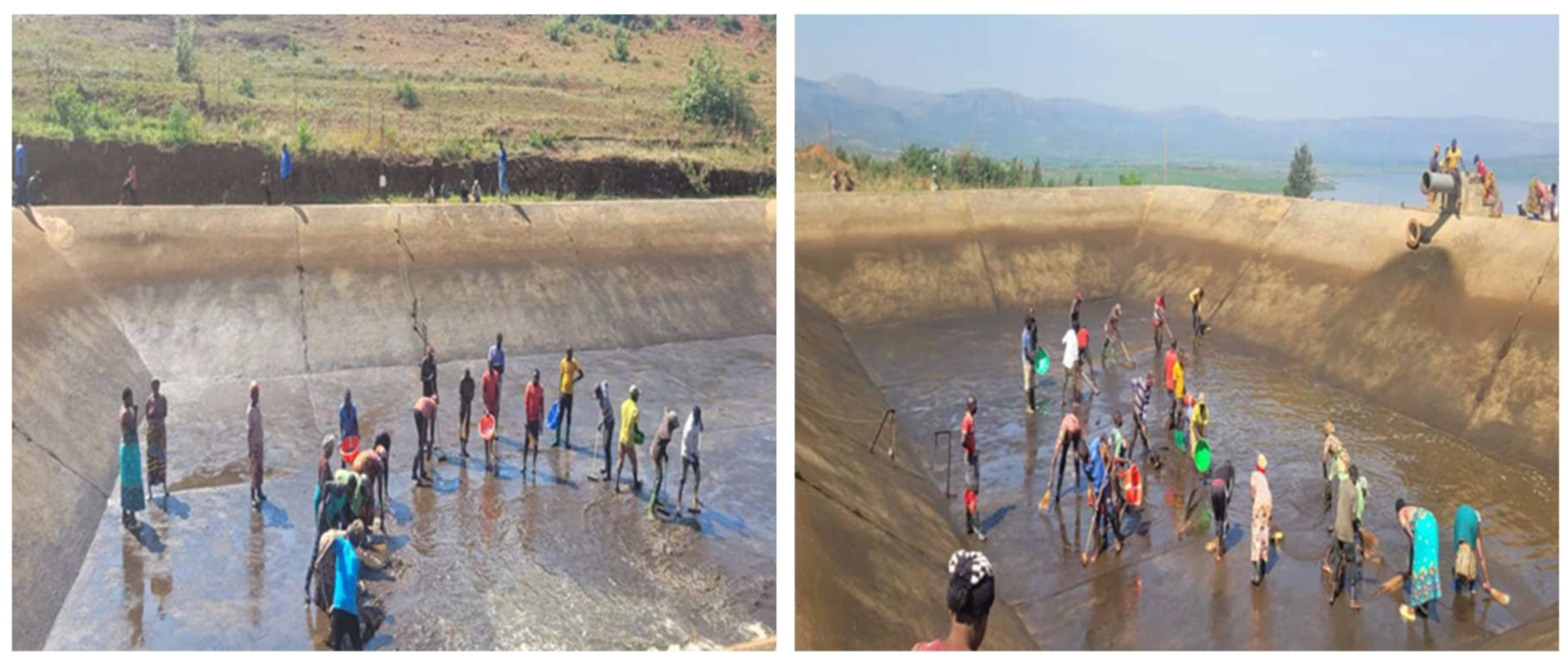
In Nasho Government Funded irrigation scheme the maintenance activities depend deeply on manual labor, with workers cleaning canals and reservoirs using basic tools. Mechanized or calendar-based preventive maintenance is almost nonexistent. Maintenance operations seem to be done only when sediment build-up becomes excessive.
Figure 7.
Desilting storage reservoir at Nasho GFI scheme.
Water Management Practices at Nasho GFI
The observation which was done in the assessment of water management practices at the Nasho GFI irrigation scheme showed several functioning problems which are affecting the efficiency and reliability of water delivery to the fields. Water is distributed across the field depends on concrete lined canals, night storage reservoirs, and semi-portable sprinkler and hoseline irrigation systems. But the condition of these structures shows that water movement from the intake to the farm plots is often inconsistent.
In the main canals there are more accumulated sediments coupled with vegetation encroachment and debris which restrict the smooth flow of water. At the field labors were manually removing large quantities of silt from the canals and the observation showed that sedimentation is the biggest problem and that desilting activities are not being done as required. As results contributes to delays in water delivery and reduces the effective hydraulic capacity of the canals.
Water quality of water in the reservoir is highly affected by sedimentation. The reservoirs at Nasho GFI scheme have visibly turbidity with more silt deposited at the bottom and this reduce their effective storage volume. The reduced volume of water stored in the reservoir makes it difficult to maintain a stable supply of water for sprinkler and hoseline operations, both of which require steady pressure and flow to work properly.
Actually, irrigation performance at Nasho GFI scheme is being affected by poor water quality where sediment laden water contributes to the blockage of sprinkler nozzles and irregular pressure delivery within hoselines. There is partial blockage of the intake structures caused by vegetation and organic debris, this represents lacking maintenance of the primary water abstraction point. the inflow rate is being affected because of the partial blockage of intake structure which is restricting it and this force pumps to work inadequately, and rises the entry of sediment into the other parts of the irrigation network.
These conditions of irrigation infrastructure in the scheme is negatively impacting water use efficiency. The field observation around the scheme shows that semi-portable sprinkler systems are in working condition but display non-uniform water distribution, this is mainly caused by damaged sprinkler heads, corroded risers, and changing water pressure. This uneven water distribution of these sprinklers is causing inadequate wetting, where some parts of the field receive excessive irrigation while others remain under-irrigated. Also, hoseline systems show signs of inefficient water distribution and this caused waterlogging, runoff, and weed growth near outlet points.
These conditions of hoseline around the scheme resulted into low water use efficiency, poor control over irrigation depth and timing. Additionally, the schedule of irrigation in the scheme is completely unstructured. The application of water is done based on direct need rather than following a precisely developed irrigation calendar that used for crop water need, evapotranspiration rates, or soil moisture conditions. Water application activities often occur through hours of daylight hours, which can rise evaporation losses and further reduce overall system efficiency.
In Nasho GFI scheme Maintenance activities associated to water management depend heavily on manual labor. The cleaning of canals, reservoirs, and intake structures is done by labors using simple tools, and maintenance activities appear are done only when sediments accumulation becomes severe enough to obstruct system operation. There is more frequent interruptions, reduced water application reliability and increased operational cost because of that reactive approach. There is a limit of the long-term sustainability of water management practices within the Nasho GFI scheme because of the absence of mechanized maintenance equipment and the lack of preventive maintenance schedules.
3.1.2. Kagitumba Irrigation Scheme
Background of Kagitumba irrigation scheme
Kagitumba Irrigation Scheme was established to use surface water resources for water distribution for main crops such as maize, beans, tomatoes, and pasture grasses. Before the establishment of this scheme, farmers in this area depended heavily on rainfed agriculture. The dependency of farmers on rainfall resulted in low yield and high vulnerability to drought. The government of Rwanda, through the Ministry of Agriculture and Animal Resources (MINAGRI) and the Rwanda Agriculture and Animal Resources Development Board (RAB), started this scheme to transform the agricultural landscape of the region.
As time pass this scheme has expanded into a modern irrigation system which has center-pivot technology, this help in efficient and uniform water application across the fields. Kagitumba irrigation scheme is divided into three key pumping station sections A, B, and C each supply water to several center pivots and sprinkler blocks.
Physical Layout and Infrastructure
Kagitumba Irrigation Scheme is categorized by three main pumping station sections. Each section helps a defined cluster of pivots and sprinkler blocks. This contribute to the total irrigated command area in the scheme.
Pumping Station Section A
Section A has 14 center pivot which irrigate a combined area across many plots in the scheme. These pivots differ in size to accommodate local field conditions and cropping patterns. The irrigated areas under Section A are as follows:
Table 3.
Pumping station section A at Kagitumba irrigation scheme.
| Infrastructure (Section A) | Area (ha) |
| Pivot A1 | 2.9587 |
| Pivot A2 | 7.1228 |
| Pivot A3 | 3.228 |
| Pivot A4 | 19.5 |
| Pivot A5 | 4.4165 |
| Pivot A6 | 10 |
| Pivot A7 | 4.1237 |
| Pivot A8 | 6.3 |
| Pivot A9 | 6.1765 |
| Pivot A10 | 5.81 |
| Pivot A11 | 46.5 |
| Pivot A12 | 20.5985 |
| Pivot A13 | 15 |
| Pivot A14 | 5.059 |
Section A has the largest pivot in all scheme which is A11 with 46.5 ha, indicating significant variation in command area sizes.
Pumping Station Section B
Section B contains of 13 pivots and one sprinkler block (SPR B) as shown in table below. This section also contributes to the total scheme area. Details are presented below:
Table 4.
Pumping station section B Kagitumba irrigation scheme.
| Infrastructure (Section B) | Area (ha) |
| Pivot B1 | 4.4126 |
| Pivot B2 | 5.6636 |
| Pivot B3 | 12.5 |
| Pivot B4 | 8 |
| Pivot B5 | 6.45 |
| Pivot B6 | 6 |
| Pivot B7 | 4.0143 |
| Pivot B8 | 12.787 |
| Pivot B9 | 8.5786 |
| Pivot B10 | 39.7889 |
| Pivot B11 | 7.3007 |
| Pivot B12 | 26.6128 |
| Pivot B13 | 20.1105 |
| SPR B | 20 |
Section B is categorized by medium to large pivots, with Pivot B10 (39.7889 ha) and Pivot B12 (26.6128 ha) among the most extensive in the entire scheme.
Pumping Station Section C
Section C has 8 pivots and one sprinkler block (SPR C). It comprises some of the largest irrigated blocks within the scheme.
Table 5.
Pumping station C Kagitumba irrigation scheme.
| Infrastructure (Section C) | Area (ha) |
| Pivot C1 | 5.57 |
| Pivot C2 | 6.1306 |
| Pivot C3 | 5.8815 |
| Pivot C4 | 5.2683 |
| Pivot C6 | 5.5 |
| Pivot C7 | 15.8492 |
| Pivot C9 | 34.2541 |
| Pivot C10 | 12.6805 |
| SPR C | 22 |
Section C has one of the largest irrigated plots which is Pivot C9 with 34.2541 ha, making it an important component of the overall system.
In Kagitumba irrigation scheme, every center pivot covers specific farm sizes, it has its management practices and farming arrangements with varying quality of organization and challenges. Because Kagitumba irrigation scheme is a community-based irrigation scheme was constructed by the government in order to help farmers. Farmers have been organized into Water Users Associations (WUAs) to control their irrigation system and agricultural operations.
WUAs was generally new thing to the farmers participating, so the government also sets organizational standards such as a management structure with committees to assist in operation and maintenance, resolve conflicts, collect payments such as water fees, conduct audits, and help with marketing linkages.
WUA at Kagitumba irrigation scheme are responsible for large-scale operation and maintenance of the scheme, they are also responsible for Small and low-budget activities such as changing nozzles, farmer meetings, etc. they are responsible for collecting water fees from farmers that are used to cover low-budget operational and maintenance cost in the scheme. The water fee is fixed and it is based on the crop type and area owned under irrigation per crop season. For example in November 2024, water fee for French beans was 80,000 Frw per ha per crop season and for maize farmers paid a water fee of 30,000 Frw per ha per crop season.
Condition of irrigation structures at Kagitumba irrigation scheme
Condition of Water Conveyance Canals and Pipelines
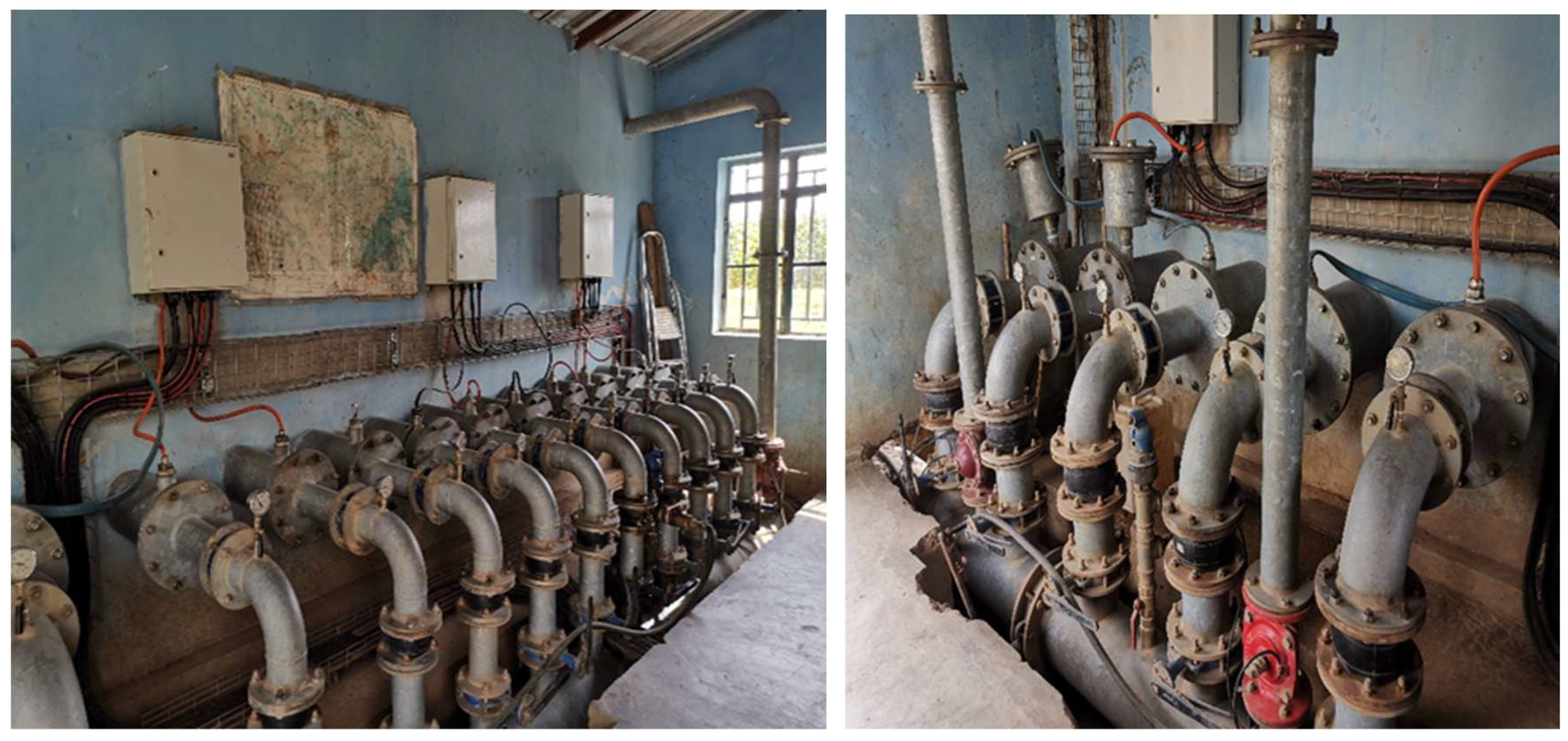
Field assessment showed that pressurized pipelines are used in Kagitumba Irrigation Scheme for water conveyance. The observation showed that pipes inside the pump station show clear signs of aging such as corrosion on flanges, rust around joints, and fading paint. These conditions display continuous use with insufficient rehabilitation. Even if major leakages were not visibly detected but the extent of rust and wear increases the likelihood of pressure losses and future pipeline failures if no preventive maintenance is undertaken. in increasing friction losses, reducing discharge capacity, and increasing maintenance costs.
In this scheme the conveyance system is working but runs below the optimum efficiency due to infrastructure deterioration and insufficient routine servicing.
Figure 8.
Conveyance pipeline Kagitumba irrigation scheme.
Condition of Water Storage Reservoirs
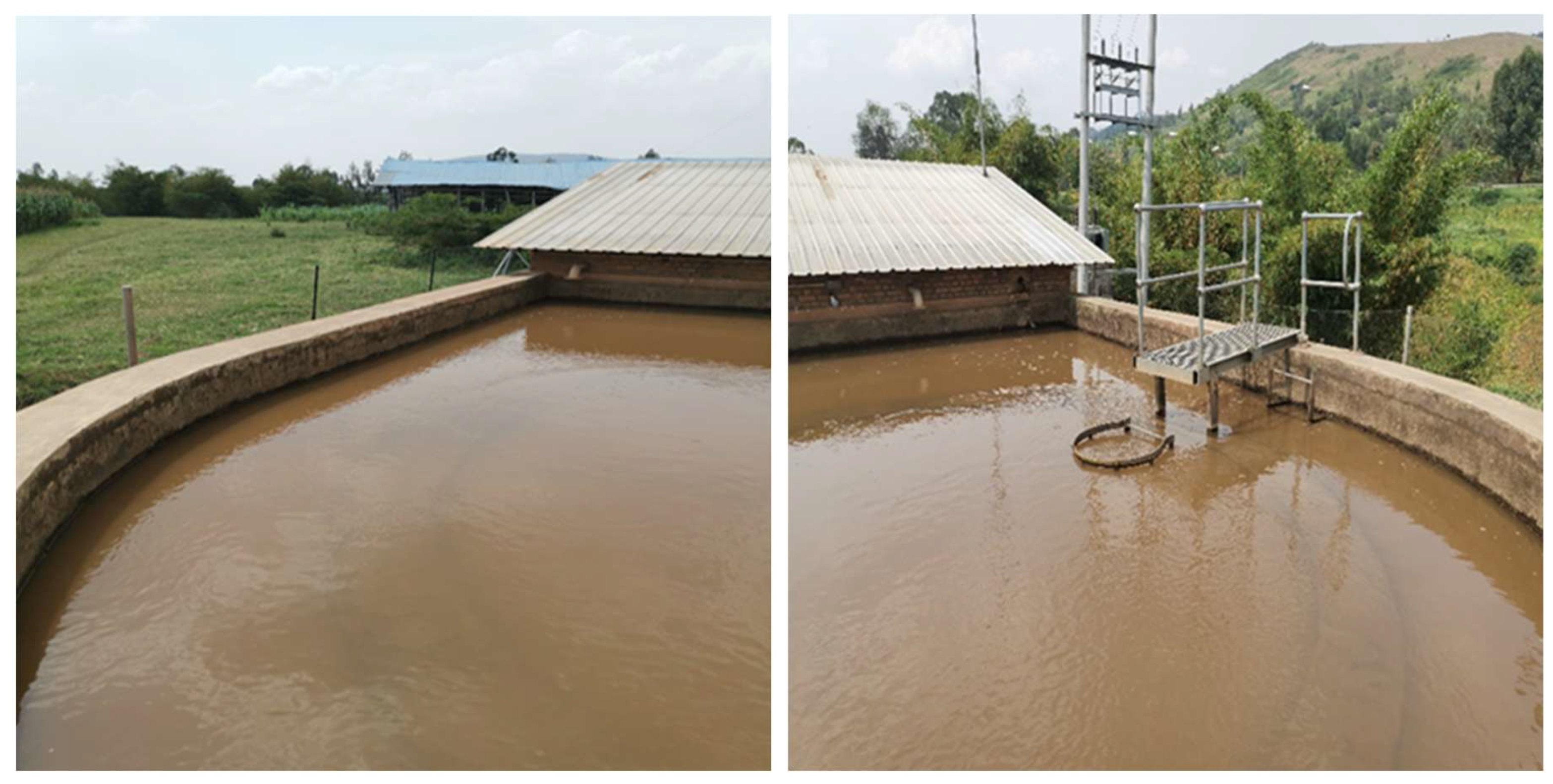
Feld assessment showed that the storage reservoirs within Kagitumba irrigation scheme are functioning as both sedimentation and buffering structures. They were found to be functional but working below expected standards. Field observations showed the presence of highly turbid brown water which is indicating insufficient sedimentation processes and the quality of inflow entering the reservoirs is poor. This shows that the present sediment trapping efficiency is low because it allows suspended particles to stay in the water column rather than settling effectively.
Even though the concrete reservoir walls appear structurally stable but the metallic components such as ladders and guardrails show visible signs of corrosion. This show prolonged exposure to humidity and inadequate maintenance which may compromise safety and structural integrity over time.
Figure 9.
Storage reservoir at Kagitumba irrigation scheme.
Condition of the Intake Structure
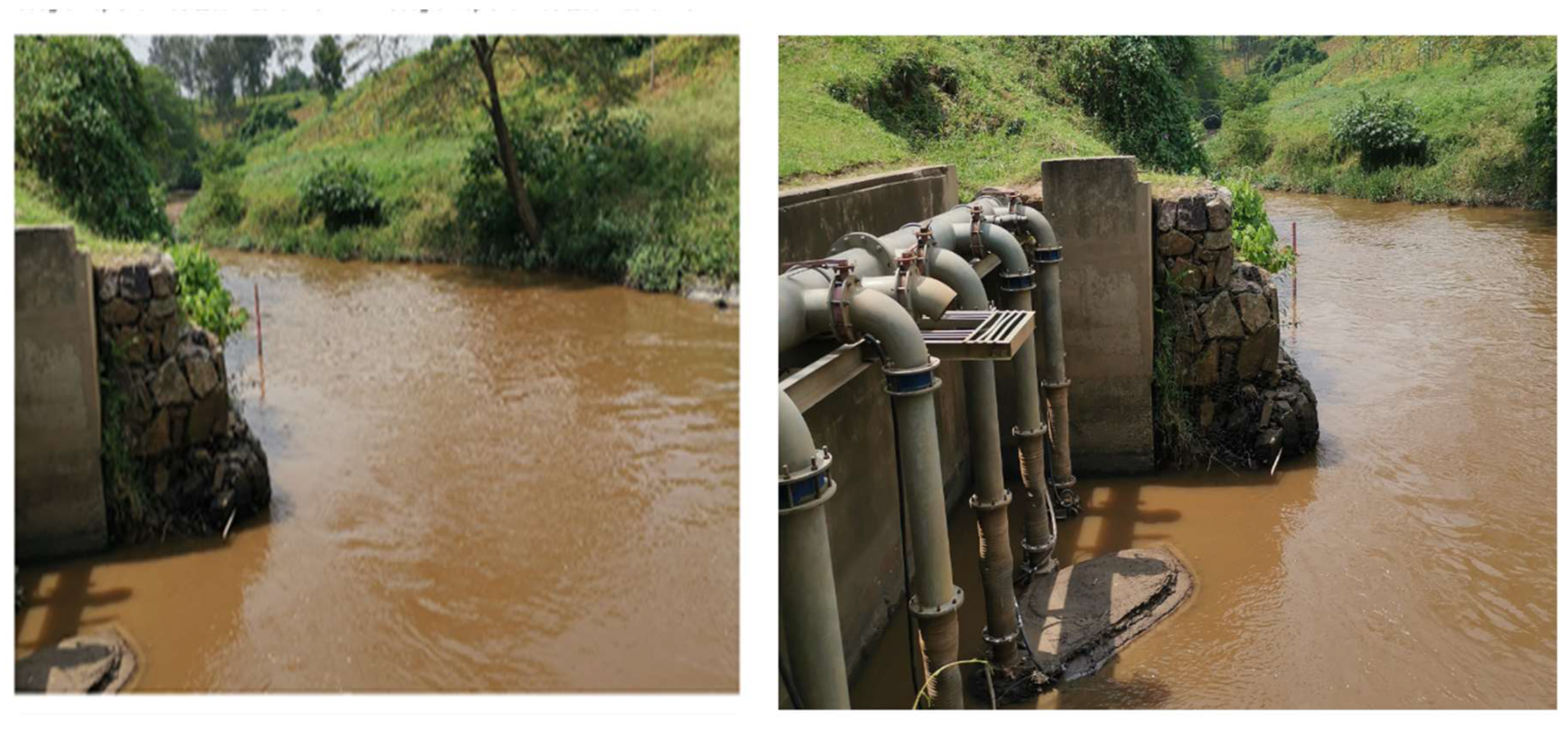
The intake structure in Kagitumba irrigation scheme take water from the Muvumba River. They appear physically good but functionally constrained. At the scheme field observations indicate that the intake withdraws water with high turbidity this suggesting significant upstream erosion and insufficient catchment management practices.
Even though the concrete foundation of the intake structure seems structurally sound but the lack of sediment control measures restricts its functional effectiveness. Chala et al.,2024 said that poor intake design and insufficient sediment exclusion involve in the accumulation of sediments within conveyance systems which exacerbate maintenance challenges and decrease water delivery efficiency.
These results show that even the intake structure remains operational but its performance is being affected by inadequate sediment management and lack of protective infrastructure. To improve efficiency and sustainability the interventions such as upstream erosion control, installation of debris screens and filtration systems and implementation of routine cleaning schedules are necessary.
Figure 10.
Intake structures at Kagitumba irrigation scheme.
Condition of Irrigation Systems (Centre Pivot and Sprinklers)
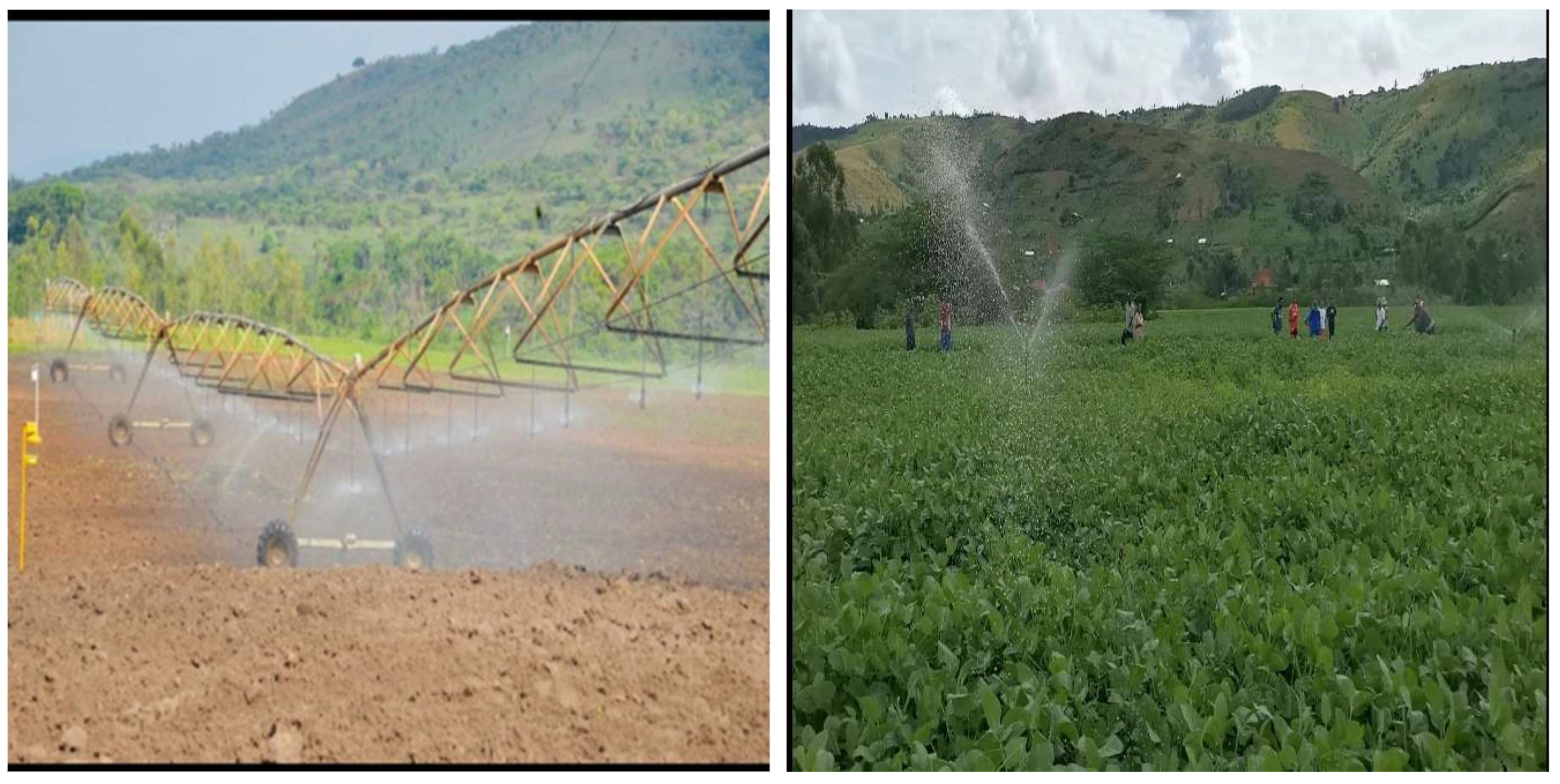
The irrigation systems which are installed in Kagitumba irrigation scheme include center pivot and portable sprinkler systems. During field assessment these systems were observed to be functional. Centre pivot systems were actively moving and applying water across the fields however variations in water application patterns were noted in some sections. These irregularities show the presence of pressure fluctuations and possible nozzle blockages which caused by water with sediments. The portable sprinkler systems were working but there was small uneven pressure distribution which was observed in certain fields resulted in non-uniform water application.
The existence of sediments in the system consequently poses a critical problems to irrigation performance and long-term system sustainability. Steady maintenance practices such as system flushing, installation of appropriate filtration unit and routine nozzle examination and cleaning are essential to maintain optimal operation.
The physical irrigation infrastructure of that irrigation in the scheme includes irrigation control system which has electrical control panels, switches, and automated pump controls was found to be operational but outdated and poorly maintained. The control panels show clear signs of aging, including worn-out switches, faded labeling, and corrosion of electrical components. Disorganized electrical wiring was observed which presents safety hazards and increases the possibility of system failures.
The control system is functional but it doesn’t have modern automation features such as real-time pressure monitoring, automated fault detection, and remote operation capabilities. Chala et al.,2024 said that the advantage of integrating smart control systems to improve operational efficiency, reduce water losses, and enhance system reliability and the absence of such technologies in the scheme limits its ability to respond effectively to changing field conditions and operational demands.
Figure 11.
Irrigation system at Kagitumba irrigation scheme.
Condition of Operation and Maintenance Practices
The field assessment of maintenance and operational activities within the Kagitumba Irrigation Scheme showed that the infrastructure remains functional but it is poorly maintained. The observations from the pump house revealed that pumps exhibit signs of deterioration which include rust development, worn-out seals and buildup of dust which reflect unreliable servicing and inadequate of preventive maintenance. These conditions involve in reducing pump efficiency and increase the mechanical failure over time.
The electrical control panels are functional but they appear outdated. They are disorganized wiring and aged components which are significant safety risks which include potential electrical faults and system failure.
Generally, pump house was characterized by dust buildup and inadequate cleanliness and the absence of routine maintenance activities such as cleaning, lubrication and systematic evaluation.
Water Management Practices at the Scheme
In Kagitumba irrigation scheme water management activities demonstrated both strengths and limitations. The good thing farmers consistently receive water for irrigation this supports active cultivation and mostly healthy crop growth. This shows that the system is still able of supplying water despite present infrastructural and operational challenges. Water use efficiency remains affected by several factors which include poor water quality, insufficient sediment control, and unreliable pressure distribution across some irrigation units.
3.2. Stakeholder Perceptions, Practices, Challenges, and Institutional Arrangements Influencing Irrigation and Water Management in Rwanda’s Irrigated Agricultural Zones
The results from Nasho Government Funded Irrigation (GFI) and Kagitumba irrigation schemes reveal that irrigation performance is shaped by a complex interaction between infrastructure condition, water management practices, stakeholder capacity and institutional arrangements. In both schemes, the findings demonstrate that irrigation inefficiencies are not solely driven by physical infrastructure limitations but also by behavioral, organizational and governance-related factors.
3.2.1. Comparative Stakeholder Profile and Farming Context
The demographic and farming characteristics indicated that relatively experienced farming populations in both schemes with the majority of respondents having more than five years of irrigation experience. However, Kagitumba shows a relatively higher level of farming specialization (96.5% farmers) compared to Nasho GFI, where Water User Association members dominate the respondent structure. This suggests a more formalized farmer-driven irrigation structure in Kagitumba while Nasho exhibits stronger institutional participation in governance roles.
Despite this, both schemes show gender imbalance favoring male participation reflecting persistent structural inequality in access to irrigated agriculture. The larger average plot size in Kagitumba (2.83 ha) compared to Nasho (1.08 ha) indicates higher farm consolidation and potentially greater commercial orientation yet this does not translate into better system performance.
3.2.2. Irrigation Infrastructure Condition and System Reliability
A clear convergence is observed in both schemes regarding infrastructure degradation. In Nasho, 61.1% of systems are older than 10 years while in Kagitumba this proportion increases to 93.4%, indicating more advanced infrastructure aging.
However, both schemes report similarly poor functional conditions, with over 97% of respondents in Kagitumba and 98.8% in Nasho indicating partially functional systems. This suggests that modernization level alone does not guarantee operational efficiency.
System failure rates further reinforce this pattern, with 87.2% of respondents in Nasho and 82.3% in Kagitumba reporting frequent breakdowns. In Nasho, failures are mainly linked to pump malfunction and power instability whereas Kagitumba is dominated by underground pipeline leakage and pressure loss. This highlights a structural divergence: Nasho is energy/mechanical constrained while Kagitumba is hydraulically constrained.
3.2.3. Water Allocation and Distribution Efficiency
Water allocation systems differ significantly between the schemes. Nasho is dominated by land-size-based allocation (87.2%), while Kagitumba shows a more balanced system with 55.1% equal distribution.
Despite this difference, both systems suffer from perceived inequity and inefficiency, suggesting that allocation rules do not translate into perceived fairness or effective delivery. This indicates that distribution problems are not only institutional but also hydraulic in nature where system capacity fails to support demand regardless of allocation model.
3.2.4. Water Supply Reliability and Irrigation Scheduling Behavior
Water supply reliability is a critical constraint in both schemes but more severe in Kagitumba where 55.1% of respondents report irregular water delivery compared to 6.7% in Nasho. This suggests that Kagitumba’s pressurized system, despite being technologically advanced is more vulnerable to operational instability.
A critical behavioral gap is observed in irrigation scheduling. Only 5% of farmers in Nasho and 0.5% in Kagitumba practice any form of irrigation scheduling. This near absence of scientific water management practices indicates a systemic disconnect between infrastructure potential and user-level decision-making.
This pattern suggests that irrigation inefficiency is strongly reinforced by low adoption of agronomic water management knowledge, regardless of system type.
3.2.5. Training, Knowledge, and Farmer Capacity
Both schemes exhibit limited access to training, but Kagitumba is more constrained, with 89.4% of farmers lacking training compared to 41.1% in Nasho GFI. This difference suggests that institutional outreach is more active in Nasho GFI, yet both systems remain below acceptable capacity-building thresholds. The lack of technical knowledge contributes directly to poor irrigation scheduling, inefficient water use, and weak system maintenance behavior.
3.2.6. Irrigation Challenges and System Constraints
Across both schemes, the dominant constraints are consistent but differ in intensity where Water scarcity during dry seasons is the most critical constraint in Nasho GFI (95.6%) and in Kagitumba, constraints are more diversified, including sedimentation (67.7%), irregular supply and system breakdowns
Nasho GFI is therefore characterized by quantitative water scarcity, while Kagitumba experiences more quality and hydraulic inefficiency constraints.
Institutional conflicts and unequal distribution are high in both schemes, indicating governance stress in Water User Associations. This suggests that institutional mechanisms exist but are not sufficiently effective in resolving operational conflicts or enforcing equitable distribution.
3.2.7. Crop systems and Irrigation Dependence
Both schemes are dominated by maize-based production systems confirming strong dependence on staple crop irrigation. However, Kagitumba shows greater crop diversification (green beans, vegetables, legumes) indicating a more market-oriented irrigation system compared to Nasho which is more food-security oriented.
Despite this diversification, irrigation inadequacy remains high in both schemes (71.1% in Nasho and 89.9% in Kagitumba) indicating that crop choice is not matched with reliable water supply systems.
3.2.8. Institutional Arrangements and Governance Effectiveness
Both schemes operate under Water User Associations (WUAs) yet institutional effectiveness differs in practice. Nasho demonstrates relatively stronger institutional engagement in maintenance coordination and fee collection while Kagitumba shows partial institutional coverage (83.8% coverage, 16.2% exclusion).
However, both schemes suffer from weak enforcement of maintenance schedules and limited technical capacity. This indicates that institutional presence does not automatically translate into institutional effectiveness.
3.2.9. System Efficiency Perception and User Satisfaction
Perceived efficiency is low across both schemes with the majority of respondents rating systems as “moderate” (74.4% in Nasho and 94.5% in Kagitumba). Very few respondents consider systems efficient (23.3% Nasho; 2% Kagitumba). This suggests a widespread normalization of suboptimal performance, particularly in Kagitumba, where expectations appear adjusted downward due to persistent system constraints.
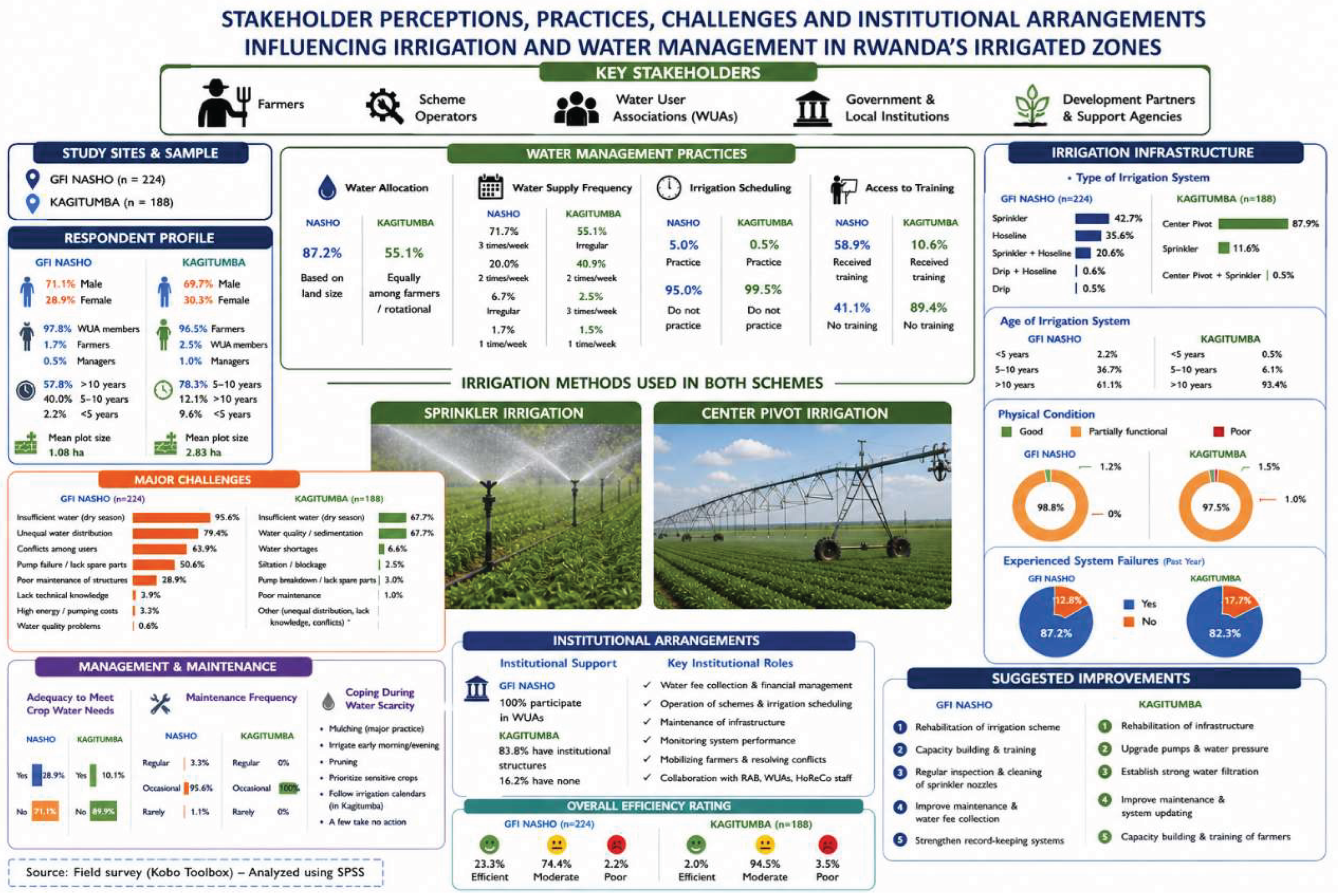
Figure 12.
Summary of findings of stakeholder perceptions, practices, challenges, and institutional arrangements influencing irrigation and water management in Rwanda’s irrigated agricultural zones.
Figure 12.
Summary of findings of stakeholder perceptions, practices, challenges, and institutional arrangements influencing irrigation and water management in Rwanda’s irrigated agricultural zones.
4. Discussion
4.1. Irrigation System Performance and Infrastructure Condition
The results demonstrated that irrigation systems in both Nasho Government Funded Irrigation (GFI) scheme and Kagitumba Irrigation Scheme remain operational but perform below optimal levels due to interacting hydraulic, mechanical and management constraints. Despite differences in technological configuration open canal-based semi-portable systems in Nasho versus pressurized center pivot systems in Kagitumba both schemes exhibit systemic inefficiencies associated with aging infrastructure and inadequate maintenance. This supports broader evidence that functionality does not necessarily equate to performance efficiency in large-scale irrigation systems [9]
However, the nature of constraints differs between the two schemes. In Nasho, performance limitations are primarily driven by sedimentation in open canal and reservoir systems, where field observations revealed extensive silt accumulation and weed encroachment. These findings are consistent with farmer-reported challenges, where 95.6% identified insufficient water supply during dry periods and 87.2% reported frequent system failures, indicating reduced conveyance reliability. Sediment deposition reduces canal capacity and reservoir storage, limiting the system’s buffering ability against temporal water demand variability [10].
In contrast, Kagitumba’s pressurized system is less affected by open sediment deposition but more constrained by infrastructure deterioration and sediment-induced clogging within pipelines and application units. Although center pivot systems are inherently more efficient, 82.3% of respondents reported frequent system failures, and 55.1% experienced irregular water supply, reflecting pressure instability and pipeline inefficiencies. Corrosion observed in pipelines contributes to increased friction losses and reduced hydraulic performance, even in the absence of visible leakages [11].
These findings highlight that while Nasho suffers from macro-level hydraulic inefficiencies (sediment accumulation and flow obstruction), Kagitumba is more affected by micro-level inefficiencies within pressurized components (pressure loss and clogging). This distinction underscores the need for context-specific rehabilitation strategies rather than uniform infrastructure interventions.
4.2. Irrigation Application Efficiency and Water Distribution
Irrigation application efficiency is strongly influenced by system type, operational condition, and water quality. In Nasho, the dominance of semi-portable sprinkler and hoseline systems used by 42.7% and 35.6% of farmers respectively is associated with low distribution uniformity due to pressure variability, leakage and equipment wear. Field observations of uneven spray patterns and waterlogging confirm that water application is spatially inconsistent, leading to both over-irrigation and water deficits within the same field. This is further reflected in farmer perceptions, where 71.1% reported that irrigation systems do not meet crop water requirements.
In Kagitumba, center pivot systems are used by 87.9% of respondents, theoretically offering higher uniformity. However, performance is compromised by sediment-laden water and pressure fluctuations, leading to nozzle blockages and uneven application. This is evident in the finding that 89.9% of farmers reported inadequate irrigation relative to crop water needs, despite the presence of advanced irrigation technology. These results align with studies showing that even minor pressure deviations or emitter clogging can significantly reduce irrigation uniformity and crop water productivity [12].
Comparatively, while Nasho’s inefficiencies stem from inadequate system design and deterioration of surface infrastructure, Kagitumba’s challenges arise from water quality issues affecting pressurized precision systems. This suggests that technological advancement alone does not guarantee improved irrigation efficiency without corresponding improvements in water quality management and system maintenance.
4.3. Operation and Maintenance Practices
A critical cross-cutting issue in both schemes is the predominance of reactive maintenance practices. In Nasho, 95.6% of respondents reported that maintenance is only occasional, with activities largely limited to manual desilting when sediment accumulation becomes severe. Similarly, in Kagitumba, 100% of respondents indicated that maintenance is not performed regularly, despite the higher technical complexity of the system.
This lack of preventive maintenance contributes to progressive infrastructure deterioration, increased operational costs, and frequent system breakdowns. The high incidence of reported failures 87.2% in Nasho and 82.3% in Kagitumba directly reflects the consequences of inadequate maintenance regimes. These findings are consistent with previous studies indicating that absence of structured maintenance is a major determinant of irrigation inefficiency and reduced system lifespan [13].
Notably, the implications differ between schemes. In Nasho, poor maintenance exacerbates sediment accumulation and canal inefficiency, whereas in Kagitumba, it accelerates mechanical wear, pressure instability, and control system failure. This highlights the increasing importance of technical maintenance capacity as irrigation systems transition from conventional to pressurized technologies.
4.4. Water Management Practices and Efficiency
Water management practices in both schemes are largely non-scientific and demand-driven, with minimal use of data-based irrigation scheduling. In Nasho, 95% of farmers do not practice irrigation scheduling, relying instead on visual observation or immediate crop needs. Similarly, in Kagitumba, 99.5% of respondents reported no use of soil moisture-based scheduling, indicating a systemic gap in the application of agronomic water management principles.
The absence of scheduling contributes to inefficient water use, including over-irrigation, increased evaporation losses, and reduced water productivity. This is further compounded by irregular water supply, reported by 6.7% of respondents in Nasho and 55.1% in Kagitumba, which disrupts consistent irrigation planning.
While both schemes demonstrate institutional attempts to regulate water allocation through Water User Associations (WUAs), the effectiveness of these arrangements is limited by infrastructure constraints and lack of technical capacity. In Nasho, water allocation is primarily based on land size (87.2% of respondents), whereas Kagitumba exhibits a mix of equal distribution (55.1%) and rotational systems. However, these approaches do not adequately account for crop water requirements or temporal variability, reducing overall system efficiency.
These findings reinforce the argument that efficient water management requires integration of infrastructure, data, and institutional coordination, rather than reliance on allocation rules alone [14].
4.5. Stakeholder Capacity and Institutional Arrangements
Stakeholder-related factors play a decisive role in shaping irrigation performance. In both schemes, limited access to training significantly constrains the adoption of improved water management practices. In Nasho, 41.1% of respondents reported no access to training, while in Kagitumba this figure rises to 89.4%, indicating a critical gap in capacity development.
This lack of technical knowledge is reflected in widespread reliance on traditional practices, absence of irrigation scheduling, and limited ability to manage system failures. Additionally, institutional challenges such as conflicts among water users (reported by 63.9% in Nasho) and unequal water distribution further undermine system efficiency.
Although WUAs are present in both schemes and play roles in water allocation and fee collection, their effectiveness is constrained by limited financial resources, weak enforcement mechanisms, and insufficient technical expertise. This aligns with broader findings from Sub-Saharan Africa, where institutional weaknesses limit the effectiveness of irrigation investments [15].
Importantly, the contrast between schemes reveals that even in Kagitumba where institutional structures are relatively more formalized technical and capacity limitations still hinder performance. This suggests that institutional presence alone is insufficient without strengthening governance quality and technical support systems.
4.6. Integrated Implications for Irrigation System Sustainability
The comparative analysis of Nasho and Kagitumba irrigation schemes demonstrates that irrigation performance is governed by the interaction of infrastructure condition, water quality, management practices, and institutional capacity. While Nasho is primarily constrained by sedimentation and open canal inefficiencies, Kagitumba faces challenges related to pressure instability, water quality, and mechanical deterioration within pressurized systems.
Across both schemes, the combination of high system failure rates (over 80%), limited irrigation scheduling (over 95%), and irregular maintenance practices indicates systemic inefficiencies that reduce water use efficiency and threaten long-term sustainability. These challenges are particularly critical in the context of Eastern Rwanda, where climate variability increases dependence on reliable irrigation systems.
The findings confirm that technological advancement alone does not ensure improved irrigation performance. Instead, sustainable irrigation requires an integrated approach combining:
- Infrastructure rehabilitation and modernization
- Preventive maintenance systems
- Water quality and sediment management
- Data-driven irrigation scheduling
- Strengthening of institutional and human capacity
This aligns with global irrigation research emphasizing that long-term system sustainability depends on the synergy between engineering, management, and governance dimensions [13].
5. Conclusions
The study concludes that irrigation systems in Nasho GFI and Kagitumba schemes are operational but perform below optimal efficiency due to infrastructure deterioration, poor maintenance, and weak water management practices. Nasho is mainly affected by sedimentation and pump inefficiencies, while Kagitumba faces pipeline corrosion, pressure losses, and uneven water distribution. Across both schemes, irrigation scheduling is almost absent and maintenance is largely reactive. Overall, improving performance requires integrated interventions combining infrastructure rehabilitation, strengthened maintenance, and improved institutional and farmer capacity for sustainable irrigation management.
Author Contributions
Sonia Ikundabayo: Conceptualization; Methodology; Data curation; Writing – original draft. Jean de Dieu Bazimenyera: Formal analysis; Validation; Supervision; Writing – review & editing. Romuald Bagaragaza: Methodology; Data analysis; Validation; Writing – review & editing. All authors have read and agreed to the published version of the manuscript.
Funding
This research received no external funding.
Ethical Considerations
Ethical principles were observed throughout the study. Permission to conduct the research was obtained from relevant local authorities and irrigation scheme management bodies. Participation was voluntary, and informed consent was obtained from all respondents before data collection. Respondents were informed about the purpose of the study and assured that the information provided would be used strictly for academic purposes. Confidentiality and anonymity of participants were maintained by not recording personal identifiers in questionnaires and interview responses.
Data Availability Statement
The data used to support the findings of this study are included within the article.
Acknowledgments
I sincerely thank the farmers, Water User Associations, and managers of Nasho GFI and Kagitumba irrigation schemes for their cooperation during data collection. I also appreciate the support from Rwanda Agriculture and Animal Resources Development Board (RAB) and local authorities for facilitating field access. Special thanks go to my supervisors and colleagues for their guidance and constructive feedback, and to my family for their continuous moral support throughout this study.
Conflicts of Interest
The authors declare no conflicts of interest.
Abbreviations
The following abbreviations are used in this manuscript:
| GFI | Government Fund Irrigation |
| RAB | Rwanda Agriculture Board |
| MINACRI | Ministry of Agriculture |
| RWB | Rwanda Water Board |
References
- NISR. Seasonal agricultural survey Season A 2023 Report. 44.
- Lydie, M.; Lydie, M. Droughts and Floodings Implications in Agriculture Sector in Rwanda: Consequences of Global Warming. In Nature, Causes, Eff. Mitig. Clim. Chang. Environ.; Mar 2022. [Google Scholar] [CrossRef]
- RAB, “Rwanda irrigation master plan,” Rwanda Irrig. Master Plan 2020, no. March, 240+xii.
- Tuyisabe, J. B.; Silungwe, F. R.; Mahoo, H. F. Assessment of Physical Status of The Irrigation Structures in Nyarubogo Irrigation Scheme, Rwanda. Afr. J. Empir. Res. 2024, vol. 5(no. 4), 1561–1575. [Google Scholar] [CrossRef]
- Ikundabayo, S.; Bazimenyera, J. de D.; Bagaragaza, R.; Ngarukiyimana, J. B. Sustainable water management for irrigated agriculture in Rwanda: systematic narrative review. Braz. J. Sci. 2026, vol. 5(no. 3), 58–70. [Google Scholar] [CrossRef]
- Perez-Guzman, K.; Imanirareba, D.; Jones, S. K.; Neubauer, R.; Niyitanga, F.; Naramabuye, F. X. Sustainability implications of Rwanda’s Vision 2050 long-term development strategy. Sustain. Sci. 2022, vol. 18(no. 1), 485–499. [Google Scholar] [CrossRef]
- Nsengimana, V.; Nzibaza, V.; Nzarora, A.; Mugume, P. J. Conserving biodiversity and managing water resources in the Akagera River catchment, Eastern Rwanda: local engagement and knowledge cocreation through the adaptive planning process. Socio-Ecol. Pract. Res. 2024 2024, 63, vol. 6(no. 3), 245–261. [Google Scholar] [CrossRef]
- Mabhaudhi, T.; Dirwai, T. L.; Taguta, C.; Kanda, E. K.; Nhamo, L.; Cofie, O. Irrigation Development and Agricultural Water Management in Rwanda: A Systematic Review. Enhancing Water Food Secur. Through Improv. Agric. Water Product. 361–384, 2025. [CrossRef]
- Playán, E.; Mateos, L. Modernization and optimization of irrigation systems to increase water productivity. Agric. Water Manag. 2006, vol. 80(no. 1–3), 100–116. [Google Scholar] [CrossRef]
- Asres, S.; Taffese, T.; Firiew, Z.; Yihunie, L.; Goshu, G. A review of reservoir sedimentation and water storage losses in the Ethiopian highlands. Discov. Sustain. 2025, vol. 6(no. 1), 1023. [Google Scholar] [CrossRef]
- Shah, B. A.; Muthalif, A. G. A. A comprehensive review on corrosion management in oil and gas pipeline: methods and technologies for corrosion prevention, inspection and monitoring. Anti-Corros. Methods Mater. 2025, vol. 72(no. 5), 681–701. [Google Scholar] [CrossRef]
- Sharma, R.; Rallapalli, S.; Magner, J. Optimizing water-efficient agriculture: evaluating the sustainability of soil management and irrigation synergies using fuzzy extent analysis. Sci. Rep. 2025, vol. 15(no. 1), 29382. [Google Scholar] [CrossRef] [PubMed]
- Sirimewan, D. C.; Samaraweera, A.; Manjula, N. H. C.; Rameezdeen, R.; Rodrigo, M. N. N.; Ekanayake, E. M. A. C. Strategies for sustainable irrigation system management: a socio-technical system approach. Eng. Constr. Archit. Manag. 2023, vol. 30(no. 2), 436–455. [Google Scholar] [CrossRef]
- Dai, Y.; Huang, Z.; Khan, N.; Labbo, M. S. Smart Water Management: Governance Innovation, Technological Integration, and Policy Pathways Toward Economic and Ecological Sustainability. Water 2025 2025, Vol. 17, Page 1932, vol. 17(no. 13), 1932. [Google Scholar] [CrossRef]
- Haile, B.; Mekonnen, D.; Choufani, J.; Ringler, C.; Bryan, E. Hierarchical Modelling of Small-Scale Irrigation: Constraints and Opportunities for Adoption in Sub-Saharan Africa. 2022, vol. 8(no. 1), 2250005. [Google Scholar] [CrossRef]
Disclaimer/Publisher’s Note: The statements, opinions and data contained in all publications are solely those of the individual author(s) and contributor(s) and not of MDPI and/or the editor(s). MDPI and/or the editor(s) disclaim responsibility for any injury to people or property resulting from any ideas, methods, instructions or products referred to in the content. |
© 2026 by the authors. Licensee MDPI, Basel, Switzerland. This article is an open access article distributed under the terms and conditions of the Creative Commons Attribution (CC BY) license (http://creativecommons.org/licenses/by/4.0/).
Copyright: This open access article is published under a Creative Commons CC BY 4.0 license, which permit the free download, distribution, and reuse, provided that the author and preprint are cited in any reuse.