

Submitted:
13 May 2026
Posted:
14 May 2026
You are already at the latest version
Abstract
Hard flaccid syndrome (HFS) is an emerging condition of male sexual dysfunction characterized by a persistent semi-rigid penis in the flaccid state, altered penile sensation, erectile dysfunction, and pelvic or perineal pain. Single-modality treatments have shown limited success, and multimodal protocols have been reported only in single-patient case studies. Our objective was to conduct a retrospective analysis of clinical outcomes from an integrative multimodal rehabilitation protocol in men with HFS. Thirty-two men with HFS completed a comprehensive protocol combining class IV laser therapy, dry needling, radial pressure wave shockwave therapy, therapeutic ultrasound, biofeedback training, manual therapy, therapeutic exercise, behavioral coaching, and oral tadalafil. Patient-reported outcomes were collected at treatment initiation and completion. The main outcome measures were Erection Hardness Scale (EHS), penile satisfaction, PROMIS Sexual Interest, and PROMIS Global Health Physical and Mental Component scores. In this case series, median EHS increased from 2 to 4 and median penile satisfaction increased from 2 to 5 (both P<0.01). All 32 patients achieved EHS ≥3 by treatment end, compared with 8 of 32 (25%) at baseline. PROMIS Sexual Interest, Physical Component, and Mental Component scores all improved significantly (P<0.01). Common comorbid features included low back pain (53%), hip or groin pain (38%), pelvic floor pain (31%), and urinary symptoms (28%). In this retrospective case series, multimodal treatment produced substantial improvements in erectile function and sexual quality of life in men with HFS, supporting an integrative model in which musculoskeletal and end organ pathologies initiate the syndrome and are amplified by central and peripheral nervous system contributions.
Keywords:
hard flaccid syndrome
; erectile dysfunction
; chronic pelvic pain disorder
; male sexual dysfunction
1. Introduction
Hard flaccid syndrome (HFS) is an emerging condition of male sexual dysfunction characterized by a persistent semi-rigid quality of the flaccid penis, altered penile sensation, erectile dysfunction, and pelvic pain [1,2]. HFS can impair sexual function, including ejaculation, morning erections, libido, urinary symptoms, and partner relationships [1,2,3,4]. HFS is proposed to fit within the spectrum of persistent genital arousal disorder and genito-pelvic dysesthesia (PGAD/GPD) syndromes [5] in which symptoms may arise from end organ, pelvic and perineal, cauda equina, spinal cord, or brain regions that converge on the pelvic-pudendal-hypogastric reflex [5]. Symptom-directed monotherapies, including nerve blocks, muscle relaxants, and pain medication, have generally shown limited success [2], while limited case reports suggest that multimodal rehabilitation, pain neurophysiology education, and graded exposure may produce symptom resolution [6,7,8]. Whether this approach produces consistent symptom resolution across a broader HFS population remains unknown.
Multimodal treatments integrating physical, neurophysiological, and behavioral mechanisms have shown benefit in adjacent chronic pelvic pain and musculoskeletal rehabilitation populations [9,10]. We therefore designed a treatment protocol anchored in neurophysiology, biomechanics, exercise physiology, connective tissue mechanobiology, and behavioral therapy. We report outcomes from 32 men with HFS treated with this protocol and propose a refinement of the PGAD/GPD framework [5] that accounts for the convergent phenotype, heterogeneous contributing factors, and consistent direction of treatment response observed in this cohort.
2. Materials and Methods
2.1. Participants and Procedures
This retrospective case series included 32 men treated at our clinic for hard flaccid syndrome. The study was conducted in accordance with the Declaration of Helsinki. Formal IRB approval was not obtained as the analysis used de-identified data collected retrospectively during routine clinical care. Patients were eligible if they reported a persistent or recurrent semi-rigid quality of the flaccid penis on most days for at least 3 months, with one or more of the following: altered penile sensation, erectile dysfunction, ejaculatory dysfunction, or perineal or pelvic pain. Patients were excluded if symptoms were better explained by acute penile fracture or surgically urgent trauma, active genitourinary infection, urethritis, prostatitis, epididymitis, testicular torsion, malignancy, clinically dominant Peyronie's disease, temporally related pelvic or penile surgery, neurologic disease known to affect pelvic or sexual function, or uncontrolled endocrine, cardiovascular, or psychiatric disease likely to independently explain sexual dysfunction. Patients were also excluded for incomplete baseline or follow-up outcomes, inability to participate in treatment, or insufficient documentation to confirm diagnosis or treatment course.
2.2. Qualitative Content of Narratives of History of Hard Flaccid Symptoms
Self-reported histories were analyzed using conventional inductive qualitative content analysis [11]. Narratives from the electronic medical record were reviewed in full, meaningful text segments were coded, and codes were iteratively organized into 23 factors and 4 themes. Each history was then scored for the presence or absence of each factor, and theme prevalence was summarized descriptively. Patients also reported prior HFS treatments and rated perceived change in symptoms using the 7-point Patient Global Impression of Change (PGIC) scale [12]. Modalities used by fewer than 3 patients were excluded from the prior treatment analysis.
2.3. Examination
A focused physical examination was performed at the initial visit. Genital examination assessed penile shape, contour, temperature, color, and the presence of semi-rigidity in the flaccid state. Testicular and scrotal examination assessed size, position, tenderness, varicocele, hydrocele, epididymal abnormalities, and tenderness along the spermatic cord and inguinal canal. Lumbosacral and hip examination included manual muscle testing, special tests, and provocative maneuvers, with radiographs or magnetic resonance imaging obtained when clinically indicated. External pelvic floor examination assessed muscle and fascial tone and tenderness. Sensory testing was performed over the penis and lower abdomen using a 10 g monofilament to assess Aβ fiber-mediated light touch and pressure sensation, a 128 Hz tuning fork to assess Aβ fiber-mediated vibratory sensation, and a Tip Therm device (US Neurologicals, Poulsbo, WA) for warm-cold discrimination to assess Aδ and C fiber-mediated thermal discrimination [13,14]. Sensory testing was also performed on dermatomes of patients with suspected pathology of a particular spinal level. Cremasteric, bulbospongiosus, anal wink, and lower extremity deep tendon reflexes were also assessed.
2.4. Education
Patients received handouts and provider-led education on penile anatomy, erection and ejaculation physiology, current HFS knowledge, recovery after more severe penile injuries, pain neurophysiology, and psychosocial factors in HFS [15,16,17]. The goals were to improve understanding, support shared decision-making, build confidence in self-management, reduce fear and maladaptive beliefs, and improve treatment adherence [18].
2.5. Counseling for Self-Reported High Frequency, Prolonged, or High Force Masturbation
Because some patients with HFS report high frequency, prolonged, or high force masturbation that may aggravate symptoms through repetitive mechanical loading [2,4], interested patients received counseling focused on healthy, self-directed goals [19]. This counseling reviewed the applied neurobiology of compulsive sexual behaviors [20], population ranges for masturbation frequency and duration [21], and individualized step-down plans over 4 to 8 weeks. Patients reporting problematic pornography use received education on sexual cue reactivity [20], population ranges for pornography use [22], and self-directed reduction strategies [23].
2.6. Sexual Activity Modification, Return to Sexual Activity, and Dating
Because HFS can lead to avoidance of sexual activity, partner withdrawal, and dating hesitancy [1,2], structured coaching supported graded return to sexual activity. Goals included reducing avoidance-driven deconditioning, limiting catastrophizing, supporting relationship health, and restoring satisfying sexual function. Patients in relationships were counseled to temporarily reduce symptom-provoking mechanical loading by modifying frequency, duration, and intensity of intercourse or masturbation, while maintaining non-coital intimacy when appropriate [24]. Single patients received coaching on dating hesitancy, normalization of performance anxiety after dysfunction, graded exposure to dating situations, partner communication, expectation setting, and management of performance-related anxiety [25]. Both partnered and single patients received guidance on partner communication strategies, including how to disclose the condition to a partner when appropriate, how to set expectations during the recovery period, and how to manage performance-related anxiety during initial return to sexual activity [26].
2.7. Patient Reported Outcome Measures
Patient-reported outcomes were collected at treatment initiation and completion. PROMIS Global Health 10 was used to assess general physical and mental health, with physical component summary (PCS) and mental component summary (MCS) scores calculated from the overall assessment [27] . PROMIS Brief Profile Male Interest in Sexual Activity short form was used to quantify sexual desire and complement erectile function outcomes by capturing psychological and motivational dimensions of sexual dysfunction in HFS [28]. Raw scores were converted to T-scores for analysis. Erectile function was assessed using the Erection Hardness Scale (EHS), an ordinal scale ranging from 0 to 4 [29]. Overall penile function satisfaction was assessed using a 5-point Likert scale [30,31] in response to the question, "How satisfied are you with the overall function of your penis?" Response options were: 1, very dissatisfied; 2, dissatisfied; 3, neutral; 4, satisfied; and 5, very satisfied.
2.8. Treatment Interventions
Patients underwent treatment sessions of seven synergistic modalities: (i) class IV laser therapy; (ii) dry needling; (iii) radial pressure wave shockwave therapy, (iv) therapeutic ultrasound, (v) biofeedback training, (vi) manual therapy; and (vii) therapeutic exercises. Oral tadalafil 5 mg daily was also prescribed to support pelvic vascular function [32]. Treatment sessions occurred one to two times per week, and patients were generally encouraged to continue treatment until they reached a satisfied or very satisfied state with overall penile function.
Class IV laser therapy (REMY Medical Laser, Cherry Hill, NJ) was applied to the penile shaft, targeting the corporal bodies, as a photobiomodulation intervention intended to support nitric oxide-mediated microvascular signaling and modulate neuromuscular or autonomic contributors to tissue tightness [33,34,35,36]. In patients with perineal, scrotal, hip, groin, or low back symptoms, treatment was also applied to those areas. Penile treatment delivered approximately 700 to 800 J, distributed approximately evenly between 810 nm and 980 nm wavelengths. Dosing for other regions was adjusted to tissue size and symptoms.
Superficial dry needling was used as a low-irritability neuromodulatory intervention intended to reduce sympathetic guarding, improve autonomic tone, and decrease superficial fascial sensitivity and tightness [37,38,39]. Needles (SERIN, Boston, MA) were sterile, only used once, and occasional pistoning was performed as needed. To target penile fascia, needles (SERIN, Boston, MA) were placed in an evenly distributed pattern on the dorsal and lateral aspects of the penis to abut but not penetrate dartos fascia. For patients reporting perineal symptoms, dry needling of the pelvic floor was performed [40]. Gentle heat, provided from infrared lamps, was applied during needling sessions. Dry needling was also performed over the lower abdominal area superficial to the ilioinguinal nerve, genital branch of the genitofemoral nerve, and the iliohypogastric nerve, which provide sensory innervation to the genitalia, as well as the hip and low back in patients who were symptomatic in these areas.
Radial pressure wave shockwave therapy (Intelect RPW 2, Enovis, Wilmington, DE) was delivered to the dorsal and lateral aspects of the penis. The frequency was 4-6Hz which was selected based on studies that demonstrated effective myofascial spasticity reduction at this frequency [41]. Each session delivered 1000 to 2000 pulses, with intensity adjusted to just below the maximum tolerated comfort level.
Therapeutic ultrasound was performed to improve blood flow and reduce fascial tightness, modified from studies which used this modality for the treatment of Peyronie’s disease [42]. Ultrasound (CX2, Richmar, Clayton, MO) was delivered at a frequency of 3Mhz with energy output of 1.0-1.2 W/cm2 with a 100% duty cycle for 8 minutes. A probe cover (McKesson, Irving, TX) was used to prevent cross-contamination.
Biofeedback training was used to reduce pelvic floor tension by providing real-time feedback on muscle activity, improving awareness, voluntary control, and coordination between contraction and relaxation [43]. Training lasted up to 10 minutes and emphasized relaxation or downtraining using a noninvasive device (Boost, kGoal, Portland, OR). Patients with extensive perineal tension, or who developed tension after ejaculation, were instructed on applying a low frequency mechanical oscillating device (We-Vibe Tango X, Lovehoney Group, Atlanta, GA) parallel to the pelvic floor muscles.
Manual therapy and proprioceptive neuromuscular facilitation (PNF) stretching addressed myofascial and neuromuscular contributors to pelvic floor and perineal tension [44,45]. Manual therapy techniques included myofascial release and instrument-assisted soft tissue mobilization of the pelvic floor and lower abdominal muscles. For patients with comorbid lumbosacral or hip pathologies, joint mobilizations were performed when clinically appropriate. Patients were instructed on how to perform gentle transverse soft tissue mobilization on penile fascia at home. PNF stretching of the adductors, abductors, flexors, extensors, and internal rotators of the hip joint were performed.
Therapeutic exercise was performed to activate somato-autonomic reflex pathways at spinal segments (T10–L2 sympathetic, S2–S4 parasympathetic) where low-threshold muscle afferents can produce segmental sympathoinhibition of penile vascular tone, enhance parasympathetic pro-erectile outflow, and drive activity-dependent neuroplastic reductions in sympathetic dominance [46,47]. Additionally, targeted pelvic floor exercise may directly strengthen the ischiocavernosus and bulbospongiosus muscles that augment penile rigidity during erection, while reducing pelvic floor hypertonicity that contributes to the neurovascular dysfunction characteristic of HFS [2,48]. Therapeutic exercises included bicycle crunches, body blade rotations, Bulgarian split-squats, cat-cow, Copenhagen plank, dead bugs, double leg raise, glute bridge, isometric adduction, Pallof press, pelvic tilts, quadruped rocking, reverse deadlifts, reverse lunges, Russian twists, side-lying abduction, single leg bridge, squats, step-downs, supine march, Swiss ball rollouts [36,49]. Additional exercises were selected to treat patients with lumbosacral [50] or hip musculoskeletal pathologies [51,52]. In patients with neuromuscular inhibition, a Neubie direct current stimulator (NeuFit, Austin, TX) [53] was used to facilitate muscle contractions. Patients were instructed to perform prescribed exercises and stretching at home 2-3 times weekly.
2.9. Statistical Analyses
Paired start-to-end differences were tested using two-tailed Wilcoxon matched-pairs signed-rank tests (α=0.05). Analysis was performed using Prism 11 (GraphPad, San Diego, CA). Values presented in the text are median±IQR.
3. Results
Thirty-two men meeting eligibility criteria were included in this case series (Table 1). Median age was 28.9 (24.9-33.0) years, median BMI was 27.7 (24.1-30.7) kg/m², median symptom duration was 18 (9-24) months, and median treatment exposure was 9 (8-12) sessions. Symptom duration was 12 months or less in 47% of patients, 13 to 24 months in 31%, 25 to 36 months in 16%, and longer than 36 months in 6%.
Clinical history features and perceived contributors are shown in Figure 1A. All patients had documented penile morphological changes and reported first identifying the term HFS through internet searches rather than from a clinician. Common sexual features included morning erection alterations (59%), ejaculatory dysfunction (56%), erectile dysfunction (50%), and excessive or aggressive masturbation (41%). Common regional symptoms included low back pain (53%), hip or groin pain (38%), scrotal pain (34%), pelvic floor pain or tightness (31%), urinary symptoms (28%), bowel dysfunction (13%), and abdominal pain or cramping (13%). Psychosocial and lifestyle features included relationship or dating stress related to HFS symptoms (72%), poor sleep (34%), anxiety (31%), problematic pornography use (31%), relationship stress unrelated to symptoms (31%), major life stressor (16%), depression (13%), prolonged sitting (25%), and injury during intercourse (13%).
Prior treatment responses are shown in Figure 1B. NSAIDs were most common (N=21), with 10 patients reporting improvement, 8 no change, and 3 worsening. Self-directed pelvic floor exercises (N=15) and PDE5 inhibitors (N=14) were mixed, with approximately half reporting improvement. Prior pelvic floor physical therapy (N=12) improved symptoms in 9 patients, although all 12 reported discomfort with internal release and preferred to avoid this in future sessions. Unapproved peptides (N=11), neuropathic analgesics (N=9), and herbal or nutritional supplements (N=10) improved symptoms in roughly one-third to one-half of users. One patient experienced worsening after self-injection of the unapproved peptide BPC-157, which is marketed online as a treatment for a variety of conditions despite not having any meaningful human subjects data [54], into his penis outside of medical guidance. Five patients reported α1-adrenergic receptor antagonists use, with 4 reporting improvement and 1 reporting no change.
PROMIS outcomes improved from treatment start to completion (Figure 2). PROMIS Interest in Sexual Activity increased from 38.4 (32.9-43.9) to 54.8 (49.4-60.3; P<0.01). PROMIS Global Health PCS increased from 50.8 (47.7-54.1) to 54.1 (53.3-57.7; P<0.01), and MCS increased from 50.8 (48.3-53.3) to 53.3 (50.8-56.0; P<0.01). The PCS and MCS changes fell within the 2 to 6 T-score range commonly cited as clinically meaningful, and the sexual interest change exceeded this threshold [27].
EHS improved from treatment start to completion (Figure 3A-B). Median EHS increased from 2 (2-2.25) to 4 (3-4; P<0.01), representing a transition from erections generally insufficient for penetration to erections rated as fully rigid in most patients. At baseline, 7 patients (22%) had EHS 1, 17 (53%) had EHS 2, 6 (19%) had EHS 3, and 2 (6%) had EHS 4. At treatment end, 9 patients (28%) had EHS 3 and 23 (72%) had EHS 4. EHS ≥3 was achieved by 8 of 32 patients (25%) at baseline and 32 of 32 (100%) at treatment end. Overall, 29 patients (91%) improved by at least 1 EHS category, 3 (9%) were unchanged, and none worsened.
Penile satisfaction also improved (Figure 4A-B). Median satisfaction increased from 2 (1-2) to 5 (5-5; P<0.01). At treatment start, 14 patients were very dissatisfied, 14 were dissatisfied, and 4 were neutral; none were satisfied or very satisfied. At treatment end, 4 were satisfied and 28 were very satisfied, with no neutral, dissatisfied, or very dissatisfied responses. All 32 patients improved by at least 1 satisfaction category.
4. Discussion
This retrospective case series of 32 men with HFS is, to our knowledge, the largest treatment-focused report of HFS to date. Limited case studies and small series have indicated success in treating HFS using multimodal treatment programs centered around physical therapy [6,7,8], leaving uncertainty about whether multimodal treatment would produce consistent outcomes across a broader HFS population. In this cohort, HFS presented as a convergent phenotype with penile morphological change, erectile dysfunction, sensory symptoms, pain, musculoskeletal comorbidities, urinary symptoms, and psychosocial distress. Following a complex multimodal protocol, median EHS improved from 2 to 4, median penile satisfaction improved from 2 to 5, and PROMIS sexual interest, physical health, and mental health scores improved significantly. These findings support further study of HFS as a multidimensional condition in which heterogeneous entry points converge on shared neurovascular, sensory, musculoskeletal, and behavioral maintenance pathways.
The magnitude of improvement is clinically meaningful. All patients achieved EHS ≥3 by treatment end, 91% improved by at least 1 EHS category, and satisfaction shifted from universal dissatisfaction or neutrality to universal satisfaction or high satisfaction. Although direct comparisons are limited by differences in population and outcome instruments, these response patterns compare favorably with EHS improvement reported after PDE5 inhibitor monotherapy in older men with erectile dysfunction [55] and with return-to-function metrics after treatment for lumbopelvic musculoskeletal disorders in younger populations [56,57,58,59]. The young age of the cohort, the multi-tissue phenotype of HFS, and the use of concurrent interventions aimed at autonomic, sensory, fascial, musculoskeletal, vascular, and behavioral contributors may help explain the magnitude of response.
At the tissue level, penile rigidity depends on coordinated interactions among cavernosal smooth muscle, superficial fascia, sensory nerves, vascular inflow, and tunical constraint. Cavernosal trabecular smooth muscle maintains flaccidity through tonic α1-adrenergic and RhoA/Rho kinase-mediated contraction via sympathetic fibers from T11-L2, while parasympathetic NO/cGMP signaling from S2-S4 promotes relaxation and sinusoidal filling [60,61]. The tunica albuginea provides the passive mechanical constraint against which expanding sinusoids compress the subtunical venular plexus, producing the veno-occlusive mechanism that traps pressurized blood [62]. The dartos fascia contains myofibroblasts and smooth muscle under sympathetic α1 control, with reflex contributions mapped to L1-L2 via the genitofemoral nerve [63,64,65]. In HFS, increased sympathetic outflow could plausibly affect cavernosal smooth muscle and dartos fascia through conserved α1/RhoA/ROCK signaling, contributing to flaccid semi-rigidity, restricted radial expansion during tumescence, and sensory symptoms from superficial neural compression.
This framework also explains why several concurrent treatment modalities may be required (Figure 5A-C). First, dry needling creates a focal strain field in connective tissue that induces acute cytoskeletal remodeling and myofibroblast relaxation extending up to several centimeters from the needle [66]. Adenosine is released from needle-stimulated myofibroblasts which can produce analgesia by inhibiting nociceptive afferent transmission, leading to reduced sympathetic drive to the affected tissue [67]. NO is also produced locally from myofibroblasts, which can disrupt RhoA/ROCK-mediated cell contraction [67]. Needles placed perpendicular to the dartos fascia at the start of penile dry needling commonly tilt by over 45 degrees in a cephalad direction by 15-20 minutes. The dartos fascia is oriented longitudinally along the length of the penis, and the cephalad tilt of needles consistent with this orientation indicates that the dominant resting tension vector in the tissue is caudal-to-cephalad along the long axis of the penis. Therefore, as tissue tension is reduced during the treatment session, the needle follows. Second, shockwave therapy is known to reduce myofibroblast tension acutely by inhibiting RhoA/ROCK signaling, and in the long term can lead to reduced α1-adrenergic receptor expression [68], which could decrease tonic activation of both dartos fascia and cavernosal tissue. Third, CIV lasers can directly disrupt RhoA/ROCK activity acutely by activating cGMP signaling [69], and in the long-term by reducing smooth muscle actin expression [70]. CIV lasers can also inhibit TRPV channels present in nociceptive neurons [71]. Fourth, thermal ultrasound activates NO signaling and inhibits ROCK activation, causing myofibroblast relaxation and cytoskeletal remodeling [72,73], and has been used in the treatment of ED and Peyronie's disease [42,73]. Fifth, transverse loading of connective tissue disrupts the self-reinforcing tension anisotropy that maintains the myofibroblast phenotype, reducing the long-term ability of cells to generate contractile forces [74]. Finally, tadalafil sustains cGMP levels by inhibiting PDE5, which deactivates the RhoA/ROCK calcium-sensitization pathway that maintains tonic contraction in smooth muscle cells [75]. Although not part of our case series treatment protocol, α1-adrenergic receptor antagonists directly target the activator arm of the same pathway, and 4 of 5 patients in our cohort who had previously used α1-AR antagonists reported symptomatic improvement, providing additional pharmacological support for the proposed mechanism.
Building on the model proposed by Goldstein and colleagues [5], HFS appears to be initiated through musculoskeletal and fascial disorders and end organ pathology, with the nervous system modifying and sustaining the syndrome rather than acting as primary initiators (Figure 6). Musculoskeletal and fascial contributors include lumbosacral and hip musculoskeletal pathology, primary pelvic floor dysfunction, mechanical nerve injuries, and myofascial dysfunction. End organ contributors include penile and perineal trauma, cavernosal dysfunction, and dartos hypercontraction. In men that are approximately 20 to 40 years of age, low back pain is reported in approximately 12%, hip pain in approximately 5% to 10%, and pelvic floor symptoms in approximately 1.8% [76,77,78]. Each of these was several-fold more prevalent in this cohort. Position-dependent symptoms in HFS, with improvement when lying down and worsening when standing, are consistent with potential spinal and pelvic mechanisms [2]. The hip contribution is supported by literature showing that FAI compromises sexual function, with over two-thirds of FAI patients reporting sexual difficulties [79]. The genitofemoral, ilioinguinal, and iliohypogastric nerves arise from T12-L2, the same spinal levels as sympathetic preganglionic outflow to the hypogastric plexus, while the pudendal and sciatic nerves share S2-S3 roots [80]. Sustained nociceptive afferent traffic from back or hip joint pain generators converges on dorsal horn neurons that project to sympathetic preganglionic neurons, producing segmental sympathoexcitation that reaches the cavernosal and dartos effector machinery through the hypogastric plexus [81,82]. These findings explain how peripheral musculoskeletal and end organ pathology converge on a shared autonomic and effector substrate, amplifying and sustaining symptoms even when the original initiating insult has resolved.
Penile and perineal trauma have been cited as initiating mechanisms in HFS [4]. In this cohort, 41% reported aggressive or excessive masturbation and 13% reported injury during intercourse as perceived contributing factors. Rather than requiring frank structural damage, cumulative mechanical loading could increase nociceptive afferent traffic, promote protective pelvic floor guarding, and reinforce sympathetic outflow to cavernosal and dartos tissues [83,84,85,86]. Reward circuit activation during sexual behavior may reinforce repeated exposure to sexual activities involving penile loading, while also blunting nociceptive feedback that would otherwise limit continued loading of an injured tissue [87]. Combined, these factors could generate a self-perpetuating loop of tissue damage and sympathetic outflow that persists long after each individual loading session, resulting in an overuse injury occurring through accumulated exposure enhanced by reward-circuit sensitization.
Several limitations should be considered. The retrospective uncontrolled design without a comparator group precludes attribution of improvement to any specific intervention, and the multimodal nature of the protocol prevents component-wise efficacy estimation. The single-center setting may limit generalizability to other clinical contexts, and the assessment window did not include long-term follow-up beyond treatment completion. The absence of validated HFS-specific patient-reported outcome instruments required adaptation of erectile function and satisfaction measures developed for other populations, and self-reported outcomes are vulnerable to expectation effects. Penile duplex Doppler ultrasound was not performed because several patients reported symptom worsening after prior testing. No validated HFS-specific patient-reported outcome measure exists, requiring use of validated general instruments and an unvalidated penile satisfaction item. Finally, the proposed model is hypothesis-generating and extrapolates from adjacent anatomical, physiological, and treatment-response literature. Prospective mechanistic studies are needed because animal models are unavailable and human tissue sampling is ethically and practically limited.
Goldstein and colleagues [5] positioned HFS within the broader spectrum of (PGAD/GPD) syndromes driven by the pelvic-pudendal-hypogastric reflex. Our findings support a refinement in which musculoskeletal, fascial, and end organ contributors may converge through autonomic, somatosensory, and effector pathways, while central and peripheral nervous system processes amplify, modify, or sustain symptoms. In this case series, multimodal rehabilitation was associated with substantial improvements in erectile hardness, sexual interest, penile satisfaction, and global physical and mental health. These findings support diagnostic screening for musculoskeletal, fascial, end organ, sensory, autonomic, and behavioral contributors and provide a rationale for prospective controlled trials, validated HFS-specific outcome measures, objective neurovascular testing, and mechanistic studies of the proposed model. Future work that formally characterizes the relative contribution of each component in HFS populations, develops validated HFS-specific patient-reported outcome instruments, and prospectively tests the specific predictions of the model in a controlled trial would advance the treatment of HFS and other pelvic disorders.
Author Contributions
Conceptualization, CLM and TMA; formal analysis, CLM; resources, CLM and TMA; data curation, CLM and TMA.; writing—original draft preparation, CLM; writing—review and editing, CLM and TMA. All authors have read and agreed to the published version of the manuscript.
Funding
This research received no external funding.
Institutional Review Board Statement
Not applicable.
Informed Consent Statement
Not applicable.
Data Availability Statement
Not applicable.
Acknowledgments
Not applicable.
Conflicts of Interest
Tariq Awan receives compensation from Arthrex for activities unrelated to this work.
Abbreviations
The following abbreviations are used in this manuscript:
| BPC-157 | body protection compound 157 |
| CIV | class IV |
| cGMP | cyclic guanosine monophosphate |
| ED | erectile dysfunction |
| EHS | Erection Hardness Scale |
| FAI | femoroacetabular impingement |
| GPD | genito-pelvic dysesthesia |
| HFS | hard flaccid syndrome |
| ICSM | International Consultation on Sexual Medicine |
| IQR | interquartile range |
| MCS | mental component summary |
| NO | nitric oxide |
| NSAIDs | nonsteroidal anti-inflammatory drugs |
| PCS | physical component summary |
| PDE5 | phosphodiesterase type 5 |
| PGAD | persistent genital arousal disorder |
| PGIC | Patient Global Impression of Change |
| PNF | proprioceptive neuromuscular facilitation |
| PROMIS | Patient-Reported Outcomes Measurement Information System |
| ROCK | Rho-associated protein kinase |
| RhoA | Ras homolog family member A |
| TRPV | transient receptor potential vanilloid |
| α1-AR | alpha-1 adrenergic receptor |
References
- Gul, M.; Huynh, L.M.; El-Khatib, F.M.; Yafi, F.A.; Serefoglu, E.C. A qualitative analysis of Internet forum discussions on hard flaccid syndrome. Int. J. Impot Res. 2020, 32, 503–509. [Google Scholar] [CrossRef]
- Niedenfuehr, J.; Stevens, D.M. Hard flaccid syndrome symptoms, comorbidities, and self-reported efficacy and satisfaction of treatments: a cross-sectional survey. Int. J. Impot Res. 2025, 37, 458–464. [Google Scholar] [CrossRef]
- Gryzinski, G.; Hammad, M.M.; Alzweri, L.; Azad, B.; Barham, D.; Lumbiganon, S.; et al. Hard-Flaccid syndrome: a survey of sexual medicine practitioners’ knowledge and experience. Int. J. Impot Res. 2025, 37, 446–447. [Google Scholar] [CrossRef] [PubMed]
- Gul, M.; Towe, M.; Yafi, F.A.; Serefoglu, E.C. Hard flaccid syndrome: initial report of four cases. Int. J. Impot Res. 2020, 32, 176–179. [Google Scholar] [CrossRef] [PubMed]
- Goldstein, I.; Komisaruk, B.R.; Goldstein, S.W.; Pukall, C.; Bilal, A.; Mueller, J.; et al. Persistent genital arousal disorder/Genito-pelvic dysesthesia in all genders: recommendations from the Fifth International Consultation on Sexual Medicine (ICSM 2024). Sex. Med. Rev. 2026, 14, qeaf082. [Google Scholar] [CrossRef] [PubMed]
- Nico, E.; Rubin, R.; Trosch, L. 203 Successful Treatment of Hard Flaccid Syndrome: A case report. J. Sex. Med. 2022, 19, S103–S103. [Google Scholar] [CrossRef]
- Billis, E.; Kontogiannis, S.; Tsounakos, S.; Konstantinidou, E.; Giannitsas, K. Hard Flaccid Syndrome: A Biopsychosocial Management Approach with Emphasis on Pain Management, Exercise Therapy and Education. Healthcare 2023, 11, 2793. [Google Scholar] [CrossRef]
- Yazar, R.O.; Hammad, M.A.M.; Barham, D.W.; Azad, B.; Yafi, F.A. Successful treatment of hard flaccid syndrome with multimodal therapy: a case report study. Int. J. Impot Res. 2025, 37, 448–450. [Google Scholar] [CrossRef]
- McReynolds, D.; Shiraz, R.; Tangey, M.; Egerton, T.; Frawley, H. Effectiveness of Multidisciplinary Treatment Compared to Single Discipline Treatment of Female Chronic Pelvic Pain: A Systematic Review and Meta-Analyses. BJOG Int. J. Obstet. Gynaecol. 2025, 132, 1716–1733. [Google Scholar] [CrossRef]
- Anderson, R.U.; Wise, D.; Nathanson, B.H. Chronic Prostatitis and/or Chronic Pelvic Pain as a Psychoneuromuscular Disorder—A Meta-analysis. Urology 2018, 120, 23–29. [Google Scholar] [CrossRef]
- Hsieh, H.-F.; Shannon, S.E. Three Approaches to Qualitative Content Analysis. Qual. Heal Res. 2005, 15, 1277–1288. [Google Scholar] [CrossRef] [PubMed]
- Hurst, H.; Bolton, J. Assessing the clinical significance of change scores recorded on subjective outcome measures. J. Manip. Physiol. Ther. 2004, 27, 26–35. [Google Scholar] [CrossRef]
- Terkelsen, A.J.; Karlsson, P.; Lauria, G.; Freeman, R.; Finnerup, N.B.; Jensen, T.S. The diagnostic challenge of small fibre neuropathy: clinical presentations, evaluations, and causes. Lancet Neurol. 2017, 16, 934–944. [Google Scholar] [CrossRef] [PubMed]
- Vinik, A.I. Diabetic Sensory and Motor Neuropathy. N Engl. J. Med. 2016, 374, 1455–1464. [Google Scholar] [CrossRef]
- Barros, R.; Schul, A.; Ornellas, P.; Koifman, L.; Favorito, L.A. Impact of Surgical Treatment of Penile Fracture on Sexual Function. Urology 2019, 126, 128–133. [Google Scholar] [CrossRef]
- Jezior, J.R.; Brady, J.D.; Schlossberg, S.M. Management of Penile Amputation Injuries. World J. Surg. 2001, 25, 1602–1609. [Google Scholar] [CrossRef]
- Eneberg-Boldon, K.; Schaack, B.; Joyce, K. Pain Neuroscience Education as the Foundation of Interdisciplinary Pain Treatment. Phys. Med. Rehabil. Clin. North Am. 2020, 31, 541–551. [Google Scholar] [CrossRef]
- Simonsmeier, B.A.; Flaig, M.; Simacek, T.; Schneider, M. What sixty years of research says about the effectiveness of patient education on health: a second order meta-analysis. Heal Psychol. Rev. 2022, 16, 450–474. [Google Scholar] [CrossRef] [PubMed]
- Briken, P. An integrated model to assess and treat compulsive sexual behaviour disorder. Nat. Rev. Urol. 2020, 17, 391–406. [Google Scholar] [CrossRef]
- Voon, V.; Mole, T.B.; Banca, P.; Porter, L.; Morris, L.; Mitchell, S.; et al. Neural Correlates of Sexual Cue Reactivity in Individuals with and without Compulsive Sexual Behaviours. PLoS ONE 2014, 9, e102419. [Google Scholar] [CrossRef]
- Herbenick, D.; Fu, T.; Wasata, R.; Coleman, E. Masturbation Prevalence, Frequency, Reasons, and Associations with Partnered Sex in the Midst of the COVID-19 Pandemic: Findings from a U.S. Nationally Representative Survey. Arch. Sex. Behav. 2023, 52, 1317–1331. [Google Scholar] [CrossRef]
- Regnerus, M.; Gordon, D.; Price, J. Documenting Pornography Use in America: A Comparative Analysis of Methodological Approaches. J. Sex. Res. 2016, 53, 873–881. [Google Scholar] [CrossRef]
- Crosby, J.M.; Twohig, M.P. Acceptance and Commitment Therapy for Problematic Internet Pornography Use: A Randomized Trial. Behav. Ther. 2016, 47, 355–366. [Google Scholar] [CrossRef] [PubMed]
- Lynn, M.; Iftekhar, N.; Adams, W.; Mumby, P. Multidisciplinary approach to the treatment of sexual dysfunction in couples using a biopsychosocial model. J. Sex. Med. 2023, 20, 991–997. [Google Scholar] [CrossRef]
- Craske, M.G.; Treanor, M.; Zbozinek, T.D.; Vervliet, B. Optimizing exposure therapy with an inhibitory retrieval approach and the OptEx Nexus. Behav. Res. Ther. 2022, 152, 104069. [Google Scholar] [CrossRef]
- Rosen, R.C. PSYCHOGENIC ERECTILE DYSFUNCTION Classification and Management. Urol. Clin. North Am. 2001, 28, 269–278. [Google Scholar] [CrossRef]
- Terwee, C.B.; Peipert, J.D.; Chapman, R.; Lai, J.-S.; Terluin, B.; Cella, D.; et al. Minimal important change (MIC): a conceptual clarification and systematic review of MIC estimates of PROMIS measures. Qual. Life Res. 2021, 30, 2729–2754. [Google Scholar] [CrossRef]
- Weinfurt, K.P.; Lin, L.; Bruner, D.W.; Cyranowski, J.M.; Dombeck, C.B.; Hahn, E.A.; et al. Development and Initial Validation of the PROMIS® Sexual Function and Satisfaction Measures Version 2.0. J. Sex. Med. 2015, 12, 1961–1974. [Google Scholar] [CrossRef] [PubMed]
- Mulhall, J.P.; Goldstein, I.; Bushmakin, A.G.; Cappelleri, J.C.; Hvidsten, K. Validation of the Erection Hardness Score. J. Sex. Med. 2007, 4, 1626–1634. [Google Scholar] [CrossRef]
- Jebb, A.T.; Ng, V.; Tay, L. A Review of Key Likert Scale Development Advances: 1995–2019. Front Psychol. 2021, 12, 637547. [Google Scholar] [CrossRef] [PubMed]
- Ferrando, P.J.; Morales-Vives, F.; Casas, J.M.; Muñiz, J. Likert Scales: A Practical Guide to Design, Construction and Use. Psicothema 2025, 37, 1–15. [Google Scholar] [CrossRef] [PubMed]
- Fukumoto, K.; Nagai, A.; Hara, R.; Fujii, T.; Miyaji, Y. Tadalafil for male lower urinary tract symptoms improves endothelial function. Int. J. Urol. 2017, 24, 206–210. [Google Scholar] [CrossRef] [PubMed]
- Kashiwagi, S.; Morita, A.; Yokomizo, S.; Ogawa, E.; Komai, E.; Huang, P.L.; et al. Photobiomodulation and nitric oxide signaling. Nitric Oxide 2023, 130, 58–68. [Google Scholar] [CrossRef]
- Zheng, Z.-J.; Chen, Y.; Chen, Q.-X.; Tang, W.-H.; Chung, E.; Hong, K.; et al. Near-infrared photobiomodulation therapy for age-related erectile dysfunction: molecular and physiological restoration in a mouse model. Asian J. Androl. 2025, 28, 80–88. [Google Scholar] [CrossRef]
- Anita, L.; Choi, M.-J.; Yin, G.N.; Ock, J.; Kwon, M.-H.; Hong, S.-S.; et al. Photobiomodulation therapy for diabetic erectile dysfunction targeting neuroinflammation and neurovascular regeneration. Sci. Rep. 2025, 15, 20513. [Google Scholar] [CrossRef]
- Mendias, C.L.; Awan, T.M. Rapid and sustained resolution of scrotal content pain through multimodal integrative neuromuscular interventions. medRxiv 2025, 2025, 10.20.25338413. [Google Scholar] [CrossRef]
- Cagnie, B.; Dewitte, V.; Barbe, T.; Timmermans, F.; Delrue, N.; Meeus, M. Physiologic Effects of Dry Needling. Curr. Pain Headache Rep. 2013, 17, 348. [Google Scholar] [CrossRef]
- Lázaro-Navas, I.; Lorenzo-Sánchez-Aguilera, C.; Pecos-Martín, D.; Jiménez-Rejano, J.J.; Navarro-Santana, M.J.; Fernández-Carnero, J.; et al. Immediate Effects of Dry Needling on the Autonomic Nervous System and Mechanical Hyperalgesia: A Randomized Controlled Trial. Int. J. Env. Res. Public Heal 2021, 18, 6018. [Google Scholar] [CrossRef]
- Langevin, H.M.; Bouffard, N.A.; Churchill, D.L.; Badger, G.J. Connective Tissue Fibroblast Response to Acupuncture Dose-Dependent Effect of Bidirectional Needle Rotation. J. Altern. Complement Med. 2007, 13, 355–360. [Google Scholar] [CrossRef]
- Moldwin, R.M.; Fariello, J.Y. Myofascial Trigger Points of the Pelvic Floor: Associations with Urological Pain Syndromes and Treatment Strategies Including Injection Therapy. Curr. Urol. Rep. 2013, 14, 409–417. [Google Scholar] [CrossRef] [PubMed]
- Dymarek, R.; Ptaszkowski, K.; Ptaszkowska, L.; Kowal, M.; Sopel, M.; Taradaj, J.; et al. Shock Waves as a Treatment Modality for Spasticity Reduction and Recovery Improvement in Post-Stroke Adults – Current Evidence and Qualitative Systematic Review. Clin. Interv. Aging 2020, 15, 9–28. [Google Scholar] [CrossRef] [PubMed]
- Milios, J.E.; Ackland, T.R.; Green, D.J. Peyronie’s disease and the role of therapeutic ultrasound: A randomized controlled trial. J. Rehabil. Ther. 2025, 2, 32–39. [Google Scholar]
- Hite, M.; Curran, T. Biofeedback for Pelvic Floor Disorders. Clin. Colon Rectal Surg. 2020, 34, 056–061. [Google Scholar] [CrossRef]
- Keter, D.L.; Bialosky, J.E.; Brochetti, K.; Courtney, C.A.; Funabashi, M.; Karas, S.; et al. The mechanisms of manual therapy: A living review of systematic, narrative, and scoping reviews. PLoS ONE 2025, 20, e0319586. [Google Scholar] [CrossRef]
- Sharman, M.J.; Cresswell, A.G.; Riek, S. Proprioceptive Neuromuscular Facilitation Stretching. Sports Med. 2006, 36, 929–939. [Google Scholar] [CrossRef]
- Hofstetter, C.P.; Card, J.P.; Olson, L. A spinal cord pathway connecting primary afferents to the segmental sympathetic outflow system. Exp. Neurol. 2005, 194, 128–138. [Google Scholar] [CrossRef] [PubMed]
- Andersson, K.E.; Hedlund, P.; Alm, P. Sympathetic pathways and adrenergic innervation of the penis. Int. J. Impot Res. 2000, 12, S5–12. [Google Scholar] [CrossRef]
- Schmidt, M.H.; Schmidt, H.S. The Ischiocavernosus and Bulbospongiosus Muscles in Mammalian Penile Rigidity. Sleep 1993, 16, 171–183. [Google Scholar] [CrossRef]
- Sahin, E.; Brand, A.; Cetindag, E.N.; Messelink, B.; Yosmaoglu, H.B. Pelvic physical therapy for male sexual disorders: a narrative review. Int. J. Impot Res. 2025, 37, 941–949. [Google Scholar] [CrossRef] [PubMed]
- Thornton, J.S.; Caneiro, J.P.; Hartvigsen, J.; Ardern, C.L.; Vinther, A.; Wilkie, K.; et al. Treating low back pain in athletes: a systematic review with meta-analysis. Br. J. Sports Med. 2021, 55, 656–662. [Google Scholar] [CrossRef]
- Terrell, S.L.; Olson, G.E.; Lynch, J. Therapeutic Exercise Approaches to Nonoperative and Postoperative Management of Femoroacetabular Impingement Syndrome. J. Athl. Train. 2020, 56, 31–45. [Google Scholar] [CrossRef]
- Meinders, E.; Pizzolato, C.; Gonçalves, B.; Lloyd, D.G.; Saxby, D.J.; Diamond, L.E. Activation of the deep hip muscles can change the direction of loading at the hip. J. Biomech. 2022, 135, 111019. [Google Scholar] [CrossRef]
- Hammert, W.B.; Moreno, E.N.; Vasenina, E.; Buckner, S.L. Muscular Adaptations Between Very Low Load Resistance Training With Pulsed Direct Current Stimulation (Neubie) and Traditional High Load Training. J. Musculoskelet. Neuronal Interact. 2023, 23, 377–385. [Google Scholar]
- Mendias, C.L.; Awan, T.M. Safety and Efficacy of Approved and Unapproved Peptide Therapies for Musculoskeletal Injuries and Athletic Performance. Sports Med. 2026, 1–15. [Google Scholar] [CrossRef]
- Claes, H.I.M.; Andrianne, R.; Opsomer, R.; Albert, A.; Patel, S.; Commers, K. The HelpED Study: Agreement and Impact of the Erection Hardness Score on Sexual Function and Psychosocial Outcomes in Men with Erectile Dysfunction and Their Partners. J. Sex. Med. 2012, 9, 2652–2663. [Google Scholar] [CrossRef]
- Migliorini, F.; Baroncini, A.; Eschweiler, J.; Knobe, M.; Tingart, M.; Maffulli, N. Return to sport after arthroscopic surgery for femoroacetabular impingement. Surg 2023, 21, 21–30. [Google Scholar] [CrossRef]
- Kierkegaard, S.; Langeskov-Christensen, M.; Lund, B.; Naal, F.D.; Mechlenburg, I.; Dalgas, U.; et al. Pain, activities of daily living and sport function at different time points after hip arthroscopy in patients with femoroacetabular impingement: a systematic review with meta-analysis. Br. J. Sports Med. 2017, 51, 572. [Google Scholar] [CrossRef]
- Roiha, M.; Marjamaa, J.; Siironen, J.; Koski-Palkén, A. Favorable long-term outcome in young adults undergoing surgery for lumbar disc herniation. Acta Neurochir. 2022, 164, 3155–3164. [Google Scholar] [CrossRef]
- Dewing, C.B.; Provencher, M.T.; Riffenburgh, R.H.; Kerr, S.; Manos, R.E. The Outcomes of Lumbar Microdiscectomy in a Young, Active Population. Spine 2008, 33, 33–38. [Google Scholar] [CrossRef]
- Yiee, J.H.; Baskin, L.S. Penile Embryology and Anatomy. Sci. World J. 2010, 10, 1174–1179. [Google Scholar] [CrossRef]
- Wang, H.; Eto, M.; Steers, W.D.; Somlyo, A.P.; Somlyo, A.V. RhoA-mediated Ca2+ Sensitization in Erectile Function*. J. Biol. Chem. 2002, 277, 30614–30621. [Google Scholar] [CrossRef]
- Bielajew, B.J.; Nordberg, R.C.; Hu, J.C.; Athanasiou, K.A.; Eleswarapu, S.V. Tissue anisotropy and collagenomics in porcine penile tunica albuginea: Implications for penile structure-function relationships and tissue engineering. Acta Biomater. 2023, 169, 130–137. [Google Scholar] [CrossRef]
- Gibson, A.; Akinrinsola, A.; Patel, T.; Ray, A.; Tucker, J.; McFadzean, I. Pharmacology and thermosensitivity of the dartos muscle isolated from rat scrotum. Br. J. Pharmacol. 2002, 136, 1194–1200. [Google Scholar] [CrossRef]
- Holstein, A.F.; Orlandini, G.E.; Baumgarten, H.G. Morphological analysis of tissue components in the tunica dartos of man. Cell Tissue Res. 1974, 154, 329–344. [Google Scholar] [CrossRef]
- Yilmaz, U.; Yang, C.C.; Berger, R.E. Dartos reflex: A sympathetically mediated scrotal reflex. Muscle Nerve 2006, 33, 363–368. [Google Scholar] [CrossRef]
- Langevin, H.M.; Bouffard, N.A.; Badger, G.J.; Churchill, D.L.; Howe, A.K. Subcutaneous tissue fibroblast cytoskeletal remodeling induced by acupuncture: Evidence for a mechanotransduction-based mechanism. J. Cell Physiol. 2006, 207, 767–774. [Google Scholar] [CrossRef]
- Tu, S.-W.; Kawanokuchi, J.; Takagi, K.; Liu, Y.-Y.; Li, Y.-W.; Li, J.-Y.; et al. Fibroblasts as key cellular targets in acupuncture therapy: a mechanistic perspective. Front Bioeng. Biotechnol. 2025, 13, 1662525. [Google Scholar] [CrossRef]
- Sokolakis, I.; Dimitriadis, F.; Psalla, D.; Karakiulakis, G.; Kalyvianakis, D.; Hatzichristou, D. Effects of low-intensity shock wave therapy (LiST) on the erectile tissue of naturally aged rats. Int. J. Impot Res. 2019, 31, 162–169. [Google Scholar] [CrossRef]
- de Freitas, L.F.; Hamblin, M.R. Proposed Mechanisms of Photobiomodulation or Low-Level Light Therapy. IEEE J. Sel. Top. Quantum Electron 2016, 22, 348–364. [Google Scholar] [CrossRef]
- de Lima, F.M.; Bjordal, J.M.; Albertini, R.; Santos, F.V.; Aimbire, F. Low-level laser therapy (LLLT) attenuates RhoA mRNA expression in the rat bronchi smooth muscle exposed to tumor necrosis factor-α. Lasers Méd. Sci. 2010, 25, 661–668. [Google Scholar] [CrossRef]
- Wang, L.; Zhang, D.; Schwarz, W. TRPV Channels in Mast Cells as a Target for Low-Level-Laser Therapy. Cells 2014, 3, 662–673. [Google Scholar] [CrossRef]
- Mahoney, C.M.; Morgan, M.R.; Harrison, A.; Humphries, M.J.; Bass, M.D. Therapeutic Ultrasound Bypasses Canonical Syndecan-4 Signaling to Activate Rac1*. J. Biol. Chem. 2009, 284, 8898–8909. [Google Scholar] [CrossRef]
- Lei, H.; Xin, H.; Guan, R.; Xu, Y.; Li, H.; Tian, W.; et al. Low-intensity Pulsed Ultrasound Improves Erectile Function in Streptozotocin-induced Type I Diabetic Rats. Urology 2015, 86, 1241.e11–1241.e18. [Google Scholar] [CrossRef] [PubMed]
- Alisafaei, F.; Shakiba, D.; Hong, Y.; Ramahdita, G.; Huang, Y.; Iannucci, L.E.; et al. Tension anisotropy drives fibroblast phenotypic transition by self-reinforcing cell–extracellular matrix mechanical feedback. Nat. Mater. 2025, 24, 955–965. [Google Scholar] [CrossRef] [PubMed]
- Smolenski, A.; Lohmann, S.M.; Bertoglio, J.; Chardin, P.; Sauzeau, V.; Jeune, H.L.; et al. Cyclic GMP-dependent Protein Kinase Signaling Pathway Inhibits RhoA-induced Ca2+ Sensitization of Contraction in Vascular Smooth Muscle*. J. Biol. Chem. 2000, 275, 21722–21729. [Google Scholar] [CrossRef]
- Chiarotto, A.; Koes, B.W. Nonspecific Low Back Pain. N Engl. J. Med. 2022, 386, 1732–1740. [Google Scholar] [CrossRef]
- Franco, J.V.; Turk, T.; Jung, J.H.; Xiao, Y.; Iakhno, S.; Tirapegui, F.I.; et al. Pharmacological interventions for treating chronic prostatitis/chronic pelvic pain syndrome. Cochrane Database Syst. Rev. 2019, 2019, CD012552. [Google Scholar] [CrossRef]
- Chamberlain, R. Hip Pain in Adults: Evaluation and Differential Diagnosis. Am. Fam. Physician 2021, 103, 81–89. [Google Scholar]
- Smith, C.; Nero, L.; Holleyman, R.; Khanduja, V.; Malviya, A. Hip Arthroscopy for Femoroacetabular Impingement Is Associated With Improved Sexual Function And Quality of Life. Arthroscopy 2024, 40, 2204–2212. [Google Scholar] [CrossRef]
- Dalili, D.; Isaac, A.; Fritz, J. Selective MR neurography–guided lumbosacral plexus perineural injections: techniques, targets, and territories. Skelet. Radiol. 2023, 52, 1929–1947. [Google Scholar] [CrossRef]
- Gillette, R.G.; Kramis, R.C.; Roberts, W.J. Sympathetic activation of cat spinal neurons responsive to noxious stimulation of deep tissues in the low back. Pain 1994, 56, 31–42. [Google Scholar] [CrossRef] [PubMed]
- Jinkins; Whittemore, A.; Bradley, W. The anatomic basis of vertebrogenic pain and the autonomic syndrome associated with lumbar disk extrusion. Am. J. Roentgenol. 1989, 152, 1277–1289. [Google Scholar] [CrossRef]
- Ince, C.; Antons, S.; Ashton, S.; Borgogna, N.C.; Brand, M.; Briken, P.; et al. Compulsive sexual behavior disorder (CSBD) and problematic pornography use (PPU): A comprehensive, interdisciplinary, and expert-informed narrative review with suggested future directions. J. Behav. Addict 2026, 15, 32–98. [Google Scholar] [CrossRef] [PubMed]
- Giuliano, F.; Rampin, O.; Jardin, A.; Rousseau, J.-P. Electrophysiological Study of Relations between the Dorsal Nerve of the Penis and the Lumbar Sympathetic Chain in the Rat. J. Urol. 1993, 150, 1960–1964. [Google Scholar] [CrossRef]
- Malykhina, A.P. Neural mechanisms of pelvic organ cross-sensitization. Neuroscience 2007, 149, 660–672. [Google Scholar] [CrossRef]
- CHEN, Y.; SONG, B.O.; JIN, X.-Y.; XIONG, E.-Q.; ZHANG, J.-H. POSSIBLE MECHANISM OF REFERRED PAIN IN THE PERINEUM AND PELVIS ASSOCIATED WITH THE PROSTATE IN RATS. J. Urol. 2005, 174, 2405–2408. [Google Scholar] [CrossRef]
- Meagher, M.W.; Arnau, R.C.; Rhudy, J.L. Pain and Emotion: Effects of Affective Picture Modulation. Psychosom. Med. 2001, 63, 79–90. [Google Scholar] [CrossRef] [PubMed]
Figure 1.
Patient-reported symptom features, perceived contributing factors, and prior treatment responses in patients with hard flaccid syndrome. (A) Frequency of symptoms, anatomical regions, behavioral factors, sexual factors, and psychosocial factors identified from the clinical history. Bars represent the percentage of patients with each feature documented in the history of present illness. Categories were not mutually exclusive, and patients could have more than one documented symptom, exposure, or perceived contributor. (B) Patient-reported perceived response to previously attempted treatments. Bars represent the absolute number of patients reporting each response category for a given intervention. Response categories ranged from very much worse to very much improved in a 7-point Patient Global Impression of Change scale. PDE5, phosphodiesterase type 5; NSAIDs, nonsteroidal anti-inflammatory drugs.
Figure 1.
Patient-reported symptom features, perceived contributing factors, and prior treatment responses in patients with hard flaccid syndrome. (A) Frequency of symptoms, anatomical regions, behavioral factors, sexual factors, and psychosocial factors identified from the clinical history. Bars represent the percentage of patients with each feature documented in the history of present illness. Categories were not mutually exclusive, and patients could have more than one documented symptom, exposure, or perceived contributor. (B) Patient-reported perceived response to previously attempted treatments. Bars represent the absolute number of patients reporting each response category for a given intervention. Response categories ranged from very much worse to very much improved in a 7-point Patient Global Impression of Change scale. PDE5, phosphodiesterase type 5; NSAIDs, nonsteroidal anti-inflammatory drugs.
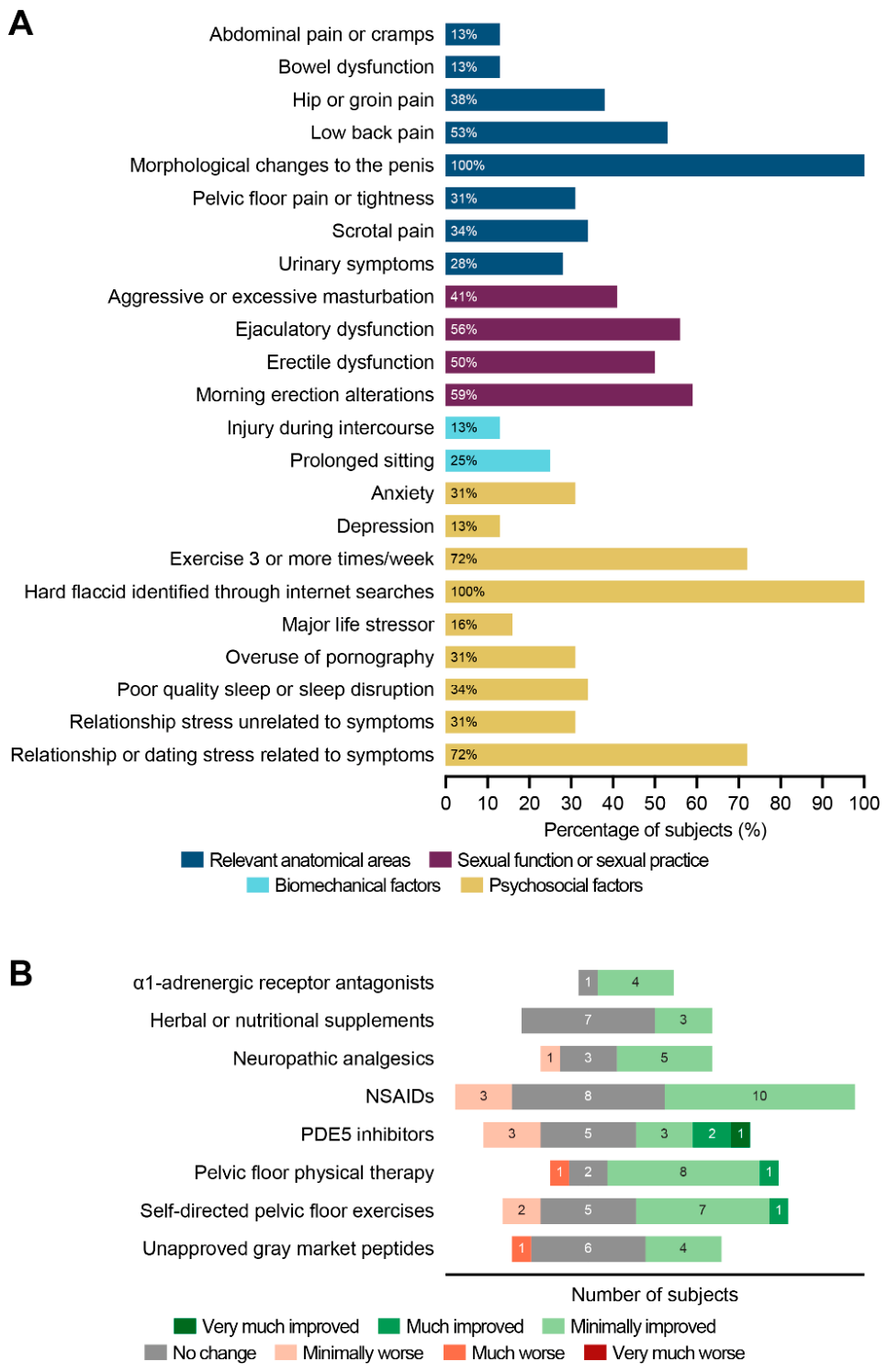
Figure 2.
Changes in PROMIS scores from treatment start to treatment end. PROMIS Brief Profile Male Interest in Sexual Activity, PROMIS Global Health-10 physical component score (PCS), and mental component score (MCS). Values are median±range. Paired comparisons were performed using a two-tailed Wilcoxon matched-pairs signed-rank test. All measures improved from treatment start to treatment end (P<0.01). N=32 patients.
Figure 2.
Changes in PROMIS scores from treatment start to treatment end. PROMIS Brief Profile Male Interest in Sexual Activity, PROMIS Global Health-10 physical component score (PCS), and mental component score (MCS). Values are median±range. Paired comparisons were performed using a two-tailed Wilcoxon matched-pairs signed-rank test. All measures improved from treatment start to treatment end (P<0.01). N=32 patients.
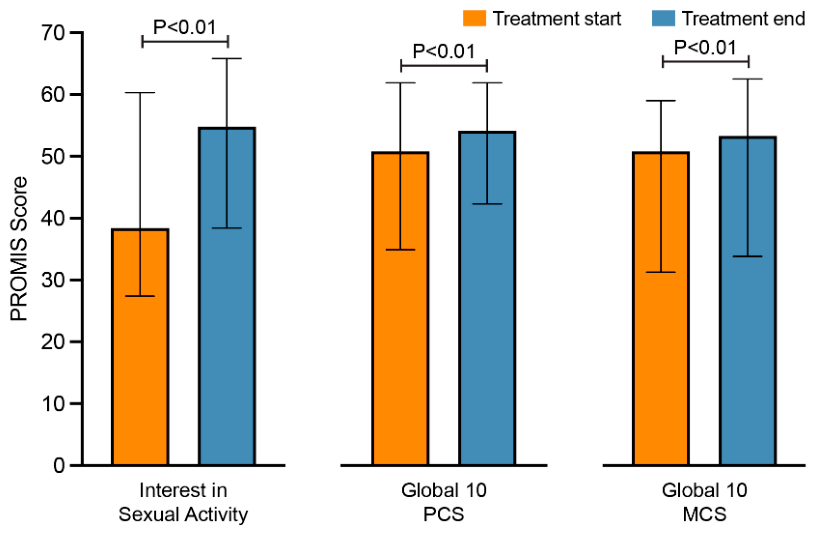
Figure 3.
Changes in Erection Hardness Scale (EHS) from treatment start to treatment end. EHS scores at treatment start and treatment end. (A) Values are median±range. Paired comparisons were performed using a two-tailed Wilcoxon matched-pairs signed-rank test. (B) Sankey graph demonstrating patient-level transitions in EHS category from treatment start (orange) to treatment end (blue). Flow width represents the number of patients moving from each baseline EHS category to each posttreatment EHS category. Orange nodes indicate treatment start and blue nodes indicate treatment end. EHS: 0, penis does not enlarge; 1, penis is larger but not hard; 2, penis is hard but not hard enough for penetration; 3, penis is hard enough for penetration but not completely hard; 4, penis is completely hard and fully rigid. N=32 patients.
Figure 3.
Changes in Erection Hardness Scale (EHS) from treatment start to treatment end. EHS scores at treatment start and treatment end. (A) Values are median±range. Paired comparisons were performed using a two-tailed Wilcoxon matched-pairs signed-rank test. (B) Sankey graph demonstrating patient-level transitions in EHS category from treatment start (orange) to treatment end (blue). Flow width represents the number of patients moving from each baseline EHS category to each posttreatment EHS category. Orange nodes indicate treatment start and blue nodes indicate treatment end. EHS: 0, penis does not enlarge; 1, penis is larger but not hard; 2, penis is hard but not hard enough for penetration; 3, penis is hard enough for penetration but not completely hard; 4, penis is completely hard and fully rigid. N=32 patients.
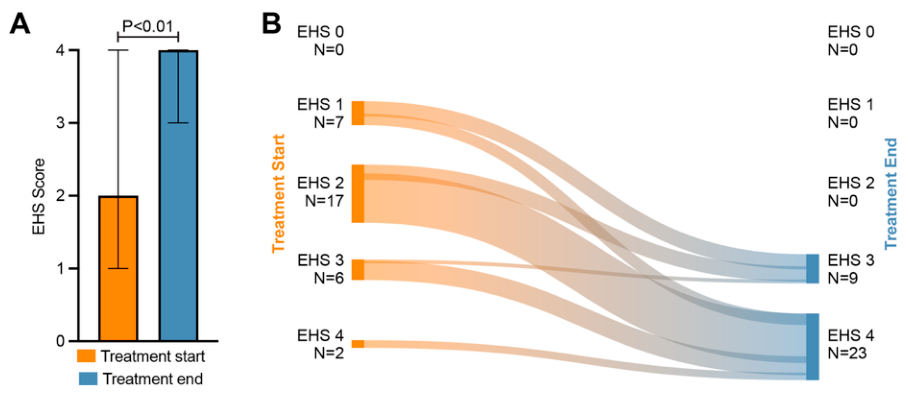
Figure 4.
Changes in overall satisfaction with penile function from treatment start to treatment end. (A) Values are median±range. Paired comparisons were performed using a two-tailed Wilcoxon matched-pairs signed-rank test. (B) Sankey graph demonstrating patient-level transitions in satisfaction score category from treatment start (orange) to treatment end (blue). Flow width represents the number of patients moving from each baseline satisfaction score category to each posttreatment satisfaction score. Orange nodes indicate treatment start and blue nodes indicate treatment end. N=32 patients.
Figure 4.
Changes in overall satisfaction with penile function from treatment start to treatment end. (A) Values are median±range. Paired comparisons were performed using a two-tailed Wilcoxon matched-pairs signed-rank test. (B) Sankey graph demonstrating patient-level transitions in satisfaction score category from treatment start (orange) to treatment end (blue). Flow width represents the number of patients moving from each baseline satisfaction score category to each posttreatment satisfaction score. Orange nodes indicate treatment start and blue nodes indicate treatment end. N=32 patients.
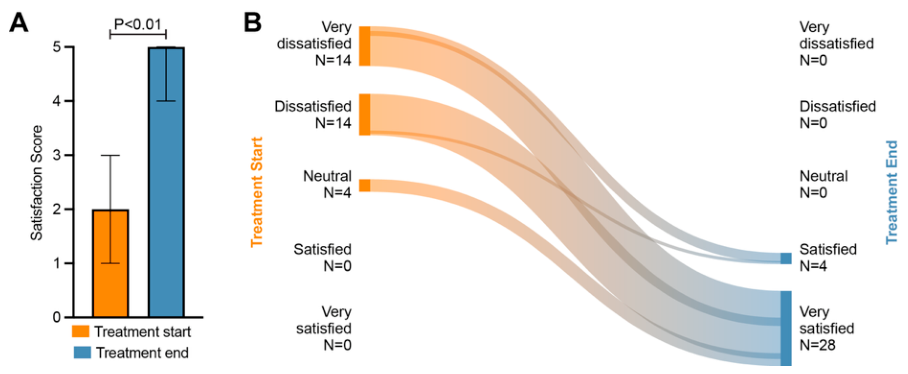
Figure 5.
Proposed cellular and tissue-level mechanisms in hard flaccid syndrome and the targets of therapeutic interventions. (A) Schematic of the penis in the erect, flaccid, and hard flaccid states, under sympathetic (Symp) and parasympathetic (Parasymp) control. (B) Cavernosal smooth muscle cells transition between contraction and relaxation under reciprocal sympathetic and parasympathetic control, while dartos smooth muscle cells and myofibroblasts are regulated by sympathetic input alone. (C) Signaling pathways governing penile rigidity and the sites of action of therapeutic interventions: dry needling (1), shockwave (2), class IV laser (3), therapeutic ultrasound (4), transverse friction (5), and tadalafil (6).
Figure 5.
Proposed cellular and tissue-level mechanisms in hard flaccid syndrome and the targets of therapeutic interventions. (A) Schematic of the penis in the erect, flaccid, and hard flaccid states, under sympathetic (Symp) and parasympathetic (Parasymp) control. (B) Cavernosal smooth muscle cells transition between contraction and relaxation under reciprocal sympathetic and parasympathetic control, while dartos smooth muscle cells and myofibroblasts are regulated by sympathetic input alone. (C) Signaling pathways governing penile rigidity and the sites of action of therapeutic interventions: dry needling (1), shockwave (2), class IV laser (3), therapeutic ultrasound (4), transverse friction (5), and tadalafil (6).
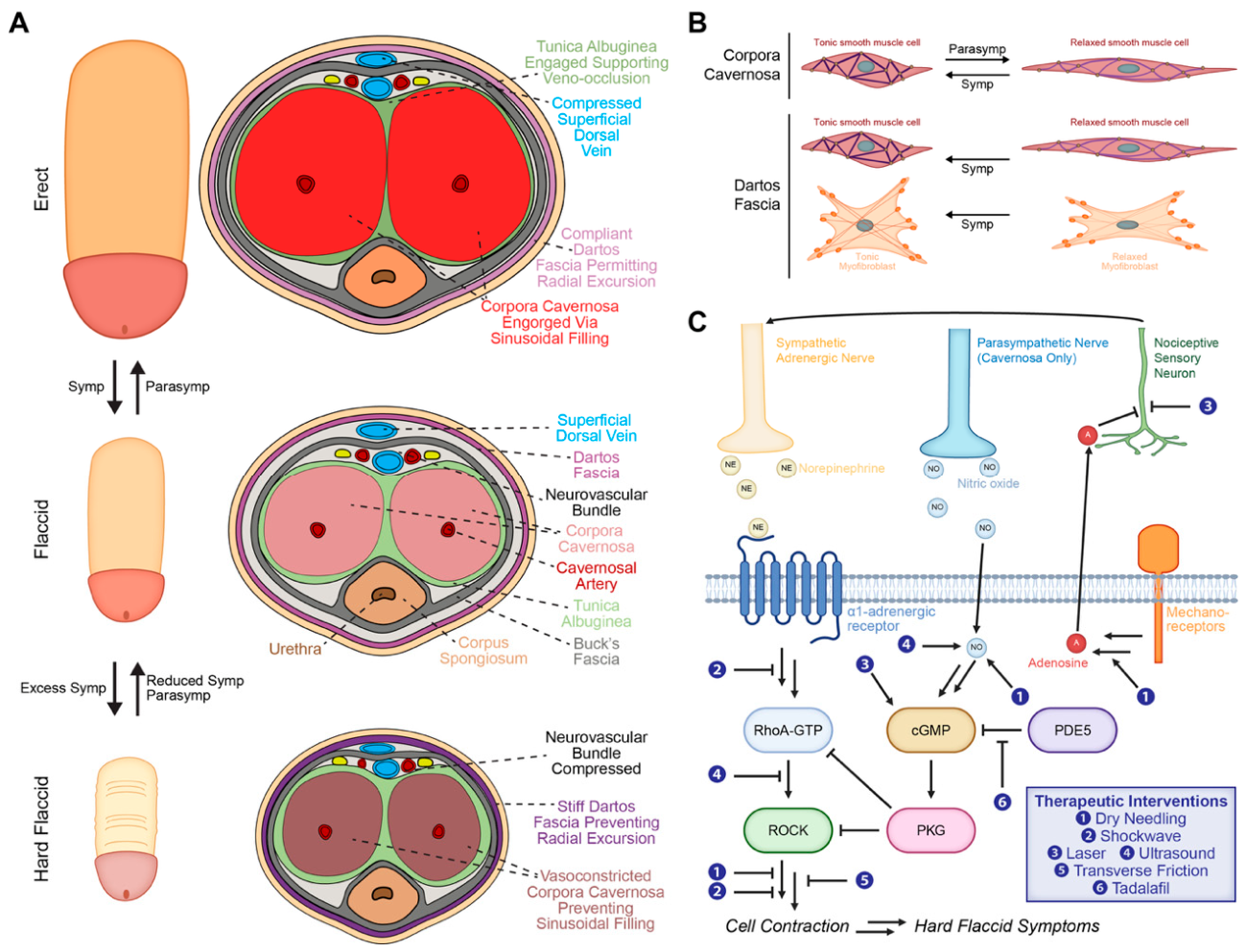
Figure 6.
Proposed integrative model of Hard Flaccid Syndrome. Musculoskeletal and fascia pathology and end organ pathology contribute to hard flaccid syndrome through integration by the central and peripheral nervous systems. The resulting clinical phenotype includes the persistent semi-rigid quality of the flaccid penis along with broader features of sexual dysfunction, intimacy difficulty, and reduced quality of life.
Figure 6.
Proposed integrative model of Hard Flaccid Syndrome. Musculoskeletal and fascia pathology and end organ pathology contribute to hard flaccid syndrome through integration by the central and peripheral nervous systems. The resulting clinical phenotype includes the persistent semi-rigid quality of the flaccid penis along with broader features of sexual dysfunction, intimacy difficulty, and reduced quality of life.
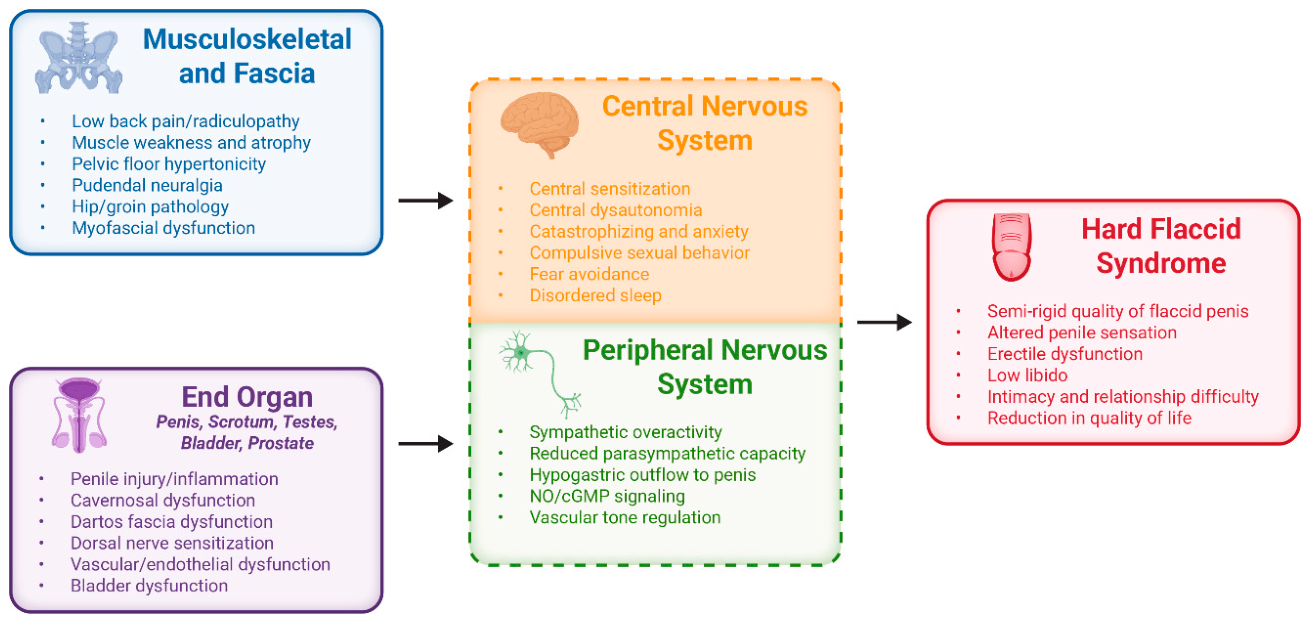

Table 1.
Participant characteristics. Values are median (interquartile range), along with minimum and maximum. N=32 male patients.
Table 1.
Participant characteristics. Values are median (interquartile range), along with minimum and maximum. N=32 male patients.
| Median (IQR) | Minimum | Maximum | |
|---|---|---|---|
| Age, years | 28.9 (24.9-33.0) | 20.8 | 41.2 |
| BMI, kg/m2 | 27.7 (24.1-30.7) | 21.7 | 33.8 |
| Symptom duration, months | 18 (9-24) | 4 | 60 |
| Treatment sessions | 9 (8-12) | 5 | 15 |
Disclaimer/Publisher’s Note: The statements, opinions and data contained in all publications are solely those of the individual author(s) and contributor(s) and not of MDPI and/or the editor(s). MDPI and/or the editor(s) disclaim responsibility for any injury to people or property resulting from any ideas, methods, instructions or products referred to in the content. |
© 2026 by the authors. Licensee MDPI, Basel, Switzerland. This article is an open access article distributed under the terms and conditions of the Creative Commons Attribution (CC BY) license (http://creativecommons.org/licenses/by/4.0/).
Copyright: This open access article is published under a Creative Commons CC BY 4.0 license, which permit the free download, distribution, and reuse, provided that the author and preprint are cited in any reuse.


