

Submitted:
08 May 2026
Posted:
09 May 2026
You are already at the latest version
Abstract
A ketogenic diet (KD) is a low-carbohydrate, high-fat dietary approach. Beyond treating neurologic disorders, KD has attracted significant media attention for its potential to improve obesity and diabetes. The diet induces a metabolic shift from glucose toward fatty acid oxidation and ketone body production. This shift leads to ketosis, which may reduce hunger, cause weight loss, and improve glycaemic control and insulin sensitivity. In particular, the positive effects of KD lower insulin demand and may thereby improve β-cell function. However, the long-term efficacy, safety, and sustainability of KD, especially for diabetes, remain debated. This review offers current insights into the effects of ketogenesis and ketosis and the potential mechanisms underlying them. We examine the metabolic effects of KD in obesity and diabetes, drawing on preclinical and clinical studies, and suggest that combining KD with antidiabetic agents may provide synergistic benefits. We explore how KD alters the composition of the gut microbiota, thereby impacting host metabolism and systemic inflammation. We conclude by highlighting challenges and future directions for optimizing KD-based therapies through personalized nutrition and pharmacological combination treatments.
Keywords:
KD
; obesity
; diabetes
; weight loss
; glycaemic control
; β-cells
; immune response
; gut health
1. Introduction
Intentional dietary planning can have substantial effects for health improvement. Currently, a diverse array of dietary approaches for weight loss and improved metabolism exists, including low-carbohydrate, plant-based, Mediterranean, ketogenic, intermittent fasting, anti-inflammatory, and specialised diets tailored to specific objectives and nutritional profiles. Although the outcomes vary significantly due to individual genetic and lifestyle factors, a clear association between diet and gut and metabolic health is evident.
Recent experimental and clinical studies highlight the therapeutic potential of food-supplement strategies for improving overall health outcomes. Ketogenic diet (KD)—characterised by a high-fat, adequate-protein, and low-carbohydrate composition—has gained considerable attention in recent years as a popular intervention for weight loss and various health benefits [1,2,3]. KD were used by Frederick M. Allen and Elliot Joslin to prolong life in people with type 1 diabetes (T1D) before the discovery of insulin. They used a diet with up to 70% of calories from fat. Russell Wilder introduced KD in 1921 as a dietary strategy for treating epilepsy [4]. In addition to its established efficacy in managing epilepsy, KD are associated with beneficial effects in a variety of health conditions, including cancer, neurological disorders, obesity, type 2 diabetes (T2D), and gastrointestinal and respiratory disorders [3,5].
The macronutrient composition of the KD is characterized by a high fat content, usually 55% to 60% of total caloric intake, with carbohydrates restricted to less than 10% and protein accounting for the remainder; 30-35% [3]. KD can be categorised into several subtypes by macronutrient ratios, including the classic long-chain triglyceride (LCT)-based KD, medium-chain triglyceride (MCT)-based KD, the modified Atkins diet, and the low-glycaemic-index treatment, in which carbohydrates are restricted in amount and are low glycaemic-index [3,6].
This review explores the current understanding of the metabolic and cellular effects of KD and the underlying mechanisms, presenting recent clinical and animal studies. Additionally, we highlight emerging evidence linking KD–mediated metabolic adaptations with gut microbiome organisation and intestinal metabolic signalling. Furthermore, we discuss how diet–microbiome interactions influence the metabolic benefits or potential risks of ketogenic diets in metabolic disorders such as diabetes.
2. Mechanisms of Action: Ketogenesis and Ketosis on Cellular Mechanisms
Under normal dietary conditions, glucose is the main fuel for cellular energy production via glycolysis, the tricarboxylic acid (TCA) cycle, and mitochondrial oxidative phosphorylation (OXPHOS) (Figure 1A) [7]. However, when carbohydrate intake is restricted, or during prolonged fasting, fatty acids (FAs) released from adipocytes become the predominant energy source [8]. Under these physiological conditions, adipose tissue releases FAs, which are absorbed by the liver and converted into circulating ketone bodies, including acetoacetate (AcAc), β-hydroxybutyrate (βHB), and acetone, which are derived from excess acetyl-CoA produced by fatty acid oxidation [9]. The liver is therefore the main source of circulating ketone bodies, contributing more than 90% to the total [9,10]. In hepatocytes, low glucose availability leads to ketogenesis and the release of ketone bodies that meet the energy demands of peripheral tissues, such as the brain, skeletal muscle, and heart (Figure 1B) [11]. When glucose availability is limited in these tissues, circulating ketone bodies serve as effective alternative energy substrates [12]. Ketone bodies are subsequently oxidized in the mitochondria of those peripheral tissues [3,13]. Within the mitochondria of these tissues, ketone bodies undergo oxidation, generating acetyl-CoA, NADH, and FADH2, which then feed into the TCA cycle and oxidative phosphorylation to produce adenosine triphosphate (ATP) (Figure 1B).
In addition to serving as energy substrates, ketone bodies can exert effects via other mechanisms. Notably, βHB inhibits histone deacetylases (HDACs), thereby regulating gene expression associated with oxidative stress resistance and metabolic adaptation [14,15]. This includes upregulation of manganese superoxide dismutase (MnSOD) and catalase, as well as genes that support metabolic adaptation, such as PGC-1α [16]. As a result, βHB contributes to the metabolic advantages associated with the KD.
KD is also linked to the regulation of nutrient sensing and energy balance through activation of AMP-activated protein kinase (AMPK), inhibition of the mechanistic target of rapamycin (mTOR), and modulation of peroxisome proliferator-activated receptor (PPAR) signalling [17,18], all of which collectively promote mitochondrial biogenesis and enhance cellular resilience to stress.
Additionally, βHB inhibits NLRP3 inflammasome activation by preventing stimulus-induced K+ efflux, likely through modulation of upstream ion channels and membrane events [1]. Extracellular ATP activates the P2X7 receptor to promote K+ efflux [19], while pore-forming toxins disrupt the membrane, leading to ionic imbalance and K+ loss [20]. However, βHB inhibits these processes, thereby maintaining intracellular K+ levels and preventing the assembly of the active NLRP3 inflammasome complex [1]. Furthermore, ketone metabolism produces fewer reactive oxygen species (ROS) per unit of ATP generated than glucose metabolism, thereby enhancing mitochondrial efficiency [21,22].
A recent study showed that KD–induced alterations in cellular energy status robustly activate AMPK, which, in turn, reduced the stability of the immune checkpoint protein PD-L1 while promoting the expression of antigen presentation genes and type I interferon signalling [23]. However, reducing PD-L1 protein levels would be expected to increase autoimmunity [24].
3. The Effects of the KD on Obesity and Diabetes
Obesity is a major driver of metabolic dysfunction and insulin resistance. The KD has emerged as a promising intervention for overweight and obese individuals. Nutritional ketosis alters appetite regulation, substrate utilization, and hormonal signalling, thereby facilitating reductions in body weight and fat mass (Figure 2) [3,12]. The KD influences endocrine regulation through hormonal responses essential for maintaining energy homeostasis and promoting ketone utilization, particularly as the body shifts from glucose to fat as its primary energy substrate. Numerous studies in animal models and clinical trials report reductions in blood glucose, suggesting potential benefits for glycaemic control. The carbohydrate restriction inherent in the KD lowers circulating insulin levels, further reducing glucose uptake and glycogen synthesis in insulin-responsive tissues [3,25]. KD with weight loss is associated with improved peripheral but not hepatic insulin sensitivity [26] (Figure 2). However, KD without weight loss does not improve insulin sensitivity in people assessed with the gold-standard euglycaemic hyperinsulinaemic clamp [27].
Recent findings further suggest that the KD stimulates the secretion of gut hormones such as glucagon-like peptide-1 (GLP-1) and peptide YY (PYY), both of which play significant roles in appetite regulation and insulin sensitivity [28,29,30]. Additionally, reduced insulin signalling, together with lower circulating insulin levels, leads to decreased leptin secretion from adipocytes, as insulin stimulates leptin secretion [31]. This decrease in leptin subsequently affects appetite control and energy balance. Like leptin, adiponectin, another adipokine secreted by adipocytes, regulates energy balance, metabolism, and inflammation, largely by modulating AMPK activity [32]. Indeed, adiponectin enhances insulin sensitivity and promotes fatty acid oxidation, while leptin acts as a satiety signal by suppressing appetite, thus supporting metabolic health [33,34]. Both hormones stimulate AMPK, which serves as a central regulator of cellular metabolism by coordinating catabolic and anabolic processes in relation to ATP generation or consumption, helping maintain cellular energy homeostasis. Use of ketone bodies, particularly βHB and AcAc, for cellular energy production via mitochondrial OXPHOS was significantly reduced in individuals with T2D or obesity and was associated with increased insulin resistance [35].
The weight-loss effects of KD are mostly observed not only in animal models but also across a wide range of clinical studies. However, it is notable that weight-loss efficiency may vary between individuals with T2D and those without T2D. Meta-analysis studies found no statistically significant difference in weight loss between people with and without T2D on a KD [36,37]. However, another study comparing people with T2D to those without has shown slightly less weight loss, which may be due to multiple factors such as hyperinsulinaemia, diabetic status, and the effects of diabetic medications [38]. These factors could potentially impact the success of weight loss, even with specialized dietary approaches. Therefore, individuals with T2D should receive personalized strategies like medications that improve insulin sensitivity and reduction of hypoglycemia-causing drugs when commencing weight loss diets. The details of studies on antidiabetic medications will be covered in the next section.
Findings from human trials reported over the past five years are summarized in Table 1. These studies include healthy participants as well as those with overweight/obesity and T2D. Despite variations in diet duration, nutrient composition and sources, and individual health status, common outcomes of KD include weight loss/reduction in BMI, and improved blood glucose regulation.
Values are expressed as mean ± SD (standard deviation). ↑, increase; ↓, decrease. Abbreviations: ADFD, alternate-day fasting diet; ALD, ad libitum habitual diet; BLC, balanced low-caloric diet; βHB, beta-hydroxybutyrate; BMI, body mass index; BP, blood pressure; CKD, chronic kidney disease; CRD, calorie-restricted diet; DASH, dietary approaches to stop hypertension; DHEA-s, dehydroepiandrosterone sulfate; DPP-4i, dipeptidyl peptidase 4 inhibitor; eTRE, early time-restricted eating; ERD, energy-restricted diet; F, females; FBG, fasting blood glucose; FBL, fasting blood lipid; FINS, fasting insulin; FGF21, fibroblast growth factor 21; GDF15, growth differentiation factor 15; GI, gastrointestinal; GLP-1RA, glucagon-like peptide 1 receptor agonist; GTT, glucose tolerance test; HbA1c, glycosylated hemoglobin; HDL, high-density lipoprotein; HOMA-IR, homeostatic model assessment of insulin resistance; HOMA-IS, homeostatic model assessment of insulin sensitivity; KD, ketogenic diet; KD-RTE, ketogenic diet ready-to-eat; KS, ketone salts; lTRE, late time-restricted eating; LPS, lipopolysaccharide; LCD, low-carbohydrate diet; LDL, low-density lipoprotein; LFD, low-fat diet; LH, luteinising hormone; M, males; mADF, modified alternate-day fasting; MedD, Mediterranean diet; Med-Plus, Mediterranean-plus low-carbohydrate diet; Med-meal, Mediterranean meal; Met, metformin; MSKDP, medically supervised ketogenic diet programme; OCR, oxygen consumption rate; OGTT, oral glucose tolerance test; PL, placebo; PMCD, portfolio moderate-carbohydrate diet (40% carbohydrate, 20% protein, 40% fat); PCOS, polycystic ovary syndrome; sICAM-1, soluble intercellular adhesion molecule 1; SGLT-2i, sodium-glucose transporter-2 inhibitor; STD, standard diet; SU. Sulfonylureas; TG, triglycerides; T2D, type 2 diabetes; UA, uric acid; VLCD, very-low-carbohydrate diet; VLCKD, very-low-carbohydrate ketogenic diet; WFKD, well-formulated ketogenic diet; Yolk-KD, egg yolk ketogenic diet; White-KD, egg white ketogenic diet.
However, the KD is a double-edged intervention, conferring both metabolic benefits and harms that depend on its duration, metabolic context, and target tissue vulnerability. For example, short-term KD interventions appear to elicit rapid, largely adaptive responses. In a clinical study, healthy individuals on KD for 3 days showed improved insulin sensitivity along with increased nutritional ketosis, circulating βHB, and fibroblast growth factor 21 (FGF21) [61]. Since increased FGF21 acts as a negative regulator of the NLRP3 inflammasome [62], it reduced the inflammatory response by inhibiting NLRP3 inflammasome activation and suppressing the release of pro-inflammatory cytokines [61,62]. Notably, a recent study in obese diabetic mouse models and patients with alcoholic fatty liver disease has shown that the beneficial effects of a KD heavily depend on the level of hepatic FGF21 responsiveness [63]. In particular, the circadian rhythm gene BMAL1 is identified as a key regulator, along with FGF21, within the BMAL1–FGF21 axis, which leads to metabolic adaptation [63]. In both diabetic mice and these patients, even after KD treatment, impaired BMAL1 function, reduced FGF21 responsiveness, and lipid dysregulation were observed, indicating that the FGF21-mediated pathway is vital for the metabolic benefits of KD [63]. These findings emphasise that the positive effects of the KD on obesity and diabetes rely on FGF21-linked pathways, including immune regulation and lipid metabolism. They also underscore the importance of considering the metabolic context and suggest that strategies targeting FGF21 may help optimise KD’s therapeutic outcomes.
Consistent with this, an 8-day KD intervention reduced body weight, fat mass, liver weight, fasting glucose, and insulin levels, largely mimicking the effects of protein restriction in a mouse model [64]. These changes were also accompanied by distinct alterations in hepatic gene expression [64]. However, extended KD appears to be associated with a progressive divergence between glycaemic control and lipid homeostasis. Indeed, in the T2D mouse model, 8 weeks of KD improved glucose and insulin tolerance, but promoted dyslipidaemia, increased adipose tissue mass, and significant hepatic lipid accumulation [65]. This raises concerns about long-term hepatic safety despite improved glycaemic control. A study by Gallop et al. found that mice on a KD for nearly 1 year developed severe hyperlipidaemia, hepatic dysfunction, and marked glucose intolerance, along with insulin resistance and impaired insulin secretion [66]. Notably, the extended KD induced ER and Golgi stress in pancreatic β-cells, disrupting insulin granule trafficking and secretory capacity [66].
However, the glycaemic reduction induced by KD may directly reduce the workload on pancreatic β-cells, thereby improving their functionality. For instance, a clinical study in overweight or obese patients with metabolic hypogonadism demonstrated improved β-cell function following the KD [67]. After 12 weeks of intervention, proinsulin levels returned to the normal range, with no change in the proinsulin-to-insulin ratio. Indeed, proinsulin levels increase when β-cells are under stress or when secretory pressure is excessive [67]. These clinical outcomes indicate that the KD intervention primarily reduces the β-cell secretory load rather than correcting intrinsic proinsulin-processing defects. Additionally, a study by Furth-Lavi et al. involving doxycycline-inducible β-cell-damaged mice shows that a 4-week KD intervention helps regenerate existing β-cells, leading to increased β-cell mass and improved glucose regulation [68]. The regeneration of existing β-cells is crucial for people with diabetes, and KD may support this process. Overall, while short-term KD promotes metabolic flexibility and anti-inflammatory signals, prolonged KD induces cumulative lipid and secretory stress that may ultimately impair β-cell function and compromise glucose regulation, highlighting the importance of carefully considering dietary duration and composition in therapeutic settings.
A recent study in carnosine dipeptidase 2 (CNDP2) -deficient mice provides critical mechanistic insight into the efficacy of KD in promoting weight loss [69]. In this study, KD increased circulating βHB levels, enabling CNDP2-dependent βHB-ylation of amino acids and the generation of bioactive βHB–amino acid metabolites [69]. Notably, despite substantial increases in circulating ketone bodies after KD, CNDP2-knockout mice exhibited a reduced anorexigenic response and higher body weight, whereas control mice did not [69]. These findings indicate that elevated ketone levels alone may be insufficient to mediate the metabolic benefits of KD. Rather, CNDP2-dependent conversion of βHB into bioactive metabolites is a critical determinant of KD–induced appetite suppression and weight reduction. Collectively, this work enables a shift in the conceptual framework of KD action from simple carbohydrate restriction to ketosis-specific metabolic signalling pathways, suggesting the advancement of ketogenic interventions as a form of metabolic precision therapy.
Given the extensive evidence that ketone bodies from KD drive metabolic changes through diverse physiological mechanisms, studies investigating the direct effects of ketones per se, such as exogenous ketone administration, provide important complementary insights. Whereas KD induces metabolic adaptations over chronic time frames, exogenous ketones enable acute elevations in circulating ketones, allowing isolation of the immediate, ketone-specific effects on metabolic regulation. Consistent with this concept, a recent study directly tested whether acute elevations in circulating ketones would worsen glucose homeostasis via increased skeletal muscle ketone oxidation [70]. Oral administration of a ketone ester markedly increased circulating βHB levels and improved glucose tolerance in diet-induced obese mice, whereas no effect was observed in lean controls [70]. Importantly, this effect was independent of skeletal muscle ketone oxidation, as it persisted in mice lacking muscle-specific succinyl-CoA:3-ketoacid CoA transferase (SCOT). Complementary ex vivo experiments using isolated islets demonstrated that the oxidizable R-isomer of βHB elicited greater insulin secretion than the S-isomer in islets from obese mice [70], suggesting a potential direct effect of ketones on β-cell function. Collectively, these findings support a context-dependent, tissue-specific role for ketones in glucose regulation and suggest that mechanisms beyond skeletal muscle ketone oxidation contribute to their metabolic effects in obesity.
Clinical Case Reports and Preclinical Studies on KD Using Antidiabetic Medications
GLP-1 receptor agonists (GLP-1RAs) are approved medications for the treatment of obesity and T2D, with benefits in weight loss and improved glycaemic control [71]. Although current guidelines for combining GLP-1 RAs with KD lack robust clinical evidence, some reports suggest synergistic effects [55,72]. For example, combining KD with dulaglutide significantly improves glucose and lipid metabolism and enhances insulin sensitivity in 104 patients with T2D, as shown by lower blood glucose and lipid levels after six months of treatment [55].
Sodium-glucose cotransporter 2 (SGLT-2) inhibitors, which are prevalent antidiabetic medications, including ipragliflozin (approved in Japan, South Korea, and Russia) [73], canagliflozin, dapagliflozin, empagliflozin, ertugliflozin, and bexagliflozin (approved by the FDA in the USA), increase urinary glucose excretion, thereby lowering plasma glucose levels [74]. Particularly, these SGLT-2 inhibitors reduce metabolic stress in pancreatic β-cells, partly by lowering insulin demand [75]. Like KD, SGLT-2 inhibitors also improve metabolic health through different mechanisms. KD increases fatty acid oxidation and promotes more efficient energy use, while SGLT-2 inhibitors promote renal glucose excretion, thereby decreasing insulin secretion during hyperglycaemia. Notably, the SGLT-2 inhibitor dapagliflozin promotes white adipose tissue (WAT) browning via the FGFR1–liver kinase B1–AMPK pathway, which is linked to improved metabolic function [76]. Additionally, dapagliflozin modulates glucagon secretion from α-cells via SGLT2-dependent electrical mechanisms, particularly under high-glucose conditions [77], thereby affecting energy expenditure and pancreatic hormone regulation. Therefore, both KD and SGLT-2 inhibitors may offer a multifaceted approach to managing obesity and diabetes by supporting metabolic and hormonal balance through various pathways. Combining these applications can thus help maintain normal blood glucose levels by promoting renal glucose excretion and regulating endogenous glucose production.
Nevertheless, interactions between these pharmacological therapies and dietary interventions may lead to unexpected metabolic risks that vary among individuals. Severe diabetic ketoacidosis (DKA) has been reported in patients with T2D following initiation of the KD while concurrently treated with SGLT-2 inhibitors [78,79]. Importantly, euglycaemic diabetic ketoacidosis (euDKA), characterised by severe acidosis with normal or mildly elevated blood glucose (typically less than 250 mg/dL), poses a significant risk of missed or delayed diagnosis of severe DKA in patients with T2D [78,80]. When combined with SGLT-2 inhibitors and the KD, this combination can precipitate ketogenesis beyond physiological adaptation, causing adverse effects, as reported in a recent case study of a patient with T2D [79]. In contrast, another case study of a woman with T2D reported that adverse outcomes are not necessarily intrinsic to ketogenic interventions [81]. In this case, the KD was successfully reintroduced after euDKA by discontinuing the SGLT-2 inhibitor, maintaining continuous metabolic monitoring, gradually reducing carbohydrate intake, and individualising insulin titration [81].
Although a gap remains between animal models and the clinical application of dietary interventions, preclinical findings could provide a mechanistic rationale for considering KD in combination with antidiabetic medications. A study in a mouse model suggests that interactions between antidiabetic pharmacotherapies and diet may converge on islet architecture, beyond improved glucose regulation under diabetic conditions [82]. Fujita Y. et al. observed that Akita mice fed a KD in combination with the SGLT-2 inhibitor ipragliflozin for 8 weeks showed improved glycaemic control and partially preserved islet morphology, with an increased β-/α-cell area ratio, indicating synergistic benefits compared with untreated mice [82]. Therefore, further investigation, including preclinical studies and clinical case reports, will help elucidate how the combination of KD and SGLT-2 inhibitors can more effectively improve metabolic health and confirm its benefits.
KD may have paradoxical effects on cellular aging. KD-induced metabolic stress can thus both promote cellular senescence and improve the effectiveness of senolytic therapies by sensitising senescent cells to clearance [83,84]. For example, mice fed a KD for 21 days exhibited cellular senescence across multiple tissues [85]. This was driven by the activation of AMPK and caspase-2–dependent inhibition of MDM2, leading to p53 accumulation and p21 induction [85]. However, KD-related senescence and circulating senescence-associated secretory phenotype (SASP) markers were reduced by senolytic drugs or altered by intermittent KD [85]. Additionally, a study by M. Wakita et al. found that KD-induced metabolic stress increased the vulnerability of senescent cells to senolytic therapies, likely by increasing mitochondrial workload and lowering resistance [86]. These findings suggest that combining KD regarding the application method with senolytic treatments could be a promising approach to combat obesity, diabetes, and age-related metabolic issues by targeting and removing senescent cells with metabolic dysfunction.
Overall, these findings highlight that the risk linked to the KD as a therapeutic strategy depends on individual metabolic circumstances and medication–diet interactions. It also reinforces the emerging concept of precision nutrition for managing obesity and T2D, in which dietary approaches are tailored to the metabolic context, medication profile, and ongoing clinical monitoring.
4. KD and Gut Health in Obesity and Diabetes
Gut health, as reflected in the gut microbiota, plays a vital role in linking host health outcomes directly to diet through nutrient sources, compositions, and proportions [87,88]. A comprehensive metabolomic study of obese individuals examined how the KD alters intestinal permeability [89]. Using urinary and faecal samples, the study linked changes in permeability to circulating interleukins and lipopolysaccharides, highlighting the role of low-grade inflammation in obesity-related conditions. In healthy adults, a 12-week KD impacted gut microbial diversity and skeletal muscle phenotype. While alpha diversity remained stable, the KD induced a significant shift in beta diversity, marked by a substantial and sustained decrease in Bifidobacterium and Planococcus. Simultaneously, skeletal muscle underwent metabolic reprogramming towards fat oxidation, as indicated by the induction of PDK4 and the suppression of INSR, AMPK, GLUT4, and PLIN [90]. However, despite improvements at 4 weeks, fasting glucose was not improved at 12 weeks [90].
Consistent with that, Ang et al. observed significant changes in gut microbiota and increased circulating ketone bodies in 17 overweight or obese, non-diabetic participants during a 4-week KD [91]. Significant microbial remodelling was observed, with Bifidobacterium showing the most dramatic reduction. This shift is driven by the ketone body βHB, which inhibits the growth of specific bacteria, such as B. adolescentis, through a dose-dependent, pH-mediated mechanism. To mimic the increased ketone body levels caused by KD, ketone ester supplementation was given to high-fat-diet (HFD)-fed mice under carbohydrate restriction [91]. Ketone supplements suppressed bifidobacterial growth [91]. Notably, transplantation of the KD human microbiota into germ-free mice further reduced levels of pro-inflammatory Th17 cells in the gut [91]. In a mouse study by S. Zhai et al., butyrate, a ketogenic metabolite produced through gut microbial fermentation, supported gut health by modulating the gut microbiota rather than through direct KD intervention [92]. Butyrate treatment in mice eating HFD increased the number of short-chain fatty acid-producing bacteria while lowering potentially pathogenic bacterial populations, with reduced IL-1β, IL-6, and MCP-1 (monocyte chemotactic protein-1)/CCL2 [92]. These findings suggest that KD and its metabolites might influence immune regulation through microbiome-dependent mechanisms.
In addition to the ketone body-driven KD, a recent study highlighted the role of bile acid metabolism in the gut microbiota. X. Li et al. identified a new gut microbiota-dependent mechanism that links KD consumption to metabolic benefits via changes in bile acid metabolism [93]. In their mouse model, KD feeding increased circulating levels of taurine-conjugated bile acids taurodeoxycholic acid (TDCA) and tauroursodeoxycholic acid (TUDCA). Mechanistically, KD-induced remodelling of the gut microbiota, including a decrease in Lactobacillus murinus ASF361 [93]. Under normal conditions, this bacterium helps deconjugate taurine-conjugated bile acids (TDCA and TUDCA) [94,95]. However, KD-induced reduction of this bacterium leads to a decline in intestinal bile salt hydrolase activity, permitting greater resorption of TDCA/ TUDCA, higher circulating bile acids and improved metabolism [93]. These associations were also observed in people with overweight or obesity, in which increases in TDCA and TUDCA were associated with lower body weight and fasting glucose [93]. Overall, these findings suggest a conserved KD-gut microbiota-bile acid axis as a key mechanism behind the metabolic benefits of KD. A future study testing parenteral versus oral ketone supplements may be able to tease out the contribution of circulating ketones versus diet-induced changes in gut microbiota.
Given that the effects of a KD on the gut microbiota appear important for weight loss and glucose metabolism, a mouse model study aimed at uncovering these mechanisms confirmed that the KD interacts with the gut microbiota to alter serum valine levels [96]. As a result, this change regulates FGF21 expression in the liver, thereby affecting body weight and glucose metabolism [96]. Notably, FGF21 plays a key role in metabolic processes linked to gut health, including inflammation and improved insulin sensitivity [97]. In a mouse study, FGF21-driven pathways are activated by the gut microbiota and act as an adaptive stress response, particularly during dietary restriction, such as limited protein intake [98]. Therefore, these findings suggest that targeting network regulation in the KD, FGF21 expression, and the gut microbiota could aid in developing therapeutic strategies to enhance metabolic outcomes.
Metformin is the usual first-line agent for treating T2D [99]. Interestingly, metformin increases circulating ketone levels, albeit only slightly, in healthy individuals [100]. Metformin impacts the gut microbiota [101]. For example, metagenomic analysis in T2D patients shows increased abundance of certain bacterial species with higher growth rates following metformin treatment [102]. This suggests that metformin promotes the growth of specific gut bacteria. Particularly, changes in the gut microbiota vary across dietary interventions, including KD, indicating that diet influences bacterial composition and cellular metabolism [102]. Notably, bacterial species that increase after KD produce proline, valine, and carnosine, amino acid metabolites potentially linked to obesity or depression-like states [88,103].
SGLT-2 inhibitors and KD both increase endogenous ketone body production, raising the risk of euDKA, as described in the clinical case reports and preclinical studies section (Figure 3). Due to this increased risk, the adverse effects of ketoacidosis outweigh the potential benefits of combining SGLT-2 inhibitors with KD, although each approach separately lowers blood glucose levels. Nonetheless, studies on SGLT-2 inhibitors report that they alter the host microbiome, particularly reducing harmful bacteria [104]. These effects also help decrease diabetes complications, organ damage, and inflammatory responses [104]. However, the safety and efficacy of long-term treatment still need to be validated.
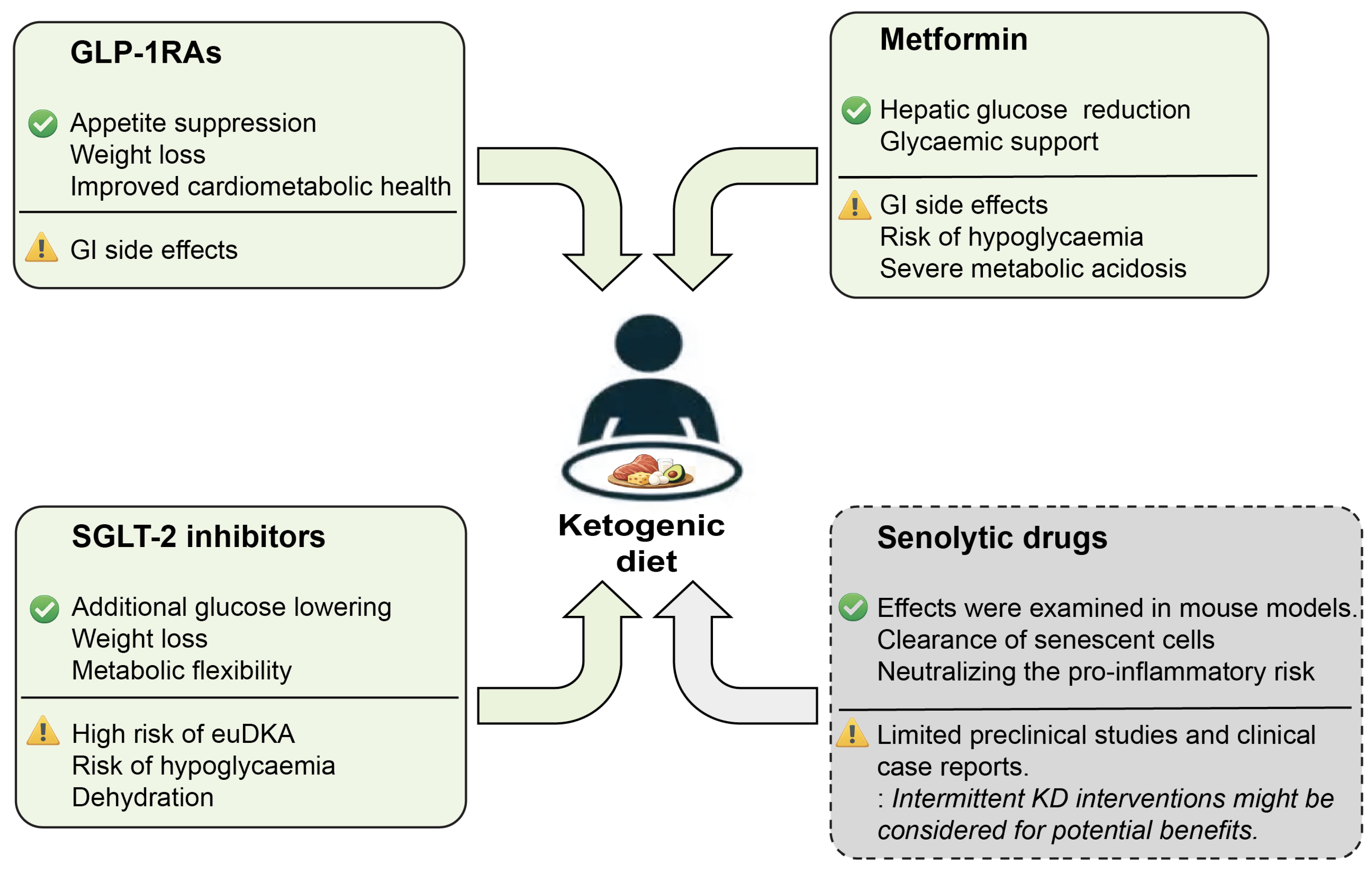
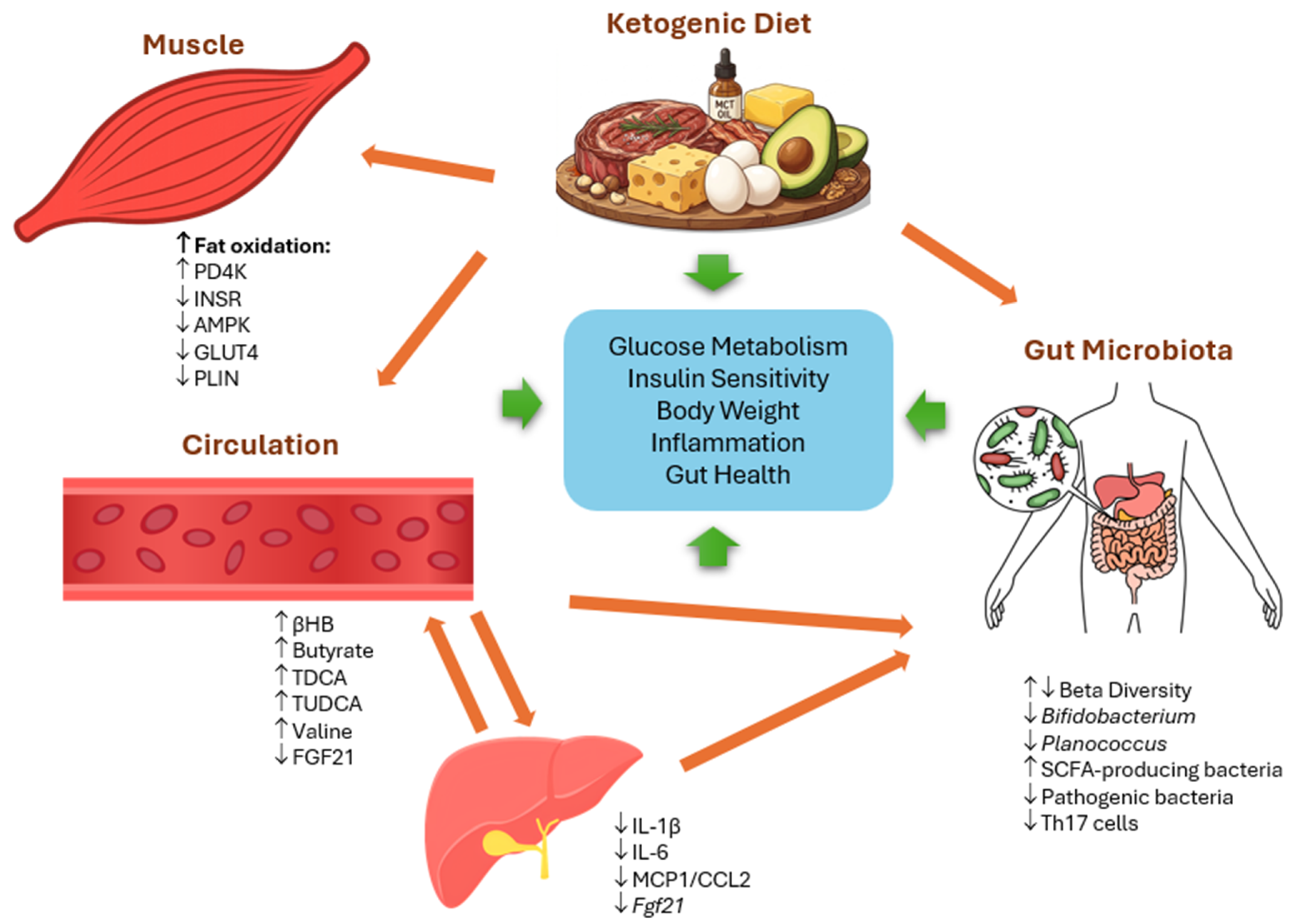
Figure 3.
Potential benefits and risks of combining KD with antidiabetic medications. Schematic illustration of how KD affects health outcomes with different antidiabetic drugs. The effects of GLP-1RAs, Metformin, and SGLT-2 inhibitors were assessed in both preclinical and clinical studies, whereas senolytic drugs were examined only in preclinical mouse models. Abbreviations: GI, gastrointestinal; euDKA, euglycaemic diabetic ketoacidosis.
Figure 3.
Potential benefits and risks of combining KD with antidiabetic medications. Schematic illustration of how KD affects health outcomes with different antidiabetic drugs. The effects of GLP-1RAs, Metformin, and SGLT-2 inhibitors were assessed in both preclinical and clinical studies, whereas senolytic drugs were examined only in preclinical mouse models. Abbreviations: GI, gastrointestinal; euDKA, euglycaemic diabetic ketoacidosis.
Figure 4.
The mechanistic link between the KD, gut microbiota, and metabolic health. The KD induces a significant shift in beta diversity within the gut microbiota, characterized by a substantial and sustained depletion of Bifidobacterium and Planococcus. Simultaneously, skeletal muscle undergoes metabolic reprogramming toward enhanced fat oxidation, as evidenced by the induction of PDK4 and the suppression of INSR, AMPK, GLUT4, and PLIN. Within the intestinal environment, the KD-associated microbiota reduces the prevalence of pro-inflammatory Th17 cells. KD metabolite butyrate increases the abundance of SCFA-producing bacteria while suppressing pathogenic populations, leading to reduced hepatic levels of IL-1β, IL-6, and MCP-1/CCL2. Furthermore, the KD elevates circulating levels of the TDCA and TUDCA, both of which are correlated with reduced body weight and improved fasting glucose. Additionally, the KD modulates serum valine levels via microbial activity, thereby decreasing hepatic Fgf21 expression and circulating FGF21 levels, which are associated with reduced inflammation and improved insulin sensitivity. Abbreviations: KD, ketogenic diet; SCFA, short-chain fatty acid; TDCA, taurodeoxycholic acid; TUDCA, Tauroursodeoxycholic acid.
Figure 4.
The mechanistic link between the KD, gut microbiota, and metabolic health. The KD induces a significant shift in beta diversity within the gut microbiota, characterized by a substantial and sustained depletion of Bifidobacterium and Planococcus. Simultaneously, skeletal muscle undergoes metabolic reprogramming toward enhanced fat oxidation, as evidenced by the induction of PDK4 and the suppression of INSR, AMPK, GLUT4, and PLIN. Within the intestinal environment, the KD-associated microbiota reduces the prevalence of pro-inflammatory Th17 cells. KD metabolite butyrate increases the abundance of SCFA-producing bacteria while suppressing pathogenic populations, leading to reduced hepatic levels of IL-1β, IL-6, and MCP-1/CCL2. Furthermore, the KD elevates circulating levels of the TDCA and TUDCA, both of which are correlated with reduced body weight and improved fasting glucose. Additionally, the KD modulates serum valine levels via microbial activity, thereby decreasing hepatic Fgf21 expression and circulating FGF21 levels, which are associated with reduced inflammation and improved insulin sensitivity. Abbreviations: KD, ketogenic diet; SCFA, short-chain fatty acid; TDCA, taurodeoxycholic acid; TUDCA, Tauroursodeoxycholic acid.
Therefore, instead of following a KD concurrently, it is better to prioritise pharmacological treatment with SGLT-2 inhibitors to improve beneficial gut microbiota and reduce inflammation. Subsequently, instead of a typical KD, supplementation with short-chain fatty acids such as butyrate and acetate can strengthen the intestinal barrier and regulate ketone-driven metabolism without causing excessive ketone body accumulation, thereby maintaining the benefits of ketosis while reducing the risk of ketoacidosis.
Overall, these findings underscore the significance of both the gut microbiota and diet in influencing host health outcomes.
5. Summary and Future Directions
KD has gained significant attention as a dietary approach to improve metabolic health in individuals with obesity and diabetes. Clinical studies report that KD typically results in a 1-2 kg weight loss per month early on. Overall, KD leads to a 5–10% weight loss within 3–6 months. Some weight loss is partially maintained at about 7–12% at 12 months [105,106]. However, the reduction usually plateaus over time. Furthermore, individual metabolic adaptations—such as B-cell function, medication use, and diabetes progression—as well as insulin resistance in responsive tissues, are critical determinants of weight loss. In particular, individuals with T2D, especially those with aggressive disease, may show only modest weight loss. By promoting ketogenesis and elevating circulating ketone bodies, KD induces profound metabolic adaptations that affect glucose regulation, lipid metabolism, and inflammatory signalling pathways. Emerging evidence also indicates that KD can alter the composition of the gut microbiota and microbial metabolite production, thereby supporting metabolic regulation via the gut–metabolism axis. Overall, these findings underscore the complex mechanisms by which ketogenic diets may confer metabolic benefits.
However, despite these promising findings, several important questions remain unanswered. Most clinical studies on KD have been relatively or very short-term, leaving the long-term safety and viability of such dietary strategies uncertain. As with most diets, , there is notable variability in individual responses to ketogenic diets. However, in a mouse study across different genetic backgrounds, dietary intervention is the primary factor shaping the microbiome, outweighing host genotype [107]. Specifically, KD reduced the total bacterial levels in both C57BL/6 and BTBRT+tf/j groups. The microbial community most closely linked to host metabolism was the group that controls intestinal barrier function [107]. These findings emphasise the crucial role of diet in managing obesity and metabolic diseases in the mouse model. A better understanding of the roles of regulatory factors, such as FGF21, whose activity is affected by the gut microbiota, and their interactions with the KD and the microbiota, as well as the inflammatory responses they elicit, may aid in developing more personalised dietary strategies to improve metabolic health.
When treating overweight, obesity, and diabetes caused by β-cell dysfunction, it is crucial to consider the impacts on pancreatic islet function and neighbouring tissues when aiming for a synergistic effect through KD, especially during ongoing medication treatment. A deep understanding of how different pancreatic endocrine cells, including β-cells, respond to nutrient imbalances and stress under the low-carbohydrate, high-fat dietary conditions of KD, and how they interact, is essential [108,109]. Additionally, the effects of combining medications should also be considered. Addressing these knowledge gaps and adopting new devices, such as Abbott’s Dual Sensor, which continuously monitors both ketone and blood glucose levels [110], will assist with turning ketogenic dietary strategies into effective and sustainable solutions for obesity and diabetes. KD contains elements that can reduce inflammation and influence immune responses, potentially interacting with immunosuppressants. Therefore, ongoing research into immune effects, combined with preclinical and clinical studies of the immune system, may provide valuable insights to inform treatment guidelines for KD.
Overall, short-term KD can be tried in most people for weight management and metabolic improvement. Because of risks of nutrient deficiencies with restrictive diets (of any type), in people in whom a KD is successful, who wish to continue the diet for longer than 6 months, we recommend consideration of formal dietetic advice, and vitamin or nutrient supplements as indicated.
Many people do not elect to stay on long-term KD, citing difficulty with adherence. Further studies of ketone supplementation, rather than carbohydrate restriction, will be of interest.
Author Contributions
Y.A., N.N., D.L. and J.E.G. contributed to the writing and visualizing the figures. All authors have read and agreed to the published version of the manuscript.
Funding
JEG is funded by NHMRC investigator grant AppID 2033228. NN is funded by the Metabolic Health Initiative at the University of Sydney. DL is funded by the Musculoskeletal Health Program at the University of Sydney.
Data Availability Statement
No new data was created or analyzed in this study.
Conflicts of Interest
The authors declare no conflicts of interest for this article.
Abbreviations
The following abbreviations are used in this manuscript:
| AcAc | Acetoacetate |
| AMPK | AMP-activated protein kinase |
| ATP | Adenosine triphosphate |
| βHB | β-hydroxybutyrate |
| CNDP2 | Carnosine dipeptidase 2 |
| DKA | Diabetic ketoacidosis |
| euDKA | Euglycaemic diabetic ketoacidosis |
| FADH2 | Flavin Adenine Dinucleotide |
| FAs | Fatty acids |
| FGF21 | Fibroblast growth factor 21 |
| FGFR1 | Fibroblast growth factor receptor 1 |
| GLP-1 | Glucagon-like peptide-1 |
| GLP-1RAs | GLP-1 receptor agonists |
| HDACs | Histone deacetylases |
| KD | Ketogenic diet |
| LCD | Long-chain triglyceride |
| MCT | Medium-chain triglyceride |
| MnSOD | Manganese superoxide dismutase |
| mTOR | Mechanistic target of rapamycin |
| NADH | Nicotinamide Adenine Dinucleotide |
| OXPHOS | Oxidative phosphorylation |
| PPAR | Peroxisome proliferator-activated receptor |
| PYY | Peptide YY |
| ROS | Reactive oxygen species |
| SASP | Senescence-associated secretory phenotype |
| SCOT | Succinyl-CoA:3-ketoacid CoA transferase |
| SGLT-2 inhibitors | Sodium-Glucose Transport 2 inhibitors |
| T1D | Type 1 diabetes |
| T2D | Type 2 diabetes |
| TCA | Tricarboxylic acid |
| TDCA | Taurodeoxycholic acid |
| TUDCA | Tauroursodeoxycholic acid |
| WAT | White adipose tissue |
References
- Youm, Y.H.; Nguyen, K.Y.; Grant, R.W.; Goldberg, E.L.; Bodogai, M.; Kim, D.; D’Agostino, D.; Planavsky, N.; Lupfer, C.; Kanneganti, T.D.; et al. The ketone metabolite beta-hydroxybutyrate blocks NLRP3 inflammasome-mediated inflammatory disease. Nat. Med. 2015, 21, 263–269. [Google Scholar] [CrossRef]
- Malinowska, D.; Zendzian-Piotrowska, M. Ketogenic Diet: A Review of Composition Diversity, Mechanism of Action and Clinical Application. J. Nutr. Metab. 2024, 2024, 6666171. [Google Scholar] [CrossRef]
- Zhu, H.; Bi, D.; Zhang, Y.; Kong, C.; Du, J.; Wu, X.; Wei, Q.; Qin, H. Ketogenic diet for human diseases: The underlying mechanisms and potential for clinical implementations. Signal Transduct. Target Ther. 2022, 7, 11. [Google Scholar] [CrossRef]
- Kim, J.M. Ketogenic diet: Old treatment, new beginning. Clin. Neurophysiol. Pract. 2017, 2, 161–162. [Google Scholar] [CrossRef]
- Kilian, J.; Szlezak, D.; Tyszka-Czochara, M.; Filipowicz-Popielarska, E.; Bronowicka-Adamska, P. The Ketogenic Diet in Type 2 Diabetes and Obesity: A Narrative Review of Clinical Evidence. Nutrients 2026, 18. [Google Scholar] [CrossRef]
- McDonald, T.J.W.; Cervenka, M.C. Lessons learned from recent clinical trials of ketogenic diet therapies in adults. Curr. Opin. Clin. Nutr. Metab. Care 2019, 22, 418–424. [Google Scholar] [CrossRef] [PubMed]
- Martinez-Reyes, I.; Chandel, N.S. Mitochondrial TCA cycle metabolites control physiology and disease. Nat. Commun. 2020, 11, 102. [Google Scholar] [CrossRef] [PubMed]
- Fernandez-Verdejo, R.; Mey, J.T.; Ravussin, E. Effects of ketone bodies on energy expenditure, substrate utilization, and energy intake in humans. J. Lipid Res. 2023, 64, 100442. [Google Scholar] [CrossRef]
- Newman, J.C.; Verdin, E. Ketone bodies as signaling metabolites. Trends Endocrinol. Metab. 2014, 25, 42–52. [Google Scholar] [CrossRef] [PubMed]
- Puchalska, P.; Crawford, P.A. Multi-dimensional Roles of Ketone Bodies in Fuel Metabolism, Signaling, and Therapeutics. Cell Metab. 2017, 25, 262–284. [Google Scholar] [CrossRef]
- Arthur, G.; Adenawoola, M.I.; Wahba, S.; Montgomery, B.S.; Stec, D.E. Role of Liver-Derived Ketones, Hepatokines, and Metabolites in the Regulation of Renal Function. Kidney360 2025, 6, 1609–1617. [Google Scholar] [CrossRef] [PubMed]
- Puchalska, P.; Crawford, P.A. Metabolic and Signaling Roles of Ketone Bodies in Health and Disease. Annu Rev. Nutr. 2021, 41, 49–77. [Google Scholar] [CrossRef]
- Anonymous. The Effects of Ketogenic Diet on the Cardiac Substrate Metabolism and Brain Perfusion. clinicaltrials.gov 2021.
- Kong, G.; Huang, Z.; Ji, W.; Wang, X.; Liu, J.; Wu, X.; Huang, Z.; Li, R.; Zhu, Q. The Ketone Metabolite beta-Hydroxybutyrate Attenuates Oxidative Stress in Spinal Cord Injury by Suppression of Class I Histone Deacetylases. J. Neurotrauma 2017, 34, 2645–2655. [Google Scholar] [CrossRef]
- Shimazu, T.; Hirschey, M.D.; Newman, J.; He, W.; Shirakawa, K.; Le Moan, N.; Grueter, C.A.; Lim, H.; Saunders, L.R.; Stevens, R.D.; et al. Suppression of oxidative stress by beta-hydroxybutyrate, an endogenous histone deacetylase inhibitor. Science 2013, 339, 211–214. [Google Scholar] [CrossRef] [PubMed]
- Chriett, S.; Dabek, A.; Wojtala, M.; Vidal, H.; Balcerczyk, A.; Pirola, L. Prominent action of butyrate over beta-hydroxybutyrate as histone deacetylase inhibitor, transcriptional modulator and anti-inflammatory molecule. Sci. Rep. 2019, 9, 742. [Google Scholar] [CrossRef]
- Grabacka, M.; Pierzchalska, M.; Dean, M.; Reiss, K. Regulation of Ketone Body Metabolism and the Role of PPARalpha. Int. J. Mol. Sci. 2016, 17. [Google Scholar] [CrossRef]
- Luo, Y.; Li, J.; Yang, Y.; Yan, L.; Huang, Z.; Chen, L.; Zhao, L.; Wang, J.; Yang, Y.; Liu, X.; et al. Ketogenic diet modulates AMPK-mTOR pathway in breast cancer. J. Nutr. Biochem 2026, 153, 110312. [Google Scholar] [CrossRef]
- Karmakar, M.; Katsnelson, M.A.; Dubyak, G.R.; Pearlman, E. Neutrophil P2X7 receptors mediate NLRP3 inflammasome-dependent IL-1beta secretion in response to ATP. Nat. Commun. 2016, 7, 10555. [Google Scholar] [CrossRef]
- Gonzalez-Juarbe, N.; Bradley, K.M.; Shenoy, A.T.; Gilley, R.P.; Reyes, L.F.; Hinojosa, C.A.; Restrepo, M.I.; Dube, P.H.; Bergman, M.A.; Orihuela, C.J. Pore-forming toxin-mediated ion dysregulation leads to death receptor-independent necroptosis of lung epithelial cells during bacterial pneumonia. Cell Death Differ. 2017, 24, 917–928. [Google Scholar] [CrossRef] [PubMed]
- Prince, A.; Zhang, Y.; Croniger, C.; Puchowicz, M. Oxidative metabolism: Glucose versus ketones. Adv. Exp. Med. Biol. 2013, 789, 323–328. [Google Scholar] [CrossRef] [PubMed]
- Board, M.; Lopez, C.; van den Bos, C.; Callaghan, R.; Clarke, K.; Carr, C. Acetoacetate is a more efficient energy-yielding substrate for human mesenchymal stem cells than glucose and generates fewer reactive oxygen species. Int. J. Biochem Cell Biol. 2017, 88, 75–83. [Google Scholar] [CrossRef] [PubMed]
- Dai, X.; Bu, X.; Gao, Y.; Guo, J.; Hu, J.; Jiang, C.; Zhang, Z.; Xu, K.; Duan, J.; He, S.; et al. Energy status dictates PD-L1 protein abundance and anti-tumor immunity to enable checkpoint blockade. Mol. Cell 2021, 81, 2317–2331 e2316. [Google Scholar] [CrossRef] [PubMed]
- Zhang, P.; Wang, Y.; Miao, Q.; Chen, Y. The therapeutic potential of PD-1/PD-L1 pathway on immune-related diseases: Based on the innate and adaptive immune components. BioMed Pharmacother. 2023, 167, 115569. [Google Scholar] [CrossRef] [PubMed]
- Foley, P.J. Effect of low carbohydrate diets on insulin resistance and the metabolic syndrome. Curr. Opin. Endocrinol. Diabetes Obes. 2021, 28, 463–468. [Google Scholar] [CrossRef] [PubMed]
- Luong, T.V.; Pedersen, M.G.B.; Abild, C.B.; Lauritsen, K.M.; Kjærulff, M.L.G.; Møller, N.; Gormsen, L.C.; Søndergaard, E. A 3-Week Ketogenic Diet Increases Skeletal Muscle Insulin Sensitivity in Individuals With Obesity: A Randomized Controlled Crossover Trial. Diabetes 2024, 73, 1631–1640. [Google Scholar] [CrossRef]
- Merovci, A.; Finley, B.; Hansis-Diarte, A.; Neppala, S.; Abdul-Ghani, M.A.; Cersosimo, E.; Triplitt, C.; DeFronzo, R.A. Effect of weight-maintaining ketogenic diet on glycemic control and insulin sensitivity in obese T2D subjects. BMJ Open Diabetes Res. Care 2024, 12. [Google Scholar] [CrossRef]
- Liu, C.; Ren, N.; Zhang, H.; Ma, J. The role of PYY in improving insulin resistance. Front Endocrinol. 2026, 17, 1784709. [Google Scholar] [CrossRef]
- Liu, C.; Liu, Y.; Xin, Y.; Wang, Y. Circadian secretion rhythm of GLP-1 and its influencing factors. Front Endocrinol. 2022, 13, 991397. [Google Scholar] [CrossRef]
- Hengist, A.; Sciarrillo, C.M.; Guo, J.; Walter, M.; Hall, K.D. Gut-derived appetite hormones do not explain energy intake differences in humans following low-carbohydrate versus low-fat diets. Obesity 2024, 32, 1689–1698. [Google Scholar] [CrossRef]
- Marques-Oliveira, G.H.; Silva, T.M.; Lima, W.G.; Valadares, H.M.S.; Chaves, V.E. Insulin as a hormone regulator of the synthesis and release of leptin by white adipose tissue. Peptides 2018, 106, 49–58. [Google Scholar] [CrossRef]
- Khoramipour, K.; Chamari, K.; Hekmatikar, A.A.; Ziyaiyan, A.; Taherkhani, S.; Elguindy, N.M.; Bragazzi, N.L. Adiponectin: Structure, Physiological Functions, Role in Diseases, and Effects of Nutrition. Nutrients 2021, 13. [Google Scholar] [CrossRef] [PubMed]
- Xie, L.; O’Reilly, C.P.; Chapes, S.K.; Mora, S. Adiponectin and leptin are secreted through distinct trafficking pathways in adipocytes. Biochim Biophys. Acta 2008, 1782, 99–108. [Google Scholar] [CrossRef]
- Baldelli, S.; Aiello, G.; Mansilla Di Martino, E.; Campaci, D.; Muthanna, F.M.S.; Lombardo, M. The Role of Adipose Tissue and Nutrition in the Regulation of Adiponectin. Nutrients 2024, 16. [Google Scholar] [CrossRef]
- Zweck, E.; Piel, S.; Schmidt, J.W.; Scheiber, D.; Schon, M.; Kahl, S.; Burkart, V.; Dewidar, B.; Remus, R.; Chadt, A.; et al. Impaired mitochondrial ketone body oxidation in insulin resistant states. EBioMedicine 2025, 122, 106007. [Google Scholar] [CrossRef]
- Leslie, W.S.; Taylor, R.; Harris, L.; Lean, M.E. Weight losses with low-energy formula diets in obese patients with and without type 2 diabetes: Systematic review and meta-analysis. Int. J. Obes. (Lond) 2017, 41, 96–101. [Google Scholar] [CrossRef]
- Choy, K.Y.C.; Louie, J.C.Y. The effects of the ketogenic diet for the management of type 2 diabetes mellitus: A systematic review and meta-analysis of recent studies. Diabetes Metab. Syndr. 2023, 17, 102905. [Google Scholar] [CrossRef]
- Bays, H.E. Why does type 2 diabetes mellitus impair weight reduction in patients with obesity? A review. Obes. Pillars 2023, 7, 100076. [Google Scholar] [CrossRef] [PubMed]
- Battezzati, A.; Foppiani, A.; Leone, A.; De Amicis, R.; Spadafranca, A.; Mari, A.; Bertoli, S. Acute Insulin Secretory Effects of a Classic Ketogenic Meal in Healthy Subjects: A Randomized Cross-Over Study. Nutrients 2023, 15. [Google Scholar] [CrossRef]
- Buga, A.; Kackley, M.L.; Crabtree, C.D.; Bedell, T.N.; Robinson, B.T.; Stoner, J.T.; Decker, D.D.; Hyde, P.N.; LaFountain, R.A.; Brownlow, M.L.; et al. Fasting and diurnal blood ketonemia and glycemia responses to a six-week, energy-controlled ketogenic diet, supplemented with racemic R/S-BHB salts. Clin. Nutr. ESPEN 2023, 54, 277–287. [Google Scholar] [CrossRef]
- Gower, B.A.; Yurchishin, M.L.; Goss, A.M.; Knight, J.; Garvey, W.T. Beneficial Effects of Carbohydrate Restriction in Type 2 Diabetes Can Be Traced to Changes in Hepatic Metabolism. J. Clin. Endocrinol. Metab. 2025, 111, e134–e141. [Google Scholar] [CrossRef] [PubMed]
- Gardner, C.D.; Landry, M.J.; Perelman, D.; Petlura, C.; Durand, L.R.; Aronica, L.; Crimarco, A.; Cunanan, K.M.; Chang, A.; Dant, C.C.; et al. Effect of a ketogenic diet versus Mediterranean diet on glycated hemoglobin in individuals with prediabetes and type 2 diabetes mellitus: The interventional Keto-Med randomized crossover trial. Am. J. Clin. Nutr. 2022, 116, 640–652. [Google Scholar] [CrossRef] [PubMed]
- Sanchez, E.; Santos, M.D.; Nunez-Garcia, M.; Bueno, M.; Sajoux, I.; Yeramian, A.; Lecube, A. Randomized Clinical Trial to Evaluate the Morphological Changes in the Adventitial Vasa Vasorum Density and Biological Markers of Endothelial Dysfunction in Subjects with Moderate Obesity Undergoing a Very Low-Calorie Ketogenic Diet. Nutrients 2021, 14. [Google Scholar] [CrossRef]
- Willis, H.J.; Asche, S.E.; McKenzie, A.L.; Adams, R.N.; Roberts, C.G.P.; Volk, B.M.; Krizka, S.; Athinarayanan, S.J.; Zoller, A.R.; Bergenstal, R.M. Impact of Continuous Glucose Monitoring Versus Blood Glucose Monitoring to Support a Carbohydrate-Restricted Nutrition Intervention in People with Type 2 Diabetes. Diabetes Technol. Ther. 2025, 27, 341–356. [Google Scholar] [CrossRef]
- Willis, H.J.; Asche, S.E.; Adams, R.N.; Roberts, C.G.P.; McKenzie, A.L.; Krizka, S.; Athinarayanan, S.J.; Zoller, A.R.; Volk, B.M.; Bergenstal, R.M. Effects of Continuous Glucose Monitoring Versus Blood Glucose Monitoring During a Carbohydrate-Restricted Nutrition Intervention in People With Type 2 Diabetes: 6-Month Follow-up Outcomes From a Randomized Clinical Trial. Endocr. Pract. 2025, 31, 1116–1126. [Google Scholar] [CrossRef]
- Martinez-Montoro, J.I.; Bandera, B.; Gutierrez-Bedmar, M.; Gomez-Perez, A.M.; Macias-Gonzalez, M.; Moreno-Indias, I.; Tinahones, F.J. Effect of a ketogenic diet, time-restricted eating, or alternate-day fasting on weight loss in adults with obesity: A randomized clinical trial. BMC Med. 2025, 23, 368. [Google Scholar] [CrossRef]
- Hall, K.D.; Guo, J.; Courville, A.B.; Boring, J.; Brychta, R.; Chen, K.Y.; Darcey, V.; Forde, C.G.; Gharib, A.M.; Gallagher, I.; et al. Effect of a plant-based, low-fat diet versus an animal-based, ketogenic diet on ad libitum energy intake. Nat. Med. 2021, 27, 344–353. [Google Scholar] [CrossRef]
- Saslow, L.R.; Jones, L.M.; Sen, A.; Wolfson, J.A.; Diez, H.L.; O’Brien, A.; Leung, C.W.; Bayandorian, H.; Daubenmier, J.; Missel, A.L.; et al. Comparing Very Low-Carbohydrate vs DASH Diets for Overweight or Obese Adults With Hypertension and Prediabetes or Type 2 Diabetes: A Randomized Trial. Ann. Fam. Med. 2023, 21, 256–263. [Google Scholar] [CrossRef] [PubMed]
- Guevara-Cruz, M.; Hernandez-Gomez, K.G.; Condado-Huerta, C.; Gonzalez-Salazar, L.E.; Pena-Flores, A.K.; Pichardo-Ontiveros, E.; Serralde-Zuniga, A.E.; Sanchez-Tapia, M.; Maya, O.; Medina-Vera, I.; et al. Intermittent fasting, calorie restriction, and a ketogenic diet improve mitochondrial function by reducing lipopolysaccharide signaling in monocytes during obesity: A randomized clinical trial. Clin. Nutr. 2024, 43, 1914–1928. [Google Scholar] [CrossRef] [PubMed]
- Tay, M.H.J.; Yap, Q.V.; Lim, S.L.; Ong, Y.W.Y.; Wee, V.; Khoo, C.M. The Effect of Short-Term Healthy Ketogenic Diet Ready-To-Eat Meals Versus Healthy Ketogenic Diet Counselling on Weight Loss in Overweight Adults: A Pilot Randomized Controlled Trial. Nutrients 2025, 17. [Google Scholar] [CrossRef]
- Kackley, M.L.; Buga, A.; Brownlow, M.L.; O’Connor, A.; Sapper, T.N.; Crabtree, C.D.; Robinson, B.T.; Stoner, J.T.; Decker, D.D.; Soma, L.; et al. Self-reported menses physiology is positively modulated by a well-formulated, energy-controlled ketogenic diet vs. low fat diet in women of reproductive age with overweight/obesity. PLoS ONE 2024, 19, e0293670. [Google Scholar] [CrossRef]
- Wachsmuth, N.B.; Aberer, F.; Haupt, S.; Schierbauer, J.R.; Zimmer, R.T.; Eckstein, M.L.; Zunner, B.; Schmidt, W.; Niedrist, T.; Sourij, H.; et al. The Impact of a High-Carbohydrate/Low Fat vs. Low-Carbohydrate Diet on Performance and Body Composition in Physically Active Adults: A Cross-Over Controlled Trial. Nutrients 2022, 14. [Google Scholar] [CrossRef] [PubMed]
- Tzenios, N.; Lewis, E.D.; Crowley, D.C.; Chahine, M.; Evans, M. Examining the Efficacy of a Very-Low-Carbohydrate Ketogenic Diet on Cardiovascular Health in Adults with Mildly Elevated Low-Density Lipoprotein Cholesterol in an Open-Label Pilot Study. Metab. Syndr. Relat. Disord. 2022, 20, 94–103. [Google Scholar] [CrossRef] [PubMed]
- Zhang, N.; Liu, N.; Zhao, G.; Yan, J.; Zhang, P.; Li, X.; Zhou, J. Effects of a two-week modified ketogenic diet on circulating lipoprotein subclasses, GDF15, and FGF21 in obese adults. J. Transl. Med. 2025, 23, 1244. [Google Scholar] [CrossRef] [PubMed]
- Gao, R.; Yan, L.; Du, X.; He, S.; Xue, L.; Li, T.; Wei, M.; Gu, Y. Effect of ketogenic diet plus dulaglutide on glucose and lipid metabolism in diabetes mellitus. Pak. J. Pharm. Sci. 2025, 38, 2286–2291. [Google Scholar] [CrossRef]
- Lim, S.L.; Tay, M.; Ang, S.M.; Wai, S.N.; Ong, K.W.; Neo, W.J.; Yap, Q.V.; Chan, Y.H.; Khoo, C.M. Development and Pragmatic Randomized Controlled Trial of Healthy Ketogenic Diet Versus Energy-Restricted Diet on Weight Loss in Adults with Obesity. Nutrients 2024, 16. [Google Scholar] [CrossRef]
- Li, S.; Lin, G.; Chen, J.; Chen, Z.; Xu, F.; Zhu, F.; Zhang, J.; Yuan, S. The effect of periodic ketogenic diet on newly diagnosed overweight or obese patients with type 2 diabetes. BMC Endocr. Disord. 2022, 22, 34. [Google Scholar] [CrossRef]
- Kikuchi, T.; Kushiyama, A.; Yanai, M.; Kashiwado, C.; Seto, T.; Kasuga, M. Comparison of Weight Reduction, Change in Parameters and Safety of a Very Low Carbohydrate Diet in Comparison to a Low Carbohydrate Diet in Obese Japanese Subjects with Metabolic Disorders. Nutrients 2023, 15. [Google Scholar] [CrossRef]
- Mela, V.; Heras, V.; Iesmantaite, M.; Garcia-Martin, M.L.; Bernal, M.; Posligua-Garcia, J.D.; Subiri-Verdugo, A.; Martinez-Montoro, J.I.; Gomez-Perez, A.M.; Bandera, B.; et al. Microbiota fasting-related changes ameliorate cognitive decline in obesity and boost ex vivo microglial function through the gut-brain axis. Gut 2025, 74, 1828–1846. [Google Scholar] [CrossRef]
- Du, Y.; Wang, J.; Li, S.; Meireles, C.; Saliba, A.; Castillo, A.; Goros, M.; Gelfond, J.; Choi, B.Y.; Qi, L.; et al. Digitally enhanced ketogenic diet versus low-fat diet for cardio-renal-metabolic health in a predominantly Hispanic adult population with overweight or obesity: Pilot randomised clinical trial. Diabetes Obes. Metab. 2025, 27, 6154–6166. [Google Scholar] [CrossRef]
- Kim, E.R.; Kim, S.R.; Cho, W.; Lee, S.G.; Kim, S.H.; Kim, J.H.; Choi, E.; Kim, J.H.; Yu, J.W.; Lee, B.W.; et al. Short Term Isocaloric Ketogenic Diet Modulates NLRP3 Inflammasome Via B-hydroxybutyrate and Fibroblast Growth Factor 21. Front Immunol. 2022, 13, 843520. [Google Scholar] [CrossRef]
- Zeng, Z.; Zheng, Q.; Chen, J.; Tan, X.; Li, Q.; Ding, L.; Zhang, R.; Lin, X. FGF21 mitigates atherosclerosis via inhibition of NLRP3 inflammasome-mediated vascular endothelial cells pyroptosis. Exp. Cell Res. 2020, 393, 112108. [Google Scholar] [CrossRef] [PubMed]
- Yang, M.; Guo, Y.; Du, J.; Li, C.; Bai, H.; Guo, Y.; Tan, Y.; Li, X.; Ren, D.; Li, J.; et al. Impaired hepatic BMAL1-FGF21 signaling drives adverse metabolic outcomes of ketogenic diet. Life Sci. 2026, 124324. [Google Scholar] [CrossRef]
- Kalafut, K.C.; Mitchell, S.J.; MacArthur, M.R.; Mitchell, J.R. Short-Term Ketogenic Diet Induces a Molecular Response That Is Distinct From Dietary Protein Restriction. Front Nutr. 2022, 9, 839341. [Google Scholar] [CrossRef] [PubMed]
- Zhang, X.; Qin, J.; Zhao, Y.; Shi, J.; Lan, R.; Gan, Y.; Ren, H.; Zhu, B.; Qian, M.; Du, B. Long-term ketogenic diet contributes to glycemic control but promotes lipid accumulation and hepatic steatosis in type 2 diabetic mice. Nutr. Res. 2016, 36, 349–358. [Google Scholar] [CrossRef]
- Gallop, M.R.; Vieira, R.F.L.; Mower, P.D.; Matsuzaki, E.T.; Liou, W.; Smart, F.E.; Roberts, S.; Evason, K.J.; Holland, W.L.; Chaix, A. A long-term ketogenic diet causes hyperlipidemia, liver dysfunction, and glucose intolerance from impaired insulin secretion in mice. Sci. Adv. 2025, 11, eadx2752. [Google Scholar] [CrossRef]
- La Vignera, S.; Cannarella, R.; Galvano, F.; Grillo, A.; Aversa, A.; Cimino, L.; Magagnini, C.M.; Mongioi, L.M.; Condorelli, R.A.; Calogero, A.E. The ketogenic diet corrects metabolic hypogonadism and preserves pancreatic ss-cell function in overweight/obese men: A single-arm uncontrolled study. Endocrine 2021, 72, 392–399. [Google Scholar] [CrossRef] [PubMed]
- Furth-Lavi, J.; Hija, A.; Tornovsky-Babeay, S.; Mazouz, A.; Dahan, T.; Stolovich-Rain, M.; Klochendler, A.; Dor, Y.; Avrahami, D.; Glaser, B. Glycemic control releases regenerative potential of pancreatic beta cells blocked by severe hyperglycemia. Cell Rep. 2022, 41, 111719. [Google Scholar] [CrossRef]
- Moya-Garzon, M.D.; Wang, M.; Li, V.L.; Lyu, X.; Wei, W.; Tung, A.S.; Raun, S.H.; Zhao, M.; Coassolo, L.; Islam, H.; et al. A beta-hydroxybutyrate shunt pathway generates anti-obesity ketone metabolites. Cell 2025, 188, 175–186 e120. [Google Scholar] [CrossRef]
- Tabatabaei Dakhili, S.A.; Yang, K.; Locatelli, C.A.A.; Saed, C.T.; Greenwell, A.A.; Chan, J.S.F.; Chahade, J.J.; Scharff, J.; Al-Imarah, S.; Eaton, F.; et al. Ketone ester administration improves glycemia in obese mice. Am. J. Physiol. Cell Physiol. 2023, 325, C750–C757. [Google Scholar] [CrossRef]
- Lee, C.Y. A Combination of Glucagon-Like Peptide-1 Receptor Agonist and Dietary Intervention Could Be a Promising Approach for Obesity Treatment. Front Endocrinol. 2021, 12, 748477. [Google Scholar] [CrossRef]
- Camajani, E.; Masi, D.; Spizzichini, M.L.; Cori, C.; Rossetti, R.; Spoltore, M.E.; Tuccinardi, D.; Lubrano, C.; Gnessi, L.; Isidori, A.M.; et al. Very low-calorie ketogenic diet and liraglutide as a synergistic strategy for the treatment of obesity: A short-term, non-randomised, observational, real-world clinical evaluation. Diabetes Obes. Metab. 2025, 27, 6078–6083. [Google Scholar] [CrossRef]
- Poole, R.M.; Dungo, R.T. Ipragliflozin: First global approval. Drugs 2014, 74, 611–617. [Google Scholar] [CrossRef] [PubMed]
- Chow, E.; Clement, S.; Garg, R. Euglycemic diabetic ketoacidosis in the era of SGLT-2 inhibitors. BMJ Open Diabetes Res. Care 2023, 11. [Google Scholar] [CrossRef]
- Asahara, S.I.; Ogawa, W. SGLT2 inhibitors and protection against pancreatic beta cell failure. Diabetol. Int. 2019, 10, 1–2. [Google Scholar] [CrossRef]
- Lv, Y.; Zhao, C.; Jiang, Q.; Rong, Y.; Ma, M.; Liang, L.; Li, W.; Zhang, J.; Xu, N.; Wu, H. Dapagliflozin promotes browning of white adipose tissue through the FGFR1-LKB1-AMPK signaling pathway. Mol. Biol. Rep. 2024, 51, 562. [Google Scholar] [CrossRef]
- Pedersen, M.G.; Ahlstedt, I.; El Hachmane, M.F.; Gopel, S.O. Dapagliflozin stimulates glucagon secretion at high glucose: Experiments and mathematical simulations of human A-cells. Sci. Rep. 2016, 6, 31214. [Google Scholar] [CrossRef]
- Steinmetz-Wood, S.; Gilbert, M.; Menson, K. A Case of Diabetic Ketoacidosis in a Patient on an SGLT2 Inhibitor and a Ketogenic Diet: A Critical Trio Not to Be Missed. Case Rep. Endocrinol. 2020, 2020, 8832833. [Google Scholar] [CrossRef] [PubMed]
- Guirguis, H.; Beroukhim Afrahimi, S.; Pham, C. The Use of SGLT-2 Inhibitors Coupled With a Strict Low-Carbohydrate Diet: A Set-Up for Inducing Severe Diabetic Ketoacidosis. Clin. Med. Insights Case Rep. 2022, 15, 11795476221090045. [Google Scholar] [CrossRef]
- Nasa, P.; Chaudhary, S.; Shrivastava, P.K.; Singh, A. Euglycemic diabetic ketoacidosis: A missed diagnosis. World J. Diabetes 2021, 12, 514–523. [Google Scholar] [CrossRef]
- Fieger, E.I.; Fadel, K.M.; Modarres, A.H.; Wickham, E.P., 3rd; Wolver, S.E. Successful Reimplementation of a Very Low Carbohydrate Ketogenic Diet after Sglt2 Inhibitor Associated Euglycemic Diabetic Ketoacidosis. AACE Clin. Case Rep. 2020, 6, e330–e333. [Google Scholar] [CrossRef] [PubMed]
- Fujita, Y.; Atageldiyeva, K.K.; Takeda, Y.; Yanagimachi, T.; Makino, Y.; Haneda, M. A Low-Carbohydrate Diet Improves Glucose Metabolism in Lean Insulinopenic Akita Mice Along With Sodium-Glucose Cotransporter 2 Inhibitor. Front Endocrinol. 2020, 11, 601594. [Google Scholar] [CrossRef]
- Palmer, A.K.; Tchkonia, T.; Kirkland, J.L. Senolytics: Potential for Alleviating Diabetes and Its Complications. Endocrinology 2021, 162. [Google Scholar] [CrossRef]
- Murakami, T.; Inagaki, N.; Kondoh, H. Cellular Senescence in Diabetes Mellitus: Distinct Senotherapeutic Strategies for Adipose Tissue and Pancreatic beta Cells. Front Endocrinol. 2022, 13, 869414. [Google Scholar] [CrossRef]
- Wei, S.J.; Schell, J.R.; Chocron, E.S.; Varmazyad, M.; Xu, G.; Chen, W.H.; Martinez, G.M.; Dong, F.F.; Sreenivas, P.; Trevino, R., Jr.; et al. Ketogenic diet induces p53-dependent cellular senescence in multiple organs. Sci. Adv. 2024, 10, eado1463. [Google Scholar] [CrossRef]
- Wakita, M.; Ito, K.; Fujii, K.; Sakamoto, D.; Mikawa, T.; Sugawara, S.; Zhou, X.; Park, J.H.; Miyagawa, H.; Motooka, D.; et al. Comparative analysis of senolytic drugs reveals mitochondrial determinants of efficacy and resistance. Nat. Aging 2026, 6, 316–328. [Google Scholar] [CrossRef]
- Li, Y.; Yang, X.; Zhang, J.; Jiang, T.; Zhang, Z.; Wang, Z.; Gong, M.; Zhao, L.; Zhang, C. Ketogenic Diets Induced Glucose Intolerance and Lipid Accumulation in Mice with Alterations in Gut Microbiota and Metabolites. mBio 2021, 12. [Google Scholar] [CrossRef] [PubMed]
- Galvez-Ontiveros, Y.; Paez, S.; Monteagudo, C.; Rivas, A. Endocrine Disruptors in Food: Impact on Gut Microbiota and Metabolic Diseases. Nutrients 2020, 12. [Google Scholar] [CrossRef] [PubMed]
- Calabrese, F.M.; Celano, G.; Riezzo, G.; D’Attoma, B.; Ignazzi, A.; Di Chito, M.; Sila, A.; De Nucci, S.; Rinaldi, R.; Linsalata, M.; et al. Metabolomic Profiling of Obese Patients with Altered Intestinal Permeability Undergoing a Very Low-Calorie Ketogenic Diet. Nutrients 2023, 15. [Google Scholar] [CrossRef] [PubMed]
- Hengist, A.; Davies, R.G.; Walhin, J.P.; Buniam, J.; Merrell, L.H.; Rogers, L.; Bradshaw, L.; Moreno-Cabanas, A.; Rogers, P.J.; Brunstrom, J.M.; et al. Ketogenic diet but not free-sugar restriction alters glucose tolerance, lipid metabolism, peripheral tissue phenotype, and gut microbiome: RCT. Cell Rep. Med. 2024, 5, 101667. [Google Scholar] [CrossRef]
- Ang, Q.Y.; Alexander, M.; Newman, J.C.; Tian, Y.; Cai, J.; Upadhyay, V.; Turnbaugh, J.A.; Verdin, E.; Hall, K.D.; Leibel, R.L.; et al. Ketogenic Diets Alter the Gut Microbiome Resulting in Decreased Intestinal Th17 Cells. Cell 2020, 181, 1263–1275 e1216. [Google Scholar] [CrossRef]
- Zhai, S.; Qin, S.; Li, L.; Zhu, L.; Zou, Z.; Wang, L. Dietary butyrate suppresses inflammation through modulating gut microbiota in high-fat diet-fed mice. FEMS Microbiol. Lett. 2019, 366. [Google Scholar] [CrossRef] [PubMed]
- Li, X.; Yang, J.; Zhou, X.; Dai, C.; Kong, M.; Xie, L.; Liu, C.; Liu, Y.; Li, D.; Ma, X.; et al. Ketogenic diet-induced bile acids protect against obesity through reduced calorie absorption. Nat. Metab. 2024, 6, 1397–1414. [Google Scholar] [CrossRef]
- Rowe, J.C.; Winston, J.A. Collaborative Metabolism: Gut Microbes Play a Key Role in Canine and Feline Bile Acid Metabolism. Vet. Sci. 2024, 11. [Google Scholar] [CrossRef]
- Van den Bossche, L.; Hindryckx, P.; Devisscher, L.; Devriese, S.; Van Welden, S.; Holvoet, T.; Vilchez-Vargas, R.; Vital, M.; Pieper, D.H.; Vanden Bussche, J.; et al. Ursodeoxycholic Acid and Its Taurine- or Glycine-Conjugated Species Reduce Colitogenic Dysbiosis and Equally Suppress Experimental Colitis in Mice. Appl. Environ. Microbiol. 2017, 83. [Google Scholar] [CrossRef]
- Wei, X.; Lu, Y.; Hong, S. Gut Microbiota Modulates Fgf21 Expression and Metabolic Phenotypes Induced by Ketogenic Diet. Nutrients 2024, 16. [Google Scholar] [CrossRef]
- Gliniak, C.M.; Gordillo, R.; Youm, Y.H.; Lin, Q.; Crewe, C.; Zhang, Z.; Field, B.C.; Fujikawa, T.; Virostek, M.; Zhao, S.; et al. FGF21 promotes longevity in diet-induced obesity through metabolic benefits independent of growth suppression. Cell Metab. 2025, 37, 1547–1567 e1546. [Google Scholar] [CrossRef] [PubMed]
- Martin, A.; Ecklu-Mensah, G.; Ha, C.W.Y.; Hendrick, G.; Layman, D.K.; Gilbert, J.; Devkota, S. Gut microbiota mediate the FGF21 adaptive stress response to chronic dietary protein-restriction in mice. Nat. Commun. 2021, 12, 3838. [Google Scholar] [CrossRef]
- Gunton, J.E.; Cheung, N.W.; Davis, T.M.; Zoungas, S.; Colagiuri, S.; Australian Diabetes, S. A new blood glucose management algorithm for type 2 diabetes: A position statement of the Australian Diabetes Society. Med. J. Aust. 2014, 201, 650–653. [Google Scholar] [CrossRef]
- Dahabiyeh, L.A.; Mujammami, M.; Arafat, T.; Benabdelkamel, H.; Alfadda, A.A.; Abdel Rahman, A.M. A Metabolic Pattern in Healthy Subjects Given a Single Dose of Metformin: A Metabolomics Approach. Front Pharmacol. 2021, 12, 705932. [Google Scholar] [CrossRef]
- Wang, Y.; Jia, X.; Cong, B. Advances in the mechanism of metformin with wide-ranging effects on regulation of the intestinal microbiota. Front Microbiol. 2024, 15, 1396031. [Google Scholar] [CrossRef] [PubMed]
- Ezzamouri, B.; Rosario, D.; Bidkhori, G.; Lee, S.; Uhlen, M.; Shoaie, S. Metabolic modelling of the human gut microbiome in type 2 diabetes patients in response to metformin treatment. npj Syst. Biol. Appl. 2023, 9, 2. [Google Scholar] [CrossRef] [PubMed]
- Mayneris-Perxachs, J.; Castells-Nobau, A.; Arnoriaga-Rodriguez, M.; Martin, M.; de la Vega-Correa, L.; Zapata, C.; Burokas, A.; Blasco, G.; Coll, C.; Escrichs, A.; et al. Microbiota alterations in proline metabolism impact depression. Cell Metab. 2022, 34, 681–701 e610. [Google Scholar] [CrossRef] [PubMed]
- Hasanvand, A.; Goudarzi, G.; Hadian, B. Pharmacological modulation of the diabetic gut microbiome with gliflozin drugs:new insights for therapeutic targeting. J. Diabetes Metab. Disord. 2025, 24, 206. [Google Scholar] [CrossRef]
- Bachar, A.; Birk, R. Ketogenic Diet Intervention for Obesity Weight-Loss- A Narrative Review, Challenges, and Open Questions. Curr. Nutr. Rep. 2025, 14, 43. [Google Scholar] [CrossRef] [PubMed]
- Hendrie, G.A.; Baird, D.L.; James-Martin, G.; Brindal, E.; Brooker, P.G. Correction: Weight Loss Patterns and Outcomes Over 12 Months on a Commercial Weight Management Program (CSIRO Total Wellbeing Diet Online): Large-Community Cohort Evaluation Study. J. Med. Internet Res. 2025, 27, e71665. [Google Scholar] [CrossRef]
- Klein, M.S.; Newell, C.; Bomhof, M.R.; Reimer, R.A.; Hittel, D.S.; Rho, J.M.; Vogel, H.J.; Shearer, J. Metabolomic Modeling To Monitor Host Responsiveness to Gut Microbiota Manipulation in the BTBR(T+tf/j) Mouse. J. Proteome Res. 2016, 15, 1143–1150. [Google Scholar] [CrossRef]
- Banerjee, R.; Zhu, Y.; Brownrigg, G.P.; Moravcova, R.; Rogalski, J.C.; Foster, L.J.; Johnson, J.D.; Kolic, J. Beta-Hydroxybutyrate Promotes Basal Insulin Secretion While Decreasing Glucagon Secretion in Mouse and Human Islets. Endocrinology 2024, 165. [Google Scholar] [CrossRef]
- Takehiro, M.; Fujimoto, S.; Shimodahira, M.; Shimono, D.; Mukai, E.; Nabe, K.; Radu, R.G.; Kominato, R.; Aramaki, Y.; Seino, Y.; et al. Chronic exposure to beta-hydroxybutyrate inhibits glucose-induced insulin release from pancreatic islets by decreasing NADH contents. Am. J. Physiol. Endocrinol. Metab. 2005, 288, E372–E380. [Google Scholar] [CrossRef]
- Hoss, U.; Alva, S.; Pryor, H.; Welsh, Z.; Feldman, B. Continuous Dual Glucose-Ketone Sensing Technology. Diabetes Technol. Ther. 2025, 27, S20–S24. [Google Scholar] [CrossRef]
Figure 1.
Glucose and ketone body metabolism in relation to carbohydrate availability (A) Glucose metabolism under sufficient carbohydrate intake. Under normal dietary conditions with sufficient carbohydrate intake, glucose is the primary energy substrate. Cellular energy is generated through glycolysis, the TCA cycle, and mitochondrial oxidative phosphorylation. (B) Ketone body metabolism under restricted carbohydrate intake. When carbohydrate availability is restricted, FAs become the predominant fuel. In hepatocytes, FAs released from adipocytes undergo β-oxidation to generate acetyl-CoA, which is then converted into ketone bodies, including AcAc, βHB, and acetone. These ketone bodies are released into the bloodstream and used by peripheral tissues as an efficient alternative fuel. Abbreviations: AcAc, acetoacetate; ATP, adenosine triphosphate; βHB, β-hydroxybutyrate; FAs, fatty acids; FADH2, Flavin Adenine Dinucleotide; Glut, glucose transporter; MCTs, monocarboxylate transporters; NADH, Nicotinamide Adenine Dinucleotide; OXPHOS, oxidative phosphorylation; TCA Cycle, tricarboxylic acid cycle.
Figure 1.
Glucose and ketone body metabolism in relation to carbohydrate availability (A) Glucose metabolism under sufficient carbohydrate intake. Under normal dietary conditions with sufficient carbohydrate intake, glucose is the primary energy substrate. Cellular energy is generated through glycolysis, the TCA cycle, and mitochondrial oxidative phosphorylation. (B) Ketone body metabolism under restricted carbohydrate intake. When carbohydrate availability is restricted, FAs become the predominant fuel. In hepatocytes, FAs released from adipocytes undergo β-oxidation to generate acetyl-CoA, which is then converted into ketone bodies, including AcAc, βHB, and acetone. These ketone bodies are released into the bloodstream and used by peripheral tissues as an efficient alternative fuel. Abbreviations: AcAc, acetoacetate; ATP, adenosine triphosphate; βHB, β-hydroxybutyrate; FAs, fatty acids; FADH2, Flavin Adenine Dinucleotide; Glut, glucose transporter; MCTs, monocarboxylate transporters; NADH, Nicotinamide Adenine Dinucleotide; OXPHOS, oxidative phosphorylation; TCA Cycle, tricarboxylic acid cycle.
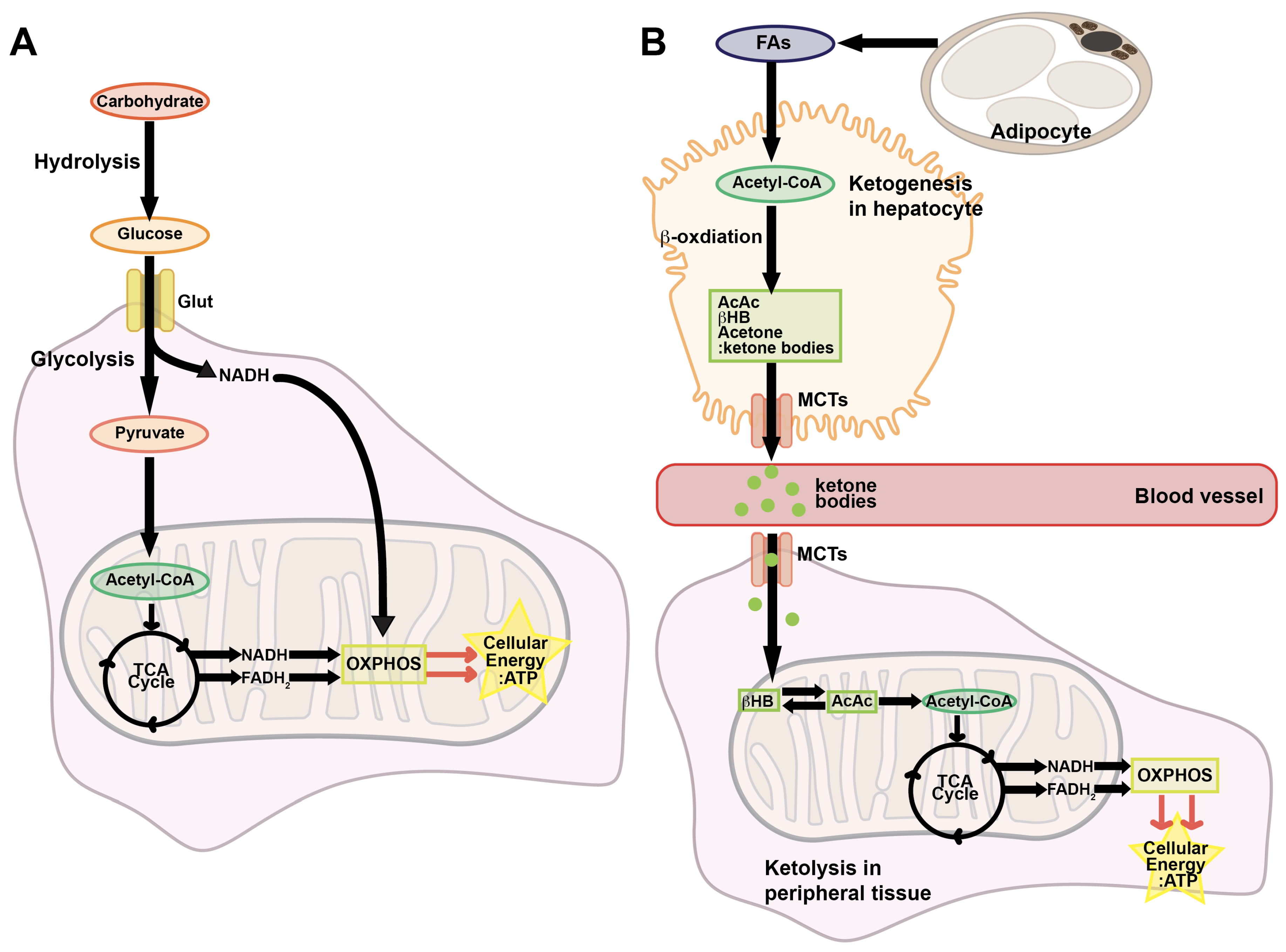
Figure 2.
Proposed pathways of KD–induced weight loss and metabolic improvement. ↑, increase; ↓, decrease. KD induces nutritional ketosis by restricting carbohydrate intake, lowering insulin secretion and increasing ketone body production. Lipolysis in adipose tissue is facilitated by the activation of hormone-sensitive lipase and adipose triglyceride lipase. The resulting rise in circulating free fatty acids (FFAs) promotes mitochondrial fatty acid transport and enhances β-oxidation in skeletal muscle and liver, accompanied by increased ketone body utilization and ATP generation. Concurrently, KD attenuates adipose tissue inflammation by reducing pro-inflammatory macrophage infiltration and inflammasome activation, thereby improving insulin sensitivity and adipocyte metabolic function. Together, these coordinated systemic and cellular adaptations contribute to reduced adiposity, enhanced metabolic flexibility, and sustained weight loss in overweight and obese individuals.
Figure 2.
Proposed pathways of KD–induced weight loss and metabolic improvement. ↑, increase; ↓, decrease. KD induces nutritional ketosis by restricting carbohydrate intake, lowering insulin secretion and increasing ketone body production. Lipolysis in adipose tissue is facilitated by the activation of hormone-sensitive lipase and adipose triglyceride lipase. The resulting rise in circulating free fatty acids (FFAs) promotes mitochondrial fatty acid transport and enhances β-oxidation in skeletal muscle and liver, accompanied by increased ketone body utilization and ATP generation. Concurrently, KD attenuates adipose tissue inflammation by reducing pro-inflammatory macrophage infiltration and inflammasome activation, thereby improving insulin sensitivity and adipocyte metabolic function. Together, these coordinated systemic and cellular adaptations contribute to reduced adiposity, enhanced metabolic flexibility, and sustained weight loss in overweight and obese individuals.
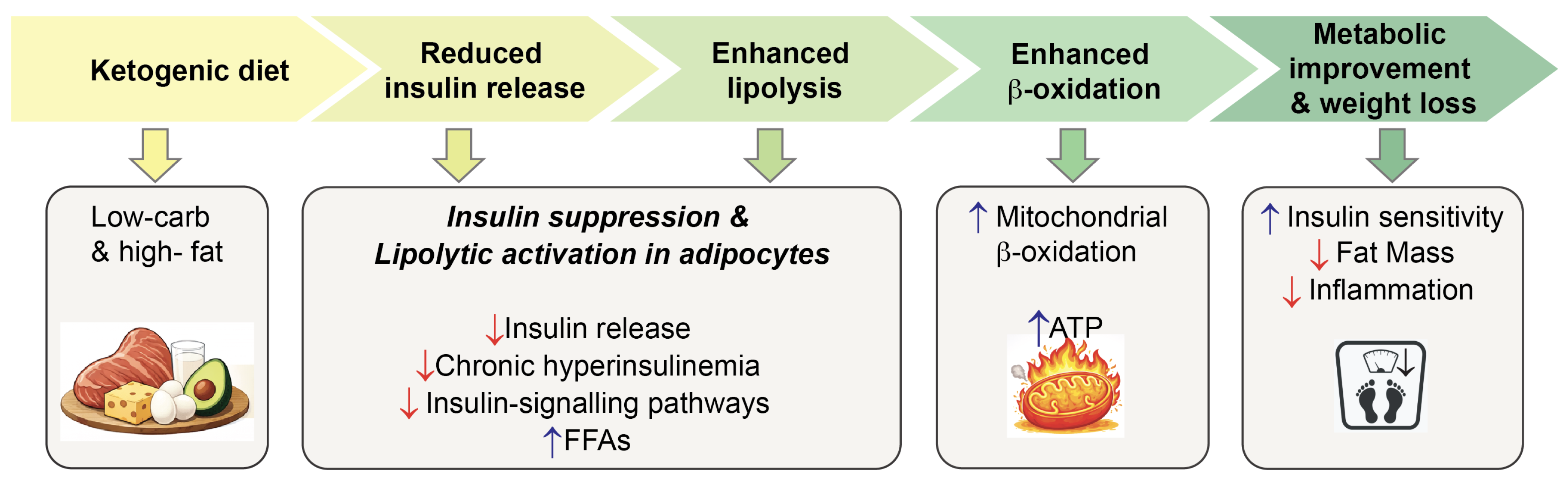

Table 1.
Overview of clinical studies.
| Study | Population | Interventions | Major outcomes |
| Battezzati et al., Italy [39] | 19-31 years. BMI 19.7-24.7 kg/m2, n=12 (M=6, F=6) |
Ketogenic meal vs Med-meal, one meal, followed for 12h | During OGTT: ↓ BGL (p=0.015), ↓ insulin concentration (p<0.001) and ↓ C-peptide (p<0.001) with ketogenic meal |
| Buga et al. [40] | 21–65 years. BMI 27–35 kg/m2, n=37 (M=19, F=18) |
6 weeks of KD+KS vs KD+PL vs LFD+PL (2/day) | In KD+PL compared to LFD+PL: Fasting; ↓ BGL, ↑ Ketones (~1.0 mM), ↓ insulin and HOMA-IR In KD+KS: Amplification effects compared to KD+PL Fasting; ↓ BGL, ↑ Ketones (+26%, p<0.001) No-improved effect in insulin or HOMA-IR |
| Merovci et al. [27] | 18-70 years, BMI ≥33.0 kg/m2 with T2D on oral agents n=29 (M=15, F=14) |
10 days STD vs KD vs KD+ketone supplements (3/day) | In KD: No weight or body composition change, no change insulin sensitivity, lipids or BP ↓ OGTT |
| Gower et al., USA [41] |
35–65 years. T2D, Met, SGLT-2i, DPP-4i or GLP-1 RA, n= 56 (M=12, F=44) | 12 weeks KD vs LFD | In KD: ↓ Pyruvate and palmitoleic acid, ↑ bHB Improved liver fat: ↓ hepatic fat fraction by magnetic resonance imaging |
| Gardner et al., USA [42] | ≥18 years, pre-diabetes or T2D, n=33 (M=20, F=13) | 12 weeks WFKD vs Med-Plus | In WFKD: ↑ Weight loss (-8 ± 1%), ↓ TG (-16%) and ↑ LDL (+10%). Similar weight loss. No change in HbA1c. |
| Sanchez et al.,Spain [43] | 18–65 years, BMI 35-39.9 kg/m2, n=30 (M=8, F=22) | 24 weeks VLCKD vs Med | In VLCKD: ↓ Weight (fat mass: -7.0%) and BMI (-5.3 kg/m2) ↓ sICAM-1 and endothelial inflammation indicator |
| Willis et al., USA [44] |
≥18 years with T2D, n=163 (M=84, F=79) | 24 weeks MSKDP | 1- and 3 months compared to baseline: ↓ Weight, BMI, glucose, energy and carbohydrate intake, diabetes medications, ↓ HbA1c (-1.5%) at 3 months |
| Willis et al., USA [45] |
≥18 years with T2D, 6 months follow up of above subjects, n=163 (M=84, F=79) | MSKDP 24 weeks |
6-months: ↓ Weight, BMI, BGL, diabetes medications, energy and carbohydrate intake, ↓ HbA1c (-1.3%) Continued improvements. |
| Martinez-Montoro et al., Spain [46] | 18-65 years, obese (BMI 30-45 kg/m2), n=160 (M=47, F=113) |
12 weeks MedD vs KD, mADF, lTRE and eTRE | In KD compared to MedD: ↓ Weight (greatest loss, -3.78 kg) among diets: mADF (-3.14 kg), lTRE (-2.27 kg) and eTRE (-1.22 kg), ↓ BMI, ↓ Glucose, HOMA-IR and TG, ↑ LDL, ketone and fat oxidation |
| Hall et al., USA [47] |
29.9±1.4 years, BMI 27.8±1.3 kg/m2, n=20 (M=11, F=9) |
2 weeks LCD vs LFD (75.2% carbohydrate) | In LCD: Final weight similar. ↓ TG (~40 mg/dL), ↓ C-peptide (~0.4 UNITS), ↑ Cholesterol (~41 mg/dL), ↑ OGTT (LCD 142.6 ± 4.3 mg/dL vs LFD 115.6 ± 2.9 mg/dL, p<0.0001). |
| Saslow et al., USA [48] |
≥18 years with hypertension + BMI ≥35.0 kg/m2, prediabetes or T2D, n=94 (M=34, F=60) | 16 weeks VLCD vs DASH diet | In VLCD: ↓ Weight (-8.7 kg vs -4.7 kg, DASH), ↓ HbA1c (-0.35% vs -0.14%, DASH) DASH: Improved systolic BP (-9.8 vs -5.2 mmHg) |
| Guevara-Cruz et al., Mexico [49] | 18–60 years, obese (BMI 30-50 kg/m2), n=44 (M=9, F=36) | 8 weeks CRD vs IF vs KD vs ALD | In KD: ↓ Weight and fat mass In monocytes, ↑ OCR, ↓ Glycolysis, ↓ LPS-mediated signalling. ↑ Gut microbiota with greater alpha diversity |
| Tay et al., Singapore [50] | 21–75 years, BMI≥27.5 kg/m2, n=50 (M=8, F=42) |
24 weeks KD vs KD-RTE | In KD-RTE: ↓ HbA1c (-0.3% vs -0.1%, KD), ↓ Total cholesterol (-0.54 vs -0.05 mmol/L) and LDL (-0.43 vs -0.03 mmol/L, KD) Improved systolic BP (-8.3 mmHg vs -5.3 mmHg, KD) |
| Kackley et al., USA [51] | Females (34±10 years) with obese (BMI 32.3±2.7 kg/m2), n=19 | 6 weeks KD + KS vs KD + PL vs LFD | In KD with or without KS: Significant weight loss Improved body composition. ↓ Cardiometabolic risk factors |
| Wachsmuth et al., Germany [52] | 25.8±3.7 years, BMI 22.1± 2.2 kg/m2, n=24 (M=10, F=14) | Control vs HC 3 w then 3w washout, L 1w LC then KD for 2 weeks | In LC diet in intervention: ↓ Weight and fat mass without changing skeletal muscle mass, ↑ βHB No change in cholesterol or TG levels |
| Tzenios et al., Canada [53] | 30–55 years, BMI 20.0–29.9 kg/m2, n=14 (M=7, F=7) |
20 weeks VLCKD: Cohort study |
In VLCKD week 10 and 20 ↓ weight (5.65% vs -10.65%), ↓ BMI (6.2% vs 10.6%), ↓ body fat (-2.25% vs -4.41%), ↓ HbA1c, ↑ Total cholesterol, LDL and HDL |
| Zhang et al., China [54] | 31±8.6 years with BMI≥28 kg/m2, n=30 (M=8, F=22) | 2 weeks modified Chinese KD | ↓ Weight and BMI (p<0.001), Improved adiposity ↑ GDF15 and ↓ FGF21 |
| Gao et al., China [55] |
40–55 years, T2D, metformin, n=104 (M=69, F=35) |
12 weeks Dulaglutide ± KD | In Dulaglutide + KD: ↓ FBG, HbA1c, LDL, TG, HOMA-IR. ↑ HOMA-IS |
| Lim et al., Singapore [56] | 21–65 years with BMI 27.5–40 kg/m2, n=80 (M=11, F=69) | 12 months KD vs ERD | In KD: ↓ Weight, BMI, BP, HbA1c No change in FBGL or LDL |
| Li et al., China [57] | 18-50 years with BMI≥25 kg/m2, newly diagnosed T2D, n=60 | 12 weeks Control vs KD | In KD: Improved BMI, TG, LDL, FBG, FINS, HbA1c (p<0.05). ↑ UA in serum |
| Kikuchi et al., Japan [58] | 28–65 years with BMI 26.3–31.5 kg/m2, n=42 (M=35, F=7) | 8 weeks LCD (120 g/day) vs VLCD (50 g/day) | Both diets: ↓ Weight and fat mass Improved lipids and liver function No difference between diets |
| Luong et al., Denmark [26] | 50–70 years with BMI 28–40 kg/m2, n=11 (M=5, F=6) | 3 weeks STD vs KD | In KD: ↓ Weight, BMI, TG, ↓ glucose ↓ Insulin-stimulated suppression of lipolysis ↑ Insulin sensitivity (clamp) |
| Mela et al., Spain [59] | 18–65 years with obese (BMI 30-45 kg/m2), n=96 (M=31, F=65) | 12 weeks KD vs MedD vs ADFD | In KD: ↓ Weight and BMI No change in cognitive performance or gut microbiota |
| Du et al., USA [60] | ≥18 years, BMI≥34 kg/m2, n=60 (M=22, F=38); without T2D or CKD, or with both | 24 weeks KD vs LFD | In KD: ↓ Weight and BMI (3 and 6 months) ↓ HbA1c (3 months only) Improved BP (3 months only) |
Disclaimer/Publisher’s Note: The statements, opinions and data contained in all publications are solely those of the individual author(s) and contributor(s) and not of MDPI and/or the editor(s). MDPI and/or the editor(s) disclaim responsibility for any injury to people or property resulting from any ideas, methods, instructions or products referred to in the content. |
© 2026 by the authors. Licensee MDPI, Basel, Switzerland. This article is an open access article distributed under the terms and conditions of the Creative Commons Attribution (CC BY) license (http://creativecommons.org/licenses/by/4.0/).
Copyright: This open access article is published under a Creative Commons CC BY 4.0 license, which permit the free download, distribution, and reuse, provided that the author and preprint are cited in any reuse.


