
Submitted:
08 May 2026
Posted:
08 May 2026
You are already at the latest version
Abstract
This study characterized the cultivable oral microbiota of domestic dogs and evaluated antimicrobial susceptibility patterns and resistance accumulation in a veterinary context. A cross-sectional analytical design was conducted including 100 domestic dogs attended in urban veterinary clinics in southern Ecuador, from which 139 bacterial isolates were obtained through oral swabbing and conventional microbiological identification. Antimicrobial susceptibility was assessed using the disk diffusion method according to CLSI guidelines. Resistance accumulation was defined as the number of antimicrobial classes to which each isolate exhibited resistance, and multidrug resistance as resistance to three or more classes. A predominance of Gram-negative bacteria was observed (65.5%), with Pseudomonas (27.3%), Klebsiella (20.9%), and Enterobacter (7.9%) as the most frequent genera, while Staphylococcus aureus represented 34.5% of isolates. Resistance to at least one antimicrobial was detected in 71.2% of isolates, and multidrug resistance in 9.4% of the total dataset, exclusively among Gram-negative bacteria, corresponding to 14.3% within this group. Resistance to two or more antimicrobial classes was observed in 42.9% of Gram-negative isolates. Multivariable logistic regression showed that bacterial genus was the only factor significantly associated with resistance accumulation, with Enterobacter presenting a higher odds ratio compared to Pseudomonas (adjusted OR = 16.30; 95% CI: 1.69–157.14; p = 0.016), while host-related variables were not significant (p > 0.05). These results indicate that antimicrobial resistance in the canine oral microbiota is primarily structured by bacterial identity rather than host factors, highlighting the role of the oral cavity as a reservoir of resistant bacteria with implications for veterinary clinical practice and epidemiological surveillance.
Keywords:
antimicrobial susceptibility
; canine oral microbiota
; domestic dogs
; veterinary microbiology
; multidrug resistance
; companion animals
1. Introduction
Antimicrobial resistance is one of the major challenges to contemporary global health due to its direct impact on therapeutic efficacy, the increase in difficult-to-treat infections, and the growing pressure on healthcare systems [1]. This phenomenon is driven by multiple factors, including the intensive and, in many cases, inappropriate use of antimicrobials in human and veterinary medicine, as well as the intrinsic ability of microorganisms to adapt and acquire resistance mechanisms through evolutionary processes and horizontal gene transfer [2]. In this context, antimicrobial resistance must be understood as a complex ecological problem that transcends the boundaries between species and environments [3].
The One Health approach has emerged as a key conceptual framework for addressing this issue, recognizing the interconnectedness of human, animal, and environmental health [4]. Within this interdependent system, companion animals play a particularly relevant role, not only due to their proximity to humans but also because of their shared exposure to domestic environments and similar therapeutic interventions. In this regard, domestic dogs (Canis lupus familiaris) have been identified as potential reservoirs and vectors of resistant bacteria, with the capacity to contribute to the spread of resistance genes across different biological niches [5].
The canine oral cavity represents a highly dynamic microbiological ecosystem, characterized by the presence of complex bacterial communities organized into structured biofilms [6]. This environment fosters intense microbial interactions, including competition, cooperation, and horizontal gene transfer—processes fundamental to the emergence and maintenance of antimicrobial resistance. Unlike other niches, the oral microbiota is subject to fluctuating conditions of pH, nutrient availability, and local immune response, which contributes to the differential selection of microorganisms with specific adaptive advantages [7].
Despite these advances, most studies on canine oral microbiota have focused on taxonomic characterization using sequencing techniques, with less emphasis on the phenotypic evaluation of antimicrobial resistance and its distribution within culturable bacterial isolates [8]. This limitation is relevant, since the phenotypic expression of resistance determines the clinical response to treatments and reflects the interaction between genetic determinants and the microbial environment. Consequently, culture-based analysis remains a necessary approach for understanding resistance from a functional perspective [9].
A particularly critical aspect in the study of antimicrobial resistance is the accumulation of resistance within bacterial isolates [10]. The presence of resistance to multiple antimicrobial classes not only indicates exposure to selective pressure but also the possible circulation of mobile genetic elements that facilitate the co-selection of resistance genes [11]. This phenomenon increases the likelihood of resistant strains persisting and spreading in different ecological contexts. However, evidence on the structure of multidrug resistance and the factors associated with its occurrence in canine oral microbiota is still limited, especially in non-hospital settings [12].
In Latin America, and particularly in Ecuador, the available information on antimicrobial resistance in companion animals is scarce and fragmented. This knowledge gap limits the ability to identify local resistance patterns and implement evidence-based surveillance strategies [13]. Furthermore, the variability in assessment methods and the limited application of international standards, such as those established by the Clinical and Laboratory Association, further complicate matters. Standards Institute, make it difficult to compare studies and interpret results in a global context [14].
In this context, the present study aimed to characterize the culturable bacterial microbiota of the oral cavity of domestic dogs in southern Ecuador and evaluate their antimicrobial susceptibility patterns using standardized criteria according to CLSI. Additionally, the phenotypic resistance burden, the presence of multidrug resistance , and factors associated with resistance accumulation in Gram-negative bacteria were analyzed using statistical modeling.
This approach allows us not only to describe the distribution of antimicrobial resistance, but also to identify structural patterns within the oral microbiota that contribute to the persistence and dissemination of resistant phenotypes. In this way, the results provide relevant evidence for the epidemiological surveillance of antimicrobial resistance in companion animals and strengthen the integration of the One Health approach in local contexts with limited prior information.
2. Materials and Methods
2.1. Study Design and Study Population
The study was carried out in veterinary clinics in the urban area of Loja, southern Ecuador (3°59′ S; 79°12′ W; 2060 m above sea level), in the Andean region, where temperate environmental conditions, with average temperatures of 15-20°C, high humidity and exposure to fog or winds typical of this altitude, together with the urban demographic context, reflect representative patterns of clinical practice in companion animals in the south of the country, thus giving external relevance to the results obtained.
A cross-sectional analytical study was conducted over an 8-week period, from April 1 to May 31, 2025. One hundred domestic dogs, at least 6 months old, with no breed or sex restrictions, attending veterinary consultations under normal management conditions, were included. Animals undergoing active antibiotic treatment at the time of sampling were excluded from the study to avoid bias in the detection of antimicrobial resistance.
Samples were obtained by swabbing the oral cavity, from which a total of 139 bacteria were isolated. Since multiple isolates could be derived from the same individual, the analytical unit of the study was defined at the level of bacterial isolation and not at the level of the animal, in order to capture the microbiological diversity and variability in antimicrobial susceptibility profiles present in the oral cavity.
For each animal, clinical and demographic variables were recorded, including age, sex, type of feed, type of skull, degree of gingivitis and degree of periodontitis, with the aim of evaluating their possible association with the observed antimicrobial resistance profiles.
2.2. Sampling, Isolation and Bacterial Identification
Samples were obtained by swabbing the oral cavity, ensuring contact with dental surfaces and gingival tissue. The swabs were transported to the laboratory under controlled conditions for microbiological processing.
Bacterial isolation was performed by plating on blood agar and MacConkey agar, incubated at 37 °C for 24–48 hours under aerobic conditions. Colonies were selected based on macroscopic characteristics, such as size, shape, color, and presence of hemolysis, in order to maximize the recovery of culturable bacterial diversity in each sample.
Bacterial identification was performed using Gram staining and conventional biochemical tests, including catalase, oxidase, carbohydrate fermentation, and specific differential tests according to the bacterial genus. Final classification was carried out at the genus or species level when possible, and the isolates were subsequently grouped into Gram-positive and Gram-negative bacteria. The complete flow of the sampling, isolation, and bacterial identification process is presented in Figure 1, which summarizes the steps from sample collection to final microbiological classification.
2.3. Antimicrobial Susceptibility Testing
The antimicrobial susceptibility profile was determined using the disk diffusion (Kirby-Bauer) method on Mueller-Hinton agar, in accordance with the Clinical and Laboratory guidelines. Standards Institute (CLSI, M100, 2025). Antimicrobial discs were applied onto inocula adjusted to a turbidity equivalent to the 0.5 McFarland standard, and the plates were incubated at 37 °C for 18–24 hours under aerobic conditions.
Inhibition diameters were measured in millimeters and classified as susceptible, intermediate, or resistant according to CLSI breakpoints. For analysis, the intermediate category was grouped with the resistant category to avoid underestimating phenotypic resistance.
The antimicrobial panel included ampicillin/sulbactam, tetracycline, trimethoprim/sulfamethoxazole, ceftriaxone, and streptomycin for Gram-negative bacteria, and penicillin, oxacillin, cefoxitin, and ampicillin/sulbactam for Gram-positive bacteria.
The complete flow of microbiological procedures is presented in Figure 2, including oral swab sampling, preparation of culture media, bacterial isolation on agar, identification by biochemical tests, application of antimicrobial disks, and reading of inhibition halos on the antibiogram.
2.4. Definition of Accumulated Resistance and Multi-Resistance
Phenotypic resistance was assessed at the bacterial isolate level by classifying antimicrobial susceptibility results as susceptible, intermediate, or resistant, according to CLSI breakpoints. For analysis, the intermediate category was grouped with the resistant category.
Each antimicrobial was assigned to its corresponding pharmacological class. For each isolate, the antimicrobials against which resistance was observed were identified, and the number of unique antimicrobial classes associated with these antimicrobials was determined. This value was defined as the number of resistant classes per isolate.
From this variable, three derived indicators were generated. The first was due to the presence of resistance to at least one class of antimicrobials. The second was defined as resistance to two or more classes of antimicrobials and was used as the dependent variable in the inferential analysis. The third corresponded to multidrug resistance , defined as resistance to three or more classes of antimicrobials.
Due to the composition of the antimicrobial panel, which included a greater number of drug classes in Gram-negative bacteria, the multidrug resistance classification and resistance accumulation analysis were restricted to this group, in order to ensure comparative validity between isolates.
2.5. Data Processing and Analytical Structure
Data processing included standardizing antimicrobial susceptibility results, classifying isolates by Gram group, and assigning each antimicrobial to its corresponding pharmacological class. Subsequently, derived variables were calculated, including resistance to at least one class, resistance to two or more classes, and multidrug resistance .
The database was structured at the bacterial isolation level, which allowed for the individual analysis of resistance profiles and the construction of variables necessary for statistical analysis.
2.6. Statistical Analysis
The statistical analysis was developed at multiple levels. Initially, the distribution of bacterial isolates and antimicrobial susceptibility profiles were described using absolute and relative frequencies.
Subsequently, the phenotypic resistance burden was assessed by calculating the number of antimicrobial classes to which each isolate exhibited resistance. The proportions of isolates resistant to at least one class, to two or more classes, and with multidrug resistance were estimated .
For the analysis of bivariate associations , chi-square tests were used for categorical variables and non-parametric tests for continuous variables when necessary. A statistical significance level of 0.05 was considered.
To identify factors associated with resistance accumulation, a binary logistic regression model restricted to Gram-negative isolates was fitted. The dependent variable was resistance to two or more classes of antimicrobials. Independent variables included age, sex, diet, gingivitis severity, periodontitis severity, and bacterial genus.
Clinical variables were recoded to ensure a minimum frequency in the analyzed categories. Skull type was excluded from the final model due to the low frequency observed in one of its categories.
The model results were expressed as adjusted odds ratios with 95% confidence intervals. The goodness of fit of the model was assessed using the likelihood ratio test and a pseudo coefficient of determination.
2.7. Methodological Considerations
Since multiple isolates could originate from the same individual, the analytical unit was the bacterial isolate, not the animal. This decision allowed for capturing the phenotypic diversity of the oral microbiota, although it implies that the results should be interpreted in microbiological rather than strictly population-based terms.
Furthermore, the culture-based approach limits characterization to the culturable fraction of the microbiome, which may underestimate total diversity and the presence of genetic determinants of resistance that are not phenotypically expressed.
2.8. Ethical Considerations
This study involved non-invasive sampling of the oral cavity of domestic dogs using swabbing procedures, which did not cause harm or distress to the animals. All procedures were conducted in accordance with applicable institutional and national guidelines for the care and use of animals. Informed consent was obtained from all animal owners prior to sample collection. Due to the non-invasive nature of the procedures and the absence of experimental interventions, formal approval from an institutional ethics committee was not required according to local regulations.
3. Results
3.1. Analytical Structure of the Dataset and Bacterial Composition of the Isolates
Based on the analyzed database, a total of 139 oral bacterial isolates with valid microbiological and phenotypic information were included for antimicrobial susceptibility testing. Of these, 48 isolates were Gram-positive bacteria and 91 were Gram-negative bacteria, representing 34.5% and 65.5% of the total, respectively. This distribution showed a predominance of Gram-negative bacteria in the culturable oral microbiota of the dogs studied, although Staphylococcus aureus was the most frequent individual taxon within the analyzed set.
As shown in Table 1 and Figure 3, Staphylococcus aureus accounted for 48 isolates, equivalent to 34.5% of the total. Among Gram-negative bacteria, Pseudomonas was the most frequent genus with 38 isolates, representing 27.3%, followed by Klebsiella with 29 isolates, corresponding to 20.9%. Enterobacter with 11 isolates, Salmonella with 9, and Escherichia coli with 4 were identified in smaller proportions, representing 7.9%, 6.5%, and 2.9%, respectively. Taken together, these results indicate that the recoverable oral microbiota was dominated by a relatively limited number of bacterial genera, although with sufficient heterogeneity to support subsequent comparative analyses of antimicrobial susceptibility.
From an epidemiological perspective, the observed taxonomic structure suggests that the canine oral cavity in this population was not characterized exclusively by a predominance of Gram-positive cocci, but rather by a mixed bacterial community with a significant representation of clinically relevant Gram-negative bacilli with zoonotic potential. This distribution reinforces the need to interpret antimicrobial resistance from a One Health approach, since the coexistence of multiple bacterial genera in the same biological niche can favor the persistence and dissemination of resistance phenotypes, with implications for both animal and public health.
Analysis of the record structure revealed that the microbiological unit of observation did not strictly correspond to one isolate per individual, as several samples contained more than one identified bacterium. This pattern suggests a hierarchical data structure, in which bacterial isolates are nested within each individual. Analytically, this implies that antimicrobial susceptibility testing should be interpreted at the isolate level, not exclusively at the animal level, allowing for a more precise characterization of microbial diversity and resistance profiles present in the oral microbiota.
3.2. Antimicrobial Susceptibility Profile of Bacterial Isolates
Antimicrobial susceptibility analysis revealed marked variability both among the antibiotics evaluated and among the bacterial groups considered. The distribution of susceptibility categories showed differential patterns suggesting a non-homogeneous phenotypic response in the culturable oral microbiota. Table 2 summarizes the frequency and proportion of isolates classified as susceptible or resistant for each antimicrobial evaluated, while Figure 4 summarizes this behavior by Gram group.
In Gram-negative bacteria, the highest susceptibility rate was observed against ceftriaxone, at nearly 90%, making it the best-performing antimicrobial in this group. In contrast, ampicillin with sulbactam and tetracycline showed resistance rates exceeding 50%, while streptomycin and trimethoprim with sulfamethoxazole also exhibited significant levels of non-susceptibility. Overall, this pattern indicates that Gram-negative isolates displayed the broadest resistance phenotypic profiles in the study.
In Gram-positive bacteria, the antimicrobial response was less heterogeneous. Oxacillin, ampicillin with sulbactam, and cefoxitin showed complete susceptibility in all isolates tested. Penicillin was the only antimicrobial with a significant proportion of resistance within this group, with a distribution close to equilibrium between susceptible and resistant isolates. This behavior suggests that resistance in Gram-positive bacteria was more localized and less widespread than in Gram-negative bacteria.
From a comparative perspective, the results indicate that antimicrobial resistance in the canine oral microbiota was not evenly distributed among either antibiotic classes or bacterial groups. The highest relative resistance burden was concentrated in Gram-negative bacilli exposed to commonly used antimicrobials, while in Gram-positive cocci, resistance was primarily restricted to penicillin. This pattern reinforces the need to interpret antimicrobial susceptibility in a stratified rather than aggregated manner, as overall behavior can mask relevant differences among bacterial groups with varying clinical and epidemiological significance.
3.3. Phenotypic Resistance Burden and Multidrug Resistance in Bacterial Isolates
Analysis of phenotypic resistance burden revealed that the distribution of the number of antimicrobials to which each isolate exhibited resistance was not homogeneous within the evaluated group. Of the 139 isolates, 99 showed resistance to at least one antimicrobial, representing 71.2%. Multidrug resistance , operationally defined as resistance to three or more antimicrobial classes, was identified in 13 isolates, equivalent to 9.4% of the total analyzed. All isolates with this profile were Gram-negative bacteria, resulting in a multidrug resistance prevalence of 14.3% within this group, as summarized in Table 3.
In the subset of Gram-negative bacteria, 76 of 91 isolates exhibited resistance to at least one antimicrobial agent, representing 83.5%. Additionally, 39 of 91 isolates showed resistance to two or more antimicrobial classes, equivalent to 42.9%. The distribution of resistance burden indicated that 36 isolates exhibited resistance to one antimicrobial class, 26 to two classes, 11 to three classes, and 2 to four antimicrobial classes. This pattern demonstrates that phenotypic resistance is not limited to monoresistance events but also includes a significant proportion of cumulative resistance profiles.
The prevalence of multidrug resistance showed a heterogeneous distribution among bacterial genera. The highest values were observed in Escherichia coli, with 2 of 4 isolates classified as multidrug-resistant, equivalent to 50%, followed by Enterobacter, with 5 of 11 isolates, corresponding to 45.5%. In Pseudomonas, 6 multidrug-resistant isolates were identified out of a total of 38, representing 15.8%. In contrast, no isolates with this profile were detected in Klebsiella or Salmonella in the analyzed group. This distribution is shown in Figure 5 and demonstrates that multidrug resistance is not uniformly distributed among the genera, but rather concentrated in a specific subset of Gram-negative bacteria.
The analysis of the association between the presence of multidrug resistance and host variables showed no statistically significant differences in age, sex, diet, skull type, degree of gingivitis, or degree of periodontitis, with p-values greater than 0.05 in all cases. In contrast, bacterial genus showed a statistically significant association with the presence of multidrug resistance ( p = 0.001). This result indicates that the observed variability in resistance burden is mainly due to bacterial identity, rather than to the host's clinical characteristics.
From a perspective epidemiological , these Results indicate that the canine oral microbiota may act as reservoir of phenotypes resistant of varying complexity , including profiles multi-resistant concentrates in certain genres Bacteria . The concentration of multidrug resistance in a specific subset of Enterobacteriaceae suggests the possible presence of shared resistance mechanisms or differential selective pressure in these taxa. However, the interpretation of these proportions must consider the small sample size in some genera, particularly in Escherichia. coli , which limits the extrapolation of these results to wider populations.
The hierarchical structure of the data, in which multiple isolates can be derived from the same individual, implies that the analytical unit corresponds to the bacterial isolate and not the animal. This methodological aspect is relevant for the interpretation of resistance burden, as it allows for a more precise capture of the phenotypic diversity present in the oral microbiota and avoids underestimating the coexistence of multiple resistance profiles within the same host.
3.4. Inferential Modeling of Resistance Accumulation in Gram-Negative Isolates
Due to the limited number of multidrug-resistant isolates, the inferential analysis was not performed using the strict definition of multidrug resistance, but rather on a secondary outcome defined as resistance to two or more antimicrobial classes in Gram-negative isolates. This criterion maintained epidemiological relevance and increased the stability of the statistical modeling, as it accounted for 39 events in 91 isolates, equivalent to 42.9%. The analysis was restricted to Gram-negative bacteria, since only in this group did the antimicrobial panel include a sufficient number of independent drug classes to support the estimation of resistance accumulation.
A binary logistic regression model was fitted, including variables selected for their biological plausibility and sufficient frequency in the observed categories. Age was included as a continuous variable. Sex was analyzed as female versus male. Diet was dichotomized as balanced versus unbalanced. Gingivitis was grouped into grade 3 versus grades 1 and 2. Periodontitis was grouped into grade 4 versus grades 0, 1, and 2. Bacterial genus was included as a categorical factor, with Pseudomonas as the reference category, given its high frequency in the analyzed group. Skull type was not included in the final model due to the low frequency observed in the brachycephalic category, which compromised the stability of the estimates.
The multivariable model showed a significant overall association with the outcome, with a likelihood ratio test of p- value = 0.041 and a pseudo R² of 0.141. After simultaneous adjustment for covariates, bacterial genus was the only component that maintained a significant association with resistance accumulation. Compared to Pseudomonas , Enterobacter isolates had an adjusted odds ratio of 16.30, with a 95% confidence interval between 1.69 and 157.14 and a p- value of 0.016. Escherichia isolates coli showed an adjusted odds ratio of 5.35, although with wide statistical imprecision, 95% confidence interval between 0.46 and 62.87 and p value = 0.182. In Klebsiella and Salmonella, no significant differences were observed with respect to the reference category, with p- values of 0.549 and 0.909, respectively, as shown in Table 4 and Figure 6.
Host variables did not show an independent association with cumulative resistance. Age had an adjusted odds ratio of 0.92 for each additional year, with a 95% confidence interval between 0.70 and 1.21 and a p- value of 0.549. Female sex had an adjusted odds ratio of 0.73, with a 95% confidence interval between 0.23 and 2.25 and a p -value of 0.580. Balanced diet had an adjusted odds ratio of 1.24, with a 95% confidence interval between 0.40 and 3.80 and a p -value of 0.710. Grade 3 gingivitis had an adjusted odds ratio of 1.28, with a 95% confidence interval between 0.28 and 5.81 and a p -value of 0.745. Advanced periodontitis showed an adjusted odds ratio of 1.34, with a 95% confidence interval between 0.21 and 8.44 and a p -value = 0.756.
Taken together, these results indicate that the accumulation of phenotypic resistance in Gram-negative bacteria of the canine oral microbiota was primarily determined by bacterial identity and not by the host clinical variables recorded in this study. The magnitude of the effect observed in Enterobacter suggests a significantly greater propensity to concentrate resistance across multiple antimicrobial classes. However, the width of some confidence intervals, particularly in Escherichia coli, indicates that these estimates should be interpreted with caution and confirmed by studies with larger sample sizes and a better balance between bacterial genera.
The adjusted model showed that bacterial genus was the only factor associated with resistance accumulation, with Enterobacter exhibiting a significantly higher odds ratio than Pseudomonas, considering host-related variables did not show independent associations.
4. Discussion
This study characterizes the culturable bacterial microbiota of the canine oral cavity and its antimicrobial susceptibility profile using descriptive and inferential analyses. The results show a structure dominated by Gram-negative bacteria with heterogeneous resistance patterns and a significant fraction of isolates exhibiting multiclass resistance. This combination of taxonomic diversity and phenotypic heterogeneity is consistent with the dynamic nature of the oral microbiome and its recurring exposure to selective pressures, including the use of antimicrobials in veterinary medicine [15].
The observed taxonomic distribution, with a predominance of genera such as Pseudomonas, Klebsiella, Enterobacter, and Escherichia coli, aligns with recent studies describing the canine oral cavity as an ecological niche with high bacterial diversity and the recurrent presence of opportunistic Gram-negative bacilli [16]. This pattern reflects not only the composition of the oral microbiome but also the ability of these genera to colonize mucosal surfaces and form complex biofilms [17]. In particular, Pseudomonas and members of the Enterobacteriaceae have been described as frequent components of altered oral microbiotas or those associated with periodontal disease, suggesting a possible link between local dysbiosis and the expansion of taxa with greater resistance potential [18].
From an antimicrobial susceptibility standpoint, the results show a differential response among drug classes and bacterial groups, with a higher resistance burden concentrated in Gram-negative isolates. This finding is consistent with recent literature, which documents a higher prevalence of resistance mechanisms in Gram-negative bacilli, including extended-spectrum beta-lactamase production, efflux pumps, and modifications in outer membrane permeability [19]. In this context, the high susceptibility observed to ceftriaxone in Gram-negative bacteria can be interpreted as indicative of a still limited selective pressure on third-generation cephalosporins in this specific population, although studies in other contexts have reported a sustained increase in resistance to this class, suggesting that this pattern could be transient or dependent on the context of antimicrobial use [20].
In contrast, the high susceptibility observed in Gram-positive bacteria to oxacillin, cefoxitin , and combinations with beta-lactamase inhibitors indicates a low prevalence of resistance mediated by alterations in penicillin-binding proteins, suggesting limited circulation of strains with MRSA-like phenotypes in this cohort. This result differs from that reported in clinical studies in companion animals in hospital settings, where a higher frequency of resistance in Gram-positive cocci associated with prior antibiotic exposure has been documented [21]. The discrepancy may be explained by differences in the study population, particularly the inclusion of non-hospitalized animals with lower cumulative antimicrobial pressure.
Multidrug resistance analysis adds another level of complexity, demonstrating that resistance is not uniformly distributed but rather concentrated in certain bacterial genera. The highest prevalence of multidrug resistance is found in Escherichia coli and Enterobacter, suggesting the involvement of shared genetic mechanisms, such as the presence of plasmids carrying multidrug resistance genes or class 1 integrons [22], widely documented in enterobacteria of animal origin. The absence of multidrug resistance in Klebsiella and Salmonella in this group does not necessarily imply a lower intrinsic capacity of these genera; rather, it likely reflects the limited sample size and ecological variability of the studied niche.
Inferential modeling reinforces this interpretation by showing that bacterial identity is the main determinant of resistance accumulation, while host variables do not show a significant independent association. This result is consistent with studies indicating that antimicrobial resistance in animal microbiota is more strongly influenced by bacterial ecology and horizontal gene transfer than by individual host characteristics [23]. The significant association observed with Enterobacter suggests that this genus may act as a relevant reservoir of accumulated resistance in the canine oral cavity, with both clinical and epidemiological implications.
The lack of association with clinical variables, such as gingivitis or periodontitis, can be interpreted in two complementary ways. On the one hand, it suggests that the presence of resistance does not depend directly on observable clinical severity, which is consistent with studies that have demonstrated the coexistence of resistant bacteria in apparently healthy microbiotas [24]. On the other hand, it may reflect limitations in the clinical resolution of the variables used, since classifying periodontal disease into broad categories may not capture relevant microecological differences at the biofilm level.
From a public health perspective, these findings align with the One Health approach, demonstrating that the oral microbiota of companion animals can constitute a reservoir of antimicrobial resistance with the potential for interspecies transmission. The proximity between dogs and humans, along with frequent direct contact, creates favorable conditions for the exchange of bacteria and resistance genes, a phenomenon widely documented in recent studies [25]. In this context, the identification of multidrug-resistant profiles in the oral cavity acquires relevance not only in veterinary medicine but also in zoonotic medicine.
However, the results should be interpreted considering certain limitations. The small sample size in some genera limits the precision of the estimates, as reflected in the width of the confidence intervals in the multivariable model. Furthermore, the use of culture methods means that the characterization is restricted to the culturable fraction of the microbiome, which may underestimate the total diversity and the burden of resistance genes present. In addition, the data structure, with multiple isolates per individual, means that the analytical unit is the isolate, not the animal, which must be considered when interpreting the results in population terms.
Taken together, this study demonstrates that the canine oral microbiota harbors a diverse bacterial population with heterogeneous susceptibility profiles and a fraction of isolates exhibiting resistance to multiple classes of antimicrobials. The evidence indicates that resistance is primarily determined by bacterial identity rather than by clinical host variables, highlighting the importance of microbiological and ecological approaches in monitoring antimicrobial resistance in companion animals.
5. Conclusions
The results of this study demonstrate that the cultivable oral microbiota of domestic dogs in southern Ecuador constitutes a significant reservoir of antimicrobial resistance, characterized by a high proportion of isolates resistant to at least one drug class and by the presence of multidrug resistance profiles concentrated exclusively in Gram-negative bacteria. The distribution of resistance was not homogeneous among bacterial genera, with a greater accumulation of resistance observed in Enterobacter and Escherichia coli, suggesting differences in adaptive capacity and the possible circulation of genetic mechanisms associated with resistance co-selection. Inferential analysis confirmed that bacterial identity is the main factor associated with resistance accumulation, while host clinical variables, including age, sex, diet, and periodontal conditions, did not show a significant independent association, indicating that resistance dynamics in this niche are primarily determined by microbiological and ecological factors. These findings highlight the importance of assessing antimicrobial resistance beyond individual susceptibility profiles, incorporating resistance accumulation analysis as an indicator of selective pressure and epidemiological risk. From a One Health perspective, the identification of multidrug-resistant bacteria in the canine oral cavity reinforces the potential role of companion animals in the dissemination of antimicrobial resistance in domestic settings. Overall, this study provides relevant evidence for the development of microbiological surveillance strategies in companion animals and underlines the need to implement rational antimicrobial use programs that consider the interaction between microbiota, host and environment.
Author Contributions
Conceptualization, O.M.-Q. and D.M.-M.; methodology, O.M.-Q. and D.M.-M.; software, O.M.-Q.; validation, O.M.-Q., D.M.-M. and E.R.-H.; formal analysis, O.M.-Q.; investigation, D.M.-M.; resources, O.M.-Q.; data curation, O.M.-Q.; writing—original draft preparation, O.M.-Q.; writing—review and editing, O.M.-Q., D.M.-M. and E.R.-H.; visualization, O.M.-Q.; supervision, O.M.-Q.; project administration, O.M.-Q. All authors have read and agreed to the published version of the manuscript.
Funding
This research received no external funding
Institutional Review Board Statement
The animal study protocol was approved by the Bioethics Committee for Research Involving Animal and Plant Species of the Universidad Politécnica Estatal del Carchi (UPEC), Ecuador (Memorandum No. UPEC-CBIEAV-2026-005-M, approved on 3 February 2026).
Informed Consent Statement
Informed consent was obtained from all animal owners involved in the study prior to sample collection. Written informed consent was also obtained from the owners for the scientific use and publication of the collected data.
Data Availability Statement
The original contributions presented in this study are included in the article/supplementary material. Further inquiries can be directed to the corresponding author(s).
Acknowledgments
The authors thank the veterinary clinics and pet owners who collaborated during sample collection and microbiological processing.
Conflicts of Interest
The authors declare no conflicts of interest.
Abbreviations
The following abbreviations are used in this manuscript:
| CLSI | Clinical and Laboratory Standards Institute |
| MDR | Multidrug resistance |
| GN | Gram-negative bacteria |
| GP | Gram-positive bacteria |
References
- Caneschi, A.; Bardhi, A.; Barbarossa, A.; Zaghini, A. The Use of Antibiotics and Antimicrobial Resistance in Veterinary Medicine, a Complex Phenomenon: A Narrative Review. Antibiotics 2023, 12, 487. [Google Scholar] [CrossRef]
- Endale, H.; Mathewos, M.; Abdeta, D. Potential Causes of Spread of Antimicrobial Resistance and Preventive Measures in One Health Perspective-A Review. Infect. Drug Resist. 2023, 16, 7515–7545. [Google Scholar] [CrossRef]
- Monteiro, H.I.G.; Silva, V.; de Sousa, T.; Calouro, R.; Saraiva, S.; Igrejas, G.; Poeta, P. Antimicrobial Resistance in European Companion Animals Practice: A One Health Approach. Animals 2025, 15, 1708. [Google Scholar] [CrossRef]
- Al-Khalaifah, H.; Rahman, M.H.; Al-Surrayai, T.; Al-Dhumair, A.; Al-Hasan, M. A One-Health Perspective of Antimicrobial Resistance (AMR): Human, Animals and Environmental Health. Life 2025, 15, 1598. [Google Scholar] [CrossRef] [PubMed]
- Kang, S.; Chen, Y.; Liu, M. The Role of Companion Animals as ‘Sentinels’ From the One Health Perspective. Vet. Med. Sci. 2026, 12, e70814. [Google Scholar] [CrossRef]
- Portilho, F.V.R.; Nóbrega, J.; de Almeida, B.O.; Mota, A.R.; de Paula, C.L.; Listoni, F.J.P.; Bosco, S.M.G.; Oliveira, A.L.; Cunha, M. de L.R.S.; Ribeiro, M.G. Microbial Complexity of Oral Cavity of Healthy Dogs Identified by Mass Spectrometry and Next-Generation Sequencing. Animals 2023, 13, 2467. [Google Scholar] [CrossRef]
- Zhao, R.; Hao, J.; Yang, J.; Tong, C.; Xie, L.; Xiao, D.; Zeng, Z.; Xiong, W. The Co-Occurrence of Antibiotic Resistance Genes between Dogs and Their Owners in Families. iMeta 2022, 1, e21. [Google Scholar] [CrossRef]
- Lee, G.Y.; Jo, H.Y.; Abbas, M.A.; Gui, L.; Ali, M.S.; Kim, S.J.; Park, S.C. Microbiota Analysis and Characterisation of the Novel Limosilactobacillus Strains Isolated from Dogs. Microorganisms 2025, 13, 1059. [Google Scholar] [CrossRef]
- Yang, S. Bin; Moon, J.-H. Microbial Therapeutics for Canine Periodontal Disease: Current Status and Future Perspectives. Front. Vet. Sci. 2026, 12, 1748968. [Google Scholar] [CrossRef] [PubMed]
- Beaulac, K.; Fellman, C.L.; Wayne, A.S.; Mcdermott, L.A.; Snydman, D.R.; Doron, S. Impact of Antimicrobial Use in Dogs on Antimicrobial Resistance and Shared Flora with Human Owners. Antimicrob. Steward. Healthc. Epidemiol. 2023, 3, e1. [Google Scholar] [CrossRef] [PubMed]
- Bourély, C.; Cazeau, G.; Jarrige, N.; Leblond, A.; Madec, J.Y.; Haenni, M.; Gay, E. Antimicrobial Resistance Patterns of Bacteria Isolated from Dogs with Otitis. Epidemiol. Infect. 2019, 147, e121. [Google Scholar] [CrossRef] [PubMed]
- Horodyska, I.; Kasperska, P.; Michalski, K.; Bubak, J.; Herman, I.; Miszczak, M. Natural Microbiota of Dogs and Cats as a Source and Vector of Resistance Genes—Clinical Significance. Int. J. Mol. Sci. 2025, 26, 7717. [Google Scholar] [CrossRef]
- Menezes, J.; Fernandes, L.; Marques, C.; Pomba, C. The Public Health Risks of Colistin Resistance in Dogs and Cats: A One Health Perspective Review. Antibiotics 2025, 14, 1213. [Google Scholar] [CrossRef]
- Mihu, M.L.; Nadăş, G.C.; Bouari, C.M.; Fiț, N.I.; Răpuntean, S. Klebsiella Pneumoniae Infections in Dogs: A One Health Review of Antimicrobial Resistance, Virulence Factors, Zoonotic Risk, and Emerging Alternatives. Microorganisms 2026, 14, 149. [Google Scholar] [CrossRef]
- Santibáñez, R.; Rodríguez-Salas, C.; Flores-Yáñez, C.; Garrido, D.; Thomson, P.; Requicha, F.; Alberto, C.; Viegas, A.; San, F.; Ascaso, R. Assessment of Changes in the Oral Microbiome That Occur in Dogs with Periodontal Disease. Vet. Sci. 2021, 8, 291. [Google Scholar] [CrossRef]
- Oh, C.; Lee, K.; Cheong, Y.; Lee, S.W.; Park, S.Y.; Song, C.S.; Choi, I.S.; Lee, J.B. Comparison of the Oral Microbiomes of Canines and Their Owners Using Next-Generation Sequencing. PLoS ONE 2015, 10, e0131468. [Google Scholar] [CrossRef] [PubMed]
- Kim, H.; Chae, Y.; Cho, J.H.; Song, M.; Kwak, J.; Doo, H.; Choi, Y.; Kang, J.; Yang, H.; Lee, S.; et al. Understanding the Diversity and Roles of the Canine Gut Microbiome. J. Anim. Sci. Biotechnol. 2025 16:1 2025, 16, 95. [Google Scholar] [CrossRef] [PubMed]
- Targońska-Karasek, M.; Polkowska, I.; Krukowski, H. Is Pseudomonas Aeruginosa a Possible Aetiological Agent of Periodontitis in Dogs? J. Vet. Res. 2025, 69, 35–40. [Google Scholar] [CrossRef]
- Alhumaid, S.; Al Mutair, A.; Al Alawi, Z.; Alzahrani, A.J.; Tobaiqy, M.; Alresasi, A.M.; Bu-Shehab, I.; Al-Hadary, I.; Alhmeed, N.; Alismail, M.; et al. Antimicrobial Susceptibility of Gram-Positive and Gram-Negative Bacteria: A 5-Year Retrospective Analysis at a Multi-Hospital Healthcare System in Saudi Arabia. Ann. Clin. Microbiol. Antimicrob. 2021, 20 20, 43. [Google Scholar] [CrossRef]
- Danieli, D.; Amadori, M.; Crimi, S.; Pregnolato, F.; Caruso, C.; Gambino, G.; Re, G.; Vercelli, C. Antimicrobial Resistant Isolates in Surgical and Bite Wounds in Dogs and Cats: A 12-Year Retrospective Analysis. Animals 2026, 16, 501. [Google Scholar] [CrossRef] [PubMed]
- Putriningsih, P.A.S.; Kampa, J.; Jittimanee, S.; Phuektes, P. Characterization of Oxacillin-Resistant and Oxacillin-Susceptible MecA-Positive Staphylococcus Pseudintermedius from Skin Lesions and Nasal Cavities of Dogs with Clinical Pyoderma. Animals 2024, 14, 2613. [Google Scholar] [CrossRef]
- Rzewuska, M.; Czopowicz, M.; Kizerwetter-͆wida, M.; Chrobak, D.; Błaszczak, B.; Binek, M. Multidrug Resistance in Escherichia Coli Strains Isolated from Infections in Dogs and Cats in Poland (2007–2013). Sci. World J. 2015, 2015, 408205. [Google Scholar] [CrossRef]
- Ribeiro, J.; Lameiras, R.; Silva, V.; Igrejas, G.; Nunes, F.C.; Ribeiro, A.I.; Mateus, T.L.; Poeta, P. Occurrence and Characterization of Antimicrobial-Resistant and Virulent Enterococcus Spp. in Dog Feces from Urban Green Spaces in Porto (Portugal). Antibiotics 2026, 15, 379. [Google Scholar] [CrossRef] [PubMed]
- Gołyńska, M.; Polkowska, I.; Bartoszcze-Tomaszewska, M.; Sobczyńska-Rak, A.; Matuszewski, Ł. Molecular-Level Evaluation of Selected Periodontal Pathogens from Subgingival Regions in Canines and Humans with Periodontal Disease. J. Vet. Sci. 2017, 18, 51–58. [Google Scholar] [CrossRef] [PubMed]
- Tóth, A.G.; Tóth, D.L.; Remport, L.; Tóth, I.; Németh, T.; Dubecz, A.; Patai, Á. V.; Wagenhoffer, Z.; Makrai, L.; Solymosi, N. A One Health Approach Metagenomic Study on Antimicrobial Resistance Traits of Canine Saliva. Antibiotics 2025, 14, 433. [Google Scholar] [CrossRef] [PubMed]
Figure 1.
Standardized methodological protocol for obtaining, transporting, and microbiologically processing subgingival samples in dogs.
Figure 1.
Standardized methodological protocol for obtaining, transporting, and microbiologically processing subgingival samples in dogs.
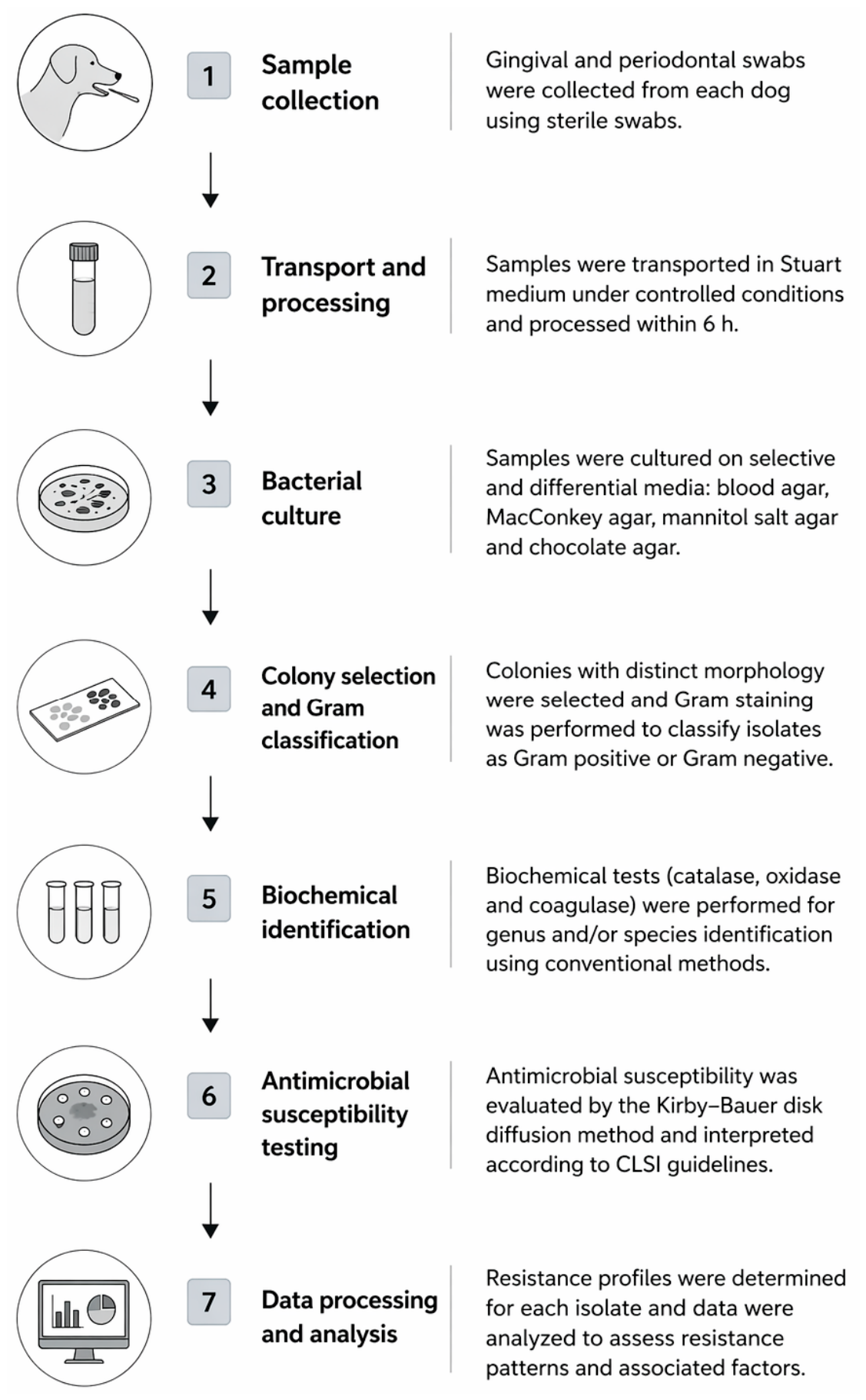
Figure 2.
Process of oral sampling, bacterial isolation, identification and antimicrobial susceptibility testing according to CLSI guidelines.
Figure 2.
Process of oral sampling, bacterial isolation, identification and antimicrobial susceptibility testing according to CLSI guidelines.
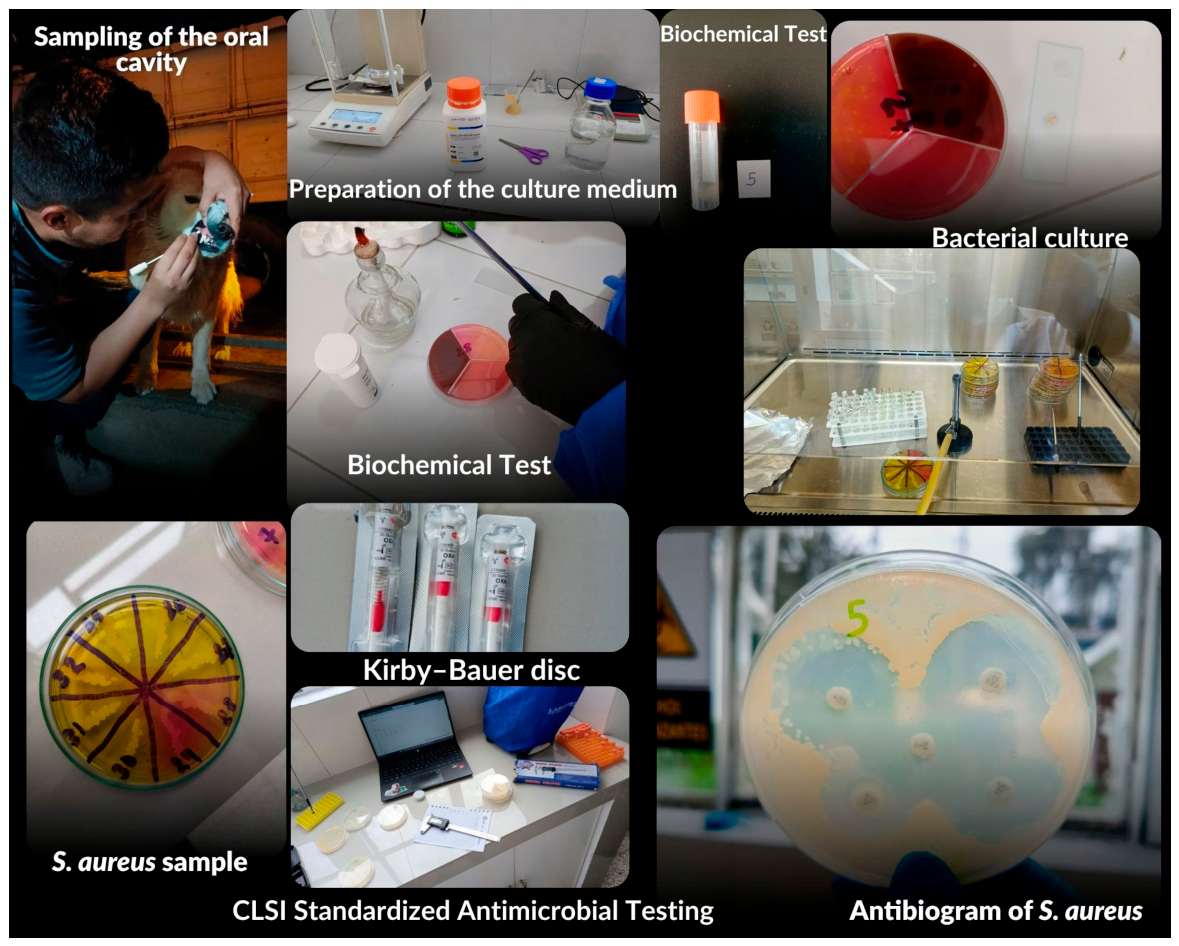
Figure 3.
Distribution of bacterial isolates recovered from the oral microbiota of domestic dogs in southern Ecuador.
Figure 3.
Distribution of bacterial isolates recovered from the oral microbiota of domestic dogs in southern Ecuador.
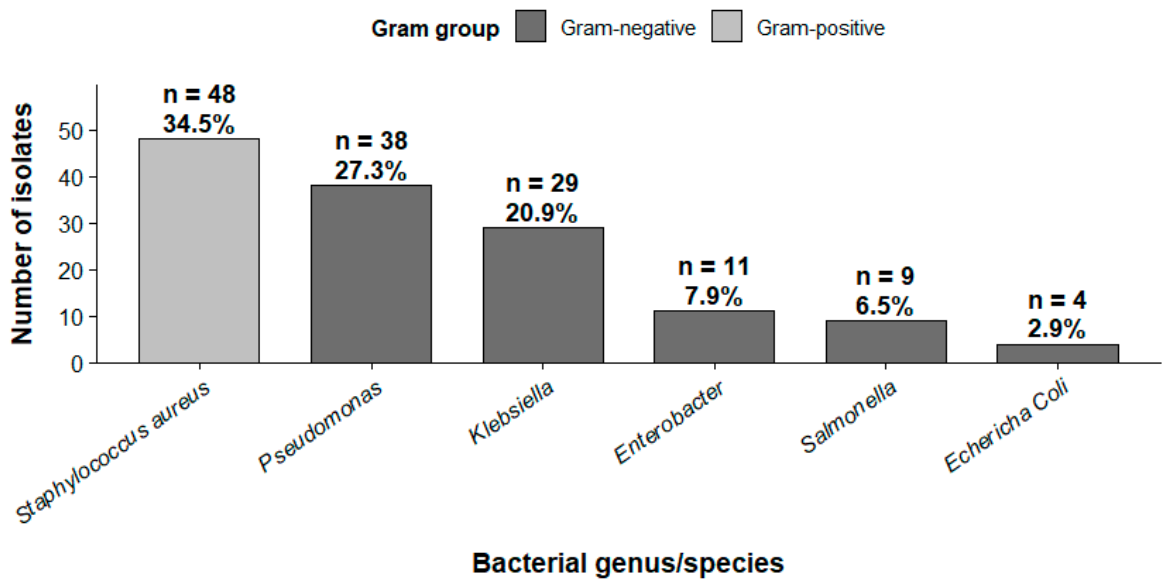
Figure 4.
Comparative distribution of antimicrobial susceptibility categories across antibiotics and Gram groups in canine oral bacterial isolates.
Figure 4.
Comparative distribution of antimicrobial susceptibility categories across antibiotics and Gram groups in canine oral bacterial isolates.
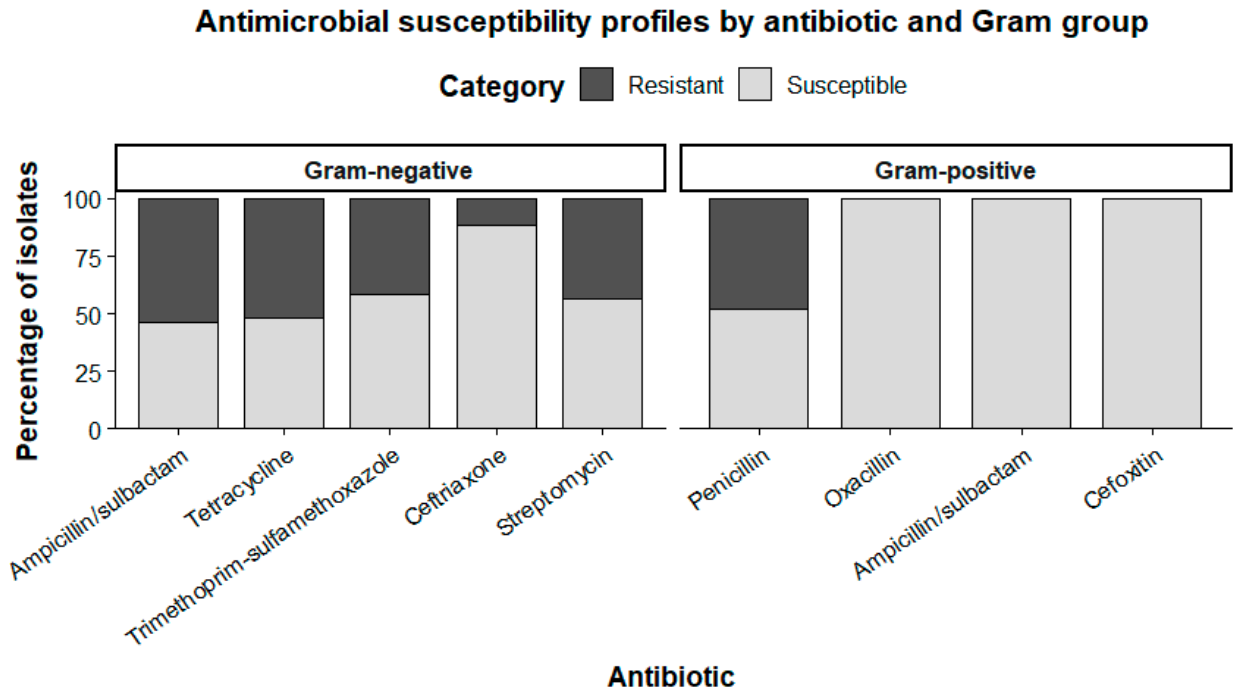
Figure 5.
Prevalence of multidrug resistance among Gram-negative bacterial isolates by genus.
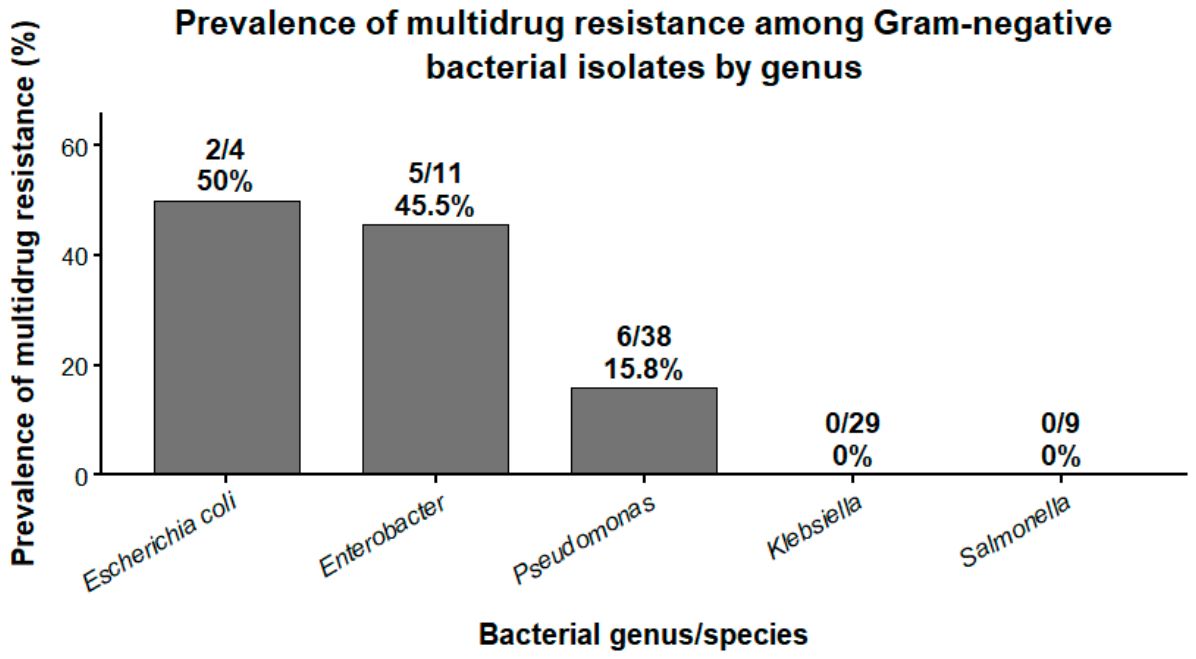
Figure 6.
Adjusted odds ratios for resistance to two or more antimicrobial classes in Gram negative oral bacterial isolates.
Figure 6.
Adjusted odds ratios for resistance to two or more antimicrobial classes in Gram negative oral bacterial isolates.
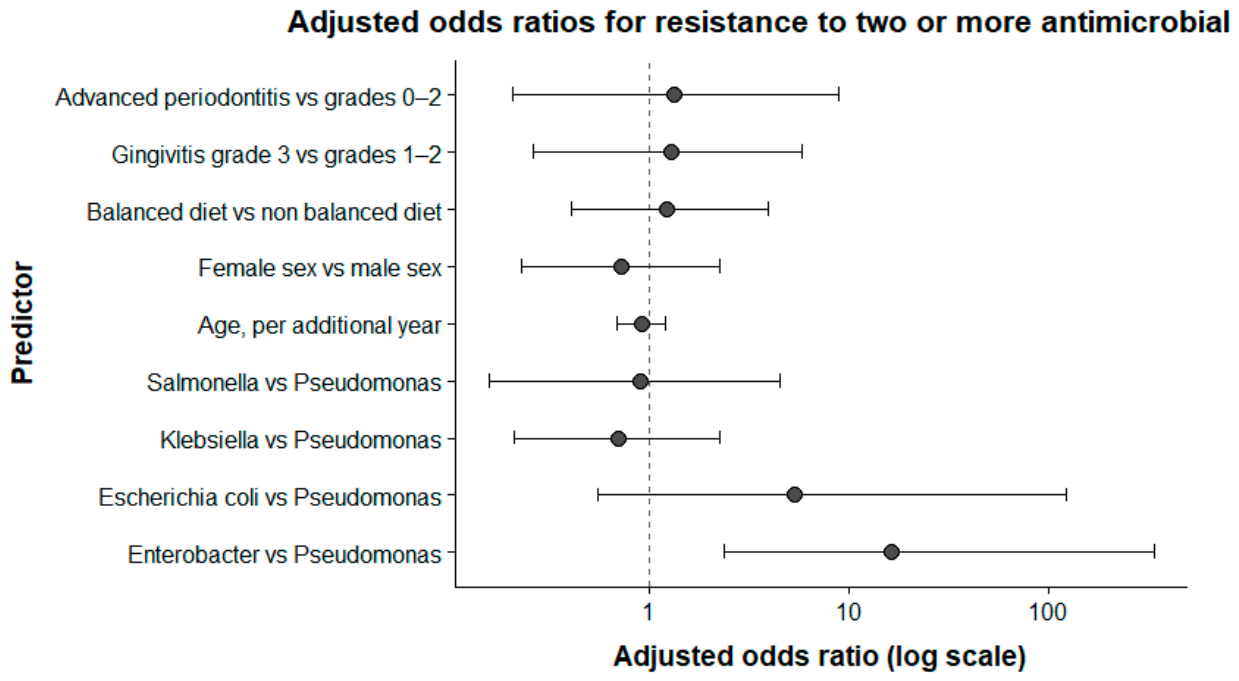

Table 1.
Bacterial composition of the analyzed isolates.
| Bacterium | n | % |
| Staphylococcus aureus | 48 | 34.5 |
| Pseudomonas | 38 | 27.3 |
| Klebsiella | 29 | 20.9 |
| Enterobacter | 11 | 7.9 |
| Salmonella | 9 | 6.5 |
| Escherichia coli | 4 | 2.9 |
| Total | 139 | 100.0 |
Table 2.
Frequency and percentage distribution of antimicrobial susceptibility categories among bacterial isolates recovered from canine oral microbiota.
Table 2.
Frequency and percentage distribution of antimicrobial susceptibility categories among bacterial isolates recovered from canine oral microbiota.
| Antibiotic |
Susceptible n (%) |
Resistant n (%) |
| Ampicillin /sulbactam (GN) | 43 (47.3) | 48 (52.7) |
| Tetracycline | 44 (48.4) | 47 (51.6) |
| Trimethoprim-sulfamethoxazole | 54 (59.3) | 37 (40.7) |
| Ceftriaxone | 80 (87.9) | 11 (12.1) |
| Streptomycin | 53 (58.2) | 38 (41.8) |
| Penicillin (GP) | 25 (52.1) | 23 (47.9) |
| Oxacillin | 48 (100.0) | 0 (0.0) |
| Ampicillin /sulbactam (GP) | 48 (100.0) | 0 (0.0) |
| Cefoxitin | 48 (100.0) | 0 (0.0) |
Note. Susceptibility categories were interpreted according to Clinical and Laboratory Standards Institute (CLSI) guidelines. Intermediate results were grouped with the resistant category for analysis. GN: Gram-negative bacteria; GP: Gram-positive bacteria. Percentages were calculated based on the total number of isolates tested for each antibiotic.
Table 3.
Burden of phenotypic resistance and multidrug resistance among canine oral bacterial isolates variables.
Table 3.
Burden of phenotypic resistance and multidrug resistance among canine oral bacterial isolates variables.
| Variable | n/N | % |
| Isolates with resistance to at least one antimicrobial, total dataset | 99/139 | 71.2 |
| Multidrug resistant isolates in the total dataset | 13/139 | 9.4 |
| Gram negative isolates with resistance to at least one class | 76/91 | 83.5 |
| Gram negative isolates with resistance to at least two classes | 39/91 | 42.9 |
| Gram-negative multidrug resistant isolates | 13/91 | 14.3 |
| Gram-positive multidrug resistant isolates | 0/48 | 0.0 |
Note. n: number of isolates with the characteristic; N: total number of isolates in the corresponding group. Multidrug resistance was defined as resistance to three or more antimicrobial classes.
Table 4.
Multivariable logistic regression for resistance to two or more antimicrobial classes in Gram negative oral bacterial isolates.
Table 4.
Multivariable logistic regression for resistance to two or more antimicrobial classes in Gram negative oral bacterial isolates.
| Preacher | Adjusted OR | 95% CI | p |
| Klebsiella vs Pseudomonas | 0.70 | 0.22–2.26 | 0.549 |
| Enterobacter vs Pseudomonas | 16.30 | 1.69–157.14 | 0.016 |
| Salmonella vs Pseudomonas | 0.91 | 0.18–4.66 | 0.909 |
| Escherichia coli vs Pseudomonas | 5.35 | 0.46–62.87 | 0.182 |
| Age, per additional year | 0.92 | 0.70–1.21 | 0.549 |
| Female sex vs male sex | 0.73 | 0.23–2.25 | 0.580 |
| Balanced diet vs non balanced diet | 1.24 | 0.40–3.80 | 0.710 |
| Gingivitis grade 3 vs grades 1–2 | 1.28 | 0.28–5.81 | 0.745 |
| Advanced periodontitis vs grades 0–2 | 1.34 | 0.21–8.44 | 0.756 |
Note. OR: odds ratio; CI: confidence interval. The dependent variable was resistance to two or more antimicrobial classes. Pseudomonas was used as the reference category for bacterial genus. Reference categories for other variables were male sex, unbalanced diet, gingivitis grades 1–2, and periodontitis grades 0–2. Statistical significance was set at p < 0.05.
Disclaimer/Publisher’s Note: The statements, opinions and data contained in all publications are solely those of the individual author(s) and contributor(s) and not of MDPI and/or the editor(s). MDPI and/or the editor(s) disclaim responsibility for any injury to people or property resulting from any ideas, methods, instructions or products referred to in the content. |
© 2026 by the authors. Licensee MDPI, Basel, Switzerland. This article is an open access article distributed under the terms and conditions of the Creative Commons Attribution (CC BY) license (http://creativecommons.org/licenses/by/4.0/).
Copyright: This open access article is published under a Creative Commons CC BY 4.0 license, which permit the free download, distribution, and reuse, provided that the author and preprint are cited in any reuse.


