

Submitted:
06 May 2026
Posted:
07 May 2026
You are already at the latest version
Abstract
Leishmaniasis is an endemic zoonotic disease caused by protozoan parasite Leishmania and transmitted through bites of infected female phlebotomine sandflies. It is listed by the World Health Organization (WHO) as one of the 20 neglected tropical diseases (NTDs), ranking ninth globally. The disease affects resource-poor populations in tropical regions. Kenya is one of the endemic countries with the highest global burden of leishmaniasis with Baringo County being a major endemic focus.
A cross-sectional KAP survey was conducted between July 2025 and January 2026 among 135 residents of Baringo South Sub-County using a structured questionnaire. The study assessed sociodemographic characteristics, awareness of the disease, perception, preventive practices. The perception of the residents on treatment-seeking behaviors was evaluated regarding leishmaniasis in Baringo County. About 12 healthcare professionals were also interviewed regarding their diagnostic and treatment capacity of healthcare provision in the region. Associations between variables were examined using multivariate logistic
regressions.
The overall awareness of leishmaniasis was high (94.8%) with Knowledge, attitudes, and practices scores as 86.7%, 76%, and 77.7% respectively. However, critical knowledge gaps on transmission dynamics, the role of role of dogs as reservoir hosts and preventive practices remained incomplete. Significant associations were observed for awareness of local cases, recognition of clinical signs, knowledge of vector activity, community control measures and attitude towards treatment preferences. Age and education levels were predictors of KAP. Health care practitioners demonstrated technical diagnostic and treatment capacity of human Leishmania infections while the veterinarians were not aware of the leishmania infection in dogs and its diagnoses and treatment. Therefore, the integration of human, animal, and vector surveillance within a One Health framework is essential to strengthen disease monitoring and control.
Keywords:
leishmaniasis
; KAP survey
; neglected tropical disease
; vector-borne diseases sandflies
; reservoir hosts
; one health: Kenya
1. Introduction
Leishmaniasis a vector-borne and zoonotic parasitic disease transmitted through the bites of infected female phlebotomine sandflies. It is one of the emerging endemics and neglected tropical diseases (NTDs) in humans and a major public health concern in many tropical and subtropical regions. The disease is caused by more than 20 species of genus Leishmania such as L. donovani and L. infantum for VL, L. major, L tropica and L. aethiopica for CL and L. aethiopica and occurs in several clinical forms, including visceral leishmaniasis (VL), cutaneous leishmaniasis (CL), and mucocutaneous leishmaniasis (MCL)[1].
Canines are the main reservoir hosts for the parasite, but rodents, marsupials, foxes and humans also act as reservoirs depending on the species of Leishmania and geographical location. However, community awareness of canine as reservoirs is often limited despite the close association between humans and domestic animals in rural settings which increases opportunities for vector-mediated transmission [2].
Transmission involves an infected female phlebotomine sandfly vector that inject metacyclic promastigotes into the skin of the host while taking a blood meal The parasite is transmitted through anthroponotic or zoonotic complex ecological cycles, that include the parasite, sandfly vectors, mammalian hosts, and environmental conditions that support vector survival. This host–vector–parasite interaction is influenced by both biological and environmental factors that determine the persistence and spread of the disease [3,4].
According to the World Health Organization (WHO), leishmaniasis has been listed at 9th position among the 20-priority (NTDs) in humans targeted for control and elimination by 2030 [5,6]).The disease affects marginalized and impoverished and malnourished populations in arid and semi-arid rural areas with poor access to healthcare and living in poorly constructed houses. It is also endemic among communities who keep animals and lack knowledge of disease, vector behavior, and protective measures ([7,8,9,10].
The disease has a global distribution affecting millions of neglected communities and placing more than one billion individuals at risk of infection. It has been reported in over 89 countries like Asia, Africa, South America, and the Mediterranean region being the most endemic areas. Globally, there are estimate cases of about 12 million, about 40,000-50,000 mortalities annually and more than 350 million people at risk of contracting the disease[11,12].
East Africa represents one of the heavily affected regions globally, with countries such as Ethiopia, Sudan, Somalia, Eritrea and Kenya reporting high disease burdens of both VL and CL. In Kenya the disease is endemic in several counties, including Baringo, Turkana, Marsabit, Wajir, Isiolo, Kitui, West Pokot and Garrisa. Baringo County, located in the semi-arid region of Rift Valley, provides suitable ecological habitats for sandfly resting and breeding due to the presence of termite mounds, suitable vegetation, and traditional housing structures. This increases human exposure to the sandfly vectors. Livestock keeping and dog ownership are also common in the county, providing animal reservoirs and possibly contributing to the persistence of infections[13,14,15].
The fight against leishmaniasis is dependent on the knowledge, attitudes, and practices of affected communities and identifying the existing gaps which are essential to design and implement an effective intervention. Adequate capacity of the health care practitioner in these communities, on early detection, diagnosis and treatment of the disease is also essential for such interventions. This study assessed the knowledge, attitudes, and practices among the residents, the role of dogs as a reservoir host for leishmaniasis and the capacity of the health practitioners in Baringo County. The findings from this study will help policy makers to come up with effective interventions for proper prevention, control and eradication strategies for the disease.
2. Materials and Methods
2.1. Description of the Study Area
The study was conducted in Baringo South sub-County in Baringo County, Kenya. The area was purposely selected because of its accessibility, adequate security, characteristic environmental conditions favorable for sandfly breeding, pastoral activities and dog ownership. There have also been previous reports of the area being the main endemic foci for VL and CL transmission to neighboring counties [14]. However, the population of dogs in the study areas was not well documented by the (Kenya National Bureau of Statistics 2019 census) but preliminary finding on leishmania status has been previously reported by [16].
Baringo County covers approximately 11,075 km² with an estimated human population of 555,561(KNBS census 2019). The region lies about 250 km northwest of Nairobi at an altitude of approximately 1067 meters above sea level. The county experiences semi-arid climatic conditions, with mean annual temperatures of 32.8 ± 1.6°C and average annual rainfall of approximately 512 mm, occurring in two rainy seasons (March–August and November–December).
Environmental conditions in the area are favorable for sandfly breeding including presence of termite mounds, animal burrows, rock crevices, tree holes, and dense vegetation. In addition, traditional housing structures with mud-plastered walls and thatched roofs provide resting sites for sandflies, increasing the risk of human exposure [17].
The main economic activities are predominantly mixed farming, livestock keeping, pastoralism, and trading which may increase exposure to sandflies and potential reservoir hosts. The area also has limited healthcare infrastructure as most people are pastoral communities living in the remote rural areas hence financial burden on expensive drugs, transport cost to and from hospital which deepens poverty cycles. Some of the residents in the county have poor knowledge of transmission and prevention methods like use of insecticide-treated nets coupled with the cultural practice of sleeping outside [18].
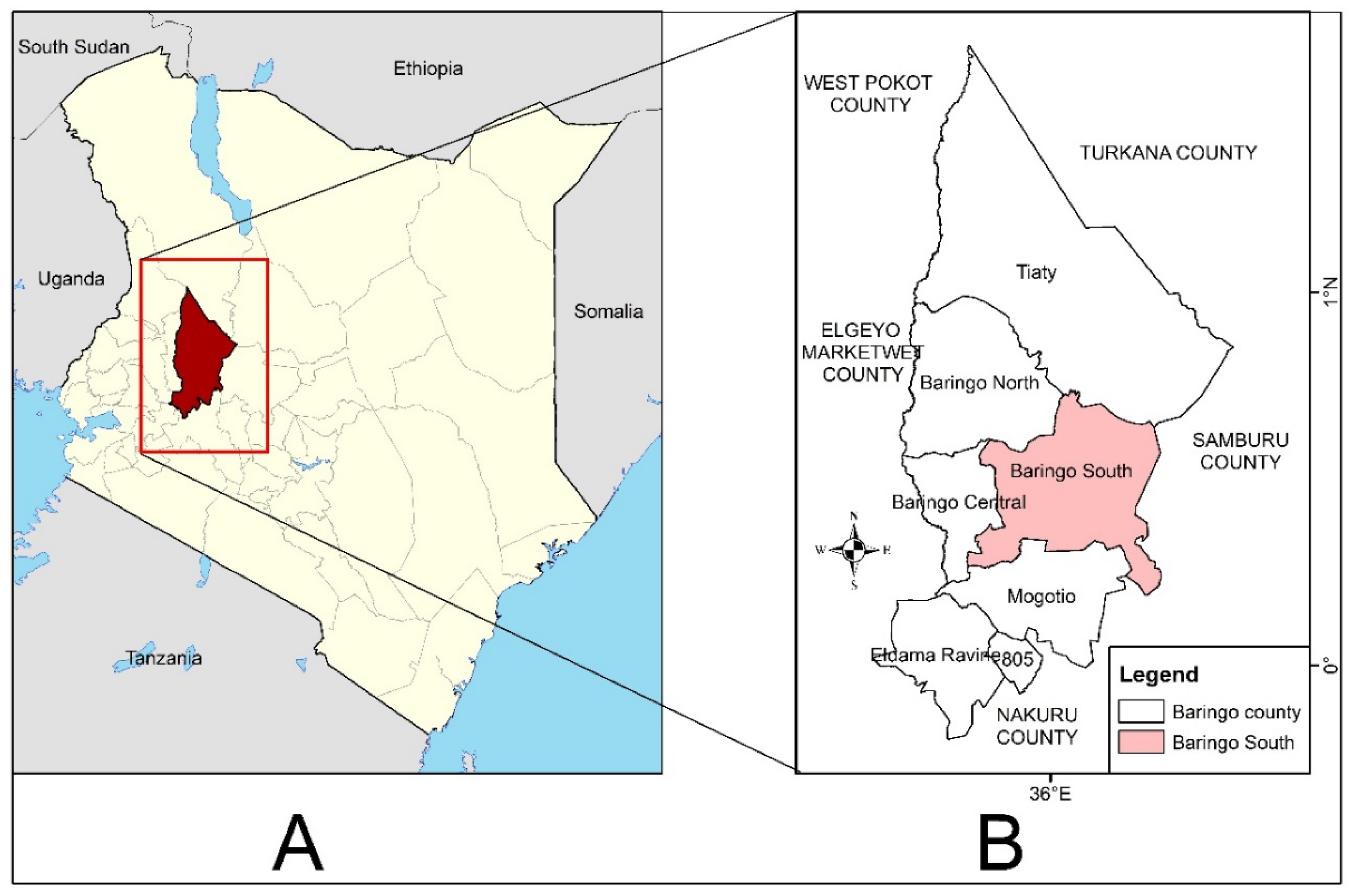
The county borders Turkana and West Pokot counties to the north, Samburu and Laikipia counties to the east, Nakuru and Kericho counties to the South, Uasin Gishu County to the Southeast and Elgeyo Marakwet to the West. It is divided into 7 sub-counties: Baringo South, Baringo central, Baringo North, Mogotio, Eldama Ravine, Tiaty West and Tiaty East.
Figure 1.
One health transmission cycle transmissions cycle.
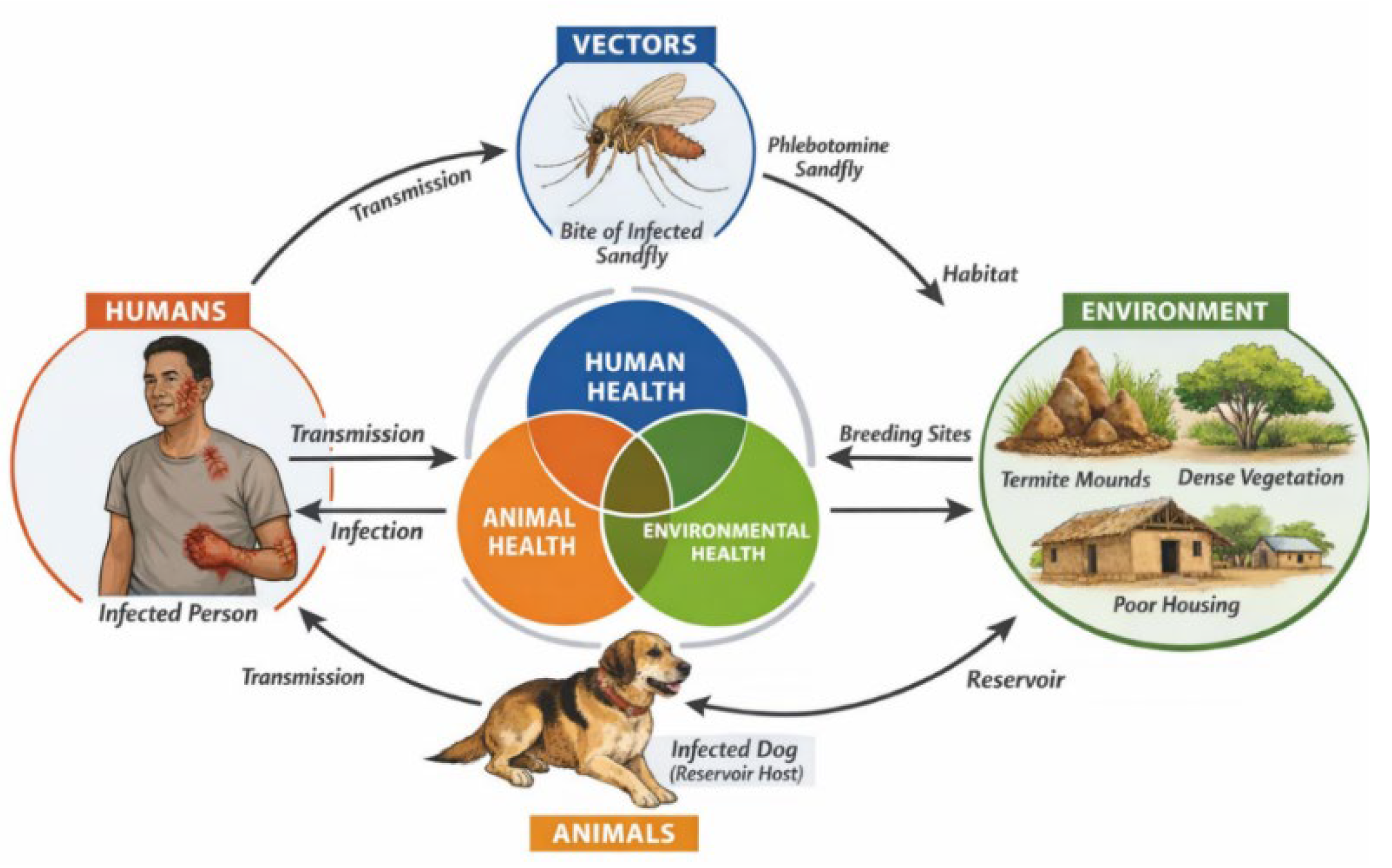
Figure 2.
Map of Kenya (A) showing the location of Baringo County and inset (B) map of Baringo county, showing its sub-counties and the neighboring counties.
Figure 2.
Map of Kenya (A) showing the location of Baringo County and inset (B) map of Baringo county, showing its sub-counties and the neighboring counties.
2.2. Study Population
The study population consisted of residents of Baringo South Sub-county and healthcare workers working within the study area for the last one year.
2.3. Study Design
This was cross-sectional questionnaire survey study conducted between July 2025 to January 2026. The study adopted a One Health approach, integrating human, animal, and environmental components of disease transmission. Four locations were purposively selected based on previously documented cases of leishmaniasis, accessibility and security as the area is commonly associated with tribal clashes. These included: Marigat, Kimalel, Sandai, Kapkuikui. A multi-stage random sampling approach was adopted where, one sub-location was selected form each location and subsequent villages hence Rabai, Sabor, Mbechot and Kapkuikui respectively.
Household lists were obtained from village elders, administrative offices, community health workers, and Kenya National Bureau of Statistics (KNBS) which served as the sampling frame. The first household from the list was selected and thereafter every third household until the sample size was reached. If members of the selected household were unavailable or declined to participate in the survey, the household was excluded and the next household was approached. The study participants were preferably the household heads if available during the time of the home visit to ensure that the participants were the main decision-making individuals.
The study sought to determine community awareness regarding leishmaniasis, including its causes, transmission, symptoms, and prevention, identifying knowledge gaps and behavioral factors, analyzing community perceptions and beliefs about leishmaniasis, including misconceptions and traditional knowledge. Assess practices related to leishmaniasis prevention, treatment-seeking behavior, and risk exposure. Provide recommendations for targeted health education and disease control intervention.
To assess the level of awareness of leishmaniasis, the knowledge of the residents regarding the disease and whether the community understands that leishmaniasis is transmitted by sandflies was determined. The study also assessed their awareness of symptoms and health complications associated with the disease and their sources of information about leishmaniasis e.g. healthcare providers, community meetings or media.
On Perceptions and beliefs, the study sought to determine the community beliefs on how leishmaniasis is contracted and treated, traditional explanations and cultural beliefs surrounding the disease and the stigma and misconceptions affecting health-seeking behavior. The study also assessed the practices employed by the residents such as preventive behaviors like use of insecticide-treated bed nets, protective clothing, and environmental sanitation among other practices of keeping animals and migrations. Healthcare workers and veterinarian were also interviewed to assess their knowledge and technical experience regarding the detection, diagnosis, and management of leishmaniasis in humans and dogs.
2.4. Sample Size Determination
Sample size for the questionnaire survey respondents was calculated using Cochran’s formula for cross-sectional surveys:
where: Z = standard normal deviate (1.96 at 95% confidence level), p = estimated prevalence of human VL (21%), q = 1 – p, e = margin of error (7%). The calculated sample size was 131 respondents. To improve statistical robustness, 135 participants were ultimately included. Additionally, 10 healthcare professionals and 2 veterinarians were interviewed.
2.5. Data Collection
A pretested and validated semi-structured questionnaire that was written in English and translated to Kalenjin by a trained research assistant was administered using an Open Data Kit (ODK). The questionnaire captured the sociodemographic characteristic of the respondents and their level of awareness, perception and practices towards the leishmania infection. The study also sought to determine the community control measures such as clearing the vegetation and destroying of termite hills near their homestead. Observation checklists were used to assess environmental and household conditions, including proximity to vector breeding sites and housing structures.
Questions were also posed to the medical health workers on the number of leishmaniasis cases that they had attended to over a period of one year, the methods they used for diagnosis, the available treatment options, and the sources of anti-Leishmania drugs to the facility.
2.6. Inclusion Criteria
The respondents included in the study were both male and females, aged 18 years and above, who were either the household heads or an alternative household participant. The respondents were also included if they had one of the family members or themselves infected with leishmaniasis. The other criteria were that the respondents must have lived in the area for more than one year at the time of the study.
2.7. Participant Consent
An informed consent was sought from the study participant after the study protocol was explained to them. The participants were also assured of the confidentiality of any details shared with the researcher as well as the findings from the study and their benefits to the control of disease in the area. The participants who voluntarily and willingly accepted to participate in the study signed a written consent form indicating their willingness to participate in the study.
2.8. KAP Scoring System
Participants’ knowledge, attitude, and practice were assessed using structured scoring criteria adapted from previous KAP studies [19]. Awareness was assessed using 12 questions with a maximum score of 20 points. Knowledge levels were categorized as 0–5: Poor knowledge,6–10: Basic knowledge,11–15: Moderate knowledge, 16–20: Good knowledge. Attitudes were evaluated using five statements scored on a Likert scale. The maximum score was 6 points, categorized as 0–2: Negative attitude, 3–4: Moderate attitude and 5–6: Positive attitude. Preventive practices were assessed using six behavioral questions with a maximum score of 12 points categorized as; 0–4: Poor practices,5–8: Fair practices, 9–12: Good practices.
2.9. Data Management and Statistical Analysis
Data was collected electronically by trained data collectors using Open Data Kit (ODK) and stored in a secure cloud database. The data collected after each session with respondents was checked to ensure that the session was completed before starting the next interview. Statistical analysis was done using statistical software R 4.4.1 441 [20]. The analysis included descriptive statistics of frequencies, proportions, medians, means, ranges and percentages and inferential statistics were used to explore the associations. Univariate analysis was done using the Arsenal package in R [21], with the criteria of ever been diagnosed with Leishmaniasis as the outcome variable. Predictor variables that returned with statistical p values ≤ 0.1 were proceeded for further analysis to a binomial logistic regression model and analyzed with the DescTools package [22]. P values statistical significance was set at p ≤ 0.05 and odds ratios of associated variables were reported. The same procedure as described above was followed when checking for associations between sociodemographic characteristics. However, if the outcome variable had more than 3 categories/levels, the significant univariate variables were subjected to multinomial logistic regression using package VGAM [23].
3. Results
3.1. Sociodemographic Characteristic of the Respondents
A total of 135 respondents participated in the study and all of them were from Kalenjin ethnic group which is predominant in the County. Majority of the respondents (97%) lived in the study area for more than one year, indicating a relatively stable population with long-term exposure to the local environment and potential disease risk factors. There were more men (55.6%) than women and the mean age was 42.6 years ((SD = 14.6; range 18- 83) years. A large number (43.7%) of the respondents had attained at least primary school level of education. Majority of the respondents were married (74.1%), while 14.1% were single and 11.1% were widowed. The predominant economic activity was mixed farming (56.3%), followed by casual labor (18.5%) and trading (15.6%). No statistically significant associations were observed between sociodemographic characteristics and previous diagnosis of leishmaniasis (p > 0.05). (Table 1).
3.2. Knowledge of Leishmaniasis
Majority (86.7%) of respondents demonstrated moderate to good knowledge of leishmaniasis (Figure 3), while the others exhibited poor knowledge. The overall awareness of the infection was high 94.8%. The primary sources of information on the disease were local community members (42.2%), healthcare workers (29.6%) and broadcast media (15.6%). Although the source of information varied across respondents, there was no statistically significant association between the source of information and knowledge of the disease. More than half of the respondents (62.2%) reported that they were aware of leishmaniasis cases occurring within their locality.
Similarly, respondents who reported awareness of more than 10 cases having occurred within their locality were significantly more likely to recognize the disease indicating that disease prevalence within communities may influence knowledge levels. Knowledge of clinical manifestations of leishmaniasis varied among the respondents. Most participants (100%) correctly identified at least one clinical sign of leishmaniasis which included splenomegaly, fever, lymphadenopathy, malaise, or skin ulcers. The distribution of reported clinical signs was not uniformly distributed across respondents, but it demonstrated association with awareness of the disease.
Regarding knowledge on disease transmission, 52.6% of the respondents reported that they were aware of the source of infection, while 47.4% reported to have no knowledge of transmission pathways. Only 31.9% correctly identified sandflies as the source of infection, while 17.8% incorrectly associated termite hills as the source, reflecting partial misunderstanding of vector ecology hence, knowledge of vector transmission dynamics was limited.
Majority of the respondents (82.2%) were aware of the presence of biting flies in their locality. Knowledge of vector activity varied with majority (61.5%) of the respondents reporting that they were aware of peak period of vector presence and activity as evening while 20.7% reported it to be morning suggesting incomplete knowledge of vector behavior.
Less than half of the respondents (40%) were aware of individual prevention measures such as avoiding areas with flies, wearing long-sleeved clothes, and using fly repellants. Nearly half of the respondents (48.1%) were aware of the community control measures of Leishmania infections such as destruction of the termite hill and clearing vegetation near their homestead and control of flies through use of insecticides. A critical knowledge gap was recorded regarding the role of domestic animals in disease transmission with nearly all respondents (99.3%) being unaware of the dogs as important reservoir hosts for zoonotic leishmaniasis. (Table 2).
3.3. Attitudes Toward Leishmaniasis
Overall attitude scores indicated that 76% of respondents exhibited positive attitudes toward leishmaniasis prevention and treatment (Figure 3). Majority of respondents (82.2%) demonstrated a positive attitude towards seeking treatment when experiencing symptoms suggestive of leishmaniasis. Although this suggests positive health-seeking behavior, the association between treatment-seeking behavior and infection status did not reach statistical significance. Similarly, 82.2% of respondents considered leishmaniasis to be a significant public health problem in their community.
Most respondents (68.9%) preferred modern medical treatment, whereas 13.3% preferred traditional herbal remedies. When asked about preferred treatment options, 68.9% reported a preference for hospital-based treatment, whereas 13.3% indicated reliance on traditional remedies. However, 68.9% of respondents perceived treatment as expensive, which may represent a potential barrier to timely seeking healthcare.
Moreover, majority of the respondents (60%) demonstrated negative attitude towards individual prevention measures against infection while more than half had interest in participating in the community control measures indicating potential behavioral barriers to vector control. However, this variable did not demonstrate statistical significance.
Community engagement in vector control activities showed a statistically significant association with nearly half of respondents indicating willingness to participate in activities such as vegetation clearing and termite mound destruction. (Table 4). Multivariable logistic regression analysis identified age and education level as significant predictors of positive attitudes toward leishmaniasis (p < 0.05). (Table 7)
3.4. Preventive Practices
Overall preventive practice scores among respondents were generally favorable (77.7%)(Figure 3). A large proportion of participants (96.3%) reported sleeping under protective mosquito nets, which may provide indirect protection against sandfly bites. However, bed net usage did not show a statistically significant association with infection status.
Environmental hygiene practices were good with 95.6% reporting proper waste disposal practices through burning or burying. Some of the respondents (29.6%) reported using traditional methods of treatment such as herbs and barks of a tree. However, potential risk factors were identified within households where approximately 81.5% of respondents reported owning dogs, and 24.4% reported sleeping near their dogs at night, potentially increasing the risk of infection.
In addition, majority of respondents (93.3%) reared domestic animals such as cattle, sheep and goats. Migration patterns were also common within the study population, with 56.3% of respondents reporting periodic migration related to farming, pastoralism, trading, or tribal conflicts. However, there were no statistically significant associations observed between preventive practices variables and leishmania infection. (Table 5)
3.5. Logistic Regression Analysis of the Predictors of KAP
Variables with p ≤ 0.1 in univariate analysis were included in the final regression model. These included: awareness of reported cases, number of cases reported, clinical signs, treatment preference, cost of treatment, knowledge of vector, vector activity period, control measures and source of infection. Among these indicators significant odds were registered for unawareness of source of infection where respondents who were unaware of the source of infection were 7.77 times more likely to have been diagnosed with leishmaniasis (OR = 7.77; 95% CI: 1.42–52.87) as compared to those who correctly identified sandflies as the source.
Similarly, respondents who associated infection with termite hills and biting flies had increased odds of previous diagnosis (OR = 4.42; 95% CI: 0.77–31.36). Respondents who reported awareness of more than 10 cases within their locality had increased likelihood of recognizing the disease (OR = 1.75; 95% CI: 0.20–15.63).
Treatment-seeking behavior also influenced disease outcomes. Respondents who did not seek medical treatment had markedly higher odds of infection (OR = 11.51; 95% CI: 0.30–495.64). Knowledge of vector activity also influenced infection risk. Respondents who correctly identified period of high vector activity were less likely to report infection (OR = 0.82; 95% CI: 0.18–3.36), suggesting that vector awareness may contribute to protective behavior.
Additionally, knowledge of control measures influenced the risk of infection. Respondents who had no knowledge on control measures were less likely to prevent themselves from the infections (OR=0.217;95%Cl: 0.020 -2.334) (Table 3).
3.6. Association of Demographic Characteristics and Knowledge, Attitude and Practices of the Respondents
Multivariate analysis demonstrated that only age and education level of the respondents were true predictors of KAP. Respondents who had poor (OR=1.007; 95% CI 0.961-1.055) to fair attitude (OR=1.037; 95% 0.993-1.082) of the disease were more likely to be young as compared to old. The respondent with primary, secondary and tertiary education level (OR=0.3; 95% CI 0.026-3.399; OR=0.17;95% CI 0.018-1.806), (OR=0.044; 95%CI 0.003-0.713; OR=0.102;95% CI 0.008-1.259) and (OR= 0.118; 95% CI 007-1.93; OR=0.146; 95% CI 0.011-1.866) were less likely to have a poor to fair attitude as compared to those with no basic education. (Table 7).
Figure 3.
Knowledge, Attitude and Practice score chart on leishmaniasis.
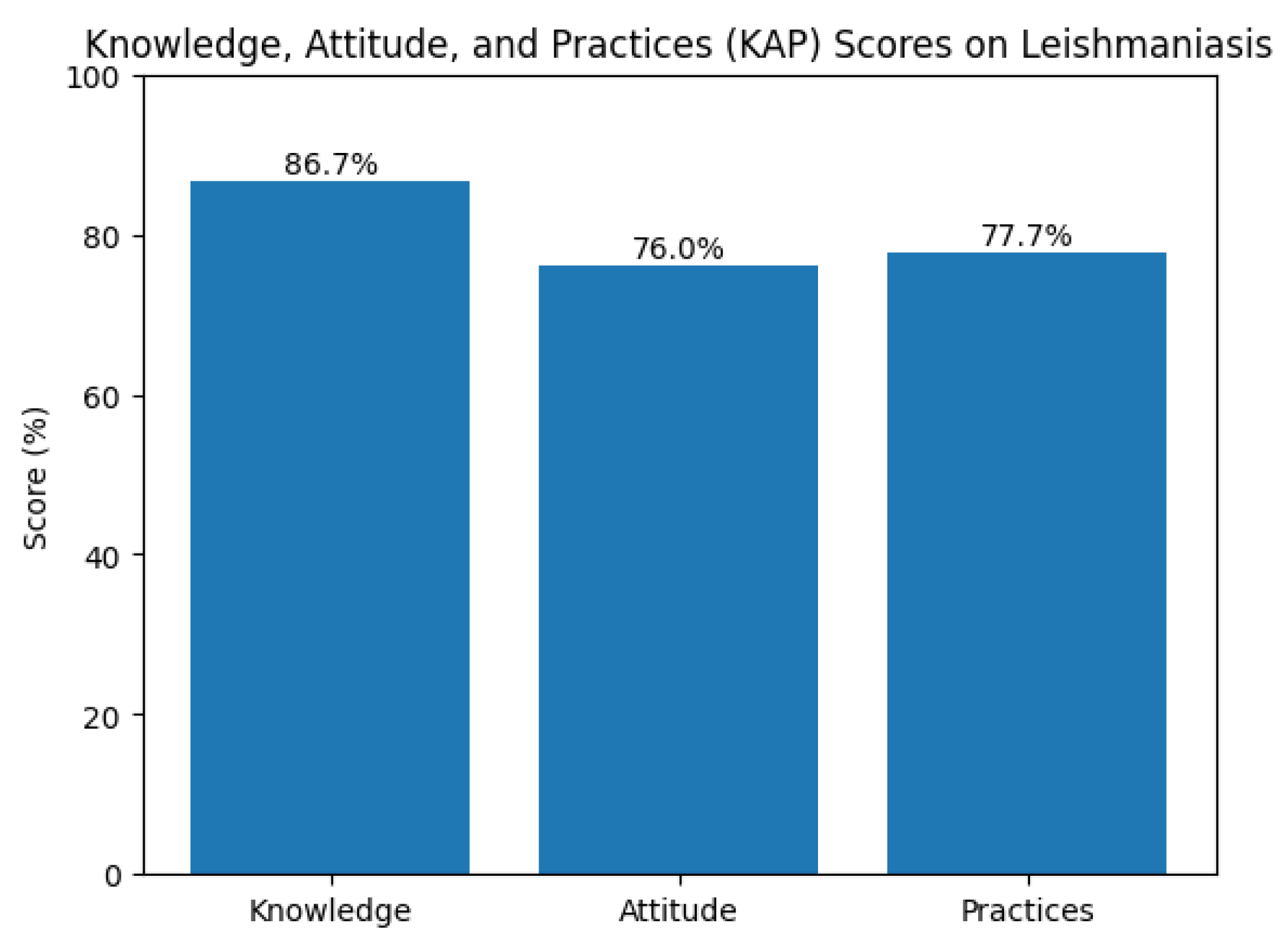

Table 6.
The univariate analysis of demographic characteristics and the KAP of the respondents.
| Variable | Category | P value | ||
|---|---|---|---|---|
| Knowledge | Attitude | Practice | ||
| Age (years) | Mean ± SD | 0.635 | 0.007 | 0.668 |
| Range | ||||
| Resident | Yes | 0.423 | 0.034 | 0.803 |
| No | ||||
| Gender | Male | 0.302 | 0.273 | 0.703 |
| Female | ||||
| Education level | None | 0.180 | 0.014 | 0.617 |
| Primary | ||||
| Secondary | ||||
| Tertiary | ||||
| Family role | Father | 0.553 | 0.373 | 0.382 |
| Mother | ||||
| Children | ||||
| Marital status | Married | 0.762 | 0.001 | 0.069 |
| Single | ||||
| Widowed | ||||
| Divorced | ||||
| Occupation | Mixed farming | 0.381 | 0.016 | 0.650 |
| Casual labor | ||||
| Trading | ||||
| Other employment | ||||
3.7. Socio-Demographic Characteristics of Health Professionals
A total of 12 health care workers both in the medical and veterinary fields in Baringo County were interviewed to assess their knowledge on Leishmania infections in humans and dogs, their approach to detection, diagnosis, treatments and the challenges encountered.
Among them were one health record personnel, two medical doctors, two veterinarians, two public health officers, two lab technicians, two clinical officers and 1 nurse. The duration of work and experience of these professionals in Baringo County ranged from 1 to 15 years. Both male and female healthcare workers were included in the study with 4 (25%) of them being females and 8 (75%) of them being males.
3.8. Technical Experience of Detection, Diagnoses and Treatment of Leishmania Infections
The common forms of leishmaniasis that were reported were CL, VL and Post-Kala-azar Dermal Leishmaniasis (PKDL). The number of cases reported ranged from 5-20 per month. Most of the common clinical signs that are presented by the leishmania patients are fever, anaemia, malaise, epistaxis, abdominal swelling (splenomegaly and hepatomegaly), low hemoglobin levels, skin ulcers, emaciation, malnutrition and lack of appetite. The common ages affected were young children and males less than 18 years of age.
The routine method of diagnosis was bone marrow aspiration and thereafter microscopic examination of bone marrow smears for identification of amastigote stage of the parasite. Occasionally Rapid Diagnostic Test were carried out when the kits were available. The available treatment options were blood transfusion to the patients with low Hemoglobin levels, Sodium Stibogluconate (SSG) for patient with Cl and paromomycin and liposomal amphotericin B for VL form. Most Leishmania infection patients commonly were coinfected with HIV, TB, Malaria, Hepatitis.
The major challenges experience in the diagnosis, management and treatment included lack of diagnostic kits and drugs. Unavailable blood and blood products for blood transfusion, recurrent infections, drug side effects, malnutrition, late diagnosis and lack of trained personnel. Most of the drugs and the diagnostic kits are funded by the WHO, Kenya Medical Research Institute (KEMRI) and Drug for neglected disease initiative (DNDi).
The interview with the veterinarian demonstrated that they were not aware of leishmania infection in dogs, any clinical signs associated with the infection in dogs and the diagnosis and treatment options for the same. Therefore, despite high clinical awareness of human leishmania infection, there is a disconnect between domestic animal management and disease transmission which represents a critical failure point in Baringo’s current surveillance system.
4. Discussion
The level of awareness of leishmaniasis among study participants was high (94.8%), which likely reflects the longstanding endemicity of disease in Baringo County and the recurrent occurrence of cases in the community. Similarly, high levels of awareness have previously been reported in the county by [15] where 95.48% of the respondents were reported to be aware of kala azar with 89% of the respondents confirming to have ever seen a leishmaniasis patient. High levels of awareness have also been reported in other endemic countries such as Brazil where (95.5%) of respondent were aware ([24] in Ethiopia (82.7%) [25] and Bangladesh(100%) [26]. However, a lower level of awareness was reported in similar studies in Pakistan where only (59.7%) of the respondents [27], in Iran (47.7%) [28] and Central Ethiopia (42.1%)[8] were aware. The difference in awareness reported from different regions in the world could be attributed to difference in the level of exposure to the infections and the prevention and control interventions in place. In addition, the difference could be alluded to the fact some of the respondents had been diagnosed before or they knew someone in their community who had been sick. However, despite the high awareness observed in this study, knowledge regarding the transmission dynamics of the disease remained incomplete. The present study demonstrated that about 16.2% of the respondents were diagnosed with leishmania infection. This confirm the finding of a previous study in the county where 20% of the respondents had been infected with Leishmania [15]. This shows that leishmaniasis is still endemic in the County.
The present study also showed that 62.2% of the respondents were aware of reported cases in their locality. This aligns to a previous finding in the county by [15]where 89% of the respondents confirmed to have seen a Leishmania patient. This corresponds to finding from similar studies in Sodo Ethiopia where 51.1% of participants could identify some of their neighbors who had been victims of leishmania infections [25]. This suggests that community exposure to cases may contribute to improved disease recognition.
The primary source of information about disease recorded in the current study was local community members, where 42.2% of the respondent’s obtained information from their neighbors and friends, 29.6% of them from healthcare workers, 15.6% from radio and television, 5.2% from other media sources and 2.2% from researchers. This concurs with finding from similar studies elsewhere where in Iran 31.4% [28], Brazil 41.2% [4], West Tigray Ethiopia 80.8[25], Sri Lanka 51.6% [10], and Sodo Ethiopia 82.7% [19] of the respondents respectively heard about the disease primarily from local community members. This highlights the importance of these sources of information and the need for continuous surveillance and provision of the correct information to the communities to avoid misconceptions and misunderstanding of the disease which can create a barrier to effective control.
All the respondents in the present study could describe at least one of the clinical signs associated with Leishmania infection in humans but could not describe any clinical manifestation in dogs. This is similar to reports from previous study in Western Tigray[19] and in Northwest Ethiopia[29] where 88% of the respondents knew at least one clinical sign and symptoms of leishmania infections in humans. However, these finding differ from those of [30] in Iran who reported that 77.6% of the respondent were not aware of the signs and symptoms of the leishmania infection in humans. This awareness of the clinical signs of Leishmania could be attributed to the lasting scars due to skin lesions in CL as well as the abdominal enlargement in VL cases which result in social stigma from the affected people.
Almost half of the respondents (47.3%) were not aware of the source of infection and only 31.9% of respondents could correctly identify sandflies vectors as the source of Leishmania infection. However, 82.2% of participants were aware of the association between biting flies and disease. Similar gaps in knowledge regarding transmission have been reported in studies in central Ethiopia [8], Northeast Ethiopia [29] and Pakistan[31] where 17.5%, 52.1% and 57% of the respondents respectively were aware of the sandflies as source of infection. However, a similar study in central Iran demonstrated a high level of awareness where 97.9% of participants were aware of bites of sandflies as source of leishmania infection. [32]. Contrary, a similar study in Sodo Ethiopia [25] and Iran [30] demonstrated that 53.4% and 97.2% of respondents respectively were not aware of the causative agent of the infection.
Knowledge of vector activity varied with majority (61.5%) reporting high vector activity to be in the evening, while 20.7% reported it to be the morning. Th awareness on vector activity was higher than what was reported in similar study in Pakistan[27] where only 3.8% of the respondent identified the peak vector period as at night. A similar study in Pakistan reported that 42% of the respondents were unaware of the peak period of sandfly activity with 91% not sure of specific time of the day when they were most active ([31]. The notable difference in awareness of sandflies as source of infection in Iran, Ethiopia and Pakistan compared to the finding from the present study could be attributed to the difference in exposure to information. Therefore, community education on the biology of the sand fly and its role in transmission of Leishmania are needed to enhance prevention and control.
Significant knowledge gaps in the preventive measures for leishmaniasis were demonstrated in the current study, where 60% of the respondents were not aware of the control measures including use of fly repellents, treated nets, wearing long sleeved clothes and avoiding areas with flies. This is contrary to the finding in Ethiopia[19,25,29] and Iran [28] where respondent were aware of these protective measures. However, this knowledge was missing as reported by a study in Pakistan where significant gaps in preventive measures were identified [31]. This knowledge on preventive measures could be attributed to continuous surveillance and sensitization of malaria which have created awareness to the residents of the importance of using a mosquito net and fly repellant to control biting flies like mosquitoes which cause malaria. In addition, the availability of mosquito repellants in most supermarkets and drug stores prompts public health officials to educate the community on need to use them not only for mosquitoes but for sandflies.
Additionally, half of the respondents (51.9%) were not aware of the control measure against the sandflies such as clearing the vegetation and destroying the termite hill which are the major ecological features that favour the multiplication and survival of the flies. These finding aligns with those from studies in central Ethiopia [8] and Sri Lanka[10] where most of the study participant were not aware of community control program as control measures against sandflies or how to prevent the transmission of the disease. Therefore, there is need for community awareness of vector ecology, Leishmania transmission pathways, and preventive measures.
A particularly important finding of this study was the lack of awareness regarding the role of dogs as zoonotic role of dogs in leishmaniasis transmission cycle. Nearly all respondents, 99.3%, were unaware that dogs may serve as reservoir hosts for zoonotic leishmaniasis. This finding highlights a critical gap in community understanding and underscores the need for integrated One Health education programs that address both human and animal health. This observation is consistent with findings from studies conducted in Ethiopia[8,19] where participants were unaware of dogs as animal reservoirs for leishmania infection. In addition, a study in Iran showed lack of awareness of the respondent on the reservoir host for both CL and VL where 36.4% of respondents were not sure of the reservoirs host for CL while 28.3% thought it was the rodents while 23.5% mentioned dogs [28]. In contrast, studies conducted in Brazil and Oromia Ethiopia where canine visceral leishmaniasis surveillance programs are well established have reported significantly higher levels of community awareness regarding the role of domestic dogs and wild canids in disease transmission and severity and clinical signs of leishmania in dogs[4,24,33,34]. The lack of awareness observed in the present study suggests that the zoonotic dimension of leishmaniasis remains poorly understood within affected communities. The discrepancy on the awareness of dogs as a reservoir for leishmania infection in humans among different regions confirms that the zoonotic potential of leishmania has not been fully explored.
Attitudes toward seeking medical treatment were generally positive among respondents. Most 82.2% of participants indicated that they would seek treatment from healthcare facilities if they suspected infection while only a few felt otherwise 24(17.8%). Similar studies conducted in Ethiopia and Sri Lanka, also demonstrated that the respondent had a positive attitude toward seeking medical care immediately they felt sick [19,29]. However, concerns regarding treatment cost and accessibility were commonly reported where 68.9%of the respondents believed that hospital treatment for leishmaniasis was expensive. This reflects persistent socioeconomic barriers to access healthcare in rural endemic regions, which may encourage the use of traditional remedies or delay health-seeking behavior. These findings have been confirmed by report of previous study in Baringo where 59.3% of the respondents agreed that the cost of treatment for leishmania was expensive, 40.7% of the respondents were not sure on the exact cost of treating leishmaniasis, while 34.6% of the respondents claimed that the treatment was free through DNDi at Kimalel health center [15].
Similar studies conducted in Ethiopia and Sri Lanka have also reported financial barriers and limited access to healthcare services as major obstacles to early diagnosis and treatment [10,25,35]. This negative attitude on modern care could be attributed to the respondent fear of pain from the injection, belief that leishmania is treated by traditional herbs and assumption that traditional method is has faster healing. However, a study in Iran showed that despite the availability of medical treatment, some of the respondent took time before seeking treatment because of misconceptions and negative attitudes toward the severity of the disease’s [28]. This could be attributed to social stigma due to facial lesions, swollen abdomen which result in social isolation and discourage early seeking health. This may delay early detection, diagnosis and treatment resulting in high morbidity and mortality rate in endemic areas. Therefore, community education and psychological support on stigma should be integrated in the control programs.
The study also demonstrated that majority 68.9% of the respondents agreed that modern medication was better than using traditional herbs. However, a few, 29.6% of the respondents agreed to have used some traditional method for treatment. This confirm the finding of a previous study where 65% of the respondents felt that the best treatment for leishmaniasis was from the hospital [15]. The finding were higher than what was reported in Ethiopia where 32.6% of the participants agreed that modern medications was better as compared to the use of traditional herbs 13.3% [8]. However this is contrary to the report in Sodo Ethiopia where 59.3% of the participant preferred traditional herbal treatments and only a third 38.9% of the respondent preferred modern medication [25]. This could be attributed to the belief that traditional medicine has a faster healing time and that local herbs are the only treatment methods for leishmania in remote areas where health facilities aren’t accessible[35].
The findings of the current study demonstrated that leishmania is a major problem in Baringo county with 82.2% of the residents attesting that it was burden to the community. This align with a similar study conducted in Baringo Kenya where 82.1% of the respondents believed that that Kala-azar was major problem than malaria [36]. This belief could be attributed to the fact that malaria has been given more attention in terms of research towards prevention and treatment while leaving behind leishmaniasis, which is also a major vector borne disease affecting the residents. The finding also coincide with the report of the study carried in Sodo Ethiopia and Pakistan where resident acknowledged that leishmaniasis was a community problem[25,31]. Therefore, there is a need for more attention and resources towards diagnosis, treatment and prevention.
The present study has also shown that 60% have a negative attitude towards individual prevention measures against infection with only 40% of them with a positive attitude towards prevention. This correspond to a similar study in Sri Lanka where 48% of the participant had positive attitude towards disease control [10]. On contrary, a study in Iran and Pakistan showed that the majority of respondent had a positive attitude on the individual prevention measures such as use mosquito nets, long-sleeved clothing, use of insecticides to control and prevent themselves against sandflies bites [28,37].
The findings of this study have also demonstrated that 51.9% of the respondents had a poor attitude on community engagement in control measures. This is because nearly 51.9% of the respondents claimed that they did nothing toward control of the disease. This is in agreement with what was reported in Northeast Ethiopia where the respondent said that the community did little to control the disease [35]. Therefore, differences in attitude could be attributed to inadequate awareness, inaccessibility of safe and effective treatment, socioeconomic factors, cultural beliefs, the individual’s willingness and government policies and regulations.
Preventive practices among respondents were generally favorable particularly regarding the use of bed nets and environmental sanitation. However, despite these positive preventive behaviors, certain practices observed in the study population may increase the risk of infection. For example, most respondents 81.5% reported owning dogs. However, while most of the respondents reported sleeping indoors, some respondent agreed to sleeping near their animals at night. This aligns with a similar study in Pakistan, Bangladesh and Iran where the practice of keeping dogs and other domestic animals was reported to provides a good breeding sites for sandflies hence risk of human-vector contact [26,37,38].
The result of present study shows that (24.4%) slept near the dog at night. This concurs with the finding from a study in Oromia, Ethiopia where 63.89% of participants confirmed that they slept in animal pens [33]. Further reports in Northwest Ethiopia showed that 80% of the respondent slept outside near dog and other animals [35]. Study elsewhere in Ethiopia confirm the risk of leishmania among the respondent who had the behaviour of sleeping near animals [19]. A similar study in Oromia Ethiopia also shows that 87.25% of participants know the behaviour of sleeping outside as common among their families and neighbors [33]. However this is contrary to what was reported in Iran on a similar study where 32.8% of the respondent slept outdoors during hot weather with only 35.8% of the respondent using mos quito nets [28]. The difference between behaviour and practices associated with leishmania infection can be associated with such cultural practices by pastoral communities. This increases the risk of transmission of leishmania due to host- vector contact by the sandfly.
A high proportion of 96.3% reported that they slept under a protective net. This could be attributed to the malaria control programs in the region that have promoted the widespread use of insecticide-treated nets. This suggests that existing vector-control interventions may provide collateral benefits for leishmaniasis prevention. Although these interventions primarily target malaria vectors, they may also provide indirect protection against sandfly bites. This agrees with findings of a similar study in Baringo where 88 % of the respondents used bed nets[36]. However, studies elsewhere in Ethiopia, reported a smaller proportion of respondent used protective net against the sand flies at night [8,25] with only a few in Saudi Arabia that used insecticide sprays and had protective nets at their home for indoor protection [28]. Studies have shown that use of protective nets by residents of endemic communities reduces the incidence of leishmaniasis and offers protection against malaria as well. Therefore, the fact that sandflies are active at night, the use of the same protective nets can offer protection against Leishmania.
The present study has demonstrated good practice of garbage disposal where 97.2% of residents practiced proper garbage disposal through burning and burring. This proper garbage disposal could have contributed to reduced sandfly breeding sites and human-vector contact in the area. In addition, garbage accumulation could attract rodents that can eventually increase the risk of infection. This aligns with a similar study in Iran where most 90% of the participants practiced good environmental control measures with proper garbage disposal which reduced the sandflies breeding sites[28,38]. Further studies have also shown that, accumulation of garbage near homestead can become a breeding sites [7].
The present study has confirmed period migration pattern where 56.3% of the respondents have migrated due to farming, trading, and tribal clashes and pastoralism. Seasonal migration patterns observed among respondents may facilitate the spread of infection to new areas and complicate disease control efforts. Effect of migration has been confirmed by other studies where movement of people from neighboring rural households to peri urban areas can increase the number of leishmaniasis case and as well introduce the infection to the reservoir hosts and vectors spread which will subsequently cause the spread of the disease [39].
Multivariate analysis of the present study has demonstrated following variables to be statistically significant association with leishmania infection. These include the awareness of any leishmania cases which could be attributed to long history leishmania infection in Baringo county Kenya. Despite the residents being familiar with the infection, the study has also demonstrated statistically significant knowledge gaps on awareness of source of infection. Knowledge of the sand fly as a vector for leishmania transmission was inadequate. The study also shows poor knowledge on the breeding sites of vectors as only a few of the respondents knew that termite hill as an ecology for sandfly breeding. There is also knowledge gap in sandfly activities as majority were not aware of dawn to dusk active period. This Knowledge gap can hinder adoption of effective preventive and control measures leishmania. Negative attitude on seeking treatment was statistically significant at the end. This shows the association of leishmania infection and early detection which could aid in early diagnosis and treatment. Poor health seeking has been associated with high morbidity and mortality. The study has demonstrated that control measures were statistically significant as most residents participated in destroying the termite hill, controlling flies, clear vegetation which resulted in overall control of vectors. On the other hand, the study identified knowledge gaps as some respondents didn’t participate in any control measure which could eventually increase the risk of sand flies in their community.
4.1. Factors Associated with Knowledge, Attitude and Practices Toward Leishmania Infection
The result of the present study did not demonstrate any statistically significant association between age, sex, occupation, marital status, level of education and economic activity to awareness of leishmania infection. However, majority of the respondents (86.7%) demonstrated moderate to good knowledge of the disease. The finding are higher than what was reported in Pakistan where 59.7% of the respondent demonstrated a good knowledge the disease [27]. It is also higher than what was reported in northeastern Iran shows where 45 % of the respondent had good level of knowledge poor knowledge of the disease [30]. In addition, a similar study in Yemen shows that the respondent had poor knowledge on the disease and its vector as only 9.3% understood the transmission mechanism of leishmania while only a third could be able to differentiate sandflies from mosquito. [40]. Poor knowledge level has also been reported in endemic areas in India [41].
The present study demonstrated that 76 % of participants had an overall positive attitude towards leishmania infection. This aligns with similar report in Oromia Ethiopia where 60.5% of the study participant demonstrated an overall favorable attitude towards the disease [33]. The finding are slightly higher than what was reported in Sodo district, Ethiopia where 53.4% of the participant had a favorable attitude [25]. The finding are higher than what was reported in Central Ethiopia where only 13.2% of the respondent were reported to have a good attitude about leishmania infection [8]. However, report from a similar study in northern Ethiopia reported a higher finding where majority of participants (82%) had positive attitudes towards leishmaniasis [35]. In the final model only age and education attainment were predictors of attitude towards leishmania infection in Baringo County.
The present study has demonstrated that majority of the respondents 77.7% had an overall good preventive practice toward leishmania. These finding are higher than what was reported in a similar study in Oromia Ethiopia where 59.25% of participants demonstrated a n overall good practices [33]. In the final model, no preventive practice was significantly associated with leishmania infection. However, a study in central Ethiopia demonstrated that age and education status of the respondent were significantly association with the overall good preventive practices [8].
4.2. Capacity of the Healthcare System
The health care worker demonstrated technical expertise on detection, diagnosis and management of leishmaniasis. This technical expertise could be attributed to occasional outbreaks in the community, continuous surveillance and training on early detection, diagnosis and treatment of the infection. This aligns with a study conducted on health care professionals in Morrocco and Egypt where medical professionals demonstrated good knowledge of the disease on detection, diagnosis and treatment[37,42].
The study has also revealed that leishmania infection was reported more in young children and preferably males who were less than 18 years of age as compared to the females. It could be attributed to also malnutrition and low immunity in young children and the fact that males are more exposed to the vectors than women due to their pastoral activities and as well their behaviour of staying late at night. This confirms report from studies elsewhere that demonstrated that majority of the affected individuals were men [43]. Male patient have also been reported to be a biological at risk of leishmania infection in Portugal as compared to females [44]. The present study has demonstrated that most patients were coinfected with immunosuppressive diseases such as HIV and TB. Malaria and Hepatitis. This aligns with a study Portugal where some of the risk factor for leishmania infection was reported to be HIV infection/AIDS and prolonged used of immunosuppressive drugs such as TB [44]. This indicates that leishmaniasis is more endemic in immunocompromised patients and individuals with chronic illnesses.
The current study shows that the medical workers had a good knowledge on disease management and as well the choice of drugs like SSG, paromomycin and Liposomal amphotericin This correspond to the finding of a study in Egypt where the health workers were reported to prefer use of antiprotozoal medications as the drugs of choice for leishmania [37]. Contrary to this, in Algeria the effective treatment option for CL has been reported by the physician to be Glucantime which is commonly used due to its, efficacy, availability, affordability and less side effects [43]. A study in Portugal showed that the drugs of choice were Liposomal amphotericin B for VL and miltefosine where effective Amphotericin B was reported to be more effective than miltefosine. Paromomycin was also reported to be used though by few. These variation in choice of drugs has been reported to be influenced by the availability, side effects, drug formulation, immune status of the patient [44].
The study has also demonstrated that the available diagnostic method was bone marrow aspiration and thereafter identification of the amastigote on the smear under a microscope. This agrees with a similar study in Biskra district, Algeria where the common method of diagnosis was identification of amastigotes in tissue[43]. The finding also align with what was reported in portugal where by bone marrow aspiration was reported to be the most preferred method of diagnosis [44]. This could be because tests that are more sensitive and specific such as RDT are expensive for laboratories in endemic hospitals to afford due to limited funds. In addition, some of those tests have low sensitivity and specificity which could result in false positive and negative and therefore hinder the timely diagnoses and treatment.
However, several operational challenges were identified, including shortages of diagnostic kits, limited availability of treatment drugs, delayed patient presentation, unavailable blood and blood products for blood transfusion, recurrent infections, drug side effects, malnutrition, late diagnosis, lack of trained personnel. These challenges are consistent with reports from other endemic regions in Africa such as in Algeria[43]. This highlights the need for strengthened health system capacity to support disease surveillance and case management. KAP survey has reported disparities in technical expertise among health professionals which could be linked to diagnostic delays and inadequate case management. Moreover, over half of African countries lack comprehensive epidemiological data due to underdiagnosis and underreporting [19,44]. However, the present study did not demonstrate sufficient knowledge of canine leishmaniasis on detection, diagnosis and treatment by the veterinarian in Baringo. This indicates there is a knowledge gap in the zoonotic potential of leishmania infection in dogs and the public health risk involved.
4.3. Study Limitations
This study had several limitations. First, the cross-sectional design limits the ability to infer causal relationships between KAP variables and infection risk. Second, the study relied on self-reported responses, which may be subject to recall bias or social desirability bias.
Additionally, the study population consisted primarily of adult household heads and adults who were above 18years of age. This could have underrepresented the young age who bears the heaviest burden of leishmania infection. Therefore, the study recommends inclusion of younger people in future studies by incorporating larger sample sizes and longitudinal designs could provide a more comprehensive understanding of the determinants of leishmaniasis transmission in endemic.
5. Conclusions
This study demonstrates that residents of Baringo County have relatively high awareness of leishmaniasis, accompanied by generally favorable knowledge, attitudes, and preventive practices. Nevertheless, critical knowledge gaps persist, particularly regarding transmission dynamics, including the roles of sandfly vectors and domestic dogs as reservoir hosts. These findings underscore the need for targeted community education to address these gaps and enhance disease prevention efforts. Furthermore, the integration of human, animal, and vector surveillance within a One Health framework is essential for strengthening disease monitoring and control.
Improved understanding of pathogen dynamics at the community level can inform more effective, context-specific interventions aimed at reducing transmission. Consequently, integrated One Health surveillance systems through inclusion of veterinary health components will be pivotal in reducing the burden of leishmaniasis and advancing elimination efforts in Baringo County and other endemic regions of Kenya.
Author Contributions
Conceptualization: H.N.M.; M. N.; J.N.C.; B. B.; Methodology: H.N.M.; M.N; D.N.S; B.B; B.E. L.; Validation: M.N; D.N.S; D.N.K; D.M.M; J.N.C.; Investigation: H.N.MData Analysis: H.N.M; D.N.S; B.E. L.; Supervision: M.N; J.C.N; D.M.M; D.N. K.; Writing Original Draft: H.N.M.; Writing Review and Editing: All authors; Funding acquisition: B.B. All authors have read and agreed to the published version of the manuscript.”.
Funding
This study was funded by Science for Africa Foundation to the programmeAfrique One-REACH, Del-22-011 with support from Wellcome Trust and the UK Foreign, Commonwealth & Development Office.
Institutional Review Board Statement
The study was conducted in accordance with the Declaration of Helsinki and approved by the Institutional Review Board of Kenyatta National Hospital–University of Nairobi Ethics Committee. (Protocol No. P117/02/2025) and National Commission for Science, Technology and Innovation (NACOSTI) (License No. NACOSTI/P/25/4175423 in June 2025.
Informed Consent Statement
Informed consent was obtained from all participants involved in the study.
Data Availability Statement
Data supporting the findings of this study are available from the corresponding author upon reasonable request.
Acknowledgments
This study was conducted within the framework of the DELTAS Africa Initiatives I & II [Afrique One-ASPIRE /DEL-15-008 and Afrique One-REACH /DEL-22-00. Afrique One is funded by a consortium of donor including Science Foundation for Africa (SAF), the Wellcome Trust [107753/A/15/Z and the UK government (UKAID). The authors have reviewed and edited the output and take full responsibility for the content of this publication.”.
Conflicts: of Interest “The authors have declared no conflicts of interest. The funders had no role in the design of the study; in the collection, analyses, or interpretation of data; in the writing of the manuscript; or in the decision to publish the results.
Abbreviations
The following abbreviations are used in this manuscript:
| VL | Visceral Leishmaniasis |
| CL | Cutaneous Leishmaniasis |
| KAP | Knowledge Attitudes and Practices |
| WHO | World Health Organization |
| PKDL | Post-Kalzar-Dermal leishmaniasis |
| MCL | Mucocutaneous leishmaniasis |
| NTD | Neglected Tropical Diseases |
| SSG | Sodium stibogluconate |
| HIV | Human Immunodeficiency Virus |
| TB | Tuberculosis |
| RDT | Rapid diagnostic Test |
| AIDS | Acquired Immunodeficiency Syndrome |
| DNDI | Drugs for Neglected Diseases initiative |
| KEMRI | Kenya Medical Research Institute |
| KNBS | Kenya National Bureau of Statistics |
References
- S. Kasili and E. G. Okindo, “Socioeconomic Impacts of Leishmaniases on Households of Marigat Sub County, Baringo County of Kenya,” J. Trop. Dis., vol. 04, no. 05, 2016, doi: 10.4172/2329-891x.1000226. [CrossRef]
- M. Almeida et al., “Seroprevalence and Risk Factors Associated with Leishmania Infection in Dogs from Portugal,” Microorganisms, vol. 10, no. 11, pp. 1–15, 2022, doi: 10.3390/microorganisms10112262. [CrossRef]
- J. Brindha, M. M. Balamurali, and K. Chanda, “An Overview on the Therapeutics of Neglected Infectious Diseases—Leishmaniasis and Chagas Diseases,” Front. Chem., vol. 9, no. March, pp. 1–19, 2021, doi: 10.3389/fchem.2021.622286. [CrossRef]
- R. Doyle et al., “Comparison of Knowledge, Attitude and Practice (KAP) on visceral leishmaniasis in Rio Grande do Sul,” Rev. Epidemiol. e Control. Infecção, vol. 14, no. 3, 2024.
- A. K. Mitra and A. R. Mawson, “Neglected tropical diseases: Epidemiology and global burden,” Trop. Med. Infect. Dis., vol. 2, no. 3, 2017, doi: 10.3390/tropicalmed2030036. [CrossRef]
- L. Sharma, M. Dhiman, A. Singh, and M. M. Sharma, “Green Approach: ‘“A Forwarding Step for Curing Leishmaniasis—A Neglected Tropical Disease,”’” Front. Mol. Biosci., vol. 8, no. May, 2021, doi: 10.3389/fmolb.2021.655584. [CrossRef]
- S. Faria, S. M. Hossain, M. S. Islam, V. Chowdhury, and R. Chowdhury, “Assessment of Knowledge, Attitudes, and Practices toward Kala-azar in an Endemic District in Bangladesh: A Cross-Sectional Survey,” Am. J. Trop. Med. Hyg., vol. 108, no. 4, pp. 783–790, 2023, doi: 10.4269/ajtmh.22-0574. [CrossRef]
- T. Yohannes, G. Beyene, T. E. Geltore, D. Geleta, and Z. Mekonnen, “Community knowledge, attitudes, and practices toward cutaneous leishmaniasis in central Ethiopia,” PLoS Negl. Trop. Dis., vol. 20, no. 1, p. e0013838, 2026, doi: 10.1371/journal.pntd.0013838. [CrossRef]
- P. R. Srinivasan R, Ahmad T, Raghavan V, Kaushik M, “Positive Influence of Behavior Change Communication on,” Glob Heal. Sci Pr., vol. 6, no. 1, pp. 192–209, 2018, [Online]. Available: http://www.ghspjournal.org/content/early/2018/01/31/GHSP-D-17-00087.abstract.
- M. Manamperi, P. Kandegedara, G. I. C. L. D. Zoysa, J. M. A. I. K. Jayamanna, E. G. Perera, and N. D. A. D. Wijegunawardana, “What Does a KAP Survey Reveal about the Awareness Regarding Leishmaniasis among the Community of an Endemic Area in Sri Lanka?,” Trop. Med. Infect. Dis., vol. 9, no. 3, 2024, doi: 10.3390/tropicalmed9030055. [CrossRef]
- A. Bsrat et al., “Serological investigation of visceral Leishmania infection in human and its associated risk factors in Welkait District, Western Tigray, Ethiopia,” Parasite Epidemiol. Control, vol. 3, no. 1, pp. 13–20, 2018, doi: 10.1016/j.parepi.2017.10.004. [CrossRef]
- G. Grifferty et al., “The leishmaniases in Kenya: A scoping review,” PLoS Negl. Trop. Dis., vol. 17, no. 6 June, pp. 1–18, 2023, doi: 10.1371/journal.pntd.0011358. [CrossRef]
- T. Wijerathna, N. Gunathilaka, K. Gunawardena, and W. Rodrigo, “Socioeconomic, demographic and landscape factors associated with cutaneous leishmaniasis in Kurunegala District, Sri Lanka,” Parasites and Vectors, vol. 13, no. 1, pp. 1–15, 2020, doi: 10.1186/s13071-020-04122-1. [CrossRef]
- F. F. Ouma and C. S. Mulambalah, “Persistence and Changing Distribution of Leishmaniases in Kenya Require a Paradigm Shift,” J. Parasitol. Res., vol. 2021, no. Mcl, 2021, doi: 10.1155/2021/9989581. [CrossRef]
- M. Kiarie et al., “A Descriptive Survey on Knowledge, Attitude, Practices and Beliefs (KAPBs) on Kala-azar among the Residents of Marigat Sub-County, Baringo County,” Int. J. Trop. Med. Public Heal., vol. 6, no. 2, p. 1, 2016, doi: 10.5455/209302/ijtmph. [CrossRef]
- S. Wanjira Kairu-Wanyoike, “Prevalence of Canine Leishmaniasis in Marigat, Baringo County in Kenya Ministry of Agriculture Livestock Fisheries and Cooperatives Kenya,” no. December, 2018, doi: 10.13140/RG.2.2.26808.80644. [CrossRef]
- E. G. Kiptui, S. J. Kiprono, and G. J. Mengich, “Risk factors of visceral leishmaniasis among residents of Baringo County, Kenya,” Int. J. Community Med. Public Heal., vol. 8, no. 11, p. 5251, 2021, doi: 10.18203/2394-6040.ijcmph20214257. [CrossRef]
- M. Philipo Gwandi, A. O. Odongo, P. G. Kirira, and E. Jeruto, “Risk Factors Associated with Leishmaniasis among Residents of Rural Marigat Sub-County, Baringo County - Kenya,” Int. J. Trop. Dis. Heal., no. April, pp. 1–11, 2022, doi: 10.9734/ijtdh/2022/v43i730599. [CrossRef]
- M. Berhe et al., “Knowledge Attitude and Practice towards Visceral Leishmaniasis among Residents and Health Professionals in Welkait District, Western Tigray, Ethiopia,” J. Trop. Dis., vol. 06, no. 01, pp. 4–11, 2018, doi: 10.4172/2329-891x.1000257. [CrossRef]
- R Core Team, “R: A Language and Environment for Statistical Computing,” 2021.
- E. Heinzen et al., “Package ‘ arsenal ’ R topics documented :,” 2021.
- A. Signorell, “DescTools: Tools for Descriptive Statistics,” 2024, R package version 0.99.56, https://github.com/AndriSignorell/DescTools/.
- T. W. Yee, Vector Generalized Linear and Additive Models: With an Implementation in R. 2015. doi: 10.1007/978-1-4939-2818-7. [CrossRef]
- F. L. N. De Carvalho et al., “Canine visceral leishmaniasis diagnosis: A comparative performance of serological and molecular tests in symptomatic and asymptomatic dogs,” Epidemiol. Infect., vol. 146, no. 5, pp. 571–576, 2018, doi: 10.1017/S0950268818000225. [CrossRef]
- L. Gazu, Z. Zethu Nkosi, and N. Kebede, “Knowledge, attitude and preventive practice of cutaneous leishmaniasis in Sodo district, Ethiopia,” Sci. Rep., vol. 16, no. 1, pp. 1–15, 2026, doi: 10.1038/s41598-025-30623-z. [CrossRef]
- A. R. B. Bhowmick and H. Khanum, “Associated Disorders : Knowledge of Inhabitants and,” vol. 45, no. 1, pp. 73–83, 2017.
- Z. Ali et al., “The Sociodemographic Risk Factors Associated With Cutaneous Leishmaniasis of the Hazara Community of Quetta, Balochistan, Pakistan: A Cross-Sectional Study,” Heal. Sci. Reports, vol. 8, no. 10, 2025, doi: 10.1002/hsr2.71268. [CrossRef]
- N. Hatamzadeh, H. Kassiri, A. Sharhani, A. Naboureh, and S. Mirzavand, “Knowledge, attitude, and practice towards cutaneous leishmaniasis among residents of Western Khuzestan Province, Iran,” Parasitol. Res., vol. 124, no. 11, 2025, doi: 10.1007/s00436-025-08598-7. [CrossRef]
- H. T. Melkamu, A. M. Beyene, and D. T. Zegeye, “Knowledge, attitude and practices of the resident community about visceral leishmaniasis in West Armachiho district, Northwest Ethiopia,” Heliyon, vol. 6, no. 1, p. e03152, 2020, doi: 10.1016/j.heliyon.2019.e03152. [CrossRef]
- B. Pourmohammadi and M. Rohani-Rasaf, “Knowledge, Attitude, and Preventive Practice of People about Cutaneous Leishmaniasis in an Endemic Region, Northeastern Iran,” Shahroud J. Med. Sci., vol. 9, no. 4, pp. 6–15, 2023, doi: 10.22100/ijhs.v9i4.1070. [CrossRef]
- K.Shubana, R. Maahdama,S.R.Baloch, R.AhmandA. S. O. N. “A study on knowledge, attitude and practices towards cutaneous leishmaniasis among urban endemic communities,” vol. 8, no. 1, pp. 119–126, 2025, doi: 10.31580/pjmls.v8i1.3173. [CrossRef]
- A. Jalilian et al., “Public Perceptions of Risk Factors for Zoonotic Cutaneous Leishmaniasis in an Endemic Area: A Case-Control Study in the Mehran District, Ilam Province, Southwestern Iran (2022–2023),” J. Arthropod. Borne. Dis., vol. 19, no. March, pp. 39–50, 2025, doi: 10.18502/jad.v19i1.19994. [CrossRef]
- W. W. Diriba and E. Z. Gebremedhin, “Assessment of knowledge, attitude, and practices towards canine visceral leishmaniasis based on the one health concept in Weliso and Ejaji Towns, Oromia, Ethiopia,” Sci. Rep., vol. 13, no. 1, pp. 1–14, 2023, doi: 10.1038/s41598-023-47340-0. [CrossRef]
- E. Z. Gebremedhin, W. Weya, C. Dima, D. Zewde, V. D. M. Lo Presti, and M. Vitale, “High seroprevalence of Leishmania infantum infection in dogs and its associated risk factors in selected towns of Southwest and West Shewa zones of Oromia, Ethiopia,” Vet. Med. Sci., vol. 8, no. 6, pp. 2319–2328, 2022, doi: 10.1002/vms3.917. [CrossRef]
- A. K. Geto et al., “Knowledge, attitude, prevention practice and lived experience towards cutaneous leishmaniasis and associated factors among residents of Kutaber district, Northeast Ethiopia, 2022: A mixed method study,” PLoS Negl. Trop. Dis., vol. 18, no. 8, pp. 1–28, 2024, doi: 10.1371/journal.pntd.0012427. [CrossRef]
- E. G. Okindo, H. L. Kutima, J. Mutai, and S. Kasili, “Attitude and practices of household heads towards leishmaniases infections in marigat sub-county, Baringo county, Kenya,” East Afr. Med. J., vol. 94, no. 2, pp. 86–94, 2017.
- Y. Khan et al., “Knowledge, attitudes, and practices toward leishmaniasis and one health: a cross-sectional study among medical and veterinary professionals,” Front. Vet. Sci., vol. 11, no. January, 2024, doi: 10.3389/fvets.2024.1515370. [CrossRef]
- M. Sarmadi et al., “Environmental health risk factors and cutaneous leishmaniasis (CL): A case-control study in northeastern Iran,” J. Vector Borne Dis., vol. 60, no. 4, pp. 372–381, 2023, doi: 10.4103/0972-9062.374236. [CrossRef]
- M. Hakkour et al., “Risk Factors Associated with Leishmaniasis in the Most Affected Provinces by Leishmania infantum in Morocco,” Interdiscip. Perspect. Infect. Dis., vol. 2020, 2020, doi: 10.1155/2020/6948650. [CrossRef]
- M. A. Al-Ashwal et al., “Knowledge, attitude, practices and treatment-seeking behaviour concerning cutaneous leishmaniasis among rural hyperendemic communities in western Yemen,” Sci. Rep., vol. 14, no. 1, pp. 1–12, 2024, doi: 10.1038/s41598-024-63526-6. [CrossRef]
- H. Jalali et al., “Ecology of sand flies (Diptera: Psychodidae, Phlebotominae) in Jajarm County, an area with high risk of cutaneous leishmaniasis, in North Khorasan, Iran,” BMC Zool., vol. 7, no. 1, pp. 1–12, 2022, doi: 10.1186/s40850-022-00113-0. [CrossRef]
- M.-Y. Takzima, M. Echchakery, M. Hafidi, and L. El Fels, “Knowledge of leishmaniasis among healthcare professionals in Central Morocco: Determinants, disparities, and implications for One Health-based control,” Int. J. One Heal., vol. 11, p. 295, 2025, doi: 10.14202/ijoh.2025.295-309. [CrossRef]
- S. Zeroual, R. GAOUAOUI, K. AMAMRI, and H. BOUDJELIDA, “Cutaneous Leishmaniasis: Knowledge, Attitude and Practice among Physicians in Healthcare Centers of Endemic Area, Biskra district, Algeria,” South Asian J. Exp. Biol., vol. 12, no. 2, pp. 142–147, 2022, doi: 10.38150/sajeb.12(2).p142-147. [CrossRef]
- R. Rocha, C. Conceição, L. Gonçalves, and C. Maia, “Knowledge, perceptions and practices of health students and professionals regarding leishmaniasis in Portugal: a cross-sectional study,” Parasites and Vectors, vol. 16, no. 1, 2023, doi: 10.1186/s13071-023-05982-z. [CrossRef]
Table 1.
Sociodemographic characteristics of respondents participating in a KAP survey in Baringo County, Kenya (N = 135).
Table 1.
Sociodemographic characteristics of respondents participating in a KAP survey in Baringo County, Kenya (N = 135).
| Variable | Category | Frequency (n) | Percentage (%) |
|---|---|---|---|
| Gender | Male | 75 | 55.6 |
| Female | 60 | 44.4 | |
| Age (years) | Mean ± SD | 42.6 ± 14.6 | — |
| Range | 18–83 | — | |
| Resident | Yes | 131 | 97% |
| No | 4 | 3% | |
| Gender | Male | 75 | 55.6 |
| Female | 60 | 44.4 | |
| Education level | None | 13 | 9.6 |
| Primary school | 59 | 43.7 | |
| Secondary school | 41 | 30.4 | |
| Tertiary | 22 | 16.3 | |
| Family role | Father | 65 | 48.1 |
| Mother | 58 | 43.0 | |
| Children | 12 | 8.9 | |
| Marital status | Married | 100 | 74.1 |
| Single | 19 | 14.1 | |
| Widowed | 15 | 11.1 | |
| Divorced | 1 | 0.7 | |
| Occupation | Mixed farming | 76 | 56.3 |
| Casual laborer | 25 | 18.5 | |
| Trading | 21 | 15.6 | |
| Other employment | 13 | 9.6 | |
| Ever diagnosed | No | 113 | 83.7 |
| Yes | 22 | 16.3 |
Note: SD = Standard deviation.
Table 2.
Results of univariate analysis on knowledge indicators related to leishmaniasis among residents in Baringo County, Kenya (n=135).
Table 2.
Results of univariate analysis on knowledge indicators related to leishmaniasis among residents in Baringo County, Kenya (n=135).
| Knowledge indicators | Category | n | % | P value |
|---|---|---|---|---|
| Have heard of leishmaniasis | Yes | 128 | 94.8 | 0.231 |
| No | 7 | 5.2 | ||
| Awareness of reported cases in the locality | No | 51 | 37.8 | 0.011 |
| Yes | 84 | 62.2 | ||
| Awareness of at least one clinical sign | Yes | 135 | 100 | 0.007 |
| No | 0 | 0 | ||
| Source of disease information | Local community | 57 | 42.2 | 0.227 |
| Healthcare workers | 40 | 29.6 | ||
| Media (radio/TV) | 21 | 15.6 | ||
| Other media sources | 17 | 12.6 | ||
| Knowledge of sources of infection | Sandflies | 43 | 31.9 | 0.078 |
| Domestic animals | 4 | 20.7 | ||
| Do not know | 64 | 47.4 | ||
| Termite hills | 24 | 17.8 | ||
| Aware of native name of the disease | Kalasa | 17 |
12.6 |
0.012 |
| Other names | 54 | 40 | ||
| No | 64 | 47.4 | ||
| Aware of presence of biting flies | No | 24 |
17.8 | 0.017 |
| Yes | 111 | 82.2 | ||
| Knowledge of vector activity | Morning | 83 | 61.5 | 0.055 |
| Evening | 28 | 20.7 | ||
| Unknown | 24 | 17.8 | ||
| Awareness of dogs as reservoir hosts | Yes | 1 | 0.7 | 0.519 |
| No | 134 | 99.3 | ||
| Awareness of preventive measures | Yes | 54 | 40 | 0.686 |
| No | 81 | 60 | ||
| Awareness of control measures | Yes | 65 | 48.1 | 0.036 |
| No | 70 | 51.9 |
Table 4.
Results of univariate analysis of attitudes indicators related to leishmaniasis among the respondents.
Table 4.
Results of univariate analysis of attitudes indicators related to leishmaniasis among the respondents.
| Attitude indicators | Response | n | % | P value |
|---|---|---|---|---|
| Seek medical treatment if sick | Yes | 111 | 82.2 | 0.076 |
| No | 24 | 17.8 | ||
| Leishmaniasis as community problem | Yes | 111 | 82.2 | 0.076 |
| No | 24 | 17.8 | ||
| Preferred treatment method | Hospital treatment | 93 | 68.9 | 0.040 |
| Traditional remedies | 18 | 13.3 | ||
| Not sure | 24 | 17.8 | ||
| Perception of the treatment cost | Expensive | 93 | 68.9 | 0.040 |
| Affordable | 18 | 13.3 | ||
| Not sure | 24 | 17.8 | ||
| Individual prevention measures | Agree | 54 | 40 | 0.686 |
| Disagree | 81 | 60 | ||
| Community control measures | Agree | 65 | 48 | 0.036 |
| Disagree | 70 | 51.9 |
Table 5.
Results of univariate analysis of preventive practices indicators among the respondents in Baringo County.
Table 5.
Results of univariate analysis of preventive practices indicators among the respondents in Baringo County.
| Practice variable | Category | n | % | p value |
|---|---|---|---|---|
| Sleeping behaviour | Inside the house | 130 | 96.3 | 0.980 |
| Outside the house | 5 | 3.7 | ||
| Sleeping under protective net | Yes | 130 | 96.3 | 0.819 |
| No | 5 | 3.7 | ||
| Dog ownership | Yes | 110 | 81.5 | 0.519 |
| No | 25 | 18.5 | ||
| Sleeping near dogs | Yes | 33 | 24.4 | 0.455 |
| No | 102 | 75.6 | ||
| Use of traditional medicine | Yes | 40 | 29.6 | 0.205 |
| No | 95 | 70.4 | ||
| Waste disposal method | Burning | 129 | 95.6 | 0.543 |
| Burial | 3 | 2.2 | ||
| None | 3 | 2.2 | ||
| Migration | No | 59 | 43.7 | 0.115 |
| Yes | 76 | 56.3 |
Table 3.
Results of logistic regression analysis of factors associated with awareness and attitude of the respondents on leishmaniasis.
Table 3.
Results of logistic regression analysis of factors associated with awareness and attitude of the respondents on leishmaniasis.
| Variable | Category | Odds Ratio (OR) | 95% CI | p-value |
|---|---|---|---|---|
| Awareness of reported cases | Yes | 5.76 | 0.95–43.69 | 0.058 |
| No of cases | >10 | 1.752 | 0.203-15.625 | |
| Knowledge of infection source | Don't know | 7.78 | 1.42–52.87 | 0.018 |
| Knowledge of infection source | Termite hill & sandflies | 4.42 | 0.77–31.36 | 0.097 |
| Treatment method | None | 11.51 | 0.30–495.64 | 0.185 |
| Traditional | 1.506 | 0.327 --6.949 | ||
| Vector activity awareness | Morning | 0.82 | 0.18–3.35 | 0.779 |
| Knowledge of control measures | Clear vegetation | 0.849 | 0.073 9.468 | |
| Control flies | 0.522 | 0.036 7.53 | ||
| Destroy termite hills | 0.474 | 0.047 4.709 | ||
| None | 0.217 | 0.020 2.334 |
Disclaimer/Publisher’s Note: The statements, opinions and data contained in all publications are solely those of the individual author(s) and contributor(s) and not of MDPI and/or the editor(s). MDPI and/or the editor(s) disclaim responsibility for any injury to people or property resulting from any ideas, methods, instructions or products referred to in the content. |
© 2026 by the authors. Licensee MDPI, Basel, Switzerland. This article is an open access article distributed under the terms and conditions of the Creative Commons Attribution (CC BY) license (http://creativecommons.org/licenses/by/4.0/).
Copyright: This open access article is published under a Creative Commons CC BY 4.0 license, which permit the free download, distribution, and reuse, provided that the author and preprint are cited in any reuse.