

Submitted:
30 April 2026
Posted:
01 May 2026
You are already at the latest version
Abstract
Cranial cruciate ligament (CrCL) rupture in cats is less common than in dogs, and its optimal treatment remains a subject of debate. The aim of this study was to evaluate the application of cranial tibial wedge osteotomy technique (CTWO) as a dynamic stabilization technique in cats with CrCL rupture, describing the technical aspects and clinical outcomes obtained. Five cases with a confirmed diagnosis of CrCL rupture between 2020 and 2024 were included in this study. All patients were treated with CTWO using specific osteosynthesis locking plates for this technique in dogs and a complementary cerclage wire. Radiographic rechecks were performed at 8 and 12 weeks postoperatively and clinical evaluations were performed 24 hours, 8 weeks, 12 weeks and six months postoperatively in every patient. Successful and complete bone healing of the tibial osteotomy was observed in every case. No intraoperative or postoperative complications related to implants or soft tissues were recorded. All cats achieved a complete functional recovery without lameness at the last recheck six months after surgery. The technique was performed without significant technical difficulties, providing adequate stability and favorable clinical outcomes in all cases. Although the use of a cranial tibial wedge osteotomy in combination with a tibial plateau leveling osteotomy (TPLO) was reported by Hoot et al to treat a cruciate ligament rupture in a cat presenting a deformity of the proximal tibia (Hoot et al), to the authors´ knowledge the use of the cranial tibial wedge osteotomy as single technique to treat the CrCL rupture in cats has not been previously reported in the literature. These preliminary results support the use of CTWO as an effective surgical alternative for the treatment of CrCL rupture in cats. However, further studies with a larger number of cases and a longer follow-up are required to evaluate better its clinical application, outcomes and influence on osteoarthritis progression in the long term.
Keywords:
cruciate ligament rupture
; wedge osteotomy
; cats
Introduction
The cranial cruciate ligament (CrCL) functions are to prevent cranial displacement and excessive internal rotation of the tibia, in addition to limiting stifle extension [1,2]. Its rupture causes pain, effusion, instability, and, eventually, joint osteoarthritis (OA) [2]. For unknown reasons, the incidence of rupture is much lower in cats than in dogs; it has been postulated that this may be partly because its size in cats is bigger compared to the caudal cruciate ligament [2,3]. Regarding its etiology, some authors consider it has a purely traumatic origin [4] while others distinguish two groups: one of traumatic origin, often associated with rupture of other stifle ligaments, and another without a traumatic history or with minimal trauma [3,5]. The most recent literature indicates that up to 14% of cats may develop bilateral CrCL rupture, supporting the hypothesis of a degenerative etiology [6]. The association between CrCL rupture and meniscal injury has been well described in surgical treatment reports involving arthrotomy [5,7,8].
Therapeutic options are divided into conservative treatments with anti-inflammatory drugs and rest [6,9], or surgical approaches. Extracapsular techniques with prosthetic synthetic reinforcements [3,10,11] or muscle transposition [12], tibial plateau leveling osteotomy (TPLO) [7,13] and tibial tuberosity advancement (TTA) [14,15] have already been reported to treat this pathology in cats. Combined treatment with TPLO and a closed cranial tibial wedge osteotomy (CTWO) was also described in one case presenting a deformity of the proximal tibia with an exaggerated tibial plateau angle of approximately 75 degrees [16]. However, to the authors’ knowledge, the treatment of CrCL rupture using CTWO as a single technique has not been previously reported in cats.
The purpose of this study is to report the application of the CTWO technique for the treatment of CrCL rupture in cats, with emphasis on the description of the surgical technique and the short- and medium-term outcomes.
Materials and Methods
Patients
Five cats treated between 2020 and 2024 with a diagnosis of cranial cruciate ligament rupture were included. In all cases, a general clinical examination, anamnesis (duration of lameness, traumatic history, and previous treatments), breed, age, sex, and degree of lameness ((grade 0 = no lameness, grade 1 = mild, grade 2 = moderate, grade 3 = severe, grade 4 = non-weight-bearing) (2012, Kevin)) were recorded. Subsequently, blood analyses (hematology and biochemistry) were performed. Orthopedic and radiographic examinations were carried out under sedation using dexmedetomidine (Dexdomitor®, 0.0025–0.01 mg/kg IM), butorphanol (Torbugesic®, 0.2–0.4 mg/kg IM), and ketamine (Ketamidor®, 2–5 mg/kg IM). During orthopedic examination assessing joint swelling, crepitus, stifle range of motion (ROM), and tibial compression and cranial drawer tests were performed. The radiographic study included two orthogonal medio-lateral and caudocranial views of the affected stifle including the tarsal joint (Figure 1B).
Osteoarthritis was subjectively assessed by the authors according to Freire et al. [17]. The patients were defined and classified into radiographic grades of osteoarthritis score (OAS) from 0 to 10 (0 = no identifiable radiographic changes; 1–3 = mild osteoarthritis; 4–6 = moderate osteoarthritis; 7–9 = severe osteoarthritis; 10 = most severe osteoarthritis).
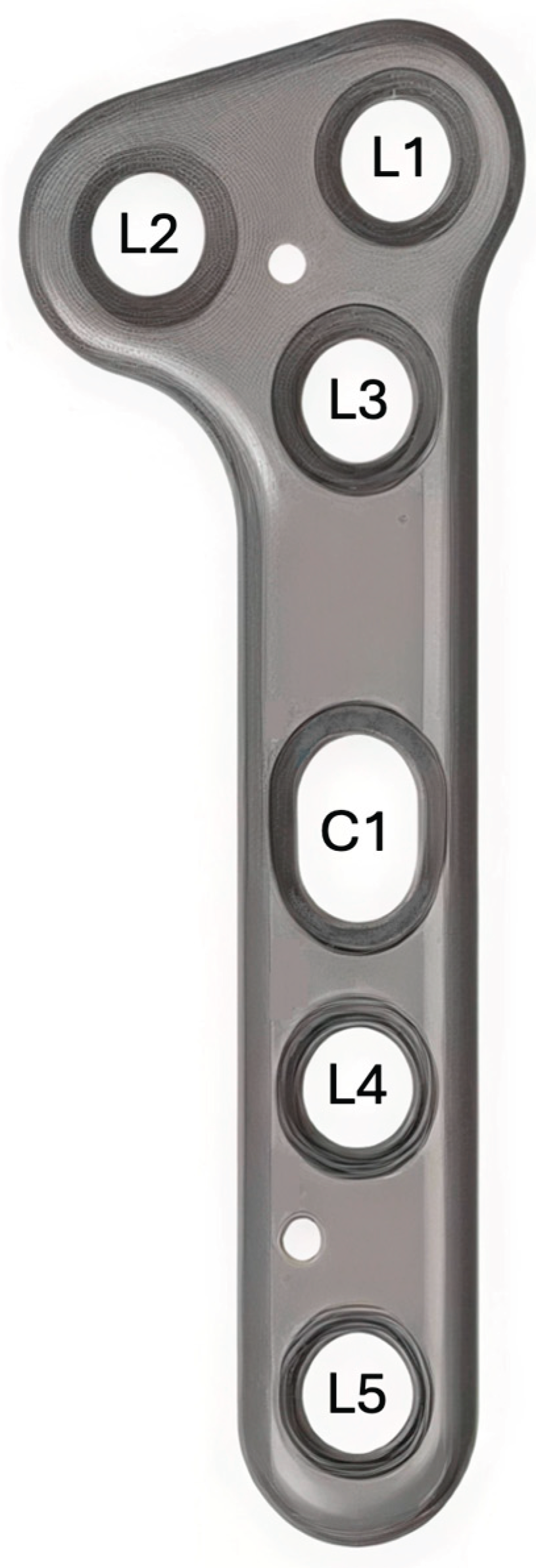
Figure 2.
Schema of screw labeling of all 2.0 mm and 2.4 mm CTWO locking plates used in this study. Locking screws are labeled L1-L5 from proximal to distal. The only cortical screw of the plate has a dynamic compression function and is labeled C1.
Figure 2.
Schema of screw labeling of all 2.0 mm and 2.4 mm CTWO locking plates used in this study. Locking screws are labeled L1-L5 from proximal to distal. The only cortical screw of the plate has a dynamic compression function and is labeled C1.
Preoperative Planning
Radiographs of the affected limb were examined to evaluate limb alignment and determine the preoperative tibial plateau angle (preoperative TPA; Fig 1A) according to the previously described method [16,18,19] using a digital radiography system (Rayence® model 1717SCV) and commercial veterinary software (Beta Implants App®). CTWO planning followed the method previously reported by Oxley et al [19]. An isosceles triangle shaped wedge was positioned as proximally as possible while preserving sufficient bone stock for plate fixation and remaining an adequate distance distal to the tibial tuberosity of a minimum of 5mm (Figure 1A). The planned wedge angle varied according to the tibial plateau angle (TPA) to compensate for the greater displacement of the tibial long axis associated with larger wedges, following also Oxley et al. planned wedge angles based on preoperative TPA table [19].
Surgical Technique
Patients were premedicated with dexmedetomidine (Dexdomitor®, Zoetis; 0.003 mg/kg IV) and methadone (Semfortan®; 0.25 mg/kg IV). General anesthesia was induced with propofol (Propofol-Lipuro®; 2–4 mg/kg IV) and maintained with inhaled sevoflurane (Sevoflo®) in oxygen. Additional perioperative analgesia consisted of meloxicam (Metacam®; 0.3 mg/kg IV), and perioperative antibiotic therapy was performed with cefazolin (Cefazolina Normon®; 22 mg/kg IV); both drugs were administered 45 minutes before surgery.
All surgical procedures were performed by the same surgeon (FS). A standard medial surgical approach to the stifle and proximal third of the tibia was made. A medial parapatellar mini-arthrotomy was then performed in order to inspect the cruciate ligaments and the medial and lateral menisci to evaluate their integrity. Joint inspection with a meniscal probe, debridement of the torn cranial cruciate ligament fibers, and partial medial meniscectomy when necessary were carried out using a number 11 scalpel blade (Braun®). Intact menisci were left intact. The joint capsule was closed routinely with interrupted simple sutures using polydioxanone 2-0 (PDS II®). Subsequently, the preoperatively planned osteotomy was marked on the medial surface of the proximal tibia using a monopolar scalpel. Subperiosteal elevation was performed caudally and laterally at the osteotomy level, and moistened gauze pads were placed before performing the osteotomy in all cases in order to protect the soft tissue and vascular structures during the osteotomy.
A 0.8 mm orthopedic wire (Veterinary Instrumentation®) was placed through 1.1 mm holes positioned cranially, approximately 2-3 mm proximal and distal to the osteotomy surfaces, to reduce and stabilize the wedge before plate application. This cerclage wire was applied in a closed loop fashion with a single medial twist knot and was not removed after osteosynthesis plate placement. Care was taken to avoid positioning the cranio-proximal hole too close to the patellar tendon insertion. Finally, a 2.0 mm or 2.4 mm CTWO locking plate (Beta Implants®; Fig. 2) appropriate to the patient’s size was placed (Figure 1C). Layered closure was performed routinely after surgical lavage, and a sterile adhesive dressing was maintained for 24 hours.
Postoperative Care
Patients were hospitalized for 24 hours after surgery with maintenance intravenous fluid therapy, methadone (Semfortan®; 0.25 mg/kg IV every 6 h), meloxicam (Metacam®; 0.05 mg/kg IV every 24 h), and cefazolin (Cefazolina Normon®; 22 mg/kg IV every 12 h). The following day, all patients were discharged with an Elizabethan collar. At home, they received meloxicam (Metacam®; 0.05 mg/kg PO every 24 h for 14 days) and cefadroxil (Cefadroxilo Normon®; 20 mg/kg PO every 24 h for 7 days). Cage rest was prescribed for eight weeks until the first radiographic follow-up.
Clinical Follow-Up
Clinical evaluations were performed immediately before discharge, two weeks after surgery (coinciding with suture removal), and at eight weeks, twelve weeks and six months postoperatively. During these rechecks, the surgical wound, limb swelling, orthopedic examination, and clinician-assessed lameness grade were evaluated. Owners were also asked to subjectively assess lameness (none = grade 0, mild = grade 1, mild intermittent to moderate = grade 2, severe = grade 3, non-weight-bearing = grade 4) and to rate the patient’s mobility and comfort level during each follow-up after discharge.
Radiographic Follow-Up
The same mediolateral and craniocaudal stifle radiographic views performed preoperatively were repeated postoperatively and during all the radiographic follow-up in every patient (Fig 1B, 1C, 1D). Postoperative radiographs were performed immediately after surgery to evaluate the osteotomy and implant placement, limb alignment, and postoperative tibial plateau angle (postop TPA). Radiographic rechecks were performed eight and twelve weeks postoperatively under sedation with the same anesthetic protocol used for preoperative radiographic examination. Bone healing follow-up was performed by assessing the osteotomy lines cranial and caudal to the CTWO osteosynthesis plate on the mediolateral projection. Bone union was defined as fusion of the osteotomy line, the presence of bridging callus, or disappearance of the osteotomy line. The degree of bone union was scored as follows: 1 = poor union, <25% healing; 2 = acceptable union, 25–50% healing; 3 = good union, >50–75% healing; and 4 = excellent union, >75% healing. Osteoarthritis was subjectively assessed by the authors according to Freire et al. [17]. Based on this study, severity of each radiographic change was graded on a five-point scale as follows; normal = 0, trivial = 1, mild = 2, moderate = 3, and severe = 4 for each stifle joint. Using this as a guide, we defined radiographic osteoarthritis grades of osteoarthritis score (OAS) from 0 to 10 (0 = no radiographic abnormalities identified; 1 – 3 = mild osteoarthritis; 4 – 6 = moderate osteoarthritis; 7 – 9 = severe osteoarthritis; 10 = most severe osteoarthritis). Evaluation of the changes in the osteoarthritis score (OAS) was performed comparing preoperative OAS values with values obtained at the 8 weeks and 12 weeks postop rechecks.
Results
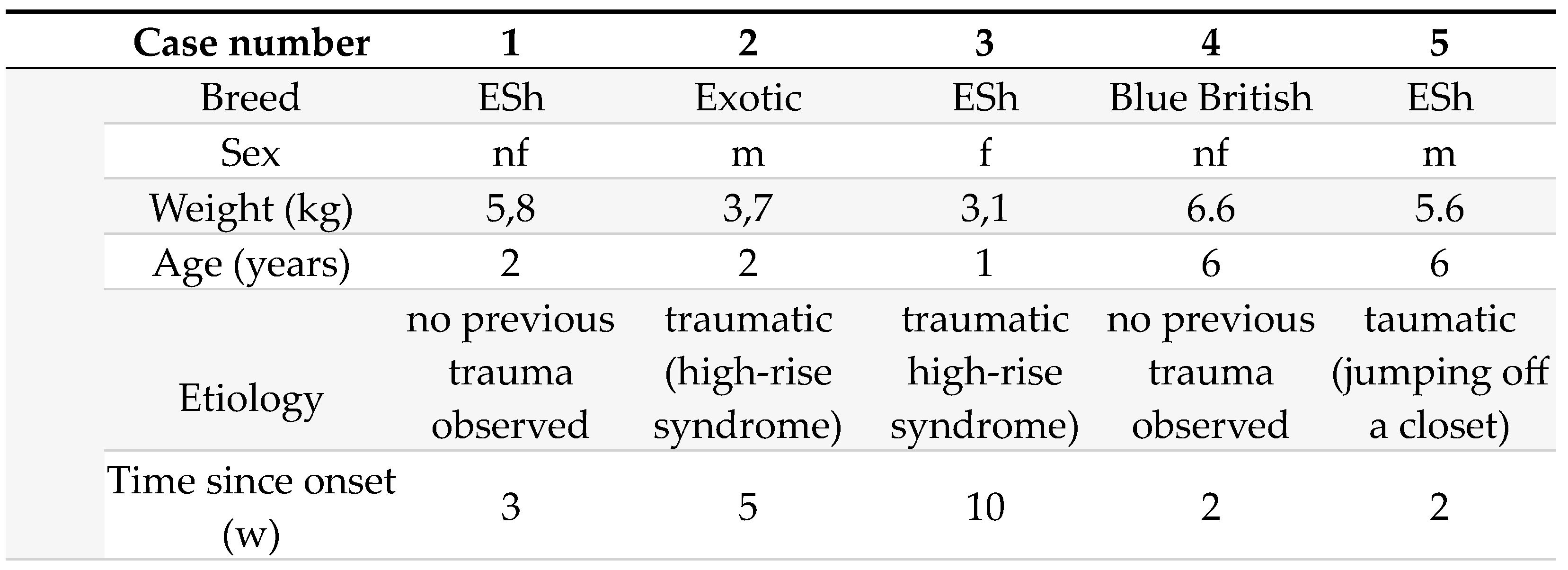
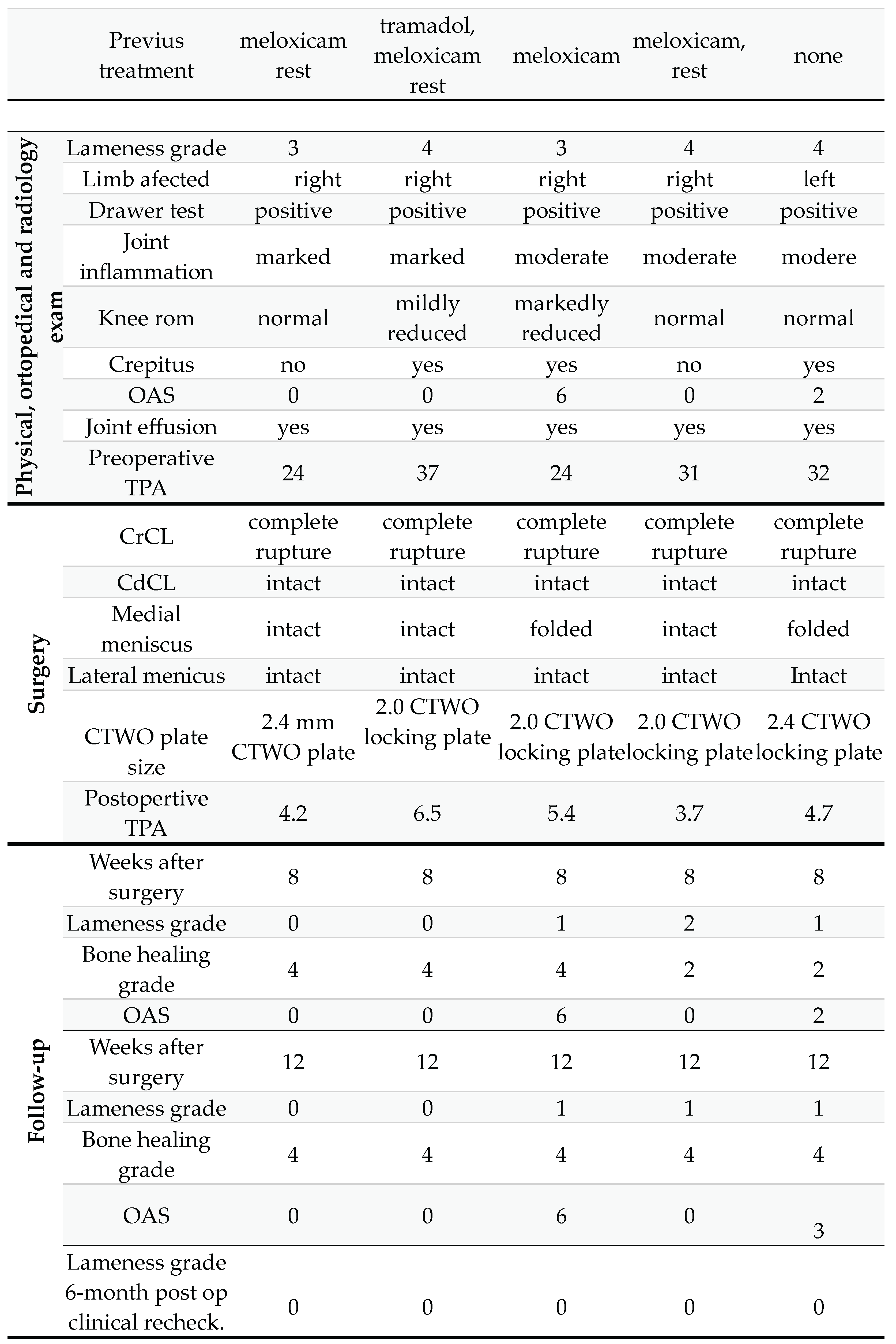
The results are summarized in Table 1 (Figure 3). Five cats were included (3 females and 2 males), with a mean body weight of 4.9 ± 1.5 kg (range: 3.1–6.6 kg) and a mean age of 3.4 ± 2.4 years (range: 1–6 years). The breeds included three European Shorthairs, one Exotic Shorthair, and one British Blue. The etiology was traumatic in three cases (high-rise syndrome in two cases and jumping off a closet in one case; n=3, 60%). However, in the other two cases there was no history of a previous known trauma (n=2, 40%). The mean time from the onset of clinical signs to surgery was 4.4 ± 3.1 weeks (range: 2–10 weeks). Three cats had previously received medical treatment with meloxicam and rest, and one with additional tramadol without favorable results. One cat had not received any previous medical treatment before surgery.
The 29. 6° ± 4.85º (range: 24–37°). Two cases showed signs of OA at the time of initial evaluation. During arthrotomy, two cases of medial meniscal injury were observed, consisting of caudal horn folding; and in both cases hemimeniscectomy was performed. All patients presented a complete rupture of the CrCL. Caudal cruciate ligament (CdCL) injury was not observed in any case. All osteotomies were stabilized with a six-hole CTWO 2.0 mm or 2.4 mm locking plate (2.4 mm: 3 cases; 2.0 mm: 2 cases) using three screws proximally and three distally to the osteotomy lines, along with a 0.8 mm closed-loop cerclage wire. The mean postoperative TPA was 4.9º ± 0.98º (range: 3.7-6.5º). The mean time to achieve complete bone healing (grade 4) was 9.65 ± 1.96 weeks (range: 8–12 weeks); at that time, all patients showed grade 0 (n=2) or grade 1 intermittent lameness (n=3). Radiographic follow-up period was twelve weeks in every patient. OAS values remained the same as those observed preoperatively in all cases except one, which showed a mild increase in OAS observed radiographically during the follow up (case 5; preoperative OAS:2, 12 weeks postoperative OAS:3). All patients were clinically assessed through orthopedic examination 6 months after surgery, at that point the lameness score was zero showing a complete functional recovery of the limb.
No soft tissue or implant-related complications were recorded during the follow-up period. None of the patients showed signs of infection, implant loosening or breakage, fracture, or required implant removal. Stitches removal was performed two weeks after surgery and all cases showed favorable progression without local or systemic alterations throughout clinical and radiographic follow-up.
Discussion
Conservative treatment using anti-inflammatory drugs and exercise restriction is a popular approach in the management of CrCL rupture in cats. In 1998, Suter et al. [20] conducted an experimental study using cats as animal models of osteoarthritis after cranial cruciate ligament transection (CCLT). The objectives of this study were to assess over a one-year period radiological changes, alterations in hind limb kinematics, ground reaction forces, and stifle stability. In the later stages of the study, ground reaction forces and joint angles tended to return to preoperative values. Gait recovery was mainly associated with the learning of new movement patterns to compensate for changes in stifle mechanics, although it seems unlikely that the entire recovery process could be explained solely by motor control factors. It is well known that the morphology of the stifle undergoes structural alterations after transection, and it is reasonable to expect that some of these changes result in functional modifications. For example, between 12 and 16 weeks after CCLT, a marked increase in the thickness of the medial joint capsule and medial collateral ligament has been observed [21,22]; furthermore, osteophyte formation and thickening of the articular cartilage occur [20]. The results suggest that significant changes in joint loading occur after CCLT. The initial adaptive responses appear to be associated with a general reduction in mechanical stress, while the continued progression toward OA [20] occurs despite nearly normal joint mechanics one year after surgery. Scavelli et al. published the results of conservative treatment in 16 cats. Most showed good clinical progress after several months of restricted activity to allow lesion healing. However, 80% continued to show instability in the femoropatellar joint and radiographic progression of osteoarthritis [9].
Extracapsular techniques are usually performed to treat cranial cruciate ligament rupture in cats [2,3,10,11]. In 2019, Boge et al. published epidemiological results in a group of 50 cats with cruciate ligament rupture [6], comparing outcomes of conservative versus surgical treatment with fabellopatellar suture in terms of owner-assessed pain perception using the Feline Musculoskeletal Pain Index (FMPI). Clinically, a high rate of postoperative complications was recorded in surgically treated cats (n = 6; 27.3%). In addition, three of these six cats that presented complications required a second surgery, corresponding to 13.6%. They concluded that the conservatively treated group performed better regarding chronic pain. However, a comparison of chronic pain scores between surgically treated animals without complications and those treated conservatively would have provided valuable data. Additionally, they reported a 47% association between CrCL rupture and meniscal injury, that is consistent with other publications [5,7,8,13] and with our results (40% of cases). In dogs, the association between meniscal injury and early OA progression in the stifle is well established [23,24]; the authors believe this strong association is a compelling reason to favor surgical treatment. Boge et al also reported that none of the surgically treated cats in their study had partial CrCL ruptures [6], which is also consistent with our results (all our patients presented complete CrCL ruptures
The biomechanical behavior of different intra- and extracapsular suture configurations has been tested ex vivo [10,11,25,26]. It has been suggested that techniques aimed at achieving dynamic stabilization through modification of femoropatellar joint biomechanics may offer superior functional outcomes compared with those providing passive stability through ligament replacement or augmentation in canine patients [14,18,27,28]. In ex vivo biomechanical studies, a lack of stabilization of the femorotibial joint with a transected CrCL was observed after performing TTA in this feline stifle model [29]. Treatment using tibial tuberosity advancement (TTA) techniques has also been reported for managing CrCL disease in cats as a standalone procedure [14,30] or concomitantly with medial patellar luxation (MPL) [15] with satisfactory outcomes, although these results are limited by the small number of cases included in each study (1, 2, and 4, respectively) and they were associated with a significant complication rate. Perry et al reported a postoperative complication 1 out of 2 cats (50 %) where loosening of the cranial cage screw and fracture of the tibial tuberosity proximal to this occurred [14]. Bula et al reported a major complication in 1 out 4 cats (25%), where the cat suffered tibial fracture following a lapse in exercise restriction, and revision surgery was performed successfully with subsequent osseus union of the osteotomy site [15]. The simple translation of the TTA technique from dog to cat appears risky [29]. In 2018, Bitmor et al. published that TPLO failed to achieve stifle stabilization in terms of cranial tibial subluxation and tibial rotation angle in CrCL-transected ex vivo feline models [31]. Nevertheless, they noted that the study had several limitations due to the simplified cadaveric model, absence of stabilizing muscles, differences in joint angles compared with dogs, possible TPA measurement errors, and feline-specific anatomical factors that may have influenced the lack of stability observed after TPLO. In addition, Bitmor et al findings are contradictory to the results of the study published in 2016 by Mindner et al. that reported good clinical results in cats treated with TPLO in a series of 11 cases [7]. However, they had minor intraoperative complications in five cats (suboptimal positioning of the plate [n = 3], proximal fibular fracture [n = 1], a visible osteotomy gap [n = 1]), and minor postoperative complications in three cats (mild patellar desmitis [n = 2], superficial wound infection [n = 1]). Tamburro et al published also successful results using TPLO in 9 cats and reporting only one minor postoperative complication (a mild to moderate seroma observed ten days after surgery) [13]. In both studies OAS were established according to Freire et al. [17] and using the same scoring scale we used in our study (absent = 0, slight = 1-3, mild = 4-6, moderate =7-9, severe =10). Mindner et al reported an increase in osteoarthritis evident in 3 out of 11 cats over a twelve-week period [7]. Tamburro et al observed OAS progression in 3 out of 9 cats [13]. In our study we only observed a mild increase in OAS in one case during the follow up (case 5; preoperative OAS:2, 12 weeks postoperative OAS:3).
Oxley et reported a modification of the CTWO technique using TPLO locking plates in dogs weighing 20-60 kg [19]. In this study he compared its CTWO technique with the TPLO and reported that both techniques are associated with similar complication rates and clinical outcomes when performed by surgeons experienced with the surgical techniques. In our study we used the same modification of the CTWO technique reported by Oxley et al and CTWO locking plates designed for its use in dogs. Combined treatment of TPLO and CTWO was also described in one case presenting a deformity of the proximal tibia with an exaggerated tibial plateau angle of approximately 75 degrees with satisfactory results [16]. TPLO combination with CTWO has been also reported in dogs with excessive TPA [32]. Performing TPLO as a single procedure in this kind of patients appears to be risky due to the excessive proximal fragment rotation, reduced bone contact at the osteotomy site and subsequent predisposition to fixation failure. Other modifications of the CTWO technique have been reported in dogs to treat patients with excessive TPA with successful results [33,34] In authors´ opinion it would be of great interest to investigate also their application in cats with excessive TPA. Cats with cranial cruciate ligament rupture present a significantly higher mean TPA (24.7 ± 4.5°) than cats without evidence of ligament injury (21.6 ± 3.7°) [35]. In our case series, the mean TPA was 29.6° ± 4.85º (range: 24–37°), a value that, to our knowledge, exceeds those previously reported in the literature. Although it has not been determined whether an elevated TPA constitutes a risk factor for CrCL rupture in cats, this finding reinforces the suitability of osteotomy techniques as a means of stabilization. Studies with a larger number of cases are required to confirm this possible relationship.
All these data support the need to continue investigating and exploring new treatment methods.
Conclusions
Cranial
tibial wedge osteotomy in our feline patients was performed without relevant technical difficulties. Successful and complete bone healing was observed in every case. No intraoperative or postoperative complications related to implants or soft tissues were recorded. All cats achieved a complete functional recovery without lameness at the last recheck six months after surgery. These preliminary results support the use of CTWO as an effective surgical alternative for the treatment of CrCL rupture in cats. However, further studies with a larger number of cases and a longer follow-up are required to evaluate better its clinical application, outcomes and influence on osteoarthritis progression in the long term.
Conflicts of Interest
None of the authors declares any conflict of interest.
Ethical Approval
The work described in this manuscript involved the use of non-experimental owned animals. At all times, internationally recognized high standards (“best practice”) of veterinary clinical care for the individual patient were followed. This study involved the translation of surgical technique which is commonly performed in dogs to cats. This technique had been also previously reported in one cat but used in combination with other surgical technique. Therefore, ethical approval by a committee was not specifically required for publication..
Informed Consent
Written informed consent was obtained from the owner or legal custodian of all animals described in this work for all procedures performed. No animals or people are identifiable within this publication, and therefore additional informed consent for publication was not required..
References
- McLaughlin, R.M. Surgical diseases of the feline stifle joint. Vet. Clin. North Am. Small Anim. Pract. 2002, 32, 963–982. [Google Scholar] [CrossRef]
- Umphlet, R.C. Feline stifle disease. Vet. Clin. North Am. Small Anim. Pract. 1993, 23, 897–913. [Google Scholar] [CrossRef]
- Harasen, G.L. Feline cranial cruciate rupture: 17 cases and a review of the literature. Vet. Comp. Orthop. Traumatol. 2005, 18, 254–257. [Google Scholar] [CrossRef]
- Wessely, M.; Reese, S.; Schnabl-Feichter, E. Aetiology and pathogenesis of cranial cruciate ligament rupture in cats by histological examination. J. Feline Med. Surg. 2017, 19, 631–637. [Google Scholar] [CrossRef]
- Coppola, M.; Das, S.; Matthews, G.; Cantatore, M.; Silva, L.; Lafuente, P.; Kulendra, E.; Clarke, H.; McCarthy, J.; Fernandez-Salesa, N.; Langley-Hobbs, S.; Aisa, J.; Parkin, T.; Addison, E.S. Traumatic stifle injury in 72 cats: A multicentre retrospective study. J. Feline Med. Surg. 2022, 24, 587–595. [Google Scholar] [CrossRef]
- Boge, G.S.; Engdahl, K.; Moldal, E.R.; Bergström, A. Cranial cruciate ligament disease in cats: An epidemiological retrospective study of 50 cats (2011–2016). J. Feline Med. Surg. 2020, 22, 277–284. [Google Scholar] [CrossRef]
- Mindner, J.K.; Bielecki, M.J.; Scharvogel, S.; Meiler, D. Tibial plateau levelling osteotomy in eleven cats with cranial cruciate ligament rupture. Vet. Comp. Orthop. Traumatol. 2016, 29, 528–535. [Google Scholar]
- Ruthrauff, C.M.; Glerum, L.E.; Gottfried, S.D. Incidence of meniscal injury in cats with cranial cruciate ligament ruptures. Can. Vet. J. 2011, 52, 1106–1110. [Google Scholar] [PubMed]
- Scavelli, T.D.; Scharader, S.C. Nonsurgical management of rupture of the cranial cruciate ligament in 18 cats. J. Am. Anim. Hosp. Assoc. 1986, 23, 337–340. [Google Scholar]
- De Sousa, R.J.; Knudsen, C.S.; Holmes, M.A.; Langley-Hobbs, S.J. Quasi-isometric points for the technique of lateral suture placement in the feline stifle joint. Vet. Surg. 2014, 43, 120–126. [Google Scholar] [CrossRef] [PubMed]
- De Sousa, R.; Sutcliffe, M.; Rousset, N.; Langley-Hobbs, S.J. Treatment of cranial cruciate ligament rupture in the feline stifle. Biomechanical comparison of a standard fabella tibial suture and lateral sutures placed between quasi-isometric points. Vet. Comp. Orthop. Traumatol. 2015, 28, 401–408. [Google Scholar] [CrossRef] [PubMed]
- Şen, I. Clinical and radiological evaluation of the treatment of cranial cruciate ligament rupture in cats with the musculus biceps femoris transposition technique. Acta Vet. Beogr. 2019, 69, 300–311. [Google Scholar] [CrossRef]
- Tamburro, R.; Collivignarelli, F.; Falerno, I.; Cerrasoli, I.; Vignoli, M. Clinical outcomes and stifle osteoarthritis assessment of nine cats before and after tibial plateau levelling osteotomy. Acta Vet. Beogr. 2020, 70, 346–354. [Google Scholar] [CrossRef]
- Perry, K.; Fitzpatrick, N. Tibial tuberosity advancement in two cats with cranial cruciate ligament deficiency. Vet. Comp. Orthop. Traumatol. 2010, 23, 196–202. [Google Scholar] [CrossRef]
- Bula, E.; Perry, K.L. Tibial tuberosity transposition advancement for treatment of concomitant cranial cruciate ligament rupture and medial patellar luxation in four feline stifles. JFMS Open Rep. 2021, 7, 20551169211044695. [Google Scholar] [CrossRef]
- Hoots, E.A.; Petersen, S.W. Tibial plateau leveling osteotomy and cranial closing wedge ostectomy in a cat with cranial cruciate ligament rupture. J. Am. Anim. Hosp. Assoc. 2005, 41, 395–399. [Google Scholar] [CrossRef] [PubMed]
- Freire, M.; Robertson, I.; Bondell, H.D.; et al. Radiographic evaluation of feline appendicular degenerative joint disease vs. macroscopic appearance of articular cartilage. Vet. Radiol. Ultrasound 2011, 52, 239–247. [Google Scholar] [CrossRef]
- Beale, B. Feline stifle injuries: How to diagnose and treat. In Proceedings of the North American Veterinary Conference, Orlando, FL, USA, 17–21 January 2009; pp. 1024–1025. [Google Scholar]
- Oxley, B.; Gemmill, T.J.; Renwick, A.R.; Clements, D.N.; McKee, W.M. Comparison of complication rates and clinical outcome between tibial plateau leveling osteotomy and a modified cranial closing wedge osteotomy for treatment of cranial cruciate ligament disease in dogs. Vet. Surg. 2013, 42, 739–750. [Google Scholar] [CrossRef]
- Suter, E.; Herzog, W.; Leonard, T. Changes in loading characteristics and joint degeneration after ACL transection: A long-term animal model of osteoarthritis. In Proceedings of the 9th Biennial Conference of the Canadian Society for Biomechanics, Vancouver, Canada, 1996. [Google Scholar]
- Maitland, M.E. Longitudinal measurements of tibial motion relative to the femur during passive displacements and femoral nerve stimulation in the ACL-deficient cat model of osteoarthritis. Ph.D. Thesis, University of Calgary, Calgary, Canada, 1996. [Google Scholar]
- Herzog, W.; Adams, M.E.; Matyas, J.R.; Brooks, J.G. Hindlimb loading, morphology and biochemistry of articular cartilage in the ACL-deficient cat knee. Osteoarthr. Cartil. 1993, 1, 243–251. [Google Scholar] [CrossRef]
- Fung, C.; Ficklin, M.; Okafor, C.C. Associations between meniscal tears and various degrees of osteoarthritis among dogs undergoing TPLO for cranial cruciate ligament rupture. BMC Res. Notes 2023, 16, 36. [Google Scholar] [CrossRef]
- Krier, E.M.; Johnson, T.A.; Breiteneicher, A.H.; Peycke, L.E.; Hulse, D.A. Articular cartilage lesions associated with complete lateral meniscal tears in the dog. Vet. Surg. 2018, 47, 958–962. [Google Scholar] [CrossRef] [PubMed]
- Kneifel, W.; Borak, D.; Bockstahler, B.; Schnabl-Feichter, E. Use of a custom-made limb-press model to assess intra- and extracapsular techniques for treating cranial cruciate ligament rupture in cats. J. Feline Med. Surg. 2018, 20, 271–279. [Google Scholar] [CrossRef]
- Koch, L.; Bockstahler, B.; Tichy, A.; Peham, C.; Schnabl-Feichter, E. Comparison of extracapsular stabilization techniques using an ultrasonically implanted absorbable bone anchor (Weldix) after cranial cruciate ligament rupture in cats—An in vitro study. Animals 2021, 11, 1695. [Google Scholar] [CrossRef] [PubMed]
- Apelt, D.; Kowaleski, M.P.; Boudrieau, R.J. Effect of tibial tuberosity advancement on cranial tibial subluxation in canine cranial cruciate-deficient stifle joints: An in vitro experimental study. Vet. Surg. 2007, 36, 170–177. [Google Scholar] [CrossRef]
- Lazar, T.P.; Berry, C.R.; deHaan, J.J.; Peck, J.N.; Correa, M. Long-term radiographic comparison of tibial plateau leveling osteotomy versus extracapsular stabilization for cranial cruciate ligament rupture in the dog. Vet. Surg. 2005, 34, 133–141. [Google Scholar] [CrossRef]
- Retournard, M.; Bilmont, A.; Asimus, E.; et al. Effect of tibial tuberosity advancement on cranial tibial subluxation in the feline cranial cruciate deficient stifle joint: An ex vivo experimental study. Res. Vet. Sci. 2016, 107, 240–245. [Google Scholar] [CrossRef]
- Allan, R.M. A modified Maquet technique for management of cranial cruciate avulsion in a cat. J. Small Anim. Pract. 2014, 55, 52–56. [Google Scholar] [CrossRef]
- Bilmont, A.; Retournard, M.; Asimus, E.; Palierne, S.; Autefage, A. Effect of tibial plateau levelling osteotomy on cranial tibial subluxation in the feline cranial cruciate deficient stifle joint: An ex vivo experimental study. Vet. Comp. Orthop. Traumatol. 2018, 31, 273–278. [Google Scholar] [CrossRef] [PubMed]
- Talaat, M.B.; Kowaleski, M.P.; Boudrieau, R.J. Combination tibial plateau leveling osteotomy and cranial closing wedge osteotomy of the tibia for the treatment of cranial cruciate ligament-deficient stifles with excessive tibial plateau angle. Vet. Surg. 2006, 35, 729–739. [Google Scholar] [CrossRef]
- Frederick, S.W.; Cross, A.R. Modified cranial closing wedge osteotomy for treatment of cranial cruciate ligament insufficiency in dogs with excessive tibial plateau angles: Technique and complications in 19 cases. Vet. Surg. 2017, 46, 403–411. [Google Scholar] [CrossRef]
- Wallace, A.M.; Addison, E.S.; Smith, B.A.; Radke, H.; Hobbs, S.J. Modification of the cranial closing wedge ostectomy technique for the treatment of canine cruciate disease. Description and comparison with standard technique. Vet. Comp. Orthop. Traumatol. 2011, 24, 457–462. [Google Scholar]
- Schnabl, E.; Reese, S.; Lorinson, K.; et al. Measurement of the tibial plateau angle in cats with and without cranial cruciate ligament rupture. Vet. Comp. Orthop. Traumatol. 2009, 22, 83–86. [Google Scholar] [PubMed]
Figure 1.
Case 5: Preoperative planning including TPA measurement, osteotomy planning, and simulation of plate placement once the osteotomy was reduced (block A); Preoperative mediolateral and caudocranial projections (B); postoperative views after performing, reducing, and fixing the osteotomy with a CTWO plate and cerclage (C), and complete bone healing 12 weeks after surgery (D).
Figure 1.
Case 5: Preoperative planning including TPA measurement, osteotomy planning, and simulation of plate placement once the osteotomy was reduced (block A); Preoperative mediolateral and caudocranial projections (B); postoperative views after performing, reducing, and fixing the osteotomy with a CTWO plate and cerclage (C), and complete bone healing 12 weeks after surgery (D).
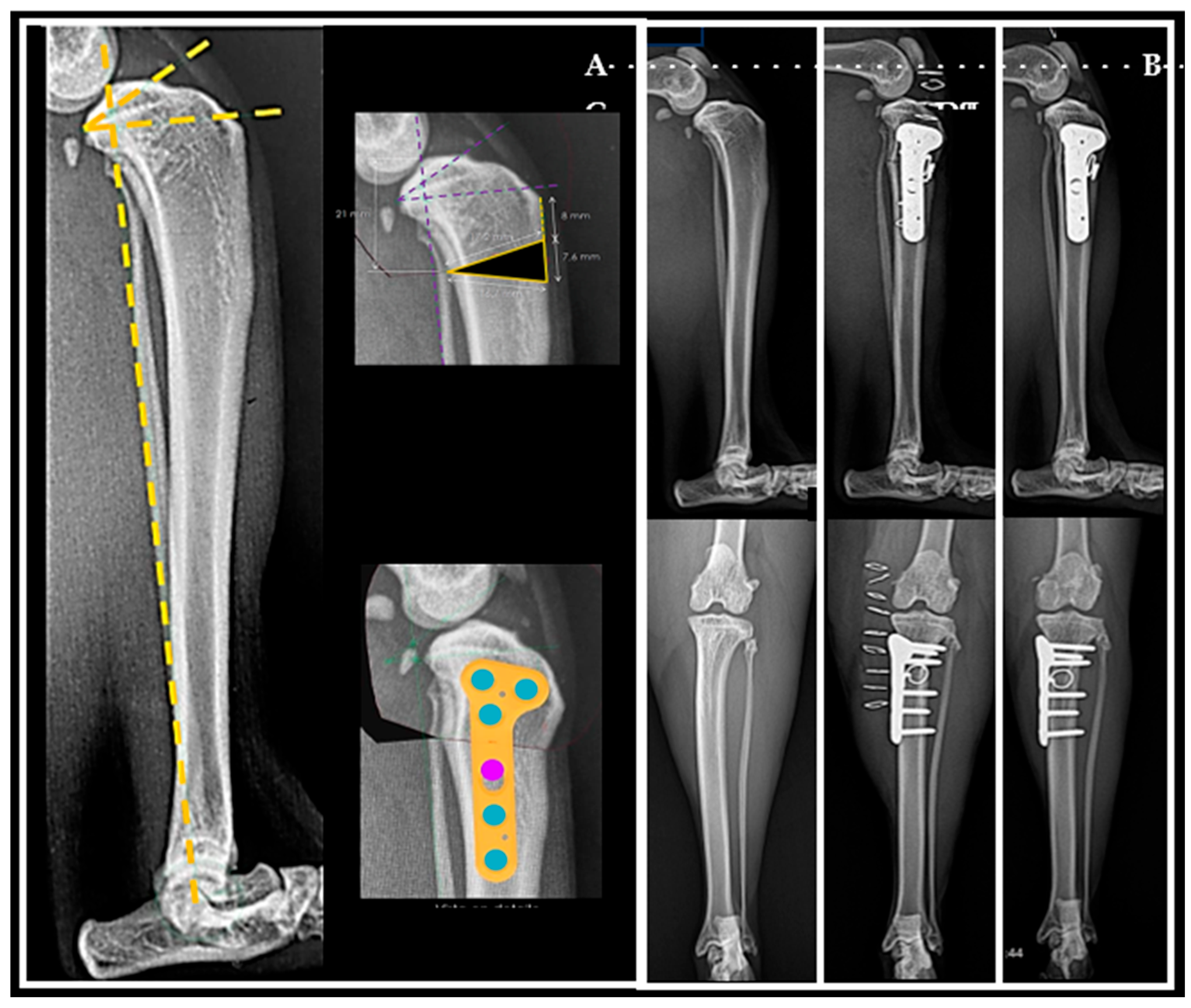
Figure 3.
Summary table of the study results. Abbreviations: ESh: European Shorthair; m, male; f, female; nf, neutered female; nm, neutered male; w, weeks; kg, kilograms; y, years.
Figure 3.
Summary table of the study results. Abbreviations: ESh: European Shorthair; m, male; f, female; nf, neutered female; nm, neutered male; w, weeks; kg, kilograms; y, years.
Disclaimer/Publisher’s Note: The statements, opinions and data contained in all publications are solely those of the individual author(s) and contributor(s) and not of MDPI and/or the editor(s). MDPI and/or the editor(s) disclaim responsibility for any injury to people or property resulting from any ideas, methods, instructions or products referred to in the content. |
© 2026 by the authors. Licensee MDPI, Basel, Switzerland. This article is an open access article distributed under the terms and conditions of the Creative Commons Attribution (CC BY) license (http://creativecommons.org/licenses/by/4.0/).
Copyright: This open access article is published under a Creative Commons CC BY 4.0 license, which permit the free download, distribution, and reuse, provided that the author and preprint are cited in any reuse.


