

Submitted:
27 April 2026
Posted:
28 April 2026
You are already at the latest version
Abstract
Background: GLP-1 receptor agonists and related incretin-based therapies are effective pharmacological treatments for weight loss in adults with obesity and type 2 diabetes. However, weight regain after treatment discontinuation or attenuation remains a major clinical challenge. Appetite dysregulation may be one mechanism contributing to this regain. Objective: This systematic review aimed to evaluate whether appetite-related changes contribute to weight regain following GLP-1-based weight loss, with particular attention to the distinction between direct post-treatment evidence and indirect evidence from active-treatment studies. Methods: A systematic literature search was conducted in PubMed, Scopus, Embase, and the Cochrane Library for studies published between 2016 and 2026, following PRISMA 2020 guidelines. Eligible studies included adults with obesity, overweight, and/or type 2 diabetes receiving GLP-1 receptor agonists or related incretin-based therapies and reporting appetite-related outcomes, weight outcomes, weight maintenance, or weight regain. Randomized controlled trials, clinical trials, crossover studies, and observational studies were included. Findings were synthesized qualitatively. Results: Eighteen studies published between 2017 and 2026 met the inclusion criteria. Most studies reported that GLP-1-based therapy reduced appetite, hunger, food cravings, energy intake, or dietary intake, while increasing satiety and promoting weight loss during active treatment. Direct appetite measures were commonly reported using visual analogue scales, appetite questionnaires, food craving measures, and energy intake assessments. However, only a small number of studies directly evaluated appetite changes during treatment withdrawal, weight maintenance, or post-treatment weight regain. Therefore, the available evidence supports a plausible mechanistic link between loss of appetite regulation and weight regain, but the evidence remains largely indirect. Conclusion: GLP-1-based therapies consistently improve appetite regulation and promote weight loss during active treatment. However, direct evidence linking post-treatment appetite dysregulation to subsequent weight regain remains limited. Appetite dysregulation should therefore be interpreted as a plausible and clinically relevant contributor, rather than a definitively established causal driver.
Keywords:
GLP-1 receptor agonists
; appetite dysregulation
; weight regain
; obesity
; type 2 diabetes
; semaglutide
; liraglutide
; tirzepatide
Introduction
Obesity and type 2 diabetes are chronic metabolic conditions associated with substantial morbidity, mortality, and healthcare burden [1]. In recent years, GLP-1 receptor agonists and related incretin-based therapies have emerged as effective pharmacological treatments for weight reduction and glycemic control [2]. Agents such as liraglutide, semaglutide, tirzepatide, and retatrutide have demonstrated clinically meaningful effects on body weight, largely through modulation of appetite, satiety, and food intake [3].
Despite these benefits, long-term weight maintenance remains challenging [4]. Many patients experience partial or substantial weight regain after treatment reduction, discontinuation, or transition to less intensive therapy. This phenomenon raises an important mechanistic question: to what extent do changes in appetite regulation contribute to weight regain after GLP-1-based weight loss?
GLP-1-based therapies are thought to promote weight loss through several pathways, including delayed gastric emptying, central appetite suppression, enhanced satiety, and reduced caloric intake [5]. During active treatment, these effects appear to facilitate sustained negative energy balance. However, when treatment is stopped or its pharmacological effect diminishes, these appetite-regulating benefits may weaken, potentially leading to increased hunger, reduced satiety, greater energy intake, and weight regain [6].
Therefore, a clearer distinction is needed between evidence showing appetite suppression during active GLP-1-based treatment and evidence directly linking appetite changes to weight regain after treatment discontinuation. This systematic review evaluates available clinical evidence on appetite-related and weight-related outcomes in adults receiving GLP-1 receptor agonists or related incretin-based therapies. The primary aim is to determine whether appetite dysregulation is supported as a direct mechanism of weight regain after GLP-1-based weight loss, or whether the current evidence remains largely indirect.
Methods
Search Strategy and Selection Criteria
This systematic review was conducted in accordance with PRISMA 2020 guidelines. A comprehensive literature search was performed in PubMed, Scopus, Embase, and the Cochrane Library. The search included studies published from 2016 onward.
The search strategy combined terms related to GLP-1 receptor agonists and related incretin-based therapies, appetite regulation, and weight-related outcomes. Search terms included combinations of: “GLP-1 receptor agonist,” “semaglutide,” “liraglutide,” “tirzepatide,” “retatrutide,” “appetite,” “hunger,” “satiety,” “fullness,” “food craving,” “energy intake,” “dietary intake,” “eating behavior,” “ghrelin,” “leptin,” “weight regain,” “weight maintenance,” “withdrawal,” “discontinuation,” “post-treatment,” “body weight,” “obesity,” “overweight,” and “type 2 diabetes.
Eligibility Criteria
Studies were included if they:
- (i)
- involved adults with obesity, overweight, and/or type 2 diabetes;
- (ii)
- investigated GLP-1 receptor agonists or related incretin-based therapies, including semaglutide, liraglutide, tirzepatide, or retatrutide;
- (iii)
- reported appetite-related outcomes and/or weight-related outcomes, including weight maintenance or weight regain;
- (iv)
- were randomized controlled trials, clinical trials, crossover studies, secondary analyses of clinical trials, or observational clinical studies;
- (v)
- were published in English from 2016 onward.
Studies were excluded if they:
- (i)
- were animal or in vitro studies;
- (ii)
- were case reports, reviews, editorials, commentaries, or conference abstracts without sufficient data;
- (iii)
- did not report appetite-related or weight-related outcomes;
- (iv)
- did not involve GLP-1 receptor agonists or related incretin-based therapies;
- (v)
- included populations not relevant to obesity, overweight, or type 2 diabetes.
Study Selection and Data Extraction
Titles and abstracts were screened according to the eligibility criteria. Potentially relevant full-text articles were then assessed for inclusion. After screening, 20 studies published from 2017 onward were included in the qualitative synthesis.
Data were extracted using a predefined data extraction form. Extracted variables included author, year, study population, study design, intervention, comparator, appetite-related outcomes, weight-related outcomes, and relevance to the review question. Findings were synthesized qualitatively because of heterogeneity in study design, populations, interventions, and outcome measurements.
Results
Study Characteristics
A total of 20 studies published from 2017 onward were included in the qualitative synthesis. The study populations included adults with obesity, overweight individuals, adults with type 2 diabetes, adults with obesity and prediabetes, and selected clinical subgroups such as adolescents with obesity and patients with hypothalamic obesity. Most included studies were randomized controlled trials or clinical trials, while others were cross-sectional studies, crossover trials, secondary analyses, or observational clinical studies.
The interventions included semaglutide, liraglutide, tirzepatide, retatrutide, GLP-1 receptor agonist therapy, and related incretin-based treatments. Because tirzepatide and retatrutide have GLP-1 activity but are not conventional GLP-1 receptor agonists alone, their findings were interpreted within the broader category of GLP-1-based therapies.
Across the included studies, appetite-related outcomes were assessed using direct measures, including appetite visual analogue scales, hunger, satiety, fullness, and food craving scores, as well as indirect measures such as energy intake, dietary intake, sugar intake, eating behavior, and hormonal markers. Weight-related outcomes included body weight change, weight loss, body fat reduction, weight maintenance, and weight regain-related outcomes.
Appetite-Related Outcomes During GLP-1 Based Therapy
Most included studies reported improved appetite regulation during active GLP-1-based treatment. Direct evidence was strongest in studies evaluating semaglutide, liraglutide, tirzepatide, and retatrutide.
Several studies reported reductions in appetite, hunger, food craving, energy intake, and body weight, together with improvements in satiety and control of eating. These findings were observed with retatrutide in adults with type 2 diabetes, semaglutide in adults with obesity or hypothalamic obesity, oral semaglutide in adults with obesity, and liraglutide in adults with obesity and prediabetes [7,8,9,10,11].
Evidence from weight-maintenance studies was more limited but clinically important. Jensen et al. reported that liraglutide helped preserve postprandial appetite suppression and maintain weight loss after diet-induced weight loss, whereas the placebo group showed reduced appetite suppression and weight regain [12].
Additional liraglutide and tirzepatide studies also reported favorable appetite-related or body composition outcomes, including reduced appetite, reduced energy intake, lower fat mass, and reduced body weight, although appetite outcomes were not assessed uniformly across all trials [13,14,15].
Indirect appetite-related evidence also supported the role of GLP-1-based therapy in reducing food intake and modifying eating behavior. Some studies reported lower energy intake or dietary intake during treatment, even when appetite was not assessed with direct subjective measures. For example, Ponzo et al. reported lower energy intake in adults with type 2 diabetes receiving GLP-1 receptor agonist therapy, although body weight did not differ [16]. Martin et al. reported reduced appetite and energy intake with tirzepatide [17], while Richardson et al. observed reduced dietary intake alongside weight change in adults with obesity or prediabetes receiving liraglutide [18].
Taken together, the available evidence indicates that active GLP-1-based treatment is consistently associated with appetite suppression, reduced caloric intake, and improved eating regulation. These findings support a biologically plausible mechanism for treatment-induced weight loss, but they do not by themselves establish that appetite dysregulation causes weight regain after treatment discontinuation [6,12].
Weight-Related Outcomes and Relevance to Weight Regain
Weight reduction was one of the most consistent findings across the included literature. Most randomized and clinical trials reported significant reductions in body weight, body fat, and overall adiposity during active treatment with semaglutide, liraglutide, tirzepatide, and retatrutide [19,20]
However, the central question of this review extends beyond weight loss during treatment and focuses on whether appetite dysregulation contributes to weight regain after treatment-induced weight loss. On this point, the available evidence remains limited.
Only a small number of studies directly assessed weight maintenance or post-treatment outcomes. Existing literature suggests that weight regain frequently occurs following discontinuation of GLP-1-based therapies, but the underlying mechanisms are not well established [21,22].
In the limited studies available, some reported maintenance of weight loss without direct appetite assessment, while others described changes in appetite-related hormonal or behavioral factors alongside weight outcomes [6,12,20,21,22]. However, these findings do not provide clear evidence that post-treatment appetite dysregulation is a primary driver of weight regain.
Therefore, while GLP-1 receptor agonists consistently reduce appetite and body weight during active treatment, only limited evidence directly evaluates whether appetite dysregulation after treatment contributes to subsequent weight regain.
Direct Versus Indirect Evidence
A major finding of this review is that the evidence base is weighted more heavily toward indirect than direct support for the review question. Many studies show that GLP-1 receptor agonists suppress appetite and reduce weight during therapy [7,8,9,10,11,12,13,14,15]. This supports the hypothesis that loss of appetite suppression could contribute to later regain. However, this inference is indirect unless studies explicitly assess appetite changes during withdrawal, maintenance, or post-treatment follow-up [6,12,20,21,22].
Direct appetite assessment was present in several high-evidence studies, particularly those using VAS, hunger/satiety ratings, and food craving measures [7,9,10,11,13,14,15]. Nonetheless, direct linkage between these appetite outcomes and later weight regain was rarely reported [6,12,20,21,22]. Several studies classified appetite outcomes as indirect because appetite was inferred from reduced energy intake, dietary intake, or hormonal changes rather than explicitly measured [16,17,18,20].
Mechanistic support was also provided by Bergmann et al. (2019), who reported reduced appetite and reduced energy intake with GIP + GLP-1 infusion in overweight or obese participants. Although informative for understanding appetite regulation, this study was less directly applicable to clinical weight regain after GLP-1 RA-induced weight loss [24].
Overall Interpretation
Overall, the included studies consistently suggest that appetite regulation is an important component of GLP-1 RA-associated weight loss. Reduced appetite, lower hunger, increased satiety, and reduced food intake are among the most reproducible findings across the evidence base [7,15,16,17,18,19,20,21,22,23]. These observations support the possibility that disruption of these effects after treatment withdrawal or attenuation may contribute to weight regain [6,12,20,21,22]
However, the included dataset does not provide strong direct evidence that appetite dysregulation is the principal driver of weight regain after GLP-1 RA-induced weight loss. Rather, the literature currently provides a mechanistic and clinically plausible framework, supported by a combination of direct appetite measures during treatment and indirect evidence from weight-related outcomes [7,8,9,10,11,12,13,14,15,16,17,18,23].
Discussion
This systematic review examined whether appetite dysregulation contributes to weight regain after GLP-1 receptor agonist-induced weight loss. The findings indicate that GLP-1 receptor agonist therapy consistently improves appetite control during active treatment, as reflected by lower appetite scores, reduced hunger, increased satiety, lower food craving, and reduced energy intake[7,15,23]. These effects are seen across different populations and with multiple agents, including semaglutide, liraglutide, tirzepatide, and retatrutide [7,15].
The reviewed evidence supports a strong mechanistic rationale for the role of appetite regulation in weight outcomes [7,8,9,10,11,12,13,14,15]. If GLP-1 receptor agonists reduce appetite and promote satiety during treatment, then it is reasonable to hypothesize that removal of this pharmacological effect could lead to a rebound in hunger, increased caloric intake, and eventual weight regain [6,12,20,21]. This interpretation is biologically plausible and consistent with the broader understanding of obesity as a chronic relapsing condition influenced by compensatory appetite signaling [4,6,20,21].
At the same time, the review highlights an important limitation in the current literature. Most studies were designed to assess efficacy during active treatment rather than the post-treatment period [7,8,9,10,11,12,13,14,15,23]. As a result, many studies provide indirect support for the review hypothesis but do not directly demonstrate that appetite dysregulation causes weight regain after treatment discontinuation [6,12,20,21,22]. In several studies, appetite was measured during treatment, while regain was not assessed. In others, weight outcomes were reported without direct appetite measures. This disconnect limits causal interpretation.
Another important issue is heterogeneity in the measurement of appetite. Some studies used validated direct tools such as VAS or COEQ, whereas others relied on energy intake, dietary intake, or hormonal markers as proxies [7,9,10,11,15,16,17,18,20,23]. Although these measures are informative, they are not interchangeable. Future studies would benefit from standardized appetite assessments combined with longitudinal weight follow-up [6,12,20,21,22].
The review also suggests that not all included studies contribute equally to the core research question. Some studies directly address appetite and weight maintenance, while others primarily demonstrate treatment efficacy [7,8,9,10,11,12,13,14,15,20,23]. Therefore, future systematic reviews or meta-analyses may benefit from stratifying studies according to direct relevance to post-treatment weight regain.
Overall, the evidence indicates that appetite dysregulation is likely to be an important contributor to weight regain after GLP-1 RA-induced weight loss, but current clinical evidence remains incomplete. Stronger longitudinal data are required to determine the extent to which appetite changes after treatment explain regain independently of other biological, behavioral, and environmental factors [6,20,21,22].
Limitations
This review has several limitations. First, the included studies were heterogeneous in design, population, intervention, and outcome measures. Second, direct assessment of weight regain after treatment was limited. Third, appetite was not consistently measured using the same tools, and some studies relied on indirect indicators rather than validated subjective appetite measures. Fourth, the evidence levels reported in the extracted dataset were not derived from a formal standardized risk-of-bias tool within this draft. Finally, because the available dataset included some studies with indirect relevance to the review question, the strength of conclusions regarding causality remains limited.
Conclusion
The available literature demonstrates that GLP-1 receptor agonist therapy is strongly associated with reduced appetite, increased satiety, lower food intake, and clinically meaningful weight loss during active treatment. These findings support the hypothesis that appetite regulation is a central mechanism of GLP-1 RA-induced weight loss.
However, direct evidence linking appetite dysregulation to weight regain after GLP-1 receptor agonist-induced weight loss remains limited [6,12,20,21,22]. Most current studies provide indirect support rather than direct post-treatment evidence. Appetite dysregulation is therefore best interpreted as a plausible and likely contributor to weight regain, but not yet a definitively established causal driver based on the presently available clinical literature.
Future studies should prioritize post-discontinuation follow-up, standardized appetite measurements, and explicit assessment of weight regain to better define the long-term role of appetite dysregulation after GLP-1 RA therapy.
Included Studies Summary
- Ponzo et al. (2025) – GLP-1 RA associated with reduced energy intake, but no weight difference.
- Holt et al. (2026) – weight-loss maintenance intervention; exercise increased postprandial GLP-1 secretion, whereas liraglutide did not; appetite was not directly measured as a primary subjective outcome.
- Kanu et al. (2025) – retatrutide reduced appetite and weight.
- Gjersdal et al. (2025) – semaglutide reduced appetite and weight in hypothalamic obesity.
- Martin et al. (2025) – tirzepatide reduced appetite and energy intake; weight not reported.
- Ciudin et al. (2025) – tirzepatide vs semaglutide reduced body weight; appetite not directly assessed.
- Richardson et al. (2026) – liraglutide reduced dietary intake with associated weight change.
- Gabe et al. (2024) – oral semaglutide reduced appetite and hunger, increased satiety, and promoted weight loss.
- Bensinger et al. (2024) – GLP-1 RA affected appetite/satiety-related factors and supported weight maintenance.
- Silver et al. (2023) – liraglutide reduced appetite and weight in obese prediabetic adults.
- Silver et al. (2023) – tirzepatide reduced appetite and weight in adults with T2DM.
- Semaglutide (COEQ) (2023) – reduced food craving and body weight.
- Schmidt et al. (2022) – liraglutide reduced sugar intake and body weight.
- Friedrichsen et al. (2021) – semaglutide 2.4 mg reduced appetite and energy intake and lowered body weight.
- Due et al. (2020) – liraglutide reduced appetite and body weight.
- Kadouh et al. (2020) – liraglutide reduced appetite and body fat.
- Tronieri et al. (2020) – liraglutide 3.0 mg reduced weight; appetite data limited.
- Bergmann et al. (2019) – GIP + GLP-1 infusion reduced appetite and energy intake.
The PubMed search strategy included the following terms:
(“GLP-1 receptor agonist*” OR semaglutide OR liraglutide OR tirzepatide OR retatrutide) AND (appetite OR hunger OR satiety OR fullness OR “food craving” OR “energy intake” OR “dietary intake” OR “eating behavior” OR ghrelin OR leptin OR VAS OR COEQ) AND
(“weight regain” OR “weight maintenance” OR withdrawal OR discontinuation OR “post-treatment” OR “body weight”) AND
(obesity OR overweight OR “type 2 diabetes” OR T2DM). Filters were applied to include human studies, randomized controlled trials, and clinical trials published between 2016 and 2026. A total of 50 records were identified in PubMed. A similar strategy was applied in Scopus, yielding 634 records, and in additional databases including Embase and the Cochrane Library.
A search was conducted in Scopus using the following terms:
(semaglutide OR liraglutide OR tirzepatide) AND (appetite OR hunger OR satiety OR “food craving” OR “energy intake”) AND (“weight regain” OR “weight maintenance” OR withdrawal OR discontinuation OR “post-treatment”), applied to Title, Abstract, and Keywords fields. Word variations were included in the search strategy. A total of 634 records were identified in Scopus, of which 57 were classified as clinical trials.
Figure 1.
PRISMA flow diagram.
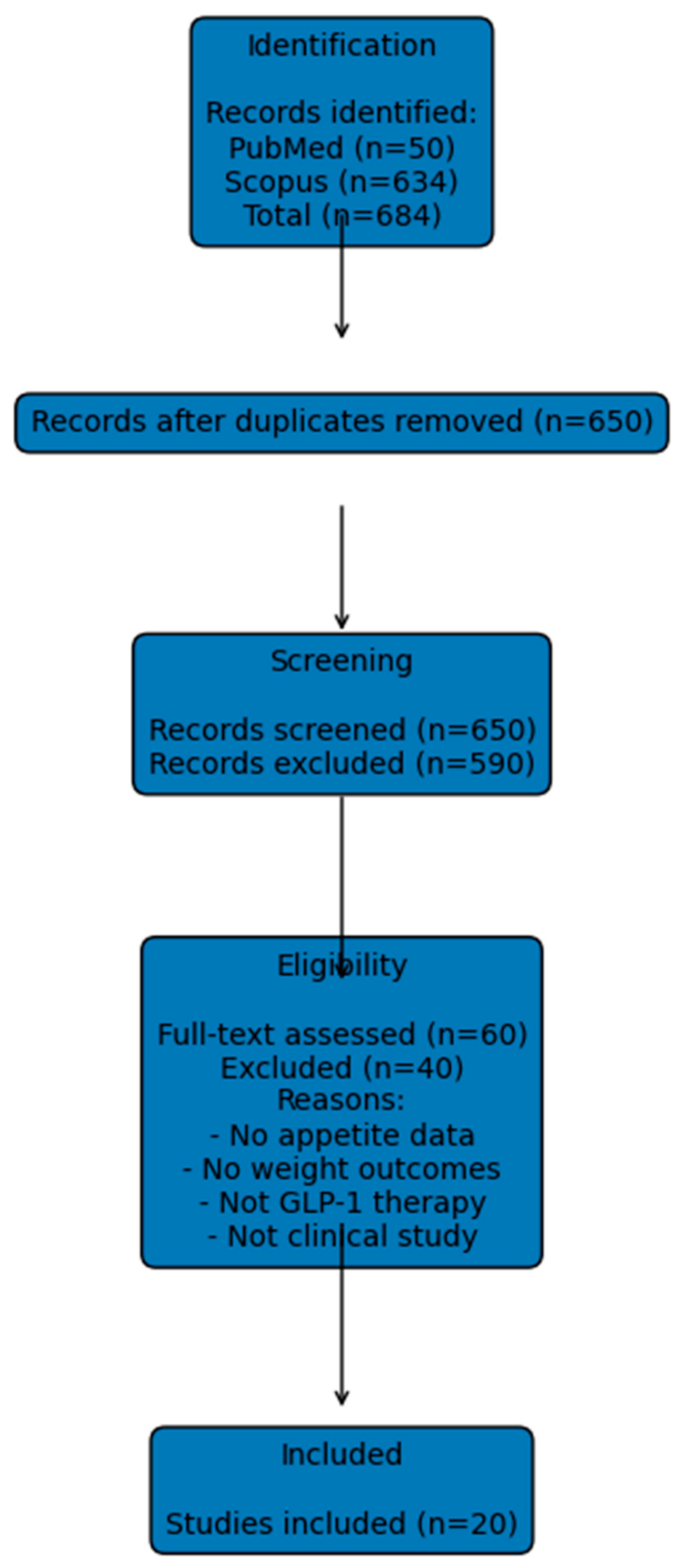

Table 1.
Characteristics of Included Studies Evaluating Appetite and Weight Outcomes in GLP-1-Based Therapies.
Table 1.
Characteristics of Included Studies Evaluating Appetite and Weight Outcomes in GLP-1-Based Therapies.
| Study | Year | Population | Design | Intervention | Appetite Outcome | Weight Outcome | Notes | Evidence Level | |
| Ponzo et al. | 2025 | Adults with T2D | Cross-sectional | GLP-1 RA | ↓ energy intake | No difference | Indirect appetite-related evidence | Moderate | |
| Kanu et al. | 2025 | Adults with T2D | RCT | Retatrutide | Appetite VAS ↓ | Weight ↓ | Direct appetite assessment | High | |
| Gjersdal et al. | 2025 | Hypothalamic obesity | Clinical study | Semaglutide | Appetite ↓ | Weight ↓ | Direct appetite assessment | High | |
| Martin et al. | 2025 | Adults with obesity | RCT | Tirzepatide | ↓ energy intake, ↓ appetite | Not reported | Indirect relevance to weight regain | Moderate | |
| Ciudin et al. | 2025 | T2D/Obesity | Clinical trial | Tirzepatide vs semaglutide | Appetite not directly assessed | Body weight reduction | Indirect appetite-related evidence | Moderate | |
| Richardson et al. | 2026 | Obesity / Prediabetes | RCT (secondary analysis) | Liraglutide | ↓ dietary intake | Weight change | Indirect appetite-related evidence | High | |
| Gabe et al. | 2024 | Adults with obesity | RCT | Oral semaglutide | ↓ appetite, ↓ hunger, ↑ satiety, ↓ energy intake | Weight loss | Direct appetite assessment | High | |
| Silver et al. | 2023 | Obese + prediabetic adults | RCT | Liraglutide | ↓ appetite (VAS) | ↓ weight | Direct appetite assessment | High | |
| Silver et al. | 2023 | Adults with T2DM | RCT | Tirzepatide | ↓ appetite (VAS) | ↓ weight | Direct appetite assessment | High | |
| Semaglutide (COEQ) | 2023 | Adults with obesity | Clinical trial | Semaglutide vs placebo | ↓ food craving (COEQ) | ↓ body weight | Direct appetite assessment | High | |
| Friedrichsen et al. | 2021 | Adults with obesity | RCT | Semaglutide 2.4 mg | ↓ appetite, ↑ satiety, ↓ energy intake | ↓ body weight | Direct appetite assessment | High | |
| Kadouh et al. | 2020 | Adults with obesity | Clinical trial | Liraglutide | ↓ appetite | ↓ body fat | Direct appetite assessment | High | |
| Martin et al. | 2024 | Adults with obesity | Phase 1 clinical trial | Tirzepatide | Eating behaviour, ↓ appetite, ↓ calorie intake | Body weight reduction | Direct appetite-related evidence; indirect relevance to weight regain | Moderate | |
| Heise et al. | 2023 | Adults with T2D | Secondary analysis of randomized double-blind parallel-arm study | Tirzepatide 15 mg vs semaglutide 1 mg vs placebo | ↓ appetite, ↓ energy intake | ↓ fat mass / body weight reduction | Direct appetite assessment | High | |
| Ravussin et al. | 2024 | Adults with obesity | Phase 1 clinical trial | Tirzepatide | ↓ appetite, ↓ calorie intake | Body weight reduction | Direct appetite assessment; mechanistic relevance | Moderate | |
| Jensen et al. | 2022 | Adults with obesity | Randomized controlled double-blind trial | Liraglutide, exercise, combination vs placebo after diet-induced weight loss | Prevented decrease in postprandial appetite suppression | Maintained weight loss; placebo regained weight | Direct relevance to weight regain | High | |
| Quast et al. | 2021 | Adults with T2D | Clinical study | Short- and long-acting GLP-1 receptor agonists | ↓ macronutrient intake, ↓ appetite, altered food preferences | Weight loss | Direct appetite-related assessment; indirect relevance to weight regain | Moderate | |
| Gibbons et al. | 2021 | Adults with T2D | Randomized double-blind placebo-controlled two-period cross-over trial | Oral semaglutide vs placebo | ↓ energy intake, ↑ satiety/fullness, ↓ hunger, improved eating/craving control (COEQ) | ↓ body weight, ↓ body fat mass | Direct appetite assessment | High | |
| Blundell et al. | 2017 | Subjects with obesity | Randomized clinical trial | Once-weekly semaglutide | ↓ appetite, ↓ energy intake, improved control of eating, altered food preference | ↓ body weight | Direct appetite assessment | High | |
| Saxena et al. | 2021 | Adults with obesity | Randomized trial | Liraglutide | ↓ energy intake | Weight loss | Direct food intake assessment; indirect relevance to weight regain | Moderate | |
References
- Yuen MMA. Health complications of obesity: 224 obesity-associated comorbidities from a mechanistic perspective. Gastroenterol Clin North Am. 2023;52(2):363-380. [CrossRef]
- Nauck MA, Tuttle KR, Tschöp MH, Blüher M. Glucagon-like receptor agonists and next-generation incretin-based medications: metabolic, cardiovascular, and renal benefits. Lancet. 2026;407(10531):892-908. [CrossRef]
- Alqatari SG, Alwaheed AJ, Hasan MA, Al Argan RJ, Alabdullah MM, Al Shubbar MD. Pharmacologic Disruption: How Emerging Weight Loss Therapies Are Challenging Bariatric Surgery Guidelines. Medicina (Kaunas). 2025 Jul 18;61(7):1292. [CrossRef]
- Hall KD, Kahan S. Maintenance of Lost Weight and Long-Term Management of Obesity. Med Clin North Am. 2018 Jan;102(1):183-197. [CrossRef]
- Friedrichsen M, Breitschaft A, Tadayon S, Wizert A, Skovgaard D. The effect of semaglutide 2.4 mg once weekly on energy intake, appetite, control of eating, and gastric emptying in adults with obesity. Diabetes Obes Metab. 2021;23(3):754-762.
- Wilding JPH, Batterham RL, Davies M, Van Gaal LF, Kandler K, Konakli K, et al. Weight regain and cardiometabolic effects after withdrawal of semaglutide: The STEP 1 trial extension. Diabetes Obes Metab. 2022;24(8):1553-1564. [CrossRef]
- Kanu C, Boye KS, Poon JL, Goetz I, Williamson S, Lou J, et al. Appetite, eating attitudes, and eating behaviours during treatment with retatrutide in adults with type 2 diabetes: results of a phase 2 study. Diabetes Obes Metab. 2025;27(12):6988-6998. [CrossRef]
- Gjersdal E, Klit FØ, Schmidt Ettrup K, Vestergaard P, Nielsen EH, Vistisen KN, et al. Semaglutide treatment in hypothalamic obesity: two-year outcomes on body composition, appetite, and quality of life. Pituitary. 2025;28(5):93.
- Gabe MBN, Breitschaft A, Knop FK, Hansen MR, Kirkeby K, Rathor N, et al. Effect of oral semaglutide on energy intake, appetite, control of eating and gastric emptying in adults living with obesity: a randomized controlled trial. Diabetes Obes Metab. 2024;26(10):4480-4489. [CrossRef]
- Silver HJ, Olson D, Mayfield D, Wright P, Nian H, Mashayekhi M, et al. Effect of the glucagon-like peptide-1 receptor agonist liraglutide, compared to caloric restriction, on appetite, dietary intake, body fat distribution and cardiometabolic biomarkers: a randomized trial in adults with obesity and prediabetes. Diabetes Obes Metab. 2023;25(8):2340-2350. [CrossRef]
- Gibbons C, Blundell J, Tetens Hoff S, Dahl K, Bauer R, Baekdal T. Effects of oral semaglutide on energy intake, food preference, appetite, control of eating and body weight in subjects with type 2 diabetes. Diabetes Obes Metab. 2021 Feb;23(2):581-588. [CrossRef]
- Jensen SBK, Janus C, Lundgren JR, Juhl CR, Sandsdal RM, Olsen LM, et al. Exploratory analysis of eating- and physical activity-related outcomes from a randomized controlled trial for weight loss maintenance with exercise and liraglutide single or combination treatment. Nat Commun. 2022;13:4770. [CrossRef]
- Tronieri JS, Wadden TA, Walsh O, Berkowitz RI, Alamuddin N, Gruber K, et al. Effects of liraglutide on appetite, food preoccupation, and food liking: results of a randomized controlled trial. Int J Obes (Lond). 2020;44(2):353-361. [CrossRef]
- Kadouh H, Chedid V, Halawi H, Burton DD, Clark MM, Khemani D, et al. GLP-1 analog modulates appetite, taste preference, gut hormones, and regional body fat stores in adults with obesity. J Clin Endocrinol Metab. 2020;105(5):1552-1563. [CrossRef]
- Heise T, DeVries JH, Urva S, Li J, Pratt EJ, Thomas MK, et al. Tirzepatide reduces appetite, energy intake, and fat mass in people with type 2 diabetes. Diabetes Care. 2023;46(5):998-1004. [CrossRef]
- Ponzo V, Vitale M, Bo S, Broglio F, Goitre I, Cioffi I. Exploring dietary intake in adults with type 2 diabetes using GLP-1 receptor agonists: a cross-sectional analysis. Nutrients. 2025;17(21):3318. [CrossRef]
- Martin CK, Carmichael OT, Carnell S, Considine RV, Kareken DA, Dydak U, et al. Tirzepatide on ingestive behavior in adults with overweight or obesity: a randomized 6-week phase 1 trial. Nat Med. 2025;31(9):3141-3150. [CrossRef]
- Richardson KM, Schembre SM, Jospe MR, Widmer A, Silver HJ. The influence of the glucagon-like peptide-1 receptor agonist, liraglutide, on dietary patterns and nutrient intakes in patients with obesity and prediabetes: a secondary analysis of a randomized controlled trial. Diabetes Obes Metab. 2025;27(7):3725-3735. [CrossRef]
- Alkhezi OS, Alahmed AA, Alfayez OM, Alzuman OA, Almutairi AR, Almohammed OA, et al. Comparative effectiveness of glucagon-like peptide-1 receptor agonists for the management of obesity in adults without diabetes: a network meta-analysis of randomized clinical trials. Obes Rev. 2023;24(3):e13543. [CrossRef]
- Sinha B, Ghosal S. Efficacy and safety of GLP-1 receptor agonists, dual agonists, and retatrutide for weight loss in adults with overweight or obesity: a Bayesian NMA. Obesity. 2025;33:2046-2054. [CrossRef]
- Al-Shammaa ZM, Attash HM, Al-Obaidy L. Rebound obesity after GLP-1 agonists discontinuation. Glob J Public Health Med. 2025;7(1). [CrossRef]
- Quarenghi M, Capelli S, Galligani G, Giana A, Preatoni G, Turri Quarenghi R. Weight regain after liraglutide, semaglutide or tirzepatide interruption: a narrative review of randomized studies. J Clin Med. 2025;14(11):3791. [CrossRef]
- Holt J, Sandsdal RM, Byberg S, Janus C, Juhl CR, Jørgensen JR, et al. One year of exercise after weight loss increases postprandial GLP-1 secretion in contrast to usual activity or GLP-1 receptor agonist treatment. Obesity. 2026;34(1):51-57. [CrossRef]
- Bergmann NC, Lund A, Gasbjerg LS, Meessen ECE, Andersen MM, Bergmann S, et al. Effects of combined GIP and GLP-1 infusion on energy intake, appetite and energy expenditure in overweight/obese individuals: a randomised, crossover study. Diabetologia. 2019;62(4):665-675. [CrossRef]
Disclaimer/Publisher’s Note: The statements, opinions and data contained in all publications are solely those of the individual author(s) and contributor(s) and not of MDPI and/or the editor(s). MDPI and/or the editor(s) disclaim responsibility for any injury to people or property resulting from any ideas, methods, instructions or products referred to in the content. |
© 2026 by the authors. Licensee MDPI, Basel, Switzerland. This article is an open access article distributed under the terms and conditions of the Creative Commons Attribution (CC BY) license (http://creativecommons.org/licenses/by/4.0/).
Copyright: This open access article is published under a Creative Commons CC BY 4.0 license, which permit the free download, distribution, and reuse, provided that the author and preprint are cited in any reuse.


