
Submitted:
24 April 2026
Posted:
28 April 2026
You are already at the latest version
Abstract
Background/Objectives: The prevalence of gestational diabetes mellitus (GDM) has in-creased worldwide over recent years. This rise has been attributed to changes in diagnostic criteria and to evolving demographic and metabolic risk profiles. The present study aimed to evaluate temporal trends in GDM prevalence in Tuscany, Italy, from 2010 to 2021, and to assess whether these trends were associated with changes in major risk factors and GDM-associated maternal–neonatal outcomes. Methods: This population-based retrospective study included all singleton pregnancies recorded in regional Delivery Assistance Certificates (CeDAP) registry between 2010 and 2021 filled by midwives at almost every delivery in Tuscany. GDM was identified using vali-dated clinical algorithms, in accordance with IADPSG criteria implemented from 2013. Temporal trends in GDM prevalence, major risk factors (pregestational obesity, maternal age, origin from High Pressure Migration Countries—HPMC, and adverse maternal and neonatal outcomes were analyzed. Multivariate log linear Poisson regression models were used to assess independent asso-ciations and yearly trends after adjustment for confounders. Results: Among 266,394 pregnancies, mean GDM prevalence was 11.37% and increased progressively over time, despite a concomitant decline in birth rates. Parallel increases were observed in pregestational obesity and in pregnancies among women from HPMC. Multivariate analysis found pregestational obesity, older maternal age, and HPMC ethnicity as the main factors driving the rise in GDM prevalence over time. Ce-sarean deliveries and fetal macrosomia decreased over time, whereas preterm birth increased among GDM pregnancies. Adverse maternal and neonatal outcomes were more strongly associat-ed with pregestational obesity and maternal age than with GDM itself. Conclusions: A true in-crease in GDM prevalence occurred in Tuscany between 2010 and 2021, primarily driven by rising pregestational obesity, advanced maternal age, and HPMC migration. Fetal macrosomia, cesarean delivery, and neonatal distress, were primarily associated with pregestational obesity and mater-nal age, rather than GDM itself. These findings highlight the importance of preventive strategies targeting metabolic health before pregnancy and support the effectiveness of organized GDM screening and management in reducing adverse outcomes.
Keywords:
gestational diabetes
; risk factors
; temporal trends
; maternofetal adverse effects
1. Introduction
Epidemiological evidence indicates that the global incidence of gestational diabetes mellitus (GDM) has been steadily increasing [1,2,3,4,5,6]. Within any population, the risk of GDM is associated with several well-established factors. In our population as well, the most relevant include pregestational maternal obesity, maternal ethnicity, in association with others such as a family history of diabetes [7,8,9]. GDM is also linked with a broad range of adverse outcomes affecting both mothers and newborns [9,10,11,12]. Based on these premises, this study—focused on births occurring in Tuscany, a region of central Italy, from 2010 to 2021—had three primary aims: (i) to evaluate whether GDM prevalence increased over the entire observation period; (ii) to determine whether this rise corresponded to an increase in maternal–fetal complications; (iii) to assess whether the relationship between GDM and adverse outcomes may be mediated by temporal changes in GDM risk factors.
2. Materials and Methods
This retrospective observational study included all pregnancies with singleton live births occurring between January 1st, 2010, and December 31st, 2021, in women aged 15–45 years, identified through the regional Delivery Assistance Certificates (Certificato di Assistenza al Parto, CeDAP). Midwives in Tuscany fill out CeDAP certificates for almost every pregnancy, recording details on pregnancy, delivery, newborns, maternal age, pregestational BMI, parity, education, and employment. Maternal citizenship was classified as Italian or non-Italian. This latter group of women was additionally sorted based on their regions of origin, including North Africa, Sub-Saharan Africa, South Asia, China, other Asian nations, Central or South America, and Eastern Europe. These regions were collectively referred to as High Pressure Migration Countries (HPMC) [13].
2.1. Diagnosis of GDM
According to regional guidelines, all pregnant women are classified as eligible for screening (75-gr OGTT) early in pregnancy (16th -18th week) if in presence of high risk (previous GDM, pre-gestational BMI > 30 Kg/m2, glucose value at 1st visit between 5.6 and 6.9mmol/L), and later in pregnancy (24th -28th week) in those at medium risk (age > 35 years, pre-pregnancy BMI > 25.0 <30 Kg/m2, previous macrosomia, positive family history of type 2 diabetes mellitus, ancestry from an extra European place of birth with high prevalence of diabetes). Low risk women (with no risk factors), should be excluded from screening. From the dataset of these certificates GDM diagnosis followed a two-step OGTT challenge with 75g glucose oral load until 2012 and IADPSG criteria starting as from national and regional guidelines in year 2012, as recommended by national and international guidelines [14,15,16]. For the present study, based on administrative regional datasets, to identify women affected by gestational diabetes mellitus (GDM), we applied an algorithm [15] based on the fulfillment of at least one of the following criteria, considered to be strongly associated with GDM status: (a) women without prior anti diabetic therapy who were prescribed insulin (the only antidiabetic drug allowed to be prescribed by guidelines during the pregnancy in Italy) and discontinued it after delivery; (b) women who had consulted a diabetes specialist or participated in a diabetes education program before giving birth; (c) women who underwent an oral glucose tolerance test (OGTT) within six months after delivery. All these details were obtained linking source CeDAP database by the unique anonymized individual identification key with other regional databases containing specialistic visits, laboratory and drug prescription claims [15].
The algorithm was validated in two independent cohorts, including a total of 5,100 unselected pregnant women evaluated in 2014 and 2015 in one Local Health Authority of Florence, by matching—through the unique regional anonymized identification code—the GDM status determined by the algorithm with that established using standard OGTT glucose results. A similar validation procedure was conducted in a second cohort of 456 women from the Local Health Authority of Livorno. Finally, an additional validation was performed by cross referencing women identified as GDM positive by the algorithm with those discharged from regional hospitals with an ICD 9 code associated with GDM (648.8) listed as either a primary or secondary diagnosis [15]. Women with pre-existing type 1 or type2 diabetes were not included in this study.
2.2. Statistical Analysis
Univariate analyses followed standard methods. Time-trend analyses employed the Chi-square test for trend. Each year, the prevalence of major GDM risk factors—specifically pregestational obesity (BMI ≥30 kg/m2) and being from HPMC, both regarded as potential primary risk factors for GDM—was assessed in a comparable manner. Annual rates of maternal and neonatal outcomes (preterm birth, neonatal macrosomia—neonatal weight ≥4000 g—, neonatal distress diagnosed as with an Apgar score ≤7, and cesarean sections) were all assessed across the entire study period.
Multivariate analyses used log-linear Poisson regression models (GENMOD procedure from SAS) to assess yearly trends for GDM, risk factors, and adverse neonatal outcomes, after adjusting for confounders. Covariates in these models included maternal age (here considered as a continuous variable), HPMC status, parity (nulliparous vs. multiparous), pregestational obesity, and calendar year. The study employed the Wald chi-square hierarchy from Poisson models as a stand-in for stepwise regression, pinpointing the most influential predictors. Significant values for calendar year in the models suggested the presence of a temporal trend (negative or positive according to β coefficients).
This retrospective study was based on the linkage of regional healthcare pseudonymized databases. In accordance with Italian Legislative Decree No. 196/2003 (Personal Data Protection Code) and Regulation (EU) 2016/679 (General Data Protection Regulation, GDPR) on the protection of personal data, neither ethical committee approval nor informed consent was required. The study was conducted in compliance with the principles of the Declaration of Helsinki.
All analyses were conducted with SAS version. 9.3 and STATA 14. Statistical significance was set at p < 0.05.
3. Results
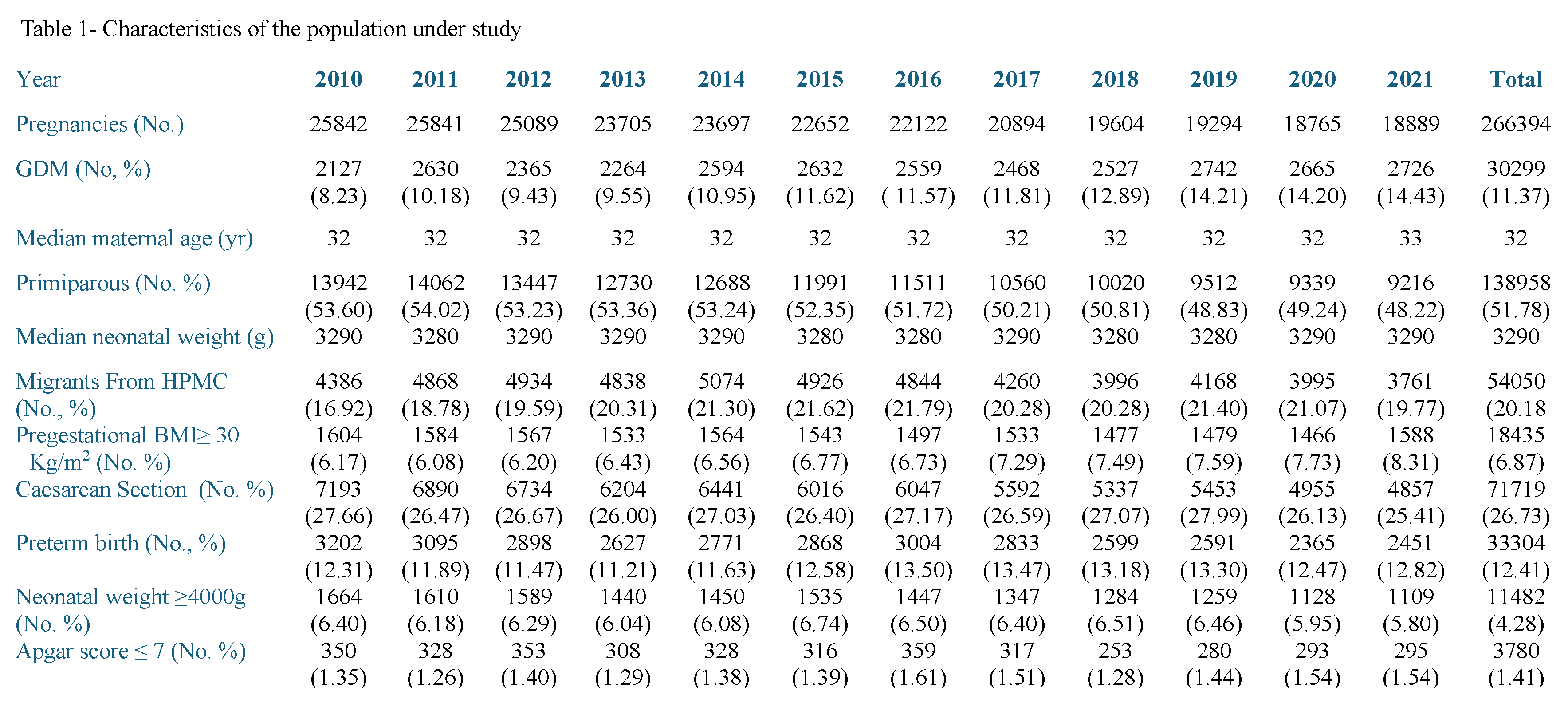
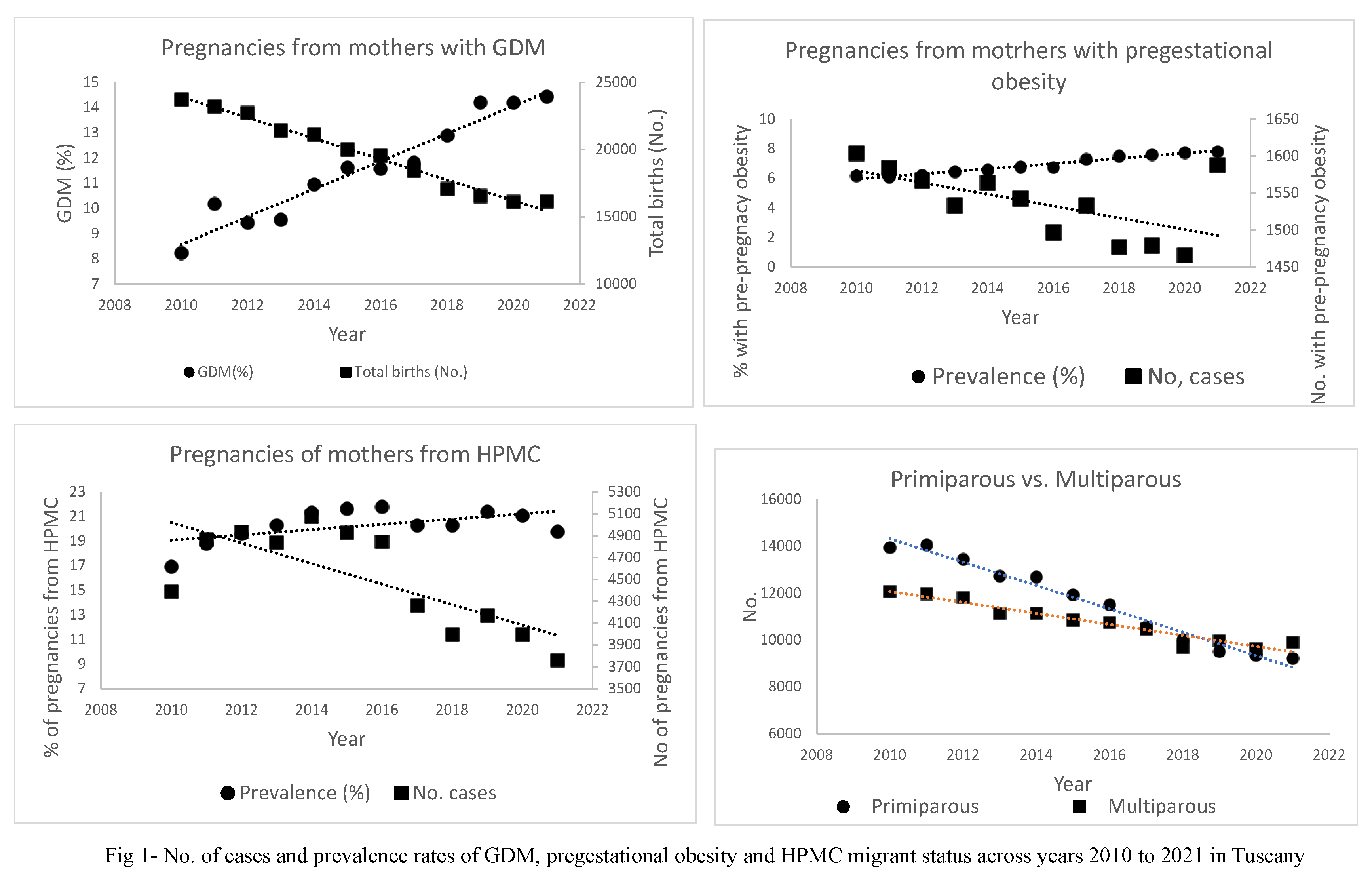
The study sample comprised 266,394 singleton pregnancies occurring in Tuscany, Italy, between 2010 and 2021. Table 1 summarizes the annual prevalence of the studied variables from 2010 to 2021. Over this period, the annual number of births progressively decreased, whereas the prevalence of GDM steadily increased (Table 1 and Figure 1). A similar upward trend was observed for pregestational obesity and for yearly prevalence of pregnancies of women originating from HPMC countries. Conversely, the proportion of primiparous women decreased consistently across the study years (Table 1 and Figure 1), whereas median maternal age and median neonatal birthweight remained stable over time (Table 1).
The unadjusted univariate analysis of maternal and neonatal outcomes, stratified by GDM status, and evaluated by Chi-square trend test is shown in Figure 2.
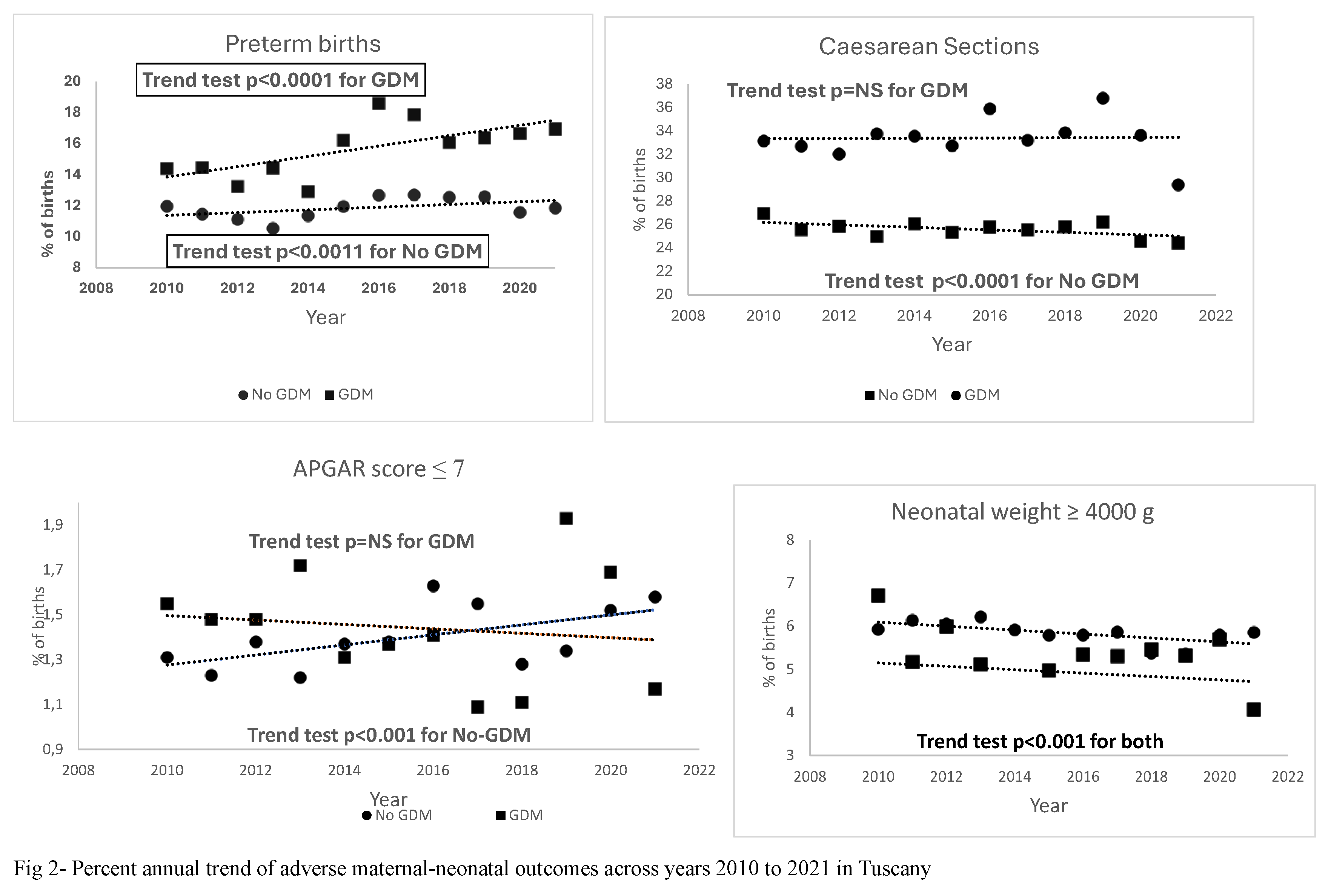
In GDM group, a marked yearly increase in preterm (≤ 37 weeks) birth prevalence was observed. In pregnancies without gestational diabetes, there was a progressive decrease in cesarean sections and a parallel prevalence of macrosomia. Simultaneously, there was a slight uptick in newborns with Apgar scores of 7 or less in those without GDM, not observed in cohort with GDM.
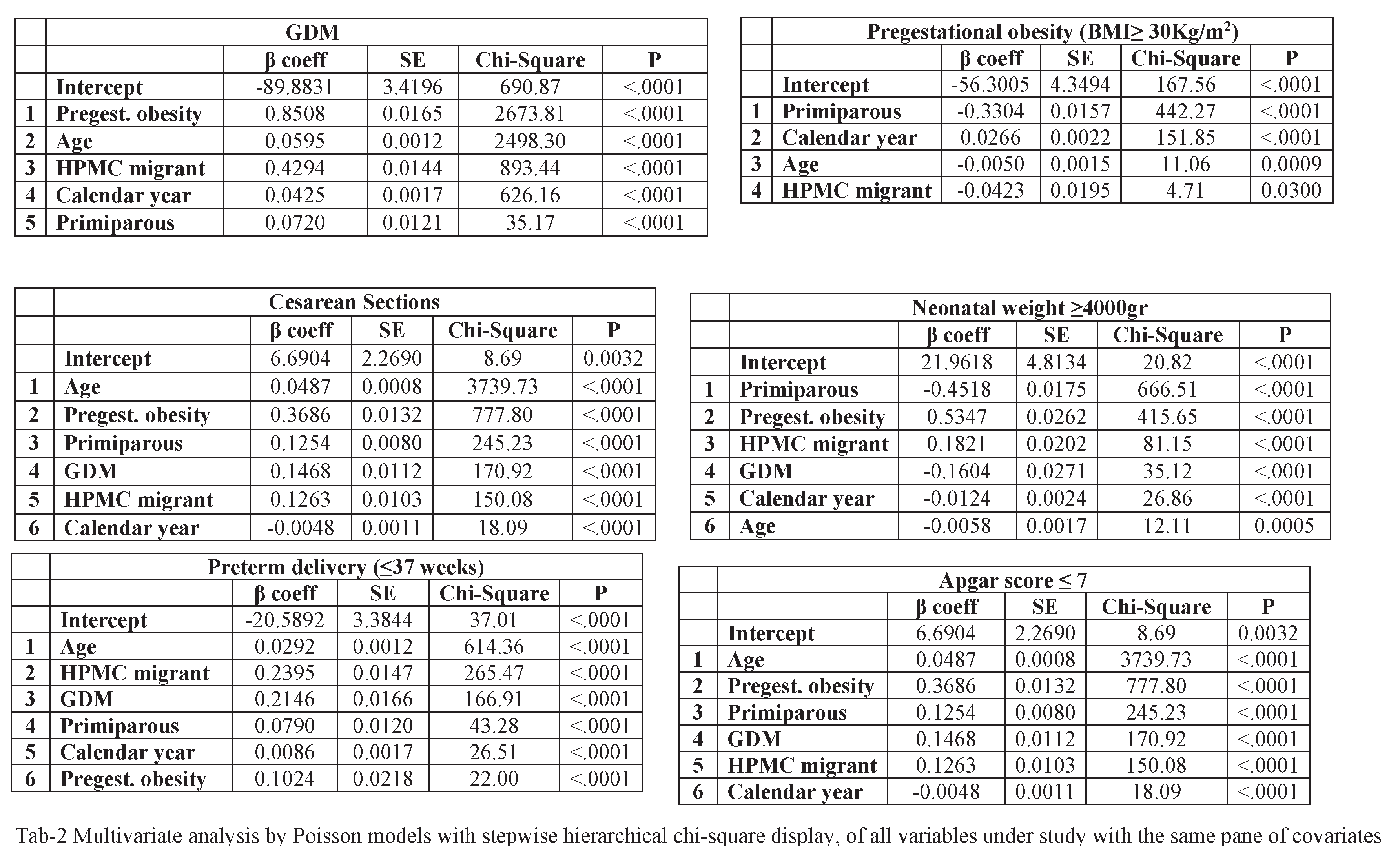
Table 2 shows the results of the multivariate Poisson models. Overall, GDM and pregestational obesity displayed an independent increasing trend over time, as reflected in positive β coefficients for calendar year. Examined GDM outcomes such as fetal macrosomia (≥4000 g), cesarean sections, and number of newborns with Apgar score ≤7 showed a negative temporal trend. According to the Wald Chi-square stepwise hierarchy, for GDM increasing maternal age and pregestational obesity emerged as the variables with the strongest positive trend over time (Table 2). Multiparity was a significant predictor of pregestational obesity as testified by the negative β coefficient for the primiparous women’ cohort. For temporal trend of cesarean delivery, maternal age and pregestational obesity were the most influential covariates. Multiparity and pregestational obesity were the key determinants of fetal macrosomia while, interestingly, GDM was inversely correlated with fetal macrosomia in this model. Maternal age, the origin of mothers from HPMC, and GDM were significant predictors of preterm birth. Meanwhile, trends in cases with an Apgar score of 7 or below were primarily influenced by maternal age, pregestational obesity, and primiparity, but notably not by GDM.
4. Discussion
As detailed in Methods section, in Tuscany, GDM screening is universally performed using a 75 g OGTT according to IADPSG criteria in accordance with Italian national guidelines—in our region implemented in 2012-, conducted between 24–28 weeks of gestation or earlier (16–18 weeks) in the presence of major risk factors [15]. Our analysis of temporal trends from 2010 to 2021 confirms a mean GDM prevalence of 11.37% and demonstrates a progressive increase in GDM cases over time. Possible drivers of such increase could be explained by the adoption of the more sensitive IADPSG criteria even if in our case applied only from 2012 onward. Additional contributing factors may include the growing rates of maternal pregestational obesity, as well as the ongoing increase in pregnancies among HPMC women. This study confirms prior findings that women from certain regions, particularly North Africa and South-East Asia, coming to our region have a higher risk of GDM [13,17]. Further, this study found that GDM cases rose even as total births declined, mirroring Italy’s overall trend and confirming a genuine increase in GDM prevalence. A key result of our research, which supports earlier studies, is that the increase over time in GDM prevalence can mostly be attributed to the simultaneous rise in pregestational obesity, older age of pregnant women and the growing number of births among mothers from HPMC. This conclusion is equally supported by univariate and multivariate Poisson regression analysis. In this context, it should be considered that, according to several studies, pregestational obesity appears to be strongly associated with the development of new GDM cases, ranking first in the multivariate Poisson model explaining GDM new cases across observation time. The model also highlights that the progressive increase in maternal age may contribute to the rising number of GDM cases. The average age at which women become mothers has been rising in Western countries. As a matter of fact, in Italy, national birth registry data of Health Ministry utilizing delivery Assistance Certificates (CeDAP) [18] show that the mean age for first-time mothers increased from 31.5 years in 2012 to over 32 years in 2022. This demonstrates a consistent trend of women having children later in our country, also applicable for our region. In addition, in our study, we found, as a proof of concept, that women with GDM tended to be older than those without it (data not shown).
We also observed a progressive decline in primiparous births, a trend that may influence analyses of parity-related GDM risk. Evidence regarding parity as a risk factor for GDM is mixed; however, most studies suggest that multiparity is associated with an increased risk of GDM, likely due to the progressive increase in insulin resistance across repeated pregnancies [19,20,21]. Cesarean section and macrosomia decreased over time in non-GDM pregnancies and according to multivariate adjusted models also including those with GDM. These findings could indirectly suggest that regional health policies may be contributing to improved early detection and prevention of adverse outcomes associated with GDM, as well as promoting more judicious use of cesarean sections. Preterm births increased in GDM pregnancies probably due to strategies aimed at reducing macrosomia and avoiding most severe glycemic imbalances during late pregnancy. Univariate analysis demonstrated a reduction in neonatal distress (Apgar score ≤7) over time within the GDM group, although the total number of affected newborns remained persistently low. These findings further suggest effective management by healthcare professionals and facilities in our region.
Multivariate analysis showed increases over time in GDM, pregestational obesity, and preterm birth, but, on the contrary, decreases in rates of cesarean section, macrosomia, and neonatal distress. From this analysis, stepwise regression demonstrated that pregestational obesity serves as a significant independent risk factor for GDM and associated complications, including macrosomia, neonatal distress, and cesarean delivery [22,23]. As a further outcome from maternal obesity, interestingly it may expand its ominous effects to the offspring as pointed out by a recent Chinese study showing that maternal overweight and GDM, both separately and together, are linked to rapid increases in adiposity from birth through early adolescence [24]. The present study pinpoints that GDM itself contributes only modestly as an independent predictor of macrosomia resulting even inversely correlated with macrosomia with a β coefficient= -1.1604; p<0.0001 in Poisson log-linear model. Although this study, for its nature, lacks data on metabolic control or maternal blood glucose levels in GDM, this data suggests that pregestational obesity probably has a stronger impact on neonatal macrosomia than maternal hyperglycemia itself, at least in this setting of health care policy. As priorly evidenced maternal blood glucose fluctuations account for approximately 2% to 13% of birthweight variance, especially when conditions are normal or gestational diabetes mellitus is effectively controlled [25,26,27]. All this could suggest that while GDM prevalence rates are rising over time locally, fewer adverse outcomes may result from effective health policies that promote early diagnosis and timely management of metabolic risks. This appears particularly relevant, from our study, for neonatal distress and fetal macrosomia. For this latter interestingly a recent study conducted in Southern China which indicates a decrease in prevalence of macrosomia over time in pregnancies with GDM, probably reflecting an improvement of metabolic control in women with GDM over years [28]. Further, even if rates of fetal overweight remained someway elevated in this population, this again suggests a separate impact of glucose levels and of other factors, among which maternal obesity, on neonatal weight [28]. Findings from multivariate analysis again show that maternal age plays an important—and often underestimated—role in GDM, pregestational obesity, and neonatal complications. Finally, multivariate analysis shows that HPMC origin is closely linked to GDM, macrosomia, and preterm birth. This association may also be also partially explained by disparities in access to healthcare services and differences in the implementation of regional policies for GDM screening and management among migrant populations, including those within our region [13,17].
4.1. Limitations and Strengths of the Study
This study has key limitations. First, it is based on administrative databases, and the diagnosis of GDM relies on an algorithmic approach which, although previously validated and applied in a region with universal GDM screening, does not include relevant information on metabolic control of diabetes during pregnancy. An additional limitation is related to the cross sectional and observational design of the study, which limits the generalizability of the findings to other populations.
The strengths of this study include the large sample size, the long enough observation period, the methodological consistency maintained throughout the study, and the near complete coverage of all pregnancies occurring in Tuscany between 2010 and 2021.
5. Conclusions
In response to the study aims, the first conclusion is that a true temporal increase in GDM prevalence has also occurred in our region, consistently in agreement with what is observed in other populations worldwide. The increase in GDM prevalence appears to be genuine, as it has occurred despite a progressive decline in birth rates in our region. In addition, this study confirms that pregestational obesity, maternal origin from HPMC, and more advanced maternal age represent the main drivers of the temporal increase in GDM prevalence. The second conclusion is that the increase in GDM prevalence has occurred in parallel with a rise in pregestational obesity, within a population characterized by progressively older maternal age at pregnancy, multiparity and an increasing proportion of mothers from HPMC, who, as known, are ethnically at higher risk for GDM. Third, this study shows that maternal–fetal complications, like fetal macrosomia, cesarean delivery, and neonatal distress, are primarily associated with pregestational obesity and maternal age, rather than GDM itself. This study therefore suggests that pre-pregnancy obesity prevention policies are needed because obesity is the main risk factor for GDM and its rates are increasing. This also remembers that prevention of obesity in the youth may have an important value in healthcare policies, since it constitutes an important risk factor for cardiovascular events in adult age [29]. A further often underestimated policy to be encouraged is implementing action to favor pregnancy in younger ages. Finally, the findings from this study indicate that in Tuscany, gestational diabetes is detected early and managed effectively. This is suggested by the observation that, although GDM rates have been increasing each year, complications—most of which are associated with metabolic imbalances such as fetal macrosomia—are less likely to occur. In summary, monitoring time trends in GDM and its related risk factors can serve as an indirect indicator of the effectiveness of regional healthcare policies. This approach helps identify policies that may improve prevention of GDM and its adverse maternal and neonatal outcomes, and it also highlights where broader prevention interventions are most needed in this population, especially against youth obesity, which has a double negative effect increasing risk for GDM as well as for its adverse effects. This study highlights that future research and efforts by healthcare professional should move in this direction.
Author Contributions
Conceptualization, G.S. and G.D.C.; Methodology, E.G. G.S., F.F. and P.F; Software, E.G., Validation, G.S. and G.D.C.; Formal analysis, G.S.; Investigation, G.S., and P.F.; Resources, P.F.; Data curation, G.S., and P.F.; Writing—original draft, G.S.; Writing—review & editing, G.S. and F.F.; Visualization, G.S. All Authors contributed to the final version of the manuscript. All authors have read and agreed to the published version of the manuscript.
Funding
This research received no external funding.
Institutional Review Board Statement
Not applicable.
Informed Consent Statement
Not applicable.
Data Availability Statement
Data are available upon reasonable request with permission.
Conflicts of Interest
The authors declare no conflict of interest.
References
- Ferrara, A. Increasing prevalence of gestational diabetes mellitus: a public health perspective. Diabetes Care Erratum in: Diabetes Care. 2007 Dec;30(12):3154. 2007, 30 Suppl 2, S141–6. [Google Scholar] [CrossRef] [PubMed]
- Reitzle, L.; Heidemann, C.; Krause, L.; Hoebel, J.; Scheidt-Nave, C. Prevalence of gestational diabetes mellitus in Germany: Temporal trend and differences by regional socioeconomic deprivation. J. Health Monit. 2024, 9(2), e12086. [Google Scholar] [CrossRef]
- Hunt, K.J.; Schuller, K.L. The increasing prevalence of diabetes in pregnancy. Obstet. Gynecol. Clin. North Am. 2007, 34(2), 173–99, vii. [Google Scholar] [CrossRef]
- Gortazar, L.; Flores-Le Roux, J.A.; Benaiges, D.; Sarsanedas, E.; Payà, A.; Mañé, L.; Pedro-Botet, J.; Goday, A. Trends in prevalence of gestational diabetes and perinatal outcomes in Catalonia, Spain, 2006 to 2015: the Diagestcat Study. Diabetes Metab. Res. Rev. 2019, 35(5), e3151. [Google Scholar] [CrossRef]
- Bordin, P.; Dotto, L.; Battistella, L.; Rosso, E.; Pecci, L.; Valent, F.; et al. Gestational diabetes mellius yesterday, today and tomorrow: A 13-year Italian cohort study. Diabetes Res. Clin. Pract. 2020, 167, 108360. [Google Scholar] [CrossRef]
- Ovesen, P.G.; Fuglsang, J.; Andersen, M.B.; Wolff, C.; Petersen, O.B.; David McIntyre, H. Temporal Trends in Gestational Diabetes Prevalence, Treatment, and Outcomes at Aarhus University Hospital, Skejby, between 2004 and 2016. J. Diabetes Res. 2018, 2018, 5937059. [Google Scholar] [CrossRef]
- Kragelund Nielsen, K.; Davidsen, E.; Henriksen, A.H.; Andersen, G.S. Gestational Diabetes and International Migration. J. Endocr. Soc. 2023, 7(1), bvac160. [Google Scholar] [CrossRef]
- Chu, S.Y.; Callaghan, W.M.; Kim, S.Y.; Schmid, C.H.; Lau, J.; England, L.J.; et al. Maternal Obesity and Risk of Gestational Diabetes Mellitus. Diabetes Care 2007, 30(8), 2070–6. [Google Scholar] [CrossRef] [PubMed]
- Gualdani, E.; Di Cianni, G.; Seghieri, M.; Francesconi, P.; Seghieri, G. Pregnancy outcomes and maternal characteristics in women with pregestational and gestational diabetes: a retrospective study on 206,917 singleton live births. Acta Diabetol. 2021, 58(9), 1169–1176. [Google Scholar] [CrossRef] [PubMed]
- Goldstein, R.F.; Abell, S.K.; Ranasinha, S.; et al. Association of Gestational Weight Gain With Maternal and Infant Outcomes: A Systematic Review and Meta-analysis. JAMA 2017, 317(21), 2207–25. [Google Scholar] [CrossRef] [PubMed]
- Davey, R.X. Gestational diabetes mellitus: a review from 2004. Curr. Diabetes Rev. 2005, 1(2), 203–13. [Google Scholar] [CrossRef] [PubMed]
- Seghieri, G.; Gualdani, E.; Campesi, I.; Franconi, F.; Francesconi, P.; Di Cianni, G. Risk of cardiovascular events after gestational diabetes: a retrospective population study. Acta Diabetol. 2024, 61(9), 1143–1150. [Google Scholar] [CrossRef]
- Seghieri, G.; Di Cianni, G.; Seghieri, M.; Lacaria, E.; Corsi, E.; Lencioni, C.; Gualdani, E.; Voller, F.; Francesconi, P. Risk and adverse outcomes of gestational diabetes in migrants: A population cohort study. Diabetes Res. Clin. Pract. 2020, 163, 108128. [Google Scholar] [CrossRef]
- Vitacolonna, E.; Succurro, E.; Lapolla, A.; Scavini, M.; Bonomo, M.; Di Cianni, G.; Di Benedetto, A.; Napoli, A.; Tumminia, A.; Festa, C.; Lencioni, C.; Torlone, E.; Sesti, G.; Mannino, D.; Purrello, F. Guidelines for the screening and diagnosis of gestational diabetes in Italy from 2010 to 2019: critical issues and the potential for improvement. Acta Diabetol. 2019, 56(11), 1159–1167. [Google Scholar] [CrossRef] [PubMed]
- Di Cianni, G.; Gualdani, E.; Berni, C.; Meucci, A.; Roti, L.; Lencioni, C.; Lacaria, E.; Seghieri, G.; Francesconi, P. Screening for gestational diabetes in Tuscany, Italy. A population study. Diabetes Res. Clin. Pract. 2017, 132, 149–156. [Google Scholar] [CrossRef]
- Shang, M.; Lin, L. IADPSG criteria for diagnosing gestational diabetes mellitus and predicting adverse pregnancy outcomes. J. Perinatol. 2014, 34, 100–4. [Google Scholar] [CrossRef]
- Citro, F.; Placenza, N.; Aragona, M.; Galleano, F.; Venturi, C.; Battini, L.; et al. Gestational Diabetes in Migrants: Prevalence and Metabolic Profile During Pregnancy: A Retrospective Italian Cohort Study. Diabetes Metab. Res. Rev. 2025, e70107. [Google Scholar] [CrossRef]
- Available online: https://www.salute.gov.it/new/it/tema/statistiche-sanitarie/ (accessed on 4 April 2026).
- Motevalizadeh, E.; Díaz-López, A.; Martín, F.; Basora, J.; Arija, V. Association of Parity With Insulin Resistance Early in Pregnant Women: ECLIPSES Study. J. Clin. Endocrinol. Metab. 2024, 109(3), 730–739. [Google Scholar] [CrossRef]
- Seghieri, G.; De Bellis, A.; Anichini, R.; Alviggi, L.; Franconi, F.; Breschi, M.C. Does parity increase insulin resistance during pregnancy? Diabet. Med. 2005, 22(11), 1574–80. [Google Scholar] [CrossRef]
- Abdelsalam, Eldin Ahmed; Alobeid, K.; M Elamin, A. Influence of Grand Multiparity on the Levels of Insulin, Glucose and HOMA-IR in Comparison with Nulliparity and Primiparity. Pak. J. Biol. Sci. 2017, 20(1), 42–46. [Google Scholar] [CrossRef]
- Weir, T.L.; Majumder, M.; Glastras, S.J. A systematic review of the effects of maternal obesity on neonatal outcomes in women with gestational diabetes. Obes. Rev. 2024, 25(7), e13747. [Google Scholar] [CrossRef]
- Song, X.; Shu, J.; Zhang, S.; Chen, L.; Diao, J.; Li, J.; Li, Y.; Wei, J.; Liu, Y.; Sun, M.; Wang, T.; Qin, J. Pre-Pregnancy Body Mass Index and Risk of Macrosomia and Large for Gestational Age Births with Gestational Diabetes Mellitus as a Mediator: A Prospective Cohort Study in Central China. Nutrients 2022, 14(5), 1072. [Google Scholar] [CrossRef] [PubMed]
- Deng, Y.; Tam, C.H.T.; Yang, A.; Shi, M.; Yuen, L.Y.; Ng, N.Y.H.; Tsang, A.Y.T.; Tsoi, K.Y.; Ozaki, R.; Li, A.M.; Chow, E.; Hui, L.L.; Chan, J.C.N.; Wang, C.C.; Tam, W.H.; Ma, R.C.W. Association of maternal overweight and gestational diabetes mellitus with offspring adiposity trajectory: from birth to early adolescence. Diabetologia 2025, 68(10), 2194–2204. [Google Scholar] [CrossRef] [PubMed]
- Breschi, M.C.; Seghieri, G.; Bartolomei, G.; Gironi, A.; Baldi, S.; Ferrannini, E. Relation of birthweight to maternal plasma glucose and insulin concentrations during normal pregnancy. Diabetologia 1993, 36(12), 1315–21. [Google Scholar] [CrossRef]
- Aamir, Maha; Feghali, Maisa; Yee, Lynn; Silver, Robert M; Durnwald, Celeste; Steller, Jon G; Haas, David; Reddy, Uma; Guerrero, Rafael F; Scifres, Christina M. A polygenic growth score and risk for large for gestational age birth weight. J. Endocr. Soc. 2026, Volume 10(Issue 3), bvag026. [Google Scholar] [CrossRef]
- Sacks, D.A.; Liu, A.I.; Wolde-Tsadik, G.; Amini, S.B.; Huston-Presley, L.; Catalano, P.M. What proportion of birth weight is attributable to maternal glucose among infants of diabetic women? Am. J. Obstet. Gynecol. 2006, 194(2), 501–7. [Google Scholar] [CrossRef] [PubMed]
- He, L.R.; Yu, L.; Guo, Y. Birth weight and large for gestational age trends in offspring of pregnant women with gestational diabetes mellitus in southern China, 2012-2021. Front Endocrinol. 2023, 14, 1166533. [Google Scholar] [CrossRef]
- van Dis, I.; Kromhout, D.; Geleijnse, J.M.; Boer, J.M.; Verschuren, W.M. Body mass index and waist circumference predict both 10-year nonfatal and fatal cardiovascular disease risk: study conducted in 20,000 Dutch men and women aged 20-65 years. Eur. J. Cardiovasc Prev. Rehabil. 2009, 16(6), 729–34. [Google Scholar] [CrossRef]
Disclaimer/Publisher’s Note: The statements, opinions and data contained in all publications are solely those of the individual author(s) and contributor(s) and not of MDPI and/or the editor(s). MDPI and/or the editor(s) disclaim responsibility for any injury to people or property resulting from any ideas, methods, instructions or products referred to in the content. |
© 2026 by the authors. Licensee MDPI, Basel, Switzerland. This article is an open access article distributed under the terms and conditions of the Creative Commons Attribution (CC BY) license (http://creativecommons.org/licenses/by/4.0/).
Copyright: This open access article is published under a Creative Commons CC BY 4.0 license, which permit the free download, distribution, and reuse, provided that the author and preprint are cited in any reuse.


