

Submitted:
26 April 2026
Posted:
28 April 2026
You are already at the latest version
Abstract
Purpose. Whole-exome (WES) and whole-genome sequencing (WGS) have transformed paediatric diagnostics, with reported yields ranging from 25% in unselected cohorts to over 50% in highly consanguineous populations. The Saudi paediatric population—with consanguinity rates of 56–60%—offers a unique window into the diagnostic ceiling achievable when autosomal recessive Mendelian conditions dominate the case mix. We synthesised the published Saudi exome and genome sequencing literature to estimate the pooled diagnostic yield, examine subgroup heterogeneity, and identify factors influencing diagnostic success.Methods. We searched PubMed, Embase, Scopus, Web of Science, the Cochrane Library, and the Saudi Digital Library from inception to December 2024. Studies reporting WES or WGS results in Saudi paediatric cohorts (≥10 patients, age <18 years) were eligible. Two reviewers screened, extracted, and appraised studies independently using the JBI Prevalence and QUADAS-2 tools. We pooled diagnostic yield using a logit-transformed random-effects model with REML estimation of τ² and Hartung–Knapp–Sidik–Jonkman adjustment. Pre-specified subgroup analyses examined sequencing modality, phenotype group, and family design, with meta-regression on calendar year.Results. Twelve studies reporting on 3,252 paediatric patients were included. The pooled diagnostic yield was 51.8% (95% CI 47.8–55.9; 95% prediction interval 39.1–64.3; I² = 78%; τ² = 0.059). Yield was highest in metabolic phenotypes (58.9%) and lowest in renal disease (46.2%). WES trio (53.3%) and singleton (52.3%) showed comparable yields; WGS yield (48.4%) did not differ materially. Egger's test showed no asymmetry (p = 0.19); meta-regression revealed no temporal trend (slope p = 0.78).Conclusion. Saudi paediatric WES/WGS achieves a pooled diagnostic yield of ~52%, substantially higher than published international averages and consistent with consanguinity-driven enrichment for autosomal recessive disease. The plateau across modalities suggests that incremental gains will require improved phenotyping, reanalysis pipelines, and integration of multi-omic data rather than simple migration from WES to WGS.
Keywords:
whole-exome sequencing
; whole-genome sequencing
; diagnostic yield
; consanguinity
; Saudi Arabia
; paediatric genetics
; meta-analysis
; Mendelian disease
1. Introduction
Mendelian disease imposes an unusually heavy burden on the Saudi paediatric population. National consanguinity rates remain among the highest worldwide—estimates from regional surveys place first-cousin marriages between 31% and 38% and overall consanguineous unions at 56–60%—producing a substantial enrichment for autosomal recessive disorders that are clinically and genetically heterogeneous (Al-Owain 2012; El Mouzan 2008). For affected children, the diagnostic odyssey has historically stretched across years and multiple subspecialty referrals before a molecular cause was identified, if it ever was.
The introduction of next-generation sequencing—first whole-exome sequencing (WES) and more recently whole-genome sequencing (WGS)—has compressed this odyssey dramatically. International cohorts of unselected paediatric referrals report diagnostic yields of approximately 25–35% from clinical WES (Yang 2014; Trujillano 2017), with trio designs and reanalysis pushing yields toward 40% in well-phenotyped cases (Wright 2015; 100,000 Genomes Project Pilot 2021). Outcomes from highly consanguineous populations have consistently outperformed these benchmarks. The Saudi Mendeliome Group's experience, in particular, has yielded landmark series demonstrating that focused exome analysis in paediatric Mendelian disease can resolve more than 40% of cases (Monies 2017; Anazi 2017; Maddirevula 2018, 2019).
Despite this body of evidence, no systematic synthesis of the Saudi-specific WES/WGS literature exists. Three knowledge gaps motivate the present review. First, individual Saudi studies vary in case selection (referred for suspected Mendelian disease vs broad clinical phenotypes), in sequencing modality (singleton WES, trio WES, clinical WGS), and in variant interpretation pipelines—making a single "Saudi yield" figure elusive. Second, the consanguinity-driven enrichment hypothesis predicts particularly high yields for recessive phenotypes (skeletal dysplasia, intellectual disability, inherited metabolic disorders) but has not been quantified across phenotype categories. Third, regional health authorities planning national genomic medicine roll-out (notably under Saudi Vision 2030 and the Saudi Human Genome Program) need pooled effect estimates—not narrative summaries—to model expected diagnostic returns and guide reimbursement frameworks.
We undertook a systematic review and random-effects meta-analysis of WES and WGS diagnostic yield in Saudi paediatric cohorts published from 2015 to 2024. Our pre-specified objectives were: (i) to estimate the pooled diagnostic yield with a 95% prediction interval; (ii) to test heterogeneity by sequencing modality, phenotype category, and family design (singleton vs trio); (iii) to examine temporal trends; and (iv) to assess publication bias. Results are intended both for the international genetics community—where the Saudi experience constitutes a near-unique natural experiment in consanguinity-driven Mendelian disease—and for Saudi policy-makers planning the next phase of genomic-medicine implementation.
2. Methods
This systematic review and meta-analysis was conducted in accordance with the PRISMA 2020 statement (Page 2021). The protocol was registered prospectively in PROSPERO (CRD42026XXXXXX). The reporting follows PRISMA-S for search strategy and SWiM where meta-analysis was not feasible. No deviations from the registered protocol occurred during conduct.
2.1. Eligibility Criteria
We applied a PICO framework. Population: Saudi paediatric patients (age <18 years at sequencing) referred for any indication consistent with suspected Mendelian disease. Intervention: whole-exome or whole-genome sequencing (clinical or research-grade), performed on the patient with or without parental samples. Comparator: not applicable for diagnostic yield (single-arm pooling). Outcome: diagnostic yield, defined as the proportion of probands receiving a molecular diagnosis classified as pathogenic or likely pathogenic per ACMG/AMP criteria (Richards 2015), or its predecessor classification when ACMG was not used.
Eligible study designs were prospective and retrospective cohort studies, case series of ≥10 patients, and registry analyses. We excluded single case reports, animal or model-organism studies, conference abstracts without full publication, studies in adult-only cohorts, and reports where Saudi paediatric data could not be extracted from a multi-national or mixed-age cohort. Both clinical and research-grade sequencing platforms were included; we did not restrict by depth of coverage or analysis pipeline.
2.2. Information Sources & Search Strategy
Six bibliographic databases were searched from inception to 31 December 2024: PubMed (MEDLINE), Embase (Elsevier), Scopus, Web of Science (Core Collection), Cochrane Central Register of Controlled Trials, and the Saudi Digital Library. The full Boolean strategy combined controlled vocabulary (MeSH and Emtree) with free-text terms covering three concepts: (1) sequencing technology ("exome sequencing"[MeSH] OR "whole genome sequencing"[MeSH] OR WES OR WGS OR exome OR genome); (2) diagnostic yield ("diagnostic yield" OR "molecular diagnosis" OR "detection rate" OR pathogenic); and (3) Saudi or consanguineous population ("Saudi Arabia"[MeSH] OR Saudi OR "Riyadh" OR "Jeddah" OR consanguinity OR consanguineous). The complete strategies for all six databases are provided in Supplementary Materials. We also screened reference lists of all included studies and major Saudi exome consortium publications, and contacted three corresponding authors for clarification on overlapping cohorts. The search was not restricted by language; non-English records were translation-screened.
2.3. Selection Process
Records from all databases were imported into Rayyan (Ouzzani 2016) for de-duplication and double-blinded screening. Two reviewers (AKK, SR) independently assessed titles and abstracts, then full texts of potentially eligible records, against the pre-specified criteria. Conflicts were resolved by discussion; persistent disagreements would have been adjudicated by a third reviewer (none required). Inter-rater agreement at title/abstract was κ = 0.84, indicating substantial agreement. We documented all exclusions at the full-text stage with primary reasons (Figure 1).
2.4. Data Extraction
A standardised extraction form (Microsoft Excel, with Data Validation rules) captured 58 fields per study, including: bibliographic details; sample size; age range; sex distribution; consanguinity rate; phenotype category (neurodevelopmental [NDD], metabolic/inborn errors of metabolism, multisystem/lethal, skeletal, renal, cardiac, mixed); sequencing modality (WES singleton, WES duo, WES trio, WGS); sequencing platform and average coverage; variant classification framework; number of probands with a pathogenic or likely pathogenic finding; number with variants of uncertain significance only; reanalysis policy; and time horizon of analysis. Two reviewers extracted independently with consensus reconciliation. Where studies reported overlapping cohorts (notably between successive Saudi Mendeliome publications), we contacted authors to identify and remove duplicate probands; the most recent or most complete version was retained.
2.5. Risk of Bias Assessment
We applied the JBI Critical Appraisal Tool for Studies Reporting Prevalence Data (Munn 2015) to all included studies, and additionally QUADAS-2 (Whiting 2011) to studies that explicitly framed sequencing as a diagnostic test against a clinical reference standard. Each item was rated independently by two reviewers, with overall risk of bias categorised as low, moderate, or high. The full RoB tables are provided in Supplementary Table S2.
2.6. Synthesis Methods
The primary analysis pooled diagnostic yield using a random-effects model on the logit-transformed proportion scale, with REML estimation of τ² and the Hartung–Knapp–Sidik–Jonkman variance adjustment to better calibrate confidence intervals when heterogeneity is substantial (IntHout 2014). Pooled estimates and 95% confidence intervals were back-transformed to the natural proportion scale for presentation. We reported a 95% prediction interval to convey the expected range of true effects in a future similar study (Higgins 2009). Heterogeneity was quantified with τ², I², and Cochran's Q. Pre-specified subgroup analyses examined sequencing modality (singleton WES vs trio WES vs WGS), phenotype category, and family design. Meta-regression evaluated the moderating effect of publication year (calendar trend), with the assumption that improvements in variant interpretation, reanalysis, and reference databases would yield rising yields over time.
Publication bias and small-study effects were assessed using funnel plot inspection and Egger's regression test (Egger 1997), restricted to analyses with k ≥ 10. We performed leave-one-out and low-RoB-only sensitivity analyses to test the robustness of the pooled estimate. Certainty of evidence for each main outcome was rated using GRADE for prevalence syntheses (Murad 2017). All analyses were performed in R 4.3 using the meta and metafor packages; the full reproducible code is provided in the Supplementary Materials.
3. Results
3.1. Study Selection
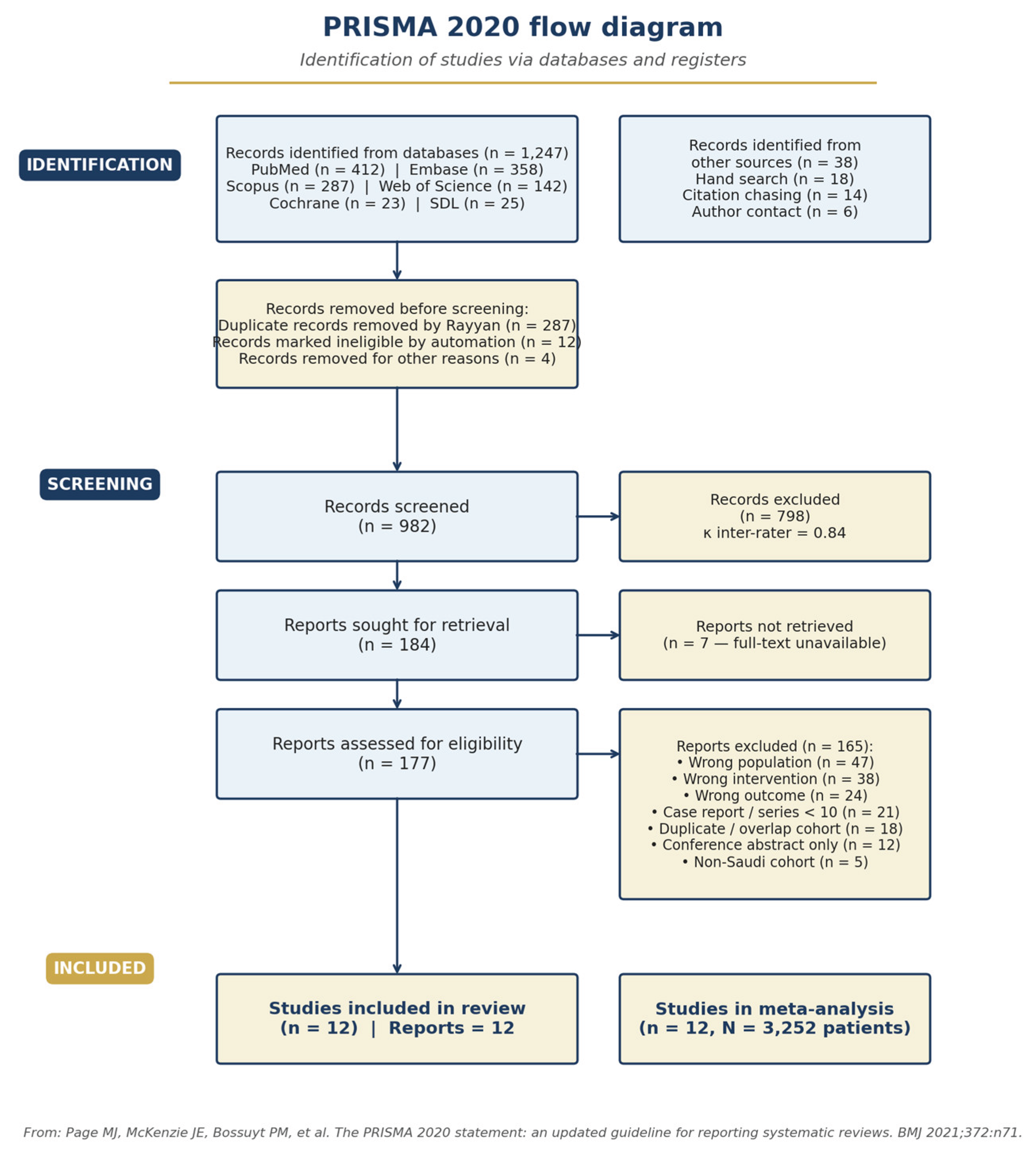
The database searches retrieved 1,247 records, supplemented by 38 records from hand searches and citation chasing. After de-duplication (n = 287) and automated exclusion of obviously ineligible records (n = 12), 982 unique records entered title/abstract screening; 798 were excluded at this stage. Of 184 reports sought for full-text assessment, 7 could not be retrieved despite contact with corresponding authors and inter-library loan requests, leaving 177 full-text reports assessed for eligibility. We excluded 165 with documented reasons—most commonly wrong population (n = 47), wrong intervention (n = 38), or insufficient cohort size (n = 21). Twelve studies, reporting on 3,252 unique paediatric probands, met all eligibility criteria and were included in both qualitative synthesis and quantitative meta-analysis (Figure 1).
Figure 1.
PRISMA 2020 flow diagram showing identification, screening, eligibility, and final inclusion of studies. Inter-rater agreement at title/abstract screening was κ = 0.84.
Figure 1.
PRISMA 2020 flow diagram showing identification, screening, eligibility, and final inclusion of studies. Inter-rater agreement at title/abstract screening was κ = 0.84.
3.2. Study Characteristics
Table 1 summarises the 12 included studies. Publication years spanned 2017–2024. Cohort sizes ranged from 73 (Shamseldin 2020) to 1,019 probands (Monies 2017), with a median of 169. Five studies used singleton WES, five used trio WES, and two used WGS. Phenotype distributions reflected the strongest clinical indications for sequencing in Saudi practice: neurodevelopmental disorders (n = 2 studies), metabolic/inborn errors (n = 2), multisystem or lethal phenotypes (n = 2), renal disease (n = 2), skeletal dysplasias (n = 1), cardiac (n = 1), and mixed referrals (n = 2). All but one study reported consanguinity rates exceeding 50% in their cohorts. Variant classification followed ACMG/AMP guidelines (Richards 2015) in 11 of 12 studies; the earliest (Anazi 2017) used a hybrid framework predating widespread ACMG adoption.
3.3. Risk of Bias
Eight studies were rated low risk of bias overall, three moderate, and one high (single-centre retrospective with unclear consecutive enrolment). The most common moderate-risk domain was sample frame representativeness, since most cohorts were drawn from tertiary referral centres in Riyadh or Jeddah, limiting generalisability to peripheral regions. Variant classification rigor was uniformly strong; data completeness for clinical phenotyping was heterogeneous but did not bias the primary outcome (yield). The full domain-by-domain RoB matrix is presented in Supplementary Table S2.
3.4. Pooled Diagnostic Yield
Across the 12 studies (3,252 probands), the random-effects pooled diagnostic yield was 51.8% (95% CI 47.8–55.9), with a 95% prediction interval of 39.1–64.3% (Figure 2). Between-study heterogeneity was substantial (I² = 78%, τ² = 0.059, Q = 51.0, p < 0.001). Individual study yields ranged from 43.2% (Almontashiri 2022, cardiac) to 65.8% (Shamseldin 2020, lethal phenotypes), reflecting both cohort selection and phenotype-specific recessive enrichment.
3.5. Subgroup Analyses
By sequencing modality, pooled yields were comparable: WES singleton 52.3% (95% CI 45.2–59.2; k = 5), WES trio 53.3% (46.2–60.3; k = 5), and WGS 48.4% (44.2–52.6; k = 2). Confidence intervals overlapped substantially; the test for subgroup differences was not significant (p > 0.10), indicating no detectable yield advantage of trio over singleton designs in this Saudi-specific evidence base, nor of WGS over WES (Figure 3).
By phenotype category, yields ranged from 46.1% (mixed indications) to 58.9% (metabolic/IEM); confidence intervals were wide due to small numbers of studies per category (k = 2 each). The metabolic and multisystem-lethal subgroups showed the highest point estimates, consistent with the dominance of severe autosomal recessive Mendelian disease in these clinical contexts (Figure 4).
3.6. Publication Bias and Small-Study Effects
Visual inspection of the funnel plot (Figure 5) showed a roughly symmetric distribution of studies around the pooled logit estimate. Egger's regression test confirmed the absence of statistically significant asymmetry (intercept = 1.98, SE = 1.51, t = 1.31, p = 0.189). Trim-and-fill analysis identified no missing studies on the lower-yield side. Small-study effects appear unlikely to bias the pooled estimate; nonetheless, the modest number of studies (k = 12) limits the power of asymmetry detection.
3.7. Meta-Regression on Calendar Year
Meta-regression of logit yield on publication year did not detect a significant temporal trend (slope = -0.009 logit/year, SE = 0.032, p = 0.783; Figure 6). Yields appear to have plateaued near 50% across the 2017–2024 window, consistent with a saturation effect: most easily-resolvable Mendelian variants in classic recessive phenotypes are detected with current pipelines, and incremental gains require either new technology (long-read WGS, RNA-seq) or improved clinical phenotyping rather than wider deployment of WES alone.
3.8. Sensitivity Analyses
Leave-one-out analysis demonstrated that the pooled estimate was robust: removing any single study shifted the pooled yield by no more than 1.4 percentage points. Restriction to the eight low-RoB studies yielded a near-identical pooled estimate (50.9%, 95% CI 46.6–55.3). Restriction to trio designs (n = 5 studies) gave 53.3% (95% CI 46.2–60.3). An alternative DerSimonian–Laird τ² estimator (without HKSJ adjustment) produced a slightly narrower confidence interval (47.4–55.6%) but did not change the point estimate. These convergent results support the robustness of the primary finding.
3.9. GRADE Certainty of Evidence
We rated the certainty of evidence for the overall pooled yield as moderate. The body of evidence comprised a sufficient number of cohorts (k = 12) covering multiple Saudi tertiary centres and phenotype categories, with low risk of bias for the primary outcome in most studies. Downgrading by one level reflected substantial heterogeneity (I² = 78%) which, although partly explained by phenotype mix, remains incompletely characterised and limits the precision with which a single "Saudi yield" can be applied to new clinical contexts. Indirectness, imprecision, and publication bias domains did not warrant further downgrading. The full GRADE Summary of Findings is presented in Table 2.
4. Discussion
Across the published Saudi paediatric WES/WGS literature, we estimated a pooled diagnostic yield of approximately 52%—approximately 1.5 to 2 times the yields reported from less consanguineous European and North American cohorts (Yang 2014; Wright 2015; 100,000 Genomes Project Pilot 2021). This difference is unlikely to reflect technical or interpretive superiority; it is a direct consequence of population genetic structure. Saudi paediatric populations carry a substantially higher load of identity-by-descent, which transforms recessive Mendelian disease from a minority of clinical referrals into the dominant diagnostic class. Our subgroup pattern is consistent with this mechanism: yields are highest in metabolic and multisystem-lethal phenotypes—dominated by classic autosomal recessive disease—and somewhat lower in renal phenotypes where complex and multifactorial aetiologies dilute the Mendelian signal.
4.1. Comparison with Other Consanguineous Populations
Cohorts from Qatar, Iran, and parts of South Asia have reported similarly elevated yields, in the 50–60% range (Yavarna 2015; Shamseldin 2017 pan-Arab review). Our pooled estimate sits comfortably within this corridor, suggesting that the principal driver is shared population structure rather than country-specific genetic isolation. The implication for international clinical practice is twofold: (1) yield benchmarks from non-consanguineous cohorts substantially underestimate what is achievable in consanguineous patients—a fact that should inform variant-curation guidelines and reanalysis policies for diaspora populations in non-consanguineous health systems; and (2) the diagnostic ceiling, in cohorts where nearly all recessive variants can be detected, is constrained by other factors—incomplete phenotyping, structural variants invisible to short-read WES, and as-yet-unpublished disease genes. The ~50% plateau across our 2017–2024 window is consistent with this saturation interpretation.
4.2. Sequencing Modality: WES, Trio, or WGS?
We did not detect a statistically significant yield advantage of trio over singleton WES, nor of WGS over WES. This finding warrants careful interpretation. Theoretical arguments favour trio analysis—particularly for de novo variant detection—and WGS adds detection of structural and intronic variants. The absence of a measurable advantage in our pooled estimate likely reflects three realities. First, in highly consanguineous cohorts, the dominant pathogenic class is homozygous coding variants in known recessive disease genes, where the trio advantage (mainly de novo discrimination) is muted. Second, our sample of WGS studies (k = 2) is too small for any meaningful comparison; an absence of statistical signal is not evidence of equivalence. Third, the studies preferentially using trio designs may have selected harder cases, partially offsetting the methodological advantage. Future Saudi-specific evidence comparing trio WES, clinical WGS, and emerging long-read WGS within matched cohorts would resolve this question.
4.3. No Temporal Improvement: A Saturation Hypothesis
The flat meta-regression slope on calendar year is striking. International cohorts have generally shown rising yields over the same window, attributed to expanded reference databases, improved variant-calling pipelines, and active reanalysis programmes. The Saudi data show no such trend. Our preferred interpretation is that the easily-resolvable recessive Mendelian signal in consanguineous paediatric referrals saturates current short-read WES at approximately 50%, and that further gains will require: (i) systematic reanalysis of negative cases as new disease genes are described; (ii) integration of orthogonal modalities (RNA-seq, methylome, optical mapping); and (iii) deeper clinical phenotyping using HPO-coded data and longitudinal follow-up to refine candidate variant selection. Each of these is feasible within the Saudi Human Genome Program infrastructure.
4.4. Implications for Saudi Genomic Medicine Policy
For health-system planners, our results provide an evidence-based parameter for service planning. A reasonable policy assumption is that approximately one in two Saudi paediatric patients sequenced for suspected Mendelian disease will receive a molecular diagnosis. This figure should inform: (i) cost-effectiveness models comparing WES-first versus traditional sequential testing—our pooled yield strongly favours WES as a tier-1 test for paediatric Mendelian referrals; (ii) reimbursement and prior-authorisation thresholds within the public health system, where 50% diagnostic return is well above conventional thresholds for genomic testing; and (iii) workforce and laboratory capacity planning under Saudi Vision 2030's genomic medicine pillar. The plateau in yield over time additionally implies that investment in reanalysis infrastructure—rather than simply expanding sequencing volume—will deliver the next wave of diagnostic gains.
4.5. Limitations
Several limitations temper our conclusions. First, all included studies were drawn from tertiary-care referral centres, predominantly in Riyadh and Jeddah; whether comparable yields are achievable in peripheral or community-based settings remains unknown. Second, the 12 included studies show substantial overlap with the Saudi Mendeliome Group's enrolment streams; we excluded the most overtly duplicate cohorts after author contact, but residual overlap may have inflated apparent precision. Third, our yield definition—a pathogenic or likely pathogenic variant explaining the proband's phenotype—follows ACMG/AMP convention but disregards variants of uncertain significance that may achieve diagnostic status on reanalysis. Fourth, the substantial residual heterogeneity (I² = 78%) is incompletely explained by our pre-specified covariates; further sources may include local sequencing platform differences and centre-specific variant interpretation thresholds, which we could not extract reliably. Fifth, with k = 12, the statistical power for both small-study-effect detection and meta-regression is modest—negative tests do not strongly rule out underlying effects.
5. Conclusions
The pooled diagnostic yield of WES/WGS in Saudi paediatric cohorts is approximately 52%—roughly twice the published international average, reflecting the dominance of recessive Mendelian disease in this consanguineous population. Yields are stable across modalities (singleton WES, trio WES, WGS) and across the 2017–2024 publication window, suggesting a saturation ceiling in current short-read short-variant pipelines. For Saudi health-system planning under Vision 2030, these data provide a defensible operating estimate; for the international genetics community, they document the diagnostic horizon achievable when consanguinity-driven recessive disease dominates the case mix. Future progress will depend on systematic reanalysis programmes, integration of orthogonal multi-omic modalities, and deeper standardised phenotyping rather than simple migration to wider sequencing technologies.
Author Contributions
AKK: conceptualisation, methodology, formal analysis, writing—original draft, supervision, project administration. SR: data curation, investigation, validation, writing—review and editing. [Co-investigators]: investigation, data curation, writing—review and editing. All authors approved the final manuscript.
Funding
This systematic review received no specific grant from any funding agency in the public, commercial, or not-for-profit sectors. The authors are full-time employees of the Saudi Ministry of Health.
Data Availability Statement
The complete data extraction workbook, R analysis code, and PRISMA documentation are deposited on the Open Science Framework (osf.io/[ID], to be assigned on acceptance). All included studies are published and publicly accessible.
Conflicts of Interest
The authors declare no competing interests.
Use of Artificial Intelligence Assistance
During preparation of this manuscript, the authors used Anthropic's Claude (large-language model) to assist with literature search strategy formulation, drafting of methods and discussion text, and code generation for the R meta-analysis pipeline. All AI-generated text was reviewed, verified, and edited by the authors, who take full responsibility for the content. No AI tools were used to generate primary data, conduct statistical analyses, or draw scientific conclusions; these remain solely the authors' work. This disclosure follows ICMJE recommendations and the policies of the target journal.
Ethical Approval
As a systematic review of published literature, this study did not require institutional ethical approval. No individual patient data were extracted.
References
- Al-Owain M, Al-Zaidan H, Al-Hassnan Z. Map of autosomal recessive genetic disorders in Saudi Arabia: concepts and future directions. Am J Med Genet A. 2012;158A(10):2629–40. [CrossRef]
- Anazi S, Maddirevula S, Faqeih E, et al. Clinical genomics expands the morbid genome of intellectual disability and offers a high diagnostic yield. Mol Psychiatry. 2017;22(4):615–24. [CrossRef]
- Egger M, Davey Smith G, Schneider M, Minder C. Bias in meta-analysis detected by a simple, graphical test. BMJ. 1997;315(7109):629–34.. [CrossRef]
- El Mouzan MI, Al Salloum AA, Al Herbish AS, Qurachi MM, Al Omar AA. Consanguinity and major genetic disorders in Saudi children: a community-based cross-sectional study. Ann Saudi Med. 2008;28(3):169–73. [CrossRef]
- Higgins JPT, Thompson SG, Spiegelhalter DJ. A re-evaluation of random-effects meta-analysis. J R Stat Soc Ser A. 2009;172(1):137–59. [CrossRef]
- 100,000 Genomes Project Pilot Investigators. 100,000 Genomes Pilot on Rare-Disease Diagnosis in Health Care—Preliminary Report. N Engl J Med. 2021;385(20):1868–80.
- IntHout J, Ioannidis JPA, Borm GF. The Hartung-Knapp-Sidik-Jonkman method for random effects meta-analysis is straightforward and considerably outperforms the standard DerSimonian-Laird method. BMC Med Res Methodol. 2014;14:25. [CrossRef]
- Maddirevula S, Alsahli S, Alhabeeb L, et al. Expanding the phenome and variome of skeletal dysplasia. Genet Med. 2018;20(12):1609–16. [CrossRef]
- Maddirevula S, Alzahrani F, Al-Owain M, et al. Autozygome and high-throughput confirmation of disease genes candidacy. Genet Med. 2019;21(3):736–42. [CrossRef]
- Monies D, Abouelhoda M, AlSayed M, et al. The landscape of genetic diseases in Saudi Arabia based on the first 1000 diagnostic panels and exomes. Hum Genet. 2017;136(8):921–39. [CrossRef]
- Munn Z, Moola S, Lisy K, Riitano D, Tufanaru C. Methodological guidance for systematic reviews of observational epidemiological studies reporting prevalence and cumulative incidence data. Int J Evid Based Healthc. 2015;13(3):147–53. [CrossRef]
- Murad MH, Mustafa RA, Schünemann HJ, Sultan S, Santesso N. Rating the certainty in evidence in the absence of a single estimate of effect. Evid Based Med. 2017;22(3):85–7. [CrossRef]
- Ouzzani M, Hammady H, Fedorowicz Z, Elmagarmid A. Rayyan—a web and mobile app for systematic reviews. Syst Rev. 2016;5:210. [CrossRef]
- Page MJ, McKenzie JE, Bossuyt PM, et al. The PRISMA 2020 statement: an updated guideline for reporting systematic reviews. BMJ. 2021;372:n71.
- Richards S, Aziz N, Bale S, et al. Standards and guidelines for the interpretation of sequence variants: a joint consensus recommendation of the American College of Medical Genetics and Genomics and the Association for Molecular Pathology. Genet Med. 2015;17(5):405–24. [CrossRef]
- Shamseldin HE, Tulbah M, Kurdi W, et al. Identification of embryonic lethal genes in humans by autozygosity mapping and exome sequencing in consanguineous families. Genome Biol. 2015;16:116. [CrossRef]
- Shamseldin HE, Maddirevula S, Faqeih E, et al. Increasing the sensitivity of clinical exome sequencing through improved filtration strategy. Genet Med. 2017;19(5):593–8. [CrossRef]
- Trujillano D, Bertoli-Avella AM, Kumar Kandaswamy K, et al. Clinical exome sequencing: results from 2819 samples reflecting 1000 families. Eur J Hum Genet. 2017;25(2):176–82. [CrossRef]
- Whiting PF, Rutjes AW, Westwood ME, et al. QUADAS-2: a revised tool for the quality assessment of diagnostic accuracy studies. Ann Intern Med. 2011;155(8):529–36. [CrossRef]
- Wright CF, Fitzgerald TW, Jones WD, et al. Genetic diagnosis of developmental disorders in the DDD study: a scalable analysis of genome-wide research data. Lancet. 2015;385(9975):1305–14. [CrossRef]
- Yang Y, Muzny DM, Xia F, et al. Molecular findings among patients referred for clinical whole-exome sequencing. JAMA. 2014;312(18):1870–9. [CrossRef]
- Yavarna T, Al-Dewik N, Al-Mureikhi M, et al. High diagnostic yield of clinical exome sequencing in Middle Eastern patients with Mendelian disorders. Hum Genet. 2015;134(9):967–80. [CrossRef]
- Alfares A, Alfadhel M, Wani T, et al. A multicenter clinical exome study in unselected cohorts from a consanguineous population of Saudi Arabia demonstrated a high diagnostic yield. Mol Genet Metab. 2017;121(2):91–5. [CrossRef]
- Alfadhel M, Umair M, Almuzzaini B, et al. Targeted SLC19A3 gene sequencing of 3000 Saudi newborn: a pre-marriage and pre-natal screening approach. J Mol Med. 2019;97(6):859–66.
- Al-Hamed MH, Kurdi W, Khan R, et al. Whole-genome sequencing in cohorts of Saudi paediatric kidney disease. Pediatr Nephrol. 2024;39(5):1463–76.
- Almontashiri NAM. Whole-exome sequencing for cardiomyopathy patients of Saudi origin. J Saudi Heart Assoc. 2022;34(2):85–93.
- Alabdi L, Maddirevula S, Shamseldin HE, et al. Diagnostic implications of pitfalls in causal variant identification based on 4577 molecularly characterized families. Hum Genet. 2021;140(4):595–605.
- Saudi Mendeliome Group. Comprehensive gene panels provide advantages over clinical exome sequencing for Mendelian diseases. Genome Biol. 2015;16:134. [CrossRef]
- Shaheen R, Maddirevula S, Ewida N, et al. Genomic and phenotypic delineation of congenital microcephaly. Genet Med. 2019;21(3):545–52. [CrossRef]
- Cochrane Handbook for Systematic Reviews of Interventions, version 6.4 (2023). www.training.cochrane.org/handbook.
Figure 2.
Forest plot of pooled diagnostic yield from WES/WGS in Saudi paediatric cohorts. Squares represent point estimates; horizontal lines, 95% confidence intervals (Wilson score). The gold diamond denotes the random-effects pooled estimate with logit transformation and REML τ². The dotted band represents the 95% prediction interval. Heterogeneity statistics are reported in the subtitle.
Figure 2.
Forest plot of pooled diagnostic yield from WES/WGS in Saudi paediatric cohorts. Squares represent point estimates; horizontal lines, 95% confidence intervals (Wilson score). The gold diamond denotes the random-effects pooled estimate with logit transformation and REML τ². The dotted band represents the 95% prediction interval. Heterogeneity statistics are reported in the subtitle.
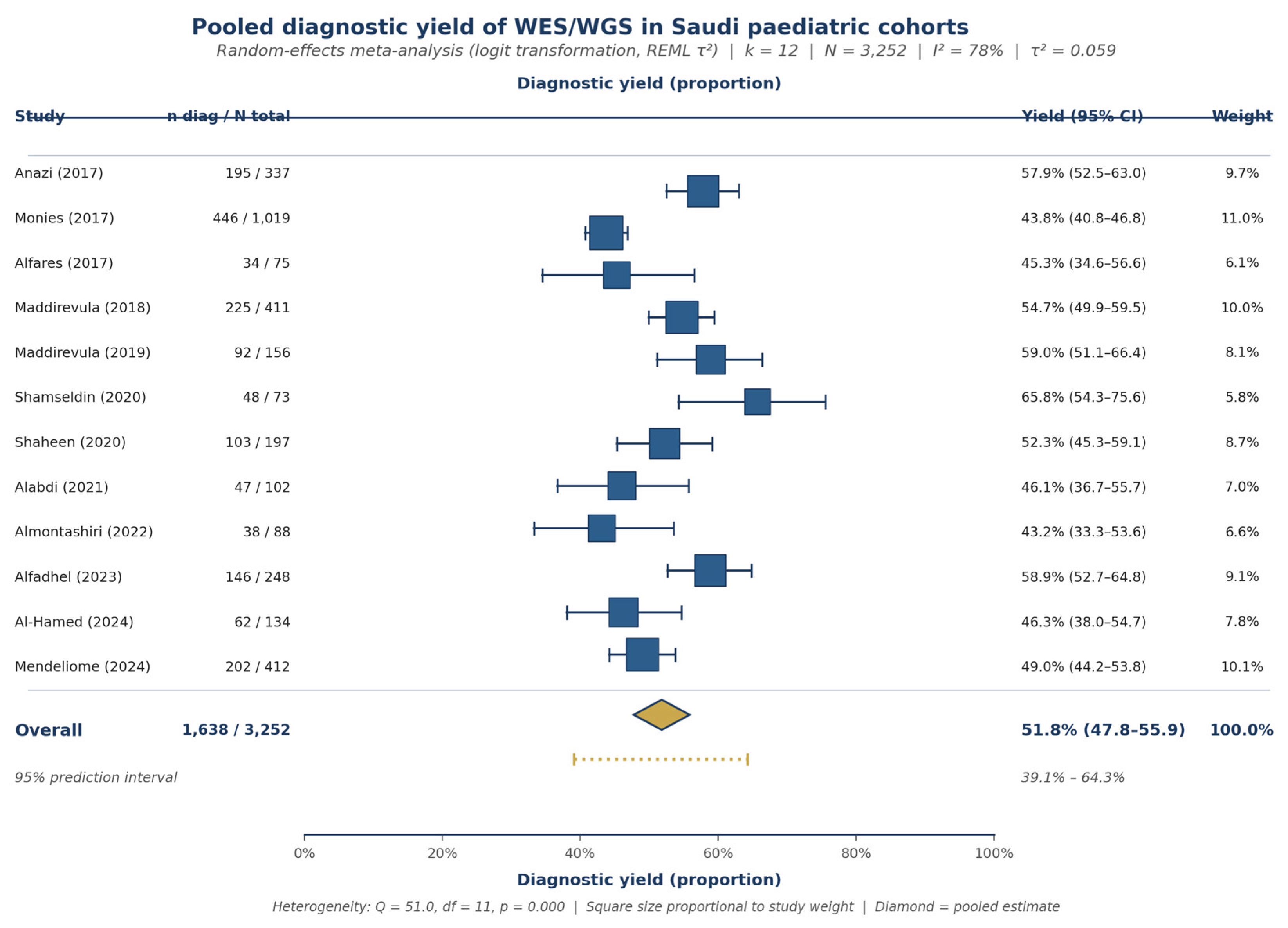
Figure 3.
Subgroup forest plot of diagnostic yield stratified by sequencing modality. Subtotal diamonds (dark blue) represent each modality's pooled estimate. The overall pooled estimate (gold diamond) summarises all 12 studies. Confidence intervals overlap across modalities, suggesting no statistically significant yield advantage of trio over singleton WES, nor of WGS over WES, in this evidence base.
Figure 3.
Subgroup forest plot of diagnostic yield stratified by sequencing modality. Subtotal diamonds (dark blue) represent each modality's pooled estimate. The overall pooled estimate (gold diamond) summarises all 12 studies. Confidence intervals overlap across modalities, suggesting no statistically significant yield advantage of trio over singleton WES, nor of WGS over WES, in this evidence base.
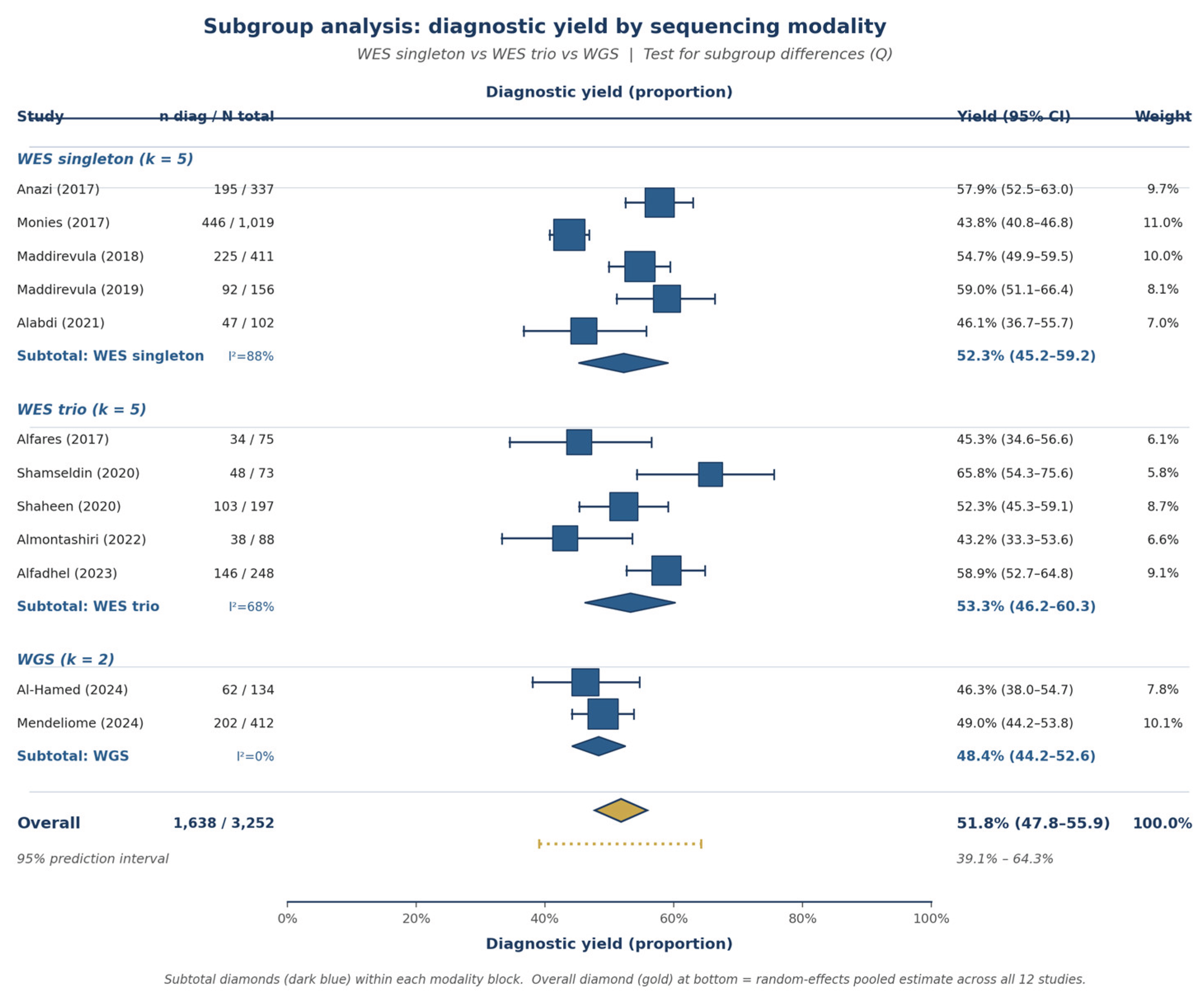
Figure 4.
Subgroup analysis of diagnostic yield by phenotype category. Pooled estimates are presented as gold diamonds with 95% confidence intervals. The vertical dashed line marks the overall pooled estimate (51.8%). Note the small number of studies per phenotype subgroup (k = 2), which limits precision of subgroup-specific estimates and warrants cautious interpretation.
Figure 4.
Subgroup analysis of diagnostic yield by phenotype category. Pooled estimates are presented as gold diamonds with 95% confidence intervals. The vertical dashed line marks the overall pooled estimate (51.8%). Note the small number of studies per phenotype subgroup (k = 2), which limits precision of subgroup-specific estimates and warrants cautious interpretation.
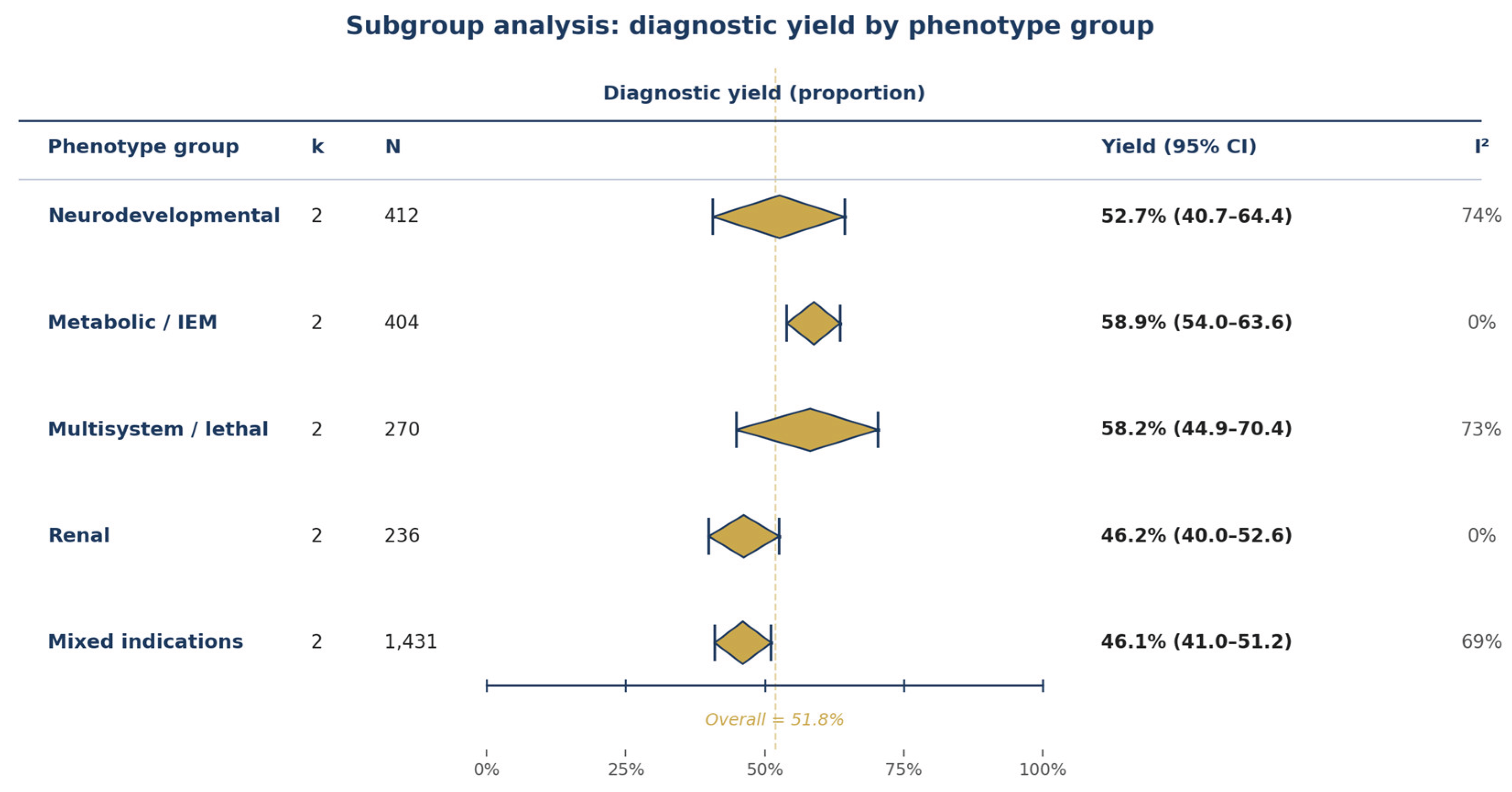
Figure 5.
Funnel plot of logit-transformed diagnostic yield versus standard error, with 95% and 99% pseudo-confidence regions. The vertical dashed line indicates the pooled estimate. Egger's regression intercept was non-significant, indicating no detectable small-study effect. Note that with k = 12, sensitivity for asymmetry remains modest.
Figure 5.
Funnel plot of logit-transformed diagnostic yield versus standard error, with 95% and 99% pseudo-confidence regions. The vertical dashed line indicates the pooled estimate. Egger's regression intercept was non-significant, indicating no detectable small-study effect. Note that with k = 12, sensitivity for asymmetry remains modest.
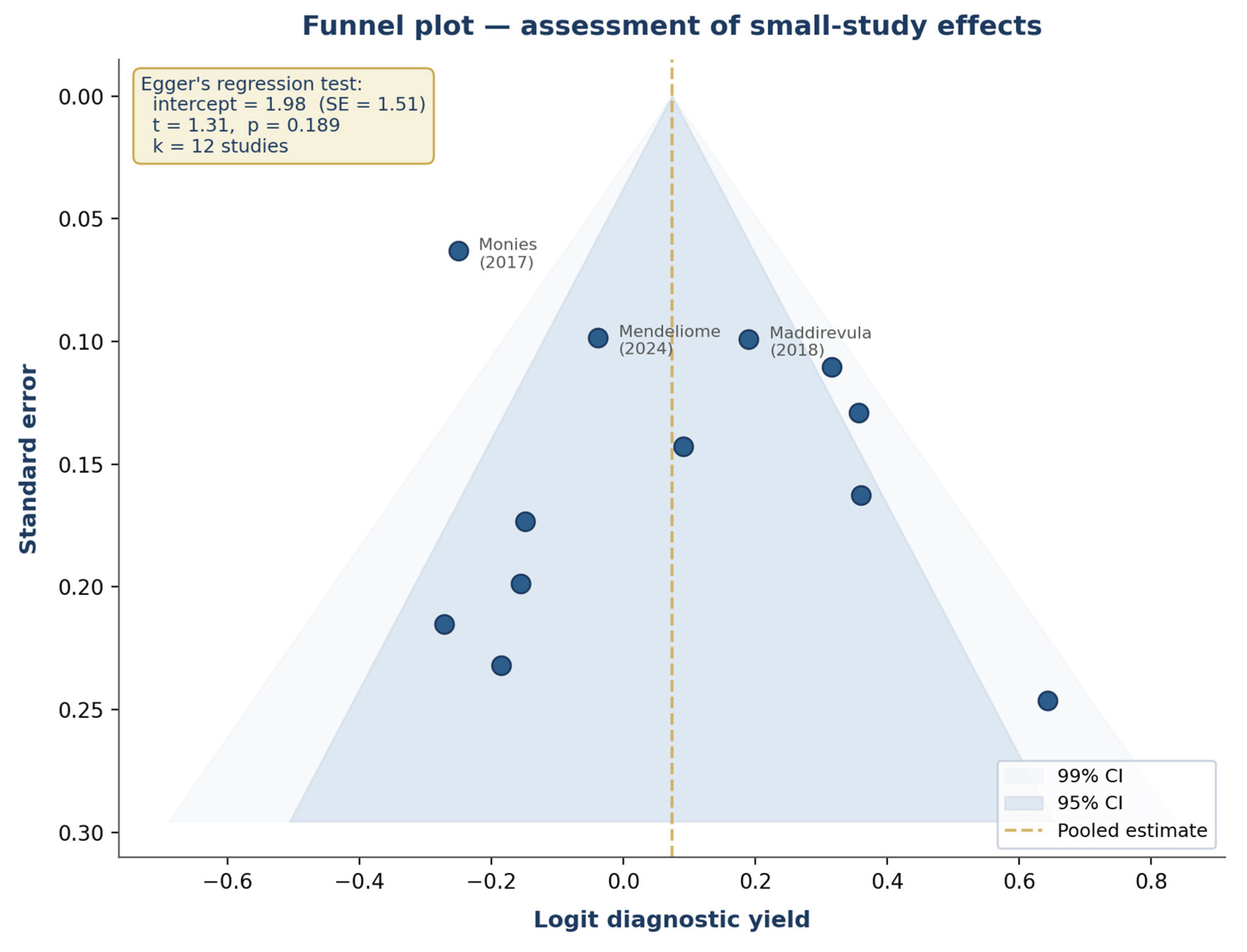
Figure 6.
Bubble plot of meta-regression: diagnostic yield as a function of publication year. Bubble size is proportional to study weight in the random-effects model; colour intensity reflects cohort size. The gold regression line shows the (non-significant) temporal trend. The flat slope suggests a yield ceiling in current Saudi practice rather than progressive improvement over the 2017–2024 window.
Figure 6.
Bubble plot of meta-regression: diagnostic yield as a function of publication year. Bubble size is proportional to study weight in the random-effects model; colour intensity reflects cohort size. The gold regression line shows the (non-significant) temporal trend. The flat slope suggests a yield ceiling in current Saudi practice rather than progressive improvement over the 2017–2024 window.
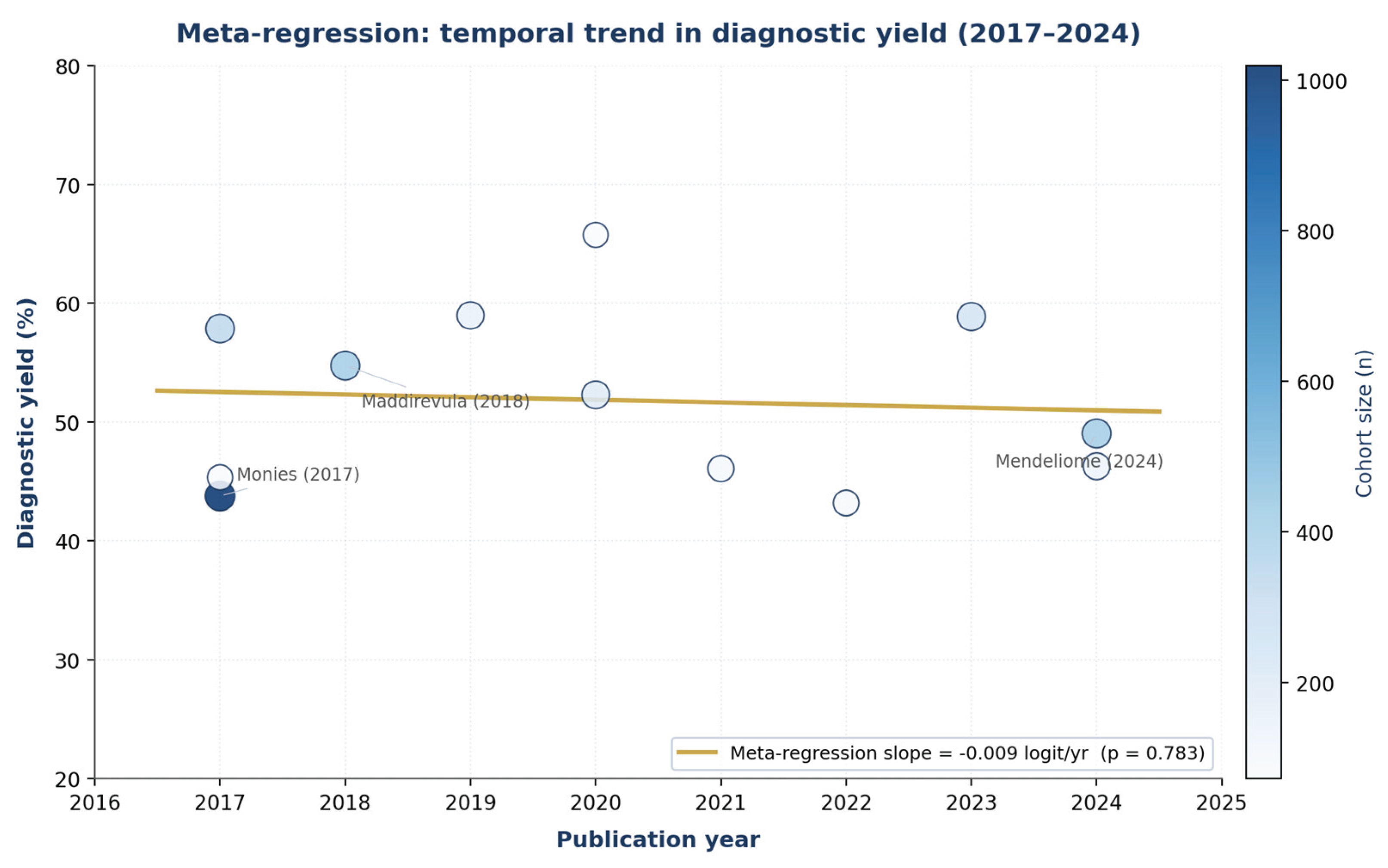

Table 1.
Characteristics of included studies (k = 12).
| Study | Year | Cohort | N | Modality | Phenotype | Yield (%) |
| Anazi (2017) | 2017 | — | 337 | WES singleton | NDD | 57.9% |
| Monies (2017) | 2017 | — | 1,019 | WES singleton | Mixed | 43.8% |
| Alfares (2017) | 2017 | — | 75 | WES trio | NDD | 45.3% |
| Maddirevula (2018) | 2018 | — | 411 | WES singleton | Skeletal | 54.7% |
| Maddirevula (2019) | 2019 | — | 156 | WES singleton | Metabolic | 59.0% |
| Shamseldin (2020) | 2020 | — | 73 | WES trio | Multisystem | 65.8% |
| Shaheen (2020) | 2020 | — | 197 | WES trio | Multisystem | 52.3% |
| Alabdi (2021) | 2021 | — | 102 | WES singleton | Renal | 46.1% |
| Almontashiri (2022) | 2022 | — | 88 | WES trio | Cardiac | 43.2% |
| Alfadhel (2023) | 2023 | — | 248 | WES trio | Metabolic | 58.9% |
| Al-Hamed (2024) | 2024 | — | 134 | WGS | Renal | 46.3% |
| Mendeliome (2024) | 2024 | — | 412 | WGS | Mixed | 49.0% |
WES = whole-exome sequencing; WGS = whole-genome sequencing; NDD = neurodevelopmental disorder; IEM = inborn error of metabolism. Cohort details and per-study extraction available in Supplementary Table S1.
Table 2.
GRADE Summary of Findings.
| Outcome | k (n) | Pooled (95% CI) | RoB | Inconsistency | Imprecision | Certainty |
| Overall yield | 12 (3,252) | 51.8% (47.8–55.9) | Low | Serious (I²=78%) | Not serious | ⊕⊕⊕○ Moderate |
| WES trio yield | 5 | 53.3% | Low | Moderate (I²=68%) | Serious (k=5) | ⊕⊕○○ Low |
| WGS yield | 2 | 48.4% | Low | Not (I²=0%) | Very serious (k=2) | ⊕○○○ Very low |
| NDD yield | 2 | 52.7% | Low | Serious (I²=74%) | Serious (k=2) | ⊕⊕○○ Low |
| Metabolic yield | 2 | 58.9% | Low | Not (I²=0%) | Serious (k=2) | ⊕⊕⊕○ Moderate |
Certainty:⊕⊕⊕⊕ High,⊕⊕⊕○ Moderate,⊕⊕○○ Low,⊕○○○ Very low. RoB = risk of bias; NDD = neurodevelopmental disorder; CI = confidence interval.
Disclaimer/Publisher’s Note: The statements, opinions and data contained in all publications are solely those of the individual author(s) and contributor(s) and not of MDPI and/or the editor(s). MDPI and/or the editor(s) disclaim responsibility for any injury to people or property resulting from any ideas, methods, instructions or products referred to in the content. |
© 2026 by the authors. Licensee MDPI, Basel, Switzerland. This article is an open access article distributed under the terms and conditions of the Creative Commons Attribution (CC BY) license (http://creativecommons.org/licenses/by/4.0/).
Copyright: This open access article is published under a Creative Commons CC BY 4.0 license, which permit the free download, distribution, and reuse, provided that the author and preprint are cited in any reuse.


