

Submitted:
27 April 2026
Posted:
29 June 2026
You are already at the latest version
Abstract
Brain metastases remain a major cause of morbidity and mortality in patients with cancer, particularly melanoma and non-small cell lung cancer. Stereotactic radiosurgery (SRS) is a cornerstone of management for limited intracranial disease, offering high local control while minimizing the neurocognitive toxicity associated with whole-brain radiotherapy. Immune checkpoint inhibitors (ICIs) have also transformed systemic therapy for tumors with central nervous system involvement, creating increasing clinical need to define how best to integrate these modalities.The combined use of SRS and ICIs has raised an important question regarding optimal treatment timing. Retrospective evidence suggests that concurrent or near-concurrent administration, commonly defined as treatment within approximately 2–4 weeks, may improve local control and intracranial response. Several studies also suggest a potential survival advantage compared with sequential treatment, although these findings are limited by selection bias and require prospective validation. Most contemporary analyses do not show a significant increase in radionecrosis (RN) with concurrent single-agent ICI; however, emerging data suggest that dual checkpoint blockade may increase the risk of symptomatic RN.This narrative review synthesizes the biologic rationale, clinical evidence, and toxicity considerations for combining SRS and ICIs in patients with brain metastases. We emphasize differences between single agent and dual ICI strategies, highlight dosimetric predictors of RN such as V12 Gy, and propose a practical framework for treatment integration. Overall, concurrent SRS with single-agent ICI appears feasible and is associated with favorable intracranial outcomes in selected patients, whereas dual ICI warrants more cautious, individualized decision-making. Prospective studies are needed to define optimal sequencing, patient selection, and toxicity mitigation strategies.
Keywords:
brain metastases
; stereotactic radiosurgery
; immune checkpoint inhibitors
; melanoma
; non-small cell lung cancer
; radionecrosis
; treatment timing
1. Introduction
Brain metastases occur in up to 20–40% of patients with advanced solid malignancies and remain a major cause of neurologic morbidity and mortality [1]. The incidence is particularly high in melanoma, non-small cell lung cancer (NSCLC), and renal cell carcinoma, reflecting tumor biology and improved systemic therapies that prolong survival [2]. Although breast cancer is also a common source, it is not emphasized here due to the evolving role of immune checkpoint inhibitors (ICIs) in this setting [3,4]. Over the past decade, management has shifted toward focal therapies such as stereotactic radiosurgery (SRS) rather than whole-brain radiotherapy (WBRT) in appropriately selected patients [5].
SRS is now a standard treatment for limited brain metastases, delivering highly conformal, ablative doses with high local control while preserving neurocognitive function compared with WBRT [6]. Concurrently, ICIs have transformed systemic therapy for melanoma, NSCLC, and other malignancies with central nervous system involvement [7]. As a result, patients increasingly receive both SRS and ICIs during their treatment course [8].
This convergence raises a key clinical question: how should SRS and ICIs be optimally integrated, and does treatment timing influence outcomes and toxicity? The rationale for combination is biologically compelling. Radiation enhances tumor immunogenicity through antigen release, dendritic cell activation, and T-cell priming, potentially synergizing with checkpoint blockade [9]. However, this immune activation may also increase inflammatory toxicity, including RN and edema [10].
Despite expanding clinical experience, optimal sequencing remains uncertain. Current evidence is largely retrospective and heterogeneous, with variable definitions of “concurrent” therapy and differences in histology and treatment regimens. Nonetheless, consistent patterns suggest improved intracranial outcomes with concurrent treatment and highlight important toxicity differences between single-agent and dual ICI strategies [11,12].
This narrative review provides a clinically focused synthesis of the evidence on SRS–ICI integration in brain metastases, emphasizing biologic rationale, treatment timing, efficacy, and toxicity. We also propose a practical framework for clinical decision-making and highlight key areas for future research.
2. Methods of Literature Review
This narrative review was conducted using focused searches of PubMed, Embase, and Scopus. Search terms included combinations of “brain metastases,” “stereotactic radiosurgery,” “stereotactic radiotherapy,” “immune checkpoint inhibitors,” “PD-1,” “PD-L1,” “CTLA-4,” “timing,” “concurrent,” “sequential,” and “radionecrosis.”
Priority was given to multicenter studies, contemporary retrospective analyses, prospective trials, and meta-analyses published between 2016 and 2026. Studies evaluating treatment timing, local control, overall survival, and RN were included, with emphasis on melanoma and NSCLC cohorts.
3. Biological Rationale for Combining SRS and Immunotherapy
The rationale for combining SRS with immune checkpoint inhibitors (ICIs) is based on radiation induced immune modulation [9]. High-dose focal radiation can induce immunogenic cell death, promoting antigen release, enhanced antigen presentation, and subsequent dendritic cell activation and T-cell priming, effectively transforming the irradiated lesion into an in situ vaccine–like stimulus [13,14].
Radiation also modulates the tumor microenvironment by increasing major histocompatibility complex (MHC) expression, enhancing T-cell infiltration, and altering cytokine signaling [15]. These effects may augment ICI efficacy, which functions by relieving inhibitory signals on T cells and sustaining antitumor immune responses [16]. This biologic synergy supports combining SRS and ICIs, particularly when delivered in close temporal proximity [17,18,19] .
However, these same mechanisms may also increase toxicity. Radionecrosis (RN) is a multifactorial process involving vascular injury, hypoxia, and immune-mediated inflammation [20]. ICIs may amplify these pathways, particularly with dual checkpoint blockade, potentially increasing the risk of treatment-related toxicity [10].
4. Clinical Evidence on Treatment Timing
4.1. Definition of Concurrent Treatment
A major limitation in the literature is the lack of a standardized definition of “concurrent” treatment. Definitions vary across studies, ranging from within 1, 2, or 4 weeks to within one pharmacokinetic half-life of the ICI agent [18].
Despite this variability, most studies adopt a practical definition of concurrent therapy as SRS delivered within approximately 2–4 weeks of ICI administration [8,12]. Some analyses suggest that shorter intervals, particularly within 2 weeks or one half-life, may be associated with improved intracranial response, although optimal timing remains uncertain [18].
4.2. Evidence in Melanoma
Radiation may potentiate ICI through enhanced antigen presentation and T-cell activation, providing a biological rationale for combining SRS with ICI [21]. Dual ICI remains the systemic backbone in melanoma, with Tawbi et al. demonstrating intracranial response rates of 55–57% and durable control [22]. Subsequent SRS-ICI studies consistently show improved intracranial control. Kotecha et al. reported that timing influences efficacy more than toxicity, with concurrent ICI improving response and low RN(3–5%) [18], while Carron et al. confirmed low toxicity with anti–PD-1 therapy (adverse radiation effect 4–5%, symptomatic <3%) [23].
Regimens incorporating CTLA-4 inhibition, particularly dual ICI, are associated with higher RN rates, although estimates vary. Minniti et al. reported moderate RN (15–25%) with concurrent nivolumab/ipilimumab (15–25%) [24]. In contrast, Tang et al. demonstrated significantly improved local control (92% vs 64%) without excess toxicity or increased RN [25]. Fu et al. similarly observed improved survival with concurrent SRS–ICI (37.1 vs 11.4 months) without increased radiation toxicity (2–3%) [26]. More recent data from Messing et al. show excellent local control (~90%) with low symptomatic RN (7%), while identifying prior systemic therapy as a prognostic factor [27]. Conversely, Vaios et al. reported higher RN rates with dual ICI (20–25%) [10], whereas Mandalà et al. demonstrated survival benefit with moderate RN (10%) [28]. Key retrospective studies are summarized in Table 1.
Overall, the evidence is heterogeneous and predominantly retrospective but supports close temporal integration of SRS with ICI to optimize intracranial control. ICI regimen and prior therapy exposure appear to be key determinants of toxicity and outcomes, underscoring the need for prospective validation.
4.3. Evidence in Non-Small Cell Lung Cancer (NSCLC)
Non–small cell lung cancer (NSCLC) has a growing but less mature evidence base for SRS–ICI integration compared with melanoma. Early-phase prospective studies demonstrate feasibility, safety, and encouraging intracranial control, although they were not designed to define optimal sequencing [29,30,31,32].
Across retrospective cohorts, SRS combined with ICI consistently improves intracranial control and, in selected studies, overall survival, with outcomes influenced by timing and patient selection. Foundational studies by Chen et al. and Schapira et al. showed that concurrent SRS–ICI (within 2–4 weeks) is associated with improved survival and intracranial control compared with nonconcurrent approaches [12,33]. Larger analyses, including Yomo et al., confirmed a survival advantage (mOS ~16.9 vs. 12.0 months) and improved intracranial PFS without increased toxicity [34], consistent with findings from Bashir et al. [35].
Some studies highlight differential response patterns. Shepard et al. found no survival benefit but significantly higher complete response rates (50% vs. 15.6%) with concurrent ICI [36], while Singh et al. demonstrated greater tumor shrinkage in larger lesions (>500 mm³), suggesting size-dependent synergy [37]. Additional data show improved distant intracranial control with concurrent therapy, with shorter treatment intervals (≤7 days) associated with superior outcomes [38,39]. More recent studies (Dohm et al., Frehner et al., Lu et al.) support improved intracranial response with upfront or concurrent SRS, although overall survival differences remain inconsistent, indicating a potential role for selective or deferred radiation in asymptomatic patients [40,41,42]. Key retrospective studies are summarized in Table 2.
Importantly, radionecrosis and adverse radiation effects remain low (~3–10%) and are not consistently increased with ICI. Emerging evidence suggests that dosimetric factors, rather than ICI itself, are the primary determinants of toxicity [43].
4.4. Evidence from Pooled and Meta-Analyses
Pooled and meta-analytic evidence supports combining SRS with ICI, with stronger and more consistent benefit in melanoma than NSCLC. In melanoma, systematic reviews highlight a shift toward multimodal, patient-specific strategies integrating SRS, immunotherapy, and systemic therapy [44]. In melanoma, meta-analyses demonstrate significant survival benefit with SRS–ICI, particularly with anti–PD-1 regimens [45], while Bayesian network analyses rank SRS + ICI as the most effective strategy for overall survival and intracranial control, albeit with increased radionecrosis (RN) risk [46]. Timing analyses further suggest that concurrent SRS–ICI (within 4 weeks) improves survival and intracranial outcomes compared with nonconcurrent approaches [11,47].
Contemporary pooled data report high local control (80–85%) and favorable 1-year survival (65–70%), with RN rates of approximately 10–12% in the modern immunotherapy era [48]. Importantly, large multicenter analyses indicate that RN risk is primarily driven by dosimetric factors, particularly V12 Gy, rather than treatment timing, supporting the safety of concurrent approaches when appropriate constraints are applied [8].
In NSCLC, pooled data suggest a more nuanced interaction. Chu et al. found no significant difference in survival between ICI alone and ICI combined with cranial radiotherapy, although concurrent treatment reduced distant brain failure [49]. In contrast, Yang et al. demonstrated improved overall survival with combined radiotherapy and ICI compared with radiotherapy alone, with concurrent treatment emerging as the optimal strategy without increased toxicity [50]. These findings reflect different clinical questions—whether radiotherapy augments ICI or vice versa—and collectively support a model in which immunotherapy drives survival, while SRS improves intracranial disease control.
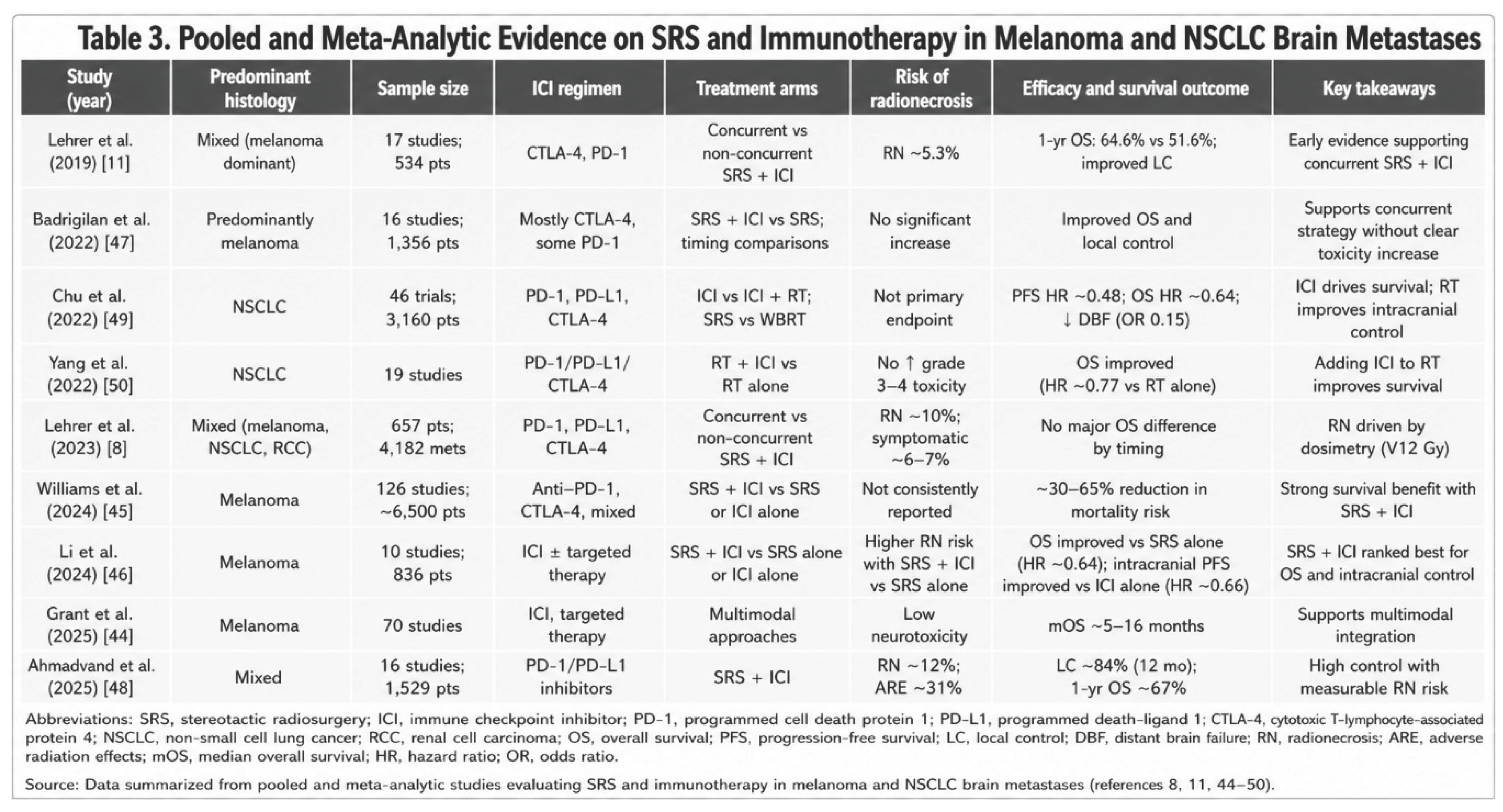
Overall, SRS–ICI integration provides the greatest benefit in melanoma, particularly with concurrent delivery. In NSCLC, immunotherapy is the primary driver of survival, while SRS optimizes intracranial control. Major pooled analyses are summarized in Table 3.
4.5. Comparative Considerations: Melanoma vs. NSCLC
Important distinctions exist between melanoma and NSCLC in the context of SRS–ICI integration. In melanoma, evidence consistently supports a synergistic benefit, particularly with concurrent treatment [11,45,46]. In NSCLC, outcomes are more heterogeneous, with immunotherapy driving survival and radiotherapy contributing primarily to intracranial control in a context-dependent manner [49,50]. Molecular subgroups further influence treatment decisions; tumors with actionable driver mutations (e.g., EGFR, ALK) often respond well to CNS-penetrant targeted therapies [51] and these mutations are less responsive to ICI [52], limiting the role in SRS–ICI integration in this entity. In these cases, SRS is typically reserved for oligoprogressive or symptomatic disease.
5. Role of Dosimetry and Treatment Factors
Radionecrosis following stereotactic radiosurgery is multifactorial and cannot be explained by treatment timing alone. Although much of the literature focuses on the temporal relationship between SRS and ICI, accumulating evidence suggests that radiation dose volume parameters remain the primary determinants of toxicity, particularly in the setting of combined modality therapy.
Among dosimetric parameters, the volume of normal brain receiving 12 Gy (V12 Gy) is the most robust and consistently validated predictor of radionecrosis. In a large multicenter analysis by Lehrer et al. including 657 patients and over 4,000 brain metastases, V12 Gy was independently associated with radionecrosis risk not the timing of ICI administration (8). Increasing V12 Gy correlates with stepwise toxicity, with low-risk (<12 cm³), intermediate-risk (12–20 cm³), and high-risk (>20 cm³) groups demonstrating progressively higher rates [8]. These findings underscore that dosimetric optimization remains the primary determinant of radionecrosis risk, even in the era of immunotherapy.
Additional dosimetric and treatment related factors contribute to the risk of radionecrosis. Treatment of larger lesions (typically >2 cm) requires higher integral dose and results in greater exposure of surrounding normal brain tissue [43,53,54]. In patients with multiple brain metastases, cumulative treated volume increases overall brain dose and expands the low-dose radiation bath [55]. Prior cranial irradiation, including previous SRS or WBRT, further reduces normal tissue tolerance and may further increase the risk of radionecrosis [56].
Clinical factors are equally relevant. Baseline edema, corticosteroid use, and lesion location particularly in eloquent or deep brain regions may influence both the development and clinical impact of radionecrosis [57,58]. These factors may interact with immunotherapy, as immune activation can amplify inflammatory responses.
The addition of ICIs introduces further complexity. While single agent ICIs do not appear to substantially increase radionecrosis risk [23], emerging data suggest that dual checkpoint blockade may enhance inflammatory toxicity, making dosimetric optimization even more critical [10].
Overall, these findings support a shift in clinical thinking. Radionecrosis risk should not be viewed primarily through treatment timing, but rather through an integrated framework of dosimetry, lesion characteristics, prior treatment, and immunotherapy regimen. In particular, the combination of high risk dosimetric features (e.g., elevated V12 Gy or large target volume) with clinical modifiers such as dual checkpoint blockade or significant perilesional edema defines a higher risk population in whom treatment modification strategies, including dose optimization and hypofractionation, should be considered.
6. Fractionation and Risk Mitigation Strategies
Hypofractionated stereotactic radiotherapy is commonly employed to mitigate the risk of radionecrosis, particularly for lesions >2 cm or when V12 Gy exceeds approximately 10 cm³ [54], or those receiving dual immune checkpoint inhibition [8]. Although prospective data remains limited, this approach is widely adopted in clinical practice. By reducing peak dose to normal brain tissue, fractionation may help offset the increased inflammatory effects associated with concurrent immunotherapy.
7. Radiographic Assessment and Diagnostic Challenges
Distinguishing pseudoprogression, radionecrosis, and true tumor progression after SRS in patients receiving immune checkpoint inhibitors remains a major diagnostic challenge, as all may present with enlarging contrast enhancing lesions on MRI [59,60]. Pseudoprogression typically occurs early in first few months (approximately 6 months), whereas radionecrosis is a delayed effect, often developing 6–12 months post SRS [61,62,63]. The combined inflammatory effects of SRS and immunotherapy further complicate interpretation. The iRANO criteria recommend confirmatory imaging within 6 months of ICI initiation [64]. Advanced imaging modalities, including perfusion MRI and amino acid PET, improve diagnostic accuracy, though uncertainty often necessitates multidisciplinary evaluation and serial imaging [59].
8. Management of Radionecrosis
Management of radionecrosis after SRS follows a stepwise, symptom-guided approach. Asymptomatic cases may be observed with serial imaging, while symptomatic patients are treated with corticosteroids using the lowest effective dose and gradual taper. Bevacizumab is effective in steroid-refractory cases, with response rates exceeding 80% and significant radiographic improvement [65,66,67]. Surgical resection or laser interstitial thermal therapy (LITT) is reserved for refractory or diagnostically uncertain cases, providing tissue confirmation and durable control [68]. Emerging data suggest comparable efficacy between bevacizumab and LITT [69]. Management should be individualized based on symptoms, lesion characteristics, and diagnostic certainty.
9. Limitations of Current Evidence
The current literature is limited by its predominantly retrospective nature, heterogeneity in study design, and variability in definitions of concurrent treatment. Confounding by indication and challenges in distinguishing radionecrosis from tumor progression further complicate interpretation.
10. Practical Clinical Implications
The integration of SRS and immune checkpoint inhibitors requires a structured, risk-adapted approach incorporating immunotherapy regimen, dosimetry, and clinical factors.
10.1. Immunotherapy Regimen
The distinction between single agent and dual checkpoint inhibition is critical. Concurrent SRS with single agent ICI appears safe and may improve intracranial outcomes without significantly increasing radionecrosis risk. In contrast, dual checkpoint blockade is associated with a higher incidence of symptomatic radionecrosis and should prompt more cautious integration strategies.
10.2. Timing Considerations
For single-agent ICI, concurrent or near-concurrent SRS (within approximately 2–4 weeks) is reasonable and may enhance response and local control. With dual ICI, the risk of radionecrosis is higher and optimal sequencing remains uncertain; when feasible, delaying SRS by ≥4 weeks or using fractionated SRS should be considered, particularly for larger or high-risk lesions.
10.3. Dosimetric Risk
Radiation dose volume parameters, particularly V12 Gy, remain the dominant predictors of radionecrosis. Efforts should be made to minimize normal brain dose, with V12 Gy thresholds serving as a practical guide for risk stratification.
10.4. Fractionation Strategy
Radiation dose–volume parameters, particularly V12 Gy, remain the dominant predictors of radionecrosis and should guide risk stratification and treatment planning.
10.5. Additional Clinical Modifiers
Corticosteroid use, baseline edema, prior cranial irradiation, and cumulative intracranial disease burden further influence both efficacy and toxicity and should be incorporated into decision-making.
10.6. Integrated Clinical Approach
Treatment decisions should be guided by a composite assessment of ICI regimen, lesion characteristics, and dosimetry, with selective use of fractionation and minimization of corticosteroids. Coordination of systemic and local therapy should prioritize both efficacy and toxicity mitigation rather than timing alone.
A practical decision framework for integrating SRS with single-agent or dual ICI is summarized in Figure 1.
11. Future Directions
Future directions include prospective trials to define optimal timing and sequencing, alongside strategies such as dose de-escalation and fractionation to reduce toxicity [43,70]. Emerging biomarkers including neutrophil to lymphocyte ratio, early CD8⁺ T-cell activation, tumor aneuploidy, and immuno-inflammatory signatures may help identify patients most likely to benefit from combined therapy and guide immunotherapy selection [15,71]. Additional areas include exploiting the abscopal effect [72], novel immune targets, advanced imaging, and multimodality approaches [73,74,75].
12. Conclusions
The integration of SRS and immune checkpoint inhibitors represents a major advance in the management of brain metastases. Concurrent SRS with single-agent ICI appears feasible and may enhance intracranial control without significantly increasing toxicity. In contrast, dual checkpoint blockade and higher dose–volume exposure (particularly V12 Gy) define a higher-risk population for radionecrosis, necessitating more cautious, individualized strategies. Optimal integration requires consideration of not only timing, but also immunotherapy regimen, lesion characteristics, fractionation, and dosimetric parameters. Prospective studies are needed to define these relationships and guide evidence-based clinical decision-making.
Author Contributions
Rahul Barve contributed to the concept and design, literature review, data interpretation, drafting of the manuscript, and critical revision of the manuscript for important intellectual content. The author approved the final version and agreed to be accountable for all aspects of the work.
Funding
The author has declared that no financial support was received for this study.
Data Availability Statement
No new data was generated or analyzed in this study. Data sharing is not applicable to this article.
Acknowledgments
The author used ChatGPT (OpenAI) to assist with language editing and manuscript refinement. All content was reviewed and verified by the author for accuracy.
Conflicts of Interest (COI) Statement
The author declares that there are no conflicts of interest regarding the publication of this article.
References
- Lamba, N.; Wen, P.Y.; Aizer, A.A. Epidemiology of brain metastases and leptomeningeal disease. Neuro-Oncol 2021, 23(9), 1447–56. [Google Scholar] [CrossRef] [PubMed] [PubMed Central]
- Cagney, D.N.; Martin, A.M.; Catalano, P.J.; Redig, A.J.; Lin, N.U.; Lee, E.Q.; et al. Incidence and prognosis of patients with brain metastases at diagnosis of systemic malignancy: A population-based study. Neuro-Oncol 2017, 19(11), 1511–21. [Google Scholar] [CrossRef] [PubMed] [PubMed Central]
- Zou, Y.; Wu, J.; Yuan, Z.; He, X.; Tang, H. Targeting the neuro-immune crosstalk in breast cancer brain metastases. J. Immunother. Cancer 2026, 14(4), e014134. [Google Scholar] [CrossRef] [PubMed] [PubMed Central]
- Schlam, I.; Gatti-Mays, M.E. Immune Checkpoint Inhibitors in the Treatment of Breast Cancer Brain Metastases. The Oncologist 2022, 27(7), 538–47. [Google Scholar] [CrossRef] [PubMed] [PubMed Central]
- Treatment for Brain Metastases: ASCO-SNO-ASTRO Guideline. J Clin Oncol [Internet]. 22 Apr 2026. Available online: https://ascopubs.org/doi/10.1200/JCO.21.02314.
- Aizer, A.A.; Shin, K.Y.; Catalano, P.J.; Ricca, I.; Johnson, M.; Benham, G.; et al. Treatment for Brain Metastases With Stereotactic Radiation vs Hippocampal-Avoidance Whole Brain Radiation: A Randomized Clinical Trial. JAMA 2026, 335(13), 1127–36. [Google Scholar] [CrossRef] [PubMed]
- Aquilanti, E.; Brastianos, P.K. Immune Checkpoint Inhibitors for Brain Metastases: A Primer for Neurosurgeons. Neurosurgery 2020, 87(3), E281–8. [Google Scholar] [CrossRef] [PubMed] [PubMed Central]
- Lehrer, E.J.; Kowalchuk, R.O.; Gurewitz, J.; Bernstein, K.; Kondziolka, D.; Niranjan, A.; et al. Concurrent Administration of Immune Checkpoint Inhibitors and Single Fraction Stereotactic Radiosurgery in Patients With Non-Small Cell Lung Cancer, Melanoma, and Renal Cell Carcinoma Brain Metastases. Int. J. Radiat. Oncol. Biol. Phys. 2023, 116(4), 858–68. [Google Scholar] [CrossRef] [PubMed]
- Yoo, K.H.; Park, D.J.; Choi, J.H.; Marianayagam, N.J.; Lim, M.; Meola, A.; et al. Optimizing the synergy between stereotactic radiosurgery and immunotherapy for brain metastases. Front Oncol. 2023, 13. [Google Scholar] [CrossRef] [PubMed]
- Vaios, E.J.; Shenker, R.F.; Hendrickson, P.G.; Wan, Z.; Niedzwiecki, D.; Carpenter, D.; et al. Symptomatic Necrosis With Dual Immune-Checkpoint Inhibition and Radiosurgery for Brain Metastases. JAMA Netw. Open. 2025, 8(4), e254347. [Google Scholar] [CrossRef]
- Lehrer, E.J.; Peterson, J.; Brown, P.D.; Sheehan, J.P.; Quiñones-Hinojosa, A.; Zaorsky, N.G.; et al. Treatment of brain metastases with stereotactic radiosurgery and immune checkpoint inhibitors: An international meta-analysis of individual patient data. Radiother. Oncol. J. Eur. Soc. Ther. Radiol. Oncol. 2019, 130, 104–12. [Google Scholar] [CrossRef] [PubMed]
- Chen, L.; Douglass, J.; Kleinberg, L.; Ye, X.; Marciscano, A.E.; Forde, P.M.; et al. Concurrent Immune Checkpoint Inhibitors and Stereotactic Radiosurgery for Brain Metastases in Non-Small Cell Lung Cancer, Melanoma, and Renal Cell Carcinoma. Int. J. Radiat. Oncol. Biol. Phys. 2018, 100(4), 916–25. [Google Scholar] [CrossRef] [PubMed]
- Portella, L.; Scala, S. Ionizing radiation effects on the tumor microenvironment. Semin Oncol. 2019, 46(3), 254–60. [Google Scholar] [CrossRef] [PubMed]
- Jansen, C.S.; Pagadala, M.S.; Cardenas, M.A.; Prabhu, R.S.; Goyal, S.; Zhou, C.; et al. Pre-operative stereotactic radiosurgery and peri-operative dexamethasone for resectable brain metastases: A two-arm pilot study evaluating clinical outcomes and immunological correlates. Nat. Commun. 2024, 15(1), 8854. [Google Scholar] [CrossRef] [PubMed] [PubMed Central]
- Lynch, C.; Pitroda, S.P.; Weichselbaum, R.R. Radiotherapy, immunity, and immune checkpoint inhibitors. Lancet Oncol.;PubMed 2024, 25(8), e352–62. [Google Scholar] [CrossRef] [PubMed]
- Fukumura, K.; Jiang, P.; Yeboa, D.N.; Singareeka Raghavendra, A.; Gubbiotti, M.A.; Andersen, C.R.; et al. Ionizing radiation enhances prognostically significant cellular immunity programs in the brain metastasis microenvironment. Clin. Cancer Res. Off. J. Am. Assoc. Cancer Res. 2026. [Google Scholar] [CrossRef] [PubMed]
- Sharabi, A.B.; Lim, M.; DeWeese, T.L.; Drake, C.G. Radiation and checkpoint blockade immunotherapy: Radiosensitisation and potential mechanisms of synergy. Lancet Oncol. 2015, 16(13), e498-509. [Google Scholar] [CrossRef] [PubMed]
- Kotecha, R.; Kim, J.M.; Miller, J.A.; Juloori, A.; Chao, S.T.; Murphy, E.S.; et al. The impact of sequencing PD-1/PD-L1 inhibitors and stereotactic radiosurgery for patients with brain metastasis. Neuro-Oncol 2019, 21(8), 1060–8. [Google Scholar] [CrossRef] [PubMed] [PubMed Central]
- Qian, J.M.; Martin, A.M.; Martin, K.; Hammoudeh, L.; Catalano, P.J.; Hodi, F.S.; et al. Response rate and local recurrence after concurrent immune checkpoint therapy and radiotherapy for non-small cell lung cancer and melanoma brain metastases. Cancer PubMed. 2020, 126(24), 5274–82. [Google Scholar] [CrossRef] [PubMed]
- Vaios, E.J.; Winter, S.F.; Shih, H.A.; Dietrich, J.; Peters, K.B.; Floyd, S.R.; et al. Novel Mechanisms and Future Opportunities for the Management of Radiation Necrosis in Patients Treated for Brain Metastases in the Era of Immunotherapy. Cancers 2023, 15(9), 2432. [Google Scholar] [CrossRef] [PubMed] [PubMed Central]
- Kalaora, S.; Nagler, A.; Wargo, J.A.; Samuels, Y. Mechanisms of immune activation and regulation: Lessons from melanoma. Nat. Rev. Cancer 2022, 22(4), 195–207. [Google Scholar] [CrossRef] [PubMed]
- Tawbi, H.A.; Forsyth, P.A.; Algazi, A.; Hamid, O.; Hodi, F.S.; Moschos, S.J.; et al. Combined Nivolumab and Ipilimumab in Melanoma Metastatic to the Brain. N Engl. J. Med. 2018, 379(8), 722–30. [Google Scholar] [CrossRef]
- Carron, R.; Gaudy-Marqueste, C.; Amatore, F.; Padovani, L.; Malissen, N.; Balossier, A.; et al. Stereotactic radiosurgery combined with anti-PD1 for the management of melanoma brain metastases: A retrospective study of safety and efficacy. Eur. J. Cancer 2020, 135, 52–61. [Google Scholar] [CrossRef] [PubMed]
- Minniti, G.; Anzellini, D.; Reverberi, C.; Cappellini, G.C.A.; Marchetti, L.; Bianciardi, F.; et al. Stereotactic radiosurgery combined with nivolumab or Ipilimumab for patients with melanoma brain metastases: Evaluation of brain control and toxicity. J. Immunother. Cancer 2019, 7(1), 102. [Google Scholar] [CrossRef] [PubMed] [PubMed Central]
- Tang, J.D.; Mills, M.N.; Nakashima, J.; Dohm, A.E.; Khushalani, N.I.; Forsyth, P.A.; et al. Clinical outcomes of melanoma brain metastases treated with nivolumab and ipilimumab alone versus nivolumab and ipilimumab with stereotactic radiosurgery. J. Neurooncol 2024, 166(3), 431–40. [Google Scholar] [CrossRef] [PubMed]
- Fu, A.Y.; Bernstein, K.; Zhang, J.; Silverman, J.; Mehnert, J.; Sulman, E.P.; et al. Outcomes of concurrent versus non-concurrent immune checkpoint inhibition with stereotactic radiosurgery for melanoma brain metastases. J. Neurooncol 2025, 173(3), 619–25. [Google Scholar] [CrossRef] [PubMed]
- Messing, I.; Linkowski, L.; Riina, M.D.; Berger, M.; Baron, J.; Wang, X.; et al. Outcomes after SRS and ipilimumab plus nivolumab for melanoma brain metastases following prior immune checkpoint inhibitor or targeted therapy. The Oncologist 2026, 31(4), oyag043. [Google Scholar] [CrossRef] [PubMed] [PubMed Central]
- Mandalà, M.; Amaral, T.; Rutkowski, P.; Sergi, M.C.; Rasch, M.L.; Benannoune, N.; et al. Combined immunotherapy with nivolumab and ipilimumab with and without sequential or concomitant stereotactic radiotherapy in patients with melanoma brain metastasis: An international retrospective study. Eur. J. Cancer 2025, 225, 115567. [Google Scholar] [CrossRef] [PubMed]
- Altan, M.; Wang, Y.; Song, J.; Welsh, J.; Tang, C.; Guha-Thakurta, N.; et al. Nivolumab and ipilimumab with concurrent stereotactic radiosurgery for intracranial metastases from non-small cell lung cancer: Analysis of the safety cohort for non-randomized, open-label, phase I/II trial. J. Immunother. Cancer 2023, 11(7), e006871. [Google Scholar] [CrossRef] [PubMed] [PubMed Central]
- Phase 1, 2 trial of concurrent anti-PD1 and stereotactic radiosurgery for melanoma and non-small cell lung cancer brain metastases (NCT02858869). - ASCO [Internet]. 22 Apr 2026. Available online: https://www.asco.org/abstracts-presentations/196838.
- Xu, Y.; Chen, K.; Xu, Y.; Li, H.; Huang, Z.; Lu, H.; et al. Brain radiotherapy combined with camrelizumab and platinum-doublet chemotherapy for previously untreated advanced non-small-cell lung cancer with brain metastases (C-Brain): A multicentre, single-arm, phase 2 trial. Lancet Oncol. 2025, 26(1), 74–84. [Google Scholar] [CrossRef] [PubMed]
- Li, Y.S.; Yu, Q.; Bu, Q.; Lin, L.; Ning, F.; Zhao, Y.; et al. First-Line Camrelizumab Versus Placebo Plus Chemotherapy With or Without Radiotherapy for Brain Metastases in NSCLC: The CTONG 2003 Randomized Placebo-Controlled Trial. J. Thorac. Oncol. Off. Publ. Int. Assoc. Study Lung Cancer 2025, 20(7), 928–40. [Google Scholar] [CrossRef] [PubMed]
- Schapira, E.; Hubbeling, H.; Yeap, B.Y.; Mehan, W.A.; Shaw, A.T.; Oh, K.; et al. Improved Overall Survival and Locoregional Disease Control With Concurrent PD-1 Pathway Inhibitors and Stereotactic Radiosurgery for Lung Cancer Patients With Brain Metastases. Int. J. Radiat. Oncol. Biol. Phys. 2018, 101(3), 624–9. [Google Scholar] [CrossRef] [PubMed]
- Yomo, S.; Oda, K.; Oguchi, K. Synergistic effects of immune checkpoint inhibitors in combination with stereotactic radiosurgery for patients with lung cancer and brain metastases: A propensity score-matched analysis. J. Neurosurg. 2023, 139(6), 1628–37. [Google Scholar] [CrossRef] [PubMed]
- Bashir, S.; Wen, L.; Zhang, P.; Ye, M.; Li, Y.; Hong, W.; et al. Efficacy and safety of combined immunotherapy and stereotactic radiosurgery in NSCLCBM patients and a novel prognostic nomogram: A real-world study. Front Oncol. 2023, 13, 1068592. [Google Scholar] [CrossRef] [PubMed] [PubMed Central]
- Shepard, M.J.; Xu, Z.; Donahue, J.; Eluvathingal Muttikkal, T.J.; Cordeiro, D.; Hansen, L.; et al. Stereotactic radiosurgery with and without checkpoint inhibition for patients with metastatic non-small cell lung cancer to the brain: A matched cohort study. J. Neurosurg. 2020, 133(3), 685–92. [Google Scholar] [CrossRef] [PubMed]
- Singh, C.; Qian, J.M.; Yu, J.B.; Chiang, V.L. Local tumor response and survival outcomes after combined stereotactic radiosurgery and immunotherapy in non-small cell lung cancer with brain metastases. J. Neurosurg. 2020, 132(2), 512–7. [Google Scholar] [CrossRef] [PubMed]
- Singh, S.A.; McDermott, D.M.; Mattes, M.D. Impact of Systemic Therapy Type and Timing on Intracranial Tumor Control in Patients with Brain Metastasis from Non-Small-Cell Lung Cancer Treated With Stereotactic Radiosurgery. World Neurosurg. 2020, 144, e813–23. [Google Scholar] [CrossRef] [PubMed]
- Scoccianti, S.; Olmetto, E.; Pinzi, V.; Osti, M.F.; Di Franco, R.; Caini, S.; et al. Immunotherapy in association with stereotactic radiotherapy for non-small cell lung cancer brain metastases: Results from a multicentric retrospective study on behalf of AIRO. Neuro-Oncol 2021, 23(10), 1750–64. [Google Scholar] [CrossRef] [PubMed] [PubMed Central]
- Dohm, A.E.; Tang, J.D.; Mills, M.N.; Liveringhouse, C.L.; Sandoval, M.L.; Perez, B.A.; et al. Clinical outcomes of non-small cell lung cancer brain metastases treated with stereotactic radiosurgery and immune checkpoint inhibitors, EGFR tyrosine kinase inhibitors, chemotherapy and immune checkpoint inhibitors, or chemotherapy alone. J. Neurosurg. 2023, 138(6), 1600–7. [Google Scholar] [CrossRef] [PubMed]
- Frehner, L.; Schär, S.; Hayoz, S.; Petermichl, V.; Speicher, P.; I Rothschild, S.; et al. First-line immunotherapy ± chemotherapy with or without upfront stereotactic radiotherapy (SRT) in patients with Non-Small cell lung cancer (NSCLC) with asymptomatic brain metastases. Lung Cancer 2025, 210, 108813. [Google Scholar] [CrossRef] [PubMed]
- Lu, R.; Wang, Z.; Tian, W.; Shi, W.; Chu, X.; Zhou, R. A retrospective study of radiotherapy combined with immunotherapy for patients with baseline brain metastases from non-small cell lung cancer. Sci. Rep. 2025, 15(1), 7036. [Google Scholar] [CrossRef] [PubMed] [PubMed Central]
- Chung, J.H.; Tos, S.M.; Mantziaris, G.; Shinya, Y.; Hajikarimloo, B.; Guiry, J.; et al. Stereotactic Radiosurgery Dose Reduction for Patients With Brain Metastases From Non-Small Cell Lung Primary on Immunotherapy or Targeted Therapy. Neurosurgery 2026. [Google Scholar] [CrossRef] [PubMed]
- Grant, K.G.; Gillespie, Y.; Karamian, A.; Lewin, I.; Patel, S.; Quigley, A.; et al. Evolving treatment paradigms for melanoma brain metastases: A systematic review of current modalities. Clin. Neurol. Neurosurg. 2025, 257, 109025. [Google Scholar] [CrossRef] [PubMed]
- Williams, G.J.; Hong, A.M.; Thompson, J.F. Treatment of melanoma brain metastases with radiation and immunotherapy or targeted therapy: A systematic review with meta-analysis. Crit. Rev. Oncol. Hematol. 2024, 202, 104462. [Google Scholar] [CrossRef] [PubMed]
- Li, C.; Li, K.; Zhong, S.; Tang, M.; Shi, X.; Bao, Y. Which is the best treatment for melanoma brain metastases? A Bayesian network meta-analysis and systematic review. Crit. Rev. Oncol. Hematol. 2024, 194, 104227. [Google Scholar] [CrossRef] [PubMed]
- Badrigilan, S.; Meola, A.; Chang, S.D.; Rezaeian, S.; Nemati, H.; Almasi, T.; et al. Stereotactic radiosurgery with immune checkpoint inhibitors for brain metastases: A meta-analysis study. Br. J. Neurosurg. 2023, 37(6), 1533–43. [Google Scholar] [CrossRef] [PubMed]
- Ahmadvand, M.H.; Habibi, M.A.; Mirjani, M.S.; Bahri, A.; Aghaei, F.; Foroughi, A.; et al. The clinical outcomes of combined stereotactic radiosurgery with PD-1/PD-L1 inhibitors in patients with metastatic brain tumors: A systematic review and meta-analysis on the safety and efficacy. Neurosurg. Rev. 2025, 48(1), 756. [Google Scholar] [CrossRef]
- Chu, X.; Niu, L.; Xiao, G.; Peng, H.; Deng, F.; Liu, Z.; et al. The Long-Term and Short-Term Efficacy of Immunotherapy in Non-Small Cell Lung Cancer Patients With Brain Metastases: A Systematic Review and Meta-Analysis. Front Immunol. 2022, 13, 875488. [Google Scholar] [CrossRef] [PubMed] [PubMed Central]
- Yang, Y.; Deng, L.; Yang, Y.; Zhang, T.; Wu, Y.; Wang, L.; et al. Efficacy and Safety of Combined Brain Radiotherapy and Immunotherapy in Non-Small-Cell Lung Cancer With Brain Metastases: A Systematic Review and Meta-Analysis. Clin. Lung Cancer 2022, 23(2), 95–107. [Google Scholar] [CrossRef] [PubMed]
- Taslimi, S.; Brar, K.; Ellenbogen, Y.; Deng, J.; Hou, W.; Moraes, F.Y.; et al. Comparative Efficacy of Systemic Agents for Brain Metastases From Non-Small-Cell Lung Cancer With an EGFR Mutation/ALK Rearrangement: A Systematic Review and Network Meta-Analysis. Front Oncol. 2021, 11, 739765. [Google Scholar] [CrossRef] [PubMed] [PubMed Central]
- Gainor, J.F.; Shaw, A.T.; Sequist, L.V.; Fu, X.; Azzoli, C.G.; Piotrowska, Z.; et al. EGFR Mutations and ALK Rearrangements Are Associated with Low Response Rates to PD-1 Pathway Blockade in Non-Small Cell Lung Cancer: A Retrospective Analysis. Clin. Cancer Res. Off. J. Am. Assoc. Cancer Res. 2016, 22(18), 4585–93. [Google Scholar] [CrossRef] [PubMed] [PubMed Central]
- Sneed, P.K.; Mendez, J.; Vemer-van den Hoek, J.G.M.; Seymour, Z.A.; Ma, L.; Molinaro, A.M.; et al. Adverse radiation effect after stereotactic radiosurgery for brain metastases: Incidence, time course, and risk factors. J. Neurosurg. 2015, 123(2), 373–86. [Google Scholar] [CrossRef] [PubMed]
- Minniti, G.; Scaringi, C.; Paolini, S.; Lanzetta, G.; Romano, A.; Cicone, F.; et al. Single-Fraction Versus Multifraction (3 × 9 Gy) Stereotactic Radiosurgery for Large (>2 cm) Brain Metastases: A Comparative Analysis of Local Control and Risk of Radiation-Induced Brain Necrosis. Int. J. Radiat. Oncol. Biol. Phys. 2016, 95(4), 1142–8. [Google Scholar] [CrossRef] [PubMed]
- Milano, M.T.; Grimm, J.; Niemierko, A.; Soltys, S.G.; Moiseenko, V.; Redmond, K.J.; et al. Single- and Multifraction Stereotactic Radiosurgery Dose/Volume Tolerances of the Brain. Int. J. Radiat. Oncol. Biol. Phys. 2021, 110(1), 68–86. [Google Scholar] [CrossRef] [PubMed] [PubMed Central]
- Du, G.; Li, W.; Li, J.; Yu, J.; Zhu, H. Concurrent immunotherapy is associated with increased radiation necrosis risk in lung cancer patients with brain metastases treated with stereotactic radiosurgery. Future Oncol. 2026, 22(8), 953–67. [Google Scholar] [CrossRef] [PubMed]
- Choi, S.; Hong, A.; Wang, T.; Lo, S.; Chen, B.; Silva, I.; et al. Risk of radiation necrosis after stereotactic radiosurgery for melanoma brain metastasis by anatomical location. Strahlenther. Onkol. Organ Dtsch. Rontgenges. Al 2021, 197(12), 1104–12. [Google Scholar] [CrossRef] [PubMed]
- Akhavan-Sigari, A.; Sbaih, O.; Hori, Y.S.; Mathieu, D.; Byun, J.; Pollom, E.L.; et al. Perilesional Edema as a Predictor of Local Failure in Metastatic Brain Lesions Treated With Stereotactic Radiosurgery: A Systematic Review and Meta-Analysis. Int. J. Radiat. Oncol. Biol. Phys. 2026, 124(5), 1199–207. [Google Scholar] [CrossRef] [PubMed]
- Ivanidze, J.; Shih, R.Y.; Utukuri, P.S.; Ajam, A.A.; Auron, M.; Chang, S.M.; et al. ACR Appropriateness Criteria® Brain Tumors. J. Am. Coll. Radiol. 2025, 22(5), S108–35. [Google Scholar] [CrossRef] [PubMed]
- Alexander, B.M.; Brown, P.D.; Ahluwalia, M.S.; Aoyama, H.; Baumert, B.G.; Chang, S.M.; et al. Clinical trial design for local therapies for brain metastases: A guideline by the Response Assessment in Neuro-Oncology Brain Metastases working group. Lancet Oncol. 2018, 19(1), e33–42. [Google Scholar] [CrossRef] [PubMed]
- Govaerts, C.W.; Kramer, M.C.A.; Bosma, I.; Kruyt, F.A.E.; Bensch, F.; van Dijk, J.M.C.; et al. Incidence and Clinical Features of Pseudoprogression in Brain Metastases After Immune-Checkpoint Inhibitor Therapy: A Retrospective Study. Cancers 2025, 17(15), 2425. [Google Scholar] [CrossRef] [PubMed] [PubMed Central]
- Park, H.J.; Kim, K.W.; Pyo, J.; Suh, C.H.; Yoon, S.; Hatabu, H.; et al. Incidence of Pseudoprogression during Immune Checkpoint Inhibitor Therapy for Solid Tumors: A Systematic Review and Meta-Analysis. Radiology 2020, 297(1), 87–96. [Google Scholar] [CrossRef] [PubMed] [PubMed Central]
- Chuang, M.T.; Liu, Y.S.; Tsai, Y.S.; Chen, Y.C.; Wang, C.K. Differentiating Radiation-Induced Necrosis from Recurrent Brain Tumor Using MR Perfusion and Spectroscopy: A Meta-Analysis. PLoS ONE 2016, 11(1), e0141438. [Google Scholar] [CrossRef] [PubMed] [PubMed Central]
- Okada, H.; Weller, M.; Huang, R.; Finocchiaro, G.; Gilbert, M.R.; Wick, W.; et al. Immunotherapy response assessment in neuro-oncology: A report of the RANO working group. Lancet Oncol. 2015, 16(15), e534–42. [Google Scholar] [CrossRef] [PubMed] [PubMed Central]
- Vellayappan, B.; Lim-Fat, M.J.; Kotecha, R.; De Salles, A.; Fariselli, L.; Levivier, M.; et al. A Systematic Review Informing the Management of Symptomatic Brain Radiation Necrosis After Stereotactic Radiosurgery and International Stereotactic Radiosurgery Society Recommendations. Int. J. Radiat. Oncol. Biol. Phys. 2024, 118(1), 14–28. [Google Scholar] [CrossRef] [PubMed]
- Xu, Y.; Rong, X.; Hu, W.; Huang, X.; Li, Y.; Zheng, D.; et al. Bevacizumab Monotherapy Reduces Radiation-induced Brain Necrosis in Nasopharyngeal Carcinoma Patients: A Randomized Controlled Trial. Int. J. Radiat. Oncol. Biol. Phys. 2018, 101(5), 1087–95. [Google Scholar] [CrossRef] [PubMed]
- Nobel, H.; Ofer, J.; Borenstein, S.F.; Limon, D.; Gal, O.; Laviv, Y.; et al. Long-term impact of bevacizumab for the treatment of brain radiation necrosis. J. Neurooncol 2025, 173(2), 289–96. [Google Scholar] [CrossRef] [PubMed]
- Sankey, E.W.; Grabowski, M.M.; Srinivasan, E.S.; Griffin, A.S.; Howell, E.P.; Otvos, B.; et al. Time to Steroid Independence After Laser Interstitial Thermal Therapy vs Medical Management for Treatment of Biopsy-Proven Radiation Necrosis Secondary to Stereotactic Radiosurgery for Brain Metastasis. Neurosurgery 2022, 90(6), 684–90. [Google Scholar] [CrossRef] [PubMed]
- Palmisciano, P.; Haider, A.S.; Nwagwu, C.D.; Wahood, W.; Aoun, S.G.; Abdullah, K.G.; et al. Bevacizumab vs laser interstitial thermal therapy in cerebral radiation necrosis from brain metastases: A systematic review and meta-analysis. J. Neurooncol 2021, 154(1), 13–23. [Google Scholar] [CrossRef] [PubMed]
- Long, G.V.; Atkinson, V.; Lo, S.N.; Guminski, A.D.; Sandhu, S.K.; Brown, M.P.; et al. Ipilimumab plus nivolumab versus nivolumab alone in patients with melanoma brain metastases (ABC): 7-year follow-up of a multicentre, open-label, randomised, phase 2 study. Lancet Oncol. 2025, 26(3), 320–30. [Google Scholar] [CrossRef] [PubMed]
- Yomo, S.; Oda, K.; Oguchi, K. Pre-stereotactic radiosurgery neutrophil-to-lymphocyte ratio predicts post-stereotactic radiosurgery survival of patients with brain metastases concurrently treated with immune checkpoint inhibitors. J. Neurosurg. 2025, 142(2), 454–63. [Google Scholar] [CrossRef] [PubMed]
- Tracz, J.A.; Donnelly, B.M.; Ngu, S.; Vojnic, M.; Wernicke, A.G.; D’Amico, R.S. The abscopal effect: Inducing immunogenicity in the treatment of brain metastases secondary to lung cancer and melanoma. J. Neurooncol 2023, 163(1), 1–14. [Google Scholar] [CrossRef] [PubMed]
- Levy, A.; Massard, C.; Michiels, S.; Deutsch, E. Innovative, early-phase clinical trials of drug-radiotherapy combinations. Lancet Oncol. 2025, 26(4), e190–202. [Google Scholar] [CrossRef] [PubMed]
- Bhatti, N.B.; Young, D.; Lam, W.W.; Chan, R.W.; Maralani, P.J.; Sahgal, A.; et al. Attention-Guided Deep Learning of Chemical Exchange Saturation Transfer Magnetic Resonance Imaging to Differentiate Between Tumor Progression and Radiation Necrosis in Brain Metastasis. S0360-3016(25)06436-3; Int J Radiat Oncol Biol Phys. 5 Dec 2025. [Google Scholar] [CrossRef] [PubMed]
- Yu, Y.; Luo, Y.; Zeng, F.; Liu, A. Opportunities and challenges for non-small cell lung cancer brain metastases in the immunotherapy era. Cancer Treat. Rev. 2025, 140, 103014. [Google Scholar] [CrossRef] [PubMed]
Figure 1.
Practical framework for integrating SRS with immune checkpoint inhibitors in brain metastases. This schema.
Figure 1.
Practical framework for integrating SRS with immune checkpoint inhibitors in brain metastases. This schema.
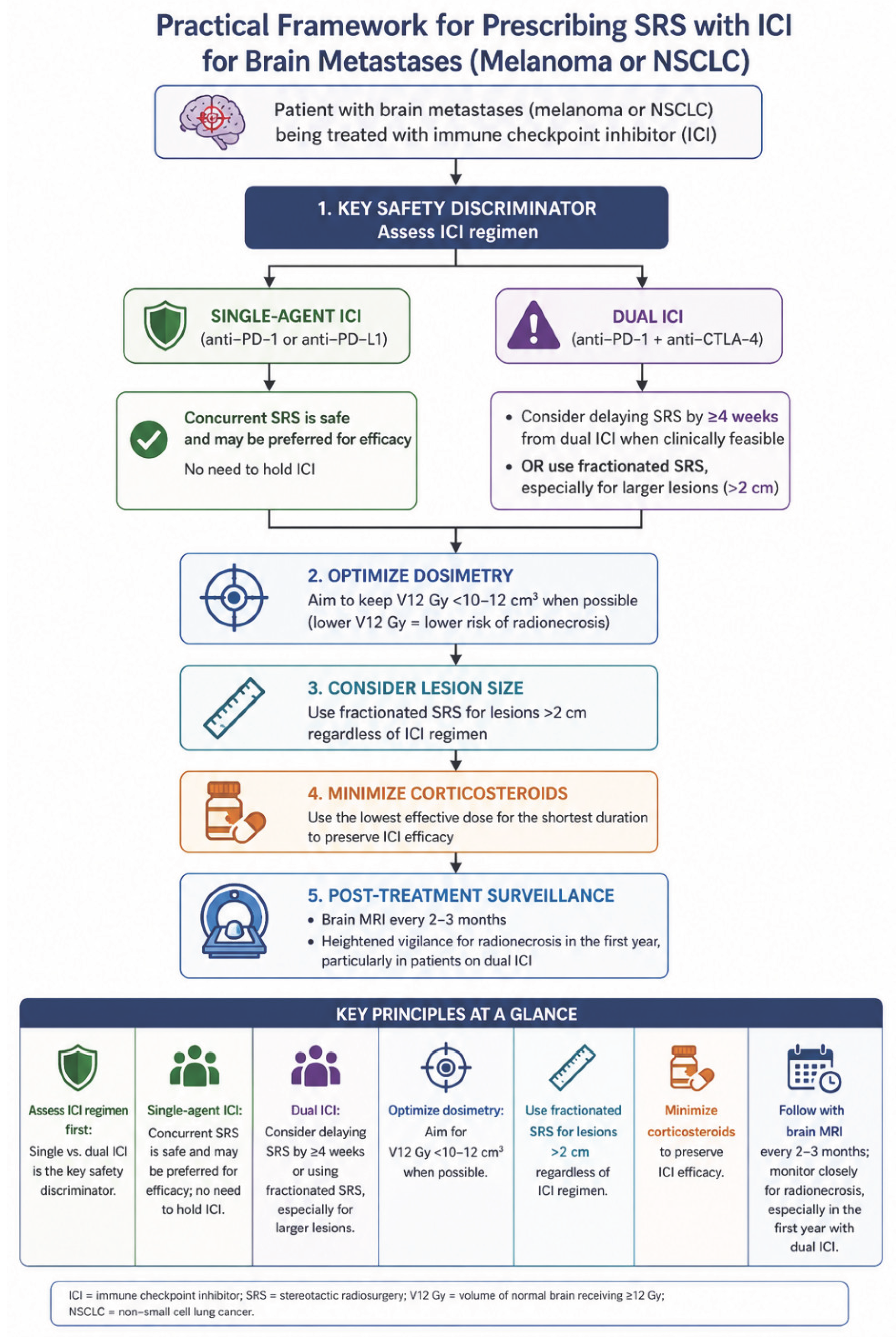

Table 1.
Key retrospective studies of SRS combined with immune checkpoint inhibitors in melanoma brain metastases.
Table 1.
Key retrospective studies of SRS combined with immune checkpoint inhibitors in melanoma brain metastases.
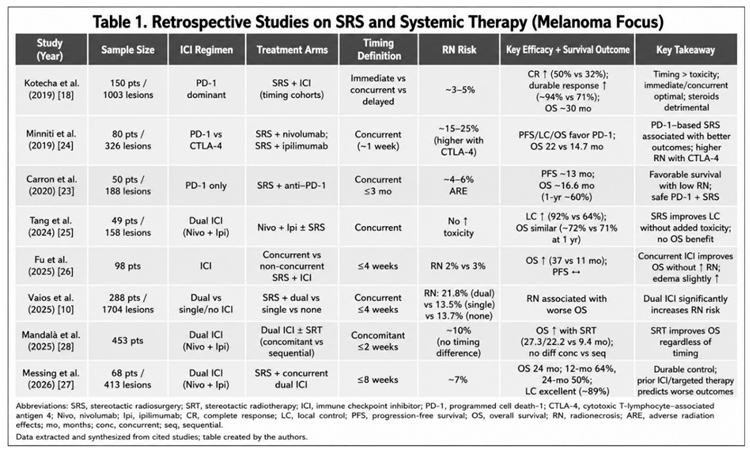 |
Table 2.
Key retrospective studies of SRS combined with immune checkpoint inhibitors in NSCLC brain metastases.
Table 2.
Key retrospective studies of SRS combined with immune checkpoint inhibitors in NSCLC brain metastases.
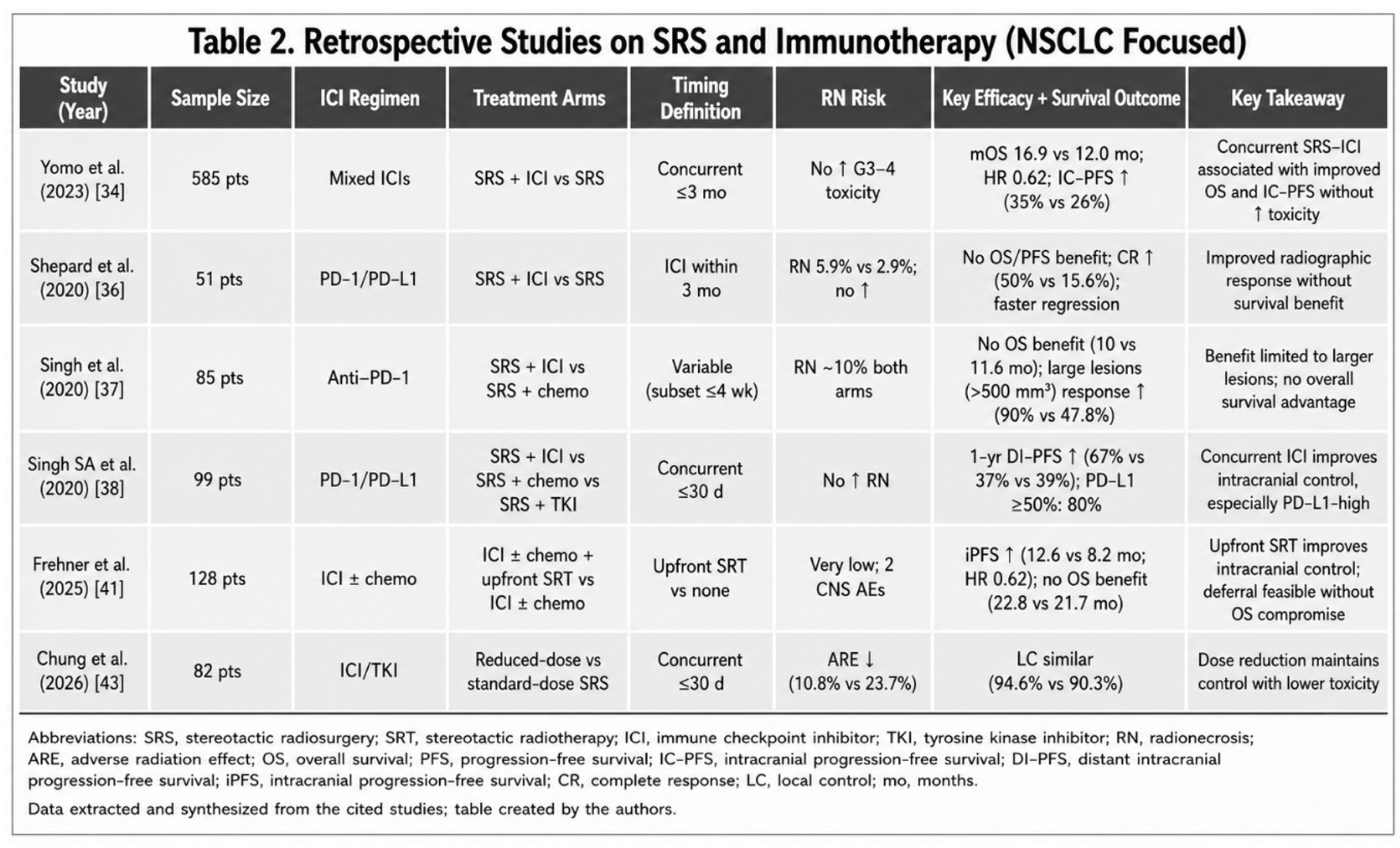 |
Table 3.
Summary of pooled analyses and meta-analyses evaluating SRS–ICI integration in brain metastases.
Table 3.
Summary of pooled analyses and meta-analyses evaluating SRS–ICI integration in brain metastases.
 |
Disclaimer/Publisher’s Note: The statements, opinions and data contained in all publications are solely those of the individual author(s) and contributor(s) and not of MDPI and/or the editor(s). MDPI and/or the editor(s) disclaim responsibility for any injury to people or property resulting from any ideas, methods, instructions or products referred to in the content. |
© 2026 by the authors. Licensee MDPI, Basel, Switzerland. This article is an open access article distributed under the terms and conditions of the Creative Commons Attribution (CC BY) license (http://creativecommons.org/licenses/by/4.0/).
Copyright: This open access article is published under a Creative Commons CC BY 4.0 license, which permit the free download, distribution, and reuse, provided that the author and preprint are cited in any reuse.