

Submitted:
24 April 2026
Posted:
28 April 2026
You are already at the latest version
Abstract
Background and objectives: In Taiwan, hepatitis B virus (HBV) or hepatitis C virus (HCV) infection is the most common cause of hepatocellular carcinoma (HCC). However, an increasing number of non-HBV and non-HCV (NBNC) patient with HCC is noted in recent years. The connection between NBNC patient and HCC remains unknown etiology. We aim to explore the difference of clinical manifestation, pathological findings in HCC patients with HBV, HCV or NBNC. Methods: A retrospective study analyzed 521 HCC patients with completed hepatic virus profile in a single medical center in Taiwan between 2011 to 2020. Differential Expression Gene analysis, xCell stromal cell analysis, and Gene Set Enrichment Analysis were employed to explore the different HCC oncogenesis of viral and NBNC groups. Results: There are 38 non-HBV and non-HCV related HCC (NBNC-HCC) patients. NBNC-HCC patients have lower Fib-4 index than HCV-HCC patients (3.191 vs 6.077, P=0.0019). Less NBNC-HCC patients have cirrhosis than HBV-HCC patients (44.4% vs 68.1%, p=0.0057). Less NBNC-HCC patients have Ishak score 5-6 than HCV-HCC patients (31.3% vs 75.6%, p=0.0025). DEG analysis showed differential expression in oncogene OIT314, AKR1B1015 and liver fibrosis related genes like COLEC1016, CXCL1417, and LINC0109318. GSEA and stromal cell analysis also showed differential gene expression in stellate cells and vascular endothelial cells. Conclusion: NBNC-HCC patients have lower percentage of cirrhosis or fibrosis than HBV-HCC and HCV-HCC patients. Different gene expression and cell type enrichment features was shown between viral and NBNC groups. Which indicated a different pathogenesis in NBNC-HCC compared with hepatitis viruses induced hepatocellular carcinoma.
Keywords:
cryptogenic hepatocellular carcinoma
; hepatitis B virus
; hepatitis C virus
; cirrhosis
; fibrosis
1. Introduction
Hepatocellular carcinoma (HCC) is one of the most common cancers and which also was the fourth leading cause of mortality among the cancer patients in worldwide [1]. The common risk factors are viral infection, alcohol and toxic exposure. Especially hepatitis B virus (HBV) carrier had 5- to 15-fold increased risk of HCC whereas hepatitis C virus (HCV) carrier had 17-fold increased risk of HCC compared with general population [2]. On the contrast, a group of HCC patient had no other known etiology of chronic liver disease and so-called cryptogenic HCC [3].
Most HCC patient complicated with cirrhosis. In patients with compensated cirrhosis, 1.4%-3.3% patients developed HCC annually [4,5,6]. The cause of cirrhosis in HCC patients include hepatitis B, hepatitis C, alcoholic liver disease, and nonalcoholic fatty liver disease (NAFLD). On the other hand, there are 12-15% non-cirrhotic HCC patient and NAFLD was the most common liver disease in these patients [7,8].
In Taiwan, contributed to National Antiviral Treatment Program in treatment with HBV and HCV. The incidence and mortality rate of HCC were declined [9]. By contrast, cryptogenic HCC patient usually had diagnosed at late stage with poor condition. And thus, early diagnosis of these patient is important [10]. In previous study, the clinical characteristics showed Both non-HBV and non-HCV (NBNC) patient who had HCC had higher proportion with metabolic syndrome like type 2 diabetes mellitus, hypertension or hyperlipidemia. Patient without liver cirrhosis also developed HCC in NBNC patient [11]. However, the connection between NBNC patient and HCC remains unknown.
In this single-center prospective study, we aim to explore the difference of clinical manifestation, pathological findings in HCC patient with HBC, HCV or NBNC. Furthermore, we also induced Differential Expression Gene analysis, xCell stromal cell analysis, and Gene Set Enrichment Analysis for possible etiology and mechanism of NBNC patient without who develop HCC.
2. Materials and Methods
2.1. Subjects
From January 2011 to December 2020, 521 patients diagnosed with HCC were enrolled in this study. These patients were diagnosed by image studies or tissue proof. Patients without informative records were excluded from our study.
2.2. Study Design
This study is a retrospective study. Medical histories including age, sex, body mass index (BMI) and biochemistry data were investigated. All patients were evaluated by hepatologists, surgeons, and oncologists. Laboratory data, including aspartate aminotransferase (AST), alanine aminotransferase (ALT), total bilirubin, international normalized ratio (INR), alpha-fetal protein (AFP), fibrosis-4 (FIB-4), Model for End-Stage Liver Disease (MELD-Na score), Child Pugh score and staging of HCC were separately recorded. Imaging studies liver cirrhosis including computed tomography, magnetic resonance imaging, and liver sonography were reported by radiologists and hepatologists. Histologic findings for Ishak scoring were reported by pathologists.
2.3. Statistical Analysis
Continuous variables are presented as the mean ± standard error of the mean (S.E.M). The results for categorical variables are expressed as percentages. Statistical comparisons between the two groups were performed using Student’s t-test (unpaired t-test) or Chi-square test, according to the type of data. All statistical analyses were performed using GraphPad Prism 7.0 software (version 18.0; SPSS Inc., Chicago, IL, USA).
2.4. Gene Expression and Cell-Type Profiling
The microarray data of GSE62232 published by INSERM, UMR U-1162, Universit Paris Descartes was downloaded from the NCBI Gene Expression Omnibus (GEO) database (http://www.ncbi.nlm.nih.gov/geo/). These databases analyzed the difference in liver fibrosis scores between patients with hepatitis B or hepatitis C virus infection by using whole gene expression profiling. The GSE62232 dataset contained data collected from 81 samples of human liver grouped into HBV, HCV, and NBNC groups for analysis. The Differential Expression Genes (DEGs) Analysis resulted in a data frame containing gene symbols, log2 fold changes, and FDR, which were designated as a genelist in R (version 4.3.2). The Benjamini–Hochberg procedure was applied to adjust enriched p-values for statistical significance assessment, with genes deemed differentially expressed at a |log2 fold change| ≥ 1 and a FDR < 0.05. The xCell signature included 64 cell types.
3. Results
From 2011 to 2020, 1015 primary HCC patients were enrolled. Based on HBC and HCV conditions, HCC patients were divided to 3 groups, 367 patients only had HBV(70.44%), 116 patients only had HCV(22.26%) and 38 patients were NBNC(7.29%) (Figure 1).
The character of 521 HCC patients was shown in Table 1. In NBNC- HCC group, 24 were males and 14 were females. The median age was 64.5 years old, 21.05% had history of alcoholic consumption. The median BMI was 25.01 kg/m2. The median platelet count was 209.3×10⁴/μL, the median FIB-4 index was 3.191 and the median MELD-Na score was 10.95. The Child-Pugh scores were as follows: A(n=20), B(n=8), C(n=1). The TNM stages of HCC were as follows: stage I (n=14), stage II (n=6), stage III (n=8), and stage IV (n=8).
In HBV- HCC group, 279 were males and 88 were females. The median age was 62.88 years old, 24.80% had history of alcoholic consumption. The median BMI was 24.67 kg/m2. The median platelet count was 199.0×10⁴/μL, the median FIB-4 index was 4.21, and the median MELD-Na score was 12.08. The Child-Pugh scores were as follows: A(n=224), B(n=61), C(n=26). The TNM stages of HCC were as follows: stage I (n=136), stage II (n=40), stage III (n=131), and stage IV (n=56).
In HCV- HCC group, 67 were males and 49 were females. The median age was 68.62 years old, 20.69% had history of alcoholic consumption. The median BMI was 24.02 kg/m2. The median platelet count was 164.5×10⁴/μL, the median FIB-4 index was 6.077, and the median MELD-Na score was 12.14. The Child-Pugh scores were as follows: A(n=62), B(n=22), C(n=7). The TNM stages of HCC were as follows: stage I (n=44), stage II (n=28), stage III (n=30), and stage IV (n=13).
Patients with NBNC-HCC were significantly lower Fib-4 index and higher platelet level than HCV-HCC groups (p<0.05). Additionally, MELD-Na showed lower in NBNC-HCC group than other groups despite no statistically significant.
There are 36 NBNC-HCC patient, 360 HBV-HCC patients and 116 HCV-HCC patients received Imaging study for cirrhosis. The result showed that 55.56% of NBNC-HCC patients, 31.94% of HBV-HCC patients and 37.07% of HCV-HCC patients showed no cirrhosis. There are statistically significant between NBNC-HCC and HBV-HCC groups (p<0.05) (Figure 2).
There are 16 NBNC-HCC patients, 130 HBV-HCC patients and 45 HCV-HCC patients who received surgical biopsy of the tumor. In NBNC-HCC group, 68.75% of patients had Ishak score 0-4 points. In HBV-HCC group, 48.46% of patients had Ishak score 0-4 points. In HCV-HCC group, 24.44% of patients had Ishak score 0-4 points. There are statistically significant between NBNC-HCC and HCV-HCC groups (p<0.05) (Figure 3).
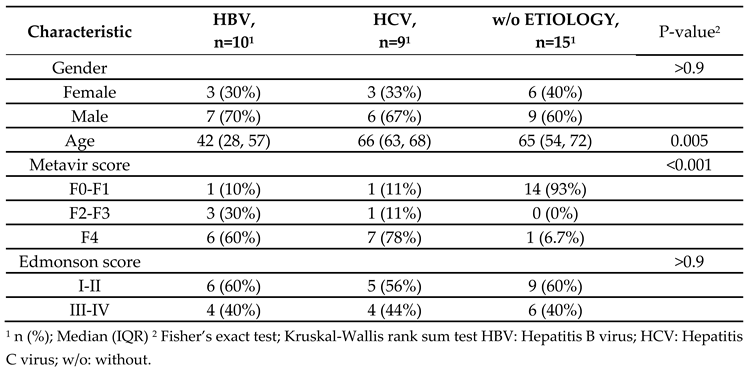
In database GSE62232, we enrolled 15 HCC patients without known etiology (w/o etiology) and 10 HBV, 9 HCV patients as showed in Figure 4. To conform our clinical groups, 47 patients with alcoholism, metabolic syndrome, hepatic metastasis, non-alcoholic steatohepatitis, and combined HBV and HCV were excluded. In w/o etiology group, 93% of patients had metavir score F0-F3. In HBV group, 40% of patients had metavir score F0-F3. In HCV group, 22% of patients had metavir score F0-F3. There are statistically significant between w/o etiology and HCV group, and also between w/o etiology and HCV group (p<0.05). The gender, age, and edmonson score showed no statistics significance in these groups as Table 2.
To analyze differentially expressed genes (DEG) study, volcano plots showed in Figure 5 were introduced in these three groups versus non-tumor group and which represents the -log10 transformed adjusted p-values (y-axis) against the log2 fold change (x-axis). In w/o etiology group, 320 genes were upregulated and 911 genes were downregulated. In HBV group, 1113 genes were upregulated and 545 genes were downregulated. In HCV group, 1808 genes were upregulated and 632 genes were downregulated. CLEC1B, CLEC4G, CLEC4M, CYP2C19, FCN2, and OIT3 were upregulated in w/o etiology group and downregulated in HBV, HCV group. In contrast, AKR1B10, ASPM, CAP2, CCL20, and GABBR1 were downregulated in w/o etiology group and upregulated in HBV, HCV group.
Particularly, in xCell signature database, the normalized enrichment scores (NES) and q-values obtained from various immune cells show a similar trend in HBV and HCV, while distinct results are observed in cases without etiology (w/o etiology) group as shown in Figure 6. In HBV and HCV, hepatocytes, the primary cells of the liver, show a consistently negative NES, indicating a depletion or under-representation in the disease condition (HBV: NES = -3.64, q-value < 0.001; HCV: NES = -3.36, q-value < 0.001). The erythrocytes and Tgd cells, however, show an opposite trend with a positive NES in both HBV and HCV, suggesting their over-representation (HBV—Erythrocytes: NES = 2.31, q-value < 0.001; Tgd cells: NES = 1.91, q-value < 0.001; HCV—Erythrocytes: NES = 2.35, q-value < 0.001; Tgd cells: NES = 2.15, q-value < 0.001). Furthermore, memory B-cells and basophils, important components of adaptive and innate immune responses respectively, show a negative NES in both HBV and HCV (HBV—Memory B-cells: NES = -1.62, q-value = 0.0011; Basophils: NES = -1.45, q-value = 0.0011; HCV—Memory B-cells: NES = -1.94, q-value < 0.001; Basophils: NES = -1.82, q-value < 0.001). Hepatocytes do not show a significant enrichment score, while erythrocytes and Tgd cells exhibit a negative NES (Erythrocytes: NES = -2.309729212, q-value = 2.05E-09; Tgd cells: NES = -1.91, q-value < 0.001), indicating their under-representation. Conversely, memory B-cells (NES = 1.95, q-value < 0.001) and basophils (NES = 1.49, q-value = 0.0011) appear to be over-represented.
Employing GSEA on the human single-cell biomarker database Descartes Cell Types and Tissue 2021, used to identify gene sets that are statistically over-represented. We focused our study on the cell populations associated with liver cirrhosis which showed in Figure 7. Stellate cells and vascular endothelial cells in liver were highlighted. In HBV group, stellate cells and vascular endothelial cells were both downregulated compared with non-tumor group. The stellate cells showed lower negative enrichment score (NES: -2.28) and a false discovery rate (FDR: 1.6×10⁻⁹) below the common threshold of 0.05 and vascular endothelial cells presented NES: -2.14, FDR: 2.1×10⁻⁷ in this group. In HCV group, stellate cells (NES: -3.03, FDR: 1.4×10⁻¹³) and vascular endothelial cells (NES: -2.6, FDR: 1.4×10⁻¹³) were also downregulated. By contrast, stellate cells (NES: 2.44, FDR: 4.2×10⁻¹³) and vascular endothelial cells (NES: 2.2, FDR: 1.9×10⁻⁸) were upregulated in w/o etiology group. Additionally, erythoblast, like stellate cells and vascular endothelial cells, were upregulated in w/o etiology group but down regulated in HBV and HCV groups. Other cell-types in liver including mesothelial cells, hematopoietic stem cells, and megakaryocytes were upregulated in HBV and HCV groups but down regulated in w/o etiology group. Lymphoid cells were upregulated in all three groups.
4. Discussion
This single-centered retrospective study included 1,015 primary HCC patients from 2011 to 2020 and categorized these patients into three groups based on viral etiology: HBV, HCV, and NBNC-HCC. The detailed clinical, radiological, histopathological, and immunological analyses provide insights into the distinct pathophysiological mechanisms.
Our clinical findings reveal notable differences among the three groups. Patients with NBNC-HCC exhibited a lower median FIB-4 index and higher platelet levels compared to those with HCV-related HCC. Although the MELD-Na scores trended lower in the NBNC group, this difference did not reach statistical significance. Such differences in liver function indices and fibrosis markers suggest that the underlying liver injury in NBNC-HCC might be less severe. In contrast, the HCV-related cohort displayed the highest FIB-4 index along with lower platelet counts, reflecting a more advanced fibrotic process and possibly more aggressive liver injury.
Imaging studies for cirrhosis and liver pathology for fibrosis also revealed the definite differences across these groups. Among those who underwent imaging, a notably higher percentage of NBNC-HCC patients exhibited no cirrhosis compared to their HBV and HCV groups, with statistically significant differences noted between the NBNC and HBV groups. Similarly, histopathological evaluation via surgical biopsies using the Ishak scoring system revealed that a greater proportion of NBNC-HCC patients had low-grade fibrosis as compared to HBV and HCV groups. These observations potentially indicate that liver cirrhosis and the progression of fibrosis occur less frequently or more slowly in NBNC-HCC, which might have implications for surveillance and early intervention strategies.
Compared with NBNC-HCC, HBV and HCV related HCC have clearer pathogenesis. In previous study, The HCV compartmentalization and increased quasispecies is associated with higher proliferation rate of HCC12. Equally, HBV have similar interaction with HCC and next-generation sequencing of specific genes could be a predictor of HCC13. However, in NBNC-HCC, the clinical manifestation and pathological findings are totally different from viral hepatitis. To explore the unique pathogenesis of NBNC-HCC, the GSEA analysis plays a significant role.
In the GSE62232 cohort of 81 HCC patients, divided in HBV, HCV, and without etiology groups, the clinical features of those groups showed a strong concordance to our clinical data. The without etiology patients had lower METAVIR score than HBV and HCV groups. The proportion of METAVIR score F0-F3 in without etiology group is higher than HBV and HCV groups significantly. Since Ishak stages 5-6 came be converted into METAVIR score F4, the histological fibrosis was also low in without etiology group. DEG analysis of this database showed upregulated CLEC1B, CLEC4G, CLEC4M, CYP2C19, FCN2, OIT3 and downregulated AKR1B10, ASPM, CAP2, CCL20, and GABBR1 genes in without etiology group and which were opposite to HBV and HCV group. The oncogenes like OIT314 and AKR1B1015 present different regulation in these group may represent different mechanism of liver oncogenesis. Furthermore, liver fibrosis related genes like COLEC1016, CXCL1417, and LINC0109318 were upregulated in without etiology group but downregulated in HCV group. Beyond gene expression, the cellular type expression may provide more detail information.
The cell type enrichment study by xCell signature showed upregulated Tgd cell, Th1, and Th2 cells and which were downregulated in without etiology group. These patterns provide significant insights into the roles of different immune cells in the pathogenesis of HBV and HCV groups, potentially influenced by factors such as viral evasion strategies or host immune dysregulation. In contrast memory B cell was upregulated in without etiology group and downregulated in HBV and HCV groups. This suggests their reduced representation, potentially contributing to a compromised immune response in these viral infections. The contrasting data from without etiology cases underscore the complexity of liver diseases and the influence of diverse factors beyond viral etiologies. Notably, the enrichment of hepatocytes was increased in without etiology and decreased in HBV and HCV groups. Further GSEA analysis combined cell type enrichment and gene expression could provide further underlying mechanism. In Descartes Cell Types and Tissue 2021 database, we focused on liver cirrhosis cell types19 that stellate cells and vascular endothelial cells were upregulated in without etiology group and down regulated in HBV and HCV groups. These cell-type profiles underscore etiology-specific adaptations in chronic liver disease, offering insights into differential pathogenesis and therapeutic targeting.
This study has several limitations. Its single-center, retrospective design introduces selection and referral biases and is vulnerable to temporal shifts in antiviral therapy, imaging protocols, and surgical candidacy over 2011–2020. Etiologic assignment may be imperfect: the NBNC category aggregates biologically distinct conditions (e.g., NAFLD/NASH, alcohol-related, autoimmune, cryptogenic), and occult HBV or resolved HCV could lead to misclassification; residual confounding by metabolic factors and alcohol exposure is likely. Fibrosis characterization mixed surrogate indices (FIB-4, platelets), imaging, and limited histology; not all patients underwent each modality, creating spectrum and verification bias, and Ishak-to-METAVIR conversion compresses staging and may underestimate cirrhosis. External validation leveraged GSE62232 and deconvolution (xCell) with mapping to an atlas (Descartes), which are sensitive to batch effects, tissue composition, and differences between tumor and non-tumor contexts; the without etiology group in GSE62232 may not perfectly recapitulate NBNC-HCC. Finally, the stellate and endothelial gene enrichments are correlative without protein-level, spatial, or functional validation, and were not linked to outcomes, limiting immediate translational inference.
Future work should include prospective, multi-center cohorts with harmonized data capture, rigorous viral reservoir testing, and granular NBNC subtyping includes NAFLD/NASH, alcohol-related, autoimmune, alongside standardized fibrosis assessment like biopsy plus elastography with uniform scoring and consistent imaging to minimize verification bias. Parallel protein validation, phospho-signaling, and circulating biomarker assays can bridge tissue signals to noninvasive stratification. Finally, longitudinal analyses should relate cell-state signatures to clinical endpoints and treatment responses, and mechanism-guided, etiology-stratified trials can evaluate targeted strategies with the identified signatures as predictive and pharmacodynamic biomarkers.
5. Conclusions
This single-center cohort delineates distinct clinical, fibrotic, and molecular landscapes across HBV-HCC, HCV-HCC, and NBNC-HCC. Clinically, NBNC-HCC showed a lower fibrosis burden—reflected by lower FIB-4, higher platelets, less imaging-defined cirrhosis, and lower Ishak grades—suggesting a slower fibrotic trajectory and a window for earlier detection compared with viral cohorts. External transcriptomic validation echoed these differences, with “without etiology” cases exhibiting lower METAVIR stages and a divergent gene program, alongside immune-cell contrasts and greater hepatocyte enrichment. Cell type–resolved analyses further highlighted etiology- and cell-specific signatures implicating differential axes of regeneration, fibrogenesis, angiogenesis, and immunomodulation. Together, these findings refine the heterogeneity of HCC beyond viral status, nominate candidate biomarkers for surveillance and risk stratification in NBNC disease, and point toward mechanism-guided therapeutic avenues that merit prospective, multi-center, and functional validation for clinical translation.
Author Contributions
Conceptualization, Yi-Lin Chiu, Hsuan-Wei Chen; methodology, Yi-Lin Chiu, Hsuan-Wei Chen; software, Wei-Luen Yen, Yi-Lin Chiu, Hsuan-Wei Chen; validation, Yi-Lin Chiu, Hsuan-Wei Chen; formal analysis, Wei-Luen Yen, Yi-Lin Chiu; investigation, Wei-Luen Yen, Yi-Lin Chiu; resources, Wei-Luen Yen, Yi-Lin Chiu, Hsin-Chung Lin; data curation, Wei-Luen Yen, Yi-Lin Chiu, Hsin-Chung Lin; writing—original draft preparation, Wei-Luen Yen, Yi-Lin Chiu; writing—review and editing, Hsuan-Wei Chen; visualization, Wei-Luen Yen, Yi-Lin Chiu; supervision, Hsuan-Wei Chen; project administration, Hsuan-Wei Chen. All authors have read and agreed to the published version of the manuscript.
Funding
This research received no external funding.
Institutional Review Board Statement
This study was approved by the Institutional Review Board (IRB), Tri-Service General Hospital (number A202205218). In this study, patient’s personal information will not be seen and privacy was totally protected. Assessed as low risk, The IRB approved the above-named application for signature exemption on ICF (Informed Consent Form) and confirmed this research complied with the declaration of Helsinki. The IRB is organized and operated in compliance with the International Conference on Harmonization (ICH)/World Health Organization (WHO) Good Clinical Practice (GCP) and applicable laws and regulations.
Informed Consent Statement
Due to the retrospective nature of the study, the requirement for written informed consent was waived by the ethics committee.
Data Availability Statement
The datasets used and/or analyzed during the current study are available from the corresponding author on request.
Acknowledgments
We thank Division of Cancer Prevention in Tri-Service General Hospital, National Defense Medical University.
Conflicts of Interest
All other authors declare no conflicts with this manuscript.
Abbreviations
The following abbreviations are used in this manuscript:
| AFP | Alpha-fetoprotein |
| ALT | Alanine aminotransferase |
| AST | Aspartate aminotransferase |
| BMI | Body mass index |
| CD | Cluster of differentiation |
| CMP | Common myeloid progenitors |
| CPL | Common lymphoid progenitors |
| DC | Dendritic cells |
| DEG | Differential Expression Gene |
| FDR | False discovery rate |
| GEO | Gene Expression Omnibus |
| GMP | Granulocyte myeloid progenitors |
| GSEA | Gene Set Enrichment Analysis |
| HBV | Hepatitis B virus |
| HCC | Hepatocellular carcinoma |
| HCV | Hepatitis C virus |
| HSC | Hematopoietic stem cells |
| INR | International normalized ratio |
| MELD-Na | Model for End-Stage Liver Disease (with Sodium) |
| MEP | Megakaryocyte–erythroid progenitor cells |
| MPP | Multipotent progenitors |
| MSC | Mesenchymal stem cells |
| NAFLD | Nonalcoholic fatty liver disease |
| NASH | Nonalcoholic steatohepatitis |
| NBNC | Non-HBV and non-HCV |
| NES | Normalized enrichment scores |
| NK cells | Natural killer cells |
| PLT | Platelet |
| S.E.M | Standard error of the mean |
| Tgd cell | Gamma delta T cell |
References
- Bray, F.; Ferlay, J.; Soerjomataram, I.; Siegel, R. L.; Torre, L. A.; Jemal, A. Global Cancer Statistics 2018: GLOBOCAN Estimates of Incidence and Mortality Worldwide for 36 Cancers in 185 Countries. CA A Cancer J. Clin. 2018, 68(6), 394–424. [Google Scholar] [CrossRef] [PubMed]
- El-Serag, H. B.; Rudolph, K. L. Hepatocellular Carcinoma: Epidemiology and Molecular Carcinogenesis. Gastroenterology 2007, 132(7), 2557–2576. [Google Scholar] [CrossRef] [PubMed]
- KOGA, K. Clinical Aspects of Cryptogenic Hepatocellular Carcinoma. Kurume Med. J. 1998, 45(1), 105–111. [Google Scholar] [CrossRef] [PubMed]
- Fattovich, G.; Giustina, G.; Realdi, G.; Corrocher, R.; Schalm, S. W. Long-Term Outcome of Hepatitis B E Antigen-Positive Patients with Compensated Cirrhosis Treated with Interferon Alfa. Hepatology 1997, 26(5), 1338–1342. [Google Scholar] [CrossRef] [PubMed]
- Hu, K.-O.; Tong, M. The Long-Term Clinical Outcomes of Patients with HCV-Related Compensated Cirrhosis and History of Parenteral Exposure. Gastroenterology 1998, 114, A1258–A1259. [Google Scholar] [CrossRef]
- Serfaty, L.; Aumaître, H.; Chazouillères, O.; Bonnand, A.-M.; Rosmorduc, O.; Poupon, R. E.; Poupon, R. Determinants of Outcome of Compensated Hepatitis c Virus-Related Cirrhosis. Hepatology 1998, 27(5), 1435–1440. [Google Scholar] [CrossRef] [PubMed]
- Gawrieh, S.; Dakhoul, L.; Miller, E.; Scanga, A.; deLemos, A.; Kettler, C.; Burney, H.; Liu, H.; Abu-Sbeih, H.; Chalasani, N.; et al. Characteristics, Aetiologies and Trends of Hepatocellular Carcinoma in Patients without Cirrhosis: A United States Multicentre Study. Aliment. Pharmacol. Ther. 2019, 50(7), 809–821. [Google Scholar] [CrossRef] [PubMed]
- Leung, C. Characteristics of Hepatocellular Carcinoma in Cirrhotic and Non-Cirrhotic Non-Alcoholic Fatty Liver Disease. World J. Gastroenterol. 2015, 21(4), 1189. [Google Scholar] [CrossRef] [PubMed]
- Chang, C.-H.; Lin, J.-W.; Wu, L.-C.; Liu, C.-H.; Lai, M.-S. National Antiviral Treatment Program and the Incidence of Hepatocellular Carcinoma and Associated Mortality in Taiwan. Med. Care 2013, 51(10), 908–913. [Google Scholar] [CrossRef] [PubMed]
- Hsu, C.-Y.; Lee, Y.-H.; Liu, P.-H.; Hsia, C.-Y.; Huang, Y.-H.; Lin, H.-C.; Chiou, Y.-Y.; Lee, F.-Y.; Huo, T.-I. Decrypting Cryptogenic Hepatocellular Carcinoma: Clinical Manifestations, Prognostic Factors and Long-Term Survival by Propensity Score Model. PLoS ONE 2014, 9(2), e89373. [Google Scholar] [CrossRef] [PubMed]
- Nagaoki, Y.; Hyogo, Hideyuki; Ando, Y.; Kosaka, Y.; Uchikawa, Shinsuke; Nishida, Y.; Teraoka, Y.; Morio, K.; Fujino, H.; Ono, A.; et al. Increasing Incidence of Non-HBV- and Non-HCV-Related Hepatocellular Carcinoma: Single-Institution 20-Year Study. BMC Gastroenterol. 2021, 21(1). [Google Scholar] [CrossRef] [PubMed]
- Harouaka, D.; Engle, R. E.; Wollenberg, K.; Diaz, G.; Tice, A. B.; Zamboni, F.; Govindarajan, S.; Alter, H.; Kleiner, D. E.; Farci, P. Diminished Viral Replication and Compartmentalization of Hepatitis c Virus in Hepatocellular Carcinoma Tissue. Proc. Natl. Acad. Sci. 2016, 113(5), 1375–1380. [Google Scholar] [CrossRef] [PubMed]
- Ringelhan, M.; O’Connor, T.; Protzer, U.; Heikenwalder, M. The Direct and Indirect Roles of HBV in Liver Cancer: Prospective Markers for HCC Screening and Potential Therapeutic Targets. J. Pathol. 2014, 235(2), 355–367. [Google Scholar] [CrossRef] [PubMed]
- Yang, S.; Zhang, J.; Xu, Y.; Wang, J.; Zhao, H.; Lei, J.; Zhou, Y.; Chen, Y.; Wu, L.; Zhou, M.; et al. OIT3 Mediates Macrophage Polarization and Facilitates Hepatocellular Carcinoma Progression. Cancer Immunol. Immunother. 2022, 71(11), 2677–2689. [Google Scholar] [CrossRef] [PubMed]
- Ma, L.-N.; Ma, Y.; Luo, X.; Ma, Z.; Ma, L.-N.; Ding, X.-C. AKR1B10 Expression Characteristics in Hepatocellular Carcinoma and Its Correlation with Clinicopathological Features and Immune Microenvironment. Sci. Rep. 2024, 14(1). [Google Scholar] [CrossRef] [PubMed]
- Zhang, M.; Jing, Y.; Xu, W.; Shi, X.; Zhang, W.; Chen, P.; Cao, X.; Han, X.; Duan, X.; Ren, J. The C-Type Lectin COLEC10 Is Predominantly Produced by Hepatic Stellate Cells and Involved in the Pathogenesis of Liver Fibrosis. Cell. Death Dis. 2023, 14(11). [Google Scholar] [CrossRef] [PubMed]
- Wang, S.; Shuai, C.; Gao, S.; Jiang, J.; Luan, J.; Lv, X. Chemokine CXCL14 Acts as a Potential Genetic Target for Liver Fibrosis. Int. Immunopharmacol. 2020, 89, 107067. [Google Scholar] [CrossRef] [PubMed]
- Tang, Y.; Ma, N.; Luo, H.; Chen, S.; Yu, F. Downregulated Long Non-Coding RNA LINC01093 in Liver Fibrosis Promotes Hepatocyte Apoptosis via Increasing Ubiquitination of SIRT1. J. Biochem. 2020, 168(3), 315–315. [Google Scholar] [CrossRef] [PubMed]
- Berumen, J.; Baglieri, J.; Kisseleva, T.; Mekeel, K. Liver Fibrosis: Pathophysiology and Clinical Implications. WIREs Mech. Dis. 2020, 13(1). [Google Scholar] [CrossRef] [PubMed]
Figure 1.
Study flowchart. HCC: hepatocellular carcinoma; NBNC: Non-HBV and Non-HCV; HBV: Hepatitis B virus; HCV: Hepatitis C virus.
Figure 1.
Study flowchart. HCC: hepatocellular carcinoma; NBNC: Non-HBV and Non-HCV; HBV: Hepatitis B virus; HCV: Hepatitis C virus.
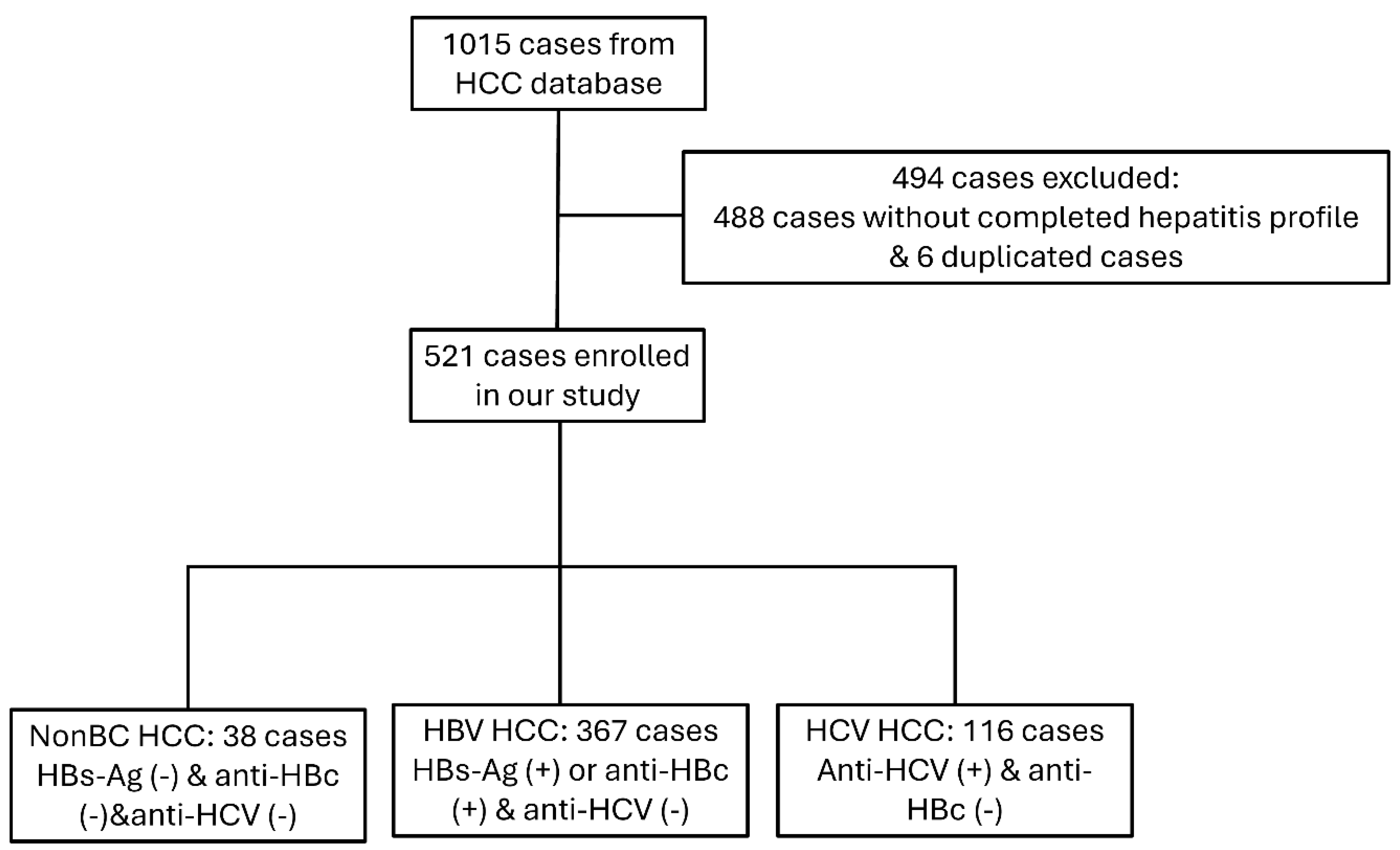
Figure 2.
Comparison of percentage of image showed no cirrhosis between the NBNC, HBV and HCV group. NBNC: Non-HBV and Non-HCV; HBV: Hepatitis B virus; HCV: Hepatitis C virus.
Figure 2.
Comparison of percentage of image showed no cirrhosis between the NBNC, HBV and HCV group. NBNC: Non-HBV and Non-HCV; HBV: Hepatitis B virus; HCV: Hepatitis C virus.
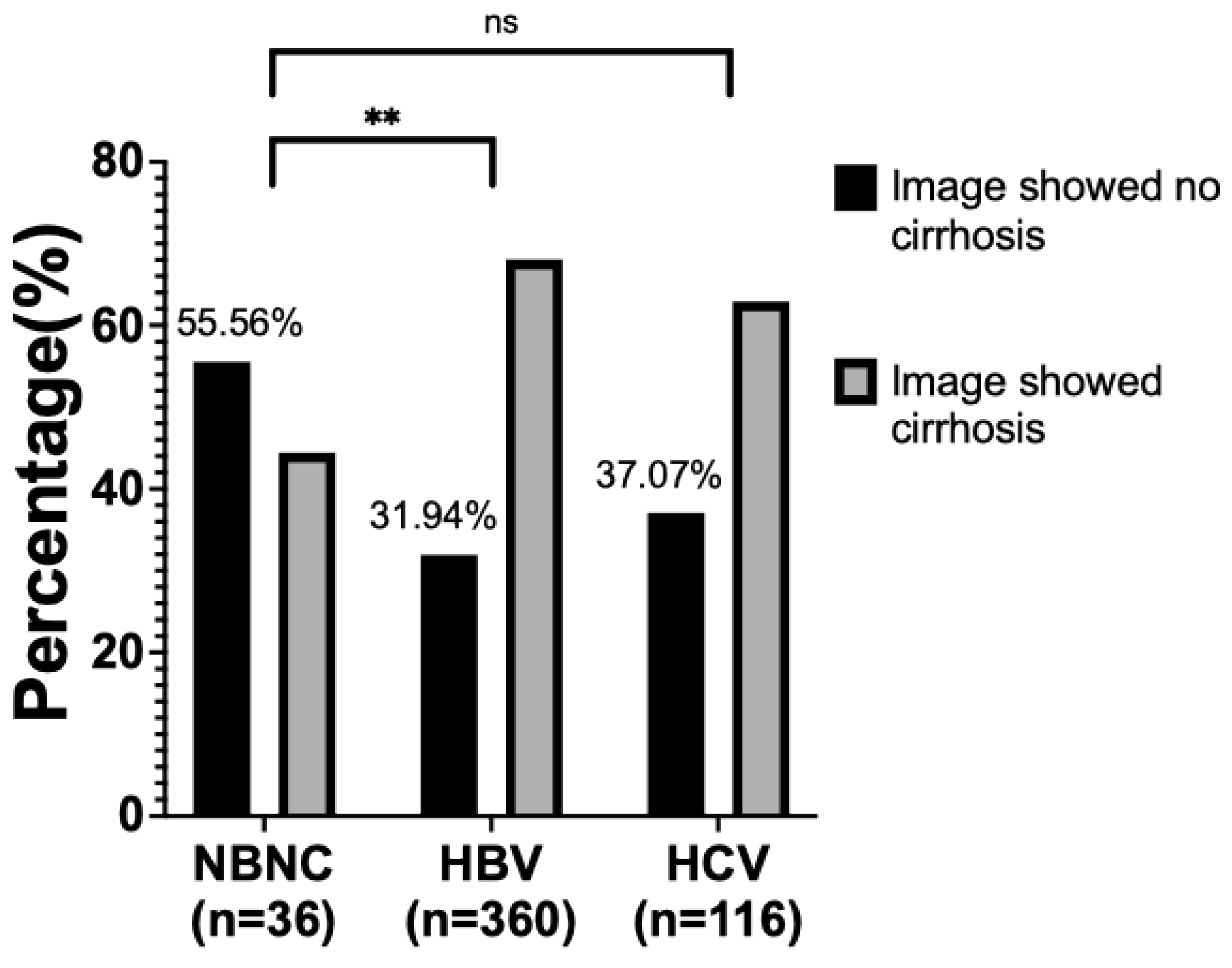
Figure 3.
Comparison of percentage of Ishak score 0-4 versus Ishak score 5-6 between the NBNC, HBV and HCV group. NBNC: Non-HBV and Non-HCV; HBV: Hepatitis B virus; HCV: Hepatitis C virus.
Figure 3.
Comparison of percentage of Ishak score 0-4 versus Ishak score 5-6 between the NBNC, HBV and HCV group. NBNC: Non-HBV and Non-HCV; HBV: Hepatitis B virus; HCV: Hepatitis C virus.
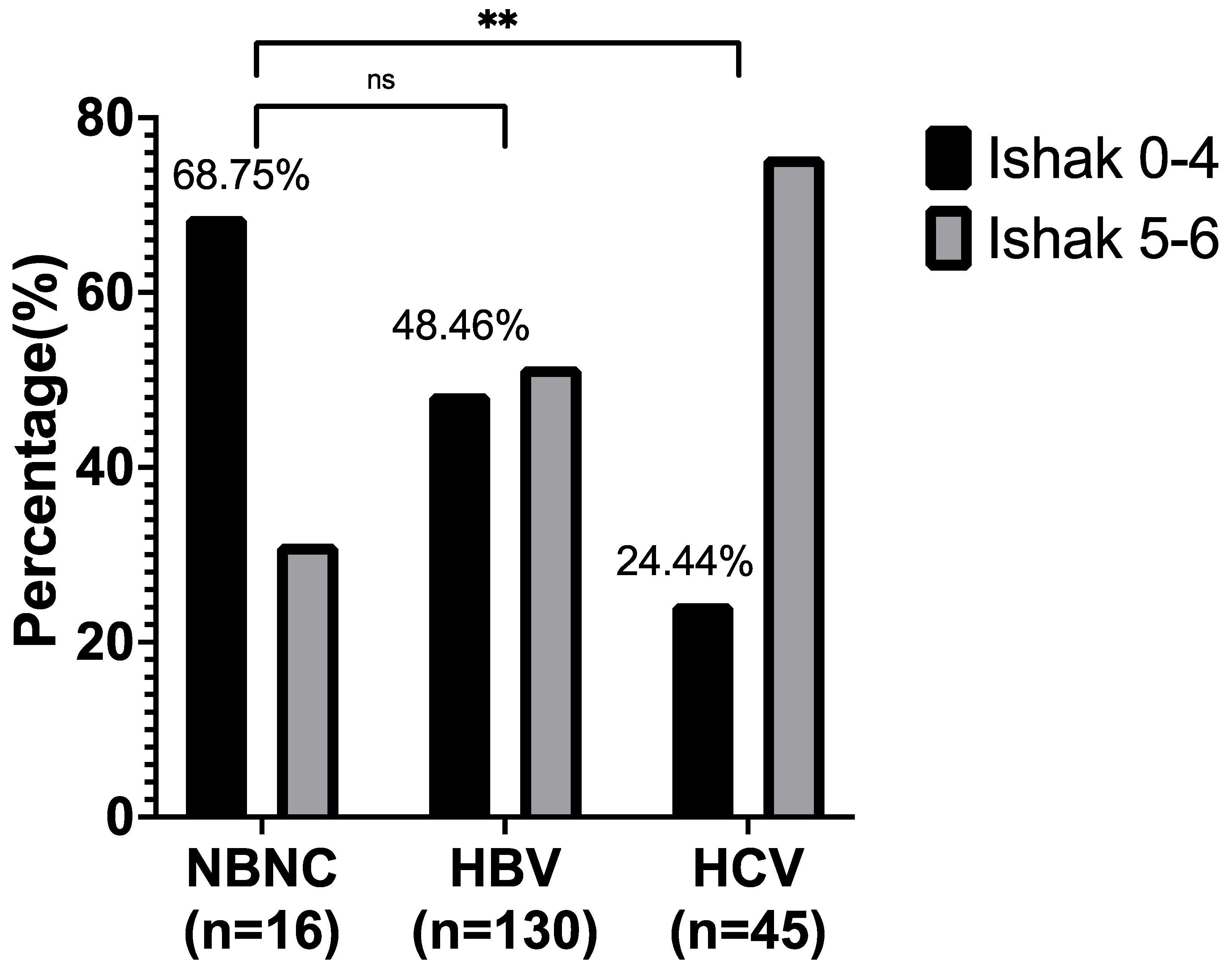
Figure 4.
The multilevel donut charts present proportion of HCC etiologies in database GSE62232 and excluded alcoholism, metabolic syndrome, hepatic metastasis, non-alcoholic steatohepatitis, and combined HBV and HCV groups. (a) In database GSE62232, there are total 81 patients and 10 HBV patients (12.35%), 9 HCV patients (11.11%), 15 HCC patients without known etiology (w/o etiology, 18.52%) were highlighted. (b) In HBV, HCV, and w/o etiology groups, metavir score was presented in outer ring. Proportion of F4 in HBV (60%), HCV (77.8%) and w/o etiology (6.7%) groups was highlighted. Al: Alcoholism; METAB: metabolic syndrome; HM: hepatic metastasis; NASH: non-alcoholic steatohepatitis; HBV: Hepatitis B virus; HCV: Hepatitis C virus; HCC: hepatocellular carcinoma; w/o: without.
Figure 4.
The multilevel donut charts present proportion of HCC etiologies in database GSE62232 and excluded alcoholism, metabolic syndrome, hepatic metastasis, non-alcoholic steatohepatitis, and combined HBV and HCV groups. (a) In database GSE62232, there are total 81 patients and 10 HBV patients (12.35%), 9 HCV patients (11.11%), 15 HCC patients without known etiology (w/o etiology, 18.52%) were highlighted. (b) In HBV, HCV, and w/o etiology groups, metavir score was presented in outer ring. Proportion of F4 in HBV (60%), HCV (77.8%) and w/o etiology (6.7%) groups was highlighted. Al: Alcoholism; METAB: metabolic syndrome; HM: hepatic metastasis; NASH: non-alcoholic steatohepatitis; HBV: Hepatitis B virus; HCV: Hepatitis C virus; HCC: hepatocellular carcinoma; w/o: without.
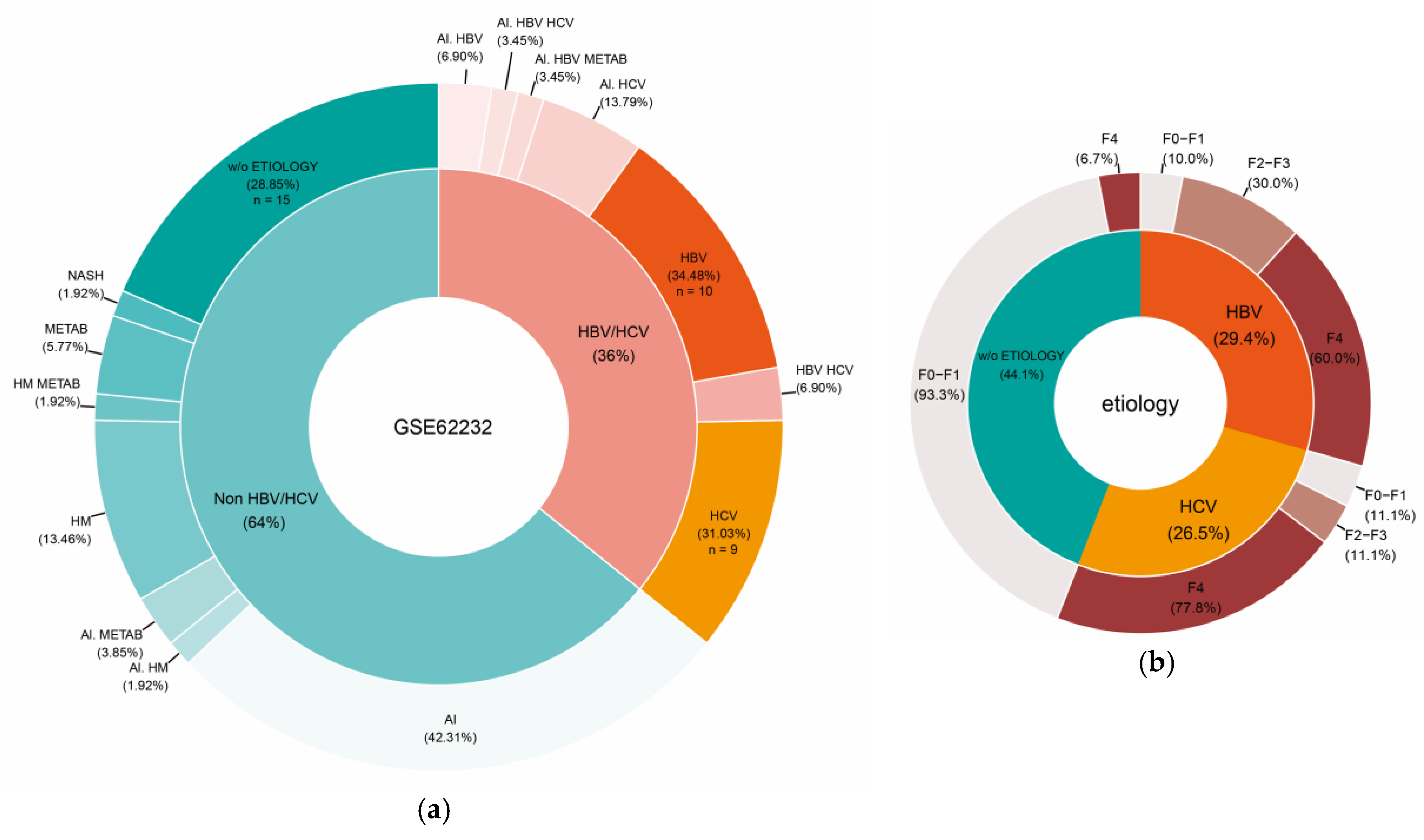
Figure 5.
Volcano plot showing differentially expressed genes, with upregulation in red, downregulation in blue, based on false discovery rate (FDR) < 0.05 (as -log10(FDR) in y-axis) and the log2 fold change > 1 (x-axis). (a) HBV vs Non tumor group showed 1808 upregulated genes and 632 downregulated genes. (b) HCV vs Non tumor group showed 1113 upregulated genes and 545 downregulated genes. (c) w/o etiology vs Non tumor group showed 320 upregulated genes and 911 downregulated genes. Significant genes are highlighted. HBV: Hepatitis B virus; HCV: Hepatitis C virus.
Figure 5.
Volcano plot showing differentially expressed genes, with upregulation in red, downregulation in blue, based on false discovery rate (FDR) < 0.05 (as -log10(FDR) in y-axis) and the log2 fold change > 1 (x-axis). (a) HBV vs Non tumor group showed 1808 upregulated genes and 632 downregulated genes. (b) HCV vs Non tumor group showed 1113 upregulated genes and 545 downregulated genes. (c) w/o etiology vs Non tumor group showed 320 upregulated genes and 911 downregulated genes. Significant genes are highlighted. HBV: Hepatitis B virus; HCV: Hepatitis C virus.
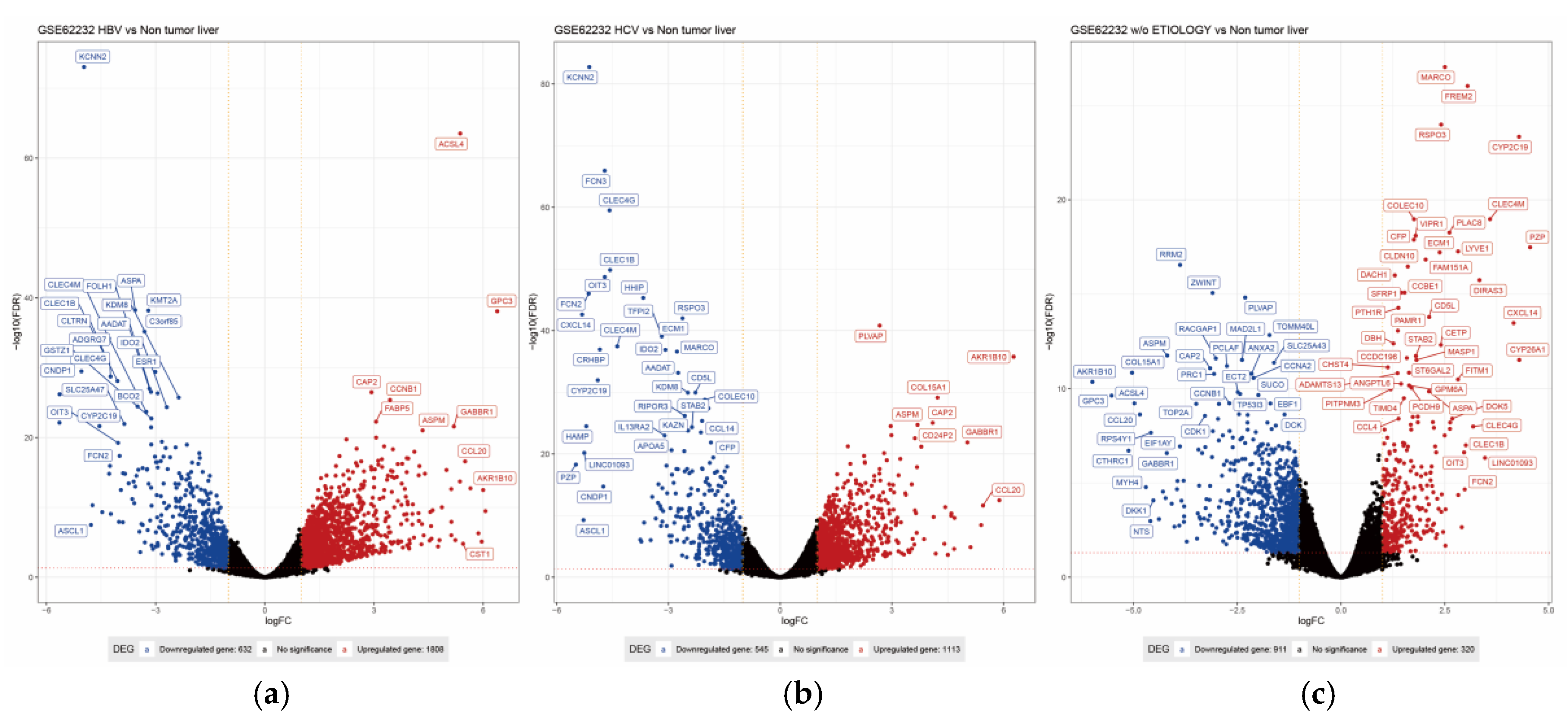
Figure 6.
Liver and immune cellular profiles enrichments in xCell signature: (a) Radial plot of HBV, HCV, and w/o etiology groups versus non tumor tissue from xCell with red bars for positive and blue for negative enrichment. Gene sets with FDR < 0.25 are in bold, with significance levels: *, **, and *** for FDR < 0.25, <0.05, and <0.01, respectively. (b) Dot plot highlighted 27 significant cellular enrichment of HBV, HCV and w/o etiology group in xCell signature; The size of the dots represents the -logFDR, indicating the significance of the cellular enrichment. The color of the dots, represented using the red-white-blue color scale, indicates the normalized enrichment score in each cell type, with red indicating a higher score. Tgd cell: Gamma delta T cell; Th: Helper T; DC: Dendritic cells; NK cells: natural killer cells; CD: cluster of differentiation; CPL: Common lymphoid progenitors; HSC: Hematopoietic stem cells; MSC: Mesenchymal stem cells; MEP: Megakaryocyte–erythroid progenitor cells; MPP: Multipotent progenitors; CMP: Common myeloid progenitors; GMP: Granulocyte myeloid progenitors.
Figure 6.
Liver and immune cellular profiles enrichments in xCell signature: (a) Radial plot of HBV, HCV, and w/o etiology groups versus non tumor tissue from xCell with red bars for positive and blue for negative enrichment. Gene sets with FDR < 0.25 are in bold, with significance levels: *, **, and *** for FDR < 0.25, <0.05, and <0.01, respectively. (b) Dot plot highlighted 27 significant cellular enrichment of HBV, HCV and w/o etiology group in xCell signature; The size of the dots represents the -logFDR, indicating the significance of the cellular enrichment. The color of the dots, represented using the red-white-blue color scale, indicates the normalized enrichment score in each cell type, with red indicating a higher score. Tgd cell: Gamma delta T cell; Th: Helper T; DC: Dendritic cells; NK cells: natural killer cells; CD: cluster of differentiation; CPL: Common lymphoid progenitors; HSC: Hematopoietic stem cells; MSC: Mesenchymal stem cells; MEP: Megakaryocyte–erythroid progenitor cells; MPP: Multipotent progenitors; CMP: Common myeloid progenitors; GMP: Granulocyte myeloid progenitors.
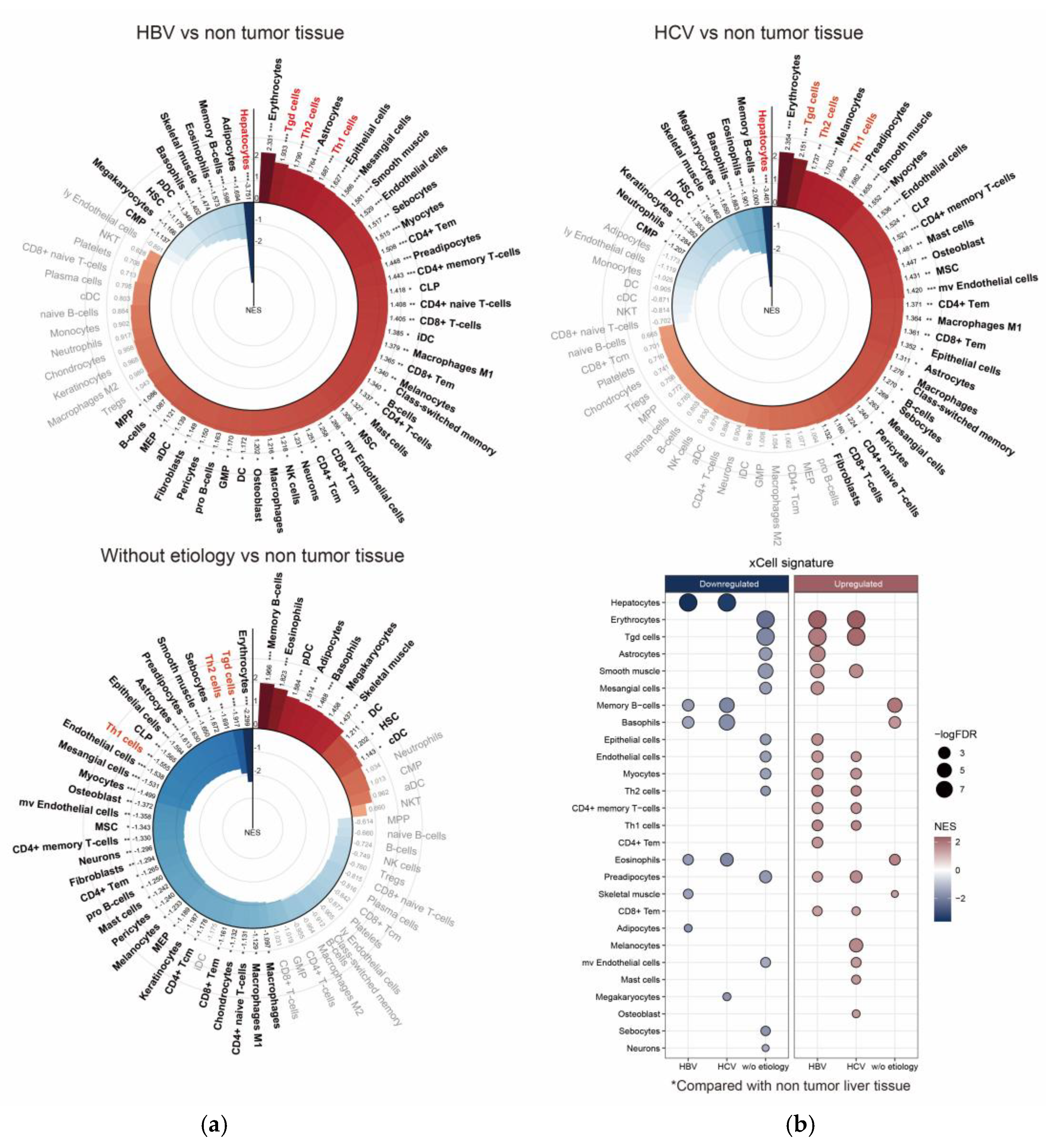
Figure 7.
Liver and immune cellular profiles enrichments in Descartes Cell Types and Tissue 2021 (a) Dot plot representing the association with different cells in liver, sourced from the Descartes Cell Types and Tissue 2021 database; The size of the dots represents the -logFDR, indicating the significance of the cellular enrichment. The color of the dots, represented using the red-white-blue color scale, indicates the NES in each cell type, with red indicating a higher score. (b) The Gene Set Enrichment Analysis plots present top 2 cell types by NES contrasting HBV, HCV and w/o etiology groups (left) with non-tumor liver group (right). FDR: False discovery rate; NES: Normalized enrichment score; HBV: Hepatitis B virus; HCV: Hepatitis C virus.
Figure 7.
Liver and immune cellular profiles enrichments in Descartes Cell Types and Tissue 2021 (a) Dot plot representing the association with different cells in liver, sourced from the Descartes Cell Types and Tissue 2021 database; The size of the dots represents the -logFDR, indicating the significance of the cellular enrichment. The color of the dots, represented using the red-white-blue color scale, indicates the NES in each cell type, with red indicating a higher score. (b) The Gene Set Enrichment Analysis plots present top 2 cell types by NES contrasting HBV, HCV and w/o etiology groups (left) with non-tumor liver group (right). FDR: False discovery rate; NES: Normalized enrichment score; HBV: Hepatitis B virus; HCV: Hepatitis C virus.
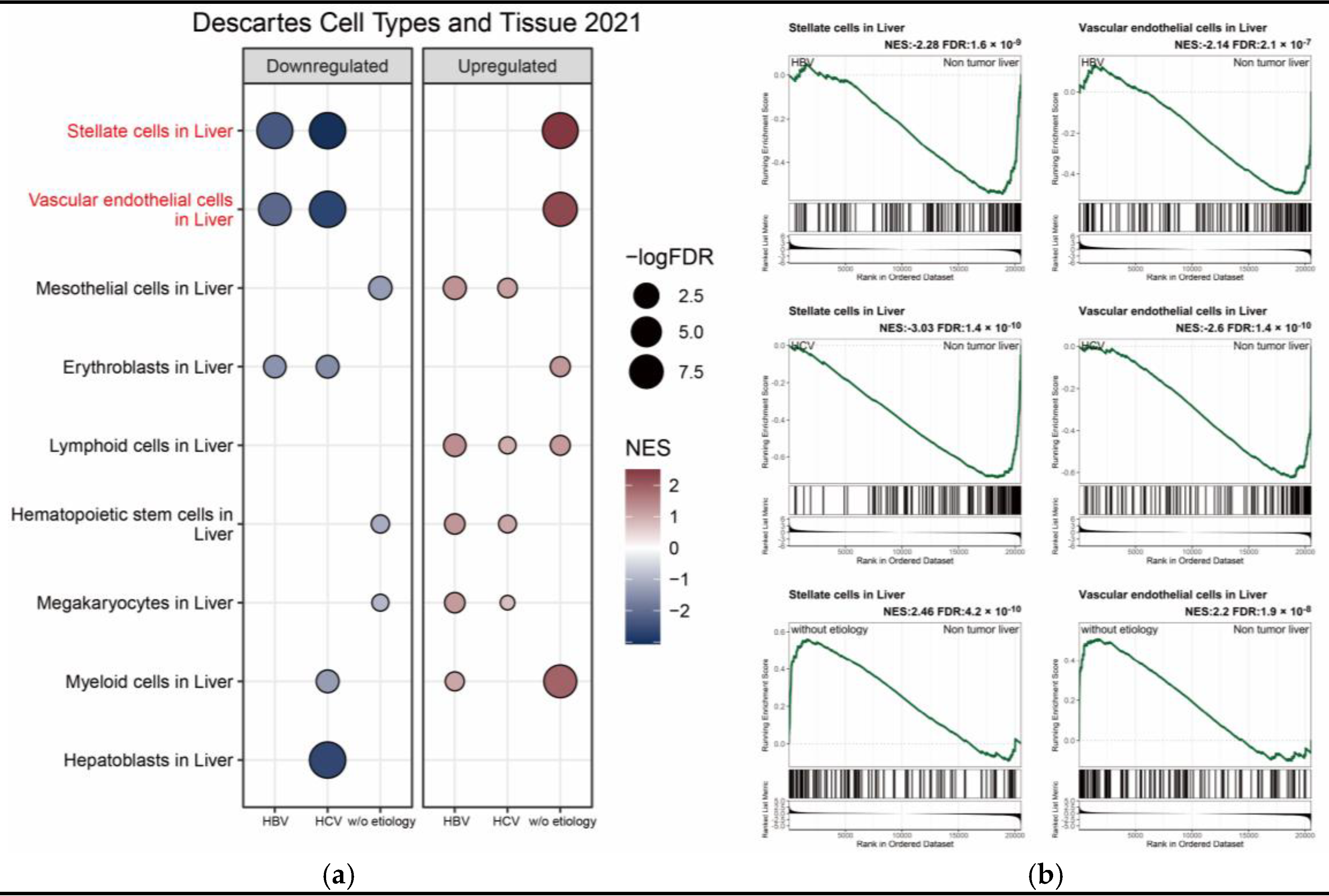

Table 1.
Comparison of the characteristics Between NBNC, HBV, and HCV and by age, sex, BMI, Alcohol, creatinine, total bilirubin, INR AFP, ALT, PLT, Fib-4 index, MELD-Na score, Child Pugh score, and HCC stage.
Table 1.
Comparison of the characteristics Between NBNC, HBV, and HCV and by age, sex, BMI, Alcohol, creatinine, total bilirubin, INR AFP, ALT, PLT, Fib-4 index, MELD-Na score, Child Pugh score, and HCC stage.
| NBNC, N=38 | HBV, N=367 | HCV, N=116 | P value | ||
|---|---|---|---|---|---|
| NBNC versus HBV | NBNC versus HCV | ||||
| Age(years) | 64.45(41-91) | 62.88(27-93) | 68.62(40-97) | 0.7170 | 0.1432 |
| Sex(Male/Female) | 24/14 | 279/88 | 67/49 | 0.1141 | 0.5756 |
| BMI | 24.86(19.65-32.19) | 24.67(16.16-65.31) | 24.02(15.81-33.73) | 0.9687 | 0.5954 |
| Alcohol (Alcohol/Non-alcohol) | 8/30 | 91/276 | 24/92 | 0.6093 | 0.9618 |
| Creatinine | 1.019(0.5000-2.200) | 1.252(12.60-0.2000) | 1.356(0.4000-14.90) | 0.6014 | 0.4146 |
| Total bilirubin | 1.072(0.3000-4.400) | 2.014(0.2000-30.00) | 2.538(0.3000-42.40) | 0.4172 | 0.1736 |
| INR | 1.081(0.9000-1.800) | 1.093(0.7000-2.700) | 1.074(0.9-1.700) | 0.9288 | 0.9756 |
| AFP | 1685(0.000-21700) | 3522(0.000-42500) | 961.2(0.000-37500) | 0.5019 | 0.9142 |
| ALT | 41.63(4.000-199.0) | 56.19(4.000-505.0) | 56.49(6.000-469.0) | 0.4001 | 0.4520 |
| PLT | 209.3(53.00-484.0) | 199.0(30.00-698.0) | 164.5(38.00-524.0) | 0.8137 | 0.0415 |
| Fib-4 index | 3.191(0.2400-16.39) | 4.212(0.5300-34.67) | 6.077(0.8200-38.93) | 0.3804 | 0.0019 |
| MELD-Na score | 10.95(6.400-20.64) | 12.08(6.400-44.25) | 12.14(6.400-39.39) | 0.5782 | 0.6048 |
| Child Pugh score (A/B/C) | 20/8/1 | 224/61/26 | 62/22/7 | 0.4336 | 0.7051 |
| HCC stage (I/II/III/IV) | 14/6/8/8 | 136/40/131/56 | 44/28/30/13 | 0.2989 | 0.3569 |
* NBNC: Non-HBV and Non-HCV; HBV: Hepatitis B virus; HCV: Hepatitis C virus; BMI: Body mass index; INR: International normalized ratio; AFP: Alpha-fetoprotein; ALT: Alanine transaminase; PLT: Platelet; MELD: Model for End-stage Liver Disease; HCC: hepatocellular carcinoma.
Table 2.
Comparison of characteristics of HBV, HCV and w/o etiology groups by gender, age, metavir score, and edmonson score.
Table 2.
Comparison of characteristics of HBV, HCV and w/o etiology groups by gender, age, metavir score, and edmonson score.
 |
Disclaimer/Publisher’s Note: The statements, opinions and data contained in all publications are solely those of the individual author(s) and contributor(s) and not of MDPI and/or the editor(s). MDPI and/or the editor(s) disclaim responsibility for any injury to people or property resulting from any ideas, methods, instructions or products referred to in the content. |
© 2026 by the authors. Licensee MDPI, Basel, Switzerland. This article is an open access article distributed under the terms and conditions of the Creative Commons Attribution (CC BY) license (http://creativecommons.org/licenses/by/4.0/).
Copyright: This open access article is published under a Creative Commons CC BY 4.0 license, which permit the free download, distribution, and reuse, provided that the author and preprint are cited in any reuse.


